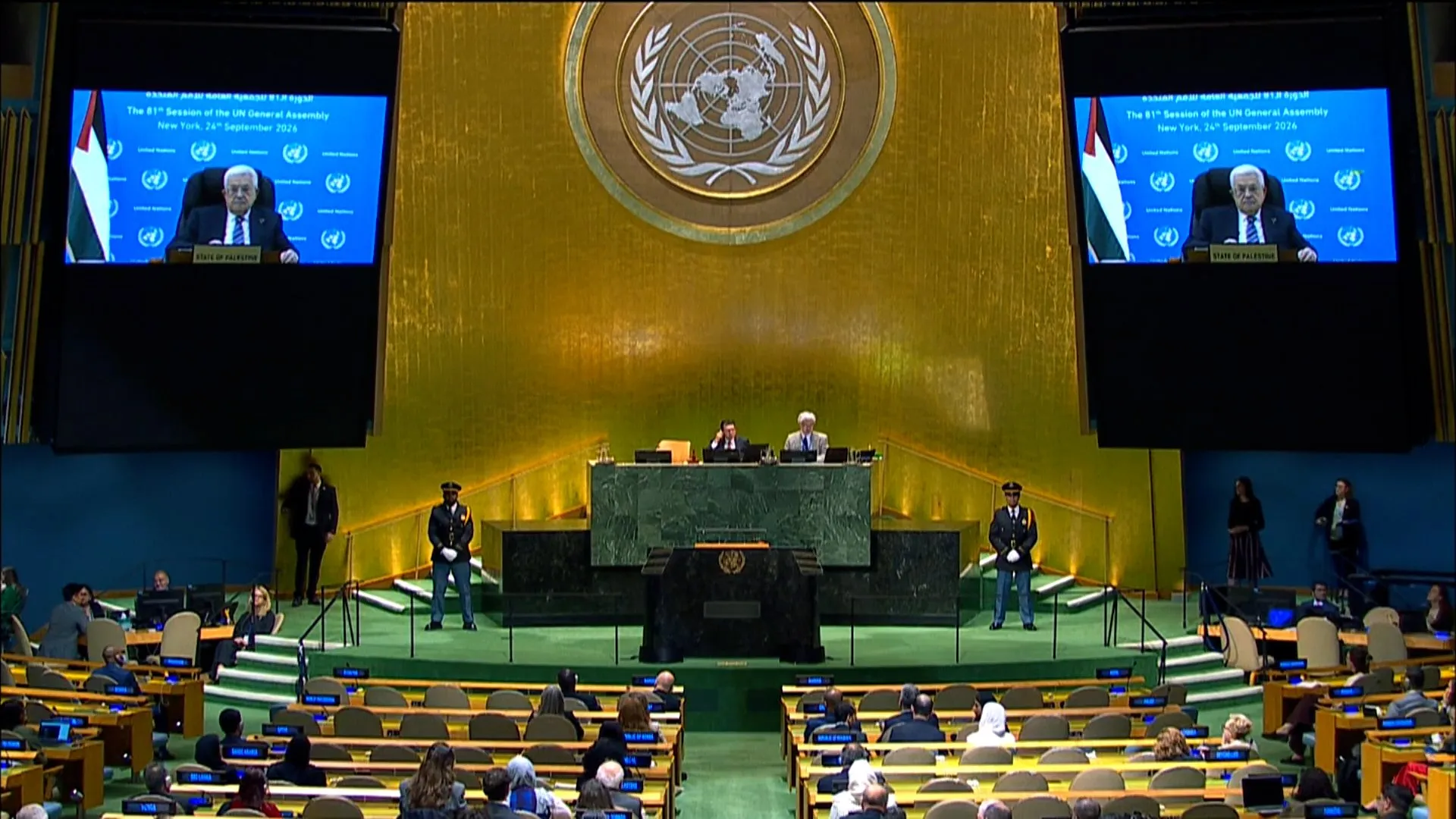
Iran’s foreign minister says his visit to the UN General Assembly last week was mainly to outline Tehran’s position on regional conflicts and the critical security situation in the Strait of Hormuz.
Israel’s national security minister declares ‘we are the owners of the place in Al-Aqsa’ during heavily guarded incursion.
Published On 28 Sep 202628 Sep 2026
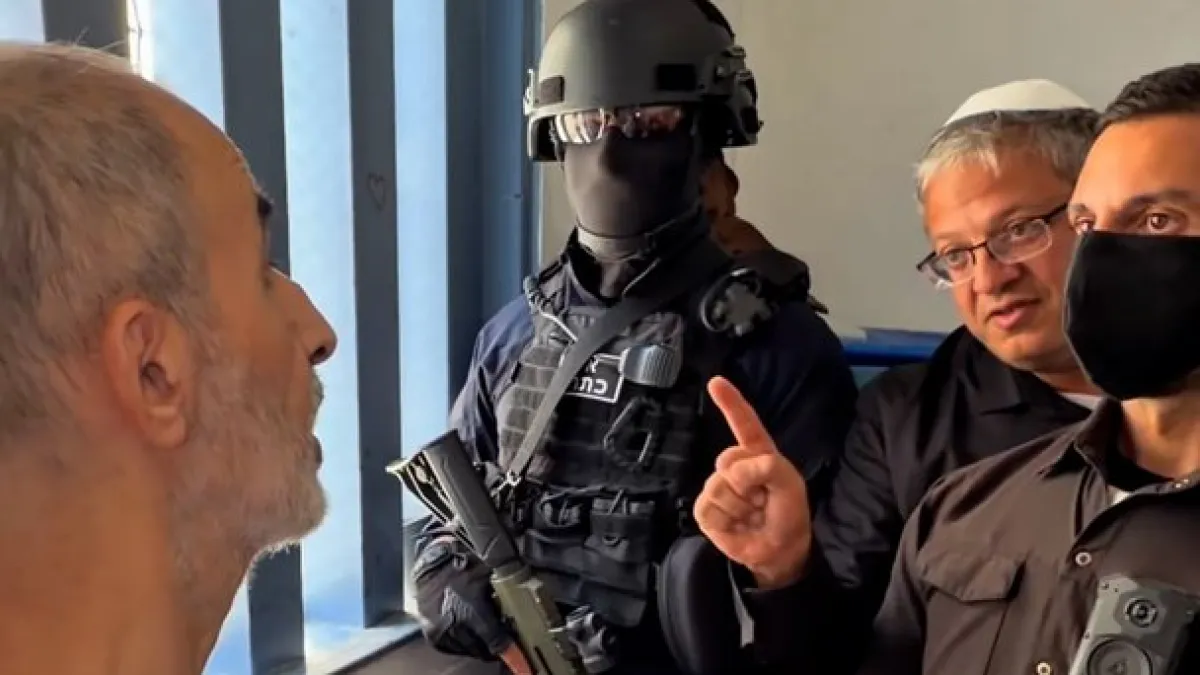
Hundreds of Israelis led by far-right National Security Minister Itamar Ben-Gvir have stormed the Al-Aqsa Mosque compound under police protection.
The Jerusalem governorate on Monday said Israeli forces closed intersections and streets surrounding the Old City that lead to the Al-Aqsa Mosque compound, which Jews refer to as the Temple Mount, in occupied East Jerusalem on the third day of the Jewish holiday of Sukkot.
Recommended Stories
list of 4 itemsend of list
It said the Israelis danced in circles and sang inside the courtyards of Al-Aqsa Mosque during the raid, noting that 900 people entered the compound in the morning.
“We are the owners of the place in Al-Aqsa and in the prisons, and we have turned the lives of terrorist prisoners into hell,” Ben-Gvir said.
“The people of Israel are on the path to absolute victory, and today we pray in Al-Aqsa, which is the most important place for the Jewish people.”
Monday’s intrusion came as Israeli authorities forced dozens of Palestinian shopkeepers to close their businesses and residents to remain inside their homes in areas near the mosque to allow Jewish prayers during Sukkot.
“Dozens of Palestinian owners of shops, cafes and restaurants in the Cotton Merchants Market in Jerusalem’s Old City were forced to close them during the Jewish Sukkot holiday to make way for Jewish prayers in the market,” the Association for Civil Rights in Israel said in a statement.
‘Playing with fire’
Palestinian presidential spokesman Nabil Abu Rudeineh described the incursion as “playing with fire and a dangerous provocation to the feelings of Muslims around the world”.
He also warned that Israel was seeking to ignite a “religious war” in the region.
Since 2003, Israeli police have allowed groups of Israelis to make daily incursions into the Al-Aqsa Mosque compound, except on Fridays and Saturdays.
Israel often imposes restrictions on Palestinian worshippers. It prevented Eid al-Fitr prayers at Al-Aqsa this year, allowing only 10,000 Palestinians from the occupied West Bank, home to 3.3 million people, into one of Islam’s holiest sites for the first Friday prayers of Ramadan.
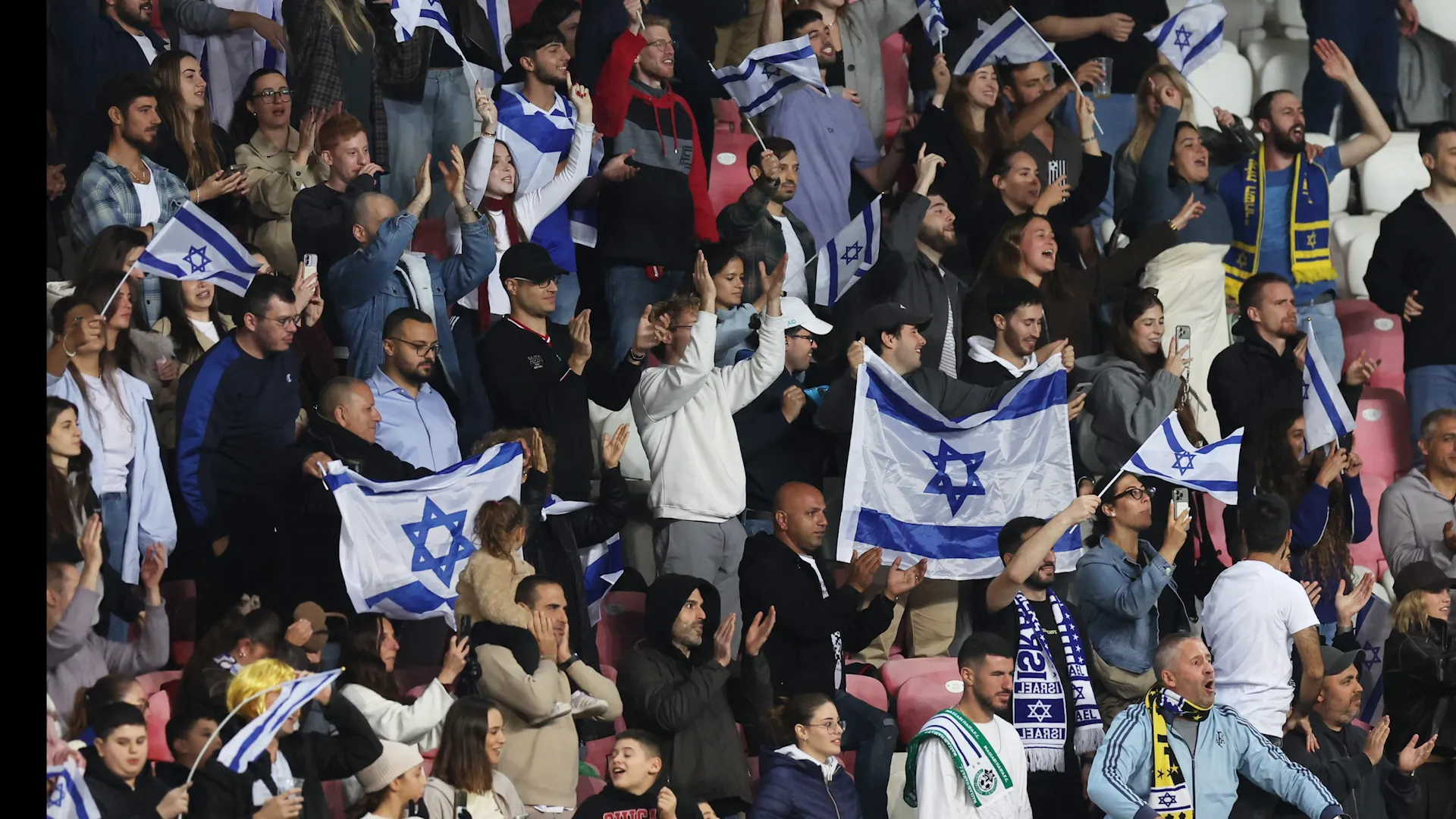
‘Yes, we lose in football. But where we don’t lose? The IDF.’
Israeli football fans started chanting about their military after losing 3-0 to Ireland at the UEFA Nations League on Sunday. The Israeli military has committed war crimes in Gaza.
WASHINGTON — California is sometimes described as the ATM of Democratic politics.
That’s certainly been the case in the most divisive Democratic races this year.
Donors from California have given more to far-left candidates and their moderate opponents in congressional races and U.S. Senate contests than donors from any other state — more than $17 million combined, according to a Times analysis of the most recently available campaign finance filings.
More of that money — nearly $11 million — went to more progressive candidates. That giving came from more than 95,000 individual donors, which was more than double the number of California donors who gave to their more moderate opponents. That includes 18,000 donors who gave to both progressive and moderate candidates.
There was a geographic divide in giving by Californians. The largest share of cash to progressive candidates came from donors in the Bay Area, while the largest share of financial backing to moderate candidates came from donors in the Los Angeles area.
The Times looked at competitive races outside California in which one of the candidates had been endorsed by either the Justice Democrats or the Democratic Socialists of America, or DSA, as well as key Senate races in Michigan, Minnesota, Florida and Maine that featured a stark ideological divide between top Democratic contenders.
Although these races represent a small fraction of the electoral contests across the country, they were the races in which the future ideological direction of the Democratic Party was most fiercely contested.
Progressive candidates fared better in the majority of these contests.
California donors helped fund the Senate primary victories of progressives Abdul El-Sayed in Michigan and Peggy Flanagan in Minnesota — second only to in-state donors in providing cash to each of those candidates.
Progressive House candidates such as Melat Kiros in Colorado and Darializa Avila Chevalier in New York were able to defeat more moderate incumbents with heavy support from California donors.
Their efforts weren’t always successful, however.
Former Rep. Cori Bush raked in more cash from California donors than in-state supporters in her bid to unseat incumbent Rep. Wesley Bell in Missouri’s 1st Congressional District, the seat she had held previously. But Bell easily cruised to victory in this year’s primary.
And then there was Graham Platner.
California donors gave nearly $2.5 million to his Senate campaign in Maine before he withdrew after he was accused of sexual assault by a former girlfriend. He has denied the accusation.
The Times analysis looked at direct contributions to campaigns, which are capped at $7,000 per election cycle. It did not include contributions to party committees or independent committees that could also be spending in these races. The analysis included both bigger contributions required to be disclosed by campaigns as well as small-dollar contributions through the Democratic fundraising platform ActBlue.
Flipping the script
Progressive donors said they were motivated to give to candidates who would shake up the Democratic Party’s status quo.
“The Democratic Party has to understand that they can’t keep doing the same thing,” said Rehan Alvi, a real estate investor in El Dorado Hills.
He gave the maximum allowable to support the campaigns of El-Sayed and Bush, and also supported Junaid Ahmed’s failed primary bid in the Illinois 8th Congressional District, as well as Platner’s campaign.
Harry Saddler, a retired designer who lives in San Francisco, said that the state of the party is “enraging.”
“That leads me to think about people who can actually flip the script,” he said.
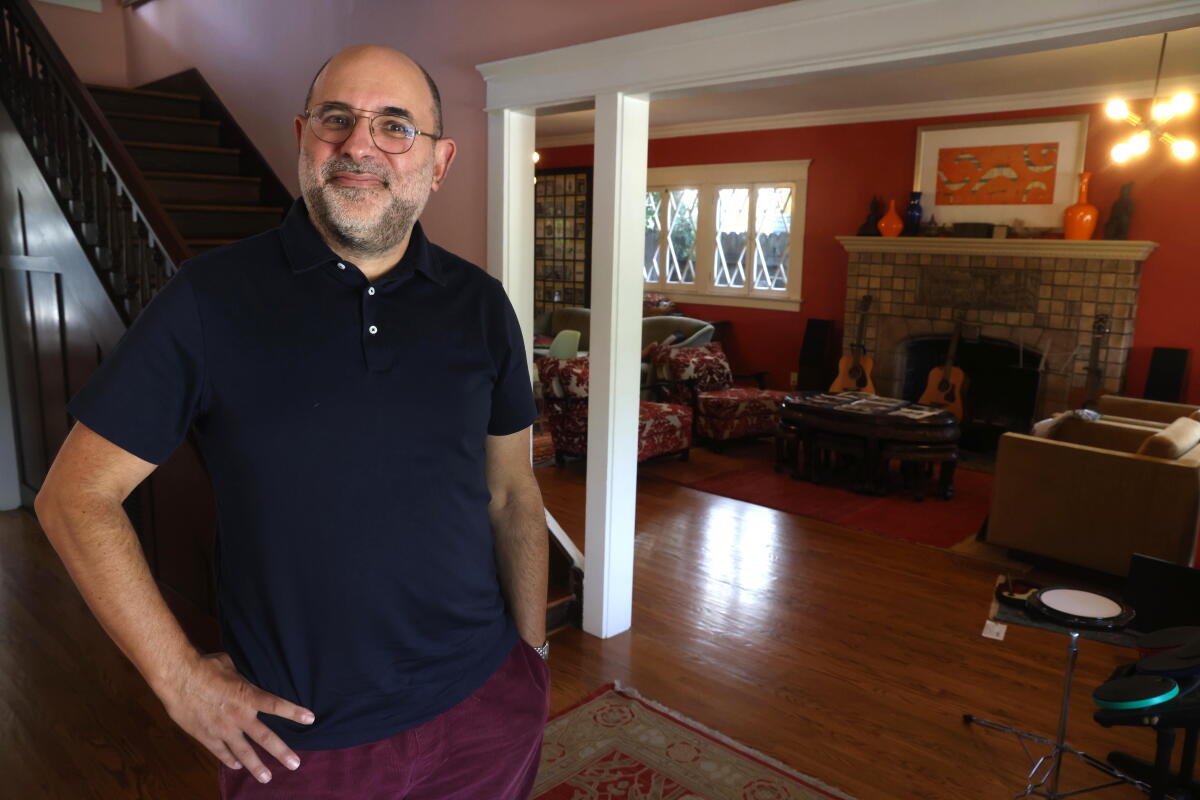
Joshua Saltman, shown in his Los Angeles home, is one of many Democratic donors from California who have given in divisive Democratic races across the country.
(Genaro Molina / Los Angeles Times)
Saddler has written checks to a number of more progressive candidates, including Flanagan, Chevalier, Ahmed and Nida Allam, who lost her primary bid to unseat incumbent Rep. Valerie Foushee in North Carolina’s 4th Congressional District, though he has also supported some moderate candidates in other races he sees as crucial to Democrats chances at retaking control of one or both chambers of Congress.
That pragmatic approach is part of the reason Joshua Saltman said he has supported a number of moderate candidates.
“The reality of the map is that if Democrats are going to retake the House, it’s not just winning super blue districts,” said Saltman, a former entertainment industry lawyer who now runs a Broadway music festival.
Saltman said that he considers himself to be a more moderate Democrat and is also inclined to give to moderate candidates who he believes “get a little less love” from other donors, particularly in California.
He has written checks to Rep. Haley Stevens, who lost to El-Sayed in Michigan; Rep. Angie Craig, who lost to Flanagan in Minnesota; Bell in Missouri and Gov. Janet Mills in Maine, who was Platner’s main competition in the Democratic primary before dropping out of the race.
Alan Burye, a retired accountant who lives just outside San Diego, said he prefers more moderate candidates because he thinks they are more productive politicians.
“The ones who are out on the edges, like Bernie Sanders, really don’t get much done,” Burye said.
He cut checks to Craig in Minnesota and Stevens in Michigan.
Israel’s impact
American support for Israel — in the wake of wars in Gaza and Iran — has been a major point of division among more progressive and moderate candidates and is a key fault line among many donors.
Progressive candidates have been increasingly critical of the actions and influence of the Israeli government as the public, broadly, has adopted a more negative view of the Israeli government.
Politicians who have drawn support in the past from the American Israel Public Affairs Committee, or AIPAC, have been a particular target of progressive challengers.
“The problem with the Democratic Party is that they’re all just beholden to AIPAC and to corporate interests,” said Alvi, the real estate investor in El Dorado Hills. “I want a candidate who has the courage to speak.”
In Michigan, El-Sayed described AIPAC’s support of Stevens, his moderate opponent, as “legalized bribery.”
El-Sayed has made no secret of his criticism of American foreign aid for Israel and said that he “doesn’t believe in ethno-states” in response to a question in the summer about whether he supports the right of Israel to exist.
El-Sayed’s comments and similar sentiments expressed by other more progressive candidates are part of the reason some donors have given to moderate candidates.
“I feel that people who fundamentally aren’t big fans of Israel aren’t necessarily people I want to give money to,” said Saltman, who gave to Stevens.
Saltman, who was born in Michigan, said that he would still vote for El-Sayed if he lived in the state.
Other donors said they were inspired to give to moderate candidates because of concern that anti-Israel rhetoric could veer into attacks on Jews more broadly.
Los Angeles investor Steve Emerson said his motivation in writing checks to moderate Democrats such as Stevens is “to fight antisemitism.”
El-Sayed, for his part, said in the summer that his criticism of Israel is about foreign policy, not Jewish people.
“Judaism and the Jewish people are a light onto the world,” he said.
Israel’s security minister Itamar Ben-Gvir has released a video in which he is seen threatening to kill senior Hamas figure Hassan Salameh. Salameh is serving multiple life sentences for his role in a series of Hamas-orchestrated attacks in 1996, including bus bombings.
Ireland scored a 3-0 victory over Israel in a politically-charged UEFA Nations League match played in Hungary. The game went ahead despite calls for a boycott with the Irish players wearing black armbands in support of the people of Gaza.
Ireland’s players wore black armbands in support of Palestinians, bowed their heads during the Israeli anthem, and refused pre-match handshakes.
Published On 27 Sep 202627 Sep 2026
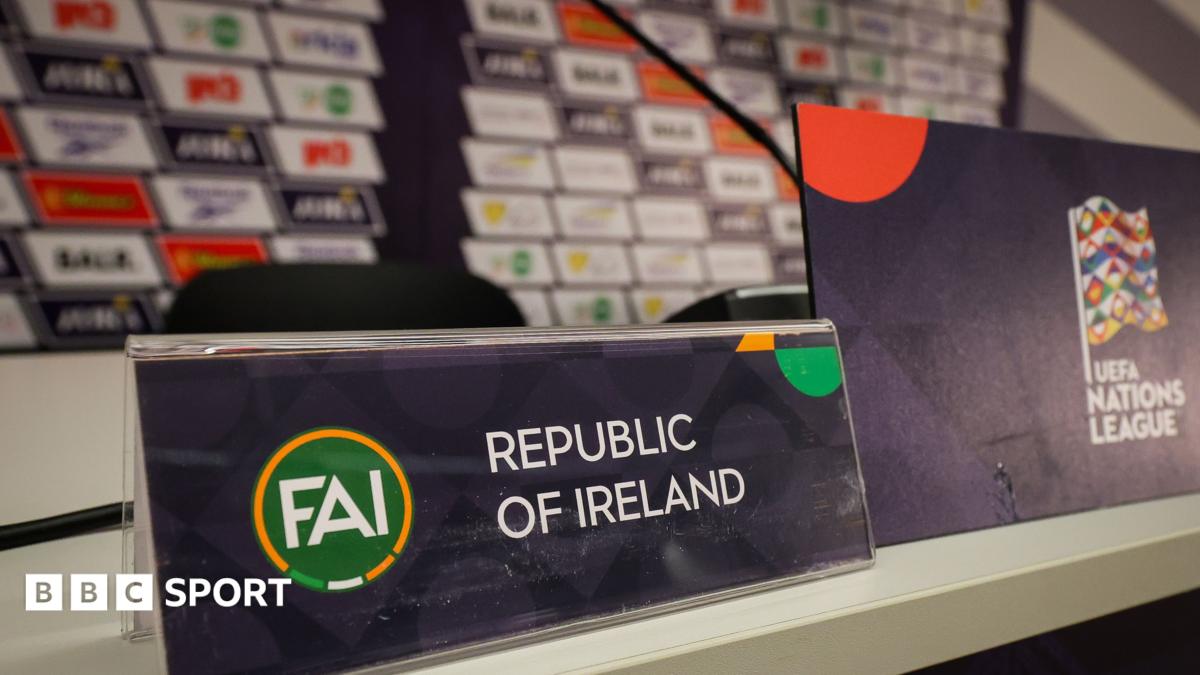
The Republic of Ireland has won the first of two football matches against Israel at the UEFA Nations League, defeating the Israeli team 3-0 after calls to boycott the match drew international attention.
Ireland’s players wore black armbands at the game in Hungary on Sunday in support of Palestinians killed during Israel’s genocidal war on Gaza. Irish players also bowed their heads during Israel’s national anthem and did not shake the hands of the Israeli team. Ireland’s captain, Dara O’Shea, has also pledged to donate all of his earnings from the match to aid Gaza.
Recommended Stories
list of 3 itemsend of list
On Saturday, Football Association of Ireland (FAI) chief executive David Courell said the players would wear black armbands “in recognition of all lives lost in the conflict” as he confirmed that the match would take place after hours of talks and a vote among the team. Israel was informed in advance by the FAI that Ireland’s players would not shake hands, and UEFA accepted the arrangement.
After the FAI confirmed that it would participate in the match, the Republic of Ireland’s first-choice goalkeeper, Gavin Bazunu, became the only player to publicly opt out of the fixture.
Bazunu posted a statement on social media on Saturday, saying he felt “it would be wrong to participate in the upcoming fixtures against Israel”.
He withdrew from both legs of the fixture, including the next match set to take place on October 4 in Backa Topola, Serbia.
Fans protest an upcoming match between the Republic of Ireland and Israel during the international friendly match between the Republic of Ireland and Qatar on May 28, 2026, at Aviva Stadium in Dublin, Ireland [File: Charles McQuillan/Getty Images]
The match on Sunday proceeded despite months-long pressure on the FAI to boycott the match due to Israel’s genocide in Gaza.
Since May, leading Irish footballers have joined a campaign run by Irish Sport for Palestine, urging Ireland to boycott the match against Israel. More than 160 Irish athletes signed an open letter urging the FAI to reconsider its decision to proceed with the games.
The campaign says Israel has breached UEFA and FIFA statutes by allowing teams to play on occupied Palestinian land and should be stripped of its membership at both football bodies.
The Republic of Ireland and Israel players did not shake hands with each other before Sunday’s controversial Uefa Nations League game in Hungary.
After walking on to the pitch at Nagyerdei Stadion, the Republic of Ireland squad stood for their national anthem and appeared to bow their heads before Israel’s anthem.
Following the anthems, the two teams did not line up for the traditional handshakes.
There was also no exchange of pennants between Republic of Ireland captain Dara O’Shea and Israel skipper Manor Solomon, who did not shake hands.
The fixtures have been embroiled in controversy since February when the two teams were drawn to play each other in Group B3.
The Republic of Ireland players have faced calls to withdraw from the games because of the ongoing Israel-Gaza war with a “Stop The Game” campaign – organised by the pressure group Irish Sport for Palestine – gathering pace.
However, the players voted to fulfil the fixture during a lengthy meeting at the team’s hotel in Debrecen on Saturday.
Later on Saturday, goalkeeper Gavin Bazunu confirmed he had withdrawn from the squad, saying he felt it “would be wrong to participate” in Sunday’s game and the return fixture in Serbia on 4 October.
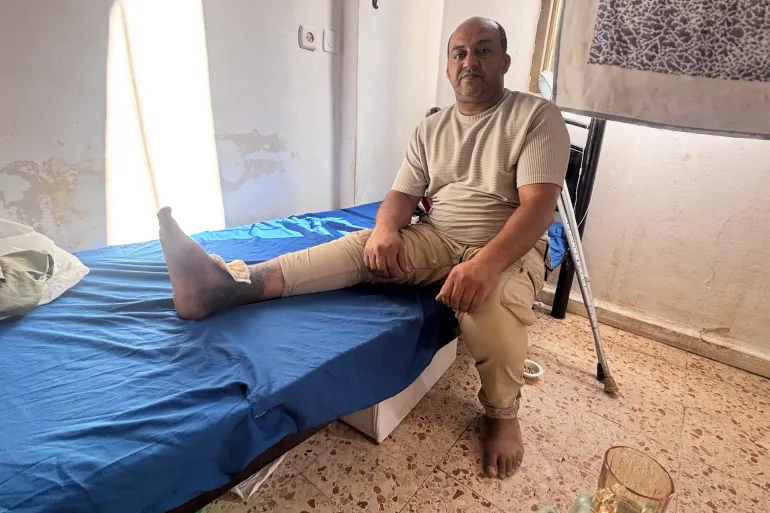
Tulkarem, occupied West Bank – Hakim Mar’i spends his days lying on a single bed, his disfigured leg raised. The windows of Mar’i’s dilapidated apartment, his latest temporary shelter, are covered with old blankets. Unable to work, Mar’i has no money for electricity, so the blankets have to do. At night, his family lives in near darkness.
The apartment is just around the corner from mounds of rubble and gnarled iron structures that mark one entrance to the now-emptied Tulkarem refugee camp. For Mar’i and other Palestinians, the camp was a home once considered temporary. But now, even the physical structure – their home – that tied those generations together is gone.
Recommended Stories
list of 4 itemsend of list
The apartment is just around the corner from mounds of rubble and gnarled iron structures that mark one entrance to the now-emptied Tulkarem refugee camp. For Mar’i and other Palestinians, the camp was a home once considered temporary. But generations lived there, and now, the physical structure – their home – that tied his family together over the years is gone.
Impoverished, Hakim’s family is in disarray. With its debts mounting and its members facing another eviction, he said he has considered taking his life several times over the past year and a half.
Mar’i cannot afford treatment for his debilitating leg injury, which has developed severe infections. He said he sustained it while working as a labourer inside Israel in 2019. The wound worsened after Israeli soldiers severely beat him when they forced his family from the Tulkarem camp. Diabetes and other untreated conditions have piled on, but he is unable to pay for the needed medical care.
“This joint here is completely gone,” he said, gesturing at the swollen, blackened lower leg that prevents him from working.
“The medicine – by God, the medicine, I haven’t been able to get. My wife and kids tell me: get out travel. Go to America, Turkey – so I can the medical treatment I need… I’m a sick man.”
His mother, Salwa, sat beside him, less than a kilometre (0.6 miles) from their former four-storey home. She wept when asked about the family home that was built floor by floor after they were first displaced in 1948 from al-Khudayra, the Arabic name for Hadera, a city in Israel. “We really put a lot into that house,” she said.
After their removal, the Israeli military razed the Mar’i home so a road traversing the now-emptied camp could be built. “Seeing it destroyed was really painful for us – all of us,” she said.
It has been more than 20 months since Israeli forces emptied the Jenin, Tulkarem and Nur Shams refugee camps in a sweeping military operation in the northern West Bank, displacing tens of thousands of Palestinians whose families had already been refugees for three generations. Constantly renewed orders for a closed military zone now prevent their return.
Since January 2025, Hakim’s family has been forced to move four times. First, they fled to a converted youth centre before landing in a cramped apartment with their four children, all under 15.
Unable to pay rent, the family could see the landlord’s generosity run its course as this once-temporary housing arrangement now has no end in sight. Hakim owes money at the local shops for food he bought on credit. Some nights, the children eat at neighbours’ houses.
“I have children. I have food. I have drink,” he said. “My hands are empty. Nobody is with me. Nobody is standing beside me.”
Hakim Mar’i in his family’s apartment with his injured leg, which prevents him from working [Al Jazeera]
‘We’re already at the brink’
The Mar’i family is among more than 33,000 Palestinians forcibly removed from the Jenin, Nur Shams and Tulkarem camps by Israeli forces in early 2025. This is the largest single episode of forced displacement in the West Bank since Israel’s occupation began in 1967, according to the United Nations agency for Palestinian refugees (UNRWA).
UN satellite imagery shows that 20 percent of all buildings across the three camps have been destroyed and another 28 percent are damaged.
“The level of destruction we are seeing is severe and unprecedented,” said Roland Friedrich, director of West Bank affairs for the UN agency for Palestinian refugees, UNRWA.
According to Friedrich, 85 percent of those displaced have no regular income after many lost jobs when the camps were emptied. More than 80 percent of residents are renting, an unfamiliar expense for families who never paid for housing or utilities inside the camps.
The closed military zone covering the camps is renewed every two months, Friedrich said, with no indication of when – or whether – residents will be allowed to return. “What we saw there is forced displacement,” Friedrich said. “The UN’s position is very clear: People have to be allowed to return. The camps must be rebuilt.”
Unlike after the 2000-2005 second Intifada when the Jenin camp was rebuilt, displaced families and UNRWA staff fear there is no return plan this time.
The Israeli military stated the camps were emptied for “operational security” in its effort to root out fighters from the camps. Friedrich worried the aim of the military operations is to “change the geographical expression of the Palestinian refugee issue”.
Now more than 20 months into what was meant to be an emergency response, funding shortages have left UNRWA unable to cover the vast needs of the displaced population. It has moved some operations to keep schools and basic health clinics functioning. With funds dwindling, the agency has shifted to a “targeted approach”, leaving thousands without support.
Friedrich pointed to a rise in gender-based violence linked to the economic strain on families and to growing depression and anxiety among displaced children observed by UNRWA’s psychosocial teams. “We’re already at the brink now,” he declared.
Members of the Zbeidat family sit on couches outside. The room they stay in is on the left [Al Jazeera]
‘Everyone went their own way’
While Hakim’s displacement plays out in the shadow of the camp, the family of Khadija Zbeidat face their own imminent eviction on the outskirts of Tulkarem. They live in the neighbourhood of Dhinnaba, where sparse houses are interspersed with greenhouses. They are unable to afford a residence closer to the city centre.
As Khadija sat on a couch in the middle of the yard, her many children and grandchildren ran past a small patch of plants she has planted – one of her few remaining joys. “I love plants,” she said. “We had many flowers in our home in the camp. Having the plants here is all I have to feel like myself,” she told Al Jazeera.
Khadija, a widow, shares a tiny spartan room with nine family members, nearly all children, along with a small bathroom and a kitchen barely big enough for one person to cook in. A worn couch takes up one corner. The ceiling is peeling above it.
The room was given to them rent free by a relative of Khadija’s brother-in-law after they spent four months crammed into her daughter’s house with nine other people. “It got really cramped, the pressure on each other,” Zbeidat said. “And we became a burden too.”
Khadija’s family was displaced in January 2025 from the Tulkarem camp’s Haret al-Nadi section, a significant part of which has been destroyed, she said.
“The camp was excellent,” she said of their life before. “I swear, I wish they’d take us back. Everything was close to us, dear – … the closeness, that sense of belonging and the warmth, the company and the neighbours.”
The memories that she cherishes most dearly and that bring her to tears are of food: the stuffed grape leaves and the maamoul cookies made as a neighbourhood together for Eid. This year, there was none of it.
“Nothing. No cookies,” she said. “Nobody even had it in them to do anything any more. Everyone went their own way – scattered.”
Like the Mar’i family and others, they were not allowed to bring their belongings during their abrupt displacement. Some residents have since been allowed to retrieve belongings once or twice from their homes in the camps, but much of what they own remains left behind. Khadija’s daughter-in-law at one point returned to the ruins of the camp – at the risk of being shot – to retrieve a doll left behind that Khadija’s granddaughter Sandy would not stop crying about.
In Tulkarem, displaced families live either in the poorest areas closest to the camp, like the Mar’is, or on the cheaper outskirts, like the Zbeidats, remaining close enough to the health and schooling services that UNRWA still provides. But even a simple trip to buy groceries requires Khadija, who has no car, to travel 2km (1.2 miles).
At night, the family sits outside rather than in the stifling heat of the poorly ventilated room, watching Israeli military drones pass low overhead. “What to do? We’re used to seeing them, to having them around, to them raiding houses,” Khadija said. “It doesn’t matter any more.”
The military raids that always haunted life in the refugee camps have now come to wherever the displaced refugees have fled to. “We don’t feel safe,” Khadija said. “Nor the kids. It’s dangerous. When they want to go out somewhere, my heart stays busy until they come back.”
The kitchen and bathroom the Zbeidats have are in the same room they sleep in [Al Jazeera]
Waiting to be kicked out again
For months after the displacement, landlords, relatives and shopkeepers absorbed much of the shock, allowing families to stay for free or buy food on credit. But as the emergency stretches to almost two years now, that informal safety net is fraying. The pressure is felt particularly in economically moribund Tulkarem, where many families had relied on jobs inside Israel before Palestinian work permits were revoked after the Hamas-led attacks in southern Israel and the start of Israel’s genocidal war in Gaza in October 2023.
The owner of the property where Khadija’s family is staying recently sent his sister to tell Khadija’s family to leave. “They think it’s been too long,” Khadija explained. “They want the land, to benefit from the land and the room. … But where can we get money, where to pay from? The rent is very high, and we can’t afford it. We don’t know what to do if she comes again and kicks us out.”
Hakim’s family is on the brink of eviction too. Like others, he received from UNRWA a one-time rental subsidy of 3,000 shekels ($985) and a separate 1,700-shekel ($560) multipurpose cash payment for short-term assistance. “Every minute, I am waiting for the landlord to kick us out,” he said.
Khadija’s family survives on credit from shopkeepers who know their situation and, for now, still extend it – but patience is wearing thin.
Hakim said this goodwill is collapsing: “You tell them: ‘Give me a day, two days. Be patient with me.’ They won’t bear it.”
As distant as a return to her family’s lands in 1948 feels now, Khadija still hopes to return to the camp one day. But she worries that her children may inherit an even more precarious existence than the one that preceded this latest dispossession – refugees for generations displaced yet again. “Only God knows what tomorrow will bring us,” Khadija said.
If you or someone you know is at risk of suicide, theseorganisations may be able to help.
Smotrich told Ynet News that Israel needs to “go to war in Judea and Samaria, to do there what we did in Gaza’.
Published On 27 Sep 202627 Sep 2026
Far-right Finance Minister Bezalel Smotrich says the Israeli military should “go to war” in the occupied West Bank and repeat what it “did in Gaza”.
Using a biblical term for the occupied West Bank, the minister told Ynet News in an interview published on Sunday that Israel needs to “go to war in Judea and Samaria, to do there what we did in Gaza, to dismantle the Palestinian Authority, which is a terror authority”.
Recommended Stories
list of 3 itemsend of list
Smotrich was responding to a question on how Israel should combat the increasing “security tensions” in the occupied West Bank, where Israeli violence against Palestinians has been steadily growing since the eruption of Israel’s genocidal war on Gaza in October 2023, but the attacks have intensified significantly this year.
“We need to tell” Israeli forces, he said, “Just as you dismantled Hamas in Gaza, there won’t be terror infrastructure in Judea and Samaria”. “No terrorists, no weapons, no tunnels.”
The United Nations Office for the Coordination of Humanitarian Affairs (OCHA) recorded more than 1,330 settler-related attacks on Palestinians in the West Bank from January to late July, averaging six a day, the highest rate in about 20 years.
Various settler groups, often supported or protected by Israeli soldiers, have attacked Palestinians in several ways, including shootings, besieging homes and engaging in other forms of communal violence that experts have described as “pogroms“.
Rights groups warn that settlers are increasingly armed with military-issued weaponry and wear military uniforms during attacks, blurring the line between settler and soldier.
Military closure
The comments come as Israeli authorities announced a comprehensive military closure across the occupied West Bank, citing the Jewish holiday of Sukkot. The heightened restrictions on the movement of Palestinians are set to remain in place until October 3.
Meanwhile, in occupied East Jerusalem, hundreds of Israelis stormed the courtyards of Al-Aqsa Mosque under heavy protection from Israeli police on Sunday.
Palestinian news agency Wafa reported that the Israelis entered the compound through the Moroccan Gate and performed Talmudic rituals, as Israeli forces increased restrictions around the mosque and across Jerusalem’s Old City.
Five opposition leaders agree to cooperate to boost voter turnout to secure a majority in the October 27 elections.
Published On 27 Sep 202627 Sep 2026
Israeli Prime Minister Benjamin Netanyahu has criticised the opposition leaders who began coordinating to replace his government ahead of the October 27 Knesset elections.
The five politicians met at opposition leader Yair Lapid’s home in Tel Aviv on Saturday to coordinate their strategy before the elections, Israel’s Channel 12 reported.
Recommended Stories
list of 3 itemsend of list
In his first response to the agreement, Netanyahu claimed Yashar leader Gadi Eisenkot would seek to form a government with Yair Lapid, Yair Golan, Bennett 2026, Yisrael Beiteinu and Arab parties.
“Only a strong Likud will stop them,” Netanyahu posted on X, referring to his right-wing political party. He posted an AI-altered photo of the politicians meeting where he added United Arab List leader Mansour Abbas and Hadash-Ta’al leader Ahmad Tibi.
The meeting was attended by Lapid, the leader of Yesh Atid; Naftali Bennett, the leader of Bennett 2026; Avigdor Lieberman, the head of Yisrael Beiteinu; Gadi Eisenkot, the head of Yashar; and Democrats leader Yair Golan.
Lapid posted a group picture and a document listing their principles for coordination until the election and afterwards.
Under the document, each party leader pledged to work within their respective constituencies to boost voter turnout and attract support from various sectors of society, to secure a majority and form a new government.
The document also says three joint working groups are to be established within 48 hours.
The first will focus on boosting voter turnout for the bloc and what the opposition leaders described as “safeguarding the integrity of the election”. A second group will draft the basic guidelines of the government the opposition seeks to form, including establishing an official commission of inquiry into the attacks of October 7, 2023, and drafting a new constitution. The third group will coordinate media activity and try to counter what the document described as “fake news and smear campaigns”.
“I am filled with hope again tonight. I am confident that we can win 63 seats and work together to fix Israel,” Bennett, a former prime minister, said in a statement on X.
“We have agreed to fully cooperate until the election, on election day, and after the election, with the aim of forming a government that will fix Israel,” he added.
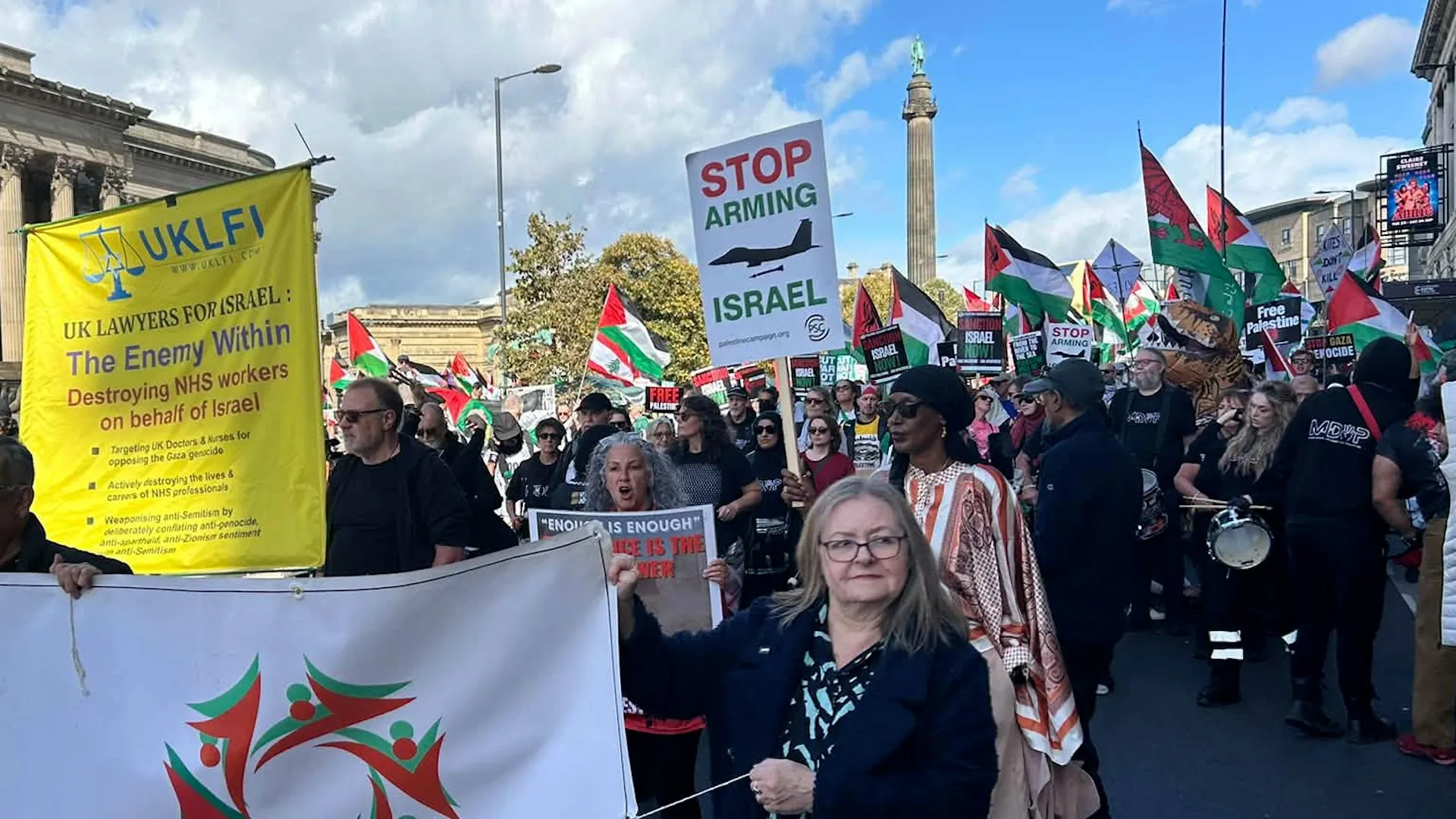
Pro-Palestine protesters have marched on Labour’s annual conference in Liverpool, calling for an end to UK arms sales to Israel and the imposition of sanctions. The protest follows Labour’s sanctions on Israeli settlements, but demonstrators say the measures do not go far enough.
Ireland are due to play Israel in the Nations League in Hungary on Sunday, but boycott pressure mounts on and off-field.
Published On 26 Sep 202626 Sep 2026
The Ireland team’s news conference and training session the day before its first Nations League game against Israel have been delayed as pressure to boycott the matches grows.
Journalists in Debrecen, Hungary – where Israel’s “home” game is to be played Sunday – were left waiting Saturday after being told the news conference was being pushed back until after training. That was 15 minutes before it was supposed to begin.
Training was also significantly delayed, however, with Irish broadcaster RTE reporting the players were still in their hotel more than two hours after the training session was supposed to begin.
RTE reported that some players had decided they did not want to play the games.
“And if they stay to their stated ambition that they have to be all in it together, if one or more want to be out, maybe they will all be out,” reporter Tony O’Donoghue told RTE Radio 1.
The team has been coming under increasing pressure in Ireland, where affinity with Palestinians is strong, to boycott the two games – the first on Sunday and the second, Ireland’s “home” game, in Backa Topola, Serbia, on October 4.
Ireland midfielder Jason Knight said after Thursday’s 1-0 loss in Kosovo that the players were in a difficult situation and that he didn’t think the matches should be going ahead.
Ireland coach Heimir Hallgrimsson previously said “we’re not playing with genocide, we’re playing against genocide. We’re playing against Israel, we’re not playing with Israel” – drawing a furious reaction from the Israeli football federation, which accused the Icelandic coach of “stupidity, ignorance and hypocrisy”.
The Football Association of Ireland (FAI) had resisted calls to boycott the matches, arguing the team could be hit by punishing sanctions by UEFA. Ireland is cohosting the 2028 European Championship with England, Wales and Scotland.
More than 160 Irish sportspeople signed an open letter urging the FAI to reconsider its decision to go ahead with the fixtures.
There were protesters outside the team hotel in Dublin last week calling on the players to boycott the games. The SIPTU trade union displayed a huge poster in central Dublin beside the River Liffey asking the players to “Go with your conscience!” and “Don’t play with genocide” beside an image of a blood-splattered ball.
Former Ireland coach Brian Kerr said the FAI had “lost the respect of the Irish people” for going ahead with the games.
“The Irish people and the soccer-going public don’t want the games to be played,” Kerr said. “I think they’ve made their opinions clear over the last year. The FAI back in November actually went to UEFA and requested that Israel be put out of the tournament on principle. And yet they went against that principle.”
The Republic of Ireland have delayed the pre-match news conference planned for Sunday’s Uefa Nations League game against Israel in Hungary – a fixture campaigners have called on them to boycott.
Heimir Hallgrimsson’s team are scheduled to meet Israel in Debrecen at 19:45 BST, with the return fixture in Backa Topola, Serbia on 4 October.
They have faced calls to withdraw from the games because of the ongoing Israel-Gaza war with a “Stop The Game” campaign – organised by the pressure group Irish Sport for Palestine – gathering pace.
Former Republic of Ireland manager Brian Kerr and ex-international James McClean are among those to have backed calls for a boycott.
However, there are also Irish supporters, perhaps less vocal, who have always believed that the match should be played with supporters in attendance.
Hallgrimsson and a player were scheduled to meet the media at 09:15 BST (10.15 local time), before training, but the conference was delayed shortly beforehand.
A Uefa official entered the room to inform waiting media teams that the press conference was postponed until after training, which would have been about 11:30 BST (12.30 local time).
But shortly afterwards, the Uefa official returned to the media room to announce that the Republic of Ireland’s training session had also been postponed, with no time given for when it might take place. There is also no confirmed time for the news conference.
A Pew Research poll in April indicated 60 percent of the US adult population held an unfavourable view of Israel.
Published On 26 Sep 202626 Sep 2026
US ambassador to Israel Mike Huckabee says that the recent souring of public opinion in the United States towards Israel is the result of a lack of “biblical literacy”.
In an interview with NewsNation on Thursday, the ambassador suggested there were three sources of declining support for Israel.
Recommended Stories
list of 3 itemsend of list
He cited disinformation and foreign propaganda, a hatred of those who believe “there is a God and that he’s made up the rules for life”, and not knowing the Bible.
“You add all that together, I guess you just want to be mad at Israel and blame them for everything,” he said.
Huckabee claimed that accusations of genocide in Gaza and that Israel is an apartheid state are false, and Americans would have a more favourable view of Israel if they would “look at the truth”.
A Pew Research poll in April indicated that, although favourable opinion of Israel remained relatively strong at 65 percent among white evangelicals, such as Huckabee, 60 percent of the US adult population held an unfavourable view of Israel.
An AP-NORC poll from July suggested that Americans who believed Israel committed genocide in Gaza outnumbered those who did not, although roughly half said they did not know enough to answer.
For Israel, the decline in support has become alarming as prominent critics of Israel won several elections, including Zohran Mamdani, who became New York City mayor.
Israeli Prime Minister Benjamin Netanyahu used part of his speech at the United Nations General Assembly to lambast Mamdani, claiming that Jews in New York told him that they no longer feel safe in the city.
Netanyahu, too, has seen declining popularity in the US, with the same Pew survey indicating more than half of Americans did not trust him to do the right thing regarding world affairs.
Mamdani has previously said that he opposes hatred and bigotry, including anti-Semitism, but promised to execute an International Criminal Court warrant for Netanyahu for war crimes when the Israeli leader next visited New York City – before eventually concluding that the city did not have the legal authority to do so.
Lebanese Prime Minister Nawaf Salam wants US-brokered ceasefire to be consolidated and for Israel to retreat.
Lebanese Prime Minister Nawaf Salam has called for an end to the Israeli occupation of southern Lebanon and the full enforcement of the ceasefire, as Israeli shelling and demolitions continue.
“We want the war to end and we want the ceasefire [with Israel] consolidated,” Salam said in a speech at the United Nations General Assembly in New York on Friday.
The prime minister demanded a complete withdrawal of Israeli forces from Lebanese territory up to its internationally recognised border and the release of all Lebanese detainees.
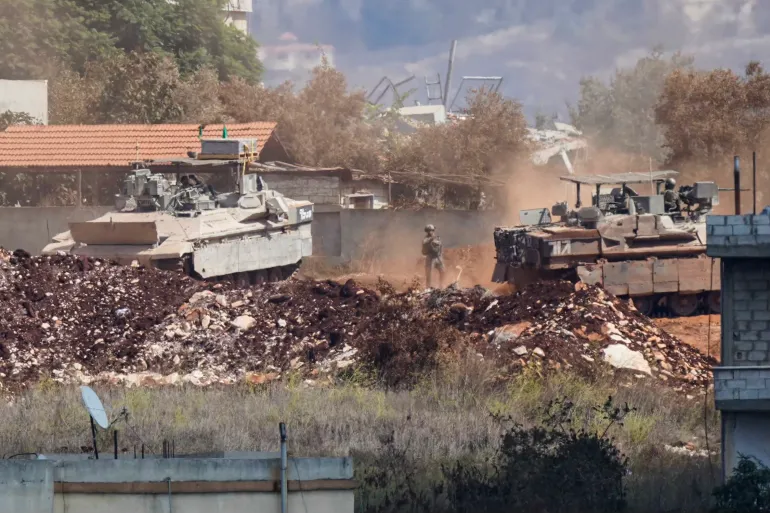
As delegates gathered to listen to Salam, on the ground in Lebanon, Israeli forces carried out a large explosion near Taybeh and Deir Siryan, while an Israeli air strike targeted a valley between Froun and Ghandourieh, triggering a large fire.
Al Jazeera’s Zeina Khodr, reporting from Froun, said the reality on the ground is that the conflict is far from over.
“From the ground here in Froun, we can still see Israeli warplanes and drones flying at low altitudes in the skies above and Israeli artillery shelling is still causing uncontrollable fires. Lebanese civil defence and firefighters are not being allowed by the Israelis to reach these areas and put out the flames,” she said.
“More than 60 towns in southern Lebanon are still occupied by the Israeli army, where the Israelis are carrying out a systematic campaign of demolitions,” Khodr added.
Israeli forces are “blowing up people’s homes, despite the framework agreement in which there is supposed to be a ceasefire that they have signed with the Lebanese government,” she said.
Israeli attacks in southern Lebanon have killed at least 4,386 people and wounded 12,407 others since March 2 , when the current Hezbollah-Israel war started. Since then, Israeli forces have occupied up to 600sq km of Lebanese territory up to the Litani River.
A US-brokered framework agreement between Lebanon and Israel in June provides for a gradual Israeli withdrawal from Lebanese territory and the deployment of the Lebanese army in areas vacated by Israeli forces.
Israeli armoured vehicles in the southern Lebanese village of Zawtar al-Charkiyah on Thursday [Ammar Ammar/AFP]
Speaking at the UNGA, Salam said his government had entered into negotiations with Israel, mediated by the United States and President Donald Trump, “to end the war and restore Lebanon’s sovereignty”, adding that the success of any agreement is measured not by intentions but by fulfilment of commitments.
“What is required is to complete the translation of this agreement into practical steps within a clear timetable and with a verification mechanism that ensures the implementation of all its provisions,” he said.
He focused on state sovereignty, saying it “cannot be untouchable in one place and negotiable in another, nor can the rules of international law apply to some but not to others”.
Salam also pledged to oversee the disarmament of Hezbollah in exchange for Israel’s eventual full withdrawal, also saying “weapons must be exclusively in the hands of the state and that decisions on war and peace rest solely with its constitutional institutions”.
Stability in the Middle East can only come with respect for Palestinian rights, he said.
“There can be no lasting stability in Lebanon without lasting stability in our region, and there can be no stability in the region as long as this organisation [the UN] remains unable to enable the Palestinian people to exercise their inalienable right to self-determination, like all other peoples of the world,” Salam said. “No less and no more.”
Israel footballer Sayed Abu Farchi was sent off for goal celebration mimicking shooting a gun in match against Austria.
Published On 25 Sep 202625 Sep 2026
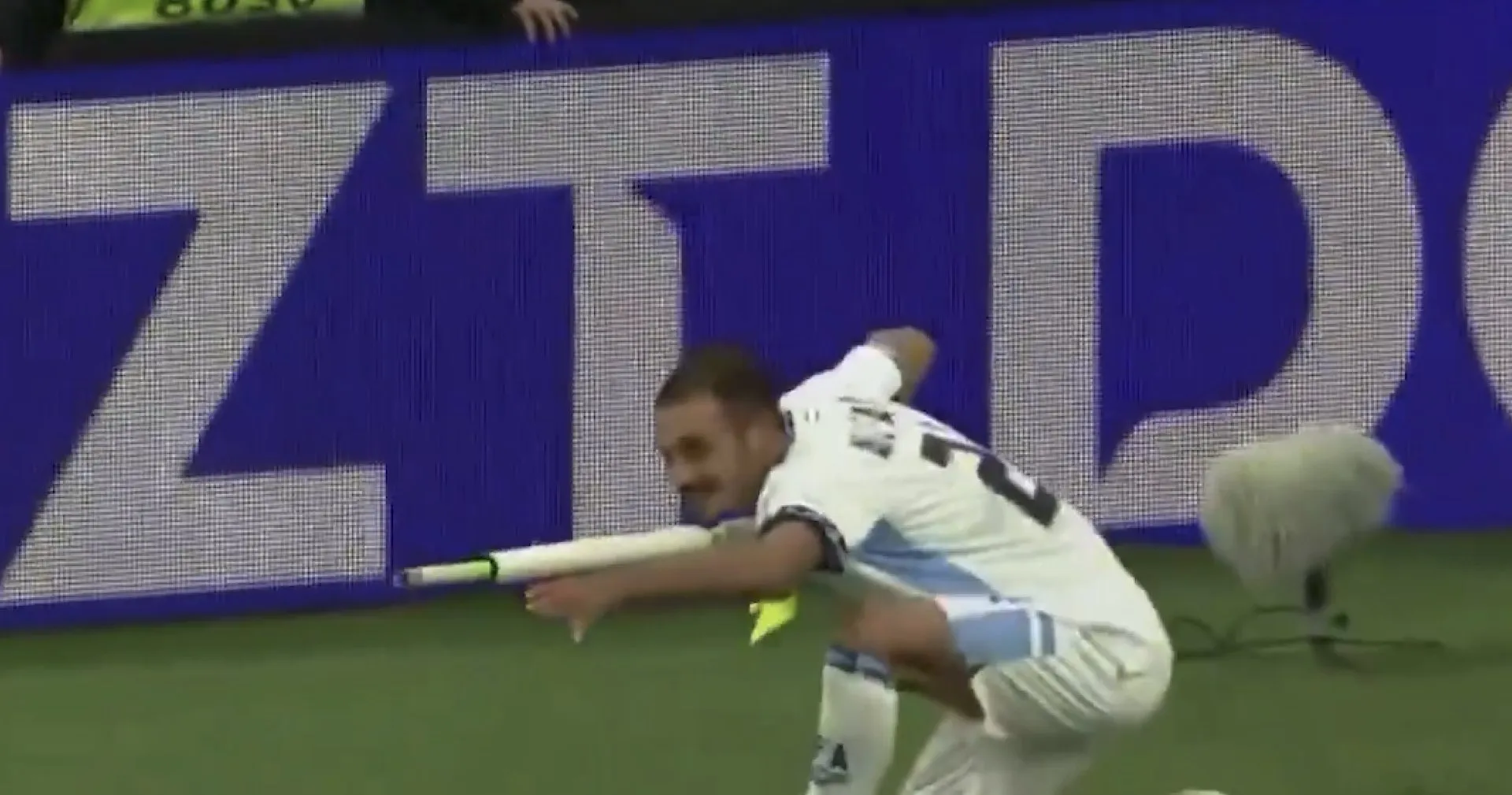
Israel footballer Sayed Abu Farchi was sent off for his goal-scoring celebration when he used the corner flag to simulate a gun after equalizing against Austria in their UEFA Nations League late on Thursday.
The forward’s goal levelled the match 1-1 early in the second half at Raiffeisen Arena in Linz, Austria, his 55th minute header cancelling out Romano Schmid’s first-half penalty.
Recommended Stories
list of 4 itemsend of list
The 20-year-old then jogged to the corner, pulled out the corner flag, dropped his right knee to the grass and rested the pole on the back of his left hand before making a firing gesture.
It wasn’t immediately clear if Farchi, who plays his club football in Major League Soccer (MLS) in the United States, was about to simulate a pool cue shot or a weapon, but the action that followed left no one in doubt.
The referee promptly showed the Colorado Rapids forward a second yellow card, just four minutes after his first, leading to a red card.
Under the International Football Association Board Law 12, players can celebrate a goal as they wish, but their celebration “must not be excessive” and a player “must be cautioned for acting in a provocative, derisory or inflammatory way”.
Austria regained the lead in the 90th minute through Phillipp Mwene, who netted following a cross from Paul Wanner. Sasa Kalajdzic added a third goal in stoppage time with a close-range finish to seal a 3-1 win.
Israel’s participation in the Nations League has prompted fierce backlash from several other competing countries, including the Republic of Ireland, whose football association said its request to avoid future pairings with Israel had been rejected by UEFA.
A banner with the words “Free Palestine” was also displayed by Austrian fans close to the pitch during Thursday’s match.
Ireland face Israel on Sunday in a match to be hosted at a neutral venue – Nagyerdei Stadion in Debrecen, Hungary – before hosting the return fixture on October 4.
Al Jazeera has contacted UEFA and Colorado Rapids for a response to Farchi’s celebratory simulation.
New York Mayor Zohran Mamdani posted a video of himself planting an olive tree alongside Palestinian families from Gaza, hours after Israeli Prime Minister Benjamin Netanyahu accused him of anti-Semitism in his speech at the UN General Assembly.
Israeli footballer Saied Abu Farchi has been sent off during a Nations League match after using a corner flag to mimic firing a rifle while celebrating his equaliser against Austria. Israel lost 3-1.
Israel’s Prime Minister addressed the UN General Assembly in person, despite having an International Criminal Court (ICC) arrest warrant issued against him. Palestinian President Abbas meanwhile was forced to address the Assembly virtually. Al Jazeera’s James Bays reports.








![Hakim Mar’i in his family’s apartment with his injured leg, which prevents him from working [Al Jazeera]](https://i0.wp.com/occasionaldigest.com/wp-content/uploads/2026/09/d9-1790406476.jpg?w=640&ssl=1)
![Members of the Zbeidat family sit on couches outside. The room they stay in is on the left [Al Jazeera]](https://i0.wp.com/occasionaldigest.com/wp-content/uploads/2026/09/s2-1790406485.jpg?w=640&ssl=1)
![The kitchen and bathroom the Zbeidats have are in the same room they sleep in [Al Jazeera]](https://i0.wp.com/occasionaldigest.com/wp-content/uploads/2026/09/s4-1790406489.jpg?w=640&ssl=1)