Animal lovers in Gaza are resorting to desperate measures to keep their pets alive and healthy. Only two pet clinics are still operating, and critical veterinary supplies and animal food are running low. Vets are warning animal deaths will rise unless supplies arrive soon.
Israeli attack reportedly kills one person in central Gaza’s Bureij camp, as a disabled Palestinian is shot in the West Bank.
Published On 13 Jun 202613 Jun 2026
Israeli forces have carried out a deadly attack in a refugee camp in central Gaza, according to Palestinian media reports, as casualties continue to mount in the enclave despite a “ceasefire” declared months ago.
The Israeli drone attack in the Bureij camp on Saturday killed one person and injured two others, reported the Wafa news agency.
The Palestinian Information Center identified the person killed as Muawiya al-Aydi, a local municipality worker.
Further north, a separate Israeli attack injured a person at a gathering in Gaza City’s Tuffah neighbourhood, according to Wafa.
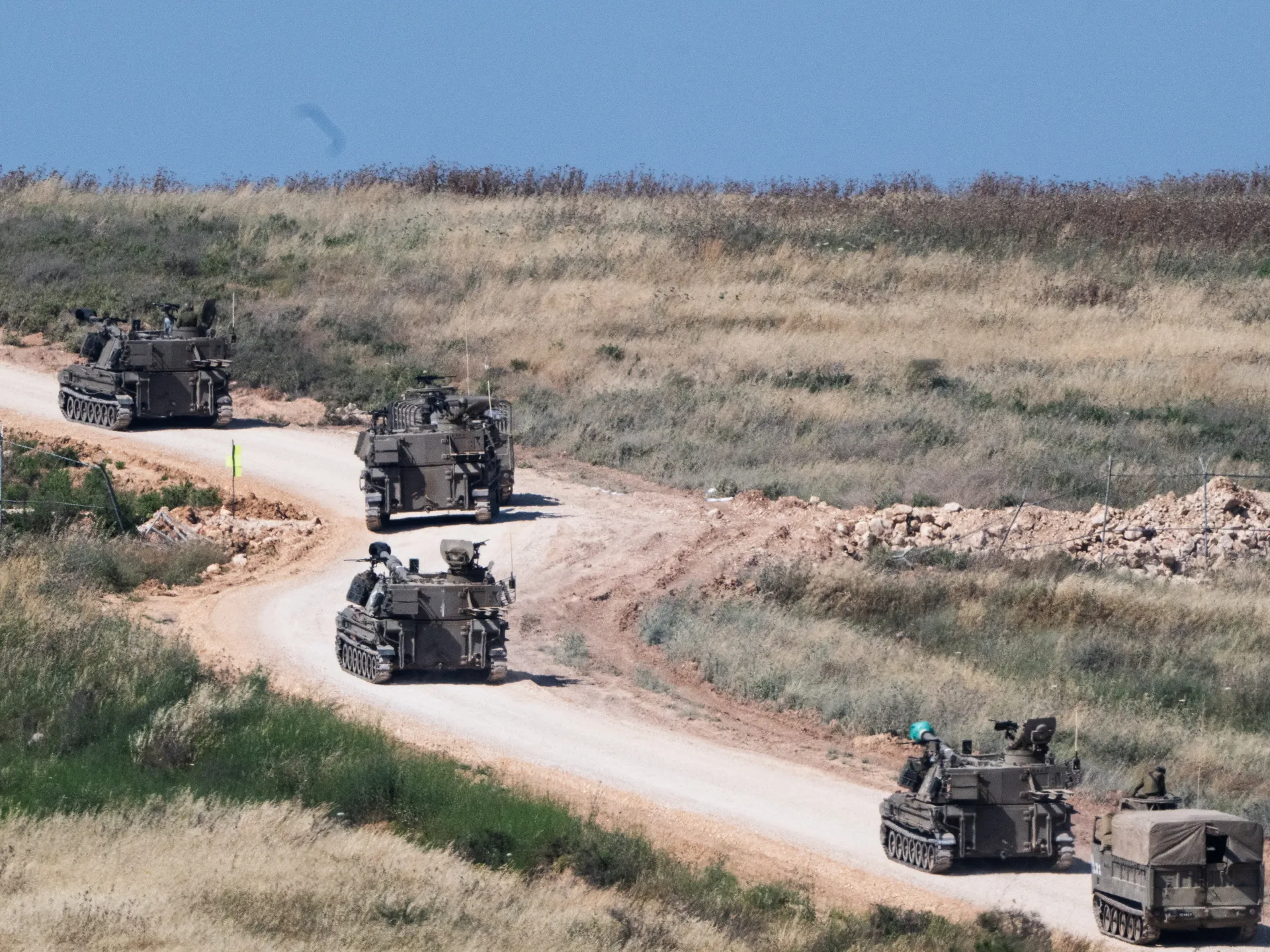
Despite a ceasefire technically in effect since October, Israel’s military has regularly attacked Gaza, over half of which is under Israeli military control in defiance of the ceasefire’s terms.
According to Gaza’s Health Ministry, at least two Palestinians have been killed and 11 injured in Israeli attacks on the enclave in the past 48 hours.
The ministry said 983 people have been killed and 3,122 injured in Israeli attacks since the ceasefire was declared.
Hamas has accused Israel of repeatedly violating the agreement through its continued attacks and by shifting the so-called “Yellow Line” that demarcates Israeli-controlled areas in Gaza.
“Israeli actions reflect its unwillingness to implement the ceasefire agreement and aim to blow up the negotiation track and thwart the efforts being made, while continuing escalation to serve political and electoral considerations,” said Hamas spokesman Hazem Qassem on Friday.
Disabled Palestinian shot, injured in West Bank
Israeli troops also carried out a series of violent raids in the occupied West Bank on Saturday, part of a pattern of near-daily operations since the Hamas-led attacks on Israel on October 7, 2023.
According to Wafa, Israeli forces deployed stun grenades and tear gas during two separate incidents near Bethlehem, causing numerous injuries: one during a raid on the Dheisheh refugee camp and the other while blocking access to the Solomon’s Pools reservoirs.
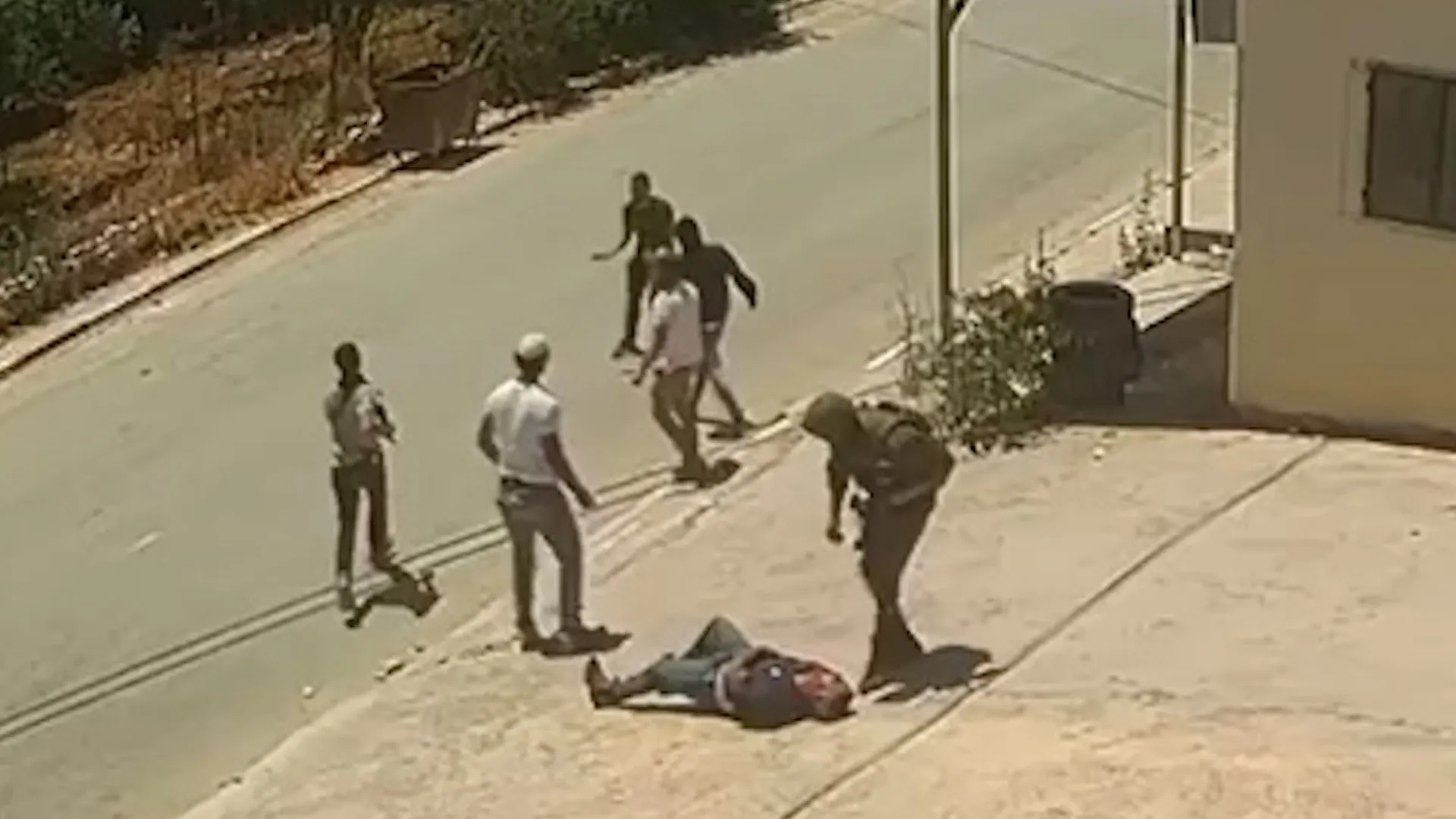
A disabled Palestinian man was also shot and injured in the town of Duma, near Hebron.
Wafa said Israeli forces shot the man, while Israeli media cited Israeli police as saying an Israeli settler was responsible. According to Israeli police, the settler felt threatened by the man who was carrying a rock.
Other Israeli settlers attacked Palestinians and vandalised property near Bethlehem, including assaulting Palestinian electrical workers and stealing water pipes, said Wafa.
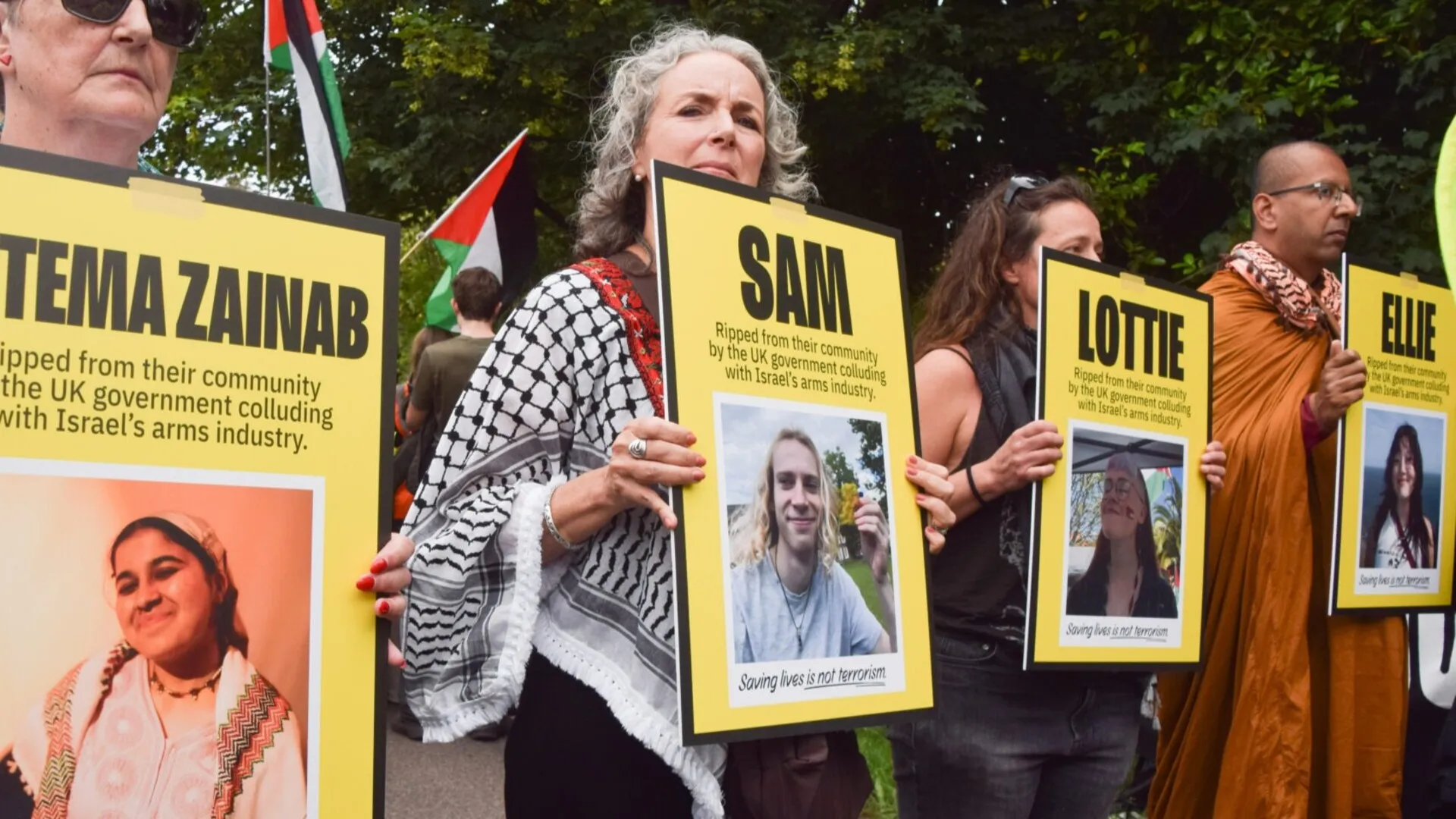
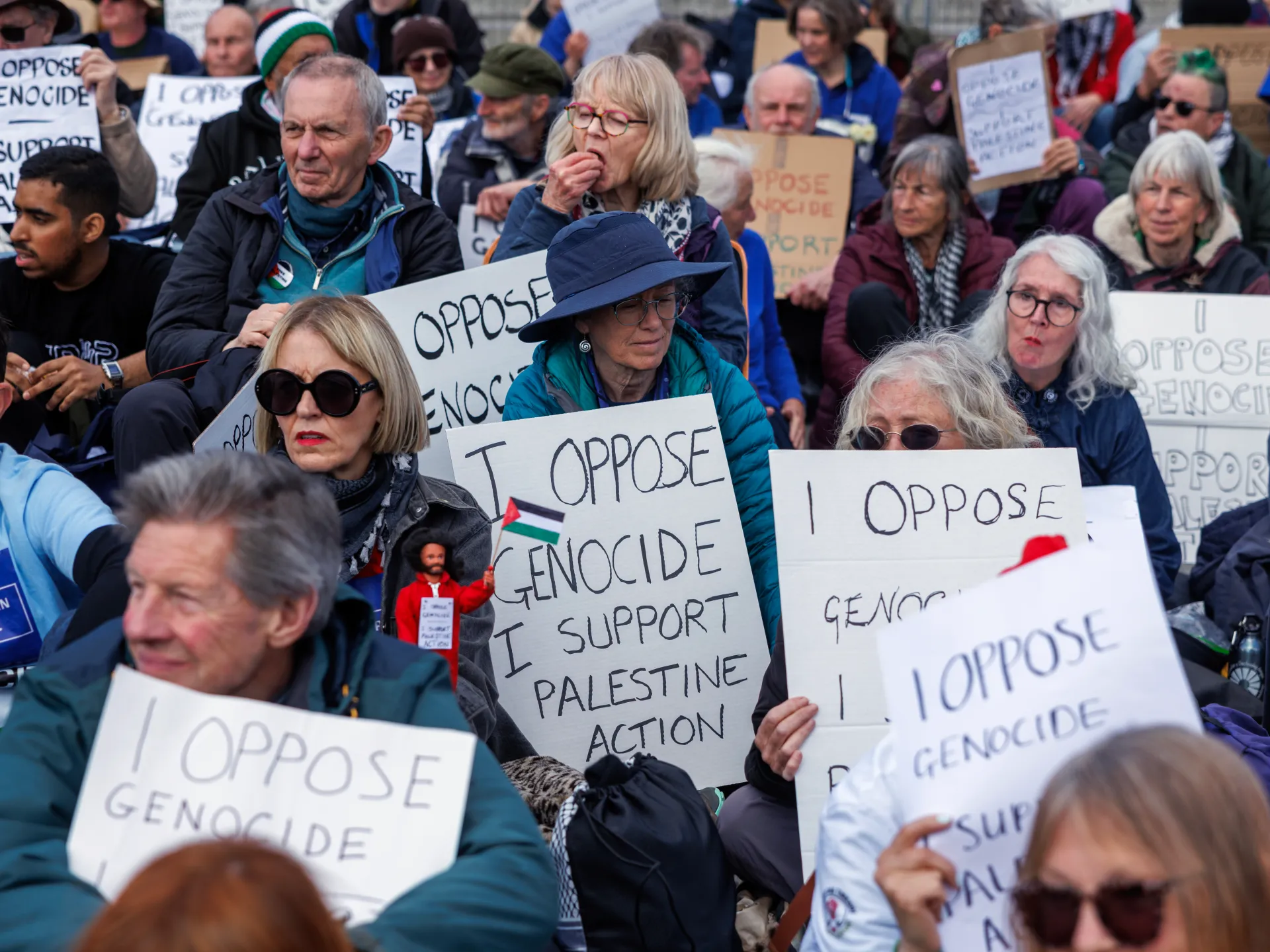
A UK court has sentenced four pro-Palestine activists to jail for a raid on an Israeli arms factory near Bristol in 2024. Palestine Action says their aim was to ‘dismantle drones and weaponry’ they believed would be used to kill people in Gaza.
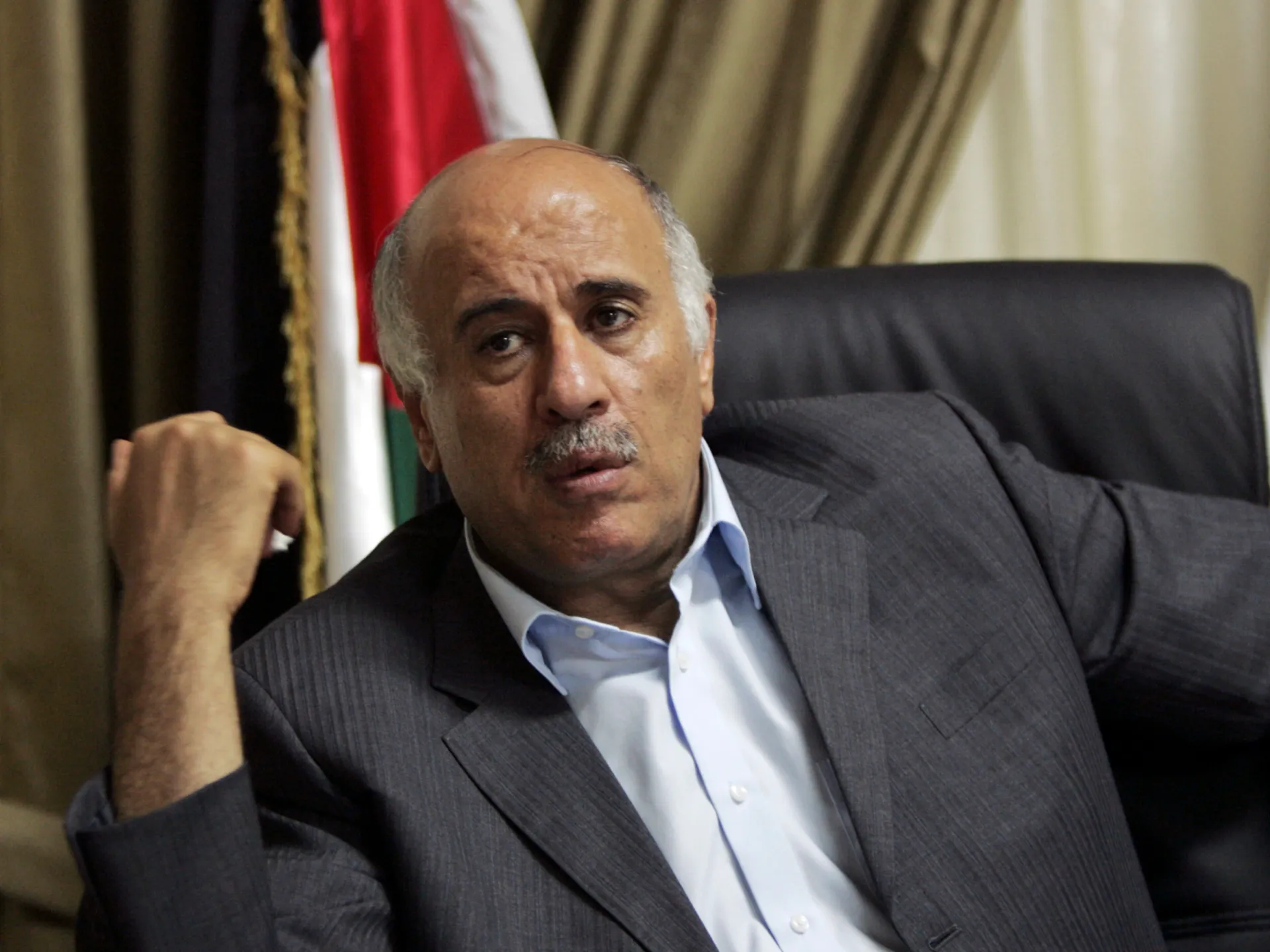
Jibril Rajoub is in Mexico awaiting a US visa to attend the World Cup 2026.
Published On 12 Jun 202612 Jun 2026
The head of the Palestinian Football Association says he is waiting in Mexico City for permission to enter the United States to attend the FIFA World Cup with other federation heads.
Jibril Rajoub attended the opening match between Mexico and South Africa on Thursday, but he has now joined several people accredited to attend the World Cup who have been denied visas or have yet to receive them from the US.
Recommended Stories
list of 2 itemsend of list
“I don’t believe that it’s fair to use or to abuse and deny the right of all footballers all over the world to attend,” the veteran Palestinian political figure told The Associated Press news agency.
The Palestinian team did not qualify for the World Cup, but FIFA typically invites the heads of football associations from around the world to the event every four years, which it frames as a celebration of global unity.
“Everyone will be welcome in Canada, Mexico and the United States for the FIFA World Cup next year. We are working exactly for that,” FIFA President Gianni Infantino said last year.
The US, however, has refused entry to delegates from several countries, including a referee from Somalia and a photographer travelling with Iraq’s team.
Infantino said this week that FIFA had been trying to resolve visa issues but could not overrule the US government.
“We need to respect that we are not the kings of the world who can rule over governments and police forces,” he told reporters on Wednesday.
The US Department of State had no immediate comment on Rajoub’s visa, but last year implemented new restrictions on Palestinian passport holders, including on anyone who had been employed by the Palestinian Authority.
It revoked a visa to allow Palestinian President Mahmoud Abbas to travel to the United Nations General Assembly last September.
Rajoub and other Palestinian football officials have long argued that Israel violates statutes by allowing teams from settlements in the occupied West Bank to play in Israel’s national league.
They have pushed FIFA to sanction Israel, highlighting restrictions on the movement of Palestinian players and how Israel’s genocidal war on Gaza has damaged or destroyed 80 percent of sports facilities and killed at least 565 players there, according to the association.
Last month, Rajoub refused to shake hands with the head of Israel’s football federation at Infantino’s behest because he said the gesture would not heal wounds but instead whitewash Israel’s actions.
Rajoub pointed out that when Russia hosted the 2018 World Cup, it did not implement comparable visa restrictions for people who were invited to the tournament.
Israel continues to expand settlements in the occupied territory, which are illegal under international law.
Published On 11 Jun 202611 Jun 2026
The Israeli government has allocated a first tranche of an expected $388m in new funds for the construction of settlements in the occupied West Bank.
The anti-settlement group Peace Now reported on Thursday that the government had allocated 152 million shekels ($51m) to prepare construction plans for 69 illegal settlements and outposts in the occupied West Bank.
Recommended Stories
list of 3 itemsend of list
The cabinet later reportedly postponed a decision about a 1-billion-shekel ($338m) allocation. That proposal, if passed, would mark one of the largest expansions of illegal Israeli settlements in decades.
“The government decided to postpone the decision [on the 1-billion-shekel allocation] and refer it to the Security Cabinet which is expected to convene on Sunday,” Peace Now wrote.
Under the yet-to-be-approved plan, construction for the settlements, including infrastructure and public buildings, would begin despite necessary planning protocols not having been carried out in accord with Israeli law.
Peace Now accused the government of intending to bypass planning and construction regulations.
“October 7 proved that the right-wing approach has failed: the conflict cannot be ‘managed,’ and the Palestinians cannot be ‘defeated’,” the group said in a statement.
“Israel must reach a political solution and diplomatic agreement, but instead the government is only sinking us deeper into the mire and condemning us to many more years of bloody conflict.”
Israel has come under growing condemnation for expanding settlements in the occupied West Bank, which are illegal under international law.
On Tuesday, the United Kingdom, Australia, New Zealand, Canada, France and Norway imposed sanctions on networks involved in financing, enabling and carrying out settler violence against Palestinians.
According to Peace Now, the current Israeli government has approved 103 settlements since it took office in December 2022. From that figure, 51 are entirely new settlements.
On Wednesday, Amnesty International published a report accusing the Israeli government of playing a central role in what it describes as the ethnic cleansing of Palestinians in the occupied West Bank. The report described the government’s actions as “integral”.
At least 117 villages in the West Bank have been subject to either complete or partial displacement due to settler attacks, according to the United Nations Office for the Coordination of Humanitarian Affairs (OCHA).
Amnesty also condemned the upcoming “Great Israeli Real Estate Event”, which is due to take place in London on Sunday.
The event, which has also been held in the United States and Canada, promotes the sale of properties in the occupied West Bank, which campaigners say is in violation of international law.
Four activists from the Palestine Action group face sentencing in the United Kingdom as “terrorists” on Friday, despite only being convicted by a jury of other criminal charges.
Palestine Action was formally proscribed as a “terrorist” organisation in the UK last July.
Last month, four of six activists on trial were convicted at Woolwich Crown Court in London of criminal damage during a 2024 raid on a factory in Filton, Bristol, operated by Israeli defence firm Elbit. One of the defendants was also found guilty of striking a police officer with a sledgehammer.
The possibility that the judge will rule that the offences have a “terrorist connection” for sentencing purposes has prompted protests.
What is Palestine Action?
The protest group Palestine Action, launched in July 2020, describes itself as a movement “committed to ending global participation in Israel’s genocidal and apartheid regime”.
It seeks to use “disruptive tactics” to target “corporate enablers” and companies involved in the manufacture of weapons for Israel, such as Israel-based Elbit Systems, Italian aerospace company Leonardo, French multinational Thales and Teledyne from the United States. The group has targeted British facilities linked to those companies.
The UK parliament voted in favour of proscribing the group on July 2, 2025, classifying it as a “terrorist” organisation, and bringing it into the same category as armed groups such as al-Qaeda and ISIL (ISIS). The proscription came days after its activists sneaked into an air force base in southern England.
Critics decried the move by MPs, arguing that while members of the group have caused damage to property, they have not committed violent acts that amount to terrorism.
What were they convicted of?
In August 2024, Palestine Action activists raided a factory in Filton near Bristol in southwest England, operated by Israeli arms manufacturer Elbit Systems. They entered the site and caused extensive damage in an attempt to disrupt the production of weapons and drone components they say would be used by Israel in Gaza.
The raid, which prosecutors said caused about one million pounds ($1.36m) of damage, happened 10 months into Israel’s genocidal war on Gaza that began in October 2023.
Last month, jurors at Woolwich Crown Court convicted Charlotte Head, 30, Samuel Corner, 23, Leona Kamio, 30, and Fatema Zainab Rajwani, 21, of criminal damage. The four activists have become known as “the Filton 4”.
Corner was also found guilty of striking a police officer with a sledgehammer and convicted of inflicting grievous bodily harm.
Two other Palestine Action activists, Zoe Rogers, 22, and Jordan Devlin, 31, were found not guilty.
The verdict followed an earlier trial, at which all six defendants were acquitted of aggravated burglary, while the jury was unable to reach verdicts for the criminal damage charges.
Each of the defendants gave evidence, admitting that they damaged Israeli military drones and equipment inside Elbit’s research and development facility in Filton – in order to “save lives in Palestine”, according to a statement by their lawyers.
What would a terrorism sentencing mean?
The jury was not told that, if they convicted, the four could be sentenced under terrorism laws. Criminal damage is not usually a terrorism offence, but in England and Wales judges can decide to treat an offence as having a “terrorist connection” at sentencing, even when the charge itself is not a terrorism offence.
If the court decides there was a terrorism connection, the activists would have to serve their entire sentences in prison, unless they have already completed at least two‑thirds of the sentence and a parole board decides they can be released.
Conversely, non-terrorist prisoners usually serve about 40 percent of their sentence in custody and are released early, but under conditions and supervision, sometimes called licence conditions. If they break those conditions, they can be sent back to prison to finish their sentence.
Additionally, if the activists are sentenced in this way, they can be recorded as “terrorists” for the rest of their lives, would be required to register new mobile devices, email addresses and bank accounts with the police for their lifetime, and face being returned to prison if they breach their licence conditions or reoffend.
What has the reaction to all this been?
On Wednesday, a group of more than 50 lawyers and law professors published an open letter denouncing plans to sentence the four Palestine Action members as terrorists.
The letter highlights that damage to property has been a recurring feature of protest campaigns from the Suffragettes who fought for women to have the right to vote, to environmental protest group Extinction Rebellion.
“It has never previously even been suggested that those taking such action should be treated as terrorists. Blurring the distinction between principled direct action and terrorism is the hallmark of authoritarian regimes,” the open letter stated.
The letter has been signed by law professors from universities in the UK, the Netherlands, Norway and Canada as well as by dozens of practising barristers and solicitors.
According to local news reports, a protest is expected at Woolwich Crown Court on Friday against the potential judgement.
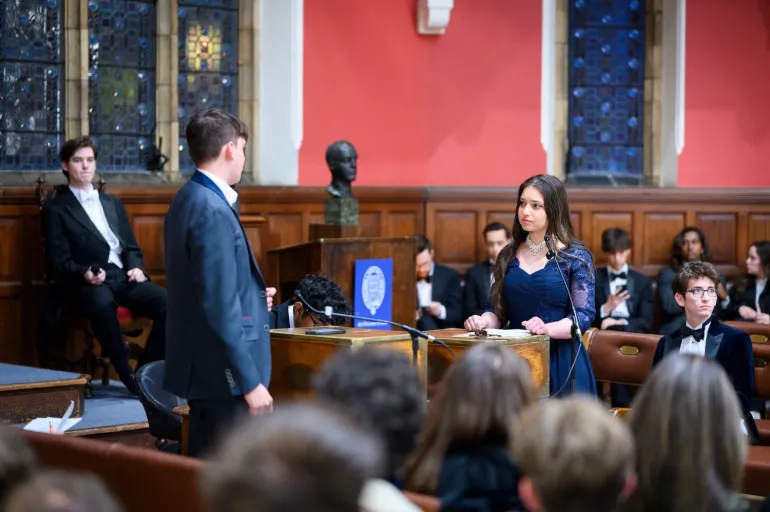
At a motion for a vote of no confidence against Arwa Elrayess, the first Palestinian president of the University of Oxford’s debating society, Oxford Union, she was accused by a 20-year-old student of contributing to “an atmosphere of hostility and harassment”.
In a video of the forum last week at the prestigious university, which was shared with Al Jazeera, Elrayess is seen replying to Ben Ashworth, “Not just in my career within the union but in my existence as a Palestinian, there seems to always be this post-mortem vilification of Palestinians.”
Recommended Stories
list of 4 itemsend of list
The room was full of onlookers as Elrayess, who became the head of the Oxford Union late last year, stood tall in a green sequinned dress.
“Palestinians, when they talk, are for some reason a danger. Our very existence is something that is scary,” she added.
The motion was filed after screenshots of text messages from Elrayess were quoted in outlets including The Telegraph and the BBC as saying that the Hamas-led incursion into southern Israel on October 7, 2023 was “proportional”.
The text also said groups branded as terrorists were often later “lauded as heroes”.
Ashworth cited the Sunday Telegraph directly in his accusation. The newspaper’s political editor, Camila Turner, whose father serves as chief executive of UK Lawyers for Israel, had carried the claim that Elrayess said Hamas would be “lauded as heroes”.
But Elrayess did not make any statement of support for Hamas.
Nine months ago – before Elrayess was president – she was in a group chat of students meant to discuss politics.
In the group chat, October 7 and Palestine – and broader conversations on resistance groups – were discussed.
“Analysing something is not giving it moral legitimacy,” she told Al Jazeera. “Even though I described explicitly in all the messages that I’m not describing this as legitimate or morally justified, I’m just providing analysis; all of this was stripped away when it was reported in The Telegraph or the Daily News.”
The full quote in question on the group chat read: “Any resistance group will inevitably be deemed a terrorist organisation by the West until they achieve their liberation, by which time they’ll be lauded as heroes as history has historically proven.”
‘Entirely misquoted’
The messages were not meant as commentary on Hamas specifically, she argued.
“It was entirely misquoted; I believe it was entirely intentional to frame as having said something that I simply did not say,” she told Al Jazeera.
To the Jewish Chronicle, though, Elrayess reiterated her position by saying, “I condemn Hamas’ targeting of innocent civilians, just as I condemn the targeting of innocent civilians by the [Israeli army] or any other actor.”
After refuting the allegation and misquotations, Ashworth is seen in the video yelling at Elrayess, asking whether she condemns Hamas again.
Ashworth, who is not Jewish, has faced criticism for recently visiting Israel with the Pinsker Centre, a think tank formerly known as the Pinsker Centre for Zionist Education.
The motion for a vote of no confidence overwhelmingly failed, receiving 126 votes, 116 of which were online signatures, far below the 150 needed to proceed to a poll.
This is not the first misinformation campaign against Elrayess.
In October 2025, just before her election as president of the debating society, falsified minutes were ratified by an unnamed member of the union, alleging that Elrayess “argues that alumni members shouldn’t be allowed to vote, reiterating her claims that they are incapable of making a rational judgement”.
Elrayess believes that the minutes were made up and spread to “paint me as someone who hates alumni of this institution”.
After an internal disciplinary process, the person who falsified the minutes was suspended from office and the minutes were de-ratified.
Shortly after her win, opposition within the Union brought forward a number of charges against Elrayess, ranging from misuse of social media to antisemitism. In January, it was found that the charges were un-evidenced. By this point, however, Elrayess had lost two months of her presidency.
Alongside this, an article was published in the Oxford Standard alleging that she was related to a leader of Hamas who happened to share the same surname as her, and that she had created and shared a cartoon of herself stepping on a lizard and a hook-nosed anti-Semitic caricature to celebrate her victory.
The claims, again, were false. The cartoon linked to an anonymous meme page that Elrayess had nothing to do with, and she had no family ties to Hamas. The article had no author attributed to it, and the Oxford Standard did not contact Elrayess or reply to her emails, fact-checking the article.
Within days, Elrayess had emails from journalists at The Jerusalem Post, Jewish Chronicle and The Telegraph, asking her to clarify her family affiliation with Hamas and her views of Jewish people, stemming from the stark untruths shared in the nameless Oxford Standard article.
Arwa Elrayess said she is the victim of a smear campaign after media outlets selectively quoted and misinterpreted some of her text messages [Courtesy of Arwa Elrayess]
The only cause for the allegations, some have observed, appeared to be Elrayess’s Palestinian identity.
A colleague and friend of Elrayess, who wished to remain unnamed, described to Al Jazeera a sense of distress among Elrayess and her friends.
“The level of attacks that Arwa and her friends received was astounding,” he said.
The Oxford Standard, which no longer exists, deleted both the article and their website altogether. But the rumours they began, with no facts to back them up, have snowballed into national news headlines of Oxford Union’s first Palestinian president being a supporter of Hamas and a proud anti-Semite.
Tweets by prominent Zionist influencers like Eylon Levy, former spokesperson for Israel, sharing the lie that Elrayess is a Hamas heiress, with now-broken Oxford Standard links and no factual corrections.
‘I’m a very proud Palestinian’
Elrayess’s dedication to debate and free speech has brought controversy to her tenure. She invited prominent Israel supporter Tommy Robinson to a debate, triggering widespread protest in Oxford, and has engaged with conservatives and Zionists in her union and her own appointed committee.
Oliver Jones-Lyons, director of finance of the Oxford Union, works alongside Elrayess and describes himself as a “pretty public Zionist”.
Still, despite their diametric positions, Lyons-Jones does not endorse the growing smear campaign against Elrayess.
“I have never felt oppressed, abused or discouraged from sharing my views openly, quite the opposite in fact,” said Jones-Lyons in a statement to Al Jazeera. “Me and Arwa obviously vehemently disagree on a lot of issues; however, our conversations about issues that are deeply personal to both of us have never once been aggressive and have always been productive, in fact I can certainly say Arwa has changed my mind on issues I never thought I would.”
Oxford Union member Oliver Goldstein said, “Personally, I like Arwa. I don’t agree with many of her comments, but do I feel unsafe as a Jewish student at the Oxford Union? No … I don’t think she’s an anti-Semite.”
Despite the inundation of misinformation, Elrayess remains determined.
“My father is from Gaza,” she said. “He would always tell me, ‘It doesn’t really matter what you say or do not say; people will always find a way to spin it in such a way that you become a target, because you’re already a target.”
She said she lives by her father’s words.
“I’m not resigning from my position. They can throw 1,000 different letters in 1,000 different articles. I’m very vocal, and I’m a very proud Palestinian.”
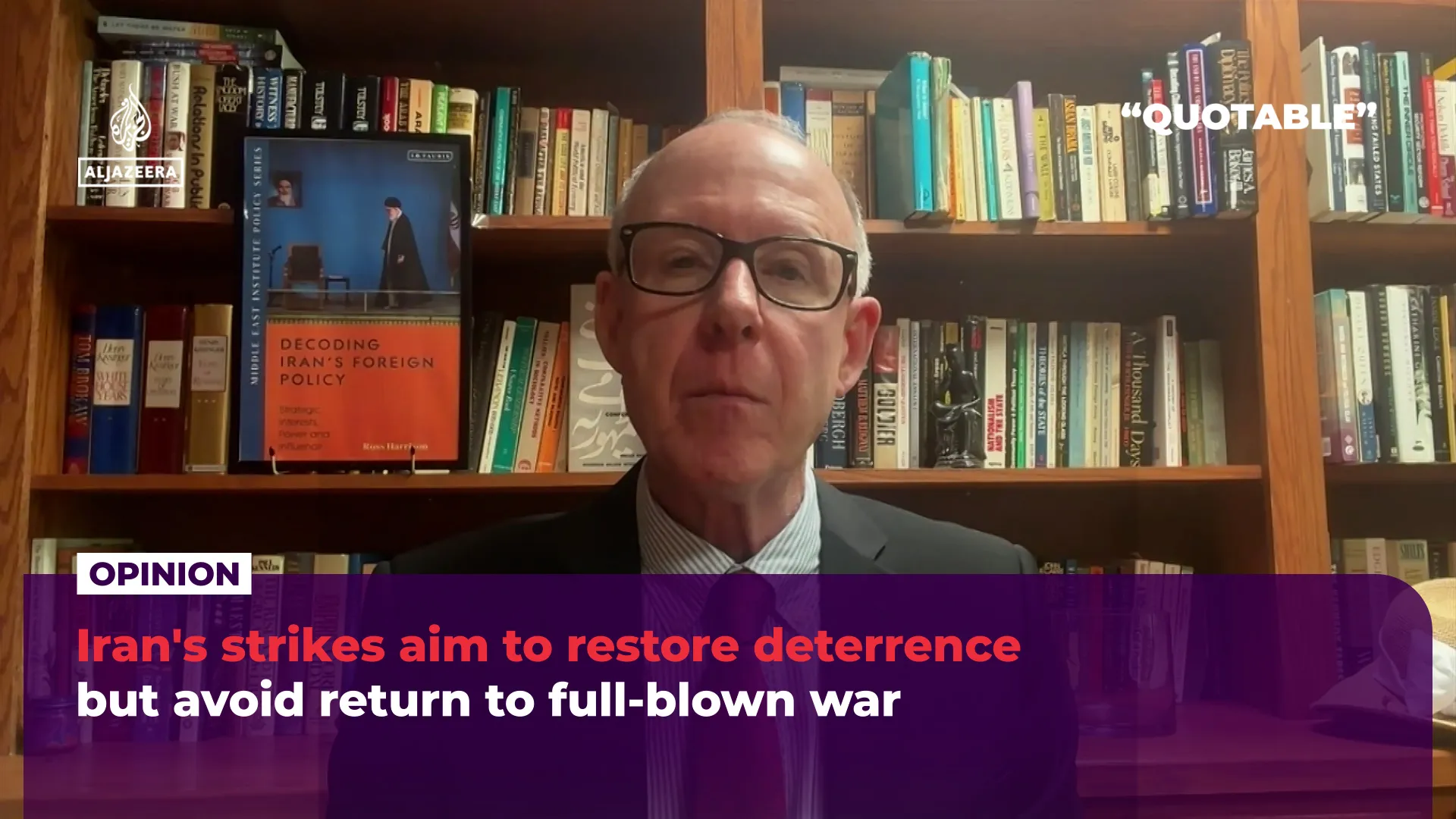
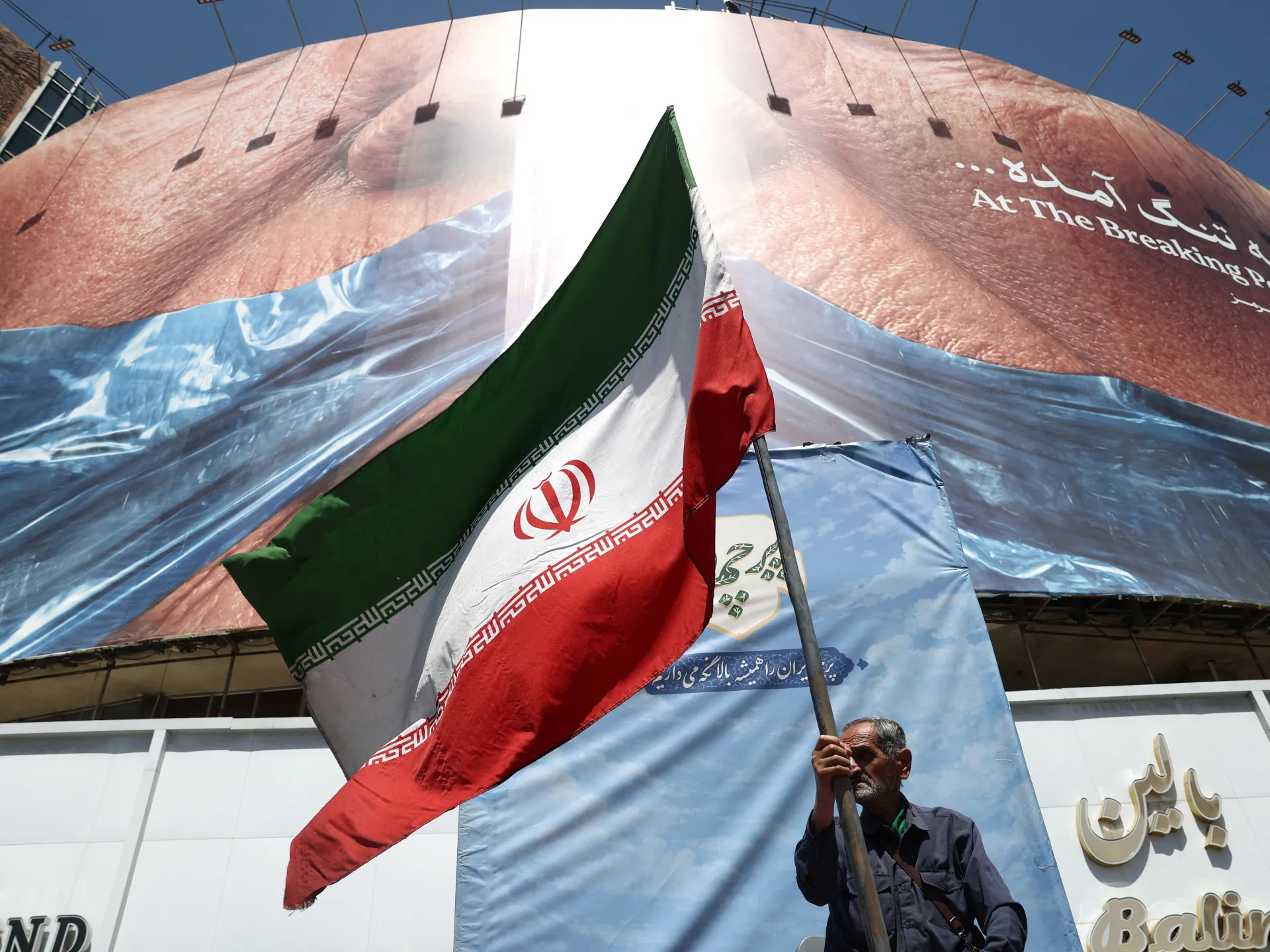
Ross Harrison, a senior fellow at the Middle East Institute, says that Iran’s renewed missile strikes on Israel aim to restore deterrence without reigniting full scale war.
A US influencer and actor have caused outrage after mocking Palestinians subject to rape and beastiality in Israeli prisons. Elon Gold and Lizzy Savetsky made the comments at the Tribeca Film Festival as they promoted a new film made in Israel.
A surveillance camera caught a brutal assault by an Israeli soldier and settlers on two young Palestinians in the occupied West Bank. Video shows them slamming the victims onto the ground and repeatedly beating them, including with a plank of wood, leaving them motionless on the ground.
Pro-Palestine activists interrupted an army recruitment event during German Armed Forces Day. They climbed onto a tank and unfurled a banner reading ‘Genocide with German weapons’ and named Rheinmetall, a key arms supplier to Israel’s military.
Casualty toll is expected to increase, reports Al Jazeera’s Hani Mahmoud.
Published On 6 Jun 20266 Jun 2026
At least five people have been killed while attending a wedding in Gaza City after Israeli forces bombed the wedding tent.
Al Jazeera’s Hani Mahmoud, reporting from the enclave on Saturday, said several projectiles exploded in or near tents that were part of the wedding, with shrapnel flying into surrounding areas.
A source at al-Shifa Hospital told Al Jazeera reporters on the ground that more than a dozen people were wounded in the attack.
Women and children are believed to be among the casualties, Mahmoud said, adding that the casualty toll is expected to rise.
French activists who took part in a Gaza-bound foreign aid flotilla accuse Israeli forces of abuse and torture.
Published On 5 Jun 20265 Jun 2026
French anti-terrorism prosecutors say they have opened a preliminary investigation into suspected “torture” and “war crimes” over Israel’s alleged mistreatment of French activists who took part in a Gaza-bound aid flotilla last month.
The probe was opened on Friday following a referral from the foreign ministry late last month, said the national counterterrorism prosecutor’s office (PNAT), after activists on the Global Sumud Flotilla accused Israeli authorities of severe mistreatment during their detention.
Recommended Stories
list of 3 itemsend of list
Israel abducted and detained some 430 activists from about 40 countries after intercepting them in international waters on May 18 as they made the latest in a string of attempts to break the blockade on Gaza, which the United Nations and human rights organisations say is illegal, describing it as a form of collective punishment.
Israeli far-right National Security Minister Itamar Ben-Gvir attracted widespread condemnation after he posted a video mocking the flotilla activists while they were bound.
France banned Ben-Gvir from entry and, like several other allies of Israel, summoned the Israeli ambassador over the incident.
Several French activists described what they said was a violent and humiliating ordeal when eight of them returned to France on May 22.
Two of the more than 30 French people who were on board the flotilla were still hospitalised in Turkiye, they told reporters.
One returnee described a soldier groping and slapping her in a dark container, and being terrified that she would be raped.
Another recounted detained activists being put in what she called a “stress position”, on their knees with their foreheads on the ground for several hours, while the Israeli national anthem played on repeat.
‘Most severe case of ill-treatment’ in a decade
Speaking to Al Jazeera late last month, Suhad Bishara, legal director at Adalah, the Israeli legal centre for Palestinian rights, said that without accountability, Israel will continue to use violence against activists.
“Based on accounts received, and drawing on over a decade of representing flotilla participants, this appears to be the most severe case of ill-treatment documented in the past 10 years, potentially amounting to torture,” said Bishara.
Adalah lawyers have been informed of repeated physical violence resulting in serious injuries, prolonged stress positions, and sexual humiliation and harassment.
The Global Sumud Flotilla said it has documented at least 15 cases of sexual abuse.
Lawyers for French flotilla activists have said they plan to file a separate complaint on behalf of their clients over allegations of rape, torture and humiliation.
The activists have refused to meet with the French government to discuss their experiences, accusing it of supporting Israel’s genocidal war on Gaza.
Asked by the AFP news agency to respond to the claims of mistreatment, the Israeli prison service said the accusations were “entirely without factual basis”.
Francesca Albanese, an outspoken UN expert on the Palestinian territory, has said the treatment of the flotilla activists “is a luxury compared to what is inflicted on Palestinians in Israeli prisons”.
Irish Taoiseach Martin says the far-right ministers have shown ‘a desire to see the elimination of Palestinians from Palestine’.
Published On 5 Jun 20265 Jun 2026
Ireland has barred Israel’s National Security Minister, Itamar Ben-Gvir and Finance Minister, Bezalel Smotrich, from visiting the country, citing their conduct towards pro-Palestinian activists and support for policies that would displace Palestinians from their homeland.
Ireland’s Prime Minister Micheal Martin – known as the Taoiseach – confirmed the move on Friday, saying the two far-right ministers had advocated positions that amounted to “a desire to see the elimination of Palestinians from Palestine”.
Martin also referenced the treatment of pro-Palestinian activists who were part of a Gaza-bound aid flotilla last month.
Ben-Gvir provoked widespread condemnation when he shared video of himself mocking the detained activists as they knelt on the floor, blindfolded, with their hands bound.
In a statement, Ireland’s justice ministry said Justice Minister Jim O’Callaghan had instructed immigration officers to refuse entry to Ben-Gvir and Smotrich should they seek to enter the state.
Ben-Gvir became a minister in 2022, after an alliance with Smotrich’s far-right Religious Zionist party came third in legislative elections.
Smotrich, who himself lives on an illegal Israeli settlement, has been a vocal advocate of Israel annexing the occupied West Bank, saying he hopes to “kill the idea” of a Palestinian state.
Together, Ben-Gvir and Smotrich form a cornerstone of Israeli Prime Minister Benjamin Netanyahu’s right-wing coalition.
‘Justifies EU sanctions’
Addressing Ireland’s travel ban at a summit in Montenegro, Martin said the two Israeli ministers should also be subject to EU sanctions.
“In my view, their behaviour justifies sanctions at EU level as well, and that’s something that we will raise, whether we can get sufficient support across the European Union is a different matter,” Martin was quoted by Irish broadcaster RTE.
Since Israel’s genocidal attacks on Gaza, Ireland has been among the most outspoken critics of Israel.
Ben-Gvir and Smotrich have faced bans from other European countries over their conduct, including Britain, Spain and Slovenia. Last month, France banned Ben-Gvir from entry.
On Wednesday, Israel and Lebanon announced yet another ceasefire – after they had seemingly already agreed to a truce on April 16.
Iran and the United States have formally had a ceasefire in place since April 8. And Israel and Hamas, the Palestinian group, have had a ceasefire in Gaza since October 10, 2025.
Yet Israel’s attacks on Lebanon continue unchecked, with strikes on the Naqoura and Nabatieh districts of southern Lebanon on Friday, resulting in at least one death. Iran and the US have continued to trade periodic attacks that have picked up in intensity in recent days. The Iranian military has also fired missiles and drones at Gulf nations such as the United Arab Emirates, Kuwait and Bahrain, which it accuses of enabling US attacks on Iran during the ceasefire.
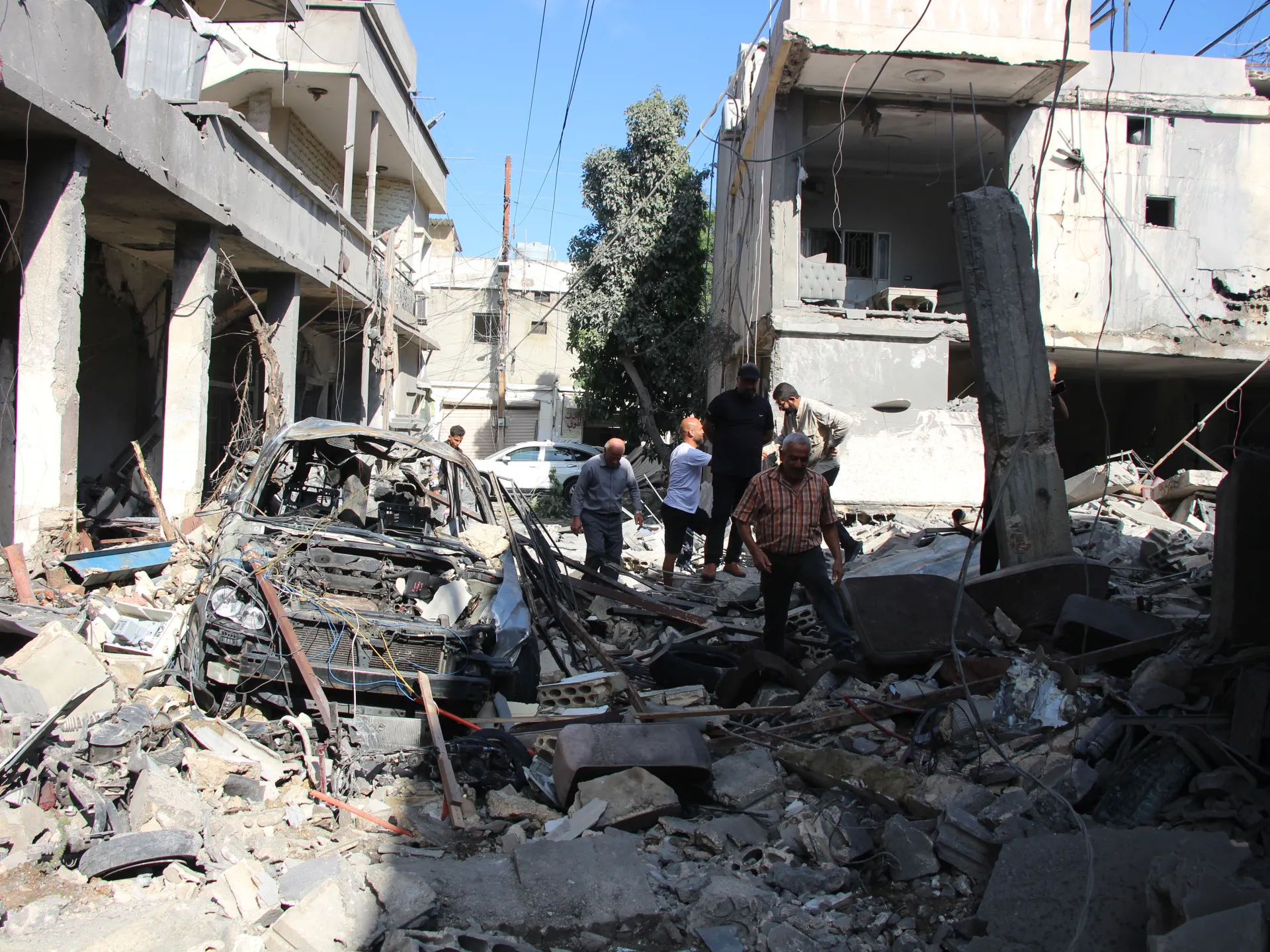
And in Gaza, Israel continues to carry out bombings, including one that killed nine people in a residential building this week, despite a supposed truce aimed at ending its genocidal war on the Palestinian territory.
So what does it mean for a ceasefire to be in place when fighting continues? What does international law say? And why do violations so rarely lead to consequences?
We speak to legal experts to understand:
What is a ceasefire?
Simply put, it’s a pause in fighting designed to create space for negotiations, explained Mark Kersten, assistant professor of criminal justice and criminology at the University of the Fraser Valley.
“A ceasefire is effectively a cessation of hostilities, but typically not understood to be a permanent one,” he told Al Jazeera.
It is also often fundamentally a political agreement rather than a strongly enforceable legal instrument, said Michael Lynk, an emeritus professor at Western University in Canada.
Unlike peace treaties, which often have guarantors responsible for oversight and enforcement, ceasefires can be breached with few immediate legal consequences, Lynk told Al Jazeera.
This is especially true in Gaza and Lebanon, where the United States has acted as the principal broker and overseer. While some countries have criticised Israeli strikes in Lebanon, Lynk says there has been little pressure on Washington for allowing repeated violations.
“A number of Global North countries have criticised the continuing Israeli attacks on Lebanon despite the ceasefire, but they have not called out the US for allowing Israel to repeatedly breach the ceasefires in Gaza and Lebanon.”
So are ceasefires legally binding – or not?
Yes, they are, argues Toby Cadman, a British international human rights lawyer and cofounder of Guernica 37 Chambers.
But, like Kersten and Lynk, Cadman said that ceasefires – which he described as the “temporary, military and diplomatic suspension of military operations” – are inherently fragile. Unlike peace treaties, ceasefires do not resolve the underlying conflict or end the legal state of war.
“It suspends the fighting; it does not end the state of armed conflict,” he said.
Where there is a broader peace agreement, such as in Gaza, the ceasefire too stands – at least in theory – on a stronger footing, said Lynk. The Gaza peace plan that accompanied the ceasefire was endorsed by the UN Security Council through Resolution 2803, which calls for the agreement to be implemented “in its entirety, in good faith and without delay”.
In theory, states could ask the Security Council to sanction parties violating the Gaza agreement. In practice, Lynk explained, the US veto on the body means that neither Israel, nor the US itself, can realistically be censured.
“This is why ceasefires and peace treaties are ultimately political documents because it requires political will to enforce them,” Lynk said.
Who decides when a ceasefire has been violated?
Palestinians have repeatedly pointed to the violation of the Gaza ceasefire by Israel. The US and Iran routinely accuse each other of breaching their truce. And Israel and Lebanon do the same when it comes to their ceasefire.
So who decides whether a ceasefire has been violated – and by whom?
The answer, according to Cadman, is that “there is no neutral arbiter empowered to determine, with binding effect, who has breached.”
Monitoring mechanisms do exist, but they are largely political bodies overseen by the same states that brokered and guaranteed the agreements. In the case of Gaza and Lebanon, that is the United States. But Washington occupies the unusual position of mediator, guarantor and Israel’s closest military and diplomatic ally.
That means allegations of violations are often filtered through political calculations rather than assessed by an independent legal authority, say experts.
What about international law?
For Kersten, Gaza and Lebanon expose a fundamental contradiction within the international legal system. On paper, international law has succeeded in establishing a broad consensus about the legality of what is taking place.
“The vast majority of the world recognises that what is happening in both contexts is not just wrong, but illegal – thanks to international law.”
Yet recognition has done little to halt the violence. “Little is being done to save lives and stop the carnage,” he said.
The result is a widening gap between legal findings and political action. Courts can investigate, collect evidence and issue rulings as the International Criminal Court and the International Court of Justice have both done against Israel, but that does not stop bombs from falling or guarantee compliance on the ground.
For Kersten and Lynk, the problem is not a lack of legal standards; it is the persistent failure of states to enforce them, particularly when powerful actors are involved.
“The lack of effective accountability is the hole in the heart of international law and our modern international political system,” Lynk said.
But Kersten said what was clear was that international humanitarian law, human rights law and international criminal law remain fully applicable during a ceasefire.
“Ceasefire provides no legal cover to commit atrocities against civilians.”
That means allegations of war crimes can still be investigated and prosecuted even while a ceasefire is in effect.
Is ‘self-defence’ a justification for attacks during a ceasefire?
Cadman highlights the legal argument most frequently used to justify continued strikes by Israel on Gaza and Lebanon, and by the US against Iran: self-defence.
These arguments rest on Article 51 of the UN Charter, which carves out the right for states to launch unilateral military action against other nations if they are acting in self-defence.
But Cadman said the interpretation of that clause is heavily contested.
“Article 51 answers an armed attack that has happened or is genuinely imminent; it is not a standing licence for preventive strikes.”
So why do countries feel they can get away with attacks during a ceasefire?
Asked by reporters on Wednesday how he defined a ceasefire, given the continuing – though sporadic – attacks that the US and Iran have exchanged in recent weeks, US President Donald Trump said: “It’s a different part of the world, you know. I’d say in that part of a ceasefire is when you’re shooting in a more moderate manner.”
Trump’s comments underscore what legal experts say is at the heart of the persisting violence in Gaza, Lebanon and the Gulf: The lack of any meaningful enforcement mechanism.
The Security Council is constrained by veto powers. The ICJ can issue binding orders but cannot enforce them. The ICC can issue arrest warrants, but depends on states to carry them out.
“The unifying theme is an enforcement deficit,” Cadman said.
Cadman argued that the problem is not that international law lacks rules. Rather, those rules are often applied selectively. “The law is not formally different for Israel or the US; its application is selective.”
Hamas says it will not hand over its weapons right now, resisting ongoing disarmament demands and stating that the ultimate fate of its military arsenal will be decided following comprehensive discussions with other Palestinian factions.
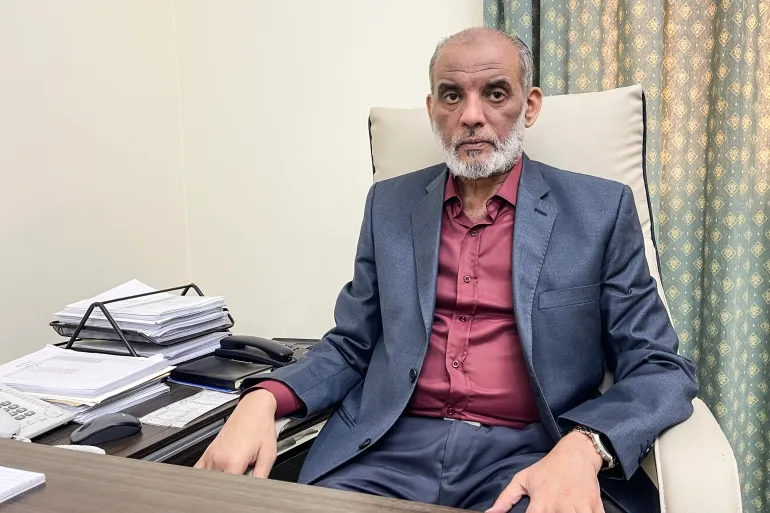
Husam Badran, a member of the Hamas political bureau, spoke exclusively to Al Jazeera about the group’s vision for a long-term ceasefire in Gaza [Mohammad Mansour/Al Jazeera]
In an exclusive interview with Al Jazeera, Husam Badran, a member of the Hamas political bureau, offered an inside look into the group’s proposed solutions to the stalled negotiations, introducing the concept of a long-term hudna (truce).
“When this Palestinian committee [the National Committee for the Administration of Gaza (NCAG)] comes to take over the Gaza Strip, there will be no visible weapons in the streets and alleys of Gaza except the official weapons belonging to this committee, which is the official Palestinian police, ” Badran told Al Jazeera. “There will be no armed manifestations like the ones we were accustomed to in the Gaza Strip.”
But he clarified that this did not mean a formal surrender of arms.
“We are not talking about handing them over; we are talking about, at least, weapons not being visible except for the official weapons of the Palestinian police,” he said. “The details of this matter will be discussed within a national framework.”
The Hamas stance comes as an informed source told Al Jazeera that the group is preparing to send its delegation to Cairo for renewed talks, which are set to begin this weekend. Hamas had briefly delayed its participation to demand a halt to ongoing Israeli assassinations—such as the recent killings of military commanders Izz al-Din al-Haddad and Mohammed Odeh—to ensure a more favourable negotiating environment.
The disarmament of Hamas and the withdrawal of Israeli troops from Gaza remain the biggest sticking points in the United States-brokered October 2025 ceasefire plan.
Factional consensus in Cairo
The upcoming Cairo meetings will gather eight key Palestinian factions to form a unified national stance. Badran confirmed the attendance of representatives from Hamas, Palestinian Islamic Jihad (PIJ), the Popular Front for the Liberation of Palestine (PFLP), the Democratic Front for the Liberation of Palestine (DFLP), the PFLP-GC, the National Initiative, the Popular Resistance Committees (PRC), and the Democratic Reform Current affiliated with the Fatah movement.
These talks aim to salvage the ceasefire originally proposed by United States President Donald Trump. However, Badran noted that Israel has failed to implement even 30 percent of its phase one obligations, making any transition to subsequent phases impossible.
“We are talking about humanitarian aid … the Rafah crossing mechanism, the infrastructure, and the assassinations,” Badran explained. “The idea was a comprehensive ceasefire, but around 1,000 people have been killed. Saying Israel implemented even 30 percent is an overstatement.”
Only 150 to 250 aid trucks are entering the Gaza Strip daily instead of the agreed-upon 600, while the critical infrastructure for electricity, hospitals and fuel remains completely decimated.
The ‘disarmament’ deadlock
While Palestinian factions demand the fulfilment of these phase one survival metrics, Israeli officials and Nickolay Mladenov, the high representative for Gaza on Trump’s “Board of Peace”, are conditioning the transition to phase two on the disarmament of armed groups.
To break the deadlock, Mladenov recently presented a 15-point “roadmap” built by the ceasefire guarantors. In a May 2026 briefing to the United Nations Security Council, Mladenov defended the plan, emphasising that its architecture rests on a strict principle of reciprocity and verification. Addressing Palestinian concerns, Mladenov clarified that the roadmap explicitly dictates that “no Palestinian armed group will be required to transfer its weapons to Israel”. Instead, the decommissioning of weapons would be gradual, sequenced, and Palestinian-led, with all arms transferred to the NCAG.
Mladenov outlined that this disarmament process is tied directly to an Israeli military pullback. The plan commits Israel to a phased withdrawal of its forces to Gaza’s perimeter on an agreed timetable, conditional upon verified progress on decommissioning and the deployment of an International Stabilization Force (ISF) to act as a buffer.
Mladenov warned the UNSC of the severe consequences of rejecting the roadmap. With 85 percent of Gaza’s buildings damaged or destroyed, he stressed that “reconstruction financing will not follow where weapons have not been laid down”. Without an agreement, he cautioned, Gaza will remain divided, with Hamas holding administrative control over less than half the territory.
‘Negotiation time’ and Israeli expansion
However, Palestinians view this 15-point framework as a stalling tactic designed to extract concessions while Israel deepens its occupation. Palestinian political analyst Wissam Afifa told Al Jazeera that Israel is exploiting “negotiation time” to exhaust the population through continuous escalation.
“They shifted from Trump’s 20 points to a new square, the 15-point square, which revolves entirely around one single clause: disarmament,” Afifa explained. He noted that the Palestinian resistance has been cornered and asked to make major concessions without real guarantees, while the Israeli government uses the talks to advance its territorial goals.
According to Afifa, Prime Minister Benjamin Netanyahu is weaponising the negotiations for domestic electoral gains, expanding Israel’s control from 60 percent of Gaza to 70 percent or more. This expansion is happening while oversight mechanisms, such as the Civil-Military Coordination Center (CMCC), have completely failed and paralysed the monitoring process.
“We are facing a scenario where the occupation has reshaped the ceasefire on its own terms,” Afifa said, adding that Mladenov has in effect adopted the Israeli and American vision by demanding disarmament without offering a clear political horizon for “the day after”.
The National Committee hurdle
This ongoing expansion complicates the transition of power. Amid accusations that Hamas is clinging to power, the group’s spokesperson, Hazem Qassem, reiterated that Hamas is fully prepared to hand over all governance and security responsibilities to the Cairo-based National Committee. Badran confirmed that Hamas has prepared all necessary administrative and security files for the transfer.
However, the NCAG itself faces massive operational barriers and has become, as Afifa described, a “hostage” to Israeli pressure.
A member of the committee, speaking to Al Jazeera on condition of anonymity, firmly denied reports that the body would enter Gaza soon, outlining strict conditions for assuming power. The committee categorically refuses to operate behind the Israeli-controlled “Yellow Line” or to cooperate with Israeli-backed armed militias currently operating in the Strip, the source said.
Furthermore, the source stressed that the committee will not enter Gaza until the International Stabilization Force is deployed in the buffer zones separating Israeli forces from Palestinian areas.
While the political deadlock continues, the human toll mounts. Mladenov acknowledged in his UN briefing that ceasefire violations continue to kill civilians and obstruct humanitarian access.
Since the ceasefire took effect, ongoing Israeli military actions have killed 933 Palestinians and injured 2,868, raising the total death toll since October 2023 to 72,942, with 172,967 people injured.
Palestinian journalist and mother Aya Shamaa wrote about how an Israeli strike killed her children, newborn Ryan and seven-year-old Yaman. Like countless mothers in Gaza, she saw her children as gleams of hope amid a fragile ceasefire. Narrated by Al Jazeera’s Al Anoud Al Aqeedi.
A congressional panel in the United States has rejected an effort to revoke a provision from the defence budget that would further integrate the US and Israeli militaries.
An amendment to sink the pro-Israel measure, introduced by Democratic Congressman Ro Khanna, failed in a voice call on Thursday in the House Armed Services Committee.
Recommended Stories
list of 3 itemsend of list
That defeat paves the way for the proposal to advance to the floor of the House of Representatives.
Khanna had argued that the provision in the National Defense Authorization Act (NDAA), formally called Section 224, rewards Benjamin Netanyahu at a time when the Israeli prime minister is trying to dictate US policy in the Middle East.
The progressive Democrat cited recent reports that President Donald Trump is angry at Netanyahu over Israel’s escalation in Lebanon.
“Everyone in America — whether you’re a Republican, an independent or a Democrat — says that we need to tell Netanyahu that America calls the shots, not the prime minister of any other country,” Khanna said.
“They want less cooperation and blank checks to Israel, not more. Only the United States Congress would dream up at this moment, ‘Let’s actually do more for Israel.’”
The vote on the amendment was taken by calling on committee members to say aloud either “yes” and “no”, and the “nays” clearly were more numerous. It was not recorded as a roll-call vote, which would require each member’s preference to be logged.
Section 224 would require the Pentagon chief “to designate an executive agent responsible for synchronising cooperative efforts between the United States and Israel”.
That official would be in charge of overseeing several joint initiatives, “including bilateral defence technology research, development, testing, evaluation, integration, and industrial cooperation”, the NDAA reads.
Netanyahu’s endorsement
Critics have raised concern that Section 224 may make US military aid to Israel more opaque, concealing the assistance as cooperation rather than a separate expense.
The measure also risks tethering the US military to its Israeli counterpart technologically at a time when the American public is rapidly turning against Israel, according to recent public opinion polls.
“As political pressure builds to reduce US military assistance to Israel, Section 224 provides the framework for continuing — and expanding — US-Israel military ties by entrenching Israeli technology within the US defense supply chain in a way that would shield it from the annual appropriations process,” the nonprofit lobbying group A New Policy said in a brief last week.
“The use of must-pass legislation as the NDAA as a mechanism of integration speaks to the plummeting popularity of continuing unconditional support to Israel.”
The measure comes as Netanyahu pushes to transform US aid to Israel from direct assistance to military “cooperation”.
The Israeli prime minister wrote a letter to Republican Congressman Marlin Stutzman endorsing a bill facilitating that transition.
In the letter, Netanyahu said, “The time has now arrived for us to move from aid recipient to partner.”
He added he supported Stutzman’s plan for a “new framework of joint defense cooperation, codevelopment, coproduction and mutual investment in areas including advanced missile defense, artificial intelligence … and next generation military platforms”.
Referencing the letter on Thursday, Khanna argued that Section 224 “directly” follows Netanyahu’s language.
“I am for Team America. I am for the interests of this country, and I believe that when Donald Trump ran, he ran ‘America First’,” the Democrat said.
“That includes American interests against any foreign country. We should have American sovereignty and make it clear that we strike 224. If we want to give aid to Israel, if we want to sell them weapons, that should be a vote for the entire Congress.”
But both Democrats and Republicans pushed back against his argument, saying that the provision aims to streamline existing cooperative programmes that benefit the US.
Key Democrat backs Section 224
Congressman Adam Smith, the top Democrat on the panel, said he was “very sympathetic” to Khanna’s frustration with Netanyahu.
“Mr Netanyahu insisted on this war with Iran that has strengthened Iran and weakened our position. I do not like his leadership of Israel or where he is going,” Smith said.
But he added that it is in the US’s interests to have deep military ties with Israel, a country accused by leading rights groups and United Nations investigators of committing genocide in Gaza.
“The reason that we have these partnerships with Israel, where we may not have as many developed partnerships with other NATO countries, is because Israel has actually been having to fight,” Smith said.
“They have faced drone attacks and missile attacks. They have had to develop new technologies, technologies that we’ve benefitted from.”
Rights advocates often decry the promotion of Israel’s weapons as “battle-tested” — because they have been tested on the Palestinian and Lebanese communities that they devastated, killing tens of thousands of people along the way.
Earlier on Thursday, Palestinian rights advocates warned against approving Section 224 during a news conference on Capitol Hill.
“It is unfathomable that this is the American response to a country that has, over the past two and a half years, carried out a genocide against Palestinians and started wars in both Iran and Lebanon,” said Margaret DeReus, the executive director at the Institute for Middle East Understanding (IMEU).
Republican Congressman Thomas Massie has promised to introduce an amendment to revoke Section 224 when the NDAA goes to a full House vote.
Israel’s Supreme Court rejects government ban on prisoner visits, affirming Red Cross access under international law.
Published On 4 Jun 20264 Jun 2026
Israel’s Supreme Court has unanimously rejected a government policy banning representatives of the International Committee of the Red Cross (ICRC) from visiting Palestinian detainees in Israeli prisons.
The court ruled on Wednesday that by preventing the Red Cross from visiting prisoners, the government had contravened Israeli and international law, and therefore the policy must be repealed.
Recommended Stories
list of 3 itemsend of list
It also ruled that the government failed to present a legal foundation for its policy on annulling all visits after the Hamas-led attack on October 2023, in which more than 1,100 people were killed and more than 240 were taken captive.
The assault triggered a brutal war in Gaza, which has been defined as a genocide by several prominent scholars and an independent United Nations inquiry. The Israeli army killed more than 72,950 people in the enclave, according to Gaza’s Health Ministry, and reduced most of the besieged territory to rubble, and forced the displacement of nearly 1.9 million Palestinians.
Violence across the occupied West Bank perpetrated by Israeli forces also intensified to unprecedented levels. All visits to prisoners were halted, and information about them was not shared – something that used to be standard practice before the war. Back then, Israeli authorities accused Hamas of failing to secure access to the captives in Gaza.
It was the first time in 50 years that Israel prevented Red Cross visits, according to the Association for Civil Rights in Israel (ACRI), which filed the petition.
“For the first time in nearly three years, the over 9,000 Palestinian security prisoners being held in Israeli prisons and military detention centers will receive Red Cross visits,” ACRI said. The ban remained in place even after a “ceasefire” was agreed last October.
Initial petition
The petition by ACRI, Physicians for Human Rights, Israeli rights group HaMoked and Israeli NGO Gisha against the government policy was first filed in Israel’s High Court in February 2024. But the state of Israel asked for 27 extensions before a hearing was held at the end of October last year.
The ICRC welcomed the decision, saying it was ready to resume its visits. “We are continuing our dialogue with the Israeli authorities to resume our work in detention as soon as possible,” it said in a statement. It added that access to detainees and the ability to meet with them privately are obligations under international law.
Wednesday’s decision comes amid growing concerns over the ill-treatment of Palestinian detainees in Israeli prisons.
Last week, the United Nations released its annual report on conflict-related sexual violence verified in 2025. It cited torture, rape, gang rape, forced nudity and “cavity searches conducted without apparent security justification perpetrated” by Israeli armed forces and security forces primarily during detention and interrogation and across several sites, including the infamous Sde Teiman military camp, among others.
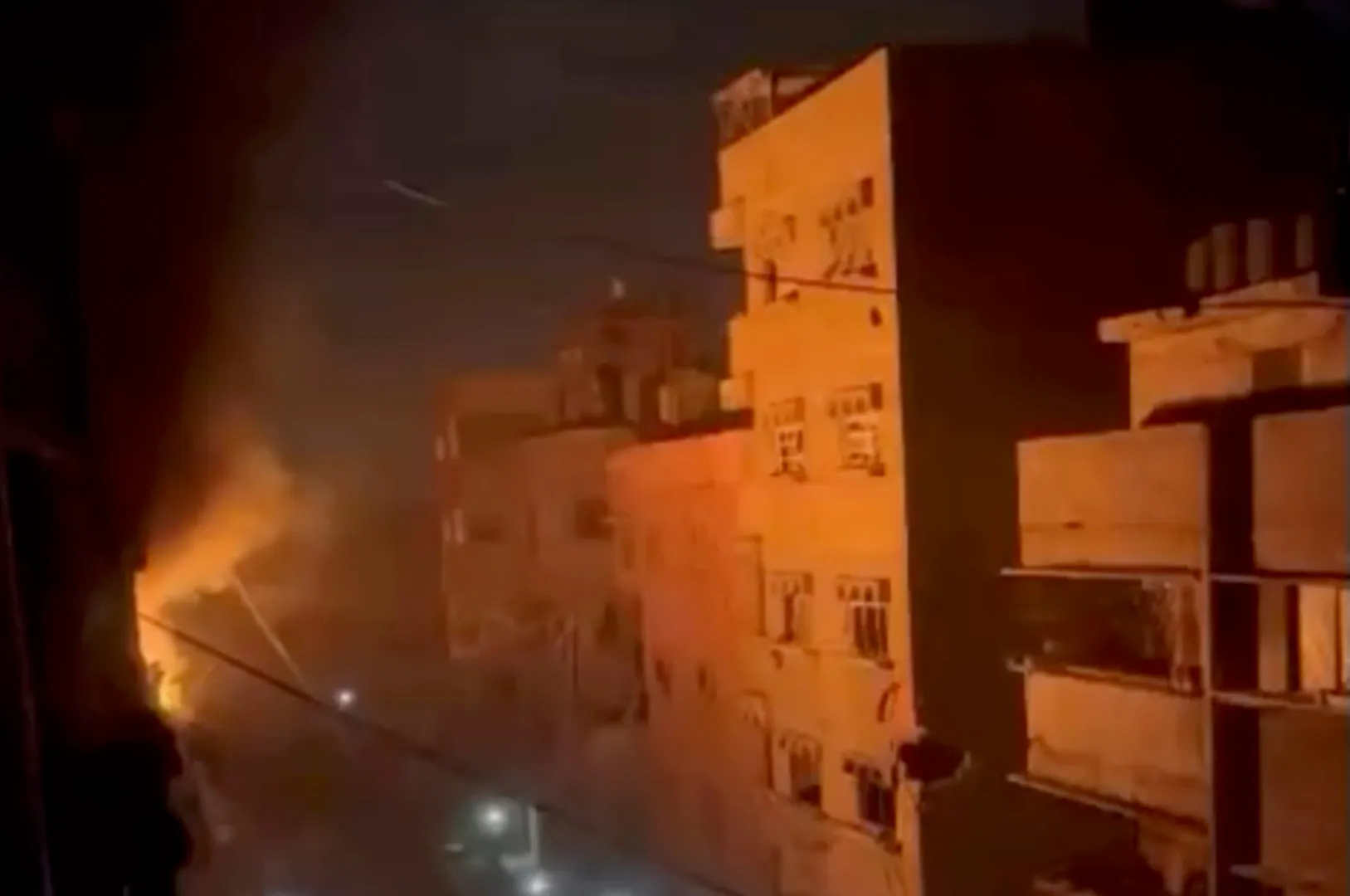
Israeli strikes on residential buildings have killed nine Palestinians, setting homes ablaze and leaving widespread destruction. Footage from the scenes showed rescue efforts amid the flames and ambulances transporting casualties.


![Arwa Elrayess [Courtesy of Arwa Elrayess]](https://i0.wp.com/occasionaldigest.com/wp-content/uploads/2026/06/original-1C35F445-DBD0-445D-9835-200DAAC9C332-1781175489.jpeg?w=640&ssl=1)




![Hossam Badran, a member of the Hamas Political Bureau, spoke exclusively to Al Jazeera about the group's vision for a long-term Hudna in Gaza. [Mohammad Mansour/Al Jazeera]](https://i0.wp.com/www.aljazeera.com/wp-content/uploads/2026/06/IMG_7408-1780572254.jpg?w=640&ssl=1)