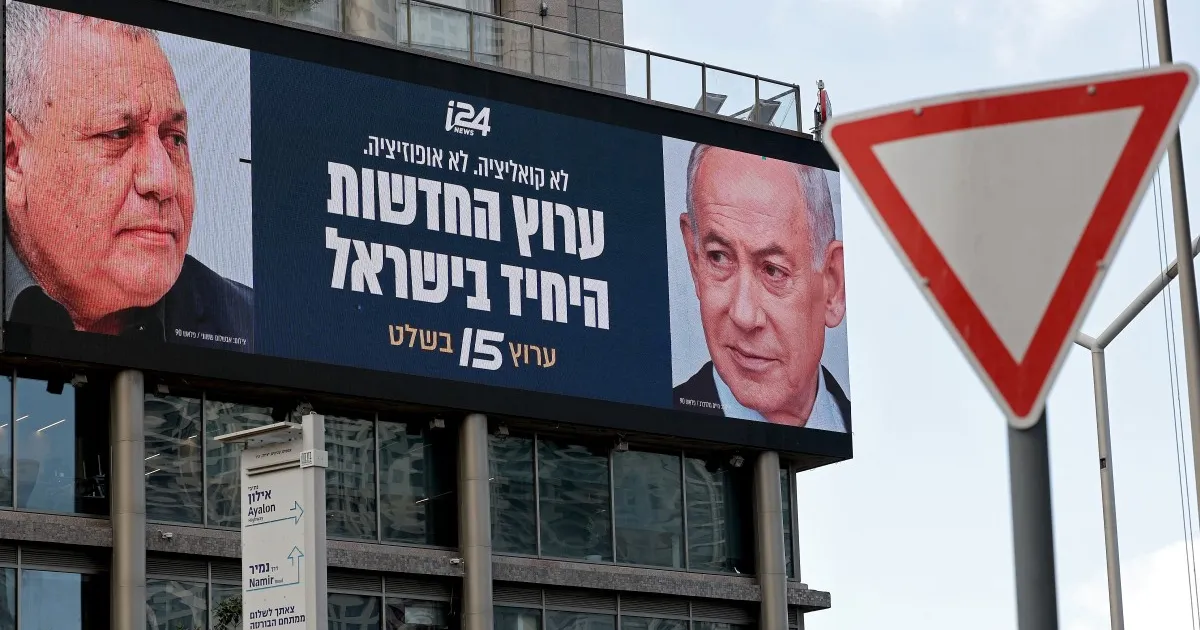
Israel Election 2026

From Morocco to South Africa, Israel election watched closely across Africa | Israel Election 2026 News

Lagos, Nigeria – As Israelis prepare to vote on October 27, African governments from Pretoria to Rabat are weighing what the result could mean for their own foreign and domestic policies.

The war on Gaza has exposed sharp differences across the continent, with some governments pursuing diplomatic measures against Israel while others maintain commercial and security ties.

Recent polling has shown a closely contested race between Prime Minister Benjamin Netanyahu’s Likud party and the far-right coalition it leads and a bloc of Jewish-led opposition parties.

Neither is projected to win the 61 seats needed for a majority in the 120-seat Knesset, with a protracted period of coalition talks expected to follow the vote.

The next government’s approach to Gaza and the Palestinian question could influence Israel’s efforts to preserve and expand its partnerships across the continent.

Israel’s relationships across Africa are shaped by competing priorities. While the Gaza war has intensified diplomatic pressure and public opposition in many countries, security needs, commercial interests and longstanding bilateral partnerships continue to influence government decisions.

Diplomatic strain vs closer ties

Since the war began in October 2023, South Africa has emerged as one of Israel’s most vocal critics in Africa. Its government brought a case against Israel at the International Court of Justice (ICJ), alleging violations of the 1948 Genocide Convention. Israel rejects the allegations. The court’s so-called provisional measures in 2024, including an order for Israel to take action to prevent acts of genocide, are not a final ruling on whether genocide has occurred.

In November 2023, South Africa’s National Assembly adopted a motion calling on the government to close the Israeli embassy and suspend diplomatic relations. The motion did not itself implement those measures, but it underscored the strength of political opposition to Israel’s military campaign.

Other African governments have taken different approaches that reflect national political priorities and foreign policy calculations rather than a single continental position.

Chad recalled its ambassador to Israel in November 2023, while some countries have maintained relations despite criticism of Israel’s military campaign in Gaza.

Morocco offers a contrasting example. It restored relations with Israel in 2020 under a US-backed arrangement linked to Washington’s recognition of Moroccan sovereignty over Western Sahara. Despite public demonstrations opposing normalisation, Rabat has continued to pursue closer ties.

On September 16, Israeli Foreign Minister Gideon Sa’ar and Moroccan Foreign Minister Nasser Bourita met in New York at a trilateral summit hosted by US Ambassador to the United Nations Mike Waltz. The three countries reaffirmed plans to upgrade diplomatic relations, elevate their respective missions to embassies and appoint ambassadors.

They also agreed to conclude investment protection and double taxation agreements by the end of this year, expand flights to include Moroccan airlines and arrange reciprocal high-level visits in the coming months. These were announced commitments, rather than confirmation that the changes had already been implemented.

For Idowu Johnson, associate professor of international relations at the University of Ibadan, the diversity of African states makes it difficult to predict a uniform response to Israel’s election.

“Africa’s heterogeneity means individual states have handled relations with Israel separately. Since the October 7, 2023 attacks, African criticism has focused on Israel’s denial of Palestinian statehood.

“The October 27 election will therefore be pivotal, as a new government’s stance on the Palestinian cause will shape how far Africa cooperates on agriculture, trade, security and technology, guided by self-determination and international law as well as bilateral interests,” Johnson said.

Israel’s relationship with the African Union (AU) also reflects these divisions. In 2021, the AU Commission chairperson accredited Israel’s representative to the organisation, prompting objections from member states.

In February 2022, the AU Assembly established a committee of heads of state and government to consult on Israel’s observer status. The dispute continued into 2023, when the AU moved to suspend Israel’s accreditation pending further consideration.

The disagreement has reflected wider divisions over Israel’s treatment of Palestinians and the organisation’s approach to the conflict.

A new Israeli government could seek to ease those tensions, but any change would depend on its policies as well as the positions of AU member states.

Security ties may outlast diplomatic tensions

Security cooperation has been a significant part of Israel’s relationships with some African governments. Israeli companies have pursued defence and security contracts involving equipment, surveillance technology and training.

But the nature and scale of those relationships vary by country and claims about particular agreements or technologies should be tied to documented cases rather than treated as evidence of a uniform Israeli security presence across the continent.

The Democratic Republic of the Congo offers a recent example of efforts to deepen cooperation. Congolese President Felix Tshisekedi visited Israel on August 31 and September 1, meeting Prime Minister Benjamin Netanyahu and President Isaac Herzog. Discussions covered security, defence, agriculture, infrastructure, energy and high technology. Both sides expressed a desire to strengthen their strategic partnership and expand cooperation across several sectors.

The visit followed memorandums of understanding signed on July 27. Congolese officials said the visit would review those agreements and explore further Israeli investment, including opportunities linked to the Lobito Corridor. The meetings demonstrate the potential scope of bilateral cooperation, but do not establish that a specific new security contract has been concluded.

For governments confronting armed groups, insecurity can create incentives to seek equipment, intelligence and training from foreign partners. Yet the importance of Israeli cooperation differs between countries and diplomatic tensions will not necessarily have the same effect on every security relationship.

The limits of Israel’s diplomatic outreach were also evident after it recognised Somaliland as an independent state on December 26, last year, the first country to do so. Somalia and other critics rejected the move, arguing that it undermined Somalia’s territorial integrity. The decision triggered demonstrations in Somalia and Somaliland.

Speaking to Al Jazeera this month, President Hassan Sheikh Mohamud said Somalia will not accept Israeli presence in the country “under any circumstances”. He added that Israel was planning to establish a naval base in Berbera and use the city’s airport, adding that its real aim was to get closer to the Gulf states and Iran.

According to the Armed Conflict Location & Event Data project (ACLED), 110 demonstrations directly linked to Israel’s Somaliland recognition had been recorded by the time of its February 2026 Africa overview. Only seven supported the move, all in Somaliland; the others opposed it. The figures cover demonstrations linked to that particular decision, not all African views of Israel, and should not be treated as a continent-wide measure of public opinion.

Hossamaldeen Ibrahim, an Africa analyst at the Bloomsbury Intelligence and Security Institute, argues that public opposition can constrain governments even when they see strategic value in maintaining ties.

“The strongest constraint, however, may come from African publics rather than governments: the Somaliland recognition drew widespread opposition, the African Union and many governments reaffirmed Somalia’s territorial integrity, and ACLED logged 110 related demonstrations, only seven in support.

“Depending on its approach, the next Israeli government could therefore either deepen strategic cooperation in Morocco, Sudan and the Red Sea, or face a legitimacy problem if it continues policies seen as tied to the Gaza war, widening the gap between state-level cooperation and public sentiment,” Ibrahim told Al Jazeera.

The Somaliland episode shows how a diplomatic move can provoke opposition when it is perceived to challenge a core principle of sovereignty.

It does not, by itself, establish that African governments will abandon security agreements with Israel. The consequences will depend on the countries involved, the terms of their cooperation and the domestic political costs of maintaining them.

Trade, agritech and the contest for influence

Trade and development cooperation offer Israel another route to maintaining relationships in Africa. Israeli firms and officials have pursued partnerships in areas including agriculture, irrigation, water management, health and technology.

Such cooperation can offer practical benefits to governments seeking investment and technical expertise, but commercial ties do not necessarily translate into public support for Israel’s policies.

Zambia illustrates Israel’s efforts to deepen bilateral engagement. Israel opened a resident embassy in Lusaka in August last year, after a 52-year absence. Agriculture, water management, health, education and technology have been identified as potential areas for closer cooperation. The move formed part of Israel’s broader effort to strengthen its engagement with African countries.

Some analysts have interpreted Israel’s renewed engagement with Zambia as an attempt to cultivate partners who could counterbalance South Africa’s influence in the region. That remains an interpretation, not an established explanation for the relationship.

Zambia has its own reasons for seeking investment and cooperation, particularly in agriculture, water management and technology; closer bilateral ties alone do not prove that countering South Africa is Israel’s objective.

Professor Iwebunor Okwechime, of Obafemi Awolowo University, points to the historical roots of South Africa’s position towards Israel.

“If we trace the stance South Africa took, it goes back to the apartheid era, when Israel backed the apartheid regime and refused to support the struggle against the minority government. This historical context is important for understanding South Africa-Israel relations today,” Okwechime told Al Jazeera.

For African governments, the challenge will be to balance security and commercial interests against public opposition, commitments to Palestinian rights and positions on international law. For Israel, the upcoming election will test whether a new government can ease diplomatic tensions across Africa without fundamentally changing the policies that have fuelled them.

As Okwechime told Al Jazeera, “There won’t be a radical change in sentiments regardless of the government in power”.
Source link

Israel’s former security chief sues Netanyahu for October 7 defamation | Israel Election 2026 News

The former head of Israel’s domestic security agency Shin Bet has sued Prime Minister Benjamin Netanyahu for defamation over claims of his responsibility in the October 7, 2023 Hamas-led attack.

Coming just before Israel’s close-fought October 27 election in which Netanyahu is fighting for his political life, the case filed on Wednesday is set to ramp up the country’s political drama.

Ronen Bar, the former director of Shin Bet, accused Netanyahu of “lying to cover himself” and said it was slanderous of the prime minister to have accused him of “criminal failures” over the attack, in a 134-page court document.

Bar said he telephoned the prime minister’s military secretary as soon as signs of a possible attack became apparent, but that he did not have Netanyahu’s direct number.

Netanyahu has said he was not alerted by Bar on the morning of the Hamas-led assault, insisting that he could have stopped the attack had the Shin Bet’s then-director or military leaders called to wake him up the day of the early-morning attack.

Bar’s lawsuit says Netanyahu made accusations “that he knew to be false, with the aim of diverting the debate from his own responsibility for the events of October 7”.

Instead, it was Netanyahu’s policies over several years that had “increased the dangers posed by terrorist organisations in Gaza”, it said.

Likud response

On Wednesday, Netanyahu responded to Bar’s accusations in a statement issued by his Likud party saying, “Ronen, are you serious?”

“You had my number on the red line and could have called me immediately, as all security chiefs do,” Netanyahu asked, adding, “How many lives could we have saved if only you had called in time?”

Bar resigned as head of Shin Bet in June 2025 amid recriminations over the deadliest attack in Israel’s history, while insisting he had informed Netanyahu of the threat in advance.

He is seeking three million shekels (about $968,500) in damages from Netanyahu.

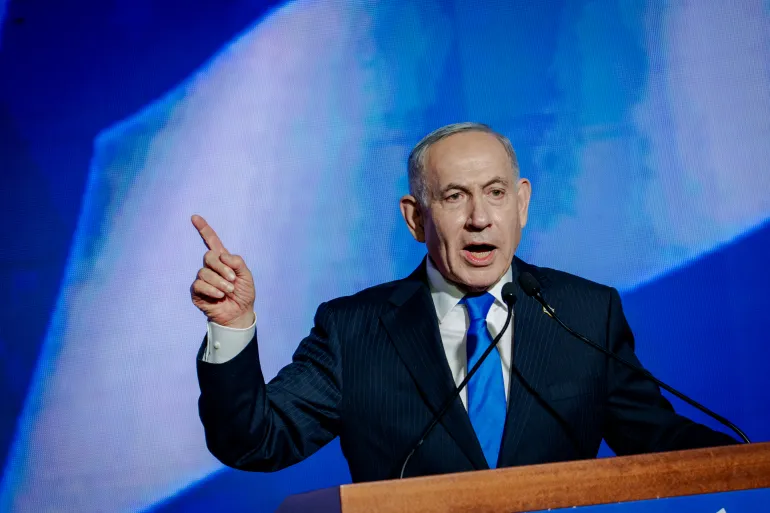
TEL AVIV, ISRAEL - SEPTEMBER 17: Israeli Prime Minister and Likud party leader Benjamin Netanyahu speaks at the lectern to supporters during a party campaign rally at Expo Tel Aviv on September 17, 2026 in Tel Aviv, Israel. The right-wing Likud party, led by Prime Minister Benjamin Netanyahu, is seeking to retain power in Israel's upcoming national election, due to be held on October 27. Recent polling suggests Likud and the ruling coalition face a tight race against opposition blocs, with no clear frontrunner emerging in an increasingly fragmented political landscape. The election is the first to be held since Israel went to war in Gaza, Lebanon and Iran, in the aftermath of the Hamas terror attacks on October 7, 2023. (Photo by Erik Marmor/Getty Images)
Israeli Prime Minister and Likud party leader Benjamin Netanyahu speaks at the lectern to supporters during a party campaign rally at Expo Tel Aviv on September 17, 2026 in Tel Aviv, Israel [Erik Marmor/Getty Images]

Warnings, lies, manipulation

The allegations in Bar’s lawsuit come days after Netanyahu’s former military secretary, Avi Gil, told Israel’s Channel 12 that the prime minister’s office had “falsified records related to October 7, 2023”, including altering the recorded time of a key phone call.

Gil, who served as Netanyahu’s military secretary from July 2021 to May 2024, said a stenographer in the prime minister’s office approached him in January 2024 with instructions from Netanyahu’s chief of staff to change the time of a four-minute call from 6:40am local time (03:40GMT) to 6:29am (03:29 GMT).

“She told me, I’m not allowed to change it,” said Gil, accusing the head of Netanyahu’s office of manipulating telephone records, adding, “Those are facts, and there is no dispute about them.”

Last month, the Wall Street Journal reported that Netanyahu had been warned of the attack by Egypt’s intelligence chief, Abbas Kamel.

In a rare move, Kamel reportedly phoned the prime minister just days before the attack, underscoring previous warnings in September 2023, when he is said to have flown to Israel to warn security officials in person that Hamas was planning an attack.

Polls show Netanyahu is in a tight race to stay in power in the October 27 election, after being hammered by former staff and government officials as well as the opposition for failing to prevent the bloodshed.

At least 1,221 Israelis were killed on October 7, 2023, after Hamas broke through the fence separating Israel and Gaza, according to Israeli official figures.

Also, 251 Israelis were taken captive, including the bodies of 44 Israelis killed that day.

In the three years since, Israel has killed more than 74,300 people in Gaza, according to the Health Ministry in the enclave.

More than 1,400 Palestinians in Gaza have been killed in Israeli attacks since a tentative “ceasefire” backed by the US was reached last year.

Source link

How genocidal war on Gaza is shaping Israel’s election | Israel Election 2026 News

As Israel entered the final month before its October 27 election, Prime Minister Benjamin Netanyahu had a chilling warning to share.

Israel’s enemies, he said on September 29, were plotting an attack on the country before the vote. Without providing any evidence, he then quickly referred to continuing attacks by Israeli troops in the Gaza Strip, where he said they had killed more than 100 “terrorists” in recent weeks.

That link drawn by Netanyahu – between the genocidal war on Gaza that began after the Hamas-led October 7, 2023 attacks, the upcoming elections, and Israel’s national security – was not coincidental, say analysts.

Netanyahu’s insistence that he alone can secure Israelis from a range of threats they face from across the country’s borders, they say, lies at the heart of his re-election campaign, even as his alleged failures during the attack three years ago and in securing the quick release of captives have offered his opponents ammunition.

When a Flydubai flight packed with Israeli passengers on their way from Dubai to Tel Aviv a day after his recent warning nearly crashed after a co-pilot attacked his pilot with an axe in the cockpit, Netanyahu was quick to seize on the incident to argue that he is still man for the country’s top job.

Polls suggest that he faces a stiff test in what is the first general vote since the 2023 attacks, which led to the killing of 1,139 people in Israel and triggered the genocidal war on the Gaza Strip, where Israeli have attacks have since killed more than 74,000 Palestinians.

Three years later, the war has become inseparable from the domestic debate over Israel’s direction while also accelerating a political shift to the right – with once-fringe positions on Palestinians now very much the mainstream view.

Few embody this transformation more than Israel’s far-right financial Minister Bezalel Smotrich, sanctioned by a number of Western countries and known for his incendiary and racist language and policies towards Palestinians.

In one of his characteristically inflammatory statements, Smotrich told Israeli outlet Ynet late last month that the Israeli army should “go to war” in the occupied West Bank and “do there what we did in Gaza”.

Less than two weeks later, Smotrich’s electoral ally Moshe Feiglin added fuel to the fire.

“The enemy is Gaza, not Hamas”, he told the Jerusalem Post, calling for the annexation of the besieged territory after the election. “The baby that will be born tomorrow in Gaza will do exactly the same,” he said, in reference to the 2023 attacks.

Palestinian political analyst Ahmed Najar said these are not “stray comments” from marginal figures but an electoral message from power-seeking politicians aimed at portraying Palestinians as “not a people with rights, but a demographic and security problem to be expelled, conquered or destroyed”.

He added: “The frightening reality is that the coming election risks becoming a competition not over whether Palestinian life should be protected, but over who can promise to erase it most aggressively.”

‘This is madness’

Following October 7, the younger generation in particular slid rightwards, said Ahron Bregman, an Israeli security analyst and senior teaching fellow at King’s College London.

He said the forces driving Israel to the right had been gathering for decades.

“The trend toward the right began after the Yom Kippur War in 1973, but it has intensified dramatically since October 7,” Bregman told Al Jazeera, referring to the bloody 19-day October War, or the 1973 Arab-Israeli War – a conflict between Israel and a coalition of Arab states led by Egypt and Syria.

More recently, the far right has been emboldened through electoral politics as part of Netanyahu’s government since 2022 – the most right-wing government in Israeli history.

Another outspoken cabinet member alongside Smotrich is Minister of National Security Itamar Ben-Gvir, a far-right provocateur who has previously been convicted of inciting racism and of supporting a terrorist organisation.

“Netanyahu’s greatest mistake – among many – was bringing figures like Ben-Gvir and Smotrich into his coalition,” said Bergman. “By doing so, he legitimised them as influential forces in Israeli politics.”

Ben-Gvir has been so cemented into Israel’s political system, he has hopes pinned on becoming the next Israeli defence minister, the analyst pointed out.

“This is madness. But that’s contemporary Israel,” said Bergman.

TEL AVIV, ISRAEL - OCTOBER 5: Attendees listen and applaud during an election campaign meeting on October 5, 2026 in Tel Aviv, Israel. The leadership of the Arab-majority joint list parties is announcing their Hebrew-language election campaign to appeal to Jewish voters. Last week, the country's high court overturned a temporary ban on Arab candidates by the Central Elections Committee. Israel is holding legislative elections on October 27th. (Photo by Erik Marmor/Getty Images)
Attendees listen and applaud during an election campaign meeting on October 5, 2026 in Tel Aviv, Israel [Erik Marmor/Getty Images]

Analysts also pointed out that several parties running, including ones that are currently in power and a number that are challenging the current coalition, all advocate for the expulsion of Palestinians from Gaza, as one of the examples of the shift to the right.

Omar Baddar, director of Palthink for Strategic Studies, said the messaging from across the Israeli political and military spectrum in the lead-up to the election shows that there is “a consensus” to continue the attacks on Gaza, where nearly 1,500 have been killed since a “ceasefire” last year.

“They’re using the threats to get more votes,” he said, pointing out to what he described as the radicalisation of the society.

With the election approaching, added Baddar, Israeli leaders are seeking to undo one another: “Who[ever]’s more radical is more likely to get more votes.”

As Ehab Jabareen, a Palestinian political analyst and researcher from inside Israel, writes, “what it means to be ‘right-wing’ in Israel today is above all to take a harder line on Palestinian national claims, security and territorial control.”

He adds: “On security and the Palestinians, a large part of Jewish Israeli politics already works from assumptions that would have been treated as right-wing a generation ago: Deep suspicion of a sovereign Palestinian state, a high tolerance for prolonged military control, and a stronger insistence on Jewish sovereignty as the starting point rather than one value among others.”

Observers and rights groups say the disparity is even evident in the electoral process. A prominent politician and Palestinian citizen of Israel, Sami Abu Shehadeh, has been forced to withdraw from the election over his remarks about the Gaza war, while Israeli far-right leaders have remained untouched despite their violent rhetoric against Palestinians.

Netanyahu’s security credentials endure

Recent polling indicates that the events of October 7 are top of mind for Israelis, who also have questions about who was responsible for the security failures of that day.

Just last month, reports surfaced indicating that Netanyahu had received two separate warnings about an imminent Hamas attack in 2023, from Egypt’s intelligence chief, Abbas Kamel, and United Arab Emirates President Sheikh Mohamed bin Zayed Al Nahyan.

Netanyahu’s two main rivals in the race for prime minister have cited the alleged warnings to call the prime minister “unfit” to remain at the helm of the country.

But Netanyahu has denied suggestions that he had been forewarned about the attack, and the reports do not appear to have had a significant effect on opinion polls.

While October 7 represents a profound rupture in Israelis’ sense of security, public trust in the Netanyahu government had already been badly shaken by its controversial judicial overhaul, introduced when the prime minister’s current coalition first came to power, said Mairav Zonszein, an Israel-Palestine analyst at the International Crisis Group based in Tel Aviv.

Despite these breaches of trust, the Israeli leader retains support.

“Israelis in general still see Netanyahu as kind of the guy on security. And more to the point, they don’t really see an alternative,” Zonszein told Al Jazeera.

A June survey by Mitvim – the Israeli Institute for Regional Foreign Policies found that the Israeli public supports its government’s military and security solutions, and rejects resolving the Palestinian issue and ending the Israeli occupation of Palestinian territory. This is the case even while it has been concerned about international isolation and the decline of Israel’s international standing since the beginning of the genocidal war on Gaza, the survey reported.

Yet Israelis are also increasingly war-weary, even as they back the use of more force. Its troops – stretched between six fronts of war in the last few years – are bearing the brunt of this fatigue in Israeli society.

Israel’s Ministry of Defence said on Tuesday that nearly 30,000 soldiers and security personnel are facing psychological trauma since the war.

The ministry said its rehabilitation department’s budget has increased by 88 percent over the past three years to 10 billion shekels ($3.3m), with the majority supporting treatment for mental health conditions and post-traumatic stress disorder.

As Israel expands, the two-state solution fades

Still, Israel in recent months has been more and more vocal about its expansionist vision, with officials brazenly stating the goal of “Greater Israel”. The claim for the conquest is based on a biblical verse (Genesis 15:18-21).

For decades, Israel has ignored international law in its continuous occupation of Palestinian and Syrian land, and has shown little respect for its neighbours’ sovereignty, occupying more land in Syria, as well as in Lebanon in more recent years.

According to Najar, the political economist, the “complete dehumanisation” of Palestinians as evidenced during the campaign reveal that Gaza “is being presented to Israeli voters not as a catastrophe or a crime for which there must be accountability, but as a blueprint to be repeated elsewhere”.

In southern Lebanon, where Israel has been carrying out near daily attacks and and has occupied large swathes of land, residents have told Al Jazeera they expect little to change even if Netanyahu is defeated in the election.

Netanyahu’s main political challenger, Gadi Eisenkot – head of the Yashar party and former army chief of staff – is the father of the so-called Dahiyeh Doctrine, and is just as hawkish about expansion. That doctrine, since Israel’s war with the Lebanese group Hezbollah in 2006, calls for the use of huge force, even against civilian infrastructure, as a deterrent against enemies and was deployed in Israel’s recent wars, particularly in Beirut’s southern suburbs.

If it were up to Eisenkot, the Lebanon front of war would have never scaled down: He has accused Netanyahu of bowing to US pressure to halt operations in Beirut, and has insisted that the military should be able to attack Hezbollah anywhere in Lebanon.

For Israelis still reeling from the events of October 7, Eisenkot could fill the security void many are feeling, said Zonszein.

“They really … see the world as kind of very hostile towards them, the world not understanding what they went through on October 7, and [therefore why] the need to have these security buffer zones in Lebanon, in Syria, and Gaza,” she said.

A two-state solution to the Israel-Palestine conflict is therefore out of the question, said the analysts – and has not even made a blip of an appearance in campaigning before the election.

The idea first emerged during the Oslo Accords more than 30 years ago, which set out a negotiating process aimed at resolving the Israeli-Palestinian conflict, predicated on the belief that the creation of a Palestinian state alongside Israel was imperative to forge peace.

But since the Oslo process began in 1993, the number of Israeli settlers in the West Bank has ballooned from about 260,000 to more than 700,000, embedded deep inside West Bank areas that would be needed for a contiguous Palestinian state.

“The concept of a two-state solution is currently irrelevant and likely will remain so for another decade or two, if not longer,” said Bergman. “It is unlikely to become a reality in the foreseeable future, as no Israeli leader can propose it to the Israeli public after the events of October 7.”

The only way it could regain prominence is if there is substantial international pressure, including severe sanctions on Israel, and a non-violent intifada, or an uprising by Palestinians, he said.

The outright rejection of Palestinian statehood has simply become much more “acceptable”, said Zonszein.

“There’s several parties who advocate these views, whereas there isn’t a single Jewish Zionist Party that puts the need for a two-state solution or a Palestinian political process at the forefront,” she said.

Taken all together, Israel’s election appears less a demand for change than a further entrenchment of the jingoism that surged after October 7, 2023.

“[There’s] more and more movement towards more military force, more need for pushing the borders … out of a lot of fear that another October 7 could happen,” said Zonszein.

Source link