Israel Election 2026

Israel’s Eisenkot says country voted for change | Israel Election 2026

Israeli opposition leader Gadi Eisenkot says millions of Israelis voted for change, tired of Benjamin Netanyahu’s ‘lies’. In his first public comment after polls closed, Eisenkot warned rival Netanyahu not to use Israel’s security to ‘serve his political interests’.

Source link

Netanyahu, Eisenkot camps clash over Israel election projections | Israel Election 2026 News

Despite narrower exit poll figures, opposition leaders insisted the result was a defeat for Netanyahu’s government.

Israeli political leaders have traded sharp reactions to exit poll projections showing no clear winner between the country’s main political blocs.

Updated figures broadcast by Israel’s Channel 13 showed Prime Minister Benjamin Netanyahu’s Likud-led coalition tied at 51 seats with the opposition bloc led by challenger Gadi Eisenkot in the 120-seat Knesset.

Recommended Stories

list of 3 itemsend of list

Despite narrower exit poll figures, opposition leaders insisted the result was a defeat for the government.

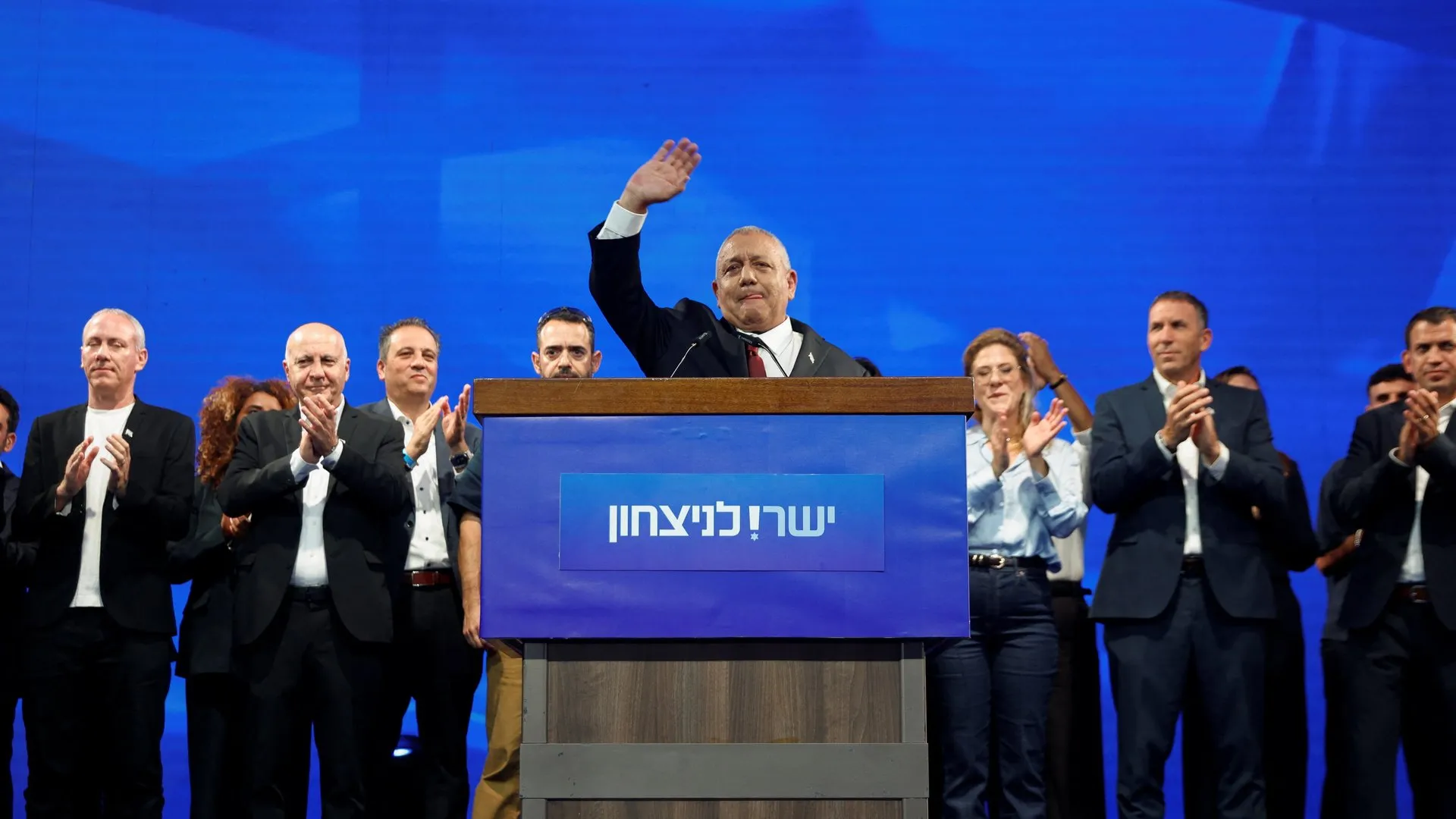
Eisenkot, head of the Yashar party and a former military chief of staff, told supporters after voting closed that the initial projections showed a “complete lack of confidence in Netanyahu and the October 7 government”, according to the AFP news agency.

“Don’t let anyone confuse you: the Netanyahu bloc has suffered a crushing defeat,” opposition leader Yair Lapid said in a statement. “This is a total collapse and the public has told them to go home.”

Under the updated figures, unaligned Arab parties were expected to hold 18 seats, leaving both major camps 10 seats short of the 61 required for an absolute majority.

Supporters at Eisenkot’s watch party in Tel Aviv cheered projections as voter turnout reached 77.7 percent, according to the Central Elections Committee.

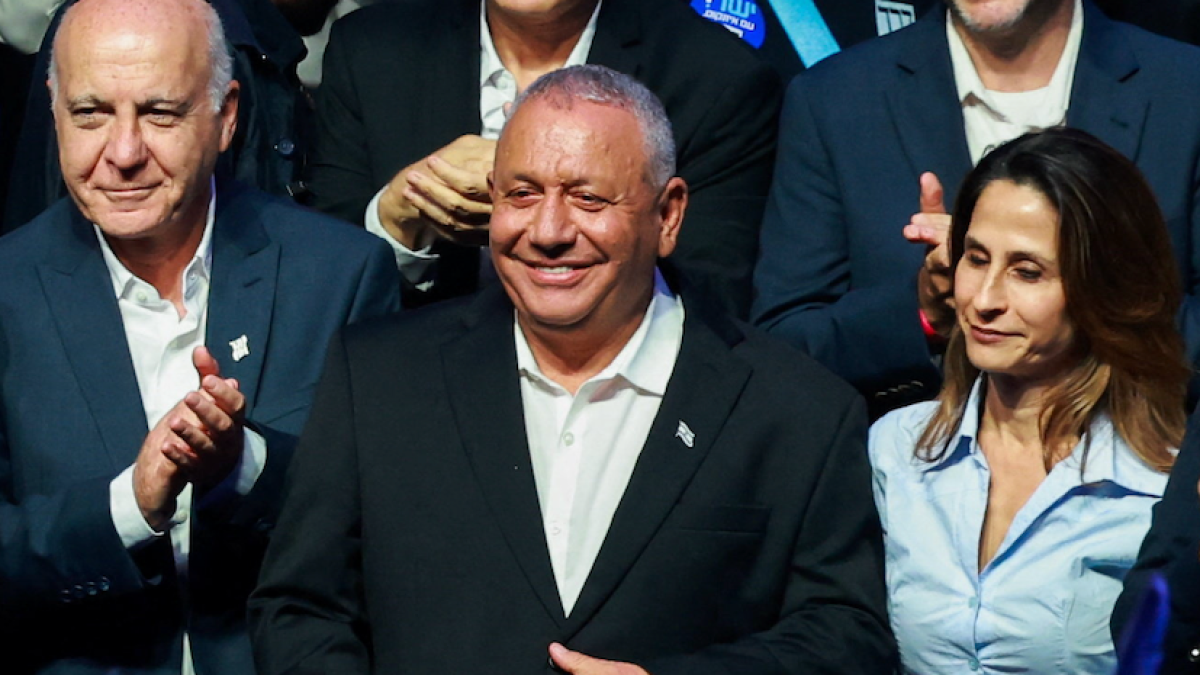
Yashar party leader Gadi Eisenkot and his wife Hannah cast their ballots at a polling station in Herzliya on October 27, 2026, on the day of Israel's legislative election. A deeply divided Israel headed to the polls for the first time since Hamas's October 7, 2023 attack, with voters delivering their verdict on veteran prime minister and the country's rightward drift. (Photo by Jack GUEZ / AFP)
Yashar party leader Gadi Eisenkot and his wife Hannah cast their ballots at a polling station in Herzliya on October 27, 2026 [Jack Guez/AFP]

However, senior figures in Netanyahu’s camp pushed back against opposition declarations, saying the final results could shift the balance.

Gideon Saar, Israel’s foreign minister and a key Netanyahu ally, dismissed opposition statements as “premature”, writing on social media that Likud remained the largest single party in parliament.

Meanwhile, leaders of Arab political factions highlighted their potential role in upcoming coalition negotiations.

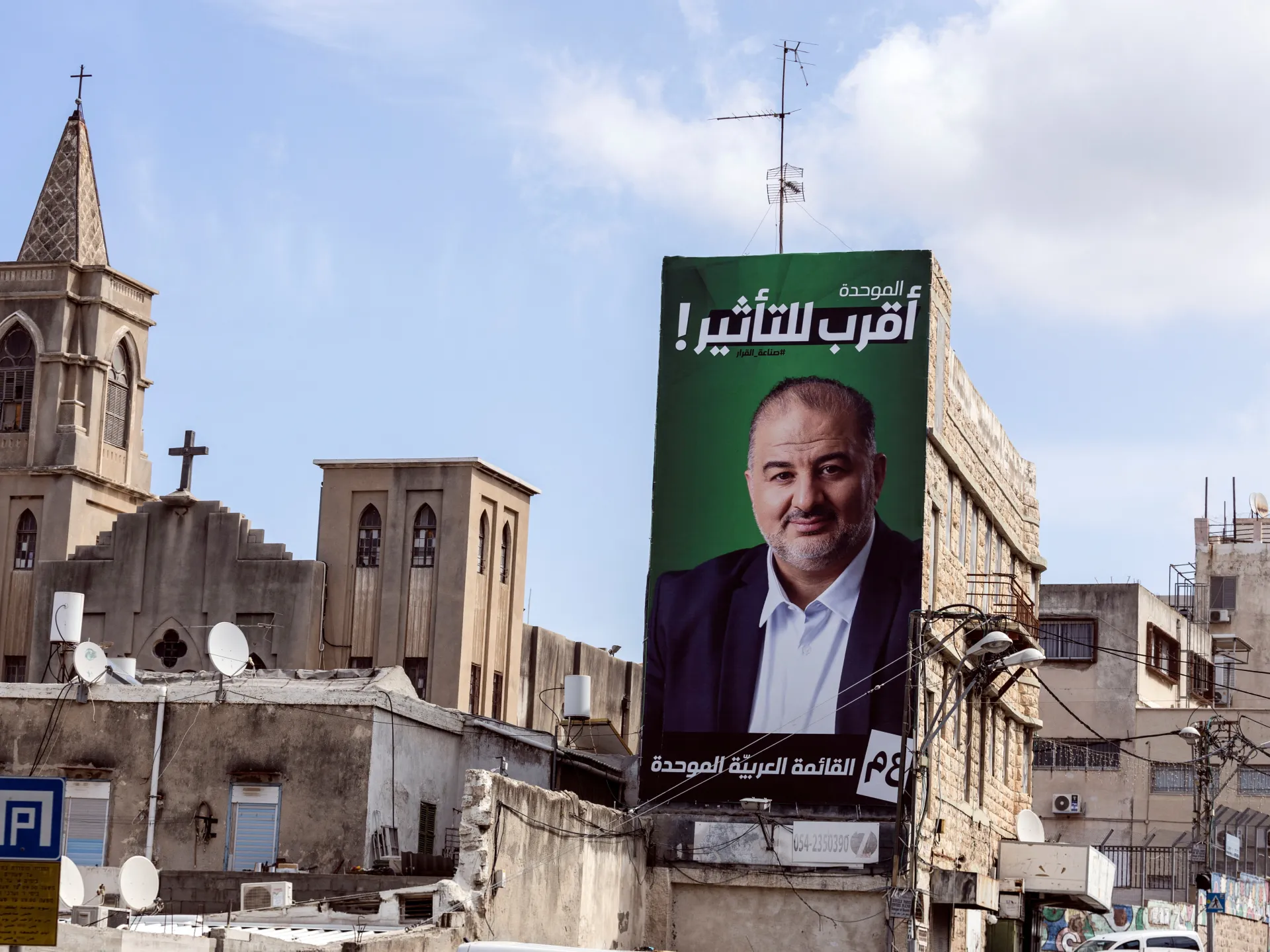
“We will transform the mandate we received into a new reality in the country,” Mansour Abbas, leader of the United Arab List (Ra’am), told reporters.

At the Joint List alliance headquarters in Nazareth, candidate Faten Gattas told supporters that high participation among Palestinian citizens of Israel aimed to block the return of Netanyahu’s nationalist coalition.

“We refuse the occupation and racism, and we will remain here,” Gattas said, according to the Reuters news agency.

With neither camp reaching a governing majority, political analysts suggested smaller parties would be key deciders as formal coalition talks begin in the coming days.

Source link

Arab parties could win 18 seats in Israeli elections, exit polls suggest | Israel Election 2026 News

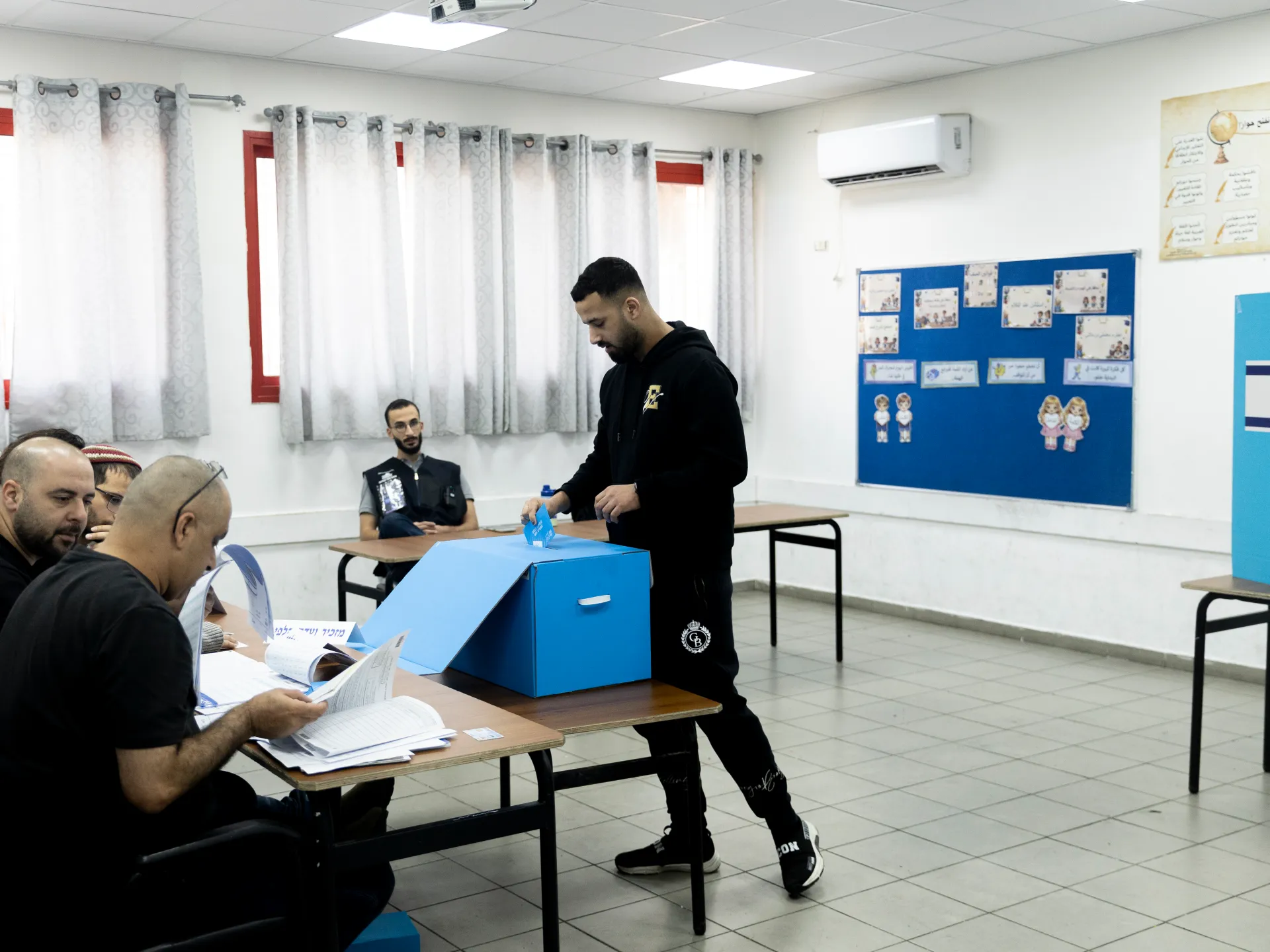
Record-breaking voter turnout in Palestinian-Israeli communities around 80 percent, early indications show.

Israel’s Arab parties are projected to win 18 seats in the Israeli parliament, exit polls indicate, after voting among Palestinian citizens of Israel surged to their highest levels in decades.

Exit polling data from Tuesday’s vote suggested that the leading Arab-led parties, the Joint List and Ra’am, are set to hold a record number of seats in the 120-member Knesset. Updated exit polling indicated that the opposition bloc led by former Israeli military chief of staff Gadi Eisenkot’s Yashar party and the bloc led by Prime Minister Benjamin Netanyahu’s Likud party were tied at 51 seats each.

Recommended Stories

list of 3 itemsend of list

Early indications put voter turnout among Palestinian citizens of Israel at around 80 percent, historic numbers that break 1999 records, Israel’s Channel 12 reported on Tuesday.

The leader of Ra’am, or the United Arab List, Mansour Abbas, said he hopes the final election results will allow the anti-Netanyahu bloc, including his party, to win the 61 seats required to form a government.

“With the numbers we have now, there is no government,” Abbas told Israel’s Channel 12.

Abbas, whose Ra’am party currently holds five seats in the Knesset and joined the coalition that governed Israel from 2021 to 2022, added that both main blocs reached out to his party before and after the election.

‘Arabs can’t be kept outside’

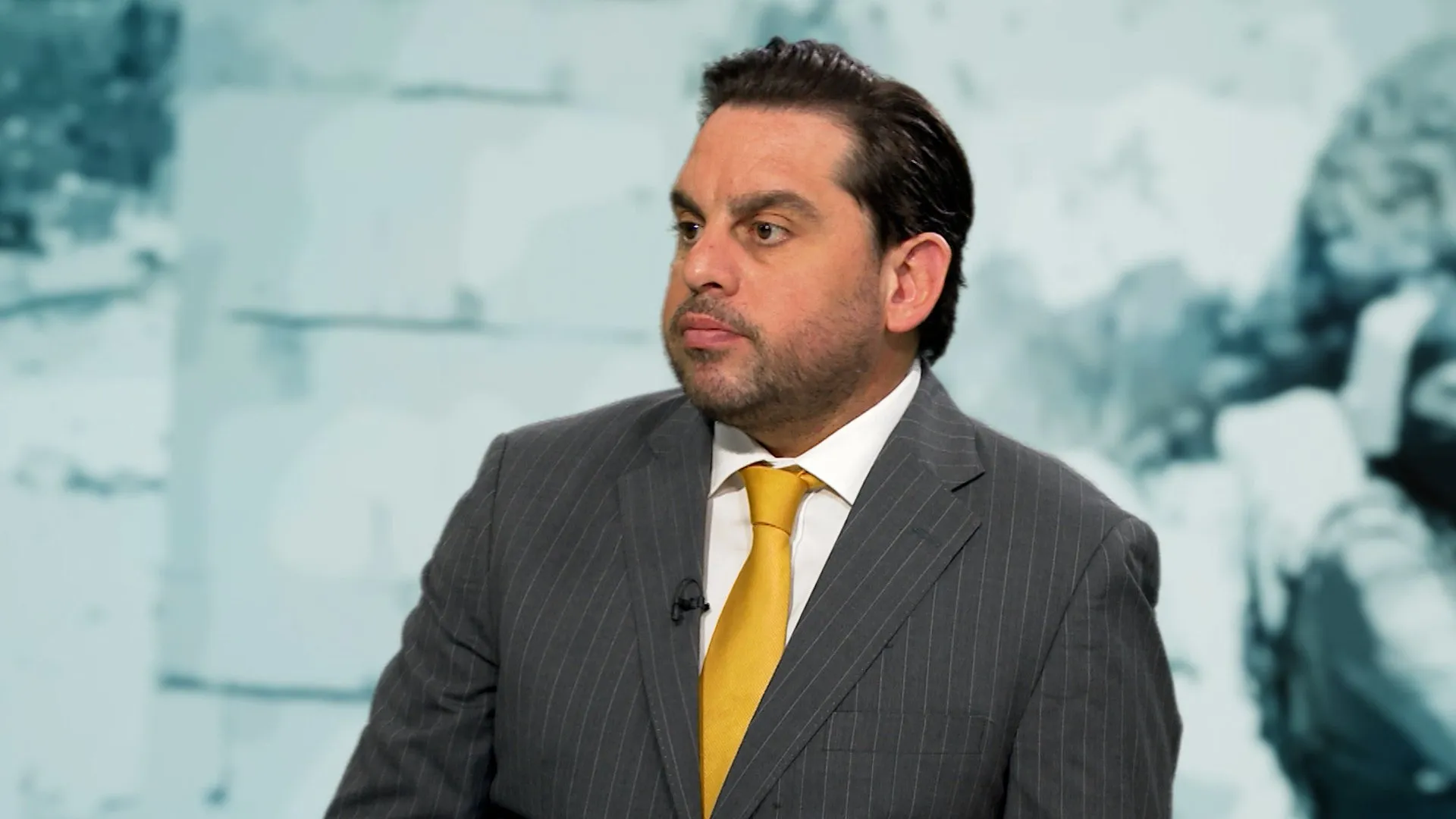
Speaking to Al Jazeera, Alon Pinkas, a former Israeli ambassador, said creating a government might prove difficult for parties such as Eisenkot’s – which earlier exit polls had put narrowly ahead – because they promised not to form coalitions with Arab parties during the campaign.

“There’s a price to pay,” Pinkas said, because the “Arabs can’t be kept outside and only being considered and co-opted when you need their votes”.

He added that the Arab-led lists will make demands that a Jewish-led coalition government may not support.

Netanyahu and his far-right coalition made last-ditch efforts on Tuesday to get their supporters to the polls, warning of surging voter turnout among Palestinian citizens of Israel, a tactic Arab politicians denounced as racist and inflammatory.

Cars flying Netanyahu’s Likud party flags drove through Jerusalem blaring the Islamic call to prayer and urging supporters to cast their ballots because “Arabs are voting”, witnesses said.

In social media posts, the embattled prime minister highlighted long queues at polling stations in Arab communities and published an image that he said showed Arab voters, including women wearing the niqab, a veil that covers the lower half of the face, waiting to vote.

“If we don’t wake up now, we’ll find ourselves with a government of Mansour Abbas and Ahmad Tibi,” he said, referring to two leading Palestinian members of the Knesset.

Overall voter turnout was also historic, reaching its highest level since 1999 with 77.7 percent casting ballots in Tuesday’s election, the Central Elections Committee reported. Palestinian citizens of Israel make up about 21 percent of the country’s population of 10 million and have traditionally voted at lower rates than Jewish Israelis.

‘Existential moment’

Al Jazeera’s Nour Odeh, reporting from Ramallah in the occupied West Bank, called the election “an existential moment for Palestinian-Israelis”.

She noted the record turnout among what has emerged as a key voting bloc, which drew “even [voters] who would usually boycott elections, who didn’t believe it would amount to any kind of influence, that it would change their reality, that it would alter the systemic discrimination that they face”.

The Knesset has passed more than 100 laws discriminating against Palestinian citizens of Israel, who also face discrimination in receiving state funds, Odeh said.

Source link

Exit polls following Israeli elections indicate no clear winner | Israel Election 2026 News

BREAKING,

The official results are due to be published on November 4, more than a week after the vote.

Exit polls following what many pundits and voters have billed as the most pivotal election in Israel’s history indicate no clear winner in the hard-fought contest.

According to exit polls, Israeli Prime Minister Benjamin Netanyahu’s bloc is projected to secure 50 seats, while the bloc led by opposition candidate Gadi Eisenkot is expected to win 52 or 53 seats. Sixty-one seats are needed to form a majority government. Arab parties are projected to collectively win 18 seats.

Recommended Stories

list of 3 itemsend of list

Polling stations closed at 10pm (20:00 GMT) local time. Preliminary results are expected on Wednesday, followed by a final tally on Friday. The official results are due to be published on November 4, eight days after the vote.

Exit polls are based on interviews with voters immediately after they have cast their ballots. The interviews help project the election’s outcome and have in previous elections tended to anticipate the results closely.

Voter turnout in the Israeli election reached 74.3 percent as of 8pm (18:00 GMT), according to data released by the Central Elections Committee. By comparison, turnout in the 2022 election was 70.63 percent.

Polls predicted a tight race between incumbent Prime Minister Benjamin Netanyahu and leading opposition candidate Gadi Eisenkot, the leader of the Yashar party and a former army chief.

Israel’s Central Elections Committee rejected a request by Netanyahu’s Likud Party to extend voting hours.

The election is the first since Israel launched its genocidal war on Gaza three years ago, following Hamas-led attacks on the country, and is widely seen as a referendum on Netanyahu’s handling of the events on October 7, 2023 and the conflicts that followed.

Source link

Former PLO official says Netanyahu-Eisenkot coalition could be possible | Benjamin Netanyahu

Former PLO official Xavier Abu Eid says Israel’s election outcome remains uncertain, with polls divided between Benjamin Netanyahu and Gadi Eisenkot. He suggests the two rivals could potentially form a national unity government despite their political differences.

Source link

Palestinian citizens of Israel can vote, but cannot expect change | Israel Election 2026

For the majority of Israelis, the general election on October 27 is a choice between Prime Minister Benjamin Netanyahu and the forces that oppose him, led by former general Gadi Eisenkot. But for the Palestinian citizens of Israel, who make up 20 percent of the population, the upcoming polls present a different dilemma.

As the political mainstream in Israel continues to shift to the far right, Palestinian citizens face growing threats to their political and collective rights. Palestinian communities in Israel experience increased violence, while settlers are encroaching on their boundaries. The recent push to expand policing and militarisation of civilian life is another source of growing anxiety within the Palestinian population.

In this context, the anti-Netanyahu bloc does not seem to offer the prospect of policy reversal or change. Therefore, the question on many Palestinian minds is whether voting in the Israeli elections can make any difference at all.

Recolonisation of 1948 Palestine

Since the Nakba of 1948, the Palestinians who managed to remain in their homes in what was declared as territory of the new State of Israel have had a different fate than the Palestinians in the West Bank and Gaza. In 1952, they were granted Israeli citizenship, and in 1966, the martial law under which they were forced to live was lifted.

Although Palestinian citizens of Israel have the right to vote and participate in politics, citizenship has not shielded them from the broader system of dispossession and attempts to reshape their Palestinian identity and national belonging.

Through land confiscation and the regulation of education and culture, the Israeli state has sought to detach Palestinians from their historical roots and collective past, promoting instead a model of the “Arab Israeli” as a citizen whose identity is separate from its Palestinian and Arab national context.

Formal citizenship has not secured substantive equality for Palestinians as they face discriminatory laws, systemic underfunding of basic services, and political and socioeconomic marginalisation.

Instead of engaging in direct violence towards Palestinian citizens – as it has done in the West Bank and Gaza – the Israeli state has instead “outsourced” brutality to criminal networks.

As a result, Palestinian communities have faced killings, shootings, bombings and arson while Israeli law enforcement has largely ignored the problem. More recently, this problem has escalated, as organised crime groups obtained advanced weapons reportedly stolen from Israeli army stockpiles or smuggled across borders. This growing militarisation of organised crime has claimed hundreds of lives.

In parallel, Israeli settlements next to Palestinian communities have expanded, accompanied by accelerated seizure of land. This process of “recolonisation” began in mixed cities, such as Jaffa and Lydd, where religious-nationalist settler groups started establishing themselves in Palestinian neighbourhoods in 2021.

Since October 2023, this process has accelerated. In August, Israel’s Finance Minister Bezalel Smotrich unveiled his party’s plan to “Judaise” the Naqab and northern Israel. He proposes to add one million Jewish residents to the two regions, establishing 40 new settlements and dozens of farms, expanding existing settlements, and creating hundreds of thousands of new housing units.

The idea is to extend the model of territorial control from the occupied West Bank into the Naqab and northern Israel, where Palestinian communities are concentrated.

There are also indications that the policing of Palestinian towns and villages could increasingly fall under the National Guard, established under National Security Minister Itamar Ben-Gvir.

The idea of creating the force was prompted by the May 2021 protests, known as the Dignity Uprising, which spread across Palestinian communities in Lydd, Haifa, Umm al-Fahm, and dozens of other towns and villages.

Ben-Gvir has advocated expanding the state’s capacity to suppress such unrest. Although the National Guard’s precise role and operational framework remain under development, its potential deployment against mass protests raises serious concerns about the right to protest and the protection of democratic freedoms.

The government has strengthened settler security squads and integrated them into a broader security framework, raising concerns about the growing role of armed civilian groups in enforcing control over Palestinian communities.

At the same time, Ben-Gvir has widened access to personal firearms, issuing 300,000 gun licences since taking office.

Together, these measures normalise civilian policing and deepen the militarisation of everyday life, reinforcing the unequal distribution of coercive power in a society structured on the dispossession and subordination of Palestinians.

The Palestinian response

Parties seeking to represent Palestinian citizens of Israel, such as the United Arab List (Ra’am), led by Mansour Abbas, have long argued that parliamentary participation and support for the anti-Netanyahu camp can help remove the far right from power and halt its settler-colonial agenda. But the party’s own track record proves this premise wrong.

Ra’am joined the coalition government formed after the elections in 2021, which excluded Netanyahu, but it failed to bring about fundamental changes in the conditions of Palestinian citizens. The coalition was fragile and often rocked by deep ideological contradictions.

In 2022, Mazen Ghnaim, a member of Ra’am, publicly acknowledged that he could not push through policies that would benefit the Palestinian population, despite his party being part of the ruling coalition and despite promises being made that such policies would be accepted. He also lamented the heavy criticism he faced whenever he was visiting Palestinian communities.

Ra’am’s experience in that coalition illustrated the challenge of sustaining Palestinian political participation in a government whose other constituent parties uphold exclusionary nationalist policies.

The problem, therefore, extends beyond Netanyahu himself: Palestinian support for the anti-Netanyahu camp cannot translate into meaningful policies that challenge the broader structures of discrimination and dispossession Palestinian citizens of Israel face.

Voting may offer a way to slow down this project, but it cannot reverse the deeper transformation taking place within Israeli society. The cultural shift towards fascism extends beyond the government and its political leadership, becoming increasingly embedded in social attitudes and everyday life.

That said, I believe another four years of far-right rule would pose an immediate threat to Palestinian communities and their rights. Therefore, I will vote in Tuesday’s election.

But Palestinians need to recognise that electoral participation must be accompanied by a more radical political response capable of confronting the structures and ideologies driving this transformation. This requires, among other things, reforming the High Follow-Up Committee for Arab Citizens of Israel and rooting it more firmly in Palestinian society through popular committees and grassroots organising.

It also demands a broader commitment to democratisation and de-Zionisation across historic Palestine, as part of a larger political project aimed at building a different future through alternative institutions, mechanisms, and forms of collective action.

Whatever the Israeli state might claim, the fate of the Palestinian citizens of Israel is tied to the fate of the rest of the Palestinian population. That is a realisation that Palestinian political leaders must finally embrace.

The views expressed in this article are the author’s own and do not necessarily reflect Al Jazeera’s editorial stance.

Source link

Israel’s election: The main issues in the words of the leading candidates | Israel Election 2026 News

From judicial reform to conscription and the Palestinians, here’s where candidates stand on the key issues dominating the campaign.

For an election often billed as the most consequential in Israel’s history, many issues that outsiders might expect to divide the candidates are, in fact, points of consensus among the frontrunners.

None of the leading contenders in Tuesday’s election has questioned the case for unleashing a genocide on Gaza in response to the Hamas-led attack of October 7, 2023, or the wars that have followed, including the one on Iran. Nor have most candidates for the premiership offered a clear path towards implementing a two-state solution to the Israel-Palestine conflict that was envisaged in the 1990s, or towards an equitable settlement with the Palestinians whose territory Israel occupies.

Recommended Stories

list of 4 itemsend of list

Instead, the points of division centre almost exclusively on Israel’s internal politics and how voters see the future character of their country. The choice is between the hard-right government of incumbent Prime Minister Benjamin Netanyahu, unconstrained by the judicial oversight he has railed against, and the future outlined by the disparate coalition of his opponents, which promises a broadly similar policy agenda but within the confines of the law and without the more extreme elements of the current governing coalition.

So, what have the leading candidates said about the main issues?

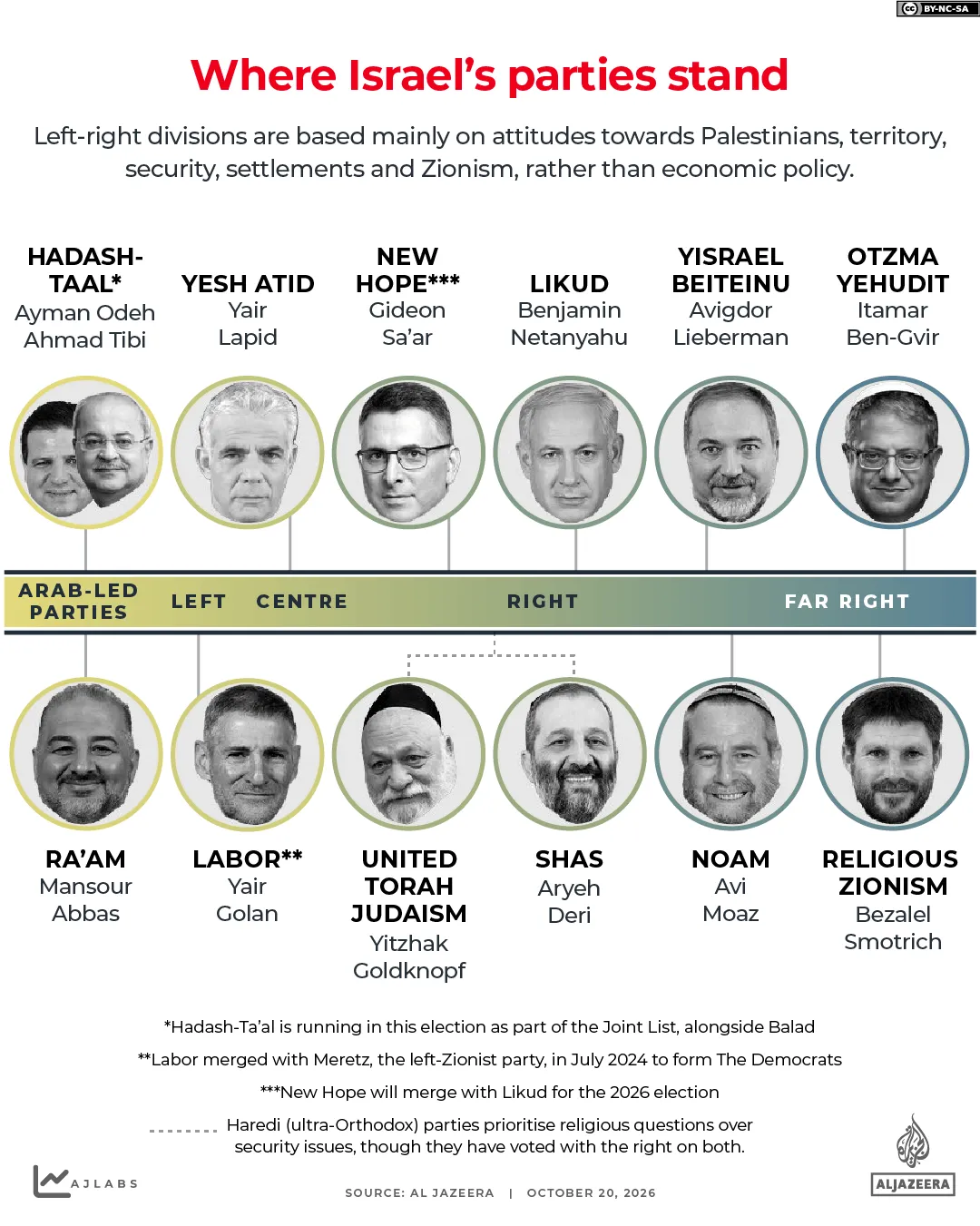
INTERACTIVE - Where Israel's parties stand left right note-1792588404
(Al Jazeera)

The two-state solution

Despite having committed to working towards a two-state solution in the 1990s’ Oslo Accords, with many of their allies adjusting their policies towards Israel to reflect that commitment, few of the contenders in Tuesday’s election appear ready to honour it. Instead, their government stands widely accused of abetting the settler pogroms now raging across the West Bank, while supporting continued construction in the occupied territory in defiance of international law. This includes the E1 settlement plan, which ministers openly boast will bury the two-state solution.

Here’s what some of the contenders have said:

  • Likud party leader, Prime Minister Benjamin Netanyahu: “We are going to fulfill our promise that there will be no Palestinian state; this place belongs to us.”
  • Yashar party Gadi Eisenkot: “My position on the Palestinian issue has remained consistent: The principle of two states for two peoples is a mistake.”
  • Religious Zionist party leader, Finance Minister Bezalel Smotrich: The next government should “destroy the idea of an Arab terror state; finally, formally and practically cancel the cursed Oslo Accords and get on the path of sovereignty, while encouraging migration both from Gaza and from Judea and Samaria [occupied West Bank]. There is no other long-term solution.”
  • The Democrats leader Yair Golan: “We need to understand that Israeli society is still in trauma from October 7. To make the galactic leap from the current situation to a two-state solution is impossible. It’s not enough to return to old formulas, we need to adjust our plans, our ideas, our perceptions. My concept is about civil separation and security responsibility.”

Haredi draft

The conscription of Israel’s growing ultra-Orthodox, or Haredi, population into the army is an issue largely unique to Israel, and one whose prominence has grown as the human and economic costs of the wars in which many refuse to take part have mounted.

Netanyahu has continued to rely on the two main Haredi parties, Shas and United Torah Judaism (UTJ), for support in the Knesset. They have in turn insisted that he pass legislation overturning the Supreme Court ruling of June 25, 2024 and offering ultra-Orthodox youth a legislative shield against conscription.

Ultra-Orthodox Jewish men gather on and below the Chords Bridge during the "Million Man" protest against Israeli military conscription [Ammar Awad/Reuters]
Ultra-Orthodox Jewish men during the ‘Million Man’ protest in Jerusalem against Israeli military conscription, October 30, 2025. [Ammar Awad/Reuters]

Here is what leaders have said:

  • Netanyahu after the arrest this month of about 40 Haredim – plural for Haredi – for avoiding the draft: “We must preserve the world of Torah because it preserved us. These arrests are a deliberate attempt to harm the process of drafting Haredim without coercion.”
  • Shas leader Aryeh Deri: “There will be no government in Israel with Shas’s support or participation unless the status of yeshiva [seminary] students is regulated.”
  • Eisenkot: “That is what the upcoming election is about: Netanyahu’s draft-dodging government, or a government of conscription led by me.”
  • Yisrael Beiteinu party leader Avigdor Liberman: “Netanyahu is issuing an impassioned call against the arrest of draft evaders, once again proving that he is a hostage to the draft evaders – without them, he has no government.”

Judicial overhaul

Days after taking office in 2022, Netanyahu’s government unveiled a plan to curb the powers of Israel’s courts, which triggered months of mass protests in 2023 before the war on Gaza paused the fight.

The coalition has passed measures reshaping how judges are appointed, while in July a law stripped Attorney General Gali Baharav-Miara of many of her powers, allowing the government to reject her legal advice and choose its own lawyers in court. Both are due to take effect after the election and most of the opposition has promised to reverse them.

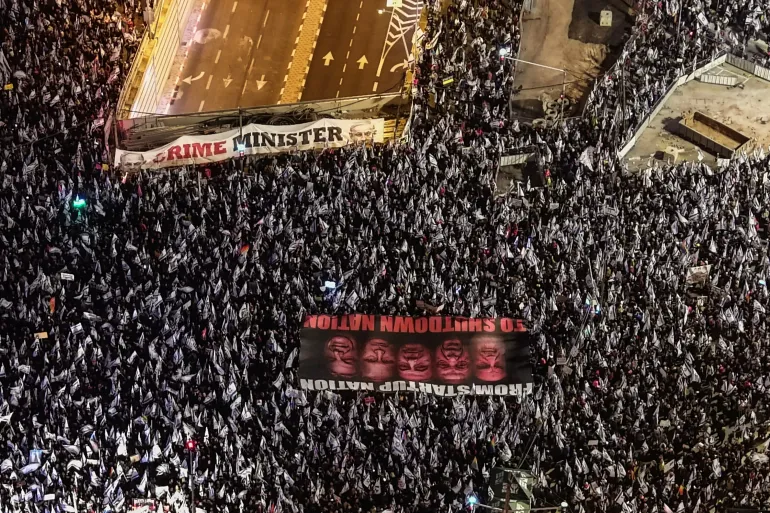
An aerial view shows protesters holding signs, one which depicts Israeli Prime Minister Benjamin Netanyahu and the other with the words "don't help him destroy Israel" as they attend a demonstration against his nationalist coalition government's judicial overhaul, in Tel Aviv, Israel May 27, 2023. REUTERS/Ilan Rosenberg TPX IMAGES OF THE DAY
Protesting in Tel Aviv against the government’s judicial overhaul [File: Ilan Rosenberg/Reuters]

The government has also boycotted Chief Justice Isaac Amit. Critics call it a deliberate assault on democracy by a prime minister embroiled in a long-running corruption trial of his own, while Justice Minister Yariv Levin says the election is a historic chance to finish the job.

Here are some of the contenders’ statements:

  • Netanyahu: “Democracy is the rule of the people. It’s ‘we the people,’ not ‘we the judges … In Israel, [judicial reform] was completely derailed, and we have to bring it back. We don’t have to crush the judiciary, but we have to make sure it doesn’t crush the legislative branch, the Knesset or the executive branch of government.”
  • Together alliance co-leader, former Prime Minister Naftali Bennett: “I want to be clear. We will cancel all the legal revolution laws immediately upon the convening of the Knesset.”

October 7 inquiry

While the killing of more than 74,000 people in Gaza has been entirely absent during the campaign of the two main alliances, questions over political accountability for security failures ahead of and during the Hamas-led attack in 2023 have dominated this election cycle.

Inquiries into failings by the security services ahead of and during the Hamas-led attack led to the resignation of Chief of Staff Herzi Halevi, announced in January 2025. They also fed a long, drawn-out and bitter fight with the prime minister that ended with the departure of Shin Bet head Ronen Bar in June last year.

However, despite recent news reports suggesting that Netanyahu was warned by both the UAE and Egypt ahead of the attack, and longstanding criticism of his policy of keeping Hamas in power in Gaza as a bulwark against the Palestinian Authority, no similar inquiry into his own alleged failings before October 7 has happened.

Here are some of the leaders’ statements:

  • Eisenkot: “Netanyahu was warned and did not act. A State Commission of Inquiry that we will establish will investigate the disaster. The heads of the systems took responsibility and resigned long ago. We will not allow the master of evaders to escape the truth.”
  • Netanyahu: The prime minister told the Knesset that his government “wants to establish a commission of inquiry with as broad public support as possible” and not one dismissed by what he claimed is “at least half the country”. The proposed government-led inquiry never reached its final reading and has been deferred to the next session.

Source link

Netanyahu rival Eisenkot holds final rally before Israeli election | Benjamin Netanyahu

Gadi Eisenkot, Benjamin Netanyahu’s rival in Israel’s upcoming election, held his final campaign rally on Sunday, declaring: “Netanyahu must go home.” The former military chief has positioned himself as a moderate alternative to Netanyahu in Israel’s first national election since the October 7 attacks.

Source link

Israel’s ‘Generation Right’ could shape Netanyahu’s future | Israel Election 2026 News

The global trend may show young people leaning politically to the left, but in Israel… they’re leaning to the right.

Al Jazeera’s Nida Ibrahim explores how young Israelis’ views on security and Palestinians could impact this election.

Source link

Israeli elections: What are the possible outcomes? | Explainer News

Israel is heading to the polls on October 27 in an election that could end Prime Minister Benjamin Netanyahu’s long grip on power.

The vote for all 120 seats in the Knesset is the first since the Hamas-led attacks of October 7, 2023, the onset of Israel’s subsequent genocidal war on Gaza and a wider conflict that has seen Israel carry out attacks in several countries across the region.

Recommended Stories

list of 3 itemsend of list

Opinion polls suggest his right-wing bloc is in a close race against a Jewish-led opposition alliance. But defeating Netanyahu at the ballot box does not necessarily mean removing him from power.

Israel’s proportional representation system means parties must negotiate alliances to secure a governing majority in the Knesset. No single party has ever won an outright majority of at least 61 seats.

According to recent polling, the opposition bloc is projected to win 52 seats, compared with 50 for Netanyahu’s religious-nationalist alliance. Palestinian-led parties could, therefore, determine who governs.

Here are eight possible outcomes:

Netanyahu forms another government

Despite slightly trailing in opinion polls, Netanyahu could remain prime minister if his Likud party assembles enough parliamentary support from existing allies or new coalition partners.

His traditional partners include far-right National Security Minister Itamar Ben-Gvir’s Jewish Power party and Finance Minister Bezalel Smotrich’s Religious Zionism party.

Ultra-Orthodox parties Shas and United Torah Judaism – which have previously joined his coalition multiple times but also walked away, most recently in 2025 – could also play an important role.

An opposition-led majority government

In late September, four opposition parties signed a non-aggression pact, agreeing to work together in a bid to unseat Netanyahu.

The rival movements – the Yashar party, the Democrats, the Yisrael Beytenu party and the Together alliance – said they are united in their goal to “preserve and strengthen Israel as a Jewish and democratic state”.

The bloc has not announced who would lead a future governing coalition, but former army chief Gadi Eisenkot, leader of the Yashar party, is seen as its most likely prime ministerial candidate.

Former Prime Minister Naftali Bennett, who heads the Together alliance with Yair Lapid, is another potential candidate.

A coalition involving Ra’am

The Joint List and Ra’am – the two Arab-led parties representing the Palestinian citizens of Israel, who make up about 20 percent of the population – are projected to win about 13 seats.

Ra’am, also known as the United Arab List, made history in 2021 by joining Bennett’s coalition, becoming the first Arab-led party to participate in an Israeli governing coalition.

Mansour Abbas, leader of Ra’am, has signalled a willingness to repeat that arrangement if the opposition-led alliance needs additional seats.

He has said his priorities include combatting the wave of violent crime that has been allowed to engulf Palestinian communities, as well as addressing discriminatory government policies, including on housing.

However, most opposition leaders, including Eisenkot, have ruled out such an alliance.

A minority government

If a coalition falls short of 61 seats, it could seek outside parliamentary support from other parties without including them in government, such as the Palestinian-led parties.

Joint List, which includes the Hadash, Ta’al and Balad factions, has said it could provide a so-called safety net to the anti-Netanyahu coalition by agreeing not to stand against it in a confidence vote, even if the alliance does not join the government. In return, it has said it would demand certain conditions, including a path to Palestinian statehood and fighting organised crime.

However, any such arrangement would leave the governing coalition vulnerable to defections and disputes over major policies.

A national unity government

A national unity government, according to Israel’s parliament, is a “government based on a broad coalition, the members of which also include representatives of rival parliamentary groups”.

This is usually formed at times of national emergencies, such as war, natural disasters or economic crises.

In May 2020, Netanyahu and Benny Gantz formed a unity government following three inconclusive elections. That agreement collapsed within a year.

However, in 2023, following the Hamas-led attacks on Israel, Gantz and members of his party joined Netanyahu’s coalition – seen as an emergency unity government – despite Gantz previously bitterly opposing it.

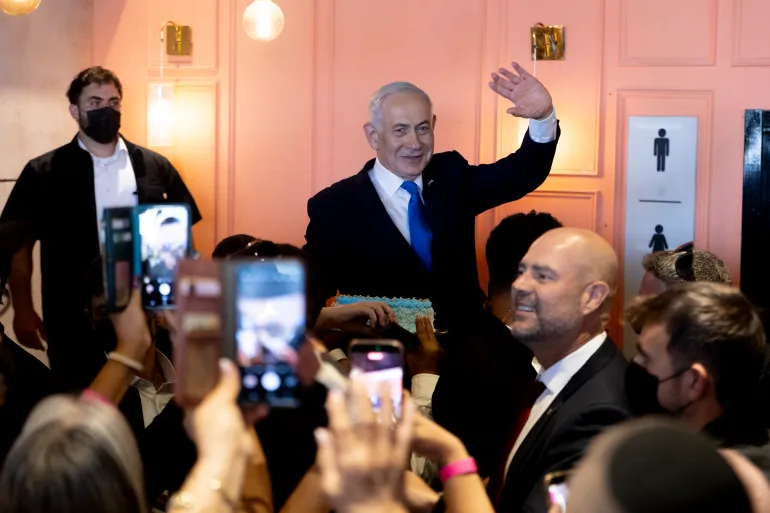
DIMONA, ISRAEL - OCTOBER 21: Israeli Prime Minister and Likud Party leader, Benjamin Netanyahu, greets supporters during an election campaign event ahead of Israel's general elections scheduled for next week on October 21, 2026 in Dimona, Israel. Israel will hold legislative elections on October 27, 2026. (Photo by Amir Levy/Getty Images)
Israeli Prime Minister and Likud Party leader, Benjamin Netanyahu, greets supporters during an election campaign [File: Amir Levy/Getty Images]

A rotating premiership

Two political leaders could agree to alternate as prime minister under a power-sharing arrangement.

Netanyahu and Gantz agreed to such a rotation in 2020, but their coalition collapsed before Gantz could take over.

Bennett and Lapid made the same arrangement for the prime minister’s office to change hands after the former came into power in June 2021. After Bennett’s coalition lost its parliamentary majority in June 2022, Lapid took over as caretaker prime minister in July that year.

A different prime minister from the same political camp

In Israel, the prime minister is voted in by members of the Knesset after an election.

If negotiations stall over forming a government, parties could agree to support another Knesset member from Netanyahu’s political camp or that of an opposition bloc, someone who is more acceptable to future partners.

No agreement – another election

If no leader can assemble sufficient support in the Knesset, Israel could face another period of political turbulence and head for a new election.

The country held five elections between 2019 and 2022 as rival blocs repeatedly struggled to form stable governments.

In such a scenario, Netanyahu would remain caretaker prime minister until a new administration took office.

Source link

Mass rally against Netanyahu ahead of pivotal Israeli election | Benjamin Netanyahu News

Thousands of Israelis rallied against PM Benjamin Netanyahu, demanding a change of government and an independent inquiry into the security failures surrounding the Hamas-led October 7th attacks. The election will be held on Tuesday October 27.

Source link

Iran blames US for deal failure, urges new try amid fear of new attacks | US-Israel war on Iran News

Tehran warns that even limited strikes would trigger a response ‘several times greater’.

Iranian President Masoud Pezeshkian has blamed Washington for the unravelling of an interim deal aimed at ending the war with the United States and Israel, amid growing fears that the fighting could resume imminently.

In comments broadcast by Iranian Press TV on Saturday, But Pezeshkian also said that both sides should return to the deal and “conclude it”.

Recommended Stories

list of 3 itemsend of list

His remarks come amid growing fears that military action could resume as soon as this weekend, after US President Donald Trump said on Friday that he “may do another little Epic Fury”, using the codename of the US-Israeli war against Iran that started on February 28.

Iran’s Islamic Revolutionary Guard Corps (IRGC) has warned that even limited strikes would trigger a response “several times greater”, according to comments reported by the semi-official Fars News Agency.

Iranian Armed Forces Chief of Staff Ali Abdollahi said on Saturday that the US military would not be allowed in the Gulf “under any circumstances and at any time”. Abdollahi said Trump could only “dream” of seeing US forces enter the Gulf, adding that he would take his dream to the grave.

Trump has suggested he could take further military action against Iran, while Israeli Prime Minister Benjamin Netanyahu has said he remains committed to overthrowing the country’s government.

Both leaders face elections, with Israelis set to choose their next government on Tuesday. Meanwhile, Trump’s Republican Party faces crucial midterm elections on November 3, with Democrats potentially winning control of both the House of Representatives and the Senate. Such an outcome would be a major blow to Trump, who still has more than two years left in his final term in the White House.

Iranian government spokesperson Fatemeh Mohajerani said on Saturday that Tehran would not “wait for permission to defend itself”, adding that the country “seeks peace but will respond to any aggression with severe consequences”.

“Our position is clear: we do not flee from dialogue for peace, and we do not hesitate in defending the country. Those who harbour the illusion of destroying Iran must correct their calculations,” Mohajerani wrote in a memo.

Her comments came as Iranian judiciary chief Gholamhossein Mohseni Ejei met Supreme Leader Mojtaba Khamenei. The pair discussed how to tackle corruption and pursue compensation for Iranians affected by the US-Israeli war, among other issues.

Khamenei replaced his father as supreme leader after the latter was assassinated during the opening strikes of the war on February 28. He has not been seen in public since assuming the position in early March.

Parliament Speaker and chief negotiator Mohammad Bagher Ghalibaf was reported to have met Khamenei earlier this week.

Source link

Thousands of Israelis rally against Netanyahu gov’t days before election | Israel Election 2026 News

Opposition figures join Tel Aviv protesters demanding an independent October 7 inquiry.

Thousands of Israelis are protesting against the government and calling for an independent inquiry into the security failures that led to the October 7, 2023 attacks.

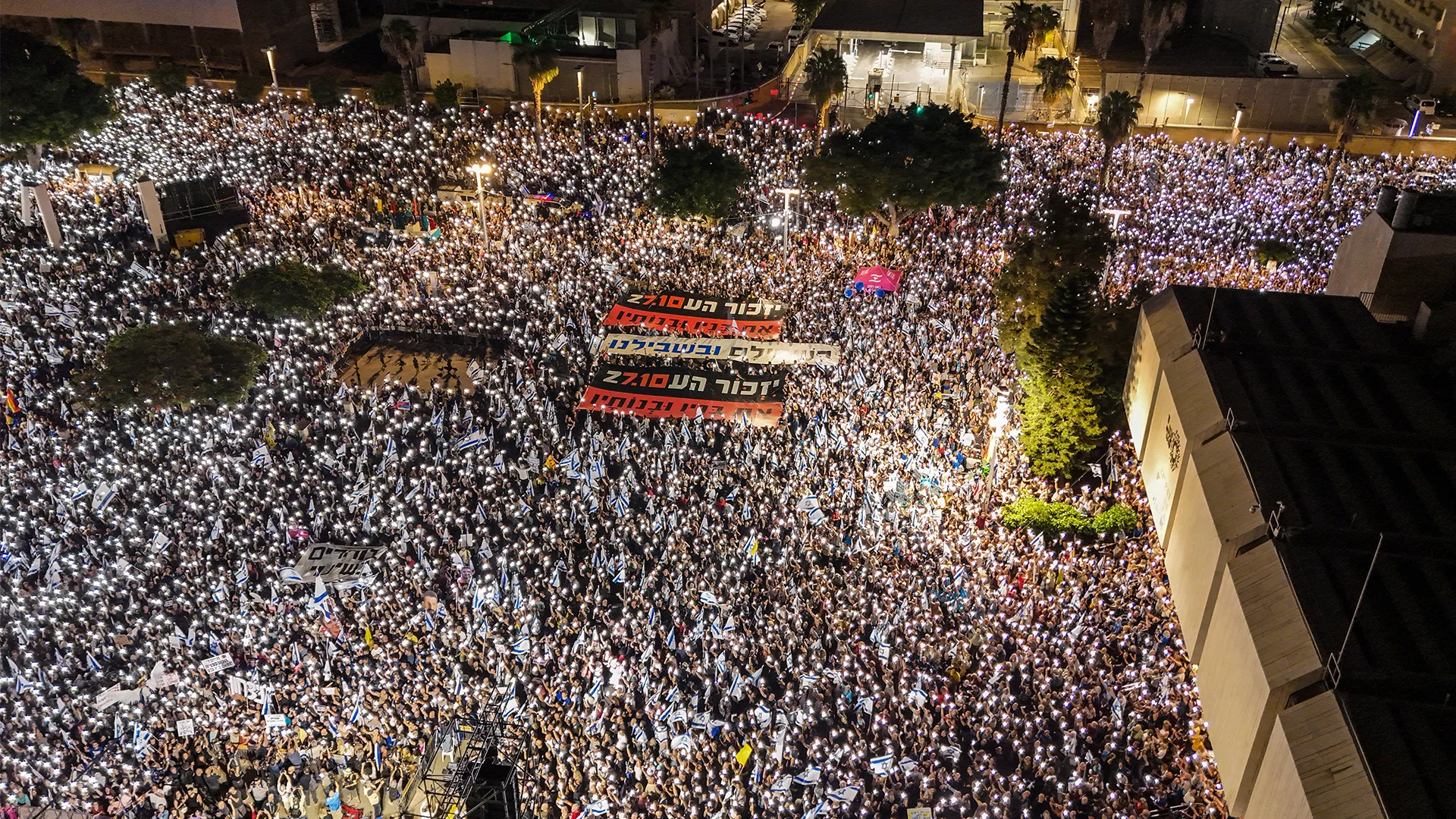
Demonstrators rallied in the public plaza known as Hostages Square in Tel Aviv on Saturday, three days before Israel’s first general election since the genocidal war on Gaza began.

Recommended Stories

list of 3 itemsend of list

The protest was organised by the October Council, a group founded by the families of captives taken to Gaza three years ago, to demand accountability for the government’s failure to prevent the Hamas attack that preceded the war.

“Three days before the election, we will hold the culminating event marking three years of struggle to uncover the truth, demand accountability and establish a state commission of inquiry,” the October Council wrote on X ahead of the rally.

Elsewhere in Israel, protesters were also gathering for antigovernment demonstrations, reported Haaretz newspaper.

Taking part were leading figures from opposition parties, including Gadi Eisenkot of the Yashar party, who is Prime Minister Benjamin Netanyahu’s main centre-right rival.

In Tel Aviv, Eisenkot was greeted by chants of “Who’s coming? The next prime minister”, according to The Times of Israel. The leader of the Democrats, Yair Golan, was also at the rally.

“Masses, masses of masses, flowing in the ‘Democrats’ march from Rabin Square to the Hostages Square – for change, for hope, for r-e-v-o-l-u-t-i-o-n. What energy. This time it’s ours completely!”, Israeli citizen and lawyer Dan Adin posted on X.

Polls ahead of Tuesday’s election suggest a tight race, with Netanyahu’s right-wing bloc, in power since late 2022, neck and neck with Eisenkot’s. Neither bloc is currently projected to obtain a majority of seats in Israel’s parliament.

The election could be pivotal in determining whether Israel launches another round of strikes on Iran. Eisenkot is believed to be less inclined to resume military action against Tehran if he becomes Israel’s next prime minister.

However, on most other foreign policy issues, leading Israeli parties and politicians remain united, including in their opposition to the creation of an independent Palestinian state.

Ahead of the protest, the October Council alerted law enforcement to possible “provocations” from pro-government agitators.

“We have sent an urgent letter to the Police Commissioner following alerts about attempts by entities linked to the coalition to disrupt tonight’s rally,” it wrote on X.

The October Council aims to hold Israeli officials deemed responsible for the October 7 attacks to account and deliver justice for affected families.

Netanyahu’s coalition government, however, has refused demands to establish an independent commission of inquiry. Instead, it has offered to set up a “political” commission. Half of the commission’s members would be appointed by the government, while the remainder would be appointed by opposition legislators.

Opposition leaders have said they would boycott a commission appointed by politicians.

Source link

How Benjamin Netanyahu reshaped Israel’s institutions | Israel Election 2026 News

To his supporters, he is known as “King Bibi”; but to his opponents, he is the king of security failures and corruption.

Disputes over names aside, what is not in question is that Benjamin Netanyahu, Israel’s longest-serving prime minister, has left his mark on the country’s institutions, politics and social attitudes during a decades-long career that has been defined by Israel’s lurch to the right.

Recommended Stories

list of 3 itemsend of list

As he seeks re-election in Israel’s October 27 polls, analysts say his most enduring domestic legacy may be the right-wing, militaristic opposition that he has helped create and now faces.

Born in 1949, Netanyahu entered Israel’s central political stage in the early 1990s by fuelling anger at possible peace deals with the Palestinians and Syria.

Israeli political leaders have accused him of leading incitement that motivated the 1995 assassination of then-Prime Minister Yitzhak Rabin, who was leading negotiations with the Palestine Liberation Organization, by an ultranationalist Israeli. Netanyahu had led rallies in which participants depicted Rabin in a Nazi SS uniform and held signs of him in the crosshairs of a gun, while others shouted “traitor”.

The Likud Party leader denies any responsibility, but former security officials have said they warned Netanyahu before the assassination and asked him to dial down his rhetoric, only for him to refuse, according to Israeli media reports.

In 1996, Netanyahu’s populist tactics succeeded at the ballot box, making him Israel’s youngest prime minister. Netanyahu’s transactional leadership style gave prominence to extreme-right and religious parties that are now an indispensable part of his right-wing alliance.

Under him, religious courts have expanded powers, including over civil and business disputes. State institutions accommodate religious agendas and allocate record levels of funding to ultra-Orthodox schools and institutions.

Netanyahu inscribed his political ideology, especially on the identity of the state and the status of Palestinian citizens of Israel, into law. In 2018, the Knesset passed the so-called Nation-State Basic Law, which states – among other things – that Israel is the exclusive state of the Jewish people and also makes advancing illegal settlements a national priority.

Human rights organisations in Israel petitioned the High Court to stop the legislation from going into effect, but the petition was rejected. International experts and rights groups cite this law, among others, as evidence of Israel committing the crime of apartheid in its treatment of Palestinians.

Netanyahu also re-engineered state institutions, including Israel’s security structures, appointing loyalists and political allies to senior positions. He also clashed with security chiefs that he deemed antagonistic. And in the aftermath of the Hamas-led October 7, 2023 attack, which triggered Israel’s genocidal war against Palestinians in the Gaza Strip, Netanyahu deflected blame and responsibility on the security establishment, prompting Ronen Bar, who was the Shin Bet chief in 2023, to sue him for defamation.

People protest against Prime Minister Benjamin Netanyahu’s proposed judicial reforms to reduce powers of the Supreme Court, in Tel Aviv, Israel on February 25, 2023
People protest against Prime Minister Benjamin Netanyahu’s proposed judicial reforms to reduce powers of the Supreme Court, in Tel Aviv, Israel on February 25, 2023 [File: Ilan Rosenberg/Reuters]

A major change to Israeli institutions that was spearheaded by Netanyahu during his 19 on-and-off years in power affected the judiciary, which is examining lingering corruption charges that could see him serve time in prison if he is convicted. Netanyahu, who is up against three separate cases of corruption filed in 2019, denies any wrongdoing.

Under his leadership, the Knesset adopted legislation that changed the composition of the Judicial Selection Committee to ensure greater political influence for the governing coalition.

Netanyahu called it “judicial reform” to stop what he often calls a “judicial dictatorship” ruling over elected officials.

Opponents called it a “coup” that sparked wide-scale protests: a push to curtail the independence of the High Court and give politicians influence over the courts and ministerial legal advisers.

In line with his efforts to subvert independent oversight, Netanyahu tried repeatedly, but unsuccessfully, to fire the attorney general.

But he succeeded in dismissing the military’s advocate general for leaking a video of Israeli soldiers gang-raping a Palestinian detainee. The soldiers were also released and cleared of charges.

At the same time, Netanyahu is dogged by corruption cases dating back to 2019, which could see him serve time in prison if convicted

The prime minister, who is wanted by the International Criminal Court on charges of war crimes in Gaza, says his work is not over. He promises his supporters he will complete the overhaul of judicial review and press on with other highly controversial policies.

Netanyahu’s supporters and allies view him as a leader who delivers, and one who achieved what others could not. His opponents pledge to undo the damage Netanyahu caused over the past decades, pointing to corruption, social divisions and increasing international isolation as outcomes of his rule.

But undoing such formative changes, many of which are now law, may be easier said than done.

Source link

‘Generation Right’: Israeli youth show strong support for the right | Israel Election 2026 News

The first Israeli elections in four years have brought with them a record number of first-time voters – most of whom are keen to make their voices count.

But while youth around the world are leaning to the left, young adults in Israel are heading in the opposite direction, according to recent polls.

Recommended Stories

list of 3 itemsend of list

The Israeli Central Elections Committee says more than half a million voters were added to the roll since the last elections in 2022. They are aged between 18 and 22 and polls show that 80 percent of them plan to vote in the October 27 legislative election.

Although their political activism and engagement in the public sphere are limited, a survey by the think tank, Israel Democracy Institute (IDI), found that a majority of young Jewish Israelis feel that the ballot box can influence reality and shape their country’s future.

But what does the future they hope for look like?

Around three quarters of Jewish first-time voters polled identified as “right or centre-right”, according to a recent poll for Israel’s Channel 12. That’s significantly higher than the rest of the Israeli population, which has already been shifting to the right for years.

Now the title “Generation Right” is being used to reference Israel’s Jewish youth – though not the Palestinian citizens of Israel.

Mainstreaming far-right views

The first Israeli elections since the October 7, 2023 attack are contentious and polarising – and they will be decisive for Prime Minister Benjamin Netanyahu’s political survival and his right-wing approach.

Critics of the longest-serving PM in Israel’s history accuse him of supporting “far-right” politicians to stay in power. They say that his handing of key government positions to extreme politicians such as National Security Minister Itamar Ben-Gvir and Finance Minister Bezalel Smotrich helped empower those camps and make their policies mainstream.

In 2017, Smotrich laid out his position for the future of Israel where the Israelis are the only ones who will have self-determination, whereas Palestinians will have to emigrate, stay without political representation, or be treated as “terrorists” if they refuse either of the two options. In 2022 he secured a portfolio in the defence ministry where he facilitates land grabs and empowers the illegal settlement enterprise in the occupied West Bank.

Indeed, this incitement and view of Palestinians has become more prevalent.

A recent video published by the Israeli satirist Lior Schleien shows a young man saying he would kill Arabs in Israel.

Schleien, a left-wing activist, has been visiting schools and speaking with young people often before their army service. His videos are giving Israelis, and the world, a chance to understand the younger generation.

In the video, Schleien asks the student how he proposes to kill Arabs. The answer: “Give me a knife and I will do it.”

Schleien asks whether October 7 changed his views. “I’ve always been racist,” the young man answers, adding that Arabs shouldn’t be allowed to live in the state of Israel. Even though the young man’s face is slightly covered, shielding his identity, Schleien removed the video after a public backlash.

In another town hall meeting, Schleien addresses the question of whether there are innocent people in Gaza. When asked if Israel is committing a genocide in Gaza, Schleien denies it, only for a female student to ask, “Do you think it should be done?”

Schleien looks unimpressed, but the student assures him that she is asking a serious question. Her friend, next to her, chuckles.

Speaking the language of the youth

At a recent meeting of young supporters of the left-leaning Democrats party in Tel Aviv, 18-year-old Gili told the AFP news agency that she believed Israeli society had abandoned the idea of peace.

She said the scars of October 7 instilled fear among people, making it hard for them to believe peace could ever be achievable.

While the October 7 attack may have accelerated the country’s push to the right and far-right, many say Israeli society has been heading this way for years.

A survey by the Israeli newspaper Yedioth Ahronoth shows more than 16 percent of new voters plan to cast their ballot for far-right parties.

From a large field in southern Israel, 18-year-old Amihai was wearing a shirt with far-right minister Ben-Gvir’s photo. The event he was attending called for the establishment of illegal Israeli settlements on Palestinian territory.

Talking to other young activists from a place overlooking the destroyed parts of the Gaza Strip, Amihai said he plans to vote for Otzma Yehudit, a party led by Ben-Gvir, who himself lives in an illegal settlement in the occupied West Bank.

Although Ben-Gvir did not pass the threshold of the 2020 elections, he was given a central position in the 2022 government of Netanyahu.

In the years since, the minister seems to have learned to speak the language of Israel’s youth. Despite having been convicted of supporting “terror” organisations as well as other criminal offences, Israeli surveys show that a chunk of his potential supporters in this election are first-time voters.

Ben-Gvir has also made sure to use his position to lobby for his “I am not mincing my words” policies.

As a minister, he often visits Israeli jails and detention centres to threaten Palestinian prisoners as well as international activists – all the while making sure that it is caught on camera.

His videos often go viral, a move that has earned him more youth support – and not just from his usual base of settlers, such as the violent “Hilltop Youth”, some of whose members have been sanctioned by the European Union and the United Kingdom.

The IDI survey found that social media and messaging apps such as WhatsApp and Telegram are key sources of information – often exposing young people to political content through their feeds rather than through active searching.

It is a language Ben-Gvir understands.

Source link

Israel’s elections 2026 explained in maps and charts | Israel Election 2026 News

Israelis go to the polls on October 27 to elect the 26th Knesset, in the first general vote since the genocide against Palestinians in Gaza and the wars on Lebanon and Iran.

Benjamin Netanyahu, the longest-serving prime minister in Israel’s history, with 19 years in office, is seeking another term while standing trial on corruption charges. His Likud party and the far-right coalition it leads are locked in a close race with a Jewish-led opposition bloc, with neither side appearing on track to win an outright majority in the 120-seat Knesset, Israel’s parliament.

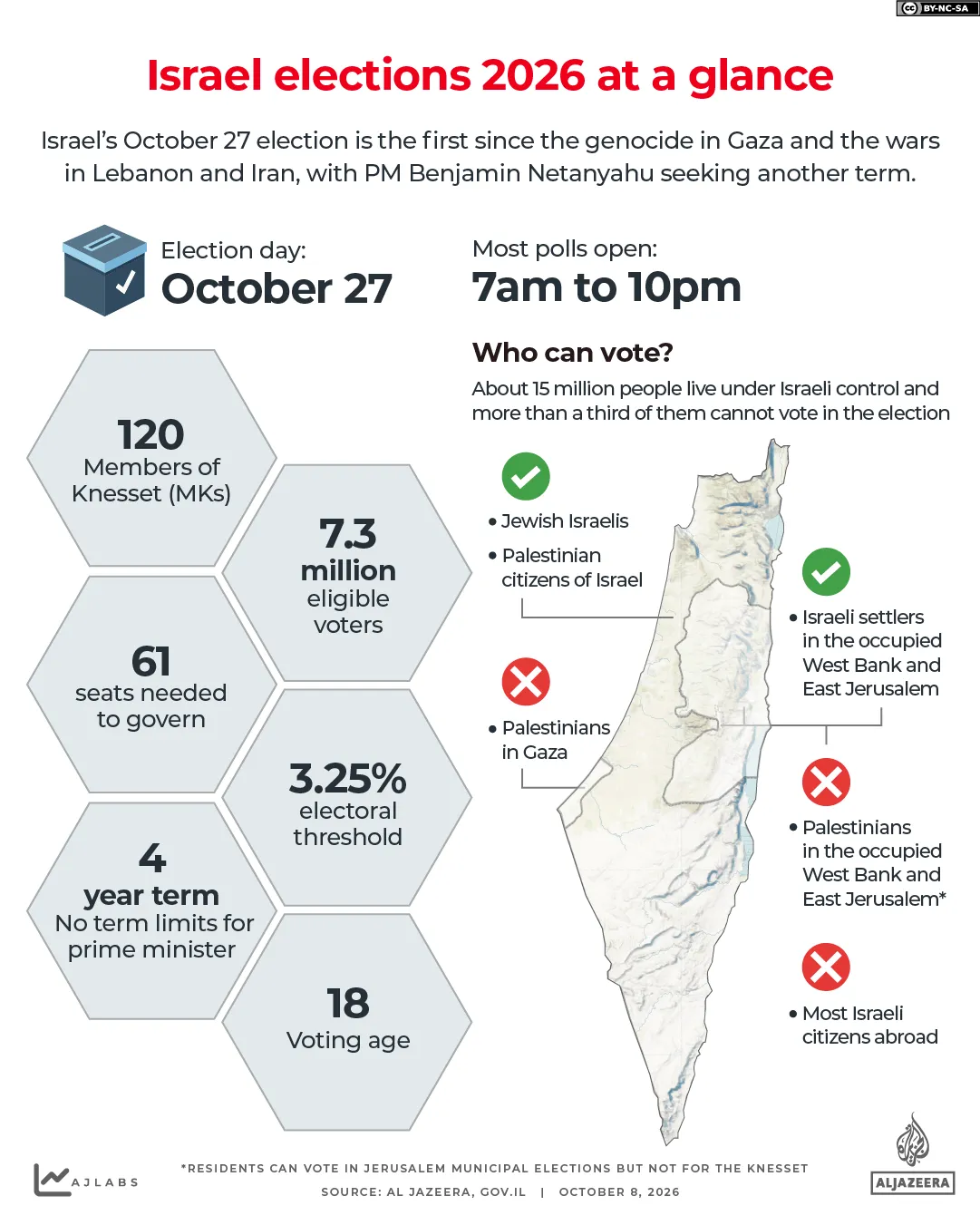
About 7.3 million people aged 18 and above are eligible to vote, according to Israel’s Central Elections Committee. Most polling stations open from 7am to 10pm, and anyone still queuing when they close is entitled to vote. Election day is a national holiday.

Any party clearing an electoral threshold of 3.25 percent enters parliament, which sits for a four-year term. There are no term limits for a prime minister.

INTERACTIVE - Israel elections 2026 - at a glance-1791465319
(Al Jazeera)

How voting works

Israelis vote for a party, not a candidate.

A majority requires 61 of the 120 seats and no party has ever won that outright. Finishing first does not guarantee power. Parties then have 28 days, with a possible extension of up to 14 days, to assemble a coalition reaching 61. If nobody manages it, the country votes again.

Seats are shared out in proportion to each party’s share of the national vote, so a party winning 30 percent of votes takes roughly 30 percent of seats. The votes for parties failing to secure 3.25 percent are discarded, which explains why small parties routinely merge before every election.

INTERACTIVE - Israel elections 2026 - how voting works-1791465325
(Al Jazeera)

Who can and cannot vote?

About 7.3 million Israeli citizens are eligible to vote in this election, but they are not the only adults living under the government they choose.

Roughly three million adult Palestinians in Gaza, the occupied West Bank and occupied East Jerusalem have no vote in the government that controls their borders, movement and legal status.

Jewish Israelis and Palestinian citizens of Israel, who number about 1.2 million, can vote. So can adult settlers among the more than 750,000 Israelis living in the occupied West Bank and occupied East Jerusalem, who help elect the parliament that legislates over the land they live on.

Most Palestinians in occupied East Jerusalem hold Israeli residency, not citizenship. They can vote for Jerusalem’s city council but not for the Knesset.

The result is a sharp anomaly in the occupied West Bank, where a settler votes and a Palestinian family living nearby, under the same military authority, does not.

Most Israeli citizens living abroad also cannot vote, because Israel has no general absentee ballot and requires voters to be physically in the country on election day. Diplomats and state emissaries are the exception, casting their ballots at Israeli missions on October 20.

INTERACTIVE - Israel elections 2026 - who gets to vote cannot-1792415616
(Al Jazeera)

What are the main issues?

Israelis are dealing with a series of domestic and international issues this election cycle, including:

  • October 7 security failures – Three years on, the government is yet to form a state commission of inquiry into the events of October 7, 2023, when a Hamas-headed attack led to the killing of some 1,200 people, with about 250 taken captive. Israel launched the genocidal war against Palestinians in the wake of the attack, killing at least 74,000 people and leaving most of the besieged territory in ruins.
  • Ultra-Orthodox draft exemptions – Supporters of the exemptions say they protect full-time Torah study, but critics argue they place an unfair military burden on everyone else.
  • Judicial reform – Netanyahu’s push to curb the Supreme Court’s powers, which sparked mass protests before the war on Gaza, remains a deep fault line. Critics see it as a threat to democracy, while supporters argue that the court has overstepped its authority.
  • War and security – The public wants stability but remains wary of concessions in Gaza, the occupied West Bank and Lebanon. Netanyahu promised “total victory”, but Hamas and Hezbollah remain operational.
  • Cost of living – High prices and modest wages are being further squeezed by soaring defence spending. Since 2023, Israel’s defence budget has doubled, increasing pressure on public finances.

INTERACTIVE - Israel elections 2026 - key election issues-1791806722

Israel’s outgoing government

Netanyahu’s coalition held 60 of the Knesset’s 120 seats when parliament dissolved in July. It comprised Likud with 32 seats, Shas with 11, Religious Zionism with seven, Itamar Ben-Gvir’s Otzma Yehudit with six, and New Hope with four. Shas left the government in July 2025 but remained in the coalition and New Hope will merge into Likud for this election.

The opposition held 59 seats: Yesh Atid with 24, Blue and White with eight, United Torah Judaism with seven, Yisrael Beiteinu with six, Hadash-Taal and Raam with five each and Labor with four. Noam’s single seat was unaffiliated.

INTERACTIVE - Israel elections 2026 - Israel outgoing government coalition opposition-1791465328
(Al Jazeera)

Who are the main contenders?

Netanyahu is seeking re-election while facing a trial on corruption charges, which he denies.

His far-right coalition is up against a bloc comprising of four major Jewish-led opposition parties, whose leaders have signed a declaration promising not to attack each other ahead of the vote and to join forces in forming a government after the polls.

INTERACTIVE - Israel elections 2026 - Benjamin Netanyahu-1792427534

Former army chief Gadi Eisenkot is viewed as the opposition’s most likely candidate for prime minister, with his new Yashar party evenly matched with Likud in the opinion polls.

INTERACTIVE - Israel elections 2026 - Gadi Eisenkot-1792427447

The opposition alliance includes the Together list, led by former Prime Ministers Naftali Bennett and Yair Lapid; Avigdor Liberman’s Yisrael Beiteinu and Yair Golan’s Democrats.

Other key players include far-right ministers Itamar Ben-Gvir and Bezalel Smotrich, the ultra-Orthodox parties, and the Arab-majority lists Ra’am and the Joint List.

Last month, Israel’s Central Elections Committee voted to bar Ra’am and the Joint List from the election, but the Supreme Court unanimously overturned the bans on October 2, ruling that the evidence did not meet the legal threshold for exclusion.

Sami Abu Shehadeh, a Palestinian citizen of Israel who leads Balad, one of the parties in the Joint List, withdrew from the race after the court signalled that a majority of its judges would uphold his disqualification.

The Arab-led parties could hold the balance of power after the vote, but most leaders of the Jewish-led opposition bloc have ruled out joining forces with them.

Sixth election in seven years

October 27 will be Israel’s sixth national vote since 2019, but the first in 38 years to arrive at the natural end of a full Knesset term.

The instability began in April 2019, when Netanyahu’s Likud party and Benny Gantz’s Blue and White party tied on 35 seats each. A second vote that September produced another deadlock, with Blue and White on 33 and Likud on 32, and neither round yielded a coalition able to reach a majority.

A third election in March 2020 gave Likud 36 seats to Blue and White’s 33, and produced a Netanyahu-Gantz unity government that collapsed within a year. In March 2021, Likud won 30 seats to Yesh Atid’s 17, but an eight-party coalition led by Naftali Bennett and Yair Lapid that also included Ra’am, an Arab party, ended Netanyahu’s 12-year run. It lasted a year.

Netanyahu returned in November 2022, with Likud on 32 and Yesh Atid on 24, at the head of what has been described as Israel’s most right-wing government. Polls now show neither bloc clearly reaching 61.

INTERACTIVE - Israel elections 2026 - history of elections-1791465321
(Al Jazeera)

Israel’s prime ministers

The state of Israel has had 14 prime ministers since its foundation in 1948. Netanyahu is by far the longest-serving, with 19 years in three separate stints: 1996 to 1999, 2009 to 2021 and from 2022 to now

Only David Ben-Gurion, who led the country from 1948 to 1954 and again from 1955 to 1963, comes close.

Whatever happens on October 27, Netanyahu stays on as caretaker prime minister until a new government is sworn in.

INTERACTIVE - Israel elections 2026 - history prime ministers-1791465323
(Al Jazeera)

Source link

Netanyahu’s new security doctrine: Regional strategy or election ploy? | Benjamin Netanyahu News

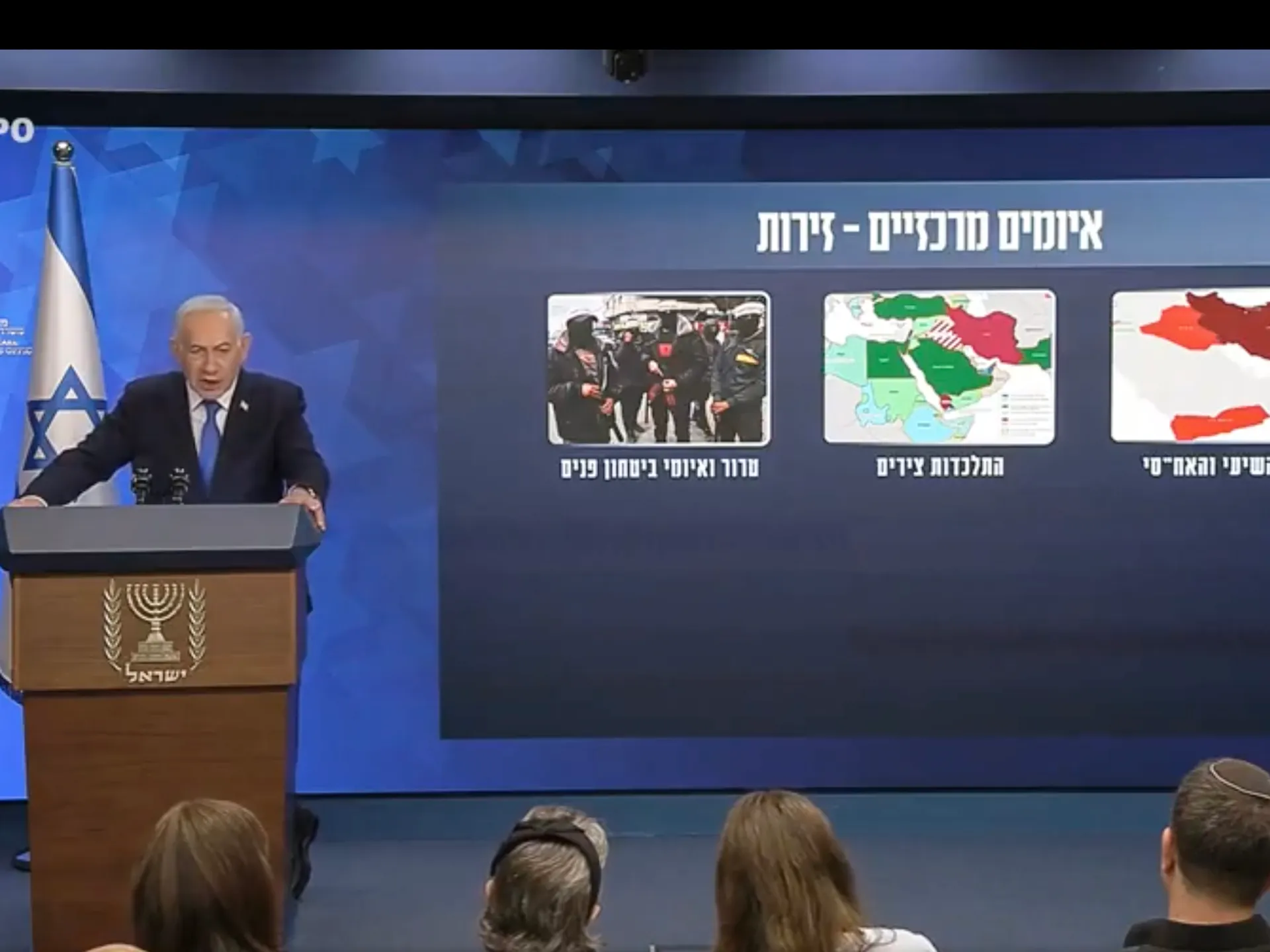
Israeli Prime Minister Benjamin Netanyahu has unveiled an updated national security doctrine and displayed a map of rival regional alignments, signalling a security approach that prioritises preemptive military action, the expansion of buffer zones, and the pursuit of new regional partnerships.

The document was developed with the assistance of Israel’s National Security Council and published by the Prime Minister’s Office on Sunday, just nine days before Israel’s parliamentary elections that could spell the end of Netanyahu’s time in office. It outlines a formal policy of preventing perceived threats through military action rather than containment – a policy that has already been seen in action over the past few years, as Israel pursues multiple wars and attacks on its neighbours.

Electoral survival strategy

The timing of the map’s release carries particular political significance, with Netanyahu fighting to retain power amid criticism of his conduct in power, the ongoing corruption trial he faces and his handling of the October 7, 2023, attacks, as well as the wars that followed.

Recommended Stories

list of 3 itemsend of list

As the October 27 election day draws closer, Netanyahu is attempting to bolster his credentials as Israel’s ‘Mr Security’, hoping to get the votes of Israelis who may not like some of his other policies or behaviour, but still view him as the most likely leader to defend the country.

Netanyahu, who did get the endorsement of US President Donald Trump on Sunday, said during the briefing that Israel could face the possibility of a far less supportive administration in Washington in two years, after the end of the Trump presidency.

“In two years, a president… who is extremely hostile to Israel could come to power [in the United States],” Netanyahu warned.

He therefore argued that Israel must “expand our network of alliances and develop capabilities that make us a valuable asset” to other countries as a way of protecting itself if US policy towards it changed.

The comments, according to analysts, suggest that Netanyahu is seeking to portray his leadership as essential to navigating both Israel’s regional military challenges and its diplomatic isolation, all while keeping a fearful electorate reassured.

Mohanad Hage Ali, deputy director for research at the Malcolm H Kerr Carnegie Middle East Center, explained that the strategic presentation centred on competing regional blocs and buffer zones.

That framework “incubates and nurtures existential fears, which would lead Israeli voters to feel the need for a decisive leader”, Hage Ali noted.

In his assessment, Netanyahu stands to benefit from the Israeli public’s fear of regional threats by presenting himself as a familiar leader capable of managing them, making him “the devil you know”, as the analyst put it, to voters reluctant to embrace political change at a sensitive time.

Netanyahu’s political opponents have been quick to push back against that narrative.

Gadi Eisenkot, one of the prime minister’s main challengers in the upcoming election, said that the published doctrine was “two hollow pages, full of slogans that have nothing to do with a security concept”.

Another, former Prime Minister Yair Lapid, described the document as “superficial”.

Expanding security zones

The map displayed during Netanyahu’s briefing was originally published in May by Friedrich-Ebert-Stiftung, a German political foundation. It divides the Middle East and parts of Africa into competing blocs, highlighting the region’s complex network of alliances and rivalries.

Those networks include states, unrecognised entities and non-state actors.

The map identifies an Israel-United Arab Emirates alignment, described as the “Hexagon Alliance”, alongside a separate grouping of Egypt, Turkiye, Pakistan and Saudi Arabia – the latter three of which signed the Mecca mutual defence pact in August – labelled the “Sunni Diamond Alliance”. It also depicts Iran and its regional allies as a separate axis.

The map serves to illustrate the issues outlined in the published security doctrine, presenting a region where Israel faces multiple threats, the alliance that Israel is seeking to cultivate across the wider region, and the perceived need for “buffer zones” – the occupation of territory in other countries.

Israel’s existing illegal occupation of territory in Gaza and southern Lebanon illustrates the potential consequences of expanding the buffer zone approach.

Hage Ali warned that continuing to pursue an approach built around expanding military control could lead to “more conflict and more ethnic cleansing” under the guise of security buffers.

Embracing regional factions

A striking element of the map displayed by Netanyahu is its explicit designation of non-state actors as friendly entities.

The map highlights territories controlled by the paramilitary Rapid Support Forces in Sudan and Khalifa Haftar’s self-styled Libyan National Army within an alignment deemed cooperative to Israel and the United Arab Emirates.

Israel views these actors as pragmatic partners or at least cooperative entities in a broader strategic grid, Hage Ali explained. However, the public association of these groups with Israel threatens to damage their domestic standing across the Arab world.

That reflects Netanyahu’s immediate priorities, where “what Israelis think matters more than the reputation of your allies and the viability of these alliances”, Hage Ali added.

The portrayal of the Middle East as a region divided into competing alliances also carries risks for Netanyahu’s broader diplomatic ambitions.

Earlier this year, Netanyahu proposed a “hexagon of alliances”, envisaging cooperation between Israel, India, Greece, Cyprus and unnamed Arab, African and Asian partners, against what he described as “radical” regional alliances.

The proposed grouping has not been established as a formal alliance, and commentators in Israel and the international press have described the project as a branding exercise rather than a binding military pact, noting that countries like India prioritise non-alignment and pragmatic trade over ideologically rigid blocs.

For Tehran and its regional partners, the map also offers potent political leverage.

Hage Ali emphasised that the visual layout “will certainly help their propaganda machine”, providing Hezbollah and other Iranian allies with evidence to reinforce the narrative that Israel seeks to expand and dominate the region.

Source link

Trump backs Netanyahu: Is the US planning a new Iran attack with Israel? | US-Israel war on Iran News

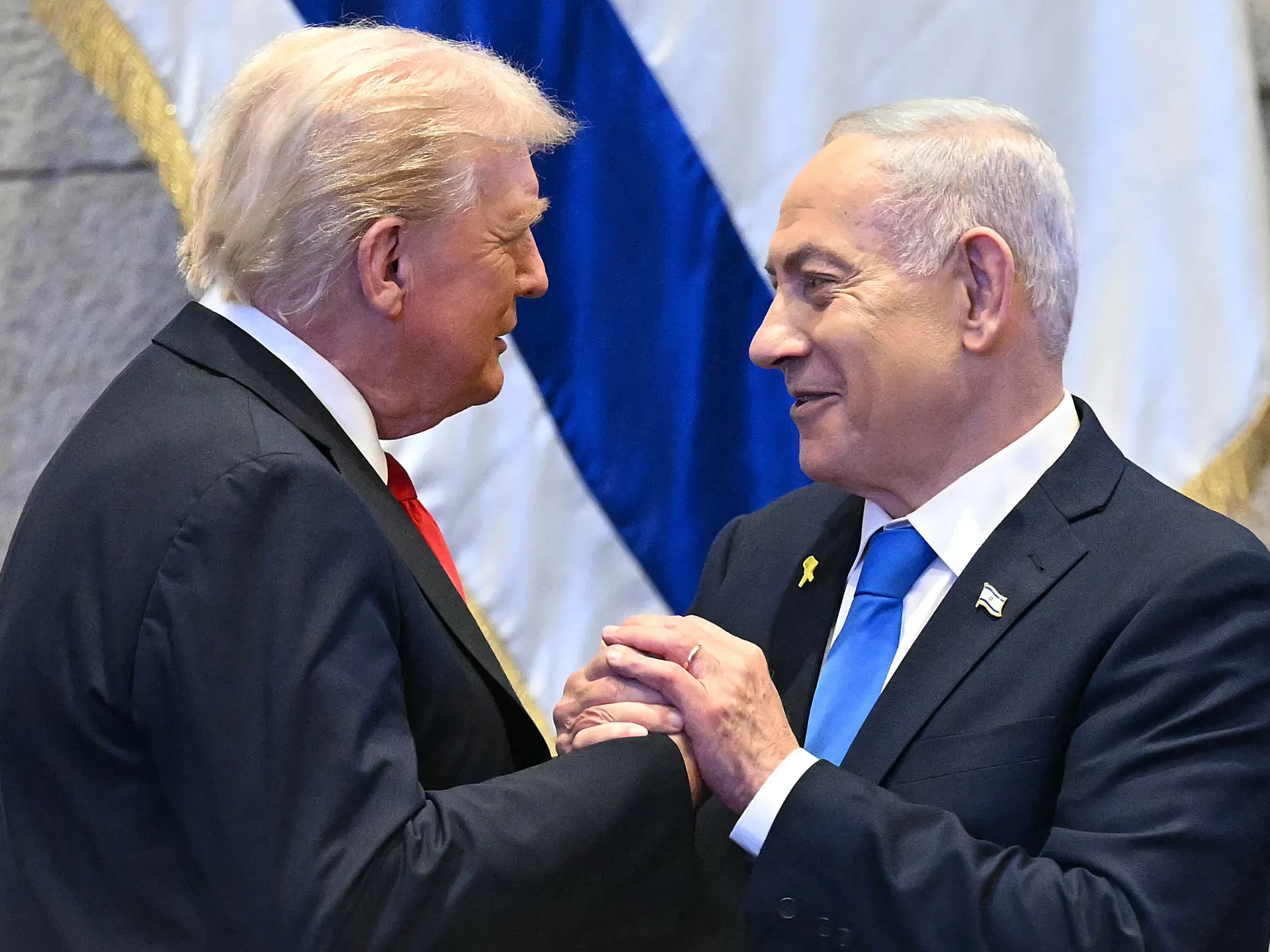
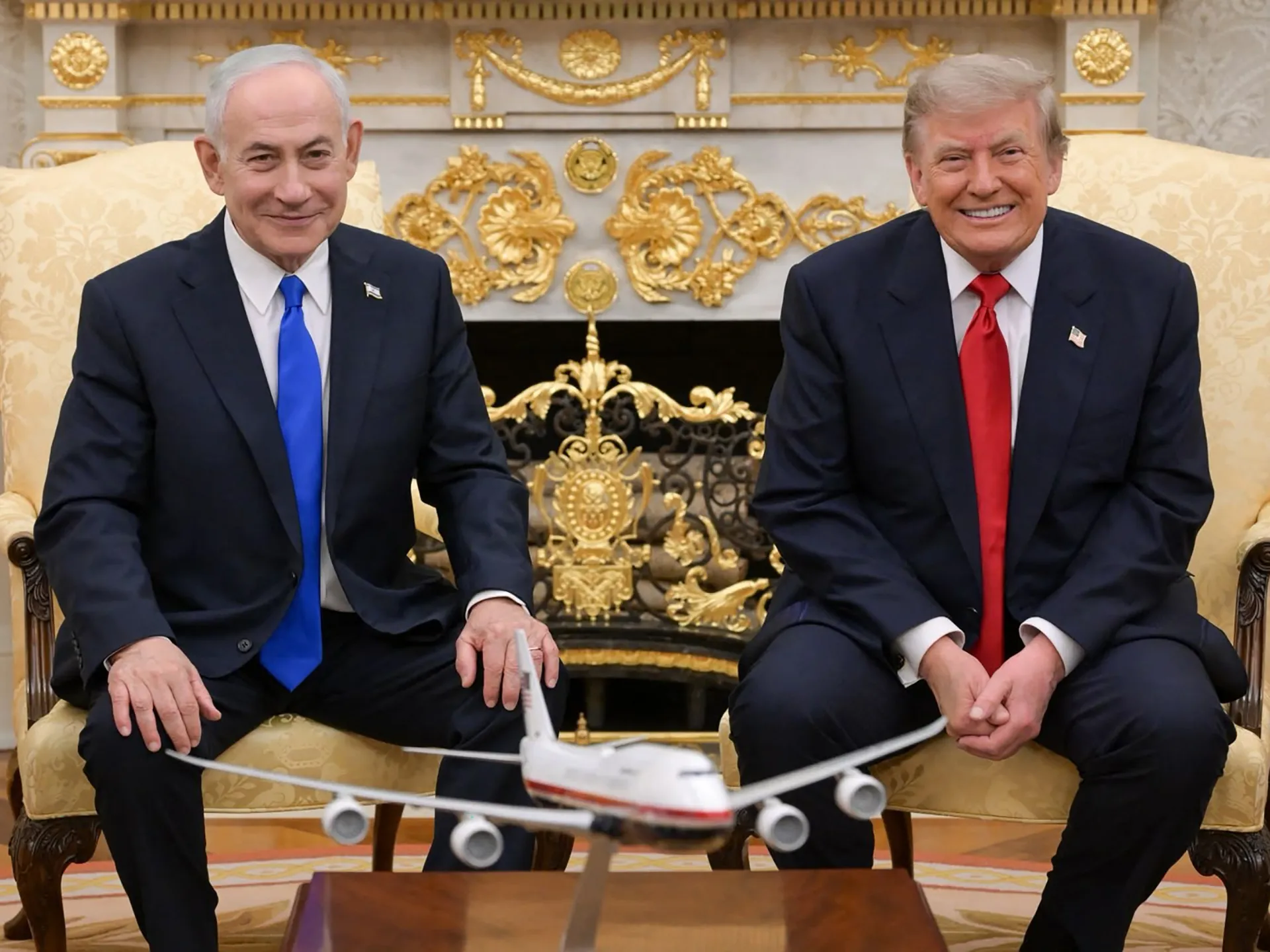
United States President Donald Trump has announced his official endorsement of Israel’s Prime Minister Benjamin Netanyahu’s election campaign after previously refusing to endorse anyone.

Trump posted on his Truth Social platform on Sunday that Netanyahu had been a “great warrior prime minister and an even greater partner for peace”, adding that Iran had been “systematically destroyed both militarily and financially, and unless they change their ways, rapidly, we will soon finish the job.”

Recommended Stories

list of 3 itemsend of list

“If Israel has the wrong Leader, which would be anyone other than Bibi, America will have to do this work ourselves, and I am not inclined to do so,” Trump wrote.

“Bibi Netanyahu has been Strong, Brave, and Brilliant in the face of tremendous opposition, including that coming from even Israel, itself. Despite all of that, he has endured and, in fact, he has thrived!”.

The president added that normal men and women would have “wilted” under the pressure that Netanyahu was under, but the Israeli prime minister “got stronger”.

“This is the kind of Partner that the United States of America is demanding of Israel, a Country for which it has done so much. Please let this Letter serve to represent my Complete and Total Endorsement of Bibi Netanyahu in his upcoming Race for Re-Election as Prime Minister of Israel. BIBI NETANYAHU WILL NEVER LET YOU DOWN!”, he added.

The Israeli election will be on October 27 . According to Israeli news outlet Haaretz’s tracker, as of Sunday, the opposition alliance led by the Yashar party of Gadi Eisenkot is expected to win the most seats, at 52, with Netanyahu’s Likud party-led coalition taking 51 of the 120 seats in the Knesset.

So far, no party is projected to secure an outright majority.

But Trump’s endorsement comes after he had previously shied away from fully backing Netanyahu’s election campaign.

Earlier this month, when asked twice by TIME magazine if Netanyahu should be given another term, Trump pivoted to his own popularity in Israel and Washington’s actions supporting Israel.

When asked on Thursday by the right-wing US news outlet, Newsmax, if he was planning to get involved in the Israeli elections,  Trump said: “They’d like me to be. Yeah, they’d like me to be”.

When asked whether he trusted Netanyahu, Trump replied, “I don’t trust anybody, honestly”.

Still, Sanam Vakil, director of the Middle East North Africa programme at the British think tank Chatham House, explained that Trump’s endorsement of Netanyahu was “politically significant” because it comes after months of tension between the two leaders.

“It allows Netanyahu to reinforce his claim that he is indispensable to Israel’s relationship with Washington,” Vakil told Al Jazeera.

“However, its electoral impact should not be overstated. Israeli voters remain divided over Netanyahu’s leadership and the outcome of the Iran war. The endorsement may help consolidate his existing support, but it does not resolve the wider questions surrounding his record,” she added.

Andreas Krieg, senior lecturer at the school of security studies at King’s College London, said that Trump’s endorsement was a “political gift” to Netanyahu, whose electoral campaign is struggling.

But like Vakil, he cautioned against treating Trump’s endorsement as a game-changer.

“Netanyahu’s problems are structural, involving fragmented right-wing parties, disillusioned ultra-Orthodox voters and the legacy of October 7. Trump may mobilise reluctant Likud voters, potentially worth a seat or two in a close contest, but he cannot manufacture the coalition majority Netanyahu currently lacks,” Krieg told Al Jazeera.

What the endorsement means for the Iran war

Much of Trump’s endorsement has been heavily focused on the Iran war, at a time when many analysts suggest the US president might be looking to restart attacks, either before or after the midterm elections in early November.

The conflict, which began in February after the US and Israel launched attacks across Iran, is currently at a standstill.

The Strait of Hormuz, which once transported 20 percent of global crude, was effectively shut by Iran after the war started. A US naval blockade of Iranian vessels followed, as each country struck ships passing through the waterway that they accused of not complying with its orders. Oil traffic last month through the strait picked up to pre-war levels as the US Navy shepherded an increasing number of tankers. But a spate of Iranian attacks on vessels early this month has again hit crude exports through Hormuz.

On Monday morning, Brent crude futures stood at $107.57 a barrel, down slightly after reaching their highest since May 19 on Friday, when they briefly touched $110 a barrel.

Last month, Iran presented a proposal to Washington to reopen the waterway within seven days, but negotiations failed after the US did not address Tehran’s seven conditions, which included the lifting of sanctions and the ending of its naval blockade.

Foreign Minister Abbas Araghchi told Iranian media outlets on Sunday that the proposal remained on the table and, if Washington accepts Tehran’s conditions, the strait could reopen within six days, with talks resuming the following day.

At the same time, Araghchi, in a post on X on Sunday night, accused Netanyahu of wanting to restart attacks on Iran with the US to “stay out of jail”.

“Last time you wanted to ‘finish the job’, Iran emerged even stronger. Want to try your luck again? Be our guest. But be careful; we have unfinished jobs too,” he wrote.

“Netanyahu is driving America into another war to stay out of jail, whatever the consequences for Israel – let alone POTUS,” he added.

Krieg said Trump was prioritising the use of “coercive leverage” through his endorsement of Netanyahu but not necessarily “war over diplomacy”. 

“The naval blockade is hurting Iran considerably and Washington believes time is working in its favour. Trump’s calculation is that Iran will eventually accept nuclear concessions and reopen Hormuz, without Washington having to offer significant concessions first,” he argued.

“His endorsement reinforces the military threat underpinning that strategy. But it does not mean diplomacy is finished. Trump still wants a deal he can present as a victory. The danger is that Tehran increasingly believes it must escalate to improve its bargaining position.”

What is next?

Vakil explained that, while Trump’s declaration of support for Netanyahu had signalled renewed political alignment with Israel and left the door open for future joint military action, it also makes it “harder for Trump to distance himself from the war or portray the US as having been reluctantly drawn into it”.

“He is explicitly taking ownership of the partnership and its military campaign against Iran. However, the endorsement does not necessarily mean that the two leaders have agreed on another operation, nor does it settle the question of who initially pushed hardest for war,” she said.

Vakil added that for Tehran, the statement will reinforce the belief of Iranian leaders that there is “little meaningful distinction between US and Israeli objectives.”

“At the same time, Trump’s suggestion that he is reluctant to confront Iran without Netanyahu could be interpreted as evidence of the limits of Washington’s appetite for another war.”

Meanwhile, while Trump has said that he would not attack Iran before the November midterms, several US media outlets have reported that the Pentagon has drawn up plans to relaunch attacks before voters head to the polls.

Last week, US news outlet Axios reported, citing both US and Israeli officials, that both Trump and Netanyahu had spoken about launching a major new operation against Iran ahead of the elections in both countries.

For Krieg, the likelihood that the US and Israel launch an attack on Iran remains low, assuming there is no Iranian strike that forces a response.

“The more dangerous window opens after November 3 [US midterms], when those electoral constraints disappear. Both militaries are preparing for that possibility. The greatest immediate risk is an uncontrolled escalation in Hormuz that forces Washington’s hand before either leader is politically ready,” he said.
Source link

On Iran, Israel’s opposition is even more hawkish than Netanyahu | Israel Election 2026 News

In the rest of the world, the Israeli PM is often blamed for the Iran war. His opponents say he hasn’t been tough enough with Tehran.

When Israel launched a sweeping military assault on Iran with the United States in February, the Israeli government enjoyed overwhelming support from the Jewish Israeli public.

Opposition parties lent their support to the army and backed the audacious step. Enmity towards the government in Iran is an issue mainstream Zionist parties agree on.

Recommended Stories

list of 3 itemsend of list

Then in June, Israel’s role in the confrontation halted abruptly with an announcement from US President Donald Trump, who said Iran and Israel had agreed to stop attacking each other.

That announcement – and Netanyahu’s decision to abide by it at the time – were unpopular in Israel. According to the Israel Democracy Institute, 65 to 70 percent of Jewish Israelis believe that stopping the war did not serve Israel’s national security interests.

As Israelis prepare to vote in national elections on October 27, Iran remains an important election issue for many. Opposition parties present Iran as an example of what they say are Netanyahu’s many failures. They promise to reset security and foreign policy if they’re elected.

The frontrunner, Gadi Eisenkot, says the conflict is unfinished. While saying that a change in Iran’s government was an unrealistic goal, Eisenkot accuses Netanyahu of doing little to dismantle Iran’s nuclear programme. In September at the inauguration of his new party, Yashar, Eisenkot told supporters: “Ultimately, it must end in the destruction or dismantling of the Iranian nuclear programme, a goal not yet achieved with 440kg [970lb] of highly enriched uranium already there, which could quickly be turned into several nuclear devices.”

Former Prime Minister Yair Lapid, who is now the head of the opposition in the Knesset, accuses Netanyahu of a strategic failure. He recently told the Atlantic Council that toppling the administration in Tehran is a realistic objective that requires a military escalation: “What Israel should do or the alliance should do is bomb all the energy facilities, especially on Kharg Island, but other places as well in order to make sure that the Iranian economy is demolished. And the reason is that it’s the only thing that will overturn the regime.”

Bombing this civilian infrastructure was actually something Netanyahu had lobbied for himself. An international outcry about such bombings likely constituting war crimes and Trump’s refusal to offer backing put the brakes on the plan.

Naftali Bennett, another former prime minister, says Israel must ensure its military dominance over the entire region. For Bennett, toppling the government in Iran and crushing it is a must. But he says that is not enough. The right-wing politician calls Qatar an “enemy” and says Turkiye is “the new Iran”, going as far as saying that military confrontation with the NATO member was inevitable.

“We will build an alliance of moderate forces in the region against the Islamist forces, against Iran, against Qatar, Turkiye and all the radical forces. We will take proactive actions to shape the region,” Bennett recently told supporters.

Eisenkot and other opposition leaders do not rule out renewed confrontations. They focus on their confidence in the military and security establishment in assessing the dangers and dealing with them appropriately.

But opposition leaders have voiced concern that Netanyahu might resort to military escalation before the elections to tilt the balance in his favour or even disrupt them altogether – even though the prime minister said last week that he did not plan to attack Iran before the vote.

Those fears were elevated after Netanyahu posted a video from the Tel Nof Airbase warning that Israel’s enemies might attack before the elections. Other news reports said Netanyahu has shared intelligence on new threats from Iran with the US president.

Netanyahu was quickly rebuked by opposition leaders, who accused him of “political fearmongering”.

Lapid openly questioned Netanyahu’s motives. Lapid also accused him of using the Israeli military and bases as “backdrops” for election campaign videos.

Ultimately, most Israeli opposition parties and leaders aren’t opposed to war with Iran, and many are in fact even more hawkish in their approach towards Tehran than Netanyahu. They just don’t want a new military escalation before the elections.

Source link

Protesters disrupt Ben-Gvir event forcing him off stage | Israel Election 2026 News

Israeli protesters disrupted a Tel Aviv university event featuring far-right National Security Minister Itamar Ben-Gvir. Demonstrators chanted ‘There will be no fascism here’, staged a sit-in and scuffled with security personnel before Ben-Gvir left the venue under escort.

Source link

Trump endorses Netanyahu in Israeli legislative elections | Donald Trump News

In a social media post ahead of Israel’s October 27 election, Trump calls Netanyahu a ‘Strong, Brave, and Brilliant’ leader.

United States President Donald Trump has issued an endorsement of Israel’s incumbent Prime Minister Benjamin Netanyahu, who is facing a close race in parliamentary elections scheduled for October 27.

In a post on Truth Social on Sunday, Trump praised the Israeli leader for being an ally of the US in its war on Iran. He added that he was giving his “Complete and Total Endorsement” to Netanyahu.

Recommended Stories

list of 3 itemsend of list

“BIBI NETANYAHU WILL NEVER LET YOU DOWN!” Trump wrote.

The US president’s backing comes nine days before the Israeli election — and after speculation that it might not come at all.

Trump had refused to endorse Netanyahu earlier this month, when asked repeatedly about the Israeli leader’s job performance in an interview with Time magazine.

Instead, when pressed by his interviewer, Trump avoided the subject, shifting the focus instead to his own popularity or security in the Middle East.

The two leaders have met more than a half dozen times since January 2025, but there have been reports of disagreements, including over the war against Iran and other conflicts.

In June, Trump acknowledged calling Netanyahu “f***ing crazy” in a phone conversation where he expressed frustration about Israel’s attacks on Lebanon.

Trump had reportedly asked Netanyahu not to take further action in Lebanon, in an apparent attempt to preserve a short-lived April ceasefire with Iran.

The two leaders had jointly launched a war against Iran on February 28, but the conflict has cost Trump domestic support.

The war has upended the global oil and gas supply, with no clear end in sight.

A Pew Research Center poll found this month that roughly two-thirds of US voters disapprove of Trump’s handling of the war, which has driven up consumer fuel prices and raised concerns about draining military stockpiles.

Trump’s Republican Party is facing a critical midterm election on November 3 that will decide whether it maintains control of the US Congress, as well as other key state and local offices.

Experts have speculated that Trump’s prior reticence to endorse Netanyahu may have come from public perception that Israel may have coaxed the US into the war.

Netanyahu’s Likud Party and its far-right coalition are also facing the prospect of losing the October contest to an opposition bloc led by Yashar party head Gadi Eisenkot.

In his endorsement on Sunday, Trump said it was only a matter of time before Iran would have attacked both the US and Israel.

The war, Trump argued, had already left Iran “systematically destroyed, both Militarily and Financially, and unless they change their ways, rapidly, we will soon finish the job”.

“If Israel has the wrong Leader, which would be anyone other than Bibi, America will have to do this work ourselves, and I am not inclined to do so,” Trump wrote.

“Bibi Netanyahu has been Strong, Brave, and Brilliant in the face of tremendous opposition, including that coming from even Israel, itself.”

Source link