Netanyahu and Zini’s interference claims lack evidence, according to law enforcement officials quoted by Haaretz.
Israel’s Shin Bet has failed to find evidence of foreign interference in last month’s elections, despite claims from the domestic security agency’s chief, David Zini, and Prime Minister Benjamin Netanyahu, the newspaper Haaretz has reported.
Two senior Israeli law enforcement officials said that the investigation, which is still ongoing, has found no evidence that several hundred thousand shekels had been transferred from the Palestinian Authority (PA) to Arab-led parties in Israel, Haaretz reported on Monday.
Recommended Stories
list of 3 itemsend of list
There were no transfers from Qatar or any other Arab country being investigated. That’s despite allegations from Netanyahu’s party, Likud, that money had been transferred to boost turnout among Palestinian citizens of Israel, without the party providing any tangible evidence to support its claims.
The allegations continue a long-running anti-Qatar campaign in Israel that predates the election. Haaretz has previously reported that a secret campaign involving Israeli influence expets and political advisers targeted Qatar in the weeks after the Hamas-led October 7, 2023 attacks.
Qatar has denied all the allegations of interference, and called them unsubstantiated.
The latest claims from Zini and Netanyahu intensified in the wake of the strong electoral performance by the parties, led by Palestinian citizens of Israel, in the October 27 elections. Their 19 seats, confirmed by Israel’s election authorities, mean that Jewish parties opposed to Netanyahu have enough seats in parliament to force the prime minister out, if they are willing to work with the Arab-led parties.
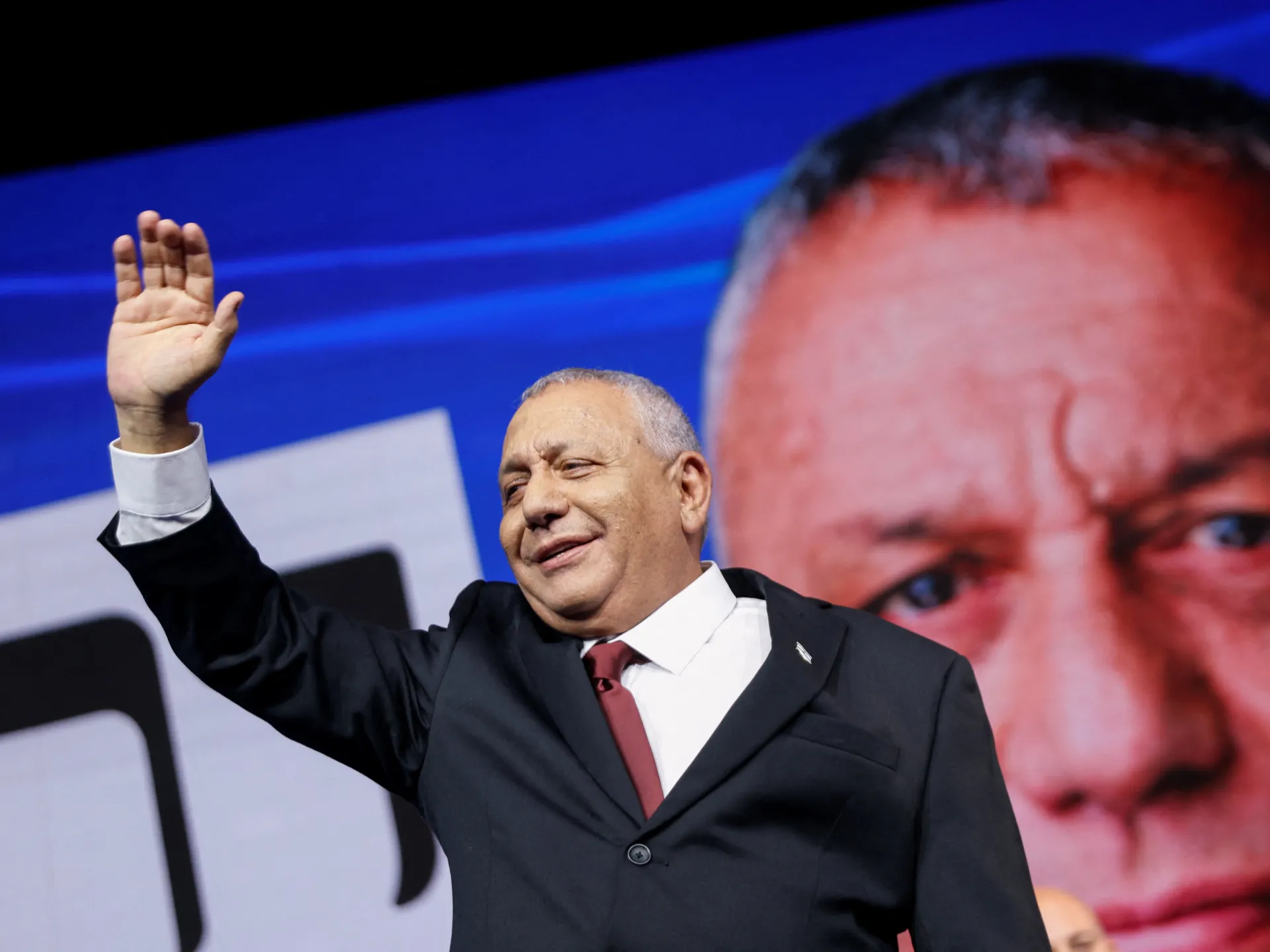
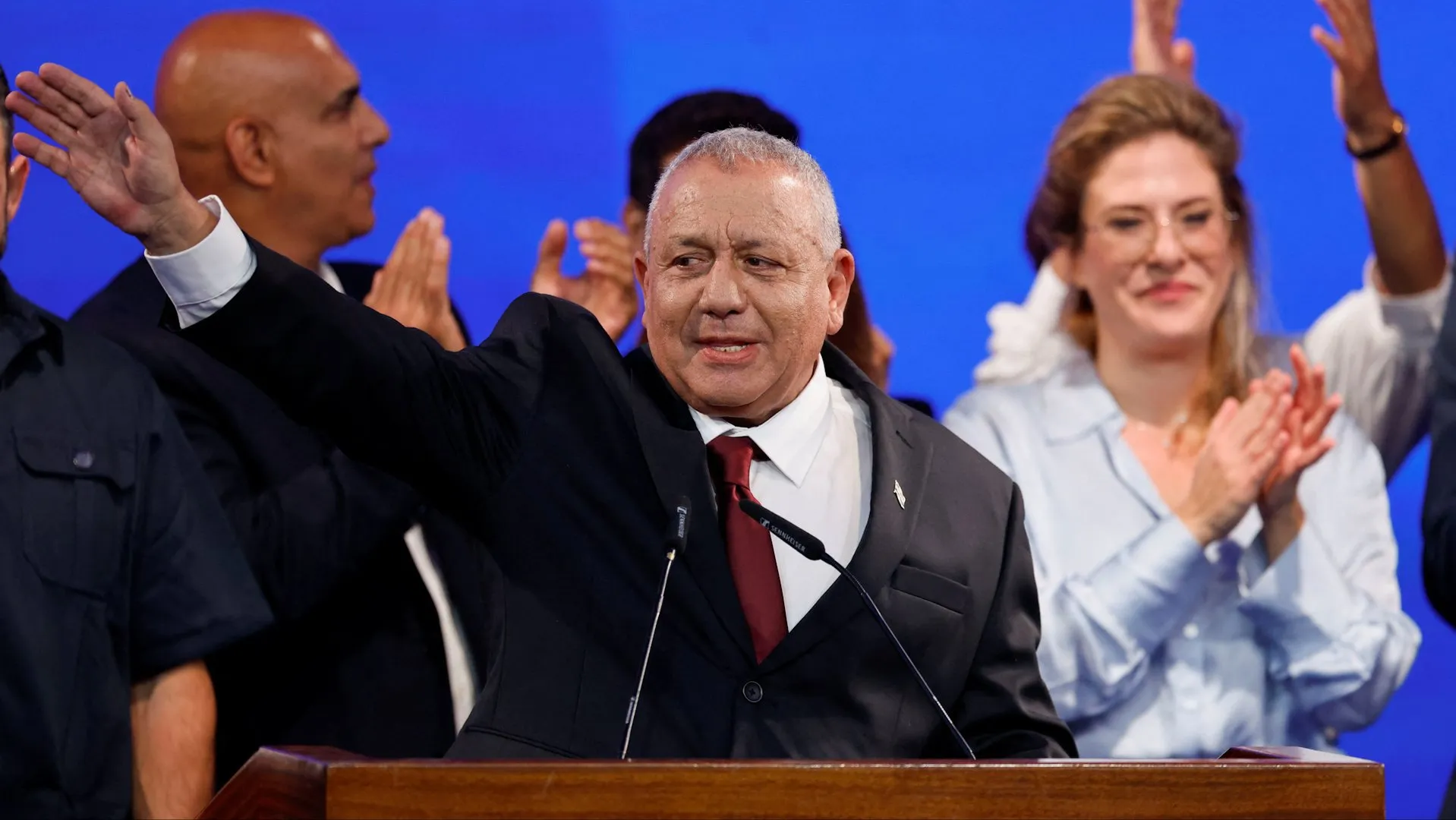
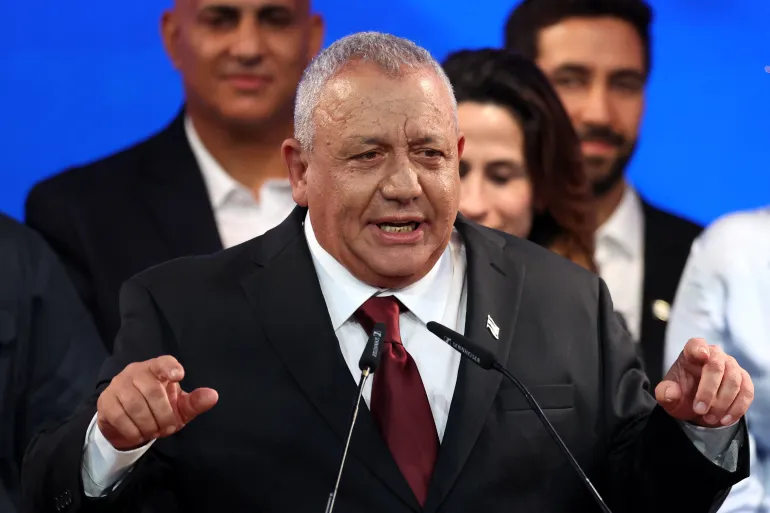
Israeli President Isaac Herzog has tasked opposition politician Gadi Eisenkot with making the first attempt to form a government, possibly spelling the end of Netanyahu’s time as prime minister.
‘Not a criminal matter’
“[It is] certainly not a security matter, and it is highly doubtful that it is even a criminal one,” one of the officials quoted by Haaretz said.
“All there is is intelligence information without any real substantiation,” another quote attributed to one of the officials said.
Dozens of people have been questioned, but no evidence has so far been found of money being transferred. Haaretz also found that major fuel companies in Israel found no unusual activity involving fuel cards, undermining the allegation that Arab voters had been bribed with fuel cards in exchange for their votes.
Zini, who was selected by Netanyahu to lead Shin Bet last year and is regarded as an ally of the Israeli leader, has sought to investigate several leading politicians who are Palestinian citizens of Israel.
Netanyahu also questioned why Ahmad Tibi, a leading Arab politician in Israel, visited Qatar a few days ahead of the election.
Tibi explained that his trip to Doha was to appear on Al Jazeera.
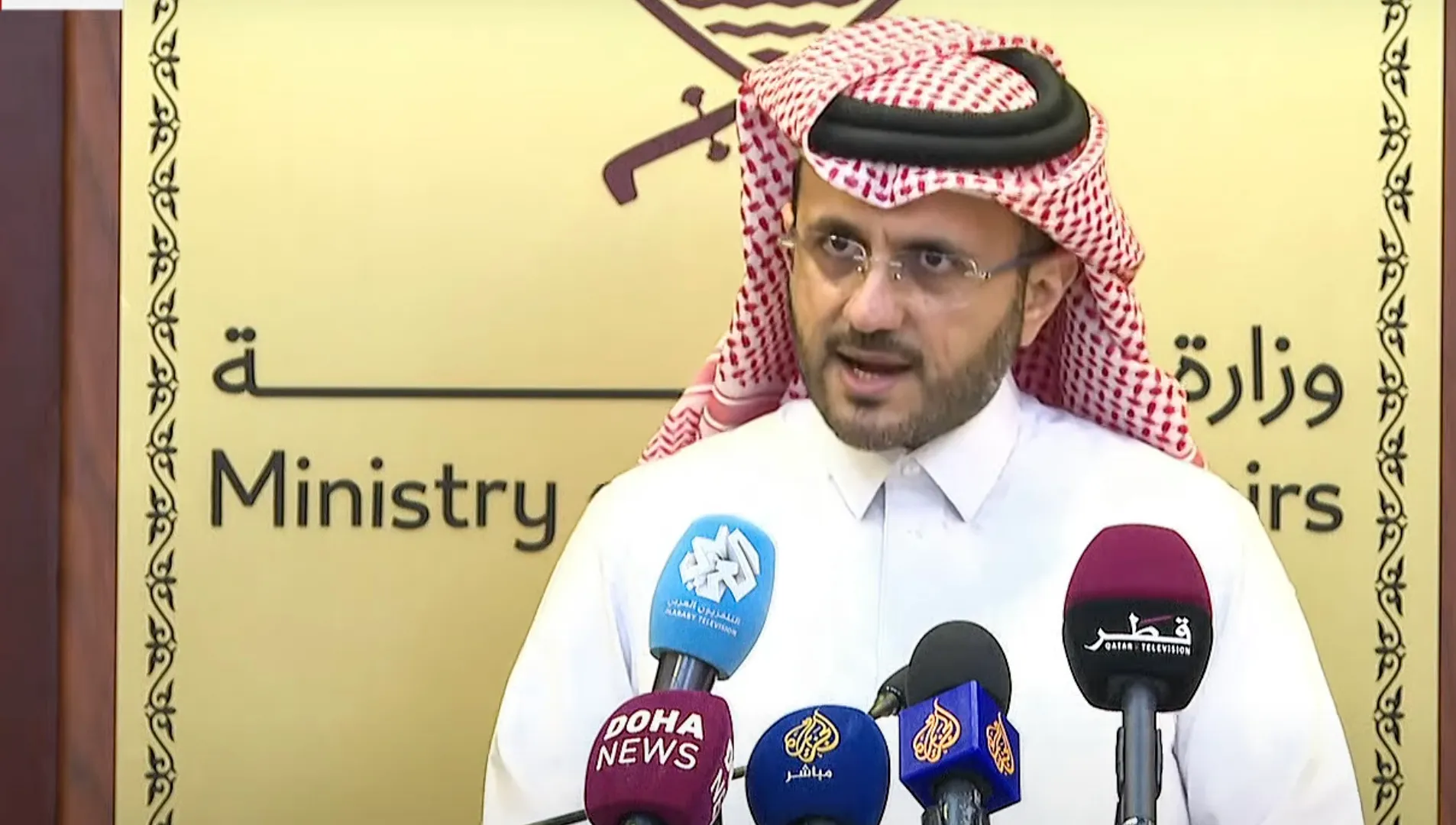
“We reject the accusations made by certain Israeli politicians and their contacts in the media, who have launched yet another disinformation campaign aiming to drag Qatar into Israeli political disputes following this week’s elections,” Qatar’s Ministry of Foreign Affairs spokesman Majed al-Ansari said in a social media post on October 29.
Israel’s attorney general Gali Baharav-Miara said on Sunday that she had seen no evidence from the investigation of anything that would have influenced the election results “or substantiate a claim of influence that could lead to a change in the election results”.
Israeli police and Shin Bet are expected to submit their assessments to Baharav-Miara in the next few days, the report said.
There are two ways to read the results of the Israeli elections. One way would be to see them as a defeat for the government of Prime Minister Benjamin Netanyahu. From holding a solid majority in the 120-member Knesset, the Netanyahu bloc has been reduced to a minority of 53 members. Anti-Netanyahu lawmakers, by contrast, hold 67 seats.
Had Israel been a democracy, we would have seen scenes of celebration similar to the ones we saw this year in Hungary, Brazil and Serbia, where political forces with undemocratic tendencies were defeated. But Israel is not a democracy, and Netanyahu was not necessarily defeated.
The second, more relevant way of reading the results of the Israeli election would necessitate accepting the apartheid nature of Israel and seeing the electoral arithmetic through that prism. In this case, Netanyahu won because he secured 53 seats in the Knesset – five more than the anti-Netanyahu Jewish bloc.
To form a government, a bloc needs to have the support of at least 61 members of the Knesset. The only way Netanyahu can do it is by enticing parties or lawmakers from the anti-Netanyahu bloc to join his bloc, as he has succeeded in doing many times in the past. Working with Palestinian parties, which secured 19 seats, is out of the question for him.
The obvious path for government formation for the anti-Netanyahu bloc would be to form a coalition – one that would include the two Palestinian parties. But to do so would mean to challenge Israeli apartheid. The main leaders of the Jewish anti-Netanyahu bloc, including Gadi Eisenkot, have promised not to do so under any circumstances.
There is another option: seeking the support of the religious Orthodox parties, which have so far been part of the Netanyahu bloc. To secure their backing, the anti-Netanyahu bloc would have to promise to exempt religious Orthodox youth from military service and guarantee funding for their learning centres.
However, Eisenkot’s main election promise was forcing young Haredi Jews into the army. So this is not a very likely scenario, but in politics, never say never.
There is also the option of a “unity government” led by some sort of rotation between the leading figures of the anti-Netanyahu bloc and Netanyahu. The problem here is that, according to a law passed a few years ago, as long as Netanyahu is still a defendant in an ongoing trial, he cannot serve as a minister; his coalition made sure that the legislation ridiculously would not apply to a prime minister.
Given that Netanyahu’s corruption trial is destined to go on for a very long time, the rotation would make it impossible for Netanyahu to be part of a government under Eisenkot as prime minister. That means he would demand to hold the rotating premiership first and leave open the option to collapse the government once his rotation is over.
Netanyahu has already done that before. In 2020, without any hesitation, he broke a rotation agreement with Benny Gantz, who had naively believed that after two years he would be the prime minister. This resulted in new elections, which Netanyahu won.
Finally, a very possible scenario is that neither of the two blocs would be able to form a government, which would mean new elections in six months. Netanyahu and his government would remain in office until the new polls, albeit with more limited authority.
This would give them the opportunity to reignite a war with Iran and Hezbollah and continue with their violent policies in the Gaza Strip and the West Bank in an attempt to attract more public support and win the elections.
This is the preferred option for Netanyahu because his relative defeat in the October 27 elections had a lot to do with the unprecedented galvanisation among the Palestinian voters in Israel and the more liberal Jewish Israelis living abroad who came back home in huge numbers to vote.
These possible scenarios tell only part of the story and are not enough to fully understand what the election results mean for Israel, the Palestinians and the region. Here are the more important conclusions one should draw from the results:
The first pertains to the future of the Palestinian citizens of Israel. They still could turn out to vote in large numbers if new elections are held soon. But if they are once more ignored and sidelined by the other political parties, they will never try it again.
In this case, it would be difficult for the leadership of this community to continue to delay a strategic decision: choosing which political space Palestinian citizens of Israel belong to – the Israeli or the Palestinian one?
Until today, they have given a chance to the Israeli political system despite its racism, apartheid tendencies and criminal policies towards Palestinians. Palestinian parties recommended Eisenkot for the premiership to President Isaac Herzog, who has now tasked him with forming a government.
If I can venture a prediction – and it is only a prediction – the anti-Netanyahu bloc would not engage meaningfully with the Palestinian parties. Its message, therefore, will be that the Palestinians of Israel are not legitimate players in the Israeli political field.
If I am wrong, this would be an incredible and transformative moment in the history of both Israel and Palestine, but there seems to be very little hope for such a development.
There are other lessons we can learn from where we are now with the knowledge that this is a very volatile moment in the history of Israel.
The first and most important one is that whoever forms the next government of Israel will continue the incremental genocide in Gaza, the intensified ethnic cleansing in the West Bank and the aggressive policies towards the region. These policies as before can only be stopped or tamed by the region and the international community sending a clear message to Israel that there will be a price tag attached to such policies.
The second lesson is that the Israeli Jewish society is as deeply divided as ever, to the point that it is impossible for it to maintain a stable political system, a thriving economy and a positive strategy towards the region and the world.
The third lesson is that Israel’s international isolation will increase as a result of this trajectory, including the continued dissociation from Zionism among young Jews around the world, including in the United States.
Finally and most importantly, this can have an impact on the global discussion about Zionism. The move by the Green Party in Britain to define Zionism as racism – despite being currently an exception and widely condemned – will gain validity with time.
These elections and future developments are making clear that Zionism in the current Israeli politics means the exclusion of Palestinian citizens of Israel from politics – first by ignoring them and quite possibly in the future by denying them the right to vote
Moreover, many in the international community will associate the term Zionism with a consensual Israeli policy of genocide, ethnic cleansing and apartheid.
The outlook in the short term is worrying. The overall message from the Israeli elections is that the future policies of the state will continue to threaten the lives of the Palestinians in occupied territory, Palestinian citizens of Israel, and the people of southern Lebanon and Syria. There will be more instability in the region.
In the long run, however, as bad as it is, the fundamental cracks in the Zionist project will widen, which might lead to its demise. One can only hope this will also lead to the beginning of a political reality that would benefit everyone who lives in historical Palestine and the region.
Israel’s president officially tasks the opposition leader with forming a new government.
Published On 8 Nov 20268 Nov 2026
Israel’s opposition leader Gadi Eisenkot, the man officially tasked by President Isaac Herzog with trying to form the country’s next government, has said that he was open to including Prime Minister Benjamin Netanyahu in his coalition lineup.
In a speech at Sunday’s ceremony in Herzog’s office in Jerusalem, Eisenkot suggested Netanyahu’s far-right Finance Minister Bezalel Smotrich was also welcome to join.
Recommended Stories
list of 4 itemsend of list
“If members of Likud and the Religious Zionist Party truly believe this is a time for unity, as they told the president, I cannot conceive of any reason why they would not support a government under my leadership and the principles I have presented,” Eisenkot said.
Eisenkot, who ran as Netanyahu’s main rival, has six weeks to form a new government. At the ceremony, Eisenkot said he will act in the interests of the public and represent all parts of Israeli society.
“The State of Israel needs a stable government,” Herzog said, pointing to the “new political reality” in the US.
Eisenkot led Israel’s military from 2015 to 2019 and sat as an observer in Netanyahu’s war cabinet for the first eight months of Israel’s genocidal war on Gaza, which began in October 2023.
In Israel’s October 27 elections, Eisenkot’s four-party alliance won 48 seats, while Netanyahu’s right-wing and religious bloc secured 53, leaving both short of the 61 needed for a parliamentary majority. Arab-led parties, representing Palestinian citizens of Israel, won a record 19 seats.
Eisenkot has ruled out forming a government with the Arab-led parties, which would give him a 67-seat bloc. Winning over the two ultra-Orthodox parties, United Torah Judaism and Shas, would give him exactly 61 seats.
He could also form a government with fewer than 61 seats if he wins a parliamentary confidence vote.
“Netanyahu still has time to derail Gadi Eisenkot’s efforts to form a government and sabotage attempts to gain a vote of confidence,” said Al Jazeera’s Nour Odeh, reporting from Ramallah, in the occupied West Bank.
“In the meantime, he remains caretaker prime minister. If Eisenkot fails, Netanyahu would be the natural second in line to be tasked with forming a government. And if he fails, elections would then be called, and that would still allow Netanyahu to remain as caretaker.
“Many of Netanyahu’s critics say that is his aim. The big question in Israeli politics now is: does the opposition really want to get rid of Netanyahu? Or is the opposition to Palestinian Israelis in mainstream politics so strong that they’re willing to risk keeping Netanyahu in power by going back to the ballot box?”
Israel’s president picks Gadi Eisenkot to form the next government, passing over Benjamin Netanyahu after inconclusive elections. In Gaza, the first winter storm flooded 70,000 tents sheltering displaced Palestinians.
Israel’s President Isaac Herzog has tasked Gadi Eisenkot with forming the country’s next government, passing over the former army chief’s rival, Benjamin Netanyahu.
Herzog told Eisenkot of his decision on Saturday evening and will formally hand him the mandate at a ceremony on Sunday, the president’s spokesperson said.
Recommended Stories
list of 3 itemsend of list
Herzog held consultations with political parties this week to decide who he would appoint to form a government after neither side secured a majority in the October 27 general election.
Some 67 lawmakers, including from Arab-led parties, endorsed Eisenkot, leader of the Yashar party, to form the next government, while only 46 backed Netanyahu, the current prime minister.
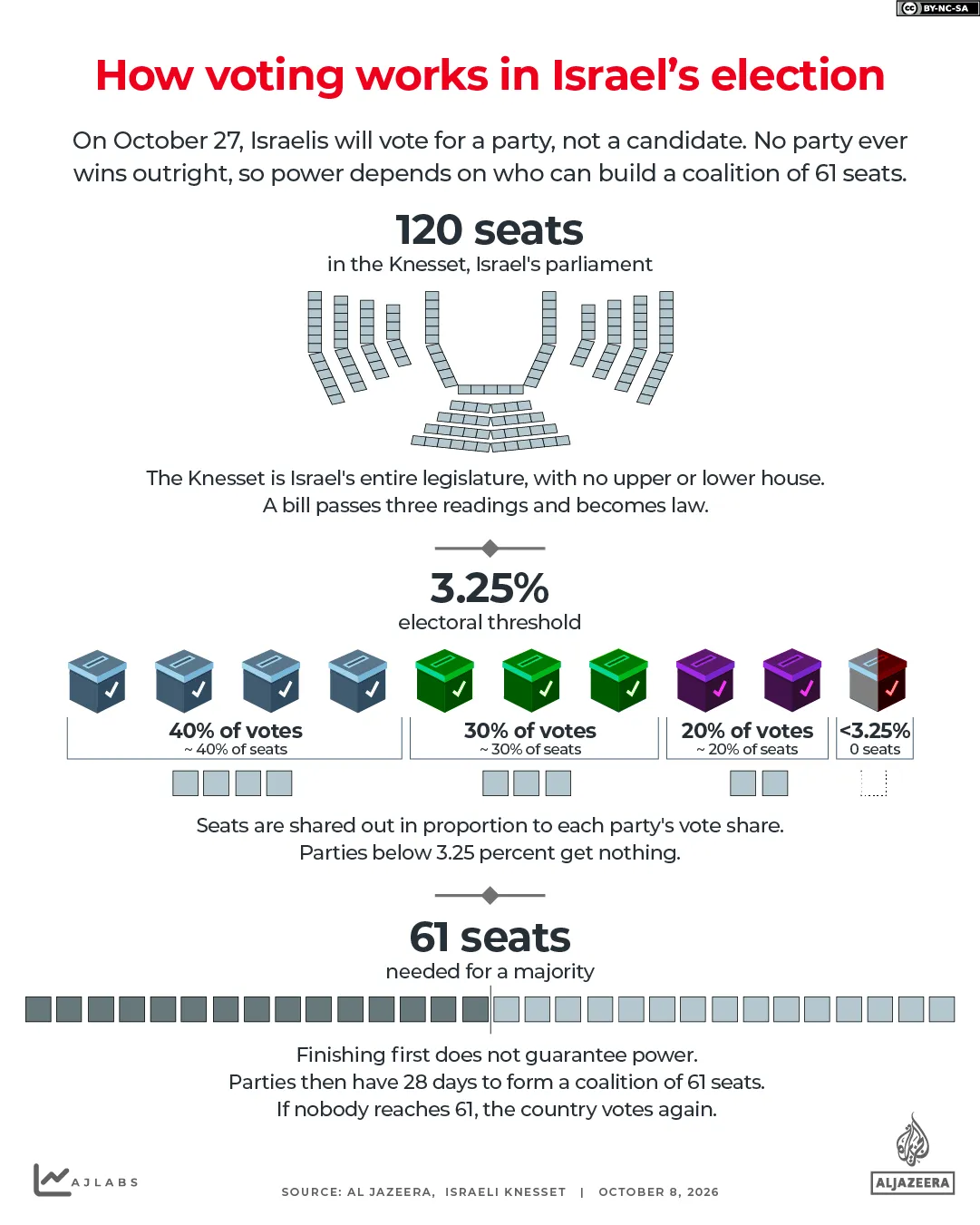
Eisenkot will have 28 days – with a possible 14-day extension – to build a coalition of at least 61 of the Knesset’s 120 seats, the minimum threshold for a government.
In the October election, Eisenkot’s four-party alliance won 48 seats, while Netanyahu’s right-wing and religious bloc secured 53, leaving both short of the 61 needed for a parliamentary majority. Arab-led parties, representing Palestinian citizens of Israel, won a record 19 seats.
Eisenkot has ruled out forming a government with the Arab-led parties, which would give him a 67-seat bloc. Winning over the two ultra-Orthodox parties, United Torah Judaism and Shas, would give him exactly 61 seats.
He could also form a government with fewer than 61 seats if he wins a parliamentary confidence vote.
Al Jazeera’s Nour Odeh, reporting from Ramallah in the occupied West Bank on Herzog’s decision, said the president “took the predictable route” in selecting Eisenkot, as he had the highest number of recommendations.
“The hard work will begin now for Eisenkot to put together a government that can pass a vote of confidence at the Knesset that: one, will not break too many of the promises he made on the campaign trail; and two, that can survive the opposition of the right-wing bloc led by Netanyahu,” Odeh said.
If Eisenkot fails to form a government within the allotted time, Herzog will nominate another candidate. If the second nominee fails, a parliament majority can back a third candidate, who will be granted a final 14 days.
If, once again, no government is formed, a new election will be called within 90 days, with Netanyahu staying on as a caretaker prime minister.
United against Netanyahu government
Eisenkot led Israel’s military from 2015 to 2019 and sat as an observer in Netanyahu’s war cabinet for the first eight months of Israel’s genocidal war on Gaza, which began in October 2023.
Ahmad Tibi, a senior member of the Joint List – a coalition of Arab-led parties that holds 11 seats – told Al Jazeera on Saturday that Herzog’s decision was “expected”.
“We were concerned that the president would move towards a national unity government,” he said, referring to a proposed power-sharing agreement between Eisenkot and Netanyahu.
Instead, Arab-led parties endorsed Eisenkot for the mandate, granting him a “considerable margin”.
Tibi said he believes Eisenkot is headed for a minority government “with external support from the Arab parties”.
While this would not be a “dream government” for Arab-led parties, Tibi prioritised bringing down “the government of Netanyahu, [Itamar] Ben-Gvir and [Bezalel] Smotrich”.
Hours before Herzog’s decision, Netanyahu had warned that a government formed by the opposition bloc with support from Arab-led parties would lead to Israel’s collapse.
“Such a government, dependent on Islamists, will dismantle the state of Israel from within, as is happening in European countries, and far worse than that,” Netanyahu said in a prerecorded video speech, echoing the language of far-right politicians who falsely claim parts of Europe have come under Islamic law.
Netanyahu “described us as supporters of terrorists and terrorism”, Tibi said. “My response to him is this: Netanyahu is the biggest terrorist in Israel and the region, and the foremost supporter of terrorism, particularly Jewish terrorism in the West Bank and the Palestinian territories.”
Al Jazeera’s Odeh noted that although Eisenkot has expressly said he does not wish to form a government with Arab-led parties, “they both share quite compelling reasons to get rid of Netanyahu”.
Israel’s president had asked opposition leader Gadi Eisenkot to form the next government over his rival Prime Minister Benjamin Netanyahu. Al Jazeera’s Nour Odeh explains how opposition to Netanyahu brought different political parties together.
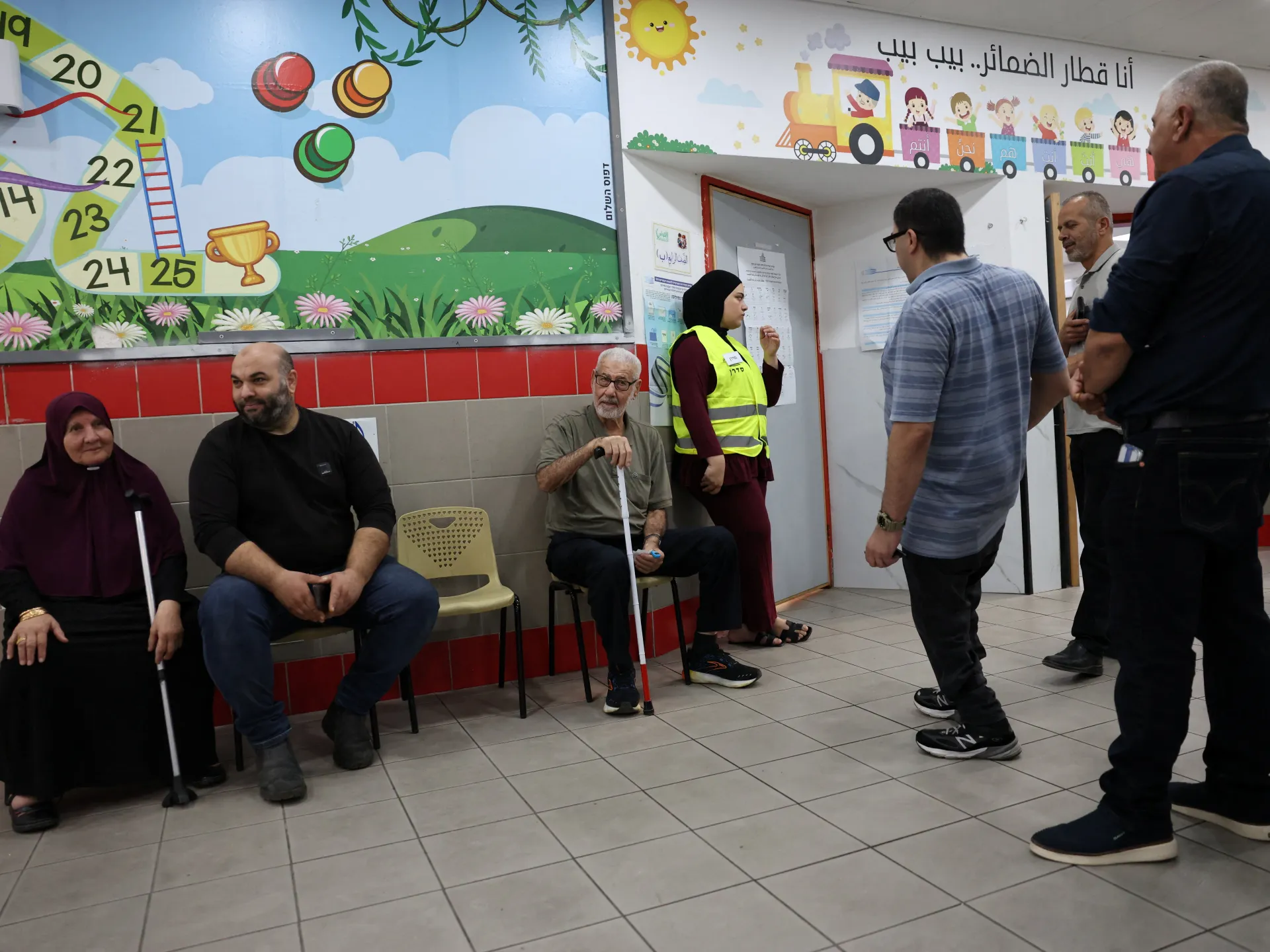
Tel Aviv-Jaffa, Israel – On election day, Lama Yassin, 31, drove to polling stations in her hometown of Arrabeh, where Palestinian citizens of Israel make up an overwhelming majority, inspired by what she was witnessing.
“You would see families coming to the polls together, grandparents and grandchildren,” she said. “It was the first time in a really long time that I felt there is hope – hope of a change.”
Recommended Stories
list of 3 itemsend of list
The overwhelming Arab turnout in the October 27 Israeli election won the Arab parties a record 19 seats in the Knesset, the Israeli parliament.
Thabet Abu Rass, an expert on Jewish-Arab relations in Israel, had predicted the Arab parties would be impossible for Gadi Eisenkot’s opposition bloc to ignore: Their seats push it past the 61-seat threshold for a ruling coalition.
Instead, Yassin and others saw Israeli channels invite “Jews to talk about Arabs and Arab voter turnout”, she recalled, with almost no Arab guests.
“The whole conversation was about how dangerous these Arab voters are.” The “most disgusting term” she saw online, however, was the repeated refrain of “election terrorism” on Channel 14, the hard-right, pro-Netanyahu station.
Within a day of the vote, Likud and figures like Itamar Ben-Gvir accused the Arab parties of stealing the election through “bribery, threats, violence, forgeries”. The accusations have continued even after the Central Elections Committee and the Israeli police said they found no sign of organised tampering.
Distraught, Yassin posted an Instagram video that went viral among Palestinians, capturing the doublespeak of Israelis they so often hear:
“Eating hummus with us? ‘Brothers and friends’.
Seeking political power? ‘Terror supporters’.
Helping someone in distress? ‘Brothers and friends’.
Voting in large numbers? ‘Terror at the ballot box’.”
“When it suits you, we are brothers and friends. When it suits you, we are a symbol of coexistence. When it suits you, you go around the world boasting about our integration into Israeli society.
“But the moment we demand to have influence, to shape policy, and to take part in decision-making – suddenly, our very presence becomes a threat.”
When voting becomes ‘a danger to the state’
More than a week after the election, Jaffa’s Ajami neighbourhood offers both the history leading up to – and the fraught circumstances of – this moment that Abu Rass calls Israel’s “political crossroads”.
Faded Arabic signs on abandoned buildings hint at the Palestinian community that thrived in Ajami before 1948. On Ajami’s streets, posters of children killed during Israel’s genocidal war on Gaza hang metres away from campaign posters for Ra’am and the Joint List.
From the back office of his cluttered hardware shop, Omar Siksik, once a Tel Aviv-Jaffa city councilman who now co-chairs Kulna Yaffa, a grassroots, Arab-Jewish civic initiative in the city, weighs this moment of unprecedented representation – met by renewed delegitimisation efforts – against Ajami’s own history. It is a struggle, he says, for basic existence.
Omar Siksik, once a Tel Aviv-Jaffa city councilman, now co-chairs Kulna Yaffa [Al Jazeera]
Before 1948, Jaffa had about 100,000 Palestinians. After the Nakba, fewer than 4,000 remained – with those left fenced inside Ajami under military rule. “We called it the Ajami ghetto,” explained Siksik. Born there in 1957, he grew up sharing a toilet and kitchen with newly arrived Jewish immigrants who took the homes of expelled Palestinian neighbours.
Over time, the fence surrounding Ajami was torn down, martial law ended, and the Palestinians who remained there were granted Israeli citizenship. But later, when Siksik became the head of the Rabita Association, a nonprofit for the Palestinian residents of Jaffa, he remembered “sleeping under the bulldozers” that were razing the houses of Palestinians in the area, a practice that Rabita had fought in court.
For Siksik and others, election day is the only occasion that’s different for Palestinian citizens of Israel. “This is a democratic election,” he said. “It’s the only thing where we’re equal with the Jews. The only thing.
“When we came and expressed our dissatisfaction with this government, the Arab vote became a danger to the state,” said Siksik. “It’s not normal.”
Many Palestinian citizens of Israel believe they’ve been allowed to remain out of necessity, not equality. “The bus drivers are Arabs, the doctors in the hospitals are Arabs, the construction workers are Arabs,” Siksik notes.
But even those “essential worker” roles are being stripped away. After October 7, Israel revoked tens of thousands of work permits for Palestinians from Gaza and the West Bank to enter Israel, and the essential jobs they filled are being replaced by short-term labourers brought from abroad. Yassin notes fabricated stories over the summer on Israeli social media that Arab doctors were poisoning Jewish patients at Rambam Hospital in Haifa.
“If they could give up on anything Arab, they would,” says Yassin. “It’s not because they like us [that they let us remain]… It’s not because they want to; it’s because they have to.”
Facing ‘the whole Israeli system’
Yassin herself went through that struggle for acceptance in Israeli society. After growing up in Arrabeh, she learned Hebrew so well at Ben-Gurion University that “no one knew I was an Arab any more.” She took a job at a regional council near Jerusalem, in an entirely Jewish workplace, to prove she was “fully Israeli”.
“I did not speak Arabic in public. I even voted for [left-wing Zionist party] Meretz and favoured them over Arab parties,” said Yassin. “I wanted to be ‘the good Israeli’.”
But she could never escape that sense of otherness. At the council, colleagues asked if they could call Yassin – whose first name, Lama, means “why” in Hebrew – “Yasmine” instead, because she reminded them of Jasmine from the movie Aladdin. She was Yasmine for a year and a half. “It was another demand of giving up on another part of my identity – one that defines me literally.”
Posters at ‘Gaza’s Children Square’ in Ajami [Al Jazeera]
And then, the Sunday after the October 7 attacks, her colleagues would not say hello back to her.
She came to realise that “shared society cannot be built over inequality.”
After becoming director of public policy at the Abraham Initiatives, which advances the rights of Palestinian citizens in Israel, Yassin testified at Knesset committee meetings regarding unchecked crime and violence affecting their communities. She describes being dismissed or silenced outright, despite prior approval to speak. “If you say one more word,” she recalled the National Security committee chairman saying, “I will ask you to leave.”
Yassin sees that derision of a Palestinian political voice carrying over into the rhetoric – and investigations – surrounding the post-election talks. In Jaffa, that wider climate was felt on November 3, when, about midnight, about 15 security officers, a few of them masked, raided the Jaffa home of Abed Abou Shehadeh, a journalist and activist, arresting him in front of his two children. Accused of having “contacts with a foreign agent”, a court has ordered him held until November 8.
The ‘loyalty test’
In the south, meanwhile, police arrested seven Bedouin men on suspicion of planning to pay people to vote for Ra’am, which calls them party activists and denies the allegations. Arab political leader Ayman Odeh now faces investigations as well by the Shin Bet intelligence service, which is run by the Netanyahu-aligned David Zini, over allegations that he received money from foreign sources to influence voter turnout. Odeh denies the allegations, calling them “political persecution”.
“We are now facing the whole Israeli system,” says Abu Rass. “I think we are facing the deep state also.”
Before the election, Abu Rass had predicted to Al Jazeera that 15 to 17 seats would have Israeli party leaders knocking on the Arab parties’ doors. But despite the Arab parties exceeding even those high expectations, that success has not yet borne such fruit.
With 67 members of the Knesset, including those from the Arab parties, recommending Eisenkot to the president to form a government, the anti-Netanyahu bloc has signalled agreement to remove Knesset speaker Amir Ohana and halt the judicial overhaul legislation. The Arab parties also plan to back a state inquiry into the October 7 security failures. But Abu Rass does not mistake this for a lasting partnership.
“[Eisenkot is] counting on us only for the coming months,” he says, “to help him stabilise his government, to pass this stage of removing the government and Netanyahu.”
And while Eisenkot campaigned on two pillars – removing Netanyahu, and mandating military service for ultra-Orthodox Haredim who largely do not serve – even Avigdor Liberman, long a fierce opponent of Haredi draft-dodging, now signals he would work with the Haredi parties to form an anti-Netanyahu government without the Arabs, who have repeatedly offered to support Eisenkot from outside the coalition to unseat Netanyahu.
Israeli President Isaac Herzog, tasked with choosing a leader to try to form a government, this week condemned “the coarseness and racist expressions that we have heard recently”. But according to Israeli media, during meetings with party leaders, he asked Ra’am leader Mansour Abbas whether he considers Hamas a terrorist organisation. “You cannot constantly put us to this test,” said Abbas, who has repeatedly condemned the October 7 attacks, according to Israeli media.
Yassin has felt and seen these loyalty tests play out before in Israel. “Even if the two million Arabs who live here … say ‘we condemn Hamas,’ the day after, we will have another loyalty test,” she says. “It’s never-ending, and whoever wants to deny our rights in this country does not really need a reason to.”
A Jewish-only coalition, she says, would mean “we went a few stairs down in the whole democracy approach, the so-called democracy in Israel.”
Israeli soldiers drag a handcuffed Palestinian during an arrest campaign in Qalqilyia city, West Bank [Al Jazeera]
‘We don’t have the privilege of giving up’
Most people in working-class Ajami have swiftly come down from their election-night highs. “I am not optimistic,” said Nadia, a middle-aged woman sitting behind the counter of a clothing store. “If we raise our voice in the streets, we are arrested. If we raise our voice in the ballot, we are dismissed.”
Siksik fears: “I see catastrophic things coming here.”
But Nadia noted she would vote again if it means keeping Ben-Gvir and Smotrich out of government.
As Yassin puts it: “We don’t have the privilege of giving up. If we don’t do this work, no one will.”
After the sense of power the 19 seats gave people, she says, “it’s going to be hard to give it away.”
Sitting in a liberal Tel Aviv cafe, Yassin overheard a conversation at the adjacent table turn to Gaza and “how they killed the children” – apparently in reaction to what she had been saying.
As the opposition bloc appears to be pursuing every avenue to avoid including Arab parties in any position of power, she finds herself looking at even “liberal” Israelis differently.
“I was looking at every one of them and wondering if they would support an Arab or Arab parties being part of the coalition,” she said.
“Because if they don’t want my representatives, it also means that they don’t want me.”
Israeli President Isaac Herzog must decide who gets the first attempt at forming a government, after an inconclusive election left both Prime Minister Benjamin Netanyahu and his main rival, former army chief Gadi Eisenkot, short of a parliamentary majority.
Herzog has said he will task a candidate with forming a government on Sunday. Eisenkot has received the endorsement of a majority of lawmakers – but only thanks to parties representing Palestinian citizens of Israel, which won a record 19 seats in October’s election, but whom Eisenkot has ruled out bringing into government.
Netanyahu’s endorsements fell seven short of his bloc’s 53 seats after United Torah Judaism, one of his longtime allies, withheld endorsements over his coalition’s failure to exempt ultra-Orthodox Israelis from military service.
Herzog has not publicly committed to either side, saying that while the numbers may look clear, “mutual vetoes between the blocs and within the blocs themselves” made it hard to tell who could build a coalition.
Prior to the October 27 elections, reports emerged that the president wanted to push for a national unity government between Netanyahu and Eisenkot’s rival parties to avoid another election.
How difficult will it be to form a government?
No bloc has secured the 61 seats needed to form a majority government. Netanyahu’s right-wing and religious alliance has 53, four Jewish-led parties backing Eisenkot hold 48, and the Arab-led parties hold 19.
Eisenkot has ruled out forming a government with the Arab-led parties, which would give him a 67-seat bloc. Winning over the two ultra-Orthodox parties, United Torah Judaism and Shas, would give him exactly 61 seats.
United Torah Judaism has signalled that its support was available for the right price, but Shas endorsed Netanyahu on Wednesday.
Netanyahu, meanwhile, would need to lure an opposition party to his side. A unity government with the two men rotating as prime minister – and excluding Arab-led parties from government – is another option, but many Netanyahu rivals have ruled out serving under him.
Will Arab-led parties be part of the next government?
So far, it seems unlikely that they will.
The Arab-led parties are the Joint List, an alliance of three parties, and the United Arab List (Ra’am). They hold 11 and eight seats, respectively.
Ra’am says it is willing to join an Eisenkot-led government, while the Joint List has ruled out joining but offered to help put him in office from the outside.
Both endorsed Eisenkot during consultations with President Herzog, but he has refused to bring either into government unless they meet certain conditions, including recognising Hamas as a “terrorist organisation”.
Ra’am leader Mansour Abbas, whose party joined an anti-Netanyahu coalition in 2021 and became the first party representing Palestinians to enter government in Israel, has expressed support for disarming Hamas, but declined to label it as a “terror” group.
However, Israeli law allows Eisenkot to become prime minister with fewer than 61 seats if his proposed government wins a parliamentary confidence vote – which the two could help him secure.
Eisenkot could form a minority government in the meantime and later secure a majority by luring the two ultra-Orthodox parties by making concessions on the conscription issue.
In positions that many observers see as highlighting the second-class nature of Palestinian citizens in Israel, some of Eisenkot’s allies have opposed any reliance on Palestinian lawmakers, while Netanyahu’s Likud has threatened that cooperating with the Arab-led parties would be “dangerous to Israel”.
Senior Joint List member Ahmad Tibi told The Associated Press that rejecting a partnership would prove Israel is “an ethnocracy, not an absolute democracy for all citizens”.
What do Palestinian-led parties want from the next government?
First, an end to Netanyahu’s rule.
The Joint List said its unanimous backing for Eisenkot answered a “public demand” to stop Netanyahu and his government returning to power.
By widening Eisenkot’s lead, it said, it hoped to narrow the path to a unity government that keeps Netanyahu in office. Its support, it added, did not mean dropping its reservations about an opposition that had not shown readiness to confront Netanyahu’s approach or incitement against Palestinian citizens of Israel.
In return for outside support, Arab-led parties are seeking guarantees for Palestinian citizens, including an end to house demolitions and incitement, action against crime, and a political horizon for Palestinians.
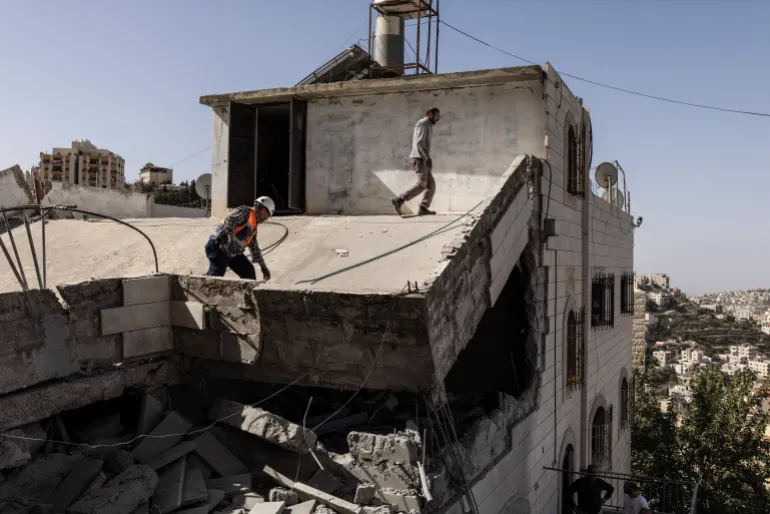
Palestinians inspect damage on the roof of a house blown up by Israeli forces in Hebron in the occupied West Bank, on November 2, 2026 [John Wessels/AFP]
Tibi told The AP he had no illusions that this would end Israel’s wars or bring a Palestinian state, but said a “repair government” would improve Palestinian citizens’ lives, including, potentially, by tackling violent crime in their communities.
Ra’am leader Abbas has also said ending the government of Netanyahu, and far-right figures such as Finance Minister Bezalel Smotrich and National Security Minister Itamar Ben-Gvir, is a priority.
What happens if no government can be formed?
The nominee chosen by Herzog will have 28 days to form a coalition, extendable by 14 more. If they fail, another nominee will be chosen and granted 28 days.
If the second nominee fails, a parliament majority can back a third candidate, and be granted a final 14 days.
If once again no government is formed, the Knesset will be dissolved and an entirely new election called within 90 days. This would mean Netanyahu staying on as caretaker prime minister.
Nehru Jamhour, an analyst of Israeli affairs, told Al Jazeera that this drawn-out impasse was the likeliest outcome, and Netanyahu’s preferred one. He said that Netanyahu was hoping that a repeat election could weaken his rivals and depress turnout among Palestinian citizens of Israel.
Israel’s President Isaac Herzog has said he will name a candidate to form the country’s next government by Sunday, after a majority of lawmakers backed opposition leader Gadi Eisenkot over Prime Minister Benjamin Netanyahu.
Herzog made the announcement on Thursday after holding marathon talks with parties elected to the 120-seat parliament, known as the Knesset.
Recommended Stories
list of 3 itemsend of list
Some 67 lawmakers endorsed Eisenkot, a former military chief, while 46 backed Netanyahu.
In televised remarks at the end of the talks, Herzog said that although the “results of the consultations may appear clear”, there were “mutual vetoes between the blocs and within the blocs themselves” that make it difficult to say who has the best chance of assembling a governing coalition.
He said he would hold “personal talks with some of the party leaders” over the Israeli weekend, which runs Friday-Saturday, and make a pick on Sunday.
Israel’s October 27 election left neither Netanyahu nor Eisenkot with a clear path to a parliamentary majority, handing Herzog the difficult task of choosing a candidate in a deeply divided country.
Netanyahu’s Likud won the most seats of any single party with 27 in the 120-seat Knesset, but his wider religious-nationalist coalition garnered only 53 in total.
Eisenkot’s alliance of four Jewish-led parties, which spans the political spectrum from centre-left to right, won 48 seats despite polls that had predicted a close race.
Yashar party leader Gadi Eisenkot is hoping to dethrone Prime Minister Benjamin Netanyahu [AFP]
Two parties representing Israel’s Palestinian minority won an unprecedented 19 seats.
Eisenkot, like Netanyahu, has ruled out forming a government with the Arab-led parties. Both of those parties nonetheless recommended him, giving him the support of a comfortable majority of lawmakers.
“We want to do things that we did not do in the past in order to remove this criminal government,” Ahmad Tibi, a senior member of the Joint List, which represents an alliance of Arab parties, told The Associated Press news agency.
Eisenkot’s party, Yashar, said his 67 recommendations were the most any candidate had received since 2015, and urged Herzog to give him the mandate “as soon as possible” so he could form a national emergency government.
Separately, Netanyahu suffered a setback on Thursday when United Torah Judaism, one of the two main ultra-Orthodox parties and a longtime ally, declined to recommend any candidate.
The party broke with Netanyahu over his coalition’s failure to pass legislation exempting ultra-Orthodox men from military service, The Times of Israel reported.
Yariv Oppenheimer, a member of the Democrats, a party in Eisenkot’s alliance, told Al Jazeera that he saw “no reason” Herzog would not choose Eisenkot on Sunday.
He said United Torah Judaism had signalled that its support was available for the right price, meaning that a good enough offer from Eisenkot could give him the numbers he needed.
“It’s very clear that Netanyahu doesn’t have a chance to establish a government at all,” he added.
Once nominated by Herzog, the candidate will have 28 days to try to forge a government, with a possible 14-day extension.
Netanyahu will remain prime minister in a caretaker government until a new coalition is formed, or through another election that must be held if no candidate succeeds.
Netanyahu, at risk of losing power, has seized on an investigation by election officials into possible vote tampering to cast doubt on the results, accusing Arab-led parties of stealing the vote.
Critics accuse Netanyahu and his partners of trying to undermine the results, which he denies.
Israel’s Central Election Committee said on Wednesday that the election’s integrity had not been compromised. The head of the committee, Supreme Court Justice Noam Sohlberg, has called on Israel’s elected officials to protect public trust rather than shake it.
“This is a real danger. One of the foundations of democracy is the peaceful transfer of power,” Sohlberg told Herzog at his residence on Wednesday. High voter turnout, including among the Arab minority, was a blessing, he said.
Netanyahu’s allies on the far-right, including National Security Minister Itamar Ben-Gvir, have called for the immediate arrest and interrogation of Arab party leaders.
Al Jazeera journalist Montaser Nassar was detained in raids near Hebron and evidence was revealed that Israeli forces shot and assaulted a prisoner who was threatened by Israeli Minister Itamar Ben-Gvir.
Election body says deadlocked result won’t be undermined even if foreign interference claims are found to be true.
Published On 2 Nov 20262 Nov 2026
The head of Israel’s elections commission has said the results of the country’s general election would still stand even if claims of foreign interference were substantiated.
“Our position is that even if the suspicions are substantiated, this would not undermine the integrity of the electoral process or the election results as a whole,” Central Elections Committee head Noam Sohlberg said in a video on Sunday, in which he appeared with the head of the Shin Bet, Israel’s internal security agency, and the attorney general.
Recommended Stories
list of 4 itemsend of list
Prime Minister Benyamin Netanyahu’s Likud party had questioned the results after saying, without providing evidence, that Arab-led parties, which made significant gains in Tuesday’s elections, “stole” the vote and accepted funding from Qatar to do it.
Also on Sunday, Israeli police released two out of three political activists arrested before Tuesday’s polls opened. They were carrying envelopes of cash, allegedly to bribe voters, police said.
One was released on unspecified conditions, while another was ordered to remain on house arrest.
Police said the suspects were connected to the Arab-led Ra’am party, which won eight seats.
Its leader, Mansour Abbas, denounced the arrests as undemocratic and “an attempt to influence the election results”.
‘Orchestrated and organised campaign’
Main opposition leader Eisenkot on Sunday accused Netanyahu of launching an “orchestrated and organised campaign to delegitimise the results”.
Eisenkot has previously ruled out forming a coalition with Arab parties, but a deadlock in Tuesday’s elections means siding with the parties could help him form a government.
Netanyahu’s bloc won 53 seats in Tuesday’s elections, while the opposition bloc, led by Gadi Eisenkot, won 48, meaning neither side can form a government in Israel’s 120-seat parliament alone.
Israel’s three Arab-led parties, including the Ra’am party, won a record 19 seats.
A coalition of Arab parties with Eisenkot would provide a comfortable majority of 67 in parliament. However, for many in Israel, the idea of siding with Arab parties is politically unpalatable.
The results are due to be officially certified this week, after which President Isaac Herzog must nominate a candidate to form a new government.
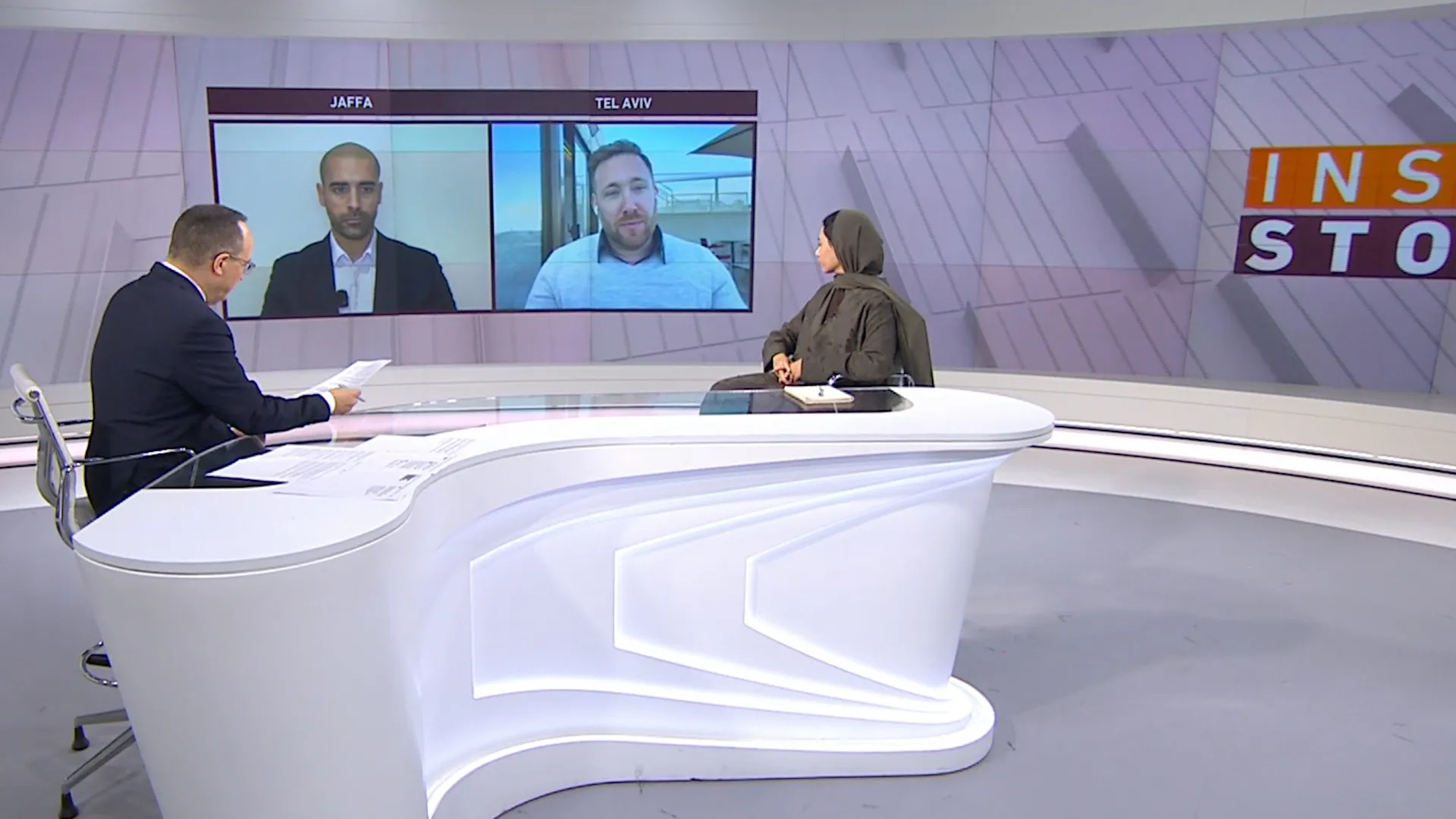
Allegations of Qatari interference in Israel’s election ignited an impassioned debate on Al Jazeera’s Inside Story. Qatar has rejected the allegations calling them a disinformation campaign.
After one of the highest voter turnouts in decades, neither Prime Minister Benjamin Netanyahu’s coalition nor the self-styled Zionist opposition alliance secured the 61 seats required for a parliamentary majority in the October 27 polls.
Recommended Stories
list of 4 itemsend of list
Netanyahu’s camp came first, with 53 seats, five more than the main opposition bloc. The Arab parties surged to a record 19 seats but have been relegated to merely observing coalition negotiations.
Viewed from a distance, the results could appear startling.
The judicial reforms ushered in at the start of Netanyahu’s government term in 2022 provoked the largest street protests in Israel’s history, while the prime minister himself is still embroiled in a corruption trial dating back to 2019. Alleged failures ahead of the Hamas-led attacks on October 7, 2023, that triggered Israel’s genocidal war against Palestinians in the Gaza Strip have still to be reckoned with, despite overwhelming public pressure to do so. Moreover, the genocide has led to growing international isolation, while also providing the pretext for multiple attacks on countries across the region – the latest of which, undertaken with the United States on Iran in February, continues to roil energy markets around the world.
Nevertheless, roughly 2.38 million Israelis on Tuesday made the journey to the polls to back Netanyahu’s coalition, led by his Likud party, while some 2.21 million cast their ballots for the opposition alliance.
Between the two, little space was given to examine the multiple war crimes Israel stands accused of having carried out in Gaza, where Israeli attacks have killed more than 74,500 people and left much of it in ruins, or government complicity in the surging violence and pogroms in the occupied West Bank, where a United Nations commission of inquiry said on Monday that Israel had been committing crimes against humanity, including extermination, torture and rape.
Gaza did not make the ballot
Analysts said the fact that neither Gaza nor the West Bank were a deciding factor in how Israelis voted on Tuesday was largely because they already represented an area of broad agreement across both alliances.
Instead, the election was fought on largely internal issues: the power of Israel’s courts, whether members of the ultra-Orthodox minority should be exempted from military service, and whether the government’s alleged culpability in missing the warnings of the October 2023 attack should be examined.
Leading Israeli sociologist Yehouda Shenhav-Shahrabani said the issues were pitched to the Israeli public along broadly similar lines to those used by the politicians enacting the policies.
“I don’t think the problem is simply that people are uninformed or disengaged,” he told Al Jazeera.
“Many Israelis know that Gaza has been devastated, even though they are exposed to a very selective representation of that devastation. But knowing something and recognising its moral and political implications are different things,” Shenhav-Shahrabani added, providing one explanation for the absence of empathy displayed by many Israelis in the face of the widely reported suffering of Palestinians in Gaza.
“Ordinary people, who love their families, care for their friends, and consider themselves decent human beings, can participate in or acquiesce to a political order that produces immense suffering for others,” he said.
For Shenhav-Shahrabani, there has been “a powerful mechanism of denial” at work. “Not necessarily denial of the facts, but denial of their meaning,” he said.
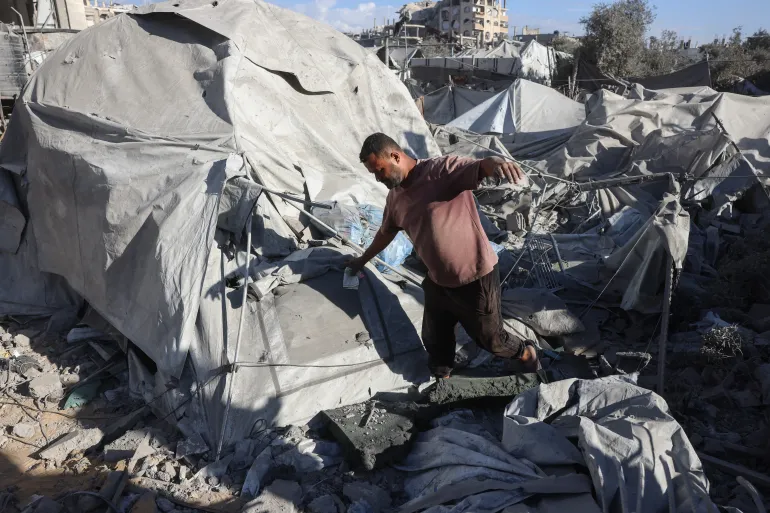
A Palestinian man walks through damaged makeshift shelters after an Israeli strike hit a nearby building the previous night, west of Jabalia in the northern Gaza Strip, on October 30, 2026 [AFP]
Security on the agenda
For Netanyahu’s supporters, however, this denial could be traced to something more personal.
“The Likud is a tribe, or perhaps a cult and, as far as they are concerned, Dear Leader is always right,” Israeli analyst Ahron Bregman said of the prime minister’s base, which has sustained his rule for a cumulative 19 years – roughly a quarter of Israel’s entire existence.
“For them, the enemy, straight after the Arabs, is the left, and they would vote for Netanyahu regardless of his faults,” added Bregman, a senior teaching fellow at King’s College London.
For much of this electorate, the vote was less a judgement on the government’s conduct than a choice between competing claims to political legitimacy – or as Israeli academic Roi Zur put it, a contest over “the heart and soul of democracy” and the future of Jewish and Israeli identity.
“The most important thing, I think, for turnout among Netanyahu’s supporters is the understanding, or the belief, that the alternative coalition would be weaker on security,” said Zur, an expert on voter behaviour who teaches at Essex University.
What Netanyahu had been particularly successful in doing, he continued, was creating “this campaign of fear and the belief that he is the only one who can deal with this situation, that he is the only strong enough prime minister”.
“The idea that Netanyahu is the only and the strongest leader that can lead Israel through these recent times and the post-October 7 war.”
War and occupation, according to Shenhav-Shahrabani, were not choices to be made on the ballot paper.
Instead, they had become the prism through which, over decades, Israelis had come to view “security, citizenship, and the very meaning of democracy”.
“That is why replacing Netanyahu, important as it may be, would not by itself resolve the deeper problem.”
Israel’s Prime Minister Benjamin Netanyahu addresses supporters on October 28 [AFP]
Former Palestinian Liberation Organisation official Xavier Abu Eid says the strong Palestinian turnout has exposed how Arab citizens are treated within Israel’s democracy, as allegations surrounding their vote emerge and Benjamin Netanyahu seeks to remain in power.
Qatar’s Foreign Ministry spokesman rejects ‘disinformation campaign’ amid allegations by some Israeli politicians of voting interference.
As Israel awaits the final results of its highly contested elections, some political figures have sought to drag Qatar into the fray with claims of voting interference – an accusation Doha rejects.
Israeli Prime Minister Benjamin Netanyahu’s Likud party and media outlets associated with it have, without evidence, accused Qatar of sending money to Arab parties in Israel for get-out-the-vote drives.
Qatar’s Ministry of Foreign Affairs spokesman on Thursday categorically denied the allegations of interference or funding of any activities aimed at influencing the election results.
“We reject the accusations made by certain Israeli politicians and their contacts in the media, who have launched yet another disinformation campaign aiming to drag Qatar into Israeli political disputes following this week’s elections,” Majed al-Ansari said in a post on X.
The unsubstantiated Israeli claims, which the spokesperson described as “ridiculous and dangerous in equal measure”, are the latest in a long-running campaign against Qatar.
Netanyahu has previously boasted about attacking Qatar in September 2025 during Israel’s genocidal war on Gaza while Israeli influence experts and political advisers also worked on a secret campaign targeting Qatar in the weeks after the Hamas-led October 7, 2023, attacks on southern Israel.
“[Some Israeli politicians] accuse Qatar of buying off Benjamin Netanyahu, the Israeli political left and now, in this latest campaign, the Arab vote. If these claims were to be believed, Qatar would apparently own all of Israel,” al-Ansari said.
Partial results indicated that Netanyahu’s bloc would not secure a majority in the Knesset in Tuesday’s parliamentary elections. Those results showed the two Arab lists securing a record number of seats in the new parliament, but the main parties have rejected the idea of partnering with them.
Despite the latest claims, Dean Livine, the acting director for Israel’s Central Elections Committee, has rejected allegations of foreign interference in the elections. “The Knesset elections were conducted lawfully. The integrity of the elections at polling stations was rigorously safeguarded,” he wrote in a letter to an MP and fellow committee member.
“The repeated invocation of Qatar in Israeli electoral rhetoric reveals an excessive obsession with our country among certain Israeli political and media figures,” al-Ansari said, adding that Qatar should “not be used as a scapegoat for the political failures of certain Israeli politicians”.
The Foreign Ministry spokesman said some Israeli politicians, instead of shifting attention onto Qatar, “would be better off focusing on their own voters, improving people’s everyday lives, and undoing the damage they’ve created in the region”.
He reiterated that Qatar has “no involvement” in Israel’s political or electoral competition.
“These are internal Israeli matters in which we do not interfere, and we will not accept any attempt to draw Qatar into its domestic political disputes.”
Qatar is a key mediator in the conflict between Israel and the Palestinians and played a central role in talks to halt Israel’s genocidal war on Gaza.
Doha is also leading mediation efforts between Washington and Tehran to end the United States-Israel war on Iran.
Al-Ansari said the latest accusations would not distract Doha from its “important role as a mediator, our diplomatic and humanitarian efforts, our support for the Palestinian people, or our commitment to a just and comprehensive peace and regional stability.”
Israel’s parliamentary election on Tuesday produced no clear winner, with nearly 90 percent of ballots counted and both major political blocs falling short of the 61 seats needed to form a government.
Israeli Prime Minister Benjamin Netanyahu’s bloc is on course to win 53 seats in the 120-member Knesset, while the opposition bloc led by Gadi Eisenkot is expected to secure 48 seats.
The Arab-majority parties won 19 seats, a historic high, driven by record turnout among Palestinian citizens of Israel of about 80 percent. That has placed the Arab parties at the centre of coalition arithmetic, even as several party leaders ruled out governing with them.
So what did the main contenders say in the run-up to and during the vote, and how did they fare? Here is a look:
Benjamin Netanyahu, Likud: Elections ‘stolen by Arab parties’
Pre-election: In the build-up to the election, Netanyahu expressed confidence, telling The Jerusalem Post on October 22, “I’m gonna have five more terms.”
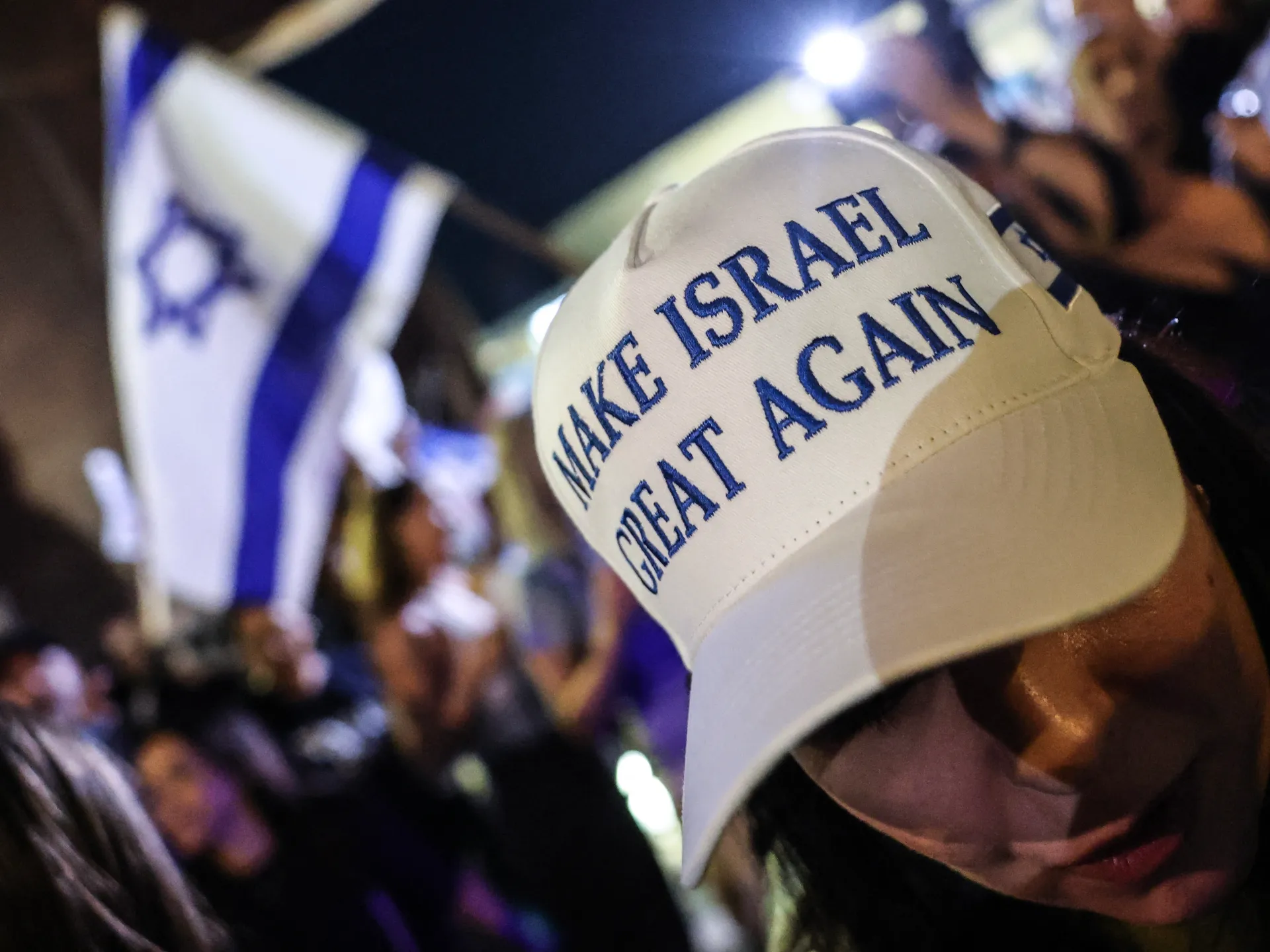
On Sunday, he targeted the opposition, with Haaretz citing a broadcast on Israel’s Channel 14 that Netanyahu warned if they win, they will “give citizenship to hundreds of thousands of Palestinians”, a move that would signal the “end of the Jewish state”.
Election day: On Tuesday, he said forming a government with Arab-led parties would be “a shame and a disgrace”.
“It is forbidden – simply forbidden – to endanger Israel and to establish a government that relies on anti-Zionist Arab parties,” he told supporters.
Post-election day: After the elections, Netanyahu’s Likud party took aim at Palestinian citizens of Israel who voted.
In a party statement shared by Netanyahu, it claimed the elections “were stolen by Arab parties that support terrorism and the elimination of the Jewish state through serious criminal offences”. According to The Times of Israel, police and the Central Elections Committee have already dismissed these claims.
What the results show: Likud is on course for 26 seats, the largest party, with 20.65 percent of the vote. But his bloc has 53 seats, eight short of a majority.
Gadi Eisenkot, Yashar Party: ‘I do not see an Arab party that accepts my principles’
Pre-election: In a September interview with The Jerusalem Post, he dismissed the idea he would need to form a coalition with Arab parties: “I believe the majority we receive will be much larger than what the polls currently show,” adding “I do not see an Arab party that accepts my principles.”
He also said his “inner feeling is that I now have the ability to defeat Netanyahu”.
Election day: Eisenkot rallied Israelis to get rid of “the worst government Israel has known”.
However, he acknowledged how tight the race was, saying, “We are on perhaps the most critical day since the founding of the state.”
Post-election day: On Wednesday, Eisenkot told his supporters the Israeli public “voted against” Netanyahu and promised, “to ensure that the people’s decision is translated into a Zionist government”.
What the results show: Yashar is on course for 21 seats, with 16.16 percent. His bloc has 48, 13 short of a majority, and he cannot reach 61 without the Arab-led parties.
Naftali Bennett, Together Party: ‘The October 7 government is going home’
Pre-election: In February, months before the vote, Bennett told a closed conference of party activists that he stood by his 2021 decision to govern with Ra’am, but said he would not repeat it.
He said, “We will establish a unity government under my leadership … We are going to win, and we are going to form it,” Israel National News reported.
Election day: “Netanyahu has lost, and the October 7 government is going home,” Bennett told supporters in Tel Aviv.
Post-election: In a post on X, Bennett told Israelis to “lift your heads” and said he will do everything “to establish a Zionist Alliance of Servants government”.
What the results show: Together is on course for 12 seats with 9.07 percent, narrowly behind the Joint List.
Naftali Bennet attends an election campaign event [File: Amir Levy/Getty]
Itamar Ben-Gvir, Otzma Yehudit: Palestinians in Gaza ‘shouldn’t live’
Pre-election: In his election campaign, Ben-Gvir expressed his most genocidal views yet, saying in August that there are Palestinians in Gaza “who are not worthy of life. They shouldn’t live. They’re not even people.” He called for Israel to kill “30 to 40” people in Gaza every night.
Election day: “If you want this country to stay Jewish and Zionist, if you don’t want it to be in the hands of (Israeli Knesset members) Mansour Abbas and Ahmad Tibi, go out and vote,” he told supporters at the entrance to the Arab city of Kafr Qasim.
What the results show: Otzma Yehudit is on course for seven seats, with 5.58 percent, less than half of the 15 he wanted.
Bezalel Smotrich, Religious Zionism-Zehut: ‘Jewish settlements will be established in Gaza’
Pre-election: In a statement he issued in August, he promised an expansion of his settlement “revolution” with a programme for the “Judaization of the Negev and the Galilee” at the expense of Palestinians, as part of his campaign.
Election day: He warned on Facebook of high turnout in communities of Palestinian citizens of Israel, claiming that failing to mobilise right-wing voters could let “terror supporters” into government.
That night, he told supporters “Jewish settlements will be established in Gaza.”
What the results show: Religious Zionism is on course for six seats, with 4.78 percent.
Yousef Jabareen, Joint List: ‘Change comes through Jewish-Arab partnership, a true and equal partnership’
Pre-election: In August, he stated that only “a large and strong Joint List will work with all its might to send the Netanyahu/Ben-Gvir/Smotrich government home”, according to The Jerusalem Post.
Election day, night: In a video statement, he said Netanyahu knew “we can put an end to his bloody reign.”
Post-election: He wrote on X that his party was ready for the “ousting of the Netanyahu government”, which he called one of “bloodshed”.
“Against a politics of supremacy, racism, and exclusion, we offer a completely different alternative. The change comes through Jewish-Arab partnership, a true and equal partnership,” he wrote.
What the results show: The Joint List is on course for 12 seats with 9.14 percent, making it the third-largest party by vote share.
Yousef Jabareen at the alliance’s campaign headquarters in Nazareth [File: AFP]
Election day, night: In July, Abbas set Ra’am a goal of at least seven seats, enough, he argued, to make it the balance of power in a “government of change”.
Election day: He hit back at Netanyahu’s posts about Palestinian citizens of Israel, stating in a video that he was “lying and inciting against Ra’am, using it as a scare tactic to mobilise right-wing voters and drive them to the polls”.
What the results show: Ra’am is on course for eight seats, with 6.09 percent, beating his target of seven.
Mansour Abbas in Nazareth, northern Israel [File: AFP]
Avigdor Lieberman, Yisrael Beiteinu: ‘We will reach 61 seats’
Pre-election: On October 15, he claimed: “We will reach 61 seats or more for the change bloc.”
Election day: He urged patience, saying on Friday, “we’ll be able to talk about a much better and more optimistic picture.”
What the results show: Yisrael Beiteinu is on course for seven seats, with 5.93 percent.
Avigdor Lieberman speaks at the start of a Yisrael Beiteinu party meeting in Jerusalem, Israel [File: Amir Levy/Getty]
Yair Lapid, Together: Netanyahu is ‘busy fear-mongering’
Pre-election: In September, he posted a statement which said, “Netanyahu ignored every warning before October 7, and now, 28 days before the election, he’s suddenly busy fear-mongering.”
Election day: He declared victory, stating, “The Netanyahu bloc has suffered a crushing defeat.”
What the results show: Together, which he co-leads with Bennett, is on course for 12 seats, with 9.07 percent.
Yair Lapid speaks during an election campaign [File: Amir Levy/Getty]
No clear winner has emerged from Israel’s election, with nearly 90 percent of ballots counted and both major political blocs falling short of the 61 seats needed to form a government.
The Israeli Central Elections Committee said on Wednesday that it had counted more than five million votes as of 9pm local time (19:00 GMT). Israeli Prime Minister Benjamin Netanyahu’s bloc is on course to win 53 seats in the 120-member Knesset, while the opposition bloc led by Gadi Eisenkot is expected to secure 48 seats.
Final election results could come as early as Thursday evening, though no clear winner is expected to emerge.
More than 500,000 special double-envelope ballots remain to be counted, potentially changing the seat distribution. These include votes cast by soldiers, diplomats and others voting away from their registered polling stations.
The vote – the first since the October 7, 2023, attacks and the Gaza genocide – was widely seen as a referendum on Netanyahu’s premiership. The 77-year-old appears far from defeated, despite lacking a clear majority.
Netanyahu will remain caretaker prime minister until a new government is formed. President Isaac Herzog will begin consulting party leaders about forming a new administration next week, once the official election results are released.
Herzog has urged all parties to avoid another vote that would stall the formation of a government. But coalition building is the norm in Israel, and no party has ever won an outright majority in the country’s history.
Ahead of the vote, Eisenkot ruled out forming a minority government with Arab-led parties. Netanyahu has also rejected such a prospect.
As Netanyahu’s bloc is set to be the largest, analysts predict that he will form a unity government that could include Eisenkot. However, such an outcome is far from certain.
Eisenkot said in a post on X on Wednesday that his opposition alliance was now focused on the “heavy task entrusted to us – bringing change to Israel and establishing a Zionist mobilisation government”.
“This is the will of the people who expressed no confidence in the government of October 7th and the shirking, and in the bloc of shirkers in general. A bloc that is at the low point of two decades.”
Amid record turnout among Arab voters, Netanyahu’s Likud party accused Arab parties of stealing the election.
“The elections in the State of Israel were stolen by Arab parties that support terrorism and the elimination of the Jewish state through serious criminal offences of bribery, threats, violence, forgeries, and the use of prohibited software to mobilise voters,” the party said in a statement.
“The Likud party is transferring to the police, the Shin Bet, and the Central Elections Committee hundreds of testimonies and pieces of evidence regarding election theft in many Arab polling stations,” it said.
Joint List leader Yousef Jabareen reacts to exit polls at the party’s election headquarters in Nazareth, northern Israel, on October 27, 2026 [Jamal Awad/Reuters]
Israel’s predominantly Arab Joint List political alliance said in a statement published late on Wednesday by Turkish news agency Anadolu that preliminary figures showed Arab voter turnout played a decisive role in keeping Netanyahu and his coalition short of a parliamentary majority, while cautioning that the final results were yet to be announced.
Voters answered incitement and intimidation at the ballot box, it said, rejecting a “government of butchers” and its policies of home demolitions, racism and war crimes.
The Joint List said its electoral support reflected demands for political unity and a force capable of defending Arab citizens’ rights without concessions.
It pledged to work to remove Netanyahu’s government and prevent its return, saying it was ready to cooperate towards an alternative government.
Joint List leader Yousef Jabareen said the alliance could back an anti-Netanyahu government from outside, but would not join it.
No clear winner in Israel’s first election since the October 7 attacks and genocidal war in Gaza.
Israeli Prime Minister Benjamin Netanyahu’s alliance, made up of right and far-right parties, is short of a majority after the most consequential elections in decades.
Tuesday’s poll saw a record turnout. And the main opposition bloc, led by former military chief Gadi Eisenkot, also does not have the numbers to form a government on its own.
Recommended Stories
list of 3 itemsend of list
Meanwhile, parties representing the Palestinian citizens of Israel have made unprecedented electoral gains.
While Netanyahu has refused to work with Arab-led lists, could the opposition alliance reach a deal with them?
Or is cooperation a bridge too far while the Israeli military’s assaults on Gaza and the occupied West Bank continue?
Presenter: Sami Zeidan
Guests:
Mairav Zonszein – senior Israel analyst, International Crisis Group
Mustafa Barghouti – secretary-general, Palestinian National Initiative
Phyllis Bennis – fellow, Institute for Policy Studies, and author of Understanding Palestine and Israel
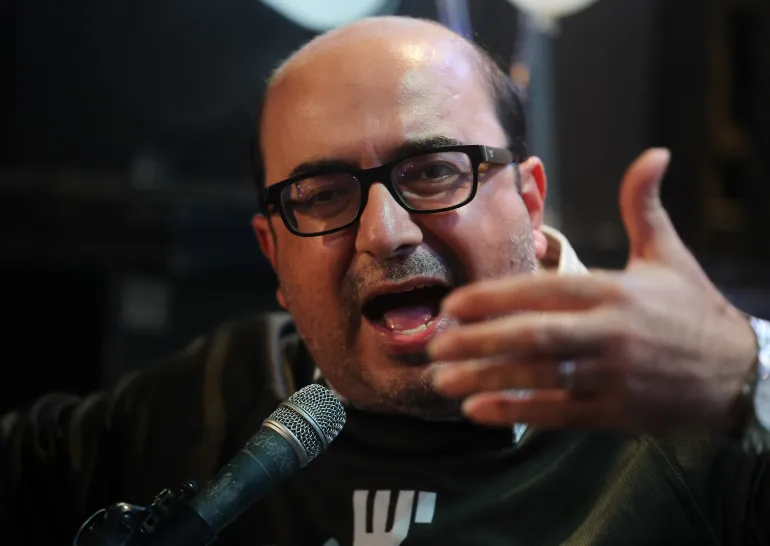
The leader of Israel’s Balad party has condemned the country’s main political leaders for refusing to form a coalition with Arab parties, even after a record showing in polls could make them kingmakers for the next parliament after no clear winner emerged.
Sami Abu Shehadeh told Al Jazeera that Palestinian citizens of Israel, who make up about a fifth of the population, are being treated as illegitimate partners despite their turnout.
Recommended Stories
list of 3 itemsend of list
“This is racism,” he said. “We are a legitimate elected leadership of the national minority. The vast majority of our people decided that we are their leadership.”
Arab parties are on course to win a record 19 seats, giving them potentially decisive leverage over the main political blocs. With 85 percent of the vote counted, Israel’s Central Elections Committee has Prime Minister Benjamin Netanyahu’s bloc ahead with at least 53 seats, and the opposition bloc led by Gadi Eisenkot on 48.
Both are short of the 61 needed to govern. Netanyahu says Israelis chose a strong right-wing government, while Eisenkot says they voted for change.
Abu Shehadeh, who leads Balad, one of the Joint List’s three parties, was not a candidate.
Israel’s elections committee voted to disqualify him at the request of far-right Security Minister Itamar Ben-Gvir, who accused him of supporting the October 7, 2023 Hamas attack due to an article issued the following day in which Abu Shehadeh called it an “important historical event”.
Abu Shehadeh subsequently told the Supreme Court he did not support “armed struggle” but acknowledged that a paragraph in the article had been incorrectly worded. He said his intention was to call for moving the conflict towards a political process.
He withdrew in October after a majority of the Supreme Court panel appeared willing to approve the disqualification. He rejects the grounds and said the court had made clear that Israel has “two different judicial systems, one for the Jews and one for the Arabs”.
“We are very proud of the Arab Palestinian minority in Israel that went in this very high percentage of voting,” he told Al Jazeera. The community’s first promise to voters, he said, was to prevent “this gang of criminals” from returning to power, naming Netanyahu and far-right ministers Bezalel Smotrich and Ben-Gvir. “So our first promise, we can keep it from now .”
Balad chairman Sami Abu Shehadeh speaks at a news conference [File: Ammar Awad/Reuters]
Numbers point to Arab parties but opposition bloc resistant
Al Jazeera’s Nour Odeh, reporting from Ramallah in the occupied West Bank, said Netanyahu “has scared off everybody from talking to the Palestinian Israeli parties”, leaving him best placed to “call the shots”. She said that Eisenkot and his allies have indicated that they want a Zionist government and “do not want to form a government” with the Arab parties, leaving them few options.
Danny Ayalon, a former Israeli ambassador to the United States, told Al Jazeera that turnout among Palestinian citizens of Israel came in “really unprecedented numbers” and that the parties “are going to have some significant clout”.
Mathematically, he said, Eisenkot’s bloc could join forces with the two Arab parties and pass the threshold, though it would take “political wizardry”. Yousef Jabareen, who leads the Joint List, has said his alliance’s “hands are extended” to oust Netanyahu.
Abu Shehadeh set out what Palestinian citizens want from the next government.
“We are against genocide and we are against apartheid. We want to promote a different political alternative, one which is based on the values of freedom, justice and equality for both people who are living between the river and the sea.”
Of Netanyahu, he said: “Our problem … is that he is a war criminal.”
A UN commission said in a report published on Monday that Israel has continued to commit genocide in Gaza after last October’s US-brokered ceasefire in the enclave.
The Hague-based International Criminal Court issued an arrest warrant for Netanyahu in 2024 for war crimes during the Gaza war.
The next government, like every government in Israel’s history, will have to be a coalition.
The question now is who can secure at least 61 of the Knesset’s 120 seats to form a government and become Israel’s next prime minister.
Al Jazeera has built an interactive tool that lets you test different combinations of parties. Start with any of the four exit polls or enter your own seat numbers. Then add parties until your coalition reaches 61 seats. You can add an entire bloc at once or select parties individually.
Who is ahead?
Initial counting by the Central Elections Committee put Likud ahead as the largest single party, with 27 seats.
Netanyahu’s bloc was projected to win 54 seats, against 50 for Eisenkot’s.
Four exit polls published on election night showed how close the race is.
Kan 11 and Channel 13 put Benjamin Netanyahu’s bloc and Gadi Eisenkot’s opposition bloc level at 51 seats each. Channel 12 gave Netanyahu 52 seats to Eisenkot’s 49, while Channel 15 was most favourable to the incumbent, projecting 55 seats for Netanyahu’s bloc against 49 for the opposition.
How many seats are needed?
Israel’s parliament, the Knesset, has 120 seats. Parties win seats in proportion to their share of the national vote, provided they clear the 3.25 percent threshold to enter parliament.
A government needs the support of at least 61 politicians to secure a majority.
Neither of the main blocs has reached that number in the exit polls or the initial count. The next step is to find enough parties willing to join forces to make up the difference.
(Al Jazeera)
Why is forming a government so difficult?
The Arab-led parties Ra’am and the Joint List could hold the balance of power, with exit polls putting their combined support at between 16 and 19 seats.
But the political obstacles are considerable. Netanyahu has described a coalition with Arab parties as “shameful”, while leading figures in the Jewish-led opposition have also ruled out governing with them.
That leaves potential coalitions that may work on paper but face serious political barriers.
(Al Jazeera)
Which parties belong to each bloc?
Netanyahu’s bloc spans Likud, the ultra-Orthodox parties Shas and United Torah Judaism, and the far-right parties Religious Zionism, led by Bezalel Smotrich, and Otzma Yehudit, led by Itamar Ben-Gvir.
Eisenkot’s opposition bloc includes his Yashar party, the Together list associated with former prime ministers Naftali Bennett and Yair Lapid, Avigdor Liberman’s Yisrael Beytenu and Yair Golan’s Democrats.
What happens next?
Once the results are certified, the president gives the mandate to the member of the Knesset considered most likely to assemble a majority.
That politician has 28 days to form a government, with a possible extension of up to 14 days. If they fail, another lawmaker can be given a chance. If no one can form a government, Israel may have to hold another election, as it did repeatedly between 2019 and 2022.
(Al Jazeera)
Netanyahu, Israel’s longest-serving prime minister, with 19 years in office across three stints, remains caretaker prime minister while coalition negotiations unfold. He is also standing trial on corruption charges, which he denies.
Official results are due on November 4. Negotiations to form a government could take considerably longer.
‘Zionism and the state of Israel is a racist enterprise’
Rami Khouri, a public policy fellow with the American University of Beirut challenges the idea that a strong IsraelI-Arab bloc result signals any positive shift in Israeli society, arguing that it will never change.
Israeli Prime Minister Benjamin Netanyahu has called the prospect of working with Arab parties to form a government ‘a disgrace and a shame’. But exit polls show neither his party nor the opposition are projected to secure the 61 Knesset seats needed for a majority.