Iran

Trump says Iran wants to ‘make a deal’ as it continues to strike Israel and gulf nations

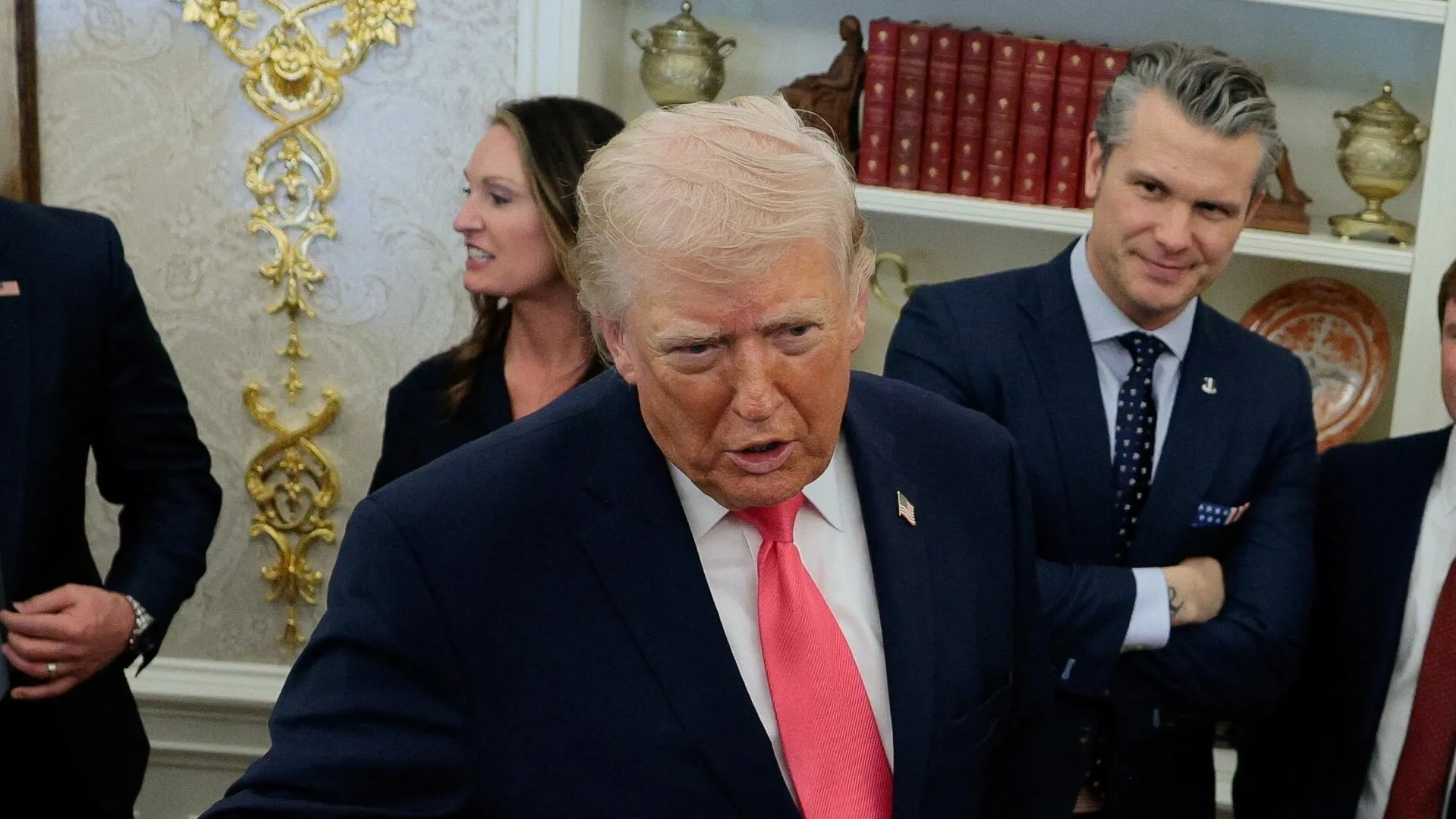
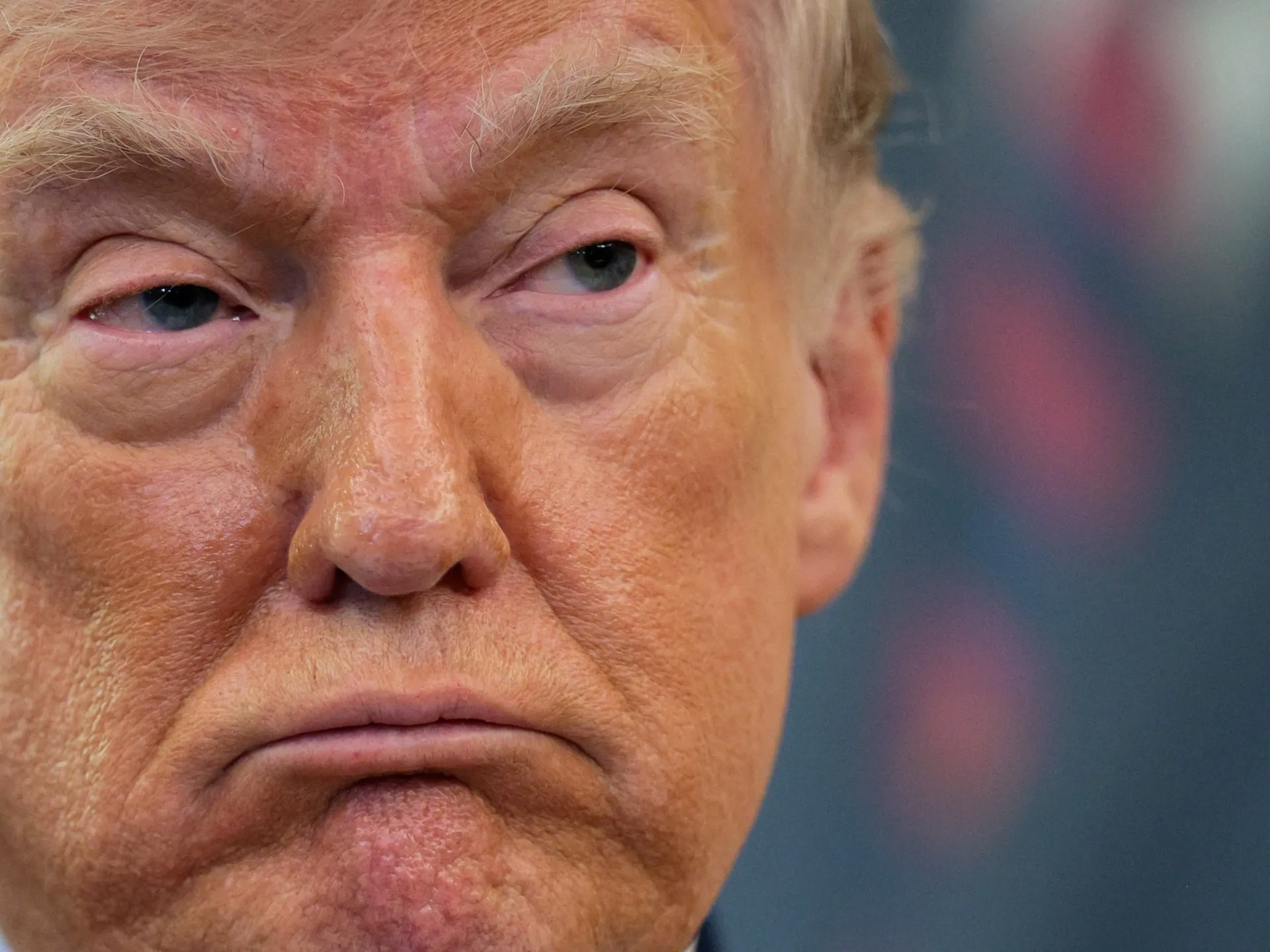
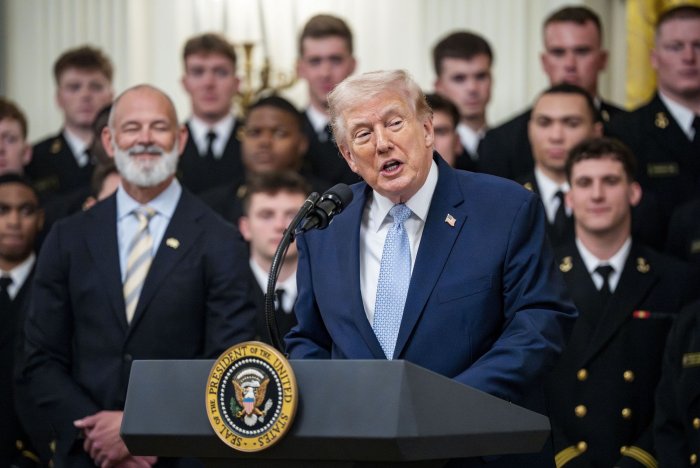
President Trump said Tuesday that Iran wants to “make a deal” with the United States to end the war in the Middle East, saying that negotiations are ongoing with the conflict in its fourth week.

Iran has publicly denied that talks are happening. But Trump told reporters during an Oval Office event that negotiations are underway and being led by Vice President JD Vance and Secretary of State Marco Rubio.

“I’d like to think we are in a good bargaining position,” Trump said.

Trump said he remains skeptical of Tehran’s intentions, saying he doesn’t necessarily “trust them,” but indicated that he is encouraged to continue talks after receiving what he described as a “very big present worth a tremendous amount of money” from Iran.

“I am not going to tell you what the present is,” Trump told reporters. But he said it was a “significant prize” related to “oil and gas” that signaled to him that he was “dealing with the right people.”

Conflicting messages over the diplomatic efforts between Washington and Tehran come as Pakistan has offered to host peace talks in Islamabad aimed at ending the hostilities, which have killed more than 2,400 people, further destabilized the Middle East and disrupted global oil markets.

“Pakistan welcomes and fully supports ongoing efforts to pursue dialogue to end the WAR in Middle East, in the interest of peace and stability in region and beyond,” Prime Minister Shehbaz Sharif wrote on X.

Any potential talks between the United States and Iran would face significant challenges. Key U.S. demands — particularly related to Iran’s ballistic missile and nuclear programs — remain difficult to resolve, even though Trump claims Iran has already agreed to concessions related to its ability to have nuclear weapons.

It is also unclear who within Iran’s leadership would be willing to negotiate, especially as Israel has vowed to keep targeting Iranian leaders after killing several already.

Trump has not publicly responded to Pakistan’s offer to act as an in-between for the United States and Iran. He also sidestepped a question about a New York Times report that said the Saudi crown prince, Mohammed bin Salman, has been pushing him to continue the war against Iran.

The president instead expressed confidence in his senior advisors handling the negotiations with Iran. He did not specify who U.S. officials are engaging with, but insisted they are “talking to the right people.”

When asked by a reporter why he had agreed to a cease-fire with the Iranians, Trump said: “They are talking to us, and they’re making sense.”

As the talks continue, Trump said that the United States is “way ahead of schedule” in its war with Iran, a nation that he said was so battered that it had no choice but to come to the negotiating table. Iran, however, showed on Tuesday that it still has firepower as it fired a new wave of missiles at Israel, Iraq and other gulf nations.

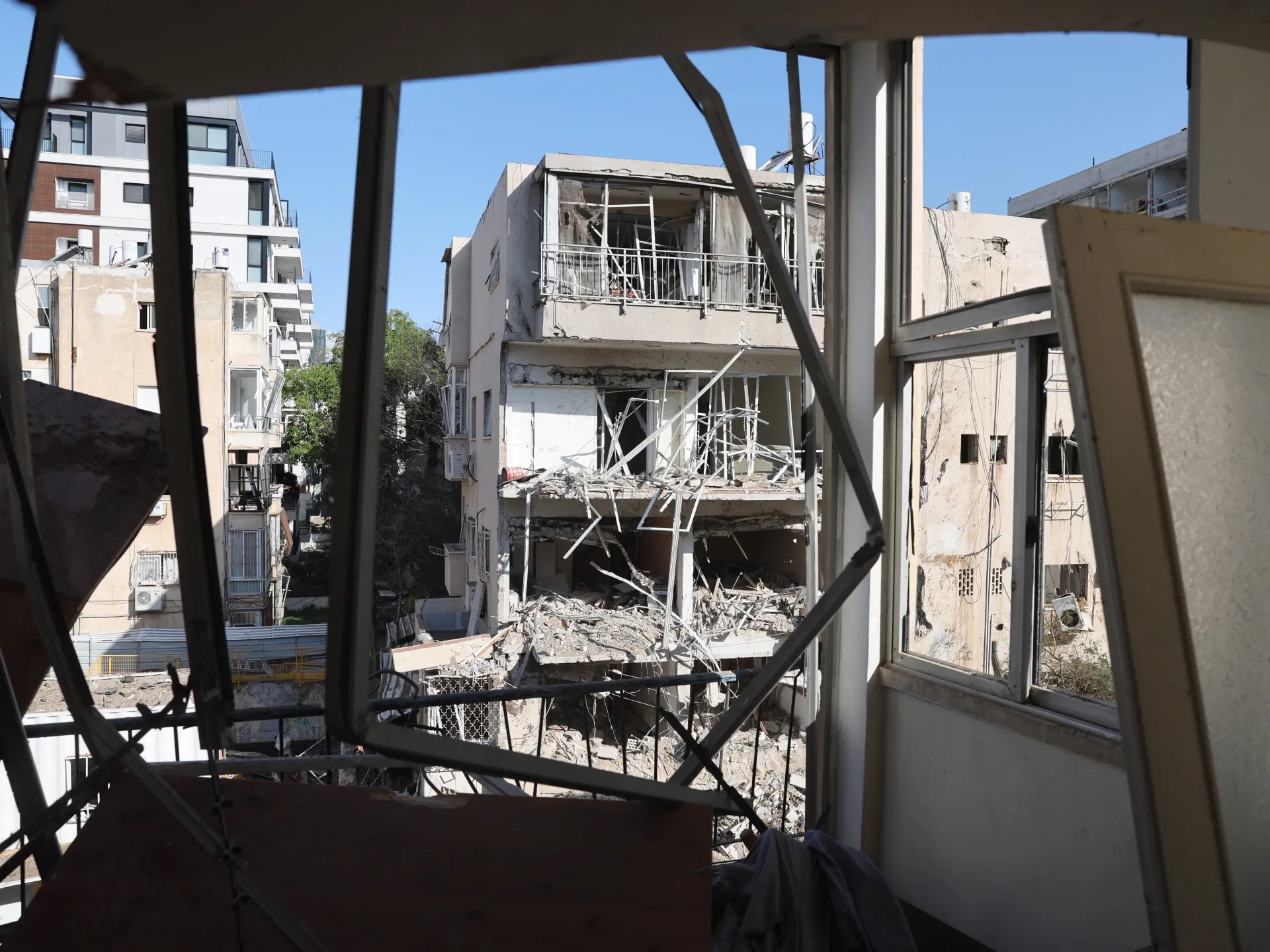
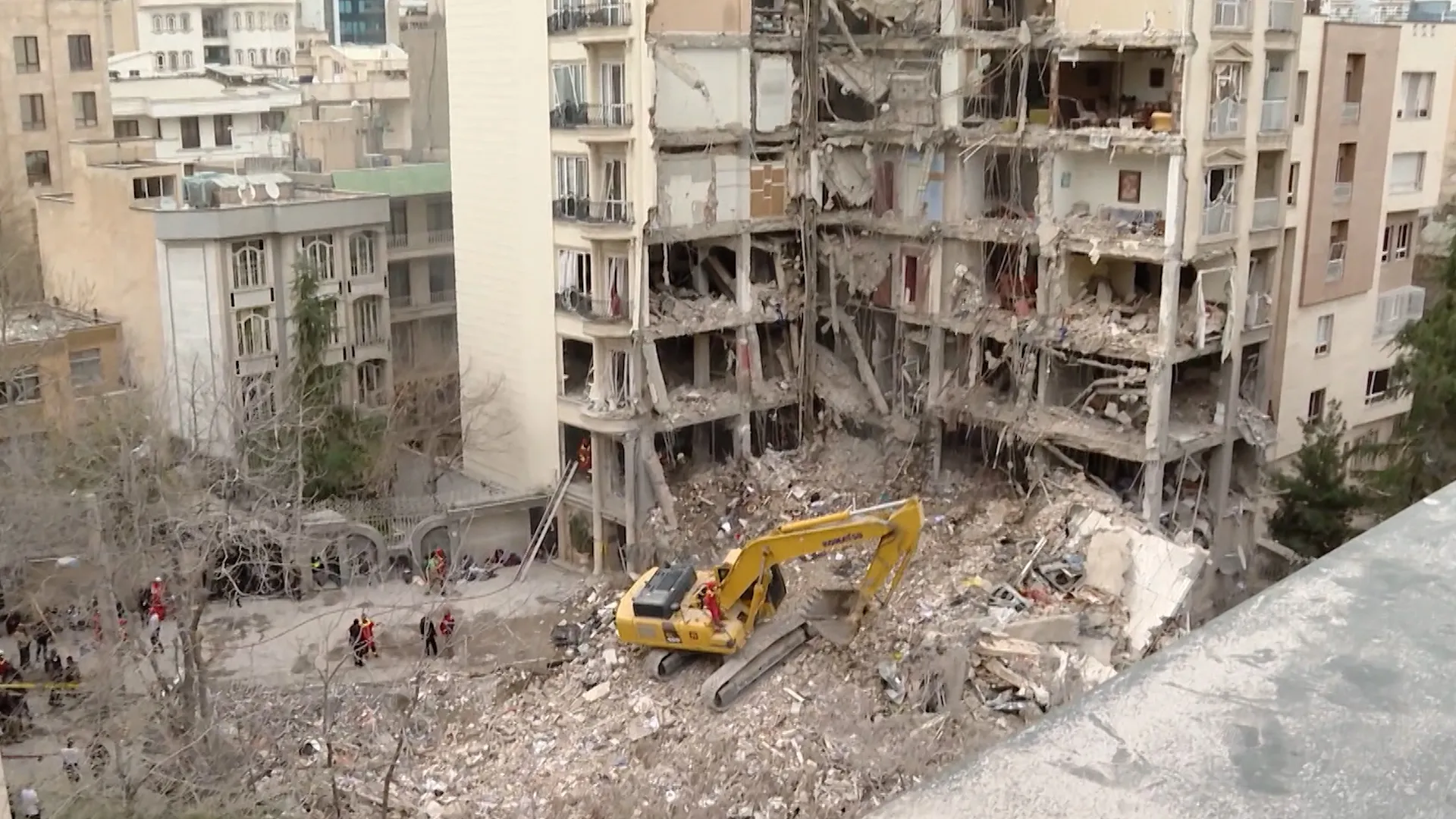
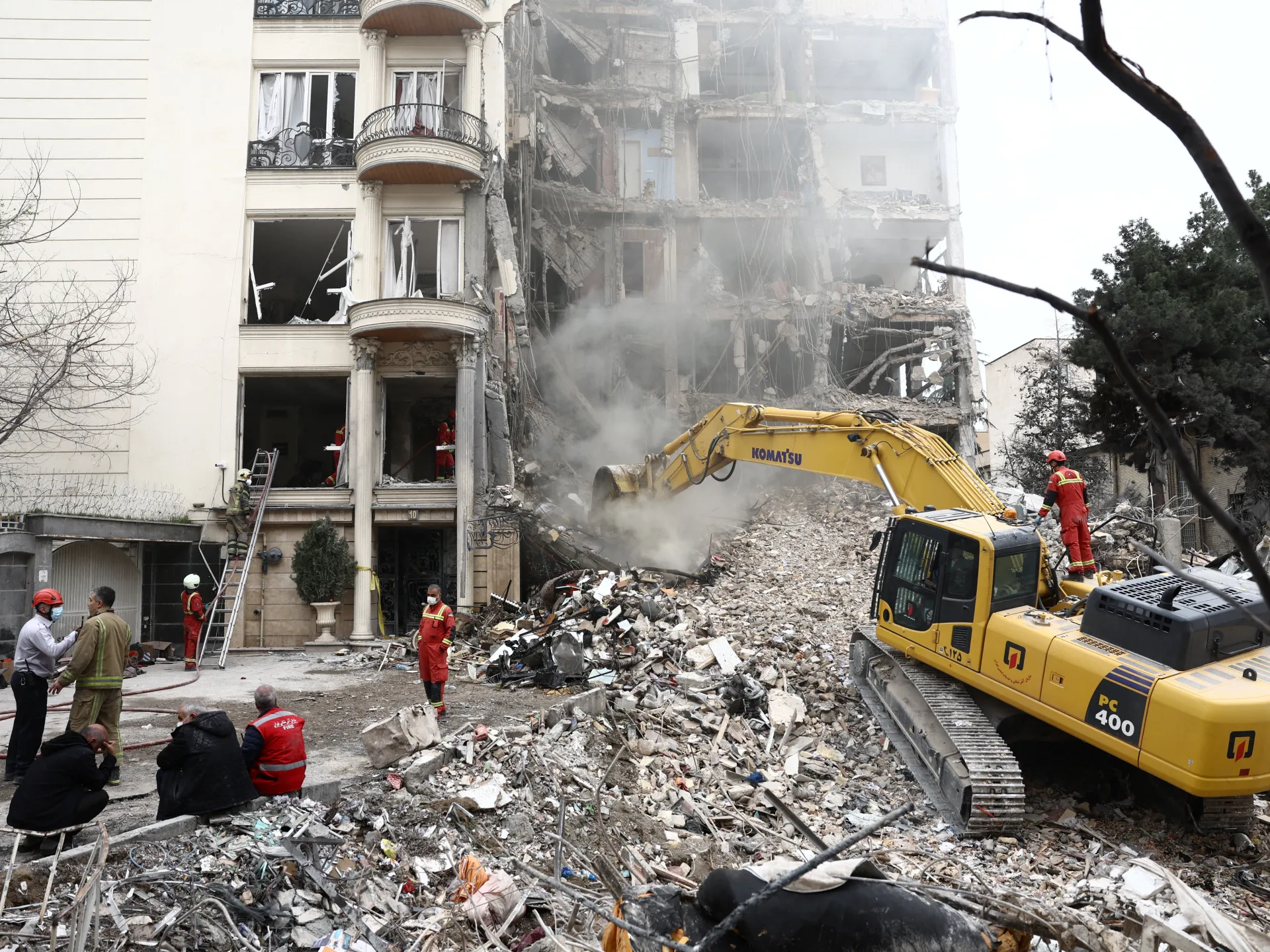
Iran fired at least 10 waves of missiles at Israel. In Tel Aviv, a missile with a 220-pound warhead slammed into a street in the city center, blowing out windows of an apartment building and sending smoke billowing. Four people suffered minor wounds, rescue worker Yoel Moshe said.

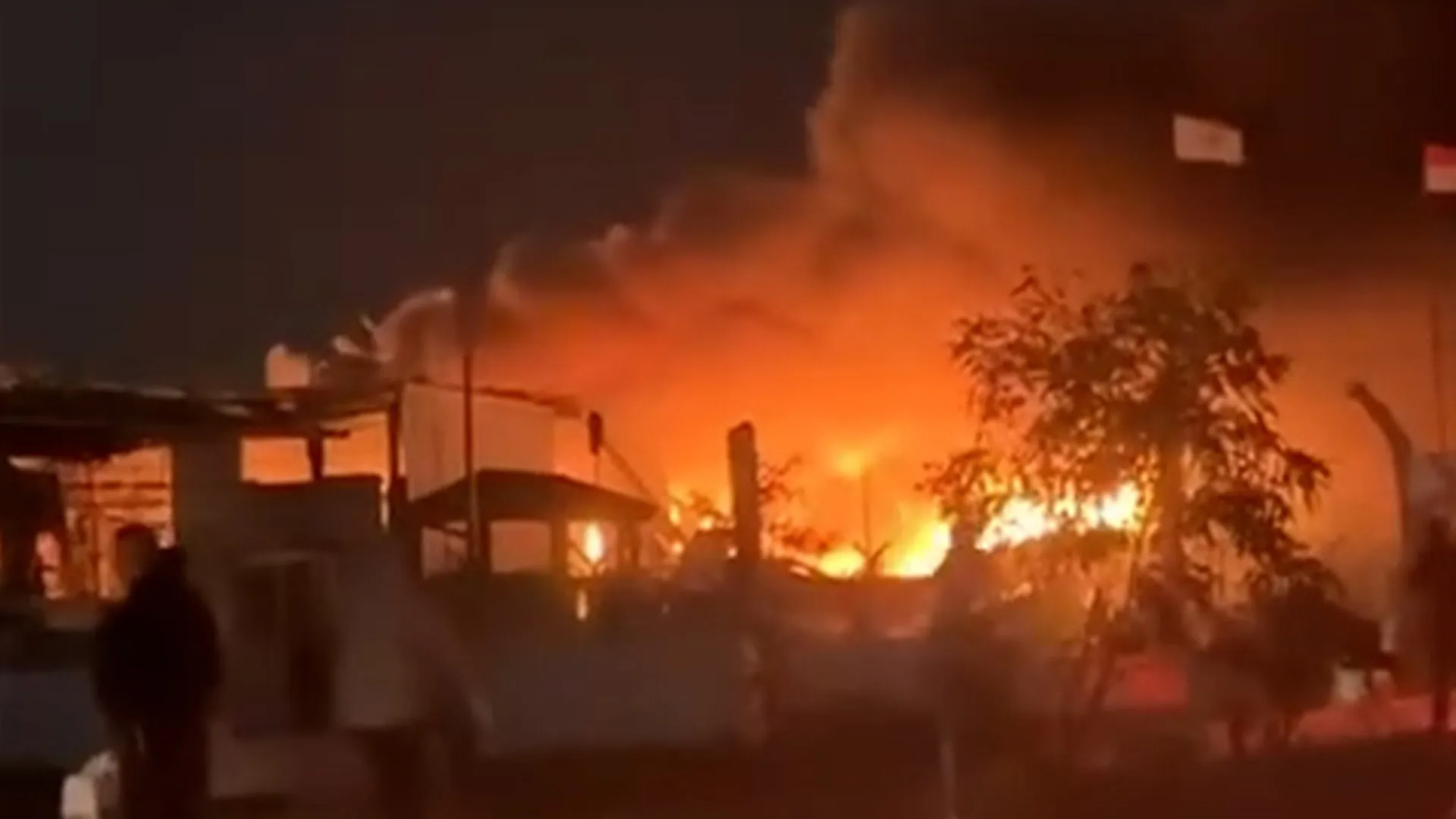
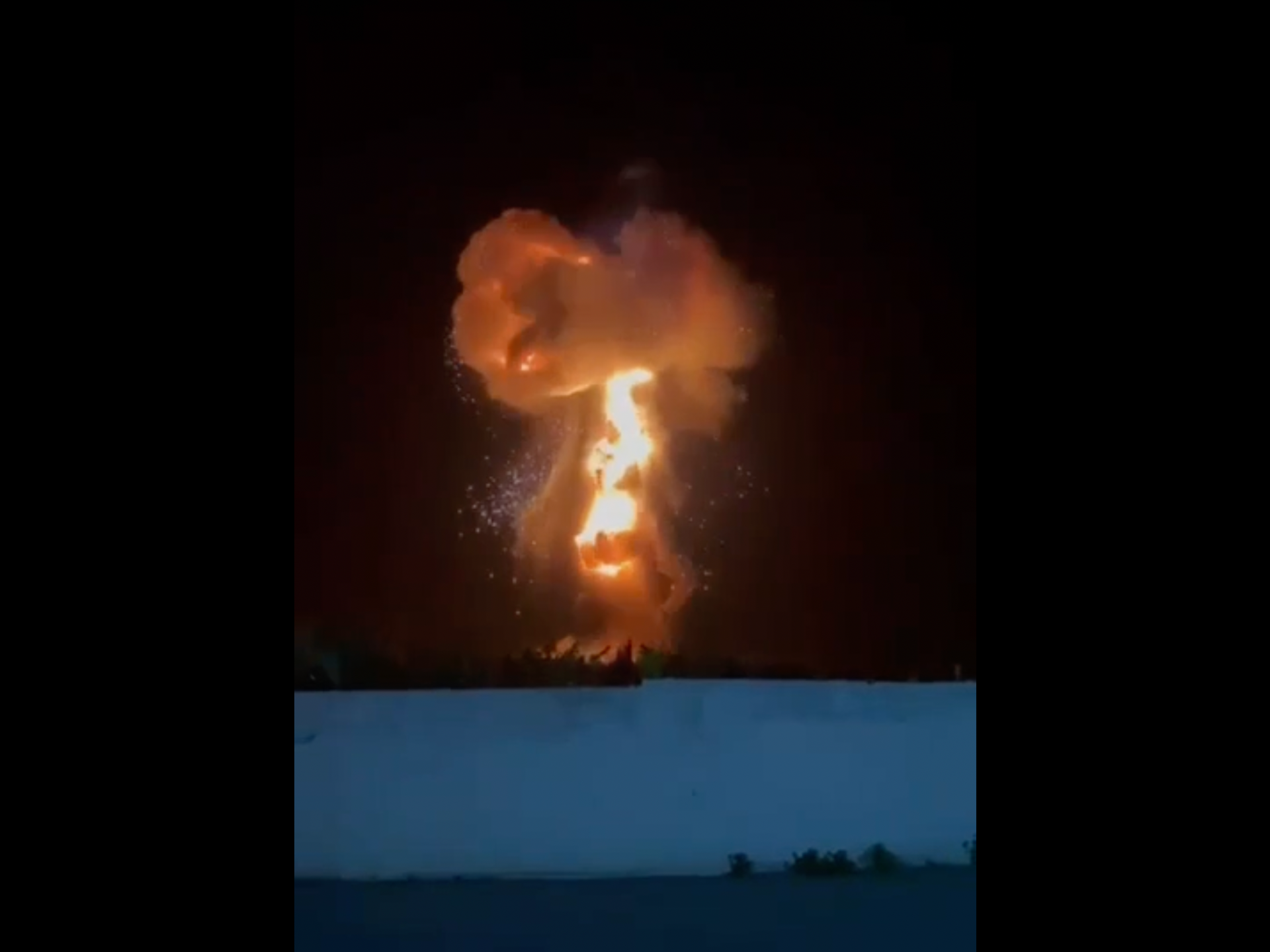
In Kuwait, power lines were hit by air defense shrapnel, causing partial electricity outages for several hours. Bahrain said it was attacked with missiles and drones, and that an Emirati soldier serving with its forces had been killed. The United Arab Emirates said air defense systems responded to similar attacks, and Saudi Arabia said it destroyed Iranian drones targeting its oil-rich Eastern Province.

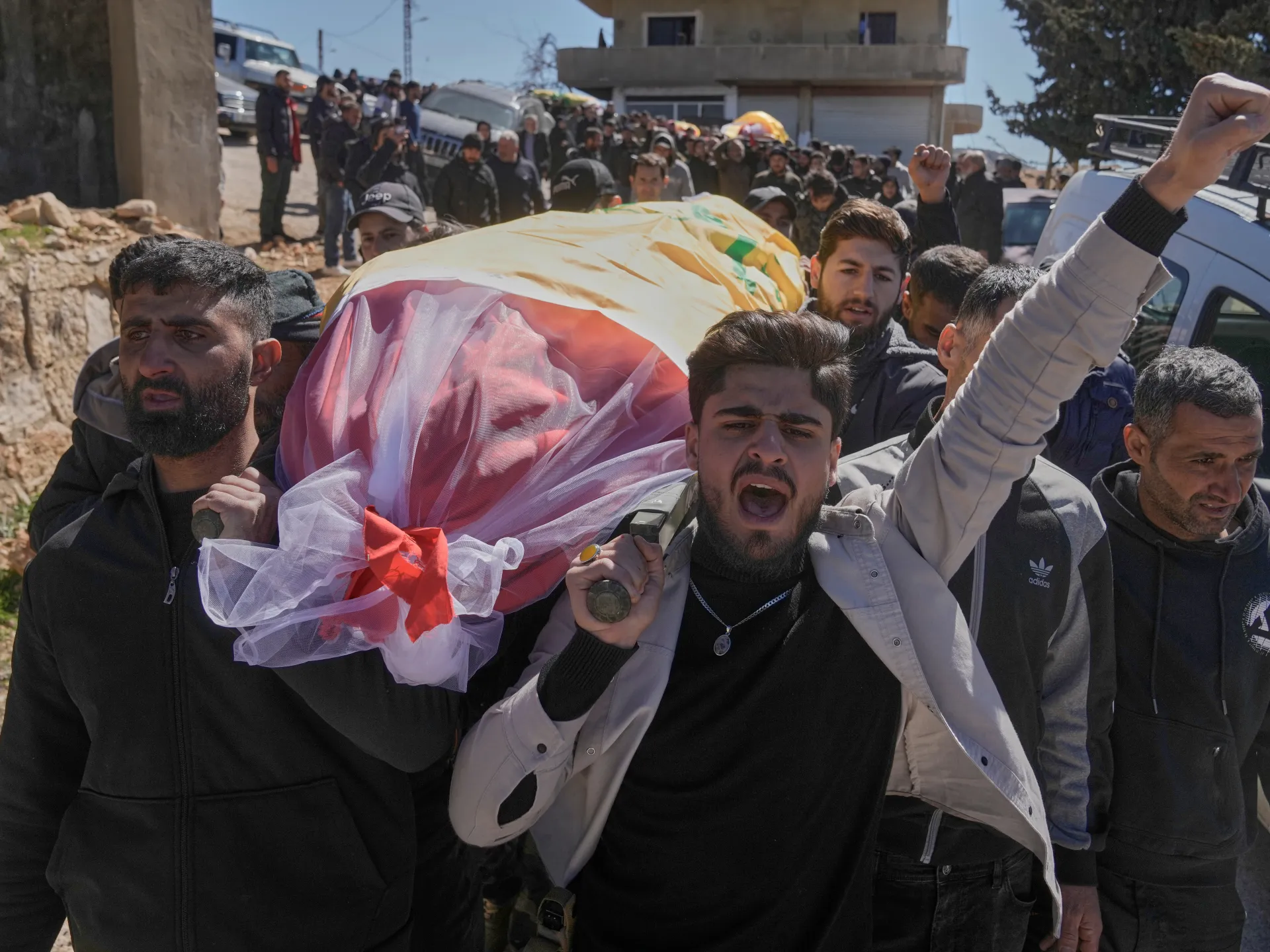
Israel pounded Beirut’s southern suburbs, saying that it was targeting infrastructure used by the Iran-linked Hezbollah militant group, and carried out an extensive series of strikes on Iranian “production sites,” without providing more information.

On Tuesday, Defense Minister Israel Katz said Israel intended to seize Lebanon’s south Lebanon to a create a “security zone.”

Speaking at an assessment meeting with the Israeli military’s chief of staff, Katz said the military would control up to the Litani River, a waterway that runs through south Lebanon, meeting the Mediterranean some 20 miles north of the border with Israel.

“Hundreds of thousands of residents of southern Lebanon who evacuated northward will not return south of the Litani River until security for the residents of the north [of Israel] is ensured,” he said.

His words were the clearest articulation yet of Israel’s plans in Lebanon, going far beyond the “limited and targeted ground operations” announced by the Israeli military earlier this month.

Lebanon, meanwhile, took steps to undercut Tehran’s influence in the country and its support for Hezbollah. In a statement released on X on Tuesday, Lebanese Foreign Minister Youssef Raggi said the government was expelling Iranian Ambassador Mohammad Reza Shibani and declared him persona non grata. He gave Shibani until Sunday to leave the country.

Hezbollah condemned the move and called it a “grave national and strategic mistake.” Political figures aligned with the group also issued public statements urging the Iranian ambassador to ignore the decision.

In Washington, Trump said he would like to find a resolution that would avoid further casualties and damage to critical infrastructure in the region.

“If we can end this without more lives being down, without knocking out $10-billion electric plants that are brand new and the apple of their eye, I’d like to be able to do that,” he said. “But they can’t have certain things.”

Defense Secretary Pete Hegseth, meanwhile, told reporters that he would rather “negotiate with bombs.”

“The president has made it clear that you will not have a nuclear weapon. The War Department agrees,” Hegseth said. “Our job is to ensure that, and so we’re keeping our hand on that throttle, as long and as hard as is necessary to ensure the interests of the United States of America are achieved on that battlefield.”

His comments came as thousands of U.S. Marines were on their way to the region, raising speculation that the U.S. may try to seize Kharg Island, which is vital to Iran’s oil network. The U.S. bombed the Persian Gulf island more than a week ago, hitting its defenses but saying it had left oil infrastructure intact.

The Pentagon declined to comment on the deployment.

Ceballos and Quinton reported from Washington. Times staff writer Nabih Bulos in Beirut contributed to this report.
Source link

Parsi: No deal ‘’without both sides giving something to the other’ | US-Israel war on Iran

NewsFeed

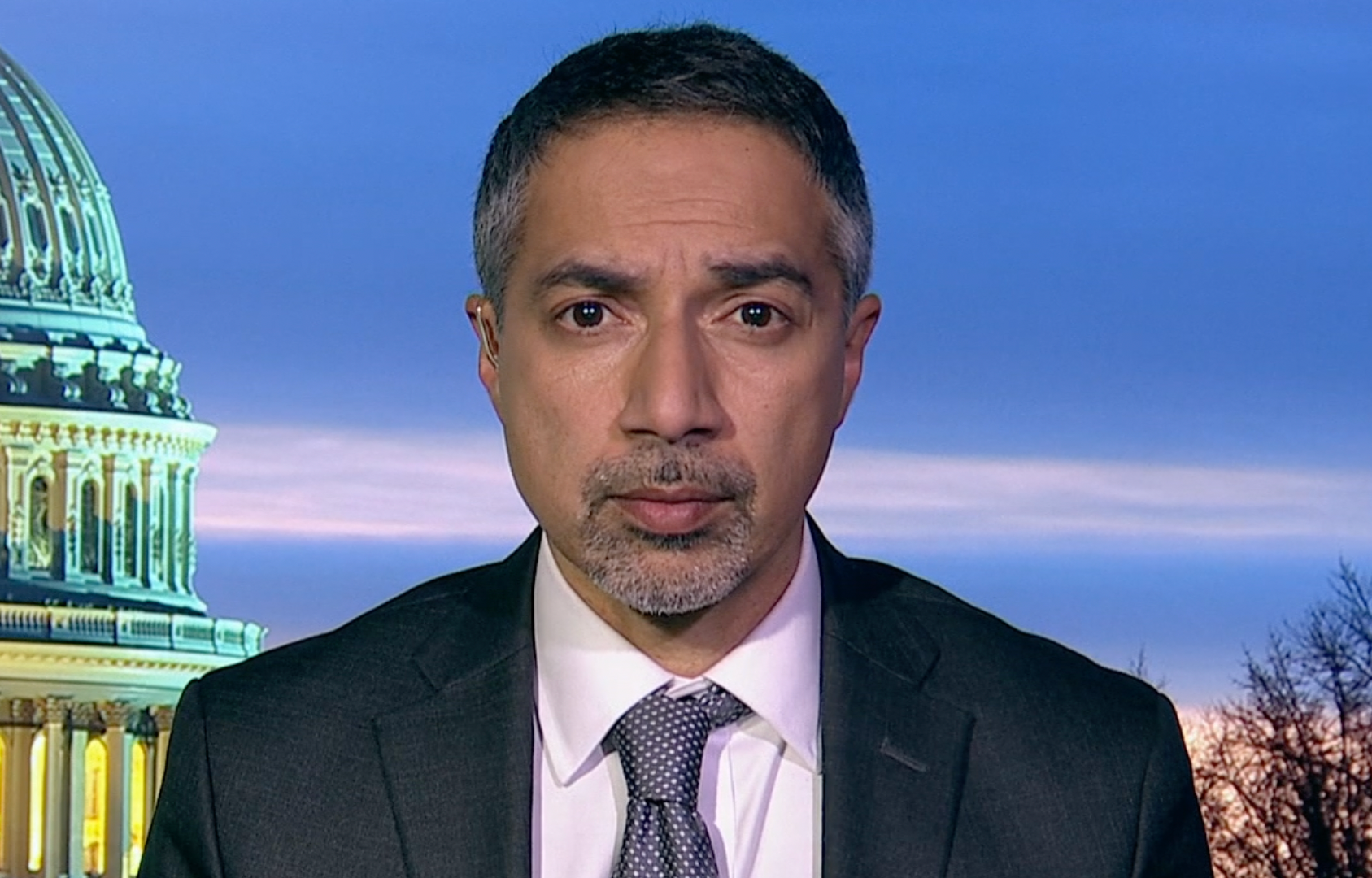
Trita Parsi, Vice President of the Quincy Institute, argues that Iran is unlikely to agree to end the war without sanctions relief, while there is little sign Donald Trump is willing to offer meaningful concessions, adding that a deal remains unlikely until then.

Source link

Another projectile strikes premises of Iran’s Bushehr Nuclear Power Plant, Iran says

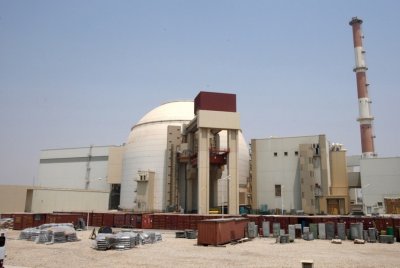
Iran said Tuesday that a projectile hit within the premises of its nuclear power plant in Bushehr, southern Iran. Photo by Abedin Taherkenareh/EPA

March 24 (UPI) — An unidentified projectile struck the grounds of Iran’s Bushehr nuclear power plant on Tuesday night, according to Iran’s Atomic Energy Organization, the second time in a little more than two weeks that the facility has been threatened by the ongoing war.

The projectile struck at 9:08 p.m. local time, resulting in no casualties or damage, it said in a statement.

“Attacking peaceful nuclear facilities is not only a violation of international regulations and rights, but also seriously endangers #regional security,” Iran’s AEO said in a post tagging the United Nations nuclear watchdog, the International Atomic Energy Agency.

“It is expected that international institutions will adopt a responsible and transparent stance in response to such actions.”

The IAEA said it was informed of the incident by Iran, adding that the plant was operating normally.

The agency’s director-general, Rafael Grossi, reiterated his call “for maximum restraint to avoid nuclear safety risks during conflict,” the IAEA said in a statement.

The incident comes eight days after an unidentified projectile struck near the plant on March 17, the first reported strike near Bushehr since the war between Iran and the United States and Israel began late last month.

Located near Bushehr city on Iran’s southwest Persian Gulf coast, the Bushehr plant began construction in 1975, but its original German contractor abandoned the project following the Islamic Revolution four years later. In the mid-1990s, Russia agreed to complete Bushehr Unit 1, Iran’s first reactor, which began operating in 2011, according to the U.S. Congressional Research Service.

Source link

What we know about the US’s 15-point plan Iran proposal | US-Israel war on Iran

NewsFeed

US media is reporting the Trump administration has proposed a temporary ceasefire and a 15-point plan to end the war on Iran. The reports emerge as Trump claims the US is already talking to Iranian officials – a claim Iran has vehemently denied.

Source link

US says they’re talking, Iran says they’re not. Who’s telling the truth? | US-Israel war on Iran News

United States President Donald Trump is insistent that “productive” negotiations have taken place with Iran to end the war he launched with Israel’s Prime Minister Benjamin Netanyahu almost a month ago. The major problem with that narrative is that Iran’s top officials have repeatedly denied it.

Amid the fog of war and the propaganda being pushed by all sides, it is hard to know who to believe. But an analysis of what each side has to gain from any negotiations – and a potential end to the conflict – could bring more clarity.

Recommended Stories

list of 3 itemsend of list

Trump’s comments that there were “major points of agreement” after “very good” talks with an unnamed “top” Iranian figure came as stock markets opened in the US for the start of the trading week. The five-day deadline he gave for a positive response from Iran also happens to coincide with the end of the trading week.

Many have cynically noted that timing, especially as it comes after a two-week period in which oil prices have fluctuated in line with events in the Middle East, leading to a high of about $120 a barrel last week.

Trump’s talk of negotiations may also give time for more US troops to arrive in the Middle East, if Washington decides to conduct some form of ground invasion of Iranian territory.

Among those questioning Trump’s motives was the man believed by some to be the senior Iranian official Trump was referencing: the Iranian parliamentary speaker, Mohammad Bagher Ghalibaf.

“No negotiations have been held with the US, and fakenews is used to manipulate the financial and oil markets and escape the quagmire in which the US and Israel are trapped,” Ghalibaf wrote on social media.

The impact on stock markets and oil prices is not just relevant to the US and Trump, but also to Iran. However, for Tehran, the benefit comes in the damage the war is doing to the US and global economies.

The Iranian state wants the US to feel economic pain from the war, as a means of deterrence for any future Israeli or US attack on Iran.

Therefore, as much as it is in the US interest to play up talk of negotiations in order to calm the markets, it is also in Iran’s interest to downplay any talk to do the exact opposite, and not give the Trump administration any breathing space.

US benefits?

Consequently, both sides have their own narratives on negotiations, and public comments will do little to inform us as to whether those negotiations are really taking place, or in what form they may be.

That instead leads us into what each side has to gain from negotiations, and an actual end to the war at the current stage.

Trump appears to have underestimated the consequences of the conflict that he launched with Netanyahu on February 28, and the ability of the Iranian state to withstand the attacks against it without collapsing.

“They weren’t supposed to go after all these other countries in the Middle East … Nobody expected that,” he said last week, adding that even “the greatest experts” didn’t believe that.

Leaving aside that experts – including US intelligence officials – had repeatedly made those warnings, reality has now made Trump aware of the consequences he had previously ignored.

While some allies and supporters may continue to push him to plough on with the conflict, Trump has previously shown himself amenable to cutting deals to extricate himself from difficult situations, and it is not far-fetched to see the benefits of doing so in this instance.

The US president has already ordered his government to issue temporary sanctions waivers on some Iranian oil, in an effort to calm oil prices. This is the first time Iran has lifted sanctions on any Iranian oil since 2019, and it will not be lost on Iran that the waivers have come as a result of their policy to expand the conflict to the wider Gulf and the Strait of Hormuz, a key waterway through which a fifth of the world’s oil and liquified natural gas transits.

The war was already unpopular in the US – and now even more so, as consumers see the impact on petrol prices and potentially other areas of the economy, all in the run-up to congressional elections later this year, in which Trump’s Republicans are likely to do poorly.

Trump, therefore, has the options of extending this war – and suffering the economic and political cost, or ending it – and facing the criticism that he was unable to finish what he termed as a “short-term excursion”.

The Iranian perspective

But whatever Trump wants to do, the decision is not totally in his hands. Iran, attacked for the second time in less than a year, now appears to have less of an incentive to end the war without the establishment of an effective deterrent to another in the future.

Gone are the days of the telegraphed attacks on US assets and the slow climb up the escalation ladder. From the outset of the current war, it was clear that Iran had changed its tactics and was not as interested in restraint.

It is now arguably in the Iranian state’s benefit to drag out the conflict and inflict more suffering on the region, if it wants to ensure its survival.

There may also be a belief that interceptor stocks in Israel are running low, allowing Iran to strike targets more effectively. The thinking – particularly among the hardliners who now appear to be in the ascendancy in Iran – will be that now is not the time to stop, and allow those interceptor stocks to replenish.

And yet, Iran is suffering. More than 1,500 people have been killed across the country, according to the government. Infrastructure has been heavily damaged, and the power grid could be next. Relations with Gulf neighbours have nosedived, and, after repeated Iranian attacks, are unlikely to return to their previous levels after the conflict.

More moderate voices in Iran will look at that and think that things could easily get worse. They can argue that some form of deterrence has been achieved, and that the time is now ripe to talk. And if they can get some concessions – such as a promise of no future attacks, or greater authority in the Strait of Hormuz – they may decide that the time is right to make a deal.

Source link

Iran names successor to security chief killed in US-Israeli attack | US-Israel war on Iran News

Mohammad Bagher Zolghadr, ex-IRGC commander, to replace late Ali Larijani as chief of Iran’s Supreme National Security Council.

Iran has named Mohammad Bagher Zolghadr, a former commander of Iran’s Islamic Revolutionary Guard Corps (IRGC), as the successor to Ali Larijani, head of the country’s Supreme National Security Council (SNSC), who was killed in a US-Israeli air strike earlier this month.

President Masoud Pezeshkian’s deputy of communications announced the appointment on X on Tuesday.

Recommended Stories

list of 3 itemsend of list

The SNSC, formally chaired by Pezeshkian, coordinates security and foreign policy and includes top military, intelligence and government officials, in addition to representatives of Supreme Leader Mojtaba Khamenei.

Zolghadr, who served in the 1980s war against Saddam Hussein’s Iraq, went on to become head of the IRGC’s joint staff for eight years and then deputy commander-in-chief of the elite force for another eight years.

In 2005, he was named deputy interior minister for security and police in the government of then-President Mahmoud Ahmadinejad, a move that was seen at the time as bolstering the IRGC’s influence in politics.

Since 2023, he has been the secretary of the Expediency Council, a powerful body that plays both an advisory and mediating role between Iran’s various power structures and the supreme leader.

Zolghadr’s new position consolidates the IRGC’s growing clout in Iran amid growing uncertainty regarding decision-making at the top of the system. Mojtaba Khamenei has not been seen in public since he succeeded his assassinated father, Ayatollah Ali Khamenei, in early March.

Larijani, one of the most prominent non-clerical figures in Iranian politics, was killed last Tuesday in a week that saw the war spiralling throughout the region, upending global energy markets and roiling the world economy.

On Tuesday, the war showed no sign of de-escalation after US President Donald Trump’s claim that he was speaking to an unidentified “top person”, as he extended by five days a deadline to hit Iran’s power plants.

Iran’s Parliament Speaker Mohammad Bagher Ghalibaf said “no negotiations” were under way, accusing Trump of seeking “to manipulate the financial and oil markets”.

Source link

Iranian IRGC’s ties to Hezbollah deepen tensions in Lebanese politics | Israel attacks Lebanon News

Beirut, Lebanon – The accusation from Lebanon’s prime minister that Iran’s Islamic Revolutionary Guard Corps (IRGC) is in charge of Hezbollah’s operations against Israel comes as relations between the Shia group and the Lebanese government are at their lowest in years.

But, according to analysts, that animosity does not mean that Prime Minister Nawaf Salam was incorrect in his analysis of the situation.

Recommended Stories

list of 3 itemsend of list

In comments made on Sunday to the Saudi Arabian television station al-Hadath, Salam said that the IRGC – a branch of Iran’s military that answers directly to that country’s supreme leader – was directing Hezbollah in its fight against Israel, and in launching drones at Cyprus from Lebanon.

Israel’s latest attacks on Lebanon have, since they started in early March, killed more than 1,000 people and displaced at least 1.2 million, more than 20 percent of the country’s population. Human Rights Watch researchers say the mass displacement alone could amount to a war crime.

While Salam’s claims might be hard to definitively prove, analysis from experts and reporting suggest that the IRGC has played a crucial role in Hezbollah’s preparations for reentering the war waged against Lebanon since 2023.

IRGC calling the shots

In his interview with al-Hadath, Salam accused the IRGC of “managing the military operation in Lebanon” and of firing a drone at a British Air Force base in Cyprus, earlier this month. He accused IRGC officials of entering Lebanon with false passports.

On March 2, Hezbollah fired six rockets across the border. The group said that it was in response to the assassination of Iran’s Supreme Leader Ali Khamenei on February 28, and a response to more than a year of unanswered Israeli aggression on Lebanon, which had killed hundreds.

The move shocked much of Lebanon’s population and political establishment, after Hezbollah had reportedly given assurances to its allies in government, including Parliament Speaker Nabih Berri, that it would not enter the war in support of Iran, its close ideological ally.

The Lebanese government – which had already been moving to disarm Hezbollah – responded by banning the powerful group’s military activities and asking some Iranians believed to have links to the IRGC to leave. But the action has had little impact on the ground, where Hezbollah continues its war efforts against Israel, including battling the Israeli military on the ground in southern Lebanon – the fight that Salam believes is managed by the IRGC.

Ties between the IRGC and Hezbollah are longstanding.

Hezbollah was founded in 1982, three years after the Islamic revolution in Iran. The group was created in coordination with the IRGC and has since counted Iran as its benefactor and spiritual guide.

Immediately after a November 2024 ceasefire between Hezbollah and Israel, Iran sent IRGC officers to Lebanon to conduct a post-war audit and restructure, according to reporting by the Reuters news agency.

Hezbollah’s chain of command was reportedly restructured from a hierarchical one to smaller cells with greater decisional autonomy, something also practised by the IRGC and known as the “mosaic” defence.

Nicholas Blanford, a nonresident senior fellow with the Atlantic Council, said that sources in Hezbollah and the Lebanese government had told him that the original Hezbollah rocket attack on March 2 was conducted by the Islamic Resistance, Hezbollah’s military wing, possibly in direct coordination with the Quds Force, the IRGC’s foreign unit. Hezbollah’s senior leadership may not have been aware of the plans for the attack.

“I think the IRGC is calling the shots,” Blanford told Al Jazeera. “They are working together.”

Lebanese government out of options

On Tuesday, Lebanon’s Foreign Minister Youssef Rajji declared the Iranian ambassador to Lebanon a persona non grata and gave him until Sunday to leave the country.

The move indicates that Lebanon is trying to counter Iranian influence in Lebanon and came just hours after Israel’s Defence Minister, Israel Katz, announced that his country’s military would create a “security zone” in southern Lebanon stretching to the Litani River, roughly 30km (20 miles) north of the Israeli border – essentially an illegal occupation of the area.

But analysts and experts said there is little Lebanon can do before the war with Israel ends.

The Lebanese government had worked under heavy international pressure to disarm Hezbollah during the ceasefire period from November 2024 until earlier this month. But Israel violated the ceasefire more than 10,000 times, according to UN peacekeepers in Lebanon. For any progress to be made on disarmament, analysts said, Israel cannot continue attacking Lebanon.

“What the Lebanese government was supposed to do was a gradual disarmament of the party, which is also something that many Lebanese would like to happen,” Ziad Majed, a Lebanese political scientist, told Al Jazeera. “However, it cannot happen while Israel is bombing.”

However, the attacks don’t seem likely to cease in the short term. US President Donald Trump said that his envoys, Steve Witkoff and Jared Kushner, had engaged in talks with Iran on Monday over a possible end to the war. Iran subsequently denied that talks took place.

Many in Lebanon believe that Israel’s campaign in Lebanon won’t be included in any potential agreement between Iran, the US, and Israel to end the war. Katz’s statement on Tuesday seems to suggest Israel plans to carry on its invasion of southern Lebanon until its forces reach the Litani River.

Hezbollah’s threats

The government’s efforts to retake control of southern Lebanon may be even more difficult now that it is dealing with a reemboldened Hezbollah.

Mahmoud Qamati, deputy head of Hezbollah’s political council, compared the Lebanese government to France’s World War II Vichy government, which collaborated with the Nazis. Qamati was criticised for his comments, but later said they were misinterpreted.

More ominous comments came from Wafiq Safa, who was until recently the head of Hezbollah’s Liaison and Coordination Unit. He sent a message to the Lebanese government during a recent press interview.

“We will force the government to backtrack on the decision to ban the party’s military activities after the war, regardless of the method,” he said.

Source link

Moment rescuers find man alive under the rubble in Tehran | US-Israel war on Iran

NewsFeed

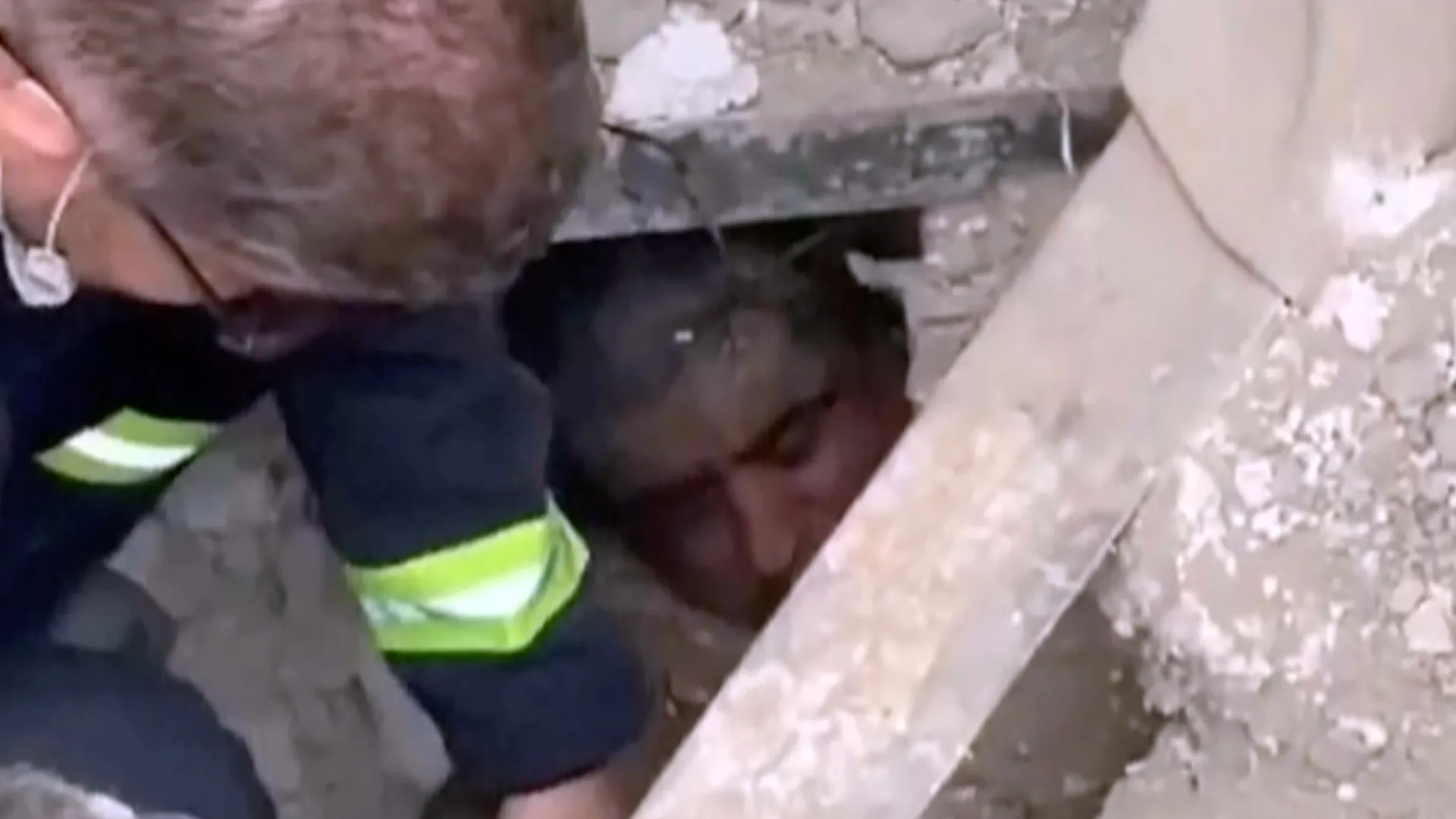
Rescuers have pulled a man alive from the rubble after US-Israeli strikes hit a residential area on the outskirts of Tehran, the Iranian Red Crescent said. The US and Israel have continued to strike Iran, despite President Trump’s claims of diplomatic progress.

Source link

Keir Starmer’s policy on the Iran war is a recipe for catastrophe | US-Israel war on Iran

In March 2003, a million people took to the streets of London to oppose the illegal invasion of Iraq. Seeing straight through the lie that Iraq possessed weapons of mass destruction, protesters warned the British government in no uncertain terms: This action would trigger a spiral of misery, hatred and death.

More than 20 years on, most people now recognise the Iraq war for what it was: a catastrophic mistake that fuelled a string of subsequent conflicts and instability. The United Kingdom had followed the United States into an illegal war – and more than a million Iraqi men, women and children paid the price.

Unfortunately, not everybody has learned the lessons from the past. It has been almost a month since the US and Israel launched their attacks on Iran. More than 1,400 Iranians and more than 1,000 Lebanese people have been killed.

In seeking to justify the bombing, US President Donald Trump spoke of the need to eliminate “imminent threats from the Iranian regime”, whose “menacing activities directly endanger the United States, our troops, our bases overseas and our allies throughout the world”. He said the goal was to make sure Iran “will never have a nuclear weapon”. Sound familiar?

The first casualty of war is the truth, so let us get the facts straight: These are lies that have been peddled to justify an illegal and unprovoked war. As the National Counterterrorism Center Director, Joe Kent, said in his resignation letter last week, Iran “posed no imminent threat to our nation” and that it was “clear that [the US] started this war due to pressure from Israel and its powerful American lobby”.

There is only one nuclear-armed state in the Middle East: Israel. Next month’s UN Conference of the Parties to the Treaty on the Non-Proliferation of Nuclear Weapons would have been the perfect place to call for an end to the nuclear arms race. A diplomatic solution was possible, but the US and Israel chose war instead. In doing so, they have jeopardised the safety of humankind around the world. So, too, have those nations that have decided to lend support to their war of aggression.

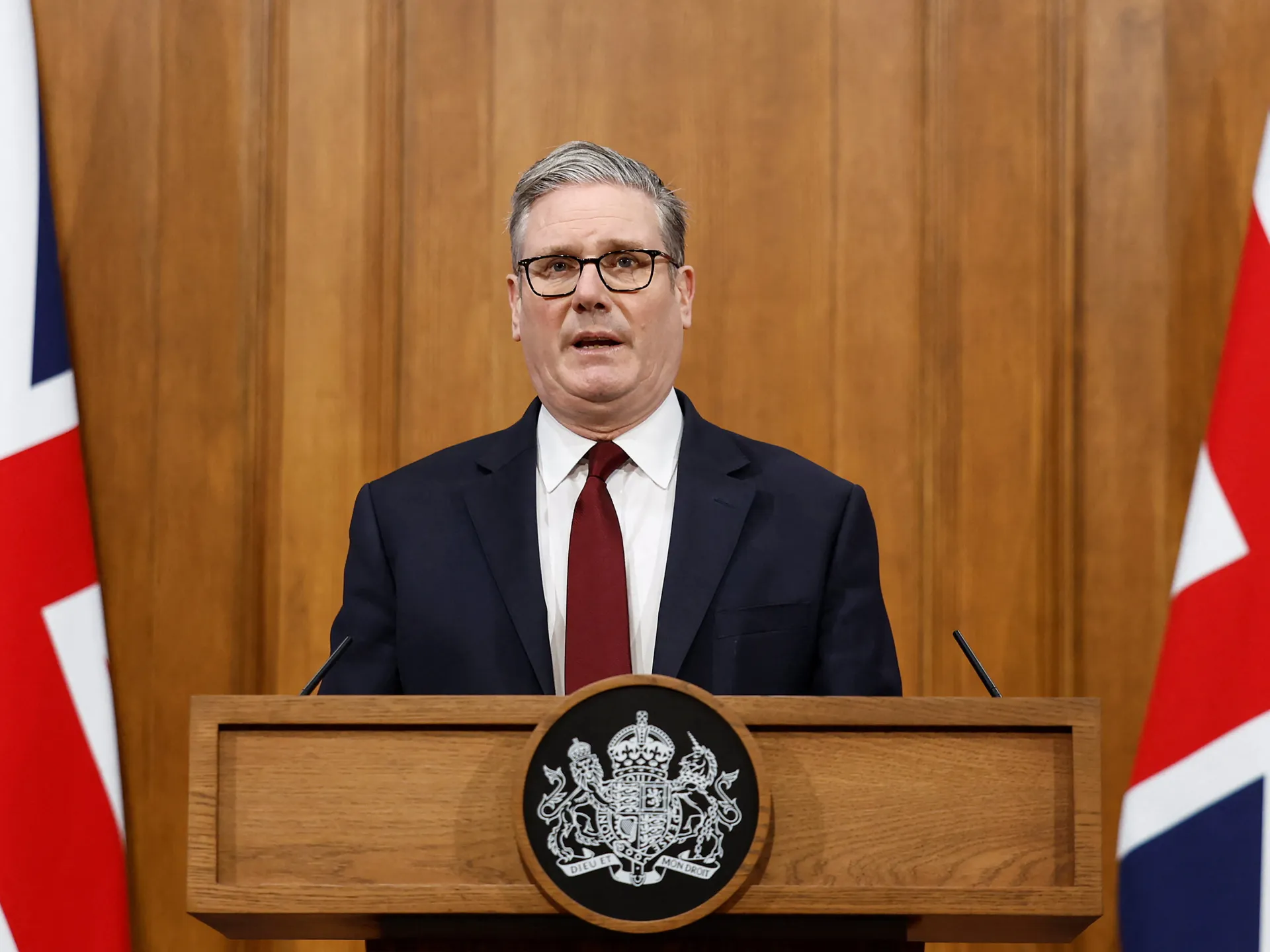
Shortly after the attacks on Iran began, British Prime Minister Keir Starmer gave the US permission to use British military bases for strikes on Iranian missile sites. Last week, his government agreed to let the US use British bases to strike Iranian sites targeting the Strait of Hormuz.

The UK could have followed in the footsteps of Spain and said, “No way, absolutely not. We will not be involved in this illegal war in any way whatsoever.” Instead, it has dragged itself into another catastrophic conflict.

Astonishingly, the prime minister still maintains that the British government is not involved – a line that has been regurgitated by many across our media. He says the UK is allowing its sites to be used only for “defensive” strikes. What nonsense.

The reality is, if a bomber takes off from Royal Air Force base Fairford and bombs targets in Iran, we are involved in that act of aggression. If civilians die, will their families stop mourning when they are told that they were bombed for “defensive purposes”? No matter how Starmer dresses it up, he cannot change the truth: The UK is directly involved in this war.

Mark my words: This is a historic mistake that jeopardises the safety of us all. That’s why, earlier this month, I tabled a bill in the House of Commons that would require parliamentary approval for any British involvement in military action. That includes the use of British bases by other nations.

So far, the prime minister has refused to pass this legislation. With no debate, no discussion and no vote, he is dragging Britain into another disastrous illegal war.

Just like with the invasion of Iraq in 2003, today, those of us who oppose the war on Iran are accused of giving succour to authoritarian regimes and leaders. Whatever one thinks of the governments of various places, there is no basis in law for an attack to bring about regime change. There is no basis in history that bombing from the sky would bring about human rights either.

Trump couldn’t care less about people’s human rights. Whether it’s in Iran, Venezuela or Cuba, he is interested in one thing and one thing only: seizing resources and political control around the world.

If the UK cares about international law, it would be standing up to Trump, not bending over backwards to appease him.

The story of US-led foreign interventions is a story of chaos, instability and misery. How many more of these catastrophic failures do we need before we learn the lesson? And what will it take for the UK to finally defend a consistent, ethical foreign policy based on international law, sovereignty and peace?

The views expressed in this article are the author’s own and do not necessarily reflect Al Jazeera’s editorial stance.

Source link

Oil price hikes as White House says plans for Iran talks still ‘fluid’

March 24 (UPI) — The price of oil climbed back above $100 per barrel on Tuesday as hopes for de-escalation in the Iran war faded after Washington said the situation remained “fluid,” Tehran denied there had been any negotiations and a fire put a major Texas refinery out of action.

Claims by President Donald Trump of “major” progress in talks to halt the conflict on Monday sent oil prices tumbling and rallied stock markets, but benchmark Brent crude futures rebounded to more than $103 a barrel on Tuesday after the White House appeared to walk it back, saying no high-level formal meetings were scheduled and denying reports Vice President JD Vance may attend Pakistan-brokered talks.

“These are sensitive diplomatic discussions and the United States will not negotiate through the press. This is a fluid situation, and speculation about meetings should not be deemed as final until they are formally announced by White House press secretary Karoline Leavitt told the BBC.

Iran has, however, acknowledged there had been some contact between the sides regarding talks, with an Iranian foreign ministry official telling CBS that the regime had “received points from the United States.”

“We received points from the United States through mediators and they are being reviewed,” said the official.

The confirmation came amid claim and counterclaim after Trump walked back an ultimatum to destroy Iran’s power plants and energy infrastructure unless it allowed shipping to flow freely again through the Strait of Hormuz by Monday night.

Trump said he was giving Iran a five-day reprieve after “very good and productive” discussions with Tehran on Sunday and Monday but Iranian Parliament Speaker Mohammad-Bagher Ghlaibaf, who has been named as an interlocutor, described it as “fake news” and said there had been no talks.

With a blaze at the Velero Port Arthur refinery still burning after an explosion on Monday at the plant, 90 miles east of Houston, wholesale gasoline and diesel prices were up 10 cents and 16 cents per gallon, hikes Lipow Oil Associates president Andy Lipow said were due almost entirely to the incident, rather than the war.

The affected part of the plant makes diesel fuel and was likely to be out for an extended period, exerting pressure on diesel prices but gasoline production could come back online in the next few weeks as it was in a different area of the refinery, added Lipow who stressed he believed the incident was an accident and that there was no evidence of terrorist sabotage.

Analysts said the market remained fearful of the risk the Iran conflict could be an extended one with knock-on energy supply disruption impacts caused by associated strikes on critical energy production and storage facilities and shipping being unable to leave or enter the Persian Gulf.

“Despite the exuberance on Wall Street, ladies and gentlemen, oil is well off its lows after Tehran denied conducting any weekend negotiations with Washington,” Interactive Brokers senior economist Jose Torres wrote in a note.

“Additionally, in consideration of the vast number of attacks that have affected critical energy in the Middle East … there’s nervousness that there could be capacity and transportation disruptions that keep costs higher than at the beginning of the year even if there’s a deal,” added Torres.

Gulf oil-producing nations meet a large proportion of global oil and natural gas demand, about 20% of which — 20 million barrels a day — is exported on tankers that pass through the narrow Strait of Hormuz, a natural chokepoint effectively closed by Iran since the United States and Israel launched their airborne offensive on Feb. 28.

President Donald Trump presents the Commander in Chief’s Trophy to the Navy Midshipmen football team during a ceremony in the East Room of the White House on Friday. The award is presented annually to the winner of the football competition between the Navy, Air Force and Army. Navy has won the trophy back to back years and 13 times over the last 23 years. Photo by Bonnie Cash/UPI | License Photo

Source link

Iran launches waves of missiles towards Israel | US-Israel war on Iran News

Iran has launched a round of missiles targeting Israel, causing damage and injuries in Tel Aviv, as uncertainty swirled over possible talks to end the three-week US-Israel war on Iran.

The missiles triggered air raid sirens in Israel on Tuesday, including in Tel Aviv, where gaping holes were torn through a multistorey apartment building. It was not immediately clear whether the damage was caused by a direct hit or debris from an interception.

Israel’s Magen David Adom emergency medical service said: “Six people were lightly injured at four different sites.”

Police in Tel Aviv said they were dealing with “several impact sites of munitions”.

Israel’s National Fire and Rescue Authority said the search was on for people trapped in one building in Tel Aviv, adding that civilians were found in a shelter in another damaged building.

Meanwhile, the Israeli military said on Tuesday that its jets carried out a wave of strikes in central Tehran on Monday, targeting key command centres, including facilities associated with the Islamic Revolutionary Guard Corps’ intelligence arm and the Iranian Intelligence Ministry. It said more than 50 additional targets were hit overnight, including ballistic missile storage and launch sites.

Source link

Opposition leader criticizes probe, economic policy, Iran response

People Power Party leader Jang Dong-hyuk, front row center, and other participants take part in a ceremony launching the party’s Central Next-Generation Women’s Committee at the National Assembly Museum in Seoul on Sunday. Photo by Asia Today

March 23 (Asia Today) — People Power Party leader Jang Dong-hyuk on Sunday criticized a parliamentary probe plan led by the ruling party, along with the government’s real estate policy and its response to the Iran crisis.

Speaking at a party leadership meeting at the National Assembly, Jang questioned the need for an investigation into alleged prosecutorial misconduct during the previous administration.

“If a fabricated indictment can be proven through a parliamentary probe, it would be much faster to obtain an acquittal in court,” he said. “The investigation will ultimately only confirm that the prosecution and trial were justified.”

Jang also invoked remarks previously made by President Lee Jae-myung, saying, “If a president commits a crime, he should go to prison,” adding that he was “returning those words as they are.”

The conservative party boycotted the National Assembly plenary session a day earlier and held a protest rally outside the chamber. A brief confrontation occurred with ruling party lawmakers after the probe plan passed.

Jang criticized the government’s real estate policy, accusing the president of centralizing decision-making while excluding public officials from the process.

“By that logic, the president, who is facing multiple trials, should step away from judicial policy,” he said.

He also warned against expanding fiscal spending in response to the Iran crisis, citing concerns over inflation, exchange rates and rising oil prices.

“With a triple shock of high exchange rates, inflation and oil prices, releasing an additional 25 trillion won, about $18.7 billion, would push prices and the currency higher,” he said. “This is not the time for cash handouts but for stabilizing the economy.”

Floor leader Song Eon-seok echoed the criticism, accusing the administration of attempting to consolidate power and warning against what he described as excessive control over parliamentary committees.

— Reported by Asia Today; translated by UPI

© Asia Today. Unauthorized reproduction or redistribution prohibited.

Original Korean report: https://www.asiatoday.co.kr/kn/view.php?key=20260323010006783

Source link