Hundreds of tankers sit idle on both sides of the Strait of Hormuz as Iran has effectively closed the waterway, pushing oil prices above $100 – the highest since 2022, after the start of the Russia-Ukraine war.
Oil tanker traffic in the strait, through which one-fifth of global oil passes, has plunged after Israel and the United States launched attacks on Tehran on February 28. Asian countries, including India, China and Japan, as well as some European countries, source large portions of their energy needs from the Gulf. A disruption in supply will rattle the global economy.
With an aim to cushion from the shock, the International Energy Agency (IEA) has decided to release 400 million barrels of oil from emergency reserves, the largest coordinated drawdown in the agency’s history. But it has failed to push the prices down.
The agency had released about 182 million barrels after Russia’s invasion of Ukraine to stablise the oil prices.
According to the agency, oil shipments through the strategic waterway have fallen to less than 10 percent of pre-war levels, threatening one of the most critical arteries in the global energy system.
IEA members collectively hold about 1.25 billion barrels in government-controlled emergency reserves, alongside roughly 600 million barrels in industry stocks tied to government obligations.
A large number in a massive market
The figure may appear vast, but it shrinks quickly against the scale of global energy demand.
“This feels like a small bandage on a large wound,” energy strategist Naif Aldandeni said, describing the world’s largest coordinated emergency oil release as governments scramble to steady markets shaken by war.
The US Energy Information Administration (EIA) estimates world consumption of petroleum and other liquids will average 105.17 million barrels per day in 2026. At that rate, 400 million barrels would theoretically cover just four days of global consumption.
Even when compared with normal traffic through the Strait of Hormuz – around 20 million barrels per day – the released oil equals only about 20 days of typical flows.
Aldandeni told Al Jazeera that emergency reserves can calm panic in markets but cannot replace the lost function of a disrupted shipping corridor.
“The release may soften the shock and calm nerves temporarily,” he said, “but it will remain limited as long as the fundamental problem — the freedom of supply and tanker movement through Hormuz – remains unresolved.”
Oil prices reflect those anxieties. Brent crude ended trading on Friday at $103.14 per barrel, after surging to nearly $120 earlier as fears of disrupted production and shipping intensified.
Geopolitical risk premium
Oil expert Nabil al-Marsoumi said the price surge cannot be explained by supply fundamentals alone.
“The closure of the Strait of Hormuz added roughly $40 per barrel as a geopolitical risk premium above what market fundamentals would normally dictate,” he told Al Jazeera.
From that perspective, releasing strategic reserves serves primarily as a temporary tool to dampen that premium rather than fundamentally rebalance the market.
Prices above $100 per barrel are uncomfortable for major consuming economies already struggling to curb inflation and protect economic growth.
Recent EIA projections suggest global demand has not yet declined significantly because of the war, remaining close to 105 million barrels per day. The market pressure, therefore, stems less from falling consumption and more from fears of supply shortages and delays in deliveries to refineries and consumers.
Threats to oil infrastructure
The latest escalation could deepen those fears.
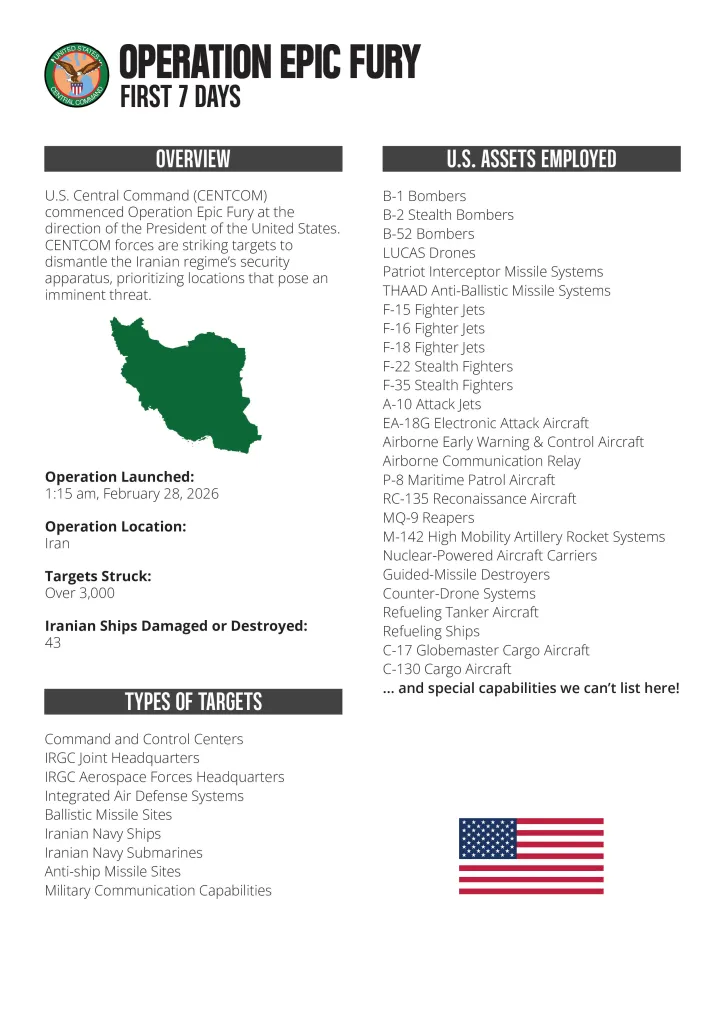
United States President Donald Trump said on Friday that the US Central Command (CENTCOM) had “executed one of the most powerful bombing raids in the History of the Middle East and totally obliterated every MILITARY target in Iran’s crown jewel, Kharg Island”.
He added that “for reasons of decency” he had “chosen NOT to wipe out the Oil Infrastructure on the Island”, but warned Washington could reconsider that restraint if Iran continues to disrupt shipping through the Strait of Hormuz.
CENTCOM confirmed the operation, stating US forces had struck “more than 90 Iranian military targets on Kharg Island, while preserving the oil infrastructure”.
Iranian officials have meanwhile warned they would target energy facilities linked to the US across the region if Iranian oil infrastructure comes under direct attack.
Kharg Island is not simply a military location. It serves as the primary export terminal for Iranian crude, making it a critical node in the country’s oil supply network.
If attacks move from obstructing shipping to targeting export infrastructure itself, the crisis could shift from a chokepoint disruption scenario to one involving direct losses of production and export capacity.
In such circumstances, the oil released from emergency reserves would act only as a temporary bridge rather than a lasting solution to lost supply.
Major oil companies such as QatarEnergy, the world’s largest producer of liquefied natural gas (LNG), Kuwait Petroleum Corporation and Bahrain state oil company Bapco have shut production and declared force majeure, while Saudi Aramco, the world’s largest oil producer, and UAE state oil company ADNOC have shut down their refineries.
Limits of emergency reserves
Even under a less severe scenario – where maritime disruption persists but infrastructure remains intact — the ability of strategic reserves to stabilise markets remains constrained by logistics.
The US Department of Energy said the US Strategic Petroleum Reserve held 415.4 million barrels as of 18 February 2026. Its maximum drawdown capacity is 4.4 million barrels per day, and oil requires about 13 days to reach US markets after a presidential release order.
That means even the world’s largest emergency stockpile cannot flood the market with crude immediately. The release must move through pipelines, shipping networks and refining capacity before reaching consumers.
Aldandeni said the current intervention would likely produce only a temporary stabilising effect, while al-Marsoumi warned that prolonged disruption in the Strait of Hormuz – or the spread of threats to other chokepoints such as the Bab al-Mandeb Strait in the Red Sea could quickly send prices further higher.
WASHINGTON — Secretary of State Marco Rubio had some explaining to do when he arrived on Capitol Hill for a classified briefing with lawmakers in early March.
Members of Congress wanted to know why, two days earlier on Feb. 28, the United States and Israel had attacked Iran and killed its supreme leader — without notifying them first. After the briefing, Rubio told reporters the U.S. preemptively struck Iran to get ahead of an Israeli attack. A day later, he tried to clarify his remarks.
“The bottom line is this: The president determined we were not going to get hit first,” Rubio said. “It’s that simple, guys.”
For members of Congress, the moment underscored how marginal a role Congress has been able to play in a war that, two weeks in, has spread into more than a dozen neighboring countries, led to the deaths of at least 13 American service members and cost billions of dollars.
In the two weeks since the war began, Congress has largely been sidelined. Lawmakers have cycled through classified briefings, TV interviews and hallway scrums with reporters, but have taken little formal action related to Trump’s war efforts — just two unsuccessful votes aimed at limiting the conflict.
Most of the debate has taken place online, where some GOP lawmakers have drawn rebukes from colleagues for saying America “needs more Islamophobia” and other Islamophobic rhetoric about Iran and its people.
At the same time, Trump has pressed Congress to focus instead on a controversial voting law, signaling to the Republican-led Congress that he wants their focus on the election rather than a historic moment abroad. The president, meanwhile, has offered shifting explanations on how much longer he intends to be at war in the Middle East, telling Fox News’ Brian Kilmeade on Friday that he will conclude the hostilities when “I feel it in my bones.”
Taking Trump’s statements at face value, Democrats and some Republicans have begun to worry that more American troops could be deployed inside Iran to complete the mission — and lawmakers are still trying to understand the war’s threat to the global energy markets as fighting encroaches on the Strait of Hormuz and Americans face soaring gas prices.
The Republican majorities have for the most part rallied behind President Trump, and have blocked measures in both the House and Senate that would have halted the war against Iran and forced him to seek congressional approval for additional hostilities.
House Speaker Mike Johnson (R-La.) likened efforts to rein in Trump’s war efforts to siding “with the enemy.” Sen. Lindsey Graham (R-S.C.) was even more effusive, arguing there is a precedent for presidents using military force without congressional authority.
“The norm in this country is not to declare war by Congress, but for the military to be used by the commander in chief. Sometimes authorization from the Congress is requested, sometimes it is not,” Graham said during a Senate floor speech. “More than not, it is not requested.”
Presidents have frequently used military force without a formal declaration of war — including in Korea, Vietnam and Iraq — but experts argue there is a difference between bypassing a formal declaration and sidelining Congress altogether.
Former Defense Secretary Leon Panetta, who served under President Obama, pointed to the 2011 raid that killed Osama Bin Laden, the mastermind behind the Sept. 11, 2001, attacks, as an example of how the process once worked.
Even though it was a covert Special Forces operation, Panetta said, he personally briefed key congressional leaders before Bin Laden’s killing took place.
That kind of consultation, he said, no longer happens. Instead, lawmakers learn about military operations the same way ordinary Americans do — by watching the news — and then demand to be briefed, he said.
“By that time, the country is pretty much committed to war,” Panetta said.
Presidents of both parties have expanded their power to wage war unilaterally, but Panetta said he believes Trump has crossed a new threshold by dispensing not just with congressional approval but with the courtesy of a briefing.
“It’s not good for our democracy. It’s not a good process,” he said. “It’s not what our forefathers would have wanted.”
Rubio, however, has argued the administration has kept congressional leaders apprised. He told reporters there is no legal requirement to notify all members of Congress and that he briefed the Gang of Eight — a group made up of the top Republicans and Democrats in the House and Senate, as well as the leaders of the respective intelligence committees — within 48 hours of the attack against Iran.
“We notified congressional leadership,” Rubio said. “The law says we have to notify them 48 hours after beginning hostilities. We’ve done that.”
In the statement issued Friday, the White House defended the president’s approach to the war in relation to how its involved Congress, adding that Trump and administration officials “continue to keep bipartisan lawmakers in Congress apprised of the operation as the United States continues to dominate.”
“Past presidents have talked about this for 47 years — but only President Trump has had the courage to do something about it,” White House spokesperson Olivia Wales said.
Democrats say they’re ‘flying blind’
Democratic lawmakers, including some who have been included in classified briefings, have accused administration officials of keeping them “in the dark” and are beginning to demand public congressional hearings.
“I want this administration to testify in public, under oath, regarding a bunch of questions we have in order for the American people to see for themselves,” said Rep. Jimmy Gomez (D-Los Angeles). “I do believe this administration has lied to the American public and Congress.”
Gomez, a member of the House Permanent Select Committee on Intelligence, said he never expected that he would have to spend so much time trying to discern if the administration is lying to lawmakers.
“I think it’s that’s what makes the job harder,” he said.
Democrats, who are in the minority, have limited power to call those briefings, but have continued to put pressure on the administration in a public way.
Senate Democrats last week sent a letter to Defense Secretary Pete Hegseth, demanding answers by Wednesday about reports that a U.S. airstrike hit an Iranian elementary school.
Iranian officials said the explosion killed at least 175 people, most of them children. The U.S. has not taken responsibility for the attack, and Hegseth has said the matter is under investigation. Trump, without providing evidence, has claimed Iran was responsible for the attack.
Seeking answers has been a common theme among Democrats since the start of the war. Sen. Richard Blumenthal (D-Conn.), for instance, said after a classified briefing last week that he had “left with more questions than answers” and a real concern about the possibility of deploying American troops to Iran.
Power of the purse
If the war continues, Congress still retains some leverage.
Under the War Powers Resolution passed by Congress in 1973, unauthorized deployments into hostile situations must end after 60 days unless Congress votes to declare war or passes legislation authorizing the use of the military.
Rep. Brad Sherman (D-Sherman Oaks), who sits on the House Foreign Affairs Committee, said he has told Hegseth and Rubio that if they violate that provision it will be like “stealing money” for actions that are not approved by Congress and warned they could be held civilly liable.
The 60-day deadline will be a key moment for Congress to step in, Sherman said; otherwise there will be growing concern about Trump having “unchecked power.”
So far, he thinks Republicans in control view their job as “butler to the president,” and that the Constitution already gives Trump “too much power over the military.”
“If Congress is controlled by people who want to be servants to the president, it’s going to do an incredibly bad job of being a check on the president,” he said.
Beyond the War Powers Resolution, lawmakers also have power over the appropriations process and could deny the administration’s request to boost military funding.
“The Congress can stop military action by cutting off funding. If you don’t like the war in Iran, say we won’t pay for it. We have the constitutional power of the purse,” Graham said in a Senate floor speech early in March.
The Trump administration’s war with Iran cost $11.3 billion during its first six days, according to the Associated Press.
But Rep. Mike Levin (D-San Diego), who sits on the House Appropriations Committee, says he is aware of the figure only because of news reports — not because the Pentagon has been transparent.
“We are flying blind in the sense that we just don’t know. We don’t know how much is being spent or what it’s being spent on,” Levin said.
Levin says the military will probably need to bolster its munitions stockpile at the rate the conflict is going.
If the Pentagon does request more money, Levin said, he would try to ensure that “not one more dollar goes toward any of this without clear answers and a clear plan.”
The captain of the Iranian women’s football team has withdrawn her bid for asylum in Australia, Iran’s state media says, making her the fifth member of the delegation to change her mind after her team’s participation in the Asian Cup.
Zahra Ghanbari will fly from Malaysia and travel to Iran within the next few hours, the IRNA news agency said on Sunday.
Three players and one backroom staff member had already withdrawn their bids for asylum and travelled to Malaysia from Australia, where the team participated in the AFC Women’s Asian Cup.
Australia’s Home Affairs Minister Tony Burke said his country had offered asylum to all players and support staff members prior to their departure over fears they might be punished upon their return home after the team refused to sing Iran’s national anthem at the tournament.
Iranian state broadcaster IRIB reported on Saturday that the three had “given up on their asylum application in Australia and are currently heading to Malaysia”, posting a picture of the women allegedly boarding a plane.
The news was confirmed by Burke a few hours later.
“Overnight, three members of the Iranian women’s football team made the decision to join the rest of the team on their journey back to Iran,” Burke said.
“After telling Australian officials they had made this decision, the players were given repeated chances to talk about their options.”
Five players took up the offer and signed immigration papers last week, with one more player and a member of staff joining them a day later. It leaves two Iranian players in Australia, where they have been promised asylum and an opportunity to settle.
Iran played their three group games of the Asian Cup at the Gold Coast Stadium in Queensland on March 2, 5 and 8, after the United States and Israel launched their war on Iran on February 28.
The initial attacks killed Iran’s Supreme Leader Ayatollah Ali Khamenei and other leaders.
Overall, an estimated 1,444 Iranians have been killed since the war began, including more than 170 people, mostly schoolgirls, who were inside a primary school in the city of Minab.
After refusing to sing the Iranian national anthem at their first match, players on the Iranian women’s football team were branded “traitors” by an IRIB presenter.
When Iran played their second game of the tournament against Australia three days later, not only did the players sing the national anthem, but they also saluted it, prompting fears that they may have been forced to change their stance after receiving backlash in Iranian media.
While neither the players nor the team management explained why they refrained from singing before the first match, fans and rights activists speculated that it may have been an act of defiance against the Iranian government.
On the day of the team’s departure from Australia, Burke announced his government had offered all players and staff members the chance to stay back in the country.
On Tuesday, Burke told reporters that five Iranian players had decided to seek asylum in Australia and would be assisted by the government.
“They are welcome to stay in Australia, they are safe here, and they should feel at home here,” he said.
A day later, Burke confirmed that an additional player and a member of the team’s support staff had received humanitarian visas in the hours before their departure.
However, one player, who previously chose to stay behind, changed her mind and decided to return to Iran.
The player, who was later identified as Mohadese Zolfigol, changed her decision on the advice of her teammates, Burke told the Parliament of Australia.
“She had been advised by her teammates and encouraged to contact the Iranian embassy,” he said.
The players who managed to escape with the help of Iranian rights activists were taken away by Australian police officials to a safe house, where they met immigration officials and signed the paperwork.
“Our understanding is that every single member of the squad was interviewed independently by the Australian Federal Police,” Beau Busch, the Asia/Oceania president of players’ welfare body FIFPRO told Al Jazeera last week.
“[The players] were made aware of their rights and the support available to them. They certainly weren’t rushed through that process.”
Japanese football legend says his opinion prompts a US company to cancel an advertising campaign before the FIFA World Cup.
Published On 15 Mar 202615 Mar 2026
Share
Former Japanese footballer Keisuke Honda says he has lost an advertising deal in the United States after voicing support for the Iranian national team’s participation in the upcoming FIFA World Cup.
Without naming the sponsor, Honda revealed on Saturday that an advertisement from a US-based company had been “put on hold” after he posted on X that he wants Iran to compete in the tournament cohosted by the US, Mexico and Canada.
Recommended Stories
list of 3 itemsend of list
“I know it’s a very sensitive thing, but I personally want them to participate in the World Cup,” the 39-year-old wrote in a tweet on Thursday, a day after Iran’s sports minister said the country cannot take part in the World Cup after the US and Israel launched a war on it and killed its supreme leader.
Honda, who represented Japan from 2008 to 2018 and scored 38 international goals for his country, posted a follow-up tweet in which he indicated that the advertisement, which had been expected to be finalised in time for the World Cup, had been shelved due to his earlier post.
“Apparently, this statement caused a US company to cancel an advertisement that was about to be finalised to coincide with the World Cup,” he wrote.
“We don’t want anything to do with companies that ignore the essence of things and make decisions based on rotten thinking.”
Iran’s place at the 48-team tournament is in doubt even after they qualified because of the US-Israeli attacks that began on February 28, following which Tehran responded by launching waves of missiles and drones at Israel, several military bases in the Middle East where US forces operate and infrastructure in the region.
The 23rd edition of the FIFA World Cup will be held in the three host nations from June 11 to July 19, and all of Iran’s group games have been scheduled at venues on the US West Coast.
The former Samurai Blue represented his country at the 2010, 2014 and 2018 World Cups and is among the top 10 most capped players and top five goal scorers for the Asian giants.
Honda was named the most valuable player in Japan’s title-winning run at the Asian Cup in 2011. After representing 11 clubs across five continents, the attacking midfielder hung up his boots in 2024 and switched to coaching.
The golden-haired player enjoys a hero-like status in his home country and is one of Japan’s most recognised international footballers.
He expressed his opinion on Team Melli’s participation amid heightened tensions between the host nation US and Iran.
Honda played club football in South America, North America, Europe, Australia and Asia [File: Pilar Olivares/Reuters]
US President Donald Trump said on Thursday that it would not be appropriate for Iran to participate in the World Cup.
“The Iran National Soccer Team is welcome to The World Cup, but I really don’t believe it is appropriate that they be there, for their own life and safety,” Trump wrote in a social media post without elaborating.
The Instagram account for the Iranian national team quickly responded to Trump’s remarks, questioning whether the US president should be commenting on team participation.
“The World Cup is a historic and international event, and its governing body is FIFA – not any individual country,” it wrote.
The account also criticised Trump for failing to provide adequate security for Iran’s national football players.
“Certainly, no one can exclude Iran’s national team from the World Cup,” the message continued. “The only country that could be excluded is one that merely carries the title of ‘host’ yet lacks the ability to provide security for the teams participating in this global event.”
Trump later posted another message on his social media platform to emphasise that the event would be safe for players and spectators from around the world.
The decision by United States President Donald Trump to launch a war on Iran has left many international law experts questioning if the world order established after World War II is actually working.
In his second presidential term, Trump seems to be wielding total power without restraint, and the system of checks and balances enshrined in the US Constitution appears to be failing to limit his power.
Recommended Stories
list of 4 itemsend of list
Since Trump was sworn in in January 2025, he has ordered two unprovoked attacks on independent states, Venezuela and Iran; threatened to annex Greenland; strained traditional alliances with Europe; undermined the United Nations; and rattled international trade with his sweeping tariffs.
Previous constraints set by the UN system and international law appear supplanted by what Trump told reporters in January was a vision of power limited only by his “own morality”.
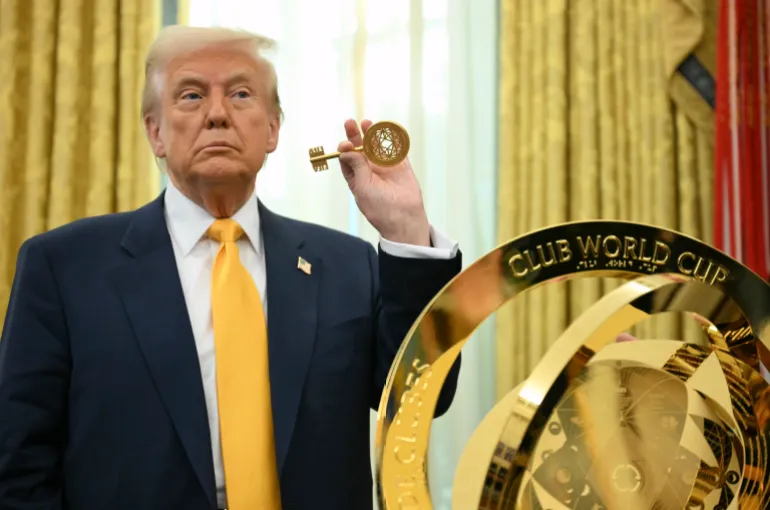
President Donald Trump holds the key to unlock the FIFA Club World Cup trophy, which he said is staying at the White House, requiring a replica to be presented to the tournament’s winners, Chelsea, in July 2025 [File: Pool via AP]
So what checks are there on Trump? Is he really free to attack states, set tariffs at will and, as leader of the world’s most powerful state, essentially dictate global policy? And if so, why are so many observers now saying his war on Iran is faltering?
Has international law put any checks on Trump?
Not so far.
According to analysts, both his attacks on Venezuela and Iran were in clear breach of international law and the UN Charter, principally the prohibition on the use of force under Article 2(4).
Debates about international law, how it has been geared over the decades to underpin the interests of the West and the US specifically, are hardly new. However, experts said, the Trump presidency has seen even the notional restraints of international law trampled underfoot.
Trump himself has brushed aside international law, saying in January that it would be up to him to decide when and how much international law applied to the US and his actions.
“In many respects, international law has historically served US interests, and self-interest should continue to generate US support for a rules-based order organised around the core principles enshrined in the UN Charter,” Michael Becker, a professor of international human rights law at Trinity College in Dublin who previously worked at the International Court of Justice in The Hague, told Al Jazeera, “But finding value in international law often requires adopting a long-term outlook that does not sit easily with short-term political agendas.”
“In the current geopolitical climate, the capacity of international law to provide a meaningful constraint on US action under Donald Trump has proven negligible,” Becker added. “That seems unlikely to change, especially given the failure by other states to strike a united front against Trump’s gangsterism.”
What about the UN?
Not so much.
From its founding, the role of the UN has been to promote dialogue instead of conflict and provide a global response to international challenges. However, Trump’s relationship with the body, like so many of the president’s associations, has rarely been so straightforward. On the one hand, while appearing to try to supplant the body with his members-only Board of Peace as well as sidelining UN aid efforts in Gaza, he has on occasion sought the legitimacy of the UN for a number of his projects, such as his calls in August for the UN to establish a Support Office in Haiti, to help limit migration to the US.
However, while the support of the UN may be helpful, it is clear that Trump has no intention of abiding by its charter, Richard Gowan, the Crisis Group’s UN director from 2019 to 2025, said.
“While other UN members see the US is breaking international law on a regular basis, they often hold back from criticising Washington too loudly in forums like the Security Council because they fear blowback from Trump,” Gowan said. “So Trump is learning he can sidestep the UN when he wants to and get away with it while occasionally using it for instrumental purposes.”
What about other powers?
Up to a point.
Many countries known as “middle powers”, such as Canada, the United Kingdom, France, and other Western and European states, have proven successful so far in pushing back against Trump’s efforts to unilaterally annex Greenland. But European powers have failed to condemn Trump’s unprovoked war on Venezuela and Iran, exposing their double standards in conflicts in the Middle East and the Global South.
Many analysts expect that a withdrawal of investments in the US by Gulf states, which are bearing the brunt of Iran’s retaliation to US and Israeli attacks, may also hasten the war’s end.
“Middle powers can generate friction but not a veto,” HA Hellyer of the Royal United Services Institute for Defence and Security Studies in London said. “Collective action – European governments, Gulf states – can raise costs and extract tactical adjustments. The structural imbalance remains: The US retains decisive military, financial and institutional primacy.”
Smaller states often hedge their bets, follow Washington or look to regional alliances for protection, Hellyer added, continuing that while pressure was strongest in Europe, where the US is no longer seen as a reliable security guarantor, the idea of establishing an alternative continues to be a hurdle. “The logic of an alternative model is accepted; the capacity to execute it quickly is not. A prolonged interregnum follows. The Gulf Arab states are in an analogous position,” he said.
In the meantime, Trump and the US are free to act as they choose. “These are exposure-management strategies, pursued until structural dependence on the US security umbrella can be reduced,” he said.
China and Russia have so far criticised the breaches of international law while avoiding clear escalation, and India and other members of the BRICS bloc have largely stayed silent, suggesting a preference for strategic ambiguity over confronting Washington directly.
Canadian Prime Minister Mark Carney warned Trump of a ‘rupture’ in the Western alliance at the World Economic Forum in Davos, Switzerland, in January 2026 [File: Denis Balibouse/Reuters]
What about domestic restraints?
Not really.
The US Supreme Court was able to block Trump’s use of tariffs to manage large parts of his foreign policy by rewarding allies with lower tariffs and punishing critics with punitive import duties.
But none of the other traditional guardrails – such as Congress; the Department of Justice, which has provided unwavering support to the president; and even the news media – has contained the president’s ambitions. This isn’t entirely new. Previous presidents have ordered wars without congressional approval. However, with Trump, analysts suggested, it has been systematic.
Powerful US institutions have largely failed to hold the Trump administration accountable, analysts, such as Kim Lane Scheppele, a professor of international affairs at Princeton University, said.
“His base of strong supporters are saying that they are willing to experience short-term increases in gasoline prices if it leads to a friendly government in Iran in the long term. His opponents have been his opponents on everything, so he simply ignores and threatens them,” Scheppele told Al Jazeera.
“Trump pays more attention to market performance than to public opinion, so he started saying that he was minimising costs and saying that the Iran war is short term to boost markets again.”
“What the US is spectacularly missing is leadership to oppose Trump. Congress is not doing its constitutional job to constrain him. The Supreme Court is in his pocket because he packed the court in his first term. Lower court judges are heroic and have done amazing work under serious pressures, but they don’t get foreign policy questions, given the difficulty of anyone getting ‘standing’ … in the area of international matters,” she said, referring to the requirement that parties to a lawsuit must show actual or future direct harm to themselves to bring a case to court.
She noted that lower federal courts, although limited on foreign policy, have repeatedly checked executive overreach on immigration, sanctions designations and emergency powers, often under intense political pressure.
A bulk carrier and tanker at anchor in Muscat, Oman, as Iran has essentially closed the Strait of Hormuz by threatening to attack vessels transiting the waterway [File: Benoit Tessier/Reuters]
So why are so many people saying Trump’s war is faltering?
In the eyes of many observers, Trump, with no clear war aims or a defined resolution, is in danger of losing control of a conflict that appears to be both growing and reaching into economic areas apparently unforeseen by his administration, so while traditional restraints don’t apply, market forces, like gravity, always do.
Trump has repeatedly said the war would be over soon despite none of his claimed war aims being achieved.
Oil prices have surged due to his attacks on Iran, Tehran’s counterstrikes and threats to shipping in the Strait of Hormuz, through which about 20 percent of the world’s oil and liquefied natural gas passes.
The International Energy Agency’s decision on Wednesday to release 400 million barrels of oil from international petroleum reserves has failed to tame the prices. Iran has warned that oil could hit $200 a barrel as it continues its stranglehold of the waterway.
“Ultimately, the factors that might be most likely to constrain Donald Trump’s neoimperialist impulses – or his willingness to pursue the policy goals of those who have his ear – are the economic fallout from disrupting global energy markets and a broader disenchantment among US voters with his globe-trotting militarism, his rampant self-dealing and his callous disregard for the human costs of war,” Becker said.
In one of his latest missives on social media, President Trump complained that he wasn’t getting enough credit for “totally destroying the terrorist regime of Iran, militarily, economically, and otherwise.”
“We have unparalleled firepower, unlimited ammunition, and plenty of time,” he wrote of a war that has crippled the global supply of oil, sharply increased gas prices, cost U.S. taxpayers billions, left thousands dead and wounded, and so far defied Trump’s own “short term” timetable.
“Watch what happens to these deranged scumbags today,” Trump added. “They’ve been killing innocent people all over the world for 47 years, and now I, as the 47th President of the United States of America, am killing them. What a great honor it is to do so!”
Again and again in recent days, Trump and other top officials in his administration — notably Secretary of Defense Pete Hegseth — have projected confidence and power in Iran in a coarse and triumphant tone that is unprecedented for U.S. wartime presidents and their Cabinet members, according to experts in presidential rhetoric and propaganda.
They have consistently described the war in terms of how hard the U.S. is hitting Iran, rather than why it must do so. They’ve talked of destroying the Iranian navy and air force, wiping out its leadership and making the U.S. “more respected” globally than it has ever been, including by showing no mercy.
“This was never meant to be a fair fight, and it is not a fair fight. We are punching them while they’re down, which is exactly how it should be,” Hegseth said.
Missing is the solemnity of past wartime leaders facing dead U.S. soldiers, a recalcitrant enemy and a precarious tactical position, replaced by a message of U.S. mercilessness — of contempt for Iran rather than concern for its civilians or a focus on the American ideals that U.S. presidents have long tried to rally the world around, especially in times of war.
“At a time when people can see the effects of the war when they fill up their gas tank, and when there have been American casualties, the triumphalist tone is just not something a president normally does,” said Robert C. Rowland, a professor of rhetoric at the University of Kansas and author of the book “The Rhetoric of Donald Trump: Nationalist Populism and American Democracy.”
“Many presidents wouldn’t have that tone for personal moral reasons,” Rowland said, “but they also know that it can backfire when things don’t go well.”
James J. Kimble, a communication professor and propaganda historian at Seton Hall University, said U.S. presidents have “by and large” struck a respectful tone in wartime, though there are some exceptions. President Truman, justifying dropping atomic bombs on Japan, wrote that “when you have to deal with a beast, you have to treat him as a beast,” while the U.S. produced World War II posters designed to “demonize and dehumanize the German enemy,” he noted.
Still, Trump’s messaging — including his “expressing glee at the death of foreign combatants” — has been “much coarser,” Kimble said.
“It’s moving beyond the idea of defeating the enemy on the field of battle, and more into a kind of defeat as humiliation — intentional humiliation,” he said. “It’s schoolyard bullying, along with the physical violence.”
Asked about Trump’s rhetoric, Anna Kelly, a White House spokeswoman, said Trump “will always be proud to recognize the incredible accomplishments of our brave service members.”
“Under the decisive leadership of President Trump, America’s heroic war fighters are meeting or surpassing all of their goals under Operation Epic Fury,” she said. “The legacy media wants us to apologize for highlighting the United States military’s incredible success, but the White House will continue showcasing the many examples of Iran’s ballistic missiles, production facilities, and dreams of owning a nuclear weapon being destroyed in real time.”
Trump has built his political career around blunt rhetoric, and his messaging on Iran has drawn applause from his supporters. Polling has shown the public is heavily divided on the war — drawing far less public support than past wars, but broad support from Republicans.
White House Press Secretary Karoline Leavitt has accused the media of ignoring “clear” objectives that the president and others have set for the war effort, including wiping out Iran’s missile systems, preventing it from developing a nuclear weapon and stopping what Trump had a “feeling” was a coming attack on the U.S.
However, Trump and Hegseth have themselves strayed from that framework with their brash rhetoric, and their focus on the killing of Supreme Leader Ayatollah Ali Khamenei and other Iranian leaders.
Trump has dismissed reports that the U.S. bombed an Iranian school full of children by suggesting that Iran may actually have been responsible, despite reported findings by U.S. intelligence that it was an American attack.
Hegseth has added to concerns about careless U.S. bombing by expressing disdain for wartime rules designed to limit civilian casualties, calling them “stupid rules of engagement.”
“Our war fighters have maximum authorities granted personally by the president and yours truly,” Hegseth said. “Our rules of engagement are bold, precise and designed to unleash American power, not shackle it.”
The White House has also pushed out a wave of wartime propaganda on social media, often striking the same irreverent, bullish tone, experts noted.
One video interspersed movie clips of superheroes and soldiers with real footage of Iranian targets getting blown up, under the words, “JUSTICE THE AMERICAN WAY.” The clip drew condemnation, including from the actor Ben Stiller, who objected to the inclusion of footage from his film “Tropic Thunder,” saying, “War is not a movie.”
Hegseth’s bravado has also been caricatured on “Saturday Night Live,” which opened two weeks in a row with a satirical portrayal of him as angry, dimwitted and hyped up on the violence of war.
All of it has come against a backdrop of Islamophobic remarks from members of Congress on X, with Rep. Andy Ogles (R-Tenn.) writing that “Muslims don’t belong in American society” and Sen. Tommy Tuberville (R-Ala.) posting a picture of the 9/11 terrorist attack next to an image of New York City Mayor Zohran Mamdani, who is Muslim, and writing “the enemy is inside the gates.”
Certainly Iranian leaders have expressed similar contempt for the U.S. for years. Khamenei, killed at the start of the war, was known for stoking anti-American sentiment, speaking to crowds amid chants of “death to America.”
However, U.S. presidents have traditionally spoken with more reserve. They have slammed U.S. enemies, but often by drawing a contrast between them, the U.S. and the values the U.S. purports to defend globally. They have expressed confidence in past U.S. missions, but been wary of taking a celebratory or triumphant tone — especially at the start of a war, amid intense fighting, as American troops are still dying.
Not so with Trump, who on Wednesday said, “You never like to say too early you won. We won. We won … . In the first hour, it was over.”
He also said, “Over the past 11 days, our military has virtually destroyed Iran,” and “they don’t have anything.”
On Thursday, six U.S. service members were killed when a refueling aircraft crashed in Iraq. On Friday, the U.S. military announced it was sending 2,500 Marines and an additional U.S. warship to the conflict.
Kimble said there are several ways to view Trump’s war rhetoric. One is “through the lens of PSYOPS, or psychological operations” — or intentional messaging aimed at discouraging the enemy, akin to the U.S. dropping leaflets in World War II telling foreign combatants that they must surrender or die. In that view, Trump is speaking directly to the Iranians, trying to get them to “perceive victory as impossible.”
Another is to view Trump and Hegseth as projecting a tough image for their MAGA base, their Democratic rivals and any other nations they might be preparing to challenge, such as Cuba.
Rowland said Trump “always has to be the big dog in the room,” and his war messaging should be viewed in that context.
“A lot of the rhetoric is performative cruelty,” Rowland said. “It’s more about him coming across as dominant than it is about making a case that the war has been good for the U.S. and the region and the West and the world.”
Ebrahim Zolfaghari, spokesperson for Iran’s Khatam al-Anbiya Central Headquarters, accused the US and Israel of orchestrating a ‘diabolical plot’, claiming they copied Iran’s Shahed-136 drone design and repurposed it as a modified ‘Lucas’ drone to falsely blame Tehran for drone attacks across the region.
Harry Styles is no stranger to “Saturday Night Live,” having performed multiple times with his former boy band One Direction and more recently as a solo artist. But this isn’t his first time as host either.
Styles has a knack for radiating charm, honed after years in the spotlight as a musician, and now with some notable acting roles under his belt, he’s more than primed for the stage. And the timing is perfect, considering many actors are in Hollywood this weekend for the Oscars.
He also excelled in parts where he could show off his vocals and dancing, like in “Sparkle of the Sea,” an infomercial about a German cruise line, and another pretaped sketch, “She’s an Irish Dancer,” where guys find out just how Irish their dates are in a nod to St. Patrick’s Day on Tuesday. Flatter, though, were sketches about a pair of Best Buy workers, and one where Styles played a drive-thru worker at a White Castle, but that’s because Jane Wickline and Veronika Slowikowska stole the skit as a pair of nerdy girls trying to ask him out to the school dance.
Styles performed his new single, “Dance No More,” after last week’s host Ryan Gosling introduced him, a fitting appearance since Styles crashed his monologue. And Paul Simon also stopped by to introduce Styles before his second song, “Coming Up Roses.”
This week’s cold open touched on the ongoing war in Iran. The patriarch (Mikey Day) of a family at a gas station says he needs to fill up their car. As a piano begins to play, his wife (Ashley Padilla) says, “Fill up? Not all the way, right?” “We have to,” Day replies emphatically. “But it’s $5 dollars,” she says before turning to her two children (Marcello Hernández and Sarah Sherman) to say they have to leave one of them behind because gas is too expensive. Why? “The Epstein files,” exclaims President Trump (James Austin Johnson), who jumps into the scene. “It’s called butterfly effect. Epstein was the first domino,” he says, miming dominoes falling. Trump goes on to introduce himself by saying we might remember him from campaign promises such as “lower gas prices” and “no more wars” (“Psych!”). “We love to make promises because a promise is a lie that just hasn’t happened yet.” As for the stock market, he puts it in a way that Harry Styles fans might understand — it’s going in one direction, garnering loud cheers and applause. He jokes about Iran’s age, saying it is old and nobody likes them, “Iran is like ballet and opera and weird Timothée Chalamet,” referring to the actor’s comments that have caused an uproar.
But Trump says he has everything under control, meeting with top minds including influencer and boxer Jake Paul, who he says was booed “very badly” at his fight against Mike Tyson. “Did someone say booze?” Department of Defense Secretary Pete Hegseth (Colin Jost) says as he emerges from the family’s car and dozens of cans fall to the ground. (“It was just a couple of road sodas, chill.”) He then thanks Trump for the “beautiful, size 16 Florsheim shoes,” a reference to the Wall Street Journal report that they are the president’s gift of choice to close friends and advisors. Hegseth goes on to say that they are “hashtag winning” the war with Iran, and as for the Strait of Hormuz, he advises that the tankers moving oil should just do what he does at a DUI checkpoint: “Close your eyes and gun it.”
In his monologue, Styles, dressed in a grey pinstripe suit and bright blue tie, said he couldn’t resist hosting when he heard they booked his favorite-ever musical guest. After his tour ended in 2023, he took a lot of time off, realizing he’d spent much of his life on the road and “making songs about fruit that people think were about sex.” He just really likes fruit — and sex. He also said a lot of people pay attention to the clothes he wears (true, see above), with some people accusing him of “queerbaiting,” to which he responded, “Maybe you don’t know everything about me, dad.” But as far as what he did in his time off, he took up boring things, like jogging (his sub-three hour marathon in Berlin was the buzz of the running world). It’s better than the alternative, he says, as the screen flashed to an image of the former Prince Andrew. But now he’s promoting his new album, “Kiss All the Time. Disco, Occasionally.”, because what’s better than kissing? He actually doesn’t want to kiss all the time, leading to a brief appearance and disappearance of cast members Chloe Fineman and Sherman, unless its Ben Marshall. He complimented Marshall’s backside, and gave him a smooch on the lips: “Now that’s queerbaiting.”
Best sketch of the night: I don’t know if your dad did this, but my dad used to pop it twice
The first sketch of the night took us into a courtroom, where a New Jersey prosecutor (Styles) rose to present his case against the defendant, Mr. Donovan (Tommy Brennan), who didn’t have an attorney. So the judge (Kenan Thompson) appointed one: comedian Sebastian Maniscalco (Hernández). It’s the second time Hernández has played the comedian, whose caricature of Maniscalco in a red blazer and black turtleneck is at turns spot on, exaggerated and completely hilarious. He chimed with retorts as the prosecutor explained the charges of stealing $5,000 in merchandise, including a belt. “Let me tell you something about a belt. When I was a kid, the belt wasn’t to keep the pants up, it was to keep the volume down,” Maniscalco says, motioning to his waist and explaining how his dad would use it. Maniscalco’s manic energy was too much for the courtroom sketch artist, though, who complains to the judge about having to draw him, showing a sketch of a blurred, multi-limbed man. Kudos to Styles who managed to mostly keep his composure as Hernández glided around him. But Styles had the last laugh with his own impression of Maniscalco, before a final sketch of him was revealed. Put it in the Lourve!
Also good: Why get real healthcare when you’ve got ‘Mahaspital’
“The Pitt,” one of the buzziest TV shows in America, has been lauded for its realistic portrayal of emergency rooms and the stresses that medical workers endure on a regular basis. So when the opening scenes of this pretape began playing, the crowd went wild. But this isn’t “The Pitt,” it’s “Mahaspital,” brought to you by producer Robert F. Kennedy Jr. and the team behind Make America Healthy Again. Styles channels Noah Wyle’s Dr. Robby, marching toward an incoming patient on a gurney as she’s pushed through the ER hallway. “What she needs is a steak,” he says. “Give me beef tallow and six raw eggs, too.” The sketch touches on many of the hallmarks of the MAHA movement: healing crystals, vaccine skepticism, raw milk and lots and lots of protein. And we can’t forget that Central Park bear.
‘Weekend Update’ winner: Battle of the heart (emojis)
“Update” anchors Michael Che and Jost focused most of their attention on the Iran war this week, but they also touched on another event happening this weekend: the Oscars. They brought in Tucker Carlson (Jeremy Culhane) to talk about the best picture nominees. Culhane’s impression of the conservative pundit was pretty impressive, capturing his cadence and habit of using rhetorical questions — I hope we see it again.
But it was Day and Hernández who stole the segment as emojis aerial tramway and heart, respectively, who joined to comment on Apple’s addition of eight new emojis. Heart emoji on the new additions: “All I know is they’re all going to be more popular than this loser,” pointing to Day. “I’m No. 1 because I’m useful. People use me for everything.” But you can’t put an aerial tramway down, who tried to explain other ways to use the emoji somewhat unsuccessfully. At least he has a solid crew of bangers: orange square, division sign, snorkel and “my boy, the goat” building with a horn on it. Day was dedicated to the bit, making Hernandez crack with muffled laughter. Don’t be surprised if you see a lot more of aerial tramway (and his girlfriend, on with two arrows) in your texts.
WASHINGTON — After two weeks of war with Iran, the Trump administration is being forced to temper its expectations of a swift end to the conflict, with U.S. intelligence and defense officials expressing doubt it can achieve the overthrow of Iran’s government and the destruction of its nuclear program through military means.
It was an outcome forewarned by analysts at the State Department, the CIA and the Pentagon, who together alerted the administration to the pitfalls full-scale war with Iran would bring before President Trump decided to proceed, two U.S. officials told The Times, granted anonymity to speak candidly.
Certain military goals of Operation Epic Fury laid out at the start of the war are still seen as achievable at the Pentagon, with U.S. and Israeli strikes making steady progress degrading Iran’s ballistic missile infrastructure, its drone program and its navy.
But a prewar U.S. intelligence assessment, that an air assault was unlikely to topple the Islamic Republic, still holds, with the intelligence community now casting doubt the assault had any more political effect than to radicalize a government already devoted to the destruction of Israel and harming the United States.
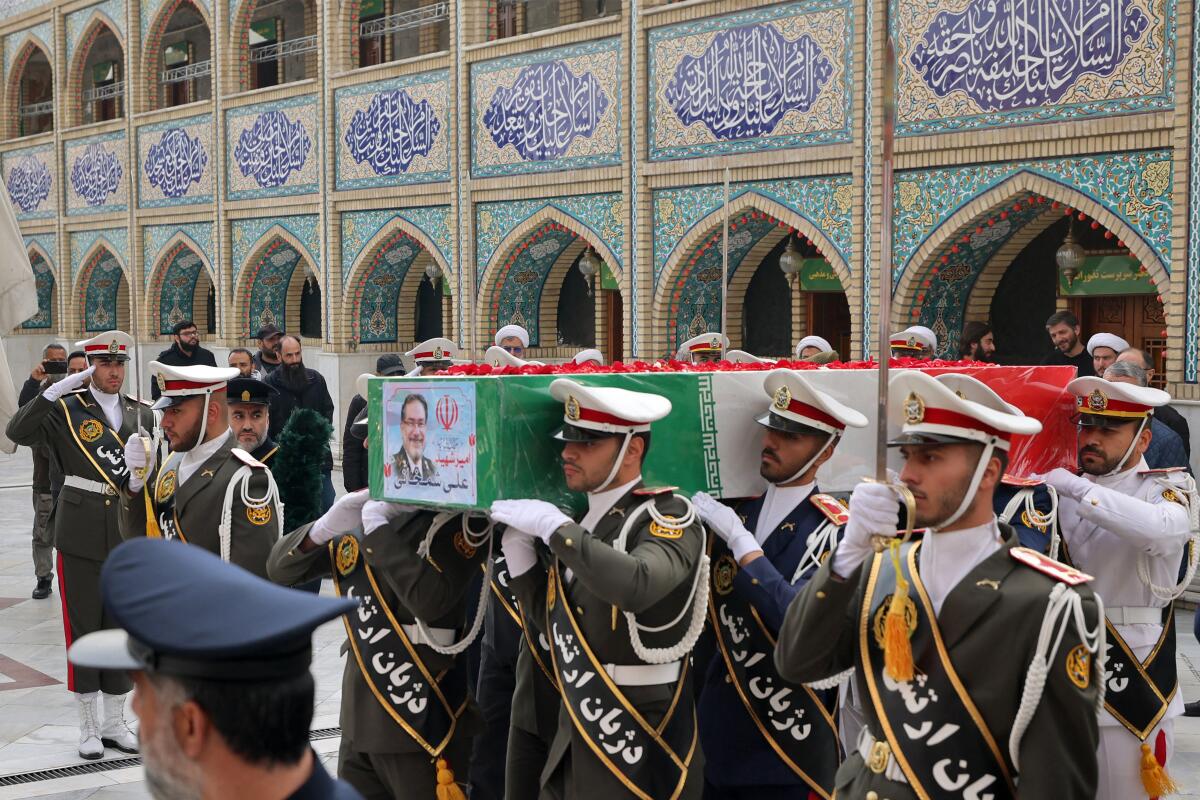
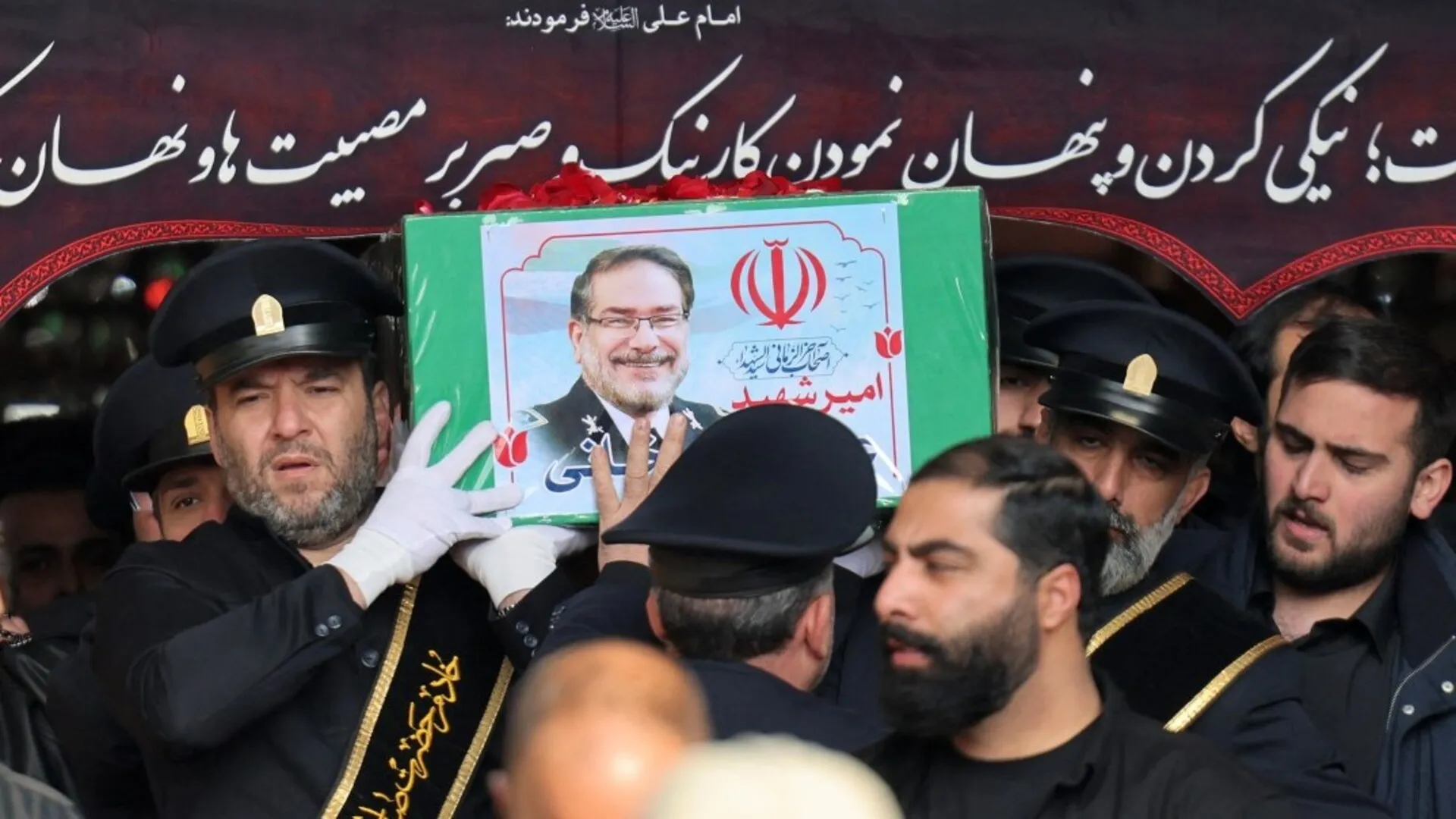
A military procession in Tehran carries the casket of Ali Shamkhani, political advisor to Iran’s last Supreme Leader Ayatollah Ali Khamenei, who was also killed in U.S.-Israeli attacks.
(Atta Kenare / AFP/Getty Images)
Concern has only grown that Iran’s new government will make the fateful strategic decision to build a bomb after the war, unless Trump decides to escalate the conflict with a perilous ground invasion. And the White House now contends with a new mission imperative, created by its decision to launch the war itself, of reopening the Strait of Hormuz to vital shipping traffic that carries 20% of the world’s daily oil and liquid natural gas supply.
The foreign policy strategy Trump publicly laid out as his playbook for the conflict — to come down hard on the government, decapitating its leadership, and hope the remnants would seek mercy — has not worked, with Tehran looking for new ways to expand the war and maximize pain for the U.S. administration.
Trump has minimized the conflict as an “excursion” that would end “very soon,” while also calling it a war, vowing to take the time he needs to “finish the job.” He says it will conclude whenever he decides to end it.
It remains possible that a declaration from Trump that the fighting is over results in a ceasefire, as it did in June of last year, when Trump demanded an end to 12 days of war between Iran and Israel. But the Iranians have a vote, too — and senior leadership in the Islamic Republic have made plain they plan to continue fighting this time whether Trump likes it or not.
On Friday, the Pentagon announced that an additional expeditionary unit of 2,500 Marines was being deployed to the region to support the effort.
“Starting wars is an easy matter,” Ali Larijani, secretary of Iran’s Supreme National Security Council, wrote on social media. “Ending them does not happen with a few tweets.
“We will not leave you until you admit your mistake and pay its price,” he added.
It is a sore lesson for a president whose decade in public life has been distinguished by an exceptional ability to warp reality to his liking.
“The White House has created a dilemma for America: If it declares victory and ends the war, it leaves in place a weakened Iranian government with the means and renewed motivation to pursue nuclear weapons,” said Reid Pauly, a professor of nuclear security and policy at Brown University.
“If it presses on with the war,” Pauly added, “it risks the kind of mission creep that may eventually find American boots on the ground.”
In a news release last week, the White House said that, “from the opening hours of this historic campaign, the objectives were clear: obliterate Iran’s ballistic missile arsenal and production capacity, annihilate its navy, sever its support for terrorist proxies, and ensure the world’s leading state sponsor of terrorism will never acquire a nuclear weapon.”
Yet, at the start of the operation, Trump issued a promise to the people of Iran that, at the end of the U.S.-Israeli campaign, Iran’s military and paramilitary infrastructure would be so badly hobbled that a rare, generational opportunity would emerge for them to take their government back.
“To the great proud people of Iran, I say tonight that the hour of your freedom is at hand,” Trump said. “Stay sheltered. Don’t leave your home. It’s very dangerous outside. Bombs will be dropping everywhere. When we are finished, take over your government. It will be yours to take. This will be probably your only chance for generations.”
Trump said in the days that followed he would need to have a say over the next ruler, after assassinating the country’s longtime supreme leader, Ayatollah Ali Khamenei. But the Iranian system of clerics and militants defied the president, selecting in Khamenei’s son a man viewed as even more hostile to the West than his father was.
Israeli leadership, too, set out regime change as a goal of the war. Yet even their officials now say that a substantial leadership change in Tehran is an unlikely result.
Trump would go on to insist on the “unconditional surrender” from the Iranian government, a demand that he later said would be satisfied by the incapacitation of Iran’s military.
Repeating his conviction that the war will end soon, Trump told Fox News’ Brian Kilmeade in an interview Friday that he would order an end to the fighting “when I feel it. When I feel it in my bones.”
“The problem with the administration’s approach is that it has constantly shifted its goals. Some are achievable, such as degrading Iran’s conventional force. Others are not, such as picking the next leader of Iran,” said Ray Takeyh, a scholar on Iran at the Council on Foreign Relations.
“The mixed messages have led to confusion at home,” Takeyh added, “and lack of planning for oil shortages and getting the Americans out of the region shows that process and personnel can actually matter.”
Mark Dubowitz, CEO of the Foundation for Defense of Democracies, said the joint U.S.-Israeli campaign was always designed to unfold in three phases: degrading Iran’s ability to wage war, reducing Iran’s ability to repress democratic forces inside the country, and finally, encouraging the Iranian people to rise up.
“The president controls the strategy, but no president fully controls the endgame because the regime gets a vote,” Dubowitz said. “The endgame is not a scripted political transition directed from Washington. It is a regime under simultaneous military, economic, and internal pressure — to strip of its war-making and repression capabilities — and whether that produces succession, fracture, or collapse will ultimately be decided in Tehran.”
Whether the conflict will achieve the destruction of Iran’s nuclear program is an equally grave question in Washington, where officials are debating over a list of stark options on how to physically destroy, bury or retrieve the fissile material that Tehran could use to build a nuclear weapon — a threat seen as only more grave under the stewardship of an angry and vengeful government.
“The war was publicly justified, to the extent it was justified at all, in terms of destroying Iran’s nuclear program. Very few strikes have been directed against nuclear-related targets, however — almost certainly because those that survived last June’s attacks are invulnerable to air attack,” said James Acton, co‑director of the nuclear policy program at the Carnegie Endowment for International Peace.
“Unless the U.S. and Israel attempt high-risk special forces operations or a ground incursion,” he added, “Iran will end the war with its surviving nuclear infrastructure largely intact and greater incentives to build the bomb.”
Pauly agreed it is unrealistic to expect the United States and Israel can destroy Iran’s nuclear program through air power alone. The U.N. International Atomic Energy Agency believes Iran has roughly 440 kilograms — about 970 pounds — of 60% highly enriched uranium, possibly spread across multiple facilities.
“Securing this material will require either U.S. ground troops or, after some coercive bargain is reached, international inspectors,” Pauly said.
In an exchange with reporters last week at the Pentagon, Defense Secretary Pete Hegseth had few details to offer on what U.S. options were to remove or eliminate an accessible uranium stockpile, enriched to near weapons grade, that had been buried in a U.S. operation last year intended on obliterating the nuclear threat.
Diplomacy, he suggested, might be required to secure the material.
“I will say we have a range of options, up to and including Iran deciding that they will give those up,” he told reporters, “which of course we would welcome.”
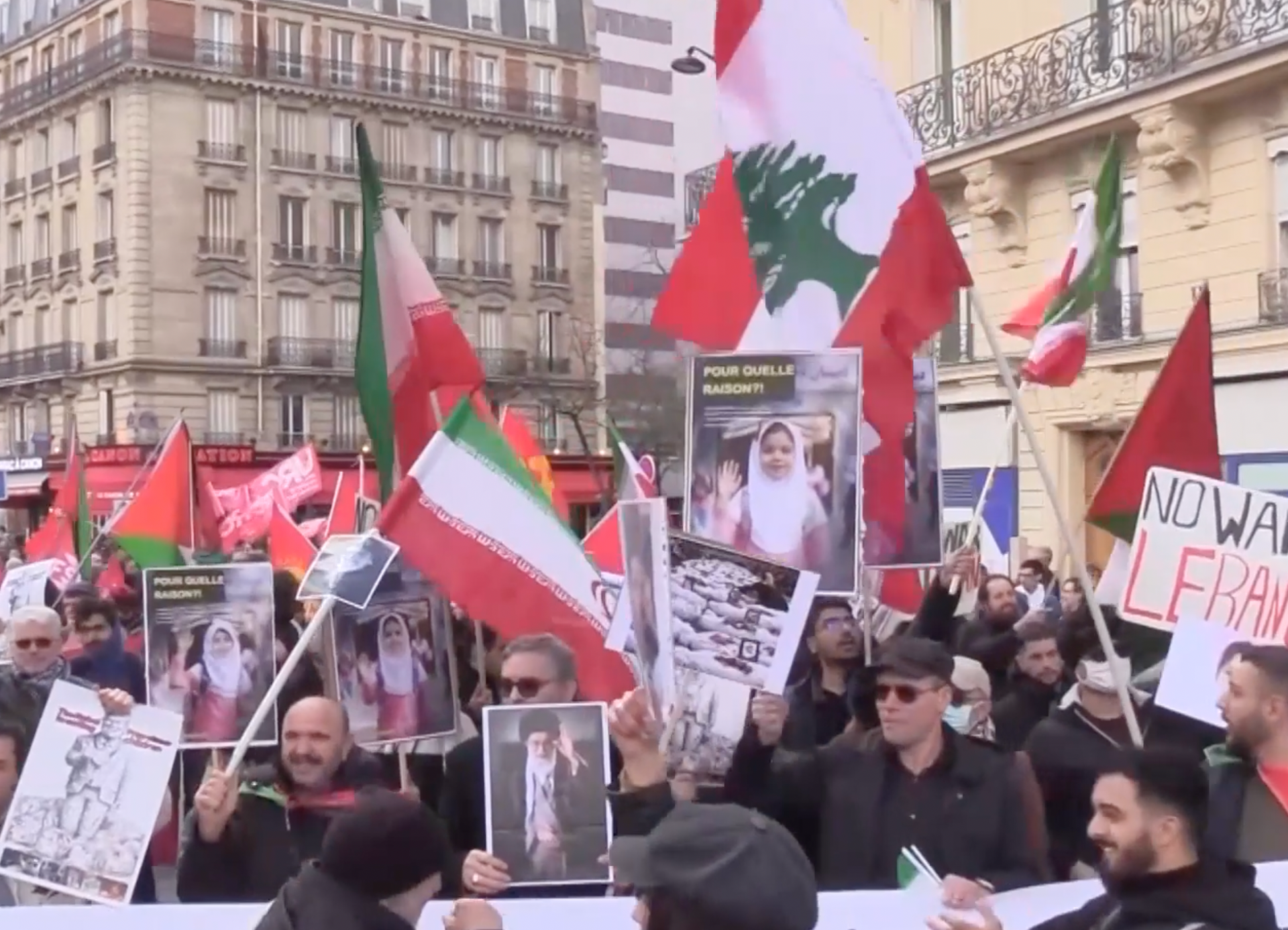
Thousands in Paris protest military operations in the Middle East. One of more than 85 coordinated protests across France. The rally opposed US and Israeli military operations in Iran, Lebanon, and Palestine.
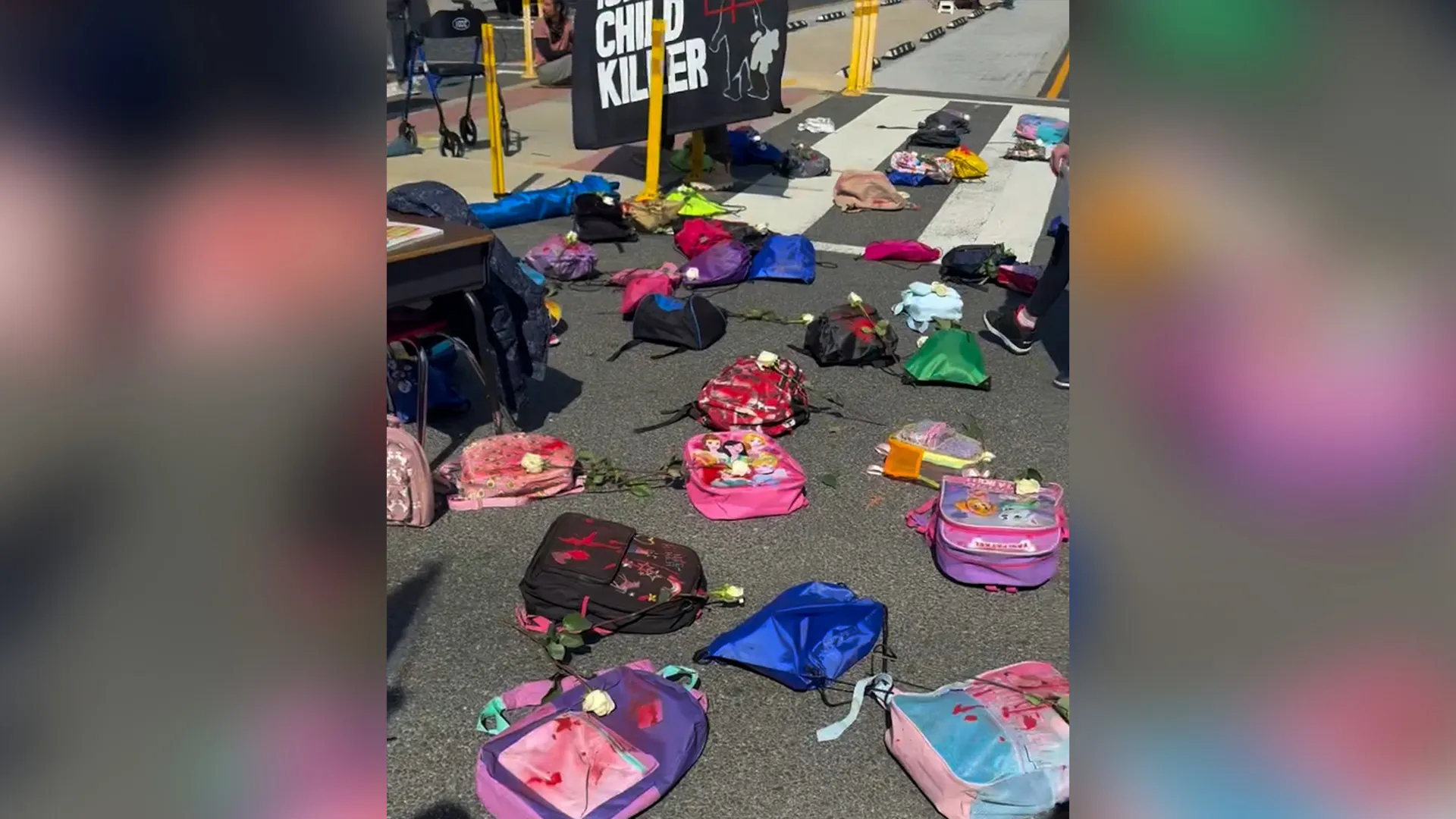
Activists gathered outside the White House to protest the war with Iran, reenacting the Minab school strike, a deadly missile attack on a girl’s school in southern Iran that killed more than 170 people during early US-Israeli operations.
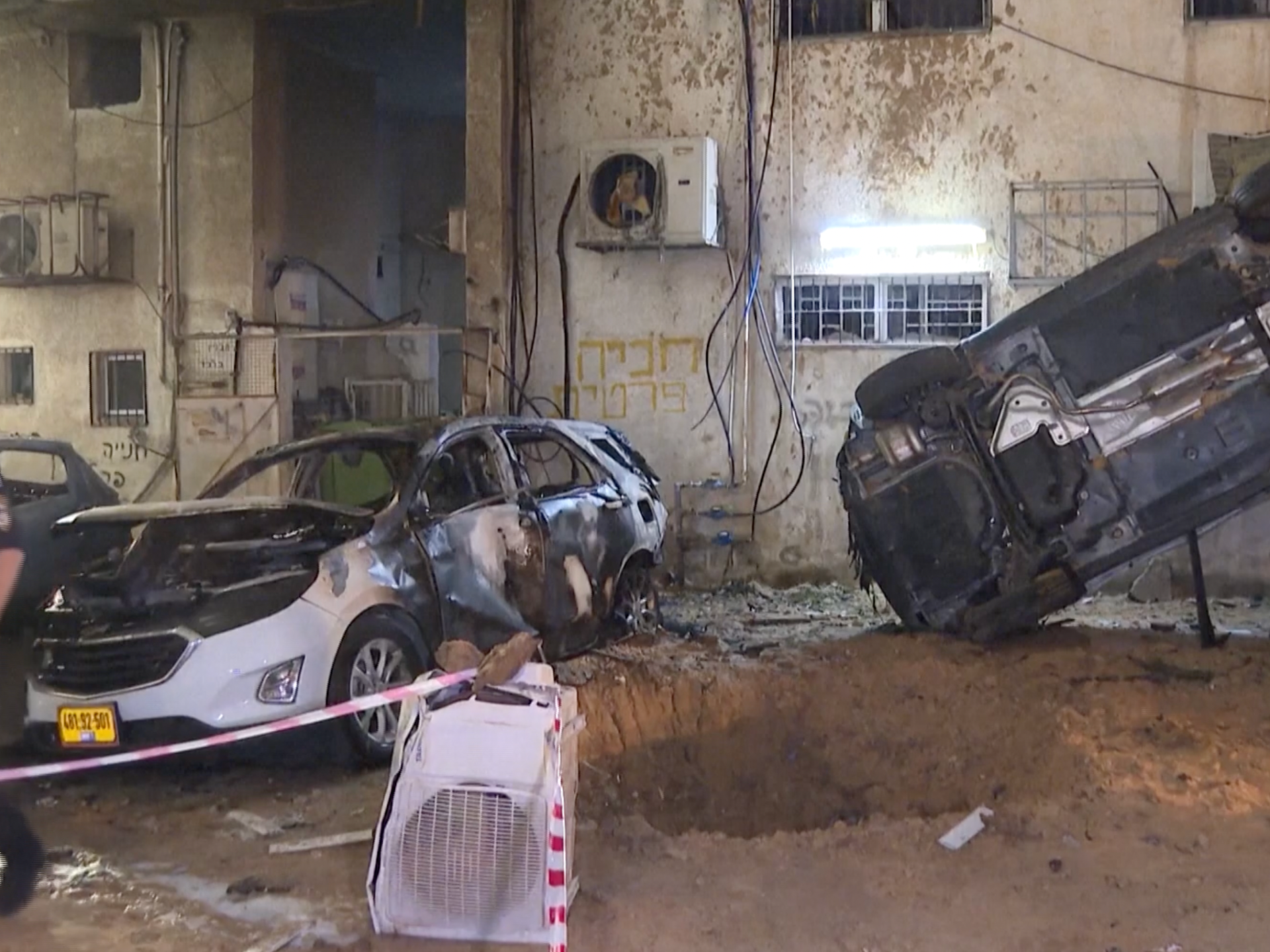
Cars were seen burned and one overturned in a town in Tel Aviv district caused by shrapnel after a wave of Iranian missiles struck central Israel. According to local police, three people were wounded.
Iran has held a funeral for the country’s most influential defence figure, Ali Shamkhani, who was killed in Israeli-US strikes on February 28. Shamkhani was a key figure in Iran nuclear talks, chief of the country’s Defence Council and advisor to the late Supreme Leader. He lost a leg in an Israeli assassination attempt last June.
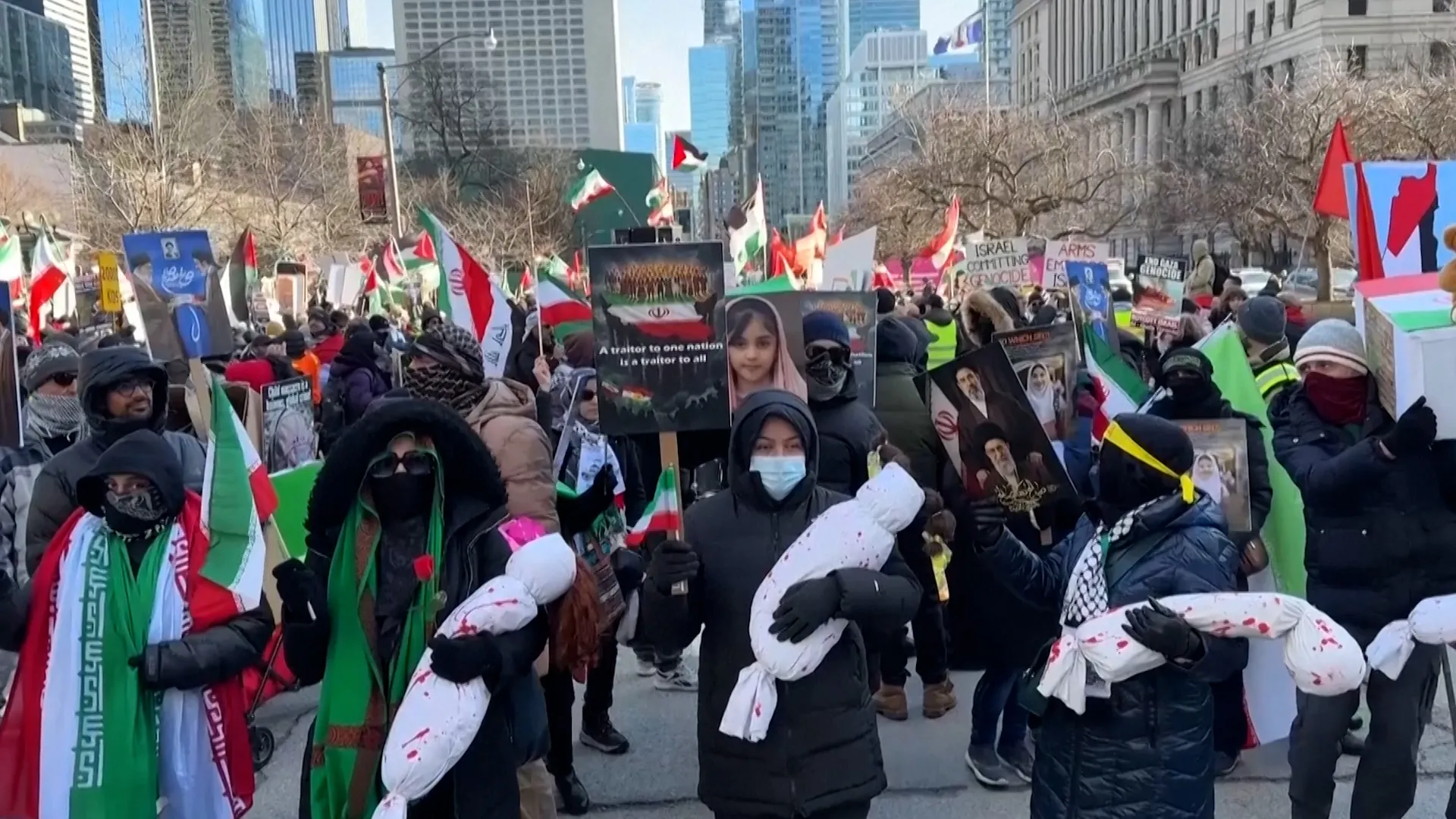
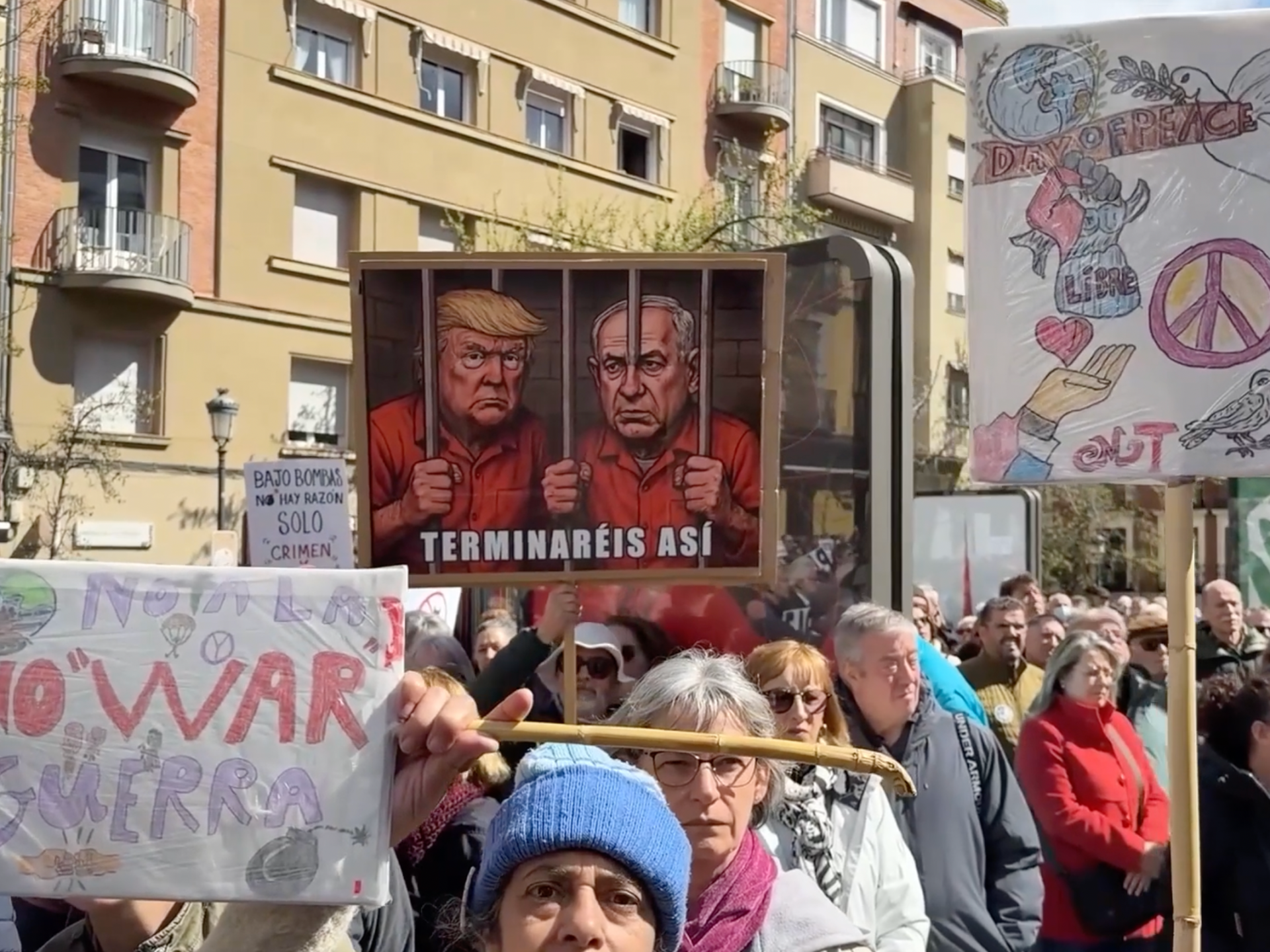
Thousands rallied in central Madrid calling for an end to the war involving the United States, Israel and Iran, with protesters warning the conflict could escalate into a global war.
Iranian media report the deaths in central Iran as Tehran launches new missile salvoes at Israeli targets.
Published On 14 Mar 202614 Mar 2026
Share
A missile strike on an industrial area of the central Iranian city of Isfahan has killed at least 15 people, with workers having been inside a factory at the time of the attack, Iranian media reports.
The strike hit a factory producing heating and cooling equipment on Saturday, a working day in Iran, according to the semi-official Fars news agency, which attributed the attack to US and Israeli forces.
Recommended Stories
list of 3 itemsend of list
It came on the 15th day of a conflict that Iran’s Ministry of Health says has now killed at least 1,444 people and wounded more than 18,500 since the US-Israeli attacks began on February 28.
Cities across Iran have been repeatedly targeted following the onset of hostilities.
On March 8, shelling damaged Russia’s consulate in Isfahan, injuring staff, with Moscow calling the strike a “blatant violation” of international conventions.
Iran’s Ministry of Culture said on Saturday that 56 museums and historic sites had been damaged, including Naqsh-e Jahan Square, a 17th-century centrepiece of Isfahan, and the UNESCO-listed Golestan Palace in Tehran.
UNESCO said it was “deeply concerned,” noting that four of Iran’s 29 World Heritage Sites had been affected.
Separately on Saturday, Iran’s army confirmed that Brigadier General Abdullah Jalali-Nasab had been killed in an Israeli attack, saying he was “martyred while defending the country”.
Earlier, US forces also struck Kharg Island, which handles roughly 90 percent of Iran’s crude exports, though a regional official said operations were continuing normally, and there were no casualties.
US President Donald Trump had previously threatened to target the island’s oil infrastructure if Tehran continued to disrupt the Strait of Hormuz.
Any prospect of negotiations appears remote. The Trump administration has rebuffed regional efforts to broker a ceasefire, with a senior White House official telling the Reuters news agency the president is focused on pressing ahead.
“He’s not interested in that right now, and we’re going to continue with the mission unabated,” the official said.
Iran has equally ruled out talks while the attacks continue, Reuters reported, citing an anonymous Iranian official.
Iranian Minister of Foreign Affairs Abbas Araghchi struck a defiant tone on Saturday, saying the US security framework in the region had “proven to be full of holes” and calling on neighbours to “expel foreign aggressors”.
Israeli Minister of Defence Israel Katz said the war was entering a “decisive phase”, which would “continue as long as necessary”.
Iran launched new missile salvoes at Israel on Saturday, with explosions heard over Jerusalem, according to reporters from the AFP news agency.
Six waves of missiles, some carrying cluster bomb warheads, struck wide areas of the country, the Israeli army said. In Eilat, a cluster munition impact injured three people, including a 12-year-old boy, according to The Times of Israel.
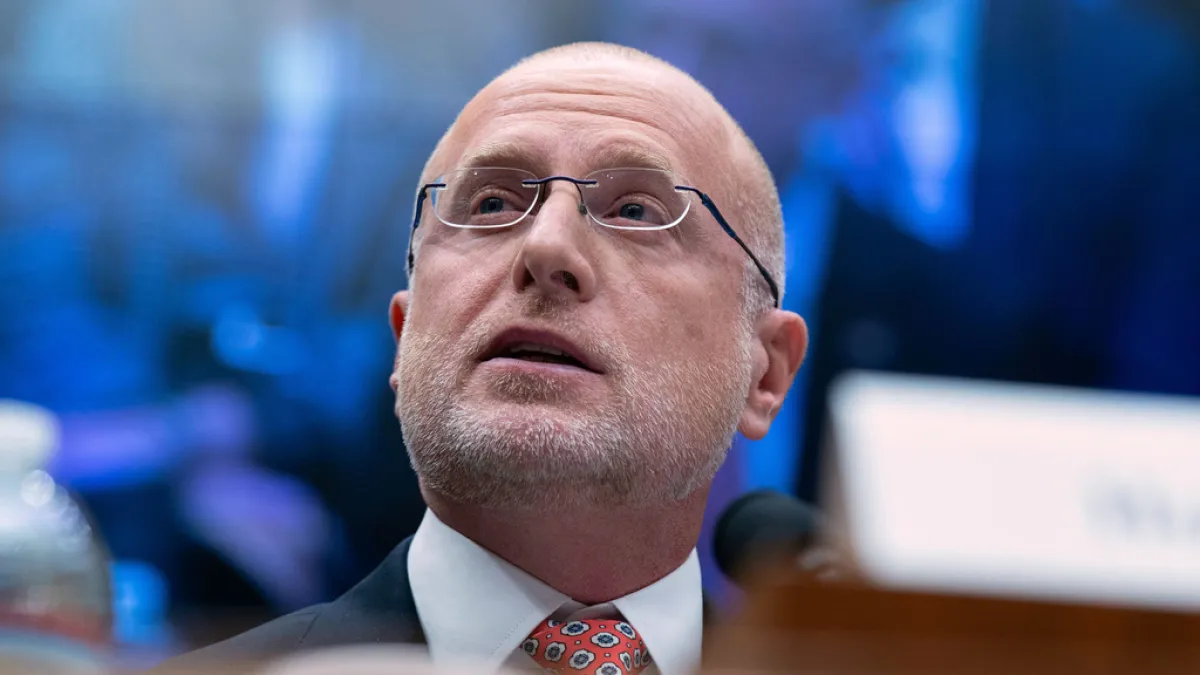
The administration of President Donald Trump has warned that news outlets could have their broadcasting licences revoked over critical reporting on the war against Iran, accusing the media of “distortions”.
Federal Communications Commission Chairman Brendan Carr said in a social media post on Saturday that broadcasters must “operate in the public interest”, or else lose their licences.
Recommended Stories
list of 3 itemsend of list
“Broadcasters that are running hoaxes and news distortions — also known as the fake news — have a chance now to correct course before their license renewals come up,” Carr wrote.
The warning was the latest apparent threat from Carr, who has repeatedly attracted scrutiny for statements that appear to pressure broadcasters to conform with Trump priorities.
Last year, for instance, Carr called on the channel ABC and its distributors to “find ways to change conduct, to take action” on comedian Jimmy Kimmel, whose late-night show had been critical of the president.
“We can do this the easy way or the hard way,” Carr said of Kimmel on a podcast. ABC temporarily suspended Kimmel’s show in the aftermath of those comments.
Carr’s latest statement prompted swift condemnation from politicians and free-speech advocates, who likened his remarks to censorship.
“This is a clear directive to provide positive war coverage or else licenses may not be renewed,” Senator Brian Schatz of Hawaii wrote.
“This is worse than the comedian stuff, and by a lot. The stakes here are much higher. He’s not talking about late night shows, he’s talking about how a war is covered.”
Aaron Terr, the director of public advocacy at the Foundation of Individual Rights and Expression (FIRE), likewise denounced Carr for seeking to silence negative war coverage.
“The First Amendment doesn’t allow the government to censor information about the war it’s waging,” Terr said.
Trump denounces war coverage
Carr’s latest statement came in response to a social media post from Trump, accusing the “fake news media” of reporting that US refuelling planes had been struck in an Iranian attack in Saudi Arabia.
“The base was hit a few days ago, but the planes were not ‘struck’ or ‘destroyed’,” Trump said in a Truth Social post. “Four of the five had virtually no damage, and are already back in service.”
He added that reporting to the contrary was intentionally misleading. “Lowlife ‘Papers’ and Media actually want us to lose the War,” he wrote.
The president and his allies have faced accusations that they use the power of the state to penalise dissent and critical news coverage, raising concerns about press freedom.
Polling shows that the war, launched by the US and Israel on February 28, is largely unpopular in the US.
A recent Quinnipiac poll found that 53 percent of voters oppose the military action against Iran, including 89 percent of Democrats and 60 percent of independent voters.
The war has also been condemned by legal experts as a clear violation of international law, which prohibits unprovoked attacks.
Trump, however, has offered shifting rationales as to why he believes Iran posed an imminent threat to US security.
He has also asserted that the war is proceeding successfully, despite ongoing Iranian attacks on US forces across the region and the shutdown of the Strait of Hormuz, a key trade artery.
“We’ve won. Let me tell you, we’ve won,” he told a rally this week in Kentucky. “In the first hour, it was over.”
His administration, meanwhile, has blamed the news media for turning public opinion against the war.
“Yet some in this crew, in the press, just can’t stop,” Secretary of Defense Pete Hegseth said during a briefing on Friday.
A former Fox News host, Hegseth called for “patriotic” reporters to write more optimistic headlines instead. He denounced TV banners that read, for example, “Mideast war intensifies.”
“What should the banner read instead? How about ‘Iran increasingly desperate’? Because they are. They know it, and so do you, if it can be admitted,” Hegseth said.
He criticised the news outlet CNN, in particular, for a report asserting that the Trump administration had underestimated the chances of Iran closing the Strait of Hormuz.
Hegseth quipped that he hoped a prospective deal would soon place CNN under the control of David Ellison, son of close Trump ally and tech executive Larry Ellison.
“The sooner David Ellison takes over that network, the better,” he added.
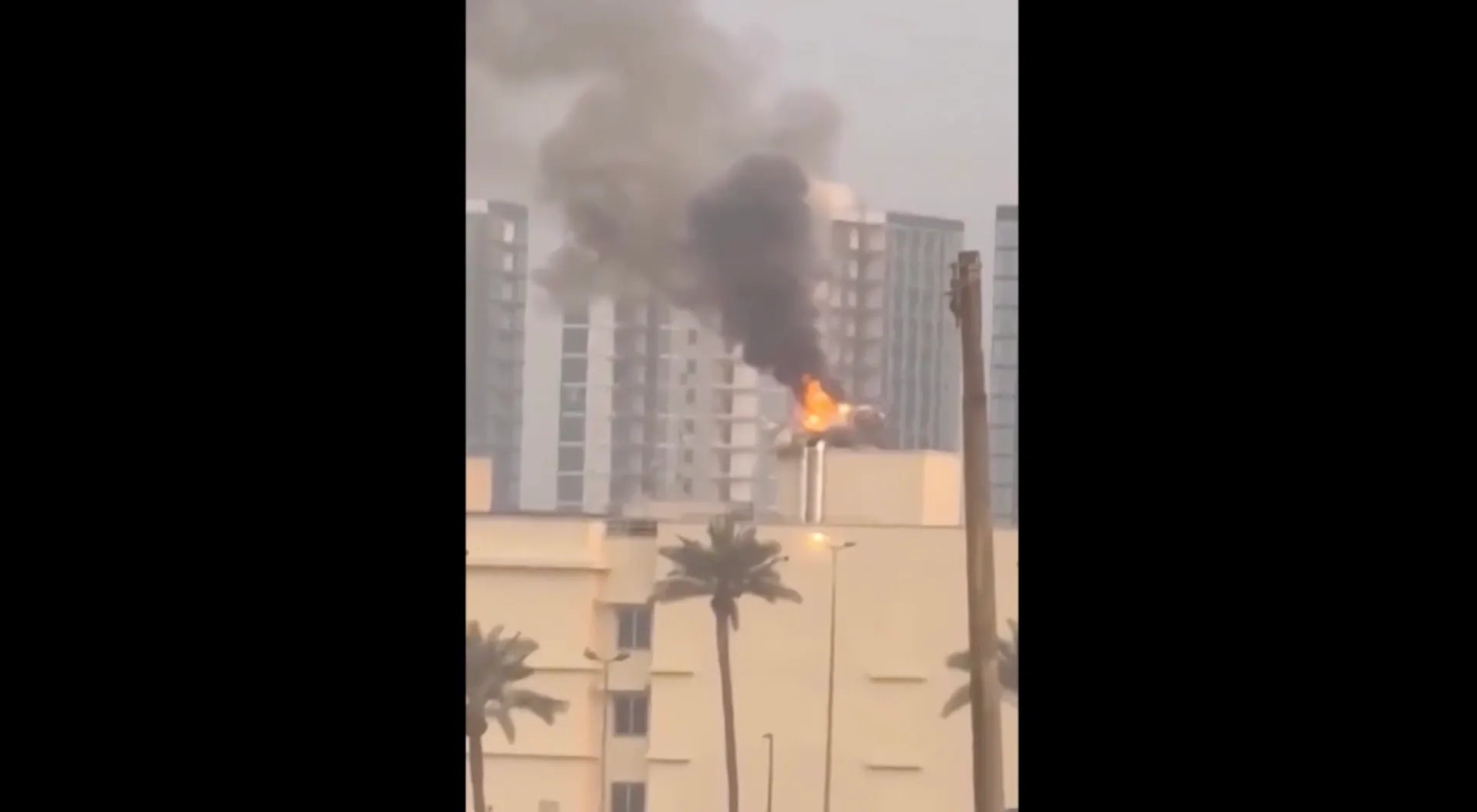
A strike on the heavily fortified United States embassy compound in Baghdad caused a fire and damage to the complex. It is the second attack on the embassy since the United States and Israel launched strikes on Iran on February 28.
Weekly insights and analysis on the latest developments in military technology, strategy, and foreign policy.
U.S. President Donald Trump says there “will be no deal” with Iran unless it surrenders unconditionally, a day after Iran’s Foreign Minister said the country was prepared to stand up to a ground invasion. Trump has also said that any new leadership of the country would have to be “acceptable” to the United States. This follows what has now been seven days of heavy U.S.-Israeli bombardment, including a new major wave of strikes by Israel targeting Iranian leadership in Tehran overnight.
You can catch up with our past coverage of ongoing operations against Iran here.Latest updates on the war are down the page of this article.
Trump’s statement was made via a post on his Truth Social social media network.
“There will be no deal with Iran except UNCONDITIONAL SURRENDER!,” he wrote. “After that, and the selection of a GREAT & ACCEPTABLE Leader(s), we, and many of our wonderful and very brave allies and partners, will work tirelessly to bring Iran back from the brink of destruction, making it economically bigger, better, and stronger than ever before. IRAN WILL HAVE A GREAT FUTURE. “MAKE IRAN GREAT AGAIN (MIGA!).”
BREAKING: Trump on Iran:
There will be no deal with Iran except UNCONDITIONAL SURRENDER!
After that, and the selection of a GREAT & ACCEPTABLE Leader(s), we, and many of our wonderful and very brave allies and partners, will work tirelessly to bring Iran back from the brink of… pic.twitter.com/6Q6TqyHTbt
Trump has increasingly talked about changing the regime in Tehran in recent days, and his desire to be personally involved in that process. This comes despite pushback from other U.S. officials about regime change being an explicit goal of what has been dubbed Operation Epic Fury.
“We want to go in and clean out everything,” Trump told NBC Newsin a phone call on Thursday. “We don’t want someone who would rebuild over a 10-year period.”
“We want them to have a good leader,” the president added. “We have some people who I think would do a good job.”
Trump declined to offer any names, but said he was taking steps to make sure the people on his list make it through the war alive.
EXCLUSIVE: Trump says he wants Iran’s leadership structure gone and wants to ensure his own list of possible leaders survive the war. https://t.co/KRwAmgz2tN
Trump acknowledged that Khamenei’s son, Mojtaba Khamenei, is the most likely successor, but finds that outcome unacceptable and insists he play a role in determining Iran’s next leader, Axios reported.
“They are wasting their time. Khamenei’s son is a lightweight,” Trump told Axios. “I have to be involved in the appointment, like with Delcy in Venezuela.”
Trump was referring to the Venezuelan Vice President Delcy Rodriguez, who took over after the capture of dictator Nicolas Maduro in a dramatic U.S. operation in January.
🚨 EXCLUSIVE: Trump says he must be involved in picking Iran’s next leader.
He said that Mojtaba Khamenei, son of assassinated supreme leader Ali Khamenei, is the most likely successor — and finds that unacceptable.https://t.co/73b4PVOLW2
Trump had also called for Iran’s unconditional surrender during the 12 Day War between Israel and Iran last year, before helping broker a ceasefire agreement between the parties.
The last time Trump demanded Iran’s “unconditional surrender” was during the 12-Day Israel–Iran war (June 13–24, 2025).
Trump twice demanded Iran’s “unconditional surrender” back then.
Before Trump made his unconditional surrender demand, U.S. Navy Adm. Brad Cooper, commander of U.S. Central Command (CENTCOM), laid out how destructive Epic Fury has been to Iran’s military.
“Over the last 24 hours of the operation, compared to where we were at the start, ballistic missile attacks have decreased by 90%, drone attacks have decreased by 83% since day one,” he told reporters, including from The War Zone, during a press conference at CENTCOM headquarters in Tampa, Florida, on Thursday evening. Cooper added that these attacks have also wiped out a large chunk of Iran’s Navy, destroying 20 ships so far.
U.S. Admiral Brad Cooper gives update on Iran: “We are now starting our sixth day of a historic mission to eliminate Iran’s ability to threaten America. The president and Secretary Hegseth have been crystal clear in their expectations and we are at a high level of execution.” pic.twitter.com/Acr4WpQJpc
Overnight, the Israeli Defense Forces (IDF) said it carried out a massive 50-jet raid on Tehran, targeting an underground bunker complex intended for use by Supreme Leader Ali Khamenei and other top leaders. Khamenei was killed elsewhere in the opening phase of what the IDF called Operation Roaring Lion.
The bunker “spanned multiple streets in the heart of Tehran and contained numerous entrances and meeting rooms” for senior Iranian leaders, the IDF explained. It was intended to be used by Khamenei as “a secure emergency command center,” but after his death, “the compound continued to be used by senior Iranian regime officials,” the IDF claimed.
הבונקר התת-קרקעי, נבנה מתחת למתחם והיה נכס חירום מאובטח לניהול הלחימה על ידי המנהיג, שחוסל טרם הספיק להשתמש בו במבצע ‘שאגת הארי’. לאחר חיסול ח’אמנהאי, המתחם המשיך לשמש את בכירי המשטר האיראני.
לאורך שנים, המשטר השקיע את מאמציו להקמת המתחם התת-קרקעי, במטרה לבסס עבורו מקום לקידום… pic.twitter.com/LlPmHSFlR7
The “senior commander” targeted by these Israeli air strikes was Asghar Hijazi, Times of Israel military correspondent Emanuel “Mannie” Fabian reported on X, citing Israeli defense sources.
“Hijazi is said to be the acting head of the supreme leader’s office, following the killing of Ali Khamenei,” Fabian added.
The “senior Iranian commander” targeted in an Israeli airstrike in Tehran a short while ago is Asghar Hijazi, according to Israeli defense sources.
Hijazi is said to be the acting head of the supreme leader’s office, following the killing of Ali Khamenei. https://t.co/7T58UKmkLp
— Emanuel (Mannie) Fabian (@manniefabian) March 6, 2026
Videos emerging from Tehran showed multiple explosions and ensuing fireballs rising in the distance. Local residents described the attack as “the worst, strongest, and most horrifying ever.”
For their part, Iranian officials have been publicly rejecting the possibility of new talks and/or a ceasefire with the United States and Israel amid the ongoing conflict. Iran’s Foreign Minister Sayed Abbas Araghchi also said yesterday that his country was prepared for a ground invasion.
“Relying on its defensive capabilities and the support of the Iranian nation, the Islamic Republic defends the country’s national sovereignty and territorial integrity within the framework of its inherent right to legitimate self-defense and will respond decisively to any aggressive act,” Araghchi told his Cuban counterpart today.
Significant pressure is clearly being put on the regime in Tehran to capitulate, at least to some degree. Top Iranian leadership figures are being actively targeted, as are individuals who could step in to fill the resulting voids. What the U.S. government, as well as its Israeli allies, may actually be willing to accept in order to bring the conflict to an end remains to be seen.
We have concluded our rolling coverage in this piece.
UPDATE: 5:33 PM EST –
After a meeting with major defense contractors called as the U.S. continues to burn through munitions during Epic Fury, Trump said they were boosting weapons production.
“They have agreed to quadruple Production of the ‘Exquisite Class’ Weaponry in that we want to reach, as rapidly as possible, the highest levels of quantity,” the president proclaimed. “Expansion began three months prior to the meeting, and Plants and Production of many of these Weapons are already under way.”
In his post, Trump again asserted that there is “a virtually unlimited supply of Medium and Upper Medium Grade Munitions, which we are using, as an example, in Iran, and recently used in Venezuela. Regardless, however, we have also increased Orders at these levels.”
Air Force Chief of Staff Gen. Ken Wilsbach posted a message on X praising airmen for their efforts during Epic Fury.
U.S. Treasury Secretary Scott Bessent said “tonight will be our biggest bombing campaign” against Iran.
“We will do the most damage to the Iranian missile launchers and the factories that built them.”
INTERESTING: U.S. Treasury Secretary Scott Bessent on Iran:
Tonight will be our biggest bombing campaign.
We will do the most damage to the Iranian missile launchers and the factories that build the missiles. pic.twitter.com/zCYvaytdeC
Videos have emerged on social media claiming to show attacks across Iraq.
Some purport to show an attack on Camp Victory, a facility housing U.S. forces near Baghdad’s international airport. You can see explosions followed by fireballs and smoke in the video. It is not clear who is attacking.
🇮🇶🇮🇷🇺🇲‼️ FEROZ BOMBARDEO IRANÍ: REPORTAN QUE LA BASE CAMPO VICTORIA (EEUU) EN BAGHDAD ESTARÍA EN LLAMAS POR ATAQUE CON 2 MISILES Y DRONES pic.twitter.com/a7VAMWrBpv
— (FRAPP) ANTIFASCISTA #AntiKast #OrgullosoDel42% (@Informa3Chile) March 6, 2026
Another video shows a claimed strike by U.S. helicopters on an Iranian-backed militia group in Mosul. We cannot independently confirm any of these claims and have reached out to CENTCOM for more information.
US helicopters struck at least twice a Kataeb Seyyed a-Shuhadaa’ HQ in al-Rashidiya, Mosul, tonight. KSS is an Iranian-backed militia that has carried out attacks against Iraqi Kurdistan & US interests in Iraq under the facade group Awliyaa’ a-Damm. pic.twitter.com/JdG9u5nqWt
There is also a video claiming to depict an Iranian drone strike on energy facilities in Basra.
Iranian drone strikes hit energy infrastructure in Burjesia/Basra, including a Baker Hughes facility, the Rumaila oil field, and Basra airport. pic.twitter.com/CeeHpKKFSk
The IRGC offered a threatening response to Trump’s order to have U.S. Navy vessels escort commercial ships through the Strait of Hormuz. Iran has previously claimed it had shut down the Strait, and the IRGC said it welcomes these escorts, with a reference to the American supertanker Bridgeton, which hit a mine in the Persian Gulf while being escorted by U.S. Navy warships in 1987. That incident took place in the so-called “Tanker War” that took place during the Iran-Iraq War.
IRGC Spox:
Iran strongly welcomes US’ willingness to escort oil tankers and the claim of the presence of US forces for passage through the Strait of Hormuz, and in fact, the IRGC is waiting for their presence.
Amid all the turmoil, the French aircraft carrier Charles de Gaulle has passed through the Strait of Gibraltar and is now in the Mediterranean.
France’s aircraft carrier Charles de Gaulle has passed through Gibraltar into the Mediterranean Sea and is moving toward the Middle East. pic.twitter.com/TCK9Wuv5i6
CENTCOM released its latest Epic Fury graphic update showing targets hit and assets deployed. So far, more than 3,000 targets have been hit, including 43 Iranian ships that have been destroyed or damaged, according to the command.
(CENTCOM)
The aircraft carrier USS Gerald R. Ford has transited the Suez Canal and is now in the Red Sea, according to the Navy. Images posted on the Pentagon’s video and image distribution site show the carrier and one of its escorts, the Arleigh Burke class guided missile destroyer USS Bainbridge in the canal.
The world’s largest aircraft carrier, USS Gerald R. Ford (CVN 78), transits the Suez Canal, March 5, 2026. (U.S. Navy photo) U.S. Central Command Public AffaArleigh Burke class guided-missile destroyer USS Bainbridge (DDG 96) transits the Suez Canal, March 5, 2026. (U.S. Navy photo) U.S. Central Command Public Affa
A Chinese satellite image emerged of the Ford and two of its escorts crossing through the canal. This move makes sense considering that the ballistic missile threat against Israel that the carrier strike group was helping defend against has diminished. Being in the Red Sea would provide assets needed to defend against any attacks from the Houthis of Yemen should that Iranian proxy decide to get into the fight.
The Pentagon also released photos of B-52 Stratofortress bombers that took part in Epic Fury.
Aircrew members board a B-52H Stratofortress prior to taking off in support of Operation Epic Fury, March 4, 2026. (U.S. Air Force photo) U.S. Central Command Public Affa
There are claims that Iran struck a Patriot air defense site in the UAE, however we cannot confirm this. We reached out to CENTCOM for more details.
“There may be other countries to join action against Iran and its interests in the region,” the outlet noted.
These claims come days after Azerbaijani officials vowed they would retaliate for an Iranian drone strike on their territory that wounded four people.
We cannot confirm that, however, video emerged earlier today showing Azerbaijani military equipment being moved closer to that nation’s border with Iraq.
The U.K. Defense Ministry (MoD) issued its latest update on operations in the Middle East.
Iran’s intelligence ministry said on Thursday that “separatist terrorist groups” planned to enter the country from its western borders and carry out attacks in urban and border areas, taking advantage of wartime conditions, Iran International reported. “A joint preemptive operation by the intelligence ministry and the Islamic Revolutionary Guard Corps destroyed a significant portion of the groups’ positions and capabilities and inflicted heavy losses,” the ministry said in a statement.
UPDATE 1:07 PM EST –
White House Press Secretary Karoline Leavitt offered an explanation of what Trump means by his unconditional surrender demand on Iran.
“When Trump, as Commander in Chief, determines that Iran no longer poses a threat to the US and the goals of Operation Epic Fury have been fully realized, then Iran will essentially be in a place of unconditional surrender, whether they say it themselves or not,” she explained.
Karoline Leavitt on Iran:
When Trump, as Commander in Chief, determines that Iran no longer poses a threat to the US and the goals of Operation Epic Fury have been fully realized, then Iran will essentially be in a place of unconditional surrender, whether they say it themselves… pic.twitter.com/RMQpAJxx4E
The Army in recent days abruptly canceled a major training exercise for the headquarters element of the 82nd Airborne Division at Fort Bragg, North Carolina, according to The Washington Post.
“This is fueling speculation within the Defense Department that soldiers specializing in ground combat and a range of other missions may be sent to the Middle East as the conflict with Iran widens,” the publication posited.
SCOOP: The Army in recent days canceled a training exercise for the headquarters element of the 82nd Airborne Division, fueling speculation among soldiers that they may be called upon for a still undefined mission as the war with Iran widens.
Ukraine is in talks with the U.S. and Gulf allies about replicating Kyiv’s acoustic detection network to counter Iranian attack drones, Financial Times is reporting, citing people familiar with the matter. Consisting of thousands of acoustic sensors across Ukraine, this system helps detect and track incoming Russian kamikaze drones, alert traditional air defenses in advance, and also dispatch ad hoc drone hunting teams to shoot them down.
New: Ukraine is in talks with the US and several Gulf states about replicating Kyiv’s acoustic detection network to counter Iranian attack drones, according to people familiar with the matter. w/ @fabrice_deprezhttps://t.co/ME2ErGPq8X
Air Force Gen. Dan Caine, chairman of the Joint Chiefs of Staff, posted a message on X honoring six soldiers killed in Kuwait by an Iranian drone on March 1.
“It is with profound sadness that we mourn the loss of six American heroes from the 103rd Sustainment Command U.S. Army Reserves out of Des Moines, Iowa,” Caine noted. “Major Jeffrey R. O’Brien, Captain Cody A. Khork, Chief Warrant Officer 3 Robert M. Marzan, Sergeant First Class Nicole M. Amor, Sergeant First Class Noah L. Tietjens, and Sergeant Declan J. Coady.”
A message from the Chairman of the Joint Chiefs of Staff Gen. Dan Caine:
It is with profound sadness that we mourn the loss of six American heroes from the 103rd Sustainment Command U.S. Army Reserves out of Des Moines, Iowa: Major Jeffrey R. O’Brien, Captain Cody A. Khork,…
Secretary of State Marco Rubio told Arab foreign ministers in a series of phone calls Thursday that the war is expected to last several more weeks, Axios is reporting, citing “sources with direct knowledge of the conversations.”
Rubio said the current military focus is on Iran’s missile launchers, stockpiles and factories, the outlet reported, adding that the secretary “told the ministers the U.S. goal is not regime change — while simultaneously making clear Washington wants different people running the country.”
U.S. Secretary of State Marco Rubio told Arab foreign ministers in calls Thursday that the war with Iran is expected to last several more weeks, according to sources familiar with the conversations. Rubio said the current military focus is on Iran’s missile launchers, stockpiles…
At least one B-1B Lancer bomber landed at RAF Fairford in the U.K. today. This is part of an ongoing buildup of U.S. forces as Epic Fury drags on.
UPDATE: 12:58 PM EST –
“The Iranian terrorist regime has attacked 12 different countries and continues to deliberately target civilians through the Middle East,” CENTCOM commander Adm. Brad Cooper has said in a new statement. “Last night, Iranian forces fired seven attack drones at civilian, residential neighborhoods in Bahrain. This is unacceptable and will not go unanswered. We will continue work with regional partners to address this threat to innocent people across the region.”
There are as-yet unconfirmed reports that U.S. B-1 bombers are headed to RAF Fairford in the United Kingdom, and that they will begin flying strikes on Iran from that base. In a press conference late yesterday, Secretary Pete Hegseth and Adm. Cooper both talked about the continued flow of U.S. forces, including bombers, to support Operation Epic Fury.
USAF B-1B bombers from Dyess AFB are expected to deploy to RAF Fairford in the near term.
Their arrival would significantly increase the tempo of long-range strike operations against targets in Iran. The B-1B carries one of the largest conventional payloads in the U.S. arsenal,…
Restricted airspace around RAF Fairford for the next month (at least) shows the USAF will be deploying bombers to the airfield shortly. Note: NOTAMs are on the www. Credit JS below. https://t.co/i0qiHSGs0m
French authorities have denied that U.S. aircraft are using bases in the country to support operations over Iran, but are instead operating from them to aid in “the defense of our partners in the region.”
✖️No U.S. assets deployed on French bases in the Middle East.
✔️Yes: U.S. assets accepted on Istres Airbase (France) as part of a routine NATO procedure. They are not involved in U.S. operations in Iran but strictly supporting the defense of our partners in the region. https://t.co/NcZ1TyWc8z
It has now been reported that the U.S. Navy submarine that torpedoed the Iranian frigate IRIS Dena in the Indian Ocean was the Los Angeles class USS Charlotte. Separately, another Iranian ship has now sought refuge in India. This is in addition to the IRIS Bushehr, which is now impounded in Sri Lanka.
7th Fleet Los Angeles-class fast-attack sub USS Charlotte (SSN 766) fired the single Mk 48 torpedo that sunk Iranian frigate IRIS Dena (75), @JimLaPorta reports.
One of 30+ Iranian vessels destroyed this week and the first enemy ship sunk by a U.S. sub since WW2. Periscope view: pic.twitter.com/gAGc9I7BjY
BREAKING: Iranian Navy warship IRIS Lavan docked in Kochi with its 183 member crew on March 4, the same day that IRIS Dena was torpedoed. The ship had requested accommodation on Feb 28 and received permission on March 1. The crew is being accommodated in Indian Navy facilities. pic.twitter.com/yLVwPvu54L
The vessel requested entry into Sri Lankan waters on March 4 citing mechanical issues, hours after U.S. forces sank companion vessel IRIS Dena off Galle, killing almost 100 Iran sailors https://t.co/T1wF2qvz2Ipic.twitter.com/13ljHDPTn7
The satellite image below is said to show the aftermath of an attack on an Iranian underground ballistic missile facility.
The video below is said to show an Iranian ballistic missile attack on Prince Sultan Air Base in Saudi Arabia, though it is currently unconfirmed.
Video footage purported to show an Iranian ballistic missile strike on Prince Sultan Air Base in Al-Kharj, Saudi Arabia, with the missile impacting very close to several U.S. servicemembers, thankfully said to have resulted in only minor injuries to personnel at Prince Sultan. pic.twitter.com/Nlju8TCZ22
Pictures and videos showing Iranian ballistic missiles with cluster munition payloads being employed continue to appear online. Images of the submunitions themselves have also now been emerging following the use of these missiles.
The Ministry of Defense of the United Arab Emirates (UAE) says the country’s forces intercepted another nine ballistic missiles and 109 drones fired by Iran today. UAE authorities say they have now intercepted 190 ballistic missiles, eight cruise missiles, and 1,110 drones since the conflict began.
UAE air defences intercept 9 ballistic missiles, 109 drones
The UAE Ministry of Defence announced that the country’s air defence systems detected 9 ballistic missiles today (6th March 2026), all of which were intercepted and destroyed.
MS NOW‘s “Morning Joe” is reporting that authorities in the UAE have now frozen billions of dollars in Iranian assets held in the country.
BREAKING NEWS: #morningjoe has learned that the UAE has frozen billions of dollars in Iranian assets. The move will likely have crippling effects on an already weakened Iranian economy. https://t.co/Da41RisQqY
What is said to be the first U.S. State Department-facilitated evacuation flight from Israel has arrived in Greece, according to JewishInsider.
New from me: The first State Department evacuation flight from Israel landed in Athens on Friday afternoon, where its passengers were greeted on the tarmac by U.S. Ambassador to Greece Kim Guilfoyle.https://t.co/ICBx7NpaHH
U.S. Central Command (CENTCOM) has now released a video showing a strike on the Iranian ‘drone carrier’ Shahid Bagheri, an unusual ship you can read more about here. At a press conference late yesterday, U.S. Navy Adm. Brad Cooper, head of CENTCOM, said an unnamed “Iranian drone carrier ship, roughly the size of a World War II aircraft carrier” had been targeted in “just the last few hours.” In a post on X on March 2 denying claims of an attack on a U.S. carrier, CENTCOM said “the only carrier that has been hit is the Shahid Bagheri.” It remains unclear whether the Shahid Bagheri was struck multiple times.
U.S. forces aren’t holding back on the mission to sink the entire Iranian Navy. Today, an Iranian drone carrier, roughly the size of a WWII aircraft carrier, was struck and is now on fire. pic.twitter.com/WyA4fniZck
A video clip, taken from the shore, has now also emerged that is said to show the Shahid Bagheri on fire following a strike. The U.S. military has made clear that the destruction of Iran’s naval capabilities is a core objective of Operation Epic Fury.
U.S. Central Command continues to release other footage from ongoing strikes on targets in Iran.
Iranian targets are being decimated by U.S. forces, paving the way for continued delivery of overwhelming American military firepower. pic.twitter.com/wQUER9cXWw
✈️⛽️ Additional USAF Tankers (6) heading to Ben Gurion airport/airbase, Tel Aviv.
There were around 30 of them already parked there yesterday. Their role is to refuel different fighter jets in the region attacking Iran. pic.twitter.com/YJ6yBr6mRJ
The Israel Defense Forces have shared a video taken in the cockpit of a fighter flying over Iran.
The Israeli Air Force publishes footage from the cockpit of IAF fighter jets flying over Iran.
“We continue to fight, as required around the clock, and feel your support all the time. We wish you, Israeli citizens, a safe and quiet Shabbat,” a pilot is heard saying in a… pic.twitter.com/cvljwuAJ02
— Emanuel (Mannie) Fabian (@manniefabian) March 6, 2026
Deputy Prime Minister of the United Kingdom David Lammy has said the country would be within its rights to take “defensive action” in response to Iranian threats, including taking “down sites [Iran] that are anticipating attacking our people.” There are no indications that British forces have struck targets in Iran yet.
Publicly available data continues to show a decline in the number of Iranian ballistic missiles and drones launched in retaliatory attacks over the course of the conflict so far.
Day 8 👇
Iran Missile launches during the first 8 days of conflict:
🚀 Ballistic Missiles: 🔴 Day 1 — 350 🔴 Day 2 — 175 🔴 Day 3 — 120 🔴 Day 4 — 50 🔴 Day 5 — 40 🔴 Day 6 — 32 🔴 Day 7 — 28 🔴 Day 8 — 15
CBS News has reported that quadcopter-type drones may have conducted surveillance of U.S. facilities in Kuwait ahead of an attack that killed six American servicemembers.
Iranian intelligence utilized various means to track service members after they left the base.
➡️ In anticipation of the offensive and expected retaliation to include strikes on Camp Arifjan, the Tactical Ops Center (TOC) was moved to the same facility at the port used during… https://t.co/R8VcPGIESm
Qatari authorities say an Iranian attack struck facilities housing its naval personnel in Bahrain.
Qatar Condemns Iranian Attack on Buildings in Bahrain Housing Qatari Amiri Naval Forces Personnel
Doha | March 06, 2026
The State of Qatar condemns, in the strongest terms, the Iranian attack that targeted buildings in various areas of the sisterly Kingdom of Bahrain housing… pic.twitter.com/9Zd8lihCEi
— Ministry of Foreign Affairs – Qatar (@MofaQatar_EN) March 6, 2026
The Washington Post has reported that Russia may be providing Iran with information to help with targeting American forces in the Middle East, citing unnamed officials.
Exclusive: Russia is providing Iran with targeting information to attack American forces in the Middle East, the first indication that another major U.S. adversary is participating — even indirectly — in the war. https://t.co/SfBeKxq7zC
— The Washington Post (@washingtonpost) March 6, 2026
The video below is said to show the remains of an Iranian ballistic missile and its transporter-erector-launcher inside a structure following a strike.
A ballistic missile launcher concealed inside a hay storage site was struck today by U.S. and Israeli aircraft.
The boy who filmed the aftermath wrote: “It doesn’t matter where the launchers are, the Americans and Israelis will find them and target them heavily. Kudos to them.” pic.twitter.com/swI0PvEH6a
The videos below are said to show strikes on targets in the Iranian city of Ilam.
The satellite imagery below is said to show the aftermath of Iranian attacks earlier this week on facilities in Fujairah in the United Arab Emirates (UAE).
🇦🇪 Satellite images of oil facilities in Fujairah, UAE.
❗️UAE is considering freezing billions of dollars in Iranian assets held in the country and possibly seizing Iranian ships, – WSJ
🇶🇦 Qatar says the ongoing war could force Gulf countries to stop energy exports if it… pic.twitter.com/K5U49eikL0
South Korea’s Chosun newspaper has reported that 1,000 guidance kits for Paveway-series laser-guided bombs were moved from storage at Osan Air Base in December, possibly in support of preparation for Operation Epic Fury. However, the sourcing for the story is unclear, and it says that officials in the country have declined to comment.
The U.S. moved 1,000+ Paveway guided-bomb kits from Osan Air Base to the U.S. in Dec 2025, possibly later used in strikes on Iran.
Seoul says the transfer happened without prior consultation.
South Korean media outlets are also reporting that the Cheongung-II surface-to-air missile system, which is in service in the UAE, has made its combat debut, citing members of the country’s National Assembly and unnamed military officials.
S Korea’s Cheong-Gung air defense system in service since 2015.
It made its combat debut with UAE air defense forces, successfully intercepting several Iranian ballistic missiles on 3 March 2026. pic.twitter.com/OT3Pzj1UVk
— Christopher Wipper (@SGTWipper1Each) March 5, 2026
Pro-Iranian Iraqi militants claim to have launched kamikaze drones aimed at Jordanian military bases.
#USA / #Iraq / #Jordan 🇺🇸🇮🇶🇯🇴: Iraqi group “Rijal Al-Bas Al-Shadid” (Men of Great Strength) carried out attacks on Jordanian military bases.
Group seemingly launched several #Iran-made 🇮🇷 X-Tail “Shahed-101” Kamikaze Drones (OWA-UAVs) towards Jordan. pic.twitter.com/QT2ERJ7IJL
There are reports that ships continue to come under attack in and around the Strait of Hormuz. Maritime traffic through this highly strategic waterway continues to be at a virtual standstill due to the ongoing conflict.
While MOST vessels are waiting out the situation at the Strait of Hormuz, the Cook Islands flagged bitumen tanker PUSHPAK just sailed right through with AIS active. pic.twitter.com/FHiP76R8E9
Qatari Energy Minister Saad Sherida Al Kaabi has warned that all Gulf energy producers could halt production “within weeks and drive oil to $150 a barrel” if the ongoing conflict continues unabated in an interview with the Financial Times newspaper. Some oil fields are already cutting back production as available storage capacity in the country fills up as exports slow, according to The Wall Street Journal.
“Qatar expects all Gulf energy producers to shut down exports within weeks and drive oil to $150 a barrel, the country’s Energy Minister Saad al-Kaabi told the Financial Times in an interview published on Friday. “Everybody that has not called for force majeure we expect…
The U.S. government is reportedly easing sanctions on Russian oil exports to India amid disruption in global markets as a result of ongoing operations against Iran, the Financial Times has also reported.
The US is temporarily easing sanctions on Russian oil sales to India to address supply shortages and reduce the impact of the surge in prices in the wake of US and Israeli attacks on Iran. The decision to ease sanctions represents a major shift in policy:https://t.co/v5X5lhptE4
The U.S. Embassy in Baghdad has issued a new alert saying U.S. nationals are “strongly encouraged to depart as soon as they are safely able to do so” and advising them to use overland routes given regional airspace closures. The Embassy has suspended regular consular services.
Security Alert – U.S. Embassy Baghdad, Iraq – March 6, 2026 – Update 1 Location: Iraq Event The U.S. government cares about your safety and will continue to share information you need to make informed decisions about your security. The U.S. government is assessing all options to… pic.twitter.com/MbEhCFSmGj
— U.S. Embassy Baghdad (@USEmbBaghdad) March 6, 2026
The Japan Self-Defense Forces will deploy a transport aircraft to the Republic of Maldives in the Indian Ocean as part of an effort to aid Japanese nationals in departing the Middle East.
“The Ministry of Foreign Affairs has reported that, with regard to supporting the departure of Japanese nationals, transportation for those staying in Kuwait, Bahrain, Qatar, and the United Arab Emirates will be carried out sequentially starting as early as tomorrow onward. In light of this, the Ministry of Defense is proceeding with preparations for the Self-Defense Forces as a precaution, in preparation for unforeseen circumstances such as the inability to operate civilian charter flights,” Japanese Defense Minister Shinjiro Koizumi wrote on X, according to a machine translation of the post below. “The one Air Self-Defense Force transport aircraft moving to and positioning in the Republic of Maldives will be operated by pilots, maintenance personnel, and others from the Air Support Command (the Air Self-Defense Force unit that conducts air transport of supplies and air traffic control), with medical officers also on board.”
Sri Lankan authorities have released a video showing Iranian sailors from the frigate IRIS Dena being rescued after it was torpedoed by a U.S. submarine in the Indian Ocean earlier this week.
New video released by the Sri Lankan navy shows Iranian sailors being rescued after a US submarine attack sank their ship in international waters. pic.twitter.com/LnbsLxlMWB
Reuters has reported that U.S. officials are increasingly of the view that American forces were responsible for a strike on a primary school for girls in Mindab, Iran, but that the investigation is ongoing. Iranian officials have said that 150 students died as a result. The school directly abuts an Islamic Revolutionary Guard Corps (IRGC) facility in Mindab, which is believed to have been the target of the strike.
The girls’ school in Minab, in southern Iran, was hit on Saturday during the first day of U.S. and Israeli attacks on the country. Iran’s ambassador to the U.N. in Geneva, Ali Bahreini, said the strike killed 150 students. Reuters could not independently confirm the death toll.
At a presser Wed morning, SecDef Pete Hegseth said that the U.S. investigating. “”All I know, all I can say, is that we’re investigating that,” Hegseth said. “We, of course, never target civilian targets.”
The Pentagon has not yet responded to an additional request for comment.
Brits heading to Greece have been urged to check the latest travel advice as tensions linked to the Iran conflict raise wider security concerns across the region
The conflict in Iran has disrupted air travel across the globe(Image: ANIK)
Brits planning a Mediterranean getaway are being urged to check official travel guidance before heading abroad. Experts say no trip can ever be guaranteed completely safe amid growing tensions linked to the Iran conflict.
The latest reminder comes from the Foreign, Commonwealth & Development Office, which publishes travel advice for British holidaymakers. Its guidance for Greece stresses that travellers should read all advice carefully before departure.
On the UK Government travel advice website, officials warn: “No travel can be guaranteed safe.” It urges visitors to research destinations carefully and make sure they have comprehensive travel insurance before travelling.
The guidance also highlights passport rules that travellers must meet before entering the country. Greece follows Schengen Area rules, meaning passports must have been issued within the last 10 years and remain valid for at least three months after leaving the region.
British tourists can visit Greece without a visa for short trips. According to the government, travellers can stay in the Schengen area for up to 90 days within any 180-day period for tourism, family visits or business meetings.
However, new border procedures are also on the horizon for travellers heading to Europe. The European Union is introducing its Entry/Exit System, which will require visitors to register biometric details such as fingerprints or a photo when entering the bloc.
The system is expected to become fully operational from April 10. Officials warn the process could add several minutes to border checks for each passenger.
It comes as tensions continue to grow in the Middle East following the ongoing conflict involving Iran. The crisis has raised wider regional security concerns across parts of the eastern Mediterranean.
Neighbouring Cyprus, which lies roughly 800km from mainland Greece and around 300km from parts of the Middle East, has already been monitoring the situation closely. The island has previously served as an evacuation hub for foreign nationals during regional crises.
According to reports cited by international media and the United Nations, the latest escalation has fuelled fears of broader instability across the region. Military exchanges between Iran and its rivals have already heightened security alerts across several neighbouring countries.
The UK has also stepped up its military presence in the region. The HMS Dragon has been deployed to Cyprus as a precautionary measure. The Royal Navy says vessels may be deployed to support British nationals and regional security as required.
Despite the geopolitical tensions, Greece remains one of Europe’s most popular holiday destinations. Data from the Greek National Tourism Organisation shows the country welcomed more than 36 million international visitors in 2024.
Officials say the key message for travellers is to stay informed. Checking the latest government advice and ensuring documents meet entry requirements can help avoid problems when travelling abroad.
The Foreign, Commonwealth and Development Office (FCDO) has been refreshing its travel advice for nations across the globe amid ongoing conflict in the Middle East, continuing to wreak havoc on international movement.
Beyond severely disrupting travel plans, the ongoing crisis is set to have far-reaching consequences for inflation, interest rates and commodity markets. British citizens have already been airlifted from Oman, the United Arab Emirates, and neighbouring regions, with Whitehall organising charter flights to repatriate nationals safely.
Those most at risk will receive priority booking on these evacuation flights, with the Foreign Office pledging to reach out to anyone who has registered their whereabouts in the affected zone, reports the Liverpool Echo.
In its guidance covering numerous Middle Eastern nations, the Foreign Office said: “Regional escalation poses significant security risks and has led to travel disruption. Stay away from areas around security or military facilities. Follow the instructions of the local authorities and monitor local and international media for the latest information.”
The advice went on: “If local authorities advise you to take shelter, stay indoors or move to the nearest safe building immediately. The greatest risk is from falling debris caused by intercepts, and you are safest inside a secure structure.
“Choose an interior stairwell or a room with as few external walls or windows as possible for additional protection.”
Political strife, natural calamities and safety issues are among the factors leading the UK Foreign Office to advise Brits against travelling to certain locations.
Afghanistan
Travel to Afghanistan is strongly discouraged. The security climate is unpredictable, with previous tensions between Afghanistan and Pakistan resulting in violent skirmishes in border areas.
Travelling across Afghanistan poses extreme risks, and several border crossings are currently closed.
The likelihood of British nationals being detained in Afghanistan is significantly high. If you’re a Brit and find yourself detained in Afghanistan, you could be looking at a lengthy prison sentence spanning months or even years.
The FCDO’s capacity to assist you is severely restricted, and in-person support in Afghanistan is not feasible.
Belarus
The FCDO strongly advises against all travel to Belarus. If you’ve ever participated in activities now deemed illegal by the Belarusian regime, you run a substantial risk of arrest.
There’s also a minor risk that direct conflict related to the war in Ukraine could spill over into Belarus.
In the unlikely event of conflict breaking out, the FCDO’s ability to aid British nationals will be drastically limited. Ignoring advice from the FCDO could invalidate your travel insurance.
Burkina Faso
The FCDO advises against all travel to Burkina Faso due to the threat of terrorist attacks and kidnappings, coupled with the country’s unstable political situation.
There is no British Embassy in Burkina Faso and all consular support is provided from the British Embassy in Accra, Ghana. They cannot provide in-person assistance.
If there is serious violence, unrest or a deterioration in the security situation, it could be difficult to leave safely.
Haiti
The FCDO advises against all travel to Haiti owing to the unstable security situation. There are currently no British consular officials in Haiti and its ability to provide consular assistance is severely limited and cannot be delivered in person in Haiti.
If you choose to travel to or remain in Haiti against FCDO advice, attempt to avoid all crowds and public events, and take appropriate security precautions.
Iran
The FCDO advises against all travel to Iran. If you are a British national already in Iran, either resident or visitor, the Foreign Office said: “carefully consider your presence there and the risks you take by staying”.
British and British-Iranian dual nationals face significant risk of arrest, questioning or detention. Possessing a British passport or links to the UK can be reason enough for the Iranian authorities to detain you.
Iraq
The FCDO advises against all travel to Federal Iraq and the Kurdistan Region of Iraq. This is due to recent escalation in regional conflict.
There is significant risk of further escalation, and events are fast-moving and unpredictable. The Foreign Office said: “Regional escalation poses significant security risks and has led to travel disruption. The border crossing from Iraq into Kuwait is closed.
“British nationals wishing to cross into Kuwait must contact the British Embassy in Kuwait 24 hours in advance. The British Embassy will share names and passport details with the Ministry of Foreign Affairs who will determine entry.”
Israel
The FCDO advises against all travel to Israel and Palestine: “Regional escalation poses significant security risks and has led to travel disruption. Stay away from areas around security or military facilities.”
Britons should inform the UK government of their presence in Israel, and register if they’re in the region for ongoing updates. You should adhere to instructions from local authorities and keep abreast of local and international media for the most current information.
Mali
The FCDO advises against all travel to Mali in its entirety owing to volatile security conditions. If you’re currently in Mali, you should depart “immediately” via commercial flight if you deem it safe to do so.
“The international airport in Bamako is open, and commercial flights are available. Do not try to leave Mali by overland routes to neighbouring countries as this is too dangerous. This is due to terrorist attacks along national highways.”
There remains a significant threat of abduction and criminal behaviour throughout Mali, including within the capital city of Bamako.
The Foreign Office warned: “If you choose to remain in Mali, you do so at your own risk. You should have a personal emergency plan that does not rely on the UK government.”
Niger
The FCDO advises against all travel to Niger. Officials said: “This is due to the rise of reported terrorist and criminal kidnappings of foreign nationals which have taken place this year in Niger. There is an ongoing risk of terrorist attacks throughout Niger including in the capital, Niamey.”
Support for British nationals is extremely limited in Niger. Assistance is delivered remotely from the British Deputy High Commission in Lagos.
Face-to-face help is unavailable. Should serious violence, civil unrest or a worsening security situation occur, departing safely could prove challenging.
Palestine
The FCDO advises against all travel to Israel and Palestine. UK citizens currently in the region should inform the Government of their whereabouts in Palestine and register their presence to receive ongoing updates.
Should you determine it’s safe to proceed and intend to use commercial departure options, verify the latest information from your airline or tour operator, alongside guidance from local authorities and the status of border crossings prior to travelling.
The Foreign Office cautioned: “The situation could escalate quickly and poses significant risks. Regional tensions may cause international borders (air and land) to close.”
Russia
The FCDO warns against all travel to Russia owing to the dangers and threats stemming from its ongoing invasion of Ukraine, including security incidents such as drone strikes and Russian air defence operations, a shortage of flights back to the UK, and restricted capacity for the UK government to offer assistance.
The Foreign Office said: “There is an increased risk of British nationals being detained in Russia, including if the Russian authorities suspect you of engaging in or supporting activities against Russian law, even if activities took place outside Russia.”
South Sudan
The FCDO warns against all travel to South Sudan due to the threat of armed violence and criminal activity.
“The political and security situation remains unpredictable. Political tensions are high and the security situation across the country could deteriorate rapidly and unpredictably.
“If the unstable security situation deteriorates, routes into and out of South Sudan may be blocked. Juba airport may close or be inaccessible. Flights may be cancelled at short notice.”
Syria
The FCDO warns against all travel to Syria owing to volatile security conditions and the risk of terrorist attacks. Consular support is unavailable from the British government within Syria.
The FCDO may learn of assistance offered by other organisations which can be shared with British nationals. Should you require help, contact the FCDO in London on +44 (0)20 7008 5000.
Yemen
The FCDO warns against all travel to Yemen in its entirety owing to unpredictable security conditions. The guidance states: “If you’re in Yemen, you should leave immediately.”
Assistance for British nationals is extremely restricted in Yemen. The British Embassy in Sana’a has suspended operations, with all diplomatic and consular personnel evacuated.
The UK government is unable to assist British citizens departing Yemen. No evacuation arrangements are currently in place.
Should you decide to stay in Yemen, you ought to keep movement around the country and within urban areas to a minimum, stay informed about changes in the local security landscape and observe other safety measures.