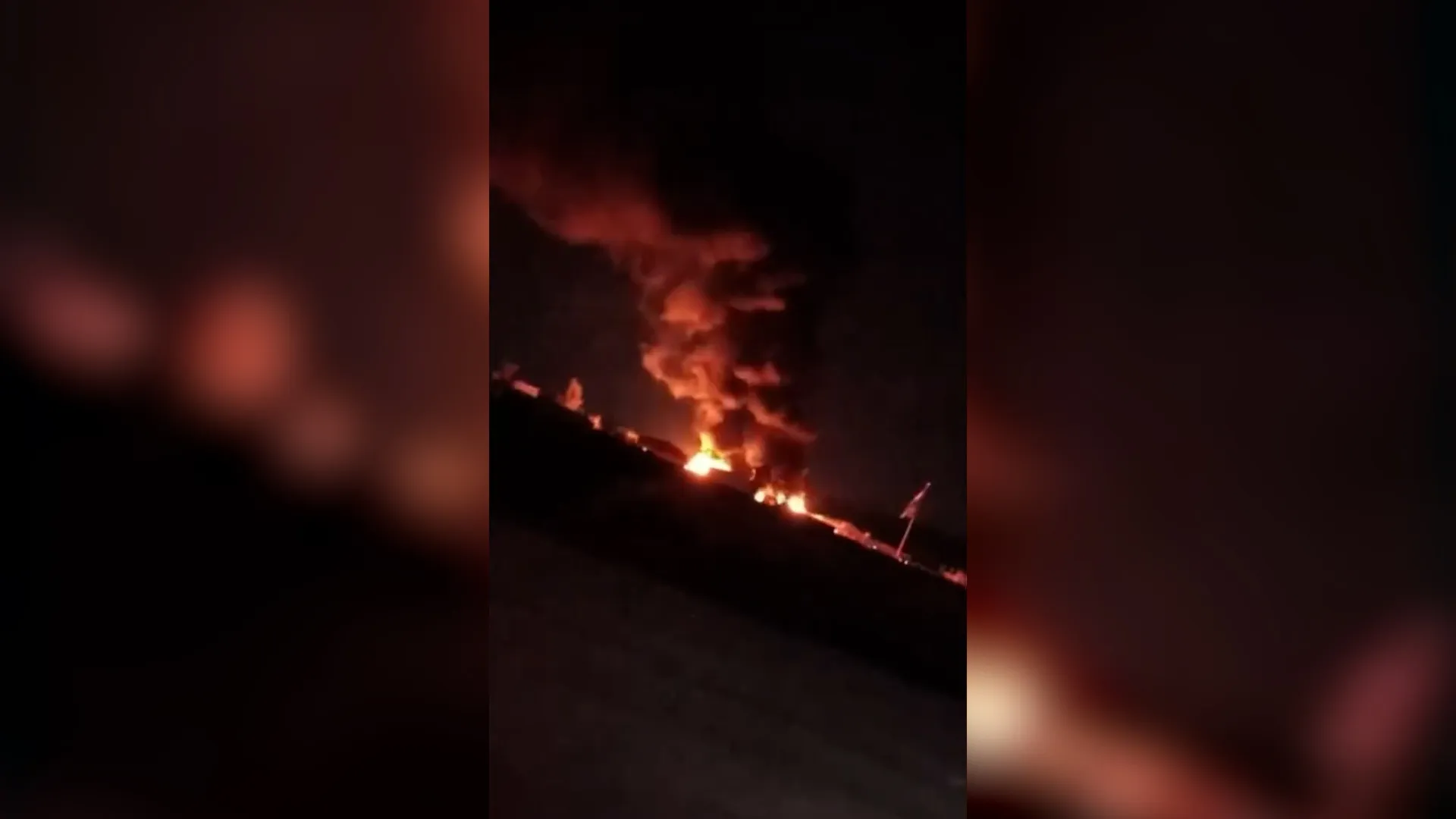
Israel’s attack, echoing similar carnage it wrought in Gaza, kills doctors, paramedics and nurses who were on duty.
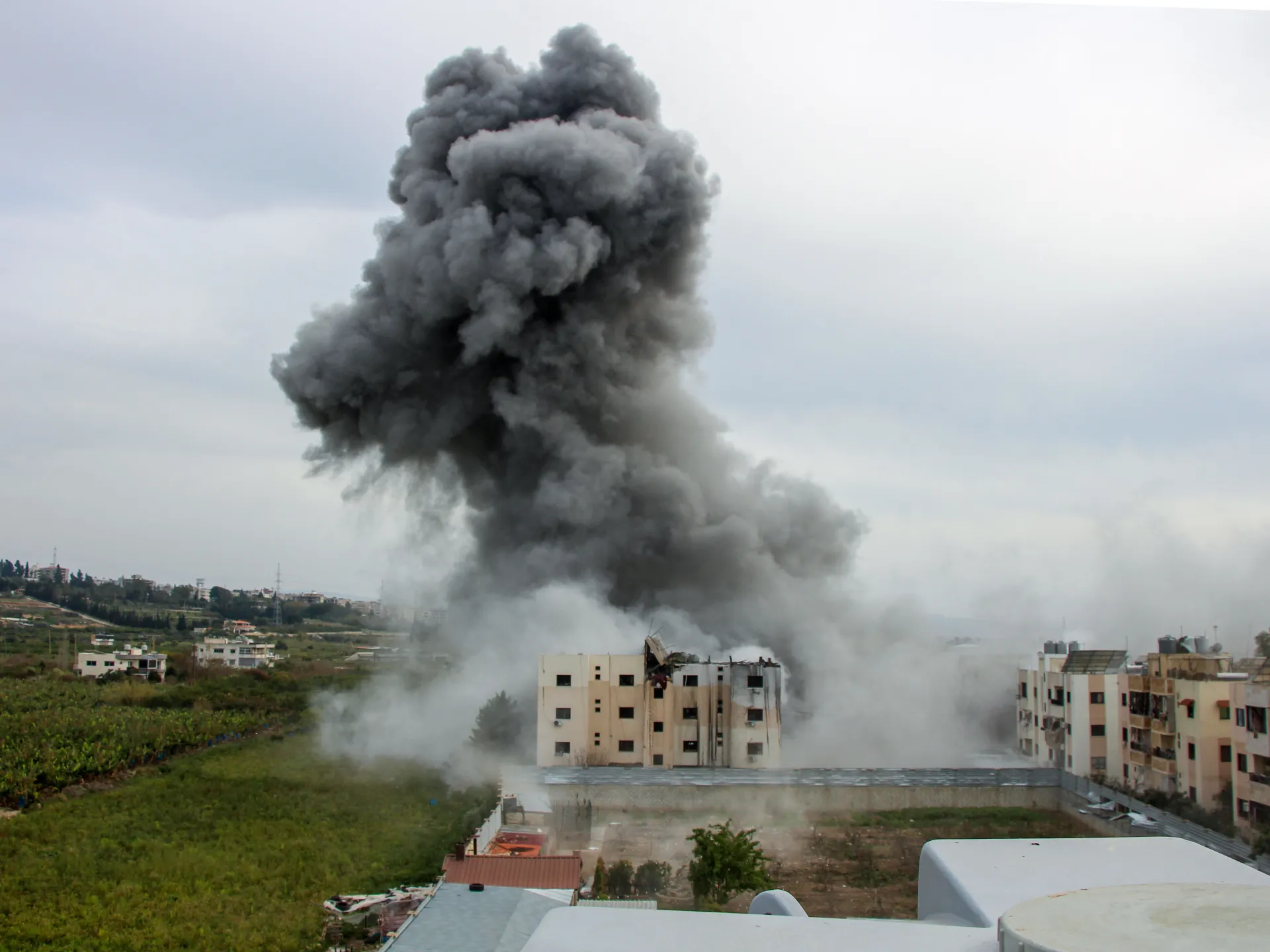
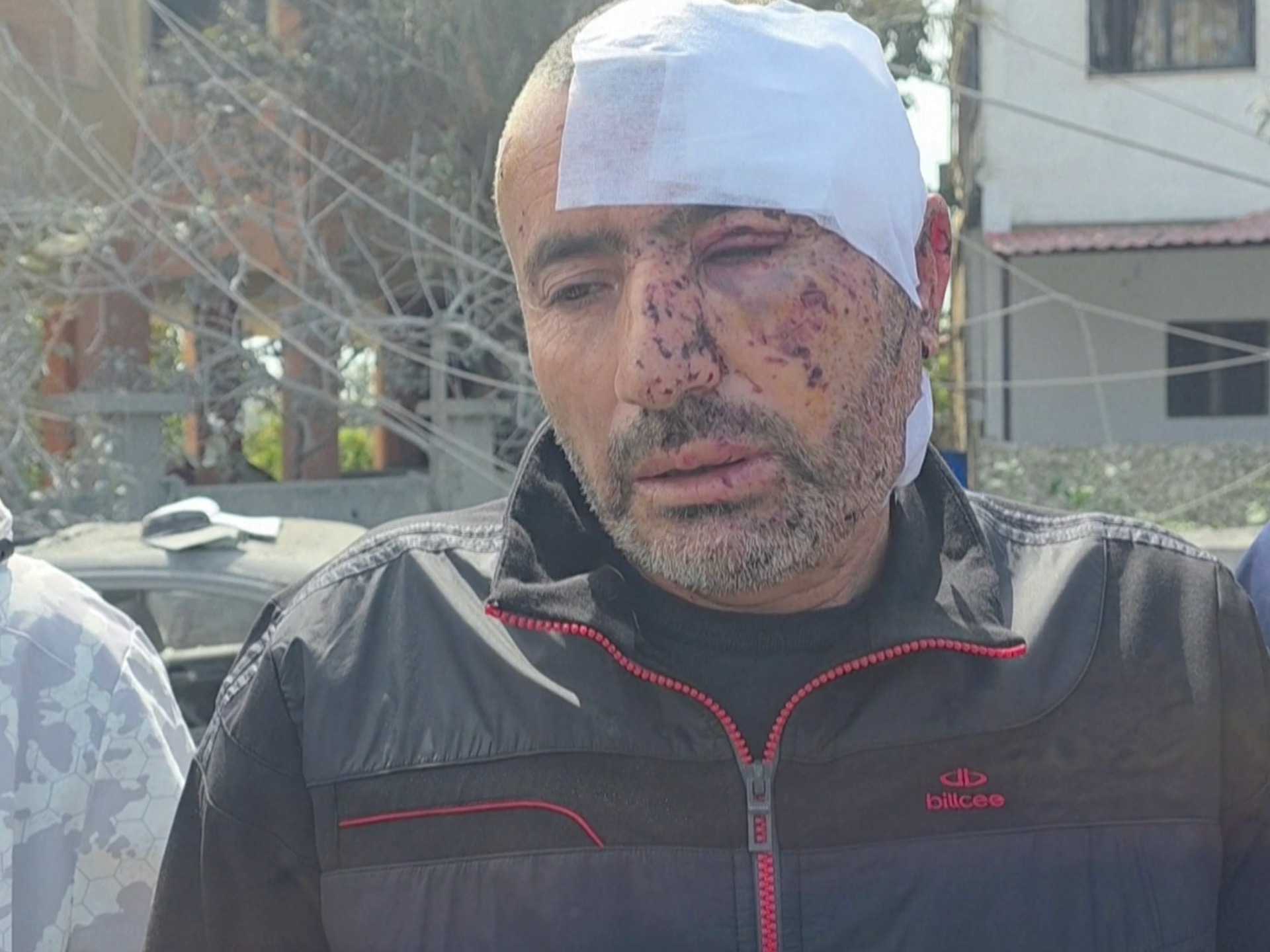
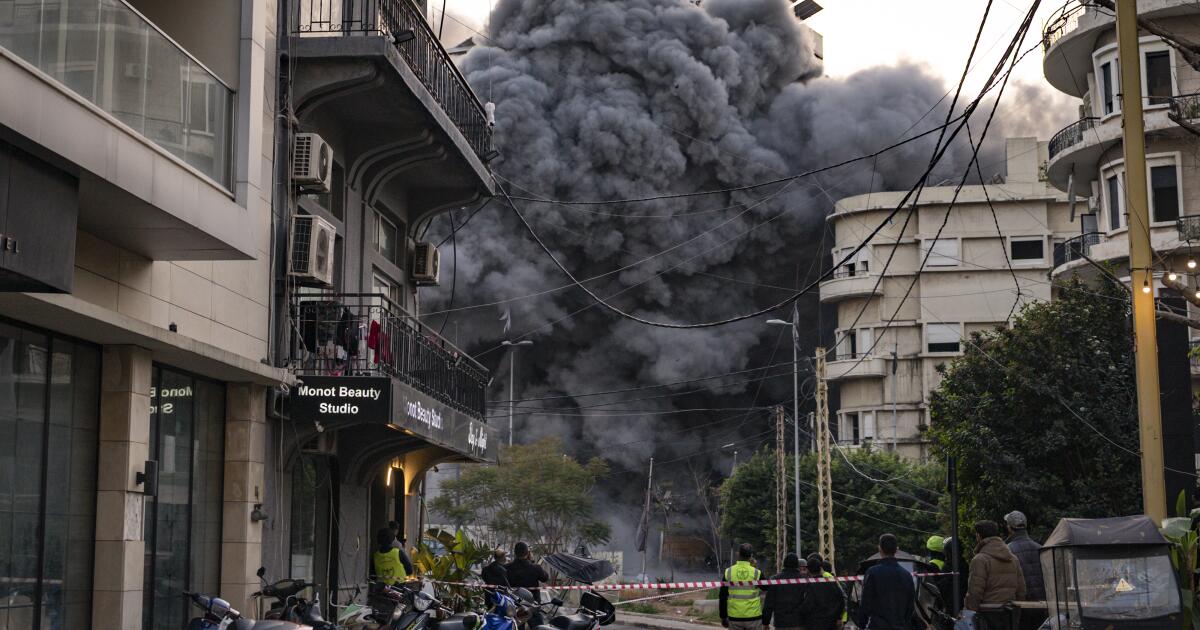
An Israeli strike on a health centre in southern Lebanon has killed 12 medical workers, the Lebanese Ministry of Public Health said, as its devastating assault continued amid a wider regional war launched by the United States and Israel on Iran 15 days ago.
The attack late on Friday occurred in the village of Burj Qalaouiyah in the Bint Jbeil District, and killed doctors, paramedics and nurses who were on duty, Lebanon’s health ministry said.
Recommended Stories
list of 4 itemsend of list
The carnage echoed Israel’s constant targeting of medics and hospitals that decimated Gaza’s healthcare system during its genocidal war on the Palestinian enclave and which contravenes international humanitarian law.
Israeli strikes have so far killed 18 paramedics among 773 people reported killed in Lebanon since fighting between Hezbollah and Israel reignited March 2, after a US-Israeli assault on Iran began on February 28, with the conflict now embroiling much of the region.
According to Al Jazeera’s Heidi Pett, reporting from Beirut, the toll of medics was preliminary as rescue teams continued searching for missing people.
“You can see how deadly some of these individual air strikes have been, not just across the south, but of course, we are seeing air strikes hitting across the capital, Beirut,” said Pett.
Lebanon’s Ministry of Health said it was the second attack on the health sector within hours, after another Israeli strike on the southern village of Souaneh killed two paramedics and wounded five others when it hit a paramedic centre.
The ministry condemned the attack and denounced what it called as continued violence against health workers.
At least four people were also killed in an Israeli air raid on Taamir Haret Saida in the country’s south, the Lebanese News Agency (NNA) said.
Meanwhile, Hezbollah overnight claimed it fired suicide drones against Israeli troops in the northern town of Ya’ara inside Israel.
It was the 24th military operation announced by the group on Friday.
The Lebanese armed group also said it launched rocket attacks targeting Israeli soldiers in southern Lebanon, one in the town of Kfar Kila, and the other in the city of Khiam.
Late on Friday, Hezbollah leader Naim Qassem said his group is ready for a “long confrontation” with Israel as the war continues.
“This is an existential battle, not a limited or simple battle,” he said.
Damage in Israel from Iranian ‘cluster missiles’
Meanwhile, Iran’s retaliatory attacks against Israel continued.
Rocket and missile strikes early on Saturday targeted the Upper Galilee region of northern Israel, Channel 12 reported.
The news outlet said that a “limited number of launches” were either “intercepted” or exploded in open areas.
A post on X from Israel’s public broadcaster KAN featured several vehicles damaged in the strikes.
Alarms were raised for suspected rocket and missile fire in Manara, Margaliot, Kfar Giladi, Misgav Am, Tel Hai, Metula, Kfar Giladi and Kfar Yuval throughout the early morning on Saturday.
“A lot of the damage that we are being told about at the moment seems to be coming from these cluster missiles that Iran has been launching pretty much consistently for the last week at least and they scatter over a large area,” said Al Jazeera’s Rory Challands, reporting from Amman, Jordan.
“They disperse these submunitions bomblets. Each of those has about 2.5 kilogrammes (5.5 pounds) of explosives in them. You can see why that does quite some damage when it scatters and hasn’t been intercepted by the Israeli air defence.”
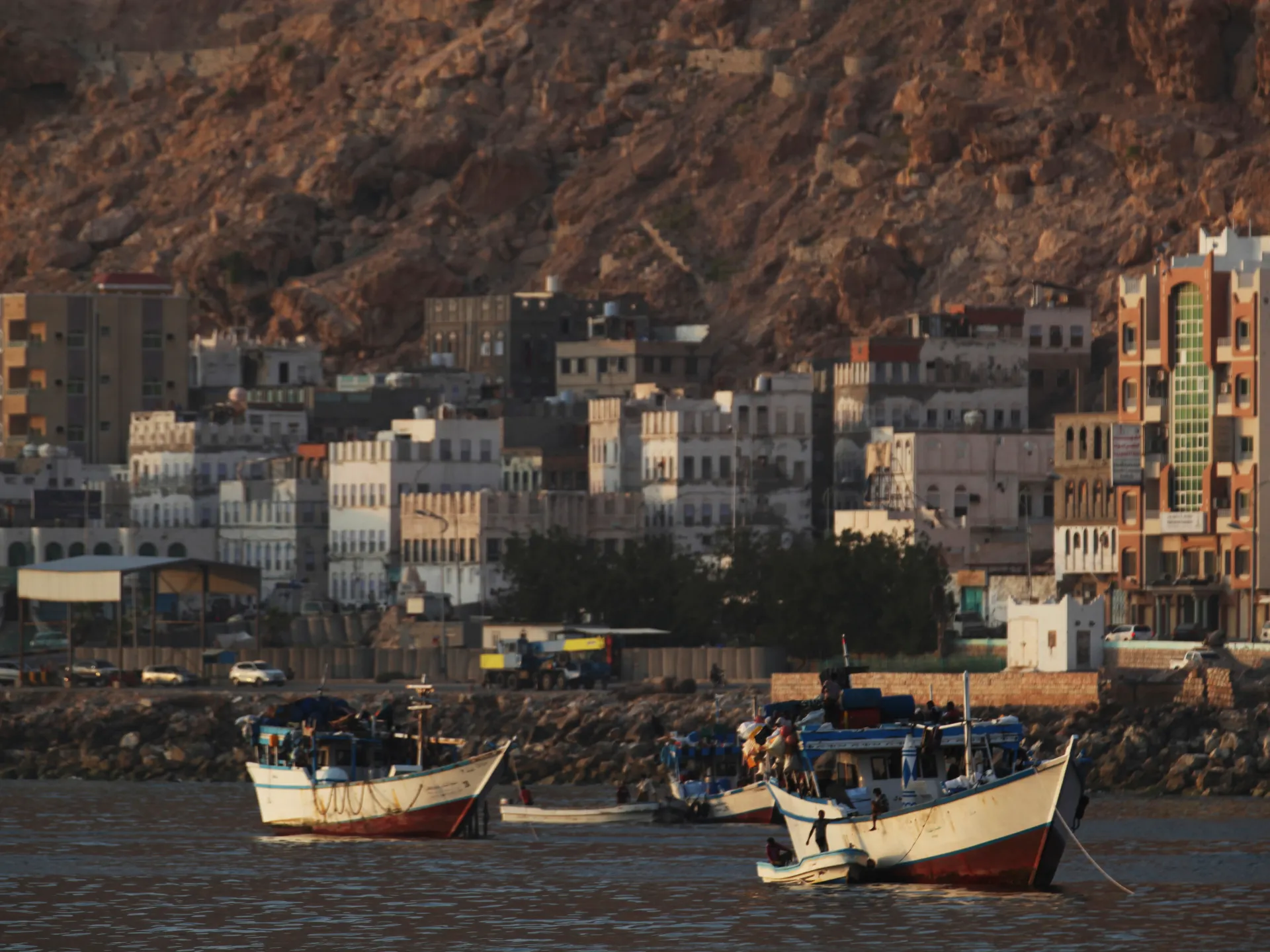
Mukalla, Yemen – A reported decision to impose thousands of dollars in fees on shipping headed for Yemen has experts worried that the price of imported goods and food will increase in the war-torn country, as it starts to feel the economic impact of the United States and Israel’s conflict with Iran.
Local traders and officials have said that international shipping companies informed importers earlier this month of the imposition of new fees of about $3,000 on each container bound for Yemen, described as “war risk” fees. The surprise move prompted government officials to scramble to assess and address its potential repercussions.
Recommended Stories
list of 3 itemsend of list
Because Yemen imports nearly 90 percent of its food and other essential commodities, economists and humanitarian organisations warn that the rise in shipping and insurance costs could quickly translate into higher prices for fuel, food and other goods, further worsening an already dire humanitarian situation.
Mohsen al-Amri, transport minister in Yemen’s internationally-recognised government based in the southern city of Aden, said he had instructed that the fees not be paid by ships already docked at Yemeni ports or those bound for the country, insisting that the ports remain safe.
“Our ports are far from the areas of geopolitical tension in the Gulf and the Strait of Hormuz, making the imposition of ‘risk’ fees on shipments to these relatively safe areas unjustified from both operational and security perspectives,” he said in a social media post last week.
Al Jazeera has reached out to shipping companies to confirm details of the fee, but has yet to receive responses.
For more than a decade, Yemen has been gripped by a bloody war between the Saudi-backed government, based in Aden, and the Iran-aligned Houthi movement, which controls the capital, Sanaa. The conflict has killed and wounded thousands of people and displaced millions, creating what the United Nations once described as the world’s worst humanitarian crisis. Hostilities have significantly declined since April 2022, when the warring parties agreed to a temporary United Nations-brokered truce.
‘High-risk’
Abdulrab al-Khulaqui, deputy chairman of the Yemen Gulf of Aden Ports Corporation, said Yemeni ports have long been classified as high-risk, prompting shipping companies to impose war-risk surcharges. These can reach about $500 per each 20-foot container and $1,000 per each 40-foot container, on top of regular shipping costs.
Al-Khulaqui said that the $3,000 fee now being demanded was “very high and unusual”, but was justified by shipping companies because they regard Yemeni ports as unsafe, despite their distance from Iran.
Although the Houthis are allied to Iran and previously attacked shipping in the Red Sea following Israel’s genocidal war on Gaza, the Yemeni group has yet to intervene in the US-Israel-Iran conflict. Other Yemeni parties are also not involved, making Yemen one of the few regional countries yet to see any violence related to the fighting.
In addition to barring local traders from paying the new charges, the Yemeni government is considering other measures to pressure shipping companies to cancel the fees, including threatening to stop vessels belonging to those companies from docking at Yemeni ports. Authorities may also allow traders to contact exporters directly in countries of origin to negotiate any additional charges.
The new surcharges come as the United Nations has again sounded the alarm over Yemen’s worsening humanitarian situation, saying nearly 65.4 percent of the population – about 23.1 million people – will require urgent humanitarian assistance and protection services this year. This marks an increase of roughly 3.5 million people compared with 2025.
“Yemen continues to face an escalating food security crisis entering 2026,” the World Food Program said in its February Yemen Food Security Update, released on March 5. “January data revealed that 63 percent of households nationwide are struggling to meet their minimum food needs, including 36 percent facing severe food deprivation.”
Bypassing Yemen’s ports
In addition to rising insurance fees on shipments to Yemen, the war in Iran and potential disruptions in the Strait of Hormuz could cut vital supply routes from regional hub ports such as Jebel Ali in the United Arab Emirates.
Mustafa Nasr, head of the Studies and Economic Media Center, told Al Jazeera that shipping companies may begin seeking alternative hub ports to deliver goods to Yemen, which could increase costs and cause delays.
“The closure of Jebel Ali port would force shipping lines to seek alternative ports that may be farther away and involve significantly higher transportation costs,” he said.
Nabil Abdullah Bin Aifan, manager of the government-run Maritime Affairs Authority in Hadramout province and a maritime researcher, said most goods arriving at Mukalla port – the province’s main seaport – are transported on wooden dhows from Dubai.
He said that if disruptions occur in the Strait of Hormuz, traders may turn to alternative regional hub ports such as Salalah in Oman or Jeddah in Saudi Arabia.
“Large ships come to Dubai to unload their containers, and traders then unload the goods from the containers and load them onto those primitive ships, which have no insurance,” Bin Aifan told Al Jazeera.
For now, wheat shipments from Ukraine and goods transported from China to Yemen may see price increases due to rising insurance costs, while products imported from Gulf countries could disappear from the market.
Shipping lines may also consider routing cargo through the Cape of Good Hope rather than the Gulf, Bin Aifan said.
“Even before the recent developments involving Iran, ports in our region were considered high risk. However, after the relative calm that followed the halt to Houthi attacks in the Red Sea, confidence gradually returned and ships began sailing back to the region. Now, the war has brought the problem back again,” he said.
All of this means that Yemenis, already struggling with poverty and hunger after years of war, will likely have to pay more for imported food and goods.
Abdullah al-Hadad, an English teacher from the city of Taiz with 40 years of experience in the profession, said that his monthly salary – less than $80 – is already not enough to cover his basic needs. Meat and fish have become luxuries for his family, and he still owes nearly one million Yemeni riyals (about $670) to a local grocery shop.
To make ends meet, he works additional jobs as a taxi driver and in a grocery store, while his children also work after school to help support the family and pay for medication for his 10-year-old son, who has autism.
“What I suffer from as a government employee is the extremely low salary, which does not even cover basic necessities such as bread, tea, salt and sugar,” al-Hadad told Al Jazeera.
“Other foods that are essential for a healthy diet, like meat or fish, have become a distant dream.”
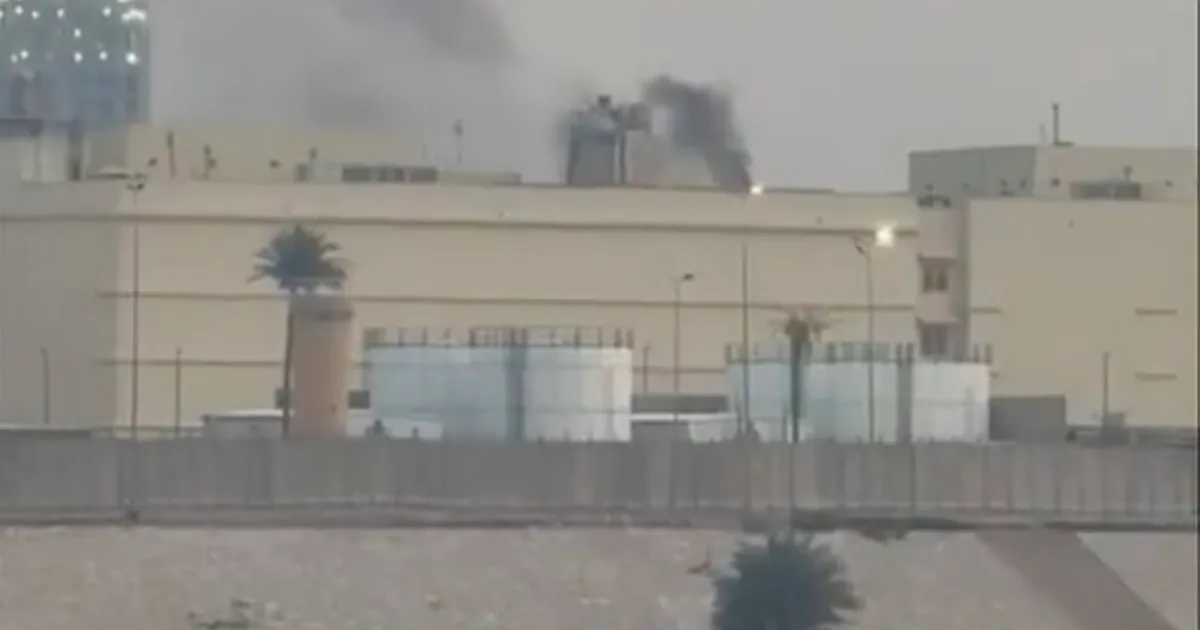
Videos posted by social media users showed smoke rising from the US embassy in Baghdad after a reported attack. Iraqi officials said a helipad at the embassy was hit by a missile.
In a blow to Brits planning to get away for summer 2026, experts have revealed that the situation in the Middle East could cause holiday prices to rise, even in destinations not affected by the conflict
This article contains affiliate links, we will receive a commission on any sales we generate from it. Learn more
Brits could find their usual break is more expensive this year(Image: Getty Images)
Brits planning to get away overseas for Easter or summer this year are being warned they may need to expand their budget, as holiday prices could rise across all destinations.
Hannah Mayfield, a qualified financial advisor, has explained that the situation in the Middle East could have a “knock-on effect” on prices, following similar patterns seen during times of instability. Even those who opt for a UK-based staycation, or visit countries nowhere near the Middle East, could see higher prices for flights, accommodation, and even everyday spending.
Hannah explained: “Rising tensions in the Middle East can have a knock-on effect on holiday costs, even if you’re travelling somewhere completely different. But this isn’t a new phenomenon. We’ve seen similar patterns during previous periods of geopolitical instability, where travellers change their plans and demand shifts toward destinations perceived as safer.”
Hannah, who is working with travel insurers PayingTooMuch, gave the reasons why flight prices could rise: “Airlines can face higher operating costs during periods of geopolitical instability. If flights need to avoid certain airspaces, routes can become longer. At the same time, global oil prices usually rise during conflicts in major energy-producing regions, and that can eventually feed through into the price for fuel. For travellers, that might mean more expensive plane tickets.”
And it’s not just overseas jaunts that could become more expensive. Hannah said: “There’s also the potential impact on taking holidays, especially to destinations closer to home. If some holidaymakers decide not to travel as far afield, demand for popular destinations such as coastal towns, national parks and major cities can increase.
“When that happens, accommodation prices often rise during peak periods, particularly if availability is limited.” This could mean that, like during Covid, staycations could become pricier.
If you’re planning a trip, even to ‘safe’ destinations, you Hannah advises: “When travel feels more uncertain making sure you have the right level of cover for your trip becomes even more important, so you are less likely to face unexpected costs. Booking early, staying flexible with travel dates, comparing travel insurance policies and prices for flights can make a noticeable difference to the overall cost of a trip.”
She also had this warning: “Most standard travel insurance policies don’t cover acts of war, so conflicts itself may not typically have a direct impact on premiums. However, travellers should always check their policy details carefully, so they understand exactly what is and isn’t covered.
“Consider getting a policy that offers additional cover for travel disruptions which can offer another layer of protection in situations where official government travel advice changes and costs can’t be recovered elsewhere. It’s also worth noting that travel insurance does not cover events that are already known at the time the policy is purchased.”
Hannah, who also runs What is Wealth, which offers financial education for women, also gave some additional money saving tips for holidaymakers: “Keeping an eye on exchange rates and fuel prices can also help holidaymakers budget more accurately and avoid unexpected costs closer to their trip.”
Have a story you want to share? Email us at webtravel@reachplc.com
“The US Navy at this point can’t even get anywhere close to the Strait of Hormuz without being attacked.” Experts are pouring cold water on Pete Hegseth’s claims that the US is working effectively to reopen the world’s most crucial shipping lane.
Rights groups have slammed United States Secretary of Defense Pete Hegseth for saying that “no quarter” will be shown to Iran, as the US and Israel continue their military campaign against the country.
“We will keep pressing. We will keep pushing, keep advancing. No quarter, no mercy for our enemies,” Hegseth told reporters on Friday.
Recommended Stories
list of 3 itemsend of list
Under the Hague Convention and other international treaties, it is illegal to threaten that no quarter will be given.
Domestic laws, such as the 1996 War Crimes Act, also prohibit such policies. US military manuals likewise warn that threats of “no quarter” are illegal.
Brian Finucane, a senior adviser at the International Crisis Group, a think tank, said Hegseth’s comments appear to run afoul of those standards.
“These comments are very striking,” Finucane told Al Jazeera over a phone call. “It raises questions about whether this belligerent, lawless rhetoric is being translated into how the war is being conducted on the battlefield.”
But Hegseth has publicly dismissed concerns about international law, claiming he would abide no “stupid rules of engagement” and no “politically correct wars”.
His rhetoric has provoked concern among some experts that measures designed to prevent civilian harm are being ignored in favour of a campaign of “maximum lethality”.
Hegseth’s remarks also come after a US strike on a girls’ school in southern Iran that killed more than 170 people, most of them children. The war has left at least 1,444 Iranians dead and millions more displaced.
‘Inhumane and counterproductive’
Prohibitions against declaring “no quarter” go back more than a century, part of an effort to impose restraints on conduct during war.
The Nuremberg trials after World War II upheld that legal standard, as Nazi officials were prosecuted, in some cases, for denying quarter to enemy forces.
“The basic idea is that it’s both inhumane and counterproductive to execute people who have laid down their arms,” said Finucane.
He added that the “mere announcement” of “no quarter” from a government official can itself be a war crime.
The US and Israel have already faced allegations of violating international law during their war against Iran. Experts have condemned their initial strike on February 28 as “unprovoked”, deeming the conflict an illegal war of aggression.
Iranian officials also protested after a US submarine sank a military vessel, the IRIS Dena, off the coast of Sri Lanka, as it returned from a ceremonial naval exercise in India. That attack killed at least 84 people.
While warships are considered legal military targets, Iran has said that the ship was not fully armed, raising questions about whether it could have been interdicted rather than sunk.
US forces also purportedly declined to help rescue sailors from the Dena, even though the Geneva Convention largely requires aid to the shipwrecked. The Sri Lankan navy ultimately helped collect survivors from the wreckage.
Responding to the attack, Hegseth described the sinking of the ship as a “quiet death”. He also told reporters, “We are fighting to win.”
US President Donald Trump himself remarked that he asked why the ship had been sunk, not captured.
“One of my generals said, ‘Sir, it’s a lot more fun doing it this way,’” Trump said.
‘Serious red flag’
The US military has faced criticism for killing civilians in military operations for decades.
That includes during the so-called “global war on terror”, when airstrikes resulted in thousands of civilian deaths, including a 2008 attack on a wedding party in Afghanistan.
Even before the war with Iran, the Trump administration had faced accusations that it violated international law by attacking alleged drug-trafficking vessels in the Caribbean Sea and eastern Pacific Ocean.
At least 157 people have been killed in those attacks since they started on September 2.
The Trump administration, however, has never identified the victims nor presented evidence against them. Scholars have condemned the attacks as a campaign of extrajudicial killings.
Analysts say that the Pentagon’s policies of emphasising lethality at the expense of human rights concerns has carried over into its war against Iran.
“Death and destruction from the sky all day long. We’re playing for keeps. Our warfighters have maximum authorities granted personally by the president and yours truly,” Hegseth said during a briefing on March 4.
“Our rules of engagement are bold, precise and designed to unleash American power, not shackle it.”
Sarah Yager, the Washington director at Human Rights Watch, called such rhetoric alarming.
“I’ve been engaging with the US military for two decades, and I’m shocked by this language. Rhetoric from senior leaders matters because it helps shape the command environment in which US forces operate,” Yager said.
“From an atrocity-prevention perspective, language that dismisses legal restraints is a serious red flag.”
While the impact of Hegseth’s rhetoric on combat operations is not certain, a recent report from the watchdog group Airwars found that the pace of the US and Israeli assault on Iran has far outstripped other military operations in modern history.
Reports indicate that the US dropped nearly $5.6bn worth of munitions in the first two days of the war alone. Airwars says the US and Israel hit more targets in the first 100 hours of the Iran war than in the first six months of the US campaign against ISIL (ISIS).
Following Hegseth’s remarks on Friday, Senator Jeff Merkley condemned the Pentagon chief as a “dangerous amateur”. He cited the attack on the Iranian girls’ school as an example of the consequences.
“His ‘no hesitation’ engagement rules set the stage for failing to distinguish a civilian school from a military target,” Merkley wrote in a social media post.
“The result, more than 150 dead schoolgirls and teachers from an American missile.”
1 of 2 | A damaged building stands in the Dubai International Financial Center. The damage was caused by debris from the interception of an Iranian drone attack in Dubai, United Arab Emirates, Friday. Those in the UAE are being warned not to take photos or videos of damage or they could be charged under cybercrime laws. Photo by a stringer/EPA
March 13 (UPI) — Several people, including tourists and influencers, have been arrested in Dubai, United Arab Emirates, for possessing, sharing or commenting on digital content that shows attacks or damage from attacks by Iran in the country.
There have been 21 people arrested in the emirate, said advocacy organization Detained in Dubai.
“The charges sound extremely vague but serious on paper. In reality, the alleged conduct could be something as simple as sharing or commenting on a video that is already circulating online,” said Radha Stirling, CEO of Detained in Dubai and Due Process International.
“Under UAE cybercrime laws, the person who originally posts content can be charged, but so can anyone who reshapes, reposts or comments on it. One video can quickly lead to dozens of people facing criminal charges,” Stirling said.
Penalties can include up to two years in prison, fines ranging from about $5,500 to $55,000, and foreign nationals will face deportation.
“Foreigners need to understand that what may seem like normal social media behavior elsewhere can lead to arrest in the UAE,” Stirling said. “In some circumstances people can find themselves treated as national security suspects before the facts are even clarified.”
One 60-year-old British tourist has been charged under cybercrime laws for allegedly filming Iranian missiles over the city.
“We are in contact with the local authorities following the detention of a British man in the UAE,” the United Kingdom’s Foreign Office told CNN.
The UAE’s ambassador to the United Kingdom told British radio station LBC that the “United Arab Emirates is very safe.”
“The guidelines and regulations are there in the UAE to ensure people’s safety,” he said. He added that people filming could be hit by “falling debris.”
Stirling also said that Qatar has already charged more than 200 people under similar laws since the Iran war began.
The UAE defense ministry said on X Friday that 1,800 drones and missiles have been fired at the UAE since the war with Iran began.
Six people from the Emirates, Pakistan, Nepal and Bangladesh have been killed, and 141 people have suffered mild to moderate injuries.
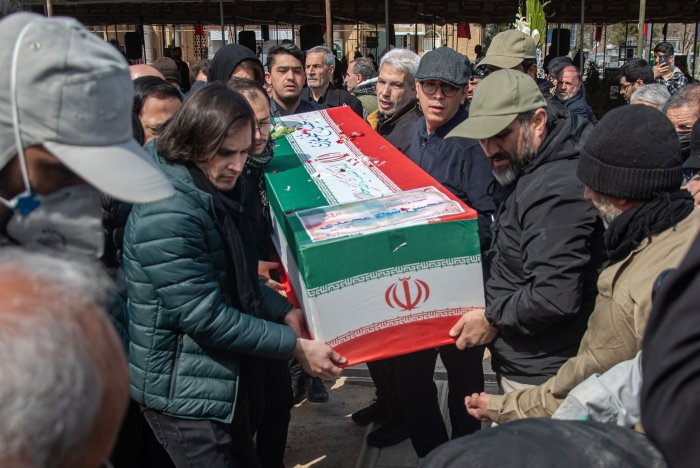
Iranians attend a funeral for a person killed in recent U.S.-Israel airstrikes at Behesht-e Zahra cemetery on the southern outskirts of Tehran in Iran on March 9, 2026. Photo by Hossein Esmaeili/UPI | License Photo
Sheikh Khalifa bin Hamad says Qatar will ‘not hesitate’ to ensure its stability as US-Israeli war on Iran continues.
Published On 13 Mar 202613 Mar 2026
Share
Qatar’s Interior Minister Sheikh Khalifa bin Hamad has said the situation in the Gulf country is “stable” amid Iranian drone and missile attacks launched across the Middle East in response to the US-Israeli war on Iran.
In an interview with Qatar Television on Friday, Sheikh Khalifa said the Qatari government had a plan in place to deal with the prospect of more Iranian attacks amid a regional war.
Recommended Stories
list of 3 itemsend of list
“The security situation in the country is stable, and we will not hesitate to take any measure that ensures the stability of our nation,” he said.
The interior minister said Qatar’s early warning system has been effective as authorities responded to reports of falling missile fragments at more than 600 sites across the country.
He added that Qatar has enough water to last for several months, as well as food reserves that will cover the nation’s needs for a year and a half.
Sheikh Khalifa’s remarks come as Qatar and other countries in the Gulf region have faced a barrage of Iranian attacks since the United States and Israel launched a war against Iran on February 28.
While Iran has said it is targeting US and Israeli military interests in the wider Middle East, the strikes have hit civilian infrastructure, including oil and gas facilities.
That has prompted a slowdown in regional energy production, which – coupled with Iran’s closure of the Strait of Hormuz, a key Gulf waterway – has raised concerns around the war’s effects on global economies.
Earlier this week, the United Nations Security Council passed a resolution denouncing the Iranian attacks on Gulf Cooperation Council (GCC) countries.
Sheikha Alya Ahmed bin Saif Al Thani, Qatar’s ambassador to the UN, had condemned the firings as “a clear violation of international law and the UN Charter”.
The attacks, she told reporters in New York on Wednesday, “impacts deeply the foundation of understanding upon which bilateral relations between our countries have been built”.
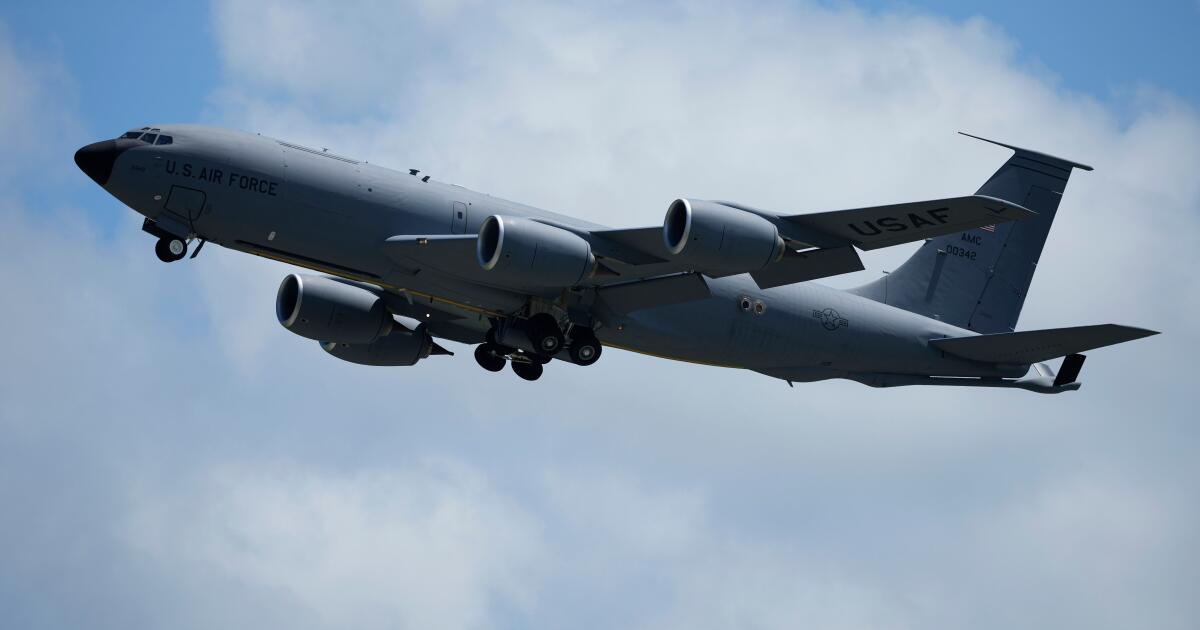
WASHINGTON — Six American airmen deployed to operations against Iran were killed after their refueling aircraft crashed in western Iraq, U.S. Central Command said Friday, bringing the U.S. death toll in the war to 13, as Defense Secretary Pete Hegseth announced the heaviest day of strikes yet.
The crash involved two aircraft in “friendly airspace,” the Pentagon said, adding that the other plane landed safely. The downed KC-135 refueling tanker is the fourth U.S. aircraft to crash during the war against Iran.
“American heroes, all of them,” Hegseth said at the Pentagon on Friday. “We will greet those heroes at Dover and their sacrifice will only recommit us to the resolve of this mission.”
Central Command said the incident is under investigation but was “not due to hostile or friendly fire.”
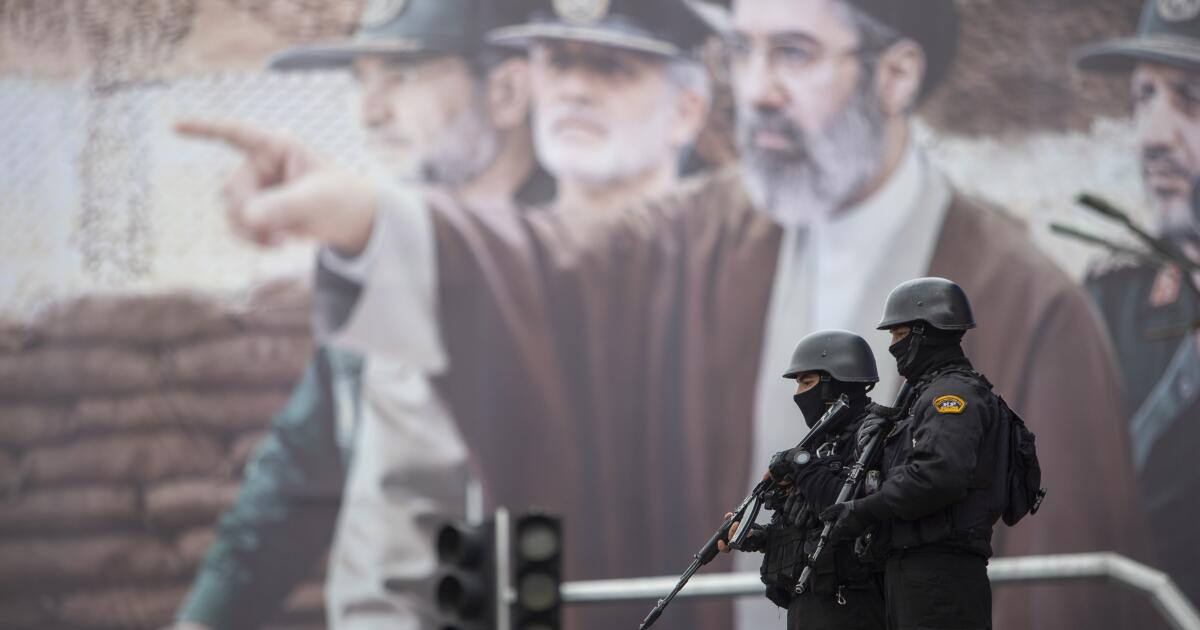
During the briefing, Hegseth described the Iranian leaders as “desperate” and “cowering” underground like rats. He said Iran’s Supreme Leader Ayatollah Mojtaba Khamenei “is wounded and likely disfigured,” but gave no intelligence to support the claim.
Khamenei has not been seen in public since he rose to leadership, but issued his first public statement Thursday vowing retaliation against U.S. and Israeli attacks, promising that Tehran will continue to choke off the world’s most crucial oil route — the Strait of Hormuz.
“Our revenge will be never ending, not only for the late supreme leader, but also for the blood of all of our martyrs,” he said.
The defense secretary said Friday would see Iran hammered with the heaviest round of air strikes yet seen in the two-week U.S.-Israeli operation that has razed buildings, complexes and factory lines all across Iran, killing at least 1,348 civilians, according to Iranian officials.
“No quarter, no mercy for our enemies,” Hegseth said.
And while Hegseth insisted that fighting will cease when the U.S. defeats Iran’s naval, missile, and nuclear weapons capabilities, President Trump’s public statements continue to sow doubt that the White House and Pentagon are aligned on the objectives of the mission.
Asked Friday by Fox News when the war might end, Trump said, “When I feel it — feel it in my bones.”
Iran’s blockade of the strait remains Tehran’s foremost leverage against its Western adversaries, and a serious political bane for Trump. The International Energy Agency warned Thursday that conflict has created “the largest supply disruption in the history of the global oil market,” which has sent oil prices surging 40% to $95 a barrel since Feb. 28.
Some 1,000 ships remain stranded in the Persian Gulf, many of them energy tankers that have been unable to carry oil and gas shipments from the Middle East to importers across the globe. Vessels that have attempted to traverse the embattled channel have been destroyed in Iranian attacks. Hegseth described Tehran’s strategy as “an act of desperation.”
The United Kingdom Maritime Trade Operations on Friday reported 20 incidents affecting vessels operating in and around the Arabian Gulf, Strait of Hormuz and Gulf of Oman in March.
Drone and missile attacks continue to assail gulf states, threatening to draw more players into the conflict. Thick black smoke was seen rising over Dubai’s skyline Friday after debris from an intercepted Iranian drone strike caused a fire and minor damage to a building within the Dubai International Financial Centre, according to the Dubai Media Office.
Europe has become increasingly involved, too. U.S. long-range bombers have begun flying offensive missions from British airbases, even as U.K. Prime Minister Keir Starmer explicitly permitted U.S. forces to use the bases “for defensive purposes only.” Starmer initially refused to cooperate in American hostilities in any capacity, but changed his approach after he drew criticism from Trump, who said, “He’s no Winston Churchill.”
The U.K., France, and Italy each deployed naval assets to the Eastern Mediterranean island of Cyprus, situated just 125 miles from Lebanon, after Iranian drone strikes hit U.K. bases. The island has emerged as a strategic — and exposed — nerve center in the U.S. offensive against Iran.
Meanwhile, Israel said Friday its strikes are “continuing and intensifying” in Lebanon and Iran. The Israel Defense Forces issued new evacuation orders in southern Lebanon on Thursday after overnight airstrikes in Beirut triggered retaliatory missile and drone attacks by the Iran-backed militant group Hezbollah.
Eight civilians were killed and nine others were wounded in attacks on the Lebanese city of Sidon on Friday, according to Lebanon’s Health Ministry. More than 100 children have been killed in the Israeli assault, the ministry said.
A Lebanese father mourned the death of his four daughters, mother, father, brother-in-law and nephew, after they were killed in an Israeli attack. Israel has killed at least 770 people in Lebanon since last Monday. Around 750,000 have been forcibly displaced.
Iranian state TV video shows the Chief Justice Gholam-Hossein Mohseni-Eje’i speaking to a reporter when a blast, described by officials as an Israeli strike, hit near the al-Quds Day rally in Tehran. Despite the explosion, he continued marching with crowds taking part in the annual pro-Palestinian demonstration.
Tens of thousands of people have gathered around the world for al-Quds Day, an annual event on the final Friday of Ramadan demonstrating solidarity with Palestine and opposition to Israeli occupation.
Rallies took place across numerous countries, including Iran, Malaysia, Indonesia, Kashmir and Yemen. In Tehran, thousands marched, chanting “death to Israel” and “death to America” as the United States-Israeli military campaign entered its 14th day of conflict.
The event has long been associated with Iran, and was established by the country’s first supreme leader, Ayatollah Ruhollah Khomeini, in 1979.
This year’s observance coincided with the US-Israel attack on Iran that has killed at least 1,444 people, including the Iranian supreme leader, Ali Khamenei.
Crowds turned out in Tehran and other cities, despite ongoing US and Israeli strikes in the region during the commemoration, state media reported.
Demonstrators worldwide expressed solidarity with both Palestinians and Iranians. In Kashmir, protesters burned mock coffins bearing images of US President Donald Trump and Israeli Prime Minister Benjamin Netanyahu while shouting slogans against the United States and Israel.
For the first time in 40 years, the United Kingdom banned London’s al-Quds Day march, citing risks of public disorder related to the “volatile situation in the Middle East” and potential confrontations between opposing groups. This marks the first protest ban since 2012, when authorities prohibited marches by the far-right English Defence League.
According to Iran’s Health Ministry, another 18,551 people have been injured in US-Israeli attacks on Iran since February 28.
Six days after the commencement of Operation Epic Fury, President Trump took to Truth Social to announce, in the context of the ongoing joint American-Israeli military campaign against the Islamic Republic of Iran: “There will be no deal with Iran except UNCONDITIONAL SURRENDER!” In the same post, the president seemed to equate such “unconditional surrender” with “the selection of a GREAT & ACCEPTABLE Leader” to lead Iran, which would enable the country to come back from the “brink of destruction” and emerge “stronger than ever.”
Just three days after announcing “unconditional surrender” as his goal, Trump, speaking on March 9 in Doral, Fla., proclaimed that the end of the war will happen “very soon.” One might be forgiven for experiencing some whiplash — especially because earlier that same day, Trump told Fox News he was “not happy” with Iran’s naming of a new supreme leader, Mojtaba Khamenei. In fact, around the same time he was demanding “unconditional surrender” the prior week, Trump had already called Khamenei the younger “unacceptable.”
What exactly is going on here?
Trump is a conservative nationalist, which means his general approach to foreign policy and his specific foreign policy “excursions” are guided by his view of how best to secure the American national interest. Accordingly, since Operation Epic Fury started, Pentagon press briefings featuring Secretary of War Pete Hegseth and Chairman of the Joint Chiefs of Staff Dan Caine have repeatedly emphasized empirical metrics for measuring success, such as Iranian naval vessels sunk, Iranian air force planes shot down, Iranian ballistic missile silos and launch sites destroyed and so forth.
Trump hasn’t said it explicitly, but the Trump administration’s goal — and thereby, definition of victory — in Operation Epic Fury seems clear enough: the neutralization of Iran as an active, ongoing threat to the United States and our interests. If nothing else, at least, that is how victory in the current campaign should be defined.
That does still raise at least one pressing question, though, especially in the context of exiled Crown Prince Reza Pahlavi’s call to the Iranian people to prepare for “the decisive stage of our final struggle”: Where does that most controversial of foreign policy goals, “regime change,” fit into the puzzle?
At this point, it is undeniable that wholesale regime change is the most desirable outcome for the conflict in Iran. The pursuit of regime change as a goal unto itself is often now disparaged, coming in the aftermath of the failed neoconservative boondoggles earlier this century. But it ought to be axiomatic that there are some foreign regimes that behave in a manner that redounds to the American national interest, and there are some foreign regimes that behave in a manner that is contrary to the American national interest. It is natural and logical that we would wish for the latter types of regime to be heavily reformed or outright replaced — especially with the local populace leading the way.
Perhaps even more to the point: One does not take out a 37-year-ruling despot like Ali Khamenei, as the American and Israeli militaries did in the opening hours of the present operation, and not hope for full-scale regime change. All people of goodwill should be hoping for that outcome — for the Iranian people to rise up like lions and throw the yoke of tyranny off their necks once and for all, delivering a long-sought victory for the American national interest in the process.
But it’s entirely possible full-scale regime change won’t happen. The people of Iran just witnessed tens of thousands of their countrymen brutally gunned down during the anti-regime uprisings of late December and early January. They are an unarmed populace facing Nazi-esque regime jackboots, in the form of the Islamic Revolutionary Guard Corps and the Basij paramilitary.
All of that, then, raises one final question: Is it possible for there to be victory in Operation Epic Fury, and for the Iranian regime to be neutralized as a threat to the United States and our interests, if there isn’t full-scale regime change in Tehran?
In theory, the answer is yes. Venezuela provides a model.
Delcy Rodríguez, the current leader, is a hardened Marxist-Leninist in the mold of her predecessors Hugo Chávez and Nicolás Maduro. But Rodriguez has been fully cooperative with the United States since the astonishing January operation to extract Maduro for the simple reason that she has no real choice in the matter: She remains in power, yes, but only on the condition of an “offer” presented by Trump and Secretary of State Marco Rubio that, to borrow from Vito Corleone in “The Godfather,” Rodríguez “can’t refuse.” Rodríguez has thus been fully cooperative in areas such as American oil extraction and the reestablishment of diplomatic relations with the United States.
In theory, a similar arrangement is possible with a decimated, chastened regime in Tehran. And some experts predict that such an arrangement will characterize the regime in Iran a year or two from now. In practice, however, there is the ever-thorny problem that has frustrated and perplexed Westerners for decades when they attempt to reason with zealous Islamists: They do not fear death. A socialist like Delcy Rodríguez can, ultimately, be reasoned with; an Islamist like Mojtaba Khamenei (or his successor), perhaps not.
The cleanest solution to the Iran quagmire at this particular juncture — and the one that most clearly fulfills Trump’s “unconditional surrender” victory criterion — is indeed full-scale regime change. That is certainly the outcome that would be best for the neutralization of the Iranian threat and the corresponding advancement of the American national interest. I’m far from certain it will happen. But like many, I pray that it will posthaste.
Josh Hammer’s latest book is “Israel and Civilization: The Fate of the Jewish Nation and the Destiny of the West.” This article was produced in collaboration with Creators Syndicate. X: @josh_hammer
If you’re looking for the most elegant way to wrap up our “little excursion” in Iran, it’s this: President Trump should follow what might politely be called the “declare victory and head for the airport” strategy.
You know the drill: Announce that we’ve set back Iran’s nuclear programs a decade, pounded their navy into submission, and turned the ayatollah into a fine mist. Mission accomplished! Thank you for flying the friendly skies, and please return your seat backs to their full upright and locked position.
Don’t get me wrong. This “cut and run” routine is less than ideal. Trump will have signaled to the world he (we) can’t endure any insurgent resistance, empowered the Islamic Revolutionary Guard Corps to run the country and likely angered Israel in the process.
But his domestic political base will believe he won, and fan service has always been his top political priority.
Besides, once you’ve entered a war without a coherent justification, clearly defined goals or a credible exit strategy, you’re lucky to get out at all. A salutary outcome no longer exists; that ship has already sailed.
Speaking of which, as I write this, we are drifting toward what feels like a point of no return. Mining the Strait of Hormuz, which Iran is now attempting to do, is the ultimate trump card.
Using mines to shut down this narrow shipping lane — which contributes about 20% of the world’s oil supply, not to mention natural gas and fertilizer — could result in a crippled global economy, mass casualties and a situation in which the president can no longer save face while cutting and running.
As retired U.S. Navy Adm. James Stavridis writes, “Iran has been planning a Strait of Hormuz closure operation for decades and probably has more than 5,000 mines; just one hit can severely damage a thin-skinned tanker.”
Yes, once laid, minefields can be cleared. But Stavridis predicts it would take “weeks, if not a month or two” to clear thousands of mines. He warns: “The global economy needs to be prepared for a month or two shutdown.” (Complicating matters is the fact that our dedicated minesweepers were recently decommissioned.)
The Iranians are not idiots. They watch American politics. They understand that Trump’s pressure point isn’t Tehran — it’s the S&P 500. A bad week on Wall Street makes him jumpier than a long-tailed cat in a room full of rocking chairs.
Trump, whatever else you say about him, is a transactional materialist who approaches geopolitics the way a real estate developer approaches zoning disputes: What’s the angle, where’s the leverage, and can everybody just settle already?
Unfortunately, the fellows running Iran are religious zealots who believe — deeply, sincerely and somewhat alarmingly — in something larger than quarterly economic indicators. Their strategic plan appears to consist of two options: survive (which they see as tantamount to victory), or die gloriously while insisting they meant to do that all along.
Which makes their current behavior grimly logical.
The Iranian regime, such as it is, doesn’t have much to lose. But they know exactly what Trump has to lose: His popularity and political legacy are now tied to the price of oil.
Releasing U.S. strategic oil reserves will help to some extent, but this is not a long-term solution. And Iran is betting that when the price at the pump for U.S. consumers starts looking like a luxury car payment, Trump will do what critics like to summarize as TACO — “Trump Always Chickens Out.”
Lots of American political observers agree. And it’s not just moderates or RINOs who are teasing this.
Referring to the U.S. military, former Speaker of the House Newt Gingrich told Larry Kudlow on Fox Business: “They have to keep the Strait of Hormuz open. I don’t care what it costs.”
“If they can’t keep it open,” Gingrich continued, “this war will, in fact, be an American defeat before very long, because the entire world, including the American people, will react to the price of oil if the strait stays closed very long.”
Perhaps the U.S. military can pull off a delicate trick: keep our “armada” in the region, keep the Strait of Hormuz open, clear any mines that are laid and prevent some unlucky tanker from being hit by a mine — or, for that matter, by a drone or missile fired from the Iranian coast. That final risk is why some military analysts believe reopening the strait would require a ground operation.
Imagine that the U.S. manages to thread these needles. Then what?
Total and complete surrender? Regime change? Boots on the ground?
Absent a swift exit (like, tomorrow), we’re left with the two classic options of power politics: a delayed and more ignominious retreat or increased escalation.
And, historically speaking, American presidents are more likely to double down — with tragic results.
GREECE is the latest holiday destination seeing a drop in holiday bookings amid the Iran crisis.
In a statement released this week, On The Beach confirmed a number of popular holiday destinations including Greece had seen a drop in demand as a result of growing tensions in the Middle East.
Sign up for the Travel newsletter
Thank you!
On The Beach has reported that travellers are not booking holidays to GreeceCredit: Alamy
The announcement came as the online package holiday provider made a statement that it was suspending its profit forecast.
The group said: “Whilst the group has limited exposure to destinations in the Middle East, it has experienced a significant slowdown in demand following the onset of conflict in the region, particularly to destinations such as Turkey, Greece, Cyprus and Egypt.
“The timing of when the conflict will end and the shape of recovery in demand to these destinations are unknown.”
Despite this, the Government currently has no warning against travel to Greece.
And there are other companies, such as TUI, that have seen increased interest in Greece (along with Portugal and Spain)as “customers opt for familiar destinations”, reports The Times.
Taking to Reddit, travellers currently in Greece have shared what it is like.
One person commented: “I’m in Athens currently and it’s very crowded, also it feels perfectly safe.”
Another person said: “I live in Peloponnese, southern tip on the coast of Greece.
“We’ve been hearing a ton of military planes flying around us the last few days.
“They are definitely preparing for the worst but we are not scared at all.”
Earlier this month, the RAF Akrotiri base on Cyprus was hit by an Iranian drone.
As a result, there was a temporary closure of Paphos Airport, with flights being cancelled.
Despite this, Cyprus remains on the safe to travel list with the Foreign Office warning: “Regional escalation poses significant security risks and has led to travel disruption.”
Current guidance includes monitoring local and international media and signing up for local information alerts and resources.
Current Government advice lists Greece as safe to travel toCredit: Alamy
However, similar to Greece, Cyprus has also seen a drop in tourism.
Local businesses have expressed how people are “thinking twice” about visiting, with a number of hoteliers saying that bookings are down across March and April.
Cyprus’ foreign minister Constantinos Kombos told the BBC: “I don’t think that anyone should be in two minds, given the fact that the situation, as I have been describing right now as we speak, has been perfectly normal.
“All activity is normal. Air traffic is going back to 100 per cent what it was before the incident.
“So I don’t think this is something that should be affecting people’s decisions.
“And the security factor in terms of people feeling that everything is being done that is humanly possible to protect both citizens, residents, and visitors to Cyprus.”
A drone attack on a joint French-Kurdish base in northern Iraq has killed one French soldier and wounded several others. Iran-aligned armed groups have been carrying out attacks against US and coalition forces in the region.
Gulf countries, including Qatar, Bahrain and Kuwait, have declared force majeure on gas exports following the United States-Israel war on Iran, now in its third week, and the disruptions to shipping through the Strait of Hormuz, as Tehran has retaliated across the region, targeting US assets.
QatarEnergy was among the first to halt production, shutting down gas liquefaction on March 2 and sending ripples through global energy markets. Kuwait Petroleum Corporation and Bahrain’s Bapco Energies followed days later, while India invoked emergency measures to redirect gas supplies to priority sectors.
Oil prices also soared to more $100 a barrel as war intensified and uncertainty grew over energy shipments through one of the world’s most critical maritime chokepoints.
Here’s what we know about force majeure and what Gulf countries invoking it means for global oil and gas markets.
What is force majeure?
Force majeure, from the French meaning “superior force”, is a clause in contracts that allows a party to be excused from its obligations when an event beyond its control prevents performance.
This legal move can allow a party to suspend its obligations temporarily, be released from them partially or fully, or adjust them to reflect the new circumstances.
Why are Gulf countries invoking force majeure?
Companies in Qatar, Kuwait and Bahrain have invoked it following severe disruptions to shipping through the Strait of Hormuz caused by US-Israeli military strikes against Iran that started on February 28.
Following these attacks, a commander in Iran’s Islamic Revolutionary Guard Corps (IRGC) said on March 2 that the Strait of Hormuz was closed and warned that any vessel attempting to pass through would be attacked, a statement echoed by Iran’s new supreme leader, Mojtaba Khamenei, on Thursday.
As a result, Gulf companies started invoking force majeure, in order “to avoid paying damages or other financial penalties under their contracts”, Ilias Bantekas, a professor of transnational law at Hamad bin Khalifa University in Qatar, told Al Jazeera.
“These companies are most likely unable to fulfil their obligations, for example, to deliver shipments of oil and gas to other countries, or for shippers to transport them across the Arabian Gulf,” he said.
Does war automatically qualify as force majeure?
No. For war to qualify as force majeure, it must either be covered by the contract or actually prevent one or both parties from performing their obligations.
Companies and states typically include force majeure clauses that define which events qualify, meaning that when force majeure is invoked, the parties rely on provisions they previously agreed upon.
“War can always be foreseen, but perhaps not at the level at which it is being waged right now,” Bantekas said, adding that under general contract provisions, ships carrying goods are usually expected to find another route, “even if it is more costly to them”.
“What we could never have foreseen is that the Strait of Hormuz could be closed to shipping altogether, even if Iran were attacked in the brutal way it is now. I think that, on its own, could be sufficient to constitute a force majeure event,” he said.
“However, only a court would have the authority to make a definitive determination as to whether this kind of war, under these particular circumstances, amounts to force majeure,” he added.
Will LNG and oil markets be affected?
Yes. QatarEnergy’s declaration of force majeure alone has already significantly disrupted the global LNG market, as Qatar accounts for nearly 20% of global supply.
Gas prices soared immediately following the country’s halt of gas production, and global gas markets are expected to experience shortages for weeks, if not longer.
“The lack of visibility over the likely duration of force majeure, and of the broader military conflict, is injecting extreme uncertainty into global oil, gas and LNG prices,” Seb Kennedy, global gas and LNG analyst, told Al Jazeera.
“Prices will necessarily keep rising as volumes are withheld from the market, until price pain triggers demand destruction in price-sensitive areas of the economy,” he noted.
Which other countries have invoked force majeure?
On Tuesday, India invoked force majeure to redirect gas supplies from non-priority sectors to key users after disruptions to liquefied natural gas shipments through the Strait of Hormuz, according to a government notification.
But India’s measures are a “domestic demand-management response”, Kennedy said, as its government is relocating its limited gas supplies internally “to protect critical sectors such as households, small businesses, power generation and city gas distribution”.
(Al Jazeera)
Kennedy said the move reflects the difficult choices facing LNG-dependent economies, where governments may prioritise households and power generation over industrial users.
This prioritisation of LNG for domestic use “highlights the tough choices facing LNG-dependent countries”, he noted.
Aside from India, Omani trading house OQ also declared force majeure to a customer in Bangladesh after the Qatari supply was halted.
How will this affect US and European markets?
US LNG exporters are likely to benefit from the disruption. Analysis by Energy Flux estimates that US LNG exporters could generate about $4bn in windfall profits in the first month of the disruption alone.
If the situation persists, “US LNG windfall profits could reach $33bn above the pre-Iran average within four months. Over eight months, that figure rises to $108bn,” says Kennedy.
(Al Jazeera)
These gains largely come at the expense of European consumers, Kennedy notes, as Europe is the main destination for US LNG and remains heavily reliant on those supplies to refill gas storage and ensure winter supply security.
European stock markets fell last week, while the region’s natural gas prices rose sharply again.
What does this mean for Asian markets?
Major Asian economies such as India, China and South Korea rely heavily on imported LNG.
On the other hand, Southeast Asia alone has significant fossil fuel resources, but the region still depends heavily on imported oil and gas, much of which is transported through the Strait of Hormuz.
“Wealthier buyers such as Japan and South Korea can generally outbid others to secure cargoes during periods of extreme scarcity,” Kennedy said, noting that price-sensitive importers, especially in South and Southeast Asia, tend to be “forced out of the market” whenever prices soar, “leading to demand destruction, fuel switching, or industrial curtailment”.
“In that sense, the crisis does not hit all LNG importers equally: It becomes a contest of balance sheets as much as a question of physical supply.”
Can force majeure be challenged?
If a force majeure clause is written in the contract, then it stands because the parties have consented to it.
Contrary to that, if it has not been written in the contract, then any unforeseen event would potentially be open to legal challenge, and it becomes a matter of convincing the courts that the event could never have been foreseen and that it makes obligations on one of the parties impossible to perform.
“However, in the present circumstances, the stronger parties – the ones waiting for deliveries of oil and gas elsewhere in the world – may actually be harming themselves if they refuse to accept force majeure,” Bantekas said.
“Doing business with Gulf countries could become more difficult in the future, and premiums would likely rise significantly. So, I do not think they will be taking these matters to court,” he noted.
Heavy Israeli strikes have hit Tehran, Iran, as its allies launch attacks across Gulf states, and shipping through the Strait of Hormuz has been severely disrupted, sending global oil prices soaring.
Meanwhile, political pressure is mounting in Washington as the conflict spreads across the region.
Recommended Stories
list of 1 itemend of list
Here is what we know about what has been happening in the past 24 hours:
In Iran
Supreme leader speaks: Appointed last week following the assassination of his father, Iran’s new Supreme Leader Mojtaba Khamenei has issued his first statement, warning that attacks on Israel and US military assets and infrastructure in the Middle East will continue unless bases hosting US forces in the region are closed.
Heavy strikes on Tehran: The Israeli military has launched a new “extensive wave” of air attacks on Iran’s capital, Tehran, leaving the city covered in thick smoke on Friday morning.
Strait of Hormuz closure and surging oil prices: The Strait of Hormuz, which connects the Gulf to the Gulf of Oman, is closed, causing Brent crude oil prices to surge past $100 per barrel. The strait, which falls into the territorial waters of Iran and Oman, is the only waterway to the open sea available to oil and gas producers in the Gulf. Iran has stated that the strait is under Iranian control and US-and Israel-linked ships are banned. Other vessels must receive Iranian permission to pass.
Civilian casualties: Iran’s ambassador to the United Nations, Amir Saeid Iravani, said at least 1,348 civilians have been killed, with victims ranging in age from eight months to 88 years old.
A navy vessel is seen sailing in the Strait of Hormuz [Sahar Al Attar/AFP]
In Gulf countries
Regional retaliation and attacks: Iran has launched waves of drones and missiles towards Gulf countries that host US military assets and troops, and has targeted oil tankers and facilities.
Bahrain: The nation has reported intercepting 114 missiles and 190 drones since the war began on February 28.
Saudi Arabia: The country intercepted 10 drones over its eastern region and later destroyed an additional 28 drones that breached its airspace.
Attacks on the UAE: The country has strongly condemned Iranian strikes on the region, and said they have hit Dubai International Airport and some hotels.
Evacuations: Australia has ordered all “non-essential” officials to leave the United Arab Emirates and Israel, and urged its citizens to evacuate the Middle East while it is still safe to do so
Qatar’s response: Qatar’s airspace is officially closed, but Qatar Airways has scheduled more than 140 special flights to help repatriate stranded residents and citizens.
Qatar has strongly rejected Israeli media claims that it intentionally paused liquefied natural gas (LNG) production to manipulate US energy prices; officials clarified that the suspension was actually forced by an Iranian drone attack.
A view of the damaged part of the Dubai Creek Harbour tower after it was hit by an Iranian drone attack in Dubai, United Arab Emirates [EPA]
In the US
Trump claims war moving ‘rapidly’: US President Donald Trump told reporters the war against Iran was moving “very rapidly”.
“It’s doing very well, our military is unsurpassed,” he said at the White House, not directly responding to the latest comments from Iran’s new supreme leader.
Domestic opposition: More than 250 US organisations have signed a letter calling on Congress to halt funding for the war. They argue the $11.3bn spent in the first six days of the conflict is diverting crucial funds from urgent domestic needs, such as food benefits.
No ‘need’ for ground troops in Iran: US Senator Lindsey Graham has played down the possibility of US troops being deployed to Iran, but suggested the war could continue for some time. “I don’t see this conflict ending today,” the Republican senator told reporters in Washington, DC.
In Israel
New missile wave launched at Israel: The Israeli military said early on Friday that Iran had fired a new barrage of missiles towards Israel, and instructed people in affected areas to head to shelters.
Israel strikes Basij force: Israel’s military said it had struck checkpoints set up in Tehran by the Basij force of Iran’s Revolutionary Guards as part of efforts to undermine control by the authorities.
Regime change: Israeli Prime Minister Benjamin Netanyahu said Israel can create conditions for regime change, but it is up to Iran’s people to take to the streets. He also said Israel is aiming to stop Iran from moving nuclear and ballistic projects underground.
In Lebanon, Iraq
Downed US aircraft: A US KC-135 refuelling aircraft crashed in western Iraq. While the Islamic Resistance in Iraq claimed it shot the aircraft down using air defence systems, US Central Command (CENTCOM) stated the aircraft went down in “friendly airspace” and was not the result of hostile fire.
Iraqi port closures: Iraq has shut its port operations after an Indian crew member was killed during an attack on a US-owned oil tanker in Iraqi waters.
Six French soldiers hurt: A drone attack wounded six French soldiers in Erbil, in Iraq’s autonomous Kurdish region, President Emmanuel Macron said on Thursday.
Deadly attacks in southern Lebanon: Israeli bombardments continue on southern towns and villages. A strike on the village of Arki, near Sidon, killed nine people, including five children.
Mounting death toll and mass displacement: Lebanese officials have reported that at least 687 people have been killed in Israeli attacks on Lebanon since last Monday, including 98 children. The intense bombardments have displaced an estimated 700,000 to 750,000 people from their homes.
Energy markets remain on tenterhooks as the prospect of prolonged war in the Middle East grows.
Published On 13 Mar 202613 Mar 2026
Share
Oil prices have again risen above $100 per barrel as energy markets see little relief amid the biggest disruption to global energy supplies in a generation.
Brent crude, the international benchmark, surged more than 9 percent on Thursday as traders weighed the prospect of weeks, or even months, of turmoil in energy markets as the United States and Israel wage war on Iran.
Recommended Stories
list of 4 itemsend of list
Brent futures, which are traded outside of regular market hours, were priced at $101.13 as of 03:00 GMT.
Asian stock markets, including exchanges in Tokyo, Seoul and Hong Kong, opened sharply lower on Friday, following steep losses on Wall Street overnight.
The latest surge in oil prices came after Iran’s Supreme Leader Mojtaba Khamenei pledged to maintain the effective closure of the Strait of Hormuz, which normally transports about one-fifth of global oil supplies.
In a statement read out on his behalf on Iranian state television, Khamenei described Tehran’s threats against shipping in the waterway as a “lever” that “must continue to be used”.
US President Donald Trump struck a similarly defiant tone on Thursday, posting on Truth Social that stopping Iran from getting nuclear weapons was of “far greater interest and importance” than rising oil prices.
‘Lack of tangible goals in this war’
Traffic through the strait has effectively ground to a halt due to Iranian threats, with only a handful of vessels passing through each day, many of them claiming links to China, Iran’s key economic partner.
According to the United Kingdom Maritime Trade Operations (UKMTO) centre, no more than five ships have passed through the waterway each day since the US and Israel launched joint strikes on Iran on February 28, compared with an average of 138 daily transits before the war. At least 16 commercial vessels have been attacked in the region since the start of the conflict, according to the UKMTO.
Tehran has claimed responsibility for several of the attacks, including a strike on Wednesday that crippled a Thai-flagged vessel off the coast of Oman.
Efforts to bring calm to the market have so far done little to tame prices, which are up nearly 40 percent compared with before the start of the war.
The International Energy Agency’s (IEA) announcement on Wednesday that member countries would release 400 million barrels of oil from emergency stockpiles drew a tepid response among traders eyeing a daily shortfall in global supplies estimated at 15-20 million barrels.
The US Department of the Treasury’s issuance on Thursday of a temporary licence authorising countries to purchase sanctioned Russian oil that has been stranded at sea also failed to move the market, with Brent crude staying above $100 a barrel after the Treasury announcement.
“The key problem is a lack of tangible goals in this war,” said Adi Imsirovic, an energy security expert at the University of Oxford.
“It makes it hard for oil traders to see the light at the end of the tunnel,” he said.
Trump has repeatedly floated the possibility of using the US Navy to escort commercial shipping through the strait, but the Pentagon has yet to conduct such operations amid concerns about the risks posed by Iranian attacks in the narrow waterway.
In an interview with CNBC on Thursday, US Energy Secretary Chris Wright said that Washington was “not ready” to provide navy escorts but that such operations could begin by the end of the month.
“It’ll happen relatively soon but it can’t happen now,” Wright said.
ideo from northern Israel captured the moment an Iranian missile impacted in a residential area early Friday morning. The aftermath shows a fire and scattered debris next to damaged vehicles and buildings.
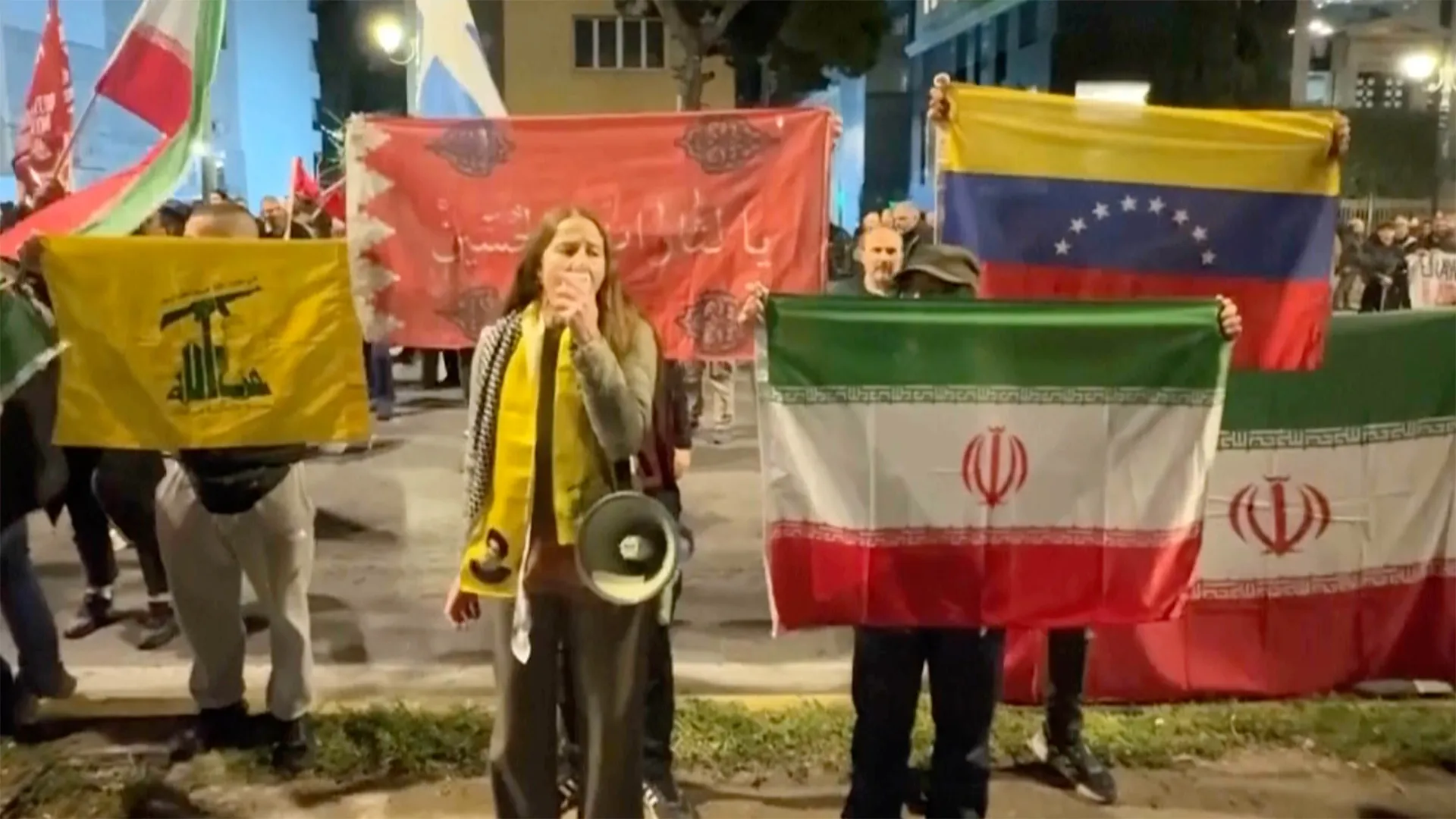
Protesters in Athens have marched to the US Embassy to condemn the US-Israeli attacks on Iran, joining protests held worldwide over the escalating conflict.
Israeli Prime Minister Benjamin Netanyahu said several Iranian nuclear scientists were killed in Israeli strikes. He also said a “new path of freedom” for Iran was approaching and told Iranians the country’s future ultimately depends on them.