Ukraine president earlier said Kyiv was ‘done’ with energy ceasefire and strikes on Russian oil refineries would resume.
Published On 15 Oct 202615 Oct 2026
Russia says Ukraine has targeted an oil refinery in Ryazan, about 180 kilometres (110 miles) south of Moscow, as President Volodymyr Zelenskyy said Kyiv was “done” with an energy ceasefire unilaterally announced by United States President Donald Trump over the weekend.
“The Kyiv regime attempted a large-scale attack on an oil refinery in Ryazan,” Moscow’s defence ministry said in a statement on Thursday, adding that a “fire broke out after drone debris fell onto the refinery site.”
Recommended Stories
list of 3 itemsend of list
Ukraine’s president earlier told the British newspaper the Financial Times that strikes on Russian oil refineries would resume, and accused the US of weakening Ukraine’s position on the battlefield by allegedly withdrawing crucial intelligence sharing.
Trump on Sunday unilaterally announced an “energy ceasefire” that was not publicly confirmed, and Moscow continued striking Ukrainian energy infrastructure. Ukraine said it suspended attacks on Russian energy sites for several days after Trump’s announcement.
The US has pressured Ukraine to halt strikes on Russian refineries, claiming that a suspension of attacks and a deal to purchase 1.8 million tonnes of diesel from Russia would help reduce soaring fuel prices.
“This politically is not simple [in America], because everybody will want to ask how it can be when some people are surviving, fighting, dying – and you make . . . business with the guys with such aggression,” Zelenskyy told the FT.
Zelenskyy also alleged that Ukraine’s access to SpaceX’s satellite internet service was restricted, potentially leaving it more vulnerable to Russian attacks. The Ukrainian armed forces use SpaceX’s military-grade Starshield system for offensive and defensive operations.
In a post on X on Wednesday evening, SpaceX owner Elon Musk said that only the US military and Trump had the authority to limit Starshield’s usage and speed for clients.
In a separate post, he called for Zelenskyy to “go” as Ukraine’s leader.
“And so the slaughter continues,” Musk wrote in a separate post on X. “Time for Zelensky to go.”
Ukraine is heavily dependent on Western military aid in its fight against Russia, particularly from the US and Germany. However, Kyiv’s relations with Washington have been strained in recent weeks, with Trump calling on Saturday for Zelenskyy to be replaced.
Against this backdrop of tensions, Zelenskyy said he would be willing to pause strikes on Russian energy sites again, but only if the US supplied Ukraine with crucial Patriot interceptors.
Zelenskyy is due to meet European leaders in Brussels on Thursday as he pushes for tougher sanctions on Moscow and faster delivery of support from the European Union.
Dutch Prime Minister Rob Jetten has called on EU leaders to “step up” their game to ensure Ukraine wins the war against Russia.
The EU has already pledged $50 billion in support for Ukraine next year. However, the sum falls far short of the $175 billion Kyiv plans to spend on its defences next year.
Trump has denied that the US has stopped sharing intelligence with Ukraine.
The G20 finance ministers and central bank governors are gathering in Bangkok, Thailand, on Thursday amid an uncertain global outlook shaped by the US-Israel war on Iran.
The meetings are being held in conjunction with the annual meetings of the International Monetary Fund (IMF) and the World Bank, taking place in the Thai capital from October 12 to October 18.
Recommended Stories
list of 4 itemsend of list
Here are some of the key details about the meetings:
What are the G20, the IMF and the World Bank?
The G20 is an economic forum comprising 19 large economies, including the United States, China, the United Kingdom, Australia, Brazil, India, Japan, Indonesia and Saudi Arabia, as well as the European Union and the African Union.
The grouping has an annually rotating presidency, currently held by the US.
Together, the G20 countries account for about 85 percent of global gross domestic product (GDP) and three-quarters of global trade.
The G20 was established in 1999 as a forum for finance ministers and central bank governors to address shared economic concerns in the wake of the Asian Financial Crisis, before expanding into a broader forum for national leaders.
The IMF, based in Washington, DC, is an international financial institution that promotes international cooperation on monetary policy, trade and economic growth.
Its membership includes all but a handful of the world’s sovereign states, including North Korea, Cuba, the Vatican City and Monaco.
The World Bank, also based in Washington, DC, primarily serves as a provider of loans and grants to developing countries. It has 189 member countries.
The IMF and the World Bank were created at the 1944 Bretton Woods conference in the US, convened by the Allied Powers to establish the contours of the post-World War II international financial order.
Who will be attending the meetings?
Most finance ministers and central bank governors of the G20 will be in Bangkok, along with IMF Managing Director Kristalina Georgieva and World Bank Group President Ajay Banga.
US Treasury Secretary Scott Bessent will be a notable absence from the gatherings, as the top economic official of the world’s biggest economy and G20 chair.
US officials have cited “domestic engagements” for Bessent’s decision to skip the events, at which Washington will be represented by Deputy Secretary Francis Brooke and Undersecretary for International Affairs Erin Browne.
The G20 meeting, one of several gatherings of the group’s finance ministers each year, will help shape the agenda for the headline leaders’ summit in Miami, Florida, taking place on December 14-15.
What is on the agenda?
The economic fallout from the US-Israel war on Iran is expected to dominate discussions.
Attacks across the Middle East have upended economic activity across the region, while disruption to shipping in the Strait of Hormuz has driven a surge in energy prices worldwide.
Crude oil prices have exceeded $100 a barrel for much of the past eight months, placing a strain on government coffers and household budgets, particularly in the Gulf region and the rest of Asia.
In advance of the meeting, Australia’s Treasurer Jim Chalmers MP said he would use the discussions to call for an end to the conflicts in the Middle East and the reopening of the Strait of Hormuz “because that’s what the global economy desperately needs”.
“The war in the Middle East is having a devastating economic impact and is pushing up fuel prices, inflation and interest rates around the world,” Chalmers said in a statement.
Other issues likely to feature on the agenda include the ballooning debt levels of many countries, which exceed 100 percent of GDP in the US, Canada, Japan, Italy and France.
In a speech on Wednesday, Georgieva warned that mounting debt posed a threat to the global economy and that there was no “magic” formula that would allow governments to avoid tax hikes or spending cuts.
G20 members will also bring more specific individual concerns to the table based on their economic and geopolitical priorities.
The US, for example, has repeatedly expressed concern about “global imbalances”, a veiled reference to China’s state-driven industrial model that has allowed Chinese exporters to flood overseas markets with cheap goods.
US President Donald Trump has long claimed that China’s large trade surplus, which stood at a cumulative $938bn in September, proves that international trade is stacked against US manufacturers.
In a statement addressed to the IMF on Wednesday, Bessent called for action to address mismatched trade balances.
“This especially includes strengthening its analysis and engagement on the role non-market policies and practices and exchange rates play in driving external imbalances,” Bessent said.
“Policymakers around the world are having difficult discussions about how to sustain market-based systems amid distortionary policies from some economies that skew competition and hurt employment.”
Divisions and competing interests cloud the prospects for coordination, however.
At the last meeting of G20 finance ministers in Asheville, North Carolina, US, held on August 31 and September 1, member countries failed to issue a joint communique after China objected to language to do with trade.
Tehran municipality has launched a series of welfare initiatives to help residents cope with soaring living costs, but the measures have raised questions about their financing and effectiveness, as well as whether the local authority is taking on responsibilities better handled by Iran’s national government.
The local authority has launched four projects it says are aimed at protecting citizens, including a housing project, freezes on the prices of 12 basic goods, and a maternity package.
Recommended Stories
list of 3 itemsend of list
Questions have been raised about how they will be funded and whether the municipality is overstepping its traditional functions.
In Iran, municipalities are responsible for local services and urban management, while the national government oversees broader economic policy, including efforts to control inflation.
Iranian law does give municipalities some responsibilites beyond conventional urban services, but Article 55 of Iran’s Municipal Law does call for municipalities to provide for public food markets, make certain essential goods more affordable, and provide social welfare facilities and low-cost housing.
The dispute is therefore less about whether Tehran municipality can provide the services, and more about their scale and financing.
The municipality’s price-freezing initiative, dubbed the “Zero Inflation” project, has been the most controversial. It comes as year-on-year inflation reached nearly 90 percent last month, while annual food inflation hit 108.8 percent.
Doubts have been raised about how the project will be funded and its effectiveness. Others believe that the measures could fuel inequality between the capital and other cities.
They are viewed as steps to address the huge economic challenges faced by Tehran residents, worsened since the United States and Israel launched a war on Iran on February 28.
Tehran Mayor Alireza Zakani said the municipality had recently guaranteed prices ranging between 5 percent and 50 percent below market rates for the next six months.
Yousef Akandeh, a political activist, told Al Jazeera that freezing the prices of some goods or providing free services will not reduce inflation to zero alone.
“Even if we assume that the Tehran municipality succeeded in stabilising the prices of 12 basic goods, what about the rise in rents, medicines, transportation prices, and the rest of living expenses,” Akandeh asked.
Real steps to tackle inflation, Akandeh said, would have to begin with controlling liquidity growth and monetary discipline, which he said are nearly impossible amid the ongoing war.
The municipality has also introduced a maternity support programme offering mothers of children born this year monthly credits worth up to 40 million rials ($15) for two years for each newborn.
Akandeh raised the issue of institutional overlap, noting that a similar national scheme already exists.
“The government implements a similar package and provides monthly financial amounts for all newborns across the country and not just in Tehran, and if the municipality’s package is independent of it, the Tehrani family may benefit from the national and municipal programme simultaneously,” Akandeh said.
Receiving support from both programmes would not, in itself, indicate wrongdoing. But critics are instead raising the question of whether it is an appropriate use of Tehran’s municipal resources, particularly when the city faces competing spending demands.
Amir Dabiri Mehr, a former adviser in the Tehran municipality, told Al Jazeera that although supporting the homeless falls under the municipality’s social responsibilities, the problem lies in a lack of transparency. The municipality is funded by taxes and building density licences.
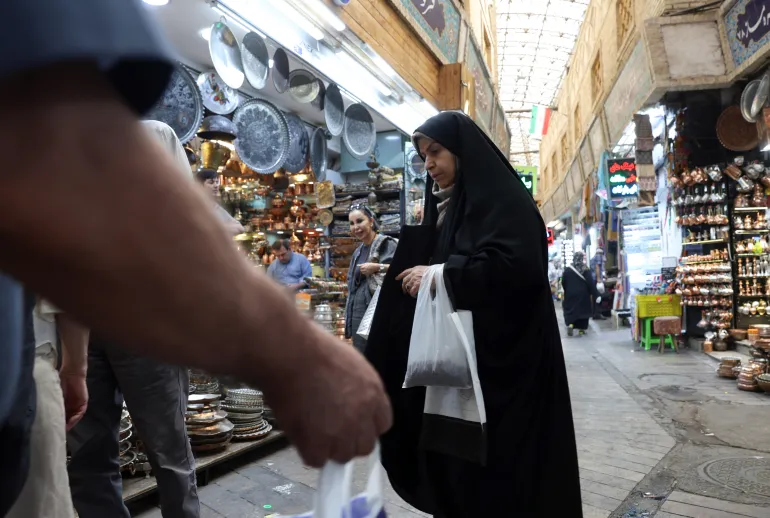
People shop at Tajrish Bazaar in northern Tehran, Iran, September 30, 2026 [Abedin Taherkenareh/EPA]
“The people have the right to know what the municipality spends within the framework of its original tasks, and in tasks it has chosen for itself, and where it gets its resources from?” Dabiri Mehr said.
The municipality-affiliated Hamshahri newspaper said that the “Zero Inflation” project is not funded by municipal budget subsidies, but through direct purchases from producers and reducing commercial profit margins in council-run stores.
The biggest crisis facing Tehran’s residents is housing, which is the national government’s responsibility, Mehr said. Food and living expenses are the national government’s responsibility.
“If the goal is to solve the people’s problems, it seems that the biggest problem facing the residents of Tehran today is the housing crisis, and this dilemma cannot be solved by building an apartment building consisting of a few residential units,” he said.
Al Jazeera attempted to contact the Tehran municipality for comment but received no response.
Tehran Mayor Zakani has, however, defended the financing arrangements, telling a local newspaper, Hamshahri, that the Zero Inflation initiative would not rely on direct subsidies from the municipal budget, but instead on purchasing goods directly from producers and reducing commercial profit margins in city-run stores.
Zakani also said that the programme would draw on municipal resources, bank financing, and partnerships.
Without a quick deal to move fertiliser through the strait, agricultural productivity would ‘significantly drop’.
Published On 14 Oct 202614 Oct 2026
A senior United Nations official has warned that parts of Asia and Africa could face a food security crisis unless Iran and the United States quickly agree on a UN-backed plan to move fertiliser through the embattled Strait of Hormuz.
UN Under-Secretary-General Jorge Moreira da Silva said on Wednesday that it was “absolutely critical” that the two countries agree to the proposal within weeks as planting season approaches. It calls for a UN-staffed coordination centre in Oman to help register vessels and oversee their safe passage in the waterway, through which a large portion of key global fertiliser inputs traditionally flow.
Recommended Stories
list of 3 itemsend of list
“If we miss that planting season, the productivity of agriculture would significantly drop and the impact on prices will significantly increase,” Moreira da Silva told Reuters on the sidelines of International Monetary Fund and World Bank meetings in Bangkok, Thailand.
Farmers operate strict crop calendars, and even slight delays could severely affect yield.
‘Negligible’ fertiliser shipments
Traffic in the Strait of Hormuz has been severely disrupted since the start of the US-Israel war on Iran, with Iran targeting vessels in the strait and the US and Iran exchanging fire in and around the waterway.
The disruption has hit global supplies of urea, the world’s most widely used nitrogen fertiliser, as well as seaborne sulphur, a key input. Before the war, roughly a third of global urea shipments and nearly half of seaborne sulphur passed through the strait.
Although some ships have been able to sail through amid the crisis, fertiliser products have made up a “very negligible” share of moving cargo, according to the Washington-based International Food Policy Research Institute.
Moreira da Silva said the UN-backed fertiliser mechanism, drawn up in March, could be activated within seven to 10 days if both Iran and the US agree.
Under the plan, UN monitors would work alongside local authorities at Gulf ports to verify cargo loading. Ships would be tracked during transit, and additional inspections could be carried out if countries raised concerns about a vessel or its cargo, said Moreira da Silva. He did not say why the US and Iran have not yet agreed.
The passage of only five vessels per day through the Strait of Hormuz could keep fertiliser supplies flowing to countries in critical need, he added.
‘Let us do our job’
The UN mechanism could work alongside negotiations for a “comprehensive deal” to restore freedom of navigation in the strait, Moreira da Silva said.
Iran and the US have exchanged proposals through intermediaries since a June interim ceasefire collapsed. Efforts to reopen the Strait of Hormuz have stalled over Tehran’s conditions and Washington’s insistence on addressing Iran’s nuclear programme from the outset.
“What we are telling them is, while you continue your discussions towards a comprehensive deal, let us work, let us do our job,” said Moreira da Silva.
His plea comes amid growing concern that fertiliser shortages could hit global food supplies.
In May, the UN’s Food and Agriculture Organization warned that fertiliser scarcity could tighten food supplies from late 2026 into 2027, and would likely hit countries facing climate or other crises much harder.
In South Asia, where most rely on imported fertiliser, farmers are already struggling because of soaring costs and fertiliser scarcity. On Wednesday, farmers in Spain took to the streets to protest rising production costs amid high oil and fertiliser prices.
The attacks by the Iran-backed Houthis on Saudi Arabia have pushed the war in Yemen to a new level. The targeting of civilian infrastructure, including airports, which has killed at least a dozen people and injured hundreds, has left no room to maintain the “red lines” that previously outlined the limits of escalation.
This is a reckless gamble by the Houthis which is not in their interest. They are aware that the retaliation will be fierce, yet they continue to attack Saudi Arabia to fulfil Iran’s agenda that seeks heightened tensions before the United States midterms.
Given the motivation to escalate, the present situation has the potential to develop into two scenarios: A major region-wide operation against the Houthis or a war of attrition.
Scenario one: A united front against the Houthis
In response to the Houthi escalation, Saudi Arabia is striving to garner maximum international support while deepening its regional and international alliances. The aim is to come up with a united front capable of taking on what has become a regional threat.
Riyadh is certainly looking to its Gulf neighbours who, themselves, are impacted by the continuing conflict in the region. There is a collective realisation that everyone is in grave danger, not just Saudi Arabia.
Therefore, Gulf states – perhaps with the exception of Oman – will support Riyadh both directly and indirectly in the fighting in Yemen.
Pakistan and Turkiye are also likely to join the front, having signed with Saudi Arabia a defence agreement known as the Mecca Pact. The pact is to be ratified by the Turkish parliament in the next few days, opening the way for Turkish military deployment in support of Saudi Arabia. Meanwhile, indirect involvement by Turkiye and Pakistan, along with logistical and intelligence support, appears to be already well under way.
A US intervention is also possible, although it seems unlikely before the US midterms, as military engagements in the Middle East remain unpopular among US voters.
A region-wide coalition can help support the counteroffensive of the forces loyal to the internationally recognised Yemeni government already under way. This could give the necessary push to retake the western coastal region, including areas beyond Bab al-Mandeb and Dhubab.
Such gains could ease pressure on Red Sea shipping and potentially shift the military balance in favour of the government. The opening of additional fronts across other Yemeni cities and governorates could stretch Houthi forces, disperse their resources, and increase the likelihood of further government advances.
Retaking Sanaa could also be on the horizon. The primary obstacle delaying the Yemeni government’s recapture of the city is internal discord among the various factions within the government itself, compounded by negative external interference that exacerbates these rifts and weakens the collective effort to confront the Houthis.
Recent measures taken by the government, specifically efforts to unify its decision-making and consolidate its military operations command, have yielded noticeable progress on the ground. However, achieving the ultimate objective of retaking Sanaa requires sustained effort and focused determination.
If government forces make substantial gains, that could force the Houthis to offer concessions in exchange for a pause in fighting. They have done that before. Their purpose would not be to seek peace but to get enough breathing room to regroup and eventually go back to fighting. Negotiators should keep that in mind when approaching talks with the Houthis.
Scenario two: A war of attrition
If the Saudi-led coalition and the Yemeni government succumb to internal divisions and disagreements, this may slow progress against the Houthis. This would allow the Houthi fighters to hold on to their positions while increasing their pressure on the strategic town of Taiz and maintaining the campaign against civilian targets in Saudi Arabia.
Such a development could further complicate the conflict, increase civilian casualties and displacement, and prolong the war without producing a decisive military outcome.
This will have a significant economic impact on Saudi Arabia and complicate the implementation of its development goals, as it would have to prioritise defence spending.
The rest of the Gulf economies will also be negatively impacted because Saudi Arabia plays such a central role in the region. What is more, losing ground to the Houthis would mean that the crisis in the Strait of Hormuz would also continue, disrupting energy exports from the region.
In this scenario, there will be “no victor, no vanquished” deadlock in Yemen, but Iran would emerge as winner. A war of attrition along the Red Sea coast would provide Tehran with significant breathing room, allowing it to alleviate pressure on its own war efforts.
This would enable Iran to use the Houthi card as leverage in the intermittent negotiations it conducts with the international community, emboldening it to raise the bar regarding its conditions and demands during those talks.
This means that the only way to resolve the crisis in Yemen is decisive military action led by the Yemeni government and supported by a region-wide coalition. For that to happen, the government has to get its internal affairs and its relations with allies in order.
The views expressed in this article are the author’s own and do not necessarily reflect Al Jazeera’s editorial stance.
Sheikh Tamim bin Hamad Al Thani says Qatar has demonstrated its strength and cohesion.
Published On 13 Oct 202613 Oct 2026
Qatar’s Emir Sheikh Tamim bin Hamad Al Thani has told the Shura Council that the region has faced “exceptional events”, following months of instability amid the United States-Israeli war on Iran.
Speaking in the Qatari capital, Doha, on Tuesday morning, Sheikh Tamim said the events had demonstrated the strength and cohesion of the country’s state institutions.
“Our country and the region have faced exceptional events that have once again proven the cohesion of state institutions,” the Emir said.
Qatar has found itself caught up in the war, which began on February 28 and has triggered a global energy crisis. The Gulf state has been directly attacked by Iran on several occasions, including in March, when Tehran struck Qatar’s Ras Laffan gas facility, the world’s largest liquefied natural gas (LNG) production site.
Sheikh Tamim said Qatar had been able to absorb the consequences of the regional instability due to policies implemented before the war, stressing that Doha’s preference was to resolve conflicts through peaceful means and dialogue. However, the Emir maintained that the Gulf Cooperation Council’s (GCC) security was non-negotiable.
“The security of the Gulf Cooperation Council states and the preservation of their sovereignty is a matter that cannot be compromised on,” he said.
The war on Iran has disrupted global supply routes, particularly the Strait of Hormuz, which Tehran has effectively blocked since the start of the conflict.
Sheikh Tamim said efforts to safeguard maritime routes must be increased.
“Efforts must be doubled to secure navigation in the Gulf and the Strait of Hormuz and to protect energy facilities and civilian infrastructure.”
As the United States maintains a naval blockade of Iran’s ports and imposes more sanctions on its oil exports, Tehran is confronting another problem: billions of dollars in revenue from previous oil sales that it says have gone missing.
A spokesperson for Iran’s judiciary said in September that a network of oil intermediaries known as “trustees” owed the Iranian government between 10 billion euros ($11bn) and 11 billion euros ($12bn). That figure was equivalent to half of the total oil revenue projected in Iran’s government budget for the current fiscal year.
Recommended Stories
list of 3 itemsend of list
US officials, including Treasury Secretary Scott Bessent, have tied Iran’s struggles to access oil revenues as evidence that its economic pressure campaign is having an effect. In August, Bessent said that “Iran’s shadow banking system was buckling” under pressure from the US campaign against the country, which has been ramped up as Washington seeks a way to force Tehran to capitulate in the war between the two countries, launched by the US and Israel in late February.
So who are the oil intermediaries, why does Iran depend on them, and what has happened to the billions of dollars they owe? Let’s take a closer look.
The debt, and the crisis it has created for the Iranian government, both stem from an oil-sales arrangement Tehran adopted in 2012 in response to US sanctions targeting Iranian oil exports.
American and European sanctions targeting Iranian oil sales and revenue collection began in 2012. The stated rationale behind both sets of measures was that revenue from oil sales helped finance Iran’s nuclear programme and that restricting Iranian oil exports could prevent the programme from advancing.
In response, the Iranian government devised a way to circumvent international sanctions on its oil sales. Unable to sell oil through the Oil Ministry and receive the proceeds through the Central Bank, it began selling oil to domestic buyers or using it to settle outstanding obligations to institutions and organisations owed money by the state.
This arrangement gave rise to a network of oil intermediaries often referred to in Iran as the “trustee network”. Rather than selling all its oil through official government channels, the state entrusted crude oil to institutions, individuals and companies to sell on its behalf. The proceeds were supposed to be transferred to the government’s treasury, with the sellers or recipient institutions subsequently recovering their agreed costs and outstanding claims. Some institutions sold the oil themselves, while others contracted private trading companies to handle the sales.
The Oil Industry Pension Fund, established for retired Oil Ministry employees familiar with the oil-sales process, was among the first institutions to receive crude oil for sale. Other recipients included Khatam al-Anbiya Construction Base, a major hub for large-scale infrastructure projects. Even the municipal police received payments owed to them by the government in the form of crude oil.
Effect of the nuclear deal
Even in those early experiments, discrepancies emerged between the revenue expected from oil sales and the amounts sellers actually deposited into the government’s treasury. These discrepancies eventually gave rise to some of Iran’s largest economic corruption cases.
The accounting discrepancies and the government’s inability to recover money from private sellers entrusted with Iranian oil persisted until 2016, when the Joint Comprehensive Plan of Action (JCPOA) nuclear deal was signed and when sanctions on Iranian oil sales were lifted. The government was subsequently able to regain control over oil sales.
Individuals who had sold Iranian oil but failed to return the proceeds were imprisoned. With the ability to sell oil again through legal and transparent channels, the government was able, for a time, to manage its oil revenues and spending with greater control.
How did money from oil sales go unreturned?
After US President Donald Trump withdrew the United States from the JCPOA in 2018 during his first presidential term, the Iranian government once again had to rely on private oil traders to sell its oil. But the problems associated with selling oil through intermediaries rather than official state channels, including delays in returning revenues, accounting discrepancies, debts owed by oil sellers to the government, and the occasional seizure of Iranian oil shipments at sea, once again constrained the government’s ability to manage its oil revenues.
Moreover, the US expanded its sanctions beyond Iranian government institutions and interests, adding bank accounts involved in transactions with the Iranian government, currency-exchange offices, companies, and individuals to its sanctions lists. As a result, the time between individuals participating in Iran’s oil-trading network and being sanctioned themselves, along with their assets and companies, and having their accounts blocked or frozen grew progressively shorter.
This contributed to an accumulation of debts owed by sanctioned oil traders – no longer able to access their accounts – to the government. It also left Iran with little choice but to expand its private oil-sales network. That meant increasing the number of people involved in trading Iranian oil, reducing the volume of oil allocated to each individual or company and, ultimately, increasing the risk that the proceeds would not be returned.
Iranian officials have also accused trustees of exploiting the sanctions workarounds to enrich themselves.
The billions of dollars owed by private oil sellers to the Iranian government are a combination of outstanding payments, disputed financial obligations and allegations of corruption. Iran’s judiciary chief recently addressed the issue, warning that oil sellers who refuse to return the proceeds from oil sales will face legal action. But such warnings do not change the sanctions environment or remove the obstacles that prevent some oil sellers from returning the money.
Tehran, Iran – Iranian authorities have signalled they intend to disrupt an Arab-operated and United States-assisted shuttle system that has enabled more energy exports through the Strait of Hormuz during the US-Israel war on Iran.
With the US naval blockade of Iran’s southern ports in place and sanctions tightening, Tehran has said it will pursue military and diplomatic efforts to put pressure on Washington to submit to its demands regarding reopening the Strait of Hormuz.
Recommended Stories
list of 3 itemsend of list
This strategic waterway, through which roughly a fifth of global oil and gas flowed before the war, has been largely closed to shipping following Iranian attacks since the US and Israel launched strikes on Iran on February 28.
But the US Navy has reportedly opened up a route so Gulf states can export oil and other commodities amid an energy crisis.
Iran’s security chief Mohsen Rezaei responded on Sunday night, saying the shuttle system is now an explicit target for Tehran.
Rezaei claimed that the US Central Command, with the assistance of the United Arab Emirates military, was using smaller vessels to transfer oil to larger tankers. He claimed Iran had been striking five or six participating vessels nightly for weeks.
“You are smuggling, but the strait is under Iran’s control, and we manage it,” he asserted.
This appeared to be a taunt aimed at US President Donald Trump, who has hailed energy exports at times reaching pre-war levels over recent weeks.
Rezaei appeared to give the impression that Iran wants to have lasting authority over Hormuz, and promised a harsh response if Iran’s energy and civilian infrastructure were attacked again.
His threats appeared aimed at Arab regional states, with a warning that digital infrastructure could be targeted. Rezaei threatened US-linked cables, data centres and artificial intelligence facilities in the UAE and around the Strait of Hormuz.
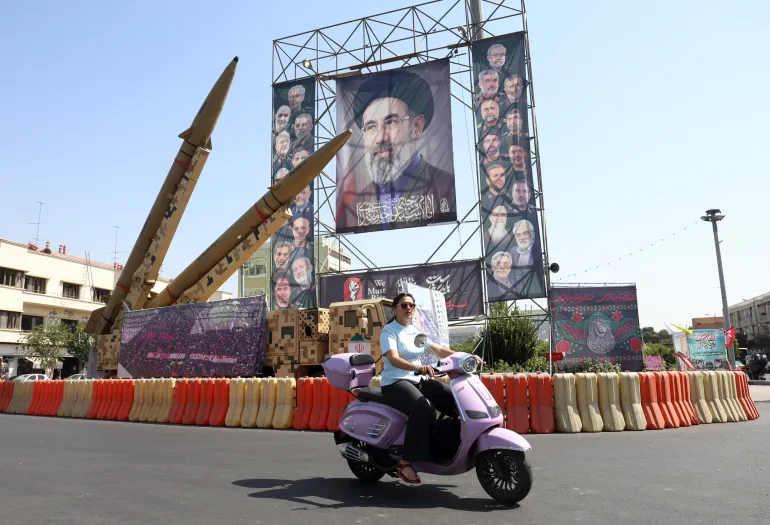
A woman rides her scooter past Iranian Zolfaghar missiles placed in front of a billboard of Iranian Supreme Leader Ayatollah Mojtaba Khamenei at Baharestan Square in downtown Tehran, Iran, September 28, 2026 [Abedin Taherkenareh/EPA]
Rezaei also accused Saudi Arabia of helping the US move oil around Iran’s restrictions. But he did not threaten a direct attack against Riyadh – which is currently being targeted by Yemen’s Tehran-aligned Houthis.
In early September, Iran’s Islamic Revolutionary Guard Corps (IRGC) threatened tankers at ports and anchorages in Kuwait and Bahrain, citing US attacks on Iranian tankers. It accused both countries of complicity through hosting US armed forces.
Iran has claimed the US accepted some of Tehran’s seven conditions for the full reopening of the Strait of Hormuz and ending the war. But Tehran insists that a deal will only materialise when all its demands are met.
Hamidreza Azizi, a senior Iran analyst at the Crisis Group, said this reflects Tehran’s apparent assessment that it is under no immediate pressure to reach an agreement with the US since its pressure in the Hormuz has a global impact.
“The question, however, is whether Tehran is overestimating its ability to sustain this pressure, given the growing economic costs of the confrontation for Iran itself,” Azizi wrote on X.
Transfer system
The system involves very large crude carriers (VLCCs) and smaller vessels coordinating with the US military to load crude oil at Arab ports and use southern corridors near the coast of Oman to exit the strait.
Vessels often switch off their transponders and travel at night to minimise the risk of being targeted by the Iranians. After ship-to-ship transfers in the Gulf of Oman, some of the shuttles come back to load more.
Multiple vessels were targeted overnight Sunday to Monday, including two outbound tankers and one in anchorage near Oman’s port city of Sohar, where ship-to-ship transfers are allegedly being conducted.
The IRGC has also increasingly driven a narrative that naval mines, believed to have been planted across the Strait of Hormuz since the start of the war, pose a serious threat to vessels attempting to navigate the waterway without coordinating with Iran’s Persian Gulf Strait Authority.
The IRGC said three tankers suffered major damage over the weekend after being struck by mines. It also released footage of one ship ablaze that is said to have been struck by a mine, although the footage did not appear to show a mine going off.
‘Cascading impact’
The shuttle system has provided Arab national oil companies with a way out of Hormuz via the southern corridor near Oman.
Michelle Wiese Bockmann, a London-based senior maritime intelligence analyst at Windward, said this system has proven highly effective.
“Under international maritime law, which underpins 11 billion tonnes of seaborne trade annually, vessels have what’s called the right of transit passage,” Bockmann told Al Jazeera. “So, what Oman has done is allow vessels to go through under international maritime law, but they have had US military assistance.”
Tehran says shipping will be disrupted so long as the US continues its choking naval blockade against Iran, which has also stepped up its efforts to counter efforts by Arab states to export oil. At least 15 ships are believed to have been targeted in October so far, according to Winward.
“The more effective the route has become in facilitating the transport of oil and gas, the less leverage Iran has over Hormuz, and more attacks we are seeing on vessels that are using that southern corridor,” Bockmann said.
Windward’s data shows 31 ships transited the Strait of Hormuz daily in the final week of September. This was considerably lower than the 138 before the war.
Eighty-seven percent of the 45 ships targeted by Iran during the third quarter of 2026 were tankers.
Around 47 percent belonged to Gulf Arab energy companies’ national shipping fleets, Windward noted, and 93 percent of the strikes took place in the Strait of Hormuz. Most attacks targeted vessels transiting the southern corridor with their transponders turned off.
These attacks have contributed to a massive increase in freight costs. Freight represented 25-30 percent of Gulf crude’s cost, versus just 1 to 3 percent before the war, according to Windward. National oil companies have resorted to offering discounts of up to $35 per barrel below official selling prices.
The main reason for the rise is a shortage of tankers willing to make the dangerous crossing. Between 15 and 20 percent of very large crude carriers (VLCCs) are tied up with an inefficient logistics system that relies on shuttle transfers, complicated by escalating attacks and exposure at loading ports and anchorages.
“This is having cascading impacts for all vessel classes on freight and values across the world,” Bockmann said.
Iran has offered to facilitate talks between Saudi Arabia and Yemen’s Houthi group after a series of deadly attacks on the kingdom, raising questions about Tehran’s diplomatic calculations as fighting intensifies across the region.
Iranian Foreign Minister Abbas Araghchi spoke with his Saudi counterpart, Prince Faisal bin Farhan Al Saud, on Sunday, in their first publicly reported contact since the Iran-aligned Houthis stepped up attacks on Saudi Arabia.
Recommended Stories
list of 3 itemsend of list
The diplomatic outreach comes after strikes on Riyadh’s international airport over the weekend killed 14 people and wounded hundreds, while Saudi-backed forces continued their offensive against the Houthis, also known as Ansar Allah, in Yemen.
The talks also come against the backdrop of the wider US-Israel war on Iran, with Tehran potentially seeking to avoid being dragged into another confrontation.
“Tehran is an ally of Ansar Allah and has influence with the movement, although it does not control its decisions,” Negar Mortazavi, senior fellow at the Washington, DC-based Center for International Policy, told Al Jazeera.
“By offering to facilitate talks with Riyadh, Iran is positioning itself as an indispensable party to a broader regional settlement.”
So what discussions are happening between Riyadh and Tehran, and why is Iran offering to facilitate talks?
What did Iran and Saudi Arabia talk about?
According to the Saudi state news agency, the two foreign ministers discussed the recent escalation in the region and efforts to reduce tensions. Iran’s Foreign Ministry also confirmed the development.
Following the discussions, Araghchi on Sunday warned against pursuing a military solution to the conflict and offered Tehran’s assistance in facilitating dialogue between Saudi Arabia and Yemen.
“Insisting on a military approach and disregarding a political solution would only further complicate the situation,” Araghchi said, according to Iran’s Foreign Ministry.
On Monday, ministry spokesman Esmaeil Baghaei reiterated Tehran’s willingness to mediate, saying Iran was deeply concerned about developments in the Arabian Peninsula.
“We absolutely do not want hostilities and war to continue between two Islamic countries,” Baghaei said, urging dialogue to resolve the conflict.
What is Iran’s stance on the war in Yemen?
Iran has repeatedly called for a diplomatic settlement to Yemen’s conflict and says it supports a political solution rather than continued military action.
Tehran backs the Houthis, who control Yemen’s capital, Sanaa, and other parts of the country.
The armed group forms part of the Iran-aligned “axis of resistance”, which also includes Lebanon’s Hezbollah and armed groups in Iraq.
Saudi Arabia, meanwhile, has led a military coalition supporting Yemen’s internationally recognised government since 2015.
Baghaei said on Monday that the conflict served Israeli interests, framing a negotiated settlement as preferable to further fighting.
What is the latest in the Yemen fighting?
Fighting has intensified in Yemen, after the internationally recognised government’s forces announced Operation Dawn of Yemen on October 4 to reverse recent Houthi territorial gains, including the capital, Sanaa.
Government forces, backed by Riyadh, have reported advances near the strategic Bab al-Mandeb strait, a vital international shipping route. However, competing battlefield claims remain difficult to independently verify.
The Houthis have responded with missile and drone attacks on Saudi airports, energy infrastructure and other targets.
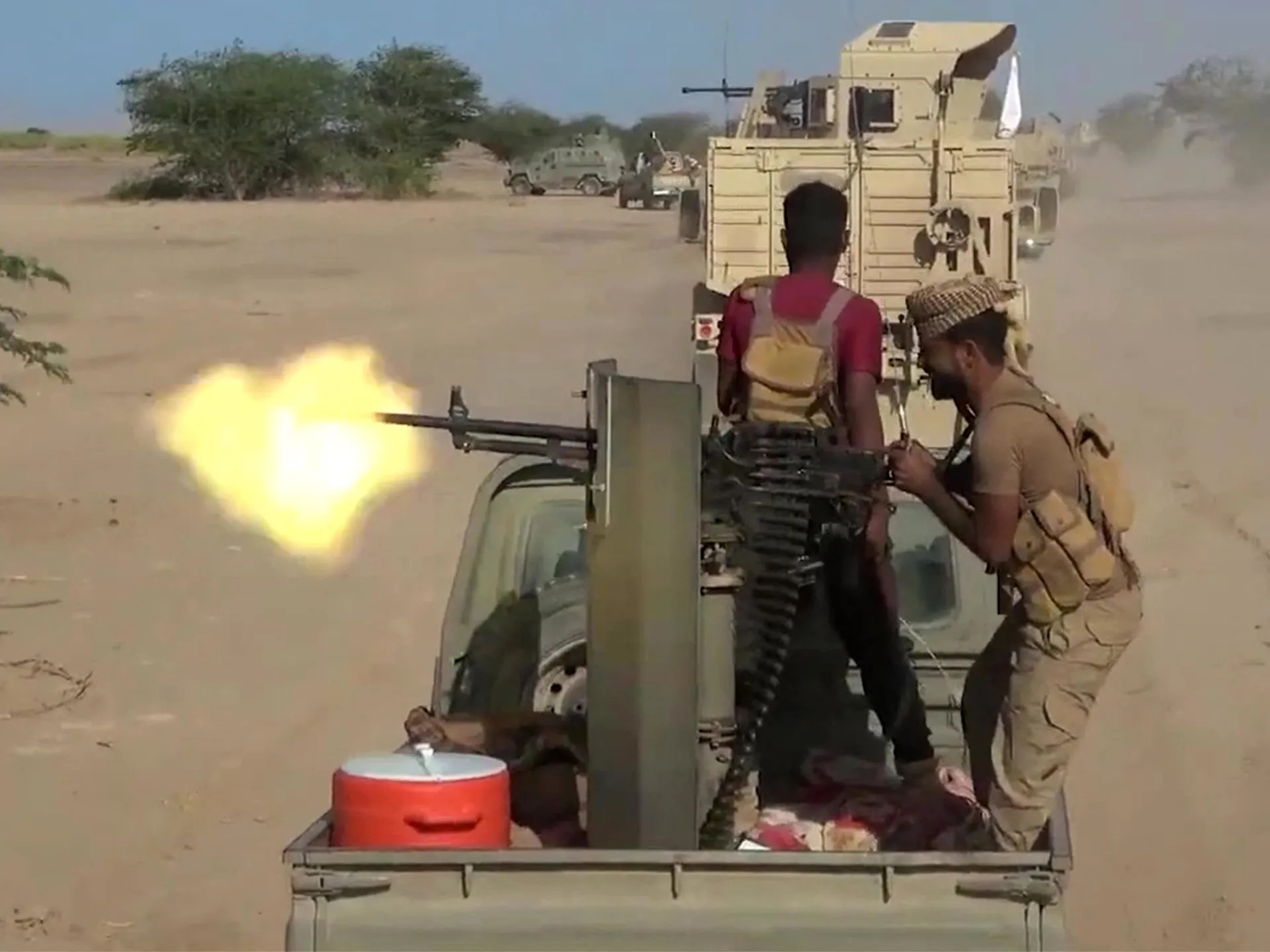
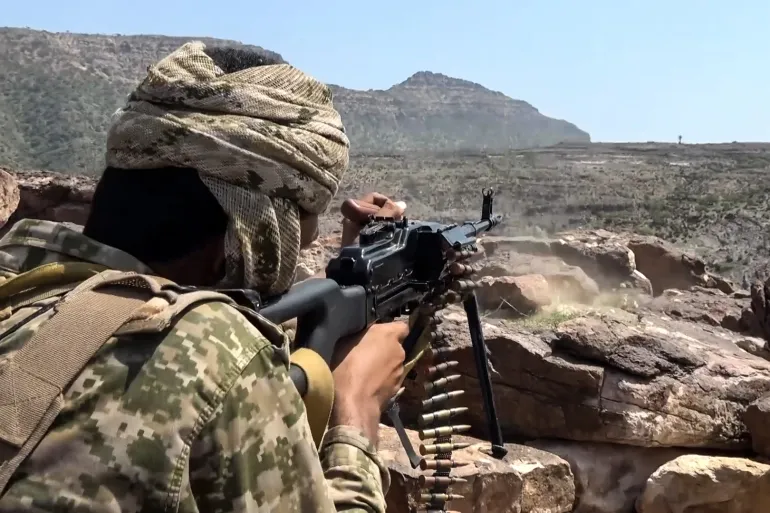
A Houthi fighter participates in an offensive against Saudi-backed Yemeni forces in Taiz province, Yemen [Handout screen grab from video made available by the Houthi-run Al Masirah TV, October 8, 2026/EPA]
Two strikes on Riyadh’s King Khalid International Airport on Saturday and Sunday killed 14 people and wounded more than 300. The casualties included foreign nationals from Bangladesh, Pakistan and Palestine.
The escalating violence has also disrupted commercial flights, businesses and schools in Riyadh, underlining the growing economic and civilian consequences of the conflict.
UN Special Envoy for Yemen Hans Grundberg warned on Friday that Yemen had returned to “full-scale war”, with civilians bearing the brunt of the attacks.
Why is Iran willing to facilitate talks between Saudi Arabia and the Houthis?
Iran’s offer to facilitate talks between Riyadh and the Houthis could be an attempt to strengthen Tehran’s diplomatic position and secure a wider regional agreement that extends beyond Yemen.
“I think Iran is trying to turn Yemen from a military liability into a diplomatic asset,” Andreas Krieg, a Middle East security analyst at King’s College London, told Al Jazeera.
He said Tehran recognises that Saudi Arabia is struggling to reverse Houthi territorial gains, particularly around Taiz and Bab al-Mandeb, despite intensifying its military campaign.
“Araghchi’s offer is an attempt to position Iran as part of the solution to a crisis in which it has also helped sustain the problem,” Krieg said.
Analyst Mortazavi, meanwhile, said Iran’s diplomatic outreach is part of a broader effort to link the conflicts unfolding across the region.
“The larger political objective is an informal non-aggression arrangement between Iran and its allies on one side and the United States and its regional partners on the other,” she said.
Such an agreement, she argued, would require an end to hostilities across multiple fronts, including Yemen and Lebanon, rather than a settlement confined to the US-Iran conflict.
Moreover, academic Krieg said there was also an important “Saudi dimension” to the discussions.
“Riyadh is increasingly uncomfortable with its dependence on Washington, frustrated by the limited American willingness to intervene in Yemen and reluctant to become dependent on the UAE again,” he said.
“Iran sees an opportunity to demonstrate that engagement with Tehran can deliver something Saudi Arabia’s traditional security partnerships have struggled to provide.”
There are also economic considerations, the analysts noted. Iran is under significant pressure from the US blockade, while Gulf countries are gradually recovering their energy exports to pre-war levels despite Iranian disruptions.
“Offering Riyadh a way out of Yemen potentially gives Iran leverage well beyond the Yemeni theatre, particularly in negotiations over Hormuz, sanctions relief and the wider regional security architecture,” Krieg said.
However, Krieg cautioned against overstating Iran’s influence over the Houthis, who have their own political ambitions and demands.
“Ansar Allah is not simply an Iranian proxy awaiting instructions,” Krieg said. “Its leadership has its own political ambitions, increasingly sees itself as a regional military actor and believes its recent territorial gains have strengthened its negotiating position. Iran can facilitate talks and potentially influence the intensity of escalation, but it cannot simply order the Houthis to surrender their gains around Mocha or Bab al-Mandeb.”
For Mortazavi, the broader message is that regional security cannot be addressed in isolation.
“Ultimately, Tehran’s message is that regional security cannot be divided,” she said. “Saudi Arabia cannot obtain security from attacks, while Iran and its allies remain under military and economic pressure.”
Sunday’s strike on King Khalid International airport kills a Pakistani national.
Published On 12 Oct 202612 Oct 2026
A projectile has struck Saudi Arabia’s King Khalid International airport, killing one person and injuring 11, according to the country’s civil aviation authority.
The General Authority of Civil Aviation (GACA) identified the deceased in Sunday’s attack as a Pakistani resident and said the injured were transferred to several hospitals for medical care.
Recommended Stories
list of 3 itemsend of list
The strike on terminals 3 and 4, which serve domestic flights, occurred a day after a Houthi missile hit the airport, killing 12 people and wounding more than 300, according to the Saudi-led coalition fighting Iran-backed Houthi rebels in Yemen.
India’s embassy in Saudi Arabia said one of its citizens died on Sunday of injuries sustained in Saturday’s attack, which would bring the toll to 13.
Following Sunday’s attack, GACA said damage assessments and safety inspections of the airport were under way.
A witness on board a taxiing aircraft at the airport told the Reuters news agency that a projectile struck the tarmac next to several parked planes at about 8:30pm (17:30 GMT) on Sunday, causing a fire.
The witness said the aircraft returned to the gate, where the passengers disembarked and were told to leave.
The Riyadh airport has been struck four times in the past five days. Houthi attacks on King Khalid airport on Thursday killed at least three Saudi citizens, including a pilot, according to GACA.
The airport has been closed since Saturday’s attack, which was the deadliest in the country since the US-Israel war on Iran began in late February.
The Houthis claimed responsibility for the strikes before Sunday’s.
The airport attacks have escalated the war in Yemen and threaten to draw in the US military. US President Donald Trump says he is weighing whether to join the fight against the Houthis.
The escalation puts further pressure on global oil supplies and prices, as well as on commercial shipping through the Bab al-Mandeb strait off the Yemeni coast, a crucial alternative waterway to the Strait of Hormuz.
Trump had said he intends to speak with Saudi Crown Prince Mohammed bin Salman, who is seeking help against the Houthis, but there were no signs on Sunday that the US president had followed up on his claim.
There are fears that US intervention could prompt the Houthis to halt shipping through Bab al-Mandeb, further restricting the flow of oil out of the Gulf.
The rebels seized key areas along the strait last month. The Saudi-led coalition, backing forces loyal to Yemen’s internationally recognised government, has been trying to seize them back.
A US fighter jet bombed a commercial cargo ship in the Gulf of Oman, according to CENTCOM. The US military says the ship’s crew ignored repeated warnings and attempted to ‘breach its blockade’ of Iranian ports.
US military jet strikes stern of commercial cargo ship in the Gulf of Oman ‘without harming the crew’, CENTCOM says.
Published On 11 Oct 202611 Oct 2026
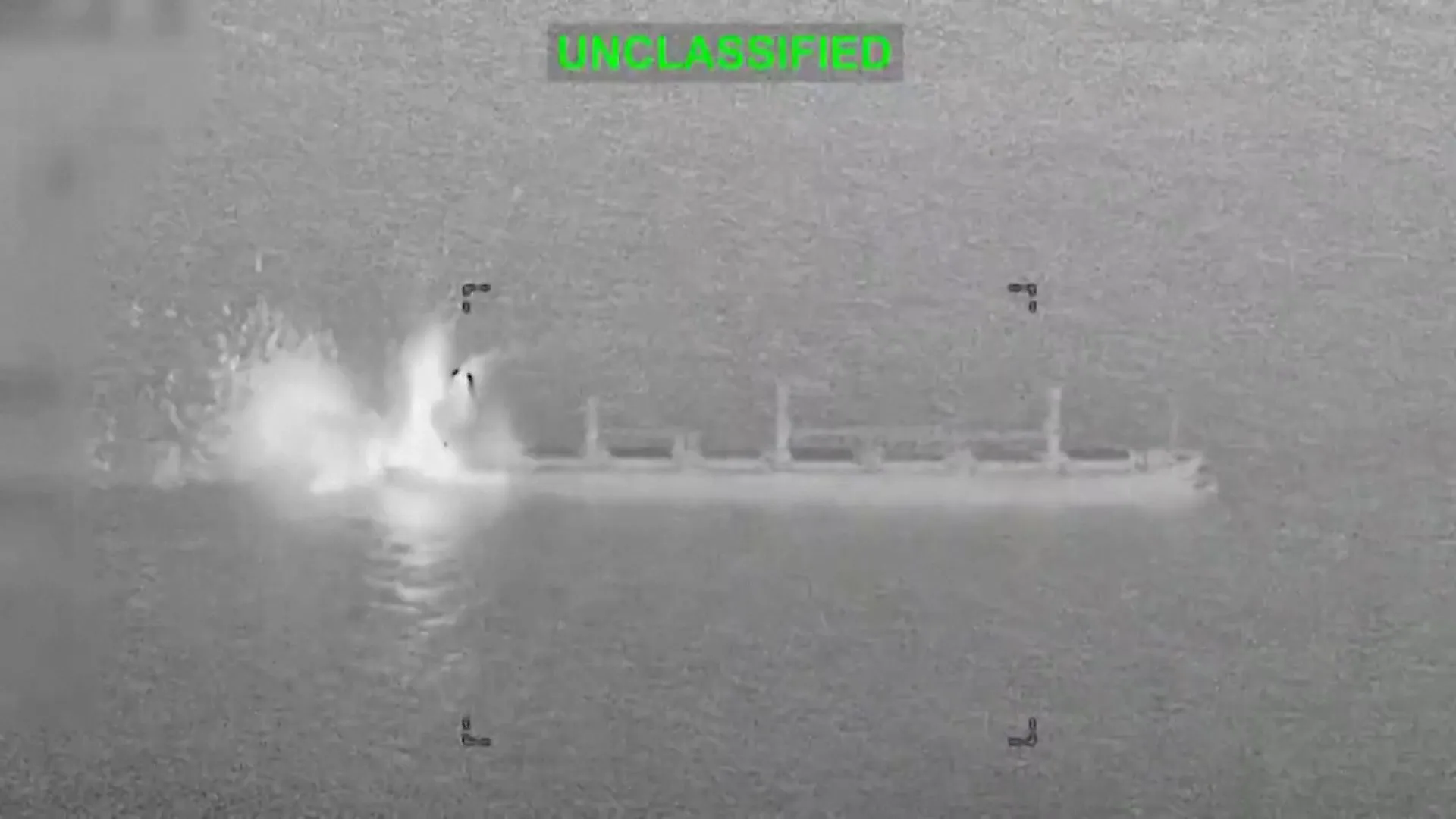
United States forces have disabled a commercial cargo vessel in the Gulf of Oman after its crew “ignored repeated warnings and attempted to run the ongoing naval blockade against Iran”, according to US Central Command (CENTCOM).
A US military fighter jet struck the stern of the Panama-flagged M/V Ocean Molica, also known as the Arika Sun, with a precision munition on Saturday, “fully disabling the ship’s propulsion without harming the crew”, CENTCOM said in a statement. The vessel was attempting to transit regional waters after “having previously departed an Iranian port”.
Recommended Stories
list of 3 itemsend of list
CENTCOM said its forces resumed their blockade against all ships “entering or departing Iranian ports on July 14”, disabling four commercial vessels and turning around 135 ships during “three months of strict enforcement”.
US forces also destroyed 10 tankers linked to the Islamic Revolutionary Guard Corps’ (IRGC’s) “multibillion-dollar shadow network” over the same period, CENTCOM said.
Meanwhile, Iran’s IRGC said it struck a vessel in the Strait of Hormuz for attempting to take an “illegal route”, as Tehran seeks to enforce its own blockade on the vital waterway.
In a statement carried by official Iranian media, the IRGC claimed Iranian forces “have taken control of the administration of the strait”.
“In carrying out this mission, a few hours ago, a giant LPG carrier named NV Sunshine, owned by NatWit, which was attempting to transit via the illegal route south of the Strait of Hormuz, was struck,” the statement said.
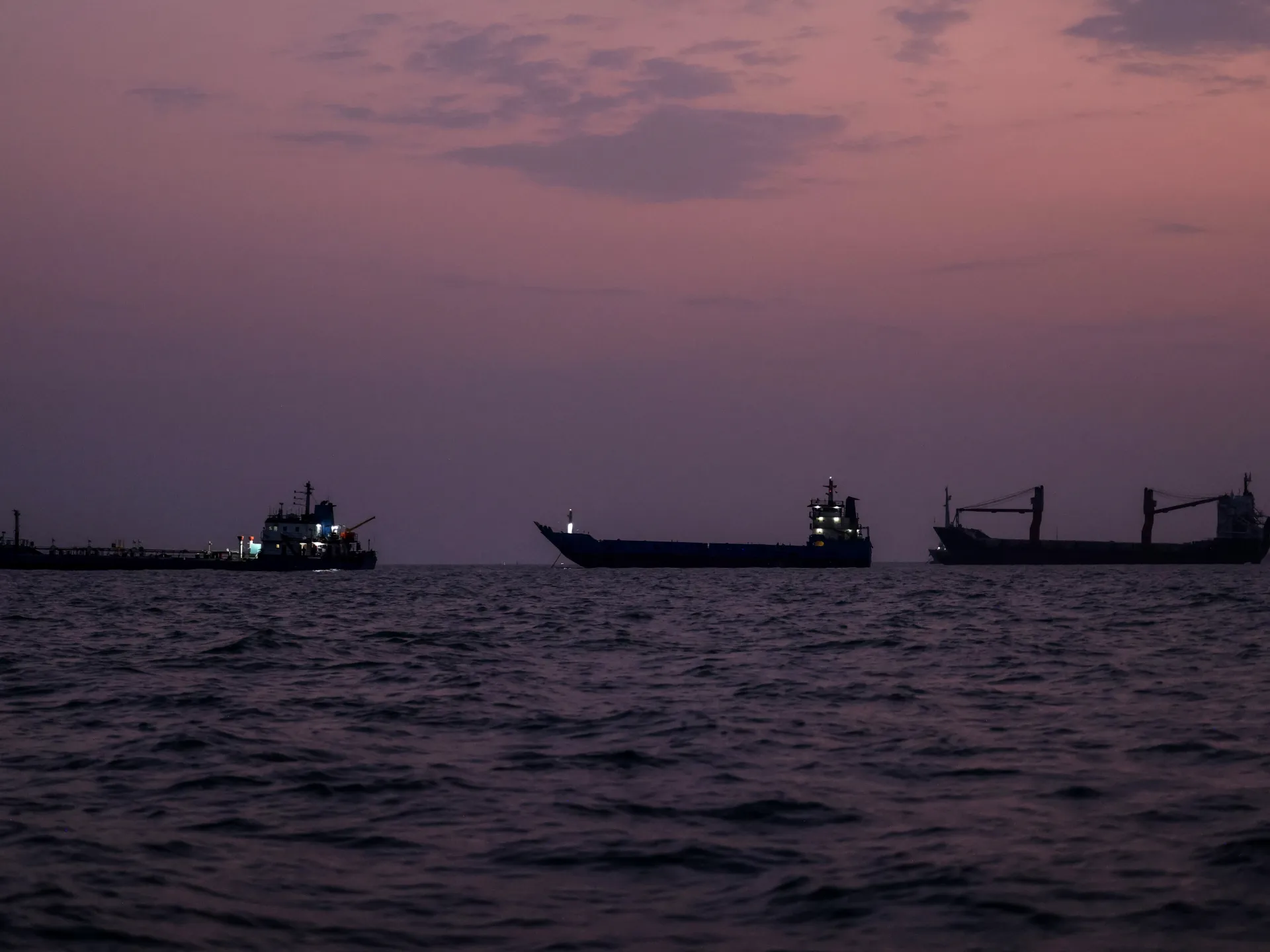
Vessels in the Strait of Hormuz near the beach of Bandar Abbas, Iran, October 6, 2026 [Amirhosein Khorgooi/ISNA via WANA/Reuters]
The United Kingdom Maritime Trade Operations (UKMTO) agency said on Sunday that an outbound tanker in the strait was struck on the port side by an unknown projectile, causing a fire on board. The UK agency said crew members were reported safe, while the damage and environmental impact remained unknown at the time of the report.
Tehran has attempted to enforce control over the Strait of Hormuz during the US-Israel war on Iran, insisting that ships obtain permission to cross via its preferred routes. However, vessels have increasingly risked taking an alternative route hugging the strait’s southern coast.
The UKMTO said on Thursday that a vessel sailing 94km (58 miles) north of Madinat ash Shamal, off the north coast of Qatar, was struck by multiple projectiles, resulting in a number of casualties.
The agency did not specify the origin of the ship or the number of people killed or injured, adding that authorities were investigating the incident amid a recent rise in attacks on vessels near the Strait of Hormuz.
Ships in the Gulf attempting to cross the strait, which is the sole maritime route in or out of the oil-rich region, have faced repeated attacks since the US and Israel began the war in late February.
The Strait of Hormuz remains vital to the global economy, with about a fifth of the world’s oil and liquefied natural gas passing through the passage before the war began.
Iran. Afghanistan. North Korea. Somalia. And now, the United States.
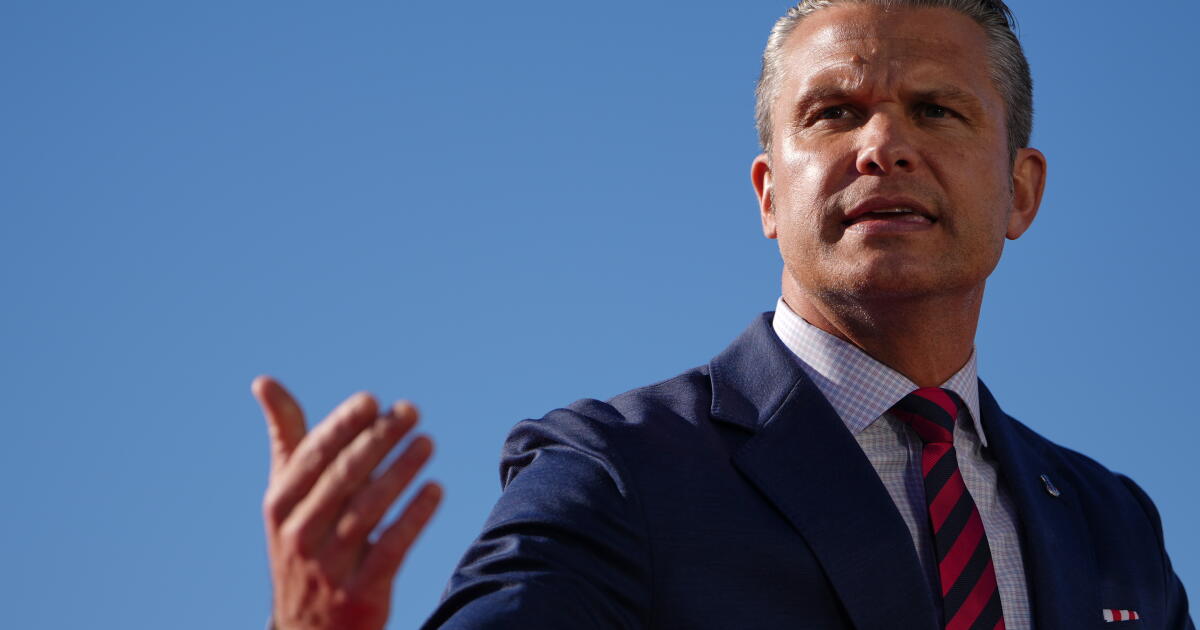
If Secretary of Defense Pete Hegseth is to be believed, America will soon gain the dubious distinction of joining the only four countries on the globe that carry out executions in public.
Hegseth said Thursday that he wanted the execution of convicted F.t Hood shooter, Army Maj. Nidal Malik Hasan, to be available for public viewing.
“It was a radical Islamist attack … so he’s going to get a firing squad of soldiers, as it should be,” Hegseth said in an interview with far-right political activist Jack Posobiec. “We’ll make sure that people are able to watch it. That it’s public. Because people need to understand that there’s serious consequences for these types of things.”
The execution is scheduled to be live streamed Dec. 3 from the same military base where Hasan opened fire in 2009, killing 13 and wounding 32.
The planned public display is, in a word, barbaric. It’s the archaic act of tyrannical monarchies, staged in the shadow of a looming tower or in the town square. The Taliban and ISIS were big on public executions. So was Nazi Germany. They were either fighting a war on their own soil or had just come out of one. It’s a poor excuse, but the U.S. military can’t even point to that as justification for the animalistic intention of broadcasting a state-sanctioned murder.
Should plans for the livestream of Hasan’s killing become a reality, our peers will be countries that the U.S. has long held up as the worst of the worst. Oppressive “shithole” countries, to use a Trump term, that wield intimidation and the threat of death to keep their people in line.
Iran carries out its hangings in public squares, typically using truck-mounted cranes as makeshift gallows. The Taliban exacts its death penalty in sports arenas. Amnesty International reports that North Korea forced local residents, students and workers to watch the 2008 execution of 13 women and two men as a deterrent. Their crime? Attempting to flee to China.
Hasan, an Army psychiatrist and a Muslim, opened fire on dozens of his fellow soldiers as they were preparing to deploy to Afghanistan. He was reportedly angry about the U.S. involvement in the region and in Iraq. In court, prosecutors argued that he was radicalized online and motivated by an ideology that called for “jihad duty.”
His crimes were horrific, and he should be punished. Whether you believe in the death penalty or not (I do not), turning his execution into a morbid form of entertainment — or a warning to never do what he did — would mark a new low for this country.
And we are pretty low as it is. On Thursday, ICE agents in civilian clothing fired at least seven rounds, at 4 p.m. on a busy Manhattan street, into a car with a 5-year-old boy inside. They hit the driver, who survived, and by some act of god missed the child.
Federal immigration agents have shot at least 21 people, killing seven, since President Trump returned to office less than two years ago with the promise of cracking down on crime and making the country safer via mass deportations. The public execution of Hasan, who is a U.S. citizen, is being sold as part of that tough-on-crime initiative. Hegseth himself said the public killing is meant as a deterrent.
The idea that keeping a population safe requires removing the guardrails of civilized society is absurd, though despots throughout history would have us believe otherwise.
If Hasan’s death is televised, it will be the nation’s first government-sanctioned execution carried out in public since 1939. It will be the first U.S. military execution since 1961 and the first military death by firing squad, or “musketry,” since 1945, according to the Death Penalty Information Center.
The Army had planned a very different type of execution for Hasan. ABC News reported that officials were preparing to use lethal injection if Trump authorized the execution of one of the four prisoners on the service’s death row.
Trump’s approval of Hasan’s execution last Friday came days after a botched lethal-injection execution in Tennessee. Christa Pike, who was sentenced to death for a 1995 murder she committed as a teenager, survived despite being injected with two supposedly lethal doses. She is now said to be lucid and even walking.
Hasan, who is partially paralyzed and uses a wheelchair after being shot by officers who were responding to the Ft. Hood attack, will be put to death in a more dramatic fashion — and for everyone to see.
“The public execution even of one who has done grave harm will only further undermine the moral fabric of our nation and be a blight on the conscience of its people,” Oklahoma City Archbishop Paul Coakley said in a statement Friday. “The word of God exhorts us: ‘do not repay anyone evil for evil’ (Romans 12:17).”
A few congressional Republicans even broke ranks with their party and criticized Hegseth’s plans for the livestream. Sen. John Curtis of Utah posted on X that “a civilization erodes when it cultivates an appetite for executions as a form of entertainment. Secretary Hegseth’s plan to livestream the Fort Hood execution risks feeding that appetite.”
There is no reason the U.S. should stoop to the barbarism of public executions. It’s ghoulish, inhumane and a marker of tyrannical rule. Do we really want to join Iran, Afghanistan, North Korea and Somalia in the global hall of shame?
Iran’s IRGC says it struck a “giant LPG gas carrier named NV Sunshine” that was “attempting to pass through the illegal route” south of the Strait of Hormuz.
United States President Donald Trump has said that he does not intend to bomb Iran again until the November midterm elections, even though several US media outlets have reported that the Pentagon has drawn up plans to relaunch attacks before that vote.
Trump has been accused of misdirection on the issue in the past. The US launched its initial attacks on Iran on February 28, as talks with Iran were ongoing and despite Trump saying just the day before that he had not made any decision. One year previously, the US struck Iran towards the end of Israel’s June 2025 12-day war, despite Trump saying he would announce a decision about attacks “in two weeks”.
Recommended Stories
list of 4 itemsend of list
Still, striking Iran ahead of the midterm elections would be risky for the administration as the war remains deeply unpopular with Americans.
Resuming the war afterwards may have less of a negative impact on Trump, who is not eligible to run for another term as US president anyway.
Here’s what we know about Trump’s plans.
In the past two days, The New York Times, The Wall Street Journal and other publications have reported claims by unnamed officials that the Pentagon has drawn up plans to attack Iran before the midterms, if authorised to do so.
On Wednesday, US publication Axios cited US and Israeli officials saying the Pentagon has instructed US Central Command (CENTCOM) to prepare for imminent major combat operations. The Atlantic also reported along similar lines.
What has Trump said?
On Thursday, Trump posted on his Truth Social media platform that he will not order a resumption of strikes on Iran before November 3, when the US midterm elections will be held.
“I want to make it clear to everybody that, while Iran is in very bad condition…we will not be attacking Iran at any time prior to the Midterm Elections to be held in the United States on November 3rd,” he said.
The president added that the US is presently “having productive discussions” with the Iranian side. However, that was also the case on February 28, the day the US and Israel first struck Iran, triggering the war.
Trump did not make any reference to preparing for potential military operations, nor did he provide more details on the state of talks.
Why might Trump be hesitant about resuming bombing before the midterms?
Trump and Republicans are worried about a voter backlash against the war at the polls. The US war on Iran is intensely unpopular domestically as Americans have had to grapple with surging prices of gas, food and other basic commodities because of the crisis in the Middle East.
Since the start of the war, surveys have shown that large numbers of Americans did not approve of striking Iran.
Now, about 65 percent of Americans say they “disapprove” of the way in which Trump has handled the Iran war overall, according to a Pew Research Center poll released on Thursday. Trump stated at the start of the war that it would go on for just a few weeks, however, it is now into its eighth month.
According to Pew, most Americans now believe the war will continue for at least another year. Even Republican or more conservative-leaning voters are growing more negative about the war, its poll found.
The conflict has also severely affected Trump’s personal ratings and eroded support for Republicans. A Reuters/Ipsos poll on Thursday found that only 30 percent of his supporters were enthusiastic about voting in the midterms, compared with 48 percent of Democratic voters.
About 13 percent of those who voted for Trump in 2024 say they are not sure who to vote for in the congressional elections.
Delaying attacks until after the elections could potentially shield Republican candidates from voter backlash, analysts say.
While analysts say Trump will see a good performance at the polls as approval for renewed strikes, a Republican defeat at the polls could equally further incentivise him to hit Iran again as he will calculate that he has little to lose at that point.
While that could further affect Trump’s ratings, the president is not eligible to run in the next presidential election in any case.
Will the US restart the war after the midterms?
In recent weeks, the US president has threatened to “end” the war with force after the elections as talks with Iran have dragged on.
At a Republican convention in September, he accused Iran of trying to affect the outcome of the midterms and said that conflict “is going to end immediately after the elections”.
In an interview with Time magazine two weeks ago, he also said it would be “possible” to ramp up bombing in Iran after the elections, but declined to elaborate. Analysts say his comments were designed to calm voters, while at the same time warning Iran of potential aggression after the vote.
Last week, the US military dispatched about 7,000 sailors and 2,000 Marines aboard several ships now sailing to the Middle East amid threats of new attacks from Trump. The vessel formation included the USS Theodore Roosevelt carrier strike group.
The deployment increases the number of US troops in the region to 20,000, alongside hundreds of aircraft and at least three carrier strike groups.
In the past, US troop build-up in the Middle East and the Caribbean has subsequently resulted in military action.
In June, Washington and Iran signed a ceasefire agreement that quickly broke down over control of the Strait of Hormuz.
Trump has repeatedly said that the US has the upper hand in the strait, citing more oil exports and Iran’s weakened economy. He has also voiced aversion to a deal with Tehran over management of Hormuz, but said he might consider it because “they’re willing to offer us anything to stop”.
Washington rejected a recent proposal from Iran to reopen the strait based on certain conditions it wants the US to meet, including the lifting of sanctions, unfreezing Iranian assets and guaranteeing an end to attacks. Last week, Foreign Minister Abbas Araghchi said Iran was considering a counterproposal from the US.
Oil prices drop as Trump dismisses speculation of pre-midterm military action against Iran.
Published On 9 Oct 20269 Oct 2026
United States President Donald Trump has said the US will not attack Iran before the November 3 midterm elections.
The US president said late on Thursday: “we are having productive discussions with the Islamic Republic of Iran,” in a post on Truth Social. “We will not be attacking Iran at any time prior to the midterm elections to be held in the United States on November 3rd.”
Recommended Stories
list of 3 itemsend of list
Oil prices fell early on Friday as Middle East supply concerns eased somewhat after tensions in the energy-rich Gulf region had mounted in recent weeks.
The possibility of renewed fighting had appeared to drive up oil prices in trading on Thursday. Some analysts believe Trump’s comments were an attempt to try and bring prices back down.
Iran’s Foreign Minister Abbas Araghchi said Tehran is reviewing the US response to its seven-day plan to reopen the Strait of Hormuz, and that Iran will respond within the “next few days”.
He added that negotiations are continuing through mediators, Iran’s Tasnim news agency reported.
Hormuz explosions
Iranian media reported “massive explosions” in the southern Strait of Hormuz on Friday, with Fars citing unnamed military sources as saying tankers using “unauthorised” routes may have struck sea mines.
On Tuesday, US Vice President JD Vance said Iran must make a “meaningful” reduction in its uranium enrichment capacity as part of an agreement to end the war. Experts say this demand may signal a softening of Washington’s earlier insistence that Tehran abandon enrichment altogether.
On Monday, Iranian President Masoud Pezeshkian said negotiations with Washington were “futile”, accusing the US of using negotiations to attack Iran.
Russian President Vladimir Putin told Pezeshkian that Russia will “do everything” to help end the US-led war on Iran, Russian news agencies reported on Thursday.
Iranian media reported “massive explosions” in the southern Strait of Hormuz, with Fars citing unnamed military sources as Trump says US won’t strike Iran before midterms.
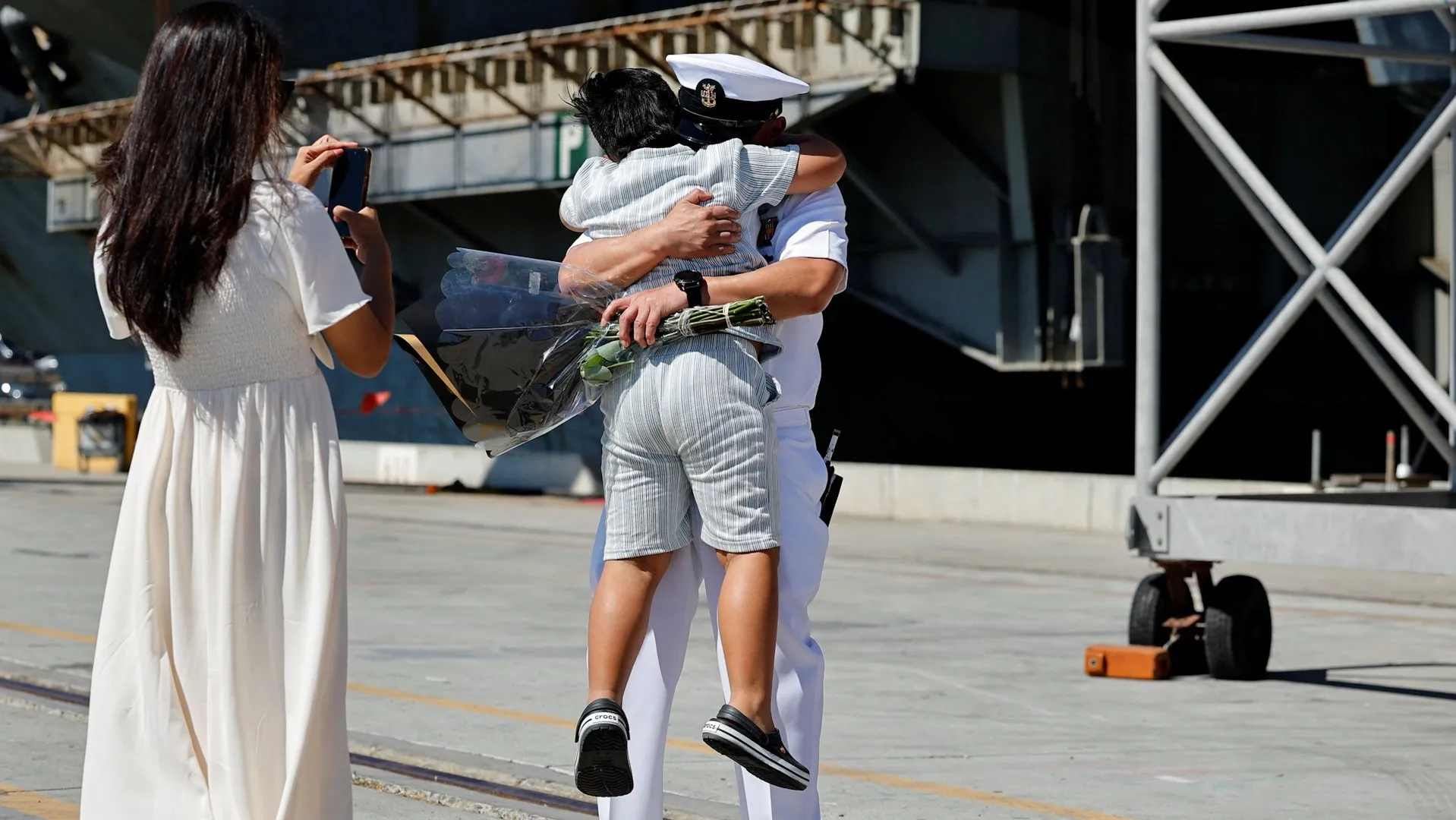
Families cheered and embraced their loved ones as the USS Abraham Lincoln returned home to San Diego after more than 300 days at sea to support the US-led war on Iran. The extended deployment led to supply shortages, facility breakdowns and reports of suicide attempts.