Under this act, it is against the law to take natural materials from the UK seafronts.
This includes materials such as sand, shells and pebbles.
The law can in turn be enforced by the local council and lead to a fine of up to £1,000.
While popping a pebble in your pocket on a beach stroll may feel harmless, mass numbers of materials disappearing from the beach can worsen the effects of coastal erosion.
This occurs when land located near the sea is worn away by the water.
The coast is better protected when there are more pebbles on the shore, which is why beach-goers are discouraged from taking home a memento.
Natural materials found on the beach also provide habitats for wildlife and protect the area from flooding.
Cumberland Councillor Bob Kelly, who is the executive member for Cumberland Policy and Regulatory Services, said: “I understand people’s reluctance to follow this guidance, as I have been a collector of shells myself.
“But taking a pebble or a shell from a beach can in fact damage the environment.
“Pebbles and other natural matter act as a natural sea defence against coastal erosion, natural flood defences and wildlife habitats, which many experts warn has become even more of an issue due to climate change.
“We are asking people to leave the pebbles, shells and sand as we all want to ensure that our beaches remain vibrant and intact for future generations.”
ONE destination in France is cracking down on drinking in public spaces – including its pretty beaches.
Anyone seen opening a beer late in the evening after the bars have closed could be in a lot of trouble.
Drinking on the beach has been prohibited in the municipality of Saint-Jean-de-LuzCredit: AlamyAntisocial behaviour in the evening has resulted in the summer alcohol banCredit: Alamy
The municipality of Saint-Jean-de-Luz on the Basque coast in France is stopping locals and visitors from drinking in public spaces.
This includes its beaches like Grande Plage, Plage d’Erromardie and Plage de Lafitenia.
Sign up for the Travel newsletter
Thank you!
Anyone found breaking these rules could be fined up to €150 (£127).
Talking to local media, Sébastien Larroche from the municipal police and parking department said there have been problems with large gatherings during the evening.
He said: “On the Grande Plage and the beaches in particular, alcohol consumption is prohibited because we had large gatherings of young people in the evening.
“We introduced this to try to counter this phenomenon of gatherings on the beaches and also the alcohol consumption of young people.”
He added that the problems happened mostly at night or after the local bars closed.
The rules do have a little flexibility though. For example those enjoying a glass of rosé with a picnic during the day shouldn’t be penalised.
This will be at the discretion of officials though, as Sébastien Larroche explained, “distinction is made by the agents in the field.”
Other seaside spots across the country have put similar rules in place like La Baule-Escoublac in western France where drinking alcohol on beaches is prohibited.
Officials are cracking down on drinking on Saint-Jean-de-Luz’s beaches – like Grande PlageCredit: Alamy
Other places like La Grande-Motte and Agde have seasonal restrictions – so check local rules before opening a bottle by the sea this summer.
It’s not the first time there have been alcohol bans in France.
Temporary rules were implemented across the country in late June to stop people drinking at certain places during the heatwave.
The ban was at organised events and public spaces to protect locals from the extreme heat.
NOT many things are more rewarding than the first gulp of a crisp, cold pint on a sunny day.
And it’s even better when that pint only sets you back £1.69 – less than the price of the £1.80 bus ticket getting you there.
The Ardwick in Blackpool is the cheapest pub in the UKCredit: The Sun – Cyann FieldingOn Thursdays, a pint costs as little as £1.69Credit: The Sun – Cyann Fielding
We all know Wetherspoons is home to some of the cheapest pints in the UK – but unless you want a Worthington’s Creamflow Ale or Ruddles, you’ll be paying more.
You can pick up a cold crisp pint of John Smith’s, Foster’s, Strongbow and Murphy’s all day long on Thursdays for the tiny price of £1.69.
That’s less than the price of a bus ticket from the train station to the pub which costs £1.80.
Even if you visit on a different day of the week, the pint will only set you back £1.90 – still a steal.
Sipping on my John Smith’s, I somewhat expected it to be lukewarm and not the nicest, but it was one of the coolest pints I had.
The rest of the week a pint will set you back from £1.90Credit: The Sun – Cyann FieldingThe boozer feels like a traditional pub with betting machines and dart boardsCredit: The Sun – Cyann Fielding
The average price of a pint in the UK today is around £5.50, soaring past £6.50 in the capital.
The Ardwick’s Thursday prices are actually more in line with what you’d spend on a pint three decades ago.
The average price of a pint of beer in the UK in 1996 cost between £1.68 and £1.73.
And it’s not just the prices that are a throwback to the 90s…
Classic pub betting machines and dartboards lined the walls of the drinking establishment and the carpet has a nostalgic paisley pattern straight out of your gran’s living room.
It even has the odd historic stain here and there.
And it is a short walk from the beach tooCredit: The Sun – Cyann FieldingYou can also head to an outdoor beer garden at the pub tooCredit: The Sun – Cyann Fielding
The traditional wooden bar is stacked with spirits too.
You’ll also find a number of TV screens around the pub broadcasting live sports and a pool table for a bit of competitive fun.
Though, you’ll have to head elsewhere for food as the boozer doesn’t serve any grub apart from behind-the-bar packets of crisps.
But with plenty of spots nearby serving chips for under a fiver, you could spend less than a tenner on your day out.
Overall, the watering hole has the classic pub vibe with chatty locals and football fans glued to the match being broadcast on the screens.
Though, if you prefer a bar vibe and happen to not be visiting on a Thursday and want to pay less than £1.90, head to Tommy Cutler’s just a one-minute walk away where you can grab a pint for £1.75.
After enjoying your pint, make sure to head to Blackpool Beach which stretches on for miles and features golden sand.
It is a great beach for the family to enjoy a day building sandcastles or even heading for a swim, and thanks to being so big, even when it is busy there is plenty of space.
WE ALL know five-star hotels aren’t made the same – but how do you know which resorts really feel like top-end luxury, and which have some hidden catches?
For example, Grand Hotel du Cap Ferrat on France’s Cote d’Azur will set you back a £2,055 a night in September – while El Mouradi Palace in Tunisia will cost just £123 (including ALL your meals).
With decades of travel experience, The Sun’s Lisa Minot knows what to look for when it comes to a hotel’s star rating
Both are 5* but the difference in price is astonishing – and no surprise to a travel journalist like me.
The truth is, there is not one, single, global set of standards a hotel has to achieve in order to get that coveted top star status.
While 20 European nations have joined a group called the Hotelstars Union – including Greece, Germany and Austria – agreeing to adhere to a huge 247-point check list to harmonise standards, the likes of France, Italy and the UK are not members.
In Italy, the system is split across 20 different regional governments. In some parts of the country, a hotel can scoop a high star rating simply because it has a lift, a luggage room and a receptionist that speaks two languages.
The fact the rooms are unloved and wallpaper peeling would be irrelevant.
In France, the government enforces some of the strictest legal hotel regulations in the world.
To get five stars in France, a double room must be at least 24sq metres, feature air conditioning, high speed wifi, bathrobes and 24-hour room service.
In Tunisia, the Ministry of Tourism oversees ratings and a 5* property will generally be a sprawling all-inclusive mega resort with lots of amenities.
Because land and staff are relatively inexpensive, the hotels can look amazing with huge pools, private white sand beaches and marble-clad lobbies the size of football pitches.
The price of the five star Grand-Hotel du Cap Ferrat is not the same as other five star hotelsCredit: AlamyIn Europe, what makes a hotel four or five stars can differ widelyCredit: Alamy
But that all-inclusive buffet restaurant probably isn’t going to feature the same quality of food as the ultra-exclusive Four Seasons on the Cote d’Azur (think pizzas and pasta instead of lobsters and caviar).
And while the French hotel will be staffed by some of the most experienced hospitality professionals in the world, the same might not be said for the earnest, hardworking staff in Tunisia’s emerging tourist economy.
So how do you work out how 5* your holiday resort is?
Tour operators have been tackling the issue themselves – they don’t want to promise customers a 5* hotel in a non-European resort if, in reality, it is probably equivalent to a 3* in Europe.
Many will create their own ratings and often downgrade some hotels – TUI’s T system might decide that a 5* hotel in Egypt is actually a 4T based on the standards and facilities.
Jet2 has their own rating system, based on guest feedback, facilities, service and their team’s own in-person visits.
While that is a good start, what’s more important is to read the most recent reviews from real customers on websites like TripAdvisor, Feefo and TrustPilot – read as many of those as you can as a hotel may have had a good reputation five years ago but gone downhill since.
Look out for fakes though – if a hotel has a flurry of 5* reviews or multiple reviews using similar language, take that as a red flag.
And of course, look for reviews in The Sun’s very own travel section – our experienced journalists will give the verdict based on their own stays.
So next time you are browsing summer getaways, treat hotel stars like pirate maps – they are a rough guide, but you will need to do your own digging to find the real treasure.
WHAT THE STARS MEAN IN ENGLAND
AA Hotel Quality assessment and ratingCredit: Alamy
England’s hotels are rated by VisitEngland or the AA (Automobile Association) using a standardised three to five star Quality Scheme with inspectors conducting annual, unannounced overnight visits to assess strict physical criteria, service levels and hospitality standards.
3 Stars:
Must have on-site dining options and offer a buffet breakfast with hot and cold options.
All bedrooms must have ensuite bathrooms, an iron and ironing board, space for guests to easily move around, good access to both sides of a double bed and individually-controlled heating systems.
You should also expect efficient service from approachable staff.
4 Stars:
All of the above is expected, as well as an elevated level of service where courteous, polite staff demonstrate good levels of service and in restaurants, can show they have good knowledge of the food and drinks on offer.
Room service should be provided and rooms have more space. Guests should be offered assistance with luggage.
5 Stars:
All of the above but staff should be anticipating guests needs to create unique and memorable experiences.
Impeccably-presented staff should be showing guests to their room and providing a full explanation of the hotel and room facilities.
There should be a 24hour return laundry service and at least one restaurant open to residents for all meals.
There should also be outstanding quality food and 24-hour room service with hot and cold options.
Breakfast should be served to the table.
Rooms should be spacious, double beds at least 5ft wide and air conditioning available.
WHAT THE STARS MEAN IN SPAIN
Each of Spain’s regions follow different rulesCredit: Alamy
Like Italy, Spain doesn’t have a single national star rating system, each of its 17 autonomous regions (like Andalusia, Catalonia or Madrid) writes its own rules.
In the past, the rules were very focused on hardware checklists – the square metre size of rooms and corridors.
But now a more modern system allocates points for optional services like having a spa, pillow menu or valet parking.
3 Stars:
Rooms must be at least 15sq metres with a private ensuite bathroom of at least 4sq metres and include a telephone, television, and a safe either in room or at reception.
Central heating and air conditioning is required in all public areas – and in some rooms depending on the region.
Reception must be staffed at least 14hours a day with a phone number for overnight emergencies. Hotels must feature a bar or cafe.
4 Stars:
All of the above but rooms must be at least 16sq metres and feature air conditioning and heating.
Rooms must also feature a fully-stocked mini bar and an in-room safe.
Reception must be staffed 24/7 and staff should be multilingual, fluent in Spanish and English at an absolute minimum.
Luggage porter services and room service should be offered for a significant portion of the day.
5 Stars:
To gain five stars in Spain is legally-protected, very difficult to achieve, and heavily scrutinised by regional inspectors.
Rooms must be a minimum of 17sq metres with ensuites at least 5sq metres or larger.
Reception must be open 24/7 with dedicated concierge desk and valet parking.
Luxury room service must be available 24hours a day and the hotel should feature multiple premium dining options (including fine-dining or celebrity chef-backed restaurants) as well as high-end spa and wellness facilities and distinct luxury finishes.
Because the 5* category became so crowded, regions like Murcia and Andalusia created a special, ultra-exclusive legal tier 5GL (Grand Luxury) and to earn it, hotels must score hundreds of extra points by offering luxuries like private transfers, high staff-to-guest ratios and historic building preservation.
WHAT THE STARS MEAN IN GREECE
Greece has very strict rules for star ratingCredit: Alamy
For decades, hotel stars in Greece were handed out by the Hellenic Chamber of Hotels and were based on strict criteria.
If you had a pool and a big lobby, you got five stars, regardless if the service wasn’t great.
But now the country has signed up to the Hotelstars Union, where hotels must meet a handful of strict, non-negotiable legal minimums plus amass a set number of points from a catalogue of luxury features.
3 Stars:
Reception must be open at least 10 hours a day, with a means to communicate 24hours and a comfortable lounge or waiting area.
Rooms must feature a desk and chair, colour TV with remote control, private safe and reliable wifi.
You should also expect a reading light next to the bed, a breakfast buffet and access to laundry / ironing services.
4 Stars:
All of the above plus reception available 16hours a day with a spacious seating area and dedicated lobby bar or cafe.
Rooms should be more comfortable with an upholstered chair or couch with a side table.
The hotels should offer a mini bar or 16hours of room service as well as premium touches like bathrobes and slippers.
5 Stars:
This tier must be audited by independent inspection bodies.
Reception must be open 14hours a day by multilingual staff that speak English.
A professional doorman or valet parking service is mandatory.
Guests must receive a personalised greeting – often a gift of local Greek products, fresh fruit or flowers in the room.
A safe, an internet device (on request) and a premium evening turndown service are also mandatory.
Food and drink must be available 24hours a day and the hotel should provide ultra-fast laundry services.
WHAT THE STARS MEAN IN TURKEY
Hotel stars in Turkey are managed by the Ministry of Culture and TourismCredit: Alamy
All official star ratings are strictly controlled by the Ministry of Culture and Tourism and to get a star rating, hotels must pass a rigorous assessment with mandatory entry requirements and a specific points system to evaluate everything from staff training to physical infrastructure.
3 Stars:
The reception should have a formal lounge offering hot and cold drinks to arriving guests.
Public spaces – and rooms – should have air conditioning.
Rooms should also have a TV, hairdryer in the bathroom and direct-dial phone to reach reception.
The hotel cannot just serve breakfast and should have at least one restaurant or cafe on site for more comprehensive meal options.
4 Stars:
Hotels must have a second restaurant on the property that is required to serve at least five authentic Turkish dishes to promote local gastronomy.
The hotel must also provide a swimming pool, entertainment options and at last three distinct activities or facilities from a pre-approved government list – including Turkish baths, saunas and tennis courts.
Rooms must add premium touches including a stocked minibar, in-room safe and room service.
5 Stars:
To achieve 5* status in Turkey, hotels must legally feature an on-site men’s and women’s hair salon, local shopping arcade or market and offer 24hour room service.
The infrastructure of the hotel should be able to support large numbers of guests while maintaining luxury – think round-the-clock reception, multilingual concierges, valet parking, multiple fine-dining a la carte restaurants and spa complexes.
It’s important to know that a 5* rating doesn’t mean that the offering is always top notch – think local spirits and beers instead of premium brands.
For true luxury, look for hotels that offer Ultra All Inclusive, an industry shorthand for premium, imported alcohol and branded goods.
WHAT THE STARS MEAN IN TUNISIA
Tunisia’s star rating system was recently overhauledCredit: Alamy
Regulated by the Tunisian National Tourism Office (TNTO), for many years the star system was based heavily on grand architecture but a recent modernisation has seen the criteria overhauled to focus more on hygiene, safety and quality of service.
Four and five star hotels face unannounced inspections by the TNTO as well as inspectors acting as mystery guests.
It’s also important for guests to know that hotels must legally turn on their central air conditioning from June 15 to September 15.
If there’s a heatwave outside of those dates, the hotel isn’t legally required to turn its air con on.
Hotels also legally do not have to provide facilities year-round. In winter outdoor water slides and beach bars may be closed and entertainment cancelled.
3 Stars:
Rooms must be 13.5sq metres and feature a colour TV and private safe.
The hotel needs to have a reception staffed 12 hours a day, main restaurant, bar and wifi.
4 Stars:
Rooms must be 16sq metres. If the hotel has more than 30 rooms, the reception must be staffed 24hours.
The hotel must have multiple on-site facilities including an expansive outdoor pool, secondary bar, room service options and lifts if the hotel is more than two stories.
5 Stars:
Hotel must have premium furnishings, extensive grounds and flawless staff service.
Rooms must be a minimum of 24sq metres and guests can be expected to be pampered around the clock with 24 hour room service, dedicated concierge desk, porter and personalised guest greetings.
AIRPORTS are a gateway to travel – but some of them are so much more than that with swimming pools, indoor rainforests and panoramic sky decks.
Travel + Leisure’s ‘World’s Best Awards’ named the top 10 airports – and sadly none are in the UK.
The impressive Singapore Changi Airport has the world’s biggest indoor waterfallCredit: AlamyIt has an airside hotel with a rooftop pool that’s open to allCredit: Unknown
The airports were declared the best by readers who voted in their thousands for their favourites in multiple categories for the publication.
At the very top of the ‘Best International Airports’ is Singapore Changi Airport which got a score of 95.19 out of 100.
Sign up for the Travel newsletter
Thank you!
Travel + Leisure said about Singapore Changi Airport: “Back on top after a two-year hiatus, this legendary hub has efficient operations, excellent hospitality, and eye-catching amenities like a butterfly garden and a swimmingpool.”
It stretches across five square miles and no one could ever say it’s an ordinary airport.
Inside is the world’s tallest indoor waterfall, a tropical rainforest, butterfly garden and even a hedge maze which is the largest in the country.
It also has a swimming pool and hot tub up on the roof at the airside Aerotel Singapore, which is even open to non-guests to watch the planes take off.
Hong Kong Airport has mountain views on Lantau IslandCredit: Hong Kong Airport
She said: “Within a few hours I’d strolled through a tropical rainforest, tucked into traditional sweets in a souq and had a sumptuous massage in a tranquil spa where airport stresses melt into distant memories.”
“The Orchard is the airport’s indoor tropical garden, constructed in 2022 – tall leafy palms and lush, green banana plants flourishing in the sunlight under a glass dome.
“All of the shrubs are real. The birds hiding within them are not, although the chirping sounds floating from hidden speakers nearly had me fooled.
“I wasn’t surprised to catch passengers reading a book on the artificial grass, or cosying down in one of the wooden tipis – with the noise of the nearby waterfall muffling out the chaos of a busy airport, this is surely the most peaceful spot in Hamad International.”
Sophie calls Hamad International Airport the ‘ultimate layover destination’Credit: AlamyZayed International Airport got a score of 91.24 out of 100Credit: Alamy
Coming in third spot is Istanbul Airport followed closely by Zayed International Airport in Abu Dhabi.
Dubai International Airport also made it onto the list even though, surprisingly, the hub will eventually close in around 10 years time.
The airport which has a wellness spa, luxury boutiques and sleepover lounges will close to make way for Al Maktoum International Airport.
Hong Kong International Airport on the list has incredible surroundings from mountains on Lantau Island to the South China Sea.
Visitors can take it in on the Sky Bridge which is the world’s longest airside pedestrian bridge – and there’s a Sky Deck with 360-degree views.
Other winners include Tokyo Haneda Airport and Adelaide Airport in Australia.
“Some people count down the days until retirement. I’m counting down the days until my next holiday.”
So where does Ellen recommend Brits travel to?
Ellen said: “Gran Canaria has become one of my favourite destinations in recent years and I am actually heading back there again soon.
“I love the RIU Gran Canaria because it is close to the shops, perfect for a real fly and flop break, with the beach just five minutes away.
“The food is excellent, the entertainment is great, and what really stands out is how the staff remember you and make you feel so welcome when you return.”
If you fancy visiting the island yourself, there’s still space to book at RIU Gran Canaria which has four pool, six bars and a nearby beach.
An all-inclusive break from August 10-16 for a family of four starts from £1,137pp including return flights from Newcastle.
Other spots that Ellen still loves are close to home.
Gran Canaria has become one of Ellen’s favourite destinationsCredit: Alamy
She said: “I have always had a real love for Spain, having travelled there for around sixty years.
“I still recommend it and would love to go back again, particularly to the Balearic Islands like Majorca and Ibiza, as well as the Costa del Sol and the Canary Islands.
“I also used to visit the Costa Blanca and still have a real fondness for all of these destinations.”
Ellen says she continues to travel to Lanzarote twice a year too.
Ellen continues to go back to Lanzarote twice a yearCredit: AlamyFurther afield Boa Vista in Cape Verde is the ideal holiday for relaxingCredit: Alamy
Looking further afield, Ellen added: “Boa Vista in Cape Verde is another place I absolutely love, as it is so quiet and beautiful, ideal for relaxing by the pool with a good book.
“The entertainment at the RIU Palace Boavista is brilliant, as you would expect from a RIU hotel, it is only about thirty minutes from the airport, and again the food is fantastic.
“I have been going there for around fifteen years now and always recommend it”.
A family of four can have an all-inclusive break at the RIU Palace Boavista between August 15 and September 1 from £1,010pp.
Cape Verde has been named the ‘best ultimate football-inspired island’ by Expedia, with searches for Cape Verde holiday packages up 265% following the African country’s World Cup heroics this summer
Cape Verde made a big impact on the tournament(Image: AFP via Getty Images)
Searches for Cape Verde holidays have soared by 265% following the African nation’s footballing exploits this summer, according to figures from Expedia.
The island, made up of 10 volcanic islands with a total population of 491,233, captured the public’s hearts thanks to their performances at the World Cup. Their impressive showing proved so popular that searches have risen sharply compared to this time last year – with overall interest in island breaks up 55%.
Cape Verde features on Expedia’s 2026 Island Hot List, which spotlights the world’s most sought-after island destinations. Each location on the list falls into a distinct category, covering the finest romantic, wellness, nature, family and budget-friendly getaways – among others – with Cape Verde crowned the ‘best ultimate football-inspired island’.
Travel expert and spokesperson Melanie Fish said: “The list was finalised until one destination generated so much buzz from football fans that we had to give them an award of their own.”
Elsewhere on the list, St. Lucia takes the top spot as the ultimate romantic escape, while Porto Santo, Madeira, Portugal, is the preferred choice for wellness and relaxation.
Praslin, Seychelles leads the way for nature enthusiasts, and Syros, Greece, takes the crown for cuisine. Palawan, Philippines, is ideal for natural wonders, while Culebra, Puerto Rico, reigns supreme for water-based adventures.
Norway’s Lofoten Islands also secured a place on the list for arctic adventures, while Sanibel Island, Florida, USA, is the destination for family getaways. Phu Quoc, Vietnam tops the list for affordable luxury while Fiji leads the way for ‘multi-generational value’.
Expedia’s Melanie Fish added: “Islands don’t just satisfy the urge to get away; they can also be one of the smartest holiday values.”
Holidaymakers can book flights, hotels, car hire and activities on Expedia – making the planning process far simpler, and helping save money in the process.
Popular islands fill up quickly, particularly during busy holiday seasons – booking ahead helps guarantee the best prices and availability.
EXPEDIA’S 2026 ISLAND HOT LIST (INCLUDING YEAR-ON-YEAR SEARCH INCREASES).
St. Lucia (+125%) – Best for Romantic Escapes (Hotel Recommendation: Sugar Beach, 5 stars)
Porto Santo, Madeira, Portugal (+85%) – Best for Wellness & Relaxation (Hotel Recommendation: Pestana Porto Santo Beach Resort & Spa, 5 stars)
Praslin, Seychelles (+80%) – Best for Nature Lovers (Hotel Recommendation: Coco de Mer Hotel and Black Parrot Suites, 4 stars)
Syros, Greece (+60%) – Best for Cuisine & Charm (Hotel Recommendation: Syrou Melathron, 4 stars)
Lofoten Islands, Norway (+50%) – Best for Arctic Adventure (Hotel Recommendation: Henningsvær Bryggehotell, 4 stars)
Palawan, Philippines (+40%) – Best for Natural Wonders (Hotel Recommendation: Carpe Diem Villas & Resort, 4 stars)
Culebra, Puerto Rico (+35%) – Best for Water Adventures (Hotel Recommendation: Club Seabourne Boutique Hotel, 3 stars)
Sanibel Island, Florida, USA (+25%) – Best for Family Escapes (Hotel Recommendation: Sanibel Inn, 3 stars)
Phu Quoc, Vietnam (+25%) – Best for Affordable Luxury (Hotel Recommendation: Green Bay Phu Quoc Resort & Spa, 5 stars)
Fiji (+15%) – Best for Multi-generational Value (Hotel Recommendation: OUTRIGGER Fiji Beach Resort, 5 stars
New for 2026: Cape Verde (+265%) – Best Ultimate Football-inspired Island (Hotel Recommendation: Morabeza Hotel, 4 stars).
THERE’S no better way to keep the kids cool in the heatwave than splashing in the pool – and there is a huge new £12million waterpark you can now go to in the UK.
The new water attraction, Lost Lagoon, has opened at Haven Kent Coast holiday park just in time for the summer holidays, and I was one of the first to visit.
Haven Kent Coast has opened a new £12million waterparkCredit: Facebook/HavenInside there is a new splash pad area for little onesCredit: Facebook/Haven
Taking a turn on outdoor flume Atlantis Falls, it should come with a health warning – its so addictively fun that you won’t want to leave it.
What I loved about the water ride is that it’s a cross between the outdoor rapids you find at other pools, which are usually set into the ground and can be a bit meandering over a gentle gradient, and a flume with a steeper slope.
Sign up for the Travel newsletter
Thank you!
I was certainly taken by surprise, especially when I was unexpectedly bumped up into the air at speed right at the end…
As well as Atlantis Falls, the pool upgrade has an indoor splash pad with slides, sprays and tipping buckets.
My boys absolutely loved racing each other down the side-by-side slides at one end of the aqua- play frame called Coral Play, while the twisty tunnel water chutes at the other end of the splash pad also got the thumbs up.
Even my teen found it fun, so it’s clearly been designed for different ages to splash about together.
For younger guests it has a shallow baby pool as you enter the waterpark, which is perfect for little ones heading for their first swim.
There’s also Tiddlers Tide Pool, with its own little slide, water table and play area aimed at toddlers.
And the new indoor swimming Aqua Haven has been created by extending the building over the old outdoor pool.
The sprays coming from the play frame were perfect for cooling down menopausal mums during the heatwave as well…
For my family of five, heading to the pool is a non-negotiable on any holiday, so there’s a couple of things you need to know before visiting.
The pool isn’t currently opening on changeover days during term time, which is usually on Mondays and Fridays (although it will be open every day in peak periods).
There are side-by-side slides to race each other on tooCredit: Facebook/HavenTiddlers Tide Pool will also open at the park this yearCredit: Facebook/Haven
You can book up to 14 hour-long swim sessions per break on the MyHaven app, four weeks before your holiday starts.
You’ll want to do this in plenty of time, as most of the hour-long slots were full to capacity well before we arrived.
And you need to be 1.2 metres tall and a strong swimmer to go on the outdoor rapids, even if you have an adult in tow.
But it’s all worth it if you want to keep the whole family entertained.
Don’t worry if you don’t end up booking into the waterpark however, as there is loads to do at the holiday park outside of this.
It’s host to a huge adventure village, with everything from climbing walls and bungee trampolines to high ropes and kart hire.
There’s the onsite Wetherspoons, massive indoor arcade linking the pool, the two drinking holes, and the activity hub.
One thing that families will love this summer is that Haven is giving each child a £7.50 activity credit as part of the Great British Summer of Savings, the government’s VAT cut on kids’ activities.
The holiday park also has lots of other activities including climbing wallsCredit: Catherine LofthouseAnd you can stay from as little as £3.07 per person, per nightCredit: Catherine Lofthouse
We used ours towards booking some extra fun at the pool, including a go on the aqua jets for one child and a turn on the aqua inflatable for another.
You need to spend all of your activity credit in one go as you will lose the balance otherwise.
But book your stay far enough in advance, and you can snap up a four-night break for four people from just £49, which is equal to just £3.07 per person, per night.
A BRAND new aquapark that is the “biggest in the region” is set to open this summer.
Featuring slides, climbing walls and an obstacle course, the inflatable waterpark is expected to attract thousands of visitors.
The park opens on August 3 and promises a full-day of water-based funCredit: MEN MediaThe North West Aqua Park is set against the stunning backdrop of Lower Rivington Reservoir in LancashireCredit: MEN Media
Located at Anderton Centre near Bolton and Chorley, the brand new North West Aqua Park will be open to the public from August 3.
It is set against the stunning backdrop of Lower Rivington Reservoir, a mid-19th century lake in Lancashire.
Sign up for the Travel newsletter
Thank you!
The inflatable park promises a day out full of water-based fun, including slides, balance beams, climbing walls and splash zones.
Aimed at visitors aged six and over, the water attraction will have a full-time, fully qualified lifeguard team on site.
Visitors are able to pre-book online now, and the park expects demand to be high throughout the summer.
Tickets for a one-hour session cost £20.
Jason Pendlebury, chief executive of the Anderton Centre, said: “We are incredibly excited to open the North West Aqua Park and welcome our first visitors on August 3.
“This has been a project that has involved a huge amount of planning, partnership working and commitment from many people, and we’re immensely proud to see it become a reality.
“We believe the Aqua Park will become one of the North West’s premier outdoor attractions, bringing new visitors to the area while encouraging people of all ages to get active, enjoy the outdoors and create lasting memories with family and friends.
“We can’t wait to welcome everyone to experience it for themselves.”
The island of 5,000 is reached by hopping on a two and a half hour ferry from Funchal on the bigger island. The waves may get a little choppy, but it’s well worth taking on the journey
This article contains affiliate links, we will receive a commission on any sales we generate from it. Learn more
The island is a lot quiet than its bigger sibling (Image: Getty Images)
A European island with stunning beaches is one of this summer’s hottest spots.
Porto Santo is Madeira’s much quieter, sandier sibling island. Its main draw is exactly what Madeira and the Canary Islands can’t deliver: a bit of peace and quiet. While Madeira welcomes 2.2 million and Tenerife seven million visitors a year, only around 50,000 make it to Porto Santo.
The island of 5,000 is reached by hopping on a two and a half hour ferry from Funchal on the bigger island. The waves may get a little choppy, but it’s well worth taking on the journey.
Porto Santo’s headline feature is its single, near-uninterrupted 5.5-mile golden sand beach that runs almost the entire length of the island’s south coast. This is a big deal because Madeira proper barely has any sand beaches; they’re mostly volcanic pebble or rock. So Porto Santo is the go-to for a classic beach holiday in the archipelago.
The beach sand is locally famous for supposed therapeutic properties, particularly for joint and skin conditions, and people travel specifically to bury themselves in it or take mud/sand treatments. Whether or not it actually works, digging yourself down into the ground like a baby turtle sounds like a nice way to spend an afternoon.
Once you’ve cured yourself, a quick dip to get the residue sand off will likely be in order. The island’s clear, calm turquoise waters are great for swimming, unlike much of Madeira’s rockier coastline, and decent for watersports like windsurfing, kitesurfing, and diving.
Porto Santo delivers golden sand, reliable warmth and a slower pace made for switching off. It’s gaining momentum this year as travellers move beyond Europe’s classic beach staples in search of calmer, more relaxed stays.
The island was named in Expedia’s Island Hot List, having seen a 85% spike in interest over the past year.
Expedia’s 2026 Island Hot List
1. St. Lucia (+125%) – Best for Romantic Escapes
Why it’s Next Wave: As travellers move beyond crowded Caribbean hotspots, this destination stands out for couples with its secluded resorts, dramatic scenery, and soft adventure tailored for romance.
2. Porto Santo, Madeira, Portugal (+85%) – Best for Wellness & Relaxation Why it’s Next Wave: A quieter alternative to Funchal and mainland Europe’s busiest beach destinations, known for its golden sands and relaxed pace.
3. Praslin, Seychelles (+80%) – Best for Nature Lovers
Why it’s Next Wave: No longer a launchpad for Seychelles island hopping, Praslin’s protected landscapes, rare wildlife, and untouched beaches are drawing travellers seeking immersive natural beauty.
4. Syros, Greece (+60%) – Best for Cuisine & Charm
Why it’s Next Wave: An alternative Greek island offering culture, food, and fewer crowds than the region’s better-known islands, Santorini and Mykonos.
5. Lofoten Islands, Norway (+50%) – Best for Arctic Adventures
Why it’s Next Wave: A spectacular archipelago in Northern Norway known for dramatic peaks and crystal-clear fjords. Here travellers find the Midnight Sun in summer and an alternative for Northern Lights spotting from September to April.
6. Palawan, Philippines (+40%) – Best for Natural Wonders Why it’s Next Wave: As travellers seek more dramatic, discovery-driven escapes, this destination is gaining traction for its iconic limestone landscapes and pristine ecosystems.
7. Culebra, Puerto Rico (+35%) – Best for Water Adventures Why it’s Next Wave: It offers a quieter escape for its world-class snorkelling, diving, and tidal pools.
8. Sanibel Island, Florida, USA (+25%) – Best for Family Escapes
Why it’s Next Wave: Re-emerging on travellers’ radars, it combines effortless access with rising global interest from families for its simple, uncrowded beach escapes.
9. Phu Quoc, Vietnam (+25%) – Best for Affordable Luxury
Why it’s Next Wave: Rapidly emerging as Southeast Asia’s affordable luxury island hub as it trends up social (mentions +235% YoY) for its strong value appeal at accessible pricing.
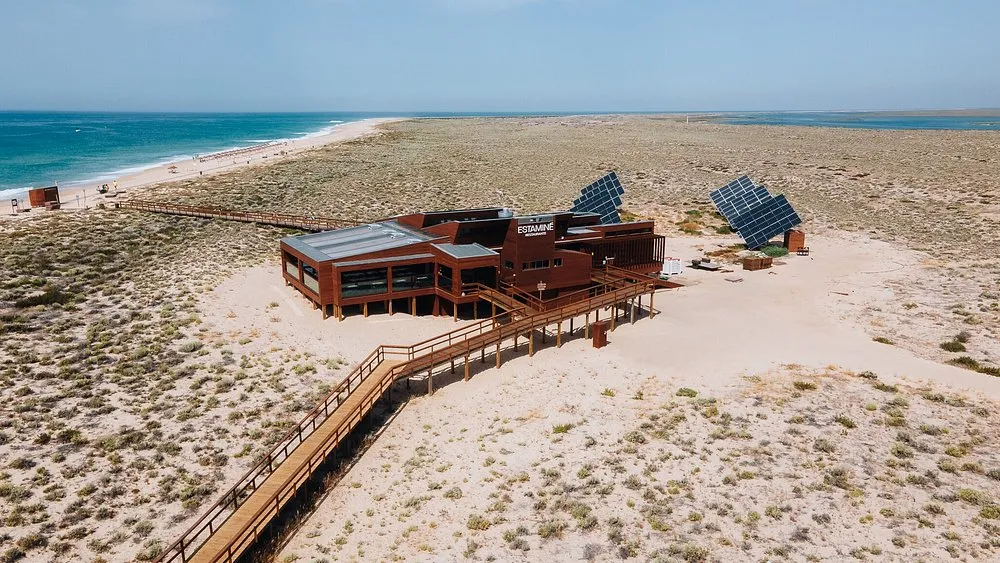
10. Fiji (+15%) – Best for Multi-Generational Value
Why it’s Next Wave: Evolving as a destination for all generations, it’s leading the conversation as the most mentioned island on social in 2026, combining family-friendly resorts, cultural depth, and strong overall value.
When Sebastian Dollinger and his colleagues first drove into Yosemite National Park, they felt like they were entering the world at its finest — a prehistoric beauty of hulking rocks with every waterfall flowing in the valley.
It reminded Dollinger, who lives in Sweden, of the Swiss Alps in summer.
The moment didn’t last long.
As the group, in the park in early May for a fashion shoot for California luxury brand Robert Talbott, neared Mirror Lake in Yosemite Valley, Dollinger’s party felt like it had been overtaken by a massive swarm of bees as droves of other tourists buzzed around them, he said.
A tourist stands in front of an overlook near Yosemite Valley during a sunrise in mid-June in Yosemite National Park.
Tourists wait at the Yosemite Falls bus stop.
“I could have taken up climbing and gone up El Capitan just to escape the people,” Dollinger said, referencing Yosemite’s famous rock wall, “but I’m just a creative director.”
This summer, Yosemite is seeing a significant uptick in visitation, driven by the park’s internationally known splendor, its popularity on social media and a lack of its politicized reservation system. As droves of tourists flock to Yosemite, it raises the question: Is it still possible to have a fun time there despite the crowds?
Hopefully, yes, but that answer comes with a few heavy asterisks. Park-goers and local business owners say it’s crucial for those venturing into Yosemite this summer to plan their excursions outside peak times to avoid the worst of the crowds, and even then, pack their patience. The best-laid plans can still result in visitors facing significant lines at the park’s gate and restaurants, crowded hiking trails and a relentless search for parking.
By the end of June, Yosemite had seen at least 183,000 more visitors than last year, according to preliminary park visitor data. Just over 2 million people visited the park by the end of June, a 10% increase compared with last year’s visitation data.
Crowds pose for photos on the Mist Trail.
The increase in visitors is, in part, because the National Park Service is not using a timed-entry reservation system this year.
The National Park Service announced in February — after the agency under the Biden administration studiedextensively how to best implement a reservation system — that officials would instead use “targeted management.” This has included sending congestion alerts to visitors’ mobile phones and encouraging visitors to venture outside the valley, as it represents only a fraction of its almost 1,200 square miles of parkland.
When asked how the agency planned to address overcrowding in Yosemite this summer, a National Park Service spokesperson who declined to give their name to The Times said in an emailed statement that temporary traffic delays can occur during peak times but aren’t evidence of “operational failure.”
“They reflect the reality of managing one of the nation’s most visited national parks while keeping visitors safe and protecting park resources,” the spokesperson said. “Claims of widespread ‘overcrowding’ are not an accurate characterization of current park operations. Visitors have benefitted [sic] from expanded access for months now, and we are seeing operational efficiency from managing traffic only when and where necessary, rather than blanketing the park with restrictions for entire seasons.”
Dozens of tourists hike their way up the Mist Trail in mid-June, one of the more popular trails in Yosemite National Park.
Visitors like Dollinger say this new approach is not working.
“After we hiked for about three hours, we met a couple from Japan, and when I talked to them they were almost in tears,” said Dollinger, who has visited other state and national parks in California. “They saved for five years to do this trip, flew to San Francisco from Tokyo, stayed in San Francisco and hired a car, and went to the park for five days, which I can only describe as hell.”
Not every Yosemite visitor that The Times spoke to for this story had as bad of a time as Dollinger, but no one disputed crowds being an issue.
Chidumebi Ajaero, who lives in L.A., said he was “very concerned” when he and his friends left for their trip in mid-April over how crowded the park would be.
It was Ajaero’s first time to visit Yosemite after moving to California about 2½ years ago from Houston. He has been to other national parks and said he knows they can get “quite chaotic” when busy.
Tents set up in Upper Pines Campground on a June weekend in Yosemite National Park.
Ajaero and his friends arrived in Yosemite on a Friday afternoon and were surprised to find there was no line to enter the Big Oak Flat entrance.
They set their campsite up at Upper Pines, a campground in the valley, and headed out early on the Mist Trail, which takes hikers to Vernal and Nevada falls via its large stone steps. There were a considerable amount of people on the trail with them, he said.
“It’s not until you get to the waterfall itself and you have the steps, and everybody is taking pictures,” Ajaero said. “There’s actually a line to move up. You’re just waiting for your turn to step up” to capture the waterfall.
Ajaero said he’s glad he went before Memorial Day, when visitation started to increase more significantly.
But because of how curated Yosemite Valley is, with a grocery store, souvenir shops and restaurants, Ajaero said it felt more like an amusement park than his trips to Joshua Tree National Park, where visitors are far more on their own.
Hikers walk on a boardwalk designed to prevent erosion in sensitive meadows.
“I didn’t love it as much as the other because of the commercialized feeling of it, and just the fact it never felt you were alone in Yosemite,” he said. “I think there’s too much going on.”
How developed Yosemite should be for its visitors has been a debate since the park’s existence.
Michael W. Childers, author of “The Mountains Are Calling: Tourists and the Unmaking of Yosemite National Park” (Nebraska), said people often use the metaphor of not wanting to turn the park into Disneyland, but a more apt comparison is how closely Yosemite resembles a resort.
Concessionaires have been in Yosemite since its beginnings, as the federal government didn’t have the money to construct its own amenities in the 1850s, he said. Yosemite Hospitality, a subsidiary of hospitality giant Aramark, manages much of Yosemite’s lodging, dining and activities (including the park’s Starbucks inside the valley).
Childers, an associate professor of history at Colorado State University, said his concern is that, since the late 1970s, conservative intellectuals have pushed to privatize the park even further.
He said the chaos being created by the Trump administration through cutting park staff and ending the reservation system is “very intentional” in the quest to argue the only way to manage the park is to privatize Yosemite.
“If you privatize the entirety of a national park, that means that your only one measuring stick is profit, and arguably, national parks are not solely designed for profit,” said Childers, an environmental historian of the American West. “They’re for experience. They’re for democracy. They’re for preservation of natural resources.”
Vehicles stop to pay the fee at the El Portal entrance gate.
Vehicles line the road near El Capitan in Yosemite National Park.
One of park officials’ most significant management challenges started when tourists began entering Yosemite by automobile. Since 1913, people could enter in a personal vehicle, but visitation numbers remained reasonable until 1926 when the “All Year Highway,” a segment of the 140 Highway, opened.
This new thoroughfare created an easy and direct route to reach the park by car that avoided steep mountain roads, according to park history. The road’s opening resulted in a near doubling of total cars visiting the park in just one year, park staff said in an Instagram post.
“The summer of 1927 has clearly demonstrated that parking is one of the most urgent, menacing problems of the entire Yosemite Valley,” said Don Tresidder, president of the Yosemite Park & Curry Co., that year, according to the park.
And has thus remained for 100 years.
The first attempt in recent years to get a handle on car traffic was the reservation system, implemented initially to spread guests out during the COVID-19 pandemic in 2020 but rolled out in 2021, 2022 and 2024 as the park service tested how to best employ it to cut down on traffic and help more visitors enjoy the park.
“Over the past decade, many parks have seen significant increases in visitation and crowding in popular areas, especially during peak seasons,” the agency wrote in 2024 as it sought public comments on park management. “In some parks, the level of demand is exceeding the capacity for which infrastructure was designed or is outpacing the National Park Service’s ability to sustainably support visitation.”
The park service planned to use visitor feedback and research to guide how reservations would be rolled out in 2025. Environmental and park advocates argued for the reservation system, saying that it not only protected the wildlife and land, but also that it waspopular among guests.
But when Trump started his second term in office, not only did park management strategy change, so did the way the federal government viewed the park service. Hundreds of park workers were laid off, although some got their jobs back. Others took buyouts, and overall there was a 24% decline in permanent workers, according to the National Parks Conservation Assn.
One of the reservation system’s biggest critics is Rep. Tom McClintock (R-Elk Grove), who said the system was decimating the economies of local gateway communities, the term used for the small mountain towns around Yosemite.
Parking lots are filled to capacity during peak hours, creating traffic congestion in Yosemite National Park.
“This is not to say that crowding in the valley hasn’t been a big problem, but the solution is better management and more capacity, not restricting access,” McClintock said on the House floor in June, noting the park had more parking, rooms and campsites before the 1997 flood destroyed infrastructure that he said wasn’t replaced.
Under the timed-entry system, visitors could still enter the park without a reservation if they arrived early — before 6 a.m. in 2021 and 2022 and 5 a.m. in 2024 — or after 4 p.m., and would be required to pay an entry fee for a three-day pass allowing them to reenter outside of peak hours.
But entering the park early or late in the day still wasn’t doable for everyone, including Ronny Shields, a father of two children from Ventura.
Shields, a lifelong Southern California resident, struggled to book a reservation when Yosemite implemented the system until he finally snagged one in 2024. His family had a great time and was eager to return.
In early June, Shields, his wife and kids, ages 4 and 7, made the trek back to Yosemite, staying outside the park at Tenaya at Yosemite in Fish Camp. Shields had researched and found information online suggesting the nearby southern entrance was less crowded.
His family arrived on a Saturday afternoon and entered the park without a wait. They found the valley was quieter than they’d ever seen it as people left.
Tourists stand in a meadow with a perfect view of Yosemite Falls.
For the rest of their trip, they entered the park before 8 a.m. or after 3 p.m., except for one day when they entered later in the morning and waited 40 minutes to enter. The other times, they found no wait.
Once inside the park before 8 a.m., their first stop was the Bridalveil Fall Trail, a short trek that takes visitors right to the base of the thundering cascade. When Shields and his family left the trail about 9:30 a.m., they noticed other guests couldn’t find parking.
They faced the same problem after they went to get food and then tried to park near the Lower Yosemite Falls trailhead. After 20 minutes, they found a spot — and joined the masses.
The trail “doesn’t feel like a hike — it feels like you’re in a crowded mall, but I think that’s the nature of the beast because it’s very short and very scenic,” Shields said.
Comparing his two visits to Yosemite, Shields said he preferred not having to deal with the reservation system, but that came with some caveats. He noticed far more visitors, although he’d expected even more. He saw more trash, several guests going off trail and trampling plant life, and far fewer park rangers to tell them to stop.
He said he didn’t see any park staff in the outdoor areas, and instead, he and his wife made sure to take their kids into the park’s buildings so they could speak to the rangers.
Tourists swim and play in the Merced River in Yosemite National Park.
“It’s nice for the kids to be able to ask questions and learn from people that love it,” Shields said. “Even I learned something.”
Jennifer Liu, a Moreno Valley resident, was at the park the same time frame as the Shields family and was able to mostly avoid the crowds on her backpacking trip through the park’s backcountry.
Liu meandered through the park using a few different trails, including the Sunrise Lakes route, to reach her ultimate destination: Half Dome on her birthday. She left her backcountry campsite about 4:30 a.m. to reach Half Dome by 6 a.m., catching the sunrise at 8,800-feet elevation from the granite monolith.
“I got lucky — the clouds cleared out and there was a nice sunrise,” she said.
Not in a hurry, Liu stayed at the top for four hours. Her fellow hikers sang her happy birthday, and she witnessed a couple get engaged.
Sunset over the Half Dome lookout in Yosemite National Park.
“By 10, when I headed back down, that’s when the crowd was starting to pick up,” Liu said, adding that she was grateful there was still space to navigate the dome’s cable system without being rushed by others.
As a means of crowd control, the National Park Service has attempted to funnel people out of the valley, where the majority of tourists spend their time and into its less frequented locations.
Park officials have tried to rebrand Hetch Hetchy, a massive reservoir surrounded by glacier-carved rock walls, by claiming that “many have compared Hetch Hetchy’s grandeur to the more well-known Yosemite Valley,” according to a recent update on the park’s website. (Previous versions of the Hetch Hetchy page made no such claim, according to archived versions of the website viewed through the Internet Archive.)
The park service doesn’t cite a source for such claims. California naturalist John Muir compared the two valleys’ beauties, but that was before Hetch Hetchy Valley was transformed by the O’Shaughnessy Dam into a massive reservoir.
“John Muir lost the fight over Hetch Hetchy, and the dam was built. And people who live in San Francisco today drink the water of Hetch Hetchy,” historian William Cronon said in the Ken Burns national parks documentary. “Muir died feeling that he’d been defeated by that, and that was a great tragedy at the end of his life.”
Still, Hetch Hetchy has long been whispered among Yosemite regulars as a place to find a little quiet.
That’s changed too.
An empty road under El Capitan in Yosemite Valley National Park.
“We used to have these secret spots we could tell people about,” said Elisabeth Barton, owner of Yosemite Basecamp in Groveland, which offers lodging, trips by local outfitters, gear and more. “‘Go to Hetch Hetchy,’ you’d say quietly and look over your shoulder. ‘Go to this waterfall’ or ‘Do this hike.’ … One of the things we’re noticing is, very quickly on a weekend, [the park] is sending out that alert that Hetch Hetchy is full or that Hetch Hetchy has ‘extreme visitation.’ It’s weird.”
Barton, whose company runs a visitor center in downtown Groveland, said there’s not much she and her team can recommend for people coming Thursday through Sunday into the park. It will be crowded regardless.
On a recent Saturday, Barton met a hiker who was devastated he couldn’t easily enter the valley without dealing with crowds. Barton let him in on a less popular trip that involved a great swimming hole, fish tacos at Whoa Nellie Deli, an adventure around Mono Lake and a drive through a stunning mountain pass. She recommended that he take a long way to reenter the park, enabling him to see the valley at a time he’d miss the crowds.
He called her a week later and told her to never recommend that to anyone ever again. He’d had a great day until he tried to reenter the park and instead waited four hours at the Tioga Pass in a line that stretched for miles. “You’re right, it was beautiful,” he told her, “but to what end?”
“I just wasn’t prepared for that,” Barton said. “It just broke me.”
Even sacred sites — with signage directing visitors away from the area — have been trampled by crowds.
The American Indian Council of Mariposa County, also known as the Southern Sierra Miwuk Nation, fought for decades to establish Wahhoga Village, which is an ancient village site and the last place that Indigenous people lived in Yosemite Valley before being driven out by the National Park Service.
Today, Wahhoga Village includes a traditional roundhouse, traditional cedar bark houses known as umachas and the only cabin that the park service didn’t burn when it evicted the remaining families from the site in 1969.
Wahhoga is not listed on Yosemite maps and is not intended to be used by those who aren’t either authorized or invited by the council to be there, said Deborah Tucker, a council member whose father advocated for years for Wahhoga.
But, Tucker said, in recent weeks, tourists have been found picnicking in the site. Hikers were tromping right through the middle of the village, led by a user-generated route on a popular outdoors adventure app, she said.
And while there, someone peed all over the village’s grinding stones, which are used for processing acorns into flour, along with other foods, said Tucker, whose father is Paiute and Shoshone and her mother was Choinumni, a branch of Yokut, tribes indigenous to the region.
Tourist beat the heat and float on tubes in a river in Yosemite National Park.
Under the current administration, “it’s a free-for-all,” Tucker said. “You can come up there and do what you want, park where you want and you’re disrupting not just sacred sites but other park sites that the park service has [established],” leading to littering and other pollution, noise that harms the birds and speeding cars that threaten the safety of bears and other wildlife.
Tucker said because the current administration seems fixated on money over conservation, she hopes that when people visit the park this summer, they will at least hold themselves accountable, showing respect for the land and its inhabitants.
“Clean up after yourself, maybe clean up after one another, and don’t take anything home with you that you didn’t bring,” Tucker said when asked what she’d say to the park’s visitors. “Enjoy that experience, and [you’re] welcome to come back again.”
LONDON is getting its very first ‘amazement’ park – and it’s set to be Europe’s largest immersive art experience.
Visitors to its other UK venue have dubbed it ‘dystopian Disney‘.
A new Wake The Tiger experience is coming to LondonCredit: Wake The TigerIn London there will be two floors of instillations and immersive art experiencesCredit: Wake The Tiger
The new indoor attraction will spread over two floors across 80,000sqft.
Sign up for the Travel newsletter
Thank you!
The experience is called Absurd City and will transport visitors to different districts which will be a “surreal, parallel world of imagination, transformation, and otherworldly art”.
Through the experience, visitors will discover secret passageways and see the new installations all in a makeshift cityscape.
In a previous statement, Luke Mitchell, Co-Founder and Chief Creative Officer at Wake The Tiger, said: “This is a culmination of over 20 years of creative world-building, from the ground-breaking Boomtown Fair Festival to a new genre of immersive visitor attractions in Amazement Parks®.
“The space in Westfield London has totally blown our mind. It’s as if it was created for us and we can’t wait to transform it into an alternate dimension.”
Tickets have been released today and can be bought from £27.
On its website, the experience has also teased that ‘After Hours’ adult-only sessions will be held which will be on Thursday and Friday evenings.
It’s not the only one in the UK – the very first Wake The Tiger opened in 2022.
It calls itself the world’s first ‘amazement park’ and previous guests have raved about the attraction, with some comparing it to Disney.
There is another Wake The Tiger in Bristol which opened in 2022Credit: Andre Pattenden
One person who said he used to work at Disney said: “The Imagineers who create the rides would be in awe of this also.”
Another said: “Felt like a dystopian Disney land.”
In the Bristol venue, visitors can explore the world of Meridia which has 27 unique art installations including strobe lighting, hidden portals and doorways, and rooms with moving parts.
Tickets at the Bristol venue start from £16.50 for adults and £13.50 for children.
A FRESH-WATER lido set in the heart of the capital will open this week – and it’s completely free.
The open-water area offers stunning city views and a host of water activities.
The Summer Splash event returns this week to the Royal DocksCredit: Royal Docks LondonA range of water activities, including open-water swimming and paddleboarding, will be availableCredit: Royal Dock London
The Royal Docks lido, in Central London, will open its long-awaited Summer Splash event this Friday (July 24).
Located at Royal Victoria Dock, this urban oasis will return for three weeks this summer, running until August 16.
Sign up for the Travel newsletter
Thank you!
The family-friendly experience features lifeguard-supervised open water swimming, paddleboarding, and wakeboarding, as well as sandpits, deckchairs and areas to relax in.
And for less confident swimmers – children aged 7 to 14 will be able to take part in Swim Safe Water Safety sessions, to learn essential skills in the open water.
So for those looking for a chance to cool off, or simply keep the kids entertained during the school holidays, this could be the perfect spot.
Open from 11am to 5pm daily, the lido also forms part of the At The Docks 2026 programme which continues until September 13.
More than 150 free events, ranging from live music sessions and outdoor art exhibitions to world-class sporting events will be available to families and visitors along East London’s famous waterfront.
Other events include the T100 Triathlon, the Formula E-Prix and the Ensemble Festival – a two-day event packed with circus, theatre and music performances.
Once London’sgateway to world trade, the Royal Docks opened in 1855 to introduce commerce to the capital.
Although the docks closed to commercial traffic more than 120 years later, in 1981, the area has now become a successful example of regeneration.
Airports have warned that kids could be forced to leave the items behind
09:19, 21 Jul 2026Updated 09:19, 21 Jul 2026
Squishy toys could easily raise a red flag at airport security this summer (stock image)(Image: Getty)
Parents are being told to leave certain children’s toys at home. If kids bring them to the airport, they may be taken from them at security. There is a high chance that items like NeeDoh cubes and other popular ‘squishy’ toys could be flagged and confiscated.
Even at airports using advanced scanners, gel-filled toys look highly unusual on security screens. This frequently triggers a manual bag check, causing travel delays, and some staff will not take the risk with these items going any further into the airport.
Travel specialist Kate Donnelly (@Thedonnelllyedit) said: “From my own personal experience, [squishy toys] do tend to come under closer scrutiny when passing through airport security. My top tip for parents this summer, pack these items in your whole luggage.
“There is a high chance that if you put these in your hand luggage, they will get confiscated. There are absolutely no markings on them to let you know exactly how much liquid is contained within them, and therefore, they are very easily removed.
“This means that you have upset children and you will have to pay out for a whole new load of toys when you get to your destination.” She suggested that the best thing to do is to pack toys safely in your main suitcase that gets checked into the hold, as this allows more liquids than hand luggage does, helping you avoid delays and reduce the risk of them being confiscated.
Content cannot be displayed without consent
Posting online, Luton Airport confirms that any squishy toys, including NeeDoh cubes, that contain a gel or liquid must comply with the strict liquid rule when packed in hand luggage. The airport said: “As the quantity of gel contained within these items cannot be accurately verified during the screening process, they are not permitted through security in hand luggage.”
Manchester Airport also said: “Things like squishy toys contain liquid – this includes NeeDohs, which use malt syrup. Smaller versions of the toy are under 100mls, but larger versions are not.
“The problem is that, as they don’t have measurements printed on them, security staff have to estimate their size. Our advice is that all but very small squishy toys should be placed in hold baggage.”
As a result, kids could be forced to bin their favourite toys before going on holiday. The issue is that there is often no way to verify exactly how much ‘liquid’ is inside one of these objects.
Not all UK airports follow the same rules about liquids in 2026 due to a staggered rollout of new high-tech 3D CT security scanners that allow the 100ml rule to be relaxed. Different locations are at different stages of upgrading, with a pause currently in effect this summer to avoid disruption over peak travel times.
Below is a list of what airports are following the new (2000ml) rules. At the airports accepting two litres in hand luggage, the scanners also mean people do not need to empty their bags, as scanners are powerful enough to detect these items, as well as electronics:
Belfast City
Belfast International
Birmingham
Bristol
Edinburgh
London Gatwick
London Heathrow (All terminals)
Teesside International
These airports are still following the original (100ml) rule:
The hotel features 22 air-conditioned apartments, with kitchenettes and smart TVs.
Near the hotel, you can head to Mosque-Cathedral of Córdoba or even a Roman Temple just two minutes away.
You’d fly from Bournemouth Airport on July 31 and land at Malaga, and then return on August 5, costing £159 per person.
Rhodes, Greece
Or if you’d prefer to head to Greece, you could stay on Rhodes for less than £230ppCredit: loveholidays
On Rhodes, you could stay at the Kassandra Family Aparthotel & Spa. All rooms at the aparthotel have their own balcony, as well as a kitchenette and dining area.
As for things to do on site, there aren’t one but two outdoor pools, with loungers and there is even a smaller pool for little ones.
Parents needing some R&R can head to the spa too, where they will find a sauna, steam room and hot tub.
There’s also Greek-themed evenings for the family with karaoke and the beach is less than a 10 minute walk away.
You’d fly from Edinburgh Airport to Rhodes on August 10 and return to Glasgow Airport on August 15, for £229 per person.
Madrid, Spain
For a city break, head to Ramada by Wyndham Madrid Tres Cantos in MadridCredit: loveholidays
Ramada by Wyndham Madrid Tres Cantos is a great spot for those wanting to explore the Spanish capital, while staying out of the hustle and bustle.
The centre of Madrid is a 22-minute drive away, so it’s not too far.
But at the accommodation you can enjoy air-conditioned rooms, an on-site restaurant with a continental breakfast each morning and even a coffee shop.
For families seeking some fun, there are a number of sports facilities including tennis, volleyball and mini golf.
You’d fly from London Luton Airport on July 31 and land at Madrid, and then return on August 5, costing £219 per person.
Crete, Greece
For another Greek island, you could visit Valentina Apartments on CreteCredit: loveholidays
If you fancy a Greek island, you could head to Valentina Apartments on Crete, which are surrounded by olive groves. Each room has its own kitchenette as well as balcony or terrace.
You can head to the swimming pool area, where you will also find loungers and a poolside bar.
The hotel also boasts a restaurant and weekly barbeque nights.
And if you fancy a beach day, it takes just 10 minutes to walk there – the same amount of time it takes to walk to the town centre where you’ll find restaurants and bars.
You’d fly from Liverpool Airport to Heraklion on July 31 and return to Manchester Airport on August 5, for £299 per person.
Majorca, Spain
Popular holiday spot Majorca even has some offers still availableCredit: On the Beach
For a trip to Majorca, you could stay at Playa Moreia, which overlooks the sea.
The hotel boasts a large pool, as well as a playground and onsite entertainment.
Rooms have a separate living room area, and most have a balcony as well.
You’d fly from Bournemouth Airport to Palma on July 30 and return on August 4, for £240 per person.
Corfu, Greece
Or in Corfu, you could stay at an aparthotel right by the beachCredit: loveholidays
For another Greek break, you could head to the Oasis Beach Club aparthotel in Corfu. The beach is just a short walk away, ideal for soaking up the sunshine.
As for the accommodation itself, there are 32 rooms as well as an outdoor freshwater pool for a dip and then a poolside bar and even BBQ facilities for when you want a bite and a tipple.
Then for families looking for an activity, there are also table tennis tables and darts at the hotel.
The centre of Kavos is a few minutes away as well, where you’ll find more restaurants, bars and cafes.
You’d fly from Manchester Airport to Corfu on July 31 and return on August 5, for £289 per person.
Tenerife, Spain
Tenerife also still has availability with one spot less than 500 metres from the beachCredit: On the Beach
Or perhaps you want to go to Tenerife? Well, then you could book into Parque Carolina.
The apartment complex boasts its own pool and the beach is less than 500 metres away.
In the surrounding area, you can also head to a waterpark.
You’d fly from Glasgow Prestwick Airport to Tenerife South on August 26 and return on September 2, for £170 per person.
Victoria Vigors’ holiday of a lifetime was left in tatters at the airport
Victoria, Roxie and Riley before their ill-fated ‘holiday of a lifetime’(Image: Jam Press)
A family’s dream holiday costing £6,500 was left in tatters after they were turned away at the boarding gate. Victoria Vigors, 41, arrived at Gatwick Airport ready for their all-inclusive two-week break to Hurghada, Egypt.
Victoria, who was with children Riley, 15, and Roxie, nine, checked in online for their easyJet flight. But problems emerged when staff scanned their boarding passes at the gate and noticed Roxie’s passport didn’t meet Egypt’s entry requirements for remaining validity.
“My stomach dropped, and I felt like I’d been kicked in the stomach,” Victoria, from Kent, told creatorzine.com.
“The kids crumpled and I burst into tears. I begged the staff but there was nothing they could do. We had to be escorted back to get our luggage off the flight. It was so embarrassing.
“The kids were devastated, Roxie kept saying it was her fault and we were so disappointed. It was a really bad day.”
Victoria had saved up for two years for the trip, which she described as the “holiday of a lifetime”. The 41-year-old said it would have been their first two-week trip abroad together, and their first time staying at an all-inclusive resort.
Roxie’s passport expires on January 4, 2027. However, Victoria said she hadn’t realised that could still prevent travel. UK government foreign travel advice states British passport holders must have at least six months’ validity remaining from the date they arrive in Egypt.
Because Roxie’s passport did not meet that threshold, Victoria said the airline refused to let them board. She said she hadn’t known the rules and believed everything was in order.
“I wasn’t aware of the rules. I was given her passport the day before we flew by her dad. In my head, it was six months anyway, so I didn’t think there’d be an issue. For people like me who don’t always travel and it’s the first time with my children, I wasn’t to know.
“I would have thought when I put her passport details in to check in that would tell me it wasn’t valid. That would be a simple system to install so save this agony and heartbreak. It’s crazy.”
Victoria said the family is now trying to secure an emergency passport in the hope they can still get away for at least the final days of the trip, after being told they can’t get a refund.
“I’d been saving up for two years. We were incredibly excited as we’d never had a two-week holiday abroad together or been to a resort like this. It was going to be the holiday of a lifetime.”
‘Can you hear that?” my guide Andrea Wellmeyer asks as I sink a little deeper into the wet ground, cold mud seeping between my toes. When the wind drops, I detect a faint but distinct crackling, similar to the rustle of a sweet wrapper or the bubbling of sparkling water. “That’s the Wattknistern,” she says, “a natural phenomenon caused by the tens of thousands of mud shrimp that live here.”
We’re standing in the Wadden Sea mudflats on Norderney, an island just off Germany’s North Sea coast. It’s Friday evening at low tide. In the town centre, bars are pumping with music, but here, just 15 minutes along the southern edge of the island, it’s a completely different story.
“A lot of the flora and fauna is found under the surface,” Andrea says, showing me the tree-like tops of sand mason worm casings and the tips of marsh samphire growing upwards like tiny asparagus. Flipping over a cluster of wild oysters, she startles a crab that raises its pincers in the air before wriggling out of sight once more. Orange-beaked oystercatchers scurry back and forth on the exposed seabed and a pair of spoonbills wade gracefully through the shallow water beyond.
A beach in Osterhook on the island of Langeoog. Photograph: Tasfoto/Alamy
Norderney is one of the seven inhabited islands that make up the East Frisian islands (Ostfriesische Inseln)in Germany. The others are Borkum, Juist, Baltrum, Langeoog, Spiekeroog and Wangerooge. Stretching more than 50 miles from west to east, they are a popular holiday destination, known for their unique coastal landscapes and diverse wildlife, from grey seals and migrating birds to the creatures found in the mud.
Each island has its own identity, from upmarket Juist with its horse-drawn transport to the historic red brick houses of sleepy Spiekeroog; but all have vast sandy beaches, grassy dunes and tidal mudflats. The islands belong to the larger Wadden Sea Unesco world heritage site and have been part of the Lower Saxon Wadden Sea national park since its formation in 1986.
Norderney was one of the first German seaside resorts in the North Sea. Today, historic seaside villas and retreats founded on the health benefits of briny sea air sit next to modern hotels and restaurants, such as Inselloft Norderney and Michelin-recommended Oktopussy, where summer scallops come with a caramelised miso-cauliflower purée. My favourite spot quickly becomes Marienhöhe, a dune-top pavilion built more than 100 years ago, where I eat delicately battered fish with warm potato salad.
Despite being one of only two East Frisian islands where cars are permitted, the best way to explore Norderney is by bike. Leaving the town in the west, I zoom along the bike lanes that run through the dunes, stopping at a popular stretch of beach called Weiße Düne, before heading south towards the island’s tallest building, a lighthouse constructed between 1872 and 1874.
Wild oysters in the Wadden Sea. Photograph: Ron Giling/Alamy
Soon after, roughly halfway across the island, I reach a sign that says I can’t go any further on my bike. This is a Ruhezone (quiet/restricted zone), a highly protected area where you can only walk on a couple of marked footpaths. A rusty shipwreck lies on the sand and seals bask in the sun at the far end.
There are strict rules governing access in several sections of the island, part of a quest to let nature be nature. Heading out with an official guide helps you see and learn more. Alongside Wattwanderungen (mudflat hikes), you can also book salt marsh walks, birding excursions and boat trips to see the seals. The newly renovated visitor centre at Norderney harbour also has extensive information about the local ecosystems.
My next stops are Spiekeroog and Langeoog, two calmer, car-free islands to the east. On Langeoog, I join a tour to learn more about the birds I have spotted over the last few days. “Many species need the Wadden Sea as the focal point of their migration, as a place to rest,” national park guide Fiona Wettstein says. “When they first arrive, they have completely burned through their fat reserves and practically drop down here.”
Greylag geese with chicks on Langeoog. Photograph: Image Professionals/Alamy
Setting off with bikes and binoculars, we spot red knots, redshanks, avocets and sandpipers, as well as squeaking lapwings with long crests and a short-eared owl swooping through the grasses. Geese with fluffy chicks in tow strut around the island, hissing loudly if you get too close. More than 10 million birds make a pit stop in the Wadden Sea every year, with spring and autumn the best time to see them. The shoulder season is also a good time to visit to avoid the summer holiday crowds.
I stay at Silt & Sand, a bright and airy design hotel just behind the dunes that opened last year. The expansive (almost 9-mile-long) beach on the other side is dotted with Strandkörbe, traditional hooded wicker armchairs found on beaches along the German coast.
Despite the chain layout of the islands and their close proximity to one another, it isn’t possible to “hop” between them. Instead, you have to return to the mainland and make your way along the coast to a different ferry terminal each time, the exception being Juist and Norderney, which have a shared departure point in Norddeich. It is possible to walk from the mainland to some of the islands at low tide, but only with a certified guide.
A hotel room at Silt & Sand on Langeoog.
After my first few hours on Norderney, I give up on the weather forecast and start operating on a cloud by cloud basis instead, dark moody skies moving on as quickly as they appear. More reliable is the wind, churning the sea, bending the trees and blowing a fine mist of sand over the compact layer below. Having biked eastwards with ease, I’m met by a roaring resistance on my return, a fierce gust wrapping around my hat and prising it off.
“This connection to the elements is part of the experience,” says Andrea. “Your entire system is challenged and pushed out of its comfort zone, something that doesn’t happen so often these days,” she adds as we make our way back to the familiarity and ease of the town.
IF you’re yet to book your holiday this summer, then there are a bunch of islands that are set to be the next big thing.
Expedia has launched its 2026 Island Hot List list – not based on their temperatures, but the ones that are trending right now.
St Lucia has seen an of 125 per cent in interest by holidaymakersCredit: Getty
Expedia created its Island Hot List from the spots around the world that have seen the biggest increase in traveller interest between September 2025 and March of this year.
At the very top of that list, is beautiful St Lucia in the Caribbean.
Sign up for the Travel newsletter
Thank you!
Over the past year, the island has seen a huge 125 per cent increase in searches.
It’s no surprise really, as St Lucia is a tropical paradise with stunning scenery from jungles to volcanoes and its mix of white and black sand beaches.
One Sun Writer who visited a few years ago hiked through its rainforests and sunbathed on the golden sands of Reduit Beach.
He added: “With beautiful scenery, indulgent food and plenty of adventure, it’s not hard to see why St Lucia has stolen the hearts of the young and old as well as families and honeymooners.”
For anyone who wants to visit, the best time to visit is between February to May – and there are some affordable winter packages.
It’s not just far-flung islands that topped the list – plenty in Europe did well too.
Second on the list is Porto Santo, a small Portuguese island in Madeira.
Expedia said it’s “a quieter alternative to Funchal and mainland Europe’s busiest beach destinations, known for its golden sands and relaxed pace.”
Syros in Greece came fourth on Expedia’s Island Hot ListCredit: AlamyThe Lofoten Islands in Norway are said to have inspired Disney’s FrozenCredit: Alamy
It’s been called a ‘golden oasis‘ by Visit Madeira and has enormous sandy beaches – despite being the smallest inhabited island on the archipelago.
It also has sea coves and the waters are great for diving and snorkelling.
To get to Porto Santo, Brits will have to fly directly to Funchal and then it’s a quick 25-minute flight to the neighbouring island.
Also in the top 10 is Syros, a Greek island that’s much lesser-known than its neighbour, Mykonos.
There’s lots to do there from exploring its main town of Ermoupoli, to the village of Kini, which is known for its seafood restaurants.
Of course there are plenty of beautiful beaches too.
The Lofoten Islands still have beautiful beaches – and the sun doesn’t set for three monthsCredit: Expedia Porto Santo in Madeira also made the listCredit: Expedia
It might not be the hot escape that’s usually associated with islands around the world, but the Lofoten Islands are a trip worth considering.
The main islands include Austvågøya, Gimsøya, Vestvågøya, Flakstadøya, and Moskenesøya.
In fact the Lofoten Islands are so beautiful that with its frozen backdrop, colourful fishing villages, and craggy mountains that it’s said to have inspired the landscape for Disney‘s film Frozen.
From mid-May to the end of July, the sun doesn’t set there – it’s called Midnight Sun, when the sun doesn’t drop below the horizon.
Other islands soaring in demand include Praslin which is the second-largest island in the Seychelles.
Here, interest has increased by a whopping 80 per cent.
Here’s the full list of Expedia’s ‘Island Hot List 2026’…
WANT sun, sand and zero compromises this summer holiday? A solo break could be just the ticket.
As editor of 101 Singles Holidays, Tracey Davies is seeing more folk wanting to go away alone.
This summer, you can save £100 on its guided walking holiday in the Dolomites in northern ItalyCredit: GettySolo travel specialist Friendship Travel hosts brilliant HouseParty holidays in destinations across the Med, including this one in CorfuCredit: Getty
Skyscanner’s Global Travel Report shows an 83 per cent rise in bookings from the solo travel search filter compared to last year.
Want to go exploring on your own? Here are Tracey’s picks . . .
Sign up for the Travel newsletter
Thank you!
A PASSAGE TO INDIA
Mercury Holidays’ ten-day Essence of North India for Solo Travellers tour is a great introduction to the countryCredit: Getty
Mercury Holidays’ ten-day Essence of North India for Solo Travellers tour is a great introduction to the country.
Take a rickshaw ride around Old Delhi, visit the “Pink City” of Jaipur and explore the historic Amber Fort.
Staying at the charming Regina Elena hotel in Caderzone Terme, the week-long holiday includes scenic walks around the Genova Valley and day trips to Lake Garda and Lake Nero.
GO: Walking in the Dolomites & Lake Garda is now £1,349, including flights, guided walks and most meals.
Regent Holidays’ five-day tour explores the Baltic capitals of Latvia and Lithuania.
Landing in Riga, you will spend two days exploring Latvia’s atmospheric capital, where a highlight is the food tour of the Central Market, housed in an old Zeppelin hangar.
Then take a first-class train ride to the Lithuanian capital of Vilnius and enjoy the delights of its Old Town, staying two nights in the music-themed Rock’n’Roll Hotel.
GO: The Discover Riga & Vilnius tour is from £990, including flights, transfers, a room with breakfast, first-class train ticket and guided tours.
Akaryn Hotel Group founder Anchalika Kijkanakorn said: “We designed it as a place where people can connect with each other and with themselves while still enjoying the pulse and possibilities of Bangkok.”
What are the rooms like?
The hotel’s ethos is to offer the best night sleep – with loads of features within the 100 rooms.
This means blackout curtain and even a “sleep butler” night time ritual.
My Deluxe room had a very comfortable king size bed, as well as a Smart TV, hair dryers, dressing gowns and a coffee making station.
Even in the muggy heat of Bangkok, I slept so well thanks to the easy-to-use air conditioning and the quiet location of the hotel.
Upgrade to Club and get early check in, late check out and a free evening drink and snacks.
The hotel restaurant is Med inspired with amazing breakfast, dinner and cocktailsCredit: APAISUWAN,SAMATCHASave time for the swimming pool tooCredit: APAISUWAN
What is there to eat and drink there?
The hotel restaurant E/R/N is where you will find everything from breakfast to dinner.
The extensive breakfast menu ranged from unique fantastic coffees to smoothies, as well as acai bowls and egg Florentine.
Dinner is Med inspired – I was seriously impressed by the massive juicy scallops, as well as my fruity house cocktail.
What else can you do there?
Wellness experiences can be booked for in your room, including massages and relaxing evening rituals.
You can also book experiences with the hotel from street food tours to canal boat trips.
Deals include free IV drips when staying two nights or more, or free signature experiences when staying three nights or more.
Make sure you save time for a dip in the swimmingpool too.
Is it family friendly?
The hotel has 18, two-bedroom family rooms with interconnected access.
Is the hotel accessible?
Yes, there is lift access and accessible rooms with more spacious layouts.
A SPRAWLING new bounce house dubbed the “world’s biggest” has opened in a major UK city – and it’s just in time for the school holidays.
This is the first time the attraction has made an appearance in the country.
This marks the attractions first time in the UKThe sprawling site features obsticle courses and inflatable slides
The world’s biggest bounce house, Mega Bounce, debuted in Brentwood Village, Essex, on July 18, and is set to remain open until August 31.
The sprawling new site spans more than 270,000 sq ft and features obstacle zones, giant characters, dedicated bounce areas and inflatable slides – all in one location.
Sign up for the Travel newsletter
Thank you!
This marks the touring attraction’s first appearance in the UK, having initially launched in Dubai more than 10 years ago.
Guests can enjoy unlimited access to Mega Bounce during 60-minute slots, with an all ages session running from 11am to 7pm everyday, complete with party music, DJs and festival-style food.
All age sessions run from 10 am to 7pm everyday and feature live musicKids from ages five and up and enjoy the new Essex attraction
For those wanting a more relaxing experience, a quiet session will also be offered between 10am to 11am, featuring a lower-capacity environment without music or announcements.
Lastly, for adults wanting to escape the kids, Mega Bounce will also host 18+ slots from 7pm to 9pm, with a bar offering a full range alcoholic drinks.
Josef O’Sullivan, centre director at Braintree Village, said: “We are thrilled to unveil a first look at the Mega Bounce making its UK debut, right here at Braintree Village.
“Feedback from last night’s media preview was overwhelmingly positive, with guests describing Mega Bounce as a standout attraction that brings something genuinely fresh and unmissable to Essex this summer.”
There are also a number of game to partake inThe site holds a number of food and drinks stall too for any weary and hungry guests
General admission tickets are priced at £18 each, although a booking fee is payable per ticket.
Children must also be at least one meter tall to join in on the fun, and aged five years or above.
Travelling on a sleeper bus might not be a comfortable journey, but one woman was pleasantly surprised by her entire experience when she went from Amsterdam to Zurich
Sleeper buses are a good way to travel across Europe(Image: Getty Images)
Claire’s Footsteps is known for her travel content where she shares low-budget alternatives for holidays. And after she trekked from London to Malaga without stepping foot on a flight, she decided to take things to another level by boarding Europe’s first sleeper bus. Now we know what you’re thinking – a sleeper bus surely can’t be that comfortable, well you’ll be surprised. Claire rode the bus from the Netherlands to Switzerland where she enjoyed complimentary Wi-Fi and a full reclined sleep for a decent snooze.
The traveller recently posted a video on her Instagram and TikTok pages to give viewers a genuine insight into what the trip is really like.
Inside Europe’s First Lie-Flat Sleeper Bus Experience
Travelling from Amsterdam to Zurich overnight can set you back between €29 and €160+ (roughly £25 to £136) per person one-way, depending on your chosen level of comfort.
The direct ÖBB Nightjet (train NJ402/NJ403) leaves Amsterdam Central at around 20:30 and pulls into Zurich HB the following morning at 08:20.
In the clip, she began: “I’m about to take this business class lie flat sleeper bus from Amsterdam to Zurich. This is the Twilighter Europe’s first sleeper bus with seats that you can fully recline and get a good night’s sleep on.”
Describing the journey in detail, Claire continued: “I boarded the coach and we headed south through to Netherlands, I was given a bag with my bedding and had a look at the seat functions which had tray tables and charging facilities.
“Downstairs there’s a toilet and a separate changing room with atmosphere lighting and luxury soap, plus a snack bar with free tea and coffee.
“There is also complimentary Wi-Fi which stayed strong throughout my whole journey. I headed back to my seat to make my bed up for the night, all you need to do here is press two buttons to fully recline.”
Claire finally settled in and stretched out flat on the bus, ready to enjoy a decent night’s sleep. She said your seatbelts must remain fastened through your entire sleep and there’s a bag specifically for your feet to stay secured.
Content cannot be displayed without consent
Affordable Eco-Friendly Travel: The Final Verdict
Then after catching up on some sleep, Claire woke up to find herself in Switzerland.
She continued: “I woke up in Switzerland and headed back downstairs to refresh and grab a coffee and all too soon we arrived in Zurich and it was time to disembark.”
Concluding her post, Claire issued an honest verdict about the trip and scored it a 9.5 out of 10.
In the comments section, people rushed to ask her for the guide on the adventure, while others said it was “amazing” and “looked great”.
Someone was intrigued by the bathroom situation as a person queried: “Was the toilet clean and do you have to queue up?” To the person’s surprise, Claire said the loo was spotless with “no queues”.
In terms of the sleeping situation, Claire “slept well throughout”.