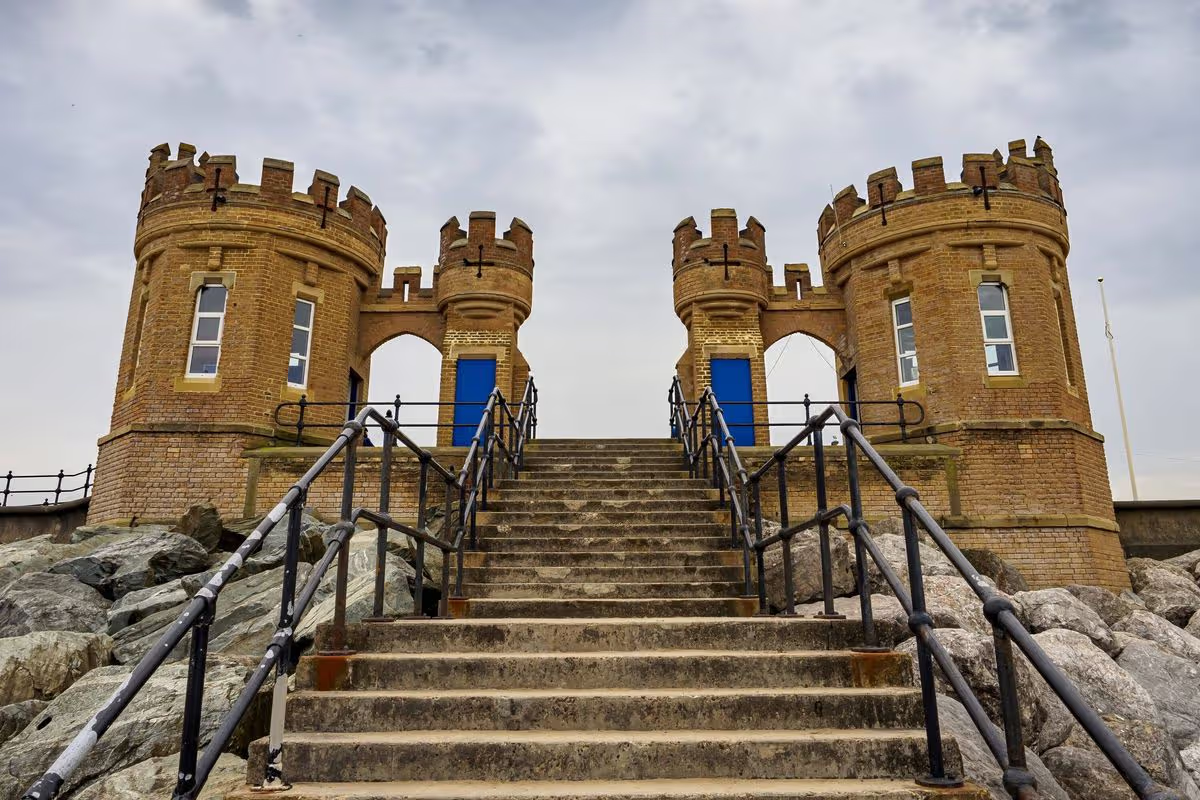
A scenic train journey from London to Geneva via Paris offers some of Europe’s best views – and can cost half the price of a plane ticket at around £135 return
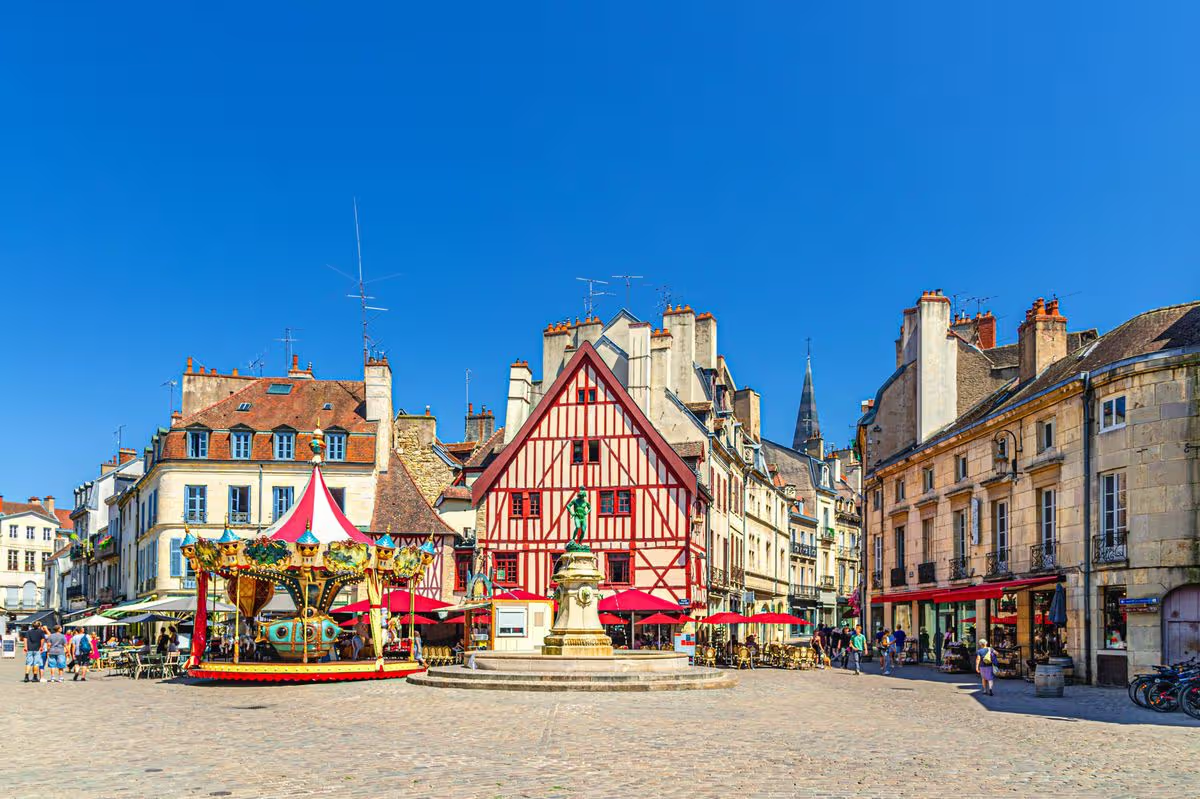
The service trundles through charming towns including Dijon(Image: Aliaksandr Antanovich via Getty Images)
A rail journey linking three capital cities boasts some of Europe’s most breathtaking scenery—and could set you back half the price of a flight.
The Eurostar and France’s TGV whisk passengers from London to Geneva, making the very most of a trip that spans three nations. The train departs from St Pancras with a change in Paris before heading onwards to the Swiss capital.
It’s a nearly six-hour journey in total, passing through Montbard, Dijon and Bourg-en-Bresse, offering stunning vistas of national parks and rolling countryside. Passengers can hop off in Paris to discover the city—with landmarks including the Eiffel Tower, Notre-Dame, the Champs-Élysées, Sacré-Cœur and the Louvre.
Once the train pulls into Geneva, visitors can take in Lake Geneva, Cathédrale de Saint-Pierre, the Palais des Nations, the botanical gardens and the Brunswick Monument.
From there, it’s also a brief trip to the nearby Alps, with day excursions available from the city to ski or snowboard on the slopes and savour the local restaurants. The train can be half the price of a plane ticket. According to Skyscanner, return flights this month cost up to £394.
During the same period, return train tickets cost around £135, half the price of a flight, according to Trainline.
Families can also cut costs by purchasing Interrail passes—£482 for a family of four to travel on four days within one month, plus seat reservation charges. And expense isn’t the sole advantage.
According to the Times, four passengers journeying from London to Geneva and back by rail produce approximately 44kg of carbon emissions, compared with 108kg by car and 1,608kg by plane. The Intergovernmental Panel on Climate Change states that, to maintain climate change within sustainable limits, each person has a carbon “budget” of 1,500kg of carbon emissions per year.
Although there are a number of factors that determine how polluting different forms of travel are, such as the type of electricity production used to power trains, riding the rails is typically greener than flying.
Back in 2023, carbon calculations made by the Rail Delivery Group found that travelling by rail from London to Edinburgh creates 10 times fewer carbon emissions than by car and 13 times fewer than by plane.
One of the tricky considerations for passengers is generally cost, with budget airlines such as Ryanair, easyJet and Wizz Air typically offering cheaper plane tickets than the equivalent train tickets.
The route from London to Geneva shows that it is not always the case. The price gap between the two forms of transport may also be getting smaller.
Travellers are facing rising airfare costs and reductions in flight schedules as the conflict in the Middle East causes oil prices to soar, with concerns that ticket prices could remain elevated for months even if the war de-escalates. Cathay Pacific, AirAsia and Thai Airways are among a growing number of airlines increasing fares to offset the hikes.
While train services are also impacted by rising oil prices, fuel tends to be a much smaller proportion of their operating margins than with airlines.
While Center Parcs is a great family choice, it’s certainly not the cheapest. So, could a short journey to Europe actually save you money? We compared the price of a break in the school holidays at the two holiday parks
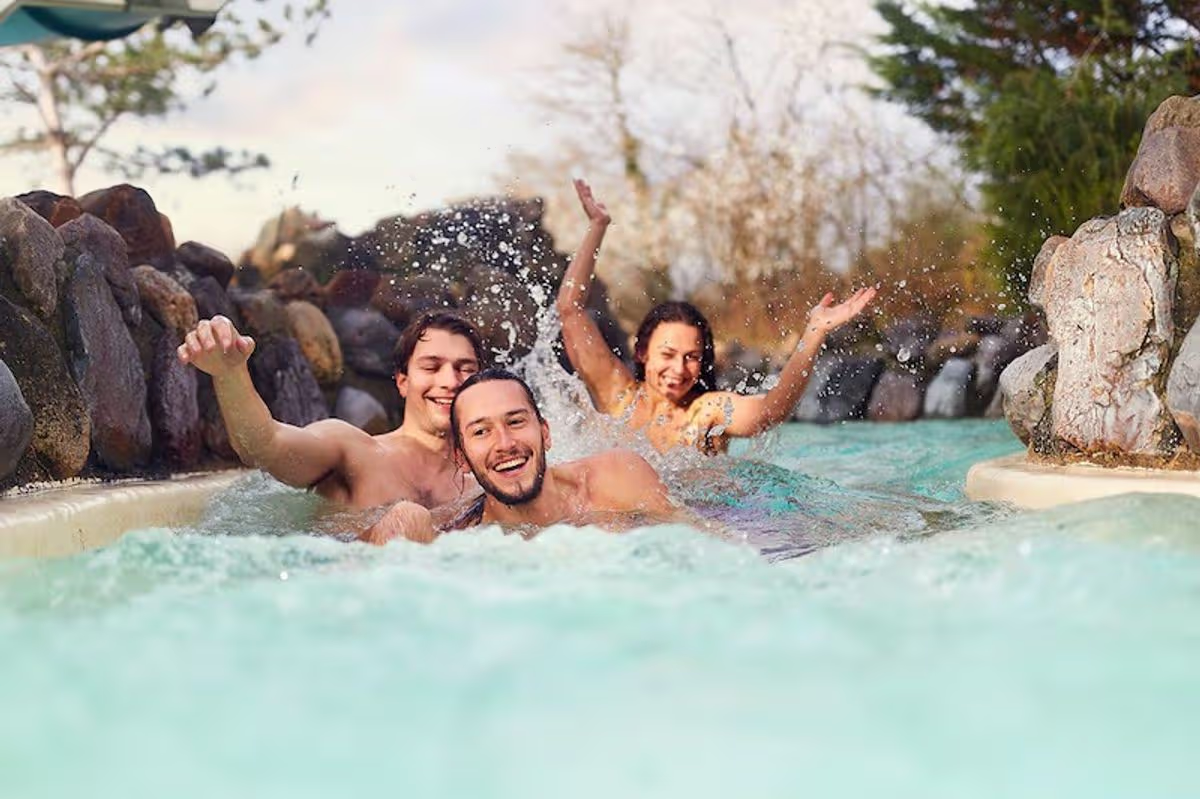
Could a stay at Center Parcs Europe be cheaper than the UK?(Image: Center Parcs Europe )
Center Parcs may be famous for its massive swimming pools, endless family activities, and beautiful lodges, but it’s also notorious for being a bit expensive, especially once you hit the school holidays.
Despite its prices, the five Center Parcs in the UK and one in Ireland has no trouble attracting families. But if you’re on a budget, you might be wondering if it’s possible to enjoy the Center Parcs experience without the premium prices.
One option that many families with school-aged kids will be looking at is staying in a European Center Parcs.
Although it is run by a different company, there are 28 Center Parcs holiday parks across Europe, and they can be found on the Belgian and Dutch coast, deep in Germany’s forests, and even close to Disneyland Paris, so there are lots of locations to choose from.
While accommodation prices are lower than those at Center Parcs in the UK, I was curious whether, once travel costs were included, it would still be a cheaper option.
Firstly, I looked at a short break in May half-term week, from Monday, May 25, for four nights. I priced this up as a family of four with two school-aged children and looked for the cheapest options.
In the UK, the cheapest park seemed to be Whinfell Forest, Cumbria, and the least expensive accommodation was a two-bedroom Woodland Lodge, which comes with a dishwasher, private patio, and pretty much everything you need for a family staycation.
This came in at £1,349 and the price includes entry to the famous subtropical swimming pool, adventure playgrounds, and cycle routes.
It does sting a little that the same break a week before is £599, showing just how dramatically the price differences can be for the school holidays.
Onto France, and for a short break, most parents would likely opt for somewhere without too long a journey. Center Parcs Les Bois-Francs is about two hours from Le Havre ferry port or three-and-a-half hours from Calais. For the same four nights in a Premium Cottage, the price is €440 (about £380), for about the same grade of accommodation as the UK.
Of course, you then also have your travel costs. A ferry from Dover to Calais can be found on those dates for four plus a car at £164, if you don’t mind driving in France. Fuel costs can vary a lot, especially with the current global situation, but a quick calculation shows the journey to and from Calais in my car would cost about £70 in fuel.
This puts the cost of a Center Parcs break in France for four at £614, including accommodation and travel, nearly half the cost of the UK. If you don’t live near the south coast, then your travel times could vary, but if you’re close to a ferry port and enjoy the adventure of exploring a new country, it could be a fun break.
Next, I looked at a longer break in the six-week holidays, which are notoriously expensive wherever you go. I wanted to see how a seven-night break would compare in Center Parcs UK versus Europe on these premium dates.
I chose breaks starting Friday, August 7, in the middle of the summer holidays, and again looked at prices for a family of four. A Woodland Lodge in Woburn Forest, Bedfordshire, is priced at £2,378 for a week.
But would the cost of a European break be any less painful on your pocket?
One of the cheaper European options for this week is Le Lac d’Ailette in the Picardy region of France. This pretty lakeside park is big on indoor and outdoor water activities, and being at the heart of the Champagne region means adults can enjoy stocking up on bottles to take home.
A Comfort Cottage is €1872 for the week (about £1,634) plus the cost of fuel to and from Calais, which is about a two-and-a-half-hour drive. A return ferry from Dover to Calais on these dates comes in at about £241 for four people in a standard car, so again, it’s cheaper than the UK option, but involves a longer journey.
While my basic calculations show that a Center Parcs holiday in Europe could be cheaper, it’s worth also bearing in mind the additional costs of travel abroad such as passports. And for families short on time and annual leave, the UK parks are likely a better option simply because it’s a shorter drive.
Food in supermarkets also tends to be more expensive in France than the UK, apart from the wine, although you can often eat out more affordably thanks to prix fixe menus.
However, if you’re a Center Parcs fan and fancy a change, or don’t mind the extra time spent on a ferry and in the car, you might want to consider trying one of the parks on the continent for your next break.
Have a story you want to share? Email us at webtravel@reachplc.com
While Sinead McIntyre and her family found bliss on the Turkish Riviera.
Sign up for the Travel newsletter
Thank you!
En-Joia the view from your hotelCredit: Supplied by hotel.
Tenerife
Senior Writer Donna Smiley discovered foodie heaven in the Canary Islands.
As three pilot whales playfully leap in and out of the sea, everybody on our boat is grinning.
Have a whale of a time on a boat tripCredit: Getty Images/iStockphoto
We’re only 30 minutes into our two-hour boat trip from Puerto Colón, so there’s still plenty of time to have a dip in the crystal waters ourselves, before we sip wine and eat tropical fruit as the sun sets on our journey back to shore.
A two-hour boat trip costs £51 per person for up to nine people (Bluejacksail.com).
We’re staying at Joia El Mirador by Iberostar in Costa Adeje, 10 minutes’ drive away, where all rooms are suites with four-poster beds.
With its lagoon-style pool dotted with palm trees and setting right on one of Tenerife’s best golden-sand beaches, this five-star adults-only hotel makes quite the impression.
So too does the family-run artisanal goat’s cheese farm, Quesería Montesdeoca in Adeje, 15 minutes’ drive away.
With lush green fields and a glimpse of neighbouring islands La Palma and La Gomera from its rooftop, we learn all about the cheese-making process, which is done by hand, and meet the goats and sheep who love being stroked, before the all-important tasting.
Back at the hotel’s gourmet restaurant El Cenador, we tuck into a 10-course tasting menu, £72 per person.
The Japanese menu at Kensei is not to be mist!Credit: Kensei Japanese / Instagram
Every course is delicious and crafted with local produce, and it ends in style with a passion fruit cake served under a cloud of candy floss, which dramatically dissolves when the sauce is poured over.
Come morning, cooked-to-order eggs benedict, pastries and cappuccinos made with coffee beans from a local farm don’t disappoint, either.
The bus to the island’s capital of Santa Cruz takes 50 minutes, where we find a branch of Zara with prices cheaper than at home, plus more foodie gems.
We wander the charming streets of the old town and grab a barraquito – a local-speciality coffee of condensed milk, Licor 43 (a Spanish vanilla liqueur), espresso and frothed milk, at rooftop cafe La Escala (@Laescala tenerife).
Then we make our way to Colmado 1917, a tiny Michelin-flagged restaurant offering delights such as salted fish with black potatoes and anchovies, £6, and beef tartare, hand-chopped before each serving, £11, with a red from northern Tenerife, £5 a glass (Colmado1917.com).
Finishing our getaway in style, we hit Japanese restaurant Kensei, a short stroll along the beach from our beds (Kenseijapanesetenerife.com).
Its low-temperature wagyu with teriyaki sauce, celeriac purée and lotus root chips, £40, is a delicious end to an equally delicious mini-break.
FYI
Seven-night B&B stays at Joia El Mirador by Iberostar cost from £1,210 per person, with flights and transfers (Easyjet.com/en/holidays).
Tourist travel cards cost £8 a day for unlimited buses and trams (Titsa.com).
Turkey
Editor-in-Chief Sinead McIntyre, husband Alistair and twins Riley and Harris found bliss on the Turkish Riviera.
Diving into the clear-blue sea, my 14-year-old twins are in holiday heaven.
Playa on the beach right outside your hotelCredit: Supplied by hotelGet all decked out at Corendon Playa KemerCredit: Supplied by hotel
After trying to outdo each other holding their breath underwater, they emerge to slump in our cabana and have their fill of the nuts and fresh fruit on offer.
As I have learned over the past year or so, keeping two teenagers happy on holiday can be a challenge.
But Corendon Playa Kemer on the Turkish Riviera, close to Antalya, has risen to the challenge – and then some.
We arrive at our five-star hotel, a 45-minute drive from Antalya airport, in the early hours of the morning after flight delays, so don’t really take in our surroundings as we wearily check in.
It’s only when we wake and head to breakfast at the main Zephyranthes restaurant that we marvel at the view – outside is a terrace with two sparkling swimming pools and, just beyond, the pristine sandy beach.
The hotel is all-inclusive and the food is excellent.
For breakfast, we feast on eggs, pastries, yoghurt and mountains of fruit, while lunch and dinner consist of grilled fish and meat, salads and desserts, including melt-in-the-mouth chocolate mousse and sticky-sweet baklava.
Playa Kemer beach has a series of wooden jetties jutting out to the sea, lined with luxe four-poster sunloungers and cabanas.
We decide to splash out and book a cabana, from £18 per day, and it proves a winner with Riley and Harris.
Turkish Rivier-aah vibes are guaranteedCredit: Getty Images/iStockphoto
They especially enjoy taking selfies with the view behind them to send to friends, as well as seeing who can jump the furthest into the sea off the jetty.
Every afternoon, chilled music plays and there are also live performances, all contributing to a feeling of total relaxation.
As does the on-site spa, where I have a Turkish hammam massage, leaving me feeling completely rejuvenated.
Treatments cost from £61 for 90 minutes.
One evening, we indulge in fresh prawns, mussels and calamari, with Turkish bread, dips and salads at the alfresco Pier Seafood A La Carte restaurant, surrounded by twinkling lights.
The day after is spent parasailing around the bay, £157 for two people.
Riley and I head high into the air on a tandem pulled behind a speedboat and can see for miles – a scary, but exhilarating experience.
And no trip to Antalya is complete without a visit to 40m-high Karpuzkaldiran Waterfall, where the Düden River plunges over a cliff into the Mediterranean.
We look in awe at the men fishing far below on the rocks as the spray from the waterfall covers them.
From there, we head to the old town and browse the bustling bazaar for amazing spices and Turkish Delight, before heading back to our hotel with two delighted teens in tow.
FYI
Seven-night ultra all-inclusive stays at Corendon Playa Kemer for a family of four cost from £1,500 (Corendonhotels.com).
THE SUN’S £9.50 Hols Agony Aunt, Tracey Kennedy has tried and tested holiday parks across the UK for over 30 years.
Over her decades of staycations, Tracy’s ticked off popular holiday spots from the Isle of Wight, to North Wales, down to Land’s End in Cornwall.
Tracy Kennedy has been taking her family away on budget-friendly staycations for 30 yearsCredit: Tracy Kennedy
It’s fair to say that Tracy knows her stuff when it comes to UK holiday parks – whether it’s how to bag a bargain break, or find the best free and cheap family attractions whilst you’re away.
Over three decades of staying at holiday parks up and down the UK, Tracy has ranked her top five holiday parks based on accommodation, entertainment and location.
Plus she’s sharing all of the hacks she uses to save while she’s away.
We’ve paired each park with the cheapest deal available online, including three-night breaks for two for under £50.
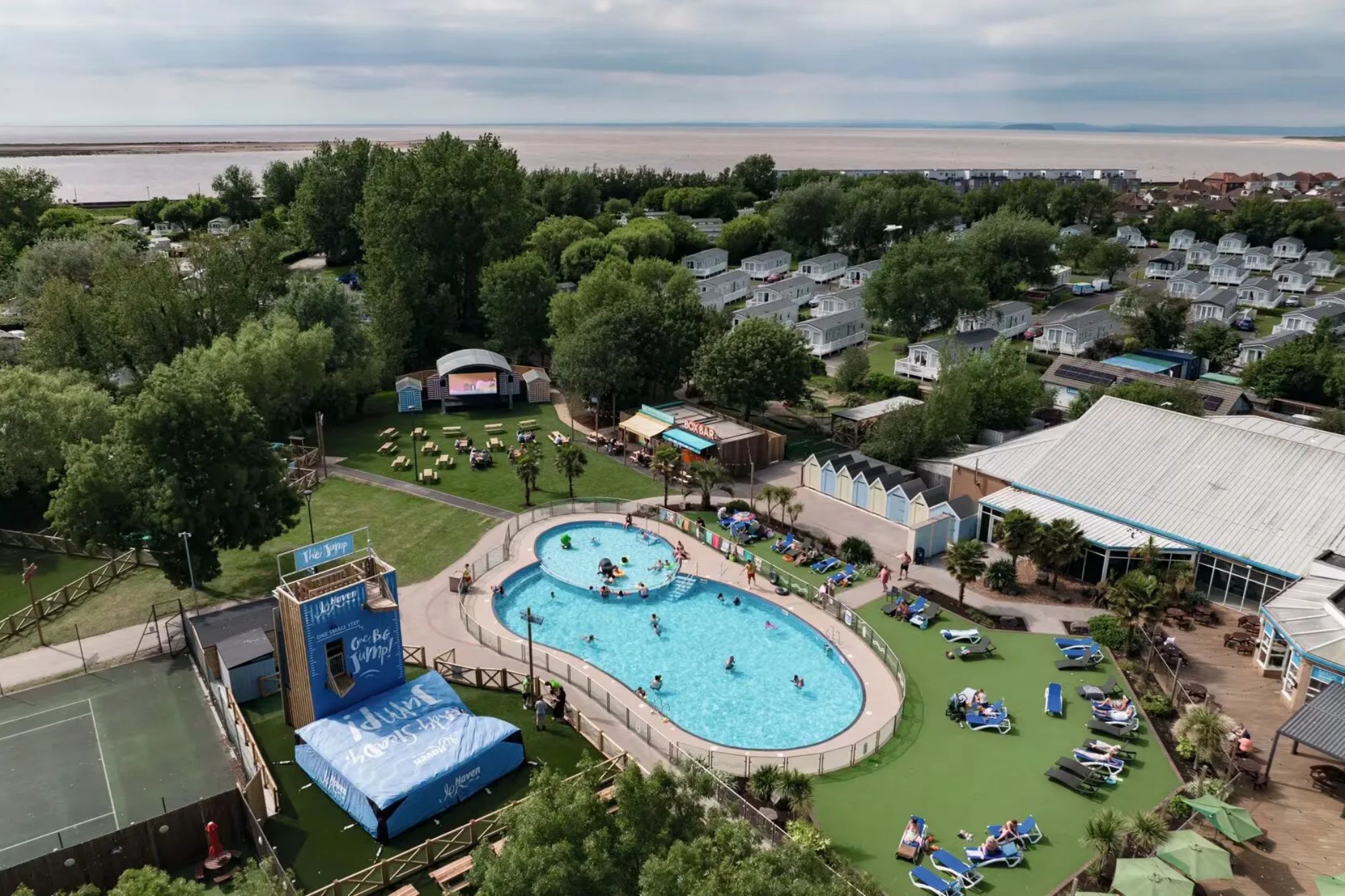
5. Haven Burnham-on-Sea Holiday Village
“This holiday park is in a lovely seaside town in Somerset, and I like it so much that I’ve been back several times.
“My tip for booking a Haven holiday would be to book a Haven Hideaway package.
“These are the cheapest breaks possible, and can cost just £49pp. I paid just £120 for a full week away on a Haven Hideaway.
“However it’s worth noting that Hideaway holidays don’t come with a Play Pass as the standard breaks do, so make sure to check which activities are included at each Haven park, and which you would have to pay extra for”.
Entertainment and activities
“There’s plenty to do here without paying extra for the add-on activities. This site has a lovely arcade, which is cashless apart from the classic 2p machines.
“I wasn’t too keen on it being cashless at first, but once you’ve got your card and have topped it up with as much or little as you want, it’s easy to use.
“As for the evening entertainment, I went last year and it was really quite good. The comedy is especially great.
“With Haven parks, if you make sure to download the app, about 2 weeks before it’ll tell you which activities you can book if you have the Play Passes.
“But you dont need passes for the arcade or evening entertainment, it’s just for swimming and paid activities. They can be nice to have, but you don’t have to get them”.
Haven Burnham-on-Sea Holiday Village has an outdoor pool and caravans looking out to seaCredit: HavenKids will love the indoor splash park and water slide at Haven Burnham-on-Sea Holiday VillageCredit: Haven
Accommodation
“I stayed in a saver caravan, which is the lowest grade, but it still has heating and everything you need.
“I always go for the cheapest I can but that is still nice, and the saver option here is great if you’re looking to stay on a budget“.
Local area
“Burnham is a quiet town, so it can be quite a peaceful place to stay. There’s also a lovely beach and lighthouse in walking distance from the park, as well as a cinema. But mainly this is a great base for exploring.
“Brean is about a 10-minute drive away, and there’s loads to do there. Brean Beach is gorgeous, plus there’s a splash park, Brean Theme Park and an animal farm, so there’s loads to do.
“You’ve also got Cheddar Gorge a half-hour drive away. You can of course try loads of cheese, but there’s really fascinating caves and clifftop walks there, too.
“If you’re willing to drive a bit further, about 40 minutes, you can also visit Wells. There’s loads of medieval historic sites there, like Wells Cathedral as well as the Palace and gardens”.
Bag a cheap stay
You can book a four-night stay in a saver caravan with a Haven Hideaways deal from £49, based on two adults sharing. This deal also comes with a low-deposit option from £30.
Haven Burnham-on-Sea is only 10 minutes away from the beautiful Brean DownCredit: GettyTake a day trip from Burnham to Cheddar Gorge, just a 30-minute drive awayCredit: Getty
4. Riverside Holiday Village, Bleadon, Weston-super-Mare
“I went to this holiday park last year for my 50th, and had such a fantastic time. I have lots of memories coming here with parents, and now I get to bring my kids!
“One of the best things about this park is where it’s located. It’s less than 10 minutes from Weston-super-Mare‘s seafront”.
Entertainment and activities
“This is quite a small site, but it does have a good arcade, restaurant, and entertainment performances.
“There’s no costume characters for the kids, but if you visit in peak season, there’s a pretty packed activity schedule that keeps them busy.
“It’s a very relaxing site if you prefer a peaceful holiday. There’s a beautiful lake to walk around, and you can pop out into Weston whenever you’d like”.
Accommodation
“We stayed in a large Gold caravan, which doesn’t work out to be too expensive once you split the cost between a group of people.
“We paid £650 total, and the Gold caravans can sleep up to six people, so that works out at around £109pp – which isn’t bad at all for a full seven days during the summer holidays.
“We had wrap-around decking which is lovely to sit on and enjoy your coffee in the morning or a drink in the evening.
“I recommend going as a large group and splitting costs so you can try out the nicer accommodation. This is one of the parks where I’d say it’s worth it”.
Riverside Holiday Village is a peaceful escape in the countryside town of BleadonCredit: TripAdvisorIt’s only an 11-minute drive from Bleadon into Weston Super Mare, where there’s an exciting pierCredit: Alamy
Local area
“The surrounding area, Bleadon, is very quiet. There’s just a couple of cosy pubs.
“But if you want a proper day out, then you should drive or catch the bus into Weston-super-Mare itself.
“There’s loads of things to do in Weston. If you want to stick to free things to do, Weston Museum is a great one and has activities for kids.
“Visiting the Grand Pier is a full day out itself – there is a small charge of £2, which is the same for both adults and kids.
“There’s lots of cost-friendly places to eat on the pier, like chip shops, a Costa and a Tiffany’s.
“My favourite though is Revo Kitchen. It’s inside the old Sea Life centre and it has 360-degree views of the sea. It’s dog-friendly, and does amazing, family-friendly food.
“It’s easy to spend the whole day at just the pier. There’s a ball pit, arcade games, fun house, ghost train – loads to do.
“Obviously it can be costly, but there are great-value wristbands available for kids to go on unlimited rides.”
“The Little Kids wristband, with unlimited rides suitable for younger children, costs £15 and lasts all day. The Big Kids wristband costs £20.
“There is also an Ultimate wristband available for £30, which includes unlimited rounds of golf and go-kart races.
“You don’t have to pay the entry fee cost of £2 for those with wristbands. You can buy the wristbands for the Grand Pier ahead of time online“.
Bag a cheap stay
You can book a three-night stay at Riverside Holiday Village in a Purn Gold WF caravan from £169, based on two adults sharing. This deal also offers a low deposit option of £25.
You can book a four-night stay in a saver caravan at Martin Mere Holiday Village from £49Credit: TripAdvisorMartin Mere Holiday Village is a 10-minute drive into the popular seaside resort of BlackpoolCredit: Alamy
3. Martin Mere Holiday Village, Blackpool
“This park is around 10 minutes’ drive into Blackpool, and there is so much to do there for families.
“They have also just had a major upgrade, with a brand-new restaurant, a refreshed Show Bar, and an expanded arcade added”.
Entertainment and activities
“It’s all about the entertainment with Haven. And the best part is that most of it is free.
“There’s an outdoor pool and lazy river, and you can book inflatables for your little ones to use.
“They’ve got plenty of fun things for families with kids like a climbing wall and a giant football dartboard.
“You’ve also got Linked Bingo at 5:15pm every evening, which sometimes has massive cash prizes.
“They’re also adding four new kids shows ready for summer this year”.
Accommodation
“The caravans are spacious, clean and have everything you need. Even the saver caravans are tremendous value for what you get.
“What I like about the accommodation here is that most caravans are only a short walk to the entertainment, which is great if you stay up late”.
You could visit Blackpool Pleasure Beach, with its brand-new ride Aviktas set to open this MayCredit: SuppliedHaven Martin Mere has an outdoor splash park that can be enjoyed in the warmer monthsCredit: Refer to source
Local area
“There is absolutely loads to do in Blackpool. You can even see the tower flashing its lights at night from the park.
“Blackpool can be as cheap or expensive as you like, but I’ve been going for years and found some good ways to save money.
“One of the best-value places to go is Coral Island Arcade, which has a restaurant where kids eat free.
“Once you’re at Coral Island, make sure to pick up any free leaflets that are there. They often have vouchers inside for discounted attractions.
“We picked one up and got a free go on the camel derby – so always look out for leaflets before you book something!
“Some of my other favourite things to do are going up into the tower, where there’s an arcade, the dungeons and a circus inside the tower itself.
“Then of course you’ve got Pleasure Beach – but if you know you want to go, book ahead of time online.
“That way you can pay £30 for entry rather than £60 on the day.
“If you’re wanting to save money on ticking off the paid attractions, there’s a new card where you can do them all for a fixed price called The Blackpool Pass.”
“The Blackpool Pass starts from £35 and includes unlimited entry to eight Blackpool attractions: Madame Tussauds,SEA LIFE,Blackpool Tower Ballroom,Blackpool Tower Eye,Blackpool Tower Dungeon,Blackpool Tower Circus,Gruffalo and Friends Clubhouse and Peter Rabbit: Explore and Play.
“You can expect to save up to 70 per cent on attractions compared to booking individually.”
Bag a cheap stay
You can book a four-night stay in a saver caravan with a Haven Hideaways deal from £49, based on two adults sharing.
This deal also comes with a low-deposit option of £30.
A Platinum caravan at Lyons Robin Hood is a spacious option that comes with a balconyCredit: TripAdvisor
2. Lyons Robin Hood, Rhyl, North Wales
“This site is really up-to-date. It’s recently undergone a £1.5m makeover, with all the new developments set to be fully done in May 2026, ready for your summer holiday!
“Some of my favourite things about this park are the enthusiastic entertainment staff, as well as the food – I always really look forward to the food when holidaying here!”
Entertainment and activities
“The pool here is so good that my youngest went swimming every single day. It has a brand-new splash zone, three super slides and even a spa for the adults.
“It’s just had activities like go-karting added to the list of things to do, and there’s new sports courts and trampolines.
“Ilast went at Halloween and it was just absolutely fantastic, but the entertainment is great year-round too.
“The costume characters come out to meet the kids – all the info on who is coming out when is listed on the wall, so you can meet the characters, comedians and singers.”
Accommodation
“The standard caravans here are slightly different to other holiday parks, for example like at a Haven resort.
“Their highest-ranking option is a platinum. We’ve stayed in platinum and it’s lovely. We had a little bit of a balcony that we had our coffee and drinks on.
“I’ve stayed in three levels of accommodation here, and I liked all of them. Each caravan was clean and spacious, with multiple big bedrooms, so you can’t go wrong here no matter what your budget is.
“I usually like to bring my own food to save money, however the food here is just lovely and definitely worth the money!
“We had cod and chips (£6.95) from the on-site chip shop here and really enjoyed it – in fact, we had it twice because it was that good! Food here is also really good value for money”.
Tracy recommends a sightseeing bus trip from Rhyl to LlandudnoCredit: AlamyTracy Kennedy continues to return to Lyons Robin Hood as one of her top-rated parksCredit: Supplied
Local area
“There’s a beautiful beach just across the road from the park, just remember to bring some snacks, as there’s no cafe or shop to buy food.
“You might see seals here – we saw some on my last visit and I was so excited.
“You can see them bobbing around in the sea, it’s nice to see them out in the open compared to an aquarium.
“Rhyl is just 5 minutes away, and there’s loads to do there. Shops, a massive marine lake, and my favourite – a little train that takes you around.
“Lots of people go crabbing, too…we caught some massive ones!
“A trip into Rhyl could be a free day out if you planned for it. Pack a picnic, wander through its streets, plus there’s even a free attraction: Rhyl Museum and Arts Centre.
“The only thing you would have to pay extra for if you wanted to would be the train, which costs £4 per adult and £3 per child.”
Bag a cheap stay
You can book a three-night stay at Lyons Robin Hood in a Bronze three-bedroom caravan from £111.30, based on two adults sharing.
Lyons Robin Hood is also available at Sun Hols from £9.50, where a break for four people can cost as little as £38.
Lower Hyde has entertainment for families ranging from pool time to discos to magic actsCredit: Lower Hyde Holiday ParkLower Hyde in the Isle of Wight came out on top for Tracy’s pick of the best UK holiday parksCredit: TripAdvisor
1. Lower Hyde, Isle of Wight
“The best holiday park I’ve ever been to is Lower Hyde on the Isle of Wight – that is my firm favourite.
“I’ve returned several times because my family and I really liked it. I like everything about the park.
“There’s loads to do on site itself, it’s actually one of the only sites where we didn’t mind spending the entire day there.
“There’s plenty of nature trails around the park, and there’s also an adventure park on site.
“Lower Hyde also have a restaurant with really good pub-style food called The Barnhouse,plus they also have little food huts such as the Thunderbird Chicken shack and an ice cream parlour.
“They’ve just hada new outdoor bar open up, too.”
Entertainment and activities
“The entertainment teams are top-quality at Lower Hyde and plenty is free compared to other parks.
“I like the archery in the daytime, plus there’s a great pool to make use of, too.
“I watched some brilliant entertainment there last year.
“In the evenings, the entertainment starts off with discos and character meet and greets for the younger kids, with their own show.
“Then there’s some great bingo, followed by an adult game show.
“Later in the evening there’s more acts from visiting acts such as comedians or magicians, or a performance from the entertainment team.
“There’s then a disco until midnight, so you can stay there all night, if you fancy it.”
Accommodation
“I’ve stayed in both chalets and caravans, and the caravans are top-notch, very cosy and warm.
“The accommodation is in a really nice quiet area. There is a little bit of a hill walking down, so do let the site know if that’s an issue if you plan to visit”.
Accommodation in Lower Hyde is set in pretty woodland close to the beachCredit: Refer to sourceYou could visit the old village of Shanklin and stop by the Old Thatch Teashop for afternoon teaCredit: Getty
Local area
“The must-visit spot nearby is Shanklin. There’s lots of little artisan shops, and it’s not a far walk, about a 10-minute walk into the centre.
“If you walk further, it takes you into Shanklin Old Village. There’s a lovely little restaurant there called The Crab, with beautiful seafood.
“There is also the famous old thatched cottage from all the postcards. Not only is it lovely to look at, but it does afternoon tea inside (from £7.95).
“There’s also Shanklin Chine, a wooded coastal ravine that is the oldest attraction on the island.
“If you wanted to visit, then you can loop right down to the beach afterwards and make your way back up – that’s the perfect day out.
“Some of my favourite things to do in the area are keep an eye out for red squirrels on nature walks, and go stargazing at night – the Isle of Wight has clear skies where you can see the stars”.
Bag a cheap stay
You can book a three-night stay at Parkdean Lower Hyde in a Bronze three-bedroom caravan from £99, based on two adults sharing.
Parkdean Lower Hyde is also available at Sun Hols from £9.50, where a break for four people can cost as little as £38.
How Tracy saves extra on her holidays
As ouur Hols From £9.50 Agony Aunt, Tracy Kennedy has several tips and tricks up her sleeve when it comes to saving money on your staycations.
Here is exactly what Tracy does to prepare ahead of time and save on her holidays, as well as her top tips for saving whilst you’re away.
She told us: “One of the most cost effective things you can do is cook your own meals.
“I’d make a note of some easy, cost-effective meals that are quick to make so you can get it done and get out and enjoy your holiday.
“I like to pack an essentials box of non-perishable food bits with me, like packets of rice, pasta, and tinned food – just make sure you don’t forget to bring a tin opener, too.
“I also bring a small amount of washing up liquid and cleaning products in little travel bottles so we don’t have to buy full-sized ones. This really helps with the shopping, especially if you’re on a budget.
“Then when you do go shopping, all you have to do is buy the fresh stuff like bread, milk and butter.
“I like to slowly buy bits to add to my box in the months before my holiday, as it spreads the cost out and saves you spending too much in the expensive on-site supermarkets when you arrive.
Tracy and her daughter Chloe enjoy packing up a picnic and visiting local historic attractionsCredit: Tracy Kennedy
“Once you’re prepared with food and cleaning supplies, it’s time to start thinking ahead on how to save on attractions.
“Before I go anywhere, I make sure to Google everything there is to do nearby. Especially for days out. See if there are any two for one ticket offers at local attractions, or even places that are free to visit.
“Especially during holidays like Easter, as nearby attractions will often have free events for kids like Easter egg hunts.
“When I visited Prestatyn in North Wales, I did my research ahead of time and found free pottery classes for kids, so we spent an afternoon doing that.
“Also check the National Trust website as well as English Heritage, because sometimes they offer free days out, too. Also check Sun Superdays and Sun Club offers, too!
“If you’re staying at a seaside resort, you can easily spend an entire day out on the coast for free. Check which dates you are there have good weather, and plan to pack a picnic, walk along the promenade, go for a swim.
“Sometimes there will be free children’s Punch and Judy shows, or local festivals – always Google the area and search on local Facebook groups in case there are events whilst you’re there.
“If you’re going as a couple or friends, it can be nice to explore local towns with cheap public transport.
My friend and I visited Lyons Robin Hood last year, and planned to go to Llandudno.
“We bought a £6.50 day saver ticket, jumped on a bus with Llandudno as the final stop and sat on the top deck at the front, and the views we had were absolutely amazing.”
Visit Newquay in Cornwall for a free day out of beautiful beaches and scenic filming locationsCredit: Alamy
“You can get family saver tickets too if there are more of you, then you can go out for the day, get a great view of the local towns and all you have to buy is the bus ticket. It’s a nice, cheap day out for all of the family.
“Similarly, I planned a cheap day out at the coast a few years ago in Newquay, Cornwall.
“We visited all the local beaches, walked to Lands End, and I planned a walk past the hotel where the Roald Dahl film The Witches was made.
“We also drove out to Port Isaac, and walked around where Doc Martin was filmed. All you have to do in these places is pay for is parking and bring your own food.
Then you can just walk around and see all of these really cool filming locations, and that costs you nothing!
“Definitely research the area before you go to see if any movies or TV shows were filmed there”.
Read more of our Hols From £9.50 Agony Aunt’s holiday park tips
Tracy Kennedy is our Hols from £9.50 Agony Aunt, and has plenty more tips and advice when it comes to UK holiday parks…
The budget airline has issued a message to its passengers, urging them to ‘please note’ the announcement as it ‘does not look cool’ – but many people were not impressed by the new rule
Alice Sjoberg Social News Reporter
15:16, 04 Apr 2026
Ryanair has hit out at passengers who wear one common accessory on flights (stock image)(Image: Getty Images)
For several people, being comfortable while travelling on a plane ranks amongst their top priorities. And given that remaining seated in the same spot for extended periods can be decidedly uncomfortable, particularly when you’re short on legroom, selecting the appropriate attire might be your sole opportunity for achieving comfort. For many, this translates to donning joggers or tracksuits. However, sometimes it’s the accessories that can enhance comfort even further.
This becomes especially important on Ryanair, where seating is typically more confined owing to the airline’s efforts to accommodate as many seats as feasible, forming part of their strategy to maintain ticket prices as low as possible – despite recent threats that prices might go up do to jet fuel prices.
Renowned for their budget-friendly fares, the carrier has also established a reputation on social media, where they frequently poke fun at their own passengers, and jokingly threaten to introduce even more regulations and charges than they currently impose – such as extra legroom seats or late check-in fees.
Nevertheless, Ryanair has now criticised travellers who insist on wearing one particular type of accessory aboard aircraft, claiming it ‘does not look cool‘.
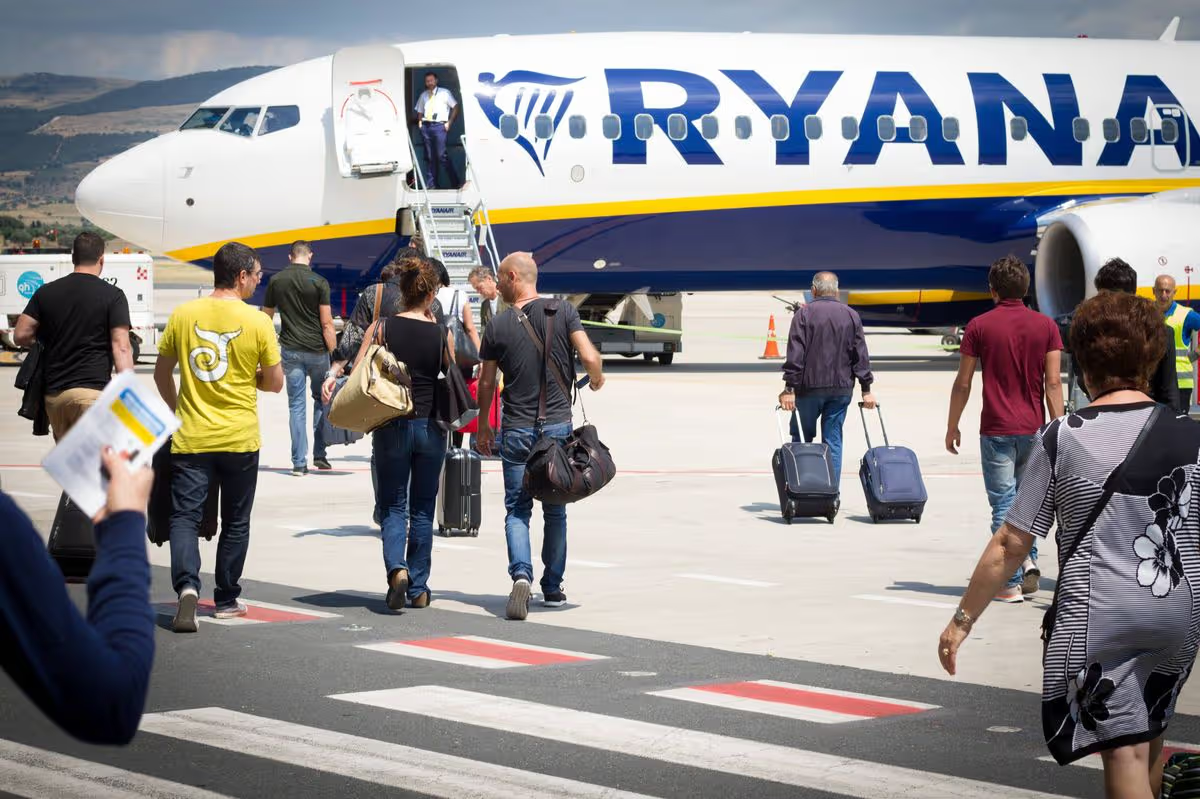
Posting on their Facebook page, the airline issued a statement to their passengers. They wrote: “Please note: Passengers do not look cool wearing sunglasses on board.”
However, many weren’t convinced, as numerous people quickly flocked to the comment section to express their own views.
“Could be true, but we don’t care,” one person posted. Others went on to suggest it was ‘necessary’ due to the vibrant interior of Ryanair flights.
One person contended: “Gotta shield our eyes from that highlighter-yellow cabin.”
“I put mine on so I can sleep,” another person clarified. Another concurred and stated: “Sunglasses at night-flight for a better sleep.”
Someone else remarked: “With sunglasses on during the flight the 3 days vacation lasts longer.”
Nevertheless, some sided with the airline, as one person commented: “Only pilots should wear sunglasses.”
This isn’t the first occasion Ryanair has joked about and poked fun at its passengers. Recently, they threatened to introduce a ‘toilet usage fee’ for any passengers wishing to use the lavatory facilities onboard an aircraft.
However, many travellers soon cottoned on this was a joke, as they noted it sounded like an April Fool’s prank that was posted a few days early.
Amersham market town in Buckinghamshire is accessible via the Metropolitan Line and offers Cotswolds-style charm with cobblestone streets, timber-framed cottages and rolling hills
Alice Sjoberg Social News Reporter
15:04, 04 Apr 2026
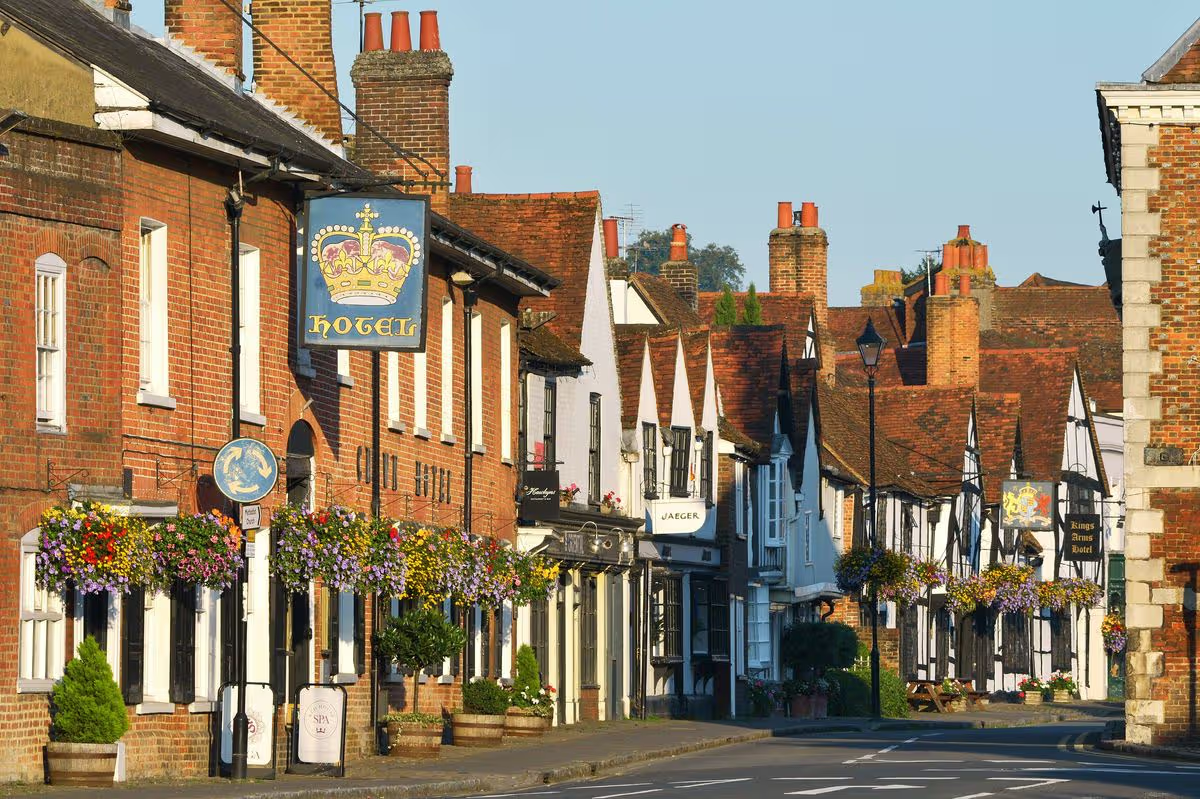
This picturesque town is located on the London Underground, making for a perfect day trip away (stock image)(Image: Jim Dyson, Getty Images)
With spring now in full swing and the weather hopefully turning warmer and brighter with each passing day, it can be a real treat to escape the chaos of London and discover somewhere new. The good news is, you won’t need to venture far to find a picture-perfect market town that ‘feels like the Cotswolds‘.
Travel-loving couple The Weeshas regularly take to Instagram to share their top tips for exciting places to explore, whether closer to home or further afield. If you’re stuck for ideas on where to head for a day trip, the duo have shared footage from their visit to a charming little town that’s reachable via the London Underground, yet feels worlds away from the capital.
“This charming town is 50 minutes from London by tube,” they wrote on the video, which featured clips of the stunning-looking destination.
They also added in the post’s caption: “Nope, that’s not the Cotswolds. You can visit the English countryside without leaving the London Underground map.”
Content cannot be displayed without consent
The footage went on to reveal a courtyard complete with a clocktower, framed by a beautiful border of blooming flowers. It then cut to a shot of a bridge, its wooden fence adorned with an array of plants and flowers. The video also showcased a stunning fountain, cobblestone streets, timber-framed cottages, and a river winding its way through the village.
So where exactly is this picturesque market town, and how do you get there? The couple explained: “Just hop on the Metropolitan Line and in under an hour, you’ll arrive in Amersham, the last stop on the line – and one of England’s most charming villages, with cobblestone streets, timber-framed cottages, cosy pubs, and rolling Chiltern hills.”
Nestled in the Chiltern Hills of Buckinghamshire, Amersham is a market town and civil parish situated 27 miles northwest of central London. You may well recognise it, even if you’ve never set foot there before.
Made up of two distinct areas – Old Amersham and Amersham-on-the-Hill – the town’s history stretches back to pre-Anglo-Saxon times, even earning a mention in the Domesday Book of 1086.
So what’s there to do in Amersham that makes it worth the trip? You can take a leisurely stroll through Old Amersham, perusing boutique shops and antique stores. Weather permitting, a walk through the Old Amersham memorial gardens is a must, along with a visit to St Mary’s Church, which dates back to around 1140 A.D.
When hunger strikes, the travelling duo suggest grabbing a meal at The Crown Inn or The Kings Arms, which featured in Four Weddings and a Funeral.
“This makes for a slow, scenic, and budget-friendly day trip from London,” they wrote in their post’s caption. To reach the destination, just hop on the Metropolitan Line from Baker Street to Amersham Station (Zone 9). A return ticket will set you back roughly £10.
FEW questions could strike fear into the hearts of parents faster than being asked by their children, “Can we play with slime?”
Messy, sticky, often neon in colour, kids seem to universally LOVE slime, while all grown-ups can think of is the nightmare clearing up.
Sign up for the Travel newsletter
Thank you!
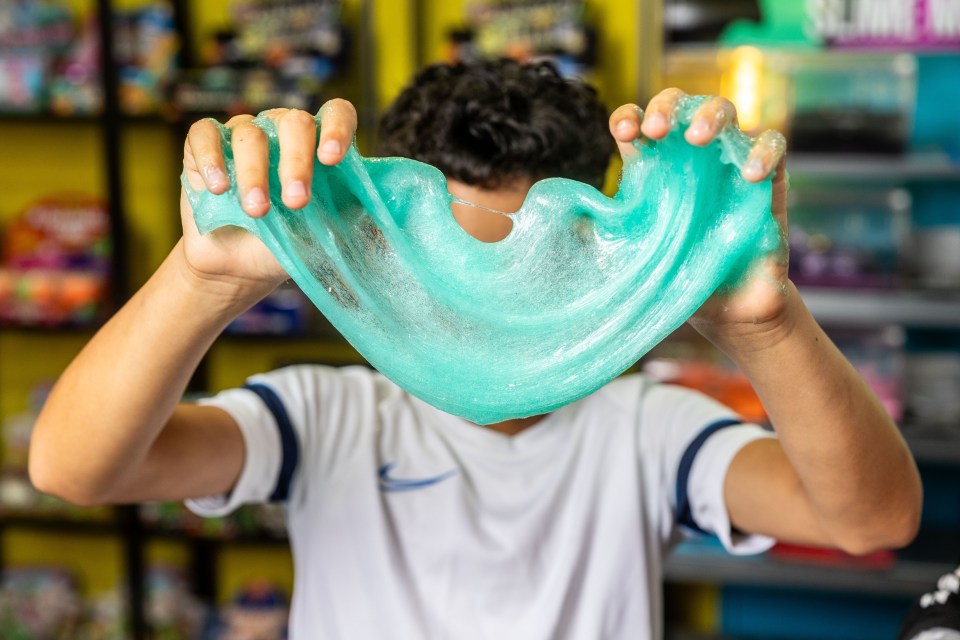
Kids universally LOVE slime toysCredit: Supplied
Which is why iconic toy shop Hamleys has come up with a brilliantly clever workaround this spring.
It has transformed the basement of its flagship store in London’s Regent Street into a hands-on sensory, slime playground.
For £15 a ticket, parents can book children into a professional slime-making workshop run by Gootopia, who you might call professional “slimologists”.
I took my three children aged five, eight, and 12, and they all loved getting messy in the hands-on class – and best of all it wasn’t taking place in my kitchen!
Kids are allocated their own work station and all the components to mix their own slime in a big metal bowl.
Then, under instruction, they are let loose to create their gooey concoction from scratch, mixing it and watching in wonder as it seemingly transforms into slime before their eyes.
They can then knead and stretch to their hearts content.
Once they have created the perfect gooey consistency, an array of paint colours are on offer to turn their masterpiece whichever shocking shade of their choice.
Kids are also invited to wield glitter – that other kryptonite substance for parents – and shake it with abandon over their slime.
And my little girl Estella also loved adding strawberry- shaped sprinkles to hers.
Once their creation is complete, the real fun starts.
The Gootopia experts, who patrol the class, show the children how to perform fun tricks with their slime, such as turn it into giant bubbles.
And at the end of the experience, the slime can be safely contained in screw-top plastic pots for transportation home, much to my kids’ delight.
Of course, there’s plenty more entertainment to be had elsewhere in Hamleys, with additional events throughout the Easter holidays including treasure hunts and Lego experiences.
We finished off our craft-making visit by visiting all seven floors of this wondrous toy store, taking in the free toy demos, new magic shows and meeting costumed characters.
We also checked out the newly opened Pokemon area of the store, crammed full of cuddly teddies, themed games and merchandise.
Messy craft and toy shopping in one day, no wonder my three had the slime of their lives.
GO: Gootopia at Hamleys costs £15pp. The experience runs until April 12 and can be booked at hamleys.com.
A flight attendant has shared the little-known reason passengers are welcomed onboard planes – and it has nothing to do with manners
14:57, 04 Apr 2026Updated 14:57, 04 Apr 2026
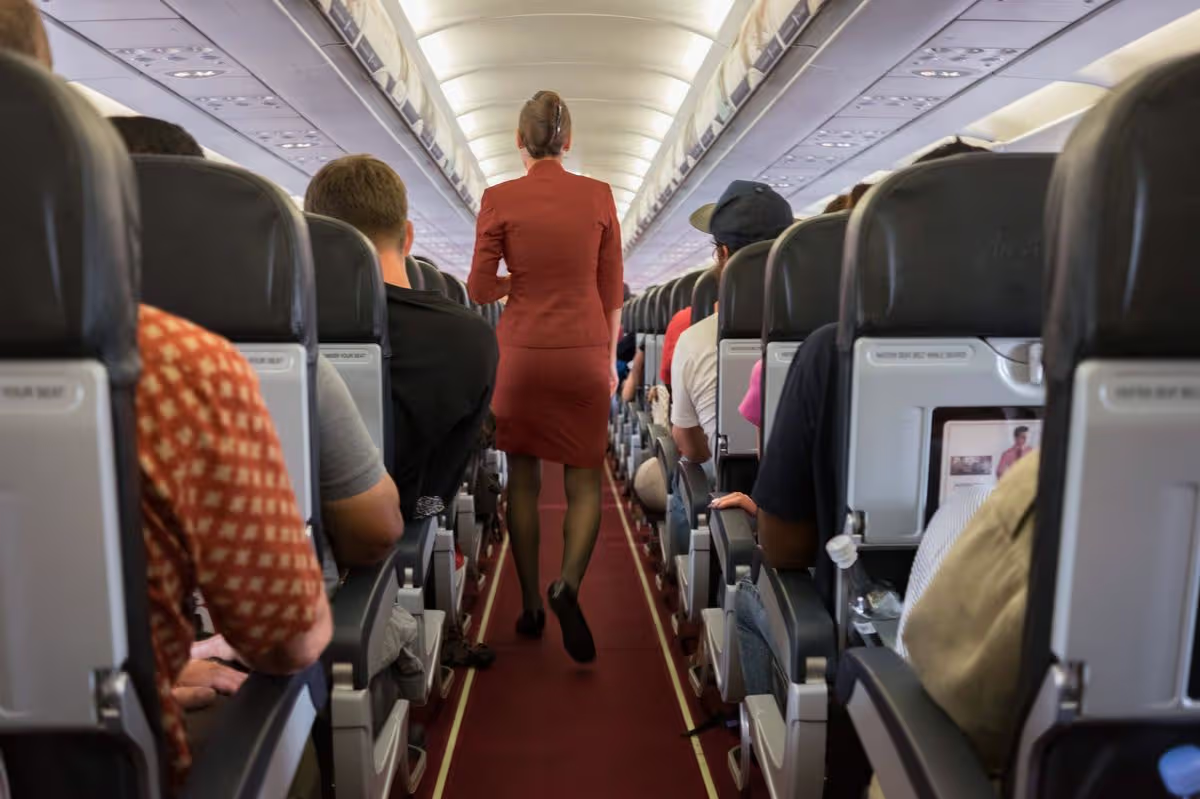
Flight attendants have a wealth of flying knowledge(Image: Peter Bannan via Getty Images)
A flight attendant has lifted the lid on a trade secret about the moment passengers board a plane. The little known fact explains why passengers are welcomed at the aircraft doors during boarding.
Most air travellers are well acquainted with the customary warm reception at the plane doors, which typically involves broad smiles and even some direction on locating their allocated seat. The most widespread assumption is that this is simply a display of good customer service, with the flight attendants, the public face of any airline, setting the tone with courtesy and decency.
Another presumption is that the welcome is intended to set passengers up for an enjoyable flight experience, or perhaps verify boarding passes one last time. However, one serving flight attendant claims that hospitality is not the primary driving force behind the warm greeting. The genuine reason for the friendly reception is to carry out a visual assessment of passengers from head to toe before take-off.
In a now- viral TikTok clip, MrsMiva – who claims to work for TUI out of Stuttgart airport – has revealed that flight attendants use the boarding process to assess whether passengers are fit to fly. According to the content creator, flight attendants are checking to establish whether passengers may be “too drunk or sick to fly”.
In the caption accompanying the video, MrsMiva also clarifies that the greeting enables attendants to identify who could potentially assist in the event of an emergency. The video has been watched over 18 million times and sparked a flurry of discussion in the comments.
Numerous users confirmed they’ve definitely experienced the cabin crew greeting and that the reasoning behind it makes perfect sense. One commenter who purported to be a long-serving attendant verified the policy as well, writing: “FA (flight attendant) of eight years – or to check if they could be an ABA (able-bodied assistant).”
The comments also started to diverge into the various types of cabin crew passengers had come across. Some remarked they had “really chill” attendants, while others noted theirs were supportive when they were in poor health to travel.
Being able-bodied and physically capable is essential for passengers seated adjacent to emergency exit doors, which is potentially why attendants verify this at the entrance. Emergency exit seats are highly sought-after given that they provide additional legroom and have no row ahead of them.
That being said, occupying these seats means that a passenger must be willing and capable of helping cabin crew in the improbable event of an emergency. For this reason, Ryanair’s terms and conditions stipulate that it “can change your allocated seats at any time, even if you had reserved it, if we need to do this for operational, safety or security reasons.”
According to the airline’s regulations, passengers wishing to occupy rows 1, 16, or 17, where emergency exits are situated, must fulfil specific requirements. These include being aged over 16, being physically capable of assisting during an emergency, travelling without an infant, not requiring any special assistance at the airport, not needing a seat belt extender, and not having an extra comfort seat reserved.
Should the added responsibility of emergency exit seats not appeal to you, there are alternative methods to guarantee extra legroom while on board.
Do you have a story to tell? Email: emma.mackenzie@reachplc.com
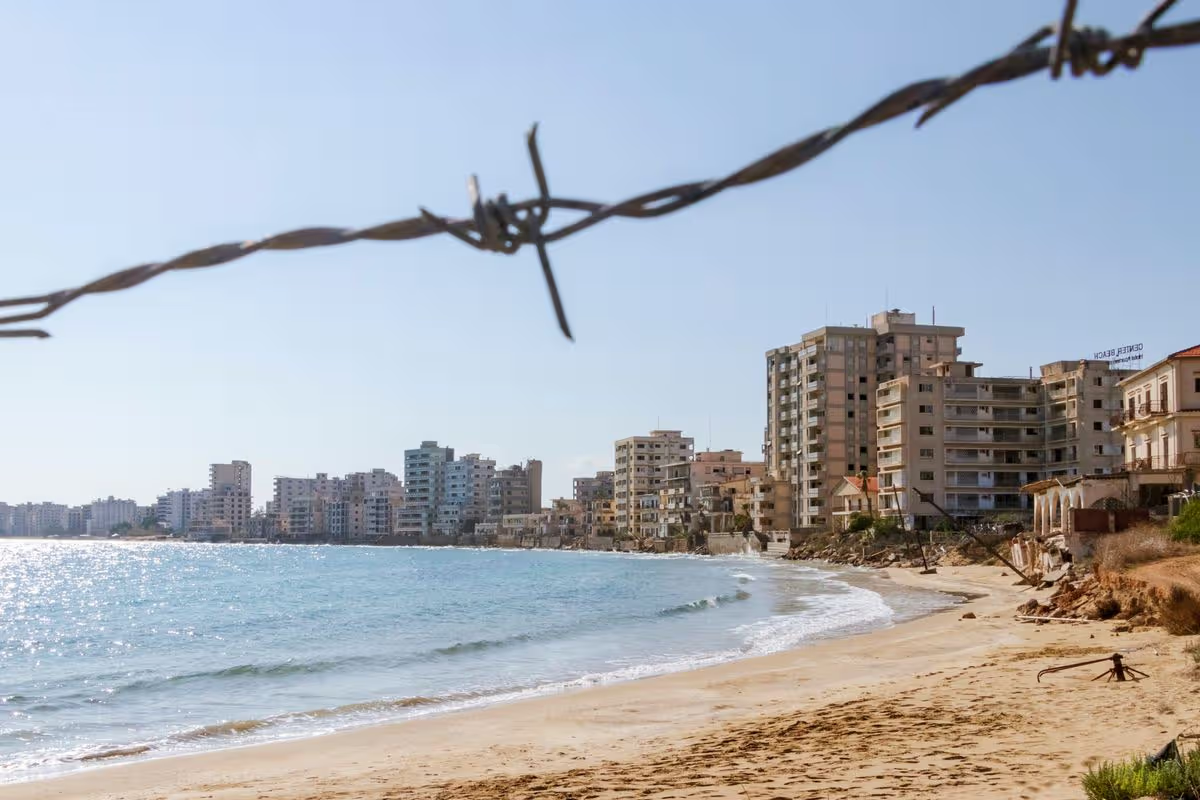
The once-bustling holiday resort – popular with the likes of Elizabeth Taylor – was abandoned in the 1970s but has since become a haven for one niche but growing tourist market
14:05, 04 Apr 2026Updated 14:21, 04 Apr 2026
The town is now ghostly and empty – but that’s why it’s becoming a tourist hotspot once again(Image: Getty Images)
Once a playground for Hollywood’s elite, this coastal resort has transformed into an unsettling ghost town. Yet this Cypriot location has found new purpose amongst travellers, emerging as a destination for ‘dark tourism’.
A short distance from well-known Cyprus holiday spots such as Paphos and Limassol lies Varosha. Varosha was formerly a glamorous getaway destination in its own right, attracting Elizabeth Taylor and other luminaries of the 1960s.
However, when Turkish forces invaded Cyprus’s northern territory on July 20, 1974, the seaside resort was altered forever. Five days earlier, there had been a coup attempt backed by the Greek junta. The 15,000 inhabitants of Varosha were compelled to evacuate en masse following the military incursion, leaving behind their homes, businesses and pristine beaches.
Consequently, the district became a ghost town with structures left predominantly vacant. Even now, the neighbourhood remains frozen in time under Northern Cyprus’s jurisdiction. Unsurprisingly, the area lost all attraction for holidaymakers, as vegetation began reclaiming the pavements and sea turtles made nests on Varosha’s formerly sunbather-packed beaches.
Yet in October 2020, a decision was taken by Turkish President Recep Tayyip Erdogan and the then prime minister of Northern Cyprus, Ersin Tatar, to reopen the district to visitors. Varosha has since begun drawing a markedly different type of tourist than it did during its 1960s golden era.
More than 1.8 million tourists have descended on the ghost town over the past four years, according to figures published in 2024. Visitors appear to be drawn in by the town’s chilling historical significance and its crumbling, derelict landscape.
Speaking to the Daily Express, Hubert Faustmann, a professor at the University of Nicosia, said: “The section found itself in the top tourist sites in terms of dark tourism, so they started to open up certain parts of Varosha, and it’s now a tourist destination with guided tours, with e-bikes, vehicles and coffee shops.”
Faustmann continues: “Varosha is being used as a tourist destination, as a tourist attraction, without a single inhabitant prior to 1974 returning. It’s changed in the sense that it’s open to the public, but it’s not open for return.”
In a bid to shed its decaying reputation, Varosha has undertaken clean-up efforts ahead of its reopening. The town now boasts a range of amenities catering to all types of visitors, from beach umbrellas to canteens.
PACE rapporteur for Varosha Piero Fassino, who had visited the ghost town in mid-May, presented his findings to the assembly during the gathering. The Italian senator expressed his hopes that Varosha could be transformed back into a “living town” following his visit.
That being said, dark tourism has been a longstanding element of the travel sector, achieving widespread attention through the Netflix programme, Dark Tourist. The series explores the bizarre, eerie and superstitious customs and folklore connected to numerous locations across the globe.
Speaking to The Mirror, dark tourism enthusiast Louise Joy explained: “Traditionally, dark tourism is visiting places associated with death and tragedy.” Joy is a blogger and founder of The Morbid Tourist and reveals she routinely seeks out “spooky” locations when travelling.
Joy suggests TikTok has also made a substantial impact on the dark tourism sector in recent years. “The individuality on TikTok [helps] people seeing stuff that is different and you don’t necessarily see that out there offline, like in books,” says Joy.
JUST off the coast of Portugal is a tiny archipelago that very few tourists visit, or even know about.
The little-known collection of Berlenga Islands consists of three islands – Berlenga Grande, Estelas and Farilhões-Forcado
Sign up for the Travel newsletter
Thank you!
The Portuguese archipelago is only open from March to OctoberCredit: AlamyBerlenga Grande has its own fort where you can camp in a cell overnightCredit: Alamy
Berlengas is primarily a nature reserve, home to lots of birds like the yellow-legged gull, guillemot, and sea life which you might spot while snorkelling.
Due to it being protected, and reasonably small, the islands have a daily limit of 550 visitors – and it can only be accessed between March and October.
With the weather this time between 18C and 25C, it’s the perfect time to visit and spend time on its beach – which is one of the prettiest in Europe.
This is Praia da Berlenga Grande, which is also the most famous beach on the island and ideal for relaxing on the golden sands.
It’s also a good spot for swimming with one visitor saying the clear waters reminded them ‘of the Caribbean‘.
Just be prepared for it to be chill, seeing as the islands are in the Atlantic Ocean.
National Geographic called it one of Portugal’s best beaches with ‘desert vibes’.
One visitor advised to visit in September as it was quieter and they had the beach all to themselves for an hour.
Another popular way to explore the island is by boat with plenty of tours throughout the day.
Bobbing around on the water means you can see the caves that have naturally formed into the cliffside.
One of Berlengas’ most famous rock formations is the Elephant’s Trunk – which literally looks like an elephant’s head and trunk which dips into the ocean.
Another is Dream Cave, or Cova do Donho, which is where fishermen used to spend the night because of its calmer waters.
Visitors can bring their own tent onto Berlengas IslandsCredit: AlamyOne popular boat trip is around ‘elephant cave’Credit: Alamy Stock Photo
Visitors can actually stay on the island if they wish and enjoy quieter evenings when the daytrippers leave.
There’s a hotel called Berlenga Bed & Breakfast which has just five rooms and sits on the clifftop so it has incredible views across the ocean.
You can check them out from the hotel’s pretty terrace bar and restaurant.
Anyone feeling brave and wants to sleep within nature can camp out at Forte São João Baptista.
The island’s fort has camping spots and is said to give an “immersive, authentic experience”.
Visitors can sleep in an old cell and have to bring their own sleeping bags or bedding.
There’s a campsite too where visitors can literally pitch up with their own tent with rates from €8 (£6.92) per night – pitches must be booked in advance with the tourist board.
As for how to get there, ferries go to the island three times from Peniche.
The journey between the mainland and the island takes around 30-minutes with tickets costing between £15 and £35.
Get Your Guide has tours on offer to explore the island, like a Cave Tour from €41 (£35.48).
There are also catamaran tours with snorkelling stops from €42 (£36.35) and round-trip boat tours of the islands from €29 (£25.10).
Peniche is a just over an hour’s drive from Lisbon which has direct UK flights for as little as £15.
WE are rethinking travel plans amid uncertainty in the Middle East.
Price comparison site TravelSupermarket has found British holidaymakers are returning to reliable European favourites but also looking further afield.
Sign up for the Travel newsletter
Thank you!
We are rethinking travel plans amid uncertainty in the Middle EastCredit: Getty
In the first 25 days of March, interest surged for the Italian island of Sardinia, with searches up 236 per cent.
Chris Webber, head of holidays and deals at TravelSupermarket, said: “What’s striking about this data is the range of destinations seeing a boost.
“On the one hand, you have Majorca and Bodrum, places that Brits know and love, seeing huge jumps, which tells you a lot of people just want the certainty of a tried-and-trusted destination.
“But then you have California in the top ten, which is a sign some travellers are using this moment to think differently about where they want to go.”
IT has been our go-to since the very start of package-holiday travel and its enduring popularity is no surprise.
From family-friendly resorts such as Alcudia, Puerto Pollensa and Cala Bona, to the laidback delights of Sa Coma for couples, there is something for everyone.
Majorca has been our go-to since the very start of package-holiday travel and its enduring popularity is no surpriseCredit: Getty
The Tui Blue Levante sits in one of Cala Bona’s smartest spots and has indoor and outdoor pools, as well as direct beach access.
Seven nights’ half-board is from £442pp including flights from Gatwick on April 17, 25kg luggage and transfers.
WITH its perfect mix of affordable luxury, stunning Aegean coastline and rich history, the coastline on this Turkish delight is dotted with beautiful beaches and lively coastal spots.
A standout is the 5* Bodrum Holiday Resort, set directly on the shores of a crystal- clear bay.
Bodrum is the perfect mix of affordable luxury, stunning Aegean coastline and rich historyCredit: Getty
There is lots to keep little ones entertained, including a water park with five slides.
Seven nights’ all-inclusive is from £279pp including flights from Gatwick on April 19.
SMALLER than Wales, this tiny Balkan country on the shores of the Adriatic has so much to offer, from beautiful beaches to sleepy medieval villages and dramatic mountain scenery.
The 4* Hyatt Regency Kotor Bay Resort sits alongside the beautiful Bay of Kotor, and has stunning views over the surrounding hills and mountains from the outdoor pool.
Montenegro is on the shores of the Adriatic and has so much to offerCredit: Getty
Seven nights’ all-inclusive is from £1,110 including flights from Birmingham on May 7, 22kg luggage and transfers.
THERE are more and more travellers looking towards the Caribbean for their long-haul sunshine breaks.
So it’s no wonder this holiday favourite is increasing in popularity with its idyllic white-sand beaches and lush, green national parks.
The Dominican Republic is increasing in popularity with its idyllic white-sand beaches and lush, green national parksCredit: Getty
The 3.5* Sunscape Dominicus La Romana hotel is next to the soft sands of Playa Dominicus and has 13 restaurants, as well as plenty of activities on water and land.
Seven nights’ all-inclusive is from £1,081pp including British Airways flights from Gatwick on October 25.
The 2,700 hours of annual sunshine definitely help, combined with the fascinating history in Dubrovnik.
Croatia, known as the Land of a Thousand Islands, has crystal-clear waters and 2,700 hours of annual sunshineCredit: Getty
The 5* Hotel Croatia Cavtat is a 30-minute drive or boat ride from the famous city but also offers the chance to switch off and relax in style overlooking the waters of Cavtat Bay.
There’s a spa with indoor pool and rooftop pool to soak up the rays.
Seven nights’ B&B is from £576pp including flights from Bristol on April 12.
The Caribbean paradise of St Lucia is an-eight hour direct flight from the UKCredit: Getty
THE Caribbean paradise is an-eight hour direct flight from the UK and promises rainforest adventures, volcanic mud baths and, of course, endless beaches.
The small but perfectly formed Bay Gardens Inn is in lively Rodney Bay, a short walk from Reduit Beach.
There’s also a complimentary shuttle to sister hotel Bay Gardens Beach Resort where you can enjoy the beach and water park.
Seven nights’ room-only is from £1,004pp including flights from Gatwick on September 15.
I’VE never tried synchronised swearing before – but then again, I’ve never been in a crowd being buzzed by a low-altitude jet fighter.
F***!! we yelled as a Blue Angels “sneak” pilot screamed over us and we watched the other five planes from the flight soaring in perfect formation high in the sky.
Sign up for the Travel newsletter
Thank you!
Our visit to Pensacola in Florida was spectacular – and even featured Blue Angels jets ripping past at low altitudePensacola has a claim to be the oldest city in America, established by Spanish conquerors in 1559Credit: duncanmccall.com
What made it even more exciting was that we were on a boat in the Gulf of Mexico, basking in 30C heat.
It was a highlight of our visit to Pensacola in the Florida panhandle (the top bit).
While still new to many Brits, this was familiar territory to our ancestors.
It has a claim to be America’s oldest city, established by Spanish conquerors in 1559, and is now known as The City Of Five Flags as it has also been ruled by France, the good guys from Great Britain, the Confederate States of America and, of course, the US.
The latter were fighting for strategic military importance, which is why it is now home to a US Navy base — and that formation- flying team, the oldest in the English- speaking world.
But forget the strategic importance, just go here for the beaches.
They are incredible. White sand, warm water, more dolphins than you can shake a flipper at, and plenty of pelicans.
There are also hundreds of restaurants, bars, coffee and souvenir shops, and a host of top hotels including the Hilton Pensacola Beach where we stayed.
The latter is a great stay, with charming staff, superb pools, a welcoming outdoor bar and a fine restaurant.
Best of all was its location, though it’s not in “downtown” Pensacola.
The Florida city is renowed for its award-winning white-sand beachesPensacola is worth visiting just for the beaches, and there are lots of great hotelsCredit: Alamy
It’s on, as its name suggests, Pensacola Beach — an offshore resort on the island of Santa Rosa, linked by bridge to its big brother.
If you’re not driving, there’s the Pensacola Bay City Ferry, shuttling between downtown, Pensacola Beach and the historic Fort Pickens, well worth a visit in its own right. You can buy daily hop-on, hop-off tickets.
Also, when the Blue Angels practise, most Tuesdays, you can do what we did and, for about £25, book a cruise out to sea to catch all the action.
Pensacola and Pensacola Beach provides you with the ideal two-centre holiday without much travelling.
Head downtown and you can revel in rich history — with lots of helpful signage, marked walking paths and the Veterans Memorial Park — as well as enjoying art shops and museums and event spaces.
Our visit coincided with the Pensacola Seafood Festival. Stalls sell everything from cheese-flavoured popcorn and artisan beers to, er, mermaid outfits.
We didn’t buy much, as wifey had blown our budget on a painting of a seahorse from a lovely art shop on the main drag, Palafox Street.
Once you are tired of the culture and shopping, and have eaten and drunk your fill — check my guide, above, to Pensacola dining — what are you going to do? That’s right, head back over the bridge to the beaches.
The seas are swarming with dolphins and boat trips are popular with touristsCredit: Alamy
Get yourself a boat trip to go dolphin-spotting — you can see them while you are driving over the bridge but it is an offence to stop there.
We went with Captain Steve after booking with friskyboattours.com — and that man knows how to find a dolphin.
He’s also really good at explaining the area, and identifying passing birds.
One of those passing birds was an osprey, and we ventured a little farther afield one day to see if we could find some more.
It meant sacrificing the beaches for a while as we headed inland to Tarkiln Bayou State Park, where a marked trail — the Americans are good at that — tells you what you may see.
It leads you on a beautiful, tranquil route, past rare carnivorous pitcher plants (I read the sign) to a hidden lake. It was lovely but there were no ospreys, which was surprising given the number of tasty fish we saw swimming around.
No problem, they were there at next stop, Big Lagoon State Park.
Observation towers give you a great view of the wildlife — the resting osprey being trumped for me by a great blue hero flapping past at eye level.
I did mention not many Brits know about Pensacola — whose social-media marketing message is #thewaytobeach — and some of the locals would like to keep it that way.
We had flown from Heathrow on a Virgin Atlantic booking with partner airline Delta, changing planes at Atlanta.
It wasn’t as fast as the Blue Angels, but it was much less noisy and much more comfortable.
While we were waiting for our connecting flight to Pensacola, we chatted to a couple who, it turned out, had a condo on Pensacola Beach.
They were puzzled why we were going there and I explained I was writing a piece for a British newspaper.
“Don’t”, they said, “It’s our secret.”
Sorry.
CRAB CAKE OR TACOS?
Peter enjoys some Diesel Fuel at FloundersCredit: Supplied
YOU won’t go hungry or thirsty in Pensacola. Here’s our guide to dining of all kinds, from flip-flop to fine, at the beach and downtown.
BEACH
Flounder’s Chowder House: Big portions and bargain Bushwhackers (the local signature cocktail, a chocolatey rum-based concoction). Family-friendly with great play areas.
Bamboo Willie’s: Home of frozen cocktails, a perfect spot to chill.
Casino Beach Bar and Grille: Overlooks the pier. Totally relaxing, with great views and food.
The Grand Marlin: A wonderful atmosphere, tremendous seafood, views to die for.
Native Cafe: All-day breakfast joint the locals love. Try Crab Cakes Benny – muffin, crab cakes and poached eggs with hollandaise sauce.
Red Fish Blue Fish: The perfect beachfront restaurant and bar. Go for the shrimp tacos.
Salt: Signature restaurant at the Hilton Pensacola Beach. Beautifully prepared seafood and the best steak I’ve had in ages.
DOWNTOWN
Bodacious Shops: Classy coffee and breakfast staples plus artisanal olive oils and vinegars to buy.
The Fish House: Go for baked oysters. Also home to Grits à Ya Ya – tasty shrimp on a savoury porridge.
Jaco’s Bayfront Bar and Grill: Perfect spot next to the ferry port. Try the crab cakes or mahi tacos.
Maker’s Cafe: Welcoming spot, perfect for coffee and cake.
Union Public House and The Well: Neighbouring venues – a great gastro pub and a cocktail bar where they mix a drink to match your mood.
The world famous botanical gardens at Kew offer so much more than plants – we tried a sound bath in the iconic Nash Conservatory
I tried a sound bath at Kew Gardens
Kew Gardens – the world-famous botanical gardens with the largest collection in the globe.
Internationally renowned and vitally important to our understanding of plant life, not to mention the millions of specimens also held in this stunning corner of West London, Kew also boasts being a World Heritage Site.
This oasis of calm, serenity and beauty is also one of the capital’s most visited tourist attractions – and my ultimate happy place.
Be in the depths of winter, the first blooms of spring, the sun-kissed height of summer or the golden autumn days, Kew always has something to entrance and amaze.
It doesn’t matter how many thousands of people might flood through the gates each day, this vast site always has an air of peace and calm.
So, when it came to my first ever sound bath experience – have no fear there is no water involved – what better place to try it than surrounded by nature at Kew.
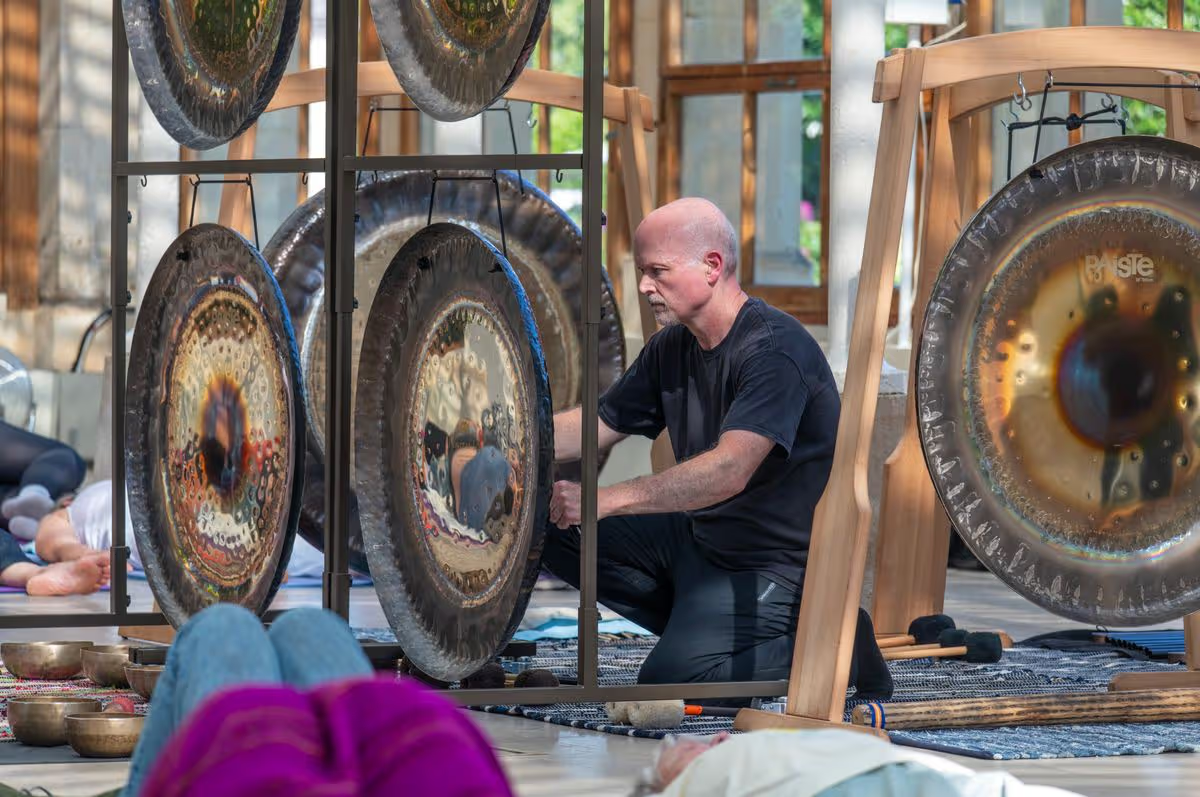
And what exactly is a sound bath? In short it’s a meditation experience using gongs, Tibetan bowls and crystal bowls, along with chimes to create a dream-like state somewhere between sleep and waking.
Said to help ease stress and anxiety – and with the state of, well, everything, at the moment – who doesn’t need a bit of that?
On Kew’s website, it states: “Therapeutic sound has been proven to offer a wide range of health benefits, helping to boost your immune system by making you feel more grounded, balanced, and connected.
“No previous experience is needed for this expert-led session, making it the perfect opportunity to try a new way of reaching deep meditation and relaxation.”
It’s also recommended to have a stroll around the incredible gardens before you step into the Nash Conservatory for the hour long session.
Gently strolling through the vast expanse of Kew, surrounded by blossom trees and areas filled with sunshine-coloured daffodils, I could already feel my stress melting away even before the session began.
Held in the glorious Nash Conservatory, close to Kew Palace with the Elizabeth Gate the closest entrance, this sunshine-filled spaced already felt welcoming and calm the moment you stepped in.
You’re advised to bring a blanket, cushion and eye mask so you can be comfortable and fully immersed in the experience, which is led by Jez Smith FRSA, a historical musician and qualified sound therapist, who has been practising for 35 years.
Lying in the space, eyes closed, eye mask on and cosy in my blanket, the session began. Gentle noise filled the room, within minutes I could feel my shoulders relaxing.
As the sound slowly builds – it never feels overwhelmingly loud but does fill the entire space – I could feel every muscle in my body slowly sinking into the floor.
Still awake but only vaguely aware of my surroundings, there was a moment where I felt my entire face and jaw relax – I had no clue I was holding so much tension there.
Advised by Jez to focus on the noise and try to push away thoughts as they popped into your head – something which became increasingly easy to do as the session progressed – I became totally unaware of time and before I knew it, our hour was up.
Brought back to full consciousness by the gentle sound of chimes, as we all slowly returned to sitting I was stunned to feel I not only felt relaxed but more care-free than I had for months.
Another slow stroll through Kew before heading home and I can firmly say sound baths are not only good for easing stress, they’re also good for the soul.
Sound baths at Kew Gardens
Kew is holding regular sound baths on selected dates between now and October.
A SMALL Spanish coastal city has been named one of the up-and-coming destinations to visit in 2026.
Airbnb has recently announced its 2026 Dupe-It List, with alternative holiday destinations to visit instead of the better known, busier hotspots.
Sign up for the Travel newsletter
Thank you!
Airbnb has named Denia in Spain as one of the must-see destinations in 2026Credit: Alamy
And included on the list is swapping Marbella for Denia, Spain.
Airbnb said: “Situated on the Mediterranean coast of Spain’s Costa Blanca – Denia is a charming port city that might just be the country’s best sun-soaked secret.
“Offering vibrant marina life, tapas-fuelled evenings and Instagram-worthy sea views, travellers can meander through the old town’s cobbled streets, pop into local boutiques, or unwind on nearby beaches for a relaxed, authentic escape that’s every bit as picturesque as its flashier cousin, Marbella.”
The holiday accommodation platform also recommends that visitors stay in Casa Sol, which is an entire townhouse and that the best time to visit is between June and September.
Denia sits on the Costa Blanca and often dubbed the pearl of the region by locals, according to WTG Spain.
Not only that, but in 1982, the World Health Organisation dubbed the climate as one of the best in the world.
This is because the mountains that back the city stop the cold air from cooling temperatures in the city.
As a result, the microclimate means the seasons don’t change harshly in the city and leads to around 320 days of sunshine a year.
High temperatures tends to sit around 32C during the summer and lows sit around 11C during the winter, though the average annual temperature is a comfortable 19C.
When it comes to making the most of the weather in the city, like many other Spanish coastal cities, Denia has a number of beaches to choose from – including six Blue Flag spots.
For example, Punta del Raset Beach has both soft golden sand and calm waters making perfect for families.
If you fancy heading somewhere a bit more spacious, then opt for Deveses, which is the longest beach in Denia.
One recent visitor said: “A quiet beach, ideal for going with children.
“You can spend all day there, and enjoy the Los Baños bar, both for an aperitif, lunch and even a cocktail in the middle of the afternoon – very clean beach.”
Overlooking the beach, up 60 metres high on a hill, is the famous Denia Castle and Archaeological – an ancient fortress and ruins with panoramic views of the sea.
Otherwise the marina, is where tourists can find some of the city’s waterfront restaurants.
For watersports fans, the marina is where you can head off jet skiing, paddle boarding, kayaking or even sailing.
In the summer months, it can reach up to 32CCredit: GettyThe Spanish coastal city is known for its golden beaches and charming Old TownCredit: Getty
You can hop even hop on a ferry to another destination such as Ibiza, just two hours away, which costs around €25 (£21.78) per passenger.
And of course, Denia has an Old Town known as El Barrio – here you will find narrow streets, the Assumption Church and lots of traditional Spanish homes.
Travel writer Amalia Maloney even called the charming destination a ‘goldilocks town’ because it is neither too big or too small.
Fancy leaving the city for some green space? You can also head to Montgó Natural Park.
The park is the ideal spot for keen hikers and wildlife lovers, as it’s home to over 600 plant species and 150 animal species including the Bonelli’s eagle and Peregrine falcon.
The peak of the park sits at a staggering 753 metres – so it isn’t a hike for the faint hearted.
Montgo Natural Park is home to over 600 plant species and 150 animal speciesCredit: GettyYou can fly either to Valencia or Alicante and then drive to DeniaCredit: Alamy
One recent visitor said it was the “most impressive on the Costa Blanca”.
When looking for a bite to eat, visitors won’t spend too much with a mid-range three-course meal for two people likely to set you back €40 (£34.93).
And if you fancy a tipple, such as a beer, it will cost you around €2.20 (£1.92).
In fact, the city has been a UNESCO Creative City of Gastronomy since 2015 due to culinary traditions being kept up across the city’s 300 plus restaurants, with key dishes including rice-based meals and crimson shrimp.
You can get to Denia by flying to either Valencia or Alicante, where flights are around £14.
From Valencia to Denia it takes around 1hr19 by car, or just over an hour from Alicante.
For more top places to travel to in 2026, Europe’s ‘top trending city break’ destination has been revealed with flights for £15 and beers for £2.17.
DAUBED on an ancient wall, the curt sentence “All tourists are bastards” isn’t exactly welcoming – but it sums up a growing problem with tourists in one of the world’s most beautiful cities.
In summer, it can be hard to move on Venice’s most popular streets, but visit in low season and discover quiet backwaters where life is much slower — and cheaper — and overall a much more pleasant experience.
Sign up for the Travel newsletter
Thank you!
Venice has long been one of Italy’s most visited and famous citiesCredit: GettyVenice’s business today is tourism — whether the locals like it or notCredit: GettyBreathtaking St Mark’s Square is one of the must-sees for tourists in VeniceCredit: Getty
My tour guide, Guiliano from Devour Tours, tells me: “Even the fish market, where I shopped with my mother as a child, is only open for traditional reasons these days and, of course, for tourists.”
Venice, some 1,605 years old, has long been one of Italy’s most visited and famous cities. Once known as the home of merchants, its business today is tourism — whether the locals like it or not.
It’s fair to say many of them don’t. Locals are particularly against short-term rentals, saying they have hollowed out neighbourhoods, pushing residents out.
Authorities have listened, responding with cruise ship bans, crowd controls and, most infamously, entry fees.
The €5 fee — which rises to €10 for tourists who book fewer than four days in advance — typically only applies to weekends from April to July, so you won’t be charged on most weekdays.
But other residents understand that Venice needs tourism to survive.
Valentina, the manager at the historic Hilton Molino Stucky hotel’s rooftop Skyline Bar, is among that number.
As I sip on my Rising Tempest cocktail — a Venetian take on a Long Island Ice Tea — and nibble on focaccia, Valentina explains that while tourists can be “a little irritating in high season”, she appreciates they are now part of the city’s make-up.
At the bar — located in a former flour mill on pretty Giudecca island and with stunning views of the main city — she tells me: “Overall we love tourists and we do need them.”
The welcome at my hotel, the beautiful Maison Venezia, is warm and as impressive as its location.
The Sun’s Saskia O’Donoghue dines in style in VeniceCredit: SuppliedFeast on cicchetti, the Venetian alternative to tapasCredit: Getty
In the Cannaregio district, the four-star resort has Murano glass chandeliers and decor featuring traditional Venetian decorative motifs. Just a short stroll to the iconic Rialto Bridge, it is incredibly peaceful.
My room was so quiet, with a balcony overlooking a small canal, it was almost impossible to believe I was in a city, let alone one of the most touristy in Europe.
Even out of season, it’s easy to see Venice’s draw.
It has no roads, just canals, gondolas and crumbling palaces rising straight out of the water. There’s hundreds of years of history, maze-like alleys and sunsets that light the whole lagoon — home to more than 100 islands — on fire.
People have been coming here for years for the romance, the cicchetti — the Venetian alternative to tapas — and a unique feeling of drifting through a city that has not really changed for centuries. Even in low season, tourist must-sees like St Mark’s Square, the Doge’s Palace and the Grand Canal are busy.
However, head just a few streets back and Venice is a totally different experience, even in high summer.
During my tour, we stop off in Campo Santi Giovanni e Paolo, one of the city’s most beautiful squares.
Surprisingly, it’s very quiet, with just a few tour groups and locals milling about.
When I ask Guiliano for the reason, he says the square is a contradiction unique to Venice.
“It’s in the city centre, but off the beaten track — and it’s pretty much hidden even in the summer,” he says.
“In London, tourists go back and forth exclusively between Piccadilly and Leicester Square for their entire trip, and avoid places like Shoreditch. It’s the same here.”
While cafes in St Mark’s Square are notoriously pricey — think £12 for a cappuccino — more rustic spots off the main drag sell glasses of delicious Italian wine for about £3.50, cicchetti for £1.30 and pizzas from £7.
Venice in high season might lose a little of its magic, but overtourism is easier to dodge if you pick your moment.
Visit off-season and you’ll find a calmer, more authentic side. Crowds or not, though, there’s nowhere quite like it — and that’s why people keep coming back.
GO: VENICE
GETTING THERE: easyJet has flights to Venice from Gatwick, Manchester and Bristol with fares from £26.99 one way in April. See easyjet.com.
STAYING THERE: Maison Venezia has rooms from £156 per night including breakfast. See unaitalianhospitality.com.
OUT & ABOUT: Devour Tours “Venice in a Day” tour includes entry to St Mark’s Basilica, the Doge’s Palace and a gondola ride, and costs from £103 per person. See devourtours.com.
Summer Robert, 28, claims to have the biggest boobs in the UK. Even though she loves her body, she said her breasts prevent her from being able to fit on planes
Summer Robert can no longer fit on planes(Image: scotchdolly97/Instagram)
While some may wish they had a bigger bust, one woman said her breasts can be problematic as they can draw unwanted attention. Summer Robert, 28, has previously admitted she’s proud to have what she claims are the “biggest boobs in the UK” but, even though she loves her body, her boobs can post significant challenges.
Recently, she admitted she struggles to fit on planes to travel as her breasts have grown so large. While there’s little she can do about it, it’s proved to be a costly problem for her, as she’s had to cough up thousands of pounds for business class seats simply because they offer her more room.
The content creator, who boasts over 200,000 followers on Instagram, measures a size 30R and her breasts weigh over 25kg. Over the past two years, Summer estimates she has spent more than £20,000 on business class upgrades simply to accommodate her physical needs.
She explained: “The lack of space in economy means I cannot do it. Even something so simple like putting the tray table down to eat my dinner is so difficult. It doesn’t go down all the way.
“I always end up with the person next to me touching my boobs, and it makes both of us uncomfortable. I need to get business or I won’t be able to eat my dinners on a plane or I’ll be touched by another passenger.”
The former restaurant manager has always had big boobs and they are only going to get bigger. She has a condition called Macromastia, which is the medical term for having abnormally large breasts, and it can lead to various complications like chronic back, neck and shoulder pain, headaches, bra strap grooving and difficulty carrying out daily activities.
According to Summer, when it comes to travel, the cost of basic accessibility is “staggering”. And, as she can’t stop her boobs from growing, it’s a problem that’s not going to go away.
Her boobs impact her life daily, as finding clothes that fit is tough and even cleaning the house is a “hard task” due to the weight of her chest. Summer said she also has to endure catcalls wherever she goes.
“Flying has become a huge struggle for me, even little things like getting into the bathroom,” Summer continued. “The door is so tiny, my boobs always push up against it, the tray table won’t fold down because my boobs are too big.
“Trying to get my bag up into the baggage compartment is a struggle because, if someone is sitting on the chair below, I will 100% touch them with my boobs on accident. I can’t fly economy because of all of these reasons and more.
“I think it’s just hurtful having to fork out so much money that could go to better just because airlines refuse to accommodate for people with different bodies.”
It took years for Summer to learn to love her body and, even though she celebrates herself more now, she admits there are many cons to her situation. She has to experience unwanted comments from people often, she finds it difficult to get her hands on bras that fit and she also has to grapple with many hidden expenses, but there are some pros too.
Summer said: “I love my body and I love my boobs – everything about them. They have given me a beautiful and blessed life with my career, and gave me a platform to show girls that all body types are beautiful. I love my body and the cons will never stop that.”
‘We were five people in my parents’ 2CV; we would set out at 3am and by 10am, around about Lyon, my father would need a break. My mother would set up a deckchair for him under a tree by the side of the road and he would sleep before driving the rest of the way to Toulon.”
On a recent road trip through France, I met up with Thierry Doillon, a vintage car fanatic who helped restore a 1950s petrol station on the Route Nationale 7. I wanted to talk about the heyday of this iconic road (so famous that singer-songwriter Charles Trenet released a song about it in 1955) and why it’s enjoying a renaissance with holidaymakers.
Illustration: Guardian Graphics
The RN7 stretches 996km (619 miles) from Paris to Menton on the Côte d’Azur, passing through Châteauneuf-du-Pape, Avignon, Lyon, Aix-en Provence, Fréjus and Nice. In summer 1936, the French government passed a law that mandated paid holiday, a move that kickstarted the exodus of northerners to the Med every August, and it became a true emblem of the French vacances. In the 50s and 60s, the route was awash with petrol stations, traffic jams, picnickers and roadside cafes.
Although the RN7 fell quieter when the Autoroute du Soleil (Motorway of the Sun) was completed in the early 1970s (the new toll road knocked a third off the journey time), it is now experiencing a resurgence thanks to the trend for slow tourism and discovering the road less travelled.
One of the bornes that mark the RN7 route. Photograph: Ricochet64/Shutterstock
My road trip started on Paris’s Place d’Italie on a chilly September morning after an overnight stay at Hôtel Rosalie. Although my hired Citroën was capacious in comparison with Thierry’s 2CV of yesteryear, I could imagine the thrill he must have felt as a kid, embarking on an adventure that would take him to a land unrecognisable from the cold and grey of northern France, with the promise of warm sea, palm trees and glowing sunsets at its end.
Only a few kilometres from the centre of Paris, the roads started to widen and troops of Napoleonic plane trees lined up to guide this adventurer south. Historic highway it may be, but there’s a subtlety to the RN7 compared with the likes of America’s Route 66: instead of the shield-shaped “Historic Route” markers with “66” in large numbers, there are simple red-and-white bornes – round-topped concrete distance markers that dot every kilometre. There are faded ghost signs instead of screaming billboards, a mere whisper of the promise of parasols and pastis to come; Relais Routiers restaurants instead of roadkill cafes; and the soundtrack is Trenet’s 1955 whimsical hit (“L’amour joyeux est là qui fait risette, On est heureux Nationale 7”) rather than Chuck Berry or the Rolling Stones getting their kicks.
I imagine Thierry’s father despairing at my sluggishness, but nonetheless I made my first stop just 50km from Paris, in the village of Barbizon in the Fontainebleau forest. I stretched my legs in the shady wooded paths in the footsteps of the mid-18th-century artists who decamped here from the city to be inspired by nature.
Back on the road, I counted numerous art deco frontages of now-derelict mechanics along the route. “There were sometimes as many as 12 garages in a 6km stretch,” Thierry had told me. “Not just because the petrol tanks were so tiny back then, but because the cars broke down all the time!”
The Ozo petrol station restored to its former glory. Photograph: Rachel Ifans
I drove through pretty riverside towns such as Charité-sur-Loire and Nevers and parked up at the Hôtel de Paris in Moulins, a charming town that’s intersected by the RN7. The historic hotel has played host to many French stars over the decades, from Coco Chanel to Edith Piaf, and was such a popular stopping point in the 50s that it used to have two daily lunch sittings – the first for those heading south from Paris, the second for those driving north from Lyon and the Riviera.
The next morning, I journeyed further back in time in La Pacaudière, a tiny village that bore witness to the importance of this north-to-south route centuries before it thronged with holidaymakers. Le Petit Louvre is a coaching inn in the village with a gargantuan, gleaming Burgundian roof that since the early 1500s has served variously as trading point, post office, prison and school, as well as hosting many passing bigwigs.
While residents in La Pacaudière are now free of traffic jams thanks to a bypass that avoids the village, those in the next village of Lapalisse hold a biennial traffic jam party called Embouteillage to celebrate the nostalgic bottlenecks of the 60s.
My next stop was Roanne, one of those French towns most Britons have never heard of that turns out to be a gastronomic gem, in this instance partly due to it being home to Michelin-starred chef Michel Troisgros. While he has a three-star gastronomic restaurant in the nearby village of Ouches, I stopped at little-sister restaurant Le Central, which is bang on the RN7 as it cuts through town in front of la gare.
The route’s history is intertwined with that of the Michelin Guide, which provided essential information and maps for millions of holidaymakers. Many legendary chefs and eateries are synonymous with the route – from Eugénie Brazier, the first woman to earn six Michelin stars, to Fernand Point with La Pyramide in Vienne, who achieved three Michelin stars in the 30s.
An artisan pâtissier in St Symphorien-de-Lay has created a cake that celebrates Route Nationale 7
My lunch at Le Central started with a fish broth amuse bouche, continued with a hunk of white fish and confit peppers, and ended with a volcanic île flottante called Mont Fuji, all of which really kickstarted the gastronomic second half of my slow journey through France.
Not far after Roanne came the visual highlight of my trip: the Ozo petrol station which Thierry and his friends have restored to its former glory. He’d told me how the first guardian of the station had been a woman – AKA the godmother – who had lived in the tiny kiosk and been on hand 24/7 to help drivers at the pump.
Fully fuelled, my drive then took me to the Vallée de la Gastronomie, a stretch of central France that pulses with the heartbeat of artisans, chefs, producers and winemakers.
I met Pierre-Yves at Maison Mure in St Symphorien-de-Lay, an artisan boulanger, pâtissier and chocolatier who has created a cake that celebrates the Nationale 7, a light sponge sandwich in the shape of its road sign. I spent the night in a cottage at Domaine de Clairefontaine, a small hotel and bistronomic restaurant.
The vineyards of Tain-l’Hermitage. Photograph: Pernelle Voyage/Alamy
The next morning, I continued to Tain-l’Hermitage, visiting its Citè du Chocolat museum and hiking through the Hermitage vineyards that border the town. I stopped over at Maison Chabran in Pont-de-l’Isère, another good example of the many superlative family-run hotel-restaurants that dot the length of the RN7.
The culinary treats came one after the other as I made my way south, from roadside nougat in Montélimar to the historic rolling vineyards of Châteauneuf-du-Pape, France’s first wine appellation. My journey reached its gastronomic zenith with an overnighter at the Michelin-starred La Mère Germaine, perched in the heart of the wine village, before I trundled to the coast, the greenery of la vraie France now behind me and the dusty roads, rocky outcrops of the Luberon and big hitters such as Orange’s Théâtre Ancien, Avignon’s papal palace and Aix-en-Provence’s Cézanne celebration ahead.
From plane trees to palm trees, from big rivers to the Mediterranean, the route was now edged by melon vendors and seafood stalls, with seemingly infinite blue sea in front. I spent the last night of my road trip in Fréjus, a town that combines ancient history with modern-day Med sparkle, staying in l’Aréna hotel. In 1799, Napoleon slept here en route from Egypt to his coup d’état in Paris.
I like to take the road less travelled when I can in France, but this time I had taken the road much travelled, then barely travelled, and now more travelled again. My out-of-season journey down the Route des Vacances was a memorable mix of quiet roads, nostalgia, superlative food and wine, and a variety of landscapes.
Visit this beautiful seaside which is a wonderful place to spend time by the coast, with the countryside nearby. There are beaches, forests and so many cultural activities to do
Christine Younan Deputy Editor Social Newsdesk
04:10, 04 Apr 2026
If you’re coming from London, it’s less than an hour by train(Image: Getty Images)
Fancy a little adventure where you can enjoy the sights and smell of the coast? Whether you’re up for a walk in the forest or to visit the village named the “prettiest in England”, it’s nice to venture outside of the borough at times.
Now with spring in full swing, there’s no better way to spend your long bank holiday weekend than by heading to the seaside. This location has been named the “most beautiful in the UK” with beaches, forests and so much more to enjoy. Not only can you spend time by the coast, it’s also close to the countryside. And the place people are raving on about is Folkestone, Kent.
This is a wonderful place to spend time by the beach where you can visit gorgeous little cafes along the cobbled streets, tuck into some fish and chips by the sea, and take in the views.
Folkestone is a coastal town on the English Channel, it lies on the southern edge of the North Downs at a valley between two cliffs.
A travel account on TikTok recently named the location as the “most beautiful seaside in the UK”.
In the caption, the user added: “Is this the cutest seaside town in the UK?” Meanwhile a lot of people in the comments section claimed to “love Folkestone”, while another added: “How beautiful.”
Content cannot be displayed without consent
How to get to Folkestone:
If you’re travelling by car from London, it’s around 75 miles (about a 1 hour and 40 minute drive). It’s along the M20 which includes tolls.
Meanwhile, the fastest journey would be a train from London St Pancras to Folkestone Central, which takes about 56 minutes. A return ticket could cost around £30-£40 depending on times.
London Charing Cross is also another option to take the train from, although this adds nearly an hour onto the travel time.
What to do in Folkestone:
The seaside town offers a mix of sandy beaches, creative art and pure coastal charm.
There are many attractions for all members of the family, from the bustling Harbour Arm for food and drinks to the scenic Lower Leas Coastal Park.
Also the Creative Quarter’s has the Old Street for cafes, independent boutiques and coffee stops.
And don’t forget the Zig Zag Path where you can walk the restored Victorian path which offers dramatic views through the shady, landscaped greenery.
You can also check out the Folkestone Artworks where there’s over 70 contemporary artworks dispersed across towns, beaches and cliffs.
The island is said to have more pubs per capita than anywhere in Ireland, and perhaps the British Isles. It also has a nightclub run by two OAPs that opens on demand
Every June, hundreds of teenagers descend on Pub Island.
The youth of Donegal leave their hilltop farms, hop on a ferry and head to this mythical land of pints and pork scratchings.
On the busiest days, when Coláiste Árainn Mhóir’s summer Irish course is in full, céilí-practising swing, hundreds of teenagers fill the island’s youth hostels, B&Bs and campsites. In the evenings, once lessons end, they head for the pubs.
The island, actually called Arranmore, is said to have more pubs per capita than anywhere in Ireland, and perhaps the British Isles.
Alongside the hordes of youngsters, the island’s 480 permanent residents, mostly sheep farmers and fishermen, sustain six pubs and an iconic nightclub that opens at midnight if the boozers close.
Smugglers is an institution on Arranmore, introducing generations of islanders and visitors to disco at its late-night parties. Opening hours are irregular.
Partygoers either check Facebook for a “disco this Friday” post or knock on the door at the witching hour and hope. The OAP pals who run it have been known to give in and open up.
An unusual quirk of the island is its lack of police. That leaves plenty of scope for debauchery and no need to call last orders until everyone is done.
“The morning after is like D-Day,” one mainland resident told me, recalling teenage nights on the island before her group caught the ferry home, trying to hide seasick hangovers from parents waiting at the other end.
In the UK, the miserable state of the pub industry is well known. Rising costs and falling demand mean hundreds close each year. The Republic is faring little better. More than 2,100 pubs have shut since 2005, about a quarter of the total. An average of 112 close annually, rising to 128 a year between 2019 and 2024, leaving 6,498 licensed pubs.
Against this backdrop, I travelled to Arranmore to see why this Atlantic community is bucking the trend.
Before arriving, the ferry weaved through an archipelago of islands that narrowed the channel to a handful of meters, providing a view of the derelict Rutland. The once-booming island of over 1,000 was deserted when the herring fisheries collapsed, leaving a crumbly but intact high street. Although officially population-less, it is possible to rent a holiday home on the abandoned island.
Aaranmore hoved into view a minute later, a patchwork of fields dotted with sheep rising up on the hill above Leadgarrow port. The island’s main attraction is the lighthouse, which stands on the western cliffs above sea whipped into a deadly froth. It’s a striking scene, but one that requires a fair tolerance for cold and wind.
Unlike the main strip over in the east, which is protected from the worst of the weather. Here you will find the pubs.
My crawl began up the hill at the charming pods at Aaranmore Glamping, my home for the weekend, which came complete with an incredible sea view and a hot tub. From there, a short walk took me to Neilys.
The only inland pub, it has two sides. In winter, it serves locals dropping in for a quick drink after work. In summer, it caters to tourists with cocktails, craft beer and a pizza van.
Next was Early’s, closest to the ferry and opening onto the beach. A three-generation family business spanning 60 years, it is now run by sisters Kayla and Aisling, who recently took over from Jerry. It is the place for generous plates of food and a chat with the owners, whatever the weather. On quiet evenings, the refurbished band and darts hall sits empty while punters gather around the fire.
At 9.30pm, I made my way to Phil Bans, roughly 10m down the road. It was packed to the rafters with well over 100 people of all ages, many of them wearing football jerseys in support of the national team. Even Ireland’s eventual penalty heartbreak wasn’t enough to kill the good vibes in the cheery room.
Sadly, that was all the pubs I was getting for the night. Smugglers wasn’t opening, and the other pubs have given way to Phil Ban’s superior big-screen setup.
So how does a place support so many pubs?
Being a beautiful island with a lot of weather means many visitors come and are then pushed inside for a warming tipple.
But more than that, Aaranmore is just a very friendly place. In 2017, the community council wrote an open letter to the world, urging people to move there to stop the dwindling population from falling even further. Many, from across Ireland’s 80 million diaspora and beyond, answered the call.
It’s a place that’s used to people from all over coming and staying for more than a quick drink.
The Barnsdale has all the charm of a dainty cottage in the Cotswolds, but with the hospitality benefits of a 4* hotel.
A former hunting lodge constructed in 1760 that – despite the installation of modern amenities – still has an old world feel to it in the form of grand paintings and varnished wooden furnishings.
Because of its rural location, this hotel is certainly one to visit during the summer months when you can take advantage of the green grounds.
What are the rooms like?
Each of the 46 rooms is decorated in a typically English style with pastel-toned walls, frilly cushions and patterned armchairs.
The Classic is the smallest and cheapest of the bunch and worth it for the lower price.
The only difference in rooms, bar the decorative tweaks, tends to be size and the view (the Royal Room has one of the best).
What is there to eat and drink?
The hotel’s 1760 Brasserie serves classic British favourites including seared scallops doused in butter and a mouthwatering 32-day dry-aged ribeye served with chips.
I opted for the Atlantic cod which was seasoned well and served with an unctuous vermouth sauce.
Anyone with a sweet tooth will love the sticky toffee pud – this one’s a real crowd pleaser.
What else is there to do?
People come for the outdoor Signet Spa where wood-fired hot tubs, a heated pool and a glass-walled sauna overlook fields of grazing Highland cows.
It’s a lovely way to spend a Sunday afternoon, sipping on sparkling wine and admiring the creatures munching away on the grass.
The hotel’s 1760 Brasserie serves classic British favouritesCredit: Supplied
The only downside to the spa being entirely outdoors is the unpredictability of the British weather.
Fret not, though – every spa guest is given a DryRobe and flipflops to plod around in.
When the drizzle hit, we persevered in our tub.
Big thanks to the staff member who swiftly came to the rescue with a couple of umbrellas.
Massages can often be overpriced, but not here. My therapist truly listened to my needs and pressure preferences, ensuring I enjoyed every one of those 60 blissful minutes.
How much is The Barnsdale?
Classic rooms cost from £85 per night with brekkie.
Is The Barnsdale family-friendly?
Extremely. Family rooms come with separate bedrooms with bunk beds and a main room with a double bed.
There’s plenty within the hotel to keep kids busy and entertained.
Is there access for guests with disabilities?
The main dining areas are wheelchair accessible, but there are no specific accessible bedrooms.
Each of the 46 rooms is decorated in a typically English styleCredit: The Barnsdale
The airline and tour operator has shared advice for passengers on social media
Jet2 shared a message about bookings on social media (stock photo)(Image: Getty)
Jet2 has issued an update for passengers worried about disruption to their spring travel plans. With the Easter holidays here at last, many families have booked European getaways over the next few weeks. However, some passengers are worried about possible cancellations.
Greece faced travel disruption this week after a deadly storm hit parts of the country, and Crete was enveloped in a Saharan dust storm. Passengers have also been warned of possible jet fuel shortages caused by the Iran war.
One passenger who shared their concerns with Jet2 has been told that all flights are currently planned to go ahead as normal. Taking to X, a customer named Liz Hughes asked Jet2 for guidance ahead of an upcoming trip to Corfu later this month.
Liz wrote: “We have return flights booked Man-Corfu 13-20 Apr. Should we be worried about cancellations?” A Jet2 employee named Lily responded to the question on Friday (April 2).
Replying from the @Jet2tweets account, Lily said: “Hi Liz, all flights are planned to go ahead as normal. If anything were to change regarding your booking, we would be sure to reach out to you directly to make you aware, and discuss the options available to you. Thanks, Lily.”
Content cannot be displayed without consent
The news comes as Ryanair boss Michael O’Leary has recently said passengers could face severe disruption in early May if the Middle East conflict continues. Speaking on Sky News Michael O’Leary said: “Fuel suppliers are constantly looking at the market.
“We don’t expect any disruption until early May, but if the war continues, we do run the risk of supply disruptions in Europe in May and June, and we hope the war will finish sooner than that and the risk to supply will be eliminated.”
Oil prices have surged since February due to Iran’s block on tankers passing through a key shipping passage, the Strait of Hormuz. The Business Secretary has said there are no supply chain issues for jet fuel “at this moment.”
Peter Kyle told Times Radio: “I was looking immediately after the conflict started, where we interact in order to get resilience into our society, into our economy, we’ve been working with all these key sectors, identifying sectors where there may well be challenges down the track. We have no (fuel) supply chain issues at this moment at all.”
UK airlines are not experiencing disruption to their supply of jet fuel, according to an industry association. An Airlines UK spokesperson said: “UK airlines are currently not seeing disruption to jet fuel supply and continue to engage with fuel suppliers and Government to monitor the situation.”
One Yorkshire pier was once dubbed the “unluckiest pier in the world” after a series of disasters saw numerous ships crash into the structure during its short life
Isobel Pankhurst Audience Writer
14:14, 03 Apr 2026
All that remains of the pier are two towers(Image: Getty)
A tiny seaside town in Yorkshire was once home to what became known as the world’s most cursed pier. During the Victorian era, piers emerged as a must-see attraction for seaside visitors, prompting the construction of one in the town of Withernsea.
Built between 1875 and 1877, Withernsea Pier had a remarkably brief existence, shutting down by 1893 and being completely demolished by 1903. Today, all that remains on the site are the striking castellated pier towers, which lead down towards the beach.
The pier’s fleeting lifespan was the result of a series of catastrophic incidents, earning it the notorious title of the “unluckiest pier in the world”, with multiple vessels smashing into the structure throughout its operational years.
The pier’s unfortunate saga began during construction in 1875, when a crane gave way, crushing and killing a 17-year-old boy.
Then in 1877, a fierce storm loosened sections of the construction, which subsequently plunged into the sea, destroying one strut and warping girders. This setback delayed the pier’s official opening and required £200 worth of repairs.
The calamities continued, and on October 28, 1880, a devastating North Sea storm saw two vessels plough into the pier. Fishing boat Jabaz struck the pier and went down, claiming the lives of four sailors in the tragedy.
Meanwhile, a coal barge named Saffron slammed into the pier, tearing a 150-180 foot gap through its centre. That same night, the storm obliterated the nearby Hornsea Pier and sent another vessel crashing into Redcar Pier.
Three years later, on March 6 1883, another storm hit and washed away part of the pier, including the section that had been hit by the Saffron years earlier.
The ill-fated pier would then suffer yet another blow, when the fishing vessel Genesta came crashing into it on October 20 1890, destroying more than half of the structure in the process.
On this occasion, there was just one casualty, the captain of the ship, while the crew were luckily rescued from the sea.
What little remained of the pier was damaged even further on March 22, when the Henry Parr ploughed into it during a violent storm, leaving just 50 feet of the structure standing.
It came as little surprise when the remaining section was declared unsafe, and the last remnants were torn down by 1905.
In more recent times, proposals to reconstruct the structure were drawn up, backed by funding from the East Coast Communities Fund, the NationalLottery and local fundraising efforts.
In January 2020, the cost of rebuilding was put at £8 million, though the plans were ultimately shelved in 2023 after East Riding Council concluded they were “no longer viable.”
While the ambition to restore the pier has been abandoned, the distinctive castle towers still stand to this day, leading visitors down towards the seafront.