It’s an annual fall tradition that Disneyland increase its prices — and stealthily in the night. Starting Tuesday, guests will pay more to experience the Happiest Place on Earth.
But the increases are relatively light. For the eighth year in a row, Disneyland did not raise the cost of the lowest-priced ticket, which is $104. And its highest-priced ticket, which is $224, also did not change. The increases were felt primarily on mid-level tiers for single-day, single-park tickets, and were limited to $5 apiece.
You’re reading Mr. Todd’s Wild Ride newsletter
Todd Martens’ newsletter delivers news and commentary on the past, present and future of theme parks, right from the theme park capital of the world — Southern California.
By continuing, you agree to our Terms of Service, which include arbitration and a class action waiver. You agree that we and our third-party vendors may collect and use your information, including through cookies, pixels and similar technologies, for the purposes set forth in our Privacy Policy such as personalizing your experience and ads.
Other prices also remain unchanged. The cost of Disneyland’s popular annual pass program, the Magic Key, did not increase. The top-tiered Magic Keys have been subject to hefty yearly spikes over the last decade. Parking remains fixed at $40, and multiday tickets have not been affected.
Collectively, this is one of the smallest overall increases made by the Disneyland Resort in recent history, as last year, its highest-priced single-day ticket jumped in cost $18. At a time when leisure costs are rising and forcing Americans to stay home, it comes as somewhat of a relief that Disneyland is not asking its fans to pony up substantially more cash to get through the gates.
While the Walt Disney Co. provided no official statement on the increases, Disneyland Resort officials noted in an email that it is aware guests are more closely watching their wallets in 2026. Thomas Mazloum, chairman of Disney Experiences, in a comment given to CNN, said, “Our goal is to put guests at the center of our decision making, and that starts by listening to them. That matters more now when families are watching every dollar, and we see it in the choices they make every day — in how they plan, in how far ahead.”
It’s also an indication that, at least for the time being, the Disneyland Resort has pushed its prices as far as they can go. Disneyland is blessed with an in-demand product, but every commodity has its limits.
In May, the Walt Disney Co. reported a 1% decline in attendance at its U.S.-based parks compared with the prior year, which the company attributed to “continued softness” in international visitors. In August, however, Disney bounced back, and noted, especially at Florida’s Walt Disney World, that attendance had perked up. Overall, visitation at its U.S.-based theme parks was 3% higher than in the previous year’s third quarter, the company said. This boost was largely attributed to a variety of summer deals.
As someone who is at Disneyland nearly every week, I can report that summer crowds were relatively manageable. There have been some asterisks, such as the World Cup and high heat, both likely keeping guests away, but anecdotally, Disneyland crowding hasn’t been nearly as extreme this year. I simply believe that people do not currently have the excess funds that they once had.
And Disney seems to be responding to the economic climate, especially in making it easier for its biggest fans to visit the resort. In conjunction with the price increases, Disneyland President Jill Estorino announced Tuesday that the company would be removing its no-show penalty on annual passholders. Additionally, passholders can now cancel their reservations up to 11:59 p.m. on the day of their reservations.
These are welcome changes, as previously guests were allowed three no-show penalties before their ability to make reservations was restricted, and had to cancel the night before. But plans change, and the reservation system restrictions, initially put in place to manage crowding during the COVID-19 pandemic, had increasingly felt like an impediment. While reservations are still required, which Disneyland has stated helps the resort plan its crowd-forecasting and staffing, the system is more lax and user-friendly than it has been.
Digging deeper into Disneyland’s pricing, there have been some small changes elsewhere. The cost of the line-skipping feature Lightning Lane, which can fluctuate based on crowding levels, now has a top price of $38, an increase of $1. And the park-hopper add-on for single-day tickets, which can also fluctuate, increased $5-$10, depending on the day. And earlier this year Disneyland did increase its prices on a number of food items.
The Disneyland Resort, to be sure, is not cheap. In the world of entertainment, it remains a luxury good on par with postseason Dodgers tickets (albeit with cheaper parking than Dodger Stadium). But I credit the Disneyland Resort for reading the cultural room. Pulling the plug on its recent steady and hefty price increases, especially on annual passes, shows the company can occasionally listen to its audience as much as it does Wall Street. Sure, a price decrease would be nice, but we don’t live in a fantasyland.
This week in SoCal theme parks
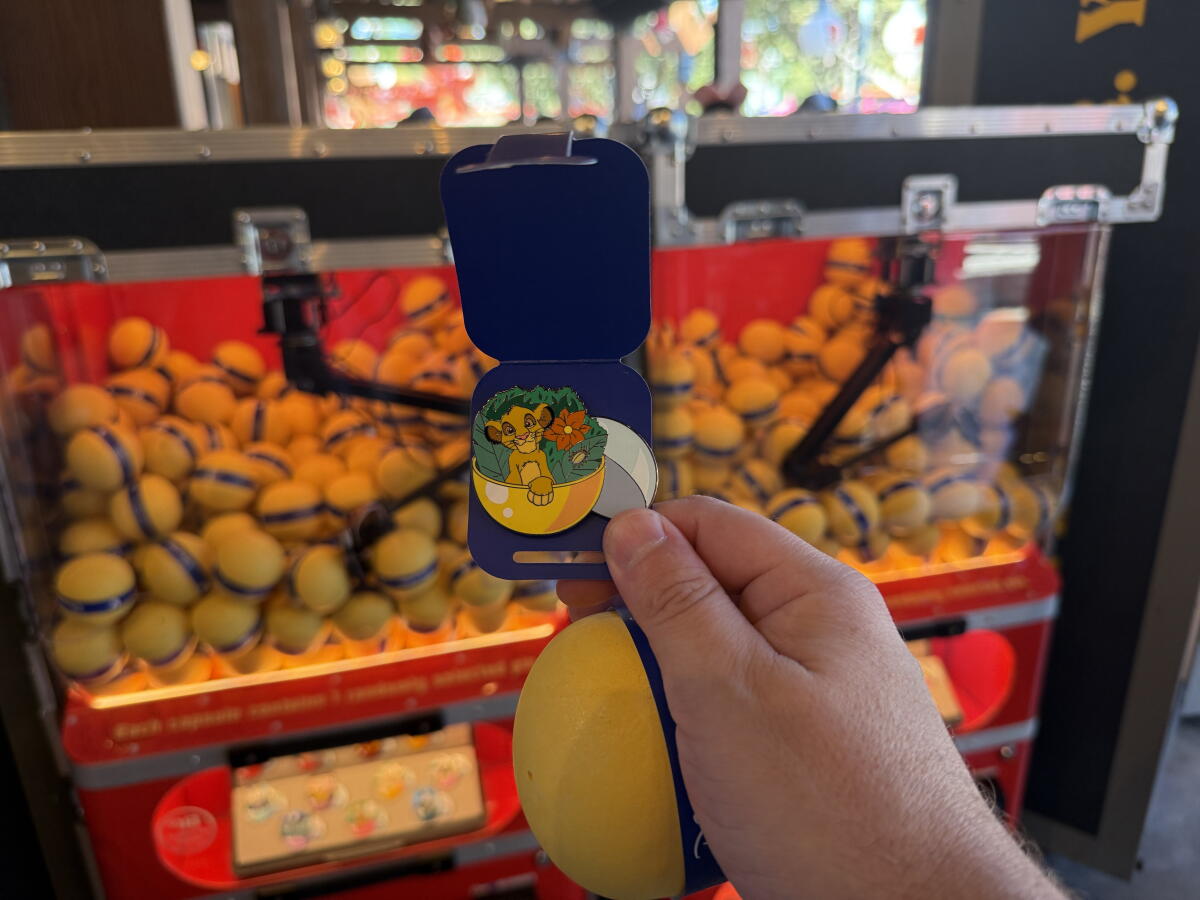
The Disneyland Resort has added new collectible pin trading vending machines.
(Todd Martens / Los Angeles Times)
Attention Disneyland pin traders! The Disneyland Resort has added a new pin line available in select vending machines throughout the property— look for them in San Fransokyo Square and Pixar Pier in Disney California Adventure and at the Star Wars Trading Post in Downtown Disney. Each pin is $18, and one buy gets you one egg-like orb with a mystery pin. There are 15 in the set — I got Simba, as seen above — and offerings include park staples such as the Hatbox Ghost as well as classic characters such as Princess Aurora and Dumbo. Some are marked limited edition — “chasers,” in Disney pin trading speak — so be on the lookout. Thanks to Mr. Daps for the heads-up.
A Disneyland ticket deal. With life constantly getting more expensive (see above), it’s a good time to hunt for a deal. If you’re a Costco member, reports are that there’s a pretty good one happening right now. Valid through Dec. 18, Costco is said to be selling a two-day Disneyland park hopper ticket with the line-skipping feature Lightning Lane already added in for $329.99. The offer includes a $60 dining card, and works out to a savings of a couple hundred. Disney Tourist Blog has more details on the limited deal.
An applaudable energy project. Six Flags Magic Mountain has announced the completion of its solar carport project, the largest solar carport in California. Covering 4,315 parking spaces, the project was designed to offset 100% of the energy consumption of Magic Mountain and Hurricane Harbor (while also providing some shade and sun protection for its parked cars). The project is interconnected with the Southern California Edison grid, meaning excess energy may be exported as well as allowing the parks to draw energy from the project when needed. The carport also offers 109 electric vehicle charging stations.
A pause at Castle Park. Riverside’s long-standing Castle Park is beginning the creation of what it says is a“reimagined experience.” As such, on Nov. 1 its Ride Park will halt operations for the foreseeable future. “We’re taking the time to plan the right rebuild and will share updates as plans take shape,” the company says in an FAQ on its site. Its mini golf and arcade areas will continue to welcome guests.
More on the noise issues around the ‘Fast & Furious’ coaster
Riders on Universal’s new Fast & Furious: Hollywood Drift.
(Ronaldo Bolanos / Los Angeles Times)
There will be no shortage of updates and news on Universal’s new Fast & Furious: Hollywood Drift coaster in the coming weeks, months and maybe even years, especially as the attraction continues todraw the ire of the park’s neighbors in Toluca Lake. Universal Studios Hollywood held a meeting with nearby residents on its studio lot last Wednesday. The session was closed to the media but was said to attract more than 350 neighbors. I spoke with a number of residents, as well as Universal, after the session, and indications are that the two sides still haven’t settled on a compromise. The issue, of course, stems from the sound of rider screams from the coaster drifting into the residential area.
Universal has promised, through the end of the year, to not begin operating the coaster before 9 a.m., and has also, in response to community feedback, installed a new sound barrier featuring an additional 1,900 square feet of sound absorbing material. The new barrier includes a sail that’s about 63 feet tall and 31 feet wide. But residents I spoke to feel it’s not yet enough. I’ve heard many stories from neighbors in recent weeks regarding the disruption caused to their lives. They range in extremes. A neighbor without air conditioning says they can no longer open their windows. A resident who offers meditation services from their home says their business is now potentially forever impacted. A teen was unable to complete a SAT prep test due to the incessant screaming. Many report insomnia from the rise in anxiety levels. There’s plenty more.
The meeting was said to grow contentious near its end. Residents provided data on how the effects of noise, specifically screams, can cause stress-related responses. Universal is said to have discussed the challenges in further mitigating the sound. County supervisor Kathryn Barger was in attendance and is calling for additional communication between the two sides. “The meeting’s dialogue made clear that the lives of surrounding residents are being impacted and disrupted,” Barger said via a statement. “I respect Universal’s decision to host this forum and listen to the concerns being raised. I encourage all stakeholders to maintain an ongoing honest dialogue.”
Tell us your stories. Ask us your questions.
Have a theme park tale to share? Whether it was a good day or less-than-perfect day, I would love to hear about it. Have a question? A tip? A fun photo from the parks to share? Email me at todd.martens@latimes.com. I may feature your note in an upcoming newsletter.
Ride on,
Todd Martens
—
This newsletter is free thanks to the support of L.A. Times subscribers. If you’re not yet a subscriber, explore subscription packages to unlock unlimited digital access and support award-winning local reporting.
Was this newsletter forwarded to you? Sign up here to get it in your inbox.
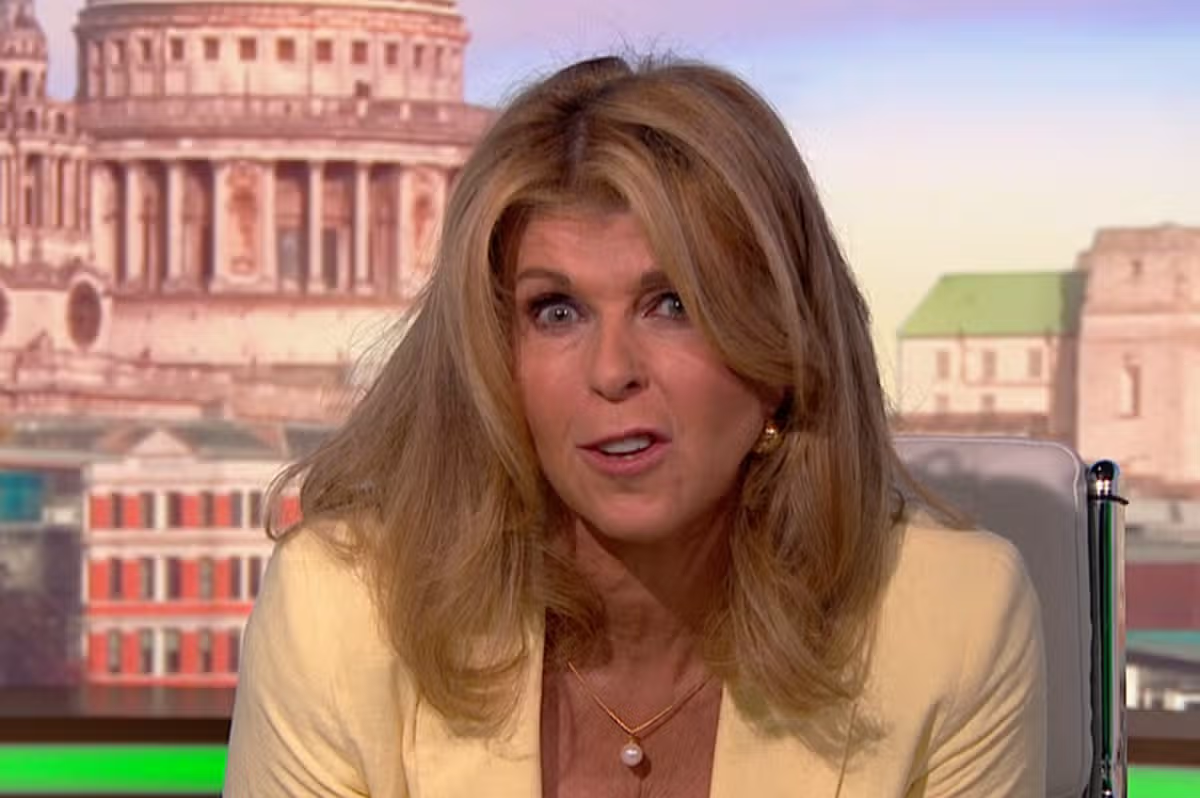
Good Morning Britain’s Ranvir Singh and Kate Garraway spoke to the UK’s Minister for Aviation, Keir Mather, on Friday’s show.
10:16, 02 Oct 2026Updated 10:18, 02 Oct 2026
Kate Garraway wasted no time in mentioning the MP’s age(Image: ITV)
Good Morning Britain viewers were quick to call out Kate Garraway.
On Friday’s instalment of the ITV show (October 2), Kate and her co-star Ranvir Singh welcomed Aviation Minister Keir Mather onto the programme to speak about the proposed plan to stop airlines charging parents who want to sit by their children.
However, before the interview had even begun, the Good Morning Britain star was quick to remark on the 28-year-old’s youthful appearance, which didn’t go down well with people watching.
She commented: “We’re joined here now by Aviation Minister, Keir Mather, first time on Good Morning Britain, you’re there in Manchester airport this morning. When we saw you pop up, I have to say, we thought, ‘My goodness, ministers are getting younger every day’. You’re going to please a lot of people if you are the new prefect, because there’ll be a lot of people cheering about this.”
The MP didn’t address the remark as he dived straight into the topic he was on the show to speak about. However, as the interview came to an end, The ITV star touched on his age once again.
She said: “I understand you are indeed the youngest Minister since Gladstone in 1834, so it’s not just my old eyes that see you as young, good to speak to you this morning.”
As Kate and Ranvir went to address what he had spoken about with their panellists, Salma Shah and Caroline Flint, the presenter asked if they also felt old listening to the MP speak.
Salma commented: “I mean, I’ve never felt so old.” With Caroline adding: “He answered your questions, he did say yes, no, and what have you, we’ve seen people much older, not doing that.”
It wasn’t long before people commented on the interview, with many quick to call out Kate for her remark to the MP. One person on X said: “How outrageously patronising! Ooh, aren’t you young!”
Someone else wrote: “How patronising to remark on his age and call him a prefect! @GMB #gmb.” Another viewer commented: “@GMB Not cool to patronise the MP just because he’s young.”
While one person said: “Just watched @Mather_Keir on @GMB this morning, a great interview, I’m just really disappointed in the hosts and panel guests, that the conversation following was about his age and ‘how well he answered the questions for his age’ rather than discussing the issue in hand, bit shocking really.”
Meanwhile, one person praised the MP, commenting: “Excellent interview on @GMB from @Mather_Keir from @manairport this morning. Nice to see young govt ministers on TV.”
Good Morning Britain is available to watch on ITV weekdays from 6am.
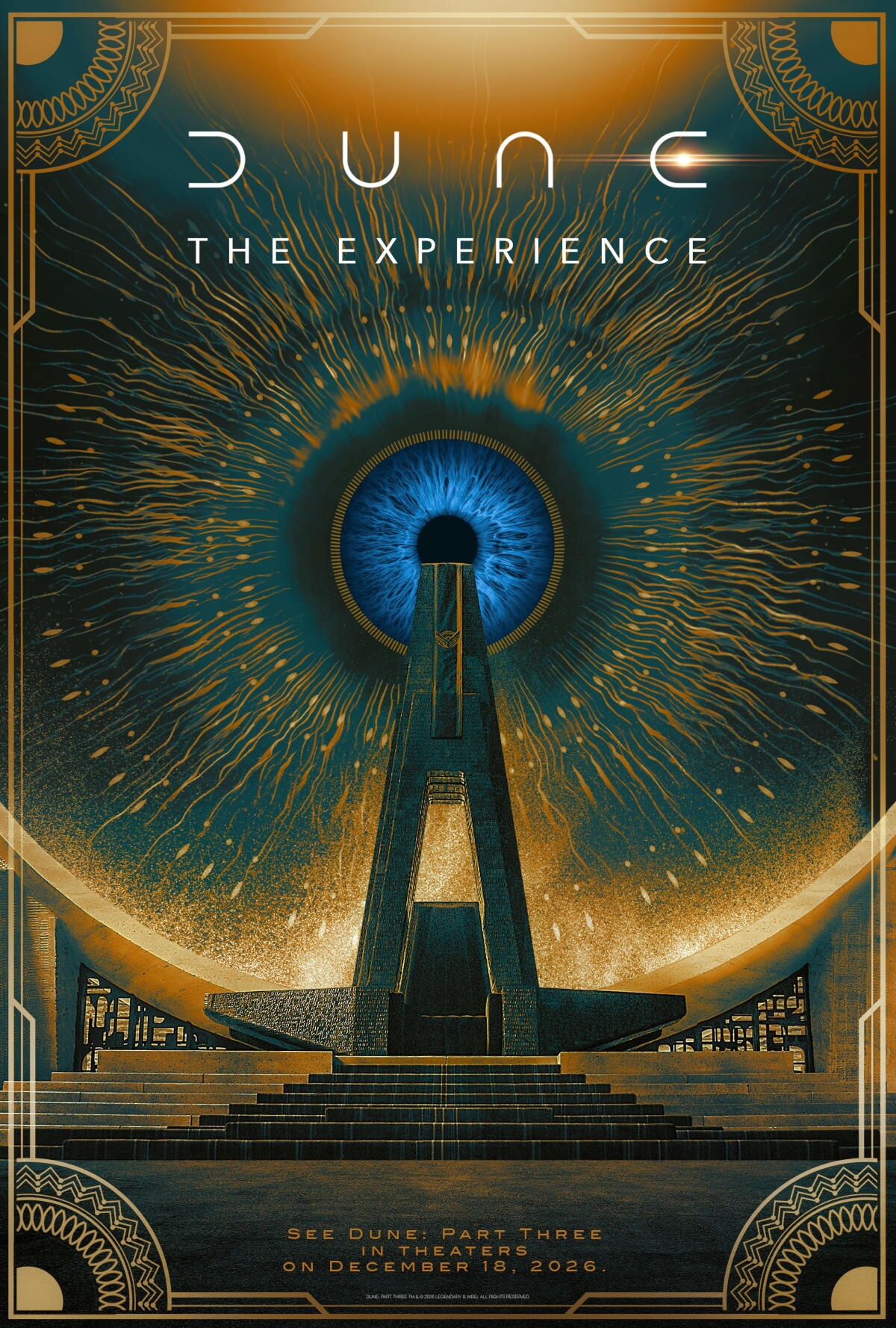
An interactive, floor-to-ceiling walk-through “Dune” attraction is coming to Los Angeles in November, and it promises spectacle, as well as a bit of mystery. Step around, and potentially inside, awe-inspiring vehicles from the film, or come face-to-face with the Bene Gesserit, a group of priestesses who possess, among other things, the ability to bend the will of others.
In one centerpiece of the exhibit, guests will be asked to take their so-called “test of humanity,” an opportunity to place one’s hand in a box and, in the lore of the “Dune” franchise, experience a none-too-pleasant sensation. It’s a battle of will, and intellect, and at “Dune: The Experience,” the hope is it will be fun.
“Dune: The Experience” is an immersive, walk-through exhibit coming to downtown Los Angeles.
(Fever / Legendary Entertainment )
“I don’t want to spoil exactly what happens when you put your hand in the box, but it is intended to be somewhat shocking, participatory and to put people on edge,” says Rob Shalhoub, a team lead at Fever, which is producing the event in partnership with Legendary Entertainment. “It really immerses you into the intensity of these films, where you’re up close and personal with these characters.”
“Dune: The Experience” is planned to launch in November in support of the theatrical release of Denis Villeneuve’s “Dune: Part Three,” which is out on Dec. 18. The event doesn’t have an opening date or an end date yet, but it is intended to tour. It will be in Los Angeles at a location in downtown’s Art’s District at least through the end of December. Expect costumes, props and life-size vehicles from the film, as well as projection-based rooms designed to immerse guests in the desert planet of Arrakis.
There will be about a dozen rooms to explore, says Shalhoub, each designed for guests to spend around five minutes in. Some will feature hidden messages within ancient carvings, while others will emphasize photo opportunities with Paul Atreides’ throne, allowing guests to attempt their best Timothée Chalamet impression. “Dune: The Experience” is also built for attendees to linger, as it will feature an area with themed food and cocktails.
“It will reward your curiosity,” says Amado Trevino, director of interactive media and experiences for Legendary Entertainment. “Walls will begin to whisper throughout. You get to take Paul’s throne and see the desert come alive around you. Guests may even find out if they have what it takes to ride a sandworm.”
Different rooms are said to explore contrasting sensations, with some emphasizing touch, sound or visuals.
“We have this amazing projection room where you’re going to get to experience what it’s like in the desert in Arrakis, to really feel the scale of the desert and some of the dangers that lurk within the desert, namely sandworms,” Shalhoub says. “We’ve re-created these environments in a very interactive and immersive way.”
Adds Trevino, “There are things to see, there are things to hear, there are things to do, and there are things to feel. We’re showing beautiful artifacts from the productions, but you’re doing it from within the world of ‘Dune.’ ”
Former Walt Disney Co. Chief Executive Bob Chapek knows his reputation among Disney fans, especially Disneyland loyalists. In his new book “Behind the Castle Walls,” he defends his changes to the Disneyland experience, the vast majority of which are still felt today.
“Contrary to what some people tried to paint me as,” he writes, “I wasn’t just a maniacal, money-optimizing machine.”
Sign up for Mr. Todd’s Wild Ride
An insider guide to the ever-changing world of theme parks, coming to you straight from SoCal — the theme park capital of the world.
By continuing, you agree to our Terms of Service, which include arbitration and a class action waiver. You agree that we and our third-party vendors may collect and use your information, including through cookies, pixels and similar technologies, for the purposes set forth in our Privacy Policy such as personalizing your experience and ads.
When I had the chance to talk to him last week, I wanted to know if having that image bothers him.
“I’m not concerned about it,” he says, speaking via phone from his Florida home. “I don’t give that any thought at this point. But I’m very proud of the performance of the parks segment during my time. The numbers bear that out.”
Chapek, in his role as chairman of the parks division and later CEO of the company, presided over an eight-year period beginning in 2015 in which Disneyland would significantly raise prices, introduce add-on perks, and, in my opinion, create the unsettling sense that you could be having more fun if you just spent more money.
When Chapek took over the parks segment, Disneyland would begin to fully remake its annual passholder program, largely by significantly increasing its price and limiting access. (In 2015, the top priced annual pass was close to $800. Today, it’s $1,899.) Single-day tickets to the parks would also begin a period of aggressive price hikes. Today, a one-day, one-park ticket tops off at $224. It’s widely expected that Disneyland will be raising its prices again this October, as it has done nearly every year in recent history.
Additionally, benefits that Disneyland guests long took for granted as free, such as the line-skipping Fastpass program, would become a paid perk on Chapek’s watch. Access to some attractions would be grouped together as part of a package now known as a Lightning Lane. In-demand rides such as Star Wars: Rise of the Resistance would be sold separately.
Bob Chapek has defended price increases at Disneyland, noting that ambitious projects like Galaxy’s Edge require capital.
(Allen J. Schaben / Los Angeles Times)
Prices on all of the above typically increase yearly. Today, guests who spring for the front-of-the-line Lightning Lane pass as well as individual access to Rise of the Resistance can expect to pay around an extra $65 per person once having their tickets scanned.
Chapek notes he faced significant opposition at Disney in making these changes.
“To all who come to this happy place, welcome,” goes Walt Disney’s original dedication speech, which for decades was used as a guiding light that every guest who entered Main Street, U.S.A., would be treated as an equal. That meant, with limited exceptions, no special access for anyone.
This was seen as an “inviolable virtue” at Disney, but one Chapek was ready to break, as he writes in his book.
“Everyone is equal when they come through the gates no matter what walk of life they come from,” Chapek tells me. “What’s different, though — and this isn’t because we say it’s different, it’s because the guests say it’s different — it’s that guests say they want an experience that’s tailored to what they can afford.”
Maybe. I don’t have access to guest satisfaction surveys, but that sounds like something only people with a certain privilege say. No doubt guests who can afford less don’t want a worse experience.
Chapek in his book describes himself as a “disruptor,” and considers Lightning Lane-like add-ons “bespoke” experiences that appeal to guests who crave a more customizable day. While they are common at nearly every theme or amusement park, I consider them classist, creating a haves-versus-have-nots mindset as soon as guests step through the gates.
Chapek defends the move to me, pointing out that while he presided over the parks, it’s lowest price one-day, one-park ticket stayed steady at $99 (today it’s $104). While true, and while Disneyland has even sought to increase the number of days offered at its introductory price since Chapek was ousted from the company in 2022, these are often midweek tickets, necessitating that working families take a day off and force a child to skip school.
“How about demand?” says former Walt Disney Co. CEO Bob Chapek, seen here with Minnie Mouse at Hong Kong Disneyland, when defending his price hikes.
(Kin Cheung / Associated Press)
“How about demand?” Chapek says to me when I point out that I have been critical of the moves. “Do people stop coming? That would obviously be a big concern. Even with the increase in prices that were taken on the annual passes, it would temporarily soften demand, but a year later they were subscribed just like they were before. Wall Street has certain expectations that may not be consistent with the expectations of guests of a certain pass type.”
Chapek reveals in his book that there is somewhere around 1.1 million annual passholders to Disneyland, which is today known as a Magic Key. With each price increase, he writes, that number would tumble to around 1 million, but within about 12 months they would be back to a level they were at before the rise in prices.
During Chapek’s reign, the company also introduced a reservation system, which asks guests to plan in advance. The price increase, later coupled with a reservation system, is designed to cut down, in part, on spontaneous trips to the resort, forcing guests to be more intentional about their Disneyland plans. This can aid, of course, in forecasting crowds and park staffing, but is also intended to limit days in which the park can feel overcrowded.
During his five-year tenure as parks chairman, Chapek writes that profits within the segment went up 18%. And that was largely due to an increase in individual guest spending. Over the decades, certain leaders of the Walt Disney Co. have arguably more closely ingratiated themselves with fans than Chapek has, but the fact remains that Chapek fundamentally and forever altered the approachability and the affordability of a Disneyland visit.
“In order to build things like Galaxy’s Edge and Avengers Campus, that takes capital,” Chapek says. “That capital takes revenue.”
My long-term fear, however, is that this has created a slippery slope. Disneyland guests now brace for yearly price hikes each fall, and this is coupled with yearly spikes on food prices each summer. Once the company and its shareholders become accustomed to such a financial boost, an environment where individual guest spending sharply increases even when domestic park attendance is soft or steady, there’s likely no turning back. Disney has created a business that will target the highest-spending consumer year in and year out.
And thus, guest equality, what was once an “inviolable virtue,” is forever a thing of the past, no matter who is in charge.
This week in SoCal theme parks
The X2 roller coaster at Six Flags Magic Mountain.
(Myung J. Chun / Los Angeles Times)
X2 has been retired. Six Flags has officially pulled the plug on Magic Mountain’s X2 coaster, which has been the subject of recent controversy after several lawsuits allege people were injured on the ride. Six Flags shut down X2 in July amid a state investigation into the coaster. “While X2 consistently passed a multitude of safety tests, we have decided to close the ride because we believe it’s the right thing to do. Ride safety is a cornerstone of our business, and when we see guest confidence affected, we take it seriously,” Brian Oerding, Six Flags Magic Mountain president, said in a statement. The Times’ Fedor Zarkhin has more on the news.
Don’t miss Disneyland’s mariachi band. There are a few more opportunities to catch Mariachi Alegría de Disneyland in Rancho Del Zocalo park inside Frontierland. The performances, set for the evenings of Oct. 6, 7, 13 and 14, are part of the resort’s National Hispanic Heritage Month celebrations. Also, beginning Oct. 4 and lasting through Oct. 15, guests can meet the character of Elena of Avalor near Royal Hall next to Sleeping Beauty Castle.
Heads up for those attending Halloween Horror Nights. If you have a visit planned to Universal Studios Hollywood’s Halloween Horror Nights and you’re interested in the park’s new Fast & Furious: Hollywood Drift coaster, there’s now an opportunity to ride it. For a cost. Universal is selling access to the coaster for $19.95 per person. Previously, the coaster was only available to those who sprung for the fancy R.I.P. Tour, which is now sold out.
Work out in Disneyland! The Disneyland Resort has announced new fitness classes across its two parks, an early morning perk for guests staying at one of its three hotels. Among the offerings is the ability to do yoga in Star Wars: Galaxy’s Edge, agility and strength exercises in Cars Land, and a mini-boot-camp-style class in Avengers Campus. Classes range in price, but most are under $49.
Tell us your stories. Ask us your questions.
Have a theme park tale to share? Whether it was a good day or less-than-perfect day, I would love to hear about it. Have a question? A tip? A fun photo from the parks to share? Email me at todd.martens@latimes.com. I may feature your note in an upcoming newsletter.
Ride on,
Todd Martens
P.S.
Me, enjoying a beverage, on the now shuttered Star Wars: Galactic Starcruiser.
(Allen J. Schaben / Los Angeles Times)
There is one area where the former CEO of the Walt Disney Co. and I are in complete agreement. Chapek and I both miss Star Wars: Galactic Starcruiser, colloquially known as the Star Wars Hotel. The ambitious, but costly, multi-day experience was one of the most creatively inspiring offerings in company history.
In “Behind the Castle Walls,” Chapek writes that he believes it was shuttered too soon. The Starcruiser closed after about a year of operation. “Was it perfect the first time? Absolutely not,” Chapek tells me. “Was it one of the most ambitious lodging experiences we have ever created? Yes.”
A place dedicated to play — and light role-play — the Starcruiser allowed guests to fully inhabit a fictional world. It was an argument that interactivity could have been the future of theme parks. “It seemed to have the plug pulled on it prematurely,” Chapek says, “and I think it was a big opportunity missed.”
— This newsletter is free thanks to the support of L.A. Times subscribers. If you’re not yet a subscriber, explore subscription packages to unlock unlimited digital access and support award-winning local reporting.
Was this newsletter forwarded to you? Sign up here to get it in your inbox.
A guest on The Repair Shop opened up about how the precious item meant so much to her family.
21:06, 23 Sep 2026Updated 21:07, 23 Sep 2026
A guest on The Repair Shop broke down in tears (Image: BBC)
A guest on The Repair Shop broke down in tears as she opened up about her son’s health.
The BBC programme returned to screens on Wednesday, September 23, with spin-off Beyond the Barn. The series follows experts restoring precious items from guests across the country, while also discovering what happened after the special items were restored.
Wednesday’s programme saw a treasured trophy revived, as well as a coronation scrapbook brought back to life. At the start of the show, Ruth Dalton from Rochester arrived with a gardening tool.
She sought The Repair Shop team’s help, including expert Jonathan Reid, in reviving her grandfather’s gardening tool, a pair of secateurs, so her son could use them.
She explained: “I have my late grandfather’s gardening scissors. He used them all the time, and I kind of wanted to keep them as a reminder of him and his gardening.”
She continued: “His name was Stan. He was a real, real green-fingered guy. He had a massive garden. I used to love spending time with my grandad. As children, we were always up there, helping him in the garden.
“There were little steps that went up to a big lawn and different archways. He used to tell us what plants you could touch and what they did. You know, ‘Don’t touch the roses, you might get pricked by the roses,’ and that sort of thing.
“He was very encouraging and did teach us a lot, gardening was his life.” Ruth went on to reveal that she herself loved gardening, though her own garden wasn’t “at its best”.
Ruth explained how she wanted the secateurs fixed so she could tend to her own garden, which was built for her son. She said: “His name is Samuel, he’s got a condition called Bainbridge-Ropers syndrome.
“He was only the 12th person in the UK to be diagnosed, and there’s about 300 worldwide. He’s coming up to 26 years old. He can’t walk, he can’t talk, he doesn’t really understand much but he loves being outside. His demeanour changes completely when he’s out in the fresh air.”
She added: “He can’t do things on his own but he really loves doing things like when we’re weeding and stuff. If he can reach them, he’ll pull the weeds out himself. So I thought these would be perfect because they’re just about the right size for Samuel to hold.”
She went on to point out some “dreadful” issues with the scissors, including how rusty they were and how stiff they were to use, as well as the old paintwork that was flaking off.
When asked how it would feel for her son to be able to use the same pruners that her grandfather once used, Ruth broke down in tears. She said: “My grandad’s always there, and his guiding hand on Samuel’s… I do things hand-on-hand with him, I almost feel that if he could use those, it would be my grandad’s hand helping him and to get him out there doing something purposeful gives him that little bit of independence. It would be special, he’s a special boy, he deserves it.”
The Repair Shop: Beyond the Barn is available to watch on BBC iPlayer
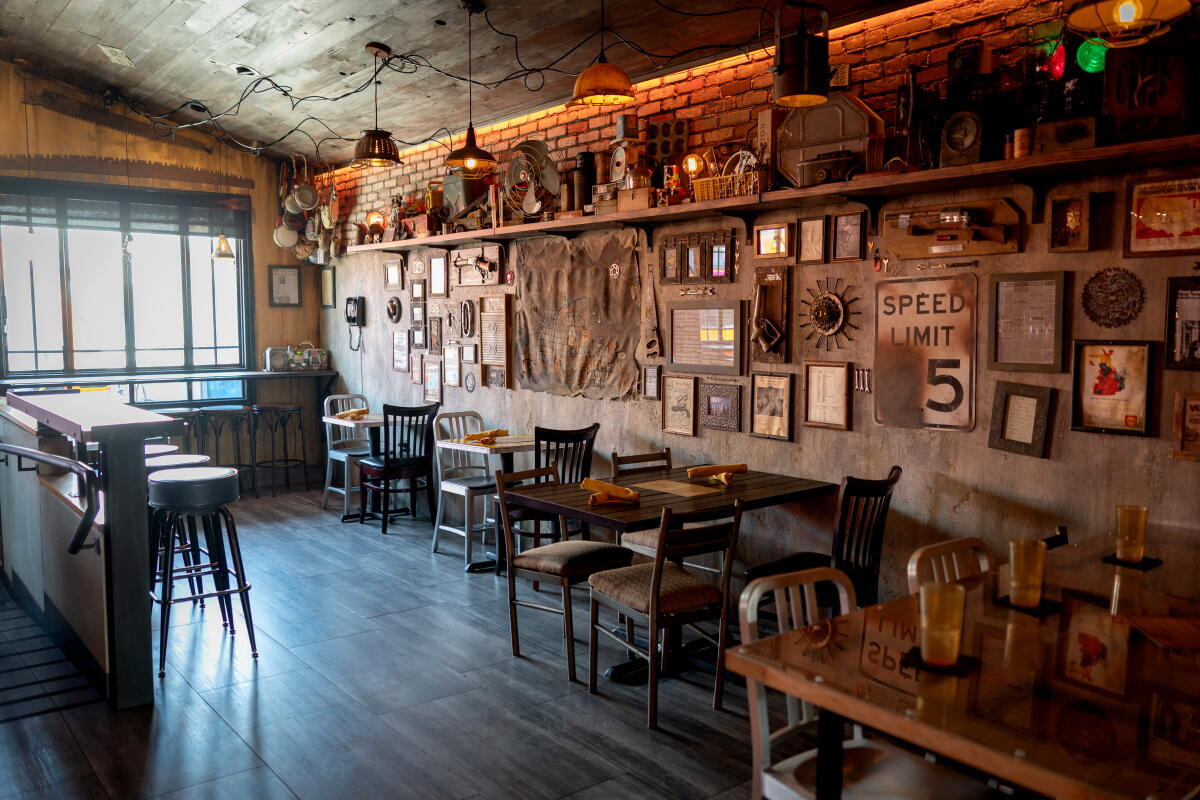
Normally when a telephone rings inside a bar, it’s the duty of the staff to pick it up. But when an old-timey rotary dial phone suddenly springs to life at the Last Canteen, it’s up to guests to decide what to do next.
Answer it — or attempt to make a call from it — and you’ll encounter one of dozens of pre-recorded messages. They’re calls from an imagined future, one when a war-torn America is on the mend from some sort of apocalyptic catastrophe. They’re messages, perhaps, for the bar’s fictional founder, a shotgun-carrying mysterious woman known for her mean bartering skills, or maybe if you’re lucky, you will dial into what sounds like an early 20th century party line and hear from those looking for a date in the Valley, now a neutral zone among warring factions.
You’re reading Mr. Todd’s Wild Ride newsletter
Todd Martens’ newsletter delivers news and commentary on the past, present and future of theme parks, right from the theme park capital of the world — Southern California.
By continuing, you agree to our Terms of Service, which include arbitration and a class action waiver. You agree that we and our third-party vendors may collect and use your information, including through cookies, pixels and similar technologies, for the purposes set forth in our Privacy Policy such as personalizing your experience and ads.
The Last Canteen, situated on a stretch of Ventura Boulevard that’s just a short walk from the Universal City metro and minutes from Universal Studios Hollywood, is a new restaurant and bar that looks lifted from a theme park. It also feels like a throwback to an earlier time, when Los Angeles was an epicenter of the themed restaurant.
Southern California has a storied history when it comes to themed establishments. There’s our penchant for food-shaped eateries, of course — see our giant doughnuts or the Tail o’ the Pup — but dinner with a side of story is a Los Angeles-area staple that predates any corporate chains such as Rainforest Cafe or Chuck E. Cheese. From the long-forgotten Jail Cafe in the 1920s to our region’s birth of the tiki bar to the themed restaurant explosion of the ‘80s and ‘90s, when even Steven Spielberg got into the action with the submarine-focused DIVE! in Century City, the themed restaurant has long found a receptive audience in Southern California.
And the Last Canteen feels especially built for our moment.
The Last Canteen’s three founders were going for a lived-in feel.
(Eric Thayer / Los Angeles Times)
Taking influence from the likes of “Mad Max,” “Fallout” and a host of other dystopian, postapocalyptic media, the Last Canteen is a bar for an era — and a city — when the future seems especially uncertain. Whether it’s AI, corporate consolidation, inflation or the struggles of Hollywood that’s got you down, the Last Canteen wants to be your “Cheers” of sorts.
“It’s not the brightest of times, I would say for most of the world, but certainly younger generations are feeling like we got the rug pulled over us — the state of the economy and corporate overreach,” says Jimmy Clements, 32, who founded the Last Canteen with two other friends from the hospitality industry.
“We always joke that the world is ending, but there’s some charm in fully embodying what that would mean, and realizing there’s something on the other side,” he adds. “That’s what attracts me to the genre. OK, the worst thing possible happened, but there’s still people on the other side. We still need community and a place to eat and drink.”
A grenade fashioned out of a baseball is one of the items hidden in the Last Canteen.
(Eric Thayer / Los Angeles Times)
Or as Clements’ partner TJ Lewis says, “Who doesn’t watch ‘Mad Max’ and dream of riding on top of a crazy car with a spike in your hand?”
Despite a potentially bleak concept, the Last Canteen is open and welcoming. The color palette is soft, leaning heavily on dust-like sandy vibes, the cocktail menu takes influence from the fruity, complex world of tiki bars, and a sense of humor permeates the main dining room.
Yes, a demolition bomb, which is actually a movie prop from Angelina Jolie’s “Unbroken,” hangs from the ceiling, but take a moment to explore the venue and you’ll find grenades colorfully fashioned out of baseballs, or rewritten maps of the Valley in its new “Wasteland” era. Universal Studios’ famed minion still stands, but the Ikea is now a “hall of justice.”
Newspapers dot the walls. They’re filled with fiction that tell of the bar’s new reality, giving the place a sense of history and lore. One article, for instance, speaks of a battle that broke out near the remnants of US-101 next to the old “sidewalk stars site.” Another tells of how the bar’s founder took over the land where the establishment now stands. By force, of course. And don’t miss the beer taps, fashioned out of bullets, guns and baseball bats.
The Last Canteen is a themed bar that feels ripe for our era, one in which the future is filled with uncertainty.
(Eric Thayer / Los Angeles Times)
“It’s the difference for us between immersive and themed,” says Lewis. “Like the Hard Rock Cafe is themed. It’s got music on the wall, but you don’t feel like you’re at a concert when you’re there. It’s not immersive. What we were really going for is a lived-in space. We didn’t cover this in ‘Max Max’ posters. It is in the world of. It’s really open-ended. All the details on the wall help paint a picture.”
Of course there were limits. The team jokes that if they really wanted to exploit the dystopian theme, then drinks should likely be served in red plastic cups. Instead, the Last Canteen has proper drinkware, but each type of glass does come from a different set, as the owners wanted to give it a found materials vibe. The menu doesn’t stray too heavily from bar fare, and there are bowls of bison chili ($18), a burger ($18), a charcuterie plate ($21) and, of course, a “Last Meal,” which is a half grilled cheese, a cup of chili and a glass of sarsaparilla ($25).
The cocktail program, however, is extensive. The blackberry-infused Blackthumb or the spiced A Torch or Rosemary feel like darker twists on brighter, lively tiki fare. For those craving the latter, there is currently a frozen version of a Zombie. Bar founders Clements, Lewis and Drew Aloe say the menu, both cocktails and food, will change seasonally.
The Last Canteen founders Jimmy Clements, from left, TJ Lewis and Drew Aloe.
(Eric Thayer / Los Angeles Times)
And the tiki influence is no accident. The three cite the Disneyland Hotel’s Trader Sam’s as the Last Canteen’s primary influence. Also an inspiration? Oga’s Cantina at Disneyland’s Star Wars: Galaxy’s Edge. Theme parks were on their mind as much as the apocalypse.
“What they do so well is they feel really lived in,” Clements says of Trader Sam’s and Oga’s. “It doesn’t feel like a cute homage. You walk in the door and you’re somewhere else.”
And guests are noticing.
“We had someone opening weekend tell me that this feels like an end-of-the-world Trader Sam’s. Thank you. That’s all we want,” Lewis says.
This week in SoCal theme parks
Fast & Furious: Hollywood Drift is now in daily operations at Universal Studios Hollywood.
(Ronaldo Bolaños / Los Angeles Times)
New coaster. New accolades. New noise complaints. Universal Studios Hollywood officially opened its Fast & Furious: Hollywood Drift last week after months of running the thrill ride in a soft open phase. Fans were happy, with some even calling it the “best” coaster in SoCal. But nearby neighbors in Toluca Lake still want change, arguing that the sound of rider screams from the coaster is disrupting their lives.
Calling all Disney film buffs. Starting this Sunday, Santa Ana’s Frida Cinema will begin hosting a weekly “Walt Disney Studios” film series hosted by historian/educator Jeff Kurtti. First up is “20,000 Leagues Under the Sea,” which will also feature a presentation from artist/designer Kevin Kidney, who over the years has contributed to many a Disney parks project. Other Sunday screenings will include “Alice in Wonderland,” “Disneyland Handcrafted,” “Swiss Family Robinson” and more. Check out the full series here.
And speaking of “Disneyland Handcrafted.” It’s the last call for tickets to a stellar Disneyland history and charity event at Santa Ana’s Bowers Museum, which on Sunday will screen the Leslie Iwerks documentary as well as host a reception and panel. Historian and author Tim O’Day will moderate a talk that includes the film’s producer, Mark Catalena, former Imagineer-turned-historian Tom Morris and current Imagineer Emily “Emo” O’Brien, who oversees creative at Disneyland and is leading the team behind the just-announced makeover of Tomorrowland. Tickets start at $125 and are on sale now.
Ride report
The concluding, trippy scene in Inked, a new maze from Knott’s Scary Farm.
(Todd Martens / Los Angeles Times)
As we get deeper into Halloween season, I wanted to highlight another haunted maze, this one being the best one at this year’s Knott’s Scary Farm event. Inked is the maze, and it’s set in a 1930s cartoon studio. While of course having the requisite number of scare actors who will pounce on guests after they turn any corner, the maze also charms as it features original animation in the style of Disney’s classic “Silly Symphony” cartoons. Nearly every room in the haunted house boasts a cartoon scene starring a cutesy ghost, a little cat and an often sad pumpkin man.
The story is the drawn figures have come to life and are now murderous, but you’ll wish you could stop and watch a graveyard short or hang with a jazzy skeleton band. Giant pumpkin heads are animated with cartoon eyes and a mirror-heavy psychedelic scene, pictured above, brings the maze to a fiery conclusion. Knott’s is perhaps relying too heavily on returning mazes of late, but Inked is a winner.
Tell us your stories. Ask us your questions.
Have a theme park tale to share? Whether it was a good day or less-than-perfect day, I would love to hear about it. Have a question? A tip? A fun photo from the parks to share? Email me at todd.martens@latimes.com. I may feature your note in an upcoming newsletter.
Ride on,
Todd Martens
P.S.
Magic Mountain’s currently shuttered X2 coaster has been in the news of late.
The X2 ride has for years been the Valencia park’s crown jewel, the first roller coaster in the world that spun riders 360 degrees in their seats. It even topped my ranking of thrill rides at the park. I wrote that it was a risky choice, as the coaster is not for the faint of heart. Its seats extend off the track, giving you a sensation of flight at its most chaotic, with an assortment of loops that suddenly shift direction and segue into drops. Due to the constantly changing direction of its seats, the path of the track can be hard to discern.
But X2 has come under close inspection after several lawsuits allege people were injured on the ride. Six Flags shut down X2 in July amid a state investigation into the coaster. The Times’ Fedor Zarkhin has the story.
On Thursday’s episode, the show hears from Jake, 36, who lives in Australia but was born and grew up in the UK in a single parent family. Jake always knew that he was the result of an extra marital affair. His mother had been a nurse and had met his married father when he was a doctor at the same hospital.
Jake recalled that when he was a newborn, his father occasionally visited, bringing his two children Katie and Tom, who were aged five and three at the time. One of Jake’s most precious keepsakes are two photographs of his brother and sister holding him as a baby.
However, sadly, his mother’s relationship with their father did not last, and Jake never saw his siblings again. When he was 14, Jake and his mum emigrated to Australia.
Despite not seeing his siblings since he was a child, Jake has been desperate to find them and contacted Long Lost Family for help, emotionally saying: “I feel like I always missed out. I missed out on something, that, you know, was really a connection that I craved really. I’ve always somewhat felt a little bit alone. And I just need that connection.”
Sadly, Jake was unable to successfully meet his father after attempting to track him down and therefore unable to learn any more about his siblings. Jake had also tried multiple other avenues to find his siblings, but Katie and Tom appeared to have vanished off the face of the earth.
Even Long Lost Family struggled locating the siblings through their conventional searches. However, the team soon discovered in the series’ files something surprising after receiving thousands of applications.
Months before Jake had applied to the show, Long Lost Family received an application from a woman in Canada called Katie, who was looking for a birth father – with the same surname as Jake’s father. Following a DNA test, it confirmed that Katie was Jake’s half-sister, in an incredible discovery.
Katie is a lawyer who now lives in Toronto and she had no idea that she even had a younger brother. The duo’s brother, Tom, supports Katie’s decision but has chosen not to be involved in any filming at this time.
In an exclusive clip obtained by the Mirror of Thursday’s episode, it sees host Davina share the news with Jake, who breaks down in tears over the discovery.
Asking where his siblings live, Davina explains: “So… Katie, her mum met her stepdad. They moved to… Australia!” Jake is left floored by this discovery as he too moved from the UK to Australia. The guest exclaims: “No way, you’re kidding! No way!” before wiping away tears.
Jake adds: “So they weren’t even that far away. I can’t believe it!” Davina then adds that Katie is a lawyer and she has since moved to Toronto.
The guest then asks: “Did they enjoy Australia? Were they happy?” with Davina responding: “They’ve had good lives, I think the family situation, it’s been difficult for all of you, I think, in different ways.
“I think it’ll be really nice for you to be able to speak together about it. Weirdly, we found her because… she applied to Long Lost Family to find your dad.” This piece of information leaves Jake in tears as he exclaims: “Wow!”
Viewers will have to tune into Thursday’s episode to see the two siblings have an emotional reunion.
Long Lost Family continues on Thursday 17th September at 9pm on ITV and ITVX
Universal Studios Hollywood’s landscape-changing, park-altering new thrill ride, Fast & Furious: Hollywood Drift, is officially open. The coaster boasting spinning, drifting cars along 4,100 feet of track had been in a soft launch phase since late July. But as of Wednesday morning, the theme park has declared the ride fit for daily operation.
“It elevates us to a new level,” says Jon Corfino, the park’s lead creative executive. “When we first started thinking about this 10 years ago, we recognized that. It’s our first big outdoor coaster. It changes the complexion of who we are, even the visual nature of who we are. You can see this from the freeway.”
You’re reading Mr. Todd’s Wild Ride newsletter
Todd Martens’ newsletter delivers news and commentary on the past, present and future of theme parks, right from the theme park capital of the world — Southern California.
By continuing, you agree to our Terms of Service, which include arbitration and a class action waiver. You agree that we and our third-party vendors may collect and use your information, including through cookies, pixels and similar technologies, for the purposes set forth in our Privacy Policy such as personalizing your experience and ads.
The theme park hosted a private ribbon-cutting ceremony — in this case, a metal chain cutting to better represent the action-focused, garage-like grit of the “Fast & Furious” film franchise — on Tuesday evening. Mark Woodbury, the chairman and chief executive of Universal Destinations & Experiences, and Scott Strobl, executive vice president and general manager of Universal Studios Hollywood, together sliced the cable.
‘“Fast & Furious’ has delivered 25 years of high-speed thrills and big blockbuster movie moments and it was the perfect story for us to build this incredible, one-of-a-kind innovative attraction,” Woodbury said, noting a similar coaster, set to open next year, is under construction for Universal’s Florida resort.
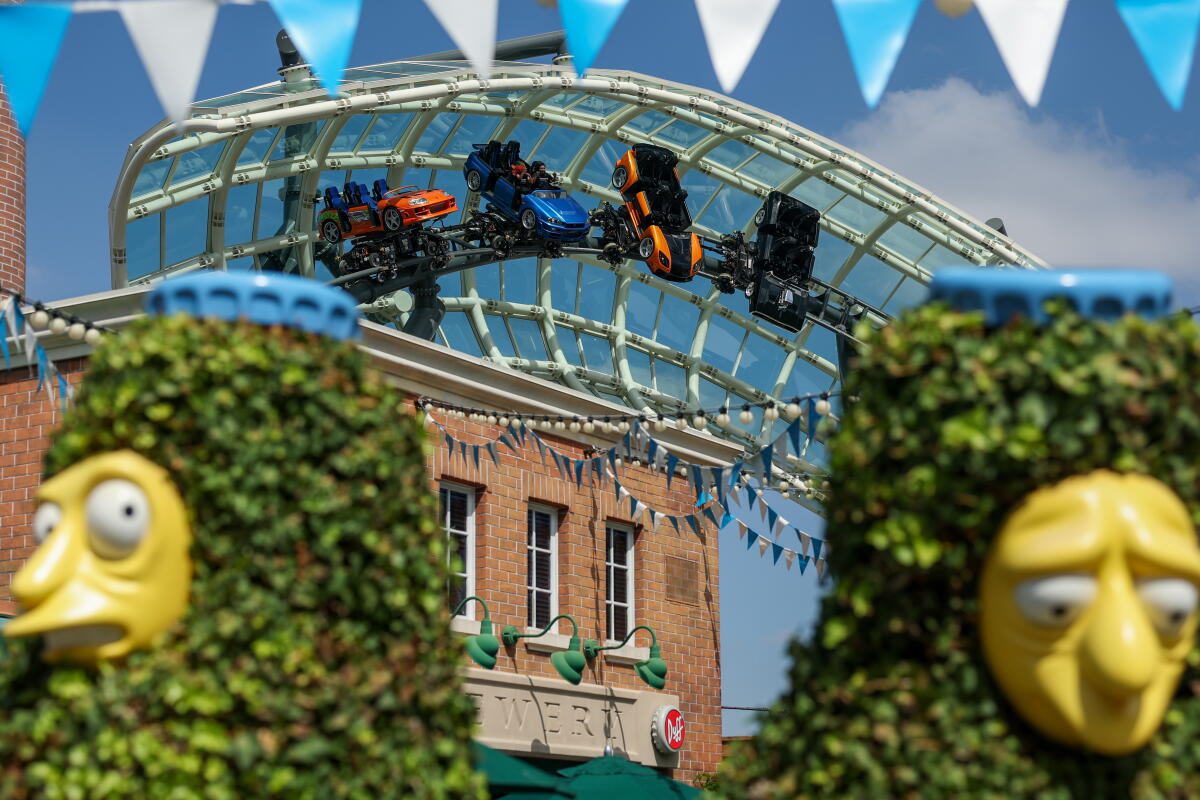
Universal Studios Hollywood’s Fast & Furious: Hollywood Drift towers over the theme park.
(Ronaldo Bolaños / Los Angeles Times)
The coaster reaches a top speed of 72 mph, the fastest coaster in Universal’s global portfolio, and places riders in authentic, mini-re-creations of real cars that can rotate 360 degrees to create the drifting sensation of a stunt vehicle. With four inversions that bring guests upside down, Hollywood Drift is decidedly intense.
Wait times on Wednesday were hovering around 90 minutes. “I’m a big fan of the movies, and I think this is the best coaster in Southern California, hands down,” said L.A.’s Peter Lee, 43, as he was exiting the attraction on Wednesday. Lee has ridden the coaster 10 times since late July, but wanted to attend its opening day to purchase a picture of himself on the ride on its first proper day of operations.
Phillip Lambert Duke, 42, of Orlando, came to Universal Studios Hollywood to experience the West Coast edition of Halloween Horror Nights but said Hollywood Drift will be a highlight of the trip. “It’s fantastic,” Lambert Duke said. “It’s beautiful. I love how all the cars move independently of one another. “
Yet Fast & Furious: Hollywood Drift has also attracted some unwanted attention from the neighboring community of Toluca Lake, where residents have cried foul at the sound of rider screams emanating from the coaster. “Untenable,” “disturbing” and “like someone is getting murdered” have been a few of the ways longtime Toluca Lake homeowners have described the noise of riders.
An upside down rider enjoying Fast & Furious: Hollywood Drift at Universal Studios Hollywood.
(Ronaldo Bolaños / Los Angeles Times)
A number of Toluca Lake residents sent a media alert and hosted reporters in their neighborhood on Wednesday’s opening day to showcase just how disruptive the screams could be. Standing in the backyard of a house situated near a neighboring golf course, rider screams are certainly audible, and residents said the consistency of them is destroying their quality of life.
“It’s a constant stress,” said Colby Jensen, 55, a Toluca Lake resident of 26 years. Jensen said some residents have begun exploring their legal options, citing both the emotional duress of hearing constant screams and also a fear of potentially lower property values.
“It’s not just a noise, like the freeway, which is in the background,” Jensen said. “It’ll be quiet for a minute, and then you’ll hear this cacophony of screams. It inherently raises your blood pressure and stress level and it’s unnatural to hear that.”
Sofia S., who declined to give her full last name, said she just returned home to Toluca Lake after graduating from Indiana University. The 22-year-old noted the coaster has made it difficult to work from home.
“I have a little dog, and she’s barking a lot more because she thinks people are trying to come into the house,” she said.
Fast & Furious: Hollywood Drift was designed as one of the quietest thrill rides ever constructed so as not to disrupt the working studio below and the communities nearby. Its track has been filled with pea gravel to mitigate rumbles, and multiple walls and glass-outfitted curved shields have been placed on or near its layout. Universal has even stated that it can rotate the cars so riders scream away from the nearby neighborhood at particularly extreme moments. Such measures have been welcomed by the community, but they’re not enough, say many neighbors.
Universal has scheduled a community meeting with residents for Sept. 30. The park also last month pledged to build additional sound barriers to further dampen rider screams.
Fast & Furious: Hollywood Drift has been the most anticipated theme park attraction of 2026.
(Ronaldo Bolaños / Los Angeles Times)
At Tuesday’s media event, Universal executives declined to discuss community concerns or efforts to alleviate them, but later issued a statement acknowledging that community feedback has been an important part of the process.
“Testing completed to date confirms the attraction is operating in compliance with sound ordinances applicable to Universal property, which are more stringent than city and county codes,” the emailed comment reads.
Toluca Lake residents dismiss criticisms that this comes with the territory of living next to a theme park, noting for much of its history Universal focused on indoor attractions and has previously worked with the community, such as adjusting the audio on its “WaterWorld” stunt show.
Fred Iberri, who said he’s lived in his inherited Toluca Lake home since the early ’70s, said everyone has a right to peace in their home.
“People say, ‘If you don’t like it, it’s your choice to live next to a theme park.’ That’s not true. Universal hasn’t had a coaster outside until three months ago,” Iberri said. “I’ve been here for 52 years, my family for 90, and Toluca Lake has been a peaceful neighborhood until three months ago. Anyone who says that doesn’t know us or the neighborhood. It’s not so easy for seniors to just pick up and move.”
Mr. Todd’s Wild Ride comes out every Tuesday, but we occasionally publish special editions (like this one!) when we have breaking theme park news. Make sure you’ve signed up to be the first to know.
Early in life I discovered I had a particular affliction, and that was a proclivity for spending time at theme parks. I only phrase it that way because I understand some may find such a desire peculiar, which has made me particularly attuned to many comments about theme parks, especially those that aren’t positive.
Too hot, too crowded, too expensive or simply geared only for children. And while I’m happy to discuss or debate all aforementioned topics, there’s one particular criticism that I find especially grating: Theme parks are fake.
This is the argument that they are heavily fabricated and designed to elicit an emotional response, or worse, manipulate us. And it’s one I hear time and time again from grown-up peers. Over the years, it’s cropped up from friends. “Why do you go there?” they will say. “Everything is fake.” It’s appeared in books such as Henry A. Giroux’s and Grace Pollock’s scathing “The Mouse that Roared,” which dismisses the parks as presenting an “infantilized” worldview. And I’ve heard it from people I’ve interviewed, such as the USC professor of psychology who told me that theme parks were so fake, they forbade surprises.
You’re reading Mr. Todd’s Wild Ride newsletter
Todd Martens’ newsletter delivers news and commentary on the past, present and future of theme parks, right from the theme park capital of the world — Southern California.
By continuing, you agree to our Terms of Service, which include arbitration and a class action waiver. You agree that we and our third-party vendors may collect and use your information, including through cookies, pixels and similar technologies, for the purposes set forth in our Privacy Policy such as personalizing your experience and ads.
The criticism irks me, in part, because of what it implies. By dismissing a Disneyland or a Universal Studios park as “fake,” there’s an implication that something is “more real.” A national park, perhaps, or a dedicated art institution. I adore those types of spaces as well, of course, but there’s an ignorant snobbery to this sort of remark, a thumbing of the nose that seems to argue I should spend some of my free time elsewhere.
This has been on my mind of late for a pair of reasons. One, I recently visited the Lucas Museum of Narrative Art and have been consumed with the discourse surrounding the value of story-driven art. And two, I recently read “Floating Mountains: The Art of Imagining the Impossible” by famed Disney designer Joe Rohde. The book is many things — an impassioned dissection of creative collaboration, a look at Rohde’s 40 years with Walt Disney Imagineering — but it is also a subtle argument that theme parks are vital, artistic spaces.
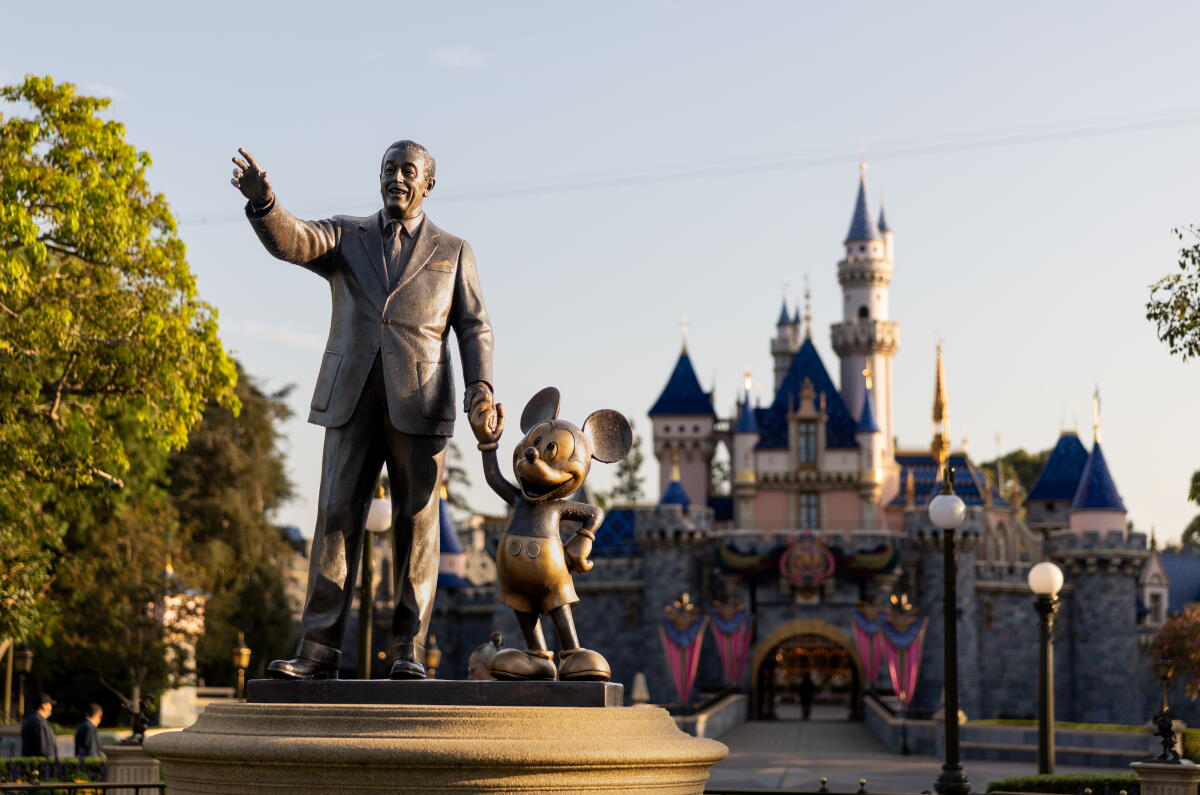
A statue of Walt Disney and Mickey Mouse in front of a very real fantasy castle.
(Christina House / Los Angeles Times)
I agree, and so I decided to bring up my pet peeve while talking to Rohde at the recent all-things-Disney fan convention D23.
“It’s a very odd criticism,” Rohde says of the knock on theme parks as being fake.
“Of course they are not real,” he tells me. “Movies are not real. Theater is not real. It’s like René Magritte, ‘Ceci n’est pas une pipe.’ Of course, a picture of a pipe is not a pipe. I don’t understand why that is an issue. It is a creation. In some cases it is a photo-realistic creation. In some cases it is a stylistic creation. But it is a creation. That’s what makes it a work of art.”
In “Floating Mountains,” Rohde, the primary creative behind the stunning Disney’s Animal Kingdom (second only to the original Disneyland in my mind), documents the myriad of disciplines that must come together to create such spaces. Animal Kingdom is full of real-world details. I can spend days exploring just the Africa section of the park, reading anti-poaching signs and piecing together a story that helps inform the area’s magnificent safari ride.
This is a work of art, albeit a less understood one, for narrative place-making and environmental storytelling are borderline experimental, less common than, say, a book or a film. Place-making requires that we not just take in our surroundings but constantly analyze them for story insights.
Joe Rohde, in 2017, discussing Pandora — the World of Avatar at Disney’s Animal Kingdom in Florida’s Walt Disney World.
(Jay L. Clendenin / Los Angeles Times)
Rohde also notes the degree to which Imagineers are taking influence from real-world spaces in an effort to bring narrative details into the parks, ensuring they appear at once familiar and fantastical. In the case of Animal Kingdom, it was Africa’s Lake Manyara National Park, among many other locales, that gave that park its realistic grit. And when it came to the fully imagined floating mountains of Pandora — The World of Avatar, it was finding inspiration in the Italian Baroque art of Gian Lorenzo Bernini, as seen in the entangled vines descending from the apparently hovering mountains.
Now, I am not someone who argues that a trip to Animal Kingdom is a stand-in for a vacation to Africa. Or that visiting the World Showcase of Epcot is akin to a jaunt around Europe. Or that hanging out in Cars Land is a substitute for a drive down Route 66. And an afternoon slugging pints at Hog’s Head at Wizarding World of Harry Potter is certainly not the equivalent of a day at an authentic British pub. No, what a theme park offers is an artistic interpretation, one that filters the natural world through the stories that define our lives.
Theme parks are not so much an escape from the world but a way to make sense of it. View them with an open mind, and they are an entree into storytelling exploration. This is different to me than, say, a re-creation of the Eiffel Tower being plopped into Las Vegas, which is preying on replication as generic spectacle. Theme parks, of course, can fall victim to this, too, when they utilize signposts or characters from a film as a substitute for innovation (see much of the design of Pixar Pier at Disney California Adventure).
Cars Land in Disney California Adventure was inspired by the scenery and history of Route 66.
(Mark Boster / Los Angeles Times)
France at Epcot’s World Showcase, in contrast, aims to weave a brochure-like tale of the country, to introduce us to culinary and architectural standouts that can inspire us to dig deeper. For some, sure, that’s deeper into their wallets, but World Showcase inspired a young me to be curious about the world beyond the suburban Chicago neighborhood I grew up in.
And purely fantastical creations — at least the ones that are done well — are not just references to things we saw on a movie or television screen. I think of Guardians of the Galaxy — Mission: Breakout! at Disney California Adventure, which is specifically designed as a cartoon-like intrusion, a building meant to clash and call attention to its surroundings. It’s all an effort to heighten the concept that the modern American myth — the superhero film — is work that encroaches, with uplifting exaggeration, on real-world settings.
And even a Disneyland classic such as Pirates of the Caribbean requires deep analytical reframing to properly understand it. Sure, it’s a boat ride with singing robot pirates, but that’s not the reason it has endured for more than half a century. I’ve described the attraction as the template for the perfect theme park ride, one that invites the guest to discover a host of mini stories based upon where riders are directing their focus. It’s a huge influence, for instance, on the world of open-world video games, which allow players to pick a direction and discover a narrative path. It’s anything but fake.
Pirates of the Caribbean is a study in environmental storytelling.
(Christina House / Los Angeles Times)
The criticism that theme parks are fake is a surface one, one that fails to properly meet the medium where it’s at. It’s easy, of course, to look at the nostalgia of a Main Street, U.S.A, and the castle up ahead and to write off Disneyland as a rosy, idealized take on America. This is the undiscerning view, for Disneyland is a presentation of an America that never existed, one disrupted by a castle that also doubles as an extended hand.
Think of it as an ask to use one’s imagination and to be open to play: Theme parks are a wholly unique medium that requires a different set of criticism, one that is looking at architecture and design as a storytelling device. And when one gets on a ride, a theme park expects us to be open to a somewhat abstract form of storytelling. Theme parks are also, at their core, a form of participatory art, inviting us to take on a starring role.
The mechanization of what makes a theme park a theme park is simply too complex, too vast and involving too many people to be dismissed as fake. And let me say that there’s no shame in wanting to be immersed in a world crafted by the hands of many a skilled artist, whether that’s the new David Geffen Galleries at LACMA or the Disneyland Resort.
This week in SoCal theme parks
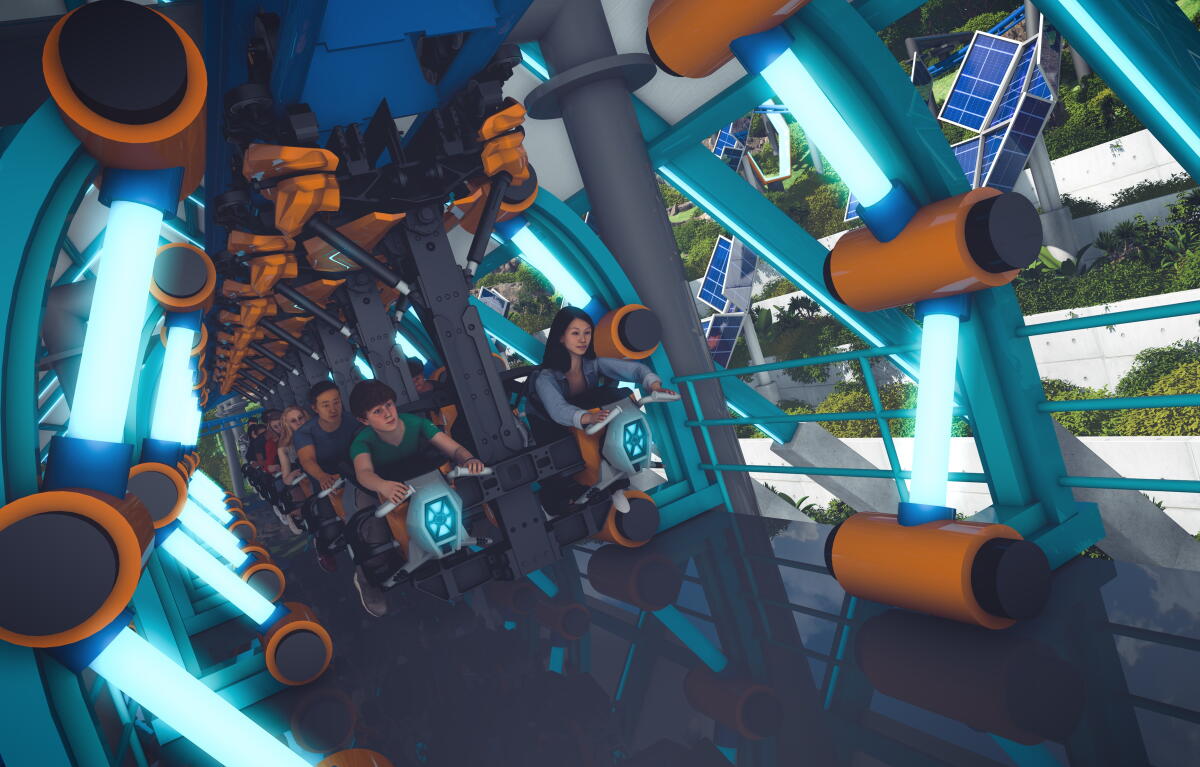
Concept art for Magic Mountain’s upcoming 2027 coaster Thrill Glider.
(Six Flags Magic Mountain)
A new coaster coming to Magic Mountain. Six Flags announced that coming in 2027 to its Valencia park will be Thrill Glider, a first of its kind thrill ride designed by coaster manufacturer Vekoma exclusively for Magic Mountain. Riders will board what the park is referring to as “hoverbikes,” essentially bike vehicles designed to simulate a flying sensation by being suspended from the track.
Scary Farm is upon us. Halloween season is officially in full swing as Knott’s Scary Farm opens Thursday. New this year are two mazes, including one that intermixes a host of vintage animation, as well as a magic show collaboration with the Magic Castle.
Fast & Furious: Hollywood Drift officially opens. Though it’s been in a soft open phase since late July, Universal Studios Hollywood’s Fast & Furious: Hollywood Drift will be properly open as of Wednesday. This means the coaster has passed its final testing and is ready for daily operation. Here’s everything you need to know about Universal’s fancy new coaster.
Legoland expands its Halloween event. Brick or Treat at Carlsbad’s Legoland begins on Saturday and it’s bigger than ever in 2026. The family friendly event, for which costumes are encouraged, this year has added Brick or Treat Street, with six life-size monster homes to interact with. Also, be sure to head to the park’s new coaster, the Galacticoaster, which has received a Halloween overlay.
A Walt Disney exhibition at Forest Lawn. Head to Glendale’s Forest Lawn Museum on Saturday evening for the opening reception of “California Visionaries: The Lives and Legacies of Walt Disney and Hubert Eaton,” which explores the connection between Disney and Forest Lawn Memorial-Parks founder Eaton. The exhibition, which promises concept art, rare Disney sheet music as well as items from early Disneyland attractions, is on display until Feb. 7.
Tell us your stories. Ask us your questions.
Have a theme park tale to share? Whether it was a good day or less-than-perfect day, I would love to hear about it. Have a question? A tip? A fun photo from the parks to share? Email me at todd.martens@latimes.com. I may feature your note in an upcoming newsletter.
Ride on,
Todd Martens
P.S.
Attention readers who are in or near Fillmore: This Saturday is the first-ever edition of the “Time Travel Convention,” a new interactive theatrical experience from Live Action Attractions. Many veterans of the theme park industry worked to bring this event to life, including some who collaborated on the now-shuttered Star Wars: Galactic Starcruiser, colloquially known as the “Star Wars” hotel.
The story: Once a year, time travelers from the distant future head back in time to witness a historic day in small-town America. Players are cast in the role of time travelers, and throughout the day Saturday expect a series of games and costumed characters to interact with. There will be three theatrical moments staged throughout downtown Fillmore beginning at 10:01 a.m.
Register online, and you’ll receive info on where to meet. The event is highly recommended.
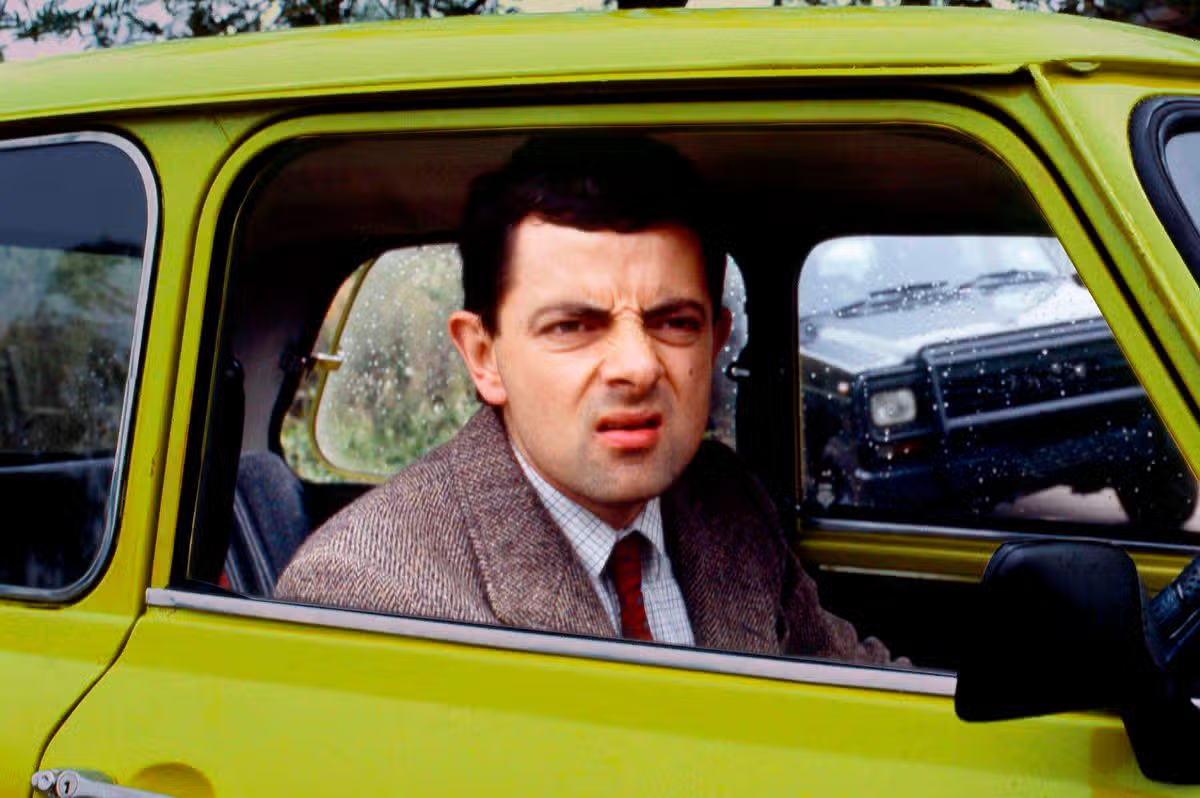
Mr Bean, the hapless character played by Rowan Atkinson between 1990 and 1995, will wreak havoc alongside Dennis the Menace, the Bash Street Kids and Minnie the Minx
Mischief maker Mr Bean in his mini in the sitcom which ran in the 1990s
He is clumsy, mischievous and causes chaos wherever he goes… so who better to run The Beano than Mr Bean?
The character, made famous by comedian Rowan Atkinson, will be taking the reins for four issues, wreaking havoc alongside Dennis the Menace, the Bash Street Kids and Minnie the Minx. And in his first act as boss, he renames the comic Mr Beano and promotes his brown knitted bear, Teddy, to “Teditor”.
His adventures will include rewriting the classroom rules when he accidentally ends up working at Bash Street School. And there are some back-alley shenanigans when his cat Scrapper meets Beano hounds Gnasher and Gnipper.
Rowan said: “I grew up reading Beano and always adored its anarchic style and tone – and as I regard Mr Bean as a natural-born anarchist and a child at heart, I’m surprised it’s taken us so long to explore a tie-up and finally exploit the Bean/Beano name connection. Its time has come.”
The eccentric character was first introduced to audiences in the eponymously named 1990s TV series before conquering Hollywood with Bean (1997) and Mr Bean’s Holiday (2007), as well as the ITV cartoon, Mr Bean: The Animated Series.
Mike Stirling, the Beano’s Director of Mischief, said: “Kids voted Rowan one of their top three mischief makers this year, so Mr Bean was always going to fit right in. Giving him the editor’s pencil was probably a terrible idea, but a funny one – as everyone will see.”
The collaboration is part of Beano’s Year of Mischief, marking the 75th anniversary of Dennis the Menace. The comic was first published in 1938 and is still created in its original Dundee HQ and printed in the UK.
The first issue will be available in supermarkets, newsagents and online from tomorrow.
Tim Lovejoy was left confused by Penn Jillette’s comments during the latest edition of the Channel 4 show
Sunday Brunch: Penn Jillette reveals he can’t understand accents
Sunday Brunch presenter Tim Lovejoy was left baffled by one guest.
The weekend show returned to screens on Sunday (September 13), with presenters Tim and Simon Rimmer at the helm. Joining them on the show were guests Beverley Knight, Lara Pulver, Jay Sean, Bloc Party, Van Tulleken, Jesse Tyler Ferguson and Penn Jillette.
As the usual format got underway, the Sunday Brunch studio made for engaging viewing but American magician Penn shared a rather surprising confession.
During the segment where the presenters ask their guests to “dump their grumps” by openly sharing their dislikes, Penn confessed that he was rather lost and only understood a fraction of what was being said.
While discussing the topic of Marmite, and whether they have the sticky spread in the US, Penn said: “I haven’t understood very much of anything that’s being said.”
Revealing that he has bad hearing, Penn also shared that he wasn’t a fan of the British accent. He said: “I don’t hear well and I don’t understand accents so, so far on the show I’ve understood about 30% of what is going on. So when I’m in England, which I am often, I spend most of my time understanding no one.”
He then added that he wrote what he believes he hears and believes that this should be one of his grumps he would dump. He added: “It’s just totally a garble nonsense, which I hear every time you speak.”
Emphasising his point, he then said: “I have no idea what you’re saying. I’m sitting here nodding and smiling in total ignorance.”
Confused by Penn’s admission, Tim branded his complaints as “weird”. He said: “I think that’s really weird because I think we’re speaking like…” Penn interjected: “No, you are! You are speaking wonderfully for people like you!”
It comes after Tim was missing from the show at the end of August. The surprise switch was likely to have been noticed by regular Sunday Brunch viewers, particularly given the long-standing on-screen partnership between Tim and Simon.
The pair have worked together for many years, first joining forces on Something for the Weekend before becoming the faces of Sunday Brunch when the Channel 4 programme launched in 2012.
Their presenting partnership has remained a familiar part of Sunday mornings for more than a decade, making Lovejoy’s absence from this week’s episode all the more striking.
Stepping in to replace him was presenter Yinka Bokinni, who is an experienced broadcaster in her own right. She has worked across both radio and television and has established herself as a familiar face through a range of TV appearances, as well as her work covering entertainment and culture.
There was no explanation given during the programme for Lovejoy’s absence. At the beginning of the show, Yinka simply told viewers that she would be stepping in as his replacement.
Sunday Brunch airs Sundays from 10am on Channel 4.
It’s an exciting time for Southern California coaster fans. Universal Studios Hollywood is on the verge of officially openingFast & Furious: Hollywood Drift, and Knott’s Berry Farm this summer unveiled the refurbished Montezooma: The Forbidden Fortress. Now Six Flags’ Magic Mountain is getting in on the coaster action.
Coming in 2027 to the Valencia park will be Thrill Glider, a first of its kind thrill ride designed by coaster manufacturer Vekoma exclusively for Magic Mountain.
Magic Mountain in a release describes Thrill Glider as introducing a new coaster category, one that combines a motorbike-like seating arrangement with suspended coaster technologies. Riders will board what the park is referring to “hoverbikes,” essentially bike vehicles designed to simulate a flying sensation by being suspended from the track. Riders will be seated in a prone, face-forward position that will hang from the track above.
Concept art for Thrill Glider, which will boast bike-like vehicles and a sci-fi backstory.
(Six Flags Magic Mountain)
The ride will feature 20 different coaster elements and is slated to last 80 seconds. Speeds will reach 50 mph, and the coaster will boast five inversions that will take guests upside down. The various inversions will include a barrel roll, a zero-g roll and an overbanked stall turn, hinting at a heavily twisted track that will create drifts and swinging. There will be at least 12 moments, Six Flags promises, in which riders will experience airtime lifts.
“It is the latest milestone in Six Flags Magic Mountain’s renaissance and a reflection of the park’s enduring role as an industry innovator,” said Brian Oerding, park president of Six Flags Magic Mountain in a release.
The ride will come with a heavy sci-fi-inspired narrative. The story: The ride is a new technology from a fictional inventor, Rebecca Silva, who will introduce guests in the waiting area to what is described as a “Futurist Pavilion.” Throughout the queue, riders will encounter “holographic presentations and scientific exhibits,” culminating in the discovery of a new energy source, detailed by illuminated blue energy lines, that will power the ride.
The goal, says Six Flags, is to provide an optimistic view of the future, albeit with many sudden dives and weightless moments. The ride will feature multiple launches, reach a height of 107 feet and traverse 3,380 feet of track, which is more than a half mile.
Concept art of Magic Mountain’s new Thrill Glider, which will reach a top height of 104 feet.
(Six Flags Magic Mountain)
A specific opening window has not been detailed, but the ride is currently under construction. It will be located on the former site of the Golden Bear Theatre and will overlook the recently refurbished kiddie area, Looney Tunes Land.
Thrill Glider is arriving at a moment when Six Flags has been garnering national attention. Magic Mountain’s X2 remains shut down while state safety officials continue an investigation involving the attraction.
The ride, first opened in 2002 as X, has been the subject of controversy and at least one high-profile lawsuit stemming from a 22-year-old man’s death. Six Flags bills the ride as “a right of passage for the ultimate daredevil” that goes up to 76 mph. A CNN report recently took a look at other, more recent injuries allegedly stemming from the attraction.
There’s a cross on the roof, stained glass in the windows and a choir loft upstairs, but this whitewashed three-level building near Sunset Boulevard in Silver Lake is no longer a house of worship.
It’s the Hotel Lucile, a 25-room boutique lodging that opens Sept. 14 with a restaurant and bar in the high-ceilinged sanctuary where churchgoers once gathered. This opening follows more than a decade of controversy and transformation, including a community debate, bankruptcy and the arrival of a new hotelier in 2020.
The new hotelier is Los Angeles-based Casetta Group, which specializes in adapting older structures and has six properties in California and New Mexico, including the Surfrider Hotel in Malibu and Casa Cody in Palm Springs.
When guests arrive at Hotel Lucile, they will find many reminders that the building was constructed as Bethany Presbyterian Church in 1931. But those guests will also see plenty of updates, including 25 guest rooms in the space that once held a church school; a small pool (about 15 feet square); and a rotating display of more than 100 contemporary artworks (many for sale). The organ loft is now a meeting space. The choir loft is retooled as a zone for coffee and drinks. The rooftop is a lounge with downtown views.
1.Bathroom inside a suite.2.Desk inside a premium king room.3.Sitting area inside a suite.(Myung J. Chun / Los Angeles Times)
“The building has lived several lives,” Hotel Lucile general manager Anthony Gutierrez said in an email. “It has always been a place for people to gather.”
The establishment fell idle as developer Dana Hollister took over the lease and sought city permits to convert it into a hotel with alcohol and dancing. Despite opposition from many neighboring homeowners and businesses alarmed by possible traffic impacts, those permits were approved in 2014.
But Hollister declared bankruptcy in 2018 and sold her interest in the property in 2020. That’s when the Casetta Group took over Hollister’s long-term lease from the Presbytery of the Pacific, which owns the property.
This church-to-commerce transition isn’t entirely unique. Across the city and the country, declining attendance has idled many religious buildings, often leading to conversions. In DTLA, the restaurant and event space known as Redbird + Vibiana was previously St. Vibiana’s Cathedral, deconsecrated by the Catholic Church after suffering damages in the 1994 Northridge earthquake. In Beachwood Canyon, the Monastery of the Angels was built as a private mansion and rebuilt by the Catholic Church in 1948 as a monastery. In early 2026, Homeboy Industries bought it from the church and began remaking it into Home of the Angels, a “recovery campus” for people impacted by trauma, substance use disorders and involvement in the justice system.
More church conversions may follow, thanks to California law SB4, passed in 2023 to allow faith-based groups and nonprofit colleges to avoid some local restrictions when converting buildings into affordable housing.
Meanwhile, the Hotel Lucile begins a new chapter, retaining interior arches, masonry, woodwork details and a rooftop cross that the hotel will keep alight at night. (The old church bell, however, will remain silent.)
Because the hotel has no on-site parking, it will rely upon valets and street parking (already tight in the neighborhood) to accommodate the cars of overnight guests and restaurant diners.
The rates begin at $441 nightly, plus a $50 amenity fee. To start, management is offering a “locals rate” of 15% off for guests who can show a California state ID.
“We did preserve as much as we could of the original beams and stained glass,” said Laney Langenstein, who oversees strategy and marketing for Casetta. Though guest rooms have minibars (curated by Erewhon and other partners), Langenstein noted that hotel staffers will also push a martini cart that will “go through the hallways and see if anybody thinks it’s cocktail hour.”
The dinner-only restaurant, Sous Sous, will draw upon cooking traditions of southern France and the American South, seating up to about 120, with occasional live music on the room’s stage. A hotel cafe will be open to guests for breakfast and lunch.
The new look of the hotel was produced by Casetta Hotels and design firm Electric Bowery. Children are permitted at the hotel, but not encouraged by the layout. (Of 25 rooms, 24 have a single king bed and one has two queens. Most rooms have showers, not tubs. There is one suite, which has its own courtyard patio and fountain.)
With an eye to potential expansion later, hotel management has also bought up one of the three immediately neighboring properties.
Meanwhile, now that the hotel is about to open, feelings among neighbors are mixed.
A booth at Sous Sous restaurant.
“When they tried to get a permit for the hotel, we all went to speak against it. But they got the permit,” said Jin Chang, longtime owner of nearby Big Mac’s Liquor on Sunset. Now, Chang said, he’s neutral about the hotel opening and relieved that his mini-mall has its own parking lot.
“What’s the definition of progress?” asked VJ Kesh, a longtime neighborhood resident. “Is this hotel a reflection of Silver Lake? Hell, yes. So I’m in favor.”
Ten years ago, Walt Disney Imagineering announced what was widely perceived by the public as a risky — and ill-advised — project: Disney California Adventure’s Twilight Zone Tower of Terror would be remade into a ride featuring Marvel’s “Guardians of the Galaxy.” And it would open in just a few months, ahead of the 2017 summer tourist season.
Fans, to say the least, were not happy. They saw the makeover as a marketing move, done solely because a new movie in the franchise was being released. They were also skeptical of the tight timeline.
Retired Imagineer Joe Rohde, who led the project, heard the complaints.
Sign up for Mr. Todd’s Wild Ride
An insider guide to the ever-changing world of theme parks, coming to you straight from SoCal — the theme park capital of the world.
By continuing, you agree to our Terms of Service, which include arbitration and a class action waiver. You agree that we and our third-party vendors may collect and use your information, including through cookies, pixels and similar technologies, for the purposes set forth in our Privacy Policy such as personalizing your experience and ads.
“They look at the schedule and go, ‘You can’t do anything in that amount of time. There’s nothing you can do that is worth doing in this short amount of time, so we think this is going to be bad,’ ” says Rohde, whom I chatted with at the recent Disney fan convention D23.
Rohde‘s new book, “Floating Mountains: The Art of Imagining the Impossible,” is out this week and in it, he demystifies the creative process, heavily touching on his four-decade career at Imagineering as a jumping-off point on how to stay inspired and find art in the everyday. In a revealing chapter on what became Guardians of the Galaxy — Mission: Breakout!, Rohde writes about creating art out of a series of limitations.
Famed retired Disney Imagineer Joe Rohde, whose book “Floating Mountains: The Art of Imagining the Impossible” demystifies the creative process.
(Jay L. Clendenin / Los Angeles Times)
He notes that the new “Guardians of the Galaxy” film was not the reason for changing the drop tower ride — rather, the motivating factor was giving the Disneyland Resort something new to promote for 2017 and to begin to bring Marvel into the parks.
When assigned the project, Rohde initially pitched a Dr. Strange-inspired attraction, believing the hotel facade of Tower of Terror could quickly and easily translate to a mysterious sanctum. Execs, however, rejected the concept, arguing Dr. Strange wasn’t popular enough. They told Rohde and the team to focus on Spider-Man.
Now it was Rohde’s turn to say no. “Spider-Man needs room to swing,” Rohde writes in his book. “We only go up and down. There’s nowhere for Spider-Man to be!”
Bringing Marvel superheroes into a theme park, Rohde tells me, is something of a challenge.
“Marvel is a character brand,” Rohde says. “When we watch these movies or read the comics, our primary investment is in the psychology of the character. Spider-Man is a great example of this. Spider-Man’s life is a constant emotional crisis of one kind or another. It’s almost more of a soap opera format.
Guardians of the Galaxy — Mission: Breakout! is today the dominating structure of Avengers Campus at Disney California Adventure.
(Allen J. Schaben / Los Angeles Times)
“So, you have an art form — the Marvel Cinematic Universe and the Marvel Comic Universe — in which settings are disposable and are disposed of in order to drive character development. That works great in a film, but when it comes to place-making, it is difficult to lock yourself on the experiences of places, which is part of what makes theme parks theme parks. All through your day in a theme park the primary actor you engage with is the architecture and the landscape.”
With Spider-Man out, “Guardians of the Galaxy” was the compromise everyone could agree on. Only now the clock was ticking. Rohde notes that the team had to stop viewing the Tower of Terror as a hotel, and instead look at it as something of a blank page — an empty canvas that just happened to be in the shape of a blocky silhouette that jolts guests 190 feet in the air. Remove the hotel signage, and suddenly the mass resembled many things: “a grain silo, a fortress, a bank, a storage facility, possibly a prison,” Rohde writes.
Arguably, the facade for Mission Breakout! represents a bit of each of those. In “Floating Mountains,” Rohde says he began reimagining the building by taking inspiration from Marvel comic artist Jack Kirby, but he has also spoken of finding influence in architect Renzo Piano, who worked on France’s Centre Pompidou. The end result is a retro sci-fi building with high-tech-like pipes drawing one’s attention.
The chapter documents a frantic race against time. The star of the ride is an audio-animatronic of the Rocket Raccoon character, but it wasn’t always clear the figure could be finished by the deadline. And instead of using just one ride profile like the Tower of Terror, Mission Breakout! aimed for four, but Rohde writes the team had two as a fall-back plan (ultimately, they prevailed with their original intent).
Rohde notes that to get it done, a concession was made: limited reviews but a fixed, unchangeable budget with a strict deadline. And the team had to make a decision and commit. Little tinkering.
Guardians of the Galaxy — Mission: Breakout! is now considered one of the most popular attractions at Disneyland.
(Jason Armond / Los Angeles Times)
“You have to allocate a certain percentage of time and energy to prepare for a review, and that can be two weeks of energy,” Rohde says. “In this case, the most crucial thing about this project was its opening day. If you back out of that opening day just with production time, it becomes clear there’s no time to change. There’s no time to ask someone if they like it or don’t like it. So we have to decide we’re going to do it, and we’re going to do it for this much money, and you can look at it once before we start, and once before we build.”
Guardians of the Galaxy — Mission Breakout! opened on time, and with enough budget left over to create an “after dark” version during the Halloween season, which is currently running. And those fans who initially viewed the project with skepticism? Many were quiet after opening day, as Mission Breakout! is considered one of the Disneyland Resort’s most popular attractions.
Aside from replacing the former tension with chaotic elevator maneuvering, the makeover was a success because it’s not a rehash of a scene from the film. Rather than rely heavily on plot, it focuses on one frantic moment — a prison breakout — to create a zany, screwball comedy feel. In short, it’s a singular work of art, one that stands apart from its cinematic counterparts.
And that’s key to the appeal of “Floating Mountains,” as throughout Rohde makes the case that theme parks — often derided as commercial entities — are indeed vital spaces. He speaks of art as living on a spectrum. On one end, “art for art’s sake,” and on the other, “utterly commercial enterprises with no purpose other than to harvest value out of an intellectual property.”
“Theme parks,” says Rohde, “rocket somewhere in the middle of this.”
“I do believe that their social impact alone should argue for the fact that, no matter what you think of high art, of low art, something is going on here that people find very affecting,” he says of theme parks. “I think it is an art form.”
This week in SoCal theme parks
Inside Kingswell skate shop is a wall documenting the building’s history as the first L.A. outpost of what would become the Walt Disney Co.
(Todd Martens / Los Angeles Times)
A Disney history celebration. Walt Disney launched his animation career in Kansas City, Mo., in 1920. But when his Laugh-O-gram Studio failed after only about two years, he decided to move west. Here in Los Angeles, Walt and his brother Roy would in 1923 rent a small studio space on Kingswell Avenue in Los Feliz, near where he was staying with his uncle. They called their operation the Disney Bros. Studio, and it was officially the formation of what would become the Walt Disney Co. In September 2024, a small strip on the corner of Kingswell and Vermont avenues was designated the Disney Bros. Cartoon Studio Square. This Sunday, the space will host a mini-block party from noon to 5 p.m., with photo ops, events and skating demonstrations courtesy of the Kingswell skate shop,
Welcome the Lucas Museum. The long-awaited Lucas Museum of Narrative Art has arrived in L.A. and is welcoming members for previews. The space officially opens Sept. 22, and its emphasis on pop culture and “Star Wars” likely means there’s many an overlap with the Disney fan community. The Times has a bevy of coverage, including an architecture review as well as an analysis of its collection and how it deviates from typical art gallery fare.
Meow Wolf taps dozens of L.A. artists for new venue. Meow Wolf is getting closer to unveiling its Los Angeles locale. When doors open — the company is targeting late 2026 — expect a walk-around, floor-to-ceiling experience that pays homage to the art of cinema with a sci-fi, psychedelic-like bent. And to bring that vision to life, the Santa Fe, N.M.-based experiential art collective will be working with nearly 40 L.A. artists across multiple mediums. Meow Wolf last week unveiled its roster of artists with ties to the L.A. region.
A new Magic Mountain coaster is on the way. Six Flags Magic Mountain, garnering headlines tied to the safety of its X2 coaster, is looking ahead to 2027 and teasing a Thursday announcement for its next big thrill ride. The park last week posted a video to social media hinting at more info to come this week on what is expected to be a glider coaster with bike-like seating.
Ride report
An actor performing as Ozzy Osbourne during a haunted house at Universal Studios Hollywood’s Halloween Horror Nights.
(Scott Strazzante / For The Times)
This week’s ride report is actually a haunted house report. Of the eight spooky mazes at Universal Studios Hollywood this year, there were two clear standouts for me: the “Sinners” maze, which I documented last week, and Ozzy Osbourne: Prince of Darkness. This walk-through attraction, which Halloween Horror Nights mastermind John Murdy has described as something of a passion project, is a filled with cartoonishly sinister imagery in an homage to the recently deceased heavy metal legend.
Murdy says he didn’t have any hesitation about crating a haunted house based on Osbourne’s solo career so soon after he died last summer. “It hit everybody really hard,” the lifelong Osbourne fan says of the artist’s death. “It hit his fan community really hard. We needed to do something for the fans to celebrate this guy’s legacy.”
A giant animatronic bat in a haunted house inspired by the music of Ozzy Osbourne.
(Scott Strazzante / For The Times)
In an unique twist, nearly every scare actor is performing as some embodiment of Osbourne. The attraction is also filled with little nods to Osbourne’s life and legacy, including pictures donated from the family and a toy cow as a nod to an early job of Osbourne’s in a slaughterhouse. Murdy estimates the house features about 20 songs from Osbourne’s solo career, bookended by “Crazy Train” and “See You on the Other Side.” A train, of course, figures heavily into the maze, and an early ride scene appears to take us straight to hell.
It gets demented, but in a silly way that feels all-in-good-fun rather than anything frightening. Case in point: A centerpiece of the attraction is a giant animatronic bat, which is holding the severed head of Osbourne, only here the musician is depicted as a werewolf. Osbourne, says Murdy, was also heavily religious, so the walk-through culminates with the artist on a church-like throne. But it’s no ordinary cathedral, as jetting our from under Osbourne’s chair is a blue dragon, a nod to the tattoo the singer had on his chest.
It’s a love letter to Osbourne, and Murdy’s appreciation of the artist runs deep. He notes that as a seventh- or eight-grader in the early ‘80s, he wrote a term paper defending the artist. “I didn’t like the fact that people were condemning things when they hadn’t even bothered to read the lyrics and know what they are about,” Murdy says. “Take ‘Crazy Train.’ It’s about the Cold War. It’s about a fear that society is going off the rails. At an early age I was already going, ‘Don’t trust things that you hear at face value.’ ”
Tell us your stories. Ask us your questions.
Have a theme park tale to share? Whether it was a good day or less-than-perfect day, I would love to hear about it. Have a question? A tip? A fun photo from the parks to share? Email me at todd.martens@latimes.com. I may feature your note in an upcoming newsletter.
Ride on,
Todd Martens
P.S.
I can admit when I was largely wrong. Last week I expressed concerns about the way Halloween Horror Nights was adding the character of Nikki from “Obsession,” worrying a hyped incognito approach could open up the actor — or regular paying guests — to being uncomfortably approached by attendees. But while Nikki is not easy to find, she’s far from anonymous, all bloodied up and holding a brick. Plus, she’s accompanied by multiple handlers who keep folks from crowding the performer’s space.
There is a game-like aspect to this. Those who speak a password, released via social media, receive a fake business card, which does mean many a guest is standing there shouting a password at the actor. This is slightly awkward, and where I still have some reservations.
An actor as Nikki from “Obsession” interacting with guests during Halloween Horror Nights at Universal Studios Hollywood.
(Scott Strazzante / For The Times)
But many who find Nikki may discover it’s a highlight of the night. I’m not someone who seeks out characters at theme parks, largely because they’re there more for photos than to completely interact. Nikki is different. Nikki is in full immersive theater mode, responding entirely in character and pushing guests to talk about their devotion — to her, to another, to anything. In my minute with the actor, she aggressively quizzed me on my nonexistent love life, forcefully walking toward me so I had to gently stumble backward, which she lightly mocked.
Despite the unnerving tone of the actor’s questions, I was charmed. More of this type of interacting and play is always welcome. Now, I just wonder why she was so consumed with the health and age of my cat.