A HUGE new indoor soft play park is coming to a major city in the UK this weekend.
Families are set to get a new destination for rainy-day fun with everything from laser tag to trampoline games.
Sign up for the Travel newsletter
Thank you!
Epicland UK is a new soft play centre launching in Greater ManchesterCredit: Facebook/Epic Land UKThe new attraction is opening in the city this weekendCredit: Facebook/Epic Land UK
Epicland UK will launch in Partington, Greater Manchester on Sunday, July 5.
Owners say the venue has been completely fitted out from scratch, with all-new play equipment installed throughout.
Children can look forward to light-up racing slides, interactive trampoline games, laser tag arena and soft play zones.
Parents won’t be left out either as they can sit back and enjoy fresh coffee and matcha drinks at a brand-new cafe.
SACRAMENTO — President Trump was handed a golden opportunity to upstage Gov. Gavin Newsom in Newsom’s own state on an issue of critical importance to Americans everywhere. But Trump naturally blew it.
Trump was victimized by his own self-centered obstinance and inhumanity. And Republican congressional leaders were left looking embarrassed and wimpy.
The issue was housing affordability — the lack of it that is stifling the American dream of homeownership everywhere, not just in California.
In Sacramento, the Legislature lopsidedly passed an $11.25-billion bond proposal aimed primarily at providing government subsidies for building affordable housing. Newsom immediately signed the measure last week, just beating the deadline for getting it on the Nov. 3 election ballot.
“In California, we don’t turn away from the needs of our people,” Newsom boasted in a prepared statement, taking a veiled shot at Trump, his favorite political target.
This came just after both houses of Congress, with members working collaboratively in a rare bipartisan manner, overwhelmingly passed a landmark bill aimed at boosting housing supply. The measure removed regulatory barriers, upgraded federal programs and incentivized new home building.
A Trump “promise kept,” the White House proclaimed.
Whoops! The president then suddenly flip-flopped. He canceled a planned bill-signing ceremony, torpedoing the legislation, an opportunity to gain sorely-needed points for the GOP heading into the fall elections and a chance to outboast Newsom, arguably his most annoying political antagonist.
Trump said he wouldn’t sign the housing bill unless Congress approved his unrelated voter ID legislation, which has practically no chance of passage. The least of his concerns seemed to be struggling homebuyers and renters.
As of this writing, it wasn’t clear what Trump would ultimately do. Nothing ever is certain with him. Shocked and confused GOP congressional leaders even held back sending the president the bill, then ducked out on holiday recess.
At the California state Capitol, by contrast, the governor and legislative leaders were united, working off the same page and successfully negotiating a final agreement on housing help.
You’re reading the L.A. Times Politics newsletter
George Skelton and Michael Wilner cover the insights, legislation, players and politics you need to know. In your inbox Monday and Thursday mornings.
By continuing, you agree to our Terms of Service, which include arbitration and a class action waiver. You agree that we and our third-party vendors may collect and use your information, including through cookies, pixels and similar technologies, for the purposes set forth in our Privacy Policy such as personalizing your experience and ads.
But the remaining $10 billion would need to be paid off by taxpayers over 30 years — at an estimated $580 million annually, bringing the total bond cost to about $17.4 billion, including interest.
Putting this in perspective, the Legislature just passed a $352-billion state budget for the fiscal year starting July 1. Of that, $7.5 billion will go for retiring debt on $73 billion in bonds. And the state has voter authorization to sell $38 billion more in bonds.
During legislative floor debates, some Republicans objected to the additional borrowing.
“We’ve got record revenue, why do we need to borrow money?” asked Assemblyman David Tangipa (R-Fresno).
That was answered during the Senate debate by Sen. Christopher Cabaldon (D-West Sacramento), one of the measure’s principal jockeys.
Building affordable housing “simply is impossible, it can’t be done without this bond” to finance government subsidies, Cabaldon told colleagues.
Developers are subsidized so they can build at a cost that will result in affordable consumer prices, mainly rents in this case.
Some Republicans also objected to inserting the CalVet money for voter appeal. Assemblyman Carl DeMaio called it “window dressing.”
CalVet funds normally are acquired through very small, separate bond measures.
But in the end, only a few Republicans voted against the big bond, which was officially authored by the Assembly Speaker and the Senate leader to display political muscle.
To their credit, the Legislature and governor in recent years have been whittling away at regulatory obstacles to home building. But many cities still balk at rezoning residential neighborhoods to make room for new multifamily dwellings.
The bond proposal is mainly designed to generate affordable rentals for poor people. More money was added at the end for affordable student and farmworker housing.
There’ll be a separate bond proposal on the November ballot that goes in a different direction but doesn’t conflict. It would help middle class homebuyers. And that measure wouldn’t cost taxpayers a cent.
“Housing supply is not just about poor people. It’s not just about homelessness,” says the middle class initiative’s originator, former legislative leader Bob Hertzberg, a Los Angeles County Democrat.
Under the plan, a homebuyer could borrow most of the money needed for a down payment on a newly constructed single-family home or condo. Typically, a 20% down payment is required. Under Hertzberg’s proposal, 17% could be borrowed. Regular lending institutions would arrange the second mortgage.
To be eligible, a homebuyer’s income could not exceed 200% of the area’s median income. In L.A. County, that would be around $213,000 for a family of four, Hertzberg figures. The home would need to be the owner’s primary residence.
The November ballot will be bursting with state propositions — 14 in all, mostly very complex, running the gamut. Besides housing, there’ll be proposals for a billionaires tax, voter ID requirement, local tax limitations and fast-tracking of public works.
Voters could just throw up their hands and reject everything.
“At some point, voters are just gonna say, ‘I don’t know about all this stuff. There’s a lot of stuff,’” says Dan Dunmoyer, who heads the California Building Industry Assn.
California’s housing affordability crunch won’t be solved by just two bond packages. But they’d help.
We and all of America could also use some help from our seemingly unconcerned president, who enjoys free public housing.
Expanding the World Cup to 48 teams always presented one obvious problem – it was an imperfect number for a tournament.
With 32 teams, the maths was simple – eight groups of four teams, with the top two going through to a last 16, then quarter-finals, semi-finals and a final.
By adding another 16 nations, Fifa had to find a way to get to a symmetrical knockout stage. There was no ideal solution – one which preserved the intensity of the previous format.
The original plan was to create 16 groups of three teams. The two top in each would go through to the last 16.
But there was an issue. Three-team groups meant individual fixtures – and those in the final match would know exactly what they needed to do to qualify. Nations could play for specific results to secure their passage to the knockout rounds.
Fifa, after all, knew all about alleged collusion from the scandal at the 1982 World Cup. Back then, with groups of four, teams did not play their final group matches at the same time.
West Germany faced Austria in the standalone last game. A slender win for the Germans would send both teams through at the expense of Algeria. The match finished 1-0 to West Germany. Algeria went out.
Fifa changed the format so all final fixtures would be played simultaneously, but that would not have been possible with three-team groups.
The climax to the group stage in Qatar was so exciting that Fifa had a rethink. It accepted there must be 12 four-team groups and two matches would be played at the same time to determine who would qualify.
Except for one crucial difference – something that removed much of the jeopardy that made the last World Cup so gripping.
Eight of the third-placed teams must go through for there to be 32 teams in the knockout rounds. It became harder to be knocked out than to progress.
And one issue becomes clear with two matches this week.
First up, Australia played Paraguay on Thursday. The teams were second and third in Group D and both on three points.
Four points is almost certain to be enough to take one of the eight third-placed qualifying slots, so it created a situation in which the teams knew that a draw was helpful to both.
Australia are definitely through in second place and celebrated with their supporters at the final whistle. Paraguay played it low key but, barring a very unlikely set of results in the remaining groups, they will go through too.
The next game of interest in this respect is Austria v Algeria in Group J (03:00 BST Sunday).
Again, the two teams are second and third on three points. A point is very likely to send both teams through, while defeat is much more likely to send one home.
Will we see another draw?
After being impacted negatively in 1982, Algeria could be the beneficiaries in 2026.
You could argue a game in Group F on Thursday fell into the same category, with Japan starting the match on four points and Sweden on three.
That match also finished 1-1 to guarantee the Scandinavians would progress, but there was no real risk involved for Japan if they have lost.
It is the same in Group L, too, with Ghana on four points and Croatia on three.
Passing “Go” has become especially lucrative for mobile game publisher Scopely.
The Culver City-based Scopely launched “Monopoly Go!” in 2023, betting fans of the classic board game would flock to a mobile version aimed at casual gamers.
By 2025, “Monopoly Go!” had accrued $6 billion in lifetime in-app purchase revenue, becoming the fastest free mobile game to do so, according to app analytics firm Sensor Tower.
This summer, the app is expected to reach $8 billion in lifetime revenue, the company says, solidifying “Monopoly Go!” as Scopely’s biggest game and far surpassing the company’s popular “Pokémon Go.” The company declined to disclose its total profits.
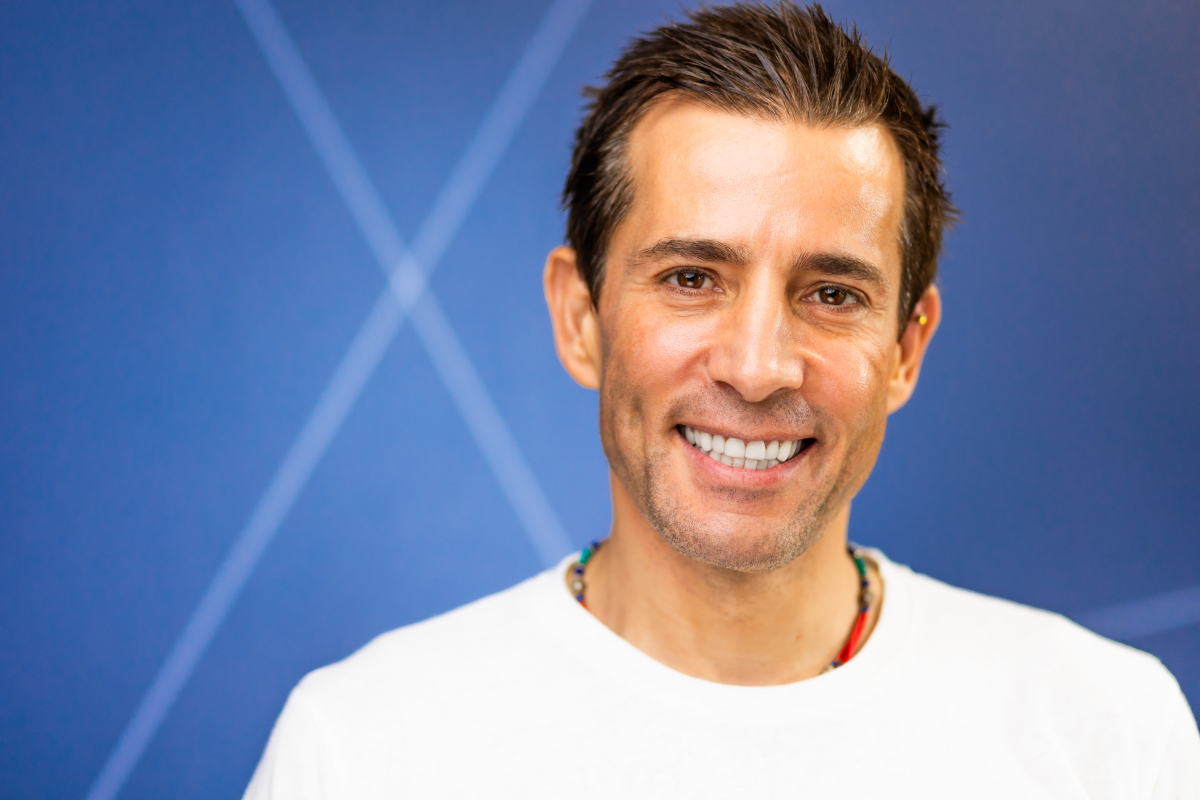
Scopely Co-Chief Executive Javier Ferreira.
As overall downloads in the mobile game market have stagnated and in-app purchases and retention become the main drivers of growth, Scopely has hit on an age-old Hollywood strategy — using known franchises and intellectual property to bring out fans.
“These are incredibly durable and long-lasting games that have really passionate communities and fandom around them,” said Javier Ferreira, co-chief executive of Scopely. “We’re in the business of building people’s favorite thing, and that’s a difficult thing to do. The power of [intellectual property] is that, in some cases, that is already their favorite thing.”
The company’s journey toward “Monopoly Go!” began in 2014, when Scopely formed a partnership with Rhode Island-based toymaker Hasbro. Its first collaboration was a Yahtzee mobile dice game that ultimately drew millions of players worldwide (though it was especially popular in the U.S.) and generated more than $1 billion in lifetime revenue.
After that, Scopely approached Hasbro about taking on the “crown jewel” of its board game empire — Monopoly.
Monopoly’s massive global popularity was an obvious draw. But adapting an hours-long real estate transaction game for a casual, mobile audience proved challenging.
Development of what would become “Monopoly Go!” ultimately took seven years, two of which were spent trying to make movement around the board more fun. In that time, the company scrapped two versions of the game; one deemed too competitive, and one that was too complex, Ferreira said.
Developers wanted to capture the “roller coaster feel” of the board game’s highs and lows, while also having simple rules and ensuring a strong social element, he said.
“We couldn’t just copy,” Ferreira said. “We had to reinvent it and re-imagine it, and that’s a complicated, creative endeavor.”
Today, “Monopoly Go!” brings in more than $2 billion in annual revenue and has been downloaded across the globe more than 300 million times.
Now with “Pokémon Go,” which the company owns after acquiring maker Niantic’s game business last year, “Scopely has gone from a successful publisher to one of the defining companies in mobile gaming,” Randy Nelson, head of insights at Appfigures, a mobile app analytics firm.
“The company cracked the code on licensed games years ago,” he wrote in an email. “Its biggest hits work because they’re great games first and recognizable brands second.”
Though the company’s overall game downloads have slowed, its gross revenue has largely increased every year since 2020, according to Appfigures data.
Shortly after Scopely released “Monopoly Go!,” the company was acquired by Savvy Games Group, which is owned by the Saudi Public Investment Fund, for $4.9 billion.
In a statement about the deal, Savvy Games Group Chief Executive Brian Ward touted the success of “Monopoly Go!” as “indicative of Scopely’s ongoing position at the forefront of the global games sector.”
Representatives of the Saudi investment fund are part of Savvy Game Group’s board and do sometimes give some feedback on company initiatives, though Ferreira said the company has remained “very independent.”
The proposed acquisition of gaming giant Electronic Arts by the Saudi Public Investment Fund is not expected to affect Scopely since EA largely focuses on high-budget console and computer games, he said.
As Scopely, now 3,000 employees strong, looks to the future, it has embarked on a number of entertainment partnerships with studios to add franchises such as “The Simpsons,” “Hello Kitty” and Marvel to its mobile game ecosystem.
“They give us access to these universes that millions of people love and are really invested in,” Ferreira said. “We see this as a very strategic part of our business.”
A bowl of lemons sits on a table in the conference room Mauricio Pochettino has turned into an office at the U.S. men’s soccer team’s beachfront resort in south Orange County. The citrus fruit, the coach believes, has the spiritual ability to absorb negative energy. On the corner of another table, the flame from a candle flickers.
“I like candles,” says Pochettino, who believes they release therapeutic fragrances and create a calming environment.
But it is the massive, blood-red mural covering the entire south side of the room that truly reveals what Pochettino believes. In the center of the wall, just behind the coach’s desk, white block letters spell out “Why Not” above a script “U.S.,” which, despite the periods, is meant to be read as “us.”
Pochettino has turned the question in a mantra for a World Cup team that has answered it with two wins in as many games and has a chance to win a third match in the tournament for the first time when it meets Turkey at SoFi Stadium on Thursday.
The idea came to him during a team meeting last November when he sensed his players had doubts about their upcoming World Cup run. So Pochettino turned those doubts into a question. If South Korea could come from nowhere and make the semifinals of the 2002 World Cup, and if Morocco could do the same four years ago in Qatar, why not the U.S.?
Why not us?
“Hey, come on, guys, are you listening to me?” Pochettino said he asked the group. “We need to believe.”
Before he could convince his players, however, he had to convince himself. And that might have been the hardest part.
The 54-year-old Pochettino is a benevolent Svengali with a whistle; Ted Lasso with an Argentine accent. Belief isn’t so much a concept for him as it is a way of life. But when he and his coaching staff took over the U.S. team in the fall of 2024, following its disastrous performance in the Copa América, he said he inherited a demoralized, dispirited group.
“We received a big bang,” Pochettino said, mimicking a punch to the face. “We were knock[ed] out for a while.”
“We were so naive,” he continued. “The situation was way worse than we really believed.”
Pochettino refused to change the system that has brought him success at European clubs Tottenham, Paris Saint-Germain and Chelsea. So he set out to change the players instead. That would take time, something he had very little of since he took over with the World Cup just 20 months away.
“It’s difficult to analyze the process, you know,” Pochettino said during an informal, 40-minute discussion at his team’s Dana Point hotel, the sun setting over the ocean through the open patio doors of his office.
“When you put the seed on the soil, [the] first seed, you don’t see nothing. Then you start to grow the tree. It was difficult to explain the plant because it’s not easy.”
The seed Pochettino planted with the national team took time to sprout. He lost five of his first 10 games, including a disastrous four-game stretch that included Nations League losses to Panama and Canada in the spring of 2025. The team’s supporters revolted, but Pochettino rejoiced.
“What happened, that was [a] good crash,” he said. “When we detect all the problems, we go for the solution. And we knew that the solution will arrive. The object is to challenge people.”
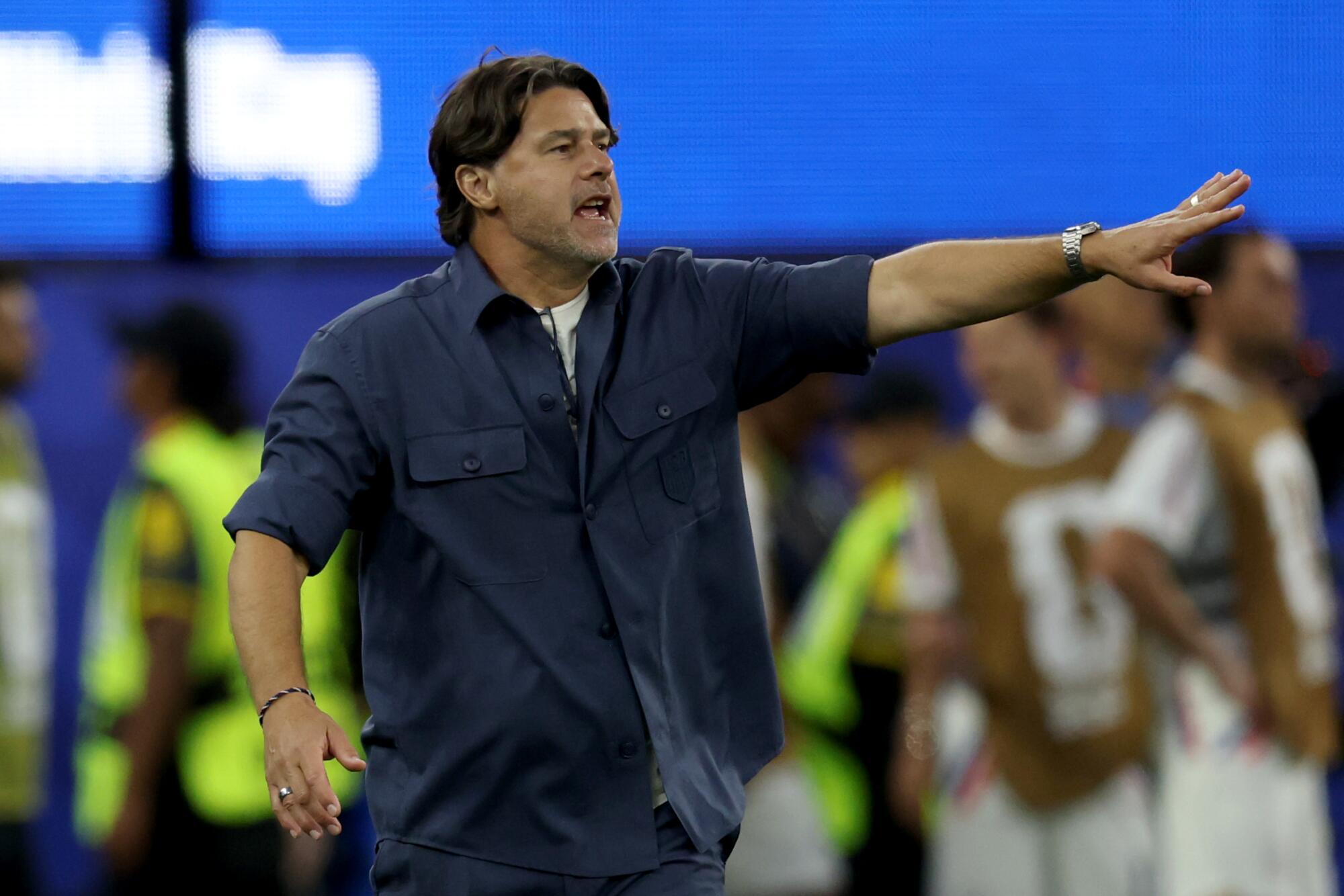
U.S. men’s soccer coach Mauricio Pochettino during the second half of his team’s World Cup match vs. Paraguay at SoFi Stadium.
(Robert Gauthier / Los Angeles Times)
So he stayed the course.
“That was the process. Now is not a coincidence,” he said of the team’s success.
Pochettino has long believed that building a roster isn’t about picking the best players, but picking the right players. Players who fit his tactical approach, players who get along with one another, players who contribute to the team chemistry.
For him, the human connection, human respect is as important — if not more important — than the ability to dribble through tight spaces. And those traits are particularly important in a World Cup since the team will spend every day together for six weeks or more.
Although Pochettino’s team includes 13 holdovers from the 2022 World Cup roster, it also includes five players who made their national team debuts in the last 18 months.
Sometimes, he concluded, it is easier to simply change the player than it is to change what the player thinks or believes. And the newbies have totally bought in.
“We’re all in total belief. We’re all totally supportive and have faith in the process that he’s been outlining,” said goalkeeper Matt Freese, who made his first appearance for the national team more than 12 months ago and now is starting in a World Cup. “Our task was to keep believing, keep working hard and keep trusting. And we did that. We fully bought into the process.”
That process has made Pochettino the first U.S. coach to win a group stage in 16 years while his two victories in as many games match Bruce Arena, the most successful World Cup coach in U.S. history, who managed eight games over two tournaments.
The lemons and candles Pochettino keeps in his office are manifestations of energia universal or universal energy, a foundational concept common to many Eastern philosophies that believe a fundamental life force connects all things. Pochettino said he has long felt this connection and it has been a foundational part of his coaching.
But it doesn’t stop with the candles and citrus fruit. Pochettino also has filled the mural behind his desk with inspirational sayings.
“The talent has brought us here, but it is heart, effort and unity that will make us unforgettable,” one reads.
“If I dream of touching the moon, maybe I can get close to it. If I only dream of getting close, I’ll stay on Earth,” another says.
Each ends with the coach’s initials, similar to the way a painter signs his portraits.
Pochettino’s faith in the power of fruit and candles and his penchant for penning aphorisms hasn’t taken away from the ferociousness of his approach to soccer. Many players say the training sessions under Pochettino — which are intricate, focused and highly physical — are frequently more intense than the games. But most also are punctuated with laughter.
“Training is still very competitive, it’s very intense,” said midfielder Max Arfsten, who made his national team debut under Pochettino last year. “That’s the culture that the coaches created. Everyone’s still trying to prove something.”
Although Pochettino has spent his life in Argentina and Europe and still splits his time between houses in Barcelona and London, flying to the U.S. for matches and training camps, he’s been a quick study in this country’s culture and quirks.
“One of the things that we really like, and we learn from you, is in the way that you approach life. It’s more casual than formal,” said the coach, whose English is still a work in progress. “People are very approachable and make you feel comfortable. That, for me, was a massive surprise. You always want to welcome people.
“Even the music, even the food. People say ‘no, Americans have crazy food.’ Yes, you have crazy food. But also you have Whole Foods. In Europe, you don’t have a Whole Foods.”
And Pochettino has adopted it all. He’s become a big fan of country artist Lainey Wilson, went to hear Teddy Swims, a uniquely American genre-blending singer, last winter in New York, and is learning the words to John Denver’s “Take Me Home, Country Roads,” the unofficial victory anthem of the World Cup team.
Perhaps more important, at times he’s taken his lemons and his candles and pushed them aside, replacing them with another distinctly American trait: the in-your-face confidence to will yourself to victory from the most hopeless situations.
It’s how Americans won at Valley Forge even before they were Americans and how they won on the beaches of Normandy when the concept of America was threatened. It’s how Americans went to the moon and invented the internet.
“We’re American. We don’t take s—,” midfielder Sebastian Berhalter said Pochettino told the team during one meeting. “Even though he’s Argentinian, he has that mindset of, ‘Look, this is what we do. This is who we are. This is what America’s about.’ Even from an outside perspective, he showed us Americans what we’re about.
“He really drills that into us.”
For decades Americans have measured World Cup success in advancing beyond the group stage. Pochettino entered this summer’s tournament predicting a run to the semifinals, runs like South Korea and Morocco made.
“When people believe in each other, impossible dreams become possible,” reads another message the coach has scratched onto the wall of his office.
In 1846, two amateur baseball teams played under new rules at Hoboken, N.J., planting the first seeds of organized baseball. The New York Nine beat the Knickerbockers, 23-1.
In 1856, the first Republican national convention ended in Philadelphia with the nomination of explorer John Charles Fremont of California for president. James Buchanan, a Federalist nominated by the Democrats, was elected.
In 1864, the Union sloop-of-war USS Kearsarge sank the Confederate commerce raider CSS Alabama in the Battle of Cherbourg off the coast of France.
In 1865, nearly two and a half years after the Emancipation Proclamation, freedom from slavery was announced in Galveston, Texas, the most remote area of the country where slavery was still practiced. The day came to be celebrated annually as Juneteenth, Freedom Day, Jubilee Day and Liberation Day.
In 1867, Austrian Archduke Ferdinand Maximilian, installed as emperor of Mexico by French Emperor Napoleon III in 1864, was executed on the orders of Benito Juarez, president of the Mexican Republic.
In 1905, Pittsburgh showman Harry Davis opened the world’s first nickelodeon, showing “The Great Train Robbery,” a silent Western film. The storefront theater had 96 seats, charged 5 cents and prompted the advent of movie houses across the United States.
In 1910, Spokane, Wash., had the first Father’s Day.
File Photo by Gary C. Caskey/UPI
In 1944, World War II’s Battle of the Philippine Sea began. Japanese forces tried unsuccessfully to prevent further Allied advancement in the South Pacific.
In 1953, convicted spies Julius and Ethel Rosenberg were executed by electric chair at Sing Sing Correctional Facility in Ossining, N.Y.
In 1965, Nguyen Cao Ky became the prime minister of South Vietnam, the ninth leader within the past 20 months.
UPI File Photo
In 1972, Hurricane Agnes made landfall in the Florida Panhandle, going on to kill 128 people along the eastern U.S. seaboard.
In 1987, the U.S. Supreme Court struck down a 1981 Louisiana law that required schools to teach the creationist theory of human origin espoused by fundamentalist Christians.
In 1991, Colombian drug lord Pablo Escobar surrendered to police in Medellin in the wake of the assassination of Luis Carlos Galan. Authorities convinced him to give himself up in exchange for a lighter sentence for prior criminal activity — activity which continued after his imprisonment.
In 1999, horror novelist Stephen King was hit by a car and severely injured while out for a walk in rural Maine.
In 2000, the U.S. Supreme Court ruled that prayers led by students at public high school football games aren’t permitted under the constitutional separation of church and state. In 2022, the high court ruled, however, that a school district in Washington violated a coach’s First Amendment rights when they stopped him from publicly praying on the field after games.
In 2008, U.S. Sen. Barack Obama, D-Ill., the presumptive Democratic presidential nominee, became the first candidate at that level to bypass public financing since the program was established.
In 2014, Felipe VI was proclaimed Spain’s new king after his father, King Juan Carlos, abdicated the throne.
In 2019, Joy Harjo was named the first Native American poet laureate of the United States.
In 2024, the annual Hajj pilgrimage to Mecca, Saudi Arabia, concluded after at least 1,300 people died over the five-day trek. Officials blamed a lack of cooling centers, sleeping accommodations and other critical services as temperatures soared above 125 degrees Fahrenheit.
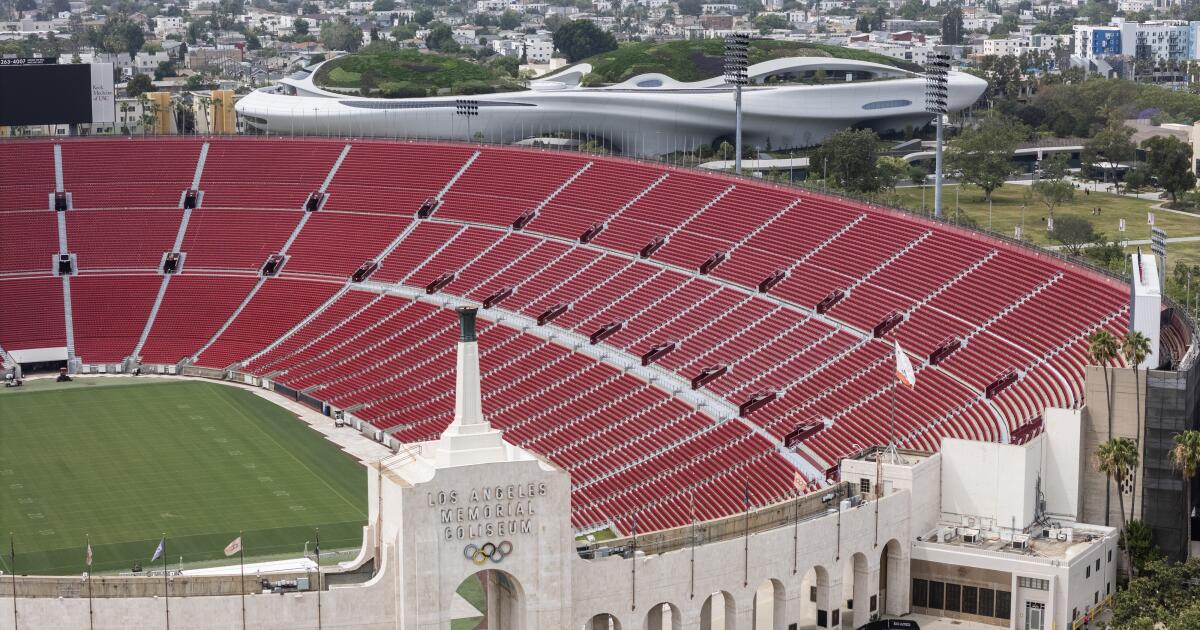
WASHINGTON — The House Appropriations Committee has approved $875 million to fund public transportation for the 2028 Olympic Games, a positive sign for LA28 after the exclusion of Olympics transit funding from President Trump’s fiscal year 2027 budget request this spring.
The funding must be passed by Congress in a future spending bill — part of a lengthy 2027 budgeting process that is underway now — but its approval in committee last week is a crucial signal of investment from Washington after weeks of uncertainty.
“We are encouraged by the House Appropriations Committee’s action,” spokesperson Maya Pogoda of the Los Angeles County Metropolitan Transportation Authority said in a statement, “and we look forward to continuing to work with the Senate and the White House to make America’s Games the best ever in history.”
LA Metro has sought $2 billion in federal funding for the planned transit service for the Games, which includes leasing buses, hiring drivers and building temporary depots. With the clock ticking to start projects that require significant lead time to be completed before the Games, the absence of any funding in Trump’s budget request in April had raised concerns among lawmakers and other stakeholders.
In recent weeks, the transit authority, the city and LA28 had publicly pressed for federal funding; LA28 Chief Executive Casey Wasserman reportedly met with lawmakers on Capitol Hill in April.
“The House Appropriations Committee’s most recent transportation bill is another positive signal of the continued bipartisan support in Congress to provide federal transit money for the Games,” LA28 spokesperson Jacie Prieto Lopez told The Times.
The inclusion of the funding in the bill conveyed bipartisan support for the Games, an event that Trump — who places an outsize importance ondisplays of patriotism — is likely to want to see go well during his tenure.
“This is on the American stage,” said former Los Angeles County Supervisor Zev Yaroslavsky, who was on the City Council during the 1984 Olympic Games. “The success of the Games are the success of the country.”
The Olympics item was included in the fiscal year 2027 transportation funding bill approved by the House Appropriations Committee last week. In its report, the committee noted that the funding is intended for all host cities, including those outside California.
“The 2028 games will put our nation on center stage, and this investment will help ensure that we are prepared to meet the moment and showcase why the United States is the best country in the world,” Rep. Steve Womack (R-Ark.), who chairs the subcommittee that put forth the bill, said in a statement.
The Games in Los Angeles are expected to draw massive crowds and will be the first Summer Olympics held in the United States since Atlanta hosted in 1996. More than 4 million tickets were sold during LA28’s first ticket release; asecond ticket drop is coming in August.
The massive event requires federal involvement not just on funding but also on issues including athlete visas and the import of Olympic horses.
LA Metro has planned to lease 1,700 buses from transit agencies across the country, build three temporary transit depots and create dedicated traffic lanes for athletes, officials and others as required by the International Olympic Committee. Metro estimates that 1 million additional trips per day will be taken during the 16-day Games.
It’s crucial for federal funding to come through in a timely manner, Yaroslavsky said, particularly given the scope of the security and transportation considerations for the sprawling Games.
“The city and the LA28 committee need to know that this money is going to be made available,” Yaroslavsky said. “This has to be in place long before the Games start.”
It would be fitting if Ireland’s first win in the T20 World Cup came against the Scots given they denied the Irish a place in the tournament two years ago as they pulled off a shock victory to reach the tournament for the first time.
Lewis said there was “major heartbreak” in the Ireland camp after that sore defeat that forced the squad to have to watch the World Cup from home.
Ireland are in a better place now and come into the tournament off the back of a productive Tri-Nations series in Clontarf where they beat both Pakistan and the West Indies.
“The series was a great success, we’ve got the results behind us. Confidence is high and that’s exactly what you want going into a World Cup,” Lewis added.
Lloyd Tennant’s side are ranked ninth in the world but are in a tough Group B which also has hosts England, holders New Zealand, Sri Lanka and West Indies alongside the Scots.
They will face all five sides with the top two in the group moving through to the semi-finals where they will face the top two from Group A.
Scotland won by 39 runs the last time the two sides met in Nepal in January and Lewis believes getting off to a good start in their first game is “massive” for Ireland in terms of momentum.
“There’s a big rivalry between us and them. They’ve probably got one up on us at the moment after beating us in Nepal. I think we’re looking good and we’re really excited for it.
“They’ve got a new addition in Kirsty Gordon [a former England spinner] which is a boost for them.
“If we get the win, then you never know against England.”
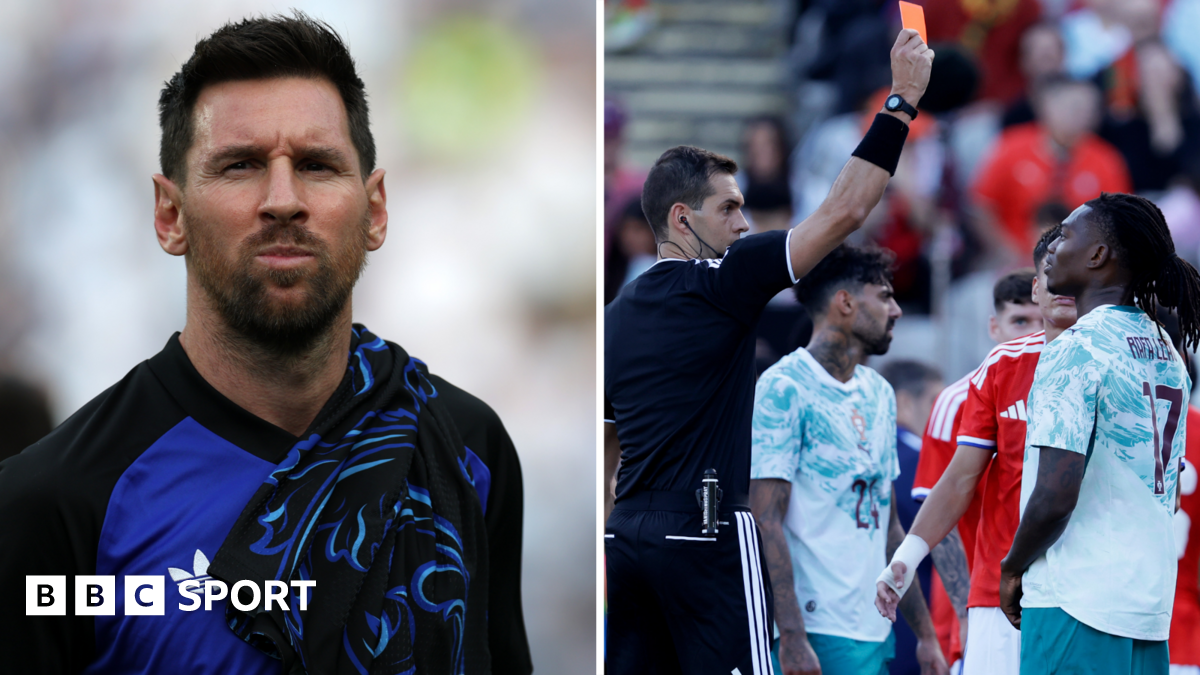
Germany earned a 2-1 victory against World Cup co-hosts United States in the final warm-up game for both teams.
Kai Havertz had an early goal for Germany cancelled out by Antonee Robinson’s stunning volley before Leroy Sane’s winner for Julian Nagelsmann’s side.
“I’m happy with the performance of everyone,” said US coach Mauricio Pochettino, who believed his side were “unlucky” to lose.
“We played one of the most important teams in the world. I think we need to be happy with that.”
The US will start their World Cup campaign against Paraguay on 12 June, while Germany, who have won nine games in a row, begin with a game against Curacao on 14 June.
Germany coach Julian Nagelsmann said his side’s win against the US had been a “perfect test for us, both in terms of the weather and the opponent”.
Brazil beat Egypt 2-1 in the final warm-up game for both countries, with Newcastle United midfielder Bruno Guimaraes scoring early on for the winners.
Mostafa Zico equalised for Egypt but Raphinha set up Endrick to win it for the South American side, who had to take defender Wesley off after 17 minutes.
Egypt forward Mohamed Salah, who recovered from a “minor muscle injury” to play for Liverpool towards the end of the season, came on for the second half against Brazil.
“Salah underwent a rehabilitation program with Liverpool and then with the national team, and he is now ready for matches,” said Egypt coach Hossam Hassan.
Egypt’s opening game of the World Cup on Monday, 15 June will be against Belgium, who thrashed Tunisia 5-0.
Leandro Trossard, Charles de Ketelaere, Kevin de Bruyne, Dodi Lukebakio and Nicolas Raskin each scored against a Tunisia side reduced to 10 men following the dismissal of Ismael Gharbi after 62 minutes.
Belgium boss Rudi Garcia brought Romelu Lukaku on after 66 minutes as he manages the striker’s return to action.
“It is a good preparation for the World Cup, we know this team can do great things,” said Garcia, whose side were beaten 2-0 by Croatia in their previous game.
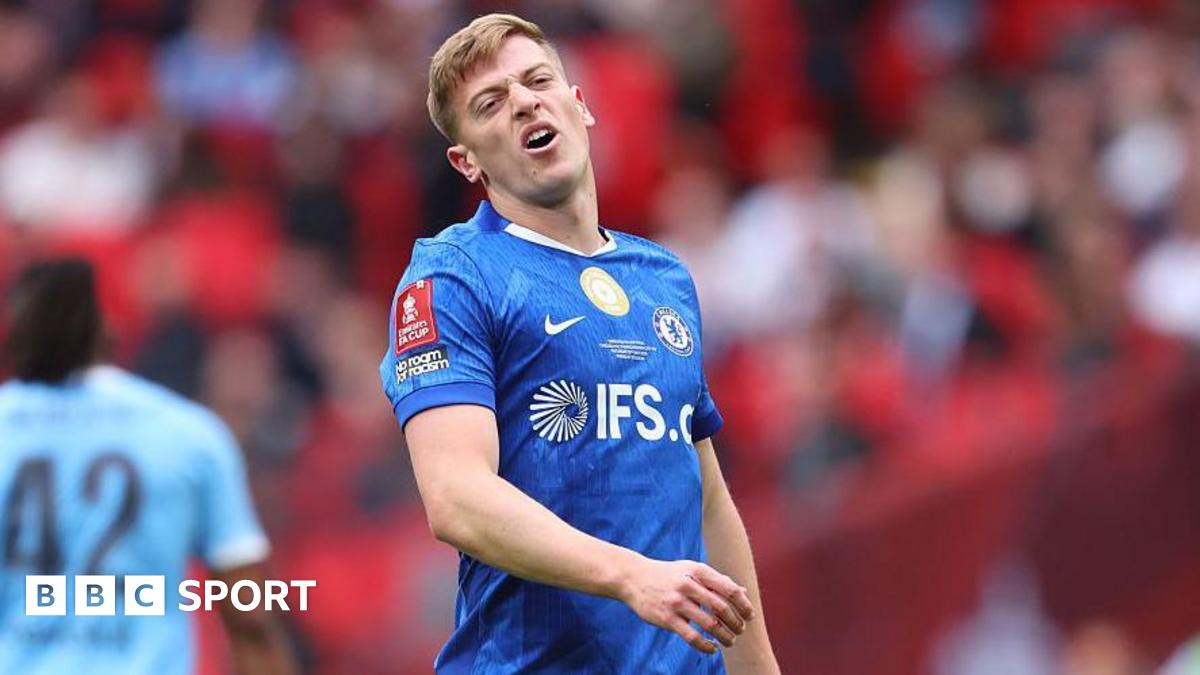
In his first season at Chelsea, Liam Delap scored just one Premier League goal – two in 41 appearances in all competitions – and ended the campaign on a 26-game goal drought.
A year ago, when the striker arrived at Stamford Bridge, he spoke about his ambition to make England’s World Cup squad this summer. Clearly, it’s not gone to plan.
There are mitigating circumstances for the England Under-21 international, who had injuries and spent a lot of time on the bench, but his goal tally remains surprising given he scored 12 for an Ipswich Town side that was relegated the season before.
So what next? Delap remains committed and wants at least another season to prove his doubters wrong.
The 23-year-old’s commitment is reflected in his decision to buy a house locally, while his coaches – Enzo Maresca, Liam Rosenior and most recently Calum McFarlane – have all highlighted his work-rate behind the scenes.
Delap’s biggest issue has been Joao Pedro, who also arrived last summer in a £55m move from Brighton and was arguably the standout forward among those signed by major English clubs, with Manchester United, Arsenal and Newcastle also strengthening in that area.
Unlike Delap, Pedro is currently part of a group of ‘untouchable’ players at Stamford Bridge, alongside Cole Palmer, Reece James and Moises Caicedo.
This does not mean Chelsea are actively looking to sell Delap but his relatively low transfer fee would make him easier to move on. The club’s failure to qualify for European competition also means fewer matches, making it harder to carry a large squad.
Nicolas Jackson is also due to finish his loan spell at Bayern Munich and, with his previously frosty relationship with former manager Maresca no longer an issue, could return to the Blues despite interest from Premier League and overseas clubs.
Similarly, striker Emmanuel Emegha agreed to join Chelsea on a permanent basis from partner club Strasbourg last summer, with the expectation he will integrate into the squad in 2026.
It is likely to be a complex situation, with the input of new manager Xabi Alonso set to be key when he takes charge on 1 July.