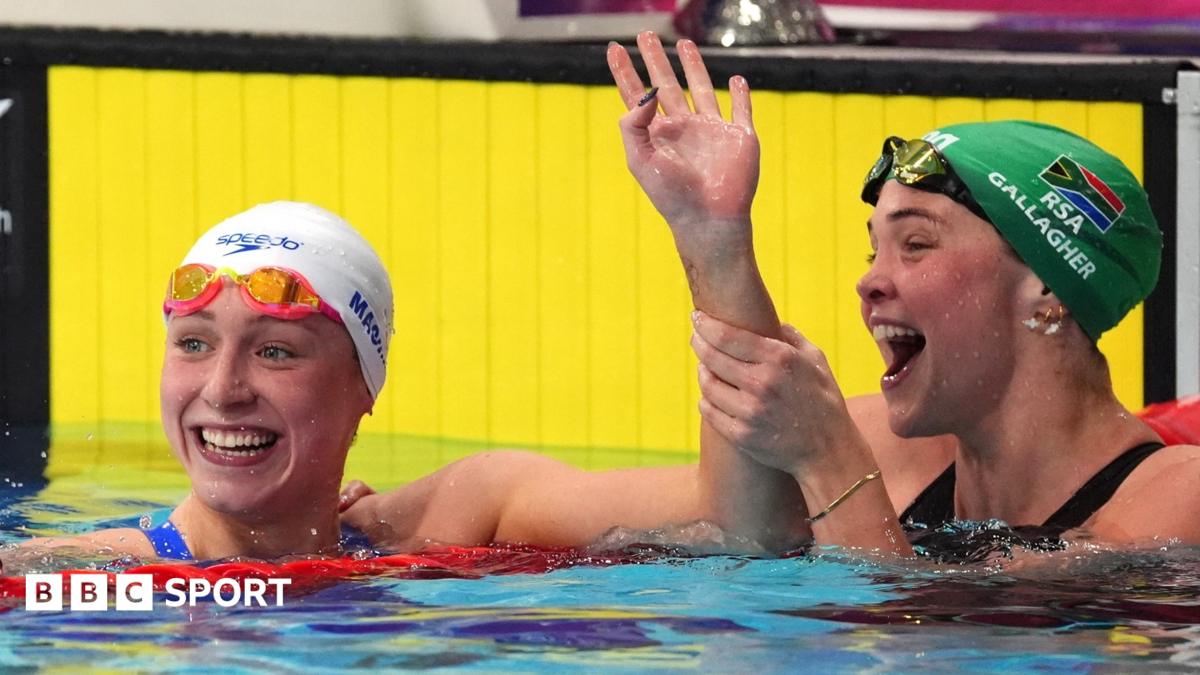
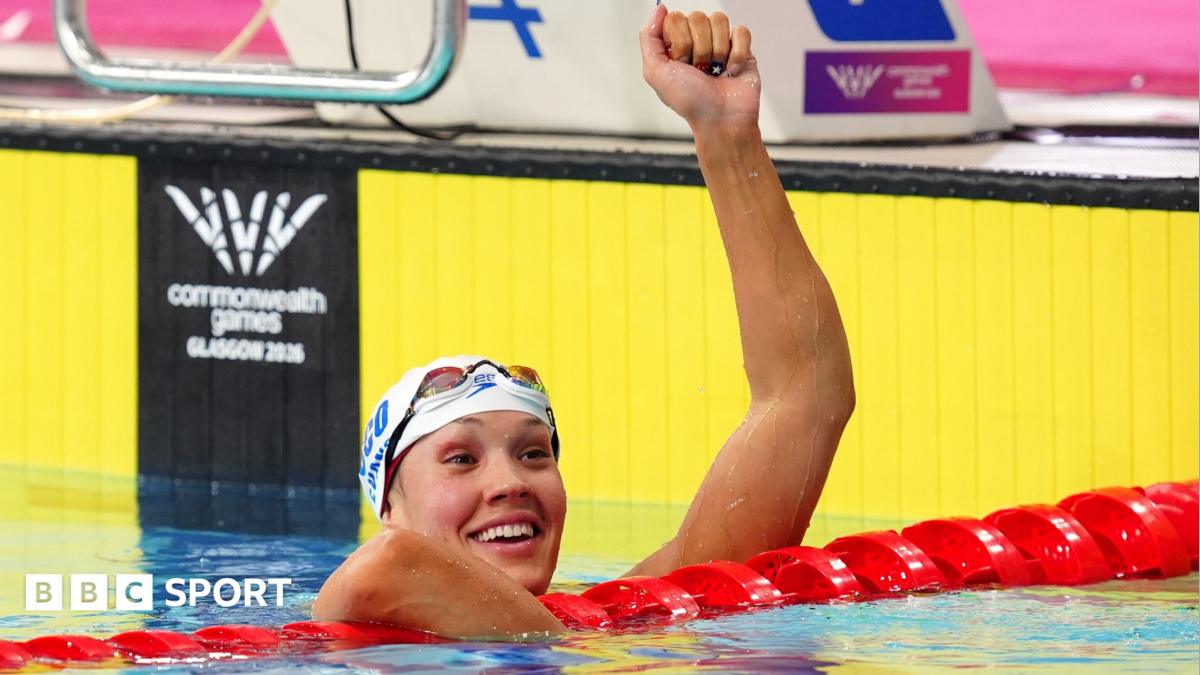
“I was really struggling to get food down, and was stressing about things like getting a medley relay slot instead of thinking about getting a medal tonight.
“My coach said to me I had nothing to lose but to just relax and enjoy it.”
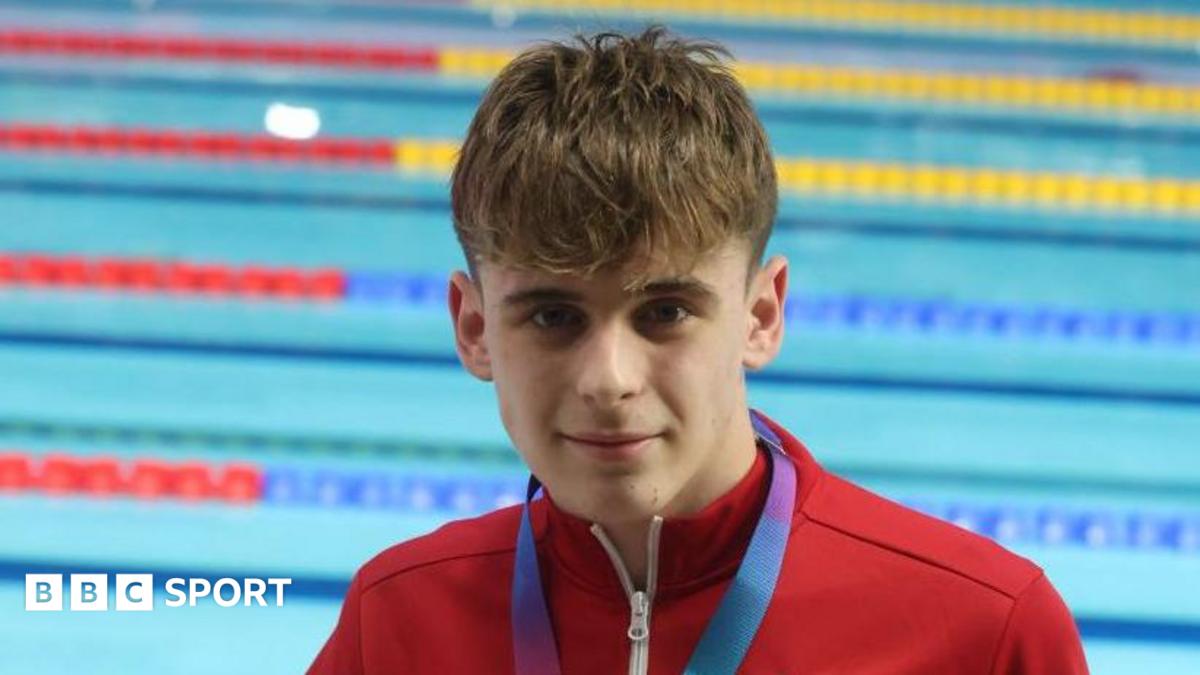
Alongside fellow Scots Ciara Schlosshan and Lucy Grieve – who finished fifth and sixth respectively – MacInnes did just that.
Third at the turn, she overhauled South Africa’s Erin Gallagher as the noise grew louder to earn a spot on the second step of the podium. Australia’s Alex Perkins took gold.
“Oh, God, I’m just starting to get my breath back,” MacInnes said. “That was so incredible.
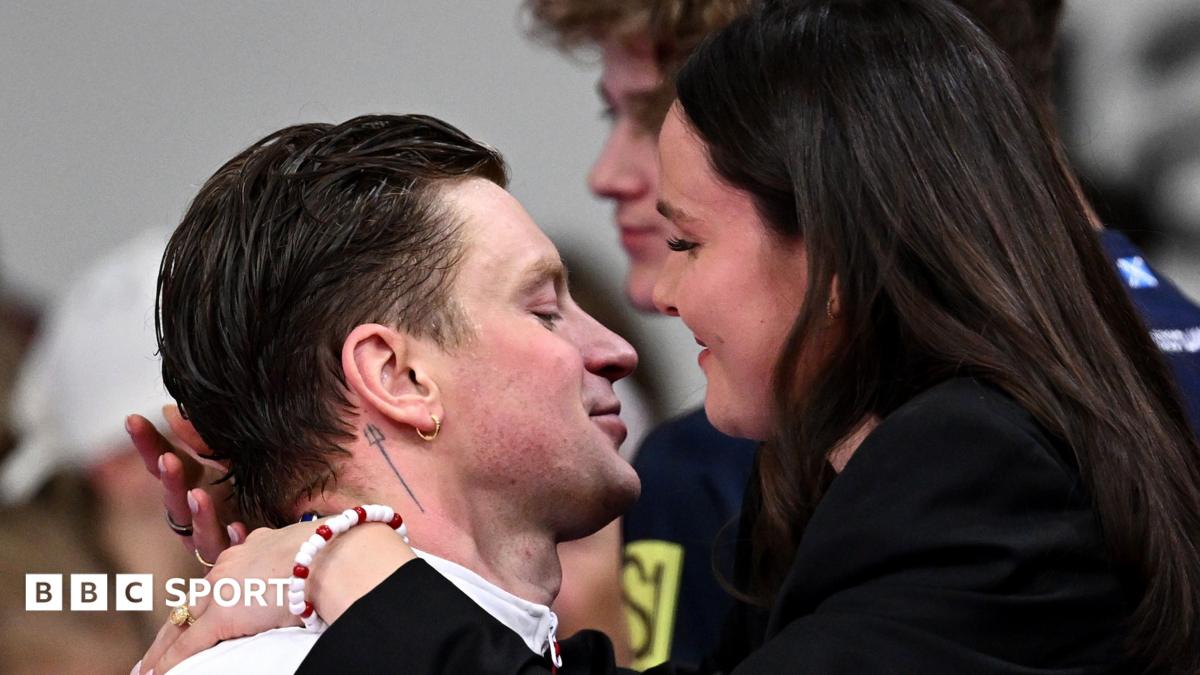
“I’m so grateful to the crowd for making it such a special memory for me. I’m so grateful to my parents and boyfriend who are up in the crowd and I’m so glad I was able to do it in front of them.
“A silver is crazy to me. Maybe I was thinking ‘bronze could be really cool’ so this is just so amazing.”
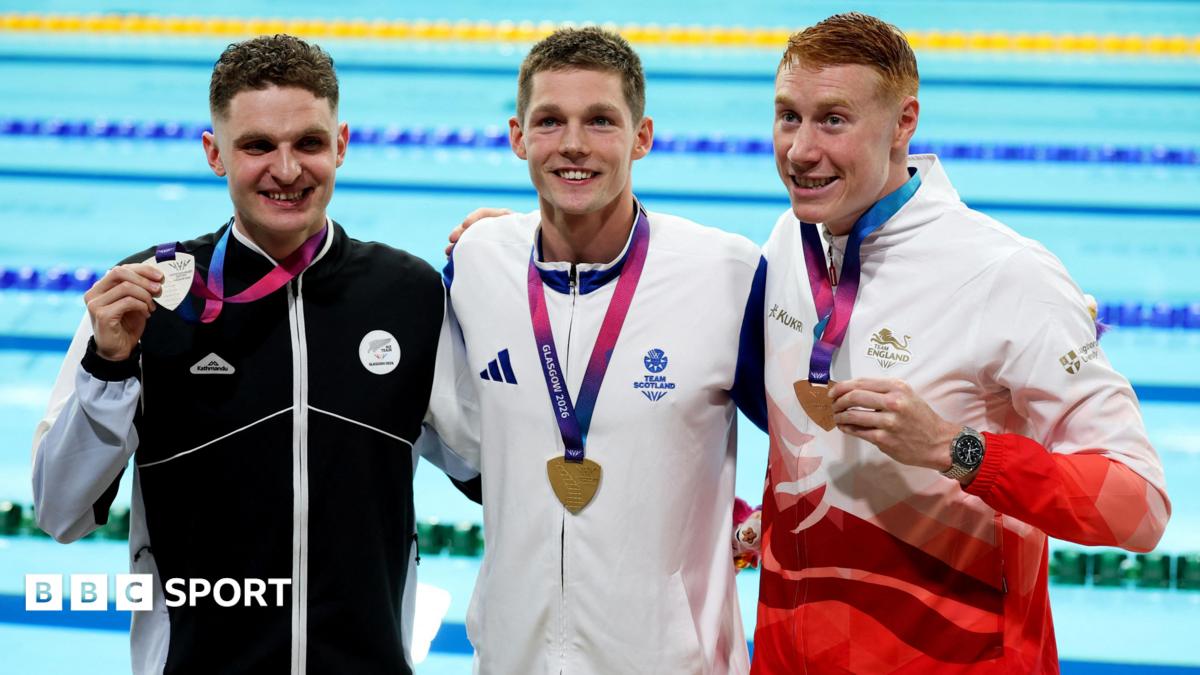
Duncan Scott knows all about Games medals, given he has 14 of them in the house.
Gold in Friday’s 200m individual medley was a fine start to proceedings, but a couple of relay near-misses over the weekend were followed by another fourth place in the 200m butterfly on Monday.
“A little bit sore and a little bit stiff but that is to be expected,” Langton said of his condition.
“I can’t really complain too much.”
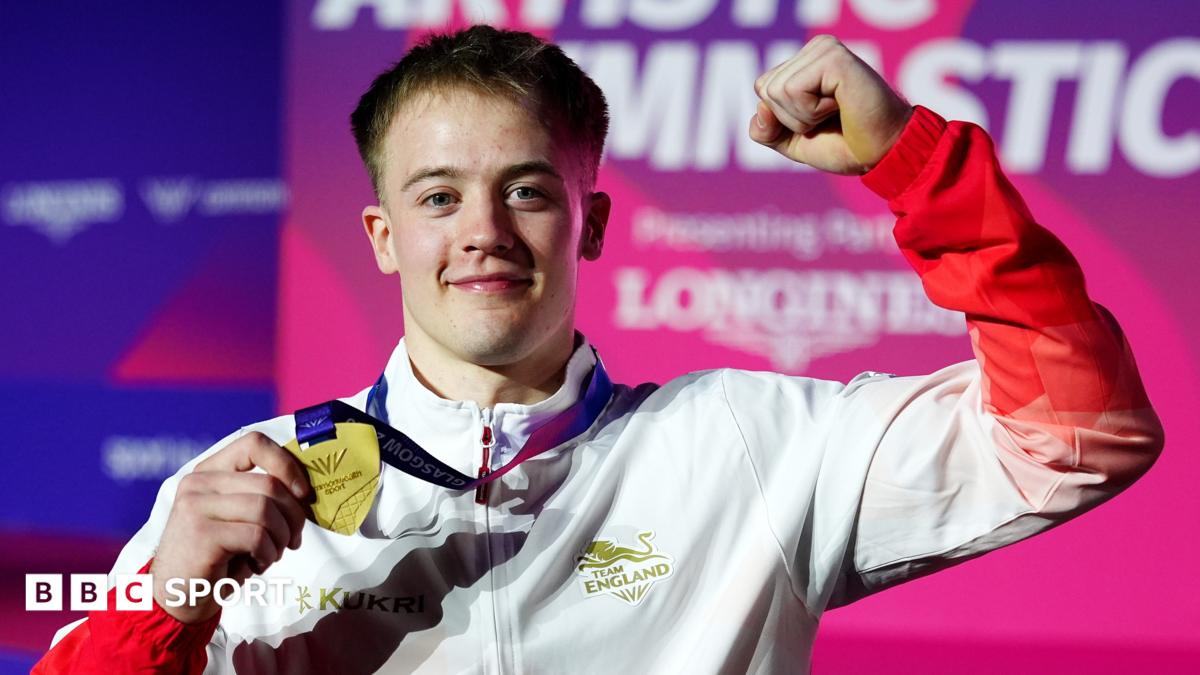
The teenager did not receive his medal until he returned to the team hotel on Saturday evening, with the other members of the team gathering to applaud him.
Whitehouse said the team wanted to do that in order to replace videos of his fall, which were circulating widely on social media over the weekend, with something more positive.
“That was incredible,” Langton said of the moment.
“Seeing all of the team-mates, coaches and getting my medal. I saw my personal coach from Birmingham. It was so nice.”
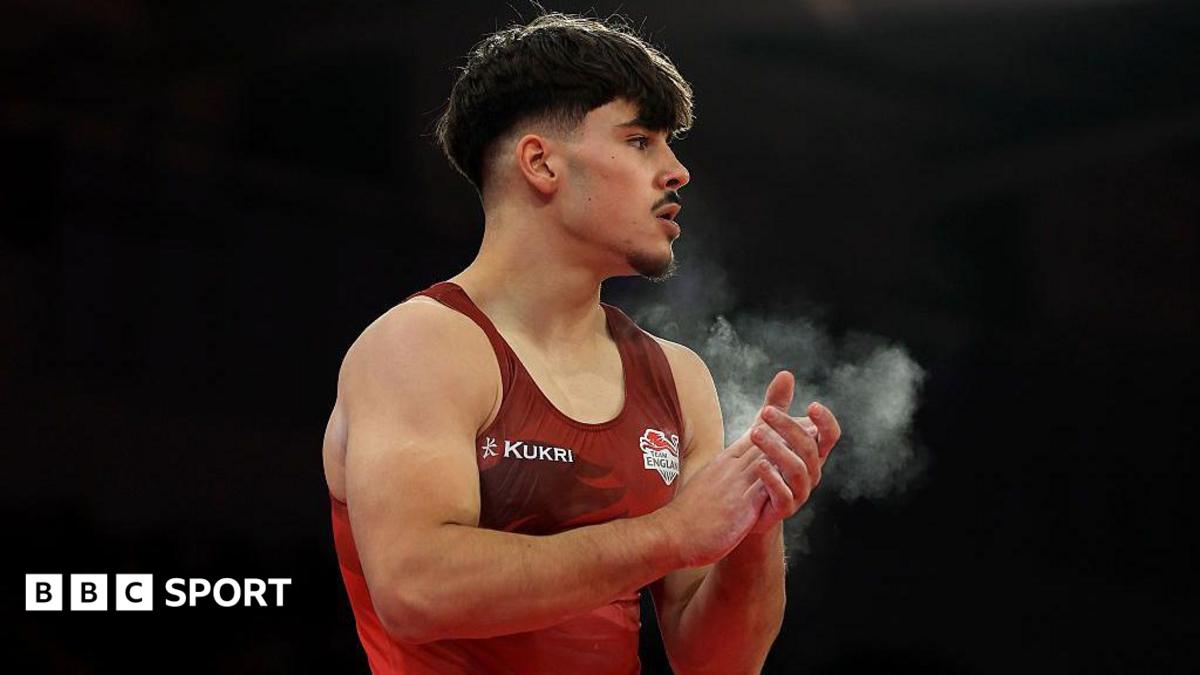
These things are, of course, relative, but Whitehouse’s Sunday was a disappointing one. He came seventh in an all-round final won by Scotland’s Reuben Ward.
His response on Monday was almost immaculate.
Malaysia’s Muhammad Sharul Aimy, Australia’s James Hardy and Ward all made mistakes in the early rounds of the competition, giving Whitehouse – the fifth gymnast to enter – an opportunity.
He barely faltered, scoring 14.566 to take gold – a score that was not bettered by the remaining three competitors.
“The last few days have been about regrouping after everything that’s happened and then coming out and delivering a good performance,” he said.
There was a similar story later in the women’s vault when England’s Abigail Martin, who finished 11th in the women’s all-round final, took silver behind Canada’s Lia-Monica Fontaine.
“Yesterday didn’t really go to plan the way I wanted it to, but I’m really pleased that I managed to pick myself back up today,” Martin said.
“For me, I just had a little cry about it, but then I thought about all the things that had gone well.”
Whitehouse and Martin will be back on Tuesday in the vault and floor respectively. Langton will again be in the stands.
He plans to “take it easy for a couple of days and do the rehab” before returning to training in the near future.
“I trust in my gymnastics capability,” Langton said.
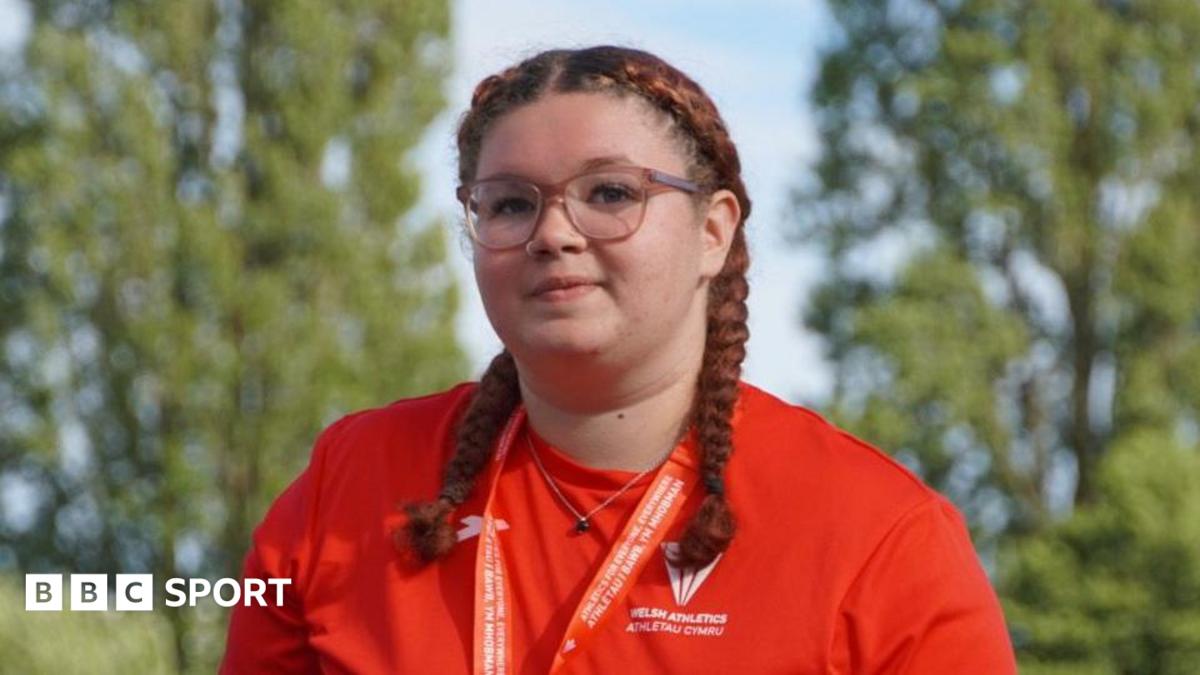
He introduced Bowen to wheelchair racing, in which she immediately won medals, before she found a passion for throwing.
“I had just started shot put, discus and javelin when Covid happened. I went back after and was thrown into a competition and I won best performer,” she said.
“So I was like, ‘oh, I’m okay at it’ and then I just kept going and fell in love with it.”
It is hard to imagine there will be many spectators at Glasgow’s Scotstoun Stadium more proud than Bowen’s parents who still regard themselves “lucky” to have her.
“We nearly lost her at 13 months old, but she’s here and doing amazing,” said her mother Anne.
“Growing up, she wanted to be like her siblings and would say, ‘they can ride a bike, why can’t I ride a bike?’ So she did.”
Bowen’s determination is only matched by the efforts of her parents to make sure their daughter can achieve her potential in the sport.
Her father Martin built a specially adapted bicycle so she could ride with her family, then moved onto bigger things when he built a campervan to ensure his daughter could to travel to athletics competitions.
“She has just come on so well. Nothing has ever been an obstacle for her,” said Martin.
“Whatever you put ahead of her, she’ll try and do it and if she can’t do it, she’ll get around it.”
Now Bowen hopes she can make her parents proud when they cheer her on in Glasgow.
“It’s the biggest competition I’ve ever done and I’m just happy to be there,” she said.
“It would mean the world to me to win a medal but just being there, I’m so thankful.”
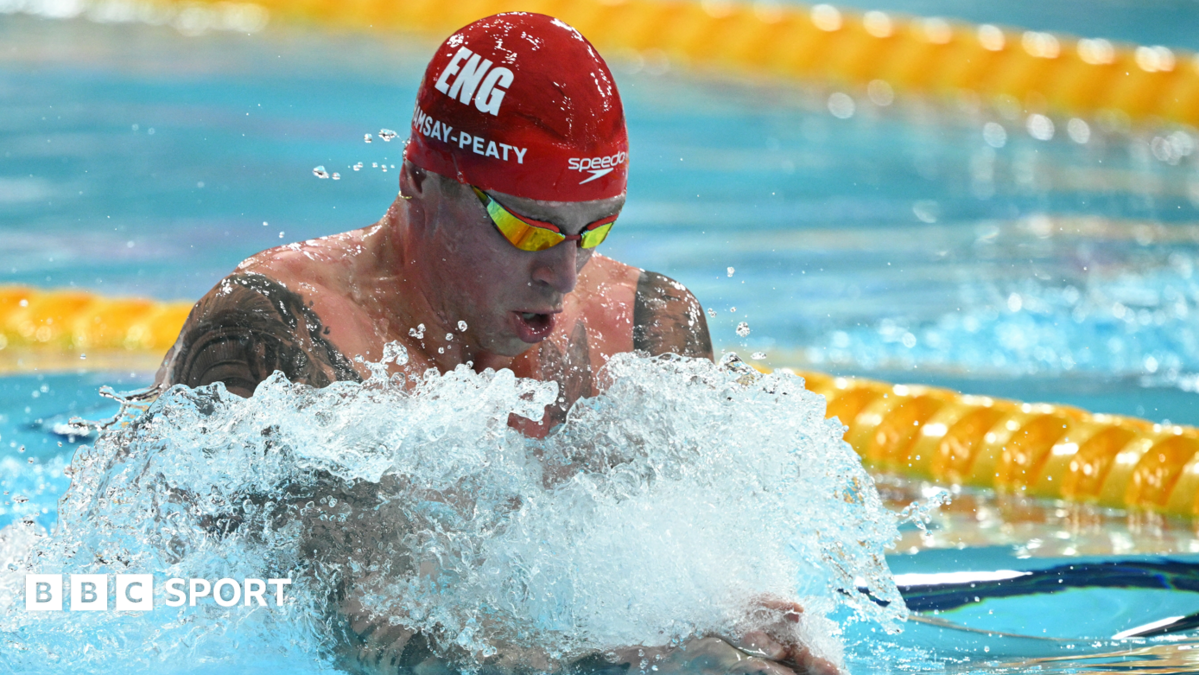
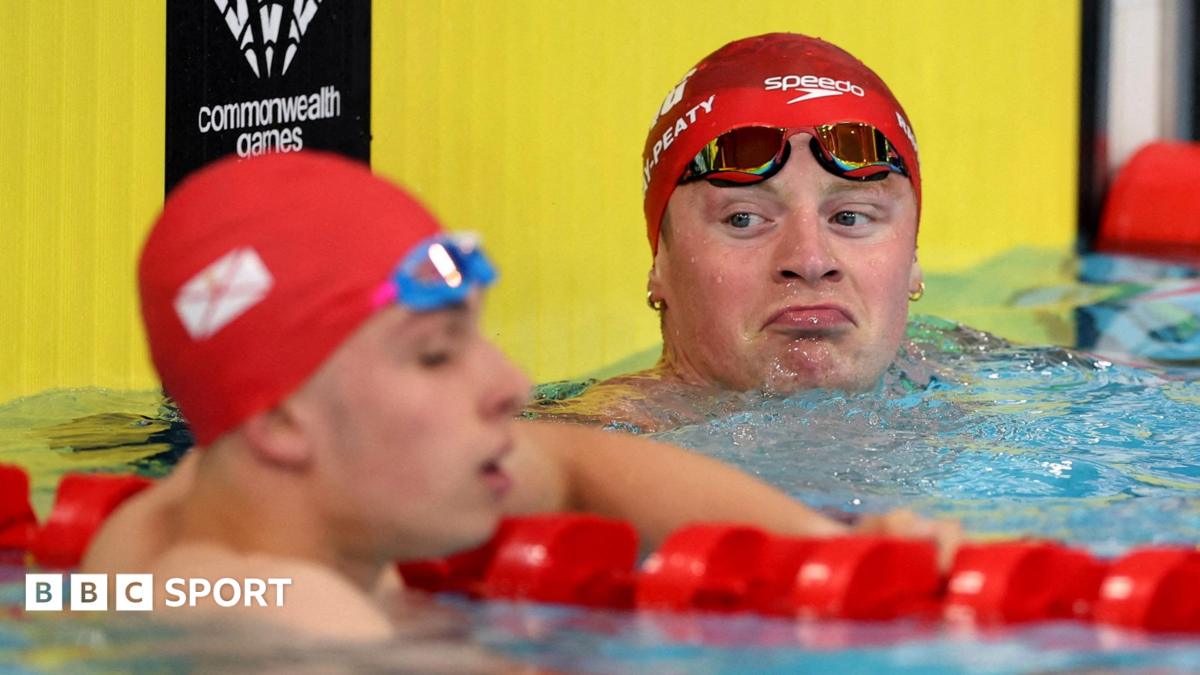
England’s Adam Ramsay-Peaty will have the chance to defend his men’s 50m breaststroke title at the Commonwealth Games after qualifying third fastest for the final.
The 31-year-old, who broke down in tears after taking bronze in the 100m on Saturday night, finished second in his semi-final with a time of 26.82 seconds.
World record holder Ramsay-Peaty will have to close the gap to South Africa’s Michael Houlie – who set the pace with 26.61 – when he races in the final on Monday at 20:07 BST.
Australia’s 100m breaststroke gold medallist Sam Williamson and Jersey’s silver medallist Filip Nowacki will also line up in the final.
“I think I’ve still got a little bit more to grow. I think there was a massive lesson in yesterday,” three-time Olympic gold medallist Ramsay-Peaty told BBC Sport.
“I can’t change anything obviously, so we have to get over it. I also know the trajectory I have to be on now and it’s a little bit different to what I thought it was.
“I’ve also got to remind myself that I haven’t swam a championships in two years. I put a lot of expectation on myself coming into this games.
“But as you know, the best athletes in the world, you don’t do it in training, you have to actually compete well and that is a skill on its own and we have to get used to that.
“I’m enjoying it and we’ll have to see what that result is tomorrow.”
Ramsay-Peaty’s team-mate Max Morgan finished sixth in the same semi-final race and was eliminated.
England, who won gold in 2018, failed to make the podium at Birmingham 2022.
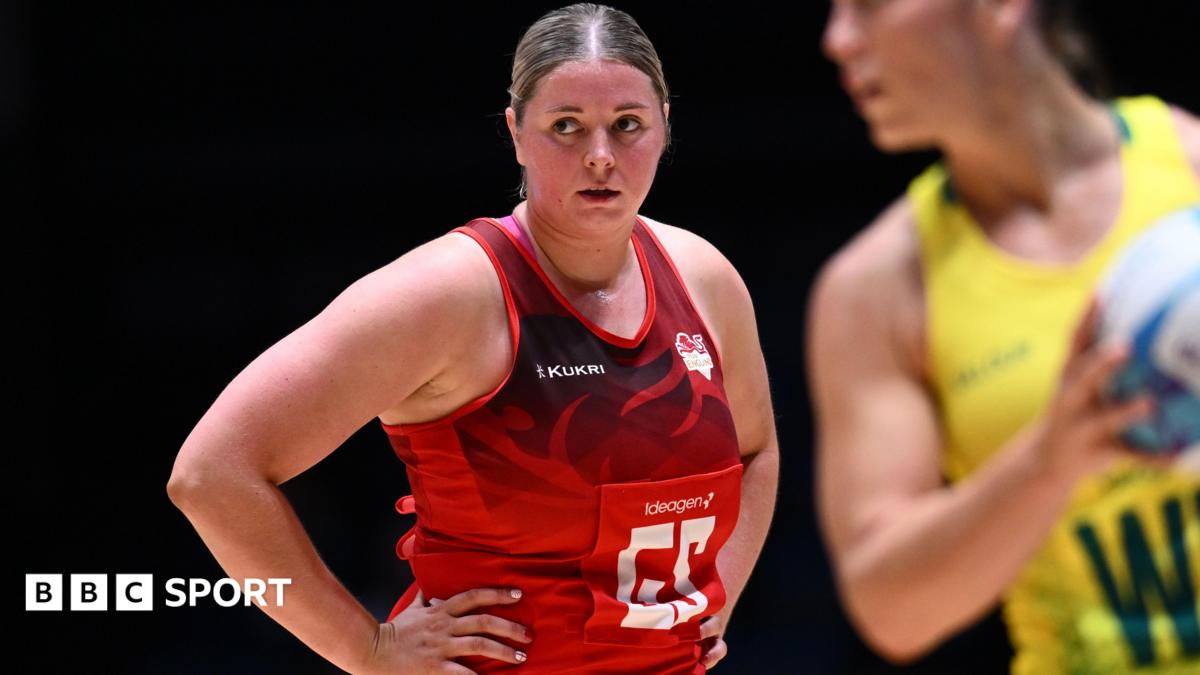
Only two of the 12 players in the squad – Eleanor Cardwell and Imogen Allison – have experience in the Commonwealth Games after injuries to gold medallists Helen Housby and Natalie Metcalf, who withdrew with a calf injury on Monday.
Jess Thirlby stepped down as head coach in March for family reasons, leaving assistant Anna Stembridge – head coach from 2011 to 2015 – in interim charge.
Shanahan missed the chance for a second chunk of metal in the last race of the night as she competed in the 4x100m mixed relay team who finished fifth, though they did set a new Scottish record.
Part of the team was, surprisingly, poster boy Scott.
He received a hero’s welcome as he returned, racing second after Evan Jones and before Evie Davies, but ultimately the field was too strong.
Earlier in the evening, Sean McCann finished eighth in the men’s 400m freestyle final, Lucy Grieve was seventh in the women’s 50m butterfly final and Matthew Ward broke the men’s 50m backstroke Scottish record on his way to seventh in that final.
It leaves even the great Adam Ramsay-Peaty wondering how much of this is worth it.
“I work a lot harder than what it says on the scoreboard,” the Englishman said after taking 100m breaststroke bronze at the Commonwealth Games, his eyes and cheeks red with emotion.
“It hurts too much. I have got to approach training differently now because it hurts too much.”
Ramsay-Peaty has done it all in this sport.
Three Olympic gold medals. Eight world titles. The 14 fastest times in history.
But after taking a break from swimming amid a wave of mental health issues in 2023, he is still searching for that winning feeling again on the big stage.
He was pipped to Olympic gold in Paris two years ago. In Glasgow, despite coming into the final as the fastest qualifier, he had to settle for bronze.
He was beaten by Australia’s Sam Williamson but also Jersey’s history-maker Filip Nowacki, the 18-year-old he has taken under his wing.
Ramsay-Peaty was third at halfway and could not close the gap.
“It took a lot of courage to get back into the sport, so we should be happy with everything we get, but then that contradicts the athlete inside me and what I work for,” he said.
“I just think I deserve more. I know sport isn’t about what you deserve or even what you work for – it’s who gets it on the day.
“I just know I’m a better athlete than that. It’s very disappointing.”
Ramsay-Peaty has spoken about the difficult decisions that come with being an elite athlete. The time away from his son, whom he held in his arms after the Paris silver. The events at home he has to miss.
“They are not even sacrifices; they are choices,” he said.
“It’s like getting knocked out in the group stages in the World Cup for a very good team. You know you’re better and it hurts because you know you have to wait for a very long time for the next championships.
“This is probably – realistically – my last Commonwealth Games and I thought I’d trained for better. I could do better. I’ve been faster this season. That’s where the frustration is.”
Ramsay-Peaty has made no secret of the fact he is still competing in the quest for Olympic gold.
He considered retirement again after Paris, but committed to another four years when the 50m race was added to programme for Los Angeles 2028.
This 100m breaststroke is his event – the one in which he went unbeaten in eight years – but there may be a time when he has to let it go.
The 50m race – a dash down one length of the pool – would be less taxing on the body, and Ramsay-Peaty is due back in the pool for that event on Sunday morning.
“Is the 100 even viable any more? I don’t know,” he said.
“When it hurts like this, the 50 is probably my super strength with my power.
“With the Olympics, that’s probably going to be more realistic, but it’s too early to tell.
“I just feel like I couldn’t have given more this cycle. If I had given less, would it have even equalled more?”
Given the emotion, there are times you wonder how close Ramsay-Peaty is to walking away entirely.
He appeared to walk to the edge but always turned back, insisting the drive for LA remains.
“Of course,” he said.
“I know I’m a sprinter. I know I can do very well because I’ve done it. It doesn’t disappear overnight.
“It requires me to look at the formula and see how I can get to that speed again.”
Having grown up on an island with about 100,000 inhabitants, Nowacki is rapidly become one of the best breaststrokers in the world.
He left Jersey to train at Millfield School and will move to Loughborough after the Games to continue his swimming as part of Team GB’s elite squad preparing for the 2028 Olympic Games in Los Angeles.
Nathan Jegou, who coached Nowacki as a youngster and is managing the Jersey swimming team in Glasgow, says he is excited at what the islander can do.
“It’s just the start of his journey, and the last two years for him has been phenomenal,” he told BBC Jersey.
“I’m excited to see what he does and we’re proud that he’s one of us.
“We’re such a small island, to come here and get a silver medal, it means everything to him, means everything to us, and we hope he can maybe do it again later in the week.”
With four fourth places in Birmingham in 2022, Richards was looking for his first Commonwealth medal to complete the set of Olympic, world and European podium positions.
Wales opted for an entirely different quartet in the pool in the final after Kieran Bird, Harry Milne, Medi Harris and Meghan Higgs had qualified fourth fastest in the heats.
Sutton and Taylor had qualified for their respective individual semi-finals in the 100m backstroke and 100m breaststroke, but both pulled out with a full focus on the relay.
The policy paid off and Taylor, 17, brought Wales back from fifth to third with a brilliant final leg.
Earlier, Rose Williams finished fourth in the women’s S14 200m freestyle final.
The S14 category covers swimmers who have an intellectual impairment, which typically leads to the athletes having difficulties with regard to pattern recognition, sequencing, and memory, or having a slower reaction time, which impact on sport performance in general.
Tyler Melbourne-Smith finished sixth in the 400m freestyle final, while Lewis Fraser qualified for the 100m butterfly final to be staged on Sunday evening.
Scott was not being caught, though. Not tonight. Not here. Not with his Scotland kit on and his team looking to him to spark their Games.
A Games which he has backed vocally since Glasgow salvaged it from the wreckage of Victoria’s aborted bid.
Almost exactly 12 years after he won his first Commonwealth medal in this very building, he was taking his 14th in his fourth Games. And it was going to be gold.
“I don’t usually feel the expectation, but that one I probably did,” he told BBC Sport Scotland. “Simply because it’s day one and I love representing Scotland and you want to try and get the whole team off to a good start.
“I think there was a bigger picture of trying to get good momentum for the crowd involvement for the rest of the week, and the team as well. So I felt that expectation, but it’s nothing I couldn’t deal with.”
You got the sense there was little that could have discomfited the Alloa native – a momentary loss of his accreditation apart – and even a post-race visit to the drugs testers wasn’t going to trouble him.
Scott’s got the weekend off now – he’s an old boy among the swimming set, after all – but he’s more than done his bit to set Glasgow 2026 off on the right note.
A sickening injury to England’s Gabriel Langton overshadowed his team’s silver medal in the men’s team gymnastics final at the Commonwealth Games in Glasgow.
The 19-year-old, from the City of Birmingham Gymnastics Club, needed lengthy treatment on the mat after a horrible fall in the final rotation of the evening at The Arena.
Langton fell head first to the floor after missing his catch on the horizontal metal bar, three metres in the air, leading to a lengthy delay to the action as he was tended to by up to a dozen medical staff.
He was eventually led away on a trolley after being moved on to a stretcher with his head and neck braced and left to huge applause from the packed crowd who had spent much of the previous 10 minutes in hushed silence.
Langton was seen to be conscious and moving his legs and arms before leaving the arena floor, while team officials later said he was moving and speaking to doctors.
In a statement, Team England said: “We are grateful to the medical teams who responded immediately to provide assistance.
“He has been taken to hospital and we will share more information when it is available.”
When competition resumed, his England team-mates were unable to overhaul their deficit to Canada who claimed their first gold medal in the event in 20 years, having finished second to England at the past two games.
Langton, a late call-up to Team England in the place of the injured six-time Olympic medallist Max Whitlock, was unable to join his teammates on the podium as England collected their silver medals.
Team-mate Luke Whitehouse, who was first on to the apparatus after the competition restarted and posted a relatively low score of 11.700, said: “When something like that happens, you’ve just got to forget about it and reset. I just had to focus on my routine one skill at a time.”
Whitehouse added: “From what we’ve heard, he’s doing OK. Gymnastics is such a dangerous sport and things like this remind us of that. It’s one of those things you have to put out of your mind.”
Felix Dolci, who helped Canada to gold and led qualifying for the all-around competition, said: “It’s terrible but it goes to show that gymnastics is a very, very difficult and complicated sport. It’s dangerous you know sometimes.
“All our thoughts go to Gabriel and the team. Pushing through this is definitely not easy, England stayed focussed, they stayed in the zone, a huge shout out to them because that’s not an easy one.
“For any gymnast that was on the field of play, seeing this not only is difficult, but something you never want to see. It goes to show how hard the sport is.”
Hamish Carter from Team Scotland – who narrowly missed out on a bronze medal to Australia in the final rotation – said: “I didn’t actually see what happened. I’m just so happy that he’s alright and, having experienced that, anything could have happened.
“We’ve walked away with no medal but I’m thinking of Gabe in this moment.”
Adam Ramsay-Peaty becomes the latest to face the latter situation on Saturday – in the 100m breaststroke final at Glasgow’s Commonwealth Games, shortly after 21:00 BST.
The greatest breaststroker the world has seen is on his own journey – one which he hopes ends with a third individual gold at the Los Angeles Olympics in two years’ time.
Manoeuvring into his slipstream is 18-year-old Filip Nowacki.
Master meet apprentice.
Not only has Nowacki started to pick off Ramsay-Peaty’s age-group records, he is part of the 31-year-old’s AP Race stable – the programme set up to develop the next generation.
Ramsay-Peaty has spoken of wanting to mentor and pass on advice to his young pretender. Last year, Nowacki repaid him by breaking his 100m breaststroke junior British record.
Ramsay-Peaty, who is chasing a 33rd major gold of a glittering career, appeared in no mood to hand over the baton in Friday’s semi-finals.
There is uncertainty around a broken finger suffered in June but, side by side in lanes four and five, Ramsay-Peaty built an early lead and held off the youngster in the second length. Nowacki was close but never quite close enough.
“I saw his front wave, but at the same time that is what I train for,” Ramsay-Peaty said.
“I know I am a sprinter. I know I can go out fast.”
Nowacki, who competes for Jersey here having learned to swim under the tutelage of Nathan Jegou on the Channel Island, is arguably best in the 200m event – a distance Ramsay-Peaty does not race.
In this shorter contest, it is the youngster who should stay stronger for longer.
And when they spoke afterwards alongside each other, Ramsay-Peaty, all chest and tattooed muscle, towered over his young rival – so much so you would be forgiven for thinking the pair compete in different sports.
Nowacki appeared wary of Ramsay-Peaty but there is a cheeky confidence within.
“Course I do,” he laughed when asked if he believes he can win.
“No, I wish, I’m gonna give it my best shot” was his quick addition.
Nowacki was not long out of armbands when Ramsay-Peaty won gold in this same pool at the 2014 Commonwealth Games.
That was his emergence on to the global stage and two years later the Englishman won his first Olympic title in Rio de Janeiro. Nowacki was only eight years old.
“Adam is a true role model in the sport,” Nowacki said.
“I grew up watching him race at Rio, Tokyo and Paris.
“To race him and not be a random competitor but give him a race is special to me.”
The pair should compete as Team GB team-mates in LA but are also racing for their own personal ambitions on Saturday.
Despite winning an emotional silver at the Olympics in Paris two years ago, Ramsay-Peaty has not stood atop a major podium since the Birmingham Commonwealth Games in 2022.
In that meet he won the 50m crown but lost his 100m title to James Wilby. A “self-destructive spiral” amid issues with his mental health, which led to him considering his future in the sport, soon followed.
If Nowacki wins a medal it would be Jersey’s first at the Commonwealth Games for 36 years. They have only ever won one gold medal.
Australia’s Sam Williamson, who won the first semi-final, will also have something to say.
“It is going to be a good scrap, especially down that last 25m, and I do love a good scrap,” Ramsay-Peaty said.
Scotland claimed three medals in a magnificent 45 minutes in the pool to kick-start the hosts’ Commonwealth Games in fine style in Glasgow – and added a second gold of the day an hour later to almost take the lid off Tollcross in the city’s east end.
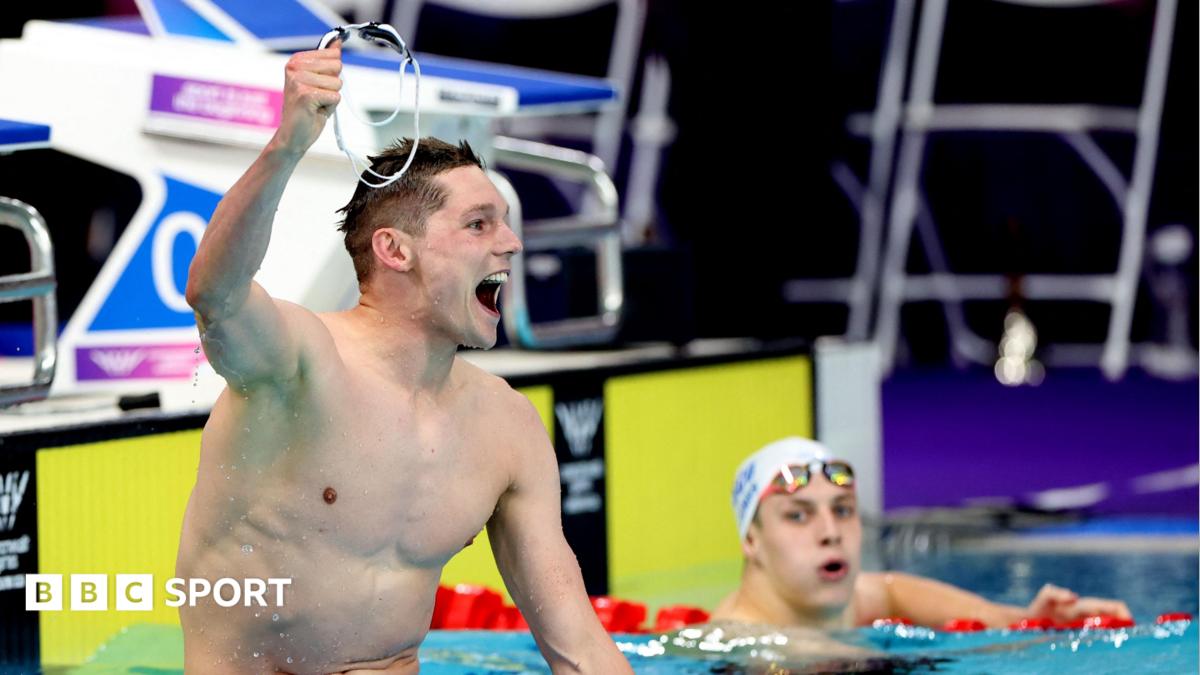
Poster boy Duncan Scott started the rush, defending his 200m individual medley gold from Birmingham four years ago by slicing a chunk off his own Games record.
Then Para-swimmer Stephen Clegg added silver in 100m freestyle S13 – with brother James fourth – after battling back from an injury-ravaged year.
And Katie Shanahan upgraded her 2022 Games bronze to silver in the 200m backstroke.
The frenzied scenes around this clammy building eventually abated, only for Faye Rogers to spark more bedlam with a rampant gold in the 200m individual medley SM10.
The drama all unfolded at the same Tollcross pool where 29-year-old Scott won the first of his now 14 Games medals in 2014.
Scotland’s most decorated Commonwealth Games athlete was a wee boy then – just 17 – but is a big man now and was under pressure to deliver a first rendition of Flower of Scotland at this staging.
And he delivered sensationally, streaking away from the field in the backstroke and breaststroke legs before closing it out in the freestyle.
Watching from the call room, Clegg could not fail to be roused.
There were times over the past year where the 30-year-old thought he might not be at these Games, and that his swimming career was over.
But he made it to Glasgow and managed to add another silver to the won he claimed in the 50m event four years ago.
Shanahan came home from that Birmingham Games with two surprise bronze medals so silver was an upgrade for another athlete who has come through tough times in recent months.
Her Scottish team-mate Holly McGill just missed out on the medals in fourth.
That success would have been sufficent to sate the home crowd, but Para-athlete Rogers delivered one of the most dominant performances of the night to clinch a second gold for the hosts and spark a second airing of the anthem.
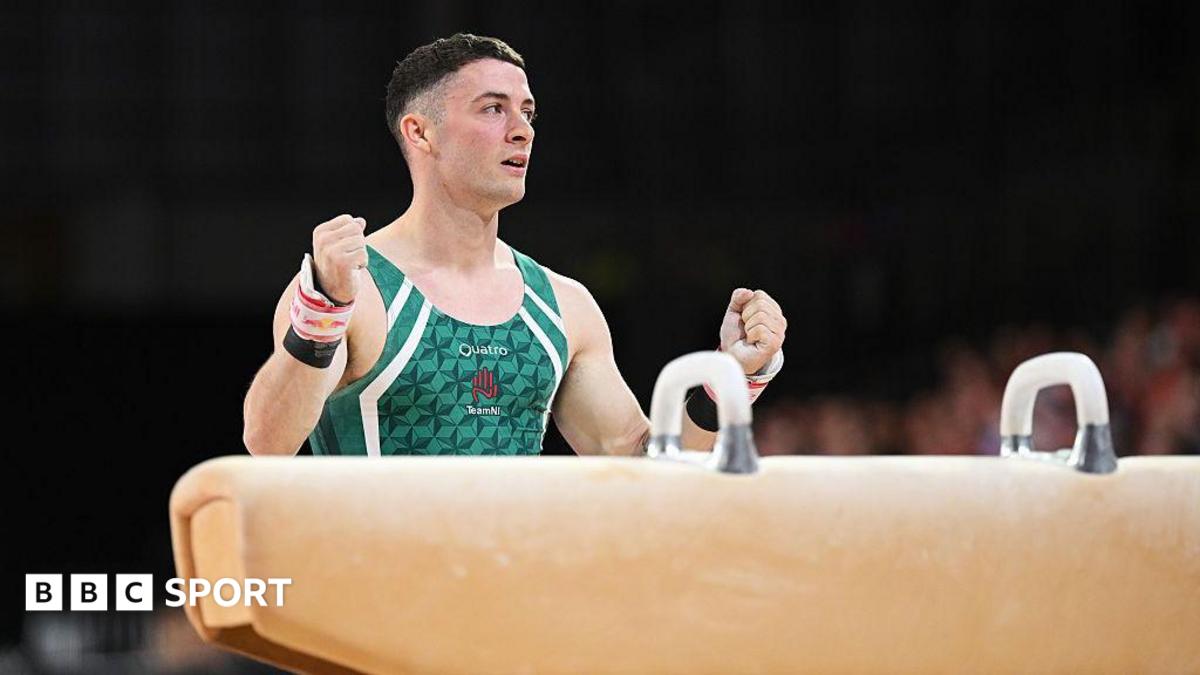
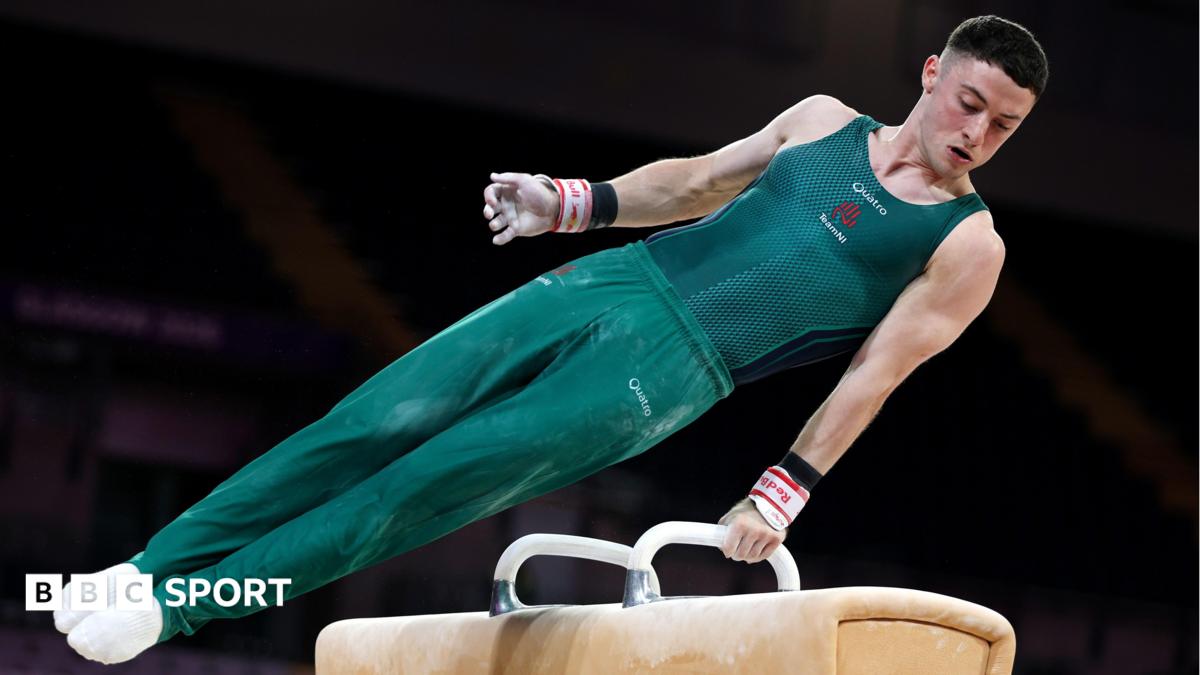
Olympic champion Rhys McClenaghan qualified for the Commonwealth Games pommel horse final as he posted a score of 14.500 after an almost flawless display with his new routine.
All eyes in the Emirates Arena were on McClenaghan and he delivered, even celebrating with a jig after stepping off the apparatus.
The 27-year-old finished third in the qualifying standings, with Scotland’s Reuben Ward and Canada’s Jordan Carroll (both 14.550) coming in ahead of him.
“It’s amazing to get him back out there, brand new routine, he smashed it with one of the best executions, we’ll take that it’s extremely positive and we have an upgraded routine to do for the final,” said his coach Luke Carson.
McClenaghan, who missed the entirety of 2025 after shoulder surgery, earned an difficult score of 5.500 and an execution score of 9.000, the highest in qualifying.
He is aiming to win his third Commonwealth Games medal on the pommel horse after picking up gold in 2018 and silver in 2022.
The Newtownards man also competed in floor qualifying for the first time since 2018, but failed to reach the final.
He scored 12.350 for his routine as he stumbled at the end when trying to land from a triple somersault.
Team-mate Eamon Montgomery faces an anxious wait to see if his score of 13.000 will be enough to qualify for the final after he received a 0.100 penalty.
Ewan McAteer reached the vault final as he finished third in qualifying with a score of 13.650.
“I definitely performed to the best of my ability, so very happy with how today has gone,” he said.
“It’s been a bit of a turbulent time for me out here, I’ve pulled a muscle in my stomach that extends down to my groin which has really flared so that was the first bit of gymnastics I did out there but a pulled groin wasn’t stopping me today.”
The first day of the 2026 Commonwealth Games is upon us and it’s a busy enough Friday for various Team Northern Ireland athletes in Glasgow.
It’s an early start Gary Kelly who is in action in the men’s singles against New Zealand’s Shannon McIlroy at 08:30 BST after his win against Niue on Thursday.
Shauna O’Neill and Chloe Wilson will face Niue in the women’s pairs at 11:20 after their victory
At the Tollcross Swimming Centre, it is a morning full of heats from 10:30.
Victoria Catterson will be in the women’s 400m freestyle while Grace Davison and Lottie Cullen will get under way in the women’s 200m backstroke.
Conor Ferguson and Paddy Johnston will be in the 50m backstroke with Alana Burns-Aiken in the 50m butterfly and Adam Bradley in the 100m breaststroke.
Barry McClements will go in the men’s S10 100m butterfly while Team NI will take part in both the men’s and women’s 100m freestyle relay heats.
Should the various swimmers progress through their heats, the semi-finals or finals of all those events will take place that evening from 19:00.
At the SEC Centre, one of Team NI’s boxing contingent will be in action.
Louis Rooney fights in the men’s bantamweight 55kg round of 32 against Mathealira Seholoholo from Lesotho at 11:45.
From 13:00 at the Emirates Arena, Olympic champion Rhys McClenaghan alongside Ewan McAteer and Eamon Montgomery are in qualification action.
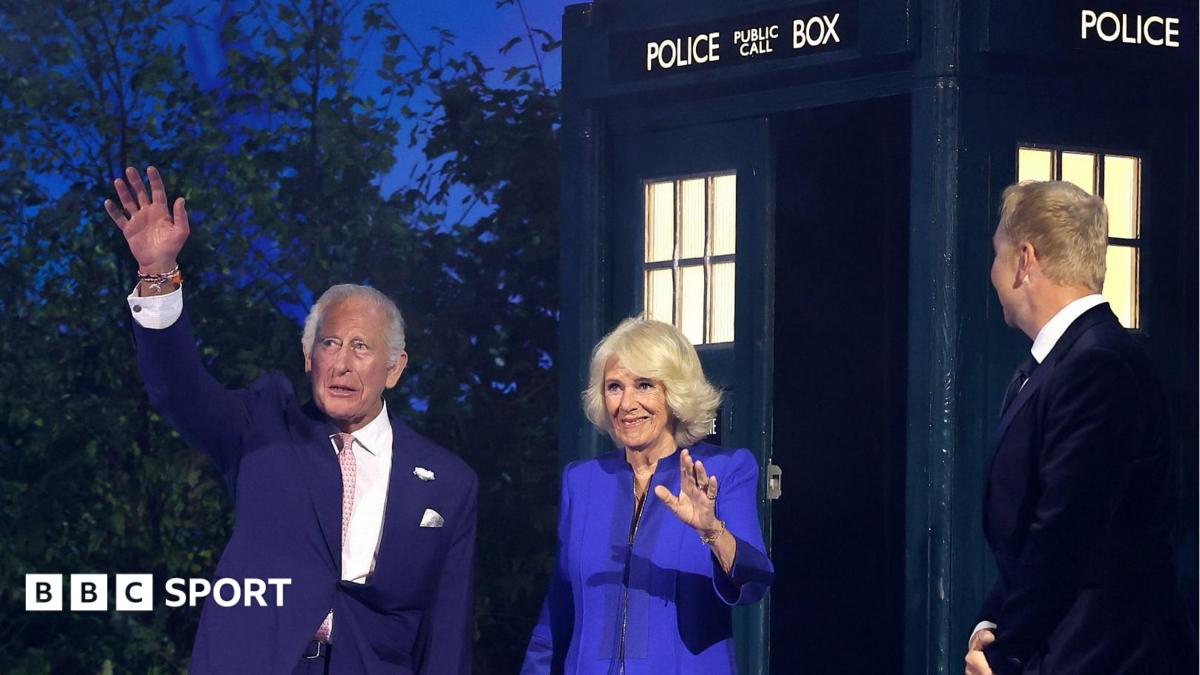
One of the louder cheers came for the Falklands Islands – in the news recently following Argentina’s victory over England in the football World Cup semi-finals – and another followed when the Samoa team emerged and performed a haka in front of the dignitaries in the Royal Box.
But nothing compared to the noise which greeted the arrival of the Scotland team, who entered the arena last in their white shirts and kilts and lifted many in the capacity crowd from their seats.
A large Loch Ness Monster representation then emerged, before, backed by bagpipers and drummers, a rousing rendition of Flower of Scotland followed.
The next section of the evening featured theatrical performances – a show billed as “a love letter to Glasgow and the Commonwealth”.
It began with a performance by Scottish folk and country singer Nathan Evans and a dance under a replica of Glasgow Central Station’s iconic clock.
The saying “Meet me under the clock” is famous in these parts.
Singer Callum Beattie’s rendition of Baccara’s Yes Sir, I Can Boogie – the 1970s disco tune recently adopted as Scotland’s unofficial anthem – had the Scottish athletes dancing in their seats.
Held indoors in front of about 10,000 people, this was a more intimate ceremony than the last time Glasgow hosted the Commonwealth Games, when a 40,000-strong crowd witnessed the opening of the Games in 2014 at Celtic Park.
There was a point, after the Australian state of Victoria withdrew as hosts in 2023, when some thought these Games would not happen. Glasgow stepped in at short notice to ensure otherwise.
There are eight fewer sports involved compared to 2014, given the short build-up, and venues from 12 years ago have been repurposed.
But Commonwealth Sport president Donald Rukare, wearing a tartan kilt in the colours of his home country Uganda, said this edition has been made possible by the “extraordinary legacy of 2014 and by a city that once again welcomes us with warm hearts and open arms”.
Five Northern Ireland boxers are one win away from a Commonwealth Games’ medal following Wednesday’s draw.
Kaci Rock, Michaela Walsh, Jansseen Hill, Garyn McAllister and Willie John McCartan will all enter the competition at the quarter-final stage next Tuesday and Wednesday in Glasgow.
Defending featherweight champion Walsh will face Scotland’s Lara Brown in Wednesday’s afternoon session, as the Holy Family GG boxer seeks to return to the podium for a fourth-straight Games having won silver at the 2014 edition in Glasgow and again four years later at Gold Coast.
Welterweight Rock takes on Niue’s Karen Te Ruki Pasene on Tuesday afternoon, which will also see heavyweight McAllister take on Ghana’s Jibril Muntari.
In Wednesday’s evening session at the SEC Centre, light-heavyweight Hill faces 2025 World bronze medallist Chantelle Reid from England, while super-heavyweight McCartan will meet Ghana’s Daniel Plange.
The boxing tournament begins on Friday and bantamweight Louis Rooney is the first Northern Ireland boxer in action, taking on Lesthotho’s Mathealira Seholoholo in the opening round at bantamweight and should the Star ABC man prevail, he will meet Australia’s Jye Dixon on Sunday in the last 16.
Nicole Clyde begins her bantamweight challenge on Sunday against Ghana’s Nancy Bamfo, while welterweight JP Hale is also in action at the least 16 stage with his opponent to be determined.
On Monday, 2022 featherweight champion Jude Gallagher makes his bow when he boxes in the last 16 stage at lightweight with his opponent to be determined, while light-heavyweight Eoghan Quinn is a similar scenario,
Also on Monday’s last 16 bouts, flyweight Caitlin Fryers meets Bangladesh’s Zinnat Ferdous, while light-middleweight Jon McConnell is tasked with India’s Sumit Kundu.
All quarter-finals are scheduled for Tuesday, 28 July and Wednesday, 29 July with Thursday a rest day before the semi-finals on Friday, 31 July and finals on Saturday, 1 August.
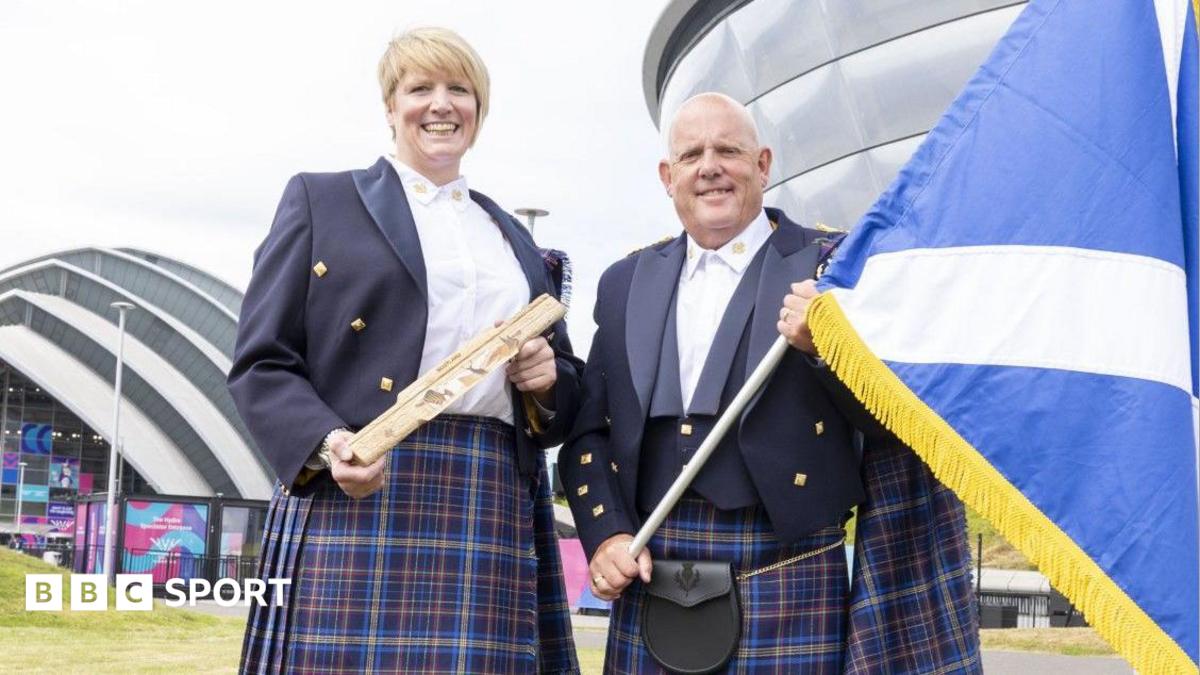
It just adds to what will be an especially special Games for Marshall, who is joined in the bowls team by his niece Beth Riva.
“It’s a bit nerve-wracking really,” 59-year-old Marshall told BBC Scotland. “It’s not very often I get a bit emotional, but I certainly had a tear in my eye when I came out the lift this morning and all the athletes were there. It’s just a huge honour.”
Resplendent in full kilt on a sweltering day, and proprietorially clutching the flagstick like a child would a favourite toy, the East Lothian bowler was in his element when talking about the news on Wednesday.
Marshall conceded he would have to let it go for the evening before having it returned before the big show.
But he might have to battle with Adlington for first shot of it when that time comes. “And I’d win that fight,” joked the 39-year-old heavyweight.
Adlington, who won judo gold in 2014 and 2022 and is looking to end her career by completing the treble, revealed the two of them have known the news for a few weeks but had been sworn to secrecy.
“That’s been really hard,” she told BBC Sport Scotland. “I was told I could tell my nearest and dearest but for everyone else it will be a massive surprise.
“I’m just so excited. I was so nervous when I woke up this morning, and I think I’ll be even more nervous tomorrow. I might not even sleep tonight but if it’s even half as good as it was in 2014, it will be amazing.”
The deeper he wades into the conversation, the deeper Al Michaels is transported back in time, 35 years doing nothing to dull the memory of that warm Sunday afternoon in Anaheim, where the Angels and Boston Red Sox staged one of the most thrilling and head-spinning 75 minutes of October baseball ever.
“To this day, man, I can still feel everything,” Michaels, now 76, said in a recent phone interview. “That freaking game … I mean, the drama from the top of the ninth inning through the bottom of the 11th was just insane.”
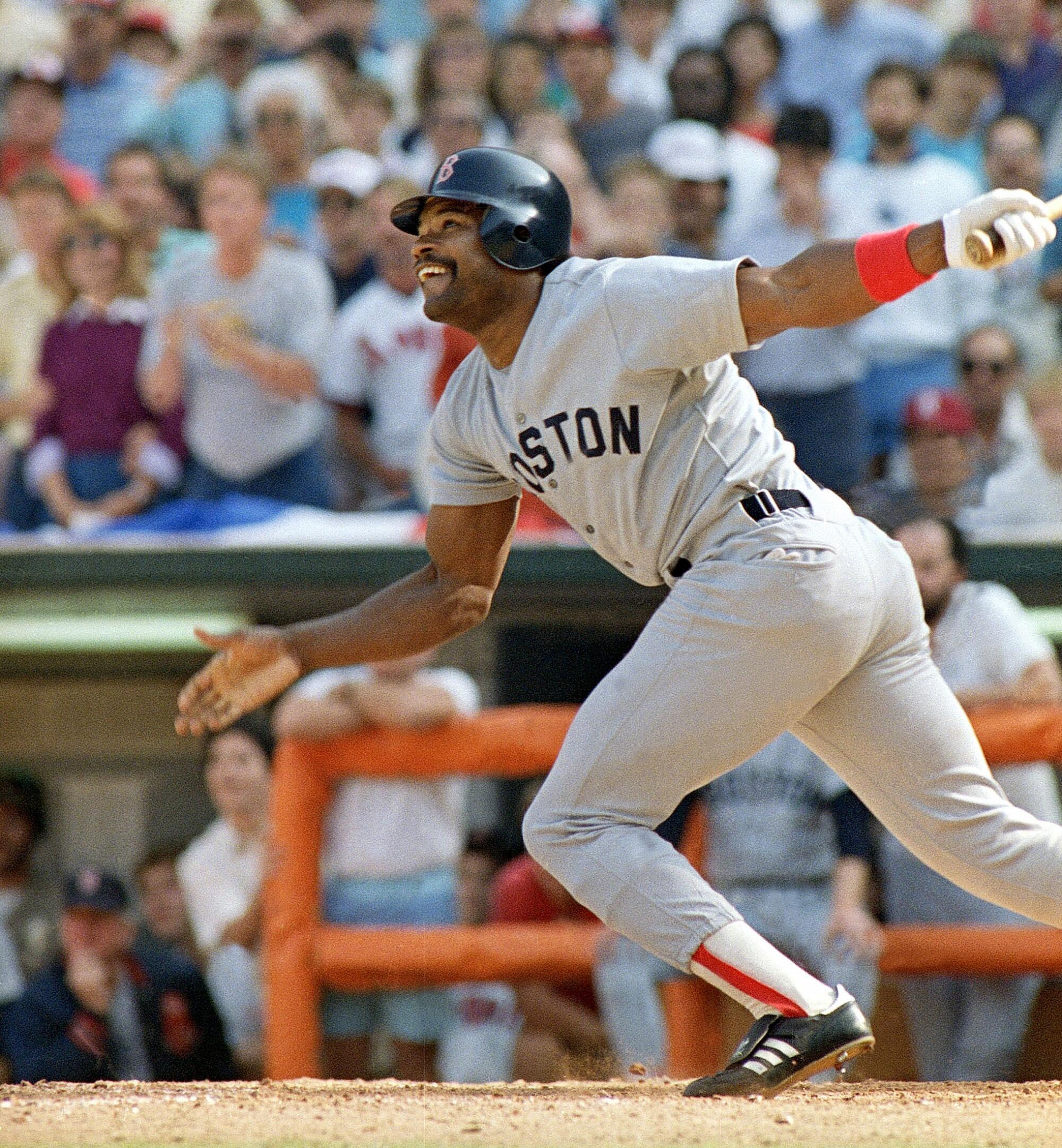
Dave Henderson watches the flight of his ninth-inning homer that put Boston ahead of the Angels, 6-5 in Anaheim, Oct. 12, 1986.
(Jim Gerberich / Associated Press)
The Angels rallied to tie it in the bottom of the ninth and had the bases loaded with one out, needing only a sacrifice fly or well-placed grounder to restore the full-throated roar to an Anaheim Stadium crowd of 64,223. Two of their top hitters, Doug DeCinces and Bobby Grich, failed to bring home the winning run.
Boston left fielder Jim Rice made a game-saving catch of a Gary Pettis drive at the wall to end the 10th inning, and Henderson’s bases-loaded sacrifice fly in the 11th gave the Red Sox a 7-6 comeback victory.
The shellshocked Angels barely put up a fight in Games 6 and 7 losses in Fenway Park. Three-and-a-half decades later, however, it’s Game 5 that still eats at the left-hander who got the final out in the top of the 11th inning but had been bypassed for another southpaw for a key at-bat in the ninth.
“You can’t get any closer,” former Angels pitcher Chuck Finley said. “You almost feel like you can touch it. When you have something in your hands, it’s almost like you were pick-pocketed.”
Tuesday, Oct. 12, marks the 35th anniversary of the most devastating loss in Angels history, 3 hours and 54 minutes of twists and turns that played out like a Shakespearean tragedy.
This is a look back at Game 5 through the eyes of a 23-year-old rookie reliever on that team and a Hall-of-Fame broadcaster who ranks the game just behind the “Miracle on Ice,” the U.S. hockey team’s upset of the Soviet Union in the 1980 Winter Olympics, on his list of greatest sporting events he’s called.
PROLOGUE
The 1986 Angels, managed by 60-year-old Gene Mauch, were an eclectic mix of crusty veterans, eager youngsters and a sprinkling of players in their prime.
Don Sutton (41) was the dean of a rotation that included 25-year-old right-handers Mike Witt and Kirk McCaskill. Terry Forster (34) was the elder in the bullpen. Finley was called up from Class-A Quad Cities in late May and saw a blend of personalities and temperaments that was borderline toxic.
Chuck Finley of the Angels pitches during a game circa 1988 in Anaheim, California.
(Rick Stewart/Getty Images)
“It was almost like a Desperate Housewives for Men the whole year,” said Finley, who lives in Newport Beach and does charity work for the team. “That clubhouse was a mess. Guys were just fighting all the time. There was so much pressure on Gene just to keep that team together.”
Finley recalled the team bus ride in which Moore, angered after being told Mauch had called a workout for an off day, hurled a piece of fruit at the skipper, only to have it splatter on the windshield of the bus. Players could be prickly with the media. And each other.
“It was a mixed bag of nuts,” Finley said. “It was like going to a bar and they give you that bowl. Some are a little sweet, some are a little sour, some are a little salty, but you just keep putting your hands in there and eating it, you know?”
“It was almost like a Desperate Housewives for Men. That clubhouse was a mess.”
— -Chuck Finley
The clubhouse tension, however, did not affect their performance. The Angels went 23-25 in April and May but caught fire in June, going 69-45 over the final four months to finish at 92-70. They sealed the division title with a 21-5 run from Aug. 24 through Sept. 22.
Joyner (.290, 22 homers, 100 RBIs), DeCinces (.256, 26, 96) and Downing (.267, 20, 95) paced the offense. Witt (18-10, 2.84 ERA, 208 strikeouts), McCaskill (17-10, 3.36, 202) and Sutton (15-11, 3.74) led the rotation.
Angels relief pitcher Donnie Moore.
(Charles Bernhardt / Allsport)
Moore fought through shoulder and rib-cage injuries to go 4-5 with a 2.97 ERA and 21 saves in 49 games, and Doug Corbett (4-2, 3.66 ERA in 46 games), Forster (4-1, 3.15 in 41 games) and left-hander Gary Lucas (4-1, 3.15 in 27 games) were reliable in relief.
“Man, once that national anthem was played, it was just true professionalism,” said Finley, who went 3-1 with a 3.30 ERA in 25 games after his summer call-up. “Those guys knew how to win.”
PENNANT FEVER
The Angels closed the season at Texas and flew to Boston to start the ALCS. Two sloppy, half-well-pitched games yielded two lopsided scores. Witt threw a complete game in an 8-1 Game 1 victory, and Red Sox left-hander Bruce Hurst threw one in Boston’s 9-2 Game 2 win.
The series shifted to Anaheim, where the Angels scored three seventh-inning runs in a 5-3 Game 3 victory and rallied in Game 4 for three ninth-inning runs off Roger Clemens, with DeCinces (homer) and Pettis (RBI double) providing the big blows, in a 4-3, 11-inning win.
The Angels were up 3-1 in the series.
A sense of anticipation filled Anaheim Stadium the next day when the teams met at high noon under sunny, 80-degree skies. The Angels started Witt, their best pitcher. Hurst started for the Red Sox on three days’ rest.
But across the 57 Freeway in a St. Joseph’s Hospital bed sat Joyner, the Angels’ rookie-of-the-year candidate who had a staph infection in his right shin and would watch the game on a 19-inch TV. (That was a fairly big size in those days, kids.)
Grich moved from second base to first, and Burleson started at second. The Red Sox took a 2-0 lead when Rich Gedman, their left-handed-hitting catcher, lined a two-run homer just inside the right-field foul pole in the second inning. Boone’s solo shot to left made it 2-1 in the third.
Grich followed DeCinces’ two-out double in the sixth with a drive to deep center, where Henderson, who had replaced injured starter Tony Armas in the fifth, nearly made a leaping catch on the warning track.
But Henderson’s momentum sent him smashing into the fence, and his left arm hit the top of the wall. The ball squirted out of his glove and over the fence for a two-run homer and a 3-2 Angels lead, which Anaheim increased to 5-2 in the seventh on Rob Wilfong’s pinch-hit RBI double and Downing’s sacrifice fly off reliever Bob Stanley.
Witt, meanwhile, was cruising. He took a six-hitter into the ninth with three of the hits — the second-inning homer, a fifth-inning double and seventh-inning single — coming off the bat of Gedman, who was due up fifth in the inning. With that in mind, Mauch had Lucas warming up alongside Moore as the inning began. Lucas had struck out Gedman twice during the season and again the night before.
An interview platform was constructed in the Angels clubhouse. Clear plastic wrapping was draped over each locker to protect against the anticipated fusillade of champagne. Officers on horseback gathered in the bullpen. California Highway Patrol officers manned the dugouts.
In a 1987 story about the game, former Times staff writer Mike Penner wrote that Jackson walked over to congratulate Mauch, who was on the verge of finally shedding his reputation as the best manager to never win a pennant. But Mauch kept staring ahead from the third-base dugout, watching Witt warm up for the ninth.
“It isn’t over yet,” Mauch said quietly.
“It had merely begun,” Penner wrote.
HEARTBREAK HILL
Bill Buckner opened the ninth with a ground-ball single to center, just beyond the reach of a diving Schofield. Dave Stapleton came on to pinch-run. Rice struck out looking.
Up stepped Don Baylor, the former Angels designated hitter who led the team to its first two playoff appearances in 1979 and 1982. Witt thought he struck out Baylor with a 2-and-2 curve on the inside corner, but umpire Rocky Roe called it a ball.
Witt’s full-count offering was another breaking ball, this one down and away, a pitch Witt later said he “would throw him 100 out of 100 times, and I guarantee you he wouldn’t hit a home run.” Baylor yanked it over the left-field fence for a two-run homer to cut the lead to 5-4.
Dwight Evans popped out to third for the second out. Pitching coach Marcel Lachemann went to the mound and raised his left arm to summon Lucas. The crowd groaned. So did a few Angels players.
“When they took Witt out, it was like, ‘Wow,’ ” Finley said. “He was dominating that game. I know Gedman had decent numbers against him, but I thought Witt was on a roll and he’d figure out a way to get through this.”
Lucas had not hit a batter in four seasons. His first pitch rode up and in and hit Gedman on the right hand.
Out came Lachemann again to summon Moore to face Henderson, who hit .196 with one homer and three RBIs in 36 games for Boston after an August trade from Seattle.
Henderson fouled off a pair of 2-and-2 pitches, a split-fingered pitch and fastball. Moore, whose shoulder was so sore he took a cortisone injection after the game, threw another splitter on the outer half, but this one tumbled instead of breaking sharply toward the dirt.
Henderson reached out and swatted a high fly to left. Four steps out of the box, he leaped high into the air. Finley, from the right-field bullpen, had a perfect view of the ball’s flight. He knew from the sound of the bat, the arc of the ball and the atmospheric conditions, this was not good.
“I watched it come off the bat and went, ‘Oh, sh–,’ because it was a day game and the ball flies,” Finley said. “Then I saw [Henderson] jump and went, ‘Uh-oh.’ We’re one strike away from going to the World Series and boom, that ball goes flying out, and that stadium went silent.”
“To this day, man, I can still feel everything,”
— -Al Michaels
Michaels called Henderson’s homer “unbelievable” and “astonishing” on the broadcast. Henderson floated around the bases and was greeted by jubilant teammates in the dugout.
Dave Henderson, left, and Rich Gedman of the Red Sox cheer after Henderson’s ninth-inning homer gave Boston a one-run lead in Game 5 of the 1986 ALCS against the Angels.
(Reed Saxon / Associated Press)
“Anaheim Stadium was a strike away from turning into Fantasyland,” Michaels said on the air, “and now the Red Sox lead 6-5!”
Moore got Ed Romero to fly to right to end the inning. A stoic Mauch stood in the dugout, arms folded across his chest, a blank look on his face.
“He looked frozen in time,” Michaels said.
PUSH BACK
The Angels clawed back in the bottom of the ninth. Boone singled and was replaced by pinch-runner Ruppert Jones and was bunted to second by Pettis.
Red Sox manager John McNamara summoned left-hander Joe Sambito to face Wilfong, who singled sharply to right. Jones beat a one-hop throw from the strong-armed Evans with a head-first slide to the back of the plate to tie the score 6-6 and re-spark pandemonium in the stadium.
Angels baserunner Rupert Jones slides safely into home plate under the eyes of Boston Red Sox catcher Rich Gedman in the ninth inning.
(Lennox McLendon / Associated Press)
Wilfong should have advanced on the throw home but froze at first. Right-hander Steve Crawford replaced Sambito and gave up a single to right to Schofield, moving Wilfong to third. Had Wilfong taken second on the play at the plate, he likely would have scored on Schofield’s hit.
Downing was intentionally walked to load the bases to set up a force play at home. That brought DeCinces to the plate. Crawford, who was making his first appearance of the series, was so nervous he couldn’t produce any saliva to spit.
“If there was a toilet on the mound,” Crawford said after the game, “I would have used it.”
Instead, the Angels flushed an opportunity down the drain. DeCinces swung at a first-pitch fastball and flied to shallow right, Wilfong holding at third. Grich hit a soft liner that Crawford snagged to end the inning.
“I got no place to sleep tonight,” Mauch quipped after the game. “I bet my house that DeCinces would get that run in from third.”
Moore escaped a first-and-third, one-out jam in the 10th by getting Rice to ground into a double play. Crawford walked Jerry Narron with two outs in the bottom of the 10th, and the switch-hitting Pettis, with Narron running on a full-count pitch, drove a pitch to deep left.
Pettis had hit a similar ball over Rice’s head during the big ninth-inning rally the previous night, so Rice took a few steps back for this Pettis at-bat. That allowed him to make a leaping, two-hand catch near the top of the wall to rob Pettis of a game-winning double.
“He had to look in his glove to make sure he caught it,” Michaels said. “Narron was running with the 3-2 pitch, and he scores easily if Rice doesn’t catch it.”
Michaels recalled the stadium becoming “eerily quiet” as the 11th inning started.
“If there was a toilet on the mound, I would have used it.”
— Red Sox reliever Steve Crawford
“I remember saying on the air that the crowd is wrung out,” Michaels said. “They had been screaming for 45 minutes and were just wrung out.”
Moore hit Baylor with a pitch to open the 11th. Evans singled to center. Gedman, the unsung hero of the game, popped up a sacrifice-bunt attempt that fell in front of DeCinces for a single to load the bases with no outs.
Henderson’s sacrifice fly to center scored Baylor to give Boston a 7-6 lead. Downing made a leaping catch of Romero’s drive before slamming face-first into the wall for the second out, saving a run, maybe two. Finley replaced Moore and got Wade Boggs to ground out to second to end the inning.
Red Sox closer Calvin Schiraldi struck out Wilfong and Schofield to open the bottom of the 11th, and Downing lofted a fly ball into foul territory near first.
“Popped up … here comes Stapleton,” Michaels said on the broadcast. “Next plane to Boston!”
POSTSCRIPT
The Angels’ team flight to Boston was funereal. “It was mute,” Finley said. “Everybody was staring out the windows going, ‘What happened?’ ”
Angels pitching coach Marcel Lachemann, right, consoles relief pitcher Donnie Moore in the locker room at Fenway Park on Oct. 15, 1986. The Angels lost to the Boston Red Sox in the final game of the ALCS.
(Bob Child / Associated Press)
Run-scoring doubles by Jackson and DeCinces in the first inning of Game 6 provided some hope, which was dashed when Boston scored twice in the bottom of the first and five runs in the third in an eventual 10-4 win.
The Red Sox steamrolled the Angels 8-1 in Game 7 to reach the World Series, where they suffered their own one-strike-away collapse against the New York Mets, when Mookie Wilson’s 10th-inning grounder in Game 6 famously rolled through Buckner’s legs to allow the winning run to score. The Mets won Game 7 two nights later.
The career of Moore, who had a history of alcohol abuse and domestic violence, spiraled in the wake of Game 5. He struggled in two more injury-marred seasons with the Angels and was released by the Royals in 1989.
In July 1989, Moore had an argument with his wife, Tonya, and shot her three times with a .45 pistol in their Anaheim Hills home. While the couple’s 17-year-old daughter drove Tonya to the hospital — she survived — Moore, with two younger sons in the house, put the gun to his head and committed suicide. He was 35.
“He was a great guy, he just had some demons he couldn’t tame,” Finley said of Moore. “It’s sad the way it ended up and the way Donnie’s life ended.”
Orange County Coroner personnel remove the body of former Angels pitcher Donnie Moore from his home in Anaheim on July 18, 1989. Moore shot his wife several times, critically wounding her before turning the gun on himself.
(Alan Greth / Associated Press)
Finley can’t help but wonder if he could have ended Game 5 in the top of the ninth had he been summoned instead of fellow lefty Lucas.
“I think about it all the time,” Finley said. “I don’t know if I would have gotten Gedman out, but I’d like to have had the chance to try. Gary was kind of thumbing it. He was a finesse guy, and I was throwing pretty hard back then. But Gene wanted to go with veterans, so he made what he thought was the book move.”
Finley went on to have a stellar 17-year career, going 200-173 with a 3.85 ERA in 524 games and making five All-Star teams. But he left the Angels to sign with Cleveland in 2000, hoping for a chance to win a championship, two years before the Angels won their only World Series title in 2002.
Finley made seven playoff appearances for the Indians and St. Louis Cardinals in 2001-02 but never reached the World Series.
The closest he would come, it turned out, was with the Angels in 1986.
“I was 23, up from A-ball and one strike away from the World Series — you think it would happen every year,” Finley said. “Then you have a 17-year drought, you’re retired and you don’t have a ring … man, you get that close, it makes you appreciate how hard it is to win one.”
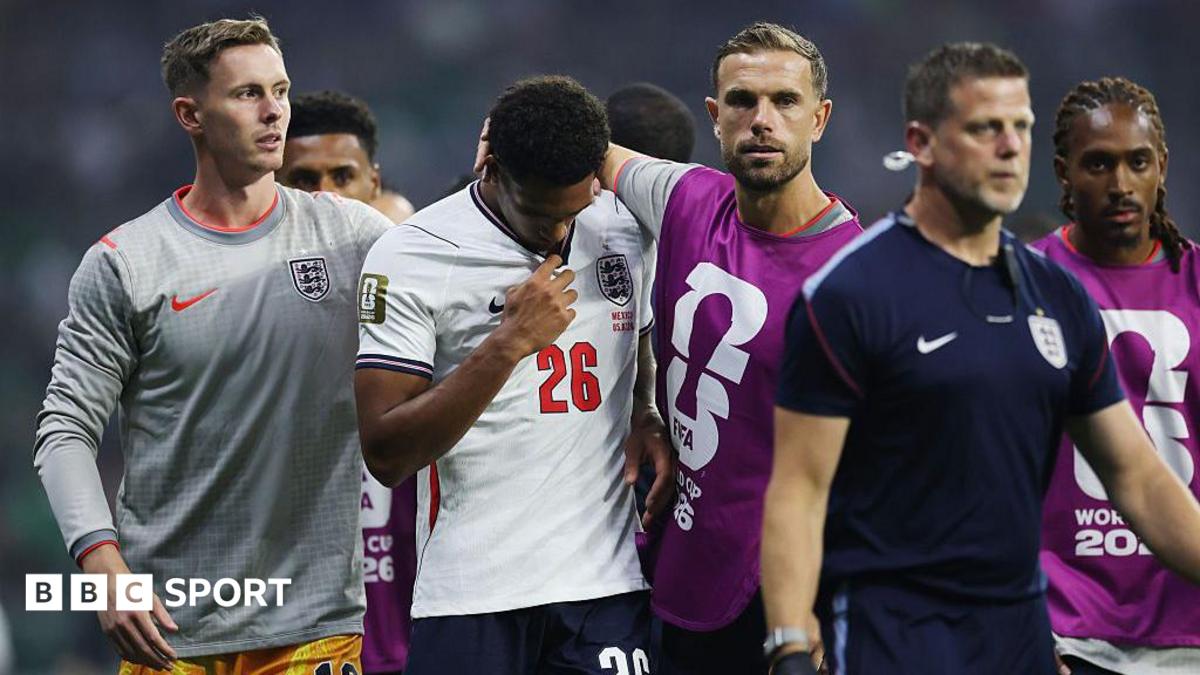
England defender Jarell Quansah has been given a two-match ban for his red card against Mexico.
Quansah was sent off in the 54th minute of the 3-2 win following a high challenge on Jesus Gallardo.
It was classed as serious foul play, meaning the Bayer Leverkusen player was handed an extra match on top of the automatic one-game suspension by Fifa’s disciplinary committee.
Former Liverpool man Quansah will miss Saturday’s quarter-final with Norway (22:00 BST) and a potential semi-final against Argentina or Switzerland.
Quansah, 23, will be available if England reach the final in New Jersey on 19 July.
The Football Association (FA) was considering whether to appeal, but under the tournament regulations there is no avenue to contest the ban.
However, BBC Sport has been told the FA made very strong representations to Fifa over the process that reached the Quansah red card decision, arguing that the referee was shown a still image of the tackle and slow-motion replays before being shown the incident in real-time on the pitchside screen, and that this could have resulted in ‘outcome bias’.
In the Premier League, officials are always shown incidents at full speed first – though England’s top flight is an outlier.
The ban complicates matters for head coach Thomas Tuchel at right-back.
Quansah filled in against Mexico while England were without the injured Reece James, with Djed Spence only used as a substitute after a minor fitness issue.
However, Tuchel has said he expects James to be available against Norway after missing games because of the hamstring injury he sustained in the second group match against Ghana.
Tuchel’s assistant coach Anthony Barry said the Quansah news was “disappointing”.
“Disappointing, not with the decision, just the fact that we lose a good player,” he added.
“He was excellent in training, and of course we have some injuries in that position, so it looked like a space had opened up for Jarell.
“But the decision’s been made, we won’t waste any more energy on it. Overall for us, we lose a good player for two games, but it’s just another hurdle that we have to overcome.”
Winger Bukayo Saka said the ban was “incredibly frustrating for us, and for him”.
“But it is what it is. We have to adapt and pick a team to win against Norway,” he added.
Fifa has announced that French referee Clement Turpin, who took charge of England’s 4-2 win over Croatia, has been appointed to officiate the Norway game.
Russian athletes could be allowed to compete at the 2028 Olympic Games in Los Angeles after the International Olympic Committee provisionally lifted their suspension.
It says that ban is “no longer applicable” and athletes from Russia can compete again as long as they “meet relevant anti-doping requirements”.
No decision has yet been taken on whether Russia can display its flag, colours and anthem at the Olympic Games.
Some Russian athletes competed at both the 2024 Paris Games and this year’s Winter Olympics in Milan as neutrals.
Russia welcomed the decision, saying the Games must be “free from politics”.
“The IOC is sending a clear signal: the Olympic movement must remain free from politics,” Russian sports minister Mikhail Degtyarev said on Telegram, adding that Russia planned to participate in qualifiers for the 2028 Olympics.
The BBC Alba deal means there will still be some live coverage of the Commonwealth Games on free-to-air television in Scotland.
The commentary and presentation will, of course, be predominantly in Gaelic.
A similar deal is in place in Wales. This means there will be some live coverage on the Welsh language broadcaster S4C.
These deals happened because TV rights packages are available to cover many indigenous languages across Commonwealth countries – not just the main language.
The BBC was outbid for live English language rights in the UK by subscription service TNT. Channel 5 later secured a package of two hours of daily recorded highlights.
The Welsh and Gaelic deals ensure there will at least be some free-to-air live coverage.
BBC Alba and S4C are available to all viewers in Scotland and Wales respectively.
But the profile of the TV coverage will, inevitably, still be much lower to that afforded to previous Commonwealth Games in the UK.
The games in 1970, 1986, 2002, 2014 and 2022 got wall-to-wall coverage on BBC One.
The schedule on BBC One is currently dominated by the World Cup and Wimbledon. Major sporting events have the potential to bring large, diverse groups of people together to share memorable moments.
The deals covering BBC Alba and S4C are good news for these channels and inevitably some who do not speak Gaelic or Welsh will watch too.
But how will the scaled down Commonwealth Games fare without high profile live coverage on a major free-to-air channel?