The high-powered Indy cars that will be racing in Sunday’s Grand Prix of Long Beach will burn about two gallons of fuel on each of their 90 trips around the tight 1.968-mile street course.
So if all 27 cars that start the race also finish it, the field will use 4,860 gallons of fuel. And that doesn’t include the fuel used in qualifying or in the other five classifications of cars that will be participating in the three days of racing in Long Beach.
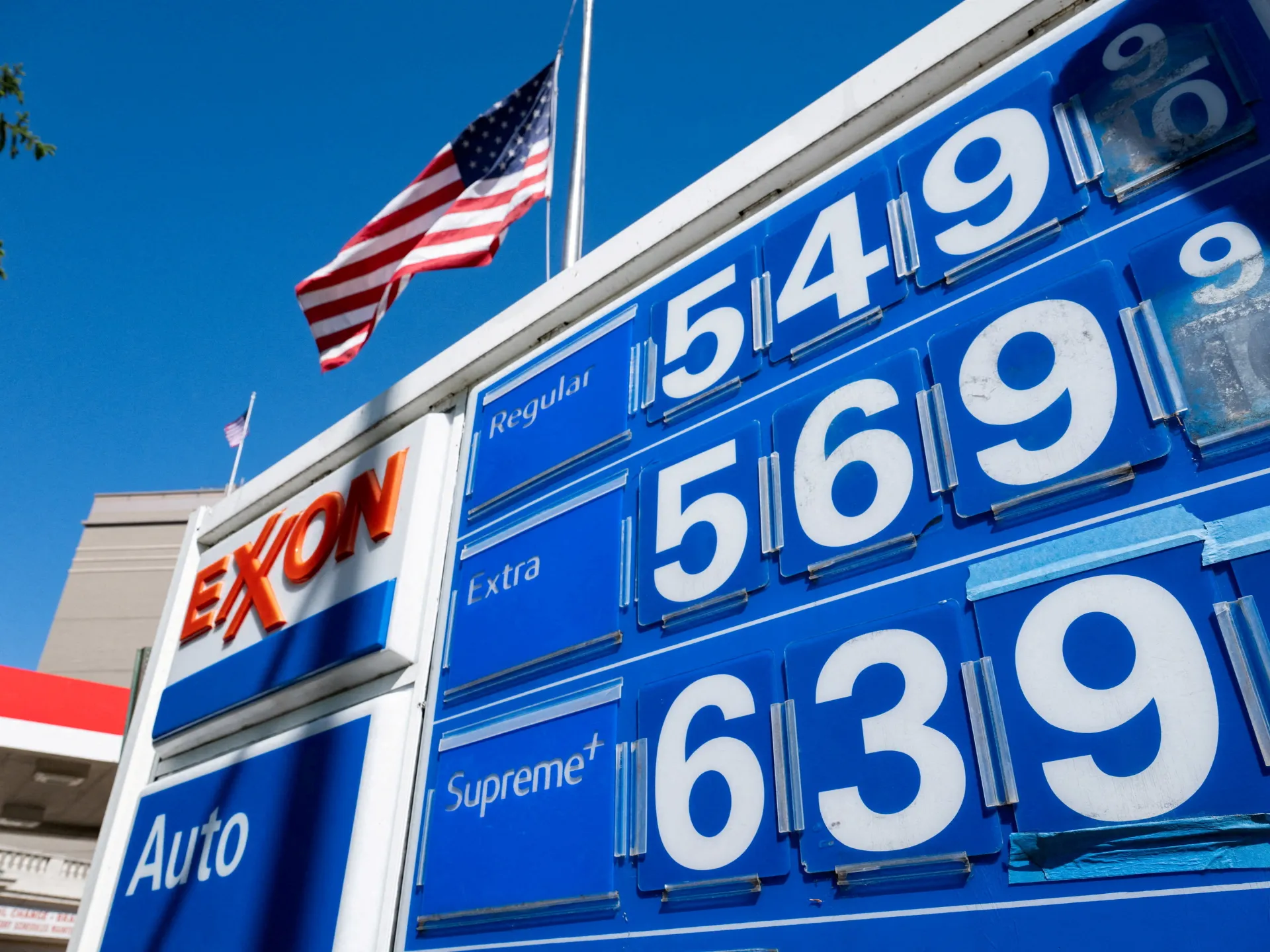
That’s a lot of fuel for drivers who will end up in the same place they started, especially when seven weeks of war in the Middle East has driven the price of gasoline to record highs. However, the fuel the IndyCar series uses differs significantly from what that comes out of the pump at the gas station.
“This year marks the fourth season that IndyCar has used 100% renewable race fuel for the NTT IndyCar Series — the first motorsport series in North America to utilize this type of fuel,” an IndyCar spokesperson wrote in a statement. “Developed through a collaboration with Shell, this innovative fuel consists of a blend of second-generation ethanol derived from sugarcane waste and other biofuels mainly derived from animal waste. The use of this renewable race fuel enables a 60% reduction in life cycle greenhouse gas emissions.”
So while driving Indy cars 177 miles in a circle may seem wasteful during a gas crunch, Sunday’s race will have a negligible affect on the price and availability of fuel at service stations. The greater impact will be made by fans driving to Long Beach; last year’s three-day race weekend drew more than 200,000 people.
As airlines grapple with the soaring jet fuel prices and global shortage due to the closure of the Strait of Hormuz, two more have been forced to increase their prices for passengers
Two airlines have increased their prices amid the jet fuel crisis (Image: Getty Images)
Due to the escalating fuel crisis sparked by the Middle East conflict, two more airlines have been forced to raise their prices.
Air travel has been severely disrupted with cancelled routes and a sharp rise in jet fuel prices since US-Israeli strikes erupted on February 28, 2026. The situation was further heightened by Iran’s blockade of the Strait of Hormuz, through which approximately 20 per cent of the world’s oil and gas passes, triggering a global shortage.
As a result, airlines have been grappling with rising jet fuel costs and have been forced to raise prices. Air France and KLM are the latest airlines to confirm they’ve had to increase ticket prices as a result.
The airlines, which are part of the same company Air France–KLM, had previously added a surcharge last month to offset soaring jet fuel prices. At the time, economy fares were bumped up by an extra €50 (£43.47) for a round trip, reported The Sun.
Now, with another increase announced, a long-haul round trip with Air France or KLM could cost an additional €50, bringing the fuel surcharge to €100 (£86.98) on top of the standard fare. Meanwhile, flights to the United States, Canada and Mexico could increase by €70 (£60.89), and an economy round-trip could cost an extra €10 (£8.70).
The Mirror has contacted Air France and KLM for comment.
Air France and KLM aren’t the only airlines to raise prices amid the ongoing fuel crisis. Just this week, it emerged that Virgin Atlantic had increased some flight costs with an extra £50 fuel surcharge on economy-class tickets, while premium economy fares are climbing by £180 and business class by £360.
Virgin Atlantic Chief Executive, Corneel Koster, warned travellers that flight prices could climb in the coming months and potentially throughout the remainder of the year. He said: “We have never seen jet fuel at this level and airlines cannot sustain those sorts of high costs.”
“If the fuel price goes much higher, I think the surcharges may go higher. If they go up in a week and you book in two weeks’ time, you’ll be paying higher.”
While there are no fuel shortages at present, Koster acknowledged it was impossible to guarantee supplies in the months ahead. “We have contracts with multiple suppliers who have a wide range of diversity of where the jet fuel comes from,” he explained.
“We have good visibility and no concern for the coming one to two months – certainly for the remainder of April and May. Beyond that I have less visibility, but that is quite normal.”
Meanwhile, it’s also been reported that airlines, such as JetBlue, have increased luggage fees in a bid to offset the soaring fuel costs. For off-peak economy fares, bags are expected to cost $4 more (£2.95), jumping to $39 (£28.79), while peak economy fares are set to be $49 (£36.17).
Do you have a travel story to share? Email webtravel@reachplc.com
A major fire at a key refinery in Australia refinery has disrupted fuel production, raising fears of shortages as supplies are already strained by the Iran war.
The airline has shared advice for customers with concerns about upcoming bookings
Holidaymakers are looking ahead to the summer (stock photo)(Image: Getty)
easyJet Holidays has shared a message to passengers with concerns over upcoming bookings. Ahead of the summer holidays, experts have warned Europe could face jet fuel shortages if the Strait of Hormuz is not fully reopened within three weeks.
Airports Council International (ACI) Europe, the trade body for European airports, said: “At this stage, we understand that if the passage through the Strait of Hormuz does not resume in any significant and stable way within the next three weeks, systemic jet fuel shortage is set to become a reality for the EU. The fact that we are entering the peak summer season… is only adding to those concerns.”
Ryanair boss Michael O’Leary has also warned disruption could begin in May. He previously told Sky News: “Fuel suppliers are constantly looking at the market.
“We don’t expect any disruption until early May, but if the war continues, we do run the risk of supply disruptions in Europe in May and June, and we hope the war will finish sooner than that and the risk to supply will be eliminated.
“We think there is a reasonable risk, some low level, maybe 10% to 25% of our supplies might be at risk through May and June, so like everyone else in this industry, we hope the war ends sooner rather than later. If the war finishes by April and the Strait of Hormuz reopens, then there is almost no risk to supply.”
In response to recent developments, an easyJet Holidays customer asked the package holiday provider if their upcoming flight could be affected. Reaching out to EasyJetholidays on X, the customer said: “How concerned should we be that, given the potential aviation fuel shortages from end May, that our July flights Gatwick Bordeaux will be cancelled? Do you have surety of supply from Canada for example?”
Content cannot be displayed without consent
In a message on April 10, an employee told the passenger they would be notified if any changes were made to the booking. In the X post, easyJetholidays said: “Hi there, thanks for reaching out. We do appreciate your concerns.
“Please be assured, we are monitoring the situation closely and if there were to be any changes to your booking at all, our dedicated pre-travel team would be in touch to advise on your options.”
In other easyJet news, passengers have been advised that they will miss their flights if they are late arriving at their departure gate. The airline clarified its policy when a social media user contacted EasyJet after spending an hour in a passport control queue, which threatened to make them late for their departure gate.
On X, a user wrote: “EasyJet, we have 20 mins left until our flight from Palermo to London takes off, been in finger print queue for an hour now and moved three steps. They let LOADS of BA people through before us who are leaving 10 mins before our flight, and now we’re even more delayed. What will happen?”
In response, a member of the customer service team named Thando, on April 8, explained: “Hi Kez, thank you for reaching out. Please note that the boarding gate closes a minute before departure. After it closes, you will not be able to board and will miss your flight.”
President Lee Jae Myung (3-L, rear) attends a meeting of top commanders of the Army, Air Force and Navy at the defense ministry in Seoul, South Korea, 27 March 2026. Photo by YONHAP / EPA
April 13 (Asia Today) — South Korea’s Defense Ministry said Monday it is strengthening fuel procurement and management to ensure military readiness as global energy supply uncertainty rises.
Vice Minister of Defense Lee Doo-hee visited an Army corps unit to inspect fuel storage operations and energy conservation measures, urging tighter management of military fuel reserves.
The visit came as concerns grow over global energy disruptions linked to the Middle East conflict, prompting the government to emphasize stable fuel supplies as a key element of military preparedness.
Lee said effective fuel management is essential to maintaining operational capability in both peacetime and wartime, calling on units to ensure they can carry out missions immediately under any circumstances.
He also stressed the need to strengthen safety management and emergency response systems at military fuel storage facilities.
The government recently raised its resource security alert level for crude oil from “caution” to “alert,” reflecting heightened concerns over supply stability.
Lee urged commanders to improve efficiency in unit operations and promote energy-saving practices across military bases to conserve resources.
A man climbs a staircase next to a portrait of Ernesto ‘Che’ Guevara in Havana on Friday). The United States have prevented oil shipments to Cuba for months, except for one Russian tanker, Photo by Ernesto Mastrascusa/EPA
April 13 (UPI) — Cuba’s fuel shortages are disrupting the distribution of humanitarian aid managed by the Catholic Church and international organizations as the island’s basic services continue to deteriorate.
The crisis has particularly affected Caritas Cuba, one of the country’s main social assistance channels, which relies heavily on local transportation networks to deliver food and hygiene supplies to vulnerable communities, according to CiberCuba.
Miami Archbishop Thomas Wenski told USA Today in an interview Sunday that aid shipments are being distributed through improvised means with almost no motorized transport because of gasoline shortages.
Wenski, who has coordinated aid shipments from South Florida for three decades, said Cubans have told him the island is approaching “ground zero” of humanitarian collapse.
Organizations linked to Caritas say more people are turning to soup kitchens for food, underscoring worsening food insecurity among vulnerable populations, digital outlet CubitaNow reported.
Cuba has faced increasingly frequent blackouts, chronic shortages of food and medicine and a transportation system largely paralyzed by fuel scarcity in recent years.
The arrest of Nicolás Maduro by the United States interrupted Venezuelan oil shipments of between 25,000 and 35,000 barrels per day that had supplied most of Cuba’s fuel needs, worsening the energy crisis. Mexico also suspended shipments following sanctions imposed by Trump administration.
According to United Nations reports, about 170 containers of essential goods valued at $6.3 million remain stranded at ports because of the fuel shortage.
Francisco Pichón, the U.N. resident coordinator in Cuba, warned that the country’s humanitarian situation continues to deteriorate as the energy crisis compounds damage caused by Hurricane Melissa.
Despite limited fuel deliveries, including a recent Russian oil shipment, Pichón said “humanitarian needs in the country remain very urgent and persistent.”
He said more than 96,000 surgeries have been postponed, including 11,000 involving children. Another 32,000 pregnant women face heightened risk because of unstable prenatal care access, while 3,000 children are experiencing vaccination delays.
Nearly 500,000 children and teenagers are attending shortened school days.
About 1 million people have been affected by water shortages because they depend on trucked water deliveries.
Pichón noted that Cuba has the oldest population in Latin America, increasing the vulnerability of elderly residents amid the crisis.
The United Nations system and the Office for the Coordination of Humanitarian Affairs have proposed a $94.1 million plan to import fuel specifically for humanitarian use and sustain essential services that include healthcare and water access.
U.S. President Donald Trump acknowledged that oil and gasoline prices could remain elevated through the fall, signaling potential political and economic consequences from the ongoing conflict with Iran.
“It could be, or the same, or maybe a little bit higher, but it should
Major UK airlines have warned that should the Strait of Hormuz not be fully reopened in the coming weeks then fuel shortages will have an impact of travel ahead of the summer holidays
Airlines give warnings as fuel shortages faced by EU airports
European airports will face “systemic” shortages of fuel if the Strait of Hormuz is not fully reopened within three weeks, experts have warned.
ACI Europe, which represents EU airports, noted that jet fuel reserves were running low with further supplies strained due to “the impact of military activity on demand”.
Despite a current ceasefire and negotiations of a deal underway, there will still be ‘ripple effects’ for airlines as the impact of reduced gas supplies was felt worldwide.
With JD Vance announcing today “no deal” has been reached yet, it means that the impact could be felt as early as the week of May 4.
A letter seen by the Financial Times, warned “increasing concerns of the airport industry over the availability of jet fuel as well as the need for proactive EU monitoring and action”.
“If the passage through the Strait of Hormuz does not resume in any significant and stable way within the next three weeks, systemic jet fuel shortage is set to become a reality for the EU,” the letter said.
Although major airlines still have weeks of supply left, the upcoming peak summer season raises further concerns about supply and costs.
Ryanair has warned that if the war doesn’t end this month, there will be disruption from May.
Ryanair boss Michael O’Leary said: “Fuel suppliers are constantly looking at the market. We don’t expect any disruption until early May, but if the war continues, we do run the risk of supply disruptions in Europe in May and June, and we hope the war will finish sooner than that and the risk to supply will be eliminated.
“We think there is a reasonable risk, some low level, maybe 10 per cent to 25 per cent of our supplies might be at risk through May and June, so like everyone else in this industry, we hope the war ends sooner rather than later.
“If the war finishes by April and the Strait of Hormuz reopens, then there is almost no risk to supply.”
Despite the confidence that should negotiations be made, travel will not be under threat, it is reported that suppliers are unable to guarantee deliveries into May.
This week European jet fuel prices hit a record $1,900 per metric ton, according to specialised publication Argus.
The hike could see potential shortfalls coming in future months.
Kenton Jarvis, the boss of EasyJet, warned that pricing was “volatile” since this “terrible war started” however the company is “well hedged” in terms of supplies.
The likelihood of cancellations comes after four Italian airports last weekend introduced restrictions on jet fuel after disruption. Air New Zealand also cancelled a selection of flights due to high fuel prices.
Brits could face flight cancellations and prices rises for the upcoming May half-term school holidaysCredit: ZenpixCancellations have already left thousands without flights in recent weeks, and it could soon get even worseCredit: Getty
Travellers are now being warned that flights could be cancelled and prices could soon rise as fuel reserves are expected to run out due to ongoing closure.
According to ACI Europe (the lobby group for airports in Europe), fuel reserves are expected to run out in less than three weeks unless the Middle East increases supplies.
ACI Europe warns: “If the passage through the Strait of Hormuz does not resume in any significant and stable way within the next three weeks, systemic jet fuel shortage is set to become a reality.”
It added that the shortage of fuel supply is likely to “severely disrupt airport operations and air connectivity”.
Around 140 ships usually pass through the Strait of Hormuz – yet has dropped to just seven ships today.
For Brits, this could mean travel chaos for May half-term getaways including popular destinations such as Spain, Italy and France.
The announcement comes as a number of airports in Italy already warned that they were running out of fuel.
According to local reports earlier this week, Brindisi-Casale Airport confirmed that Jet A1 fuel was not available for a short period of time.
While this didn’t result in any flight cancellations, airlines were warned to fly with enough fuel for the return journey.
This is because any remaining fuel was being reserved for emergency situations including medical flights.
A statement said at the time: “Jet A1 fuel is temporarily unavailable at Brindisi Airport.
“Refueling is permitted only for state, emergency medical services, and medical flights.
“Pilots are advised to refuel at previous stopovers to cover subsequent flights.”
Restrictions were also in place at other airports in Italy including Milan Linate, Venice, Bologna and Venice temporarily.
Despite this, Antonio Maria Vasile, president of Aeroporti di Puglia, commented regarding the news of the alleged fuel shortage.
He said at the time: “Fuel supplies continue regularly, and there is no risk of an imminent shortage.”
The Iran conflict has seen strikes across the Middle East, including Beirut (pictured)Credit: AFP via Getty ImagesFuel prices have surged in recent weeks due to the reduction of shipments via the Strait of HormuzSAS has already cancelled more than 1,000 flightsCredit: Reuters
And it isn’t just Italian airports being hit by the fuel crisis.
The Australian government has warned that the country only has around 30 days of jet fuel left.
The announcements also come as some Asian countries are grounding flights and European airlines are making plans to deal with shortages.
Back in March, United Airlines CEO Scott Kirby said: “It’s entirely possible that parts of Asia are just going to run out of fuel.”
Lisa Minot, the Sun’s Head of Travel, has weighed in on what this could mean for you holiday
Fears of fuel shortages at European airports could lead to a disastrous start to summer putting holidays and flights at risk in the popular half term week.
Ryanair boss Michael O’Leary had already started to raise his concerns – saying last week that if the war continues beyond the end of April it could impact between ten and 25per cent of the low cost giant’s fuel supplies.
But the fresh warning from European airports is a step up in the crisis.
Unless ships start to pass through the Strait of Hormuz with increased regularity, we could see fuel shortages at airports across the globe.
We’ve already started to see cancellations, with flights to Guernsey operated by Aurigny and to Newquay by Skybus axed in concerns over fuel shortages.
Further afield, Vietnam and Pakistan have warned of fuel shortages and Air New Zealand has begun cancelling some domestic flights.
The lack of clarity as to when the situation will improve will do nothing to calm fears and it is unsurprising that travel companies and airlines have seen demand dip as worried holidaymakers await better news.
The longer the situation remains uncertain, the more damage is done.
Even Michael O’Leary, chief executive of Ryanair, has also warned of “the risk of supply disruptions in Europe in May and June” unless the war ends quickly.
Fuel prices have soared compared to what they were before the war in the Middle East broke out.
Last week, the cost of filling up an average diesel tank broke through the £100 mark for the first time since December 2022.
And the Iran conflict has taken Dubai off the holiday list, with the UK Foreign Office still warning against non-essential travel.
Hundreds of thousands of travellers were left stranded abroad when the conflict resulted in airspace closures and Dubai Airport closing.
While limited flights have returned, most airlines are still axing flights to Dubai, as well as other destinations in the Middle East.
The US-Israel war on Iran has sparked a global fuel crisis as thousands of tankers carrying crucial deliveries of oil and liquefied natural gas (LNG) remain stranded on either side of the Strait of Hormuz, currently under a blockade imposed by Iran.
On Saturday, Egypt’s government said it is among the “best-performing” countries in tackling the crisis because of the measures it has implemented to save on fuel.
Here is what we know about the steps Egypt is taking and whether other countries are doing the same.
Why has the Iran war caused an energy crisis?
Pressure on oil and gas markets is mounting due to the almost complete halt to shipping through the Strait of Hormuz as well as air strikes on and around key energy facilities in the Gulf as the United States-Israel war on Iran enters its sixth week.
One-fifth of the world’s oil and LNG is shipped from producers in the Gulf through the Strait of Hormuz in peacetime. This is the only route from the Gulf to the open ocean.
On March 2, two days after the US and Israel began strikes on Iran, Ebrahim Jabari, a senior adviser to the commander in chief of Iran’s Islamic Revolutionary Guard Corps (IRGC), announced that the strait was “closed”. If any vessels tried to pass through, he said, the IRGC and the navy would “set those ships ablaze”. Since then, traffic through the strait, carrying cargoes including 20 million barrels of oil each day, has plunged by more than 95 percent.
Now, Tehran is allowing just a handful of tankers through after reaching agreements with some countries to do so.
Besides this, energy infrastructure in the Middle East has suffered damage over the course of the war.
On March 24, QatarEnergy declared force majeure on some of its long-term LNG supply contracts after an Iranian attack on Qatar’s Ras Laffan LNG facility – the largest in the world – wiped out about 17 percent of the country’s LNG export capacity, causing an estimated $20bn in lost annual revenue and threatening supplies to Europe and Asia.
All of this disruption has sent energy prices soaring. On Tuesday, global oil benchmark Brent crude was around $109 per barrel, compared to around $65 per barrel right before the war started.
How is Egypt tackling the energy crisis?
Egypt’s Petroleum Ministry has announced rises in fuel prices ranging from 14 percent to 30 percent.
On March 28, Egyptian Prime Minister Mostafa Madbouly’s office told a press conference that the country’s energy import bill had increased from $1.2bn in January to $2.5bn in March.
Egypt is both one of the region’s largest energy importers and among its most heavily indebted economies. While domestic gas and oil account for the majority of its total energy supply, the country still relies on imported fuels, especially refined oil products and some natural gas, from Israel and the Gulf states.
Madbouly announced measures Egypt is taking to mitigate this and preserve state energy resources.
From March 28, shops, malls and restaurants are closing at 9pm (19:00 GMT) every day for one month, except Thursdays and Fridays.
On Thursdays and Fridays, the closing time will be 10pm (20:00 GMT).
Fuel allocations for government vehicles will be reduced by 30 percent.
Street lighting and street advertisement lighting will be cut by 50 percent.
From April 1, eligible employees will work remotely on Sundays, the first day of the working week. Some essential services, such as pharmacies, grocery stores and tourist facilities, will be exempted from this.
Which other countries have introduced energy conservation measures?
Besides Egypt, other countries are also taking steps to save energy.
Last week, Malaysia ordered civil servants to work from home to save energy in government offices.
In mid-March, it was revealed that government offices in the Philippines had moved to a four-day work week, officials in Thailand and Vietnam were being encouraged to work from home and limit travel, and Myanmar’s government had imposed alternating driving days.
Pakistan, which imports about 80 percent of its energy from the Gulf, announced on Monday of this week that markets and shopping malls would close at 8pm (15:00 GMT) across the country, except in Sindh province. The government’s statement added that food outlets would close at 10pm (17:00 GMT), which is also when marriage ceremonies at private properties and houses must end.
Bangladesh has reduced working hours for government and private workers and banking services hours in a bid to conserve electricity.
In Sri Lanka and Slovenia, authorities have introduced fuel rationing and purchase limits to manage shortages and soaring costs.
ANOTHER airline has confirmed that luggage fees will be increasing due to the ongoing fuel crisis.
The conflict in the Middle East has resulted in the cost of jet fuel soaring due to the closure of the Strait of Hormuz, meaning airlines are looking at ways to offset costs.
Sign up for the Travel newsletter
Thank you!
United Airlines is the latest to increase luggage costs due to rising fuel pricesCredit: Reuters
And United Airlines has since increased its baggage fees, the second airline to do so.
The new rules mean checked bags now cost $10 (£7.50) extra, working out to $45 (£33) for domestic flights, or $50 (£37) if it it booked 24 hours before a flight.
A second checked bag will now cost up to $60 (£45) if booked last minute.
The airline said: “United is raising first and second checked bag fees by $10 for customers traveling in the US, Mexico and Canada and Latin America beginning with tickets purchased Friday, April 3.”
Last month, JetBlue was the first airline to confirm that they would be increasing luggage costs in response to fuel prices going up.
Checked bags have gone up by $4 (£3) for off peak, economy travellers – who will pay $39 (£30).
Peak economy travellers will have to pay $9 (£6.80) extra, so to $49 (£37).
Passengers paying for luggage less than 24 hours before the flight will pay an extra $10 (£7.50).
A JetBlue spokesperson told local media: “Adjusting fees for optional services used by select customers, such as checked baggage, allows us to continue offering more competitive fares.”
Some airlines are already cancelling flights.
UK-owned Skybus has cancelled its daily flights between London Gatwick and Newquay earlier than planned.
Due to finish by end of May, it has since cancelled all of the routes and cited lack of passengers as well as rising costs.
Ho Chi Minh City, Vietnam – After a long day of ferrying passengers to and fro recently, e-hailing driver Nguyen was dejected to find he had spent half of his earnings on fuel.
“I drove for around seven or eight hours, making around 240,000 Vietnamese dong [$9.11] and then I paid 120,000 Vietnamese dong [$4.56] on petrol,” Nguyen, a motorcyclist who connects with passengers via the locally developed super-app Be, told Al Jazeera, asking not to be identified by his real name.
Recommended Stories
list of 4 itemsend of list
“I can’t survive with this amount of money in the city.”
In Vietnam, the ripples of the US-Israel war on Iran are hitting many gig workers hard.
The Southeast Asian country normally sources about 80 percent of its crude oil from Kuwait, but shipments have dried up amid Iran’s effective blockade of the Strait of Hormuz, driving up fuel prices.
Diesel prices have more than doubled, while petrol prices have risen almost 30 percent, making getting from point A to point B an increasingly expensive proposition in cities such as Ho Chi Minh City, home to more than 7 million motorcycles.
“Because the petrol price is so high, so many drivers are turning off the app, going home and just not working,” Nguyen said.
“After today, I will turn off the app and stop working for a few days to see if the price goes down or if the government is helping in any way.”
A Be driver picks up a passenger at Thu Duc Metro Station in Ho Chi Minh City, Vietnam, on March 30, 2026 [Govi Snell/Al Jazeera]
Vietnam’s government has rolled out a series of emergency measures to cushion the blow for citizens.
Prime Minister Pham Minh Chinh last month announced that an environmental tax on diesel, petrol, and aviation fuel would be suspended until April 15 to help stabilise prices.
Nguyen Khac Giang, a Vietnamese-born visiting fellow at the ISEAS-Yusof Ishak Institute in Singapore, said authorities had been forced to act to stave off rising disgruntlement among citizens.
“There are a lot of complaints and frustrations about rising living costs, because gas prices are everything in Vietnam,” Giang told Al Jazeera.
“It’s not only necessary in terms of making the population feel relief about the rise of gas prices, but at the same time, it will keep the macroeconomic stability intact, given the turbulence outside Vietnam.”
Despite the government sacrificing an estimated $273m in revenue via the tax cut, signs of strain are mounting across the economy.
Public transportation is stretched to capacity in major cities, while domestic carriers such as Vietnam Airlines and Vietjet Air have slashed flights.
“As a very, very open economy, Vietnam is super vulnerable to international shocks,” Giang said.
Gig workers have been particularly exposed due to the double whammy of heavy fuel consumption and minimal labour protections.
“Their income is changeable due to factors beyond their control,” Do Hai Ha, a research fellow at the University of Melbourne who has studied Vietnam’s gig platforms, told Al Jazeera.
“They have no chance to negotiate with the platforms.”
Many drivers have had no choice but to work longer hours as they are “excluded from labour protection, so there’s no guarantee in terms of minimum wages or overtime pay”, Do said.
A commuter refuels at a petrol station in Ho Chi Minh City, Vietnam, on March 27 [Govi Snell/Al Jazeera]
Companies, too, are feeling the crunch.
Anh Dao, who collects fares on Ho Chi Minh City’s bus route 13, said the bus operator has been losing money due to the surge in diesel prices, despite raising ticket prices by 3,000 Vietnamese dong ($0.11).
“As we already signed the contract, we cannot just stop running the buses,” Ahn told Al Jazeera.
For one fisherman in the coastal region of Binh Thuan, about 200km (124 miles) from Ho Chi Minh City, rising fuel costs have prompted a frantic search for cheaper options to power his basket boat.
“Now that fuel prices are rising, it’s having a big impact,” the fisherman told Al Jazeera, asking not to be identified by name. The middlemen he does business with have been citing weak demand to justify offering lower prices for his catch, he said.
“What I was usually able to sell for 800,000 Vietnamese dong [$30] is now only selling for 650,000 Vietnamese dong [$24],” he said.
Families kept apart
For some low-income families, the rising costs are reshaping daily life in other ways.
After a weeklong trip to the Mekong Delta region, Uyen Pham, a communications manager for the Saigon Children’s Charity, said she has seen the strain firsthand.
“Several parents noted that the cost of bottled cooking gas has nearly doubled,” Pham told Al Jazeera.
“Most of our beneficiary families have always relied on wood-fired stoves or a hybrid of wood and gas to save money. With the recent price hike, they are now strictly limiting their gas usage even further, relying almost entirely on wood to cut every possible expense.”
For many parents, the rising fuel costs have also meant less time with family.
“Many parents in remote areas must leave their children with grandparents to work in cities,” Pham said.
“Rising fuel prices directly increase their commuting costs, while manual labour wages remain stagnant. This pinches their take-home pay and, in some cases, reduces how often they can afford to travel home to see their children.”
For the government in Hanoi, the price volatility has intensified the focus on greater energy independence, Giang, the visiting fellow, said.
“The longer-term question this crisis has enacted is a very important question about the strategic autonomy of Vietnam in terms of energy dependencies, especially when we are a net importer of oil,” he said.
Policymakers will need to “more aggressively accelerate Vietnam’s energy independence by building more refineries,” Giang said, “because now we only have two refineries, which is not enough for the Vietnamese market.”
With long-term solutions likely to take years to come to fruition, authorities are scrambling for short-term fixes.
Commuters wait for the train at Thu Duc Metro Station, in Ho Chi Minh City, Vietnam, on March 30, 2026 [Govi Snell/Al Jazeera]
Late last month, Vietnam’s prime minister and a delegation from the Ministry of Industry and Trade visited on the Nghi Son Refinery and Petrochemical Complex, the country’s largest refinery, in Thanh Hoa, a coastal city about 1,500km (932 miles) north of Ho Chi Minh City.
During their visit, officials said the refinery, which supplies about 40 percent of Vietnam’s petrol needs, would urgently need to find alternative sources of crude, as current supplies were expected to run out by the end of May.
The war on Iran also appears to be reshaping at least some domestic investment.
Vingroup, Vietnam’s largest conglomerate, last month informed authorities that it wanted to halt plans to build the country’s largest liquefied gas-fired power plant and put the funds towards a renewable energy project instead, according to a letter reported by the Bloomberg and Reuters news agencies.
In the letter, the company cited “the significant risk of high fuel prices for LNG power projects” due to the war.
In the meantime, Duy, who works at a cafe tucked behind a Ho Chi Minh City petrol station, is feeling some relief after the government’s fuel tax cut, which authorities projected would reduce petrol prices by about one-quarter and diesel prices by about 5 percent.
“I usually pay 100,000 Vietnamese dong [$3.80] a week on gas, but at the peak of the high prices a few days ago, it was almost double that,” she told Al Jazeera.
He explained: “At a time of great economic uncertainty and steps being taken to conserve energy worldwide, it is neither environmentally nor economically sound for us to continue flying with vastly reduced passenger numbers.”
Passengers affected will be fully refunded.
The flights between London and Cornwall take around 1hr20 and start from £79.99 each way.
This is not only faster – trains take around five hours and include a change to Newquay – but cheaper than the average train fare which is around £85.
Some passengers use it as a way of travelling further onto Europe as well.
One Brit, who was meant to fly from Newquay to Gatwick, then onto Seville told the BBC: “Gatwick is not the easiest airport to get to so our contingency is probably to use rail.”
In the mean time, Ryanair offers flights between Newquay and London Stansted all year round.
And easyJet is due to start a new flight route to Newquay from June 23, with two a week from London Gatwick on Tuesdays and Thursdays.
A Cornwall Airport Newquay spokesperson said: “We are actively working with airline partners and stakeholders to secure sustainable London connectivity for the future.”
He said: “We don’t expect any disruption until early May, but if the war continues, we do run the risk of supply disruptions in Europe in May and June.”
While he said he didn’t see the airline having to cancel flights just yet, he warned that as much as 20 per cent of its jet fuel is costing them nearly $150 a barrel.
Other airlines around the world have already started cancelling flights.
Both Air New Zealand and SAS confirmed that more than 1,000 have been cancelled, mainly affecting domestic routes.
And United Airlines said five per cent of flights would be cancelled in the second and third quarters of 2026 – working out to around 250 a month.
The airline will still operate flights to Newquay from the Isles of ScillyCredit: Alamy
Bilivan consumers have felt the impact of contaminated gasoline. More than 10,000 vehicle owners, including long-distance transport operators and private drivers, have reported severe engine damage. File Photo by Luis Gandarilas/EPA
April 1 (UPI) — Bolivia’s government, led by President Rodrigo Paz, said it has uncovered an international criminal network responsible for sabotaging and adulterating imported fuel shipments that entered the country over the past five months.
Interior Minister Marco Antonio Oviedo told a news conference Tuesday that at least 150 million liters of gasoline and diesel were tampered with, citing an official investigation that identified a scheme involving fuel theft and contamination with water and oil in Chilean territory.
Authorities said the operation targeted tanker trucks transporting fuel to Bolivia, particularly in northern Chilean cities. In those locations, part of the fuel was allegedly siphoned off and replaced with a mixture of water and oil, according to local broadcaster Unitel.
President Paz said the adulteration began around October.
Investigators believe the network operated mainly in Chile, with additional links and operational hubs in Paraguay and Argentina. The direct economic loss to the Bolivian state is estimated at $150 million, excluding indirect costs linked to transport disruptions.
Consumers also have felt the impact. More than 10,000 vehicle owners, including long-distance transport operators and private drivers, have reported severe engine damage.
“We are facing an attack against the assets of Bolivian families,” Paz said, adding that the government will pursue legal mechanisms to compensate those affected, according to local newspaper El Deber.
Bolivia’s landlocked status makes transporting fuel from Chile critical to its energy supply chain. The country relies on Chilean ports such as Arica, Iquique and Mejillones to receive international shipments of crude oil and refined products.
After a virtual meeting Tuesday, Paz and Chilean President José Antonio Kast agreed on a joint roadmap to dismantle the transnational organized crime network behind the fuel adulteration, according to Bolivia’s state-run broadcaster BTV.
As an immediate response, Bolivia announced tighter controls at facilities operated by state energy company Yacimientos Petrolíferos Fiscales Bolivianos, known as YPFB, and the National Hydrocarbons Agency. Authorities will implement mandatory laboratory testing at production sites and border checkpoints.
Civil society groups have called for accountability as the investigation continues, urging authorities to prosecute those responsible abroad and to address potential internal failures that allowed the sabotage to go undetected for months.
The crisis comes as Bolivia faces a severe fuel supply shortage. After a structural decline in domestic hydrocarbon production, which fell about 44% between 2014 and 2024, the country shifted from a net exporter to a heavily import-dependent market. Bolivia now imports about 90% of the diesel and 50% of the gasoline it consumes.
The situation has worsened since 2023 due to a shortage of foreign currency, particularly U.S. dollars, complicating payments to international suppliers and contributing to intermittent shortages and partial disruptions in transport and productive sectors.
RYANAIR boss Michael O’Leary has warned jet fuel supplies could be disrupted in May as the war in Iran chokes off global oil routes.
The budget airline kingpin warned that holidaymakers could face a summer of uncertainty if the Middle East war continues to throttle global oil routes.
Sign up for the Travel newsletter
Thank you!
Michael O’Leary revealed that while Ryanair is “reasonably well hedged” on 80% of its fuel, the company is being forced to shell out nearly double for the remaining 20%.Credit: ReutersO’Leary confirmed the airline is paying around $150 a barrel for the unhedged portion of its suppliesCredit: Splash
Prices have spiralled since the outbreak of fighting at the end of February, with Iran blocking vital tankers from passing through the Strait of Hormuz.
Speaking to Sky News, the airline chief revealed that while Ryanair is “reasonably well hedged” on 80% of its fuel, the company is being forced to shell out nearly double for the remaining 20%.
O’Leary confirmed the airline is paying around $150 a barrel for the unhedged portion of its supplies.
The outspoken boss warned that while rising costs are a major headache, the more “immediate concern” is whether there will be enough fuel to keep planes in the sky.
He admitted that the industry is at the mercy of the conflict and the ongoing blockade of the world’s most important shipping passage.
“Fuel suppliers are constantly looking at the market. We don’t expect any disruption until early May, but if the war continues, we do run the risk of supply disruptions in Europe in May and June, and we hope the war will finish sooner than that and the risk to supply will be eliminated,” he said.
O’Leary calculated that the threat to the airline’s operations is now a very real possibility for millions of passengers planning their early summer getaways.
He warned that there is a “reasonable risk” that between 10% and 25% of supplies could be at risk through May and June, adding that like everyone else in the industry, he hopes the war ends sooner rather than later.
The Ryanair chief made it clear that the fate of the summer season rests on the reopening of the Strait of Hormuz.
He stated that if the war finishes by April and the shipping lane reopens, then there is “almost no risk to supply.”
Despite the looming threat of shortages, O’Leary struck a defiant tone regarding his own flight schedule.
He told Sky News that he does not expect to cancel any flights, even as some of Ryanair’s rivals struggle to cope with the volatile market.
However, the pressure on the industry is mounting across the board.
EasyJet boss Kenton Jarvis has already sounded the alarm for passengers’ wallets, warning that European consumers should expect higher ticket prices towards the end of summer when existing fuel hedges come to an end.
So far, a number of airlines have already said they will be raising the cost of flights due to the fuel crisis.
Cathay Pacific, AirAsia and Thai Airways are just some that are increasing fares, along with Air New Zealand.
United Airlines said it could eventually see fares increase as much as 20 per cent.
Other airlines have said they are cancelling flights altogether.
United Airlines confirmed that it would be cutting five per cent of flights for the next few months, which works out to around 250 a month.
Weekly insights and analysis on the latest developments in military technology, strategy, and foreign policy.
As Epic Fury grinds into a second month, the Air Force continues to rely heavily on its fleet of aerial refueling tankers, the majority of which are over 60 years old, to gas up aircraft attacking Iran and those still pouring into the Middle East. The strain on the force has been exacerbated by the loss of a KC-135 Stratotanker and damage to another after a collision over Iraq and several more tankers being destroyed and damaged on the ground by Iranian long-range weapons. Meanwhile, given this large commitment of aircraft and personnel, there are questions about how the U.S. tanker fleet can respond to a fight in the Pacific should one break out tonight. To get a better sense of that, we spoke to retired Air Force Col. Troy Pananon, who flew tankers and commanded a tanker wing.
In the second installment of our two-hour, wide-ranging exclusive interview – the first centering on Epic Fury’s strain on the force – Pananon offers insights into whether there are enough tankers and crews to sustain combat in two theaters more than 4,000 miles apart, the challenges of flying long distance over contested airspace and what, if any, countermeasures tankers should be given to survive.
Some of the questions and answers have been lightly edited for clarity.
Col. Troy Pananon, 100th Air Refueling Wing commander, prepares for take-off aboard a KC-135 Stratotanker at RAF Mildenhall, England, April 23, 2020. (U.S. Air Force photo by Tech. Sgt. Emerson Nuñez) Tech. Sgt. Emerson Nunez
Q: Given the heavy use of aerial refueling for Epic Fury, how concerned are you about the ability to fuel a fight in the Pacific, if one should break out tonight or in the near term?
A: There is a high demand on the tanker community. We retired the KC-10s, so that is a void that can’t be filled as quickly as we would like. But the tanker force is robust, and even though we have a contingency of aircraft in the Middle East region and parts of Europe, we still have tankers that are all over the world, to include the Pacific. Kadena has its own wing of tankers there. And so the ability for our tanker fleet to pivot or to surge and scale to another region – there is not another military out there that can do it – but it puts that demand on the total force.
I think that we could do it, sure, but it would put a significant strain if we were trying to operate in two different parts of the globe, especially if it was involving major combat operations. And not to mention, there’s an element of protecting the homeland as well. Tankers are required to do that too. So you can’t just say, ‘Oh well, we’ll deplete the entire force and focus abroad.’ There’s an element required to support homeland operations as well.
A KC-10 Extender assigned to the 908th Air Refueling Squadron lands after conducting the airframe’s final combat sortie before inactivation at Prince Sultan Air Base, Kingdom of Saudi Arabia, Oct. 3, 2023. The flight served as a capstone for the KC-10 after over 30 years of service within the U.S. Air Forces Central (AFCENT) Area of Responsibility. By September 2024, the U.S. Air Force’s fleet of KC-10s will be decommissioned and gradually replaced by the KC-46 aircraft. (U.S. Air Force photo by Tech. Sgt. Alexander Frank) A KC-10 Extender assigned to the 908th Air Refueling Squadron touches down at Prince Sultan Air Base, Oct. 3, 2023. U.S. Air Force photo by Tech. Sgt. Alexander Frank
Q: Does the need to do all those missions at once worry you?
A: At my level, when I was at the tactical level or the operational level, I always felt that we were adequately supported. There was certainly a stressor involved with trying to manage all that. But whenever there was a concern, you always would go up to your higher headquarters, and say, ‘Hey, here’s the current situation. We don’t need help now, or we do need help, and this is how you can help.’
It was their ability to resource those needs that really made my job easier and made the jobs of those who worked with me easier, knowing that they had support from above. But it’s not an unlimited resource. It’d be hard for me to say what would be required if we needed to pivot, or if we needed to support two operations in different parts of the world. But I would say that we were certainly capable of doing it.
I just don’t know the duration of that, and unfortunately we always tend to think of these things in short-term snippets. But there are long-lasting impacts to things where high operations tempo means higher strain on the resources, higher strain on the aircraft.
Looking at the long view, if you have to increase your operational tempo on a particular platform versus what you had planned for that, it is going to put a strain on the acquisition process. It’s going to put a strain on the supply system. All these things, they do have an impact, not only in the short, but in the long-view as well.
Tech. Sgt. Jessica Dear, a 507th Aircraft Maintenance Squadron crew chief, tracks the amount of fuel being loaded into a KC-135 Stratotanker aircraft. (U.S. Air Force photo by Senior Airman Katriel Coffee) Airman 1st Class Katriel Coffee
Q: Considering how long it took to build up forces in the Middle East, how concerned are you about being able to fly long distances to protect Taiwan from attack by China? Can the current fleet sustain a major conflict with China, where fighters will need to fly thousands of miles on each sortie just to get to the effective fighting range?
A: I can’t completely comment on this for various reasons. There are certainly war plans in place. There have been studies that have taken place that are certainly higher classification levels, and we can’t discuss in this session or in public, right? It’s been looked at. I would say that there are plans in place that would prove that we could support operations in the Pacific region.
Is it complex? Yes. Does it require certain things to be successful? Yes, There are certain dominoes that need to fall into place in support of an operation like that.
Maintainers from the 718th Aircraft Maintenance Squadron attach a drogue to a KC-135 Stratotanker at Kadena Air Base, Japan, Aug. 25, 2023. (U.S. Air Force photo by Airman 1st Class Tylir Meyer) Staff Sgt. Tylir Meyer
Q: But from a tanker pilot and wing commander perspective, what are the challenges of flying over these long distances through a very robust Chinese anti-aircraft, area denial environment?
A: I like to use the term, it’s a young man’s or woman’s game. It’s fatigue that is the enemy here, because when you have to operate at these distances and for the duration that is involved, it is certainly a physical stressor. Often, we’re operating in multiple time zones, and we’re not probably getting adequate rest, and that’s a cumulative effect, as you are asked to operate for these long durations.
I’ve been on a cruise where we operated for 24 hours straight, and to do that over a sustained length of time – I don’t know that you can do it. In order to do that, it means you need more personnel. And so where an operation might be successful with – and I’ll just use easy numbers here – with 100 personnel that don’t have to range like you would in the Pacific or in Europe or even in the Middle East, depending on basing. Well, you’re probably going to need maybe twice as many to operate in the Pacific, because of the human element. You don’t want personnel to be fatigued to the point where they are not operating in a safe manner, and so you need to give them the appropriate rest.
It goes all the way down the line, from air traffic control to ground personnel to maintenance to logistics. You need more personnel to support that effort at the distances and the range that you’re talking about. And the Pacific is a challenge, and it would require more personnel to just operate the aircraft, let alone the logistics tail required to support those aircraft. It is a significant challenge. And I’ve certainly endured operations where you bring in multiple energy drinks or keep the coffee brewing for long periods of time.
Aircraft propulsion technicians with the 6th Aircraft Maintenance Squadron install an engine on a KC-135 Stratotanker at MacDill Air Force Base, Florida, March 28, 2023. Replacing this engine was a 72-hour task that required a team of highly trained maintainers with a keen sense of attention to detail. (U.S. Air Force photo by Senior Airman Lauren Cobin) Staff Sgt. Lauren Diaz
Q: What about the addition of robust Chinese air defenses into that equation? How much additional concern does that raise?
A: Tanker aircraft are not inherently survivable from enemy aircraft or missiles. There are upgrades or updates that could help in certain ways. The [AN/AAQ-24(V)N Large Aircraft Infrared Countermeasure] LAIRCM is one of those technologies that would certainly help some of those aircraft. But, again, that means that we’ve got to stay out of harm’s way. Typically, we’ve got to set our tanker orbits up further away from the enemy’s reach and their engagement zone.
It is a team effort, right. The role of our strike aircraft and joint partners to eliminate that threat is probably more important than our ability to add protection to these aircraft. I think they go hand in hand. It would be nice for tankers to have protective measures in place to make sure that they are survivable if we need them to operate in a contested environment, but in their current state, I would be definitely worried about pushing tankers closer to that engagement zone, because they don’t have the survivability or protections that maybe even aircraft like the F-22 or F-35 might have.
We don’t have chaff or flares. We don’t have other measures that would protect our fleet, and so I think it’s the role of the warfighting commander to protect those assets and to ensure that they’re operating in a safe zone. And if they’re moved closer to that Weapon Engagement Zone, then they have the ability to retrograde or the connectivity and communication ability to ensure that those tankers can move back or retrograde away from the threat. There are some technology solutions out there, but I don’t know if that’s the sole solution. It is a comprehensive solution that is required to kind of go after that challenge.
U.S. Air Force Capt. Nick ‘Laz’ Le Tourneau, F-22 Raptor Demonstration Team commander and pilot, releases flares during an aerial demonstration at the 2025 Marine Corps Air Station Miramar Air Show in San Diego, Sept. 28, 2025. (U.S. Air Force photo by Staff Sgt. Lauren Cobin) Staff Sgt. Lauren Diaz
Q: How difficult is to get, say, an F-35 into effective combat range and to fuel them up outside of the Chinese Weapons Engagement Zone?
A: It’s layers, right? In order for those aircraft to move into those high threat areas, it will probably require preparation of that environment. I think there are other elements of our military that would go to great lengths to create lanes or passageways to allow those aircraft to move closer to wherever they’re trying to get to their objective.
The preparation of the environment that’s required probably is not the F-35 – the shorter range aircraft. There are other elements that would be used to prepare certain areas to allow our aircraft to move closer. There are other aircraft that would probably be capable of penetrating those air defenses and eliminating some of those threats.
Q: Which aircraft?
A: You have highly capable B-2A Spirit bombers and maybe in the future, B-21 Raider aircraft. There’s other non-manned platforms that I would assume could be used to help eliminate some of the threat, but not all of it.
The Chinese have a very, very robust air defense environment and system of systems in place. But I think that we as a military certainly have capabilities that could give us moments of opportunity. And I think once we find an opportunity, our trained airmen and joint force can leverage that. I don’t think that we want to go toe-to-toe right now. I don’t think we ever want to go toe-to-toe with an adversary like China. I hope that we don’t have to do that, but I know that our joint force is preparing for that if it ever happens.
A U.S. Air Force B-21 Raider stealth bomber undergoing a test flight. (USAF)
A: Prevention is the best cure here. Not putting them in harm’s way would be the best way for them to survive. But I think it would be certainly comforting to know that they have onboard systems or bolt-on systems that would help them at least have a chance against some of these threats. There are certainly a lot of opportunities out there. I’ve heard of efforts where you would outfit certain aircraft with certain defensive measures.
If you got into a situation and we needed to do it, I think the KC-46 Pegasus is a great platform to utilize for this, because it has so much advanced avionics architecture already on board. Trying to do it on the KC-135? That is because you’re trying to answer a scale problem. We don’t have enough KC-46s and we need more. And I know that they’re trying to procure more and and they’re coming, but they’re not to the scale that we have with the KC-135. And so the problem with trying to work with that is that now we’ve got an older airframe, and we’re trying to bolt on new technology that may or may not be compatible, and so we’re gonna have to upgrade other elements on board the aircraft, just to make sure that it can work.
We have an old aircraft. We have some things that have been updated, like the avionics have been updated. But is it the same technological advancement as what is going to be required to bolt on to protect that particular aircraft? Well, no, because it probably – from a data infrastructure set – is not going to operate at the same speed. It’s not going to operate in a similar fashion. There’s some latency that gets introduced if you’re trying to onboard new technology with older technology.
KC-46 Pegasus aerial refueling tankers. (USAF)
Q: What about adding electronic warfare pods, CCAs or mini interceptors?
A: I think nothing is off the table. I think those are fantastic ideas, and I know that there are people that have probably experimented or modeled to and then probably proven that it’s a successful option. But you have to resource it. We have a lot of mouths to feed here – it’s not a limitless pot, and there’s the research and development and then product production of that.
It doesn’t happen overnight and with every new technology that is offered to the warfighter, it is a challenge to make sure that all the personnel are trained and learn how to leverage these resources, not just individually, but collectively, as a team, as an organization, to really harness that and make sure that anything that’s introduced is successful.
You can’t just say, ‘Oh, well, look, I got this bright, shiny object. I’m just going to bolt it onto this aircraft, and everything is going to be working beautifully.’ No, there’s a whole host of problems that creates because you don’t have personnel that are all collectively trained, that have all operated with it, that have all that is integrated with it, that ensures that when you add this to that platform, that it is operating the way it was designed or intended to be operated. You can’t just snap your fingers and think that it’s gonna work right away.
A view of one of the repurposed Multipoint Refueling System (MPRS) pods under the wing of a Utah Air National Guard KC-135. (MSgt Nicholas Perez/Utah Air National Guard)
Q: As a flight commander, would you like to have been able to have air-to-air interceptors under the wings of your tanker?
A: The one thing about airmen, and I would say Air Force in general, is that we tend to like new technologies. We’re not afraid of technology in general. We embrace it. The people that we attract into our service are people that embrace technology, that are innovative themselves. So, yeah, sure if I could roll back time, and that technology was introduced to me, I’d be first in awe. And two, I’d say, ‘Okay, well, how can we make this work? How can I integrate? How can I be able to leverage that and exceed expectations, and ensure that we meet the potential for that new technology?’
A graphic from 2019 describing “tech enablers” for various AFRL projects, including the MSDM’s seeker. (USAF)
Q: There’s been a great deal of discussion about the importance of improving communications connectivity on the tanker fleet. We’ve already talked a little about it. Why is connectivity an issue? And what’s your advice to improve it?
A: Connectivity provides us situational awareness, and that situational awareness improves our ability to operate. It’s a team effort, and in order to do things collectively as a team, we have to be connected. And then the challenge is deciding, well, how should we connect? What sole-source platform should we be all collectively using because it does us no good to be connected as an Air Force, but not be able to talk to a Marine Corps or Navy, or Army or a coalition partner.
And so the challenge is not only do we need to find the right technological solution, we have to ensure that it is able to integrate and communicate harmoniously with all our other partners, because it is not just an Air Force by itself, game. It is a joint force coalition game in terms of what we’re doing right now and what we’ll do in the future.
I know that it’s a huge discussion about, okay, what platform do we use? How do we get it to our airmen right away? How do we make sure that it can integrate with the joint force? And then, ok, now we’ve got the solution. Where’s the money, right? There are so many elements to ensure that we can do this at scale and at speed. I trust that our leadership has been advocating with Congress and with other elements of the administration to get this in place. I don’t know how long it’ll take, but it certainly will help from a situational awareness perspective.
The Roll-On Beyond Line-of-Sight Enhancement (ROBE) package seen here is among the add-on communications and data-sharing capabilities that has been available for use on the KC-135, as well as other aircraft, for years now already. USAF
Q: Is there any particular system that you think would help improve situational awareness?
A: I think there are some age-old systems that have been in place. Link 16 architecture comes to mind. There are probably other modern solutions out there, but I don’t want to say that ‘this is the right system,’ because I’m not in the position to really argue for that. There are some systems out there that help, that are already in place, that would help us immensely, if we were to have that particular system across all platforms, right where the AOC [air operations center] can talk directly to the tanker element, who is also receiving data from other elements in the air, whether it be fighter aircraft, bomber aircraft, reconnaissance aircraft, and then, feeding that through our platform – maybe a KC-46 – back to the AOC, instantaneously. I know there are efforts out there to enhance that pipeline, but it’s not my place to say one system’s better than the other.
I just know that’s the panacea. That’s where you have to get to. You have to get to where the shooter is, all the way back to where the decisions are being made, and harness that data and then allow that data to help inform a decision, so that now you can give that decision over to the activity that’s operating. And so this constant cycle, and they use the term OODA loop, right? This constant cycle of observe, orient, decide, act – it’s got to happen faster than the enemy cycle for us to be successful. Connecting those points with technology can help us do that faster.
A stock picture of a KC-46A refueling an F-15E Strike Eagle. USAF
Q: You’re in the aircraft, you’ve got a receiver coming up. You don’t necessarily know where everything is. How does it help a pilot and the crew to have better connectivity?
A: Let me just put a hypothesis out there as an example. Say we have a receiver that was coming up, and they’ve got a really good understanding of where the threat rings are, what enemy positions are, where our friendly forces are, and that’s all in a data packet on board their aircraft. And if you don’t have a secure connection over the air, but you do have a secure connection once you’re connected with the boom, that data packet can then be uploaded to our aircraft and then displayed for our airmen to see, right? Because now, it’s like that whole moving map idea, like you may have a navigation system in your car that says, ‘hey, where’s the nearest gas station?’ and then it pops up and it tells you where the nearest gas stations are.
Same thing can be said if you’re operating a tanker aircraft, and now you get a data packet that gives you the full display of what the battlefield looks like in front of you. You now know, okay, here’s where I want to go, and here’s where I don’t want to go. So, if the technologies in place or are available now, it’s just a matter of connecting the dots. And this is a huge situational awareness improvement, if we can get to the point where the tanker crew on board has the ability to see exactly what is taking place, where the threats are, where the green zones are, where it’s safe to operate. And if they can do this in a secure manner that’s impenetrable by enemy forces, that is where we need to get to.
In our next installment, Pananon talks about drone incursions, the challenges of creating a new tanker fleet and whether single-pilot operations are a good idea.
A MAJOR airline has become the first to increase luggage charges in response to the fuel crisis caused by the Iran conflict.
American carrier JetBlue has confirmed that the cost of taking baggage onboard is to go up – and others could follow suit.
Sign up for the Travel newsletter
Thank you!
JetBlue is the first airline to increase luggage fees due to the Iran crisisCredit: Getty
The new costs will see checked bags go up by $4 (£3) for off peak, economy travellers, so will now be $39 (£30).
And the cost for peak economy travellers will go up by $9 (£6.80) so to $49 (£37).
Passengers paying for luggage less than 24 hours before the flight will pay an extra $10 (£7.50).
A JetBlue spokesperson told local media: “Adjusting fees for optional services used by select customers, such as checked baggage, allows us to continue offering more competitive fares.”
But airlines, especially budget ones, could choose to leave the cost of flights alone to remain competitive and instead raise the cost of extra fees.
In the UK, both Ryanair and easyJet have said their fares won’t be affected by the fuel crisis for now.
However, the crisis is being caused by the closure of the Strait of Hormuz – and the longer it continues, the more they will be at risk.
The Strait of Hormuz is one of the world’s most important oil routes, with around 20million barrels passing through every day – roughly 20 per cent of global supply.
A price board at a gas station displays regular gasoline at 1,796 won per liter (around US$1.20) in Incheon, South Korea, 13 March 2026. The government implemented a temporary fuel price cap system the same day to ease cost burdens amid supply concerns linked to the Middle East crisis. File. Photo by YONHAP / EPA
March 26 (Asia Today) — South Korea will raise its second round of fuel price caps starting at midnight Friday, pushing expected retail gasoline prices above 2,000 won per liter (about $1.50).
The government set the new ceiling for gasoline at 1,934 won ($1.45) per liter, up 210 won from the first round. Diesel will be capped at 1,923 won ($1.44) and kerosene at 1,530 won ($1.15).
Because refiners’ wholesale supply prices have already moved into the 1,900-won range, officials expect retail prices at gas stations to settle in the low 2,000-won range, or roughly $1.50 to $1.60 per liter.
The first round of price caps, introduced March 13, focused on shielding consumers from a surge in global oil prices. The second round reflects a shift in policy, allowing some price increases while trying to prevent excessive costs from being passed on to households as the crisis drags on.
The Ministry of Trade, Industry and Energy said the revised caps incorporate international oil price movements while factoring in inflation and household impact.
Yang Ki-wook, a senior official at the ministry, said the government did not apply global prices mechanically.
“We considered the broader impact on people’s livelihoods,” Yang said.
Based on the first round, when the nationwide average gasoline price reached about 1,810 won ($1.36), officials believe prices will now move into the low 2,000-won range.
The ministry said it may take two to three days for the new caps to be reflected at gas stations, as most retailers still hold inventory purchased under earlier pricing.
Stations that raise prices immediately could face scrutiny, Yang said, noting most hold five days to two weeks of supply.
The government estimates the price cap system lowers fuel costs by about 200 to 500 won per liter compared with a scenario without intervention.
Officials also rejected concerns that the policy conflicts with demand-control measures such as vehicle rotation systems. They said the second phase is intended to balance two goals: encouraging reduced consumption while preventing excessive price spikes.
Separately, the government extended fuel tax cuts through the end of May and increased the reduction rates. The gasoline tax cut was raised from 7% to 15%, and diesel from 10% to 25%.
Under the revised rates, fuel taxes now stand at 698 won ($0.52) per liter for gasoline and 436 won ($0.33) for diesel, down 65 won and 87 won, respectively.
Officials said the tax cuts were factored into the new price caps, resulting in effective reductions of about 200 won for gasoline and about 500 won for diesel and kerosene compared with market-based pricing.
The second round of price caps will remain in effect for about two weeks, through April 9.
Families heading off on the Easter holidays and days out face paying an average 150p a litre for petrol and as much as 180p for diesel – on top of the usual Bank Holiday misery of congested roads
Bumper to bumper queues are expected over the Easter break – especially if there is fine weather(Image: PA)
Brits beginning the Easter getaway face price hikes and possible disruption.
The economic shockwaves from the Middle East war mean the millions taking the road are in for pain at the pumps when filling-up for long journeys. It came as petrol prices rose to close to 150p a litre and diesel nears the punishingly high 180p mark.
And there are warnings those planning to jet abroad face higher fares – if they have not booked ahead – and the risk of cancellations. That is all on top of the usual misery of queues on routes near holiday hotspots for those staying in the UK. The rush is expected to start from Friday as schools break up for the holidays, and will peak over the long Easter weekend.
The AA said more than 19 million people travelled on Good Friday last year, with 18.5 million on the Saturday and 18.2 million each on Easter Sunday and Easter Monday. Many will end up paying through the nose when they stop off to fill-up, given a sharp rise in fuel prices since the start of the Iran war at the end of March.
The nationwide average for unleaded has jumped to almost 150p a litre, up 17p since before the conflict erupted. Diesel drivers have been hit even harder, with diesel now averaging 176.66p per litre, a leap of 34p in recent weeks.
Motoring groups and ministers have urged drivers not panic buy fuel. Ministers insisted the UK was well stocked, despite Iran’s effective blockade of oil through the key Strait of Hormuz. A handful of forecourts have displayed signs saying they are out of fuel.
RAC mobile servicing and repairs team leader Sean Kimberlin said: “Fuel prices may have risen sharply in recent weeks, but our research with drivers shows they are still determined to make the most of the Easter break. Despite diesel costing around £19 more per tank than last year and petrol about £8 more, only a small number of people are actually changing their plans. For many, Easter is the first real chance to get away since Christmas, so we’re urging drivers to use the myRAC app to find the cheapest forecourts near them.”
He added: “This year we’re expecting one of the busiest Easter getaways since 2022, with planned leisure trips rising again for the second year running.
“Traffic is likely to build from Thursday as schools break up, with the M5 towards Devon and Cornwall and the M25 set to be particularly congested. The worst delays are expected from around 10am, so getting on the road early is still the best way to avoid the queues.”
National Highways said it was lifting around 1,500 miles of roadworks between next Thursday and Easter Monday, “meaning 98% of our motorways and major A-roads will be free of roadworks over the bank holiday,” it added.
Airports are also braced for a rush families taking advantage of the Easter break for a week in the sun. Yet it comes amid warnings of possible cancellations to some long haul destinations, partly due to fears of jet fuel shortages. The soaring cost of aviation fuel has also led to concerns that flight prices will rise.
Regulator the CAA says it expects over two million passengers through UK airports across the Easter break, including 1.6 million over the Easter weekend.
It is urging travellers to check the flight status with their airline and ensure they are up to date with the latest government foreign travel advice on any countries they are transiting through before you leave for the airport.
Anticipating possible disruption, it said: “If your flight is delayed or cancelled, you may be entitled to meals, accommodation or alternative travel arrangements provided by your airline.” It went on: “Travel insurance can protect against missed flights, medical emergencies, and lost or stolen belongings. Carefully review the terms and conditions to understand your coverage.”
Selina Chadha, group director for consumers and markets at the CAA, said: “With many UK travellers planning to get away over the Easter holidays, it’s important that those planning to travel know their rights and plan ahead to make their journeys as smooth as possible.”
Gatwick Airport says its near 60 airlines have flights to more than 220 destinations over Easter. “Short-haul breaks are expected to lead over the Easter holidays with bookings for Barcelona, Malaga, Alicante, Dublin and Geneva currently topping the most popular list,” a spokesperson said.
“Passengers are also preparing to travel further afield, with top long-haul options currently including Orlando, Shanghai and Cancun.” The airport’s busiest day over the holidays is set to be Easter Sunday.
As the United States-Israeli war with Iran sends tremors through the global economy, the poorest members of the Global South are the most exposed to the fallout.
In Asia, Africa and the Middle East, developing economies are bearing the brunt of surging energy costs prompted by the closure of the Strait of Hormuz and attacks on oil and gas facilities across the Gulf.
Recommended Stories
list of 4 itemsend of list
From Pakistan to Bangladesh and Sri Lanka, through to Jordan, Egypt and Ethiopia, policymakers are facing the double whammy of being both heavily dependent on imported energy and having limited financial firepower to absorb the shock of spiking prices.
In Pakistan, which imports about 80 percent of its energy from the Gulf and has lurched between economic crises for years, authorities have scrambled to roll out measures to conserve fuel.
Facing the depletion of the country’s petrol and diesel reserves within weeks, officials have closed schools, introduced a four-day working week for government offices, ordered half of the country’s public sector employees to work from home, and slashed fuel allowances for official business.
Pakistani Prime Minister Shehbaz Sharif said last week that he had decided against a proposed hike in petrol and diesel prices before the Eid Al-Fitr celebration, saying the government would “bear the burden” of rising costs.
Sharif’s announcement came after the government had earlier this month approved a 55 rupee ($0.20) rise in the price of a litre (0.26 gallons) of petrol or diesel.
While government subsidies have helped cushion the blow for the public, there are fears that petroleum prices will surge and bring economic activity to a halt if the war drags on, said S Akbar Zaidi, the executive director of the Institute of Business Administration in Karachi.
“The overall shock is quite severe, although it has not been fully passed on to consumers and to industry,” Zaidi said.
“I expect the next few weeks to make things far worse once the disruption and price factors pass through.”
A man gets his motorcycle refuelled at a petrol station in Dhaka, Bangladesh, on March 9, 2026 [Munir Uz Zaman/AFP]
In Bangladesh, which imports about 95 percent of its oil and is expected to run through its fuel reserves within days, petrol pumps in some districts have run dry despite the introduction of fuel rationing.
Sri Lanka, which imports about 60 percent of its energy needs and is still reeling from an economic meltdown that began in 2019, has declared every Wednesday a public holiday and introduced a mandatory fuel pass for vehicle owners to conserve petrol and diesel, stockpiles of which are projected to run dry within weeks.
In Egypt, one of the biggest energy importers and among the most indebted economies in the Middle East, the government has ordered malls, shops and cafes to close by 9pm on weekdays and 10pm during weekends, and cut back on public lighting.
Facing growing pressure on public finances due to the government’s heavy subsidisation of fuel prices, Egyptian officials on March 10 announced price hikes of between 15 and 22 percent for petrol, diesel and cooking gas.
While acknowledging the burden on the public, Egyptian President Abdel Fattah el-Sisi said the move was necessary to avoid “harsher and more dangerous outcomes”.
“For a majority of developing economies, especially those already grappling with debt and high import dependence, they are facing a potent mix of inflation, currency pressures and fiscal strains,” said Yeah Kim Leng, a professor of economics at the Jeffrey Cheah Institute on Southeast Asia at Sunway University in Kuala Lumpur, Malaysia.
“The hardest hit are net energy and food importers, especially those with fragile macroeconomic foundations and pre-existing vulnerabilities that typified countries with low per capita income and high poverty rates,” Yeah added.
Pakistan, Bangladesh, Sri Lanka, Jordan, Senegal, Egypt, Angola, Ethiopia and Zambia are among the most at risk, according to a recent analysis by the Washington-based Centre for Global Development, which looked at factors including dependence on fuel imports, public debt levels and foreign exchange reserve/import ratios.
Currency depreciation
The weakening of many developing countries’ currencies against the US dollar – the result of investors buying the greenback amid heightened geopolitical uncertainty – has compounded the situation by further driving up costs.
“Countries such as Indonesia and the Philippines have already seen their currencies at near record lows even before the start of the conflict, making imports, including oil, much more expensive,” said Azizul Amiludin, a non-resident senior fellow at the Malaysia Institute of Economic Research in Kuala Lumpur.
Much as the fallout of the war poses particular challenges for governments in developing countries, the effect on citizens is disproportionate, too.
In less advanced economies, citizens spend much more of their pay cheques on fuel and food, leaving them more exposed to rising living costs.
At the same time, governments in developing countries have less capacity to provide a safety net for those at risk of falling through the cracks.
“In vulnerable economies, governments often attempt to shield their populations from price hikes by subsidising fuel and food,” said Yeah, the Jeffrey Cheah Institute professor.
“However, with depleted fiscal buffers and shrinking revenues, this becomes unsustainable. The ensuing austerity, combined with hyperinflation, can trigger widespread social unrest and a full-blown fiscal crisis.”
Motorcyclists crowd a filling station and wait their turn to get fuel, in Lahore, Pakistan, on March 6, 2026 [K M Chaudary/AP]
With the US and Israel barely a month into their war and no clear timetable for its end in sight, many analysts expect things to get worse before they get better.
Khalid Waleed, a research fellow at the Sustainable Development Policy Institute in Islamabad, said rising transport costs would soon be felt at supermarket checkouts.
“Diesel is the backbone of Pakistan’s freight and agricultural economy,” Waleed said.
“Trucking costs have started climbing, and that will feed into everything from flour to fertiliser in the weeks ahead.”
Once Pakistan’s wheat harvest gets under way in April, food prices could spike well beyond their current levels, Waleed said.
“Combine harvesters, threshers, tractors for haulage from field to market, and the trucks that move grain from fields to flour mills and storage facilities all run on high-speed diesel,” he said.
“For a country where wheat flour is the single largest item in the food basket of the bottom two income quintiles, this is not a marginal concern,” Waleed added.
“If diesel prices stay elevated through April and May, Pakistan will harvest its wheat at the most expensive input cost in years, and that cost will transmit directly into food inflation at a time when households have almost no capacity left to absorb further price shocks.”
The simple answer is that the top management of Aston Martin and Audi have felt things were not working at various junctures and decided to act.
As far as Audi is concerned, it was clear some time ago that not enough investment was being put into Sauber early enough for the team to be in good shape when Audi officially entered F1 in 2026.
Andreas Seidl, the first chief executive officer, had been concerned about that for a while, and there was a bit of a power struggle between him and Oliver Hoffmann, the chairman of the boards of all Sauber companies, through 2023 and 2024.
It was expected one would win out. In the end, Audi decided to remove them both, and appoint Mattia Binotto and Jonathan Wheatley in a dual leadership role, Binotto as chief operating and technical officer and Wheatley as team principal.
Many in F1 raised their eyebrows at that – dual leaderships rarely work. Add in that at Audi there was another senior figure, in chief executive officer Adam Baker, and many felt the leadership of Audi looked unwieldy.
So it was not a massive surprise when that structure was streamlined, with Baker removed, and Binotto made head of the Audi F1 project under Audi CEO Gernot Dollner.
That was supposed to be that. Binotto was in overall charge, Wheatley ran the race team.
But when Wheatley decided that he wanted to come back to the UK, his talks with Aston Martin leaked, and he and Audi agreed to split with immediate effect.
As for Aston Martin, Lawrence Stroll is an ambitious man, he wants success, and he has invested a lot of money in it.
So it’s hardly a surprise that, when he feels things are not working, he takes action.
All the changes he has made have seemed logical on one level or another. There was clearly a problem with car design – after they made a big leap forward in 2023 under new technical director Dan Fallows, the team failed to develop the car effectively in season. They started 2024 less competitively and fell backwards again.
At the same time, Stroll was recruiting Newey. Why wouldn’t he, given he was available having left Red Bull? And with Newey on board, and the team stumbling under Fallows, it’s hardly a surprise Fallows would be considered surplus to requirements.
Same with the leadership. Mike Krack became team principal but the team was not moving in a convincing direction. Hence Stroll looked for change. Andy Cowell is highly regarded; his recruitment made sense.
Stroll would not have expected a clash between Cowell and Newey, but he got one, so another change was made.
Each change is understandable in isolation. But success in F1 is founded on stability not disruption and there has been little evidence of that at either team for the past two or three years.