

Mauritius Solves Africa’s Cross-Border Payment Friction
The island nation sets out to eliminate high fees and multi-day delays for African cross-border transactions.
This article appears in the October issue of Global Finance Magazine.
In a fragmented landscape, aggregation matters. This philosophy underpins Mauritius’s quest to become the epicenter of cross-border payments in Africa, where layers of friction and an inability to converge have impeded deeper economic integration.
By building frictionless systems anchored in regulation, technology, and market dynamics, Mauritius, a small, upper-middle-income island nation of just 1.26 million people, is redefining payments in Africa and shifting the narrative for a continent long bound to Western capital in international payments.
“Through trust, Mauritius has become a hub for digital finance,” said Shane Mungur, senior associate at Mauritius-based law firm BLC Robert & Associates.
The reality of cross-border payments in Africa is that businesses and entrepreneurs must route transactions through correspondent banks in Europe and the U.S., paying fees as high as 7.1%, compared with a global average of about 2.8%. Worse, transactions can take as long as seven days to complete.
Mauritius’s effort to demonstrate that seamless payments in Africa are feasible is part of the nation’s ambitious transition to what it terms a “future-ready economic” model. This includes shifting the economy from dependence on sugarcane production and textiles and apparel to a new framework with the financial sector as the heartbeat. It has also meant shifting the focus of its search for a competitive edge from regional and bilateral trade treaties, legal and regulatory reforms, tax incentives, and the speedy incorporation of companies to cutting-edge innovation.
“Mauritius remains relevant and attractive as payment ecosystems evolve,” said Sharmilla Bhima, a partner at Mauritius-based law firm Appleby. Expanding its international financial center’s scope to cover cross-border payments is based on a conviction that Africa’s economy can only transform and become truly resilient if money can move across borders efficiently, securely, transparently, and affordably.
In recent years, more than $80 billion in Africa-bound investments have been structured through Mauritius. More than 450 private equity funds are now domiciled there, deploying capital across the continent.
“Mauritius is a jurisdiction that serves as a gateway for businesses seeking to participate in Africa’s growing economic integration,” Bhima said.
Cross-Border Payments Boom
The timing appears to be right.
Africa’s cross-border payments market is ballooning. Valued at $329 billion last year, it is projected to hit the $1 trillion mark in the next decade. Fragmentation nevertheless remains a barrier to unleashing the benefits of cross-border payments, cutting against the growth of trade, investment, entrepreneurship, financial inclusion, and economic integration.
Plans for a common currency to replace more than 40 local currencies remain a pipe dream while multiple regulatory regimes, limited interoperability, weak transparency, and dependence on intermediary currencies make friction a constant.
The continent continues to depend on hard currencies that are in short supply, increase conversion costs, and tie up working capital. Yet, the success of the African Continental Free Trade Area, the continent’s most ambitious effort at market integration, stands or falls largely on the ability of the member states to settle transactions in local currencies. The same applies to e-commerce, which is impeded by strict domestic transfer restrictions and high fees. Only 55% of African governments permit electronic know-your-customer and remittance costs are the highest globally, averaging 8% to 8.5%.
As Africa tries to tackle cross-border payments, some 36 instant payment systems, 33 country systems, and three regional systems are live, enabling some instant payments but also adding complexity. The Pan-African Payment and Settlement System remains the boldest initiative to counter these impediments. So far, 31 countries, 190 commercial banks and fintechs, and 16 payment switches are connected.
Sticking to the Basics

BLC Robert & Associates
Mauritius aims to provide its own answer by sticking to the basics of finance. Its regulatory focus is on creating a predictable environment that attracts investment and encourages transparent and secure capital flows: not just a safe haven or conduit for laundering.
Predictability has made Mauritius a hotspot for foreign direct investment. Last year, FDI inflows reached a record $1 billion, up from $705.7 million in 2024. Most of this — $400 million — was in the financial services sector, compared to just $20.8 million in 2024.
The Bank of Mauritius has assembled what it considers to be robust hardware and software infrastructure that can integrate with existing systems across multiple jurisdictions. The Mauritius Automated Clearing and Settlement System and the Mauritius Central Automated Switch (MauCAS), both administered by the central bank, were designed with interoperability in mind. The former settles transactions in major currencies as well as the local rupee.
“This is one of the most effective competitive edges in payments,” Mungur said.
Mauritius is also exploiting its strategic location as a financial bridge between Africa and Asia. A partnership with China enables settlement of transactions with renminbi while linking MauCAS with India’s switch has significantly boosted digital payments.
While regulation and technology are fundamental to Mauritius’s positioning as a payments hub, so is its ability to adapt to changing market dynamics. By removing exchange controls, the rupee is fully convertible, while foreign currency accounts can be held locally and no approval is needed to repatriate profit or capital. This is critical for treasurers moving money across African borders.
The central bank is also cognizant of the payments landscape’s fluidity, from electronic transfers to mobile wallets, QR-based payments, blockchain, tokenization, and many other channels, and has made encouraging financial innovation a priority.
“Encouraging innovation has enabled Mauritius to adopt new technologies that improve speed, reduce costs, and enhance client experience,” said Bhima. Regulators have nevertheless been careful to safeguard financial integrity and prevent inherent risks associated with like money laundering, terrorist financing, fraud, cybercrime, and sanctions evasion.
On this, Mauritius understands that trust is essential to establishing itself as a hub for cross-border payments.

(Source: State of Inclusive Instant Payment Systems in Africa 2025)
John Njiraini is a contributing writer based in Kenya.
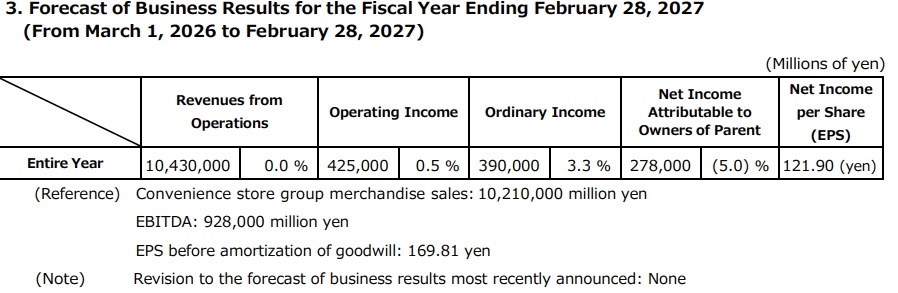
Seven & i Holdings GAAP EPS of ¥54.25, revenue of ¥5460.27B; reaffirms full-year outlook
Seven & i Holdings GAAP EPS of ¥54.25, revenue of ¥5460.27B; reaffirms full-year outlook
Source link

Coinbase to custody USDC as Samsung Wallet's default stablecoin
Coinbase to custody USDC as Samsung Wallet's default stablecoin
Source link
Applied Digital targets 3.5 to 4 GW by end of 2030 as it expects over 600 MW to enter service in the next 12 months (NASDAQ:APLD)
Earnings Call Insights: Applied Digital (APLD) Q1 2027
Management View
- “Today, we have approximately $36 billion in contracted revenue across 5 campuses, 3 states and 2 very different geographic regions of the country.” (Chairman, CEO, Secretary & Treasurer Wesley Cummins)
Seeking Alpha’s Disclaimer: This article was automatically generated by an AI tool based on content available on the Seeking Alpha website, and has not been curated or reviewed by humans. Due to inherent limitations in using AI-based tools, the accuracy, completeness, or timeliness of such articles cannot be guaranteed. This article is intended for informational purposes only. Seeking Alpha does not take account of your objectives or your financial situation and does not offer any personalized investment advice. Seeking Alpha is not a licensed securities dealer, broker or US investment adviser or investment bank.

Exxon hopes to repeat Guyana’s oil boom offshore Trinidad and Tobago (XOM:NYSE)

David McNew/Getty Images News
ExxonMobil (XOM) is looking to replicate Guyana’s oil and gas boom off the coast of Trinidad and Tobago, the company’s head of exploration told the Financial Times in an interview Tuesday.
“A lot of people ask, where’s the next Guyana? In Trinidad, we

Is Japan Exposed to Global Private Credit Risk?
The market is just emerging, but domestic banks may already be exposed to global risk.
This article appears in the October issue of Global Finance Magazine.
Japan’s private credit market may still be small, but its exposure to private credit is not.
That is an important distinction as the Bank of Japan warns that growing links between Japanese financial institutions and global private credit funds could have implications for financial stability.
The BOJ’s concern is not that Japan has suddenly embraced the $2 trillion-plus private credit industry. It is that Japanese banks and institutional investors are becoming part of it, just as vulnerabilities in the asset class are attracting greater scrutiny.
For now, regulators see no evidence of a systemic problem. According to reports, Japan’s Financial Services Agency has been examining financial institutions’ lending and investment exposure to private credit, while Finance Minister Satsuki Katayama has said Japan’s exposure is not substantial.
But Japanese banks have increased financing to global private credit funds in search of higher returns, while exploring domestic strategies in the same vein, creating potential channels through which overseas stress could spill into Japan.
In 2020, for example, Sumitomo Mitsui Financial Group’s (SMFG) banking division took a 4.9% stake in U.S.-headquartered Ares Management Corp., making a strategic commitment to support the U.S. entity’s private credit business.
Earlier this spring, SMFG and Nippon Life Insurance were reported to be in talks to create a new private credit fund of at least 500 billion yen to finance leveraged buyouts, real estate and mezzanine transactions.
“The market is only emerging,” said Yuuichiro Nakajima, managing director at Tokyo-based M&A advisory firm Crimson Phoenix. “It is certainly not replacing bank finance in any meaningful way.”
Nakajima pointed out that Japan may well have less need for private credit than the U.S. or Europe because its banks remain deeply embedded in corporate finance and continue to provide relatively inexpensive funding.
Filling the M&A Gap
Furthermore, Nakajima expects private credit to complement rather than displace traditional lenders, particularly as mergers & acquisitions in Japan become more complex and larger: Japanese M&A involving domestic companies reached a record 53 trillion yen in 2025, according to LSEG data cited by Reuters.
Indeed, take-privates, succession deals, overseas acquisitions and infrastructure investment are generating financing requirements that can stretch conventional bank structures.
In such an environment, private credit can fill gaps in leveraged buyouts, mezzanine finance and other transactions where flexibility, speed or longer maturities matter.
“As the variety of M&A transactions becomes broader and more complex,” Nakajima said, “it wouldn’t be hard to imagine banks finding it difficult to keep up with the pace of financing needs.”
Global managers are betting on precisely that opportunity. According to reports, Apollo Global Management Inc., Blackstone Inc. and KKR & Co. are building private-credit capabilities in Tokyo, although industry executives expect adoption to take years rather than months.
But the domestic opportunity should not obscure the systemic risk concern: private credit globally has grown rapidly while remaining relatively opaque and illiquid.
John Amari is a contributing writer based in Japan.

Antofagasta copper miners set to strike after labor talks fail (ANFGF:OTCMKTS)

FactoryTh/iStock via Getty Images
Workers at Antofagasta’s (ANFGF) Centinela copper and gold mine in Chile are poised to begin a strike Wednesday after government-mediated negotiations failed to produce an agreement.
The Minera Esperanza and Distrito Centinela unions said the key sticking point is a discrepancy

UBS's basket of expensive stocks faces derating risks
UBS's basket of expensive stocks faces derating risks
Source link

MEPs urge tougher action against China as tensions hit ‘critical point’
Published on
The European Parliament has called for tougher action against China’s economic coercion and support for Russia, warning that relations with Beijing have reached a “critical point”.

ADVERTISEMENT
ADVERTISEMENT
MEPs backed the resolution by a landslide on Wednesday, urging the EU to consider deploying its powerful Anti-Coercion Instrument if Beijing weaponises Europe’s dependence on critical raw materials.
The vote came as EU Trade Chief Maroš Šefčovič was flying to Beijing for crunch talks aimed at rebalancing the increasingly strained trade relationship.
October is shaping up to be a crucial month for EU-China relations. EU leaders, whose countries now all run trade deficits with China, are pressing the European Commission to deliver concrete results from negotiations with Beijing.
Tensions also extend well beyond trade. The EU has become increasingly alarmed by Beijing’s close relationship with Moscow and its role in sustaining Russia’s full-scale invasion of Ukraine.
“The relations have now reached a critical point, mostly due to China’s unfair economic practices such as dumping and spying and its position on Russia’s war of aggression against Ukraine,” the resolution adopted by EU lawmakers reads.
The text was backed by 454 MEPs, with 86 voting against and 110 abstaining.
Lawmakers described China’s role in the Ukraine war as that of “a decisive enabler”, pointing to “Chinese diplomatic backing and material assistance that sustains the Russian military-industrial complex”.
Pressure to use anti-coercion tool
They also call on EU countries and the Commission to “urgently” take action on “the weaponisation of critical dependencies by China.”
Europe felt the vulnerability of those dependencies in 2025, when China restricted exports of rare earths, which are vital to the EU’s automotive, defence and clean-tech industries, amid its escalating trade war with the United States.
The MEPs said the EU should consider using the Anti-Coercion Instrument (ACI) when China instrumentalises such EU dependencies.
The ACI is an EU mechanism that allows the bloc to adopt radical measures – up to restrictions on licences and intellectual property rights – against a third country that uses economic coercion against the EU.
China’s dominance of the production and processing of strategic raw materials has become a major sticking point in trade negotiations, giving Beijing considerable leverage as Brussels seeks to curb its dependence on Chinese imports.
A Commission proposal pushing companies to diversify their suppliers in strategic sectors is in the making and should be presented by the end of the year.
The resolution comes two days after Germany and France harden their stancetowards Beijing, calling for a new trade tool that could allow the Commission to impose measures leading to “an immediate cut-off from the internal market if needed”.

Dear Mr. Rubio, Don’t Forget About the Non-Oil Economy
The Venezuelan economic debate has been dominated by headlines over hydrocarbon deals and speculation around the future of the mining sector. The focus is understandable. It’s a petrostate with an abundance of natural resources, capable of propelling us out of the prolonged economic and humanitarian crisis that chavismo inflicted upon us. But as we must continue to discuss the future of the oil, gas and mining sectors, we must not forget the reforms required to allow the non-oil economy to flourish.
Although a large share of the state’s revenues and the country’s GDP is ultimately tied to hydrocarbons, the overwhelming majority of Venezuelans are not oil engineers, geologists or miners. Nor are most Venezuelan companies directly involved in extracting natural resources. The non-oil economy is there, operating under a highly restricted business environment of price controls, extortion, a minefield of a tax system and labour laws hostile to companies. All while facing a contraction in its market due to the migration crisis and severely restricted access to credit.
Venezuela is still among the hardest places to do business in the world. It is time to discuss how to give the sector, which includes formal and informal businesses of all sizes, the breathing space it needs to grow.
Let’s first put the power grid and infrastructure issues aside. The reforms required span virtually every aspect of the business environment, from the institutions that oversee the economy at the macro level, to the banking system and the nitty-gritty of tax and labour law. At the most basic level, the private sector needs confidence that contracts will be respected, property will be protected, and disputes can be resolved through institutions that are predictable and independent. Without these basic reassurances, investing in Venezuela remains a gamble that many businesses and outside investors will simply not be willing to take.
Dollarization without the institutional and financial framework to back it will fail in its mission to stabilize the economy.
As previously explained regarding the macro level, the Venezuelan Central Bank (BCV) needs to regain its independence and establish a credible monetary policy based on transparency and clear rules, supported by a board and president who are not subordinate to Miraflores. Burning through the petro-dollar cash pile to curb the Bolivar devaluation won’t cut it. The central bank is estimated to have used 65% of the oil sale proceeds to shore up the Bolivar. This has proven to be futile without a proper macro framework to support such interventions. It is the BCV’s credibility that is fundamental to correcting the distortions in the FX market and preserving confidence in the Bolivar, in order to lower the still extraordinary inflation rate hovering around 500%.
A credible BCV will also be fundamental to back whichever currency policy the State decides to embrace. Debates over dollarization have spread. However, the measure is not a magic wand, and going for it without the institutional and financial framework to back it will fail in its mission to stabilize the economy. Monetary stability with a functioning BCV will not suffice, but it’s a necessary foundation to correct the distortions that pervade the Venezuelan economy.
Surviving without credit
Reforms aimed at stimulating the non-oil private sector must not stop there.
Venezuela needs its banks to be banks again. The country has by far the region’s lowest credit portfolio relative to GDP thanks to draconian restrictions from regulators, which limit the capacity of banks to function as credit facilitators, and reduce them to mere transactional businesses. A functioning banking system is fundamental for the private sector’s recovery. Venezuelan businesses need the capital, as much as consumers need the credit to finance purchases of the goods and services those businesses produce.
Without a functioning banking sector, the private sector costs of capital increase as businesses either accept higher rates from non-bank lenders or are forced to rely disproportionately on their own cash flow to fuel operations. Ultimately, this leads to firms forgoing investments and lower productivity. The survival-mode resource allocation and corporate planning allowed some firms to surf through the crisis, but still makes it considerably harder for a successful company to scale operations and increase productivity.
Under the right conditions, Venezuela could become fertile ground for a dynamic M&A market.
On the consumer side, there is an important advantage from which to build on. Venezuela has a relatively high degree of financial inclusion and has rapidly adopted digital technologies for payments and money transfers. This provides an infrastructure through which a consumer credit market can develop.
Time for real business-friendly laws
Labour laws and informality must also be addressed. The private sector needs to be able to absorb more workers, particularly those who will eventually transition out of an oversized public sector, without facing excessive legal and financial restrictions associated with hiring. The current system makes formal employment particularly costly for smaller businesses, contributing to informality and limiting the capacity of companies to expand their payrolls and operations.
Venezuelan businesses have performed something close to a miracle by continuing to operate under such dire conditions. But many of the businesses that remain have low productivity and have become costly to scale. The end goal of this debate should be to reduce the cost of capital and frictions that limit businesses from increasing their size and productivity, aiming to allow companies to compete at scale internationally.
We need to keep pushing for reforms across the non-oil economy so that businesses can access credit, hire more workers, invest, consolidate and attract capital.
Under the right conditions, Venezuela could become fertile ground for a dynamic M&A market. Consolidation can allow fragmented industries to achieve economies of scale, invest in technology, professionalize management, employ more people, and eventually compete internationally. Stronger and better equipped companies would become more attractive to foreign investors and better positioned to access global markets.
This is what economic reform should seek to achieve: a private sector made up of larger, more productive, inclusive, and competitive businesses.
The private sector has already demonstrated that it can survive under almost any conditions. The task now is to create the conditions for the windfall from those petro-dollars to run through a private sector that is more efficient, inclusive, and scalable. We need to continue pushing for reforms across the non-oil economy so that Venezuelan businesses can access credit, hire more workers, invest, consolidate, and attract capital. That will allow it to become one of the engines of our economic transformation.
Blue Owl plans ‘big push’ into insurance capital: FT (OWL:NYSE)
- Blue Owl (OWL) is planning to increase the amount of insurance capital under its management, the Financial Times reported, citing comments from co-chief executive Doug Ostrover at a summit.
- “We’re realising that if we had a bigger pool of capital, meaning

Asia markets slip amid softening Chinese reserves and persistent energ
Asian equity markets traded mostly lower on Wednesday, diverging from overnight gains on Wall Street where a pause in bond yield increases provided relief to technology valuations.
US stock futures were little changed, with Dow down 0.10%, S&P 500 up 0.05%, and

AI ROI Remains an Industry Blindspot
A Sibos poll found that more than half of companies lack granular visibility into their AI use.
Many financial firms struggle to measure the return on investment of their AI deployments because they lack visibility into AI resource consumption, according to a panel poll at Sibos 2026 in Miami.
At the heart of the matter are AI tokens, the basic unit of text used by large language models and the primary metric AI model providers use to measure client usage.
Nearly two-thirds (61%) of poll respondents reported having little or no visibility into AI token usage within their organization, even though they understood their overall AI spending. Only 13% of respondents reported having detailed visibility and actively managing costs at the token/model level.
“Some clients and partners that we worked with have told us horror stories where they let everyone go crazy with this stuff and build their own agents only to be left with a $100 million bill after a few months,” said Melissa Tuozzolo, global head of client services at HSBC, during a Sibos 2026 panel in Miami.
Calculating AI ROI
Understanding AI token cost and usage matters, but it’s not the only factor in calculating ROI for AI-powered projects, said co-panelist Isabel Schmidt, executive platform owner, payments enablement at BNY.
“There’s obviously still a lack of clarity in many organizations around the actual individual cost of tokens,” she said. “But we also need to be very careful to not get pulled into that rabbit hole or what a particular token costs because, in the end, AI is not a goal itself. The ultimate question is: How much does that business process cost me?”
In addition to token cost, organizations need to consider related costs associated with data governance and cleaning, upgrading existing systems, and deploying new technology, Tuozzolo added.
The industry is in an era when pretty much everything being built has an AI component, said David White, global head of product and data at LSEG and a panelist. “I encourage my product teams and others to think in terms of this as just another technology to help deliver value to the customer.”
AI Value-Add
BNY’s Schmidt sees AI’s primary value as improving an organization’s efficiency, effectiveness, and capacity
“There has been a lot of dialogue around the efficiency part of what AI can contribute to our businesses and processes since you can automate processes much, much more easily than maybe we could even a year or two ago,” she said. “It also forces us to think more clearly about some of the others.”
In terms of effectiveness, HSBC deployed an AI-powered “air traffic control” system that directs client queries to the proper expert or teams about six months ago. It reduced first-response time for clients in certain markets by 10 hours. Prior to that, “we had used people that manually take in queries from clients and triage them,” said Tuozzolo.
Other AI deployments within the bank have freed up processing capacity and allowed it to be reallocated.
“Historically it’s always been that when our transaction volumes go up, our costs go up from an investigation and service standpoint,” she said. “As our volume goes up, the number of queries also goes up. This is the first year in a few years that we’re actually seeing it go the other way.”
Tuozzolo attributed these gains not only to AI, but also to HSBC’s investment in a cleaner data layer.
Meanwhile, Sumitomo Mitsui Banking Corp. (SMBC) is deploying an AI-powered call center that will process calls at 70% of the older model’s cost.
“We are seeing most of this cost for the IT project consisting of the AI tokens, but we are seeing a positive ROI,” said panelist Kazuya Ikeda, senior executive manager at SMBC.
Nonetheless, he cautioned that not all value-add for clients leads to economic value. “If other peers are doing the same thing, then it’s not necessarily creating relative value for clients,” he said.



Middle East oil flows reach 80% of pre-war levels, Shell CEO Sawan says (SHEL:NYSE)

Scott Barbour/Getty Images News
Oil flows from the Middle East have rebounded to ~80% of pre-war volumes, a testament to the resilience of countries in the region to maintain their supply commitments to global markets, Shell (SHEL) CEO Wael Sawan said Tuesday, according

G7's 100M-barrel diesel stocks release looks mostly priced in, analyst says
G7's 100M-barrel diesel stocks release looks mostly priced in, analyst says
Source link

BioMarin Q3 financial results to see IPR&D expense impact of $283M

mohd izzuan
- BioMarin Pharmaceutical (BMRN) said that it would incur an acquired in-process research and development (IPR&D) expense of $283M for Q3.
- As a result, GAAP and non-GAAP diluted EPS for the quarter will be negatively impacted by $1.50.
- The non-GAAP diluted EPS estimate for the quarter is $1.25.
More on BioMarin Pharmaceutical

NeoGenomics down after leadership transition
NeoGenomics down after leadership transition
Source link



S&P 500 hits a record; These $20B stocks still need 200% to break even
S&P 500 hits a record; These $20B stocks still need 200% to break even
Source link

Lattice Semiconductor in focus as William Blair initiates with Overweight rating (LSCC:NASDAQ)

mustafaU
Lattice Semiconductor (LSCC) was in focus on Tuesday as William Blair initiated coverage on the semiconductor firm with an Overweight rating and a fair value of $160 per share.
“Lattice is benefiting from a product re- fresh cycle, replacing legacy small footprint