Ron Vachris said Costco’s value message is resonating “against the backdrop of ongoing macro uncertainty,” highlighting fuel as the standout: “The result was record-breaking volumes, all 3 4-week fiscal periods of the quarter
Seeking Alpha’s Disclaimer:This article was automatically generated by an AI tool based on content available on the Seeking Alpha website, and has not been curated or reviewed by humans. Due to inherent limitations in using AI-based tools, the accuracy, completeness, or timeliness of such articles cannot be guaranteed. This article is intended for informational purposes only. Seeking Alpha does not take account of your objectives or your financial situation and does not offer any personalized investment advice. Seeking Alpha is not a licensed securities dealer, broker or US investment adviser or investment bank.
Lock in today’s painful prices, or bet that volatility breaks your way? CFOs are being forced to choose.
Commodity hedging is no longer a technical exercise buried in the treasury function. As price volatility spreads across energy, metals, and agricultural commodities, CFOs are forced to make explicit, high-stakes bets about the future — locking in costs at today’s elevated levels or staying exposed in the hope that markets turn. What was once a risk management tool has become a strategic decision with direct implications for margins, pricing, and competitive positioning.
That shift is showing up in earnings in a range of industries, a reminder that hedging decisions are increasingly tied to financial performance and investor expectations. “We are using our hedging to be able to offset against the volatility,” said Andrew Murray, CFO of Fonterra, a New Zealand farmer-owned cooperative, in the group’s March 2026 earnings call.
Others are treating volatility as an opportunity to act. In its latest earnings call, Infinity Natural Resources CEO Zack Arnold said the company had “taken this opportunity … to lock in attractive oil hedges,” stressing how companies are making deliberate market calls rather than waiting for conditions to stabilize. In some cases, the impact is measurable. In Siemens’ most recent earnings call, the global industrial giant’s CFO, Ralf P. Thomas, reported that commodity hedging contributed roughly 100 basis points to its margins, thanks to volatility in copper and silver prices.
New Visible, Strategic Role for Hedging
Power, it turns out, doesn’t come from military might anymore. It comes from metals and other elements, such as cobalt. That’s the argument threading through “The Elements of Power,” Nicolas Niarchos’ new book on the supply chains that hold modern civilization together — or fail to. Niarchos isn’t interested in geopolitics as it’s usually taught, the stuff of borders and aircraft carriers. He tracks something hard to see and now hard to ignore: the fragile networks of extraction, processing, and assembly that make electric vehicles move, smartphones think, AI infrastructure hum, and modern life move forward.
Those networks are long and exposed. Ore pulled from the ground in the Congo passes through Chinese processing facilities before it reaches a factory floor in Europe or America. A disruption anywhere, such as a mine shutdown, a trade restriction, or a sea strait closed by war, doesn’t stay local. It travels fast through prices and production timelines in ways that almost no one anticipated and fewer still knew how to hedge against.
What Niarchos documents is the moment supply chain risk graduated from a logistics problem to a strategic one. Hedging, once the quiet work of treasury and procurement desks, is becoming more like foreign policy.
Darrell E. Fletcher started his career hedging global energy for Alcoa and is now managing director of commodities at Bannockburn Capital Markets, the trading and advisory arm of First Financial Bank. He says the past two years have been “extraordinarily volatile” across energy and metals, forcing producers and fuel-consuming organizations to reassess their approach.
On the producer side, many firms are taking advantage of elevated prices to lock in forward revenues. “There has been a sharp increase in commercial hedgers … hedging the remainder of 2026 and into 2027,” Fletcher says, as companies secure cash flows above internal targets and support borrowing capacity. But strategies vary by size: the largest diversified oil majors often avoid hedging altogether, reflecting investor expectations that their equities provide direct exposure to commodity prices.
For organizations that consume fuel, the shift has been more reactive. Companies with established programs are extending hedges further in the future. Others are entering the market for the first time as price swings hit earnings. “Those who thought the exposure wasn’t meaningful realize it can be,” Fletcher says, noting a surge in conversations with CFOs and treasurers in recent months, some seeking help with a first-time hedging program.
The underlying issue may be less about timing the market than understanding exposure. “Eighty percent of any solid hedging program is: what is the exposure — and does it matter?” Fletcher says. He points to the importance of stress-testing cost sensitivity before implementing a strategy. He also warns that executives are being called out on earnings calls for failing to have a clear hedging rationale, backed by analysis. The mechanics of hedging are “the easy part,” he notes.
Plan vs. No Plan
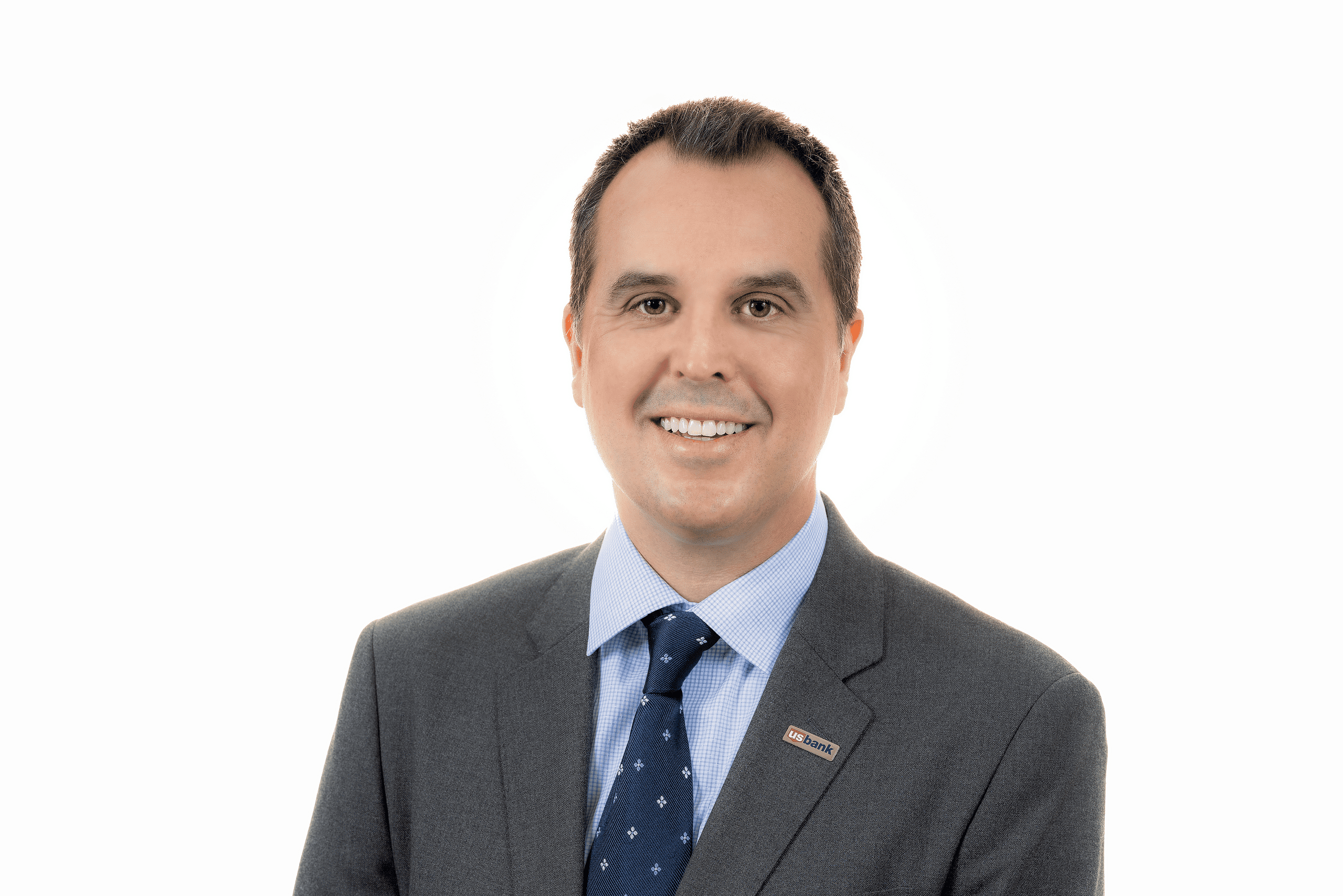
That gap between companies with a plan and those without is something Charlie Macnamara sees firsthand. As head of commodity derivatives at US Bank — where his desk serves clients ranging from Permian Basin oil producers to auto manufacturers buying aluminum to EV companies sourcing lithium — Macnamara has a view of what separates hedging programs that work from those that don’t.
Charlie Macnamara, US Bank
“The ones that get it wrong are the ones that don’t have a plan — and those are the ones where they let the movement of the market dictate what they need to do,” he says. The result can be a company that ends up buying the top, reacting to fear or surprise rather than executing a strategy, he adds.
Among the industries and organizations Macnamara describes as getting it right, oil and gas producers stand out. Despite the sharp swings in energy markets over the past year, industry players have remained notably disciplined, layering in hedges methodically, rather than chasing prices. “It’s been very cool, calm, and collected,” says Macnamara. That skill and maturity in hedging have been building for several years, he explains.
For CFOs considering a program for the first time, Macnamara suggests starting with the balance sheet rather than the market. “The plan should stem from how impactful the commodity is on their balance sheet and their cash flow volatility,” he says. From there, he says a finance team can define the level of volatility it wants to accept and structure derivatives or other market instruments accordingly.
A Boardroom Mindset Shift
Some organizations, and especially at the board level, need to rethink what hedging means, points out Macnamara. The people executing hedges on the ground, he says, often fear that if the hedge loses money, the C-suite will conclude they’ve done a poor job. He regards this view as misguided, and one that can paralyze programs before they get started.
“If you’re hedging 25% of your cash flow volatility and you lose money on that hedge, that means you’ve saved on 75% — you’ve just bought some insurance on the 25%,” he says. The philosophical hurdle is getting the entire organization to understand that a hedge is not meant to make money. It is meant to reduce volatility. “It sounds very simple, but that tends to be the biggest friction point,” he says.
Not everyone is convinced that locking in prices at today’s levels is the right move. Rob Handfield, Bank of America University Distinguished Professor of Supply Chain Management at NC State University and author of “Flow: How the Best Supply Chains Thrive,” urges caution about the assumption that financial hedging can adequately compensate for the unpredictability of physical supply chains. “Financial hedging assumes that individuals have a strong belief that supply and demand will move in one direction or another,” he says. “This is a challenging gamble.”
However, physical flows are difficult to forecast outside of periods of economic stability, according to Handfield. In the current environment, marked by geopolitical tensions, threats to key shipping lanes such as the Strait of Hormuz, and the resulting energy disruptions, the variables shaping commodity markets are too numerous and volatile to model confidently.
“Unless one has insider information on how governments are making decisions, these are very risky bets,” he says of positions in oil, gold, silver, copper, and other metals. And the consequences of disruption can be long-lasting. Handfield points out that rebuilding natural gas infrastructure alone could take at least a year.
A Matter of Restraint
On the critical question of whether to lock in today’s elevated prices, Handfield argues for restraint.
“I think locking in elevated prices is a mistake,” he says, expressing the view that once geopolitical tensions ease and supply routes normalize, volatility will likely diminish, thus rewarding companies that preserved optionality over those that locked in at the peak. The deeper conceptual issue, he argues, is that supply and demand are stochastic variables: “You can predict what might happen by what is happening today, but you don’t really know what will happen tomorrow.” Hedging makes most sense when prices are historically low, not in the middle of a supply chain crisis, Handfield believes.
That divide — between market practitioners who see today’s conditions as a hedging opportunity and supply chain strategists who warn against overconfidence in financial instruments — may be the central tension CFOs face heading into 2027. Fletcher and Handfield agree on at least one thing: most companies still underestimate how much commodity exposure matters to their bottom line. Where they diverge is on the remedy.
This article appears in the May 2026 issue of Global Finance Magazine.
Earnings Call Insights: Best Buy (BBY) Q1 fiscal 2027
Management View
“Today, we are pleased to report better-than-expected results for the first quarter” (CEO & Director Corie Barry). Barry said Q1 included “positive comps across the majority of our major product categories” and that the company “also drove
Seeking Alpha’s Disclaimer:This article was automatically generated by an AI tool based on content available on the Seeking Alpha website, and has not been curated or reviewed by humans. Due to inherent limitations in using AI-based tools, the accuracy, completeness, or timeliness of such articles cannot be guaranteed. This article is intended for informational purposes only. Seeking Alpha does not take account of your objectives or your financial situation and does not offer any personalized investment advice. Seeking Alpha is not a licensed securities dealer, broker or US investment adviser or investment bank.
Strong first-quarter earnings across corporate America are reinforcing the case for maintaining exposure to U.S. large-cap equities, according to a recent investor note from Citi.
The firm said S&P 500 (SP500) companies delivered 27% year-over-year earnings growth during the quarter, significantly
On Wednesday, the US Department of War confirmed it had awarded Dell Federal Systems, the government-focused unit of Dell Technologies, a five-year, $9.7 billion (€8.3bn) contract to supply the Pentagon.
ADVERTISEMENT
ADVERTISEMENT
As part of the Core Enterprise Technology Agreement (CETA), a Pentagon-wide Microsoft licensing and software procurement framework, the company will provide and manage Microsoft software licences, cloud subscriptions and on-premises software licensing across the US military, intelligence agencies and the US Coast Guard.
Dell Technologies’ shares were up around 5% in pre-market to $320 due to the announcement after closing Wednesday’s session at roughly $305.
The company is set to report its earnings for the first quarter of this year on Thursday, with analysts from Zacks Investment Research forecasting revenues of approximately $35 billion (€30bn), representing annual growth of about 50%.
According to US DoW Chief Information Officer Kirsten Davies, who briefed reporters at the Pentagon, the CETA is expected to save the department roughly $422 million (€360.9mn) annually by consolidating fragmented technology budgets from across the military services into a single purchasing structure.
The contract was granted less than three weeks after US President Donald Trump stood at a White House event and urged Americans to “go out and buy a Dell. They’re great.”
Davies and acting US Navy Chief Information Officer Barry Tanner were both clear that the award followed a competitive process.
“The vendors were all evaluated based on competition, comparison to GSA schedule pricing and overall chain of value to the department,” Tanner noted.
Dell holds a long-standing commercial partnership with Microsoft and is one of its major buyers of Windows licences. Nonetheless, the contract arrives at the culmination of a period of visible alignment between CEO Michael Dell and the Trump administration.
In December 2025, Dell and his wife Susan appeared alongside Trump at the White House to announce a $6.25 billion (€5.3bn) donation to “Trump Accounts,” a tax-advantaged investment programme for children created under the “One Big Beautiful Bill”.
The pledge will provide $250 (€214) to roughly 25 million American children aged 10 and under from households with a median income below $150,000 (€129,000) and was described by Invest America, the nonprofit organisation spearheading the initiative, as the largest ever private commitment devoted to American children.
Michael Dell also sits on Trump’s Council of Advisors on Science and Technology, informing public policy regarding the economy, public health, national security, energy and emerging technologies.
The convergence of public presidential endorsements and subsequent federal contract awards is attracting scrutiny beyond Dell.
Financial disclosures released this month by the US Office of Government Ethics showed that investment accounts associated with President Donald Trump held Dell Technologies shares during the first quarter of 2026. The disclosures indicate some purchases were made before Trump publicly praised the company at a White House event.
The Trump Organisation has said the accounts are managed independently by third-party financial institutions and that neither Trump nor his family directs individual trades.
Last week, responding to questions about Trump’s financial disclosures at a White House briefing, Vice President JD Vance said the president’s investments are handled by independent wealth advisers and rejected suggestions that Trump personally directs individual stock trades. “He’s not making these stock trades himself,” Vance said.
Commentators and ethics critics have also pointed to trading activity involving companies such as Intel and Palantir, whose shares have at times moved sharply following public comments by Trump or announcements linked to government technology spending.
The Pentagon has said Dell’s selection followed a competitive procurement process.
Even so, the timing of the award alongside Trump’s public praise of the company and financial disclosures showing investments linked to Dell is likely to draw renewed scrutiny from ethics observers and political critics.
A massive $166 billion in corporate tariff refunds sounds nice, but could take years to process.
The U.S. Supreme Court’s ruling invalidating the Trump administration’s tariffs was a positive outcome for companies, but refunds may take years to materialize.
The Supreme Court decided in February that the U.S. Customs and Border Protection (CBP) agency illegally collected $166 billion from 300,000 importers. Logically, companies should get refunds, but lawyers don’t expect a smooth process. Importers should be prepared to wait for one year, even 18 months, according to TD Securities.
The federal agency set up an online portal called the Automated Commercial Environment to handle refunds. Once the agency accepts a company’s claim, it issues refunds within 60 to 90 days.
That’s the short-term optimistic resolution, but history shows a lot of things could go wrong. In 1998, the Supreme Court announced that the government had to return $750 million in fees collected between 1993 and 1998. It took years to get done.
The CBP is set up to collect money quickly—but it doesn’t easily send it back. Companies must document a proper claim on the new portal. Some small business owners don’t understand the complex customs terminology, while others can’t even log in to the new portal due to technical glitches. Let’s say that the agency and the company don’t agree about the amount of the refund. The importer must submit new documentation and begin a second review process. Companies could even be forced to go to court.
CFOs should be ready for a long, fastidious process. The financial expert should set up a cross-functional task force—including tax, accounting, procurement, and supply chain experts—to review the data and audit all the company’s entries. When the time comes, the task force will be able to answer any CBP question.
The online portal created by the CBP agency focuses on importers, but they are not alone. Consumers could also say that they were overcharged because of the tariffs. The federal government ignores them, but some states don’t. Taking matters into his own hands, Illinois Democrat Governor JB Pritzker, in a letter to the Trump administration posted on soicial media, demanded an $8.7 billion refund—that’s $1,700 for each Illinois household affected.