film

‘Young Washington’ review: We deserve a more exciting founding father

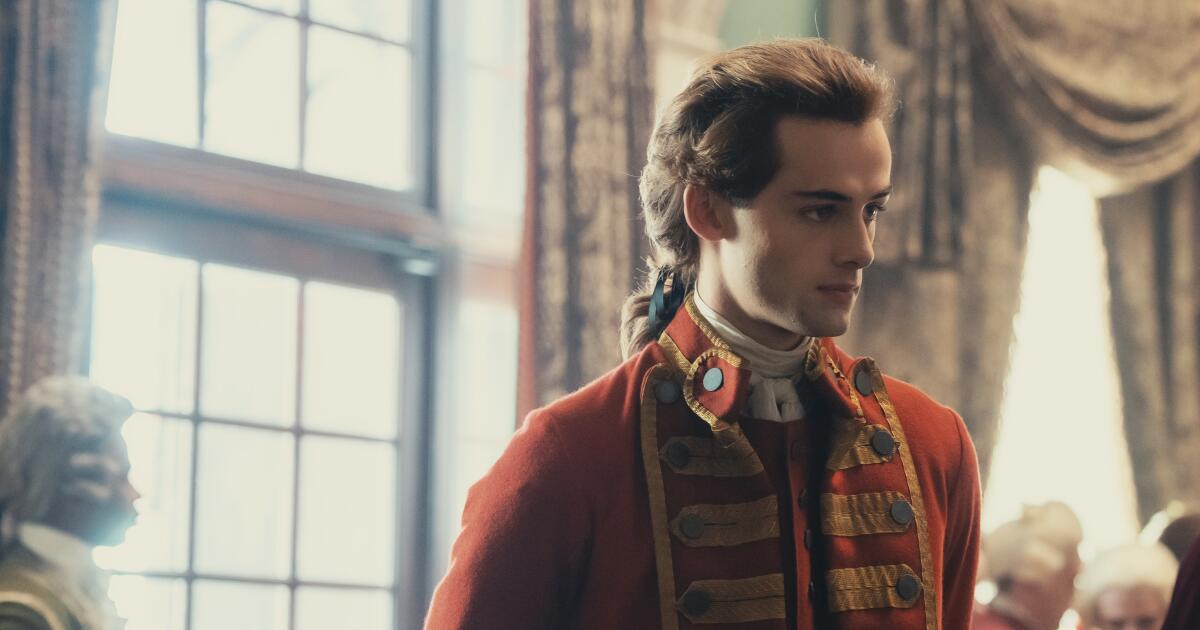
It’s the 250th birthday of the United States of America and how better to celebrate than with a big-screen hagiography of America’s first president, George Washington? “Young Washington” arrives in theaters just in time for the Fourth of July with a chiseled, hot young actor in the lead role and the sheen of a prestige HBO drama, though the result isn’t really big-screen spectacle or appointment television. It feels more like something to be watched on the AV rig in a middle school social studies class. At least there won’t be a quiz at the end.

But there could be, because the plot of “Young Washington” plays out with all the thrill of a textbook chapter. It takes place mostly around 1753-55, at the advent of the French and Indian War. We open in medias res when the 23-year-old Col. Washington (William Franklyn-Miller) lurches from a dysentery-riddled nap directly into battle in the Pennsylvania woods, his battalion on the back foot, surrounded by gore and gunpowder. Another officer describes how dire the situation is while George ponders saving his men and asks, “What could be worth the risk?” Washington steels his gaze and we cut to black. You can almost hear the eagles scream, guitars riff and engines rev.

“Young Washington” is produced and distributed by Angel Studios, the faith-based movie studio that churns out films based on true stories that either feature freak accidents, strange illnesses or, more recently, unique stories from the past in which faith in God is a factor. Apparently, our nation’s founding also falls under this umbrella.

The film is directed by Jon Erwin, one of the in-house Angel Studios mainstays, who also helmed “Jesus Revolution,” “I Still Believe” and “I Can Only Imagine.” Erwin gives the whole project a kind of gritty, visceral approach — very “Game of Thrones” in red coats. It’s violent, muddy, the contrast is high and too many drone shots soar over the forest treetops.

Though it opens with a bang, this 1755 battle framing device gives way to the George origin story, starting with his father’s death 12 years earlier, when the 11-year-old George is bereft that he’ll have to sacrifice his education in order to become a tenant farmer and provide for his family including his mother, Mary (Mary-Louise Parker, doing a bizarre accent).

His older half-brother Lawrence (John Foss) takes him under his wing and teaches him, and the young George grows into a smart, bright, ambitious young man, whose dreams of becoming a British officer are dashed because he doesn’t have formal education, a fortuitous marriage or his own land. But he’s bootstrapped himself into intelligence and with savvy networking and know-how, he becomes indispensable to the British, volunteering as a major to survey land and negotiate treaties with the Native tribes and French army. It’s all a bunch of politicking and petty disputes until it escalates into all-out war thanks to an ill-advised ambush.

Sir Ben Kingsley, Kelsey Grammar (who starred in “Jesus Revolution”) and Andy Serkis play the British officers who begrudgingly, at times, believe in George and his capabilities, though a lot of the film is about a young man getting rebuffed by snobbish British officers.

He’s the kind of character who always makes the noble choice, does and says what’s right, and sees everyone as equals (including enslaved African men and Native American allies). He inspires his brother and others that the world can change and takes inspiration from his mother, who encourages him to continue his path and do it as God’s servant.

Unfortunately, this doesn’t make for a character that’s in any way complex or interesting at all. Franklyn-Miller is certainly pretty, serving as a fine face for this story, but the screenplay (by Erwin, Diederik Hoogstraten and Tom Provost) flattens his character into a basic cookie-cutter hero. Audiences, including the middle school social studies students, deserve better and more nuanced stories about this country and the values it was built upon.

“Young Washington” is propaganda in the form of a history lesson wrapped in a summer blockbuster. If only it were even slightly entertaining — maybe they’ll tackle that in the inevitable sequel.

‘Young Washington’

Rated: PG-13, for sequences of strong war violence and some bloody images

Running time: 2 hours, 5 minutes

Playing: Opens Friday, July 3 in wide release

Source link

‘Romería’ review: Delicate Spanish psychodrama could be more courageous

Early in “Romería,” the film’s main character, Marina, is asked by some children if she’s ever seen the Santa Compaña, a collection of ghosts who, in Spanish legend, supposedly wander in a pack across the landscape. Humoring the kids, Marina says she hasn’t. That’s good, one of the girls responds. “They’re spirits that can’t die.”

As it happens, Marina is actually on a journey of sorts to connect with the dead — and so is Spanish writer-director Carla Simón, whose third feature is an autobiographical tale about her own quest to make peace with her late parents. Slender but flecked with magical touches, “Romería” is so gentle it never quite qualifies as haunting. Nonetheless, Simón stirs up the ineffable sadness that comes with wanting answers to the mysteries of your family — and then, like it or not, receiving them.

Newcomer Llúcia Garcia plays Marina, an 18-year-old aspiring filmmaker. It’s July 2004, and she’s traveled to the picturesque port city of Vigo to obtain government paperwork that will make her eligible for a university scholarship. She never knew her father Alfonso, who died in 1987. For some reason, there are no records indicating that she was his daughter. Hence the trip to Vigo to see her paternal grandparents for the first time so she can authenticate her ancestry.

Simón, whose previous features “Summer 1993” and “Alcarràs” also grappled with family matters, follows along with Marina on the way to this anxious meeting. Marina’s mother died only a few years after Alfonso, making Marina an orphan. But the mom’s parting gift, a diary, provides opaque glimpses into her life with Alfonso in the mid-1980s. Before Marina arrives at her grandparents’ home, though, she must run a gauntlet of uncles, aunts and cousins, their reactions to her existence varying from warm to wary. Repeatedly, Marina is told she looks just like her mom, but the comment occasionally contains a trace of bitterness. Many of these new faces view her as an unwelcome reminder of a past they’d prefer to forget. When they see Marina, it’s like they’re looking at a ghost.

The strongest component of Garcia’s doe-like performance is the way it captures someone in the midst of shedding her adolescence, gingerly trying on adulthood. Over the course of a few days, this bashful teen, always armed with her camcorder and far less free-spirited than her cousins, will be beset by her father’s feuding family. Silently observing the passive-aggressive maelstrom, Marina will receive an intense immersion in what her life might have been like if he’d lived.

But she quickly realizes that their memories of the man are far from perfect. No one can decide exactly where Alfonso lived in Vigo. And, more troublingly, Marina’s belief that he died in 1987 is contradicted by relatives, who insist that it was five years later. If Marina has that information wrong, what else does she not know?

“Romería” is hardly the first film in which an impressionable soul goes on the hunt for the parents she never had. Likewise, viewers will not be startled when Marina eventually discovers painful secrets about her mom and dad that cause her to reconsider those phantom figures.

Simón, who undertook a similar odyssey at the same age, never allows this delicate story to succumb to self-indulgence or an inflated sense of its own importance. Instead, her film is suffused with a rich, casual immediacy. Simón and her star bracingly recall the electricity of youth as Marina prepares for life as an artist. The movie, in part, is about how she finds her voice.

Simón’s films favor naturalism and “Romería” leaves ample room for Spain’s seaside beauty and glorious sunshine. The calming locales both complement and contradict the plot’s revelations, which are hardly bombshells but do speak to how well-to-do families labor to shove inconvenient skeletons into the closet. If anything, Marina will be more shocked by her grandparents (José Ángel Egido and Marina Troncoso), whose fiercely icy demeanor suggests this teenager should consider herself lucky not to have grown up around them.

Because “Romería” is a coming-of-age story, Marina will be tempted by cute boys; she’ll also begin to display a rebellious streak. As the picture rolls along, Garcia shows a more assertive side, relishing her character’s emergence from her shell. But this modest saga saves its biggest surprise for its final reels, when the narrative folds in on itself beguilingly, allowing Marina to relate to her mom and dad in ways she never had before. Maybe we can never truly know our parents, but if we’re lucky, we can gain the maturity to one day see them in ourselves.

‘Romería’

In Spanish, Catalan, Galician and French, with subtitles

Not rated

Running time: 1 hour, 54 minutes

Playing: Opens Wednesday, July 1, at Laemmle Royal and Laemmle Glendale

Source link

Many indie festival films struggle to get distribution. Alamo Drafthouse is trying to change that.

Dine-in movie theater chain Alamo Drafthouse Cinema is launching a new initiative to show unreleased independent films that had successful festival runs, a move that comes as specialty films have struggled to gain distribution.

The Alamo Exclusives program, announced Wednesday, will give limited theatrical runs to films that showed at festivals including Sundance, the Toronto International Film Festival, Tribeca Festival and South by Southwest festival, as well as Alamo’s own Fantastic Fest.

The idea is to help showcase films that received critical acclaim, but did not secure distribution or acquisition deals. The chain will not acquire these films, but instead will enter into agreements with filmmakers to exhibit their films on Alamo Drafthouse screens. By showing these films to audiences on the big screen, these films could get the momentum they need for further opportunities.

The program’s first film will be the documentary “Butthole Surfers: The Hole Truth and Nothing Butt,” which debuted last year at South by Southwest and chronicles the history of the punk rock band.

The film will be shown in Alamo Drafthouse theaters for a limited time later this summer.

The Austin-based chain, which is owned by Sony Pictures, has a long history of curating indie films for its audiences, giving Alamo Drafthouse confidence that its viewers want to see these kinds of movies, company chief executive Michael Kustermann said in a statement.

“Time and again, they’ve shown they’ll come out to support bold, original films when given the opportunity,” he said. The new Alamo Exclusives “gives us another way to champion filmmaker-driven films that deserve to be discovered and connect them with the wider Alamo Drafthouse audience.”

The initiative comes at a difficult time for indie films. Since the pandemic upended the movie business, traditional studios and distributors have had less appetite for risk, including betting on smaller indie films out of festivals.

And as the 2023 dual writers’ and actors’ strikes thinned out theatrical lineups, that aversion to uncertainty became a push for reliable and profitable hits.

“Too many incredible films premiere at festivals and then never receive the theatrical life they deserve,” Lisa Dreyer, director of Fantastic Fest and film innovation at Alamo, said in a statement. “We are actively searching for films across all genres, from horror to comedy, to everything in-between, to champion in this new, exciting way.”

Source link

‘Delightful’ Jane Austen film is compulsive viewing for Other Bennet Sister fans

The BBC’s The Other Bennet Sister has been a huge hit with viewers and fans are now looking for similar shows and films to watch.

Period drama lovers will not be able to resist a charming Jane Austen adaptation hailed ‘masterful’ by fans.

Fans of The Other Bennet Sister, which is set to receive a three-part Christmas special, are being urged to seek out an Austen-inspired film widely celebrated as “a classic”.

Drawn from Jane Austen’s Pride and Prejudice, the opening series of the BBC’s The Other Bennet Sister pulled in 7.3 million UK viewers during its first four weeks on air.

Since its triumphant run, devotees of period drama have been desperately seeking out comparable shows and films to plug the gap while the Christmas special gears up to enter production.

A 2007 film starring Felicity Jones and JJ Feild has emerged as a firm recommendation, serving as an adaptation of Jane Austen’s 1817 novel of the same name.

Northanger Abbey is the title in question, following a young Catherine Morland (Jones), who travels with family friends to Bath and discovers she has captured the hearts of both Henry Tilney (Feild) and John Thorpe (William Beck).

When she receives an invitation to stay at Northanger Abbey, Catherine’s fanciful imagination runs wild as she muddles reality with the Gothic romance found within the pages of her beloved novels.

Viewers have flocked to IMDb to voice their opinions on the film, with one declaring: “Classic!” Another hailed it a “must-watch”, adding: “The 2007 adaptation of Northanger Abbey is a delightful and faithful rendition of Jane Austen’s novel.

“From the charming performances to the captivating storyline, the film brings Austen’s wit and satire to life. Felicity Jones shines as Catherine Morland, perfectly capturing her innocence and imagination, while JJ Feild makes a dashing and charismatic Henry Tilney.

“The adaptation stays true to the novel’s themes, blending romance, humour, and gothic intrigue seamlessly.”

One final enthusiast described it as “masterful”, elaborating: “This is a really lovely TV/film version of this book, and of course… the script is by master adapter Andrew Davies. He is just magnificent. ENJOY this masterful adaptation!”.

A Reddit user put forward the film, which is available to purchase on Prime Video for just £1.89, as a comparable watch to The Other Bennet Sister, commenting: “Surprised Jane Austen adaptations have barely been recommended, unless those are too obvious.

“The Other Bennet Sister is not only a spin-off of Pride and Prejudice with many familiar characters from that story, but in many ways it takes inspiration from other existing Austen novels, which is very Austen of the author, because her stories frequently recycled/reworked the same characters/plot-lines.”

One devotee took to Reddit to express their desire for a fresh Northanger Abbey adaptation off the back of The Other Bennet Sister’s triumph, writing: “@BBC thank you for adapting this rather than another round of endless adaptations of Austen’s books that already have so many amazing adaptations!

“@Netflix take notes! Fans don’t want you to ruin Austen’s work with crummy adaptations that don’t do the original ones justice.

“Let’s adapt other beautiful stories instead! Honestly, I would be fine with another Northanger Abbey adaptation or maybe a Mansfield Park adaptation if it’s absolutely needed.”

Northanger Abbey is available to buy on Prime Video for £1.89

Source link

‘Couture’ review: Angelina Jolie is hypnotically watchable in so-so drama

In the last decade or so, Angelina Jolie has been on screen less frequently. So when she is — and not in forgettable tentpoles like “Eternals” — it’s worth paying attention. There seems to be a thoughtful intentionality to the roles she now chooses, almost as if this astoundingly famous woman wants to tell us something vital about herself, offering clues into her understandably guarded personal life.

Take 2015’s “By the Sea,” which she wrote and directed. Coincidentally or not, that pained study of marital dissolution, co-starring Jolie’s then-husband Brad Pitt, intersected with the couple’s real-life breakup — not to mention Jolie’s grief over the death of her mother, Marcheline Bertrand. Two years ago, Jolie portrayed a version of the elusive, emotionally closed-off opera singer Maria Callas in “Maria.” The conception of the role, marked by a dim view of stardom’s suffocating alienation, was something Jolie clearly understood. Moviegoers should be careful not to read too much autobiography into an actor’s creative choices, but Jolie makes such speculation tantalizing, adding additional layers of drama to her films.

The intermittently affecting “Couture” feels similarly close to her heart, depicting a filmmaker whose life is interrupted by a cancer diagnosis — a reality Jolie knows all too well. In 2013, she underwent a preventive double mastectomy over concerns of her likelihood to develop breast or ovarian cancer. (Bertrand died of cancer in 2007.) Knowledge of Jolie’s circumstance will inform a viewer’s reaction to her wounded, resilient performance, but our inherent sympathies can only take French writer-director Alice Winocour’s ensemble piece so far.

Jolie plays Maxine, an American indie director hired to create a flashy opening film for Paris Fashion Week. Newly arrived in the City of Light, she has only a few days to put together the short, assisted by her trusted cinematographer Anton (Louis Garrel). As we deduce from the phone calls Maxine makes back home, she’s also going through an acrimonious divorce and has trouble connecting with her blasé teenage daughter. At least this Paris paycheck gig will bolster her finances — and get her ready for the feature film she’s been wanting to make for years.

Just then, though, Maxine’s future gets a rewrite. A French doctor (Vincent London) tells her she has breast cancer and needs a double mastectomy immediately. Maybe she can finish the Fashion Week film, but her passion project must wait. An artist and mother who has spent her adulthood in constant motion will have to learn what it means to stop everything and be still.

The film’s title would appear to be a reference to the story’s setting, but in French, “coutures” can also mean “stitches,” and indeed Winocour sews together three thematically linked story strands. As Maxine wrestles with her cancer diagnosis, an inexperienced South Sudanese model named Ada (Anyier Anei) works Fashion Week so she can send money home to her family. (Ada has no interest in modeling, hoping instead to become a pharmacist.) Meanwhile a makeup artist, Angèle (Ella Rumpf), longs to be an author, although she cannot get anyone interested in her writing. Each one becomes a part of the fabric of Fashion Week, but their disparate problems are a far cry from the glitzy event’s self-importance.

Winocour has often made films about women balancing their public-facing life with their private selves In 2019’s “Proxima,” Eva Green played an astronaut missing her young daughter. In 2022’s “Paris Memories,” Virginie Efira starred as an interpreter recovering from the shock of surviving a terrorist attack. Winocour shows us the intimate, vulnerable spaces within her characters that those on the outside don’t have access to.

“Couture’s” three principals rarely interact with one another, but those meaningful exchanges argue that, amid the mad clatter of the everyday, a brief, unguarded moment with a stranger can be supremely restorative. Unfortunately, the juggling of storylines ends up being more schematic than insightful. Angèle’s narrative never catches fire and while Anei is striking as Ada, that section of the film feels slightly patronizing, reducing this immigrant tale to yet another strained salute to perseverance.

This leaves Jolie as the movie’s magnetic center, with Maxine drifting through despair as she ponders what to do. Her doctor insists that the surgery cannot wait, but putting her ambitions on hold means losing a part of herself — a different kind of death sentence than the one she’s now facing.

The character is underwritten but Jolie picks up much of the slack through her silently shattered expression. As she’s gotten older, the Oscar winner has become more comfortable doing less in her performances, allowing for a fragile serenity that is belied by the anguish and anxiety roiling underneath. It’s not just our recognition of the real-life parallels that make Jolie so touching in “Couture” — it’s that ineffable star power she’s possessed for so long. In a story about a potential tragedy, what’s saddest is that Winocour’s film cannot match its lead’s effortless command.

‘Couture’

In French and English, with subtitles

Rated: R, for language, some sexuality, nudity and brief bloody violence

Running time: 1 hour, 46 minutes

Playing: Opens Friday, June 26 in limited release

Source link

‘The Invite’ review: Olivia Wilde throws a killer passive-aggressive party

For a long time, the lifestyles and foibles of the modest bourgeoisie were a mainstay of art-house cinema, with urbane, upscale audiences happy to turn out to see versions of their own lives depicted on the screen. But more recently, as ideas about what middle age looks like have shifted, along with the changing demographics of viewers, these films have largely disappeared. Which is what makes the seriocomic “The Invite” feel both fresh and something of a throwback — a movie for those who worry about losing their edge.

Directed by Olivia Wilde, “The Invite” was a clear standout when it premiered at the Sundance Film Festival in January and now arrives in theaters as one of the best dramas of the year so far. It feels daring for how it wants to actually examine the emotional costs of contemporary grown-up life, bringing wincing laughs of recognition.

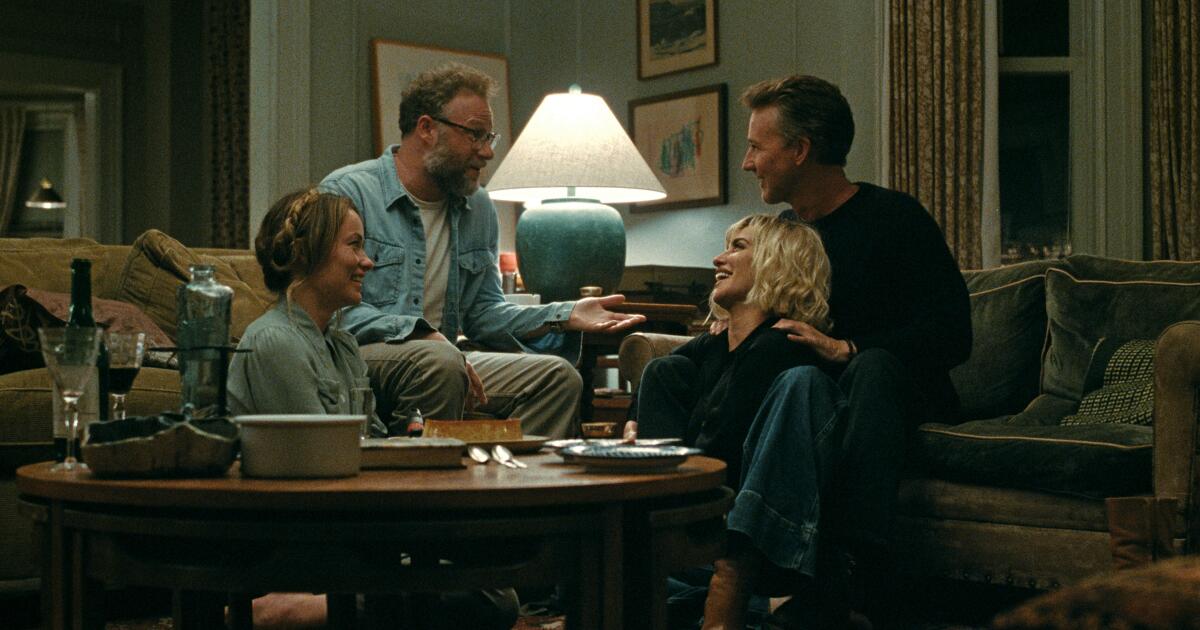
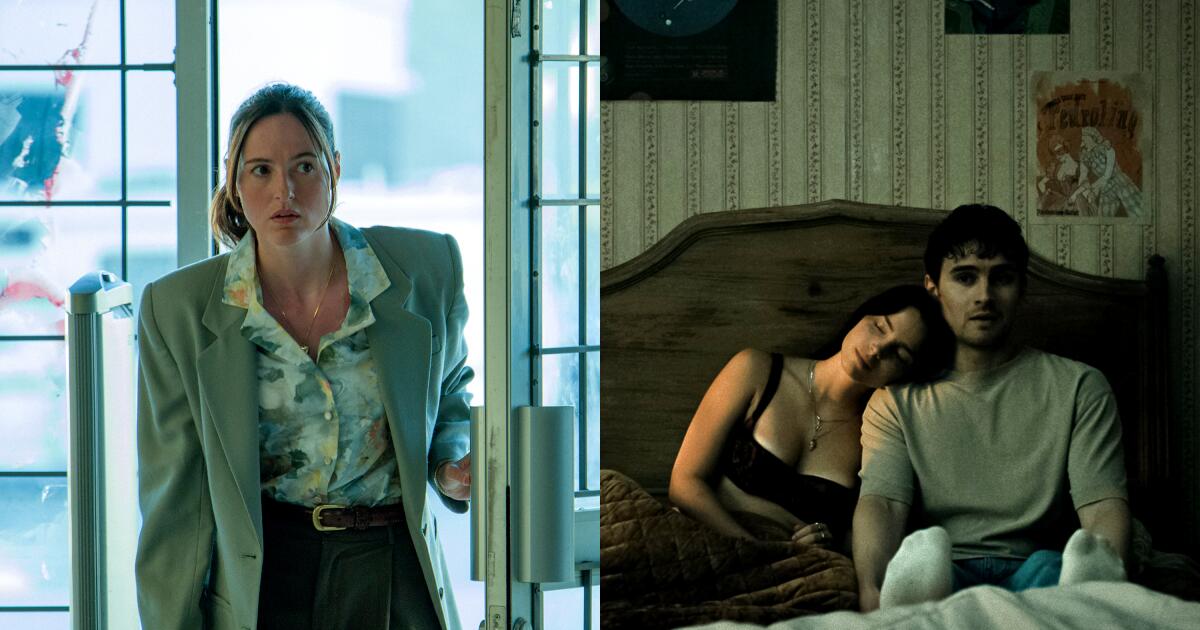
The film begins with married couple Angela and Joe, played by Wilde and Seth Rogen, checking back in at their home in San Francisco at the end of the day. He has been at the teaching job he resents and she has been frantically preparing for the dinner party she may not have told him about. Their daughter is away at a sleepover for the evening and it seems they no longer fully know how to relate to each other. As they bicker and jab, their quiet dissatisfaction with their lives stops being so quiet.

Angela has invited over their neighbors from the apartment upstairs, who they do not know well and who often have loud sex. That couple, Piña and Hawk, played by Penélope Cruz and Edward Norton, seems more assured, self-possessed and adventurous, the kind of people you can absent-mindedly invent stories about, assuming their lives are much cooler than your own.

Things go in ways both expected and unexpected, the two couples warily feeling each other out as they wait to spring their own private agendas. Over the course of the evening, things will be alternately tense, flirty, vulnerable and revelatory as surprisingly little food is eaten. (Other substances get ingested instead.)

An adaptation of Cesc Gay’s 2020 Spanish film “Sentimental,” the screenplay is credited to Rashida Jones and Will McCormack. In an unusual step, the script was further workshopped and developed with the cast during rehearsals. Rogen came up with some of the biggest laugh lines and Norton wrote the deeply earnest monologue he delivers late in the film. (The popular Belgian psychotherapist Esther Perel is also credited as a consultant.)

This American version expands upon the characters more than Gay’s original film while consistently returning to the disappointment of Angela and Joe’s lives in terms both big and small. Neither of them are the people they once thought they might become. Whether two people who are each unhappy can make it as a couple becomes the overriding theme of the film.

This is Wilde’s third movie as a director and it is, by far, her most cohesive and accomplished, both contained and expansive. Her debut, 2019’s charming end-of-high-school tale “Booksmart,” had a throw-everything-at-the-wall quality, as if she wanted to get out every idea and try every trick in case she never got another chance to direct. Wilde’s follow-up, the 2022 psychodrama “Don’t Worry Darling,” became mired in behind-the-scenes gossip and tabloid speculation that overshadowed what was intended as a stylized portrait of female rage and discontent.

Her latest fulfills and exceeds the promise of those earlier movies. Shot on 35mm film by cinematographer Adam Newport-Berra, the action of “The Invite” is almost entirely confined to Angela and Joe’s apartment, which thanks to a recent renovation has plenty of rooms to explore. All four players are exceptional in their roles, playing smartly off their screen personas while exploring the nuances of the characters and their intersecting dynamics.

Wilde’s Angela is expressive and antic; Rogen’s Joe is sullen and snarky. Cruz is alluring and watchful, while Norton turns out to be the film’s secret weapon. He has a low-key comic energy and helps guide the story through a few of its trickier emotional turns. At one point he simply rises from behind a couch and it plays like a punchline.

Skip the next two paragraphs if you want to hold onto the film’s purest pleasures. Those noises from upstairs have been Piña and Hawk hosting group sex parties and they are now cruising Angela and Joe for some extramarital couples’ fun. Here, the movie pivots from passive-aggressive party conversation into farce, as Angela and Joe try to process the idea anyone else might find them desirable, as they have long since given up on seeing themselves in that way.

Wilde in particular lights up during this section, Angela’s mind racing at possibilities she never considered for herself while fumbling over the practicalities of protocols and just how this would work. Before pushing the film into its final forlorn section, the excitement that something sexy might happen charges the actors. It is very likely that streams of Sade’s seductive “By Your Side” will skyrocket.

But the focus stays very much on the struggles of married life. One of the biggest strengths of “The Invite” is the way it keeps evolving as the night progresses so it never feels claustrophobic or repetitive. There is a sense of visual invention and imagination to the film that continues all the way through, such as a moment when Wilde crouches down to check on a doomed soufflé in the oven and addresses the camera directly, looking up as if talking to Rogen. The viewer is frequently placed in an adjacent POV to the different characters, as if you are there in the room too.

The film has a propulsive rhythm to it, a relentlessness, even as Wilde and editors Yorgos Mavropsaridis and Anthony Boys know when to ease off the throttle and take it easy for a bit. The film breathes in a dynamic way, the last few beats taking a startling turn toward a somber wistfulness. The ending is just enigmatic enough to have audiences talking it through as they make their way out of the theater.

The end credits include a handwritten dedication, “For Diane,” a nod to Diane Keaton. The live-wire wit and idiosyncratic verve that she embodied in “Reds” and “Something’s Gotta Give” are very much on display here. Early in the story, Norton dryly notes, “We love a contentious environment.” Thanks to Wilde’s confident direction and the ensemble’s unpredictable performances, audiences will too.

‘The Invite’

Rated: R, for sexual material, language throughout, and drug use

Running time: 1 hour, 47 minutes

Playing: Opens Friday, June 26 in limited release

Source link

Madonna & Kylie Minogue film secret comedy bar skit together for Graham Norton special as superstars plan to hit studio

Collage of Madonna with Kylie Minogue and Graham Norton.

POP superstars Madonna and Kylie Minogue get into the groove as they film a comedy bar sketch for Madge’s special with Graham Norton.

Madonna, 67, invited Kylie, 58, to take part in the top-secret filming last month, having admired her career for over a decade, the Sun can reveal.

Madonna and Kylie Minogue filmed a comedy bar sketch for Madge’s special with Graham Norton Credit: Ricardo Gomes
The Sun understands the pair have discussed hitting the studio together in the future

A source said: “Madonna and Kylie have long been fans of each other, so when Kylie got the call to make a cameo in the BBC special, it was a no-brainer. Rather than a performance, Kylie actually appears in the show in a light-hearted skit.

“She plays a barmaid, though, awkwardly, Madonna doesn’t like the drink Kylie gives her. It’s all very light-hearted.”

The Sun understands the pair have discussed hitting the studio together in the future.

The TV special, Madonna & Graham, airs tonight at 10.40pm on BBC One.

in vogue

Madonna, 67, looks half her age as she goes braless in sheer blue minidress at PFW


HUG UP ON YOU

Madonna & Charli XCX END feud with hug weeks after ‘dancefloor is dead’ swipe

It was filmed in Camden at Koko, where Madonna performed for the first time in the UK for just 200 people in 1983 when it was called the Camden Palace.

Graham said: “As a lifelong fan it is always a thrill to interview Madonna. But to meet her on the dance floor where she first performed in London over 40 years ago felt incredibly special.”

Kylie made a surprise guest appearance at Madonna’s The Celebration Tour in LA in 2024.

They performed Gloria Gaynor’s 1978 hit I Will Survive in a nod to Kylie’s 2005 breast cancer battle.

The TV special, Madonna & Graham airs tonight at 10.40pm on BBC One Credit: PA

Source link

Newsom says wife is target of Trump. Here’s what we know of her finances

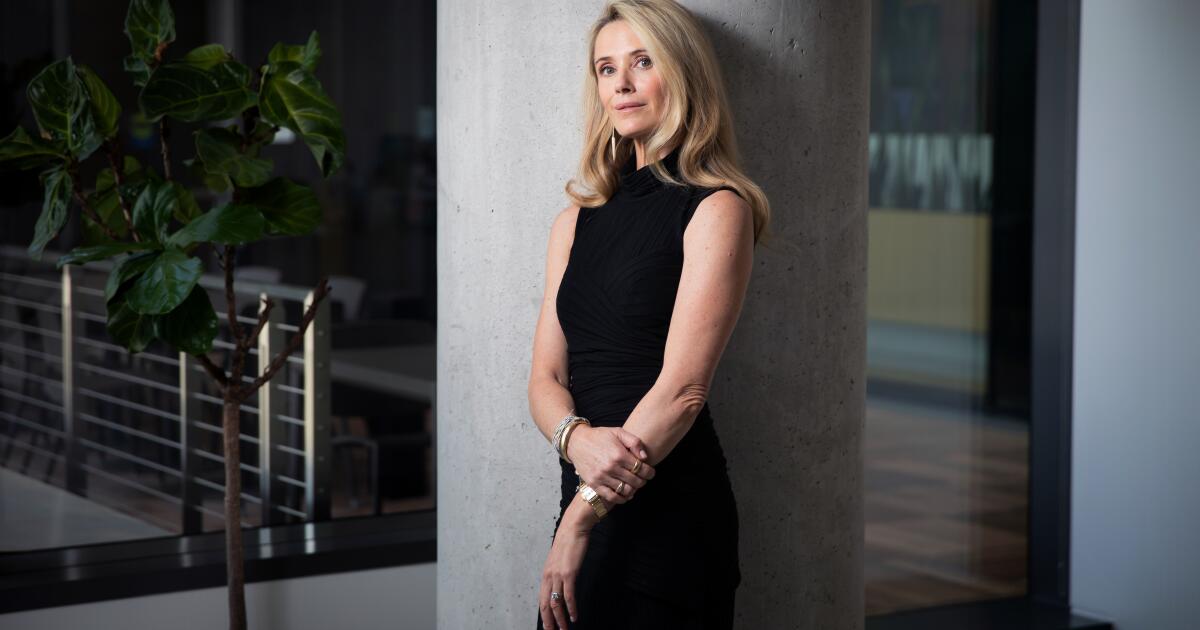
Jennifer Siebel Newsom has spent more than a decade cultivating an identity distinct from her husband, Gov. Gavin Newsom, as an active documentary filmmaker and gender equity activist with her own organizations, staff and salary.

The 51-year-old calls herself California’s “first partner,” a title she coined herself to signal an equal footing with the governor and gender inclusivity.

Her independent streak has generated her a steady income. She earns money from a set of organizations she founded or controls. They include the Representation Project, a nonprofit that advocates for gender equity through film and education programs; Girls Club Entertainment, a for-profit production company she owns that holds the copyrights to her documentaries; and the California Partners Project, a second nonprofit that works closely with her government office and receives donations solicited by the governor.

Since its creation in 2020, the California Partners Project has received nearly $5.1 million from so-called “behested payments,” raising alarms over the years about the influence large companies have amassed in Sacramento.

California law allows officials to solicit donations to specific charitable or governmental causes when the payments are reported within 30 days. The public donation system, however, came under scrutiny in 2020 when payments made at Newsom’s behest — to a variety of organizations, not just the California Partners Project — ballooned to an unprecedented $226 million to help fund the response to the COVID-19 pandemic.

With no limit on how much money can be donated by organizations or individuals at the behest of the governor, millions of dollars flowed in to prop up public services during the pandemic and fund Newsom’s favored programs, including an effort to address homelessness and a public safety campaign promoting the importance of wearing masks. The top donor of Newsom-behested payments in 2020 was tech giant Facebook, which gave $27 million for gift cards that went to front-line healthcare workers and for public health ads.

“It’s not illegal, but it certainly pushes the bounds of campaign finance law, and the first couple has been doing this for some time,” said David McCuan, a political science professor at Sonoma State University. “In this battle between Newsom and [President] Trump this makes their [the first couple’s] actions, these payments and the operation of the nonprofits a rich target for scrutiny.”

The Newsoms’ financial arrangements are now the subject of renewed scrutiny. The governor has accused the Trump administration — specifically, the FBI and the Internal Revenue Service — of questioning their friends and former employees about him and his wife. The governor said the probes are politically motivated, a personal vendetta because he’s considering a run for president in 2028.

Newsom said he and his wife have nothing to hide, and promised to release all of his recent tax returns — though he has not announced when.

In turn, the governor has demanded that the Department of Justice release all records pertaining to the probe.

“The American people deserve to know who ordered this abuse of power and how far it goes,” the governor wrote on social media last week.

“These are dark days in our nation’s history when the leader of the free world spews animus openly and without shame — aiming to silence and destroy not only his political opponents, but their friends, colleagues, and families,” Siebel Newsom said in a statement to The Times. ”My husband and I will continue to push back on this vindictive attack — and I certainly will not let this distract me from the important work ahead to protect the health, wealth, and safety of women and children and give California kids the best start in life. Together, we can set an example of strong leadership that protects people rather than preys on them.”

To better understand the finances, here is a breakdown of how Siebel Newsom’s company and nonprofits are working.

The Representation Project

Alongside the release of her first documentary, “Miss Representation,” in 2011, Siebel Newsom created her nonprofit, which originally shared the same name as her film. The organization licenses her films and reimburses costs to her production company.

The nonprofit earns some revenue from licensing the first partner’s documentaries for use in classrooms, college campuses and workplaces. Licensing for film screenings at schools starts at $49, while corporate licensing for her films starts at $995; purchase of screening rights also comes with curricula to facilitate discussions.

The Representation Project has earned more than $5.2 million in revenue from film screenings, licensing and speaking fees since 2011, according to a review of its tax filings.

The Representation Project is not required to disclose its donors but has received at least $2.6 million since 2014 from various charitable foundations that disclosed the gifts in their own tax filings. Several corporations that have had business before the state have donated to Siebel Newsom’s nonprofit, including Pacific Gas & Electric Co., AT&T and Kaiser Permanente.

Its past donors also include entrepreneur and progressive donor Susie Thompkins Buell, who is credited as a producer on several of Siebel Newsom’s documentaries, as well as the Marin Community Foundation and Onward Together, the political action organization founded by Hillary Clinton.

Four months after Newsom took office in 2019, the state Department of Education recommended that high schools screen two of his wife’s films, “Miss Representation” and “The Mask You Live In,” a move that has garnered criticism from conservative media outlets. The state said the films “can help facilitate a discussion about the impact of mass media and gender socialization on self-image and relationships with others.”

Though it does not specify where its films have been licensed, the nonprofit boasts in annual impact reports that its films and curricula have “reached over 2 million students” and “are being used in over 5,000 schools in fifty U.S. states.”

Since founding the Representation Project in 2011, Siebel Newsom has received more than $1.9 million in compensation from the nonprofit organization, according to a review of federal tax records. Her separately owned film production company, Girls Club Entertainment, has collected about $2.2 million in independent contracts from the nonprofit, records show.

Combined, the two streams of money total about $4.1 million flowing from the charity to Siebel Newsom personally or to entities she controls over the span of a little over a decade.

Her current annual salary is $161,250 for a 40-hour workweek, records show. Siebel Newsom earns income from both her production company and her nonprofit, according to state financial disclosures.

Jeff Tenenbaum, a nonprofit attorney with 30 years of experience advising nonprofit, tax-exempt organizations, declined to comment on Siebel Newsom’s specific case. But generally, he explained the legal framework that would apply to an arrangement like the one described in the filings.

Under federal tax-exempt organization law, he said, the “private benefit doctrine” governs whether a nonprofit’s overall activities unduly benefit any single individual — including through indirect payments to entities they own. The tax law asks whether too much benefit flows to one person or entity.

This is separate and distinct from the “private inurement” doctrine, which prohibits nonprofits from paying greater-than-fair market value compensation to insiders, including founders, and which requires that such compensation arrangements be approved by individuals with no conflicts of interest.

“Theoretically, a situation like this could raise some private benefit concerns,” Tenenbaum said, when the structure of the arrangement was described to him.

The doctrine does not prohibit all private benefit, he said, only what the federal tax code calls “impermissible” private benefit.

“There has to be too much benefit compared to the benefit to the public,” he said. Whether that threshold is crossed here, he said, would require a fuller review of the organization’s finances, contracts, and other considerations, including copyright ownership issues relating to the films produced.

Girls Club Entertainment

An actress and documentary filmmaker, Siebel Newsom founded her production company to develop independent films with a focus on combating gender stereotypes and empowering girls and women. She serves as the company’s chief creative officer.

She has written, produced and directed five films exploring themes of inequality and traditional gender roles. Siebel Newsom is best known for her 2011 documentary “Miss Representation,” which focused on the few and narrow representations of girls and women in American media.

Tax records show that the production company owns the rights to “Miss Representation” and has licensed the film to the Representation Project for a minimum of seven years for the purpose of distributing and screening the film in public. Costs associated with film production — including the writer, director and producer fees — have been reimbursed by the Representation Project, tax filings show.

Her latest documentary, “Miss Representation: Rise Up,” examines “the rising backlash against women’s progress and the hostile landscape of technology designed to harass and, ultimately, silence women.” The film premiered this month at the Tribeca Film Festival.

California Partners Project

In 2020, Siebel Newsom founded the California Partners Project, a nonprofit focused on improving gender equity in the workplace and the safety and well-being of children in online spaces. She does not collect compensation from the nonprofit or serve on its board.

It hosts an annual “gender equity summit” and provides resources for parents on issues such as social media safety and child mental health.

In the fall of 2024, Siebel Newsom and the California Partners Project hosted representatives from TikTok, Meta, Pinterest and other social media platforms for an event about children’s online safety. A day before the panel, state Atty. Gen. Rob Bonta took a more forceful tack to go after the tech industry by joining with 13 other states in a lawsuit against TikTok that accused the platform of exploiting young app users with its addictive features.

In September of 2024, the governor signed a bill to prohibit internet services and applications from providing “addictive feeds,” defined as media curated based on information gathered on or provided by the user, to minors without parental consent.

The California Partners Project also does not publicly disclose its donors in its tax filings, but much of the nonprofit’s funding appears to come from behested payments. Siebel Newsom does not receive a salary from the organization.

Since its founding, the Newsoms have steered more than $5 million to the nonprofit via behested payments, according to a review of the disclosures. While many donations to the California Partners Project come from charitable foundations, it also received hundreds of thousands from companies including Silicon Valley Bank, Pinterest and the charitable arm of Blue Shield of California.

Its biggest funder is the Federated Indians of Graton Rancheria, a Sonoma County tribe that operates a casino in Rohnert Park and spends heavily in state and federal elections. The tribe has given $2.3 million to the nonprofit since 2022. In June 2023, Newsom appointed tribal Chairman Greg Sarris to the University of California Board of Regents. Newsom has also supported efforts by the tribe to block a smaller tribe from building a casino in nearby Vallejo.

Blue Shield, which has reported giving $100,000 to Siebel Newsom’s nonprofit, also has a cozy relationship with her husband. The nonprofit health insurer was an early donor to Newsom’s 2018 campaign for governor and later received a $15-million no-bid contract to distribute COVID vaccines. State regulators in 2024 also signed off on the nonprofit’s request to restructure and establish a new parent corporation out of state, a move that raised alarm among healthcare advocates.

The California Partners Project did not respond to questions about its donors and spending.
Source link

‘Supergirl’ review: Let Milly Alcock party harder next time

Kara Zor-El (Milly Alcock) can swill an entire sorority’s supply of booze. As a Kryptonian, her hangovers are instantly cured by a yellow sun. And so director Craig Gillespie’s “Supergirl” follows a trail of empty beer bottles to find Superman’s lonely younger cousin marking her birthday on a solo interstellar bender, pounding shots alongside her dog, Krypto.

Unlike sweet-natured Kal-El (David Corenswet), a.k.a. Clark Kent, who escaped Krypton as a baby, this traumatized 20-something bore witness to their home planet’s long and painful extinction. Playing grief like the sandblasted absence of emotion, Alcock’s Supergirl isn’t in the mood for Metropolis do-gooding. She prefers slumming it at extraterrestrial honky-tonks with suitors who look like armadillo-plated slugs. She’s most visibly depressed when she tries to convince herself she’s having fun.

Who doesn’t want to go on a “Star Wars” cantina crawl? The opening stretch of “Supergirl” is great — Alcock even passes out on a toilet with aplomb. Briefly we hope that Gillespie and screenwriter Ana Nogueira are shaking up the superhero format like a bottle of gas-station champagne. I’d love to see Alcock’s heroine in a grotty, silly “Animal House”-style comedy, out-drinking a galaxy of alien squids. But the limits of Hollywood’s imagination squeeze Supergirl to stop partying and start doing some regular old rescuing. Sigh. Someone’s gotta save franchise movies from themselves.
As usual, there’s a tyke in trouble: 13-year-old Ruthye (Eve Ridley), a fellow orphan with a ramrod disposition and a tidy brunet braid that gives away that her character is modeled on Hailee Steinfeld’s vengeful teenager in “True Grit.” Ruthye wants to hunt and kill the creep who murdered her family. Unlike Supergirl, the child thinks it’s healthier to exorcise — not imbibe — one’s heartache. The duo visit an Epstein-island-like planet of kidnapped breeding women where, in one of the script’s subtler sick horrors, the locals imply that pubescent Ruthye is more valuable than aged 23-year-old Supergirl. (Although some of the caged extras appear to be as ancient as 30.) It’s yet another swiped idea, this one from “Mad Max: Fury Road,” for a minor story beat that’s unnecessary. Still, Alcock reacts with exactly the right note of disdain: “Cool,” she croaks. ‘Nuff said.

They’ve come to this cesspool to find the villainous Krem, an unrecognizably vile Matthias Schoenaerts with a mug that’s been pierced all over like he face-planted into a pile of thumbtacks. His biker-scumbag-times-infinity prosthetic design is fantastic, but what makes it genius is that the makeup team allowed a couple of metal studs to fall off Krem’s forehead before his first close-up. You know, for that lived-in barbarian sex trafficker look.

As Ruthye, Ridley’s crisp British elocution is the cleanest thing in the movie, which is shot by Rob Hardy in shades of mustard smog and latrine brown. Neither Supergirl as a babysitter nor Gillespie as a storyteller let the kid carry her share of the action, but I suspect Ridley has the talent for it. She seizes her small opportunities to impress in the film’s second half. Spitting on a baddie, her righteous loogie stings like a moral disinfectant.

Meanwhile, Jason Momoa swaggers into the fray from the cover of an ’80s hard-rock album with Kiss’ makeup, Manowar’s muscles and Meatloaf’s motorcycle. His character, a blue-skinned bounty hunter, only tangentially slots into the plot. Really, Momoa’s massive presence is here to prove that James Gunn was serious when he announced he was hard-resetting DC Comics’ film canon up to 2023’s “Aquaman and the Lost Kingdom.” Momoa as Aquaman is dead. Long live Momoa as Whoever This Guy Is.

Gillespie likes to champion difficult women, from Tonya Harding in “I, Tonya” to the Dalmatian-skinning Disney villain of “Cruella.” Yet as his budgets have mounted, so has the pressure to make his problematic ladies popular with a mass audience. “Supergirl” feels anxious to entertain. The jokes all have the same sense of snarky humor, no matter what species is cracking them. One scene even has a comic slow clap that, in my theater, didn’t get a reaction. The camera and cutting pace refuse to relax. Major set-piece action shots are impossible to follow. You can’t squint past the distracting lens flares.

Alcock’s wildling Supergirl is the one reason to see the film. As in her too-brief role on the “Game of Thrones” prequel “House of the Dragon” and her rollicking cameo at the end of 2025’s “Superman,” the Australian actor is a striking combination of grounded conviction and otherworldly essence, the ideal one-two for a character who plays anti-gravity fetch with her dog. Floating weightless in the stars, her hair unbrushed and bathrobe-like jacket shrugged on, she makes the impossible look casual. (Supergirl’s iconic red-and-blue minidress is so not her style.)

Alas, Krypto the pup is sidelined early on with a whimper, both from him and us. Maybe he’ll get more screen time when the digital animators figure out how to make him look more realistic. (Between the mutt’s anime eyes and that gawky-phony deer in “Disclosure Day,” are CGI creatures getting worse?)

Grief tethers Supergirl to Ruthye, even though they disagree on how to handle it, and it also seems to repel her from Corenswet’s dopey, innocent Clark Kent. There’s rich irony in the personality contrast between the cousins. Her Kryptonian parents raised her to help humanity; his parents intended their son to rule it. But due to twists of fate, she’s the miserable, maladjusted one. The movie has no time to mine the psychology underneath their clash, let alone summon a sniffle for the other pitiful characters who die during this escapade. Perhaps it’s holding that tension back for a sequel, but I’d rather invest in the characters now.

A flashback to Supergirl’s first touchdown on Earth has the awkwardness of a study-abroad student realizing she doesn’t like her host country at all. Despite our planet seeming to have enforced its monoculture on outer space — an extraterrestrial dive bar band even does “The Girl From Ipanema” — Supergirl appreciates little of it besides some product-placement dog treats and, in a forced touch, the pop music on her headphones as well as crammed into the soundtrack next to Claudia Sarne’s gravelly score. I’ll accept this degenerate Supergirl sporting a retro Blondie shirt, but not her willingly choosing to listen to mopey contemporary Earth jams like Rilo Kiley and a twee cover of Jimmy Eat World over, say, Kryptonian death metal.

Still, the production design has imaginatively askew takes on the mundane: gridded jail cells, plodding space buses, clumsy oxygen suits that shimmy on with a satisfying squeak. When Supergirl makes a pit stop at a celestial convenience store, she samples a snack that I’m forced to call poop-corn. If “Supergirl” sells enough of it, hopefully Alcock can rampage again in a more confident sequel that truly cuts loose.

‘Supergirl’

Rated: PG-13, for sequences of strong violence, action, language, and smoking

Running time: 1 hour, 48 minutes

Playing: Opens Friday, June 26 in wide release

Source link

How low-budget movies are beating Hollywood’s most expensive bets

Two of the biggest box-office standouts of 2026 so far were not made by established studio directors or built on franchise IP.

“Obsession” and “Backrooms” — horror films from internet-native directors in their 20s — have outperformed far more expensive studio releases.

The breakout success of these films has ignited debate across Hollywood about what made these movies so popular, especially among Gen Z moviegoers who haven’t been flocking to cinemas in recent years. Here’s what to know:

The numbers

Obsession” was directed by 26-year-old Curry Barker, who got his start on YouTube with sketch comedy and horror shorts. Released May 15 by Focus Features, the film was made for just $750,000 but opened to a staggering $17 million and has improved on its debut every weekend since.

“Obsession” set an all-time horror record for the biggest fourth weekend for a film at the domestic box office, raking in $25.4 million. It now ranks as the year’s fifth most popular film, nearing $200 million domestically and roughly $295 million worldwide — ahead of Pixar’s “Hoppers” ($166 million) and Paramount’s “Scream 7” ($121 million), per Box Office Mojo.

“Backrooms,” from 21-year-old Kane Parsons — known on YouTube as Kane Pixels — drew on an online fascination with liminal spaces, leading audiences through an endless run of nearly indistinguishable rooms.

Released May 29 by A24 (known for such acclaimed films as “Moonlight” and Everything Everywhere All at Once”) on a reported $10-million budget, it opened to $81 million and crossed $100 million in under a week.

Within two and a half weeks, it had outgrossed the entire theatrical runs of horror films “Five Nights at Freddy’s 2,” “Smile” and “Scream 7.” It sits as 2026’s eighth-highest-grossing film.

Who is watching?

The audiences are young. In recent weeks, nearly 90% of “Backrooms’” viewers were under 35, with more than half under 25. Over “Obsession’s” first few weekends, 75% of the audience was 17 to 34, which is significant at a time when major studios have struggled to consistently get younger viewers to trek to the multiplex.

Why it’s working

Audiences have clearly latched onto the stories, said Jason Blum of Blumhouse–Atomic Monster, who worked on both films.

“There’s been an audience kind of waiting to get back to the movie theaters, and we in Hollywood really have not landed on what would get them back,” he told The Times in an interview this week.

Blum, who upended horror genre with the “Paranormal Activity” franchise, ties the success of “Backrooms” and “Obsession” to a connection to the directors’ origins.

Because the films were made by creators who speak to younger viewers daily on YouTube, he said, that generation “feels like they’re being spoken to.”

David Gross, an analyst at FranchiseRe, framed it as a new pipeline of talent and material. Creators can build large followings very inexpensively, he said, and their stories arrive further developed — which expedites the development and discovery process. He called internet-based storytelling “another additive source for material for movies.” Blum added that the films’ success could make studios more willing to bet on undiscovered directors who “might not have been considered” before.

Rosie Ramirez, chief marketing officer at Galaxy Theatres, said a young first-wave audience tends to generate buzz. More than a month after “Obsession” was released, she said, the Nevada chain’s four California locations are only now seeing a second wave of moviegoers curious about the hype.

Notably, the rise of these two films has unfolded in the shadow of major releases like Disney’s “Star Wars: The Mandalorian and Grogu,” and Mattel’s “Masters of the Universe,” both of which returned underwhelming numbers in their respective opening weekends.

Is it a trend or an anomaly?

Whether this marks a lasting shift or a fluke is unclear. May crossed $1 billion in box office — with “Backrooms” and “Obsession” doing much of the heavy lifting. Despite the improvement, the box office has yet to full return to pre-pandemic levels, with the summer tracking roughly 3.5% behind summer 2019, said Comscore’s Paul Dergarabedian.

And Dergarabedian questioned how the industry could replicate a success that, in his words, was “authentically and organically created” rather than manufactured: “It just happened,” he said.

Ramirez argued the broader summer slate — franchise tentpoles like “Toy Story 5” alongside some original surprises — points to a healthy box office regardless, a reminder that “it doesn’t always have to be the big summer blockbuster.”

Source link

The barely-known Italian town used to film new Halle Bailey rom-com movie

TUCKED away in the Tuscan countryside is a tiny town called Pienza – and it is about to get a lot more famous.

The small town was the used to film Netflix movie You, Me and Tuscany.

Pienza stars in the movie You, Me and Tuscany Credit: IMDB
Pienza is surrounded by the beautiful Val d’Orcia valley in Tuscany Credit: Alamy

It features in the scene where Anna (Halle Bailey) first meets Michael (Regé-Jean Page).

Anna accuses him of stealing the sandwich which she travelled more than 4,000 miles to eat – and it was filmed outside a shop in Pienza dressed to look like a deli.

It’s apt that a romantic comedy was filmed in Pienza as the town is known for having love-themed street names.

A few are Via dell’Amore which translates into ‘love street’ and Via del Bacio which is ‘kiss street’.

CHEAP DATE

Our fave cheap European destinations with flights under £20 & hotels from £24pp


IT’S A WASHOUT

UK indoor waterparks with VIP spas, mega slides and 30C tropical climates

Pienza sits within the Val d’Orcia valley which is known for its rolling green fields and has been described as “a charming little town” by visitors.

One of the most impressive buildings within the town is Piccolomini Palace which was built in 1459.

Pienza has Renaissance buildings and ‘love’ streets Credit: Alamy

The impressive Renaissance building has a beautiful garden with views of Val d’Orcia, later becoming a summer residence for Pope Pius II.

Now, most of the property is open to visitors as it is mostly a museum.

When it comes to food, the town has plenty to offer and is known for having high quality cured meats and fresh truffles.

The town is particularly famous for Cacio di Pienza, or Pecorino cheese – usually grated over pasta or eaten on a cheese board.

To celebrate its cheese, the town even holds a festival dedicated to it on the first Sunday in September that includes a cheese-rolling competition.

For those who want to stay in Pienza, you’ll mainly find holiday rentals over hotels.

Pienza holds a cheese festival every September Credit: Alamy

One that is popular is Casa Olivieri, with the one-bedroom apartment starting from £90.

The closest airport that has direct UK flights is in Florence – from there it’s a one hour and 40-minute drive.


Source link

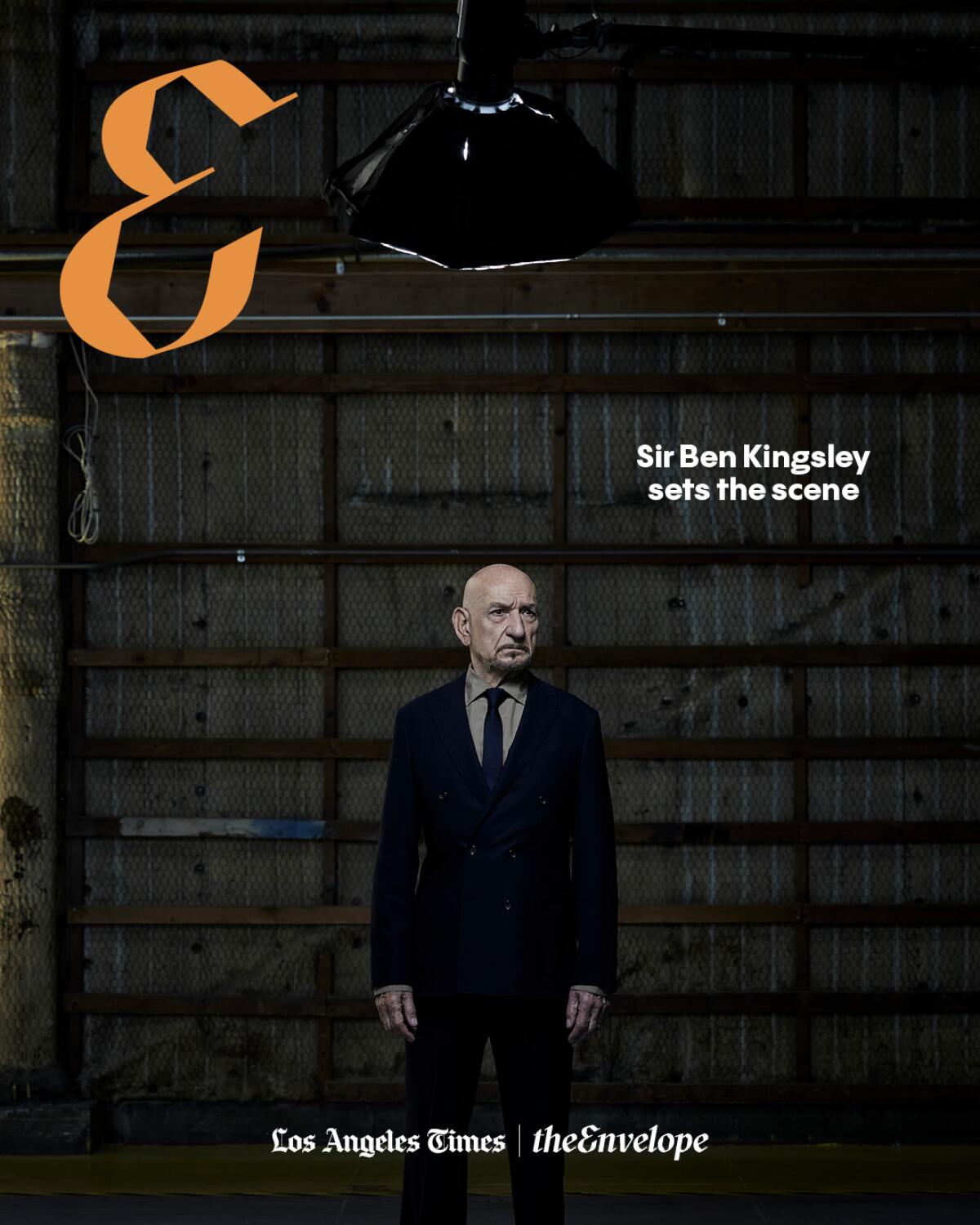
Ben Kingsley’s angriest roles: 3 times ‘Wonder Man’ actor played rage

What is the angriest acting performance you’ve ever seen?

Maybe it’s Joe Pesci in “Goodfellas.” (“Funny how? Do I amuse you?”) Perhaps it’s James Caan kicking the stuffing out of his ne’er-do-well brother-in-law Carlo in “The Godfather.” John Goodman enforcing the rules of bowling in “The Big Lebowski”? It’s in the conversation.

Did Ben Kingsley in “Gandhi” cross your mind? Probably not.

The 82-year-old Oscar winner thinks it should.

I’m Glenn Whipp, columnist for the Los Angeles Times and host of The Envelope newsletter. Don Logan or Mahatma Gandhi? The answer isn’t as plain as you might think.

Sign up for The Envelope

Get exclusive awards season news, in-depth interviews and columnist Glenn Whipp’s must-read analysis straight to your inbox.

Not long ago, I spoke with Kingsley just before an Emmy FYC event for “Wonder Man,” the enjoyable new Marvel TV series that finds him revisiting Trevor Slattery, the washed-up, drug-addled actor he first played in 2013’s “Iron Man 3.”

“Wonder Man” follows struggling actor Simon Williams (Yahya Abdul-Mateen II), trying to land a big break in Hollywood while keeping his superpowers hidden. Trevor befriends Simon. Initially he has ulterior motives, but soon becomes Simon’s mentor, turning the series into a look at the indignities that actors face while pursuing their profession.

Taking notes while watching the show’s eight episodes, I wrote, “Ben Kingsley’s seething anger is everything.”

You may remember Kingsley’s bullying and badgering and swaggering menace playing the underworld sociopath in Jonathan Glazer’s 2000 crime-thriller “Sexy Beast,” still my favorite Kingsley performance, one that earned him a supporting actor Oscar nomination. (He lost to Jim Broadbent in “Iris.”)

Is that kind of boiling rage as fun to play as it is to watch?

“If the expression of rage or indignation is completely dramatically justified and that expression of indignation is of enormous benefit to the tribe, yes,” Kingsley answers.

The Envelope digital cover featuring Ben Kingsley

(Larsen&Talbert / For The Times)

Kingsley says Itzhak Stern, Oskar Schindler’s loyal aide and factory manager in “Schindler’s List,” was, “bless him,” all about “contained rage.”

“And a colleague of mine who saw ‘Gandhi’ said, ‘That’s the angriest performance I’ve ever seen on screen,’” Kingsley continues. “That righteous indignation propelled him, and it can be expressed in many ways. Sometimes the safety valve is efficient enough to allow it to come through language and gesture, and sometimes the safety valve can’t hold it.

“That was Don Logan in ‘Sexy Beast.’ No safety valve.”

Let’s circle back to that thought of how rage can help the “tribe.” In “Wonder Man,” Trevor proclaims that “acting is not a job. It’s a calling, the single most consequential thing anyone could ever do with their life.”

“I would broaden the definition and refine it back to its origins,” Kingsley says when I ask if he shares Trevor’s view on acting. “There are images, thoughts and threads that I find nourishing and sustaining, and I treasure them. The tribal storyteller is a very consequential figure in the tribe, and if the mantle of the tribal storyteller falls upon that person’s shoulders, that is the single most consequential thing that person can do in their lives.”

“Trevor expresses it quite differently, and that’s fine,” Kingsley says. “That’s in the script. I honor the lines. But for me personally, as a rather convoluted answer, the tribal storyteller is the hand I hold and the baton I want passed on to me. Maybe it has. I hope I’m worthy, but it’s …” Kingsley widens his eyes and whispers, “Wow.”

“It is the single most consequential thing I can do with my life.”

Source link

Toy Story 5 film review: Woody and Buzz are back to take on kids’ biggest enemy yet – but magic isn’t quite what it was

TOY STORY 5

(PG) 102 minutes

★★★★☆

Woody and Buzz realise there’s a new enemy in the toy box Credit: AP
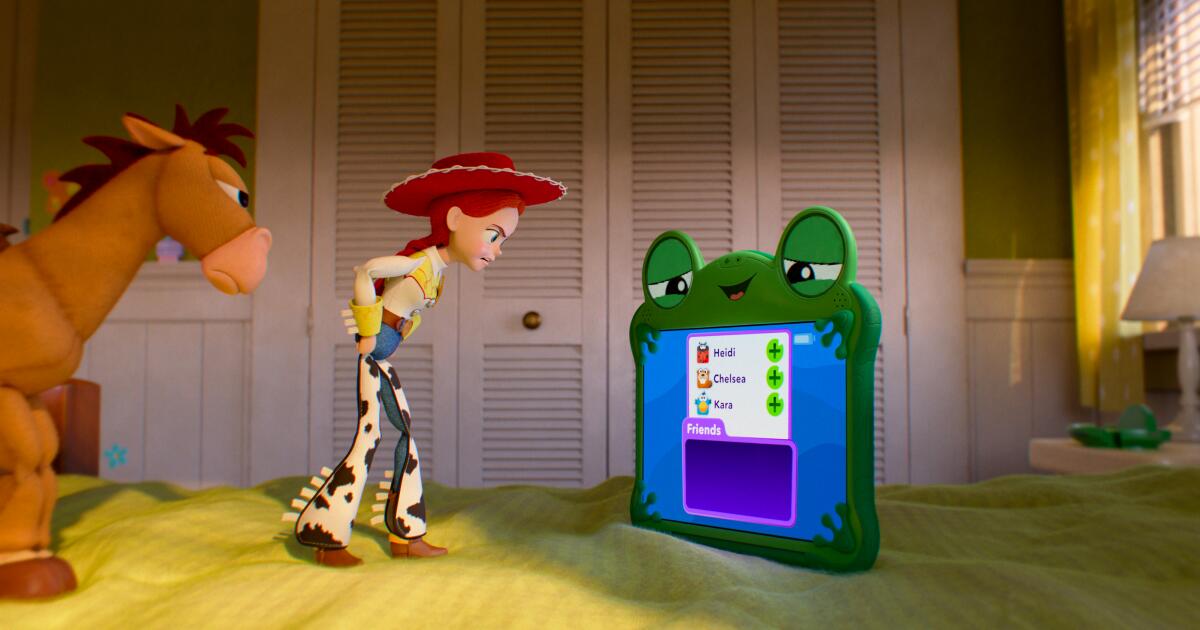
Bonnie’s parents buy her a Lilypad – a kid-friendly tablet that she can ‘connect’ with other children on Credit: PA

IT’S more than 30 years since the first Toy Story film changed the way we look at the contents of an old toy box.

And it might seem that after four films — and a pretty dire Buzz Lightyear spin-off in 2022 — that the story of toys could have been packed up and put in the loft for ever.

But, no. There’s always room for another play.

And Woody, Buzz and their motley crew realise there’s a new enemy sucking the imagination out of their beloved children’s minds: Technology.

The film focuses on good old rootin’-tootin’ Cowgirl Jessie (voiced by Joan Cusack), who is favoured by her owner, Bonnie.

DULCIE PEARCE

Disclosure Day is punctured with plot holes and one-dimensional characters


DULCIE PEARCE

There’s plenty in silly, fun Masters Of The Universe to entertain the family

The kid loves nothing more than playing games where Jessie and Buzz Lightyear get hitched.

Sadly, the neighbourhood kids don’t want to join in with Bonnie. In fact, they laugh at her suggestions.

When Jessie goes on a mission to persuade them otherwise, she watches as they all sit staring at devices, like little zombies.

“That’s not playing!” she exclaims. “They’re not even looking up.”

In a misguided act of kindness, Bonnie’s parents buy her a Lilypad (Greta Lee) — a kid-friendly tablet that she can use to “connect” with other children. And, as you can imagine, this does the opposite.

Bonnie becomes addicted to the screen, while shunning her toys, losing her imagination and getting cyber-bullied by the girls in her class.

So, it becomes Jessie and the crew’s job to get her away from the screen and the misery it brings. Which, as any parent will know, is a near impossible task.

There is also another story running alongside it involving a shipment of new Buzz Lightyears trying to find their way to a star.

At the same time, Woody has to be brought into the pack as he’s living on the outside with the rebellious Bo Peep.

The brilliant dynamic between competitive pals Woody and Buzz is hugely missed here — as is Randy Newman’s superb theme tune, You’ve Got A Friend In Me.

This time, Taylor Swift’s original song, I Knew It, I Knew You, is played at the credits.

And Jessie’s relentless energy also becomes a little grating.

However, it’s great to see the gang back together on the big screen, and this outing has enough entertainment and imagination to make sure you won’t check your phone throughout.

EFFI O BLAENAU

(15) 90mins

★★★★★

Leisa Gwenllian as Effi in Effi O Blaenau Credit: Unknown

THIS hard-hitting drama is adapted from Gary Owen’s one-woman play Iphigenia In Splott, which transforms his doomed Greek tragedy character into a working-class woman.

Effi (Leisa Gwenllian) has a bleak life, spending her days drinking vodka from a mug with her mates and eating Pot Noodles in a grim house in the Welsh valleys.

Her joy comes from club nights in Llandudno, where she meets handsome soldier Lee (Tom Rhys Harries) and the pair have a passionate one-night stand.

After he ghosts her, Effi discovers she’s pregnant.

But in the poorly maintained hospital in the poverty-stricken area, an NHS maternity care horror story then changes her life forever.

This Welsh-language film is a breathtaking work by director Marc Evans.

It strikes the perfect balance of grit and heart to make the subject matter compelling.

Gwenllian’s performance as the unpredictable and broken Effi is a masterclass in how to make an initially unlikeable character be- come someone you want to throw your arms around and care for.

FAMILIAR TOUCH

(12) 90mins

★★★☆☆

Kathleen Chalfant as Ruth Credit: Alamy Stock Photo

IN her debut feature film, director Sarah Friedland brings to life a moving story about a woman with dementia who is placed in a retirement community.

We meet clever, stylish Ruth (Kathleen Chalfant) as she’s making a delicious meal with immaculate precision. Yet at one point, she pops a piece of toast on to the dish-drying rack.

Her son then arrives – whose name she needs a reminder of – and she wonders about his profession and acts as though they may be on a date.

But he is there to take her to an assisted-living home.

Ruth has significant short-term memory loss, though she can still reel off the recipes with precision.

She enters with little protest, apart from telling the carer, in front of her son, that she never wanted children.

Chalfant’s performance is brilliant and has none of the clichés of the elderly.

Ruth is still a sassy, flirty woman who really knows her own mind even though it is betraying her.

This gentle film has a slow pace and the long, silent scenes often ask a lot of the audience – and there’s no rush in unravelling the story.

But its subtle characterisation makes it compelling and somehow uplifting.

FILM NEWS

  • THE Shrek 5 trailer is out, with the film set for release in a year.
  • ANYA Taylor-Joy joins the cast of The Lord Of The Rings: The Hunt For Gollum.
  • A THIRD Jump Street film is in the works, starring Channing Tatum, Ice Cube and Jonah Hill.

Source link

30 years and $3 billion later, ‘Toy Story’ still Disney’s surest bet

Woody, Buzz Lightyear and Jessie will be back at the box office this weekend, delivering what could be the biggest film debut of the year.

Analysts expect the fifth installment of Disney/Pixar’s “Toy Story” franchise will pull in at least $150 million in the U.S. and Canada, with some predicting as much as $175 million — either of which would set a franchise record, topping the nearly $121-million opening of 2019’s “Toy Story 4.”

A strong showing for “Toy Story 5” will further fuel a recovery of the box office this year from the post-pandemic doldrums.

Domestic ticket sales are up over last year, and Roth Capital Partners forecasts the second quarter will climb 6.5% to $2.8 billion — a post-pandemic high.

“Toy Story 5” is the first of several family tentpoles this summer, ahead of Universal and Illumination’s “Minions & Monsters” and Disney’s live-action “Moana.”

“Right now we’re on pace for the best opening of the year,” said Daniel Loria, editorial director at Box Office Co. “This is a performer.”

The timing also is fortuitous for Walt Disney Co. at a moment when its other once-reliable franchises such as “Star Wars” and Marvel have faltered. The recent “Star Wars: The Mandalorian and Grogu” dropped sharply at the domestic box office after its late-May opening, bested by low-budget horror films “Backrooms” and “Obsession.”

“People love these characters from ‘Toy Story,’ ” said Paul Dergarabedian, head of marketplace trends at Comscore. “It’s just as appealing as ever.”

Indeed, across four films and 30 years, “Toy Story” has grossed more than $3 billion worldwide. It is the most-watched franchise on Disney+, with more than 2 billion hours streamed. Woody, Buzz Lightyear and Jessie have spawned 19 theme park rides, four themed lands, two hotels and roughly $1 billion a year in global retail sales.

The production budget for “Toy Story 5” is about $150 million to $200 million. A crew of about 300 people worked on the film at Pixar’s Emeryville, Calif., headquarters.

For Pixar, the reliance on “Toy Story” reflects a shift away from originals that used to be its lifeblood.

February’s “Hoppers” managed a respectable $372 million worldwide, but the surer money now comes from sequels.

“Inside Out 2” grossed nearly $1.7 billion in 2024, and both “Toy Story 4” and “Toy Story 3” crossed $1 billion globally.

Still, the franchise label is no guarantee: The 2022 spin-off “Lightyear” stalled at $226 million worldwide after straying from the formula, recasting Buzz as an actual sci-fi hero — voiced by Chris Evans rather than Tim Allen — and sidelining Woody and the rest of the gang.

“Toy Story 5” stays closer to home but wades into new territory: the explosion of tech in everyday life. The toys must contend with Lilypad, a tablet that captures the attention of their owner, Bonnie — a premise that grew out of a tech-toy character originally written for “Toy Story 4” and scrapped for time. Disney is betting the underlying tension is universal.

“What parent hasn’t had anxiety over tech versus toys with their kids?” said Andrew Cripps, head of theatrical distribution for Walt Disney Studios.

Disney is betting that this universal concern will drive audiences to the film.

The fifth installment also arrives with an unusually high-wattage assist: Taylor Swift wrote and performed an original song, “I Knew It, I Knew You,” and made a surprise appearance at last week’s premiere, performing it after the credits before joining longtime franchise composer Randy Newman for “You’ve Got a Friend in Me.”

“It means the world to me to be a small part of the universe of these films,” Swift told the crowd.

The expected blockbuster opening for “Toy Story 5” would be a full-circle moment for the long-standing franchise; Pixar animators in 1995 hadn’t even considered the possibility of a sequel while working on the first “Toy Story.”

“There was so much learned on that first film, specifically our iterative process,” Pixar Chief Creative Officer Pete Docter said in a phone call last week from Madrid, shortly before the film’s Spain premiere. “A lot of things that we discovered having worked on that film have just continued to inform every movie that we make.”

“Toy Story” revolutionized the movie business as the first computer-animated feature film. But its enduring appeal was in the bonds between the characters, Docter said.

Docter, who supervised animators and helped with character design and writing on the original “Toy Story,” added: “It certainly had some new technology, but it was really up to the story and characters to carry the audience.”

The franchise’s longevity is also due to its ability to capture generations of fans.

“Having parents now that say, ‘I grew up with “Toy Story,” and now I’m showing my kids,’ has been really gratifying,” Docter said.

Source link

Xolo Maridueña on East L.A. roots, Latino representation and future projects

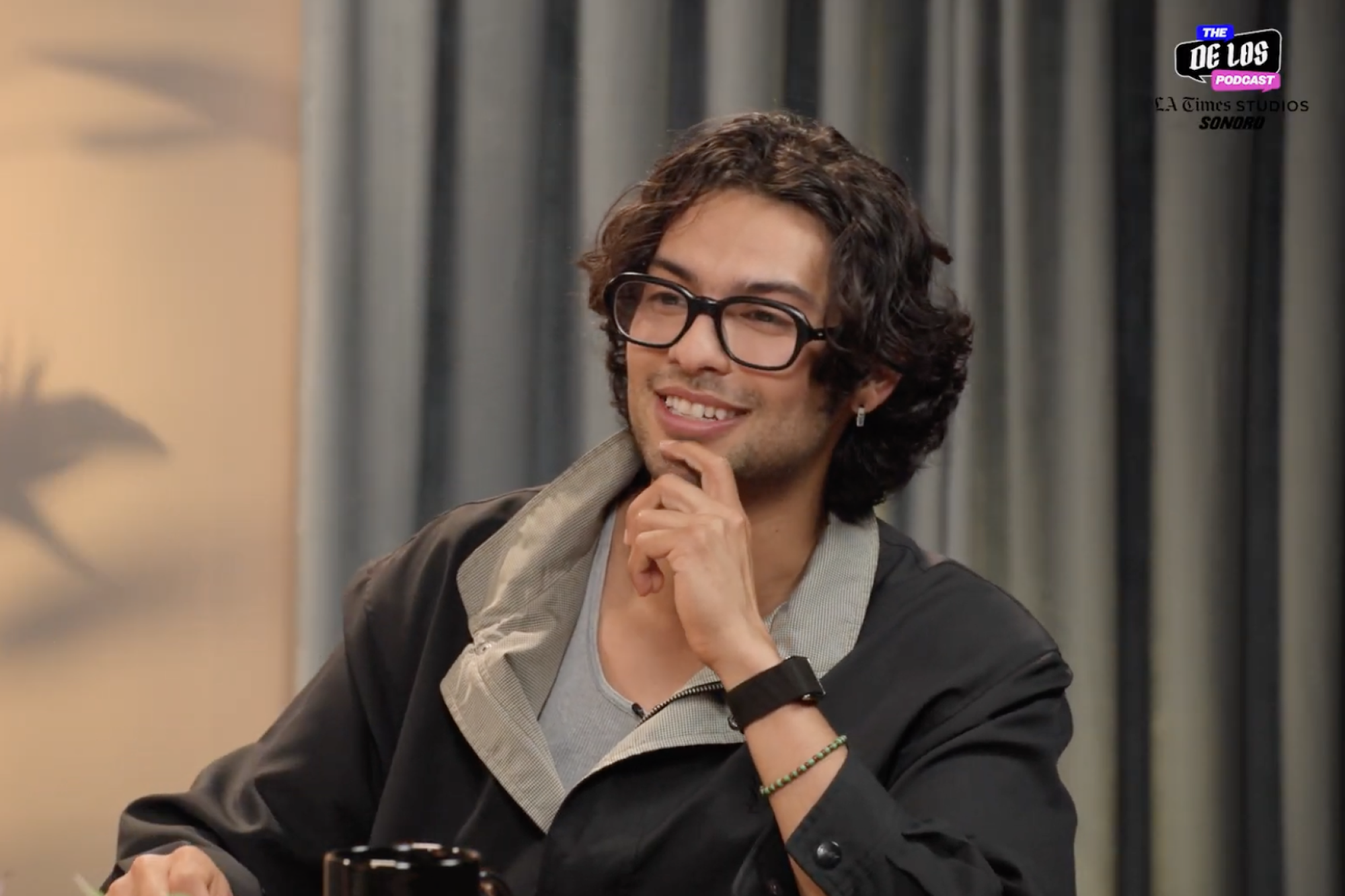
In this week’s episode of “The De Los Podcast,” hosts Fidel Martinez and Suzy Exposito sat down with actor Xolo Maridueña to chat about his East L.A. upbringing, the importance of Latino representation in his career and a litany of projects he has in the works.

Born and raised in El Sereno, Maridueña was exposed to the arts at a very young age through local community arts hubs Casa 0101 and the Boyle Heights Art Conservatory, where his mother, Carmelita Ramírez-Sánchez, now serves as executive director.

The 25-year-old actor credited his mom, who also previously worked as a radio DJ for decades in L.A., for encouraging him to explore a creative career.

“She was in the music world at a time when that wasn’t really a thing as a Latina woman,” Maridueña said. “She met so many roadblocks and overcame those that when it came time to for her to eventually raise her own family, she understood the want to try something that was outside of what the education system would deem successful. As a Latina, she also instilled these values of remaining curious, questioning certain traditions and the ways our experiences are affected by some systems that are larger than ourselves.”

He also touched on what it was like being the first Latino lead in a live-action superhero film in “Blue Beetle” — and the importance of continued Latino representation in Hollywood.

Xolo Maridueña is featured on "The De Los Podcast."

Xolo Maridueña is featured on “The De Los Podcast.”

(L.A. Times Studios)

“It was such a wild ride doing something like ‘Blue Beetle,’ that was the first in a lot of categories… But once the movie came out, it was so heartwarming to see that there were already like 10 other Latino superheroes that were making their debuts on the screen,” Maridueña said. “[Filming the movie] was the first time I had witnessed some much of the crew being Latino, or just being diverse — there were a lot of women and queer folks on that set.”

Having worked on hit series like “Parenthood” and the Netflix phenomenon “Cobra Kai” in addition to his theatrical roles, Maridueña wants to help provide an avenue for fellow Latino artists to succeed.

“I just hope [that] with this body of work, I can help open the door and prop it open for everyone else,” he said.

The conversation with Maridueña wrapped with him discussing the litany of projects he has coming out in the near future, including a leading role in the film “Dog Years” alongside Xochitl Gomez, a part in the Al Pacino-led movie “Killing Castro” and a spot in the upcoming season of Netflix’s live-action adaptation of “One Piece.”

He will also feature alongside Sandra Bullock and Nicole Kidman in the upcoming sequel to the witchy 1998 film “Practical Magic,” which is set for release Sept. 11.

“It’s been a blessing to expand not only the types of people I’ve gotten to work with, but [also] the genres and types of characters I’ve gotten to bring on to the screen,” said Maridueña. “Projects like ‘One Piece’ are so wonderful for the reach and then movies like ‘Dog Years’ and ‘Killing Castro’ are just as fulfilling in the sense that because they get to be smaller productions, the cast and crew have a bit more ownership of what they’re doing.”

Source link

Horror movie star reveals surprising amount they still make from hit 1990s Scream film

The Scream movie series is one of horror’s most successful franchises and has seven films under its belt

A star from the horror film franchise Scream has revealed the surprising amount he still earns from one of the movies.

Back in 1996, the Scream series kicked off with its first instalment. Directed by Wes Craven, the film followed Sidney Prescott and her friends being targeted by a sadistic killer who donned a black cloak and white mask: Ghostface.

Due to the first film’s success, several more movies followed including a sequel in 1997, and a third instalment in 2000. Then, after 11 years Scream 4 was released in 2011.

And more recently, the slasher franchise was brought back in 2022 for a fifth movie and 2023 for a sixth. This year, a seventh film was released which became the highest-grossing film of the series so far.

The satirical whodunnit was a huge hit thanks to a clever script penned by Kevin Williamson and Wes Craven’s direction, while the characters’ awareness and acknowledgement of horror film clichés was uncommon at the time. Scream helped to revive interest in the teen slasher genre.

And this week, a star from Scream 2 revealed his residual pay from the film 29 years after its release. Actor and comedian Craig Shoemaker appeared in the sequel, Scream 2 – which made $172 million at the box office.

Craig played the role of ‘Artsy Teacher’ in the instalment. Taking to his Instagram, he shared a photo of his residuals cheque which revealed he made a total of $34.09.

He captioned the post: “In 1999 | was cast in the role of the film professor in the sequel of the original Scream movie, Scream 2, where I lead a conversation in class about film sequels. The residuals keep rolling in, baby! What should I buy with my 34 bucks?”

Content cannot be displayed without consent

The latest Scream movie, Scream 7, was released earlier this year. The film shifted the focus back to the original final girl, Sidney Prescott – played by Neve Campbell and her teenage daughter Tatum, played by Isabel May.

Neve didn’t appear in the sixth Scream film in 2024, which starred Jenna Ortega and Melissa Barrera as sisters who discover a serious connection to one of the original Ghostface killers, Billy Loomis.

Neve announced she would be stepping away from the 2024 Scream film after a dispute over pay. She said in a statement: “Sadly, I won’t be making the next Scream film. As a woman I have had to work extremely hard in my career to establish my value, especially when it comes to Scream.

“I felt the offer that was presented to me did not equate to the value I have brought to the franchise. It’s been a very difficult decision to move on,” Neve added.

She continued: “To all my Scream fans, I love you. You’ve always been so incredibly supportive to me. I’m forever grateful to you and to what this franchise has given me over the past 25 years.”

Source link

Toy Story 5 film review: Woody and Buzz are back to take on kids’ biggest enemy yet

TOY STORY 5

(PG) 102 minutes

★★★★☆

Woody and Buzz realise there’s a new enemy in the toy box Credit: AP

IT’S been over 30 years since Disney’s Pixar changed the way we all look at the contents of an old toy box forever, with the creation of 1995’s Toy Story.

And it might seem that after four films – and a pretty dire Buzz Lightyear spin-off in 2022 – that the story of toys might have been packed up and put in the loft forever.

But, no. There’s always room for another play.

And Woody, Buzz and their motley crew realise there’s a new enemy sucking the imagination out of their beloved children’s minds: technology.

This film focuses on rootin’-tootin’ Cowgirl Jessie (Joan Cusack), who is favoured by her owner, Bonnie.

DULCIE PEARCE

Disclosure Day is punctured with plot holes and one-dimensional characters


DULCIE PEARCE

There’s plenty in silly, fun Masters Of The Universe to entertain the family

The kid loves nothing more than playing games where Jessie and Buzz Lightyear get hitched.

Sadly, the neighbourhood kids don’t want to join in with Bonnie. In fact, they laugh at her suggestions.

And when Jessie goes on a mission to persuade them otherwise, she watches as they all sit staring at devices, like little zombies.

“That’s not playing!” she exclaims. “They’re not even looking up.” In a misguided act of kindness, Bonnie’s parents buy her a Lilypad (Greta Lee) – a kid-friendly tablet that she can ‘connect’ with other children on.

Bonnie’s parents buy her a Lilypad – a kid-friendly tablet that she can ‘connect’ with other children on Credit: PA
The film also features a shipment of new Buzz Lightyears trying to find their way to a star Credit: AP

And, as you can imagine, this does the opposite – making Bonnie addicted to the screen – while shunning her toys, losing her imagination and becoming gently cyber-bullied by the girls in her class.

So, it becomes Jessie and the crew’s job to get her away from the screen and the misery it brings. Which, as any parent will know, is a near impossible task.

There is also another story running alongside it involving a shipment of new Buzz Lightyears trying to find their way to a star.

Also, Woody has to be brought into the pack as he’s still living on the outside with the rebellious Bo Peep.

These multiple storylines make Toy Story 5 disjointed in places, and while plenty of fresh ideas are shown, it keeps repeating the idea of kids growing out of playing with toys.

The brilliant dynamic between the competitive pals Woody and Buzz is missed – as is Randy Newman’s superb theme tune You’ve Got a Friend in Me (this time Taylor Swift’s original song “I Knew It, I Knew You” is played at the credits).

And Jessie’s relentless energy becomes a little grating.

However, it’s great to see the gang back on the big screen – and it has enough entertainment, imagination and heart to make sure you won’t check your phone throughout.

Toy Story 5 is out on Friday.

Source link

Meet the ‘I Am Frankelda’ directors mentored by Guillermo del Toro

A VHS tape of 1993’s “The Nightmare Before Christmas” introduced brothers Roy and Arturo Ambriz to the tactile whimsy of stop-motion, an animation technique where physical objects are manipulated and photographed frame by frame to achieve the illusion of life.

Realizing that the characters on screen were figures in real sets shocked the Mexican filmmakers’ young minds and set them on an arduous path to craft their own worlds.

“If there’s something we’ve loved our whole lives it’s toys: collecting them, modifying them, playing with them, creating dioramas for them,” said Roy, 36, from under his dark shades during a recent interview at Netflix Animation Studios in Burbank.

“And for us, the most sublime moments in life are when we’re doing something artistic, whether that’s painting, drawing or sculpting. And stop-motion animation combines all of that.”

The culmination of years of tireless work and financial stress for the Ambriz siblings is the breathtaking period fantasy “I Am Frankelda,” Mexico’s first-ever stop-motion feature, which is now streaming on Netflix.

“Thankfully, no one put it into our heads that it was impossible to do this,” said Arturo, 38. “That’s why we don’t like going around saying that this is extremely difficult, because maybe if young people hear that, they might not want to do stop-motion. Don’t tell them!”

A lavish musical, “I Am Frankelda” follows Francisca Imelda (voiced by Mireya Mendoza), a young aspiring writer living in 19th century Mexico and struggling to publish her stories. Meanwhile, in the Realm of Spooks, an alternative reality that’s home to all of the fictional characters Francisca has written, Herneval (Juan Pablo Monterrubio), a winged prince, must save his parents and his kingdom. The creatures in this world live off of human fear, so they create our nightmares.

Herneval crosses into the human world to bring Francisca with him to the Realm of Spooks, so that she can write new nightmares that actually scare people. Humans have become difficult to terrify. By this point, a frustrated Francisca has decided to change her name to Frankelda (a reference to “Frankenstein” author Mary Shelley, who inspired the character). Frankelda and Herneval sing of the relationship between fiction and reality. One can’t exist without the other.

Two puppets in the stop-motion film “I Am Frankelda”

Frankelda was first introduced as part of the 2021 series “Frankelda’s Book of Spooks,” which HBO Max commissioned. In the show, the heroine shares nightmarish tales alongside Herneval, who appears not as a prince but a sentient book. The film “I Am Frankelda” is a prequel that explains the relationship between these characters.

Last month, “I Am Frankelda” screened at the Los Angeles Latino International Film Festival, where Guillermo del Toro moderated the post-screening Q&A. A longtime mentor of the Ambriz brothers, Del Toro first supported them by donating to a Kickstarter campaign to finance their ambitious 2016 short film inspired by cubist art, “Revoltoso,” about a one-eyed boar living during the Mexican Revolution.

“In that moment, it was incredibly validating to realize that if Guillermo liked what we were doing, then it made sense to keep on doing it,” Roy said.

Two years apart in age, Roy and Arturo both studied filmmaking at the Centro, a university in Mexico City. Yet directing together wasn’t always the plan.

“I said, ‘We have to co-direct,’ because the situation naturally lent itself for me, being the older one, to take on the role of director while Roy would serve as production designer. But at a certain point, I realized that the hierarchy was wrong, and that if we wanted something sustainable for the rest of our lives, it had to be a 50/50 split between us. And I mean, 50/50, Roy!” said Arturo, playfully chastising his younger brother.

“It’s more like 60/40, with me having 60% of the power,” Roy added laughing.

In 2011, not long after graduating, Arturo found himself ridden with anxiety. Over the course of his education, he’d focused on artistic excellence but hadn’t much thought about how to actually make a living out of his and his brother’s shared passion. That’s when he decided they should create their own studio, Cinema Fantasma, so as to have control of the projects they took on. Their productions for hire include the Adult Swim show “Women Wearing Shoulder Pads,” which was produced entirely at their company in Mexico City.

“It’s been very difficult because we are filmmakers by vocation, but we are businesspeople by necessity,” said Arturo. “Developing that side of things has been the hardest part, but both are indispensable.”

To wrap up the “Frankelda” series, HBO Max requested a 30-minute special. Instead of accepting that offer, Roy suggested they use the proposed budget allocated to partially fund a full-length feature film. HBO Max agreed with the caveat that the brothers would have to come up with the rest of the money needed on their own.

To finance “I Am Frankelda,” Roy and Arturo mortgaged two homes. They are losing one of them to pay off their debts, so it helps that their dream of animation is a family affair. Their parents are executive producers on “Frankelda”; Roy’s wife, Ana Coronilla, worked as production designer; and Arturo’s spouse, Irene Melis, as a director of photography.

That “I Am Frankelda” is a musical is due in great part to Roy’s love of musical theater.

“At first, Arturo wasn’t sure, but using my 60% share of the power, I convinced him that it should be a musical,” Roy said. Yet it’s Arturo who wrote the lyrics to musical numbers. Each track starts as a poem that composer Kevin Smithers transformed into songs.

A fantastical stop-motion musical period piece, “I Am Frankelda” is far from an easy sell, and that’s what makes its existence all the more astonishing. The Ambriz brothers’ creative pursuit of the unpopular and the unfeasible has bonded them with Del Toro.

Mexican filmmaker Guillermo del Toro does a Q&A with directors Roy and Arturo Ambriz.

Mexican filmmaker Guillermo del Toro, pictured, interviewed “I Am Frankelda” directors Roy and Arturo Ambriz on May 30 during the film’s screening at the TCL Chinese Theatre as part of the Los Angeles Latino International Film Festival.

(Jill Connelly / For De Los)

“He is our most important mentor and the person we admire most in the world, and we also share many of the same interests,” Arturo explained. “That’s why when we saw ‘Pan’s Labyrinth,’ it was like when the glass slipper fits Cinderella. It was exactly what we loved: monsters, war, the cruelty of the human spirit, fairies and period settings.”

“Did you just call yourself Cinderella?” Roy interjected with the mischievous smirk typical of a younger brother trying to ruffle some feathers.

“Yes!” Arturo said quietly but without hesitation.

Every time they hear Del Toro speak about his interests, the Ambriz brothers discover a new well of references and “cultural protein,” from authors to painters.

“Guillermo is someone who actively champions the work of others, which I believe is the right way for an artist to be,” Arturo said.

When they finished “I Am Frankelda,” the brothers sent it to Del Toro, eager to hear his thoughts. As soon as he watched it, Del Toro called them.

“We spoke with him for hours, and he told us everything he saw, obviously with great tact, sharing both the good and the not-so-good,” Roy recalled. “But most importantly, he kept telling us that we had created something unprecedented. He insisted that we would pull through, even though we had ended up with a lot of debt.”

The version of “I Am Frankelda” that premiered at film festivals in 2025 is not the same one that will be available on Netflix. Based on Del Toro’s thorough feedback, the filmmakers recut the film and even animated new scenes. They playfully refer to this new cut that audiences will see globally as “The Grandfather Cut,” to honor Del Toro’s influence.

That “I Am Frankelda” was picked for distribution by Netflix is also Del Toro’s doing, the brothers said. It was the veteran director who suggested the film to the streaming company.

“I Am Frankelda” debuted in Mexico last October to an incredible reception, in part thanks to the fandom the characters had amassed via the episodic series.

“We receive fan art and fan fiction every day. People send us photos cosplaying the characters or of their ‘Frankelda’-themed quinceañeras. We’ve even bought bootleg merch at Mexican markets and on Temu or AliExpress too,” Roy said.

“We’ve bought ‘Frankelda’ socks from there that are of terrible quality, but all the more beautiful because of their bad quality,” he added.

“Of course, there are haters, too, but a large segment of the audience really identified with Frankelda as someone who perseveres, as someone who refuses to let her detractors hold her back. It’s been really beautiful watching that fandom grow,” Arturo said.

Another conviction where they align with Del Toro is their disinterest in engaging with artificial intelligence.

“AI is the antithesis of stop-motion. We’re not even remotely interested in it, because we do stop-motion to enjoy the artistic processes,” Roy said. “We created the studio for painting, drawing, sculpting and writing. Whatever happens with AI doesn’t really matter to us.”

Their second feature, “The Ballad of the Phoenix,” a medieval fantasy, is already in the works.

Source link

Our awards columnist shares his 2026 Emmy nominations ballot

There are more than 100 Emmy categories, and if you scroll through each and every one of them on the Television Academy’s website, you’re probably one of those people who read the terms and conditions on a document before signing your name.

This hasn’t been the greatest year for television, which has had the converse effect of prompting me to sample more shows than ever in a quest to unearth that one hidden gem that merits a place on my mock Emmy ballot. Truth be told, I’m still looking. I’m sure I’ve missed something. And I’m sure you’ll let me know.

In the meantime, here are my picks for the top 15 categories — five each for comedy, drama and limited series — along with a brief line of reasoning for each. And if it’s predictions you’re after, you can find our full BuzzMeter panel’s choices here. Emmy nominations will be announced July 8.

Sign up for The Envelope

Get exclusive awards season news, in-depth interviews and columnist Glenn Whipp’s must-read analysis straight to your inbox.

Comedy series

FX's The Lowdown -- "Pilot" Episode 1 -- Pictured: (l-r) Michael Hitchcock as Ray, Ethan Hawke as Lee Raybon.

“Abbott Elementary”
“The Bear”
“The Comeback”
“Hacks”
“The Lowdown”
“Margo’s Got Money Troubles”
“The Fall and Rise of Reggie Dinkins”
“Shrinking”

Sterlin Harjo’s “The Lowdown” feels like it’s on the same trajectory as his last series, “Reservation Dogs,” an under-the-radar charmer that grows in estimation as its audience builds. Noir crime stories don’t come more delightful.

Comedy actress

Rose Byrne in "Platonic."

Quinta Brunson, “Abbott Elementary”
Rose Byrne, “Platonic”
Ayo Edebiri, “The Bear”
Elle Fanning, “Margo’s Got Money Troubles”
Lisa Kudrow, “The Comeback”
Jean Smart, “Hacks”

“Platonic” heightened the chaos and conflict in its second season, affording the gifted Byrne additional room to flex her comic chops. How do you sleep on a show starring a newly minted Oscar nominee?

Comedy actor

The Fall and Rise of Reggie Dinkins -- "Pilot" Episode 101 -- Pictured: Tracy Morgan as Reggie Dinkins

Yahya Abdul-Mateen II, “Wonder Man”
Ethan Hawke, “The Lowdown”
Tracy Morgan, “The Fall and Rise of Reggie Dinkins”
Jason Segel, “Shrinking”
Martin Short, “Only Murders in the Building”
Jeremy Allen White, “The Bear”

Morgan acting oblivious is one of the funniest things ever.

Comedy supporting actress

SATURDAY NIGHT LIVE: Tommy Brennan, Jane Wickline, and Ashley Padilla during the "Mom Confession" sketch on January 31, 2026

Hannah Einbinder, “Hacks”
Janelle James, “Abbott Elementary”
Ashley Padilla, “Saturday Night Live”
Michelle Pfeiffer, “Margo’s Got Money Troubles”
Sheryl Lee Ralph, “Abbott Elementary”
Jeanne Tripplehorn, “The Lowdown”
Jessica Williams, “Shrinking”

The Padilla Pause is one reason I’m watching “Saturday Night Live” again.

Comedy supporting actor

Marcello Hernández during the "Harry For Him" sketch on Saturday, March 14, 2026

Harrison Ford, “Shrinking”
Marcello Hernández, “Saturday Night Live”
Ben Kingsley, “Wonder Man”
Ebon Moss-Bachrach, “The Bear”
Nick Offerman, “Margo’s Got Money Troubles”
Stephen Root, “Widow’s Bay”
Tyler James Williams, “Abbott Elementary”

Hernández’s charisma and physical comedy is another.

Drama series

Myha'la and Marisa Abela in "Industry."

“Industry”
“A Knight of the Seven Kingdoms”
“The Night Manager”
“Paradise”
“The Pitt”
“Pluribus”
“Slow Horses”
“Task”

How many Emmy voters finally caught up on “Industry,” the fast-paced drama about a group of cutthroat Gen Zers? Four seasons in, it’s more addictive than ever.

Drama actress

Caitriona Balfe in "Outlander."

Caitriona Balfe, “Outlander”
Myha’la, “Industry”
Chase Infiniti, “The Testaments”
Michelle Pfeiffer, “The Madison”
Rhea Seehorn, “Pluribus”
Zendaya, “Euphoria”

Now that “Outlander” is over, it’s time to pour one out for Balfe. Over the course of eight seasons, she hopscotched through time, enduring and overcoming numerous assaults and kidnappings, dealing with grief and trauma and enjoying lots of emotionally grounded sex. Balfe has earned a final reward.

Drama actor

a man in cloak standing next to a horse and holding its reins

Sterling K. Brown, “Paradise”
Peter Claffey, “A Knight of the Seven Kingdoms”
Tom Hiddleston, “The Night Manager”
Gary Oldman, “Slow Horses”
Mark Ruffalo, “Task”
Noah Wyle, “The Pitt”

Claffey turned bumbling into art.

Drama supporting actress

Katherine LaNasa in "The Pitt" Season 2.

Isa Briones, “The Pitt”
Taylor Dearden, “The Pitt”
Fiona Dourif, “The Pitt”
Supriya Ganesh, “The Pitt”
Katherine LaNasa, “The Pitt”
Sepideh Moafi, “The Pitt”
Karolina Wydra, “Pluribus”

LaNasa should have bumped herself up to lead. As Whitaker explains to Langdon in Season 2’s penultimate episode, Robby’s the Professor of the ER and LaNasa’s Dana is the Skipper. And the Skipper should be lead.

Drama supporting actor

Tom Pelphrey in TASK Season 1

Patrick Ball, “The Pitt”
Diego Calva, “The Night Manager”
Shawn Hatosy, “The Pitt”
Gerran Howell, “The Pitt”
Ken Leung, “Industry”
Tom Pelphrey, “Task”
Carlos-Manuel Vesga, “Pluribus”

Pelphrey has called his desperate single dad on “Task” the role of a lifetime. No argument here.

Limited series

Richard Gadd, Jamie Bell HBO "Half Man," Season 1

“Bait”
“Beef”
“DTF St. Louis”
“Death by Lightning”
“Half Man”

I put off watching the finale of the punishing “Half Man” for weeks. Does that mean the show worked?

Limited series/TV movie actress

REMARKABLY BRIGHT CREATURES. Sally Field as Tova in Remarkably Bright Creatures. Cr. Courtesy of Netflix © 2026.

Sally Field, “Remarkably Bright Creatures”
Camila Morrone, “Something Very Bad Is Going to Happen”
Carey Mulligan, “Beef”
Sarah Pidgeon, “Love Story”
Robin Wright, “The Girlfriend”

I like her! Right now (and always), I like her!

Limited series/TV movie actor

Mitchell Robertson as Niall, left, and Stuart Campbell as Ruben in "Half Man."

Riz Ahmed, “Bait”
Charlie Hunnam, “Monster: The Ed Gein Story”
Matthew Macfadyen, “Death by Lightning”
Mitchell Robertson, “Half Man”
Michael Shannon, “Death by Lightning”

The young actors on “Half Man” — Robertson and Stuart Campbell — outshone their well-known counterparts.

Limited series/TV movie supporting actress

DTF St. Louis - Linda Cardellini

Linda Cardellini, “DTF St. Louis”
Grace Gummer, “Love Story”
Laurie Metcalf, “Monster: The Ed Gein Story”
Cailee Spaeny, “Beef”
Joy Sunday, “DTF St. Louis”
Constance Zimmer, “Love Story”

Both Cardellini and Sunday for “DTF St. Louis”? No way, José, you say? Yes way, I say. All the way!

Limited series/TV movie supporting actor

Nick Offerman as Chester A. Arthur in episode 102 of Death By Lightning. Cr. Larry Horricks/Netflix © 2024

(Larry Horricks / Netflix)

Jason Bateman, “DTF St. Louis”
Stuart Campbell, “Half Man”
Richard Gadd, “Half Man”
David Harbour, “DTF St. Louis”
Charles Melton, “Beef”
Nick Offerman, “Death by Lightning”

The mutton-chopped Chester A. Arthur joins Ron Swanson’s ’stache in television’s facial hair hall of fame.

Source link

Steven Spielberg’s ‘Disclosure Day’ takes the box office crown

Steven Spielberg’s latest sci-fi thriller, “Disclosure Day,” topped the box office this weekend, an encouraging sign for what could be a big summer for theaters.

The film, which stars Emily Blunt and Josh O’Connor, brought in $44 million in the U.S. and Canada for a worldwide total of $92.9 million, according to studio estimates. The opening weekend totals beat box office analysts’ expectations of about $40 million to $50 million.

“Disclosure Day” is Spielberg’s latest alien-centric movie that charts a desperate race to show the world the truth about extraterrestrials.

The film, which had a production budget of about $115 million, was also scored by legendary composer and longtime Spielberg collaborator John Williams, who is now 94 years old.

Spielberg described the film in April as “way closer to truth than fiction” during a speech at the CinemaCon trade convention in Las Vegas. The veteran director of 1977’s “Close Encounters of the Third Kind,” 1982’s “E.T. the Extra-Terrestrial” and 2005’s “War of the Worlds” said at the time that he’s been curious about “what’s going on in the night” since he was a child and “been very fixated on the possibilities.”

Focus Features’ “Obsession” came in second at the box office with a domestic haul of $19 million, a continuation of the film’s strong run in theaters.

“Scary Movie,” “Backrooms” and “Masters of the Universe” rounded out the top five at the box office.

Recent box office performance — particularly with Gen Z hits “Obsession” and A24’s “Backrooms” — along with a slate of upcoming blockbuster franchise installments has buoyed the hopes of exhibitors and studio executives for a strong summer.

Next week, Walt Disney Co. and Pixar will release “Toy Story 5,” while Warner Bros.’ DC Studios has “Supergirl” landing in late June.

Universal Pictures and Illumination’s “Minions & Monsters,” Disney’s live-action “Moana,” Christopher Nolan’s “The Odyssey” and Sony Pictures’ “Spider-Man: Brand New Day” are all slated for July.

That steady cadence of new and different films is key for a healthy box office and a successful summer, said Daniel Loria, editorial director at the Box Office Co.

“We’re seeing that momentum come back on a weekend-by-weekend basis,” he said. “What we needed to get back to a healthy industry post-pandemic is consistency, and that’s the difference here in 2026.”

Source link

Forgotten D-Day film ‘more authentic’ than Saving Private Ryan

The war film, which follows a young British soldier’s journey to the D-Day landings, is being praised by viewers as a more authentic and moving portrayal of WWII than Saving Private Ryan — and it’s currently available to stream in the UK

A “moving” and largely forgotten film from the 1970s depicting the D-Day landings is being hailed as “more realistic” than modern representations of the historic battle.

Overlord (1975) charts the experience of Thomas Beddows (Brian Stirner), a young British serviceman from his enlistment into the East Yorkshire Regiment, through initial training and ultimate participation in the Allies’ landmark amphibious invasion of German-held Normandy in June 1944 (codenamed Operation Overlord).

The picture, directed and co-written by Stuart Cooper, blends authentic archive material of the momentous military operation with sequences of Tom reflecting on his own death and the horrors awaiting him.

Screenrant writer Tommy Lethbridge observed that while it lacks the brutal, visceral intensity of the D-Day scenes featured in Steven Spielberg’s groundbreaking 1998 picture Saving Private Ryan, Overlord ultimately provides a more “authentic” depiction of the clash between Allied and German troops.

This, he argued, stems from Overlord’s deployment of archival footage, combined with the incorporation of “extensive detail from real soldiers’ diaries, clips from British Army training missions”, and seized German material, all of which grant the work “unrivalled authenticity”.

Fans have flocked to IMDb to lavish praise on the lesser-known war epic, with one saying: “The archival footage which makes up much of the film’s most stunning imagery is meticulously chosen and edited.

“It frequently becomes Tom’s dreams and visions of the War as it unfolds, and for the viewer, it is a vision of what WWII was, seen from both German and British sides.”, reports the Express.

“Cooper so masterfully situates Tom, an everyman, in visions of the surrounding war, that by the end of this surprisingly short, yet incredibly rich film, the magnitude of the toll the war took on the individuals fighting it becomes overwhelmingly moving.”

Another added: “If you watched Saving Private Ryan, go and see this film too. It’s totally different, but it deals with the personal feelings of a private much better, no battle scenes, just the perfect backdrop about a normal soldier going off to war, knowing what will happen.”

A third described it as “not your average war film”, noting: “There’s very little in the way of dramatised battle scenes as it shows one soldier’s path to one of the most important, pivotal battles of all time: his farewells with family, his journey to his unit, his training, his preparation for Overlord.

“No heroics, no jingoism, just the reality of what soldiers go through in becoming soldiers and how they handle the fact that eventually they’ll need to use this training in deadly earnest.”

A fourth viewer said: “It’s a sad tale, one of the forgotten men in a conflict long ago, but its universality still stands strong.”

Overlord, which carries a 15 certificate, is available to buy or rent on both Amazon Prime and Apple TV.

Source link