face

Pope warns people smugglers they face God’s wrath | Religion News

Migration has been a central theme throughout Pope Leo’s weeklong tour of Spain.

Pope Leo has warned human traffickers that they will face God’s wrath if they continue to exploit desperate African people trying to reach Europe via Spain’s Canary Islands.

On Friday, his second day in the Canary Islands, the pontiff said that he wanted to directly address those who “take advantage of people’s desperation [or] organise death routes”.

Recommended Stories

list of 3 itemsend of list

Throughout his weeklong tour of Spain, the American pope has insisted on the inherent dignity and rights of migrants, urging global leaders to welcome and integrate them into society.

“Stop. Repent,” said Pope Leo. “For every life lost, every family deceived … you will have to appear before divine justice.”

“Repent while there is still time,” he said, invoking the Catholic belief that someone who committed evil acts in life can confess their sins and make amends or be sent to hell upon their death.

Leo was visiting the Canary Islands, a Spanish archipelago off the western coast of Africa, as the culmination of a three-stop tour of Spain.

The islands are one of the main gateways into Europe for migrants, who risk a deadly journey across the waters of the Atlantic Ocean, often in improvised and overcrowded small craft.

Earlier, the first man from the United States to lead the Roman Catholic Church, warned world leaders that history would condemn those who allowed people fleeing war or poverty to suffer.

Located more than 1,000km (620 miles) from mainland Spain, the Canaries saw migration peak in 2024, when the islands received 46,843 migrants, compared with fewer than 1,000 in 2015, according to official data.

More than 3,000 people died last year trying to reach the islands, according to the NGO Caminando Fronteras.

The pope also visited an interim housing centre in Tenerife, the largest of the Canary Islands, to hear testimonies from migrants. The facility has received some 70,000 people since it opened in 2021.

One woman, Bousso Diouf, told Pope Leo that migrants did not want special privileges but “respect, humanity and the opportunity to live with dignity.”

Source link

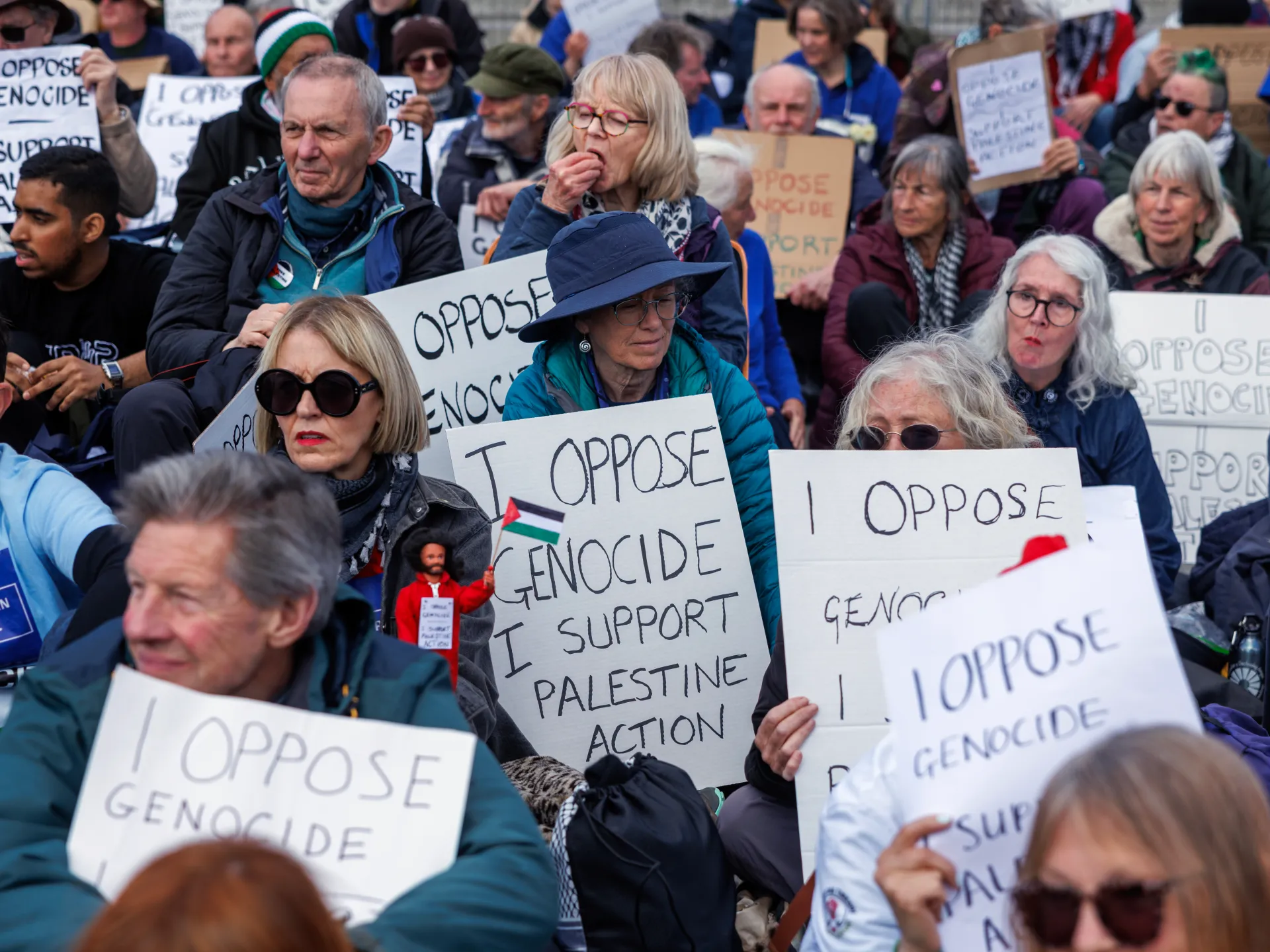
Palestine Action activists could face UK ‘terror’ sentences: What we know | Courts News

Four activists from the Palestine Action group face sentencing in the United Kingdom as “terrorists” on Friday, despite only being convicted by a jury of other criminal charges.

Palestine Action was formally proscribed as a “terrorist” organisation in the UK last July.

Last month, four of six activists on trial were convicted at Woolwich Crown Court in London of criminal damage during a 2024 raid on a factory in Filton, Bristol, operated by Israeli defence firm Elbit. One of the defendants was also found guilty of striking a police officer with a sledgehammer.

The possibility that the judge will rule that the offences have a “terrorist connection” for sentencing purposes has prompted protests.

What is Palestine Action?

The protest group Palestine Action, launched in July 2020, describes itself as a movement “committed to ending global participation in Israel’s genocidal and apartheid regime”.

It seeks to use “disruptive tactics” to target “corporate enablers” and companies involved in the manufacture of weapons for Israel, such as Israel-based Elbit Systems, Italian aerospace company Leonardo, French multinational Thales and Teledyne from the United States. The group has targeted British facilities linked to those companies.

The UK parliament voted in favour of proscribing the group on July 2, 2025, classifying it as a “terrorist” organisation, and bringing it into the same category as armed groups such as al-Qaeda and ISIL (ISIS). The proscription came days after its activists sneaked into an air force base in southern England.

Critics decried the move by MPs, arguing that while members of the group have caused damage to property, they have not committed violent acts that amount to terrorism.

What were they convicted of?

In August 2024, Palestine Action activists raided a factory in Filton near Bristol in southwest England, operated by Israeli arms manufacturer Elbit Systems. They entered the site and caused extensive damage in an attempt to disrupt the production of weapons and drone components they say would be used by Israel in Gaza.

The raid, which prosecutors said caused about one million pounds ($1.36m) of damage, happened 10 months into Israel’s genocidal war on Gaza that began in October 2023.

Last month, jurors at Woolwich Crown Court convicted Charlotte Head, 30, Samuel Corner, 23, Leona Kamio, 30, and Fatema Zainab Rajwani, 21, of criminal damage. The four activists have become known as “the Filton 4”.

Corner was also found guilty of striking a police officer with a sledgehammer and convicted of inflicting grievous bodily harm.

Two other Palestine Action activists, Zoe Rogers, 22, and Jordan Devlin, 31, were found not guilty.

The verdict followed an earlier trial, at which all six defendants were acquitted of aggravated burglary, while the jury was unable to reach verdicts for the criminal damage charges.

Each of the defendants gave evidence, admitting that they damaged Israeli military drones and equipment inside Elbit’s research and development facility in Filton – in order to “save lives in Palestine”, according to a statement by their lawyers.

What would a terrorism sentencing mean?

The jury was not told that, if they convicted, the four could be sentenced under terrorism laws. Criminal damage is not usually a terrorism offence, but in England and Wales judges can decide to treat an offence as having a “terrorist connection” at sentencing, even when the charge itself is not a terrorism offence.

If the court decides there was a terrorism connection, the activists would have to serve their entire sentences in prison, unless they have already completed at least two‑thirds of the sentence and a parole board decides they can be released.

Conversely, non-terrorist prisoners usually serve about 40 percent of their sentence in custody and are released early, but under conditions and supervision, sometimes called licence conditions. If they break those conditions, they can be sent back to prison to finish their sentence.

Additionally, if the activists are sentenced in this way, they can be recorded as “terrorists” for the rest of their lives, would be required to register new mobile devices, email addresses and bank accounts with the police for their lifetime, and face being returned to prison if they breach their licence conditions or reoffend.

What has the reaction to all this been?

On Wednesday, a group of more than 50 lawyers and law professors published an open letter denouncing plans to sentence the four Palestine Action members as terrorists.

The letter highlights that damage to property has been a recurring feature of protest campaigns from the Suffragettes who fought for women to have the right to vote, to environmental protest group Extinction Rebellion.

“It has never previously even been suggested that those taking such action should be treated as terrorists. Blurring the distinction between principled direct action and terrorism is the hallmark of authoritarian regimes,” the open letter stated.

The letter has been signed by law professors from universities in the UK, the Netherlands, Norway and Canada as well as by dozens of practising barristers and solicitors.

According to local news reports, a protest is expected at Woolwich Crown Court on Friday against the potential judgement.

Source link

‘Disclosure Day’ review: Spielberg returns to alien life a little lifelessly

Anticipation. Rumors. Anxiously scanning the horizon, hoping that a brilliant force will leave the masses forever changed. Yes, a new Steven Spielberg movie about close encounters with extraterrestrials is landing — and misses the mark.

“Disclosure Day” is a story of truth and feared consequences. A personality-free cybersecurity expert, Daniel (Josh O’Connor), is on the run with evidence of little gray men arriving on our planet to a rude reception. The aliens are kind. Our species is barbaric. Wittily bruising us with that fact, Spielberg opens with a POV of a wrestler kicking the audience in the face. Welcome to Earth.

Elsewhere in America, a weathergirl named Margaret (Emily Blunt) breezes into her Kansas City studio, babbling up until the minute the news camera turns on, a bravura sequence that channels her restlessness, the station’s tempo and the film’s alarm that this ditz has just this morning been stricken with preternatural powers. (The cinematography and editing are by Janusz Kaminski and Sarah Broshar.) Locally, Margaret is known for announcing hailstorms with a sexy shimmy. Suddenly, she’s fluent in Russian, Korean and telepathy. Although she and her boyfriend, Jackson (Wyatt Russell), are a bad match, she’s giving everyone else life advice like an intergalactic Dear Abby.

When Margaret starts spouting alien-ese — spasms of gutteral clicks — on live TV, she and Jackson rush to the hospital for a brain scan followed by several suspicious men who claim to be with the FBI. Russell’s befuddled Jackson is as useless as a traffic cone but Blunt’s Margaret is a gas before the movie makes her go all glassy-eyed and solemn. Yet, the movie is less inspired by why she was chosen or how she feels about it than in dragging us back in time to the moment when it happened, which isn’t that interesting except for its resemblance to a Disney princess having a psychotic break. The CG animals and aliens look stiff, other than a nifty close-up of an eyeball. (Later, I did like how one alien appears to be wearing sportswear.)

Chasing both Daniel and Margaret around the Midwest is a deep-state company called Wardex that wants to steal back the proof in Daniel’s backpack, a heap of hard drives with footage of 70-plus years of extraterrestrial visitations. It’s a treat to see Spielberg enjoying staging this conspiratorial gossip in different film stocks, from the black-and-white noir of 1947 Roswell to the clinical security-camera look of today. Whatever Wardex does on a day-to-day basis is unclear (we just see video screens and lab equipment). But it acts all-powerful, seeming to know more about outer-space tech than its overseers at the Department of Defense.

The script is by David Koepp of the paranoid thriller “Black Bag” and Spielberg’s 2005 version of “War of the Worlds,” yet, this plot strand about private enterprise isn’t science fiction. Last year, in the unrelated UFO documentary “The Age of Disclosure,” current Secretary of State Marco Rubio admitted that companies have a stronger institutional memory of “exotic materials” than any presidential administration: “The people in government who know where it came from originally — they’re long gone and their successors have no idea that it was there at all.” To add nationalistic insult to injury, the head of Wardex isn’t even American. He’s a Brit played by Colin Firth.

If anything, “Disclosure Day” isn’t paranoid enough. Clutching a mysterious tool the shape of a mouse coffin, Firth’s villain tracks Daniel’s location by mentally transplanting himself into another person’s body, changing the color of their pupils to his own icy blue. His gadget also makes his targets super sweaty. This laborious alien tactic leads to a few fun scenes but frankly feels old-fashioned when the omnipresent surveillance that Spielberg himself warned about nearly 25 years ago in “Minority Report” is now here with recording devices constantly tracking our faces, voices and movements just so we don’t have to dial phones, fetch sandwiches or talk to human drivers. Although his movie urged us against this 24/7 spyware future, we have since embraced the convenience.

I bring this up because “Disclosure Day’s” driving question is how humanity will react to life-altering information. (Not that the plot has much momentum — too many scenes end with the belief that ducking 10 feet out of view makes you invisible, with an antagonist simply giving up.) Daniel insists on total honesty: “People have a right to know the truth,” he says. His girlfriend Jane (Eve Hewson) doubts 8 billion people can handle his alien revelations. A Catholic, she’s alarmed that extraterrestrial intelligence could replace the concept of God, naively claiming that “religion holds society together.” Since when?

There’s some wan comedy in an early scene where these new-ish lovers debate the ethics of secrecy while revealing the skeletons they’ve been hiding from each other. Both have pasts you wouldn’t put on a Tinder profile. The script is glancingly empathetic to Jane’s moral turmoil but like Daniel, the film has made up its mind before the movie started. Narratively and logistically, Daniel’s whistleblowing escape limps along with a lack of suspense. Wardex doesn’t even bother to preemptively discredit Daniel in the public’s eye, which, given the two sentences of backstory we know about his character, would be easy.

Nattering in the background are broadcasts about the impending threat of global war at the hands of the United States, Russia and North Korea. Given that scary possibility, the risk that Daniel’s reveal could tip over the world order doesn’t seem that bad. Honestly, I’m dubious of the film’s certainty that folks even have the bandwidth to care about such news, let alone agree on what they’re seeing. The serious journalism Margaret aspires to do is splintering under our distrust of who controls the megaphones. Last month’s infodump of an Armed Forces report listing 209 sightings of unidentified objects was announced with a presidential tweet that “the people can decide for themselves.” I didn’t bother to click. Did you?

Getting information about these space invaders out leaves no time for taking the marvel of their existence in. Decades after Spielberg unveiled his signature shot — a face amazed at wonders we can’t see — he seems wearied by his awareness that today’s moment of revelation would look like a person staring down at their phone. When lens flares continually beam right at the screen, the whole movie feels like enlightenment under duress.

Where are the aliens from and why are they here? Who knows. “Disclosure Day” speeds around frantically, talking constantly and explaining little. Back in 1977, Spielberg’s “Close Encounters of the Third Kind” was a popcorn masterpiece of withheld information. Its quiet assurance that experts had a handle on flying saucers and a plan to meet them felt comforting. Here, Colman Domingo’s renegade intelligence operative also refuses to tell anyone anything, but all the unspoken beats just feel like plot holes. Mostly, his character builds what looks like a Hollywood set to reveal a truth he already suspects. That’s what Spielberg is doing too, but a film needs a sense of curiosity.

Instead, the wows come from good stagings of ordinary action: a car crash, a gripped crucifix, a hideout crowded with jostling, thrumming musical instruments. There’s a great train-track crossing sequence that’s also a vicious callback to Richard Dreyfuss’ epiphany in “Close Encounters.” Yet, I wanted to see more of the old Spielberg, the one who expressed awe in moments of silence rather than relentless motion.

That Spielberg has come full circle to his lifelong obsession with the sky had me convinced that this might be a secret sequel to “Close Encounters” beyond the droll joke that both Dreyfuss’ Roy and Blunt’s Margaret are shacked up with unsupportive blonds. They do share a universe; you’ll see a glimpse of what could pass for an outtake from Devils Tower, a.k.a. Mashed Potato Mountain, on one of Daniel’s hard drives. Still, I left underwhelmed. I didn’t need Dreyfuss to step off a spaceship gangplank and say, “I’m back.” I just needed “Disclosure Day” to have the same spark of intelligent life.

‘Disclosure Day’

Rated: PG-13, for action/violence, some bloody images and strong language

Running time: 2 hours, 25 minutes

Playing: Opens Friday, June 12 in wide release

Source link

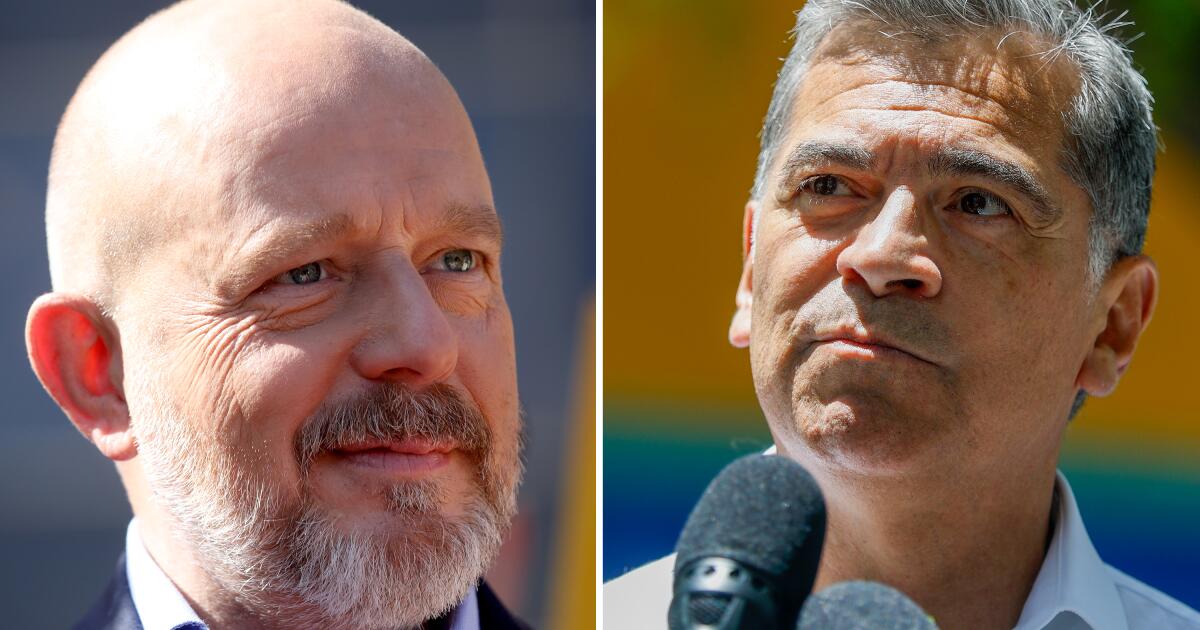
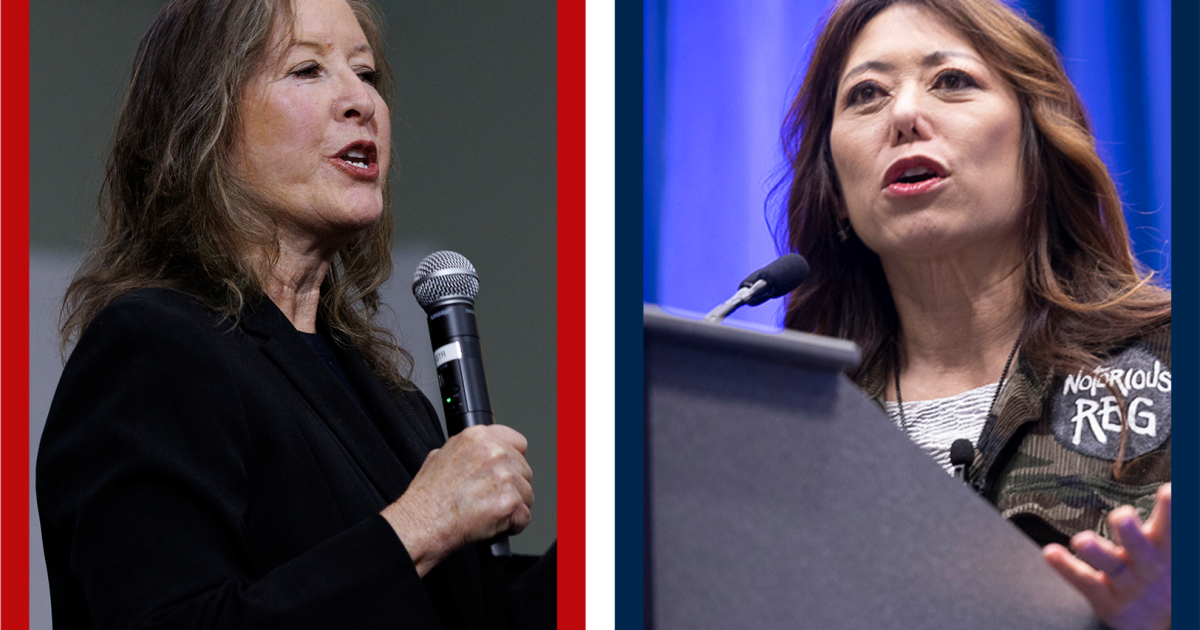
Democrat Fiona Ma, Republican Gloria Romero to face off in race for lieutenant governor

State Treasurer Fiona Ma and former California Senate Majority Leader Gloria Romero have been declared the two winners of a crowded primary election for lieutenant governor, securing themselves spots on the November ballot.

Ma is a Democrat. Romero is a former Democrat who said she registered as a Republican after splitting with Democrats over the push to oust President Biden as the party’s presidential nominee in 2024.

Both were declared as the top-two winners by the Associated Press. Under California’s primary system, the first and second place finisher advances to the November general election, regardless of their political affiliation.

Ma is a certified public accountant serving as state treasurer. She previously sat on the California Board of Equalization and the San Francisco Board of Supervisors. She also served three terms in the California Assembly.

Romero is an adjunct professor at Pepperdine School of Public Policy. She served as a Democrat in the Assembly and state Senate, becoming the Senate’s first woman majority leader in 2005.

Other notable candidates included former Stockton Mayor Michael Tubbs and Josh Fryday, a member of Gov. Gavin Newsom’s cabinet. Both are Democrats.

The position is largely ceremonial. The lieutenant governor serves on various boards that oversee the University of California, California State University and community college systems, and can be called upon to break a tie in the state Senate. If the sitting governor dies, resigns or is removed from office, the lieutenant governor would assume the role.

Ma and Romero have offered some similar viewpoints. Both candidates previously expressed support for the death penalty and opposition to the state’s plan to ban the sale of new gas-powered cars by 2035.

Neither candidate supports the controversial Billionaire’s Tax Act. Romero, however, has further vowed to shun all potential tax increases.

Ma and Romero will now face off in November. The winner will replace Lt. Gov. Eleni Kounalakis, who is finishing her second term and could not seek reelection. Kounalakis instead ran for state treasurer.

Source link

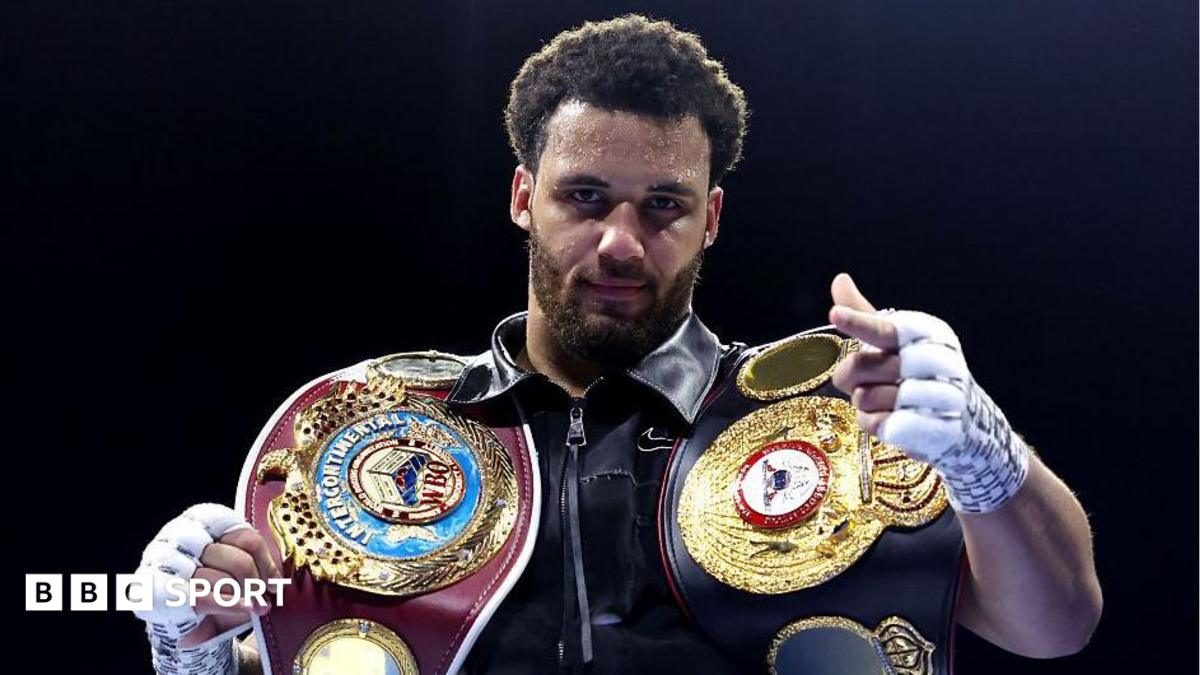
Boxing: Chantelle Cameron to face Mikaela Mayer in August unification bout

Briton Chantelle Cameron will meet American Mikaela Mayer in a light-middleweight world title unification bout in Birmingham on 29 August.

Cameron, 35, beat Michaela Kotaskova to win the vacant WBO title in April and is aiming to add Mayer’s WBC and WBA belts to her collection.

Fellow Briton Caroline Dubois is also on the all-female Most Valuable Promotions card at BP Pulse, when she defends her WBC and WBO lightweight belts against American Amelia Moore.

Northampton fighter Cameron has 22 wins from 23 fights as a professional, including a victory over Ireland’s Katie Taylor in 2023.

“I’ve always said I want the biggest fights in women’s boxing, and there isn’t a bigger fight right now than me against Mikaela Mayer,” Cameron said.

“We’re both top-five pound-for-pound fighters, we’re both world champions, and we’re both coming to win.”

Mayer, 35, last fought in October when beating Mary Spencer and has a record of 22 wins in 24 bouts.

Dubois, 25, is yet to lose in 14 fights – winning 13 and drawing one – and has picked up five stoppage victories along the way.

The Londoner put on a classy performance to become a unified lightweight champion when beating fellow Briton Terri Harper on points in April.

“I am looking forward to representing the UK on this card and defending my unified title,” Dubois said.

“The goal is to fight for more belts at the end of the year so I need to focus and take care of business with a big win in Birmingham.”

Moore, 36, will be aiming to pull off a major upset in just her fifth fight as a professional.

Source link

All Brits visiting Spain face new rules that could stop you from entering the country

BRITS heading to Spain need to be aware of a new rule update that could get them banned from entering the country.

Currently, Brits visiting Spain need to show they have a certain amount of money in their bank at the border.

Brits could be refused entry to Spain under updated rules Credit: Alamy

However, an upgrade to this rule means all travellers from non-EU countries must be able to prove they now have at least €1,098.90 (£948.12).

For longer trips, the figure will rise in line with how many days you are in the country for, working out to around an extra €121.10 (£104.48) per day.

For example, if you intend to stay in Spain for 10 days, you will need to prove you have €1,220 (£1,052.79) in funds.

Brits can prove they have the money in several ways including having the cash, presenting debit or credit cards accompanied by bank statements, showing cheques or providing a letter of credit.

Read more on travel inspo

TRAVEL TIP

The £2.99 SIM hack that can save Brits HUNDREDS abroad


STAYCAY

Our travel experts’ best-kept-secret UK holiday spots for summer – from £37 a night

However, it is worth noting that screenshots of online bank statements are not accepted.

The money must be shown in euros or the equivalent amount in your own currency, so for Brits, this would be in pounds.

Brits heading to Spain must prove they have sufficient funds for their trip Credit: Alamy

Despite the requirement not being new, the amount tourists need to prove has been updated to be in line with 10 per cent of Spain’s minimum wage, which recently increased.

The rule was first introduced in 2021, at the end of the Brexit transition period.

Brexit meant that Brits became “third-country nationals” and therefore have to follow the rules for entering the EU when travelling to European countries.

Similar proof-of-funds requirements are in place across all Schengen countries.

The amounts do vary though – for example, in France, travellers must be able to prove they have €65 (£56.08) per day, yet in Latvia, the figure drops to €14 (£12.08) per day.

Even though proof-of-funds can be enforced by border officers in Spain, checks are not usually carried out on every traveller entering the country.

If they don’t, border force officers can refuse them entry Credit: PA

But if a border force officer asks you to prove your funds and you do not have the amount needed, then they can refuse you entry into Spain.

Advice from the UK Foreign Office states: “Make sure that you have access to enough money to cover all of your costs when travelling abroad, including unforeseen costs, e.g. medical care.

“To avoid getting into financial difficulties abroad, you should take prepaid travel cards, traveller’s cheques, local currency, credit and bank cards with you.

“Check what you can use in the country you are visiting and ensure you have enough money.

“Make a note of how to stop any credit cards or traveller’s cheques being used if lost or stolen, and of traveller’s cheque numbers.

“[And] get comprehensive travel insurance, ensure it provides you with adequate financial cover for your personal needs, and check for any exclusions.

“If you don’t have adequate travel insurance, you will need to pay any costs you are charged.”


Source link

Airlines face cutting ‘tens of thousands of flights’ this winter due to ongoing fuel crisis

TENS of thousands of flights face being cancelled this winter as fears continue to grow over the high cost of jet fuel.

Airlines have already been forced to scrap thousands of flights in recent months since the Iran war broke out.

An ITA Airways Airbus A320 Neo with its logo and sign on the tarmac at Geneva Airport, being prepared by a tow vehicle.
Airlines are at risk of having to cancel tens of thousands more flights Credit: Alamy

However, experts have warned that unless costs go down, cancellations could now affect winter schedules.

Italy‘s ITA chief executive Joerg Eberhart said they could be forced to cut as may as a fifth of flights from October to April, he told the FT.

Turkish Airlines echoed this, saying they could be forced to make “frequency cuts of even stop destinations” after summer if it continues.

Others have warned that is puts added pressure on airlines to fill planes, which is often not the case during the quieter winter season.

TRAVEL ALERT

More airlines are cracking down on popular travel item in cabin


PLANE BAD

Airlines face LOCKING luggage in overhead lockers due to idiot passengers

Most UK airlines have said that they don’t see any immediate threats to upcoming flights, as many have ‘hedged’ fuel costs, which is paying a set price for a period of time.

However, Ryanair has warned that budget airlines face the biggest struggle, due to the low margins.

A Turkish Airlines plane parked at Berlin-Brandenburg airport next to a Revolut jet bridge.
Turkish Airlines also said they could cut flights Credit: Alamy

The budget carrier’s boss Michael O’Leary previously warned: “If pricing stays higher for longer this summer, we think a number of our airline competitors in Europe are going to face real financial difficulties. I think there will be failures.”

Spirit Airlines has already been a victim of the ongoing fuel crisis, having gone into administration last month.

And while UK flights might not be cancelled, the cost of flights is expected to only go up.

International Airlines Group (IAG), which also owns Iberia and Aer Lingus, said it will likely pass on extra costs to cover the additional £1.72billion costs of its fuel this year.

And Virgin Atlantic has added a new fuel surcharge, ranging from £50 to £360.

Experts have said costs could continue to go up, due to the UK’s reliance on US jet fuel.

This is because US suppliers could divert their fuel inwards due to it being the busy American holiday season, particularly for “driving season” (when domestic holidays boom).

S&P Global’s research director for fuels Eleanor Budds told Telegraph: “Prices could rise again. The UK is replacing a good part of its imports. If the US can’t keep up those volumes, [the UK] is very exposed”.

Source link

Vegas’ Brayden McNabb takes a puck to the face in Stanley Cup Game 2

Vegas Golden Knights defenseman Brayden McNabb was forced to leave Game 2 of the Stanley Cup Final on Thursday after taking a puck to his face on a slap shot midway through the first period.

The 14-year veteran, who played for the Kings from 2014-2017, did not return to the game. ESPN is reporting that McNabb was taken from Lenovo Center in Raleigh, N.C., to a hospital for evaluation.

Vegas coach John Tortorella did not have an update on McNabb’s status after his team’s 4-3 overtime loss to the Carolina Huricanes, and the Golden Knights had not provided one as of early Friday morning.

McNabb was defending in front of the net with 9:08 remaining in the first period when a blistering shot by Carolina winger Nikolaj Ehlers hit him in the facial area. Slow-motion replays show the puck may have struck the protective visor on McNabb’s helmet near his eyes.

After crumpling to the ice, McNabb immediately climbed to his feet, skated off the playing area and headed down the tunnel while holding a hand over his nose and mouth.

“It’s a scary play,” Vegas forward Brett Howden said after the game. ”You never want to see that. Just hope he’s doing all right. We haven’t seen him yet but hope he’s doing OK.”

Knights defenseman Noah Hanifin said: “Any time you see that happen to a teammate, especially to a guy like Nabber who is a huge part of this team, a leader, it’s tough. It’s hard to see that happen to any guy on the ice. We’re just hoping for the best for him.”

Born in Davidson, Canada, McNabb was selected by the Buffalo Sabres in the third round of the 2009 entry draft. He played in 37 games for the Sabres and was acquired by the Kings on March 5, 2014. Los Angeles also received Jonathan Parker and a pair of draft picks in exchange for Hudson Fasching and Nic Deslauriers.

McNabb had six goals and 36 assists in three seasons with the Kings before being selected by Vegas in the 2017 expansion draft. This is his third Stanley Cup Final with the Golden Knights, who won the championship in 2023.

In Vegas’ 5-4 Game 1 victory against Carolina on Tuesday, McNabb had three assists for the first time in his career. Ben Hutton and Kaedan Korczak are possible options to take McNabb’s spot if he can’t play in Saturday’s Game 3 in Las Vegas.

The Associated Press contributed to this report.

Source link

South Korean banks face $716 million in long-overdue loans

South Korea’s five major banks saw long-term delinquent loans rise to about $716.7 million in 2026, while loans overdue for one month to less than one year remained elevated at about $3.84 billion. Data from Korea Federation of Banks and Korea Federation of Bank Research. Graphic by Asia Today and translated by UPI

June 3 (Asia Today) — South Korea’s major commercial banks are facing growing pressure from a sharp rise in long-overdue loans, with the amount of loans unpaid for more than one year exceeding 1 trillion won, or about $716 million, in the first quarter.

Loans overdue for less than one year, which could later worsen into long-term delinquencies, also approached 6 trillion won, or about $3.84 billion. The increase suggests that borrower distress is deepening, especially among corporate borrowers, despite banks’ efforts to dispose of nonperforming loans.

The sequential expiration of COVID-19 loan maturity extensions also appears to be adding pressure on delinquent borrowers.

Banks, which have continued to post strong earnings, are concerned that rising long-term delinquencies could increase loan-loss provision burdens. The longer a loan remains overdue and the lower its chance of recovery becomes, the more banks must set aside in provisions.

If the Bank of Korea raises its base rate in the second half, borrowers’ repayment burdens could grow further, increasing the risk of additional long-term delinquencies. Analysts say asset quality management could become a key factor determining banks’ earnings performance.

According to financial industry data released Wednesday, the combined balance of loans overdue for at least one year at KB Kookmin Bank, Shinhan Bank, Hana Bank, Woori Bank and NH NongHyup Bank reached 1.0972 trillion won, or about $716 million, in the first quarter.

That was up 49.3% from 734.9 billion won, or about $480 million, a year earlier. Compared with 261 billion won, or about $170 million, in 2024, the figure has more than quadrupled. It was also more than double the 508 billion won, or about $332 million, recorded in 2022 during the COVID-19 pandemic.

The increase appeared across all five banks. By bank, NH NongHyup had the largest balance of long-term overdue loans at 474.8 billion won, or about $310 million, followed by KB Kookmin at 166.9 billion won, or about $109 million, Hana at 155.2 billion won, or about $101 million, Shinhan at 151.5 billion won, or about $99 million, and Woori at 148.8 billion won, or about $97 million.

Loans overdue for at least one month but less than one year totaled 5.8851 trillion won, or about $3.84 billion, approaching the 6 trillion won mark. The figure was slightly lower than 6.1002 trillion won, or about $3.98 billion, a year earlier, but remained high by historical standards.

By category, loans overdue for at least one month but less than three months rose from a year earlier to 2.8225 trillion won, or about $1.84 billion. Loans overdue for at least six months but less than one year, which are considered more likely to become long-term delinquencies, reached 1.1111 trillion won, or about $726 million. Both were record highs since the banks began disclosing the relevant data.

The surge in long-term delinquencies is widely attributed to a sharp increase in new overdue loans in 2024 and 2025. Higher interest rates and weak domestic demand weakened borrowers’ repayment capacity, with some distressed borrowers slipping into long-term delinquency.

The increase appears particularly concentrated among corporate borrowers, whose loans are relatively large and harder to recover. At the end of March, the banking sector’s corporate loan delinquency rate stood at 0.68%, up 0.06 percentage point from 0.62% a year earlier.

“Distress pressure has continued for a long period in sectors such as construction and real estate leasing because of the weak housing market,” an official at a commercial bank said.

A renewed period of rate increases could add to the problem. The Bank of Korea left open the possibility of at least one base rate increase in the second half during last month’s monetary policy meeting, raising concerns that banks could face greater asset quality pressure.

Higher base rates can push up market rates, including bank bond yields, increasing borrowers’ interest burdens. That could deepen distress among loans already in arrears and increase new delinquencies, potentially expanding the volume of long-term overdue loans later.

That would likely translate into higher loan-loss provisions for banks. Banks classify loans into five asset-quality categories: normal, precautionary, substandard, doubtful and estimated loss.

When a loan is classified as substandard, banks must set aside provisions equal to 20% of the loan amount. As the overdue period grows longer and repayment capacity worsens, the required provision ratio rises. Doubtful loans, which are overdue for more than three months and have low recovery prospects, require 50% provisioning. Loans classified as estimated losses after more than one year overdue require 100% provisioning.

That means if a doubtful loan deteriorates into an estimated loss, the provisioning burden doubles.

A rise in provision expenses would directly weigh on bank earnings. In 2022, the five major banks set aside 3.5422 trillion won, or about $2.31 billion, in annual loan-loss provisions, while their combined net profit rose 18.6% from a year earlier to 13.7472 trillion won, or about $8.98 billion.

But in 2023, when banks set aside more than 6 trillion won, or about $3.92 billion, in provisions because of real estate project financing distress and other factors, their net profit growth slowed to 2.6%.

Provision expenses fell sharply the following year, but as delinquencies continue to rise, the possibility of renewed growth in provisions has increased. Analysts say careful risk management has become more important.

“As the delinquency period lengthens, the sale price of nonperforming loans tends to fall, so if long-term delinquencies increase, banks disposing of bad loans will also face greater loss burdens,” a financial industry official said.

“The key will be whether banks can prevent new distress from expanding while effectively clearing existing bad loans,” the official said.

— Reported by Asia Today; translated by UPI

© Asia Today. Unauthorized reproduction or redistribution prohibited.

Original Korean report: https://www.asiatoday.co.kr/kn/view.php?key=20260604010001073

Source link

2030 Winter Olympics: Nordic combined and parallel giant slalom face programming decision

Snowboarding made its Winter Olympics debut in Nagano 1998 with halfpipe and giant slalom.

Riders competed against the clock before the head-to-head parallel giant slalom version on identical, side-by-side courses was introduced four years later in Salt Lake City.

Three-time Winter Olympian Alex Payer said: “PGS is one of the only formats where everything is truly equal – same course, same conditions, same start, same chance. That fairness is rare in sport.

“If you take it out of the Olympic programme, you take away one of the purest expressions of competition we have.”

Among the sports bidding to replace them in the programme for the Games, which are scheduled for 1-17 February 2030, are freeriding and ice climbing.

Freeriding allows skiers and snowboarders to choose their own off-piste course from top to bottom and also perform tricks as they descend.

They are judged on elements of their descent including the difficulty of the course, jumps and performance.

In ice climbing, competitors climb up a frozen waterfall or glaciers with a speed version favourite for inclusion.

There had been speculation that cyclo-cross would be also be aiming for inclusion but last month IOC president Kirsty Coventry said that “no summer sports and no seasonal crossover events” would be part of the programme.

Source link

Rebecca Bennett wins New Jersey Democratic primary, to face Trump ally Kean | US Midterm Elections 2026 News

Rebecca Bennett has won a high-stakes Democratic Party primary in the US state of New Jersey, setting up a contest against Republican Tom Kean Jr, backed by President Donald Trump, for one of the most competitive seats in the upcoming midterm elections.

Bennett, a former US Navy helicopter pilot, defeated three Democratic rivals in New Jersey’s 7th Congressional District, securing about 47.2 percent of the vote, according to projected results on Tuesday.

Recommended Stories

list of 4 itemsend of list

Her nearest competitor, Tina Shah, received 20.2 percent.

Kean and Bennett will now square off in November for a seat that has changed party hands twice within the past eight years and ranks as a key target for Democrats hoping to capture the House of Representatives.

Independent analysts rate the contest as a toss-up.

RB
Rebecca Bennett holds her daughter, Rosie, during a primary election night watch party in Bridgewater, New Jersey, on June 2, 2026 [Ryan Murphy/AP]

The race has attracted heightened attention because of Kean’s prolonged absence from Congress.

The Republican incumbent has missed more than 100 House votes since early March due to an undisclosed illness.

Despite his absence, Kean ran unopposed in the Republican primary with Trump’s backing.

Kean said on Tuesday that he remained focused on his recovery and expected to return to in-person work within weeks.

Hours before polls closed, Kean released a statement promising greater transparency about his health while suggesting his return to in-person work could take longer than previously anticipated.

On May 21, he said he expected to be back within “a couple of weeks”.

“Right now, I am focused on my recovery and, under the advice of healthcare professionals, I will transition from virtual to in-person work within a matter of weeks,” Kean had said.

Bennett targets cost of living, Kean’s absence

At an election night gathering in Somerville, New Jersey, Bennett sharply criticised Kean’s record and absence from Washington.

“You are failing us, and you do not deserve to represent us in Washington,” she told supporters, calling the congressman a “coward”.

Bennett built her campaign around her military service and economic issues, arguing that higher grocery and gasoline prices during the US-Israel war on Iran, combined with Trump’s tariffs, were squeezing working families.

Democrats have increasingly focused on the conflict’s economic impact, with higher energy costs contributing to inflation and broader cost-of-living pressures across the country.

The 7th Congressional District, which includes suburban communities, farm towns and Trump’s golf club in Bedminster, has emerged as one of New Jersey’s key battlegrounds.

The seat has changed hands repeatedly in recent election cycles, with Democrat Tom Malinowski defeating Republican Leonard Lance in 2018 before Kean unseated Malinowski in 2022.

Bennett’s victory over Tina Shah, Brian Varela and Michael Roth now sets up a high-stakes general election contest in a district both parties consider crucial to their House ambitions.

TK
House Representative Tom Kean listens during a House Foreign Affairs subcommittee hearing about Belarus on Capitol Hill, Washington, DC, on December 5, 2023 [Mariam Zuhaib/AP] (AP)

Kean, 57, is the scion of a storied New Jersey political family.

His father, Thomas Kean, served two terms as governor and later chaired the 9/11 Commission, a panel set up in 2002 to investigate the circumstances surrounding the September 11, 2001, attacks in the US. He is also a descendant of William Livingston, New Jersey’s first governor.

The Republican congressman will also enter the race with the backing of Trump, who reiterated his support on the eve of the primary, despite Kean’s prolonged absence from Washington.

“Tom Kean has my Complete and Total Endorsement for Re-Election,” Trump wrote on social media, adding: “HE WILL NEVER LET YOU DOWN!”

Voters in the district have ousted incumbents in recent midterm elections, making the race one of the most competitive House contests in New Jersey.

Elsewhere in New Jersey, Analilia Mejia won the Democratic nomination in the 11th Congressional District, while LaMonica McIver secured the Democratic nomination in the 10th Congressional District.

Source link

Badly-behaved Brits face being banned from flying for LIFE under new Labour rules

MISBEHAVING Brits could be slapped with a permanent flight ban under new Labour rules.

Labour Ministers are currently looking at establishing a blacklist to stop abusive behaviour towards cabin crew and disruption to travel.

The UK government is looking at introducing new rules that could ban unruly passengers from flying Credit: Alamy

This includes considering how information about drunk and abusive passengers could be shared between airlines.

Currently, if you misbehave on a flight you can be banned by the airline you are travelling with – but other airlines would not know this.

If the new rules were to go ahead, it would mean that public officials could keep information about passengers, including a history of any bad behaviour during flights.

In an airport setting, public officials would likely include police, border force officers and immigration officers.

Read more on travel inspo

TRAVEL TIP

The £2.99 SIM hack that can save Brits HUNDREDS abroad


CHEAP BREAKS

UK’s best 100 cheap stays – our pick of the top hotels, holiday parks and pubs

The official would then warn an airline if the passenger was trying to check in with them.

Then, the airline could decide whether or not they want the passenger travelling with them.

The new system would be compliant with data protection rules, so no new legislation would need to be created for the rules to be introduced.

Having said this, data protection rules don’t allow airlines to share information about travellers, hence the need for a public official.

It comes as a the number of drunken incident on flights have risen in recent years, including one earlier this month on an easyJet flight Credit: Alamy

It comes as the number of drunken and violent incidents on planes has risen in recent years.

Earlier this month, a drunk woman believed to be British lunged at another passenger, causing chaos on an easyJet flight.

A government source said: “Everyone should be able to enjoy a pint at the airport, but anti-social behaviour on flights is totally unacceptable.

“It threatens the safety of passengers and crew, and disrupts hard-earned holidays.

“There are already tough laws in place to deal with offences committed on flights, but we are exploring with industry how we can better address this issue, ensuring we crack down on people who persistently cause chaos.

“Everyone should be able to fly without fuss.”

Tim Alderslade, Chief Executive of industry body Airlines UK, said: “UK airlines have a zero-tolerance approach to disruptive behaviour.

“Additional measures for the most serious cases of disruption, including the creation of a national ban list, are an important next step in ensuring a tiny minority of passengers cannot disrupt air travel for the majority.

In a recent YouGov survey of 5,000 adults, 37 per cent said they supported the proposal for new rules Credit: Alamy

“We welcome the government’s support for further action and will work closely with ministers on delivering the right solutions.”

According to LBC, Phil Ward, Chief Operations Officer of Jet2, also said the airline would support new rules of sharing passenger information between airlines.

He said: “The creation of a national database will mean that, as well as being banned from flying with us, disruptive passengers can also be banned from flying with other UK airlines.”

In a recent YouGov survey of 5,000 adults, 37 per cent said they supported the proposal for new rules, with 38 per cent saying they somewhat supported it.

Only 11 per cent opposed.

Being drunk on a flight is a criminal offence and can lead to a fine of up to £5,000 and two years in prison.

A meeting will be held later this month where industry leaders will discuss the plans.

The Sun’s Head of Travel shares her thoughts

LISA Minot, The Sun’s Head of Travel, shares her thoughts:

Plans to blacklist drunk and abusive passengers on a nationwide database can’t come soon enough.

Onboard incidents have skyrocketed in recent years and a full ban on those found guilty across all airlines would be the kind of punishment that would have real consequences.

At the moment, while one airline can ban a passenger for life, data protection means other airlines are not alerted.

Having seen the chaos a drunken passenger can wreak myself on a flight from Cape Verde back to the UK anything that will show disruptive passengers there are real consequences is a good move.

Ryanair boss Michael O’Leary has repeatedly called for a ban on passengers drinking in departure lounges but why should the vast, innocent majority pay for the sins of a tiny minority?

This proposal is a much more sensible way of ensuring planes are not turned into battlegrounds without punishing the law-abiding passengers.

Source link

British passengers could face lifetime ban from UK airlines under new proposals

Officials are considering measures that would allow UK airlines to block disruptive passengers with a history of serious misconduct from travelling, amid a sharp rise in onboard incidents since the pandemic

Ministers are exploring proposals that could result in persistent troublemakers being banned from future flights amid growing alarm over disruptive behaviour on aircraft.

Officials are weighing up a system that would enable airlines to identify passengers with a track record of serious misconduct and potentially deny them the ability to travel. Under the plans, which are still at an early stage of consideration, details of blacklisted passengers could be shared throughout the aviation industry.

Should someone attempt to book a flight after being added to the list, the airline or tour operator could receive notification and be given the choice to block the reservation, effectively grounding that individual indefinitely.

Civil liberties campaigners have, however, raised alarm about the proposals, cautioning they could set a “dangerous precedent” through the sharing of personal data and limitations on access to transport, reports the Express.

Currently, airlines have the power to ban passengers who have displayed violent or abusive conduct while travelling with them. Yet existing restrictions only extend to the specific carrier involved in the incident, meaning offenders can frequently sidestep penalties by simply booking with a different airline.

The primary hurdle facing any new system is current data protection law, which prohibits carriers from exchanging passenger details with one another, even where criminal offences have taken place.

Who is calling for some passengers to be banned from all flights for life?

Calls for stricter measures have grown louder following a string of high-profile mid-air incidents that have gone viral online, reports the Daily Mail. These have included episodes where cabin crew faced death threats and violent clashes erupted between passengers in aircraft aisles.

Such incidents are among hundreds logged annually and have often led to expensive flight diversions that wreck holidays and travel arrangements.

There appears to be widespread public backing for harsher punishments, with recent polling indicating most Britons support restrictions on passengers who commit serious misconduct while airborne.

Ryanair boss Michael O’Leary has previously urged limits on airport alcohol sales, including curbs on early morning pints, in an effort to cut the number of disruptive passengers getting on planes.

Ministers aren’t attempting to stop travellers from having a drink before their flight. Rather, they’re hoping any future system would promote better conduct while helping to safeguard cabin crew, families and fellow passengers.

It’s understood the proposals are being worked on by the Home Office and Department for Transport but remain in the early stages and require additional consultation with the aviation sector. Any system would need to tackle existing privacy regulations, which currently stop airlines from sharing passenger data.

Ministers are expected to sit down with industry bosses later this month to thrash out the details of the plans. A government source said: “Everyone should be able to enjoy a pint at the airport, but anti-social behaviour on flights is totally unacceptable.

“It threatens the safety of passengers and crew and disrupts hard-earned holidays.

“There are already tough laws in place to deal with offences committed on flights, but we are exploring with industry how we can better address this issue, ensuring we crack down on people who persistently cause chaos. Everyone should be able to fly without fuss.”

Source link

Pro-, anti-ICE protestors face off at New Jersey detention facility

Immigration and Customs Enforcement agents wait during a protest against the treatment of detainees at the Delaney Hall Detention Facility in Newark, New Jersey, earlier this week. File Photo by Olga Fedorova/EPA

May 30 (UPI) — Dueling groups of protesters gathered at an Immigration and Customs Enforcement facility in New Jersey on Saturday morning over the agency’s treatment of people detained under the Trump administration’s immigration crackdown.

A group of detainees at the Delaney Hall facility have been on a hunger and labor strike since May 22 over inhumane conditions there.

Protests in support of the striking detainees have continued since last Friday, but after protestors and ICE officials got into scuffles in recent days protesters in support of the administration’s deportation efforts gathered at the facility as well, The Guardian and NBC News reported.

The protests were met with state police with riot shields blocking the entrance, as well as barricades that were set up to separate and protect protesters, who yelled at each other from the two protest zones.

New Jersey Gov. Mikkie Sherill moved to replace federal officers managing the situation with state law enforcement on Friday in order to establish the “protected speech zone.”

“This was absolutely necessary to protect public safety, and avoid escalation from ICE,” Sherill said Saturday.

“As Americans, we have a right to protest — and we will continue to ensure New Jersey residents can peacefully exercise their First Amendment rights,” she said.

The decision followed days of tension between federal officers and protesters who have decried the treatment of detainees, which since the hunger and labor strikes started has resulted in what the GEO group called “control measures to safely resolve the situation, including the limited use of chemical agents.

Mullin thanked Sherill for working with DHS to “restore law and order” in a statement on X.

“We support every Americans constitutional right to peacefully protest,” Mullin said. “No one has the right to RIOT and ASSAULT law enforcement. We hope to build on this partnership and work together to remove the worst of the worst from New Jersey communities.”

Secretary of State Marco Rubio and President Donald Trump participate in a Cabinet meeting in the Cabinet Room of the White House on Wednesday. Photo by Samuel Corum/UPI | License Photo

Source link

US Treasury secretary confirms plans for banknote featuring Trump’s face | Donald Trump News

Proposed $250 bill would mark the first time a living person has appeared on US currency in more than a century.

US Secretary of the Treasury Scott Bessent says preparations are under way to print a new $250 banknote featuring President Donald Trump’s face, with lawmakers to decide whether the bills will be put into circulation.

US law bars any living person from appearing on US currency, but legislation was introduced last year to create an exception to allow current and former presidents to be featured.

Recommended Stories

list of 3 itemsend of list

Speaking at the White House on Thursday, Bessent said a design had been prepared in anticipation of a change in the law.

“Right now, there is proposed legislation – front of the House, in front of the Senate – to change the first requirement so that a living person, Donald J Trump, could be on a $250 bill,” Bessent said.

Bessent made his comments after The Washington Post reported that Treasurer Brandon Beach, a Trump appointee, has been pushing the Bureau of Engraving and Printing to expedite the process for a new currency note to mark the 250th anniversary of the Declaration of Independence.

“I don’t think that there’s anything untoward about having the president of the United States, the person who’s president of the United States, on the 250th anniversary bill,” Bessent told reporters.

A design mock-up obtained by The Washington Post showed the words “America 250 anniversary”, a nod to the US declaring its independence on July 4, 1776.

The Treasury Department did not immediately respond to Al Jazeera’s request for comment.

Behaviour of dictators, monarchs

A banknote featuring Trump’s face would be the latest example of the US president expanding his personal brand in his official capacity since returning to the White House in 2025.

Banners featuring Trump’s portrait have been hung on the Department of Justice and other federal buildings.

And his slate of appointees to the Kennedy Center governing board added his name to the national performing arts facility, which Congress originally designated as a memorial to assassinated President John F Kennedy.

Trump’s signature is also set to appear on US currency as part of plans to mark the 250th anniversary, a first for a sitting president.

US banknotes have until now featured the signatures of the Treasury secretary and the treasurer.

In March, the US Commission of Fine Arts, led by Trump appointee Rodney Mims Cook Jr, approved the minting of a commemorative gold coin bearing the Republican president’s image.

The announcement, which relied on a legal loophole for commemorative coins, prompted a backlash from critics, who likened the move to the behaviour of dictators and monarchs.

Source link

Springwatch’s Chris Packham reveals verdict on if you should let dogs lick your face

Opinions are divided on whether dog owners should allow their beloved pets to lick their faces or not – but Springwatch’s Chris Packham has some strong scientific backing for his take

It’s one of those questions that can divide even the closest friends: would you let a dog lick your face? Medical opinions vary.

Professor Graham Roberts, honorary consultant paediatrician in paediatric allergy and respiratory medicine, is quoted in medical journal The Hippocratic Post as saying that that babies brought up in homes with pets are far less likely to suffer from allergies than babies who grow up in pet-free homes. He states: “If you are born into a household where there is a pet, you are less likely to be allergic.”

But others, such as Professor John Oxford, emeritus professor of virology and bacteriology at Queen Mary University of London, is strongly opposed to excessively close contact with dogs.

He points out: “It is not just what is carried in saliva. Dogs spend half of their life with their noses in nasty corners or hovering over dog droppings so their muzzles are full of bacteria, viruses and germs of all sorts.”

But for BBC Springwatch’s Chris Packham, there’s no debate. Speaking on the Oh My Dog podcast, the naturalist told host Jack Dee: “When we cut our finger, what’s the first thing we do? We lick it. And you lick it because there are bacterial fauna in your saliva which have antiseptic and healing properties.”

Similarly, he says, there’s a health benefit to be gained from dogs’ saliva: “In days of old, when they were having medieval battles and doing unspeakable things to one another with swords, there were a lot of wounded people and they would allow the camp dogs to come and lick their wounds. They discovered that if the dog was licking the wound… it would be less less likely to get infected.”

All domestic dogs are ultimately descended from wolves, and Chris says that while a small amount of a dog’s saliva can be good for us, wolves’ saliva has even more healing power: “I’ve been licked by wolves, been kissed by wolves,” he says, “and they have even cleaner, or bacteriologically richer, saliva than than dogs.” They’ve never been treated with antibiotics or other medicines that might compromise their natural state, he says.

Chris adds that when wolves lick each other, it’s part of ensuring the survival of the pack: “When wolves go back to their their den, in order to carry the food which they may have caught many kilometres away, they eat it and swallow it, and partially digest it.

“So when they get back to the den, the pups lick their lips and that stimulates the adult wolves to regurgitate the food.”

“Now obviously,” Chris adds, “dogs have lost that habit – they don’t regurgitate for their young. But that licking is retained into adulthood in dogs because it’s a greeting.”

Similarly, he adds, when dogs eat each other’s poo, there is a valid reason for it. While it might seem disgusting to us – providing support for the opponents of face-licking – this also dates back to wolf behaviour.

“Research has been done recently in California,” Chris explains, “which shows that they will only eat faeces that are between one and two or three days old.”

Chris adds: “It was a relic to wolf behaviour. Because adult wolves will come back and eat all of the faeces in the den area when they’ve got cubs… because it’s a way of reducing parasite load because the eggs of those parasites are in the faeces, and they don’t want their young to get them.

“So that apparently appalling behaviour, because everyone’s nauseated by the fact that their dog eats other dogs’ faeces, that comes from the wolf and it’s about reducing parasites.”

Source link

Packers’ Josh Jacobs released from jail but still might face charges

Green Bay Packers running back Josh Jacobs has been released from a Wisconsin jail a day after being arrested in relation to an alleged incident over the weekend. He still faces the possibility of being charged with several crimes, including some related to domestic abuse, pending further investigation.

“After reviewing the available evidence in this case, the Brown County District Attorney’s Office is not yet prepared to make a formal charging decision,” Dist. Atty. David Lasee said Wednesday in a news release. “Our office has requested additional investigation, as there is reason to believe that additional evidence may exist that would impact whether criminal charges are appropriate, and what charges would be issued.

“Mr. Jacobs will be released from custody at this time, and a final charging decision will be made by our office at a later date.”

Jail records show that Jacobs, 28, was released at 12:20 p.m.

Jacobs’ lawyers — David Chesnoff, Richard Schonfeld, and Clarence Duchac — said in a joint statement Wednesday that they remain confident their client ultimately will not be charged in the matter.

“We are extremely pleased that Josh has been released from custody and that no criminal charges have been filed against him,” they said. “As we previously stated, we encourage everyone to keep an open mind while the matter is fully reviewed. We remain confident that, once all of the evidence is gathered and evaluated, it will confirm that no charges should be brought against Josh in the future.”

According to the Hobart/Lawrence Police Department, officers were dispatched to a complaint involving Jacobs on Saturday at 8:37 a.m. He was arrested Tuesday on allegations that included strangulation and suffocation, battery-domestic abuse, criminal damage to property-domestic abuse, disorderly conduct-domestic abuse and intimidation of a victim.

Jacobs’ lawyers said in a statement Tuesday that he “vehemently denies the allegations.”

A three-time Pro Bowl selection, Jacobs spent the first five years of his NFL career with the Raiders, leading the league with 1,653 rushing yards in 2022, and the previous two seasons with the Packers.

“We are aware of the matter involving Josh Jacobs,” a Packers spokesman said Tuesday. “As it is an ongoing legal situation, we will withhold further comment.”

Speaking to reporters Wednesday at the team’s voluntary workouts, Coach Matt LaFleur said, “I know there’s going to be a lot of questions about Josh. I’m going to stick with the statement that we put out as an organization and just let the process play out.”

NFL spokesman Brian McCarthy said Tuesday that the league is “aware of the report and have been in contact with the club.”

The Associated Press contributed to this report.

Source link

Report warns pro-Palestine protesters face legal crackdown: What to know | Protests News

A new report warns that Britain is undergoing a “deeply troubling transformation” in how it treats political protest as climate activists and pro-Palestine campaigners increasingly face lengthy prison sentences, sweeping legal restrictions and months in jail before trial.

The report, Britain’s Political Prisoners, copublished by researchers at the Centre for Climate Crime and Climate Justice at Queen Mary University of London and the campaign group Defend Our Juries, said the UK has “witnessed an increase in anti-protest powers granted to the police and the courts through legislation” that has “created a significantly more repressive legal terrain for activists engaging in civil disobedience and direct action”.

Recommended Stories

list of 4 itemsend of list

It traces the shift from crackdowns on protests by Extinction Rebellion, Black Lives Matter, Insulate Britain and Just Stop Oil to more recent prosecutions linked to Palestine solidarity actions, including campaigns targeting British factories operated by Elbit Systems, Israel’s largest weapons manufacturer.

The report, released on Tuesday, found that a combination of new laws, broader police powers and increasingly punitive court tactics has reshaped Britain’s protest landscape since 2019.

The United Kingdom has witnessed numerous mass protests and direct actions by activists to pressure the government to stop selling arms to Israel during its genocidal war on Gaza, in which more than 72,000 Palestinians have been killed, including more than 40,000 women, children and elderly.

So what does Britain’s shifting stance on protests mean for civil rights, and what’s behind the legal clampdown on climate and pro-Palestine protests?

The report painted a stark picture of how Britain’s legal system has changed in response to climate and pro-Palestine direct action campaigns through a mix of new laws, expanded police powers and what campaigners describe as increasingly punitive court tactics. What this means for protesters is longer jail sentences, stricter bail conditions and harsher treatment in the courts than was once typical for acts of civil disobedience, according to the report.

At the centre of that shift are two major laws introduced after waves of demonstrations by groups such as Extinction Rebellion and Just Stop Oil, two environmental groups that employ nonviolent civil disobedience tactics to pressure governments to address the climate crisis.

The Police, Crime, Sentencing and Courts Act 2022 transformed the old common law offence of “public nuisance” into a formal criminal offence carrying a sentence of up to 10 years in prison. This means actions that seriously disrupt the public – such as blocking roads, stopping traffic or shutting down infrastructure – can now lead to far more severe criminal penalties than before because the offence was never previously codified into legislation. Campaigners said the law has given prosecutors a powerful new tool to pursue long prison sentences against protesters.

The Public Order Act 2023 introduced a series of protest-specific offences in May of that year, largely in response to climate protests by groups including Just Stop Oil, Insulate Britain and Extinction Rebellion, whose actions included blocking motorways, occupying oil terminals and targeting infrastructure projects in an attempt to pressure the government to halt new oil and gas extraction.

Such offences under the act included “locking on”, in which protesters attach themselves to roads, buildings, vehicles or each other using chains, glue or other devices to make removal difficult. The law also criminalised tunnelling, a tactic used by some activists to delay infrastructure projects, and introduced offences for disrupting major transport networks, oil terminals and other nationally important infrastructure. 

The legislation also significantly widened police powers whereby officers may now place restrictions on even one-person protests if they are deemed disruptive. Police were also granted powers to carry out stop-and-search operations in designated protest zones without needing reasonable suspicion that someone has committed an offence – a significant expansion of police authority criticised by civil liberties groups.

But the report argued the crackdown extends beyond parliament and into the courts.

One of its central findings is the growing use of civil injunctions and contempt of court proceedings against activists.

Oil companies, arms manufacturers, councils and universities have increasingly obtained court orders banning protests near their sites, the report said.

The report identified contempt of court as the most common route to imprisonment among the 249 protest-related cases it analysed. Contempt of court usually refers to someone disobeying a judge’s order or behaving in a way the court says interferes with justice. In protest cases, it has increasingly been used against activists who ignore injunctions or refuse to follow restrictions imposed during trials.

Because contempt proceedings are handled directly by judges rather than juries, campaigners argued they allow courts to imprison protesters more quickly and with fewer legal safeguards.

Researchers also highlighted what campaigners described as the “gagging” of defendants. Judges have increasingly stopped protesters from mentioning climate concerns, Gaza, international law or their political motivations in front of juries.

Courts have often argued that juries should focus only on whether a defendant broke the law, not on the political or moral reasons behind their actions. Critics said those restrictions prevent activists from fully explaining why they protested in the first place.

Campaigners also said the legal shift reflects a broader political change, driven in part by corporate lobbying under successive Conservative governments and continuing under Prime Minister Keir Starmer’s Labour government. They argued that peaceful protest is increasingly being criminalised to protect corporate interests, regardless of wider ethical concerns about the supply of arms to Israel during its war on Gaza or opposing fossil fuel projects linked to the climate crisis.

Perhaps most controversially, the report pointed to the growing use of lengthy pretrial detention. That means protesters being held in prison before they have been convicted of any crime.

According to the findings, many activists spend months on remand awaiting trial while some Palestine Action defendants have been held for more than a year before their cases are heard in court.

In 60 percent of the cases studied, the final sentence handed down was shorter than the time defendants had already spent in custody awaiting trial.

Are lobbyists influencing the crackdown?

Tim Crosland, director of Defend Our Juries, said the findings challenge Britain’s claims of ensuring democratic protections.

“This report strips away the illusion that Britain remains committed to democratic principles,” Crosland said.

“It reveals that peaceful protesters are being jailed in ever-increasing numbers under pressure from the oil and arms industries, the Israeli government and their lobbyists.”

The report pointed to what it described as growing political and corporate pressure behind Britain’s crackdown on protest movements.

Researchers cited reports that parts of the Police, Crime, Sentencing and Courts Act may have originated in proposals from the right-wing think tank Policy Exchange. According to the investigative news site Open Democracy, Policy Exchange has previously received funding from ExxonMobil. The think tank had earlier published a report titled Extremism Rebellion, which called for new laws targeting Extinction Rebellion activists.

Al Jazeera could not independently verify the links between the think tank and the legislation.

The report further alleged that British officials came under pressure from both Elbit Systems and the Israeli government to take a tougher approach towards Palestine Action protests targeting Elbit’s UK factories.

According to correspondence quoted by the researchers, the British government said in 2022 that it had “expressed our support in recognising the attacks and boycott on Elbit UK”. The report said the issue was later raised directly with then-Foreign Secretary Dominic Raab during a visit to Israel, where he reportedly “declared that the British government is committed to stopping the attacks”.

Zoe Blackler, founding director of the London events space Kairos, said: “In the face of this clampdown on the right to peaceful protest, we need to come together in solidarity and defiance.”

Which are the cases at the centre of Britain’s protest crackdown?

The report traced Britain’s hardening response to the protests through a series of landmark cases involving climate activists and Palestine solidarity campaigners, many of whom received lengthy prison sentences or spent months behind bars before trial.

Among the most high-profile is the case of the Whole Truth Five, a group of Just Stop Oil activists jailed in July 2024 over a Zoom call discussing plans to disrupt the M25 motorway. The five were convicted of conspiracy to cause a public nuisance and initially sentenced to between four and five years in prison.

The report described the case as one of the clearest examples of the tougher approach now being taken towards protest movements. Campaigners argued the sentences were extraordinary because the activists were punished largely for planning disruptive action rather than carrying it out. Prosecutors relied on conspiracy laws, which allow people to be charged for agreeing to commit an offence even if the planned action never ultimately happens.

Four Palestine Action activists were also sentenced to between 23 and 27 months for conspiring to damage an Israeli-linked arms factory in Wales. Meanwhile, four Just Stop Oil activists received prison terms of up to 30 months over plans to disrupt Manchester Airport despite never reaching the site. A fifth defendant, Noah Crane, spent almost a year in jail on remand before later being acquitted.

Another major case involved the Filton 24, Palestine Action activists prosecuted after a protest at an Elbit Systems factory in Bristol. Some defendants were held on remand for up to 18 months before trial.

After several activists were acquitted of aggravated burglary charges, most were eventually granted bail.

The report said the case raises “serious concerns” that prosecutors used unusually serious charges to justify holding defendants in prison for long periods before trial.

The report also highlighted the Brize Norton Five, activists accused of spray-painting air force planes in protest against Britain’s military links to Israel’s genocidal war on Gaza. According to the report, the group has remained on remand since August and is not expected to stand trial until 2027, meaning some could spend close to two years in jail before a verdict is reached.

Other cases revealed the growing use of judicial “gagging orders”.

During the retrial of the Filton 6, a separate trial from the Filton 24, the judge barred defendants from mentioning Gaza, Elbit’s role in supplying weapons to Israel and their political motivations for protesting. Critics argued such restrictions make it harder for juries to hear the broader context behind direct action campaigns.

In another case, three Insulate Britain activists were imprisoned for contempt of court after defying a judge’s order not to mention the “climate crisis” or “fuel poverty” before a jury.

Despite the legal restrictions, several juries continued to acquit activists. The report pointed to acquittals involving Just Stop Oil protesters, Extinction Rebellion activists and a hung jury in the first Filton 6 trial as evidence that some jurors remained unconvinced by the increasingly aggressive prosecution of protest movements.

Kerry Moscogiuri, Amnesty International UK CEO, told Al Jazeera that “the right to protest is being eroded before our eyes.”

“We’re seeing a worrying shift where the state is using remand, sweeping injunctions and contempt proceedings to lock people up or silence them before they’ve even stood trial.

“The broader legal implications here are concerning. It’s not just about one group of activists; it’s about a systemic attempt to shut down dissent, something we’ve been ringing the alarm on for a long time.

“By replacing the presumption of liberty with preemptive legal intimidation, it creates a chilling effect, undermines the rule of law and flies in the face of basic human rights.”

Source link

Foreign Office warning Brits face ‘long delays’ into EU hotspot

The waits are so long that the UK Foreign, Commonwealth and Development Office (FCDO) has been forced to issue an official warning with the UK half term now in full swing

Brits heading to a popular EU destination have been warned about long delays.

Long queues at arrivals have been plaguing Copenhagen Airport in Denmark in recent days. The waits are so long that the UK Foreign, Commonwealth and Development Office (FCDO) has been forced to issue an official warning.

“Travellers flying into and out of Copenhagen Airport from non-Schengen destinations (including the UK) are experiencing long delays at passport control. Embassy staff are in discussion with the relevant authorities on managing this pressure. Passengers with accessibility requirements, who need assistance (e.g. with very young children) or who have tight flight connections should make themselves known to airport staff in yellow vests who are monitoring the queue. For travellers departing from Copenhagen to the UK and non-Schengen destinations, we recommend giving yourself extra time to allow for queues at passport control,” the comment released on Sunday reads.

READ MORE: Japan unveils ‘fastest ever’ passenger jet 2.5x speedier than ConcordeREAD MORE: Ten airlines cancelling and grounding flights this summer because of the fuel crisis

The long wait times come in the weeks after the EES border check system was fully implemented at Copenhagen Airport, after a partial rollout in October last year. The new system means that non-EU travellers arriving in the country from outside the Schengen Area, such as those with UK passports, will be fingerprinted at border control.

The scheme has been more than 12 years in development and has been delayed time and time again. Copenhagen Airport completed its rollout of the EU’s new Entry and Exit System (EES) last month.

The implementation of the EES system has caused issues across the whole of Europe, including in the UK. Long queues formed at Dover last week, before the new border checks were suspended amid concerns for drivers stuck in the sweltering bank holiday heat.

Holidaymakers faced hours-long waits on Friday at the Port of Dover and travellers on Saturday came up against similar disruption. In a bid to ease congestion, the French authorities suspended extra EU border checks under its EES, the port announced.

It also said anyone who has missed their ferry crossing because of queues can travel on the next available slot free of charge.

EES involves people from third-party countries such as the UK having their fingerprints registered and photograph taken to enter the Schengen Area, which consists of 29 European countries, mainly in the EU.

There have been delays at other European ports. Passengers in airports in countries such as France, Germany, Belgium, Italy, Spain and Greece were waiting several hours at border checks, the Airports Council International (ACI) body said last month.

Olivier Jankovec, the director of the ACI European division, told the Financial Times: “This situation, in the coming weeks and certainly over the peak summer months, is going to be simply unmanageable. We are seeing those queueing times now, at peak times, when traffic is just starting to build up.”

Last week, the boss of budget carrier easyJet urged European member states to be more flexible and avoid long airport queues caused by EES.

He said: “We are in correspondence with all the European member states, encouraging them to use the flexibility they have already been given by the EC, because it is unacceptable if customers are made to wait in border queues because, frankly, they have had since 2017 to prepare.

“It is really inexcusable. They have got the means to avoid allowing the queues to overrun by opening up the passport desks. It is completely in the gift of the European member states to smooth this through.”

Source link

Bank Holiday travel chaos as Heathrow Airport trains cancelled and passengers face major delays at Paddington station

People waiting in the Terminal 2 of London Heathrow airport.

PASSENGERS are facing travel chaos this bank holiday following a signalling issue impacting routes to Heathrow Airport.

There are major delays on the Elizabeth Line and Heathrow Express trains wreaking havoc for those trying to reach the airport today.

Side view of a yellow Heathrow Express train with its logo and name, revealing its wheels and suspension system.
A signalling failure in the London Paddington area has meant there’s a reduced service on the Elizabeth Line and Heathrow Express trains Credit: Alamy
People waiting in the Terminal 2 of London Heathrow airport.
These delays are expected to last until the end of the day Credit: Getty

Earlier this evening, customers travelling to Heathrow Airport have been hit with severe delays to their journey.

A signalling failure in the London Paddington area has meant there’s a reduced service on the Elizabeth Line and Heathrow Express trains.

Trains running between London Paddington and Heathrow Airport or Reading may be cancelled, delayed by up to 45 minutes or revised.

These delays are expected to last until the end of the day.

WHAT A BELTER

My trip to US city famous for beating the Brits…and the best boxing film ever


MED OF DREAMS

I visited the Spanish hotel chain with late breakfasts – perfect for lie ins

According to Heathrow Express’ website, there are delays in both directions with only two trains departing every hour.

Meanwhile, the Elizabeth Line has reported severe delays between Paddington and Heathrow Terminals while a signal fault in the Southall area is fixed.

The service is also severely reduced, with some stations currently not being served.

On the National Rail site, they advise those travelling from the east to change at Whitechapel for service to Heathrow Terminal 4.

At the moment, services for Heathrow Terminal 5 will terminate before reaching Heathrow, so passengers are advised to arrive at Heathrow and use the free terminal transfers available at the airport.

Transport for London have said that tickets are being accepted on London Underground.

But for those travelling to Heathrow, the Underground doesn’t offer much of a solution.

This bank holiday the Piccadilly Line is undergoing planned engineering works, with no service from Hyde Park Corner to Uxbridge or Northfields.

However, tickets are being accepted by Great Western Rail and local bus services in order to get passengers to Heathrow Airport.

A spokesperson for Great Western Rail said: “Network Rail are currently investigating a signalling issue affecting the relief lines just outside of Paddington.

“To help keep trains running, some services are being reduced – and we’re advising customers travelling to or from Paddington to check before they travel.”

TfL said: “The Elizabeth line services are currently impacted by signalling issues in the Hayes & Harlington area.

“There is a severely reduced service, with some stations not being served, though we are currently looking to increase services.

“There is alternative ticket acceptance with GWR and local bus services.”

Source link

‘He touched himself then touched my face’: MAFS UK bride’s disturbing claims

A former MAFS UK bride has alleged she was left traumatised after her on-screen husband performed a lewd act and controlled her behaviour as she criticises welfare team

A former Married At First Sight UK bride says she was traumatised for years after appearing on the show and alleges her co-star restricted her movements, leaving her isolated.

Speaking to the Mirror following Panorama: The Dark Side of Married At First Sight, which aired on BBC One on Monday night, the bride alleged: “He performed a lewd act and then touched my face without consent. He banned me from drinking or speaking to production staff without him.”

She claims to have reported it to welfare staff and that production staff were aware of incidents but she was encouraged to continue with the show. She alleged: “They [production] would say, ‘It’s going to be OK’. Staff bought me a drink to help smooth things over after I complained.”

READ MORE: Two more Married At First Sight UK brides and a groom make fresh abuse claims

Describing the welfare team, she alleged: “They present as your best friend. I thought they were somebody you could talk to about anything. But if I look back on it now, I would say it’s more like grooming.”

The bride alleged she felt pressured into intimacy by her partner and does not believe enough safeguarding existed once couples returned to their apartments off camera.

She said: “I had sex with my partner and whilst I wasn’t forced, I felt pressured.” She added: “The couch ceremonies are supposed to be a safe space where you can speak honestly. But you go back to your apartment afterwards and there are no cameras there and nobody to protect you.”

She told how much of the alleged behaviour took place away from cameras and claimed she repeatedly raised concerns with welfare and production teams throughout filming.

She had months of psychological assessments, interviews and background checks, which she believed were designed to protect participants.

But she said: “I told them everything about myself – that I’d been in controlling relationships before, that I struggled speaking up for myself and that I fall in love very quickly. But now I feel like I gave them the blueprint on how to expose me and use me.

“They knew I had a history of abusive, controlling relationships and paired me with someone who controlled my every move.”

She believes the intense filming conditions heightened emotions. She said: “I’ve never cried more in my life. “You aren’t sleeping enough, you’re filming 14, 15, sometimes 20-hour days and when you’re not filming, you’re isolated in an apartment.

“At the dinner parties you’d be picked up at 8am in full hair and make-up then left sitting in a shipping container for six or seven hours before filming. The worse your situation was with your partner, the longer they seemed to leave you in the room.”

She questioned how much information relationship experts Paul C. Brunson, Charlene Douglas and the late Mel Schilling had received. The contestant said: “The experts had zero idea what was going on. They gave good advice based on the information they had.”

After watching the Panorama episode, the bride believes the worst is yet to come. She added: “They need to properly safeguard people instead of just creating drama. This Panorama story is only the beginning of hearing the nightmares people have had.”

The bombshell claims come as Channel 4 removed all ten series from its platforms and scrapped the series due to air in September following a BBC Panorama investigation that revealed two women claim they were raped by their on-screen “husbands” during filming, while another made allegations of sexual assault against her partner.

The Metropolitan Police has now urged potential victims to come forward, stating they will be “making approaches to the relevant production teams” to ensure anyone affected knows how to report criminal allegations.

The scandal has blown open the production practices used in dating reality shows which have been growing in popularity over recent years.

Monday’s documentary sparked a political row, with Channel 4 CEO Priya Dogra telling MPs the broadcaster was “not an adjudicator” on the serious allegations. But it is feared this is just the tip of the iceberg for dating reality shows and these new claims put pressure on producers and broadcasters to clean up their act.

Channel 4 has commissioned an external review while insisting their welfare protocols are “some of the most comprehensive and robust in the industry”. Industry sources say the show is unlikely to ever air in the UK again.

The Mirror put these allegations to CPL and to Channel 4 who directed us to their statement in full. Part of this includes: “MAFS UK is produced under some of the most comprehensive and robust welfare protocols in the industry. These include the most thorough background checks available, a Code of Conduct which clearly sets out behavioural standards, daily contributor check-ins with a specialist welfare team and access to additional support before, during and after filming. The physical and psychological wellbeing of all contributors is of paramount importance throughout the process. All duty of care processes are regularly reviewed and, where appropriate, strengthened.”

Another section of the statement reads: “Channel 4 believes that when concerns related to contributor welfare were raised through existing welfare and production protocols, prompt and appropriate action was taken, based on the information available at the time. Channel 4 strongly refutes any claim to the contrary.”

READ MORE: ‘Serious concerns’ raised with Channel 4 and Ofcom over Married At First Sight rape claims

Source link