

face

Brits face being BANNED from Europe if they don’t have evidence of last holiday

SINCE the introduction of EES, there have been reports of huge delays, missed flights – and now a new problem has arisen.

It appears that Brits aren’t being correctly recorded as leaving the Schengen Area, meaning they could be banned from entering the EU again and face a hefty fine.

More problems have arisen with EES with Brits not being electronically ‘stamped out’ Credit: Alamy
In cases where EES is suspended, some Brits aren’t being recorded as leaving the country Credit: Alamy

The UK Foreign Office has altered its advice to Brits asking them to carry evidence of when they last left the EU, to avoid being wrongly refused entry.

Brits travelling from the UK to Europe can spend 90 days out of every 180 in the EU – staying over this limit will mean both refusal of entry and a fine.

In some cases a fine can be as much as £8,550.

Before the introduction of EES, Brits would be stamped in and out by officials at passport control.

HOL YES

Cheap holiday destinations with 86p beers, £15 flights & £129pp package breaks


CHEAP CHIC

Cheap UK stays from £9.50pp – with FREE bottomless wine & £11pp coastal cottages

Now Brits are being electronically recorded as leaving – but in some cases where EES has been suspended due to long queues, they aren’t.

Without being officially noted as returning home, the clock continues to count down which could cause problems when attempting to re-enter the EU.

Advice from the Foreign, Commonwealth & Development Office (FCDO) reads: “If you believe you have been incorrectly entered into EES or your record of time spent in the Schengen area is incorrect, approach border officials when you next cross the Schengen border and request a correction.

“If you are exempt, carry documentation confirming your status. If you believe your time spent in the Schengen area has been recorded incorrectly, raise this with border officials and be prepared to provide supporting evidence if requested.”

It doesn’t explain what ‘evidence’ is needed but it’s likely to be confirmation of flights out of the country.

Some Brits who have either not been stamped out physically, or electronically by EES have revealed their issues in returning to the Schengen Area.

It’s the same as not being manually stamped out of the Schengen Area Credit: Getty

Talking to Sun Travel, one woman revealed how she got stuck entering Finland after a trip to Rome.

She explained: “I was stopped at the border in Finland last November by border control who said my record was showing I was still in Italy.

“While I had registered with EES going into Rome, it hadn’t recorded me leaving.”

She added: “After a lot of back and forth with border control officers and around 45-minutes of waiting, it was recognised as an error and I was let into the country.”

In another case, Martin Farrall told The Guardian, didn’t have his exit recorded for the Schengen zone.

Martin and his wife arrived by ferry at Hoek van Holland in the Netherlands.

He said that Dutch border officials enrolled them into EES, but that they had no entry stamp on their passports.

Then 55 days later when he returned to the UK via France, they were not given an exit stamp.

One woman wasn’t recorded as leaving Rome and faced issues returning to the EU Credit: Alamy
EES has already caused issues like delays and missed flights in certain countries Credit: Alamy

Back at home, Martin checked how many days he had left to travel through the Schengen – and it’s continuing to count down. Meanwhile his wife still has 90 days despite both having travelled the same route.

In another case, one passenger who had returned from Ibiza back in April had two entry stamps, but no exit stamps.

They told local media: “On my last two occasions visiting Ibiza on direct UK flights, my UK passport has not been exit-stamped by Spanish immigration authorities upon leaving Ibiza back to the UK.

“I now have two ‘un-closed’ Spanish visits in my UK passport, making a nonsense of the 90-day rule, and running the risk of me being accused of overstaying my rolling 90 days’ allowance. Which I haven’t.”

For more advice on travelling as a family and the new EES system, head here.


Source link

Ariz., Calif., Nevada face reductions in Colo. River water deliveries

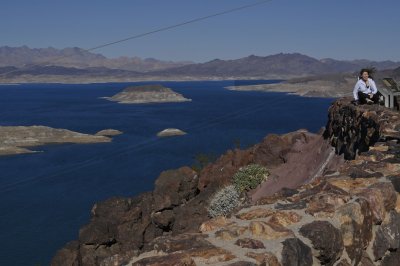
Declining water levels due to climate change and 20 years of ongoing drought have reshaped Lake Mead’s shorelines as seen in this file photo from Nov. 16, 2022. The Department of the Interior on Friday published a new framework under which three Lower Basin states will face reduced water deliveries. File Photo by Jim Ruymen/UPI | License Photo

Aug. 21 (UPI) — Arizona, Colorado and Nevada will see reductions in their water deliveries from the Colorado River by a combined 1.25 million acre-feet per year under a new framework finalized by federal officials on Friday.

Under the new 10-year “Decision Framework” governing the operations of the drought-afflicted Lake Mead and Lake Powell reservoirs along the Colorado River Basin, Arizona implements the largest reduction in deliveries of river water — some 760,000-acre-feet in each of the next two years.

Meanwhile, California will be hit with yearly reductions of 440,000 acre-feet and Nevada would see 50,000 acre-foot declines as state and federal officials grapple with a prolonged drought during which the two reservoirs have reached their lowest-ever recorded levels.

One acre-foot is enough water for as many as four households to use for a whole year.

The cuts represent the largest ever proposed for the three “Lower Basin” states.

The combined contents of Lake Powell and Lake Mead have not been this low since before Lake Powell began filling following the closure of the gates at Glen Canyon Dam in 1963, Interior Secretary Doug Burgum noted in announcing the new framework.

“We are grateful for the seven basin states, the thirty basin tribes, Mexico, and many other basin stakeholders who have provided the feedback and voluntary arrangements necessary for the development of the 2027-2028 operating guidelines.” he said.

“Forty million people, millions of acres of farmland and ranchland, industries that power the American West, and some of our nation’s fastest growing metropolitan areas depend on the Colorado River.”

In addition to the reduction in water deliveries, the framework allows for the three Lower Basin States to voluntarily conserve and store at least 700,000 acre-feet of water over the two-year period to protect the system.

The Colorado River Basin has been experiencing what federal officials have called an “unprecedented multidecadal drought,” resulting in historically low runoff and reservoir levels.

Conditions worsened during 2026, driven in part by the lowest observed snowpack on record during the winter of 2025-2026.

Source link

The Grand Tour first look as new hosts face off against fighter jets

The Grand Tour is back for a new series, the first since former Top Gear hosts Jeremy Clarkson, Richard Hammond and James May stepped down

The Grand Tour official Amazon Prime trailer

The Grand Tour is back in a matter of days – and there’s the perfect mix of drama and fast cars for fans of the hit Prime Video show.

The show – previously fronted by Jeremy Clarkson, Richard Hammond and James May – has had a complete refresh, with trainspotter and secret petrolhead Francis Bourgeois replacing the iconic trio alongside James Engelsman and Thomas Holland, who are behind the popular YouTube show Throttle House.

The Grand Tour will see guest appearances from Clarkson, Hammond and May as Bourgeois, Engelsman and Holland travel across the globe in search of the most unique vehicles on our roads.

In the first series, the team will tackle some big motoring questions, such as what’s the most unbreakable car in history and can you travel across Colorado undetected in a trio of Japanese microcars.

F1 World Champion Jenson Button also makes a special appearance in the trailer, whilst it also shows the trio head to Malaysia to see all about the country’s rich car culture as well as how little someone can spend on a sports car without it immediately blowing up.

In the new series, they travel through Angola in track-cars, which are quite unsuited for the job. They even test out the greatest American cars including the the Ford Mustang GTD, Chevrolet Corvette ZR1, and $2.75m, 2000-horsepower Hennessey Venom F5 Revolution Evolution against a bunch of fighter jets.

Francis Bourgeois said of joining the show: “Since completing the filming of the series, I haven’t stopped replaying every moment in my head. It has made me laugh, made my heart race and my stomach turn…remembering the tent I shared with Thomas and James filled with sulphuric farts whilst Angolan jackals snooped around outside. It feels as though it was a dream but knowing we will get to share our adventures soon makes me so incredibly excited!”

James Engelsman added: “We took on the West African Desert. We contended with fighter pilots. We even decided to challenge an entire nation’s legal system by protesting from the mountain tops. In doing so, the three of us learned our true strength: How to accept defeat gracefully.”

Thomas Holland shared: “I figured someone would be there to hold our hand the whole time. Nope. We were on our own in some absolutely wild environments in very, VERY questionable cars. What did we learn from this experience? Only that we have very poor decision-making skills. When you watch in September, expect a good laugh. And maybe a few butt clenches…”

The Grand Tour will launch all six episodes exclusively on Prime Video on Friday 4th September.

Like this s tory? F or more of the latest showbiz news and gossip, follow Mirror Celebs on TikTok , Snapchat , Instagram , Twitter , Facebook , YouTube and Threads



Source link

Iran clubs face Qatar and UAE sides at neutral venues in Champions League | Football News

Following the start of the US-Israel war on Iran,, the first match of the Iranian league was played last week.

Iranian clubs have been confirmed to play at neutral venues against their Qatari and United Arab Emirates opponents following the draw for the group stage of the Asian Champions League Elite.

Matches in the Asian Football Confederation’s (AFC) premier event, which was drawn on Tuesday, begin on September 14.

Recommended Stories

list of 4 itemsend of list

Tehran’s Esteghlal and Tabriz-based Tractor will face UAE sides Al Ain, Al Wasl and Shabab Al-Ahli, and Qatari clubs Al Gharafa, Al Sadd and Al Shamal, despite the ongoing conflict in the region.

Esteghlal and Tractor avoided the heavily favoured Saudi Arabian contingent.

Since the United States and Israel attacked Iran in February, Iran has struck targets in Qatar and the UAE, saying it is retaliating for allowing US bases to be used for strikes.

Iran’s neighbours have implored Tehran to stop firing at them. On Sunday, Iran claimed three of its pilots who went missing in March were being held in Qatar, though Doha denied the charge.

Iran’s domestic league was suspended in February as attacks began but returned last weekend with one match behind closed doors and others under capacity restrictions.

The AFC Elite features two 16-team regional zones. In the west, Saudi Arabia has five representatives, including Jeddah’s Al-Ahli, which is aiming to become the first club to win three straight Champions League titles. Coach Matthias Jaissle left this month to take over English Premier League side Newcastle.

Riyadh rival Al-Hilal is seeking a fifth title, while Cristiano Ronaldo leads Al-Nassr back into the competition after winning the Saudi Pro League in May.

In the east, Japan reached the final in the past two editions, with Kawasaki Frontale and Machida Zelvia losing to Al-Ahli, though neither has qualified this year.

Gamba Osaka won in 2008, and South Korea also supplies two former champions: Jeonbuk Hyundai Motors, aiming for a third crown, and Pohang Steelers, looking for a fourth.

The top eight from each group advance to the round of 16. From the quarterfinals onward, all matches will be played in Saudi Arabia, with the final set for May 1.

Source link

Thousands of Brits face being stopped at the border due to MORE problems with new Europe rules 

MORE Brits are facing problems at the border in Europe, with many being stopped and facing even longer queues – and it could affect thousands.

The new Entry/Exit System (EES), which requires biometric checks from Brits, has been in place since April.

Brits are now required to register their biometrics with EES Credit: Alamy
The requirement has already resulted in long queues at multiple airports Credit: Alamy

But a new report from The Telegraph has found that those with ‘faded fingerprints’ are being rejected by the machines – a problem associated with older passengers.

One 80-year-old woman told the publication how EES failed to recognise her fingerprints on a trip to Palma in Majorca.

Angela Evans said: “I tried several times, on different machines and with assistance from a member of staff, but to no avail. My fingerprints would not register.

“I suspect this is because of my age – 80 – and that my fingers are probably worn smooth and not ‘ridgy’ enough to record.”

HOL YES

Cheap holiday destinations with 86p beers, £15 flights & £129pp package breaks


CHEAP AS CHIPS

10 UK summer holidays that are CHEAPER than a takeaway – all £12pp or less

Another holidaymaker, Barbara, struggled to register her fingerprints at Salzburg Airport.

After holding up a “long line of passengers”, Barbara said she discovered she has “no fingerprints”.

Both women had to then see a member of airport staff and queue to have their passports manually stamped.

Another older couple couldn’t get through the EES gates at Naples Airport and had to join a queue that was so long it went outside the terminal.

After waiting for two hours and missing their transfer pick up, the couple were seen by a member of staff but said they were “put off flying” as a result.

While fingerprints don’t technically ‘fade’, they do change as skin loses its elasticity with age.

Older travellers have experienced issues getting through EES Credit: Alamy

The surface is then less defined and harder for digital scanners to read.

It’s not the first issue to come with the introduction of EES.

One woman who is an identical twin faced a problem when she was mistaken for her sister.

In some cases, Brits have been left in queues of up to six hours while waiting to register with EES.

Some holidaymakers have even missed their flight because of delays at passport control.


Source link

Stablecoin Remittances Face Reality Check in Banca d’Italia Study

The central bank poured cold water on the claim that stablecoin can make cross-border remittances cheaper.

A new study from Italy’s central bank challenges one of the crypto industry’s biggest selling points: that stablecoins can make cross-border remittances cheaper and faster than traditional payment networks.

Banca d’Italia’s research examined remittance corridors involving Italy, Argentina, Brazil, South Africa, the United Arab Emirates, and Japan, comparing USDC transfers against established money transfer services. Its conclusion was sobering.

Stablecoin transfers showed no systematic cost advantage, with total costs ranging between 0.3% and nearly 9%, meaning digital-dollar transfers were sometimes more expensive than conventional remittance providers.

Payment industry veterans addressed the findings, highlighting a critical distinction often overlooked in discussions about digital money: the difference between low-cost blockchain settlement and the expensive legacy networks surrounding it.

Size Matters in Remittance Costs

“The [central bank’s] test was fundamentally flawed,” said Daniela Sozzi, founder of London-based fintech strategy firm DNYC.

Why? Because of the relatively small transaction size used by the study’s authors ($200). In an email to Global Finance, Sozzi explained that the use of stablecoins is economically advantageous only for sums of at least $100,000. These are still relatively small compared to “traditional” wholesale transactions using traditional correspondent banking services, such as $1 million and above, she pointed out.

“So, stablecoins are cheaper for certain types of transactions, not universally cheaper,” said Sozzi.

But that $200 threshold isn’t arbitrary — it’s the standard transaction size the World Bank uses to benchmark its Remittance Prices Worldwide index, which put the global average cost of sending money through traditional channels at 6.36% in the third quarter of 2025.

The index of major international money-transfer operators, such as Western Union, came in at 5.52% — squarely inside the 0.3% to 9% range the Italian central bank found for stablecoins, underscoring Sozzi’s point that at this size, the two systems are comparable.

Still, Banca d’Italia’s findings track with a broader body of research on stablecoin remittances. A BIS paper published in March scrutinized how cross-border payments, “particularly remittances and retail transactions, remain more costly, slower, less accessible, and less transparent than domestic payments.”

Where Are Costs Coming From?

Rather than viewing the report as a rejection of digital money, payment industry experts say the findings point to a broader structural issue: while settlement on the blockchain is fast and cheap, moving money into and out of legacy networks remains costly.

These expensive friction points stem from legacy bank networks, explained Alexander Taskey, CEO of global settlements platform Frame.

“Much of the cost around stablecoins comes from on- and off-ramping, since that requires moving in and out of legacy payments infrastructure,” Taskey wrote in an email to Global Finance.

London-based Frame operates as a programmable settlement layer, enabling financial institutions to orchestrate and route funds across both legacy banking rails and on-chain networks.

“Once funds are on blockchain rails, the cost of transacting collapses to near zero,” Taskey added.

‘Blockchain Cost Isn’t the Issue’

Pankaj Bengani, founder and CEO of payments infrastructure company Meld, said that the friction lies at the edges. “The cost on the blockchain is not the issue. Once the fiat — whether it’s euro or U.S. dollar — is on the blockchain, the costs are very, very low. All the cost is baked into the on- and off-ramps.”

Because of this, both executives agree that judging stablecoins solely on current consumer remittance pricing misses the broader trajectory of payment rails.

Bengani likens today’s stablecoin ecosystem to the early days of global container shipping, where efficiency gains only materialized after shipping ports and logistics networks matured. Similarly, Frame’s Taskey said that end-user priorities will ultimately drive how these backend systems evolve.

“Ultimately, customers don’t care which rails are being used,” Taskey added. “They simply want payments that are cheaper, faster, and more secure.”

While consumer remittances in developed corridors like Europe and the U.S. remain highly optimized via traditional rails, stablecoins are finding immediate traction where traditional systems fall short — such as high-fee corridors or markets with volatile local currencies where businesses and consumers prefer holding USD balances.

The Future Is Hybrid

Looking five years ahead, industry leaders see stablecoins operating not as a total replacement for traditional banking, but as one part of a larger, hybrid settlement architecture.

“Five years from now, I expect stablecoins to coexist alongside legacy fiat rails as one option among many,” said Taskey. “The challenge for banks will be tying it all together and consolidating fragmentation into a single, interoperable platform.”

For now, the Banca d’Italia’s findings serve as a reminder that while blockchain technology offers near-frictionless settlement, the global financial infrastructure built around it still has significant ground to cover.

Anthony Noto covers corporate finance and private credit. Contact him at anoto@gfmag.com.

Source link

Tennis: Arthur Fery named in GB Davis Cup team to face Ecuador

Wimbledon semi-finalist Arthur Fery has been included in Great Britain’s Davis Cup team to face Ecuador in September.

Former world number four Jack Draper is not included but a fifth player will be added closer to the time.

British number one Cameron Norrie, Henry Patten and Lloyd Glasspool make up the team to play at London’s Copper Box Arena.

“I am really proud to be able to represent GB again,” Fery said. “It is going to be a bit of a different scenario this time, at home, in the World Group and trying to qualify for the final eight.

“There might be some extra pressure, but I’m ready for it.”

Fery, 24, jumped to a career-high world ranking of 36 following his shock Wimbledon success, when he was a wildcard into his home Grand Slam.

Ranked 114th in the world before the start of the tournament, Fery went on to become the lowest-ranked player to make Wimbledon’s last four since Goran Ivanisevic in 2001.

This will be Fery’s first outing in England since Wimbledon.

Draper, 24, broke down in tears earlier this month midway through his first game since June following long-term injury difficulties.

A persistent arm injury has kept him sidelined and caused his world ranking to plummet from fourth to as low as 160th over a 12-month period.

The best-of-five tie takes place over two days on 19 and 20 September, with two singles matches on day one.

Day two features a doubles match followed by two singles encounters.

Fery was unable to celebrate his Davis Cup inclusion as he suffered a 7-5 7-6 (7-3) defeat on Monday to world number eight Alex de Minaur in the third round of the Cincinnati Masters.

Rain delayed the start of play, before later forcing the players off with fifth seed De Minaur leading 7-5 5-1.

Fery fought back after a 30-minute delay to take the second set to a tie-break, but his Australian opponent was able to wrestle back control and see out victory.

Source link