Europe

Belarus’s Lukashenko becomes second only leader to visit Myanmar since coup | Elections News

Alexander Lukashenko’s visit comes shortly before military government holds national polls widely condemned as a sham.

Belarusian President Alexander Lukashenko has arrived in Myanmar on a goodwill visit seen as lending support to the Southeast Asian country’s military government in advance of a widely condemned national election set to be held next month.

Myanmar state media reported on Friday that Senior General Min Aung Hlaing, the country’s self-installed de facto leader, met Lukashenko at the Presidential Palace in the capital, Naypyidaw.

Recommended Stories

list of 3 itemsend of list

“This visit demonstrated Belarus’s goodwill and trust towards Myanmar and marked a historic occasion. It is the first time in 26 years of diplomatic relations that a Belarusian Head of State has visited Myanmar,” military run outlet The Global New Light of Myanmar reported.

Lukashenko’s arrival at a military airport in Naypyidaw on Thursday night saw him welcomed by senior figures from Myanmar’s military government, including Prime Minister Nyo Saw, with full state honours and cultural performers.

After former Cambodian Prime Minister Hun Sen, Lukashenko is only the second foreign leader to visit Myanmar since its military overthrew Aung San Suu Kyi’s democratically elected National League for Democracy (NLD) government in a coup on February 1, 2021.

The Belarusian leader’s visit also comes just a month before the military is set to host national elections that many domestic and international observers have condemned as a sham. His visit is widely viewed as lending support to the polls, due to be held in late December, and which the military government has touted as a return to normalcy.

Following Lukashenko’s meeting with Min Aung Hlaing on Friday, The Global New Light also confirmed that Belarus plans to “send an observation team to Myanmar” to monitor the polls.

The leaders also agreed that “collaboration will also be strengthened in military technologies and trade”, a day after the Myanmar-Belarus Development Cooperation Roadmap 2026–2028 was signed in Yangon.

Belarus state media quoted Minister of Foreign Affairs Maxim Ryzhenkov as saying that Myanmar has “significant potential in various industrial sectors”, while Belarus has “expertise and modern technologies in mechanical engineering”.

“Myanmar plans to mechanise its agriculture, and we in Belarus produce a complete lineup of machinery and equipment. As our president says, no topics are off limits for our cooperation,” Ryzhenkov said.

Belarus’s government is widely regarded as authoritarian, with Lukashenko serving as the former Soviet state’s first and only president since the office was established in 1994.

Along with major backers China and Russia, Belarus is one of the very few countries that have continued to engage with Myanmar’s military leaders since the coup.

A popular protest movement in the immediate aftermath of the coup has since morphed into a years-long civil war, further weakening the Myanmar military’s control over the fractured country, where ethnic armed groups have fought decades-long wars for independence.

Preparing for the polls, military government census takers in late 2024 were only able to count populations in 145 of Myanmar’s 330 townships – indicating the military now controls less than half the country.

Other recent estimates place the military’s control as low as 21 percent of the country’s territory. Ethnic armed groups and the anti-regime People’s Defence Force – which have pledged to boycott and violently disrupt the upcoming polls – control approximately double that amount of territory.

Amid geographic limitations and raging violence, as well as the Myanmar military’s March 2023 dissolution of Aung San Suu Kyi’s hugely popular NLD, critics have pointed to the absurdity of holding elections in such circumstances.

Preparing for the polls, military leaders carried out a mass amnesty on Thursday, pardoning or dropping charges against 8,665 people imprisoned for opposing army governance.

Source link

S African ex-leader Zuma’s daughter quits parliament amid Russia war claims | Russia-Ukraine war News

Duduzile Zuma-Sambudla’s resignation comes amid an investigation into her role in luring South Africans to fight for Russia in war on Ukraine.

A daughter of former South African President Jacob Zuma has resigned from parliament amid allegations that she lured 17 men to fight as mercenaries in Russia’s war against Ukraine.

Duduzile Zuma-Sambudla’s resignation on Friday comes after police said she was under investigation for her alleged role in luring South Africans to Russia. The police announcement came after a group of men aged 20 to 39 ended up on the front lines of the conflict in Ukraine.

Recommended Stories

list of 4 itemsend of list

Zuma-Sambudla had served as a member of parliament since June 2024 for uMkhonto weSizwe (MK), an opposition party created by her father in 2023 following his expulsion from South Africa’s then-governing African National Congress.

“The national officials have accepted comrade Duduzile Zuma-Sambudla’s decision to resign and support her efforts to ensure that these young South Africans are brought back safely to their families,” the MK Party’s national chairperson, Nkosinathi Nhleko, told a news conference.

MK officials said Zuma-Sambudla’s resignation was voluntary and that her departure from the National Assembly and all other public roles was effective immediately.

The MK’s Nhleko also said that the party was not involved in luring the men to Russia and that Zuma-Sambudla’s resignation was not an admission of guilt, but added that MK would help support the families of the men stranded in Ukraine.

Zuma-Sambudla was present at the news conference but did not speak, and has not publicly responded to the accusations from her half-sister.

epa12517822 Duduzile Zuma-Sambudla (L), the daughter of former South African President Jacob Zuma, appears in court on charges of terrorism in Durban, South Africa, 11 November 2025. She pleaded not guilty to terrorism-related charges at the start of her trial. Zuma-Sambudla is being charged over comments she made on social media four years ago during deadly protests following the arrest of her father. EPA/STRINGER
Duduzile Zuma-Sambudla, left, the daughter of former South African President Jacob Zuma, appears in court on charges of terrorism in Durban, South Africa, on November 11, 2025 [EPA]

South Africa’s government said earlier this month that 17 of its citizens were stuck in Ukraine’s Donbas region after being tricked into fighting for mercenary forces under the pretext of lucrative employment contracts.

Then, last weekend, police said they would investigate Zuma-Sambudla after her half-sister made a formal request for the probe into her and two other people.

According to police, an affidavit submitted by Zuma-Sambudla’s half-sister, Nkosazana Bonganini Zuma-Mncube, alleged that Zuma-Sambudla and two other people tricked the South Africans into fighting by promising to provide them with security training in Russia. The identities of the other two people were unclear.

The affidavit alleges the South Africans were handed over to a Russian mercenary group and forced to fight in the conflict. It also says that eight of the 17 men were members of Zuma-Sambudla’s and Zuma-Mncube’s extended family.

South African presidential spokesperson Vincent Magwenya told Al Jazeera that the government had received “distress calls” from the group caught up in the Ukraine war, and authorities were “working ever so quietly” at all levels “to secure their safe return”.

“But also, there is an investigation that is ongoing, that’s looking at how they were recruited, who was involved, and what were they promised?” Magwenya said.

On Thursday, Jordan became the latest country to rebuke Russia for recruiting its citizens to fight, following the killing of two Jordanian nationals.

While Jordan did not specifically reference Russia’s war on Ukraine, the Jordanian Ministry of Foreign Affairs said it would “take all available measures” to end the further recruitment of Jordanians, and called for Moscow to terminate the contracts of its currently enlisted citizens.

Ukraine says Moscow has recruited at least 18,000 foreign fighters from 128 countries, according to figures shared by Ukrainian Brigadier General Dmytro Usov, who also said that almost 3,400 foreigners have died fighting for Russia.

Michael Appel, reporting for Al Jazeera from Johannesburg, said Zuma-Sambudla is seen as a divisive political figure in South Africa, and is already facing “serious charges” related to unrest in South Africa in 2021 that led to the deaths of hundreds of people.

She has denied any wrongdoing in that case and has pleaded not guilty to inciting violence through social media posts.

Source link

Could conscription return in Europe? | News

France announces new military service plans weeks after Germany.

France says it will reintroduce a form of voluntary military service in response to growing tensions with Russia.

The announcement comes weeks after Germany said it plans to assess young people’s suitability for military duty.

Russia’s invasion of Ukraine has forced European states to reassess their defence. So, could conscription return?

Presenter: Dareen Abughaida

Guests:

Jacques Reland – Senior research fellow in European affairs

Paul Beaver – Former soldier and defence analyst

Peter Nielsen – Former commander of NATO’s Force Integration Unit in Lithuania

Source link

Ukraine is running out of men, money and time | Russia-Ukraine war

Ever since Donald Trump declared that he could end the war in Ukraine “within 24 hours”, much of the world has been waiting to see whether he could force Moscow and Kyiv into a settlement. Millions of views and scrolls, miles of news feeds and mountains of forecasts have been burned on that question.

Trump fed this expectation by insisting that Ukrainian President Volodymyr Zelenskyy was running out of options and would eventually have to accept his deal. In reality, the opposite is true. It is Trump who has no leverage. He can threaten Nicolas Maduro with potential military action in or around Venezuela, but he has no influence over Vladimir Putin. Any sanctions harsh enough to damage Russia would also hit the wider Western economy, and there is not a single leader in the West willing to saw off the branch they are sitting on.

Armed intervention is even more implausible. From the first days of the full-scale invasion, NATO decided to support Ukraine with weapons and training while avoiding steps that could trigger a direct NATO–Russia war. That position has not changed.

As a result, Ukraine has been left in a position where, with or without sufficient support from its allies, it is in effect fighting Russia alone. All talk of peace or a ceasefire has proved to be a bluff, a way for Vladimir Putin to buy time and regroup. Putin’s strategy relies on outlasting not only Ukraine’s army but also the patience and political unity of its allies. The United States has now circulated a revised version of its peace framework, softening some of the most contentious points after consultations with Kyiv and several European governments. Yet the Kremlin continues to demand major territorial concessions and the withdrawal of Ukrainian forces. Without this, Russia says it will not halt its advance. Ukraine, for its part, maintains that it will not surrender territory.

Once it became clear that the diplomatic track offered no breakthrough, the United States all but halted arms deliveries to Ukraine. Officials blamed the federal government shutdown, although the real cause was unlikely to be a shortage of movers at the Pentagon. Either way, American military assistance has dwindled to a trickle, consisting mostly of supplies approved under the Biden administration. At his confirmation hearing before the Senate Armed Services Committee, Defense Secretary-designate Austin Dahmer said: “I’m not aware of any pause in [US military] aid to Ukraine.” It sounded less like a serious assessment and more like an admission of ignorance. Every Ukrainian soldier can feel the consequences of the sharp reduction in American weapons. Every resident of Kyiv and other cities can feel the shortage of air defence systems.

Europe has not filled the gap. The European Union’s defence industry and joint-procurement schemes have produced many promises but little real money. A few billion euros have been formally committed and far less has been delivered. Member states prefer to rearm themselves first and Ukraine second, although their own programmes are moving slowly. The EU remains divided between governments willing to take greater risks to support Kyiv and others that fear provoking Russia or weakening their own budgets. Brussels is now pushing a plan to use frozen Russian assets to back a loan of up to 140 billion euros ($162bn) for Ukraine, which could support Kyiv’s budget and defence spending over the next two years. Several key member states that host most of those reserves remain cautious, and without unanimity, the plan may stall.

This leaves Ukraine expanding its own production and fighting with whatever arrives and whatever is not siphoned off by corrupt figures such as Tymur Mindich, who is under investigation in a major procurement case. For now, Ukraine can slow the enemy at enormous cost, but this is nowhere near enough to win.

The army is under-supplied. The government has failed to sustain motivation or mobilise the country; in fact, it has achieved the opposite. Men are fighting their fourth year of war, while women cannot wait indefinitely. Divorces are rising, exhaustion is deepening, and morale is collapsing. Prosecutors have opened more than 255,000 cases for unauthorised absence and more than 56,000 for desertion since 2022. In the first 10 months of 2025 alone, they registered around 162,500 AWOL cases and 21,600 desertion cases. Other reports suggest that more than 21,000 troops left the army in October, which is the highest monthly figure so far. Social injustice is widening.

Demographically, the picture is equally bleak. Ukraine’s population has fallen from more than 50 million at independence to about 31 million in territory controlled by Kyiv as of early 2025. Births remain below deaths and fertility rates have dropped to about one child per woman.

Against this backdrop, Ukraine is left with three strategic options.

The first option is to accept Putin’s terms. This would mean capitulating, losing political face and giving up territory, but it would preserve a Ukrainian state. It would also lock the country into long-term vulnerability.

The second option is a radical overhaul of Ukraine’s political and military leadership. This would involve rebuilding mobilisation, restructuring the command system and re-engineering the war effort from the ground up. Ukraine cannot fight a long war with institutions that were designed for peacetime politics and rotational deployments.

The third option is to change nothing and maintain the status quo. Ukraine would continue launching precision strikes on Russian oil infrastructure in the hope of grinding down the Kremlin’s economy and waiting for Putin to die. This is an illusion. If such strikes could not break a smaller Ukraine, they will not break a country many times larger in economic, territorial and demographic terms. Damage will be inflicted, but nowhere near enough to force Russia to stop.

Judging by recent statements from Zelenskyy and several of his European partners, Ukraine has effectively committed itself to the third option. The question is how long this approach can be sustained. Even setting aside morale and exhaustion after four years of war, the financial outlook is bleak. Ukraine faces a vast budget deficit and public debt that is likely to exceed 100 percent of gross domestic product. Europe has failed to assemble the necessary funds, Belgium has not released frozen Russian assets and economic growth across much of the continent remains weak. Any significant increase in support would require political courage at a time when voters remain sensitive to the recent inflation surge. The EU is also unable to tie the United States to long-term commitments in the current political climate in Washington.

All this leads to an unavoidable conclusion. If Ukraine intends to survive as a state, it will eventually have to take the second path and undertake a radical restructuring of its political and military leadership. Once that moment arrives, Moscow’s terms will be harsher than they are now. The Russian ultimatum is likely to expand from claims on four regions to demands for eight, along with strict control mechanisms, demilitarisation and further concessions.

Radical change is needed immediately, before Ukraine’s strategic options narrow further and before its ability to resist collapses with them.

The views expressed in this article are the author’s own and do not necessarily reflect Al Jazeera’s editorial policy.

Source link

Ukraine anticorruption investigators search home of Zelenskyy’s top aide | Corruption News

Ukrainian president’s chief of staff Andriy Yermak confirms search, saying he has offered ‘full cooperation’.

Anticorruption authorities in Ukraine have searched the home of President Volodymyr Zelenskyy’s chief of staff, as a major corruption investigation continues to roil the country and cause consternation among allies.

Andriy Yermak, who leads Kyiv’s negotiating team concurrently trying to hash out the terms of a United States-proposed plan to end the four-year war with Russia, confirmed his apartment was being searched on Friday and said he was fully cooperating.

Recommended Stories

list of 3 itemsend of list

“There are no obstacles for the investigators. They have been given full access to the apartment, and my lawyers are present on-site, cooperating with the law enforcement officers. From my side, there is full cooperation,” he said on social media.

In a joint statement, the National Anti-Corruption Bureau of Ukraine and the Specialised Anti-Corruption Prosecutor’s Office said the searches were “authorised” and linked to an unspecified investigation.

Earlier this month, the two anticorruption agencies unveiled a sweeping investigation into an alleged $100m kickback scheme at the state atomic energy company that ensnared former senior officials and an ex-business partner of Zelenskyy.

Friday’s searches come as the Ukrainian president faces growing pressure from the administration of United States President Donald Trump to agree to Washington’s proposal to end the Russia-Ukraine war.

Ukraine and its European allies had raised concerns that the Trump-backed plan comprised some elements that Russia has been actively pushing for, including that Ukraine cede additional territory and curtail the size of its military.

But a revised proposal has been put forward, and Kyiv has said it is open to negotiations.

The searches are also likely to worsen tensions between Zelenskyy and his political opponents amid the peace negotiations.

In a statement on Thursday, the European Solidarity opposition party criticised Yermak’s role as a negotiator and called on Zelenskyy for “an honest dialogue” with other parties.

‘Black Friday’

Viktor Shlinchak, a political analyst at the Kyiv-based Institute for World Politics, described the searches as a “Black Friday” for Yermak and suggested Zelenskyy may be forced to dismiss him.

“It looks like we may soon have a different head of the negotiating team,” he wrote on Facebook.

Yermak, 54, is Zelenskyy’s most important ally, but a divisive figure in Kyiv, where his opponents say he has accumulated power, gatekeeps access to the president and ruthlessly sidelines critical voices.

A former film producer and copyright lawyer, Yermak came into politics with Zelenskyy in 2019, previously working with him during the now-president’s time as a popular comedian.

He is widely considered the second-most influential man in the country and even sometimes nicknamed “vice president”.

The corruption investigation revolves around an alleged scheme involving Energoatom, the state-run nuclear power company that supplies more than half of the country’s electricity.

“That [case] has been swirling around Ukraine for several weeks now, rocking the government,” Al Jazeera’s Rory Challands reported from Kyiv on Friday. “The allegation is that some $100m … has gone through a kind of laundromat,” he explained.

Anticorruption investigators have said they suspect that Tymur Mindich, a one-time business partner of Zelenskyy, was the plot’s mastermind.

Mindich has fled the country, with any criminal proceedings against him likely to be carried out in absentia. Two top ministers have also resigned over the scandal.

Challands also noted that the inquiry comes after Zelenskyy’s government had tried in July to take away the Ukrainian anticorruption agencies’ independence and place them under the control of his prosecutor-general.

But the Ukrainian leader backtracked after mass public protests.

Source link

Closed UK landmark in Europe to reopen after 11 years

THERE’S a huge landmark that’s been under renovation for the last decade – and it’s under three hours away from the UK.

The huge structure overlooks the capital of Hungary and is about to reopen in March 2026.

The Citadella in Budapest has been closed for over a decadeCredit: Facebook/Nemzeti Hauszmann Program
It will reopen in March 2026 after having undergone huge renovationsCredit: Facebook/Nemzeti Hauszmann Program

If you’ve been to Budapest in the past decade, you might have noticed that the Citadella that sits on Gellért Hill has been undergoing a huge renovation.

It’s been shut for 11 years so far and has been undergoing a major renovation since 2020 – but it’s finally about to reopen.

The work has cost an estimated HUF 20 billion which is just under £46million.

While efforts have gone into maintaining the original structure,new features have been added too.

SNOW WAY

All the best Xmas days out under £10 including FREE ice skating & Santa’s grotto


CHRIMBO WIN

Enter these travel comps before Xmas to win £2k holidays, ski trips & spa stays

One of those is a new pedestrian bridge built entirely of glass.

There will also be a walk-through exhibition on Hungary’s history, called ‘The Bastion of Freedom’ which will be inside the large rondella.

The inner courtyard will have a new water feature and an eternal flame.

There’ll also be a new café and gift shop, and it will have incredible panoramic city views overlooking Danube, Buda Castle and Margaret Island.

Outside, locals and tourists will have plenty of room to enjoy the views as there will be twice as much green space as before.

There will be 10,000 shrubs, 100,000 perennials, and over half a million bulbs that will be planted in the area, along with 128 large trees.

The Citadella looks over the city and sits on Gellért HillCredit: Facebook/Nemzeti Hauszmann Program

The site is free to explore as it is an open outdoor public site – but you might need to pay to go inside.

The Citadella in Budapest was built by the Austrian Habsburg Empire between 1850 and 1854.

Its purpose was to serve as a military stronghold after the Hungarian Revolution between 1848 and 1849, which is why it sits on a hill overlooking the city.

Now, it’s considered a symbol of freedom with The Liberty Statue representing Hungary’s independence – it was added in 1947.

The Citadella is due to reopen to the public on Hungary’s Independence Day, March 15, 2026.

Budapest is a popular city break destination for Brits as it’s just a two and a half hour flight away from the UK.

Other popular historical sites include the Buda Castle district, the Matthias Church and and St. Stephen’s Basilica.

Budapest is also known for its famous thermal baths – for example the Szechenyi Baths in Budapest is one of the best and largest spa baths in Europe.

It has 15 indoor baths and 3 grand outdoor pools, saunas, steam rooms with a ticket costing around £22.

For more trips to Europe – here are 39 of the best city break destinations – and the no.1 is VERY cheap.

Plus, discover the five European cities with lesser-known tours that let you explore like a local.

The Liberty Statue sits on top of the Citadella in BudapestCredit: Alamy

Source link

Europe Stocks Rise on Fed-Cut Hopes, Ukraine Talks

European markets have rallied through November, supported by cooling U.S. economic data and increasingly dovish signals from the Federal Reserve, which boosted expectations of a rate cut next month. Optimism over renewed diplomatic movement on Russia-Ukraine ceasefire talks has also eased geopolitical anxiety, helping extend Europe’s longest market winning streak since early 2024.

What’s Happening Now

European shares edged slightly lower on Friday, with the STOXX 600 down 0.1% but still on track for strong weekly gains and a fifth consecutive positive month. Bank stocks weighed on the index amid a Milan investigation into Monte dei Paschi di Siena, while commodity-linked shares rose in line with firmer oil and metal prices.

Investors turned cautious ahead of the weekend and a shortened U.S. trading session, with analysts noting a rare moment of “calm” in markets after weeks of volatility driven by tech-sector valuations.

Why It Matters

The shift in market mood reflects easing fears of an AI-driven asset bubble and increasing confidence that monetary policy will soon loosen. A potential Federal Reserve rate cut would support global liquidity and risk assets, while progress toward Russia-Ukraine peace talks could reduce geopolitical uncertainty for European firms.

A temporary trading outage at CME Group has also caught investor attention, impacting activity in key currency and futures markets.

What’s Next

Focus now turns to next week’s Russia-Ukraine negotiations, as Kyiv signals openness to a deal framework but insists major issues are unresolved. Markets will also monitor whether the Fed maintains its dovish tone ahead of its December policy meeting.

Corporate movements, including investor pressure on Delivery Hero to consider asset sales and JP Morgan’s upgrade of Ferragamo, may further influence sector-specific momentum.

With information from Reuters.

Source link

One of Europe’s oldest cities to get first ever underground train network

ONE of Europe’s most underrated cities will soon get a metro system after decades of planning.

Belgrade in Serbia – one of the oldest city’s is Europe – is also Europe‘s biggest capital city without a subway, but soon that will change.

Belgrade in Serbia is set to get its first metro networkCredit: Studio OBE
It is set to cost around £3.8billionCredit: Studio OBE

As part of a contract between Chinese and French construction companies, Belgrade’s first subway line is expected to open in 2030 costing around €4.4billion (£3.8billion).

A second line will follow in the early 2030s and a third line has also been planned.

Designs for the new metro network in the city could include driverless trains that would be operated from a single hub and doors separating the platforms from the track.

Digging of the tunnels will start next spring, with each tunnel set to be around 100 metres long and cost around €20million (£17.5million).

Read more on travel inspo

ALL IN

I found the best value all inclusive London hotel… just £55pp with free food & booze


CHEAP BREAKS

UK’s best 100 cheap stays – our pick of the top hotels, holiday parks and pubs

According to Bloomberg, Andreja Mladenovic, who runs JKP Belgrade Metro and Train, who is overseeing the project, said: “Belgrade has grown far too big not to have a subway.

“It’s an absolute game changer.”

He added: “It costs more at first when you build it, but cuts costs later.

“It’ll be state-of-the-art, and worth it.”

Plans for a subway network in the city were first considered in the 1930s when the capital was growing in population.

However, World War II stopped these plans going ahead.

In the 1960s, Belgrade’s economy was expanding again and new plans were drawn up in the 70s, however these went nowhere.

In the early 80s, a debt crisis meant all hopes were lost for a metro network, and over the following decade, Yugoslavia disintegrated.

It wasn’t until 1999 that Belgrade could rebuild itself.

Today, the often-overlooked city is home to floating nightclubs and secluded beaches.

As a result of sitting on two rivers, Belgrade has a number of floating restaurants, bars and nightclubs referred to as ‘Splavs’.

And it will open in the early 2030sCredit: Studio OBE

Along the Sava River, Splavs often play pop music, whereas the Splavs that are found on the banks of the Danube River have more of a rock vibe.

And drinks onboard are super cheap, with a beer setting you back around £3.40 or a cocktail setting you back around £4.75.

But Belgrade doesn’t just have floating bars and restaurants, there are also a number of historical locations to explore.

For example, you could head to the Belgrade Fortress, which was built back in the third century to protect the city from invaders.

The fortress, of course, has a number of panoramic viewpoints, but visitors can also participate in a number of activities and attractions, as well as explore museums.

You could also visit the Church of Saint Sava, which is a large Orthodox church.

Or explore the Nikola Tesla Museum, which is dedicated to the life and work of the famous inventor.

The museum contains many of his personal belongings as well as his inventions.

Return flights from London Luton Airport to Belgrade cost around £36 in January and the flight takes around three hours.

What’s Belgrade like to visit?

THE Sun’s Emily Webber recently headed to the city and here are her thoughts…

The Serbian capital of Belgrade offers all the history and grandeur for a fraction of the price.

With beers or coffees in local cafes from £1.50, meals with wine in a decent restaurant for £15 and hotels from £40 a night, it’s perfect for those tourists looking to expand their city-break horizons without spending a fortune.

One of Europe’s oldest cities, its architecture tells its history from Roman and Ottoman to Austro-Hungarian and Yugoslav.

Elsewhere, the Sava Lake offers water sports, tennis and cycling, with restaurants and bars perched on the shore.

Public transport in Belgrade is free, making it easy to hop on and off the buses and trams.

However, walking around the city means you can stop and rest at the traditional kafanas (coffee houses).

The main cobbled street in the city — Skadarlija — is regarded as the city’s “bohemian quarter” and is a great spot to enjoy a drink.

Belgrade is without doubt a city for meat eaters.

For an authentic lunch, head to Drama Cevapi in the heart of Belgrade’s Dorcol district for grilled meat and fresh flatbreads.

If you fancy a smarter dinner, Iva New Balkan Cuisine shows off traditional Balkan recipes with a stylish twist.

In other rail news, a world-famous English city is getting a new train station in huge £6.7billion plans.

Plus, a brand new crime-themed train experience is coming to UK city… but you don’t actually go anywhere.

Belgrade is often overlooked as a city destination, but the spot is full of places to explore including floating bars a restaurantsCredit: Getty

Source link

In Geneva and Pokrovsk, Ukraine fights Trump peace plan and Putin’s troops | Russia-Ukraine war News

Ukraine has mounted a fierce defence of Pokrovsk for the fifth straight week since Russia’s concerted offensive began to take its eastern city, while at the same time it tries to finesse a Russian-inspired United States peace plan heavily criticised by US lawmakers.

The Russian Ministry of Defence said on Monday its “assault groups of the 2nd Army have completely liberated the Gornyak and Shakhtersky microdistricts in Pokrovsk.

On Tuesday, it said its forces were fighting in the Vostochny and Zapadny districts of Myrnohrad, to the east of Pokrovsk.

Both cities, in Ukraine’s Donetsk region, lie within an envelope which Russian forces have gradually tried to seal shut. Supplies and reinforcements can currently only reach Ukrainian forces from the west – and Russia claims to have effective fire control over those supply routes.

Ukrainian officials insisted the defence of Pokrovsk was still very much a contest. “Our positions are held in the centre of Pokrovsk, shooting battles continue, and the enemy fails to consolidate,” said Ukraine’s head of the Center for Countering Disinformation Andriy Kovalenko on Sunday, citing the 7th Air Assault Brigade fighting there.

Ukraine has evidently strained its resources to defend the Pokrovsk-Myrnohrad enclave, whereas the concentration of Russian offensive forces in Pokrovsk has not compromised their ability to assault elsewhere.

During November 20-27, Russia claimed to have seized Petropavlovka in Kharkiv, Novoselivka, Maslyakovka, Yampol, Stavki, Zvanovka, Petrovskoye, Ivanopolye and Vasyukovka in Donetsk, Tikhoye and Otradnoye in Dniperopetrovsk, and Novoye Zaporozhiye and Zatishye in Zaporizhia.

The Russian forces’ recent rate of advance has amounted to about half a dozen villages a week.

INTERACTIVE-WHO CONTROLS WHAT IN UKRAINE-1763991698
(Al Jazeera)
INTERACTIVE-WHO CONTROLS WHAT IN EASTERN UKRAINE copy-1763991685
(Al Jazeera)

But Ukraine disputes some of Russia’s claims.

On November 20, Russian chief of staff Valery Gerasimov said his forces had seized the city of Kupiansk in Ukraine’s northern Kharkiv region, and were setting upon retreating Ukrainian units on the left bank of the Oskil River.

But Kovalenko replied on the Telegram messaging service: “Russia did NOT occupy Kupiansk. Gerasimov is just a liar,” and he repeated the claim a week later.

Ukraine has also had successes on the ground, according to its commander-in-chief, Oleksandr Syrskii. “Despite enemy pressure, the Defence Forces of Ukraine managed to carry out counteroffensive actions in the Dobropillia direction from the end of August to October this year,” he said, referring to a failed Russian flanking manoeuvre towards a town northwest of Pokrovsk.

“As a result, the units split the enemy’s offensive group and liberated over 430 square kilometres [166 square miles] north of Pokrovsk. Russian losses amounted to more than 13,000 killed and wounded.”

Russia also kept up pressure on Ukraine’s rear, launching 1,169 drones and 25 missiles at its cities during the week of November 20-26. Ukraine downed 85 percent of the drones and 14 of the missiles, but Zelenskyy called for more short- and medium-range defences.

INTERACTIVE-WHO CONTROLS WHAT IN SOUTHERN UKRAINE-1763991689
(Al Jazeera)

Questionable diplomacy

Europe, Ukraine and members of the US Congress have all pushed back against a 28-point peace plan presented by the US administration of Donald Trump last week, describing it as too Russia-friendly.

In its original form, the plan granted key points that Russia has demanded. That included a promise from Ukraine never to join NATO and the surrendering of almost all the territory Russia has taken by force, along with the unoccupied remainder of Donetsk. The US and Ukraine’s other Western allies would have to recognise those annexations as legal.

Ukraine would have to hold an election within 100 days of the plan’s signature – one that Russia seems to believe would unseat Zelenskyy.

Russia has also demanded that Ukraine effectively disarm. The 28-point plan suggests reducing its armed forces by about a third, to 600,000 personnel.

“Right now is one of the hardest moments in our history,” Zelenskyy told the Ukrainian people after seeing the plan, describing it as a choice between “either the loss of our dignity or the risk of losing a key partner”.

The Republican chairman of the Senate Armed Services Committee Senator Roger Wicker said in a statement: “This so-called ‘peace plan’ has real problems, and I am highly skeptical it will achieve peace.”

Polish Premier Donald Tusk politely said on social media: “It would be good to know for sure who is the author of the plan and where was it created.”

The plan drew heavily from a Russian non-paper submitted to the White House in October, said the Reuters news agency.

“Trump’s 28-point plan, which we have, enshrines the key understandings reached during the Alaska summit,” Russian Foreign Minister Sergey Lavrov told reporters.

“I would say not all, but many provisions of this plan, they seem quite acceptable to us,” Putin aide Yury Ushakov told the TASS Russian state news agency.

The United Kingdom, France and Germany drafted a counter-proposal on Sunday, and a Ukrainian delegation led by former Defence Minister Rustem Umerov met with US negotiators under Secretary of State Marco Rubio in Geneva to discuss both documents.

Europe ruled out accepting territorial exchanges resulting from aggression, and suggested territorial negotiations begin from the line of contact without prior Ukrainian concessions. It also suggested Ukraine maintain a strong army of no fewer than 800,000 people, and receive an effective NATO security guarantee.

Their joint statement on Monday simply said they would “continue intensive work”, with final decisions to be made by Trump and Zelenskyy.

Much had been done to refine the original 28 points into a workable agreement, said Zelenskyy. “Now the list of necessary steps to end the war can become doable,” he told Ukrainians somewhat cryptically, describing the work that remained as “very challenging”.

Ukraine has pushed for a meeting between Zelenskyy and Trump before December to thrash out the plan’s final form, but on Tuesday, Bloomberg released transcripts of a leaked telephone conversation between Trump confidant Steve Witkoff and Putin aide Yury Ushakov, in which Witkoff advised Ushakov to have Putin call Trump before Zelenskyy had a chance to meet him. Witkoff suggested that Putin flatter Trump as a peacemaker to win his favour and shape the peace plan directly with him.

That leak prompted opposition to Witkoff travelling to Moscow next week to discuss the reworked plan with Russian officials. The White House said he is to replace General Keith Kellogg, who resigned as mediator for Ukraine after seeing the original 28-point plan.

“It is clear that Witkoff fully favors the Russians. He cannot be trusted to lead these negotiations. Would a Russian paid agent do less than he?” wrote Republican Congressman Don Bacon on social media.

In his first extensive remarks on the peace proposal, in Bishkek, Kyrgyzstan on Thursday, Russian President Vladimir Putin backed away from an agreement with Ukraine, saying, “Signing documents with the Ukrainian leadership is pointless,” because Zelenskyy was a president who had outlived his mandate.

“I believe that the Ukrainian authorities made a fundamental and strategic mistake when they succumbed to the fear of participating in the presidential elections,” he said, referring to the spring of 2025, when Zelenskyy’s four-year term expired.

Zelenskyy was elected in 2019, and the parliament has twice extended his tenure under the constitutional provision of a national emergency.

Putin said the 28 points did not amount to a peace treaty, calling them “a set of questions that were proposed for discussion and final wording”.

“In general, we agree that this can be the basis for future agreements,” Putin said.

INTERACTIVE Ukraine Refugees-1763991679
(Al Jazeera)


Source link

Putin says he is ready to guarantee in writing no Russian attack on Europe | Russia-Ukraine war News

President Vladimir Putin has said he is ready to guarantee in writing that Russia will not attack another European nation, as he dismissed claims that Moscow intends to invade another country as a “lie” and “complete nonsense”.

Speaking on Thursday in Kyrgyzstan’s capital, Bishkek – where he attended a summit of the Collective Security Treaty Organisation (CSTO), a Russia-led military alliance that includes some former Soviet republics – Putin branded claims Moscow is planning to attack Europe as “ridiculous”.

Recommended Stories

list of 3 itemsend of list

“The truth is, we never intended to do that. But if they want to hear it from us, well, then we’ll document it. No question,” the Russian president told reporters.

Putin’s denials that Moscow is planning another invasion have been met with scepticism from European leaders, who point to the fact that he repeatedly denied Russia would invade Ukraine before doing so in February 2022.

Responding to questions about efforts to end the war in Ukraine, Putin expressed optimism about a draft United States-backed peace plan, saying it could serve as the “basis for future agreements”.

While Putin said Russia is ready for a “serious” discussion to end the war, he also warned that Moscow was prepared to fight on if necessary and take over more of Ukraine.

A basic prerequisite to end the fighting, he reiterated, was that Ukrainian troops withdraw from Donetsk and Luhansk in eastern Ukraine’s Donbas region, including leaving areas that Russian troops do not currently control.

“Ukrainian troops must withdraw from the territories they currently hold – then the fighting will stop. If they do not pull back, we will achieve this by military means,” he said.

Ukraine has said that such a withdrawal would leave the way open for a Russian assault on its capital, Kyiv.

‘The president has lost his legitimate status’

Putin also suggested that he was open to a negotiated settlement with Kyiv, but once again branded Ukrainian President Volodymyr Zelenskyy’s government illegitimate, adding that it was “legally impossible” to sign any agreements with them.

“Broadly speaking, of course, we ultimately want to reach an agreement with Ukraine. But right now, this is practically impossible,” Putin said, repeating previous unfounded claims that Kyiv had lost the right to govern after failing to hold elections when Zelenskyy’s presidential term expired in May 2024.

“The Ukrainian leadership made a fundamental strategic mistake when it feared presidential elections, because since then, the president has lost his legitimate status,” Putin added.

Kyiv has maintained it could not hold elections while under martial law and defending its territory against Russian attacks. In February, lawmakers in Ukraine’s parliament overwhelmingly approved a resolution affirming Zelenskyy’s legitimacy to stay in office.

Putin also claimed that, due to the Zelenskyy government’s purported illegitimacy, any peace deal must be recognised by the international community, and that the international community must also recognise Russian gains in Ukraine.

The Ukrainian president’s chief of staff, Andriy Yermak, reiterated on Thursday that Zelenskyy “will not sign away territory”.

“As long as Zelenskyy is president, no one should count on us giving up territory,” Yermak told US magazine The Atlantic.

Last week, the US revealed a 28-point peace plan for Ukraine that was widely viewed as extremely favourable to Russia. It called for Kyiv to make major concessions, including ceding territory and abandoning its NATO ambitions.

The plan has since been altered with Ukrainian input, Ukrainian First Deputy Foreign Minister Sergiy Kyslytsya said, nixing a 600,000-member cap on Ukraine’s army and a general war crimes amnesty.

On Thursday, Zelenskyy said Ukrainian delegations are set to meet with Washington officials to work out a formula discussed at previous talks in Geneva to bring peace and provide security guarantees for Kyiv.

He added, without providing details, that there would be further talks next week.

US representatives, including Trump’s special envoy, Steve Witkoff, are also set to travel to Moscow next week to continue discussions on key issues, including security guarantees for Ukraine and Europe.

Putin said his delegation intends to raise its own “key issue” with the US delegation, specifically a passage in the peace plan stating that Washington only intends to recognise Russia’s de facto control over Crimea and other Ukrainian territory, which Moscow claims as its own.

“That is precisely what our talks with the American side will be about,” Putin said.

Source link

Jordan demands Russia stop recruiting citizens after two killed in fighting | Russia-Ukraine war News

Aman says it will take ‘all available measures’ to stop Russian authorities from recruiting its citizens to fight in war.

Jordan has demanded that Russian authorities stop illegally recruiting its citizens after two Jordanians were killed fighting in the Russian military.

Jordan’s Ministry of Foreign Affairs issued the warning on Thursday against Moscow and external “entities” working online to recruit people on Moscow’s behalf.

Recommended Stories

list of 4 itemsend of list

The ministry did not mention Russia’s almost four-year-long war on Ukraine, where thousands of paid foreign fighters have joined Moscow’s side.

In a statement shared on X, the Jordanian Foreign Ministry said it would “take all available measures” to end the further recruitment of Jordanians and called for Moscow to terminate the contracts of its currently enlisted citizens.

The recruitment is a violation of both Jordanian domestic and international law, the ministry said, and “endangers the lives of [its] citizens”.

The statement did not provide any further identifying information or say where or when the two citizens were killed, though Russia has a track record of recruiting foreigners to fight in Ukraine.

Ukraine says Moscow has recruited at least 18,000 foreign fighters from 128 countries, according to figures shared by Brigadier General Dmytro Usov. In a post on the Telegram messaging app, he said another 3,388 foreigners have died fighting for Russia.


Usov did not provide a breakdown of the foreign soldiers fighting in Ukraine for Russia, but the vast majority were likely from North Korea.

The New York-based Council on Foreign Relations said Pyongyang sent between 14,000 and 15,000 soldiers to fight for Russia in 2024, citing Western officials.

Moscow has also recruited at least 1,400 Africans from more than 30 countries, using methods ranging from deception to duress, according to Ukrainian Minister of Foreign Affairs Andrii Sybiha.

Sybiha said previously that signing a contract with the Russian military was “equivalent to signing a death sentence” for foreign recruits.

“Foreign citizens in the Russian army have a sad fate. Most of them are immediately sent to the so-called ‘meat assaults,’ where they are quickly killed,” Sybiha said in a November 9 post on X.

“The Russian command understands that there will be no accountability for the killed foreigner, so they are treated as second-rate, expendable human material,” he said.

Source link

Russia-Ukraine war: List of key events, day 1,373 | Russia-Ukraine war News

Here are the key events from day 1,373 of Russia’s war on Ukraine.

Here’s where things stand on Friday, November 28.

Fighting

  • Russian forces have “completely surrounded” the embattled Ukrainian city of Pokrovsk and control 70 percent of it, Russian President Vladimir Putin has said.
  • Putin also said that once Ukrainian troops withdraw from their positions in key areas, then the fighting will stop. But if they do not, then Russian forces will achieve their objectives by force.
  • The Russian president added that the pace of Russia’s advance in all directions on the front line was “noticeably increasing”.
  • Oleksandr Syrskii, Ukraine’s top commander, painted a different picture, saying on social media that Ukrainian troops had been blocking attempts by Russian forces to stage new assaults on Pokrovsk and Myrnohrad. Syrskii also said that Russia had been forced to bring reserve forces into the fight.
  • Russia’s air defences shot down 118 Ukrainian drones overnight, including 52 over Russia’s Belgorod region bordering Ukraine, the Ministry of Defence in Moscow said.

Peace process

  • Ukrainian President Volodymyr Zelenskyy said Ukrainian delegations will meet with those from the United States this week to work out a formula discussed at talks in Geneva to bring peace and provide security guarantees for Kyiv.
  • Putin said that the draft peace proposals discussed by the US and Ukraine could become the basis of future agreements to end Moscow’s war on Ukraine, but if not, that Russia would fight on.
  • Putin also called the Ukrainian leadership illegitimate and said it was senseless to sign any peace documents with them.
  • The Russian president said the Ukrainian leadership lost legitimacy after refusing to hold elections when Zelenskyy’s elected term expired. Kyiv says it cannot hold elections while under martial law and defending its territory against Russian attacks.
  • Zelenskyy will not agree to give up land to Russia in exchange for peace, the Ukrainian president’s chief of staff, Andriy Yermak, told the US magazine The Atlantic.
  • “As long as Zelenskyy is president, no one should count on us giving up territory. He will not sign away territory,” Yermak said.
  • German Chancellor Friedrich Merz said that even after a peace agreement with Russia, Ukraine will need strong armed forces and security guarantees, while no territorial concessions should be forced on the country.
  • “We view the efforts of the US government to find a solution here very positively. However, we also say that the security interests of Europeans and also the security interests of Ukraine must be safeguarded,” Merz said.
  • Russian Ministry of Foreign Affairs spokeswoman Maria Zakharova said Ukraine’s membership in NATO remains unacceptable to Moscow.
  • “For us, the threat is still the expansion of NATO,” she told reporters. “NATO’s desire to pull Ukraine into its orbit remains a threat to us.”

Sanctions

  • The United Kingdom issued a temporary licence allowing companies to continue doing business with Lukoil International, a subsidiary of Russia’s sanctioned Lukoil, which is based in Austria. The licence, effective until February 26, permits payments and other transactions under certain conditions, including that funds due to Lukoil remain frozen.
  • Belgian Prime Minister Bart De Wever said the European Union’s plan to use frozen Russian state assets to help Ukraine stay solvent could endanger the chances for a potential peace deal to end the nearly four-year war.
  • “Hastily moving forward on the proposed reparations loan scheme would have, as a collateral damage, that we as EU are effectively preventing reaching an eventual peace deal,” De Wever said in a letter to European Commission President Ursula von der Leyen, seen by the Financial Times.
  • Putin said Russia is preparing a package of retaliatory measures in response to potential seizures of Russian assets in Europe. He warned that any move to confiscate Russian assets would be “a theft of property” and harm the global financial system.

Regional security

  • A Ukrainian man suspected of coordinating the sabotage of the Nord Stream gas pipeline in 2022 has arrived in Germany after Italy’s top court approved his extradition last week, German federal prosecutors said. The explosions that destroyed the pipeline in the Baltic Sea three years ago largely severed Russian gas transit to Europe.
  • Hungarian President Viktor Orban said he plans to hold talks on Friday to ensure that Hungary gets adequate Russian crude and gas supplies, which would also allow it to provide crude to neighbouring Serbia.
  • Russia said it will shut the Polish consulate in Irkutsk at the end of December in retaliation for Warsaw’s decision to close the Russian consulate in Gdansk.

Russian politics

  • A Russian military court sentenced eight men to life in prison over their purported role in a deadly Ukrainian truck bomb attack on the bridge that links southern Russia to Crimea.
  • The eight men, convicted on terrorism charges, were accused of being part of an organised criminal group that helped Ukraine carry out the bombing.
  • Ukraine’s SBU domestic intelligence agency claimed responsibility for the attack, which in October 2022 ripped through part of the 19km (11.8-mile) bridge, killing five people and damaging what was a key supply route for Russian forces fighting in Ukraine.

Source link

JPMorgan’s London Megatower: How It Ranks in Europe

JPMorgan, the largest bank on Wall Street, plans to build a 3-million-square-foot tower in London’s Canary Wharf financial district. The specific design and height of the tower are still undecided.

In comparison, several other major buildings in Europe have notable sizes. The COEUR DEFENSE office complex in Paris has about 3.8 million square feet across two tall towers and three shorter buildings. The Shard in London, the tallest building in Britain, stands at 310 meters and has approximately 1.3 million square feet of space. Romania’s Palace of the Parliament, built by Nicolae Ceausescu, has about 3.9 million square feet, boasting thousands of rooms and extravagant materials.

The 22 Bishopsgate tower in London, finished in 2020, is 2.1 million square feet and the second tallest building in the UK. It is fully leased, showing a recovery in the demand for offices. The Commerzbank Tower in Frankfurt, once Europe’s tallest building, has around 1.3 million square feet and was designed by the same firm working on JPMorgan’s tower.

France’s Hexagone Balard, which serves as the headquarters for the French military, covers about 1.8 million square feet. Lastly, the Louvre Palace in Paris is the most-visited museum globally, providing around 2.2 million square feet of space after modifications. Originally a royal residence, it became a museum following King Louis XIV’s move to Versailles.

With information from Reuters

Source link

Was South Africa’s G20 success real change or a symbolic win? | Business and Economy

G20 summit in Johannesburg was seen as a diplomatic success for South Africa and a renewed commitment to multilaterism.

South Africa secured a declaration from the rest of the G20, despite United States objections.

Washington boycotted the meeting over President Donald Trump’s accusations that South Africa persecutes its white minority, a claim widely rejected.

The document calls for more funding for renewable energy, fairer critical mineral supply chains and debt relief for poorer nations.

The first G20 summit on African soil broke with tradition by releasing the document at the start.

And there was no ceremonial handover between the outgoing South African and incoming American chairs.

Also, can Britain’s Labour government satisfy both businesses and households?

Plus, the weight-loss drug booming industry.

Source link

Finland FM on Russia-Ukraine peace talks and Trump’s potential role | NATO

Finland on a possible Russia-Ukraine deal, Trump’s leverage and Europe’s stance as a NATO state on Russia’s border.

Finland’s Foreign Minister Elina Valtonen speaks to Talk to Al Jazeera about the prospects for a Russia-Ukraine peace deal, whether Trump can bring Putin and Zelenskyy to the negotiating table, and why Europe insists on clear red lines. From frozen Russian assets to NATO deterrence and Finland’s unique position as a NATO member sharing a long border with Russia, Valtonen explains what a realistic settlement would require, and why she believes Moscow is still not interested in genuine peace.

Source link

Russia-Ukraine war: List of key events, day 1,372 | Russia-Ukraine war News

Here are the key events from day 1,372 of Russia’s war on Ukraine.

Here’s where things stand on Thursday, November 27.

Fighting

  • Intense clashes took place across eastern Ukraine on Wednesday, including in Slobozhanske, Kupiansk, Lyman, Kramatorsk, Kostiantynivka, Pokrovsk, Huliaipole and Orikhiv.
  • Ukraine’s military said some of the fiercest fighting was in the strategic town of Huliaipole in the southeastern region of Zaporizhia, where forces are battling for “every metre” of land amid increased Russian shelling and drone attacks.
  • A Russian drone attack on the southern Ukrainian city of Kherson killed a woman and a young child, while Russian air strikes in Zaporizhzhia city injured 18 people, including 12 women, according to local authorities.
  • Ukraine’s military claimed it struck a Russian military-industrial complex in the region of Chuvashia, sparking a fire.
  • Early on Thursday, the General Staff of the Ukrainian Armed Forces claimed its forces killed or wounded 1,140 Russian soldiers over the last day. It also claimed it destroyed one Russian tank, three armoured combat vehicles, 21 artillery units, 214 drones and two aircraft.

Diplomacy

  • Russian officials expressed caution over the prospect of a quick peace deal. Kremlin spokesperson Dmitry Peskov said that while negotiations are “ongoing” and “serious”, it is “premature” to suggest a deal is imminent.
  • Russia’s Deputy Foreign Minister Sergey Ryabkov said Moscow is not ready to publicly discuss the Trump administration’s recently modified peace plan, but that it will not budge on its key demands. “The overall success of this process is not guaranteed,” he said.
  • Still, US special envoy Steve Witkoff is set to meet with Russian President Vladimir Putin in Moscow next week, the exact date of which is yet to be confirmed, according to Russia’s Peskov.
  • European Commission chief Ursula von der Leyen said the Trump-backed peace plan is a “starting point” but requires more work to ensure future Ukrainian and European security.
  • Ukrainian President Volodymyr Zelenskyy reiterated his call for further sanctions on Russia, accusing the country of obstructing peace efforts.
  • Sweden’s Foreign Minister Maria Malmer Stenergard also urged the EU to immediately enact a 20th round of sanctions on Russia.
  • Numerous Baltic states issued strong statements of support for Ukraine after a meeting of EU foreign ministers, with Estonia’s Foreign Minister Margus Tsahkna saying peace talks must begin with “firm conditions for the aggressor, not the victim”.

Energy

  • Ukraine’s Ministry of Energy urged the public to conserve electricity and warned of emergency outages in some regions where energy infrastructure has been targeted by Russian attacks.
  • Ukraine’s prime minister said the state would provide targeted energy assistance to 280,000 families living in front-line areas to help them “get through the winter period more easily and meet basic needs”, including by paying for up to 300 kilowatt hours per family monthly.
  • Putin, on a state visit to Kyrgyzstan, announced Russia’s state nuclear energy corporation is considering building a nuclear power facility in the former Soviet state.

Source link

Russia’s ‘shadow vessels’ using false flags to skirt sanctions, report says | Russia-Ukraine war News

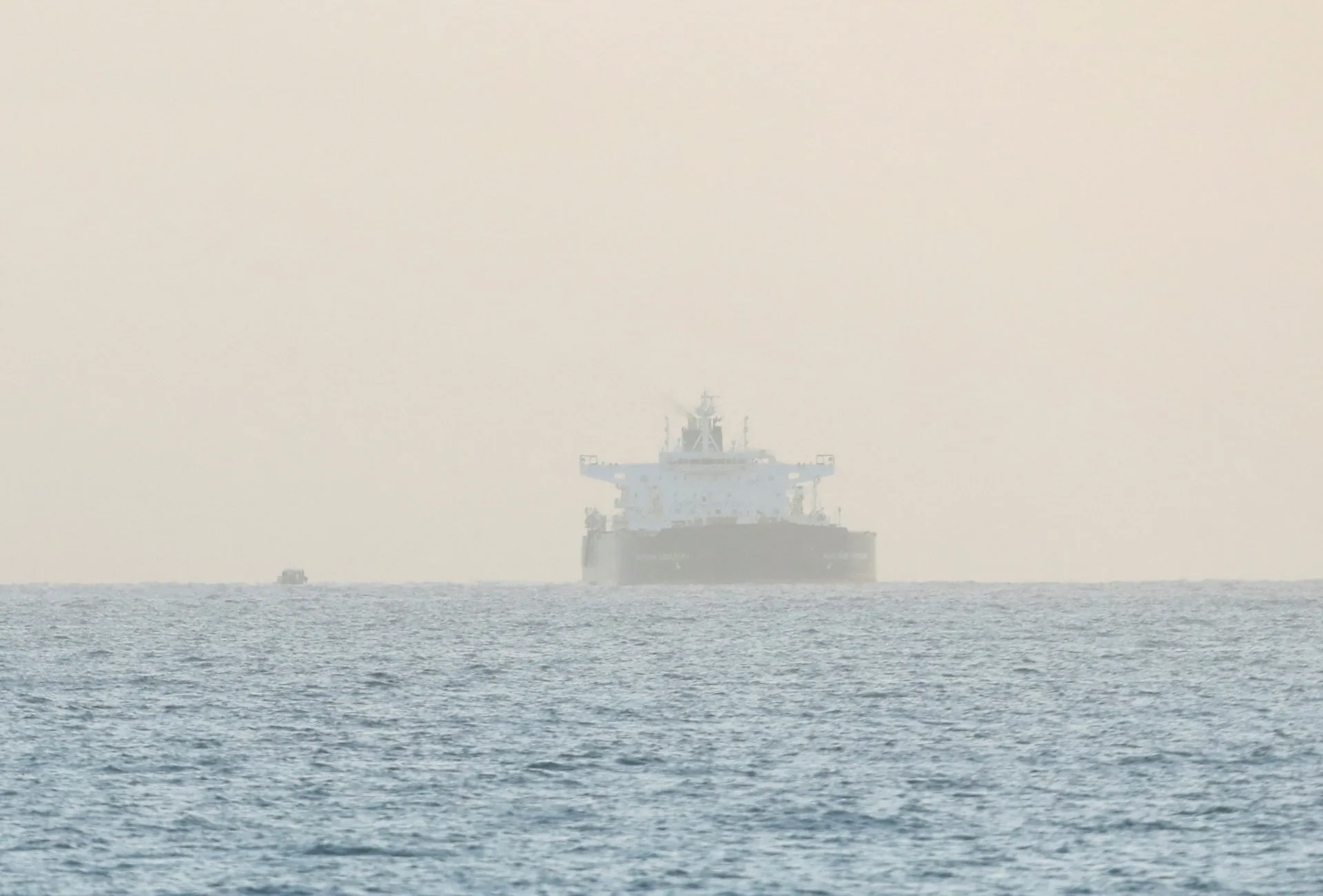
Russian “shadow vessels” are using false flags to skirt sanctions imposed on Moscow over its war in Ukraine, according to a new report.

A total of 113 Russian vessels have flown a false flag in the first nine months of this year, transporting some 11 million tonnes of oil valued at 4.7 billion euros ($5.4bn), according to the report published on Thursday by the Centre for Research on Energy and Clean Air (CREA), a Helsinki-based think tank.

Recommended Stories

list of 4 itemsend of list

“The number of Russian ʻshadowʼ tankers sailing under false flags is now increasing at an alarming rate,” said report co-author Luke Wickenden.

“False-flagged vessels carried 1.4 billion euros ($1.6bn) worth of Russian crude oil and oil products through the Danish Straits in September alone.”

Russia’s clandestine shadow fleet transports sanctioned commodities, especially oil, under non-Russian flags to evade scrutiny.

Every vessel sailing on the open seas is required to fly a flag that provides it with legal jurisdiction for its operations in international waters.

The United Nations Convention on the Law of the Sea allows countries to grant their nationality to ships and fly their flag.

Some countries provide open registries that allow foreign-owned or controlled vessels to use their flag, a practice favoured by some shippers due to lower regulatory burdens and registration costs.

In its report, CREA said that 96 sanctioned vessels had flown a false flag at least once this year as of the end of September.

A total of 85 vessels registered at least two flag changes six months after being sanctioned by the European Union, the United States Department of the Treasury’s Office of Foreign Assets Control (OFAC) or the United Kingdom, according to the think tank.

Six flag registries that had not flagged a Russian ship before Moscow’s full-scale invasion of Ukraine in February 2022 had at least 10 such vessels each in their fleet in September 2025, according to CREA, for a total of 162 shadow vessels.

“In addition to the risks of false flagging, we also see that ʻshadowʼ vessel operators are taking advantage of capacity limitations of economically weak nations to exploit their flags and existing regulations to gain passage rights to deliver blood oil,” said co-author Vaibhav Raghunandan, calling on the EU and the UK to reform their flagging regulations and practices.

CREA said it based its report on vessel ownership and flag registry records obtained from maritime safety platform Equasis.

It said it cross-referenced the data with the IMO Global Integrated Shipping Information System (GSIS), a global shipping industry database.

‘More evasive techniques’

Rachel Ziemba, adjunct senior fellow at the Washington-based Center for a New American Security, said the CREA’s findings aligned with previous reports on Russia’s shadow fleet.

Ziemba said Moscow had resorted to “more evasive techniques” on the back of increased pressure from the EU, as well as moves by China to block so-called “zombie vessels”, which use the registration numbers of retired vessels.

While the US and the EU have continued to roll out new sanctions on Russian oil, “there is an open question about enforcement”, Ziemba said.

With sanctions enforcement becoming more difficult due to the growing illicit trade, countries would need to target vessels, intermediaries and buyers to significantly reduce Russia’s oil sales, she said.

“But that comes with costs,” Ziemba said, suggesting that China, a major buyer of Russian oil, could retaliate against countries that tightened sanctions.

“Plus, actual enforcement might mean more quasi-military stoppages of vessels to check papers, something that these countries might be wary of doing,” she added.

Source link

Pushing an end to the Russia-Ukraine war, Trump looks to his Gaza ceasefire playbook

President Trump’s efforts to broker an end to the Russia-Ukraine war closely mirrors the tactics he used to end two years of fighting between Israel and Hamas: bold terms that favor one side, deadlines for the combatants and vague outlines for what comes next. The details — enforcing the terms, guaranteeing security, who pays for rebuilding — matter less.

“You know what the deadline is to me? When it’s over.” Trump told reporters aboard Air Force One Tuesday.

The formula has worked so far in the tense Middle East, though its long-term viability remains in question. Trump got his moment to claim credit for “peace” in the region from the podium of the Israeli parliament. Even there, he made clear that next on his priority list was resolving the largest armed conflict in Europe since World War II.

“Maybe we set out like a 20-point peace proposal, just like we did in Gaza,” U.S. special envoy Steve Witkoff told Yuri Ushakov, Russian President Vladimir Putin’s foreign policy adviser in a phone call the day after Trump’s speech, on Oct. 14. A recording of that call leaked to Bloomberg News.

They did just that, issuing a 28-point plan heavily tilted toward Russia’s interests that set off alarms in Europe, which had not been consulted. Trump insisted Ukraine had until Nov. 27 — Thanksgiving in the U.S. — to accept it.

But by Tuesday, Trump had eased off the hard deadline. It seemed clear, even to Trump, that the Israel-Gaza model doesn’t fully apply in Russia and Ukraine as long as Putin refuses to be flattered, pushed or otherwise moved to take the first step of a ceasefire, as Israel and Hamas consented for different reasons on Oct. 9. Making the point, Putin launched waves of bombings on Ukraine Tuesday and Wednesday even as American negotiators renewed Trump’s push to end the war.

“I thought (a Russia-Ukraine deal) would have been an easier one, but I think we’re making progress,” Trump said during the annual White House turkey pardon to mark the Thanksgiving holiday. Hours later, he told reporters that the 28-point plan actually “was not a plan, just a concept.”

The president’s goal may not be a formal, long-lasting peace treaty, one expert said.

“Trump’s approach emphasizes the proclamation of a ceasefire, not its observance,” Mariia Zolkina, a political analyst at the Kyiv-based Ilko Kucheriv Democratic Initiatives Foundation, wrote on Liga.net, a Ukrainian news outlet, adding: “Donald Trump is not interested in whether the ceasefire will be sustainable.”

Similarities to the tactics and style used in the Israel-Gaza talks

Fresh off the Gaza deal and coveting the Nobel Peace Prize, Trump named his next priority before he’d even left the Israeli Knesset.

“If you don’t mind, Steve, let’s focus on Russia first, All right?” Trump said, turning to Witkoff.

Where the Gaza ceasefire agreement had 20 points, the Russia-Ukraine proposal would start with 28 items and include more detail on who would pay for reconstruction. They envision “peace” boards headed by the president to lead and administer the aftermath. Both lack detail on incentives for complying and enforcement. And both depend on a ceasefire.

Fabian Zuleeg, chief executive of the Brussels-based European Policy Centre think tank, said the proposals for Gaza and Ukraine show a kind of “naivete by believing that by intervening at that level, by imposing your will on something like this, that you will reach some form of long-term conclusion.”

He said both proposals reflect Trump’s political and personal self-interest.

“In the end, the focus is solely on what Trump thinks he will get out of this in terms of reputation and money,” Zuleeg said.

Each Trump administration plan to end the wars heavily favor one side.

The Trump plan for Gaza leans to Israeli terms. It makes disarming Hamas a central condition for any progress in rebuilding the devastated territory. It also lays out no strict timetable for a full Israeli troop withdrawal, making it conditional on deployment of an international security force.

For Russia and Ukraine, Witkoff looked to open peace plan talks with terms skewing toward Russia. He quietly hosted Kirill Dmitriev, a close ally of Putin’s, for talks in south Florida to help launch the plan that opened talks in Geneva, according to a senior administration official and a U.S. official familiar with the matter who were not authorized to comment publicly and spoke on the condition of anonymity. The White House insists that the plan was U.S.-authored with input from both the Ukrainians and Russians.

But that’s where the similarities end. The differences are buy-in — and Putin

The draft that was formally presented to Ukrainian President Volodymyr Zelensky decidedly favored the Russians, with no European input. In contrast, the Gaza ceasefire talks got buy-in from Egypt, Qatari, Jordanian, Saudi and other regional powers.

The 28-point Russia-Ukraine plan called for Ukraine to give up land in the industrial Donbas region that the Russians currently don’t control and dramatically shrink the size of its military. It also effectively gave Russia oversight of both NATO and EU expansion. The draft has narrowed by a few points since it was first presented, and Trump is sending his envoys on a bit of shuttle diplomacy to “sell it,” as he said. He said Witkoff will visit Moscow next week — perhaps joined by his son-in-law, Jared Kushner, who was also involved in the Gaza plan. Army Secretary Dan Driscoll will meet with the Ukranians.

European leaders worried that Trump is leaving them out of high-level discussions and vulnerable to Russian aggression.

“He appears perfectly ready to sacrifice Ukraine’s security and Europe’s in the process,” Hannah Neumann, a German member of the European Parliament, said of Trump on Tuesday.

Israeli Prime Minister Benjamin Netanyahu resisted Trump’s pressure to agree to a ceasefire, for a time. But Putin refuses to concede anything on Ukraine.

He’s appeared to be considering the matter, notably when Trump rolled out a red carpet for the Russian leader at a summer summit in Alaska — an old front line of the Cold War. Trump left without an agreement from Putin to end the bloodshed. The Russian leader walked off with long-sought recognition on the world stage.

To the horror of Ukraine and the vexation of Trump, Putin has stood firm.

As the envoys flew home from Geneva last week without any agreement, the White House scrambled to explain. One U.S. official argued that the 28-page plan, which calls on Ukraine to cede the Donbas region and bar Ukraine from joining NATO, represents considerable concessions from Putin because he would be agreeing to give up on his claim, once and for all, that all of Ukraine should be part of Russia.

Putin, the official noted, has long grumbled that the West doesn’t respect Russia’s position in the global world order. The official added that the Trump White House in its approach is not affirming Putin’s position but trying to reflect the Russian perspective is given its due in the emerging peace plan.

It’s not for the administration to judge Putin’s positions, the official said, but it does have “to understand them if we want to get to a deal.”

Kellman, McNeil and Madhani write for the Associated Press. McNeil reported from Brussels and Madhani from Washington. AP writer Lee Keath in Cairo contributed to this report.

Source link