England

Manchester City players to reimburse fans after ’embarrassing’ loss

The trip was long — about 1,100 miles from Manchester, England, to Bodø, Norway.

The temperatures were freezing — around 28 degrees, with the wind chill around 10 degrees.

The results were not ideal — at least not for the 374 Manchester City fans who traveled to the fishing town north of the Arctic Circle only to see their team suffer one of the biggest upsets in Champions League history.

None of this was lost on Manchester City’s team captains after their club’s shocking 3-1 loss to Bodø/Glimt. In a joint statement the following day, the four players — Erling Haaland, Bernardo Silva, Ruben Dias and Rodri — announced they would reimburse every Machester City fan who bought a ticket for the game.

“Our supporters mean everything to us,” the statement read. “We know the sacrifice that our fans make when they travel across the world to support us home and away and we will never take it for granted. They are the best fans in the world.

“We also recognize that it was a lot of traveling for the fans who supported us in the freezing cold throughout a difficult evening for us on the pitch. Covering the cost of these tickets for the fans who traveled to Bodø is the least we can do.”

According to the BBC, away tickets to the game cost around $33.75 in U.S. dollars, which would make the total amount to be handed out by the thoughtful and embarrassed group of Manchester City team leaders close to $13,000.

One of England’s most successful soccer teams, Manchester City has spent more than $500 million on its superstar roster over the last year. But for at least one day, it was no match for a club playing in its first Champions League.

Bodø/Glimt took a 3-0 lead on two first-half goals by Kasper Høgh and one in the 58th minute by Jens Petter Hauge. Rayan Cherki scored Manchester City’s only goal in the 60th minute.

“It’s embarrassing,” City’s Norwegian striker Haaland said after the loss, which came three days after a 2-0 defeat to Premier League rival Manchester United.

The Associated Press contributed to this report.

Source link

Strict liquid rules FINALLY scrapped at major UK airport after £1billion upgrade

LONDON Heathrow has announced that travellers will no longer have to take certain items out of their bags at all terminals.

Brits can now breeze through the UK’s busiest airport without taking liquids and electronics out of their bags at security.

The rules have changed for those heading out of London HeathrowCredit: Alamy
Travelling out of London Heathrow will no longer have to remove liquids or electronicsCredit: Alamy

London Heathrow is now the largest airport in the world to fully roll out next-generation CT security scanners.

Thanks to a £1billion upgrade, passenger security lanes across all four of Heathrow’s terminals have been replaced.

The updated technology means that passengers will no longer have to take their 100ml liquids or electronics from their hand luggage before heading through security.

Travellers will still have to adhere to the 100ml restriction of liquids in their hand luggage.

GO SEA IT

£9.50 holiday spot with shipwrecks, seals offshore & horseshoe-shaped waterfalls


COAST IT

Fascinating UK holiday spot with 2 coasts, secret seaside pools & hidden beaches

The new technology will save the use of 16 million plastic bags per year.

You might still need to remove some items though like your coat or belts with a buckle before walking through the metal detector. 

Heathrow CEO Thomas Woldbye said: “Every Heathrow passenger can now leave their liquids and laptops in their bags at security as we become the largest airport in the world to roll out the latest security scanning technology.

“That means less time preparing for security and more time enjoying their journey – and millions fewer single-use plastic bags. This billion pound investment means our customers can be confident they will continue to have a great experience at Heathrow.”

London Heathrow is the UK’s busiest airport, and one of the busiest in Europe handling between 83-84 million passengers each year.

The new scanners are predicted to save time for those heading through security.

Although Which? said that the “the sensitivity of the new scanners means that many people find that their bags must be searched by hand after passing through the scanner.”

London Heathrow isn’t the first airport to roll out these new scanners.

These new scanners will save the use of 16 million plastic bagsCredit: Alamy

Other airports across the country stopped the need for liquid bags and taking electronics out of bags.

As of late 2025, these airports are; Birmingham, Edinburgh, London City, London Luton, Newcastle, Bristol, Leeds Bradford, Southend, Teesside.

London Gatwick upgraded 19 of its security lanes at the end of March 2025, and said that more than 95 per cent of passengers were already getting through security in under five minutes.

Some airports have scrapped the 100ml liquid rule altogether – a rule which has been in place since 2006.

In July 2025, Birmingham Airport and Edinburgh Airport confirmed passengers can take up to two litres of liquids in their hand luggage.

For more on London Heathrow, here’s an update on its £1.3billion upgrade plans including better terminals, fewer delays and faster baggage.

Plus, here’s everything you need to know before you travel in 2026.

London Heathrow has installed new £1bn scanners at security across all terminalsCredit: Alamy

Source link

The Hundred: Welsh Fire sign former England international Chris Woakes

Welsh Fire have signed former England international Chris Woakes for the 2026 season of The Hundred.

The 36-year-old is a one-day and T20 World Cup winner described by Welsh Fire as “one of the most respected all-rounders in world cricket”.

Woakes had signed for the Fire last year but was unable to make an appearance after dislocating his shoulder in his last ever Test match against India in August.

With over 300 international wickets and experience in franchise leagues across the world, Welsh Fire will be hoping the white-ball veteran helps turn the side’s fortunes around after a tough few years.

Woakes said: “I’m absolutely delighted to return to Welsh Fire for this year’s Hundred campaign.

“I was gutted not to be able to take to the field last year in Wales due to the shoulder injury, but I’m really excited to be coming back and to play in front of Welsh Fire fans.”

Despite his vast experience across white-ball competitions, Woakes has only played three games in The Hundred – for Birmingham Phoenix in 2023.

Welsh Fire men’s head coach Michael Hussey said: “Chris is a world-class cricketer and a fantastic addition to our group.

“His experience, professionalism and ability to influence games with both bat and ball will be invaluable for us, both on and off the field.”

Woakes follows Phil Salt, Rachin Ravindra and Marco Jansen in becoming Welsh Fire’s fourth and final direct signing.

An auction will take place in March where the franchises will bid for players to determine their final squads for the 2026 edition of the competition.

Source link

Jamie George: Former England captain to retire at end of 2026-27

Former England captain Jamie George is to retire at the end of 2027 after agreeing a one-year contract extension with Saracens.

George is to complete the 2026-27 season for the Prem club before retiring later that year to move into a new career in the “business world”, a club statement said.

The 35-year-old has been capped 105 times by England and captained his country during 2024 before acting as vice-captain to Maro Itoje.

The hooker has also been selected for the British and Irish Lions on three tours and made more than 300 appearances for Saracens, having spent his whole career at the London club.

“I have always been very open and honest and I wanted to continue to do that with regards to my retirement,” George said.

“I’m sure it seems early to be announcing this with another season to go, but I want to make sure I soak up every moment of my final season – I am more motivated than ever to finish my career at Saracens in a successful way.”

Source link

Harry Brook: England white-ball captain on being punched by bouncer in New Zealand

Brook is in Colombo leading England in their white-ball series against Sri Lanka, which begins with the first one-day international on Thursday.

Speaking for the first time since the New Zealand incident was made public, the Yorkshire batter said:

  • he was not with any other England players when he was “clocked” by the nightclub bouncer

  • he reported the incident to England management during the third one-day international

  • he thought there was a possibility he would be sacked, but did not consider resigning

  • he has apologised to his team-mates and acknowledged he has “work to do” to regain their trust

  • there is now a midnight curfew in place for England players and staff, but rejected allegations of a drinking culture

  • Test captain Ben Stokes “wasn’t best pleased” when he was told

Brook was placed in charge of England’s white-ball teams last summer – the tour of New Zealand was his first overseas as captain.

Though he said he did not want to “go into any details” of the Wellington incident, he said it began with some players “going out for food”.

“There was no intention of going out, no intention of putting ourselves in a tricky situation,” he said.

“I took it upon myself to go out for a few more and I was on my own there. I shouldn’t have been there.

“I was trying to get into a club and the bouncer just clocked me, unfortunately. I wouldn’t say I was absolutely leathered. I’d had one too many drinks.”

Brook did not confirm what time he returned to the England hotel, but said it was “late enough”. The following day he was out for six as England slumped to 44-5 in a game they eventually lost by two wickets.

Midway through the game in Wellington, he reported the incident to England management. He was subsequently fined around £30,000 and given the final warning, with the disciplinary proceedings concluded before the Ashes tour.

Askes if he expected to be sacked, Brook said: “It was definitely playing through my mind.”

On resigning, he added: “No, it never came into my mind. I left that decision to the hierarchy. If they’d have sacked me from being captain, then I’d have been perfectly fine with it as long as I was still playing cricket for England.”

Source link

Rock up to London: discovering stones and fossils from around the world on an urban geology tour | England holidays

In the heart of London’s Square Mile, between the windows of a tapas restaurant, a 150m-year-old ammonite stares mutely at passersby. The fossil is embedded in a limestone wall on Plantation Lane, sitting alongside the remnants of ancient nautiloids and squid-like belemnites. It’s a mineralised aquarium hiding in plain sight, a snapshot of deep time that few even glance at, a transtemporal space where patatas bravas meet prehistoric cephalopods.

How often do you give thought to the stones that make up our towns and cities? To the building blocks, paving slabs and machine-cut masonry that backdrop our lives? If your name’s Dr Ruth Siddall, the answer to that question would be yesterday, today and every day for the foreseeable. Her passion is urban geology, and it turns out that the architecture of central London – in common with many places – is a largely unwitting showcase of Earth science through the ages.

Ruth Siddall admires a wall made from 2bn-year-old dolerite from Zimbabwe in Euston, London. Photograph: Julie Hill

“This is York stone,” she says, pointing at the slabs beneath our feet as we wander the pavement of Eastcheap. An e-scooter swishes past. “It’s a fine-grained sandstone, around 310m years old, quarried in the Peak District. It was once a prehistoric riverbed – you can still see the ripples in the surface – although to picture the world back then you need to imagine Sheffield looking like the Brahmaputra [river, which spans China, India and Bangladesh].”

I’ve joined Ruth, a distinguished geologist and very affable company, on one of the walking tours she offers around different parts of the capital. Her own enthusiasm for street-level geology kickstarted in Athens in the early 1990s where, post-PhD, she was tasked with cataloguing a collection of rocks from Greek ruins. “It was essentially a big pile of rubble,” she smiles, “but it was an absolutely fascinating project. It got me hooked.”

In the decades since – and drawing inspiration from her former colleague Eric Robinson, a pioneer of urban geology – she has seen her adopted home of London in a new light. For Ruth, the city’s walkways, shop facades and statue plinths aren’t merely civic structures. They have epic stories to tell, not only in terms of their social history but their material origins, too. “London is huge, but unlike some cities it has no local building stones of its own,” she says. “It’s basically in a basin of clay, so all the stones you see around us have had to come from elsewhere.”

A column of anorthosite on Great Tower Street in the City. Photograph: Ben Lerwill

It brings fresh meaning to the idea of a rock biography. Around 10 years ago, in partnership with a fellow geologist, Dave Wallis, Ruth helped to establish London Pavement Geology, a website and app that gives a free comprehensive list of sites of geological interest around the capital, and increasingly in other UK towns and cities too (my wishlist is currently topped by the lobe-finned fish suspended in Edinburgh’s Caithness flagstones). Her guided walks, offered through the longstanding tour company London Walks (search for “geology”), will this year run on a roughly monthly basis, starting in spring.

Over two hours, we come across sedimentary, igneous and metamorphic rocks from places as disparate as Australia, Brazil and China, each stone type having been selected for its aesthetic value by the architects of the day. Outside a travel agency, Ruth identifies serpentinite, a Cretaceous stone from the Italian Alps. A pillar outside a pub turns out to be made of smooth 290m-year-old larvikite from Norway (magma that cooled kilometres beneath the surface of the planet, and, conveniently, easy to wipe down after a heavy night). And we linger over the Monument column, its Portland stone base crammed with Jurassic oyster shells and pitted with prehistoric shrimp burrows.

It’s a time-travelling, mind-boggling tour. We attract looks – it transpires that if you peer at something usually considered unremarkable, people stare at you – but frankly, when you’re hurdling geological epochs at every corner, who gives a schist? The Monument itself, of course, commemorates the Great Fire of London, which more than any other event accelerated the use of stone architecture in the capital. The Romans were the first to import stone building blocks here, but it wasn’t until the restructuring of London began in the late 1660s that natural, hard-wearing materials became more commonplace.

Ruth Siddall points out an ammonite on Plantation Lane. Photograph: Ben Lerwill

There’s nothing commonplace, however, about many of the stones we stop at. Near St Paul’s Cathedral – the steps of which hold 30cm-long fossilised orthocones (“They looked a bit like swimming carrots,” says Ruth) – the limestone exterior of a wine bar displays an even rarer find: a small vertebrate bone from 150m years ago. “Possibly a pterosaur,” she explains, “but we might never know.”

Best of all, perhaps, is the co-working space we pass on Houndsditch, its exterior constructed of gneiss from a meteorite impact crater in South Africa. About 6,000 miles from its place of origin, the stone’s surface is still patterned with crack-like veins of black impact glass, which also contain traces of the meteorite’s extraterrestrial minerals. Oh, and it crashed to earth a mere 2bn years ago. Now there’s something to mull over when January feels like it’s going slowly.

The walk was provided by London Pavement Geology. Ruth leads guided walks with London Walks, £20 for adults on a group tour, walks.com

Source link

Jude Bellingham: England midfielder responds to partying claims

Jude Bellingham has dismissed reports about his lifestyle off the pitch as “outside noise”, adding his celebration after scoring in Real Madrid’s Champions League win over Monaco was intended as “a bit of a joke back to the fans”.

Bellingham scored Real Madrid’s final goal – and his first of 2026 – in a comfortable 6-1 Champions League victory and marked the occasion by performing a drinking gesture.

The moment quickly drew attention online.

The celebration came after well-known Spanish YouTuber AuronPlay, who has over 29 million subscribers, made viral comments about Bellingham before Real Madrid faced Levante at the weekend.

He claimed Belliingham “loves alcohol too much” and has visited “every nightclub in Spain”, suggesting this is affecting the midfielder’s form.

Bellingham was subsequently among the players singled out for boos and whistles from the stands during the 2-0 win against Levante.

“It feels like anyone now can get a camera, say what they want and the whole world just believes them with no evidence,” Bellingham told TNT Sports after Tuesday’s Champions League fixture.

Source link

Abandoned UK airport reveals plans to restart passenger flights

AN abandoned airport in the UK has revealed the newest plans amid years of talks of reopening.

Manston Airport, in Kent, once offered flights from the UK to Europe, including Italy, Portugal and Amsterdam.
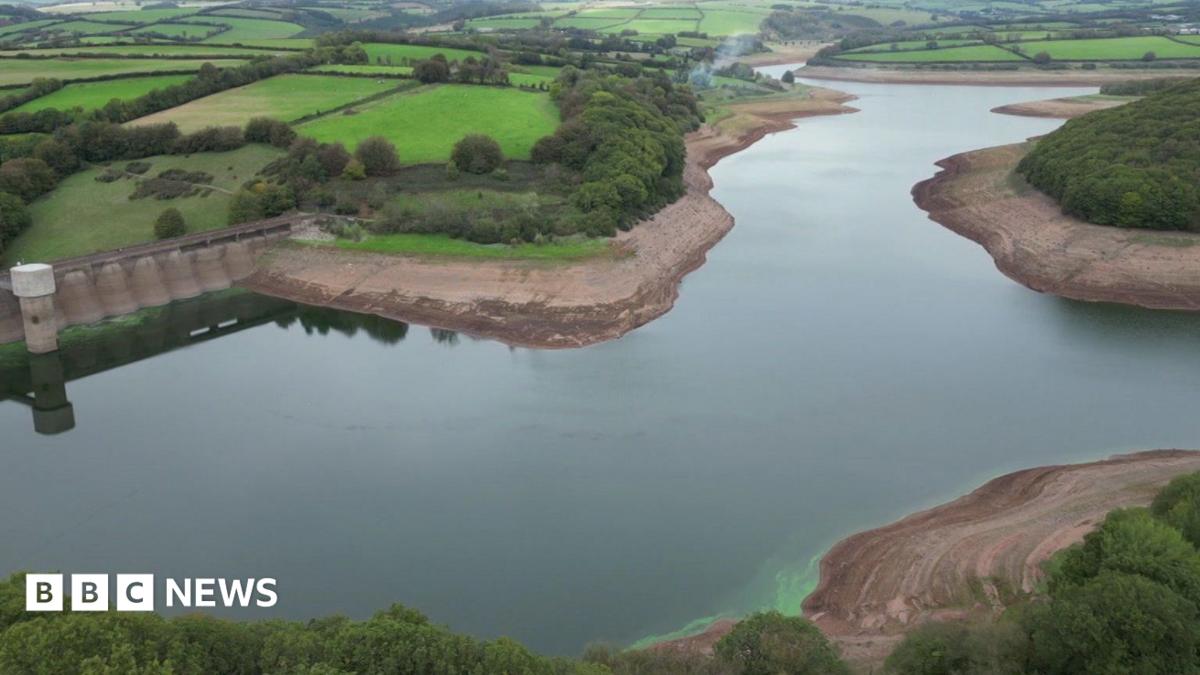
Manston Airport has revealed the latest plans to restart passenger flightsCredit: Times Media Ltd
Images have revealed what the new airport could look likeCredit: RSP

However, these ceased in 2014 when KLM pulled out of the airport.

Since then, there have been plans to restart passenger flights to Europe once again.

In a recent interview, Tony Freudmann – the public face of the site’s owners, RiverOak Strategic Partners – explained how this might be longer than we think.

He told Kent Online: “We need, by the time we open, to have enough advance commitment from cargo operators to see that it is going to work.

TAKING OFF

Inside abandoned airport being turned into £16bn CITY after shutting a year ago


FIGHT OR FLIGHT

Abandoned UK airport set to re-open in 2027 is hit by £193million blow

“At that point, if we get the right approach from passenger carriers, wanting us to build a passenger terminal and base some aircraft here, we’ll go with that.”

The current plans to reopen as a cargo airport are scheduled for 2029.

While no airlines have expressed interest, Mr Freudmann said airlines like Jet2 and TUI prefer “regional airports like this one”.

Not only that, but he addressed the issue of “low cost carriers struggling for peak time slots” at other major airports.

And with the boom in package holidays once again, he said a new passenger terminal could be put forward.

The current passenger terminal would, however, need to be knocked down and replaced.

The last passenger flight at Manston Airport was 2014Credit: Alamy
It was even used in 2020 during Operation Fennel to cope with post-Brexit trafficCredit: AFP

Local Conservative MP Sir Roger Gale said it “will happen” but added it was unlikely to be until five years after reopening the airport.

This means we can’t expect commercial flights until 2034, at the earliest.

Until then, the airport is still on track to reopen initially for cargo flights.

After a four-year legal battle, it was in May 2024 that it was given the go-ahead, with plans for a £650million overhaul.

However, this has since jumped by £100million to £750million, with plans to start works early this year also delayed.

Mr Freudmann explained: “The first construction work of parking stands, taxiways and new buildings will be at the end of those 18 months.

“So if we start, if we say towards the end of next year, 2027, we’d have a view to opening in 2029.”

Here’s another UK airport that has been left abandoned – but wants to reopen.

And here’s everything to know about the reopening of Doncaster Sheffield Airport which closed in 2022.

The airport will initially open as a cargo airportCredit: Wikipedia

Source link

The huge £200million pier upgrade set to transform seafront city with hotel, restaurants and even a helipad

A WATERFRONT development has been approved and is set to transform one of Southampton’s piers.

Town Quay in Southampton, which operates as a marina, could soon look completely different with a huge hotel complex with a helipad.

The Town Quay in Southampton is a marina and operates as part of the Southampton portCredit: Alamy
The waterfront could soon look very different with a hotel complexCredit: Alamy

Town Quay is a historic waterside area and part of the busy Port of Southampton, known for its ferry links to the Isle of Wight.

Last March, Southampton Council approved a planning application by the Nicolas James Group, who want to completely transform the area.

The plans are for a huge waterfront development that could see a hotel with a bar, conference facilities, a spa and even a with a helipad.

There could also be three 25-storey apartment blocks as well as multiple restaurants and food halls.

FALL FOR IT

Why Sun readers love Wales – their favourite waterfalls & TV-famous castles


COAST IT

Fascinating UK holiday spot with 2 coasts, secret seaside pools & hidden beaches

The plans also include a new Red Jet passenger terminal and larger marina.

The development is estimated to cost £200million.

Just opposite Town Quay is Southampton Royal Pier, which opened in the 1830s of Victorian England and cost £25,000 to build.

The 900-foot pier opened in July 1833, by the Duchess of Kent and Princess (later Queen) Victoria.

It was in operation until its closure in late 1979.

The Royal Palace building is now a popular Indian restaurant.

Opposite is Southampton’s Royal Pier which has been closed since 1979Credit: Alamy

Other main attractions in Southampton include the Solent Sky Museum, the Unity Brewing Co., and the Tudor House – all of which one travel writer visited during a city break.

Piers are a huge part of seaside holidays for most and earlier this year, Clacton-on-Sea was voted one of the country’s ‘worst seaside towns‘.

But it’s pleasure pier up came up trumps, winning big in the ‘Best of the Best Amusement & Water Parks’ category.

Clacton Pier came 11th place in the Tripadvisor Travellers‘ Choice Awards having been given top reviews by visitors – even beating theme parks in the process.

It’s the biggest pier of its kind in Europe at 360 metres long – and has its own amusement park.

On it are 16 rides including Looping Star rollercoaster, White Water Log Flume, a big wheel and Helter Skelter

There’s even a go-karting track, as well as a bowling alley, darts and shuffleboard, adventure golf, video arcade, and a soft play centre

Throughout the summer, the pier is also having free firework displays.

For more on piers this northern UK town called a ‘coastal gem’ with Victorian pier, no arcades and 141-year-old funicular railway.

And the English beach town that inspired the Beatles has world’s oldest seaside pier – which has reopened after £10m revamp.

Plans reveal a huge transformation with a hotel complex and larger marinaCredit: Nicholas james group

Source link

The huge new £9.31billion mega airport set to be one of the world’s biggest with 110million passengers

WORK has started on an enormous airport which once completed will be the biggest in Africa.

Bishoftu International Airport (BIA) will welcome as many as 110million passengers when it’s fully operational.

A new mega airport is being built just outside of Ethiopia’s capital – Addis AbabaCredit: X-Universe
The first phase is set to be complete by 2030 and it will welcome 60million passengersCredit: X-Universe

Ethiopian Airlines Group has started work on Bishoftu International Airport which is around 25 miles southeast of Addis Ababa, the capital of Ethiopia.

The estimated cost is $12.5billion dollars or £9.31billion.

When the first phase is completed – which is set to be in 2030 – the airport will be able to handle 60million passengers.

At this time it will feature two parallel runways and a 660,000-square-meter terminal.

GRUBS UP

Best pubs, fish and chip shops and cafes in Sussex – by Sun readers & locals


FALL FOR IT

Why Sun readers love Wales – their favourite waterfalls & TV-famous castles

Later stages will see the airport expand to have four runways and parking for 270 aircraft.

Once fully built it will be able to accommodate 110million travellers – making it the biggest in Africa and one of the world’s largest airports.

It’s being designed by Zaha Hadid Architects which have done other projects like the London Aquatics Centre in Stratford, known for its wave-like roof.

Bishoftu International Airport will feature a large forecourt with gardens, water features and pedestrian pathways.

Outside will be covered areas filled with shops, coffee stops and restaurants.

Inside will be light thanks to its ‘daylight filtering ceiling’ and open-plan departure lounges.

The concourse will be open with lots of plant walls and greeneryCredit: Unknown

There will be escalators to each level, as well as lots of greenery and plant walls.

Comfort is key as Ethiopian Airlines has estimated that up to 80 per cent of its passengers will move between destinations without leaving the airport. 

Due to this, alongside the airport will be a new airside hotel.

It will have 350 rooms, dining and entertainment zones, and outdoor gardens and courtyards – and will make the transition to the airport easy for passengers.

Cristiano Ceccato de Sabata, director of aviation at Zaha Hadid Architects, said: ‘Bishoftu International Airport is a visionary project for Ethiopia and Africa as a whole. Airports bring people together and bridge national divides.

“ZHA is honored to be part its development—connecting every region of the continent as Africa’s global gateway.”

While yet to be confirmed, it is likely to have more long-haul flights – current routes to Ethiopia operating from London Heathrow.

Direct flights to Addis Ababa Bole International Airport take seven hours and 45 minutes and a one-way ticket in January starts from £441.

One-way flights from London Gatwick in January start from £338.

The world’s biggest airport is set to open by 2030 – with 185million passengers a year…

King Salman International Airport in Riyadh, Saudi Arabia, is set to surpass all other airports in size, including the current biggest airport in the world which is also in the country…

The 22sqm airport will feature six runways – up from two – parallel to each other and will be built around the existing King Khalid International Airport.

It will approximately be the same size as Manhattan in New York – or twice the size of the city of Bath, in the UK.

And now the airport has moved into its construction phase.

The airport will be designed by Foster + Partners, a UK firm which is behind London‘s famous Gherkin.

Inside, travellers will be able to explore 4.6sqm of shops.

A lot of features in the airport are set to include high tech, such as climate-controlled lighted.

Travellers will have plenty of seating, indoor and outdoor spaces with greenery and vast glass windows, ideal for a bit of plane spotting.

The airport was announced back in 2022 and is part of Crown Prince Mohammed bin Salman‘s Saudi Vision 2030 – which is set to make Riyadh into a major hub for transport, trade and tourism.

It will eventually accommodate up to 120million passengers each year, which is then expected to rise to 185million by 2050.

Plus, check out the airport that was named the best in the UK that beats London Heathrow and City by miles.

And check out the mega £27billion airport set to open in 2032 as ‘Heathrow and Dubai rival’ reveals new name.

The huge new mega airport that will be one of the worlds biggest with 110million passengers, ,Credit: X-Universe

Source link

Shaun Wane: England coach steps down nine months before Rugby League World Cup

Shaun Wane has stepped down from his position as England coach, nine months before the Rugby League World Cup.

Former Wigan coach Wane, who succeeded Wayne Bennett in February 2020, was in charge for a home World Cup in 2022. England were knocked out in the semi-finals, losing to Samoa in golden-point extra time.

England won home series against Tonga and Samoa in the following two years but then lost all three Ashes Tests to Australia on home soil last autumn.

After that series defeat, Wane said there was “no question” that he was the right person to lead his nation into the 2026 World Cup.

England’s opening pool match at the tournament is against Tonga in Perth on 17 October, with games against France and Papua New Guinea to follow.

More to follow.

Source link

Raffi Quirke: England scrum-half announces Sale departure

England scrum-half Raffi Quirke has announced he will leave boyhood club Sale Sharks at the end of the season, having been linked with Newcastle Red Bulls.

The 24-year-old, who has won two caps and memorably scored a try in England’s November 2021 win over South Africa, has been hampered by a string of injuries, with Scotland’s Gus Warr often preferred at club level.

However, Quirke has enjoyed a decent run of form this campaign and was part of England’s squad for the autumn internationals, retaining his place for a recent January get-together despite Leicester’s Jack van Poortvliet and Bristol’s Harry Randall both returning from injury.

“This has been the hardest decision of my life so far because Sale is the club that I grew up supporting and dreaming of playing for,” said Quirke.

“Playing here since I was 15 has been an amazing experience and a privilege that has shaped me as a player and a person and I will be forever grateful to [director of rugby] Alex [Sanderson], the owners, the coaches, the players and the supporters for truly believing in me.

Source link

Ashes: Who might England turn to for 2027 contest against Australia?

The Rews are not the only brothers it is hoped will have big futures.

Rehan Ahmed was the youngest man to play Test cricket for England when he featured in Pakistan in 2022, while his 17-year-old brother Farhan, an off-spinner rather than leggie like Rehan, became the youngest bowler to take a five-wicket haul in first-class cricket in Britain when taking seven for Nottinghamshire against Surrey in 2024.

Rehan was another on this winter’s Lions trip. Many thought he should have been in the full Test squad after a strong season for Leicestershire.

Farhan has played for the Lions this year and will be part of the Under-19 World Cup group.

After Shoaib Bashir’s tour as drinks carrier, England appear back at square one in their search for a frontline spinner.

Having scored five centuries and taken 23 wickets in the 2025 County Championship Division Two, it may be that Rehan’s future is more as an all-rounder.

Lancashire left-arm spinner Tom Hartley, who has not added to his five Test caps since the 2024 tour of India, was with the Lions in Australia, and do not forget Somerset’s Jack Leach.

He was the leading wicket-taker among spinners in the County Championship last season and, aged 34, is still desperate to regain his Test place.

Source link

Stunning island village in England with grand castle and exotic wildlife

Often considered one of the holiest sites in England, this mystical Northumberland island village is home to an ancient castle and you can spot seals from the shore

A secluded island village, cut off from the world twice daily, exists right here within the UK. Nestled off the Northumbrian coast, this island village is often hailed as England’s most sacred site.

Situated 13 miles south of Berwick-on-Tweed and 20 miles north of Alnwick, this enchanting village boasts an ancient priory, a grand castle perched on the brink of the stunning coastline, and a plethora of delightful cafes and pubs. To the joy of visitors, seals can often be spotted from the village shore. However, twice a day, this island village becomes unreachable as the fierce tide engulfs its causeway, severing it from the rest of Northern England’s mainland. This necessitates that those keen to visit must check the safe crossing times to the coastal hamlet.

Words fall short in capturing the allure of the mystical Holy Island, also known as Lindisfarne. As you approach the island village, the awe-inspiring views and dramatic entrance give the sensation of stepping into a hidden world, encapsulating the unique charm of this village.

England’s most sacred site

Boasting a rich history that stretches back to the 6th century AD, Holy Island was a pivotal centre of Celtic Christianity, under the stewardship of Saints Aidan, Cuthbert, Eadfrith, and Eadberht of Lindisfarne. Originally, the island housed a monastery, which fell during the Viking invasions but was later reborn as a priory following the Norman Conquest of England.

Often dubbed the holiest site in Anglo-Saxon England, Lindisfarne was founded by St. Aidan, an Irish monk from Iona, the epicentre of Scottish Christianity. Invited by King Oswald, St. Aidan brought Christianity to Northumbria. In 635, he established Lindisfarne Monastery on Holy Island, becoming its first Abbot and Bishop. The Lindisfarne Gospels, a 7th-century illuminated Latin manuscript created here, now resides in the British Museum. The 12th-century Lindisfarne Priory is situated at the other end, across the causeway, and was seen as the birthplace of Christianity during the Anglo Saxon era.

It also served as the former dwelling of St Oswald. Immersed in breathtaking beauty, this peaceful haven was once the home of the famed St Cuthbert. With its profound historical ties, castle and priory ruins, Lindisfarne remains a sacred site and pilgrimage destination for countless Christians to this day.

Why you should visit

Holy Island is a vibrant community, home to a bustling harbour dotted with shops, hotels and pubs. The island and the mainland offer plenty to discover, with bird watching, fishing, golf, painting and photography being some of the most popular pastimes. Nestled atop a rocky volcanic mound known as Beblowe Craig, the majestic Lindisfarne Castle commands views over the island. Perched precariously on the coastline, the castle was found in 1901 in remarkable condition, leading many to surmise that its military history was largely peaceful. Today, the National Trust oversees the castle, allowing visitors to marvel at its stunning architecture and breathtaking sea vistas, reports Chronicle Live.

In addition to its rich history, the Holy Island of Lindisfarne is also home to an impressive variety of wildlife. Its island status protects tidal mudflats, salt marshes and dunes, which together makeup the Lindisfarne National Nature Reserve. Bird enthusiasts should keep an eye out for wildfowl in autumn and wading birds in winter on the reserve. Pale-bellied brent geese migrating from Svalbard (Spitsbergen) often spend their winters on Holy Island, and grey seals are frequently seen playing in the waters around the island village and sunning themselves on the sands. Visitors to Lindisfarne can drop into one of the island village’s quaint cafes or try one of the numerous pubs and restaurants for a meal.

Source link

Junior Kpoku keen on Sale move and return to England eligibility

“That would be outstanding if we could snag him. He is some kind of an athlete.

“We were just doing some stats on him and he is in the top 10 for dominant carries, dominant tackles, out of all the second rows in the Top 14.

“That is as a 19/20-year-old and just shows the foundation of where he could get to.

“He is an international athlete and someone needs to make him into an international player. We feel like we are good at that.”

Any move for Kpoku is complicated by a contract which commits him to Racing until summer 2027.

But Sale, whose co-owner Simon Orange sold his investment business for a reported £1bn in January 2025, could strike an agreement to buy out the final season of Kpoku’s deal.

“There is still a transfer fee for anyone who wants to negotiate and we are duking it out with the big boys in France like La Rochelle,” said Sanderson.

“Fortunately, transfer fees don’t come into the salary cap so, as long as our owners are feeling generous and we feel he is a good prospect for our group, there is a good chance.”

Kpoku, who was born in London and joined Racing from Exeter in October 2023, is highly rated by England.

He took up an invite to train with the senior squad during last year’s Six Nations, and England’s hierarchy reportedly considered offering, external him one of their enhanced central contracts to ease his path back to the Prem.

Without a senior cap, Kpoku could become eligible for France on residency grounds if he remains in the Top 14, but he would prefer to play for England.

“France is not really what I want to pursue because it’s not my country,” he told BBC Sport in December 2024.

“I want to represent my own country, where I was born and raised.”

With Maro Itoje as captain, Martin, Northampton’s Alex Coles and Leicester’s Ollie Chessum are the leading candidates to partner him in the second row at the World Cup, which begins in Australia in September 2027.

Source link

The Ashes 2025 fifth Test – day five: Snicko controversy strikes England again as Australia’s Jake Weatherald avoids dismissal

England find themselves on the wrong side of another controversial Snicko decision after Jake Weatherald is given not out despite there appearing to be a murmur on the Snicko technology, as the ball passes the bat – with Weatherald on 16 and Australia 33-0, chasing 160 to win the fifth and final Ashes Test in Sydney.

FOLLOW LIVE: The Ashes fifth Test – day five

Available to UK users only.

Source link

Kevin Keegan diagnosed with cancer: Former England player and manager undergoing treatment

Former England striker and manager Kevin Keegan has been diagnosed with cancer.

Keegan had an illustrious playing career which included spells at Liverpool, Hamburg and Newcastle United, while he twice won the European Footballer of the Year award.

He moved into management after ending his playing career and had stints in charge of Newcastle United, Fulham, England and Manchester City.

“Kevin was recently admitted to hospital for further evaluation of ongoing abdominal symptoms,” the 74-year-old’s family said in a statement.

“These investigations have revealed a diagnosis of cancer, for which Kevin will undergo treatment.

“Kevin is grateful to the medical team for their intervention and ongoing care.

“During this difficult time, the family are requesting privacy, and will be making no further comment.”

More to follow.

Source link

Historic UK halls to get £9million makeover to ‘rival Europe’s best indoor markets’

A FAMOUS market in a UK city has started a £9million revamp project.

Grainger Market in Newcastle is being renovated in hopes of rivalling the best of Europe‘s indoor markets, such as Grand Bazaar in Istanbul and Foodhallen in Amsterdam.

Grainger Market in Newcastle is undergoing a £9million refurbCredit: Alamy

Works on the market include creating a pavilion upstairs and adding new flooring, according to the BBC.

There will also be new toilets at the venue as well as seating areas to eventually host gigs and plays.

Hand-painted signs and ceramic tiles with street names on the floor will make navigating around the market easier too.

The project is expected to be completed in the first part of this year.

Read more on travel inspo

CHEAP BREAKS

UK’s best 100 cheap stays – our pick of the top hotels, holiday parks and pubs


HOL YES

I’m a travel editor & mum-of-3… my favourite family holidays from just £3pp a night

The market is known for selling a variety of products from independent businesses.

For example, you can pick up fresh meat or fish, cheese and baked goods.

There are a number of street food options at the market as well such as tapas and pizza.

After eating, have a mooch around some of the shops too, which sell locally crafted clothes, gifts and jewellery.

The market also features the original Marks & Spencer Penny Bazaar stall.

Today it is the last surviving example of a Penny Bazaar, which used to be a fixed-price shop, and has a cherry-red exterior with golden signage from when it first opened in 1895.

One recent visitor of the market said: “If you love food then Grainger Market is a must do.

“We had Korean dumplings and buns, chicken wings, a Cuban sandwich (the Cubanos), a pizza slice, a sausage on a stick and shucked oysters from one of the fishmongers.

“There were other establishments that we did not get to and will certainly be visiting again.”

Another visitor added: “One of the best places in town by far.

“A really cool market, indoors, and in a classic 19th Century environment, a truly beautiful building.”

Work on the market is set to be completed this yearCredit: Newcastle City Council

The market is open from 9am to 5:30pm, Monday to Saturday.

The Grade I listed market opened back in 1835 and was a part of the 19th century Neoclassical redevelopment of the city.

The market was designed by John Dobson and replaced some older markets that had been demolished.

A number of other destinations across the UK will be getting revamps this year too.

In London, an iconic Grade II listed building is set to close for a year as part of multimillion-pound redevelopment.

Plus, a much-mocked UK city is set to be huge this year according to National Geographic.

It will get a new upstairs pavilion tooCredit: Newcastle City Council

Source link

Abi Burton: England back row to chair Women’s Rugby board

England and Trailfinders Women back row Abi Burton has been chosen as chair of a landmark leadership group of PWR players.

Burton, who was part of the Red Roses squad that won the Womens’ Rugby World Cup in September, will lead the Women’s Rugby Board set up by elite players union The Rugby Players Association (RPA).

The 25-year-old’s Rugby World Cup triumph came three years after she had to be placed in a coma to treat a serious immune disease attacking her brain.

“I’m really proud to have been elected chair of the first Women’s Rugby Board,” said Burton.

“It’s an important opportunity to ensure players’ voices are heard, and I’m looking forward to working with the board and the RPA to represent players across the women’s game.”

The new separate women’s board will ensure women’s players are better represented and able to respond to “specific challenges and opportunities they face” say the RPA.

Bristol Bears and Wales full-back Jenny Hesketh has been elected as vice-chair with Emily Tuttosi, who started for Canada against England in last year’s World Cup final, chosen as Exeter Chiefs representative.

The Women’s Rugby Board representatives for the 2025–26 season

Bristol Bears: Jenny Hesketh (vice-chair)

Exeter Chiefs: Emily Tuttosi

Gloucester Hartpury: Sam Monaghan

Harlequins: Lagi Tuima

Leicester Tigers: Grace Deane

Loughborough Lightning: Elis Martin

Sale Sharks: Tysh Harper

Saracens: Ella Wyrwas

Trailfinders Women: Abi Burton (chair)

Source link

Village once ‘most dangerous place in England’ has stunning castle ruins

Village in Northumberland has a rich and complex history of conflict and war, but visitors can still explore its 12th Century castle ruins for free

Nestled on the southern bank of the River Tweed, the quaint village of Northam may seem tranquil now, but it was once a hotbed of conflict in Northumberland.

Situated on the border between England and Scotland, Northam has a complex history marked by centuries of wars. Central to this is its 12th-century castle, which has endured through time and played a crucial role in numerous skirmishes.

Northam Castle was at the forefront of cross-border conflicts for an impressive five centuries and has since been repurposed into a new existence. Amidst the turmoil, it gained recognition as it was depicted in several paintings by the renowned artist JMW Turner.

Moreover, it became the focus of a popular novel penned by Sir Walter Scott, wherein the protagonist journeys to Norham as it was then considered ‘the most dangerous place in England‘. Nowadays, visitors from far and wide flock to see the historic castle ruins and discover its resilient past.

Perched atop a grassy knoll, the castle maintains a commanding presence over the Tweed and continues to radiate grandeur, providing splendid photo opportunities. It’s no surprise that it was the most frequently attacked building by the Scots, believed to have been besieged around 13 times, due to its imposing facade.

Despite the imposing walls being unable to withstand much longer and crumbling in 1513, they were extensively reconstructed during the 16th century before being restored once more. Visitors can explore what’s left of this fascinating heritage without charge, as it remains accessible to the public.

A recent guest raved about their visit in a TripAdvisor review, stating: “This is one of the best ruins we have ever explored. It is a hidden gem, off the tourist track, and after battling the crowds at Lindisfarne in the morning, it was great to have the place to ourselves.”

Another reviewer commented: “It’s free to enter – which may be why I hadn’t visited previously, as I probably thought it was a minor castle. Not a bit of it! It has a fantastic location high above the river, which it guarded.

“It must have been awe-inspiring in its heyday. It’s pretty fantastic now. Lots to wander around and see. Well worth a visit — and we will come back to look round the pretty village next time.”

Nearby, additional historical treasures await discovery, as you can take a pleasant walk to witness the magnificent Duddo Five Stones. A brief ramble will lead you to this 4,000-year-old Bronze Age stone circle site, strategically positioned atop a hill, with stones reaching approximately five to ten feet in height.

Upon experiencing this incredible attraction, one visitor commented: “A beautiful revisit to this stunning stone circle. A lovely atmosphere, worth a visit if you are in the area. It is signposted as you approach; parking is available along the roadside, and then it is a short walk, but on a path cut through the side of a couple of fields. The views are breathtaking, and the tranquillity is fantastic.”

Today, it’s believed that fewer than 600 residents live in Northam, experiencing much less turmoil; rather, it serves as a resting point for many journeying to and from Scotland.

Source link

‘I went to famously beautiful city named best in England – it was a huge disappointment’

I spent the day in one of the most popular cities in the UK, and while it was pretty, it was lacking something else entirely, and I wouldn’t return in a hurry

I was filled with anticipation and excitement as I made my way up North to spend the day in a UK city that is, by all accounts, a blockbuster location.

Yet, as I wandered the winding cobbled streets and explored the walled city that had been so loudly hyped before my visit, I couldn’t help but feel a little disappointed.

The UK is packed with thriving cities that boast fascinating architecture, rich history, iconic landmarks and diverse collections of amenities set against the backdrop of a picture-postcard destination. Some of the most popular cities in the UK to visit, which have long been renowned for their beauty, include Bath, Cambridge, Edinburgh, London, and Oxford.

Another city that often tops this list, attracting thousands of tourists annually, is the historic city of York. The ancient North Yorkshire settlement was named the top place in the UK for quality of life in 2025 in the Good Growth for Cities Index, and was included in a list of the best ten Christmas market cities in the country.

READ MORE: Beautiful seaside town now ‘dying a death’ and ‘depressing’ as 1 in 4 shops lie emptyREAD MORE: Travel fans urged to try packing method that could save up to £200 at airport

Additionally, York was named as one of the happiest places to live in the UK by The Guardian last year, noting its “modesty and unreserved warmth”. It was also previously named the best city in England to visit by Condé Nast Traveller.

So it’s got its plaudits. But I’m not among them. York is one UK city that I won’t be returning to in a hurry, and it wasn’t just because of the tourist crowds.

I visited York for the day during a warm September, eager to discover what all the fuss was about and experience its charm. I had already heard so much about the walled city from friends who had visited that, admittedly, it already had a lot to live up to.

But it was so much smaller than I had imagined. I made my way into the city centre, wandering around as many cobbled paths and high streets as I could, and I was finished before lunch. I even ventured off the beaten path to uncover hidden gems, but found myself struggling, as the bounds of the city came to an abrupt end.

The iconic Shambles Market in the city centre was another slightly disappointing factor. It felt like any other UK market, with some unoriginal gift ideas. The Shambles area itself is popular with Harry Potter enthusiasts, with its cobbled and crooked medieval buildings resembling Diagon Alley.

Eager to transport myself to the wizardry world of magic, I walked along the cobbles lanes, but I was not spellbound. The experience was ruined by throngs of tourists grabbing a selfie and queueing up for one of the Harry Potter-inspired shops. While it was interesting to see, I wasn’t keen on hanging around and fighting my way through the crowds any longer, so I swiftly made my exit.

York is undeniably beautiful, with its Gothic and medieval architecture, yet its city centre lacked the charm I had been promised. While it offers plenty of landmarks, such as the ancient city walls, its stunning Cathedral, York Minster, and Clifford’s Tower, I felt it was missing that vibrant character that I’ve found in other popular UK cities.

In Bath, you’re treated to the bustling sound of performers and live music in the city centre, along with its thriving food scene, while Cambridge offers punting on the River Cam and a city renowned for its university, brimming with shops and eateries. Yet, I found that I didn’t need more than a day to explore York, as beyond its history and timber-framed buildings, there wasn’t much more to uncover in the city.

Do you have a travel story to share? Email webtravel@reachplc.com

Source link