Elections

Judge rejects Trump effort to block California ‘noncitizen’ ballots | US Midterm Elections 2026 News

Trump administration issues more than 100 subpoenas across 13 states as search for alleged noncitizen voters ramps up.

A United States judge has rejected a Department of Justice request to temporarily halt California from counting mail ballots from a list of 20,000 alleged noncitizens just six days before the country’s midterm elections.

US District Judge David Carter’s ruling on Wednesday came as US President Donald Trump expands efforts to search for alleged noncitizen voters, with subpoenas issued in at least 13 states.

Recommended Stories

list of 3 itemsend of list

“Never before in American history has the federal government, on the eve of an election, sought to coerce a state and local government to abandon their own Constitutional elections procedures and bend to the will of the Executive Branch,” Carter wrote on Wednesday.

The judge, a 1998 appointee of Democratic President Bill Clinton, said the Justice Department’s last-minute request to exclude more than 20,000 ballots ran afoul of “longstanding constitutional principles mandating that states have control over their elections”.

The Justice Department swiftly appealed the decision to the Ninth US Circuit Court of Appeals and did not immediately respond to requests for comment by the Reuters news agency.

The Justice Department filed the lawsuit on October 15, a rare intervention in the voting process weeks before Tuesday’s election, when voters will choose which party controls Congress as well as their state and local representatives.

US President Donald Trump attends a campaign rally in the state of Ohio, where incumbent Republicans are fighting to keep key federal and state posts, on October 28, 2026
US President Donald Trump attends a campaign rally in the state of Ohio, where incumbent Republicans are fighting to keep key federal and state posts, on October 28, 2026 [Kevin Lamarque/Reuters]

Escalating efforts from Trump

The decision marks the latest setback in Trump’s effort to expand the federal government’s role in elections ahead of the legislative midterms, as his Republican Party fights to retain control of both houses of Congress.

The Trump administration issued more than 100 subpoenas demanding records on tens of thousands of voters in at least 13 states, both Republican- and Democratic-leaning.

Most of the subpoenas Reuters documented were issued to state and local election officials in the past three months, though some date to the start of the year. Many were previously unreported, revealing a federal effort to identify potential noncitizen voters that is broader than publicly known.

It is illegal for noncitizens to vote in US federal elections. Legal experts say the records could be used to contest close midterm results, despite scant evidence that noncitizen voting is widespread.

Get-out-the-vote effort in Minneapolis, Minnesota on October 28, 2026, six days before the election
Get-out-the-vote effort in Minneapolis, Minnesota on October 28, 2026, six days before the election [Stephen Maturen/Getty Images via AFP]

‘Deeply flawed process’

Also on Wednesday, Democracy Docket, a US media platform that tracks election litigation, reported that the Department of Justice list of alleged noncitizen voters “appears to have been created using a deeply flawed process” that could disenfranchise US citizen voters beyond California.

In a court filing, a government whistleblower revealed that voters were being scrutinised nationwide, not just in California, as part of the federal government’s “Unlawful Voter Initiative” investigation, the group reported. The whistleblower warned that “the current process is knowingly sweeping known US citizens in as potentially ‘unlawful voters’”.

California has said the state’s safeguards against noncitizen voting are robust. It said the Justice Department’s assertions relied on “suspect data” and that complying with its demands would risk disenfranchising eligible voters. Democracy Docket reported that in Los Angeles County, one in four voters on the “noncitizen” list were born in the US.

Source link

Serbians storm TV studio as pro-Vucic media faces reckoning | Elections

Serbians stormed a TV studio and confronted its editor-in-chief after a student-led protest movement swept into power during national elections. A regional public broadcaster also apologised for years of one-sided reporting, raising hopes for a new era in the country’s media.

Source link

What’s next for Brazil’s Flavio Bolsonaro after election defeat? | Elections News

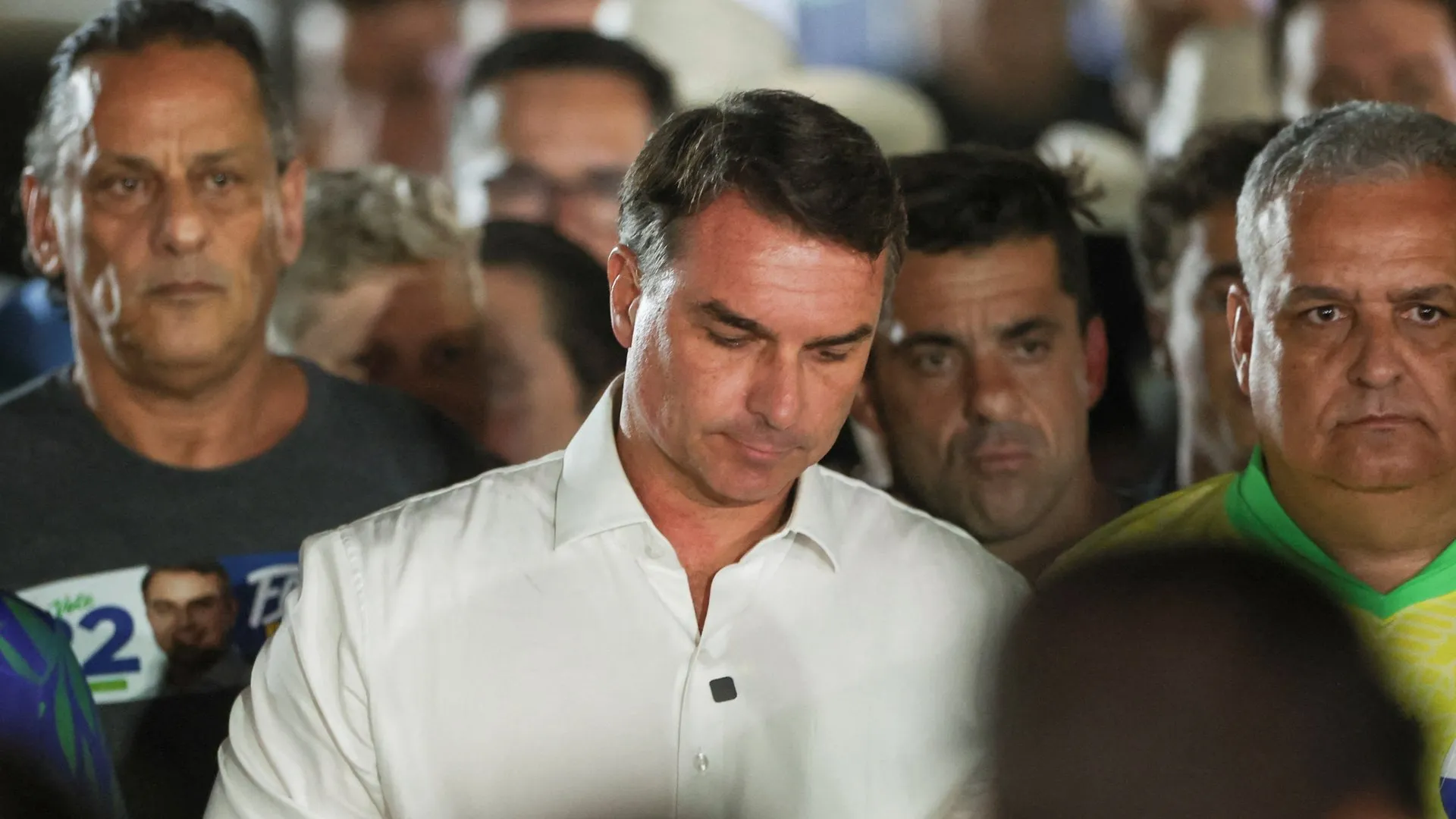
Sao Paulo, Brazil – Far-right Senator Flavio Bolsonaro, along with his wife and two daughters, landed in Miami, Florida, in the United States on Wednesday, days after he was defeated in Brazil’s presidential run-off election.

Supreme Court Justice Alexandre de Moraes issued an order late on Sunday night for Bolsonaro to turn in his regular and diplomatic passports, believing him to be a flight risk in connection with a money laundering and currency evasion investigation involving the senator and his friend Willer Tomaz — who the local press says already left Brazil for Miami two weeks ago.

Recommended Stories

list of 3 itemsend of list

Argentine immigration authorities said on Wednesday that Flavio and his family used a land crossing to enter Argentina late Tuesday night, and less than an hour later boarded a private plane operated by Baires Fly destined for Guayaquil, Ecuador. That plane arrived in Ecuador, and later took off for Miami, Florida, with Flavio and his family on board. The Bolsonaro family landed at Opa-Locka Executive Airport near Miami on Wednesday morning.

The US State Department confirmed on Tuesday that it will issue visas to Bolsonaro and his family, allowing them to enter the country.

US President Donald Trump and Argentina’s President Javier Milei are the only two prominent world leaders who have not yet acknowledged Brazil’s Sunday election result, in which centre-left incumbent Luiz Inacio Lula da Silva pulled off a jaw-dropping comeback to win re-election, scoring 51.8 percent of votes over Bolsonaro’s 48.2 percent. It was a difference of millions. Speaking to reporters on Monday, Trump said, without citing evidence, that Brazil’s election appeared to have been “rigged”, though he also expressed his admiration for President Lula.

News of Flavio’s abrupt departure drew swift indignation from some voters on the ground.

“He’s acting like a coward who’s unwilling to face the consequences of his actions,” said Cristiana Cunha, 36, speaking to Al Jazeera in Sao Paulo. She said she was unsurprised by news of his leaving the country.

Priscila Cardoso, a 45-year-old psychoanalyst also living in Sao Paulo, was even more scathing: “It’s a joke, it’s like a parasite fleeing through the sewer,” she said.

Political analyst Paulo Roberto de Souza of the Democracy in Check Institute told Al Jazeera that Flavio’s flight may kick off a new dispute for power among Brazil’s conservatives, in which the Bolsonaro family may be pushed to one side.

“By leaving the country, he’s made it easier for the right wing to start a fight over the Bolsonaro’s spoils,” he said, noting that, despite the relatively fine margins, Flavio’s defeat on Sunday was “humiliating” for the family.

“In 2022, [Flavio’s father] Jair Bolsonaro became the first incumbent Brazilian president to lose a re-election battle. And now, in 2026, Flavio became the first presidential candidate to lead after the first round and lose a run-off. It imposes a ceiling on the Bolsonaros’ power,” de Souza said.

In the aftermath of Sunday’s result, Flavio called a press conference in which he said it would be “impossible” for him to acknowledge the outcome of the vote, announcing he would pursue a petition to have the election annulled.

His claims were based on a last-minute Brazilian Supreme Court decision on Sunday that delayed the closing of polls by two hours, after both candidates had requested extensions due to insufficient availability of public transportation and adverse weather conditions. But official records show that fewer than 35,000 votes were recorded during the two-hour polling extension, and Lula’s winning margin was more than 4.4 million votes.

For some voters, Flavio’s call for an annulment came across as bad sportsmanship. Cardoso, who is a single parent, likened his behaviour to that of a “spoiled child who loses a game and takes the ball home with them”.

While Flavio has yet to concede defeat, his Liberal Party has recognised Sunday’s result, and prominent allies have sought to put the election behind them.

Sao Paulo Governor Tarcisio de Freitas, who campaigned alongside Bolsonaro and won re-election in a first-round landslide, published a two-minute video on social media on Tuesday outlining his own project for the country and mentioning Flavio only once.

“Without a doubt, Tarcisio is the main figure in this reorganisation process on the Brazilian right,” said de Souza. “For this election, he was the name floated and insisted upon by some key figures in Bolsonarism, as well as neo-Pentecostal leaders.”

His main obstacle, however, will be walking the tightrope between political pragmatism and continuing to convince hardline Bolsonaristas that he is a “loyal ally”.

It is unlikely, in de Souza’s view, that there will be a member of the Bolsonaro family on the presidential ticket come the next election in 2030. “They are much more likely to be figures that provide endorsement, rather than actual players themselves,” he said.

Among voters, however, Bolsonarism stepping into the background appears like a distant thought. “The Bolsonaro family is always trying to perpetuate its power in Brazil,” noted voter Cunha, pointing to the election of Flavio’s brother Carlos and mother-in-law Michelle to Senate seats.

“I definitely think there could be a Bolsonaro on the ballot in 2030; I just don’t know which one.”

Source link

What are the implications of Israel’s elections? | Israel Election 2026 News

No clear winner in Israel’s first election since the October 7 attacks and genocidal war in Gaza.

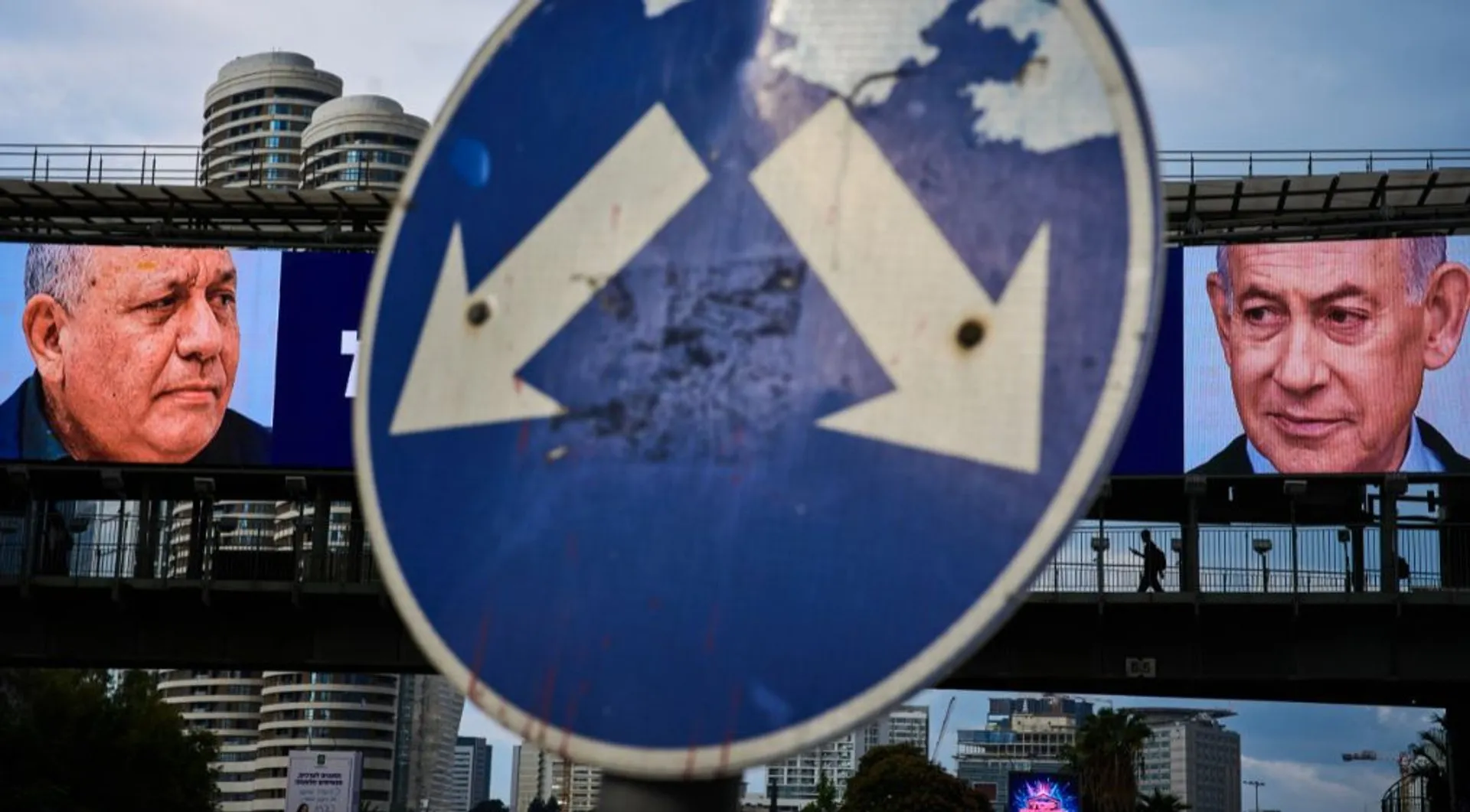
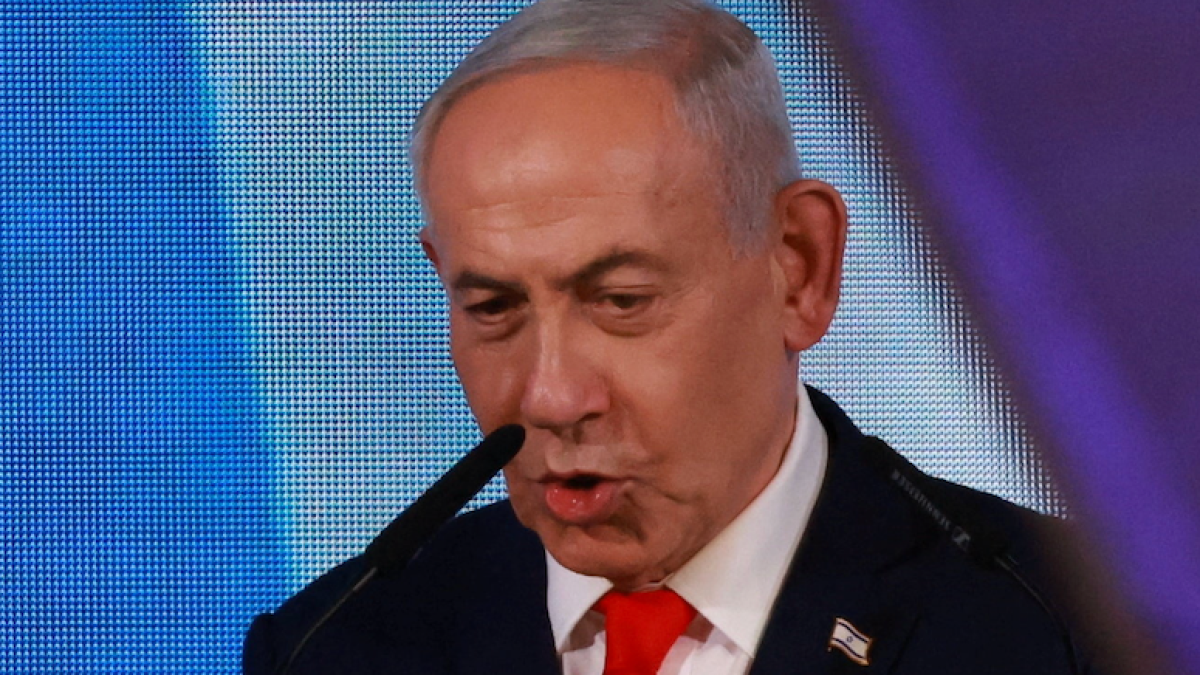
Israeli Prime Minister Benjamin Netanyahu’s alliance, made up of right and far-right parties, is short of a majority after the most consequential elections in decades.

Tuesday’s poll saw a record turnout. And the main opposition bloc, led by former military chief Gadi Eisenkot, also does not have the numbers to form a government on its own.

Recommended Stories

list of 3 itemsend of list

Meanwhile, parties representing the Palestinian citizens of Israel have made unprecedented electoral gains.

While Netanyahu has refused to work with Arab-led lists, could the opposition alliance reach a deal with them?

Or is cooperation a bridge too far while the Israeli military’s assaults on Gaza and the occupied West Bank continue?

Presenter: Sami Zeidan

Guests:

Mairav Zonszein – senior Israel analyst, International Crisis Group

Mustafa Barghouti – secretary-general, Palestinian National Initiative

Phyllis Bennis – fellow, Institute for Policy Studies, and author of Understanding Palestine and Israel


Source link

Balad leader blasts ‘racist’ exclusion of Arab parties in Israel | Israel Election 2026 News

The leader of Israel’s Balad party has condemned the country’s main political leaders for refusing to form a coalition with Arab parties, even after a record showing in polls could make them kingmakers for the next parliament after no clear winner emerged.

Sami Abu Shehadeh told Al Jazeera that Palestinian citizens of Israel, who make up about a fifth of the population, are being treated as illegitimate partners despite their turnout.

Recommended Stories

list of 3 itemsend of list

“This is racism,” he said. “We are a legitimate elected leadership of the national minority. The vast majority of our people decided that we are their leadership.”

Arab parties are on course to win a record 19 seats, giving them potentially decisive leverage over the main political blocs. With 85 percent of the vote counted, Israel’s Central Elections Committee has Prime Minister Benjamin Netanyahu’s bloc ahead with at least 53 seats, and the opposition bloc led by Gadi Eisenkot on 48.

Both are short of the 61 needed to govern. Netanyahu says Israelis chose a strong right-wing government, while Eisenkot says they voted for change.

Abu Shehadeh, who leads Balad, one of the Joint List’s three parties, was not a candidate.

Israel’s elections committee voted to disqualify him at the request of far-right Security Minister Itamar Ben-Gvir, who accused him of supporting the October 7, 2023 Hamas attack due to an article issued the following day in which Abu Shehadeh called it an “important historical event”.

Abu Shehadeh subsequently told the Supreme Court he did not support “armed struggle” but acknowledged that a paragraph in the article had been incorrectly worded. He said his intention was to call for moving the conflict towards a political process.

He withdrew in October after a majority of the Supreme Court panel appeared willing to approve the disqualification. He rejects the grounds and said the court had made clear that Israel has “two different judicial systems, one for the Jews and one for the Arabs”.

“We are very proud of the Arab Palestinian minority in Israel that went in this very high percentage of voting,” he told Al Jazeera. The community’s first promise to voters, he said, was to prevent “this gang of criminals” from returning to power, naming Netanyahu and far-right ministers Bezalel Smotrich and Ben-Gvir. “So our first promise, we can keep it from now .”

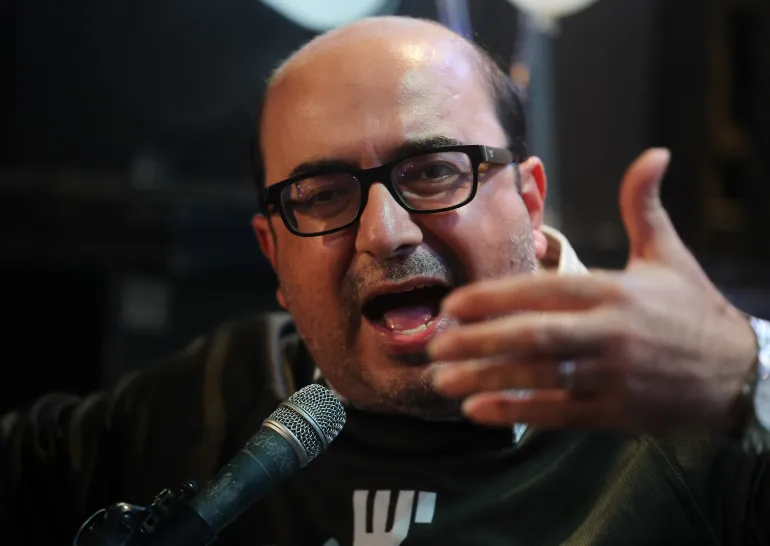
Balad chairman Sami Abu Shehadeh speaks as Israel's Joint List of Arab Parties holds a press conference to launch its election campaign in Hebrew, following his disqualification from running in the upcoming Israeli election, in Tel Aviv, Israel, October 5, 2026. REUTERS/Ammar Awad
Balad chairman Sami Abu Shehadeh speaks at a news conference [File: Ammar Awad/Reuters]

Numbers point to Arab parties but opposition bloc resistant

Al Jazeera’s Nour Odeh, reporting from Ramallah in the occupied West Bank, said Netanyahu “has scared off everybody from talking to the Palestinian Israeli parties”, leaving him best placed to “call the shots”. She said that Eisenkot and his allies have indicated that they want a Zionist government and “do not want to form a government” with the Arab parties, leaving them few options.

Danny Ayalon, a former Israeli ambassador to the United States, told Al Jazeera that turnout among Palestinian citizens of Israel came in “really unprecedented numbers” and that the parties “are going to have some significant clout”.

Mathematically, he said, Eisenkot’s bloc could join forces with the two Arab parties and pass the threshold, though it would take “political wizardry”. Yousef Jabareen, who leads the Joint List, has said his alliance’s “hands are extended” to oust Netanyahu.

Abu Shehadeh set out what Palestinian citizens want from the next government.

“We are against genocide and we are against apartheid. We want to promote a different political alternative, one which is based on the values of freedom, justice and equality for both people who are living between the river and the sea.”

Of Netanyahu, he said: “Our problem … is that he is a war criminal.”

A UN commission said in a report published on Monday that Israel has continued to commit genocide in Gaza after last October’s US-brokered ceasefire in the enclave.

The Hague-based International Criminal Court issued an arrest warrant for Netanyahu in 2024 for war crimes during the Gaza war.

Source link

US Congresswoman Rashida Tlaib condemns anti-Muslim election rhetoric | Islamophobia

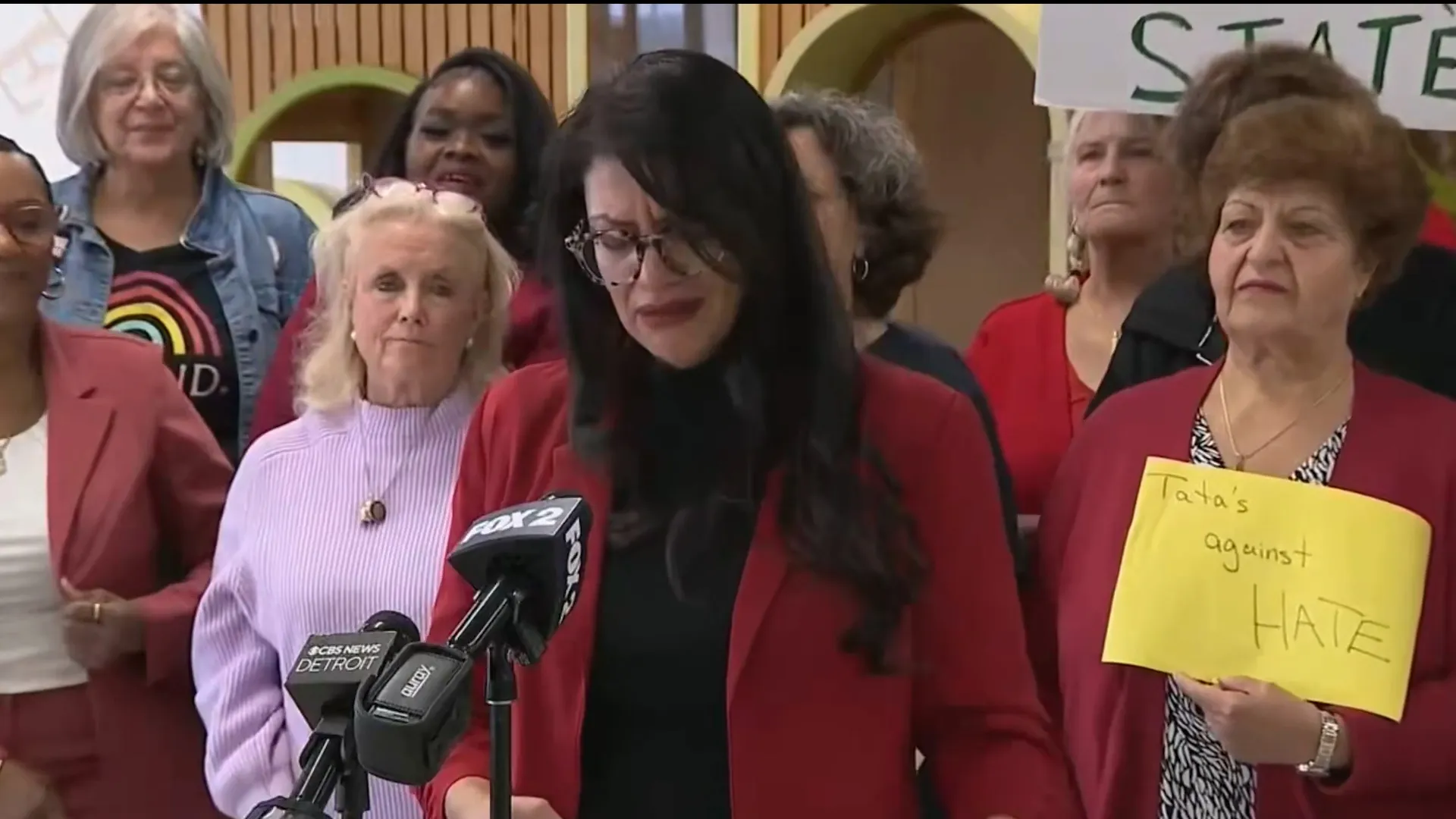
US Congresswoman Rashida Tlaib has condemned anti-Muslim election rhetoric, warning of its impact on the community during a press conference in Michigan. Tlaib said the hateful political adverts on television have also affected her own family.

Source link

US midterms: Six days left – who leads in the polls as Trump, Obama rally | US Midterm Elections 2026 News

With six days to go before the November 3 midterm elections in the United States, Democrats are leading Republicans in national polls, but several key Senate races seem too close to call.

President Donald Trump has stepped up his campaigning, holding two Republican rallies in Texas on Tuesday before heading to Ohio on Wednesday. Ex-President Barack Obama and former Vice President Kamala Harris are also hitting the campaign trail in Georgia for the Democratic Party.

Recommended Stories

list of 1 itemend of list

Here is what the latest polls say, what happened on the campaign trail and what to expect on Wednesday.

What do the latest polls suggest?

With less than a week to go before the midterms, a Reuters/Ipsos poll suggests the Democrats are ahead of the Republicans by nine points.

According to the October 22-26 survey, 47 percent of voters support the Democrats, compared with 36 percent who support the Republicans. When undecided voters’ leanings were taken into account, Democrats lead with 50 percent compared with Republicans’ 41 percent.

Trump’s approval rating improved by a percentage point to 32 percent, with 73 percent of US adults saying the cost of living was going in the wrong direction.

In Texas, where Democrats have not won a Senate election since 1988, James Talarico and Republican Ken Paxton are virtually tied in the polls.

Trump has made several trips to the state ahead of the midterms, but the polls indicate a much tighter race than the president has suggested.

“The good people of Texas have probably never seen so much of President Trump. Four visits in seven weeks, which, to put that into context, is twice as many as we saw at the comparable period leading up to the 2024 election, which perhaps shows just how concerned Republicans are,” Al Jazeera’s Phil Lavelle said, reporting from the Texas coastal city of Corpus Christi.

Lavelle said local analysis suggested more Republicans have voted early than Democrats, but Talarico has also been courting Republicans dissatisfied with Trump.

“That doesn’t mean Republicans are voting for Republican candidates,” Lavelle said.

In Michigan, Democrat Abdul El-Sayed and Republican Mike Rogers are also competing in a closely contested Senate race.

“I was a Republican forever, but I became an independent in the last two elections,” Michael Alexander, a Native American backing El-Sayed, told Al Jazeera.

“I don’t really vote for a party any more. I vote for who I think will do the best job.”

Kansas has not elected a Democrat to the Senate since 1932, but Republican incumbent Roger Marshall now faces a close contest against Democrat Adam Hamilton.

The race has brought Trump and his deputy, JD Vance, to the state.

“There’s a reason why we’re seeing not only US President Donald Trump but also Vice President JD Vance heading to Kansas because it’s actually in play,” Al Jazeera’s Patty Culhane said.

According to The Associated Press news agency, both parties and their allied groups have committed about $71m to campaign advertising in the Kansas race, making it the most expensive Senate contest in the state’s history.

What happened in the US midterm campaigns over the past 24 hours?

Trump addressed two campaign rallies in Texas on Tuesday in support of Paxton.

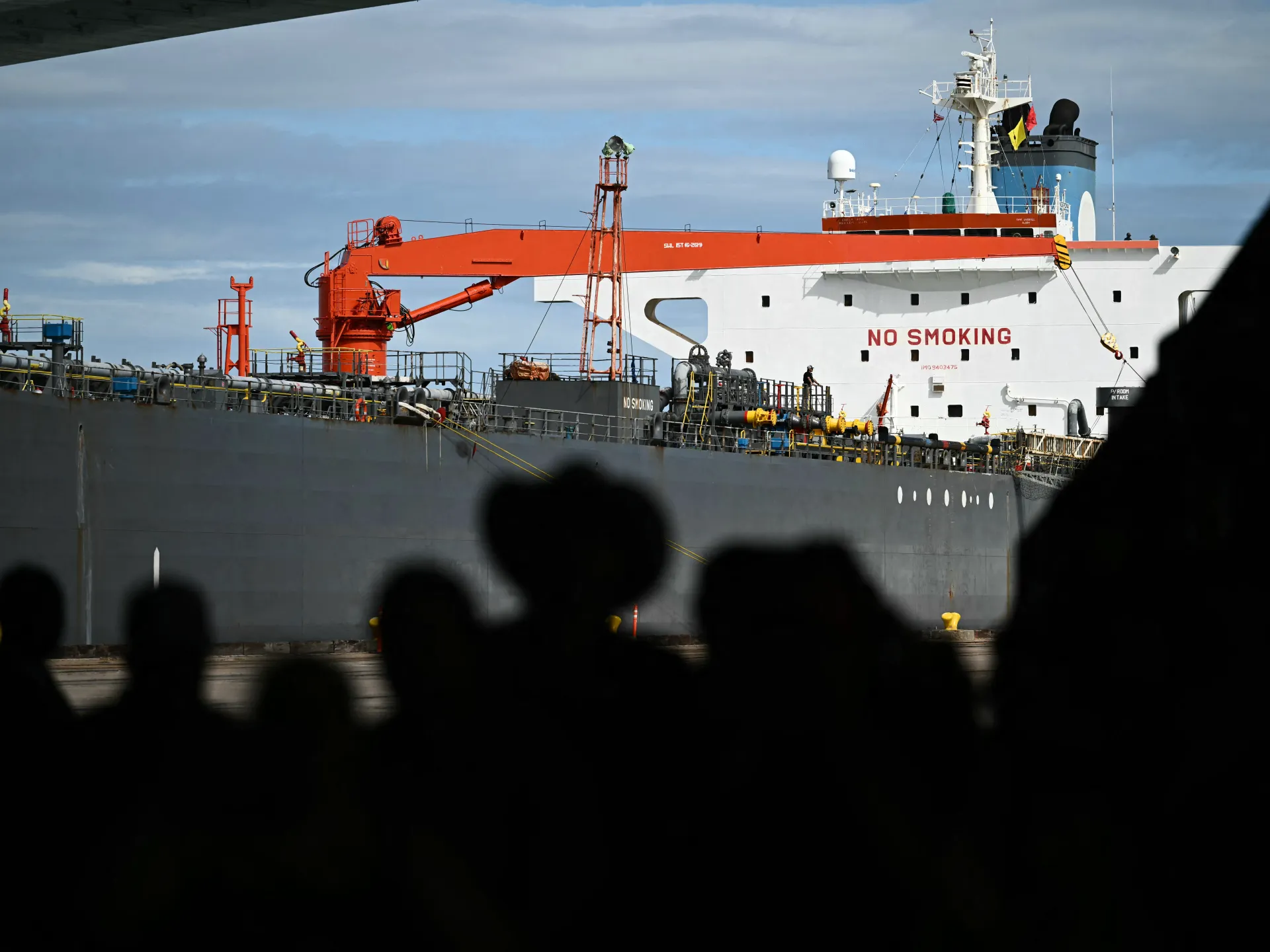
In Corpus Christi, Trump pointed to a tanker that he said was carrying one million barrels of Venezuelan oil and called it a win for his administration. He also suggested the idea of making Venezuela the 51st US state. The Trump administration has signed an oil deal with Venezuela’s interim leader, Delcy Rodriguez, after abducting socialist President Nicolas Maduro in a military operation in January.

Trump also announced plans to roll back the Biden-era restrictions on methane emissions from oil and gas production, stating that it would help bring down energy prices.

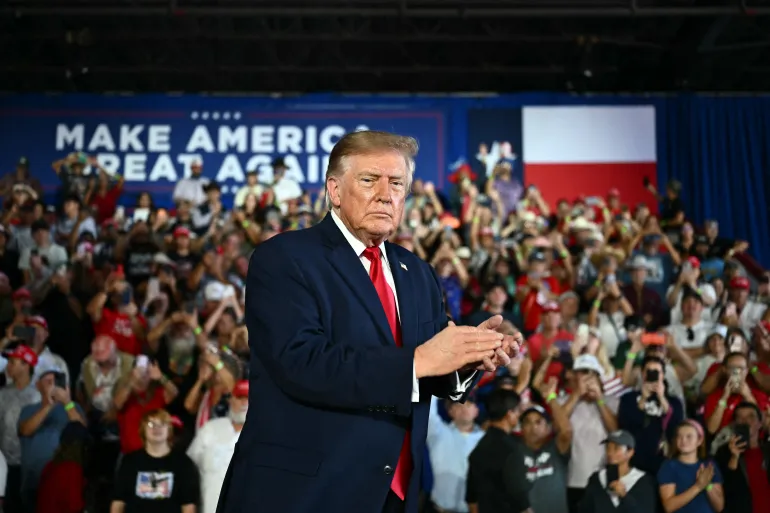
US President Donald Trump applauds after speaking at a midterm campaign rally at the Port of Corpus Christi in Corpus Christi, Texas on October 27, 2026. (Photo by Kent NISHIMURA / AFP)
Trump applauds after speaking at a midterm campaign rally at the Port of Corpus Christi in Texas, October 27, 2026 [Kent Nishimura/AFP]

Fuel prices have become a huge election issue as the US-Israel war on Iran continues. Secretary of State Marco Rubio has also joined Trump for a rare campaign-trail appearance in Texas.

In Alaska, Republican Senator Lisa Murkowski has backed Democrat Jonathan Kreiss-Tomkins for governor rather than Bernadette Wilson, the Trump-endorsed candidate.

What’s next for Democrats and Republicans on Wednesday?

Trump heads to Ohio on Wednesday for his third rally in the state this month, as Republicans try to defend a Senate seat being challenged by former Democratic Senator Sherrod Brown.

The US president is scheduled to speak in Chillicothe at 23:00 GMT. Republican Senator Jon Husted, who took over Vance’s seat when he became vice president, is facing Brown, who is seeking a return to the Senate after losing his seat in 2024.

The two are in a closely contested race, with more than $400m spent or reserved for campaign advertising as of October 8, according to an Axios report.

Republicans are particularly concerned in Texas, Ohio, Kansas and Iowa, where even a few percentage points for a third party could swing the outcome.

Trump is scheduled to hold rallies in Ohio on Wednesday and Iowa on Sunday.

Vance will be in Kinston, North Carolina, campaigning for Republican Senate candidate Michael Whatley, who is running against former Democratic Governor Roy Cooper. The vice president is expected to speak at 16:30 GMT.

In Georgia, former President Obama will campaign in Atlanta alongside Democratic Senator Jon Ossoff and gubernatorial candidate Keisha Lance Bottoms at 20:00 GMT.

Ossoff is running against Republican Mike Collins, while Bottoms faces Republican Rick Jackson in the governor’s race. Trump won Georgia in the 2024 presidential election.

Former Vice President Harris also begins a three-day visit to Georgia on Wednesday, with early in-person voting due to end on Friday, October 30.

In Wisconsin, Marquette Law School will publish its latest statewide poll at 18:15 GMT.

Wednesday’s poll will also examine voters’ views on inflation, tariffs, the US-Israel war on Iran and Trump’s presidency.

INTERACTIVE_US MIDTERMS_GFX 2026_SENATE_RACES

Source link

Netanyahu or Eisenkot? Can you form Israel’s next coalition government? | Israel Election 2026 News

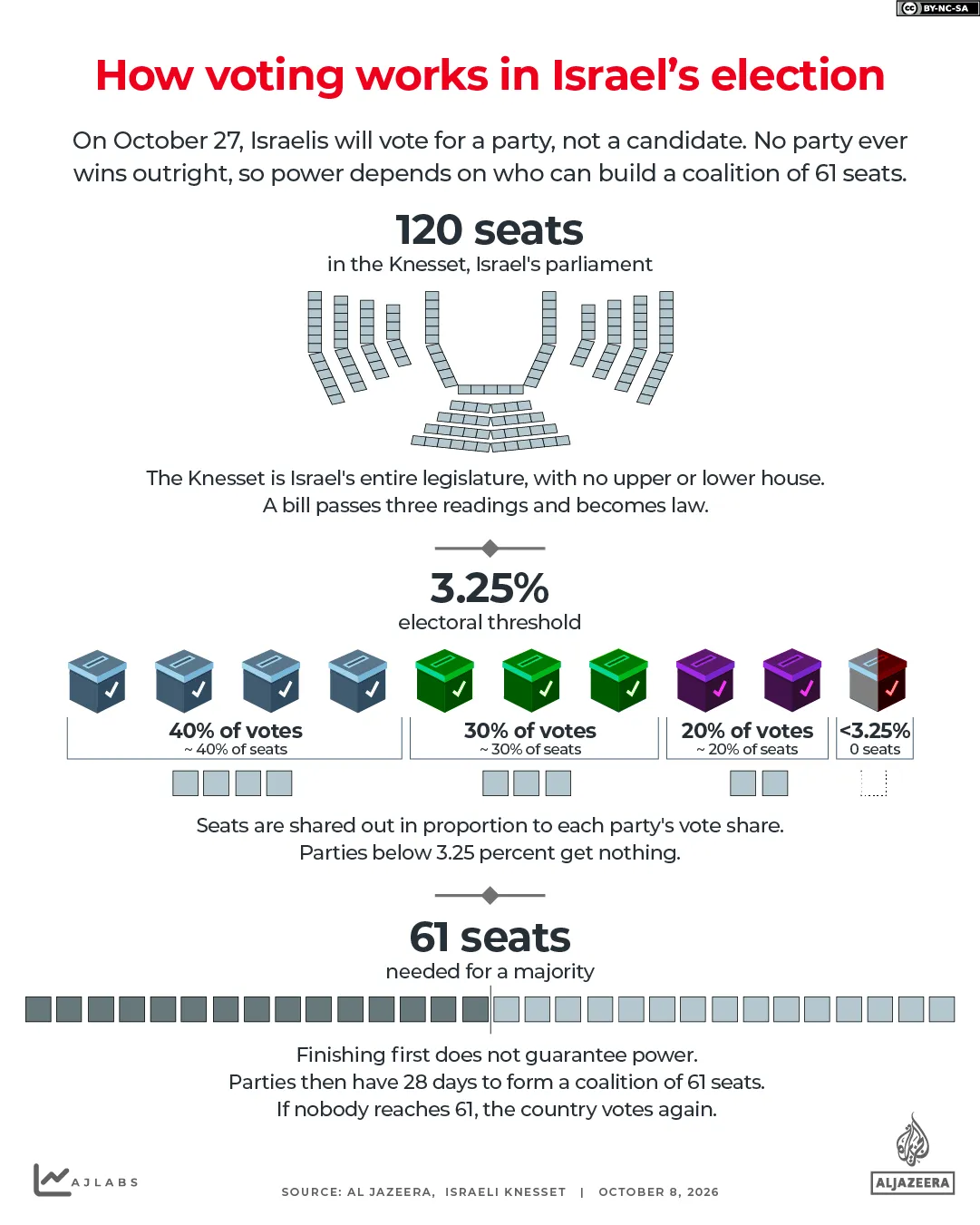
Israel has only ever been governed by coalitions. Can you put one together that reaches 61 of the Knesset’s 120 seats?

Israelis voted on October 27, but there appears to be no clear winner.

The next government, like every government in Israel’s history, will have to be a coalition.

The question now is who can secure at least 61 of the Knesset’s 120 seats to form a government and become Israel’s next prime minister.

Al Jazeera has built an interactive tool that lets you test different combinations of parties. Start with any of the four exit polls or enter your own seat numbers. Then add parties until your coalition reaches 61 seats. You can add an entire bloc at once or select parties individually.

Who is ahead?

Initial counting by the Central Elections Committee put Likud ahead as the largest single party, with 27 seats.

Netanyahu’s bloc was projected to win 54 seats, against 50 for Eisenkot’s.

Four exit polls published on election night showed how close the race is.

Kan 11 and Channel 13 put Benjamin Netanyahu’s bloc and Gadi Eisenkot’s opposition bloc level at 51 seats each. Channel 12 gave Netanyahu 52 seats to Eisenkot’s 49, while Channel 15 was most favourable to the incumbent, projecting 55 seats for Netanyahu’s bloc against 49 for the opposition.

How many seats are needed?

Israel’s parliament, the Knesset, has 120 seats. Parties win seats in proportion to their share of the national vote, provided they clear the 3.25 percent threshold to enter parliament.

A government needs the support of at least 61 politicians to secure a majority.

Neither of the main blocs has reached that number in the exit polls or the initial count. The next step is to find enough parties willing to join forces to make up the difference.

INTERACTIVE - Israel elections 2026 - how voting works-1791465325
(Al Jazeera)

Why is forming a government so difficult?

The Arab-led parties Ra’am and the Joint List could hold the balance of power, with exit polls putting their combined support at between 16 and 19 seats.

But the political obstacles are considerable. Netanyahu has described a coalition with Arab parties as “shameful”, while leading figures in the Jewish-led opposition have also ruled out governing with them.

That leaves potential coalitions that may work on paper but face serious political barriers.

INTERACTIVE - Where Israel's parties stand left right 2026-1793092368
(Al Jazeera)

Which parties belong to each bloc?

Netanyahu’s bloc spans Likud, the ultra-Orthodox parties Shas and United Torah Judaism, and the far-right parties Religious Zionism, led by Bezalel Smotrich, and Otzma Yehudit, led by Itamar Ben-Gvir.

INTERACTIVE - Netanyahu profile card 77 Israel elections-1793181475

Eisenkot’s opposition bloc includes his Yashar party, the Together list associated with former prime ministers Naftali Bennett and Yair Lapid, Avigdor Liberman’s Yisrael Beytenu and Yair Golan’s Democrats.

INTERACTIVE - Israel elections 2026 - Gadi Eisenkot-1792427447

What happens next?

Once the results are certified, the president gives the mandate to the member of the Knesset considered most likely to assemble a majority.

That politician has 28 days to form a government, with a possible extension of up to 14 days. If they fail, another lawmaker can be given a chance. If no one can form a government, Israel may have to hold another election, as it did repeatedly between 2019 and 2022.

INTERACTIVE - Israel elections 2026 - history of elections-1791465321
(Al Jazeera)

Netanyahu, Israel’s longest-serving prime minister, with 19 years in office across three stints, remains caretaker prime minister while coalition negotiations unfold. He is also standing trial on corruption charges, which he denies.

Official results are due on November 4. Negotiations to form a government could take considerably longer.

Source link

Bolsonaro ally denies knowledge of senator’s plan to flee Brazil | Politics

Flavio Bolsonaro’s former campaign manager, Rogerio Marinho, says the senator did not inform him that he planned to flee the country. Reports suggest Bolsonaro secretly left Brazil for Florida after losing Sunday’s presidential election and amid a police investigation into money-laundering.

Source link

Netanyahu: Coalition with Arab parties would be ‘shameful’ | Benjamin Netanyahu

Israeli Prime Minister Benjamin Netanyahu has called the prospect of working with Arab parties to form a government ‘a disgrace and a shame’. But exit polls show neither his party nor the opposition are projected to secure the 61 Knesset seats needed for a majority.

Source link

Arab parties could win 18 seats in Israeli elections, exit polls suggest | Israel Election 2026 News

Record-breaking voter turnout in Palestinian-Israeli communities around 80 percent, early indications show.

Israel’s Arab parties are projected to win 18 seats in the Israeli parliament, exit polls indicate, after voting among Palestinian citizens of Israel surged to their highest levels in decades.

Exit polling data from Tuesday’s vote suggested that the leading Arab-led parties, the Joint List and Ra’am, are set to hold a record number of seats in the 120-member Knesset. Updated exit polling indicated that the opposition bloc led by former Israeli military chief of staff Gadi Eisenkot’s Yashar party and the bloc led by Prime Minister Benjamin Netanyahu’s Likud party were tied at 51 seats each.

Recommended Stories

list of 3 itemsend of list

Early indications put voter turnout among Palestinian citizens of Israel at around 80 percent, historic numbers that break 1999 records, Israel’s Channel 12 reported on Tuesday.

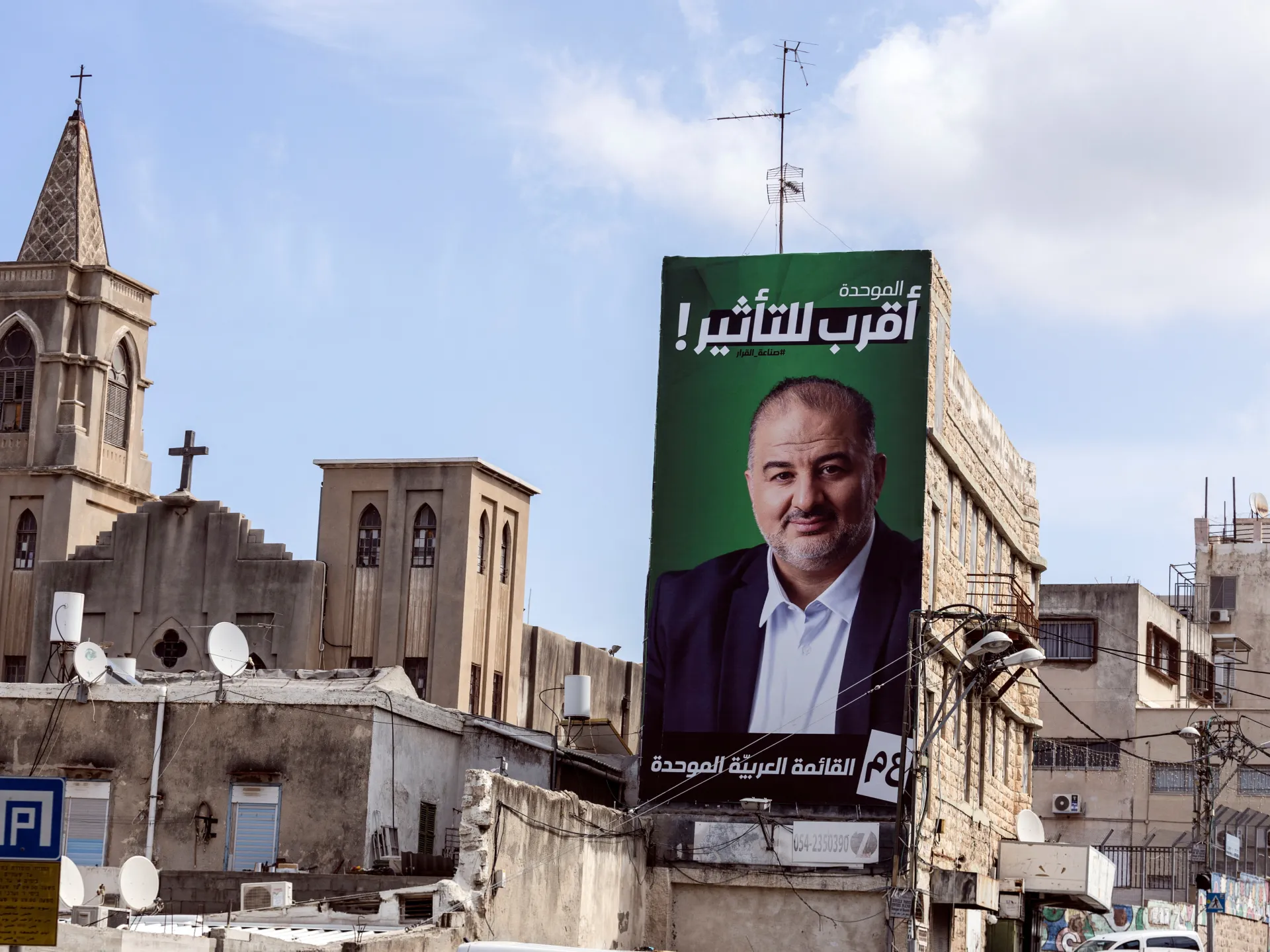
The leader of Ra’am, or the United Arab List, Mansour Abbas, said he hopes the final election results will allow the anti-Netanyahu bloc, including his party, to win the 61 seats required to form a government.

“With the numbers we have now, there is no government,” Abbas told Israel’s Channel 12.

Abbas, whose Ra’am party currently holds five seats in the Knesset and joined the coalition that governed Israel from 2021 to 2022, added that both main blocs reached out to his party before and after the election.

‘Arabs can’t be kept outside’

Speaking to Al Jazeera, Alon Pinkas, a former Israeli ambassador, said creating a government might prove difficult for parties such as Eisenkot’s – which earlier exit polls had put narrowly ahead – because they promised not to form coalitions with Arab parties during the campaign.

“There’s a price to pay,” Pinkas said, because the “Arabs can’t be kept outside and only being considered and co-opted when you need their votes”.

He added that the Arab-led lists will make demands that a Jewish-led coalition government may not support.

Netanyahu and his far-right coalition made last-ditch efforts on Tuesday to get their supporters to the polls, warning of surging voter turnout among Palestinian citizens of Israel, a tactic Arab politicians denounced as racist and inflammatory.

Cars flying Netanyahu’s Likud party flags drove through Jerusalem blaring the Islamic call to prayer and urging supporters to cast their ballots because “Arabs are voting”, witnesses said.

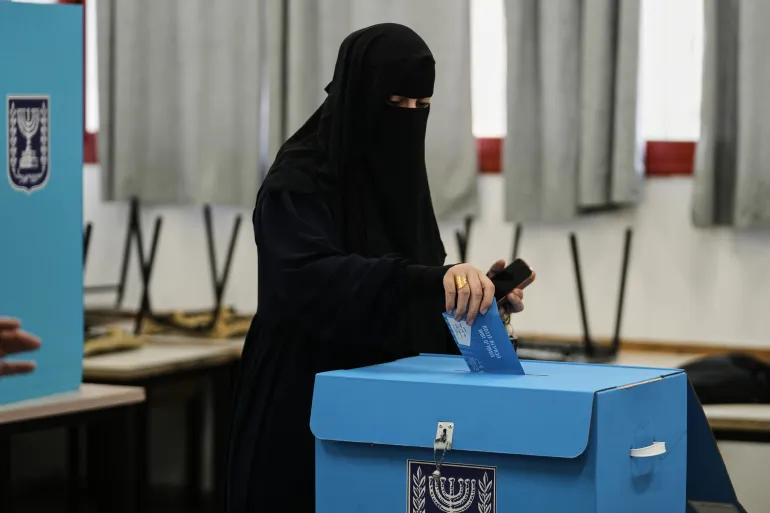
In social media posts, the embattled prime minister highlighted long queues at polling stations in Arab communities and published an image that he said showed Arab voters, including women wearing the niqab, a veil that covers the lower half of the face, waiting to vote.

“If we don’t wake up now, we’ll find ourselves with a government of Mansour Abbas and Ahmad Tibi,” he said, referring to two leading Palestinian members of the Knesset.

Overall voter turnout was also historic, reaching its highest level since 1999 with 77.7 percent casting ballots in Tuesday’s election, the Central Elections Committee reported. Palestinian citizens of Israel make up about 21 percent of the country’s population of 10 million and have traditionally voted at lower rates than Jewish Israelis.

‘Existential moment’

Al Jazeera’s Nour Odeh, reporting from Ramallah in the occupied West Bank, called the election “an existential moment for Palestinian-Israelis”.

She noted the record turnout among what has emerged as a key voting bloc, which drew “even [voters] who would usually boycott elections, who didn’t believe it would amount to any kind of influence, that it would change their reality, that it would alter the systemic discrimination that they face”.

The Knesset has passed more than 100 laws discriminating against Palestinian citizens of Israel, who also face discrimination in receiving state funds, Odeh said.

Source link

President Lula calls Bolsonaro’s Brazil exit ‘shameful’ | Elections

Brazilian President Luiz Inacio Lula da Silva has criticised Flavio Bolsonaro for leaving the country amid reports he was headed to the US. Bolsonaro reportedly fled after election defeat, and a Supreme Court order to surrender his passports amid a money-laundering probe.

Source link

Trump showcases Venezuelan oil as he seeks to rally voters in Texas | US Midterm Elections 2026 News

US president seeks to underscore Latin American military operation, as Iran war causes midterm affordability threat.

United States President Donald Trump has featured a ship he said is carrying Venezuelan oil during a visit to Texas, where he will hold two rallies one after the other in the hopes of boosting Republican chances in a make-or-break Senate race.

Speaking at Corpus Christi on Tuesday on his fourth trip to the state this campaign season, Trump pointed to a ship in the distance.

Recommended Stories

list of 3 itemsend of list

“It’s got 1 million barrels of oil on it from Venezuela,” he said, adding the cargo was “thanks to our big victory in our recent war with Venezuela”.

The emphasis on the oil comes as US consumers have wrestled with high fossil fuel prices amid the US-Israel war with Iran, a key issue in the upcoming midterm elections.

“We’re celebrating the greatest oil victory in history,” Trump said.

It was not immediately clear under what pretext the oil had been shipped or whether the details Trump gave were correct. The US had received crude oil shipments from Venezuela before the US abduction of Venezuelan leader Nicolas Maduro on January 3, but those transfers have increased this year.

In August, the Trump administration announced a deal giving the Pentagon a 35 percent stake in North America Blue Energy Partners, a new company overseeing 65 billion barrels of proven oil reserves. The White House said in September that the first shipment from the deal would likely hit US reserves in November, although experts have cast doubt on whether the deal will have any short-term impact.

Speaking to reporters earlier in the day, Trump referred to the shipment as a “gift” from Venezuela. The country’s interim leader, Delcy Rodriguez, has not commented on the specific shipment.

At the rally, Trump also floated making Venezuela the “51st state”.

Key race

Trump’s frequent visits to Texas underscore the state’s significance for Republicans.

Trump endorsed Attorney General Ken Paxton in the Republican primary over incumbent Senator John Cornyn. The scandal-ridden Paxton now faces a punishing contest against Democrat James Talarico, a Presbyterian seminarian.

Polls have regularly shown Talarico leading Paxton, although that lead has largely remained within the margin of error. A RealClearPolitics average of polls had Talarico leading Paxton by 1.7 points.

Talarico’s victory would mark a sea change in a state that has not elected a Democrat to statewide office since 1994.

It would also represent a major rebuke to Trump, whose Republican Party is fighting to maintain its narrow control of the Senate. Democrats are widely projected to take control of the US House of Representatives in the November 3 vote.

Talarico has used the final stretch of the race to focus on years of corruption allegations against Paxton, while drawing a contrast to voters’ affordability concerns.

“Ken Paxton represents everything that’s wrong with this broken, corrupt system,” he said during an event in Houston last week.

Paxton has sought to portray Talarico as too “radical” for Texas, saying his policies would hurt a state known for its pro-business policies.

Trump and other administration officials, notably Vice President JD Vance, have regularly focused on cultural issues, distorting Talarico’s past comments on transgender rights and border security.

Speaking in Corpus Christi, Trump repeated those attacks and urged his supporters to vote as if he were on the ballot.

“If you go out, and if you all vote, we win in a landslide,” Trump said.

Source link

Forever Wars: Why can’t America stop? | US Midterm Elections 2026

Iran, Iraq, Afghanistan. Why does the US keep going to war, and can voters stop it?

The United States is once again at war in the Middle East, and most Americans say it isn’t worth the cost.

Al Jazeera’s Josh Rushing asks why the US keeps fighting: oil, a $2.4 trillion defence industry, lobbyists or a political system that rarely holds anyone to account?

Retired General Mark Kimmitt and journalist Spencer Ackerman debate why, and whether voters can end the forever wars.

Contributors:

Mark Kimmitt – Retired US Army brigadier general and former assistant secretary of state for political-military affairs

Spencer Ackerman – Journalist, author and writer of the Forever Wars newsletter

Source link

Exit polls following Israeli elections indicate no clear winner | Israel Election 2026 News

BREAKING,

The official results are due to be published on November 4, more than a week after the vote.

Exit polls following what many pundits and voters have billed as the most pivotal election in Israel’s history indicate no clear winner in the hard-fought contest.

According to exit polls, Israeli Prime Minister Benjamin Netanyahu’s bloc is projected to secure 50 seats, while the bloc led by opposition candidate Gadi Eisenkot is expected to win 52 or 53 seats. Sixty-one seats are needed to form a majority government. Arab parties are projected to collectively win 18 seats.

Recommended Stories

list of 3 itemsend of list

Polling stations closed at 10pm (20:00 GMT) local time. Preliminary results are expected on Wednesday, followed by a final tally on Friday. The official results are due to be published on November 4, eight days after the vote.

Exit polls are based on interviews with voters immediately after they have cast their ballots. The interviews help project the election’s outcome and have in previous elections tended to anticipate the results closely.

Voter turnout in the Israeli election reached 74.3 percent as of 8pm (18:00 GMT), according to data released by the Central Elections Committee. By comparison, turnout in the 2022 election was 70.63 percent.

Polls predicted a tight race between incumbent Prime Minister Benjamin Netanyahu and leading opposition candidate Gadi Eisenkot, the leader of the Yashar party and a former army chief.

Israel’s Central Elections Committee rejected a request by Netanyahu’s Likud Party to extend voting hours.

The election is the first since Israel launched its genocidal war on Gaza three years ago, following Hamas-led attacks on the country, and is widely seen as a referendum on Netanyahu’s handling of the events on October 7, 2023 and the conflicts that followed.

Source link

US’s RFK Jr claims Arabs ‘don’t produce science’: Why he’s very, very wrong | US Midterm Elections 2026 News

United States Health Secretary Robert F Kennedy Jr has sparked uproar with comments he has made denying Arab contributions to mathematics, science and literature.

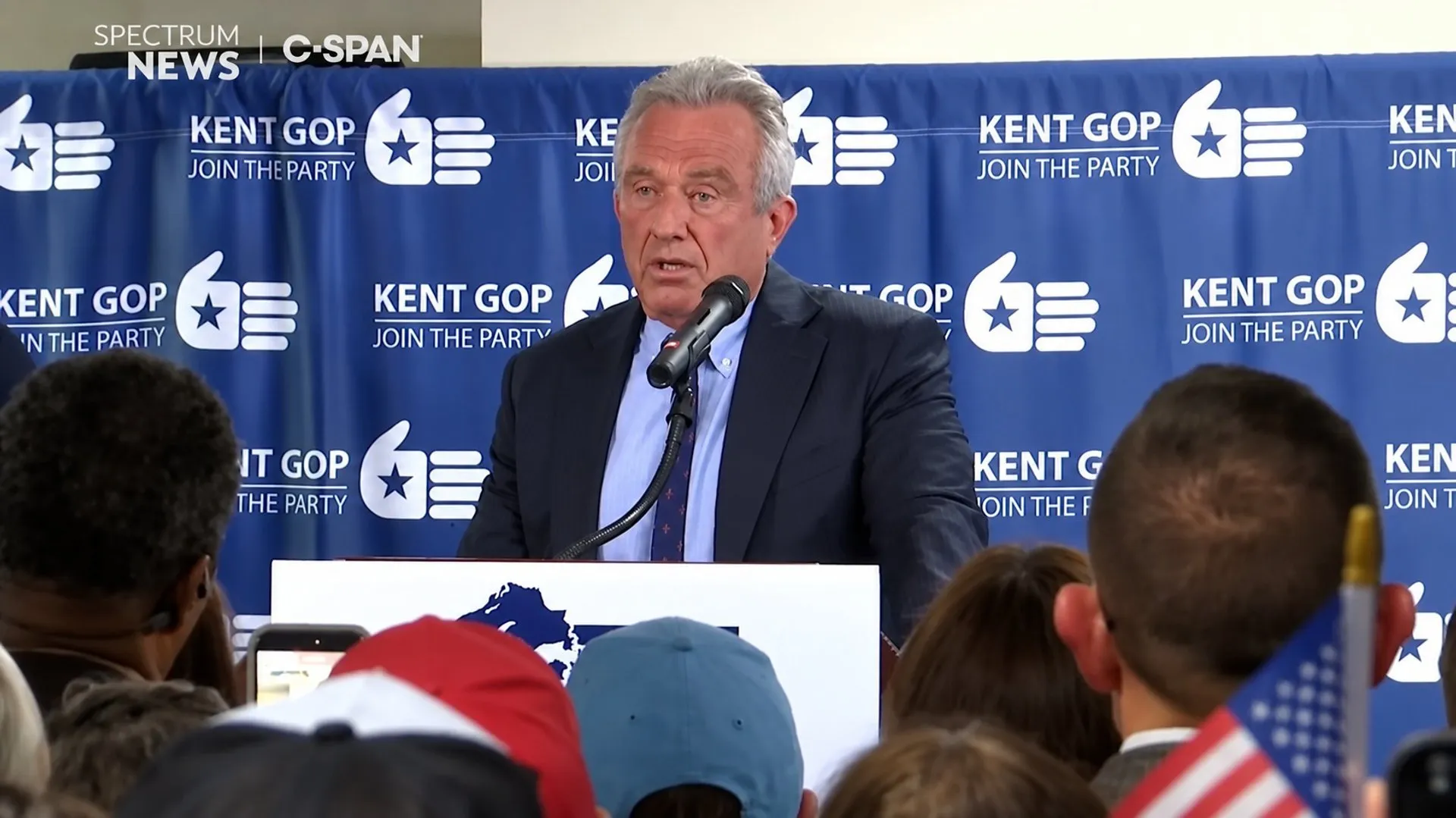
In a high-voltage rant on Monday, the US health secretary said, “There’s five hundred million Arabs in the world. And yet they don’t produce science. They don’t win the Nobel Prize. They don’t win the Fields Prize. They don’t win the Wolf Prize. They don’t produce literature.”

RFK Jr, who has been involved in anti-vaccine campaigns and has promoted a debunked theory linking vaccines to autism, made the comments during a US election campaign event in Grand Rapids, Michigan while supporting Republican nominee Mike Rogers, who is up against Arab-American Democrat nominee Abdul El-Sayed, in a tightly contested battle for Michigan’s Senate seat in next week’s midterm elections.

Critics said the comments were racist, Islamophobic and factually inaccurate, pointing to modern and historic Arab innovation in multiple fields.

Here’s how Arabs have made vital contributions to the human understanding of maths, science and literature through the centuries.

Arab contributions to maths, science and humanities

The period known as the Islamic Golden Age, from around 750 AD to 1258 AD, produced many key Arab contributions to medicine at a time when Europe was said to be in its Dark Ages. During this time, Arabic was the language of science and scholarship.

1st-4th centuries: The numerals 0-9, which originated in ancient India, were adopted by Arab mathematicians who spread them across the world. They displaced Roman numerals as a more advanced number system in mathematics.

8th century: Arab and Persian mathematicians were studying the ancient Indian concept of zero in mathematics in Baghdad, long before the Europeans. The number zero was crucial to the development of mathematics – but was absent from widely used Roman numerals in Europe.

813-833: The Arab mathematician Muḥammad ibn Musa al-Khwarizmi – one of those studying the number 0 – is often referred to as the “father of algebra” as he was the first to treat the method as a separate mathematical discipline in his work, Al-Jabr. This method provided the first linear and quadratic equations, still used as a core part of mathematical study today.

965-1040: Ibn al-Haytham, known as the “father of modern optics”, explained the role that light entering the eye plays in human vision. He was born in Basra in Iraq, but spent most of his working life in Cairo attending to noble families.

936-1013: Abu al-Qasim al-Zahrawi, called “the father of modern surgery”, was considered the greatest surgeon in the Middle Ages. He wrote a 30-volume encyclopaedia detailing medical practices and designed and illustrated many surgical instruments. Born in Azahara, in Andalusia, he was known as Abulcasis in Europe.

9th century: Fatima al-Fihri founded the University of al-Qarawiyyin in Fez, Morocco. It is often cited as the oldest continually operating university.

1213-1288: Ibn al-Nafis described pulmonary circulation – the process by which blood passes through the lungs – several centuries before Europeans understood it. He wrote more than 110 volumes of work on surgery, ophthalmology and philosophy while working as a chief physician in Egypt.

915-965:  Abu al-Tayyib al-Mutanabbi, regarded as the greatest poet in the Arabic language, was Yemeni and grew up immersed in Bedouin Arabic culture. He wrote in classical Arabic and many of his verses became sayings used in everyday Arabic.

1100-1165: Muhammad al-Idrisi was a geographer known for making the Tabula Rogeriana, one of the most accurate and detailed medieval world maps, and a high point of Islamic geography. He was born in Ceuta in Morocco.

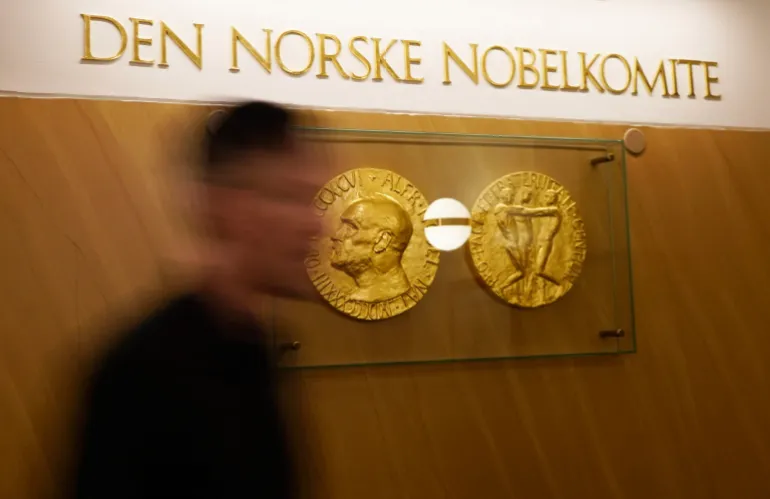
A view of a sign reading "The Norwegian Nobel Committee" inside the Norwegian Nobel Institute, where the laureate of the Nobel Peace Prize is announced, in Oslo, Norway, October 6, 2023. REUTERS/ Tom Little
A view of a sign reading ‘The Norwegian Nobel Committee’ inside the Norwegian Nobel Institute in Oslo, Norway, October 6, 2023 [File: Tom Little/Reuters]

Prize-winning Arabs

In more modern times, RFK Jr’s assertion that Arabs do not win Nobel prizes for science and literature is very far from the truth. Here are some of the highlights:

1960: Nobel Prize for Medicine

Peter Medawar won the Nobel Prize for Medicine for work on for work on acquired immune tolerance, which underpins organ transplantation. He was born in Brazil to a Lebanese father.

1966: The Fields Medal

Michael Atiyah won the Fields Medal, the most prestigious award for mathematics, in 1966. He was born in London to a Lebanese father and Scottish mother. Educated in Egypt, he spent much of his childhood in Cairo and Khartoum.

1988: Nobel Prize for Literature

Egyptian Naguib Mahfouz won the Nobel Prize in Literature for his body of work, including the Cairo Trilogy, which the Swedish Academy said formed “an Arabic narrative art that applies to all mankind”. He is still the only winner of the prize who wrote in Arabic.

1990: Nobel Prize for Chemistry

Elias James Corey won the Nobel Prize for Chemistry for developing retrosynthetic analysis. He is an American of Lebanese descent.

1993: Wolf Prize for Chemistry

Egyptian Ahmed Zewail won the Wolf Prize for Chemistry. The Wolf Prize is an international award which has been presented to living scientists and artists every year in Israel by the Wolf Foundation since 1978.

1999: Nobel Prize for Chemistry

Zewail also won the Nobel Prize for Chemistry for pioneering femtochemistry, which is the study of chemical reactions on extremely short timescales. He also won the Wolf Prize in Chemistry in 1993.

2005: Nobel Peace Prize

Egyptian scientist Mohamed ElBaradei shared his Nobel Prize with the International Atomic Energy Agency, which he led.

2018: Wolf Prize for Chemistry

Omar M Yaghi,  born in Jordan to a Palestinian refugee family, won the Wolf Prize in Chemistry in 2018 for work on metal-organic frameworks. He shared the prize with Japan’s Makoto Fujita. The Palestinian Campaign for the Academic and Cultural Boycott of Israel (PACBI) condemned his acceptance of the award because the prize is awarded by an Israeli foundation.

2023: Nobel Prize for Chemistry

Moungi Bawendi won the Nobel Prize for Chemistry for the discovery and synthesis of quantum dots. He was born in France to a Tunisian father, but based in the US.

2025: Nobel Prize for Chemistry

Yaghi also won the Nobel Prize for Chemistry for developing metal-organic frameworks. These are crystalline materials with large internal cavities that can capture and store gases, harvest water from air, and trap pollutants. He shared the prize with Susumu Kitagawa from Japan and Richard Robson from Australia.

In a post on X, vaccine scientist Peter Hotez of the Texas Medical Center weighed in on historical Arab scholarship, saying, “It was the Arab scientists of the Middle Ages who kept Aristotle, Hippocrates, Galen alive to hand it down in the Renaissance.”

Broadcaster Mehdi Hasan described RFK Jr’s comments as “racist” and, in a post on X, wrote: “One of the men who won the Nobel Prize for Chemistry last year was a Palestinian-American, Omar Yaghi.”

The Council on American-Islamic Relations called for the US health secretary to be removed. It said: “To stand on a public stage as a sitting US cabinet official and dehumanise half a billion people – and millions of Muslim and Christian Arab Americans – with fabricated, white supremacist talking points is utterly disqualifying for public office. His sweeping erasure of Arab contributions to humanity is not only maliciously false, but it also fans the flames of anti-Arab and anti-Muslim hate at a time when communities are already vulnerable to bigoted attacks from other public officials nationwide.”

Source link

The WhatsApp ‘general’ behind Lula’s election comeback in Brazil | Elections News

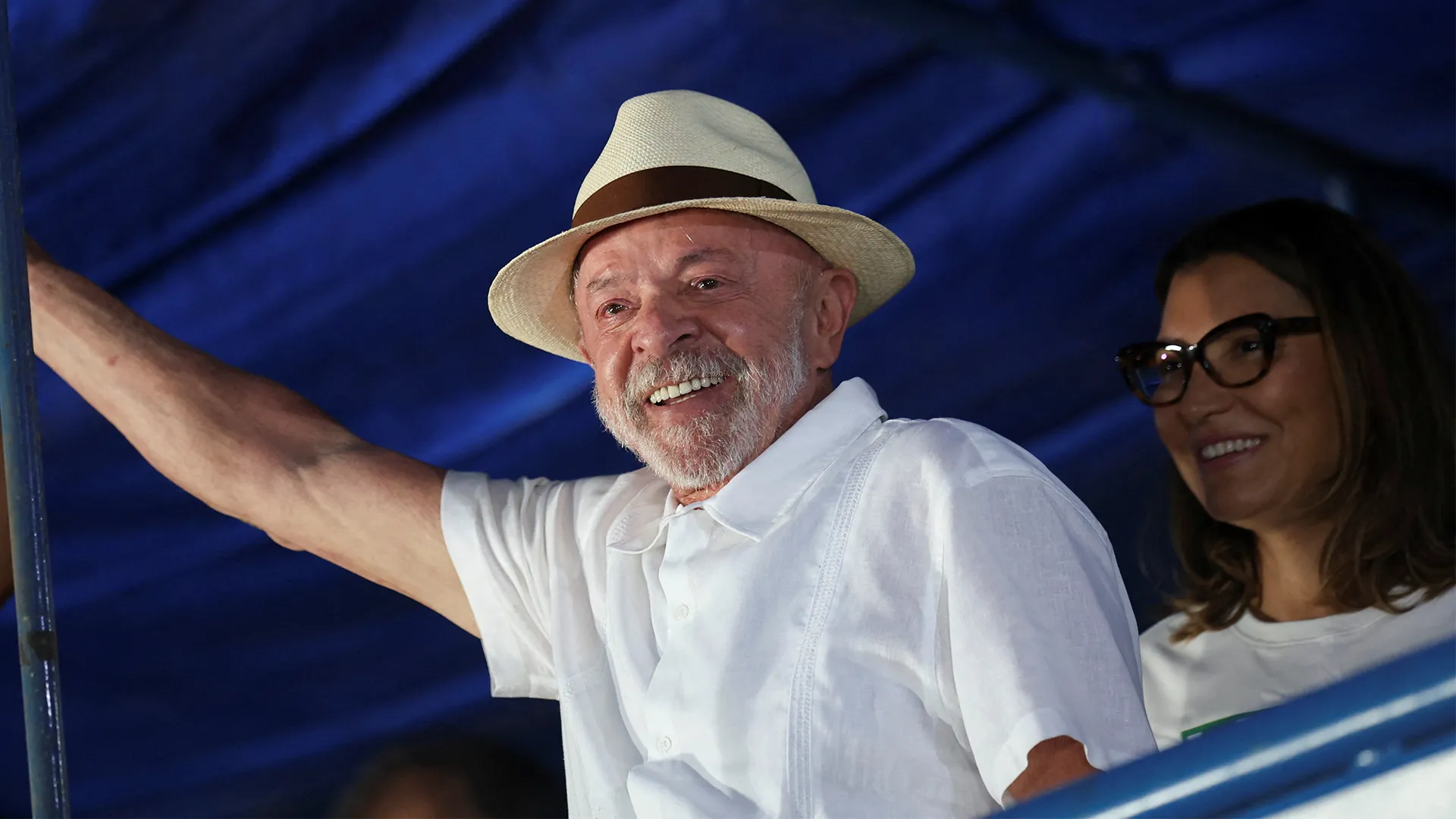
As Luiz Inacio Lula da Silva celebrated his election victory on Sunday in Sao Paulo, he placed his hand on the head of a man standing beside him and beaming in a green and yellow Brazilian football jersey.

Lula thanked him for his role in the campaign, calling him “our general”.

Recommended Stories

list of 4 itemsend of list

Andre Janones, a 42-year-old Brazilian congressman who had spent the final weeks of the presidential run-off building a mass online movement to get Lula re-elected, then embraced the president.

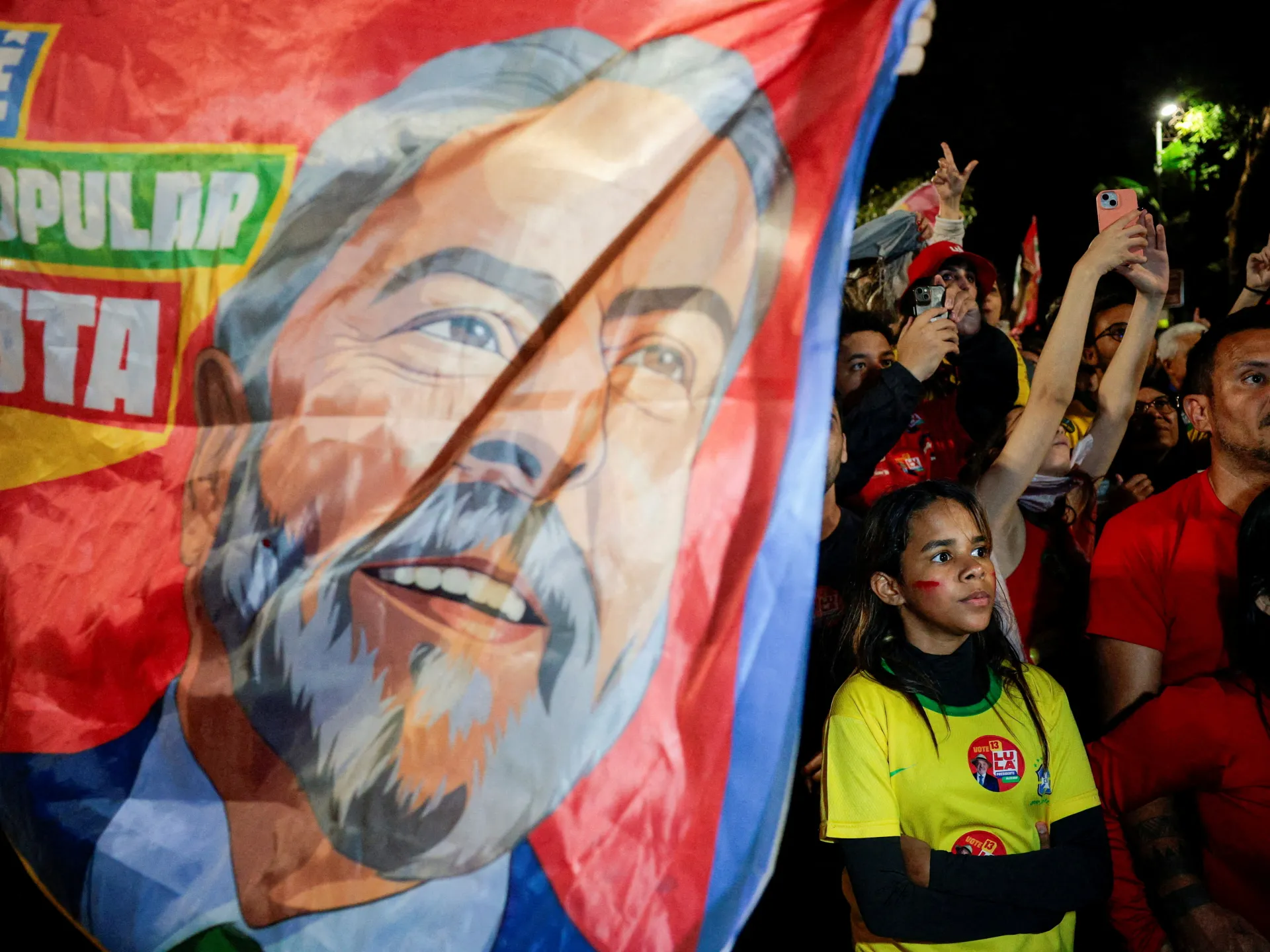
“He played an exponential role in this campaign in lifting the morale of our troops every day, morning, noon and night,” Lula told thousands of supporters who packed Paulista Avenue, the city’s main artery.

Just three weeks earlier, the president seemed to be in trouble. He had finished behind his right-wing rival Flavio Bolsonaro after the first round of voting, his campaign struggling to keep up with the right’s powerful social media operation.

Janones, who had also helped coordinate Lula’s digital operation in his run-off against Jair Bolsonaro in 2022, was convinced Lula’s campaign needed a change – and that he could help turn things around.

He posted a video declaring, “We are going to win this election. Lula will be re-elected president of Brazil.”

His plan centred on a WhatsApp channel he had launched months earlier.

Called Exercito do Lula, or “Lula’s Army”, it had about 60,000 followers after the first round.

By election day, Lula’s Army had grown to almost 11 million subscribers, with Janones widely credited with helping Lula stage his comeback.

How Andre Janones built Lula’s WhatsApp army

Janones is a lawyer and congressman who grew up in a working-class family in Minas Gerais. He made a name for himself through his social media commentary during Brazil’s 2018 truckers’ strike and was elected to Congress that year.

In 2022, he dropped his own presidential bid to endorse Lula, joining his run-off campaign.

“At the time, he became widely known for employing tactics similar to those used by Bolsonarism, despite operating on the left,” said Viktor Chagas, a professor at Fluminense Federal University who studies digital politics and online campaigning.

Janones coined the term “cultural Janonism” to describe his approach, which relied on urgent messages, memes and calls for supporters to take action, as well as what Chagas described as the occasional use of negative campaigning and “content of questionable origin”.

But the scale of Lula’s Army in 2026 was unprecedented, Chagas said.

In the video declaring that Lula would win, Janones urged supporters to enlist as “soldiers” by posting saluting emojis and joining his WhatsApp channel, where he assigned them what he called “missions”.

The tasks were simple, from recruiting three friends to sharing campaign videos to promoting hashtags.

They came in a relentless stream of messages from Janones himself, often written in capital letters. Supporters couldn’t reply, but they could forward the messages or react with emojis, often doing so in the tens of thousands.

Chagas described the strategy as a form of “electoral gamification”, with Janones setting targets for supporters to reach together.

For Andre Pagliarini, an assistant professor of history and international studies at Louisiana State University and the author of a book on Lula, the appeal of Janones’s approach was giving people something they could actually do to help Lula win.

“It became an organising platform that grew exponentially because it spoke to a desire that many Lula supporters evidently had to do something tangible to defeat Flavio Bolsonaro,” he said.

How Lula’s campaign changed its message

But the path to victory wasn’t just about mobilising supporters online.

Pagliarini credited the campaign for also finding a more effective way to tell the story of the president’s working-class past.

“The campaign’s mistake in the first round was to present this history as a finished monument, worthy of admiration but distant from the lives of the people it was meant to represent,” he wrote.

After Bolsonaro mocked the president for having nine fingers during the final televised debate, for example, Lula responded by recalling how he lost a finger at 17 while working a night shift at a factory. He then linked his experience to workers injured as a result of employers’ negligence.

“Unlike Flavio, he reminded voters, he knew the world of work because he had lived in it,” said Pagliarini.

After the debate, Janones spread the message online, promoting the hashtag #SomosTodos9Dedos, or “We Are All Nine Fingers”. Supporters shared the slogan, with some posting photographs of their own amputated fingers in solidarity.

Janones had also publicly called for simpler, less polished campaign videos that showed a more relatable side of Lula, drinking coffee, visiting people’s homes and talking to ordinary Brazilians. Around the same time, the campaign started posting more informal, selfie-style videos.

“Lula was looser in his political communication, less mediated,” Pagliarini said.

Screenshots from Andre Janones’s WhatsApp channel, Exército do Lula, or “Lula’s Army,” show messages urging supporters to gather on São Paulo’s Paulista Avenue to celebrate Luiz Inacio Lula da Silva’s election victory on October 25, 2026 [Exército do Lula]
Screenshots from Andre Janones’s WhatsApp channel, Exercito do Lula, or ‘Lula’s Army’, after Luiz Inacio Lula da Silva’s election victory on October 25, 2026 [Exercito do Lula/WhatsApp]

Did Lula’s WhatsApp army help him win?

It is difficult to establish whether Janones’s digital army actually delivered votes.

“I am not sure there is a way to empirically connect the group to the outcome,” Pagliarini said.

But he believes Janones helped turn the campaign around.

“Janones himself became a kind of character in the campaign, a cheerleading strategist who seemed confident in a plan that had been missing throughout much of the race,” wrote Pagliarini.

Chagas agreed that it was “difficult to imagine the outcome we achieved without Lula’s Army”, adding that the channel brought together left-wing supporters who had previously been scattered across fragmented online communities, and gave them a way to work together.

The challenge now is keeping that momentum going, Chagas said, pointing to the far right’s use of “permanent campaigning”, maintaining the engagement of supporters between elections.

On election night, at least, Janones kept his soldiers busy.

“EVERYONE TO PAULISTA TO CELEBRATE,” he wrote, urging them to gather on Sao Paulo’s Paulista Avenue. “NOW.”

Later, he asked them not to go to sleep, adding that he’d let them go once he got back from the celebrations.

“Then we’ll discuss a few days off for you,” he joked in a message that drew more than 225,000 reactions.

Source link

Lula’s victory echoes across BRICS after fears of a Bolsonaro win | Elections

When Brazil’s President Luiz Inacio Lula da Silva scored his surprise election victory on Sunday, winning an unprecedented fourth term in office, his supporters were euphoric.

The joy they felt over Lula’s victory has echoed across large parts of the Global South – and could restore some hope to the grouping that has sought to give emerging countries a greater stake on the world stage, the BRICS alliance.

Recommended Stories

list of 4 itemsend of list

At a time when United States President Donald Trump is seeking to reassert US power and has cast BRICS as a threat to US interests, Lula’s victory in Brazil offers the alliance a measure of political reassurance, experts say.

A win by his rival, Flavio Bolsonaro, could have threatened Brazil’s commitment to the bloc, given his links to Trump and calls to reconsider the country’s role in BRICS.

Instead, Lula’s return gives the grouping one fewer reason to fear a retreat from within – as it continues to help forge a more multipolar future for a world dominated by the US.

As Esmat Zaidan, professor of public policy at Qatar’s Hamad Bin Khalifa University, told Al Jazeera, “The victory of Lula is important to BRICS’ political continuation in the current climate as it seeks to increase the bloc’s role and make it stronger in global governance.”

A spared fracture

It was clear to analysts that Lula’s win would safeguard the continuation of the BRICS alliance, while under Bolsonaro, its future may have floundered.

Lula himself was one of the architects of the bloc when it was founded nearly two decades ago, and has sought to advance its role on the global stage.

According to Zaidan, Bolsonaro’s desire to reconsider Brazil’s participation in BRICS and instead pursue closer alignment with Washington would have weakened the bloc’s political cohesion and potentially slowed cooperation on trade and financial reform.

Bolsonaro had reportedly also promised the US Trade Representative that Brazil’s Pix instant payment system would stay out of non-Western payment schemes, as the US seeks to safeguard global dominance of the dollar, said Imran Khalid, a geostrategic analyst and senior fellow at Foreign Policy in Focus.

“BRICS makes decisions by consensus, so one unwilling founding member can slow everything down from the inside. That was the real risk, more than Brazil walking out,” Khalid told Al Jazeera.

Still, Zaidan cautioned that continuity of the alliance does not amount to total unity within.

“The member countries of BRICS have distinctly different economic interests and geopolitical goals,” he said. “Therefore, while Lula’s victory makes it easier for the BRICS bloc to continue working towards a common agenda, his election did not eliminate these distinct differences.”

Guy Burton, a geopolitical and policy analyst, agreed that the bloc’s differences will remain unchanged with Brazil’s election result.

“BRICS matters because it represents a large share of the world’s population, economy and trade. But it has never really acted as a political unit. Its members are too different,” he said.

“The bloc now includes Iran and the UAE, which sit on opposite sides of the current war. That tells you how limited its cohesion is,” Burton added.

More multipolarity, but not a counterweight to Washington

The apparent relief in the Global South to Lula’s win reflects a broader concern among many emerging economies about their exposure to decisions made in Washington, “particularly regarding trade, tariffs and international economic relations,” said Zaidan.

“For these countries, the issue is not necessarily opposition to the US. It is about having greater room to make independent decisions and avoiding excessive dependence on any single global power,” he said.

Khalid pointed to China and Russia’s support for Lula, with Xi Jinping backing him against outside interference, and the Kremlin praising his work for the BRICS alliance.

“Most of these countries do not want a fight with the United States; they want the freedom to say no to Washington without being punished for it,” he explained.

“A strong Brazil inside BRICS helps protect that freedom.”

Lula has long advocated for a more multipolar international system, in which emerging economies have a stronger voice when it comes to shaping international rules and institutions, added Zaidan.

Burton said even countries and regions beyond the Global South are looking to lessen their reliance on  Washington, including Europe, which is building its own security against Russia and in support of Ukraine.

“So states, whether in the Western camp or not, have accepted that they must pursue their own interests. That means working with whoever they can. We are moving into a genuinely multipolar world,” he said.

Still, BRICS’ diversity and its member states’ varied interests have meant it has never been a coherent counterweight to the West, experts said.

Many in the alliance maintain strong economic and security relationships with the US, said Zaidan.

“I would see Lula’s victory as strengthening the case for strategic autonomy rather than confrontation with Washington,” said the professor.

“BRICS is potentially more effective when it expands the choices available to its members, rather than defining itself simply through opposition to the United States.”

Burton agreed, pointing to Brazil’s changing ties with Trump over the years.

“Russia and China are the obvious US rivals. But India under Modi long had a close relationship with Washington, and with Trump in particular, even if that has weakened recently,” he said.

“Brazil, too, was close to Trump under Jair Bolsonaro, Flavio Bolsonaro’s father, when he was in office.”

Challenging dollar dependence

Among the BRICS’ many ambitions is to promote trade in local currencies rather than the US dollar – and Lula’s victory could provide the political foundation to build on these efforts, said Zaidan, given that Brazil is one of the largest trading economies in the bloc.

Khalid said that after the alliance scrapped the idea of a common BRICS currency at its most recent summit in New Delhi in September, its ambition for trade in local currencies has become far more viable.

“If the [BRICS’ New Development Bank] moves towards its goal of 30 percent of lending in member currencies, and Brazil and China settle more trade in reais and yuan as they agreed in 2023, reliance on the dollar falls step by step, without an open confrontation,” he explained.

But Zaidan said that political will alone is not enough.

“Countries also need reliable payment infrastructure, sufficient currency liquidity, appropriate financial regulations, and businesses willing to use these arrangements,” he said.

For now the dollar reigns supreme in foreign exchange transactions, and there may be no tipping point for another decade or so, Burton said.

Ultimately, though, Lula’s victory could help BRICS move from political discussions towards more practical financial cooperation, while reducing dollar dependence will be “gradual, uneven and driven as much by economic feasibility as by geopolitical ambition”, said Zaidan.

How Washington reacts to this is another variable; Trump’s government sits at the contradiction of wanting to remain the world’s superpower, while also retreating to a more protectionist America-first role, said Burton.

“Developments such as Lula’s re-election will only sharpen the pressures already building in the Global North,” said the expert.
Source link

Israel election turnout highest in 50 years as voting continues | Benjamin Netanyahu News

Almost 45 percent of Israelis had cast a ballot by mid-afternoon, but questions have been raised about possible voter suppression in Arab towns.

Almost 45 percent of Israeli voters had cast a ballot by mid-afternoon on Tuesday, according to Israel’s Central Elections Committee, marking the highest election turnout by 2pm (12:00 GMT) in 50 years.

The figure was 6 percent higher than at the same time in the last elections in 2022.

Recommended Stories

list of 4 itemsend of list

Mitchell Barak, a pollster and former aide to Prime Minister Benjamin Netanyahu, told Al Jazeera that voter turnout “is really high and that’s good”.

“I think … it will probably pass its historic peak in ‘73 – when Israel was also involved in a huge war – so draw what conclusion from that you will,” he added.

The election is largely seen as a referendum on Netanyahu’s handling of the October 7, 2023 Hamas-led attacks and the wars that followed, the most intense period of combat for Israel since the 1973 surprise military campaign by Egypt and Syria.

“Those numbers are going to help the incumbent parties,” Barak said, “as the 3.25 percent threshold a party needs to get into the Knesset remains, the number of votes you need to meet that threshold increases dramatically.”

Israeli officials noted that several polling stations had faced exceptionally long lines, which were attributed to high voter turnout despite rainy and blustery weather in parts of the country, and a flood warning in some areas.

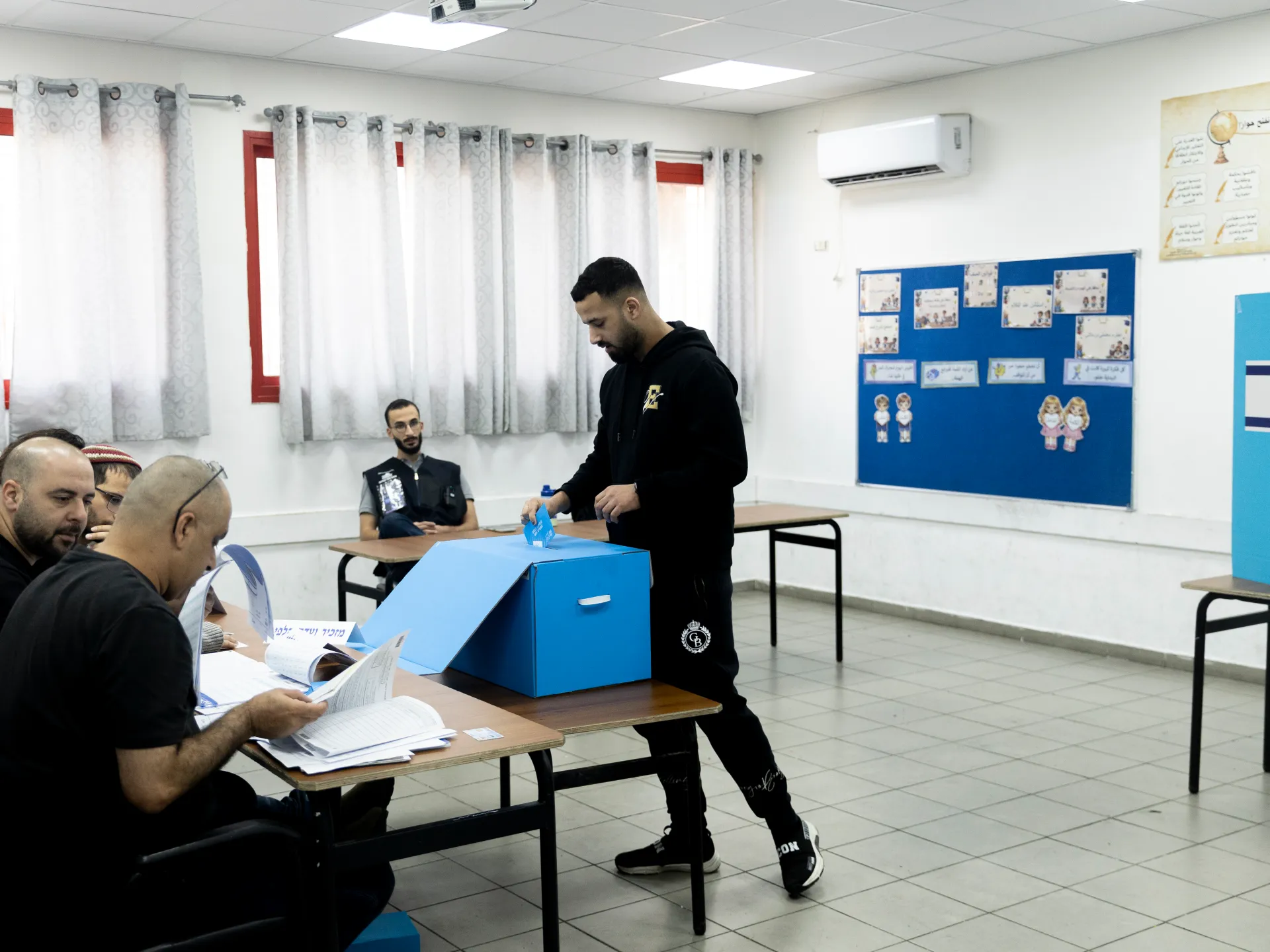
A Palestinian citizen of Israel casts her ballot in the country's general election at a polling station in Umm al-Fahm, Israel, Tuesday, Oct. 27, 2026. (AP Photo/Mahmoud Illean)
An Israeli Palestinian casts her ballot in the country’s general election at a polling station in Umm al-Fahm, Israel, Tuesday, Oct. 27, 2026 [Mahmoud Illean/AP Photo]

Arab vote

In a message more than five hours after polls opened, Netanyahu urged supporters to vote, saying turnout was high among his opponents on the left and among Palestinian citizens of Israel, about a fifth of the population.

“We need it to be high too. You all need to stream to the polls,” he said. “This is a fateful moment.”

Netanyahu had repeatedly warned supporters of the prospect of high turnout among Palestinian citizens in Israel ahead of the vote, seeking to mobilise his base under the slogan “the right or Palestine”.

Those voters were casting ballots in “unprecedented” numbers, Palestinian candidate Ahmed Tibi said.

Netanyahu and his main rival Gadi Eisenkot have ruled out partnering with Arab parties, citing a lack of shared values, although some possible scenarios envision them propping up a minority government to ensure Netanyahu is removed from office.

Meanwhile, an Israeli rights group has filed a complaint with the country’s election commission warning that widespread delays could be suppressing the vote among Israeli Palestinians.

Though delays could be a result of high voter turnout, the Association for Civil Rights in Israel (ACRI) said in its complaint to the Central Elections Committee that delays had been reported in at least 18 communities. It asked the committee to investigate “whether these delays are deliberate.”

The ACRI also reported “a large presence” of police and National Guard officers at a polling station in the Negev Desert, raising concerns that officers were using crowd control as a pretext to prevent people from entering to vote.

Source link

Former PLO official says Netanyahu-Eisenkot coalition could be possible | Benjamin Netanyahu

Former PLO official Xavier Abu Eid says Israel’s election outcome remains uncertain, with polls divided between Benjamin Netanyahu and Gadi Eisenkot. He suggests the two rivals could potentially form a national unity government despite their political differences.

Source link

Robert F Kennedy Jr. says Arabs don’t produce science or literature | US Midterm Elections 2026

US Secretary of Health Robert F Kennedy Jr. has said that Arabs don’t produce science or literature, or win Nobel prizes.

RFK Jr.’s remarks, which were made during a Republican rally, have been widely condemned as factually incorrect and racially biased.

Source link

Palestinian citizens of Israel can vote, but cannot expect change | Israel Election 2026

For the majority of Israelis, the general election on October 27 is a choice between Prime Minister Benjamin Netanyahu and the forces that oppose him, led by former general Gadi Eisenkot. But for the Palestinian citizens of Israel, who make up 20 percent of the population, the upcoming polls present a different dilemma.

As the political mainstream in Israel continues to shift to the far right, Palestinian citizens face growing threats to their political and collective rights. Palestinian communities in Israel experience increased violence, while settlers are encroaching on their boundaries. The recent push to expand policing and militarisation of civilian life is another source of growing anxiety within the Palestinian population.

In this context, the anti-Netanyahu bloc does not seem to offer the prospect of policy reversal or change. Therefore, the question on many Palestinian minds is whether voting in the Israeli elections can make any difference at all.

Recolonisation of 1948 Palestine

Since the Nakba of 1948, the Palestinians who managed to remain in their homes in what was declared as territory of the new State of Israel have had a different fate than the Palestinians in the West Bank and Gaza. In 1952, they were granted Israeli citizenship, and in 1966, the martial law under which they were forced to live was lifted.

Although Palestinian citizens of Israel have the right to vote and participate in politics, citizenship has not shielded them from the broader system of dispossession and attempts to reshape their Palestinian identity and national belonging.

Through land confiscation and the regulation of education and culture, the Israeli state has sought to detach Palestinians from their historical roots and collective past, promoting instead a model of the “Arab Israeli” as a citizen whose identity is separate from its Palestinian and Arab national context.

Formal citizenship has not secured substantive equality for Palestinians as they face discriminatory laws, systemic underfunding of basic services, and political and socioeconomic marginalisation.

Instead of engaging in direct violence towards Palestinian citizens – as it has done in the West Bank and Gaza – the Israeli state has instead “outsourced” brutality to criminal networks.

As a result, Palestinian communities have faced killings, shootings, bombings and arson while Israeli law enforcement has largely ignored the problem. More recently, this problem has escalated, as organised crime groups obtained advanced weapons reportedly stolen from Israeli army stockpiles or smuggled across borders. This growing militarisation of organised crime has claimed hundreds of lives.

In parallel, Israeli settlements next to Palestinian communities have expanded, accompanied by accelerated seizure of land. This process of “recolonisation” began in mixed cities, such as Jaffa and Lydd, where religious-nationalist settler groups started establishing themselves in Palestinian neighbourhoods in 2021.

Since October 2023, this process has accelerated. In August, Israel’s Finance Minister Bezalel Smotrich unveiled his party’s plan to “Judaise” the Naqab and northern Israel. He proposes to add one million Jewish residents to the two regions, establishing 40 new settlements and dozens of farms, expanding existing settlements, and creating hundreds of thousands of new housing units.

The idea is to extend the model of territorial control from the occupied West Bank into the Naqab and northern Israel, where Palestinian communities are concentrated.

There are also indications that the policing of Palestinian towns and villages could increasingly fall under the National Guard, established under National Security Minister Itamar Ben-Gvir.

The idea of creating the force was prompted by the May 2021 protests, known as the Dignity Uprising, which spread across Palestinian communities in Lydd, Haifa, Umm al-Fahm, and dozens of other towns and villages.

Ben-Gvir has advocated expanding the state’s capacity to suppress such unrest. Although the National Guard’s precise role and operational framework remain under development, its potential deployment against mass protests raises serious concerns about the right to protest and the protection of democratic freedoms.

The government has strengthened settler security squads and integrated them into a broader security framework, raising concerns about the growing role of armed civilian groups in enforcing control over Palestinian communities.

At the same time, Ben-Gvir has widened access to personal firearms, issuing 300,000 gun licences since taking office.

Together, these measures normalise civilian policing and deepen the militarisation of everyday life, reinforcing the unequal distribution of coercive power in a society structured on the dispossession and subordination of Palestinians.

The Palestinian response

Parties seeking to represent Palestinian citizens of Israel, such as the United Arab List (Ra’am), led by Mansour Abbas, have long argued that parliamentary participation and support for the anti-Netanyahu camp can help remove the far right from power and halt its settler-colonial agenda. But the party’s own track record proves this premise wrong.

Ra’am joined the coalition government formed after the elections in 2021, which excluded Netanyahu, but it failed to bring about fundamental changes in the conditions of Palestinian citizens. The coalition was fragile and often rocked by deep ideological contradictions.

In 2022, Mazen Ghnaim, a member of Ra’am, publicly acknowledged that he could not push through policies that would benefit the Palestinian population, despite his party being part of the ruling coalition and despite promises being made that such policies would be accepted. He also lamented the heavy criticism he faced whenever he was visiting Palestinian communities.

Ra’am’s experience in that coalition illustrated the challenge of sustaining Palestinian political participation in a government whose other constituent parties uphold exclusionary nationalist policies.

The problem, therefore, extends beyond Netanyahu himself: Palestinian support for the anti-Netanyahu camp cannot translate into meaningful policies that challenge the broader structures of discrimination and dispossession Palestinian citizens of Israel face.

Voting may offer a way to slow down this project, but it cannot reverse the deeper transformation taking place within Israeli society. The cultural shift towards fascism extends beyond the government and its political leadership, becoming increasingly embedded in social attitudes and everyday life.

That said, I believe another four years of far-right rule would pose an immediate threat to Palestinian communities and their rights. Therefore, I will vote in Tuesday’s election.

But Palestinians need to recognise that electoral participation must be accompanied by a more radical political response capable of confronting the structures and ideologies driving this transformation. This requires, among other things, reforming the High Follow-Up Committee for Arab Citizens of Israel and rooting it more firmly in Palestinian society through popular committees and grassroots organising.

It also demands a broader commitment to democratisation and de-Zionisation across historic Palestine, as part of a larger political project aimed at building a different future through alternative institutions, mechanisms, and forms of collective action.

Whatever the Israeli state might claim, the fate of the Palestinian citizens of Israel is tied to the fate of the rest of the Palestinian population. That is a realisation that Palestinian political leaders must finally embrace.

The views expressed in this article are the author’s own and do not necessarily reflect Al Jazeera’s editorial stance.

Source link