Elections

Bolsonaro’s party accepts Brazil election after Trump calls vote ‘rigged’ | Elections News

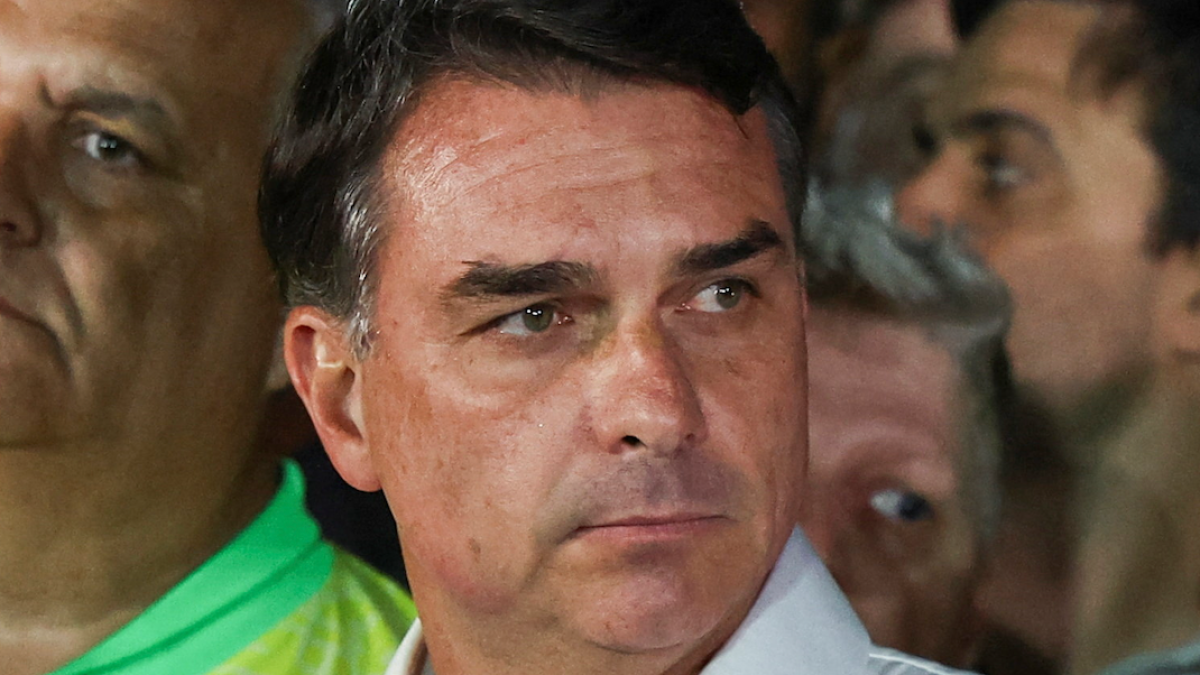
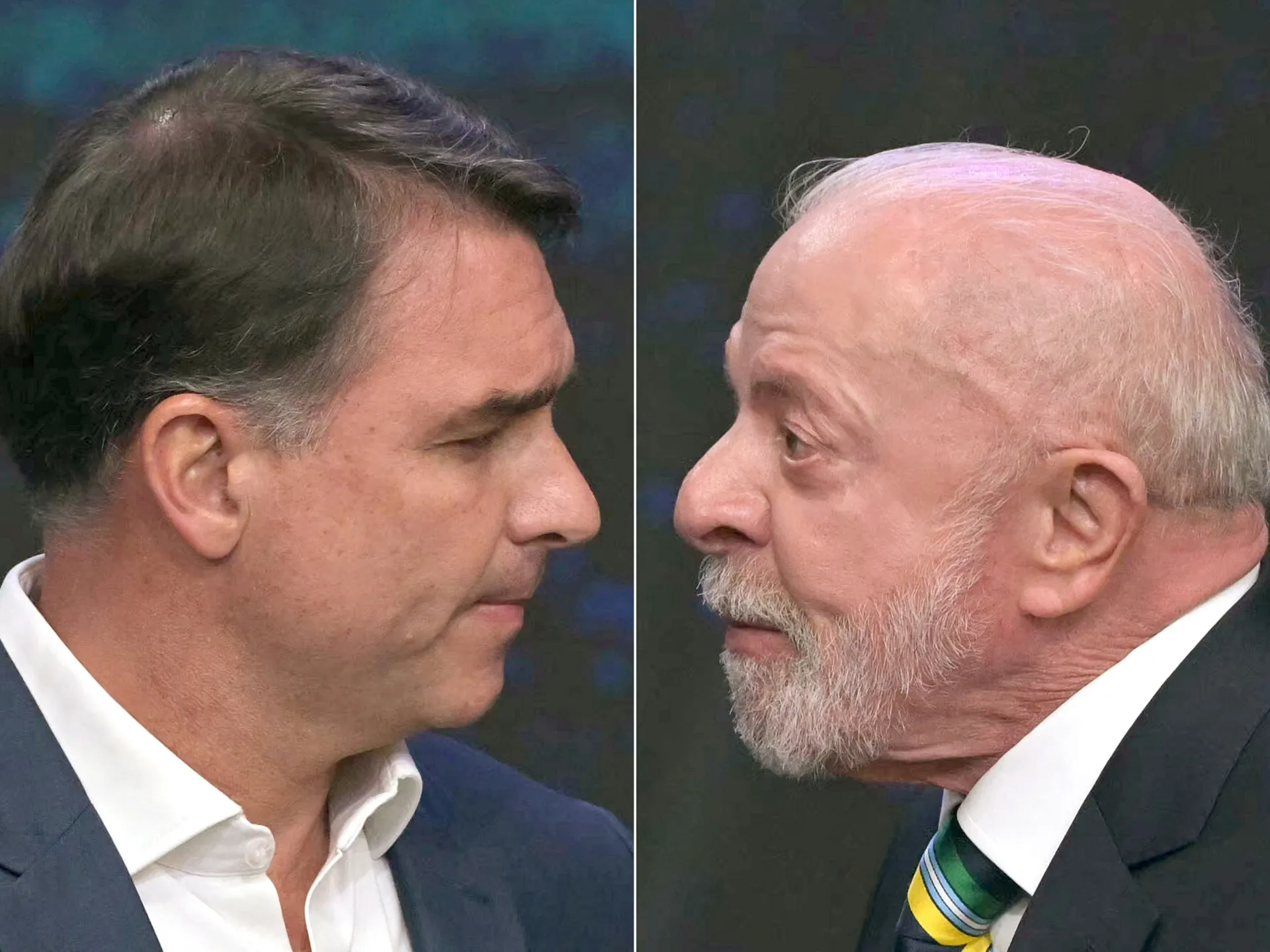
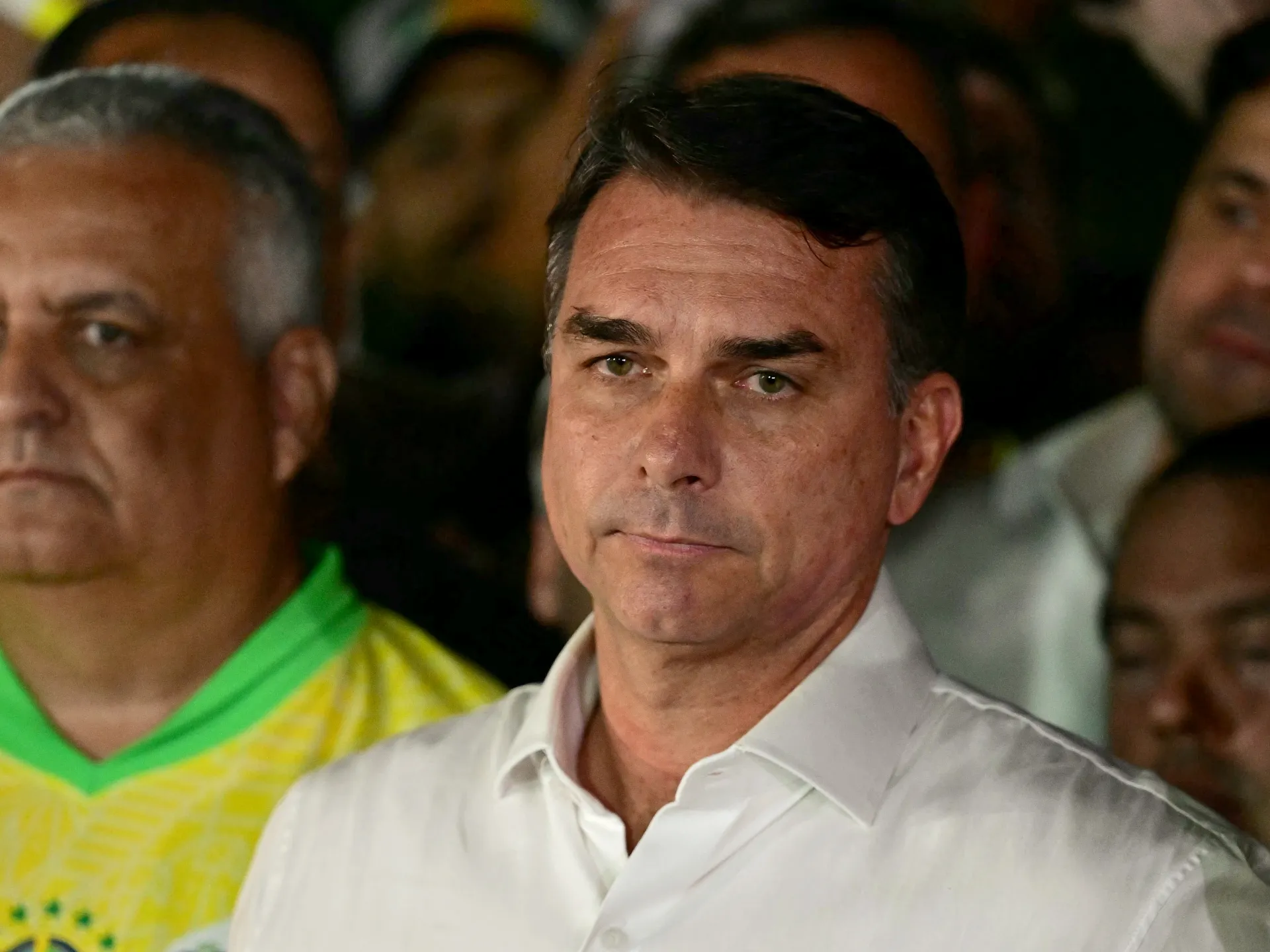
The political party of Senator Flavio Bolsonaro has acknowledged the result of Brazil’s presidential run-off, despite the right-wing candidate pledging to annul the outcome.

On Monday, Valdemar Costa Neto, the leader of the right-wing Liberal Party, issued a statement saying his political group had accepted the outcome of the vote.

Recommended Stories

list of 3 itemsend of list

Still, he echoed Bolsonaro’s concerns about the circumstances surrounding the election.

“We recognise the presidential election results,” Costa Neto said. “But we believe the issues raised need to be properly clarified.”

On Sunday, Bolsonaro was defeated by left-wing incumbent President Luiz Inacio Lula da Silva by a margin of more than 4.4 million votes.

Bolsonaro has yet to formally concede. In a post-election speech, he called the election results “unacceptable”, citing a last-minute extension to voting hours.

“We will take legal action,” he told supporters. “I will request that these elections be annulled.”

An extension to Sunday’s vote had been sought by the campaigns of both candidates — but for different reasons.

Bolsonaro’s camp had pointed to inclement weather that impeded some voters from reaching polling stations. Parts of southern Brazil, considered a right-wing stronghold, had experienced heavy rains on Sunday.

Lula’s campaign, meanwhile, pushed for longer voting hours after it accused some cities of limiting public transportation on election day.

The left-wing leader’s allies framed those reductions in service as an attempt at election interference, aimed at preventing Lula’s working-class base from voting.

Media reports indicated that Pablo Souza, a transportation official in the city of Salvador, was arrested on Sunday over the matter.

In response to the petitions, Supreme Court Justice Cristiano Zanin agreed to extend voting by two hours.

Whereas polls across the country had been slated to close at 5pm Brasilia time (20:00 GMT), Zanin’s order allowed those that had not already closed to remain open until 7pm (22:00 GMT).

Following his loss, Bolsonaro cried foul, saying that the justice’s decision had disadvantaged his voters.

He pointed to Zanin’s relationship with Lula as support: Lula had appointed Zanin to the high court in 2023, and Zanin had formerly served as the left-wing politician’s personal lawyer.

“With a simple stroke of a pen, at the request of a former partner, [Zanin] changed the rules of the game mid-match,” Bolsonaro said in his address on Sunday night.

But experts signalled they were sceptical of Bolsonaro’s claims of malfeasance.

An analysis by Pedro Burgos, a professor at the Brazilian educational institute Insper, found that the extension resulted in 35,000 additional votes across the country, less than 0.03 percent of the total.

That amount was far short of Lula’s 4.4 million vote advantage. The incumbent won more than 64.25 million votes, compared with Bolsonaro’s 59.83 million.

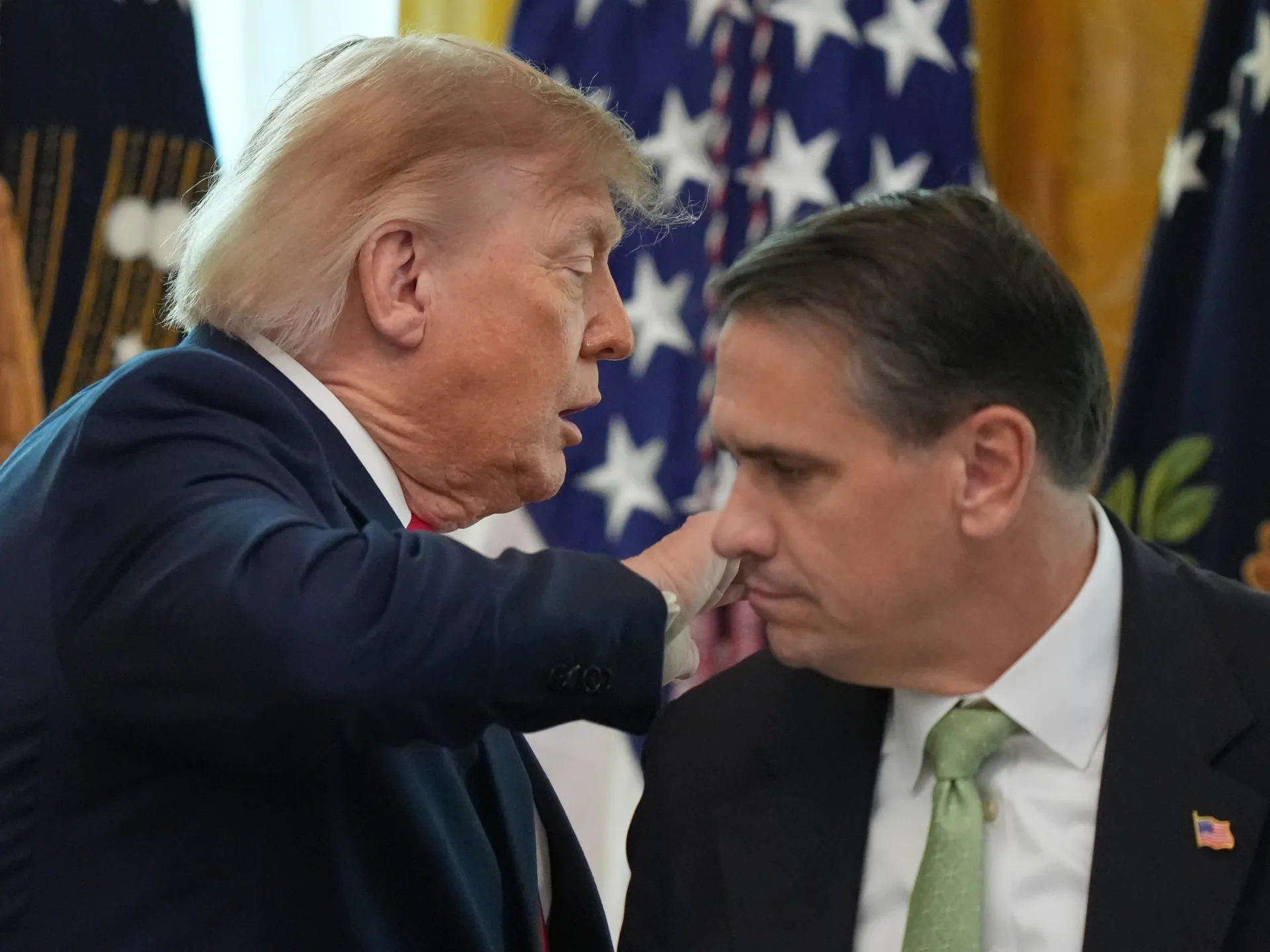
Still, some right-wing allies rallied to Bolsonaro’s support. US President Donald Trump, who has clashed with Lula in the past, told reporters that the vote seemed “rigged”.

“Elections have to be indisputable and it looked very bad to me,” Trump said on Monday. “It looked like another rigged election, frankly.”

Still, Trump stopped short of suggesting that he would get involved on behalf of Bolsonaro, saying instead he “did not take sides” in the election.

Bolsonaro’s refusal to accept his loss has raised concerns about whether he will abide by the democratic process or follow in the footsteps of his father, Jair Bolsonaro, who served as Brazil’s president from 2019 to 2023.

After his defeat to Lula in the 2022 election, the ex-president refused to acknowledge the outcome.

Instead, he and his allies sought to overturn the results, including through a legal challenge, and prosecutors accused him of plotting a coup to prevent the legal transfer of power.

Jair Bolsonaro is currently serving a 27-year prison sentence on coup-related charges.

Separately, he was also barred from serving in public office for eight years, after a court found he had misused his public office to spread misinformation about the election.

Flavio Bolsonaro, along with his siblings, has sought to have his father released. The family has denounced the elder Bolsonaro’s trial as a case of political persecution.

Still, it is unclear whether Flavio Bolsonaro will continue with his legal challenge over Sunday’s election.

The Brazilian news outlet Folha de S Paulo reported on Monday that legal advisers and political allies have convinced Bolsonaro to abandon his quest to have his loss annulled, citing the large margin of Lula’s victory and its validation by the Supreme Court and election authorities.

Bolsonaro also announced on Monday that federal police asked him to hand over his passports amid speculation that he could leave the country following his loss.

He said that he would comply with the order and had no plans to leave.

“To withstand the chaos, I’m going to organise the opposition,” the right-wing politician said.
Source link

Serbia’s ‘students’ celebrate for a second night after election victory | Elections

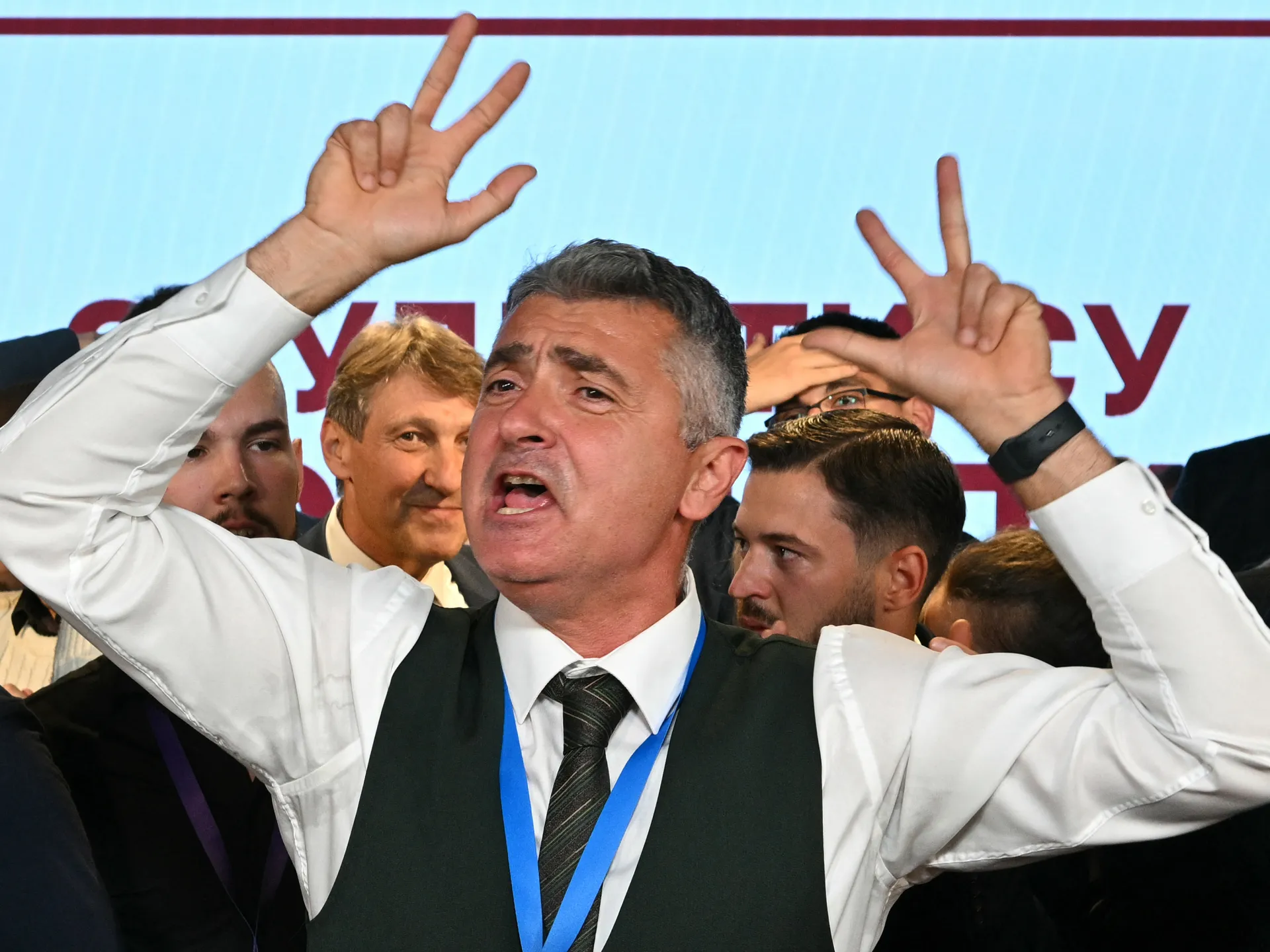
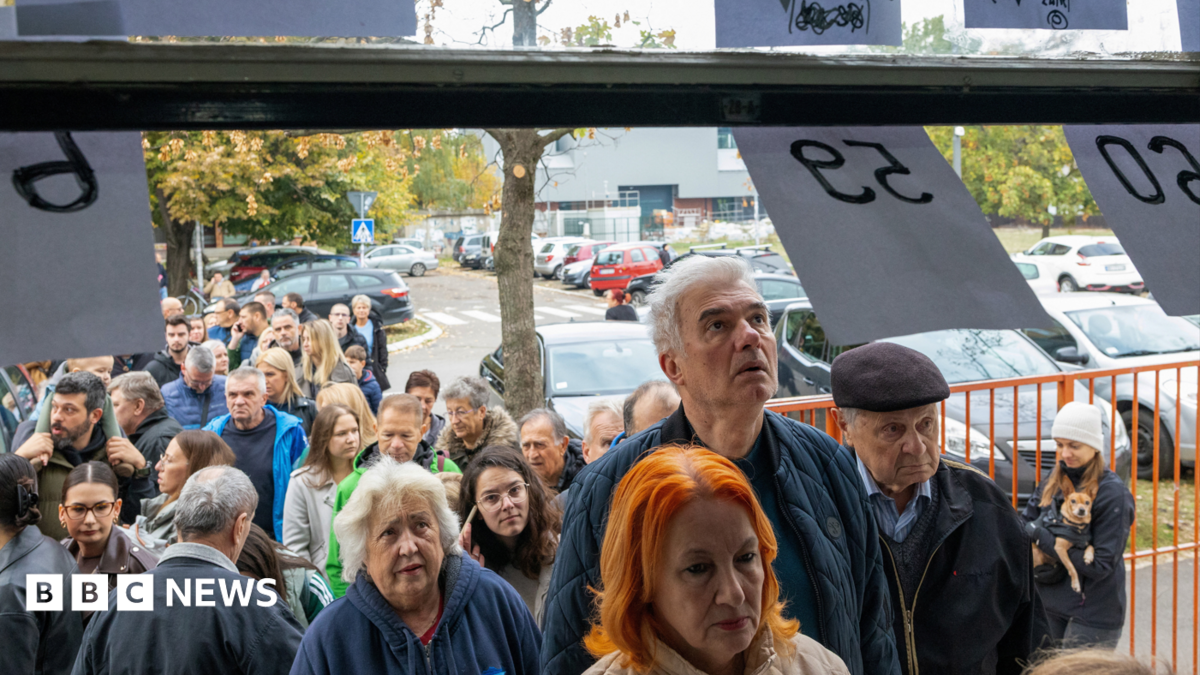
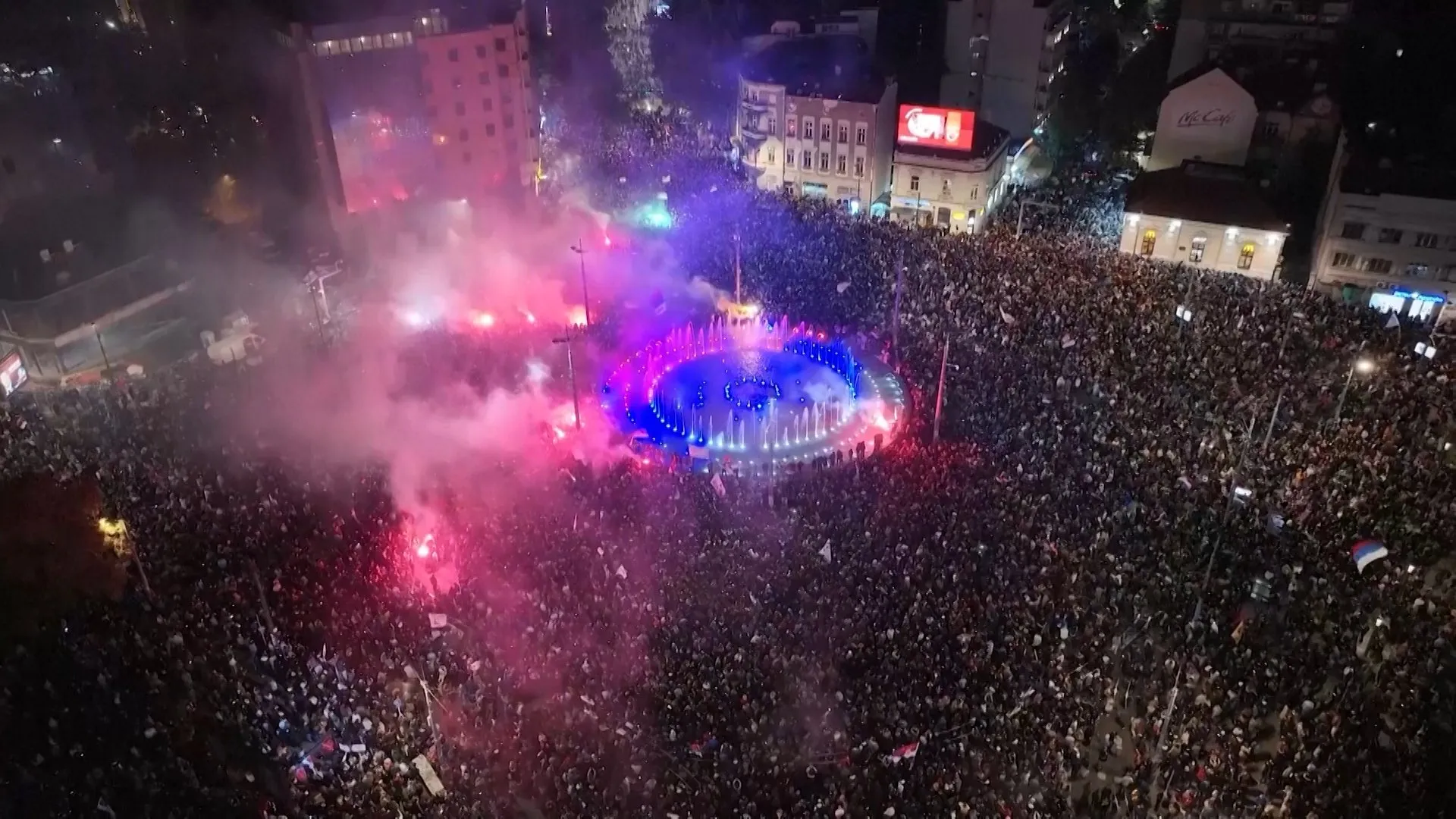
Thousands gathered on the streets of the Serbian capital Belgrade for a second night to celebrate the victory of the student-led protest movement in parliamentary elections. The result removed the party of former president Aleksandar Vucic from power.

Source link

What will Lula’s fourth term mean for Brazil? | Elections

Luiz Inacio Lula da Silva wins a fourth term as Flavio Bolsonaro disputes the result. Can Lula deliver on his promises of change?

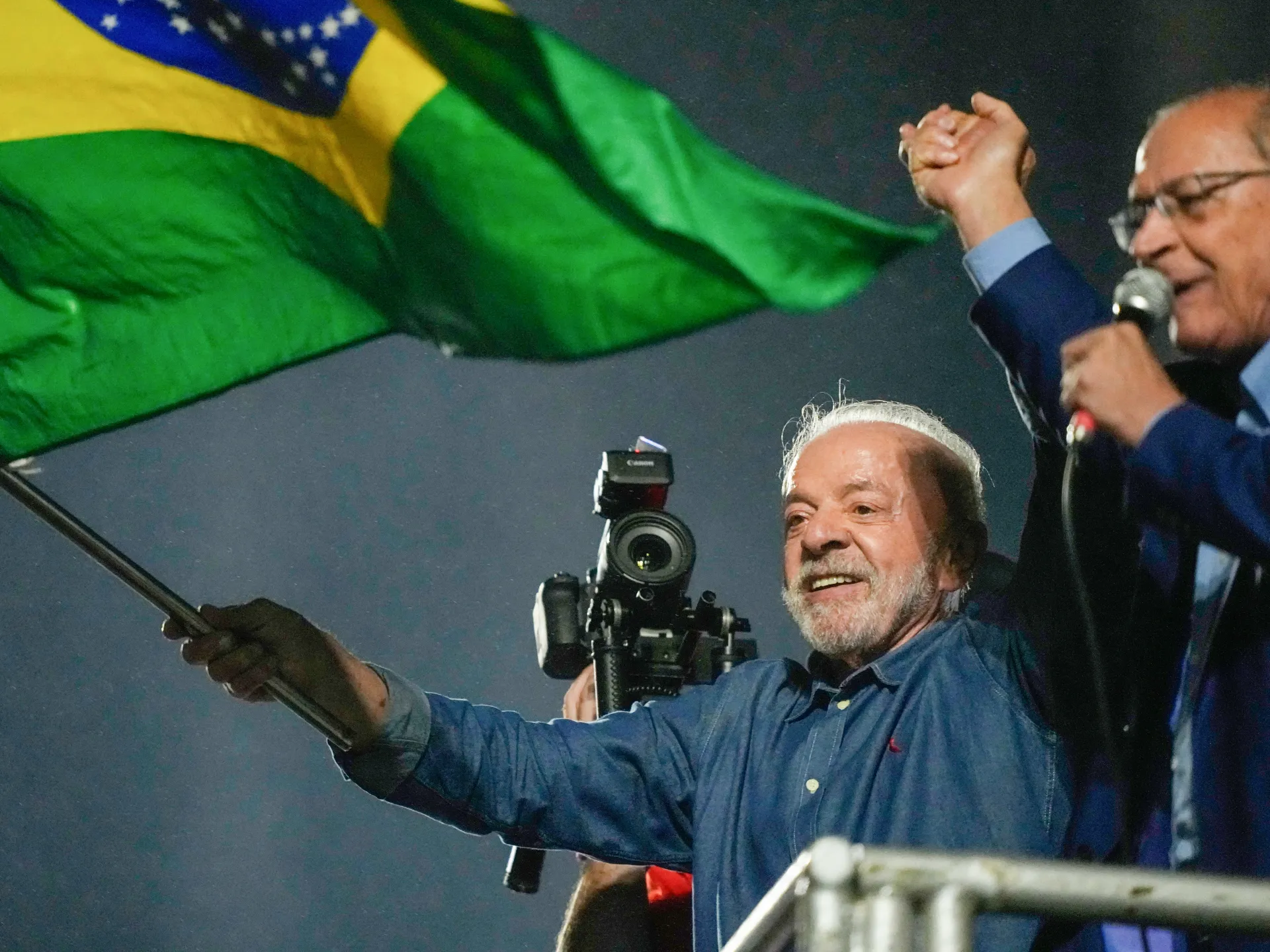
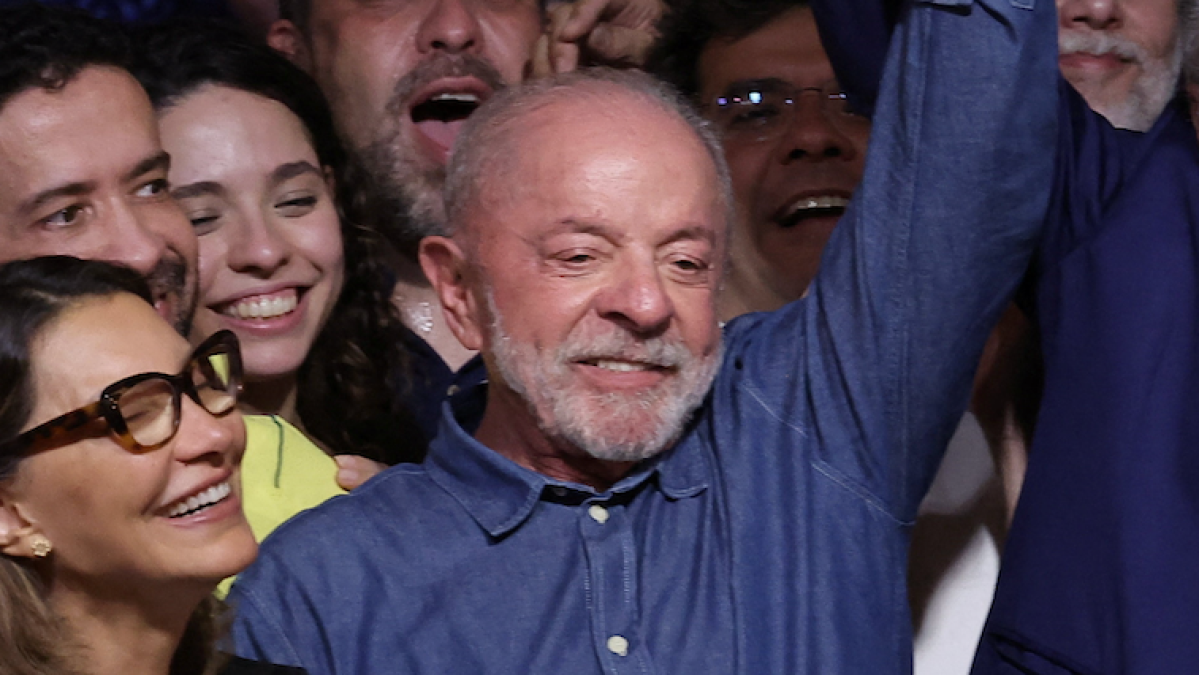
Brazil’s President Luiz Inacio Lula da Silva delivered a defiant message after being declared the winner of a run-off vote on Sunday.

He lost round one to his right-wing rival. But he made history by coming out on top in the second poll.

Recommended Stories

list of 3 itemsend of list

Opponent Flavio Bolsonaro has disputed the result and says he wants it annulled.

This will be Lula’s fourth nonconsecutive term in office. He’s promised a new approach to governing. But many challenges lie ahead. So, how will his government handle them?

Presenter: James Bays

Guests:

Thiago Vidal – Political risk specialist and the director of Political Analysis at Prospectiva Public Affairs

Robert Valencia – Latin American affairs analyst and a former journalist

Graziella Testa – Professor of Political Science at the Federal University of Parana

Source link

‘Deflections’: Abdul El-Sayed responds to Trump’s anti-Muslim attacks | US Midterm Elections 2026 News

The Democratic candidate for the US Senate has been the subject of Islamophobic attacks from Trump.

Detroit, Michigan – Democratic Senate candidate Abdul El-Sayed has dismissed United States President Donald Trump’s anti-Muslim attacks against him, saying that they are an attempt to move the attention away from the president’s own record.

At a news conference in Detroit on Monday, El-Sayed said Trump is trying to distract from issues that matter to Americans – including petrol prices and the war on Iran – by accusing the Democratic candidate of being a “jihadist”.

Recommended Stories

list of 3 itemsend of list

El-Sayed called the attacks “deflections and deceptions based on no evidence”.

“They have nothing to say about solving the problems in your life. They’re not talking about you,” the Democratic candidate said of Republicans.

“They’re not talking about your gas or your groceries … They’re not talking about clean air or clean water. They’re not talking about any of the things that the government is actually supposed to solve. Why? Because Donald Trump has created those problems.”

At a rally in Michigan on Sunday, Trump unleashed repeated baseless claims against El-Sayed, accusing the Democrat of wanting to impose “Sharia law” on the country.

“He would be the only senator that will have to go through a metal detector before he’s allowed to go into the Senate,” Trump said. “I want him to have a metal detector.”

El-Sayed laughed off the suggestion that he may personally be a physical threat to Congress. “He knows I got those Wolverine claws,” he said, a reference to the sports teams of his alma mater, the University of Michigan.

The progressive Democrat and former public health official is locked in a close race with former Republican Congressman Mike Rogers, a contest that could decide the Senate majority for the next two years.

Rogers has made unfounded allegations linking El-Sayed to the Muslim Brotherhood, Hamas and Hezbollah a central point of his campaign.

On Monday, El-Sayed said most Americans reject such attacks.

“There are always a few small people who want to make America small like that. You see them; they’re very loud, and they bark,” El-Sayed said.

“The vast majority of folks in this state believe in a big America. They’re open-minded. They’re big-hearted. And the story of America is those who believe in big America, overcoming the deception, the distraction, the sad attempts of the small-minded to make us small.”

He added that “Michiganders are a lot bigger than that”.

El-Sayed also addressed Trump’s statements mocking his name and misrepresenting it as “Mohamed”.

“My name and my faith are not the reason you can’t afford your gas – not the reason you can’t afford your groceries, not the reason you can’t pay your rent, your mortgage, not the reason you can’t see a doctor,” he said.

Source link

Brazil’s real sinks after Lula’s re-election victory | Financial Markets News

Investors react to Lula’s election victory with a sharp decline in the Brazilian real and concerns over increased spending and fiscal challenges.

Brazil’s real dropped against the United States dollar on the heels of Brazil’s President Luiz Inacio Lula da Silva’s unexpected re-election after right-wing Flavio Bolsonaro, the son of former President Jair Bolsonaro, led in the first round of voting earlier this month.

Brazil’s currency dropped against the dollar by 12 percent in spot trading. Bovespa stock index futures tumbled nearly 15 percent on Monday.

Recommended Stories

list of 3 itemsend of list

“I’m not surprised the real is sinking sharply; traders are covering their bets that assume a Bolsonaro victory and tighter fiscal policy,” Rachel Ziemba, adjunct senior fellow at the Center for a New American Security, told Al Jazeera.

Brazil’s stock exchange halted trading for 30 minutes. The Bovespa index fell 10 percent from its previous close, triggering a circuit-breaker safety mechanism and reversing a rally earlier this month amid expectations of a shift to the right after Bolsonaro won the first round.

Ziemba says Bolsonaro’s refusal to concede the election has driven some financial uncertainty.

“The market pressure is also amplified by the objections raised by Bolsonaro, but the scale of the victory suggests that the result will stand,” she said.

Interest rate futures had also reflected expectations that tighter fiscal policy under Bolsonaro would allow borrowing costs to decline.

“They [investors] assume more domestic spending and higher rates in Brazil. However, the real is still likely to be supported by strong commodity revenues,” Ziemba noted.

Stocks closed on Friday almost 7 percent above their level before the first round, while the Brazilian real was nearly 5 percent stronger against the US dollar.

Interest rate futures are up 3.1 percent, rising sharply after President Lula’s win. Interest rate futures had previously reflected a tighter fiscal policy amid expectations that Bolsonaro would oust the incumbent and that he would allow borrowing costs to decline.

Lula faces an increase in Brazil’s debt and will be challenged with protecting both social programmes and investment, with investors looking for signs of whether his gradual fiscal approach can bring borrowing costs down.

Lula’s team aims to produce a budget surplus of about 1.3 percent of gross domestic product (GDP) by 2030. That would leave money to cover part of the interest bill, reducing the need for fresh borrowing. But public debt already exceeds 82 percent of GDP, while pensions and other legally required spending limit where savings can come from.

“Lula’s policies have talked about spending cuts, but he has not gone into the details of how that is going to look,” said Divya Singaravelu, head of research at Meridian 1305 Capital.

Attention will now turn to Lula’s choice of finance minister and what it signals about his fiscal approach.

Source link

US foreign aid to Israel highlighted in campaign ad in support of El-Sayed | Donald Trump

A new political campaign ad in support of Democratic US Senate candidate Abdul El-Sayed is generating conversation online. Released by Cenk Uygur’s Rebellion PAC, the video highlights US foreign aid to Israel as Americans struggle with rising living costs.

Source link

Serbia after Vucic: Who will be PM and when will a government be formed? | Elections News

Uncertainty remains over key positions after student-led movement deals blow to longtime leader’s political dominance.

A student-led opposition movement has emerged victorious in Serbia’s snap parliamentary election, ending former President Aleksandar Vucic’s long grip on power.

The Student List’s win on Sunday followed nearly two years of youth-led protests triggered by the death of 16 people in a railway station canopy collapse in the city of Novi Sad in 2024.

Demonstrations demanding accountability quickly evolved into a wider political campaign against alleged corruption and capture of democratic institutions. In its electoral programme presented in September, the Student List said fighting corruption and organised crime were among its main priorities. It also pledged to raise living standards, boost employment, improve education, ensure media freedom and the independence of Serbia’s institutions.

After declaring victory on Sunday, the movement also said it would work to improve relations with neighbouring countries following a period of tension during Vucic’s more than decade-long rule.

Here’s what you should know:

What are the latest results?

The Republic Election Commission (RIK) announced on Monday that the Student List had won 52.54 percent of the vote, based on 8,077 processed polling stations out of 8,392.

The figures also showed the United Serbia list, led by Vucic’s Serbian Progressive Party, had secured 39.29 percent of ballots cast.

Voter turnout stood at 68.78 percent, a record high in more than 30 years, according to RIK data on Sunday.

What’s next?

While the final election result is not yet known, the figures mean that the Student List will be able to form a majority in Serbia’s 250-seat parliament on its own.

The bloc is projected to win 140 seats, well ahead of the 126 mandates required for a majority, while United Serbia is expected to have 103.

The remaining seats are set to go to the Alliance of Vojvodina Hungarians (three); the Albanian political bloc (two); and the Rasim Ljajc-Ljudski and SDA Sandzak lists, with one each.

Who could be the new prime minister?

Unlike United Serbia, which named Vucic as its candidate for prime minister before the election, the Student List made no such announcement during the campaign.

Since its formal creation, the list has avoided highlighting single candidates, eager to emphasise the collective nature of the movement that brought together academics, doctors and workers.

During the campaign, the movement was led by Ilija Srdanovic, a professor at the Faculty of Medicine at the University of Novi Sad. The cardiologist is now seen as the most likely candidate to become the next prime minister, but it remains unclear who will take over key ministries, including those of internal affairs, finance and justice.

When will the new government be formed?

This depends on when the final election results will be announced and when parliament convenes.

The new National Assembly must be established within 30 days of the final results being announced.

A government must be formed within 90 days after that – but the Student List’s clear majority removes the need for lengthy coalition talks.

What about the president?

Vucic has dominated Serbia’s politics – first as prime minister and then as president – since 2014.

Following his call for the snap parliamentary vote last month and his resignation as president, the post has been held temporarily by Ana Brnabic, the president of the National Assembly.

Brnabic is obliged to call for an extraordinary presidential election which must be held no later than three months after the end of Vucic’s mandate.

Vucic resigned on September 27 , so the deadline to hold a vote is December 27 .

The president of Serbia is elected directly by the citizens, not by the representatives in the assembly, but the post is largely ceremonial.

Source link

Lula’s victory may be a turning point for Latin America | Elections

At 80, President Luiz Inacio Lula da Silva has pulled off an extraordinary political victory. After losing the first round to Flavio Bolsonaro, son of former President Jair Bolsonaro, by 47 percent to 45 percent, Lula defied the odds to secure a stunning second-round victory, with 51.8 percent of the vote against Bolsonaro’s 48.2 percent.

His triumph confounded every pre-election poll and crowned a dramatic campaign revival that few had anticipated.

Lula’s victory in Latin America’s largest country does more than halt the far right’s return to power in Brazil. It breaks a succession of right-wing electoral victories across the region and deals a major blow to United States President Donald Trump’s increasingly interventionist agenda in the Western Hemisphere.

When Bolsonaro unexpectedly defeated Lula in the first round, the result sent shockwaves across Brazil and beyond. For the government, the defeat was particularly startling given its strong socioeconomic record. What followed was an extraordinary three-week political mobilisation that transformed the sluggish first-round campaign of Lula’s Workers’ Party into an existential confrontation over the future of democracy and sovereignty in Brazil.

The economic record was hardly that of a government heading for defeat. Brazil’s economy grew by a cumulative 9.2 percent between 2023 and 2025, compared with an average of just 5.6 percent among its South American neighbours. Unemployment fell from 9.3 percent in 2022 to a historic low of 5.4 percent in 2026.

Brazil also exited the United Nations Hunger Map in 2025, after having returned to it under the Bolsonaro senior administration. In the Amazon, deforestation fell to its lowest level in decades, a sharp reversal of the trend under his predecessor.

Not everything has been rosy under the Lula administration. Millions of Brazilians have remained trapped in credit-card debt, struggling with extremely high interest rates, while an explosion of online gambling has devastated the livelihoods of families. The run-off result sent a clear signal that there was social discontent.

Lula responded with unusually bold measures: a sweeping debt-relief initiative and restrictions on online betting, as well as expanded social benefits, fuel subsidies, and the transition from a six-day to a five-day working week. These policies sought to reconnect the government’s macroeconomic achievements with the everyday economic anxieties of Brazilian voters.

Bolsonaro offered a radically different vision for Brazil: sweeping spending cuts, privatisations, lower taxes and, above all, an iron-fisted response to crime and insecurity. His proposals included building five maximum-security prisons modelled on El Salvador’s notorious penitentiary system and authorising lethal force against heavily armed criminals.

Bolsonaro also pledged to pardon his father, sentenced to 27 years for plotting to overturn the 2022 election, and to grant clemency to those convicted over the January 8, 2023 assault on Brazil’s democratic institutions. For his supporters, this represented an opportunity to reverse what they considered judicial persecution. For his opponents, it threatened to rehabilitate the attempted coup and undermine judicial independence.

Lula’s campaign came back re-energised, with many young Brazilians mobilising at the grassroots level. The campaign was able to overcome even algorithmic bias by social media giants like Meta, which favoured Bolsonaro.

Ultimately, the election became a battle not only over Brazil’s democracy but also its sovereignty. Trump’s administration has intervened conspicuously in Brazilian politics throughout Lula’s term, imposing punitive tariffs, sanctioning a Supreme Court justice involved in Jair Bolsonaro’s prosecution and openly embracing his son’s candidacy.

In May, Trump received Flavio Bolsonaro in the Oval Office. Two days later, Secretary of State Marco Rubio designated Brazil’s two largest crime organisations as foreign terrorist organisations, a measure Flavio had publicly requested.

These designations carry implications extending far beyond electoral politics. They potentially open the door to US military operations on Brazilian territory under Washington’s expanding war on so-called “narcoterrorism”. The world saw how one such foreign terrorist designation enabled the US to intervene militarily in Venezuela and abduct its sitting president.

Whereas Trump seeks to draw Latin America’s largest country into Washington’s expanding system of hemispheric military dominance, Lula has defended Brazil’s strategic autonomy, insisting that cooperation against organised crime must respect national sovereignty.

He framed the election as a choice between a sovereign Brazil charting its own course and one subordinated to Washington’s geopolitical agenda. Sunday’s election result shows that the Brazilian people have made their choice.

Importantly, Lula’s victory may mark a turning point in Latin America’s rightward shift. Since Trump’s return to the White House, the right has scored a string of electoral victories in Honduras, Chile, and Bolivia, among others. But Lula’s re-election suggests that its momentum may be faltering.

The result comes just ahead of the US midterms and could deliver a significant setback to the strength of Trump’s leadership in the Americas. In Argentina, President Javier Milei — who regularly attacks Lula and threw all his weight behind Bolsonaro — has been sliding in the polls ahead of next year’s presidential election. In Chile, President Jose Antonio Kast has suffered an even more precipitous collapse in public support.

Mexico’s Claudia Sheinbaum, for her part, has likely breathed a sigh of relief. A Lula defeat would have left her increasingly isolated in a region gravitating towards Mexico’s northern neighbour. Instead, Latin America’s two most populous countries and largest economies will remain firmly on the left for the foreseeable future.

It is too early to declare the region’s rightward turn over. But Lula’s victory raises the possibility that the wave has already crested. Brazil will not be joining Trump’s Shield of the Americas, and while the “Donroe Doctrine” remains a threat, its moment of greatest ascendancy may already be behind it.

Lula’s victory is a vindication of a lifetime spent fighting for society’s most marginalised and disenfranchised. And its significance extends far beyond Brazil’s borders. For defenders of democracy, multilateralism, international law, environmental protection and the sovereignty of the Global South, it sends a powerful message: the far right’s advance is neither inevitable nor irreversible. Not in Brazil. Not anywhere.

The views expressed in this article are the author’s own and do not necessarily reflect Al Jazeera’s editorial stance.

Source link

Do Palestinians in Gaza expect anything to change after Israel’s election? | Gaza News

Deir el-Balah, Gaza Strip — After three years of genocidal war, Palestinians in Gaza are watching the upcoming elections in Israel with a mixture of fear and uncertainty.

Although the territory has been under a “ceasefire” since October 2025, Palestinians in Gaza continue to endure almost daily Israeli air strikes, dire living conditions, and a punishing siege that has caused shortages of basic goods.

Recommended Stories

list of 2 itemsend of list

Israelis will head to the polls on Tuesday to vote for their next government, in an election that has been shaped by the war on Gaza. Prime Minister Benjamin Netanyahu has been strongly criticised for his handling of security before the October 7, 2023, Hamas-led attacks on Israel. Members of his far-right government have called for a tougher line on Gaza, including the expulsion of its population.

The people of Gaza know this election will shape their future and many have been closely watching the campaign.

Mohammed Eliyan, 36, was displaced from Jabalia refugee camp in northern Gaza and now lives in Deir el-Balah with his five children. He hopes a change in leadership in Israel could bring relief to Palestinians who have endured repeated displacement and war.

“We follow the Israeli election to see who will win in the next phase. We hope there might be some easing for the Palestinian cause and for us, who have been displaced again,” he told Al Jazeera.

Mohammed Eliyan, displaced from Jabalia refugee camp in northern Gaza, hopes Israel’s election will bring change and relief to Palestinians
Mohammed Eliyan, displaced from Jabalia refugee camp in northern Gaza, hopes Israel’s election will bring change and relief to Palestinians [Abdelhakim Abu Riash/Al Jazeera]

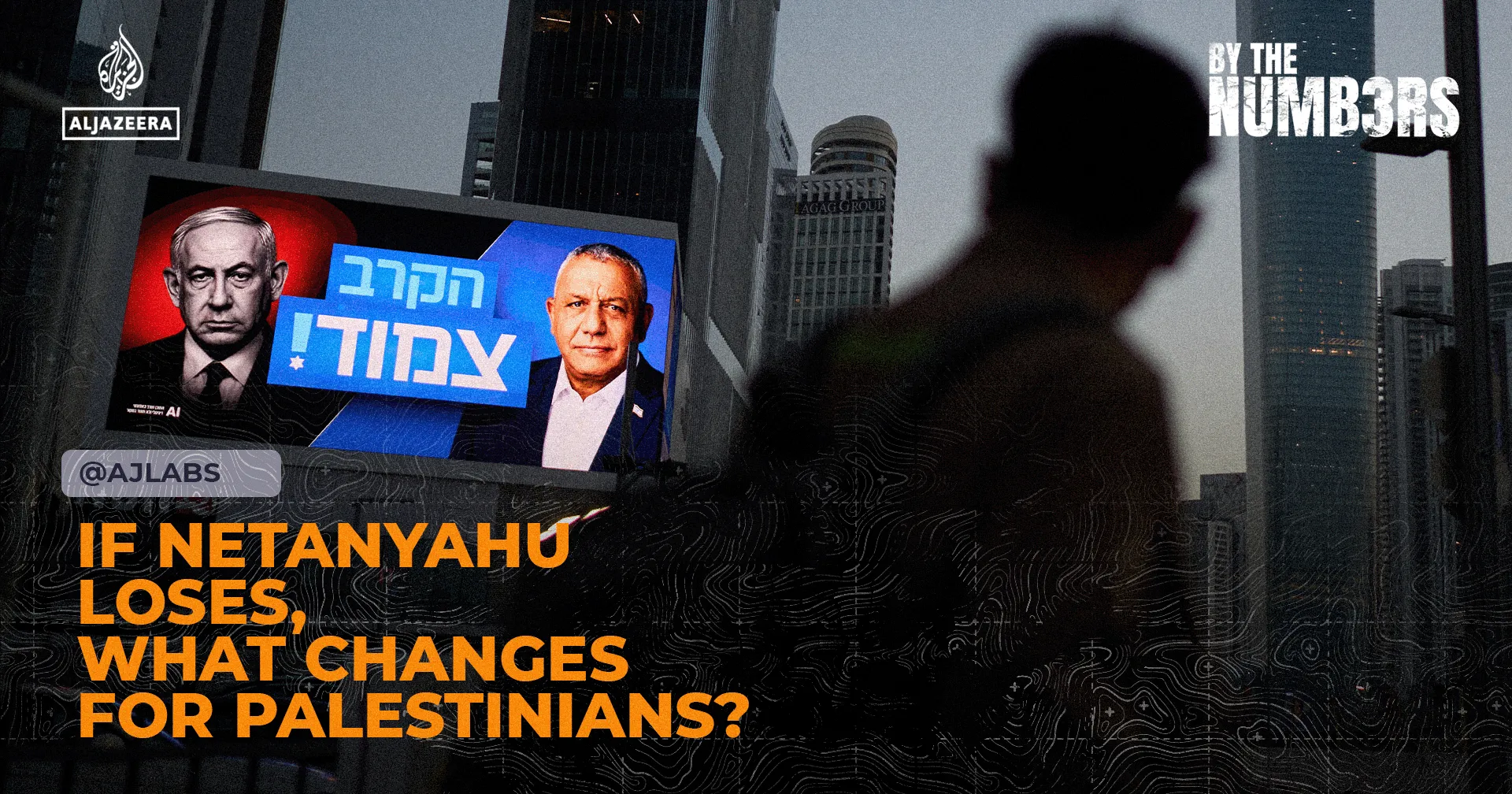
Eliyan hopes that Gadi Eisenkot, the former Israeli military commander and Netanyahu’s main rival, will defeat the prime minister. He sees Netanyahu as more hardline and fears that if his Likud party and far-right allies win another term, it would mean more war and further displacement for Gaza’s people.

“We hope there will be changes after the election, and that someone other than Benjamin Netanyahu will win. What Netanyahu has done to the Palestinian people, before and after October 7, has not been a small thing,” he said.

But regardless of who wins, Eliyan does not expect a major shift in Israeli policy.

“They are still our enemy, and I don’t expect things to improve dramatically,” he said. “But we hope someone else might be less harsh than Netanyahu.”

He called on Israel’s next leader to end the war, prevent displacement and starvation, and ease restrictions at Gaza’s crossings.

“We want whoever leads Israel not to be hardline. End the war and let us live in peace,” he said.

Islam Salem, displaced from Beit Lahiya in northern Gaza, is uncertain whether Israel’s election will bring meaningful change for Palestinians
Islam Salem, displaced from Beit Lahiya in northern Gaza, is uncertain whether Israel’s election will bring meaningful change for Palestinians [Abdelhakim Abu Riash/Al Jazeera]

Islam Salem, 41, is displaced from Beit Lahiya in northern Gaza and has three daughters. He is following Israel’s election closely and believes the result could affect Gaza’s future and the lives of his children, likely for the worse.

“Politics is our livelihood. It is connected to everything in our lives, our living conditions and even the future of our children,” he said.

But he also believes that elections primarily serve Israeli interests, so even if there are new faces in the next government, the Gaza strategy will likely remain the same.

“Israeli policy will not change in any way. Whatever they take, they consider it theirs and a political gain for them, the gains of a war they have pursued for a long time,” Islam told Al Jazeera.

He pointed to Israel’s continued control of about 65 percent of Gaza’s territory inside the “Yellow Line”. He also doubts whether reconstruction will begin soon in Gaza, where more than 80 percent of buildings have been damaged, and about two-thirds of those have been completely destroyed.

“I think reconstruction will be difficult. They do not want to give others any rights. They want their rights in full, and even more,” he said.

Years of war have left Salem struggling to imagine a future beyond his harsh daily reality.

“There is no future left for us to be afraid of. We live day by day. We have no idea what will happen next, and everything we feared has already happened,” he said.

Asked what he would say to Israel’s next prime minister, he spoke of how many in Gaza are feeling.

“If only a simple person could come and talk to him and say, ‘Leave us alone. Give us some breathing space and let us breathe.’ But he would not be convinced. What can I say to him?” he said.

Hanan Abu al-Maaza, faces an uncertain future in Gaza as Palestinians consider what Israel’s election could mean for their lives
Hanan Abu al-Maaza, faces an uncertain future in Gaza as Palestinians consider what Israel’s election could mean for their lives [Abdelhakim Abu Riash/Al Jazeera]

Hanan Abu al-Maaza, 57, has been displaced more than 12 times during the war on Gaza. She fears Israel’s next government could bring more suffering to its people in the besieged enclave.

“We follow the election because of the fear and anxiety we are living with. We have been displaced more than 12 times, and we are afraid they will do even worse to us than before,” she said.

“We go to sleep without feeling safe, wondering what they might do to us next. The fear is still in our heads and hearts.”

Abu al-Maaza says if Netanyahu is defeated, there will be more chance that she can return to her home in Beit Lahiya.

“I hope someone else wins, so we can have peace of mind and feel safe, and return to our homes. That is what we wish for,” she said.

After years of destruction in Gaza, she hopes Israel’s next leader will show Palestinians more mercy.

“Maybe he will say that there is nothing left in Gaza, that they have done enough and should let people live. There is hardly anything left in Gaza for anyone to think about doing anything more,” she said.

Abu al-Maaza urged Israel’s next leader to end the war and stop the suffering in the territory.

“We have had enough of war and destruction. There is nothing left to destroy, yet the suffering continues,” she said.

Manar Owaida, displaced from northern Gaza, follows Israel’s election closely amid uncertainty over what its outcome could mean for Palestinians
Manar Owaida, displaced from northern Gaza, follows Israel’s election closely amid uncertainty over what its outcome could mean for Palestinians [Abdelhakim Abu Riash/Al Jazeera]

Manar Owaida, 23, is originally from northern Gaza and is now displaced in the Tal al-Hawa neighbourhood of Gaza City. She is also keeping an eye on the Israeli election and considering its potential impact.

“I follow the election to know what they are saying and planning, and to understand what is happening around us and how the next Israeli government might affect the situation in Gaza,” she said.

Owaida hopes Gadi Eisenkot will replace Netanyahu, and sees the current prime minister as more extreme than his challenger. But she does not believe a change in Israel’s leadership would transform Palestinian lives, arguing that government policies have remained consistent for decades.

“Israel’s policy is one of crime, killing and destruction. Since 1948, it has been the same policy, the same killing and the same blockade,” she said.

Still, she hopes a new government could ease restrictions and killings and withdraw from areas beyond the “Yellow Line”, allowing life to gradually return to Gaza.

“There might be a change in Israeli policy if someone comes in place of Netanyahu and eases the blockade and the killing we are living through,” she said.

“There could be a withdrawal from the Yellow Line and life could gradually return to Gaza. But we are waiting with fear and uncertainty, alongside a little hope.”

Her greatest concern is that Netanyahu could launch a wider regional war to avoid domestic political pressure around the time of the vote.

Owaida said she wants Israel’s next prime minister to allow Palestinians to live without fear of further violence.

“We want to live in freedom and peace, away from killing and wars,” she said.

Mousa Ali, a father of four, now lives in Gaza City after being displaced from Beit Lahiya in northern Gaza
Mousa Ali, a father of four, now lives in Gaza City after being displaced from Beit Lahiya in northern Gaza [Abdelhakim Abu Riash/Al Jazeera]

Mousa Ali, 33, was displaced from Beit Lahiya in northern Gaza and is now in Gaza City with his four children.

He believes that the outcome of the election could determine whether displaced Palestinians can return to areas beyond the “Yellow Line”.

“For Palestinians, this election is critical, especially because of the Yellow Line. We hope the opposition will be better when it comes to allowing displaced people to return to their areas,” he said.

Ali mentioned Gadi Eisenkot as a possible alternative and hopes Arab parties will perform strongly so they have a role in the next government.

But he does not expect a new leader to bring major changes for the people of Gaza and fears that Israeli attacks will continue. He says a Netanyahu victory would prolong displacement and control over areas around the “Yellow Line”.

“Every day in Gaza, there is blood, there are people being killed, and there is bombing everywhere,” he said. “We hope this policy will end and that a new prime minister will stop this ongoing bloodshed.”

Source link

Aleksandar Vucic, the Serbian leader brought down by students | Elections News

Aleksandar Vucic, who has shaped Serbia’s political life for more than a decade, has lost snap parliamentary elections to a student-led movement that led protests against him for almost two years.

After a heated race, Vucic conceded defeat to the Student List in Sunday’s elections, which saw voter turnout reach its highest level in more than 30 years.

Recommended Stories

list of 4 itemsend of list

“It is clear that we have lost these elections,” the leader of the Serbian Progressive Party (SNS) told supporters after a sample of votes showed his electoral list was expected to win 105 seats in Serbia’s 250-member parliament, compared with 135 to 140 for the Student List.

The student movement emerged after 16 people were killed when a train station canopy collapsed in the city of Novi Sad on November 1, 2024.

The youth-led protests grew into a broader wave of social unrest and evolved into the Student List political platform, which promised to tackle corruption, depoliticise public institutions and restore citizens’ rights.

During the election campaign, the movement was led by Ilija Srdanovic, a professor at the Faculty of Medicine in Novi Sad.

Vucic referred to the demonstrators, who included university professors, doctors and workers, as “blockaders” and accused them of seeking to destabilise Serbia.

A former ultranationalist, Vucic cultivated an image of a pragmatic leader who maintained ties with the European Union, Russia and China as well as, increasingly, with Israel in recent years.

Born in Belgrade in 1970, the nearly 2-metre-tall (6.5ft-tall) Vucic graduated from the University of Belgrade’s faculty of law. He entered politics in 1993, joining the ultranationalist Serbian Radical Party led by Vojislav Seselj.

His political record during the 1990s was marked by nationalist rhetoric. One of his most remembered statements came in Serbia’s parliament in July 1995, nine days after the Srebrenica genocide: “Kill one Serb, and we will kill 100 Muslims.” Vucic made the comments during a debate on possible NATO strikes against positions held by the Army of Republika Srpska in Bosnia and Herzegovina.

Vucic’s political mentor at the time, Seselj, was sentenced in 2018 to 10 years in prison by the Appeals Chamber of the International Residual Mechanism for Criminal Tribunals for persecution, deportation and forcible transfer of non-Serbs during the wars in the Balkans in the 1990s.

Aleksandar Seselj, the son of Vojislav Seselj, was on Vucic’s electoral list in Sunday’s elections.

After a split within the Serbian Radical Party, Vucic and Tomislav Nikolic founded the SNS in 2008. The new party sought to move closer to mainstream European politics.

Safeta Bisevac, a Serbian journalist who has long followed Vucic’s political career, believes he was initially less popular than Nikolic, who appeared closer to common citizens.

“Vucic lagged far behind in popularity at the time and was essentially the organiser of the newly formed party,” Bisevac told Al Jazeera.

In 2012, the SNS came to power promising to fight corruption, organised crime and abuses committed under previous governments.

One of the most prominent cases was the December 2012 arrest of businessman Miroslav Miskovic and his son Marko on suspicion of financial irregularities and tax evasion. After years of legal proceedings, both were acquitted and the state paid them compensation.

Bisevac said the results of the fight against corruption remained modest while the authorities expanded their control over institutions, the media and political life.

Vucic served as first deputy prime minister from 2012 to 2014 before ascending to the post of prime minister in 2014. Three years later, he became president of Serbia and won re-election in 2022. His term was due to run until 2027.

Under pressure from the student-led protests, he resigned in September and called early elections. Although the Serbian presidency is constitutionally limited, Vucic has retained a dominant influence over his party and state policy.

“He made many promises and fulfilled few of them, but in the meantime, he established almost complete control over the state apparatus,” Bisevac said.

Economic growth and the debate over living standards

The Serbian economy has expanded significantly since Vucic took Serbia’s political centre stage in 2012. Unemployment dropped from 26 percent to 8 to 9 percent while nominal gross domestic product nearly tripled, reaching about 90 billion euros ($101bn), according to official data cited by the Reuters news agency.

Annual foreign direct investment inflows rose from about 800 million euros ($896m) in 2012 to a record 5.2 billion euros ($5.8bn) in 2024.

A network of modern motorways has also been built.

However, rising wages have not necessarily translated into a proportional improvement in living standards. The rising cost of living and public debt remain important elements of the debate over the government’s economic record.

Political scientist Dusko Radosavljevic said “the students simply gave a voice to the justified anger of citizens.”

Speaking to Al Jazeera about Vucic’s policies, Radosavljevic said the past decade was characterised by “systematic pressure and the destruction of social institutions”.

“State intelligence services have spent less time on their actual duties and more time monitoring political opponents while critical thinking has been pushed out of the public media,” Radosavljevic said.

Source link

US appeals court sceptical of Trump’s lawsuit over California voter rolls | US Midterm Elections 2026 News

Judge questions the Trump administration’s efforts to exert greater influence over elections process ahead of upcoming midterm vote.

A United States appeals court has expressed doubt over the Department of Justice’s lawsuit against California, which seeks to force the state to throw out mail-in ballots it has deemed likely to go to non-citizens.

Circuit Judge Mark Bennett said on Sunday that the three-judge panel would issue a decision as soon as possible, following a rare weekend oral argument.

Recommended Stories

list of 3 itemsend of list

But Bennett, an appointee of Republican President Donald Trump, voiced concern that the lawsuit would not hold up to scrutiny.

He pointed to the Elections Clause in the US Constitution, which allows states — not the federal government — to administer elections.

“It seems to me that you want us to issue an injunction that is entirely inconsistent with the law that the California legislature has adopted pursuant to the Elections Clause,” Bennett told Justice Department lawyer Matthew Donnelly. “How can we do that?”

The case is part of a larger effort under the right-wing Trump administration to crack down on alleged non-citizen voting ahead of the crucial November 3 midterm elections.

On October 15, less than three weeks before the midterm races, the Justice Department issued a complaint targeting California, a left-wing stronghold.

It asked the federal court system to set aside thousands of mail-in ballots that the government says were sent to “likely non-citizens”.

The lawsuit indicates the Trump administration sent California officials a list of 20,000 names it believes are not eligible to vote, based on citizenship.

Trump has often pushed the discredited claim that the Democratic Party is benefiting from widespread voting by non-citizens.

California has long been one of the targets for his election misinformation.

Earlier this year, Trump denounced the state’s primaries after right-wing candidates like Los Angeles mayoral hopeful Spencer Pratt felt short of his expectations.

“There’s BIG cheating by the Dumocrats in California,” he wrote on social media at the time.

He then announced that the state would be under investigation from the US attorney’s office.

Trump’s efforts have caused alarm, with critics accusing him of seeking to dampen voter turnout through intimidation and confusion.

The midterms will decide which party controls the US Congress, as well as key state and local positions.

Polls, however, predict steep odds for Republican candidates, given Trump’s souring approval ratings and dissatisfaction with issues like the cost of living and the US-Israeli war against Iran.

Voting rights advocates have warned that the Trump administration has not publicly revealed how it has compiled its list of non-citizen voters, and whistleblower reports have cast doubt on the accuracy of such lists.

In response to the October 15 lawsuit, California has countered that it has strong safeguards to prevent non-citizens from voting.

It also said that the Justice Department’s claims are based on dubious data.

“This is a sad, desperate attempt by Trump to use his politicized Justice Department to try to suppress California voters just three weeks before Election Day,” California Governor Gavin Newsom said in a statement earlier this month.

“We will continue to carry out free and fair elections in the Golden State — and call out this authoritarian as he tries every play in the dictator’s playbook.”

Source link

Bolsonaro calls for Brazil election result to be annulled | Elections

Brazil’s right-wing Senator Flavio Bolsonaro has called for the presidential election result to be ‘annulled’ after losing to incumbent Luiz Inacio Lula da Silva. He called the circumstances ‘unprecedented’ after voting was extended by two hours.

Source link

Lula thanks Brazil’s youth for historic election win | Elections

Brazil’s President Luiz Inacio Lula da Silva has won an unprecedented fourth term, thanking Brazil’s youth for helping to defeat right-wing Senator Flavio Bolsonaro with more than 51% of the vote. Bolsonaro said he would ⁠not concede ​defeat and would seek to annul the result.

Source link

Netanyahu rival Eisenkot holds final rally before Israeli election | Benjamin Netanyahu

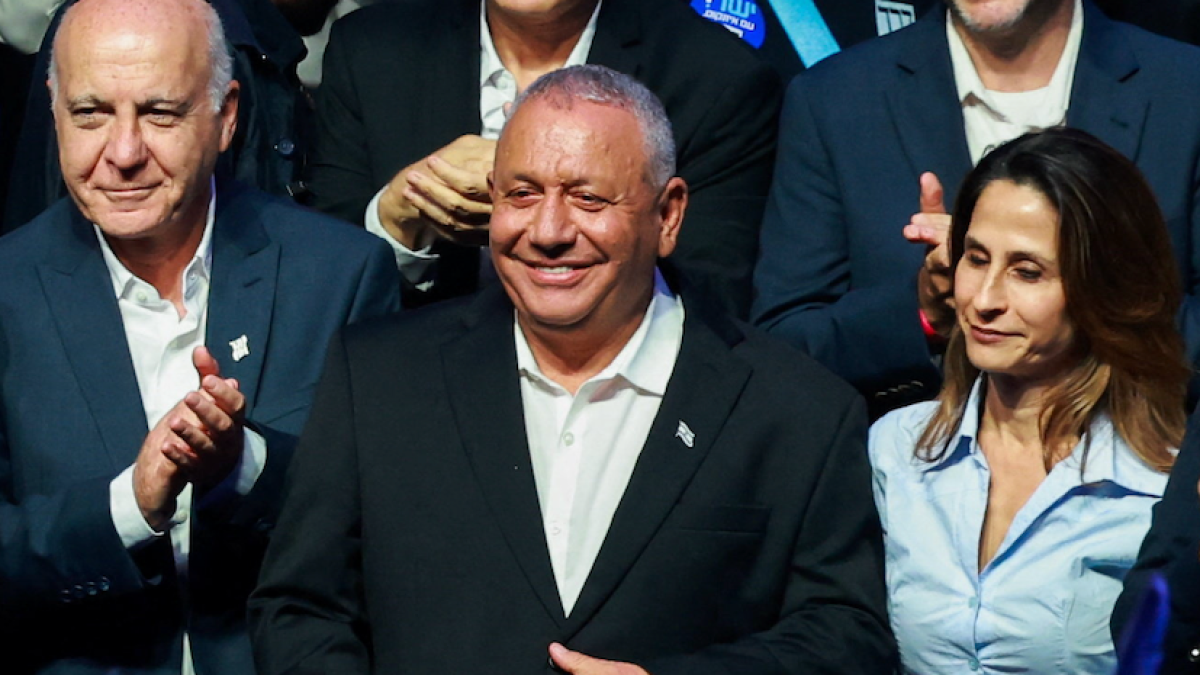
Gadi Eisenkot, Benjamin Netanyahu’s rival in Israel’s upcoming election, held his final campaign rally on Sunday, declaring: “Netanyahu must go home.” The former military chief has positioned himself as a moderate alternative to Netanyahu in Israel’s first national election since the October 7 attacks.

Source link

Lula holds off far right with victory in Brazil presidential election | Elections News

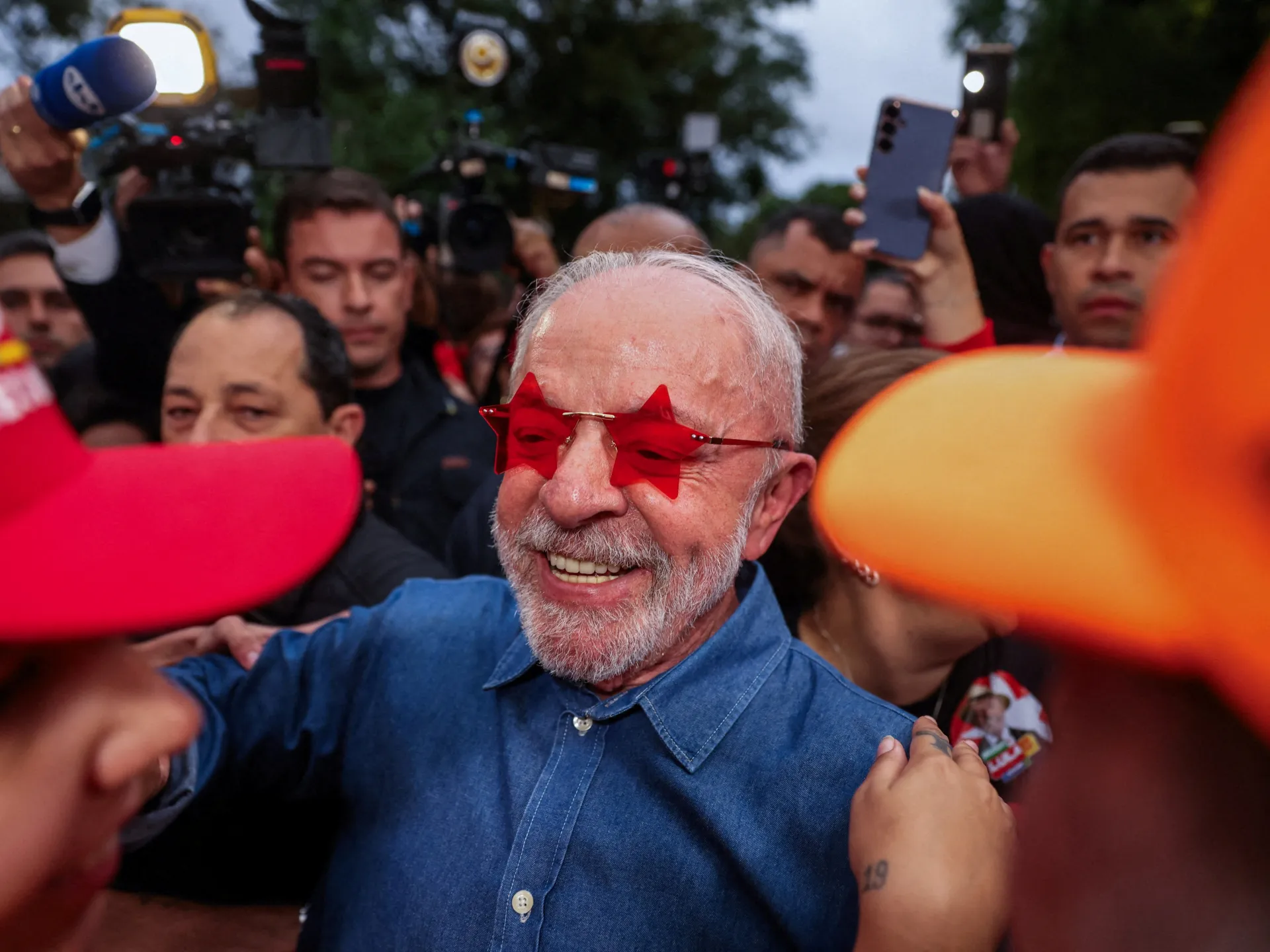
Leftist President Luiz Inacio Lula da Silva has defeated right-wing Senator Flavio Bolsonaro in Brazil’s contentious presidential race, pulling off a remarkable comeback after a first-round loss that galvanised the country’s political right.

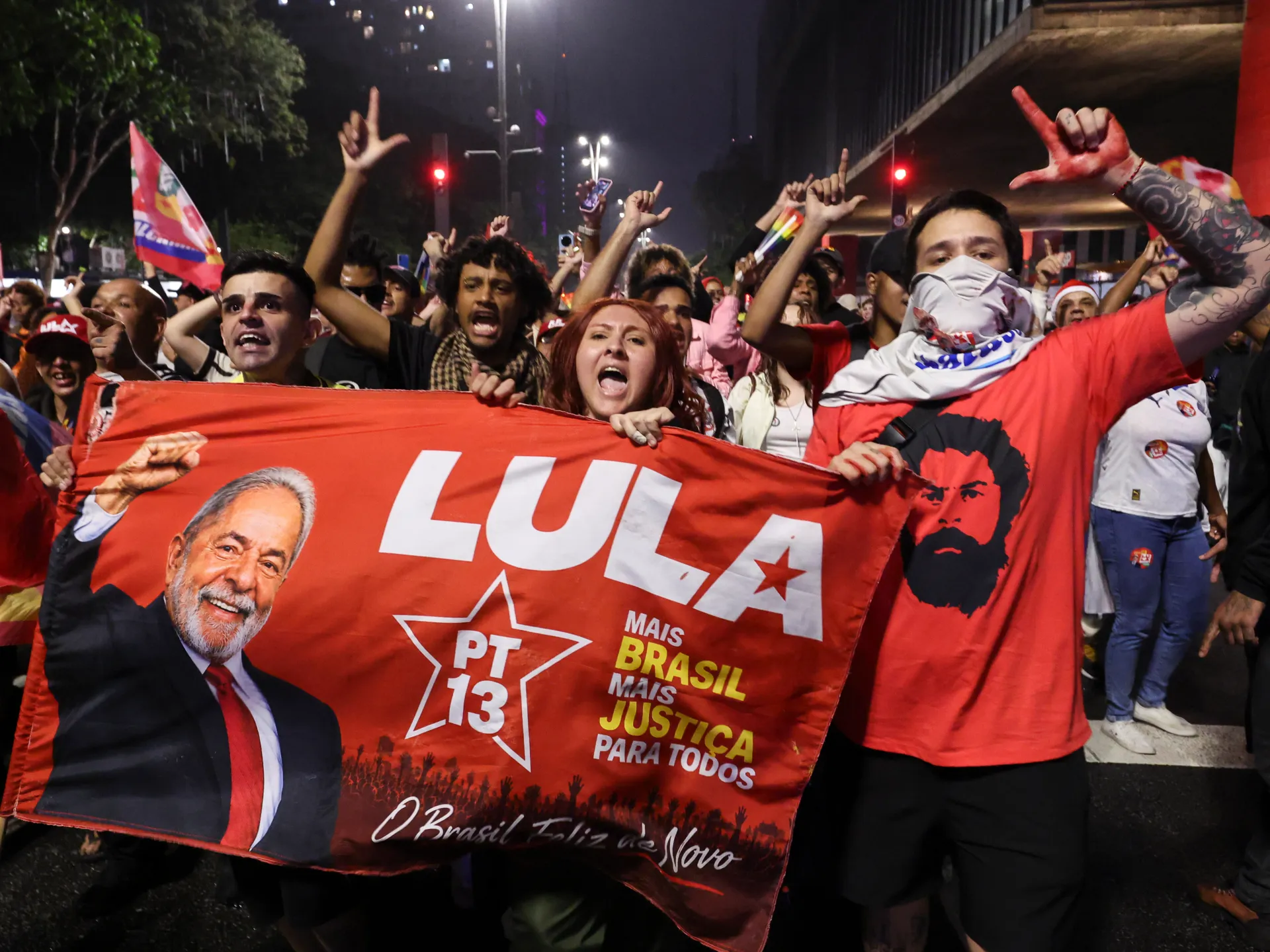
Shortly after 9:00pm Brasilia time on Sunday (00:00 GMT), Brazil’s Superior Electoral Court called the race for Lula, who had earned more than 51 percent of the vote. More than 64 million ballots were cast for the incumbent.

Recommended Stories

list of 3 itemsend of list

Bolsonaro, meanwhile, netted 48 percent, or north of 59 million ballots. More than 4 million votes separated the two candidates, with the final votes still being counted.

With his victory, Lula has made history. No other politician in modern Brazilian history has lost the first round of a presidential election only to win the second round.

“A historic turning point for democracy,” Edinho Silva, the head of Lula’s Workers’ Party, posted on social media, along with a video of supporters chanting, “Ole, ole, ole, ole, ola! Lula, Lula!”

Still, the vote process was marred by allegations of voter suppression after reports emerged that public transport in some areas had been suspended.

Lula’s allies accused Bolsonaro’s supporters of reducing bus availability, in an attempt dampen the president’s working-class base.

Heavy rains, meanwhile, affected southern areas considered to be Bolsonaro strongholds.

The campaigns of both Lula and Bolsonaro ultimately petitioned the Supreme Court for a voting extension. Polls across the country were kept open two hours later than expected, until 7pm Brasilia time (22:00 GMT).

Sunday’s victory means Lula will retain the presidency of Latin America’s largest country, denying a crucial victory to the region’s right wing.

In recent years, right-wing leaders have swept presidential races in nearby countries like Peru, Colombia, Argentina, Bolivia and Ecuador. Many have ridden a wave of anti-incumbent energy and enjoyed support from United States President Donald Trump, who returned to office in January 2025.

A former union leader for metalworkers, Lula – at age 80 – will be sworn in on January 5, 2027, when he will beat his own record as the oldest Brazilian president to take the oath of office since the country’s return to democracy.

His victory has earned him an unprecedented fourth non-consecutive term.

Lula came into Sunday’s run-off as an underdog. While he narrowly led pre-election, the first round of voting on October 4 showed him trailing Bolsonaro.

He earned 45 percent of the first-round vote, compared with the right-wing senator’s 47 percent, both tallies short of the 50 percent needed to avoid a run-off.

But in the weeks since, Lula has rallied supporters around cost-of-living issues. He championed a constitutional amendment passed this month that shortened the Brazilian workweek, and floated the possibility of providing free public transport on weekends.

Having entered politics in the 1980s, during the twilight of the country’s military dictatorship, Lula has run for president seven times.

He won two consecutive terms from 2002 through 2010, as well as a third term in 2022, in what was the tightest race in modern Brazilian history up to that point.

His rival in that election, former far-right President Jair Bolsonaro, is the father of Senator Bolsonaro, Lula’s adversary in this race.

Jair Bolsonaro has since been sentenced to 27 years in prison for his role in plotting a coup following his loss to Lula.

Despite overseeing a decline in poverty and low unemployment during his third term in office, Lula has faced questions about his age, his ability to combat crime, and the country’s polarised political landscape.

An explosion of household debt has also left many Brazilians feeling their economic circumstances have worsened.

In September, Lula banned online gambling and sport betting apps to address the issue.

While the victory over Bolsonaro cements Lula’s status as one of the most significant and influential figures in Brazil’s modern history, efforts to advance legislative priorities during his fourth term could be stymied by the most right-wing Congress in recent memory.

Source link

Marine Le Pen vows French ‘renaissance’ as far right eyes seat of power | Elections News

Orleans, France – Marine Le Pen took to the stage with a clear message: She would lead France’s “renaissance” as the country sank into crisis – and she would do so soon.

The far-right figure’s words were met with cheers from thousands of supporters gathered in Orleans in central France on Sunday, as she launched her presidential campaign against a backdrop of mass demonstrations and widespread social and economic discontent.

Recommended Stories

list of 3 itemsend of list

“Marine présidente!” the crowd chanted, waving French flags beneath a sea of red and blue lights. Organisers said 8,500 supporters had gathered in a venue transformed into a fort for the event.

Standing tall on stage in a pink blazer, her hair impeccably coiffed, Le Pen spoke with the confidence of a leader who believes the presidency is within reach.

Riding high in the polls, with candidates from the right, left and centre trailing behind her, she presented the election as a historic opportunity to restore France’s past glory.

“This is a story to be written, a destiny to be fulfilled,” she told the crowd, which erupted in cheers.

Her pitch was a promise to restore authority and security in a country she portrayed as having lost control.

“We are going to re-establish the rule of law,” she said, drawing loud applause from supporters wearing “Marine présidente” T-shirts.

Manon Funeau, 21, a business school student, was among the supporters.

“What they propose are values that resonate with me, that vibrate within me,” she said. “Honestly, I feel at home here.”

Le Pen’s speech comes as the country is at a crossroads. France has been shaken by a wave of protests since mid-September, a movement sparked by high school students in a Paris suburb that grew into a nationwide mobilisation tapping into widespread discontent.

Over the past two weekends, largely peaceful protests have been accompanied by episodes of violence on a scale rarely seen in recent years.

On October 17, shops were looted and ransacked, and more than 2,000 people were arrested as hundreds of thousands took to the streets of French cities. A similar dynamic unfolded the following weekend, though on a smaller scale. The protests show little sign of abating, with calls for further demonstrations already circulating.

The unrest has given Le Pen’s National Rally (RN) an opportunity to play one of its favourite cards: presenting itself as the guarantor of law and order. It has fuelled criticism of President Emmanuel Macron over his handling of public security, allowing Le Pen to accuse him of incompetence and the far-left leader Jean-Luc Melenchon – a contender in the coming elections – of encouraging the violence.

‘My country is drifting off course’

“I believe that my country is currently drifting off course,” said Nadede, a 56-year-old who began voting for RN in 2024 over what she said was the country’s growing lack of security. She did not spell out any specific event.

“I think that the only person capable of setting it back on the right track is Marine Le Pen – especially since, up until now, everyone else who has run for office has struggled to do so,” she said.

Outside the convention hall, the scale of the security operation offered a glimpse of the tensions surrounding the event. Police checks began at departure stations in Paris and continued on arrival, while officers in full gear moved through train carriages during the journey.

Orleans itself had been brought to a near standstill. All businesses were shut and public transport suspended.

Standing almost alone in the city’s main square was the statue of Joan of Arc, surrounded only by fences. A day earlier, about 3,000 police officers had been deployed to prevent unrest as anti-RN protesters gathered against what they say is a xenophobic and racist party.

Orleans was no casual choice. For a party that has long sought to cast itself as the guardian of French identity and national sovereignty, the city is inseparable from the story of Joan of Arc, the 15th-century heroine who helped lift the English siege of Orléans in 1429 and became a symbol of France’s resistance and liberation.

For decades, the far right has claimed her as an emblem of national pride, invoking the image of a warrior who came to save France from foreign domination. Le Pen herself has drawn parallels between Joan’s mission and her political ambitions.

Member of parliament Eric Ciotti, president of the Union des Droites (UDR) parliamentary group and Mayor of Nice, French far-right leader Marine Le Pen, member of parliament from the French far-right Rassemblement National (National Rally - RN) party and candidate for the 2027 French presidential election, and Jordan Bardella, president of the RN party, react on stage during a political rally to launch the presidential campaign, after the party's congress in Orleans, France, October 25, 2026. REUTERS/Nicolas Economou
Eric Ciotti, Nice mayor and president of the Union des Droites (UDR) parliamentary group; French far-right leader Marine Le Pen, member of parliament from the French far-right Rassemblement National (National Rally – RN) party and candidate for the 2027 French presidential election; and Jordan Bardella, president of the RN party, stand on stage during a rally to launch the presidential campaign, after the party’s Congress in Orleans, France, October 25, 2026 [Nicolas Economou/Reuters]

The crowd at the RN Congress offered a glimpse of how the party has expanded its appeal to a wider section of society: from young people from urban centres to middle-class workers who used to vote for the centrist party.

Only a few years ago, the party was still considered on the fringes of French politics. Its growth has been driven in part by a carefully crafted strategy known as dédiabolisation, or de-demonisation, developed over the past two decades to broaden the party’s base while tempering its rhetoric and distancing it from positions that had made it toxic to many voters.

The party has long been associated with racism, xenophobia and anti-Semitism. Le Pen’s father, Jean-Marie Le Pen, was convicted of hate speech, including for describing Nazi gas chambers as “a detail of history”. He was expelled from the party in 2015.

Far right ‘gaining ground’

Marine Le Pen has sought to broaden RN’s appeal, combining restrictive immigration policies with promises of social protection. The party has gained ground in working-class areas traditionally associated with the left, including former Communist strongholds, by presenting itself as a defender of public services and the purchasing power of everyday people.

While RN has long abandoned some of its most radical proposals, including leaving the Eurozone and pursuing a fully fledged “Frexit”, the election of such a eurosceptic to the helm of the European Union’s second-largest economy would send shockwaves. She has pledged a referendum to challenge the primacy of EU law over migration policy, as well as an annual 11-billion-euro ($12.3bn) reduction in France’s contribution to the bloc.

The party’s membership has nearly tripled, with approximately 112,000 members now paying their dues, up from fewer than 37,000 in 2022.

“The party has been gaining ground at every level: mayors, deputies, senators. Usually, when a movement seems on the rise, people join,” said Baptiste Roger-Lacan, a historian and political analyst with a focus on far-right parties in Europe. “It also shows how it is less and less socially damaging to be a member of the RN.”

But the party’s programme “is still fraught with fiscal absurdity”, Roger-Lacan said. “They still want to implement racist laws, which are bound to provoke widespread anger, and their diplomatic agenda is still pro-Russian and anti-EU – even if they don’t advocate Frexit any more.”

Jordan Bardella, Le Pen’s second-in-command and Le Pen protégé – an impeccably dressed 31-year-old who looks like a cross between the Wolf of Wall Street and Superman’s alter ego, Clark Kent – also spoke at the event.

“No one should be intimidated by their political opinions,” he said, speaking ahead of his mentor.

Some observers say the October 17 protests and their aftermath have proved a gift to RN, allowing the party to not only reinforce its law-and-order message but also to shift attention away from recent difficulties.

In September, investigative outlet Mediapart published allegations that Bardella had expressed anti-Semitic views in private messages dating back to his teenage years. He denied the allegations and announced legal action against the journalists.

The episode posed a challenge for a party that has spent years trying to shed its xenophobic image and recast itself as a supporter of Israel.

Bardella has also reportedly differed with Le Pen over the party’s economic agenda and whether to make her proposed ban on the wearing of the Islamic headscarf in public spaces a central campaign issue.

Yet, at the Congress, those tensions appeared to have been set aside, at least publicly.

“Marine president – a Bardella government” was the slogan, projecting unity as Le Pen launched her presidential bid and Bardella positioned himself as her prospective head of government.

Source link

US Attorney General Todd Blanche defends Alaska Senate election lawsuit | US Midterm Elections 2026 News

United States Attorney General Todd Blanche has defended the Department of Justice’s decision to sue to prevent the certification of a Republican loss in Alaska’s tight Senate race.

On Sunday, Blanche did a tour of the morning political shows in the US, making stops at CNN’s State of the Union TV programme and CBS’s Face the Nation.

Recommended Stories

list of 3 itemsend of list

In each appearance, he faced pointed questions about the legality of the Justice Department’s efforts, responding, in some cases, with open frustration.

“ Why is this controversial?” Blanche asked CNN host Dana Bash at one point. He proceeded to accuse one of the candidates in the Senate race of intentionally trying to confuse voters.

“We’re going to try to create a situation where that can be remedied,” he said. “That shouldn’t be something that is causing this shock and horror.”

But the Justice Department’s lawsuit, filed on October 22, has been the subject of bipartisan criticism.

Many have accused the administration of President Donald Trump of laying the groundwork to block a Democratic win in the race. Trump himself claimed to have authorised the lawsuit.

“I’m the one who said do it,” he told reporters on Friday.

Inside the Alaska Senate race

During the midterm elections on November 3, citizens in Alaska will be asked to vote in one of the closest Senate races in the country, one which will help decide whether Republicans maintain their majority in the chamber.

Senator Dan S Sullivan, the Republican incumbent, is seeking to defend his seat in the Senate. But he faces fierce competition from former US Representative Mary Peltola, a Democrat.

Also in the running is another candidate named Dan J Sullivan, a former Forest Service employee.

The second Sullivan’s decision to also run has raised concerns that he is a spoiler candidate, whose presence on the ballot is designed to draw votes away from the incumbent.

But the Forest Service worker has denied any such intent. Such allegations, he said, are “entirely false”.

“I am not a registered Democrat, and I have had no conversations whatsoever with the Peltola campaign about my candidacy,” the second Sullivan wrote in a letter to Alaska’s lieutenant governor before the state’s primaries.

“I have considered running for political office for over a decade. I made the decision to formally run for the United States Senate in the upcoming primary election because Senator Sullivan has routinely failed the people of Alaska, and they deserve a better representative. It is my right to do so.”

Four candidates advanced to the final round of voting after Alaska’s August primaries. They included Peltola and both Sullivans. The two men are running as Republicans.

A controversial lawsuit

The Department of Justice has argued that its lawsuit — filed less than two weeks before the midterm elections — is necessary “to protect the integrity” of the election.

Any result in the Senate race, it argues, would be “tainted by the inclusion on the ballot of Daniel J Sullivan”.

The department has therefore called on the US district court in Alaska to issue an order declaring the race’s certification “unlawful” and barring the state from “allowing such a certification to occur”.

Under the US Constitution, only states have the power to administer elections, though Congress has the right to pass regulations concerning federal votes.

It is highly unusual for a presidential administration to inject itself into issues of state election certification — and experts say such a move is likely to be deemed illegal.

Already, in June, Alaska’s Supreme Court ruled that both Sullivans could compete in the Senate race. The state’s Division of Elections has also taken steps to reduce voter confusion.

The November 3 ballot, for instance, will list Dan S Sullivan as the incumbent and as a “registered Republican”.

Dan J Sullivan, meanwhile, will have the suffix “Jr” added to his name, and his party affiliation will be left blank, despite the candidate identifying as Republican.

But in Sunday’s TV appearances, Blanche — who leads the Department of Justice and formerly served as Trump’s personal lawyer — argued that merely having two Sullivans on the ballot is a recipe for confusion.

“It is wrong,” Blanche told CNN. “Putting aside whether we’re going to win or lose in the courts, putting aside what the Alaskan Supreme Court has done, in our system we should not have a candidate who has to worry about another candidate being on the ballot for no other reason than to confuse voters.”

Blanche also denied any impropriety in Trump saying he ordered the lawsuit.

“He’s supposed to make sure that everything in this country is running right, including elections,” Blanche said.

The race for the Senate

Historically, the Department of Justice has embraced a norm of judicial independence, though critics have accused the Trump administration of wielding its prosecutorial powers for political gain.

Bash, the CNN host, raised some of those concerns, pointing to Trump’s comments accusing Democrats of cheating, as well as his history of election denialism.

The president has long denied his loss in the 2020 presidential race, and his supporters sought to block the certification of that election, notably by storming the US Capitol on January 6, 2021.

When Bash pointed to that incident, Blanche chided her: “Oh, you’ve got to stop it with that.”

“Why are you yelling at me?” Bash responded, as the two talked over each other.

“You are not being a real person. Come on, man,” Blanche continued. “That is crazy.”

He also denied that Trump was setting the stage for a contested election if the Democrat Peltola were to win. Instead, he framed the lawsuit as setting the stage for further investigations into any eventual results.

“The relief that we’re seeking — which, again, isn’t to determine who the senator is, it’s not to try to overturn something the state is going to do — it’s just to make sure that the ballots that come in are kept in a way that may allow a court to investigate further,” Blanche said.

Speaking to CBS, Blanche also dodged a question about whether Trump personally asked him to file the lawsuit.

“I will never, ever, ever talk about communications that I have with the president of the United States. I never have, and I never will,” Blanche said.

The race to control the US Senate is expected to be a nail-biter, with the Republicans holding a slim majority at present: They have 53 seats in the 100-member chamber.

Only a third of the Senate’s seats — 35 in total — will be up for grabs in the midterm races, though, as terms in the chamber last six years and are staggered across different election years.

Trump’s Republican Party is projected to face an uphill battle to protect its congressional majorities, amid backlash against the rising cost of living and Trump’s own withering poll numbers.

Roughly seven Senate elections are considered toss-ups, including the Alaska race.

In early October, The New York Times and Siena College released a poll finding Peltola leading the incumbent Sullivan by nearly seven percentage points, one of the widest margins of any of the toss-up states.

Source link

Trump’s tariff pause angers some US ranchers, boosts Brazilian beef imports | US Midterm Elections 2026 News

In late August, United States President Donald Trump announced a 90-day pause on certain beef tariffs, making beef cheaper to import, particularly from Brazil.

That decision was framed as a way to bring down prices for consumers, but it landed as a betrayal for many US ranchers, who were getting ready to take their cattle to market.

Recommended Stories

list of 4 itemsend of list

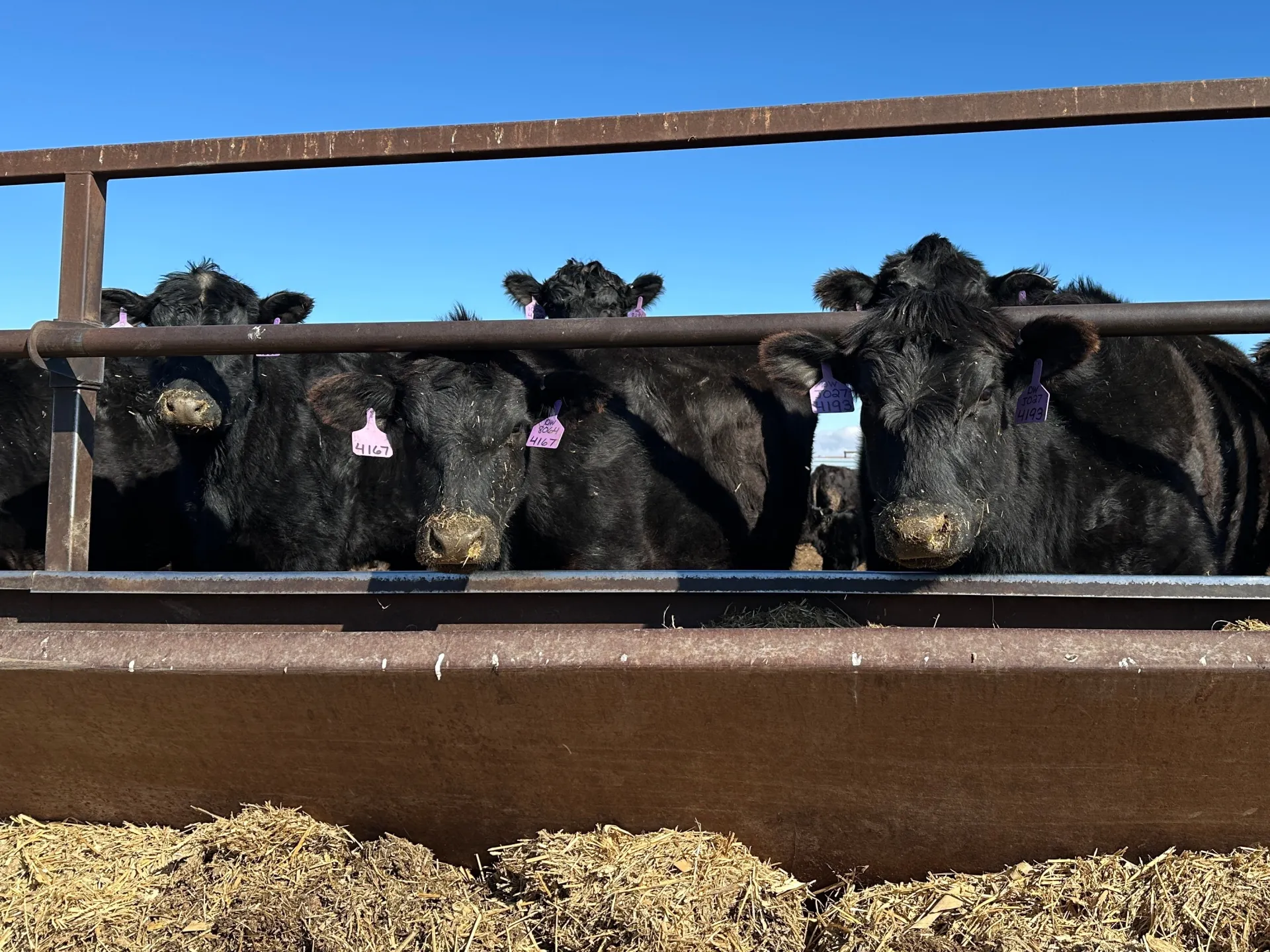
It is too soon to tell how the decision will ultimately affect grocery prices, but the impact on ranchers was immediate: prices at cattle auctions plummeted, temporarily lowering ranchers’ profits. The United States Cattlemen’s Association, the National Cattlemen’s Beef Association and the Farm Bureau, all member organisations that represent ranchers, opposed the decision.

Rural Republican members of Congress also distanced themselves, but it is not yet clear how ranchers will vote in the midterms — or whether those votes will decide races.

Chad Basinger, a rancher in Pretty Prairie, Kansas, is sceptical that the imports will have a significant impact.

“I know there’s people that have said, ‘Well I’m just gonna vote for the other party’ or ‘I’m not gonna vote’ or ‘This administration’s really let me down’. So yes, there will be people that swing the other way in the midterms. But overall I don’t think it’ll be that much,” Basinger said.

Ranchers will also be weighing the administration’s other actions, Basinger said, such as the $8bn in farm relief announced in Kansas on October 19.

Basinger’s House of Representatives district in Kansas is expected to remain safely Republican in the midterms. But Kansas faces an unexpectedly tight Senate race and ranchers in House districts elsewhere may find themselves closer to the political fray: potential swing districts in Montana, Iowa, Texas and Colorado are all in cattle country.

Still, it is unlikely that ranchers alone will decide elections: ranchers — along with farmers more broadly — represent a shrinking percentage of rural voters and a smaller voting bloc in practice than in the public imagination.

America’s cattle herd is near its smallest size since 1951 and the number of ranchers has declined alongside the number of livestock. Observers worry that ongoing uncertainty fuelled by tariffs, fuel prices and drought may cause the ranching population to shrink further.

David Anderson, an agricultural economist at Texas A&M University who advises ranchers, said that high prices this year should have given ranchers the confidence to invest in the future and expand their herds. Making imports cheaper, however, may have helped nudge ranchers in the opposite direction.

“It really works against the market signal to expand and produce more domestically,” Anderson said. “That got a lot of people pretty angry.”

Tariff changes add volatility

This is not the first time that Trump’s tariffs have impacted cattle supplies. Last year, the president added a 50 percent tariff on Brazil, a key trade partner for beef, raising the cost of importing Brazilian lean beef, which is often mixed with fatty US beef to make hamburger patties, a staple in most homes.

In February, Trump allowed more tariff-free beef imports from Argentina. In August, he did the same for Brazil and Paraguay.

Both tariff changes led to swift price swings in cattle futures markets, which are often volatile in response to the news cycle.

Cattle prices also moved this year in response to more fundamental drivers of supply and demand: plant closures by meatpackers, labour shortages late last month related to ICE actions at Kansas packing plants, the second-largest in the country, and the reopening of the southern border after a closure due to New World screwworm disease.

Big picture, the shrinking US cattle herd has less to do with short-term price changes and more to do with drought cycles, which are growing more intense as warming temperatures increase evaporation.

Still, tariff changes add uncertainty. “This has been a hot topic for the last six weeks,” said Anderson. “It just adds a little more uncertainty or volatility — or worries or stress.”

This year, extra price volatility as many ranchers prepared to sell meant ranchers faced lower profits and more risk.

Basinger says that for many established ranchers, the tariff announcement was frustrating, but not existential.

“People are upset. They have a right to be upset. But they’re not going to change their strategy,” he said. For most ranchers, Basinger said, the imports would not be the biggest factor shaping decisions about their herds this year.

Where price volatility may matter more, Basinger said, is for the next generation. Most of today’s ranchers are eyeing retirement. Their heirs must decide whether to make a go of ranching or sell their family’s land. Other aspiring ranchers are also watching the industry.

“If you’re seeing your dad not make money, or somebody else not make money…it’s not easy work!” Basinger said. “It has to be very enticing for somebody to want to jump in and be like, ‘I’m gonna be a rancher and go break ice in the middle of winter when it’s cold and I could be inside’.”

Record revenue and record costs

This year, low US cattle supplies meant that ranchers commanded record-high cattle prices, despite added imports and other market shifts.

But high revenue doesn’t always mean huge profits: Many ranchers operate at a loss for years in a row. Then, they rely on a few good years to pay down debts or expand their herds.

This year, profits were lower than hoped, because ranchers also faced high costs.

Interest rates on loans are high and the war with Iran meant ranchers paid extra for fuel and fertiliser. A drought across much of America’s ranchland meant they paid more for feed.

In states such as Kansas and Nebraska, ranchers also faced destructive wildfires and aid groups like Farm Rescue coordinated hay donations.

Still, Basinger said, ranchers who raise cows and calves generally did well this year. In Kansas, he is seeing ranchers use profits to make repairs and upgrades. He said this year’s high cattle prices have been helping. “But it needs to help for a little longer to give them more of an edge,” he said.

More of an edge might mean, for example, enough money for bigger purchases, like buying land from a neighbouring ranch to make room for a growing herd.

Rangeland, however, is increasingly expensive. When it is up for sale, outside investors can often pay more than ranchers, which can mean less land for cattle. That’s just one more pressure shrinking the US herd decade after decade.

Ranchers had hoped that 2026 would be a turnaround year. So far, however, “we really don’t have much evidence of herd expansion,” Anderson said.

Source link

Early reports suggest record high turnout in Serbia elections

Instead of running for office themselves, student-led assemblies at the country’s university faculties have chosen 250 candidates to stand in the parliamentary election, with Ilija Srdanović, professor at Novi Sad University, heading the list.

The Student List of candidates for parliament also includes doctors, actors, academics and sports personalities

“These are people that don’t know each other, you have no idea what their political beliefs are, and we now expect them to create a functioning government. So it’s anybody’s guess what happens after they win,” Korać says.

“On the other hand, if Vučić declares victory this evening, probably late in the evening, I don’t think the students will accept that.”

Korać suggests that many former Vučić loyalists in high office could change sides at the last moment, if the students win. A close result, however, with both sides claiming victory, could result in weeks or months of political instability.

The electorate is 6.45 million in a population of 6.53 million, raising concerns about the reliability of the electoral register. Serbs from Kosovo, and dual Serbian citizens from neighbouring Bosnia also have the right to vote.

Additional reporting by André Rhoden-Paul

Source link

Israeli elections: What are the possible outcomes? | Explainer News

Israel is heading to the polls on October 27 in an election that could end Prime Minister Benjamin Netanyahu’s long grip on power.

The vote for all 120 seats in the Knesset is the first since the Hamas-led attacks of October 7, 2023, the onset of Israel’s subsequent genocidal war on Gaza and a wider conflict that has seen Israel carry out attacks in several countries across the region.

Recommended Stories

list of 3 itemsend of list

Opinion polls suggest his right-wing bloc is in a close race against a Jewish-led opposition alliance. But defeating Netanyahu at the ballot box does not necessarily mean removing him from power.

Israel’s proportional representation system means parties must negotiate alliances to secure a governing majority in the Knesset. No single party has ever won an outright majority of at least 61 seats.

According to recent polling, the opposition bloc is projected to win 52 seats, compared with 50 for Netanyahu’s religious-nationalist alliance. Palestinian-led parties could, therefore, determine who governs.

Here are eight possible outcomes:

Netanyahu forms another government

Despite slightly trailing in opinion polls, Netanyahu could remain prime minister if his Likud party assembles enough parliamentary support from existing allies or new coalition partners.

His traditional partners include far-right National Security Minister Itamar Ben-Gvir’s Jewish Power party and Finance Minister Bezalel Smotrich’s Religious Zionism party.

Ultra-Orthodox parties Shas and United Torah Judaism – which have previously joined his coalition multiple times but also walked away, most recently in 2025 – could also play an important role.

An opposition-led majority government

In late September, four opposition parties signed a non-aggression pact, agreeing to work together in a bid to unseat Netanyahu.

The rival movements – the Yashar party, the Democrats, the Yisrael Beytenu party and the Together alliance – said they are united in their goal to “preserve and strengthen Israel as a Jewish and democratic state”.

The bloc has not announced who would lead a future governing coalition, but former army chief Gadi Eisenkot, leader of the Yashar party, is seen as its most likely prime ministerial candidate.

Former Prime Minister Naftali Bennett, who heads the Together alliance with Yair Lapid, is another potential candidate.

A coalition involving Ra’am

The Joint List and Ra’am – the two Arab-led parties representing the Palestinian citizens of Israel, who make up about 20 percent of the population – are projected to win about 13 seats.

Ra’am, also known as the United Arab List, made history in 2021 by joining Bennett’s coalition, becoming the first Arab-led party to participate in an Israeli governing coalition.

Mansour Abbas, leader of Ra’am, has signalled a willingness to repeat that arrangement if the opposition-led alliance needs additional seats.

He has said his priorities include combatting the wave of violent crime that has been allowed to engulf Palestinian communities, as well as addressing discriminatory government policies, including on housing.

However, most opposition leaders, including Eisenkot, have ruled out such an alliance.

A minority government

If a coalition falls short of 61 seats, it could seek outside parliamentary support from other parties without including them in government, such as the Palestinian-led parties.

Joint List, which includes the Hadash, Ta’al and Balad factions, has said it could provide a so-called safety net to the anti-Netanyahu coalition by agreeing not to stand against it in a confidence vote, even if the alliance does not join the government. In return, it has said it would demand certain conditions, including a path to Palestinian statehood and fighting organised crime.

However, any such arrangement would leave the governing coalition vulnerable to defections and disputes over major policies.

A national unity government

A national unity government, according to Israel’s parliament, is a “government based on a broad coalition, the members of which also include representatives of rival parliamentary groups”.

This is usually formed at times of national emergencies, such as war, natural disasters or economic crises.

In May 2020, Netanyahu and Benny Gantz formed a unity government following three inconclusive elections. That agreement collapsed within a year.

However, in 2023, following the Hamas-led attacks on Israel, Gantz and members of his party joined Netanyahu’s coalition – seen as an emergency unity government – despite Gantz previously bitterly opposing it.

DIMONA, ISRAEL - OCTOBER 21: Israeli Prime Minister and Likud Party leader, Benjamin Netanyahu, greets supporters during an election campaign event ahead of Israel's general elections scheduled for next week on October 21, 2026 in Dimona, Israel. Israel will hold legislative elections on October 27, 2026. (Photo by Amir Levy/Getty Images)
Israeli Prime Minister and Likud Party leader, Benjamin Netanyahu, greets supporters during an election campaign [File: Amir Levy/Getty Images]

A rotating premiership

Two political leaders could agree to alternate as prime minister under a power-sharing arrangement.

Netanyahu and Gantz agreed to such a rotation in 2020, but their coalition collapsed before Gantz could take over.

Bennett and Lapid made the same arrangement for the prime minister’s office to change hands after the former came into power in June 2021. After Bennett’s coalition lost its parliamentary majority in June 2022, Lapid took over as caretaker prime minister in July that year.

A different prime minister from the same political camp

In Israel, the prime minister is voted in by members of the Knesset after an election.

If negotiations stall over forming a government, parties could agree to support another Knesset member from Netanyahu’s political camp or that of an opposition bloc, someone who is more acceptable to future partners.

No agreement – another election

If no leader can assemble sufficient support in the Knesset, Israel could face another period of political turbulence and head for a new election.

The country held five elections between 2019 and 2022 as rival blocs repeatedly struggled to form stable governments.

In such a scenario, Netanyahu would remain caretaker prime minister until a new administration took office.

Source link