Venezuelans protested in New York against interim President Delcy Rodriguez’s participation in the UN General Assembly, calling for world leaders not to normalise relations with what they call an illegitimate government. Rodriguez took power in January after Nicolas Maduro was captured by the US military.
President’s move clears hurdles to long delayed election and raises concern he can now wield unchecked power.
Published On 23 Sep 202623 Sep 2026
South Sudan’s President Salva Kiir has dissolved the country’s transitional unity government and appointed a caretaker administration as the country prepares for its first-ever national elections.
The decree on Tuesday ended a power-sharing arrangement set up under a 2018 peace deal that halted years of civil war, and raised concerns that Kiir could now wield unchecked power.
Recommended Stories
list of 3 itemsend of list
The decree, read out by the national broadcaster, said all vice-presidents, ministers and local administrators have been removed and that the national and state assemblies have been dissolved.
The judiciary and security institutions remain in place, while Kiir will stay in office “during the election period until the next elected president assumes office”, it said.
The decree came a day after the parliament approved changes to the National Elections Act that allowed Kiir to stay in power during the election period, while removing all vice presidents, who were appointed under the 2018 peace deal.
The changes mean that South Sudan can move towards elections scheduled for December 22, without first completing a permanent constitution or census – two processes that were previously tied to the transition.
The main opposition alliance has rejected the changes.
South Sudan’s suspended First Vice President Riek Machar inside a steel-caged dock before his trial on charges including treason and crimes against humanity, in Juba, South Sudan, on September 22, 2025 [File: Stringer/Reuters]
Elections were initially expected in 2022 but have been postponed twice.
Tasks still outstanding under the 2018 peace deal include drafting a permanent constitution, registering voters and unifying the armed forces loyal to rival parties.
That agreement followed five years of civil war that killed about 400,000 people and displaced millions, according to the United Nations.
Amnesty International, a prominent rights group, called Kiir’s decree a “decisive step” towards the country’s first-ever elections. But Tigere Chagutah, Amnesty International’s regional director for East and Southern Africa, urged the authorities to “ensure that a conducive environment exists for people to vote and stand in elections”.
Analysts meanwhile warned that the changes offered Kiir unfettered control.
“Kiir will be the only person in power, without vice-presidents, without the executive, without the parliament,” Michael Wani, a lawyer and former member of the constitution drafting committee, told the AFP news agency.
Independent analyst Machot Amuom told AFP there was a lot of “ambiguity” in the legal changes. “The new law gives the president full powers … He can decide even not to go for elections for another year or another two years,” Amuom told AFP.
Last week, Kiir also replaced the head of the elections commission without giving a reason. South Sudan Broadcasting Corporation (SSBC) said the new chief, Gabriel Bol Deng Majok, had been given a “fresh mandate” to oversee preparations for the polls.
The preparations come as Kiir’s longtime rival Riek Machar, who leads the opposition Sudan People’s Liberation Movement-in-Opposition (SPLM-IO), remains under house arrest. He is on trial on charges including treason and murder, which he denies.
The transition is also taking place under tight security.
AFP reported checkpoints and road closures around the government complex in the capital, Juba, while security personnel were ordered to remain on heightened alert for three days.
The former vice president joins Abdul El-Sayed on the campaign trail in Detroit to bolster Democratic unity in a key swing state.
Published On 22 Sep 202622 Sep 2026
Democratic Senate candidate for the US state of Michigan Abdul El-Sayed says he wants former Vice President Kamala Harris’s campaign stop in Detroit to unify Democrats in the key swing state ahead of the final sprint to lock down a victory in November’s midterm elections.
The visit comes as the Democratic Party works to bridge deep internal factions that were glaringly evident during a hotly contested primary last month between El-Sayed and four-term Democratic congresswoman Haley Stevens, who had overwhelming support from the Democratic Party establishment and pro-Israel political action committees.
Recommended Stories
list of 3 itemsend of list
“We’re building an electoral coalition here,” El-Sayed said on Tuesday, speaking about the economy hours ahead of a planned appearance with the former vice president. He added that her presence in Michigan, “speaking to communities that were really empowered by her voice throughout her political career”, will serve to further unite and strengthen the Democratic Party.
Black voters could prove especially paramount for El-Sayed, who faces pressure among white Jewish voters who typically back Democrats. The joint appearance targets Wayne County, the state’s largest Democratic stronghold and home to Detroit’s predominantly Black electorate, which El-Sayed failed to carry during the August Democratic primary.
The move follows Harris’s 2024 electoral defeat to US President Donald Trump in Michigan, a state heavily influenced by its critical Arab-American voting bloc. As a result of her pro-Israel policies, many Arab Americans in Michigan, who had voted reliably blue for years, ditched the party altogether, refusing to support Harris in her presidential bid.
El-Sayed also issued a call for solidarity ahead of the midterms, affirming that the 2024 presidential election “ended where it did because we could not find the places of agreement to be able to bring people together or move in the direction that we need to move”, emphasising that he and Harris both want to focus on helping voters who are struggling economically.
At the time, many advocates had argued that as long as Harris maintained her pledge to continue to arm Israel and refused to distance herself from former President Joe Biden’s unconditional support for the US ally, nothing would help her standing with Arab and Muslim voters.
All eyes are on November’s consequential race where El-Sayed will go head to head with former Representative Mike Rogers, the Trump-backed Republican Senate nominee, who ran unopposed in the Republican primary.
Rogers’ campaign framed Harris’s visit as a sign of weakness for both Democrats.
El-Sayed rejected the criticism at the Detroit event, emphasising that assembling a winning coalition requires confronting past differences directly rather than avoiding them.
“We don’t have to agree on everything to understand what is at stake,” El-Sayed said, urging voters to rally around shared economic priorities. “The only way forward is by doing the hard work of bringing people into the same room and moving together.”
Luiz Inacio Lula da Silva is running in October’s election for a fourth non-consecutive mandate as Brazil’s president.
Published On 22 Sep 202622 Sep 2026
Brazilian President Luiz Inacio Lula da Silva and Senator Flavio Bolsonaro remain deadlocked in the latest polls, with the first round of Brazil’s election less than two weeks away.
Two new polls on Monday showed that the pair are statistically tied in simulated runoffs ahead of next month’s election. If no candidate wins more than 50 percent of valid votes in the October 4 first round, the two frontrunners advance to a runoff on October 25.
Recommended Stories
list of 3 itemsend of list
Lula is seeking a fourth non-consecutive term as Brazil’s president, but faces a challenge from the political right in Flavio Bolsonaro, the son of former far-right President Jair Bolsonaro, an ally of US President Donald Trump.
Brazilian presidential candidate Flavio Bolsonaro speaks at an agribusiness fair as he campaigns in Esteio, Brazil, on September 2, 2026 [Diego Vara/Reuters]
The elder Bolsonaro was ruled ineligible for office after Brazil’s top electoral court found he had abused his power while in office. He was later convicted separately over a plot to overturn his 2022 election loss to Lula.
A Quaest poll released on Monday showed Bolsonaro with 42 percent of voter support in a potential runoff, versus 41 percent for Lula.
Meanwhile, a BTG Pactual/Nexus poll has Lula receiving 46 percent of voter support, compared with 45 percent for Bolsonaro in a potential runoff.
The latest polls mark a narrowing from an earlier Quaest poll on August 5, which put Lula ahead by a wider five-point margin, 44 percent to 39 percent.
New York City Mayor Zohran Mamdani and Brazilian President Luiz Inacio Lula da Silva speak to reporters after a meeting in New York on September 21, 2026 [Dave Sanders/Reuters]
US pressure looms over election
Lula launched his re-election bid on August 2 at the Workers’ Party convention in Sao Paulo, casting himself as a defender of Brazilian “sovereignty” as pressure from the US administration looms over the race.
The US imposed two fresh rounds of tariffs on Brazilian products in July, which Lula denounced as an attempt to influence the elections through economic pressure.
The Brazilian leader is currently in New York, where he is preparing to address the United Nations General Assembly.
Lula met New York City Mayor Zohran Mamdani for the first time on Monday. In a brief statement to reporters after the meeting, the Brazilian president said the two had talked about problems common to both Brazil and the United States, particularly the rising cost of living.
Victory of United Russia party strengthens Putin’s hand even as the war with Ukraine grows more unpopular.
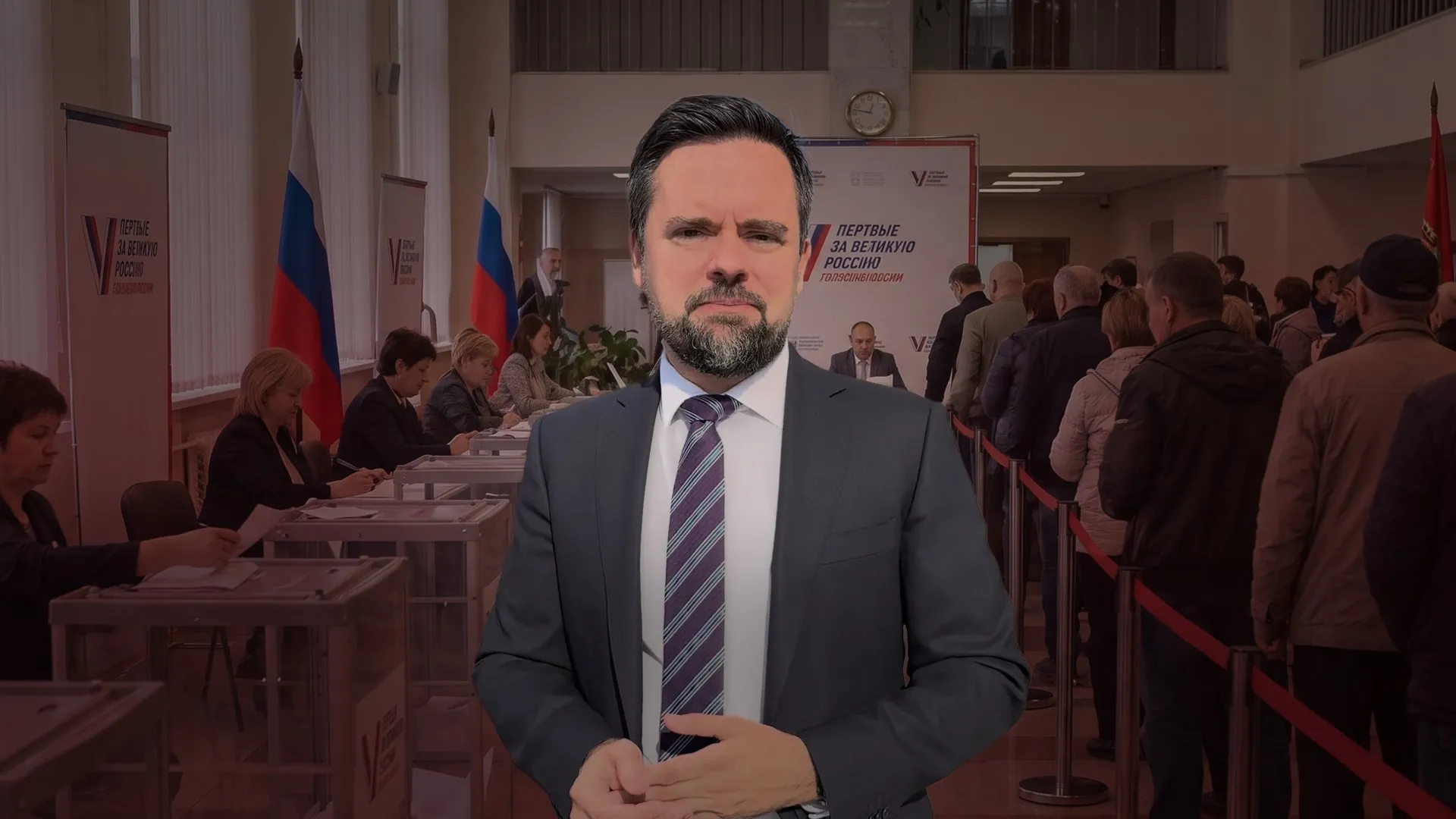
President Vladimir Putin’s United Russia party has won a record supermajority in tightly orchestrated parliamentary polls that excluded virtually any genuine opposition, near complete official results show.
With over 58 percent of votes secured, United Russia, which has dominated Russian politics for 25 years, is on track to win more than three quarters of the seats in the lower house, the State Duma, according to the results announced on Monday after three days of voting that ended on Sunday.
Recommended Stories
list of 4 itemsend of list
The polls were the first parliamentary vote since Russian forces invaded Ukraine in 2022 and the first to include residents of four Ukrainian regions that were seized and illegally annexed by Moscow later that year.
Reporting from Moscow, Al Jazeera’s Dmitry Medvedenko said the results, along with a high voter turnout of almost 60 percent, “is likely to be seen by Moscow as emboldening, as public support for what it is doing, especially for what it’s doing in Ukraine for the continuation of the war”.
Ella Pamfilova, chair of the Central Electoral Commission, said Yabloko, the only registered anti-war party in Russia, did not win any seats at the national level. It had been removed from the ballot last month by Russia’s Supreme Court and only had a few dozen candidates in single-seat races.
A billboard in western Moscow promoting contract army service and reading ‘Time to Decide’, September 21, 2026 [AFP]
Yabloko did enter the regional parliament in western Russia’s Novgorod region. It said on social media that it received about 12,000 votes – just over six percent of votes and enough to enter the regional legislature.
Yabloko and the Communist Party, which has criticised some aspects of government policy but carefully avoided any criticism of Putin, said many of their observers were turned away from polling stations.
The Communists made it into parliament with 13.8 percent of the vote, securing 40 Duma seats. The nationalist LDPR party won 25 seats and the New People party 20.
Russia did not invite observers from the Organization for Security and Cooperation in Europe (OSCE), which the Foreign Ministry has accused of “double standards” for its criticism of the country. OSCE Parliamentary Assembly President Pere Joan Pons said the decision to exclude observers violated Russia’s commitments as a member.
‘Surprise to nobody’
Many Russians appeared unsurprised by the poll results.
“In the morning, I saw that United Russia was winning. It probably comes as a surprise to nobody,” said Moscow resident Tatyana.
Asked what she would like to change, she said: “Well, I guess everyone knows the most acute thing – the conflict in Ukraine. I’d like to see it end sooner, with peaceful methods if possible”.
The continuation of the war risks entrenching policies, which are increasingly affecting average Russians and the parliamentary supermajority may struggle to change the dynamic.
“Putin, of course, will interpret United Russia’s results as confirmation of the (public) support of the war, even though it is not the case: The overall demand for ending the war is growing,” said Tatyana Stanovaya of the Carnegie Russia Eurasia Center in an online commentary.
“The main question is: What now? There are great concerns about mobilisation, new repressions, harsher measures and escalation,” she wrote.
Western criticism
The EU’s top diplomat Kaja Kallas dismissed Russia’s “so-called” election.
“The Kremlin silenced dissent, barred the only registered party that opposed its war in Ukraine and shut out international election monitors. The veneer of democracy is all that remains in Russia,” Kallas said.
In a joint statement, five countries, including Australia, Britain and Canada, condemned Russia’s “sham” parliamentary elections in areas of occupied Ukraine, branding them “part of a wider system of occupation”.
Political parties in Morocco are intensifying campaign efforts before legislative elections on September 23, which will ultimately decide Morocco’s next government.
Twenty-seven political parties are competing for 395 seats in the House of Representatives and the vote comes at a crucial time for the country.
Recommended Stories
list of 4 itemsend of list
Rising living costs, pressure on public services, and high youth unemployment – currently at 37.3 percent for Moroccans aged 15 to 24 – are all issues being hotly debated.
Party headquarters across Morocco and sites at packed city neighbourhoods and markets have been transformed into electioneering operation rooms. Campaign teams navigate crowded streets with loudspeakers, music, and leaflets to catch the attention of Morocco’s 15.8 million registered voters.
“We choose communication locations carefully; we start from a field map where we define the spaces where citizens meet naturally, then we divide the team according to tasks between direct communication and recording observations,” al-Wali al-Shtouki, campaign manager for the Justice and Development Party (PJD) in the Medina-Sidi Youssef Ben Ali district, told Al Jazeera.
“We also hold small meetings at the headquarters because they allow a calm and direct dialogue to understand what the citizen actually expects. What we hear in the field is what guides our daily work. After every tour or meeting, we collect observations and repeated questions and discuss them within the team, then we distinguish between local issues that need follow-up and those related to public policies and parliamentary work.”
Campaigners and supporters of the Istiqlal Party (PI) chant slogans during a rally at the weekly souk in the rural commune of Ait Ikkou, in the Khemisset region, on September 19, 2026, before Morocco’s legislative elections [AFP]
While physical headquarters serve as hubs for election campaigns, a party’s success ultimately relies on its roots within a community, Jawad al-Shafdi, head of the Moroccan Observatory for Political Participation, said.
“In the Moroccan case, the strength of the candidate, their local extension, their network of relationships, and their electoral record also play essential roles,” al-Shafdi told Al Jazeera.
“We may find a party with limited organisational presence in a specific district achieving a significant result thanks to a strong candidate, and vice versa. Winning votes is achieved through a more complex system that combines party organisation, candidate strength, local extension, networks of elected officials, direct and digital communication, in addition to the party’s image and political offering.
“Therefore, the true criterion is not the number of people who enter the headquarters, but its ability to convert organisational movement into electoral mobilisation, mobilisation into votes, and votes into seats.”
Digital, direct engagement
The competition has forced political groups to adopt multi-channel strategies that balance street-level outreach with digital campaigns to reach a broader audience.
Fatima al-Tamni, a candidate for the Left Alliance in the Ain Sebaa – Hay Mohammadi district in Casablanca, highlighted the necessity of direct engagement with voters rather than superficial campaign displays.
Campaigners for the Popular Movement (MP) hand out leaflets to merchants at the weekly souk in the rural commune of Ait Ikkou, in the Khemisset region, on September 19, 2026, before Morocco’s legislative elections [AFP]
She believes that party campaigns should serve as a space to listen to the concerns of the electorate and propose solutions, while building a strategic vision for transport, housing, pollution and other issues.
“We do not want to speak to the citizen from above, nor turn the campaign into a festival of pictures and slogans… We want to speak with them in clear language, and hear from them before we speak in their name,” she said. “[It] is not an end in itself, but the beginning of a new political relationship with citizens based on clarity, accountability, and fulfilling commitments.”
Youssef Ait Sidi Said, a political activist with the Progress and Socialism Party in the Chichaoua province, said campaigning remains an evolving process.
“For the party, this campaign is no longer just a specific period to introduce candidates and the electoral programme, but has become an opportunity for direct and continuous communication with the population and listening to their concerns and expectations,” Ait Sidi Said told Al Jazeera.
“Digital platforms allow reaching broad groups, especially youth, and grant them the possibility to interact, ask questions, and express their opinions. However, we do not consider that digitisation can replace direct communication. On the contrary, we see that each tool has its function.”
Ultimately, direct engagement with voters should remain the hallmark of party campaigns, he said.
“Field communication allows direct listening to the citizen, while digital platforms allow expanding the reach, interaction, and documenting activities,” Ait Sidi Said added.
Russian President Vladimir Putin has cast the vote as a test of support for his ongoing war in Ukraine.
Published On 20 Sep 202620 Sep 2026
Polls have closed in Russia’s first wartime parliamentary elections, with the ruling United Russia party on course to win the tightly controlled vote.
The Kremlin wants the elections, the first parliamentary vote since the start of the full-scale invasion of Ukraine in 2022, to showcase popular support for the war and legitimise its action.
Recommended Stories
list of 3 itemsend of list
Russian government officials accused Ukraine of trying to disrupt voting after Kyiv launched hundreds of drones at Moscow and other regions in what the TASS state news agency said was the biggest attack of its kind since the war began.
The drone strikes on Sunday killed at least three people in the Moscow region and two more in the Russian-held part of Ukraine’s Kherson region, including an election official, according to the region’s governor and the election commission.
Initial results showed the United Russia party comfortably ahead, and Russia’s Central Election Commission said turnout at the close of polls stood at 56.66 percent.
The first official results and turnout are expected on Monday morning.
Voting in Russian-held Ukrainian areas
The vote, which began on Friday for 111 million eligible voters, included residents of four Ukrainian regions that Moscow illegally annexed after the war began, but still doesn’t fully control, as well as those in Crimea, the Black Sea peninsula that was illegally annexed by Russia in 2014.
Authorities in Kyiv denounced the voting in the Russian-held areas as illegal and urged foreign governments not to recognise the result. The European Union on Friday called the action a “blatant violation of international law”.
Voters cast two separate ballots, filling half of the lower house’s 450 seats by selecting political parties listed on the ballot. The rest are contested in single-seat constituencies, with voters choosing individual candidates.
The main Kremlin party, United Russia, is widely expected to retain its overwhelming control of the State Duma. Several smaller parties of the “systemic opposition” that vote in sync with Putin’s views on all key issues are also expected to maintain their presence.
A massive state media campaign and tight control over the elections in the absence of genuine opposition all but assure the Kremlin will keep tight control of Russian politics amid mounting economic costs and increasing Ukrainian drone attacks deep inside the country.
The liberal Yabloko party, the only registered political entity that dared to publicly criticise the war, was removed from the ballot last month by Russia’s Supreme Court. It only has a few dozen candidates in the single-constituency races.
Additionally, some anti-war politicians were imprisoned or forced to flee abroad ahead of the campaign.
Russia didn’t invite election observers from the Organization for Security and Cooperation in Europe. The Russian Foreign Ministry has accused the body of “double standards” for its criticism of Russia.
Embattled German Chancellor Friedrich Merz has vowed to stay on despite exit polls in two local elections suggesting damaging defeats for his centre-right Christian Democratic Union (CDU) party.
In the north-eastern state of Mecklenburg-Vorpommern, the party was projected to only just scrape into parliament, while the far-right AfD was on track to win the most votes. Merz called the result “a disaster” for his party.
In Berlin, the ruling CDU was also expected to be beaten by Die Linke (The Left).
Merz is under mounting pressure, with poor approval ratings and rumours he could even be replaced mid-term in a so-called chancellor swap.
Echoing comments he made after that defeat, Merz told reporters at the party’s Berlin headquarters on Sunday that he would forge ahead with his coalition government’s plans to push through a package of economic, tax and welfare reforms.
“The reforms have to come,” he insisted. “I am taking on this responsibility, because I want to move our country forward”.
“What needs to be done now requires backbone, steadfastness and patience,” Merz said. “I will demonstrate this as CDU party chairman and, above all, as chancellor of our country.”
“I would even go so far as to say that these reforms are the antidote to the authoritarian poison that, with the fascination of authoritarianism, is penetrating ever deeper into our society,” Merz added.
Far-right AfD defeated German chancellor’s CDU in recent Saxony-Anhalt state election, casting doubt on his future.
Published On 20 Sep 202620 Sep 2026
Voters in the eastern German states of Berlin and Mecklenburg-Western Pomerania are heading to the polls as far-right and far-left gains threaten to affect the political standing of Chancellor Friedrich Merz.
About 2.5 million people are eligible to vote in the city-state of Berlin, Germany’s capital, and nearly 1.3 million in Mecklenburg-Western Pomerania on Sunday. Polling booths in both states – traditionally seen as more left-leaning – opened at 8am local time (06:00 GMT) and will close at 6pm (16:00 GMT).
Recommended Stories
list of 3 itemsend of list
Pressure on Merz has been mounting after the far-right Alternative for Germany (AfD) delivered a major defeat to his Christian Democratic Union party (CDU) party two weeks ago in the key state of Saxony-Anhalt. The AfD fell just short of an absolute majority, which would have allowed it to govern on its own.
And after just 16 months in power, Merz’s approval ratings have plunged to about 14 percent, the latest polls suggest, as he struggles to push through promised economic and social welfare reforms with his centre-left coalition partners, the Social Democratic Party (SPD), raising doubts among fellow party members whether he can continue to lead.
In Mecklenburg-Western Pomerania, Merz’s party is an onlooker to the main battle between the SPD’s popular state premier Manuela Schwesig and the AfD’s lead candidate, former radio presenter Leif-Erik Holm.
While the AfD was polling at 36 percent against the SPD’s 37 percent, Merz’s CDU, at just 6 percent, was dangerously close to the 5 percent hurdle needed to stay in the state parliament, according to public broadcaster ZDF.
Reporting from a polling station in Schwerin, Al Jazeera’s Dominic Kane said there was “very much all to play for” in Mecklenburg-Western Pomerania.
“The race between the AfD here and the Social Democrat government is very close indeed,” he added, pointing out to the recent opinion polls.
In Berlin, the CDU is running a tight race against the far-left Die Linke (The Left), which promises drastic measures to solve a dire housing crisis and is popular with young people.
Regional elections would not usually draw much interest outside Germany, but the AfD’s success in Saxony-Anhalt, which it sees as the first step towards winning federal elections due in 2029, has sent shockwaves through Europe.
“Saxony-Anhalt was certainly a revolution for the German party system,” Florian Hartleb, a professor of international relations at Modul University in Vienna and an expert on far-right movements, told Al Jazeera.
Hartleb said the AFD had been “fundamentally excluded” from the power system, with the other political parties trying “everything” against it in recent years. “But it didn’t work out,” he said, citing voters’ dissatisfaction over migration, the economy and social inequality.
Merz has reportedly scheduled a crisis CDU meeting and cleared his calendar to deal with potential aftershocks from Sunday’s elections.
AfD’s main candidate for the Mecklenburg-Western Pomerania state election, Leif-Erik Holm, attends an election campaign event in Schwerin, Mecklenburg-Western Pomerania, northeastern Germany, on September 19, 2026 [Danny Gohlke/AFP]
Moscow mayor reports intercepting 1,600 drones during ‘unprecedented’ attack, accusing Ukraine of election interference.
Published On 20 Sep 202620 Sep 2026
At least two people have been killed and a major refinery has been damaged as hundreds of drones targeted the Russian capital, Moscow, and its surrounding region on the final day of the country’s parliamentary elections.
Moscow’s Mayor Sergei Sobyanin said on Sunday that more than 1,600 drones had been intercepted and shot down, 450 of which were heading for Moscow.
Recommended Stories
list of 3 itemsend of list
He also accused Ukraine of attempting to interfere with a tightly controlled three-day election that is set to tighten President Vladimir Putin’s 26-year grip on power.
“The unprecedented attack was clearly planned with the aim of disrupting the elections. The enemy did not succeed,” he said on Telegram.
Moscow regional Governor Andrey Vorobyov said on social media that a 44-year-old woman and an elderly man were killed in two separate locations.
A fire triggered by a drone crashing into a 21-storey building forced the evacuation of 400 people, Vorobyov said.
The strikes come as Kyiv has intensified its long-range drone campaign against Russia, particularly targeting energy infrastructure to cut off a vital source of Kremlin revenue used to fund its war effort, now in its fifth year.
“A facility on the territory of the Moscow Oil Refinery has been damaged,” Sobyanin added, saying that no casualties were reported so far and emergency services were on the scene.
The major refinery has already been hit by Ukrainian strikes in recent months.
The latest strike follows claims by US President Donald Trump on Monday that Ukraine and Russia had agreed not to target each other’s energy facilities.
It also comes as Russians vote in the country’s first parliamentary elections since Moscow sent troops into Ukraine in February 2022, igniting a war that has killed hundreds of thousands of people. Moscow has also organised voting in parts of Ukraine that it has seized in the four-and-a-half-year war.
Meanwhile, Ukraine’s Air Force Command reported that Russia launched 138 drones of various types across the country overnight, according to the Interfax-Ukraine news agency.
It added that air defences managed to shoot down or neutralise 101 of them.
Morocco’s Justice and Development Party (PJD) went from a decade of being the main political beneficiary of the country’s post-2011 reforms to suffering a dramatic electoral defeat in 2021.
The party won 107 of the 395 seats in Parliament in the November 2011 election, after protests that year called for political reform, greater accountability and a more responsive government. Its leader, Abdelilah Benkirane, became head of government.
Morocco’s 2011 constitutional changes expanded the formal powers of Parliament and government while retaining significant authority for the monarchy. The king appoints the head of government from the party that comes first in the House of Representatives, while he chairs the Council of Ministers, where strategic orientations of state policy are considered.
In the 2016 election, the PJD increased its seats to 125, but Benkirane spent months unable to form a governing coalition. In March 2017, King Mohammed VI ended his mandate and appointed Saadeddine Othmani to replace him. The PJD remained in government until its electoral collapse four years later.
In the September 2021 election, the party fell from 125 seats to just 13, losing 112. The National Rally of Independents (RNI) won 102 seats and became the largest party.
How much of the comeback rests on Benkirane?
Benkirane’s return raises another question: How much of the PJD’s comeback is being built around him?
A recent Al Jazeera Studies analysis describes Benkirane as a political “brand” whose long public career, media presence and direct communication style have created a personal profile that can function as electoral capital for the party.
It examines whether his visibility and personal appeal can help the PJD rebuild after its 2021 collapse.
Benkirane remains one of Morocco’s most recognisable political figures. But his return does not by itself show that the PJD has rebuilt its support.
The party lost 112 seats in 2021; its task now is to turn the attention generated by its leader into support for the party itself.
A broader programme
The PJD’s 2026 programme contains 467 measures across five broad areas: identity and family; political and institutional reform; public services and social protection; the economy and employment; and foreign policy.
It calls for greater transparency in public procurement, rules addressing conflicts of interest and illicit enrichment, and improvements to public services. It also highlights housing, social protection, food, water and energy sovereignty.
Its programme foregrounds practical issues such as prices, jobs, schools, hospitals and corruption.
The PJD is campaigning on public services, jobs, purchasing power and political reform as it seeks to rebuild after its 2021 electoral collapse [Abdel Majid Bziouat/AFP]
Saad al-Sabahi, 38, who works with the PJD’s regional secretariat in Casablanca-Settat, said the programme was developed through studies, consultation meetings and proposals submitted through an online platform.
“These commitments cover a range of sectors and areas affecting the lives of the Moroccan people,” he told Al Jazeera, pointing to political participation, fighting corruption, public education, healthcare, employment and economic sovereignty.
“These commitments, among others, form the basis of the agreement between the party and voters. We will work to fulfil and implement them with integrity and competence,” al-Sabahi said.
What changed after 2021?
The PJD says one of its main lessons from the 2021 defeat has been the need to reorganise internally and examine more critically its years in government.
“The party was able to overcome its crisis following its extraordinary and regular congresses, and after Secretary-General Abdelilah Benkirane took over the leadership,” al-Sabahi said. “The party also reorganised its internal affairs through communication and the renewal of its structures.”
The party’s own assessment of the 2021 defeat includes criticism of its political and organisational choices. It has also accused unnamed actors of undermining democratic choice and pointed to what it describes as electoral corruption and disinformation.
Those are the PJD’s explanations for the result, rather than independently established findings. But the scale of its losses forced the party to confront how far its record in government had separated it from parts of its former support base.
That matters particularly when it comes to younger voters.
Imane Traifi, 37, of the PJD Youth, said the party needed to create sustained opportunities for young people to take part in political life rather than treating them simply as voters during election campaigns.
“We are keen to ensure that young people move from being recipients to becoming participants, initiators and people who take on responsibility,” she told Al Jazeera.
The ghosts and crocodiles
However, a question for any future PJD government is not only what it would seek to change, but what it could change once in office.
Benkirane repeatedly referred to “ghosts and crocodiles” as a metaphor for powerful or hidden interests that he said had obstructed his government when it was in power.
The clearest example is the party’s position on Israel.
The PJD has campaigned against Morocco’s normalisation with Israel and continues to support the Palestinian cause. Its 2026 programme explicitly calls for opposition to normalisation. Yet Morocco restored diplomatic ties with Israel in 2020 while the PJD was in government and Saadeddine Othmani was head of government.
The PJD opposed the move, while Othmani later defended it as a state decision and said Morocco’s support for the Palestinian cause remained unchanged. The agreement went ahead in December 2020 as part of a US-brokered deal that included Washington’s recognition of Moroccan sovereignty over Western Sahara.
Six years later, the relationship has moved further. On September 16, Morocco and Israel agreed to elevate their diplomatic missions to embassy level and appoint ambassadors, while also expanding air travel and advancing economic and trade agreements.
The PJD reaffirmed its opposition to normalisation and cooperation with Israel the following day, describing its position as longstanding.
But it also leaves a question for the party’s return: If such forces were powerful enough to constrain the government then, what has changed?
Has the PJD developed a different understanding of the limits of government authority or will it find itself once again beset by “ghosts and crocodiles”?
The limits of government power
The PJD has made clear on several occasions that the change it seeks is from within Morocco’s existing political and constitutional system, rather than a challenge to the monarchy itself.
Benkirane has repeatedly reaffirmed his support for the monarchy while arguing that elected institutions should play their role in governing and improving the country.
That distinction is important to understanding the PJD’s return. Its opposition to policies such as normalisation with Israel sits alongside its acceptance of a constitutional and political framework in which the monarchy retains a central role in strategic state decisions.
Under the constitution, the king chairs the Council of Ministers, which considers the strategic orientations of state policy.
That applies not only to Israel but to other areas where major policy decisions remain closely tied to the monarchy.
For the PJD, rebuilding means more than recovering the seats it lost in 2021. It means showing what it learned from a decade in government, what it can deliver and how it would avoid the political costs of its collapse.
Al-Sabahi said the party wanted to regain what he described as the gains citizens had previously enjoyed.
“We will work to restore the gains that citizens previously enjoyed and to restore their dignity and rights,” he told Al Jazeera.
Yassine Elachiri, a member of the National Bureau of PJD Youth and the party’s National Council, said the relationship with younger Moroccans had to be built over time rather than during campaigns.
“Earning the trust of a new generation of young people cannot be reduced to electoral mobilisation or short-term campaigns in the run-up to voting day,” he said. “Rather, it is a cumulative process built on sustained engagement, guidance, training and creating opportunities for young people to participate actively in public affairs.”
“Our goal is not simply to reach young people at the moment of an election, but to build a lasting relationship with them based on trust, training and active participation,” Elachiri said.
SACRAMENTO — Gov. Gavin Newsom on Saturday signed legislation to increase security for the state’s voting systems and protect Californians’ ability to cast ballots in an effort to guard against potential interference in the Nov. 3 election, including by the Trump administration.
Newsom pointed to the Trump administration’s recent effort to restrict mail-in voting through the U.S. Postal Service, which was struck down by the U.S. Supreme Court, and the presence of federal monitors at California polls last year as evidence that Trump “will continue his efforts to interfere with the November election.”
“Donald Trump won’t stop until he can exert dictatorial control over your free vote and disenfranchise millions of people this November. California will stop him at every opportunity,” Newsom said in a statement.”We have no bigger task than fighting to protect the right to vote from interference and meddling — the future of democracy is on the line. These bills today build upon the wall California has built to safeguard our electoral process.”
The governor signed the package of bills at the Japanese American National Museum in Little Tokyo, where a year earlier federal agents gathered outside a political rally he was hosting. Then Border Patrol Sector Chief Gregory Bovino, who had been leading the immigration operations in California, was among those outside the event, joined by agents in helmets, camouflage, masks and holding guns. Newsom described their presence as political intimidation.
One bill Newsom signed Saturday cites efforts to “weaponize law enforcement authority for political purposes,” including Republican “Sheriff Chad Bianco’s seizure of ballots in Riverside County,” and the election monitors sent by the U.S. Justice Department to polling sites in five counties during a 2025 special election on redistricting.
Such moves “have given rise to unprecedented concerns about law enforcement interference” in elections and “[demonstrate] that these threats are not merely hypothetical,” the bill by Sen. Tom Umberg (D-Santa Ana) reads.
The law, Senate Bill 884, which takes effect immediately, requires counties to open ballot drop-off locations 30 days before an election — two days earlier than usual — and allows counties to ban electioneering, or trying to influence voters’ decisions, within up to 200 feet of polling sites. It also bans police from making arrests near voting locations except for crimes against people, property, or disrupting the voting process.
Bianco, a GOP candidate for governor who placed fourth in the primary, drew swift condemnation and legal challenges this spring after he ordered deputies to seize more than 650,000 ballots from the Riverside County elections office. Voting rights groups and Atty. Gen. Rob Bonta challenged the move, which is being decided by the California Supreme Court.
Bianco carted off truckloads of ballots from the Riverside County Registrar of Voters in February after securing a warrant based on claims that the office allowed fraudulent votes in the special election to redraw California’s congressional districts under Proposition 50 in 2025.
Earlier this year, Newsom signed a bill preventing local and federal law enforcement agencies from taking ballots without a warrant.
On Saturday the Democratic governor signed a bill making it a felony to seize or order the seizure of ballots, election records or voting machines. Future seizures could be punishable by up to four years in prison.
“The federal administration and those seeking to spread lies about our democracy continue to call for interference in elections in ways we have never seen before in this country,” Assemblymember Gail Pellerin (D-Santa Cruz), the bill’s author and a former longtime county elections chief, said last month. “AB 282 helps ensure that every lawfully cast vote can be counted, and that the will of the voters of every political party will be respected.”
Republican lawmakers argued in previous hearings that the bill is unnecessary because it is already a crime to steal ballots.
Another bill, Senate Bill 259, makes it a crime to interfere with a mail ballot on the way to or from a voter or order the seizure of ballots that are in transit to a local elections office.
Newsom signed Assembly Bill 1664, which requires elections officials to immediately notify the attorney general and secretary of state immediately upon learning of any warrants, subpoenas or law enforcement investigations involving election records or voting equipment.
Newsom also signed bills to boost protections under the California Voting Rights Act, including an explicit ban on voter suppression and expanded access to election materials in languages other than English.
The governor also signed legislation to require more transparency from social media influencers who are paid by political campaigns. The measure, Assembly Bill 1130, came in the wake of a controversy in the June primary election when social media influencers took on a more visible role in the campaigns.
Candidates including Democratic billionaire Tom Steyer paid thousands of dollars to influencers who posted videos endorsing Steyer or talking about him in a positive light. These videos did not always disclose that influencers were paid by a candidate’s campaign.
Russia’s parliamentary elections offer an excellent opportunity for a new round in the information war between the West and Russia. Western politicians, experts and journalists have been given yet another convenient occasion to tell their target audiences that democracy has long ceased to exist in Russia; that the federal parliament, like any other representative body, in practice determines nothing in Russian life; and that all genuinely important decisions for the country are made not even by the government but exclusively in the Kremlin, by an extremely narrow circle of individuals accountable to no one.
Therefore, in the view of many critics of the Russian authorities, elections in Russia need not have been held at all: their outcome was predetermined by Kremlin political strategists and, in any event, will have no significant impact on the country’s future.
And yet even the most biased outside observer could hardly fail to notice the obvious: the Russian authorities made consistent and persistent efforts to ensure that these elections attracted the highest possible participation and were conducted successfully under current electoral law. For at least the past several months, the country had experienced heightened political activity.
Leading politicians and state officials constantly reminded the electorate of the importance of the coming elections. Governors of politically “problematic” regions were urgently allocated additional subsidies. Payments to certain categories of public-sector employees and pensioners were hastily indexed. And inevitable but unpopular or painful decisions for the public – for example, the forthcoming significant nationwide increase in housing and utility tariffs – were postponed until after the elections.
Even possible shifts in Russia’s position on the conflict with Ukraine and future relations with the West were often linked in public and political discussions to the results of the September elections, which were supposedly meant to “untie the hands” of the Russian leadership, although there were very different, sometimes diametrically opposed, views about how exactly the leadership would use these “untied hands”. In any case, it must be acknowledged that the Kremlin did not take the easy path of its opponents in Kyiv, who simply postponed the 2024 Ukrainian presidential election until better, “postwar” times, despite clear discontent and muted grumbling from part of Ukraine’s political class.
What is going on here? Why should the Kremlin invest so much energy and so many resources in what is often interpreted outside Russia as little more than an unconvincing simulation of genuine political competition? Why launch a new full electoral cycle while a large-scale military conflict has yet to end, when the normal boundaries of peacetime political democracy tend, one way or another, to narrow?
It is difficult to suppose that holding elections in Russia is driven solely by Kremlin strategists’ obsessive desire to impress, at all costs, either their external opponents or their partners abroad. As for the former, they would not change their views about the nature of the Russian political system, even in the hypothetical event that the elections ended in a complete triumph for the radical opposition and a crushing defeat for all pro-Kremlin candidates. Such a scenario would most likely lead to endless speculation about yet another “cunning Putin plan”, intended to mislead a credulous Western public and conceal the consistently authoritarian nature of Russia’s political regime.
As for the latter, it is hard to imagine that the leaders of Iran, North Korea, Belarus or China are seriously concerned about the state or future of Russian democracy. The political systems of their countries, like those of many other foreign friends and partners of Russia, to put it mildly, do not entirely conform to the classical standards of Western liberal democracies. It is doubtful that Kim Jong Un, Alexander Lukashenko or, say, Mohammed bin Salman, or even Donald Trump, would suddenly decide to offer Vladimir Putin wise advice on how to organise polling stations properly and count votes.
It is hardly likely that the Kremlin felt an urgent need to erect elaborate and expensive but not especially durable scenery on the Russian political stage when the reaction of the potential audience to the forthcoming theatrical production was known in advance. It seems more logical to assume that the Russian authorities need elections not as cosmetic decoration for the façade of their political system, designed to attract the indifferent gaze of an outside observer, but as a quite effective and, above all, much-needed mechanism for maintaining dialogue between the authorities and society in the difficult geopolitical and socio-economic conditions of autumn 2026.
First and foremost, the Russian authorities are fighting hard for a high turnout, creating the most comfortable possible conditions for their voters to cast their ballots. This is no accident. A high turnout is convincing evidence of the population’s continued political activity and of the fact that Russian society has not descended into political apathy and wholesale cynicism. The idea of active civic participation is far from an empty phrase for the country’s leadership. In this sense, even a vote against the main “party of power”, United Russia, is clearly preferable to the alternative of a significant part of the electorate conspicuously choosing not to participate in the elections.
No less important, the authorities need the election results as a barometer of current public preferences, something even the most accurate opinion polls or in-depth sociological research cannot replace. Contemporary Russia undoubtedly has its own, albeit relatively narrow, political spectrum of “systemic opposition” parties reflecting the differing interests and expectations of various social, economic, age and regional groups. The constantly changing balance of power between these parties must, one way or another, be taken into account by the authorities when determining the future priorities of their strategy.
For example, relative success for the Communist Party, A Just Russia and candidates from other left-wing parties would be a signal that the authorities should pay more attention to social programmes, the fight against economic inequality and social polarisation, and to countering the many remnants of “wild capitalism” left over from the 1990s. Conversely, a large number of votes cast for the New People party and other right-wing candidates would provide grounds for accelerating structural economic reforms and creating additional opportunities for the private sector, including small and medium-sized businesses. Strong electoral results for the Liberal Democratic Party would indicate growing nationalist tendencies in Russian society. The authorities may respond to such political signals in different ways, but they cannot ignore them and must therefore read shifts in public sentiment correctly.
Moreover, it can be assumed with a considerable degree of confidence that the State Duma elections will, one way or another, lead to substantial changes in the composition of not only the lower house of the Russian parliament but also Russia’s federal government. Following the elections, significant personnel changes are likely to take place in the executive branch – both at the federal level and at other levels. Such personnel changes, in turn, will make room for fresh ideas, innovative programmes, unconventional projects and proposals. There is a clear demand for renewal in Russian society today. Parliamentary elections are one way of responding convincingly to this demand without calling into question the stability of the state’s overall strategy or its senior leadership.
The Duma elections are the first parliamentary elections held during the special military operation, during which Russian society has changed considerably. In a sense, they can be called a large-scale political experiment whose outcome remains difficult to predict with precision. For example, it is still difficult to determine with confidence which political force will be supported by the majority of people who have participated in the special military operation or who remain on the line of contact. No less uncertainty remains regarding the likely political preferences of many residents of the new Russian regions, for whom the September elections will be their first State Duma election in their new status.
Such an experiment probably carries a degree of risk for the Russian leadership. Nevertheless, the leadership appears prepared to take that risk, not without reason viewing elections not only as an important but as an indispensable mechanism for public confirmation of its continuing political legitimacy.
The views expressed in this article are the author’s own and do not necessarily reflect Al Jazeera’s editorial stance.
Magdalena Andersson will likely face several challenges as she tries to get Sweden’s other left-wing parties to unite.
Published On 18 Sep 202618 Sep 2026
Sweden’s opposition leader has officially begun talks to form a coalition government after the country’s left-wing bloc won a slim majority in last week’s election.
Magdalena Andersson, leader of the centre-left Social Democrats, was asked by Parliament Speaker Andreas Norlen on Friday to begin efforts to form a new government.
Recommended Stories
list of 3 itemsend of list
Norlen’s request follows the resignation of centre-right Prime Minister Ulf Kristersson, who stepped down on Thursday after the general election result was confirmed.
“I have now been tasked with exploring the possibility of forming a government. A task I undertake with great humility and will act constructively to put together a new government,” Andersson said in a statement posted on Instagram.
“My approach to the work that is now taking place is that all political forces now need to put party tactics aside and put Sweden and the Swedish people first.”
Andersson will likely face a series of challenges as she tries to persuade Sweden’s other left-wing parties to unite and form a new administration. The left-wing bloc won 176 of Parliament’s 349 seats in last week’s vote, securing a razor-thin majority of three seats.
Andersson is expected to seek the support of three other left-wing parties: the Greens, the Centre Party and the Left Party.
The socialist Left Party says Andersson will have to award some of its MPs cabinet posts to win their support. However, the liberal Centre Party insists it will not support such a government.
Andersson has until September 28 to form a government. If she fails, Kristersson, whose centre-right bloc won 173 seats, will try to form a coalition.
Coalition and minority governments are common in Sweden because the country has two major left- and right-wing blocs, both of which contain four parties.
The process of forming a government following the 2022 election took more than a month.
HENRICO, Va. — In-person voting for this year’s midterm elections began Friday, ushering in the final six weeks for Americans to decide which party they trust to lead Congress through a cost-of-living crisis, a prolonged war in Iran and other pressing issues.
Election administrators say they are prepared and confident the vote will be accurate and secure. Nevertheless, President Trump has continued with efforts to denigrate certain voting methods and reshape how elections are run, through court challenges, an expansive federal hunt for noncitizen voters and a pressure campaign to force election officials to share sensitive voter data.
Friday marked the start of early voting in Virginia. Voters in a handful of other states, including Idaho, Minnesota and South Dakota, can cast absentee ballots in person, typically at a local election office or voting center. More expansive early voting is scheduled to begin in those and other states in the coming weeks.
At a voting location in Fairfax, Virginia, 18-year-old college student Sanya Singhal was among the first to vote early in person Friday morning, arriving well before the site opened to get in line.
“Why not just have a little fun in life, you know, try to be the first early voter?” she said. “I really want to participate in my democracy.”
At a voting location in suburban Richmond, a poll worker rang a bell as the building opened and about a dozen voters in line began to file in. Stephen Gura was excited to be the first.
“This election is critical. We need to stop the Trump agenda. We need to start electing people who will stand up for people in this district,” said Gura, who added that he voted for U.S. Sen. Mark Warner, a Democrat, and Shannon Taylor, the Democratic nominee against Republican incumbent Rob Wittman in the 1st Congressional District.
The Nov. 3 election includes votes for governor and state legislature in most states and will determine whether Republicans maintain control of the U.S. House and Senate. If Democrats retake Congress, it will alter the trajectory of the final two years of Trump’s term, most likely leading to investigations and other oversight efforts.
Voting underway after unusual redistricting and Trump’s bid to control how elections are run
At the suburban Richmond voting center, a steady stream of voters flowed in and out for the first hour of early voting. William Curry, a 74-year-old retiree who described himself as a libertarian-leaning independent conservative, voted for Warner’s Republican challenger, Bert Mizusawa, and Wittman. Curry said he generally approves of the job Trump has done, apart from the war with Iran.
“He’s in a mess he can’t get rid of,” Curry said of the conflict.
On a rainy day in Sioux Falls, South Dakota, Bill Goehring, 67, said he voted early at the county office because he will be traveling later. He voted for a mix of Democrats and independents, and said Trump’s “dictatorial tendencies are bad for America.”
The start of early voting comes at a time of deep angst among many Americans about issues including rising gas and grocery prices, the war in Iran, the looming risks of artificial intelligence and Trump’s aggressive immigration enforcement campaign.
It also follows an unprecedented spate of mid-decade redistricting for the U.S. House that began when Trump urged the Republican-controlled legislature in Texas to redraw its congressional map to help the party. California and other states followed.
The changes affect millions of people: Research shows 1 in 10 Americans this fall is a resident of a different congressional district than in 2024.
Those partisan efforts are expected to continue before the 2028 elections after a landmark ruling this year from the U.S. Supreme Court weakened the federal Voting Rights Act’s protections against racially discriminatory redistricting.
As the start of early voting approached, Trump was focused on efforts to assert federal control over election administration, even as the Constitution bestows the power to run elections on the states and, in some cases, Congress. The nation’s highest court rejected Trump’s bid to restrict mail ballots this week, but several of his administration’s other efforts to influence the voting process and mine state voter lists for illegitimate voters continue.
Virginia’s attorney general said Thursday that Trump’s administration may have violated several of the state’s laws after a whistleblower accused federal employees of misrepresenting themselves on voter lookup tools to hunt for noncitizen voters. In a letter, Attorney General Jay Jones demanded that the Department of Homeland Security confirm in writing whether it had directed anyone to access Virginia voters’ information without first obtaining permission from those voters.
Trump for years has raised the specter of widespread noncitizen voting in U.S. elections, and this year is no exception. But despite his administration’s insistence that hundreds of thousands of people are illegally on voting rolls across the country, research continues to show noncitizen voting is exceptionally rare.
David Becker, executive director and founder of the Center for Election Innovation and Research, said he wouldn’t be surprised if the Republican president continues “his disinformation campaign and his attack on election officials.” But he said he thinks despite that and other challenges, “ultimately the process will hold as it has in past years.”
Advocates suggest voters cast their ballots early
Voting rights advocates have encouraged voters this year to cast mail ballots early, in part because of concerns about recent changes in U.S. Postal Service operations that could delay the application of postmarks to ballots.
“Voting early, whether in person or by mail, is good for all of our communities because it gives voters options, eases lines on Election Day and can even mean faster results,” said Hannah Fried, co-founder and CEO of the voting rights group All Voting Is Local.
The top official at the U.S. Postal Service also encouraged voters who cast ballots by mail to get them in early.
“We say seven days,” postmaster general David Steiner said in an interview. “Everything is solved if people vote early.”
In a news briefing Thursday, Minnesota Secretary of State Steve Simon urged people not to be swayed by stories they might have seen or read that cast doubt on election operations. They would be able to vote “just like they always have,” he said.
“I just want to reaffirm that Minnesota’s elections are fundamentally free, fair, accurate, honest and secure,” he said.
Swenson, Rankin and Raza write for the Associated Press. Swenson reported from New York and Raza from Sioux Falls, S.D. AP writer Mike Catalini in Philadelphia and AP video journalist Nathan Ellgren in Fairfax, Va., contributed to this report.
Russians head to the polls from Friday to Sunday to elect members of the State Duma, the lower house of Russia’s parliament, in the first parliamentary election to be held since the country launched its full-scale invasion of Ukraine in 2022.
The vote comes as Russians face a slowing economy as well as Ukrainian drone strikes on refineries and warehouses far from the front line.
United Russia, the governing party that backs President Vladimir Putin, is expected to keep its dominant position.
The authorities are presenting the election as a chance for voters to have their say. Critics argue that with no genuine opposition on the ballot, the result is largely settled in advance.
So why are the elections worth watching? Here is what you need to know:
How do Russia’s elections work?
Starting Friday and lasting through Sunday, Russians will elect members of the lower house, the State Duma.
They will also cast ballots in local elections.
Voters in 11 regions will elect their governors, and 39 regions will elect members of regional legislatures.
Voting is spread over three days to boost turnout among the 111 million eligible voters and includes areas Russia occupies in Ukraine. Electronic voting is allowed.
Half of the Duma’s 450 seats are filled by party lists and the other half are contested in single-ballot races.
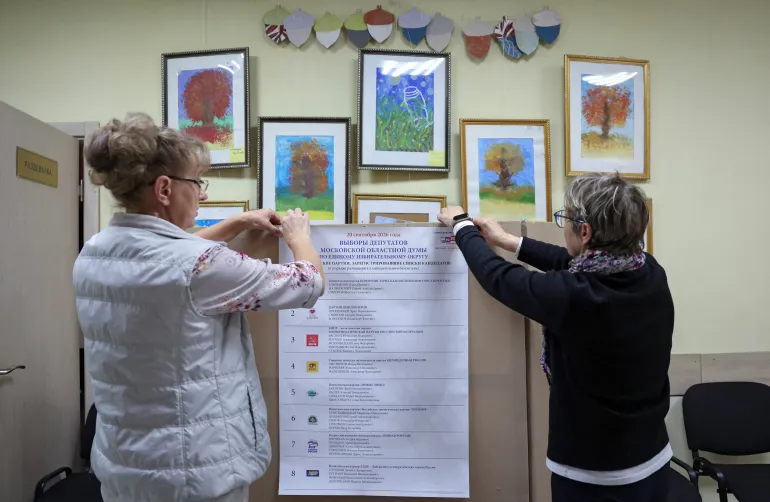
Election officials hang a list of political parties at a polling station before the parliamentary elections in Podolsk, Moscow region [Ramil Sitdikov/Reuters]
What is United Russia?
Russia’s governing party, formed in 2001 from a merger of pro-Kremlin parties, has backed Putin and dominated the parliament ever since.
United Russia won more than two-thirds of the Duma’s seats in the 2021 election. It is again poised to dominate the body.
The party’s list is led by political heavyweights: Foreign Minister Sergey Lavrov, Russia’s top diplomat for 22 years, and Sergei Sobyanin, Moscow’s powerful mayor.
In an apparent bid to add fresh faces to what is widely seen as a party of bureaucrats, its third-highest-ranking official is war correspondent Yevgeny Poddubny, who was badly wounded by a Ukrainian drone.
Members of United Russia have pledged to back the war effort and Putin’s maximalist goals in what the Kremlin calls the “special military operation” in Ukraine.
Deputy Chairman of the Russian Security Council and leader of the United Russia political party Dmitry Medvedev [Ekaterina Shtukina/Sputnik/Government press office/EPA]
Who else is running in Russia’s elections?
Alongside United Russia, other “systemic opposition” parties that vote in sync with the government on key issues are also expected to remain.
The liberal Yabloko Party, the only registered political party that opposes the war, was initially on the ballot, but the Supreme Court ordered it removed in August.
It cited, among other reasons, that the antiwar stance was akin to seeking the violation of Russia’s territorial integrity. Yabloko now runs only single-ballot races.
The Communist Party has been a leading force in the Federal Assembly since the 1990s, led for more than three decades by 82-year-old Gennady Zyuganov, a former Soviet official.
Throughout Putin’s rule of more than a quarter-century, the Communists have criticised some aspects of government policy but carefully avoided any criticism of him. They steadfastly support the war in Ukraine.
Alexander Bratersky, a political analyst and independent journalist, told Al Jazeera that the race for second place is worth watching.
If the Communist Party nab second, it would “suggest voters are angry about economic hardship and falling living standards”.
Russian Communist Party leader Gennady Zyuganov, centre, and Deputy Chairman Dmitry Novikov, second right, take part at the ‘Reds in the City’ all-Russian patriotic rally [Maxim Shipenkov/EPA]
The Liberal Democratic Party, an ultranationalist force that has been a significant presence in the legislature since the early 1990s, will also likely retain some influence in the Duma.
Like the Communists, it staunchly supports the war and boasts of having multiple veterans as members.
Other smaller parties round out the ballot.
The party known as A Just Russia has been on Russia’s political scene for 20 years. A social-democratic party, it competes with the Communists for older and middle-aged voters nostalgic for the Soviet past, and it supports the war in Ukraine.
The New People Party was founded shortly before the last parliamentary election in 2021, seeking to position itself as a liberal voice representing younger voters and technocrats. It won just more than 5 percent of the vote, allowing it to form a small faction.
Bratersky described the party as “a liberal-leaning party backed by some Kremlin people who are more technocratic and more pro-peace”.
He said it appeals to the “middle-class audience”, and after the Kremlin banned Yabloko, it has been viewed as its substitute.
“So, if they come third with a good number of votes, this is a sign that those who are antiwar used them as their legal avatar,” he said.
Other parties seeking seats include Communists of Russia, a small rival of the main Communist Party; the Party of Pensioners; the Green Party; the Party of Direct Democracy; and the Motherland Party.
A candidate for Russia’s liberal Yabloko party running in a single-mandate constituency in the upcoming parliamentary election, hands out flyers to passers-by on a street in Moscow, Russia [File: Yulia Morozova/Reuters]
Why do the elections matter to the Kremlin?
While these elections may seem routine, the fact that they are the first since Russia’s full-scale invasion of Ukraine is what makes them important, Bratersky told Al Jazeera.
He said that Putin has linked the elections to support for the war: Endorsing United Russia at its party congress in August, Putin said the party’s duty was “to do everything for victory” in the war in Ukraine.
“This shows that the Kremlin is a bit worried since the elections are the only legal way to show disrespect for the Kremlin,” Bratersky said. “Even Putin’s core fans hate United Russia as a corrupt force.”
How have past elections gone?
Since Putin first came to power in 2000, United Russia has won every Duma election, usually by a wide margin.
The results have repeatedly been disputed.
In 2011, allegations of vote-rigging set off the largest street protests of Putin’s rule.
After the 2021 vote, independent monitors and statisticians said the party’s real support was far lower than the official count.
The authorities have rejected claims of widespread fraud. Opposition parties and critics of the war have increasingly been kept off the ballot.
Russians head to the polls for the first time since the Russia-Ukraine war began in 2022. United Russia has been the governing party for over two decades, backed by President Vladimir Putin. Do other parties pose a challenge? Al Jazeera’s Dmitry Medvedenko reports from Moscow.
Israeli prime minister pledges to advance two bills aimed at addressing the ‘immense damage’ done to Israeli soldiers.
Published On 17 Sep 202617 Sep 2026
Israeli Prime Minister Benjamin Netanyahu has pledged to pass a law that would revoke the citizenship of anyone who defames Israel’s soldiers, including the directors of NAZA, a documentary about Israeli soldiers’ killings of civilians in Gaza.
Directed by Israeli journalists Yuval Abraham and Rachel Szor, NAZA documents allegations that mass civilian deaths were built into Israel’s target decisions in its genocidal war against Palestinians in Gaza – something Netanyahu and the army reject.
Recommended Stories
list of 4 itemsend of list
The film won the Special Jury Prize at the Venice Film Festival last week. During his acceptance speech, Abraham said “our country is doing these crimes” and highlighted that Israel is systematically and deliberately targeting Palestinians in Gaza.
“NAZA” takes its title from an Israeli military term for expected “collateral casualties” and is built around anonymous interviews with intelligence officers and soldiers.
But it has also played into the charged domestic political atmosphere before Israel’s October 27 election, as public opinion polls suggest Netanyahu’s right-wing coalition could fall short of a majority in parliament.
On Tuesday, Netanyahu accused several of his election rivals of failing to take a tough stand against the documentary, claiming this made them unfit for office.
On Wednesday, he pledged to advance two bills that he said would address the “immense damage” done to Israeli soldiers in the film.
“The first [order]: To revoke the citizenship of anyone who defames [Israeli] soldiers, and the second: To hit them in their pockets and increase the statutory damages for defamation they can be sued for by 20 times,” Netanyahu said in a social media video. “We will hit them both in their pockets and in their citizenship, as their place is not with us.”
Netanyahu cited three examples in proposing the bills: “The recent film NAZA which portrayed [Israeli] officers and soldiers as war criminals”, 2025 remarks by left-wing ex-general-turned-politician Yair Golan that “a sane country does not kill children as a hobby”, and a military legal officer’s 2024 leak of a video showing soldiers abusing a Gaza detainee.
In 2022, Israel’s Supreme Court passed a law that permits stripping citizenship from Israelis who carry out actions that constitute a breach of trust against the state. Any new legislation would likely face similar court challenges.
More than 73,000 Palestinians, most of them civilians, have been killed in Israel’s genocidal war on Gaza since October 2023, according to health authorities.
US President Donald Trump had tried to pressure the Fed to lower rates, but it voted unanimously to raise them instead. In response, Trump is now threatening to end trade with countries the US has a trade deficit with – namely Canada, Mexico and the European Union.
Fewer than half of Americans believe the upcoming midterm elections will be “free and fair,” amid a broader decline in confidence in vote counts, according to a new nationwide poll.
While 49% of respondents said they expected the elections to be free and fair, 23% said they did not expect them to be, and 28% said they didn’t know what to expect.
Americans are more confident that ballots, once cast, will be counted accurately, though their trust in that varies depending on their political affiliation — with 63% of Democrats, 58% of Republicans and 49% of independent voters saying they are either “somewhat” or “very” confident in an accurate count, the Center for Transparent and Trusted Elections at UC San Diego poll found.
That is a sharp decline from after the 2024 election, when 77% of Democrats, 82% of Republicans and 73% of independents expressed such confidence, the same pollsters found then.
Lauren Prather, one of the center’s co-directors, said the latest findings reflect a decline in trust but also nuance in how respondents understand what it means to have a “free and fair” election — with an accurate count of cast ballots being a major factor, but not the only one.
Of those respondents who said they don’t know if the election will be free and fair, about a third — 31% — also said that they were “somewhat confident” that the vote would be counted accurately, Prather said.
The poll also asked an open-ended question, inviting respondents to share what a “free and fair” election means to them, she said, and trust in the count was a “central part of people’s definition” and a “dominant theme.” However, they also identified other things, she said — with about a quarter of respondents also pointing to “voter access and voter eligibility, as well as freedom from interference and intimidation and having a real choice of candidates,” Prather said.
“In other words, trust in the count is the anchor of how Americans understand what it means to be free and fair but it sits within a broader set of concerns about the integrity of the whole process,” she said.
The polling reflects an American electorate that has grown increasingly concerned about U.S. elections amid unprecedented claims of widespread voter fraud from President Trump and his administration, and increasing warnings from Democrats and independent election experts that those claims — which Trump has made without evidence and which experts deny — are part of a broader effort to interfere with the election and intimidate voters.
Thad Kousser, the center’s other co-director, said the findings are in line with a broader era of distrust in civic institutions in the U.S., but also a result of the fact that “people are following different signals from their leaders” as to the trustworthiness of U.S. elections — with vastly different messaging coming from leaders on the left and the right.
Poll respondents shared some concerns about the fairness of the November midterms, he said, but also split by wide margins on other concerns based on their political affiliation.
Voters across party lines shared concerns about gerrymandering, the poll found — with 48% of both Democrats and independents and 36% of Republicans saying they distrust that congressional district lines are drawn in a way that fairly reflects what voters want.
“Nobody has loved the redistricting wars that have been a big story throughout this year,” Kousser said.
After Trump urged Texas and other Republican-led states to launch unprecedented mid-decade efforts to redraw their congressional lines to bolster their party’s chances of retaining control of the legislature through the remainder of Trump’s term, Democrats fought back — including in California, where voters passed Proposition 50 to allow state Democrats to redraw congressional lines in their party’s favor.
On potential foreign interference, 32% of Democrats, 42% of independents and 48% of Republicans said they didn’t trust that U.S. elections are well-protected.
More than three-quarters of Americans — including 79% of Democrats, 76% of Republicans and 75% of independents — said they were “concerned that misleading audio or video ‘deepfakes’ created using AI will impact” the midterms.
But on other issues — including those most discussed by the political establishment — the political divide was much starker, the poll found.
For example, while 53% of Republicans said they distrust that ballots are counted accurately, just 19% of Democrats said so. While 52% of Republicans said they distrust that noncitizens are prevented from voting, just 12% of Democrats said so.
Meanwhile, Democrats and independents were more concerned than Republicans about eligible voters being able to cast their ballots without facing obstacles or intimidation, the poll found.
Many poll respondents said they expected to face intimidation from U.S. Immigration and Customs Enforcement agents at or near polling locations — with such fears being particularly pronounced among voters of color, who were about four times as likely as white respondents to say they expected such intimidation, the poll found.
While 49% of Black respondents, 45% of “Hispanic” respondents and 40% of Asian American and Pacific Islander respondents said they expected to face intimidation, just 11% of white respondents said so, the poll found.
Overall, 35% of respondents said an ICE presence would make them less confident of an accurate vote count, compared with 23% who said it would make them more confident. Those responses also varied greatly by race — and partisan leaning.
White respondents were nearly split, with 29% saying it would make them less confident and 28% saying it would make them more confident. Respondents of other races were vastly more likely to say an ICE presence would make them less confident — with 38% of Black respondents saying they would be less confident and 10% saying they would be more confident; 43% of “Hispanic” respondents saying less and 18% saying more; and 57% of AAPI respondents saying less and just 6% saying more.
Nearly 60% of Democrats said an ICE presence would lower their confidence, and less than 8% said it would increase their confidence. Among Republicans, meanwhile, about 46% said it would increase their confidence, and less than 9% said it would decrease it.
Kousser said the polling gives the sense that a “free and fair” election “means something more to people than simply tallying up correctly the votes of those who were able to cast a ballot.”
“You might doubt that the election was free and fair if you are concerned that congressional districts are gerrymanders, or that some voters stayed away from the polls because of worries about intimidation, or that some people cast a ballot who were not, in fact, eligible,” he said. “These concerns, which can come from all different parts of the ideological spectrum, could lead people to be concerned that [a] ‘correctly counted’ election was not, in fact, fully free and fair.”
Kousser and Prather said what effect diminished trust in elections will have on the midterms and how Americans view the results remains unclear, but will depend in part on how close the election is and what messaging leaders — particularly Trump — share about the results once they come in. Prather said she did not expect it to diminish turnout.
The national survey of 5,016 American adults was conducted Sept. 1-9, with a margin of error of plus or minus 1.4%.
The United States Supreme Court has rejected Donald Trump’s bid to restrict voting by mail ahead of the November midterm elections, in a setback to the US president’s efforts to change rules governing elections.
The ruling on Monday by the conservative supermajority court allows states to continue sending out mail ballots as they have done for years, dealing a blow to Trump’s plans to stop the ballots before the elections and halting possible last-minute legal actions as voting begins in some states.
Recommended Stories
list of 4 itemsend of list
Trump has repeatedly cast doubt on the security of mail-in voting, citing debunked claims of widespread election fraud associated with it. That is despite the president voting by mail himself, including during the 2024 election.
Mail ballots, in place for decades, have been found to increase voter turnout and currently account for a third of all votes cast in the US.
Here’s what we know about the legal challenge to overturn them:
President Trump speaks at the Republican National Midterm Convention in Dallas, Texas, US, September 9, 2026 [Evan Vucci/Reuters]
What are mail-in votes?
Voting by post works by sending ballots to the homes of registered voters, who then mail them back before a deadline.
Eight states, several of them Democratic-leaning – California, Colorado, Hawaii, Nevada, Oregon, Utah, Vermont and Washington – as well as the District of Columbia, allow all elections to be conducted entirely by mail.
Others only allow smaller elections to be conducted by mail.
Although there are cases of forgery or repeat voting, they are rare and amount to just four in 10 million mailed votes, according to the Brookings Institution.
What has Trump said about the mail-in votes?
Trump falsely blamed his 2020 presidential election loss on mail-in voting fraud. He and his supporters also opposed changes made during the COVID pandemic to expand mail-in voting.
During the 2020 Republican National Convention, Trump called mail-in voting changes “the greatest scam in the history of politics”.
His attempt to push the SAVE America Act, which calls for sweeping voting laws, has stalled in the US Senate. The bill, passed in the House of Representatives in February, faces opposition over concerns that millions of voters will be disenfranchised.
How did Trump target mail-in votes?
In March 2026, Trump signed an executive order directing the US Postal Service to take control of mail voting by designing new envelopes with special barcodes that would allow the federal government to ensure ballots are only from eligible voters.
For the midterms, that move would force all states to adopt a uniform envelope style in a short time.
The order also required states to provide the US Postal Service with a list of eligible voters ahead of elections. Several government departments, including Homeland Security and US Citizenship and Immigration Services, would also have the voters’ lists.
The postal agency was additionally empowered to deny mailed ballots if they did not comply with new standards or were not associated with registered voters on the states’ lists.
What happened to the order?
Democrats and activists challenged the order in several courts, resulting in a series of back-and-forth rulings between May and August.
US District Judge Indira Talwani imposed an injunction against the rule in June on the basis that it likely violated the US Constitution. Talwani also noted in her injunction that Trump’s executive order would be impossible to apply when the midterms were already so close.
But her ruling was overturned by the conservative-majority Supreme Court in late August in a temporary judgement.
The Supreme Court had not decided at the time whether Trump’s move was constitutionally legal. Rather, it only sided with the Trump administration on procedural grounds after the administration argued that Democrats sued too soon.
What does the latest judgement mean?
In the latest and final decision, the Supreme Court refused to lift Judge Talwani’s injunction.
In a brief written order that did not go into detail, the court noted that the administration was likely to fail in its push to restrict mail-in votes ahead of the midterms.
Justice Brett Kavanaugh, who was appointed by Trump, voted with the majority against the administration, though he indicated he could support the policy at a later stage. Two judges, Samuel Alito and Clarence Thomas, dissented.
Critics have long warned that restricting mail-in ballots could disenfranchise some voters who typically rely on this method.
It could also disrupt the delivery of mailed votes, as some states, including Alabama, North Carolina and Wisconsin, have begun sending in midterm ballots.
WASHINGTON — The Supreme Court has blocked President Trump’s plan to restrict voting by mail, ruling it is too late to impose new postal service rules for the November election.
The justices on Monday turned down an emergency appeal from Trump’s lawyers, who argued the government needed a new and untested system of unique bar codes to track all the ballots of the tens of millions of people who vote by mail.
Instead, the justices left in place a judge’s order that prevents the U.S. Postal Service from enforcing the new rules for the midterm elections.
Concurring, Justice Brett M. Kavanaugh agreed it was too late to enforce the new rules for this election.
Justices Samuel A. Alito Jr. and Clarence Thomas dissented.
The decision in USPS vs. California is a victory for California Atty. Gen. Rob Bonta and the attorneys general for 22 other Democratic-led states who sued to block the new rules.
Last week, they warned there would be chaos and confusion if Trump’s rules were put in effect now.
Bonta cheered the decision late Monday, calling it “a victory for our democracy and a powerful affirmation of the rule of law” in a case where the stakes “could not have been higher.”
“Voting is the fundamental right from which all other rights flow, and all 50 states allow ballots to be cast by mail in some form. In California and several other states, mail voting is the primary way elections are conducted,” Bonta said. “Had this rule been allowed to take effect, the consequences would have been catastrophic.”
He said his office “will remain vigilant in safeguarding our elections,” and urged voters to make their voices heard.
Under the proposed rules, state and county election officials across the nation would be required to enroll each voter with a unique bar code and submit this data to a new online portal that, as of last week, was not yet functioning.
Without the individualized bar codes, states could not send ballots through the mail. In California, that would mean election officials would have to enroll 23 million voters with new bar codes before state ballots could be mailed.
“Compliance with the USPS’ rule would be impossible ahead of the midterms, meaning that millions of voters would be unable to vote by mail and some would not be able to vote at all,” the state attorneys general told the court last week.
The impact would not be limited to Democratic-leaning states. Utah Lt. Gov. Deidre Henderson said it would be “an unmitigated disaster” if the new rules were put into effect now. About 30% of the nation’s voters — and 80% of Californians — cast ballots by mail in 2024.
But Trump has maintained, without providing evidence, that voting by mail leads to widespread cheating and fraud.
In March, he issued an executive order that called on the postal service to do more to “enhance election integrity.”
“Unique ballot envelope identifiers, such as bar codes, enable confirmation that only citizens receive and cast ballots,” he said.
Elections experts say there is no evidence of such widespread fraud, despite robust audits and other searches for it.
State attorneys general argued that the Constitution entrusts states, not federal officials, to conduct elections. While Congress may impose new rules, it is not done to limit voting by mail or to empower the postal service to do so, they said.
Trump and his lawyers maintained the administration had a duty to combat fraud, including in elections.
Solicitor Gen. D. John Sauer described the new rules as “modest measures that will help prevent and restrain potential gross abuses of the mails to perpetrate a fraud on the Nation.”
And he said the federal government, the states and the voting public would face irreparable harm if the new Postal Service rules were not allowed to be applied to the coming election.
But U.S. District Judge Indira Talwani, in Boston, ruled the postal service may not put its new regulations into effect for the Nov. 3 election. She found the Trump administration had presented no evidence to the court of widespread fraud existing, while the states had presented ample evidence that implementing such a system on such a fast timeline posed tremendous risk.
The 1st Circuit Court affirmed her order and said the administration’s lawyers “have not even seriously challenged the … detailed findings about the chaos and widespread disenfranchisement that would occur between now and November 3 should the USPS rule take immediate effect.”
On Sunday, U.S. District Judge Carl Nichols — a Trump appointee — also blocked the new Postal Service rules from being implemented in separate cases brought by the NAACP and Democratic groups, finding they clearly exceeding the Postal Service’s authority in elections.
What the future will hold is unclear. The courts did not declare the new rules to be illegal or unconstitutional, though multiple lower courts have suggested that parts of the plan likely would be — including by exceeding the Postal Service’s authority to intervene in elections.
Much of the debate before the appellate and high court related to the rushed timeline under which the Postal Service was seeking to implement the changes. With that set aside by the Supreme Court’s ruling that the rules will not apply this election, the debate in the lower courts may shift focus to whether the new regulations can be applied to the 2028 elections.
Nevada Secretary of State Cisco Aguilar, chair of the Democratic Assn. of Secretaries of State, said the high court’s ruling was a clear loss for Trump, and that state election officials are ready to continue their fight to protect U.S. elections if necessary.
“This ruling affirms what our Constitution has always held: Elections belong to the American people, not a desperate man in Washington,” he said.
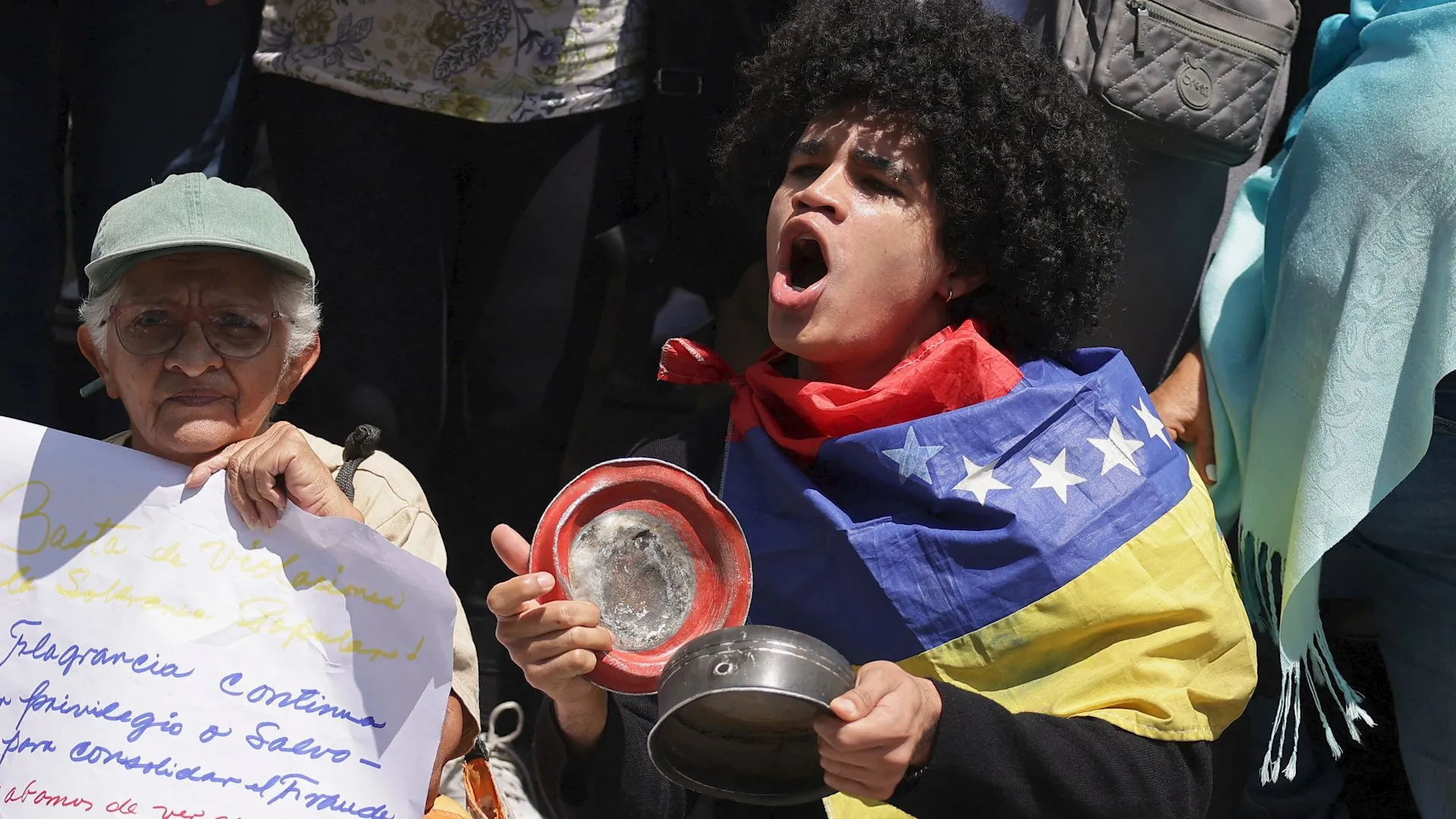



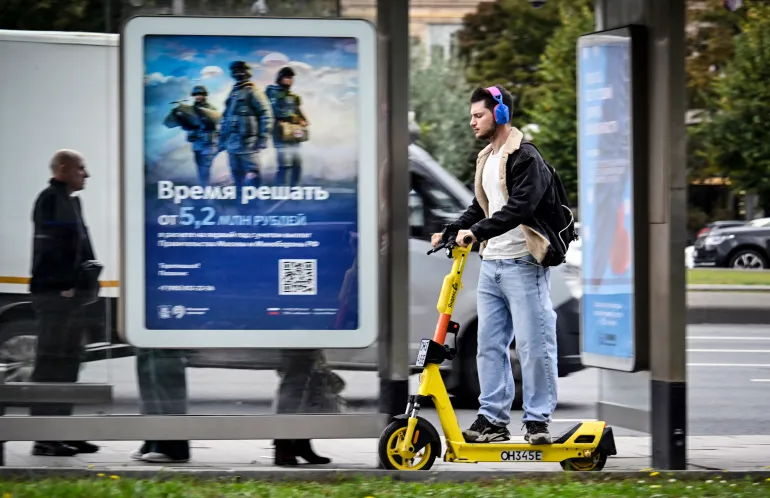

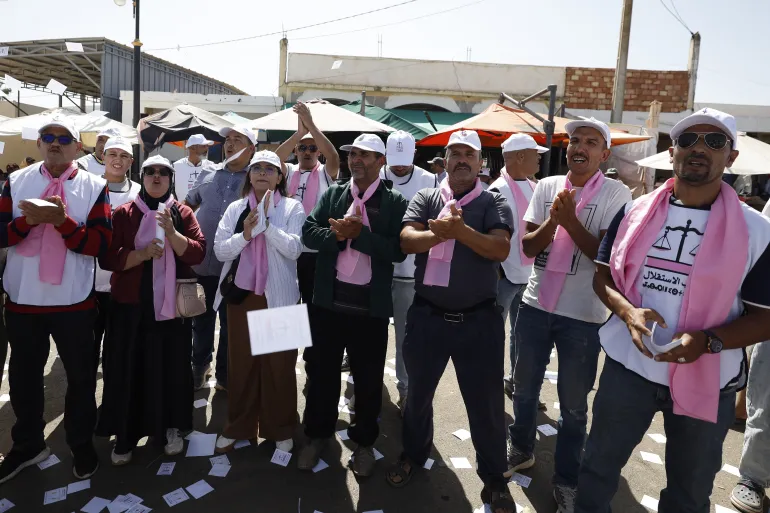
![Campaigners and supporters of the Istiqlal Party (PI) chant slogans during a rally at the weekly souk in the rural commune of Ait Ikkou, in the Khemisset region, on September 19, 2026, before Morocco’s legislative elections [AFP]](https://i0.wp.com/occasionaldigest.com/wp-content/uploads/2026/09/afp_6ab11af2690d-1789991666.jpg?w=640&ssl=1)
![Campaigners for the Popular Movement (MP) hand out leaflets to merchants at the weekly souk in the rural commune of Ait Ikkou, in the Khemisset region, on September 19, 2026, before Morocco’s legislative elections [AFP]](https://i0.wp.com/occasionaldigest.com/wp-content/uploads/2026/09/afp_6ab11b21c12e-1789991713.jpg?w=640&ssl=1)
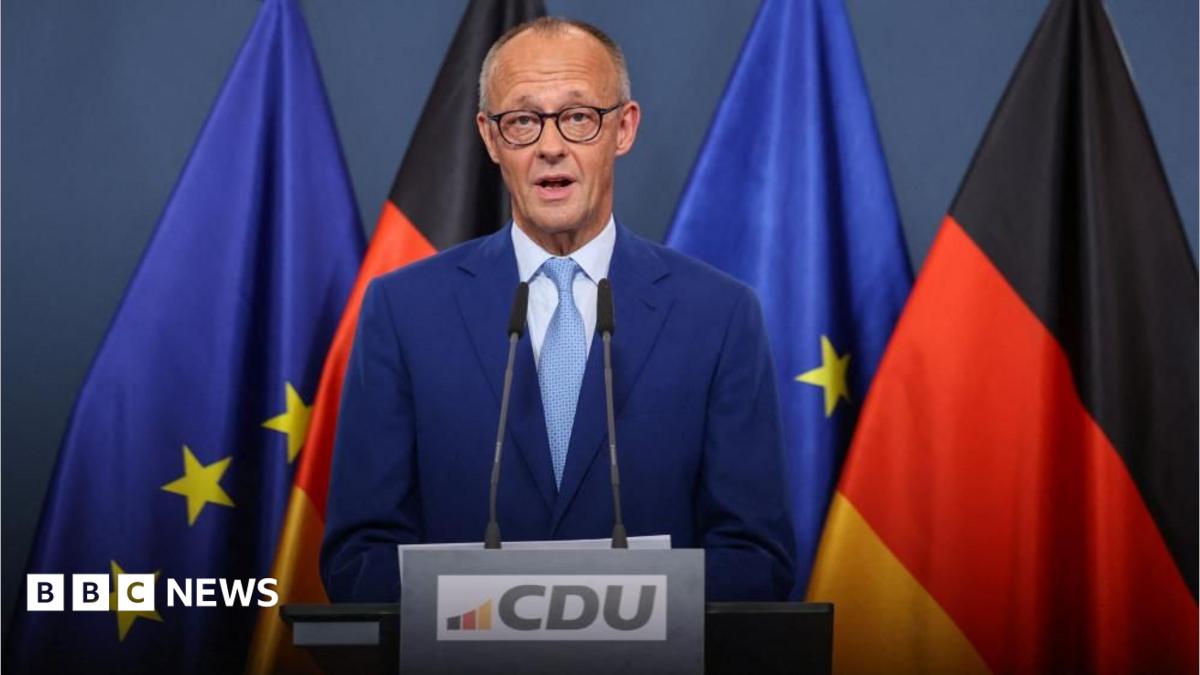
![AfD's main candidate for the Mecklenburg-Western Pomerania state election Leif-Erik Holm attends an election campaign event in Schwerin, Mecklenburg-Western Pomerania, northeastern Germany, on September 19, 2026 [Danny Gohlke/AFP]](https://i0.wp.com/www.aljazeera.com/wp-content/uploads/2026/09/AFP__20260919__C8RV2RX__v1__HighRes__GermanyPoliticsStateVote-1789878295.jpg?w=640&ssl=1)
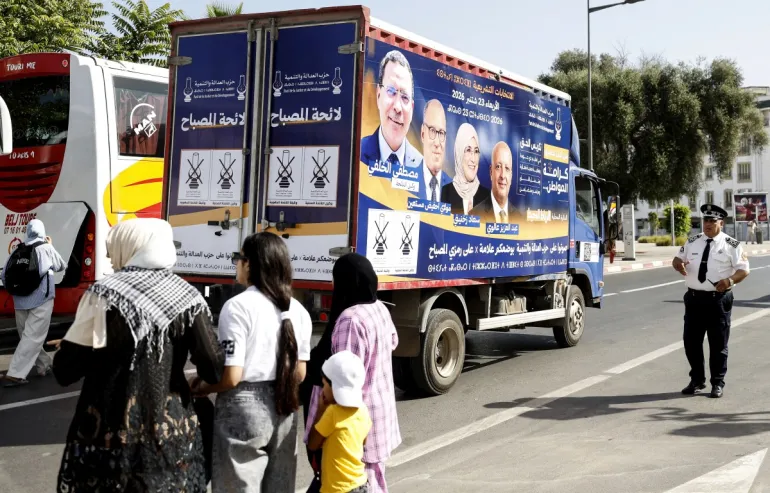
![The PJD is campaigning on public services, jobs, purchasing power and political reform as it seeks to rebuild after its 2021 electoral collapse [Abdel Majid BZIOUAT / AFP]](https://i0.wp.com/occasionaldigest.com/wp-content/uploads/2026/09/AFP__20260912__C84F3GR__v1__MidRes__MoroccoPoliticsElection-1789565328.jpg?w=640&ssl=1)