Stuttgart, Germany – Minutes after the results of the first exit polls flashed across German screens, Chancellor Friedrich Merz of the conservative Christian Democratic Union (CDU) declared in a televised statement at the party’s headquarters that he was going nowhere.
“It’s a disaster,” he said of the state elections in Mecklenburg-Western Pomerania on September 20. “What needs to be done now requires backbone, steadfastness and patience. I will muster them – as party chairman of the CDU and, above all, as chancellor of our country.”
Recommended Stories
list of 4 itemsend of list
But pressure on Merz is mounting.
On Thursday, a survey by Germany’s public broadcaster ARD found that only one in 10 respondents were satisfied or very satisfied with his work. That is the lowest figure for any chancellor since the survey began in 1997.
His party crashed out of the state parliament in Mecklenburg-Western Pomerania, failing to clear the 5 percent threshold needed to win seats – the first time this has happened since the Federal Republic of Germany was founded in 1949. The far-right Alternative for Germany (AfD) came first with more than a third of the vote.
On the same day in Berlin’s state elections, the CDU suffered another major setback. It came second after The Left party, which won 25.7 percent of the vote. The Left now hopes to form a government in the capital although it will need coalition partners.
Just two weeks earlier, the CDU suffered another blow. The AfD won the state elections in Saxony-Anhalt, receiving more than 40 percent of the vote, compared with 17 percent for the CDU.
No obvious successor
Merz could face a revolt within his own party, but removing him as chancellor would be considerably harder.
Under Germany’s Constitution, the Bundestag can replace a chancellor only by simultaneously electing a successor with an absolute majority.
Wolfgang Schroeder, a professor of political science at the University of Kassel, told Al Jazeera: “The CDU is in a situation where it can’t really get any further with Merz, but it also doesn’t know how things would work without him. There is no attractive replacement, so there is no alternative.”
A former chairman of the BlackRock investment company’s German supervisory board, Merz had long harboured ambitions of becoming chancellor but was sidelined by then-Chancellor and -CDU leader Angela Merkel in the early 2000s. He staged an unexpected comeback, finally taking office in May 2025.
Then-designated German Christian Democratic Party (CDU) parliamentary floor leader, Friedrich Merz (left) is pictured with then-party secretary general Angela Merkel (right). In the centre is lawmaker Rudolf Seiters before a meeting of the CDU parliamentary group in the Berlin Reichstag, February 18, 2000 [Reuters]
At the helm, Merz has drawn criticism for remarks about the country’s “Stadtbild” (cityscape), widely interpreted as a suggestion that there were too many refugees and migrants on the streets. The debate has resurfaced in recent days with prominent CDU figures returning to the issue after the party’s poor election results.
The AfD’s surge is but one factor behind the decline of Germany’s long-dominant conservative party, which has produced six chancellors in its history.
The CDU and its Bavarian sister party, the Christian Social Union, govern Germany in coalition with the Social Democratic Party (SPD). The government is struggling amid the rising cost of living, deindustrialisation, crumbling infrastructure and a housing crisis in major cities.
Nils Diederich, a professor emeritus of political science at the Free University of Berlin and a former SPD member in the Bundestag, said Merz has failed to make a good impression but argued he is not the main reason for the CDU’s poor results.
“Overall, I see the coalition itself as the main problem,” he said. “The Social Democrats have worn themselves out in the coalition. They have lost their sense of direction and are putting the brakes on reforms. That, in turn, is dragging the CDU down with them.”
Schroeder told Al Jazeera: “It’s possible that the crisis surrounding the chancellor could develop into a fundamental crisis for the CDU and from there into a crisis for the coalition.”
The reform dilemma
In July, the German government announced a package of 34 measures, including reforms to pensions, taxation, bureaucracy and the labour market. Merz originally intended to push through his repeatedly promised reforms by the end of the year.
But the state elections have put the coalition parties under greater pressure to stake out their own positions.
To ease the burden on people in need of long-term care and to plug multibillion-euro deficits, the SPD is calling for a cap on care costs and for people with private health insurance to share the costs. The CDU firmly rejects both proposals on legal and financial grounds.
State premiers from both major parties and the SPD leadership want to retain the option of retiring without a pension reduction after 45 years of contributions, which they see as a reward for a lifetime of work. The conservative bloc’s business wing, however, insists that the provision be phased out.
Finance Minister Lars Klingbeil of the SPD is planning new revenue measures to consolidate the budget but faces fierce resistance from CDU state premiers and conservative legislators determined to block any tax increases.
Schroeder warned that the coming months could be difficult.
“The CDU is caught in a dilemma. If Merz continues down the path of reforms that place a burden on society, the likelihood of cooperative governance with the SPD will diminish further. If he goes along with the course the SPD is proposing, pressure within the party will increase.”
Diederich said: “If the reforms fall through, then either Merz or the Social Democrats would have to act and let the coalition collapse.”
The next major election test will come in North Rhine-Westphalia, Germany’s most populous state, where voters elect a new parliament in April.
Justin Allen Clayton, L.A. County deputy public defender
Bar rating: Qualified
Clayton is a Los Angeles native who attended public schools, earned a bachelor’s degree in criminology and passed the bar in 2012. He joined the public defender’s office two years later and since 2023 has served as deputy in charge of the Inglewood branch.
Clayton describes himself as a “working supervisor” who conducts arraignments and represents clients at preliminary and other hearings. He has completed dozens of trials, including three with life sentences, according to his website.
The position involves overseeing and training attorneys, as well as law clerks and summer interns, on misdemeanor and felony case preparation and trial strategy.
Clayton said a priority is improving court efficiency through pretrial preparation and “firm but fair enforcement of deadlines.”
Time as a candidate, he said, has shown him the importance of effective communication within the court system in bridging language and cultural differences. He called that a guiding principle, particularly for clients who lack counsel.
“Sometimes, one additional question, or one additional statement, can make all the difference in resolving an issue,” he said.
Clayton said running a public defender branch office, which brings him in contact with judges, sheriffs, court clerks, interpreters and others, combined with 14 years as a trial attorney, gives him a “comprehensive understanding” of the courtroom.
“That combination of courtroom experience, leadership and daily interaction with the many people who make our justice system work has uniquely prepared me to serve as a Superior Court judge,” he said.
Anna Slotky Reitano, L.A. County deputy county counsel
Bar rating: Qualified
Reitano spent the early part of her career in criminal defense, contract law and other sectors. In 2014, she joined the L.A. County public defender’s office. A decade there included three years in juvenile court, where she primarily handled felony cases, and five years at the San Fernando Courthouse, where she represented indigent clients facing felony charges.
Reitano focused on mental health diversion and treatment, aiming to support rehabilitation when possible. Having a brother with schizophrenia and witnessing how families navigate the legal system when dealing with mental illness has informed her approach.
“This has given me a deeper understanding of both the challenges individuals and families face and the ways in which the system can fall short in addressing those needs,” she said.
This is not her first bid for office. She lost a campaign for a judgeship in 2022 and two years later assumed her position in the county counsel’s justice and safety division, where she supervises litigation and advises county departments.
Reitano, a former child actor, volunteers with local schools and, according to her website, mentors “future lawyers” through moot court competitions.
Campaigning, Reitano said, has shown her that constituents, no matter how different, uniformly want “a judge who is experienced, prepared, fair and willing to listen.”
“My experience across criminal, juvenile, civil, administrative and government law has uniquely prepared me to serve wherever the court needs me,” she said.
Palestinian participation in upcoming Knesset vote continues to shrink with withdrawal of Sami Abu Shehadeh.
Published On 2 Oct 20262 Oct 2026
Arab Israeli politician Sami Abu Shehadeh has withdrawn his candidacy for the upcoming Israeli elections after the Supreme Court advised him to drop out.
The leader of the left-wing Palestinian Balad party announced on Friday he was dropping his bid for election to the Knesset on October 27. His withdrawal, which came after the court threatened to disqualify him, comes amid increased efforts by Israeli authorities to block Arab Israeli parties from taking part.
Recommended Stories
list of 3 itemsend of list
Political analysts view Arab Israeli parties as potential kingmakers in the election, with polls showing neither Prime Minister Benjamin Netanyahu’s coalition nor the main opposition bloc on course for an outright majority.
The withdrawal came after the Supreme Court indicated that a majority of its judges agreed with a September 23 decision from Israel’s Central Elections Committee to oust him from the race after nationalist political rivals accused him of supporting Hamas’s attack on October 7, 2023.
Adalah, a rights organisation representing Abu Shehadeh, condemned the court, saying the evidence it presented had no legal basis.
“The court has effectively decided to remove a Palestinian leader, a citizen of Israel, from the Knesset,” Adalah said in a statement.
“The court’s clear intention to disqualify him,” it added, was “a direction that would have set a dangerous legal precedent with devastating consequences.”
Sami Abu Shehadeh, leader of the Balad party, arrives at the Supreme Court in Jerusalem on October 1, 2026 [AFP]
Abu Shehadeh served in the Knesset from 2019 to 2022. Balad confirmed he was withdrawing his candidacy but stressed that the decision did not mark the end of his political struggle and that he would remain party leader.
The elections committee voted to disqualify him at the request of far-right National Security Minister Itamar Ben-Gvir, who accused him of supporting the Hamas attack due to an article issued the following day in which Abu Shehadeh called it an “important historical event”.
Speaking to the Supreme Court on Thursday, Abu Shehadeh said he did not support “armed struggle” but acknowledged that a paragraph in the article had been incorrectly worded. He said his intention was to call for moving the conflict towards a political process.
Adalah labelled his withdrawal from the election “a severe blow to the right of Palestinian citizens to be represented and to stand for election”.
The elections committee has also barred two Arab electoral lists: the United Arab List and the Joint List, a three-party alliance that includes Abu Shehadeh’s party Balad. The Supreme Court is due to continue hearing appeals from the parties on Friday.
Adalah has questioned why the Palestinian candidates are being disqualified but far-right Israeli candidates were “cleared to run” despite openly calling for violence against Palestinians and making statements “amounting to incitement to genocide”.
The state Legislature was tasked with developing a better recall system after Gov. Gavin Newsom faced a gubernatorial challenge in 2021, costing state and local governments more than $200 million.
Newsom defeated the recall attempt after nearly 62% voted to keep him in office. Had he been ousted, conservative talk radio host Larry Elder was the leading candidate to replace him with less than 49% of the vote.
Former state Sen. Josh Newman, who was recalled in 2018 and later reelected to office, co-authored the measure that made it to the ballot. He believes that the elimination of a second simultaneous vote for a replacement removes “the political incentive for gamesmanship around recalls.”
“My solution is really simple: It’s to eliminate that second question and maintain the recall as a valid, powerful tool of accountability,” he said.
It’s not uncommon for someone to get appointed to fill an official’s term if they leave office before their time is up. Newman said that slotting the lieutenant governor into the role of governor in the event of a recall would follow a precedent.
The lieutenant governor currently serves as acting governor when the governor leaves the state.
Judge Leibowitz’s decision underscores state jurisdiction over voter qualifications, limiting federal actions.
Published On 2 Oct 20262 Oct 2026
A United States federal judge has ruled that a law criminalising voting by noncitizens is unconstitutional, dealing a setback for President Donald Trump’s administration as it cracks down on alleged election fraud ahead of November’s midterm elections.
US District Judge David Leibowitz in Miami dismissed a federal case on Thursday against Chelsea Cox, a Florida resident originally from Jamaica who had been charged in October 2025 with illegally voting in the 2020 presidential election.
Recommended Stories
list of 3 itemsend of list
Leibowitz, who was nominated to the bench by former Democratic President Joe Biden, found that under the US Constitution, only individual states, not the US Congress, have the authority to set voter qualifications.
Since every state already requires US citizenship to vote, he wrote, it is up to Florida, not the Department of Justice, to prosecute Cox for breaking that rule. “Florida can and does,” he wrote, noting the state already has its own laws against the conduct Cox is accused of.
The ruling applies only to Cox’s case and it does not bind judges elsewhere, though about 45 similar cases remain pending nationwide. At least four other defendants have raised the same constitutional challenge.
Court filings show Cox entered the US as a tourist in 1999, overstayed her visa, and later used a fraudulent birth certificate from the US Virgin Islands, a US territory in the Caribbean, to obtain a Florida driver’s licence and register to vote in 2012.
Trump has falsely claimed that noncitizen voting, which is already illegal and rare, cost him the 2020 election, and has cast it as part of a broader effort by Democrats to dilute Republican support.
The Department of Justice has charged at least 60 people with the offence since Trump returned to office in January 2025.
Among 129 people charged with “voting by an alien” since 2021, none was accused of conspiring to sway an election, backing a candidate, or being paid to vote, according to Reuters. Most were found to be lawful permanent residents who had registered by mistake or on the incorrect advice of an election worker or government clerk.
Cox’s lawyer, Bruce Udolf, welcomed the ruling and said he hoped authorities would not now seek to deport her, citing her declining health conditions.
Brazilian president and opposition candidate snub the final debate ahead of the presidential election.
Published On 2 Oct 20262 Oct 2026
Brazilian President Luiz Inacio Lula da Silva and his main opponent Flavio Bolsonaro have snubbed a chance at a final debate ahead of the first round of the presidential election on Sunday, while police ruled out a bomb threat outside the country’s Supreme Court.
Lula, instead of taking part in the debate, opted to appear on a popular podcast with millions of YouTube subscribers while his rival Bolsonaro accused the electoral court of “censorship” as a reason for his withdrawal.
Recommended Stories
list of 3 itemsend of list
Bolsonaro, son of the former Brazilian President Jair Bolsonaro, said during a live broadcast on Thursday on his social media channels that his decision not to participate in the debate was due to “censorship imposed by the electoral court”.
The right-wing candidate was referring to a decision that barred the debate broadcaster from keeping President Lula’s empty seat on stage.
The debate organised by TV Globo, the country’s most popular broadcaster, was set for Thursday and offered a final opportunity for the two presidential frontrunners to face off before polls open.
TV Globo said in a statement that the debate was cancelled because two rulings, one from the country’s electoral court and the other from the Supreme Court, had created “legal uncertainty” about the event.
Lula, 80, will face off against Bolsonaro in a first-round vote on Sunday, with polls giving him a slight advantage.
The pair are neck and neck in projections for a potential runoff on October 25, however.
Bomb scare
On the same day of the cancelled debate, Brazilian police ruled out a bomb threat outside the Supreme Court.
A suspect who “tried to jump the court’s fences” and “threw a backpack on top of a bus stop” had been arrested, the court said in a statement.
Authorities examined the backpack, which ultimately contained “only personal belongings,” military police spokesperson Raphael Broocke told AFP.
The suspect will remain in custody while the investigation continues, he added.
Brazilian police and firefighters inspect the area of a possible bomb in a backpack outside the Supreme Court headquarters in Brasilia on October 1, 2026 [AFP]
The Supreme Court has been criticised by the political right, notably for the 2025 conviction of ex-leader Jair Bolsonaro over a coup plot.
It has also become embroiled in a fraud scandal that has dominated the final weeks of the presidential campaign.
United States President Donald Trump has kicked off a 32-day campaign tour ahead of the November midterm elections that could see his Republican Party hurt by his handling of the war on Iran and the economy.
On Thursday, Trump travelled from Washington, DC, for back-to-back rallies in Texas and Oklahoma.
Recommended Stories
list of 3 itemsend of list
At his first stop in Denton, Texas, Trump sought to shift the narrative around his drooping approval ratings, offering a personal assessment of his administration’s performance.
“I give us an A+ on the government, on economics, on everything,” Trump told a crowd of supporters at the Peterbilt Motors Company, a truck manufacturer.
The president also blamed unfair media coverage for his growing unpopularity, arguing that his pre-election rally blitz was necessary to set the record straight.
“We’re doing an extremely poor job of promotion and an extremely great job of running the country,” Trump said.
But Trump’s poll numbers have raised concerns about Republican prospects ahead of the November 3 midterm election.
Trump himself is not on the ballot, but Republican candidates across the country are seeking to defend the right-wing party’s majorities in both chambers of Congress, as well as key state and local offices.
The economy and Trump’s war on Iran are expected to weigh heavily on the election outcome.
On Thursday, The Associated Press and the NORC Center for Public Affairs Research released new poll results showing that 71 percent of Americans disapprove of the war, which has driven up the price of fuel.
About half of survey respondents also said they were worried they would not be able to afford food and petrol. Only 26 percent approved of Trump’s handling of the economy.
Taking centre stage
Still, despite record low approval ratings, Trump has positioned himself as key to the Republican midterm strategy.
At a first-of-its-kind Republican midterm convention in September, Trump encouraged voters to consider his record while at the ballot box. “I’m asking you to pretend that I’m on the ballot,” he said.
During Thursday’s tour, he touted the impact of his tariff campaign, which he credited with creating thousands of manufacturing jobs.
“For decades, you were heartlessly betrayed by politicians, lousy politicians, who let foreign trade cheaters plunder your wages, loot your factories, close up your jobs,” Trump told Peterbilt workers. “They’d still be doing it if I wasn’t here, believe me.”
Trump’s tariffs, however, have been highly controversial, prompting a series of court challenges. Critics have argued that the sweeping import taxes surpass the president’s constitutional powers.
Trump also used his stump speech to ease concerns about the US-Israel war on Iran, which began on February 28. Both sides have declared victory, though a ceasefire remains elusive.
“Just as I promised, I’m ensuring that Iran will be very quickly ended. I will tell you the energy prices are going to be rapidly, rapidly coming down,” Trump said.
“We’ll win very easily right now,” he added. “I believe right after the election we’ll win, but maybe before the election.”
The war, however, resulted in Iran stopping commercial traffic through the Strait of Hormuz, a key waterway for the global fuel trade.
The price of diesel — the fuel the trucks built at the plant use — soared to record highs of more than $6 per gallon (3.8 litres) last week. Petrol prices have similarly skyrocketed.
Hurting or helping his fellow Republicans?
Trump, however, has acknowledged that the stakes are high for his presidency in the upcoming midterms.
All 435 seats in the House of Representatives are up for grabs, as are 35 seats in the 100-member Senate.
Losing Republican control of either chamber could create roadblocks for Trump’s legislative agenda during the final two years of his second term.
But Trump has also expressed concern that he could be impeached for a third time, after two prior impeachments during his first presidency.
At Thursday’s second stop, in Durant, Oklahoma, the Republican leader repeated that fear. “Pretend I’m running, please,” he told the crowd. “If we don’t win, they’ll end up impeaching me.”
Many of the places Trump is scheduled to visit this month are perceived as reliably Republican voting districts. Following his stops in Texas and Oklahoma on Thursday, Trump will be heading to Alabama, Ohio and Nebraska in the coming days.
Still, some elections that ordinarily would be considered shoo-ins for Republicans have grown more competitive in recent months.
In Texas, for instance, no Democrat has won a statewide race since the 1990s. But this year, Republican Ken Paxton, the state’s attorney general, is struggling to win a Senate contest against Democrat James Talarico.
During both of Thursday’s stops, Trump sought to bolster Paxton’s prospects. At the Peterbilt factory, for instance, he called Paxton “the greatest attorney general in the United States of America”.
“We gotta get this guy elected,” Trump said, before pivoting to criticisms of Talarico, whom Republicans have sought to paint as out of touch with Texas’s large beef industry.
“He’s a vegan,” Trump said of Talarico, repeating an unsubstantiated rumour. “And vegans don’t do well in Texas.”
But leaked audio appeared to show Paxton lamenting the negative impact Trump had by holding the Republican midterm convention in Texas last month.
Trump has nevertheless used his pre-election tour to highlight social issues he feels will help rally voters to the Republican cause.
On Thursday, he returned to familiar subjects like immigration and transgender rights, which he depicted as a part of the Democrats’ “radical” agenda.
“They want women in men’s sports. They want open borders. They want transgender mutilation for your children,” Trump said. “What the hell are you thinking about, you liberals?”
The president also used his Texas appearance to push back against critics of data centres, despite bipartisan concern.
Critics worry that the rapid growth of artificial intelligence (AI) has fuelled the proliferation of data centres, which require large amounts of electricity and water to process mass data quantities.
While Trump has dismissed fears about AI as largely unfounded, a poll last month found 53 percent of Americans are “extremely” or “very” concerned about the technology’s environmental impacts.
Even fellow Republicans in Texas are responding to public pressure about the growing number of data centres, more than 300 of which are operational, with hundreds more in progress.
In August, Governor Greg Abbott called for an audit of all data centres to map their water and electricity usage, and the following month, Paxton in his role as state attorney general launched an investigation into whether they were complying with water reporting requirements.
Trump nevertheless used his Texas rally to tout the expansion of such enterprises.
“It’s a huge thing. It’s bigger than the industrial revolution,” he said, dismissing the concerns as part of a “scam”. He then explained he had urged AI companies to “take care of the people”.
“They’re making a fortune for the communities,” he added.
A report stating that the Trump administration directed funds towards right-wing groups comes ahead of Brazil’s presidential election.
Published On 1 Oct 20261 Oct 2026
Brazil’s attorney general has called on law enforcement to investigate alleged efforts by the United States to interfere in the country’s domestic politics through the diversion of funds to far-right causes.
Attorney General Jorge Messias called for the probe on Thursday, one day after the British newspaper The Guardian published a story suggesting that the administration of United States President Donald Trump planned to award $1m to right-wing civil groups opposing the Brazilian Supreme Court.
Recommended Stories
list of 3 itemsend of list
Messias stated in a social media post that foreign meddling “cannot be tolerated” and that the report represented “an important alert for Brazilian sovereignty”.
“The information is especially serious in light of Brazil’s electoral process and the recent episodes of external pressure on our institutions,” the attorney general added.
The report comes amid a tense presidential election in which leftist President Luiz Inacio Lula da Silva is seeking re-election.
Lula has sought to focus attention on efforts Trump has undertaken to boost the prospects of far-right allies across Latin America, warning of threats to regional sovereignty.
Trump has endorsed multiple right-wing candidates ahead of elections across the region, sometimes hinging the possibility of economic support on the voting results.
He has also cultivated close relations with the family of former Brazilian President Jair Bolsonaro, who lost to Lula in the last presidential election.
Bolsonaro’s eldest son, Senator Flavio Bolsonaro, is a frontrunner in the race to challenge Lula this year. Recent polls have shown Lula and Bolsonaro virtually tied ahead of the first round of voting on October 4.
Flavio Bolsonaro met with Trump at the White House in May. He has promised closer ties with the US, while Lula has positioned himself as a critic of Trump’s interventionist approach to Latin American politics and security.
The Guardian report published on Wednesday states that the Trump administration sought to redirect $175m from the State Department’s human rights fund to various far-right causes around the world.
The recipients allegedly included groups advocating for white Afrikaners in South Africa that the Trump administration has falsely portrayed as victims of a “genocide” and efforts in Brazil to counter what the US called “lawfare and censorship”.
Brazil’s Supreme Court has been a subject of frequent criticism from the political right, both in Brazil and the US.
Much of that criticism stems from the 2025 conviction of Jair Bolsonaro for involvement in an alleged coup plot, designed to subvert his loss to Lula in the 2022 election.
Bolsonaro and his allies, including Trump, have depicted the case as an instance of political persecution.
Citing the trial, Trump last year placed 50-percent tariffs on certain Brazilian goods that he has since removed.
At the time, he announced the tariffs in a letter that denounced Bolsonaro’s prosecution. “The way that Brazil has treated former President Bolsonaro, a Highly Respected Leader throughout the World during his term, including by the United States, is an international disgrace,” Trump wrote.
The Trump administration also revoked the visas of Brazilian judicial officials involved in Bolsonaro’s case in an effort to have it tossed out. It also levied short-lived sanctions against Brazilian Supreme Court Justice Alexandre de Moraes, accusing him of “an unlawful witch hunt” against right-wing voices.
Bolsonaro was ultimately convicted and sentenced to a 27-year prison sentence in September 2025.
In June, one of his sons, Eduardo Bolsonaro, was sentenced to more than four years in prison after a court ruled he had lobbied for US interference in his father’s case.
Political strategist Celinda Lake says that young voters don’t usually cast their ballots in midterm elections, but they’re ‘very unhappy about the war’ and the rising cost of living in the US. Democrats see the youth vote as a key trigger to flip power in Congress.
Pro-Palestine protests have spread across several Moroccan cities, with demonstrators demanding an end to diplomatic normalisation with Israel as Rabat deepens ties with Tel Aviv.
The latest mobilisation took place on September 27, at the end of three days of action called by the Moroccan Front for Supporting Palestine and Against Normalisation.
They followed a September 16 announcement that Morocco and Israel would elevate their diplomatic missions to full embassies and appoint ambassadors.
On September 25, the Moroccan Committee for Supporting the Nation’s Causes said it had organised 76 events in 45 cities under the slogan “Friday for Al-Aqsa and against normalisation”.
Moroccan media reported gatherings in cities including Rabat, Casablanca, Marrakesh, Tangier, Fez, Agadir, Oujda, Tetouan, Kenitra and Sale. The 76-event figure was the committee’s own count, with no independent national tally of participants.
In Rabat, protesters gathered outside Parliament, while a demonstration in Marrakesh developed into a march through several main streets, according to Lakome. Moroccan media also reported restrictions and arrests in some cities.
Restrictions and arrests
The mobilisation faced restrictions in some cities.
In Tangier, local authorities issued a decision banning a planned demonstration on September 27. Achkayen later reported that security forces dispersed hundreds of participants and that more than 12 people were detained, citing its own sources.
Lakome reported that authorities also prevented demonstrations in M’diq, while security forces surrounded a gathering in Agadir to prevent it from becoming a march.
Pro-Palestine protesters take part in a demonstration against Morocco’s diplomatic ties with Israel [Abdel Majid Bziouat/AFP]
The Moroccan Committee for Supporting the Nation’s Causes subsequently condemned what it described as bans, restrictions and arrests.
The response underscored another dimension of the dispute: Opposition to the relationship with Israel has remained visible on the streets, even as the government has continued to develop official ties.
A relationship under public pressure
Morocco restored diplomatic relations with Israel in December 2020 as part of the US-brokered Abraham Accords framework, alongside Washington’s recognition of Moroccan sovereignty over Western Sahara.
On September 16, Moroccan Foreign Minister Nasser Bourita and Israeli Foreign Minister Gideon Saar met in New York at a trilateral summit hosted by US Ambassador to the United Nations Mike Waltz.
The three countries confirmed plans to elevate the Moroccan and Israeli diplomatic missions to full embassies and exchange ambassadors.
Morocco and Israel also agreed to conclude agreements on investment protection and avoiding double taxation, expand direct flights and organise high-level reciprocal visits.
The move therefore goes beyond maintaining diplomatic relations established in 2020. It sets out a broader programme of institutional, economic and transport links between the two countries.
For opponents of the relationship, the embassy agreement represents another step in a policy they have rejected since 2020.
Public opinion and state policy
Morocco has maintained diplomatic relations with Israel while continuing to publicly support the Palestinian cause and the establishment of a Palestinian state.
For opponents of normalisation, however, the two positions are incompatible, particularly amid Israel’s genocidal war on Gaza.
“What has changed is the political context: Normalisation is being consolidated at a time when the war in Gaza has generated unprecedented public anger and intense images of Palestinian suffering,” Kathya K Berrada, senior programmes manager at the Arab Center for Research, told Al Jazeera.
“What we are seeing in Morocco is a growing disconnect between official diplomacy and public sentiment,” Moroccan activist Mouna Rahiani said, citing the latest Arab Opinion Index, which found that 89 percent of Moroccans surveyed opposed their country recognising Israel, while six percent supported it.
“While the state is moving towards deeper and more formal relations with Israel, Moroccans are still taking to the streets to say that Palestine cannot be treated as separate from our political and moral responsibilities,” she said.
The September agreement has brought an existing tension into sharper focus: public mobilisation against normalisation continues while the state pursues closer institutional ties with Israel.
Berrada said there was an important distinction between official policy and popular opinion, arguing that there is not enough reliable public data to establish how many Moroccans support or oppose normalisation.
Western Sahara adds another layer
The timing also matters for Morocco’s Western Sahara policy. The United Nations Security Council is due to consider the mandate of the UN Mission for the Referendum in Western Sahara (MINURSO) in October. Its current mandate runs until October 31, 2026.
The September 16 trilateral statement came against the backdrop of US recognition of Moroccan sovereignty over Western Sahara and Israel’s support for Morocco’s position on the territory.
For Rabat, the relationship with Israel sits within a wider foreign-policy framework in which ties with Washington and international support for its position on Western Sahara remain important.
For opponents of normalisation, however, that strategic calculation does not resolve their objection to closer ties with Israel, particularly while the Palestinian issue remains highly salient.
Ahmed, a Moroccan sociologist who asked to be identified by one name, said the September 16 move was “a continuation of the trilateral agreement of December 10, 2020”, but that Morocco should make the relationship “comprehensive, not selective or partial”.
The election changes the political backdrop
The protests came days after Morocco held parliamentary elections on September 23.
The final results gave the Authenticity and Modernity Party 97 of the 395 seats, followed by the National Rally of Independents with 66, the Istiqlal Party with 65 and the Party of Justice and Development (PJD) with 54.
The PJD had won 13 seats in 2021. Turnout was 38.08 percent, compared with 50.86 percent in 2021 and 42.27 percent in 2016, according to Morocco’s Ministry of Interior.
It was the PJD in power when Morocco restored relations with Israel in 2020. Then-Prime Minister Saadeddine el-Othmani signed the Morocco-US-Israel joint declaration that December.
The PJD has maintained that opposition to normalisation was a longstanding party position. The party subsequently reaffirmed its rejection of normalisation and relations with Israel, while el-Othmani defended the 2020 decision as a state-level decision.
On September 17, following the announcement of the planned diplomatic upgrade, the PJD’s general secretariat reiterated its opposition to normalisation and to relations and agreements with Israel.
After the election, the PJD’s national council unanimously decided to remain in parliamentary opposition and not participate in the next government.
Pro-Palestine protesters demonstrate against normalisation with Israel, as Morocco moves to deepen diplomatic ties with Tel Aviv [Mosa’ab Elshamy/AP]
The PJD’s position has illustrated the limits of using party politics to measure the effect of opposition to normalisation. The party opposed the policy while in government, yet its prime minister signed the 2020 declaration.
Its larger parliamentary presence in 2026 gives the issue a stronger political platform, but does not by itself alter Morocco’s foreign policy.
It has not been established that the Palestine issue or opposition to normalisation was a decisive factor in voting, and neither do the PJD’s gains demonstrate that its position on Israel directly drove its increased representation.
From the streets to politics?
The September demonstrations show that organisations opposed to normalisation retain the ability to mobilise across a wide geographic area. But their effect on government policy is less clear.
“There is an important distinction between state policy and popular opinion. Normalisation is an official state decision, but there is limited reliable public data allowing us to measure the level of popular support for it,” Berrada said.
Moroccan protesters display signs supporting Palestinians during a mobilisation against diplomatic ties with Israel [Abdel Majid Bziout/AFP]
“It would therefore be difficult to claim that either a majority or a minority of Moroccans endorse the policy.”
That distinction is important when assessing the significance of the protests. Demonstrations can show the strength and persistence of organised opposition, but they do not by themselves establish the views of the wider population or show that government policy will change.
The PJD now has a larger parliamentary presence than it did after the 2021 election, but it remains in opposition. It will be able to voice its opposition to normalisation in Parliament, but will not have a place in government.
At the same time, the September 16 agreement remains part of a broader Moroccan foreign-policy framework involving the United States, Israel and Western Sahara. The Security Council’s consideration of MINURSO in October will provide another diplomatic setting in which Morocco’s position on the territory is under discussion.
For now, the protests demonstrate that opposition to normalisation remains capable of sustained mobilisation, while the government continues to deepen the relationship. Whether that public opposition translates into sustained political pressure remains less clear.
The vote marks the first time the far-right party gained enough seats to form its own caucus.
Published On 28 Sep 202628 Sep 2026
France’s far-right National Rally (RN) party and its allies have secured a record 14 seats in the Senate, effectively quadrupling its number in the 348-seat chamber just months before a presidential election.
Sunday’s indirect election of senators marked the first time Marine Le Pen’s party won enough seats to form its own caucus.
Recommended Stories
list of 3 itemsend of list
“The results have exceeded our expectations,” Le Pen, the party’s leader and presidential candidate, said in a post on X.
“This is a historic victory, and a major milestone with the formation for the first time of a group in the Senate.”
RN entered the Senate for the first time with two seats in 2014, when it was known as the National Front, and won three seats in 2023.
It emerged as the single largest party in the lower-house National Assembly after President Emmanuel Macron called snap polls in 2024, though it fell well short of a majority.
Le Pen is preparing to run in next year’s presidential election when centrist Macron steps down.
RN president Jordan Bardella said the party’s senators would form an alliance with the Union of the Right for the Republic (UDR).
The right, centre and left-wing Socialists looked set to remain the three major forces in the upper house, according to initial results.
For weeks, the streets of Serbia were teeming with young people rallying against the government. At the height of the protests in March 2025, more than 100,000 took to the streets.
With the elections originally not due until December 2027, the early vote is seen as an attempt by governing populists to cling to power despite widespread discontent.
Students and anti-government demonstrators light the flashlights of their mobile phones during a protest, which became a national movement for change following the deadly November 2024 Novi Sad railway station roof collapse, in Belgrade, Serbia, March 15, 2025 [Igor Pavicevic/Reuters]
Vucic is vying for the prime minister’s post, a role he has held before, appearing to yield to protesters’ demands not out of goodwill but in the hopes of ushering in a result that keeps him in office, analysts say.
But experts warn that elections will hardly solve the underlying political tensions gripping the country, triggered after 16 people were killed in 2024 when a concrete canopy collapsed at a railway station. Student protesters blamed the disaster on government negligence and alleged corruption.
The move “is essentially about reducing political risk”, Viktor Stamenkovic, a researcher at Belgrade’s Institute for Political Studies, told Al Jazeera.
“Given the circumstances, the ruling camp is choosing the electoral sequence it considers least dangerous,” he said, referring to Vucic’s Serbian Progressive Party (SNS).
Saving his skin: Elections a cling to power
Vucic could stall no more – both the presidential and parliamentary vote would have had to be held next year.
“Vucic has, for some time, been aware that further delay is unlikely to work in his favour,” Stamenkovic said.
Vucic’s presidential term expires before the mandate of the current parliament, said Stamenkovic. Serbia’s recent political history explains the order of the elections – the parliamentary before the presidential, the analyst added.
Presidential elections can fundamentally alter the parliamentary dynamics that follow – which is how Vucic’s party came to power, Stamenkovic explained.
Vucic cannot run for a third term under Serbia’s constitution, and no other SNS figure is as popular as him.
“In 2012, the presidential victory of the SNS candidate Tomislav Nikolic changed the political momentum so dramatically that the bloc, which had previously appeared capable of forming a parliamentary majority, was ultimately unable to do so,” said Stamenkovic. “The presidential result altered the calculations of the parliamentary parties and paved the way for a government led by SNS.”
Vucic, therefore, has good reason to fear the same scenario being repeated.
Aleksandar Vucic has resigned as president to run for the premiership [File: Pierre Suu/Getty Images]
Vucic has built a personalised political system centred on himself rather than his party or any successor, said Stamenkovic.
“He therefore has to find a way of transferring his own political strength from the presidency into the parliamentary arena … effectively staking his political future on the parliamentary election.”
For Milica Vojinovic, an investigative reporter at the Serbian outlet KRIK, the goal of the governing party is to stay in power at any cost.
“They [want to] continue their corruption projects, which usually means finding new ways and public procurements through which they can take money… [including from] public budgets,” Vojinovic told Al Jazeera.
She cited irregularities in past elections, such as vote buying by the SNS, documented by election observers and human rights organisations, and feared that the next elections will see an “escalation of these tactics, now that the student movement is actually threatening to win the election and take power from Vucic’s party”.
The vote will not resolve country’s discord
Since 2024, the governing party has lost a sense of political legitimacy, said Stamenkovic.
“Even if – and this is a big if – SNS wins another parliamentary majority, it is difficult to envisage a return to a situation in which it can govern normally and claim the kind of broad social legitimacy it once enjoyed,” he said. “Virtually all polling shows that a majority of the country believes Serbia is heading in the wrong direction and that the time has come for change.”
Mass demonstrations have not taken place in Serbia for some time, as the student movement has shifted from organising large rallies to election campaigning.
The youth movement recently submitted their election list to state election authorities after a jubilant march through the capital of Belgrade, formally entering the race.
Polls show that this vote could bring representatives of the student movement into parliament and state institutions, said the Serbia-based Center for Research, Transparency and Accountability (CRTA).
“This is important for Serbia’s democracy … [They] will definitely improve the legitimacy of the parliament as the representative body,” the group said.
Transparency and anticorruption are priorities for most citizens, with the social and political reality in the country having changed in the two years since the railway station incident, the organisation added.
Vojinovic, however, predicted that if Vucic’s party continues to hold power, “we are to expect the most repressive measures seen so far against everyone who has been criticising, or in any way opposing, the government”.
Criminal cases have already been brought against some activists in the student movement, as well as a political analyst, she said.
According to Human Rights Watch, foreign agent laws, first introduced by Russia and seen being picked up by other nations, have been used to brand independent civil society, media and other dissenting voices as illegitimate and acting on behalf of foreign interests. Such a law was proposed in Serbia in 2024.
“Recent smear campaigns against my newsroom, as well as other independent media outlets and NGOs, lead us to believe that they may be a precursor to the introduction of a ‘foreign agents law’ in the near future, should Vucic’s party remain in power,” Vojinovic added.
EU rift no matter
Meanwhile, Serbia is no closer to joining the European Union, but that is not a real priority for Vucic, the experts said.
“It is widely understood that Serbia cannot make meaningful progress towards EU membership under the current system of government,” said Stamenkovic. “What matters much more to Vucic is avoiding serious political pressure and criticism from Brussels.”
Ratko Mladic’s funeral illustrates this balancing act: Serbia hosted the semi-official honouring of the former Bosnian Serb army general – who died while serving a life sentence for genocide, war crimes and crimes against humanity committed during the 1992–1995 war in Bosnia – but Vucic did not attend, he said.
“In some ways, the relationship between Vucic’s government and the EU resembles a couple trapped in a disastrous marriage who nevertheless do not divorce because both sides continue to benefit from the relationship.
“Vucic cooperates with the EU on issues that matter to Brussels, while the EU has for years been willing to overlook a great deal about the increasingly authoritarian nature of his rule,” he added.
The two are also at odds over Russia, which Serbia has ties with.
A public opinion poll in June by the CRTA and Stanford University’s Democracy Action Lab showed that among SNS voters, 15 percent wanted closer ties with the EU while 60 percent favoured relations with Russia.
“There is every reason to expect election day itself to be highly contentious,” said Stamenkovic.
Nobel laureate Maria Corina Machado has been living in exile, with plans to return to Venezuela spoiled multiple times.
Published On 28 Sep 202628 Sep 2026
Hundreds of supporters of Venezuela’s opposition leader Maria Corina Machado have taken to the streets to demand her safe return and presidential elections that could lead to a democratic transition in the country.
In Caracas, hundreds of activists in sky blue shirts – the colour of Machado’s Vente Venezuela party – rode motorcycles through the capital’s main avenues on Sunday, honking their horns and waving Venezuelan flags. Similar demonstrations were held in state capitals, including Valencia, Maracaibo and Merida.
Recommended Stories
list of 3 itemsend of list
“This is not a matter of parties or politics,” said Flavio Valentini, a Vente Venezuela activist in Caracas who grabbed a megaphone and addressed the crowd. “This is a movement for the people and by the people.”
Machado has been living in exile for the past nine months and has had plans to return to Venezuela spoiled multiple times. Opposition activists have accused Venezuela’s government of blocking her return, a claim the authorities deny. Machado’s party said that on Monday night, the opposition leader made three unsuccessful attempts to return.
“We hope this transition process leads us to presidential elections and consolidates a free, democratic country that will be the main ally of the United States,” said Anthony Romero, a leader for Vente Venezuela, in the nation’s capital.
The government has been widely accused of stealing elections, jailing dissidents and stifling freedom of speech. But late last week, Venezuela released more than three dozen political prisoners following a second round of talks backed by the US between the interim government and the opposition.
Machado, one of Venezuela’s most popular political leaders, was barred from running in Venezuela’s last presidential election by courts under the control of former President Nicolas Maduro. But her stand-in candidate is widely believed to have won the election with almost two-thirds of the vote.
Maduro claimed victory nevertheless and unleashed a violent crackdown against dissidents who protested the official results, forcing Machado and dozens of opposition leaders to go into hiding. Machado smuggled herself out of Venezuela last year after she was awarded the Nobel Peace Prize for her efforts to restore democracy in the country.
US special forces abducted Maduro from his Caracas home in January, but Machado has been unable to return to Venezuela since then.
The government is now led by Delcy Rodriguez, a Maduro ally who has opened Venezuela’s oil industry to foreign investment and is working closely with the administration of US President Donald Trump.
Rodriguez told the United Nations General Assembly (UNGA) on Wednesday that Venezuela would hold elections as part of a transition to “full democracy”, but did not give a date for the vote.
Rival political rallies have been held in Brazil as campaigns intensify with one week to go until election day. Brazilians head to the polls on Oct 4 to choose between current president Lula da Silva or Senator Flavio Bolsonaro, the son of former far-right President Jair Bolsonaro.
Five opposition leaders agree to cooperate to boost voter turnout to secure a majority in the October 27 elections.
Published On 27 Sep 202627 Sep 2026
Israeli Prime Minister Benjamin Netanyahu has criticised the opposition leaders who began coordinating to replace his government ahead of the October 27 Knesset elections.
The five politicians met at opposition leader Yair Lapid’s home in Tel Aviv on Saturday to coordinate their strategy before the elections, Israel’s Channel 12 reported.
Recommended Stories
list of 3 itemsend of list
In his first response to the agreement, Netanyahu claimed Yashar leader Gadi Eisenkot would seek to form a government with Yair Lapid, Yair Golan, Bennett 2026, Yisrael Beiteinu and Arab parties.
“Only a strong Likud will stop them,” Netanyahu posted on X, referring to his right-wing political party. He posted an AI-altered photo of the politicians meeting where he added United Arab List leader Mansour Abbas and Hadash-Ta’al leader Ahmad Tibi.
The meeting was attended by Lapid, the leader of Yesh Atid; Naftali Bennett, the leader of Bennett 2026; Avigdor Lieberman, the head of Yisrael Beiteinu; Gadi Eisenkot, the head of Yashar; and Democrats leader Yair Golan.
Lapid posted a group picture and a document listing their principles for coordination until the election and afterwards.
Under the document, each party leader pledged to work within their respective constituencies to boost voter turnout and attract support from various sectors of society, to secure a majority and form a new government.
The document also says three joint working groups are to be established within 48 hours.
The first will focus on boosting voter turnout for the bloc and what the opposition leaders described as “safeguarding the integrity of the election”. A second group will draft the basic guidelines of the government the opposition seeks to form, including establishing an official commission of inquiry into the attacks of October 7, 2023, and drafting a new constitution. The third group will coordinate media activity and try to counter what the document described as “fake news and smear campaigns”.
“I am filled with hope again tonight. I am confident that we can win 63 seats and work together to fix Israel,” Bennett, a former prime minister, said in a statement on X.
“We have agreed to fully cooperate until the election, on election day, and after the election, with the aim of forming a government that will fix Israel,” he added.
New Delhi, India – Indian democracy has been shaken by new revelations showing divisions within the body that is in charge of conducting its elections over controversial policies that critics say have disenfranchised tens of millions of people.
India’s Election Commission, a supposedly autonomous constitutional body, is tasked with administering elections in the world’s largest democracy, and in recent decades, had won admirers across the globe for its success in conducting a voting process unmatched in scale and complexity.
But an investigation by The Indian Express newspaper reported that the current chief of the commission frequently overruled concerns raised by his two other equally ranked commissioners about the integrity of ongoing changes in the voter database.
These revelations come after a months-long struggle by India’s opposition parties to bring what they have described as the “sabotaging” conduct of the election commission to the fore, which they say is dictated by Prime Minister Narendra Modi’s party for its electoral benefit.
For decades, India has grappled with deep inequality; divisions along caste, religious and ethnic lines; and the growing role of money in its elections. Yet through it all, the actual conduct of its elections was largely viewed as “free” domestically and by global monitors.
But leading opposition leaders have, in recent months and years, for the first time, questioned whether elections can be trusted and whether votes are counted accurately, as well as whether rights decide who gets to be a voter or if those in authority take the decision arbitrarily. Those concerns, say analysts, are likely to only be amplified by the latest revelations.
“Today, that faith [in the election process] has shaken. It is very shocking for the nation,” SY Quraishi, who headed India’s election commission between 2010 and 2012, told Al Jazeera. “The Election Commission used to be a very reputed institution. Now, it is totally dysfunctional – and that’s an understatement.”
So, what does this mean for India and its democracy?
Indian opposition leader Rahul Gandhi speaks during a news conference to demand resignation of India’s Chief Election Commissioner Gyanesh Kumar, in New Delhi, India, September 24, 2026 [Bhawika Chhabra/Reuters]
What are the latest revelations about India’s Election Commission?
Earlier this week, the Indian Express newspaper published a series of stories, based on internal documents and interviews, laying bare divisions within the poll panel – consisting of three commissioners, Gyanesh Kumar, Sukhbir Singh Sandhu, and Vivek Joshi. Kumar is the commission’s chief.
Indian law requires the commission to decide by a majority. Reports revealed that Sandhu and Joshi resisted and questioned the legality of measures Kumar took unilaterally.
Since June last year, the commission has been revising and updating the voters list state-wise. It has struck off more than 13 million names during the exercise since then, which the critics say targeted economically weaker sections, minorities, and other vulnerable groups of Indian society disproportionately.
Opposition parties took the matter to the country’s top court, which largely signed off on the process to decide on who gets to vote in India. For India’s more than 1.4 billion population, a voting right does not end merely on ballots – rather, several government welfare schemes are tied to voting rights.
Now, reports reveal that some of the strongest resistance to the three-member commission’s decisions was coming from within. In fact, Sandhu and Joshi formally objected on record at least 14 times over the last 10 months to measures issued by circumventing them. Sandhu called it “unauthorised and illegal”.
Those objections related to the new voter registration mandate; deletion and restoration of voters in the rolls; appeals by people against deletions; and the security of the list. In short, everything the commission undertook.
The opposition has alleged that the additions and deletions of the voters are undertaken as an exercise to disenfranchise a section of voters to benefit Modi’s Bharatiya Janata Party (BJP).
The commission maintained that access to the voters’ list is highly secured and decentralised, meaning that even in the remotest parts of the country, a local officer made the judgement and decision.
But the latest revelations show that the commission relied on ECINet, a digital platform that logs nearly a billion voters, which was increasingly centralised, giving more control to New Delhi over editing calls.
In one instance, the newspaper reported that officials in the coastal state of Goa flagged nearly a hundred voters who were mistakenly taken out. Editing access was limited to New Delhi.
So, Goa’s chief electoral officer wrote eight emails to officials in New Delhi in a week before the deadline passed, but got no response and voters were knocked off the list.
An Indian Youth Congress activist, wearing a mask depicting Chief Election Commissioner Gyanesh Kumar and handcuffed, takes part in a protest in New Delhi, India, September 25, 2026 [Rajat Gupta/EPA]
Why is revision of voters’ list controversial?
The Special Intensive Revision (SIR), as the process of revising the list is called, has become controversial mainly because it places an unusually heavy burden on existing voters to prove their eligibility.
Such a drive requires people to produce old records, like birth, land, and education certificates – and puts poorer, migrant, and marginalised Indians at a disadvantage, essentially drawing lines on who gets to vote in India. A minor mismatch, such as a spelling, in decades-old records could result in being struck from the voters list in India.
Opposition parties and civil society groups have argued that mass deletions could significantly alter the electorate before elections.
In some places, the exercise has been reported to disenfranchise minorities, including Muslims. In the eastern state of West Bengal, Al Jazeera earlier reported that the exercise removed 9 million residents from the electoral rolls just days before the state elections that were held in April and May.
Nearly 34 percent of the deleted voters were Muslims in the state, where they only make up 27 percent of the population. Then, Prime Minister Modi’s Hindu majoritarian BJP came to power for the first time in the politically critical state.
The BJP and supporters of the SIR process have argued that it is fundamentally aimed at removing illegal migrants, the deceased or fraudulent voters from the rolls – and have tried to portray many Muslims eliminated from the lists in border states as “illegal Bangladeshi migrants,” despite hard evidence that Indian nationals have been victims of the process.
But as the exercise has been expanded to other parts of the country, those claims have increasingly returned to embarrass even proponents of the exercise: In New Delhi, notices were served to India’s Foreign Minister S Jaishankar and his wife, alongside other high-profile politicians, judges and senior bureaucrats. Several former Indian ambassadors to countries across the world have received notices to prove that they are Indian – even though they have served as India’s sovereign representatives abroad for years.
All of this has turned what was political opposition to the SIR process into much more broad-based, nationwide scepticism about the lack of transparency in the Election Commission’s software, the process of matching voters against decades-old electoral rolls, and the criteria being used to flag voters as having “logical discrepancies”.
“The [revision of voters’ list] fundamentally inverts India’s model of electoral democracy,” said Milan Vaishnav, a senior fellow and director of the South Asia programme at the Washington, DC-based nonpartisan think tank The Carnegie Endowment for International Peace.
“Since the adoption of the Constitution, India has assumed the burden of ensuring that the last man or woman is registered to vote,” he said. Vaishnav added that unlike other democracies, notably the United States, which has repeatedly thrown up barriers to the franchise, “India historically adopted an unusually activist approach to voter registration.”
“Specifically, the way in which [the revision] has been carried out threatens to turn that principle on its head,” he told Al Jazeera. “It is now the voter who must prove his or her entitlement to remain on the electoral rolls.”
Quraishi, the former election commissioner of India, told Al Jazeera that he has been against the policies taken up under the revision.
“I hope [these revelations] are a wake-up call and serious action will be undertaken, including at the Supreme Court, the central government, and the Parliament,” Quraishi told Al Jazeera.
“Because the reputation of the Election Commission has gone into the dumps. And it is very difficult to restore it now,” he said. “We need efforts to rebuild faith in the system.”
Abhijeet Dipke, head of the Cockroach Janta Party (CJP) speaks as the party’s conveners Ashutosh Ranka and Saurav Das look on during a news conference to demand the resignation of India’s Chief Election Commissioner Gyanesh Kumar, in New Delhi, India, September 24, 2026 [Bhawika Chhabra/Reuters]
What is the opposition demanding?
Leader of the opposition Rahul Gandhi has accused the Election Commission of “treason” against the nation, and promised that its leaders will be tried for it, if his Congress Party returns to power.
India’s popular Gen-Z pressure group, the Cockroach Janta Party, whose protest movement led to the ouster of India’s education minister in July, has threatened to hit the streets again if Kumar, the commission’s sitting chief, does not resign by Saturday.
The Cockroach group has also called for an overhaul in the selection process of the next election commissioner.
For its part, the election commission has said in a statement that the investigation report drew on “differing views and deliberations” between the three commissioners rather than official statements of protest. Sambit Patra, a spokesman for Modi’s party, told reporters that any deliberation or divisions in the commission were rather “a sign of a healthy democracy”.
But none of that appears to be cutting ice in a nation where far too many people have now faced the threat of losing their vote through an opaque process.
“Our elections are fundamentally broken,” said Gandhi at a news conference in New Delhi on Thursday. “The sacred belief in elections,” he added, was evaporating.
Aiming at Modi, Gandhi argued that the popularity of a leader could be understood, but not “how anti-incumbency disappears”.
“It doesn’t exist in North Korea. There is no democracy where anti-incumbency doesn’t work. We are looking for answers to where it went here,” Gandhi said, in effect questioning Modi’s re-election first in 2019 and then again in 2024, with a much-reduced mandate – even though there is no firm evidence of widespread voter manipulation helping Modi win those elections. “And we have found answers.”
Women voters stand in queues to cast their ballots at a polling station during the first phase of voting for assembly elections on November 6, 2025, at the Raghopur constituency in the Vaishali district of the Indian state of Bihar [Sachin Kumar/AFP]
What does it mean for Indian polity?
Asim Ali, a political analyst in New Delhi, said that the Indian republic is standing at a “dangerous moment, where we could see a breakdown of the republic.”
“We have reached a situation where every opposition party feels that the democratic guardrails have been destroyed,” Ali told Al Jazeera, adding that the allegations are about the worry that “independent institutions like the Election Commission and Supreme Court have become co-opted.”
The political cleavage has created an extreme polarisation of politics in India. “Politics has assumed a kind of existential stakes, where we have unrestrained politics of friend vs enemy,” he added.
Rasheed Kidwai, a political analyst and senior journalist who has covered the Indian government for several decades, told Al Jazeera that “impartiality is paramount” for the Election Commission.
“The fact is that Caesar’s wife should be above suspicion,” he said. “In India, we have seen difficult times, including a state emergency, but never was the role of the Election Commission compromised at this level.”
Kidwai noted that Modi’s party has ridiculed opposition parties’ concerns about free-and-fair elections, calling them sore losers. “The outcomes of a match are inconsequential, but at least the umpire should play fair,” he told Al Jazeera.
The major criticisms of Indian democracy in recent years have principally related to what happens in between elections, said Vaishnav of the Carnegie Endowment think tank.
While critics “pointed to the erosion of basic freedoms, an uneven rule of law, and the concentration of power in the hands of the executive,” Vaishnav said, “most observers have argued that when the electoral spotlight is on, India’s democracy remains remarkably robust and competitive.”
The conduct of the Election Commission is “now calling this distinction into question”, he added.
India’s youth-led Cockroach Janta Party has joined opposition calls for election chief Gyanesh Kumar to resign, giving him 48 hours before it launches nationwide protests. The pressure follows reports of internal objections over changes to voter lists.
Acting President Delcy Rodríguez delivering her speech at the 81st United Nations General Assembly in New York. (Presidential Press)
Caracas, September 25, 2026 (venezuelanalysis.com) – Venezuelan Acting President Delcy Rodríguez outlined a foreign policy built on “peace” and “dialogue” in her address at the 81st session of the United Nations General Assembly in New York on Wednesday.
Speaking before world leaders, Rodríguez insisted on peace over conflict, thanked the Trump administration for diplomatic backing, and committed to international cooperation on environmental, energy, and AI regulation. She went on to urge young Venezuelan migrants to return home and laid out a proposal for structural “democratic transformation” of the Caribbean nation.
Opening her address, Rodríguez underscored Caracas’ rejection of warfare, linking global stability to diplomatic resolution.
“Venezuela, which today knows what it is to lift its children out from under the rubble, extends its deepest solidarity to all peoples who suffer from war, and reaffirms that peace […] is not a naive aspiration, but the only truly human path,” she declared.
Rodríguez explicitly addressed the diplomatic rapprochement with Washington after the January 3 US military strikes and kidnapping of President Nicolás Maduro and First Lady Cilia Flores. She expressed thanked Trump for aiding Venezuela’s reintegration into international forums following years of heavy economic sanctions and diplomatic isolation.
“I want to thank President Donald Trump and his government for their willingness to resume the path of diplomatic and cooperative relations with Venezuela,” Rodríguez stated, referencing the recent oil deal as “one of the largest ever signed” and pledging that it will contribute to regional energy stability.
Rodríguez refrained from condemning the US attack, calling it a “difficult moment” that resulted from the “exhaustion of domestic policies and heightened confrontation with the US.” She likewise made no mention of Maduro and Flores, presently detained 10-15 miles away from the UN headquarters and facing trial for charges including drug trafficking conspiracy.
The Venezuelan acting president had conveyed similar gratitude in a face-to-face meeting with Trump on Tuesday that she labeled as “historic.”
Turning to domestic affairs in her UN address, Rodríguez spoke of the severe wave of migration triggered by past political and economic crises, and vowed to the Venezuelan youth residing abroad that there will be improved conditions for their return.
“To the young people, who have grown up seeing a fractured country and who often decided to leave seeking what they could not find here: I tell you that it is worth believing again,” the acting leader affirmed. “This is the moment to build the country that many want to return to, and not just the one that many wanted to flee.”
This message was framed as part of what Rodríguez termed a “democratic transformation for a rebirth,” which she described as an institutional, orderly, and verifiable process.
“In Venezuela, there will be elections. We have already initiated a political dialogue with sectors of the opposition that leads to a process on equal terms for all,” she noted.
Though Rodríguez did not explicitly name unilateral sanctions from Washington and its allies, she stated that the country needs to be “free from economic restrictions” and pledged to “guide Venezuela toward an era of full democracy, recognized by its people and the world.”
The acting president’s UN speech came amid a flurry of diplomatic activity in New York, including meetings with International Monetary Fund (IMF) Managing Director Kristalina Georgieva, World Bank President Ajay Banga, and Inter-American Development Bank (IDB) President Ilan Goldfajn.
On the sidelines of the UN assembly, Rodríguez also held bilateral meetings with Chilean far-right president José Antonio Kast to discuss regional trade and stability, as well as with a delegation from Trinidad and Tobago, led by Prime Minister Kamla Persad-Bissessar, initiating a “new stage in bilateral relations” centered on joint offshore natural gas exploration and maritime security.
Venezuela had suspended cooperation with neighboring Port of Spain after Persad-Bissessar backed the US’ military build-up on the country’s shores in late 2025.
Rodríguez’s New York trip coincided with a second round of US-backed talks between government negotiators led by National Assembly President Jorge Rodríguez and a sector of the opposition led by former deputy Dinorah Figuera.
The latest negotiations reportedly focused on electoral guarantees, freedom of expression, institutional reform, including renewing the Supreme Court, and efforts to secure the unfreezing of Venezuelan assets abroad, including gold reserves worth approximately US $4 billion. The gold held by the Bank of England is set to be transferred to the US, to be released for post-earthquake recovery efforts under White House oversight.
Luiz Inacio Lula da Silva is up 2 points, but that’s still within the poll’s margin of error.
Published On 25 Sep 202625 Sep 2026
Brazilian President Luiz Inacio Lula da Silva has maintained a two-percentage-point lead over Senator Flavio Bolsonaro, his main challenger, in a potential run-off ahead of October’s presidential election, a Datafolha poll has shown.
In poll results released Thursday, Lula would receive 47 percent of the vote compared with 45 percent for Bolsonaro in a simulated run-off. A previous Datafolha poll last week had Lula leading Bolsonaro by 46 percent to 44 percent.
The result also represents a technical tie as it falls within the poll’s margin of error of 2 percentage points.
In a first-round scenario, Lula leads with 40 percent of the vote, followed by Bolsonaro (36 percent), Augusto Cury (5 percent), Ronaldo Caiado (4 percent) and Renan Santos (3 percent).
The previous poll showed the leftist president with 39 percent against the right-wing senator’s 36 percent.
Senator Bolsonaro is the eldest son of former President Jair Bolsonaro, who is serving a 27-year prison sentence for attempting to overturn his 2022 election defeat to Lula.
Lula is seeking a fourth nonconsecutive term as Brazil’s president.
If no candidate wins more than 50 percent of valid votes in the first round, the two frontrunners advance to a run-off.
Datafolha surveyed 2,002 people between September 22 and 23.
Earlier this week, two other polls showed similar results.
A Quaest poll released on Monday showed Bolsonaro with 42 percent of voter support in a potential run-off, versus 41 percent for Lula.
Meanwhile, a BTG Pactual/Nexus poll has Lula receiving 46 percent of voter support, compared with 45 percent for Bolsonaro in a potential run-off.
When Israeli Prime Minister Benjamin Netanyahu takes to his feet at the United Nations General Assembly (UNGA) in New York later on Thursday, he does so at a critical point in both his political career and in his country’s long and fractious relationship with the international body.
Israel has faced repeated accusations of genocide at the UN, as well as systematic war crimes in Gaza and the occupied West Bank. Those criticisms continue to shape the country’s fractious relationship with the body.
Recommended Stories
list of 4 itemsend of list
For Netanyahu, appearing in front of the UNGA for the 15th time, the stakes have rarely been higher. Addressing a domestic Israeli audience that polls show to be losing faith in him and his Likud party ahead of crucial elections later this year, Netanyahu has already pitched himself as Israel’s primary voice on the international stage.
Nevertheless, analysts say Netanyahu’s address could prove a pivotal moment domestically, amplified by international criticism of Israel and expected to dominate headlines and be carried live across the country’s television networks.
“This is a regular fixture for him,” former Israeli consul general in New York and ex-government adviser Alon Pinkas told Al Jazeera. “It’s his way of being seen in Israel as standing up against the world and of telling members that he will never give up or surrender. He’s also turned the event into some kind of national holiday in Israel, with everyone sitting down to watch the address on television. He’s brainwashed people in Israel into believing his speech is somehow an announcement of policy, stated in defiance of the [rest of the world] who don’t believe a word he says.”
A history of hostility
Israeli leaders have long framed their stance towards the UN as one of defiance in the face of hostility. The UN has long been a platform for critics of Israel’s illegal occupation of Palestinian land and repeated attacks on its neighbours. It has included attempts to censure Israel over what UN investigators have described as apartheid in the West Bank, as well as accusations of genocide and pogroms across the occupied Palestinian territory since October 2023.
There have been numerous UNGA resolutions criticising Israel’s conduct — nearly all dismissed by Israeli lawmakers as evidence of institutional bias — culminating in Israel declaring UN Secretary-General Antonio Guterres persona non grata and severely restricting the operations of the UN’s agency for Palestinian refugees, UNRWA.
Israel’s Permanent Representative to the UN, Danny Danon, at a United Nations Security Council meeting at UN headquarters in New York [AFP]
“Generally speaking, many Israelis tend to see the UN as anti-Israeli,” Nimrod Goren, the president of the Israeli Institute for Regional Foreign Policy, Mitvim, said.
Against that background, criticism from New York Mayor Zohran Mamdani — already cast as anti-Israel in the Israeli press — has drawn greater public attention to the event. Underscoring the sense of hostility towards Israel are stories within the country’s media suggesting that Netanyahu’s visit to New York has been curtailed due to unspecified security concerns, with the Israeli premier expected to fly out of New York on the same day as his arrival.
In response, Israel’s ambassador to the UN, Danny Danon, who has repeatedly accused the organisation of waging “diplomatic terrorism” against the state called for Mamdani’s arrest for what he said was the mayor’s incitement against New York’s Jewish community ahead of Netanyahu’s visit.
“Netanyahu is going into his UNGA speech with not one but both eyes focused firmly on the upcoming Israeli election,” Goren said. “The speech is usually treated in Israel as a major event, receiving broad coverage and dominating the news cycle. Netanyahu will likely try to leverage this to bolster his image as a close ally of the US and to talk up the threat posed by Iran.”
US backing
Some have interpreted US President Donald Trump’s apparent lack of availability to meet Netanyahu during this trip as a sign of waning support. But US backing for Israel at the UN has remained steadfast since the October 7 attack and has contributed to growing frustration within the UN over what they see as Israel’s ability to resist international censure.
Alongside the creation of the Board of Peace, which shifted significant responsibility for Gaza’s future from the UN to the Trump-founded organisation, Washington has repeatedly used its veto at the UN Security Council to shield Israel from resolutions it opposes. The US has vetoed at least six UN Security Council resolutions on Gaza since October 2023, most of them demanding an immediate ceasefire.
“There seems to be genuine frustration within the UN General Assembly over the body’s failure to play a significant political role in Gaza and the West Bank, but also in its failure to protect its own staff and agencies,” Chatham House Associate Fellow Zizette Darkazally, who previously worked with the UN, said.
“However, it’s worth remembering the context the UN operates within in the occupied territories and the important humanitarian role it plays. The UN continues to get aid and medical support into Gaza and the West Bank, which are both areas where Israel has absolute control over access,” she said. “It’s also worth remembering that the UN is only as strong as the commitment of its member states.”
“That, combined with a system of veto that’s more than 80 years old, has left the organisation weaker now than it had ever been,” she said of the confrontations between the UN and Israel. “And we’re seeing the effects of that, not just in Palestine, but in Yemen, Sudan and Iran, where the UN is playing next to no political role.”
Excluding Ra’am and the Joint List leaves Palestinian citizens in Israel without major Knesset representation options.
Published On 24 Sep 202624 Sep 2026
Israel’s Central Elections Committee has voted to bar both main Arab electoral lists from next month’s election, putting the political representation of Palestinian citizens of Israel before the Supreme Court weeks before voters go to the polls.
The committee voted on Wednesday to disqualify the United Arab List, or Ra’am, led by Mansour Abbas, and the Joint List, an alliance of the Arab-led Hadash, Ta’al and Balad parties. It also voted separately to bar Hadash legislator Ofer Cassif and Balad leader Sami Abu Shehadeh. The election is scheduled for October 27.
Recommended Stories
list of 4 itemsend of list
The bans are not final. Decisions against individual candidates require Supreme Court approval, while lists can appeal their exclusion. Adalah, the legal centre representing the parties and candidates, says it will challenge the votes when the court hears the cases next week.
Ra’am called its exclusion “political and unacceptable”, saying the decision was intended to prevent it from influencing the balance of power and changing the government.
The Joint List said Israeli Prime Minister Benjamin Netanyahu and far-right National Security Minister Itamar Ben-Gvir were trying to discourage Arab citizens from voting “because they fear our ability to bring down the government of genocide and racism”. Its leader, Yousef Jabareen, questioned how the committee could bar parties representing more than 1.25 million voters.
Abu Shehadeh told Al Jazeera that his exclusion was an attempt to silence criticism of government policy and said the decisions would be challenged in court and through public protest. Rejecting the allegation that he supports violence, he told The Times of Israel: “I have never called for violence or terrorism. I oppose armed struggle.”
The petitions invoke Section 7A of Basic Law: The Knesset, which allows a list or candidate to be excluded for denying Israel’s existence as a “Jewish and democratic state”, inciting racism or supporting armed struggle against Israel by an enemy state or an organisation designated as terrorist.
Netanyahu’s Likud party sought to disqualify the Joint List and Cassif, and was among the groups that filed against Ra’am. Ben-Gvir’s Otzma Yehudit party also sought to bar Abu Shehadeh. Adalah disputes the allegations. It says the case against Ra’am presents no evidence that the party supports armed struggle, while the Joint List petition relies heavily on old material, including bills proposed in previous Knessets.
Israel’s Minister of National Security Itamar Ben-Gvir speaks with Prime Minister Benjamin Netanyahu during a session at the Knesset, Israel’s parliament, in Jerusalem, July 16, 2026 [File: Ronen Zvulun/Reuters]
Abu Shehadeh’s case has drawn a different response. Attorney General Gali Baharav-Miara found no legal basis to exclude the other targeted parties and candidates but said an article he published on October 8, 2023, which she said may constitute support for armed struggle, warranted serious examination. The committee voted 31-4 to bar him. Adalah says the article contains no such call.
The push to bar Abu Shehadeh drew support from parties outside Netanyahu’s coalition. According to The Times of Israel, opposition parties voted to disqualify him, as did Supreme Court Justice Noam Sohlberg, who chairs the elections committee. The vote broke with decades of precedent in which committee chairs abstained from disqualification votes. Abu Shehadeh’s exclusion still requires approval from the full Supreme Court.
Why the Arab vote matters
Ra’am joined the coalition government formed by Naftali Bennett and Yair Lapid in 2021, helping end Netanyahu’s 12 consecutive years in office in 2021, although Abbas had previously discussed cooperation with Netanyahu as well. Now Likud itself has filed petitions against Arab representation, while Ben-Gvir’s party has pursued separate exclusions.
A Channel 12 poll published on Tuesday projected seven seats for the Joint List and five for Ra’am, against 50 for Netanyahu’s current coalition bloc. The 12 projected Arab seats would not automatically back Netanyahu’s opponents, as mainstream opposition parties remain divided over whether to govern with Arab support. But removing both lists would change the possible routes to the 61-seat majority needed to form a government.
The Supreme Court has overturned previous committee bans on Arab lists and candidates, including Balad’s exclusion in 2022. It must now decide whether the evidence meets the legal threshold for barring the two principal lists seeking to represent Palestinian citizens of Israel. The ruling will determine who can appear on the October ballot.
Millions of voters went to polls in Morocco on Wednesday to determine the makeup of the House of Representatives, the parliament’s lower house.
Twenty-seven political parties are competing for 395 seats in the country’s 12th legislative election since independence in 1956.
Almost 16 million people are able to vote, with 55 percent residing in urban areas and 45 percent in rural regions, seeing a mix of concerns among voters.
Economic frustrations
While King Mohammed VI will maintain most executive powers, the new government will manage many public affairs for the coming years.
Once the votes are counted, the king will appoint the head of government from the leading party, but they will still need the support of 198 deputies – an absolute majority – to gain parliamentary confidence.
The election comes at a time of mounting challenges for the country, with the economic situation creating discontent and frustration, Mohammed Masbah, head of the Moroccan Institute for Policy Analysis, told Al Jazeera.
“The upcoming elections will have special importance because they come in a context tied to a social and economic crisis, especially high prices and the cost of living on one hand,” Masbah told Al Jazeera.
“On the other hand, there is a state of frustration among broad segments of society, especially the youth. The Gen Z protests last year, as well as the attempt to cross towards Ceuta a few weeks ago, demonstrate this crisis.”
The introduction of a new financial system designed to support candidates aged 35 could encourage more youth participation. But the nearly six million Moroccans residing overseas, many of them younger citizens, will have to appoint a proxy in Morocco to cast their vote.
There is also an upcoming key milestone for the country with the 2030 World Cup, which requires huge investments. What will remain in the minds of most voters is the state of the economy and inflation, which have impacted the living standards of many Moroccans.
“I believe the upcoming elections will produce a government majority whose primary function will be to address these imbalances, especially the economic ones related to the high cost of living in Morocco,” Masbah said.
“Regarding the issues that were raised and discussed by the majority of political parties, whether represented in the government or the opposition, they are the issue of employment and high prices.”
Two of the main parties competing in the election, the National Rally of Independents and the Authenticity and Modernity Party, have put these issues at the front of their campaigns in what has been a heated election.
“Of course, this is the main topic, but in the public debate, we also noticed conflicts, especially between the top two parties currently running the government,” Masbah said. “We noticed mudslinging and accusations of squandering funds and stealing candidates, which may increase voter alienation from voting today.”
A woman prepares to cast her ballot to vote in Morocco’s legislative elections at a polling station inside a school at the Udayas neighbourhood, Rabat, on September 23, 2026 [AFP]
Despite the tense conditions, Morocco’s Public Prosecution has recorded a significant drop in election-related complaints compared with the 2021 vote.
But legal amendments that criminalise digital offences for the first time – including the dissemination of fake news and false allegations intended to defame candidates or voters – have been introduced. The digital space became the primary arena for violations this year, accounting for 22 complaints.
Masbah said that despite a mood of frustration in Morocco over the government’s inability to manage key economic and social issues, turnout is expected to remain steady, as it has been over the past 20 years, due to structural factors.
“Electoral and voting behaviour in Morocco is not primarily linked to electoral programmes and promises [of parties], as much as it is linked to the stable bloc formed by Moroccan deserts and villages, which relies primarily on a network of notables who have influence and the ability to win voters’ voices through utilitarian voting,” Masbah said.
“I expect that if there is a decline in the voting rate – and this is likely – it will not be catastrophic or a sharp decline, given the consideration I mentioned earlier, which is the focus on notables and traditional elites in winning over voters.”
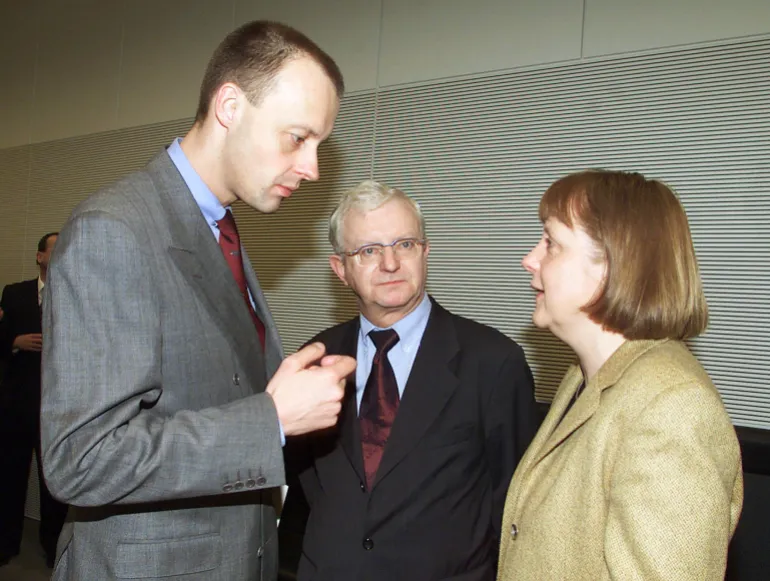



![Sami Abu Shehadeh, leader of the Balad party, arrives at the Supreme Court in Jerusalem on October 1, 2026 [AFP]](https://i0.wp.com/occasionaldigest.com/wp-content/uploads/2026/10/afp_6abe81d70b9e-1790869975.jpg?w=640&ssl=1)
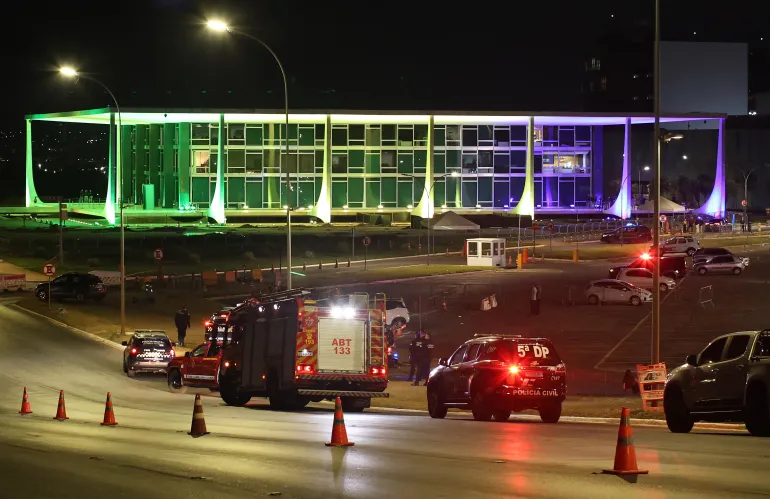
![Brazilian police and firefighters inspect the area of a possible bomb in a backpack outside the Supreme Court headquarters in Brasilia on October 1, 2026 [AFP]](https://i0.wp.com/occasionaldigest.com/wp-content/uploads/2026/10/afp_6abf3303edf8-1790915331.jpg?w=640&ssl=1)
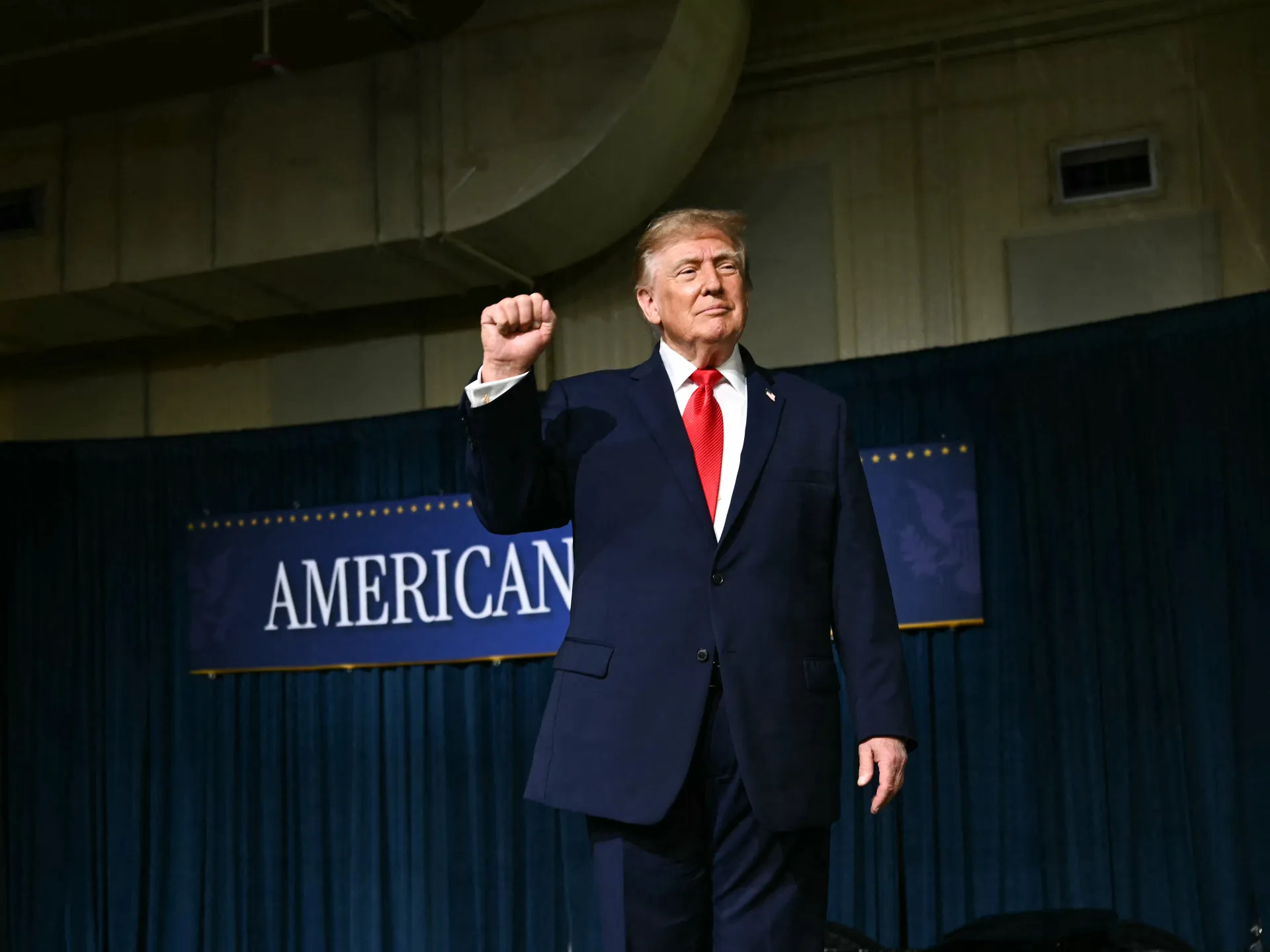
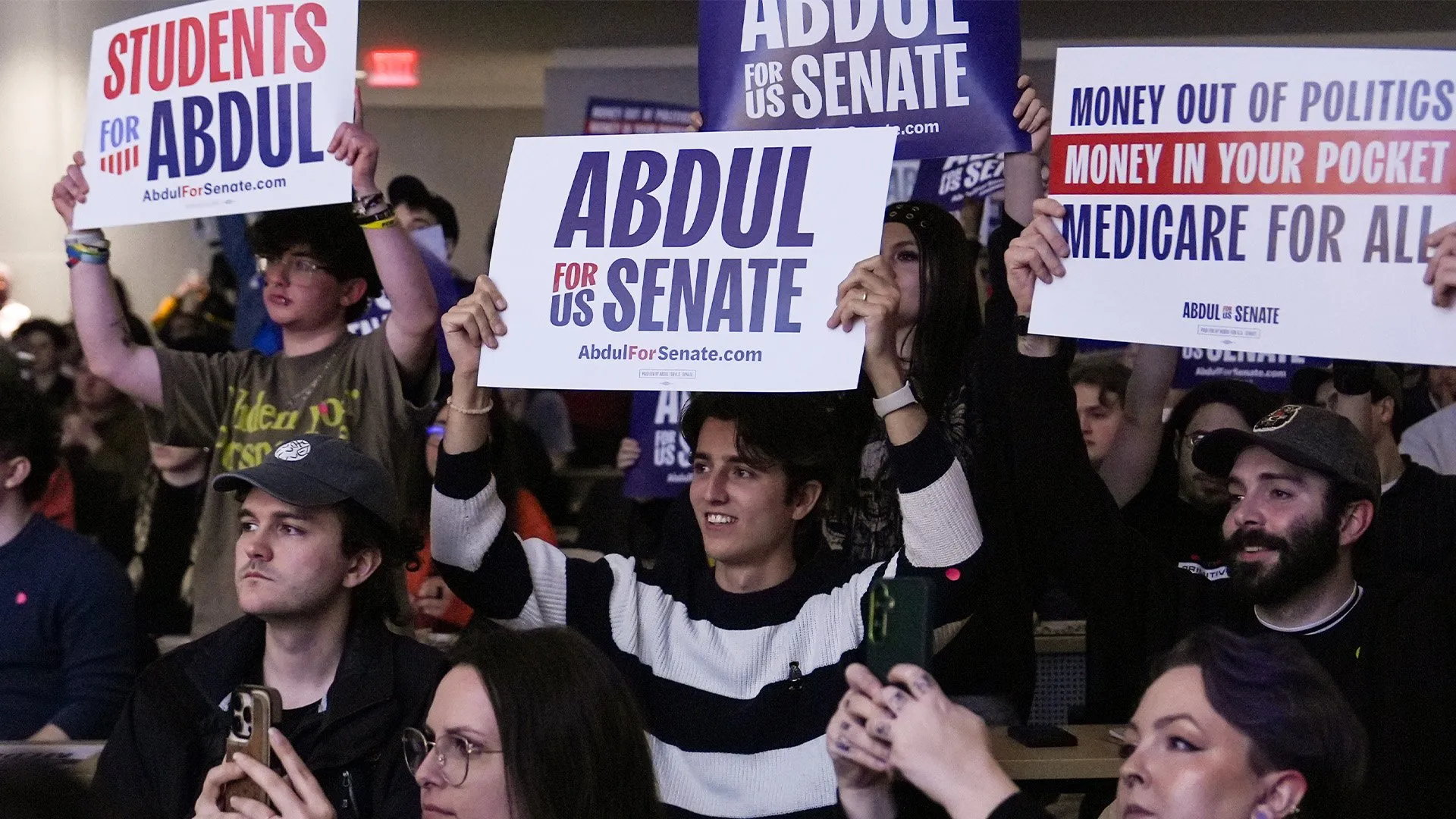
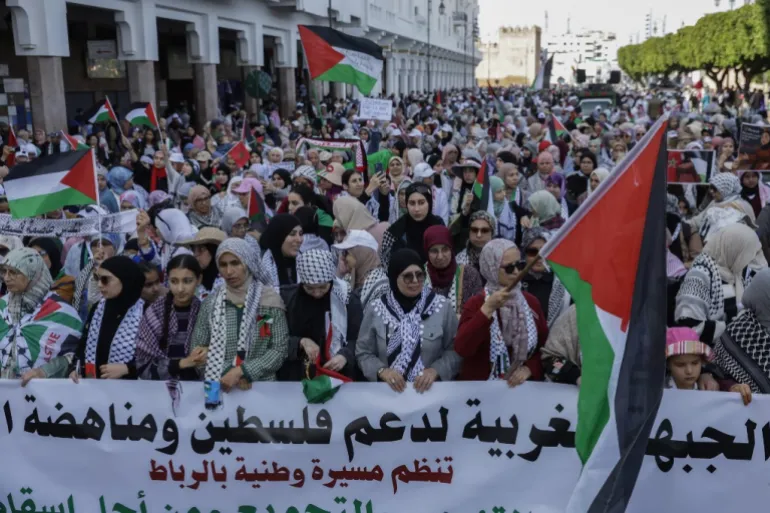

![Pro-Palestine protesters demonstrate against normalisation with Israel, as Morocco moves to deepen diplomatic ties with Tel Aviv [Mosa'ab Elshamy/AP]](https://i0.wp.com/occasionaldigest.com/wp-content/uploads/2026/09/AP24280440675597-1728311115.jpg?w=640&ssl=1)
![Moroccan protesters display signs supporting Palestinians during a mobilisation against diplomatic ties with Israel [Abdel Majid BZIOUAT / AFP]](https://i0.wp.com/occasionaldigest.com/wp-content/uploads/2026/09/000_A8BU6GK-1776617989.jpg?w=640&ssl=1)
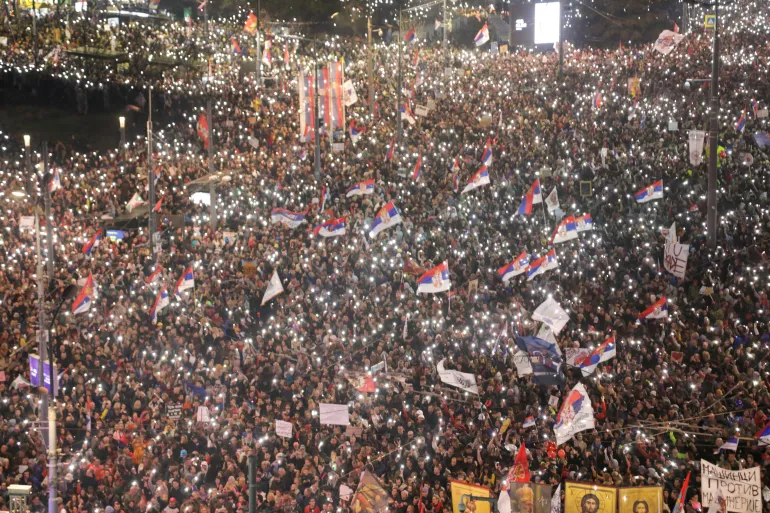


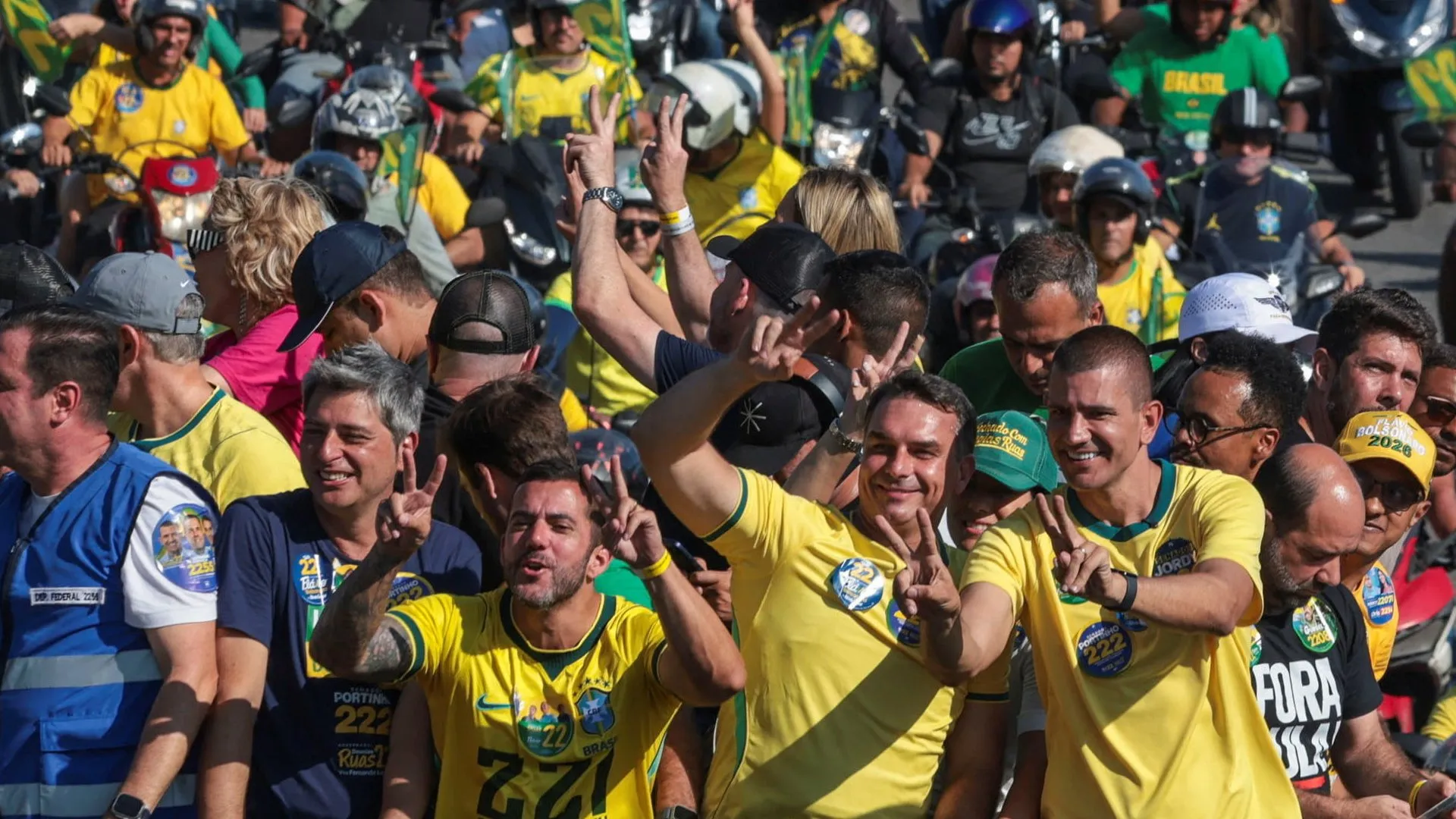
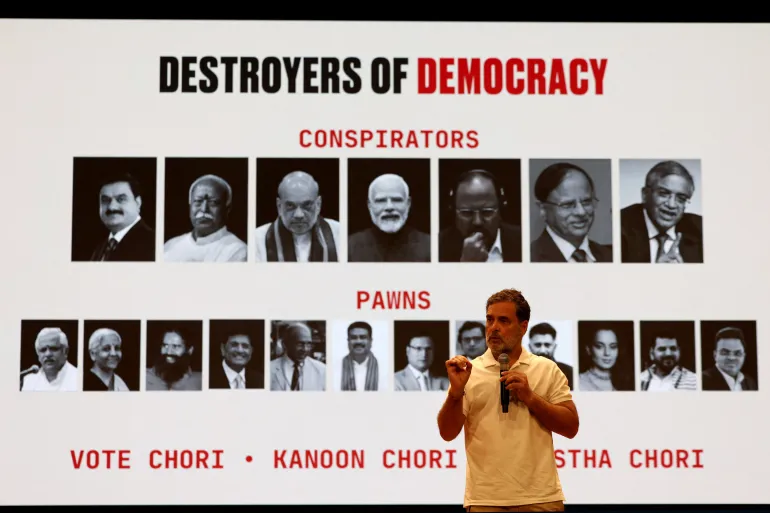


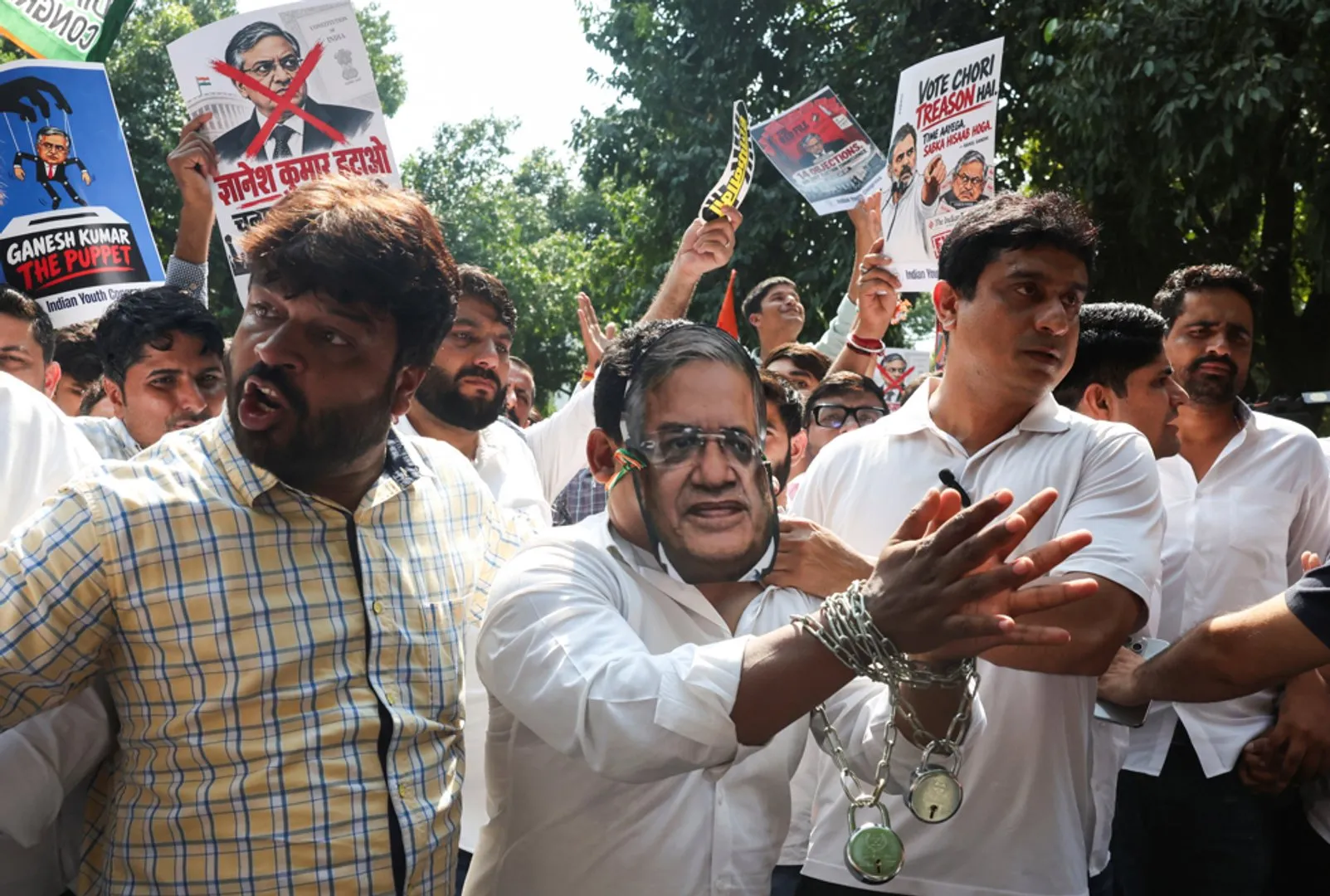
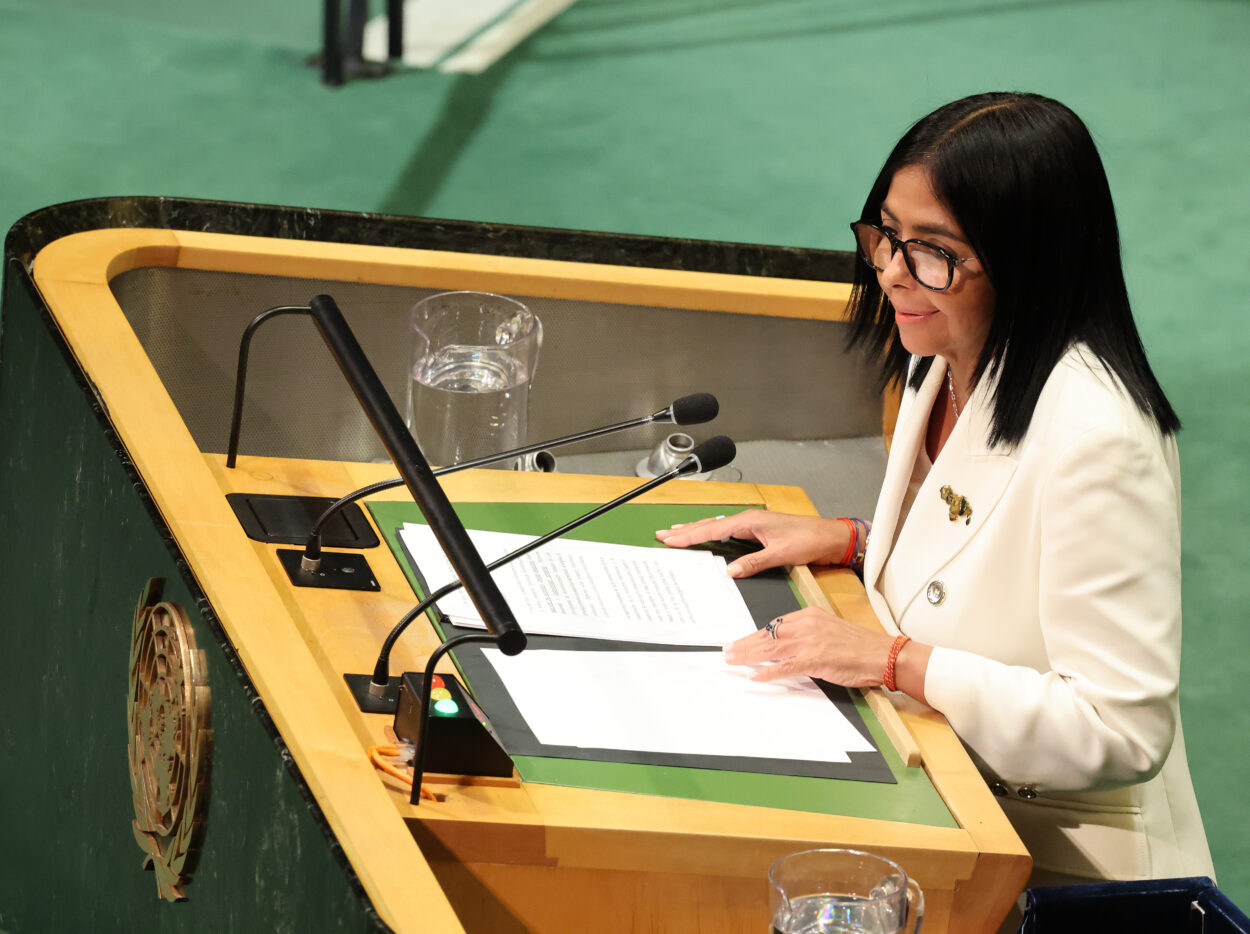
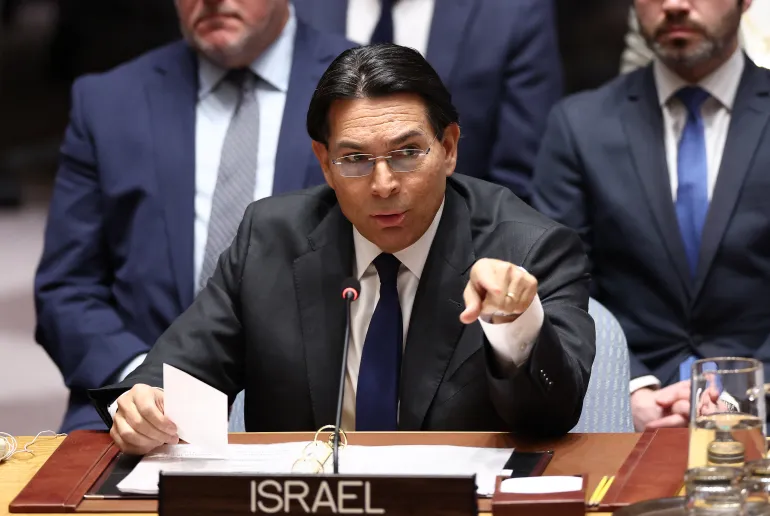
![Permanent Representative of Israel to the UN Danny Danon at a United Nations Security Council meeting at UN headquarters in New York [File: AFP]](https://i0.wp.com/www.aljazeera.com/wp-content/uploads/2026/03/afp_69a425a45f04-1772365220.jpg?w=640&ssl=1)

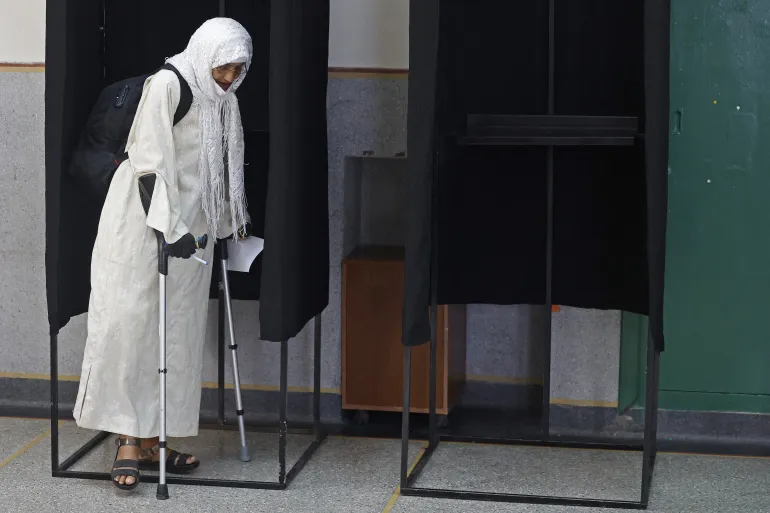
![A woman prepares to cast her ballot to vote in Morocco’s legislative elections at a polling station inside a school at the Udayas neighbourhood, Rabat, on September 23, 2026 [AFP]](https://i0.wp.com/www.aljazeera.com/wp-content/uploads/2026/09/afp_6ab3c71f1ac5-1790166815.jpg?w=640&ssl=1)