Hispanic voters are twice as likely to favour Democratic Party over Trump’s Republican Party in the November elections.
Published On 5 Oct 20265 Oct 2026
A new poll from the news agency Reuters and the research firm Ipsos has found that United States President Donald Trump’s approval rating remains at a record low as the midterm elections approach in November.
The six-day survey, completed on Monday, found that just 32 percent of US voters approve of the job Trump is doing as president.
Recommended Stories
list of 3 itemsend of list
While that low rate has held steady since September, the latest Reuters-Ipsos poll suggests his support among Latino voters is continuing to slide.
Trump’s approval rating shrunk this month to 24 percent among Hispanic voters, its lowest point in either of his two terms in office.
The Republican leader had previously made substantial inroads with that constituency.
The Pew Research Center estimated that Trump and his Democratic rival, Kamala Harris, were within three percentage points of each other in the 2024 presidential race, earning 48 percent and 51 percent of the Hispanic vote, respectively.
That rate marked a significant jump for Trump over the 2020 election, when he only earned 36 percent of the Hispanic vote.
Experts have credited the boost in Hispanic support with helping Trump win the 2024 race. His 2020 bid, by contrast, ended in defeat to Democrat Joe Biden.
The Monday poll found that Trump’s gains among Hispanics have largely evaporated.
About 52 percent plan to vote for the Democrats in the November midterms, compared to 26 percent for Republicans.
The upcoming midterm is largely viewed as a referendum on Trump’s second term and will decide whether the Republicans maintain their majorities in the US House of Representatives and the Senate.
Democrats have seized on Trump’s low approval ratings, hoping to translate frustration with the president into voter momentum for their party.
A Democratic majority in one or both houses of Congress would place substantial constraints on Trump’s agenda for the remainder of his time in office.
But Trump has also faced rumblings from within his Republican Party as the November 3 midterms approach.
One Republican incumbent, Representative Maria Elvira Salazar of Florida, released a campaign advertisement last month that addressed Trump directly, saying, “The same Hispanics who helped you get to the White House in 2024 feel betrayed today.”
She cited Trump’s hardline immigration crackdown as a source of tension. “Some of your immigration enforcement efforts have gone too far,” she said, pointing to the detention and deportation of immigrants with no criminal record.
Experts have also warned that the president’s shrinking popularity, driven in part by concerns about the cost of living and his decision to launch a war on Iran, could weigh down Republican candidates in key races across the country.
Still, Trump has continued to express confidence about the prospects of his Republican Party in the upcoming midterms.
He has also defended his decision to place himself at the centre of the Republican election campaign strategy. Trump recently launched a 32-day blitz of cross-country rallies ahead of the November 3 midterms.
“Just so you understand, they all want me to go,” Trump said, denying that some Republicans would prefer he keep his distance. “They all want me to go campaign.”
Sanchez calls early vote after Parliament rejected housing relief measures proposed by his minority government.
Published On 5 Oct 20265 Oct 2026
|
Updated: a few seconds agoUpdated: a few seconds ago
Spanish Prime Minister Pedro Sanchez has announced a snap general election after Parliament rejected housing relief measures proposed by his minority government.
Sanchez said on Monday the vote would take place on November 29. “We need to renew people’s support,” he said in a televised address.
Recommended Stories
list of 3 itemsend of list
“We need to mobilise and win a much larger progressive majority in Parliament, one that will allow us to overcome vested interests, deliver new social advances and continue transforming Spain.”
He also acknowledged having made mistakes and falling short of previous campaign promises.
“I also know that part of that social majority is dissatisfied today,” Sanchez said.
The government’s defeat in Parliament on Friday was the latest in a series of political setbacks for the centre-left leader, followed by mass protests across the country over the housing crisis.
The government said more than 70,000 people took part in a housing protest in the capital, Madrid, on Saturday.
Anger had been building since late last month, when an 87-year-old woman, Marai del Carmen Abascal, was evicted from her home of 70 years in Madrid after an international investment fund bought her building and increased the rent.
Far right gains ground
But facing the electorate is a risky move for Sanchez. Opinion polls suggest that a coalition led by the conservative People’s Party (PP), with support from the far-right Vox party, is the most likely outcome in the election.
If they win, it would be the first time since the death of dictator Francisco Franco that a far-right party has entered central government.
If Sanchez loses the election, it would also mark the end of one of Europe’s last left-leaning governments as the far right continues to gain ground across the continent.
Sanchez has stood out worldwide for his strong stance on progressive ideas, from defending the rights of Palestinian people to defending multilateral institutions and cracking down on tech oligarchs.
The prime minister, who has never won enough votes to form a majority government, has brought together a series of fragile and seemingly impossible coalitions, ranging from the far left to the separatist right, to remain in power for three successive terms, lasting eight years.
The election was due next year before Sanchez brought it forward.
Bosnian Serb nationalist Milorad Dodik claimed victory for his party as Bosnia’s presidential elections reinforced its deep political and ethnic divisions. The presidency is made up of three members who rotate the leadership every eight months.
Brazil’s closely watched presidential election is heading to a second round between leftist President Luiz Inacio Lula da Silva and right-wing Senator Flavio Bolsonaro, prolonging a deeply polarised race with major implications for the country and the wider region.
Brazil’s electoral court confirmed on Sunday that the two candidates will advance to a run-off on October 25 after neither won the majority needed to secure the presidency outright, with Bolsonaro leading at 55.8 million votes to Lula’s almost 53.2 million.
Recommended Stories
list of 4 itemsend of list
Lula, 80, is seeking a fourth, non-consecutive term after a political career spanning nearly five decades.
Bolsonaro, 45, is the eldest son of former President Jair Bolsonaro and is trying to return his father’s right-wing movement to power, even as the former president serves a 27-year prison sentence for plotting a coup after losing the 2022 election.
The election comes at a pivotal time for Latin America’s largest economy. Brazilians are grappling with concerns over crime and the cost of living, while the country faces an increasingly tense relationship with the United States. The vote is also being closely watched across a region that has shifted sharply to the right in a series of recent elections.
While a second round was widely expected, the first-round result did not play out quite as pollsters had predicted.
Here are some of the key takeaways from the election so far.
Brazil is heading for another Lula-Bolsonaro run-off
With nearly 99 percent of votes reported, Bolsonaro had about 47 percent of valid votes, compared with 44.9 percent for Lula. Neither reached the 50 percent threshold needed to win in the first round.
That sets up another Lula-Bolsonaro showdown, four years after Lula narrowly defeated former President Jair Bolsonaro. This time, he will face the former president’s eldest son.
The race could be extremely close, as polling ahead of Sunday’s vote suggested Lula and Flavio Bolsonaro were roughly tied in a potential run-off.
That puts voters who backed one of the other 10 candidates in the first round at the centre of the fight for the presidency over the next three weeks.
Ronaldo Caiado and Renan Santos, who together received about 5.3 million votes, have previously said they will not endorse either candidate in the run-off.
Flavio Bolsonaro did better than polls suggested
Most polls leading up to election day predicted the race would be pushed into the second round, but had Lula finishing the first round ahead of Bolsonaro.
Instead, Bolsonaro emerged with a lead of two percentage points, raising questions about why the final polls underestimated his support.
On Sunday, Bolsonaro said the results showed that Brazilians want change.
Analysts told the Reuters news agency that Bolsonaro may have benefitted from “protest votes” from people who may have preferred another candidate but saw defeating Lula as the priority. Many had been expected to shift their support to Bolsonaro only in a second round, meaning this could have consequences for his support in three weeks.
“The protest vote foreshadows what is to come in the run-off,” political analyst Rafael Favetti told Reuters. “While this should benefit Flavio Bolsonaro now, his growth potential in the second round drops precisely because that support has already been front-loaded.”
After the results came in, Lula said the votes were “unexpected” but that he would come back stronger in the run-off.
“I admit, I was convinced I would win in the first round. The game is about to start. We are in extra time. In extra time, we will win over the Brazilian people,” the 80-year-old said.
The right had a strong night in Congress, too
Bolsonaro’s surprising performance in the first round was part of a broader show of strength for Brazil’s right.
Right-wing parties, led by Bolsonaro’s Liberal Party (PL), were performing strongly in both houses of Congress, with the PL on track to emerge as the largest force in the Chamber of Deputies and making gains in the Senate.
This included victories for other members of the Bolsonaro family, including former First Lady Michelle Bolsonaro, Flavio’s stepmother, who won a Senate seat in the Federal District, her first elected office.
His brother, Carlos Bolsonaro, was elected to the Senate in Santa Catarina.
The results show that the political movement built around former President Jair Bolsonaro – known as “bolsonarista” – remains a powerful electoral force, even with the former president barred from running himself.
“The fact that far-right candidates for the legislature have exceeded all expectations suggests a deeper popular grounding for the bolsonarista project than many expected,” Andre Pagliarini, an assistant professor of history and international studies at Louisiana State University and author of a book on Lula, told Al Jazeera.
“Millions of Brazilians right now evidently feel the right best reflects their values and vision for the future,” he added.
The congressional results matter beyond election night, too. Both houses were already dominated by conservative lawmakers, and a stronger right-wing presence could make it even harder for Lula to push through his agenda if he wins another term.
A Bolsonaro victory, meanwhile, could give him more room to pursue his own priorities, including his pledge to seek an amnesty for his father.
Protesters say the election commission’s voter-roll revision has removed millions of eligible voters to benefit Prime Minister Narendra Modi’s ruling BJP party.
Published On 4 Oct 20264 Oct 2026
Thousands of youth and opposition protesters have rallied for a third day in India demanding the resignation of the country’s election commission chief.
Thousands marched in Mumbai on Sunday, while others gathered for a third day of demonstrations in New Delhi. The protests began on Friday demanding that Election Commission of India (ECI) chief Gyanesh Kumar step down due to reports that he has overseen voter-roll revisions removing millions from electoral lists.
Recommended Stories
list of 3 itemsend of list
Protesters say the disenfranchisement stands to benefit Prime Minister Narendra Modi’s ruling Bharatiya Janata Party (BJP). Both the ECI and the BJP have denied the allegations.
Led by opposition leaders Raj Thackeray and Uddhav Thackeray, thousands marched in Mumbai on Sunday, waving Indian flags and calling for Kumar to step down.
In the capital, New Delhi, protesters started gathering in the early evening. As on previous days, some were detained by police as they arrived, according to the Reuters news agency.
Police in the capital have clamped down in a bid to prevent protesters from assembling over the last two days, detaining dozens and taking them away by bus.
Some of the detainees were released later on Friday and Saturday, but police registered cases against some on charges of violating orders banning mass gatherings in the centre of the capital.
Police and security personnel detain a protester during a demonstration against India’s Chief Election Commissioner Gyanesh Kumar in New Delhi on October 3, 2026, to demand his resignation [Arun Sankar/AFP]
“I just want to tell the ruling party this much … We are angry about how you are wielding that power. It’s the people of this country who should decide who sits in power and who sits in opposition, not the election commission,” Raj Thackeray told the crowd in Mumbai.
The ECI says the voter-roll revision is designed to remove duplicate, deceased or ineligible entries and maintain electoral integrity. On Friday, it directed its officials to register eligible voters inadvertently omitted from electoral rolls.
Kumar has not publicly responded to the demands for his resignation or commented on the protests, which look set to continue over the coming days, with more rallies planned.
An alliance of India’s opposition parties plans to launch protests to “save democracy” with a march to the election commission office on Tuesday. The Gen Z-led Cockroach Janta Party (CJP) has announced plans for a major rally in New Delhi on October 10.
“Mumbai is out on the streets again for free and fair elections!” Abhijeet Dipke, chief of the CJP, said in a social media post on Sunday.
“Solidarity with all the protesters,” he added. “All Indians need to come together. It’s now or never!”
Close race expected as left-wing Lula seeks fourth non-consecutive term against right-wing Flavio Bolsonaro, son of convicted former president.
Published On 4 Oct 20264 Oct 2026
Polls have opened in Brazil’s presidential election, once again pitting left-wing incumbent Luiz Inacio Lula da Silva against a right-wing candidate from the Bolsonaro family – Senator Flavio Bolsonaro, the eldest son of former President Jair Bolsonaro.
Some 160 million registered voters are eligible to cast ballots in Sunday’s elections, which will elect lawmakers, governors and senators.
Recommended Stories
list of 4 itemsend of list
If no presidential candidate wins more than 50 percent of valid votes, the top two contenders will proceed to a run-off on October 25.
Most opinion polls ahead of the vote showed a close contest, with Lula holding a marginal advantage over Bolsonaro that tightens further in a potential second round.
Lula, of the Workers’ Party, is seeking a fourth nonconsecutive term. The 80-year-old, who previously served as president from 2003 to 2010, wants to continue his series of social programmes aimed at addressing inequality.
Bolsonaro, of the Liberal Party, has promised a hard stance on crime and insecurity. The 45-year-old has also pledged close collaboration with the United States under President Donald Trump.
His father is currently serving a 27-year prison sentence over his role in a coup plot following his election loss to Lula by 1.8 percentage points in 2022. The far-right leader’s conviction and that of several military officers raised questions about the strength of Brazilian democracy, reviving past traumas of the 21-year-long period during which Brazil was ruled by a US-backed military dictatorship.
The presidential election has been dominated by issues such as crime, insecurity and the high cost of living. Corruption and concerns about US intervention in the country’s domestic affairs have also loomed over the campaign.
A recent survey by Quaest says violence was cited as the biggest concern by 31 percent of respondents, followed by corruption (20 percent), economy (19 percent) and healthcare (12 percent).
“The stakes of this election are incredibly stark because the candidates stand for such opposing visions about what Brazil’s recent history means,” Andre Pagliarini, an assistant professor of history and international studies at Louisiana State University and the author of a book on Lula, told Al Jazeera.
He added that while Lula embodies the “consolidation of Brazilian democracy since the end of the dictatorship”, the Bolsonaro family argues that “the institutions that Brazilian democracy has erected since the end of dictatorship are either rotten and unresponsive”.
Voters cast their ballots for a dizzying number of officials across multiple tiers of government.
Published On 4 Oct 20264 Oct 2026
Polls have opened in Bosnia and Herzegovina for a general election to choose new leaders at the national and regional levels, in a vote that could affect the country’s European Union membership bid.
On Saturday, about 3.4 million voters are choosing the three members of the country’s multiethnic presidency, lawmakers for the national Parliament and heads of institutions for the country’s two entities: the Federation of Bosnia and Herzegovina (FBiH) and Republika Srpska, which is dominated by ethnic Serbs.
Recommended Stories
list of 3 itemsend of list
Bosnia’s complex web of governing institutions was created by a United States-brokered peace agreement in 1995 in an effort to manage the ethnic divisions between Muslim Bosniaks, Orthodox Serbs and Catholic Croats that gave rise to the 1992-95 war.
A voter identifies himself using an optical scanner at a polling station during the general election in Sarajevo, Bosnia and Herzegovina, October 4 2026 [Hazim Aljovic/EPA]
The major parties’ repeated focus on war-era rhetoric and division was frustrating for some voters, activist Adi Selman of the Karton Revolucija protest group told the AFP news agency.
“I don’t think these new elections in Bosnia will change anything,” the 34-year-old said in the northern Bosnian town of Tuzla, ahead of the vote.
“The choice is limited to political parties that have already been around for 30 years and basically pick up votes by harping on about war, tensions, divisions and the past.”
“Bosnia and Herzegovina is dead; it is an impossible country,” Republika Srpska’s former president, Milorad Dodik, told the final rally of his right-wing Alliance of Independent Social Democrats (SNSD) in the entity’s capital Banja Luka late on Friday.
EU membership bid
In the FBiH, Bosniak parties are pushing for a stronger central state, with incumbent Bosniak presidency member Denis Becirovic pledging a renewed path to the EU and NATO.
The EU granted Bosnia candidate status in December 2022, but accession negotiations scheduled for 2024 were delayed as Brussels demanded the country pass stronger anticorruption laws and reform its judicial system.
A voter feeds a paper ballot into an optical scanner at a polling station during the general election in Sarajevo, Bosnia and Herzegovina, October 4 2026 [Hazim Aljovic/EPA]
Croat nationalist parties are also pushing for electoral reform, demanding a greater say in choosing the Croat member of the presidency in the entity they share with the more numerous Bosniaks.
Meanwhile, Russia is accused of slowing down the country’s path towards joining the EU, while also holding close ties with the SNSD, which favours secession for Republika Srpska.
This general election is the first in the country in which new electronic tools are being used to scan ballot papers and carry out biometric fingerprint verification in a move to reduce fraud during the election.
Polls close at 7pm (17:00 GMT) and first results are expected later on Sunday.
Bosnians are heading to the polls to choose the next government at all three of the state, entity and canton levels. It may seem complicated, but for a country divided into two entities – the Federation of Bosnia and Herzegovina and Republika Srpska, along with Brcko District – this is nothing new.
When do Bosnia’s elections take place?
The general elections are scheduled for Sunday, October 4. More than 3.4 million people are eligible to vote.
[Al Jazeera]
What’s different about this election?
This year, new election technology will be used. Voters will be identified using biometric devices, while ballot papers will be scanned rather than simply placed in ballot boxes.
The use of scanners, however, does not mean voting will be fully electronic. Votes will still be cast and recorded on paper, but verification and counting should be faster and more transparent, while voter identification should be more accurate.
Who is running for the Presidency?
Candidates for the Bosniak representative include current Presidency member Denis Becirovic of the Social Democratic Party (SDP), Bakir Izetbegovic of the Party of Democratic Action (SDA), Semir Efendic of the Party for Bosnia and Herzegovina (Stranka za BiH), and Fahrudin Radoncic of the Union for a Better Future of BiH (SBB).
Izetbegovic, the president of the centre-right SDA, the biggest Bosniak party in the country, is running for his third term after being defeated by Becirovic in 2022.
Three candidates will run for the Croat seat in the Presidency: Darijana Filipovic of the Croatian Democratic Union of Bosnia and Herzegovina (HDZ BiH), Slaven Kovacevic of the Democratic Front (DF), and Zdenko Lucic, a candidate supported by a coalition of five Croat parties.
The current Serb member of the Presidency, Zeljka Cvijanovic from the right-wing Alliance of Independent Social Democrats (SNSD), is running for a second term. During her term on the country’s top state body, which began in November 2022, just a few months after Russia’s war in Ukraine started, she maintained close and continuous cooperation with Russia and its president, Vladimir Putin.
SNSD is led by Milorad Dodik, the former president of Republika Srpska, best known for his separatist moves and for challenging the Constitution of Bosnia and Herzegovina and the decisions of former High Representative Christian Schmidt.
Cvijanovic will face Marinko Bozovic of the Serb Democratic Party (SDS) and Nebojsa Vukanovic of the List for Justice and Order.
[Al Jazeera]
Who else is on the ballot?
Voters will be choosing representatives for 14 governments, as well as members of the country’s three-member Presidency.
Each entity has its own president, assembly, prime minister and ministers. The Federation of Bosnia and Herzegovina is further divided into 10 cantons, each with its own government.
For all this to happen, the Central Election Commission (CIK), the main body responsible for overseeing the voting process, earlier said that 75 political parties and four independent candidates were registered and eligible to participate.
How are Presidency members chosen?
When registered voters go to the polls, they do not elect one president, but choose one of three members of the country’s collective head of state. They are the representatives of the three constituent peoples – Bosniaks, Croats and Serbs.
The Bosniak and Croat members are elected from the Federation of Bosnia and Herzegovina, while the Serb member is elected from Republika Srpska.
This is because the majority of Bosniaks and Croats live in the Federation, while most Serbs live in Republika Srpska.
The election of the Croat member has weighed on Bosniak-Croat relations for years and has often been used as a reason for political blockades.
Parties gathered around the centre-right Croatian Democratic Union of Bosnia and Herzegovina (HDZ BiH) are demanding changes to the Election Law, saying they want to prevent Bosniak voters from influencing the election of the Croat member of the Presidency.
But that would also require changes to the Constitution, which allows all citizens in the Federation to choose whether they want to vote for the Bosniak or the Croat member.
[Al Jazeera]
What about citizens who live outside their constituent group’s voting area?
A Serb living in the Federation, or a Bosniak or Croat living in Republika Srpska, who wants to run would not be able to do so, nor can they vote for those they consider to be their own representatives.
That is one of the many paradoxes of Bosnia and Herzegovina’s electoral system.
How is the state-level government chosen?
Citizens elect representatives to the Parliamentary Assembly, which consists of two houses.
Forty-two representatives will be elected to the House of Representatives.
Two-thirds are directly elected from the Federation of Bosnia and Herzegovina, and one-third from Republika Srpska.
A quorum consists of a majority of all members elected to the House of Representatives.
The second chamber – the House of Peoples – has 15 delegates and is elected indirectly through the institutions. It consists of Bosniaks, Croats and Serbs – five from each group.
What happens with the entities?
The election of entity-level authorities works somewhat differently.
In Republika Srpska, citizens directly elect the National Assembly, as well as the entity president and vice presidents.
They do not directly elect the government – it is confirmed by the National Assembly.
In the Federation of Bosnia and Herzegovina, citizens directly elect the House of Representatives of the Federation Parliament and the cantonal assemblies.
Those cantonal assemblies then elect delegates to the Federation’s House of Peoples.
The president of the Federation, the entity government and the cantonal governments are formed after the elections, through parliamentary majorities and political agreements.
Why is it a challenge to form the government?
It is difficult not only because the electoral system is complex, but also because of the lack of agreement among representatives of the three different ethnic communities.
Frequent blockades and obstruction make decision-making difficult at all levels, even though many politicians invoke the politics of compromise.
Elections in Bosnia and Herzegovina, therefore, are not only about who wins, but about whether a system designed to represent everyone can serve its citizens.
Why are the elections important?
New election technologies might reduce potential fraud, but much more will be needed for the country’s path towards the European Union.
The outcome of the election could unblock, or further slow down, the adoption of key laws needed for the country’s progress towards EU membership.
The EU granted Bosnia and Herzegovina candidate status in December 2022 and opened accession negotiations in 2024.
However, the country’s progress has since been assessed as very limited and slowed by political blockades.
These elections will also be a test for the ruling coalition, which promised to focus on social and economic issues amid the rising cost of living.
When are the results?
The first preliminary results are traditionally published by CIK late on election night, on October 4, and are updated every few hours.
In the days after the elections, CIK gradually enters votes from the remaining polling stations, mobile voting teams, as well as ballots received by mail and from diplomatic and consular missions.
The official results will be known no later than November 20.
Trump tells a rally in Ohio that he believes there will be a “big surprise” in the upcoming elections.
Published On 4 Oct 20264 Oct 2026
US President Donald Trump has continued rallying for Republican candidates while visiting Ohio, proposing a defiant outlook on his party’s chances in the November 3 midterm elections.
Trump told a rally in Vandalia, Ohio, that he believes there will be a “big surprise” in the upcoming elections, claiming his Democratic opponents do not know what is happening.
Recommended Stories
list of 3 itemsend of list
Polls have suggested that Democrats could gain ground in the midterms, but the US president said Republicans would do better than critics expect.
“Just get out and vote,” Trump said as he rallied for US Senator Jon Husted, gubernatorial candidate Vivek Ramaswamy and other Republicans.
“If you do that, we’re going to win, and we’re going to win big,” he said.
Ohio’s Senate race
Multiple incumbent Republican senators across the country face tough political headwinds, with Trump’s popularity falling in recent months as higher petrol prices and those for other staples persist amid the US-Israel war on Iran.
Husted, a Republican in a competitive Ohio race against Democrat Sherrod Brown, hopes the president can motivate supporters who might otherwise skip midterm elections.
Trump garnered more than 55 percent of the Ohio vote in the 2024 presidential election, but economic concerns since then have sunk his approval ratings.
Ohio petrol prices increased 35 percent over the past year to $4.16 per gallon (3.8 litres) on average, according to the American Automobile Association (AAA), which compiles data on automobile travel. Trump’s trade policy with Canada has also led to retaliatory Canadian tariffs that affect about $3bn worth of Ohio exports, based on 2025 figures, Canadian broadcaster CBC reported.
Talking to reporters shortly before addressing Saturday’s rally, Husted said the US has to win the Iran war “on our terms” and, in the interim, he is “showing people that I’m fighting for lower prices”.
Hot political issue
Trump extensively promoted his administration’s action on data centres, mainly those built for AI, during the rally, saying he was seeking to ensure they “benefit local communities” and praising Husted for an unsuccessful attempt to push forward legislation on the issue.
“Look, there’s so much money to be made for Ohio. You can’t just turn them off. They’ll go to China,” he said, repeating his defence of data centres.
Data centres have become a hot political issue, drawing bipartisan opposition in races across the country, with voters concerned about their impact on electricity prices, farmland and water supplies.
The issue became especially acute in Ohio, where Husted has been repeatedly attacked for his role in attracting data centres to the Midwestern state as lieutenant governor.
The Republican-controlled Senate tried to advance legislation this past week sponsored by Husted that would ask utility regulators to effectively charge large power users more, as consumers struggle with high energy costs. But it was blocked by nearly all Democrats.
“Senator Jon Husted gave billions in tax breaks to Big Tech to make sure they would build their data centres in Ohio,” Brown wrote on X on Friday, ahead of Trump’s visit. “Now, he’s making Ohioans foot the bill.”
Latest polls suggest Lula’s lead over Bolsonaro is narrowing, with neither candidate likely to win outright on Sunday.
Published On 4 Oct 20264 Oct 2026
Brazilian President Luiz Inacio Lula da Silva and right-wing Senator Flavio Bolsonaro have wrapped up their election campaigns, each voicing confidence in victory ahead of Sunday’s tightly contested first-round presidential vote.
Lula, 80, closed his re-election bid on Saturday with a march through Sao Paulo, Brazil’s economic powerhouse, drawing what his campaign called a record crowd for a closing rally.
Recommended Stories
list of 3 itemsend of list
“Tomorrow, we’re going to win the elections in the first round,” he told supporters, describing Sunday’s vote as a choice between “democracy and barbarism” and promising to “defeat the far right”.
He has also framed the election as a test of Brazil’s sovereignty, warning against “meddling” by Washington.
Bolsonaro led a motorcycle caravan through towns in Sao Paulo state, echoing the campaign style of his father, before rallying later in Rio de Janeiro. “I am convinced that everything is in place for us to win this election in the first round,” he said.
The 45-year-old is the son of former President Jair Bolsonaro, a close ally of US President Donald Trump. The former leader, 71, is serving a 27-year prison sentence for attempting to overturn his 2022 election loss to Lula.
The younger Bolsonaro was photographed at his rally holding a portrait of his father.
Trump has not formally endorsed Bolsonaro but has said he is watching the election “very closely”, a level of US interest that has become a flashpoint in the campaign.
Lula’s supporters have seized on it as evidence Washington is trying to meddle in the elections, while some Bolsonaro supporters, frustrated by the cost of living, say they would welcome US pressure if it helped force change at home.
Polls released on Saturday suggested Lula was still ahead but his lead was narrowing, with neither candidate likely to win outright on Sunday. Such a result would send the race to a run-off on October 25 between the two frontrunners, a contest polls suggest would also be close.
It is a far tighter race than Lula’s last victory in 2022, when he beat the elder Bolsonaro by less than two percentage points.
Meanwhile, the Bolsonaro campaign has faced scrutiny over a film-funding scandal. Flavio Bolsonaro is under investigation over financing for Dark Horse, a biopic about his father, bankrolled by a jailed banker tied to one of Brazil’s biggest financial scandals.
Brazil’s Supreme Court authorised federal police in April to investigate whether Flavio Bolsonaro made defamatory statements about Lula.
Bolsonaro has pledged to seek his father’s release from prison if elected, and has echoed his father’s unsubstantiated claims questioning the reliability of Brazil’s electronic voting system, which analysts say could be laying the groundwork to contest the result if he loses.
Beyond the presidency, Brazil’s nearly 160 million registered voters will also choose lawmakers, governors and senators on Sunday.
Former Serbian President Aleksandar Vucic is seeking to extend his hold on power through a parliamentary vote.
Published On 4 Oct 20264 Oct 2026
Former Serbian President Aleksandar Vucic has launched his campaign for prime minister ahead of a pivotal election on October 25.
Thousands of supporters of the populist politician packed the largest indoor arena in Belgrade on Saturday, as Vucic pledged a “comprehensive” victory in the upcoming parliamentary vote.
Recommended Stories
list of 3 itemsend of list
The snap election, which polls suggest could be tight between Vucic’s party and a group of candidates fielded by a student-led protest movement, was called before Vucic resigned as president on September 27, cutting short his second term by more than seven months.
Dozens of buses from across Serbia clogged streets around Belgrade Arena on Saturday, as supporters arrived at the rally in the capital carrying Serbian flags and banners bearing Vucic’s picture.
The event, televised by dozens of channels across Serbia, capped a week of Vucic touring towns and villages in an apparent bid to shore up his popularity, which has been shaken after almost two years of sustained antigovernment protests.
Vucic, on the Serbian Progressive Party (SNS) ballot, has dominated Serbian politics as president or prime minister since 2014. Barred from seeking a third presidential term, he is now seeking to extend his hold on power through the parliamentary vote.
If the SNS wins a majority of seats, the parliament is expected to elect Vucic as prime minister.
Youth movement
The youth-backed movement that led the protests has demanded accountability for the November 1, 2024, train station canopy collapse that killed 16 people in the northern city of Novi Sad.
The movement’s quest for justice over the tragedy and against corruption has grown into a nationwide political force whose electoral arm, the Student List, will attempt to oust Vucic’s government.
The Student List includes university professors, teachers, experts and others from across the political spectrum. Vucic accused those behind the movement of seeking to “bring Serbia to a halt” and claimed, without providing evidence, that it is backed by unspecified foreign agents.
On Saturday, Vucic told his supporters: “Absent an intervention of some [foreign intelligence] service, we will defeat them. And they know that.”
Serbia’s former President Aleksandar Vucic speaks during a rally of the governing Serbian Progressive Party (SNS) ahead of the parliamentary election, in Belgrade, Serbia, on October 3, 2026 [Zorana Jevtic/Reuters]
Washington, DC – Democrats have the momentum; Republicans are surging in defence and cash.
That narrative has emerged ahead of the United States midterm elections in November, as races across the country enter their final stretch.
Recommended Stories
list of 3 itemsend of list
With control of the US House of Representatives and the US Senate at stake, Democrats begin October with a surprisingly rosy outlook as more congressional seats are seen as in play.
Republicans, meanwhile, appear to be in damage control, pouring millions of dollars into races once seen as secure victories while injecting more funding into a handful of marquee showdowns.
The party’s standard bearer, President Donald Trump, who has embraced the notion of the election being a referendum on his leadership, enters the final month with staggeringly low approval ratings.
The most recent Associated Press-NORC polling, released on Thursday, showed Trump with 31 percent approval, the lowest during either of his two terms. Only 26 percent of respondents approved Trump’s handling of the economy, dipping two points below his predecessor, former President Joe Biden’s lowest rating on the topic.
Surveys continue to show voters rank the economy as their top issue, with topics like gas prices, made higher by the US-Israel war with Iran, dominating their concerns. Immigration and corruption have also regularly ranked high.
“The broad stroke is that Americans are disappointed, bordering on angry that President Trump hasn’t delivered on the core promises he made when he won re-election,” according to Henry Olsen, a senior fellow at the conservative Ethics and Public Policy Center in Washington, DC.
House looking solid for Dems
Political trackers have long projected Democrats will take control of the US House of Representatives in the November 3 vote.
Winning a majority in the 435-member chamber from Republicans would give the party renewed legislative power to assert leverage over Trump, while launching investigations into his administration’s dealings. Top Democrats have already signalled that probes into Trump’s family business dealings would be top priorities.
Two election non-partisan prediction authorities, the Cook Political Report and the University of Virginia’s Sabato’s Crystal Ball, have recently assessed that the likelihood of Democrats taking the House has only increased.
The Cook Political Report recently shifted 15 House races in the direction of Democrats, moving some considered “toss-ups” to “leans Democrat” and some previously considered “lean Republican” to “toss-ups”.
One such shift was for a Texas border district represented by Republican Monica De La Cruz. Her district was emblematic of a wider Latino shift towards Trump in 2024. Once seen as holding the advantage over her challenger, Democrat Bobby Pulido, Cook now rates her race as a “toss-up”.
All told, the political analysis clearinghouse now predicts Democrats are on track to win 5 to 15 House seats.
Senate in play
With 30 days left to go, “there’s much more drama in the Senate than the House races”, according to Kyle Kondik, the managing editor at Sabato’s Crystal Ball.
Once considered a pipe dream for Democrats, who need a net gain of at least four seats to win a slim majority, the 100-member chamber has moved within a more comfortable striking distance.
Unlike in the House, where every seat is up for re-election, only 35 Senate seats are up for grabs in this cycle, creating a far narrower pathway to control.
“The trajectory of the polling since Labor Day (September 7) has generally been that a bad Republican environment is just getting worse,” Kondik said, adding that “the Senate just seems to get more and more competitive as the cycle has gone on”.
To be sure, the quality of polling can vary across the country, with Kondik cautioning that gauging the political temperature of the Midwest has been particularly challenging for pollsters.
Still, in North Carolina, former Democratic Governor Roy Cooper is expected to trounce former Republican National Committee chairman Michael Whatley in the race for a Senate seat currently held by Republicans. Top conservative donors have already begun to divert funds from the contest.
Surveys have consistently shown Democrats leading in three other races for seats currently held by Republicans: Democrat James Talarico against Republican Ken Paxton in Texas; Democratic challenger Sherrod Brown against Republican incumbent Senator John Husted in Ohio; and Democratic Mary Peltola against Republican Dan Sullivan in Alaska.
Races for Republican held seats in Iowa, between Republican Ashley Hinson and Democrat Josh Turek, and in Maine, between Republican incumbent Susan Collins and Democratic challenger Troy Jackson, remain separated by less than one point, according to Real Clear Politics polling averages.
Democrats, meanwhile, have consistently led in polling in Senate races in Georgia, New Hampshire and Michigan for seats the party currently holds.
Big money in the race
For Republicans, salvation could be in the spending, with this year’s race continuing a US phenomenon of small fortunes poured into politics.
All told, at least $4bn had been spent on gubernatorial and congressional midterm advertising buys as of September 17, putting the race on track to become “perhaps the most expensive midterm on record”, according to Michael Franz, co-director of the Wesleyan Media Project.
Republicans entered September with a considerable funding edge. The Republican National Committee had $125.6m on hand, with the Democratic National Committee trailing far behind with $16.9m and $17.6m in debt.
When accounting for the three major committees associated with both groups, the Republican Party had $233.4m in cash, according to a CNBC analysis, while the Democratic Party had $130.4m.
Trip Yang, a Democrat strategist based in New York City, told Al Jazeera such spending can be deployed to help boost a candidate’s name recognition or to tear down a competitor.
According to AdImpact, Republicans and their allies were set to spend $888m on advertising from mid-September to election day, with Democrats and their supporters set to spend $666m.
The firm found pro-Republican ad spending would be particularly pronounced in the key Senate races in Ohio, Texas and Michigan, outpacing Democratic spending by at least $24m in each state.
Trump’s unpopularity, Yang said, means “Republicans spending millions or hundreds of millions of dollars improving their candidates’ images by itself may not be enough”.
“If you’re a little bit handicapped because your president is so toxic, you try to spend your hundreds of millions of dollars attacking the Democrats to make it more of a food fight,” he said.
A New York Times analysis estimated by the end of August at least $1bn in so-called “dark money” had been poured into the midterms. The term refers to spending where the donor’s identity is shielded, typically through nonprofit and shell-company donations to Super PACs.
Industry groups, including those supporting Crypto, AI and online betting firms, are expected to be top spenders in key races, although their support tends to cut across partisan lines.
Trump, meanwhile, has pledged to spend between $400m and $500m from his MAGA Inc Super PAC, though it has so far spent about $15m to support Paxton’s Senate bid in Texas.
Pro-Paxton ad reservations far outpaced Talarico in September, according to AdImpact data analysed by NPR, with $94m spent compared with $30m to support the Democrat.
The Trump factor
Trump has pledged to spend the final days before the election in non-stop campaign mode, after urging supporters during his Republican Midterm Convention in Dallas, Texas, to “vote like I’m on the ballot”.
His plan to criss-cross the country for rallies underscores a “base turnout” strategy meant to energise voters already loyal to the party, according to conservative analyst Olsen.
“But the Republican problem is a persuasion problem with people in the middle,” Olsen said. “[Trump’s campaigning] might help with some turnout … but their real problem is persuasion, and it’s not something that’s going to help with that in the slightest.”
Polls have spelt trouble for Republicans when it comes to swaying independents, with a PBS News, NPR and Marist poll from September 23 showing unaffiliated voters breaking for Democrats at 57 percent compared with 32 moving towards Republicans.
US President Donald Trump participates in a midterm election rally for Oklahoma Republican gubernatorial candidate Mike Mazzei at the Choctaw Event Center in Durant, Oklahoma, US, October 1, 2026. [Nick Oxford/Reuters]
The scenario has created a dilemma for some top Republican candidates over whether to break from the president on his most controversial actions, according to Lee Miringoff, the director of the Marist University Institute for Public Opinion.
Senate candidates Ashley Hinson in Iowa, Jon Husted in Ohio and Mike Rogers in Michigan all recently put daylight between themselves and Trump on the war with Iran.
One Republican House candidate, Representative Maria Elvira Salazar, has criticised Trump’s aggressive immigration enforcement policies as she seeks to rally Latino voters in South Florida.
Trump, in turn, reposted a social media message calling Salazar a “backstabber”.
“You need to have, you know, something else going for you other than endorsement of Trump,” said Miringoff. “Some Republicans are starting to have self-preservation kick in because they’re concerned.”
What can change?
Achieving a wide-scale shift in public opinion remains a tall order for Republicans in the final stretch of the race.
Many of the defining issues are unlikely to change before November, with Trump signalling a possible escalation with Iran following the vote as he has downplayed the prospect of short-term affordability relief.
At the same time, the US president has also not ruled out actions that rights groups say could upend voter turnout. Most recently, he refused to commit to not invoking the Insurrection Act or declaring a state of emergency surrounding the vote during an interview with Time magazine.
Miringoff said he believed that the “potential for more than just a marginal shift is there”, as he assessed some Democratic candidates have struggled to present clear visions beyond opposition to Trump.
“The result isn’t formed in concrete,” he said, “to the degree that there’s going to be a lot of money still spent.”
Analyst Olsen saw less remaining wiggle room for the party.
“Republicans have the time and the resources to change the outcome with respect to a few close Senate races,” Olsen said. “But to change direction, they would need something that would be apocal.”
For the second election in a row, Brazilian voters face a choice between left-wing candidate Luiz Inacio Lula da Silva and a right-wing candidate from the Bolsonaro family.
The country’s fractious election is set to take place during a wave of successful far-right candidates across Latin America and a sensitive time in Brazil’s modern political history.
Recommended Stories
list of 3 itemsend of list
Former right-wing President Jair Bolsonaro is serving a 27-year prison sentence over his role in a coup plot following his loss to Lula in 2022. The conviction of Jair Bolsonaro and several military officers raised questions about the resilience of Brazilian democracy, revived several decades ago following a period of rule by a United States-backed military dictatorship.
An explosive corruption scandal has implicated prominent figures and institutions across the political spectrum, and observers have expressed concern about possible US intervention.
Polls suggest Lula, the current president seeking a fourth non-consecutive term, and Bolsonaro’s eldest son, Senator Flavio Bolsonaro, are in a virtual tie in a simulated run-off.
Who are the candidates, what issues have been front and centre, and what could the election mean for Brazil? Here’s what you need to know about Brazil’s 2026 presidential elections.
When is the election?
The first round of voting in the Brazilian presidential election will take place on October 4 from 8am to 5pm Brasilia time (11:00 to 20:00 GMT).
If no candidate wins the first round outright, the top two candidates will proceed to a run-off vote on October 25.
Who is Lula?
Luiz Inacio Lula da Silva, better known simply as Lula, is the country’s current president and the candidate for the Workers’ Party, or the PT.
The 80-year-old has been a central figure in Brazilian politics for decades, serving two four-year presidential terms between 2003 and 2011, and his current term, which began in 2023.
His time in office has been defined by an effort to pair political democracy, restored after a US-backed military dictatorship that ruled the country for several decades until the 1980s, with material improvement for the country’s poor through a series of social programmes meant to address inequality.
Lula has also sought to forge ties between developing, non-Western countries on the global stage.
“He has come to embody the institutionalisation and consolidation of Brazilian democracy since the end of the dictatorship,” Andre Pagliarini, an assistant professor of history and international studies at Louisiana State University and the author of a book on Lula, told Al Jazeera in a phone call.
Who is Flavio Bolsonaro?
Flavio Bolsonaro has emerged as the heir to his father’s status as leader of Brazil’s political right and Lula’s main challenger in the 2026 election. Bolsonaro is running as the candidate of the right-wing Liberal Party.
The 45-year-old is the eldest son of former President Jair Bolsonaro.
Flavio has pledged a hard stance on crime and insecurity and close collaboration with the administration of US President Donald Trump, which has designated several criminal groups in Brazil as “terrorist organisations”.
He has also promised to rein in inflation and government spending, with an adviser stating that he would implement a debt ceiling if elected.
Flavio Bolsonaro has also sought to turn his father’s conviction into a story of political persecution, denouncing his trial as illegitimate and seeking his release from prison.
“I ask God for the opportunity to walk up the ramp of Planalto Palace next year alongside President Jair Messias Bolsonaro, so that he may place the presidential sash across my chest,” he said at a campaign event in September.
“The Bolsonaro family’s pitch is that the institutions that Brazilian democracy has erected since the end of dictatorship are either rotten and unresponsive, and that we need a sharp turn away from this status quo,” said Pagliarini.
“The stakes of this election are incredibly stark because the candidates stand for such opposing visions about what Brazil’s recent history means,” he added.
What issues have defined the race?
As with many recent elections across the region, crime, insecurity and cost of living issues have dominated the Brazilian election. Corruption and concerns about US intervention in the country’s domestic affairs have also loomed over the campaign.
A Quaest survey from September 7 found that 31 percent of respondents cited violence as their biggest concern, followed by 20 percent who said corruption, 19 percent who said the economy, and 12 percent who said health.
While Brazil has seen decent economic growth and low unemployment and inflation during Lula’s third term, those mild gains have been paired with explosive levels of household debt and concerns about the rising cost of living.
A report from the Center for Economic and Policy Research, a left-leaning US-based think tank focused on economic issues, found that extreme poverty in Brazil fell by about 40 percent between 2022 and 2024, unemployment dropped to historic lows, and the country’s economic growth significantly outpaced that of most of its neighbours. But the analysis also found that households were strained by a sharp uptick in the cost of servicing debt. All in all, analysts say they amount to a view of the economy that is neither catastrophic nor particularly satisfying.
Pagliarini says that both candidates have tried to steer the election onto more favourable terrain for their issues of choice, with Lula portraying Flavio Bolsonaro as a willing accomplice in US efforts to undermine Brazilian sovereignty, and Flavio Bolsonaro accusing Lula of being corrupt and weak on crime.
What do the polls say?
Analysts say that polls reflect the state of Brazilian politics: deeply polarised but unenthusiastic.
“The general vibe is that this is a very downbeat campaign,” said Pagliarini. “There’s not a lot of enthusiasm either way, and it’s hard to tell at this stage who that favours.”
Most surveys show a close race, with Lula holding a marginal advantage over Flavio Bolsonaro that tightens further in a hypothetical run-off.
A Quaest survey from September shows Lula with 37 percent of voter intention against Flavio Bolsonaro’s 33 percent, while an AtlasIntel survey from the same period showed Lula winning 46 percent to Flavio Bolsonaro’s 43 percent.
A Datafolha poll found Lula with 40 percent and Flavio Bolsonaro with 36 percent.
Polls also show Flavio Bolsonaro favoured over Lula on issues of inflation, combating corruption, and crime and drug trafficking, while Lula is seen more favourably on issues of poverty and inequality, foreign affairs and health.
What challenges has each campaign faced?
An explosive corruption scandal, focused on disgraced banker Daniel Vorcaro, has raised questions for both campaigns and implicated members of the country’s political and economic elite across the political spectrum.
Reports found that Flavio Bolsonaro had solicited substantial funds from Vorcaro, ostensibly to finance a documentary – The Dark Horse (or O Azarao) – about his father.
Lula’s former finance minister, Guido Mantega, has also said he helped arrange a meeting with Vorcaro, Lula and the head of Brazil’s central bank to discuss banking policy. Lula has said he told Vorcaro there would be no political interference in his bank’s case, only a “technical investigation conducted by the central bank”. The Reuters news agency confirmed the meeting.
The scandal has also embroiled the country’s Supreme Court, with Alexandre de Moraes, whose central role in Bolsonaro’s coup trial turned him into a subject of ire for the political right, facing questions about his own links to the banker.
De Moraes has in turn accused a justice appointed by Bolsonaro of wrongdoing, with the court considering probes into the conduct of both justices.
What are the concerns about US intervention?
Concerns that the Trump administration could intervene or seek to influence the outcome on behalf of Bolsonaro have also loomed over the election.
The US president has frequently threatened to cut off economic assistance to Latin American countries if his preferred candidate fails to win. Trump had also used sanctions to target members of the Brazilian judiciary involved in the case against the elder Bolsonaro, which he portrayed as a “witch-hunt”. Trump also placed heavy tariffs on Brazil in a bid to have the case thrown out.
The country’s government denied visas to two US officials who sought to travel to Brazil, saying they planned to cast doubt on the integrity of Brazilian elections. Lula’s government has warned the US against meddling in the country’s domestic affairs.
Trump has himself used false claims of rampant fraud to justify efforts to remain in office despite his election loss in 2020.
A group of 31 Democratic US Congress members recently sent a letter to US Secretary of State Marco Rubio criticising “an apparent effort to interfere with, and potentially undermine” Brazilian elections.
The Reuters reported that Brazilian intelligence officials also briefed a French and German delegation in September about possible interference in the election by outside powers such as the US and Russia. The officials said that US interference ranged “from lawfare to interference that is openly acknowledged”.
Latvia is not expected to shift its pro-Europe and pro-Ukraine trajectory, but coalition negotiations could be complex.
Published On 3 Oct 20263 Oct 2026
Polls have opened in Latvia for an election taking place against the backdrop of perceived security threats from Russia and a nationwide cost-of-living squeeze.
Saturday’s vote is the first electoral test for Prime Minister Andris Kulbergs after coming to power in May this year when his predecessor resigned due to a backlash from stray drone incursions from Ukraine.
Recommended Stories
list of 3 itemsend of list
Kulbergs, whose right-wing United List party is currently polling at about 20 percent, is expected to hold onto his position, but the decline of two allies in his current coalition means he is set for a complicated negotiation over the makeup of any future government.
Polls opened at 05:00 GMT and will close at 17:00 GMT. The results are not expected to change Latvia’s pro-European and pro-Ukrainian course.
A woman holds an election campaign leaflet of the Latvia First party with a picture of the party’s leader, Ainars Slesers, before the general election [File: Ints Kalnins/Reuters]
About 1.5 million people are eligible to vote in the country’s 11th parliamentary election since independence from the Soviet Union in 1991.
Latvian politics are highly fragmented, with parties rarely seeing above 20 percent vote share and coalitions being the norm.
This year, 14 electoral lists are contesting the election, but polls indicate only seven are likely to enter parliament, with the rest expected to fail to meet the minimum 5 percent vote threshold.
Rising living costs, low wages, strains on the healthcare system and long-term population decline have all featured prominently in campaign debates.
Fragmented political parties
Most parties in Latvia are pro-Ukraine; however, the populist Sovereign Power party – which says it wants Ukraine to win but argues money spent supporting Kyiv would be better spent at home – looks likely to become the country’s second-biggest party, with more than 9 percent of the vote. Most other parties have ruled out forming a coalition with Sovereign Power.
Latvia First, a pro-Ukraine and populist nationalist party currently polling at about 9 percent, could be a potential coalition partner for PM Kulbergs.
The Progressives, a pro-European social democratic party, are polling at 6 percent.
Ethnic Russians make up roughly one in four Latvian citizens, but their vote, which has traditionally been cast along identity-based lines, looks set to be made according to economic and social issues.
Latvia is the poorest of the Baltic states, and it has sharply increased its defence spending since Russia invaded Ukraine, now allocating nearly 5 percent of its gross domestic product (GDP) to defence.
India’s Cockroach Janta Party has launched a new protest demanding change after millions of voters were allegedly improperly removed from electoral rolls. Other protest movements joined the rallies, which led to scuffles and arrests in the capital.
Security threats prompt US and Australia to suspend diplomatic operations in Brazil before pivotal election day.
Published On 3 Oct 20263 Oct 2026
The United States has suspended consular services in Brazil, prompting Australia to close its embassy in the Brazilian capital, two days before Brazil’s presidential election on Sunday.
In a statement released on Thursday, the US embassy said it would suspend consular services starting on Friday and advised American citizens seeking assistance not to visit its embassy, consulates or other diplomatic facilities.
Recommended Stories
list of 3 itemsend of list
The statement cited security concerns but gave no further detail on the nature of the threat or any link to the election.
The US State Department said it was working closely with Brazilian counterparts to address the security concerns, adding that embassies and consulates routinely issue alerts about local threats and developments.
Australia’s ambassador to Brazil, Sophie Davies, said on social media that the Australian embassy would also close on Friday, citing the US alert, and advised Australians to avoid US diplomatic facilities.
Brazil’s federal police said they carried out preventive search and seizure warrants in Sao Paulo and the Federal District, the administrative region surrounding the capital, Brasilia, as part of an investigation into suspected plans that could threaten US diplomatic facilities.
Police said the operation followed cooperation with foreign intelligence agencies, but that investigators had found no evidence corroborating the initially reported threat, nor identified any suspects linked to criminal organisations.
An investigation was continuing after the seizure of communications equipment, according to the police.
The closures came two days before the Brazilian presidential election, which pits incumbent Luiz Inacio Lula da Silva, who is seeking re-election, against Senator Flavio Bolsonaro, son of former President Jair Bolsonaro. Jair Bolsonaro is serving a 27-year sentence for attempting a coup.
If neither candidate wins more than 50 percent of the vote on Sunday, a runoff will be held on October 25.
Edinho Silva, president of Lula’s Workers’ Party, called the closures “unprecedented”, saying: “It makes no sense at all. It’s one of Trump’s ways of trying to influence Brazilian public opinion.”
Lula’s allies have pointed to US tariffs and an effort by Washington to send officials to Brazil to “discuss electoral integrity” as evidence of foreign interference.
Brazilian intelligence officials briefed French and German delegations in Brasilia this month on what they described as US and Russian interference in the race.
US President Donald Trump has publicly praised Flavio Bolsonaro, a close ally, without formally endorsing him, saying he is “watching that election very closely”.
Bosnia and Herzegovina votes on October 4 in an election that may determine whether the country breaks its political deadlock, strengthens its path towards the European Union or faces fresh divisions that could reverberate across the Balkans.
Israel’s top court has overturned an election panel’s ban on Arab parties contesting parliamentary elections this month, saying the decision had not met the legal requirements for excluding them, according to Israeli media.
The Supreme Court justices ruled unanimously on Friday to undo the Central Elections Committee’s disqualification of the country’s two main Arab-majority political lists – Ra’am, also called the United Arab List, and the Joint List, which is an alliance of Hadash, Ta’al and Balad.
Recommended Stories
list of 3 itemsend of list
The decision keeps Palestinian citizens of Israel, who make up about 20 percent of the population, in the race after critics accused the committee of double standards ahead of the October 27 Knesset vote.
The court also voted 7-2 to reinstate Ofer Cassif, a sitting Jewish member of the Knesset from the Arab-Jewish Hadash party and an outspoken critic of Israel’s treatment of Palestinians, media reports said.
The two dissenting justices said Cassif backs “armed struggle against the state of Israel”, which is grounds for his disqualification.
In September, the elections committee voted to disqualify the Joint List and Ra’am as parties, as well as Cassif and Sami Abu Shehadeh, head of the Balad party, as individuals.
Sami Abu Shehadeh, leader of the Balad party, attends a hearing at the Supreme Court in Jerusalem on October 1, 2026 [AFP]
Balad leader withdraws
The Supreme Court has nearly always overruled the committee when it votes to ban candidates.
However, at a hearing on Thursday, Supreme Court President Yitzhak Amit told Abu Shehadeh that a majority of the nine justices favoured disqualifying him from the election.
They gave him until Friday to withdraw, saying that if he did not, he would be disqualified, according to the Israeli Public Broadcasting Corporation.
National Security Minister Itamar Ben-Gvir, a far-right ally of Prime Minister Benjamin Netanyahu, led the push to bar him over an article written after the Hamas attacks on October 7, 2023. Abu Shehadeh described the attack as “an important historical event” in the piece, but denies supporting it.
Balad said in a statement that a court-ordered removal, rather than a voluntary one, would have had “grave consequences for the country’s political and parliamentary life” as it would set a precedent around the removal of Arab candidates.
Double standards
The Ra’am party made history after the 2021 election, becoming the first Arab party to join an Israeli government when it took part in a disparate coalition that briefly removed Prime Minister Benjamin Netanyahu from power. Most Palestinian citizens of Israel had stayed out of coalition politics until then.
In this election, Ra’am is also fielding a Jewish Zionist candidate for the first time, Yoav Segalovitz, who won popularity in Arab communities for his work to curb crime as deputy minister for internal security.
The election committee’s September vote drew accusations of a double standard, as Palestinian-led parties faced exclusion while parties led by far-right ministers, some of whom have been sanctioned internationally, stayed on the ballot.
Speaking to Al Jazeera on Friday, Abu Shehadeh said he withdrew because he “didn’t have any other choices”.
Although the Supreme Court has restored the Arab parties to the ballot, Abu Shehadeh said the reversal did not make the original disqualifications acceptable.
“In the end, what happened yesterday was a historical catastrophe for democracy, or the very narrow margins of democracy in the State of Israel,” he said. “I was disqualified because I think differently, because I have a different narrative on how to read history, the present, and the future in the place that we live today.”
Saeed Ayed* watches over his livestock herd. The animals are starving and parched due to a two-week-long Israeli siege on the Ras al-Ahmar Bedouin community in the occupied West Bank’s Jordan Valley.
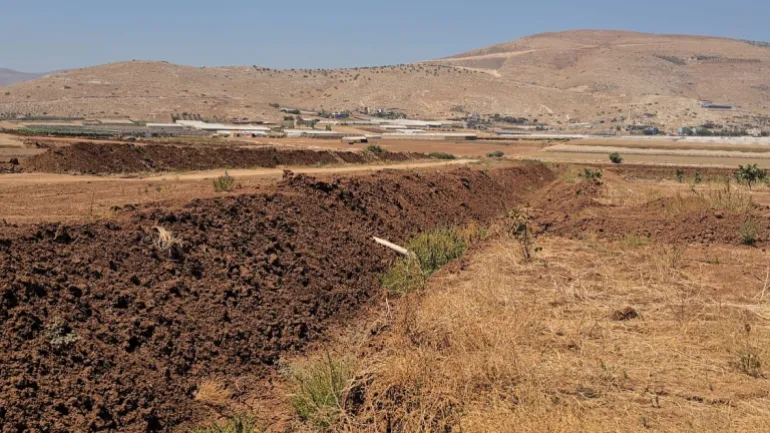
Access to the community has been blocked since mid-September, as Israeli forces continue building a barrier through Palestinian land in the area, including a road for military patrols, trenches and embankments.
Recommended Stories
list of 3 itemsend of list
Since the road closures began, movement for Palestinians has been severely restricted. They are forced to move around at night, transporting water, fodder and milk via donkeys under the cover of darkness to avoid detection by Israeli soldiers and settlers.
Ayed told Al Jazeera that no water had entered the community over the past three days after Israeli forces sealed the access points residents had been using to bring in supplies.
“The situation is dire. We are completely besieged, and the livestock cannot survive without water and food for this long,” Ayed said. “We own 15,000 head of livestock, and we fear they will perish because of the siege.”
Ras al-Ahmar is a 300-person village home to around 50 families who have lived off livestock and herding since the 1970s. Ayed said that Israeli settler attacks – part of a wider pogrom against Palestinians across the West Bank – had intensified since February, accusing settlers of trying to force residents out to seize their land.
“We have faced livestock theft, attacks on our dwellings, beatings of residents and vandalism of our homes. This was happening almost daily, yet we refused to leave. Now, they are completely besieging us to force us out,” he added.
The greatest challenge facing residents is restricted access to medical care as a result of the siege, a particular concern for the elderly.
Disease is also rampant among livestock, particularly newborn animals. And with veterinary teams unable to reach the area and treat the animals, deaths have been reported.
The military barrier – which Israel calls Crimson Thread and says it is needed for security – runs for roughly 20km (12 miles) through the northern Jordan Valley, with a width of up to 50 metres (165 feet).
Construction expanded early this year, including the digging of trenches and the bulldozing of agricultural land that damaged wells, water networks and greenhouses. The Israeli military seized nearly 115 hectares, 85 percent of which is privately owned Palestinian land, according to Kerem Navot, which monitors Israeli land policies in the West Bank.
Abdullah Bisharat, head of the village council of Ras al-Ahmar and Atuf, a nearby rural area also facing the military blockade, told Al Jazeera that the Israeli blockade has stopped 51 schoolchildren from attending classes for two weeks because vehicles can no longer reach them.
Israeli forces confiscated a tractor belonging to the village council on Sunday, detaining its driver as he was delivering animal fodder and water to Ras al-Ahmar, Bisharat said.
“We reached out to human rights organisations, but unfortunately no one was able to break the siege. Hundreds of people there are suffering, the majority of whom are women and children,” Bisharat added.
A trench dug by Israel around the rural Bedouin community of Ras al-Ahmar has restricted their movement [File: Moath Ghannam/Al Jazeera]
Broader context
The targeting of Bedouin and herding communities in the Jordan Valley is part of a mounting pressure campaign on residents to abandon their properties by restricting access to land and pastures. The tactics include settler violence, the demolition of structures and the closure of roads and access points.
The United Nations Office for the Coordination of Humanitarian Affairs (OCHA) has described Bedouin and herding communities as among the groups most vulnerable to displacement in the West Bank. Dozens of Palestinian communities across the West Bank have been entirely or partially displaced since 2023, when Israel began its genocide in Gaza and ramped up its attacks on the West Bank after the October 7 Hamas attack.
OCHA has reported that at least 130 Palestinian communities have experienced full or partial displacement since January 2023, with 48 communities completely displaced, including 12 from January to August.
According to OCHA, more than 2,500 Palestinians were displaced in 2026 due to settler attacks and related access restrictions, out of a total of more than 6,400 displaced since 2023.
As the Israeli elections – scheduled for October 27 – approach, Palestinian analysts and rights advocates argue that the measures being implemented on the ground are entrenching a new reality that may persist regardless of the next government.
Hassan Mleihat, chairman of the al-Baydar Organization for Defense of Bedouin Rights, told Al Jazeera that settlers appear to be rapidly intensifying measures aimed at displacing Bedouin communities in the lead-up to the elections.
Mleihat said that Israel’s objective was to expel as many Palestinians as possible and seize control of their land.
“The road being constructed near Ras al-Ahmar aims to dominate the area’s land under security pretexts and to isolate Palestinian communities into tiny geographical pockets, effectively confining their presence there,” he said.
A new reality
Observers believe the significance of these Israeli measures against Palestinian communities extends beyond their immediate impact on the population, creating demographic, geographic and security-related changes that may prove irreversible even if the Israeli political landscape shifts after the elections.
Adel Shadid, an expert on Israeli affairs, told Al Jazeera that Israel currently exercises an unprecedented degree of control over Palestinian territory in the West Bank. Palestinians, he said, live in small, fragmented and scattered enclaves with Israeli control over security, military and economic matters, as well as the minutiae of daily life.
He said the change was not only limited to geography but also entails normalising the presence of illegal Israeli settlements in the West Bank so that they are viewed as an integral part of the region’s fabric, rather than a temporary presence or a reality subject to change.
“This shift is accompanied by the entrenchment of the perception that the West Bank is no longer viewed as a Palestinian area – or even a disputed one – but rather as a territory where Jews have the right to live in safety and security,” he said.
Shadid argued that this perspective also shapes how Israeli and Palestinian communities in the West Bank are perceived by the Israeli state. Israeli settlers are presented as a population requiring protection, while Palestinians are increasingly framed primarily as a security threat.
“This logic extends to how the land and the very elements of life are treated. A tree, for instance, might be viewed as a potential resource for acts targeting the Jewish community; consequently, cutting it down is seen, within this framework, as a security measure that warrants no intervention,” he said.
Shadid said this was also changing perceptions of the role of the Israeli army and police in the West Bank. He argued that the security forces’ role was increasingly seen as protecting settlers against a so-called “Palestinian threat”, rather than restraining settler aggression against Palestinians.
“This new reality is not tied to the current Israeli government. Rather, it creates a dynamic that will persist beyond the elections, regardless of the outcome,” Shadid said.
*Saeed Ayed is a pseudonym used at the individual’s request for security reasons.
One factor in the widespread disillusionment has been the Banco Master scandal. The financial imbroglio has delivered a black eye to both ends of Brazil’s political spectrum.
A range of business leaders, political figures, regulators and judges have been swept up in the scandal.
A mid-sized lender, Banco Master grew aggressively over the last decade by selling high-yield deposit certificates. Some of those certificates offered returns of up to 140 percent relative to Brazil’s benchmark interbank rate.
But Banco Master did not have the assets needed to sustain that output.
It lacked the money to pay back its risky loans, and what assets it did have were diverted to shell accounts, according to prosecutors.
Brazil’s Central Bank ultimately liquidated Banco Master in 2025, as the lender faced a major funding squeeze.
Its owner, Daniel Vorcaro, was subsequently arrested, accused of an array of financial crimes, including money laundering and fraud.
The collapse of Banco Master triggered a nearly $7.7bn payout from Brazil’s Credit Guarantee Fund, the largest disbursement in the nonprofit insurance’s history.
Investigators have suggested that Vorcaro protected his fraud scheme by cultivating influence among power brokers among Brazil’s elite.
Among those implicated in the scandal is Senator Flavio Bolsonaro, the presidential candidate.
Last month, the Supreme Court unsealed documents showing he is under investigation for alleged corruption and money laundering in connection with Vorcaro.
Audio recordings have also surfaced, appearing to show Bolsonaro soliciting the disgraced bank leader for millions in funding. The money was slated as financing for Dark Horse, a film about his imprisoned father, Jair Bolsonaro.
Flavio Bolsonaro has denied any wrongdoing. He described the interaction as a private sponsorship opportunity, unrelated to the Banco Master scandal.
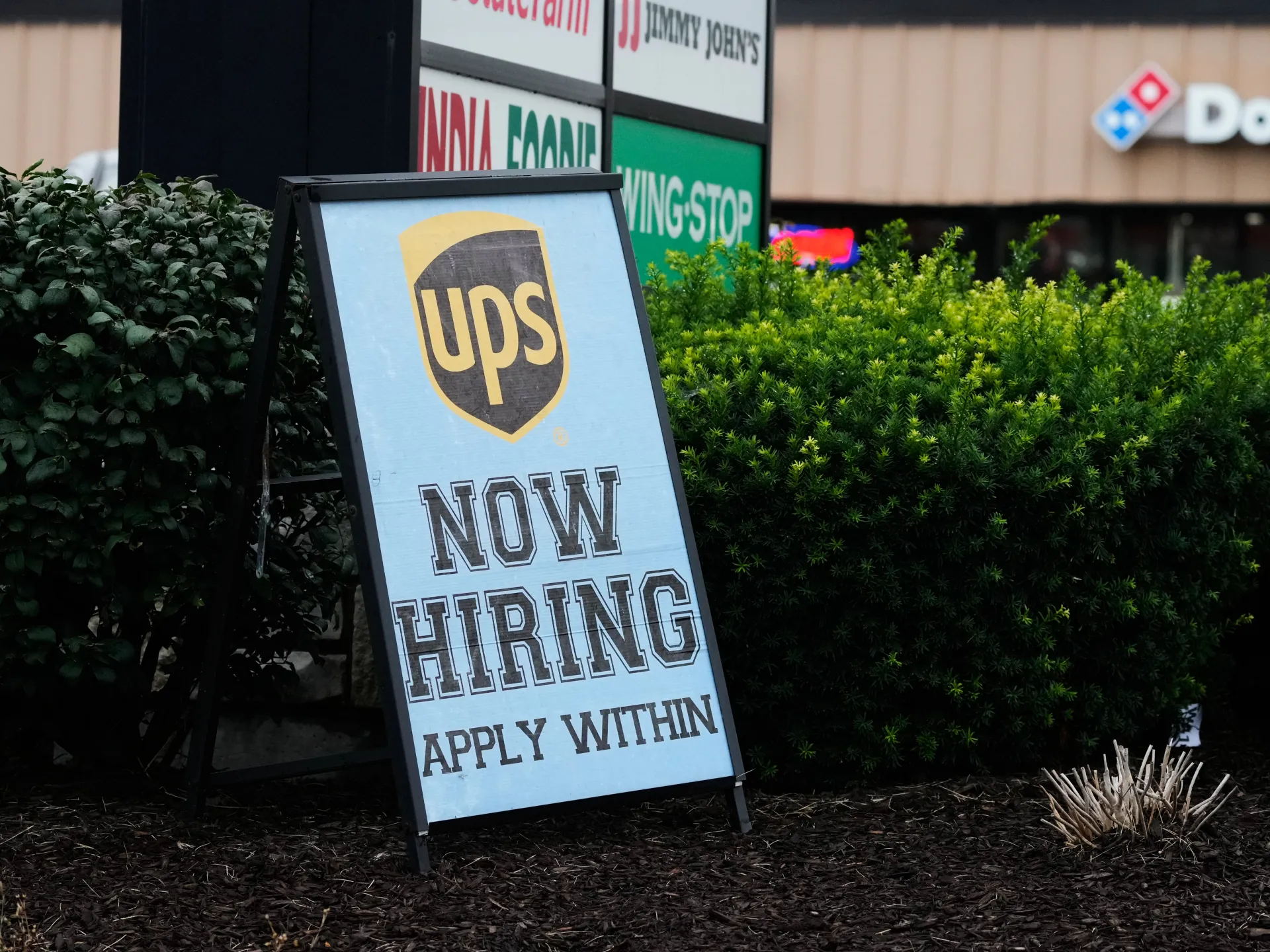
Job growth in the United States slowed in September, falling short of economists’ expectations as the unemployment rate rose in the final jobs report before the consequential midterm elections.
The US economy added 29,000 jobs in September, according to the Labor Department’s report released on Friday, far below economists’ expectations. Dow Jones had forecast 84,000 jobs, while economists polled by Reuters said they expected 90,000 job additions.
Recommended Stories
list of 3 itemsend of list
The unemployment rate also rose by 0.1 percentage point, from 4.1 percent to 4.2 percent.
The healthcare sector led the gains, accounting for the majority of new jobs. The industry added 17,000 jobs, marking a slowdown from an average of 33,000 jobs per month over the past year. Construction added 11,000 jobs, while manufacturing added 9,000.
Financial activities, which include sectors such as commercial banking and insurance, shed 7,000 jobs.
Most other sectors were largely unchanged, including retail, oil and gas extraction, and leisure and hospitality.
“Today’s disappointing report shows the labour market is grinding to a halt, marked by slow hiring and declining real wages that leave workers with very little leverage,” Kyle Moore, chief economist at the think tank The Century Foundation, said in remarks provided to Al Jazeera.
Previous jobs reports were also revised downward. July was revised from an initial gain of 21,000 jobs to a loss of 10,000 jobs. August was revised down by 29,000 jobs, from 162,000 to 133,000.
Wages grew by 3 percent, marking the slowest annual wage increase in five years.
Friday’s jobs report caps a week of weakening economic data before the consequential midterm election on November 3.
According to an AP-NORC poll released on Thursday, 61 percent of Americans polled said the US economy is worse off now than when Trump took office in January 2025.
“When businesses are barely hiring and raises aren’t keeping up with rising prices, it’s a stalled economy – and working families are stuck in it,” Breyon Williams, chief economist for Groundwork Collaborative, an economic policy think tank, said in a statement.
Trump has been trying to change the narrative on the slumping economy. On Monday, he said in a Truth Social post that “The United States has the BEST Employment Numbers in HISTORY.”
Stalling growth
On Tuesday, the US Labor Department released the Job Openings and Labor Turnover Survey, or JOLTS report, which showed little change, suggesting what economists call a low-hire, low-fire environment. That means those who have jobs are generally not leaving for new ones, while employers are maintaining the status quo rather than expanding.
On the other hand, ADP’s private payroll report, released on Wednesday, showed that 90,000 jobs were created across the private sector. The sheer number of layoffs fell, too, according to Challenger, Gray & Christmas. The report, released Thursday, showed that employers cut more than 43,000 jobs in September, marking an 18 percent decline in layoffs from August.
Friday’s jobs report comes before the Federal Reserve’s final policy decision before the midterm election. During its two-day policy meeting on October 27-28, the central bank will decide whether to raise, cut or maintain interest rates.
The odds increasingly suggest the Fed will hold rates steady in the 3.75-4.00 percent range, according to CME FedWatch, a tool that tracks the likelihood of monetary policy decisions. The FedWatch tool indicates there is currently a 77.3 percent chance that rates will hold steady, up from 35.8 percent this time last week.
US markets are trending upward on the heels of the report. The tech-heavy Nasdaq is up 1.5 percent, the Dow Jones Industrial Average is up 0.6 percent and the S&P 500 is up 1.1 percent in midday trading.
The price of gold, which is largely considered a safe investment during times of economic uncertainty, rose 1.1 percent to $4,223.49 amid the jobs report.

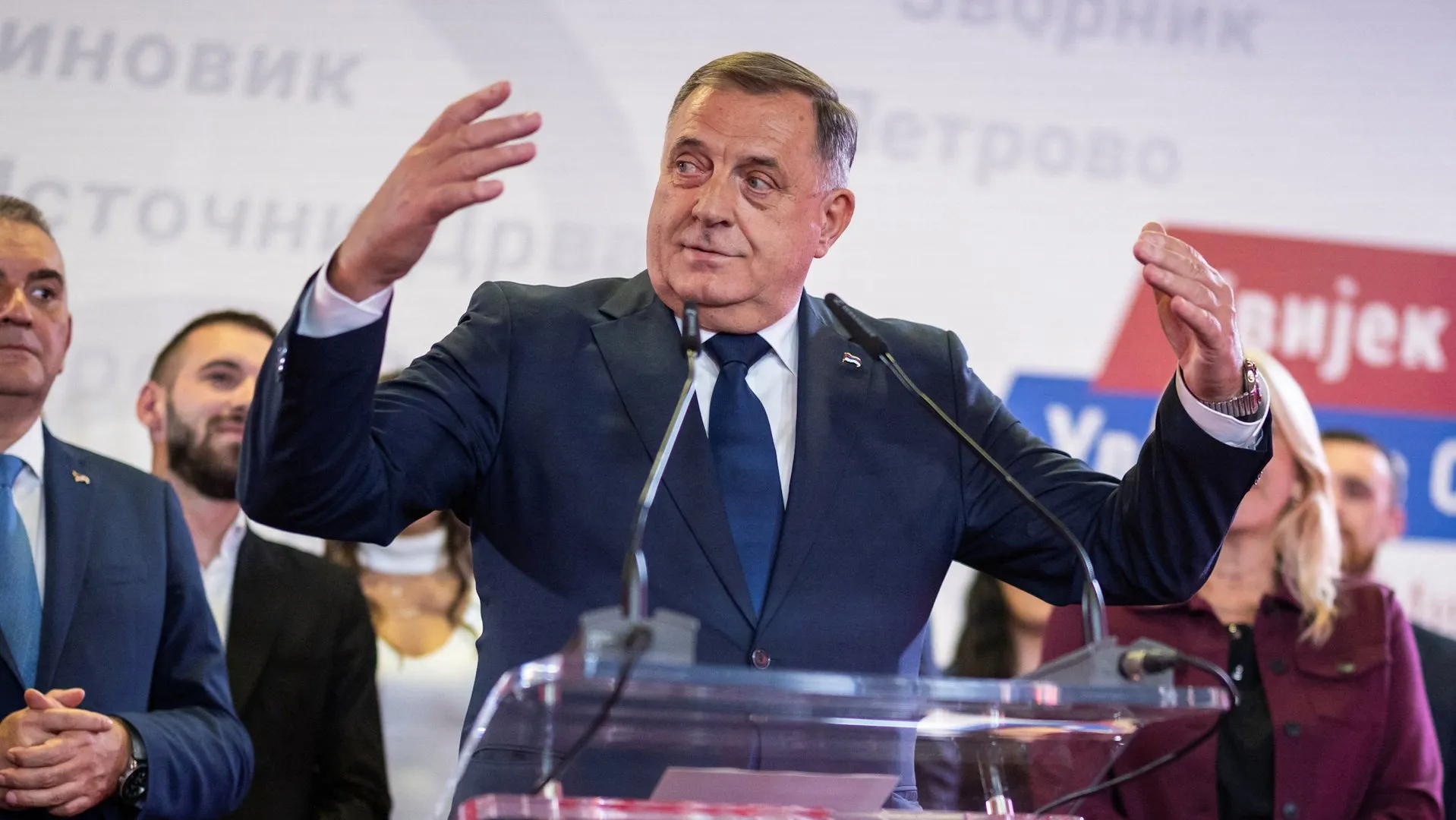
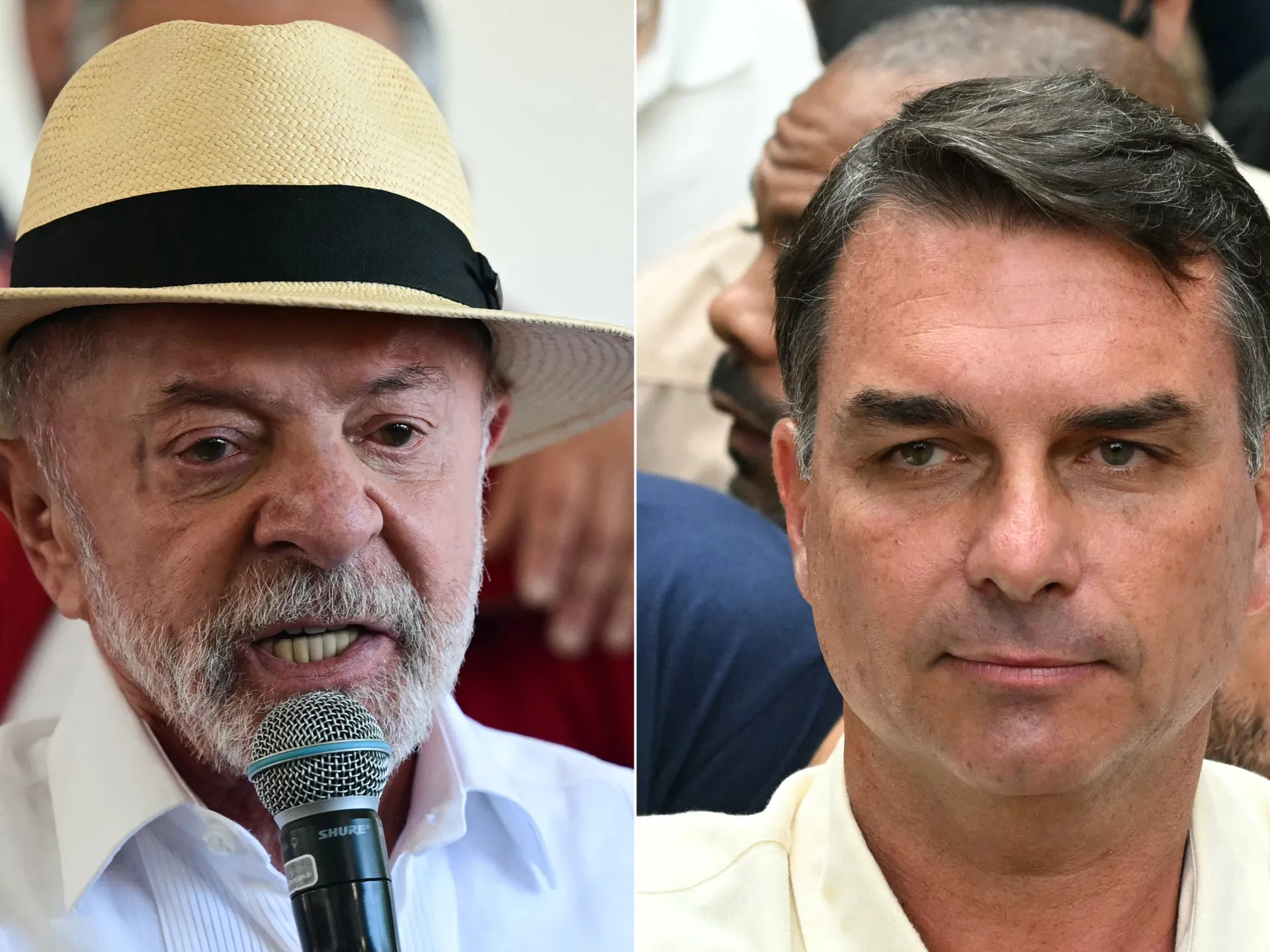
![Police and security personnel detain a protester during a demonstration against India's Chief Election Commissioner Gyanesh Kumar in New Delhi on October 3, 2026, to demand his resignation [Arun SANKAR / AFP]](https://i0.wp.com/occasionaldigest.com/wp-content/uploads/2026/10/AFP__20261003__D24U6XM__v1__HighRes__IndiaPoliticsElectionProtest-1791123918.jpg?w=640&ssl=1)


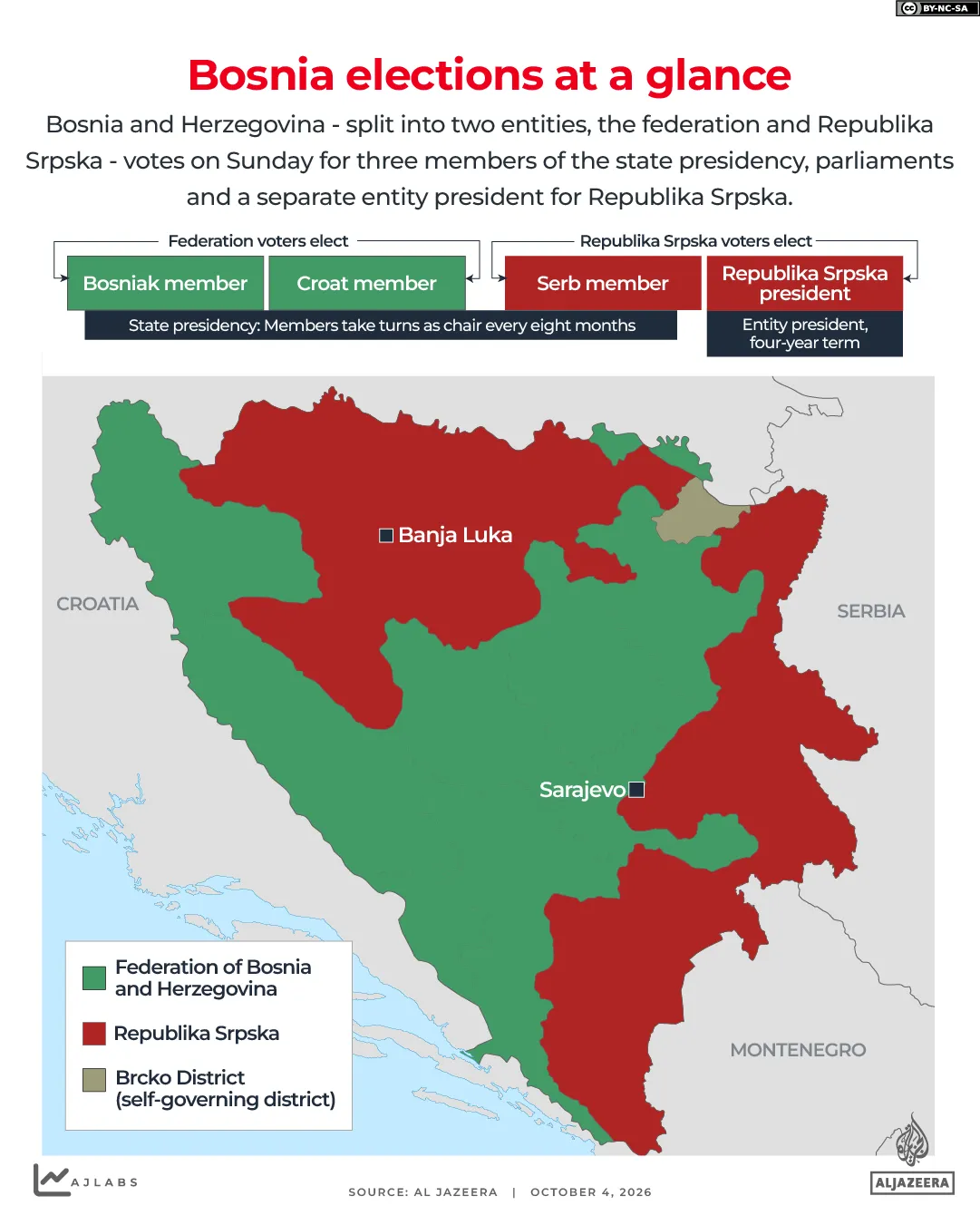


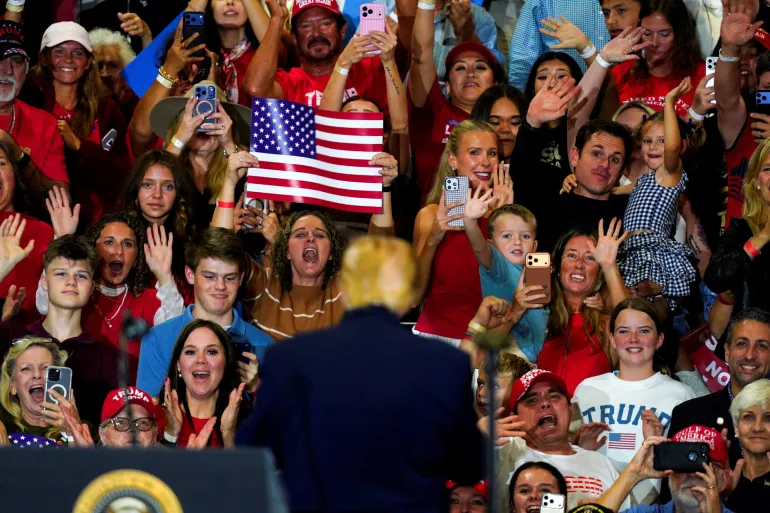

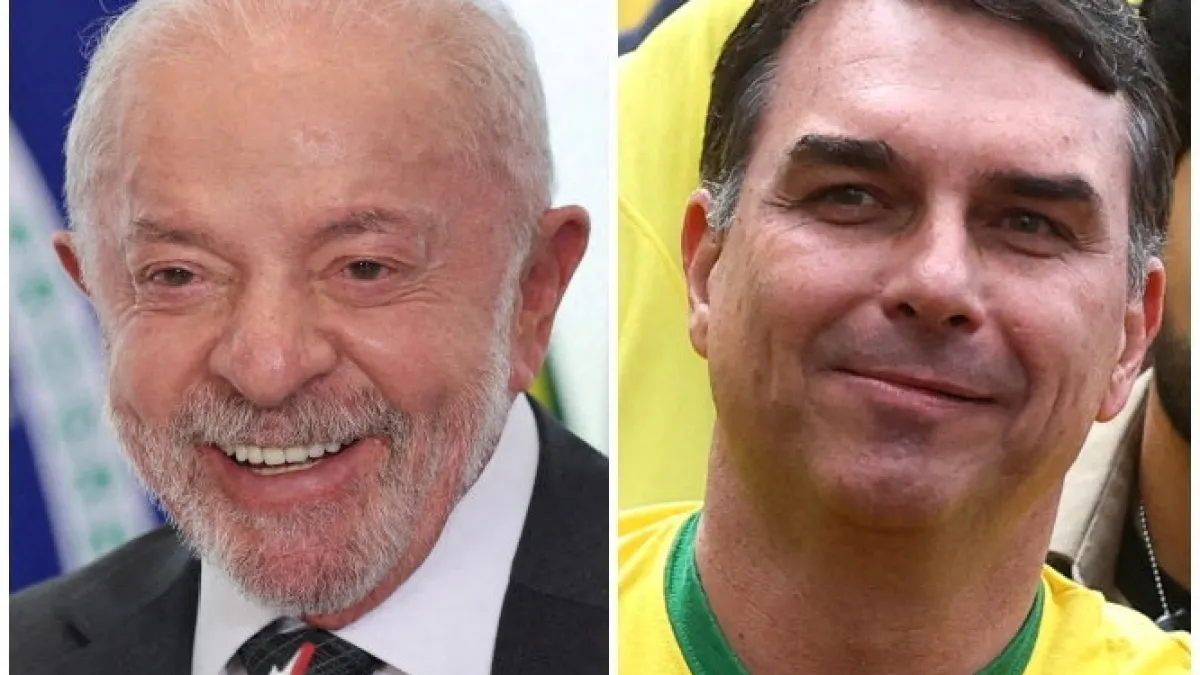

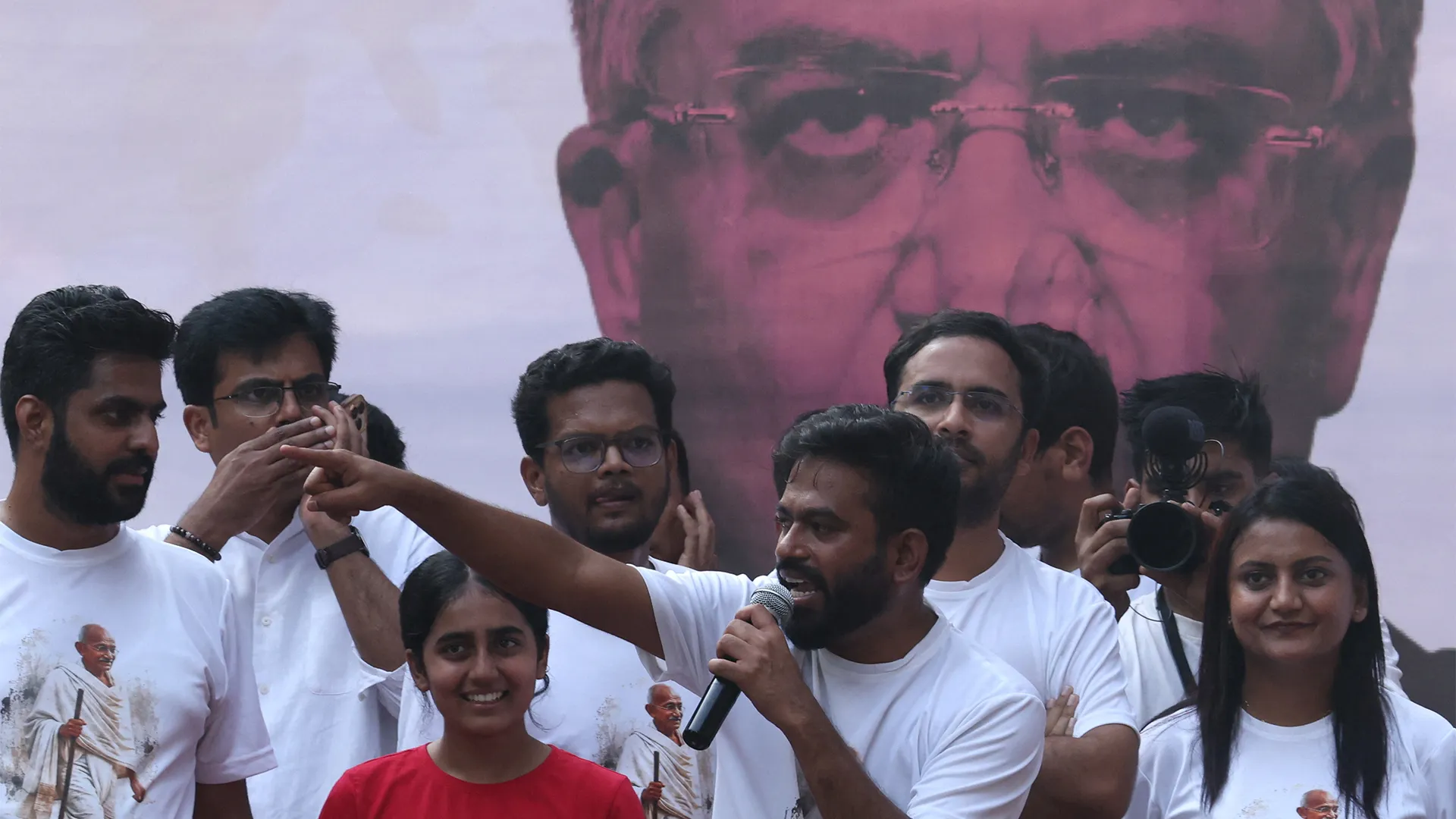
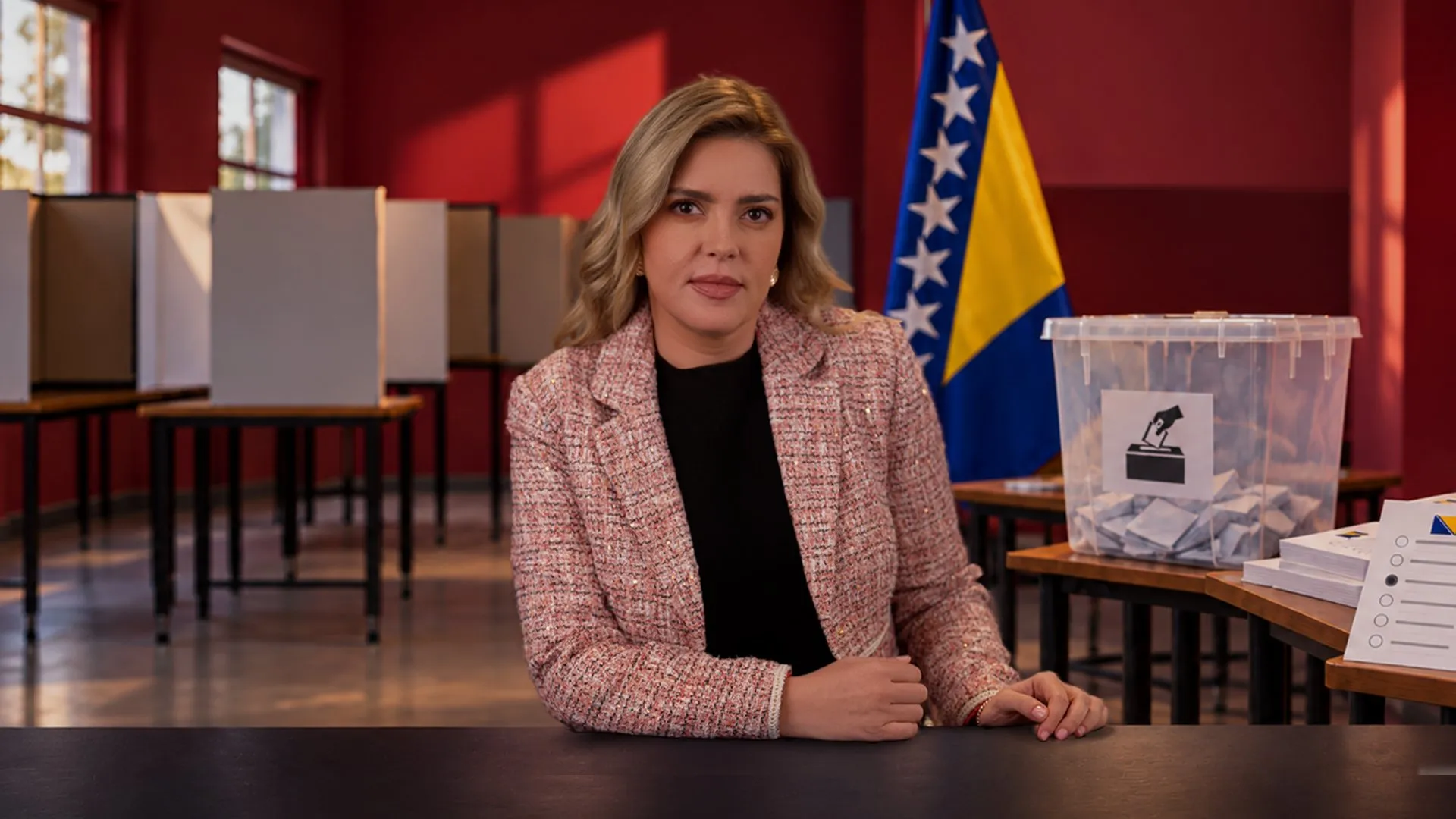

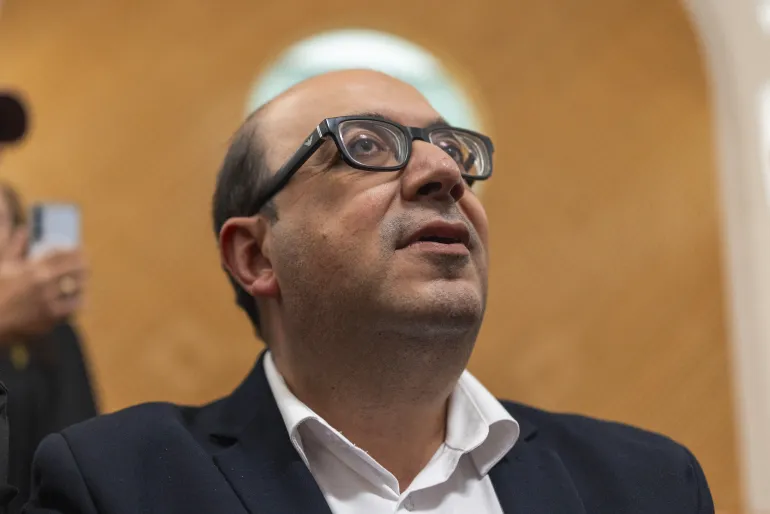
![Sami Abu Shehadeh, leader of the Balad party, attends a hearing at the Supreme Court in Jerusalem on October 1, 2026 [AFP]](https://i0.wp.com/www.aljazeera.com/wp-content/uploads/2026/10/afp_6abfdbdd04ed-1790958557.jpg?w=640&ssl=1)