Opposition bloc leads in tight Swedish election with 95% counted.
Published On 15 Sep 202615 Sep 2026
Sweden’s centre-left opposition bloc has held a narrow lead as the far-right party saw its support slip, with about 95 percent of the districts counted.
The Swedish Election Authority reported on Monday that the four opposition parties were projected to hold 176 seats in the 349-seat parliament, called the Riksdag, while the remaining 173 would go to four parties that make up or support the current conservative-led government.
Recommended Stories
list of 3 itemsend of list
Results may not be clear until early votes and overseas ballots are counted on Wednesday. If the left-leaning bloc emerges victorious, it could take even longer to form a government because of ideological tensions among its parties.
Prime Minister Ulf Kristersson is seeking a second term and has been leading the country since 2022 with a centre-right coalition that relies on the Sweden Democrats, a party with neo-Nazi roots. He could remain in office if the left-wing bloc wins its thin majority but fails to form a government.
The Sweden Democrats saw an unexpected drop in support, losing three percentage points compared with the 2022 general election, slipping from 20.5 percent to 17.5 percent. This marked the first time the far-right party suffered a loss in voter backing since it entered parliament in 2010.
Magdalena Andersson’s Social Democrats held onto first place, but a 28.1 percent share registered as one of their worst performances in more than 100 years, complicating any bid to assemble a working majority.
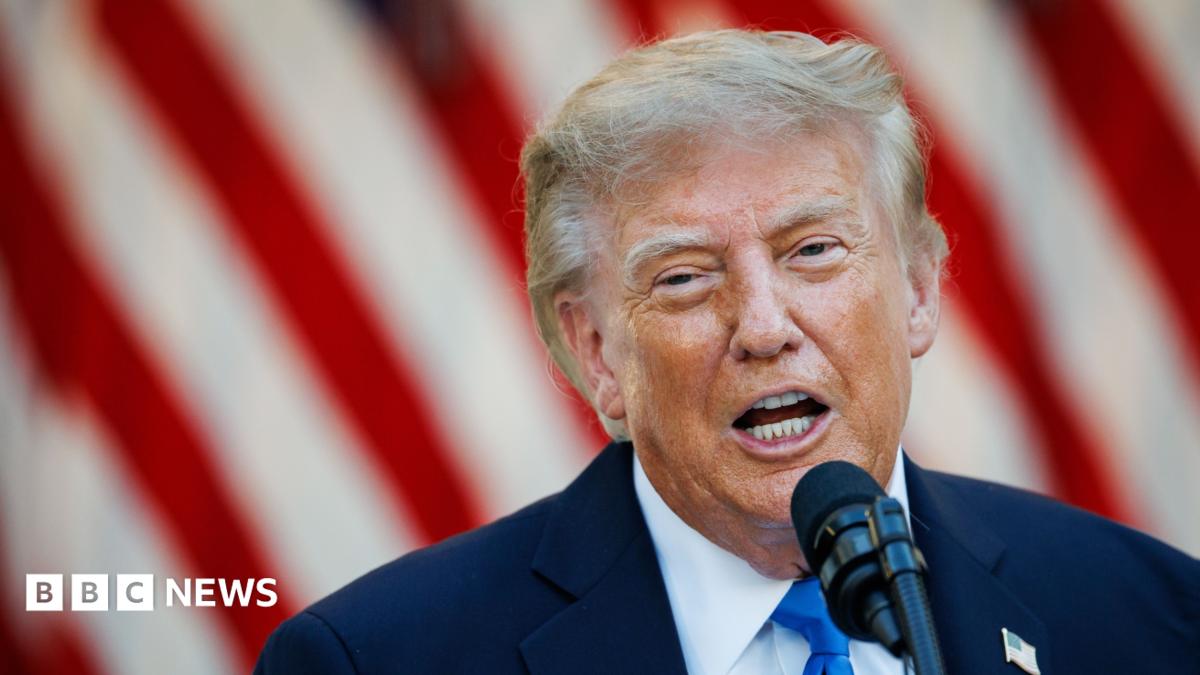
Moderate Party leader Ulf Kristersson (C) speaks during the Moderates’ election night watch party in Stockholm, Sweden, 13 September 2026 [Christine Olsson/Sweden Out/EPA]
While the result appears somewhat out of step with recent far-right gains across parts of Europe, including Germany and Italy, the Sweden Democrats remain firmly entrenched as a dominant force in parliament.
The dip in support could be tied to changing voter priorities. In the past, many people voted for the far right, “simply because they liked their stance on refugees”, without necessarily agreeing with other policy positions, Anders Sannerstedt, a political scientist at Lund University, told AFP.
Even with a reduced vote share, the Sweden Democrats retain substantial leverage.
A closely divided legislature leaves any future government with a fragile working margin, ensuring the party remains an unavoidable force in parliament.
More broadly, the Sweden Democrats have already rewritten the boundaries of Swedish politics. Over the past decade, its once-fringe demands for strict asylum caps, easier deportations and tougher policing have been absorbed into the mainstream, with both the centre-right coalition and the Social Democrats shifting rightward to match public sentiment.
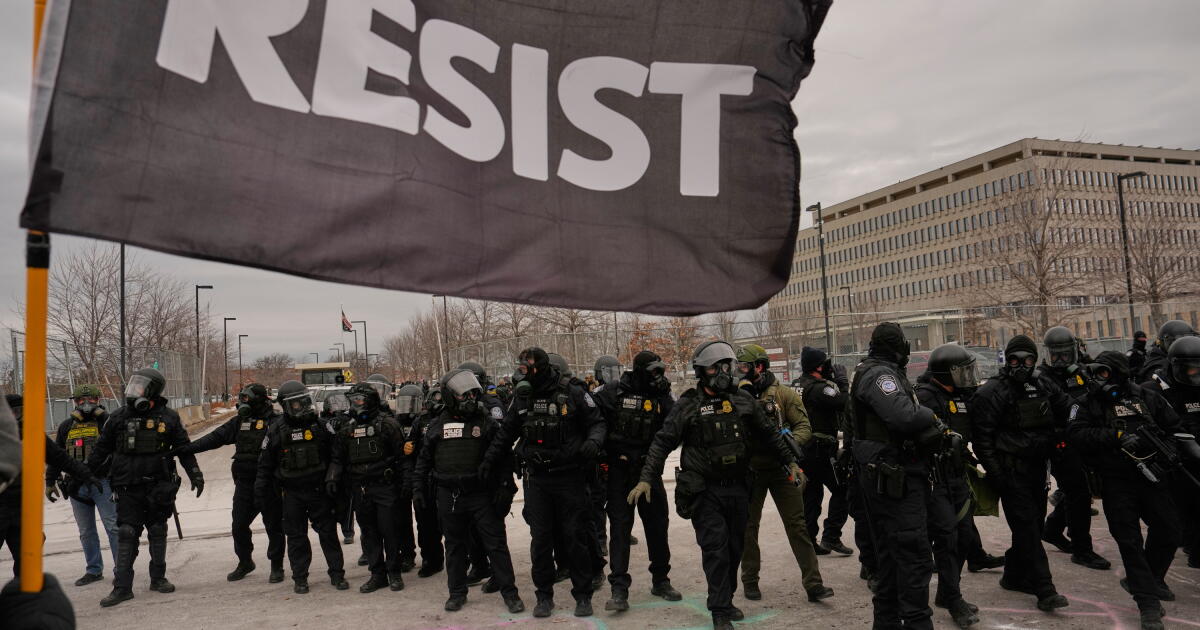
Democratic state parties announced Monday that they are launching an operation for the midterm elections they’re calling the “New Battlefield Project,” intended to recruit 10,000 volunteers to guard polling places in case armed federal officers show up.
Activists are planning mass protests if the Trump administration tries to interfere with voting or ballot counting. And legal scholars are distributing white papers advising judges what they should do if the government tries to seize ballots.
The unprecedented efforts are in response to President Trump’s equally unprecedented moves to interfere in this year’s midterm elections, which include attempts to impose proof-of-citizenship requirements to register to vote and directing the Postal Service to play a central role in deciding which voters should get a mail ballot.
The anxious contingency planning as voting gets underway has become a marker for how fraught democracy has become in the country that once stood as an example to the world.
“We have never prepared for an election sabotage event like we have now,” said Ezra Levin of the left-leaning group Indivisible.
Trump has given Democrats plenty of reasons to organize a resistance
Democrats say they have reason to plan for doomsday scenarios. During his first term, Trump refused to accept his 2020 loss to Democrat Joe Biden and attempted to overturn the vote, only to be defied by career officials and more establishment Republicans. Upon returning to power, Trump has stocked his administration with those who helped his 2020 efforts, has used the federal government to target his political enemies and pardoned more than 1,000 people prosecuted for the Jan. 6, 2021, attack on the U.S. Capitol that was intended to halt the certification of Biden’s win.
Incumbent presidents’ parties usually lose ground in the midterms, but Trump has pulled out the stops to try to keep that from happening this time. He’s demanded Republicans redraw maps to create more safe seats for themselves in the House of Representatives, held last week’s unusual midterm convention and tried to change election rules even as states begin to send out ballots.
The advice for judges asked to approve search warrants for ballots, for example, was inspired by the Trump administration’s seizure of 2020 ballots and other election records in Fulton County, Georgia, which includes Atlanta, based on old, disproven conspiracy theories.
Rick Hasen, a UCLA Law professor and director of the school’s Safeguarding Democracy Project, noted that Trump has expressed regret that he didn’t take more aggressive action to overturn the 2020 results, such as ordering voting machines to be seized.
“All these things take what was off the wall and put it on the wall,” Hasen said. He said that while it is important not to unduly scare voters about what might happen, it’s “hard to walk the line between alarmism and complacency.”
Trump’s actions worry Democrats. Administration calls them common sense
Last year, Democrats worried that Trump might intervene in off-year elections in California, Virginia and elsewhere, only to have voting go smoothly with no clashes with the federal government.
“The only ‘fears’ Americans have about our elections are being fueled by extreme liberal Democrats who refuse to support commonsense legislation that ensures Americans, and Americans only, decide our elections and other basic election security measures like Voter ID,” White House spokeswoman Lauren Blis said in a statement.
Still, the stakes are far higher in the midterms, which will determine whether Republicans continue to control both houses of Congress. So far Trump has been unable to change voting procedures before the midterms.
Courts halted Trump’s first attempt to reshape election rules via executive order last year. The president backed a bill in Congress to make even more sweeping changes but it’s stalled in the Senate because of opposition from Democrats and some Republicans.
Then Trump tried to limit mail voting by executive order, but the courts again blocked it, saying the changes couldn’t happen before the midterms. That case is before the Supreme Court. Election officials warn that it would be impossible to implement Trump’s requirements in time for this election.
Litigation about election rules has reached such a pitch that the National Bar Association last week announced an initiative to help voters of both parties understand last-minute election rule changes and to create a hotline for those who encounter trouble casting ballots.
Concerns that polling places will become targets for immigration agents
Every election, the two major parties mobilize massive operations of attorneys, staffers and volunteers to monitor polling places and ballot counting. The Republican National Committee said it’s already recruited a record number of poll watchers.
“The RNC has spent this entire cycle preparing not just to defy history in November, but to protect it,” spokeswoman Ally Triolo said. “We’ve built the largest election integrity operation in Republican Party history because our mission is simple: secure every legal vote and ensure Americans can trust the outcome of our elections.”
Democrats also have expanded their operations, and the Association of State Democratic Parties is adding to that effort with its “battlefield” recruitment project. That also will include a network to share information about online threats and manipulation, said Jane Kleeb, the chair of the group and of the Nebraska Democratic Party.
“If they’re saying they’re going to put armed people outside polling places, we should put friendly people outside polling locations to film them,” Kleeb said in an interview. “There’s a whole new battlefield we have now.”
Kleeb was referring to widespread fears among Democrats that U.S. Immigration and Customs Enforcement officers will be deployed to the polls, something that multiple administration officials for months have denied will happen. There have been scattered instances of ICE officers at polling places over the past year, usually saying they’re in pursuit of or investigating a specific person. Homeland Security Secretary Markwayne Mullin said this month it’s possible that could happen again in November.
In an indication of the distrust of the administration’s reassurances, civil rights groups and the city of Denver last week filed a lawsuit asking a federal judge to formally bar ICE from polling places. They cited a law dating to the Civil War era prohibiting armed federal agents at election sites.
“This administration is basically using the rhetoric that undocumented citizens are voting and that they’re going to have DHS and ICE at the polls to try and intimidate and suppress the Latino vote,” said Juan Proaño, CEO of the League of United Latin American Citizens, one of the plaintiffs.
Activists see Minneapolis immigration protests as a midterms model
A staple of the election buildup is a series of tabletop exercises in which each side runs hypothetical scenarios to practice its response. As part of that, Democrats and civil rights groups are rehearsing for the possible deployment of ICE agents or the National Guard to polling sites, although the Pentagon has said it has no plans to deploy troops to the polls.
Levin, of Indivisible, said his group has run 17 different scenarios preparing for what could happen in November. But the first priority, he said, is to boost turnout.
The No Kings network, which has spearheaded large anti-Trump protests over the president’s second term and includes Indivisible, is launching a campaign encouraging early voting that will peak with rallies Oct. 17.
Others are organizing among both left-wing and more traditional groups to push back if the administration is aggressive in November. Some look to the anti-ICE protests in Minneapolis as a possible model.
Two activists were shot and killed by ICE agents during those January demonstrations, and the administration eventually backed off the aggressive crackdown the president had launched against the city.
“We recognize there might be a similar moment in November, where Trump attempts to do that again, where everyday working people and students need to band together and say, ‘Actually, no, this is our country, you don’t get to decide who gets elected or who gets to take office,’” said Kidus Girma of the left-wing Sunrise Movement.
Riccardi and Brown write for the Associated Press.
Voting is under way in Sweden in a closely fought election that could see the far-right Sweden Democrats enter government for the first time, or centre-left leader Magdalena Andersson return to power.
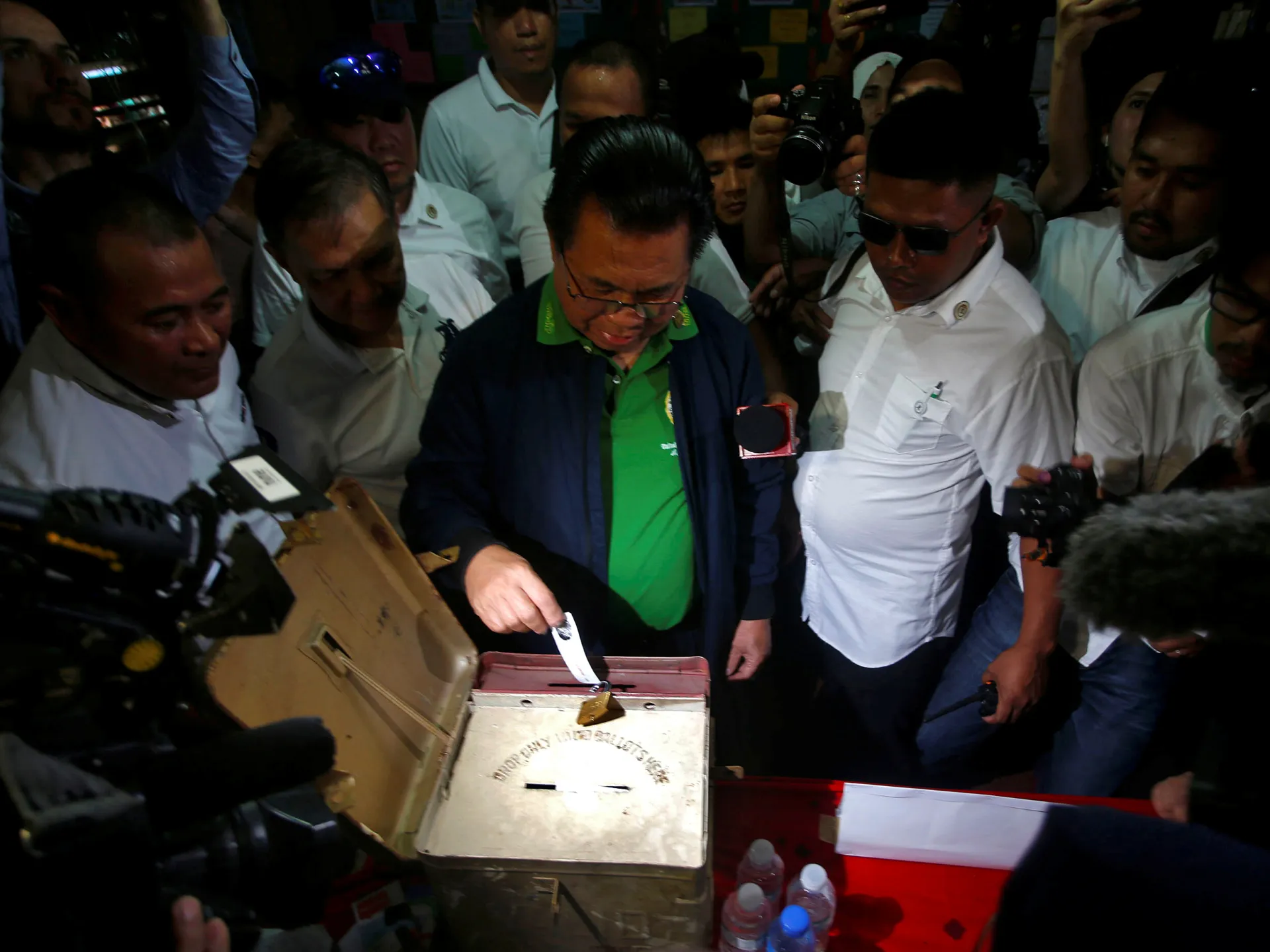
On Monday, the Bangsamoro Autonomous Region in Muslim Mindanao (BARMM) in the Philippines will hold its first parliamentary election since it was established in 2018. The vote will officially mark the end of the transition period under the Bangsamoro Transition Authority (BTA), an interim regional government appointed in 2019.
The election is a significant milestone in the Bangsamoro struggle. It is the outcome of decades of armed conflict and negotiations between the Moro Islamic Liberation Front (MILF) and the government of the Philippines.
The vote will test the Philippine government’s commitment to the peace process and the MILF’s commitment to the democratic process.
The struggle for self-determination
BARMM is located on Mindanao, the second-largest island in the Philippine Archipelago, and it covers roughly the territories inhabited by the Moro people, a native Muslim-majority group. For centuries, the Moro enjoyed self-governance in independent states and resisted Spanish colonialism. Following the Philippines’s independence in 1946, they continued their struggle for self-determination.
In 1989, the Autonomous Region in Muslim Mindanao (ARMM) was created by Manila to give some devolved rights to the Moro. However, ARMM largely failed to address local grievances and demands due to its weak structural power. It was given limited autonomy in political and fiscal decision-making, but it did not manage to improve socioeconomic conditions in the region. The MILF continued the armed struggle.
In 2012, President Benigno Aquino III recognised the ARMM as a “failed experiment”. Under his administration, the Framework Agreement on the Bangsamoro was signed between the government and the MILF, paving the way for a new political entity.
Six years later, under President Rodrigo Roa Duterte, the Organic Law for the Bangsamoro Autonomous Region in Muslim Mindanao was promulgated. This legislation granted the region greater fiscal autonomy, a regional government, a parliament, and a justice system.
Then the Comprehensive Agreement on the Bangsamoro was concluded to outline the mechanism of transition from ARMM to BARMM and set up the MILF-dominated BTA to lead it. All of this is culminating in the parliamentary election, which will determine the makeup of the region’s first legislative body.
A contested election
The vote comes at a time of heightened tensions in BARMM and internal divisions within the MILF. Two camps have emerged within the movement – one loyal to MILF Chair Al Haj Murad Ebrahim and another supporting Chief Minister Abdulraof Macacua.
Last month, Macacua joined the newly formed Bangsamoro Federalist Party (BFP), which will compete in the elections against the MILF’s political wing, the United Bangsamoro Justice Party (UBJP). Shortly after, his convoy was attacked, but he survived unscathed.
In early September, Macacua and 40 commanders were dismissed from the MILF’s military wing for alleged insubordination.
These tensions have prompted increased public anxiety about possible post-election unrest. There are other factors that could overshadow the vote.
In past elections, vote-buying was widespread, election-related violence was rampant, and electoral fraud and manipulation were pervasive. If these practices repeat at a large scale, the electoral outcome may not necessarily provide a straightforward measure of the will of Bangsamoro’s people. It may also not be an accurate reflection of whether they are satisfied with the transitional government or not.
The MILF presents itself as a champion of moral governance. If it is to retain this label, it should not give in to widespread vote-buying and electoral manipulation. It should also not let internal rivalries turn violent.
But there are already some alarming signs. Prominent MILF figures have conveyed that if the UBJP, the front’s political wing, sees manipulation and fraud, its members are ready to fight. They have also suggested that since the MILF led the transition, it should remain in power. On social media, some citizens have condemned the MILF camp’s threats, calling such tactics un-Islamic.
Before the vote, Manila has deployed military forces in key areas. This has heightened people’s fears that fighting with the MILF may erupt. The tense situation might lead to a low voter turnout.
Under these circumstances, the future of the Bangsamoro is riddled with uncertainties.
Whatever happens in the election, we must remember that the future of BARMM is a shared responsibility. The Philippine government and the Bangsamoro parties are duty-bound to honour the peace agreement. In addition, the people must exercise their civic rights and responsibilities to help sustain the peace achieved after a long and painful armed conflict and to move toward a prosperous Bangsamoro land.
The views expressed in this article are the author’s own and do not necessarily reflect Al Jazeera’s editorial stance.
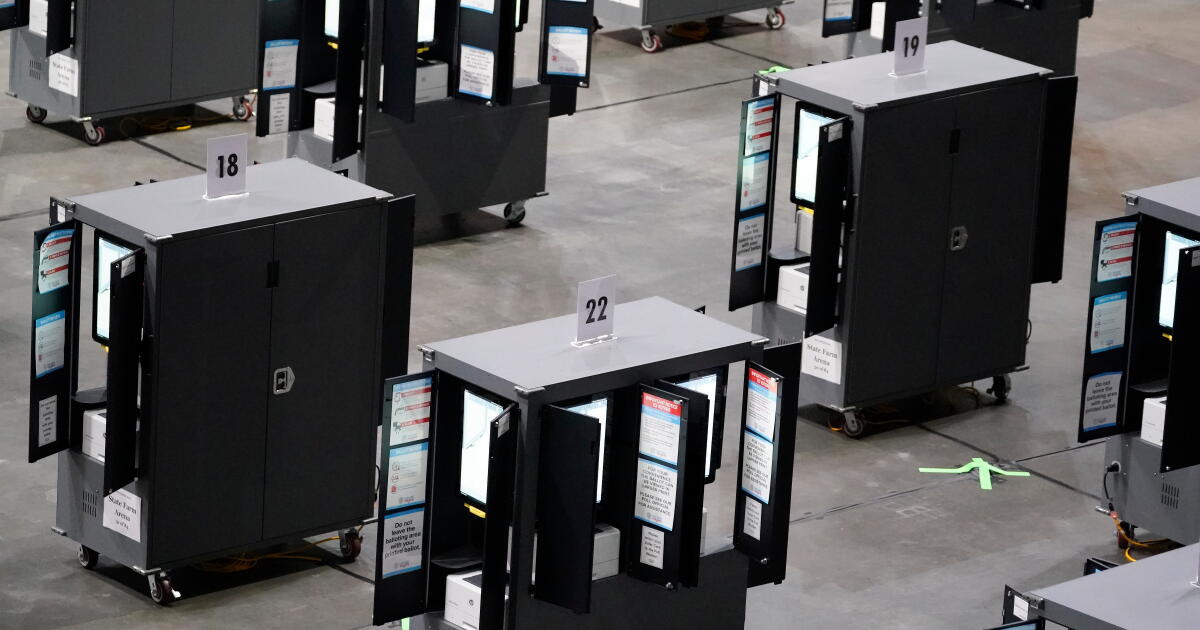
ATLANTA — Security researchers say rapid advances in artificial intelligence are making it more critical to address a flaw in Georgia’s voting equipment that can allow voters to be matched to their ballots after they have been cast.
The system’s vulnerability has been drawing increased attention, with election security advocates criticizing state election officials for failing to fix it before the November elections. Georgia election officials say they have taken steps to address the potential harm, but some advocates say the state is not going far enough.
The vulnerability does not allow votes to be changed or cast doubt on election results, but it could let someone see how others voted. That is important because ballot secrecy is a fundamental right under the state constitution, and violations could create an opening for legal challenges.
While the flaw in Georgia has been known for a few years, the widespread adoption of AI tools and the blistering pace of its sophistication have election security experts raising alarms.
This is “a bit of a wake-up call because it illustrates how much more easily vulnerabilities can be exploited now that AI can do all of the technical work for you,” said J. Alex Halderman, a voting technology specialist at the University of Michigan who was part of the team that exposed the flaw.
Other jurisdictions across the country use the same voting equipment made by Liberty Vote, which was known as Dominion Voting Systems before the company was sold. But many have applied a software update to fix the flaw, and some other states do not allow the public release of records that are needed to exploit it, said Mark Lindeman, policy and strategy director at Verified Voting, a nonpartisan group focused on election technology.
Georgia, a presidential battleground with one of the nation’s most closely watched U.S. Senate races this year, is the only place where the system is used statewide. Lindeman said that, combined with an open records law that has allowed access to key documents, creates a “perfect storm.”
“It’s really embarrassing that this is still a possibility,” Lindeman said.
How does voting work in Georgia?
Georgia voters make their selections on touchscreen voting machines that print paper ballots voters insert into scanners to tally the votes.
Such cast-vote records detail the votes from each ballot. Those records and electronic ballot images created by the scanners are randomized. But the software flaw allows them to be put back in the order they were cast, according to a report by researchers who discovered it in 2022.
Along with other publicly available data, that information could be used to match voters to their ballots, the researchers wrote.
Max Springer, a Princeton University researcher who was not involved in the original research and studies AI, said he gave a publicly available AI assistant that research. He said it was able to reverse the shuffling of electronic ballot records from Georgia’s May primary and then tell him what other records it would need to match names to ballots.
He then gave the AI assistant the early voting list for the counties he examined and the cast-vote record file, which could be obtained through a public records request. It was able to create “buckets of ballots and potential voters,” he wrote in a blog post. In many instances, that made it possible to match voters to their ballots.
In cases where ambiguity remained, he wrote, he got the public audit log for the ballot scanners and precinct check-in records and was able to match most ballots to specific voters.
“AI coding tools are essentially supercharging laymen people to exploit vulnerabilities,” Springer said in an interview.
Why does ballot secrecy matter?
Georgia’s Constitution says elections “shall be by secret ballot,” and state law requires voting machines to “permit voting in absolute secrecy so that no person can see or know any other elector’s votes.”
A lack of ballot secrecy can make it easier to buy or sell votes and increase the danger of coercion to vote a certain way by family members, political organizations, employers or government officials. It also is information that could be invaluable to political campaigns.
Gabriel Sterling, special projects manager in the secretary of state’s office, pushed back on the concerns. He said it would be easier to use mail ballots if vote-buying or coercion was the goal and that it probably would be cheaper for campaigns to just increase outreach to voters who fit a certain profile than try to identify voters this way.
State Election Board member Salleigh Grubbs proposed a rule during the board’s August meeting that would have required the secretary of state’s office to apply the software update recommended by the manufacturer by Tuesday.
“Each [voter] has one vote, and no one is entitled to know how it was cast,” Grubbs said. “That privacy protects more than the individual voter. It protects the integrity of the entire election.”
In a letter to the election board, an agency lawyer argued that the update has not been certified by the secretary of state, the implementation would take months, and the Legislature has not provided necessary funding. The board rejected Grubbs’ proposal. Some members said they did not believe they had the authority to order the secretary of state to act and they raised concerns about the short timeline before the November midterms.
Board member Sara Tindall Ghazal, who voted against the proposal, said it is “intensely frustrating” that the software update has not been applied. But she pointed out that it is a felony to reveal how someone voted, which should serve as a deterrent.
“I hate the fact that it’s even physically possible, but there are very, very severe penalties if somebody were to actually do this,” she said.
What’s being done?
The secretary of state’s office sent guidance to county election officials instructing them to refer open records requests for certain records to the secretary of state’s office. It will release them with the problematic information blacked out and decline to release other information and documents.
Sterling said the office is working with a vendor to scramble the original order of ballot images and cast-vote records before they are made public. Halderman said that precaution would be necessary to keep someone from reconstructing the order.
While some other jurisdictions have applied the software update that reportedly fixes the problem, some have done what Georgia is now trying to do by restricting public access to the records needed to exploit the flaw.
Marilyn Marks is executive director of the Coalition for Good Governance, which advocates for election transparency and security and raised the alarm about the vulnerability. She argued that withholding documents is not the solution and that steps need to be taken to ensure ballots cannot be traced to voters in the first place.
“When Georgia’s election records contain identifiers that can be used to trace ballots to voters, the only legal and acceptable answer is to stop recording that information — not restrict public access to sensitive unlawful information to insiders and commercial vendors,” she said.
With time growing short before the elections, Marks said a workable interim solution would be to collect ballots in locked boxes at precincts and then shuffle and scan them at a central tabulating center.
The far-right Sweden Democrats party could enter government for the first time if right-wing bloc wins.
By AFP and The Associated Press
Published On 13 Sep 202613 Sep 2026
Voters in Sweden are heading to the polls in an extremely close general election that will see either the far right enter government for the first time or the centre-left opposition reclaim power.
Opposition leader Magdalena Andersson of the Social Democrats was among the first to cast her ballot after polling stations opened at 8:00am (06:00 GMT) on Sunday.
Recommended Stories
list of 3 itemsend of list
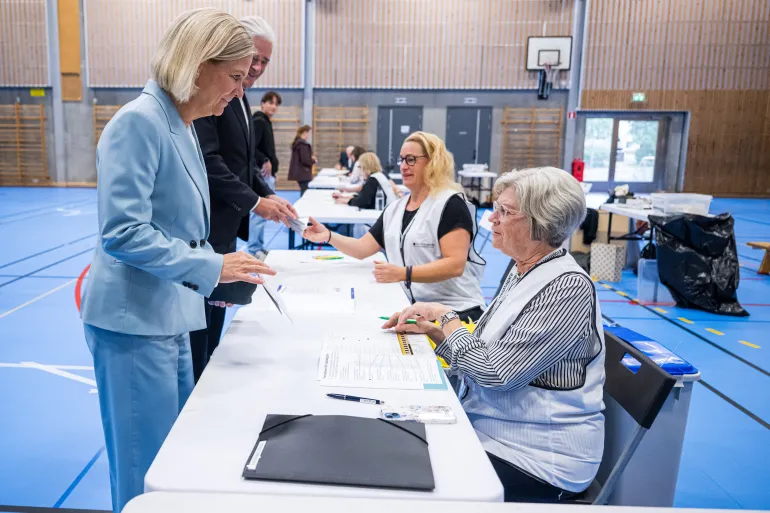
The 59-year-old, who in 2021 became the first woman to serve as Sweden’s prime minister, voted with her husband at a school in her home municipality of Nacka, south of Stockholm.
Pre-election opinion polls have long credited the four parties in her left-wing bloc with a comfortable lead over conservative Prime Minister Ulf Kristersson’s four-party alliance, which includes the far-right Sweden Democrats.
But the gap narrowed significantly in the final days of the campaign.
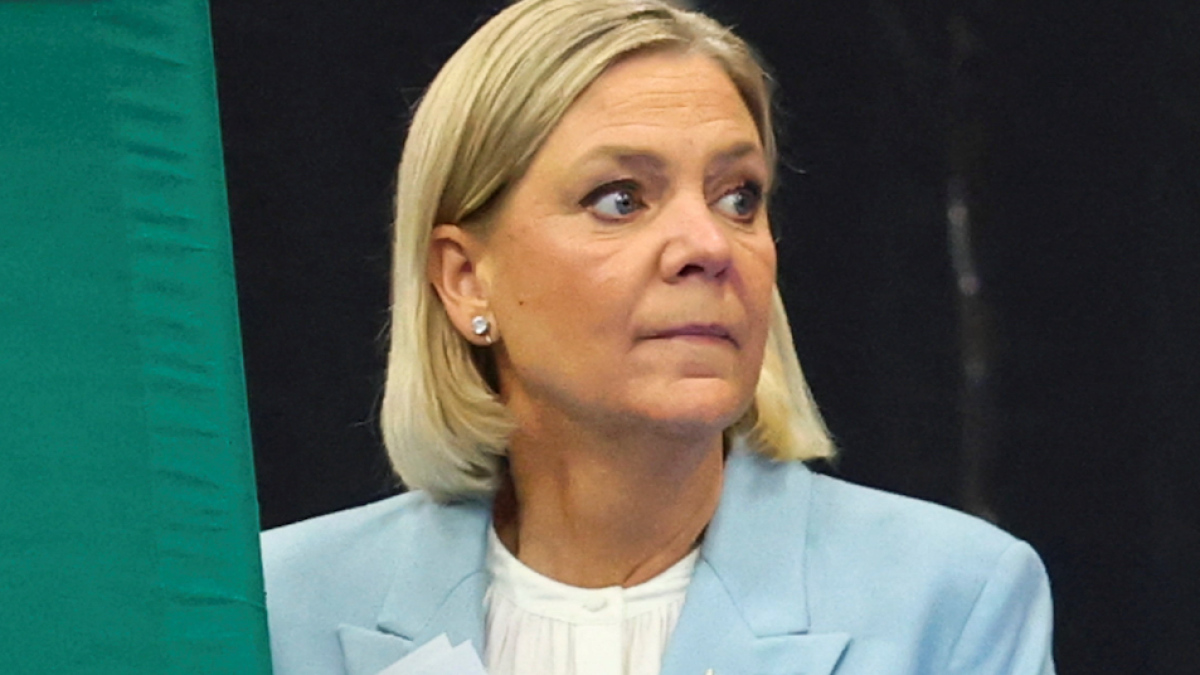
Social Democratic Party leader Magdalena Andersson (L) and her husband Richard Friberg (R) cast their votes at a polling station in a school during Sweden’s general election, in Nacka on September 13, 2026 [AFP]
“It is now up to the Swedish people to decide which direction our country should take. Should we have a government entirely dominated by the Sweden Democrats? Something that has never happened in Sweden before? Or should we have a government led by me, which will steer Sweden in a new spirit of cooperation?” Andersson told reporters after voting.
Her party has pledged to boost the welfare state and help struggling households cope with the rising cost of living.
Outgoing Prime Minister Ulf Kristersson is seeking a second four-year term at the helm of the European Union nation.
He has led Sweden since 2022 with a three-party centre-right coalition. It relies on outside support from the Sweden Democrats, an anti-immigration, far-right party that has moved towards the political mainstream, for a parliamentary majority.
If the right-wing bloc is re-elected, the Sweden Democrats can expect Cabinet posts in the next government.
Kristersson has promised to focus on improving Swedes’ everyday lives, following his government’s clampdown on organised crime and immigration.
“We want to use our new and far better preconditions to improve the lives of ordinary people … to make Sweden great again,” Kristersson told news agency AFP before the vote.
Sweden Democrats party leader Jimmie Akesson (L) votes in Rinkeby, a suburb of Stockholm, Sweden, September 12, 2026, the day before the general election [Claudio Bresciani/EPA]
The Sweden Democrats, a party with neo-Nazi roots, took 20.5 percent of the vote in the 2022 election to become the biggest party on the right.
Kristersson announced in April that his conservative Moderates would allow the party into government if the right has a majority – though he would remain prime minister even if the Sweden Democrats are the stronger party.
Voting stations close at 8:00pm (18:00 GMT) when exit polls are expected to be published, with the first reliable results expected several hours later.
Some eight million people are eligible to vote in the election, in a country of 10.6 million where voter turnout regularly tops 80 percent.
About half of voters have cast their ballots in advance.
President Donald Trump is making himself the centre of the Republican Party’s campaign for the 2026 midterm elections, but growing concerns within his own party are raising questions about whether a Trump focused strategy can attract the independent voters Republicans need to retain control of Congress.
At the Republican Party’s first ever midterm convention in Dallas this week, Trump urged voters to “pretend that I’m on the ballot” as he sought to recreate the enthusiasm and turnout that helped him win the presidency in 2016 and 2024.
The strategy is designed to energise Trump’s loyal supporters, but it comes with significant risks. Trump’s approval ratings have fallen sharply among independents, while inflation and the war with Iran have created vulnerabilities for Republicans seeking to defend their congressional majorities.
Trump Puts Himself at the Centre
Trump’s message at the convention was straightforward: the midterms should be treated as a referendum on his presidency.
Stay ahead of the geopolitical week.
MD Briefing delivers expert analysis across five global fronts — the Indo-Pacific, energy, geoeconomics, European security, and the Middle East — every Monday morning. Free.
Rather than allowing individual Republican candidates to campaign primarily on local issues, the party is seeking to nationalise the election around Trump’s agenda and political brand.
The approach reflects Trump’s continued dominance within the Republican Party. His most committed supporters remain highly loyal, and party activists believe his presence can motivate voters who might otherwise stay home during a midterm election.
But the strategy also exposes Republicans to Trump’s weaknesses.
A president who is popular among Republican voters but significantly less popular with independents could become an obstacle for candidates fighting in competitive districts and states.
The Independent Voter Problem
The divide between Republican voters and independents is particularly important.
A Reuters/Ipsos poll conducted in late August found Trump’s overall approval rating at 33%, the lowest level of his presidency. His approval among Republicans stood at 82%, while among independents it had fallen to 22%.
That creates a difficult electoral calculation.
Republicans need Trump’s supporters to turn out, but they also need to persuade voters who are not firmly aligned with either party.
Five of the 15 Republicans interviewed at the convention expressed doubts about whether Trump was the party’s strongest messenger for reaching independents.
Even those who supported putting Trump at the centre of the campaign acknowledged that the strategy carried risks.
The Economy Could Be Trump’s Biggest Vulnerability
The convention also highlighted a gap between Trump’s political messaging and voters’ economic concerns.
The high cost of living remains one of the most important issues facing American voters, but Trump devoted relatively little attention in his convention speeches to addressing those concerns.
He instead claimed that food prices were rapidly declining, despite government data indicating otherwise.
Trump also promised a $5,000 “Trump dividend” for every American adult if Republicans retain control of Congress, without explaining how the payments would be financed.
The economic issue presents a particular challenge because Republicans cannot rely solely on Trump’s popularity with their base if voters are dissatisfied with their personal financial circumstances.
Republicans Still See Trump as Their Best Option
Despite the concerns, most Republicans at the convention supported the strategy.
Ten of the 15 Republicans interviewed said putting Trump front and centre was the party’s best approach. They argued that his ability to energise Republican voters outweighed the risks created by his lower support among the broader electorate.
For many Republicans, the alternative may appear even less attractive.
Trump remains the party’s most powerful political figure, and his supporters are among the most engaged parts of the Republican electorate.
The question is whether that enthusiasm can be converted into the broader coalition required to win competitive races.
Democrats Welcome the Strategy
Democrats have little incentive to discourage Republicans from making the election a referendum on Trump.
The Democratic Party can use the president’s economic record, approval ratings and handling of foreign policy to argue that voters should reject Republican candidates as a way of rejecting Trump’s agenda.
Republicans are attempting to counter that strategy by portraying Democrats as increasingly radical and warning that a Democratic victory would threaten American values and way of life.
For Republican activists, the argument is that concerns about the Democratic Party could ultimately outweigh dissatisfaction with Trump.
But that calculation may be more difficult in closely contested districts where voters are less ideologically committed.
Vulnerable Republicans Keep Their Distance
The tension between Trump’s national strategy and individual candidates’ electoral needs was visible at the convention itself.
Some of the Republican Party’s most vulnerable candidates did not attend the Dallas gathering, instead remaining focused on their own districts.
For candidates representing competitive areas, distancing themselves from the national political environment could allow them to emphasise local concerns and avoid becoming entirely associated with Trump’s approval ratings.
That creates a potential contradiction within the Republican campaign.
The party leadership wants Trump at the centre of the election, while some candidates may have more to gain by keeping their own campaigns focused on local voters.
What Comes Next?
Trump is likely to remain heavily involved in the Republican campaign as the midterms approach.
His political organisation can provide candidates with fundraising, publicity and access to a highly motivated voter base.
But Republican candidates will have to decide how closely they want to associate themselves with him, particularly in competitive districts.
The party’s success may ultimately depend on whether it can combine Trump’s ability to mobilise his core supporters with messages that address the economic concerns of independent and moderate voters.
Implications and Analysis
The Republican Party’s dilemma is fundamentally about the difference between mobilising voters and persuading voters.
Trump is highly effective at the first. His political brand can generate enthusiasm among Republicans and give supporters a reason to participate in an election in which he himself is not on the ballot.
The harder question is whether he can do the second.
Midterm elections are not presidential elections, and congressional candidates often need to build broader coalitions than those required to win a party’s presidential nomination. If Republican candidates make the election entirely about Trump, they may benefit from stronger turnout among his supporters but also inherit his weaknesses among independents.
The Dallas convention therefore represents a calculated gamble.
Republicans appear to believe that Trump’s ability to energise their base is more valuable than the potential cost of alienating voters outside it. Democrats, meanwhile, are likely to welcome any strategy that allows them to make the election a referendum on a president whose approval among independents has fallen sharply.
The Republican Party’s challenge will be to ensure that Trump remains an electoral asset rather than becoming the only issue voters are asked to consider.
If his political machinery succeeds in bringing disengaged Republicans back to the polls, the strategy could strengthen the party’s position.
But if economic dissatisfaction and concerns about Trump’s broader record dominate among independents, putting him at the centre of the campaign could give Democrats exactly what they want: a national election in which every Republican candidate is forced to defend a president who is not actually on the ballot.
US President Donald Trump has jokingly asked Republican voters to ‘cheat like hell’ in the midterms, ‘like Democrats’. He made the comments at the RNC midterm convention in Dallas.
Members of the high court have exchanged accusations after one justice was accused of involvement in a bank scandal.
By AFP and The Associated Press
Published On 11 Sep 202611 Sep 2026
Brazil’s Supreme Court has cancelled a second straight day of deliberations as suspicions of corruption, political bias and police interference loom over several of its members.
Cancellations are rare at the high court. But on Thursday, Chief Justice Luiz Edson Fachin nixed a second consecutive session, calling for the court to reconvene on Tuesday instead.
Recommended Stories
list of 3 itemsend of list
The decision was spurred by an ongoing crisis among the court’s members.
The divisions emerged on September 1, when one justice, Andre Mendonca, unsealed a series of federal police documents that appeared to show a disgraced banker, Daniel Vorcaro, seeking advice from another justice, Alexandre de Moraes.
De Moraes has rocketed to prominence in recent years for his roles in high-profile cases.
He presided over the trial of former President Jair Bolsonaro after prosecutors accused the far-right leader of plotting a coup following his 2022 election defeat. De Moraes also oversaw suspensions of platforms like X and Rumble for failing to abide by court orders, making him a target for Brazil’s right wing.
The document release authorised by Mendonca, a Bolsonaro appointee, contains roughly 30 text messages sent to a phone number associated with de Moraes, allegedly from Vorcaro.
In response, de Moraes has accused Mendonca of abusing his authority on the court for political gains. He requested a probe into whether Mendonca interviewed Vorcaro without the presence of police or prosecutors.
Tuesday’s session will involve the full Supreme Court bench, and 10 of the justices will discuss whether the 11th member, de Moraes, should be investigated over the text messages.
The tit-for-tat on Brazil’s high court is the latest fallout from the Banco Master corruption scandal.
Vorcaro, the head of the Banco Master financial institution, was arrested in November 2025 on accusations he defrauded investors of billions in lost funds, in one of the biggest banking scandals in the country’s history.
The collapse of Banco Master’s private banking arm left behind more than $7bn in debt.
Lawmakers from across the political spectrum have become embroiled in the unfolding scandal as new details emerge.
The turmoil risks affecting October’s general elections, including a pivotal presidential election.
Left-wing incumbent Lula Inacio Lula da Silva is set to compete for the presidency against Jair Bolsonaro’s eldest son, Senator Flavio Bolsonaro.
Both Lula and Senator Bolsonaro have called for investigations into the Supreme Court justices.
The Bolsonaro family itself has been dragged into the Banco Master scandal. In May, the publication Intercept Brasil released a report showing that Senator Bolsonaro petitioned Vorcaro for funds to finance a film about his ex-president father, who is now serving a 27-year prison sentence.
Senator Bolsonaro has denied wrongdoing, claiming he did nothing more than seek private sponsorship for the film, entitled Dark Horse.
But on Thursday, Brazilian police executed dozens of raids related to the Banco Master scandal, including some that targeted two figures involved in the film: Karina Gama, the head of a production company, and Congressman Mario Frias, who served as executive producer.
Senator Bolsonaro has called the probes “attempted political interference” ahead of the elections.
WASHINGTON: President Donald Trump said he did not regret going to war against Iran despite the impact the conflict may have on the November US midterm elections.
“I don’t believe in the word ‘regret.’ You can always question yourself a little bit,” Trump said in an interview with Fox News host Laura Ingraham when asked if he regretted the Iran war due to the impact it may have on the elections.
“If I had it do again, I would do exactly as I did,” Trump said in the interview broadcast on Thursday on “The Ingraham Angle” show.
Trump dismissed suggestions that some of his supporters were upset and demoralized about the war.
“I don’t think they’re demoralized. I think they’re very proud of the fact that I’m not letting Iran have a nuclear weapon,” Trump said.
Trump reiterated his thinking that the war will end immediately after the midterm election.
“It ends right after the election,” Trump said in the interview. He made similar comments on Wednesday, alleging Tehran was trying to influence the elections that will determine whether Trump’s Republican Party retains control of Congress.
The rise in oil and gas prices due to the US-Israeli war on Iran has become a major issue for Republicans in the lead-up to the elections.
The US and Israel attacked Iran on February 28 and Iran responded with its own strikes on Israel and Gulf states that host US bases. US-Israeli strikes on Iran and Israeli attacks on Lebanon have killed thousands and displaced millions.
Trump has cited weakening Iran’s nuclear capabilities as one of his war objectives. Iran does not have nuclear weapons and says its uranium enrichment program is for peaceful purposes. The US is nuclear-armed.
*Some interviewees asked that their surnames be withheld because of the political nature of the interviews.
Malmo, Sweden – A very Swedish political tradition is playing out in Malmo, the country’s third-largest city. Rows of twee campaign booths, known as “election cottages”, are packed into a corner of the central square.
Recommended Stories
list of 3 itemsend of list
National polls have Sunday’s election on a knife-edge, with the centre-left opposition bloc led by the Social Democrats just a few percentage points ahead of the right-wing group – a gap that has tightened over the past month.
In the middle of the row, representatives of the Left Party and the far-rightSweden Democrats (SD), bitter rivals from opposite ends of the political spectrum, campaign a metre apart.
Migration is a key election issue. Multicultural Malmo, with more than a third of the city’s 368,000 residents born outside Sweden, has become the centre of the debate.
For the right, the city represents failures of integration, a cautionary tale it says of what happens when immigration goes unchecked. Beyond Sweden, Malmo draws disproportionate interest.
In 2017, the populist English politician Nigel Farage branded it the “rape capital of Europe”, a claim a leading Swedish criminologist dismissed as nonsense, while Germany’s far-right AfD has used it in its narratives about the dangers of immigration.
Strength in diversity
In the city’s town hall, a grand building with a Dutch Renaissance-style facade, Anfal Mahdi, an opposition councillor in Malmo for the Left Party, sits amid the splendour of green velvet chairs, historical oil paintings and royal portraits.
Right-wing politicians ignore the socioeconomic challenges of living in the areas built under Sweden’s “Million Programme”, she said, referring to an ambitious scheme to build one million new homes between 1965 and 1974.
It began as a social housing initiative for working-class Swedish families. In later decades, as many of those families moved out, the apartments were allocated to migrant and refugee newcomers.
Observers say what began as a utopian welfare project gradually became the physical framework of today’s segregated suburbs.
Mahdi, whose family fled Iraq after the Gulf War, grew up in one of these areas during cuts to the welfare state that had defined modern Sweden, as public spending tightened after its early-1990s economic crisis.
But what they lacked in welfare, they made up for in diversity, she said.
“I had friends from Bosnia, Palestine, Somalia and when we grew up we did not have much, but we leant on each other,” she said.
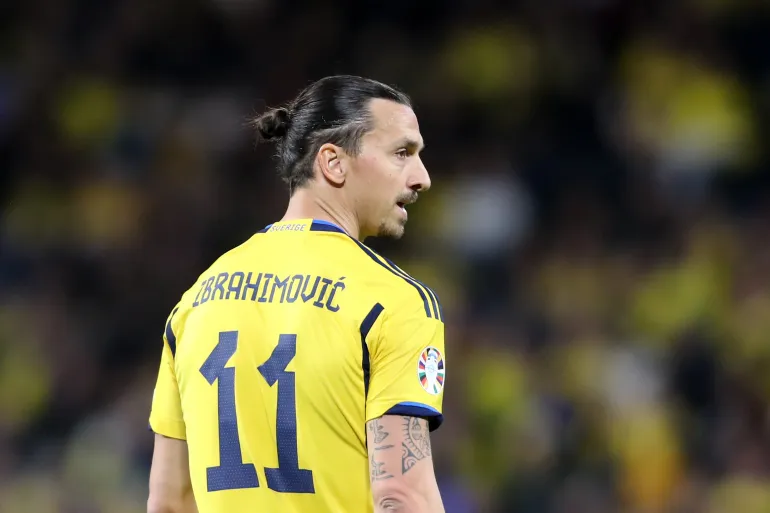
The city’s most famous son, Zlatan Ibrahimovic, grew up in Rosengard, a Million Programme estate on Malmo’s eastern side that police still classify as a “particularly vulnerable area”. The famous footballer regularly credits the area for shaping the skill and confidence that defined his career.
Zlatan Ibrahimovic grew up in Rosengard and went on to become Sweden’s all-time top goalscorer [File:Linnea Rheborg/Getty]
“It’s often in these neighbourhoods that people can shine; there is a sense of community that doesn’t exist elsewhere,” said Adam*, a 20-year-old florist who also grew up in one of the areas Sweden officially labels “vulnerable”.
He rejects the stereotypes associated with Malmo, saying young people here are far more concerned with the cost of living, finding work and the everyday pressures of getting by.
Mahdi shared this sentiment, saying “wallet politics”, relating to healthcare and unemployment, are central issues for all sections of society.
Healthcare tops voters’ concerns nationally, while unemployment in Malmo, at around 11 percent, is among the highest of any Swedish municipality.
A Green Party campaigner in Malmo, behind are stands belonging to the Moderate Party and Communist Party of Sweden, September 9, 2026 [Nils Adler/Al Jazeera]
But not everyone sees it that way.
Lena, a 78-year-old campaigner for the Moderate Party, which leads the right-wing bloc, believes integration along with schooling are taking centre stage. At the last election cycle, it was care for the elderly, she said.
Jacob, a 19-year-old resident who was speaking to representatives of various parties, said a taboo has been broken with more young people turning right, including towards the SD, now polling as Sweden’s second-largest party.
The far-right party with neo-Nazi roots could enter government for the first time if the right-wing bloc wins: Prime Minister Ulf Kristersson has promised cabinet posts, including the migration portfolio.
Anfal Mahdi in Malmo town hall, January 9, 2026 [Nils Adler/Al Jazeera]
‘Divisive politics’
Sara, a woman in her twenties of Palestinian heritage, said “divisive politics” are normal now. The rhetoric around immigration and Islam in particular has left her feeling some “don’t want integration or even assimilation, they just want you to leave”.
Under the current right-wing government, many teenagers who grew up in Sweden with their families were ordered to leave on turning 18 while their parents were allowed to stay. The government paused the separation in March after a public outcry and moved to reform in June.
In February, the Swedish Migration Agency ordered an eight-month-old boy born in the country, Emanuel, to be deported alone to Iran while the rest of his family kept their permits.
Thousands of pro-Palestine protesters march through the streets of Malmo, May 11, 2024 [Nils Adler/Al Jazeera]
The system concerns Binto Drammeh, whose father is of Gambian heritage.
“Our uncle was made to leave as he didn’t meet the income threshold,” she told Al Jazeera.
The government has repeatedly raised the salary threshold for work permits, most recently in June, when it increased from 80 to 90 percent of the Swedish median wage.
Failing to meet it could ultimately lead to a deportation order.
Criminal networks
Crime is another main election issue.
With a population of 10.6 million, Sweden has one of Europe’s highest rates of deadly gun violence, even though lethal violence fell last year to its lowest level since 2012.
Among the challenges, criminal networks are recruiting children as young as 12 to transport weapons, sell drugs and carry out contract killings. In 2024, Danish gangs were found to be hiring Swedish teenagers to carry out shootings and bombings.
How to tackle the problem divides the parties.
The right prioritises punishment and deterrence, while the left and centre-left emphasise tackling root socioeconomic causes, rehabilitation and preventive social work. The lines are not always clean, however: the Social Democrats backed lowering the age of criminal responsibility, while the Left, Green and Centre parties voted against it.
TikTok politics
Young voters appear more engaged than at the last election.
Lena of the Moderate Party said: “I haven’t met one person who said they won’t vote,” while Mahdi said the Palestine issue has had a galvanising effect.
“Right now, all the posts on my TikTok page are from party accounts; they got a lot of likes and views and many videos are trending,” said Jacob, the 19-year-old resident.
Yet some are undecided about whom to vote for, partly because of Sweden’s unusual bloc system. Built on the idea of consensus, it means a vote for one party’s policies may be diluted in coalition, or are hard to push through.
“I will be honest, I have not voted yet,” Adam said, as he looked out at the array of campaign booths next to his flower stand. “Young people are interested in politics, but many of us think that no matter who comes, nothing will really change.”
A Social Democrat Party poster (left) reads ‘Now it is the ordinary folks’ turn’ and Left Party posters read ‘Yalla, Yalla housing for all’ and ‘Good schools for every young person’.
Trump also said further negotiations with Iran could possibly happen, “but it’s not something we’re looking at”.
The US president initially predicted the war, which is now in its seventh month, would last only a matter of weeks. The conflict, and its knock-on effects on everything from fuel to groceries, has led to a steep decline in his approval ratings – and pressure from those within his party, including devout supporters, to quickly end the war.
Midterm elections will be held on 3 November, and Republicans are in danger of losing their control on Congress.
At the convention, Trump sought to energise the party ahead of November. Historically, a sitting president’s party tends to lose seats in Congress in the midterm elections.
Fighting in the Middle East has intensified in recent days, as oil facilities throughout the region come under attack, driving up the global price of fuel and any item that requires shipping.
The price of oil hit $100 a barrel on Wednesday for the first time since July. Similarly, earlier this week the price of US diesel hit an all-time-high, which is likely to cause a ripple effect on prices across the US.
On Wednesday, the US military said it had attacked five oil tanker ships with ties to Iran. Tehran, in response, launched attacks on two US Navy destroyers and eight oil tankers in the Strait of Hormuz, causing “heavy damage” to the vessels, according to Iranian state media.
A day earlier, the Iran-linked Houthis in Yemen launched a wave of attacks in Saudi Arabia, sparking fires at oil facilities.
The fighting, which began again recently after a 60-day ceasefire between the US and Iran formally expired last month, has also raised predictions that the rising fuel costs could lead to higher interest rates in the US.
Pennsylvania senator who has clashed with party over Israel support says he will reject ‘the extremes and socialism’.
Pennsylvania Senator John Fetterman, a Democrat who has distanced himself from his party, has appeared in a video recording on the first day of the Republican Party’s two-day midterm convention in the United States.
The video on Wednesday was a surprise for those who attended the conservative gathering in Dallas, Texas, where President Donald Trump is seeking to galvanise support ahead of the November elections.
Recommended Stories
list of 3 itemsend of list
“Yes, I’m Senator John Fetterman, Pennsylvania. Yes, I’m a Democrat. Why am I here talking to you today? Because, well, I’m a common-sense Democrat,” Fetterman said as he introduced his Republican colleague, Senator Dave McCormick of Pennsylvania.
Fetterman, a 57-year-old first-term senator, has cast himself as an outsider within the Democratic Party.
He has offered outspoken support for Israel and the war on Iran, even as voters and progressive voices in his party criticise those elements of US foreign policy.
“I’m always going to stand with America. I’m always going to reject the extremes and socialism and that anti-American way of life,” Fetterman said in the video clip.
But his appearance at the Republican Party’s first-ever midterm convention is likely to exacerbate criticism from his Democratic colleagues.
US Representative Brendan Boyle, another Pennsylvania Democrat, has repeatedly questioned Fetterman’s party allegiance, as well as his commitment to public service. He renewed that sentiment after Wednesday’s video aired.
“A year ago I labeled John Fetterman ‘Trump’s favorite Democrat.’ Tonight, he yet again proves why,” Boyle wrote on social media.
Fetterman has also faced questions about his fitness for office following a series of reports that detail his apparent lack of enthusiasm for his Senate responsibilities.
A recent Wall Street Journal article found that the senator had cancelled meetings with constituents.
In one case, The Wall Street Journal said he skipped a June meeting with injured military veterans, citing illness, only to show up later for a Fox News interview about Israel and its joint war with the US on Iran.
His approval rating is now higher among Republicans in Pennsylvania than among members of his own party.
Last month, a poll from The New York Times, Siena College and The Philadelphia Inquirer suggested that 73 percent of Pennsylvania Republicans approved of Fetterman’s performance, up from 25 percent in 2024.
Meanwhile, Democratic support in the state had slid dramatically over the last two years, slipping from 74 percent to 22 percent. Some 63 percent of Democratic respondents held an unfavourable view of him.
While Fetterman has depicted himself as a maverick within the Democratic Party, he has denied that he would switch parties to become a Republican.
“I’m not going to be a Republican, but I’m going to be a Democrat that’s going to have a conversation with whoever is playing it straight,” he said in a recent interview with Fox News.
Still, speculation about Fetterman’s party credentials has continued as the midterms near.
The election on November 3 will decide which party controls Congress for the final two years of Trump’s term.
Republicans currently hold a small majority in the House of Representatives and Senate, but they could face a setback at the polls as voters express frustration over cost of living issues and Trump’s deepening unpopularity.
Still, reclaiming the Senate especially could be an uphill climb for Democrats. Only a third of Senate seats are up for re-election this year, compared with all 435 House seats.

![Moderate Party leader Ulf Kristersson (C) speaks during the Moderates' election night watch party in Stockholm, Sweden, 13 September 2026 [Christine Olsson/Sweden Out/EPA]](https://i0.wp.com/occasionaldigest.com/wp-content/uploads/2026/09/epa_6aa87247c6fc-1789424199.jpg?w=640&ssl=1)
![Social Democratic Party leader Magdalena Andersson (L) and her husband Richard Friberg (R) cast their votes at a polling station in a school during Sweden’s general election, in Nacka on September 13, 2026 [AFP]](https://i0.wp.com/occasionaldigest.com/wp-content/uploads/2026/09/afp_6aa65a7dcf22-1789287037.jpg?w=640&ssl=1)