Egypt

Argentina vs Egypt: FIFA World Cup last 16 – Messi, Salah, prediction, news | World Cup 2026 News

Four wins to go. How can your team reach the final and win the World Cup 2026? Click here to find out.

Who: Argentina vs Egypt
WhatFIFA World Cup 2026 – Round of 16
Where: Atlanta Stadium, Atlanta, Georgia, the United States
When: Tuesday, July 7, at 12pm (16:00 GMT)
How to follow: We will have all the build-up on Al Jazeera Sport from 12:30 GMT before our live text commentary stream.

Recommended Stories

list of 4 itemsend of list

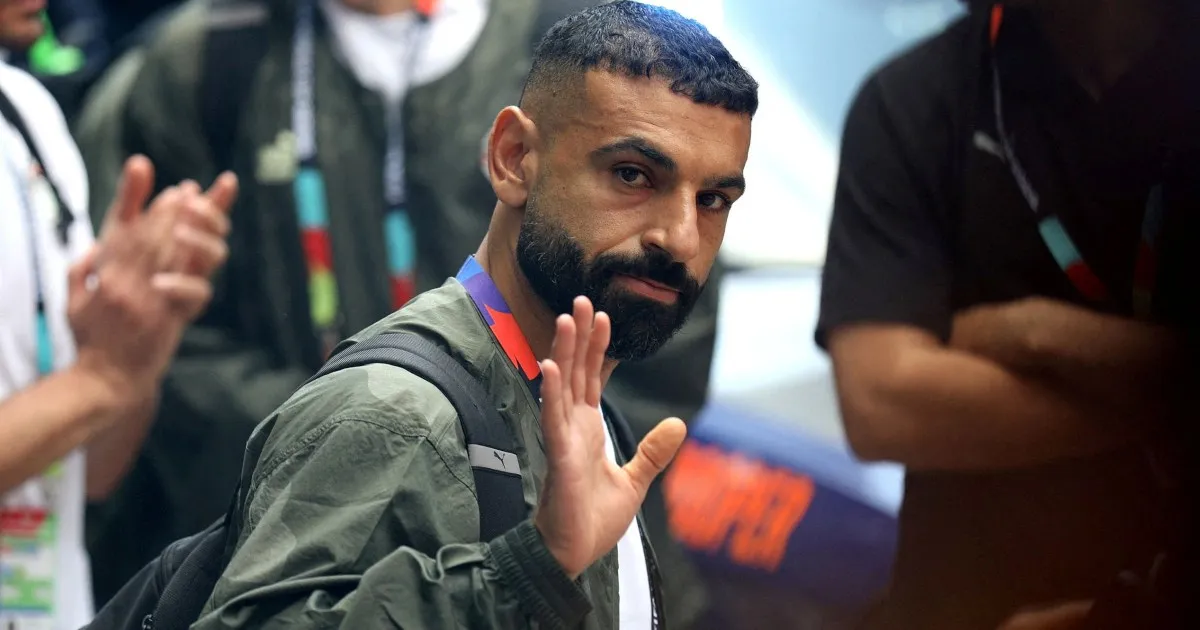
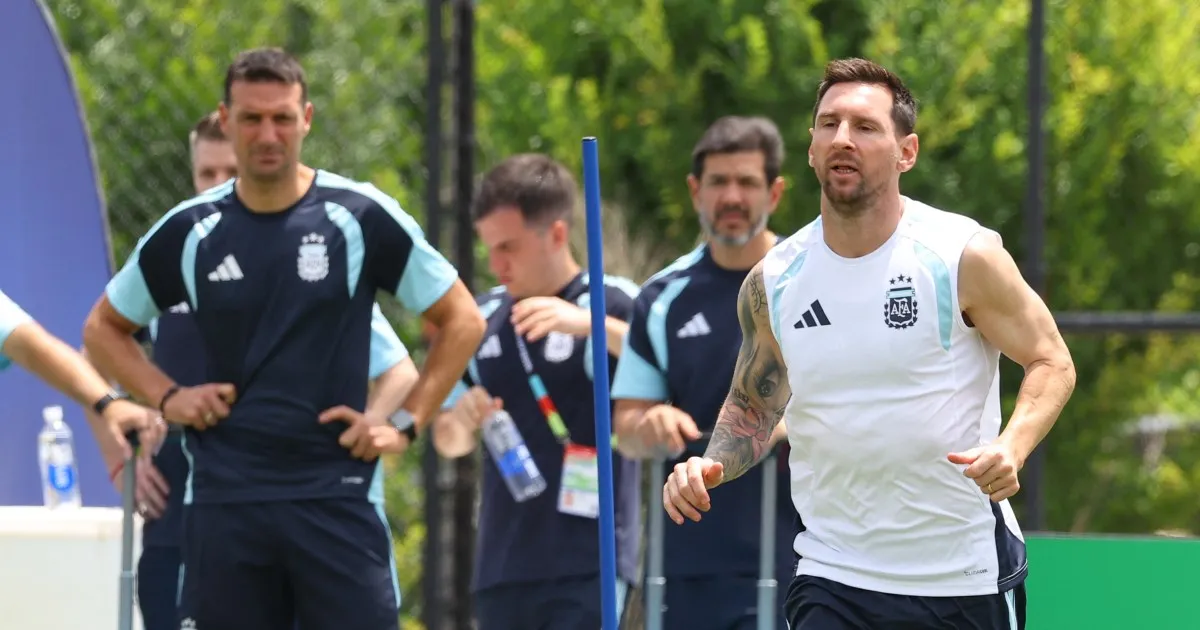
Get ready for a spicy battle of the number 10s – a dazzling duel between Lionel Messi and Mohamed Salah, two of the greatest forwards in world football, as Argentina face Egypt in the World Cup round of 16.

Argentina have been the clear favourites in every game they’ve played at the tournament, but after being made to work for victory in the last tie, the presumption that the reigning champions are unbeatable has been broken.

Egypt, on the other hand, are on a historic run of their own, gearing up to chase a first-ever quarterfinal berth. One of only two African sides remaining at the tournament, they carry the hopes of the continent and have gone toe-to-toe with the world’s best.

Al Jazeera tells you everything about Argentina vs Egypt:

How did Argentina and Egypt reach the round of 16?

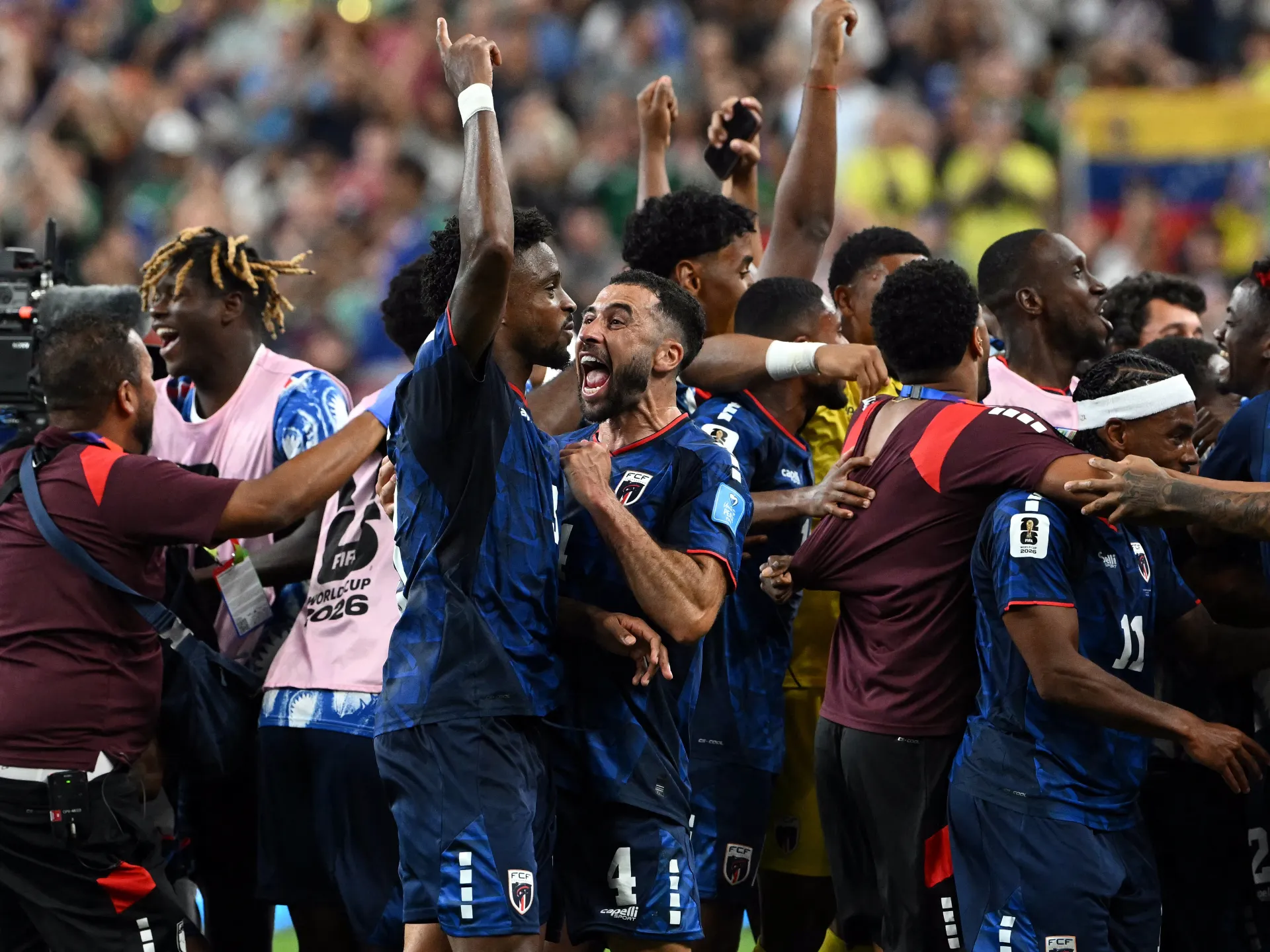
Argentina topped Group J with a perfect record of nine points, winning against Austria, Algeria and Jordan. In the round of 32, they were pushed to extra time by a resilient Cape Verde team before edging past the tournament debutants 3-2 in a thrilling contest.

Egypt came second in Group G with five points, drawing with Belgium and Iran and winning against New Zealand. They defeated Australia 4-2 on penalties in the round of 32 after the game was tied 1-1 following extra time. It marked the first-ever World Cup knockout for Egypt, who made their tournament debut in 1934.

More World Cup history beckons for Messi

This tournament’s Golden Boot race is one for the ages.

Argentina legend Messi, France’s Kylian Mbappe and Norway’s Erling Haaland are all tied at seven goals, with Mbappe leading the list, his two assists breaking the tie.

If Messi – who has scored in each of Argentina’s four games so far – finds the net against Egypt, not only will he become the Golden Boot leader, but he will also join Guillermo Stabile (1930) as the only Argentina player to score eight goals in a single World Cup.

But ahead of Tuesday’s last-16 tie, there have been concerns about fatigue, and it’s not just limited to Messi.

Argentina were forced to play extra time by Cape Verde in the heat in Miami in the US on Friday, while Egypt-Australia went all the way to penalties on the same day. Those gruelling knockout games left both teams with little time for rest and recovery.

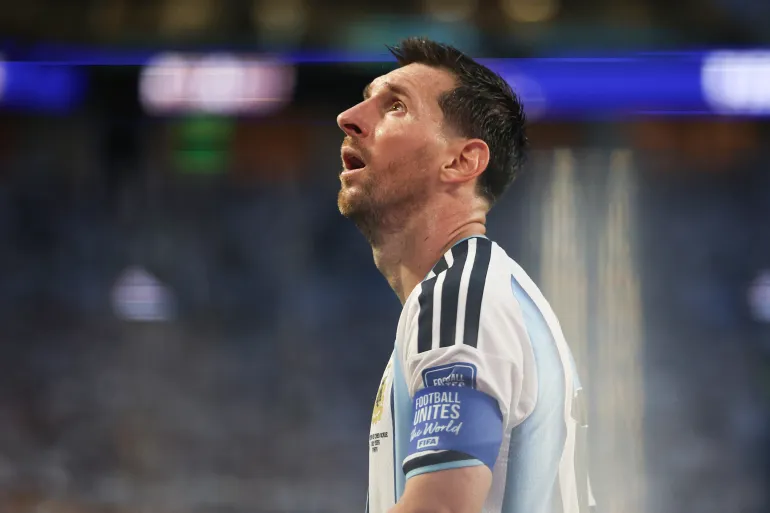
Argentina's forward #10 Lionel Messi reacts during the 2026 World Cup round of 32 football match between Argentina and Cape Verde at the Miami Stadium in Miami Gardens on July 3, 2026.
Argentina’s 39-year-old forward Lionel Messi played the full 120 minutes against Cape Verde [AFP]

Messi admitted after the last match that he was tired, and he lamented Argentina’s inability to press their opponents high up the pitch.

Meanwhile, Egypt relied heavily on their defensive organisation and looked to Salah and Manchester City forward Omar Marmoush to launch counterattacks against ⁠Australia, an approach they could employ again against Argentina.

For Egypt, a fully fit Salah could be crucial after the attacking winger entered the Australia match with a hamstring concern and at times appeared reluctant to sprint at full speed during a draining 120-minute ‌contest.

If Egypt stun Argentina, they will become the fifth African nation to reach the World Cup quarterfinals after Cameroon (1990), Senegal (2002), Ghana (2010) and Morocco (2022 and 2026).

Argentina vs Egypt prediction

The Opta supercomputer gives Argentina a 69.1 percent likelihood of winning in regulation time, while Egypt’s chances of winning are 12.3 percent.

The model estimates a 18.5 percent probability of the game going to extra time.

Argentina vs Egypt: Kickoff, TV schedule

  • Argentina: TyC Sports, TyC Sports Play (1pm, Argentina Standard Time)
  • Egypt: beIN Sports (7pm, Egypt Standard Time)
  • US: FOX, FOX One, Telemundo App, Telemundo Network, Peacock (noon, Eastern Daylight Time)
  • United Kingdom: BBC One, BBC iPlayer (5pm, British Summer Time)

To check the TV listings for your country, head to FIFA’s TV listing schedule here.

Argentine fans celebrate at the end of the 2026 World Cup round of 32 football match between Argentina and Cape Verde at the Miami Stadium in Miami Gardens on July 3, 2026. (Photo by ROBERTO SCHMIDT / AFP)
Argentina supporters are hoping for a back-to-back World Cup triumph [Roberto Schmidt/AFP]

Who will the winner face in the quarterfinals?

The winner of the Argentina vs Egypt match will play either Switzerland or Colombia in the quarterfinals in Kansas City in the US on Saturday, July 11.

Argentina vs Egypt: Head-to-head

This will be the first World Cup match between Argentina and Egypt.

Their last meeting was a friendly in Cairo in 2008, which Argentina won 2-0.

Argentina are on an eight-game winning run against African nations at the World Cup, with two of those coming in this edition (3-0 vs Algeria, 3-2 vs Cape Verde). No side in the competition’s history has won three games against African opponents in a single edition before.

Argentina vs Egypt: Team news

Argentina’s Gonzalez (ankle injury) and Medina (physical discomfort) are doubtful, while Egypt’s Fatouh (muscle) and El Fotouh (hamstring) are out injured.

Argentina’s predicted lineup

(4-4-2): E Martinez (goalkeeper); Molina, Romero, L Martinez, Tagliafico; De Paul, Mac Allister, Fernandez, Almada; Messi, Lautaro

Egypt’s predicted lineup

(4-2-3-1): Shobeir (goalkeeper); Hany, Ibrahim, Rabia, Hafez; Fathy, Ateya; Ashour, Salah, Marmoush; Zico

Egypt's midfielder #08 Emam Ashour celebrates after scoring the opening goal during the 2026 World Cup round of 32 football match between Australia and Egypt at the Dallas Stadium in Arlington on July 3, 2026. (Photo by Paul ELLIS / AFP)
Egypt’s midfielder Emam Ashour is the team’s leading scorer at the tournament, with two goals [Paul Ellis/AFP]

Source link

FIFA World Cup: Mohamed Salah and the ghosts of Egypt’s ‘golden generation’ | World Cup 2026 News

For some Egyptian football fans, watching Mohamed Salah qualify with Egypt for two World Cups in 2018 and 2026 will never make up for the fact that the “golden generation” did not get their shot in 2006, 2010 or 2014.

“It is unfair to compare the two generations,” Ahmed Elshiekh, a former national team player who now covers the World Cup for Modern MTI TV, told Al Jazeera.

Recommended Stories

list of 4 itemsend of list

“The golden generation did everything but get to the World Cup. They beat Italy [when they were World Cup champions]. The draw in qualification was just unkind to them.”

Salah is the captain and leader of the current generation. He won every trophy on offer while playing for Liverpool in a glittering nine-year career that saw him become the highest scoring foreigner in the history of the English Premier League.

Given his status, it is perhaps no surprise that Salah shouldered the blame for an AFCON drought that stretches back to 2010. His achievement in dragging Egypt to the 2018 World Cup in Russia is brushed aside due to the fact that Egypt was the first team to be eliminated. A half-fit Salah, who had dislocated his shoulder in the UEFA Champions League final, scored twice, but Egypt lost all three matches, including to Saudi Arabia.

The failures were compounded when Egypt lost the 2021 AFCON final to Senegal on penalty kicks. Thirteen months later, Egypt met Senegal in a World Cup playoff and once again lost on penalty kicks. In the first shootout, Salah was designated as the fifth taker but never got a chance to take his penalty. For the second shootout, perhaps realising his mistake, he went first and missed.

Salah might have been one of the best players in the Premier League, but Egypt fans were frustrated. To soothe their pain, they hung on to the memories of a team that was crowned African champions in 2006, 2008 and 2010 – successes that were spearheaded by the legendary midfielder Mohamed Aboutrika, who is equally famous for his “Sympathise with Gaza” T-shirt as he is for his immaculate first touch.

The despondence was so deep that fans had lost hope for their national team. AFCON 2023 was blighted by an injury to Salah, who elected to return to Liverpool for rehabilitation but promised to return should the team advance to the final. Egypt’s tournament ended shortly after that statement, courtesy of a penalty shootout defeat in the round of 16.

Working at that time as an analyst for Egyptian TV, now-Egypt manager Hossam Hassan said that if Salah had done that on his watch, he would “never pick him for the national team again”.

A couple of weeks later, Hassan was appointed to lead the national team after Rui Vitoria’s dismissal.

It was widely speculated that the only reason the Egyptian Football Association hired Hassan was because the currency crisis had prevented them from attracting a foreign manager.

“Hossam Hassan as a player has achieved everything you can imagine,” Elsheikh said, referencing the former striker’s record 69 goals for Egypt and three AFCON titles.

“But as a manager, we saw what he can produce, and the results were not great. … Also he brought problems and created crises.”

The crises Elsheikh referred to have been a hallmark of Hassan’s journeyman coaching career marked by brawls and altercations with fans.

But the appointment proved to be a stroke of unintended genius.

Mohamed Salah in action.
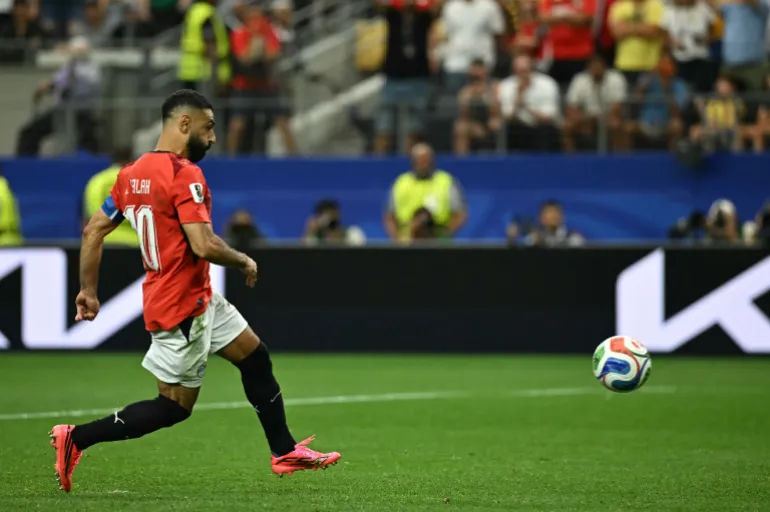
Salah shoots and scores in a penalty shoot-out during the 2026 World Cup round of 32 football match between Australia and Egypt at the Dallas Stadium in Arlington on July 3, 2026 [Paul Ellis/AFP]

Salah finds form under Hassan

Instead of falling out with Salah, he and Hassan became joined at the hip. If there was anyone who could understand the pressure of Salah’s position, it was Hassan, who had lived it all before but with the added pressure of having played mostly in Egypt and having crossed the Cairo divide when he left Al Ahly to sign with bitter rivals Zamalek.

“Hassan does have a captain’s personality and is very energetic. He might not be the strongest tactically, but he does provide a solid defensive base” Elsheikh said.

Salah has enjoyed a rich vein of form under Hassan’s tutelage. Egypt qualified for the 2026 World Cup undefeated, winning eight out of their 10 matches. The team also reached the semifinals of the 2025 AFCON tournament – not that the achievement silenced any of the doubters.

Of course, it’s not all about Salah. Egypt have a raft of talented players, including Man City’s Omar Marmoush and Al Ahly’s Emam Ashour.

Their undefeated team is going into the round of 16 to face defending champions Argentina on Tuesday. Egypt have overcome a great deal of adversity to reach this stage of the tournament as well.

A second-half comeback against New Zealand in the group stage was needed to secure the nation’s first win at a World Cup. Salah exited the final group game against Iran with a hamstring injury but played all 120 minutes of the penalty shootout win over Australia in the last 32. The 34-year-old converted his kick with a Panenka against Socceroos goalkeeper Mat Ryan.

In the aftermath of that victory, Aboutrika, now an analyst for beIN Sports, did his best to pass the baton to the new generation.

Goalscorer Ashour had expressed his joy at being compared to Aboutrika, saying his ambition was to be “as half as good or even a quarter as good as him”.

Later on in the studio, Aboutrika responded by saying: “You are better than [me]. You’ve scored two goals in a World Cup,” and insisting that this was the biggest night in the history of Egyptian football.

Not everyone is so convinced.

“This Egypt team is better than any we have seen in years yet is still remarkably fragile,” opined Karim Zidan, a writer focused on the intersection of sports, power and politics.

Salah, meanwhile, was once again asked who was the greatest Egyptian player of all time and again deferred to Aboutrika, saying “there is absolutely no discussion.”

Source link

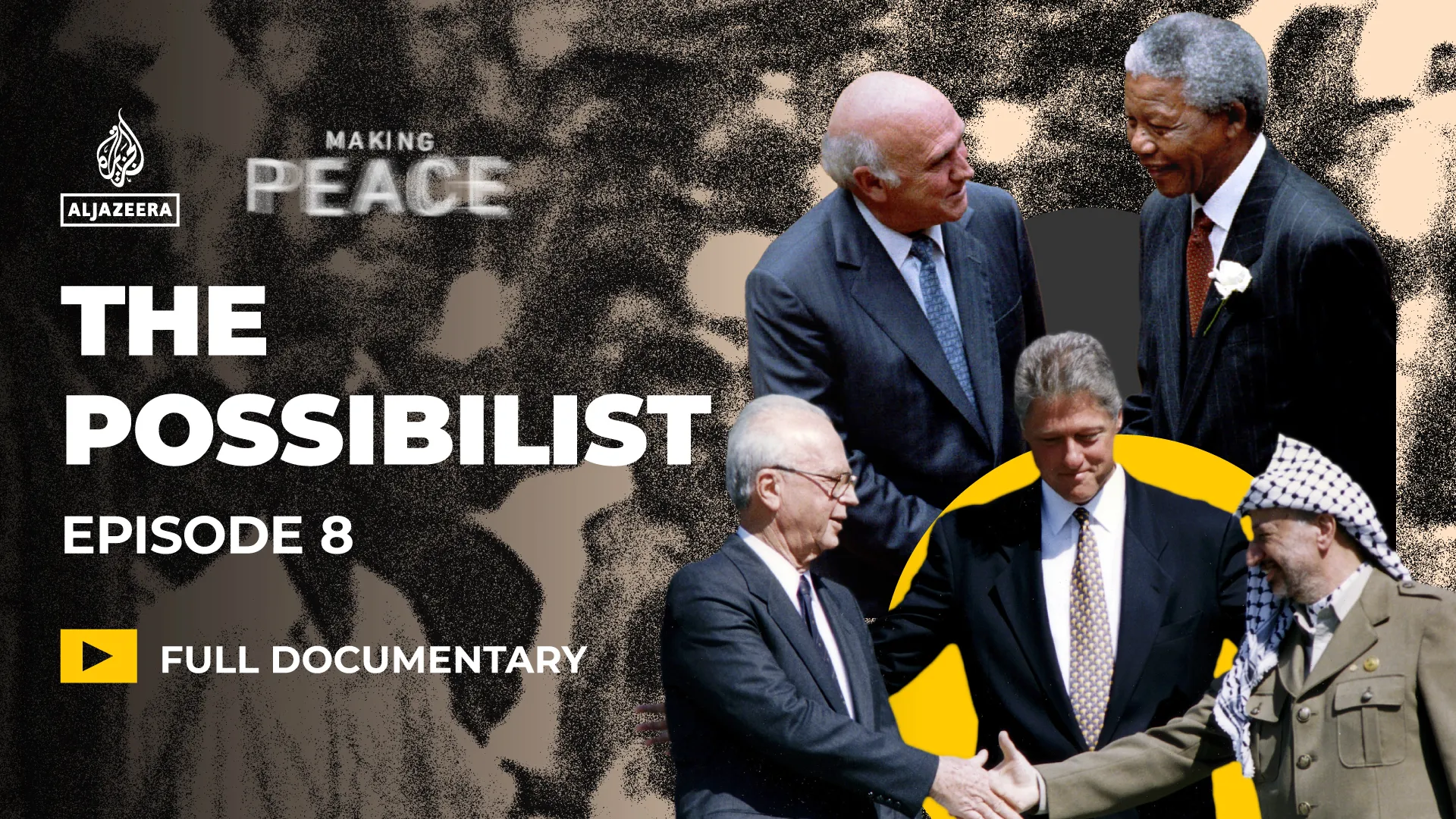
The Possibilist | Ep 8 | Documentary

Veteran mediator William Ury reflects on how the fine art of diplomacy is essential at holding the world together.

We are living in a time of deep rupture. From Gaza to Ukraine, Myanmar to Kashmir, the United States to Europe, polarisation has become the defining rhythm of our age. Dialogue is no longer just difficult – it is risky. Leaders speak in absolutes. Humiliation and fear spur violence. In this context, the role of the mediator is more fragile, more necessary, and more human than ever.

At the centre of this episode is William Ury, cofounder of Harvard’s Program on Negotiation and one of the architects of modern conflict resolution. Through his life’s work, we trace the hidden anatomy of peace: How trust is built when no one believes in it, how negotiations survive egos, trauma, and political pressure, and how humanity is preserved when everything pushes towards dehumanisation.

Ultimately, The Possibilist reveals that peace is not the domain of diplomats alone. It belongs to all of us. In our homes, our workplaces, and our communities, we all carry a form of power. Political power may change laws – but moral power, the power of empathy, courage, and presence, can change hearts.

A film by Fatima Lianes

Source link

‘Digging with a needle’: Generals stall peace as Sudan’s el-Obeid burns | Drone Strikes News

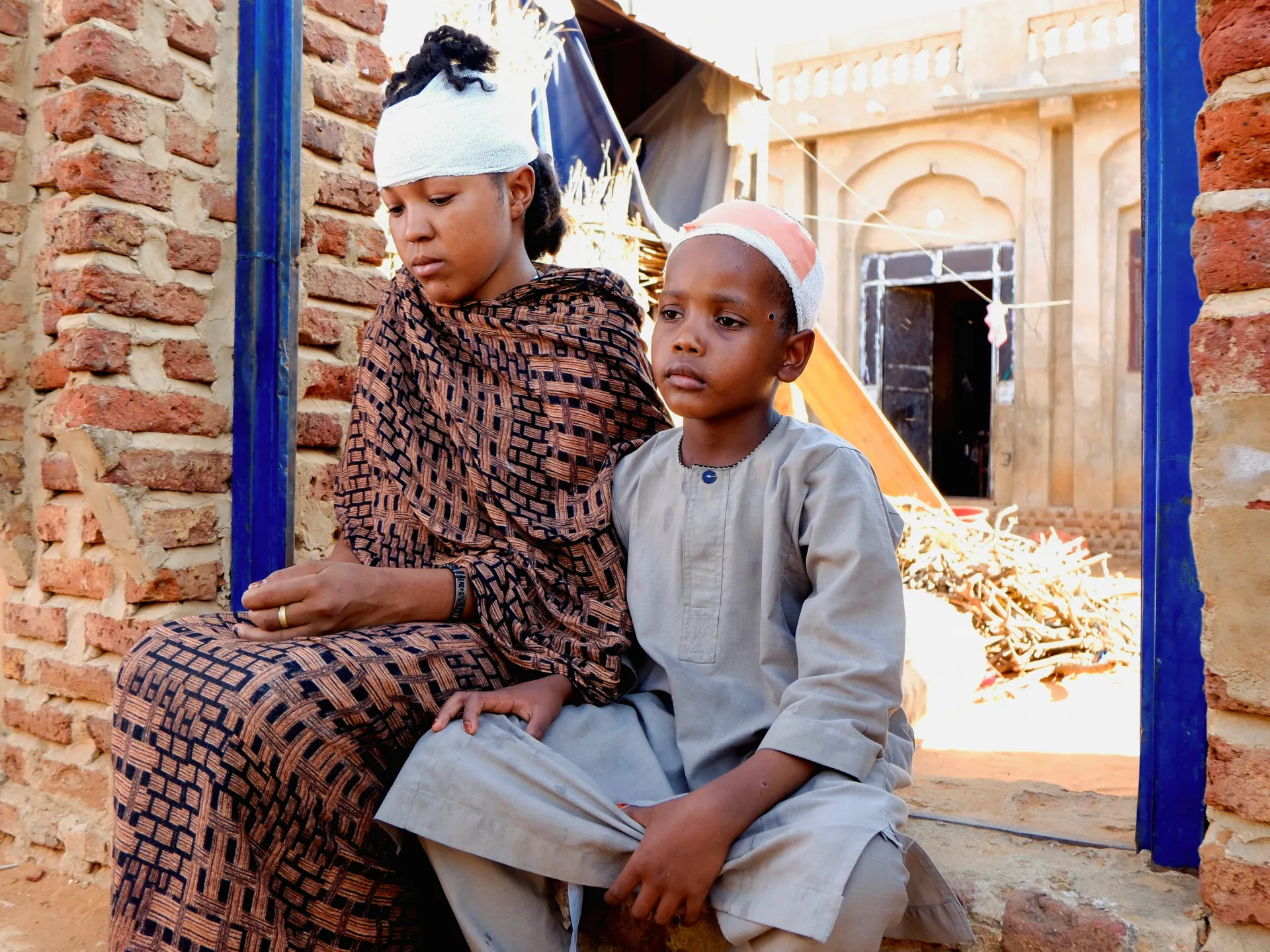
Khartoum, Sudan – As drone attacks rain down on el-Obeid and the Rapid Support Forces (RSF) tighten their months-long siege, the capital of North Kordofan has emerged as the latest flashpoint in Sudan’s grinding war of attrition.

Despite mounting international alarm and renewed US diplomatic pressure aimed at securing a nationwide truce, Sudan’s warring generals remain deeply entrenched. Both the Sudanese Armed Forces (SAF) and the RSF appear locked in a pursuit of outright military victory, largely sustained by a continuous flow of foreign weapons.

Through the lens of the escalating crisis in el-Obeid, a grim reality is unfolding: Civilian suffering is increasingly weaponised amid polarised domestic narratives, while geopolitical manoeuvring repeatedly stalls any viable path to peace.

A strategic prize and international alarm

El-Obeid holds immense strategic value. Located 550km (340 miles) southwest of Khartoum, it acts as the primary gateway linking Khartoum to the vast Darfur region. The city is also a major military stronghold, hosting the SAF’s 5th Infantry Division, known as “Al-Hagana”, and has become a refuge for hundreds of thousands of displaced civilians fleeing violence elsewhere.

The looming threat of a full-scale ground invasion has triggered urgent global warnings. Recently, 38 international nongovernmental organisations (NGOs), alongside the UN and countries including Qatar, sounded the alarm over the escalating use of drones and the potential for mass atrocities, warning that el-Obeid could face the same devastation recently seen in el-Fasher.

Yet these warnings have failed to alter the calculus on the ground.

Polarised narratives of a stalled peace

Recent United States diplomatic efforts, led by Massad Boulos, an adviser to US President Donald Trump, have pushed for a comprehensive ceasefire. However, the push for peace has collided with absolute domestic polarisation.

SAF commander Abdel Fattah al-Burhan has firmly rejected unconditional truces, stating that the army will operate with the precision of “digging with a needle” until the RSF is entirely dismantled.

This deadlock reflects a deeply fractured political landscape. Fathi Abu Ammar, a Sudanese academic, told Al Jazeera that the SAF is primarily responsible for the prolonged suffering by obstructing peace initiatives and refusing to establish safe corridors for civilians to leave el-Obeid.

He accused the army of using the city’s residents as “human shields” to garner international sympathy, while arguing that the RSF is fighting to address legitimate historical grievances.

Conversely, Sudanese journalist and political analyst Yousef Abdel Mannan vehemently rejected these claims.

Speaking to Al Jazeera from Sudan, Abdel Mannan accused the RSF of widespread atrocities, including a recent drone attack on a girls’ school in el-Obeid and the systematic killing of thousands of civilians in el-Fasher, including patients inside the Saudi Hospital.

Abdel Mannan dismissed the US-backed truce proposals as inadequate measures that merely “treat the wounds of the conflict while leaving the root cause intact”, arguing that only a comprehensive political settlement, not a temporary ceasefire, can resolve the crisis.

He maintained that civilians in el-Obeid are not being held hostage by the army, but rather prefer to remain in their homes rather than face displacement at the hands of paramilitaries.

Foreign arms and the geopolitical deadlock

Beneath the domestic blame game lies a critical factor sustaining the conflict: Foreign interference.

David Shinn, a former US diplomat and assistant secretary of state for African affairs, noted that despite years of US engagement and sanctions targeting both SAF and RSF leaders, neither side has shown a genuine interest in halting the violence.

“There is a desire from both sides to continue fighting until one side wins,” Shinn told Al Jazeera.

The escalating use of uncrewed aerial vehicles (UAVs) over el-Obeid underscores this external lifeline. “Neither the RSF nor the Sudanese army manufactures drones,” Shinn pointed out, meaning these advanced weapons must be imported.

He highlighted that the warring parties are actively backed by regional powers, pointing to the United Arab Emirates as a backer of the RSF, and Egypt and Saudi Arabia as supporters of the SAF, arguing that the conflict has transformed into a proxy war.

For the siege of el-Obeid to end and a genuine peace process to begin, the geopolitical spigot must be turned off.

Until the international community forces external actors to halt their military support, analysts warn that Sudan will remain hostage to a war its generals believe they can still win.

Source link

Cairo Doubles Down on Sudan’s Army – but Backs a Fading Bet

Egypt’s foreign ministry used carefully calibrated language on Monday to restate a familiar position: unwavering support for Sudan’s “unity, sovereignty and territorial integrity” and for its “national institutions, particularly the Sudanese Armed Forces (SAF).” Framed as a rejection of “parallel entities” seeking to form an alternative government in exile, the statement is another sign that Cairo is tying its Sudan policy ever more tightly to General Abdel Fattah al‑Burhan and the SAF as the country’s civil war grinds into yet another year.

Behind the diplomatic phrasing lies a blunt political choice. Since the outbreak of fighting between the SAF and the Rapid Support Forces (RSF) in April 2023, Egypt has emerged as one of the army’s main regional backers, both politically and—according to multiple reports—quietly in security terms. Egyptian officials insist they are defending Sudanese state institutions against militia fragmentation and external meddling, a message they repeat in multilateral forums and joint communiqués with Burhan’s Transitional Sovereignty Council.

From Cairo, the stakes in Sudan are seen as existential rather than abstract. Egyptian analysts routinely describe the stability of their southern neighbour as a vital national security concern, citing fears of refugee flows, arms smuggling and jihadist safe havens along the porous border. Control of the Nile is an even deeper driver: since the 2019 fall of Omar al‑Bashir, Egypt has intensified security and military coordination with Khartoum to counter Ethiopia’s upstream Grand Ethiopian Renaissance Dam (GERD) and preserve its historic water share.

There is also a clear regime‑security affinity, however misguided that affinity might be. Burhan, a career officer who trained in Cairo and maintains close ties with Egyptian generals, represents a familiar authoritarian model for President Abdel Fattah el‑Sisi, himself a former general who came to power after a coup in 2013. Supporting the SAF fits Egypt’s long‑standing pattern of siding with Sudan’s army “whoever is in charge of it,” and buttresses Cairo’s broader preference for strong central militaries over messy civilian transitions across the region.

Stay ahead of the geopolitical week.

MD Briefing delivers expert analysis across five global fronts — the Indo-Pacific, energy, geoeconomics, European security, and the Middle East — every Monday morning. Free.

Officially, Egypt insists it is not a party to Sudan’s war. Sisi has repeatedly pledged “non‑interference,” and Cairo frames its role as limited to mediation, humanitarian aid, and hosting millions of Sudanese fleeing the conflict. Egyptian troops captured by the RSF at Merowe airbase in April 2023 were described as participants in pre‑scheduled joint exercises, not combat operations, a spin that few international observers bought.

The line between deterrent presence and de facto involvement has become increasingly blurred. Analysts note years of intensifying joint drills, intelligence cooperation and arms ties between the two militaries since 2019. Think‑tanks and regional media have reported unconfirmed Egyptian airstrikes on RSF positions and possible targeting of gold‑mining camps in northern Sudan, amid allegations by RSF leaders that Cairo is providing drones and tactical support to the SAF—claims Egypt denies. The pattern points towards at the very least a protective security umbrella for Burhan’s forces, far beyond the strict neutrality Cairo proclaims.

Yet in Burhan Egypt is backing a very risky partner. By hinging its Sudan strategy almost entirely on the SAF and Burhan’s sovereignty council, Egypt is betting on a man and an institution that look increasingly incapable of reunifying the country. The war has left tens of thousands dead, displaced over 14 million people, and pushed parts of Sudan towards famine, with the army losing and regaining territory in a grinding stalemate against the RSF. Burhan’s own legitimacy is deeply contested: he led the 2021 coup that derailed a fragile civilian‑military power‑sharing agreement, and his government is widely seen by pro‑democracy groups as a continuation of military dominance rather than a path to elections.

Cairo’s categorical rejection of “parallel governments” sounds like a defence of state unity, but in practice it risks delegitimising genuine civilian coalitions seeking to organise outside the SAF‑RSF binary. By equating Sudan’s “national institutions” with the existing military leadership, Egypt narrows the political horizon and sidelines the broad civilian forces that led the 2018–2019 uprising—precisely the actors most likely to provide a sustainable, inclusive settlement. If the SAF continues to fragment on the battlefield or loses further territorial control, Cairo may find that its red lines have locked it into defending a shrinking power centre with dwindling popular backing.

There is also a long‑term reputational cost. Egypt positions itself as a mediator through formats such as the “Quad”, and hosts conferences of Sudanese civil and political actors in Cairo. But as long as its public diplomacy is tethered to explicit promises that it “will not be lax or late in supporting the legitimate Sudanese government” under Burhan, that positioning is scarcely credible. On the contrary, Egypt has decisively and actively allied itself to Sudan’s military junta.

Source link

‘This time’: The World Cup commercials capturing Egypt’s soaring hopes | World Cup 2026 News

The advertisements all start the same way. It could be a barber, an aunt or a family member in discussion with others about the FIFA World Cup, but in each case, they assume Egypt will be heading home after the group stage.

Then an Egyptian footballer pushes back: “To all the doubters, this time we’re staying longer.”

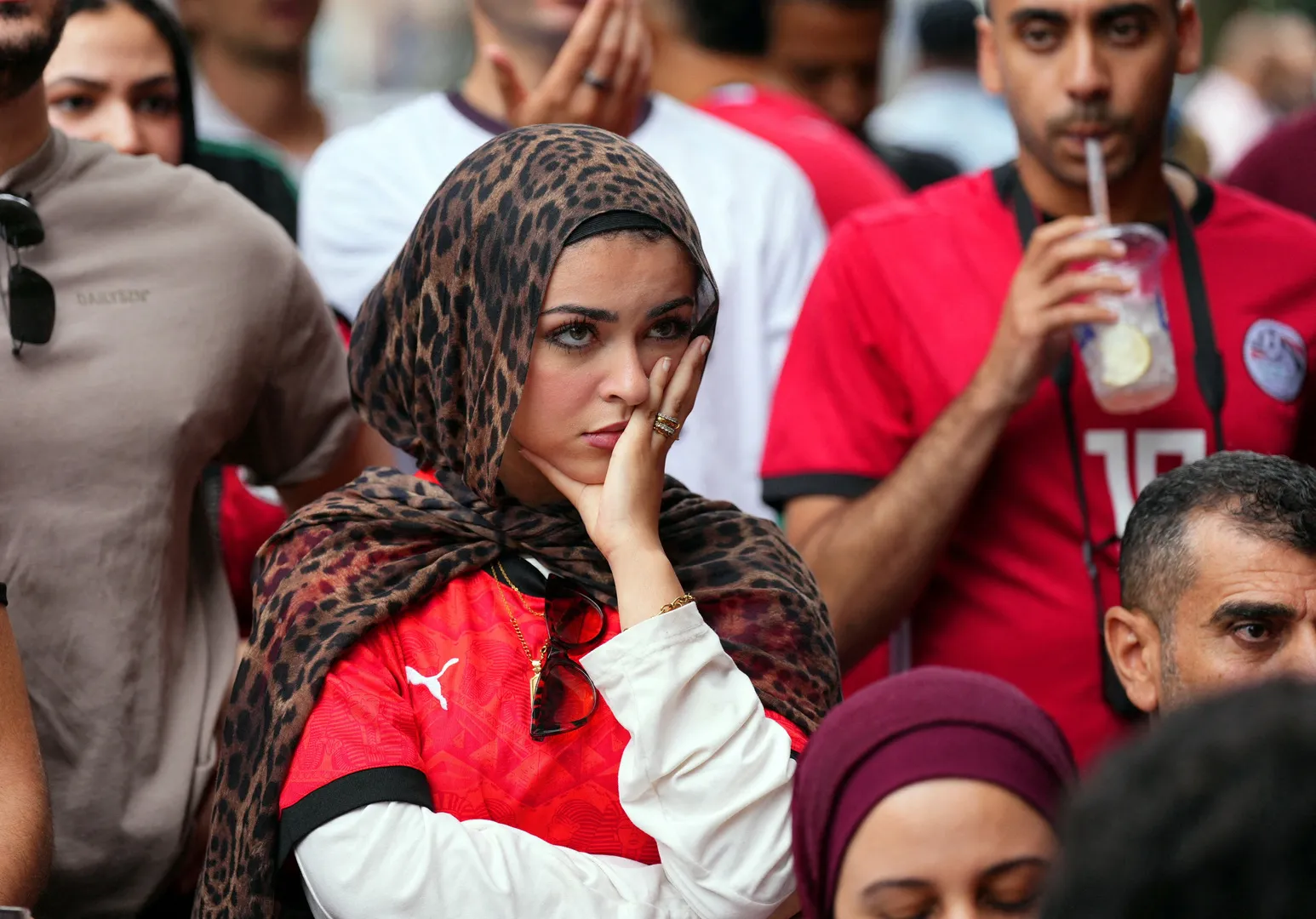
It’s a line that’s resonating like never before in the nation of 120 million people, as Egyptian football fans wait with bated breath for the final round of group stage matches that could send The Pharaohs, as the national team are known, into uncharted territory: the knockout stages.

Here’s why these commercials have captured the zeitgeist in Egypt:

Egypt’s poor World Cup track record

Egypt was the first African and Arab nation ever to play in a World Cup, back in 1934. It has won the Africa Cup of Nations a record seven times. Football in Egypt isn’t just a sport, it’s a national identity, and The Pharaohs have long been a source of genuine pride and belief.

But the World Cup has always told a different story. Before this tournament, Egypt had qualified just three times — in 1934, 1990 and 2018.

It had never won a single match. Fans still carry the painful memories of a penalty shootout loss to Senegal that kept Egypt out of the Qatar World Cup 2022 entirely.

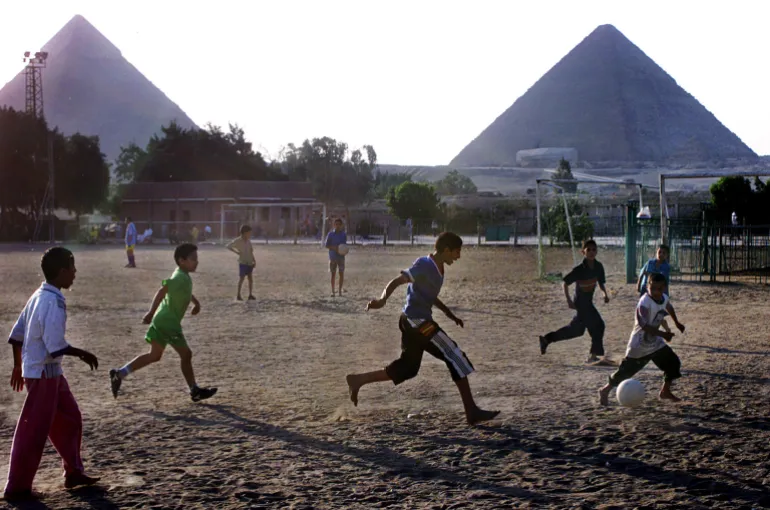
Egyptian children play soccer in front of the Giza Pyramids in Giza Friday, May 17, 2002 ahead of the World Cup soccer tournament which kicks off May 31 in Korea. Egypt has qualified twice for the World Cup in the last 60 years, 1934 and 1990. (AP Photo/Amr Nabil)
Egyptian children play football in front of the Giza Pyramids in Giza, on Friday, May 17, 2002 [Amr Nabil/ AP Photo]

What’s different this time?

Everything — at least, so it seems.

After two games at the World Cup, Egypt sits at the top of Group G, above Iran, Belgium and New Zealand.

The 26th ranked Egypt drew 1-1 with Belgium — ranked 10 in the world — in its first match. Then, it beat lower-ranked New Zealand 3-1.

Its four points are the most Egypt has ever earned at a World Cup. Its four goals are the most Egypt has ever scored at a World Cup.

Now, on Friday night in Seattle — early Saturday morning in Egypt — the team faces Iran in their final group game. A win or a draw would guarantee that Egypt’s national team goes into the knockout stages for the first time.

If Egypt loses to Iran, they might still make it to the round of 32, but their fate will depend on what happens in the Belgium-New Zealand match that will be held at the same time, and potentially, on the outcomes of matches in other groups. Eight of the 12 teams places third in their groups will also move into the next round.

So in a nutshell, Egypt is on the cusp of going where it never has before — and only a rare set of permutations can deny it that chance.

Egyptian striker Hossam Hassan maneuvers the ball during a friendly international match against Zambia in Cairo January 9, 2001.
Hossam Hassan, now the Egyptian coach, seen here manoeuvring the ball during a friendly international match against Zambia in Cairo January 9, 2001 [Reuters]

But it isn’t just the performances. Part of what makes this year feel different, to many fans, is the identity of the main man standing outside the pitch, next to the Egyptian dugout.

Hossam Hassan is Egypt’s all-time top scorer and one of the most iconic figures in the country’s football history. In 1990, he scored the goal that ended a 56-year wait and sent Egypt to the World Cup in Italy. Now, more than three decades later, he is the national team’s coach, making him the first Egyptian ever to reach the World Cup as both player and manager.

For older fans, his presence carries the memory of a time when Egypt genuinely believed it could make its mark on the world stage.

Jun 21, 2026; Vancouver, British Columbia, CAN; Egypt forward Mohamed Salah goal scoring during the second half against New Zealand during a Group G match in the 2026 FIFA World Cup at BC Place Vancouver. Credit: Anne-Marie Sorvin-Imagn Images
Mohamed Salah scored during the second half against New Zealand in the 2026 FIFA World Cup in Vancouver on June 21, 2026, as Egypt registered its first-ever win at the tournament [Anne-Marie Sorvin /Reuters]

So what are the advertisements really about?

They aren’t really making fun of the team. They’re making fun of the deeply ingrained expectation that Egypt won’t go very far. And that expectation, many argue, goes beyond football. Years of economic hardship and political uncertainty have made expecting the worst feel like common sense for many Egyptians. They protect themselves from disappointment. They assume it won’t work out before it doesn’t.

That’s what has also made the campaigns somewhat divisive. For some viewers, the humour felt honest — a reflection of a habit fans know they have. It prompted real questions about why low expectations have become so normal. Others argued the advertisements risked making those same low expectations feel permanent, even acceptable.

Either way, they underscore how the 2026 World Cup has reignited faith among Egyptian fans, as they wait for the Iran match. An advertisement campaign challenging doubters has come to reflect the broader hopes, doubts and debates surrounding The Pharaohs.

Source link

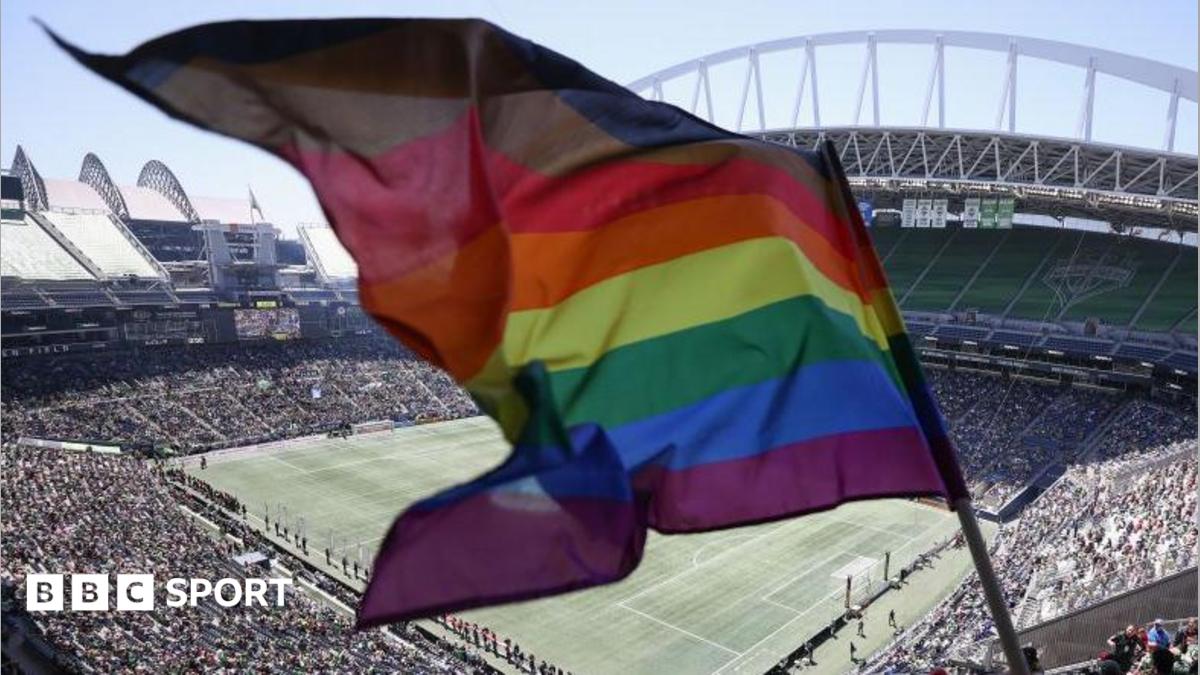
World Cup 2026: Iran and Egypt to contest ‘Pride match’ in Seattle

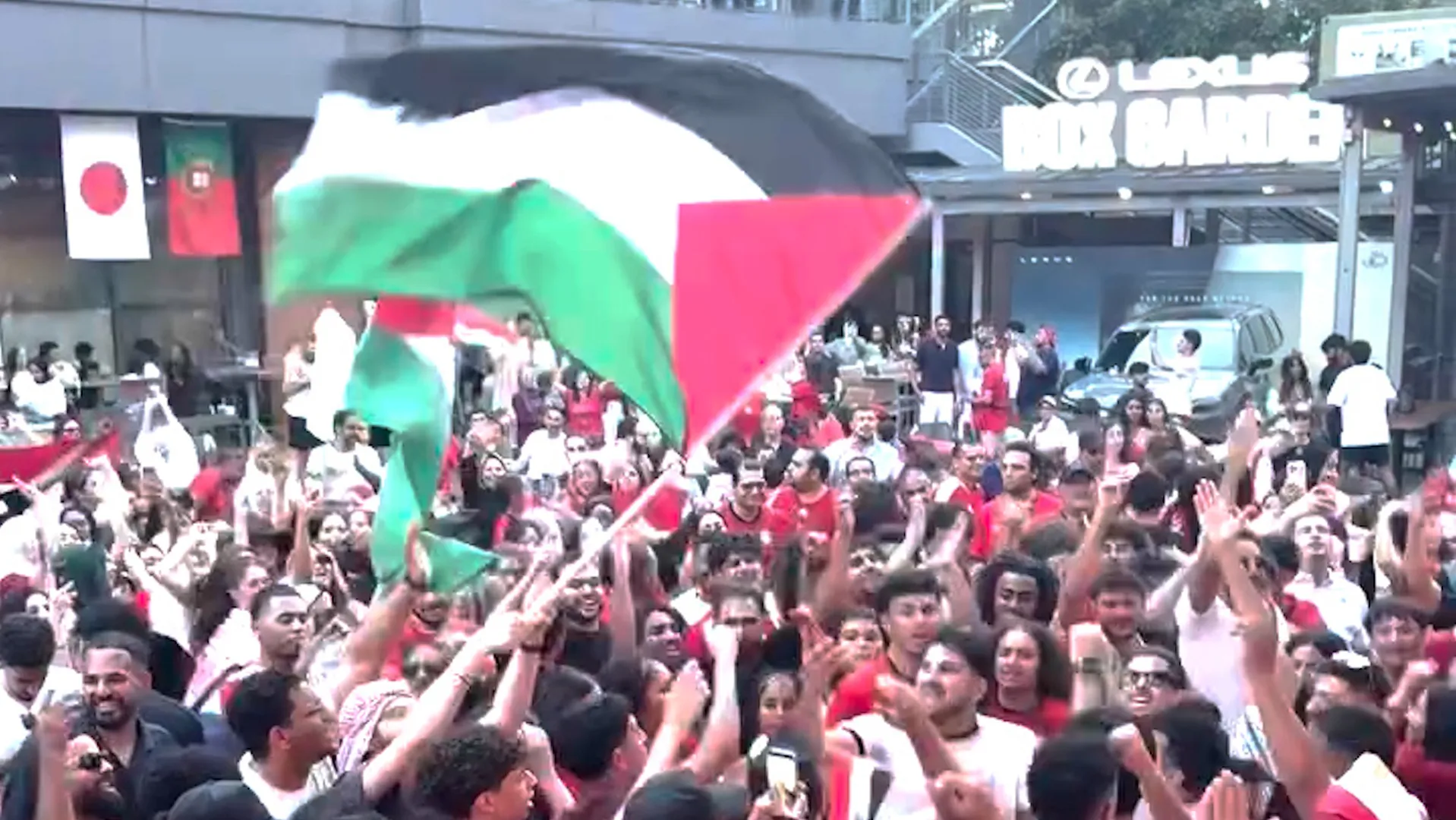
At a fan zone, we met Egyptian fans cheering on Mexico days before their team takes on Iran. For them gay pride was irrelevant.

“Right now it’s about two teams trying to get to the next round,” Makarius Demian told us, adding that he supports gay rights. “Pride match or no Pride match, that’s not what matters.”

Not far from the big screen, an Egyptian restaurant pop-up is getting ready for the match – and for fans craving a taste of home. ‘Koshari’ is a staple Egyptian dish; a mix of lentils, chickpeas, pasta, fried onions and garlic tomato sauce.

Owners Ayman Almasri and Amani Abouammo shut their restaurant Koshari for the duration of the World Cup to open a pop-up version at the fan zone where they were serving up the vegan Egyptian street food.

They say having Egypt and Iran play in a Pride match is awkward and rooted in cultural misunderstanding.

“Here it is the culture. People are used to that,” Abouammo said. “Back home, people are not used to it. It’s this piece of confusion that each party cannot understand the other party.”

On the pitch, there is plenty at stake. Egypt come into this match with momentum after beating New Zealand, and with a real chance of winning Group G.

Iran, meanwhile, arrive in a very different mood – their tournament already shaped by politics, travel restrictions and complaints about preparation time, even if they have been allowed to get to the host city earlier than in previous matches.

As Egypt and Iran try to edge closer to the knockout stages, this match is about more than what happens on the pitch.

It is also a glimpse of what happens when a World Cup lands in a city celebrating one set of values, while two of the teams taking part arrive carrying very different ones of their own.

Source link

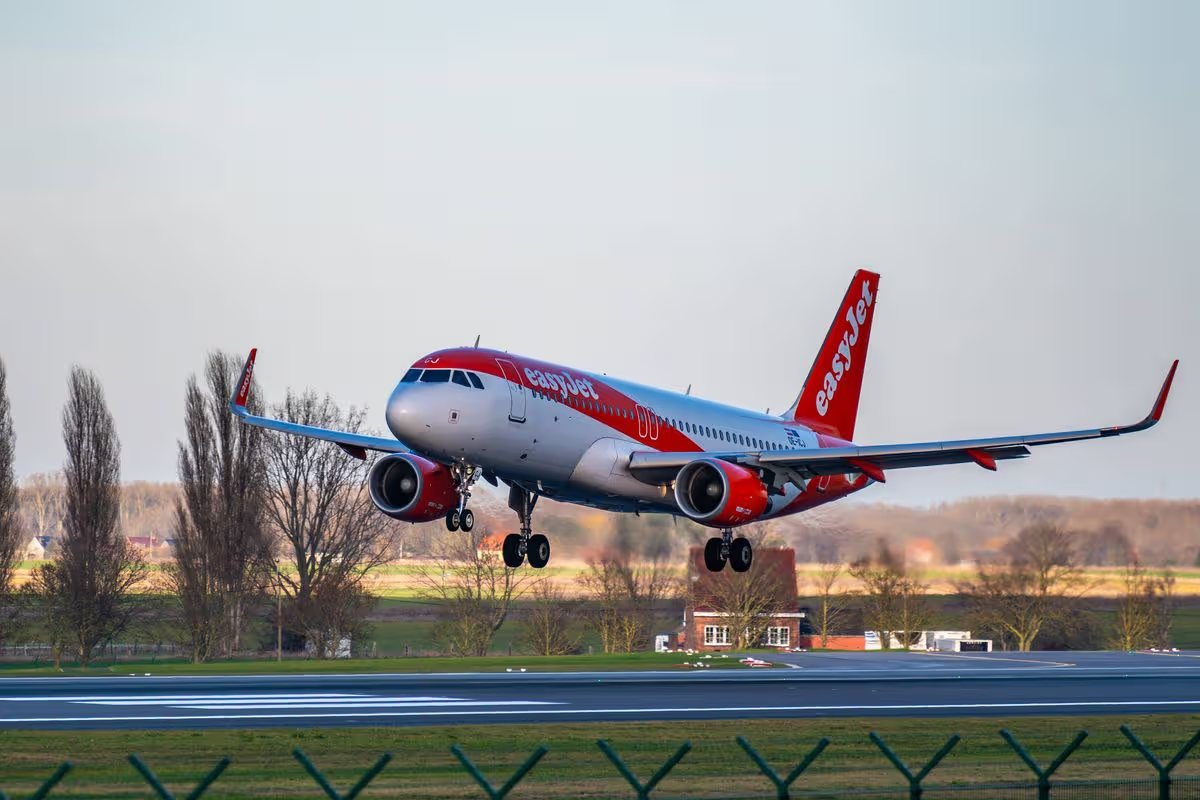
EasyJet update for UK travellers as 13 new routes to launch from 10 airports

EasyJet has announced 13 new routes, including new city breaks for UK tourists

EasyJet has today revealed 13 brand-new UK routes set to launch this winter. Among them are flights and package holidays to a never-before-served destination in Germany.

This festive season, EasyJet will launch flights and packages to Nuremberg. Services will be departing from Manchester from 2 November on Mondays and Fridays, London Gatwick from 19 November on Thursdays and Sundays and London Luton from 23 November on Mondays, Wednesdays, and Fridays.

Nuremberg is home to one of Europe’s oldest and most celebrated Christmas markets. The iconic Christkindlesmarkt, which dates back to the 16th century, draws visitors from across the globe to soak up the festive atmosphere of one of Germany’s most beloved seasonal destinations.

EasyJet will also be expanding its offering from its London airports, with fresh routes launching to Morocco, France and Egypt. Flights from London Luton to Rabat get under way on 5 November, followed by London Southend to Lyon from 3 December, running on Thursdays and Sundays.

Completing the new additions, flights from London Southend to Sharm El Sheikh will kick off on 4 January, departing on Mondays and Fridays. The airline is also expanding its connections to Hungary, with fresh flights and package holidays to Budapest taking off from three UK airports.

Services from Bristol and Belfast International will commence on 17 November, operating on Tuesdays and Saturdays, while flights from Liverpool will get under way on 19 November, running twice weekly on Thursdays and Sundays – perfect for a festive weekend getaway.

In Scotland, a brand new service from Edinburgh to Tromsø in Norway will launch on 30 November, operating twice weekly on Mondays and Thursdays and providing passengers with the only direct route to the ‘Gateway to the Arctic’. Meanwhile, in time for the festive period, flights from Glasgow to Krakow in Poland will commence on 13 November, with departures twice weekly on Mondays and Fridays.

EasyJet will enhance its Manchester network with a fresh service to Vienna in Austria, launching on 19 November with departures up to twice a week on Mondays and Fridays. Additionally, EasyJet is introducing its first international route from the Isle of Man, with a new weekly service to Geneva starting on 19 December, operating on Saturdays. The route will offer the only direct link between the Isle of Man and Switzerland.

The new routes take the airline’s total number of winter services introduced over the past fortnight to 26. Last week’s announcement featured a new direct service from Manchester to Sphinx Airport, alongside the carrier’s first ever international route from Cornwall Airport Newquay to Geneva. The airline says that package holidays can be booked through EasyJet holidays on all new routes with the exception of Luton to Rabat. All packages include flights and hotel, plus 23kg luggage and transfers on beach destinations such as Sharm El Sheikh, they say.

Holidaymakers can reserve their winter getaway with a deposit of £60 per person and until 1 July 2026, can save money on new bookings using the code FOOTBALL26.

Kevin Doyle, EasyJet’s UK Country Manager, said: “We’re thrilled to be announcing a further 13 new routes this winter, bringing the number of new routes on sale over the past two weeks to a total of 26. A real statement of our commitment to giving customers across the UK more choice from their local airport.. From winter sun escapes to magical Christmas market breaks, there’s never been a better time to book a flight or package holiday with EasyJet. We look forward to welcoming even more customers on board for their winter holidays.”

EasyJet and EasyJet Holidays say they have introduced their Book with Confidence Promise to reassure customers on their travel plans. The airline says that the pledge guarantees that flight and package prices will not increase in price once booked and confirms that EasyJet intends to operate a full schedule across its network, despite competitors cutting routes, as EasyJet prepares to fly over 50 million passengers this summer.

Full list of new EasyJet routes and dates

  • London Gatwick to Nuremberg – 19 November
  • London Luton to Nuremberg – 23 November
  • London Luton to Rabat – 5 November
  • London Southend to Lyon – 3 December
  • London Southend to Sharm El Sheikh – 4 January
  • Bristol to Budapest – 17 November
  • Liverpool to Budapest – 19 November
  • Manchester to Nuremberg – 2 November
  • Manchester to Vienna – 19 November
  • Edinburgh to Tromso – 30 November
  • Glasgow to Krakow – 13 November
  • Belfast to Budapest – 17 November
  • Isle of Man to Geneva – 19 December

Source link

World Cup 2026: Full group schedule and top third-round matches to watch | World Cup 2026 News

Remaining group schedule, teams, as well as the best third-round group fixtures at the tournament in North America.

After 48 matches in North America, it’s time for the final round of games in the group stage at World Cup 2026.

Sixteen teams will be eliminated after these fixtures, with 32 nations heading through to the knockout stages.

Recommended Stories

list of 4 itemsend of list

The top two teams from each of the 12 groups – along with the eight best third-placed teams – will proceed to the next phase.

Here are the top five “must-watch” matches in the second round of fixtures from June 24 until June 27.

Neymar
Neymar could return for Brazil against Scotland [Reuters]

⚽️ Scotland vs Brazil

Miami Stadium – Wednesday, 6pm (22:00 GMT)

These two sides will meet at the World Cup for the fifth time and there’s plenty to play for in an intriguing encounter in Miami.

Brazil are looking to secure their place in the knockout stages as group winners and are currently tied with Morocco on four points at the top of Group C.

Scotland are aiming to escape the group for the first time at a major international tournament and know that a point will almost certainly guarantee a spot in the round of 32.

Expect Group C to change a lot during these final fixtures, with Morocco taking on Haiti at the same time.

If that isn’t enough, Brazil’s Neymar is also set to make his first appearance at this World Cup.

Sweden players celebrate together
Sweden have been unpredictable at this tournament [Raquel Cunha/Reuters]

⚽️ Japan vs Sweden

Dallas Stadium – Thursday, 6pm (23:00 GMT)

It’s difficult to predict which Sweden will turn up in Dallas on Thursday.

Graham Potter’s side beat Tunisia 5-1 in their opening match of the World Cup, before losing by the same score to the Netherlands.

Japan have been entertaining to watch at this tournament and were in fine form during their 4-0 win over Tunisia at the weekend.

Expect plenty of goals in this match and plenty of drama. The winner will secure a top-two finish in Group F, so there is a lot to play for.

Kylian Mbappe
France’s Kylian Mbappe has scored four goals so far [Kyle Ross/Reuters]

⚽️ Norway vs France

Boston Stadium – Friday, 3pm (19:00 GMT)

Norway and France are already through to the knockout stages, but this game looks set to be a blockbuster affair with both sides looking to top Group I.

Erling Haaland and Kylian Mbappe have both scored four goals so far and they’ll be desperate to add to their tally as they chase down Lionel Messi.

France are one of the favourites to lift the World Cup next month and are looking to end the group stage with three wins from three.

But Norway have the opportunity to prove that they truly are dark horses in this tournament and can compete with elite international sides.

Buckle in for a big one in Boston.

Spain's Lamine Yamal, Nico Williams and Victor Munoz celebrate
Spain’s Lamine Yamal, Nico Williams and Victor Munoz celebrate after the match against Saudi Arabia [Claudia Greco/Reuters]

⚽️ Uruguay vs Spain

Seattle Stadium – Friday, 6pm (00:00 GMT on Saturday)

Group H has been a tight affair following some surprise results in the opening round of fixtures.

Uruguay drew with Saudi Arabia, while Cape Verde shocked the world with a goalless draw against Spain.

La Roja bounced back by thrashing Saudi Arabia and they go into their final game as group leaders, with Uruguay two points behind in second.

Spain will secure top spot with a win in Seattle, ensuring that they avoid Argentina in the round of 32.

Mo Salah
Egypt are looking to reach the knockout stages at the World Cup for the first time [Anne-Marie Sorvin/Reuters]

⚽️ Egypt vs Iran

Seattle Stadium – Friday, 8pm (04:00 GMT on Saturday)

Neither of these sides have ever made it out of the group at a World Cup, but on Friday, at least one of them will achieve that feat.

Group G is closely bunched after a number of drawn matches and it sets things up nicely for an intriguing final round of fixtures.

Victory for either Egypt or Iran will guarantee them a spot in the knockout phase, so expect both sides to be up for this one.

Iran have faced numerous challenges at this World Cup, with restrictions on travel and visa issues before the tournament even began.

If Iran progress, there’s also still a chance that they will face the US in the knockout stages.

World Cup 2026: Remaining group-stage full schedule

Wednesday, June 24

  • Switzerland vs Canada at 12pm PT (19:00 GMT) – BC Place, Vancouver, Canada
  • Bosnia vs Qatar at 12pm PT (19:00 GMT) – Seattle Stadium, Seattle, US
  • Scotland vs Brazil at 6pm ET (22:00 GMT) – Miami Stadium, Miami, US
  • Morocco vs Haiti at 6pm ET (22:00 GMT) – Atlanta Stadium, Atlanta, US
  • Czechia vs Mexico at 7pm CST (01:00 GMT on Thursday) – Mexico City Stadium, Mexico City, Mexico
  • South Africa vs South Korea at 7pm CST (01:00 GMT on Thursday) – Estadio Monterrey, Guadalupe, Mexico

Thursday, June 25

  • Ecuador vs Germany at 4pm ET (20:00 GMT) – New York New Jersey Stadium, New Jersey, US
  • Curacao vs Ivory Coast at 4pm ET (20:00 GMT) – Philadelphia Stadium, Philadelphia, US
  • Japan vs Sweden at 6pm CDT (23:00 GMT) – Dallas Stadium, Dallas, US
  • Tunisia vs Netherlands at 6pm CDT (23:00 GMT) – Kansas City Stadium, Kansas City, US,
  • Turkiye vs USA at 7pm PT (02:00 GMT on Friday) – Los Angeles Stadium, Los Angeles, US
  • Paraguay vs Australia at 7pm PT (02:00 GMT on Friday) – San Francisco Bay Area Stadium, San Francisco, US

Friday, June 26

  • Norway vs France at 3pm ET (19:00 GMT) – Boston Stadium, Boston, US
  • Senegal vs Iraq at 3pm ET (19:00 GMT) – Toronto Stadium, Toronto, Canada
  • Cape Verde vs Saudi Arabia at 7pm CDT (00:00 GMT on Saturday) – Houston Stadium, Houston, US
  • Uruguay vs Spain at 6pm CST (00:00 GMT on Saturday) – Estadio Guadalajara, Zapopan, Mexico
  • Egypt vs Iran at 8pm PT (03:00 GMT on Saturday) – Seattle Stadium, Seattle, US
  • New Zealand vs Belgium at 8pm PT (03:00 GMT on Saturday) – BC Place, Vancouver, Canada

Saturday, June 27

  • Panama vs England at 5pm ET (21:00 GMT) – New York New Jersey Stadium, New Jersey, US
  • Croatia vs Ghana at 5pm ET (21:00 GMT) – Philadelphia Stadium, Philadelphia, US
  • Colombia vs Portugal at 7:30pm ET (23:30 GMT) – Miami Stadium, Miami, US
  • DRC vs Uzbekistan at 7:30pm ET (23:30 GMT) – Atlanta Stadium, Atlanta, US
  • Algeria vs Austria at 9pm CDT (02:00 GMT on Sunday) – Kansas City Stadium, Kansas City, US
  • Jordan vs Argentina at 9pm CDT (02:00 GMT on Sunday) – Dallas Stadium, Dallas, US

Source link

Egypt denied flight to Seattle ahead of final World Cup group match | World Cup 2026 News

Egypt’s team will return to their training base in Spokane, about 450km east of Seattle, after rejected flight.

The Egyptian FIFA World Cup team’s plan to fly directly from Vancouver to Seattle ahead of their final group match against Iran was declined by local security officials, coach Hossam Hassan has said.

“The security authorities refused the team’s request to stay in the city of Seattle as planned after the New Zealand match in the World Cup, and therefore the team’s delegation will return to the city of Spokane,” Hossam said in a statement released by the Egyptian Football Association on Monday.

The Egyptian team had submitted a request to remain in Seattle this week, but will now return to their training base in Spokane, about 450km (280 miles) east of Seattle, according to a report by the Daily Mail.

Egypt posted their first-ever World Cup victory on Sunday over New Zealand in Vancouver. Mohamed Salah scored as Egypt rallied from a goal down to win 3-1.

Source link

Iran team leaves note thanking L.A. for World Cup hospitality

The Iran soccer team left a note in its SoFi Stadium locker room thanking Los Angeles area fans for their hospitality.

The Iranians made history with two draws in Inglewood, marking the first time the team has avoided a loss through its first two World Cup games. While the matches drew protests against the Iranian regime, including some booing both times the national anthem was played before kickoffs, the crowds heavily favored and cheered loudly for the Iranian team.

Iran will close group play against Egypt at Seattle’s Lumen Field on Friday night.

Before leaving Sunday, the Iranian soccer federation and forward Ramin Rezaeian shared pictures of the team’s note of appreciation.

“Thank you, Los Angeles, for your hospitality,” the note read. “And thank you to every Iranian who gave their heart, voice, and soul for Iran throughout these 180 minutes.

“May peace, respect and friendship prevail among all nations.”

Iran has complained about U.S. government restrictions that forced them to spend limited time in the Los Angeles area before and after its matches, quickly returning to its base camp in Tijuana. But the complaints don’t extend to those who they crossed paths with while practicing briefly in Carson, spending two nights in a Manhattan Beach hotel and playing two big games at SoFi Stadium.

“From ancient Persia of thousands of years ago to the civilized Iran of today, the spirit of Iran remains alive and steadfast,” the note read. “We came to Los Angeles with pride, competed with honor, and leave with dignity.”


Source link

Mohamed Salah scores as Egypt beat New Zealand for first World Cup win | World Cup 2026

Salah led Egypt to their first victory in the country’s 92-year tournament history against New Zealand.

Liverpool star Mohamed Salah scored his first goal of the tournament as part of a second-half flurry to deliver Egypt their first-ever World Cup victory, 3-1, over New Zealand in Vancouver.

Both Salah and Mostafa Zico bagged a goal and an assist apiece as Egypt rallied from a 1-0 half-time deficit and took over first place in Group G on Sunday. Trezeguet scored Egypt’s third goal for late insurance.

Recommended Stories

list of 4 itemsend of list

Salah celebrated his 68th international goal by pumping his fist before he was mobbed by his teammates in the 67th minute to the delight of the red-clad Pharaohs fans in the sellout crowd at BC Place, Vancouver.

When Salah was substituted in the 85th minute, he was treated to a standing ovation.

The first three matches of Group G ended in draws, including Belgium and Iran posting a scoreless tie earlier on Sunday, leaving the group open for the taking. New Zealand (0-1-1, 1 point) thought they were on that path after Finn Surman’s headed goal off a 15th-minute set piece gave them a lead they held for nearly half the match.

Egypt will finish the group stage against Iran on Friday, all but assured of advancing to the knockouts no matter the result. New Zealand, still seeking their own first World Cup win, will take aim at Belgium on the same day in their hopes of advancing.

Mostafa Shoubir made four saves for Egypt, while Max Crocombe recorded four for New Zealand.

New Zealand earned their go-ahead corner kick when Elijah Just had a strong effort on target, and Shoubir sent it out of bounds.

Tim Payne’s ensuing corner found Surman in space. Surman’s jumping header went past a helpless Shoubir to give the All Whites the lead.

Egypt had a promising look in the 35th minute on a free kick from the edge of the box after Callum McCowatt picked up a yellow card for a poor tackle. A teammate laid the ball off for Salah, whose attempt on goal missed to the left.

Egypt had more control and more of the chances in the second half, starting immediately when Salah pressured Crocombe into a save less than 40 seconds in.

But the Pharaohs finally broke through in the 58th minute. Mohamed Hany landed a perfect cross for Zico, whose header near the 6-yard line struck Crocombe’s glove on its way in.

Salah’s turn came nine minutes later. Zico connected with Salah up the right side on a transition play. He dribbled around his man into the box and tapped a pass ahead to Zico, who back-heeled it into a pocket of space for Salah to finish with a left-footed shot to the bottom-left corner.

Trezeguet wrapped up the match in the 82nd minute on another header from a corner kick. Salah sent in a low offering, and Trezeguet was unmarked as his diving header bounded in. It was Trezeguet’s 24th career goal in an international competition and his first at a World Cup.

“In years to come, we will remember that this was one of the achievements in history,” Salah said.

He praised the large Egyptian contingent in the crowd, saying: “It feels like we are playing in Egypt. It’s a great win and great vibe.”

Source link

World Cup 2026: Mohamed Salah’s World Cup pain is over as he fires Egypt to history

Salah may have been a superstar at Liverpool. He is on an even higher plane in Egypt.

With every touch comes loud cheers from his country’s fans, with huge pressure on his shoulders on every appearance.

Sunday’s goal was his 68th for his country in 118 appearances, leaving him just one shy of manager Hassan’s all-time goal scoring record, and some will say it’s his most important yet as Egypt finally ended a 92-year wait for a World Cup win.

No player has been involved in more shots during a game at this World Cup than Salah was against New Zealand – having five shots himself and creating five more for others.

Former Tottenham manager Ange Postecoglou, told ITV: “If there was any doubt about Mo’s impact on this team, you can still see it.

“It will give them enormous belief. They had to deal with adversity and their big player stood up and that will give them big confidence. You need your big players to perform to progress.”

Former Jamaica winger Jobi McAnuff added: “Just when he was needed, Mo Salah stood up for his country.”

Salah has played for the senior national team for 14 years and his importance to Egypt is such that high-ranking government officials have been known to get involved when he has been injured.

“I even had calls from Egypt’s Minister of Health,” recalls Dr Mohamed Aboud, the national team’s medic, about the time Salah sustained a serious shoulder injury in Liverpool’s defeat by Real Madrid in the 2018 Champions League final, leading to speculation he could miss the World Cup in Russia a few weeks later.

But, despite helping Liverpool to the Premier League title in 2019-20 and 2024-25, the player has yet to lift a trophy for his country.

The generation before Salah won three Africa Cup of Nations titles in a row between 2006 and 2010. Since then, there have been two defeats in finals, against Cameroon in 2017 and Senegal in the 2021 edition, which took place in early 2022.

This World Cup win at least banishes one of Egypt’s ghosts.

Source link

Iran’s beleaguered World Cup team finds hope in draw vs. Belgium

Iran’s terrible, horrible, no good, very bad World Cup got a lot better Sunday.

By playing Belgium to a scoreless draw before another packed house at SoFi Stadium, Iran is in position to win its group with a victory over Egypt on Friday and advance to the knockout stage for the first time.

That would be a just reward for a team that is unbeaten two games into what has been a trying tournament off the field.

Before it even left Iran, the team was forced to move its training camp from Tucson to Tijuana, and more than a dozen members of its delegation were told they would be barred from entering the U.S. The players had their movements in the U.S. severely limited, heard their national anthem jeered twice and generally have been unwelcome as the first qualifiers to play a World Cup game in a country with which they are at war.

And if all that wasn’t bad enough, on Sunday, Iran had a brilliant first-half goal, one that seemingly had given it its first lead of the tournament, erased on a video replay that confirmed the narrowest of offside violations.

The disallowed goal, one of the best any team has scored in this World Cup, came on a set piece in the 25th minute. Iranian captain Ehsan Hajsafi took the free kick from about 35 yards, but instead of going to the goal, he pushed the ball through the Belgium wall to Mehdi Taremi, who took a clean first touch, then put a left-footed ball between Belgian keeper Thibaut Courtois and the left post.

Iranian soccer fans hold a pre-revolutionary Iranian flag following the team's scoreless draw.

Iranian soccer fans hold a pre-revolutionary Iranian flag following the team’s scoreless draw with Belgium in the World Cup at SoFi Stadium on Sunday.

(Robert Gauthier / Los Angeles Times)

The play caught Belgium completely by surprise, and for one of the few times in this tournament, Iran had reason to cheer. But the celebration was short-lived when referee Dario Herrera took the goal away after a lengthy video review determined Taremi to be offside.

That was the best thing that went right for Belgium in a first half it dominated, only to come up empty. It had an 11-2 edge in shots, completed six times as many passes and controlled the ball for more than 36 of the first 45 minutes. But it couldn’t get the ball past Iranian keeper Alireza Beiranvand.

If the World Cup has been trying for Iran, it’s been frustrating for Belgium, which needed an own goal from Egypt’s Mohamed Hany to escape with a draw in its opener. And a smothering Iranian defense that frequently packed seven players in the box added to that frustration Sunday.

Belgium forward Romelu Lukaku, left, and Iran defender Shojae Khalilzadeh battle for the ball.

Belgium forward Romelu Lukaku, left, and Iran defender Shojae Khalilzadeh battle for the ball in the second half of a World Cup match at SoFi Stadium on Sunday.

(Robert Gauthier / Los Angeles Times)

That allowed Iran to get the first dangerous chance of the second half — and it also came off a set piece — with Taremi banging a clean volley on target from the center of the box. But Courtois stood his ground and made the save.

The game took a turn in the 62nd minute when Belgium’s Nathan Ngoy mishit a weak backpass, sending Taremi on a breakaway with only Courtois to beat. When Ngoy reached out and grabbed the Iranian by the shirt, pulling him to the ground, he drew a red card, leaving Belgium to play the final half-hour down a man.

Iran clearly deserved a better fate after absorbing wave after wave of a withering Belgium attack without breaking. It also was quicker and far more creative on offense, though it had nothing to show for that.

For Belgium, still looking for its first goal of the tournament, the result was another strain on an aging golden generation of players. If they don’t beat New Zealand in their final group-stage game Friday, they’ll leave the World Cup after the first round for a second straight time.

Source link

China, Egypt, and Iran: Challenging U.S. Military Presence in the Gulf

The Chinese strategy employs research and intelligence institutions working to foster closer ties between Iranian national security institutions and the Egyptian military, aiming to undermine the American presence in the Middle East. Prominent among these institutions are the Middle East Studies Institute at Shanghai International Studies University, the China Institute of International Studies, and the Center for West Asian and African Studies. These Chinese research centers, which shape China’s relations with countries in the region and the Gulf, include the Middle East Studies Institute at Shanghai International Studies University (SISU), which directs studies related to security and defense issues and facilitates direct dialogue between think tanks in Iran and research centers in Egypt. Another example is the China Institute of International Studies (CIIS), which reports directly to the Chinese Ministry of Foreign Affairs and works to engineer diplomatic plans that align Egypt’s strategic interests with the objectives of Tehran and resistance movements in the region. Chinese think tanks and intelligence agencies also rely on a number of People’s Liberation Army-backed space intelligence companies, such as MizarVision and EarthEye. These Chinese companies have provided high-resolution satellite imagery and intelligence data to support operations targeting US bases in the Gulf and the Middle East. These Chinese entities coordinate and plan operations through various mechanisms and initiatives officially launched by China, most notably the Global Security Initiative (GSI). Beijing also uses forums, such as the China-Arab Cooperation Forum, to pressure Middle Eastern and Gulf countries to withdraw foreign forces and end US hegemony in the Gulf and the Middle East. This is framed as ending direct interference in the internal affairs of countries in the region. Beijing is also seeking to establish permanent overseas bases, most prominently the Djibouti naval base in East Africa, to support its regional alliances and ensure the continuity of global supply lines for Chinese interests and investments within the framework of the Belt and Road Initiative.

The relationship between Chinese military and intelligence think tanks and the Egyptian army is highlighted by their shared goal of countering American hegemony and expelling US military bases from the Gulf and the Middle East. China is strengthening its strategic cooperation with the Egyptian army as part of the Djibouti-UAE-Egypt axis, with Beijing relying on Cairo as a key launching pad to secure maritime navigation and reduce American military influence. Beijing is utilizing its strategic institutions and think tanks to provide technological and logistical support to the Egyptian army, aiming to create a regional power capable of maintaining strategic balance in the region against American hegemony and interventions. This escalating security and strategic relationship between the Egyptian and Chinese armies rests on several key pillars, most notably intelligence and military partnership. China aims to train the Egyptian military elite through Egyptian military academies and coordinate threat assessments and mutual monitoring of the military movements of the United States and its allies in the Gulf and the wider region. With the implementation of several joint exercises between the two sides, the Chinese vision crystallized in the (Civilization Eagles maneuvers), which brought together the air forces of China and Egypt. This paves the way for the transfer of military technology and the integration of Chinese systems with Egyptian defenses independent of the West, along with the localization of Chinese military industries in the heart of Cairo. China is negotiating with the Egyptian Ministry of Defense to develop local manufacturing capabilities and transfer defense technology. There are also reports of integrating Chinese systems into Egyptian systems to reduce Egypt’s dependence on American-supplied weaponry. Beijing seeks to create a counterweight to American hegemony in the Middle East and the Gulf. China sees Egypt’s refusal to host any American military bases as a cornerstone of its strategy, relying on the Egyptian and Emirati armies to guarantee regional security as an alternative to the traditional American presence in the Gulf and the Middle East.

Chinese research, military, and intelligence think tanks are working to engineer an asymmetric strategic partnership to end American hegemony in the Middle East and the Gulf. Chinese think tanks, military research centers, and intelligence agencies are operating according to a clear strategic vision aimed at building asymmetrical partnerships in the Middle East and the Arabian Gulf to reduce American influence and establish a multipolar world order. Beijing provides Tehran with technical and intelligence support to deter Washington, while simultaneously seeking to strengthen military cooperation with Egypt as a pivotal regional power. This strategy aims to diminish American influence and secure China’s vital economic interests. The Chinese strategy in the region rests on several pillars, most notably its strategy toward Iran and its technical and intelligence support for the country. China has secretly supplied Iran with advanced satellite technology from its BeiDou satellite system, bypassing Western and American GPS systems, as well as sophisticated air defense systems. This has significantly enhanced the Iranian Revolutionary Guard’s ability to monitor and target American military bases in the region and the Gulf.

The objectives of Chinese think tanks, political, strategic, military, and intelligence research centers become apparent here, as they attempt to plan a path to link Iran to China’s Belt and Road Initiative and transform Iranian military pressure into a tool for destabilizing the US bases deployed in the region and the Gulf. The convergence between China and the Egyptian military is highlighted through the comprehensive strategic partnership between the two countries. Beijing is inclined to strengthen military cooperation with Egypt, capitalizing on its political stability and its geographic location controlling vital maritime trade routes, and to transfer advanced Chinese military technology to Egypt. Beijing has revealed its desire to be a major supplier of equipment to the Egyptian army, such as the J-10 aircraft. This aims to increase Egypt’s strategic maneuvering room and reduce the dominance of Western weaponry.

The stability achieved by the Egyptian leadership is a fundamental pillar supporting the comprehensive strategic partnership, as Beijing seeks to secure its economic and military interests with a stable and influential regional power. Therefore, China is investing in the Belt and Road Initiative, for which the Suez Canal is a vital artery in the Middle East. Cooperation extends to the exchange and transfer of military technology, joint military manufacturing, advanced air defense systems, and the evaluation of potential acquisitions of modern Chinese fighter jets. Furthermore, joint air exercises have been conducted, with the Egyptian Armed Forces carrying out their first-ever joint air exercise, dubbed Eagles of Civilization with China, involving multi-role fighter aircraft from both countries, underscoring the deepening defense partnership between them.

In this context, China relies on the Egyptian military within the framework of its strategic and African axis to counter American influence. For China, Egypt represents its strategic gateway to the African continent and a cornerstone in its maneuvers against the US Africa Command (USAFRICOM). In addition to joint military exercises, China and Egypt have conducted joint air force drills, a clear indication of an unprecedented military rapprochement that has drawn close American scrutiny. With China’s move to transfer technology and arms deals to Cairo, it is positioning itself to support the Egyptian army with advanced air defense systems, such as the HQ-9B. This enhances Egypt’s air deterrence capabilities and forms part of strategic military deals aimed at reducing dependence on the United States and its Western allies. On the other hand, China relies on Iran as a deterrent and direct driver, exerting pressure on American bases in the region. Iran represents the spearhead of China’s brinkmanship policy against American military bases in the Gulf, Iraq, and Syria, with Tehran threatening to strike them should any regional conflict erupt. In conjunction with the economic and diplomatic alliance between Beijing and Tehran, China uses emerging alliances, such as the BRICS group and the Shanghai Cooperation Organisation (SCO), to establish Iran’s political foothold. It sometimes resorts to mediation policies as a tool to reduce the likelihood of a direct confrontation with Iran, which could harm its commercial interests, such as China’s sponsorship of Pakistani mediation efforts between Iran and the United States to stop the war against Iran and allow the Strait of Hormuz to be opened to global trade and navigation.

China’s major objectives in the Middle East lie in a strategy of attrition against the United States. China uses Iranian actions as a clever pressure tactic to test and deplete American military technology without direct involvement in wars of attrition, while simultaneously attempting to create a new regional order. Here, Chinese intelligence agencies coordinate networks of overlapping interests to push countries toward understandings that transcend the American security umbrella, paving the way for the future withdrawal of foreign military bases. The pillars of China’s strategy for alternative hegemony are based on asymmetric partnerships. Beijing focuses on presenting itself as a reliable economic and technological partner without political conditions or interference in internal affairs, unlike the American model based on conditionality and direct military alliances. With China’s emphasis on the economy as a gateway to security, it utilizes the Belt and Road Initiative and its massive investments in infrastructure and ports, such as the Khalifa Port in the UAE and the Port of Duqm in Oman, to solidify its strategic presence and transform economic dependence into long-term geopolitical influence. With Beijing’s use of security diplomacy and mediation, Chinese decision-making centers have adopted a common security approach and offered political mediation, such as sponsoring the Saudi-Iranian agreement, to solidify Beijing’s role as an international peacemaker and portray the United States as a destabilizing force through the militarization of the region. This is coupled with China’s technological and intelligence penetration of the region and the Gulf, where Chinese partnerships focus on transferring 5G technologies, artificial intelligence, and space cooperation with Gulf states. This grants Beijing intelligence-gathering capabilities and allows it to connect the region’s vital systems to the Chinese technological infrastructure. Chinese think tanks and intelligence agencies are planning to cautiously fill the void, as China avoids direct military confrontation with Washington in the region and prefers to capitalize on the Gulf states’ desire to diversify their partnerships and hedge against the gradual decline of American interest in the Middle East.

Accordingly, we analyze that China’s military strategy in the Middle East and Africa relies on building defense partnerships with diverse objectives. It utilizes the Egyptian army as a pivotal regional power to bolster its influence and counterbalance the American presence through advanced training cooperation while simultaneously leveraging its relationship with Iran to exert pressure on American bases, particularly in the Gulf, and secure its oil interests all within a comprehensive policy aimed at dismantling American hegemony in the region.

Source link

Egypt coach denies Salah rift before World Cup match against New Zealand | World Cup 2026 News

‘If he starts … or if he gets substituted, it’s fine – it is his role as a player,’ Egypt ‌coach Hossam Hassan says.

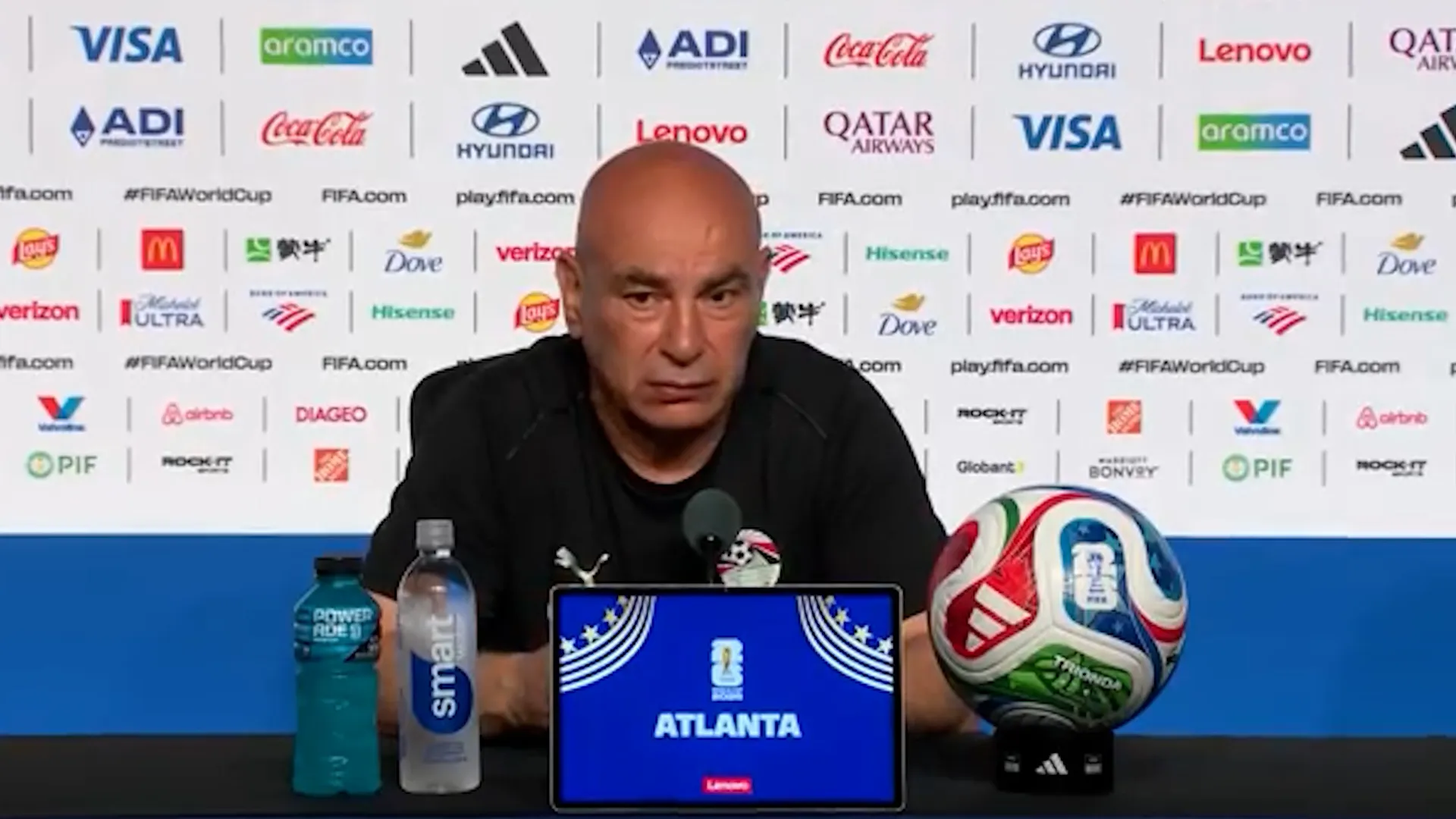
Egypt ‌coach Hossam Hassan has dismissed talk of unrest involving talisman Mohamed Salah, insisting there ⁠were no issues ⁠within the squad as they prepare to face New Zealand in their crucial World Cup Group G match at BC Place, Vancouver.

“Salah is an important player for our squad, and the 26 players who are here with me ‌are very important,” Hassan told reporters on Sunday.

“Every player who has worked with me knows I deal with them in a professional manner. I do not have favourites.”

Salah, 34, scored nine ⁠goals in the qualifying campaign and provided an assist for Emam Ashour in their opener with Belgium. He was substituted in the 76th minute of that 1-1 draw in Seattle, with ⁠highly-rated teenager Hamza Abdelkarim coming on.

Soccer Football - FIFA World Cup 2026 - Group G - Belgium v Egypt - Seattle Stadium, Seattle, Washington, U.S. - June 15, 2026 Egypt's Mohamed Salah holds up the captains armband as he is substituted as referee Ramon Abatti looks on REUTERS/Lee Smith
Salah walks off the pitch after getting substituted in the match against Belgium [Lee Smith/Reuters]

New Zealand also opened their campaign by sharing the points in a 2-2 draw with Iran in Los Angeles, leaving the group finely poised ahead of Sunday’s encounter.

Hassan insisted all was well in the Egyptian camp.

“Salah is a great player who helps his teammates. He has a lot of discipline and is a role model,” he said.

“If he starts … or if he gets substituted, it’s fine. It is his role as a player. Everyone knows that I am working for the benefit of the ⁠team and the national side.

“Rumours are being spread about stars, about ⁠players, about teams. But Salah is someone who is very disciplined,” he added.

“He trains with us. He’s the first player that would also say yes to my decisions as a technical director. So I think he will ⁠be very positive tomorrow.”

Egypt and New Zealand are both targeting their first-ever World Cup win to boost their chances of reaching the knockout ⁠stage. The Egyptians are appearing in their fourth finals.

“We ⁠want to present something very positive,” Hassan said.

“We want to show that we have talent, not as something new, but as something that the African national squads have always had as a tradition throughout generations of footballers in Africa, ‌for us and for international football.

“We drew in the first match, and we want to win and secure these points. This is our ambition for tomorrow. This is the ambition ‌of ‌the Egyptian people, for Egyptian football and for African football as well. We are representing all of these people, and we really hope to perform.”

Source link