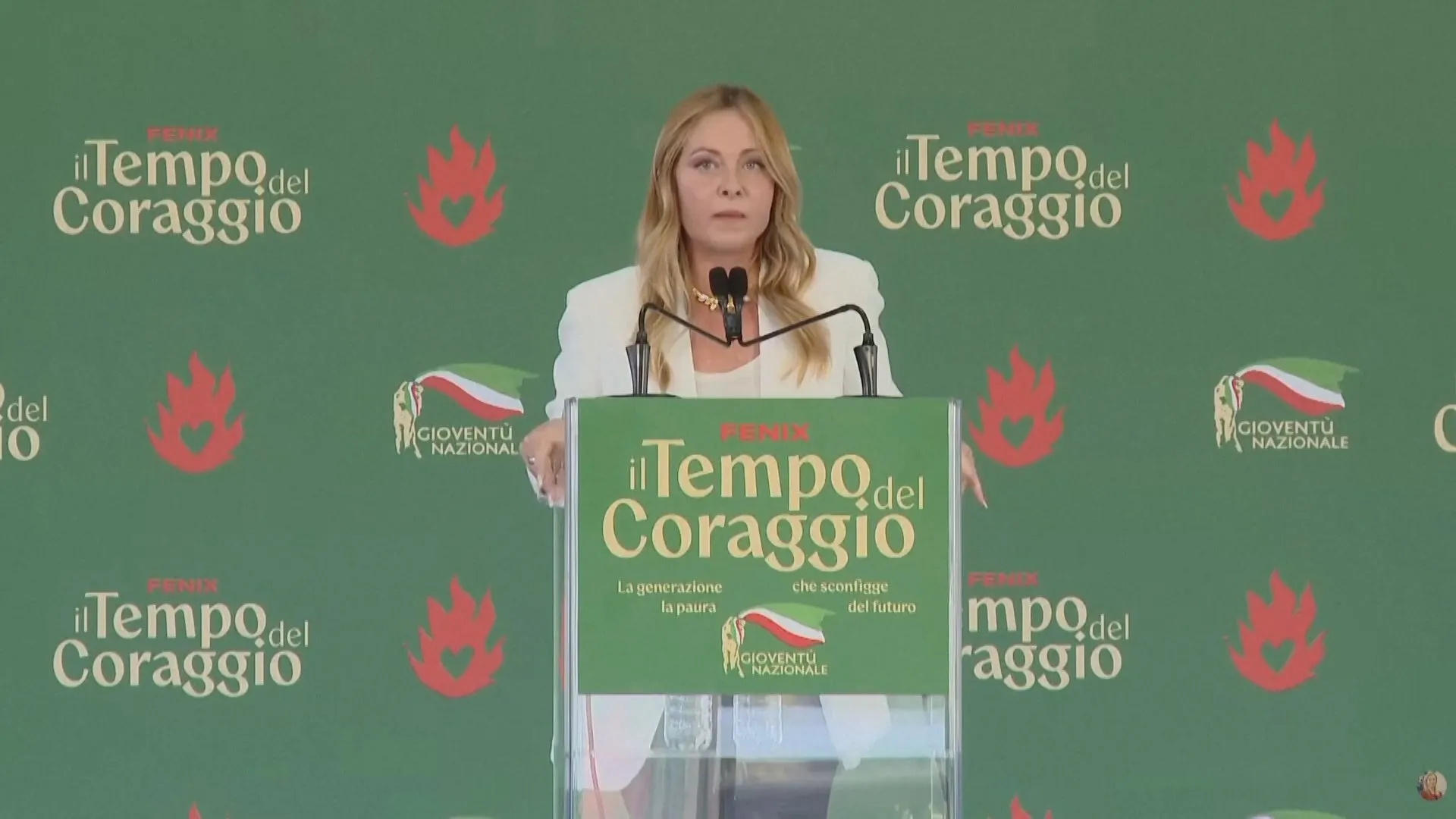
The race for California’s next superintendent of public instruction is meant to be nonpartisan. Still, the two candidates — both school board presidents — are pushing decidedly political campaigns, one aligning with liberal Democrats and the other with pro-Trump Republicans as they present dueling visions for how the state’s children should be taught.
Democrat Richard Barrera, the favorite, beat out six other Democrats with his background in union organizing and liberal politics — and with more than $5 million from the California Teachers Assn. Republican Sonja Shaw rode a wave of support from a conservative education movement she helped build alongside MAGA organizations, Christian nationalists and anti-LGBTQ+ groups, while also consolidating mainstream Republicans behind her.
Although Democratic state lawmakers recently stripped many of the powers from the superintendent, the race remains a bellwether for how Californians feel about the public education of about 5.7 million children — as the Trump administration aggressively targets the state over its progressive policies.
Candidates’ disparate visions
Taking the California Democratic Party convention stage in February, Barrera, president of the San Diego Unified Board of Education, gave a quick shout-out to the California Teachers Assn. for backing his bid.
He then promoted his work in San Diego to improve student performance, raise teacher salaries and construct “environmentally sustainable schools built by union workers.” He blasted “downtown Republican business interests” for trying to privatize schools, and President Trump’s immigration policies, which he said terrify many California students who fear losing their undocumented parents.
“It’s time for us to organize, stand up to Trump, abolish ICE and create the schools our students are worthy of,” Barrera said.
Two months later, Shaw, president of the Chino Valley Unified School District Board of Education, introduced herself at an event as a mom and a “fighter” who isn’t afraid to “look the enemy in the eye” because God protects her.
She described her opponents as California liberals who pushed school closures and mask policies during the COVID-19 pandemic and now advocate for the rights of transgender students at the expense of other students.
Shaw said she entered politics inspired by the MAGA-aligned group Moms for Liberty, which campaigns against teaching about ongoing systemic racism, opposes diversity programs as discriminatory and has fought against classroom instruction on sexual orientation and gender identity.
Shaw also described being called a year prior and encouraged to run for superintendent by then-state Assemblymember Bill Essayli, who is now the lead federal prosecutor in Los Angeles and one of Trump’s strongest local allies.
“And I kind of laughed,” she said. “Ha ha. Me? The soccer mom? Really?” She said she told Essayli that she had to talk to God and her family. Essayli urged her to decide quickly.
Despite her humble, “who, me?” persona on the campaign trail, Shaw argues that her message resonates with parents in both parties. Shaw said she would use the superintendent position as a bully pulpit to expand that base beyond party lines and fight what she sees as the state’s failed liberal schooling policies from within. She also would challenge in court the new state law that transferred most of the post’s authority to an appointee of the governor.
Morgan Polikoff, a USC education professor, said that to win, Shaw would have to “dramatically broaden her base, inviting people who aren’t animated primarily by anti-LGBTQ animus to vote for her.”
Barrera, meanwhile, a senior aide to current state Supt. Tony Thurmond, represented the California Department of Education at a recent event held by the statewide LGBTQ+ group Equality California, where school districts were rated on their LGBTQ+ policies and resources. San Diego Unified received a high rating, while Chino Valley did not participate in the voluntary analysis.
Tony Hoang, executive director of Equality California, has described Shaw as a threat to LGBTQ+ students and endorsed Barrera as a candidate who has spent his career “advancing policies that make schools safer and more inclusive.”
Lance Christensen, of the conservative California Policy Center, disagreed. He said Barrera “will continue to be the servant and mouthpiece of the CTA,” while Shaw “represents a return to common sense, or better yet, good sense — because she’s speaking to basic issues of education policy that have been ignored for far too long.”
Barrera acknowledged his primary win over the other Democratic challengers was largely thanks to the CTA, which he said “made all the difference.” But he also credited a “long partnership” with San Diego educators and a record of believing in public education.
Shaw consolidated conservative Republican support in the primary, in which she finished first, with her campaign raising $399,000.
Barrera’s campaign collected $274,000 in primary contributions. Since the primary, Barrera’s campaign has raised at least $340,000, compared with $104,000 for Shaw.
However, it is in independent expenditures — spending by outside groups on behalf of political candidates — that Barrera has the financial leg up on Shaw. Already considered the likely fall winner because he no longer will be splitting the state’s sizable liberal vote with other Democratic candidates, Barrera also has benefited from the CTA’s massive spending covering the cost of mailers, text message campaigns and TV, radio, newspaper and digital ads, among other things.
Shaw: Soccer mom to MAGA warrior
Shaw, a 44-year-old Chino native and mother who has worked in fitness training and photography, said pandemic school closures and mask and vaccine mandates she opposed prompted her to show up to school board meetings, confront officials and challenge school policies in court. “I’m relentless. I don’t let go,” she said.
In November 2022, she was elected to the Chino Valley Unified school board, part of a small wave of evangelical Christians and far-right candidates to win seats across the state that cycle, and quickly became a go-to conservative voice on education issues.
Shaw has sidestepped concerns about immigration agents targeting schools as an issue outside of a school district’s jurisdiction. She also has derided the influence of unions in the education sector. And she lambasted efforts by California Democrats to oppose “school choice,” calling charter schools, homeschooling and other “alternative learning models” critical “lifelines” for families.
Shaw also became laser-focused on LGBTQ+ issues, challenging state laws that allow transgender students to participate in athletics and use school facilities in line with their gender identity. She also fought a state privacy policy that dissuaded school administrators from informing the parents of children who change their gender presentation or pronouns at school, and backed bans on library books with passages deemed sexually obscene. Critics have said the policy targets LGBTQ+ books, which Shaw denied.
Separately, Shaw has rallied her followers online to protest transgender teen athletes, including Jurupa Valley High School track star AB Hernandez. Shaw has showed up at track meets to protest Hernandez’s participation — which Hernandez’s mother has called threatening.
Shaw also has filed federal civil rights complaints on behalf of and helped draft complaints for cisgender high school athletes — including some of Hernandez’s teammates — who, she said, told her they were unhappy with sharing races, podiums and athletic facilities with transgender peers.
Shaw said she did not consult with Essayli on his recent unsuccessful lawsuit challenging the state’s transgender sports policies, which was based on the participation of some of the same high school athletes Shaw has protested. However, she said she would be in touch with federal authorities about such issues were she to win.
“You don’t think I’ll be calling, in my position, to the federal government?” she said. Essayli did not respond to a request for comment.
Barrera: Built by labor
Barrera, a 59-year-old father of grown children and member of the San Diego Unified school board since 2008, has been a union organizer for decades.
He never has been a teacher — nor has Shaw — but said his organizing experience makes him a natural fit as the chosen candidate of the teachers union and other labor groups, where he said he believes “the educator voice comes out most powerfully.”
“For me, the unions are a partner and will always be a core … voice in influencing the way that I make decisions,” he said.
In the 2000s, Barrera served as a regional organizer for the United Domestic Workers and United Healthcare Workers, then helped start the Chula Vista chapter of ACORN, a liberal pro-labor group.
Barrera rejects the assertion that California’s public schools are failing and wants to help “create a different narrative,” that students are “capable of anything” and educators are “capable of bringing out the best in our young people.”
Barrera helped turn the San Diego school board from a conservative-dominated body to a liberal, union-allied one. He once joined a five-day hunger strike in support of hotel workers.
Barrera has long subsidized his school board pay — a stipend of about $20,000 a year plus health benefits — with outside union work. In 2013, he was appointed secretary-treasurer of the San Diego and Imperial Counties Labor Council, earning about $110,000 per year. The council includes the San Diego Unified employee unions, which critics considered a clear conflict of interest because as a school board member, Barrera was on the opposite side of the negotiation table from unions that were helping pay his Labor Council salary.
In 2016, Barrera switched to a lower-profile role as secretary-treasurer of UFCW Local 135, holding the No. 2 position in the San Diego area’s largest private-sector union representing grocery, pharmacy, casino and factory workers but not school employees.
During that period, Barrera’s direct supervisor, Mickey Kasparian, was accused of sexual harassment, which Kasparian denied. Three accusers were paid settlements with no admission of wrongdoing. Barrera was not accused of sexual misconduct but was swept out of office alongside Kasparian in 2018.
The subsequent union leadership, which is still in place, opposes Barrera for superintendent, arguing that he should have taken a stand against Kasparian. Barrera dismissed these criticisms as part of a “decade-old internal union leadership fight.”
In 2021, as officials debated when and how to reopen campuses closed during the pandemic, Barrera was aligned with the local teachers union, and his school board approved a vaccine mandate for all district employees and conditioned the return to in-person instruction on educators having the opportunity to be fully vaccinated.
Today, Barrera is in near lock-step with the CTA when it comes to policy. His only critique is that CTA lobbying in Sacramento should be better connected to ground-level demands, a goal that CTA leadership has been working toward, he said.



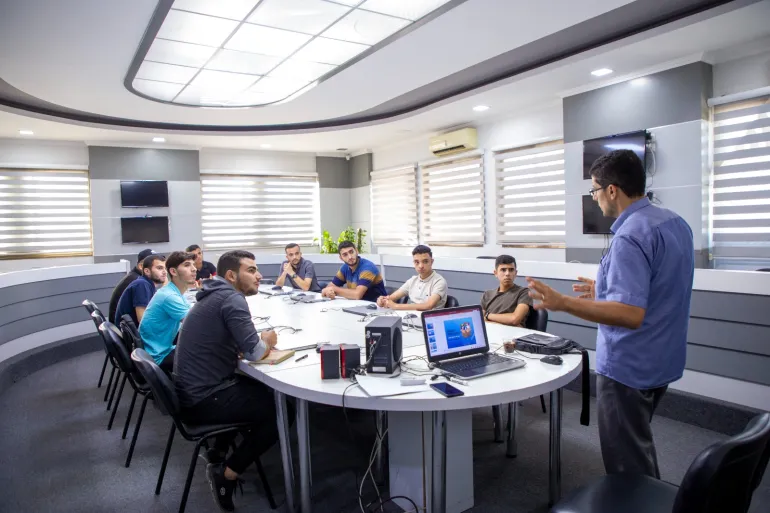
![A view of a technology incubator in Gaza before the war, where students received training in technology and innovation [Iyad Al-Qatrawi/Al Jazeera]](https://i0.wp.com/occasionaldigest.com/wp-content/uploads/2026/09/1-1789814125.jpeg?w=640&ssl=1)
![A view of a technology incubator in Gaza prior to the war, which provided an environment for training, incubating tech projects, and supporting students in the fields of technology and innovation [Iyad Al-Qatrawi/ Al Jazeera]](https://i0.wp.com/occasionaldigest.com/wp-content/uploads/2026/09/3-1789814366.jpeg?w=640&ssl=1)
![UCAS Technology Incubator, one of the most prominent incubators of the University College of Applied Sciences in Gaza, after its destruction during the war, as part of extensive damage to the institutions and structure of the technology and digitization sector in the Strip [Iyad Al-Qatrawi/Al Jazeera]](https://i0.wp.com/occasionaldigest.com/wp-content/uploads/2026/09/2-1-1789814285.jpg?w=640&ssl=1)