



Education

Best AI homework solver tools review for students

Homework can feel stressful when several subjects need attention at the same time. Students may have math problems, science tasks, writing assignments, and reading work all in one evening. Many learners need faster explanations, better organization, or extra practice after class ends. AI homework tools can help by saving time, explaining hard topics, and keeping tasks in order.

Still, the best results come when students use them with care instead of copying answers. A smart tool should support learning, not replace effort. If you are looking for the best AI homework helper, this guide can help.

The table below compares seven popular options by price, device support, and key strengths.

Tool Best For Free Plan Paid Plans Devices Main Strength
Edubrain Multi-subject homework help Yes From $3.99/week Web, mobile browser Step-by-step + extra study tools
Photomath Math solving Yes $9.99/mo iOS, Android Camera-based math help
Socratic by Google Quick subject help Yes None listed iOS, Android Photo questions across subjects
ChatGPT All-purpose homework support Yes $8 / $20 / $200 Web, iOS, Android Flexible explanations
Brainly Peer homework Q&A Yes From ~$2/mo Web, iOS, Android Community answers
Quizlet Revision and memorization Yes $7.99/mo Web, iOS, Android Flashcards and test prep
Chegg Study Textbook solutions No free full plan From $15/mo Web, mobile Structured academic help

Every tool solves a different student problem. Next, we review the best AI for homework in detail.

Edubrain

Edubrain is the strongest all around homework option for students who want one place for many school tasks. It works as a free homework helper with support for math, science, writing, and more. Users can get step by step solutions, answer corrections, formula display, and help through image or PDF uploads. It also includes the Edubrain chemistry AI tool for science tasks that need formulas or reactions. A student can use it in one evening for algebra homework, then switch to a written assignment without changing apps.

The free plan covers core tools, while AI Plus adds more features and deeper support. This makes it a smart choice for busy students who want one dashboard for daily study. Many users may also see it as a top homework helper because it covers several needs in one place.

Pros

  • Many useful features
  • Free access available
  • Supports image and PDF uploads
  • Broad help across subjects
  • Good for busy schedules

Cons

  • Many options may feel crowded at first
  • Weekly pricing may not suit everyone
  • Full tools may require upgrade

Photomath

Photomath camera based system lets users scan printed or handwritten problems with a phone and get answers in seconds. The app then shows step by step explanations with clear visual breakdowns, so students can follow each part of the method.

The free plan covers core solving tools, while Premium adds deeper learning tips and extra guidance. Photomath works best for algebra, arithmetic, and routine math practice that needs quick support. It is less useful for non math subjects, but it does daily math tasks very well.

Pros

  • Easy to use for most students
  • Fast results from camera scans
  • Clear math explanations
  • Good for worksheet checks

Cons

  • Mainly focused on math only
  • Premium needed for best features
  • Less useful for writing or science tasks

Socratic by Google

It works as a photo input assistant, so users can take a picture of a question and get support in seconds. The app covers math, science, literature, history, and other common school subjects. Socratic also connects users to educational resources, lessons, and short guides that can build understanding.

Its zero cost model makes it a smart choice for families on a budget. Many students also see it as useful free software for students because it helps with several subjects in one app. The tool focuses on speed and simple use rather than deep advanced study.

Pros

  • Fully free to use
  • Supports many school subjects
  • Trusted Google ecosystem
  • Fast photo question help

Cons

  • Lighter depth than paid tools
  • Limited advanced customization
  • Less suited for complex coursework

ChatGPT

ChatGPT is a flexible study assistant for students who need help in many subjects. It can support writing, summaries, explanations, and reasoning in one place. Plans include Free, Go, Plus, and Pro, so users can match cost to their needs. A student may use it for math one day and essays the next. Its key strength is chat based support with follow up questions. Many learners choose it as AI for studying because it fits many school tasks.

Pros

  • Highly versatile across subjects
  • Strong explanations and summaries
  • Useful for writing and study support
  • Good for many school tasks

Cons

  • Quality depends on prompts
  • Advanced plans cost more
  • Answers may need fact checks

Brainly

Brainly is a peer learning platform for students who want help from other people. Its Q and A system lets users post homework questions and get answers from students, tutors, and educators. This is useful late at night when quick help is needed. The platform covers math, science, writing, and more. Free access gives basic use, while paid plans add extra tools. Brainly suits learners who like shared ideas, short explanations, and different solution methods.

Pros

  • Fast answers for common questions
  • Active user community
  • Affordable paid tier
  • Helpful across many subjects

Cons

  • Answer quality can vary
  • Less structured than AI solvers
  • Some replies may lack full detail

Quizlet

Quizlet offers flashcards, quizzes, and practice modes that help students review key facts. A student can use it after homework to study vocabulary, history dates, or science terms before a test. Paid plans add ad free use and extra study tools. It works well beside solver tools because one app explains problems, while Quizlet helps store facts. Many students include it with other homework helper apps for full study support. Quizlet is best for exam preparation.

Pros

  • Strong memorization tools
  • Popular and trusted platform
  • Flexible practice modes

Cons

  • Not a direct solver
  • Some features behind paywall

Chegg Study

Chegg Study is a premium option for students who want structured academic support. It is known for textbook solutions and an expert Q and A model that helps with course questions. Paid tiers start around monthly plans, while Study Pack options may include math tools, writing help, and added study resources.

This can suit a college bound student who uses textbook heavy courses and needs regular support each week. The platform focuses on organized help rather than quick one line answers. Chegg Study is often most useful for students with steady workloads.

Pros

  • Strong textbook coverage
  • Access to expert help
  • Broader paid study ecosystem

Cons

  • Subscription cost may add up
  • Best value depends on usage frequency

AI homework tools work best when students use them with care. First, try the question on your own before you ask for help. This shows what you know and where you need support. Use the explanations to learn the method, not only the final answer.

For important homework, quizzes, or projects, double check answers with class notes or another source. Avoid copying full responses into your work, since this can hurt real learning. Use AI tools for review, planning tasks, and saving time during busy weeks. Parents can also guide students by setting clear study habits.

Conclusion

AI homework tools can lower stress and save time when school tasks build up. Each tool has a different purpose, so choose based on your needs. It is smart to start with free plans first. Use these tools in a balanced way that supports learning, practice, and better habits. For students and parents, the best choice is one that helps progress each week.

Source link

‘Endless grief’: Turkiye mourns victims of second school shooting in a week | Gun Violence News

Death toll rises to 10 after shooting by 14-year-old student at the Ayser Calik School in Kahramanmaras.

Mourners have gathered in Turkiye’s southern province of Kahramanmaras for the funerals of victims killed in the second of two school shootings that rocked the nation this week.

Funerals were held on Thursday for eight students and maths teacher Ayla Kara, 55, who were killed in Wednesday’s shooting, The Associated Press news agency reported.

Recommended Stories

list of 3 itemsend of list

A 10th victim died while being treated in hospital on Thursday, authorities said. Six of those wounded in the attack were in critical condition, officials said.

Isa Aras Mersinli, 14, opened fire on two classrooms in the Ayser Calik School in Kahramanmaras city on Wednesday. The attacker was later found dead.

Interior Minister Mustafa Ciftci said the attacker is believed to have used guns that belonged to his father, a former police officer.

Coffin of a victim of a school shooting in Turkiye
People carry the coffin of a victim of a school shooting during the funeral prayers at a mosque in Kahramanmaras, Turkiye, on April 16, 2026 [Ensar Ozdemir/Reuters]

At a funeral for four of the victims held near Kahramanmaras city’s main mosque on Thursday, one father sat motionless beside the coffin of his daughter, 10‑year‑old Zeynep, the AFP news agency reported.

“Our grief is endless. These children were like our own. They were all innocent,” said Vezir Yucel, father of a student named Yusuf, who lost his close friend, 10-year-old Bayram, in the shooting.

Nilgun Ruci, a 55‑year‑old homemaker, told AFP that she rushed to Ayser Calik School after hearing gunshots. When she arrived, she saw the daughter of a neighbour lying gravely wounded.

“She had been shot in the leg and the shoulder,” Ruci said. “At first, I thought she had fainted. Today I learned that she died.”

Second attack in two days

The attack was the country’s second school shooting in two days, coming after Tuesday’s attack at a high school in Sanliurfa province in the southeast, which was carried out by a former student who wounded 16 people.

As of Thursday, 20 people had been detained in connection with Tuesday’s shooting in Sanliurfa.

The interior and education ministries held a joint school security meeting in the capital, Ankara, on Thursday, which was attended by both ministers and all 81 of Turkiye’s provincial governors, as well as police chiefs and provincial education directors.

Until this week, school shootings were rare in Turkiye. But dozens of students were arrested Thursday over alleged social media posts implying they might stage similar attacks.

Justice Minister Akin Gurlek announced that 67 social media users were detained over posts targeting 54 different schools.

Source link

easyJet Portugal update as airline issues warning over new ‘allowance’ rule

EasyJet’s general manager in Portugal has issued a warning over new government proposals the carrier says will artificially inflate prices

easyJet is weighing up plans to cut back operations in Portugal, according to reports emerging from the country. The airline’s general manager there has issued the warning amid a dispute over government proposals which easyJet claims will drive up costs for passengers.

José Lopes, easyJet’s general manager in Portugal, announced on Monday that the carrier may cut back its domestic services following the scrapping of caps on something called the social mobility allowance for air travel. This caps maximum fares for some local passengers – but the changes are set to affect the airline more widely.

“Removing the upper limit will artificially inflate prices,” José Lopes said. He argued that the measure will deliver “zero benefits” for island residents while helping to deter tourists, who makeup the bulk of passengers on domestic routes.

The airline says it will not return to operate Azores routes due to the changes. It had already confirmed its departure from the region from March 29, 2026, blaming a 35 per cent increase in airport fees and what it describes as government inaction.

The easyJet representative was addressing journalists at a press conference in Funchal, held in partnership with the Regional Secretariat for Tourism, to outline the company’s operations and long-term pledges in the Madeira archipelago, SIC Noticias reports. Portuguese media outlets report that at Porto Santo airport, the two existing routes to Lisbon and Porto will be retained, albeit with a reduction to Lisbon owing to constraints at that airport, he indicated.

He warned that if the measure to alter the social mobility subsidy regime – which would remove the maximum limits for air travel for residents of Madeira and the Azores – is implemented, there will be implications for Easyjet’s operations. “I hope that an analysis will be carried out and a way will be found to be more rational and less emotional in dealing with the matter,” he said.

When asked about the possibility of abandoning the route to Madeira, the official ruled out this scenario. Yet reports say he highlighted the possibility of “a reduction in market capacity.”

The changes were given the green light on Friday in the Assembly of the Republic, but have yet to come into force. The amendments stem from two initiatives to revise the legislation put forward by the Socialist Party and Chega.

What is the social mobility subsidy?

The social mobility subsidy set a maximum fare of €79 for residents and €59 for students travelling between Madeira and the mainland (round trip), with an overall cap of €400. In the Azores, residents travelling to the mainland pay no more than €119, while students are capped at €89, with a recently introduced maximum ceiling of €600.

The Portugal Post reports that Portugal Parliament’s recent decision to abolish price caps has placed island connectivity under serious threat, with easyJet warning of capacity reductions to Madeira and confirming it will not operate Azores routes under the new framework.

Ryanair has also revealed plans to cease all operations in the Azores on March 29, 2026, citing cost pressures.

Source link

Makeshift Gaza university offers chance to resurrect academic studies | Israel-Palestine conflict News

The new academic semester kicked off in Gaza in late March. But the mornings no longer carry the familiar vibrance of students waiting for buses, crossing cities towards universities and colleges.

That feeling has instead been replaced by the hardship of displacement.

Recommended Stories

list of 3 itemsend of list

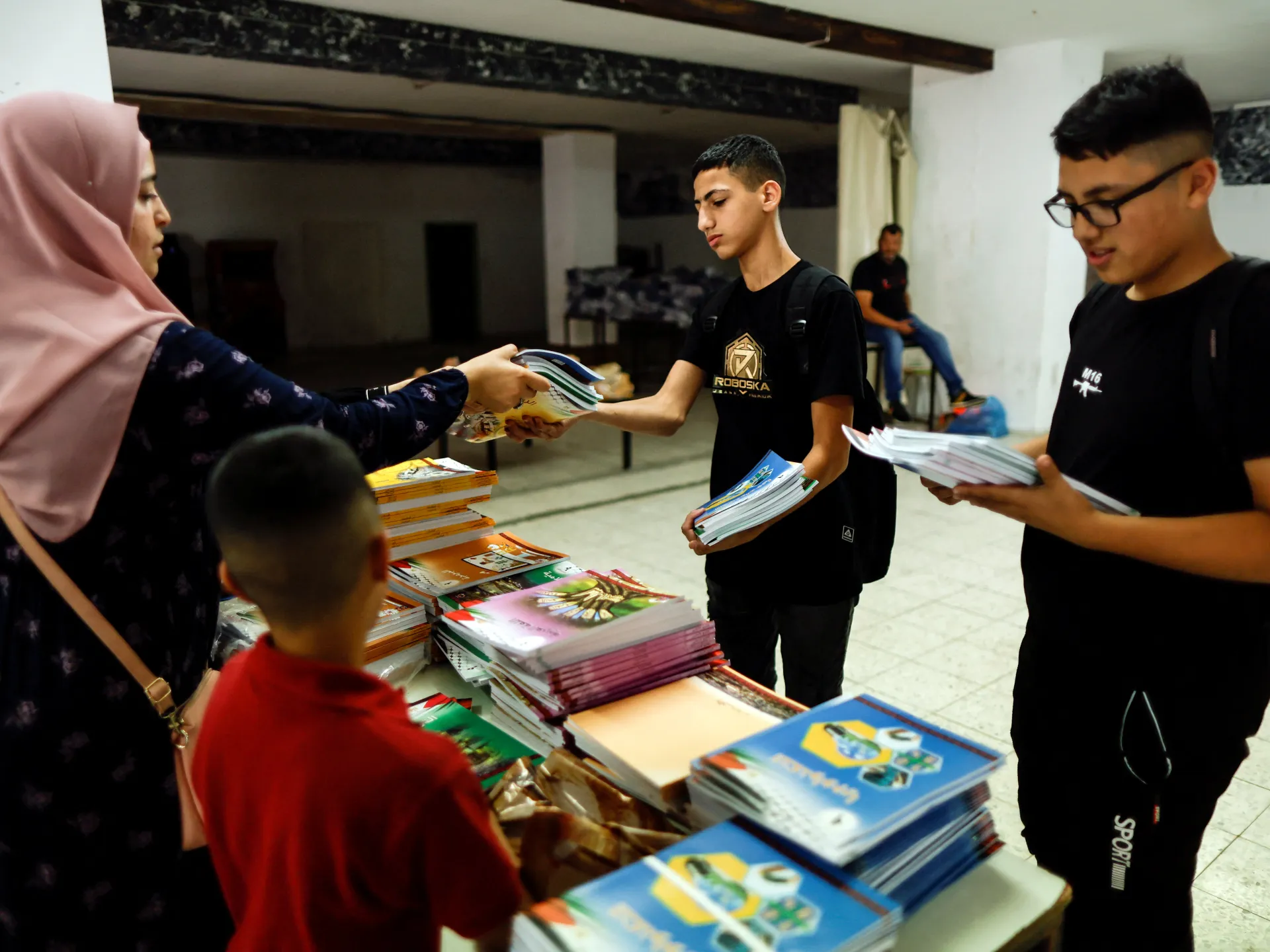
Israel’s destructive campaign has reduced Gaza’s academic institutions to rubble, many now repurposed as crowded shelters for displaced families. With campuses gone, in-person education has largely disappeared, forcing universities to shift to online learning. But for students living in tents, struggling to secure food, water, electricity, and internet, attending a lecture, even online, has become a privilege.

Amid this chaos, a glimmer of hope has materialised.

In the densely crowded area of al-Mawasi in southern Gaza’s Khan Younis, a new academic initiative is taking shape. Scholars Without Borders, a US nongovernmental organisation, has established what it calls “University City”, a makeshift academic space designed to bring students back into lecture halls.

Built from wood, metal sheets, and whatever materials could be sourced locally, the site stands as a modest reconstruction of what Gaza’s academic life once looked like.

“Despite the hardships, our mission is to bring education closer to students in a better environment,” said Hamza Abu Daqqa, the organisation’s representative in Gaza.

“We designed this space to serve multiple academic institutions and as many students as possible,” he added. “There are six halls here, accommodating up to 600 students a day. It may look simple, but it creates a sense of normal academic life, something students have been deprived of.”

The space includes internet access powered by solar panels, improvised green areas, and even a small business incubator aimed at helping students engage on their own prospects.

According to the organisation, University City operates on a rotating weekly schedule, with each day allocated to a different academic institution. This system allows multiple institutions to share the limited space, ensuring the widest possible access for students.

Given the constraints, universities prioritise courses that require in-person instruction the most, such as practical and discussion-based classes.

Gaza’s prominent universities, such as the Islamic University and Al-Azhar University, have begun using the site, alongside other colleges like the Palestine College of Nursing.

But behind this modest structure lies a far heavier reality.

Dr. Essam Mughari giving a lecture. (Courtesy of the Scholars Without Borders team)
Dr Essam Mughari, a professor at the Palestine College of Nursing, gives a lecture at Gaza’s University City [Courtesy of Scholars Without Borders]

A glimpse of what was lost

Across Gaza, universities have been systematically damaged or destroyed since Israel began its genocidal war in October 2023. In the south, all institutions have been rendered inoperable. A limited number of campuses in northern Gaza have been partially restored, but their capacity remains extremely restricted.

The Palestine College of Nursing, for example, has been surrounded by ruins after falling within the “yellow line” where the Israeli military continues to be based since the October ceasefire, cutting off students from their classrooms entirely.

For a generation of students, university life has simply not existed, as they instead battled to survive.

Each academic year is usually marked by new beginnings, especially for freshmen stepping into a new phase of independence and discovery. But for two consecutive years, thousands of Gaza’s students have been denied that experience.

Now, inside University City, they are encountering it for the first time.

‘It feels like a real university’

Mariam Nasr, 20, a first-year nursing student displaced from Rafah, sat in one of the makeshift halls, reflecting on what the space meant to her.

“Before the genocide, everything we needed to study was available; our homes, electricity, materials, and most importantly, safety,” she said. “But for more than two years, our lives have been completely disrupted.”

Mariam began her final year of high school just as the war started. It took more than a year to complete her exams under difficult conditions before she could finally enrol in the university.

“I always dreamed of studying medicine,” she said. “But the circumstances affected my results. My late grandfather told me that healing people isn’t limited to one path, so I chose nursing.”

Still, her degree requires in-person courses, something she had never experienced until now.

“When I saw this place, I was amazed,” she said. “It was the first time I attended classes in a space that actually feels like a university. We are all excited. It feels different; it feels real.”

For students like Mariam, their first year was spent behind screens, if they were lucky to have one in their tents, disconnected from the academic environment they had hoped for.

Amr Muhammad, 20, another first-year nursing student from al-Magahzi Camp in central Gaza, shared a similar reaction.

“I expected something much simpler, just tents and basic setups,” he said. “But this was different. Being here with other students, discussing and engaging in class makes a huge difference.”

Amr Muhammad, 20. A first-year nursing student. (Courtesy of Scholars Without Borders team)
Amr Muhammad, a 20-year-old first-year nursing student at Gaza’s Palestinian College of Nursing [Courtesy of Scholars Without Borders]

Academia under fire and siege

The experience faced by students in this small space reflects a much larger tragedy.

Israel’s destruction of Gaza’s academic sector has been described by UN experts as scholasticide; the systematic dismantling of education through the targeting of institutions, students, and academic life itself. Universities have been destroyed, professors and students killed, and reconstruction efforts obstructed.

More than 7,000 university students and academics have been killed or injured by Israeli attacks, while more than 60 university buildings were completely demolished by Israeli aerial attacks or ground detonations, according to the Euro-Med Human Rights Monitor and information shared by Palestinian officials.

As a result, hundreds of thousands of students have been cut off from formal education, forced into alternatives that are not able to match their former experiences.

And those alternatives, such as University City, face enormous difficulties in just getting their work started.

“All the materials you see here were sourced from inside the Gaza Strip,” Abu Daqqa said, gesturing around the site. “We had to work within what was available, with rising costs and scarcity of resources. But we were determined to create something that gives students a sense of normalcy.”

Under the October ceasefire, Israel is obliged to allow reconstruction materials to help restore shelter, essential services for Palestinians. But Israel has not adhered to that stipulation and has continued to impose restrictions, while carrying out deadly attacks across Gaza.

And for many students, reaching the University City is itself a challenge.

“I am displaced in al-Mawasi, so I’m supposed to be relatively close, but even getting here is difficult,” Mariam said. “My classes start at 9am, and I wake up at 5 just to find transportation.”

With roads damaged and fuel scarce, options for students are limited to worn-out vehicles and donkey or horse carts.

“Getting cash is frustrating. Taxis and carts only accept coins. My father barely got me eight shekels [$2.64] today, but I couldn’t find a ride,” she said. “So I walked nearly four kilometres[2.5 miles] with my friends.”

For Amr, the journey is even longer.

“I left at 6am and waited for two hours before finding a crowded vehicle,” he said. “It was the only way to get here.”

And once the day ends, the challenges resume.

“This space is only for a few hours,” he added. “The rest of the week, we go back to struggling with electricity, internet, and basic needs. We can’t even print materials or access online lectures properly.”

Students rely on shared or damaged devices, unstable connections, and limited resources, making consistent learning difficult.

“Back in the tent, I rely on my father’s old phone just to follow lectures when I can,” Mariam said. “Most days, there’s no stable internet or power. I try to hold on and keep going, but I often wish for something as simple as a steady power source and a better device like an iPad to study properly and not fall behind.”

Holding on to education

Despite everything, a scene of resilience unfolds as students continue.

Inside the halls, discussions resume, notes are taken, and a sense of academic life slowly returns, even if temporarily.

“For medical education, in-person learning is essential,” said Dr Essam Mughari, a professor at the Palestine College of Nursing. “It’s quite hard for online education to replace practical engagement.”

He described the emotional significance of meeting students again.

“After everything they’ve been through, being able to gather, interact, and learn together, it restores something vital,” he said. “We have a responsibility to support them, despite the circumstances, because tomorrow they will be in our place”

For Mariam, that determination is deeply personal.

“Some people might think it’s impossible to study in these conditions,” she said. “But I want to continue. My cousin was a nurse. An Israeli air strike levelled her family’s three-storey house in Gaza City, killing her and several others. I remember her to remind myself why I hold onto this path to heal others and serve my people.”

The University City now serves hundreds of students each day. But thousands more remain without access to similar spaces.

Scholars Without Borders says the initiative is only the beginning of a mission that is still crippled by the Israeli siege.

“Our work is ongoing,” Abu Daqqa said. “We have established dozens of makeshift schools and established this university city, but the need is far greater. This is what we were able to build under blockade,” he said. “Imagine what could be done if the truly needed resources are allowed.”

Source link

Yemen’s teachers pushed to the brink as salaries collapse | Education News

Mukalla, Yemen – Mohammed Salem heads out every morning for his job as a teacher at a government-run school. But once his shift is finished at that school, he then goes to a private school, where he also teaches. After a brief stop home for lunch, Mohammed is off to his third job, in a hotel, where he works the rest of the day.

“If I had any spare time for a fourth job, I would take it,” Mohammed, a teacher with 31 years of experience, said. He spoke to Al Jazeera outside his flat in a large housing complex in the eastern suburbs of Yemen’s southeastern port city of Mukalla.

Recommended Stories

list of 3 itemsend of list

He has been forced into taking on the extra jobs because of Yemen’s dire economic situation, and specifically the Yemeni riyal’s slide against the US dollar in recent years.

“I return home at night completely burned out,” he said. “Teachers are devastated and have no time to take care of their students. During classes, they are preoccupied with the next job they will take after school.”

Despite working from morning until night, the father of six says he earns less than half of what he made a decade ago, down from the equivalent of $320 a month to $130.

For more than a decade, Yemen has been mired in a bloody conflict between the Iran-backed Houthis and the Saudi-backed government, a war that has killed thousands, displaced millions and affected nearly every sector, including education.

The conflict has devastated the country’s main sources of revenue, including oil exports, customs and taxes, as rival factions wage an economic battle alongside fighting on the front lines.

The Houthis, who control Yemen’s densely populated central and northern highlands, including the capital Sanaa, have not paid public sector salaries since late 2016, when the internationally recognised government relocated the central bank from Sanaa to the southern city of Aden.

The Yemeni government, which controls Aden and the south, has also failed to raise public sector wages or pay them regularly, citing dwindling revenues after Houthi attacks on oil export terminals in southern Yemen.

Thousands of Yemeni teachers have voiced frustration over stagnant and delayed pay, saying their salaries have not improved since the war began. When they are paid, it is often late, and the wages have lost much of their value as the Yemeni riyal has plunged from approximately 215 to the dollar before the war started, to about 2,900 to the dollar in mid-2025. The Yemeni riyal is currently valued at about 1,560 to the dollar in government-controlled areas.

Faced with meagre and irregular incomes, teachers like Mohammed have adopted harsh survival strategies to keep their families afloat. His family has been forced to skip meals, cut out protein-rich foods such as meat, fish and dairy, and move to the outskirts of the city in search of cheaper rent.

He also asked one of his children to forgo university and instead join the military, where, he said, soldiers earn about 1,000 Saudi riyals ($265) a month.

“If we have money, we buy fish. When there is nothing, we eat rice, potatoes and onions. We do not look for meat, and we can only get it during Eid through donations from the mosque or charities,” Mohammed said.

During holidays and weekends, he lets his children sleep until the afternoon so they do not wake up asking for breakfast.

And when one of his children falls ill, he first treats them at home with natural remedies, such as herbs and garlic, only taking severe cases to hospital to avoid unaffordable medical bills. “I only take them to the hospital when they are extremely sick,” he said.

Mohammed Salem, a teacher with 31 years of experience in Mukalla, says he has taken on three jobs to make ends meet after his salary lost much of its value due to the rapid devaluation of the Yemeni riyal. (Saeed al-Batati/Al Jazeera]
Mohammed Salem, a teacher with 31 years of experience in Mukalla, says he has taken on three jobs to make ends meet after his salary lost much of its value due to the rapid devaluation of the Yemeni riyal [Saeed al-Batati/Al Jazeera]

Generation at risk

According to the United Nations Office for the Coordination of Humanitarian Affairs (OCHA), in its Yemen Humanitarian Needs and Response Plan 2026 released on March 29, the country’s education sector continues to be hit by a catastrophic, multilayered crisis.

An estimated 6.6 million school-aged children have been deprived of their right to education, while 2,375 schools have been damaged or destroyed. Teachers have also been severely affected, with about 193,668, nearly two-thirds of the national total, receiving no salaries.

In the al-Wadi district of Marib province, Ali al-Samae, who has been teaching since 2001, said his salary of about 90,000 Yemeni riyals barely covers his own expenses.

The financial strain has forced him to leave his family of seven in his home city of Taiz.

“Instead of focusing on preparing lessons and using modern teaching methods, our entire focus is on how to earn enough money to support our families,” he said. “Before the war, my salary was equivalent to 1,200 Saudi riyals [$320]. Now it is about 200 Saudi riyals [$52],” al-Samae told Al Jazeera.

To survive, he has taken on extra jobs, while his family has been forced to skip meals and cut out meat and chicken. He now visits them only once a year, often arriving empty-handed after spending most of his salary on transportation.

“We now live just to survive, rather than to teach. In the past, salaries covered our basic needs, but now they are not enough; even milk has become a luxury. Life has become very difficult.”

Part-time teachers say they are worse off than their full-time counterparts, as the government has neither raised their salaries nor added them to the official payroll.

Hana al-Rubaki, a part-time teacher in Mukalla, and the sole breadwinner for her mother and three sisters, told Al Jazeera that her salary barely covers expenses for 10 days.

Despite eight years of service, she earns the same as newly hired contract teachers. “There is no job security, despite my eight years of service. There is no difference between me and a contractor hired last year; everyone receives the same salary,” she said. “After taxes, my salary is just 70,000 Yemeni riyals [$44] a month. With the high cost of living, it feels more like a token allowance than a real salary.”

She added that delayed payments further worsen her situation. “Delayed salaries disrupt our daily lives and leave me struggling to meet even my most basic needs. While some teachers can find additional work to support their families, it is incredibly difficult for us female teachers to do the same.”

Protests and patchwork solutions

To highlight their plight and pressure the government to improve salaries, teachers across government-controlled areas have staged sit-ins, taken to the streets in protest and gone on strikes, disrupting education for months.

The cash-strapped government, which is mired in internal divisions and spends much of the year operating from abroad, has largely left the issue to provincial authorities.

Some governors have responded by approving modest incentives. In Hadramout, a raise of 25,000 Yemeni riyals ($16) a month was approved, while in other areas they have ranged between 30,000 Yemeni riyals ($19) in others and up to 50,000 Yemeni riyals ($32).

“The incentives provided by local authorities vary from one province to another, depending on each governor’s priorities and capacity to support teachers in their region,” Abdullah al-Khanbashi, head of the teachers’ union in Hadramout, told Al Jazeera, adding that protests would continue until teachers receive better and regular pay.

“Teachers are showing up in torn clothing, and sometimes their students have more money in their pockets than they do. Some families have broken apart, while others have been evicted from their homes because they could not pay the rent. Other teachers have children suffering from malnutrition because they cannot afford to feed them,” he said.

In Marib, Abdullah al-Bazeli, head of the teachers’ union in the province, said local farmers have stepped in to help teachers remain in classrooms by giving them some of their produce.

“Farmers support teachers, especially those coming from outside the province, by giving them tomatoes, potatoes and other vegetables for free,” al-Bazeli said.

He also called for teachers’ salaries to be raised to the level of ministers. “A teacher’s salary should be equal to that of a minister. Teachers educate generations, while ministers often fail to make a meaningful impact. Some teachers have begun to die from hunger,” he told Al Jazeera.

In Houthi-controlled areas, teachers have rarely taken to the streets to protest the suspension of their salaries, as authorities suppress dissent and blame the Yemeni government and the Saudi-led coalition for imposing a “blockade” that they say has hindered their ability to pay public sector wages.

Acknowledging the problem of low salaries, the Yemeni government says dwindling and disrupted revenues during the war have prevented it from increasing public sector pay. “The main reason is weak financial resources resulting from the war and recurring instability, which have undermined institutions and revenue streams,” Tareq Salem al-Akbari, who served as Yemen’s education minister from 2020 to 2026, told Al Jazeera.

Teachers interviewed by Al Jazeera say they are running out of patience with the repeated promises that their salaries will be improved, warning that they may abandon the profession altogether if they find better-paying jobs that could spare them from hunger or begging in public.

“The idea of leaving teaching is always on my mind, but I have not found an alternative job,” Mohammed Salem said. “I feel pity, and sometimes cry, when I see a teacher begging in mosques or calling from a hospital, asking for help to pay for a child’s medical treatment.”

Source link

Tom Kerridge says ‘we have monstrous fireworks’ in brutally honest family admission

The Great British Menu judge Tom Kerridge has shared an insight into life with his rugby-loving son Acey, describing the youngster as a ‘monster’ and an ‘absolute unit’

Tom Kerridge says he has “monstrous fireworks” with son Acey as he shared a candid family insight. Tom, 52, shares 12-year-old son Acey with wife Beth Cullen-Kerridge.

Beth is a sculptor by trade and last year took part in two shows in the United States. While Tom says rugby-loving Acey, who still attends the local state primary school, is like a “mini me”.

The two share a love of motorbikes and a passion for cooking. Tom has previously described Acey as an “absolute unit” and revealed he could deadlift 80kg by the time he was aged nine.

Tom, who grew up in a single-parent household in Wiltshire, says he is “learning to be a dad”. It comes as he opened up about his relationship with young Acey.

Speaking to The Times, Tom said: “We have monstrous fireworks but we also have the best laughs. The best way I can describe my relationship with him is I am like his big brother, just with money.

“So we will play the same games. We’ll do daft things. And then we’ll fall out like brothers as opposed to a father and son relationship.

“I grew up in a single-parent family so I’m learning to be a dad at the same time as he’s learning to be a son. I haven’t got anything to base it on so we’re both learning as we go along. And I think so far we’re doing all right.”

Tom has previously explained that Acey found his “space” on the rugby pitch. Although the chef says he has a “red mist” and “hates losing,” taking inspiration from former England star Joe Marler.

Speaking on the Guess Who’s Coming to Dinner podcast, Tom said: “My son is an absolute unit, rugby is his space, rugby is his game, rugby is where he is going to go. He plays number one, number three.

“He suffers from red mist. We have a conversation about it quite a lot, he can be the most gentle, wonderful human but he’s also got this streak of, he hates losing, he has a temperament that explodes and I love that, I try to control, to enhance it.

“My son is unnaturally strong, he’s nine years old but he can deadlift 80 kilos, he’s a monster and Joe is his hero. Joe is the greatest thing that’s ever been.”

Tom also says that his arguments with Acey drive Beth “nuts”. On the Rugby Lives podcast Tom disclosed that young Acey mirrors many of his characteristics.

When questioned if his son ‘takes after him’, Tom responds: “Yeah, in a lot of ways, he does massively and it drives my wife nuts because sometimes just like, two of us. And we do fall out quite a lot because we argue about the same thing and it’s almost like having an argument with yourself and then afterwards we both laugh about it.”

Tom will return to screens from 7pm tonight (April 3) with The Great British Menu on BBC Two. This week’s episode will see the top two chefs from Northern Ireland cooking a six-course meal in a bid to impress the judges, including Tom, Great British Menu Champion of Champions Lorna McNee, and comedian Phil Wang.

Source link

Iran accuses US of plotting ground attack, as Israel steps up bombardment | US-Israel war on Iran News

Iran’s parliament speaker has accused the United States of plotting a ground attack despite publicly pushing for a negotiated deal, as the US deploys thousands of military personnel to the Middle East.

“Our men are waiting for the arrival of the American soldiers on the ground to set them on fire and punish their regional allies once and for all,” Mohammad Bagher Ghalibaf said in a statement on Sunday, carried by the official IRNA news agency, as Iran struggled with power cuts amid escalating Israeli attacks on central and western areas of the country.

Recommended Stories

list of 3 itemsend of list

Iran’s Ministry of Energy reported power outages in the capital, Tehran, its surrounding region and neighbouring Alborz province on Sunday, “following attacks on electricity industry facilities”. The Fars news agency reported later that the outages were being resolved.

It was unclear whether the attacks were related to US President Donald Trump’s threats to strike Iranian power stations and other energy infrastructure if Tehran did not agree to a deal to end the war. Trump extended his deadline by 10 days through April 6 as Washington presented a 15-point plan for peace that critics described as “maximalist”.

Al Jazeera’s Ali Hashem, reporting from Tehran, said that authorities had activated substations to restore power. “This gives an indication of how much they’ve been also preparing for such situations,” he said.

Ghalibaf’s comments on Iran’s readiness for a ground assault came as The Washington Post reported that the Pentagon was preparing for weeks of limited ground operations in Iran, potentially including raids on Kharg Island, a crude export hub, and coastal sites near the Strait of Hormuz shipping chokepoint.

As the US-Israel war on Iran stretches into its fifth week, the Trump administration is also planning to send thousands of soldiers from the army’s 82nd Airborne to the region, following a US Central Command (CENTCOM) announcement Saturday that about 3,500 military personnel had arrived in the Middle East on board the USS Tripoli.

IRGC threatens retaliation after university attacks

The Israeli military said it dropped more than 120 munitions on sites used for research, development, and production of weaponry in Tehran on Sunday.

Iran’s Ministry of Health reported that 2,076 people had been killed since the start of the war, including 216 children.

Among the deaths, six people were killed in a US-Israeli attack on a residential area in the Iranian village of Osmavandan, according to the Mehr news agency, which added that five houses were destroyed and 22 were severely damaged.

A university in Iran’s central city of Isfahan said it was hit by US-Israeli air strikes on Sunday for the second time since the war erupted, leaving four university staff members wounded.

The strike followed an attack the previous day on Iran’s University of Science and Technology. After that attack, Iran’s Revolutionary Guard Corps (IRGC) said it would target two Israeli or US universities in the region in retaliation, according to Iranian state television.

Hossein Sadeghi, head of the Information and Public Relations Center at Iran’s Ministry of Education, told the IRNA news agency that at least 250 students and teachers have been killed amid strikes on 600 educational facilities across Iran since the war began.

Also on Sunday, a commercial building housing Qatar’s Al-Araby TV in Tehran was hit, with video footage showing walls and windows blown out of the multistorey block. “It was a real miracle we survived,” said Al Araby camera operator Mohammadreza Shademan. “There was no military target here”.

As the civilian cost of the war mounts, Iran is demanding compensation in a five-point plan presented to the US.

That plan also includes a halt to killings of Iranian officials, an end to hostilities, safeguards against the outbreak of more war, and Iran’s “exercise of sovereignty over the Strait of Hormuz”.

Iran, Hezbollah launch attacks

Israel’s military said on Sunday evening that it had detected seven new incoming missile salvoes fired from Iran during the day. These coincided with Hezbollah rocket attacks on northern Israel, with sirens triggered in more than 100 towns.

Israel’s ADAMA, a pesticide maker in the Neot Hovav industrial zone, located 9km (6 miles) south of the city of Beersheba, said its Makhteshim plant was hit either by an Iranian missile or debris ⁠from a missile. No casualties were reported, and no leak of hazardous materials was found.

Reporting from Ramallah in the occupied West Bank, Al Jazeera’s Nour Odeh said it was “an incident that raises a lot of alarms”.

“This industrial zone has about 19 different factories, including a bromide factory and some pharmaceutical factories. But it’s also home to the main hazardous disposal sites in Israel. So a lot is at stake here,” she said.

Another missile hit open ground near homes in Beersheba, injuring 11 people.

Israeli media reported that missile fragments fell on the northern port city of Haifa after missiles launched by Iran and Hezbollah were intercepted.

Houthis enter fray amid talks

As the war raged on, foreign ministers from Pakistan, Turkiye, Egypt and Saudi Arabia met in Islamabad, looking to de-escalate the conflict, which has also ensnarled Gulf nations hosting US military assets.

Across the Gulf, the United Arab Emirates said it had intercepted 16 ballistic missiles and 42 drones launched from Iran, while Saudi Arabia reported downing 10 drones. Sirens sounded in Kuwait and Bahrain.

The Iranian army said it had targeted US forces based in Jordan, launching drones on the living quarters and military equipment sites at the Muwaffaq Salti airbase in Azraq, the ISNA news agency reported.

Meanwhile, readying itself for attacks amid the US military build-up, an Iranian naval commander, cited by state media, said Iran had complete control of waters near the Strait of Hormuz, a vital chokepoint for a fifth of the world’s oil.

He said Iran was waiting for US forces to come within range, warning they could be targeted with coastal missile systems.

As oil prices shoot up and the world’s economy slides, the arrival of Yemen’s Houthis into the conflict, with Saturday’s strikes on Israel, further complicates matters, raising fears that the Yemeni group could block the Bab al-Mandeb Strait.

Houthi attacks on shipping vessels in the Red Sea during Israel’s genocidal war on Gaza upended commercial traffic worth about $1 trillion a year.

Source link

Canadian living in the UK visits charity shop and notices huge differences

A Canadian woman who moved to the UK with her partner and three children recently paid a visit to a charity shop where she noticed several differences between the stores here and in her home country

A Canadian woman currently living in the UK has shared the key differences she noticed when perusing charity shops here as opposed to the “thrift stores” in her home country.

Many people from the United States and Canada relocate to the UK and quickly come to realise that despite sharing the same language, there’s plenty of cultural quirks and differences. This seems to be the case for Jaclyn Walton, who swapped life in North America for England with her partner and their three children.

The mum has praised many aspects of life in the UK, from the school curriculum involving swimming lessons to the “beauty and history” that’s rife, as well as the football opportunities for her son.

She also spotted the different terms used commonly over here, like “sweets” instead of her native “candy” and “holiday” instead of the Canadian term, “vacation”.

Recently, Jaclyn took to Instagram to share a video of herself exploring a small charity shop here in the UK. Over the top of the footage, she narrated her thoughts: “Come with me to a British charity shop – it’s like a thrift store in Canada but here they call them charity shops as the sales help raise funds for charity.

“The differences I notice in Canada and the UK is the culture around charity shops. In the UK, it’s common, easy to pop in, take a look, and pretty normal.

“In Canada, you’re either a thrifter or you’re not. In the UK, like almost everything else, it’s smaller; these little shops with this type of selection.”

She went on: “In Canada, they have small ones like this but you also immediately think of big ones like Value Village where you have aisles and aisles upon selection.”

Content cannot be displayed without consent

Back to her thoughts on UK charity shops, Jaclyn concluded: “These shops often have volunteers working here as well.”

In the comments section, Jaclyn added: “I didn’t love thrift stores in Canada but I do enjoy looking around here… maybe I just wasn’t in my thrifting era yet.

“I feel like with all the history in England, I am looking for a beautiful find.”

Fellow Instagram users were keen to share their thoughts. One said: “I think the difference in the UK is that people donate old stuff and the charity sells it for money.

“A thrift store is a kind of recycling centre where you can sell old stuff like books, which the operator cleans up and resells for a profit.”

Another said: “I never went in charity shops until I developed a book habit! I can now never resist popping int. My hometown is blessed with eight charity shops.

“One in particular is so nicely set out that you would think it is new items only. I look at clothes now and have bought some really lovely items. I’m definitely a thrifter now!”

A third commented: “You can find some really good stuff a charity shops in affluent areas. Try places like in the Cotswolds like Chipping Norton.” And a fourth added: “Love it.”

Source link

I visited posh seaside town with famous bakery and iconic 700-year-old landmark

It offers world-famous sporting and medieval history, amazing food, and charming independent shops perfect for an Easter weekend staycation

The Easter bank holiday weekend is nearly upon us, and if you’ve managed to get a few days off work and want to make the most of it, a staycation is ideal.

And if you’re after somewhere boasting exceptional food, stunning scenery, rich heritage and an truly charming atmosphere, there’s one destination that’s worth a visit.

Home to one of Britain’s oldest universities, St Andrews on Scotland’s east coast is genuinely one-of-a-kind. Where else could you stumble upon a 170 year old pub just moments away from an Oliver Bonas? It’s a place I’ve returned to so many times, but every visit reveals something different to explore.

On a recent weekend getaway to Lower Largo, a small village in Fife, we decided to spend the afternoon exploring St Andrews. From Edinburgh it’s roughly an hour and a half by car, while from Glasgow it takes about an hour and three quarters.

Whether you’re passionate about the sport or not, most people probably know that St Andrews is best known for its golfing heritage.

The Old Course, one of the world’s most famous courses, features an iconic structure that you have to get a photo with, regardless of how often you’ve visited.

The Swilcan Bridge, built over 700 years ago, was our first stop on this trip. Positioned on the course’s 18th hole, strolling onto the green feels surreal, but it offers the perfect photography moment.

You’ll inevitably encounter fellow tourists there, so you may need to queue briefly for your picture, but it’s worthwhile. Conveniently, there’s a fantastic pub named the Jigger Inn just a two-minute stroll away, which was our next stop for some food.

With roots dating back to the 1850s, the Jigger Inn is a cosy, inviting pub with crackling fires that overlooks the golf course. There’s an excellent array of beverages at the bar, or you can settle down and order food, which is exactly what we did.

You can’t convince me there’s a better combination than a caesar salad, chips and wine, and the Jigger Inn did all of these perfectly.

Well nourished, it was then time to venture into the actual town itself. It’s not the biggest, and most of the shops and attractions are located on one of about three main streets, but you could easily wander around for hours without getting bored.

St Andrews is a truly unique place with distinct medieval influences that remain very apparent as you wander around the town. The university began teaching in 1413, which is utterly mind-boggling to think about, especially as it’s still a flourishing educational institution today.

There’s no denying that it’s an incredibly affluent area. Students from across the globe flock here to study, and the multiculturalism only enhances its appeal. It’s also famously the location where William and Catherine met and sparked their romance.

One of the main attractions is the remains of St Andrews Cathedral, situated near the seafront. Constructed way back in 1158, it was formerly Scotland’s largest church. Little remains of the original structure today, and it has since been converted into a graveyard.

Unfortunately, protective barriers surrounded numerous graves due to possible safety concerns, but it’s still a haunting yet fascinating spot to wander through.

There’s so much going on in St Andrews that you can easily forget that the sea is right there. Just past the Old Course sits the West Sands Beach, which famously appeared in that memorable opening sequence of Chariots of Fire.

Had the weather been warmer, this would have been an ideal spot for a walk, but the fierce wind was battering us from all directions so we opted to retreat to the shelter of the town centre.

St. Andrews boasts an excellent range of shops, from high street names like H&M and Jo Malone to unique boutiques and retailers you won’t find elsewhere. As a passionate book lover, I was eager to check out Topping and Company, a well-known family-run bookshop with a handful of branches throughout the UK.

The team were welcoming and helpful, and the range of titles available was outstanding. An entire display of signed first editions greeted visitors at the shop entrance, and the bookcases appeared to extend upwards and deeper into the shop endlessly.

It’s the sort of place where you could easily spend hours browsing – and rack up quite a bill too. Luckily, I succeeded in limiting myself to just one book, which demonstrated admirable self-control on my part.

There was just one final destination to visit on our trip, and if you like a sweet treat, you’ll want to hear about it.

You can’t visit St Andrews without stopping at Fisher and Donaldson. Founded in Fife in 1919, this family bakery is known for one thing and one thing only – its fudge doughnuts.

Widely regarded as the very best in Scotland, these indulgent delights are filled with fresh custard and topped with a delicious fudge icing.

Naturally there are other cakes and biscuits available, but the fudge doughnut honestly beats everything else on offer. We brought some home to enjoy with a coffee later on, and it’s fair to say they didn’t last very long.

St Andrews is just a wonderful place to spend the day or even the weekend if you prefer taking things at a slightly more relaxed pace. It’s brilliant regardless of the weather, but I can’t wait to return in the summer when it’s a little warmer.

Source link

Melania Trump hosts world counterparts and tech reps to discuss children, education and technology

Melania Trump on Tuesday called on nations to work together to improve access to education and technology for children around the world, delivering her plea as she addressed a gathering of her counterparts from more than 40 countries.

The first lady’s Fostering the Future Together initiative, which she announced last year, and an inaugural two-day summit that she opened Tuesday are examples of how Melania Trump has expanded her portfolio to embrace global issues.

“As people we dream. As leaders we progress. As nations we will build,” she said in opening remarks. “Beginning today, let’s accelerate our new global alliance, this bond, to positively impact the progress of our children.”

She called on participants to host regional meetings, conduct research studies, begin new partnerships and collaborate with another member country “to cultivate the skills young people need to be successful in this rapidly evolving world.”

She said the goal of empowering children will be achieved by creating innovative programs, advocating for supportive education policies, sponsoring tech-focused legislation and building strong public-private partnerships.

“This room is filled with extraordinary human capital,” the first lady said. She urged the leaders seated around a large U-shaped table in a State Department auditorium to “harness it to elevate your children, to empower your people and to accelerate your economies.”

The gathering included technology companies such as Microsoft, Google and OpenAI.

Among those participating were Olena Zelenska, the spouse of Ukrainian President Volodymyr Zelensky, and Sara Netanyahu, the wife of Israeli Prime Minister Benjamin Netanyahu.

The first lady announced the Fostering the Future Together initiative during the U.N. General Assembly session last fall.

Superville writes for the Associated Press.

Source link