The hum of the kidney dialysis machine that Onasis Munoz is connected to suddenly stops. The fluorescent lights overhead flicker out, and his room at a clinic in Valencia, Venezuela, is plunged into darkness.
It is not the first time a power cut has interrupted one of the three weekly sessions Munoz needs to do the work his failing kidneys can no longer do, filtering waste and excess fluid from his blood.
For years, electricity would go out every couple of days across parts of Venezuela’s Carabobo state.
But in recent months, Munoz said, the outages have grown to be daily, lasting around seven hours. The clinic’s emergency batteries have since been depleted, and its backup generator no longer works.
He explained that the frequent power failures have disrupted his treatment. His health has slumped as a result.
“I arrive home, exhausted, as if I had run a marathon,” the 34-year-old said.
But often there is no electricity there either, and recent weeks have been sweltering. “I can’t switch on the air conditioning. I cannot rest because of the heat and the mosquitoes. There’s no relief,” Munoz said.
Onasis Munoz of Valencia, Venezuela, has seen his dialysis treatment interrupted by power outages [Courtesy of Onasis Munoz]
Across Venezuela, the prolonged outages are riling locals, as the electricity supply to homes, businesses and essential services becomes unstable.
Some of the cuts are deliberate, as the government of interim President Delcy Rodriguez rations electricity.
The resulting frustration has spilled onto the streets, where demonstrators hold “cacerolazos” – a traditional form of protest that involves banging pots and pans.
Some have gone as far as blocking roadways and setting tyres on fire. The electricity crisis has also raised concerns about how the government is managing the country’s vast oil supply, a key source of income for the country.
“We are desperate. We cannot understand how a country so rich in resources can be practically left in the dark,” said Patricia Cueva, a lawyer from Maracaibo, the capital of oil-rich Zulia state.
“We cannot rest. We cannot work. Our children cry.”
Protests have continued across France for a third week as tens of thousands of school pupils and trade unionists have taken to the streets across many cities.
Students initially began boycotting classes in deprived areas of Paris on September 21 over teacher shortages and poor conditions, but protests have quickly morphed into a nationwide movement, with some of the largest demonstrations taking place on Tuesday.
Recommended Stories
list of 4 itemsend of list
School blockades have turned violent, with protesters accused of hurling items at police and officers allegedly responding forcefully using batons, tear gas and rubber bullets. In one case, a teenager lost his hand in a grenade explosion.
The mass demonstrations, which also coincided with a public sector strike over government budget plans last week, have presented another challenge for President Emmanuel Macron’s cash-strapped government ahead of next year’s elections, amid an ongoing fiscal crisis as government debt has rocketed in recent years.
Here’s what we know:
Riot police face students during a protest against under-resourced schools in Rennes, western France, on October 6, 2026 [Jeremias Gonzalez/AP]
What do protesters want?
Students have been protesting over what they say are poor conditions in France’s high schools – or lycees – especially in poorer areas. Protests have been held in Strasbourg, Bordeaux, Nantes, Marseille, Lyon and other towns and cities.
Students say absent teachers are not replaced, dilapidated school buildings are sometimes rodent-infested, there are inadequate tables and chairs, large class sizes and long classroom hours.
The intense heatwave which hit France in the summer exacerbated existing problems in neglected school buildings, which also suffer from a lack of air conditioning, school pupils say.
The protests have coincided with ongoing nationwide public sector strikes over a proposed 2027 cost-cutting budget that aims to achieve 54 billion euros ($61.3bn) in savings as Macron’s government races to bring a large public deficit under control.
Public sector staff and unions object in particular to a government plan to freeze salaries to save about two billion euros ($2.27bn).
Parents are also increasingly present at protests amid widespread anger about the police response to demonstrating minors.
But the protests are happening amid wider discontent over soaring fuel and commodity prices and reduced public spending under Macron.
Government officials have meanwhile accused political opposition groups and unionists of taking advantage of the student movement. Prime Minister Sebastien Lecornu accused political opponents last week of encouraging escalation.
What has happened so far?
At least 6,100 people had been arrested by early Tuesday, many of them under the age of 18, as police tactics come under intense scrutiny.
Serious injuries have also been reported.
A 15-year-old lost a hand in the northern city of Lens on Monday after he reportedly came into contact with a police stun grenade, which then exploded. Public prosecutors say investigations are ongoing into whether the youth actively picked up the grenade or if it landed on him.
Overall, at least 190 high school students have been injured, Education Minister Edouard Geffray said on Monday. On Sunday, he said 78 teaching staff had been injured, and 24 schools had been burned or ransacked.
Some 715 police officers have been injured, according to Interior Minister Laurent Nunez on Tuesday.
Officials said as many as 589 schools have been disrupted this week, down from 735 on Friday last week.
Rights groups, including Amnesty International, have criticised the use of force against minors amid media reports of students being hit with batons and rubber bullets, as well as sprayed with tear gas.
What happened on Tuesday?
Protesters again blockaded schools on Tuesday as thousands demonstrated over their demands.
Placard-waving crowds were reported in southern Marseille, eastern Strasbourg and other major cities.
In Paris’s 20th district, protesters outside the shut Helene Boucher lycee tipped over rubbish bins and bicycles and created a makeshift barricade, The Associated Press news agency reported. Parents, meanwhile, positioned themselves between the demonstrators and police to protect their children.
“They are our children. Teachers, parents, federations, we all share the same goal: the protection of children’s rights, and it is a legitimate right to demonstrate and to make demands,” said Emilia Sichili Suriam, one member of a parents’ association.
Interior Minister Nunez rejected criticism of the police on Tuesday, saying the response has been proportionate in “almost all cases”. He claimed that the protests were transforming into “riots”.
What does this mean for the French government?
These are only the latest in a series of high-profile protests that have marked Macron’s presidency and undermined his government’s reform efforts ahead of elections in April and May.
Macron will not run in next year’s elections, but his image and that of his government have no doubt been tainted by photos of police chasing students in the streets, France expert Jacob Ross, from the German Council on Foreign Relations (DGAP), told Al Jazeera.
“He is not taken seriously any more because many think of him as already out of government,” Ross said of Macron. “But this is still very significant for his government because it has become clear that they don’t have the capacity to calm things down. There’s clearly little fiscal room to manoeuvre.”
Macron’s terms have long been beset by political and financial instability. Successive prime ministers have faced difficulties in pushing through policies in the highly polarised National Assembly where Macron’s centrist Renaissance party and allied blocs lack a majority.
Critics have taken aim at Macron’s deeply unpopular austerity measures, which have seen drastically reduced government spending taking a toll on pensions and healthcare. Officials, however, have defended these policies amid rising debt following COVID-19-era spending.
On Sunday, Lecornu said the government had kickstarted initiatives to address the protesters’ demands and that a report was expected by the end of the month. He, however, added that Paris would not “yield an inch” to violence.
Meanwhile, frontrunner and opposition leader Marine Le Pen of the far-right National Rally party submitted a shadow budget on Tuesday promising 140 billion euros ($157.6bn) in cost savings by 2032 if elected next year.
Sen. Bernie Sanders, a hero among the nation’s progressive voters, stumped in Southern California on Monday for a wealth tax on the California ballot in November that has drawn hundreds of millions of dollars in campaign spending.
“What you are showing people from coast to coast and all over is that, yes, we can take on the greed of the oligarchs,” said Sanders (I-Vt.), who called Proposition 40 the most important ballot measure in the country. “Yes, we can create an economy and a government that works for all of us, not just the 1 percent.”
Sanders name-checked billionaire tech founders including Elon Musk of SpaceX, Mark Zuckerberg of Meta and Google co-founder Sergey Brin, whose mentions were repeatedly met with boos from the crowd gathered at the Novo in downtown Los Angeles.
Labor leaders, speaking earlier on Monday at a union training facility in La Palma, argued that although the billionaires tax is billed as a one-time tax on the assets of the state’s wealthiest residents, it includes a loophole that would allow state lawmakers to tax the savings and retirement accounts and home equity of all Californians.
“In the trades, we know you always read the blueprints and you always read the fine print,” said Xochitl Medrano, the political director for the district council of the Ironworkers of the State of California and Vicinity. Medrano was surrounded by union workers chanting, “No on 40!”
“Our workers are not billionaires; they are working people. After 20, 30, or even 40 years of breaking their backs on the job sites, our members have the opportunity to have a decent pension, some retirement savings, and equity in a home that they’ve been working to pay off,” she said. “That’s not wealth handed to them. That’s sweat equity. … We won’t stand by and let a tax that’s supposed to target billionaires turn into a trap door for working families.”
Proposition 40 is among the most contentious issues on the Nov. 3 ballot. The measure was crafted by a healthcare union to offset $100 billion in impending federal healthcare funding cuts approved by congressional Republicans and signed by President Trump last year. Millions of Californians could lose their healthcare coverage because of those cuts.
There are two opposing measures on the November ballot, Propositions 41 and 42, that would nullify the billionaires tax if either receives more votes.
About 45% of likely voters supported Proposition 40, while 42% opposed it and 13% were undecided in a late September poll by UC Berkeley and the Los Angeles Times. That’s a decline in support compared with a poll six weeks earlier, when 48% of likely voters supported it while 41% opposed it.
The proposal has drawn more than $300 million in campaign contributions, nearly all against it. Ballot measures are not subject to caps on campaign donations.
Sanders was joined by Rep. Ro Khanna (D-Fremont) and artists including the rapper Common, who called for “them billionaires to pay up” between freestyle verses. Shepard Fairey, known for his famous portrait of President Obama, unveiled banners in support of the wealth tax campaign, which served as a backdrop on the event stage.
Rally attendee Datosha Williams, an SEIU-UHW member who works in healthcare customer service, said Proposition 40 is a backstop to federal healthcare cuts, which could lead to hospital closures around the state.
“My biggest fear is that I will see some of my coworkers lose their jobs,” she said. “My biggest fear is that my 8-year-old son, who is asthmatic, will have long waits in an ER.”
At the event at the Ironworkers Training Center in La Palma organized by labor leaders to oppose the wealth tax, apprentices attended workshops about rigging and collective bargaining rights.
“We’re not opposed to making the wealthy pay their fair share. We’re not opposed to creating a high-quality and low-cost health insurance plan for Californians,” said Andrew Gonzales, the council representative for the Los Angeles and Orange Counties Building and Construction Trades Council. “We just don’t think Prop. 40 is the right vehicle to go about that.”
Gonzales pointed to the volatile state budget’s dependence on tax revenue from wealthy Californians, some of whom have proactively moved out of the state because of the proposal.
“That’s already having an immediate impact to the state’s budget,” he said. “So we already see the danger that can occur.”
Foes of Proposition 40 attend a rally on Monday at the Ironworkers Training Center in La Palma.
People are adopting pets over having babies, making the pet care industry grow. But why are people having fewer babies? Al Jazeera’s Yasmeen ElTahan explains.
EAST LANSING, Mich. — Frankie Llerandi, 21, has been unable to land a single internship in his three years at Michigan State University.
He will graduate in the spring with an economics degree and an interest in data analytics, but true adulthood seems maddeningly far away. Most of his cousins have not been able to buy a house or start a family deep into their 30s.
Kira Saiti, a 19-year-old sophomore, is more upset about the broader world than her own future. Every time she looks at her phone she sees images of violence and horror, both in the Middle East and closer to home.
“It’s kind of hard to look at that and say, ‘This world is a great place,’” she said.
Julian Bautista, 20, saw his chosen profession of environmental work decimated by Trump administration cuts, pushing the junior to decide he will leave the United States to find work in the Netherlands when he graduates. He considers what remains his home country for the next 18 months to be a failure of democracy led by what he sees as corrupt politicians.
“Throughout my life, we’ve either stagnated or declined; we haven’t improved,” Bautista said.
For many of their classmates on campus and elsewhere around the country, the present looks bleak and the future uncertain at best. Their anxiety is fueling a restlessness with a national political system that they worry is no longer capable of improving their lives or no longer interested in helping.
Two years ago, grim economic vibes helped Donald Trump win a far larger share of young voters than is typical for a Republican — 47%, according to AP VoteCast, an extensive survey of the electorate. Now, anxiety about artificial intelligence and the Iran war has been added to the mix, powering a wave of disruptive candidates on the opposite end of the political spectrum who have been embraced by college students.
Llerandi, Saiti and Bautista all support a slate of progressive, anti-establishment Democratic candidates in Michigan who are pledging to shake up the status quo. Among them are Abdul El-Sayed, a former public health official running for U.S. Senate, and Will Lawrence, a liberal activist trying to unseat Tom Barrett, the Republican congressman who represents the swing district that includes the university.
A similar trend has been playing out in Los Angeles in recent years. Four Democratic Socialists of America members are on the L.A. City Council, and one of them — Nithya Raman — is polling strongly in her campaign to unseat the more establishment Democratic mayor, Karen Bass. The city’s dearth of affordable housing has been a leading issue in the race.
The future looks bleak for many students
Anxieties about the job market, homeownership and adulthood are widespread across the East Lansing campus, even among those who are not deeply involved in politics.
“It’s just something to laugh at, but, you know, I really do want a house when I’m older,” said Praveen Amunugama, a 21-year-old biochemistry major who plans to go to graduate school in hopes the job market improves over the next two years.
His friends feel the same way.
“They want to be able to afford things, raise a good family,” he said.
Despite the economic angst among young people, at first blush the picture does not look that bad for them. The unemployment rate for those age 22 to 27 is 7.2%, higher than the broader rate of 4.1% but lower than in some moments of economic calm.
A 2024 study found members of the younger generation known as Generation Z are poised to be wealthier than millennials, who themselves are wealthier than the prior generation despite the persistent sense of economic doom that accompanied their entry into the job market during the Great Recession.
Kevin Corinth, the economist who co-wrote that study, said he understands Gen Z angst, given modern uncertainties, especially the prospect of AI reshaping various industries and data showing younger people are taking longer to leave home and start families.
“For previous generations, if you took certain paths you were likely to succeed, to do better than your parents,” said Corinth, who is at the American Enterprise Institute, a center-right think tank. For young people now, he acknowledged, that path is not as clear.
Kathryn Edwards, a Texas-based economist, noted that unemployment among recent college graduates is at 5.6%, higher than at most other times in recent history other than the Great Recession. Combined with historically high housing prices and rising costs for essentials such as food and healthcare, that is a challenging environment for young people.
“It’s pretty bad for them,” Edwards said, adding that young people are picking up on broader warning signs in the economy. “So many aspects of our current economy, I think young people have gotten right.”
They are also fully exposed to the new form of job hunting: AI-powered, digital and done almost exclusively online, where it is hard to discern real job openings from fake ones.
“Think about the amount they get spammed and scammed, and there are tons of fake jobs out there,” said Marla McGraw, assistant dean of career management in Michigan State’s business school. “They’re always coming in here going, ‘Is this real?’”
She spends a lot of time trying to buck up disenchanted students.
“Our message right now is the job market is tough, but you’re tougher,” McGraw said.
Students say political leaders are falling short
Young Americans’ optimism about the job market has plummeted since 2024, and the gap between their view of the economy and those of their elders is greater than almost anywhere in the world, according to a Gallup survey earlier this year.
They are less likely to be engaged in politics and less likely to think it is important to vote, an Associated Press-NORC Center for Public Affairs Research poll found. They also are less likely to be concerned about political violence.
That dissolution of beliefs in traditional political values worries Karlee VanAntwerp.
The 21-year-old Michigan State senior is also head of the local chapter of Turning Point, the group for young conservatives whose founder, Charlie Kirk, was killed by a gunman last year. VanAntwerp has been horrified to see Kirk’s killing mocked online, sometimes menacingly.
“Gen Z tends to be more extreme with their views,” VanAntwerp said. “It makes it hard to work with people of different political beliefs, because even if you’re in the middle, they assume you’re crazy.”
VanAntwerp sees that feeding into the despair many of her generation feel about real change ever happening.
“One administration does a bunch of stuff, another administration comes in and wipes it all out,” said VanAntwerp, who is also working for Barrett’s campaign. “It feels like we always go in circles. That contributes to the political temperature being so high, because people feel nothing changes.”
Her politics are the polar opposite of many liberal students who gathered to hear Lawrence, Barrett’s Democratic challenger, talk in a classroom one recent evening, but there was a similar desire for dramatic change. Lawrence sympathized with the glum feelings of early adulthood and urged the students not to succumb to despair.
“When I was a little younger I wanted to drop out of society, and it was organizing that gave me a path in life,” Lawrence said.
After the candidate left, however, Bautista still sounded on the verge of despair. He talked about how online influencers he trusts deride Democrats such as Senate Minority Leader Chuck Schumer of New York as “mini-me’s” because, in Bautista’s view, they are just watered-down versions of Trump.
“Our leaders are representing us less,” Bautista said. “People are desperate for big stuff.”
Ganun and Riccardi write for the Associated Press.
WASHINGTON — Sipping tea from beer mugs with his co-workers, Kyle Bos listed the ways his life is changing.
Bos has two daughters, with a third due in January. At the grocery store, five items cost as much as a full cart once did. And on Wednesday, Bos and nearly 1,400 other people were laid off from their jobs as the Navistar truck factory in southwestern Ohio shut down.
The layoffs — occurring three days before President Trump’s rally Saturday at a nearby high school — were large enough to essentially erase an entire year of job growth in the greater Dayton area. And they are one reason why Bos, 30, plans to spend the final weeks before the November election canvassing votes for Democrats.
Asked how many times he voted for Trump, Bos held up three tattooed fingers. But he said he’s done with the president.
“Something has to change politically in this country,” said Bos, a member of the United Auto Workers who identifies as a centrist.
A Trump campaign stop
This election is a test for the working-class coalition that lifted Trump into the White House again and gave majorities to Republicans in the House and Senate. The outcome will be decided in places like Dayton, which once sprouted factories but shed about half of its 90,000 factory jobs since 1990 after the North American Free Trade Agreement and trade with China made it cheaper to buy auto parts from abroad.
Trump’s blunt talk and status as a celebrity businessman initially helped him in and around Dayton, where some said politics as usual had failed them. But voters this year are disgruntled about inflation and the war in Iran.
An Ohio race could help determine control of the Senate. Republican Sen. Jon Husted is facing a challenge from Democratic former Sen. Sherrod Brown, who is trying to harness that disenchantment as he attempts a comeback two years after losing his seat.
Americans increasingly blame Trump for the high cost of living, with just 17% approving of his handling of the issue, according to a new AP-NORC poll. Trump didn’t talk about grocery prices or gas prices or layoffs at his Saturday night rally in Vandalia, part of what he says will be a 32-day marathon of rallies to try to convince the public that the economy is better than they think.
“The fake news media, they refuse to talk about our record-setting numbers. So tonight, if you don’t mind, I’m going to do it myself,” he said at the rally.
Trump largely has scoffed at concerns about affordability, but is promising to give people $5,000 checks if Republicans win the House and Senate next month— something Bos said he found offensive.
“It feels like a bribe, a slap in the face, and, like, that we’re all ignorant,” Bos said.
Factory work moved abroad
As steady paychecks vanished in the 1990s, drug addiction and crime increased. Things seemed to hit bottom after the 2008 financial crisis, prompting Phil Plummer, who was then Montgomery County sheriff, to enter politics.
“My jail was 40% drug addicts, 50% mental health patients, 10% criminals,” said Plummer, the Montgomery County GOP chairman who has been a Republican state representative since 2019. “We got it upside down — that’s what drove me to the statehouse.”
Plummer is now on the ballot for the Ohio state Senate and thinks Trump is what keeps the GOP’s coalition of businesses and working-class families together.
In recent years, the local economy has improved as the Wright-Patterson Air Force Base steadily added government workers. The base has drawn new aerospace companies to the area such as Joby Aviation, Electra and the Sierra Nevada Corp.
“In economic development, it takes time, and you have got to give it a little bit of time to bake, and then once it does, then you’re going to have something special,” said Jeff Hoagland, chief of the Dayton Development Coalition.
Demand at plant fell
Trump pointed to the $850-million investment by aircraft maker Electra — along with a new project in Ohio from Stellantis and a Friday announcement from Bayer for a $2.2-billion drug plant near Columbus — as evidence that his policies were creating jobs.
But at the Navistar plant, Trump’s broad tariffs never boosted demand, and the plant’s former owner, International Motors, chose to offload the facility.
Trump’s major legislative achievement, the One Big Beautiful Bill Act, contributed little to people’s take-home pay, even as it temporarily stripped taxes from tips and overtime.
“We weren’t getting a lot of overtime because of the economy,” said Marianne Donnelly, who drove a forklift at the factory. “There just wasn’t any to be had, very little to be had.”
Laid-off workers like Donnelly say they expect to be rehired in six to 12 months by Roshel, a Canadian manufacturer of armored vehicles, which is buying the plant. Roshel said in a statement that it’s “working with everyone involved not only to protect the current workforce, but to more than double it over the coming years through a phased process.”
Laid-off workers looking for hope
On the Monday before the layoffs, Morgan Hughes and JoJo Burkhard were knocking on doors in Kettering, a Dayton suburb. They were trying to convince union members and retirees to vote for Democrats.
The Navistar job had helped Hughes, 35, buy a house at age 21 and work alongside her father. Burkhard said inflation had made it easier to swing voters to their side.
“It isn’t a hard pitch at all,” she said. “And even if they don’t want to stay Democratic long term, they’ll at least give the candidates a chance this election, which could be a turning point for us.”
After a morning of talking to voters, the pair settled down at a Chinese restaurant for some pot stickers, and the weight of the week hit them.
Burkhard cracked open a fortune cookie and tears began to well up. The layoffs meant no work for her, her boyfriend and her mother — and the words in small print almost seemed prophetic.
Her fortune read: “You’ll find your inner strength to overcome challenges.”
Boak writes for the Associated Press. AP writer Seung Min Kim in Vandalia contributed to this report.
Toronto, Canada: As Canadian Prime Minister Mark Carney races to make the country less dependent on the United States, attract billions in new investment and get major projects built faster, his economic overhaul is running into resistance from a group that says it wants many of the same things: organised labour.
The latest clash, over the right to strike, comes after months of mounting pressure on Ottawa from Washington, DC.
Recommended Stories
list of 4 itemsend of list
US President Donald Trump, since taking up a second term in office last year, has imposed steep tariffs on Canadian goods and weakened trade agreements – perilous moves as Canada has historically sent close to 80 percent of its exports to its southern neighbour. He has repeatedly piled on with the tariff threats to make Canada the 51st US state.
Canada has responded with retaliatory tariffs, while a broader movement to “Buy Canadian” has taken hold. The hockey-inspired “elbows up” — meaning a readiness to defend against an opponent — has become a national rallying cry.
With trade talks stalled since August, Carney has moved with urgency to shore up the economy and invite new investments. Last month, he announced Bill C-39, known as the Building Canada Strong Act, promising to bring “speed, certainty and predictability” to investors.
Along with measures to speed up approvals for major projects, the bill would also give Ottawa clearer powers to intervene in legal strikes and lockouts in federally regulated workplaces — a provision that has put Carney on a collision course with unions.
Canada’s largest unions have come together against the changes. The largest, the Canadian Union of Public Employees (CUPE), had its national executive go as far as voting to defy the bill’s proposed limits on the right to strike if it passes Parliament without amendments.
CUPE National President Mark Hancock credited Carney’s handling of Trump and said the union’s 800,000 members, who work everywhere from hospitals to schools to municipal services, want to be part of “Team Canada”.
“But at what cost?” he said in an interview with Al Jazeera.
A fight over the right to strike
The controversy centres on Section 107 of the Canada Labour Code, which already gives the Labour Minister broad powers to step into disputes if needed to maintain “industrial peace”, end work stoppages and force the two sides into a binding arbitration.
Beginning in 2024, Ottawa used the provision eight times to intervene in disputes involving airlines, Canada’s two largest railways, three major ports and Canada Post and again during the Air Canada dispute in 2025 when flight attendants went on strike.
Unions have challenged the use of that law in court and had hoped the proposed C-39 would restrict, if not repeal, that clause while businesses wanted it strengthened.
The bill does neither. Instead, it introduces two conditions that the government would have to fulfil first before turning to Section 107.
Before stepping in, the government would have to appoint a special mediator, wait for a public report and consider whether a work stoppage is hurting the “national interest”.
Once a strike or lockout is underway, the minister could direct the Canada Industrial Relations Board to get operations running again and impose a binding process, such as arbitration.
A protester carries an effigy depicting Canada’s Prime Minister Mark Carney as people march to protest against the Canada Investment Summit in Toronto in September [File: Carlos Osorio/Reuters]
The government says those steps put clearer guardrails around a power that already exists, and Carney has said the bill “absolutely reinforces the right to strike”, according to the Canadian Broadcasting Corporation.
Unions have rejected this defence, pointing out that the meaning of “national interest” would ultimately be decided by the minister. They also argue that the prospect of government intervention is bound to change what happens at the bargaining table.
“The political lesson that employers will draw from it is simple,” Larry Savage, a professor of labour studies at Brock University, told Al Jazeera. “Hold out long enough, emphasise the economic damage, and then Ottawa will remove the union’s leverage for you.”
Disruption, Savage said, is precisely what gives a strike its power. “Every effective strike is disruptive,” he said.
Unions say they have already seen employers expect Ottawa to intervene.
Teamsters Canada alleges the Canadian National Railway (CN) and the Canadian Pacific Kansas City (CPKC) railroad companies were counting on Ottawa to step in when they locked out thousands of workers in 2024. Section 107 was invoked within hours.
“Companies have gotten used to the idea that if there is a labour dispute, they can just wait for the government to intervene,” Christopher Monette, Teamsters Canada’s director of public affairs, told Al Jazeera.
CUPE said it saw a similar dynamic at Air Canada in August 2025. Hancock said bargaining stalled after more than 10,000 Air Canada flight attendants voted overwhelmingly to strike because the airline was “expecting the government of Canada to step in and end the strike” — an account Air Canada disputed.
Less than 12 hours after workers walked out, Ottawa invoked Section 107. Air Canada CEO Michael Rousseau later told BNN Bloomberg the airline had expected the provision to be enforced and did not expect a strike.
“That was why they didn’t have a strategy on how to deal with the strike,” Hancock said.
Building Canada faster
The fight over the right to strike is also part of a much bigger argument taking shape around Carney’s economic agenda: Who gets a say in how Canada should change, and how quickly, in the name of making itself less vulnerable to the US?
Critics accuse Carney of using the economic threat from the US to push through changes that go well beyond responding to Trump’s trade war.
New Democratic Party leader Avi Lewis has accused him of using the “fear and disorientation around the trade war to push through a series of unpopular measures that he did not run on, has no mandate for and would never get away with under normal circumstances”.
A protester carries an effigy depicting Canada’s Prime Minister Mark Carney outside the Canada Investment Summit in Toronto [File: Carlos Osorio/Reuters]
That tension was on display in Toronto just a week before C-39 was introduced. Inside Canada’s first national investment summit, hundreds of global investors met with government officials and executives as Carney pitched a country ready to build.
Outside, hundreds of protesters marched through downtown towards the summit’s opening gala under the banner “The Many vs The Money”. The rally brought together labour, Indigenous, environmental and migrant-rights groups, with signs and speeches taking aim at everything from fossil fuel and military projects to AI and the use of public money to attract private investment.
For unions, C-39 has sharpened that debate, pitting the government’s promise of greater certainty for investors against workers’ ability to exert pressure through strikes.
But Jim Stanford, an economist and director of the Vancouver-based Centre for Future Work, questions how much of an economic threat strikes actually pose.
While work stoppages can be costly for individual companies, Stanford said, “It is very, very rare that you would see a noticeable and sustained impact on GDP, employment or incomes.”
Production and transportation are often delayed rather than permanently lost, he added, with businesses catching up once work resumes.
Stanford also questioned the idea that strikes are driving away investment, noting that more than 95 percent of collective bargaining ends without a work stoppage and saying there is “no empirical evidence whatsoever” that strikes have reduced investment.
“This is more of the government giving some icing on the cake for business. It’s not that this has to happen or else our investment won’t work,” he said.
There is also an economic cost to weakening the right to strike, Stanford argued. Workers need bargaining power to win higher wages, which can support consumer spending, productivity and worker retention.
“It may seem like labour peace is a good thing, but if it means that a worker’s share of the pie shrinks, then this actually hurts the economy.”
For labour leaders, that’s where Carney’s economic push goes too far.
“Canada’s unions are part of Team Canada. We have our elbows up,” Canadian Labour Congress President Bea Bruske said in a statement. “But we can’t have our elbows up against Trump with our hands tied at the bargaining table.”
Savage said the government’s “Team Canada” rhetoric risks treating workers’ bargaining power as a national liability.
“I don’t think Canada becomes stronger by telling workers in ports or railways or airlines that their rights have to be surrendered whenever employers invoke competitiveness or the national interest,” he said.
One factor in the widespread disillusionment has been the Banco Master scandal. The financial imbroglio has delivered a black eye to both ends of Brazil’s political spectrum.
A range of business leaders, political figures, regulators and judges have been swept up in the scandal.
A mid-sized lender, Banco Master grew aggressively over the last decade by selling high-yield deposit certificates. Some of those certificates offered returns of up to 140 percent relative to Brazil’s benchmark interbank rate.
But Banco Master did not have the assets needed to sustain that output.
It lacked the money to pay back its risky loans, and what assets it did have were diverted to shell accounts, according to prosecutors.
Brazil’s Central Bank ultimately liquidated Banco Master in 2025, as the lender faced a major funding squeeze.
Its owner, Daniel Vorcaro, was subsequently arrested, accused of an array of financial crimes, including money laundering and fraud.
The collapse of Banco Master triggered a nearly $7.7bn payout from Brazil’s Credit Guarantee Fund, the largest disbursement in the nonprofit insurance’s history.
Investigators have suggested that Vorcaro protected his fraud scheme by cultivating influence among power brokers among Brazil’s elite.
Among those implicated in the scandal is Senator Flavio Bolsonaro, the presidential candidate.
Last month, the Supreme Court unsealed documents showing he is under investigation for alleged corruption and money laundering in connection with Vorcaro.
Audio recordings have also surfaced, appearing to show Bolsonaro soliciting the disgraced bank leader for millions in funding. The money was slated as financing for Dark Horse, a film about his imprisoned father, Jair Bolsonaro.
Flavio Bolsonaro has denied any wrongdoing. He described the interaction as a private sponsorship opportunity, unrelated to the Banco Master scandal.
Job growth in the United States slowed in September, falling short of economists’ expectations as the unemployment rate rose in the final jobs report before the consequential midterm elections.
The US economy added 29,000 jobs in September, according to the Labor Department’s report released on Friday, far below economists’ expectations. Dow Jones had forecast 84,000 jobs, while economists polled by Reuters said they expected 90,000 job additions.
Recommended Stories
list of 3 itemsend of list
The unemployment rate also rose by 0.1 percentage point, from 4.1 percent to 4.2 percent.
The healthcare sector led the gains, accounting for the majority of new jobs. The industry added 17,000 jobs, marking a slowdown from an average of 33,000 jobs per month over the past year. Construction added 11,000 jobs, while manufacturing added 9,000.
Financial activities, which include sectors such as commercial banking and insurance, shed 7,000 jobs.
Most other sectors were largely unchanged, including retail, oil and gas extraction, and leisure and hospitality.
“Today’s disappointing report shows the labour market is grinding to a halt, marked by slow hiring and declining real wages that leave workers with very little leverage,” Kyle Moore, chief economist at the think tank The Century Foundation, said in remarks provided to Al Jazeera.
Previous jobs reports were also revised downward. July was revised from an initial gain of 21,000 jobs to a loss of 10,000 jobs. August was revised down by 29,000 jobs, from 162,000 to 133,000.
Wages grew by 3 percent, marking the slowest annual wage increase in five years.
Friday’s jobs report caps a week of weakening economic data before the consequential midterm election on November 3.
According to an AP-NORC poll released on Thursday, 61 percent of Americans polled said the US economy is worse off now than when Trump took office in January 2025.
“When businesses are barely hiring and raises aren’t keeping up with rising prices, it’s a stalled economy – and working families are stuck in it,” Breyon Williams, chief economist for Groundwork Collaborative, an economic policy think tank, said in a statement.
Trump has been trying to change the narrative on the slumping economy. On Monday, he said in a Truth Social post that “The United States has the BEST Employment Numbers in HISTORY.”
Stalling growth
On Tuesday, the US Labor Department released the Job Openings and Labor Turnover Survey, or JOLTS report, which showed little change, suggesting what economists call a low-hire, low-fire environment. That means those who have jobs are generally not leaving for new ones, while employers are maintaining the status quo rather than expanding.
On the other hand, ADP’s private payroll report, released on Wednesday, showed that 90,000 jobs were created across the private sector. The sheer number of layoffs fell, too, according to Challenger, Gray & Christmas. The report, released Thursday, showed that employers cut more than 43,000 jobs in September, marking an 18 percent decline in layoffs from August.
Friday’s jobs report comes before the Federal Reserve’s final policy decision before the midterm election. During its two-day policy meeting on October 27-28, the central bank will decide whether to raise, cut or maintain interest rates.
The odds increasingly suggest the Fed will hold rates steady in the 3.75-4.00 percent range, according to CME FedWatch, a tool that tracks the likelihood of monetary policy decisions. The FedWatch tool indicates there is currently a 77.3 percent chance that rates will hold steady, up from 35.8 percent this time last week.
US markets are trending upward on the heels of the report. The tech-heavy Nasdaq is up 1.5 percent, the Dow Jones Industrial Average is up 0.6 percent and the S&P 500 is up 1.1 percent in midday trading.
The price of gold, which is largely considered a safe investment during times of economic uncertainty, rose 1.1 percent to $4,223.49 amid the jobs report.
Putin warned the West he would deploy nuclear weapons if necessary to defend the Russian Baltic exclave of Kaliningrad.
Published On 1 Oct 20261 Oct 2026
Russian President Vladimir Putin has ruled out a ceasefire on long-range strikes with Ukraine as Moscow steps up its campaign of aerial attacks on Kyiv.
“We are told: ‘Let them stop striking your refineries, and you will stop striking their ships.’ It is simply ridiculous,” Putin said on Thursday at the Valdai political forum in Moscow.
Recommended Stories
list of 3 itemsend of list
The remarks followed a meeting between United States President Donald Trump and Ukrainian President Volodymyr Zelenskyy in New York on September 22, when Zelenskyy said Kyiv was ready to cease strikes on Russian oil refineries and other energy facilities if Moscow also stopped its attacks on Ukrainian energy infrastructure.
Speaking at the forum of the Moscow-based think tank, Putin said Ukraine had “partially achieved its objectives” with these strikes, with attacks on Russian oil refineries having cost the country 1 percent of its gross domestic product (GDP), but added that Russia was now responding in kind.
Russia has ramped up long-range strikes, targeting Ukraine’s steel companies as well as supply chains, notably in the rail sector. Ukraine accuses Moscow of deliberately hitting civilian targets and keeping Kyiv on a near-constant state of alert as it braces for another tough winter.
A Russian drone struck a school in Kyiv on Thursday, according to city officials, as the Ukrainian capital endured relentless aerial attacks. No casualties were reported as children and staff at the school were in shelters when the drone hit.
Putin added that Russia would prefer to end the conflict in Ukraine through talks and wanted it to be a neutral country after the end of hostilities.
The nuclear option
He warned the West not to escalate the standoff over Ukraine by threatening the Russian exclave of Kaliningrad, which is wedged between Poland and Lithuania, and pledged to defend it with nuclear weapons if necessary.
“If it comes to a direct attack on the Russian Federation – in this case, we are referring to Kaliningrad, and perhaps other territories as well – the question of the Russian Federation deploying all the weapons at our country’s disposal will, of course, inevitably and immediately be on the agenda,” he said.
Putin’s comments followed a diplomatic note which NATO said this week it had received from Russia, warning the Western military alliance it would be ready to resort to nuclear weapons if NATO attempted to cut off Russia’s Baltic exclave.
Putin warned that cycles of escalation in international conflict could quickly lead to dangerous scenarios. “We must realise that the moment when nothing can be changed any longer may come very quickly and unexpectedly for everyone. The logic of escalating, increasingly harsh retaliatory measures leads to a fatal point of no return,” he said.
On the contrary, in the event of a “favourable scenario”, Putin said the assets of Western companies that Moscow had seized could potentially be returned. Putin last month ordered the seizure of businesses and assets of Swiss food giant Nestle, French retailer Auchan, the former Leroy Merlin DIY chain and German wholesaler and food retailer Metro.
Carney declared the pipeline a project of national interest, smoothening its way to a single federal regulatory review process.
Published On 1 Oct 20261 Oct 2026
Canada will fast track the approval process for a new proposed crude oil export pipeline to its west coast that could generate billions in revenue and boost economic growth, Prime Minister Mark Carney has said.
Carney made the announcement on Thursday to fast-track the pipeline, which is a crucial part of his bid to diversify the economy away from the United States and help lessen the effect of US President Donald Trump’s tariffs.
Recommended Stories
list of 4 itemsend of list
Carney said Ottawa is officially listing the Pacific Link pipeline, which had been announced in July, as a project of national interest. That will ensure it proceeds through a single federal regulatory review process. He said Ottawa aimed to complete the process by September 1, 2027.
“A pipeline to the west coast is part of our mission to transform our economy, to double our non-US exports over the next decade … [and] to unlock our full potential as a global energy superpower,” he told reporters in Fort McMurray, hub of Alberta’s tar sands industry.
Ottawa says the 1 million barrel a day project would create 140,000 jobs and generate more than 20 billion Canadian dollars ($14bn) in gross domestic product (GDP) per year and 100 billion Canadian dollars ($70bn) in government revenue by 2060.
Canada currently has just one east-west oil export pipeline in Canada, the 890,000-barrel-per-day Trans Mountain pipeline. An expansion of that pipeline was completed in 2024, but it is already running at capacity.
For years, Canada has sent more than 90 percent of its crude oil exports to the US via pipeline. A new oil export pipeline could make Canada a major global energy supplier, as Asia’s top importers seek oil from outside the Middle East in the wake of the Iran conflict.
Filling the pipeline, however, would require new tar sands expansions of the type no company has undertaken in more than a decade.
The pipeline will be built by government-owned Trans Mountain Corp in coordination with Pembina Pipeline Corp. Alberta estimates it could cost between 35.2 billion Canadian dollars and 43.7 billion Canadian dollars ($24.7bn – $30.7bn).
The majority owners will be the federal government and the government of Alberta. Indigenous communities will be offered a minimum of 10 percent ownership interest.
Previous oil pipeline projects in Canada have faced strong opposition from environmentalists and Indigenous groups, resulting in the cancellation of some projects and leading to cost overruns and construction delays with others.
Alberta separatism
Carney made the announcement alongside Alberta Premier Danielle Smith in Fort McMurray in the heart of Canada’s tar sands, a move meant to mend relations with oil-rich Alberta as separatists push for a referendum on leaving Canada.
Alberta is holding a public vote on October 19 on whether to hold a referendum on leaving Canada. Smith has long complained that Carney’s predecessor, Justin Trudeau, hindered Alberta’s energy industry and fuelled separatist sentiment.
Smith said she would vote to keep Alberta in Canada and called the roughly 22 percent support for separation in a recent poll “still too high for my liking”.
“I don’t like the fact that many of our fellow citizens have given up on Canada,” Smith said, adding that the pipeline was an example of how “cooperative federalism can work in action”.
Asked what message Albertans considering separation should take from the announcement, Carney said it demonstrated that “Canada is working” and showed what the country could achieve by acting together.
TA419 hackers used deceptive tactics, impersonating real figures like a former White House AI official
Published On 1 Oct 20261 Oct 2026
Chinese hackers have been impersonating artificial intelligence (AI) experts in the United States, including a former government official, according to a new report from cybersecurity firm Proofpoint.
The report, released on Thursday, found that in July, a China-aligned hacking group called TA419 targeted a slate of US policy experts by impersonating prominent figures, including Lynne Edwards Parker, the former principal deputy director of the White House Office of Science and Technology Policy.
Recommended Stories
list of 4 itemsend of list
The hackers, who had been operating since April 2025, first sent otherwise harmless-looking emails intended to engage a target, such as requests to join an “AI Policy Advisory Committee”, and, once they responded, the target would be sent to a fake login page designed to steal their credentials.
The targets included policy experts at think tanks, defence contractors, universities and law firms in both the US and Japan.
The report used a technique that creates a fake browser pop-up window inside a legitimate webpage that mimics an authentic-looking sign-in prompt to deceive victims and make it harder for them to realise they are handing over their information to hackers.
Proofpoint did not specifically name the targets hacked, but the Reuters news agency was able to confirm at least one of them as Alex Engler, a former White House official who now heads the Penn Center on Media, Technology, and Democracy.
Engler told Reuters that he got one of the emails, but after checking with industry colleagues, he discovered that he had received the email from an impersonator.
In February, the same group was behind the impersonation of a “prominent” Anthropic employee in efforts to target AI policy experts. The cybersecurity firm behind the report believes that the group will continue to target think tanks and other policy experts and will continue to use the identity of real-world experts to do it.
Parker did not respond to Al Jazeera’s request for comment.
The California I grew up in had its pluses and minuses, just like the state I’m living in now.
But consider this:
In 1974, I wrote a check for a semester of college.
The fee was $98.
That was the cost of registration, by the way. Tuition for in-state residents was free at San José State University and other public universities in California. The state’s leaders believed subsidized higher education would serve the greater good and seed economic growth.
Two years after graduating, I was working as a sportswriter for a small Bay Area newspaper. My spouse was a drug store clerk. Together we made less than $20,000 a year.
And we bought a brand-new house, 45 minutes east of Oakland, for just under $50,000.
In a thousand ways, we’re living in a different California today. Tuition and fees for a semester on a Cal State campus now run about $4,500, and the average mid-tier home costs about $775,000 in some places and far more in others, which is out of reach for nearly 80% of working people.
So as I watched the gubernatorial debate Wednesday night between the two men who want to lead us into the future, I was wondering which California is better in terms of hope, opportunity and livability?
The one I was born in during the postwar boom, or the one we’re living in now?
There’s no easy answer. The California of my youth was more affordable, but it was no utopian dreamscape. Housing discrimination and segregation were deep-seated, and the Los Angeles sky was the color of swamp water.
In the last half of the 20th century, California went on to become a global leader in technology, aerospace, the arts and healthcare, and its investment in public education helped build an economic superpower. Even the air got cleaned up, to a degree.
But for all of California’s riches and unrivaled natural beauty, it’s fair to say things are out of whack at the moment. How is it that the world’s fourth-largest economy also has the nation’s highest poverty rate?
There’s a flotilla of yachts, but millions of have-nots, and enough homeless people to fill stadiums. If we’re so progressive, and swimming in more venture capital than the rest of the nation combined, why are the masses crippled by a housing shortage and the high cost of living, and why did we build a soaring higher education model while letting our once exalted K-12 system sink in national rankings?
If California weren’t so lopsidedly blue, Republican candidate Steve Hilton might get a little more traction with a campaign built around the idea that there’s an easy explanation for the state’s misery of problems: Democrats have been in charge for years, they’ve mucked things up, and Xavier Becerra is yet another textbook California liberal who will stay the course.
“It’s impossible for regular working people to live in this state anymore,” Hilton charged during the debate, calling out over-regulation, the high cost of living, the housing shortage and a homelessness problem that “shames” our state. “And all you’re offering,” Hilton continued, “is more of the same, backed by the same corrupt machine in Sacramento.”
Becerra, meanwhile, kept handcuffing Hilton to President Trump, a good move, given that the president has helped launch an idiotic war, gummed up the economy, and seen his favorability plummet.
Hilton is not entirely off base, although there’s no evidence he has plausible solutions.
What he doesn’t tell you is that other states have their own problems, many of which have more to do with global economic forces — and President Trump’s war-mongering and tariff tirades — than with public policy decisions at the state level.
When I was a lad, my father drove a milk truck, and then a bread truck, and then he sold candy and tobacco for a wholesale distributor based in Oakland, near the Coliseum, where he’d take me to A’s games but save a few bucks by parking next to the railroad tracks a half-mile away from the parking lot.
His jobs were mostly unionized. Unions were plentiful in the private sector back then. My family saved up for a house while we lived in an apartment, and then I paid next to nothing for a college degree.
The boldness of that idea — a free education at an elite university, with a lofty if unfulfilled goal of equal access for all — is still a testament to California’s long-ago grand ambition, even if Gov. Ronald Reagan eventually ended free tuition.
In her new book, “California Dreams: The Making and Remaking of the University of California,” Miriam Pawel references a quote from UC Berkeley alum Joan Didion, who called the system “the most coherent expression of the California possibility.”
The staircase I climbed was the essence of what USC professor Natalia Molina called “the infrastructure” of upward mobility. In her immigrant family, her grandmother established an Echo Park restaurant that Molina wrote a book about — “A Place at the Nayarit” — and her mother ran the bar there after attending bartending school.
Molina went to UCLA, and is now both a MacArthur Foundation fellow (the “genius” grant) and a Guggenheim fellow.
“There’s not that same path for upward mobility,” Molina said. “But there sure seems to be a path for downward mobility.”
That brings me back to the economy, and lessons I learned in 2018, when I spent several weeks in and around Telfair Elementary School in Pacoima, looking into why nearly a quarter of the students were homeless.
The answer? Several once-bustling manufacturing and aerospace companies in the area had shut down. The new economy was fast food and big box stores. Pay dropped; housing prices spiked. It was a snapshot of a changing world — one we haven’t yet adapted to.
Modern politics is not built to foster long-term thinking about such challenges, said longtime political strategist Darry Sragow.
“What are the dreams, what are the aspirations, where do you want to go?” said Sragow, who doesn’t know the answers but would like to at least hear the questions. “I keep looking for somebody who will do that.”
Agoura Hills resident and attorney Dan Douglass, 80, who detests President Trump and isn’t a fan of Hilton, told me that as a moderate Republican, he feels like “a man without a party.” But he is not without an answer to California’s housing problem.
“They’ve made it too complicated to build anything,” Douglass said. “Too many permits. Too much time to build.”
“California must reduce regulatory costs that fall disproportionately on low- and middle-income residents,” Trachtman wrote in a recent four-part analysis.
“The state has “long led the nation in regulations promoting safety, sustainability, and quality,” he went on. “These policies can produce strong benefits. But they can also drive up the cost of essentials — costs that hit the poor hardest. This amounts to regressively funded progressivism.”
California was, and is, a work in progress, richly endowed and deeply flawed. Fixing complicated problems isn’t easy, but what I’d like to see from the next governor is more of the striving, imagination and sense of collective purpose that made California great.
There’s no way and no reason to go back to the state of my youth, but Trachtman had a thought about where to go next.
“In some ways we can use the past as a model,” he told me. “But in other ways we need to be more innovative and think about charting a path forward.”
Toward the most coherent expression of the California possibility.
Exports jump 83.5 percent to top $120bn for the first time amid ferocious semiconductor demand.
Published On 1 Oct 20261 Oct 2026
South Korea’s exports have surged to a monthly record amid explosive demand for chips used to power artificial intelligence.
Exports jumped 83.5 percent year-on-year to $120.9bn in September, eclipsing the previous monthly record of $102.25bn set in June, preliminary customs figures showed on Thursday.
Recommended Stories
list of 4 itemsend of list
Chip shipments accounted for nearly half of exports, soaring more than 260 percent to $60.3bn, according to data from the Korea Customs Service.
Total exports from January through September hit $814.5bn, exceeding those for all of 2025, when exports reached a record $709.7bn.
During the first nine months of the year, the country recorded a trade surplus of $49.85bn.
“This is a valuable achievement that once again demonstrates the strength of our industries and companies, and is thanks to the sweat and efforts of our entrepreneurs who have competed fiercely in the global market,” said Kim Jeong-kwan, South Korea’s minister for trade and industry, in a statement.
“While we expect to achieve $1 trillion in annual exports, the strengthening of global protectionism and tensions in the Middle East remain major variables affecting our exports,” Kim said.
South Korea’s economy has been running red-hot this year amid a global shortage of memory chips used in AI.
Asia’s fourth-largest economy is home to one of the world’s largest semiconductor industries, led by top memory chip makers SK Hynix and Samsung Electronics.
SK Hynix and Samsung Electronics together control roughly 80 percent of the global market for high-bandwidth memory and 60 percent of the market for dynamic random-access memory, according to Counterpoint Research.
South Korea’s nominal gross domestic product (GDP) growth hit a five-decade high in the April-June quarter, skyrocketing 26.4 percent year-on-year.
South Korea’s Ministry of Finance and Economy has forecast real GDP to grow 3 percent in 2026, which would be the strongest performance since 2017, excluding the outlier years of the COVID-19 pandemic.
The AI boom has also propelled the country’s stock market into the ranks of the best-performing bourses this year, with the benchmark Kospi rising nearly 60 percent.
Mammoth deal has raised questions about corporate consolidation and editorial independence in media.
Published On 30 Sep 202630 Sep 2026
A United States judge has entered an order giving the green light for the media giant Paramount to complete its $110bn acquisition of entertainment company Warner Bros., despite fears about the long-term impacts of media consolidation.
On Wednesday, US District Court Judge Araceli Martinez-Olguin approved a settlement between Paramount, Warner Bros, and a group of 12 states that had sued to block the merger.
Recommended Stories
list of 3 itemsend of list
In her ruling, Martinez-Olguin described the proposed deal as a “fair, reasonable, and good faith approach to address the competitive harms”.
Analysts have long raised concerns about the acquisition, one of the largest media mergers in history.
The coalition of states that sued to block the deal, led by California, had argued that combining Paramount with Warner Bros would effectively stifle media competition. They estimated that nearly one-third of all theatrical releases and basic cable programming would be consolidated under the merger.
But the states abandoned their lawsuit in favour of a settlement on September 21.
The five-year agreement requires Paramount to abide by theatrical film release quotas, committing to 30 releases per year in the US.
It also mandates that the combined company must keep negotiations with cable providers for Warner-owned channels separate from its deals for Paramount-owned channels.
The settlement approved on Wednesday also includes the creation of a five-member panel meant to safeguard the editorial independence of CNN and CBS, two major news networks.
But sceptics have pointed out that the merger puts a large swath of US media under the control of David Ellison, who leads Paramount.
Under Wednesday’s agreement, Ellison is in charge of appointments to the board that would oversee news independence.
The Paramount CEO is the son of billionaire Oracle founder Larry Ellison, a strong backer of pro-Israel causes who has close ties to the administration of President Donald Trump.
The founder of the film production company Skydance, David Ellison acquired Paramount last year as part of another controversial merger.
The 2025 Paramount-Skydance deal brought CBS under Ellison’s control. Ahead of the merger, sceptics questioned the abrupt cancellation of the CBS comedy show The Late Show with Stephen Colbert, which had been critical of Trump.
Ellison later installed Bari Weiss, a pro-Israel media figure, as the head of CBS News in a move that also raised questions about diminished independence within major journalism outlets.
Some critics depicted Wednesday’s settlement as a further capitulation to powerful corporate interests.
“Allowing one Trump-aligned, foreign-owned conglomerate to dominate American news and entertainment is a disastrous outcome,” Senator Elizabeth Warren of Massachusetts said in the wake of the settlement’s announcement.
But public officials like California Governor Gavin Newsom had called on his state’s Attorney General Rob Bonta to scrap the 12-state effort to block the deal and to pursue a settlement instead.
Paramount emerged victorious from a bidding war with the streaming giant Netflix in February to win control of Warner Bros’s holdings.
That includes a series of media and entertainment services, including the film studio Warner Bros Pictures, CNN and HBO Max. The Trump administration approved the deal without alterations in June.
Rising goods and fuel costs are cited as key factors in the sharp drop in consumer confidence.
Published On 29 Sep 202629 Sep 2026
United States consumer confidence has fallen to its lowest level since 2014, just over one month before the congressional midterm elections.
Consumers pointed to higher costs for goods and services as the primary reason for the decline, according to The Conference Board, which released its monthly report on Tuesday.
Recommended Stories
list of 4 itemsend of list
“The Consumer Confidence Index deteriorated notably in September, following two prior months of softening,” Dana M Peterson, chief economist at The Conference Board, said in a release announcing the report.
Consumers pointed to higher prices at the pump as one of the driving factors. The average price for a gallon (3.78 litres) of petrol has jumped 37 cents over the past month, according to the American Automobile Association (AAA), which tracks daily petrol prices. The average price stood at $4.45 on Tuesday, compared with $4.08 a month ago.
“Oil and gas prices in particular rose to new heights, reflecting September’s surge in fuel costs. Comments about war/conflict eased this month but remained elevated,” Peterson said.
The consumer confidence report comes a day ahead of a key inflation report that the Federal Reserve uses to gauge the state of inflation, the personal consumption expenditures (PCE) index, which was up 3.7 percent in June from a year earlier.
The US central bank raised interest rates for the first time in three years earlier this month, driving up costs of credit cards and car and bank loans. It is set to make another decision on interest rates at its October 27-28 meeting, putting pressure on Republicans as consumer sentiment tumbles across political affiliations.
Consumer confidence fell among all political affiliations, according to the report, the second-to-last major consumer confidence reading before the midterm elections, which will determine the balance of power in Washington, DC.
US consumers think the Democratic Party would handle the economy better than their Republican counterparts, with 42 percent saying Democrats would do a better job compared with 34 percent for Republicans, according to a recent Marist poll.
US markets are only slightly lower as the trading day comes to a close. The tech-heavy Nasdaq closed down 0.08 percent, the Dow Jones Industrial Average declined 0.2 percent and the S&P 500 was down 0.1 percent.
Trump retaliated against Canada’s counter-tariffs on $20bn worth of US imports by banning $1bn of Canadian goods.
Published On 29 Sep 202629 Sep 2026
The United States is implementing a ban on nearly $1bn in imports from Canada, including alcoholic beverages, dairy products and motorcycles.
The ban took effect early Tuesday and is likely to further strain already-tense relations between the two neighbours.
Recommended Stories
list of 4 itemsend of list
Ottawa and Washington DC have long been allies and trade partners, with approximately $880bn worth of annual two-way trade. That relationship has been upended during US President Donald Trump’s second term as he unleashed tariffs on most trading partners, including Canada, and referred to the northern neighbour as the 51st state of the US.
Most recently, the US slapped 50 percent levies on Canadian goods worth $20bn, including dairy and motorcycles, on August 22 after trade negotiations failed. Canadian Prime Minister Mark Carney retaliated, saying Ottawa will match US tariffs “dollar for dollar in order to protect Canadian workers, farmers, families and businesses”. Canada levied tariffs of 15 percent, 25 percent and 50 percent on US exports of a similar value.
Tuesday’s ban was Trump’s punishment for Canada’s retaliatory tariffs.
“The impact of such a ban will be minor, it is only $1bn while we trade hundreds of billions with Canada,” Professor Gary Shields at Wayne State University’s School of Business told Al Jazeera. “It is, however, rather astonishing how President Trump treats our allies in Canada and Europe, while rolling out the red carpet for China’s dictator when he visited the US last week”.
“It is a tit-for-tat. It will not reduce people’s taxes and won’t put money in their pockets. It is kind of personal and a way of showing off toughness,” Shields added.
Canada’s economy grew by an estimated 0.2 percent in August after remaining unchanged in July, according to Statistics Canada. But the new US-Canada tariffs, tighter financial conditions and a shrinking population should further weaken growth in late 2026 and early 2027, Michael Davenport, senior Canada economist at Oxford Economics, said in a note provided to Al Jazeera.
America.gov for now functions like a chatbot comparable to ChatGPT or Claude, pointing users to official gov’t websites.
Published On 29 Sep 202629 Sep 2026
The administration of United States President Donald Trump has launched a new website called America.gov aimed at simplifying access to government information.
The website functions much like a chatbot comparable to OpenAI’s ChatGPT and Anthropic’s Claude and points users to official government sources for questions such as passport renewals.
Recommended Stories
list of 3 itemsend of list
The president announced the new site on Tuesday alongside several Cabinet officials, including Secretary of State Marco Rubio and Transportation Secretary Sean Duffy.
In a speech, the president claimed that the website would not store user information and used the opportunity to tout simplified access to information about elections and applications for citizenship.
The site is powered by Google’s Gemini AI and xAI’s Grok, according to the chief design officer, Joe Gebbia.
The executive order announcing the new site calls it “a unified digital front door to the Federal Government for every individual in the United States seeking Federal information or services”.
It also says the site will provide “an entry through which an individual may sign in, communicate in plain language, receive accurate answers, and, where authorized and technically available, complete Government transactions without being required to navigate the websites of multiple agencies.”
White House officials told Al Jazeera that the website will abide by the security protocols of the government agency users inquire about, and it will be retained by those agencies and not America.gov, for example, Medicare.
Al Jazeera tested the answers the website provides to see how they align with the president’s views.
When asked “who is the fake news?”, it said, “I don’t label news outlets or comment on media.” When asked who won the 2020 presidential election, it said Joe Biden. When asked whether the department in which Pete Hegseth is secretary is the Department of Defense or Department of War, it said, “Department of Defense (DoD). That is still the name in statute until Congress changes it.”
When asked about obtaining specific records, such as individual tax information, citizenship records, political donations or Securities and Exchange Commission filings, it directed users to the government websites that provide that data for individuals.
However, in the presentation announcing the new site, Rubio showed that, in the future, the website may be able to help Americans apply for passports directly through the site and even take and upload their passport photos.
The website was created in coordination with the National Design Studio, which is part of the Executive Office of the President and was established by Trump in August 2025.
Tehran, Iran – Iranians are stocking up on food and medicines as fears grow that the country will face dire shortages as the United States tightens an embargo on the country.
The Iranian government had managed to keep household staples flowing during the early months of the war. But a US naval blockade and pivot to draconian sanctions have led to fears that imports will be limited.
Addressing the United Nations General Assembly last week, Iranian President Masoud Pezeshkian condemned Washington for its blockade on his country, saying it will prevent food and medicine from reaching the Iranian people.
On Saturday, US President Donald Trump rejected Iran’s offer for a seven-day truce that would see it reopen the Strait of Hormuz in exchange for economic relief and other conditions.
As the war enters its eighth month and hopes for a diplomatic solution dim, Al Jazeera looks at how some Iranians are faring under a US embargo.
Consumers
Tehran’s stores remain stocked, but shoppers are keeping an eye on shop shelves. Their anxiety has deepened since a flurry of social media posts urging people to ensure they have several days of food before a possible new round of fighting with the US.
At one shopping centre, Ali, 51, was loading a trolley packed with rice, flour, pasta, pulses, cooking oil and canned food.
He is stocking up because he is convinced that Iran’s adversary is seeking to “starve” the people to push them to turn on their government.
“This is not a war in the traditional sense. It targets the people to put pressure on the authorities,” he said.
With flights to some nearby countries suspended, imports of certain medicines and mobile phone headsets are hard to find. The prices of those still available in shops have been pushed up.
Haj Pasandideh, a 71-year-old grocer, said he believed warehouses were well-stocked with basic goods at the moment. But the problem lies in the daily price increases due to Iran’s weakening rial, prompting him to bulk-buy goods before the expected hikes.
He sometimes caps cooking oil at one bottle per sale to ensure as many customers can purchase the goods as possible.
Exporters crushed
Farmers are also on edge due to the embargo, unable to ship out their produce and forced to sell to local markets.
The war has worsened the economic situation, even after years of sanctions that have pushed the country from being a regional exporter of agricultural and food products to being one of the region’s main importers.
Mehran, an apple grower, told Al Jazeera that due to the difficulties of exporting, he had sold only a third of this year’s harvest, all of it inside Iran.
Some neighbouring countries have halted trade with Iran in recent months, he said, while trucks now spend days at crossings they once cleared in a day, causing fruit to spoil before it reaches buyers.
“The blockade has not only closed the sea and air but also the land routes but in an undeclared manner,” he said.
Pharmaceutical shortages
The war has also deepened an already-dire shortage of medications. Some pharmacies Al Jazeera visited in southern Tehran had run out of infant formula and dozens of other types of medications.
Although officials have assured Iranians that substitute products were available, pharmacy staff expressed concern about the increasing number of customers searching for infant formula in vain.
“Imported medicines are disappearing fast, and lately people have been coming in to buy certain items before they need them for fear they will run out in future,” Mahsa, a 23-year-old pharmacy assistant, told Al Jazeera.
She said the health authorities had introduced “smart systems” to track the quantity and type of medication each person buys.
Women queue at a pharmacy in Tehran [Al Jazeera]
Breaking the blockade
The prospect of a prolonged siege and deteriorating economic conditions have driven some Iranians to call for a military solution.
On Tehran’s main thoroughfare, several people told Al Jazeera that another round of fighting with the US was unavoidable. Some urged the government to break the blockade by force before it is tightened further.
Mohsen, a 23-year-old economics student, believes Washington’s goal is to strangle the Iranian economy and the cost will ultimately be felt by Iranian citizens.
Iran possesses many strong cards that it must use to break the air and sea blockade before they develop into a land blockade that would completely choke Tehran, he said.
Alireza Taghavinia, an Iranian international relations expert, told Al Jazeera that the gap between Washington and Tehran was too wide to be bridged. “The siege imposed by force will only be lifted by force,” he said.
In a worst-case scenario, falling living standards could bring protesters onto the streets, he added.
“The enemy is counting on stirring up chaos inside Iran because it believes no military strike will achieve its objectives without internal unrest,” he said.
Reserve Bank of Australia lifts benchmark rate to 4.6 percent amid stubborn inflation.
Published On 29 Sep 202629 Sep 2026
Australia’s central bank has raised interest rates to a 15-year high, spelling higher mortgage payments for millions of Australian households.
The Reserve Bank of Australia (RBA) on Tuesday lifted the benchmark rate by 0.25 percent to 4.6 percent, its highest since 2011.
Recommended Stories
list of 4 itemsend of list
The RBA said inflation remained elevated and that previously flagged “upside risks” had materialised, including higher energy prices due to the United States-Israel war on Iran and rising tech costs.
“There continue to be heightened uncertainties about the outlook for domestic economic activity and inflation,” the bank’s monetary board said in a statement.
“The Middle East conflict remains unresolved, and there are scenarios where inflation is higher and activity lower than forecast,” it said.
“Global oil supply disruptions are maintaining upward pressure on global and domestic energy prices and inflation. A period of prolonged uncertainty may also cause growth to be lower overseas and in Australia.”
Australia’s annual rate of inflation stood at 3.5 percent in July, well above the central bank’s 2–3 percent target.
Central banks typically raise their benchmark interest rate when policymakers believe prices are rising too fast.
Higher interest rates raise the cost of borrowing, including mortgages, cooling consumer demand and bringing down inflation.
The latest hike is set to heap further strain on Australian households already grappling with three previous increases this year.
In a research report earlier this month, Roy Morgan said nearly one-third of Australian mortgage holders, or nearly 1.8 million people, were at risk of “mortgage stress” – where households spend 25-45 percent of after-tax income on payments – as of July.
Australia’s Treasurer Jim Chalmers, who is not responsible for setting interest rates, acknowledged that the hike would mean greater hardship for many Australians.
“We know a lot of Australians are under pressure and this will make things harder,” Chalmers said in a post on X.
“Inflation and interest rates are going up around the world but we know that doesn’t take the sting out of today’s decision.”
Chalmers said the government would take responsibility for “our part of the fight against inflation”.
“That means continuing to manage the budget responsibly, rolling out tax cuts and cost of living help, and addressing the longer term challenges in our economy in an uncertain global environment,” he said.
OpenAI has cancelled the release of its latest AI model over safety concerns, according to media reports.
The move to scrap the release of GPT-6.1 Astra, reported by the Wall Street Journal and CNN on Monday, comes amid heightened concerns about AI’s potential to do catastrophic harm following a slew of incidents involving AI agents going rogue.
Gold hits seven-week low; silver follows suit and records a nearly 5 percent loss.
Published On 28 Sep 202628 Sep 2026
Gold prices are falling as concerns of rising fuel prices stoke inflation worries on the back of the war between the United States and Iran.
Spot gold prices fell by 3.3 percent to reach a more than seven-week low at $4,146.51 per ounce on Monday.
Recommended Stories
list of 4 itemsend of list
Rising oil prices, a higher US dollar and Treasury yields stoked inflation concerns, creating further headwinds for the metal.
This is the lowest level for gold values since August 5. US gold futures also fell by 3.3 percent to $4,178.40.
Although gold is traditionally considered an inflation hedge, higher interest rates dent its appeal as investors prefer yield-bearing assets.
“There might be no notable direct impact on regular people due to that. However, investors who had turned to gold will see a hit, especially under the current high inflation rates,” Sherif Othman, CEO of the Maryland-based Poise Investment Advisors, told Al Jazeera.
“Gold does not yield interest, so when Treasury yields go up, investors turn away from gold, impacting its value”, he added.
The Fed lifted benchmark rates by a quarter percentage point earlier this month and flagged that at least one more hike is likely in the coming months.
The US dollar was steady near a two-month high, and oil prices spiked about 3 percent as US President Donald Trump rejected an Iranian offer to resolve the conflict and reopen the Strait of Hormuz.
Such factors triggered several policymakers to warn that inflation risks remain elevated and that interest rates may need to rise, with Cleveland Fed President Beth Hammack among the latest officials to reiterate that view.
Higher Treasury yields and the US dollar are “creating a perfect storm to push the metals prices sharply lower,” according to Jim Wyckoff, a market analyst at American Gold Exchange.
Spot silver also fell by 4.7 percent to $61.27 per ounce, platinum declined 2.9 percent to $1,726.30 and palladium lost 4.4 percent to $1,211.45.

![Onasis Munoz of Valencia, Venezuela, has seen his dialysis treatment interrupted by power outages [Courtesy of Onasis Munoz]](https://i0.wp.com/www.aljazeera.com/wp-content/uploads/2026/10/2615546f-db48-4e1d-9291-455ccb057b32-1791255429.jpg?w=640&ssl=1)
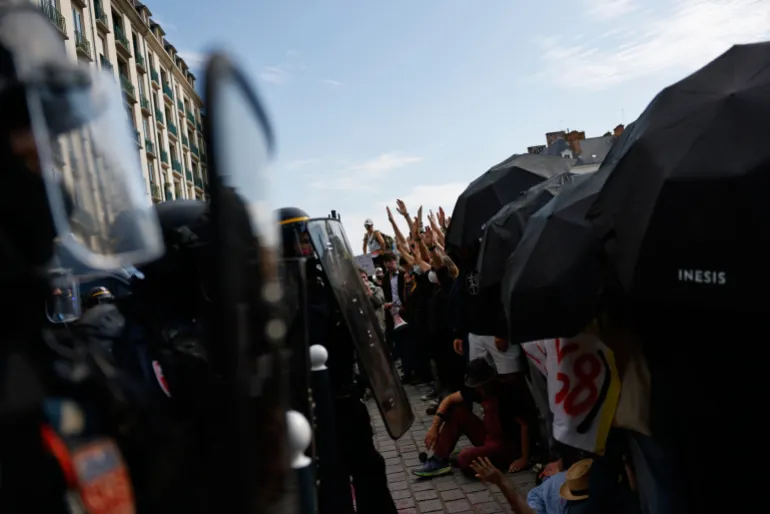

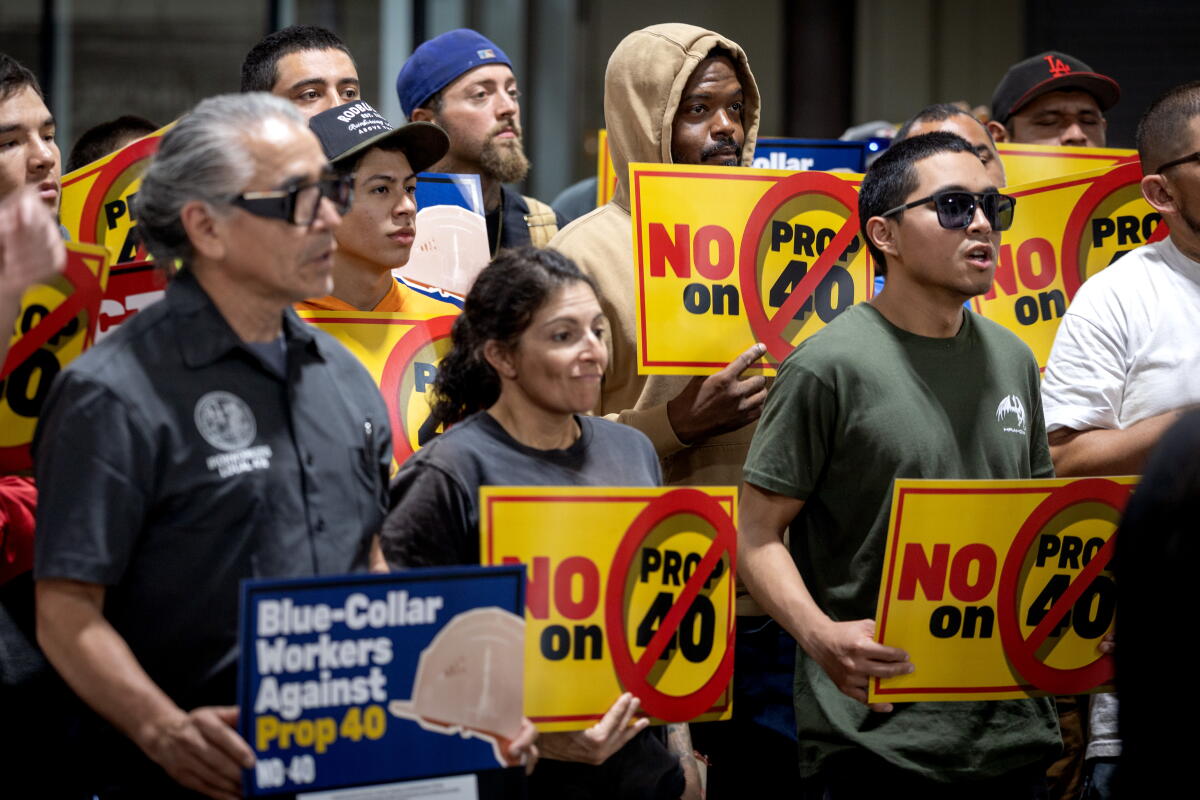


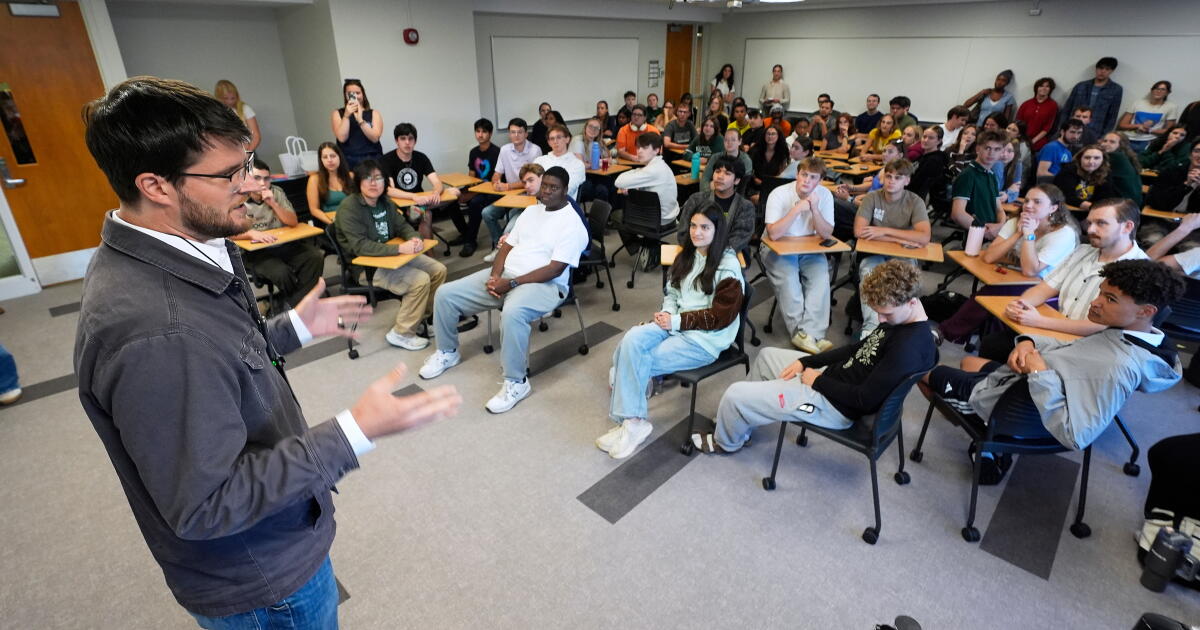

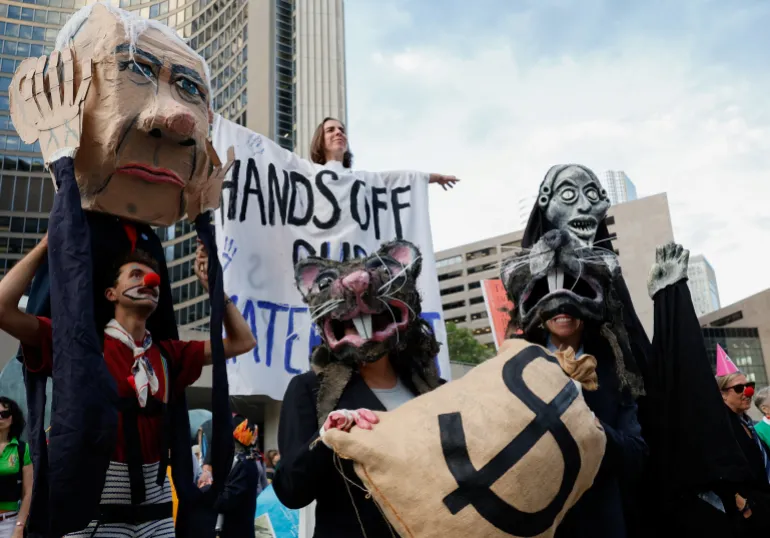



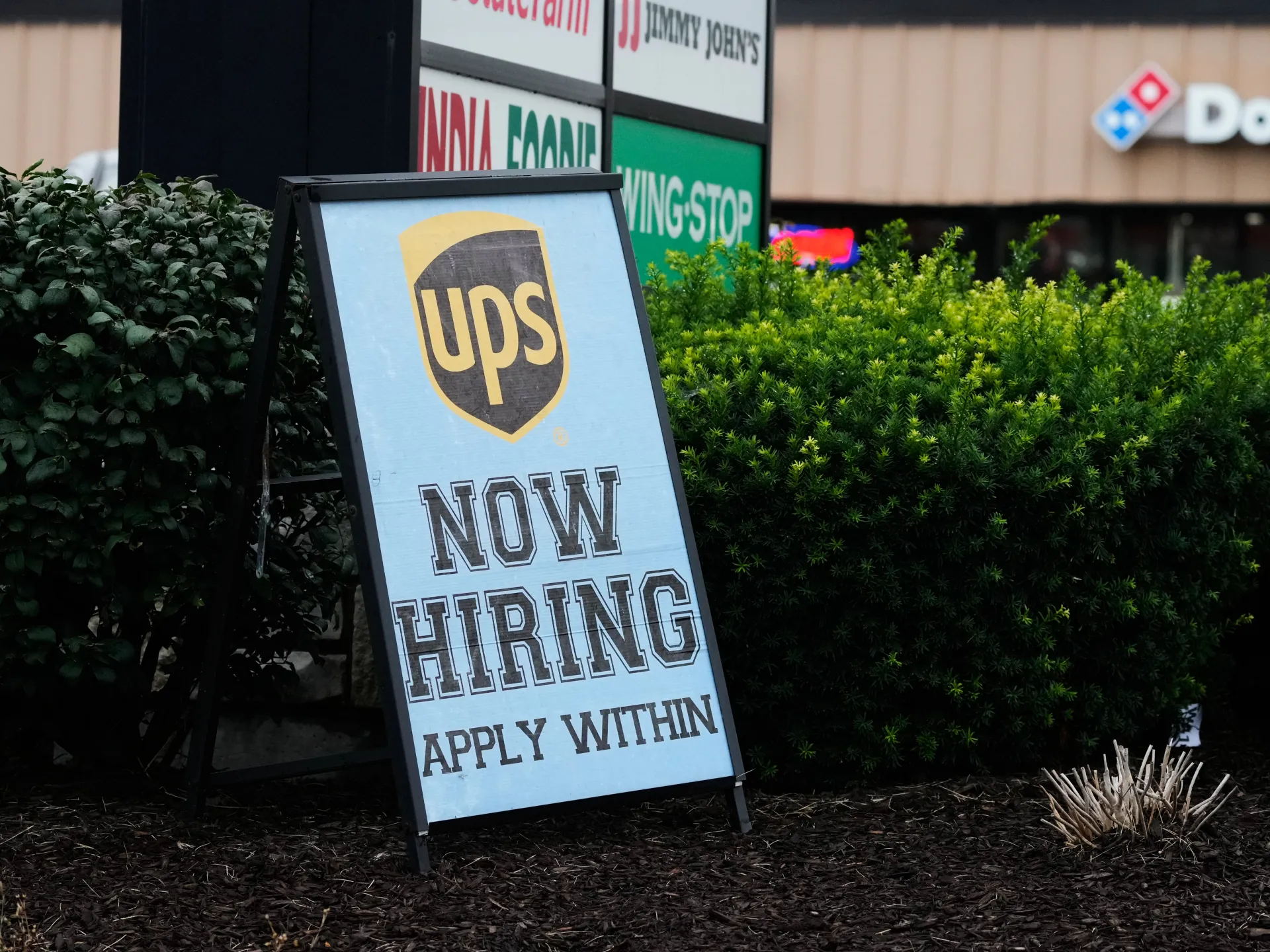

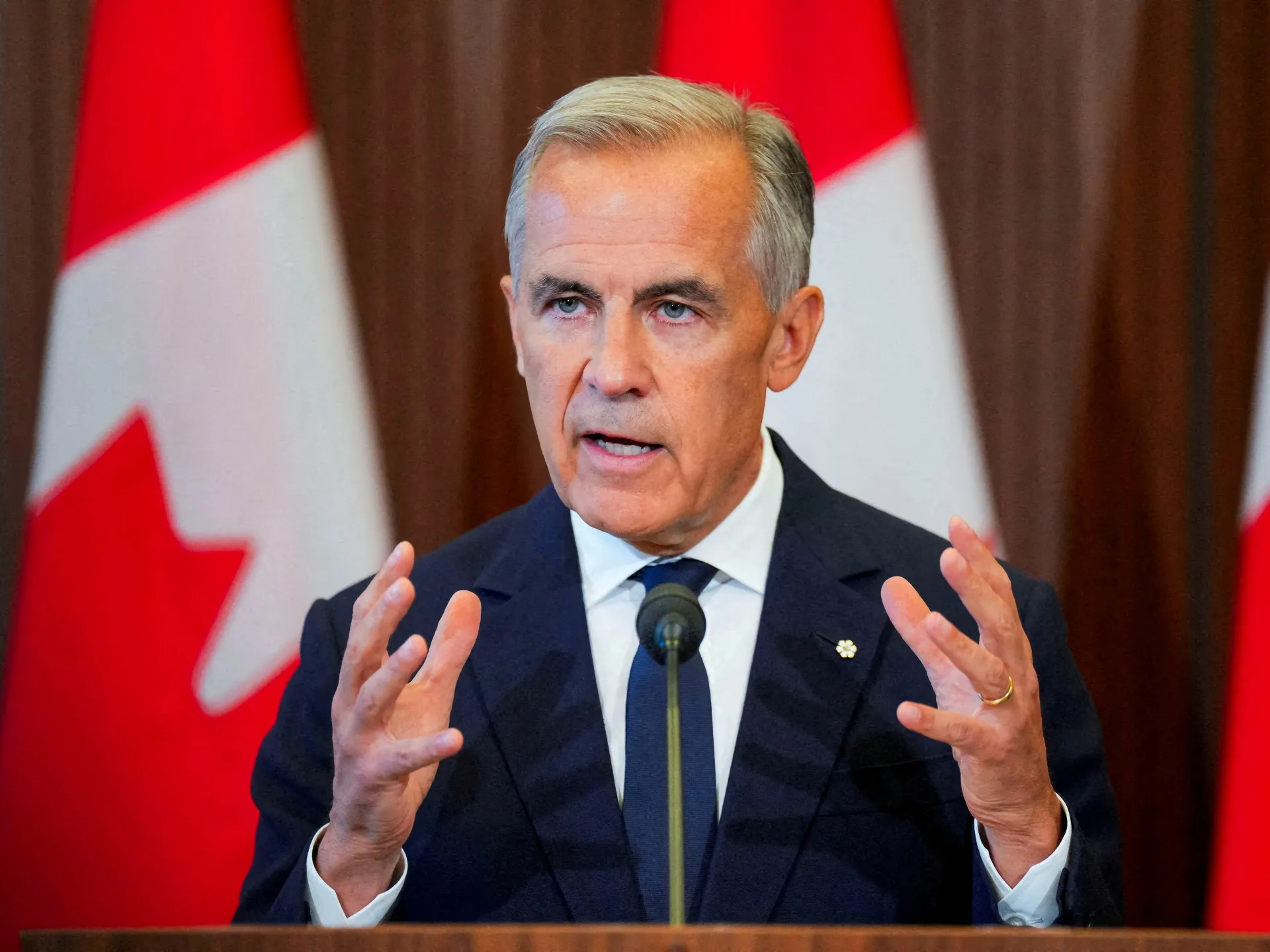


![Women queue at a pharmacy in Tehran [Al Jazeera]](https://i0.wp.com/www.aljazeera.com/wp-content/uploads/2026/09/1arann-1790588624-1790672728.jpeg?w=640&ssl=1)