A teacher fought the teenage shooter and a parent shot him dead, police say on Friday, a day after four people were killed.
Published On 17 Oct 202617 Oct 2026
The 16-year-old who killed three children and a teacher at an elementary school in the US state of Oregon was a former special-needs student at the school, police and school officials have said.
Bend Police Chief Mike Krantz identified the attacker on Friday, a day after the shooting at Silver Rail Elementary School, as Griffin J. John II.
Recommended Stories
list of 3 itemsend of list
He said the teenager attacked a classroom of special-needs students, where all the victims were shot.
Steven Cook, superintendent of Bend-La Pine Schools, said John was not enrolled in the local public school system at the time.
“That classroom was a special needs classroom, and the suspect was a special needs student in that school,” Cook told a news conference.
Krantz said John shot his way through locked doors with a 12-gauge shotgun, firing as many as 15 shots, and had about 44 rounds left when he was killed. Police are still trying to determine how he obtained the gun.
Under Oregon law, a minor may possess a shotgun if provided by a parent or with a parent’s consent.
The shooter’s mother, Shauntai Nickerson, separately told reporters outside her apartment: “I’m so sorry, I wish I could have done something.”
A teacher threw her phone at the gunman, then tackled and fought him, likely saving lives, Krantz said, calling her actions “heroic”. She was not injured.
A 36-year-old father, Kaylub Giamanco, who has two children at the school, then followed the gunman inside and shot him dead minutes after the first 911 call.
US President Donald Trump called Giamanco a “great hero”. “It’s a terrible thing, but thank goodness for a man that had a gun and knew how to use it,” Trump said.
People mourn next to a cordoned-off area at Silver Rail Elementary School in Bend, Oregon, on October 16, 2026, the day after a shooting [David Ryder/Reuters]
The children killed were aged five, eight and 11, and the teacher was Meghan Lambert, 25, police said.
A seven-year-old child and a 54-year-old teacher were taken to hospital in critical condition.
The shooting is the 28th mass killing in the US this year, according to a database by The Associated Press, USA Today and Northeastern University.
The Gun Violence Archive in the US has documented 369 mass shootings in 2026, defined as incidents in which four or more people are shot.
The Everytown for Gun Safety group has counted at least 100 incidents of gunfire on school grounds this year, with 34 deaths.
Al Jazeera has confirmed that White House press secretary Katie Zacharia is “transitioning out” of her role after less than a week on the job. President Donald Trump said he had told Zacharia she “should reconsider” her role, citing harsh media and public scrutiny.
Ukrainian President Volodymyr Zelenskyy warned Russia’s ambitions extend beyond eastern Ukraine, saying its drone attacks threaten NATO. Speaking after an EU summit in Belgium, he also took a jibe at US President Donald Trump for saying he is harder to deal with than Putin.
United States President Donald Trump has for the first time explicitly ruled out the use of a nuclear weapon against Iran, but has not denied US media reports that his administration is considering deploying the US’s most lethal non-nuclear munition, nicknamed the “mother of all bombs” in the near future.
In an interview published on Thursday by right-wing American news site Newsmax, Trump suggested he does not plan to use nuclear weapons, but also clarified that the devastating aerial weapon, the GBU-43/B Massive Ordnance Air Blast Bomb (MOAB – ‘mother of all bombs ) “is not nuclear”.
Recommended Stories
list of 4 itemsend of list
“I wouldn’t use nuclear. We don’t have to. We’re the greatest nuclear power in the world,” he told Newsmax.
The comments marked Trump’s first definitive statement on the nuclear topic following speculation about a possible atomic conflict earlier in the US and Israel’s war on Iran. They also appeared to confirm speculation that another phase of the war is imminent, likely after the US midterm elections on November 3.
Here’s what we know:
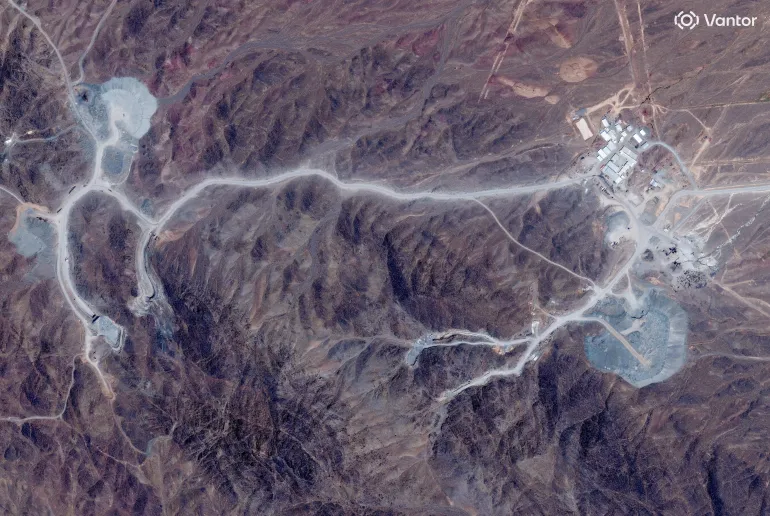
A satellite view of tunnel entrances on Pickaxe Mountain at the Natanz nuclear facility in Iran, June 30, 2026 [Vantor/via Reuters]
What did Trump say?
Trump told Newsmax that the US might indeed launch another strike on Iran’s nuclear sites, particularly on Pickaxe Mountain, where Tehran is believed to be hiding a nuclear facility deep under layers of granite.
He ruled out using a nuclear weapon or a tactical nuclear weapon.
“I wouldn’t use nuclear. We don’t have to. We’re the greatest nuclear power in the world,” he said.
He also clarified that the MOAB, which CNN reported the US government is considering using, “is not nuclear”.
Responding to a question about whether the MOAB is “tactical nuclear” – meaning smaller nuclear munitions – Trump reiterated that it is not.
“Well, the mother of all bombs is not nuclear,” Trump said. “It’s not nuclear at all. This is just an extremely large bomb.”
Trump declined to say whether he had authorised its use in Iran.
Trump also suggested renewed attacks are likely in the near future. The US cannot end the war now because it has to ensure Iran cannot produce a nuclear weapon, he argued, saying he believes that “if they had it, they would use it, in my opinion, instantaneously”.
Trump also reiterated that the war would end “very soon” whether by force or diplomacy and that oil prices would then drop.
When asked if he would put “troops on the ground”, Trump said: “No, I don’t see that, I don’t see it.” Earlier in the war, Trump had made comments regarding sending in troops, a move analysts said would be devastating for US soldiers because of Iran’s mountainous territory.
What is the ‘mother of all bombs’?
The MOAB carries a massive payload of about 8,500kg (18,000 pounds or 8.5 tonnes) of high explosives. It weighs 9,800kg (21,605 pounds or nearly 10 tonnes) – about the same as four cars – and is just over nine metres (about 30 feet) long. Stealth bombers are too small to carry it, so it has to be deployed by larger, Lockheed C-130 Hercules transporters.
It is designed to explode a few metres above the ground, sending out intense fireballs that can blast buildings and other hard-surface structures within a 1km radius, experts have told Al Jazeera. It is so powerful that a mushroom cloud from its blast has been seen 32km (20 miles) away in tests, the US Air Force has said.
“Its large explosive charge can produce devastating blast effects against exposed personnel, equipment and vulnerable structures,” Brussels-based military and weapons analyst Elijah Magnier said. “Its purpose is to generate an exceptionally powerful blast across a surface area.”
However, Magnier said there is doubt about whether using the massive surface explosive would be effective against deeply buried nuclear installations in Iran. He added that the terrain in Iran could be difficult for larger cargo aircraft to access.
What has Trump previously said about nuclear weapons?
Trump has never explicitly mentioned using a nuclear weapon, but he has also never ruled it out.
Speculation regarding whether Washington might use nuclear weapons was rife in the early days of the conflict, largely because of the extreme nature of Trump’s numerous threats against Tehran.
In April, for example, as Iran enforced a blockade on ships in the Strait of Hormuz, Trump posted on his Truth Social site that “…a whole civilisation will die tonight, never to be brought back again”, if Iran did not agree to a peace deal and reopen the strait.
He also threatened to destroy Iran’s infrastructure, saying a bombing campaign “will be Power Plant Day and Bridge Day, all wrapped up in one”, in Iran.
Experts widely interpreted his statements as a threat of nuclear destruction, but one that still failed to force Iran to the table.
Although Trump largely moved away from his sabre-rattling rhetoric in the following weeks, he reiterated at the United Nations General Assembly in New York last month that he could “annihilate” Iran. He also told the assembly that he believed a deal would emerge after the midterms.
What is a ‘tactical’ nuclear weapon?
“Tactical” nuclear weapons (TNW) are smaller nuclear munitions designed for the battlefield as opposed to strategic nuclear munitions designed for mass destruction.
Some perceive TNWs as having a lesser impact than an atomic bomb, but experts warn that their names are misleading and they can nevertheless be devastating. Their explosive yield, between 0.3 and 50 kilotons, can impact areas within a 500-600km radius.
The US dropped a 15-kiloton nuclear bomb on Hiroshima, meaning that weapon would today be considered a TNW. The US, North Korea and Russia have TNWs in their arsenals, although no country has ever used them. TNWs are not subject to any international treaties and are largely unregulated.
What might another US attack on Iran look like?
With Trump failing to rule out dropping the MOAB, analysts speculate that the US might launch another – perhaps final – intensive bombing campaign targeting Iran’s nuclear and defence sites, particularly Pickaxe Mountain.
The US could also continue its naval blockade on Iranian ports, while providing escorts for commercial ships through the Strait of Hormuz.
Iran has vowed to respond to escalatory strikes by targeting oil and digital infrastructure in neighbouring Gulf states.
Senior defence officials have also warned that Iran will invade its neighbours if the US launches a ground operation, although Trump appears to have ruled that out.
Earlier in the war, he hinted at the possibility of sending ground forces to retrieve some 400kg of “yellowcake” – highly enriched uranium that Washington and Israel claim Tehran has hidden underground.
Trump’s phone calls in March to Kurdish militia groups fighting Iran provoked speculation that Washington could coordinate with them for an invasion, although that did not happen.
The administration of United States President Donald Trump has sued the state of California after the state missed a deadline to review a list of registered noncitizen voters sent to officials.
In the lawsuit, filed on Thursday in a US District Court in California, Department of Justice (DOJ) officials asked the court to prevent the state from counting mail-in ballots from voters on a list shared with the state that it said contained 20,000 noncitizens. The agency said it had attempted to “work collaboratively” with California to identify noncitizens registered to vote in the state, but “California made no serious effort to do so”.
Recommended Stories
list of 3 itemsend of list
The move follows a 48-hour deadline the DOJ gave California in letters sent to officials in several counties in the state on Tuesday, threatening further action if they did not review lists of allegedly ineligible voters the agency said it had shared.
California Secretary of State Shirley Weber, the top state official tasked with administering elections, responded to the letters, saying in a three-page letter that she wanted to “set the record straight” on events that transpired since July. The senior California official maintains that the administration is demanding “unprecedented measures that threaten thousands of Californians’ right to vote, based on unverifiable information or methodology that you still fail to explain or provide”.
Weber said she was informed that the lists provided to local officials include the names of roughly 20,000 individuals. Weber said no list was ever sent to her office. The department previously said it suspected “thousands” of registered voters of being noncitizens, and a lawsuit filed earlier Thursday by the Justice Department put the number at “tens of thousands”.
“Despite failing to send the list of alleged non-citizens to my office, you demand that we request transmittal of the list, review and confirm the citizenship status of each of the approximately 20,000 individuals on the list on the eve of an election and within a mere 48 hours,” she wrote. “This is an emergency of the DOJ’s creation.”
In a statement on Wednesday, election officials in Los Angeles County, one of the county offices that received the ultimatum from the DOJ, pointed out the threat was issued just 21 days before midterm elections. The county statement said it had received a thumb drive with the letter and a handwritten note with what appeared to be a password, but it would not attempt to access the drive because “we do not consider the device a secure medium”.
The county office said maintaining accurate voter lists was “a fundamental responsibility for our office” and that state laws clearly require that removing individuals be “based on verifiable information”.
Trump has repeatedly levelled the false claim that large numbers of noncitizens, who are legally not eligible to vote in federal elections, are casting ballots in Democratic-led states, including in California. State officials, including in California, have said the number of such voters is negligible and that the scale of the problem does not warrant intervention just weeks before elections, scheduled for November 3.
California Governor Gavin Newsom has sharply rebuked the DOJ lawsuit against his state, calling it a “sad, desperate attempt by” Trump to “suppress California voters just three weeks before Election Day”.
“Courts have made clear the federal government has no role in running state elections,” Newsom said in a statement. “We will defend free and fair elections in the Golden State and call out every authoritarian attempt to undermine our democracy.”
Trump has long falsely claimed that noncitizen voting cost him the 2020 election, blaming it on Democrats, despite the issue being a very rare occurrence.
Courts have pushed back on Trump
Earlier this month, a federal judge in Florida ruled that a federal law criminalising voting by noncitizens was unconstitutional, delivering a major setback for Trump administration efforts to pursue such cases against individuals.
The court ruled that, under the US Constitution, only individual states have the authority to set voter qualifications, and that each one had already criminalised such voting by anyone who was not a citizen. Thus, it was up to the state to prosecute such individuals. The DOJ has at least 45 such cases pending nationwide, where the accused could now raise the same objection brought up in the Florida ruling.
Another federal judge ruled this month that the DOJ unlawfully sought state voter rolls for cross-checking them against a controversial federal immigration database to identify ineligible voters. The Trump administration has often touted the Systematic Alien Verification for Entitlements (SAVE) database, but numerous reports have found it inaccurate and capable of flagging citizens as noncitizens. Forcing states to use such a database would be unconstitutional, the judge said.
In September, the US Supreme Court rejected a Trump administration effort to restrict mail-in ballots for the November 3 elections, which Trump argued were especially susceptible to misuse by noncitizens because states were failing to verify who was sending them.
Two dozen states, led by Democrats, filed lawsuits against the Trump administration over attempts to limit mail-in voting, including an executive order directing federal agencies such as the US Postal Service not to handle mail-in ballots without verifying the eligibility of those casting them.
According to the Election Assistance Commission, a bipartisan government agency, around 30 percent of all ballots cast in the 2024 elections were sent by mail. Mail-in ballots are even more widely used in many western states such as California.
A round-faced man with dark-rimmed glasses, a moustache and short-trimmed hair, Ismael came to the US when he was only five years old.
Southern California became his home, and as an adult, he qualified for the Deferred Action for Childhood Arrivals (DACA) programme, which offered temporary protection against deportation.
He lost his DACA status, however, in 2015 after a conviction for driving under the influence.
His family remembers him as a caring son and uncle, always willing to buy his niece and nephew new clothes or school supplies.
“Ismael was always looking after his siblings. He just had a big heart,” said his brother, Jose Miguel Ayala. “He was very protective of not just us, but my mum and dad too.”
He was 39 years old when he was brought to the Adelanto ICE Processing Center.
Two weeks after his arrival, Ismael told his family that he developed a high fever and a painful sore on his backside.
On September 18, 2025, workers at Adelanto initiated a Code Blue alert for Ismael, signalling a life-threatening medical emergency. Medical staff rushed him from his dorm to the infirmary in a wheelchair.
ICE documents show that Ismael was given pain medication, an ointment and a fibre supplement.
But according to Physicians for Human Rights’ Cuneo, who reviewed the case, Ismael should have received a physical examination and antibiotics.
“That is a major failure,” Cuneo said.
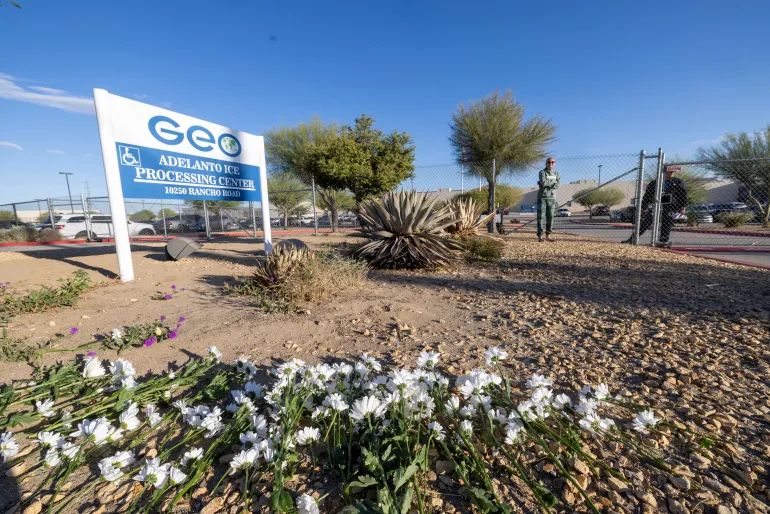
Demonstrators leave white flowers outside the Adelanto ICE Processing Center on September 29 in solidarity with those detained inside [Jill Connelly/AP Photo]
That weekend, hours after Lucia’s visit, Ismael’s condition worsened. Just after midnight on Sunday, ICE records say he was vomiting, shaking and sweating.
According to ICE documents, he was later sent to an intensive care unit, where he went into cardiac arrest within minutes of his arrival and subsequently died.
“I believe Ismael’s death could have fully been prevented by timely care,” Cuneo said. “It was a simple abscess that was not treated in a timely manner.”
Fault Lines obtained a coroner’s investigation that reveals Ismael was critically ill when he first arrived at the hospital, a fact that was left out of ICE’s public report on his death.
The coroner’s report also contradicts ICE’s timeline for Ismael’s death. It indicates Ismael went into cardiac arrest early on September 21, nearly a full day before he passed away. Medical staff, however, managed to restore his heartbeat after intubating him.
That conflicts with ICE’s report, which only notes his pulse stopping once: shortly before his death was announced on the morning of September 22. ICE described his condition on September 21 as “calm and cooperative”, but it signalled no heart problems.
“If they had given him the medical care and what he needed, maybe he would be here with us,” Lucia said.
In a statement about Ismael’s death, ICE said detainees receive “comprehensive medical care” throughout their time in custody.
But California’s Attorney General Rob Bonta told Fault Lines that his office found “the exact opposite” during its inspections of the state’s detention centres.
“We’ve gone to these facilities. We’ve gone into Adelanto. We have done our own physical inspections,” Bonta explained.
“If what the ICE spokesperson said was true, Mr Ayala-Uribe would be with us today.”
An internal mortality review committee also found that the care provided to Ismael at Adelanto “deviated beyond safe limits of practice”, according to a document obtained by US media earlier this year.
It also suggests that medical staff delayed responding to calls about Ismael’s declining health in the days leading up to his death.
The United States has developed plans to strike Iran with the largest non-nuclear bomb in its military arsenal on Iran’s energy infrastructure and nuclear sites if President Donald Trump orders renewed combat operations, according to US officials cited by CNN.
Deploying the GBU-43/B Massive Ordnance Air Blast Bomb (MOAB), nicknamed the “mother of all bombs”, could significantly escalate the ongoing conflict at a time when fighting has lulled, experts say.
Recommended Stories
list of 4 itemsend of list
Concerns are also being raised, including within the Trump administration itself, over what such a move would even achieve. Officials familiar with military planning discussions told US news outlet CNN and Al Jazeera that deploying the MOAB would be unlikely to help the US achieve its stated strategic goals, including to destroy Iran’s nuclear capabilities.
Brussels-based military expert Elijah Magnier told Al Jazeera that using the MOAB would not even guarantee the destruction of Iran’s deeply buried underground nuclear installations and that such a strike would likely amount to little more than “political theatre”.
Here’s what we know:
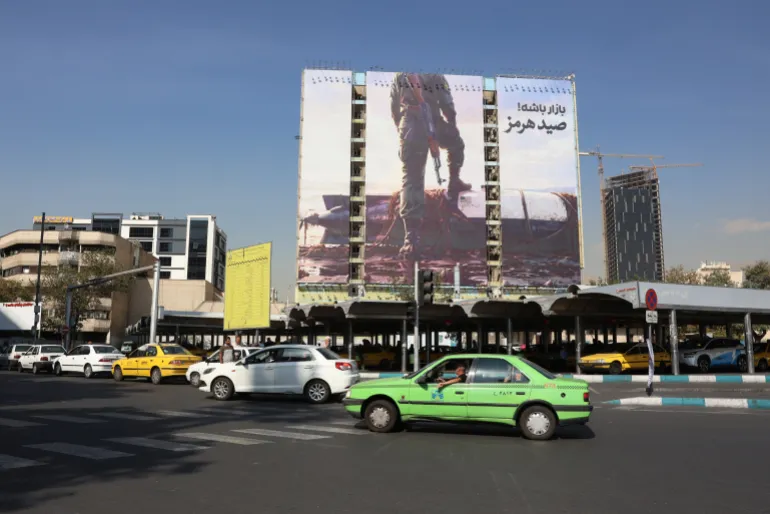
Iranians drive past an anti-US billboard depicting a member of Iran’s Revolutionary Guard (IRGC) with a US unmanned underwater vehicle that Iran claimed to have seized in the Strait of Hormuz and the slogan ‘Hormuz Catch’. In Vanak Square in Tehran, Iran, 14 October 2026, amid the ongoing conflict between Iran and the United States [Abedin Taherkenareh/EPA]
What is the MOAB?
The GBU-43/B Massive Ordnance Air Blast Bomb (MOAB) is a massive munition containing about 8,500kg (18,000 pounds or 8.5 tonnes) of high explosives. It weighs 9,800kg (21,605 pounds or nearly 10 tonnes) – about the same as four saloon cars – and is as long as a small yacht at just over 9 metres (about 30 feet).
The MOAB is typically deployed from the Lockheed C-130 Hercules cargo aircraft because it cannot fit in a stealth bomber.
The bomb, which was first manufactured between 2002 and 2003, has undergone 12 detonation tests.
Its name is a reference to former Iraqi President Saddam Hussein’s comments during the 1991 Gulf War when he invoked the “mother of all battles”.
The US has only deployed the MOAB once before – during its 2017 attacks on an Islamic State Khorasan Province (ISKP) cave and tunnel complex in Afghanistan. Afghan authorities claimed that while 94 Islamic State-Khorasan Province (ISKP) fighters were killed in the blast, no civilians were hurt. However, there were unconfirmed, local reports of civilian casualties and many homes were destroyed.
What is the ‘mother of all bombs’?
The GBU-43/B, the US’s most powerful non-nuclear bomb, was used once, against Islamic State-Khorasan…
GBU-43/B
Pallet is deployed from rear cargo door of MC-130H or C-17aircraft.
Released from the aircraft.
Cradle separates; GPS and fins guide it.
H6 explosives detonate.
A powerful shockwave spreads.
Hot gases, smoke and debris rise in a mushroom cloud.
1 of 4
What kind of damage can it cause?
Designed to explode a few feet above the ground, the MOAB sends out lethal waves of fire when it detonates, blasting away buildings, cave openings and other hard-surface structures.
“Its purpose is to generate an exceptionally powerful blast across a surface area,” Magnier said.
Military expert Colonel Nidal Abu Zeid told Al Jazeera the bomb does not require impact in order to detonate and that its massive blast will destroy everything above ground within a 1km (0.6-mile) radius.
It is likely that the US would aim to use the high-explosive MOAB to completely destroy Iran’s ground-force positions above ground, and to reach its underground facilities, including Pickaxe Mountain, which Trump has previously threatened to attack, Abu Zeid said.
However, Magnier said the bomb’s radius and level of destruction would depend greatly on the terrain it is used within and how populated the area is. He added that it may not be particularly effective against targets buried deep underground.
Some of Iran’s nuclear sites which the US may wish to target, such as the Fordow complex and an under-construction site at the Pickaxe Mountain, are heavily fortified and deeply buried.
“Its large explosive charge can produce devastating blast effects against exposed personnel, equipment and vulnerable structures,” Magnier said. “The Afghanistan operation demonstrates its intended application against a cave-and-tunnel position; it does not demonstrate an ability to destroy every kind of underground installation.”
While its blast can reach underground, the MOAB is not especially designed to punch through deep concrete or mountain rock in the way that a “bunker buster” bomb is. The US military’s most powerful bunker buster is the GBU-57 Massive Ordnance Penetrator. Weighing about 30,000 pounds (13,600kg), including a 2,700kg (6,000 pound) warhead, this precision-guided bomb is made of high-strength steel and built to penetrate up to 200 feet (61 metres) underground before exploding.
Would the US really use an MOAB?
It already has done – in Afghanistan in 2017.
However, besides not being guaranteed to hit underground targets effectively, Magnier told Al Jazeera it could be difficult to deploy the necessary aircraft in the regions of Iran where nuclear sites are located. Stealth bombers which are better suited to this terrain are not able to carry this size of bomb.
Using the bomb could also destroy infrastructure without inducing Iran to make any concessions, he added, noting that its deployment would risk turning “a spectacular event” into one that ultimately delivers few political results for Washington.
“The question I would put to any commander advocating its use is straightforward: What will this weapon accomplish that another available weapon cannot, and how will that result advance an achievable political settlement?,” Magnier said.
“If the answer centres on the spectacle of the explosion, the proposal is stronger as political theatre than as military strategy,” he added.
CNN reported that Trump, in private discussions, has been seeking a “definitive” end to the war that will prove Washington has been undefeated.
How might Iran respond?
A MOAB strike would likely prompt a major reaction from Iran, experts say, warning that Tehran could even invade its neighbours who host US military assets in response.
Iranian security officials have for months made comments regarding a possible invasion of countries like Kuwait to capture US troops and force Washington to surrender.
In May, during a pause in hostilities, Kuwait alleged that sailors from Iran’s Islamic Revolutionary Guard Corps (IRGC) infiltrated its Bubiyan Island, leading to an exchange of fire between Iranian and Kuwaiti forces. One Kuwaiti was injured and four Iranian soldiers were captured.
Iran denied that it had invaded the island and said the troops’ navigation system had malfunctioned.
On Tuesday, IRGC security adviser Mohammad Reza Naghdi warned that Iran could capture troops if Washington were to launch ground attacks, although military experts have long dismissed Trump’s earlier threats of an invasion due to Iran’s mountainous terrain.
“If the United States launches a ground attack, so many of its troops will be captured that it will be forced to raise the white flag,” he said.
Experts say Iran has been preparing for another round of war by stockpiling weapons, fortifying key nuclear and defence locations, and rallying its supporters.
In a television broadcast on Sunday, National Security Council chief Mohsen Rezaei threatened that Iran would attack regional digital infrastructure, including communication cables, data centres and artificial intelligence facilities in the United Arab Emirates and others, if American strikes resume.
Ukraine president earlier said Kyiv was ‘done’ with energy ceasefire and strikes on Russian oil refineries would resume.
Published On 15 Oct 202615 Oct 2026
Russia says Ukraine has targeted an oil refinery in Ryazan, about 180 kilometres (110 miles) south of Moscow, as President Volodymyr Zelenskyy said Kyiv was “done” with an energy ceasefire unilaterally announced by United States President Donald Trump over the weekend.
“The Kyiv regime attempted a large-scale attack on an oil refinery in Ryazan,” Moscow’s defence ministry said in a statement on Thursday, adding that a “fire broke out after drone debris fell onto the refinery site.”
Recommended Stories
list of 3 itemsend of list
Ukraine’s president earlier told the British newspaper the Financial Times that strikes on Russian oil refineries would resume, and accused the US of weakening Ukraine’s position on the battlefield by allegedly withdrawing crucial intelligence sharing.
Trump on Sunday unilaterally announced an “energy ceasefire” that was not publicly confirmed, and Moscow continued striking Ukrainian energy infrastructure. Ukraine said it suspended attacks on Russian energy sites for several days after Trump’s announcement.
The US has pressured Ukraine to halt strikes on Russian refineries, claiming that a suspension of attacks and a deal to purchase 1.8 million tonnes of diesel from Russia would help reduce soaring fuel prices.
“This politically is not simple [in America], because everybody will want to ask how it can be when some people are surviving, fighting, dying – and you make . . . business with the guys with such aggression,” Zelenskyy told the FT.
Zelenskyy also alleged that Ukraine’s access to SpaceX’s satellite internet service was restricted, potentially leaving it more vulnerable to Russian attacks. The Ukrainian armed forces use SpaceX’s military-grade Starshield system for offensive and defensive operations.
In a post on X on Wednesday evening, SpaceX owner Elon Musk said that only the US military and Trump had the authority to limit Starshield’s usage and speed for clients.
In a separate post, he called for Zelenskyy to “go” as Ukraine’s leader.
“And so the slaughter continues,” Musk wrote in a separate post on X. “Time for Zelensky to go.”
Ukraine is heavily dependent on Western military aid in its fight against Russia, particularly from the US and Germany. However, Kyiv’s relations with Washington have been strained in recent weeks, with Trump calling on Saturday for Zelenskyy to be replaced.
Against this backdrop of tensions, Zelenskyy said he would be willing to pause strikes on Russian energy sites again, but only if the US supplied Ukraine with crucial Patriot interceptors.
Zelenskyy is due to meet European leaders in Brussels on Thursday as he pushes for tougher sanctions on Moscow and faster delivery of support from the European Union.
Dutch Prime Minister Rob Jetten has called on EU leaders to “step up” their game to ensure Ukraine wins the war against Russia.
The EU has already pledged $50 billion in support for Ukraine next year. However, the sum falls far short of the $175 billion Kyiv plans to spend on its defences next year.
Trump has denied that the US has stopped sharing intelligence with Ukraine.
The President’s ally says conservatives “cannot give an inch” in Latin America as he accepts an award in Washington.
Published On 15 Oct 202615 Oct 2026
Argentine President Javier Milei has urged his ally, US President Donald Trump, to come out of the United States midterm elections in a stronger position, calling the vote important for the West as a whole.
Milei made the appeal on Wednesday at a Hispanic Heritage gala in Washington, where a Hispanic association gave him an award, ahead of November’s vote.
Recommended Stories
list of 2 itemsend of list
Conservatives, he said, “cannot give an inch in our reconquest of the hemisphere”, according to Agence France-Presse (AFP).
Milei flew into the US capital on Wednesday for meetings with investors and the gala. He is due to address the US Chamber of Commerce on Thursday.
Argentina’s President Javier Milei attends the Hispanic Heritage Gala in Washington, DC, on October 14, 2026 [Alex Wroblewski/AFP]
Milei’s lifeline
Trump firmly backed Milei a year ago, when his government also faced crucial legislative elections. He has called Milei his “favorite president”.
That backing, together with a currency swap agreement with the US Treasury, helped Milei to success in those polls, analysts have argued.
The centrepiece of the package, announced by Treasury Secretary Scott Bessent, was a $20bn swap with Argentina’s central bank, in which the US exchanged dollars for pesos. The swap came shortly after Milei’s party lost a key provincial election.
Trump made clear at the time that the support hinged on a Milei victory. “I’m with this man because his philosophy is correct,” he said ahead of a White House lunch with the Argentine leader. “If he wins, we’re staying with him. And if he doesn’t win, we’re gone.”
Trump also warned that the US would not be “generous” if Milei lost. The remarks unsettled Argentine markets, with the main stock index giving up earlier gains and falling about 2 percent, The Associated Press reported.
The package drew criticism in the US. Democratic lawmakers accused Trump of prioritising a foreign bailout while the US government was shut down.
The US president has long been unhappy with inside information about his administration being leaked to the media.
United States President Donald Trump has suggested that those who leak information to the news media should be shot as punishment.
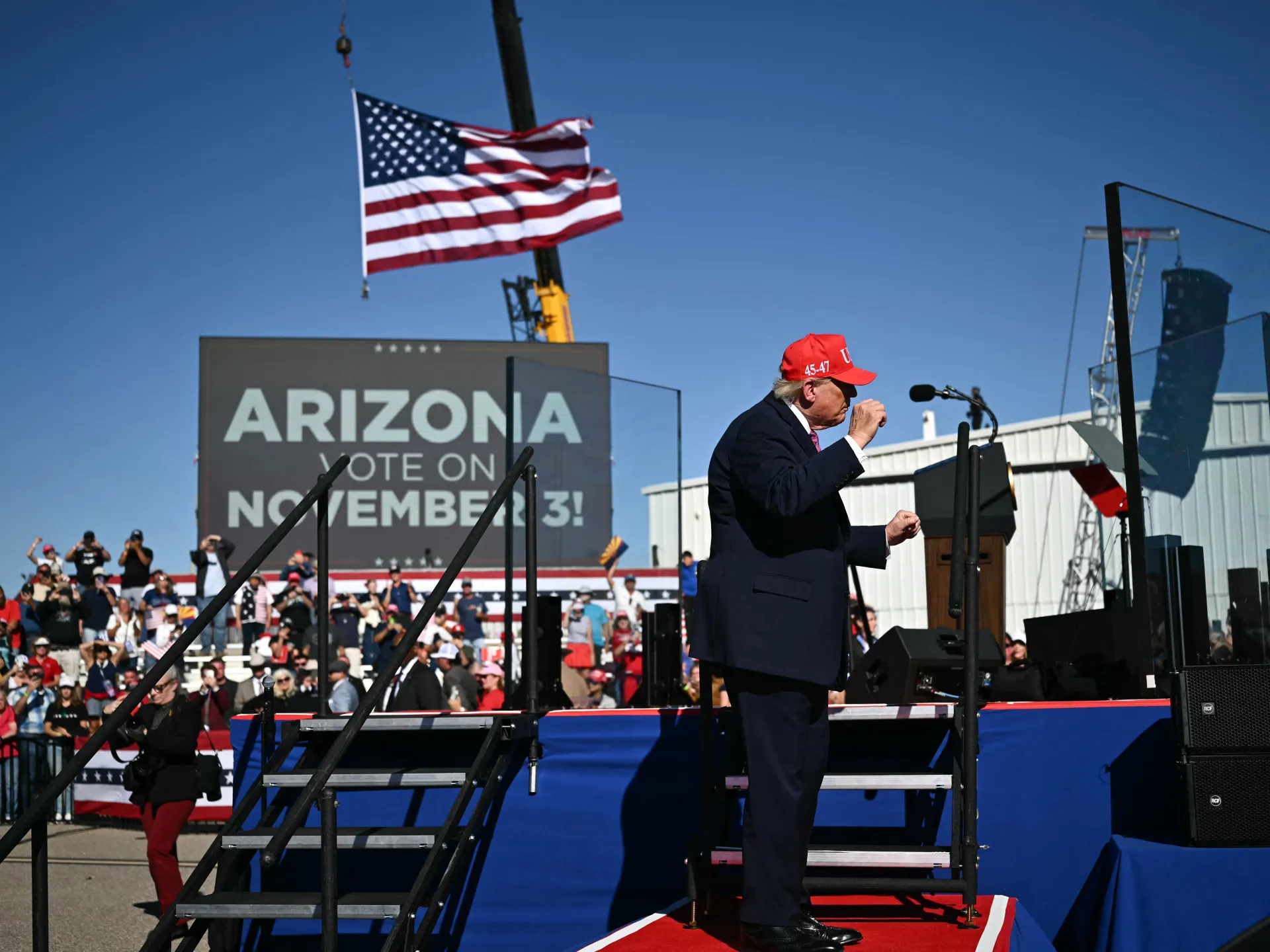
Trump made the remarks at a campaign rally in Bullhead City, Arizona, as he urged supporters to vote in the November 3 midterm elections.
Recommended Stories
list of 3 itemsend of list
“In my opinion, leakers should be shot,” Trump told the crowd. “In the old days, we used to shoot leakers, you know, when they leak what time you’re going to attack a country.”
Trump made the statement in an apparent reference to Operation Midnight Hammer, which saw the US launch a surprise attack on Iran in June 2025 during the 12-day war between Israel and Iran.
In the aftermath of the attack, several media outlets published findings from a preliminary report by the US Defense Intelligence Agency.
That report – which had not yet been released to the public – indicated that Iran was able to move some of its enriched uranium away from the sites the US had bombed.
It also suggested that the extent of the damage to Iran’s nuclear facilities was more modest than what Trump had asserted.
Trump, however, appeared to signal that the timing of the US attacks was among the leaked information. He accused the news media of putting military members in danger, calling out The New York Times and CNN in particular.
“They leaked the time we were leaving, the time we were arriving,” Trump said, claiming he had to reschedule the bombing campaign two days later as a result.
“Somebody leaked. Some sleaze-bag, they ought to go to jail or be shot. For the rest of their life, they should be in jail.”
Trump has long had an adversarial relationship with the news media, and he has previously called for harsh punishment against any official who passes on confidential information to news outlets.
After parts of the Defense Intelligence Agency report became public, he blamed lawmakers in the Democratic Party for its release.
“The Democrats are the ones who leaked the information on the PERFECT FLIGHT to the Nuclear Sites in Iran,” Trump wrote on social media at the time. “They should be prosecuted!”
Under Trump, the White House has taken aggressive action to track down the source of leaks.
Staff in his administration, as well as officers in the military, have also been asked to take polygraph tests.
Journalists at several news outlets, including The New York Times, The Washington Post and The Wall Street Journal, have also received subpoenas aimed at determining the sources of internal information made public.
The newspapers had reported on stories such as a botched Navy SEALs raid in North Korea and how Trump ignored internal Pentagon warnings against launching the Iran war.
Last year, the Department of Defense demanded that journalists who wished to access the Pentagon sign an agreement not to publish unauthorised material.
Much of the Pentagon press corps refused to agree, and a federal court struck down many of the new demands made on journalists at the department.
Trump has long raged against leakers, going back to his first term as president from 2017 to 2021.
Former White House official Alyssa Farah Griffin told a podcast in 2024 that Trump had called for leakers to be executed, after media outlets reported that he had taken shelter in a White House bunker during racial justice protests in 2020.
Trump appeared to reprise that sentiment in his speech to Arizona voters on Wednesday, less than three weeks before the November 3 midterms.
“Leakers should be dealt with very, very strongly,” Trump said. “To me, they are the scum of the earth.”
Katie Zacharia, the new White House press secretary under United States President Donald Trump, has drawn increasing criticism over claims about her professional background.
On Wednesday, a public accountability nonprofit filed a complaint with the State Bar of California over Zacharia’s repeated claims that she was a lawyer.
Recommended Stories
list of 3 itemsend of list
If made falsely, such a claim is a crime in the state. According to Zacharia’s LinkedIn profile, she received a degree from the Pepperdine Caruso School of Law in 2011, but critics have questioned whether she received a licence to practise law, as she has suggested.
“Ms. Zacharia has represented herself as a lawyer repeatedly to buttress her reputation and credibility as a television legal commentator and now as the White House spokesperson,” Michelle Kuppersmith, the head of the Washington, DC-based Campaign for Accountability, said in a statement. “Yet it seems it was all a lie.”
Her organisation filed the complaint with California’s bar office, a regulatory agency that oversees the licensing of lawyers.
“In California, calling yourself a lawyer without a license isn’t puffery; it’s a crime,” Kuppersmith said.
“The State Bar should investigate whether Ms. Zacharia has misled the public about her credentials and hold her accountable if she has.”
Zacharia, a commentator who has appeared frequently on Fox News and Newsmax, began her term as White House press secretary on Tuesday.
In a news briefing that day, she seemed to falter and speak haltingly, sometimes having to repeat herself.
Her appearance was brief, lasting under 15 minutes. She spent much of her time at the podium thanking Trump for the opportunity and reading from a prepared statement.
“I have wanted to work for him for a very long time,” Zacharia said.
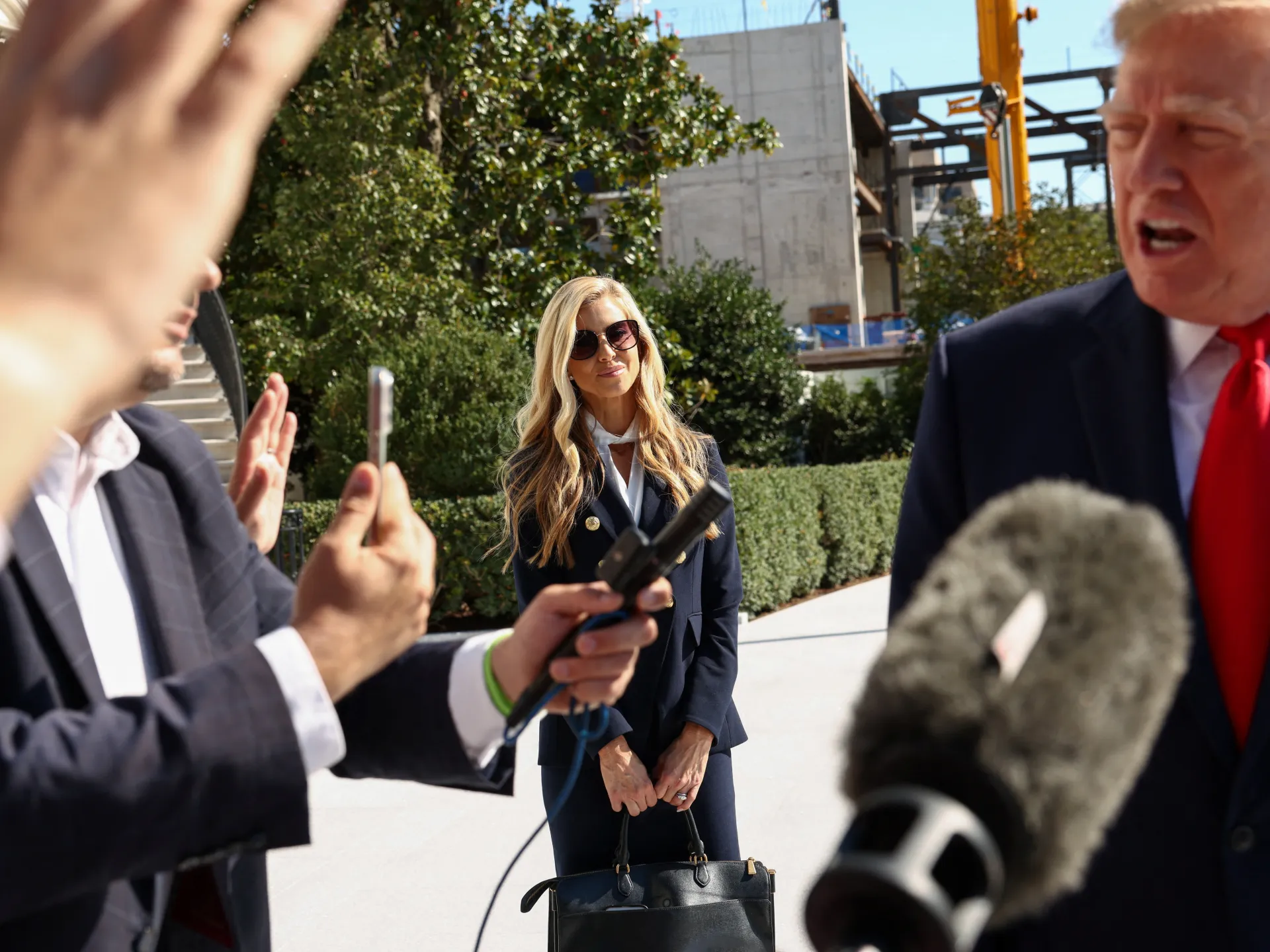
Later, she joined Trump outside the White House to speak further with reporters. When asked where she had passed the bar exam, Zacharia replied, “When I moved to China.”
The response was an apparent reference to a three-year stint in which she claims she worked at a law firm in Beijing.
A biography on the website for the pro-Trump women’s organisation Trumpettes USA Inc says she “served as outside counsel” for the World Bank and International Finance Corporation while in Beijing.
Her LinkedIn profile, meanwhile, indicates Zacharia served as an associate at the Zhong Lun Law Firm in Beijing from 2011 to 2013. More recently, from 2024 to 2025, it lists her as general counsel for Fix California, a voter rights group started by a Trump administration official.
On her Instagram profile, Zacharia describes herself as a “Wife, Mom, & Lawyer”.
But Zacharia’s assertion that she passed the bar in China has fuelled media scrutiny. China’s equivalent of the bar exam, the notoriously difficult National Unified Legal Professional Qualification Examination, can only be taken by Chinese citizens.
China has, on rare occasion, allowed foreigners to practise law in the country if they have several years of experience in their home countries first.
But that does not appear to be the case for Zacharia. According to media reports, Zacharia has not been found to be licensed as a lawyer in any state in the US.
In a statement to The Associated Press, Zacharia responded to the scrutiny by saying, “I practice international transaction law, with all the appropriate credentials.”
Since Trump’s return to office for a second term, Zacharia has spent several months as a communications adviser at the Department of Homeland Security.
Since June, she has also worked as the senior communications adviser at the Trump Media and Technology Group, which owns the Truth Social platform.
The immigration agency has rejected a report from a government watchdog, making suggestions for improved body camera policy.
Published On 14 Oct 202614 Oct 2026
Immigration and Customs Enforcement (ICE), a United States agency that has taken a central role in President Donald Trump’s mass deportation campaign, has rejected a government report calling for its agents to wear body cameras that automatically activate.
On Wednesday, the Government Accountability Office, a nonpartisan agency that provides research to Congress, released a report recommending an update to ICE guidelines for camera usage.
Recommended Stories
list of 3 itemsend of list
It suggested that “automated camera activation” would be helpful in situations where “unexpected and unplanned incidents, unrelated to sensitive operations, result in use of force by or against personnel”.
“Given the important role of body-worn cameras in law enforcement activities, we maintain that additional controls are needed to help ensure that ICE personnel capture footage in accordance with policy,” the report said.
Automatic activation, it added, would address difficulties ICE agents face in manually turning on their cameras during enforcement operations.
But ICE has rejected the recommendation for automatic activation, which could be triggered by an agent pulling a gun or turning on a car siren. The agency cited privacy concerns.
But the Trump administration faces public pressure to improve transparency during its immigration raids.
Agents from ICE and other agencies such as Customs and Border Protection (CBP) have faced accusations of excessive force and civil liberties violations.
In January, two US citizens – Renee Good and Alex Pretti – were shot to death in separate shootings in Minneapolis, Minnesota, during immigration operations.
The New York Times estimated in July that immigration agents had opened fire on at least 25 people since the start of Trump’s second term. A CBS News review updated this week counts at least 30 shootings, with nine people killed and 13 others wounded.
ICE has often blamed such incidents on aggression against its agents, and it has argued that its officers have opened fire to defend themselves from danger.
But in several cases, that rationale has come under scrutiny.
Critics argued that video footage in Good’s fatal shooting disproved government statements alleging that she had weaponised her vehicle against agents. Her car, according to observers, appeared to be turning away from agents, not towards them.
In another case, ICE agent Christian Castro was accused of making false statements about a shooting that resulted in injury to Julio Cesar Sosa-Celis, a Venezuelan man living in Minneapolis.
Castro faces federal charges for allegedly lying about being attacked with a snow shovel and broom before the shooting, after video footage contradicted his account. Castro pleaded not guilty last month.
More recently, on October 8, immigration agents shot a man named Oscar Belgal in New York City while his five-year-old son was in the backseat of his car. ICE stated that Belgal appeared to be “going towards officers” in his car when they opened fire.
On Tuesday, a judge rejected the government’s effort to have Belgal deported.
Activists say better recording procedures for body camera footage could help clarify what happened in such incidents.
But the Trump administration has largely refused to implement reforms to ICE protocol.
Earlier this year, Democrats in Congress delayed funding for the Department of Homeland Security, which oversees ICE, on the basis that significant changes needed to be made to reduce incidents of excessive force.
The department said on Wednesday that automatically recording cameras could result in “the unauthorised recording of sensitive interactions with informants or victims”.
The agency added that all ICE offices had received body cameras as of August 5, but that training in their use was still ongoing and would be finished “soon”.
Recent US-Greenland-Denmark agreement excludes mining or drilling rights while reinforcing Greenland’s sovereignty.
Published On 14 Oct 202614 Oct 2026
Denmark has demanded that US resource exploration in Greenland respect the island’s laws amid President Donald Trump’s claim that oil, gas and mineral extraction will soon begin there.
The Danish Foreign Ministry reaffirmed on Wednesday that last month’s agreement between Denmark, Greenland and the US did not alter the rules for extraction.
Recommended Stories
list of 3 itemsend of list
The agreement “does not grant investors from the US any preferential treatment” over investors from other NATO and EU countries when it comes to access to natural resources in Greenland, the ministry said.
In a post on Truth Social, US President Trump called the semi-autonomous Danish territory “our new and beautiful Greenland”.
“Massive Oil, Gas, and Mineral Exploration is getting ready to begin,” he wrote, without providing details.
What the deal covers
Trump, Danish Prime Minister Mette Frederiksen and Greenland’s Prime Minister Jens-Frederik Nielsen signed the 10-page agreement on the sidelines of the United Nations General Assembly in New York on September 22, ending months of tensions over Trump’s threats to control Greenland.
The deal allows the US to “modernise and expand” its activities at the Pituffik Space Base, a remote US military installation in northwest Greenland.
It also paved the way for two new military bases and Trump’s “Golden Dome” missile defence system, while reaffirming Danish sovereignty and Greenlanders’ right to self-determination.
It did not allocate any rights for mining or drilling.
Greenland’s ban
Greenland banned uranium mining and all future oil exploration in 2021.
Its government is reviewing whether a Texas firm, Greenland Energy, can use permits that predate the ban.
The company said in August it planned to drill for oil in 2027 at an untested basin on Greenland’s east coast, although it lacked its own permit.
Danish security policy adviser Jacob Kaarsbo said Trump’s comments could signal that his desire to control Greenland remains unchanged.
“It is extremely dangerous to view this agreement between the Trump administration and Denmark as something that has altered Trump’s intentions,” he said.
Mikkel Olesen, a senior researcher at the Danish Institute for International Studies, told Al Jazeera that details regarding mining and exploration rights remained unclear and that information coming mostly from the US side should be taken “with a grain of salt”.
Richard Weitz, a fellow at the NATO Defense College in Rome, said Trump “backed down and settled for less” than he sought, but still “got pretty much everything he wanted, except formal annexation”.
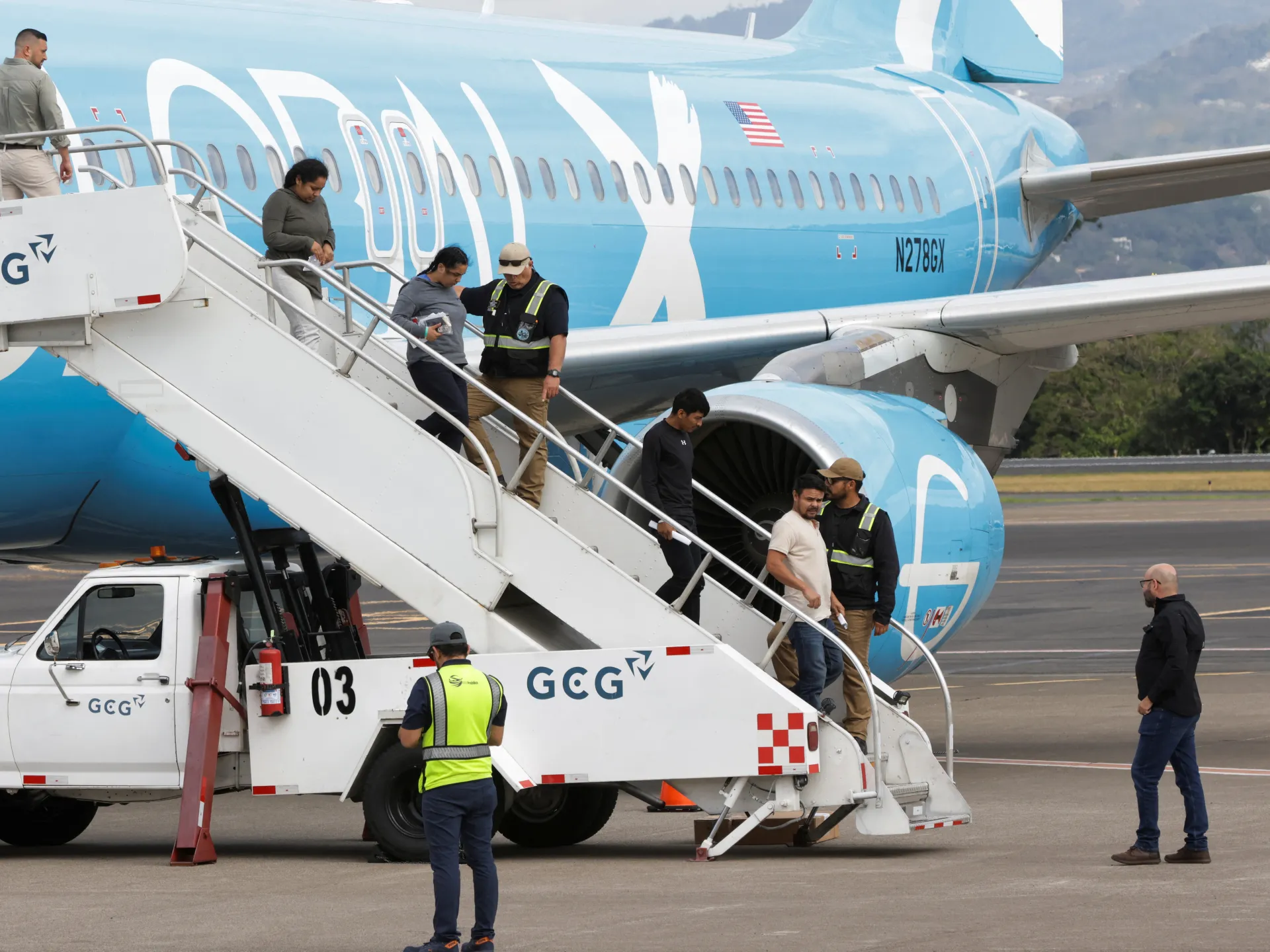
The Caribbean country of Jamaica has received its first third-country deportations from the United States, as part of an expanding set of international agreements under President Donald Trump.
On Tuesday, 22 deportees from the US arrived at Norman Manley International Airport in Kingston, Jamaica.
Recommended Stories
list of 3 itemsend of list
Media reports indicate they were subsequently boarded onto a bus and taken to an undisclosed location.
Such deportations – which often involve non-citizens who have no ties to their destinations – have faced widespread condemnation from human rights groups and advocates who have questioned their legality.
But Jamaica is among a growing number of countries to accept third-country deportations, as part of Trump’s effort to implement the largest mass deportation campaign in US history.
At least 35 countries have entered into third-country deportation agreements with the US, according to Third Country Deportation Watch, an advocacy project affiliated with the groups Refugees International and Human Rights First.
The Washington Post reported last month that the Trump administration has earmarked roughly $410m to support such efforts.
Jamaica signed a bilateral memorandum of understanding in June to receive third-country deportations. Under the plan, Jamaica will transfer any deportees to their home countries or other destinations after their arrival.
The country’s government has also pledged not to accept any deportees with criminal records.
“The government reiterates that this is a transit arrangement intended to facilitate the return of Third Country Nationals to their country of origin or other receiving countries,” Jamaica’s Ministry of National Security and Peace and its Ministry of Foreign Affairs and Foreign Trade said in a joint statement.
It added that care for the deportees will be supported by the International Organization for Migration, a United Nations organisation.
“The arrangement will not be funded by the Government of Jamaica,” the joint statement added.
Opposition leaders in Jamaica, however, spoke out against the deportation, framing the deal as a threat to the island’s security. They also questioned why the agreement had not been debated publicly.
“Jamaicans are being asked to trust a secret document that touches their security, their communities and their public services,” said Fitz Jackson, the opposition spokesperson on national security.
In response to Jackson’s statement, Foreign Minister Kamina Johnson Smith argued that any questions about the deportation deal “have all been answered”. She also indicated that the US has not agreed to make the deal public.
“As I explained before, some countries have agreed to receive criminals, we have not,” she wrote on social media.
“Some countries have had their agreements made public, but our partner has not agreed for this one to be.”
Legal challenges against the third-country deportations are ongoing in the US, where advocates have argued that deportees are being removed from the country without due process of law, the constitutional right to a fair hearing.
Critics have also argued that third-country deportations sometimes send immigrants to countries where they may face danger.
Some of the recipient countries, such as South Sudan, are in the midst of ongoing conflict or have faced accusations of serious human rights abuses.
Opponents have even said the third-country deportations are being used as a backdoor method for circumventing court protection orders.
Such orders may prohibit the US government from returning certain immigrants to their home countries, for fear of violence and persecution.
But by sending immigrants to third countries, critics say the Trump administration avoids violating such protection orders – though in some cases, the third country has then returned the deportee to the country identified in the US protection order.
In a February report by Democrats on the US Senate Foreign Relations Committee, one official said anonymously that the purpose of such far-flung deportations was to instil fear.
“The point is that the administration can threaten people that they will literally be dropped in the middle of nowhere,” the official said. “The point is to scare people.”
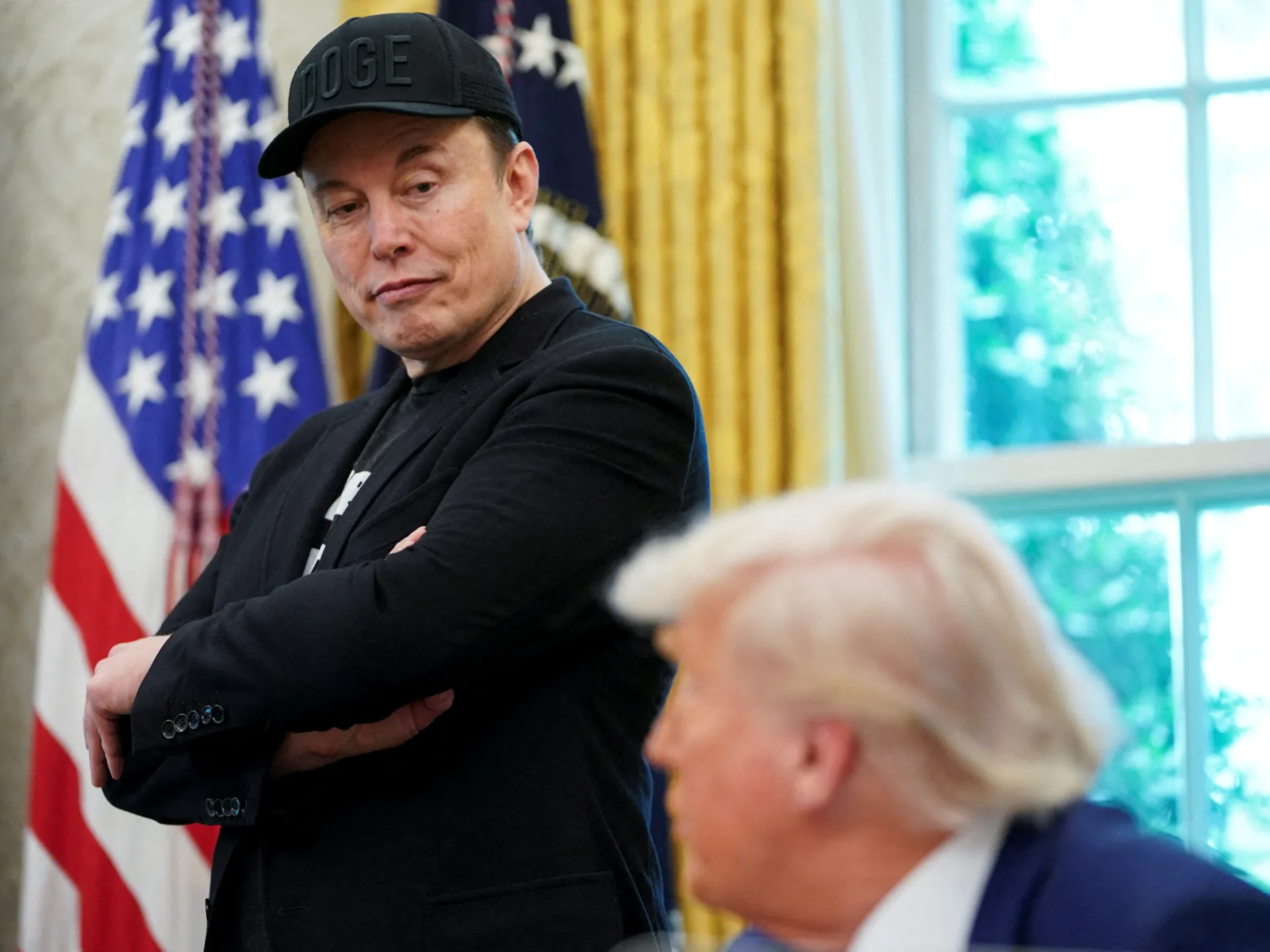
The Trump administration argues that DOGE is exempt from freedom of information requirements.
Published On 13 Oct 202613 Oct 2026
The United States Supreme Court has agreed to hear arguments in a watchdog’s lawsuit seeking public records about trillionaire Elon Musk’s Department of Government Efficiency (DOGE).
The high court is intervening on Tuesday for a second time in Citizens for Responsibility and Ethics (CREW) in Washington’s case, which seeks access to DOGE records from its operations in the early days of US President Donald Trump’s second term. The Trump administration asked the court to hear the case.
Recommended Stories
list of 3 itemsend of list
Last year, the high court reined in a district court’s order for the government to produce DOGE-related records to CREW. The high court’s conservative majority concluded in June 2025 that US District Judge Christopher Cooper ruled too broadly in ordering documents to be turned over to the group.
CREW claims DOGE is a federal agency and therefore is subject to the Freedom of Information Act (FOIA).
The Trump administration argues that DOGE is exempt from FOIA’s requirements as a presidential advisory body.
Cooper ruled in CREW’s favour and ordered expedited processing of the group’s records request. An appeals court panel also sided with CREW.
The Trump administration claims the panel ignored the Supreme Court’s direction to consider separation-of-powers concerns and intruded on the “autonomy and confidentiality” of presidential advisers.
“Subjecting advisory bodies to intrusive discovery triggers the very concerns that Congress sought to avoid by excluding presidential advisory bodies from FOIA’s reach,” US Department of Justice lawyers wrote.
The administration also says the appeals court impermissibly authorised the plaintiffs to take a sworn deposition of DOGE acting administrator Amy Gleason.
CREW says the appeals court fully complied with the Supreme Court’s previous order. The group also asserts that the public has a right to know how DOGE helped the administration carry out a sweeping overhaul of government operations in 2025.
“Undisputed facts in the public record — including the President’s statements — confirmed that (DOGE) was wielding enormous independent authority across the federal government,” CREW lawyers wrote.
In a statement Tuesday, CREW lawyer Nikhel Sus said the lower courts have uniformly ruled that it is entitled to records that could help the court determine whether DOGE wields the type of authority that would make it subject to the Freedom of Information Act.
“We will continue to pursue transparency for the American people, who deserve to know the details of the Trump Administration’s efforts to unilaterally remake the federal government,” Sus said in the statement.
DOGE said it had slashed tens of billions of dollars in expenditures, but its claims were difficult for outside financial experts to verify.
Federal auditors found that some of DOGE’s reported savings across contract, grant and lease terminations were incorrect, lacked supporting evidence or included terminations that were already under way when DOGE was established, according to a report by the Government Accountability Office.
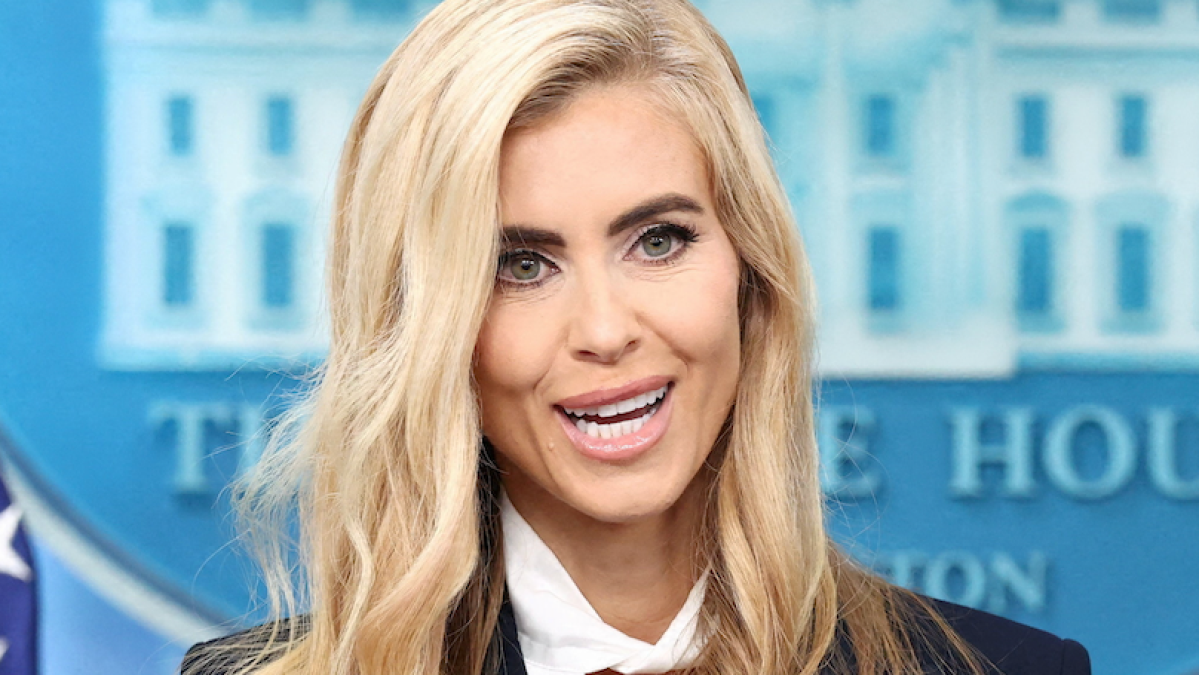
Katie Zacharia has held her first briefing as White House press secretary after replacing Karoline Leavitt. A former Fox News and Newsmax commentator and Trump Media adviser, she announced that Washington had asked US ambassador to Greece Kimberly Guilfoyle to resign.
Kimberly Guilfoyle has faced mounting allegations, including offering access to Trump officials in exchange for money.
Published On 13 Oct 202613 Oct 2026
United States President Donald Trump’s administration has asked the US ambassador to Greece, Kimberly Guilfoyle, to resign following a series of allegations of misconduct, including claims that she offered a political donor access to senior administration officials in exchange for money.
“We have asked Ambassador Guilfoyle to resign,” White House press secretary Katie Zacharia told reporters on Tuesday. “She has been a wonderful asset to the team, and we wish her well.”
Recommended Stories
list of 4 itemsend of list
The announcement comes after weeks of damaging reports about Guilfoyle’s conduct.
According to The Wall Street Journal, Guilfoyle asked a Trump donor to cover a $100,000 credit card bill shortly before her congressional confirmation hearing, promising him access to administration officials in return.
The newspaper also reported that she told guests at a reception that she could use US influence to undermine the Greek government, promoted the interests of a Greek construction and energy company and allowed one of its lobbyists to attend private diplomatic meetings.
Guilfoyle’s lawyers have denied any wrongdoing, saying the money she sought was payment for previous speaking engagements and public appearances that she had not received.
Trump had signalled on Monday that he was considering removing her from the post.
“Well, we’re looking at it,” he told reporters. “We’re not happy.”
Secretary of State Marco Rubio initially defended Guilfoyle, calling her a “strong ambassador,” but later declined to comment on the allegations and criticised reporters for asking about them.
Guilfoyle is a former Fox News host and California prosecutor. She is the former wife of California Governor Gavin Newsom and was previously engaged to Trump’s eldest son, Donald Trump Jr.
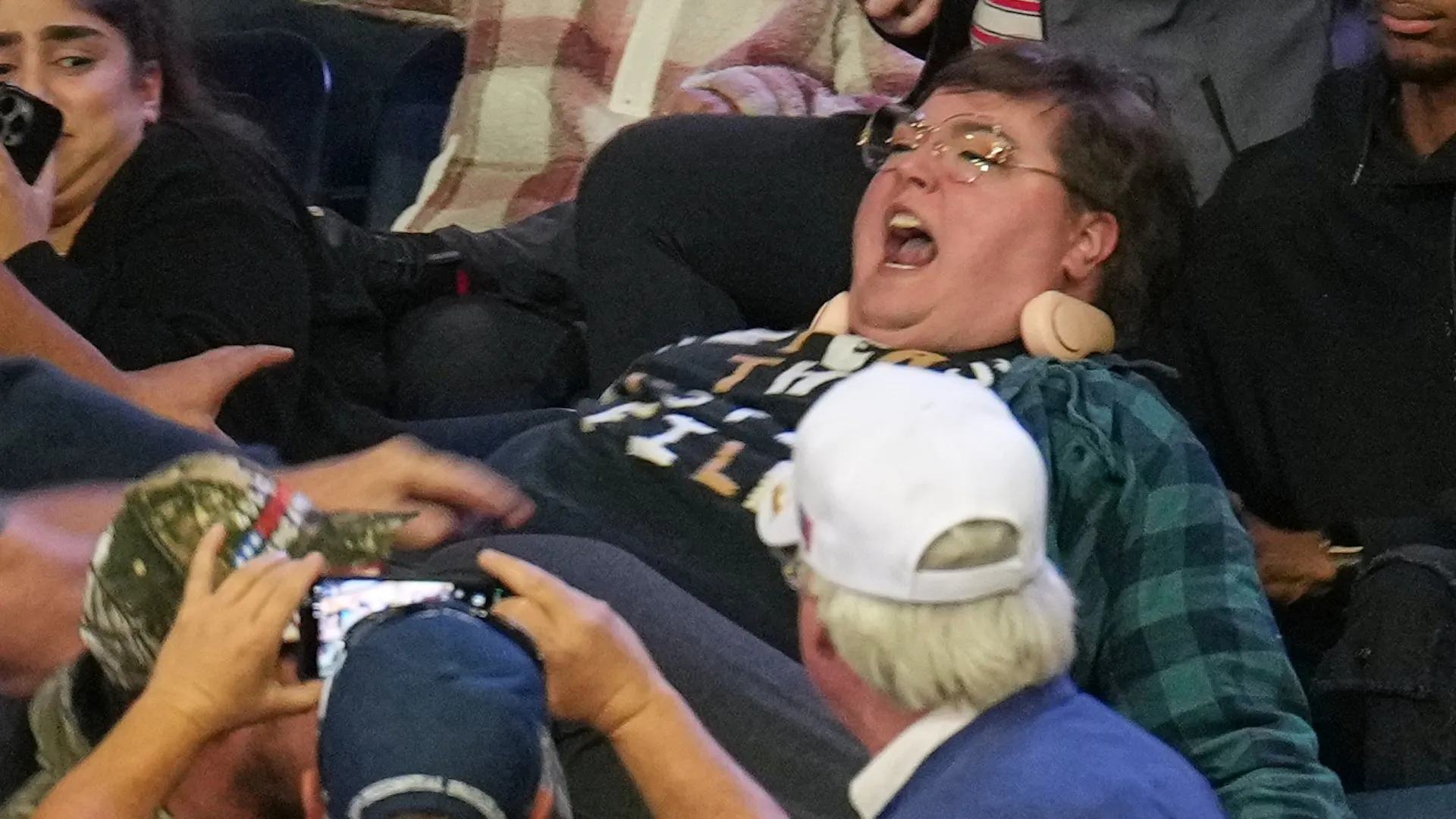
A protester wearing a ‘Release the Epstein files’ shirt was punched by Trump supporters at a Republican rally in Youngstown, Ohio. The US president mocked the protester as law enforcement officers took them away.
United States President Donald Trump has insisted that Russia and Ukraine have agreed to stop striking each other’s energy infrastructure, as he called on both sides to end the “ridiculous” war.
Trump’s comments on Monday came even as Ukrainian President Volodymyr Zelenskyy said Russian forces had struck at least six Ukrainian energy facilities since the US president declared the truce on Sunday.
Recommended Stories
list of 3 itemsend of list
“Well, they agreed,” Trump told reporters, referring to Zelenskyy and Russian President Vladimir Putin. “Because I said, ‘You agree’. That’s why they agreed, because I said they agree.”
When pressed about the Russian strikes, Trump said, “Well, I’d have to look at it and see, because there’s been violations on both sides.”
The US president called the war, which began with Russia’s full-scale invasion of Ukraine in February 2022, a “disaster” and claimed, without offering evidence, that at least 32,000 people had been killed this month alone.
“All I know is that Zelenskyy and Putin have to get together and end that ridiculous war,” he said.
Kyiv blindsided
Trump had blindsided Kyiv and its European allies when he announced the purported energy ceasefire on Sunday. The announcement came two days after he temporarily eased US sanctions on Russian diesel, a move that drew outrage in Europe and Ukraine.
Zelenskyy said it reversed years of Western efforts to isolate Russia’s economy and would only embolden Putin.
Lawmakers from both major parties in the United States have also said the diesel decision appears to violate US law. Several Republicans have objected that it undercuts a law Trump himself signed to tighten restrictions on Moscow.
Zelenskyy said on Monday that Ukraine supported an energy ceasefire and had carried out no attacks on Russian refineries overnight. He said Kyiv was prepared to sign “guarantees to make sure they can be trusted”.
But he said it was “increasingly evident” that Moscow would not comply.
“Today alone, the Russians have attacked 6 energy facilities in Ukraine. 33 people were wounded across the country,” Zelenskyy wrote on social media. “This is what happens when Russia sees the prospect of higher revenues for its war machine.”
Russia, however, has rejected any pause in fighting, with Foreign Minister Sergey Lavrov promising to press ahead with the military campaign.
“I do not think he deserves a respite,” he said of Zelenskyy. “I don’t think we’ll be buying into assurances and promises again.” Russia, he added, would continue to pursue the goals of what it calls its “special military operation” in Ukraine.
US midterms
Trump, meanwhile, has portrayed Ukraine, rather than Russia, as the main obstacle to peace. He has said that Putin is more eager on a deal than Zelenskyy, and has called on Ukrainians to vote their president out of office – an unusually harsh turn in a relationship that has been strained since Trump returned to the White House in 2025.
Al Jazeera’s Alan Fisher, reporting from Washington, DC, said Trump has previously announced agreements between Russia and Ukraine that never materialised.
“He says he wants to protect industries in the US like farmers and ranchers, and to do that he needs the price to go down. But it seems that he thinks there’s a deal, but no one else is sure that there actually is one,” Fisher said.
The latest announcement, according to our correspondent, appeared to be driven by Trump’s desire to bring down diesel prices before the US midterm elections on November 3.
Most polls predict that Republicans will lose control of Congress as voters grow frustrated with rising prices, particularly for petrol.
An opinion survey published on October 1 by the Associated Press news agency and the University of Chicago suggested that 65 percent of US adults blame the White House for the high cost of living, especially Trump’s tariff policies and his new war against Iran.
Ukraine’s European allies, meanwhile, voiced scepticism about the energy ceasefire and approved the largest set of European Union sanctions since Russia’s 2022 invasion.
The bloc’s foreign ministers added some 1,569 people and businesses to the bloc’s sanctions list to maintain the pressure on Moscow.
“Russia will only negotiate seriously under pressure, which is why we are sticking to our sanctions against Russia,” German Chancellor Friedrich Merz said in Berlin.