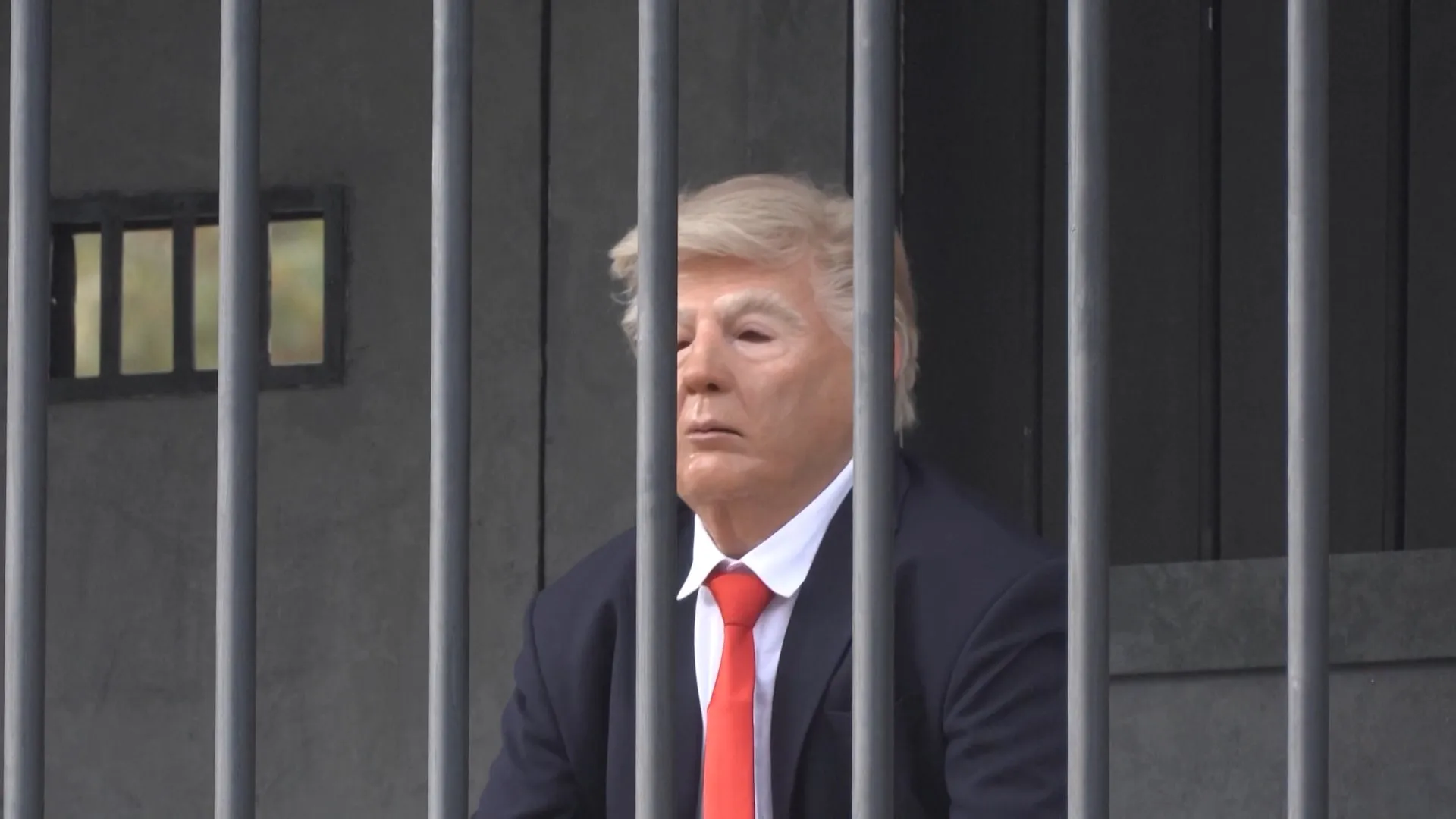
An Iranian performer in Tehran’s busy Tajrish Square has impersonated US President Donald Trump behind bars in an art installation featuring the slogan: “It is a crime not to see this scene.”
US president has continued to support data centres in advance of midterms, despite growing opposition from Republicans.
Published On 21 Oct 202621 Oct 2026
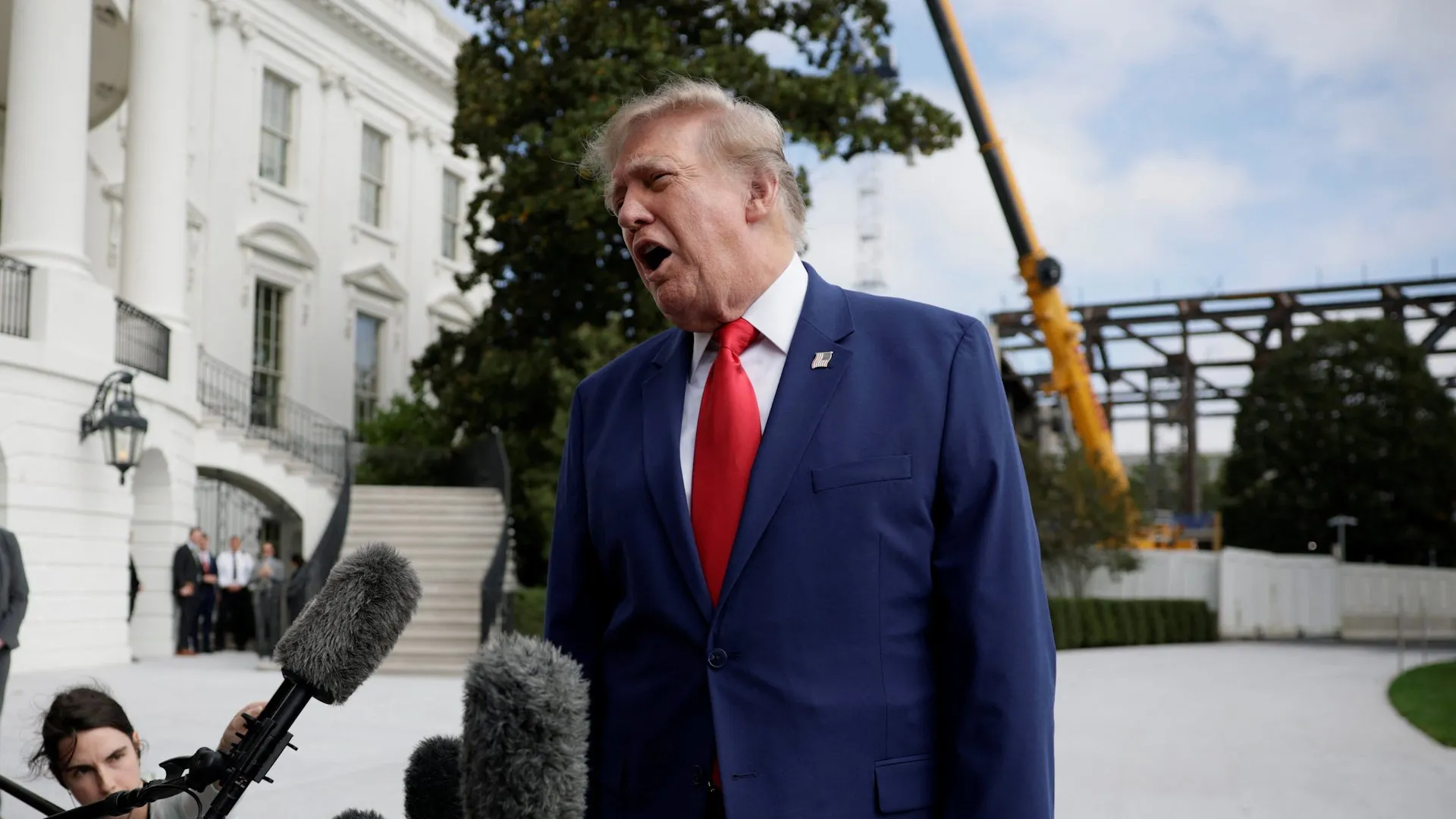
United States President Donald Trump has said AI data centres should pay “dividends” to communities, in a shift before the midterm elections.
“If companies want to make their Data Centers popular, pay the community, and/or individuals within the community, a ‘dividend’” Trump said in a post on Truth Social on Wednesday.
Recommended Stories
list of 3 itemsend of list
The president’s comments come after he doubled down on his support for data centres, a stance seen as one of several political liabilities for Republicans in the run-up to the midterm election, as Trump’s approval rating has hit record lows.
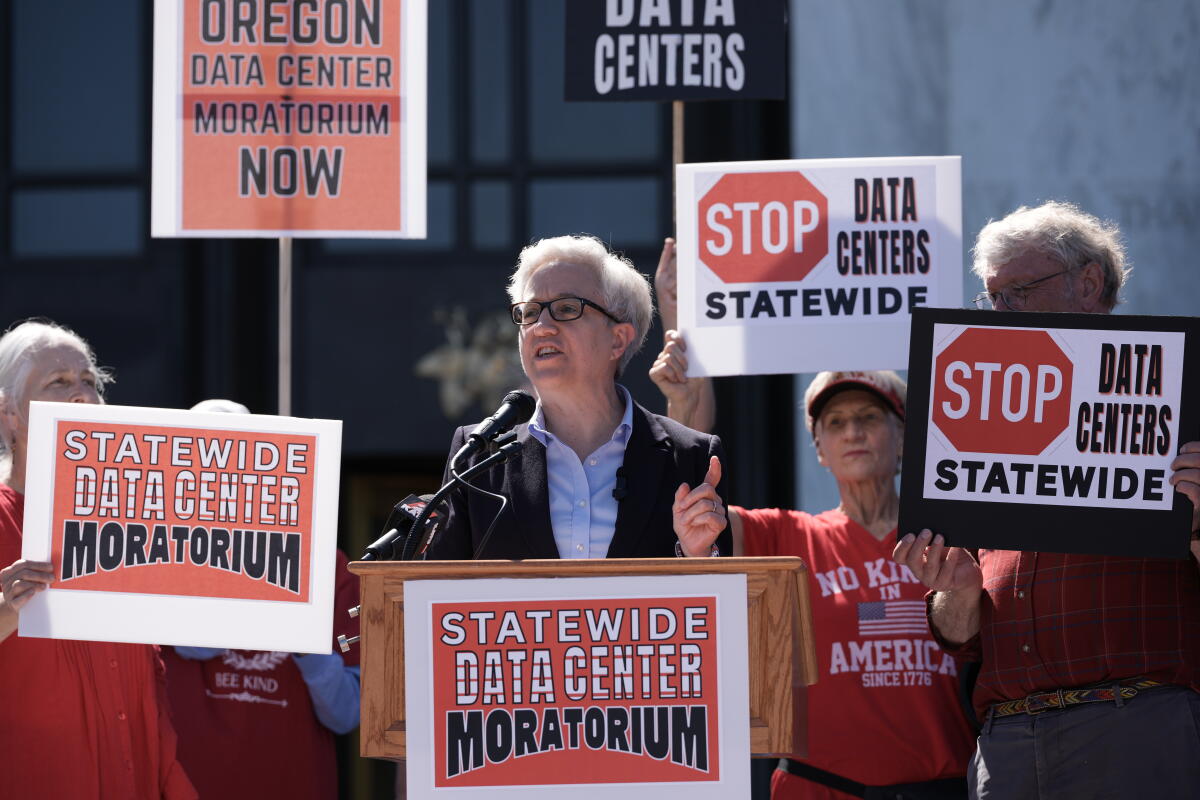
Polls show dismal support for such centres amid concerns about the sprawling complexes’ water and energy use.
In the post, Trump advised companies that they could make the centres popular if they “pay the community, and/or individuals within the community, a ‘dividend’.”
“I have watched the process closely, and Data Centers that were highly unpopular in a certain area, have become extremely popular when a financial deal is struck,” he said. “MAKE DEALS, and get them built!!!”
Several top Republican candidates have opposed data centres before the midterm polls, with the issue emerging as an area of rare bipartisan consensus in advance of the November 3 vote.
Republican Senate candidates, including Ken Paxton in Texas, Mike Rogers in Michigan and John Husted in Ohio, have all called for more restrictions and oversight on the centres, in a reversal of earlier positions.
The issue featured prominently in a recent debate in Iowa, where Republican Senate Candidate Ashley Hinson said the local level should decide whether to build AI data centres.
Despite the shifting sentiment, Trump in late August issued an impassioned defence of data centres, decrying what he called “the anti-Data Center movement” as a gift to China.
“The only reason that communities throughout the USA should not want Data Centers is if they want to end up being backwards and poor,” Trump wrote at the time.
“If they want to be successful and rich, with far lower taxes and jobs all over the place, let Data Reign.”
Trump has taken several measures to accelerate data centre development, including issuing an executive order last year that called for measures to fast-track permitting and environmental review. The order promised to use federal land for the “expeditious and orderly development of data centers”.
Trump has also backed a voluntary pledge by AI companies to cover the full cost of the electricity data centres use, but has avoided supporting legally binding federal restrictions.
A Gallup poll conducted in March suggested that 71 percent of Americans opposed establishing AI data centres in their areas.
An ABC News/Washington Post/Ipsos poll released on Wednesday identified a similar rate of disapproval, with 72 percent of respondents saying that they opposed building new data centres in their communities.
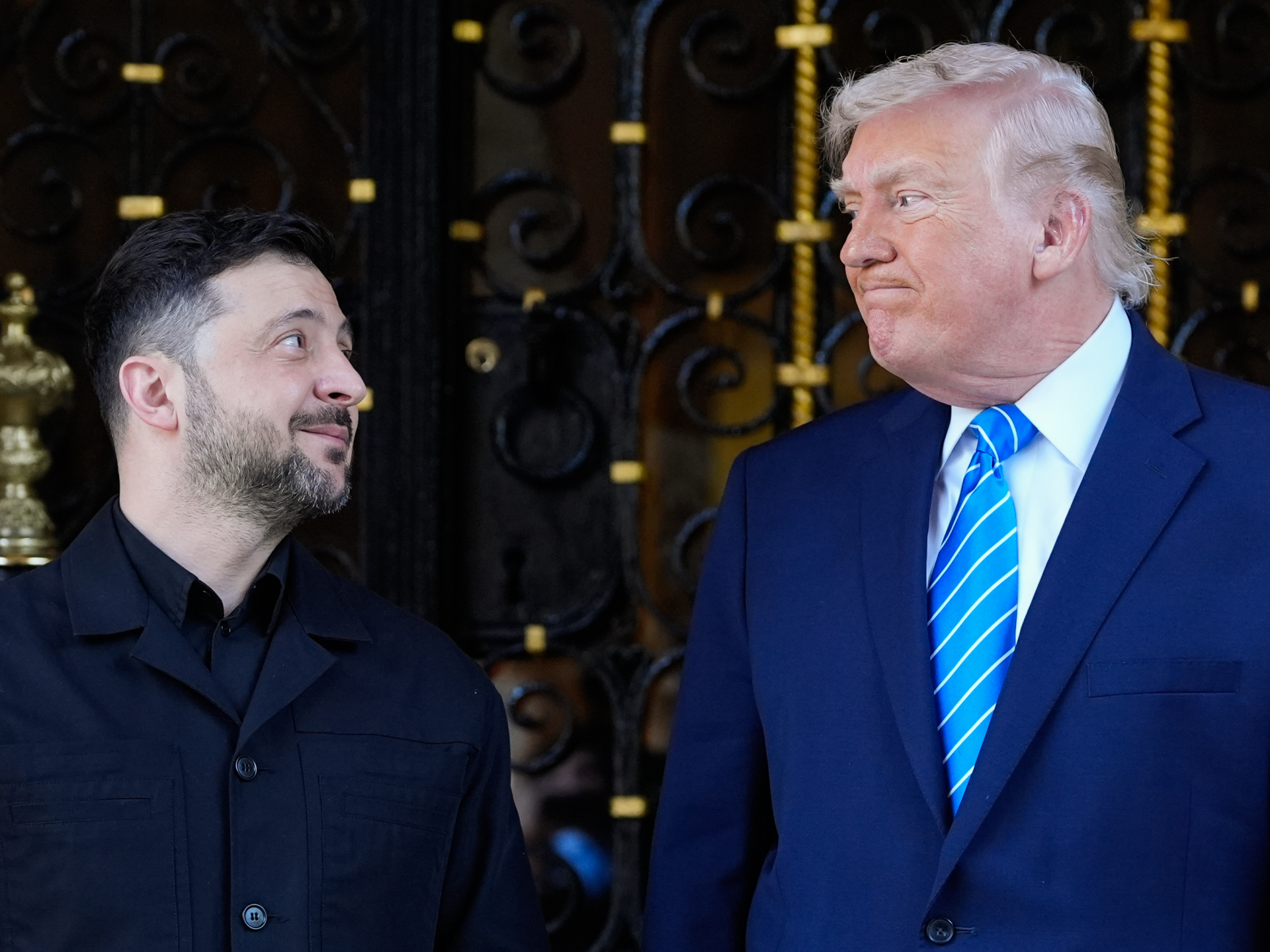
Amid escalating tensions with Ukrainian leader Volodymyr Zelenskyy, United States President Donald Trump has increased pressure on the Eastern European country to make a deal that would end the war with Russia.
Speaking at the White House on Tuesday, Trump doubled down on his efforts to blame the Ukrainian president for holding up peace efforts that would bring the years-long conflict to a close.
Recommended Stories
list of 3 itemsend of list
“Zelenskyy has to want to settle this war, and if he doesn’t, I think it’s going to be a very bad thing,” Trump said as he talked about Russia having an “unlimited” supply of people to send in the fight.
Moments later, the US president referenced a contentious Oval Office meeting he held with Zelenskyy in February 2025, shortly after returning to power.
Zelenskyy, Trump said, could have made a “better deal” then. “He’s going to have to want to make a deal, because I don’t think his people are going to stand for it any longer,” Trump told reporters.
On Tuesday, the Ukrainian president met US special envoy Steve Witkoff and European leaders in Oslo, Norway, to discuss ending Russia’s war.
In a post on social media after the meeting concluded, Zelenskyy said, without providing specifics, that his country has “some clear ideas on how to get to peace”.
“We are united with our European partners in this effort, and we want the Americans to take these ideas to the Russians,” Zelenskyy wrote. “One of the important ideas is to move to a potential trilateral meeting of the leaders to address the issues that only the leaders can do.”
The Ukrainian leader added that Witkoff would head to Russia on Wednesday, where peace discussions are expected to continue.
“Let’s see what Putin has to say,” Zelenskyy said.
When asked whether Russian President Vladimir Putin should meet Zelenskyy, Trump said there was “tremendous” hatred between the two leaders.
“It’s hard for them to be in the same room,” Trump said. “I don’t care how it’s done.”
Starlink controversy
Trump’s remarks come as the White House continues to squeeze Ukraine in order to force the country to cut a deal with Russia.
Last week, Ukrainian officials reported slowdowns with Starshield, the military-grade version of the Starlink satellite system, run by the aerospace company SpaceX.
Ukraine relies on the technology for communications and intelligence to prevent Russian attacks.
It is unclear who ordered restrictions that limit Ukraine’s access to Starshield. SpaceX CEO and Trump ally Elon Musk pointed a finger at the White House.
“Starshield systems are owned and controlled by the US government. Any limits on speed or usage are decided by the US military and ultimately POTUS,” he wrote on October 14.
The news agency Reuters also reported that the order came from inside the White House, citing two US officials and a Western official.
But a report in The Wall Street Journal on Tuesday claimed US officials had blamed Musk himself for the slowdown, saying the SpaceX CEO ordered it last week. Trump and US Defence Secretary Pete Hegseth have both denied that the government directed the restrictions, with Hegseth pushing responsibility towards SpaceX.
Building ties with Putin
Trump, meanwhile, has sought to ease the historically tense relations between Russia and the US.
In August 2025, Trump invited Putin to Alaska, the Russian leader’s first visit to US soil in a decade.
More recently, Trump has expressed openness this month to meeting with Putin and Chinese President Xi Jinping, as part of a trilateral discussion on denuclearisation.
Trump also announced this month that he struck a deal to obtain diesel from Russia, marking a stunning reversal of years of US pressure on Moscow’s economy.
The US president also waived new economic restrictions that would have been imposed under the Lindsey Graham Sanctioning Russia and Iran Act, a bipartisan law he signed one month earlier, in honour of a late senator.
It would have imposed sanctions on Russian officials, banks and tankers, as well as tariffs on countries that purchase Russian oil.
US Secretary of State Marco Rubio defended the decision on Tuesday, saying the law allowed the waiver through a provision embedded in the legislation.
“The president chose to use a national security waiver to not immediately implement those [sanctions and restrictions], because he recognises that these things have to be looked at in their totality,” Rubio said in an interview with India’s News18.
Rubio argued that Trump was engaged in a “balancing act” in deciding the extent of US-imposed economic restrictions and how they could impact the rest of the world.
“When you do that pressure, sometimes it spills over and has a negative impact on other countries,” Rubio said.
The lawsuit argues Trump bypassed Congress and misused a century-old law to impose sweeping tariffs on Canadian imports.
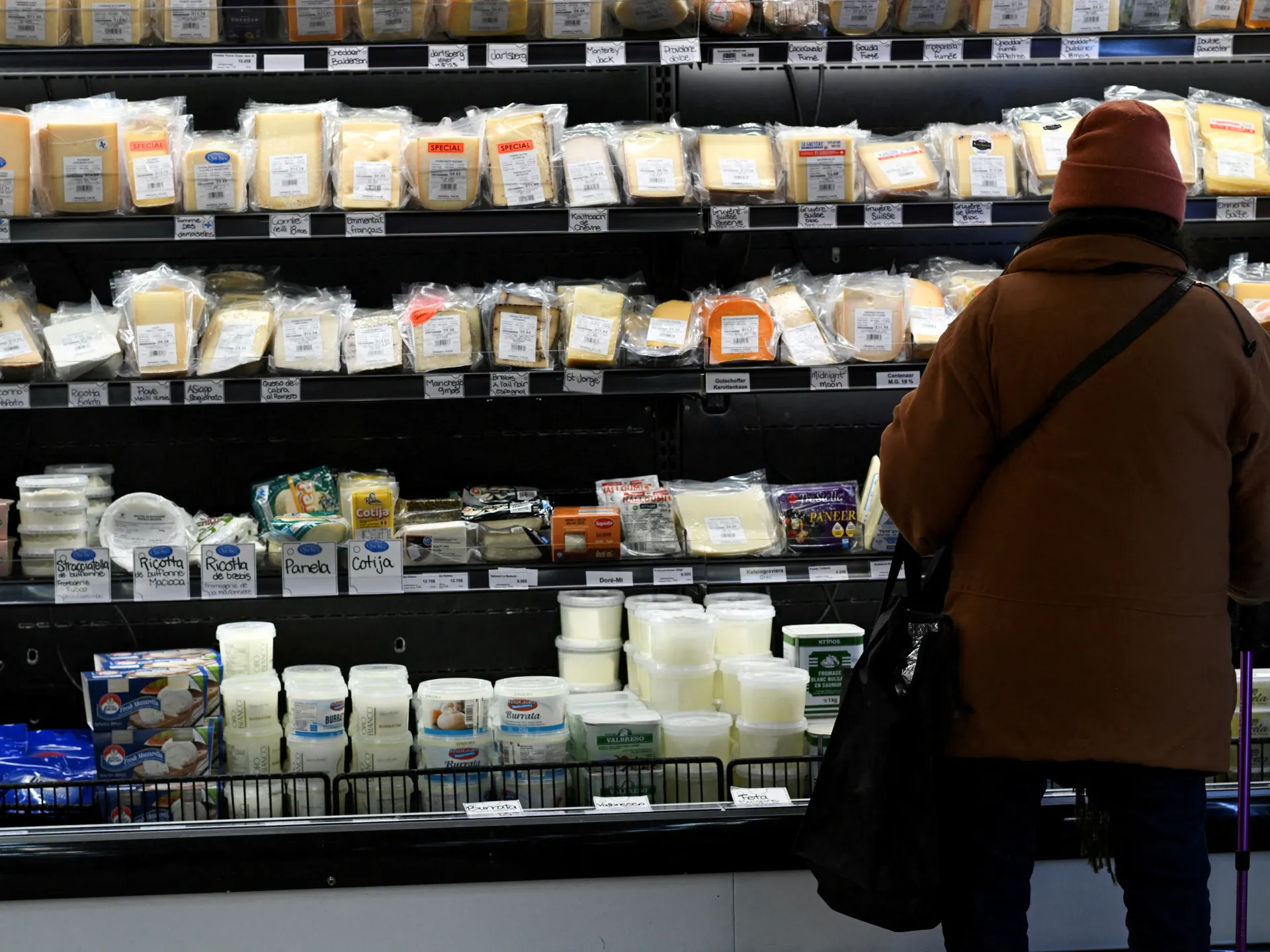
A US food importer is suing US President Donald Trump over his 50 percent tariffs on Canadian goods, arguing he lacks the legal authority to impose sweeping tariffs without congressional approval.
Gellert Global Group, a New Jersey-based company that imports Canadian cheese, filed the lawsuit on Tuesday in the US Court of International Trade in New York.
Recommended Stories
list of 4 itemsend of list
The company says the tariffs are driving up its costs and disrupting its relationships with suppliers on both sides of the border. Between September 16 and October 11, Gellert had paid more than $520,000 in duties, according to the complaint.
“Gellert Global Group has spent generations building trusted relationships with suppliers, customers and partners across the food industry,” said Thomas Gellert, the company’s co-chief executive officer, in a press release. “These tariffs disrupt those relationships overnight and create costs and uncertainty that ripple through the entire supply chain.”
The lawsuit challenges Trump’s decision to use a Depression-era law to impose tariffs on a wide range of Canadian products, including dairy products, furniture, clothing and wine.
The lawsuit argues that the law doesn’t apply to the Canadian policies the Trump administration says are discriminatory, since two of them “arose in response to the president’s own tariffs, while the third involves Canadian dairy policy governed by the US-Mexico-Canada Agreement (USMCA)”.
It also questions why Canadian cheese is being taxed over disputes involving alcohol and cars.
“No president should have the power to pull a dormant statute off the shelf and use it to impose sweeping tariffs or import bans without the limits Congress required,” said Sara Albrecht, chairman and CEO of the Liberty Justice Center, a nonprofit legal organisation that filed the suit on Gellert’s behalf.
The White House did not immediately respond to a request for comment, according to the Reuters news agency.
At the centre of the case is Section 338 of the Smoot-Hawley Tariff Act of 1930, which allows the president to impose tariffs of up to 50 percent on imports from countries found to discriminate against American businesses.
The provision had never been used until Trump invoked it this year.
The lawsuit argues that newer laws passed by Congress since then, such as Section 301 of the Trade Act of 1974, require investigations, public comment and other safeguards that Gellert says the Trump administration has bypassed, and that these override Section 338.
“The administration cannot skip those protections by reaching for a 1930 statute that no president had ever used to impose a tariff,” said Jeffrey Schwab, the Liberty Justice Center’s senior counsel and director of litigation.
In addition, the lawsuit says that even if Trump is allowed to use the older law, he hasn’t met its requirements, including waiting 30 days before tariffs can be collected on new products added to the list.
The administration only waited seven days to start collecting tariffs on cheese in September, according to the lawsuit.
Gellert is asking the court to declare the tariffs illegal, stop them from being collected, and order refunds with interest for importers who have been impacted.
The lawsuit marks the fourth major legal challenge to Trump’s tariffs.
In February, the US Supreme Court struck down most of the tariffs he imposed in 2025, and a trade court later ruled against a temporary 10 percent global tariff. A separate challenge to tariffs imposed over alleged forced labour in international trade is still pending.
The revocations targeted visa holders who had allegedly broken the law, or pose threats to national security.
Published On 20 Oct 202620 Oct 2026
The Trump administration has said it has revoked more than 300,000 visas issued to foreign nationals, claiming it has done so at a faster pace than any previous administration.
A spokesman for the US Department of State said on social media on Tuesday that the revocations targeted foreign nationals in the United States on visas who had broken the law, committed fraud or posed threats to national security.
Recommended Stories
list of 4 itemsend of list
“We have zero tolerance for foreigners here on visas who break the law, commit fraud, or undermine our national security,” Tommy Pigott, State Department spokesman, said in a post on the social media platform X.
The administration would continue taking action to secure US borders and protect national security, he added.
Al Jazeera has reached out to the State Department for comment.
In January, the department said it had revoked more than 100,000 visas, a record at the time.
The administration has also adopted a stricter policy on granting visas, with tightened social media vetting and expanded screening.
Rights advocates and human rights experts have condemned the Trump administration’s social media screening efforts, which they say threaten free speech and are akin to surveillance and the singling out of immigrants.
Trump calls for Zelenskyy to be replaced as negotiator, while Ukraine’s president says arms shipments delayed.
Published On 20 Oct 202620 Oct 2026
United States President Donald Trump says someone other than Ukrainian President Volodymyr Zelenskyy should negotiate on Kyiv’s behalf in talks to end Russia’s war.
“Zelenskyy is a man that should have had settled this war a long time ago. If he would’ve listened to me, he would have made a much better deal a long time ago,” Trump told reporters outside the White House on Monday. “Maybe it’s time for Zelenskyy to get somebody else to negotiate.”
Recommended Stories
list of 3 itemsend of list
The US president has been verbally swiping at his Ukrainian counterpart for several days as a rift between the leaders deepens.
On Sunday, Trump claimed on Truth Social that Zelenskyy does not want to end the war. Earlier this month, he called for him to be replaced as president, and labelled him a “warmonger” over Ukraine’s attacks on Russian oil refineries.
Trump has also defended sanctions waivers for Russia, saying in the same Truth Social post that he wants to keep Moscow at the negotiating table.
Zelenskyy said the decision “will hurt Ukraine” and strengthen Russian President Vladimir Putin’s war effort.
Trump also announced plans on October 9 for Russia to supply more than 300,000 metric tonnes of diesel to US and global markets to tackle fuel prices that have soared since the US and Israel launched a war on Iran in late February.
The decision has angered not only Kyiv, but also European partners and US officials, who say it rewards Moscow while it continues its four-and-a-half-year war on Ukraine.
Zelenskyy told US senators at a meeting on Monday that decisions taken by the Trump administration “are hard to explain between friends”.
He said arms shipments had been delayed and intelligence sharing restricted.
“We also know that … the Pentagon is delaying the delivery of missiles that our partners have already paid for through the PURL (Prioritised Ukraine Requirements List) programme,” he said.
To his knowledge, he added, one missile package was waiting for the signature of US Defense Secretary Pete Hegseth.
He also said several European countries were ready to transfer Patriot interceptor missiles from their own stockpiles but were awaiting US approval.
People walk in front of a damaged shopping mall following an air attack in Kyiv on October 19, 2026, amid the Russian invasion of Ukraine [Oleksii Filippov/AFP]
In remarks posted in a video on Telegram, Zelenskyy said that on three occasions in the past week, Ukraine had not received the advance warning of Russian attacks generally provided by its partners.
Last week, Zelenskyy suggested a disruption of Starlink services in Ukraine was “deliberate”. US Secretary of State Marco Rubio rejected the claim.
The sparring comes as Trump’s special envoy Steve Witkoff is set to travel to Norway this week for the next round of negotiations on ending the war in Ukraine, the Reuters news agency reported, citing three people familiar with the matter.
Two of the sources said they expected Zelenskyy to attend the meetings.
The Oslo discussions are expected to include Zelenskyy, Norwegian Prime Minister Jonas Gahr Store, representatives of the E4 – made up of the United Kingdom, France, Germany, and Poland – the European Union, and NATO.
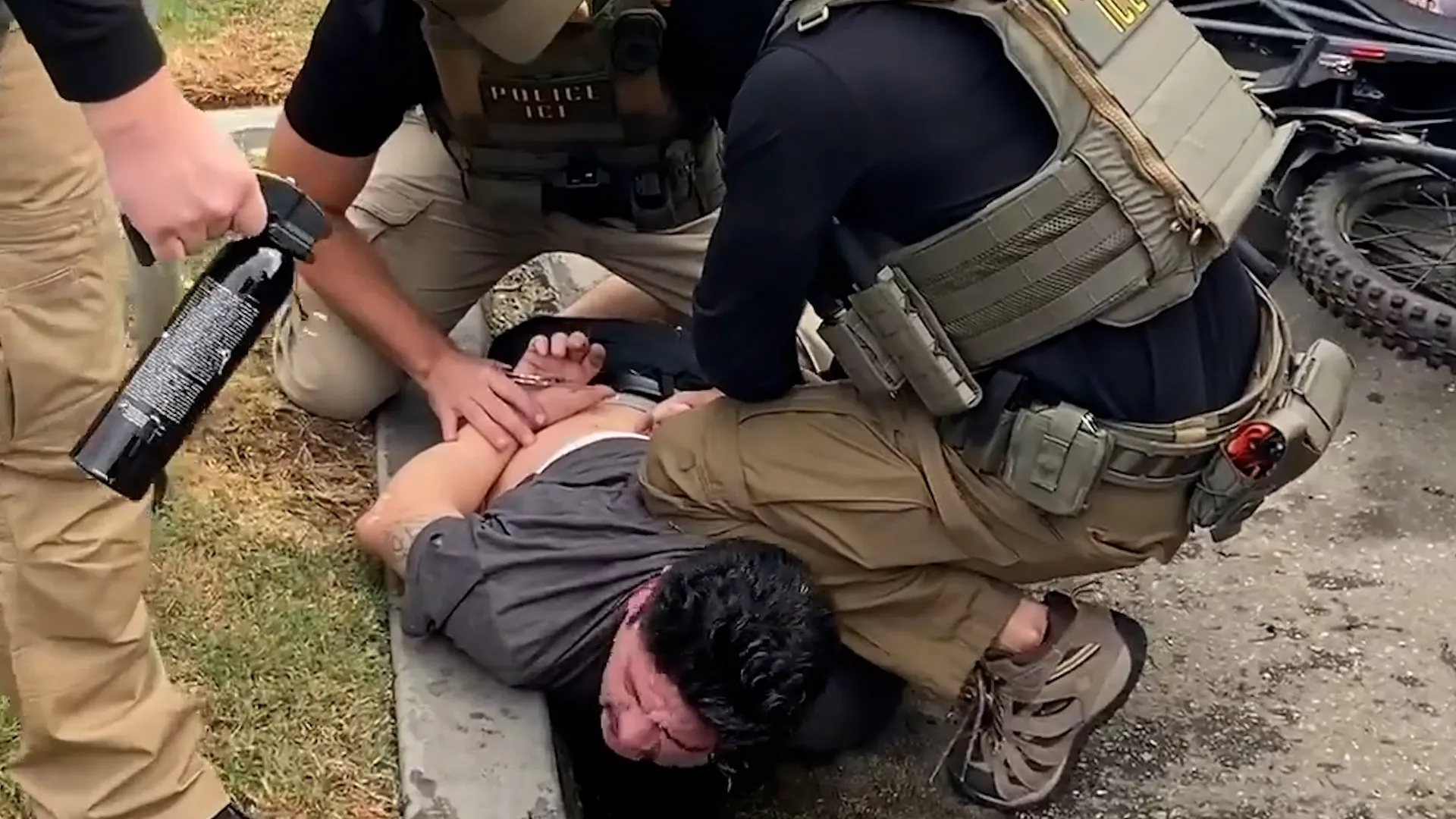
Video shows a man screaming in pain as ICE agents pin him down during an arrest in Long Beach, California. The family of Ricardo Gonzalez say he is a US citizen, and that ICE agents broke his arm during a wrongful arrest.
Hegseth has travelled to Israel to meet Netanyahu ahead of a closely contested election, Axios reported, citing sources.
Published On 20 Oct 202620 Oct 2026
US Defense Secretary Pete Hegseth has met with Israeli Prime Minister Benjamin Netanyahu during an undisclosed visit to Israel, according to Axios.
The meeting between the hawkish ally of US President Donald Trump and the veteran Israeli premier facing a knife-edge election occurred on Monday, Axios reported, citing two sources with knowledge of the matter.
Recommended Stories
list of 3 itemsend of list
The Reuters news agency could not immediately confirm the visit. The Pentagon and Israel’s embassy in Washington did not immediately respond to requests for comment, and there was no immediate indication of what they discussed.
Trump endorsement
President Trump took to his social media platform Truth Social on Sunday to endorse Netanyahu in next week’s parliamentary election, the first vote since the Hamas-led October 7 attacks in 2023 and Israel’s genocidal campaign in Gaza began.
US President Donald Trump (R) and Israeli Prime Minister Benjamin Netanyahu shake hands [File: AFP]
Trump praised the prime minister for being an ally of the US in its war on Iran. He added that Netanyahu had his “Complete and Total Endorsement”.
“BIBI NETANYAHU WILL NEVER LET YOU DOWN!” Trump wrote.
Netanyahu’s religious-nationalist coalition is projected to lose its governing majority, although the opposition may also struggle to form a government, opinion polls suggest.
US Vice President JD Vance, however, declined to endorse Netanyahu in an interview earlier on Monday, saying he was not getting involved in Israeli elections.
“I endorse American candidates, and that’s where I’m focused on is the midterms,” Vance, who travelled to Budapest and endorsed Viktor Orban in Hungarian elections earlier this year, said in an interview with digital media outlet 2WAY.
“I’m not anti-endorsing him, but I’m not pro-endorsing him; I’m not getting involved in Israeli elections,” Vance said.
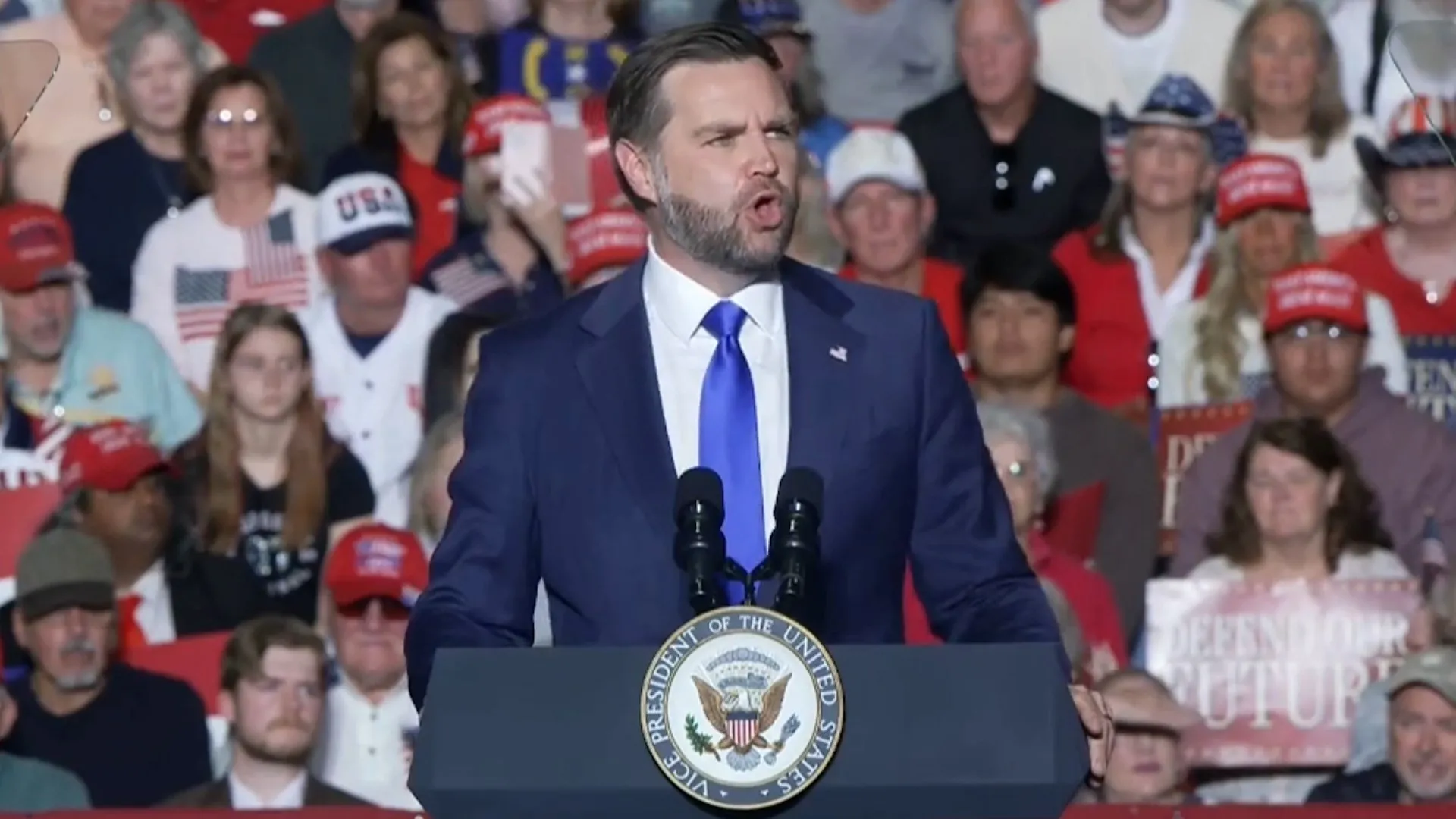
A protester demanding the release of the Epstein files interrupted US Vice President JD Vance at a North Carolina rally for Republican midterm candidates. After claiming illegal border crossings had fallen to zero, Vance joked that the protester was one who had slipped through.
First Lady Melania Trump has championed the executive action as a ‘transformative moment’ for US women’s health.
Published On 19 Oct 202619 Oct 2026
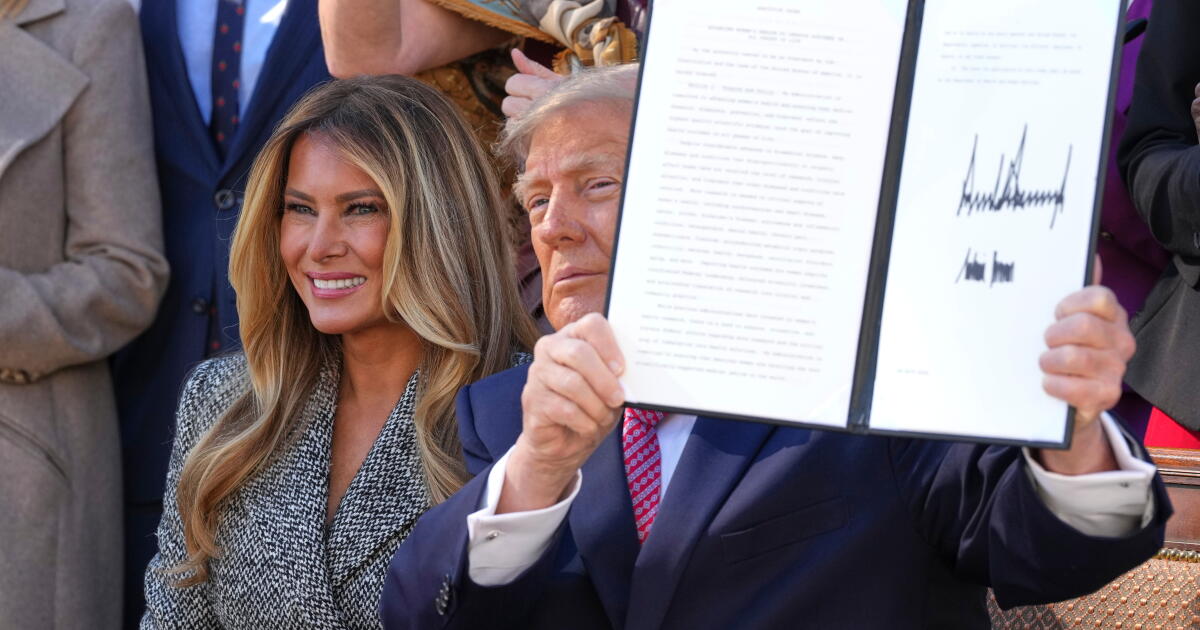
United States President Donald Trump has signed an executive order that will establish a dedicated women’s health division within the National Institutes of Health (NIH), as well as a White House task force focused on the subject.
During a signing ceremony in Washington on Monday, First Lady Melania Trump praised the initiative as setting “a new standard for women’s health in America”.
Recommended Stories
list of 3 itemsend of list
“This is a transformative moment for women in America. Beginning today, we will change the reality of women’s health,” she said.
“Previous generations fought for women’s rights. Our generation will fight to discover the cures that will ensure a woman can live her life in health and to the fullest.”
The newly minted project, spearheaded by the first lady, requires the new health division to be established within 90 days.
It aims to accelerate scientific discoveries, expand clinical access for women’s health and modernise care throughout every stage of a woman’s life.
The new division at the NIH will not replace the agency’s Office of Research on Women’s Health but will have a broader mandate beyond research, according to the White House.
Melania Trump gestured to “super intelligence, advanced biotechnology and groundbreaking therapies” as tools that offer a “unique chance to reinvent women’s healthcare”.
The first lady’s office has identified “five pillars” for innovation in the field. One involves funding targeted research to develop cures for diseases that affect women, such as endometriosis.
Another calls for a quicker timeline for “promising therapeutics” to reach female patients.
“In 2026, medical advances can do more than just prolong life,” said Melania Trump. “It should give women the freedom to live life to its fullest, to pursue our dreams, experience love, discover, create, travel and lead.”
The White House task force will be co-chaired by the newly cancer-free White House Chief of Staff Susie Wiles, as well as Health and Human Services (HHS) Secretary Robert F Kennedy Jr.
While Monday’s executive order mandates that the HHS must fund the administrative costs of the task force, the order itself does not include any specific funding targets or dollar amounts.
Experts have noted that Melania Trump has kept a relatively low profile during Trump’s second term.
Her public appearances have been fewer than during Trump’s first term, though she has stepped into the public spotlight to promote improvements to foster care and the role of technology, such as artificial intelligence in education.
During Trump’s first term, the first lady launched the “Be Best” campaign focused on child well-being, safe social media and countering opioid abuse.
But critics have questioned how effective Monday’s executive order might be, given the cuts Trump has made to the federal workforce since his second inauguration.
Thousands of employees have been laid off at the NIH alone, with Kaiser Health News reporting that its workforce is at its lowest level in decades.
The NIH was also given a deadline to slash spending by 35 percent across all of its divisions, amounting to a massive $2.6bn budget reduction.
In April 2025, the HHS drew widespread condemnation and a multi-state lawsuit after abruptly moving to terminate regional contracts for the Women’s Health Initiative, the nation’s largest longitudinal study on older women’s health at the time.
Critics warned that the move would jeopardise life-saving research on cardiovascular disease, cancer and osteoporotic fractures for senior women.
WASHINGTON — President Trump on Monday directed the federal government to bolster federal research into women’s health, a move pushed by his wife, first lady Melania Trump.
The Republican president signed an executive order that creates a new women’s health division at the National Institutes of Health and a White House task force to focus on the issue. That panel was set to hold its first meeting Monday after the Trumps held a Rose Garden signing ceremony.
“Beginning today we will change the reality of women’s health,” Melania Trump said. “Previous generations fought for women’s rights. Our generation will fight to discover the cures that will ensure a woman can live her life in health and to the fullest.”
The president, who spoke after his wife, said the order will “promote new research and really go after the understudied diseases affecting women.” The order is also intended to promote diagnostic technology and improve treatment.
White House chief of staff Susie Wiles, who recently completed treatment for breast cancer, and Health and Human Services Secretary Robert F. Kennedy Jr. will lead the White House task force. Donald Trump said the task force will coordinate with various federal agencies and programs. The order does not include specific funding goals.
The initiative comes after a series of meetings the first lady had with federal health officials.
The president called it a “historic action” and praised the first lady’s work.
“She’s accomplished so much,” he said before pivoting into unscripted commentary on White House renovations, including the patio stone that now covers what was once the Rose Garden lawn.
Shifting back to women’s health, the president expressed surprise that some of the order’s requirements had not already been imposed.
“Who the hell wouldn’t have a women’s health division?” he said, after recalling that he’d asked Melania Trump, “Are you sure they don’t have that?”
The executive order calls for targeting maternal health, mental health and endometriosis. It also mentions other health concerns and diseases, including Alzheimer’s, osteoporosis, heart disease and stroke.
Melania Trump helped shape the order and the task force in consultation with physicians, White House officials, Kennedy and the Republican president. The initiative adds a new dimension to her policy portfolio as first lady.
In Donald Trump’s second term, the first lady has focused on improving foster care systems and expanding technology and artificial-intelligence access in education. In Trump’s first presidency, the first lady’s signature initiative, Be Best, focused on child well-being, safe social media use and reducing drug abuse.
The White House ceremony comes weeks before Nov. 3 elections and as Donald Trump’s job approval ratings have declined, including among women.
About 4 in 10 independent women supported Trump during the 2024 election against Democrat Kamala Harris and in the pre-presidency period, according to AP-NORC polls. That dropped to around a quarter in the opening months of this midterm election year, the period marked by Trump’s hard-line immigration crackdown in U.S. cities and the opening weeks of the Iran war.
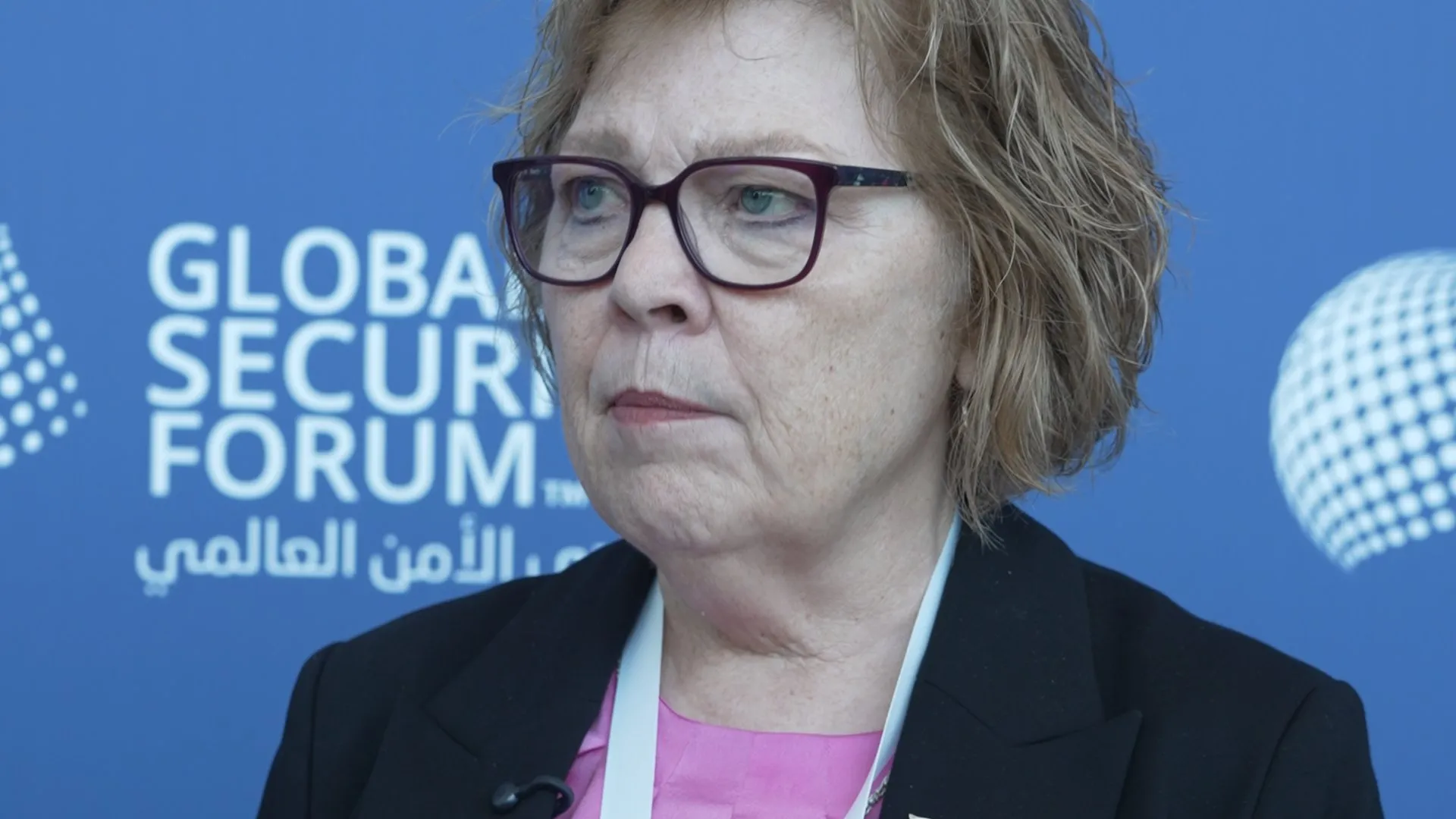
Barbara Leaf, former US Assistant Secretary of State for Near Eastern Affairs, tells Al Jazeera that public opposition to the war with Iran could threaten Republican control of Congress, as economic fallout fuels voter anger.
US president accuses Ukrainian leader of not wanting to end the war, as Zelenskyy speaks with Washington envoys.
Published On 19 Oct 202619 Oct 2026
United States President Donald Trump has defended sanction waivers for Russia, saying he wants to keep Moscow at the bargaining table and accusing his counterpart in Kyiv of not wanting to end the war in Ukraine.
Trump made the comments on Truth Social on Sunday in response to criticism of his decision to block numerous sanctions on Russia just days before they were due to take effect.
Recommended Stories
list of 3 itemsend of list
“My decision on Russia is a very simple one. I am in the process of negotiating Peace in the war between Russia and Ukraine, and don’t want to do anything that will drive, foolishly, Russia away from the bargaining table,” he said.
The move has triggered a significant diplomatic fallout between Trump and Ukrainian President Volodymyr Zelenskyy over the past week.
Zelenskyy said that waiving sanctions on Russia, which launched a full-scale invasion of its neighbour in 2022, “will hurt Ukraine”, telling NBC’s Meet the Press on Sunday that it would strengthen Russian President Vladimir Putin’s war effort.
“We can’t compare me and Putin. He’s [an] aggressor. He occupied us. He killed adults and children, his soldiers. He’s a terrorist, and that’s why I hope that President Trump will be very clear with this position.”
Trump reiterated his claim that Zelenskyy does not want the war on his country to end, saying on Truth Social that Kyiv was launching attacks on diesel refineries in Russia despite knowing it was “seriously hurting the world diesel markets”.
“Zelenskyy doesn’t care, and frankly, with all of the money that Europe is famously giving him… he doesn’t want to end this war, and probably never did,” Trump wrote.
Trump announced plans on October 9 for Russia to supply more than 300,000 metric tonnes of diesel to US and global markets to tackle fuel prices that have soared since the US and Israel launched war on Iran in late February. The move led Tehran to effectively close the Strait of Hormuz, through which one-fifth of global energy exports transited before the war.
Trump’s embrace of Russian energy has angered not only Kyiv, but also European partners and many US officials, who say the move rewards Moscow while it continues its four-and-a-half-year war against Ukraine.
US-Ukraine talks continue
The Ukrainian president said on X on Sunday that he has spoken with US presidential envoys Steve Witkoff and Jared Kushner as part of “virtually non-stop communication” between the two countries’ teams aimed at the “next steps in diplomacy”.
“We are doing everything on our part to make this happen, and to ensure that America’s position is strong and helps bring peace closer. Peace that everyone, except Russia, has been waiting for over the past four and a half years,” Zelenskyy wrote.
Zelenskyy spoke with Witkoff and Kushner as Russia and Ukraine continued to strike each other’s energy sites, with Moscow leaving thousands without power, and Kyiv carrying out the largest drone attack on Russia, in St Petersburg, since the war began.
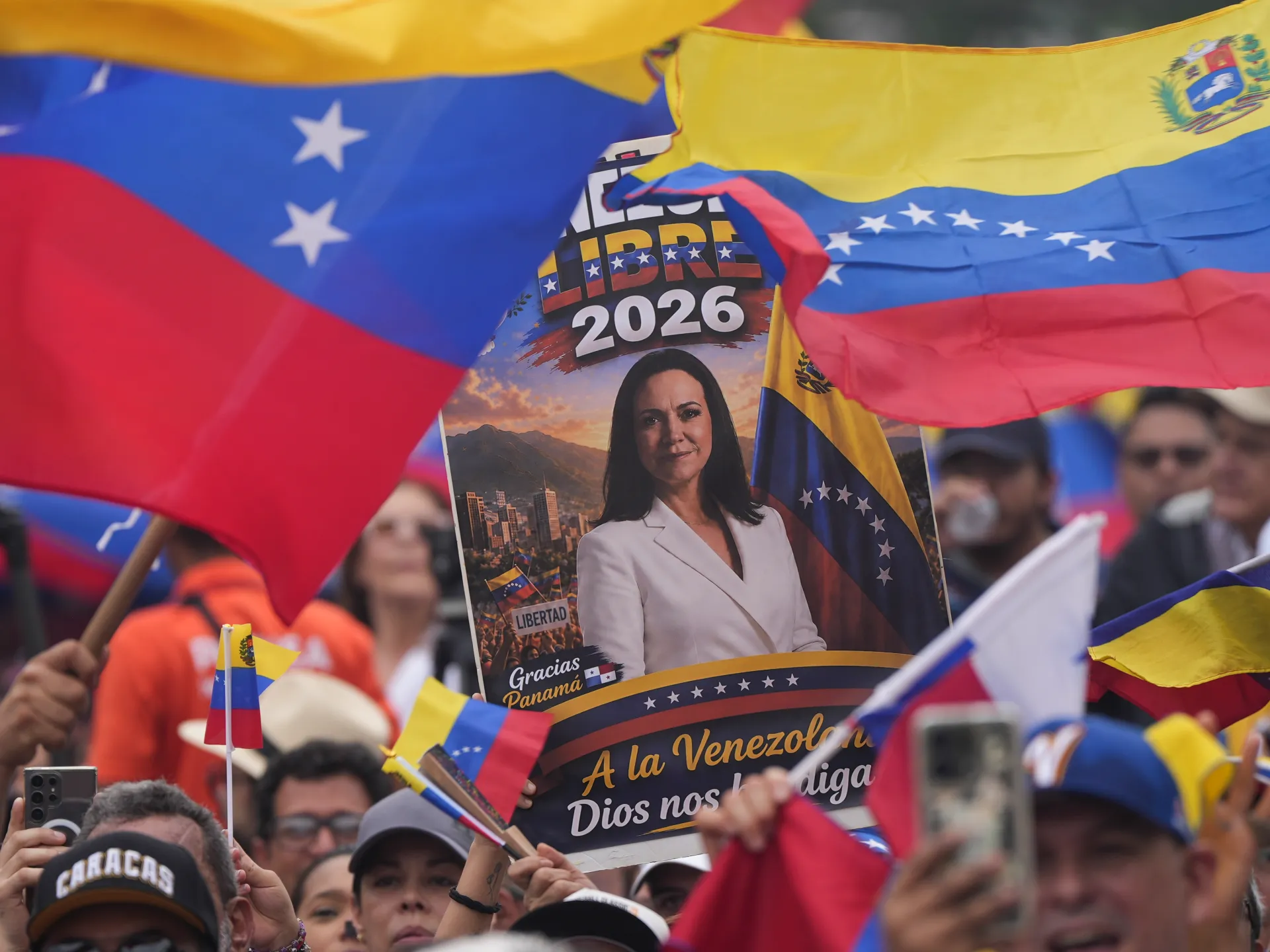
An alliance of Venezuelan opposition parties has reaffirmed its commitment to exiled Nobel Peace Prize laureate Maria Corina Machado as its leader.
On Sunday, members of the opposition’s Unitary Democratic Platform (PUD) agreed in a meeting in Caracas to “recognise and support the leadership of Maria Corina Machado”.
Recommended Stories
list of 3 itemsend of list
The coalition also renewed its demand for free elections in Venezuela, following a series of contested presidential votes in 2024 and 2018.
Sunday’s statement included 14 proposals for a democratic transition, including freedom for political parties, the release of all political prisoners and the safe return of those who went into exile.
The announcement also increases pressure on authorities to allow Machado’s return. She has been living in exile since leaving Venezuela last December to receive her Nobel Prize.
“The will of the Venezuelans must once again govern the destiny of our nation,” the opposition’s former presidential candidate Edmundo Gonzalez wrote on social media supporting the proposals.
“We will not accept political prisoners, persecution or a governing power that disregards the mandate of its citizens. Living in freedom and under a genuine constitutional order is a legitimate demand of our society.”
No election set
Venezuela has yet to declare a date for a new presidential vote. Since January 3, the country has been led by interim President Delcy Rodriguez of the long-governing United Socialist Party of Venezuela (PSUV).
PSUV leaders have been accused of carrying out human rights abuses against political dissidents, including arbitrary arrest, imprisonment and torture.
Still, after the United States launched a military operation to abduct and jail former President Nicolas Maduro, the PSUV has remained in power with the support of the White House.
US President Donald Trump has backed Rodriguez’s leadership, despite her having been Maduro’s vice president.
His administration has maintained an active role in Venezuela, exerting control over its oil resources and pressuring the Rodriguez government for reforms.
But critics point out that Trump has been reluctant to push Rodriguez for new elections, opting instead for a three-phase plan that focuses first on stabilising the country and economic recovery before pursuing a political transition.
Machado, meanwhile, has told The Financial Times she would like to see Venezuela hold elections by July next year.
“The US government and the Venezuelan people all agree that the only way to make this sustainable and a real victory is to turn Venezuela into a stable democracy,” she told the newspaper earlier this month.
A thwarted return
Venezuelan authorities blocked Machado’s repeated attempts to return to the country, according to her party, Vente Venezuela.
Machado has also reportedly attempted to petition the Trump administration for help re-entering Venezuela.
Separately, she gifted Trump her Nobel Peace Prize in January, during a visit to Washington, DC. Media reports, however, have suggested friction between the Trump administration and Machado.
In interviews with Reuters and Axios, US administration officials have anonymously expressed frustration with the opposition leader’s repeated efforts to return home, particularly after a pair of deadly earthquakes in Venezuela last July.
Axios quoted one official as calling Machado’s push “political opportunism”.
Machado, however, remains one of the most popular figures in Venezuela’s opposition.
In October 2023, Machado won the opposition coalition’s presidential primary, but in January 2024, Venezuela’s courts blocked her from running in the upcoming race.
The courts upheld a 15-year ban on her holding public office, reportedly due to her support of US sanctions against the Maduro government.
Gonzalez ultimately replaced Machado as the opposition candidate in the 2024 race. Maduro claimed victory for a third term as Venezuela’s president in that election cycle, despite widespread criticism that the vote did not meet democratic standards.
The opposition released vote tallies that appeared to show Gonzalez had won the race.
The US had recognised Gonzalez as the country’s rightful president-elect and denied the legitimacy of Maduro’s election claims.
Machado was previously removed from the National Assembly in 2014, due to her activism against the Venezuelan government.
A third round of talks between the Rodriguez government and the opposition began in Venezuela this month.
But instead of including Machado, the negotiations have involved members of the 2015 National Assembly, which was led by the opposition and dissolved under Maduro.
Still, in a statement this month, the US State Department praised the talks as aiding the Venezuelan government’s reform.
“Political reconciliation talks between the interim Venezuelan government and 2015 National Assembly representatives are producing tangible reforms in civil liberties and political rights, laying the groundwork for credible elections and a democratic transition,” the State Department said.
In a social media post ahead of Israel’s October 27 election, Trump calls Netanyahu a ‘Strong, Brave, and Brilliant’ leader.
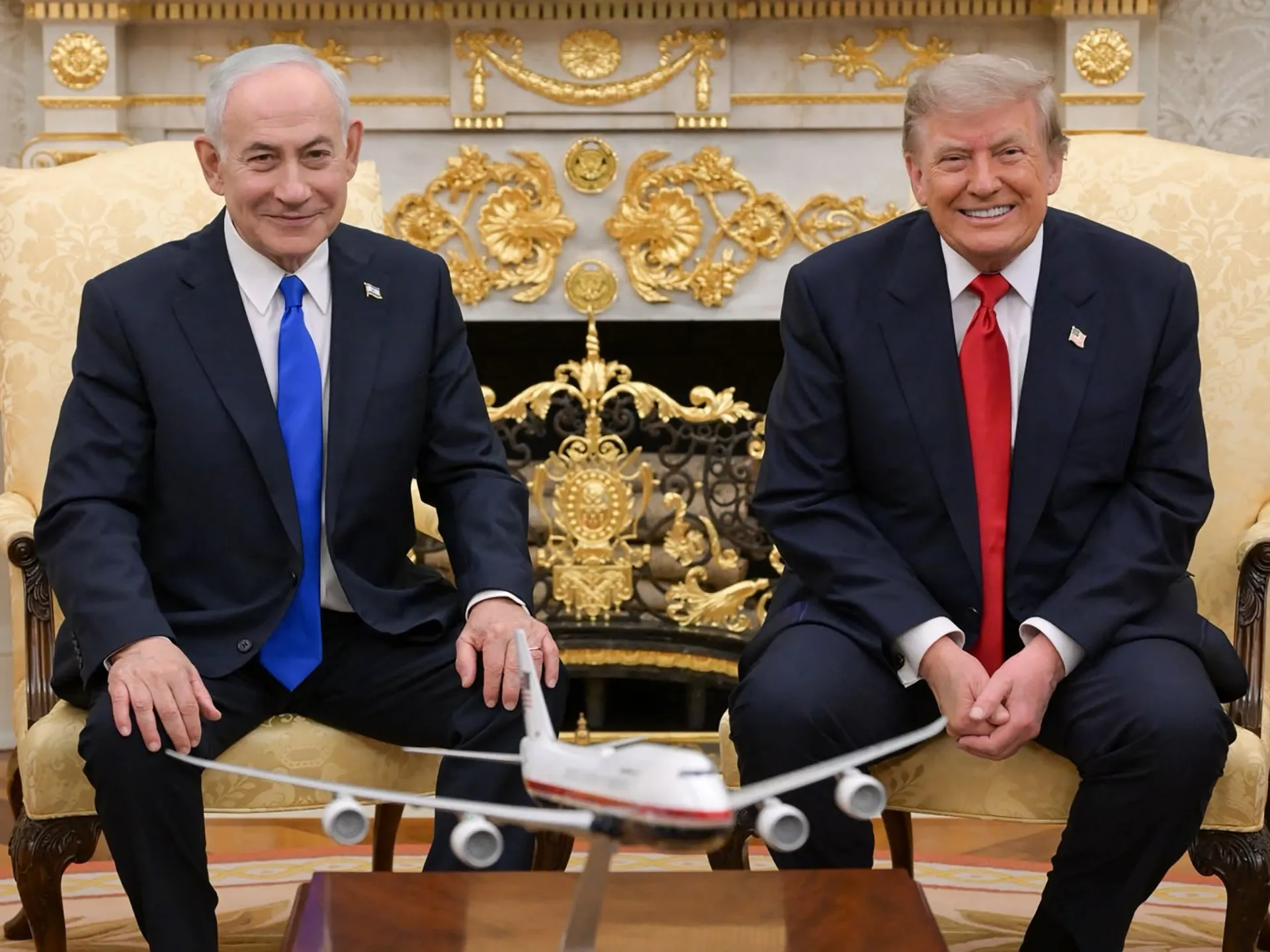
United States President Donald Trump has issued an endorsement of Israel’s incumbent Prime Minister Benjamin Netanyahu, who is facing a close race in parliamentary elections scheduled for October 27.
In a post on Truth Social on Sunday, Trump praised the Israeli leader for being an ally of the US in its war on Iran. He added that he was giving his “Complete and Total Endorsement” to Netanyahu.
Recommended Stories
list of 3 itemsend of list
“BIBI NETANYAHU WILL NEVER LET YOU DOWN!” Trump wrote.
The US president’s backing comes nine days before the Israeli election — and after speculation that it might not come at all.
Trump had refused to endorse Netanyahu earlier this month, when asked repeatedly about the Israeli leader’s job performance in an interview with Time magazine.
Instead, when pressed by his interviewer, Trump avoided the subject, shifting the focus instead to his own popularity or security in the Middle East.
The two leaders have met more than a half dozen times since January 2025, but there have been reports of disagreements, including over the war against Iran and other conflicts.
In June, Trump acknowledged calling Netanyahu “f***ing crazy” in a phone conversation where he expressed frustration about Israel’s attacks on Lebanon.
Trump had reportedly asked Netanyahu not to take further action in Lebanon, in an apparent attempt to preserve a short-lived April ceasefire with Iran.
The two leaders had jointly launched a war against Iran on February 28, but the conflict has cost Trump domestic support.
The war has upended the global oil and gas supply, with no clear end in sight.
A Pew Research Center poll found this month that roughly two-thirds of US voters disapprove of Trump’s handling of the war, which has driven up consumer fuel prices and raised concerns about draining military stockpiles.
Trump’s Republican Party is facing a critical midterm election on November 3 that will decide whether it maintains control of the US Congress, as well as other key state and local offices.
Experts have speculated that Trump’s prior reticence to endorse Netanyahu may have come from public perception that Israel may have coaxed the US into the war.
Netanyahu’s Likud Party and its far-right coalition are also facing the prospect of losing the October contest to an opposition bloc led by Yashar party head Gadi Eisenkot.
In his endorsement on Sunday, Trump said it was only a matter of time before Iran would have attacked both the US and Israel.
The war, Trump argued, had already left Iran “systematically destroyed, both Militarily and Financially, and unless they change their ways, rapidly, we will soon finish the job”.
“If Israel has the wrong Leader, which would be anyone other than Bibi, America will have to do this work ourselves, and I am not inclined to do so,” Trump wrote.
“Bibi Netanyahu has been Strong, Brave, and Brilliant in the face of tremendous opposition, including that coming from even Israel, itself.”
Remember the FIFA Peace Prize awarded to United States President Donald Trump six months before the World Cup? Well, it is now close to being scrapped, which would make the US president its first and only winner.
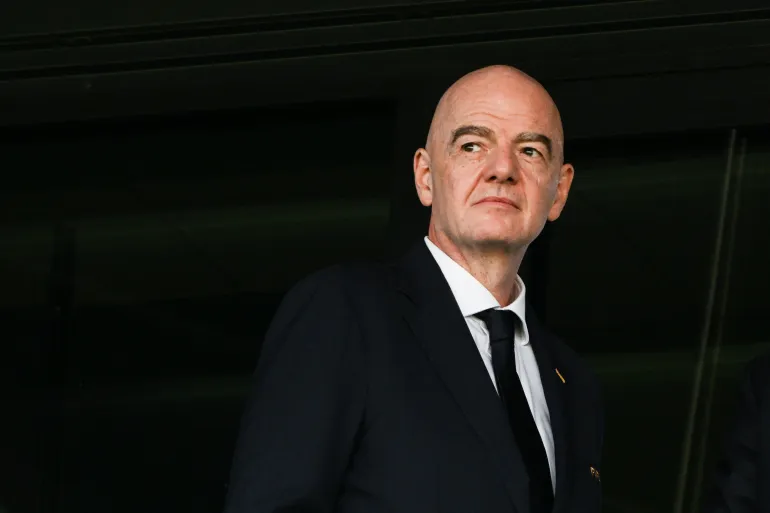
Less than a year after FIFA President Gianni Infantino extolled Trump in the US capital while presenting the award at the World Cup 2026 draw, several members of the FIFA Council are questioning its merit and have demanded changes, including scrapping the award.
Recommended Stories
list of 3 itemsend of list
The calls for scrutiny come at a time when Infantino faces ongoing criticism for his World Cup sell-off plan, which also led to calls for his removal from office.
So what was the prize about, and why might it be scrapped? Here’s a look:
What is the FIFA Peace Prize?
On November 5, football’s global governing body announced a new annual award called the “FIFA Peace Prize – Football Unites the World”.
FIFA said the award was created to “reward individuals who have taken exceptional and extraordinary actions for peace”.
Trump thanked FIFA and called the award “one of the great honours of my life”.
He and Infantino are close allies, and the FIFA chief had made it clear that he thought Trump should have won the Nobel Peace Prize for his efforts to broker a ceasefire in Israel’s genocidal war on Gaza.
“This is your prize. This is your peace prize,” Infantino said at the glitzy, celebrity-studded ceremony at Washington, DC’s Kennedy Center.
Infantino has repeatedly spoken about football as a unifier for the world, but the prize is a departure from the federation’s traditional focus on sport.
Critics pointed out that the recognition came less than 24 hours after the Trump administration carried out a deadly air strike in the Caribbean.
Two months later, the US and Israel launched their war on Iran, assassinating Supreme Leader Ali Khamenei in Tehran and hitting nuclear and military sites around the country.
The US-Israel war on Iran has gone on for months with Trump saying this week that he will not attack Iran again before the November 3 midterm elections in the US.
Why might FIFA scrap the award?
Several FIFA member nations demanded the discontinuation of the award during Thursday’s FIFA Council meeting in Zurich, Switzerland, according to reports in British media.
Others called for the prize to no longer be handed out to politicians.
As a result, FIFA’s 22-member Football Social Responsibility Committee was tasked with assessing the merits of the award. It is expected to make a recommendation before the next council meeting in Doha, Qatar, on December 16.
Debbie Hewitt, a FIFA vice president and president of the English Football Association, told the media at the council briefing that the committee “will consider, first of all, how the peace prize came about, whether it should have come about, whether it should have been awarded in the way that it was, who made that decision and whether or not it should be taken out or whether it should be reformed”.
What has FIFA said?
Al Jazeera has reached out to FIFA for comment and was referred to Infantino’s statement on it: “For the FIFA Peace Prize, it was decided that the Football Social Responsibility Committee will be tasked to analyse it, provide a proposal, and also, there, a decision will be taken at the next FIFA Council meeting.”
Has the FIFA Peace Prize faced opposition?
Yes.
In October, the Norwegian Football Association (NFF) made parallel filings with FIFA committees in relation to three recent issues, one of which was related to the awarding of the FIFA Peace Prize.
“The purpose is to raise these issues formally with the appropriate bodies, to have them examined, relevant evidence obtained and accountability for the conclusions reached,” the NFF said in a statement.
The NFF has repeatedly raised questions about the award, and in April, its president, Lise Klaveness, said FIFA should scrap its peace prize to avoid getting drawn into politics.
“We want to see it abolished. We don’t think it’s part of FIFA’s mandate to give such a prize. We think we have a Nobel institute that does that job independently already,” Klaveness said.
Earlier, human rights group FairSquare filed a complaint with the FIFA Ethics Committee, accusing Infantino of breaching his duty of neutrality by supporting Trump.
Infantino has been under severe pressure since he announced a plan in July to open premium FIFA competitions, such as the World Cup, to private investors [Omar Marques/Getty Images]
‘Mockery’ of FIFA human rights policy
The criticism of the award isn’t limited to football associations.
In late April, Australia midfielder Jackson Irvine said football’s credibility as a force for good has been undermined by FIFA, and he accused FIFA of making a mockery of its human rights policy.
“As an organisation, you would have to say decisions like the one that we saw awarding this peace prize makes a mockery of what they’re trying to do with the human rights charter and trying to use football as a global driving force for good and positive change in the world,” Irvine told the Reuters news agency in an interview.
“Decisions like that feel like they just set us back in the perceived market of what football currently is, especially at the top level, where it’s becoming so disconnected from society and the grassroots of what the game actually is and means in our communities and in the world.”
Craig Mokhiber, a former United Nations official who has campaigned to suspend Israel from world football over its genocidal war in Gaza, called the award to Trump a “truly shameful development”.
Infantino has refused to take action against Israel, arguing that football “cannot solve geopolitical” issues.
“Not satisfied with two years of FIFA complicity in genocide in Palestine, Infantino and his cronies have now invented a new ‘peace prize’ in order to curry favour with Donald Trump,” Mokhiber told Al Jazeera.
He added that the award also aims to “obscure” Trump’s “disgraceful record” of support for Israel, his deadly strikes on vessels in the Caribbean Sea and “gross violations of human rights” inside the US.
Growing pressure on Infantino
The scrutiny around the FIFA Peace Prize follows the recent backlash Infantino has faced.
Infantino has been under fire since his announcement in late July that he wanted to open FIFA’s premium competitions, such as the World Cup, to private investors.
That plan was ultimately abandoned in the face of widespread criticism with a rebellion led by the European governing body UEFA, the Asian Football Confederation and CONCACAF, which runs the sport in North and Central America and the Caribbean.
Infantino has headed FIFA since 2016 and is running for re-election in March despite calls for him to stand down in the wake of the $4.2bn plan to sell a 20 per cent commercial stake in the World Cup.
And, for the first time since 2010, a Democrat may soon be sitting in the governor’s office in more than half the 50 states. As recently as 2017, just 16 of them had Democratic governors — the lowest number in nearly a century.
There are, however, exceptions to every political trend, outliers in every election, a contest that zigs when races just about everywhere else are zagging.
And yet the state’s Democratic governor, Tina Kotek, is on the defensive as she fights for a second term in November, burdened by a dismal approval rating and a sense that things have been pretty lousy in Oregon under her leadership.
The state “hasn’t thrived in the last decade, and certainly hasn’t thrived since COVID, the way other states have,” said John Horvick, one of Oregon’s leading independent pollsters.
Kotek, a former speaker of the state House — and a highly effective lawmaker in that role — made some very concrete promises.
“She was going to build 36,000 new homes. She was going to improve our educational outcomes and make improvements to behavioral health in the state,” Horvick said. “Voters give her poor marks on all those.”
Gov. Tina Kotek speaks to opponents of data center development during a demonstration at the state Capitol in Salem, Ore., on Sept. 8, 2026.
(Alex Milan Tracy / Sipa USA / Associated Press)
The Democrat still remains the favorite to win reelection. Oregon’s gubernatorial races tend to be closer than presidential contests and voters have been shown a reluctance to heave their governor from office, even when they tell pollsters they’re not happy with the incumbent or the state of their state.
“We watch this movie every four years in Oregon, where it looks really, really close and then, in the end, the Democrat wins,” said Kari Chisholm, a political strategist in Portland.
That may happen again. But Kotek’s travails show the perils of incumbency this angry election season, even for a Democratic swimming with a blue tide.
Thirty-six states are electing governors in November. Most of the contests lean toward one party or the other, like in California, where Democrat Xavier Becerra appears a shoo-in to replace Gavin Newsom.
But a dozen races are at least somewhat competitive, including toss-ups in Georgia, Nevada, Ohio and Wisconsin. All of the hardest-fought contests are in states that Trump carried in 2024 — several by double-digits — with Oregon being the lone exception.
Kotek, who’s been rated one of the least popular governors in America, is facing a rematch against Christine Drazan, a former GOP state House leader who now serves in the state Senate. In 2022, she lost narrowly lost to Kotek, 47% to 44%, in a three-way contest.
Unlike four years ago, Kotek has a gubernatorial record to defend and the case Drazan makes against her is succinct.
“Tina Kotek told Oregonians that she would solve the problems and challenges facing our state,” Drazan said in the candidates’ first debate this month. “She hasn’t.”
In a recent Fox News interview, Drazan elaborated.
“We have record high businesses that have gone out of business, bankruptcies, businesses that are leaving, family bankruptcies are at an all-time high,” Drazan said, exaggerating some. “Oregon is uniquely bad right now. It’s not a national issue, it’s here at home.”
Further distancing herself from the Republican brand, Drazan has undergone a distinct makeover since winning the GOP primary in May. “Tough. Tested. Conservative,” is no longer the descriptive shorthand she uses on her campaign website. Now it’s “Mom. Public Servant. Champion for All.”
Drazan’s revised campaign biography also omits her opposition to various Democratic-backed policies, such as gun control, and her culture-warrior vow to “protect girls’ sports and keep men out of their locker rooms.” Instead, the Oregonian newspaper noted, her emphasis is now affordability and relatability.
Despite that, Kotek has continued wielding her sharpest-pronged political weapon, tying Drazan — an “out-of-touch MAGA extremist,” in her campaign’s parlance — to the unpopular president.
“I think we all know that there have been a lot of challenges facing our state and they’re still coming at us because of the confusion and disruption coming from Washington, D.C.,” Kotek said during the candidates’ third and final debate last week. “It’s just a fact. It’s upending who we are as a state and it is … making it harder for us to solve the problems that we have ahead of us.”
Passing the buck and pointing her finger is not exactly a message of triumph, uplift and achievement, but it may be enough to win Kotek a second term.
Thousands rallied across the US against President Donald Trump in ‘No Kings’ demonstrations, a movement that opposes what it sees as Trump’s abuse of power. Demonstrators urged people to vote early ahead of November’s midterm elections.
US President Donald Trump has waived more sanctions on Russia in a bid to ease energy prices, leading to a chorus of condemnation from Ukraine and EU allies. The executive order comes as the rift between Trump and Ukraine’s Zelenskyy widens.
US president’s executive order comes two days before sanctions deadline and a week after diesel deal with Putin.
Published On 17 Oct 202617 Oct 2026
US President Donald Trump has put on hold a sweeping package of sanctions on Russia that he signed into law last month, telling Congress the pause is in the national interest.
Trump signed an executive order on Friday, two days before a deadline in the law that would put the sanctions into effect.
Recommended Stories
list of 3 itemsend of list
The law – named after Lindsey Graham, the Republican senator who died unexpectedly in July after returning from Ukraine – had passed in the House of Representatives and the Senate by large margins. The bipartisan legislation was drafted by Graham and Democratic Senator Richard Blumenthal.
It sought to starve Moscow of money for the war by sanctioning Russian officials, banks and a shadow fleet of tankers carrying its energy.
It also directed Trump to impose tariffs of up to 100 percent on the five biggest importers of Russian oil or gas, with an exception for countries that import less than 15 percent of Russia’s natural gas exports and are taking steps to cut them.
Diesel deal and criticism
The decision to suspend the sanctions comes a week after Trump said the US had signed a deal to buy diesel from Russia to try to lower global fuel prices.
Both Republicans and Democrats, criticising the deal, said it would help Russia’s war effort without affecting fuel prices.
Democratic Representative Don Beyer said he and others had “warned” that Trump might do this, in reference to Trump’s deal with Moscow.
Beyer called on Congress to “fix this flawed law to stop Trump from capitulating to Putin and ensure that it truly supports Ukraine”.
Trump has also increasingly criticised Ukrainian President Volodymyr Zelenskyy lately for failing to reach a deal with Russia.
As Republicans try to keep control of Congress in the November 3 midterm elections, an AP-NORC poll released on October 1 found Americans disapprove of Trump’s handling of the Iran war and blame him for higher prices among several other domestic policy issues.
“If you’re in doubt about somebody’s name from the Middle East, just say ‘Mohammed,’” says US President Donald Trump. He made the comments at a rally in Georgia when speculating on who the next president of Iran would be.


![People walk in front of a damaged shopping mall following an air attack in Kyiv on October 19, 2026, amid the Russian invasion of Ukraine [Oleksii Filippov/AFP]](https://i0.wp.com/occasionaldigest.com/wp-content/uploads/2026/10/AFP__20261019__D3PR8JC__v1__HighRes__UkraineRussiaConflictWar-1792469703.jpg?w=640&ssl=1)