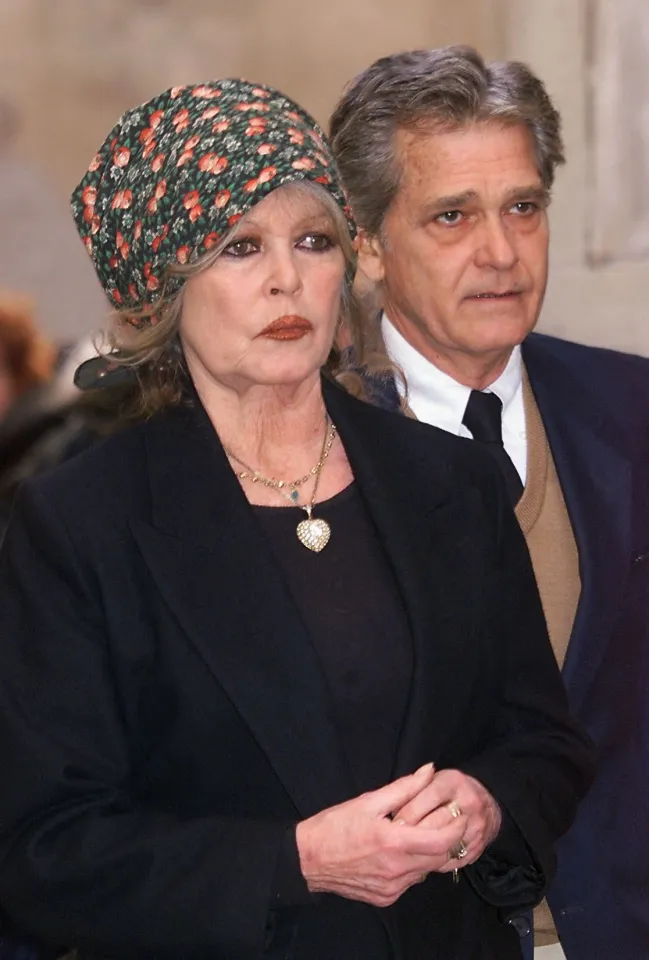
LATE film icon Brigitte Bardot accused her last husband of “destroying” her as she cut him from her will, it has emerged.
She told him in a letter: “You have patiently destroyed me, day after day, for 30 years.”
Brigitte Bardot cut her husband of more than 30 years out of her will before her deathSource: AFPBardot accused Bernard d’Ormale of ‘destroying’ her as she cut him from her willSource: Getty
Bernard d’Ormale, 85, was until last year living in luxury in Saint-Tropez with the French ex-actress.
But when she died in December, aged 91, she left him nothing, sparking a bitter dispute.
Sign up for the Showbiz newsletter
Thank you!
A 2022 note has been released in which she says: “I am in such desperate need of a shoulder to lean on, of support, of tenderness, of a presence — things you are simply incapable of giving me. Checkmate!”
He has been evicted from their home, with all of Ms Bardot’s estate going to her animal charity foundation and son Nicolas Charrier, 66.
Rachel felt a little unwell in the Canary Islands hotel they were staying in in October – then suddenly collapsed
Rachel Weston with husband Mark
A British mum who thought she had come down with a nasty cold collapsed and died while on holiday abroad. Rachel Weston, 42, was away with her husband, Mark, 41, and two friends when she started to feel unwell.
The carer, from Bury, Greater Manchester, went to a pharmacy and at first seemed to be getting better. However, her condition then deteriorated, leading the couple to arrange emergency flights back home for the next day.
But Rachel then suddenly collapsed in their hotel room in Puerto del Carmen, Lanzarote. Hotel lifeguards tried to help before paramedics turned up, but tragically she couldn’t be saved.
Local reports say Rachel suffered a cardiac arrest, though an underlying medical cause hasn’t been publicly confirmed. Mark said: “My world was completely turned upside down with the sudden and heartbreaking loss of my gorgeous wife, Rachel, while we were on holiday.
“Rachel and I were together for 11 years and one day – sadly only married for two of those years, but every single day was full of love, laughter and partnership.”
Rachel was a loving stepmum to Mark’s three children, Steven, 22, Charley, 19, and Mikey, 15. Mark described his late wife as “the absolute heart of our home”, adding that she had poured herself into helping him raise the children.
The couple tied the knot on May 11, 2024 after a memorable on-stage proposal at a Bowling for Soup concert. Mark contacted the band’s frontman, Jaret Reddick, before its December 2022 show in Torquay and was invited on stage during Punk Rock 101 to ask Rachel to marry him.
Rachel worked as a carer at Regency Care Home and had devoted her professional life to looking after others. She was also deeply attached to the couple’s two dogs, Maisie and Padmé. Mark said: “Losing her so unexpectedly is a total nightmare.
“Between planning the funeral and keeping life steady for the kids, it’s a massive weight to carry.” Rachel’s funeral is due to take place on November 6. Mark has launched a fundraiser in memory of his “beautiful wife” to help cover the costs.
He has requested that mourners wear something purple, which was Rachel’s favourite colour. To donate to the fundraiser, visit the GoFundMe web page here.
IN the last six months of her short life, there was one person Amy Jade Winehouse could turn to unreservedly.
Dale Davis, her band leader and confidante, provided her with a shoulder to cry on and a reason for her to break into the infectious laughter that came with her wicked sense of humour.
There was one person legend Amy Winehouse could lean on in her final daysCredit: AlamyDale Davis, 57, was Amy’s band leader and closest confidante from ages 19 to 27Credit: supplied
He was there to give Amy “a cuddle” during her final public outing, and three days later — on the night before she died aged 27 in 2011 — he spent 15 minutes on the phone to her, telling her she was “the best”.
“We were always chatting in those final months,” he says today to mark the 20th anniversary of Amy’s stellar Back To Black album.
“I remember her saying to me, ‘Dale, I’ve just realised that I’ve spent my whole adult life with you’.
“I was with her from when she was 19 to 27. The things I miss about her most are her big grin and that glint in her eyes.”
Dale joined Amy’s band in 2003 as bassist because the original choice was “too expensive” and, as he self-deprecatingly admits, he was “the uglier, cheaper” alternative.
A year later, he became her musical director and remains the keeper of her flame by leading The Amy Winehouse Band on its regular tours of the UK and abroad.
Though he was 17 years her senior, they bonded over a shared love of “hip-hop, soul and Nineties R&B”.
He adds: “We were also the only members of the band who drank Jack Daniel’s — so there was a lot of affinity there. If Amy loved you, no matter who it was, she loved you hard. She always had my back and I always had hers.”
Reaching the 20th anniversary of Back To Black, released on October 27, 2006, is a milestone Dale finds “surreal”.
Amy’s second album, the follow-up to her debut Frank, catapulted the vivacious, naturally talented singer on to the world stage and has sold more than 20million copies (and counting).
It contained raw, personal songs loaded with pathos and humour, such as Rehab, Me & Mr Jones, Tears Dry On Their Own and Love Is A Losing Game, all delivered in deliciously smoky, jazzy tones.
It charted in graphic detail Amy’s turbulent relationship with the love of her life, Blake Fielder-Civil, as well as her battles with drug and alcohol addiction.
“I believe she was the first star of this millennium, of the broadband generation,” maintains Dale.
“She was a most courageous performer and human being. Amy had a massive heart, but it left her open to the highs and the lows.”
To give an example of her inner conflict, Dale vividly recalls being with her on February 10, 2008, when she scooped five Grammy awards in the wake of Back To Black.
“Life was never dull and that night I saw an indication of what she was going through,” he says.
Amy phoned Dale for 15 minutes just hours before she diedCredit: Free for editorial useHe now keeps her memory alive by leading the Amy Winehouse band with members Ade Omotayo, Dale Davis, Nathan Allen and Hawi GondweCredit: PA
Amy could not attend the ceremony in Los Angeles because she’d been denied a visa amid drug and legal issues, but she was hooked up remotely to perform from London’s Riverside Studios.
“When she won her third Grammy, it was just me and her on stage,” continues Dale.
“Everyone else had walked off. I said, ‘Well done, Amy’. And she just said, ‘No, this is s*** because Blake’s not here’.
“While she was winning all those awards, her heart was going through the extreme pain of not being with him. There was no middle ground with Amy, and things like that are so destabilising to your mental health.”
When he considers the Back To Black songs, he says Wake Up Alone was Amy’s favourite, but he singles out a sad track, Love Is A Losing Game, and a funny one, Me & Mr Jones.
There’s an exquisite demo rendition of Love Is A Losing Game on the new, expanded anniversary editions, just Amy’s sublime, soulful voice and the strums of an acoustic guitar.
Dale says: “She was equally comfortable with an orchestra or on her own.
“The great thing about that version is that she delivers the most beautiful performance and then, at the end, she goes, ‘Is that all right?’. That really sums her up.
‘Amy had a massive heart’, said DaleCredit: GettyNext week will see the 20th anniversary of her iconic and most vulnerable album Back to BlackCredit: Getty
“Amy was so bright and so intelligent, but because she spoke so normally, it fooled people.”
Of Me & Mr Jones, with its old-school jazz vibe and jaw-dropping line, ‘What kind of f***ery is this?’, Dale says: “That’s my favourite song on the album. It’s right up my street. It’s got doo-wop. It’s got swing.
“I can imagine the mischievous grin as she’s thinking, ‘Right, I’m going to turn this into a funny old song’.
Also, you can’t play it on the radio. That’s the great thing about Amy — she knew no boundaries.”
Yet Dale senses that the star who burned bright for a fleeting moment “sold herself short in the end”.
“Amy was the most rebellious person I’ve ever come across,” he decides.
In 2004, the year Frank came out, Dale remembers “having breakfast with Nick (Shymansky, her first manager), who said, ‘We’ve got some issues with Amy’. I said, ‘Just leave her be, she’s a punk’.
“She had that spirit which could be destructive. However, the only harm she ever did was to herself.
“At the same time, she was so funny — her observational humour was ridiculous.
“I could always tell something funny was coming when I saw that glint in her eyes.
Back to Black has sold over 20 million copies (and counting)Credit: Not known clear with picture deskThe singer drew inspiration from her turbulent relationship with husband Blake Fielder-CivilCredit: Getty – Contributor
“Had she lived, Amy would have been like Barbra Streisand or Bette Midler — an all-round entertainer.
“I can imagine her having her own TV programme or being a great actress. She even talked about wanting to do some acting.”
When I caught up with Dale this week, he was preparing for last night’s Back To Black 20 show, directed by the album’s producers, Mark Ronson and Salaam Remi, at The Roundhouse in Amy’s London stomping ground of Camden.
Among the singers due to step into her ballet flats at the gig were Baby Rose, Corinne Bailey Rae, FLO, Jessie Reyez, Jorja Smith and Lianne La Havas.
Mention of the venue prompts Dale to cast his mind back to Amy’s final public outing, which took place there on July 20, 2011 — three days before she left us too soon.
Dale was by her side for a showcase by her goddaughter, the singer Dionne Bromfield.
Amy bravely appeared on stage — “dancing and being a good sport” — to support Dionne, but declined to take the mic.
“She was wearing a vest and jacket and looking as well as when I first met her,” says Dale.
“After the show, Amy said, ‘Let’s hang out’. So I spent two hours with her and we chatted so much. Before we left, we went outside and she said, ‘Cuddle me because I’m cold’.
“I spent the last ten minutes holding her. When I look back on that moment, I’m thinking it wasn’t like her because she was never cold.”
Amy was married to Blake Fielder-Civil from 2007 to 2009Credit: PA:Press AssociationBritish soul singer Dionne Bromfield is famously Amy’s honorary goddaughterCredit: Getty
Dale believes Amy’s “eating disorder got her in the end”, a subject of great sadness to him.
He says: “She was never ever big — curvy at most. But I know a comment was made one year and then suddenly all the weight came off. I felt sorry for her.
“It has taken me a long time to realise what eating disorders are.
“I wish I’d had more knowledge so I could have helped.
“Towards the end, her nervous system was getting more and more shocked with the lack of eating.
“And when Blake went to prison, she also stopped sleeping. That had a massive impact on her physical state.”
This brings us to Dale’s phone call with Amy, which started at 11.15pm on July 22, 2011, hours before she died.
Many faced criticism over Amy’s death including father Mitch and mother JanisCredit: Getty – ContributorDale was there to offer Amy ‘a cuddle’ in her final monthsCredit: Redferns
“Even at her funeral service, I ended up right next to the coffin because there was no room for me elsewhere. All those weird things draw me in to make sure that I protect her legacy.”
Dale describes their final conversation: “Amy said, ‘Dale, I’ve had a little bit to drink’. And I said, ‘Well, you don’t sound at all drunk’.
“Then she said, ‘I’ve been watching some old clips of me on YouTube. I CAN sing, can’t I?’. And I just said, ‘Of course you can. You’re the best’.
“I’m so glad that, on her last evening, she could turn round and say that because she was the least arrogant person about her abilities.”
In the wake of Amy’s tragic death, there have been blame games involving various parties — Blake, management, the music industry, the media, her parents.
Mention of this prompts Dale to launch a staunch defence of Amy’s divorced mum and dad, Janis and Mitch.
He says: “I feel so sorry for Janis because when Amy started to get famous, Janis had her own health problems.
“Amy always said her mother was so serene — and then she had to go through her struggles and watch the demise of her daughter.”
Turning to her London cabbie dad, who left the family home when Amy was about ten but became more involved in her life as her career took off, Dale says: “People point the finger at Mitch.
“Me and my dad don’t really get on, but we love each other and are there for each other.
“It was very difficult for someone like Mitch coming back into Amy’s life when she’d become a self-made multimillionaire. It must have been quite hard to try to direct someone when they’ve made it themselves.”
On a more general note, Dale adds: “The industry and everyone else can take steps to do everything they can — but there’s always going to be someone who slips through the net.”
Next up for him is a UK tour with his Amy Winehouse Band, a chance to hear some of that beautiful, rebellious spirit.
“They tried to make me go to rehab but I said no, no, no.”
UK tour details at theamywinehouseband.com. The Back To Black 20 Concert is on BBC Two on Saturday, 9.35pm, and Radio 2, Monday, 7pm. Expanded editions of Back To Black, with unheard demos and a 2007 live show, are out on Friday.
A father whose two-year-old boy fell to his death at a five-star hotel in Cyprus has been fined 3,000 euro (£2,500).
Joshua Foster thought the window was closed when he placed the boy on a sill to show him the view of a waterpark and “lost control” of him, Paphos District Court previously heard.
The boy fell nearly 40ft (12.1m) from the fourth floor of the King Evelthon Beach Hotel and Resort on 12 July, the first day of the family’s holiday in Chlorakas.
Foster, 37, from Essex, admitted causing death through a reckless, rash or dangerous act and was sentenced on Friday morning.
He held back tears as his sentence was handed down by the judge, before hugging his lawyer and parents.
Foster had lifted his son on to the windowsill to show him the view of a water park, the court in Cyprus was previously told.
This breaking news story is being updated and more details will be published shortly. Please refresh the page for the fullest version.
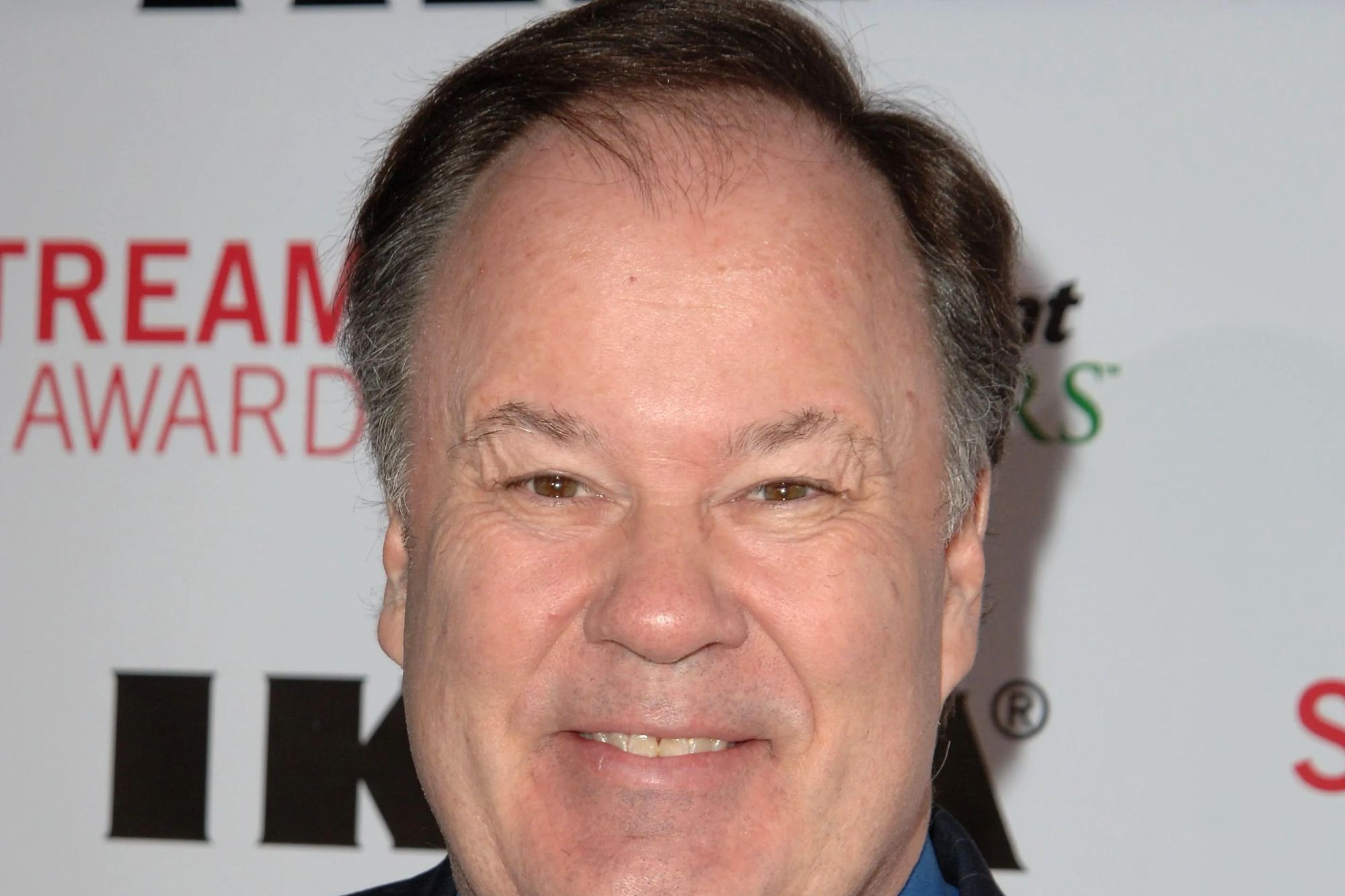
SAVED by the Bell star Dennis Haskins’ cause of death has been revealed after the much-loved actor died aged 75.
His death certificate shows Dennis died on September 27 at Providence Saint Joseph Medical Center in Burbank, California.
Dennis Haskins died from Parkinson’s Disease, his death certificate indicatesCredit: Shutterstock EditorialDennis (top left) as the lovable but stern Mr Belding in Saved by the BellCredit: Getty Images – Getty
The certificate, from the Los Angeles County Department of Public Health, lists Parkinson’s disease at the immediate cause of death.
It was not publicly known that Dennis had Parkinson’s before he died and his former wife Sarah Quinones told TMZ he had even cut off communication with close pals to hide his diagnosis.
In his final years Dennis lived in an assisted-living facility and stopped returning calls and texts from Sarah and other close friends because he didn’t want anyone to know he was suffering from the illness.
His role as Mr Belding earned him the nickname ‘America’s Favourite Principal’Credit: GettyDennis kept his diagnosis hidden from close palsCredit: Shutterstock Editorial
Dennis found widespread fame playing Principal Belding on the hit show Saved by the Bell, as well as numerous spin-offs.
Dennis, from Chattanooga, Tennessee, initially played the role of Principal Belding on the show Good Morning, Miss Bliss from 1988-1989.
The series then became Saved by the Bell, which aired on NBC until 1993, followed by Saved by the Bell: The New Class from 1993-2000.
Dennis earned the nickname “America’s Favourite Principal” for his performance.
His character’s exasperated ‘Hey, hey, hey, what is going on here?’ as he struggled to control his students became one of the show’s most iconic lines.
Dennis also reprised his role in the spin-off specials Saved by the Bell: The College Years in 1993 and Saved by the Bell: Wedding in Las Vegas in 1994.
Before launching his TV career, Haskins attended the University of Tennessee at Chattanooga, where the school said he was deeply involved in campus life.
He worked as a music manager, agent and concert promoter, reportedly counting Tom Jones among his clients.
Dennis then made his network TV debut on the 1979 pilot episode of The Dukes of Hazzard.
Aside from his defining role as Mr Belding, Dennis racked up more than 100 acting credits over his decades-long career.
Dennis’ agent Jay Schachter told TMZ: “It’s a tragic loss. Everyone loved Mr. Belding and those of us who got to know Dennis, loved him even more.
“He was a great person, and he loved, I mean absolutely LOVED his fans.”
Fred Claire was an unorthodox choice for general manager, a former sportswriter and public relations man who didn’t play baseball beyond the junior varsity level in high school, and his 1987 promotion to head the Dodgers’ front office was met with skepticism around the game.
A year and a half later, after his shrewd moves helped turn the Dodgers into World Series champions in 1988, Claire was named Major League Baseball’s executive of the year by the Sporting News.
Claire, who spent 30 years in the Dodgers’ front office, died Monday on his 91st birthday. The news was shared on social media by former Dodger broadcaster Ross Porter.
An avid runner and golfer fit and trim enough to pass for a man a decade younger, the silver-haired Claire was diagnosed with squamous cell carcinoma in 2015 when what looked like a harmless spot on his lip turned out to be cancerous.
The growth was surgically removed, but the cancer returned in August 2016, and spread into the left side of his face. Claire underwent radiation and chemotherapy treatments to kill the malignant cells in his body, but the cancer returned again in 2017.
An immunotherapy clinical trial saved his life, according to a story in Pasadenanow.com, but then an infection forced him to undergo even more extensive facial reconstruction surgery at City of Hope in Duarte, replacing his jawbone with a bone from his leg.
Claire was so impressed with his treatment at City of Hope that he teamed with author Tim Madigan in 2021 to publish a book chronicling his career and capturing the hospital’s history as well the stories of patients and doctors. The book, “Extra Innings,” can be purchased at Amazon, with all net proceeds donated to City of Hope.
“The main thing that I liked and appreciated about the book was people buying it because of their interest in baseball,” Claire told the Desert Sun in 2021, “then to discover what a great place [City of Hope] is after reading it.”
Claire was also active in helping fund research — he and his wife, Sheryl, set up a scholarship fund with the USC Keck School of Medicine for research in head and neck cancer.
Claire was born Oct. 5, 1935, in Jamestown, Ohio. His parents moved the family — Claire had a brother and a sister — to Torrance when Claire was a teenager. After graduating from Torrance High, Claire earned a degree in journalism from San José State in 1957 before taking his first newspaper job.
“I graduated on a Sunday afternoon,” Claire told The Times in 1997, “and by Monday morning, I had a job at the Whittier Daily News.”
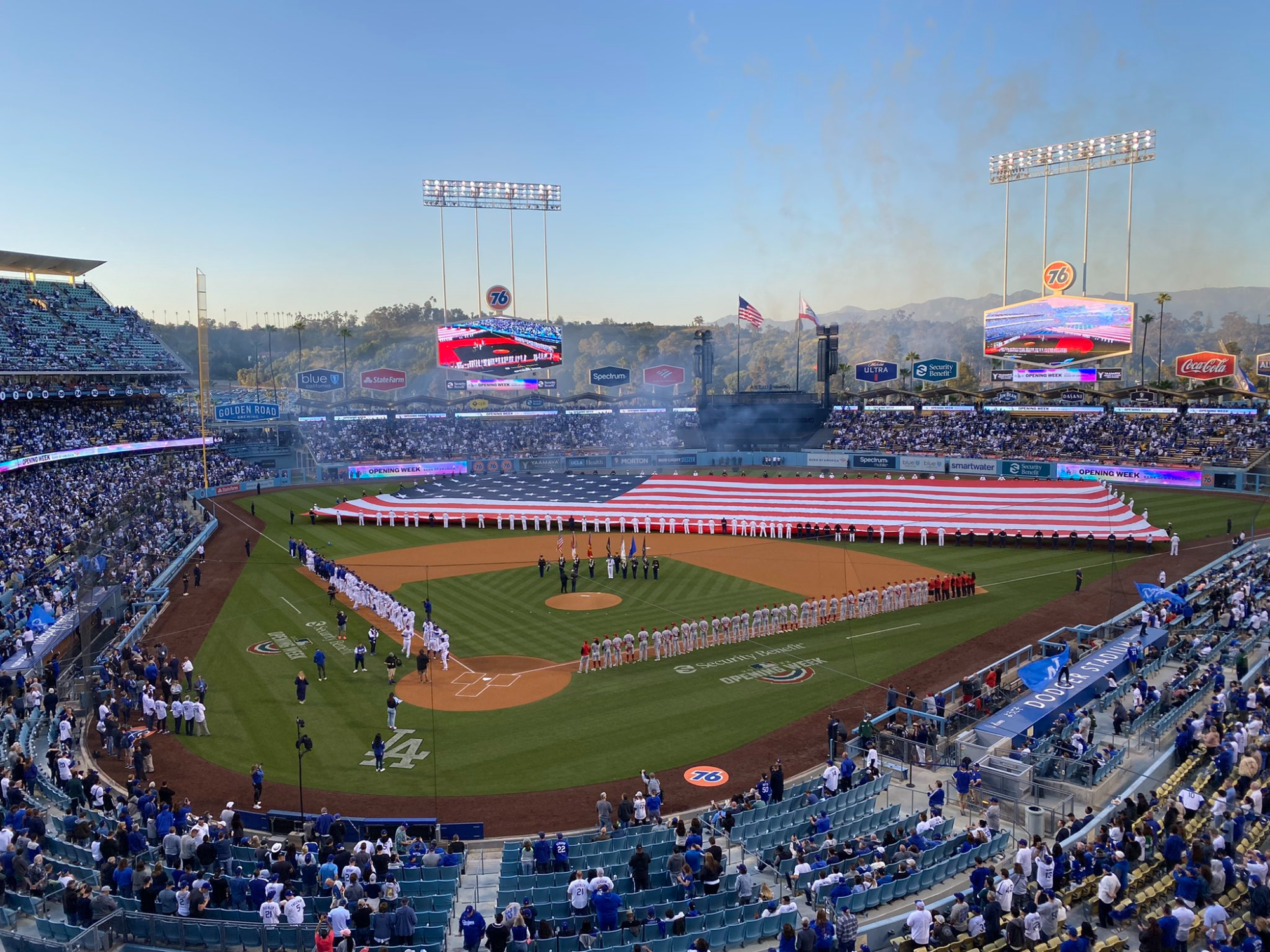
For 30 years, Dodger Stadium was Fred Claire’s home. “Honestly, in my heart and soul, it was a thrill and honor to have the opportunity to walk into Dodger Stadium every day and go to work,” Claire told the Times in 2017.
(Jack Harris / Los Angeles Times)
Claire spent 11 years as a sportswriter and was covering the Dodgers for the Long Beach Press-Telegram in the spring of 1969 when a position opened in the team’s public relations department.
Claire, who always longed to be involved in baseball, expressed interest in the job and was hired as a public relations assistant, remaining in the position until 1975, when he was promoted to vice president of public relations.
He was instrumental in creating the branding that came to be known as “Dodger Blue” and was directing the team’s marketing efforts when the Dodgers passed the 3-million mark in attendance for the first time. He also hired Ross Porter, a Dodgers broadcaster from 1977 to 2004.
In April 1987, then-Dodgers general manager Al Campanis was fired after making controversial and what many said were racist remarks about Black Americans on “Nightline,” during which he told the show’s host, Ted Koppel, that Black people may lack “some of the necessities” to be the field manager or GM of a major league baseball team.
Claire was then-Dodgers President Peter O’Malley’s surprise choice to replace Campanis, and his hiring raised the eyebrows of his new peers, who saw Claire as an outsider with no background as a player, coach, manager or scout.
“I knew some people might say, what does this guy know about baseball, he covered it from behind a typewriter?” O’Malley said in 2017. “But I knew Fred could do it. And he did it. He deserves a lot of credit for stepping in quickly, without advance notice, and doing a great job.”
The Dodgers suffered their second straight losing season in 1987, but Claire made several off-season moves — acquiring outfielders Kirk Gibson and Mike Davis, shortstop Alfredo Griffin and pitchers Jay Howell and Jesse Orosco — that fortified the club.
The Dodgers, led by National League Cy Young Award-winning pitcher Orel Hershiser and most valuable player Gibson, won the National League West in 1988 and upset the 100-win New York Mets in the NL championship series.
The gimpy Gibson hit his memorable pinch-hit, walk-off homer off Oakland closer Dennis Eckersley in Game 1 of the World Series to push the Dodgers toward their fifth championship since moving from Brooklyn to Los Angeles in 1958.
Kirk Gibson reacts to his game-winning two-run homer in Game 1 of the 1988 World Series.
(John Swart / Associated Press)
Claire dealt a smallish and seemingly fragile pitcher named Pedro Martínez to Montreal for second baseman Delino DeShields in what turned out to be one of the game’s most-lopsided trades. DeShields hit .241 in three years in Los Angeles, while Martinez went on to have a dominant 17-year career that earned him a 2015 Hall of Fame induction.
But during Claire’s 11-year tenure as GM, the Dodgers won a World Series, two division titles, a wild-card berth and a first-place finish in the strike-shortened 1994 season.
Claire also changed the culture in the front office, hiring an analytics expert, holding regular conference calls with coaches and scouts and canvassing the clubhouse to talk with players about everything from their families to their on-field performance.
“Fred gave us that first edge of being progressive and aggressive,” Hershiser told the Times in 2017. Added former Dodgers utility man Mickey Hatcher: “Fred Claire was amazing. For a guy who was suddenly put into the limelight, he asked all the right questions, listened to everyone and believed in all of us.”
Claire was fired along with then-Manager Bill Russell on June 21, 1998, five weeks after executives from Fox News Corp., which purchased the Dodgers earlier that year, engineered a blockbuster trade — deflating to many fans — of All-Star catcher Mike Piazza to the Florida Marlins without Claire’s involvement.
Claire, a man of “integrity and dignity,” as former Times baseball columnist Ross Newhan wrote, walked away with no harsh words or public regrets.
“Honestly, in my heart and soul, it was a thrill and honor to have the opportunity to walk into Dodger Stadium every day and go to work,” Claire told the Times in 2017. “This is truly enough for me.”
After his departure from the Dodgers, Claire worked as a columnist and analyst for MLB.com, a radio show host, an instructor at USC and a consultant to companies involved with sports. He co-authored an autobiography, released in 2004, titled “Fred Claire: My 30 Years in Dodger Blue.”
His response during an interview with Business Renaissance Quarterly in 2007 shed some light on Claire’s philosophy. The question: What do you want to be remembered for?
“I was once in the presence of the late Dodgers owner Walter O’Malley when he was asked this question by a reporter from United Press International,” Claire said. “Mr. O’Malley spun his ever-present cigar, paused for just a second and replied, ‘I want to be remembered for planting a tree.’
“Walter O’Malley’s answer, in my mind, overshadowed the great question. He wanted to be remembered for helping things grow, and in my mind, that meant his family, his friendships, the good causes he was involved in.
“I have seldom planted a tree, but I would proudly borrow Mr. O’Malley’s answer to this question.”
Claire is survived by his wife, Sheryl, and their three children, Jen, Jeff and Kim.
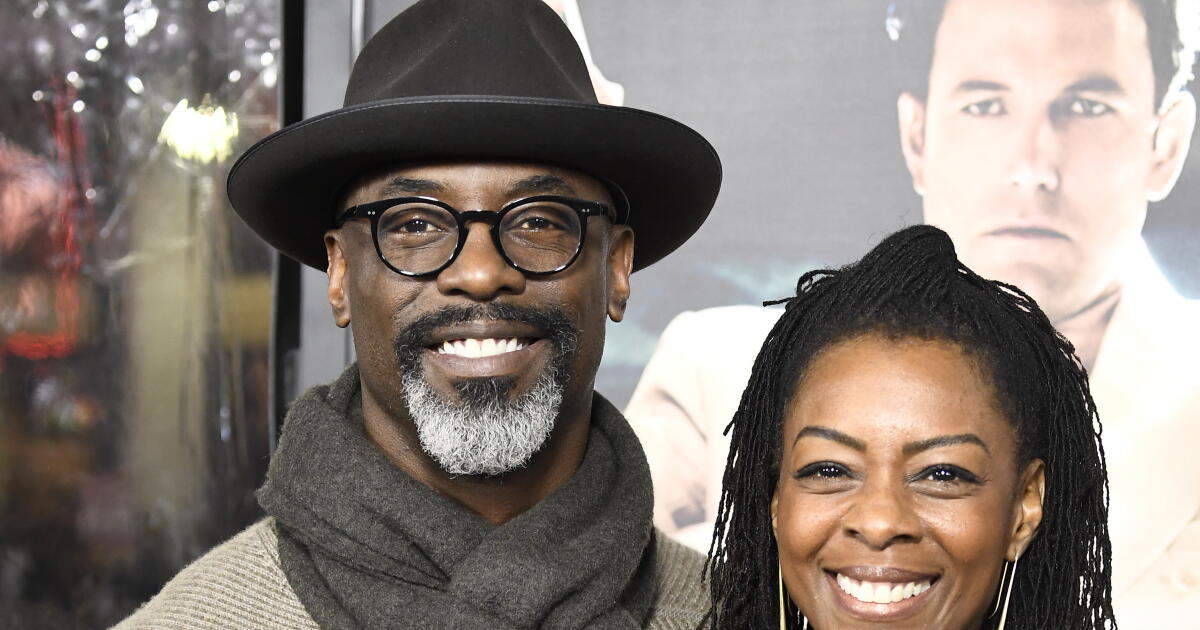
More than a year after the death of his wife, Jenisa Garland, “Grey’s Anatomy” star Isaiah Washington announced the news of her passing.
The actor posted the news on Instagram over the weekend, writing, “Yes … the rumors are true. My dear wife of 29 years collapsed suddenly on May 31, 2025 and passed away on June 9, 2025.”
Washington said his wife’s death “came as a huge shock to me and our entire family.”
“She succumbed to a massive hemorrhagic stroke and never recovered,” he continued, before adding some cautionary advice to his fans. “Listen, y’all … some headaches are not just headaches or migraines, they can be much worse and a warning sign. Get a brain scan if you can and take those headaches seriously.”
A hemorrhagic stroke is less common than an ischemic stroke, but it is more fatal and occurs when a blood vessel leaks or ruptures in the brain, according to the Mayo Clinic. Causes may include uncontrolled high blood pressure, trauma from a fall or accident, or overtreatment of blood thinners. Signs of a stroke include a sudden intense headache, confusion, trouble speaking, loss of balance, face drooping, sudden blurred vision and more.
“She has been gone 16 months now, but she left 3 incredibly amazing children behind to continue her legacy. I don’t know if this is an appropriate post, because Jenisa Washington was extremely private, but I guess I just have to be reprimanded from her on the other side.”
On Monday, Washington posted a tribute to comedian Reggie McFadden, crediting the “In Living Color” actor with introducing him to his wife more than 30 years ago. “RIP Reggie McFadden,” he wrote on Instagram. “Say hello to Jenisa Washington, because it was you who introduced me to her in 1995.”
Washington played Dr. Preston Burke on “Grey’s Anatomy” in 2005 but was nixed from the medical drama in 2007 after an on-set spat with co-star Patrick Dempsey, a.k.a. Dr. McDreamy, during which Washington reportedly referred to (then-closeted) castmate T.R. Knight, who played George O’Malley, using a homophobic slur. After reports of the behind-the-scenes beef, Knight came out as gay publicly.
Later that year, at the Golden Globes, Washington denied the incident but repeated the word in the process. He ultimately apologized and returned to “Grey’s” in 2014 for a guest spot.