President Lee Jae Myung (2nd from L) speaks during a Cabinet meeting at the presidential office Cheong Wa Dae in Seoul on Tuesday. Photo by Yonhap
The Cabinet on Tuesday approved two prosecution reform bills that would dismantle the current prosecution service later this year to separate its exclusive power to both initiate criminal probes and indict suspects.
When promulgated, it would mark a sweeping overhaul of the nation’s prosecution system. Under the new laws, the prosecution office will be shut down in October, 78 years after its establishment in 1948, and two new agencies will exercise indictment and investigate roles, respectively.
The bills on establishing the so-called serious crimes investigation agency and the indictment agency, pushed by the ruling Democratic Party (DP), were passed at the National Assembly last week in a plenary session boycotted by the main opposition People Power Party (PPP).
Under the laws, the new indictment agency will handle only indictments, while investigative powers will be transferred to the newly established serious crimes investigation agency.
The new investigative body will be established under the Ministry of the Interior and Safety and will be responsible for probing six major crimes, including corruption, economic offenses, defense industry-related crimes and drug offenses.
The government has been seeking to separate the prosecution service’s authority over both indictment and investigation amid longstanding criticism that the prosecution has abused its exclusive powers by carrying out politically motivated investigations.
The DP has argued that the reform is needed to curb potential political abuse of prosecutorial power, while the PPP has warned it could weaken checks on investigators and increase the risk of political influence.
The two new agencies are set to be established after the abolition of the prosecution office.
Copyright (c) Yonhap News Agency prohibits its content from being redistributed or reprinted without consent, and forbids the content from being learned and used by artificial intelligence systems.
March 24 (UPI) — The Department of Defense has announced new restrictions on reporters, including removing their office space from the Pentagon, after a judge last week struck down a Trump administration policy that threatened journalists’ credentials for obtaining unauthorized information.
Under the new policy announced Monday, reporters will be required to work from new office space outside the Pentagon but in an annex facility on its grounds. It also requires credentialed journalists to be escorted by Department of Defense personnel at all times within the Pentagon.
The announcement comes after the Defense Department announced a new policy in October that required all journalists with access to the Pentagon to sign a form acknowledging they could have their credentials revoked for collecting unauthorized information. Most Pentagon reporters declined and surrendered their credentials.
The New York Times then sued the administration of President Donald Trump. On Saturday, a federal court judge ruled in the paper’s favor, stating the policy was unconstitutional and ordered the Pentagon to reinstate the credentials of seven journalists with The Times.
The Pentagon intends to appeal the decisions, and in the interim announced the new policy shuttering the Correspondents’ Corridor and mandating journalist escorts, which Sean Parnell, assistant to the Defense secretary, said in a statement was in compliance with the court’s order.
“The Department always complies with court orders but disagrees with the decision and is pursuing an appeal,” he said.
A spokesperson with The Times quickly repsonded to the new policy, saying “We will be going back to court.”
“The new policy does not comply with the judge’s order,” Charlie Stadtlander, the Times spokesperson, said in a statement.
“It continues to impose unconstitutional restrictions on the press.”
The Trump administration has repeatedly taken actions that critics say are aimed at influencing its media coverage, including the October memorandum, restricting access to outlets over editorial decisions and seizing control of the White House press pool.
Journalists and free speech organizations were quick to crticize the policy, with the National Press Club calling the closure of the Correspondents’ Corridor an effort to undermine independent reporting of the Pentagon while it is fighting a war with Iran.
“At a time when the United States is engaged in active military conflict, the public depends on journalists being able to observe, report and ask questions freely,” NPC President Mark Schoeff said in a statement.
“Independent reporting on the U.S. military is not optional. It is essential to accountability, transparency and public trust. Any policy that curtails that access should concern everyone who values a free and informed society.”
The Pentagon Press Association said it was consulting with its legal counsel, according to a statement obtained by Axios.
“Press freedom is guaranteed by the U.S. Constitution and an informed public is vital to democracy,” the organization said.
“At such a critical time, we ask why the Pentagon is choosing to restrict vital press freedoms that help inform all Americans.”
Welcome back to the Times of Troy newsletter, where, as colleague Chaunte’l Powell pointed out after Saturday’s thrilling win, you’d be forgiven for having already looked ahead to the next women’s college basketball season.
After all, as the USC women stumbled into this NCAA tournament on a four-game losing streak, they hadn’t offered much reason for optimism. When coach Lindsay Gottlieb added another five-star prospect — 6-4 forward Sara Okeke — to the mix for ‘26 last week, it only made it more enticing to close the book on this season and start dreaming of where USC might end up in the next one.
Fight on! Are you a true Trojans fan?
Get our Times of Troy newsletter for USC insights, news and much more.
By continuing, you agree to our Terms of Service, which include arbitration and a class action waiver. You agree that we and our third-party vendors may collect and use your information, including through cookies, pixels and similar technologies, for the purposes set forth in our Privacy Policy such as personalizing your experience and ads.
But this team, the one set to face No. 1 South Carolina on Monday night for a spot in the Sweet 16, has been limited from the start without an injured JuJu Watkins.
Through most of three quarters of Saturday’s first-round matchup with Clemson, the same issues that bothered USC through much of the season were bothersome once again. The Trojans had hit just three of 17 from three-point range heading into the fourth quarter. They made six free throws. They were outrebounded. And the bench had contributed all of two points. Gottlieb was frustrated.
But Saturday’s final quarter, plus overtime, would prove to be the defining stretch of this USC women’s basketball season. During those 15 minutes, we saw exactly what Gottlieb meant when she insisted her team had another level to unlock in the tournament.
This was the team Gottlieb had envisioned when building for a JuJu-less roster.
“We’d play with a lot of grit,” Davidson told reporters after the game, “and a lot of heart.”
That came through on the defensive end most, as USC forced six turnovers and scored eight points off of them in the fourth quarter alone. Clemson didn’t manage a single second-chance point in the second half. Kara Dunn, who’d barely been a factor, found herself in the final minutes and blew up for 11 points in a seven-minute stretch. And freshman Jazzy Davidson turned things up another notch as well, scoring 13 over fourth quarter and overtime.
There were others, too. Kennedy Smith hit a tying jumper late, in addition to her relentless defense. Malia Samuels drained a late free throw to put Clemson away. Laura Williams had a late block with the game tied. That sort of alchemy had been rare through this season.
“We were playing for each other,” Dunn said. “We made the changes we needed to make, and we didn’t repeat the same mistakes we had probably in the past. I really felt like we came together.”
Even still, it might have all been for naught, had Clemson’s Mia Moore lifted off a couple milliseconds later for her final buzzer beater. Her successful last-second heave — as well as the whistle on USC — were both called off after a lengthy review so close it required a stop watch.
Those few milliseconds turned out to be the break USC hadn’t gotten all season. They told each other in the sideline huddle that they would take advantage.
“When we heard it was overtime,” Dunn said, “we said we don’t get second chances in life.”
So the Trojans defense turned up yet another notch, while its star freshman went nuclear in overtime. A pair of clutch 3-pointers from Davidson would be the dagger. She would finish with 31 points, six rebounds and five assists in a performance that seemed to announce that this was just the start of her star turn.
She — and everyone else — will have to be special Monday to even have a shot against South Carolina, a team that beat USC by 17 in November. The Gamecocks are the more talented team. Their opponents shot 34.5% on average against them this season, the fifth-best mark in the nation, while they shoot better from 3-point range (36.5%) than all but three teams left in the tournament.
Chances are that’ll prove too much for the Trojans, who enter this game as 22-point underdogs. But even if it does end here, USC found something on the court Friday, something that should in the very least help next season, when its ceiling will be higher than ever before.
Times of Troy poll
Eric Musselman
(Ronaldo Bolanos / Los Angeles Times)
Two years into Eric Musselman’s tenure with the Trojans, the USC men have yet to return to the NCAA tournament. This season, they totally unraveled, losing their last eight games to finish 18-14.
I’ve heard varying feelings from fans about the nascent Musselman era. So let’s make the conversation a bit more scientific with a poll:
What’s your confidence level in Eric Musselman as USC’s men’s basketball coach after two seasons? (with 1 being “Let me off the Muss Bus” to 5 being “I’m still riding shotgun on the Muss Bus”
—Five-star St. John Bosco forward Christian Collins committed to USC. The No. 9 overall forward, per 247 Sports, Collins is the highest-rated player to join USC under Musselman and the highest-rated player Musselman has signed since 2022. Collins has all the tools to be a force on both ends, if he can put it all together. But he’s not necessarily the type right now to be the center of a team’s offensive attack. Expect him to get off to a slow start when he does arrive this summer.
—USC hoops assistant Todd Lee is finalizing a deal to become Cal State Bakersfield’s coach, a source says. Lee has been one of Musselman’s most trusted assistants since they first worked together with the Rapid City Thrillers of the CBA back in the early 90’s. Musselman hired Lee to join his Arkansas staff, then brought him along to USC. Now he heads to Bakersfield, where he inherits a program that’s been through a lot this last year.
—Matt Leinart won’t unretire his jersey. Good for him. Leinart’s podcast went viral last week, when he noted that USC asked him on multiple occasions if an incoming transfer or freshman could wear his No. 11 jersey. It’s his prerogative if he wants to allow that. But I completely understand why he wouldn’t. Why bother retiring jerseys at all if it doesn’t actually mean anything?
—Mason Edwards’ dominance on the mound continues. The Trojan ace struck out 12 in his most recent start against Washington and gave up just one hit. Through 36 innings, Edwards now has given up just one run and seven hits. His fellow starter, Grant Govel, has been no slouch either. Govel leads the nation in wins (6) and, after a two-run outing, now has an ERA of 0.69 and he hasn’t been the best starting pitcher on his team. Wild.
Olympic sports spotlight
It has been a tough few weeks for USC women’s lacrosse. Through their most difficult stretch of the season, the Trojans have lost four straight, all to ranked teams, by a margin of 67-31. That’s the first time in program history that USC has had a losing streak that long.
That’s a concern when you consider that USC lost five out of seven to finish out last season, too. The Trojans gave up 20 goals in a game for just the first ever against Johns Hopkins last week and were trounced by Maryland in the follow-up.
With one more loss, USC would match its loss total from 2025 … with five games still remaining.
What I’m watching this week
PJ and Anthony in “Jury Duty.”
(Courtesy of Prime)
When it premiered in 2023, “Jury Duty” was one of the most surprising and unique shows I could remember airing on TV. The first season followed Ronald, an unsuspecting, totally normal guy who was called to jury duty. What he didn’t know is that everyone else involved was an actor. Hilarity ensued.
The second follows Anthony, another unsuspecting normal guy on a company retreat for his new temp job.
I figured it was impossible to make a second season, what with everyone’s familiarity with the first go-round. But somehow Amazon has managed to make this work for another season. And that’s a hell of an accomplishment in itself.
That concludes today’s newsletter. If you have any feedback, ideas for improvement or things you’d like to see, email me at ryan.kartje@latimes.com, and follow me on X at @Ryan_Kartje. To get this newsletter in your inbox, click here.
March 23 (UPI) — President Donald Trump said Monday that the United States will postpone its military strikes on Iranian energy infrastructure amid talk of a resolution but Iranian state media denies such talks have taken place.
The president told CNBC’s Joe Kernen that the United States is “very intent on making a deal with Iran.” Earlier Monday he posted on social media that he will hold off on strikes on Iran’s energy infrastructure for five days because the United States and Iran have had “very good and productive conversations” about a resolution to end hostilities in the Middle East.
Trump said the positive talks with Iran took place “over the last two days” following his threat to target Iran’s energy infrastructure on Friday.
“Based on the tenor and tone of these in depth, detailed and constructive conversations, which will continue throughout the week, I have instructed the Department of War to postpone any and all military strikes against Iranian power plants and energy infrastructure for a five day period, subject to the success of the ongoing meetings and discussions,” Trump posted.
Iranian state media disputed Trump’s claim of conversations about a drawdown of fighting, citing an unnamed “senior security official.”
“There has been no negotiation and there is no negotiation and with this kind of psychological warfare, neither the Strait of Hormuz will return to its pre-war conditions nor will there be peace in the energy markets,” Iranian state media posted on Telegram, citing an unnamed source.
The unnamed source told the media outlet that Trump has backed down on his threat to target energy infrastructure. Trump had warned that he would target power plants and infrastructure if Iran did not fully open the Strait of Hormuz within 48 hours.
Transportation of oil on the Strait of Hormuz has largely halted since the United States and Israel launched strikes on Iran on Feb. 28. Iranian officials urged that they will continue to threaten vessels on the strait as long as hostilities continue, leveraging the economic impact of doing so.
The global oil market continues to respond to activity on the Strait of Hormuz and the ongoing war, with the price per barrel exceeding $100 at different points in the past week.
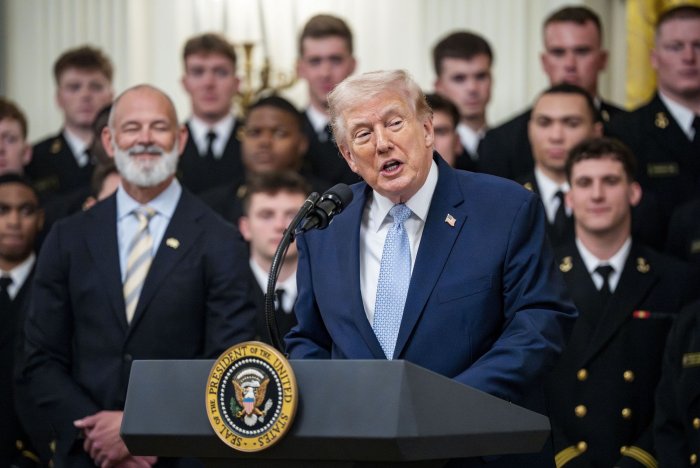
President Donald Trump presents the Commander in Chief’s Trophy to the Navy Midshipmen football team during a ceremony in the East Room of the White House on Friday. The award is presented annually to the winner of the football competition between the Navy, Air Force and Army. Navy has won the trophy back to back years and 13 times over the last 23 years. Photo by Bonnie Cash/UPI | License Photo
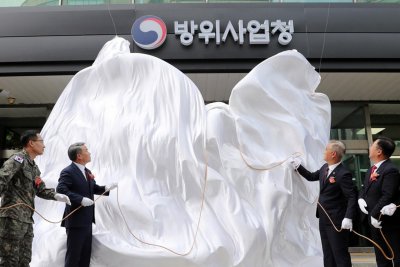
South Korea’s Defense Minister Lee Jong-sup (2-L) attends a ceremony to unveil the signboard of the Defense Acquisition Program Administration (DAPA) at the agency’s new home in Daejeon, some 164km south of Seoul, South Korea. File Photo by YONHAP / EPA
March 20 (Asia Today) — South Korea’s arms procurement agency has pledged a sweeping overhaul of its systems and export strategy as it pushes toward the government’s goal of becoming one of the world’s top four defense exporters. The Defense Acquisition Program Administration, or DAPA, is South Korea’s defense procurement agency, and it is now led by Administrator Lee Yong-cheol.
Speaking at a briefing with defense reporters in Seoul on Wednesday, Lee said the agency would press ahead with faster decision-making, stronger export execution and greater technological self-reliance. He said the current moment amounted to a last chance to reform an organization long criticized for inefficiency and delay.
Lee said DAPA’s export drive must go beyond ceremonial overseas trips and focus instead on securing contracts and building practical business outcomes. But he also acknowledged that export growth alone is not enough if the underlying system remains slow and structurally weak.
One of the clearest examples, he said, was the long-delayed KDDX next-generation destroyer program. The project drifted for more than two years as authorities failed to make a policy choice between direct contracting and open bidding, exposing what Lee described as a deeper decision-making problem rather than a regulatory one.
Lee said South Korea also remains behind in drone warfare capabilities. While drones have become central to modern combat, the country’s military systems are still focused largely on reconnaissance, with limited strike and interception capacity and continued dependence on imported core components. He said DAPA plans to rely more heavily on rapid acquisition and early deployment of prototypes to speed fielding.
Defense semiconductors remain another major vulnerability. South Korea depends heavily on foreign technology for key components used in radars, guided weapons and communications systems, a weakness Lee described as an urgent national task. He said the answer lies in building stronger links between the civilian semiconductor sector and military demand while sustaining long-term investment.
Lee also pointed to Canada’s submarine procurement program as a major test of South Korea’s export competitiveness. He said the outlook was not unfavorable but remained uncertain, describing the bid as a national effort involving diplomacy, industry and military capabilities. Yonhap reported Friday that Lee sees the contest as essentially even, with South Korea competing against Germany for a contract covering 12 submarines.
DAPA said it will also seek structural reforms to prevent repeated delays, including penalties for intentional slowdowns and changes to procurement procedures that can trap projects in repeated failed bidding cycles. Lee has instructed staff to move from planning-based administration to execution-based management, with clear deadlines and accountability.
The agency’s challenge now is whether it can turn reform rhetoric into durable institutional change. For South Korea to become a top-tier defense exporter, industry officials say, speed, structure, technology and political resolve will all need to advance together.
March 20 (UPI) — Prime Minister Benjamin Netanyahu said Thursday that Israel “acted alone” in striking Iran’s South Pars gas field, an attack that escalated the war in the Middle East and prompted President Donald Trump to declare that the U.S. ally would not target the site again.
Israel attacked the South Pars field on Wednesday. In retaliation, Iran targeted major Persian Gulf energy facilities of U.S. allies, causing damage to Qatar’s Ras Laffan Industrial City and the United Arab Emirates’ Bab gas field.
The tit-for-tat strikes have edged the region closer to all-out war while soaring the price of oil, leading Trump to state the United States had known nothing of Israel’s plans before it struck the South Pars gas field and to threaten Iran if it attacked Qatar again. He also said Israel would not attack Iranian energy infrastructure unless Iran attacked Qatar again.
Trump’s comments and his administration’s rationale for entering the war have come under scrutiny after reporting challenged his claim that Washington had no prior knowledge of the South Pars attack, while critics accused the United States of being lured into the war by Israel.
Speaking to reporters in English on Thursday, Netanyahu mostly backed Trump’s account, saying “Israel acted alone against the Asaluyeh gas compound,” using the name of the nearby Iranian port and industrial complex that is often used as a shorthand for the gas field.
He did not directly address whether Trump or the United States knew of the attack beforehand, but pivoted to state that further attacks would not occur, as the American president had ordered.
“President Trump asked us to hold off on future attacks, and we’re holding off,” he said.
The press conference was held following reporting, including by CNN, citing U.S. and Israeli officials who said the attack had been conducted in coordination with the United States.
It was also held as accusations mount that the United States was dragged into the war by Israel. After the United States launched initial attacks with Israel on Feb. 28, Secretary of State Marco Rubiotold reporters that it was a preemptive strike to reduce U.S. casualties and deaths because they knew Israel was going to strike Iran and believed Tehran would retaliate against American forces.
The Trump administration has attempted to thwart the notion that Israel forced the United States into war, with officials repeatedly stating that Trump’s decision to attack was not influenced by others.
Netanyahu echoed this sentiment.
“Does anyone really think that someone can tell President Trump what to do? Come on,” he said. “President Trump always makes his decision on what he thinks is good for America, and may I add, I think what is also good for future generations.”
March 19 (UPI) — The Federal Bureau of Investigation took down two websites that belong to an Iran-linked hacker group after it staged a global cyberattack on an American medical equipment company last week.
Two websites used by the group Handala — one that contained information about its hacks and the other used to dox people it alleges work with the Israeli military and related companies — were pulled down by the FBI on Thursday, NBC News and Techcrunch reported.
Handala was behind a “wiper attack” on the medical device maker Stryker’s computer system on March 11, which it said was in retaliation for a deadly strike on the Shajareh Tayyiba girls school in Minab, Iran.
“Law enforcement authorities determined this domain was used to conduct, facilitate, or support malicious cyber activities on behalf of, or in coordination with, a foreign state actor,” a message left on both websites by the FBI said.
Portage, Mich.-based Stryker, which employs 50,000 people worldwide and manufactures a variety of medical devices, including orthopedic implants, surgical instruments and imaging systems, was forced to shut down for the day because of the global attack.
The attack affected the company’s internal Microsoft corporate environment and was not a ransomware attack, it said four days after the attack, after determining that no malware had been installed and the system was able to be restored.
Handala, which has been active since Oct. 7, 2023, is believed to be linked to Iran’s Ministry of Intelligence and Security, American and Israeli cyber security experts have said.
The group is thought to have attacked Stryker because it was awarded a $450 million contract by the Department of Defense last year, and said at the time that the attack specifically was in response to the U.S. bombing of the school.
Handala acknowledged on Telegram that its websites were no longer under its control, and said that the “aggressive action reveals the extent to which the enemies of truth will go to silence voices that unveil their atrocities.”
“To all truth-seekers and defenders of justice, we inform you that the Handala RedWanted website, which was dedicated to exposing Zionist crimes and raising global awareness, has also been seized and taken offline by order of the FBI,” Handala said, noting that a new website is under construction.
In the wake of the attack, experts have told UPI it should be a wake-up call for a wide swatch of U.S. companies that may have similar gaps in security, especially because rather than demanding ransom, the purpose of this attack was to destroy information and wreak havoc.
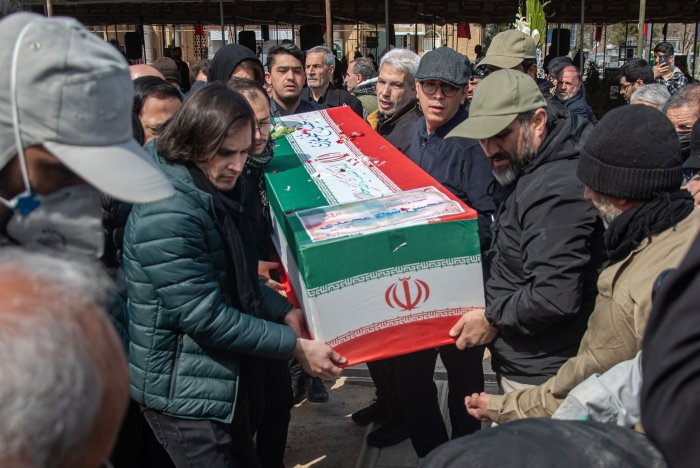
Iranians attend a funeral for a person killed in recent U.S.-Israel airstrikes at Behesht-e Zahra cemetery on the southern outskirts of Tehran in Iran on March 9, 2026. Photo by Hossein Esmaeili/UPI | License Photo
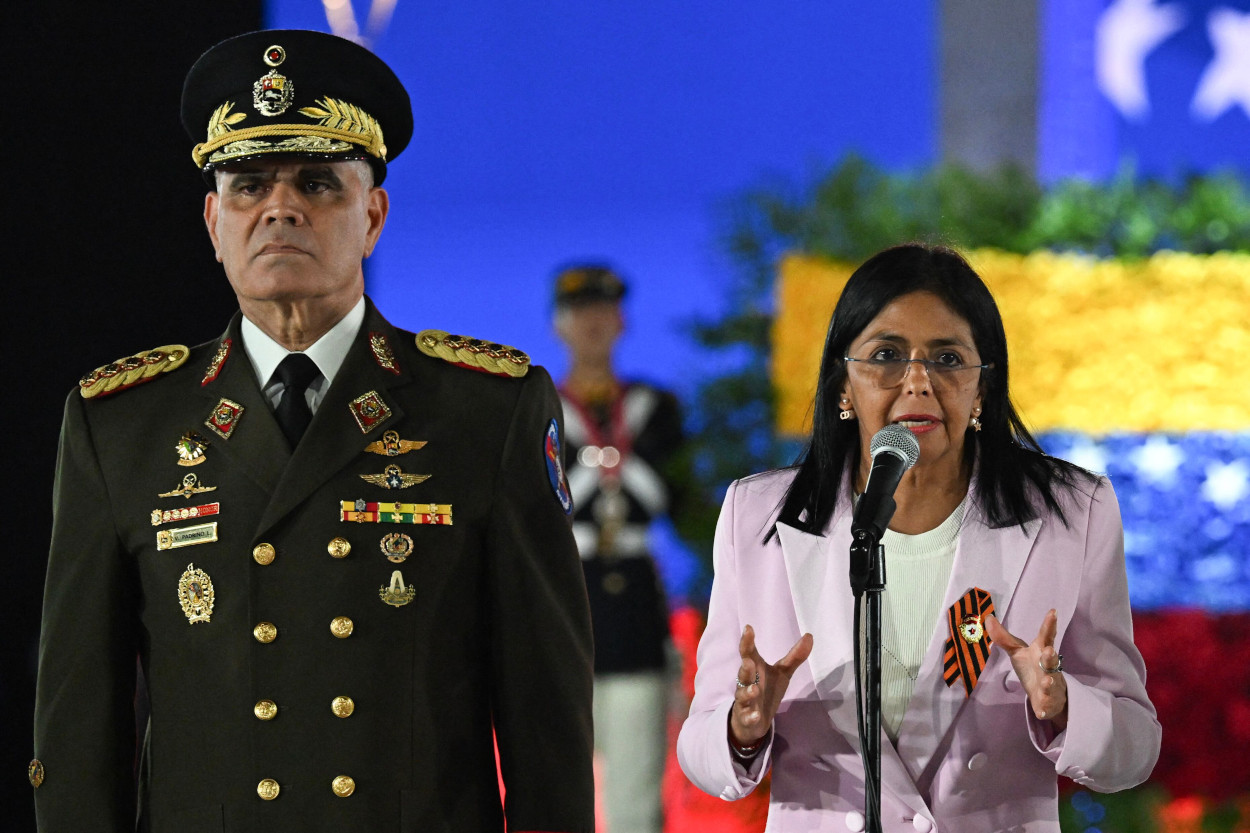
Acting President Delcy Rodríguez (right) thanked Padrino López (left) for his service as defense minister. (AFP)
Caracas, March 19, 2026 (venezuelanalysis.com) – Venezuelan Acting President Delcy Rodríguez tapped Gustavo González López as the country’s new defense minister on Wednesday, replacing Vladimir Padrino López after more than a decade in the post.
“We thank General Vladimir Padrino López for his loyalty and for having been the first soldier in the defense of our country for so many years,” Rodríguez wrote on social media. In response, Padrino thanked the acting president and stated that “serving the Homeland” had been his “highest honor.”
Padrino had served as defense minister since October 2014. The four-star general staved off a number of US-backed coup attempts, including the May 2020 “Operation Gideon” failed mercenary invasion.
In 2025, the Biden administration announced a $15 million bounty for information leading to Padrino’s capture as part of a “narcoterrorism” indictment against several Venezuelan leaders, including President Nicolás Maduro. However, US officials have not presented evidence tying Venezuelan high-ranking officials to narcotics activities.
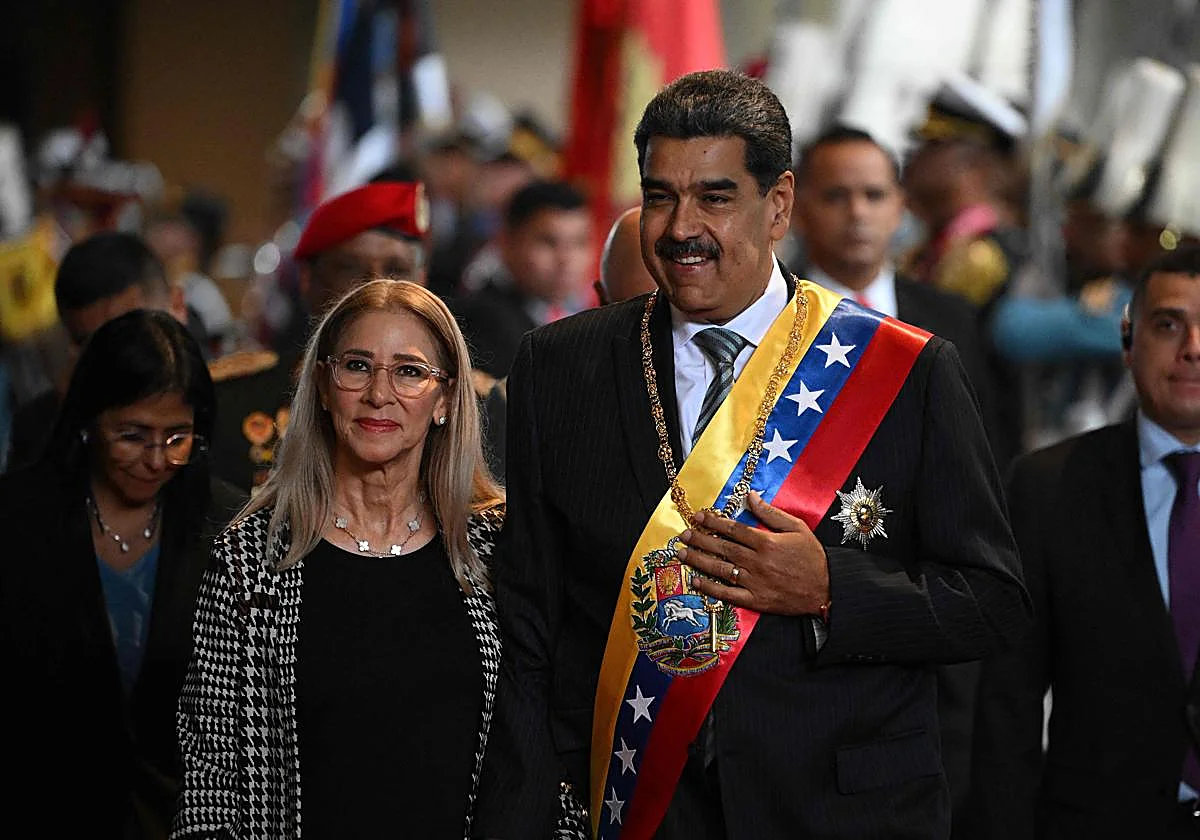
Padrino’s removal follows the January 3 US military strikes against Venezuela that saw special forces kidnap Maduro and First Lady Cilia Flores. Despite months of defense exercises in the face of escalating US threats, Venezuelan forces, particularly air defenses, were quickly neutralized by US bombing and electromagnetic warfare on January 3.
The Venezuelan armed forces have yet to offer a complete account of the operation, including a definitive list of casualties that are said to surpass 100. Padrino condemned the US attacks and pointed to Washington’s military superiority, arguing that it would have been “suicidal” for Venezuelan air force jets to take off and engage with the enemy.
The 60-year-old Gustavo González López previously held posts as interior minister and director of intelligence services and has been under US sanctions since 2015. A career military officer, he briefly studied at the School of the Americas in the early 1990s.
Following the January 3 attacks, González was chosen by Rodríguez to lead the presidential guard. He was pictured alongside the acting president during a visit to Caracas from CIA Director John Ratcliffe on January 16. General Henry Navas will replace González as Commander of the Presidential Guard of Honor.
Rodríguez announced several other cabinet changes on Wednesday. She had previously replaced the industry, oil, tourism, healthcare, communications, and eco-socialism ministers as well.
Jorge Márquez and Rolando Alcalá will take over the housing and electricity portfolios, respectively. Furthermore, Supreme Court magistrate Carlos Alexis Castillo will serve as labor minister amid rising demands for minimum wage increases and labor rights, replacing veteran official Eduardo Piñate.
Former Caracas mayor Jacqueline Faría was likewise appointed as the new transport minister, replacing Aníbal Coronado after two months in the post. Faría’s appointment followed a public transportation strike in Caracas as private bus operators push to increase single-ride fares to 120 bolívars, roughly US $0.25 at the present exchange rate.
Wednesday’s cabinet changes also included Raúl Cazal becoming culture minister, replacing Ernesto Villegas, who had held the post since 2017. Villegas is one of the candidates shortlisted by the Venezuelan National Assembly for the vacant ombudsman post.
Finally, Rodríguez picked academic Ana María Sanjuan as minister of higher education, replacing Ricardo Sánchez. A trained psychologist and professor at the Central University of Venezuela (UCV), Sanjuan had participated in political dialogue initiatives as a representative of moderate opposition sectors.
March 19 (UPI) — Senate Republicans have blocked a Democrat-led effort to curb President Donald Trump‘s powers to wage war against Iran, as the nearly three-week-old conflict escalates and rattles global energy markets.
The Senate voted 53-47 mostly along party lines Wednesday night to reject a resolution that would withdraw U.S. armed forces from conflict with Iran absent congressional approval.
Sen. Rand Paul of Kentucky was the only Republican to join his Democratic colleagues and vote in favor of the motion, while Democratic Sen. John Fetterman of Pennsylvania was the only member of his caucus to vote against it.
“We do not have a king. We are a democratic republic with a constitution and no one is above the law,” Sen. Cory Booker, D-N.Y., said Wednesday from the Senate floor before the vote.
“This president cannot take us to war without coming through this body. He is not able to do that unless this body supplicates itself before that man and surrenders its responsibilities.”
Senate Democrats forced the vote on the resolution that Booker sponsored as the conflict escalated on Wednesday, with Iran attacking Persian Gulf energy facilities in retaliation for Israel striking its South Pars gas field.
Thirteen American service members have been killed, and another 200 have been wounded so far in the conflict, which is threatening to become a regional war as Iran has retaliated by attacking U.S. bases and its allies in the Middle East.
Democrats of both chambers of Congress have been attempting to rein in Trump’s war powers through resolutions since the war with Iran began late last month. They argue the United States’ ongoing war with Iran violates the Constitution, which mandates that only Congress has the power to declare war.
The conflict has also seen the cost of oil surge. On Thursday, Brent crude reached nearly $110 a barrel, up from an average $71 before the war began on Feb. 28.
Wednesday’s vote is the third time — and the second by the Senate — that the majority Republicans have blocked war powers motions.
From the floor, Senate Minority Leader Chuck Schumersaid, “Enough is enough.”
“To my Republican colleagues: The American people are watching. They oppose this war. They expect us to do our jobs,” he said.
“No more senseless wars in the Middle East. No more gas prices shooting through the roof. No more U.S. service members fighting and dying for in endless wars.”
Though the war has exposed fissures in the Republican Party, its members still mostly stand behind the president, who campaigned on ending conflicts and warning Americans that the Democrats would wage war with Iran if they won the White House.
He said during the prior negotiations the United States offered Iran what he called “a lifetime fuel supply for free” if the Islamic regime agreed to hand over its cache of highly enriched uranium. It is believed that Iran had enriched uranium to 60%, according to a recent International Atomic Energy Agency report, which is below weapons grade enrichment at 90%.
Graham compared the Islamic regime of Iran to Nazi Germany.
“If you do not see this as an imminent threat, then you’re blind from your hatred of Trump,” he said.
“There are people on the left and people in my own party that are more afraid of Trump being successful than the Ayatollah having a nuclear weapon. That’s sick.”
The logo of state-owned petroleum company QatarEnergy in front of the headquarters, in Doha, Qatar, March 3. QatarEnergy has halted production of liquefied natural gas and related products due to military attacks on its facilities in Ras Laffan Industrial City and Mesaieed Industrial City. Photo by Hannibal Hanschke/EPA
March 19 (UPI) — Iran on Thursday attacked major energy facilities in Qatar and the United Arab Emirates after vowing to retaliate for Israel striking its gas field a day earlier, escalating a war that is driving up energy prices and rattling global markets.
Qatar said Iranian ballistic missiles struck its Ras Laffan Industrial City, the centerpiece of the nation’s LNG production and export, while the United Arab Emirates said its Habshan gas facilities and Bab field had come under attack.
Several liquefied natural gas facilities at the Ras Laffan Industrial City, which is responsible for about one-fifth of global LNG supplies, were struck early Thursday, igniting what state-owned QatarEnergy said in a statement were “sizeable fires.” Extensive damage was reported.
Two of three fires that ignited from the attack were contained as of 5 a.m. local time Thursday, according to a statement from Qatar’s Ministry of the Interior.
Iran attacked the complex’s Pearl gas-to-liquids facility late Wednesday, which was dealt “extensive damage” and prompted emergency teams to be deployed to the site.
Rockets launched at the UAE facilities were successfully intercepted, but falling debris prompted Abu Dhabi authorities to respond to unspecified incidents at the Habshan gas facilities and the Bab gas field, the Abu Dhabi Media Office said in a statement.
The facilities have been shut down in response, it said, adding that no casualties were reported.
Iran also targeted gas facilities in eastern Saudi Arabia, but all projectiles and drones were intercepted, its Ministry of Defense said in a statement.
The attacks mark an escalation in the war, and come after Israel attacked Iran’s South Pars gas field, one of the world’s largest resources of natural gas.
Israel’s attack was condemned by several countries, including Qatar. Foreign Ministry spokesman Majed Al Ansari said it was “a dangerous & irresponsible step amid the current military escalation in the region.”
“Targeting energy infrastructure constitutes a threat to global energy security, as well as to the peoples of the region & its environment,” he said in a statement.
Following Iran’s attack on Wednesday night, Qatar gave Tehran’s embassy officials 24 hours to leave the country.
The targeting of Persian Gulf energy facilities is expected to further drive surging energy costs. On Thursday, Brent crude reached nearly $110 a barrel, up sharply from $71 before the war began in late February.
Iran had vowed to attack the region’s energy facilities after Israel attacked its South Pars gas field.
Oil facilities “associated with America are now on par with American bases and will come under fire with full force,” Alireza Tangsiri, chief of Iran’s Islamic Revolutionary Guards Corps Navy, said on X.
“You have heard a lot about #hell; we will paint its picture for you,” the IRGC said Thursday in a social media statement.
“Stay away from energy facilities…”
Following the attacks, U.S. President Donald Trumpsaid on his Truth Social platform that there would be no more Israeli attacks on the South Pars field.
Trump claimed the United States “knew nothing” about Israel’s plan to attack the gas site and that Qatar was also neither involved.
He said Iran was unaware of that, but warned that if it again attacks Qatar, the United States will join Israel and “massively blow up the entirety of the South Pars gas field at an amount of strength and power that Iran has never seen or witnessed before.”
1 of 2 | Director of National Intelligence Tulsi Gabbard prepares to testify during a Senate Intelligence Committee hearing on worldwide threats in the Hart Senate Office Building on Capitol Hill in Washington, D.C., on Wednesday. Photo by Annabelle Gordon/UPI | License Photo
March 18 (UPI) — Director of National Intelligence Tulsi Gabbard defended U.S. military strikes on Iran during a Senate Intelligence Committee hearing Wednesday, calling them a strategic success.
Senators challenged Gabbard to reconcile the words of President Donald Trump with the intelligence her department has received on Iran. When pressed, Gabbard yielded that Trump has the final say on what threats the United States faces.
When the United States performed strikes on Iranian nuclear facilities in June, Trump said Iran’s nuclear capabilities were “obliterated.” Earlier this month, he said Iran’s development of nuclear weapons posed an imminent nuclear threat to national security, justifying military action.
Gabbard affirmed Wednesday that Iran’s nuclear enrichment program was “obliterated” in the June strikes.
“It is not the intelligence community’s responsibility to determine what is and is not an imminent threat,” Gabbard said. “That is up to the president, based on a volume of information he receives.”
Gabbard was once a vocal opponent of engaging in a war with Iran, even selling shirts that read “No War With Iran” in 2019 while she campaigned for the Democratic presidential nomination.
Iran is one of the United States’ top adversaries, the Office of the Director of National Intelligence’s “Annual Threat Assessment” said. China, Russia and North Korea are also on that list.
In the 19 days since the war with Iran began, Gabbard said the Iranian regime “appears to be intact but largely degraded.”
“Even so, Iran and its proxies remain capable of and continue to attack U.S. and allied interests in the Middle East,” Gabbard said. “The IC assesses that if a hostile regime survives it will seek to begin a yearslong effort to rebuild its missiles and UAV forces.”
President Donald Trump receives a bowl of shamrocks from Irish Taoiseach Micheal Martin to celebrate St. Patrick’s Day at the White House on Tuesday. Photo by Yuri Gripas/UPI | License Photo
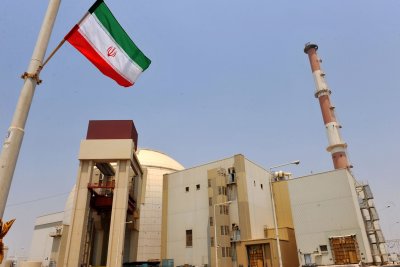
March 17 (UPI) — An unidentified projectile struck the premises of Iran’s Bushehr nuclear power plant on Tuesday evening, the U.N.’s nuclear watchdog said, raising fresh concerns about the risks the U.S.-Iran war poses to nuclear facilities in the region.
Little information about the strike was made public in the carefully worded and brief statement from the International Atomic Energy Agency, which said it had been informed that “a projectile hit the premises of the Bushehr NPP on Tuesday evening.”
“No damage to the plant or injuries to staff reported,” it said.
The IAEA’s director general, Rafael Grossi, reiterated his call “for maximum restraint during the conflict to prevent risk of a nuclear accident,” the agency said.
Located near Bushehr city on Iran’s southwest Persian Gulf coast, the Bushehr plant began construction in 1975, but its original German contractor abandoned the project following the Islamic Revolution four years later. In the mid-1990s, Russia agreed to complete Bushehr Unit 1, Iran’s first reactor, which began operating in 2011, according to the U.S. Congressional Research Service.
Rosatom, Russia’s state atomic energy corporation, said the projectile struck near the metrology service building in the vicinity of the plant’s operating power unit at 6:11 p.m. local time, according to Russian state-run TASS news agency.
“There were no casualties among personnel of the Rosatom State Corporation. Radiation levels at the site are normal,” Rosatom General Director Alexei Likhachev said.
The strike was the first on the premises of the nuclear power plant since the war between Iran and the United States and Israel began late last month, he noted.
March 17 (UPI) — Speaking to the British Parliament on Monday, Ukrainian President Volodymyr Zelensky warned that the rise of artificial intelligence and inexpensive drone technology has made “mass drone warfare” quicker and more common across the globe.
“The evolution of threats never stops,” he said in a speech touting Ukraine‘s advances in technology allow the country to defend against and monitor attacks by Russia.
During his visit to Britain, Zelensky also met with King Charles III and Prime Minister Keir Starmer, with whom he agreed to a partnership to boost global defensive capabilities across Europe to protect against a rise in low-cost, high-tech military technology. The agreement capitalizes on Ukraine’s technological expertise and Britain’s industrial ability to manufacture and supply resources, the British government said.
Britain plans to invest $667,000 in an AI center in Kyiv.
Zelensky told Parliament that Ukraine faces nearly nightly attacks from Russia and uses nearly 1,000 interceptor drones each day to protect the country. He said Ukraine can produce interceptors on that scale, but the country needs a system in place to stop the attacks by Russia and Iran, which is using weaponry made from Russian supplies.
Zelensky pointed to the military bases in Cyprus as an example, The Guardian reported.
“This is what our security proposal could look like. Our experts would place interception teams and set up radars and acoustic coverage, and these would all work if Iran launched a large-scale attack similar to Russian attacks,” he told Parliament.
“We would guarantee protection. This is the kind of reinforcement we offer, and it may soon be needed across Europe.”
During their meeting at No. 10 Downing Street, Starmer told Zelensky that “the focus must remain on Ukraine” despite new conflict in Iran, the BBC reported.
Russian President Vladimir Putin “can’t be the one who benefits from a conflict in Iran, whether that’s oil prices or the dropping of sanctions.” He was referring to the United States’ recent easing of sanctions on Russian oil to combat rising gas and diesel prices.
Zelensky offered his thanks to Starmer for the support from Britain.
“You have stood with us all through this difficult winter,” Zelensky said.
Ukrainians march together through the streets of London to the Russian Embassy to mark the first anniversary of the Russian invasion of Ukraine on February 24, 2023. Photo by Hugo Philpott/UPI | License Photo
Maduro and Flores will have a court hearing on March 26. (AFP)
Caracas, March 17, 2026 (venezuelanalysis.com) – The Trump administration has opposed a motion from Venezuelan President Nicolás Maduro and First Lady Cilia Flores for the dismissal of US criminal charges on the grounds of the US Treasury blocking their legal defense funds.
In a court filing, US Justice Department prosecutors argued that “the defendants and their former regime” have been sanctioned by the US government for several years and that regulations from the Office of Foreign Assets Control (OFAC) “expressly prohibit” that funds from a “sanctioned entity” be used to pay a “sanctioned person’s” legal expenses.
“OFAC’s denial of that request does not mean the [US] government violated the defendants’ due process rights. The motions to dismiss should be denied,” the statement read.
Last month, Maduro and Flores’ legal teams urged Judge Alvin Hellerstein to throw out the cases over the US government’s interference with their “ability to retain counsel.” Defense attorney for the Venezuelan president, Barry Pollack, argued that Washington’s actions violated Maduro’s Sixth Amendment rights.
In a sworn statement handed to the court, Maduro declared that under Venezuelan law he is “entitled” to have his legal expenses covered by Caracas and confirmed that Pollack is his “counsel of choice.”
Pollack further added that, on January 9, OFAC issued permission for the Venezuelan government to cover Maduro and Flores’ legal fees, only to withdraw it hours later. The high-profile attorney has announced plans to invoke Maduro’s immunity as a sitting president as part of his legal strategy.
US prosecutors have claimed that the defendants are allowed to use “personal funds” to pay their attorneys’ fees. However, both Maduro and Flores, as well as multiple immediate relatives, are under OFAC sanctions, making it illegal for US persons and entities to engage in financial transactions with them.
The Venezuelan Communications Ministry did not immediately respond to a request for comment. Venezuelan officials, including Acting President Delcy Rodríguez, have yet to weigh in on the Trump administration’s efforts to hamper Maduro and Flores’ defense efforts.
President Maduro and his wife, who is also a National Assembly deputy, were kidnapped by US Special forces on January 3 amid a bombing campaign against Caracas and nearby areas. Rodríguez, as sitting vice president, assumed the presidency on an acting basis after the Venezuelan Supreme Court decreed that Maduro’s abduction constituted a “temporary absence.”
Maduro was indicted on charges of “narcoterrorism conspiracy, cocaine importation conspiracy, possession of machineguns and destructive devices, and conspiracy to possess machineguns and destructive devices against the United States.” Flores faces the latter three counts. Both pleaded not guilty in their arraignment hearing on January 5. The next hearing is scheduled for March 26.
Despite reiterated “narcoterrorism” accusations, US officials have not presented evidence tying Maduro and other high-ranking officials to narcotics activities. Specialized reports have likewise found Venezuela to play a marginal role in global drug trafficking.
Following the January 3 attacks and presidential kidnapping, Rodríguez has fast-tracked a diplomatic rapprochement with the Trump administration. The acting president has hosted several US officials in Caracas while promoting a pro-business overhaul of the country’s oil and mining laws aimed at courting Western corporations.
Caracas and Washington reestablished diplomatic ties on March 5 following a seven-year hiatus, with the White House formally recognizing Rodríguez as Venezuela’s “sole leader” last week.
Since January 3, Venezuelan government supporters have staged multiple demonstrations to condemn the US attacks and demand the immediate release of the Venezuelan president and first lady.
US-based solidarity movements have also organized rallies in support of Maduro and Flores, including outside the Metropolitan Detention Center in Brooklyn where they are detained.
WASHINGTON — President Trump’s sweeping act of clemency for rioters who stormed the U.S. Capitol also should apply to a man charged with planting pipe bombs near the national headquarters of the Democratic and Republican parties on the eve of the Jan. 6, 2021, riot, the suspect’s attorneys argue in a bid to get his case dismissed.
In a court filing Monday, defense attorneys assert that Trump’s blanket pardons extend to the charges against Brian J. Cole Jr. because his alleged conduct on Jan. 5, 2021, is “inextricably tethered” to what happened at the Capitol the next day. They’re asking U.S. District Judge Amir Ali to throw out the case before trial.
Justice Department prosecutors didn’t immediately respond in writing to the defense’s request. In a previous court filing, prosecutors said Cole, under questioning by FBI agents, denied that his actions were related to the Jan. 6 proceedings at the Capitol.
On his first day back in the White House last year, Trump pardoned, commuted prison sentences and ordered the dismissal of all 1,500-plus people charged in the attack by a mob of his supporters.
Nearly a year later, Cole was arrested on charges that he placed two pipe bombs outside both the Republican and the Democratic national committees’ headquarters in Washington the night before the riot. The devices didn’t detonate before law enforcement officers discovered them Jan. 6.
Cole’s attorneys said the Justice Department’s framing of the case has explicitly linked Cole’s alleged conduct on Jan. 5 to the events of Jan. 6, when rioters disrupted the joint session of Congress for certifying Joe Biden’s electoral victory over Trump.
“That is not happenstance sequencing in time. It is the government’s theory of Mr. Cole’s alleged motive and context,” defense lawyers wrote. “According to the government, the timing was chosen because of what was scheduled to occur at the Capitol on January 6.”
They also argued that prosecutors’ theory of a possible motive places Cole’s alleged conduct “in the same political controversy that animated the January 6 crowd.”
In court filings, prosecutors have said that Cole confessed to investigators after his Dec. 4 arrest. He told FBI agents that he felt “bewildered” by conspiracy theories related to the 2020 presidential election and “something just snapped” after “watching everything, just everything getting worse,” prosecutors said.
Cole has remained jailed since his arrest. His attorneys have appealed Ali’s refusal to order Cole’s pretrial release from custody. The judge hasn’t set a trial date yet.
Cole, 30, of Woodbridge, Virginia, has been diagnosed with autism and obsessive-compulsive disorder. His attorneys say he has no criminal record.
Authorities said they used phone records and other evidence to identify him as a suspect in a crime that confounded the FBI for more than four years.
March 17 (UPI) — Israel said Tuesday it killed Basij paramilitary force commander Gholamreza Soleimani in an overnight airstrike in Tehran.
Specifics on the strike were scant, but The Times of Israel reported the Israel Defense Forces targeted Soleimani at a camp he had recently established in Tehran after the paramilitary’s headquarters were destroyed.
Established in 1980, the Basij is a volunteer paramilitary reserve force under Iran’s influential Islamic Revolutionary Guard Corps, according to the U.S. Defense Intelligence Agency. The force — which the website for Iran’s supreme leader says consists of millions of members — was sanctioned by the United States for human rights abuses in 2011 and designated as a Specially Designated Global Terrorist in 2018.
Soleimani was appointed in 2019 to lead the Basij, which has been accused of helping suppress protests inside Iran through violence, mass arrests and force against demonstrators.
“The elimination of Soleimani adds to that of dozens of senior commanders from the armed forces of the Iranian regime who have been eliminated during the operation, and constitutes an additional significant blow to the regime’s security command-and-control structures,” the IDF said in a statement on Telegram.
“The IDF will continue to operate with determination against commanders of the Iranian terror regime.”
Iran has yet to respond to the report as of Tuesday morning.
COMMANDER OF THE BASIJ UNIT ELIMINATED
Yesterday, the IDF targeted & eliminated Gholamreza Soleimani, who operated as commander of the Basij unit for the past 6 years.
Under Soleimani, the Basij unit led the main repression operations in Iran, employing severe violence,… pic.twitter.com/aJ0dNtCFz0— Israel Defense Forces (@IDF) March 17, 2026
The IDF said it conducted a wave of strikes Monday targeting military infrastructure in the Iranian cities of Tehran, Shiraz and Tabriz.
Its warplanes dropped dozens of munitions on security force command centers in Tehran, including those belonging to the Basij, the IDF said in an earlier Tuesday statement.
“The completed strikes are part of an ongoing effort focused on deepening the damage to the Iranian terror regime’s core systems and weakening its capacity to threaten the State of Israel,” it said.
Later Tuesday, Prime Minister Benjamin Netanyahu‘s office published a photo on social media showing him on the phone, accompanied by a caption saying he was “ordering the elimination of senior regime officials.”
Russian Foreign Minister Sergey Lavrov (R) and Kenyan Foreign Minister Musalia Mudavadi announced on Monday that their nations have agreed that Russia will stop recruiting people from Kenya to serve in its military in its war in Ukraine, which follows a report indicating that more than 1,000 people have been duped into service on the front lines. Pool Photo by Tatyana Makeyeva/EPA
March 16 (UPI) — Kenya and Russia announced on Monday that Kenyans will no longer be recruited by the Russian military and sent to fight in Ukraine.
The move follows a Kenyan intelligence report indicating that more than 1,000 people from Kenya and other African nations in recent months have been recruited into deployment on the front lines of the war between Russia and Ukraine by “rogue” agencies participating in human trafficking.
The report, released in February, alleged that of Kenyans recruited for the war, 10 died, 28 were missing, 39 were hospitalized and others were fighting for Russia in Ukraine, The Kenyan Daily Post reported.
“We have agreed that Kenyans will no longer be enlisted for special operations through the defense ministry,” Kenyan Prime Cabinet Secretary Musalia Mudavadi said during a news conference. “They will no longer be eligible to be enlisted.”
The nations also were expected to sign a labor agreement aimed at protecting Kenyans working in Russia — specifically in drone manufacturing — which will cover people working specifically for the military or for other related industries, he said.
Mudavadi told The BBC that Kenya has shut down more than 600 agencies that were lying to Kenyans about a range of possible jobs in Russia and other countries, with many ending up in Ukraine.
Russia has not given answers to relatives at its embassy in Kenya, nor has it commented on reports that human traffickers were fooling people into being enlisted in the war with lies about well-paid jobs.
Russian Defense Minister Sergei Lavrov said during the news conference that all foreign fighters, including those from Kenya, had not been coerced or lied to and their voluntary service complied with Russian law.
“Once a contract is terminated, the individual is no longer bound and is free to make their own decisions,” Lavov said, although Kenyans who have volunteered to join the war have to find and pay for their own travel home.
Ukraine’s foreign minister, Andrii Sybiha, alleged in November that at least 1,400 people from Africa from 36 countries have been sent to Ukraine by Russia, many of whom have been captured as prisoners of war.
Iranians attend a funeral for a person killed in recent U.S.-Israel airstrikes at Behesht-e Zahra cemetery on the southern outskirts of Tehran in Iran on March 9, 2026. Photo by Hossein Esmaeili/UPI | License Photo
Iran stepped up its targeting of Gulf neighbors, attacking and setting on fire a fuel tank close to Dubai International Airport, forcing flights to be suspended, and the key Fujairah oil export hub on the UAE’s east coast, on the supposed “safe” side of the Strait of Hormuz. Photo by Stringer/EPA
March 16 (UPI) — Emergency services in the United Arab Emirates were battling a major blaze at the country’s strategically key Fujairah oil export hub on Monday morning after the second drone strike on the facility in two days.
Emirate of Fujairah authorities said in a post on X that no one had been hurt in the attack on the Fujairah Industrial Petroleum Zone and that efforts were ongoing to bring the fire under control. They appealed to people to refrain from spreading misinformation.
“Civil defense teams in the Emirate immediately responded to the incident and are continuing their efforts to control it. The competent authorities call on the public not to circulate rumours and to obtain information only from official sources,” wrote the Fujairah Media Office.
The facility is strategically important because it is the only oil export terminal on the UAE’s eastern coast, located on the Gulf of Oman, the “good” end of the Strait of Hormuz.
Critically, it means oil tankers servicing the port do not need to run the gauntlet of the 21-mile-wide sea lane that Iran has effectively closed.
An approximately 250-mile-long cross-country oil pipeline from Habshan, a key onshore field 80 miles southwest of Abu Dhabi, feeds as much as 1.8 million barrels per day of crude into Fujairah.
However, Iran’s Islamic Revolutionary Guard Corps threatened ports, docks, military facilities and other “legitimate”U.S. targets in the UAE while the state media uged workers and residents in and around Fujairah, Jebel Ali and Khalifa ports to evacuate due to the presence of U.S. military forces.
Monday’s incident, following on from a separate strike and fire on Saturday, highlighted how exposed Fujairah — one of the world’s key crude oil and fuel storage hubs — was to Iranian threats.
The UAE has been repeatedly targeted by Iranian drones and missiles since the United States launched its airborne offensive against Iran on Feb. 28.
A drone attack earlier Monday that forced the temporary grounding of all flights at Dubai International Airport after a fire erupted in a fuel tank close by and an announcement by Israel that it was nowhere near done with hitting Iran indicated the war was likely headed into a third week.
Israel also announced plans for an expansion of its ground offensive in Lebanon against Hezbollah operatives and strongholds after the Iranian proxy group attacked Israel with rockets and missiles on March 2, two days into the war.
An Israeli bombing campaign and targeted actions by ground forces has already forced hundreds of thousands of civilians in the country to flee their homes and killed more than 850, more than 170 of them women and children, according to the Lebanon Health Ministry.
European Union foreign ministers were set to meet on Monday in Brussels to discuss the situation in the region as oil prices continued their upward trajectory with the benchmark Brent crude futures briefly hitting $106 per barrel during trade on Monday.
Shipping of oil, gas and all cargo through the Strait of Hormuz remains stalled despite calls by U.S. President Donald Trump at the weekend for countries that get their oil from Gulf producers to step up and help restart movement of ships in and out of the Persian Gulf.
Iranians attend a funeral for a person killed in recent U.S.-Israel airstrikes at Behesht-e Zahra cemetery on the southern outskirts of Tehran in Iran on March 9, 2026. Photo by Hossein Esmaeili/UPI | License Photo
March 16 (UPI) — The Israeli military announced Monday that soldiers were conducting “limited and targeted ground operations” in southern Lebanon against Hezbollah, amid its larger war against the militant organization’s backer, Iran.
Israeli troops were reported in Lebanon earlier this month, but Monday’s announcement appears to formalize and broaden the mission. The language in the announcement was also consistent with other reports that Israel may be planning to significantly expand its ground operation.
“This activity is part of broader defensive efforts to establish and strengthen a forward defensive posture, which includes the dismantling of terrorist infrastructure and the elimination of terrorists operating in the area, to create an additional layer of security for residents of northern Israel,” the IDF said in a social media statement.
Israel has been attacking Hezbollah in Lebanon for years, and launched a ground operation there in October 2024 that ended with a fragile cease-fire, with both sides accusing the other of violations. Fighting erupted again late last month after the United States and Israel launched a war against Iran.
Specifics about the ground operation were minimal, including the day it began, with the IDF stating on Telegram that the troops entered Lebanon “in recent days.”
Troops from the 91st Division are conducting what the Israel Defense Forces called “limited and targeted ground operations” against Iran-backed Hezbollah strongholds.
Videos of the operation taken from apparent night-vision cameras worn by the soldiers and distributed by the IDF online show Israeli forces and military vehicles seemingly operating in southern Lebanon.
The operation was aimed at enhancing the forward defense area and was part of broader efforts to strengthen Israel’s forward defensive posture, the IDF said, which is consistent with reporting by Axios that Israel plans to seize all of Lebanon south of the Litani River and will be a major operation.
The IDF said airstrikes were conducted before the soldiers of the 91st Division moved in, with a Hezbollah site attacked on Saturday. Troops on Sunday searched the area and found a storage facility housing dozens of rockets, explosive devices and guns, it said in a Monday update on the operation.
Photos included in the release show rockets laid upon a couch inside a debris-filled residence.
Two Hezbollah operatives were also killed, it said, stating the militants had advanced on the Israeli troops.
“The IDF will continue to operate with determination against the Hezbollah terrorist organization following its deliberate decision to attack Israel on behalf of the Iranian regime,” the IDF said.
“The IDF will not tolerate any harm to the residents of the State of Israel.”
במסגרת מאמץ משימת ההגנה הקדמית: כוחות צה”ל חיסלו מחבלים ואיתרו מצבור אמצעי לחימה של מחבלי ארגון הטרור חיזבאללה
במהלך פעילות מבצעית של אוגדה 91, חיל האוויר תקף מבנה צבאי של ארגון הטרור חיזבאללה בו זוהתה פעילות של מחבלי הארגון בסוף השבוע.
אתמול, הכוחות סרקו במרחב המבנה ואיתרו בו… pic.twitter.com/IfLTvjhIZp— צבא ההגנה לישראל (@idfonline) March 16, 2026
Taiwan on Sunday reported a sudden surge in Chinese military aircraft flying near the island and crossing its air defense alert zones after a two week period of relatively few of the flights. The Taiwanese Defense Ministry noted, however, the China’s Navy — its Shandong aircraft carrier can be seen during a Chinese military exercise in 2025 — continued to circle the island daily. File Photo by Taiwan Military News Agency/EPA-EFE
March 15 (UPI) — Taiwan’s defense ministry on Sunday said that more than two dozen Chinese military aircraft and several naval vessels were detected near the island, which comes after a period with relatively few such incursions.
After decreased presence of Chinese incursions into the island’s air defense identification zone (ADIZ) during the last two weeks, China sent 26 aircraft that were spotted around the island – 16 of which violated the ADIZ – and seven naval vessels sailed toward it, The Independent and The Wall Street Journal reported.
China considers Taiwan to be its territory. On a regular basis, it sends military aircraft and naval vessels toward the island, but during 10 of the last 16 days — from Feb. 27 to March 5 and March 7 to 10 — no flights near the island were reported.
On the other days, there were as few as two flights detected.
Taiwan regards the incursions into its airspace and waters as routine harassment, for the most part, but China also has held military exercises close to what Taiwan considers its territory and has threatened to take the island by force if it deems it necessary.
Wellington Koo, Taiwan’s defense minister has said that although there has been a noticeable decrease in aircraft nearing or crossing the ADIZ, the island nation’s military planned to stay on guard.
“We cannot rely on a single indicator like the absence of aircraft,” Koo told The Journal, because naval vessels still circle the island daily.
Analysts have suggested that the decrease in incursions is timed to a meeting of the Chinese legislature, which has happened previously, or be part of a diplomatic or strategic play before U.S. President Donald Trump and Chinese President Xi Jinping meet in Beijing at the end of the month.
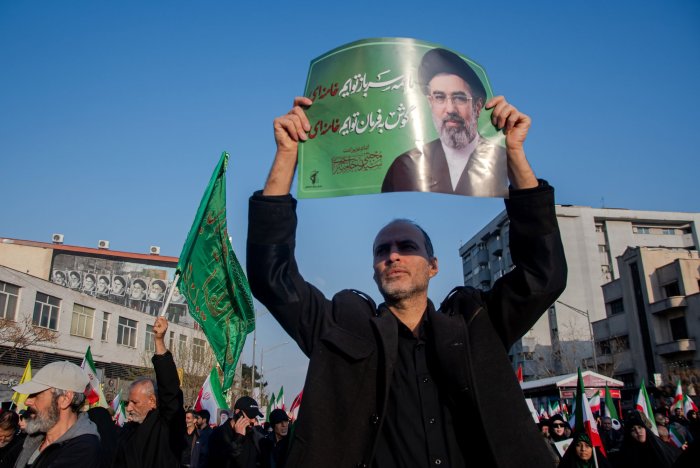
An Iranian man raises a portrait of new supreme leader Mojtaba Khamenei during a rally on Revolution Street in Tehran on March 9, 2026. Photo by Hossein Esmaeili/UPI | License Photo
SACRAMENTO — With more than 100 fans supporting from the bleachers, Garfield High’s boys’ soccer put on a strong performance at the inaugural CIF state Division V championship game Saturday morning before losing to Ross Branson 2-0 at Natomas High.
Two communication errors on defense proved costly for the Bulldogs, who took a bus from East Los Angeles on Friday, stayed overnight and were set to return after the match.
Coach Pablo Serrano praised his team. “I felt we played outstanding,” he said.
Goalkeeper Javier Zarate turned in another impressive performance. “He can only do so much,” Serrano said.
Zarate, without prodding, went up to CIF executive director Ron Nocetti and thanked him for what will become an annual state soccer championship event.
On Friday, Irvine University won the Division IV boys’ title with a 3-2 win over Del Mar.
Cole Barkett, Jake Raboid and Brendan Leung scored goals.
North Korea on Saturday staged another of its show-of-force ballistic missile launches — pictured is one launch during a test in December — that sent 10 missiles off its west coast, which traveled more than 200 miles and landed just outside the Japanese exclusive economic zone in the Sea of Japan. Photo by KCNA/EPA
March 14 (UPI) — North Korea launched 10 ballistic missiles into the sea on Saturday — which landed just outside Japan’s economic zone in the East Sea — in a show of force amid a U.S.-South Korea military exercise.
The launch, confirmed by the Japanese and South Korean defense ministries, is one of the largest North Korea shows of force that it has ever launched, The Japan Times and The Independent reported.
The missiles were launched from the west coast of North Korea, flying roughly 211 miles before falling just outside the Sea of Japan.
The Japanese Ministry of Defense in a statement called the launch a continued effort to “threaten the peace and security of Japan, the region and the international community.”
Shinjiro Koizumi, the Japanese defense minister, added that the ministry would remain in close contact with the United States and other allies “to remain fully vigilant and maintain surveillance in preparation for any unforeseen contingencies.”
The launch is the largest since at least November 2022, when Kim Jong Un’s regime launched a volley of 23 missiles that included short-range ballistic missiles and surface-to-air missiles, among others.
Analysts have said that it is unlikely that North Korea would attack U.S. or other nation’s assets in the region while the United States has diverted missile defense systems, among other things, to the Middle East amid the war in Iran.
They say, rather, that the show of force is meant to show that it can defend itself if it is invaded.
North Korea’s launch also comes as the United States and South Korea are about halfway through the annual 11-day Freedom Shield combined joint exercise that includes land, air and sea training events to allow the two nation’s armed forces to integrate seamlessly in combat.
One warship that was involved with the exercise, the USS Tripoli, an amphibious assault ship carrying 2,500 Marines and 2,500 sailors, has been redeployed to the Middle East to bolster U.S. military power there amid the war in Iran.
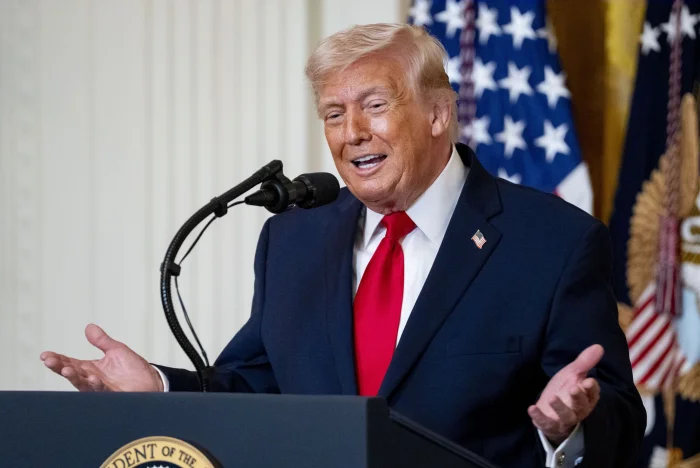
President Donald Trump speaks during an event celebrating Women’s History Month in the East Room of the White House on Thursday. Photo by Bonnie Cash/UPI | License Photo