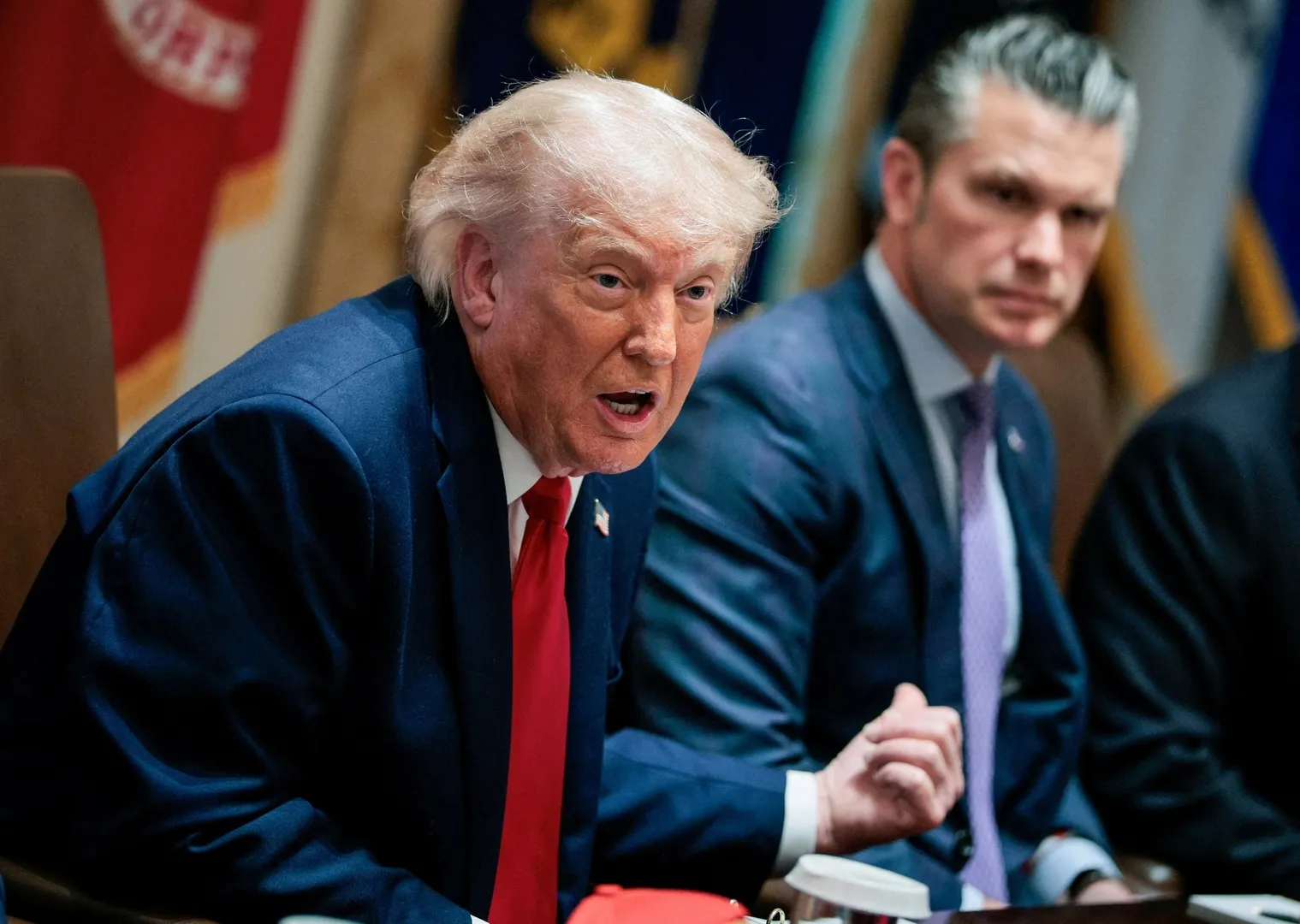
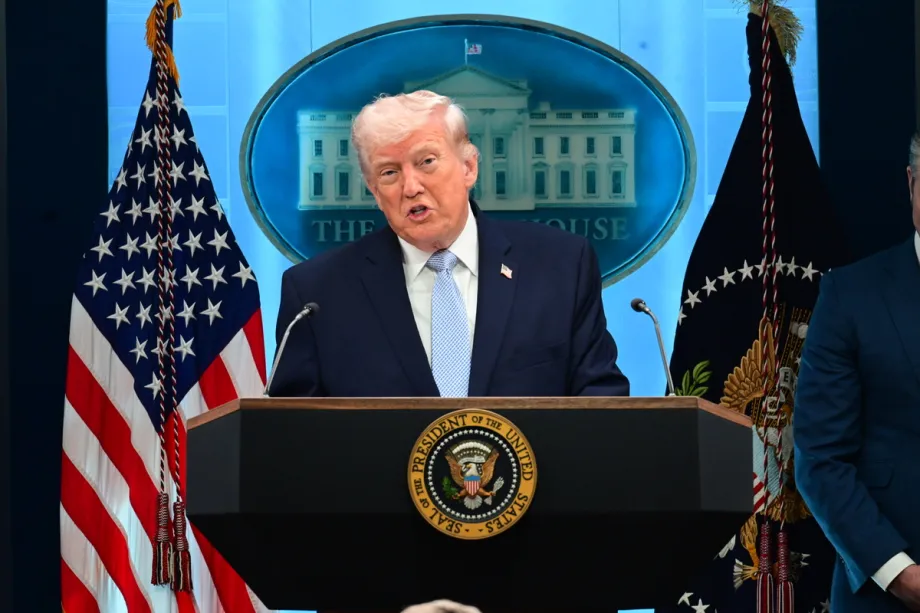
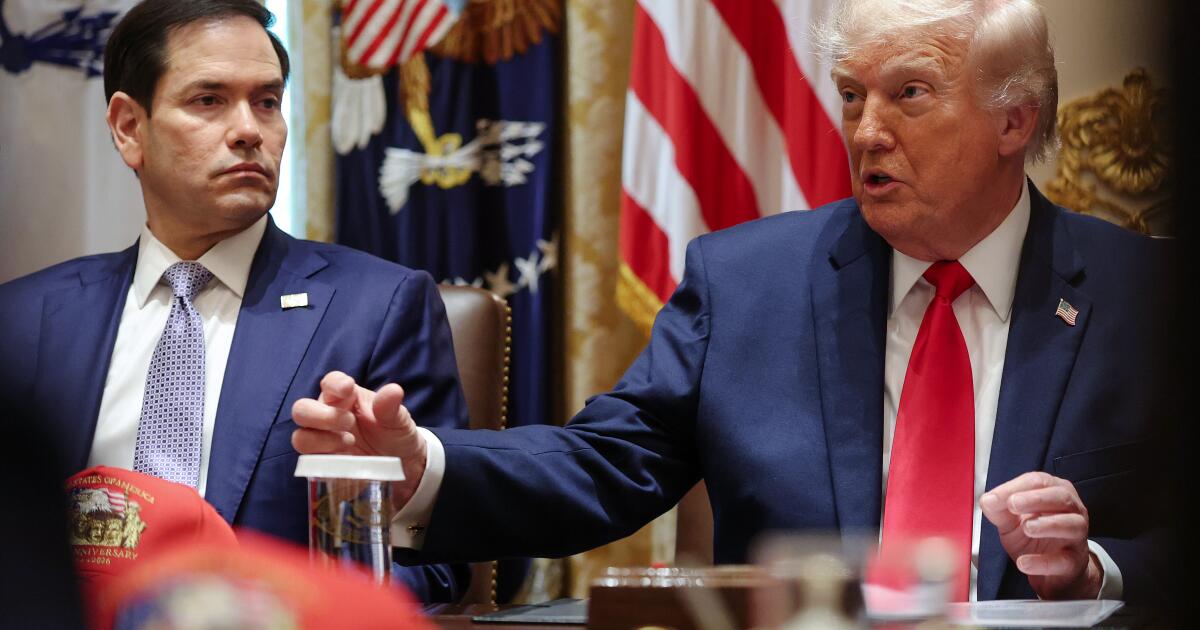
US President Donald Trump posted online that he’s heading into the Situation Room at the White House to make a “final determination” on potentially finalising a peace deal with Iran. Al Jazeera’s Patty Culhane reports from the White House.
US President Donald Trump said Sunday that negotiations with Iran are “orderly and constructive” and vowed the blockade will remain in place until a final agreement is reached, Anadolu reports.
“The Blockade will remain in full force and effect until an agreement is reached, certified, and signed. Both sides must take their time and get it right. There can be no mistakes!,” Trump said in a post on his social media platform Truth Social.
He also said US-Iran relations are becoming “much more professional and productive,” while warning that Tehran must not develop or acquire a nuclear weapon.
Trump further thanked Middle Eastern countries for their “support and cooperation,” saying engagement would be strengthened through broader participation in the Abraham Accords, and suggested Iran could one day join the framework.
He criticized the 2015 Iran nuclear deal, calling it “one of the worst agreements ever made,” and again blamed former President Barack Obama’s administration for what he described as a flawed agreement that opened a path toward nuclear weapons development.
Trump said the current negotiations with Iran are “far better” and part of a more effective approach, insisting the ongoing process will prevent Tehran from obtaining nuclear arms.
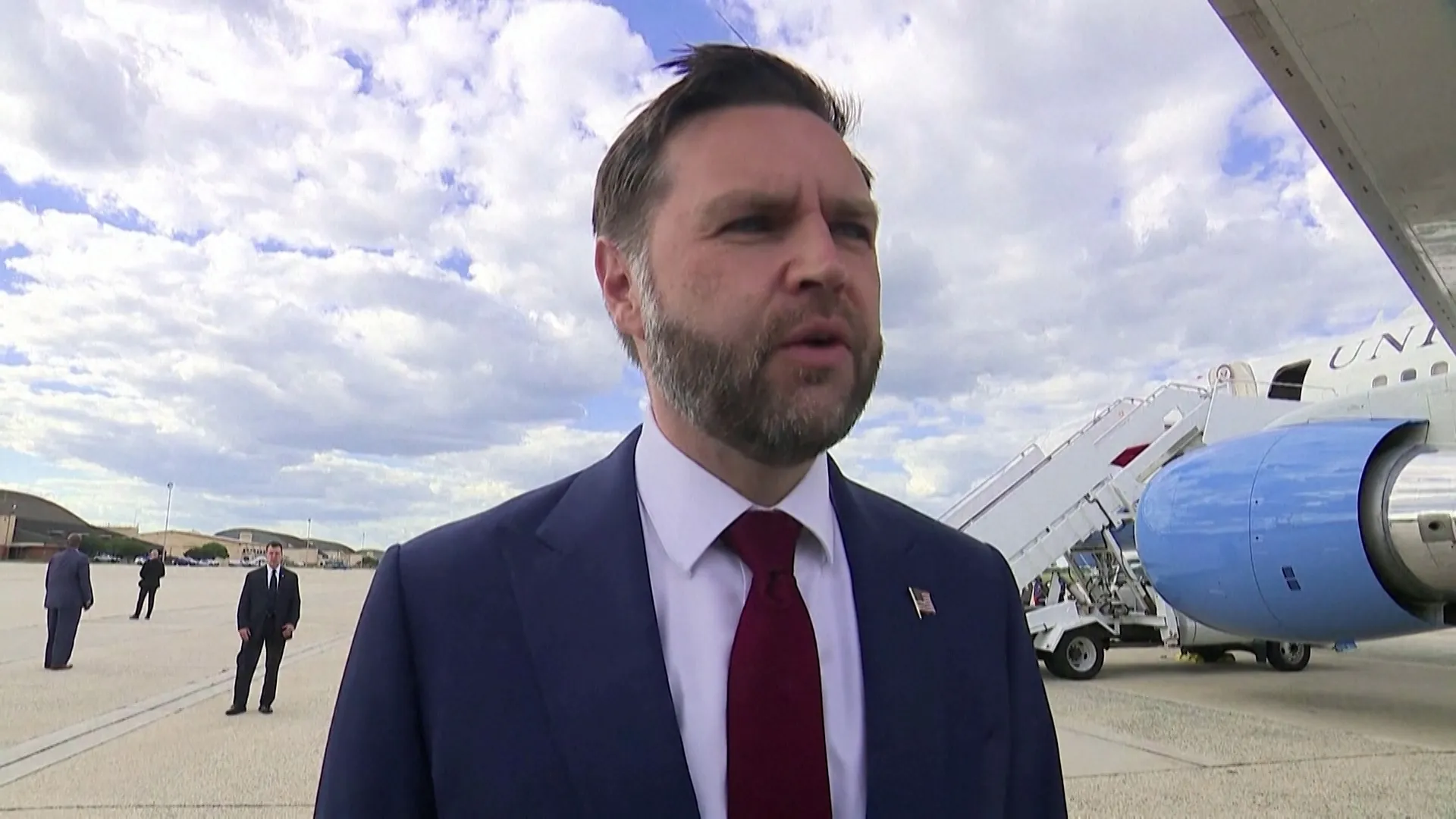
US Vice President JD Vance says Washington and Tehran have made “a lot of progress” towards a ceasefire extension agreement, including talks on reopening the Strait of Hormuz. However, he says disagreements remain over Tehran’s enriched uranium stockpile.
Deep mistrust remains between Washington and Tehran as Iran’s top negotiator urges action, not words.
Published On 29 May 202629 May 2026
United States President Donald Trump says he is meeting in the Situation Room to make a “final determination” on a possible deal with Iran that could extend the ceasefire and reopen the Strait of Hormuz.
However, deep mistrust remains between the two sides. Iran’s top negotiator, Mohammad Bagher Ghalibaf, said earlier on Friday that Tehran would judge any agreement by actions rather than promises as talks continue.
Recommended Stories
list of 3 itemsend of list
In his latest post on the Truth Social platform, Trump on Friday set out numerous conditions for Tehran to accept, including: never having a nuclear weapon or bomb, the Strait of Hormuz being open in both directions and without tolls, the removal of any remaining mines left in the Strait, and the US unearthing and destroying Iran’s enriched uranium that is buried.
“Ships caught in the Strait due to our amazing and unprecedented Naval Blockade, which will now be lifted, may start the process of ‘heading home!’” Trump wrote.
“No money will be exchanged until further notice. Other items, of far less importance, have been agreed to. I will be meeting now, in the Situation Room, to make a final determination,” he added.
Reporting from the White House, Al Jazeera’s Patty Culhane said that in the past, the Trump administration has indicated that a deal has been reached, only to find out it has not.
“If this was in fact a deal, it would be the entire wishlist of what the US was demanding and none of the concessions that Iranian were asking for,” she explained.
Uncertainty about the details of a memorandum of understanding (MOU) has grown over the past week amid ongoing distrust between the two sides as they seek to end the three-month-long war.
On Thursday, White House sources told Al Jazeera that the US and Iran had reached a tentative agreement to extend the ceasefire by 60 days to allow for formal negotiations, but Trump has yet to sign off.
Moreover, earlier on Friday, Iran’s top negotiator Ghalibaf said that Tehran did not trust “guarantees and words, only actions are the criterion”.
“No action will be taken before the other side acts,” he said in a social media post, without elaborating.
“The winner of any agreement is the one who is better prepared for war the day after,” the Iranian official added.
Still, Iranian state news outlet Fars, citing sources, reported on Friday that the agreement with the US was in its final stages of ratification, but no final decision has been made yet.
The sources stressed that there were no provisions about destroying Iran’s nuclear materials in the MOU and added that arrangements for the reopening of the Strait of Hormuz could include the monitoring and inspection of ships.
WASHINGTON — A framework agreement to end the U.S. war with Iran is all but settled, pending sign-off from the presidents of the two warring sides, President Trump said Friday, projecting optimism that a deal could finally be at hand.
Yet doubt cast a shadow over the diplomatic process entering the weekend as Trump faced a politically fraught decision to enter an agreement that would invariably require significant concessions to Tehran.
The negotiations have faced severe headwinds in recent days, with both sides accusing the other of violating a fragile ceasefire that has largely stopped the fighting since April.
On his Truth Social site, Trump said he had summoned his top aides to the White House Situation Room to decide on the deal.
The agreement would see an end to the U.S. naval blockade on Iranian ports and the removal of Iranian mines from the Strait of Hormuz, an international waterway through which 20% of the world’s energy supply passes each day. The strait, Trump wrote, will reopen with “no tolls” for “unrestricted shipping traffic, in both directions.”
And “Iran must agree that they will never have a Nuclear Weapon or Bomb,” Trump wrote, noting that Iran’s stockpile of highly enriched uranium, the key ingredient for nuclear weapons, “will be unearthed by the United States (which, it is agreed, is the only Country, along with China, with the mechanical capability of doing so!), in close coordination and conjunction with the Islamic Republic of Iran, plus the International Atomic Energy Agency, and DESTROYED.”
“No money will be exchanged, until further notice,” he added.
Treasury Secretary Scott Bessent also said the deal would require Iran to disavow the continuation of its domestic nuclear program — a diplomatic feat never before achieved throughout a quarter century of international negotiations over Iran’s nuclear work.
It is unclear whether Tehran would go that far. And Iran’s negotiators expressed defiance on Friday, stating that there was “no trust in guarantees or words” from the American side.
“No step will be taken before the other side acts first,” said Mohammad Bagher Ghalibaf, the speaker of Iran’s Parliament. “We do not gain concessions through dialogue, but through missiles.”
It remains unclear when the Trump administration would ease sanctions on Iran, how extensive that relief would be, or what form it would take — questions that fueled Republican criticism of the Obama-era nuclear deal more than a decade ago.
The working diplomatic document would formally extend the existing ceasefire for 60 days, allowing for a more detailed negotiation to take place over Iran’s nuclear program. But the truce as it currently stands is on perilous ground. Iran launched a ballistic missile on Thursday at Kuwait, a close U.S. ally, after American forces took “defensive” actions against Iranian missile launchers and mine laying boats it had launched in the strait.
The war has proven historically unpopular with the American public, and has seen oil prices soar since the U.S. military, in partnership with Israel, launched its first strikes against Iran in February.
Bessent said he is hopeful that oil prices would drop quickly once an agreement is signed. But industry analysts say the effects of the war on the oil market could last for months, if not years, with the stability of traffic through the Strait of Hormuz now in question for commercial shippers.
While oil has dropped to under $100 a barrel, markets appeared skittish on Friday over the prospects for a deal, with mixed messages appearing to emerge out of the region.
It is also unclear whether a U.S. agreement with Iran would in any way bind Israel’s hands in its military operations, either in Iran or in Lebanon, where an Iranian proxy militia, Hezbollah, has vowed to keep up the fight.
Israel has ramped up strikes against Hezbollah targets in recent days, jeopardizing a delicate ceasefire negotiated with the Lebanese government, a deal encouraged by the Trump administration in order to grease the wheels for its talks with Tehran.
Trump has been uncharacteristically silent on the prospects of an agreement in recent days, expressing cautious optimism in limited exchanges with reporters.
“It’s hard to say exactly when or if the president’s going to sign,” Vice President JD Vance, who has led the U.S. diplomatic team, told reporters, noting that “the nuclear stuff” is still subject to negotiation. “We’re going back and forth on a couple of language points.”
“I do think that we’ve made a lot of progress here,” Vance added. “Hopefully we’ll continue to make progress, and the president will be in a position where he can endorse the agreement. But obviously, that’s still TBD.”
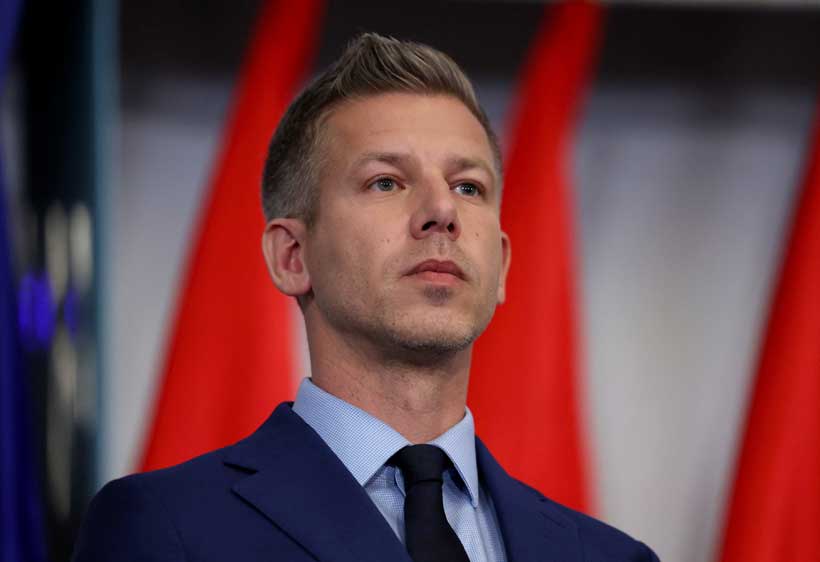
Hungarian Prime Minister Peter Magyar said he expects to finalize a political agreement with Ursula von der Leyen over the release of billions of euros in frozen European Union funds during talks in Brussels.
The negotiations focus on unlocking financial support that had been suspended under the previous government led by former Prime Minister Viktor Orban due to long standing EU concerns regarding corruption, rule of law standards, and judicial independence.
Hungary is seeking access to approximately 6.5 billion euros in EU recovery grants and 3.9 billion euros in low interest loans before a critical August deadline. Additional structural funds worth around 7 billion euros also remain frozen.
The talks come at a crucial moment for Hungary’s economy, which has struggled with weak growth, fiscal pressure, and budgetary strain over the past three years.
Why It Matters
The potential agreement carries major economic and political significance for both Hungary and the European Union.
For Hungary, securing the release of EU funds is essential to stabilizing public finances, supporting economic growth, and restoring investor confidence. The country’s economy has experienced prolonged stagnation, while high spending pressures and limited fiscal flexibility have increased urgency around external financing.
For the European Union, the negotiations represent an important test of how Brussels balances financial support with enforcement of democratic and governance standards among member states.
The dispute over frozen funds has become one of the most prominent examples of tensions between the EU and governments accused of weakening judicial independence or failing to address corruption concerns.
A successful agreement could signal improving relations between Brussels and Hungary after years of political friction under Orban’s leadership.
Key Stakeholders
Hungary’s Government
Prime Minister Peter Magyar is under pressure to secure financial relief while also demonstrating willingness to meet EU governance expectations.
European Commission
The European Commission must balance political compromise with maintaining credibility on rule of law enforcement and anti corruption standards across the bloc.
Hungarian Economy
Businesses, investors, and public institutions in Hungary are closely watching the outcome because EU funding plays a major role in infrastructure, development, and economic stability.
European Union Member States
Other EU governments are monitoring the negotiations as they could shape future disputes involving rule of law conditions and access to EU financial support.
Analysis
The negotiations reflect a broader shift in Hungary’s relationship with the European Union following the political transition away from Viktor Orban’s administration.
Under Orban, disputes with Brussels became increasingly confrontational, particularly over democratic governance, judicial reforms, media freedoms, and corruption allegations. Peter Magyar appears to be pursuing a more pragmatic approach focused on rebuilding trust with EU institutions while securing urgently needed economic support.
However, the remaining disagreements over anti corruption measures suggest Brussels still wants stronger guarantees before fully releasing funds. This highlights the EU’s growing willingness to use financial leverage as a tool for enforcing governance standards within member states.
For Hungary, the pressure is primarily economic. Frozen EU funds have limited the government’s financial flexibility at a time when growth remains weak and fiscal conditions are strained. Unlocking the money would provide both immediate economic relief and an important political victory for Magyar’s government.
At the same time, the negotiations also carry symbolic importance for the EU itself. Brussels will want to demonstrate that compromise does not come at the expense of accountability, especially after years of criticism over democratic backsliding within the bloc.
Future Outlook
If a political agreement is finalized, Hungary could begin unlocking critical EU funding in the coming months, easing fiscal pressure and improving economic confidence.
However, implementation will remain important. Brussels is likely to continue closely monitoring Hungary’s anti corruption reforms and governance commitments before fully releasing all frozen funds.
A successful deal may also help normalize Hungary’s relationship with the European Union after years of tension, potentially opening the door for broader cooperation on economic and political issues.
At the same time, the outcome could influence future EU disputes involving rule of law conditions and financial oversight, particularly as Brussels increasingly links access to funding with governance standards.
For Hungary, the immediate priority remains economic stabilization. But politically, the negotiations may also determine whether Peter Magyar can establish a more cooperative and sustainable relationship with Europe while distancing his administration from the confrontational legacy of the Orban era.
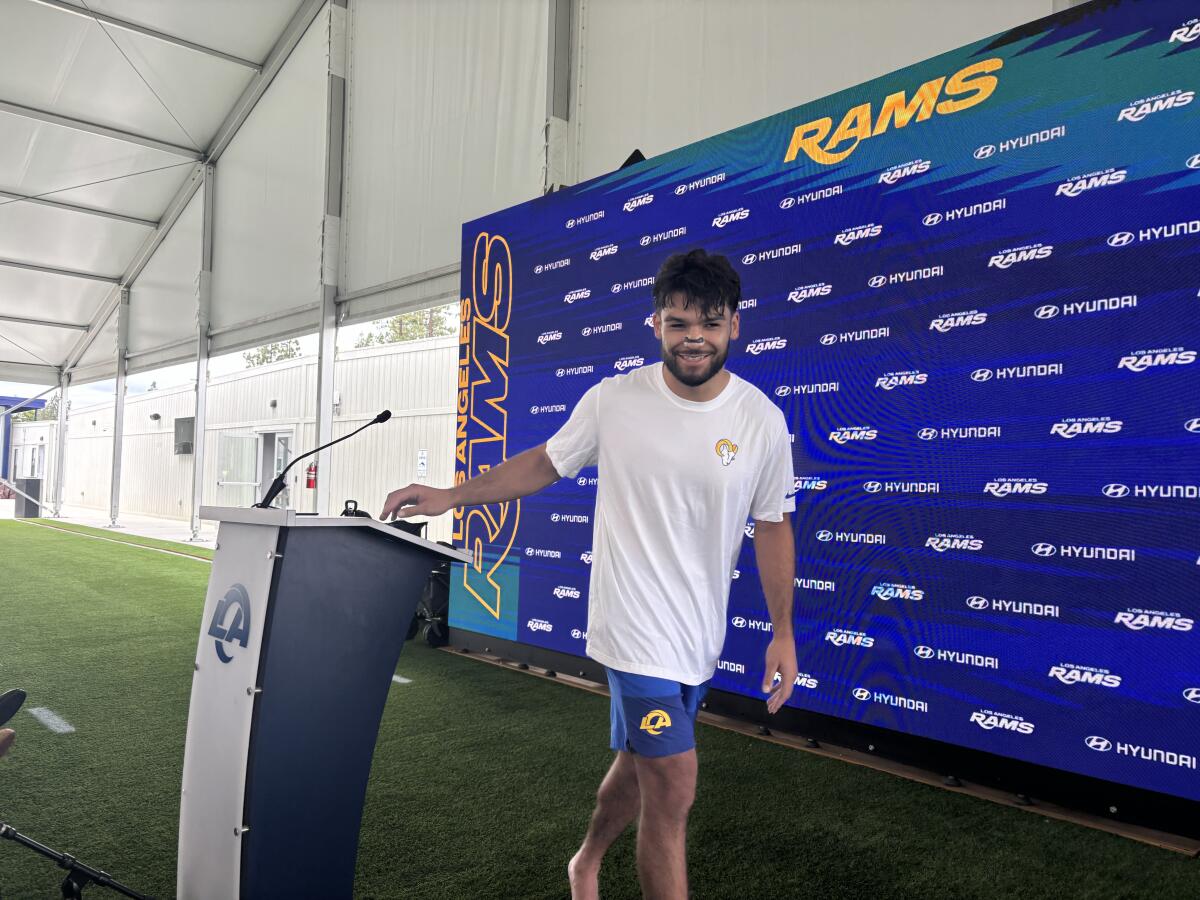
On the eve of his 25th birthday, Rams star receiver Puka Nacua said he was working on becoming a better person — and that if he continued on that journey the potential massive contract extension that appears to have stalled will take care of itself.
Nacua on Thursday addressed reporters for the first time since checking into a Malibu rehab facility in March. Nacua sought help after a string of incidents, which included a December incident that led to a civil lawsuit.
“Something that I feel like I’ve learned is, it’s OK to ask for support,” Nacua said after participating in an organized-team activity workout in Woodland Hills. “And then to recognize the platform that I have in being a professional football player, and trying to use that for the betterment of myself and for those around me.”
With an offense that features Nacua, quarterback Matthew Stafford — the reigning NFL most valuable player — and receiver Davante Adams, and a defense that includes edge rusher Jared Verse and All-Pro cornerback Trent McDuffie, the Rams are regarded as a favorite to play in Super Bowl LXI at SoFi Stadium.
Last season, Nacua led the NFL with 129 receptions and was voted All-Pro. The 2023 fifth-round draft pick is entering the final year of his rookie contract, and he is eligible for an extension that could surpass the $120-million deal the Seattle Seahawks gave receiver Jaxon Smith-Njigba.
But incidents last season and this offseason caused the Rams to put off talks about awarding Nacua an extension.
During a livestream last December, Nacua criticized NFL officials and made a gesture regarded as antisemitic. Nacua apologized, but after the Rams’ loss to the Seahawks a few days later, Nacua criticized officials in a social media post from the locker room. The NFL fined him $25,000.
Rams wide receiver Puka Nacua smiles after speaking to reporters during organized team activities at the training facility in Woodland Hills on Thursday.
(Gary Klein / Los Angeles Times)
His attorney has denied that Nacua made an antisemitic remark and said the bite resulted from “horseplay.”
On Thursday, when asked about the allegations, Nacua declined to comment specifically.
“With it being an ongoing legal battle, out of respect for the other party involved, don’t really have much to speak on,” he said, adding: “A moment for me to learn from, kind of some of the situations I was putting myself in, and then also having just an awareness of how I’m conducting myself in and out of this football field.”
Nacua said he made the decision to seek help with the support from those in his “inner circle.”
“I like to think of myself as a pretty happy outgoing guy that enjoyed life,” he said. “But there also were some difficulties of just being in this professional sport and just throughout my entire life.”
The rehab program was a “short stint,” but Nacua said he continues to meet with a team therapist and has adopted tools such as journaling.
Nacua, who became a father in October, said he was also motivated to continue self-improvement work as a way of sharing with and teaching his son.
“The great things I’ve been able to accomplish and to enjoy those moments, but then also to teach him in some of the mistakes that I’ve made,” he said. “So there’s an opportunity for him to learn before some of those wrong decisions can be made.”
Nacua’s “security in being able to be authentically honest about” seeking help was admirable, coach Sean McVay said.
“I think there’s real strength in some of the vulnerabilities,” McVay said, “and I’m really proud of him.”
Stafford, 38, said he talks with Nacua “nonstop” and that Nacua has looked “fantastic” during workouts.
“He’s a great person, a great kid, and just doing everything I can to try and give advice when it’s needed, or also just be his buddy too,” Stafford said. “I’m doing everything I can — I think everyone is, to just support him. … We’re happy he’s back doing his thing.”
Stafford spoke for the first time since signing a one-year, $55-million extension that keeps him under contract with the Rams through the 2027 season.
“Happy to have … next year taken care of if I decide to play — and they still want me back,” Stafford quipped. “Just excited to get that behind me, cause I just want to come out here and play and not think about that kind of stuff.
“So great to get that done sooner rather than later.”
Before Nacua’s string of incidents, the receiver also appeared on track to receive a possible extension before the 2026 season began.
Now, the Rams are expected to let him play out the season, and then possibly use the franchise tag for 2027 before making a long-term commitment.
Nacua said he could not imagine playing for another team.
“If I can continue to improve as a person, I know the coaches and the people around me are helping me improve as a football player,” he said. “So those are the things I can control, and hopefully allow those other things to handle themselves.”
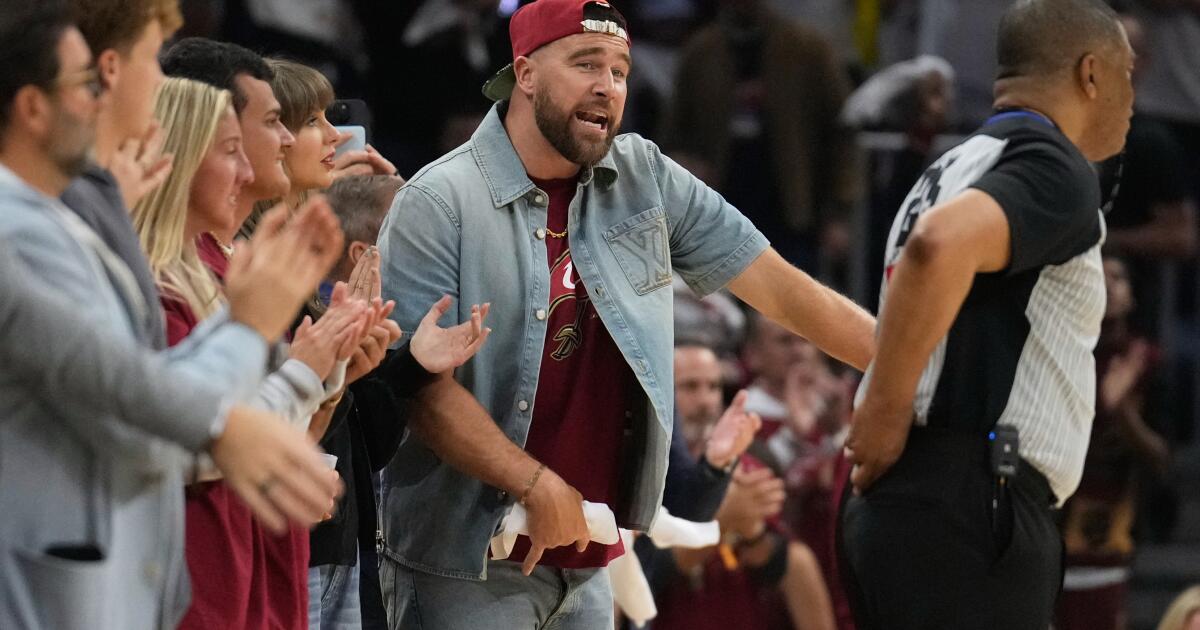
Travis Kelce has become the latest athlete to buy into a professional sports team, purchasing a minority stake in the Cleveland Guardians, the MLB franchise he rooted for growing up in Cleveland Heights, a vibrant suburb 15 minutes from downtown.
Ballplayers buying into professional sports franchises has become almost routine. And why not? They are wealthy, love sports and often want an ownership stake of a team in a city full of fans who love them back.
Kelce is the latest to do so. The only question is, what took him so long?
“I have so much love for this city,” Kelce told ESPN. “I say it all the time: I’m just a kid from the Heights living the dream. I credit every good thing in my life to Cleveland and being raised here with the values and the people and the work ethic.
“Cleveland Heights is such a diverse and dynamic place. Every friend, neighbor, teacher and teammate — they all made me the man I am today.”
And that man is very wealthy. The Kansas City Chiefs tight end and burgeoning business titan has earned $111 million playing in the NFL. He and his brother Jason have a $100-million deal with Amazon Wondery for their popular New Heights podcast.
Kelce, 36, also makes an estimated $35 million a year from endorsement deals with Nike, Pfizer, State Farm and other major brands.
Oh, and let’s not forget that his fiancee, Taylor Swift, is the wealthiest female musician in the world with an estimated net worth of $1.6 billion.
Although Swift has never publicly mentioned owning a sports franchise, NFL Commissioner Roger Goodell did comment on the possibility at a Super Bowl news conference two years ago.
Tom Brady had been approved as part owner of the Raiders, boosting season-ticket sales, leading to this question posed to Goodell.
Goodell grinned and replied, “I really don’t know the answer to that one. If she’s interested, she has the ability to do it, let’s put it that way.”
The list of athletes who own a piece of sports franchises is long. Begin with Magic Johnson and Billie Jean King, part of the group that owns the Dodgers and Sparks. Kelce’s Chiefs passing partner Patrick Mahomes has been a minority owner of the Kansas City Royals since 2020.
Tennis superstar sisters Venus and Serena Williams became the first black women to hold a stake in an NFL team when they became minority owners of the Miami Dolphins in 2009.
Giannis Antetokounmpo expressed his love for Milwaukee by purchasing a stake in the Brewers baseball team. The Lakers are rumored to possibly trade for the Milwaukee Bucks superstar this offseason. Would that make Antetokounmpo a candidate to take the Angels off the hands of Arte Moreno, who at games has been blistered by a large group of shirtless fans chanting “sell the team?”
Because he is an investor in the Fenway Sports Group, Lakers star LeBron James owns a piece of the Boston Red Sox, Liverpool FC, the Pittsburgh Penguins and RFK Racing. The 41-year-old veteran of 23 NBA seasons makes no secret that he someday wants to own an NBA team.
“I got so much to give to the game. I know what it takes to win at this level. I know talent,” James said in 2021. “I also know how to run a business as well. And so, that is my goal. My goal is to own an NBA franchise.”
James is the first active NBA player to achieve billionaire status, and his estimated net worth of $1.3 billion to $1.5 billion puts him in Swift territory. He might not need to preface his ownership stake with the word minority.
Kelce, meanwhile, is happy for now to own just a piece of the Guardians, whose value has risen from $1 billion four years ago to $1.7 billion today. “I’ve been lucky enough to have a front-row seat to good ownership in my career, and I know the best teams prioritize culture,” Kelce said. “Everyone is there to play their role, and right now, I’m here to observe and learn and really to support the team and the city when and where I can.”
Markets betting a deal will reopen the Strait of Hormuz and soothe the deep global economic uncertainty cast by the closure of the vital oil & gas route.
Published On 27 May 202627 May 2026
The United States stock market has been hovering near record highs and oil prices have plunged amid new hope that a ceasefire deal between the US and Iran is close.
The rally came on Wednesday as negotiations continued between Washington and Tehran, with markets betting that a deal would reopen the vital Strait of Hormuz, easing oil and gas supply concerns and soothing the deep uncertainty afflicting the global economy.
Recommended Stories
list of 3 itemsend of list
Oil prices declined sharply after Iran’s state broadcaster said it had obtained a preliminary document outlining a framework for a potential deal.
The price of US crude fell 5.5 percent to settle at $88.68, while Brent crude, the international oil benchmark, decreased to $92 after prices traded above $100 last week.
The report suggested that Iran would allow traffic through the strait at pre-war levels within 30 days. It added that the US would lift its naval blockade on Iranian ports.
Prices remained subdued even after the White House dismissed the report as a “complete fabrication”.
The S&P 500 rose 0.1 percent and added to its all-time high set the day before. The Dow Jones Industrial Average was up 243 points, or 0.5 percent, with an hour remaining in trading, and the Nasdaq composite was 0.1 percent higher.
Wednesday is far from the first time markets have rallied amid reports of a possible end to the war, only to slump once more as negotiations fail to deliver a resolution.
However, the strength of the current surge reflects statements over the past week that suggest the two parties may be closer than ever to reaching a deal.
President Donald Trump said during a cabinet meeting on Wednesday that US officials were not yet satisfied with the agreement, “but we will be”.
“I think they’re starting to give us the things that they have to give us,” he said. “And if they do, that’s great, and if they won’t, then the man on my left will have to finish them off,” he said, pointing at Defense Secretary Pete Hegseth.
Sticking points
It remains unclear whether the two parties have come to an understanding on the major sticking points, including the fate of about 440 kilogrammes (970lbs) of highly enriched uranium; Iran’s nuclear infrastructure, which the US has long insisted it wants to see dismantled in its entirety; Tehran’s ballistic missiles and its support for armed groups in the region.
It is also not clear whether a halt in hostilities in Lebanon would be part of a deal. Iranian officials have repeatedly said that any agreement would have to include that. However, Prime Minister Benjamin Netanyahu this week ordered the Israeli military to step up its attacks against Hezbollah.
There are also questions on whether Washington would agree to lift its sanctions against Iran and release millions in frozen assets.
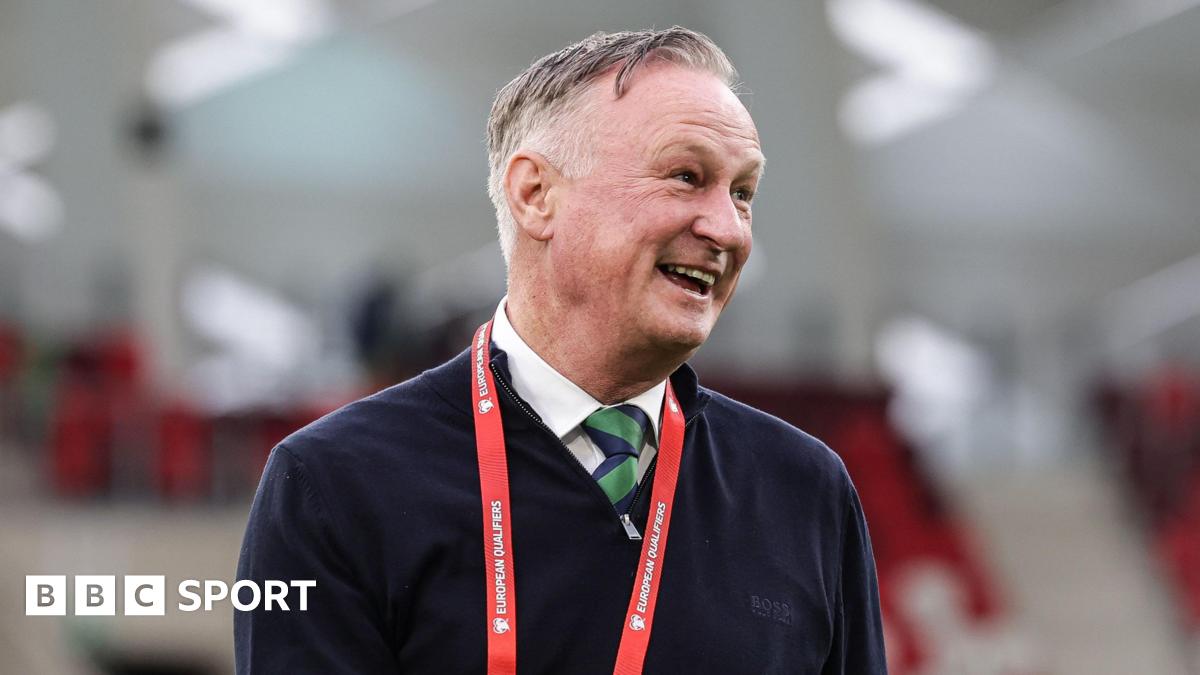
Michael O’Neill says he is “100% committed” to Northern Ireland after he signed a new four-year contract with the Irish FA, but he has not ruled out another dual role in the future.
O’Neill had been appointed interim Blackburn Rovers boss in February and had been balancing this role with his position at Northern Ireland, who lost to Italy in the World Cup play-offs in March.
On Wednesday, the IFA confirmed that O’Neill had extended his current contract by four years until 2032.
When asked if he would consider taking on a short-term dual role again in the future, O’Neill did not rule it out as he said: “That’s not a question I need to answer at this minute”, adding it was “hypothetical”.
O’Neill said that he did not “have any regrets” about taking on the role with Blackburn, but admitted he “probably could have done with a little less drama”.
“I said all along, I didn’t think it would affect our preparation for the Italy game, which it didn’t,” O’Neill said.
“I managed to keep Blackburn up, which was the remit of the job.
“I probably think that maybe I underestimated the reaction to it a little bit, but ultimately that’s a learning experience for me as well.”
One week after EU diplomats and lawmakers agreed to eliminate EU duties on most US industrial goods under the EU-US trade agreement, EU ambassadors on Wednesday greenlit a deal with the European Parliament, paving the way for the full agreement’s formal adoption by the EU Council.
ADVERTISEMENT
ADVERTISEMENT
The procedural step comes as the US pressures Europeans to implement the EU-US deal clinched last summer by US President Donald Trump and European Commission President Ursula von der Leyen after weeks of renewed trade tensions.
Trump has threatened to impose 25 percent tariffs on EU cars if the deal is not enforced by the EU by 4 July.
On their side, MEPs still have to formally endorse the agreement reached on the EU side, with a tentative vote scheduled during the plenary session between 15 and 18 June.
“The agreement we reached with the European Parliament marks an important step in delivering on the EU’s commitments,” said a spokesperson for the Cypriot Presidency, which negotiated with MEPs on behalf of EU member states.
The spokesperson added that “robust safeguards” had been included in the agreement “to protect the interests of European businesses and economic operators”.
The deal, considered lopsided by many MEPs, states that the EU would face 15 percent US tariffs while eliminating its own duties on US goods.
However, after Trump repeatedly threatened to impose new tariffs in breach of the deal, EU lawmakers pushed member states to include conditions such as a “sunset” clause that would terminate the agreement on 31 December 2029 unless renewed.
Under the agreement reached last week, the Commission would also be able to suspend the trade deal at the request of either Parliament or a member state if the US fails to lift tariffs on European steel and aluminium products by the end of 2026.
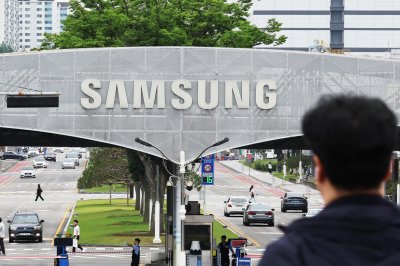
Samsung Electronics Co.’s unionized workers voted to approve a wage agreement, the union said Wednesday. This photo, taken Wednesday, shows Samsung headquarters in Suwon. Photo by Yonhap
Samsung Electronics Co.’s unionized workers voted to approve a wage agreement that includes a substantial bonus package for chip workers, the union said Wednesday, easing concerns over potential disruptions to the global supply chain.
In the six-day vote, 73.7 percent of the 62,616 members of the tech giant’s two largest unions approved the tentative deal. The agreement was finalized after a majority of eligible voters took part in the vote and a majority voted in favor of the proposal.
Later in the day, the two sides signed the wage agreement, with management pledging to strengthen the company’s global competitiveness.
“Starting with the conclusion of this wage agreement, labor and management will work together as one to strengthen our global competitiveness,” Yeo Myeong-gu, head of the company’s Device Solutions division’s People Team, said in a press release.
The labor union and management reached the agreement just an hour before an 18-day strike was set to begin at the world’s top memory chipmaker last Thursday.
Labor and management had been deadlocked since late last year over performance-based bonuses tied to earnings from the company’s artificial intelligence (AI)-related semiconductor business amid the ongoing global memory chip boom.
Under the deal, Samsung will allocate a special semiconductor performance bonus equivalent to 10.5 percent of business performance earnings, without a cap.
The special bonuses will be paid in company stock over at least 10 years, based on targets for the chip division to achieve more than 200 trillion won (US$132 billion) in annual operating profit from 2026 to 2028 and 100 trillion won from 2029 to 2035.
Of the total bonus pool, 40 percent will be allocated to the division as a whole, while 60 percent will be distributed to individual business units.
Based on forecasts that Samsung’s operating profit could reach 300 trillion won this year, the agreement could translate into bonus payouts of up to 600 million won for each of the 28,000 employees in the company’s profitable chip division.
Following the signing, the company announced it will create a 5 trillion-won fund over the next five years to invest in future talent development and build an ecosystem supporting its suppliers and underprivileged groups.
“Over the next five years, we will raise a total of 5 trillion won to invest in win-win cooperation and building a healthy ecosystem, as well as nurturing future talent,” according to the statement attributed by company executives.
The move is widely seen as an effort to counter criticism that the company has been distributing massive profits from the semiconductor supercycle as excessive employee bonuses.
Copyright (c) Yonhap News Agency prohibits its content from being redistributed or reprinted without consent, and forbids the content from being learned and used by artificial intelligence systems.