Trump’s name was removed from the centre’s facade and signage last month, after a judge ordered its removal.
Published On 9 Jul 20269 Jul 2026
A US appeals court has ruled that President Donald Trump’s name must remain off the Kennedy Center for the Performing Arts, while the organisation appeals an earlier ruling that found a name change illegal.
Trump’s name was removed from the centre’s facade and signage last month after US District Judge Christopher Cooper ordered the removal and blocked Trump’s plans to close the centre for renovations. An appeal against this ruling was struck down by a three-judge panel on Wednesday.
The conspicuous addition, and ensuing legal battle, became symbolic of Trump’s broader push to imprint his legacy – and, in this case, his actual name – on the nation’s capital in his final term.
The decision by the US Court of Appeals for the District of Columbia Circuit denied the Trump administration’s request to pause the lower court order in a lawsuit brought by Democratic Representative Joyce Beatty, a Kennedy Center board member.
“Today’s ruling again affirms that this administration’s efforts to rename the Kennedy Center were unlawful,” Beatty said in a statement.
“His name no longer desecrates this sacred memorial, which belongs to the American people.”
The panel of judges wrote on Wednesday that the board of trustees’ request “failed to show how they will be irreparably injured” if Trump’s name remains off the building through the appeal process.
The board had argued that the removal “threatens to impede” fundraising efforts, but the judges found that claim came without the support of “specific facts or evidence”.
The Kennedy Center did not immediately respond to an emailed request for comment from the Associated Press news agency.
When Trump first took office in 2025, he replaced the Kennedy Center’s board of trustees, who then named him chairman. His name was quickly added to the building, but a federal judge then ruled that the name change was illegal, prompting the ensuing legal battle.
The order comes three years after a jury found out Trump has sexually abused and defamed the writer.
Published On 8 Jul 20268 Jul 2026
A federal judge has ruled that writer E Jean Carroll can collect the more than $5.8m that US President Donald Trump was ordered to pay after a jury found he sexually abused and defamed her, clearing the way for the money to be released after the US Supreme Court declined to hear his appeal.
Judge Lewis A Kaplan ruled on Wednesday that Carroll can be paid the original $5m award granted to her by the jury, along with interest that has accrued since the verdict in 2023. Carroll’s lawyers had asked for the funds to be released after the Supreme Court refused on June 29 to hear Trump’s appeal.
Recommended Stories
list of 4 itemsend of list
“This is the end of the line,” Carroll’s lawyer Roberta Kaplan wrote in a court filing, adding, “It is time for him to pay Carroll.”
Less than an hour after the judge issued the order, Trump appealed it.
“The American People stand with President Trump as they demand an immediate end to all of the Witch Hunts, including the Democrat-funded travesty of the Carroll Hoaxes,” a spokesperson for Trump’s lawyers said in a statement.
Carroll first accused Trump in 2019, writing in a memoir that he had sexually assaulted her in a dressing room at the Bergdorf Goodman department store in Manhattan in 1996. Trump denied the allegation, saying he had never met Carroll, accusing her of lying to sell books and for political reasons, and calling the claim a “hoax.”
Carroll sued him for defamation over those comments later that year, accusing him of damaging her reputation by suggesting she had lied for personal gain. She filed a second lawsuit in 2022, accusing Trump of battery/sexual abuse and defamation over another denial he posted on Truth Social in 2022, again calling the allegation a hoax.
In 2023, a jury found Trump liable for sexually abusing Carroll and for defaming her through his 2022 statements. It did not determine that Trump was liable for rape.
A second jury awarded her $83.3m in 2024 for the defamatory statements Trump made in 2019 when he was president, after she first went public with the allegation.
Trump has continued to fight both verdicts.
After the Supreme Court declined to hear his appeal, He called the lawsuit “a Fake Case” and pledged to continue fighting what he described as a “Weaponisation and Lawfare Case.”
On Wednesday, Trump’s lawyers filed a petition asking the Supreme Court to reconsider its decision not to hear the appeal. They argued that Trump would suffer “irreparable harm” if the money is paid out, because Carroll has said she intends to donate it, which would make it difficult to recover the funds if the verdict is later overturned.
Trump is also still appealing the $83.3m judgment, arguing his 2019 comments were made while he was president and are therefore protected by presidential immunity. The Department of Justice has also launched a criminal investigation into Carroll over whether she committed perjury during her testimony.
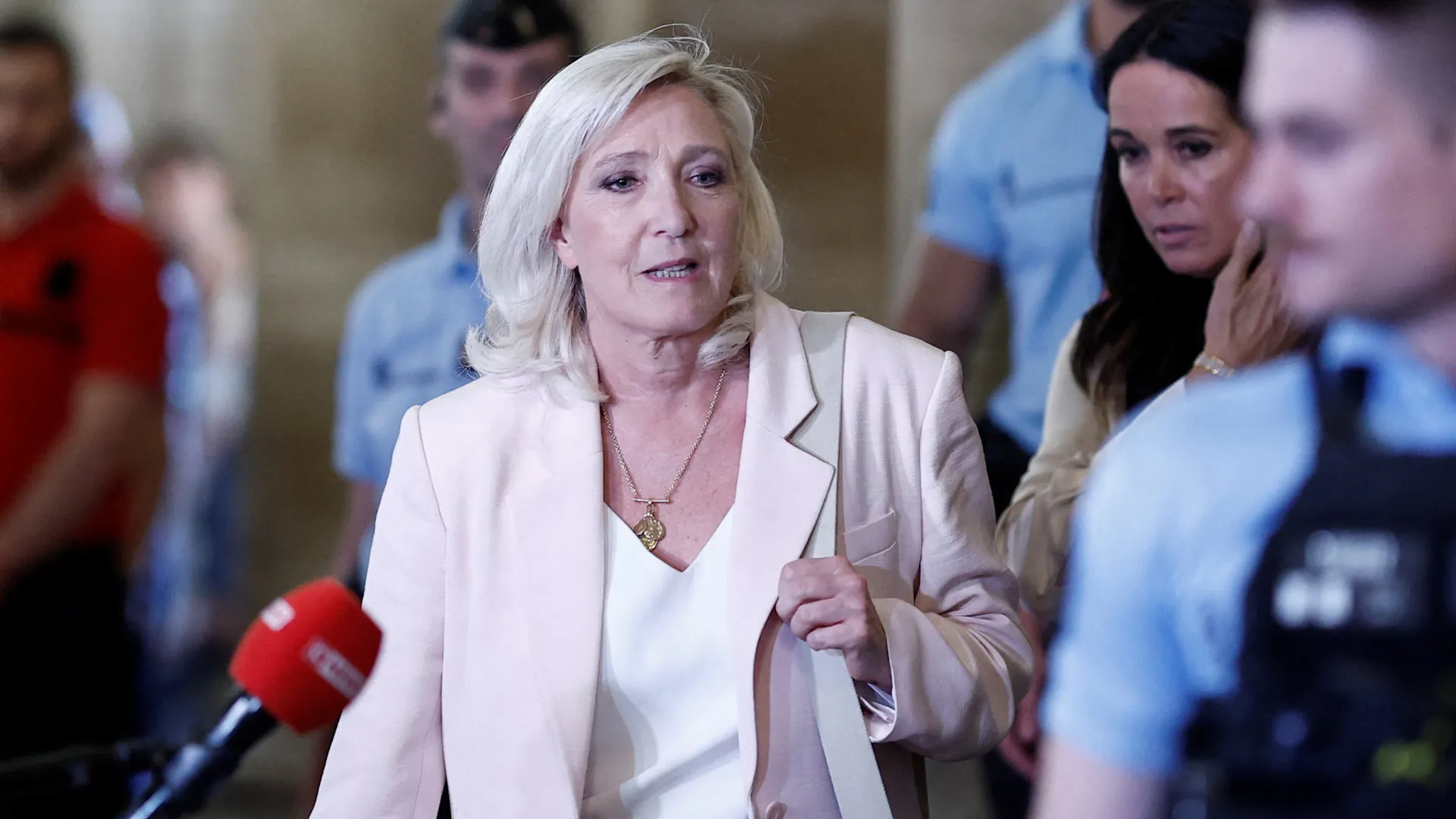
A French appeals court upheld Marine Le Pen’s conviction for misusing European Parliament funds but shortened her ban from seeking public office, keeping alive a narrow path to the 2027 presidential race. The court also ordered her to wear an electronic ankle tag.
Appeals court rules the far-right leader ineligible to hold public office for 45 months.
Published On 7 Jul 20267 Jul 2026
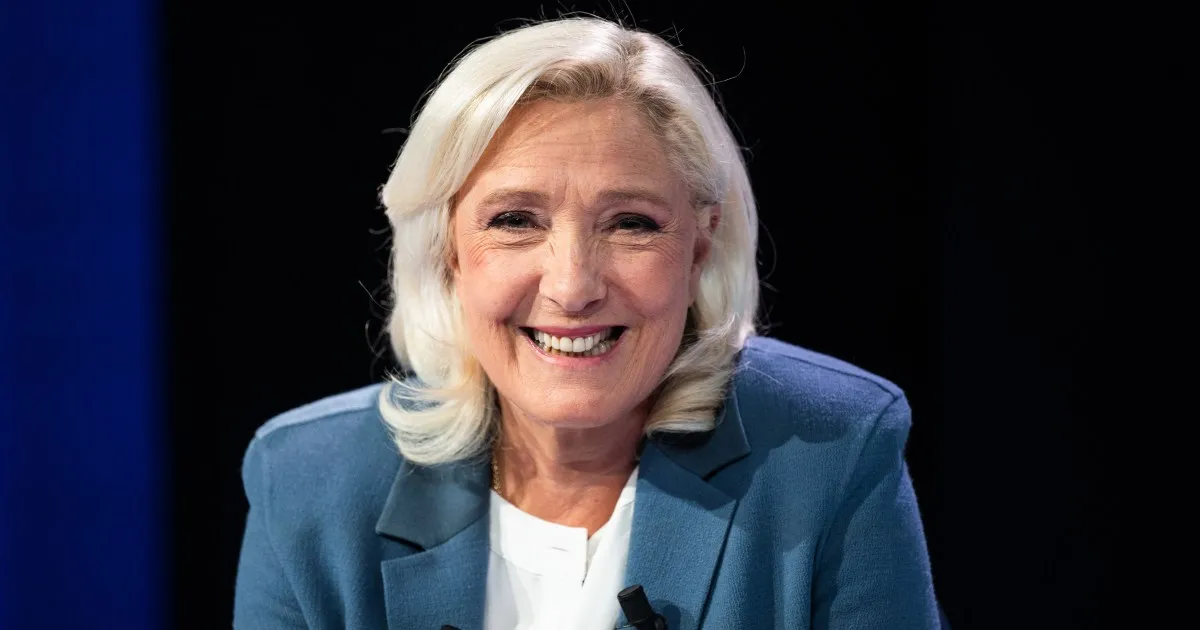
A French appeals court has opened the door for far right leader Marine Le Pen to potentially run in the 2027 presidential election but said she must wear an electronic tag.
A Paris appeals court on Tuesday ruled Le Pen guilty of misusing public funds but reduced the ban on her holding elected office to 45 months, with 30 suspended.
Recommended Stories
list of 3 itemsend of list
She must now decide whether campaigning in 2027 with a monitoring bracelet as part of her sentence to be served at home is possible.
A lower court last year sentenced Le Pen, 57, to a five-year ban from public office and two years in prison over a fake jobs scam at the European Parliament.
The three-time presidential candidate hopes to run in the race to replace outgoing centrist President Emmanuel Macron in 2027.
Le Pen has said that if the sentence prevented her from campaigning, she would hand the reins over to her 30-year-old lieutenant, Jordan Bardella, leader of their National Rally (RN) party.
The far-right leader could be prevented from running for president in 2027 if embezzlement charges are upheld.
France’s appeal court is set to deliver a key verdict on whether Marine Le Pen and other members of her National Rally party misused European Parliament funds in the hiring of aides between 2004 and 2016.
If, on Tuesday, the court upholds her 2025 conviction, which saw her barred from office for five years and sentenced to house arrest, Le Pen – one of the most prominent figures of the European far right and a frontrunner in polls for France’s 2027 contest – is likely to be unable to stand in presidential elections next year.
Recommended Stories
list of 3 itemsend of list
On Wednesday last week, Le Pen said that even if the court only upholds the order for her to wear an electronic bracelet, she will not stand. “If I can be a candidate, I will be a candidate, provided that I am able to campaign,” the 57-year-old political firebrand told LCI channel.
“Because if I’m allowed to be a candidate but am effectively prevented from campaigning freely, then you understand that wouldn’t be possible.”
What was Le Pen convicted of?
In March 2025, a Paris criminal court ruled that Le Pen was at the heart of “a fraudulent system” that her party used to siphon off EU Parliament funds worth 2.9 million euros ($3.32m).
The court also fined the National Rally party 2 million euros ($2.29m), half of which was suspended.
She had been accused of using money intended to finance the costs of parliamentary assistants to pay employees working for her political party. EU politicians are allocated funds to cover expenses, including salaries for parliamentary assistants, but are not allowed to use them for party activities.
Le Pen was ordered to stand trial in 2023, after a seven-year investigation, alongside more than two dozen other defendants. She and her party have denied the accusations, arguing the money had been used legitimately and that prosecutors had applied an overly narrow definition of what a parliamentary assistant does.
What were the political implications of the verdict?
As part of the initial verdict last year, Le Pen was given a five-year ban from holding elected office and sentenced to two years’ house arrest with an electronic bracelet. Since France will hold the first round of its next presidential election on April 18, 2027, with a run-off set for May 2, Le Pen will not be able to run if she loses the appeal.
The far-right leader has pledged to put up a fight if she’s barred from running. “If I cannot be a candidate, I will make use of every available avenue of appeal,” Le Pen said.
She could go, therefore, to France’s highest court, the Court of Cassation, which does not judge the facts but checks whether the courts and court of appeal have applied the law correctly. The court could take about six months to hear the case and issue a verdict.
If allowed to run, Le Pen is widely seen as a top contender to succeed centrist President Emmanuel Macron in the 2027 election. If not, her 30-year-old protege Jordan Bardella would likely run instead.
What could the Court of Appeal decide?
The appeal court could overturn Le Pen’s conviction in its ruling on July 7, leaving her free to run for president next year. Legal experts say that outcome appears unlikely, however, given the court’s findings at first instance.
The court can instead uphold Le Pen’s conviction. If it confirms the five-year ban requested by prosecutors, it will rule her out of the presidential race, paving the way for Bardella to take her place. Le Pen can then appeal to the Court of Cassation.
A third possibility is that the court upholds the conviction but softens the sentence. If the ban from public office were lifted or shortened to two years or less, the door to a presidential bid would be open.
On Thursday morning, a small group of advocates gathered outside the United States federal courthouse in San Diego, California.
One of them pointed to a poster of a young man in a US Navy uniform, three golden medals pinned to his chest.
“This is my brother, Benito Miranda Hernandez, US Navy veteran,” said James Smith, the founder of Black Deported Veterans of America.
Smith and the other advocates had organised the demonstration on behalf of Hernandez, who was miles away at that moment, stuck in an immigration detention facility.
Brought from Mexico to the US as a baby, Hernandez had completed three tours of duty with the US military during the Iraq war. His military service was meant to be his path to citizenship.
But now, Hernandez is among the immigrant veterans fighting deportation under US President Donald Trump.
“These men and women were promised that they were going to get their citizenship if they served,” Smith said. “Help this brother come home.”
Trump has pledged to prioritise immigrants with criminal records in his push for mass deportation.
But advocates for US military members argue that veterans are particularly vulnerable, given their over-representation in prisons and jails. The majority have reported suffering from mental health problems after their service.
Hernandez, for instance, said he struggled to reintegrate into civilian life after leaving the military. But on June 14, he had finally completed his years-long sentence for a drug conviction.
As he waited for his mother, Maria Miranda, to pick him up, agents from US Immigration and Customs Enforcement (ICE) detained him.
Only afterwards did Miranda and her other son arrive. They spent hours that day looking for him, not knowing where he had gone.
“He was doing things right,” Miranda told Al Jazeera in Spanish. “He had so many hopes, so many dreams.”
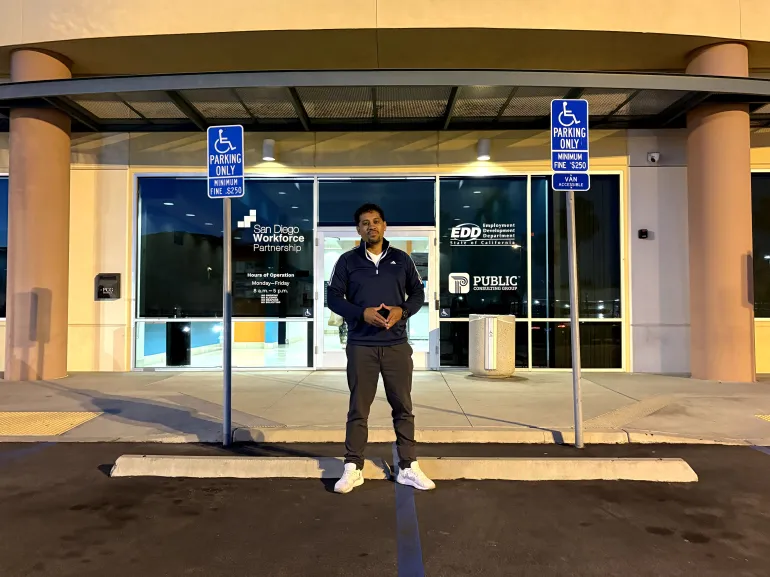
Benito Miranda Hernandez stands outside the reentry programme where he recently worked, before he was detained by immigration officials in June [Anna Oakes/Al Jazeera]
Hernandez has since been transferred to the Otay Mesa Detention Center in San Diego. He faces deportation, despite having received his green card for permanent residency earlier this year. He previously spoke to Al Jazeera about his experiences for an article published in April.
Hernandez’s detention is part of a trend under the Trump administration.
While the exact number of deported veterans is impossible to pin down – ICE has long failed to collect the veteran status of the people it detains, as is required – several advocates told Al Jazeera that they have been witnessing a rise in the deportations of US veterans during Trump’s second term.
The New York Times reported in March that at least 34 veterans have been placed in deportation proceedings in the last year.
Some cases have received media attention. But advocates say other immigrant veterans have avoided the spotlight, fearing it may have a negative impact on their immigration cases.
“As the ICE raids continue and revamp across the country, there’s going to be people that are veterans that have not become US citizens that unfortunately will end up falling through the cracks,” said Robert Vivar, cofounder of the Tijuana-based Unified US Deported Veterans Resource Center.
Veterans, like other immigrants across the country, have been detained while pursuing the mandatory steps in their immigration process, according to Danitza James, the president of Repatriate our Patriots, an advocacy group.
They are often flagged for having outstanding warrants or criminal convictions that have not been vacated. James said she is in contact with about six veterans who had been detained by ICE in 2026 alone.
“Our government, they don’t place any value in the service that our immigrants have,” James, who is herself a veteran and naturalised citizen, told Al Jazeera. “They honestly see us as disposable.”
Danitza James, a former US military member, has led a push to repatriate deported veterans [Alejandro Cossio/Al Jazeera]
For decades, the US military has recruited immigrants to enlist in its wars abroad to help address staffing shortages.
Recruiters often tell immigrant enlisters that military service offers a shortcut to naturalised citizenship.
In theory, it should. But while deployed, many immigrant soldiers, like Hernandez, have reported delays in the naturalisation process.
By the time Hernandez was called for his citizenship interview in 2006, two years had passed since he finished his last deployment. He had a criminal conviction by that point – and his citizenship case was denied.
The failure to protect immigrant veterans is representative of the government’s larger failures to reckon with its military policies, according to advocates like Smith.
“The United States government is failing to take accountability for what they’ve created,” Smith told Al Jazeera. “You bring us in and strip us of part of our humanity so that we can kill without repercussions.”
“Then, when you get out, there is no process that gets you ready to be in the civilian world.”
Several bills to protect immigrant veterans are currently under consideration in Congress. But recruiters continue to target immigrant communities with the promise of expedited citizenship.
The next steps for Hernandez are not yet clear. At Thursday’s rally, a lawyer with a local immigration nonprofit told Smith and other advocates that the group may be interested in helping with Hernandez’s case.
In the meantime, Hernandez’s mother has been trying to keep his spirits up.
Miranda takes his calls from the ICE detention centre and sees him during the facility’s visiting hours on Saturdays. But the two-hour drive from Anaheim to San Diego is difficult for her health.
“On Saturday, when I saw him, he was very, very depressed,” Miranda told Al Jazeera.
“He said, ‘I don’t want to cause you any more problems. I don’t want to upset you any more, Mom. I’m doing things right. I’m praying for myself,'” Miranda recalled, in tears.
“They clipped the wings of a bird, and all the hopes he had. They threw them in the trash.”
NEW ORLEANS — Louisiana’s attorney general has been indicted over accusations she threatened the jobs of New Orleans leaders who fought a Republican-led overhaul of local courts in the heavily Democratic city.
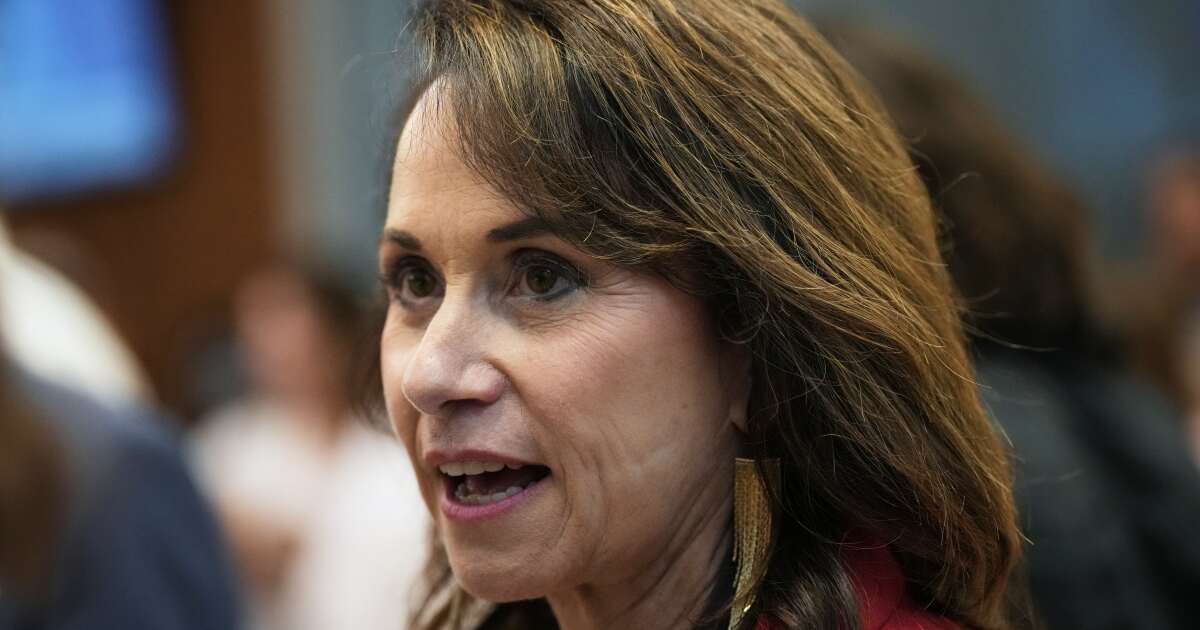
The 16-count indictment against Republican Liz Murrill, handed up Thursday by a New Orleans grand jury, charges Louisiana’s first female attorney general with intimidation and malfeasance.
At the center of the case are deepening rifts between state leaders in Louisiana, which is heavily Republican, and Democrats who control the state’s most prominent city.
Republican Gov. Jeff Landry promised a swift pardon, saying Murrill would not have her reputation tarnished by an “Orleans kangaroo court.” Mayor Helena Moreno, a Democrat, was among those who had accused the state’s top law enforcement official in May of making threats against public officials.
Murrill called the case against her “retaliatory, meritless, and unconstitutional.” Late Thursday, Murrill said she had filed for an emergency stay with the Louisiana Supreme Court.
“I will not back down. I will continue enforcing the law, fighting corruption, and doing the job the people of Louisiana elected me to do,” she wrote on X.
For months, political tensions intensified between Louisiana Republicans and New Orleans officials over a new law that abolished a court clerk office won by an exoneree, Calvin Duncan, who spent nearly three decades in prison. The change consolidated that job with another clerk’s office, which Republican supporters said would make the local judicial system more efficient.
The change was staunchly opposed by New Orleans leaders, and in May, the City Council set a special election that would have given Duncan a chance to win the newly combined job. Murrill responded by warning local officials in letters that they could lose their offices for violating state “usurper” laws, which forbid support for an unauthorized officeholder.
“We’re very interested in elected officials in New Orleans not being intimidated or threatened by letter or any other way,” special prosecutor Laurie White told reporters.
Bond for Murrill was set at $400,000 on Thursday, according to court records.
Landry said he was ordering state police to investigate what he called “alleged improprieties” of the grand jury and those who ran it.
“The criminal justice system is a circus at its finest in Orleans and we will not have any of that!” he wrote on X.
The Republican Attorneys General Assn. said that making statements to local officials — in writing — was simply “issuing a legal opinion and warning public officials about the law” as part of her official duties. It called the indictment “as outrageous as it is dangerous.”
Moreno, who was elected in January and was defiant after Murrill sent the letters, on Thursday called it a “matter for the courts” and did not directly address the allegations.
“My focus, as always, remains on fulfilling the responsibilities the people of New Orleans elected me to carry out,” Moreno said.
Duncan has said he believes state officials were retaliating against him in eliminating the job he won with 68% of the vote. Murrill and Landry have long refused to acknowledge his innocence, though he’s listed on the National Registry of Exonerations.
Republicans have said the change was not personal and supporters have noted that the offices of criminal and civil clerks of courts are combined in other parishes.
Duncan was a jailhouse lawyer who later graduated from law school. He founded a nonprofit dedicated to expanding incarcerated people’s access to the court system and was the driving force behind a 2020 U.S. Supreme Court decision that ended nonunanimous jury convictions.
Duncan spent more than 28 years in prison over a fatal shooting during a robbery in 1981.
The night before a 2011 hearing to consider new evidence, prosecutors offered to reduce Duncan’s sentence to the time he’d already served in prison if he pleaded guilty to manslaughter and armed robbery. Duncan took the deal and was freed but didn’t give up on clearing his name.
In 2021, a judge agreed that Duncan had been unjustly convicted and vacated his sentence altogether. Landry and Murrill have pointed to the 2011 plea deal in objecting to Duncan calling himself exonerated.
Riddle and Hanna write for the Associated Press. Associated Press reporter Jack Brook in New Orleans contributed.
CARRY On actor Leslie Phillips’ family is set for a High Court ding-dong over his will, The Sun can reveal.
The late star‘s estate is suing his wife, Zara, at the High Court, after she refused to move out of their £4.4million marital home.
Sign up for the Showbiz newsletter
Thank you!
Leslie Phillips with his third wife Zara after getting married at Mayfair registry officeCredit: Louis Hollingsbee – The SunZara, widow of the late Leslie Phillips, in the £4.4m home at Maida Vale, LondonCredit: Jon BondLeslie’s appearances in the Carry On films made him a much-loved household name, seen here in Carry on Constable with Kenneth Connor and Kenneth WilliamsCredit: AlamyLeslie often played lothario-style characters to great comic effect, seen here in Some Will, Some Won’t with Barbara Murray in 1970Credit: Alamy
The long-running spat is said to have strained the relationship between Zara, 68, and Harry Potter actor Leslie’s children, who say they are entitled to the proceeds of the Edwardian mansion’s sale.
Leslie, who died in November 2022 at age 98 after an eight-decade showbiz career, left his family a huge £5.3million fortune and dictated exactly how his belongings should be shared.
He gave his OBE and CBE medals to his grandchildren and a Buddha statue to his third wife, Zara Phillips.
But the actor, known for his “Ding Dong,” “Well, Hello” and “I Say” trademark lines, also stipulated his posh West London house should be sold exactly two years and nine months after his death.
The Carry On star outside his London home in 1992Credit: News Group Newspapers LtdLeslie Phillips at his home in Maida Vale in 1992Credit: News Group Newspapers LtdZara says Leslie told her she could stay in the house for the rest of her lifeCredit: Jon BondLeslie Phillips marries Angela Scoular, his second wife, at the Queen’s Chapel of the Savoy in 1982Credit: Getty
But Zara has repeatedly insisted Leslie, whom she wed in 2013, had promised she could stay there for the rest of her life.
She even claims his will was changed without her knowledge to force the sale of the property and hand more cash to his kids.
At the four-storey Edwardian house, filled with pictures of Leslie, Zara previously told The Sun: “This is my marital home.
“I want to live here for the rest of my life, not to move out.
“Leslie always promised me I could stay here.
The will, seen by The Sun, says the £4.4million house is to be sold two years and nine months after his death, with the proceeds going into a trust.
It means the deadline for the sale passed in August 2025, but Turkish social worker Zara has not moved and is determined to stay put.
The sale trust would have been split between Phillips’ four children from his first marriage, Caroline, Claudia, Andrew, and Roger, as well as Zara.
Phillips’ two sons and two daughters were each left £50,000 in the will, while his 15 grandchildren were each awarded £5,000.
Zara was left £155,000, along with ten of Phillips’ belongings, each worth as much as £1,500, and more than 25 per cent of the shares in the trust fund.
The house spat will now be decided at London’s High Court, though Zara insists she has not been told about the case.
A case filed this week names the Estate of Leslie Samuel Phillips CBE as the claimant, and Zara Phillips as the defendant.
It is listed as a Part Eight claim, meaning the parties do not agree on the facts, and is said to be a case about “provision for family/dependants”.
Speaking outside her home yesterday, Zara told The Sun: “I am very surprised. I had no idea about any of this.
“Leslie’s children have not been in touch with me at all.
“If they want me to come to court, I will do.
“I will come to court and fight it if I must.
“I am planning to stay put. I have no plans to move out – this is my home.
“I will have to speak to my lawyers.”
Zara met Leslie in 1995, but the couple were friends for 18 years before they married.
Leslie was walking near his home when he saw Zara, then a 39-year-old widow, who insisted she did not know the star was world-famous.
At the time, Leslie was married to his second wife, Bond actress Angela Scoular, who took her own life after her cancer returned in 2011.
The executor of Leslie Phillips’ estate, solicitor Martin Terrell, said he could not comment on an ongoing case.
Activists found guilty of misdemeanour counts after blocking San Francisco’s Golden Gate Bridge in a 2024 Gaza protest.
Published On 3 Jul 20263 Jul 2026
A San Francisco jury has convicted seven pro-Palestine protesters of multiple misdemeanour charges for blocking the Golden Gate Bridge during a 2024 demonstration, but remains deadlocked on a more serious felony conspiracy charge.
The seven activists were each found guilty of six misdemeanour counts, including false imprisonment, obstruction of thoroughfare and unlawful assembly, San Francisco District Attorney Brooke Jenkins said in a statement on Thursday.
Recommended Stories
list of 3 itemsend of list
Local news outlet KQED named the seven as Bhavika Anandpura, River Allen, Rocky Chau, Conrad de Jesus, Sarah Ferrell, Em Tillotson, and Sara Cantor.
Cantor, who acted as a police liaison during the event, faced an additional misdemeanour conviction for refusing to disperse.
The demonstration, which took place on April 15, 2024 as part of a coordinated “Tax Day” protest, completely brought southbound lanes of the bridge to a standstill for four hours.
Protesters used vehicles to block traffic and chained themselves together through pipes to demand an end to US military aid to Israel during its genocidal war on Gaza. According to a report by CBS News San Francisco, the blockaded toll plaza usually records approximately 5,000 vehicles during those specific hours.
While prosecutors secured misdemeanour convictions, the jury remained deadlocked on the felony conspiracy charge, which could have carried a maximum sentence of 15 years in prison. Following weeks of trial and days of deliberation, the jury split 10-to-2 in favour of guilty on the conspiracy count, resulting in a mistrial on that charge, KQED reported.
Defence lawyers framed the deadlocked felonies as a significant victory against the government and prosecution. Public defender Nuha Abusamra, who represented one of the defendants, told local media that the outcome was a win, arguing that demonstrators acted out of moral necessity after institutional avenues, like writing to elected officials, failed.
District Attorney Jenkins emphasised the safety risks and human toll of the four-hour gridlock, noting that stranded motorists included medical workers missing hospital shifts and a mother unable to access water for her baby’s formula. “At this time, we will evaluate our options and consider next steps,” Jenkins said regarding a potential retrial on the conspiracy charge.
The defendants face up to five years in county jail for the misdemeanour counts and are scheduled for sentencing in August.
The group were originally part of the “Golden Gate 26” group of activists arrested on Tax Day in 2024 for shutting down the bridge to protest US financial support for Israel’s genocidal war on Gaza. While 19 of the demonstrators accepted pretrial diversion programmes, community service, and fines, the remaining seven chose to go to trial.
On June 25, the United States Supreme Court decision allowed President Donald Trump and his administration to end Temporary Protected Status (TPS) for Haitians, paving the way for their legal immigration status to be removed.
Trump has pushed to end TPS for several groups, as part of his efforts to restrict immigration into the US.
Recommended Stories
list of 3 itemsend of list
But lawmakers from both political parties have argued that stripping Haitians of their TPS status could create a caregiving crisis, given their presence in key industries like healthcare.
“Of the 350,000+ lawful Haitian TPS holders, roughly 1/3 work in our healthcare system. Immediately shutting off TPS will create a crisis in our hospitals, nursing homes, and in the [intellectual disabilities] community,” Republican Representative Mike Lawler wrote on the social media platform X.
Democratic Representative Ayanna Pressley echoed that sentiment in a statement.
“Seniors will lose their caregivers when we already have a caregiving crisis, and seniors will lose their ability to age in community with much-needed assistance,” she wrote.
The Temporary Protected Status programme allows nationals from countries experiencing crises, such as natural disasters or armed conflict, to live in the United States for up to 18 months. The federal government had previously renewed the designations, making them effectively permanent, before President Trump took office for a second term in 2025.
Lawler’s estimates about how many Haitians with TPS work in the US healthcare system are within the range of what the data show.
The Trump administration decision — and Supreme Court ruling — affect about 330,000 Haitians whose TPS-related work authorisations expire on July 10. They face deportation unless they qualify for another status. The ruling also applies to Syrians and Venezuelans.
About 158,000 Haitians in Florida have TPS, the majority of whom are in South Florida. The Sunshine State has the largest population of TPS recipients in the US: nearly 404,000 people. More than half are from Venezuela and about one-third are from Haiti, according to the nonpartisan Congressional Research Service.
With an ageing population and an existing caregiver shortage, healthcare experts say the end of TPS for Haitians will have a significant effect on the US healthcare industry.
Of the 330,000 Haitian TPS holders, about 13,000 work daily as nursing assistants, caring for 65,000 patients, The Boston Globe found. Another 8,000 Haitian caregivers serve 12,000 children and ageing people, according to Americans for Immigrant Justice, a Miami-based nonprofit law firm that provides free representation to low-income immigrants.
Experts said the TPS healthcare workforce exodus will be felt most acutely in New York, Massachusetts and Florida.
With its high populations of older people and immigrants, Florida is expected to be particularly hard-hit.
David Grabowski, a Harvard Medical School healthcare policy professor, said the decision will “have a major impact on nursing homes, assisted living facilities and home care agencies”.
What will happen if most Haitians with TPS are deported?
Healthcare researchers say deporting Haitian recipients of Temporary Protected Status will add pressure on a strained system.
Immigrants who have TPS are more likely to work in healthcare, with one 2025 study finding that recipients represent 15 percent of all noncitizen healthcare workers. (TPS recipients make up about 2.1 percent of the total immigrant population.)
Immigrants make up a large share of direct care workers — people who are home health aides, personal care aides and nursing assistants.
There is already a national shortage of home health aides, personal care aides, nursing assistants and other long-term care and eldercare workers, but the US will need even more in the future. The US 65-and-up population is expected to rise from 58 million to 82 million by 2050 — a 42 percent increase.
Nearly half of US nursing homes report limiting admissions due to staffing shortages, and 19 percent recently met the minimum staffing levels set by the Centers for Medicare & Medicaid Services. In 2023, shortages of nurses and other employees caused about two-thirds of US hospitals to operate below capacity.
“People who run nursing homes, chronic care hospitals and home care agencies – they are all saying this is a crisis,” said Dr Steffie Woolhandler, a distinguished professor of public health at City University of New York’s Hunter College. “There has long been a shortage of folks who are willing to do direct care work as nursing aides, and there’s still a shortage now, so, of course, if the US deports them all, it’s just going to make it worse.”
Drishti Pillai, the director of immigrant health policy at the research nonprofit KFF, said, “The long-term care industry is already facing shortages prior to these immigration policy changes, so I think it’s accurate to say that this is going to further exacerbate the situation.”
Hundreds of thousands of Haitian TPS holders live in the US, in neighbourhoods like New York City’s Little Haiti [Michael M Santiago/Getty Images via AFP]
Why do so many Haitians with TPS work in caregiving?
Healthcare experts pointed to several reasons for TPS holders’ high numbers in direct care, including job availability, an easier certification process compared with other healthcare jobs, and prior experience caring for family members.
“We do not have sufficient native-born workers to fill all the caregiving jobs,” Grabowski, the healthcare policy professor, said.
These positions also typically have lower barriers to entry for licensure, or no English language requirements, experts said. Refugee settlement organisations often recommend the work to immigrants for those reasons.
The positions are “extremely difficult to fill” because they’re physically and emotionally demanding, with low pay and with little or no employee benefits, said Priya Chidambaram, senior policy manager with KFF’s programme on Medicaid and the uninsured.
Some Haitians also have experience caring for sick family members in their homes, given the lack of nursing home infrastructure in their home country.
In the end, experts said there will be many more people who need this care than people who will be able to provide it.
“This was true before the ruling,” Chidambaram said. “Now, the impact will only be worse.”
The administration of United States President Donald Trump has announced felony charges against a former Olympic athlete for allegedly harming the Lincoln Memorial Reflecting Pool in Washington, DC.
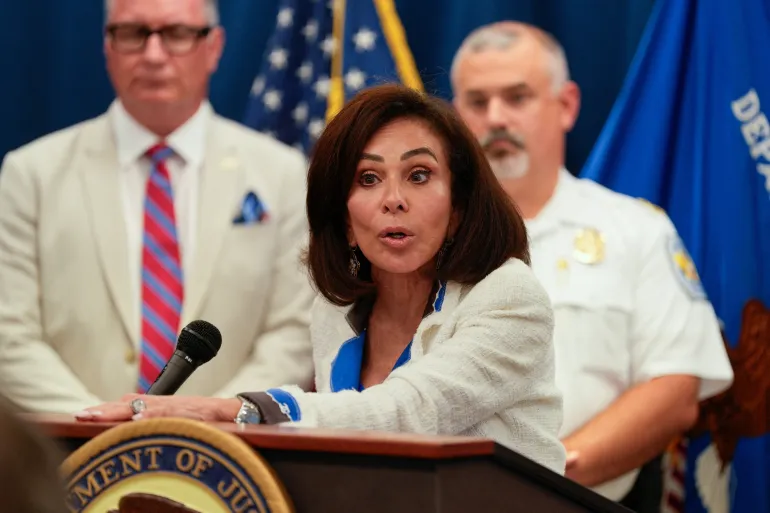
At a news conference on Thursday, US Attorney Jeanine Pirro accused professional canoeist David Hearn, 67, of deliberately vandalising the pool.
Recommended Stories
list of 3 itemsend of list
“Today, a grand jury has returned a felony indictment against a defendant, David Hearn, for felony destruction of property, for which he faces 10 years in prison,” Pirro, a Trump appointee, said.
She proceeded to call the destruction of national monuments “one of the most offensive images” she has ever seen.
“This unchecked vandalism and civil disorder turns into criminal behaviour, and that’s why we’re here today,” Pirro said. “They are an affront to the dignity of our shared history.”
But in media interviews, Hearn has denied any vandalism, saying that, like many Americans, he was simply curious about the Reflecting Pool when he visited on June 19.
US Attorney Jeanine Pirro discusses charges related to vandalism of the Lincoln Memorial Reflecting Pool on July 2 [Cheney Orr/Reuters]
The Reflecting Pool had been the subject of a renovation effort Trump began in April, as part of a wider initiative to reshape Washington, DC, through controversial construction and maintenance projects.
Trump awarded a no-bid contract to a firm to seal and resurface the granite pool in a colour he dubbed “American flag blue”. But observers noted that, as soon as the pool reopened in early June, it suffered an algae bloom, and blue paint began to peel from its bottom.
Faced with criticism about the $13.1m renovation contract, Trump countered that vandals had sabotaged the Reflecting Pool.
At least seven people, including Hearn, have been arrested on allegations they may have harmed the pool’s blue-painted bottom.
Hearn has maintained his innocence. He says he was cycling by the Reflecting Pool when he stopped to look at the peeling paint, and he reached in the water to feel it. He denies removing any part of the pool.
Pirro, however, described a different scene. She said National Park Service employees observed Hearn “forcefully and violently pulling up and removing the bottom liner with both hands”, damaging roughly 2 square feet — or around 0.18 square meters — of pool sealant.
“A parks employee actually told Hearn to stop his behaviour and stop what he was doing. Hearn reacted by shouting at that parks employee,” Pirro alleged.
Reporters confronted Pirro with questions about whether charging Hearn with a felony was disproportionately punitive, since similar cases have been considered misdemeanour offences.
One journalist asked Pirro if her decision to seek a felony indictment was influenced by Trump, who wrote on Truth Social that a 10-year prison sentence should “be fully enforced” for any attempted damage to the Reflecting Pool.
“I didn’t charge anything harshly. I charge according to the evidence,” Pirro replied. She argued that Hearn caused damage exceeding $1,000, thereby necessitating a felony charge.
She also dismissed comparisons with the millions of dollars in damage caused by Trump supporters during the attack on the US Capitol on January 6, 2021. Nearly all of those defendants were pardoned on the first day of Trump’s second term.
“Are you really talking about January 6th? I’m not,” Pirro told one reporter. A hearing in Hearn’s case is scheduled for July 9.
The Reflecting Pool has been fenced off amid ongoing work to kill the algae bloom and fix the peeling paint [Holden Lombardo/Al Jazeera]
On Thursday, preparations for the July 4 fireworks show began at the Reflecting Pool, with large nets spread across the entire structure.
According to a police officer on the site, the nets are intended to catch the debris that could fall into the pool during the show. The site remains fenced off to visitors.
Still, many have come to look at the pool and see the controversial renovations firsthand.
Brian Williams, a 31-year-old from Roscoe, Georgia, praised Trump for his efforts to beautify the city. He said that algae was normal for a pool full of still water in the heat of summertime.
“I don’t think people have any business vandalising anything,” Williams added. “If you have something that you dislike about the president, don’t take it out on the people’s pool.”
But others were more sceptical of Trump’s claims. Jon Delgado, a 40-year-old Navy veteran from Collierville, Tennessee, expressed frustration at seeing the Reflecting Pool in its current state.
“I came here with my wife and my family to show them the beauty of America, the spirit of what we fought for,” he said. “To see it trashed like this, it just makes me angry.”
Delgado called Trump’s accusations about vandalism at the site “really crazy”.
“We have just got to ask ourselves: Is this where we’re at, in the state of America, that we’re believing something like this? You can look for yourself: This thing has pond scum all in it, and it stinks. There’s no vandalism,” he said.
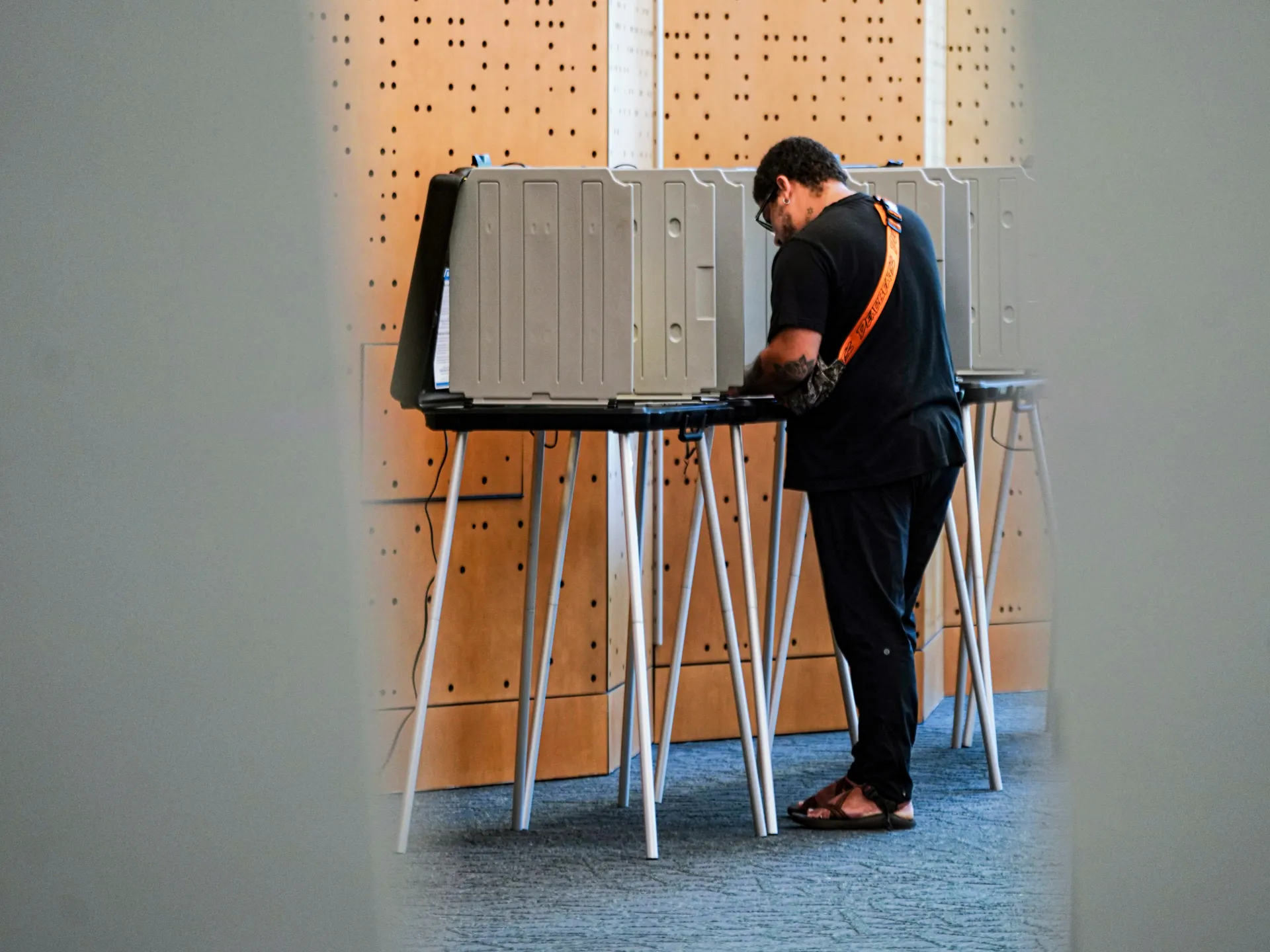
President Donald Trump has sought to limit mail-in voting and has ordered his administration to impose limits on the practice.
Published On 1 Jul 20261 Jul 2026
A federal judge in the United States has blocked proposed restrictions on mail-in voting that were championed by President Donald Trump.
On Wednesday in Washington, DC, District Judge Emmet Sullivan sided with the NAACP, a civil rights organisation, in its case against the US Postal Service (USPS).
Recommended Stories
list of 3 itemsend of list
Sullivan found that the restrictions would likely violate a 2021 settlement requiring expedited handling for mail-in ballots.
He therefore granted the NAACP’s motion to enforce compliance with the settlement, dealing another setback to the Trump administration’s efforts to reshape the US voting landscape.
“NAACP has plausibly suggested — and the Postal Service has not disputed — that the Proposed Rule is already having a ‘real impact on present day affairs’,” Sullivan wrote in his ruling.
The case revolves around a rule the Postal Service put forward in May that would require states to provide lists of absentee and mail-in voters. Ballots that do not conform to the list would be returned.
The proposed rule would also require a new envelope design for mail-in ballots, governing logos and barcode placements. Failure to comply would result in the Postal Service refusing to deliver the ballots.
The NAACP argued that the proposal would run afoul of a 2021 legal settlement that forces Postal Service officials to take “extraordinary measures” to ensure timely delivery of ballot mail.
The settlement “stipulated that the Postal Service agreed ‘to prioritize monitoring and timely delivery of election mail’”, Sullivan wrote in Wednesday’s ruling.
The decision comes less than five months before the November 3 midterm elections, which will decide whether Trump’s Republican Party retains control over both chambers of Congress.
Trump has expressed fears that he may be subject to a third impeachment if Democrats flip the legislature.
He has also spread unfounded theories that US elections are vulnerable to “vote rigging”, pointing to commonplace election tools like mail-in voting and electronic voting machines.
Elections are administered by state and local election officials, as established in the US Constitution. But the Postal Service’s proposed rule came as the result of efforts under the Trump administration to impose new limits on voting.
In March, Trump issued an executive order called “Preserving and Protecting the Integrity of American Elections”. In it, he directed the Department of Justice to take action against states that “fail to comply” with certain standards for mail-in ballots.
He also accused states that accepted absentee or mail-in ballots after Election Day of violating the law.
But in another blow to Trump, the Supreme Court on Monday upheld a state law that allows mail-in ballots to be counted even if they were received after Election Day, so long as they were postmarked on or before that date. The president’s executive order has also been blocked by lower courts.
Civil rights advocates applauded the court’s Wednesday decision and warned against Trump’s efforts to limit mail-in voting.
“The court today correctly recognized that USPS’s plan to create roadblocks to mail-in voting was inconsistent with its commitment to timely deliver election mail,” said Allison Zieve, director of the Public Citizen Litigation Group, which argued on behalf of the NAACP.
“USPS’s plan was unwise, unlawful, and a threat to the millions of voters who rely on mailed ballots to participate in our democracy.”
Sam Spital, the associate director-counsel of the Legal Defense Fund, which also argued for the NAACP, called the Postal Service’s proposed plan “a blatant attempt” to disenfranchise voters who rely on mailed ballots.
“Today’s decision recognizes that USPS cannot disregard its legal obligation to timely deliver mail-in ballots to all voters,” Spital said.
US prosecutors have alleged those involved in the Prairieland Detention Center protest were linked to antifa.
Seven more people have been sentenced to prison over a protest that culminated in a police officer being shot outside an immigration detention centre last year.
A federal court in Fort Worth handed down the latest sentences on Wednesday. Critics, however, say the case could reshape how protest is prosecuted in the United States.
Recommended Stories
list of 4 itemsend of list
The case centres on a shooting outside the Prairieland Detention Center, near Dallas, Texas, that took place during an antigovernment protest.
Six of the defendants in Wednesday’s sentencing hearing had pleaded guilty to providing material support to “terrorism” and received prison terms ranging from nearly two to 15 years.
A seventh defendant, Ines Soto, was sentenced to 50 years in prison after being convicted of “providing material support to terrorists”, as well as charges related to rioting and conspiracy to carry an explosive.
The protest in question took place on the night of July 4, 2025. Activists had gathered outside Prairieland to denounce President Donald Trump’s push for mass deportation. Some set off fireworks. Others have been accused of vandalism.
Prosecutors said that, during the demonstration, former US Marine reservist Benjamin Song shot and wounded a police officer who had just arrived at the centre. Song had reportedly shouted, “Get out the rifles,” prior to opening fire.
The Trump administration has described the protest as an act of “terrorism”, and 19 people were ultimately arrested.
Some of those detained were not present at the Prairieland protest. But the Trump administration has designated antifa — a loose-knit, left-wing antifascist movement — as a “domestic terrorist organisation”, and it accused the protest’s supporters of being part of an “antifa cell”.
Prosecutors for the US Department of Justice also argued that bringing firearms, first aid kits and body armour to the protest showed nefarious intent.
“The sentences handed down today make clear that Antifa terrorists who attack law enforcement and federal facilities will face swift and uncompromising justice,” acting Attorney General Todd Blanche said in a statement last week.
But civil liberties advocates say the case could have broad implications for protesters nationwide.
It will also likely test the boundaries of the free speech rights protected under the First Amendment of the US Constitution.
The Justice Department touted last week’s initial round of sentencing as the first time alleged antifa members were sentenced on criminal charges since Trump issued his executive order designating the group a “domestic terrorist” body.
Lawyers for the defendants, however, have largely denied links to antifa and rejected the prosecution’s characterisation of the protest.
They argued there was no planned ambush and that those carrying firearms only did so for their own protection, as is allowed under the Constitution’s Second Amendment. The fireworks, they added, were meant as a show of support for immigrants detained inside Prairieland.
On June 23, the eight defendants who chose to stand trial were handed lengthy prison terms.
Song was sentenced to 100 years in prison after being convicted of attempted murder in the shooting. The seven others received sentences ranging from 30 to 70 years. They received a combined 450 years in prison.
One defendant, Daniel Rolando Sanchez Estrada, has argued his only crime was to move a box of belongings, including zines. Prosecutors, meanwhile, have characterised his actions as “transporting a box containing numerous Antifa materials” and attempting to conceal them.
Several of the defendants, including Song and Sanchez Estrada, have filed notices of appeal.
In handing down last week’s sentences, US District Judge Reed O’Connor said what happened was not a protest but an “assault on democracy” and that “the need to deter this type of conduct is high”.
PLANS for a huge aquadrome with slides, party rooms and padel courts have been confirmed.
The proposed £60million site would be located in a major UK market town.
Sign up for the Travel newsletter
Thank you!
The proposed facility includes brand new water slides and gym equipmentCredit: UnknownIf plans are approved, the leisure site could be opened within the next three yearsCredit: Unknown
A brand new Aquadrome could come to Basingstoke, in Hampshire, after the council confirmed a contract has been signed with Places Leisure to manage the site.
Basingstoke and Deane Borough Council said that work will now begin to finalise the design of the water and leisure complex, ahead of submitting the planning permission this autumn.
According to the plans, the new £60million centre is set to include a 25-metre competition pool, a leisure park with slides, a 150-station gym, indoor play and party rooms.
A luxury health suite, Reformer Pilates studio and padel tennis courts have also been proposed.
If approved, the complex will be built in a new location on the leisure park, with an expected completion date of 2029.
The existing Aquadrome will remain open until the new facility is completed.
Places Leisure – who operate over 90 leisure facilities across the UK – will also take over the management of Basingstoke Golf Centre & Knights Realm Adventure Golf and Tadley Health & Fitness Centre from 2027.
The town‘s existing Aquadrome opened more than 24 years ago in 2002, and is currently run by Serco and Basingstoke and Deane Community Leisure Trust.
At the time plans were announced, Dan Walker, business development director at Places Leisure, said: “The new landmark leisure destination is an investment in health and wellbeing for the entire community.
“We look forward to working closely with local partners, colleagues, residents and community groups to shape a facility that truly reflects the needs and aspirations of the area.”
The new Aquadrome forms part of a wider regeneration of the leisure park, which includes new play areas, nature trails, a “flexible use” plaza and cultural hub.
The high court strikes down campaign spending limits, citing First Amendment protections in a 6-3 decision
Published On 30 Jun 202630 Jun 2026
On the final day of rulings for the Supreme Court’s current term, the top US court overruled a case that would limit campaign spending by rejecting restrictions on coordinated spending efforts between political parties and their candidates on free speech grounds.
The court handed down the ruling on Tuesday in a 6-3 split, with the six conservative judges in the majority, citing free speech grounds, and the three liberal judges dissenting.
Recommended Stories
list of 4 itemsend of list
The Supreme Court ruled that a spending cap on campaign spending, with input from candidates, violates the United States Constitution’s First Amendment after a lower court upheld the limits.
The decision, stemming from a Republican-led lawsuit, strikes down a provision of a more than 50-year-old federal election law limiting coordinated party spending. Among the Republican candidates at the centre of the lawsuit is now Vice President JD Vance. Vance was running for the US Senate in Ohio when the lawsuit challenging the restrictions was filed in 2022.
The Federal Election Campaign Act of 1971 regulates fundraising and spending in US elections by limiting the amount that can be spent on a candidate, aiming to prevent corruption.
Under that law, spending by a political party to advocate for or against a candidate that is not coordinated with a candidate’s campaign is considered an “independent expenditure” – and not subject to a cap.
Spending that is coordinated between a party and a campaign, however, has been restricted.
Tuesday’s decision overruled a 2001 decision in which the Colorado Republican Federal Campaign Committee challenged the rule against the Federal Election Commission, but the high court had upheld the limits on a vote of 5-4.
In 2024, the US 6th Circuit Court of Appeals had also upheld the limits.
On appeal, the plaintiffs said that developments in campaign finance over the intervening decades, including shifts in the Supreme Court’s jurisprudence, had eroded the rationale for that 2001 ruling and urged the justices to overrule it.
Then, when Donald Trump took office, the Federal Election Commission declined to defend the provision of federal law challenged by Vance and the other plaintiffs. The Supreme Court appointed lawyer Roman Martinez to do so. It also granted a request by the Democratic National Committee, Democratic Senatorial Campaign Committee, and Democratic Congressional Campaign Committee to intervene to defend the spending limits.
These spending limits have varied by state, being lower in states with smaller populations and higher in those with larger populations. In 2025, restrictions ranged from about $127,000 to $3.9m for Senate candidates and from approximately $63,000 to $127,000 for House of Representatives candidates.
The Supreme Court issued its campaign finance ruling with the November midterm elections looming, as President Donald Trump’s fellow Republicans seek to retain control of Congress.
The three major Republican committees – the Republican National Committee, the National Republican Congressional Committee, and the National Republican Senatorial Committee — ended May with $256m in cash and no debt. That was more than double the roughly $126m held by their Democratic counterparts, who also carried more than $18m in debt.
Election implications
The Supreme Court has issued multiple rulings during its current term that have election implications.
The justices on Monday backed state laws that allow mail-in ballots received after Election Day to be counted, rejecting a Republican-led challenge to a five-day grace period in Mississippi and dealing a setback to Trump.
The court in April gutted a key provision of the 1965 Voting Rights Act, opening the door for Republican-led Southern states to dismantle Democratic-held majority-Black and majority-Latino districts ahead of the midterms. Black and Latino voters tend to support Democratic candidates.
That decision prompted several Republican-led states to pursue redrawn electoral maps ahead of the midterms in an effort to threaten US House seats long considered safely Democratic.
Indonesia court finds former education minister guilty of abuse of authority and of causing state losses.
Published On 30 Jun 202630 Jun 2026
A court in Indonesia has sentenced former Education Minister Nadiem Makarim, co-founder of the Gojek app, to 10 years in prison on corruption charges.
Judges at the Jakarta anti-corruption court on Tuesday found Makarim guilty of corruption related to the procurement of Chromebook laptops for schools during the COVID-19 pandemic.
Chief Judge Purwanto Abdullah, presiding over the ruling at Indonesia’s Corruption Court in Jakarta, said a panel of judges had found Makarim guilty of abuse of authority and of causing state losses. He was found not guilty of directly seeking to enrich himself.
The court said the case caused state losses of approximately $120m. It also ordered Makarim to pay a fine of Rp1 billion ($55,850) and Rp809 billion (more than $45m) in restitution, or face additional prison time.
The verdict marks a sharp fall for the Ivy League-educated entrepreneur once seen as a symbol of Indonesia’s startup sector.
Makarim, 41, co-founded Gojek in 2010, growing it from a call centre with 20 motorcycle drivers into a major ride-hailing and delivery platform.
He became one of Indonesia’s youngest cabinet ministers in 2019 and served as education minister until 2024.
A Gojek driver carries a passenger through a business district in Jakarta. Gojek’s app lets users book motorcycle taxis to navigate the city’s gridlock [File: Beawiharta/Reuters]
Prosecutors said his decision to purchase Chromebook laptops, which run Google’s ChromeOS, was linked to the US tech giant’s investment in Gojek.
Makarim has consistently denied wrongdoing and vowed to appeal.
“The judges couldn’t even look me in the eye,” he said, adding he could not pay the amount ordered under the ruling.
The former minister has said the procurement saved money and called the case an “investigative error”.
In his defence this month, he said: “Experts and factual witnesses have stated: there is no element of state loss, no element of violation of the law, no element of self-enrichment, enrichment of another person or company, and no malicious intent or bad intentions.”
Prosecutors had sought an 18-year prison sentence and Rp5.68 trillion (about $313m) in restitution. Google was not charged and has denied any wrongdoing.
GoTo Group, formed after Gojek merged with Tokopedia in 2021, said Makarim had not had a decision-making role since resigning in 2019.
Makarim, whose lawyer father once served on the ethics committee of Indonesia’s anti-corruption body, said he joined the government to encourage professionals to enter public service.
A MUCH-LOVED lido is launching its summer season tomorrow, with the popular swimming site now set to open daily.
The venue boasts multiple water flumes and a diving board, with visitors hailing it as “a fab day out”.
Sign up for the Travel newsletter
Thank you!
Aldershot Lido is launching its summer season tomorrow, with the site now open every dayCredit: AldershotThe venue, based in Hampshire, was once hailed the “largest” and “finest” lido in the countryCredit: SWNS
Aldershot Lido in Hampshire is fully reopening for its summer season from tomorrow.
Having welcomed families throughout June, the venue now hopes to attract even more visitors with the summer holidays coming up.
From tomorrow, the lido will open daily between 10am to 6pm, continuing until August 31.
Aldershot Lido welcomes tens of thousands of visitors annually to its outdoor pool, boasting a capacity of up to 3,000 swimmers.
Opening in May 1930, Aldershot Lido was once reputed to be “the largest and finest open-air bathing pool in the country”, playing host to the London Olympics Games in 1948.
Spanning over nine acres, the site offers three water flumes and a diving board, alongside a toddler paddling pool and sandpit for the little ones.
For those wanting a workout, the facilities include a 75-metre pool with plenty of space for lane swimming, as well as a full-sized basketball court.
A wide range of food and drink vendors are on offer for refreshments, with lawn space surrounding the pool reserved for family picnics.
Aldershot Lido is home to three water flumes and a diving boardCredit: AldershotIt will now be open daily between 10am and 6pm throughout the summerCredit: Aldershot
The lido’s popular Doggy Splash sessions will also return in September, giving local pups the chance to play in the outdoor pool before the end of the season.
Swimmers have raved about Aldershot Lido across the years, with one calling it a “fab day out”, and another saying it is “a lovely place for children”.
Karl Miles, Everyone Active regional contract manager, said: “The move to daily opening marks the start of our busiest and most exciting period of the year.
“Aldershot Lido offers a unique outdoor swimming experience and we are pleased to be providing residents and visitors with even more opportunities to enjoy everything the site has to offer this summer.”
Adults can enjoy the open air pool from just £12.50, with children’s tickets priced at £9.50 and those under three swimming for free.
Aldershot Lido will be open daily between 10am and 6pm from July 1 to August 31.
The United States Supreme Court has sided with the maker of Roundup weedkiller in a ruling expected to block thousands of lawsuits alleging it failed to warn people the product could cause cancer.
The ruling on Thursday was tied to a case that came before the justices after a tidal wave of litigation that included some multibillion-dollar verdicts against the global agrochemical manufacturer Bayer, a Germany-based company that acquired Roundup when it bought its original producer Monsanto in 2018.
Recommended Stories
list of 4 itemsend of list
The decision is a victory for US President Donald Trump’s administration, but one that could be tricky politically since allies in the “Make America Healthy Again” movement want to rein in pesticide use.
The high court, in a 7-2 ruling, found that the company cannot face failure-to-warn lawsuits in state courts because federal regulations have found a cancer link unlikely and do not require a warning label.
The justices overturned a jury verdict in Missouri awarding $1.25m to a man named John Durnell who said he was diagnosed with non-Hodgkin lymphoma after years of exposure to glyphosate in Roundup. The Supreme Court agreed with Bayer that a US law that governs pesticides precludes failure-to-warn claims that are brought under state law from moving forward in court.
Bayer shares jumped nearly 18 percent following the ruling.
Trump’s administration had backed Bayer in the case.
Conservative Justice Brett Kavanaugh, who authored the ruling, said the US Environmental Protection Agency, or EPA, has concluded glyphosate does not cause cancer and has not required a cancer warning on Roundup.
The law preempts Durnell’s claim because it “would require Monsanto to add a cancer warning to Roundup’s label even though federal law requires Monsanto to use the EPA-approved label without a cancer warning”, Kavanaugh wrote.
Liberal Justice Ketanji Brown Jackson, in a dissent joined by conservative Justice Neil Gorsuch, said that Durnell’s claim would impose equivalent labelling requirements on Monsanto that the federal law requires and so should not be preempted.
Jackson called the ruling “remarkable and regrettable, for it unjustifiably closes the courthouse doors to state tort plaintiffs like Durnell”.
Bayer acquired Roundup as part of its $63bn purchase of agrochemical company Monsanto in 2018. More than 100,000 plaintiffs have filed cases in US state and federal courts alleging a cancer link, and the German drugmaking and crop science company had said that the lawsuits could threaten its ability to supply the herbicide to farmers.
The torrent of litigation already prompted Bayer to remove glyphosate from its consumer version of Roundup. Bayer said before the Supreme Court ruled that a decision in its favour could largely end the Roundup litigation.
“The US Supreme Court decision is good for science, farmers, and industries that depend on regulatory clarity for innovation. It should help significantly contain the Roundup litigation after nearly a decade of legal battles. The ruling should result in the dismissal of current warning-based claims and bar future failure-to-warn claims,” Bayer spokesperson Tino Andresen said in a statement.
The company emphasised throughout the litigation that the EPA repeatedly found that glyphosate does not cause cancer and approved its product labels without a warning.
Facing billions of dollars in potential liability, Bayer announced in February a proposed $7.25bn settlement to resolve tens of thousands of current and future lawsuits. The settlement would not affect claims that stem from pending appeals or that fall outside the deal, according to the company. Those amount to nearly $1bn, it said.
‘Disaster for public health’
Environmental activists and others criticised the court’s ruling on Thursday.
“Once again, the Supreme Court has sided with big business over people and the environment. Today’s ruling is a disaster for public health,” said Tarah Heinzen, legal director at the advocacy group Food and Water Watch.
“The harm from this decision will perpetuate our cancer, infertility and general chronic disease epidemic for generations to come,” said Kelly Ryerson, co-executive director of advocacy group American Regeneration and a Make America Healthy Again activist who posts on social media under the moniker “The Glyphosate Girl”.
The sprawling dispute centres on a US law called the Federal Insecticide, Fungicide and Rodenticide Act, or FIFRA, that governs the sale and labelling of pesticides and bars states from imposing differing or additional requirements.
The measure prohibits pesticides that are “misbranded” with labels that lack an adequate warning to protect health and the environment.
Bayer has argued that Durnell’s claims are preempted by this law. The EPA has repeatedly approved labels without such a cancer warning, demonstrating that these products are not misbranded, the company said, adding that labels cannot be substantially changed without the agency’s approval.
Durnell’s lawyers said that despite the EPA’s registration of Roundup, the label may still be challenged as misbranded. They also said Durnell’s claims are not preempted because Missouri state law that requires products to adequately warn of dangers imposes the same requirements as FIFRA’s prohibition on misbranding.
‘A new era’
Union Investment fund manager Markus Manns called Thursday’s ruling a significant milestone for Bayer, adding that a decade after the Monsanto acquisition, the company is “entering a new era”.
“While future lawsuits are not entirely off the table, they will become considerably more difficult. A final breakthrough would come if the settlement is accepted by the plaintiffs and approved by the competent court in July. This would bring Bayer’s glyphosate litigation chapter to a definitive close, allowing management to fully refocus on operational and strategic matters,” Manns said.
Durnell sued Monsanto in Missouri state court in 2019, claiming it failed to warn users of the dangers associated with Roundup and glyphosate.
He was diagnosed with a rare and often aggressive form of non-Hodgkin lymphoma, a cancer that starts in the white blood cells, and attributed the disease to his exposure to Roundup starting in 1996. For about 20 years, he was the “spray guy” for a neighborhood association in St Louis, killing weeds at local parks without protective equipment, according to court papers.
A jury sided with Durnell in 2023, and in 2025, a state appeals court upheld that verdict.
Lawsuit claims Tesla’s Autopilot shortcomings led to fatal crash; family seeks $1m in damages and punitive measures.
Published On 24 Jun 202624 Jun 2026
The family of a Texas woman who was killed has filed a lawsuit against Tesla after a driver using a Model 3’s automated driving assistance system crashed into a suburban Houston home last week.
The complaint, filed on Tuesday, argues that Tesla should be held liable for the wrongful death of 76-year-old Martha Avila. The family alleges that the automaker, led by Elon Musk, failed to adequately warn drivers about alleged defects in its Autopilot and Full Self-Driving systems.
Recommended Stories
list of 4 itemsend of list
Avila’s daughter, Jennifer Barbour, and her husband, Justin Barbour, said the Model 3’s driver, Michael Butler, told law enforcement he engaged Autopilot before ploughing through the front wall of Avila’s home in Katy, Texas, the United States, on June 19, pinning her before she succumbed to her injuries at a nearby hospital, according to the complaint.
Video obtained by KHOU – Houston’s CBS affiliate — shows the car travelling at top speed over the front lawn of Avila’s home in the Houston suburb before slamming into the front room.
The driver told the Harris County Sheriff’s Office that he was using the technology at the time of the accident. The driver in the incident was not under the influence of alcohol and is cooperating with authorities.
Butler is also a defendant in the Barbours’ lawsuit. It is unclear whether he has a lawyer.
Musk, the world’s richest person, posted on X on Monday night: “FSD drives slowly through neighbourhood streets and this was a high-speed crash!”
Ashok Elluswamy, vice president of AI software at Tesla, posted on X in response, saying that “the driver manually overrode self-driving by pressing the accelerator all the way to 100% of the accel pedal in this residential area.”
The lawsuit filed in a Harris County, Texas, state court seeks more than $1m in damages, and punitive damages reflecting Tesla’s alleged “reckless disregard for a substantial risk of severe bodily injury”.
The National Highway Traffic Safety Administration (NHTSA) has been investigating the crash.
Since 2016, the NHTSA has opened nearly 50 special investigations of Tesla crashes believed to involve advanced driver assistance systems. About two dozen deaths were reported.
In March, the NHTSA escalated its probe into 3.2 million Teslas equipped with Full Self-Driving, on concern the system may fail to detect or warn drivers in poor visibility. In 2023, Tesla recalled about two million vehicles, nearly all of its electric vehicles on US roads, to better ensure that drivers pay attention when using Autopilot.
Tesla has said Autopilot enables vehicles to steer, accelerate and brake within their lanes, while Full Self-Driving lets vehicles obey traffic signals and change lanes.
The carmaker has also said both technologies require “fully attentive” drivers whose hands are on the wheel.
The incident comes as the Musk-owned company is rolling out robotaxis using automated software in several US cities this year and plans to invite Tesla owners across the country to put their cars into the fleet using the same system.
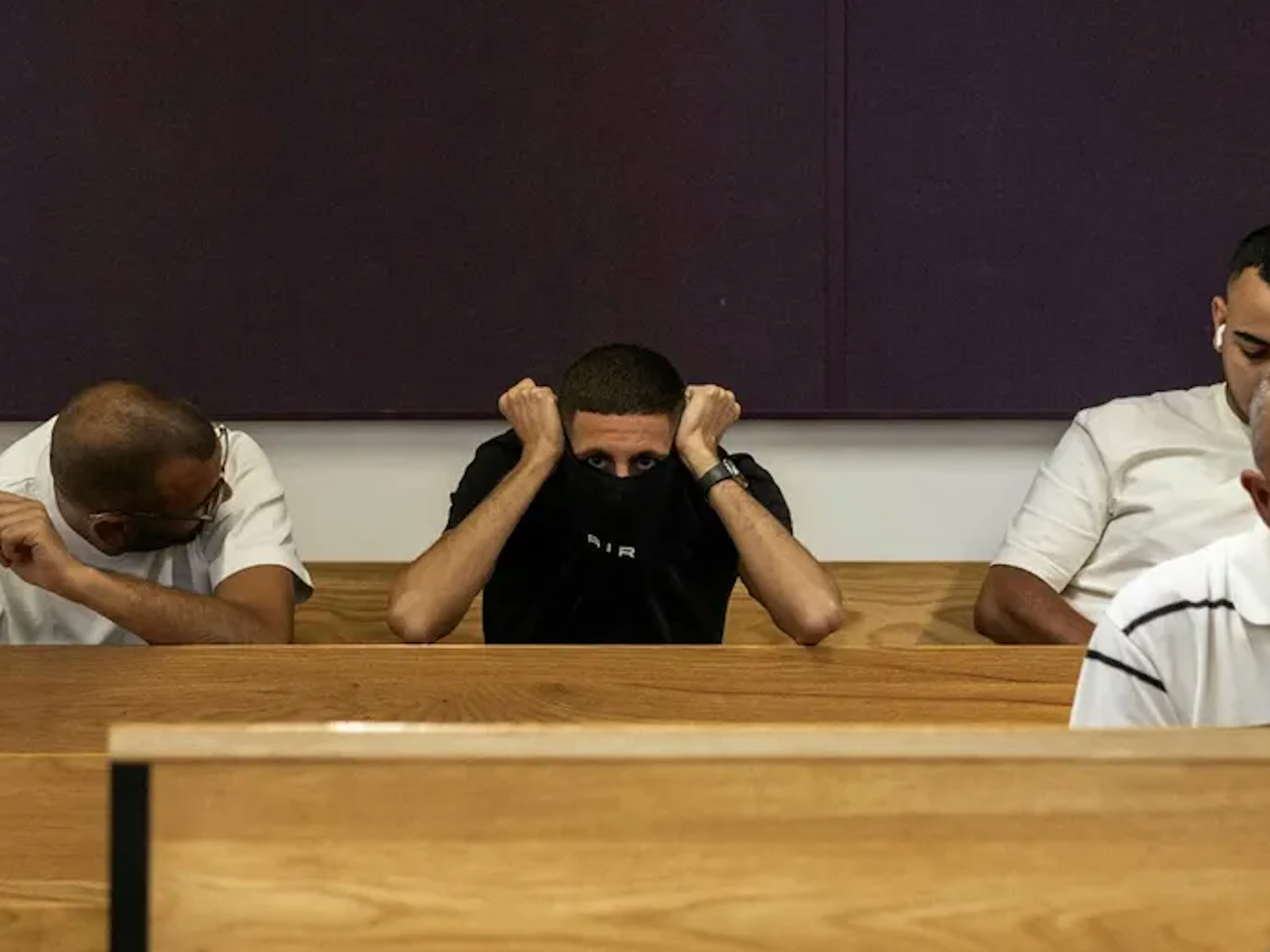
An Israeli court has convicted seven men over the 2021 lynching of Sa’id Moussa, ending a five-year trial. Moussa was dragged from his car and beaten unconscious by a mob during the May 2021 riots.
A United States judge has denied a petition from former Democratic President Joe Biden arguing his right to privacy would be violated should recordings he made for a memoir be made public.
On Friday, US District Judge Dabney Friedrich, an appointee of President Donald Trump, ruled that the recordings could be released to the Heritage Foundation, a right-wing think tank.
Recommended Stories
list of 3 itemsend of list
The Trump administration had already authorised the release of the recordings and transcripts, which Biden made while out of public office with his ghostwriter, Mark Zwonitzer.
Together, they released the 2017 memoir, Promise Me, Dad: A Year of Hope, Hardship, and Purpose.
In her 26-page ruling, Friedrich acknowledged that Biden was likely to suffer some reputational damage as a result of the recordings being released.
Biden has long been scrutinised about whether his advanced age impeded his ability to serve as president during his term from 2021 to 2025. Previously, he served as vice president from 2009 to 2017.
“The Court agrees that — on these facts involving the frank words of a public figure in his home — disclosure of the Zwonitzer materials risks irreparable harm to Biden’s privacy interests and his reputation,” Friedrich wrote.
But she concluded that such harms may not be irreparable, and they do not supersede the public interest in releasing the files.
“Biden has not identified any public harm that would arise absent an injunction in this case,” Friedrich said. “The harm to Biden’s diminished privacy interest is outweighed by the public’s interest in the Zwonitzer materials.”
Biden filed a lawsuit arguing that the Department of Justice had a duty to protect the private information it collects during criminal investigations.
He petitioned the court for an injunction to prevent the Heritage Foundation, which has supported Trump, from receiving the documents through a Freedom of Information Act (FOIA) request.
“Every American, including a sitting or former Vice President, has a right to privacy in the personal conversations he has within his own home,” Biden’s lawyers have said in his court filings.
The recordings and transcripts came to be in the Justice Department’s possession in 2023, during Biden’s own term.
The Justice Department at the time had appointed a special counsel, lawyer Robert Hur, to independently investigate Biden’s alleged mishandling of classified documents while out of office.
A similar investigation, helmed by a second special counsel, Jack Smith, resulted in a short-lived criminal indictment against Trump. Hur, however, concluded that no criminal charges were “warranted” against Biden.
Part of his rationale was “a shortage of evidence”. But another part of his reasoning was that, if any charges were brought to trial, jurors were likely to perceive Biden “as a sympathetic, well-meaning, elderly man with a poor memory”.
As part of his investigation, Hur had obtained Biden’s recordings and transcripts with Zwonitzer in order to evaluate whether the Democrat had misused information from his time as president for his memoir.
But he also cited them as evidence to conclude that Biden “appeared to have significant limitations” in his memory.
The scrutiny over Biden’s age increased substantially during his 2024 bid for re-election. At a June 2024 presidential debate against Trump, Biden appeared to drift off topic and make nonsensical statements.
At one point, he issued the non sequitur, “We finally beat Medicare,” referencing a government health insurance programme for the elderly and those with disabilities.
Biden subsequently dropped out of the race, and his replacement, then-Vice President Kamala Harris, lost to Trump after a curtailed campaign. The Democrat, however, has consistently denied that he was unable to perform his duties as president.
Trump, meanwhile, has cited Biden’s age and mental acuity as a reason to undo the Democrat’s actions while in office.
He has also called on the Justice Department to investigate whether any officials attempted to conceal any health conditions Biden may have had while president.
The Republican-led House Judiciary Committee has also sought to obtain the Zwonitzer files for a similar investigation.
Biden was 82 years old by the time he left office in January 2025, making him the oldest sitting president in US history. Trump will be slightly older by the end of his tenure, should he complete his second term.
The Democrat is expected to appeal Friday’s decision to release the recordings.
Mangione would face lighter sentencing if jury accepts he was in a state of ‘extreme emotional disturbance’ during act.
Published On 17 Jun 202617 Jun 2026
Luigi Mangione, the man suspected of fatally shooting United Healthcare CEO Brian Thompson in New York City, will argue a psychiatric defence during his trial.
Judge Gregory Carro said on Wednesday that Mangione’s lawyers informed him that they will assert that their client was in a state of “extreme emotional disturbance” when he allegedly carried out the shooting in December 2024.
Recommended Stories
list of 3 itemsend of list
New York state allows murder defendants to make the case that they cannot be held fully responsible for their actions because they were in a state of extreme emotional disturbance at the time of the killing.
Thompson’s slaying, which took place outside a hotel in midtown Manhattan, shocked the United States public. Grainy footage of the act quickly spread across social media.
It also drew attention to the widespread anger over sky-high healthcare prices. Police have said that the terms “delay”, “deny”, and “depose” were written on the suspect’s ammunition, a reference to how health insurance companies avoid paying claims.
If the jury concludes that Mangione was emotionally disturbed at the time of the alleged act, it could move to convict him of manslaughter rather than murder. Such a conviction generally results in a lighter sentence.
Relying on a claim of emotional disturbance means that Mangione would effectively admit that he carried out the act, but that he did so under circumstances of impaired judgement. It differs from an insanity plea, which would allow Mangione to serve his sentence in a psychiatric facility rather than a prison.
Mangione, who sat between two of his lawyers dressed in a blue suit, is set to go to state trial on September 8. The 28-year-old has previously pleaded not guilty to state and federal charges in connection to the killing.
His federal trial, which includes stalking charges, is set to begin on October 13. He faces a potential life in prison if convicted in either case.
US District Judge Margaret Garnett, who is overseeing the federal case, threw out murder and weapons charges against Mangione on technical grounds in January. That ruling eliminated the possibility of Mangione facing the death penalty.