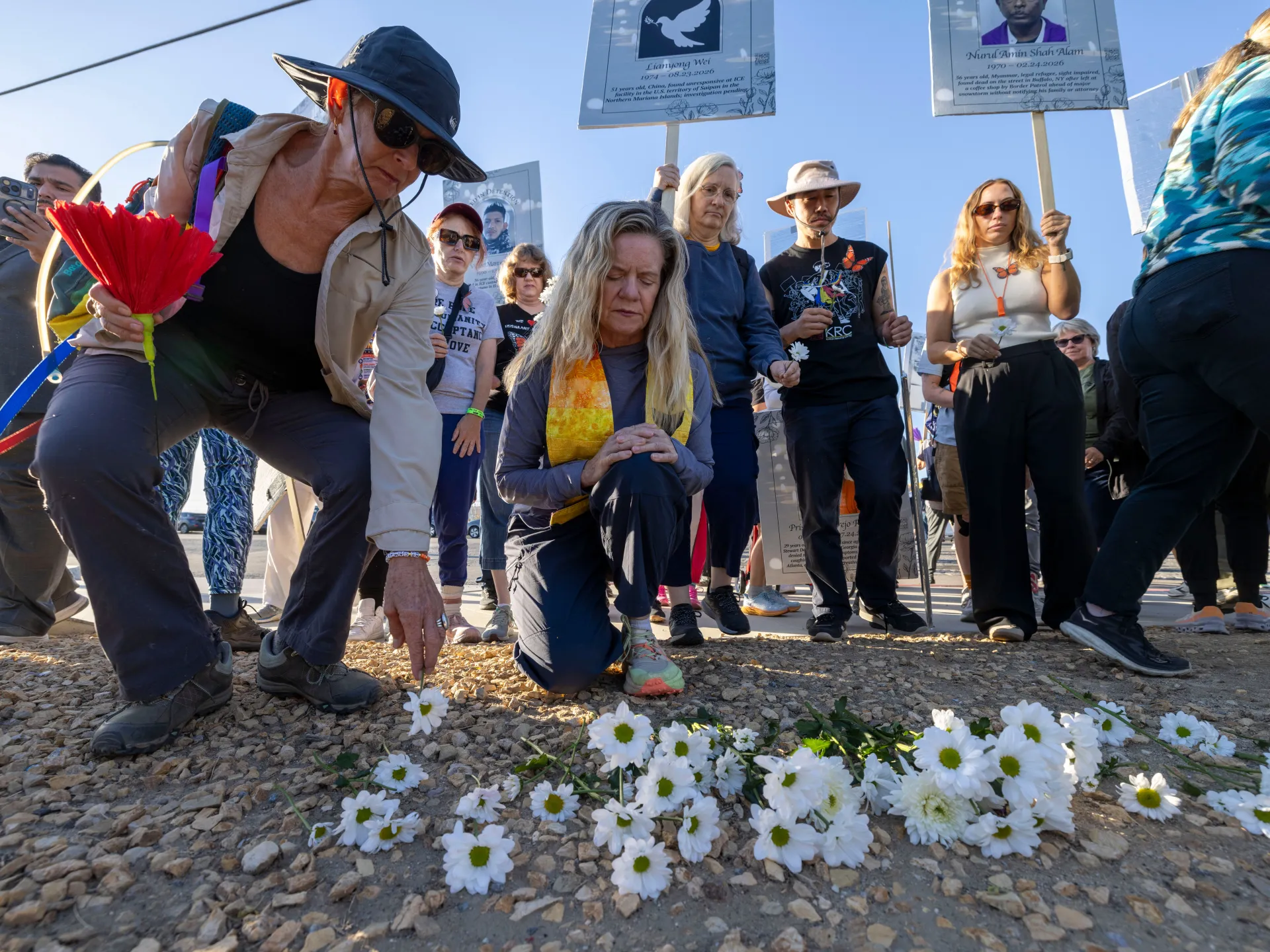
An ICE supervisor seen brandishing a rifle after the high-profile shooting in New York on Oct 8 was also involved in a controversial arrest in Minneapolis in December in which agents knelt on and dragged a pregnant woman through the street.
A federal judge ruled against the Justice Department’s use of voter data to cross-reference an immigration database.
Published On 9 Oct 20269 Oct 2026
A United States judge has ruled that the Justice Department unlawfully sought state voter rolls to cross-check against a federal immigration database and identify voters it considered ineligible.
US District Judge Sparkle Sooknanan’s decision on Friday marks another setback for President Donald Trump’s efforts to expand federal oversight of elections ahead of the midterms, as Republicans seek to retain control of Congress.
Recommended Stories
list of 3 itemsend of list
In a 78-page ruling siding with watchdog group Common Cause, Sooknanan said the administration had understated the risk of wrongly removing eligible citizens from voter rolls because of inaccuracies in the Systematic Alien Verification for Entitlements (SAVE) database.
“The challenged policy represents the federal government’s attempt to decide who gets to vote,” Sooknanan wrote, adding that Congress had left that authority to the states.
The Justice Department said it was reviewing the ruling.
Ming Cheung, a senior staff attorney with the American Civil Liberties Union’s Voting Rights Project, said the ruling made clear that the administration could not use the federal government to disrupt elections or put voters’ rights at risk.
“The Trump administration has repeatedly taken extreme measures to interfere with how elections are run, undermine confidence in the results, and create confusion,” Cheung said in a statement.
Last year, Trump directed the department to crack down on voting by ineligible people, despite research showing voter fraud is rare. The department subsequently demanded unredacted voter rolls from nearly all 50 states, including sensitive personal information.
Eighteen states, mostly Republican-led, complied. The department cross-checked their data against SAVE and flagged people identified as noncitizens for potential removal from voter rolls.
Sooknanan said the database could contain outdated citizenship records, potentially misidentifying naturalised US citizens.
The department has also sued 30 states and Washington, DC, over their refusal to provide voter data. Twenty-six cases have been dismissed.
In a separate case in June, Sooknanan blocked the expanded use of the SAVE database for voter roll checks, an order the US Supreme Court temporarily paused last month.
Federal law bars systematic voter roll purges in the 90 days before a federal election, which could limit the ruling’s practical effect before the November 3 vote.
The United States has imposed a new set of sanctions against the International Criminal Court (ICC), prompting several countries – including US allies – to condemn the move and reiterate their support for the world’s war crimes tribunal.
On Friday, US Secretary of State Marco Rubio announced that Washington would be banning transactions with the “rogue court, cutting off their resources and crippling its ability to operate”, adding that President Donald Trump would “never allow” the Hague to prosecute Americans.
Recommended Stories
list of 3 itemsend of list
The ICC was created in 2002 to prosecute individuals accused of genocide, war crimes and crimes against humanity when national authorities are unable or unwilling to do so.
The US Treasury Department announced the penalties with a six-month initial grace period and other exemptions that would allow some transactions for telecommunications, software, pension payments and transactions related to detainees.
Rubio said the sanctions would give the court and its member states an opportunity to address US concerns and would be adjusted if they did not meet those demands.
The Trump administration says the court has exceeded its authority by pursuing officials from countries that are not ICC members, such as Israel. The United States and Israel have never joined the court.
In response to the sanctions, the ICC said that the move was an “assault on the rule of law and on the very foundations of the international legal order”. It called on its 125 member states to defend the institution.
“The Court cannot stand alone. Its fate now rests also in the hands of the states that created it,” the ICC said in a statement. “This is not just about defending a single institution, but about safeguarding the international order grounded upon the rule of law. History will judge this moment.”
Soon after the US announcement, top United Nations officials condemned the move.
UN Secretary-General Antonio Guterres was “deeply alarmed” by the expected impact of the sanctions on the court as a whole, particularly its ability to carry out its mandate, a statement from his spokesperson Stephane Dujarric said.
“Today’s decision marks a serious blow to our collective pursuit of international criminal justice, of which the ICC is a key pillar,” the statement added.
UN Human Rights chief Volker Turk called for immediate measures to protect the ICC. “These sanctions – the latest in a series of retaliatory steps against the ICC and its personnel for the work they do every day to advance accountability for the very worst violations of human rights – are unacceptable,” he said.
ICC member states that are US allies also expressed dismay at the decision.
Dutch Foreign Minister Tom Berendsen, whose country hosts the ICC, said the US’s decision was “deeply regrettable”.
“We will stand firm in defence of the court. At the same time, it’s important to note that the sanctions will not take effect immediately and that service providers can continue to work for the ICC. The six-month period before the sanctions take effect creates scope for dialogue,” he said.
In a joint statement, the foreign ministers of Britain, Denmark, France, Germany, Italy, the Netherlands, Canada and Japan said they “regret and strongly disagree” with the sanctions.
“If put into effect, these sanctions will have a significant impact on the Court’s work, its dedicated staff and their families … We remain both united in our support for the ICC and committed to engaging in constructive and inclusive dialogue with non-States Parties,” they said.
Belgian Foreign Minister Maxime Prevot also said Brussels would discuss support for the ICC with European Union foreign affairs colleagues on Monday and at the upcoming European Council.
“We will press for concrete protection. The court’s independence cannot depend on whom it investigates. Europe must act. Belgium is calling for the activation of the EU Blocking Statute to protect the court,” Prevot said.
US aims to ‘ultimately destroy’ ICC
Similarly, organisations and rights groups sounded the alarm over the implications of the US decision.
Philippe Bolopion, executive director of US-based Human Rights Watch, said the Trump administration had made clear its aim to “destroy” the ICC and “shield US and Israeli officials from facing charges before the court”.
“The ICC was created to ensure that no one, no matter how powerful, is above the law. Governments that value human rights and accountability should condemn this outrageous move and take swift action to protect the ICC, its staff, and all those who cooperate with it, starting with the European Union using its laws to mitigate the sanctions’ impact in the region,” he said.
The Executive Director of the Open Society Justice Initiative, James Goldston, said the sanctions were a “calculated attack on the rule of law and the principles of judicial independence and equality that underpin it.”
“This is the latest move in a campaign of coercion intended to destroy the system of international justice,” he said.
Amnesty International called on countries to “resist”. Trump’s “sanctions are designed to isolate and ultimately destroy the International Criminal Court”, Erika Guevara Rosas, Amnesty’s senior director for research, policy, advocacy and campaigns, said in a statement. “This existential attack must fail. States must take concrete action to resist the imposition of these measures.”
Amid widespread criticism, Israel commended the US move.
Prime Minister Benjamin Netanyahu hailed the sanctions and praised Trump and Rubio for taking this “critical decision”.
“The ICC is not a court. It is a political body that poses a mortal threat to law-abiding democracies worldwide and to the very idea of national sovereignty,” Netanyahu wrote on X.
In 2024 the ICC issued an arrest warrant for Netanyahu on war crimes and crimes against humanity charges for the war on Gaza.
Award-winning filmmaker, who was detained last month, released on bond with next hearing set for October 27, campaign says.
Published On 9 Oct 20269 Oct 2026
The Immigration and Customs Enforcement (ICE) agency in the United States has released Kashmiri filmmaker Arfat Sheikh from custody after he was detained on September 24.
The award-winning filmmaker was released on Thursday, two days after he was granted bond, according to a statement by a campaign of his friends and relatives to free him.
Recommended Stories
list of 3 itemsend of list
However, ICE’s deportation case against Sheikh continues with the next hearing set for October 27, the campaign said.
Sheikh, whose work has explored conflict in his native India-administered Kashmir, was detained by the Department of Homeland Security (DHS) as he disembarked from a plane at Dulles International Airport outside Washington, DC, after arriving from California.
The 42-year-old, who lives in Alexandria, Virginia, entered the US on a student visa in 2019 to pursue graduate studies in film at Georgia State University and filed for asylum in 2020.
The campaign said he had a pending asylum application and was authorised to work and live in the US.
The DHS confirmed on Wednesday that Sheikh had been arrested on September 24 and said he “legally entered the US on a temporary basis and illegally overstayed his lawful admittance”.
A pending application does not confer legal status in the US, the DHS said, adding he will receive due process.
Sheikh’s first feature film, Saffron Kingdom, garnered multiple honours, notably best feature film at the Chicago Filmmakers Awards, Los Angeles Film and Documentary Awards, Melbourne Independent Film Festival, Wake Forest Film Festival and Anatolian International Film Awards.
In 2025, Sheikh was also recognised with the emerging filmmaker activist award at the Teaneck International Film Festival.
His detention came amid a surge in the number of ICE arrests across the US, which hit record levels over the summer. About 50,000 arrests were recorded in July and August.
President Donald Trump’s administration said in August that it was working “to identify and revoke the non-immigrant visas of foreigners who have come to the US claiming to be short-term visitors, but then file for asylum to stay here permanently”.
Police say the incident is not connected to ongoing investigations at the RAF Fairford airbase.
Published On 8 Oct 20268 Oct 2026
Police in the United Kingdom say they have arrested and charged a member of the Royal Navy accused of working with an unnamed foreign power after an investigation by counterterrorism police.
Teddy Young, 24, was charged with two offences under the National Security Act for allegedly obtaining protected information and preparing to transfer it for the benefit of a foreign power.
Recommended Stories
list of 4 itemsend of list
In a statement, authorities alleged that between November 2024 and May 2025, Young “obtained, copied, recorded or retained protected information, intending the conduct to benefit a foreign power… contrary to section 1 of the National Security Act 2023″.
Young is due to appear at London’s Westminster Magistrates’ Court later on Thursday.
“These are very serious charges against a serving member of the armed forces,” Commander Helen Flanagan, Head of Counter Terrorism Policing London, said in a statement.
“We have worked extremely closely with relevant operational colleagues within the Ministry of Defence as our investigation has progressed to ensure appropriate measures could be taken to mitigate any potential risks linked to this matter,” she added.
UK media reported that the officer was arrested at his home in Bedfordshire on Tuesday before he was taken into custody in London.
The police clarified that the case is not related to the ongoing investigation into an incident at the RAF Fairford airbase.
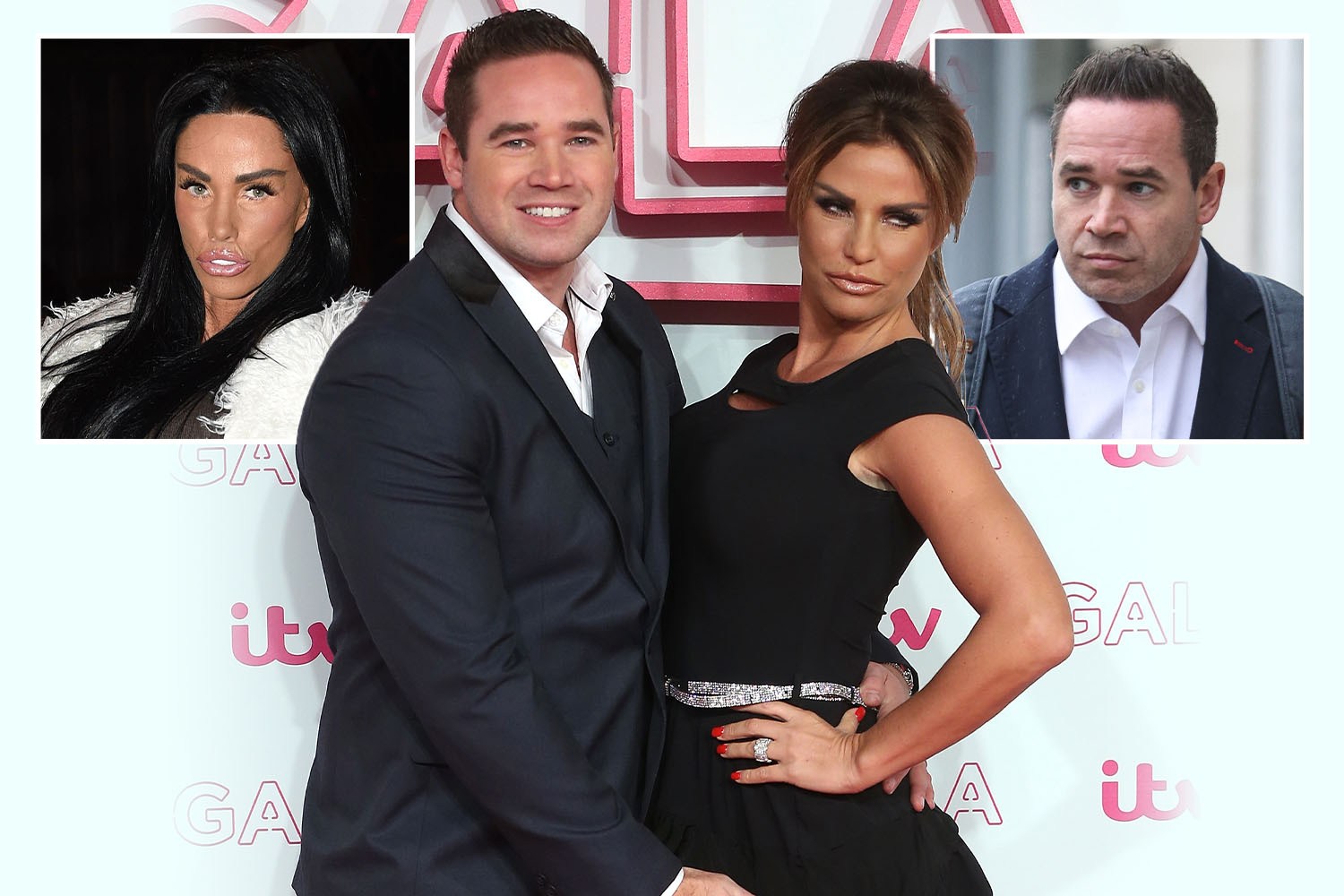
KATIE Price told her ex-husband Kieran Hayler’s alleged child rape victim she would “make her a little star”, a court heard today.
The former glamour model, 48, made the comment in a message while quizzing the girl about whether she had kissed Hayler, jurors were told.
Katie Price said she would make Kieran Hayler’s alleged child rape victim a ‘little star’Credit: GettyHayler has denied the allegationsCredit: Gary Stone
The message exchange happened in May 2017 – eight months after the last alleged attack by Hayler, it was said.
The former stripper is accused of three counts of rape and one count of sexual assault against the girl between June and October 2016 – when she was 13 and Hayler and Katie were married.
Sign up for the Showbiz newsletter
Thank you!
In the May 2017 exchange, mother-of-five Katie asked the girl if she and Hayler, 39, had kissed.
Katie wrote: “I WON’T say anything and I PROMISE I’ll protect you!
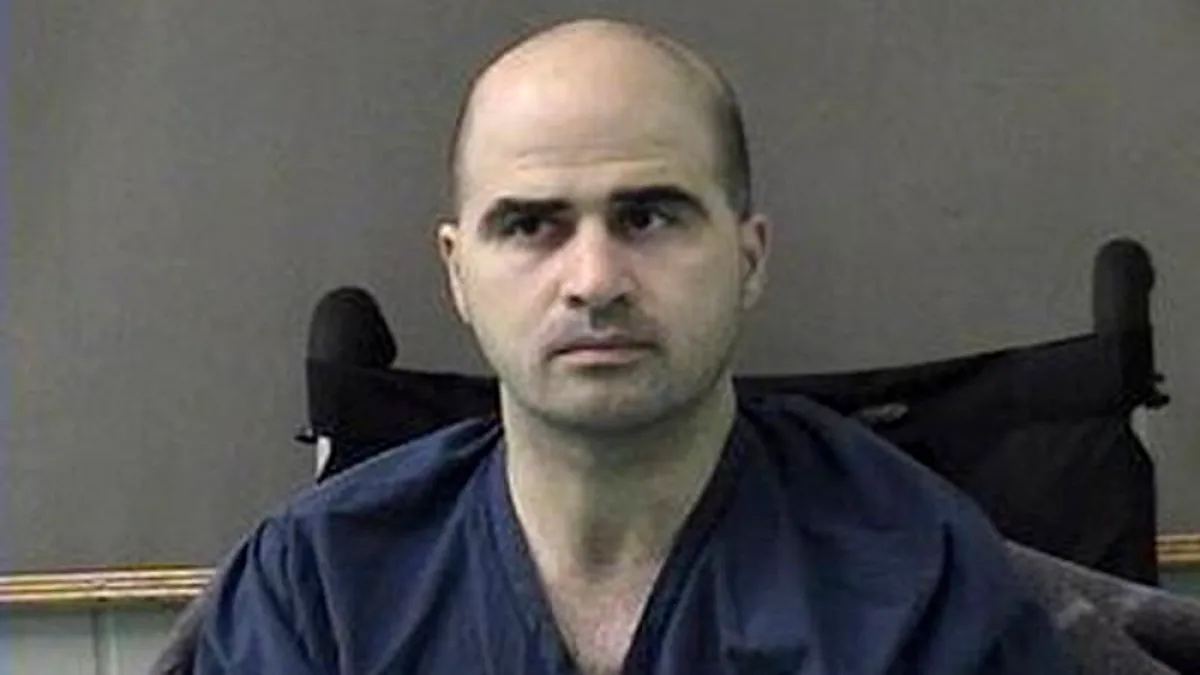
United States President Donald Trump has approved the death by firing squad of Nidal Malik Hasan, a former army officer convicted of carrying out a 2009 mass shooting at Fort Hood, an army base in Texas.
The move, if it proceeds, will revive executions in the army, which has not carried one out since 1961.
Recommended Stories
list of 4 itemsend of list
Death sentences, as well as executions in the US military, are rare and require presidential approval.
Under the army’s code of military justice, premeditated murder does carry the death penalty, but the process is often strict and prolonged.
However, the Trump administration has shown more willingness to seek death penalties for serious crimes, including against civilians.
Here’s what we know about the case:
What is the presidential order?
Defense Secretary Pete Hegseth had initially recommended an execution order for Hasan, and Trump has now approved it, according to an X statement posted by Pentagon spokesperson Sean Parnell.
Parnell said the time and date of the execution will be set by Army Secretary Adam Telle, who is serving in an acting capacity.
“Judgement day for Hasan has finally come,” he wrote.
What happened at Fort Hood?
On November 5, 2009, the US-born army major, Hasan, a psychiatrist in the force, walked into an army processing centre in Fort Hood, shouted “Allahu Akbar” (God is great) and opened fire on fellow staff members waiting to get medical attention.
Thirteen people were killed, including a pregnant soldier, and 32 others were wounded during 10 minutes of shooting. Analysts have called it the worst shooting at a US military base targeting members of armed forces.
Hasan was shot several times after two officers engaged him and remains paralysed from the waist down.
What happened during the trial?
Hasan was immediately court-martialled, and military prosecutors, from the start, sought the death penalty against him.
However, the process would play out over the course of several years even after his conviction – largely because the US military is averse to capital punishment.
During the trial, Hasan represented himself and admitted to the attacks, saying he was trying to stop deployments to Afghanistan and the killing of his fellow Muslims. He was due to be deployed weeks later.
Investigations revealed Hasan had exchanged emails with Yemeni-American scholar Anwar al-Awlaki, accused of ties to al-Qaeda, before the shooting. He had also repeatedly voiced opposition to the US wars in Iraq and Afghanistan to colleagues and the treatment of Muslims in the army.
Hasan made little effort to defend himself, and his assigned lawyers claimed his testimony aided the opposing side.
He was charged and convicted on 13 counts of premeditated murder in 2013, and jurors recommended the maximum sentence of death. Controversially, Hasan was charged with “workplace violence” because the military justice code does not address the crime of “terrorism”.
The judgement was further delayed by appeals mandated by the military, not because Hasan sought them.
In 2020, the US Army Court of Criminal Appeals upheld the death penalty for Hasan, and in 2023, the US Court of Appeals for the Armed Forces did the same. In March 2025, the US Supreme Court denied a mandatory petition for a judicial review.
In September 2025, Hegseth announced he was seeking presidential approval for Hasan’s execution.
At the time, there was no report of Hegseth specifically seeking death by firing squad.
The president holds the ultimate authority to specify the designated method of execution.
Other forms of execution could have been lethal injection or hanging, which the US military has used in the past.
What next?
While Trump’s approval will begin a series of steps towards preparing for the execution, Hasan can still put the process on hold for years with an appeal in the civilian federal court system.
However, that might be unlikely as Hasan made no effort to defend himself during the trial.
He has been remanded to the US Disciplinary Barracks at Fort Leavenworth in Kansas, where three other men have also been on the military death row for years.
Among them is Hasan Akbar, convicted of two counts of murder after attacking fellow army members on a Kuwait base in 2003, during the invasion of Iraq.
Another is the convicted serial killer and rapist Ronald Gray, who was found guilty of four counts of murder and eight counts of rape in 2008. He was approved for execution in the same year under President George W Bush, but the process was put on hold by a judge.
Timothy Hennis, a former sergeant, was convicted in 2010 of a triple murder and is also on death row.
The last military execution took place in 1961, when former soldier John Bennett was hanged for the rape of an 11-year-old girl.
Student groups call for the abolition of Greek life and punitive action in wake of fraternity assault allegations.
Published On 5 Oct 20265 Oct 2026
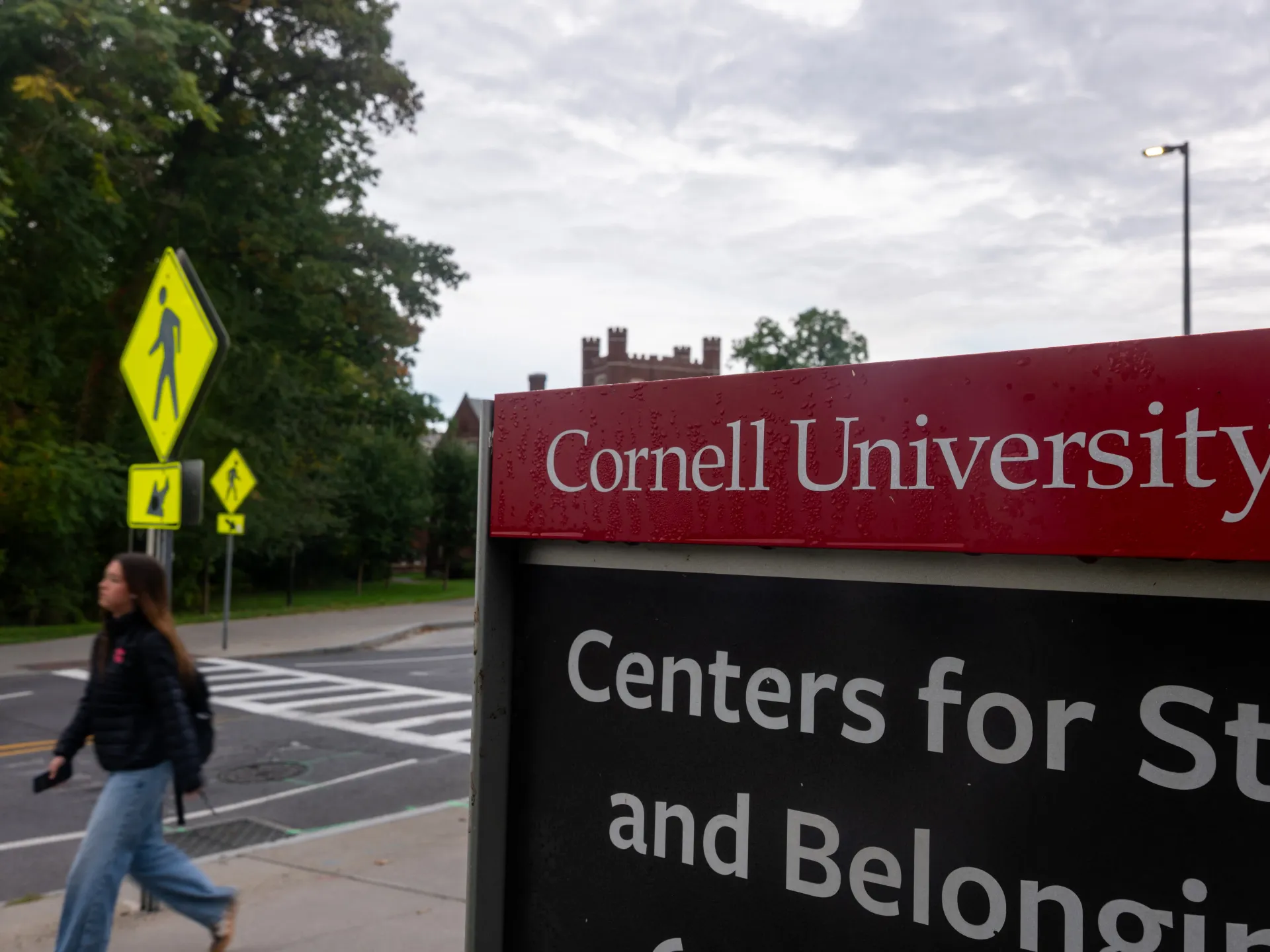
Protesters in the United States have shattered a glass door at Cornell University’s main administrative headquarters and spray-painted messages on the building’s walls as backlash continues following allegations about a 2024 gang rape at a local fraternity.
In the early hours of Monday, the glass panes on an entrance door for the building, Day Hall, were smashed, leaving shards strewn across the floor.
Recommended Stories
list of 3 itemsend of list
Activists, outraged at the school’s handling of the case, also graffitied nearby walls with slogans like “At Cornell rapists are protected protesters are expelled” and “Smash the patriarchy”.
The predawn incident came ahead of a rally demanding “justice for survivors” by student groups on Monday.
Cornell spokesperson Kyle Kimball said Monday that the university was investigating the vandalism.
“We understand the frustration and strong emotions being expressed across our community,” Kimball said. “Those concerns deserve to be heard, but damaging property is not the answer.”
Cornell, a prominent Ivy League university in the state of New York, has been at the centre of a national firestorm over sexual violence on US campuses, after an anonymous student, Jane Doe, filed a civil lawsuit last month alleging a gang rape at the fraternity Chi Phi.
Her complaint accuses seven former students of perpetrating “heinous criminal sexual acts” against her during a fraternity party on the night of October 19, 2024, after she says she was pressured to drink and take the drug ketamine.
The fraternity, Cornell University and others are named as co-defendants in the suit. Lawyers for two of the former students have rejected claims that they participated in sexual assault.
The case has elicited outcry over how sexual assault is handled on campuses across the country.
At Monday’s demonstration, students demanded an overhaul of the university’s sexual assault complaint process, the termination of certain school officials and stricter disciplinary action against alleged abusers.
In a statement to the student news outlet The Cornell Daily Sun, student organisers wrote that they were calling for the “abolition” of the Interfraternity Council system on campus and the “expulsion/revocation of degrees for all Chi Phi members involved in the rape”.
They also demanded that Cornell’s Office of Student Conduct and Community Standards be replaced by a “democratic disciplinary system”. Monday’s protest, they added, was designed to draw attention to the systemic failures that allow sexual violence to occur.
“We wanted to ensure that Day Hall, the centre of Cornell’s administrative function, was not able to continue business as usual,” the students told the campus paper.
The alleged crime at the fraternity, they wrote, was part of a “rampant pattern of sexual assault perpetrated by members of Greek life at Cornell University and hundreds of other academic institutions throughout the country”.
Under pressure by New York Governor Kathy Hochul and Attorney General Letitia James, the university announced this week it would be appointing a law firm to conduct an independent internal review of how it initially handled the case.
A transcript, obtained by US media, shows that although no charges were filed, Doe told campus police at the time that she could “say with 100% confidence I was raped”.
Her lawsuit also alleges that Cornell “afforded” the accused fraternity members “the opportunity to mitigate their conduct by submitting essays” to the school. Two were later expelled, and another two were suspended.
Last month, a woman identified as Jane Doe filed a lawsuit against Cornell University, the fraternity Chi Phi and the seven fraternity members she accused of gang-raping her on the night of October 19, 2024.
Her allegations have triggered a nationwide reckoning in the United States over the prevalence of sexual assault on college campuses.
Recommended Stories
list of 3 itemsend of list
But the case has also reignited efforts to reform laws in the state of New York.
While the left-leaning state has long presented itself as a leader in women’s rights, advocates say sexual assault survivors still face pervasive legal barriers when they seek justice.
Erica Vladimer, a lawyer and founding director of Harassment-Free New York, a survivor-led nonprofit, told Al Jazeera that much of the legislation currently in the spotlight is the culmination of years, if not decades, of work.
“These are bills that we have been fighting for for years when sexual violence is not in the news,” Vladimer said.
She drew a line between the #MeToo movement, which began in 2017 as an online campaign to denounce sexual misconduct, and the current wave of outrage following Doe’s allegations.
“It speaks to the fact that the #MeToo movement is not dead. It is a movement, not a moment,” Vladimer said.
Already, leaders in Albany, the state capital, have signalled they would take action following the Cornell case.
On Wednesday, the New York Assembly announced it had formed a working group to examine the state’s sexual-assault laws and develop recommendations for the 2027 legislative session.
Still, advocates say more concrete measures are needed to address the crisis.
“I appreciate that this work is happening,” said Lindsey Boylan, a New York City Council candidate. “It doesn’t undo the fact that rape culture is pervasive in the United States and very much so alive and well in New York.”
Boylan was the first woman to publicly accuse former New York Governor Andrew Cuomo of sexual harassment in another high-profile misconduct case, back in 2020. She is among those calling for greater reform.
Here are some of the measures advocates are pushing state lawmakers to adopt or amend:
‘Voluntary intoxication’ statute
The Cornell University case has brought renewed attention to New York’s “voluntary intoxication” statute, a legal loophole that can make it harder to prosecute sexual assault when a person has willingly consumed alcohol or drugs.
New York Governor Kathy Hochul pledged on Friday to work with lawmakers to close the gap.
“It should not matter whether they chose to use drugs or alcohol. Voluntary intoxication is not a license for sexual assault or gang rape. Period,” Hochul said.
Under the current state law, a person who voluntarily drinks or takes drugs is not considered “mentally incapacitated” during an assault, even if they become too intoxicated to consent.
That can make it harder for prosecutors to bring a sex-crime charge. The law primarily recognises incapacitation in the context of sexual assault when a person was involuntarily intoxicated, unconscious or otherwise “physically helpless”.
That distinction has become central to the Cornell case. Doe has acknowledged that she consumed substances before the alleged rape, saying that she was pressured into drinking alcohol and taking the dissociative drug ketamine.
The Tompkins County district attorney initially declined to bring charges, pointing to the law’s stance on “voluntary intoxication”. But the investigation has since been reopened, amid public pressure.
New York is one of 19 states in the US that distinguish between “voluntary” and “involuntary” intoxication when it comes to determining consent in sexual violence cases.
But the Cornell case has spurred a push to remove the distinction from the law books. Critics have argued that sexual assault is no less grievous if a victim is drunk or has chosen to take drugs.
“I mean, to have New York, a supposedly progressive state, penalise people who are sexually abused for drinking is disgusting,” Boylan told Al Jazeera.
Vladimer, for her part, explained that distinguishing between “voluntary” and “involuntary” intoxication as a means for pursuing sexual assault cases shifts the focus onto the actions of victims, rather than perpetrators.
“We essentially have codified victim-blaming by saying if you become voluntarily intoxicated and then are sexually assaulted, you essentially cannot seek justice in our court system,” Vladimer told Al Jazeera.
In June, the New York state Senate unanimously passed a bill to allow sexual assault charges regardless of whether a victim is intoxicated voluntarily or involuntarily.
But the legislation has yet to be taken up in the state Assembly.
Students look on at Cornell University’s campus in Ithaca, New York, on October 1 [Lauren Petracca/Reuters]
The rape-shield gap
New York’s rape-shield protections limit the use of evidence about a complainant’s sexual history and conduct in criminal proceedings. But those protections do not currently extend to civil cases.
This distinction could matter in the Cornell case because Doe filed a civil lawsuit.
Vladimer said questions about a survivor’s behaviour could come up in the discovery process of a civil case, as well as in court.
“There is the potential of her having to face questions about things like her sexual history,” Vladimer said.
Bridie Farrell, the director of victim rights advocacy and legislation at the law firm Weitz and Luxenberg, told Al Jazeera that she has seen major differences in how male and female survivors are questioned in civil cases where this practice is still permitted.
In one case involving a brother and sister who were both sexually assaulted, Farrell said the man was not questioned about his sexual history while the woman was “grilled on it”.
A bill sponsored by State Senator Liz Krueger would extend rape-shield protections to civil proceedings. The measure passed the Senate in June and is currently before the Assembly Judiciary Committee.
A student walks through an archway at Myron Taylor Hall on the Cornell University campus in Ithaca, New York, on October 1 [Lauren Petracca/Reuters]
Retaliatory defamation lawsuits
Advocates are also pushing for legislation to prevent retaliatory defamation lawsuits.
Boylan said she has spent more than $2m defending herself in legal proceedings connected to her accusations against Cuomo, who stepped down as New York governor in 2021.
He has repeatedly denied any allegations of wrongdoing, despite a state attorney general’s report that concluded he “engaged in conduct constituting sexual harassment”.
“Every step of the way, we have a system that penalises people for speaking up about their own harm,” Boylan said.
Boylan and Charlotte Bennett, a former aide who also accused Cuomo of sexual harassment, are proponents of the Speak Your Truth Act, which would provide legal protections for people who publicly report sexual assault, harassment or discrimination.
The bill, sponsored by Assembly member Jessica Gonzalez-Rojas, would make certain communications about sexual assault, harassment or discrimination privileged when they are made without malice.
It would also allow survivors of sexual misconduct who successfully defend themselves against a defamation lawsuit to recover legal fees and costs. The bill remains in an Assembly committee.
Cornell University and local officials in Ithaca, New York, have faced questions about how they handled the Jane Doe case [Lauren Petracca/Reuters]
A recent win, a long way to go
For Bridie Farrell, the victims’ rights advocate, the fight for legal change is personal.
Farrell was a 15-year-old competitive speed skater in 1997 when she said she was sexually abused by her 33-year-old teammate and mentor. She came forward with her story of abuse in 2013.
By then, the statute of limitations in her case had expired. Farrell later became an advocate for changes to New York’s laws, helping to pass the Child Victims Act in 2019 that extended the time available for survivors of childhood sexual abuse to pursue criminal and civil claims.
The law allowed Farrell to file her own case, which she did in 2020. She tells Al Jazeera that a trial has finally been scheduled for June 2027.
“Before we passed the Child Victims Act in 2019, New York was one of the worst in the country,” Farrell said of the situation for sexual assault survivors seeking justice.
Farrell considers the legal impediments to Doe’s case — like the “voluntary intoxication” statute — all too predictable. “I’m not surprised if we haven’t updated a law that is archaic,” she said.
Still, lawmakers have signalled willingness to reform such laws. In announcing the state Assembly’s working group on sexual-assault laws, Speaker Carl Heastie pledged to “thoughtfully” consider how the state can strengthen its laws.
“The allegations being reported out of Cornell University are truly horrifying,” Heastie said on Wednesday. “We want to do everything we can to ensure victims of sexual assault see justice served.”
But survivors and sexual violence advocates say the Cornell case points to problems that go beyond any single law. They hope to see widespread systemic and societal change.
“Changing legislation is incredibly important. But legislation in a lot of cases can only go [as far as] the paper that it’s written on,” Boylan said. “It would be amiss to orient this horrible, tragic, unacceptable, infuriating case in isolation without looking at the broader rape culture of our state and our country.”
Israel’s top court has overturned an election panel’s ban on Arab parties contesting parliamentary elections this month, saying the decision had not met the legal requirements for excluding them, according to Israeli media.
The Supreme Court justices ruled unanimously on Friday to undo the Central Elections Committee’s disqualification of the country’s two main Arab-majority political lists – Ra’am, also called the United Arab List, and the Joint List, which is an alliance of Hadash, Ta’al and Balad.
Recommended Stories
list of 3 itemsend of list
The decision keeps Palestinian citizens of Israel, who make up about 20 percent of the population, in the race after critics accused the committee of double standards ahead of the October 27 Knesset vote.
The court also voted 7-2 to reinstate Ofer Cassif, a sitting Jewish member of the Knesset from the Arab-Jewish Hadash party and an outspoken critic of Israel’s treatment of Palestinians, media reports said.
The two dissenting justices said Cassif backs “armed struggle against the state of Israel”, which is grounds for his disqualification.
In September, the elections committee voted to disqualify the Joint List and Ra’am as parties, as well as Cassif and Sami Abu Shehadeh, head of the Balad party, as individuals.
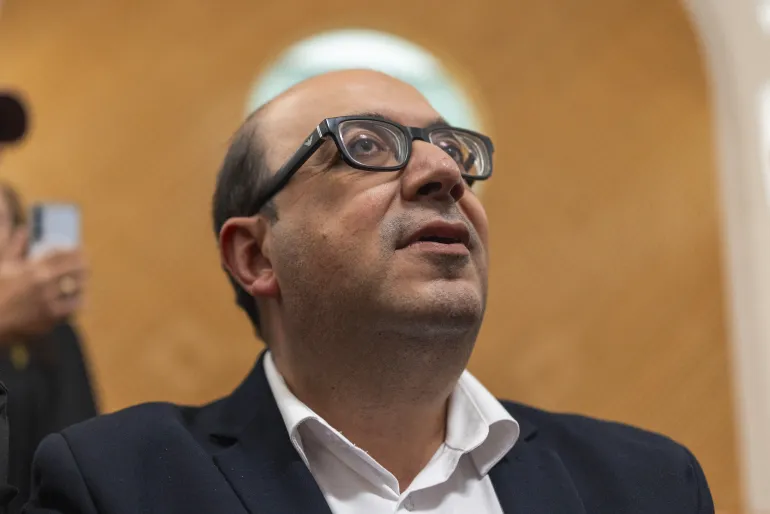
Sami Abu Shehadeh, leader of the Balad party, attends a hearing at the Supreme Court in Jerusalem on October 1, 2026 [AFP]
Balad leader withdraws
The Supreme Court has nearly always overruled the committee when it votes to ban candidates.
However, at a hearing on Thursday, Supreme Court President Yitzhak Amit told Abu Shehadeh that a majority of the nine justices favoured disqualifying him from the election.
They gave him until Friday to withdraw, saying that if he did not, he would be disqualified, according to the Israeli Public Broadcasting Corporation.
National Security Minister Itamar Ben-Gvir, a far-right ally of Prime Minister Benjamin Netanyahu, led the push to bar him over an article written after the Hamas attacks on October 7, 2023. Abu Shehadeh described the attack as “an important historical event” in the piece, but denies supporting it.
Balad said in a statement that a court-ordered removal, rather than a voluntary one, would have had “grave consequences for the country’s political and parliamentary life” as it would set a precedent around the removal of Arab candidates.
Double standards
The Ra’am party made history after the 2021 election, becoming the first Arab party to join an Israeli government when it took part in a disparate coalition that briefly removed Prime Minister Benjamin Netanyahu from power. Most Palestinian citizens of Israel had stayed out of coalition politics until then.
In this election, Ra’am is also fielding a Jewish Zionist candidate for the first time, Yoav Segalovitz, who won popularity in Arab communities for his work to curb crime as deputy minister for internal security.
The election committee’s September vote drew accusations of a double standard, as Palestinian-led parties faced exclusion while parties led by far-right ministers, some of whom have been sanctioned internationally, stayed on the ballot.
Speaking to Al Jazeera on Friday, Abu Shehadeh said he withdrew because he “didn’t have any other choices”.
Although the Supreme Court has restored the Arab parties to the ballot, Abu Shehadeh said the reversal did not make the original disqualifications acceptable.
“In the end, what happened yesterday was a historical catastrophe for democracy, or the very narrow margins of democracy in the State of Israel,” he said. “I was disqualified because I think differently, because I have a different narrative on how to read history, the present, and the future in the place that we live today.”
Judge Leibowitz’s decision underscores state jurisdiction over voter qualifications, limiting federal actions.
Published On 2 Oct 20262 Oct 2026
A United States federal judge has ruled that a law criminalising voting by noncitizens is unconstitutional, dealing a setback for President Donald Trump’s administration as it cracks down on alleged election fraud ahead of November’s midterm elections.
US District Judge David Leibowitz in Miami dismissed a federal case on Thursday against Chelsea Cox, a Florida resident originally from Jamaica who had been charged in October 2025 with illegally voting in the 2020 presidential election.
Recommended Stories
list of 3 itemsend of list
Leibowitz, who was nominated to the bench by former Democratic President Joe Biden, found that under the US Constitution, only individual states, not the US Congress, have the authority to set voter qualifications.
Since every state already requires US citizenship to vote, he wrote, it is up to Florida, not the Department of Justice, to prosecute Cox for breaking that rule. “Florida can and does,” he wrote, noting the state already has its own laws against the conduct Cox is accused of.
The ruling applies only to Cox’s case and it does not bind judges elsewhere, though about 45 similar cases remain pending nationwide. At least four other defendants have raised the same constitutional challenge.
Court filings show Cox entered the US as a tourist in 1999, overstayed her visa, and later used a fraudulent birth certificate from the US Virgin Islands, a US territory in the Caribbean, to obtain a Florida driver’s licence and register to vote in 2012.
Trump has falsely claimed that noncitizen voting, which is already illegal and rare, cost him the 2020 election, and has cast it as part of a broader effort by Democrats to dilute Republican support.
The Department of Justice has charged at least 60 people with the offence since Trump returned to office in January 2025.
Among 129 people charged with “voting by an alien” since 2021, none was accused of conspiring to sway an election, backing a candidate, or being paid to vote, according to Reuters. Most were found to be lawful permanent residents who had registered by mistake or on the incorrect advice of an election worker or government clerk.
Cox’s lawyer, Bruce Udolf, welcomed the ruling and said he hoped authorities would not now seek to deport her, citing her declining health conditions.
New York lawmakers are renewing a push to change the state’s sexual assault laws after prosecutors in the United States said the current rules made it difficult to bring charges for an alleged gang rape at a Cornell University fraternity house.
At issue is whether someone who willingly becomes intoxicated can be considered mentally incapacitated and therefore unable to consent to sex.
Recommended Stories
list of 4 itemsend of list
Under current New York law, only someone who was drugged or given alcohol without their knowledge can be considered “mentally incapacitated” because of intoxication and unable to consent. The same does not apply to someone who willingly consumed alcohol or drugs.
State Assemblyman Jeffrey Dinowitz and State Senator Nathalia Fernandez are sponsoring bills in their respective chambers that would change that.
In the state Senate, the bill is known as S10632, and in the New York Assembly, it is filed as Assembly Bill A101.
In a post on the social media platform X, Dinowitz said the proposed law would allow prosecutors to focus on whether someone was capable of consenting, rather than how they became intoxicated, and whether the accused “knew or should have known” that the person was unable to consent.
He said people who voluntarily drink or take drugs currently face significant barriers in sexual assault cases, particularly if they remain partly conscious or responsive during an alleged assault.
“The fact that someone made the choice to consume alcohol or another intoxicating substance should never be used to undermine their experience or shift responsibility onto the survivor when they’ve been sexually assaulted,” Dinowitz wrote.
The years-long reform effort has gained new momentum after Tompkins County District Attorney Matthew Van Houten said the existing law was one reason his office initially declined to pursue charges against several Cornell students accused of sexually assaulting a woman on October 19, 2024.
The woman, identified only as Jane Doe, was 20 at the time. She has since filed a civil lawsuit against seven members of the Chi Phi fraternity, as well as Cornell University and several other defendants.
The lawsuit alleges fraternity members gave her alcohol and ketamine and sexually assaulted her after she became incapacitated.
Doe also reported her allegations to campus police in November 2024.
In a statement explaining why his office did not pursue charges afterwards, Van Houten said Doe never claimed at the time that she had been involuntarily intoxicated, physically forced or unconscious. He also said she did not clearly express that she did not consent.
Any of those circumstances could have provided grounds for prosecutors to pursue rape charges under New York law, according to the district attorney.
“On the contrary, Jane Doe’s statement described her participation in drug use and sexual conduct as voluntary, conscious, and consensual,” Van Houten wrote.
“In this case, multiple prosecutors and criminal investigators reviewed Jane Doe’s statement and correctly determined the alleged facts as set forth in the statement do not constitute a crime.”
Since the lawsuit was filed, Van Houten’s office has faced intense scrutiny. It said on Monday that it will reopen the investigation and bring the case before a grand jury, which will consider whether there is enough evidence to indict anyone.
Van Houten also told CBS News on Wednesday that he had not seen a transcript of a campus police interview conducted three weeks after the alleged assault in which the woman said: “I can say with 100% confidence I was raped.”
Cornell has defended its handling of the case, saying it investigated the allegations and disciplined the accused students, with penalties ranging from suspension to expulsion.
On Wednesday, New York Governor Kathy Hochul said the university had agreed to her request to bring in an outside law firm to conduct a new investigation into its handling of the case.
Previous efforts to change New York’s sexual assault laws have foundered in the state legislature. Senate bill S10632 has passed its chamber but has never received a vote on the Assembly floor.
“Rape is the only crime that I’m aware of where, if the victim was drunk, they may not get justice,” Dinowitz, the assembly member, said in an interview with Reuters. “There shouldn’t be any difference in terms of the survivors of sexual assault between the people who are voluntarily intoxicated and who are involuntarily intoxicated.”
New York is one of 19 states where a person can be considered mentally incapacitated because of intoxication only if they did not willingly become intoxicated, according to Elizabeth Jeglic, a professor at John Jay College of Criminal Justice who studies sexual abuse.
“It doesn’t make sense,” Jeglic said. “If you’re incapacitated, you’re incapacitated, regardless of whether you consumed it yourself or somebody else gave it to you without your consent.”
The case is the latest dispute over US President Donald Trump’s sweeping immigration crackdown.
Published On 1 Oct 20261 Oct 2026
The United States Supreme Court has agreed to hear a case focused on the Trump administration’s policy requiring millions of undocumented immigrants to remain in detention while they fight deportation.
The case, accepted on Thursday by the justices, is the latest dispute over US President Donald Trump’s sweeping immigration crackdown to reach the nation’s highest court.
Recommended Stories
list of 3 itemsend of list
At issue is whether migrants already living in the US have a legal right to a hearing where a judge can decide whether they should be released on bond from Immigration and Customs Enforcement (ICE) detention while their deportation cases are pending.
In July 2025, the administration introduced new guidance directing federal immigration authorities to detain undocumented immigrants without a bond hearing for the duration of their deportation proceedings, which can last for years.
The new policy, which has divided lower courts, reverses a decades-old interpretation that allowed some immigrants in the US to be released while their cases were pending in immigration court, according to Reuters news agency.
Most US federal appeals courts have ruled that immigrants cannot be detained without a bond hearing. But the 5th and 8th US Circuit Courts of Appeals have found that immigrants accused of illegally entering and remaining in the country must remain detained while their deportation cases proceed.
Trump administration attorneys told the Associated Press the split is “disrupting the orderly administration of immigration law”.
“The result is an unworkable patchwork of inconsistent immigration enforcement, where aliens present without admission are subject to mandatory detention in some circuits but are entitled to bond hearings and often released in others,” the lawyers wrote.
Millions could be affected
The Supreme Court case stems from a 2nd US Circuit Court of Appeals ruling involving Ricardo Aparecido Barbosa da Cunha, a Brazilian national who entered the US around 2004 or 2005.
Immigration officers arrested him in September 2025 while he was driving to work in the US state of Massachusetts. He was initially denied a bond hearing under the administration’s policy but was later released on bond, according to court documents cited by Reuters.
The American Civil Liberties Union (ACLU), which is representing the plaintiffs, told the Associated Press the Trump administration is trying to deny bond hearings for immigrants apprehended within the US rather than limiting the restriction to noncitizens stopped at the border.
“Millions of noncitizens could be affected by the government’s new interpretation,” ACLU attorneys wrote.
The Supreme Court is expected to hear arguments on Monday, when its new term starts.
Mammoth deal has raised questions about corporate consolidation and editorial independence in media.
Published On 30 Sep 202630 Sep 2026
A United States judge has entered an order giving the green light for the media giant Paramount to complete its $110bn acquisition of entertainment company Warner Bros., despite fears about the long-term impacts of media consolidation.
On Wednesday, US District Court Judge Araceli Martinez-Olguin approved a settlement between Paramount, Warner Bros, and a group of 12 states that had sued to block the merger.
Recommended Stories
list of 3 itemsend of list
In her ruling, Martinez-Olguin described the proposed deal as a “fair, reasonable, and good faith approach to address the competitive harms”.
Analysts have long raised concerns about the acquisition, one of the largest media mergers in history.
The coalition of states that sued to block the deal, led by California, had argued that combining Paramount with Warner Bros would effectively stifle media competition. They estimated that nearly one-third of all theatrical releases and basic cable programming would be consolidated under the merger.
But the states abandoned their lawsuit in favour of a settlement on September 21.
The five-year agreement requires Paramount to abide by theatrical film release quotas, committing to 30 releases per year in the US.
It also mandates that the combined company must keep negotiations with cable providers for Warner-owned channels separate from its deals for Paramount-owned channels.
The settlement approved on Wednesday also includes the creation of a five-member panel meant to safeguard the editorial independence of CNN and CBS, two major news networks.
But sceptics have pointed out that the merger puts a large swath of US media under the control of David Ellison, who leads Paramount.
Under Wednesday’s agreement, Ellison is in charge of appointments to the board that would oversee news independence.
The Paramount CEO is the son of billionaire Oracle founder Larry Ellison, a strong backer of pro-Israel causes who has close ties to the administration of President Donald Trump.
The founder of the film production company Skydance, David Ellison acquired Paramount last year as part of another controversial merger.
The 2025 Paramount-Skydance deal brought CBS under Ellison’s control. Ahead of the merger, sceptics questioned the abrupt cancellation of the CBS comedy show The Late Show with Stephen Colbert, which had been critical of Trump.
Ellison later installed Bari Weiss, a pro-Israel media figure, as the head of CBS News in a move that also raised questions about diminished independence within major journalism outlets.
Some critics depicted Wednesday’s settlement as a further capitulation to powerful corporate interests.
“Allowing one Trump-aligned, foreign-owned conglomerate to dominate American news and entertainment is a disastrous outcome,” Senator Elizabeth Warren of Massachusetts said in the wake of the settlement’s announcement.
But public officials like California Governor Gavin Newsom had called on his state’s Attorney General Rob Bonta to scrap the 12-state effort to block the deal and to pursue a settlement instead.
Paramount emerged victorious from a bidding war with the streaming giant Netflix in February to win control of Warner Bros’s holdings.
That includes a series of media and entertainment services, including the film studio Warner Bros Pictures, CNN and HBO Max. The Trump administration approved the deal without alterations in June.
Seven Minnesota judges face ethics complaint after speaking publicly about the US president’s immigration crackdown.
Published On 30 Sep 202630 Sep 2026
The United States Justice Department has filed a misconduct complaint against seven federal judges in Minnesota who spoke publicly about the pressure their courts came under during President Donald Trump’s immigration crackdown.
The judges spoke to The New York Times this month about dealing with a flood of cases during Operation Metro Surge, an immigration crackdown that led to thousands of arrests in the Minneapolis-St Paul area from December to February.
Recommended Stories
list of 4 itemsend of list
The Justice Department says it crossed an ethical line by talking publicly about the cases.
Attorney General Todd Blanche accused the judges of showing “obvious bias” against the Trump administration and called on them to step aside from any cases involving the Department of Homeland Security (DHS).
“When we have a situation like we have now, where you have a judge, a couple of judges, just not only violating the canons in our view but also showing bias in what they’re saying, we have no choice but to act,” Blanche told reporters.
The judges say they did nothing wrong. A spokesperson for Minnesota’s federal court system said legal experts had found that the judges were “well within the ethical rules” when they spoke to the newspaper.
The complaint is the latest in a series of clashes between the Trump administration and the judiciary, which has blocked some of the president’s policies and, in several cases, accused government lawyers of failing to follow court orders.
One of the judges named in the complaint, Patrick Schiltz, alleged that the government did not comply with nearly 100 court orders related to immigration enforcement in January alone.
In one ruling, he wrote that US Immigration and Customs Enforcement (ICE) “is not a law unto itself”.
Schiltz was nominated by Republican President George W Bush and previously clerked for conservative Supreme Court Justice Antonin Scalia.
He later told The New York Times that what happened in Minnesota’s federal courts during the crackdown “created a grave threat to the rule of law”.
Schiltz also pointed to guidance issued by a federal judicial ethics panel in February, saying that judges can speak publicly about issues such as the rule of law and judicial independence.
Wilber Rafael Garces Perez has disputed the government’s account of what led to his shooting during a Doordash delivery in Austin, Texas.
A Venezuelan asylum seeker who was shot in the back by a United States Immigration and Customs Enforcement (ICE) officer in Texas is facing a federal assault charge, after prosecutors accused him of striking the officer with his car’s side-view mirror.
Wilber Rafael Garces Perez, 28, appeared in federal court in Austin on Tuesday, where he was charged with assaulting, resisting and impeding a federal officer. He could face up to 20 years in prison if convicted.
Recommended Stories
list of 4 itemsend of list
The charge stems from a September 20 encounter that began while Garces Perez was making a DoorDash food delivery near a shopping centre in Austin, the Texas state capital.
A federal complaint filed on Monday says immigration officers noticed that Garces Perez’s car had its emergency lights flashing, and they ran a database check. They found it was registered to Garces Perez, who was subject to a final order of removal from the US.
When the officers approached, Garces Perez handed over his driver’s license through a partially opened window but did not get out of the car, the complaint says. He asked the officers to wait until his wife could arrive to retrieve the vehicle.
Court documents describe the exchange up to that point as “pleasant and not aggressive”.
About a minute later, however, court documents say Garces Perez “abruptly” closed his window and drove off, striking one of the officers in the torso with his driver’s side mirror.
That officer chased Garces Perez in his own vehicle and caught up with him a short time later. In the complaint, the officer alleges that Garces Perez then tried to drive into him, prompting him to open fire.
There is no publicly available footage showing the events described in the complaint, including the shooting.
Videos, however, have circulated online showing the shooting’s aftermath, with Garces Perez injured in his car.
The complaint relies on unreleased body-camera footage from one of the two ICE officers who stopped Garces Perez.
The second officer was not wearing a body camera, according to the affidavit. That officer says he was struck by Garces Perez’s side mirror and later shot him.
Garces Perez, however, gave federal investigators a different account of the moments immediately before he was shot.
He told investigators that, after a brief chase, a law enforcement SUV struck his car, causing it to spin around, according to the affidavit. He said the officer then opened fire, shooting him in the back.
Garces Perez has been held in a detention facility in south Texas since the shooting.
His lawyer, Kate Lincoln-Goldfinch, said on Sunday the bullet was still lodged in his body and that he has a fractured clavicle. In a social media post, Lincoln-Goldfinch explained that his supporters were worried he could develop sepsis or suffer permanent damage if he didn’t undergo surgery soon.
The Department of Homeland Security has argued, however, that Garces Perez is receiving adequate medical care.
Garces Perez’s legal team is also seeking to stop his removal from the US.
The Venezuelan national entered the US in 2024 through CBP One, an online programme expanded under former President Joe Biden to allow asylum seekers to make appointments with immigration authorities at the US-Mexico border.
Trump ended the programme on his first day back in office, accusing the app of contributing to an immigration crisis in the US. His administration has since relaunched CBP One as CBP Home, a self-deportation portal.
Lincoln-Goldfinch has said Garces Perez was legally seeking asylum in the US and had a valid work permit. She has asserted that he was ordered to be deported after missing an immigration court hearing because the notice had been sent to an old address.
Garces Perez is due back before a federal immigration judge on Wednesday for a separate hearing on whether he can remain in the country.
The case comes amid a surge in immigration enforcement during Trump’s second term, with ICE reporting more than 50,000 arrests in both July and August.
The high court grants an emergency petition ahead of expected arguments in the case, slated for December.
The United States Supreme Court has allowed President Donald Trump’s administration to continue third-country deportations, halting a lower-court ruling that paused such removals over questions of due process.
On Tuesday, the high court granted the administration’s emergency request to resume the deportations, which involve sending immigrants to countries they may have no connection to.
Recommended Stories
list of 3 itemsend of list
The court’s order was unsigned, as is typical for an emergency petition. It also does not include an explanation or a list of how the justices voted.
But at the bottom of Tuesday’s order, the court’s three left-leaning justices – Sonia Sotomayor, Ketanji Brown Jackson and Elena Kagan – indicated they would have denied the Trump administration’s petition.
The Supreme Court’s decision to pause the lower court ruling is temporary. The order calls for arguments to be heard in December.
That hearing comes as Trump administration continues its appeal against the lower court’s ruling, handed down by Judge Brian Murphy in Boston, Massachusetts.
Murphy had ruled that immigrants must be given a “meaningful” chance to raise safety concerns before their removal to third-party countries.
In pausing such deportations, Murphy indicated that some immigrants may have been denied the opportunity to challenge their deportations as part of their due process rights.
Tuesday, however, is not the first time the Supreme Court justices have weighed in on the practice of forcibly sending people to third countries, which Trump dramatically stepped up since his return to office in 2025.
Trump campaigned on a pledge to implement the “largest deportation operation in American history”, and his officials have argued that third-country deportations are a means of removing individuals whose home countries may not accept them.
In June 2025, the Supreme Court also issued an unsigned order allowing such removals to proceed.
That cleared the way for eight men, including nationals of Cuba, Myanmar and Vietnam, to be deported to South Sudan, a country the US State Department advises against visiting because of “crime, kidnapping, and armed conflict”.
The Department of Homeland Security at the time called the removals “a win”, while rights groups said the move flouted basic legal protections.
Critics have expressed concern that many of the governments receiving third-country deportations have a record of human rights abuses.
Third-country deportations have been used to bypass court protection orders that prevent immigrants from being sent back to their home countries due to fears of persecution.
But advocates say that some of those third-party countries have ultimately sent deportees, including asylum seekers, back to the places where they feared they would be at risk of torture or other harms.
At least 35 countries have signed agreements with the Trump administration to take in the third-country nationals, according to a tally by the nonprofits Refugees International and Human Rights First.
The groups estimate that more than 25,000 people have been subject to third-country deportations so far.
On Monday, human rights experts at the United Nations wrote to the US government urging a halt to such removals, warning they were putting deportees at heightened risk of abuse.
“At gravest risk are children, women, persons with disabilities, victims of trafficking, LGBT persons, human rights defenders, stateless persons and other people in extremely vulnerable situations,” the experts said.
On Tuesday, Burundi became the latest country to enter an agreement with the US to take non-citizen deportations.
Officials said the country would only take in people who were not facing prosecution and had no links to “terrorism”.
California jury finds Apple infringed two Taction patents but did not willfully violate them; Apple plans to appeal.
Published On 28 Sep 202628 Sep 2026
Apple has been ordered to pay more than $5.7bn for using patented technology from Taction Technology to power haptic feedback, the vibrations users feel when they receive a notification or press a button.
A jury in federal court in the Southern district of California found that the iPhone maker infringed two patents owned by the San Diego-based company.
Recommended Stories
list of 4 itemsend of list
“We’re happy the jury found for Taction and vindicated its patent rights,” said Taction attorney Lance Yang following the verdict on Friday.
The verdict is the culmination of a legal battle that began in 2021, when Taction first filed its lawsuit against Apple. In 2023, a federal judge ruled that Apple had not infringed Taction’s patents, but an appeals court revived the case last year.
“Apple is capitalising on Taction’s innovation and success by selling devices that infringe Taction’s patents. Apple is utilising Taction’s patented inventions without license or authority from Taction. Taction has brought this action to remedy Apple’s infringement,” Taction said in the original 31-page complaint.
It also claimed that Apple “at a minimum believed there was a high probability that the accused products were covered by Taction’s patents, but willfully blinded itself to Taction’s patents and the infringing nature of the Accused Products”.
The jury, however, found that Apple did not wilfully infringe the patents.
Apple said it plans to appeal the verdict.
“Apple’s Taptic Engine is fundamentally different from Taction’s technology, which Taction’s own testing of Apple’s products confirmed during trial,” Apple said in response.
The verdict comes at a pivotal moment for the company, amid transitions in its C-suite. In September, John Ternus took over as CEO from Tim Cook, who led Apple for 15 years. The leadership change comes as the Cupertino, California-based tech giant lags behind other major technology companies in rolling out its artificial intelligence products.
Apple shares fell on Monday, declining about two percent as trading got underway.
Spain’s Swiftair was fined 225,000 euros ($256,000) in France for corporate manslaughter over the 2014 Air Algerie disaster in Mali.
Published On 28 Sep 202628 Sep 2026
A Paris court has found Swiftair guilty of corporate manslaughter over the 2014 Air Algerie crash that killed 116 people in northern Mali.
On Monday, a French judge ordered the Spanish airline to pay the maximum fine in France of 225,000 euros ($256,000) for corporate manslaughter after a three-week trial earlier this year.
Recommended Stories
list of 3 itemsend of list
Air Algerie Flight AH5017 was flying from Ouagadougou, the capital of Burkina Faso, to Algiers, Algeria when it crashed less than an hour after takeoff in July 2014, killing everyone on board.
The Swiftair-owned McDonnell Douglas MD-83 was operated by the Spanish airline on behalf of the Algerian carrier.
Investigators said the aircraft went into a stall when it was hit by ice as an anti-icing system remained switched off.
On Monday, the court said “negligence” in Swiftair’s training with icy conditions had played a role.
The captain had failed to complete an adequate proficiency check, while the crew lacked the required refresher flights following a period of inactivity.
“This ruling comes as a relief to families who have been fighting for more than 12 years for justice to be done,” said Sebastien Busy, a lawyer representing a group of relatives.
The airline has 10 days to appeal the ruling.
Swiftair attempted to have the trial dropped on the grounds that a Spanish court previously dismissed the case without any charges.
In a statement to AFP, Swiftair reiterated that the trial should not have gone ahead and that safety regulations had been followed.
The ruling marks the second time an airline has been found guilty of corporate manslaughter in France after Air France and Airbus were both found guilty earlier this year over the 2009 crash of a jetliner flying from Rio de Janeiro to Paris. The crash killed all 228 people on board, marking the worst aviation disaster in French history.
The lawsuit comes two months after the state filed a similar lawsuit against competitor Kalshi.
New York State has filed a lawsuit against prediction market company Polymarket amid allegations that it violated state laws against illegal gambling.
The suit, filed on Thursday by New York State Attorney General Letitia James, comes two months after the state filed a similar lawsuit against competitor Kalshi. That followed the state suing Coinbase and Gemini for offering users the ability to bet on “sports, entertainment, and elections, in violation of New York laws”, according to a release from the attorney general’s office at the time.
Recommended Stories
list of 4 itemsend of list
The state accused all the companies of operating without licences from the State Gaming Commission.
“Our gambling laws exist to protect New Yorkers, prevent the potential harms of problem gambling, and ensure funding for educational and public benefit programs,” James said in a statement announcing the suit.
“By skirting New York’s laws, Polymarket is targeting the most vulnerable and depriving New York families of critical services and support. My office will never hesitate to take action to defend our laws and keep New Yorkers safe.”
The suit also alleges that the company encouraged gambling among young people. It accuses Polymarket of targeting users as young as 18, while state law requires users to be at least 21 years old to take part in mobile sports betting.
“By running an unlicensed gambling operation, Polymarket has done more than just knowingly violate state law, they have put New Yorkers at risk, especially those underage who are most vulnerable to problem gaming,” New York Governor Kathy Hochul said in a statement.
The more than 30-page lawsuit claims that Polymarket, which is valued at more than $20bn, has advertised sports betting in particular since July 2025. It pointed to a post on X from August 17, 2025, about the launch of its US mobile app that said it was “BAD NEWS (For sportsbooks)”.
Prediction markets allow users to wager on so-called event contracts, covering political events, sports, elections and even award shows. Concerns about the role of prediction markets came to a head earlier this year when wagers were made in the hours before the United States and Israel first struck Iran, prompting widespread backlash in Washington.
Polymarket pushed back on the allegations.
“We chose to engage with them directly on the substance and address their concerns,” chief legal officer Neal Kumar said in a statement.
“They preferred the media hit. Any time the [attorney general’s] office wants to swing by, our door is open for a conversation about how we protect consumers and offer fair, transparent and legal markets.”
Kalshi is facing similar allegations in New York State. Kalshi has been critical of reporting on lawsuits against it and allegations that it is akin to a sports betting or gambling platform.
Polymarket did not respond to Al Jazeera’s request for comment.
The Polymarket lawsuit comes days after reporting from the Wall Street Journal that alleged a wave of users had linked stolen bank debit cards and then used them to make wagers, effectively draining the accounts. According to the report, when CEO Shayne Coplan was made aware of the issue, he responded: “Just keep growing and pay a fine if regulators ever find out.”
Political pressure
New York State’s lawsuit joins a growing list of states that have sued prediction market platforms, including Arizona, Massachusetts, Nevada and many others. Those states are at odds with the federal government, as the Commodity Futures Trading Commission has claimed that the federal agency exerts authority over the regulation of prediction markets.
Polymarket has close ties with the family of US President Donald Trump. The prediction market platform has investment from 1789 Capital, a venture capital firm backed by Donald Trump Jr, the president’s eldest son, who also serves on the company’s advisory board.
Excluding Ra’am and the Joint List leaves Palestinian citizens in Israel without major Knesset representation options.
Published On 24 Sep 202624 Sep 2026
Israel’s Central Elections Committee has voted to bar both main Arab electoral lists from next month’s election, putting the political representation of Palestinian citizens of Israel before the Supreme Court weeks before voters go to the polls.
The committee voted on Wednesday to disqualify the United Arab List, or Ra’am, led by Mansour Abbas, and the Joint List, an alliance of the Arab-led Hadash, Ta’al and Balad parties. It also voted separately to bar Hadash legislator Ofer Cassif and Balad leader Sami Abu Shehadeh. The election is scheduled for October 27.
Recommended Stories
list of 4 itemsend of list
The bans are not final. Decisions against individual candidates require Supreme Court approval, while lists can appeal their exclusion. Adalah, the legal centre representing the parties and candidates, says it will challenge the votes when the court hears the cases next week.
Ra’am called its exclusion “political and unacceptable”, saying the decision was intended to prevent it from influencing the balance of power and changing the government.
The Joint List said Israeli Prime Minister Benjamin Netanyahu and far-right National Security Minister Itamar Ben-Gvir were trying to discourage Arab citizens from voting “because they fear our ability to bring down the government of genocide and racism”. Its leader, Yousef Jabareen, questioned how the committee could bar parties representing more than 1.25 million voters.
Abu Shehadeh told Al Jazeera that his exclusion was an attempt to silence criticism of government policy and said the decisions would be challenged in court and through public protest. Rejecting the allegation that he supports violence, he told The Times of Israel: “I have never called for violence or terrorism. I oppose armed struggle.”
The petitions invoke Section 7A of Basic Law: The Knesset, which allows a list or candidate to be excluded for denying Israel’s existence as a “Jewish and democratic state”, inciting racism or supporting armed struggle against Israel by an enemy state or an organisation designated as terrorist.
Netanyahu’s Likud party sought to disqualify the Joint List and Cassif, and was among the groups that filed against Ra’am. Ben-Gvir’s Otzma Yehudit party also sought to bar Abu Shehadeh. Adalah disputes the allegations. It says the case against Ra’am presents no evidence that the party supports armed struggle, while the Joint List petition relies heavily on old material, including bills proposed in previous Knessets.
Israel’s Minister of National Security Itamar Ben-Gvir speaks with Prime Minister Benjamin Netanyahu during a session at the Knesset, Israel’s parliament, in Jerusalem, July 16, 2026 [File: Ronen Zvulun/Reuters]
Abu Shehadeh’s case has drawn a different response. Attorney General Gali Baharav-Miara found no legal basis to exclude the other targeted parties and candidates but said an article he published on October 8, 2023, which she said may constitute support for armed struggle, warranted serious examination. The committee voted 31-4 to bar him. Adalah says the article contains no such call.
The push to bar Abu Shehadeh drew support from parties outside Netanyahu’s coalition. According to The Times of Israel, opposition parties voted to disqualify him, as did Supreme Court Justice Noam Sohlberg, who chairs the elections committee. The vote broke with decades of precedent in which committee chairs abstained from disqualification votes. Abu Shehadeh’s exclusion still requires approval from the full Supreme Court.
Why the Arab vote matters
Ra’am joined the coalition government formed by Naftali Bennett and Yair Lapid in 2021, helping end Netanyahu’s 12 consecutive years in office in 2021, although Abbas had previously discussed cooperation with Netanyahu as well. Now Likud itself has filed petitions against Arab representation, while Ben-Gvir’s party has pursued separate exclusions.
A Channel 12 poll published on Tuesday projected seven seats for the Joint List and five for Ra’am, against 50 for Netanyahu’s current coalition bloc. The 12 projected Arab seats would not automatically back Netanyahu’s opponents, as mainstream opposition parties remain divided over whether to govern with Arab support. But removing both lists would change the possible routes to the 61-seat majority needed to form a government.
The Supreme Court has overturned previous committee bans on Arab lists and candidates, including Balad’s exclusion in 2022. It must now decide whether the evidence meets the legal threshold for barring the two principal lists seeking to represent Palestinian citizens of Israel. The ruling will determine who can appear on the October ballot.
Jason Eaton faces up to life in prison after a jury rejected his insanity defence.
Published On 21 Sep 202621 Sep 2026
A jury in the US state of Vermont has convicted a man of attempted murder for shooting three Palestinian college students in 2023, rejecting his defence that he was not guilty by reason of insanity.
Jason Eaton, 51, faces up to life in prison for the attack near the University of Vermont campus in Burlington. It left Hisham Awartani paralysed from the waist down and wounded his friends Tahseen Aliahmad and Kinnan Abdalhamid.
Recommended Stories
list of 4 itemsend of list
The jury deliberated for several hours on Monday before reaching its verdict after a week-long trial that included testimony from the three men and psychiatric experts called by both the defence and prosecution.
Eaton was ordered jailed pending sentencing, which has yet to be scheduled.
Awartani and Aliahmad, who were sitting in the front row of the courtroom, smiled and hugged people around them as the verdict was read.
Eaton did not dispute that he shot the three men in November 2023. Instead, his lawyers argued that he should be found not guilty by reason of insanity.
The defence said Eaton was suffering from a delusional psychotic disorder and believed the CIA and Israel’s Mossad were transmitting messages to him through FM radio.
Joshua O’Hara, the supervising attorney at the Chittenden County Public Defender Office, told jurors that Eaton believed the intelligence agencies had enlisted him to “overwatch duty” to protect a Jewish family living across the street and that God was commanding him to act.
Prosecutors rejected the insanity defence, telling jurors that a state psychiatrist had concluded Eaton did not have a mental disease or defect and that the evidence showed he intended to kill the three men.
‘He pulled out a handgun and started shooting’
Awartani, Aliahmad and Abdalhamid, now 23, grew up together in Ramallah in the occupied West Bank before moving to the US for university.
They were visiting Awartani’s grandmother in Burlington over the Thanksgiving holiday when they went for a walk near the University of Vermont campus after dark.
Awartani testified that the friends were smoking cigarettes and speaking a mix of English and Arabic. Two of them were wearing keffiyehs.
He said Eaton was standing on the porch of the apartment building where he lived before approaching the friends without saying anything.
When Eaton was about five to 10 feet (1.5 to three metres) away, Awartani testified, he pulled out a handgun and began shooting.
Awartani, then a student at Brown University, was shot in the chest and left paralysed from the waist down. Aliahmad, who attended Trinity College, was shot in the collarbone, while Abdalhamid, a Haverford College student, was shot in the right buttock.
The shooting prompted calls for a hate crime investigation, but no hate crime charges were filed.
Police later found three shotguns in Eaton’s apartment as well as a Ruger .380-calibre handgun that crime laboratory testing identified as the weapon used in the shooting.








![Sami Abu Shehadeh, leader of the Balad party, attends a hearing at the Supreme Court in Jerusalem on October 1, 2026 [AFP]](https://i0.wp.com/www.aljazeera.com/wp-content/uploads/2026/10/afp_6abfdbdd04ed-1790958557.jpg?w=640&ssl=1)