country

Europe’s ‘cheapest country’ with £2 pints is often overlooked by tourists

This little-known European country gets a fraction of the visitors of some of its neighbours, but if you’re in the mood to visit somewhere a little different, it’s easily accessed from the UK

Nowadays, travel isn’t exactly cheap. From jet fuel prices to everyday spends, it soon adds up, and many popular beach and city break destinations are getting more costly to visit.

But there are still less expensive destinations to discover, even in Europe, and one of the continent’s cheapest destinations also happens to be one of the least visited. While it’s not on many travellers’ bucket lists, it’s a charming break and something a little different if you’re feeling adventurous.

Many people can’t point Moldova out on a map, and this small Eastern European country is often overlooked. It sits between Romania and Ukraine, with the Foreign, Commonwealth & Development Office (FCDO) advising against travel near the border with the latter, and travellers should pay attention to travel advice for Moldova in case the situation changes.

Just over 67,000 tourists visit Moldova each year, and most of them arrive in the capital of Chișinău, which has routes from the UK serviced by Wizz Air and FlyOne. The city is a mixture of historic and Soviet-era architecture, and the compact, walkable centre is broken up with large green spaces.

As a cultural hub, Chișinău has plenty for tourists to do. Visit the ornate Metropolitan Cathedral of Christ’s Nativity and see the grand frescos, or tour the National History Museum of Moldova for a fascinating look at this little-known nation’s past.

Moldova’s rolling green countryside is covered in vineyards, and just outside the city you’ll find the world’s largest wine cellar at Milestii Mici. Over 30 miles of its limestone tunnels are in use, storing an estimated 1.5 million bottles of wine, enough to throw quite a party.

You can take a tour of the tunnels, which have ‘streets’ named after different wine varieties, and of course, you get your own bottle to take home.

Many local restaurants also serve Moldovan wines, and you can often enjoy a bottle in a restaurant for £4-5, while a pint in a bar can easily be found for less than £2, making it a cheap place for a night out compared to many European destinations.

Just south of the capital you can visit the 13th-century cave monastery at Orheiul Vechi. Dug into the cliffs, it has a series of solid stone stairs and tunnels and amazing views across this traditional Moldovan town. You may even spot a few of the monks who still live within its walls. There’s also the archaeological remains of Old Orhei, dating back as far as the 6th-century BC.

READ MORE: Two more major airlines forced to increase flight prices by £86 due to fuel crisisREAD MORE: TUI, easyJet and Ryanair gadget rules including limits on devices you can bring

If you’re looking for time away from the city, the Bicaz Gorge near the border with Romania showcases some of the area’s natural beauty and includes the unique Red Lake. This lake is famous for its reddish hue and the remains of tree stumps that poke defiantly from the water, making it a popular place for hiking.

Have a story you want to share? Email us at webtravel@reachplc.com

Source link

EU country suspends border system which has caused 4-hour delays

The country has chosen to abandon the new biometric security measures over concerns about queue chaos and flights taking off without passengers

Greece has suspended EU fingerprint and facial scans for British holidaymakers. The country has chosen to abandon the new biometric security measures over concerns about queue chaos sweeping across the continent. Queues have been hitting the country with four hours reported in many destinations, including Greece.

All travellers from the UK and other non-EU countries are supposed to be photographed and fingerprinted at EU airports and border crossings under the new entry and exit system (EES) introduced by Brussels.

Holidaymakers have been cautioned that the new security measure, which is now fully operational, could trigger airport delays of up to four hours. Eleni Skarveli, director of the Greek National Tourism Organisation in the UK, stressed that the decision would “ensure a smoother and more efficient arrival experience in Greece” and would “significantly reduce waiting times” while alleviating congestion at airports.

The EES is intended to replace manual passport stamping and better monitor the 90-day visa-free limit, but its introduction has caused havoc at some of Europe’s busiest airports.

A statement on the website of the Greek Embassy and posts on official social media channels said: “Update for British passport holders travelling to Greece. “In the framework of the implementation of the Entry/Exit System, as of 10 April 2026, British passport holders are exempt from biometric registration at Greek border crossing points.”

There was no further detail of how long the exemption would last, and FCDO travel advice for Greece has not been updated.

Luke Petherbridge, director of public affairs at travel trade organisation Abta, said: “While for many the travel experience remains smooth, we’re disappointed and frustrated to see some passengers being caught up in delays due to EES.

“Abta has been warning destinations and the (European) Commission for some time about the need for proactive steps to be taken to avoid delays, including the full use of contingency measures to stand down biometric checks at busier times, and adequate staffing especially at peak times.”

A total of 122 passengers were reportedly unable to board the flight from Milan Linate to Manchester on Sunday because of delays at passport desks caused by the ramp up of the EU’s Entry Exist System (EES).The 11am departure was held for 59 minutes before departing with the majority of seats empty.

One of the affected easyJet passengers, Kiera, 17, from Oldham, Greater Manchester, said she and her boyfriend arrived at Milan Linate airport at 7.30am on Sunday. She told the BBC: “We got to Border Control and it was a massive queue of people. I wasn’t feeling great anyway because I think I’d got food poisoning.

READ MORE: Full list of airports as easyJet warns of ‘longer queues’READ MORE: Major airline cancels hundreds of flights as ‘last resort’ over Iran fuel crisis

“At about 10.50am they brought some water over for people, and when we got to the front of the queue someone asked us if we were going to Manchester, and told us our flight had just gone.”

Vicky Chapman, 26, from Wirral, Merseyside, was booked on the flight with her family, including her five-year-old son.

She told the Liverpool Echo they arrived at the airport “with more than enough time” but were “refused entry through passport control”.

She continued: “We were then told that we are a ‘no show’ on our flight because we did not get to the gate on time, even though passport control had issues and they would not let us through.

“We were passed from pillar to post for three hours and no-one helped us. “It was so hot in the airport, people were vomiting, people were almost passing out.

“We’re being told that Tuesday is the earliest we can get back, and that we have to fly to Gatwick. We’ve had to pay out of pocket for an Airbnb.”

An easyJet spokesman said: “Due to delays in EES processing by border authorities, some passengers departing from Milan Linate on Sunday experienced very long waiting times at passport control.

“We held flight EJU5420 from Milan to Manchester for nearly an hour to give passengers extra time but it had to then depart due to crew reaching their safety regulated operating hours.

“Customers who missed the flight have been offered a free flight transfer.

“We continue to urge border authorities to ensure they make full and effective use of the permitted flexibilities, for as long as needed while EES is implemented, to avoid these unacceptable border delays for our customers.

“While this is outside of our control, we are sorry for any inconvenience caused.”

Of the 156 passengers reportedly booked on the return flight to Manchester, just 34 made it on board – leaving a staggering 122 stranded in Italy. EasyJet subsequently issued an apology over the incident.

At three of the UK’s “juxtaposed” border controls in Dover, Folkestone and London St Pancras, the pricey EES kiosks remain unconnected to the French police aux frontières IT system. These issues are not expected to be resolved until September, according to the Independent.

Greece is heavily dependent on British tourism, particularly at its bustling island hotspots such as Corfu, Crete and Rhodes, which can welcome upwards of 2,000 UK passengers daily during peak season.

The decision by Athens is widely regarded as a move to offer reassurance to British holidaymakers, and could encourage other Mediterranean nations to follow its lead. Greece is yet to confirm an end date. for its EES exemption for British travellers.

Holidaymakers are already considering switching their summer holiday plans this year, according to travel industry experts.

“Because of the war in the Middle East, Europe is seeing a big increase in interest as a holiday destination this year,” an ABTA spokesman said.

ABTA added that Greece was anticipated to be the fifth most-visited destination by Britons this summer, trailing behind Spain, France, Italy and the USA.

The spokesman said: “I think it’s too early to say what this change might mean for the number of people visiting, particularly as decisions on where to go are based on a number of factors.”

It’s thought travellers now weighing up a continental break may pivot towards Greece to sidestep potential headaches caused by the new scheme. “Greece for me this summer then, was thinking of Tenerife, but no way I’m putting up with those queues and chaos,” one man posted on X.

Another person added: “I work in the travel industry, already had customers worried about this new system believe me, Greece will benefit from this stand!” While a third chimed in: “Perfect – off to the Greek islands this summer – common sense prevails!”

Source link

Ordered free, still locked up: Judges fume over ICE detentions

Judge Troy Nunley was fed up.

Federal immigration officials had once again flouted his authority by keeping a man locked up in a California City detention center after Nunley ordered him released. When he was finally set free, the man was booted onto the street with no passport, driver’s license or other personal effects. The judge’s demand that the items be returned were met with silence.

And so on Tuesday, Nunley, the chief judge of the Eastern District of California, slapped Department of Justice attorney Jonathan Yu with an official sanction and a $250 fine.

In a scathing order, Nunley laid out why he was compelled to take such a rare step. The fine may have been less than some traffic tickets, but it’s nearly unheard for a judge to formally admonish a government lawyer.

By Yu’s own admission, he was drowning in work. In his order, Nunley recounted the attorney’s claim he’d been assigned more than 300 nearly identical cases in the last three months, all of immigrants in detention who argued they were being held without cause.

Court filings show many California cases involve longtime U.S. residents unexpectedly hauled off to jail after routine check-ins with immigration officials. One was an Afghan who’d helped the American war effort. Another a Cambodian grandmother of eight who fled Pol Pot’s killing fields as a girl nearly 50 years ago.

Until last year, most would have fought deportation on bond after a brief hearing with an immigration judge. Now, their only hope of release is to file a petition for writ of habeas corpus — a legal maneuver once typically reserved for death row inmates and suspected terrorists — inundating the country’s busiest federal courts with thousands of emergency suits.

The Trump administration attorney said he was trying to “triage” the situation, but Nunley found he repeatedly failed to comply, leaving people with the right to walk free stuck behind bars.

“The Court is not persuaded,” he wrote, issuing the sanctions.

The order came days after Nunley took the unusual step of announcing a “judicial emergency” in the district, which covers nearly half of California, stretching from the Oregon border to the Mojave Desert in the inland part of the state, including Fresno, Bakersfield and Sacramento.

In the last year, the Eastern District has received more petitions from immigration detainees than almost any other jurisdiction in the United States: More than 2,700 since January, compared to fewer than 500 last year and just 18 in 2024. Similar crises are playing out elsewhere, with federal courts in Minnesota briefly paralyzed amid the Trump administration’s enforcement blitz there last winter.

People detained are seen behind fences

People detained are seen behind fences at an ICE detention facility in Adelanto, California on July 10, 2025.

(Patrick T. Fallon/AFP via Getty Images)

In an interview with The Times, Nunley said dealing with the surge of activity since last summer has been “like being hit over the head with a bat.”

“We’re up all night doing these cases,” he said.

So far this year, the Eastern District’s six active judges have ordered almost people 2,000 freed.

“The majority of the cases that we see are cases where people should not be detained,” Nunley said. “They should be receiving hearings to determine whether or not they are to remain in this country, and until they receive those hearings, they should be free.”

Since last July, the Department of Homeland Security has ordered that all immigrants it arrests are subject to “mandatory detention” — a policy that had previously only applied to those caught at the border.

The change came four days after President Trump signed a spending bill that earmarked $45 billion to expand the federal network of immigrant lockups.

“This has been a sea change in the way the government has read the law,” said My Khanh Ngo, a senior staff attorney at the ACLU Immigrants’ Rights Project. “Almost every judge who has looked at this has agreed these people should get bond, and yet thousands of people are still sitting in detention.”

high school students protest immigration raids

Elizabeth Vega, 15, right, and Darlene Rumualdo, 15, from Torres High School join labor organizers, clergy leaders and immigrant rights groups to protest immigration raids nationwide at La Placita Olvera in downtown Los Angeles on January 23, 2026.

(Genaro Molina/Los Angeles Times)

Longtime U.S. residents who might once have fought removal from home — where they can more easily gather evidence to support their case and confer with lawyers — are instead being held indefinitely.

Many have no criminal record. Some have been in the U.S. so long that the countries they came from no longer exist.

“People are locked up in the same facilities as people accused of crimes, people who’ve been convicted of crimes … and then you’re telling people, you have no shot of getting out,” Ngo said. “Detaining people and not giving them the chance to get out of detention is a way of coercing people to give up their claims.”

The habeas process can take weeks or months depending on the judge and the district.

“When the immigration cases dropped on our district, we got hit harder than any other outside West Texas,” Nunley said. “Initially we had more cases than anyone else.”

Today, data compiled by ProPublica and legal activist groups including the Immigration Justice Transparency Initiative show almost a quarter of the roughly 30,000 active habeas petitions in the United States are in California courts. Nunley’s own tabulations show half the California cases are in his district, where a perfect storm of stepped-up enforcement, a large population of immigrant workers and a concentration of detention centers produced a flash flood of habeas petitions.

The cases rely on the Constitution’s guarantee of due process before being deprived of life, liberty or property. But according to court filings, in some instances the government has argued “the Fifth Amendment does not apply” to detained immigrants.

DOJ lawyers responding to the bids for freedom now regularly complain they’re being crushed under paperwork.

Judges accustomed to having government lawyers comply with their orders have been left fuming.

In California’s Central District, which includes L.A. and surrounding areas, Judge Sunshine Sykes wrote a fiery decision earlier this year that said the Trump administration is inflicting “terror against noncitizens.”

Sykes is one of several federal judges across the country that have tried to compel the government to resume bond hearings. The 9th U.S. Circuit Court of Appeals blocked that decision in March, leaving the habeas system in place for now. But with challenges or recent decisions across multiple circuits, experts say the fight is fated for the Supreme Court.

“ICE has the law and the facts on its side, and it adheres to all court decisions until it ultimately gets them shot down by the highest court in the land,” a Homeland Security spokesperson said in an email to The Times.

A woman holds a "ICE not welcome here!" sign at a vigil in San Pedro in January.

A woman holds a “ICE not welcome here!” sign at a vigil in San Pedro in January.

(Gina Ferazzi/Los Angeles Times)

The lawyers fighting to free those jailed under the Trump administration’s mandatory detention policy say they were not initially equipped for these legal battles because they used to be exceedingly rare.

Most federal judges had only seen a handful of habeas petitions before last summer — then suddenly they had hundreds of requests for urgent relief, according to Jean Reisz, co-director of the USC Immigration Clinic.

Reisz said there are efforts to get pro bono law groups trained on how to effectively argue habeas cases, “but it takes a while to get up to speed.”

A Federal agent asks residents to move back at the scene of a shooting

A federal agent asks residents to move back after a shooting during an immigration enforcement operation in Willowbrook on January 21, 2026.

(Genaro Molina/Los Angeles Times)

At the same time, Reisz said, lawyers are pushing judges who oversee the cases to act swiftly, since interminable procedural delays ensure people remain incarcerated.

“Most of the habeas petitions include a motion for temporary restraining orders, and that requires emergency decisions from the courts, which requires the courts to act very fast,” Reisz said.

In California’s federal district courts, the backlog remains thousands deep. Nunley said the system is struggling to keep up with the crush of cases.

“There’s nothing that says that noncitizens should not be entitled to due process,” Nunley said. “These are our people, they reside in our district. They’re entitled to the same due process that you and I are entitled to.”

Source link

L.A. Times Festival of Books kicks off with packed panels at USC

Tens of thousands of readers of all ages, from toddlers clutching picture books to longtime fans carrying armfuls of paperbacks, fanned out across the USC campus Saturday for the opening day of the 31st Los Angeles Times Festival of Books, packing panels and lining up to see favorite authors and celebrity guests.

It was too early to know how many people attended the first day of the event, billed as the country’s largest literary festival, though organizers said they expect between 150,000 and 155,000 attendees over the weekend. By late morning, the campus was already bustling, with strong turnout expected for appearances by author T.C. Boyle and actors Sarah Jessica Parker and David Duchovny, among others.

Founded in 1996 and spread across eight outdoor stages and 12 indoor venues, the festival has become a fixture on Los Angeles’ cultural calendar, bringing together more than 550 storytellers for panels, author interviews, book signings, performances and screenings spanning a wide range of genres, from children’s story times to cooking demonstrations.

This year’s lineup features a broad mix of writers, performers and public figures, including comedian Larry David, musician Lionel Richie, multihyphenate businesswoman (and Beyoncé’s mother) Tina Knowles, author and social critic Roxane Gay and scholar Reza Aslan.

Under sunny skies, actor and reality TV personality Lisa Rinna brought humor and a bit of bite to a 10:30 a.m. conversation on the festival’s main stage. The “Real Housewives of Beverly Hills” alum released her second memoir, “You Better Believe I’m Gonna Talk About It,” in February, chronicling her time on the show and her recent turn on Season 4 of Peacock’s reality competition series “The Traitors.”

Reflecting on her approach to “Traitors,” Rinna said she wanted to strip away the conflict-driven persona she had cultivated on “Real Housewives” and present a more unfiltered version of herself. “I was like, ‘Self, listen. You’re gonna go in there and just be you. No housewife s—, none of that reactionary stuff.’ ”

In conversation with Times senior television writer Yvonne Villarreal, Rinna also spoke candidly about the loss of her mother, Lois Rinna, in 2021 and how her grief manifested in a feeling of rage while she was filming Season 12 of “Real Housewives.”

“It really took me by surprise,” she said. “And you have to give space for it because you can’t make it go away. … They always say time heals, but time makes everything just a little less intense.”

At a noon panel titled “Fire Escape: Wildfires and the Changing Geography of Southern California,” moderated by Times climate and energy reporter Blanca Begert, author and former wildland firefighter Jordan Thomas said the scale and frequency of California wildfires have shifted dramatically in recent decades.

“The vast majority of the largest wildfires in California’s recorded history have happened just in the past 20 years,” said Thomas, author of last year’s National Book Award finalist “When It All Burns: Fighting Fire in a Transformed World.” “While I was a hotshot, there were three of those fires burning simultaneously, including a million-acre fire — more than used to burn across the entire American West over the course of a decade.”

In the early afternoon, former Georgia Rep. Stacey Abrams spoke with moderator Leigh Haber about artificial intelligence and voter suppression in front of an enthusiastic, packed crowd at USC’s Bovard Auditorium.

Abrams’ latest Avery Keene novel, “Coded Justice,” came out last year and explores the role of artificial intelligence in the healthcare industry. AI has already become enmeshed in everyday life, she said, asking audience members to raise their hands if they had used TSA PreCheck or a streaming service.

“AI is a tool … but it is created by someone, it is programmed by someone, it is controlled by someone,” she said. “Regulation is not about slowing down progress. It is about asking questions and saying that in the absence of answers, we’re going to put on reasonable restraints that we can revisit.”

Abrams also revealed that her next book, the fourth in her Avery Keene thriller series, will focus on prediction markets.

“I write Avery Keene novels to tell stories about social justice, but I put it in a form that’s accessible to people who don’t think that they are social justice people,” Abrams said. “I want to meet people where they are, not where I want them to be.”

She also encouraged audience members to push back against voter suppression and defend democracy by volunteering at polling places — even in reliably blue districts — warning that she believes masked paramilitary groups will be allowed to patrol voting locations and target people of color in the upcoming midterm elections.

The festival kicked off Friday evening with the 46th Los Angeles Times Book Prizes ceremony at Bovard Auditorium, emceed by Times columnist LZ Granderson, recognizing both emerging voices and established writers.

Winners were announced in 13 categories for works published last year. Find a full list of winners here.

Oakland-born novelist Amy Tan, whose work often explores identity and the Chinese American immigrant experience, received the Robert Kirsch Award for lifetime achievement, and the literary nonprofit We Need Diverse Books received the Innovator’s Award for its work promoting diversity in publishing.

Accepting her award, Tan, author of the 1989 bestseller “The Joy Luck Club,” said that as a birthright citizen, she had never questioned her place in the country until recent debates over citizenship and belonging led her to reconsider whether she is, in fact, a “political writer.”

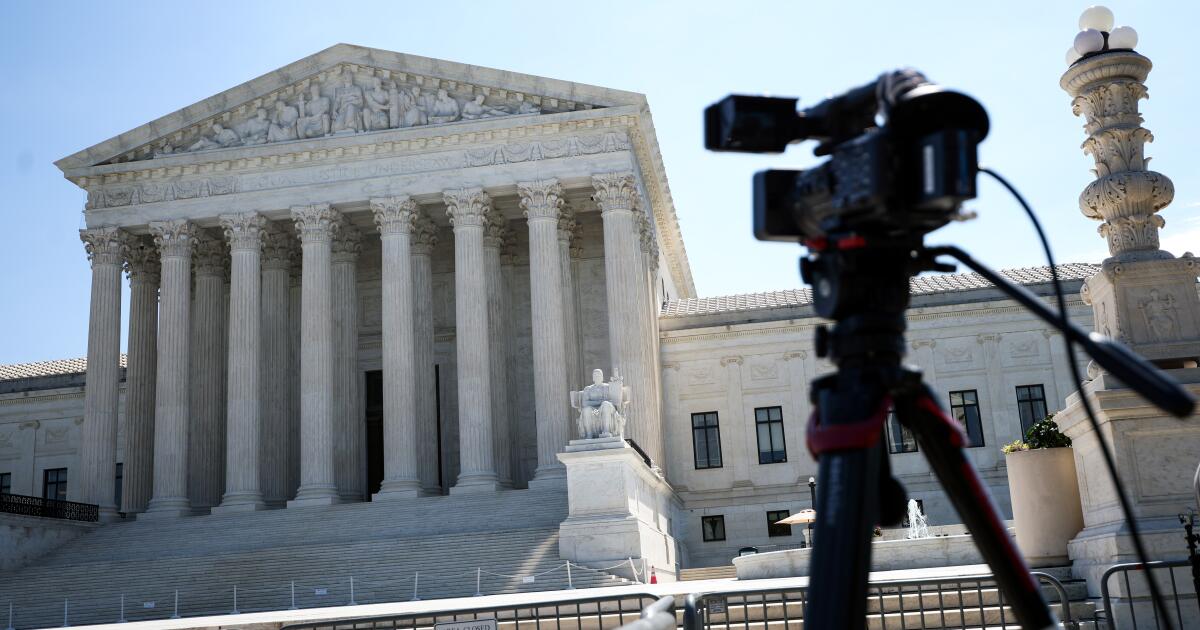
“My birthright and that of millions of others is now being argued before the Supreme Court, and no matter what the outcome is, it’s been a kick in the gut to know that those in the highest echelons of government and those who support them believe that we don’t belong.”

Tan said that as an author, “I imagine the lives of the people I write about,” and that act of compassion “reflects our politics and our beliefs. And so yes, I am a political writer.”

Addressing the attendees, Times Executive Editor Terry Tang pointed to the breadth of the weekend’s programming as an opportunity for connection and discovery. “If you take in just a fraction of these events, it will expand your mind,” she said. “This weekend gives all of us a chance to celebrate a sense of unity, purpose and support.”

The festival runs through Sunday. More information, including a schedule of events, can be found on the festival’s website.

Source link

Should California secede? How the state is politically out of step with the rest of the country

Not since 2010 has California felt itself politically so out of step with the times. That year the state resisted the nationwide wave of anti-incumbent, anti-regulation and anti-big government voting to elect Jerry Brown as governor, ease the passage of big-money state budgets and turn away a challenge to its pioneering greenhouse gas regulations.

This election day, California voters tightened gun control, extended taxes on the rich, hiked cigarette taxes, legalized marijuana, boosted multilingual education — and of course provided Hillary Clinton with all of her winning margin of 2 million popular votes, and then some, in her losing campaign for president.

It’s impossible to look at the Trump campaign and not see a direct threat to the civil liberties and dignity of California citizens.

— Billionaire activist Tom Steyer

No wonder the election has inspired talk of California’s seceding from the United States. The nascent campaign, organized under the banner of the Yes California Independence Campaign and heralded by the Twitter hashtag #Calexit, has been energized by remarks by Brown, and others, that a Trump election would necessitate “building a wall around California” to preserve its forward-looking policies against a reactionary federal regime. And why not, the argument goes. After all, with a gross domestic product of $2.5 trillion, the state’s economy ranks sixth in the world, sandwiched between Britain and France.

Secession talk is more valuable as a pointer to all the ways that California and federal policies are likely to come into conflict during the next few years than as a formula for practical politics.

“It’s impossible to look at the Trump campaign and not see a direct threat to the civil liberties and dignity of California citizens,” says Tom Steyer, the progressive billionaire who in recent years has focused his energy on combating climate change via his organization NextGen Climate.

To dispense with the prospect of California’s seceding from the union: On the gonna-happen scale, it’s a Not. “We’d either have to win the ensuing civil war or have Congress kiss us goodbye,” says Joel D. Aberbach, director of the Center for American Politics and Public Policy at UCLA. “There isn’t a procedure for seceding” in the Constitution. The very notion of the U.S. as a divisible entity was settled by the Civil War.

A constitutional amendment is the longest of long shots. It must be approved by a two-thirds majority in each house of Congress and ratified by three-fourths of the states (38 of the 50).

But the conflicts between state and federal policy will be serious. Here’s a look at what may be some of the most important.

Climate change: California has been among the national leaders in reducing greenhouse gas emissions, and as recently as September strengthened its policies with a law mandating the reduction of climatologically harmful emissions to 40% below 1990 levels by 2030. Its auto emission rules traditionally have set a benchmark for the auto industry and federal regulators.

During his campaign, Trump dismissed climate change as a Chinese hoax and pledged to withdraw the U.S. from the Paris agreement to reduce greenhouse gas emissions, which already has been ratified by 113 of the 197 signatory countries. The U.S. ratified the agreement by presidential order on Sept. 3.

“The single biggest achievement of the Obama administration in energy and climate was to get those countries to agree,” Steyer said. “It was an example of the best kind of American leadership — moral, technical, financial.”

Since the election, Trump has backed off his assertions about climate change and his promise to withdraw from the Paris pact. If he makes good on his threat, however, American leadership on climate change will pass to the states. Brown has pledged to keep California in the forefront of that movement, and earlier this month sent a state delegation to a U.N. climate change conference in Marrakech, Morocco.

That just continues the sort of state-level leadership that has emerged in recent years. “Over the past decade, Congress has not passed a single bill that takes direct aim at climate change,” former New York Mayor Michael Bloomberg observed in a recent speech. “Yet at the same time, the U.S. has led the world in reducing emissions.”

Trump could stifle federal funding for crucial research on climate change. One of his science advisors says he plans to eliminate NASA spending on earth science, calling it “politically correct environmental monitoring” and refocusing the agency exclusively on space research. That mirrors congressional Republicans’ approach to NASA, whose role in climate monitoring they disdain even though it has made crucial contributions to understanding of global warming.

Immigration: Trump campaigned on a pledge to cut off federal funding to “sanctuary cities” as part of his crackdown on illegal immigration. His chief of staff-designate, Reince Priebus, reiterated the policy in an interview after the election.

These are cities whose police departments aren’t required to check the immigration status of people they stop or arrest or to notify U.S. immigration officials of the status of undocumented persons they release from custody. The roster of sanctuary cities includes Los Angeles, San Francisco, Sacramento and Oakland; an estimated 1 million of the nation’s 11 million immigrants without legal status, many of whom Trump has threatened to deport, live in L.A. County.

Leaders of those cities have pledged to keep protecting immigrants and fight Trump’s proposed cuts in federal funding cuts, which would require congressional action. The stakes are high: Los Angeles receives about $500 million a year in federal funding for such municipal services as port security and homeless shelters. But there are practical as well as moral reasons for cities to steer clear of immigration enforcement. Complicity with immigration agents shatters trust in police in immigrant-rich communities, complicating street-level patrolling. And with undocumented immigrants part of the fabric of diverse communities, rigorous enforcement can have bad economic consequences.

Trump’s anti-immigrant stance has spurred calls to action to protect potential deportees. The Los Angeles Unified School District says it will rebuff any federal request for students’ immigration status. Cal State University Chancellor Timothy P. White, whose system includes as many as 10,000 students without legal documentation, has said that campus police won’t honor federal requests for deportation holds. Last week University of California President Janet Napolitano stated that UC campus police departments would not involve themselves in investigations of the immigration status of individuals on campus and ruled out “joint efforts” on immigration with federal, state, or local law enforcement agencies. She said the university aimed to “vigorously protect the privacy and civil rights of the undocumented members of the UC community.”

An estimated one in three of the 742,000 “Dreamers” — young people who were brought to this country by their parents without documentation and granted protection from deportation under the Obama administration’s Deferred Action for Childhood Arrivals program, or DACA — lives in California. Trump has pledged to shut down the program.

Healthcare: Few states gave the Affordable Care Act, which Trump and congressional Republicans pledge to repeal, support as full-throated as California. The state has enrolled about 1.4 million people in Obamacare health plans via its statewide individual insurance exchange, Covered California, and added about 3 million low-income residents to Medicaid rolls via the law’s Medicaid expansion, the cost of which has been 100% paid by the federal government.

It’s doubtful that this record could be maintained if Trump and congressional Republicans repeal the ACA. Repeal would eliminate the federal tax credits that reduce premiums on Covered California plans and other costs for about 90% of enrollees. That would drive many of them off coverage. The state would surely be unable to make up those subsidies. California would also suffer from the loss of the ACA’s consumer protection elements, including a ban on exclusions for preexisting conditions and on annual or lifetime benefit limits. A study published last June by the Robert Wood Johnson Foundation forecast that without the ACA, the ranks of the uninsured in California would soar by 2021 to 7.5 million, compared with only 3.4 million if the ACA remains in place.

Among the dangers in the GOP plans is uncertainty. The party has promised to “replace” the ACA with something that works better, yet has never coalesced around an alternative in more than six years of trying. But doubts that Covered California and other ACA marketplaces will eventually stabilize could drive more big insurers out of the market and force prices higher.

The prospects of disastrous tampering with healthcare were heightened Monday with Trump’s nomination of Rep. Tom Price (R-Ga.) as secretary of Health and Human Services. Price, an orthopedic surgeon, is a sworn enemy of the Affordable Care Act. He’s the author of an alternative law that could throw older and sicker patients out of the insurance pool and make insurance all but unaffordable for women of child-bearing age. The Price plan would repeal Obamacare and replace it with something resembling the pre-2010 individual insurance market, when overpriced, low-benefit plans were the norm for anyone except young, healthy males.

Republican proposals to convert Medicaid to a block-granted program—almost certainly a prelude to cutting the federal share of its budget—could pose a particular problem for House Majority Leader Kevin McCarthy, R-Bakersfield. In his district, which largely spans Kern and Tulare counties, roughly half of all residents are enrolled in Medi-Cal, the state’s Medicaid program. Efforts to trim the program would have a direct effect on them.

Gun control and marijuana: Voters on election day flouted federal policy in both areas. Proposition 63 mandates background checks for ammunition sales and outlaws high-capacity ammo magazines. Proposition 64 legalizes marijuana.

Trump established himself as an ally of the National Rifle Assn. during the campaign, but White House policy may not be the biggest problem for the state’s firearms policy: the courts would be. In rulings in 2008 and 2010, the Supreme Court extended the reach of the 2nd Amendment’s protection of the right to bear arms. Within a day of the election, the NRA was talking about challenging Proposition 63 and related state laws before the courts.

Trump hasn’t expressed strong objections to the legalization of marijuana, but as the biggest state to legalize pot, California could find itself in the crosshairs of revived anti-marijuana enforcement by his administration. Obama’s Justice Department took an indulgent approach to the wave of state legalizations of the drug, declaring in 2013 that although it was still illegal under federal law, its prosecutors would focus chiefly on preventing sales to minors and to keeping profits out of the hands of criminal gangs.

But Trump’s attorney general-designate, Sen. Jeff Sessions (R-Ala.), stated in April that “marijuana is not the kind of thing that ought to be legalized, it ought not to be minimized, that it’s in fact a very real danger.” One anti-pot activist described him to the Washington Post as “by far the single most outspoken opponent of marijuana legalization in the U.S. Senate.” How he plans to enforce federal law in a legalization state as big as California is still a mystery.

Keep up to date with Michael Hiltzik. Follow @hiltzikm on Twitter, see his Facebook page, or email michael.hiltzik@latimes.com.

Return to Michael Hiltzik’s blog.

ALSO

Trump speaks with Taiwan’s president, which could provoke China

For 11 years, he’d never felt like he’d been targeted for the way he looked. Donald Trump’s victory changed that

California lawmakers want to reform a bail system they say ‘punishes the poor for being poor’

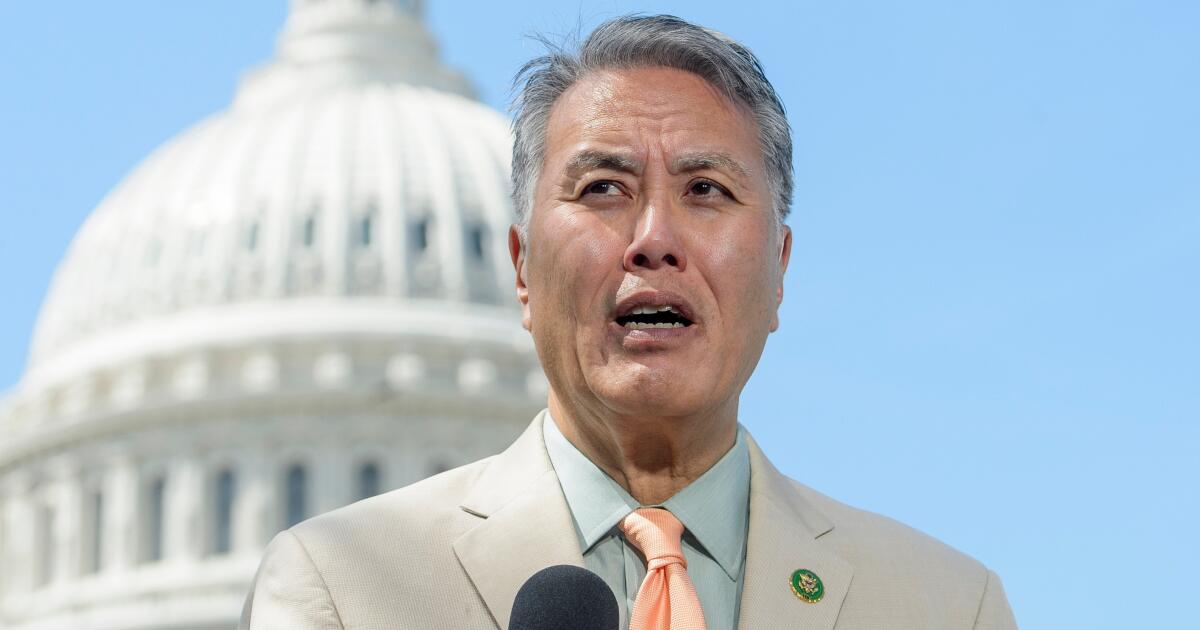
Orange County’s new ‘homegrown’ congressman plans to bring an immigrant’s perspective to Washington


Source link

Lebanon president says country is no longer a pawn amid Israel ceasefire | News

President Joseph Aoun promised to work to preserve Lebanon’s sovereignty and freedom.

Lebanese President Joseph Aoun has said that the country would no longer be an “arena for anyone’s wars”, and that the ceasefire with Israel should lead to work on permanent agreements.

In a televised address to the Lebanese public on Friday, he said that Lebanon was no longer “a pawn in anyone’s game, nor an arena for anyone’s wars, and we never will be again”.

Recommended Stories

list of 3 itemsend of list

His speech comes a day after a 10-day ceasefire was announced between Lebanon and Israel, bringing respite from Israeli attacks that began on March 2, after Hezbollah fired at Israel, and have left more than 2,200 dead and more than a million displaced.

Aoun said that they were entering a phase of “transition from working on a ceasefire to working on permanent agreements that preserve the rights of our people, the unity of our land, and the sovereignty of our nation.”

He expressed gratitude to those who he said helped end the hostilities, naming United States President Donald Trump and “all our Arab brothers, foremost among them the Kingdom of Saudi Arabia”.

Aoun promised that any agreement reached would not infringe on the country’s rights or relinquish any of its land, and that the negotiations were not a weakness or a concession.

The ceasefire was announced days after Lebanon and Israel held their first direct talks in decades in Washington, which prompted criticism from the Lebanese population.

“Our objective is clear and declared: to stop Israeli aggression against our land and our people, to obtain Israeli withdrawal, to extend state authority over all its land by its own forces, to ensure the return of prisoners, and to enable our families to return to their homes and villages, in safety, freedom and dignity,” the president said.

Israel continues to occupy areas of southern Lebanon despite the truce, with Israeli Prime Minister Benjamin Netanyahu saying troops would not withdraw during the ceasefire.

Source link

Trump’s budget director defends White House plan for massive boost in military spending

An effort to ramp up U.S. weapons production and build more ships, planes and drones will require a massive upfront investment, President Trump’s budget director told a House committee Wednesday.

The testimony from Russell Vought jump-starts the White House’s push to increase defense spending to nearly $1.5 trillion in the next budget year, up from nearly $1 trillion this year, while cutting health research, heating assistance and scores of other domestic programs by about 10% overall. Such cuts do not cover mandatory spending, which includes such programs as Social Security and Medicare.

The debate over Trump’s proposal underscored the sharp divide that will shape some of the most significant policy debates going into a midterm election that will give voters the ultimate say on the direction of the country.

“For the industrial base to double or triple and build more facilities, not just add shifts, it requires multiyear agreements to purchase into the future,” Vought told lawmakers. “That cost has to be booked in this first year.”

The White House is calling for about $1.1 trillion for defense through the regular appropriations process, which typically requires support from both parties for approval. An additional $350 billion would come through a separate bill that Republicans can accomplish on their own, through party-line majority votes.

Rep. Brendan Boyle of Pennsylvania, the ranking Democratic member of the committee, said he believes in a strong national defense. But he said the idea of increasing defense by more than 40% while cutting programs that people need shows that the Republican administration’s priorities are “out of whack.”

The committee chairman, Rep. Jodey Arrington (R-Texas), predicted the hearing would be more “amped up” than usual, and that proved to be true, beginning with his opening statement focused on criticizing Democrat Joe Biden’s presidency. Arrington said he did not know of any president in his lifetime who “inherited such a complete and utter mess as President Trump did in January of last year.”

Since then, Arrington said, Trump has secured the border, cut taxes and constrained nondefense spending.

It was the beginning of several back-and-forths at the hearing.

“You know how bad this economy is when we hear Joe Biden being invoked, we hear trans people being invoked. I was waiting for Jimmy Carter to be blamed next,” Boyle said in response to Arrington’s opening remarks.

Boyle said consumer confidence is plummeting under Trump and noted a gas station he passed in Philadelphia recently was selling gas at $4.11 a gallon versus less than $3 a gallon some six weeks ago because of Trump’s “war of choice in Iran.”

Rep. Becca Balint (D-Vt.) called the proposed defense spending increase shocking.

“We’ve never in the history of this country seen spending like this, paid for by slashing healthcare, education and housing,” Balint said. “Mr. Vought, yes or no, is $350 billion for the war in Iran lowering costs for Americans?”

“It is certainly not defunding child care. We fully fund child care in this budget,” Vought said, not directly answering the question.

Balint went on to incorporate Trump’s “America first” mantra in her questioning.

She said that $350 billion could pay for an enhanced health insurance tax credit for 10 years and that her constituents are asking how the country can continue to spend money on wars and not find a solution to helping people afford healthcare.

Vought said the president has made clear he was not going to let Iran have nuclear weapons, missiles and a navy that affect U.S. national security.

“He is doing what is necessary to keep us safe, while at the same time trying to pursue diplomacy so that we can get out of wars and lower those costs over time,” Vought said.

Vought said it was unclear how much the administration would seek to fund the war during the current budget year, which ends Sept. 30. That money would be part of an emergency supplemental spending bill and would be on top of the funds the White House is seeking to boost defense spending next year.

“Would it be more than $50 billion?” asked Rep. Veronica Escobar (D-Texas).

“We’re still working on it,” Vought said. “I don’t have a ballpark for you.”

Freking writes for the Associated Press.

Source link

House passes a bill to protect Haitian immigrants, in slap back to the Trump administration

In a rare bipartisan moment, the House passed legislation Thursday that would extend temporary protections for Haitian immigrants, a long-shot effort fighting back against President Trump’s attempts to end the program.

The bill, pushed forward by House Democrats with a group of Republicans over the objections of the GOP leadership, would require a three-year extension of temporary protected status for Haitians by the Trump administration. That would allow hundreds of thousands of qualifying immigrants to remain in the United States without fear of deportation.

The vote was 224-204, drawing applause in the chamber. But it faces uncertainty in the Senate, and the Republican president would almost certainly seek to veto it.

“I know firsthand how important our Haitian neighbors are to our communities, to our civic life, to our culture, to our workforce, to our economy,” said Democratic Rep. Ayanna Pressley of Massachusetts, who is co-chair of the House Haiti Caucus and represents one of the largest Haitian communities in the country.

During the debate, she recounted the number of Haitian immigrants working in healthcare, housing construction and other industries. Haitians with temporary legal status “are not the problem, quite the contrary, they are part of the solution,” she said.

Pressley has said deporting Haitians back to the troubled Caribbean country would be a “death sentence,” given the effects of natural disasters and gang violence. “Congress can do the right thing,” she said.

Ten Republicans, many from districts with large numbers of Haitian residents, joined all Democrats and one independent in voting for passage.

Congress tries to act before the Supreme Court does

The effort to help 350,000 Haitians living lawfully in the United States comes as the administration is working to end the temporary legal status for several groups, exposing them to deportation.

In less than two weeks, the Supreme Court is prepared to consider a fast-track case that would end the protected status for Haitian and Syrian immigrants in a challenge widely seen as threatening the broader program. The administration filed emergency appeals after lower courts stopped the immediate end of the program.

It is part of the administration’s efforts to strip certain immigrant groups of legal status as the White House works to fulfill Trump’s campaign promise of conducting the largest mass deportation operation in history. Some 1.3 million people fleeing countries around the world have been granted temporary protected status in the U.S.

The protections for Haiti, first approved after a devastating 2010 earthquake, have been extended multiple times. The State Department warns Americans not to travel to Haiti “due to kidnapping, crime, terrorist activity, civil unrest.”

Guerline Jozef, executive director of the Haitian Bridge Alliance, an advocacy organization, fought back tears as she described the fear of deportations coursing through the community.

“We are asking, where will you be? On the right side of history?” she said at a news conference outside the Capitol. “Or continuing to cause trauma to people who are asking for nothing other than safety and protection?”

Trump has described migrants from poorer countries in vulgar terms, and he has falsely accused Haitian migrants in Ohio of eating their neighbors’ cats and dogs.

The conservative majority court has allowed the end of temporary legal status for a total of 600,000 people from Venezuela while lawsuits play out, leaving them to face potential deportation.

Lawmakers debate whether to help Haitians or stick with Trump

Rep. Laura Gillen (D-N.Y.) whose district includes Long Island’s Haitian community, said she promised constituents she would work to protect their status. She introduced the legislation with Republican Rep. Mike Lawler of New York as soon as she took office last year.

“It’s cruel to expect Haitians to be forced to return to these deadly, dangerous conditions,” she said at a news conference. “Human lives are at risk.”

Lawler said there are differences of opinion on immigration policy, but that Haitian immigrants have become vital to his community and forcing them out would be unjust and unwise.

“They are small business owners, they are nurses, they are caregivers, they participate in our economy and take care of American citizens,” he said. “Congress has a responsibility to act.”

But Rep. Jim Jordan (R-Ohio) decried the number of immigrants, including Haitians, who have entered the U.S., and cited Democratic efforts to halt funding for enforcement and deportation efforts.

“Make temporary permanent,” he said, “that’s their plan.”

Rep. Brandon Gill (R-Texas) said the program was “backdoor amnesty” for foreigners.

To Rep. Tom McClintock (R-Calif.), the temporary status first granted under the Obama administration has become “an open-ended invitation” for immigrants to enter the country, including some illegally, and remain.

“The Trump administration has heeded the cries of the American people,” he said.

Using a discharge petition to force votes

The vote was the latest effort by House Democrats to maneuver past the Republican majority using a discharge petition — once a rare tool, but now used increasingly to form bipartisan coalitions.

The discharge petition process forces the bill to the House floor for consideration, powering past House Speaker Mike Johnson (R-La.) and GOP leaders. It was used to help pass legislation that required the Justice Department to release the files of the sex trafficking investigation of Jeffrey Epstein.

Republicans hold a slim majority in the House and are typically able to swat back such efforts from Democrats. But Democrats and Republicans have formed bipartisan alliances to reach the majority needed on the discharge petitions.

Pressley’s effort to discharge the bill won support from four Republicans on the initial petition, and several more once it came to the floor vote.

Mascaro writes for the Associated Press.

Source link

A vaccine standoff and other key moments from RFK Jr.’s first congressional hearing in months

Health Secretary Robert F. Kennedy Jr. on Thursday faced federal lawmakers for the first time since September as he sought to defend a more than 12% proposed cut to his department’s budget and dodge arrows from angry Democrats along the way.

In his testimony before the House Ways and Means Committee, kicking off an expected sprint of seven budget hearings he’ll attend across congressional committees and subcommittees over the next week, Kennedy emphasized the administration’s work to reform dietary guidelines and crack down on waste, fraud and abuse.

Republicans on the committee praised Kennedy as a “breath of fresh air” and asked him to promote his department’s recent actions. Democrats, who have been furious over Kennedy’s sweeping overhaul of the U.S. Department of Health and Human Services, largely had a different agenda.

They needled Kennedy on what they viewed as the Trump administration’s hypocrisy on fraud, demanded to know why he was cutting budgets for various programs and slammed his efforts to pull back vaccine recommendations and messaging, which they said have caused unnecessary deaths.

Kennedy fired back, often raising his voice as he accused the Democrats of misrepresenting his work and past statements.

Here are three standout moments from Thursday’s hearing:

A standoff over measles

One heated exchange early in the hearing came between Kennedy and Rep. Linda Sanchez. The California Democrat decried recent measles outbreaks across the U.S. and asked Kennedy to answer for the fact that under his leadership, the Centers for Disease Control and Prevention pulled back public health messaging supporting vaccination.

“As a mother, this horrifies me,” Sanchez said. “Did President Trump approve your decision to end CDC’s pro-vaccine public messaging campaign?”

Kennedy repeatedly refused to answer, saying first he wanted to respond to the “misstatements that you’ve made” and later praising the Trump administration’s record on preventing measles, although protections against the disease have eroded in some parts of the country as vaccination rates have dropped.

“That’s not answering my question,” Sanchez said as the two talked over each other.

But Sanchez also got Kennedy, a longtime anti-vaccine activist before he entered politics, to acknowledge that a 6-year-old who died of measles last year in West Texas could have potentially been saved with vaccination.

“Do you agree with the majority of doctors that the measles vaccine could have saved that child’s life in Texas?” she asked.

“It’s possible, certainly,” Kennedy said.

RFK Jr. denies talking about Black children being ‘re-parented’

A fight erupted between Kennedy and Rep. Terri Sewell, a Democrat from Alabama, when Kennedy vehemently denied making remarks he’d said in 2024.

The comments dated back to when Kennedy was a presidential candidate. On the “High Level Conversations” podcast last July, he said, “Psychiatric drugs — which every Black kid is now just standard put on Adderall, SSRIs, benzos, which are known to induce violence, and those kids are going to have a chance to go somewhere and get re-parented to live in a community where there’ll be no cellphones, no screens, you’ll actually have to talk to people.”

“Have you ever re-parented, or parented, I should say, a Black child?” Sewell asked, as her staff held up a poster featuring an abbreviated version of the quote.

“I don’t even know what that phrase means,” Kennedy said. “I’m not going to answer something I didn’t say.”

“You’re making stuff up,” he later claimed.

A recording of the podcast shows he made the comments during a conversation about free rehabilitation facilities he was proposing opening at the time in rural areas around the country.

Health and Human Services spokesperson Emily Hilliard said Kennedy before joining the administration was referring to spaces where young people facing alienation, mental health challenges and despair could get re-parented, which she said was a psychotherapy term for “developing the emotional regulation, discipline, boundaries, and self-worth that may not have been established in childhood.”

For Kennedy and his former party, civility is the exception

Kennedy spent most of his life as a Democrat, the scion of one of the nation’s most famous political families. Both Republicans and Democrats during the hearing began their remarks by expressing their admiration of Kennedy’s relatives, among them former President John F. Kennedy.

But again and again throughout Thursday’s hearing, the fraying of bonds between Kennedy and his former party was on full display as spiteful comments were passed back and forth.

The Health secretary grew defensive and visibly agitated. He repeatedly criticized Democratic lawmakers for not giving him a word in edgewise.

“They’ve all shut me up,” Kennedy said at one point. “They give a little speech that they can go and market, you know, for fundraising, and they don’t allow me to answer the question.”

On a few rare occasions, the exchanges were civil. One representative, Gwen Moore of Wisconsin, used humor to make that happen.

“I promise to give you easy, comfortable questions if you don’t yell at me and hurt my feelings,” she told Kennedy. He promised he wouldn’t.

Swenson writes for the Associated Press.

Source link

From dropping bombs to pressuring banks: U.S. pivots to economic warfare on Iran

If the U.S. and Iran aren’t able to soon come to a deal to end the war or extend the ceasefire that expires next week, the Trump administration is setting the stage to shift its war campaign toward a more economic-focused effort aimed at choking Tehran into submission rather than relying on bombs alone.

Treasury Secretary Scott Bessent told reporters at a White House briefing Wednesday that the U.S. plans to ramp up economic pain on Iran, and said the new moves will be the “financial equivalent” of a bombing campaign.

The threat of secondary economic sanctions on countries doing business with people, firms, and ships under Iranian control — including allies like the United Arab Emirates and competitors like China — represents an escalation of sanctions that the U.S. is already employing.

Bessent said the administration has “told companies, we have told countries that if you are buying Iranian oil, that if Iranian money is sitting in your banks, we are now willing to apply secondary sanctions, which is a very stern measure. And the Iranians should know that this is going to be the financial equivalent of what we saw in the kinetic activities.”

Treasury Department warns China, Hong Kong, the UAE and Oman

The warning comes the day after the Treasury Department sent a letter to financial institutions in China, Hong Kong, the UAE, and Oman, threatening to levy secondary sanctions for doing business with Iran, and accusing those countries of allowing Iranian illicit activities to flow through their financial institutions.

It’s part of an economic playbook that President Trump still can use to pressure Iran to accept U.S. proposals to limit its nuclear ambitions, a person familiar with the administration’s thinking told the Associated Press. The person spoke on the condition of anonymity because they were not authorized to discuss private discussions on the record.

Privately, the argument being made to Trump is that the Iranians think they can weather the storm — but if they cannot pay their loyalists, that could pressure Iran to the table.

And some in the administration believe there are still more economic targets that can be hit that would put the economic hurt on Iran, including bonyads, the charitable trusts that account for a significant percentage of the Iranian economy.

Bessent told reporters that two Chinese banks have received warnings about handling Iranian money. Trump is preparing to visit Beijing next month for talks with Chinese President Xi Jinping.

Bessent also said that Iran’s Gulf neighbors are now willing to look at freezing Iranian money in their banks because of Iran’s aggression during the war.

Daniel Pickard, a sanctions attorney, said imposing secondary sanctions could result in “diplomatic and economic blowback” from allies that could hurt efforts to build coalitions against Tehran.

“A lot of our trading partners have been outspoken in regard to their opposition to the conflict in Iran,” Pickard said. “Most economic sanctions professionals would agree that when you get more people on the team, the chances of your economic sanctions being effective are greater.”

On Wednesday, the U.S. imposed sanctions on an oil smuggling network connected to the deceased senior Iranian security official Ali Shamkhani, who was a close advisor to the former Supreme Leader of Iran. Sanctions include dozens of individuals, companies, and vessels involved in secretly transporting and selling Iranian and Russian oil through front companies, many of which are in the UAE.

“Treasury will continue to cut off Iran’s illicit smuggling and terror proxy networks,” Bessent said in a statement. “Financial institutions should be on notice that Treasury will leverage all tools and authorities, including secondary sanctions, against those that continue to support Tehran’s terrorist activities.

The administration believes the momentum has shifted

Trump administration officials have also signaled growing confidence that the ceasefire and a blockade of shipments from Iranian ports in the Strait of Hormuz have shifted momentum in Trump’s favor.

Iran has endured tens of billions of dollars in damage during the bombardment to the country’s infrastructure — including setbacks to its oil industry, the heart of its fragile and long-isolated economy — that could take years to repair.

Vice President JD Vance on Tuesday said Trump “doesn’t want to make, like, a small deal. He wants to make the grand bargain.”

“That’s the trade that he’s offering,” Vance said. “If you guys commit to not having a nuclear weapon, we are going to make Iran thrive.”

The president’s deputy chief of staff, Stephen Miller, offered a more caustic assessment of the moment, suggesting that Trump had “played the checkmate move” on Iran by implementing the blockage in the strait.

“If Iran chooses the path of a deal that’s great for the world, that’s great for everybody. If Iran chooses the path of economic strangulation by blockade, then the world will pass Iran by,” Miller said in a Fox News appearance Tuesday evening. “New energy routes will be established. New supply chains will be established. Other nations throughout the region — throughout the world, and especially America — will power the world and Iran will become a footnote.”

Some Republicans are skeptical that more sanctions will work

Some Republicans believe that any tactic to exert more pressure on Tehran is worth trying.

“I would support anything,” said Sen. Thom Tillis (R-N.C.). “If the administration came up with the ideas, I would support all of the above. More pressure, the better.”

Others were skeptical, noting that Tehran was already facing a litany of economic penalties that had little impact on its behavior.

“I’m not sure if it’s sanctions that’ll do it. I think we’re putting some pretty heavy sanctions on right now,” said Sen. Mike Rounds (R-S.D.), a member of the Banking and Armed Services Committees. “I personally am just not optimistic that we actually can fix this thing without a regime change.”

Trita Parsi, executive vice president of the Quincy Institute, a think tank that has been critical of Trump’s decision to launch the war, says that Trump had been “politically cornered and strategically constrained” before he announced the ceasefire. But now, Parsi argues, Trump may have altered the difficult dynamic and created a situation where “Iran now appears to need an agreement more than the United States does.”

“The window now open offers Tehran a chance to convert battlefield leverage into lasting strategic gain,” Parsi wrote in a new analysis. “To let it close would mean forfeiting not just incremental progress, but the possibility of reshaping its economic and geopolitical position. By contrast, the United States, having already secured a tenuous exit ramp through the ceasefire, has less at stake in the short term.”

Hussein, Madhani, Weissert and Kim write for the Associated Press.

Source link

My favourite up-and-coming EU country has £2.60 pints, cheap spas and temperatures up to 30C in summer

MOST Brits will stick to Western Europe for a summer holiday heading to the likes of France or Spain.

But in doing so are missing out on beautiful and not to mention cheaper alternatives in the east, like Lithuania.

Vilnius is the country’s capital and has a beautiful Old TownCredit: Alamy
Lithuania has beaches too like PalangaCredit: Alamy

Follow The Sun’s award-winning travel team on Instagram and Tiktok for top holiday tips and inspiration @thesuntravel.

Lithuania hasn’t typically been a holiday location for Brits, but it’s seeing a rise in tourists.

Last year, Lithuania was Europe‘s fastest-growing destination with international arrivals up 21 per cent – and it’s emerging as a compelling alternative for 2026.

Having visited Lithuania’s capital, Vilnius, late last year, I can vouch that it makes for a great city break.

GREAT ESCAPES

Ten European city or beach holidays for under £100pp INCLUDING flight & hotel


TRIP UP

The Sun’s travel experts reveal their best EVER holidays & how you can do them too

And it will be even more pleasant in spring and summer when temperatures can reach highs of 30C.

While it was a little colder (and even snowed) when I visited in December 2025, I still got a feel for the city where I found bargain drinks and cute markets.

In the heart of the capital city is its beautiful Old Town which has cobbled streets, hidden courtyards and plenty of bars.

If you look up, beautiful churches dominate the skyline – the Old Town has around 40 alone.

Meanwhile, the streets are winding and with shops, cafes and restaurants. I discovered one bar called Vynomanai, which was selling coffee for €2 (£1.74) and beer for €3 (£2.62).

One snack you have to try as it’s a local delicacy called ‘kepta duona’ – and once you have a taste, you won’t be able to stop.

Essentially it’s fried bread in garlic – which is like the UK’s version of pork scratchings. But, if you want something slightly fancier, Vilnius has four Michelin-star restaurants with tasting menus.

In huge contrast is the modern city of Vilnius which is filled with green parks, museums, art galleries and shopping centres.

For something more quirky, head to Lukiskiu Kalejimas prison to take a tour around the cells – unbelievably it was used up until 2019.

After its closure, the site was used for filming prison scenes in Season 4 of Stranger Things.

Now it’s used as a cultural centre and is open to the public for tours.

I’d say, to get a feel of the city, head out into the Old Town early on Sunday morning, you can hear the church bells chime and the streets were practically deserted when I went for a wander.

I visited Old Town Vilnius during Christmas last yearCredit: Supplied

If you’re booking your next getaway – here are some of our favourite family holidays…

*If you click on a link in this box, we will earn affiliate revenue.

Selenium Hotel, Antalya, Turkey

This hotel is a top pick for families who want to do a bit of everything. If you love the water, the nearby beach is packed with fun activities like banana boats, jet-skiing, and diving, while the hotel’s pool is perfect for a more relaxing dip. For a change of pace, the hotel can help you organise horse riding or bike rides along the pretty coastal paths, and there’s even a golf course just 20 minutes away for the grown-ups.

BOOK A HOLIDAY

Blue Sea Interpalace, Tenerife

With a massive outdoor pool, mini-golf, and a dedicated kids club, there’s plenty here to keep kids of all ages entertained. Each of the 234 rooms comes with the essentials like air-con and a minibar, and the all-inclusive buffet means everyone stays fueled for a day on the beach or battling on the sports courts. When you’re ready to explore, Puerto de la Cruz is right on your doorstep, where you can wander past an 18th-century fort, explore the pretty harbour, or play on the island’s famous volcanic black-sand beaches.

BOOK A HOLIDAY

Rodos Star, Rhodes, Greece

Rodos Star is perched on a hilltop with stunning views over the Aegean Sea. It’s a great choice for a relaxed Greek getaway, featuring a main pool for the grown-ups and a dedicated splash pool for the kids. With evening entertainment like Greek dancing and live music three times a week, there’s plenty of fun for everyone. You’re just a five-minute stroll from Afandou, a traditional village packed with shops and authentic tavernas. Plus the generous all-inclusive package will keep everybody fed and happy.

BOOK A HOLIDAY

Archipel Monastir, Tunisia

This glamorous Tunisian retreat sits directly on a golden beach, putting the Mediterranean Sea right at your doorstep. Families will love the spacious rooms that sleep up to four, along with a fun-filled sports schedule featuring tennis, volleyball, and archery. While the kids are busy, you can slip away to the hotel’s luxurious spa and traditional hammam for some serious relaxation. When you’re ready to explore, the city of Monastir is packed with local history including ancient fortresses.

BOOK A HOLIDAY

Druskininkai has its very own wellness park that’s free to enterCredit: Alamy

For those who like to relax, Lithuania is a great place to do so as it has a high density of spas.

Last year, Lithuania was even crowned the best spot in the world for health and wellness by ITB Health Tourism.

In dedicated wellness towns like Druskininkai, you’ll find lots more, here is home to Dineika Wellness Park.

The small resort has an open-air gym, public sauna by the river, lots of parklands to explore.

Entry to the park is actually free and treatments start from as little €12 (£10.43).

Guests can take mud baths, bubble baths and opt for massages which start from €20 (£17.39).

Lithuania has a relatively short coastline which stretches around 57 miles, but it does have some beaches.

Popular spots with white sands include Neringa, Palanga, and Smiltynė.

Or with the coastline being short, lots opt to swim in its freshwater lakes instead, like Green Lakes and Balžis.

Flights to Vilnius are cheap too, in April you can get one-way flights from London Luton from as little as £16 with Ryanair and be there in under three hours.

For more on holidays, one of Europe’s cheapest city break destinations with £2 beers and massive waterpark has new UK flights.

And this spot in ‘Eastern European Riviera’ with white sand beaches that you can fly to for £13 from the UK.

Vilnius is Lithuania’s capital with a pretty Old Town and modern cityCredit: Alamy


Source link