It’s been a big year for Seth Rogen’s Point Grey Pictures.
The 15-year-old production company founded by Rogen, his childhood friend and longtime collaborator Evan Goldberg and producer James Weaver is coming off a huge awards season for its comedy, “The Studio.”
The Apple TV series, which simultaneously pokes fun at the institutions of Hollywood while also peeling back some of the industry’s mystery, is now the most-awarded new comedy in TV history.
“The Studio” has won 13 Emmys, a BAFTA TV award in the international category, two Golden Globes and three Critics Choice awards. It’s currently filming its second season, with most details still under wraps.
I spoke with Rogen, Goldberg and Weaver about the success of the show, which primarily films on the Warner Bros. lot, and what’s next for Point Grey.
On all those awards?
“We’ve never, literally, won any awards before this, so I by no means expected this,” Rogen said, with a chuckle. “I hoped people would creatively recognize that we were really swinging for the fences, but awards were not really something that I was thinking that much about.”
In the show, the Canadian actor and comedian plays beleaguered movie studio head Matt Remick, who must balance the art of filmmaking with the economics of the business. In a nod to Hollywood’s pull toward intellectual property, one storyline focuses on the studio embarking on a movie about the Kool-Aid Man, which Rogen’s character only reluctantly agrees to pursue.
It’s not all about the money
“To me, what is interesting, and what people don’t seem to think about Hollywood, is that the people involved in it actually care about movies, even the ones who make bad ones, even the ones who make choices that stop good ones from being made,” Rogen said. “If you really just wanted to make money, there are much easier ways to make money where you don’t have to deal with people like me.”
He also noted that there’s a role for movies such as the fictional Kool-Aid flick.
“You could argue it’s the Kool-Aids of the world that keep theaters open,” Rogen said. “It’s our fake Kool-Aid movie that allows smaller movies to exist and allows theaters to take risks on smaller movies.”
Remembering comedy
“The Studio” also stemmed from a desire to make a pure comedy, despite the tough time comedies have had recently in the marketplace.
“We just all agreed that we wanted to make something that was just funny,” Goldberg told me. “It just felt like the world stopped making those, and we just wanted to make something that when you tuned in, was just absolutely hilarious.”
A serious L.A. business
Los Angeles-based Point Grey, which has 15 employees, is named for the Canadian school where Rogen and Goldberg met (the first project they wrote together, which became 2007’s “Superbad,” was based on their experiences there). Despite their comedic reputations, the more serious-sounding company name was deliberate so it could be used with any kind of project.
In fact, the company got its start with the Joseph Gordon-Levitt-led dramedy “50/50” about a 20-something who learns he has cancer. Over the years, Point Grey’s projects have spanned genres, including supernatural series “Preacher,” 2016’s “Sausage Party,” the satirical superhero show “The Boys” and biographical mini-series “Pam and Tommy.”
A Point Grey project is “genuinely original” and “daring,” said Weaver, Rogen’s former assistant who now serves as president of the company, which has a first-look film deal with Universal Pictures and a first-look TV deal with Lionsgate. He declined to discuss financials but said the company is profitable.
“We’ve managed to be really productive in terms of the amount of things that we’ve made, and we try to be smart about how we run our financials,” Weaver said. “The company is doing quite well.”
Point Grey is in production on “Teenage Mutant Ninja Turtles: Mutant Mayhem”; just wrapped a romantic comedy for Amazon MGM Studios starring Cameron Diaz and Stephen Merchant; and recently screened an animated film at Cannes called “Tangles” that’s based on a graphic novel about Alzheimer’s.
The production company may eventually expand into video games (“We love video games,” Goldberg told me), and plan to continue to navigate the changes in Hollywood, which is reeling from a continued drought in local production that my colleague Stacy Perman and I wrote about recently.
“Personally, I feel like people are very fatalistic about the trajectory of the industry, but it’s not like the industry is going down, the industry is just changing,” Goldberg said. “We just are very flexible and embrace the change, and hopefully in doing so, we don’t get left behind.”
Stuff We Wrote
Number of the week
After 1,810 episodes as the host of “The Late Show,” Stephen Colbert signed off for the final time Thursday.
CBS has said it canceled Colbert because the show was losing $40 million a year as viewers have increasingly migrated away from late-night viewing in the streaming era.
But many in the TV business are skeptical of the claim and believe Skydance wanted to silence Colbert, a frequent Trump critic, to pave the way for its deal last year to acquire parent network Paramount. (The Federal Communications Commission’s approval of the transaction came days after the show’s cancellation was announced.)
I watched the “Survivor 50” finale Wednesday with some friends, despite only watching two episodes this season (or ever). It was fun seeing the drama unfold, though I was, like everyone else, shocked at that “last twist” of Jeff Probst accidentally spoiling who lost in the final fire-making challenge.
Spotify Technology SA announced several new initiatives — from concert ticket perks to a major AI-generated music licensing deal — that the Swedish audio streaming company said will help fuel growth over the next four years.
At the first investor day led by new co-chief executives Gustav Söderström and Alex Norström, Spotify outlined a vision revolving around features that will allow people to personalize their listening experience, whether with music, podcasts, audiobooks or working out. Investors liked what they heard, pushing Spotify shares up as much as 18% over the course of the presentation.
Spotify addressed one of Wall Street’s biggest concerns about artificial intelligence by announcing a major new licensing deal with Universal Music Group NV. The agreement will let Spotify launch a tool to let fans create covers and remixes of their favorite songs from artists and songwriters who opt in. Powered by generative AI, the tool will be available as a paid add-on for Spotify Premium users. It will open up additional revenue streams for Spotify and create a new source of income for artists and songwriters on top of what they already earn on the platform, according to the companies.
Spotify has been working with the music industry on ways to harness the power and consumer interest in AI without violating artists’ rights. Last October, the company announced an agreement with the biggest record labels to use AI in a “responsible way,” but didn’t specify at the time what those tools would look like.
“This era of generation doesn’t need to threaten the future of music,” said Charlie Hellman, Spotify’s head of music. “Because we built the system legal, trusted and aligned, we can make sure that the value flows back to the people who created it.”
In another big announcement, the company laid out plans to work with Live Nation Entertainment Inc. to offer Spotify subscribers the option to purchase two tickets to their favorite star’s concert before they go on sale to the general public. The move could help resolve some of the issues fans have had in beating ticket resellers to face-value tickets, while encouraging customers to stay on as subscribers even as Spotify raises monthly fees.
Fans have long complained about the ticketing process for live performances, which often pit people against bots and scalpers, leading to high prices and sold-out shows.
“It’s frustrating for fans,” said Rene Volker, head of live events. “It’s frustrating for artists too, who look out at a crowd and wonder, are the fans who built my career actually here?” The new “Reserved” perk is designed to relieve some of that tension. “No racing bots, no chasing around online for presale codes. Just two tickets held for you,” she said.
The presentations Thursday were designed to comfort investors and prove that Spotify can still innovate. Wall Street has been skeptical that the company can rein in costs while staying ahead of competitors, particularly as it relates to AI. Those concerns have weighed on shares this year, sending them down 25% through Wednesday’s close. While the company makes most of its money through subscriptions, the executives sought to reinforce the idea that they have other levers to pull in order to generate sales beyond monthly fees and that people are willing to spend more for certain features.
The company outlined its growth targets through 2030, including a compound annual growth rate in the mid teens, a gross margin of 35% to 40% and an operating margin above 20%. Spotify remains committed to its long-term goal of 1 billion subscribers, $100 billion in revenue and over 40% in gross margin, the executives said.
Spotify sees its podcast and audiobook features as complementary to music and said the combination of the multiple verticals has helped broaden its community and convert users from free listeners to paid subscribers. Today, more than 500 million people have streamed a video podcast on Spotify, up nearly 50% from a year ago. And in just a few years, Spotify has captured about 20% of the audiobooks market in the US, executives said. People who use all three verticals — music, podcasts and audiobooks — are engaging with Spotify almost every day of the month, according to the company.
Giving people the tools to personalize their listening experience helps keep them in Spotify’s universe — creating what executives described as the “all day user.”
Personal Podcasts, for example, lets people write a prompt in the Spotify app and AI will create a unique podcast in response.
“We see this much more as a daily brief and a recommendation engine than something that would replace you listening to one of your favorite podcasts,” Söderström said in an interview. He noted that 60% of users in mature markets for Spotify don’t yet listen to podcasts, so features like Personal Podcasts could get them to dive into the medium.
The company said its podcast business has been profitable for two years.
Spotify’s Audiobook+ tier gives listeners more than their allotted 15 hours of audiobook listening per month for an additional fee. It has 1 million subscribers and is on track to generate $100 million in annualized revenue, the company said. To capitalize on the demand, Spotify will start selling even more audiobook hours to super users. Additionally, it will allow podcasters to offer memberships, so subscribers can access special episodes and other content. Spotify will take an undisclosed slice of revenue from the memberships.
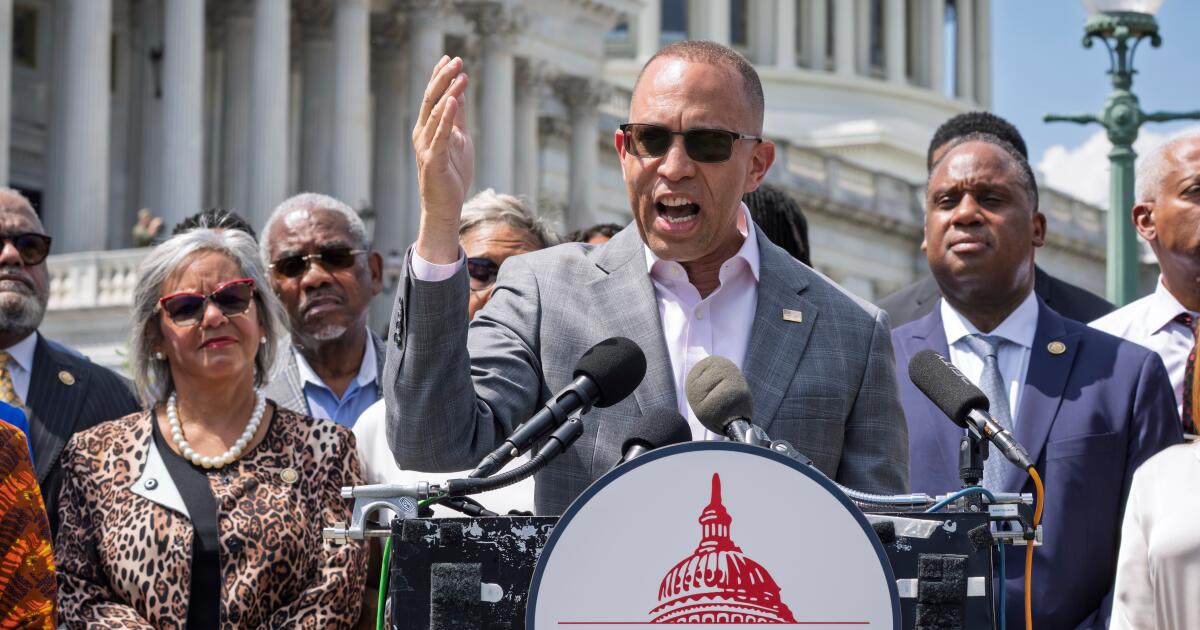
WASHINGTON — The Congressional Black Caucus on Tuesday called on major corporations across the U.S., including those that previously expressed support for voting rights and racial justice, to oppose redistricting efforts by Republican-led states that seek to eliminate majority-Black U.S. House districts.
In a letter sent to more than 250 companies, members of the Black Caucus urge them to condemn the redistricting efforts, which the lawmakers describe as “coordinated efforts to silence Black voices at the ballot box.” Some of the companies had co-signed their own message to Congress five years ago urging lawmakers to pass the John Lewis Voting Rights Act, a Democratic proposal to restore and update the Voting Rights Act.
That 2021 coalition, Business for Voting Rights, was backed by many of the country’s most valuable and influential companies, including Apple, Amazon, Google, Meta, Microsoft, Tesla, Salesforce, Target, PayPal, Intel and Starbucks.
Tuesday’s letter is the latest effort by the Congressional Black Caucus and its allies to gather support for preventing more Republican-led states from redrawing their legislative maps in ways that would dilute Black political representation. Several states have moved to eliminate congressional districts represented by Black Democratic lawmakers after a U.S. Supreme Court ruling last month that severely weakened a key provision of the Voting Rights Act.
“Corporations that have profited from Black consumers, relied on Black workers, and amassed wealth in part from Black communities cannot look away while Black political power is dismantled in plain sight,” Rep. Yvette Clarke, chair of the Black Caucus, said in an interview.
Clarke described the letter as “putting corporate America on notice,” but she said the caucus was not seeking an adversarial relationship with corporations. Among those receiving Tuesday’s letter were companies based overseas that have a significant presence in the U.S.
The caucus last week called for Black athletes to boycott public universities in states that are gerrymandering their congressional maps to eliminate districts held by Black lawmakers. The 59-member Congressional Black Caucus consists entirely of Democrats, including more than a third from Southern states.
Some lawmakers have said mass protests and federal legislation might be necessary to undo the efforts underway in Republican-led states. Any new federal voting rights law would almost certainly require Democrats to secure majorities in both chambers of Congress and win the presidency.
It is unclear how companies will respond to the demands. The Associated Press was making efforts to contact them.
“Many companies that previously issued statements after the murder of George Floyd, pledged billions toward racial equity initiatives, and spoke forcefully in defense of democracy following January 6 now face a defining test of whether those commitments were rooted in principle or convenience,” the caucus’ letter states.
It also represents the latest instance of the caucus expressing frustrations with corporate America. A 2024 Black Caucus report noted that lawmakers were “troubled that some corporations that made pledges in 2020 have taken several steps in the opposite direction,” such as rolling back or failing to follow through on pledges to diversify their workforces.
“We understand who the occupant in the White House is and the reality of Republicans being in charge,” Democratic Rep. Steven Horsford of Nevada said of the caucus’ message. “But what corporate America also understands is that there will be a shift at some point.”
The letter calls on companies to publicly condemn the redistricting plans, meet with Black Caucus members to discuss corporate America’s role in protecting voting rights and disclose their political donations to Republican politicians in states that are redistricting their congressional maps.
President Trump last year kicked off the unusual mid-decade round of congressional redistricting when he pushed Texas lawmakers to redraw their maps in a way that would add Republican seats. Democratic-led California responded, but it has been mostly Republican states redrawing their lines since as the party tries to maintain its majority in the U.S. House during this year’s midterm elections.
The effort was supercharged by the Supreme Court decision, which allowed even more Republican states to redraw congressional maps that previously had protected minority communities.
Horsford, who chaired the Black Caucus during President Biden’s Democratic administration, said the caucus is demanding that companies “stand on the side of democracy, fairness and equal representation.”
“This is about power, who holds it and what it’s used for,” he said. “And when you’re diluting Black economic and political power, we need to know where these companies stand in this moment, and what side of history they’re on.”
As a radio professional who grew up aspiring to work at CBS News Radio, anchor Steve Kathan understood the weight of the words he wrote and recorded Friday on the final broadcast of “World News Roundup.”
“America’s longest running newscast signs off for the last time,” Kathan said in the small dimly lighted studio in the CBS Broadcast Center on Manhattan’s West Side. “It all began on March 13, 1938,” he said, referring to the iconic news program.
Kathan played a recording of Edward R. Morrow, the legendary CBS News journalist who delivered his first report on the debut of the program, saying “the best in radio reporting is yet to be — good night and good luck.”
“And goodbye,” Kathan added, ending the run of around 23,000 editions of the 10-minute signature broadcast, delivered from CBS’ radio network . A final news update was scheduled to run later Friday night.
CBS News Radio and its 26 employees became a victim of budget cuts across parent-company Paramount’s news division announced in March.
“A shift in radio station programming strategies, coupled with challenging economic realities, has made it impossible to continue the service,” the company said.
Privately, longtime insiders at CBS News say the division has struggled for years to find ways to financially turn around its radio business.
The unit was operating at a loss with monthly revenues recently falling as low as $67,000, according to a network executive not authorized to discuss the matter publicly. The service held on because it still had value in promoting CBS News and its journalism, reaching 20 million listeners a week.
Leadership over the years have put off the messy task of winding the radio business down due to its iconic status at the company. CBS News editor-in-chief Bari Weiss was reluctant to make the cuts as well, according to people inside the company familiar with her thinking. But with Paramount taking on substantial debt to acquire Warner Bros. Discovery, considerations of the division’s legacy are likely to matter less in ongoing efforts to reduce costs.
Kathan had heard rumblings about CBS getting out of radio going all the way back to its first ownership change in the 1980s when Larry Tisch acquired the company.
“Even though I’ve been here 39 years, the thought was someone’s going to decide to do it,” he said.
As television dominated the media landscape, CBS News Radio retained its role as what Kathan called “the background track of American history.”
As a child growing up in Connecticut, Kathan recalls watching Douglas Edwards, the “World News Roundup” evening anchor for two decades, doing TV news updates in between the soap operas his mother watched on CBS. After Kathan joined the network in 1987 as a writer and producer, he would see Edwards and other famous names from the division walking through the hallways of the broadcast center before doing his afternoon newscasts.
“Just the fact that you were working with them made you think and realize you had to up your game,” Kathan said. “You wanted the audience to trust you as much as it trusted them.”
“World News Roundup” rose to prominence during World War II, when Murrow and other CBS News correspondents delivered live reports from Europe.
Once TV supplanted radio as a source for scripted entertainment, news and information became the primary mission of CBS’ radio division that began in 1927. In 1967, the company converted its owned AM radio stations — including its Los Angeles outlet KNX — to an all-news format.
While the stations focused on local news, traffic, weather and sports, they also prominently featured CBS News Radio reports at the top of the hour and other features throughout the day.
Longtime listeners became familiar with Edwards, Dallas Townsend, Reid Collins, Richard C. Hottelet, Christopher Glenn and other CBS News veterans who brought national and world stories to listeners throughout the day, introduced by a five-note sounder that simulated a telegraph. Dan Rather and Walter Cronkite were heard daily with analysis.
The radio network developed a major star in Charles Osgood, who joined WCBS in New York as anchor. He went national in 1971 with a twice-daily segment called “The Osgood File.”
Osgood wrote two-minute reports in succinct prose delivered in his mellifluous tones. He occasionally offered commentary in verse, which earned him the title of poet-in-residence at CBS News.
Osgood’s popularity was rivaled only by ABC Radio personality Paul Harvey. CBS News even allowed him to read commercial copy to satisfy eager advertisers who wanted their product messages presented in his comforting voice. When Osgood became a host on the TV side in the 1990s on “CBS News Sunday Morning,” his sign-off remained “I’ll see you on the radio.” He filed his final “Osgood File” report in 2017.
Charles Osgood in the WCBS radio studio in New York on July 25, 1967.
(CBS Photo Archive/CBS)
CBS sold off its radio stations in 2017, but continued to produce and distribute its network programs as the business faced competition from digital media.
Dustin Gervais, technical operations manager for the network, said CBS News Radio struggled as more audio advertisers prefer digital content because of its effectiveness at targeting specific demographic groups. The shift is reflected in radio ad revenue, which dipped about 2% to $14.37 billion, according to media research firm Kagan. But the digital ad revenue portion of that pie continued to grow, topping $1.75 billion.
Charles Forelle, managing editor for CBS News, said the company plans to remain in the audio journalism business through podcasting and not straight newscasts.
“We have a whole bunch of different things in development that are less news reading and more other things,” he told The Times.
Not all of radio’s problems are related to digital.
Michael Socolow, a professor of communication and journalism at the University of Maine, notes that the industry troubles began in 1996 when deregulation loosened the limit on the number of stations a single entity can own. Buying sprees of outlets led to owners who became highly leveraged and less able to invest in programming, which put the squeeze on suppliers such as CBS News Radio.
“Radio was hollowed out by the corporations, before its utility to the American citizen ended,” Socolow said. “You can trace it to the Telecom Act of 1996.”
Some of the 26 employees at CBS News Radio who were severed from the company have found work at Worldwide News Network, a service launched by John Catsimatidis, the owner of New York’s top-rated talk station WABC. The company said the service, which begins Saturday, will deliver “hard news, breaking headlines, and fact-driven reporting to affiliates across the country.”
Airbnb unveiled a new set of services for guests on Wednesday, adding car rentals, airport pickup and grocery delivery to its online marketplace that connects travelers with local hosts.
Customers can now get groceries delivered to their Airbnb through a partnership with Instacart and have a driver meet them at the airport with Airbnb’s Welcome Pickups. The app is also offering luggage storage in partnership with Bounce and will add in-app car rentals later this summer.
At the same time, Airbnb is ramping up its use of AI by adding AI-powered review summaries and lodging comparisons, the company said.
The company has been expanding beyond lodging since last year, when it introduced Airbnb Experiences & Services, giving guests the option to book private tours and chef-cooked meals through the app.
In an earnings call earlier this month, the company’s chief executive, Brian Chesky, said the company is at “the very, very beginning of how AI is going to change how we all do our jobs.”
The changes are coming in time for the 2026 FIFA World Cup, which will take place in 16 cities across the U.S., Mexico and Canada. The company said it is offering exclusive World Cup experiences, such as watch parties and access to stadiums.
“In terms of what we’ve seen in cumulative bookings heading into the event, the World Cup is slated to be the largest event in Airbnb’s history,” the company’s chief financial officer, Ellie Mertz, said on the earnings call.
Airbnb gained popularity for offering travelers unique and homey stays on other people’s property, but it added boutique hotel bookings to its platform late last year. The move had some customers questioning if the app was straying too far from its original purpose.
In its announcement this week, the company said it is partnering with more independent hotels in 20 top destinations, including New York, London and Singapore. On the earnings call, Chesky said hotels on Airbnb could become a multibillion-dollar revenue business.
The San Francisco-based company was founded in 2007 and gave homeowners the opportunity to earn money by renting out their space to travelers seeking something different from a hotel. Airbnb bookings can range from private bedrooms in a shared home to luxury mansions and yachts.
The company’s revenue grew 18% year over year to $2.7 billion in the first quarter, while net income increased slightly to $160 million. Airbnb’s new services and offerings could transform it from a home-sharing platform to a holistic travel marketplace, analysts said.
Shares of the company have increased by 14% over the last six months and fell by less than 1% on Thursday.
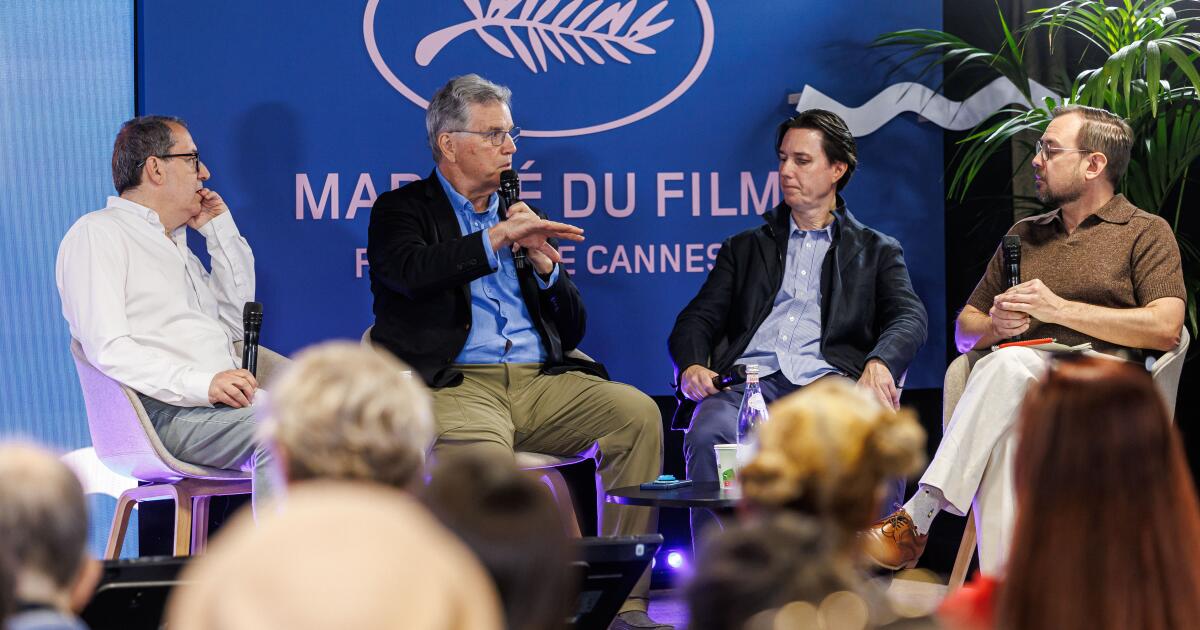
At this year’s festival to unveil our inaugural Cannes issue, I had to opportunity to sit down with Sony Pictures Classics co-founders and co-presidents Michael Barker and Tom Bernard and EVP of Acquisitions, Production and Business Affairs Dylan Leiner on the Main Stage at the Marché du Film to discuss the company’s festival strategy, bidding wars, artificial intelligence and more. Watch the full conversation and read edited excerpts below.
How much does the festival reception of a movie, the reviews coming out of a festival, the buzz around it, shape decisions that you’re making? Or is it just confirming what your gut already knows?
Leiner: I want to tell one story that speaks to that, which was at the first Berlin Film Festival we attended after COVID. I remember, in the same day, I ran into three international distributors who all asked if we had seen “The Teacher’s Lounge.” And I didn’t even know what the film was. It wasn’t on our radar, it wasn’t in competition. So we quickly saw “Teacher’s Lounge” and we acquired the film [which went on to be nominated for the 2024 international feature Oscar]. And that was one of the great values of an in-person festival, the ability very quickly to communicate with distributors, with tastemakers, with critics from around the world and get that kind of information. Gut, personal taste… It plays into it a lot, but then we need reassurance. And being at a festival and being in this fishbowl environment is really helpful for that.
For a lot of people, myself included, the mystique of a festival is often around the bidding war narratives: Who’s going to pick up what and what are they going to pay? I’m curious for your take on the first big acquisition of this year’s Cannes, A24 buying “Club Kid” for a reported $17 million.
Bernard: Throughout the years, there were companies [that would] maybe overpay, or they were going to bid to get this movie no matter what, because they were the headline in all the newspapers covering this festival. So in terms of a company that’s branding — which, A24 is one of the best in branding — I think that that had to do with a little bit of the cash that went up. … There’s a branding aspect in a lot of festivals for a movie that’s a hot movie that the press has decided to seize on.
Barker: Here’s a key to how we have survived. It’s different from the way you talk about it. When we acquire a movie, whether anyone else has offers, we try to block it out. And we have trained ourselves to not let that noise bother us. What is it worth to us? What do we think it’s going to do? Dylan runs these incredible models of what it’ll do on the low end, what it will do on the high end. And then you decide where you want to be.
Bernard: Or we think we can make it work.
Barker: But at no point do we sit around and worry about who else has a higher offer for the movie. Because I have to say, in very few instances, on the movies we buy, are we the higher offer. We just do the best we can, and if we lose it, we lose it.
Bernard: [French film producer] Serge Silberman, a sage of the past, he always said, “You never lose money on a movie you didn’t buy.”
That brings up a question that I had about “Nuremberg,” which was a real success.What you’re saying is,it performed in alignment with your expectations. Were there any lessons that you took away from that in terms of future projects that might come along?
Leiner: Yes, it performed in accordance with our expectations. What’s interesting about that film, we acquired it here last year. Nobody else was really interested in the movie. … So our challenge basically was to figure out how to convince the filmmaking team that, because it was a very expensive film, that we were the right company to acquire the film on the terms that we could afford and that we could make it work. And it was a very intense series of phone conversations, in-person meetings.
Bernard: We felt like we were auditioning to get married to somebody. We were never going to be able to pay to make their money back. It was a $40-million movie, and they were really sort of out there without anybody really looking at it. And we said, “Listen, sell it to us. We think it’s going to be a great success. We’ll make your movie way more valuable over the test of time.”
Barker: There are two types of movies that are being made and distributed. One are the big tentpole studio movies. It’s about winning the weekend theatrically. These are the theatrical-driven movies. And it’s all about making that huge budget back very quickly. But the other kind of film, which is why we are in business, is the evergreen. Every one of our films, we open it with the best marketing push we can. Yes, we try to get the highest box office. But what we know will happen, even if the box office ends up being less, we believe in these films as long-term players. And these films have really long tails. You look at movies like “Run Lola Run” or “Call Me By Your Name” or even “Living” … They have generated revenues to the filmmakers and to us that’s way beyond what the box office would have portended when it opened.
I would be curious, what areas of the filmmaking process or the film distribution process do you think AI is appropriate for use, that you’ve experimented with it, that you’re excited about its prospects? And where are your red lines, if you have any?
Barker: One of the people on our staff — we really love our young staff. One of them was writing a screenplay with AI, and told me they got certain rules on AI. And I’m listening to all these rules. You can’t have your main character die in a first scene. You can’t have your romantic female lead be totally unlikable, people aren’t going to go. I’m listening to this, and I said, “Have you ever seen ‘Sunset Boulevard?’” And she goes, “No, what is that?” I said, “Go watch that movie.” She came back and she was like, “Holy cow.” I said, “Billy Wilder sat down and made that up based on what he observed.” AI is not going to be able to do that.
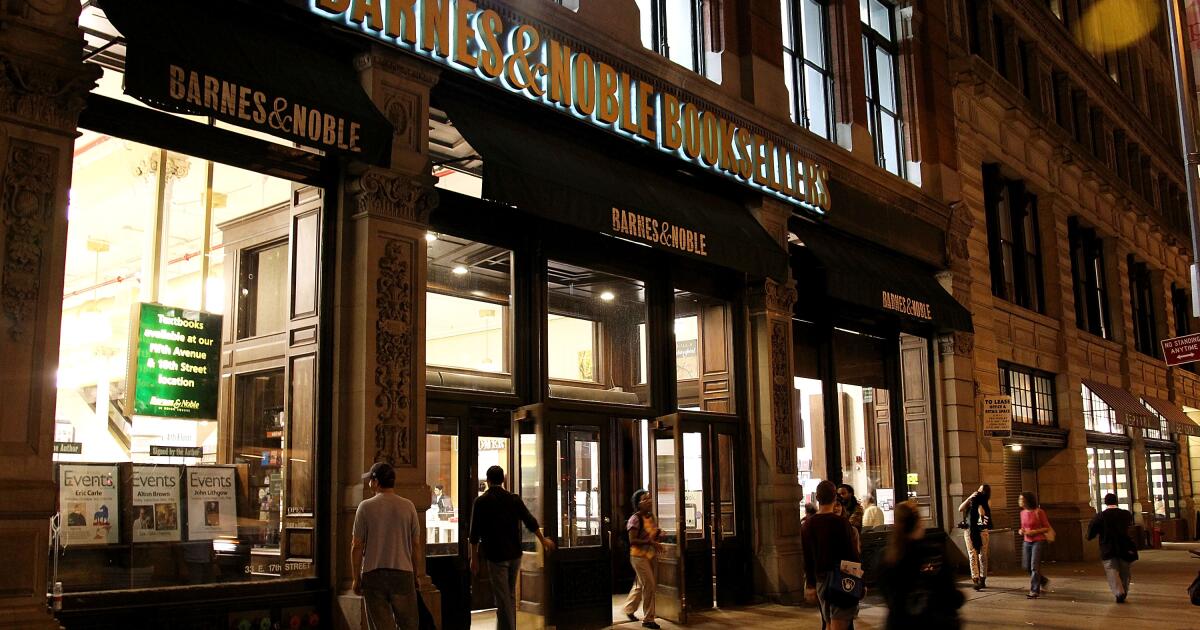
Barnes & Noble was turning a page on the chain’s history of declining sales, but recent comments have stirred bad blood for the bookseller.
James Daunt, the chief executive credited with breathing new life into the retailer, is clarifying the store’s stance on stocking its shelves with AI-written books.
The controversy stems from Daunt’s Monday appearance on “Today” with Jenna Bush Hager. In a viral clip from the interview, Daunt said, “I have actually no problem selling any book, as long as it doesn’t masquerade or pretend to be something that it isn’t. So, as long as an AI-written book says it’s an AI-written book, then we will stock them.”
By Wednesday, thousands of calls to boycott the bookseller had flooded social media.
Kathlin Finn, a writer and former employee of the chain, posted on social media, writing, “Hey Barnes & Not Noble, I worked for you and have supported you, but your latest AI decision is extremely disappointing. I will not be shopping or promoting B&N unless you change your AI policy.”
Author Cristin Bishara wrote, “As an author this [is] the most depressing news. I’ve been saying for a long time that this was coming. People told me I was overreacting. And I had a feeling it would start with a cute round table at the front of a B&N.”
Another social media user added, “The Barnes & Noble CEO saying they’ll stock AI generated books as long as they’re labeled and aren’t ‘ripping off somebody else’ is wild considering all generative AI is ripping off someone else.”
Daunt told The Times that the wave of backlash is based on misinterpretations of what he said, and that only a “highly edited version” of what the bookseller “actually said” had been aired.
In an emailed statement, he said the bookseller does not sell AI books, “as far as we are aware.” Barnes & Noble “demand[s] that publishers label any books that are AI generated,” and the chain takes “active measures to exclude all AI generated books.”
Daunt further stated that Barnes & Noble “will sell AI generated books if there is clear demand” and not “ban reputable books published by reputable publishers, even if AI generated, should these be published, labeled and there be clear evidence of customer demand.”
He also said that the retailer thinks it’s “very unlikely” that there will be customer demand for AI-generated books or that reputable publishers will publish them.
“The argument is nuanced, and perhaps over nuanced, but there are important principles that have to be balanced and I believe we do so as sensibly and thoughtfully as is possible,” he said. “Book banning is a clear and present danger, so we are very careful with demands to ban any books” while also remaining vigilant “not to sell AI generated books that masquerade to be by real authors.”
Last year, Daunt spoke with BBC on the issue of AI in publishing and bookselling and said that there’s a huge proliferation of AI-generated content, and “most of it is not books that we should be selling.” He told the broadcaster that, as a bookseller, the company sells what publishers publish and that he’d be surprised by efforts to put forth an “AI-generated piece of nonsense” but that, ultimately, the decision on reading material would lie with the reader.
“We don’t dictate, and we don’t dictate around politics or any other particular issues around books,” he said. “We leave it up to the reader to decide.”
In June 2025, more than 70 authors issued a call to action to big-five publishers Penguin Random House, HarperCollins, Simon & Schuster, Hachette Book Group, and Macmillan, asking the companies to pledge that they will never release books that were created by machines. Authors Lauren Groff, R.F. Kuang, Emma Straub and Emily Henry were among the petitioners.
“At its simplest level, our job as artists is to respond to the human experience. But the art we make is a commodity, and our world wants things quickly, cheaply, and on demand,” the letter read.
“We are rushing toward a future where our novels, our biographies, our poems and our memoirs — our records of the human experience — are ‘written’ by artificial intelligence models that, by definition, cannot know what it is to be human. To bleed, or starve, or love. …
“Every time a prompt is entered into AI, the language that bot uses to respond was created in part through the synthesis of art that we, the undersigned, have spent our careers crafting. Taken without our consent, without payment, without even the courtesy of acknowledgment.”
In March, Hachette pulled “Shy Girl” from publication after widespread allegations that the horror novel appeared to be AI-generated and was swiftly scrubbed from Amazon and the Hachette website. The book’s author, Mia Ballard, denied that she had relied on AI to pen the book but said an acquaintance she had hired to edit the novel used AI.
“Hachette remains committed to protecting original creative expression and storytelling,” a Hachette spokeswoman said, per the New York Times.
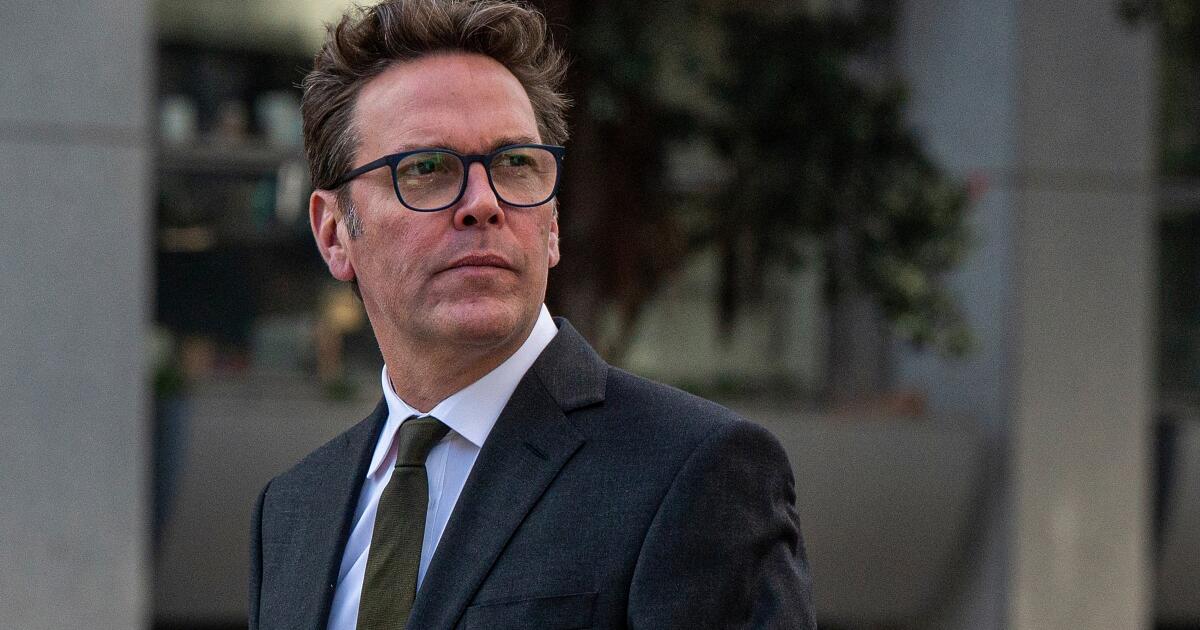
Lupa Systems, the media and tech holding company owned by James Murdoch, is set to acquire nearly half of Vox Media.
As part of the deal, Murdoch’s company will own Vox Media’s podcast network, Vox.com and New York Magazine, once an asset of his father, industry giant Rupert Murdoch. Terms of the deal were not disclosed, but the price tag was reportedly over $300 million, the New York Times reported citing people familiar with the deal. The goal of the investment is to bring “influential journalists, top-rated podcasts, and digital brands with large social footprints” to Lupa and help grow its media portfolio, the company announced Wednesday.
“This acquisition aligns well with our existing holdings and investments and reflects both our interest in the forward edge of culture and our deep commitment to ambitious journalism and agenda-setting conversations,” Murdoch said in a statement.
The three new assets will function as a subsidiary of Lupa Systems and will keep the name Vox Media. The deal includes New York Magazine’s popular verticals like The Cut, Vulture and Intelligencer, as well as Vox’s most successful podcasts like “Today, Explained” and “Pivot with Kara Swisher and Scott Galloway.” Jim Bankoff, Vox Media’s current CEO, will continue to lead the company.
The other Vox Media properties, which Murdoch did not purchase, include websites like Eater, The Dodo and The Verge. These platforms will be run under an unnamed new company by the current president of Vox Media, Ryan Pauley.
This investment strengthens Lupa Systems’ position in the evolving media landscape. The business has other holdings including the parent company of Tribeca Film Festival, the owner of Art Basel, Robert DeNiro and Jane Rosenthal’s entertainment company Tribeca Enterprises, and Bodhi Tree Systems, an investment platform behind a popular Indian streaming service.
Before the legal blowout, Murdoch previously served as the chief executive of major global media companies like 21st Century Fox and Europe’s Sky Group.
The billionaire told the New York Times that, with this new acquisition, he didn’t want a “daily news business.” He wanted “longer-form, thoughtful journalism that can really speak to the culture.”
Last week, news organizations and Disney bloggers learned that the Mouse House had filed building permits with the city of Anaheim related to a parking structure at Disneyland Resort.
That immediately sparked rumors about a third park — a long-held dream of Walt Disney Co. fans who want to see more rides, themed areas and Mickey-related shopping destinations.
But that will remain a dream — at least for the foreseeable future.
Anaheim city officials confirmed as much in an internal email about one of the news articles, noting to City Council members and the mayor that the permits were, in fact, for minor parking lot improvements within the existing Toy Story parking structure off Harbor Boulevard.
You’re reading the Wide Shot
Samantha Masunaga delivers the latest news, analysis and insights on everything from streaming wars to production — and what it all means for the future.
By continuing, you agree to our Terms of Service, which include arbitration and a class action waiver. You agree that we and our third-party vendors may collect and use your information, including through cookies, pixels and similar technologies, for the purposes set forth in our Privacy Policy such as personalizing your experience and ads.
The email, which was reviewed by The Times, said the improvements were not related to an already-approved expansion of Disneyland Resort, or “what could ultimately be developed on the property in the future.”
A Disneyland spokesperson told me the permits are related to painting and striping at the Toy Story parking structure. So much for a third theme park.
It’s not the first time there’s been a hullabaloo about an additional park at Disneyland Resort.
In the early 1990s, there were serious talks about a Disneyland expansion called Westcot Center, a West Coast version of Walt Disney World’s Epcot in Florida. The plan at one point was to include three hotels, a public plaza and a number of retail, dining and entertainment options all around a central lake. At one point, both Anaheim and Long Beach were vying to be chosen as the site.
But that all collapsed in the mid-’90s amid financial concerns. Disney later built California Adventure, and briefly teased the idea of a third theme park complex with both a water park and amusement park that could complement the two-park resort. But that but never came to fruition.
The idea came up yet again about 10 years ago at an annual shareholders meeting in San Francisco, when former Chief Executive Bob Iger batted down speculation about a third park.
“We have plans at Disneyland for an expansion that we have not announced but those plans at the present do not include a third gate,” he said at the time.
More on that expansion later, but the truth is Disney simply doesn’t have enough land in Anaheim to build out a third theme park. I spoke with Len Testa, president of theme park travel site TouringPlans.com, who laid out the issues for me.
A third park would probably need a minimum of 80 to 120 acres of land to accommodate big new rides, as well as necessary behind-the-scenes facilities like employee break rooms and other back-of-the-house infrastructure.
“They’re landlocked,” he said. “And to acquire that land now in any way that would keep the campus centralized and avoid the logistics of a far-flung transportation network, that would be prohibitively expensive.”
That’s not to say that Disneyland Resort isn’t expanding on the land it does have.
Two years ago, Anaheim approved expansion plans for a project known as DisneylandForward, which will allow the company to build new attractions alongside shops, restaurants and hotels.
Development plans include a bigger Avengers campus with two new rides, as well as a “Coco” ride and “Avatar”-themed area in California Adventure, as well as a new parking structure.
Although it’s not a park, adding new lands and rides is “mission critical” for Disneyland Resort, Testa told me. After all, to drive attendance, you need to regularly open new attractions.
And these new rides can’t just be any old rides — they have to be “epic, mammoth blockbusters” that no one’s seen before, which takes time, space and money, he said.
Disneyland Paris is a good example. The European tourism resort saw a notable boost in attendance after it opened a World of “Frozen”-themed land in March.
“When you have that type of expansion and you can fill the park, you feel very, very good about that,” Disney Chief Financial Officer Hugh Johnston said last week at the MoffettNathanson media, internet and communications conference. “When we leverage our [intellectual property] and take that IP and build big new attractions, not little things … it’s these big new things that actually tend to just really bring in the consumers.”
That’s also key when you consider Disney’s growing competition from Universal Studios, which recently opened Epic Universe in Orlando and siphoned off some attendance from Walt Disney World.
And while the company’s TV and film business is vital, its theme parks still throw off most of the cash — new Disney CEO Josh D’Amaro recently called the parks the “physical centerpiece of the company.” And of course, they retain a deep link to Disney’s heritage.
As Walt himself noted, Disneyland is a “living” entity that would “never be finished.”
Stuff We Wrote
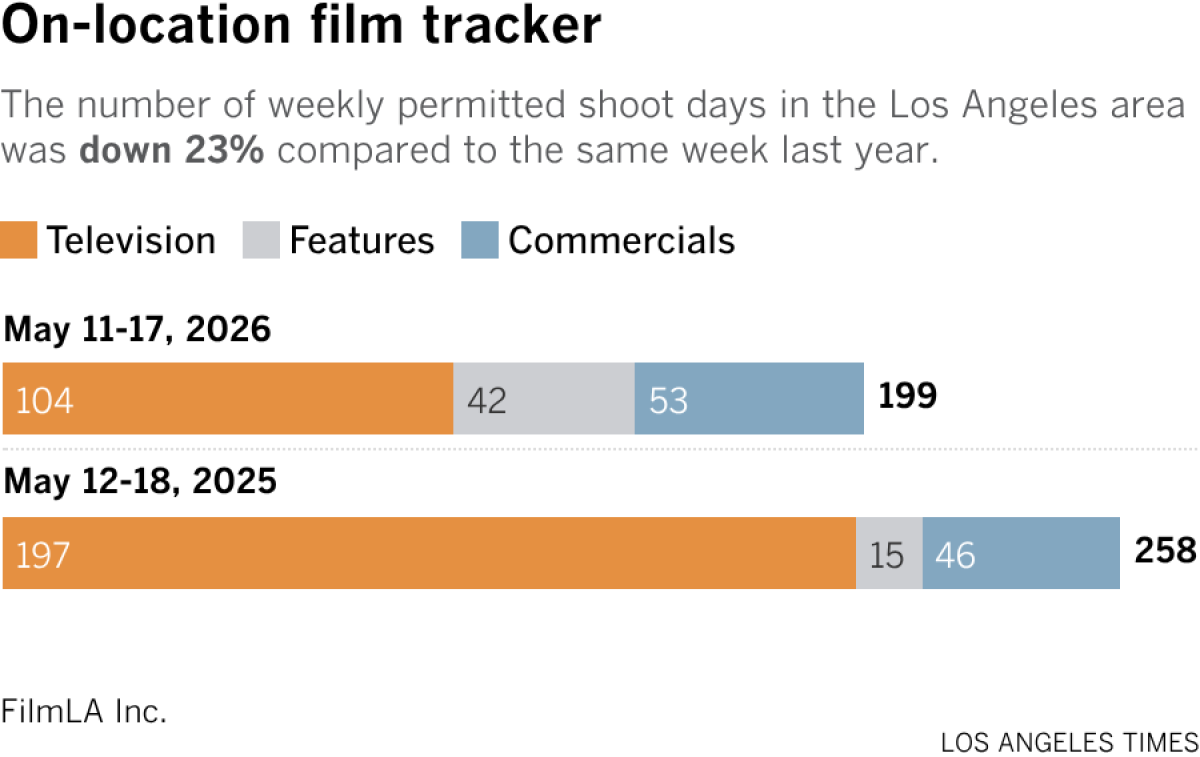
Film shoots
Number of the week
Lionsgate’s musical biopic “Michael” retook the top spot at the box office last weekend with a haul of $26.1 million in the U.S. and Canada.
The film, which chronicles the early career of singer Michael Jackson, has had remarkable staying power atop the charts since it debuted in late April. The film’s weekend revenue was down only 31% in North America compared with the previous weekend.
Overall, “Michael” has now made an estimated $703.9 million in worldwide box office revenue, with $421.1 million coming from international markets.
What I’m watching
Now that WNBA season is in full swing, I’ve been watching my L.A. Sparks and caught the game against the Toronto Tempo on Sunday. It was a rough game, but here’s hoping the Sparks can start turning things around, and quickly.
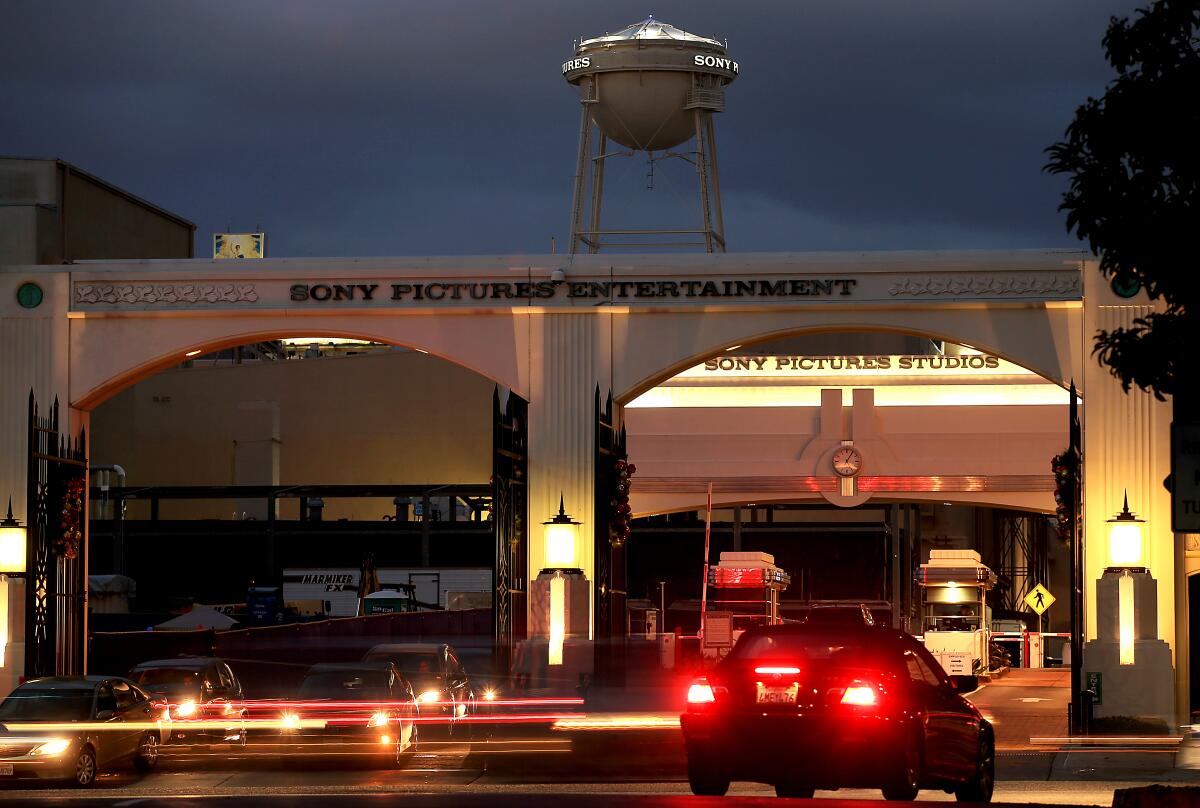
Sony Pictures Television has acquired controlling interest in the reality TV production company behind “Real Housewives of Beverly Hills” and “Vanderpump Rules.”
The Culver City studio, which produces “Jeopardy!” and “Wheel of Fortune,” announced Monday that it has closed its purchase of a majority stake of Alex Baskin’s three-year-old production firm, 32 Flavors. Baskin’s company has been expanding beyond its audience-addicting programs on Bravo to develop podcasts and documentaries.
NBCUniversal will continue to own “Real Housewives” and the other programs it televises, including “The Valley,” and spinoff show, “The Valley: Persian Style.” Baskin will continue as executive producer on his Bravo shows and stay on as chief executive of his production company.
Sony declined to disclose deal terms.
“Real Housewives of Beverly Hills” and “Real Housewives of Orange County,” are produced through Baskin’s company.
“32 Flavors has been on a remarkable trajectory, and with Sony’s support, we expect that momentum to accelerate meaningfully,” Baskin said in a statement.
Sony Pictures Entertainment studios in Culver City.
(Luis Sinco / Los Angeles Times)
Sony already owns nonfiction production companies, including Sharp Entertainment, Embassy Row, Brass Monkeys Media and 19 Entertainment, the powerhouse behind “American Idol.” It also owns formats for “Shark Tank,” and “90 Day Fiancé,” and an upcoming adaption of the board game, Clue.
“As the market evolves, we see real opportunity in premium nonfiction, and 32 Flavors strengthens our ability to deliver high-impact, returnable formats that connect with audiences and buyers around the world,” Katherine Pope, president of Sony Pictures Television Studios, said in a statement.
Pope gained responsibility for the unscripted TV business earlier the spring as part of a restructuring and dramatic downsizing, which resulted in hundreds of layoffs in the Japanese company’s entertainment business. At the time, Sony said the cuts reflected a business shift under Sony Pictures Chief Executive Ravi Ahuja.
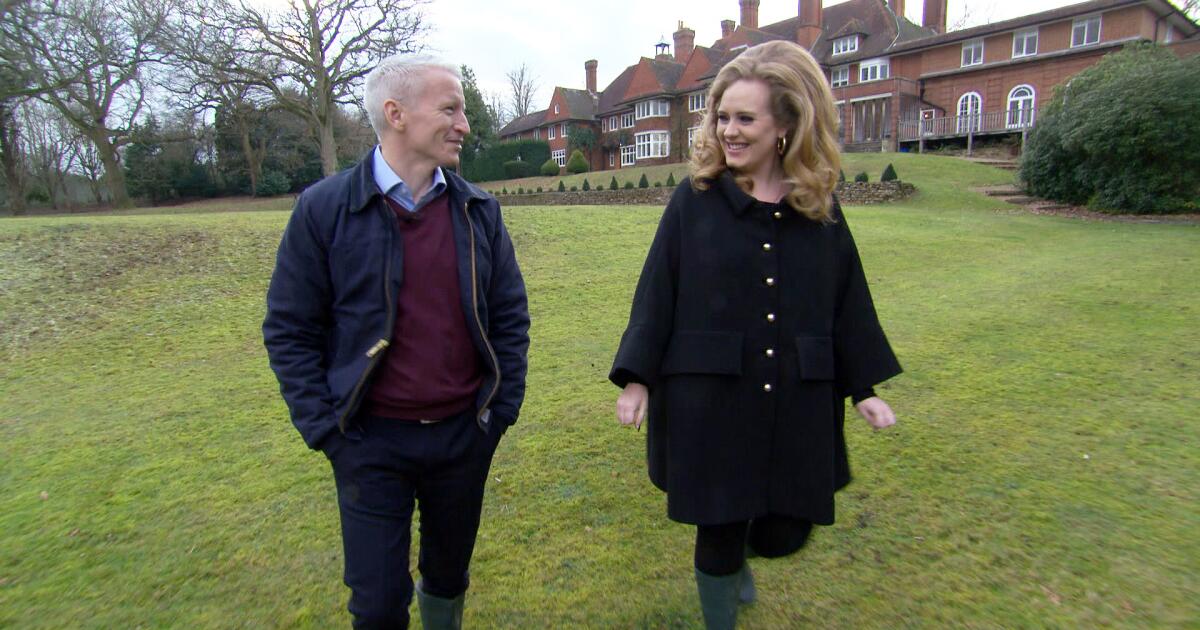
“Things can always evolve and change, and I think that’s awesome, and things should evolve and change, but I hope the core of what ’60 Minutes’ is always remains,” Anderson said on-air. “I think the independence of ’60 Minutes’ has been critical.”
Throughout the farewell segment, the 58-year-old journalist, who was hired in 2007, reminisced about some career highlights, like speaking with Holocaust survivors and people battling malnutrition in Niger, as well as interviewing A-listers like Lady Gaga and Prince Harry. He also said he hopes the show continues to be a reliable source of investigative journalism.
“I think the trust it has with viewers is critical to the success of ’60 Minutes.’ When you see a ’60 Minutes’ story, and you’re like, ‘That was a really good story.’ It was a good story because it requires time, it requires patience, it requires money,” he said. “I hope that’s known and honored and valued and continues.”
Two months after taking on the new role, Weiss made the widely panned decision to pull a “60 Minutes” episode that examined the alleged abuse of deportees sent from the U.S. to an El Salvador prison. The decision earned Weiss heavy criticism and accusations that the move was politically motivated, which CBS has denied.
Cooper said that he’s leaving the program to spend more time with his young children. He will remain as an anchor for CNN.
He added, “I hope ’60 Minutes’ is around for when my kids grow up and have kids of their own, and they can watch it with their kids.”
WASHINGTON — David Venturella, a former executive at a private prison operator, will serve as the acting head of U.S. Immigration and Customs Enforcement, the Trump administration says, after the agency’s current leader steps down at the end of the month.
A spokesperson for the Department of Homeland Security said late Tuesday that Venturella would succeed Todd Lyons, who led the agency through much of the administration’s tumultuous crackdown on immigration. ICE did not immediately respond to an email seeking additional information Wednesday.
Venturella left the Geo Group in early 2023 and has been working at ICE leading the division that oversees detention contracts, members of Congress wrote in a public letter earlier this year.
At the Geo Group, which houses around one-third of ICE detainees, Venturella served in a number of posts, including executive vice president overseeing corporate development, according to a Securities and Exchange Commission filing. He also oversaw removal operations for ICE in 2011 and 2012 after working for federal contractors, including one that specializes in security clearances and background checks.
Geo has benefited from President Trump’s mass deportation push, garnering big contracts to open three shuttered facilities. Among them was a $1-billion, 15-year deal for a detention center in New Jersey’s largest city.
“Last year was the most successful period for new business wins in our company’s history,” Geo’s CEO George Zoley said during an earnings call last week.
Geo owns and operates 23 ICE detention facilities, with about 26,000 available beds. Zoley also said that ICE’s air transportation subcontract had continued to steadily increase and that it secured a new contract last year for electronic monitoring.
Venturella will lead ICE at a time when the public mood has soured on Trump’s immigration crackdown, which sent surges of federal immigration officers into American cities to round up immigrants. Those raids sent tensions soaring and prompted clashes between protesters and law enforcement, leading to the fatal shootings of two U.S. citizens in Minneapolis earlier this year.
Trump returned to the White House on a promise of mass deportations, and ICE has been a central executor of that vision. Under Lyons’ leadership, the agency used a massive infusion of cash to expand hiring and detention capabilities, and it ramped up arrests to meet demand from the Republican administration.
Federal officials announced Lyons’ departure last month from ICE, which had gotten $75 billion from Congress to fulfill Trump’s mass deportation campaign.
Venturella’s appointment comes as Homeland Security Secretary Markwayne Mullin settles into his role atop the Cabinet agency overseeing ICE. Mullin has promised to keep his department out of the headlines and has indicated a softer tone on immigration, although he is expected to align with the president’s priorities on mass deportations.
One contentious issue confronting Homeland Security now is a plan for converting warehouses into immigrant detention centers. Conceived while Kristi Noem led the department, the effort has encountered multiple lawsuits and intense community blowback, including in Republican-led states.
The $38.3-billion plan would increase detention capacity to 92,000 beds and mean acquiring eight large-scale facilities, capable of housing 7,000 to 10,000 detainees each, and 16 smaller regional processing centers.
Those, and other sites, were supposed to be running by the end of November. But after Noem’s departure, the department paused the purchase of new warehouses as it scrutinizes all contracts signed during her tenure.
Last month a judge extended a pause on transforming a massive Maryland warehouse into a processing facility for immigrants, and there are signs that federal officials are scaling back the plans.
This could be good news for Geo. The Florida-based company has about 6,000 idle beds at six company-owned facilities, Zoley said last week.
Zoley had offered a note of skepticism about the warehouse plan during an earlier earnings call in February, noting that renovating a warehouse is “more complicated than you may think.” At that point, he said the company was “cautiously” looking at whether to bid to help operate some of them.
Brace yourself, Coronado. The hospitality maven who brought San Diego its most over-the-top maximalist hotel — the Lafayette in North Park — is back with another glitzy project, this time in the wealthy island city known for its traditional bent.
Opening Thursday, Baby Grand includes a 35-foot faux rock wall, a 20-foot waterfall, a Mediterranean restaurant that feels like a Greek ruin being consumed by a jungle and a hidden oyster bar full of crystal and mirrors. All of this, including the Spanish statuary, Moroccan fixtures and Murano glass, is squeezed onto an Orange Avenue lot that once held a 1950s motel. If Liberace had run away with an art historian, they might have landed here.
The idea was “to create this little mirage within the mirage that is Coronado,” said Arsalun Tafazoli, founder of CH Projects, the group behind a multitude of design-intensive establishments across San Diego including the speakeasy Raised by Wolves, the hi-fi listening bar Part Time Lover and the Middle Eastern restaurant Leila.
The Baby Grand hotel and its restaurant Night Hawk stands along Orange Avenue about a block from the Hotel del Coronado.
The patio dining area of Coronado’s new Night Hawk includes seating for about 150.
Baby Grand’s high-density, high-gloss environment, which cost about $17 million and took about five years to complete, will come as no surprise to those who have followed Tafazoli’s earlier ventures.
Asked about the design philosophy behind the 2023 renovation of the Lafayette — the company’s first hotel — Tafazoli had a simple answer: “More is more.”
The Baby Grand project, put together in collaboration with design studio Post Company, is cut from the same cloth, describing itself as a “polychromatic pastiche” on its website. The goal, Tafazoli said, is to enrich Coronado’s culture and give people a respite in an anxiety-ridden time. But “it is different,” he said. “I don’t know if it is going to be embraced.”
Getting the necessary city permissions “was definitely a struggle,” Tafazoli said. “Had I known how difficult this was going to be, I don’t know …”
In the days before the hotel’s opening, Tafazoli, 44, led a tour of the site. The entrepreneur, whose heritage is Persian, wore his hair in braids and a button-down Supreme shirt featuring Barack Obama.
The Baby Grand hotel’s guest rooms feature separate tub and shower.
“I have a very one-dimensional existence. I’m single. I have no kids. This is what I do,” said Tafazoli, who grew up in San Diego and studied at UC San Diego. He lives now in downtown San Diego’s East Village, where his company is based and where his first CH venture, Neighborhood, opened in 2007.
Though his company started with eating and drinking establishments, Tafazoli said, his goals were always to create and run hotels, “the pinnacle of hospitality.” As a child of divorce, he said, he may have a heightened awareness of when the energy feels right in a room and when it doesn’t. Creating social environments, he said, gives him some control over that. Moreover, he added later, “beauty is important to me, because it conveys care.”
To make the most of Baby Grand’s compact location (2/3 of an acre), the CH team has exported parking. Instead of leaving their cars on site, guests will hand keys to valets who will deposit vehicles in a Bank of America parking structure a block away. That move freed up space for not only palm trees, torches, tables, booths and 21 pieces of statuary from Spain, but also a little faux beach with a 4-foot-deep wading pool that can hold a handful of people.
“I can’t tell you how many iterations of sand were brought in and taken out,” Tafazoli said. “Sand is its own universe. You want local sand. But local sand was not conducive to that feeling.” So the sand is from Turkey.
1
2
3
1.Guest shower in an en suite bathroom.2.Hotel design touches include guest bathroom door handles. 3.Fiberglass clamshells serve as headboard in guest rooms.
The property’s main restaurant, Night Hawk, is Mediterranean, with cooking by open fire, a Greek ruins vibe and seating for about 150. The second restaurant lurks behind the lobby — a hidden oyster-and-Champagne bar that holds about 35 people, reservation only. The space, called Fallen Empire, features red mohair booths, built-in Champagne buckets, mirrored walls and chandeliers, sconces and lamps from the Italian glass-blowing island of Murano. The floor is a custom mosaic of sea creatures.
There are 31 guest rooms, beginning at $350 per night. Each is dominated by a custom-made clamshell headboard (fiberglass). Beds are surrounded by animal-print seating, parquet oak flooring, marble tables, mirrored cabinets and custom wallpaper. The rooms measure roughly 300 square feet each, nearly half of that space taken up by their elaborate bathrooms, each with separate tub and shower, sinks from Morocco.
Now picture all of that placed in the heart of Coronado (population 20,192), which sits next to Naval Air Station North Island and is known for attracting well-heeled retirees. The median home value is $2.5 million.
Up the block from the Baby Grand is the grand dame of San Diego County tourism, the Hotel del Coronado, which went up in 1888, completed a $550-million renovation last year and starts its rates north of $600. Another option is the Bower Coronado, also a dramatically upgraded motel that reopened in 2025 with prices similar to Baby Grand’s but a much more buttoned-down style.
This view from above at the Night Hawk restaurant space shows a stone booth, elaborately patterned cushion and table top.
All of those properties stand close to Coronado’s wide, sandy beaches — which means they all face challenges as waters are often fouled by the northward flow of untreated sewage from greater Tijuana. The longstanding problem has worsened in recent years, and Coronado’s Central Beach was closed to bathers on 129 days in 2025 because of unsafe bacteria levels. The U.S. and Mexican government say they have sewage-treatment projects in progress, with improvements expected by the end of 2027.
“We are, unfortunately, not marine scientists just a group of deeply overcaffeinated hoteliers with strong opinions about lighting, linen textures, and good design. So please check local water conditions before swimming,” Tafazoli wrote in a statement.
Asked his target market for the new hotel, Tafazoli said he was looking close to home.
“I see this as a staycation for locals” from San Diego County, Tafazoli said. “The big risk is that we don’t get locals and it doesn’t resonate with tourists who like the status quo.”
That said, Baby Grand and Coronado might be a better match than some imagine. Christine Stokes, executive director of the Coronado Historical Assn. and Museum, sees at least a few parallels to Baby Grand in local history, beginning with the historical association’s own building. From the 1950s into the 1990s, Stokes noted in an email, Marco’s Restaurant operated in the space, with a “Roman Room” bar — “a dark and immersive hidden gem where bartenders performed sleight-of-hand magic tricks.”
Guest rooms, including No. 103, are labeled with inscribed brass clamshells.
Then there was the Hotel del Coronado’s Circus Room restaurant, open from the 1930s into the 1960s. That was “an immersive environment, using specialized murals and striped tents on the walls,” Stokes wrote. It’s also where, in 1950, the manager of an L.A. TV station spotted a promising young piano player and decided to give him a chance on screen. The pianist’s name was Liberace.
However people respond to the particulars of the new hotel, Tafazoli said, he knows that the larger setting of Coronado is a special place.
From his office in San Diego’s East Village, “it’s a six-minute drive,” he said. “I come off that bridge, and I feel like I’m in a different place.” It’s amazing, he said, “to be so close and feel so far away.”
The snow was flying sideways and he had no jacket, but this lumberjack did not shiver. He stood about 25 feet tall, ax in hand, wearing a red hat and rictus grin. And he was made of fiberglass.
I stood at his feet on the Northern Arizona University campus in Flagstaff, full of the satisfaction that comes at having accomplished something truly trivial: At last, I was face to face with the original Muffler Man.
Stories, photos and travel recommendations from America’s Mother Road
Easter Island has its stone-faced monoliths. China has its terra-cotta warriors. And we Americans have these roadside giants, also known as Paul Bunyans, Uniroyal Gals and most commonly, Muffler Men. Manufactured in Los Angeles, they first appeared on the highways of North America in the early 1960s as an advertising gimmick, often promoting car lots or car parts. Now they’re rising again, a battalion of restored and replica specimens, beloved by road-trippers, kitsch aficionados, artists, preservationists and savvy entrepreneurs.
“To me, they’re kind of instant friends,” said Amy Inouye, the designer and artist who rescued L.A.’s most iconic Muffler Man, Chicken Boy, a chicken-headed statue that stands atop her gallery in Highland Park. “They’re really tall and they just want to be accepted for who they are.”
The Northern Arizona University campus in Flagstaff includes the first oversize fiberglass Muffler Man, who has long been outfitted as a lumberjack.
These figures are especially plentiful along Route 66 this year as it turns 100 — there was a “pre-centennial frenzy” in the words of roadsideamerica.com, which coined the term “Muffler Men” and tracks them on a map. Nobody’s certain how many figures were made during the golden age of Muffler Men, but since 2020, the tally of giants has climbed above 250, including “a few dozen” rediscoveries since 2010, according to Doug Kirby, the co-founder and publisher of the site.
“Just in the last year or two, all these Muffler Men are being added,” he said. In addition, more than a dozen giants are currently in transition — that is, getting reconditioned or relocated.
1.) Cigars and Stripes BBQ in Berwyn, Ill., features a Muffler Man smoking a cigar and holding a jumbo bottle of barbecue sauce. 2.) The Gemini Giant stands along Route 66 in Wilmington, Ill.
On a recent westbound journey from Chicago on Route 66, I started seeing them almost immediately.
First, on Ogden Avenue in the Chicago suburb of Berwyn, there was the Cigars & Stripes Muffler Man. He stood on the roof of the Cigars & Stripes BBQ Lounge, brandishing a chicken wing and a fridge-size bottle of barbecue sauce while chewing on a stogie.
Next, in Wilmington, Ill., came the Gemini Giant, who stands 23 feet tall above a tiny park. Made for a Wilmington diner in 1965, he was auctioned off for $275,000 in early 2024 and placed in his current location later that year. He wears a clunky silver space helmet and holds a rocket in his hands.
I had come across a few Muffler Men before this trip, including Big Josh, who looks down upon Joshua Tree from the Station gift shop on State Route 62. But now I was paying more attention.
At first, I learned, these giants were all men, conceived around 1962 by a Lawndale entrepreneur named Bob Prewitt and made popular from the early 1960s through the mid-1970s by a company in Venice called International Fiberglass.
Made from a standard set of molds and held together by steel frames, most Muffler Men are assembled from three or four pieces. Besides those figures holding mufflers and tires, others were outfitted as cowboys, Indians, lumberjacks (often known as Paul Bunyans), astronauts, chefs, dentists, golfers, hot dog vendors, race-car drivers, pirates and service-station attendants. Then there were the jug-eared goofball characters, which some scholars of the art form call halfwits, while others prefer snerds.
As interest in this kind of advertising grew, female giants followed, including Uniroyal Gals and Rosie the Riveters. Oversized animals, including dinosaurs, bulls, roosters, hens and seals, also multiplied.
Juni Peraza, 25, works at the Meadow Gold Mack retail shop on 11th Street in Tulsa, Okla. She said she has only recently realized the possibilities that come with 11th Street being part of Route 66.
All that action faded in the 1970s. But in about 1989, the seeds of a new Muffler Man era were sown.
Kirby, Mike Wilkins and Ken Smith, who had worked together on the 1985 book “Roadside America,” were building a database for a follow-up project when they realized, “Hey, wait, this configuration of statue we’re seeing in a lot of places,” Kirby said. “We decided we’d better start keeping track.”
The first few they saw were holding mufflers. Thinking of the old nursery rhyme “Muffin Man,” and a Frank Zappa song of the same name, Kirby decided to call them Muffler Men.
When the roadsideamerica.com website launched in 1996, Muffler Men were part of it. By 2000, Roadside America had uncovered their origin story and interviewed Steve Dashew, former president of International Fiberglass. And readers had embraced the giants in a big way.
This fiberglass Rosie the Riveter figure went up on 11th Street in Tulsa in 2025.
“It was like a religious epiphany for some people. For years, they were driving past these things,” Kirby said. “As soon as they realized it was part of an uncharted network across the country … it’s like your third eye has been opened.”
Ken Bernstein, principal city planner for Los Angeles Office of Historic Resources, calls Muffler Men “monumental and distinctive representations of midcentury car culture, especially along auto-centric corridors where it was important to catch the eye of passing motorists.”
New giants, known as custom jobs, are being steadily manufactured now. There’s an entire economic community emerging around their restoration, replication, sales, transport and display, including companies like (Re)Giant and sculptor Mark Cline’s Enchanted Castle Studios. (To confuse matters, many Southern California mechanics woo customers by welding together mufflers to make human figures. Those creations, too, are often called Muffler Men.)
The American Giants Museum in Atlanta, Ill., created in 2024 by Bill Thomas of the Atlanta Betterment Fund and collector-historian Joel Baker, is devoted to the fiberglass figures. The museum, open April through October, includes four standing Muffler Men, with two more expected around Memorial Day.
Because the giants stand in the open air, visitors who show up after hours — as I did — can ogle them any time.
Atlanta, Ill., is home to the American Giants Museum, which celebrates the Muffler Men and Uniroyal Gals that were common roadside advertising features in the middle 20th century.
“I love history. I love anything to do with cars and old advertisements. I think it just takes people back,” said Lee Woods, 55, who jumped on the Muffler Men bandwagon about five years ago and owns the museum.
Woods and his wife, Diane, who have a fleet of tow trucks in Hot Springs, Ark., were collecting old porcelain gas station signs, gas pumps and old cars in 2021 when, on a drive through Illinois, they laid eyes on the Gemini Giant.
“I told my wife I would love to have one of them things to represent our tow company,” Woods recalled.
Before long, they had hired someone to build a custom tow-truck-operator Muffler Man. And before that Muffler Man was done, Lee Woods had bought another one — a Paul Bunyan in Oklahoma. Then in 2023 he got a hold of a Muffler Man Mr. Spock from Rainbow Neon in Salt Lake City. Now Woods has eight Muffler Men in Arkansas.
“Sometimes I get carried away, my wife says,” Woods said.
Last fall, he bought the museum, where he collaborates with Baker, who is founder of the American Giants website, creator of a Giants YouTube series and serves as a Muffler Man broker, consultant and transportation specialist.
“When people see these things, they think they’re the coolest thing out there,” Woods said. “Today we’ve had people from six different countries here.”
1.) Cowboy Bob, who is about 20 feet tall, plays guitar and wears a bolo tie, is one of several oversize fiberglass mascots along 11th Street in the Meadow Gold District of Tulsa. 2.) Meadow Gold Mack, a friendly lumberjack, is mascot for a shop of the same name on 11th Street in Tulsa.3.) A Muffler Man near Gearhead Curios in Galena, Kan.4.) The 2nd Amendment Cowboy is a fiberglass giant that stands at the entrance to a trailer park near the art installation Cadillac Ranch in Amarillo, Texas.
From here, the giants seemed to come fast and furious. One in Galena, Kan. Two in Vinita, Okla. (which has since added a third). Five in Tulsa’s Meadow Gold District (including one with an 8-foot-long guitar).
Then in Weatherford, Okla., came a 30-foot astronaut. In Amarillo, a “2nd Amendment Cowboy” with a pair of big pistols at his feet. In Gallup, N.M., a giant on the roof of a used car lot.
By the time I’d reached Flagstaff, my count was 18.
Then came my snowy moment with the original Muffler Man, whose nickname is Louie. Experts agree that he was produced in about 1963 and sent to a Flagstaff cafe with a lumberjack theme (and yes, that cafe stood along Route 66).
Louie stood there until the cafe closed more than 10 years later. Then he was donated to NAU and stationed by the ticket office of the university’s Walkup Skydome. Another lumberjack stands inside.
But after Louie, I hit a drought — no more giant sightings in Arizona and none on the Route 66 alignment I followed into Southern California.
This seemed wrong, because there are so many giants along the byways of Southern California and because this is the land of their birth. Besides Big Josh, there’s the Paul Bunyan in Mentone, the empty-handed Muffler Man known as Kevin on Sherman Way in Van Nuys. There’s the flag-wielding Porsche Muffler Man in Carson (who previously served in the same spot as a club-brandishing Golf Man). And there are plenty of others.
It didn’t seem right to end the journey without another sighting. So I made my way to Highland Park to meet the one who rules the roost.
More specifically, I headed for 5558 N. Figueroa St., which was on the path of Route 66 for several years in the 1930s and which is the home of Chicken Boy.
Blessed with the customized head of a chicken, the body of a Muffler Man and a bucket in his hands (for eating chicken?), Chicken Boy stood for years atop the Chicken Boy fried-chicken restaurant on Broadway downtown, inspiring writer Art Fein to label him “L.A.’s Statue of Liberty.”
After the restaurant was shuttered in 1984, Inouye swooped in to rescue Chicken Boy and place him in protective storage — for years, as it turned out.
The fiberglass statue known as Chicken Boy stands on the roof of artist, designer and gallerist Amy Inouye’s studio on Figueroa Street in Highland Park.
In October 2007, after she and longtime partner Stuart Rapeport had bought the Highland Park studio space and pulled permits, Inouye put Chicken Boy back together again and set him up on the roof. There he remains, sharing space with a billboard, visible up and down the block between Avenue 55 and Avenue 56.
If a nomination by L.A. preservationist Charles J. Fisher goes through, Chicken Boy could become the first Muffler Man declared a city historic-cultural monument. And if you drop by the Future Studio Gallery on a Saturday between noon and 3 p.m. or 4 p.m., you’ll likely find Inouye, now 74, along with a trove of Chicken Boy T-shirts, patches, pencils and ceramic treasure boxes.
But seeing Chicken Boy is its own reward, especially after seeing so many of his fiberglass cousins. I got there on a balmy afternoon, beheld Chicken Boy’s beak gleaming in the sun, and knew my mission was complete.
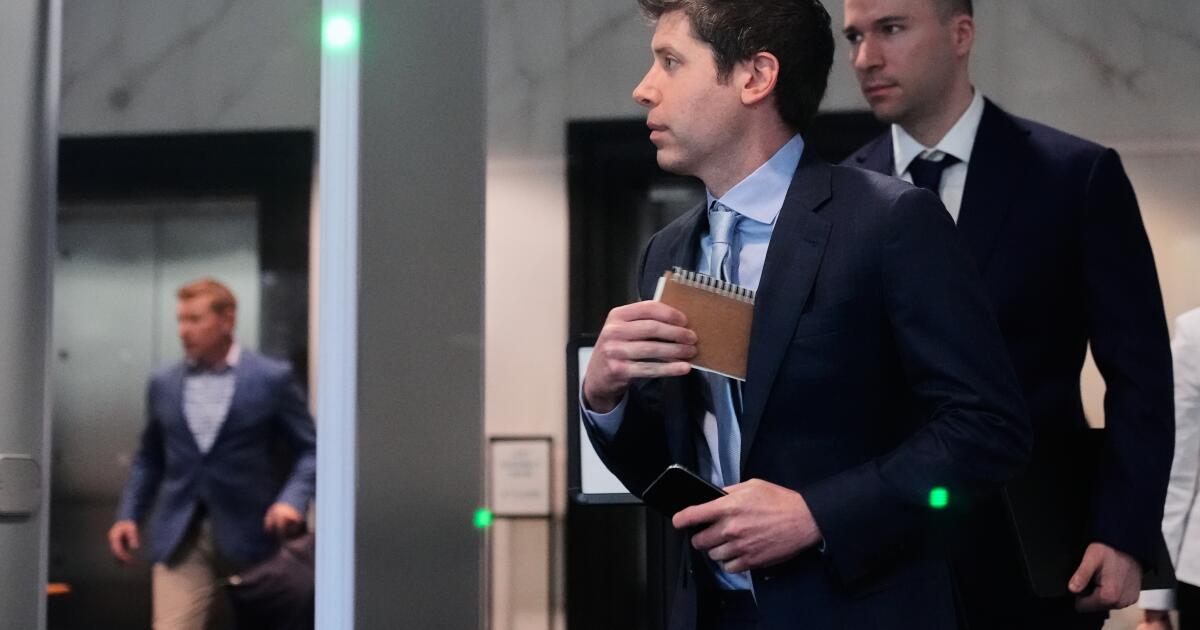
WASHINGTON — The chair of the House Oversight Committee has sent a letter to OpenAI Chief Executive Sam Altman requesting information about potential conflicts of interest between Altman’s personal investments and his operation of the company.
The letter, sent Friday, comes amid a high-stakes legal battle currently playing out in an Oakland federal courtroom between one-time partners Altman and Elon Musk, the world’s richest man, who in 2015 co-founded the AI company best known for creating ChatGPT.
The company was first established solely as a non-profit corporation and the letter sent to Altman by Rep. James Comer (R-Ky.), the Republican chair of the Oversight committee, indicates that the committee is “investigating potential conflicts of interest involving capital from nonprofit corporations invested in startups and other for-profit companies.”
Comer has requested by May 22 a briefing from the company official responsible for oversight of potential conflicts involving company officers and directors, including Altman, as well as all documents related to conflict of interest policies and guidance for those executives.
While OpenAI was created as a non-profit designed to responsibly harness the power of the emerging artificial intelligence technology, the company created a for-profit subsidiary in 2019 and three years later released ChatGPT, which jumpstarted widespread adoption of the technology.
Musk, the chief executive of Tesla, left Open AI’s board in 2018, one year before the creation of the for-profit arm. He is arguing that Altman and another co-founder, Greg Brockman, betrayed the original mission of the non-profit organization, driven by their desire to “cash in” on the technology.
Musk added Microsoft, a significant investor in OpenAI, to the lawsuit in 2024. OpenAI is rumored to be gearing up to go public later this year or early next, and was recently valued at $852 billion.
Musk has said that he invested $38 million in the OpenAI non-profit, but he does not stand to benefit from a potential OpenAI public offering.
He created a rival company xAI in 2023 that was later folded into his company SpaceX
In the lawsuit, Musk is seeking $150 billion in damages, for Altman to be removed from the company and for the company to be fully returned to its non-profit status.
Musk’s complaint also alleges that Altman engaged in self-dealing by directing OpenAI to pursue deals with companies in which he also held a personal stake, including nuclear fusion power company Helion.
Comer’s letter cites reporting that Altman’s pursuit of a Helion deal, which is still ongoing, would come at a lofty valuation of the power-company, boosting the company’s worth, and the value of Altman’s investment.
Altman was briefly forced to step down from leadership of OpenAI in 2023 in part due to concerns about potential conflicts between his personal investments and his operation of the company, but was soon reinstated.
While the company’s board created an audit committee to investigate the potential conflicts of Altman and other officers, the findings were never disclosed.
Comer has requested that Altman turn over all documents and communication related to that audit committee.
Representatives for OpenAI did not immediately respond to requests for comment.
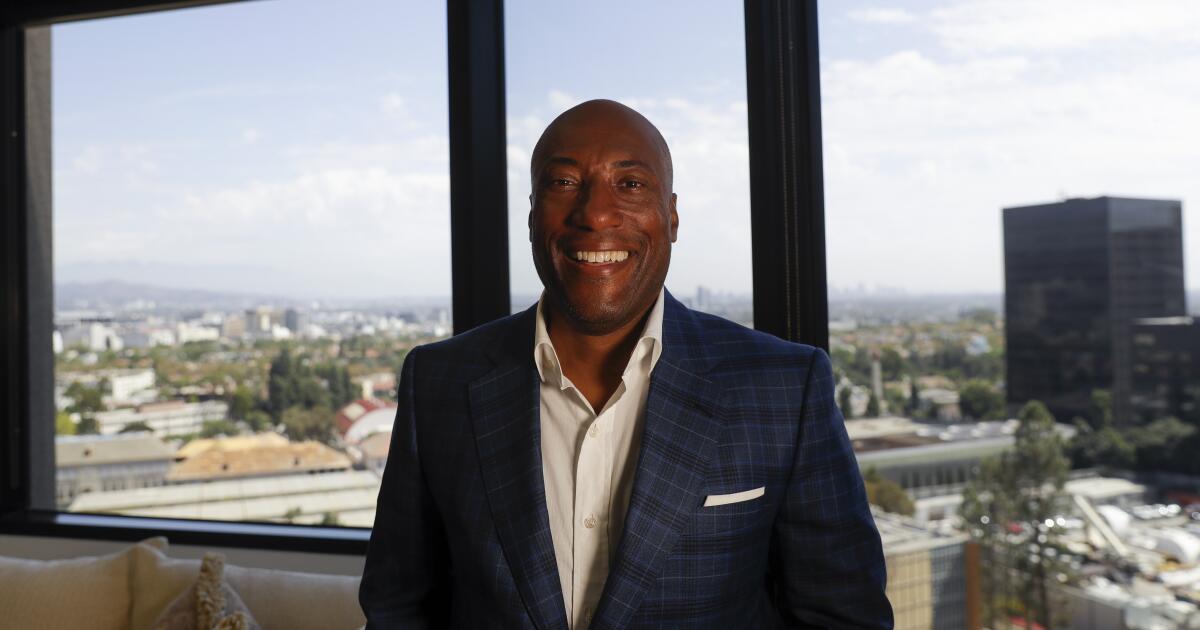
Digital entertainment company BuzzFeed Inc. is selling its majority stake to Los Angeles entertainment mogul Byron Allen for $120 million.
BuzzFeed announced the sale late Monday, saying Allen Family Digital had agreed to pay $3 a piece for 40 million shares, representing a 52% stake in the company.
Allen will pay $20 million in cash upfront with the remaining $100 million due in five years.
As part of the deal, Allen also will take over HuffPost, another internet pioneer, owned by BuzzFeed.
The sale is expected to close later this month. BuzzFeed founder and current chief Jonah Peretti will transition to a new role as president of BuzzFeed AI.
Allen will become chairman and chief executive.
“This investment in our business and Byron’s management roles will provide liquidity and operational focus to BuzzFeed,” Peretti said in a statement.
BuzzFeed has been on the ropes, financially, for a number of years. It bought HuffPost in 2021 to bolster its readership and offerings to advertisers. Three years ago, it pulled the plug on its once ubiquitous BuzzFeed News unit.
BuzzFeed reported a $15 million net loss in the first-quarter of the year. The company generated $31.6 million in revenue, a 12.4% decline compared to the year-ago period. Ad revenue fell nearly 20% year-over-year to $17.1 million. However, content revenue grew more than 50% to $7.5 million.
BuzzFeed soon will make another round of significant cost cuts prior to Allen’s takeover, Peretti said in the statement. He added that BuzzFeed Studios and Tasty will spin off to form a new independent entity.
The deal comes at a busy time for Allen, a former stand-up comedian who is taking over CBS’ late night block later this month, replacing “The Late Show with Stephen Colbert,” which is being canceled by CBS and its owner Paramount Skydance.
Earlier this month, Allen sold television stations in nearly a dozen markets owned by the Allen Media Group to Atlanta-based Gray Media Inc. for about $170 million.
Allen still owns 13 network-affiliate stations in nearly a dozen markets, including the Weather Channel‘s linear and digital outlets, including PETS.TV and COMEDY.TV.
“Our vision is to build on the iconic foundation of BuzzFeed and HuffPost by expanding into free-streaming video, audio and user-generated content,” Allen said. “BuzzFeed is officially chasing YouTube to become another premiere free video streaming service.”
When Kevin Hart announced in January that he’d licensed his name to Authentic Brands Group, the popular comedian was silent on a key detail: the future of his namesake media company.
Hart sold some ownership and oversight of his brand in exchange for an undisclosed sum of money and a stake in Authentic, a New York-based firm that manages the likenesses of Marilyn Monroe, Muhammad Ali, Shaquille O’Neal and David Beckham.
Hart used the partnership with Authentic to reset his relationship with the people around him and his company, according to six current and former employees. Hart’s employees say they worry that this deal marks the beginning of the end of Hartbeat, the comedian’s namesake media company that produces films, owns a network of short-form video channels and handles marketing for brands.
Though the announcement made no mention of Hartbeat, the agreement gave Hart money to buy out his private equity partner in the company over time and regain control of the use of his name, image and likeness. Hart’s endorsement deals, which had been a pillar of Hartbeat business, will now be handled by Authentic.
Once valued at about $650 million, Hartbeat has shriveled over the past few years. The company enacted its latest round of job cuts in December, firing the heads of its scripted TV division, as well as employees working across marketing, social media and brand partnerships, said the people. Earlier this year it let go the leaders of its podcast division and later sued them for breach of contract.
Hart has withdrawn from the company, leaving day-to-day management in the hands of a small group of executives. Staff meetings have been canceled. The development of new film and TV projects has slowed. A slate of new podcasts was pitched but never produced.
Hartbeat’s struggles reflected the challenging environment for many Hollywood production companies as media giants merge and cut spending. The company is also a cautionary tale in this age of the celebrity media mogul. Financial firms have plowed money into media companies led by high-profile figures, believing they could use their notoriety to build valuable businesses. Yet even seemingly successful ones have had a hard time.
Hartbeat, like many of its peers, has suffered from mismanagement and grappled with the tension between the needs of the star and his company. Hart, one of the hardest-working people in Hollywood, tired of subsidizing a company that relied so much on him
Hart declined to comment for this story, which is based on conversations with several current and former employees. On Sunday night, Hart, who hosted the widely viewed roast of NFL great Tom Brady two years ago, was the subject of his own roast on Netflix.
Building a Billion-Dollar Business
One of the most successful stand-up comedians and actors of his generation, Hart, 46, has always been entrepreneurial. In 2017, he started Laugh Out Loud, an online video comedy business that later grew to include branded entertainment. He also operated his own production company, Hartbeat Productions, that made programs for streaming services like Peacock, Quibi and Netflix Inc.
With Hollywood in the midst of a production boom, Hart watched his fellow celebrities get rich from their media enterprises. Reese Witherspoon sold her media company, Hello Sunshine, in a deal that valued it at as much as $900 million. Hart’s friend LeBron James raised money for his company, SpringHill, at a valuation of $725 million. Hart believed he could be next.
In late 2022, Hart merged his business interests under the Hartbeat banner and raised money by selling a 15% stake to the private equity firm Abry Partners. The deal valued the company at about $650 million.
The new business was predicated on three pillars: film and TV, short-form video and advertising. Hartbeat had a deal to produce movies for Netflix, a slate of podcasts for SiriusXM Holdings Inc. and original audio series for Audible. Hartbeat also developed relationships with advertisers such as Lyft Inc., Procter & Gamble Co. and DraftKings Inc.
While Hart would star in Hartbeat projects, the goal of the company was to develop projects and new business that didn’t involve its namesake founder. The company could leverage Hart to sell projects and secure broad programming partnerships. Hart would ask that Hartbeat be involved in producing his movies and any advertising campaign for which he was a spokesperson. His fees as a producer and brand ambassador would help pay the bills. The hope was he’d convince other celebrities to use Hartbeat as well. Thai Randolph, who had been running Laugh Out Loud, was named chief executive officer.
Hartbeat opened offices in New York and Atlanta and took over a 40,000-square-foot West Hollywood office once occupied by Oprah Winfrey. Hart redesigned the space and installed a world-class art collection.
The upper-level lobby featured a work by Ghanaian artist Serge Attukwei Clottey, while the conference room had a sculpture by Zimbabwean artist Moffat Takadiwa made of computer keyboard keys. A portrait of Kobe Bryant by Julian Pace hung outside a podcast studio.
Hart’s own office featured a dressing room, a series of paintings by South African artist Feni Chulumanco, multiple TVs and a desk from a prominent French designer. “He really has almost a full-service apartment in his suite,” Kai Williamson, who worked with Hart on the project, told Architectural Digest. Hart was interviewed for a story and also filmed an episode of the design magazine’s “Open Door” video series.
While Hartbeat expanded, Hollywood entered a recession. Economic uncertainty, rising interest rates and growing skepticism about the profitability of streaming caused major media companies to fire staff and pull back on buying new projects. Hartbeat was a little more insulated than most because talent like Hart could usually still get a project made. Still, producing projects without Hart in a starring role became more difficult.
Randolph left the company in late 2023 and was replaced by Jay Levine, who had spent much of his career at Warner Bros. Discovery Inc. Levine brought in a couple of other senior leaders with experience at major media companies.
A contingent of executives pushed Hart to scale back some ambitions, the people said. The company couldn’t afford to be working in so many different businesses at the same time, especially as areas like free, advertising-supported online video, and podcasts got more competitive. Hart was one of the most prolific and productive creative people in the world, starring in and producing movies, TV shows, comedy, short-form videos and advertisements. The point of the company was to relieve the stress on him, not add to it.
While Hartbeat closed its New York office, Hart was reluctant to scale back his vision or replace some long-time lieutenants. Levine negotiated his exit at the end of 2024 and was followed out the door by the company’s chief financial officer and chief content officer. Days before Thanksgiving, Hartbeat laid off about 20 people, nearly one quarter of its work force.
A year of chaos and conflict
In January 2025, Hart announced he would be the new CEO of Hartbeat and pledged to outline the firm’s strategy in the coming weeks. Instead, Hart went weeks and sometimes months without visiting the office, the people said, and empowered Jeff Clanagan and CFO Eric Stoneburner to run the company day to day. (Hart was on set to shoot at least a couple movies last year, in addition to his other work.)
A former concert promoter and movie producer, Clanagan had helped make Hart a major star. He had partnered with Hart to bring his stand-up specials to the big screen, producing shows such as 2013’s Kevin Hart: Let Me Explain, which grossed $32 million at the box office. Clanagan produced some of these specials under the banner of his own company, Codeblack Films, which helps promote, market and distribute video from Black creators.
Clanagan continued to operate Codeblack while serving in a senior capacity at Hartbeat, said the people. He pushed employees at Hartbeat to post its videos to the Codeblack channels as well, saying they could use the additional reach to raise awareness. The videos generated advertising sales for Codeblack.
Clanagan had employees at Hartbeat oversee Codeblack’s social media pages and asked to get those channels loaded into Hartbeat’s content management system. That gave Codeblack’s YouTube channels advantages over others because of Hart’s prominence and his company’s designation with YouTube. Employees raised concerns with human resources and the company’s lawyer.
Clanagan also became increasingly interested in video generated by artificial intelligence. He started a new app called Blktopia, a streaming service for Black viewers programmed with content from online creators and often made by AI. He urged employees to work on it, the people said. Clanagan initially responded to a request for comment and then retracted the text message.
Meanwhile, many of Hartbeat’s main businesses languished. Sales from the company’s YouTube channels fell and investment in new film and TV projects slowed. Hartbeat, once profitable, started to bleed cash. Hartbeat had hired Eric Eddings and Lesley Gwam to produce audio shows that didn’t involve Hart. While the pair developed a slate of projects, they never got approval to make them.
In mid-December, Hartbeat fired about a dozen employees, including some of those who were supposed to develop the podcasts. Eddings and Gwam then decided to start their own company and began trying to raise money. When Clanagan found out, Hartbeat fired them and sued for alleged theft of trade secrets and breach of contract.
A court approved a temporary restraining order but then rejected a preliminary injunction, saying Hartbeat had not demonstrated Eddings and Gwam had used proprietary information or trade secrets. The court said the request was “vague, ambiguous, and overly broad.” The case is ongoing.
Hartbeat also fired the heads of its TV division, Tiffany Brown and Mike Stein, who were in the middle of producing a TV show based on the film Barbershop for Amazon.com Inc. and a second season of the animated series Lil Kev.
The company made no official announcement explaining the cuts. The following week, senior leadership arranged a Zoom meeting. Hart remained off camera until it was his time to speak. He talked for a few minutes about changes at the company and took no questions. Hart changed his phone number in the weeks following the layoffs. (Some of his advisors had suggested he do this years earlier so that he wasn’t so available.)
A few weeks later, Hart announced the deal with Authentic Brands Group. Hart used some of the proceeds to buy out Abry Partners, freeing him to steer his brand deals to Authentic and outside of Hartbeat. A few of his employees and his publicist joined him at Authentic.
“This is a turning point for Hartbeat,” the company wrote in a subsequent email to employees, explaining that the deal would free Hart up to focus on what he does best, while allowing Hartbeat to stand on its own and grow beyond him.
“I know the past few months have been tough,” Hart wrote, adding that for too long the company had been too dependent on him. The email was said to be from “Kevin AKA Boss Man.” It was sent by Hart’s assistant.
NBCUniversal has ordered a TV adaptation of the popular New York Times puzzle Wordle that will be hosted by Savannah Guthrie.
Jimmy Fallon, whose company is co-producing the show, and Guthrie announced the series pick-up Monday on NBC’s “Today.” “Wordle” will begin production later this year and debut on NBC in 2027.
Guthrie filmed the pilot episode for Wordle last fall in Manchester, England, where the series will be made as well. The project from Universal Television Alternative Studio, Fallon’s Electric Hot Dog and The New York Times, has been in development for two and a half years.
Guthrie said she learned the show was picked up in February and was set to shoot episodes in March. But producers delayed the start as Guthrie went on a hiatus for two months after the disappearance of her mother Nancy.
“They just stopped everything and said, ‘we will wait for you, of course,’” Guthrie said. “And Hollywood is a really tough business as you know, and I didn’t expect that.”
Guthrie returned to “Today” on April 6. Law enforcement officials believe Nancy Guthrie was taken against her will from her Catalina Foothills home on Jan. 31. The investigation into her abduction is ongoing.
Guthrie did not mention the situation with her mother’s abduction, but indicated her game show duties will be another step toward normalcy. “I’m just determined to put one foot in front of the other,” she told colleagues.
Wordle asks players to guess a five-letter word in six chances through a process of eliminating letters. An individual player’s performance in the game can be posted online without revealing the answer, as the colored tiles are shown without the letters.
Offered as part of a subscription to a bundle of puzzles on the New York Times web site and app, Wordle has been a major driver of digital revenue for the company. The New York Times said earlier this year that users solved the Wordle puzzle 4.4 billion times in 2025.
Wordle was created by Brooklyn, N.Y.-based software engineer Josh Wardle in 2021. After it became an immediate hit online, the New York Times purchased it for a price reported to be in the low-seven-figure range.
In recent months, movie theaters have seen the likes of Elvis Presley, Billie Eilish, BTS and Michael Jackson take on the big screen. Whether it’s in the form of a concert film, a documentary or a biopic, music-based theatrical releases have delighted audiences — and both major studios and record labels are taking note.
Paramount Pictures and Warner Music Group are joining forces to make movies featuring top talent on Warner’s roster, the companies announced Thursday. The multi-year, first-look deal will feature some of Warner’s most recognizable artists like Madonna, and the late David Bowie and Frank Sinatra — as well as contemporary pop stars like Charli XCX and Dua Lipa.
Together, the companies hope to combine WMG’s vast music catalog and Paramount’s theatrical experience to create more music-themed live-action and animated films.
“Every artist deserves to tell the stories behind their life and music in their own creative way, and we’re excited to partner with our incredible talent and world-class filmmakers to bring these stories to the big screen, growing their audiences around the world,” Robert Kyncl, WMG’s chief executive officer, said in a statement.
WMG will work with its production partner, Unigram and Paramount to develop each project in conjunction with the artists or their estates. The collaboration aims to give music artists more latitude when their work is used in feature films or when storylines are based on them.
Unigram co-founder Amanda Ghost said the deal “finds new ways to empower iconic artists and to bring their creative worlds to the screen with music as a central character.”
The announcement comes after Paramount celebrated the premiere of the Billie Eilish concert movie “Hit Me Hard and Soft: The Tour” at the Westwood Village Theater on Wednesday night. The 3-D feature, co-directed by Eilish and James Cameron, is set to hit theaters this weekend and follows her most recent stint of performances.
Earlier this week, movie theater chain AMC revealed its theaters will begin rolling out a new kind of immersive concert experience in June. The concept will feature acts like Paris Hilton and Kim Petras performing on a remote stage as the show is beamed into theaters around the country. Though unlike a typical livestream, new technology allows artists to see, hear and respond to the theater audience, in effect turning the local AMC into a virtual concert venue.