After last year’s disastrous Eaton fire, Southern California Edison executives vowed to be transparent about what caused the inferno that killed at least 19 people and left thousands of families homeless in Altadena.
“As we better understand exactly what happened on Jan. 7, we do so with a commitment to remain transparent,” Pedro Pizarro, chief executive of Edison International, the utility’s parent company, said in a published statement after the fire.
In court, however, Edison is keeping crucial documents of the cause of the Eaton fire secret, a legal strategy it has used to shield what happened in at least seven earlier wildfires it was blamed for igniting, according to a Times review.
Edison’s stance has caused mounting frustration with attorneys representing fire victims who are seeking compensation for their losses.
“The Eaton Fire cases should be decided on their merits, not on what information that SCE has been able to withhold,” lawyers for the victims wrote in a recent court filing.
State regulators have repeatedly criticized Edison for its secrecy in previous fires, saying it violated safety regulations and stopped officials from learning the root cause so that similar disasters could be prevented.
For more than a year, Edison employees have been gathering detailed information about what ignited the fire in an investigation the company is required to perform under state utility regulations.
But most of that information is being withheld by Edison’s claim of attorney-client privilege, as well as a protective order that it asked a judge to approve soon after the fire.
Protective orders are commonly used in civil lawsuits, but most cases do not have the broad ramifications to the public as the Eaton fire.
Pedro Pizarro, chief executive of Edison International, at the Semafor World Economy Summit in Washington on April 14.
(Aaron Schwartz / Bloomberg)
Because of the secrecy, it’s not possible to know just what Edison has found, attorneys for Eaton fire victims said in a filing.
In past fires, regulators have requested from the company — and been denied — photographs, notes, text messages and other records generated by the Edison crew that was first to arrive at the site where the blaze ignited. The company has argued its attorney directed the crew, making the evidence privileged.
The victims’ lawyers say Edison shouldn’t be able to withhold from them most evidence from its investigation into the blaze by claiming that the findings and related documents are covered by attorney-client privilege and therefore confidential.
Sealed Eaton fire documents
Lawyers for victims say that documents sealed by a protective order show evidence of where Southern California Edison’s safety measures fell short before the deadly fire.
Poor inspection and repair of the idle transmission line suspected of igniting the fire
Tower holding the idle line was “virtually unattended for decades”
Dried vegetation removed under electrified wires but not beneath the idle line
Problems with contractors inspecting the line
In a recent interview with The Times, Pizarro disagreed that the company was keeping information on the cause of the Eaton fire secret.
“We believe we’ve been transparent,” Pizarro said. “Facts are not privileged, and so we provided facts as we have known them.”
He said the company’s investigation was continuing. “We still, to this day, don’t fully understand what happened,” he said.
Pizarro said the protective order was needed to keep many things confidential, including some not related to the fire’s cause. For example, he said, it protects maps of the electrical system, which can’t be revealed because of terrorism concerns.
Signs blaming Southern California Edison for the Eaton fire are seen near cleared lots in the Altadena area of Los Angeles County on Jan. 5.
(Josh Edelson / AFP via Getty Images)
He pointed to several company disclosures, including two letters it sent to regulators soon after the Eaton fire that said it was evaluating whether a century-old transmission line, which hadn’t carried power since 1971, “could have become energized” and helped lead to the fire.
Pizarro said last year that the possible reenergization of that old line is a leading theory of the fire’s cause.
The company has said little else about the fire’s cause, other than it safely maintained and inspected the idle line, just like it did its energized lines.
Edison faces thousands of lawsuits from victims of the fire, which burned 14,021 acres and leveled a wide swath of Altadena. The lawsuits allege, in part, that the company was negligent for failing to safely maintain its transmission lines and for leaving the idle line in place when it knew it could become energized. Edison denies the claims of the lawsuits, which have been consolidated in L.A. County Superior Court.
Some documents that Edison says are not privileged and agreed to provide to the victims’ lawyers are sealed by a protective order that the company and the plaintiffs’ lawyers requested.
Plaintiffs’ attorneys often agree to such protective orders on the theory that doing so would allow the utility to more freely share information that could help their case.
Power lines hang from towers carrying power from the Southern California Edison Gould Station.
(Carlin Stiehl / For The Times)
Two months after the fire, Los Angeles County Superior Court Judge Laura Seigle signed the protective order — which covers documents that both sides provide in discovery — including business information deemed proprietary and personal customer data.
According to the protective order, if the case is settled, the lawyers will decide whether the sealed documents should be returned to Edison or destroyed.
If the case proceeds to trial, some of the evidence could become public.
Yet even with the protective order in place, plantiffs’ attorneys say Edison has refused to provide them with evidence from its investigation into the fire, saying it’s protected by attorney-client privilege.
The state-required investigations “are not private inquiries undertaken for SCE’s benefit and legal protection,” the plaintiffs’ lawyers wrote in a filing last year. “Those investigations are regulated activities that exist to protect the public and enhance public safety by preventing future fires.”
To begin those investigations, Edison’s crews often get to the ignition site before government officials. In the 2019 Saddleridge fire in Sylmar, an investigator from the Los Angeles Fire Department found the yellow police tape at the road leading to where the blaze started on the ground and an Edison truck leaving the site, according to his report.
California utility regulators have said the earliest observations at the scene are critical in determining what happened.
L.A. Fire Justice attorney Mikal Watts presents findings on the cause of the Eaton fire at transmission tower 3 at a January 2025 news conference in Pasadena.
(Robert Gauthier / Los Angeles Times)
Loretta Lynch, former president of the California Public Utilities Commission, which regulates the electric companies, said she believed Edison was wrongly using attorney-client privilege and protective orders “as a sword to prevent justice.”
Lynch said the confidentiality could keep evidence of Edison’s possible negligence from being used at a future state hearing that will look at whether the company acted safely and prudently before the Eaton fire.
In that hearing, if the commission finds the company acted prudently, all damage costs will be covered by a state wildfire fund and Edison customers. The company and its shareholders would pay nothing.
“It’s time to stop this game of allowing utilities to be negligent and then walk away with their customers paying for it,” Lynch said.
Kathleen Dunleavy, an Edison spokeswoman, said the company’s “assertions of privilege in civil court have nothing to do” with the future state hearing on whether the company acted prudently.
Dunleavy added that the company has been cooperating with government fire investigators and the plaintiff lawyers, responding to their requests for data.
The government’s investigation into the cause of the fire has not yet been released.
Asked about the company’s withholding of documents in court, Pizarro pointed to a 2024 California Appeals Court decision that found that Edison’s assertion of attorney-client privilege to keep evidence sealed in litigation over the 2017 Creek fire was appropriate under the law. The court said that protecting the documents generated in the internal investigation from public disclosure allowed the company’s attorneys “to investigate not only the favorable but the unfavorable aspects” of their client’s situation.
Lawyers for victims of the Creek fire, which destroyed more than 100 homes and structures near Sylmar, say Edison failed to provide evidence that showed its line was a likely cause of the blaze, leading government investigators to initially wrongly blame electrical equipment owned by the L.A. Department of Water and Power. Edison continues to deny it caused the fire.
A fire truck makes its way past a portion of the Creek fire along Wheatland Avenue in Sylmar on Dec. 5, 2017.
(Genaro Molina / Los Angeles Times)
In the Eaton fire case, a few details of what’s in the confidential documents have been revealed in court, showing they could be significant when the first trial begins next year.
In February, plaintiff lawyers filed 13 sealed exhibits for only the judge to review, saying they showed how Edison had neglected inspections, maintenance and repair of the idle line. The records are subject to the protective order, shielding them from public view.
“There is ample evidence in this case that SCE performed more frequent and higher quality inspections and maintenance on its live equipment than it did on its inactive facilities,” they wrote.
“From all indications, SCE left Tower 208 virtually unattended for decades,” they added, referring to the pylon that held the idle line and was found to be the location of the fire’s first flames.
The plaintiff lawyers also said the protective order prevents them from disclosing photos to the public that show Edison left vegetation growing under the idle line while removing it from beneath the live wires running parallel to it, according to the court filing. Utility regulations require vegetation to be removed from under and around electric lines to reduce the risk of fire.
The lawyers added that the sealed documents showed that Edison was having problems with an outside contractor it had hired to inspect its transmission lines.
Asked about the filing, Pizarro said the claims were assertions by the plaintiff attorneys that would be debated in court.
Some legal experts have criticized the use of protective orders for keeping the public in the dark about dangerous corporate actions or products.
Lynch said protective orders and confidential settlements in wildfire litigation are preventing the public from learning information that could stop future deadly fires. She said California should consider legislation to ban the use of the secrecy tactics in wildfire lawsuits.
Firefighters work to contain the Saddleridge fire on Oct. 10, 2019, in the Sylmar neighborhood of Los Angeles.
(Patrick T. Fallon / For The Times)
The Times found protective orders in lawsuits against Edison for the 2017 Thomas fire and mudslides, which killed 23; the 2018 Woolsey fire, which killed three; the 2019 Saddleridge fire, which killed one; and the 2022 Fairview fire, which killed two. Those fires together caused billions of dollars in damages and destroyed thousands of homes.
Lawyers for the Eaton fire victims told the judge in February that the protective order, as well as similar secrecy orders in lawsuits over other fires, had kept them from speaking publicly about certain subjects in the courtroom, including what they knew about Edison’s line inspections.
“This is a significant case, against one of the world’s largest providers of electricity, which has, through the use of Confidentiality Protective Orders in other cases, impaired the Plaintiffs’ ability to fully inform the Court,” they wrote.
Late last month, Judge Seigle ordered Edison to give the victims’ lawyers more of the documents they had requested. The protective order limits the public’s access to them.
Kobe Bryant rookie trading cards aren’t particularly rare. And because rarity equates to value, standard issue 1997 cards featuring the late Lakers great retail for a pedestrian $100 to $300.
Then there are 1997 Kobe Bryant Metal Universe Precious Metal Gems Green cards, which just by typing that highfalutin name can give even the most savvy collector goose bumps.
The key word is green. Most Bryant rookie Metal Universe Precious Metal Gems cards have a red background and fetch around $300,000. Only 10 were made with a metallic green background and only three have been graded by respected grading firm Professional Sports Authenticator (PSA).
So green translates to greenbacks. Alt, a company that enables users to sell, buy and securely store collectible cards, announced Thursday it purchased one of those — take a breath first — 1997 Kobe Bryant Metal Universe Precious Metal Gems Green cards in a private transaction for $3.15 million.
The company said on Instagram that the purchase makes it the most expensive Bryant card ever sold, eclipsing the previous record of $2.4 million set in September. Another copy of the same card sold for $2 million in 2022.
“It was on every collector’s wall, in every price guide, at the top of every wish list,” Alt CEO Leore Avidar Avidar said on Alt’s Instagram page. “Acquiring it for our fund is personal, but it’s also a reflection of where this market has gone.”
The image of Bryant in midair passing — not shooting! — highlights the card, which earned a PSA 5 grade.
The card adds to Alt’s impressive collection. The fund set price records at time of purchase for LeBron James, Stephen Curry and Giannis Antetokounmpo cards in addition to the one of Bryant.
The most paid for a sports trading card was $12.932 million for a 2007-08 Upper Deck Exquisite Collection Dual Logoman Autographs signed card featuring Bryant and Michael Jordan last fall. The purchase was made by investor and “Shark Tank” personality Kevin O’Leary along with veteran collectors Matt Allen and Paul Warshaw and surpassed the previous record of $12.6 million held by a 1952 Topps Mickey Mantle card.
The Bryant/Jordan card is the second-most expensive sports collectible of all time behind Babe Ruth’s 1932 World Series “called shot” jersey, which sold for $24.12 million in 2024.
High-end Bryant cards remain coveted by collectors. Allen, well known in the industry as Shyne150, privately spent $4 million on two Bryant 1-of-1 signed Panini Flawless Logoman cards.
A former executive at Live Nation, the world’s largest live entertainment company, is suing the company, alleging that he was wrongfully terminated after he raised concerns about alleged financial misconduct and improper accounting practices.
Nicholas Rumanes alleges he was “fraudulently induced” in 2022 to leave a lucrative position as head of strategic development at a real estate investment trust to create a new role as executive vice president of development and business practice at Beverly Hills-based Live Nation.
In his new position, Rumanes said, he raised “serious and legitimate alarm” over the the company’s business practices.
As a result, he says, he was “unlawfully terminated,” according to the lawsuit filed Thursday in Los Angeles County Superior Court.
“Rumanes was, simply put, promised one job and forced to accept another. And then he was cut loose for insisting on doing that lesser job with integrity and honesty,” according to the lawsuit.
He is seeking $35 million in damages.
Representatives for Live Nation were not immediately available for comment.
Rumanes’ lawsuit describes a “culture of deception” at Live Nation, saying its “basic business model was to misstate and exaggerate financial figures in efforts to solicit and secure business.”
Such practices “spanned a wide spectrum of projects in what appeared to be a company-wide pattern of financial misrepresentation and misleading disclosures,” the lawsuit states.
Rumanes says he received materials and documents that showed that the company inflated projected revenues across multiple venue development projects.
Additionally, Rumanes contends that the company violated a federal law that requires independent financial auditing and transparency and instead ran Live Nation “through a centralized, opaque structure” that enables it to “bypass oversight and internal checks and balances.”
In 2010, as a condition of the Live Nation-Ticketmaster merger, the newly formed company agreed to a consent decree with the government that prohibited the firm from threatening venues to use Ticketmaster. In 2019 the Justice Department found that the company had repeatedly breached the agreement, and it extended the decree.
Rumanes contends that he brought his concerns to the attention of the company’s management, but his warnings were “repeatedly ignored.”
California’s trial attorneys and Uber — longtime courtroom foes — are officially bringing their fight to the November ballot.
A coalition of lawyers and advocates announced Thursday that it has gathered enough signatures to ask voters to support a “first in the nation” law that would make rideshare companies legally responsible for sexual assaults that happen to a driver or customer during a trip. Uber has argued it’s not liable for assaults committed by drivers, who are considered independent contractors.
“We must hold Uber accountable today,” said Danielle Tudahl, who recounted being sexually harassed and chased by an Uber driver after ordering a ride through the app, at a Sacramento news conference. “Californians are finally demanding action to try and close some of these gaps and put people’s safety over corporate profits.”
Uber has described the ballot measure, which is sponsored by the Consumer Attorneys of California, or CAOC, as retaliation for its own November ballot push to cap how much attorneys can earn in car crash cases in California.
“This ballot measure is a cynical ploy by billboard lawyers,” said Nathan Click, a spokesperson for A More Affordable California, an Uber-backed coalition. “CAOC didn’t spend millions to put this on the ballot to protect survivors — their goal is protecting billboard lawyer profits.”
The coalition that supports Uber announced last week it had gathered enough signatures for a measure that would cap attorney fees for car crash cases at 25%, among other changes.
Uber says its ballot measure will give victims a larger cut of their settlement money, rather than the payout getting siphoned off primarily to attorneys and doctors. Attorneys fire back that it will leave thousands of people with small or thorny cases without a lawyer because they won’t have financial incentive to sue.
Both sides are gearing up for an expensive fight. Uber has given more than $77 million. The Alliance Against Corporate Abuse, the CAOC-backed coalition pushing the sexual assault measure, has raised more than $68 million from law firms across the state, according to campaign finance records.
The money has helped pay for billboards that have sprouted across L.A. informing drivers that, according to the New York Times, Uber received a report of sexual assault or misconduct every eight minutes on average between 2017 and 2022. The company was the subject of a series of investigations by the paper into sexual assault by drivers. The company says it has invested billions in keeping riders safe and has “done more than any other company to confront” sexual violence.
The proposed sexual assault measure would require ride-share companies to let riders know if the person picking them up has a history of sexual misconduct and conduct yearly fingerprint and background checks for drivers.
The company is currently fighting more than 3,000 lawsuits from passengers who claim they were sexually assaulted or harassed by Uber drivers. Those cases are being coordinated by a federal judge in California.
The attorney coalition had also pushed an initiative aimed at nullifying Uber’s fee-capping measure if it passed. Alex Stack, a spokesperson for the campaign, said they were “pausing/withdrawing” the measure to “focus the fight on our sexual assault prevention measure and beating Uber’s initiative.”
As many as a dozen letters — including one from the NBA — were submitted by the attorney for Aspiration Partners co-founder Joe Sanberg ahead of his sentencing Monday in an effort to persuade the judge to trim the 17 years prosecutors have requested for each of the two counts of fraud.
Sanberg pleaded guilty in October to the federal charges of conspiring to bilk investors out of $248 million for portraying the now-defunct Aspiration as a “socially-conscious and sustainable banking services and investment products” firm.
Another letter was also submitted, however, and it wasn’t intended to assist Sanberg.
Clippers owner Steve Ballmer’s attorney David N. Kelley of O’Melveny and Myers wrote that Ballmer was defrauded of a $60-million investment in Aspiration and that the harm to his reputation is “immeasurable.”
The five-page Victim Impact Statement concludes: “Mr. Ballmer’s losses are not measured solely, or even primarily, on a balance sheet. They are measured in the reputational damage that will take years to remediate, and in the chilling effect on future endeavors intended to do good at scale.
“We ask the court to impose a sentence that accounts for those harms, promotes respect for the law, and deters those who would seek to appropriate the reputations of others to advance fraudulent aims.”
The letter states that the Clippers lost out on a $300 million sponsorship agreement with Sanberg in exchange for the team to wear Aspiration jerseys patches. Also lost was about $20 million the Clippers paid for carbon offset purchases and the $60 million Ballmer invested in the company.
Ballmer, a former long-time CEO of Microsoft, accused Sanberg of targeting him for his well-known interest in environmental sustainability and exaggerating their relationship to convince others to invest in the fraudulent company. In the letter, Ballmer says he met Sanberg only once.
Ballmer was added in November as a defendant in an existing civil lawsuit against Sanberg and several others associated with Aspiration. Ballmer and the other defendants are accused by 11 investors in Aspiration of fraud and aiding and abetting fraud, with the plaintiffs seeking at least $50 million in damages.
The letter dismisses the allegations in the lawsuit as “nonsense,” stating Ballmer was added as a defendant because of his “visibility and resources,” and reiterates that Ballmer himself is a victim of fraud. The action has damaged his reputation, the letter states, “and has further linked Mr. Ballmer to Sanberg’s fraud in the eyes of the public.”
The letter to the court, however, makes no mention of the $28-million contract Clippers star Kawhi Leonard signed with Aspiration for endorsement and marketing work. Players are allowed to have separate endorsement and other business deals, but at issue is whether the Clippers participated in arranging the side deal beyond simply introducing Aspiration executives to Leonard.
Leonard has addressed the accusations only once, denying wrongdoing and saying, “I understand the full contract and services that I had to do. Like I said, I don’t deal with conspiracies or the click-bait analysts or journalism that’s going on.”
The arrangement could be considered circumventing the NBA salary cap, a serious violation of league rules. Ballmer steadfastly denies arranging the deal between Aspiration and Leonard, who by all accounts performed no duties for Aspiration.
The NBA is investigating the complicated relationships between Ballmer, Leonard and Aspiration. One of the letters submitted by Sanberg’s attorney to the judge is from the law firm conducting the probe, and it states that the disgraced executive provided documentation and information helpful to the NBA investigation during two in-person interviews.
“In all our dealings with Mr. Sanberg, both directly and through his counsel, he provided information that was consistent with our review of contemporaneous documents and other evidence,” wrote Dave Anders of Wachtell Lipton. “Mr. Sanberg’s cooperation substantially assisted our investigation, including our ability to develop a more complete understanding of key events.”
Eventually the ledger will include the results of the NBA investigation into the allegations against Ballmer and Leonard. And that finding might impact the reputation of both more than Sanberg’s fraudulent dealings.
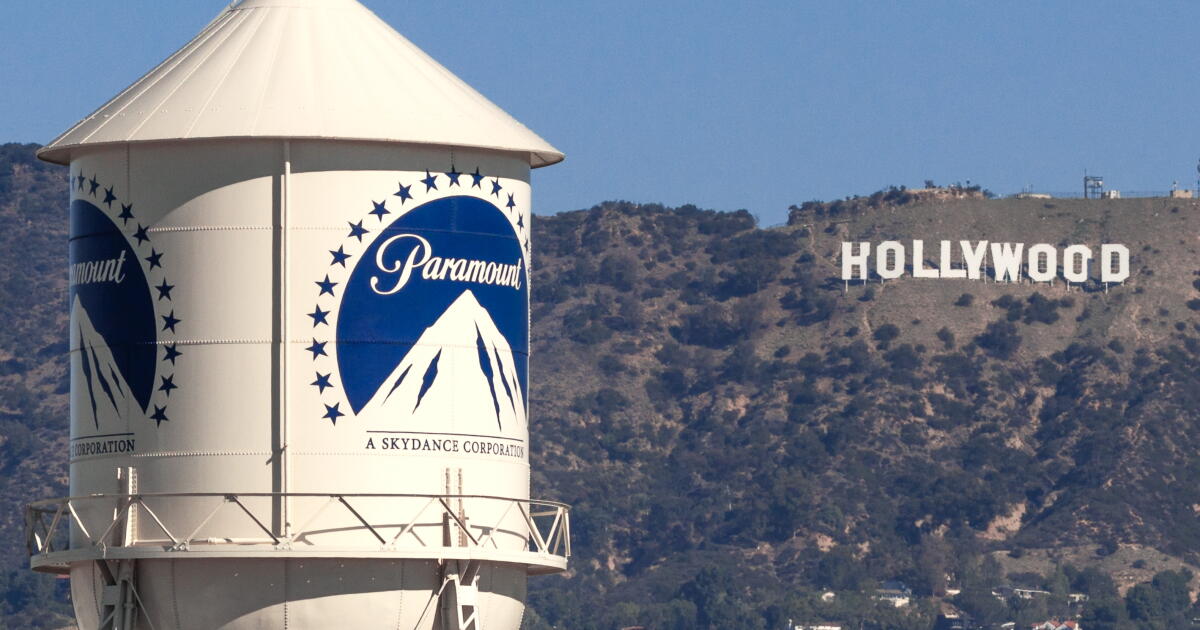
Paramount Skydance’s proposed takeover of Warner Bros. Discovery cleared a major hurdle Thursday as Warner stockholders overwhelmingly embraced the $111-billion deal.
Approval was expected. Paramount Chairman David Ellison’s proposal would pay Warner investors $31 a share — four times the price of the company’s stock a year ago. Warner Bros. officials did not disclose the precise vote count during the nine-minute special shareholder meeting beyond saying the merger “received sufficient votes and has overwhelmingly passed.”
Paramount offered the generous premium to compete with, and ultimately triumph over, Netflix, which withdrew from the auction in late February after Ellison’s father, Oracle billionaire Larry Ellison, agreed to guarantee the financing of his son’s deal.
The merger would create a new Hollywood behemoth by giving Paramount, which owns CBS and the Melrose Avenue film studio, such valuable assets as HBO, HBO Max, CNN, TBS, Food Network and Warner Bros.’ film and television studios in Burbank. Warner controls beloved TV shows, franchises and movies, including “Casablanca,” Harry Potter, D.C. Comics, “Game of Thrones,” “Euphoria,” “The Pitt,” and “Rooster.”
“Shareholder approval marks another important milestone towards completing our acquisition of Warner Bros. Discovery, building on our successful equity and debt syndications and progress across regulatory approvals,” Paramount said Thursday in a statement. “We look forward to closing the transaction in the coming months and realizing the creation of a next-generation media and entertainment company that better serves both the creative community and consumers.”
Paramount now must secure regulatory approvals in the U.S. and abroad. Ellison, who is poised to honor President Trump with a dinner Thursday evening in Washington, hopes to complete the deal by late summer.
Shareholders, however, made known their disdain for Warner Chief Executive David Zaslav’s proposed golden parachute, which could swell to $887 million, depending on when the transaction closes. His cash, stock and options would be valued at more than $550 million. Warner board members also agreed to pay his tax bill, which could approach $330 million, should the merger be completed by year’s end.
Shareholders, in a non-binding vote, voted against Zaslav’s package.
Paramount’s deal has encountered significant opposition in Hollywood and beyond.
More than 4,000 filmmakers, actors and industry workers, including Ben Stiller, Bryan Cranston, Ted Danson, J.J. Abrams and Kristen Stewart have signed an open letter asking California Atty. Gen. Rob Bonta and other regulators to block the deal.
Opponents fear the consolidation would be lead to massive layoffs and diminish the quality of programming that Warner Bros., CNN and HBO are known for. Hollywood has sustained thousands of layoffs over the last six years; the film production economy hasn’t recovered from shutdowns during the 2023 labor strikes.
“This is already an incredibly consolidated industry where writers have seen merger after merger leave fewer and fewer companies in control of what our members can get paid to write,” Michele Mulroney, president of the Writers Guild of America West, said Wednesday during a press briefing organized by Free Press and other progressive groups that oppose the merger.
“A combined Warner Bros. and Paramount would create a media behemoth with tremendous leverage to reduce content, to raise prices, to increase control of production, to suppress member compensation, worsen working conditions and silence the voices of our members,” Mulroney said.
Trump has long agitated for changes at CNN, and few expect his Justice Department to block the transaction. Defense Department Secretary Pete Hegseth echoed the sentiment. “The sooner David Ellison takes over that network the better,” Hegseth told reporters in March.
It’s unclear whether Bonta or other state attorney generals will file a lawsuit to try to stop the deal. Bonta previously told The Times that his office is reviewing the consolidation.
“This deal can get blocked. I personally think it will get blocked — or undone,” Alvaro Bedoya, former Federal Trade Commission member who now serves as a senior adviser to the American Economic Liberties Project, told reporters Wednesday. He pointed to other proposed mergers that unraveled due to fierce opposition, including the proposed combinations of grocery giants Kroger and Albertson’s.
David Ellison has promised to keep HBO entact and the Paramount and Warner Bros. movie studios humming. He promised cinema owners last week that a combined Paramount-Warner Bros. would release 30 movies into theaters each year.
“This transaction uniquely brings together complementary strengths to create a company that can greenlight more projects, back bold ideas, support talent across multiple stages of their careers,” Paramount said in a statement to push back on the opposition. The company would have the power to “bring stories to audiences at a truly global scale — while strengthening competition by ensuring multiple scaled players are investing in creative talent.”
To finance the Warner takeover, Ellison’s billionaire father, Larry Ellison, has agreed to guarantee the $45.7 billion in equity needed. Bank of America, Citibank and Apollo Global have agreed to provide Paramount with more than $54 billion in debt financing.
Paramount has enlisted a former Trump administration official, lawyer Makan Delrahim, who served as Trump’s antitrust chief during the president’s first term.
In a confident move, Delrahim filed to win the Justice Department’s blessing in December — even though Paramount didn’t have an agreement with Warner Bros. Discovery’s board at the time. In February, a key deadline for the Justice Department to raise issues with Paramount’s proposed Warner takeover passed without comment from the Trump regulators.
Eaton wildfire survivors’ anger about Southern California Edison’s burying of electric wires in Altadena boiled over Tuesday with residents calling on government officials to temporarily halt the work.
In a letter to the Los Angeles County Board of Supervisors, more than 120 Altadena residents and the town’s council wrote that they had witnessed “manifest failures” by Edison in recent months as it has been tearing up streets and digging trenches to bury the wires.
The residents cited the unexpected financial cost of the work to homeowners and possible harm to the town’s remaining trees. They also pointed out how the work will leave telecommunication wires above ground on poles.
“The current lack of coordination is compounding the stress of a community still reeling from the Eaton Fire, and risks causing further irreparable harm,” the residents wrote.
The council voted unanimously Tuesday night to send the letter.
Scott Johnson, an Edison spokesman, said Wednesday that the company has been working to address the concerns, including by looking for other sources of funds to help pay for the homeowners’ costs.
“We recognize this community has already faced a number of challenges,” he said.
Johnson said the company will allow homeowners to keep existing overhead lines connecting their homes to the grid if they are worried about the cost.
Edison’s crews, Johnson said, have also been trained to use equipment that avoids roots and preserves the health of trees.
The utility has said that burying the wires as the town rebuilds thousands of homes destroyed in the fire will make the electrical grid safer and more reliable.
But anger has grown as work crews have shown up unexpectedly and residents learned they’re on the hook to pay tens of thousands of dollars to connect their homes to the buried lines.
Residents have also found the crews digging under the town’s oak and pine trees that survived last year’s fire. Arborists say the trenches could destroy the roots of some of the last remaining trees and kill them.
Amy Bodek, the county’s regional planning director, recently warned Edison that a government ordinance protects oak trees and that “utility trenching is not exempt from these requirements.”
Residents have also pointed out that in much of Altadena, the telecom companies, including Spectrum and AT&T, have not agreed to bury their wires in Edison’s trenches. That means the telecom wires will remain on poles above ground, which residents say is visually unappealing.
“While our community supports the long-term benefits of moving utilities underground, the current execution by SCE is placing undue financial and planning burdens on homeowners, causing irreparable harm to our heritage tree canopy, and proceeding without adequate local oversight,” the residents wrote.
They want the project halted until the problems are addressed.
Edison announced last year that it would spend as much as $925 million to underground and rebuild its grid in Altadena and Malibu, where the Palisades fire caused devastation.
The work — which costs an estimated $4 million per mile — will earn the utility millions of dollars in profits as its electric customers pay for it over the next decades.
Pedro Pizarro, chief executive of Edison International, told Gov. Gavin Newsom last year that state utility rules would require Altadena and Malibu homeowners to pay to underground the electric wire from their property line to the panel on their house. Pizarro estimated it would cost $8,000 to $10,000 for each home.
But some residents, who need to dig long trenches, say it will cost them much more.
“We are rebuilding and with the insurance shortfall, our finances are stretched already,” Marilyn Chong, an Altadena resident, wrote in a comment attached to the letter. “Incurring the additional burden of financing SCE’s infrastructure is not something we can or should have to do.”
Other fire survivors complained of Edison’s lack of planning and coordination with residents.
“I’ve started rebuilding, and apparently there won’t be underground power lines for me to connect with in time when my house will be done,” wrote Gail Murphy. “So apparently I’m supposed to be using a generator, and for how long!?”
Johnson said the company has set up a phone line for people with concerns or questions. That line — 1-800-250-7339 — is answered Monday through Saturday, he said.
Residents can also go to Edison’s office in Altadena at 2680 Fair Oaks Avenue. The office is open Monday to Friday from 8 to 4:30.
It’s unclear if the Eaton fire would have been less disastrous if Altadena’s neighborhood power lines had been buried.
The blaze ignited under Edison’s towering transmission lines that run through Eaton Canyon. Those lines carry bulk power through the company’s territory. In Altadena, Edison is burying the smaller distribution lines, which carry power to homes.
The government investigation into the cause of the fire has not yet been released. Pizarro has said that a leading theory is that a century-old transmission line, which had not carried power for 50 years, somehow re-energized to spark the blaze.
The fire killed at least 19 people and destroyed more than 9,400 homes and other structures.
A former female staffer who worked for Beast Industries, the media venture behind the popular YouTube channel MrBeast, is suing the company, alleging she was sexually harassed and fired shortly after she returned from maternity leave.
The employee, Lorrayne Mavromatis, a Brazilian-born social media professional, alleges in a lawsuit she was subjected to sexual harassment by the company’s management and demoted after she complained about her treatment. She said she was urged to join a conference call while in labor and expected to work during her maternity leave in violation of the Family and Medical Leave Act, according to the federal complaint filed Wednesday in the U.S. District Court for the Eastern District of North Carolina.
“This clout-chasing complaint is built on deliberate misrepresentations and categorically false statements, and we have the receipts to prove it. There is extensive evidence — including Slack and WhatsApp messages, company documents, and witness testimony — that unequivocally refutes her claims. We will not submit to opportunistic lawyers looking to manufacture a payday from us,” Gaude Paez, a Beast Industries spokesperson, said in a statement.
Jimmy Donaldson, 27, began MrBeast as a teen gaming channel that soon exploded into a media company worth an estimated $5 billion, with 500 employees and 450 million subscribers who watch its games, stunts and giveaways.
Mavromatis, who was hired in 2022 as its head of Instagram, described a pervasive climate of discrimination and harassment, according to the lawsuit.
In her complaint, she alleges the company’s former CEO James Warren made her meet him at his home for one-on-one meetings while he commented on her looks and dismissed her complaints about a male client’s unwanted advances, telling her “she should be honored that the client was hitting on her.”
When Mavromatis asked Warren why MrBeast, Donaldson, would not work with her, she was told that “she is a beautiful woman and her appearance had a certain sexual effect on Jimmy,” and, “Let’s just say that when you’re around and he goes to the restroom, he’s not actually using the restroom.”
Paez refuted the claim.
“That’s ridiculous. This is an allegation fabricated for the sole purpose of sparking headlines,” Paez said.
Mavromatis said she endured a slate of other indignities such as being told by Donaldson that she “would only participate in her video shoot if she brought him a beer.”
“In this male-centric workplace, Plaintiff, one of the few women in a high-level role, was excluded from otherwise all-male meetings, demeaned in front of colleagues, harassed, and suffered from males be given preferential treatment in employment decisions,” states the complaint.
When Mavromatis raised a question during a staff meeting with her team, she said a male colleague told her to “shut up” or “stop talking.”
At MrBeast headquarters in Greenville, N.C., she said male executives mocked female contestants participating in BeastGames, “who complained they did not have access to feminine hygiene products and clean underwear while participating in the show.”
In November 2023, Mavromatis formally complained about “the sexually inappropriate encounters and harassment, and demeaning and hostile work environment she and other female employees had been living and experiencing working at MrBeast,” to the company’s then head of human resources, Sue Parisher, who is also Donaldson’s mother, according to the suit.
In her complaint, Mavromatis said Beast Industries did not have a method or process for employees to report such issues either anonymously or to a third party, rather employees were expected to follow the company’s handbook, “How to Succeed In MrBeast Production.”
In it, employees were instructed that, “It’s okay for the boys to be childish,” “if talent wants to draw a dick on the white board in the video or do something stupid, let them” and “No does not mean no,” according to the complaint.
Mavromatis alleges that she was demoted and then fired.
Paez said that Mavromatis’s role was eliminated as part of a reorganization of an underperforming group within Beast Industries and that she was made aware of this.
Shawna Thomas, who exited CBS News earlier this year, has joined MS NOW as political director.
The cable network formerly known as MSNBC announced Wednesday that Thomas will lead the organization’s political unit and direct coverage of campaigns and elections. She will also appear as an on-air analyst.
Thomas lands at the progressive-leaning MS NOW after five years as executive producer for “CBS Mornings.” She announced her departure from the program last month, just as co-host Gayle King was signed to a new deal.
Thomas is among a number of executives and on-air talent who have left CBS News since the arrival of editor-in-chief Bari Weiss, although she told colleagues her decision was about getting away from the grind of early morning television.
MS NOW is owned by Versant, a company created out of the cable assets spun off by Comcast. The new company chose not to rely on the news-gathering resources of NBC News, which oversaw MSNBC, and is building its own editorial operation.
Last month, MS NOW poached long time NBC News White House correspondent Peter Alexander, who will have a daily program on MS NOW and handle extended breaking news coverage starting later this year.
Thomas is a veteran of political coverage. She is a former Washington bureau chief for the news division at Vice Media, overseeing politics and policy stories for the HBO series “Vice News Tonight.”
Thomas spent a decade working for NBC News in various production roles, including planning its election coverage. She also had a stint as an executive at Quibi, the short-form streaming video platform.
Amid the bustle and glitz of last week’s CinemaCon in Las Vegas, one question loomed over the annual trade convention — how will the proposed Paramount Skydance-Warner Bros. Discovery deal affect the movie theater business?
That anxiety showed up in a state of the industry speech from Cinema United trade group President Michael O’Leary, who reiterated his organization’s opposition to further industry consolidation.
It showed up in a trailer for Amazon MGM Studios’ upcoming film “Spaceballs: The New One,” when a voiceover poked fun at Hollywood studios “merging willy-nilly” as images of the Paramount sign and Warner Bros. water tower flashed across the screen.
And the subject again took center stage — literally — when Paramount Chief Executive David Ellison himself gave a speech during his studio’s presentation at Caesars Palace. He sought to reassure the assembled movie theater operators and exhibition executives that the combined company would indeed release a minimum of 30 films a year.
You’re reading the Wide Shot
Samantha Masunaga delivers the latest news, analysis and insights on everything from streaming wars to production — and what it all means for the future.
By continuing, you agree to our Terms of Service, which include arbitration and a class action waiver. You agree that we and our third-party vendors may collect and use your information, including through cookies, pixels and similar technologies, for the purposes set forth in our Privacy Policy such as personalizing your experience and ads.
“I wanted to look every single one of you in the eye and give you my word,” he said during an onstage speech, in which he also committed to a 45-day theatrical window and 90-day period before films go to streaming services. “People can speculate all they want, but I am standing here today telling you personally that you can count on our complete commitment. And we’ll show you we mean it.”
It’s true that Paramount has nearly doubled its theatrical releases since Ellison took over. As he noted in his speech, the storied studio is now planning 15 films this year, up from eight in 2025.
But as I’ve written previously, theater owners and other studio executives question how releasing 30 movies a year across the combined Paramount-Warner Bros. would work — not only in terms of giving each film the proper marketing campaign to succeed in theaters but also because of the massive cost cuts that will inevitably occur once the merger is final.
Still, Ellison’s commitment to 30 films a year got a round of enthusiastic applause — and at least one high-profile boost.
A day earlier, AMC Entertainment Holdings Inc. Chief Executive Adam Aron told me in an interview that he backed Ellison’s takeover of Warner, saying he and AMC believed in the tech scion’s talent as a filmmaker and a movie executive, as well as his pledge to release those 30 films a year.
“We’re enthusiastic that David will fulfill his promises,” Aron said. “And that in the end, this will prove to be a good thing for our company and our industry.”
Not everyone shares that enthusiasm.
More than 4,000 people have now signed an open letter opposing the Paramount-Warner deal, arguing that consolidating two studios will lessen consumer choice and job opportunities for creatives, particularly at a time when Hollywood is already struggling. (Notable signatories include “Dune” director Denis Villeneuve, actors Glenn Close and Emma Thompson, as well as director and producer JJ Abrams.)
O’Leary of Cinema United similarly wasn’t convinced.
“While recent pledges attempt to address the threats of consolidation to our industry, they are not yet sufficient in addressing our concerns,” he said in a statement released hours after Ellison’s speech. “We remain open to tangible commitments that will ensure a vibrant global theatrical exhibition industry for years to come.”
Elsewhere at CinemaCon, the mood was upbeat.
Warner Bros. film chiefs Mike De Luca and Pam Abdy struck a triumphant tone after an award-winning year for the studio, capped off by the best picture win for “One Battle After Another.”
They unveiled footage from new films like the upcoming “Digger” from director Alejandro G. Iñárritu and brought out lead actor Tom Cruise to a sustained standing ovation from the audience. And both De Luca and Abdy espoused optimism for the future of the theatrical business. The studio plans to release 14 films this year and as many as 18 for 2027.
“The film business has always required smart betting, and we have 4 billion reasons from last year to think we’re holding the right cards,” De Luca said during the presentation, referring to the studio’s worldwide box office revenue last year.
“We all know they’re not all going to work. That comes with taking swings,” Abdy said of the studios’ films. “There’s no version of this business that’s risk-free. But our job is to step up, make our bets and own it when it doesn’t work.”
But the end of the presentation felt more somber, with the executives asking the heads of Warner Bros.’ labels to come to the stage and be recognized. Shortly after, they asked Warner Bros. employees in the audience to stand for applause. It was hard to escape the feeling that this may be the end of an era.
As my colleague Meg James reported, the cuts hit Disney’s television and movie studios, sports giant ESPN, its product and technology unit, corporate functions and marketing. Even Marvel Studios’ visual development team was affected.
The layoffs are one of the first major moves under new Disney Chief Executive Josh D’Amaro, who took the reins of the company last month. In a message to employees, he said the company needed to “constantly assess how to foster a more agile and technologically-enabled workforce to meet tomorrow’s needs.”
What I’m watching
Some friends and I watched “Fukushima: A Nuclear Nightmare” this past weekend, a truly eye-opening documentary that explains what happened during the March 11, 2011, nuclear accident and whether the world has learned anything from it.
Reed Hastings, who helped launched Netflix from a fledgling DVD mail-order business into a global streaming juggernaut, plans to exit the company after nearly three decades.
Hastings will leave the company he co-founded to focus on philanthropy and other efforts, the streaming company announced said Thursday.
Hastings, who serves as chairman of the Los Gatos company’s board, told Netflix he will not stand for reelection when his term expires in June, Netflix said in a letter to shareholders timed to its fiscal first-quarter earnings.
He said the commitment of Netflix Co-Chief Executives Ted Sarandos and Greg Peters was “so strong that I can now focus on new things.”
Peters described Hastings, 65, as the company’s “biggest champion,” and that he “is a part of our DNA.”
Sarandos called Hastings a “true history maker,” saying in a statement that Hastings’ “selfless, disciplined leadership style” will continue to shape Netflix’s path ahead.
Hastings’ exit was not unexpected as his role in the company diminished after he stepped aside as co-chief executive of Netflix in 2023.
During his tenure, Hastings oversaw the substantial growth of the streaming colossus. Today, Netflix has a market cap of about $455 billion, more than double that of the Walt Disney Co.
“My real contribution at Netflix wasn’t a single decision; it was a focus on member joy, building a culture that others could inherit and improve, and building a company that could be both beloved by members and wildly successful for generations to come,” Hastings said in a statement.
For the first quarter of 2026, Netflix reported nearly $12.3 billion of revenue, up 16% compared to the same time period a year ago. Operating income grew 18% to $3.9 billion for the three-month period ending March 31.
Both figures were ahead of the company’s guidance, a feat the streamer attributed to slightly higher than expected subscription revenue.
The company reported net income of $5.3 billion, up more than 80% compared to the $2.9 billion it recorded during the same period last year. Earnings per share was $1.23, up from 66 cents last year.
Netflix said it continues to expect 2026 revenue ranging from $50.7 billion to $51.7 billion, with an operating margin of 31.5%.
The earnings release and the Hastings announcement came after markets closed.
Netflix shares closed at $107.79, virtually unchanged. After hours, the shares dropped more than 8% to $98.26. They have climbed about 18% this year.
The Los Gatos-based company had previously secured an $82.7-billion deal to buy Warner Bros. studios and streaming services in December but it withdrew from the bidding war in late February after Paramount Skydance offered $31 a share. As part of the switch, Netflix was paid a $2.8-billion termination fee.
“Warner Bros. would have been a nice accelerant for our strategy, but only at the right price,” Netflix said in its investor letter. “We have multiple ways to achieve our goals (including producing, licensing, and partnering) and we’re constantly seeking to allocate our resources to the most attractive opportunities to maximize the value we are delivering to our members.”
Before Reed Hastings revolutionized the global entertainment business, he sold Rainbow vacuum cleaners door-to-door during his gap year between high school and Bowdoin College, where he earned his bachelor’s degree in mathematics.
During his sales pitch, Reed would first clean a homeowner’s carpet with their vacuum and then demonstrate how to clean using a Rainbow. The job helped hone his ability to understand customers, a core foundation of Netflix’s user-driven, candor-obsessed culture.
After Bowdoin and before he earned his master’s degree in computer science at Stanford, Hastings served in the Peace Corps (he also did a stint in the Marines) teaching high school math in Swaziland (now Eswatini).
“Once you have hitchhiked across Africa with ten bucks in your pocket, starting a business doesn’t seem too intimidating,” he told Time magazine.
While those experiences helped shape Hasting’s business sense, it was a late fee for a video that became the catalyst for launching Netflix, upending the way viewers consumed content and disrupting how Hollywood does business.
As the story goes, Hastings had misplaced a VHS tape of “Apollo 13” racking up a hefty $40 charge.
It was 1997 and his company Pure Software had just been acquired. It dawned on him that a gym membership offered a better business model, than the average video store — where you paid a set fee for the month and you could work out as much or as little as you liked. He thought, why not apply that to the movie rental business?
Netflix, began in Scotts Valley, Calif., as a mail-order business. Customers paid a tiered monthly fee to rent DVDs online which were delivered by mail.
The business exploded racking up millions of customers as it jettisoned the post office to an internet-based business. As the business accelerated across the world it also expanded, creating original content such as award-winning blockbusters such as “Stranger Things” and “House of Cards.”
The company’s innovation extended internally too. Hastings became known for implementing a unique and controversial culture of radical transparency, where employee evaluations are brutally candid and average performances can be grounds for termination.
Bruno Mars tickets running for $2,000 and ones for SZA costing $600 caught California lawmakers’ attention. They’re advancing two bills targeting the resale market.
Earlier this year, tickets to see SZA perform at the Crypto Arena in Los Angeles were selling for $600 the day before they officially went on sale at $35 a piece.
In San Francisco, tickets to see Sam Smith at the newly renovated Castro Theater went on sale for $120, only to be quickly snatched up by scalpers and resold for upwards of $600.
Those are some of the stories that California lawmakers are citing as they advance two plans to change the ticketing landscape. One caps the extent to which resellers can mark up the original ticket price while the other prohibits resellers from selling tickets they don’t yet own.
Democratic Assemblymembers Issac Bryan of Culver City and Matt Haney of San Francisco are each carrying bills that they say would protect consumers from fraudulent and deceptive ticket sales.
Both measures are backed by the ticket market’s dominant seller, Beverly Hills-based Live Nation, which owns Ticketmaster. Its support has some worried that the bills will help the company crush its competitors and jack up prices.
A federal jury in New York this week found that the company illegally acted as a monopoly in a victory for, among others, California Attorney General Rob Bonta, who with colleagues in other states sued the company two years ago and kept going after federal prosecutors settled. Live Nation is now awaiting penalties.
Despite these headwinds, the ticket bills are sailing through the Legislature.
Supporters say the legislation has nothing to do with the antitrust case against Live Nation and helps consumers. Opponents disagree.
“The state Legislature should really be standing up for consumers instead of advancing bills that are there to help a monopoly that has been caught on record calling its fans stupid and has bragged about robbing them blind,” said Jose Barrera, national vice president for the far west region at the League of United Latin American Citizens, a civil rights advocacy group.
Ticketmaster’s competitors in the online resale market are lobbying against the measures, a sign that they view the proposals as a threat to their business.
Jack Sterne, StubHub’s head of policy communications, wrote to CalMatters, stating, “Passing laws that hand the Ticketmaster monopoly more power and don’t actually make tickets more affordable is the last thing California’s leaders should do.”
But Stephen Parker, executive director of the National Independent Venue Association, which is co-sponsoring the bills, argues that they will regulate the marketplace to better protect fans by limiting price gouging and encouraging the face value — or below face value — exchange of tickets.
“Ultimately, that is what these bills will do, in addition to making sure that the tickets are actually real,” he said. “That is a good thing for California consumers. It’s a good thing for artists and it’s a good thing for these small businesses and nonprofits that make up the independent stages across the state.”
A Live Nation spokesperson said in a statement to CalMatters, “The resale lobby constantly tries to change the subject by pointing fingers at Ticketmaster, even though it has less than 25% of the resale market. This has nothing to do with anyone’s monopoly, but rather is about protecting fans from scalpers and the resale sites that cater to them.”
The company has spent roughly $165,000 on lobbying efforts this legislative session, including to support Bryan’s bill.
‘Unlikely allies’
Bryan’s Assembly Bill 1349 would ban the sale of speculative tickets — or tickets that are not in the possession or ownership of the people who list them online. In an April hearing, Bryan said the bill protects consumers from predatory mark ups.
“This bill is so important that, after our introduction, it brought unlikely allies together,” Bryan said, according to the CalMatters Digital Democracy database. “In fact, this bill brought the Giants and the Dodgers together, brought the National Independent Venue Association and Live Nation together. It brought Kendrick Lamar and Kid Rock together. It brought Isaac Bryan and Donald Trump together.”
Several secondary ticket sellers are fighting the measure, including StubHub, SeatGeek and Vivid Seats. The three companies have spent roughly $1.1 million dollars on lobbying efforts this legislative session, which included opposition to Bryan’s bill.
People watch fireworks during Bad Bunny’s halftime show from a parking garage outside Super Bowl LX at Levi’s Stadium in Santa Clara on Feb. 8, 2026. Photo by Jungho Kim for CalMatters
Opponents including Robert Herrell, executive director for the Consumer Federation of California, argue that the bill strengthens Live Nation Ticketmaster’s grip on the ticketing and live entertainment industry. According to them, the measure would give Live Nation complete control over the ticket even after it has been purchased — meaning, for example, that consumers could lose the ability to sell it or give it away.
“There’s no consumer choice in the matter,” said Herrell. “They can keep people out of shows if they want to. There have been situations where, if you bought a ticket on the secondary market, you’ve been denied entry into a show.” Proponents say Herrell and other opponents are mistaken. They say they are not trying to prevent transferability but rather, they want to protect fans from speculative costs.
“We want those rooms full,” said Ron Gubitz, executive director of Music Artists Coalition, which is co-sponsoring both bills. “So you have to be able to transfer a ticket. We just want it to be in a way that’s safe, trustworthy and not creating this run on the market that exists now.”
Gubitz pointed to a recent Bruno Mars concert, where tickets were on StubHub for $400 to $2,000 before they were on sale through Ticketmaster.
“That’s crazy,” he said. “That’s a speculative ticket that Bryan’s bill is trying to stop. That shouldn’t happen. It’s not fair to anybody, except for the secondary (market). It seems great for them.”
Price caps in a free market
Haney’s Assembly Bill 1720, also known as the California Fans First Act, would put a 10% cap on resale event ticket markups, inclusive of the ticket fees. In other words, a reseller could not charge more than 10% higher than the original ticket price.
In an interview with CalMatters, Haney said artists, independent venues and downtowns are currently being “screwed over and exploited” by scalpers and brokers.
“We can’t allow the status quo to continue if we want to ensure Californians have access to affordable tickets to see their favorite artists or if we want independent venues or the broader landscape of musicians and artists to thrive in our state,” he said.
Haney rejected the idea that his bill would strengthen the Live Nation Ticketmaster monopoly, saying that the company is one of the biggest operators and profiteers of the secondary ticket market and would therefore be subject to the same restrictions as any other platform or broker.
“I don’t think it’s a free market to allow folks to come in and buy up all these tickets and then create scarcity and then you’re now required to buy your ticket at a much higher price from someone who had nothing to do with the event,” he said. “This is not something we would ever allow for airplane tickets or even dinner reservations.”
The bill has been criticized by opponents like Diana Moss, vice president and director of competition policy at Progressive Policy Institute, who said price caps notoriously distort the market, describing them as “anti-consumer, anti-competitive and anti-artist.”
“If you shut down the resale market with price caps then guess what? Ticket buyers have no place to go but right back to Ticketmaster,” said Moss. “If (Live Nation) succeed(s) in decimating the resale market, then they steer millions and millions of fans back to their own ticketing platform where they charge monopoly ticket fees and where fans are hostage to their glitchy online platform and all of their data, privacy and security concerns that we always hear about in the news.”
Those concerns didn’t stop the bill from passing out of the Assembly Committee on Arts, Entertainment, Sports and Tourism last week with a 6-1 vote. The bill also passed out of the Assembly Committee on Privacy & Consumer Protection on Thursday with a 9-4 vote.
Mihalovich is a California Local News fellow for CalMatters.
A TRAVEL company in the UK has gone into administration after nearly 20 years.
Regen Central Ltd, a travel company that specialises in package holidays to the likes of Europe, South East Asia and the Middle East has entered liquidation with all holidays cancelled.
Sign up for the Travel newsletter
Thank you!
A UK-based travel company has cancelled all bookingsCredit: Alamy
The specific number of Brits impacted by the announcement is currently unclear.
However, some Brits might not get refunds if they had a holiday booked.
Records show that the company’s ATOL protection was withdrawn on January 13.
ATOL is the UK government-backed financial protection scheme that comes into place when travellers book a package trip that includes a flight.
The licensing is required for all tour companies in the UK and guarantees that customers get a refund if the company collapses.
The UK-based travel agency launched back in 2009 and is Hertfordshire based and was known for selling holidays to the likes of Italy, Bali, Thailand and Dubai.
A spokesman for the Civil Aviation Authority (CAA) said: “We understand the company had no outstanding ATOL-protected bookings.
“Bookings sold as accommodation only, non- flight packages, and flight only bookings for which tickets were issued are not protected by the ATOL scheme.
“As there are no outstanding ATOL-protected bookings, no refunds will be issued.”
The CAA also confirmed that any travellers seeking a refund for ATOL-protected bookings must do this through its claims process.
However, many bookings such as accommodation-only, non-flight packages and ticketed flight only deals, might not be covered by the ATOL protection scheme.
In simpler terms, this could mean for holidaymakers that have booked with Regen Central Ltd, they might not get a refund.
The spokesperson for the CAA added: “If you believe you are owed a refund for an ATOL-protected booking, under Regen Central Ltd’s ATOL, please contact us via email at claims@caa.co.uk.”
The company was officially ordered to wind-up – a court ruling that forces a company into compulsory liquidation – in May last year, with the process commencing in August.
Regen Central Ltd has entered liquidation after losing its Air Travel Organisers’ Licensing, leaving customers without refunds after their holidays were cancelled
20:00, 16 Apr 2026Updated 20:04, 16 Apr 2026
Regen Central Ltd ceased trading on January 13 (stock)(Image: Getty Images)
All bookings made with a popular British travel company have been cancelled after it entered liquidation.
Regen Central Ltd, a Hertfordshire-based travel company, sold holiday packages to Europe and Southeast Asia. It entered liquidation on January 13 after losing its Air Travel Organisers’ Licensing (ATOL).
ATOL, a scheme administered by the Civil Aviation Authority (CAA), provides financial protection for package holidays or flights booked through registered travel firms, covering refunds or repatriation if a firm collapses.
However, certain bookings fall outside ATOL protection, including accommodation-only and non-flight packages, leaving affected customers without the same safeguards.
The CAA said: “We understand the company had no outstanding ATOL-protected bookings. Bookings sold as accommodation only, non-flight packages, and flight only bookings for which tickets were issued are not protected by the ATOL scheme. As there are no outstanding ATOL-protected bookings, no refunds will be issued.
“If you believe you are owed a refund for an ATOL-protected booking, under Regen Central Ltd’s ATOL, please contact us via email at claims@caa.co.uk.”
Regen Central Ltd was established in 2011 and offered packages to Italy, Bali and Thailand, as well as destinations in the Middle East including Dubai and Saudi Arabia. It previously traded under the names One Haji and Umrah, Regen Travels and Oneworld Travels.
The Glasgow-based agency offered holiday packages to destinations including Disneyland, Disney World, Universal Studios, New York City, Toronto, Niagara Falls, Miami and various cruises.
Companies House records show the independent operator applied to be struck off the register on October 13, 2025. It was formally dissolved on January 6 and stopped trading as an Air Travel Organisers’ Licensing scheme-protected provider on January 20.
Several other British travel companies have collapsed in recent months, including Gold Crest Holidays, Great Little Escapes, Jetline Travel and Asiara UK Ltd.
Avid Technology, the editing software company, is the latest entertainment industry player to introduce AI into its toolbox.
The company behind industry-standard platforms Pro Tools and Media Composer said it is entering a multiyear partnership with Google Cloud.
The goal is to implement both generative and agentic AI so that users can turn the “mostly manual process into an intelligent, AI-assisted experience,” Avid said in a statement Thursday morning.
“The primary bottleneck in Hollywood is manual labor [in editing] and managing thousands of hours of high-risk footage,” Avid Chief Executive Wellford Dillard told The Times. “This isn’t us just adding a new tool. It’s going from static files sitting on hard drives, to living data that understands its context.”
Google’s Gemini models and Vertex AI will be embedded directly into Avid’s processes, offering customers a chance to accelerate their editing time. Avid’s Media Composer, the editing system used on most professional film and TV productions, will now include a Gemini extension that could enhance metadata and generate B-Roll.
The company said that, overall, using AI on its platforms enables systems to understand the context of every file — allowing users to describe what they need based on visual movements, on-screen dialogue and emotional cues.
Dillard said that when someone uses Media Composer for editing, it can often be frustrating to click in and out of the application in search of the right shot buried within hours of footage. Now, he said, clients can describe the shot to AI, which could find it faster.
Anil Jain, global managing director at Google Cloud, said that these tools can do both simple functions like tweaking a scene’s background, or achieve more complex tasks, like creating promotional material.
“Most storytellers don’t get excited about putting together a promo, but if they could leverage AI to help do it a lot faster, then it becomes more interesting, gets it done and opens up the possibility of more creative time,” Jain said.
Ramesh Srinivasan, a professor of information studies at UCLA, said these kinds of deals are the “new normal” and that “almost every single industry is being sort of eaten up by the Pac-Man of AI.”
“Editing is a task that involves creativity and human artisanship. An editor is not just someone who mechanically reproduces a number of steps. They have a sense of storytelling in mind,” said Srinivasan. “In terms of AI-created content, the initial research is showing that it is flattening creativity. It’s putting out the dominant patterns that it can copy, rather than reflect, the specific diverse and creative ways we can write, or edit.”
To Dillard, Avid’s CEO, incorporating AI is a way to ensure that creators can make enough content to keep up with audiences’ increasing demands.
“The demand for content is almost insatiable, and dollars are limited. This work can help compress those production timelines [and make] more content,” Dillard said. “Our hope is that we’re actually enabling the world, within the same budget constraints that the studios have today. You’re producing more content, and you are also opening the doors for smaller production houses to be able to produce more content competitively.”
NEW YORK — Beverly Hills-based Live Nation and its Ticketmaster subsidiary faced a bruising courtroom loss Wednesday after a federal jury found that the company operated a monopoly over concert venues.
The verdict by a Manhattan, N.Y., jury came after a five-week trial and caps a closely watched case that could have far reaching effects across the music industry, potentially leading to the breakup of the companies.
Ticketmaster is the world’s largest ticket seller for live events, while Live Nation is a dominant force in the concert business.
The civil case began when the federal government alleged that Live Nation used its clout to engage in a variety of anticompetitive practices, including preventing venues from using multiple ticket sellers.
“It is time to hold them accountable,” Jeffrey Kessler, an attorney for the states, said in a closing argument. He called Live Nation a “monopolistic bully” that drove up prices for ticket buyers.
Jurors agreed. They found that Ticketmaster had overcharged consumers by $1.72 for each ticket. The judge will assess damages later.
Live Nation, which owns and operates hundreds of venues, countered that it did not violate U.S. antitrust laws, arguing that artists, sports teams and venues decide prices and ticketing practices.
“Success is not against the antitrust laws in the United States,” Live Nation attorney David Marriott said in his summation.
Live Nation said in a statement that the “jury’s verdict is not the last word on this matter,” noting the court had yet to rule on a motion it had filed to challenge its liability in the case.
The trial revealed some embarrassing internal communications, including emails from a Live Nation executive who called customers “so stupid” and said the company was “robbing them blind, baby.” The executive, Benjamin Baker, testified that the messages were “very immature and unacceptable.”
The original lawsuit, led by a cadre of interested parties including the federal government, 39 states and the District of Columbia, dates to 2024. It alleged that Live Nation and Ticketmaster monopolized various aspects of the live music industry, such as concert promotion, venue operations, artist management and ticketing services.
Live Nation manages more than 400 artists and controls more than 265 venues in North America, while Ticketmaster simultaneously controls around 80% of the primary ticket marketplace and also is increasing its involvement in the resale market, according to the lawsuit.
Last month, Live Nation secured an unexpected tentative settlement with the Department of Justice in which the company agreed to several structural changes to its business, including adjustments to ticketing deals with venues, capping service fees and paying a $280-million fine.
However, more than 30 states, including California, decided to proceed with the trial. California Atty. Gen. Rob Bonta praised these state-led efforts to protect consumers, even amid dwindling antitrust enforcement from the Trump administration, he said in a statement.
“This is a historic and resounding victory for artists, fans, and the venues that support them,” Bonta said. “We are incredibly proud of today’s outcome … this verdict shows just how far states can go to protect our residents from big corporations that are using their power to illegally raise prices and rip-off Americans.”
Though a verdict has been reached, remedies for how Live Nation will be held accountable for its actions are still being decided by the judge.
One possibility is that the companies could be split up, an outcome favored by critics.
National Independent Venue Assn. Executive Director Stephen Parker said Ticketmaster and Live Nation need to be separate for the industry to see change.
“Live Nation and Ticketmaster must be broken up now. Ticketmaster should not be permitted to participate in the ticket resale market. Live Nation should not be able to promote more than 50% of artists’ tours,” Parker said in a statement. “And the damages paid to the states should be remitted to the independent venues, promoters, festivals, and fans that have suffered under Live Nation’s monopolistic reign over the last 15 years.”
Serona Elton, attorney and interim vice dean at the University of Miami’s Frost School of Music, said that the separation of Live Nation and Ticket master seems to be “on the table,” but she said it’s too early to assess the verdict’s fallout on the music industry.
Elton said fans might notice small changes in pricing, but there are factors other than Live Nation that are contributing to high ticket prices, such as the secondary ticket market as well as supply and demand challenges.
The verdict, Elton said, “sends a message of support to music companies and professionals working in the live space who have felt like they have suffered financial consequences because of Live Nation’s behavior.”
The ruling is a small but necessary step toward achieving a balanced and competitive ticketing industry, said Hal Singer, a managing director of economic consulting firm Econ One, who specializes in antitrust and consumer protection issues.
Forcing a Ticketmaster sale probably is the only remedy that will bring real change, Singer said.
“We’re not out of the woods quite yet,” Singer said. “We’ve kind of tilted the probability.… It could change the competitive balance. But that requires that a meaningful remedy follows the liability. You need both.”
Fans and some artists have long groused about Ticketmaster, which was founded in 1976 and merged with Live Nation in 2010.
Dustin Brighton, director of government relations for the Coalition for Ticket Fairness, agreed that although the verdict is a landmark moment for fans, “it’s not the end of the road.”
“As the court considers remedies, the focus must be on restoring competition, increasing transparency, and ensuring fans have real choice,” Brighton said in a statement.
Times staff writer August Brown and the Associated Press contributed to this report.
WASHINGTON — The Justice Department recovered $2.3 million in cryptocurrency ransom that Colonial Pipeline paid to hackers whose cyberattack last month shut down its major East Coast pipeline, leading to gas shortages up and down the East Coast, authorities said.
Deputy Atty. Gen. Lisa Monaco said the FBI on Monday seized the majority of the ransom that Colonial Pipeline paid to hackers who used malware developed by DarkSide, a Russia-linked hacking group, to encrypt and lock up the company’s computer systems. The company, which Monaco credited with quickly alerting the FBI to the attack, said it paid the hackers $4.4 million in bitcoin to regain access to its systems.
“Today we turned the tables on DarkSide,” Monaco said, calling such ransomware attacks an “epidemic” that poses a “national security and economic threat” to the U.S. “This was an attack against some of our most critical infrastructure.”
Though the malware did not affect systems that operate the company’s pipelines, which stretch from New Jersey to Texas, Colonial discovered the hack on May 7 and closed its spigots for five days out of an abundance of caution. The pipeline supplies about 45% of the jet fuel, gasoline and heating oil consumed on the East Coast, and the shutdown sparked panic from drivers, who raced to top off tanks, leading gas stations to run out of fuel.
The Justice Department did not disclose how much Colonial paid in ransom, but the company’s chief executive told the Wall Street Journal last month that it made a $4.4-million payment in bitcoin. Colonial CEO Joseph Blount said the company paid the extortion demand because he was concerned a prolonged disruption of the pipeline would hurt the nation.
“I know that’s a highly controversial decision,” Blount told the newspaper. “I didn’t make it lightly. I will admit that I wasn’t comfortable seeing money go out the door to people like this.”
Ransomware hackers typically trick unwitting employees into opening an email and clicking on an attachment or a link, which then infects computer servers with malware that encrypts data and locks the systems. Victims must pay a ransom to the hackers to obtain a decryption key to unlock and recover the information. DarkSide’s malware poses a double whammy — it can also siphon out information, giving hackers more leverage because they can threaten to disclose sensitive data if they are not paid.
FBI Deputy Director Paul Abbate said DarkSide produces ransomware that it sells to hackers who conduct cyberattacks and share a percentage of their proceeds with the malware’s developers. DarkSide’s product is one of about 100 ransomware variants the FBI is investigating, Abbate said.
The bureau has been investigating DarkSide since last year, Abbate said, and has identified more than 90 victims of its ransomware in manufacturing, legal, insurance and healthcare industries. Working with other U.S. government agencies, the FBI identified “a virtual currency wallet” that the DarkSide hackers were using to collect payment from a victim, Abbate said.
The Justice Department then obtained a warrant to seize those bitcoins, officials said.
“The old adage ‘follow the money’ still applies,” said Monaco, the deputy attorney general. “That’s exactly what we do.”
The Colonial Pipeline attack was the latest in a series of ransomware assaults that has crippled government agencies, hospitals and businesses, including a major meat producer that was forced last week to idle plants, sparking concerns about potential increases in meat prices and shortages. A task force of more than 60 experts from industry, government and nonprofits issued a report in April that calls ransomware “a flourishing criminal industry that not only risks the personal and financial security of individuals, but also threatens national security and human life.”
The report, published by the nonprofit Institute for Security and Technology, estimates that nearly 2,400 governments, healthcare facilities and schools were victims of ransomware attacks last year. Ransom payments rose to $350 million last year, a 300% increase over 2019, the report says. The average such payment topped $300,000.
Cybersecurity experts and former federal prosecutors and agents blamed several trends for the increase. The rise of difficult-to-trace cryptocurrency has made it far easier for criminal gangs to collect payments, the experts said. Cybercriminals have also begun to increasingly operate within the borders of U.S. adversaries, particularly Russia. The Kremlin, for example, allows hackers to operate with impunity if they do not target Russian businesses or citizens and focus their energy on sowing chaos and confusion in the West.
The Biden administration is seeking to find ways to combat the rise. President Biden said he will discuss ransomware attacks this week with U.S. allies during a European trip, and bring up the subject during a June 16 meeting with Russian President Vladimir Putin. The Justice Department has launched a task force to better coordinate its approach to the crime wave. Justice Department officials said the Colonial Pipeline ransom seizure was the first such payment recovery by the task force. Justice Department officials could not say how many other ransoms they have recovered.
“This is a big deal,” said Scott Jasper, a lecturer at the Naval Postgraduate School and author of “Russian Cyber Operations: Coding the Boundaries of Conflict.” “The question is: Will this be big enough to change the behavior of DarkSide or of other cyber actors? It’s too early to tell. It’s a slow game, a long-term game. This is a significant, big business. This is a big enterprise.”
CBS hasn’t given up on producing an original late-night show — despite easing Stephen Colbert out the door.
“The Late Show With Stephen Colbert” ends next month after CBS canceled the popular program, citing financial pressures. The network’s top two executives told reporters during a press briefing in Hollywood on Wednesday that the network still wants to be a player in the 11:35 p.m. hour.
CBS struck a one-year deal with media mogul Byron Allen to bring his “Comics Unleashed” syndicated show to the prominent time slot once occupied by David Letterman until Colbert took the mantle a decade ago. President Trump, in social media posts, has taken credit for getting Colbert, whom he dislikes, tossed off the air.
Colbert’s final broadcast will be May 21.
Beyond the stop-gap arrangement with Allen, network executives acknowledged they don’t have a long-term plan for the late-night hours — but development executives are working on it.
“We are still going to develop other ideas, other concepts,” said George Cheeks, whose role as chair of TV Media at Paramount includes running CBS. He added that Allen’s programs, including “Funny You Should Ask” at 12:35 a.m., will allow the company to immediately turn a small profit — an increasingly critical mandate as CBS prepares to absorb the high cost of keeping NFL football on its schedule.
“If we are going to go back into that space, we have to go back into that space with a different financial model,” Cheeks said, in contrast to a show set in a theater with a band, live audience and large group of writers and support staff to stage a nightly show with numerous guests.
“I grew up in late night — I believe in late night,” Cheeks said. “The reality is that the reach is still there, but the reach is primarily on YouTube.”
It’s become increasingly difficult for CBS or other major networks to make money on a topical show when the majority of the audience, particularly younger viewers, watch snippets on YouTube.
CBS Entertainment President Amy Reisenbach acknowledged the network wasn’t actively developing a replacement late-night show; instead the effort was in the brainstorming stage. “They’re just conversations at this point,” she said.
CBS can make money on “Comics Unleashed” because Allen pays CBS for the hours and covers production costs. In return, Allen’s company receives most of the commercial spots in the programs, which his company can sell to advertisers to defray its costs.
Cheeks dismissed concerns that Allen’s programs, which have been in syndication for years, would not be viewed as “CBS-level quality.” He called Allen “a great partner.”
“Comics Unleashed” has run at 12:35 a.m., but CBS is moving it one hour earlier on the schedule, where it will have more exposure and benefit from running immediately after TV stations’ local late news. “Funny You Should Ask” will air in the 12:35 a.m. time slot.
“I actually think the shows are strong. … They have a point of view,” Cheeks said of Allen’s programs. “It’s a change in format … a change from what people are used to.”
It’s been a rough year for CBS.
The last 12 months have included a nasty spat with Trump over a “60 Minutes” segment with Kamala Harris, which Paramount ended by paying the president $16 million. Then came the tempest over Colbert’s cancellation just days after he called the Trump settlement “a big fat bribe.”
The network got new owners — David Ellison and Skydance Media — in August and Ellison promptly installed a new boss at CBS News, Bari Weiss, who has made talent moves to shake up the division.
Because of last year’s Paramount change in ownership, the NFL has the ability to reopen the network’s TV license deal, which is expected to increase the cost of retaining the NFL by as much as $1 billion a year, potentially cutting into CBS’ programming budget.
“Capital allocation is always a major consideration,” Cheeks said. “But I would harken back to something that David Ellison said recently, which was content investment was mission critical to the future of this company.”
CBS unveiled its new fall schedule Wednesday, announcing that fan-favorite LL Cool J was returning to star in a new show, “NCIS: New York,” with Scott Caan, and the introduction of a new legal drama, “Cupertino,” from hit-making executive producers Robert and Michelle King. CBS will serve up two other new shows, including a comedic drama, “Einstein,” and a half-hour vampire family comedy, “Eternally Yours.”
Cheeks also acknowledged that, for the first time in 18 years, CBS would not end the television season in first place in viewers. This year, that honor goes to NBC, which broadcast a blockbuster February with the Super Bowl and the Winter Olympics.
The Walt Disney Co. has begun a broad round of layoffs, which will result in 1,000 jobs being cut across multiple divisions within the Burbank entertainment giant.
The layoffs, which began Tuesday, will ripple across Disney’s television and movie studios, sports giant ESPN, its product and technology unit, corporate functions and marketing, according to a person familiar with the retrenchment but not authorized to comment.
Chief Executive Josh D’Amaro notified Disney staff members about the looming cuts on Tuesday morning. In the message, viewed by The Times, D’Amaro acknowledged the elimination of roles would be difficult.
The move follows Disney’s announcement in January that it would consolidate Disney’s sprawling marketing division.
“Over the past several months, we have looked at ways in which we can streamline our operations in various parts of the company to ensure we deliver the world-class creativity and innovation our fans value and expect from Disney,” D’Amaro said in the note.
“Given the fast-moving pace of our industries, this requires us to constantly assess how to foster a more agile and technologically-enabled workforce to meet tomorrow’s needs,” D’Amaro wrote. “As a result, we will be eliminating roles in some parts of the company and have begun notifying impacted employees.”
After officially taking the reins, D’Amaro told employees he wants the company — which includes film and TV studios, a tourism division, streaming services and live sports programming — to operate as “one Disney,” saying the global businesses all play a role in deepening consumers’ relationship with the brand and its characters.
Traditional entertainment companies have been reeling from the steady erosion of what was once an economic pillar — programming fees from ESPN, Disney Channel and other popular outlets.
Disney erased at least 8,000 jobs after D’Amaro’s predecessor, Bob Iger, returned for his second stint as CEO in November 2022. Iger determined that Disney was cranking out too many TV shows and made-for-streaming movies, many of which didn’t live up to the company’s high standards of quality and diluted its blockbuster franchises.
This year, the company has been centralizing its operations, including folding its marketing for entertainment, sports and experiences into a single division that reports to Asad Ayaz, its chief marketing officer.
The streamlining is a way to reduce expenses and better organize a sometimes confusing reporting structure.
“Despite these difficult decisions, I remain optimistic about where we’re headed as a company,” D’Amaro said in Tuesday’s note.
“Compassion and respect remain at the heart of our company,” D’Amaro wrote. “As we move forward through this transition, our priority is to support those impacted and help each person navigate what comes next with resources, guidance, and direct support.”
“I’m deeply grateful for all of your contributions and for the dedication, professionalism, and care you bring to your work each day,” D’Amaro said. “Even in challenging moments, you continue to demonstrate what makes Disney so special.”
It has been just one day at CinemaCon in Las Vegas, and there’s already a palpable sense of relief in the air.
Attendance at this year’s show is up about 5% from last year, according to Cinema United, the trade group that organizes the four-day convocation of thousands of movie theater owners, studio executives and industry folks at Caesars Palace.
Groups of people wearing orange-colored lanyards are everywhere throughout the hotel and casino, with many filling the Colosseum on Monday afternoon for a presentation from specialty film companies Angel Studios, Sony Pictures Classics and StudioCanal.
“The energy in every room reflected a sector that believes deeply in its own future,” said Stephanie Silverman, owner of the Belcourt Theatre in Nashville who serves on Cinema United’s strategic planning committee. “For independents, that sense of collective purpose is powerful — we’re not just holding on, we’re building toward something real and lasting.”
Amid such upbeat sentiment, CinemaCon allows theater owners and their business partners to see what’s coming from each studio and get a snapshot of the year ahead.
You’re reading the Wide Shot
Samantha Masunaga delivers the latest news, analysis and insights on everything from streaming wars to production — and what it all means for the future.
By continuing, you agree to our Terms of Service, which include arbitration and a class action waiver. You agree that we and our third-party vendors may collect and use your information, including through cookies, pixels and similar technologies, for the purposes set forth in our Privacy Policy such as personalizing your experience and ads.
On Monday, Provo, Utah-based Angel Studios showed footage from their upcoming film “Young Washington,” about the early life of the first U.S. president, as well as a trailer from an animated retelling of George Orwell’s “Animal Farm.”
“Theatrical isn’t fragile,” Shelley Schulz, vice president of domestic theatrical sales and exhibitor strategy at Angel Studios, said during the presentation. “It’s not fading. It’s evolving.”
European indie film studio StudioCanal also unveiled some of its upcoming films, including scenes from a new animated “Shaun the Sheep” movie that got laughs from the audience, before bringing out director Danny Boyle to applause and cheers to speak about his new film “Ink,” about the beginnings of the British tabloid “The Sun.”
Later this week, Warner Bros., Universal, Amazon MGM, Paramount and Disney will unveil footage from their upcoming releases and likely bring their major stars on-stage to build excitement about this year’s slate.
As I reported Monday, a string of recent hits like Amazon MGM Studios’ “Project Hail Mary” and Universal Pictures, Nintendo and Illumination’s “The Super Mario Galaxy Movie” have pushed year-to-date domestic box office revenue about 23% higher than the same time last year.
The upswing signals that the exhibition business is embarking on its long-awaited recovery from the devastating downturn that occurred in the aftermath of the pandemic.
Studio executives and theater operators chalk up the improved prospects in part to a better and more plentiful crop of bankable movies that are bringing people back to the multiplex.
Exhibitors feel better about the lineup this year — it’s full of major franchises like “Star Wars” and Marvel superheroes as well as well-known animated titles such as “Toy Story 5” and “Minions & Monsters.” Also coming are anticipated films from acclaimed directors Christopher Nolan and Steven Spielberg.
“We’re getting into that cadence we needed in terms of having good movies, different types of movies being released every weekend,” Cinépolis USA Chief Executive Luis Olloqui told me ahead of CinemaCon. “This year in general, we’re feeling more confident, more optimistic.”
It’s quite the turnaround from the anxiety I heard last year leading into CinemaCon, when theater owners grappled with the box office downturn and the general shakiness of the industry.
Not to say that this year is all roses.
As I wrote, there are still major question marks facing the industry, including how Paramount Skydance’s proposed acquisition of Warner Bros. Discovery will affect the business. Paramount Chief Executive David Ellison has said the combined company will release 30 films a year, but exhibitors fear that cost cuts from the deal could impede that goal, which many believe is unrealistic.
And Hollywood is still going through a painful retrenchment.
Just last week, Sony Pictures Entertainment said it would cut hundreds of jobs across its film, TV and corporate divisions. Then came the news about upcoming layoffs at Disney, which could number as many as 1,000.
It hasn’t been much better in the exhibition space, either. In February, Dallas-based Look Dine-In Cinemas abruptly closed three Southern California locations; then, in March, the iPic chain filed for Chapter 11 bankruptcy protection and said it planned to pursue a sale of its assets.
A better box office this year wouldn’t solve all of these problems, but it would inject more hope into an industry that has been in turmoil since the pandemic.
That amount “represents one of the highest golden parachute estimates ever observed,” investor advisory firm Institutional Shareholder Services wrote in a recent report. The firm said support for the proposal “is not warranted.”
Warner shareholders will vote April 23 on the proposed takeover.
What I’m watching
For years, one of the shows on my weekly must-watch list is “Ghosts,” the delightful comedy about a couple who moves into a historic mansion haunted by its previous inhabitants. After a long week, the antics of Viking ghost Thorfinn always make me laugh.
Nexstar Media Group will host a California gubernatorial candidate debate next week that will air across the company’s TV stations in the state.
“Debate Night in California: The Race for Governor,” will air April 22 starting at 7 p.m. Pacific, the company announced Monday. The event will originate from TV station KRON in San Francisco and be carried on KTLA in Los Angeles, KSWB in San Diego, KTXL in Sacramento, KGET in Bakersfield and KSEE in Fresno.
The debate will be moderated by Nikki Laurenzo, news anchor at KTXL and host of its public affairs program “Inside California Politics,” and Frank Buckley, veteran morning news anchor at KTLA.
The debate will include candidates who reached a minimum of 5% support in Nexstar’s March statewide poll conducted in March. Those candidates — Sheriff Chad Bianco, former Fox News host Steve Hilton, former U.S. Rep. Katie Porter and philanthropist Tom Steyer — have all agreed to participate in the event.
The debate will also air nationally on Nexstar’s cable news outlet NewsNation and be livestreamed over its political website The Hill. The network will also provide coverage leading up to the event with anchors Chris Cuomo and Leland Vittert, whose show will air live from San Francisco. Katie Pavlich will host post-debate coverage.