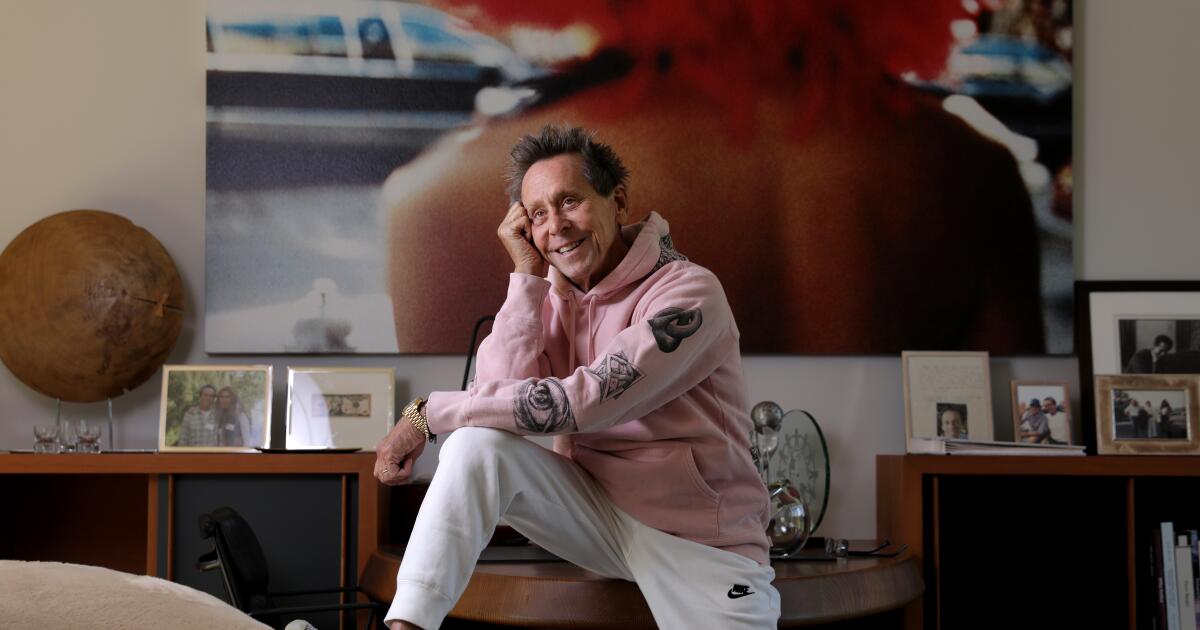
When Brian Grazer has an idea for a movie, he now starts with a chatbot. The co-founder of Imagine Entertainment — the company behind “A Beautiful Mind,” “Apollo 13” and “Liar Liar” — said he sits down with Anthropic’s AI assistant, Claude, to rough out a story before handing it to a writer.
“You can build the whole thing into an outline. You still need a screenwriter. I always believe you need a screenwriter,” Grazer said during a keynote at UCLA’s Entertainment Symposium on Thursday. What once could have taken up to a year, he said, now takes him about a week — but the human writer stays.
That balance — AI as an accelerant rather than a replacement — captures where much of Hollywood has landed in practice. Amazon MGM, Lionsgate, Netflix and Disney have all made major investments in the technology. The sharper question at the symposium, which drew many of the industry’s top lawyers and dealmakers to the Westwood campus, was not whether to use AI but how: who authorizes it, how far it goes and who gets paid.
For the companies building the tools, the answer increasingly comes from the client. Studios, production companies and distributors regularly approach Promise, a generative AI company, to bring AI into their productions, and each arrives with its own usage guidelines, said the company’s president, Jamie Byrne. Those rules govern which AI models Promise may use and what protections apply — effectively letting each client decide how heavily AI figures into the work.
“It comes down to a risk appetite,” Byrne said during a panel on AI. “We know that there’s talent that are staunchly against it. We know that there are many who are okay with it.”
He framed adoption as a competitive necessity: “Every time there’s a technology change, certain studios or production companies rise. Others fall, and it’s usually the ones that are not leaning into the new tool.”
Ron Howard, also of Imagine Entertainment, argued the limits will ultimately be set elsewhere — by viewers. “Sure, it’s about efficiencies and budgets, but more than anything, audiences are going to tell us where those restrictions are,” he said. He expects AI-generated content to settle into its own subgenre over time, with audiences signaling what they will accept.
The most contested ground is labor, where consent has become the dividing line. The emergence of synthetic performers such as Tilly Norwood has made AI a central issue in SAG-AFTRA’s contract. The union’s most recent agreement draws a clear line between authorized digital replicas, which use a performer’s likeness with their consent, and fully synthetic creations.
Talent agencies are organizing around the same principle. In recent years, Creative Artists Agency began digitally scanning clients into what it calls the CAA Vault, building a replica of a client’s image, likeness and voice while leaving the talent in complete control of how it is used.
That control is beginning to carry real value, said Tammy Brandt, CAA’s deputy general counsel, who said she is seeing more deals that involve digital likeness. Hollywood has been slow to work out how to monetize these replicas, she said, but once it does, audiences will start to encounter them more often.
“You have to lean into the technology and understand what it can do, and honestly, how you can make money, work with talent and with creative assets in a way that the user is interested in,” Brandt said. “There’s a little bit of trial and error as you go with that.”
Before the lights dim and the trailers roll, moviegoers will start to see microdrama ads in movie theaters.
National CineMedia (NCM), the company responsible for the pre-show programming on the big screen, announced a new partnership with AI-native microseries studio aTwist on Wednesday. The company will begin advertising aTwist’s upcoming slate of vertical series in theaters later this summer.
“Movie theaters have always been where people go to lose themselves in storytelling,” Mike Rosen, NCM’s chief revenue officer, said in a statement. “This partnership brings new, exciting content to the pre-show experience, and gives brands the opportunity to speak more authentically to an audience that is naturally drawn to compelling, innovative content.”
The partnership was first reported by the Hollywood Reporter.
The deal will feature brand-sponsored series, previews of aTwist originals and a QR code that will take viewers directly to the aTwist platform.
These advertisements will be integrated into NCM’s regular programming, which spans more than 18,500 screens in over 1,650 theaters nationwide. The advertiser works with major movie chains such as AMC, Cinemark and Regal, across 185 markets. NCM was founded in 2002 and is best known for its “Noovie” preshow hosted by Maria Menounos.
ATwist is set to launch later this summer. The Los Angeles-based company, founded by former Hollywood executives Jana Winograde, Susan Rovner and Lloyd Braun, is entering an increasingly competitive format.
Microdramas, which originated in China, have continued to gain traction in the U.S. Some of the industry’s major players include ReelShort and DramaBox. The short-form content, engineered for a vertical phone screen, has drawn comparisons to a new addictive form of soap opera. The vertical video market is expected to generate around $150 billion in revenue this year, according to media consulting firm Owl & Co.
Brands such as Marc Jacobs and Crocs have already positioned the storytelling format as a way to advertise new products and reach new audiences.
By advertising to moviegoers, aTwist is hoping to distinguish itself among its competitors.
“We built aTwist around the belief that great storytelling should meet audiences wherever they are,” Winograde, aTwist’s chief executive officer, said in a statement.
“There is no better partner than NCM to introduce microseries to moviegoers and bring our storytelling into one of the most immersive entertainment environments.”
Elon Musk’s space and AI conglomerate ended its third day of public trading worth roughly $2.65 trillion (€2.28tn), having displaced Amazon in the global market-capitalisation rankings.
ADVERTISEMENT
ADVERTISEMENT
The stock settled at $201.8 per share, in a debut week that has rewritten the upper reaches of the world’s equity leaderboard at remarkable speed.
The milestone caps an already extraordinary stretch for the company, which listed on the Nasdaq under the ticker SPCX only last Friday.
SpaceX priced 555.6 million Class A shares at $135 each, raising around $75 billion (€65bn) in what was the largest initial public offering in history, comfortably eclipsing the $29.4 billion (€25.3bn) that Saudi Aramco raised in 2019.
The company also increased the total capital raised to $85.7 billion (€73.8bn) after underwriters exercised the “greenshoe” option to purchase additional shares on Monday due to exceptional demand.
At Tuesday’s close, the stock was trading more than 50% above its IPO price.
During the trading session, share prices climbed as high as $225.6, briefly pushing SpaceX’s valuation above $3 trillion (€2.58tn) and, for a moment, ahead of Microsoft as the world’s fourth most valuable company.
The stock later pared those gains, closing below that threshold, but the intraday spike underscored the intensity of investor appetite for the listing.
Based on Tuesday’s closing prices, only Nvidia ($5tr), Alphabet ($4.5tr), Apple ($4.4tr) and Microsoft ($2.9tr) had larger market capitalisations than SpaceX. Eight of the world’s ten most valuable listed companies are tied to the technology and AI sector, a concentration that has defined markets throughout 2026.
The Cursor deal fuels the surge
Tuesday’s advance coincided with a significant strategic move.
Before the opening bell, SpaceX announced an all-stock agreement to acquire Anysphere, the developer behind the AI coding assistant Cursor, in a deal valuing the startup at $60 billion (€51.7bn).
According to a regulatory filing, a SpaceX subsidiary will merge into Anysphere, leaving Cursor as a wholly owned arm of the group, with completion expected in the third quarter, subject to regulatory approval.
The purchase deepens SpaceX’s push into enterprise AI, a market where rivals such as OpenAI and Anthropic have gained early commercial traction, and it follows the company’s merger with Musk’s xAI venture in February.
The acquisition stems from an option SpaceX secured in April, under which it agreed either to acquire Cursor for $60 billion (€51.7bn) later this year or pay $10 billion (€8.6bn) for a more limited partnership to access its computing technology.
However, despite all the positive news, the speed of the climb has drawn caution.
Sceptics argue that SpaceX remains overvalued, given that it has yet to turn a profit and only 3% to 4% of its total equity is publicly traded.
A fast-track route into major stock indices, which compels passive funds to buy the shares, is expected to further amplify demand for the limited supply of shares in the opening days of trading.
This article does not constitute financial advice, always do your own research and invest according to your specific circumstances.
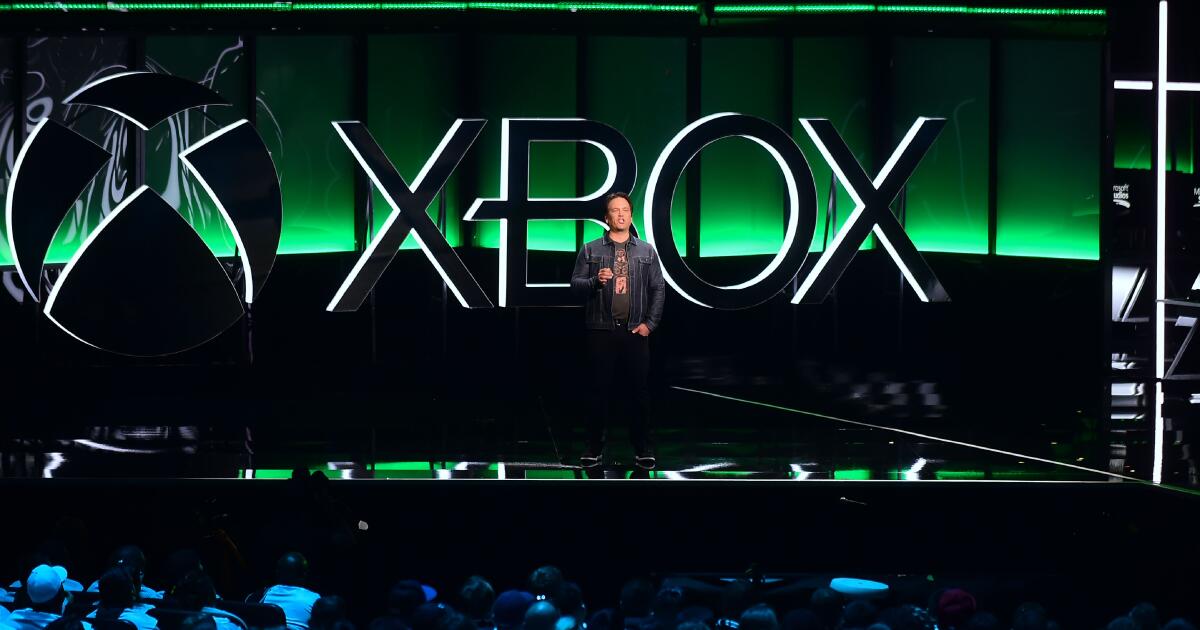
Several studios in Microsoft Corp.’s Xbox gaming division, including Montreal-based Compulsion Games and San Francisco-based Double Fine, are in active negotiations to spin off as they try to thwart closure, according to people familiar with the company’s plans.
Cambridge, England-based Ninja Theory, the maker of Hellblade, is also in conversations with Xbox, as are several other studios across the portfolio that are at risk of being shuttered.
The studios may still have the opportunity to buy themselves back from Xbox and go independent, although many employees will probably lose their jobs as a result, said the people, who asked not to be named because they were not authorized to speak to the press.
Employees at several studios have been informed of the situation and given permission to seek new work but were told that the status of the studios is still in flux.
An Xbox spokesperson declined to comment.
The potential closures are part of a broader reorganization being overseen by Asha Sharma, who took over as Xbox’s new chief executive in February.
Last week, Bloomberg News reported that the gaming division is planning significant layoffs. Sharma sent out a memo to staff lamenting the bleak state of the business, which has seen revenue and margins plummet in recent years. “Going forward, this cannot continue,” she wrote.
Compulsion Games, Double Fine and Ninja Theory all made award-winning games that were not commercial hits. But even some of Xbox’s more commercially successful studios are not yet sure how they will fit into Sharma’s new mandate, which will prioritize the biggest franchises as the company looks to return to growth.
Compulsion Games is the developer behind South of Midnight, which was released last year. Double Fine, best known for the Psychonauts series, released the smaller games Keeper and Kiln over the last year.
Xbox is facing the current challenges despite having made major purchases in recent years, including its acquisition of Activision Blizzard Inc. for $69 billion in a deal that closed in 2023.
Xbox Game Studios head Craig Duncan stepped down last week ahead of the layoffs, said the people familiar with Microsoft’s plans. Gaming newsletter the Game Business previously reported his departure.
Fox Corporation has agreed to acquire the streaming platform Roku Inc. in a deal valued at $22 billion, the companies announced Monday.
The deal will combine the Murdoch family’s media assets, which include its news, sports and broadcast channels, with the San Jose-based streaming platform that reaches 100 million consumers globally.
The acquisition would give Fox access to consumer households at a time when the traditional pay-TV universe continues its slow decline as viewers move away from cable and satellite services to video streaming. Fox already owns the free ad-supported streaming service Tubi, which recently became profitable.
“This is a defining moment for Fox and a natural extension of the deliberate and focused strategy we have been executing for nearly a decade,” Fox Corp. Executive Chair Lachlan Murdoch said in a statement.
By owning Roku, Fox gets access to data from the 100 million households connected to the service, which can be used to better target audiences with advertising. The combination would also make Fox less dependent on traditional pay TV platforms for the distribution of its channels.
According to Nielsen data, 21% of all internet-connected TV viewing comes through Roku. The Roku Channel, which carries 500 ad-supported streaming networks, accounts for 3% of all TV viewing.
An image of a Roku branded TV.
(Roku)
Research firm Emarketer projects ad revenues of $3.57 billion for Roku this year, up 19% from last year.
Lloyd Grief, chief executive of the Los Angeles investment bank Greif & Co., said Roku would have been challenged to compete against far better capitalized competitors in the streaming business and that a sale was “inevitable.”
For Fox, the proposed deal makes them a larger player in the digital advertising business. Emarketer senior analyst Ross Benes said the Roku business will “more than double,” the company’s revenues in that area.
“It remains to be seen how well the combination of a digitally innovating streaming company will mesh with a media conglomerate rooted in legacy assets,” Benes said.. “But the strategy makes sense and it jibes with the continual consolidation that’s occurring in streaming.”
Fox sold its TV and movie production assets to Walt Disney Co. in 2018. Rather than invest heavily in scripted entertainment to compete with emerging streaming companies, Fox decided to concentrate on sports and news.
The Roku deal will put Fox deeper into the distribution network. Over its history, the company has held stakes in satellite TV provider DirecTV and Sky TV.
The companies said they are committed to keeping Roku as a “partner-friendly” platform that carries program services that compete with Fox. Brian Wieser, a consultant at Madison and Wall said that might require some convincing.
“Other content owners may still need Roku’s distribution, but they may be less comfortable with the idea that one of their competitors controls an increasingly important part of the streaming interface,” Wieser wrote in his note on the proposed deal.
Roku shareholders will receive a combination of cash and Fox Corporation stock valued at $160 a share.
The companies say they expect cost savings of $400 million in the combined entity.
Roku was founded in 2002 by Anthony Wood, a British digital entrepreneur. The company launched a streaming device, the Roku player, in 2008. Within six years, the company sold more than 10 million devices, as the popularity of streaming video rapidly grew.
Fox Corp. shares were down 10 to 15% on news of the deal, trading around $55.57 Monday morning. Roku shares were down slightly to $142.
Times staff writer Wendy Lee contributed to this report.
When CBS announced that it planned to outsource the hallowed “Late Show” slot occupied by Stephen Colbert and David Letterman before him to “Comics Unleashed,” the syndicated, low-budget talk show with stand-ups riffing on their routines, many saw politics at play.
But the show’s host and producer, comic-turned-mogul Byron Allen, saw the math. Once a cultural touchstone, late-night television has seen its prominence erode greatly over the years with viewers and advertising dollars shifting away from broadcast TV to streaming.
“I said, ‘Look guys, you’re spending a small fortune on late night,’” recalled Allen, who estimated that the programming was costing the network more than $200 million. He offered it a solution.
His company, the Los Angeles-based Allen Media Group, would pay $15 million for the airtime to run “Comics Unleashed,” which previously aired after “The Late Show,” while keeping most of the advertising time on the program to sell. It was the same time-buy model that propelled his fledgling media empire and made him wealthy many times over.
“Comics Unleashed” drew 1.1 million viewers in its debut in the new time slot last month, down substantially from the 2.7 million Colbert’s show averaged in its final season. Critics chimed in, with one outlet even calling it a “ratings disaster.”
But Allen, typically, was not fazed, saying his show bested the competition in key markets and was more comparable with the same time period last May before Colbert’s post-cancellation victory lap.
“CBS has won big-time because they have zero production costs and now they are saving $55 million a year,” he said in an interview.
Media mogul Byron Allen at his studio on the set of “Comics Unleashed” in Culver City.
(Jason Armond/Los Angeles Times)
A relentlessly driven, shrewd dealmaker and entrepreneur, Allen is used to defying skeptics and seeing opportunity in assets overlooked by others. He was one of the first entertainers to recognize that there was more money to be made in owning your content, rather than just performing it.
Over the last three decades, he has built a multibillion-dollar business, Allen Media Group, which now has 2,000 employees across various media properties.
In addition to creating a trove of accessible, family-friendly programs, he’s taken a number of big, bold swings, buying up distressed assets that now span broadcast, cable, streaming and film distribution.
At times, he appears like a minnow trying to swallow a whale. Although many deals have landed, others, such as his bids for ABC, BET, Paramount Global and Tegna, have not.
“He’s had misses, but that doesn’t stop him from going to bat,” said Lloyd Greif, president and chief executive of Greif & Co., a Los Angeles-based investment bank.
After a major restructuring that began two years ago during which the company laid off staffers and sold off properties, Allen is back with a slew of ambitious acquisitions. In addition to owning CBS’ late-night block, he also took over the 12:35 a.m. slot with his comic game show, “Funny You Should Ask.” He declined to reveal how much he paid for that airtime.
Allen recently snapped up controlling interest in the digital media company BuzzFeed (including HuffPost) for $120 million and bought a 10.7% stake in cable channel Starz for $25 million.
Although Allen’s programming has been dismissed as low-budget, apolitical comedy, and his finances have been questioned by some, he remains undaunted by doubters.
“I like to say I’m a 65-year-old overnight success.” And he remains focused on his mission, even proclaiming he is “building the world’s biggest media company.”
An entrepreneurial streak
Allen was born in Detroit, where his grandparents owned a roller rink where he worked as a floor guard. Being surrounded by a family of factory workers and the legacy of 20th century American industry set the stage for his entrepreneurship. “I didn’t play sports; I played office,” he said.
At age 7, after his parents’ divorce, Allen moved to Los Angeles with his mother, Carolyn Folks. It was the summer of 1968 and they planned a two-week vacation. But Detroit was in flames following the assassination of the Rev. Martin Luther King Jr., and they stayed.
Folks put herself through UCLA and eventually worked her way up at NBC from an intern to a publicist, a move Allen credits with changing the trajectory of their lives. His mother couldn’t afford child care, so Allen often accompanied her at the studio, where he soaked up tapings of “Sanford and Son” and “The Tonight Show.” After Johnny Carson finished filming and the studio was empty, Allen would sit at his desk, mimicking the legendary late-night host.
At 14, he convinced his mother to let him do stand-up at the Comedy Store on Sunset Boulevard.
“There were literally four people and 200 chairs. And I said, ‘I have to figure out how to make these chairs laugh.’”
A writer for Jimmie “J.J.” Walker, who was starring on the groundbreaking Norman Lear hit comedy “Good Times,” caught his act. He hired Allen to write jokes for Walker along with a pair of yet-to-be discovered comics: Jay Leno and David Letterman. Allen earned $25 a joke.
Howie Mandel met Byron Allen when they were both starting out at The Comedy Store.
(Allen Media Group)
“Most people in my business wait for other people to give you an opportunity,” said Howie Mandel, the actor and comic who met Allen when they were starting out at the Comedy Store during this period. “Byron and his mom constantly made their own opportunities.”
In 1979, when Allen was 18, he became the youngest comic to appear on “The Tonight Show.” Like a shot out of a cannon, the performance catapulted his career.
While various offers poured in, Allen chose the NBC prime-time series “Real People” as a host and correspondent. It was an embryonic version of reality TV. Allen traveled around the country showcasing quirky, heartwarming stories. The hit show brought Allen to every pocket of America. It also made him a star, delivering him to the country’s living rooms each week.
He continued to tour, doing stand-up and serving as the opening act for such musicians as Lionel Richie and Dolly Parton, and starred in TV movies.
Allen became a hero to young, Black entertainers who were just starting out. Among them was Eddie Murphy, who has called Allen “one of my first inspirations.”
“He just loves comedians,” said Whitney Cummings, co-creator and executive producer of the hit CBS sitcom “2 Broke Girls.” She recalled crucial career and financial advice Allen gave her after she first appeared as a young comic on “Comics Unleashed.” “It gave me like a true north. It changed my life.”
Whitney Cummings says Allen helped her early in her career.
(Troy Conrad)
As Allen’s success swelled, he said, he realized the industry was what he calls “business show, not show business.”
“You need to know the business side and learn the business side and then you can do as many shows as you want. And I knew that I didn’t want to work for anybody,” he said.
While on “Real People,” he sat in on sales meetings and went to the National Assn. of Television Programming Executives, where he introduced himself to Al Masini, the syndication trailblazer who produced “Entertainment Tonight” and “Star Search.”
“I understand you’re the best. I’m here to learn from you,” Allen said.
In 1989 he began hosting the syndicated “The Byron Allen Show.” Two years later, he created BYCA Television Distribution to take over his talk show’s distribution and syndicate other shows.
But Allen and his new company were soon facing legal and financial issues. A group of former employees and an investor sued, claiming they had not been paid. The dispute forced the company into Chapter 7 bankruptcy.
Allen pressed on. He had absorbed another key lesson.
Learning from Richard Pryor
When he was still hanging out at the Comedy Store, he watched Richard Pryor trying out new material.
Iconic comedian Richard Pryor.
(Bettmann / Bettmann Archive)
“He would bomb night after night for almost three months,” Allen said. “I’ll never forget, he told me, ‘Byron, you’re only as good as you dare to be bad.’ I learned, OK, take risks. It’s about growing and taking chances.”
In 1993, Allen launched CF Entertainment on his dining room table in Los Angeles. The production company, later Entertainment Studios, became the foundation of his media empire. He focused on producing low-cost, syndicated programming, including interview series and court shows. Allen produced and often served as host.
His first show, “Entertainers With Byron Allen,” packaged the five-minute celebrity interviews during hotel press junkets, a conveyor belt of actors promoting their latest projects set up by the studios into an hourlong talk show.
Allen bartered the show for free to TV stations in exchange for a split of the revenues from selling commercials to advertisers. Success was not immediate. He said he received countless rejections at first.
“My house went in and out of foreclosure probably 14 times,” he said. At one point, he said, his telephone service was turned off, forcing him use a pay phone for calls.
But the format established the template for what became Allen’s highly successful business. Forbes has estimated his net worth in the billions. Allen declined to discuss his personal or business finances.
The mogul now owns multiple homes, including a $91.3-million mansion in Aspen, Colo., that was recently featured in the Wall Street Journal.
“A lot of people didn’t take him seriously and saw him as a comedian,” said Joan Robbins, Allen’s first employee, who has stayed on for 32 years as president of talent relations. “I don’t think anybody realized the extraordinary business sense he had.”
Byron Allen gets final touches at his studio on the set of “Comics Unleashed.”
(Jason Armond/Los Angeles Times)
As Allen’s media ambitions have expanded beyond comedy and syndicated talk shows, so has his company. It produces, distributes and sells advertising for 74 television programs (“Mathis Court With Judge Mathis” and “Career Day” among them) as well as owns 13 broadcast stations affiliated with the major networks in 11 markets and several dot-TV cable and digital networks including Cars.TV, Automotive.TV and Comedy.TV.
In 2016, he acquired the Black entertainment platform TheGrio and later purchased the assets of the Black News Channel out of bankruptcy for a reported $11 million, merging its TV assets and carriage deals into TheGrio’s network.
A year earlier, Allen made waves by filing the first of several multibillion-dollar racial discrimination lawsuits to tackle what he called the “trade deficit between Black America and white corporate America.” His case against Comcast for not carrying Allen-owned stations and networks reached the Supreme Court before being settled.
“I feel good about starting that conversation … because we were going in circles and we were definitely suffering from economic genocide,” he said.
In 2018, Allen’s company bought the Weather Channel and the streaming service Local Now for $300 million. His firm also announced it had raised $500 million in credit facilities organized by Deutsche Bank Securities, Jefferies Financial Group, Brightwood Capital Advisors and Comerica Bank to finance production and other acquisitions.
What unites these disparate assets? “We’re directed at where the viewers are,” he said. “That’s where we’ll be.”
But in his tireless push to expand his sprawling company, Allen has made several failed bids for high-profile assets.
In 2023, he offered Disney a reported $10 billion for ABC and some of its cable networks, and the following year bid $30 billion for Paramount Global. He also made plays for Tegna and BET.
None of his offers succeeded, prompting skepticism about his ability to finance such deals. Allen Media Group is wholly owned by the entrepreneur.
Allen dismissed such concerns. “I raised the money to buy the Weather Channel in one day,” he said. “There’s trillions of dollars looking for really good executives and really good deals. I have no problem raising capital.”
The Times viewed multiple letters from private equity firms and banks. Several indicated that Allen had financial backing on the deal to buy BET, and another showed he had $4 billion in funds to back the purchase of Paramount assets.
Over the years, former employees have criticized some of Allen’s employment practices. In 2012 he faced a class-action suit from performers and staffers on “Comics Unleashed” who alleged they were not paid residuals or reimbursed for travel and other expenses. The suit was settled in 2023.
Allen called the suits “frivolous,” saying, “I couldn’t be in business if I actually conducted myself that way.”
Last year, Allen came under fire after announcing sweeping cuts at about two dozen local affiliates that included laying off meteorologists, part of a reorganization to centralize forecasts at the Weather Channel in Atlanta. The move sparked viewer outrage and the plans were reversed.
The controversy came as Allen’s company was retrenching. He sold off about a third of the TV station portfolio for $171 million.
Allen said this was a case of “rightsizing,” paying down debt and investing more in digital. “I sold 10 of my ABC, NBC, CBS and Fox affiliates to Gray [Media] at a great price for us and a great price for them.”
Allen confirmed he is negotiating with lenders over substantial debt payments coming due in the next year, but said he is “highly confident they will get refinanced or extended.”
Shortly after he bought a stake in Starz, Allen announced his intentions to own the cable channel. Starz responded by adopting a poison pill.
“Good luck,” he said. “I still plan to take over Starz, and I will eventually get control of Starz.”
June 12 (UPI) —SpaceX began trading Friday at $150 and has gone as high as $176 as SPCX in its initial public offering, the largest one in history.
Elon Musk and SpaceX President and COO Gwynne Shotwell rang the opening bell Friday. Musk was in Texas and Shotwell was at the Nasdaq in New York City.
After trading opened, the stock topped $160, sending the company to more than a $2 trillion market cap. By early afternoon, the stock was at $176.52.
“I love the incredible people of SpaceX beyond words,” Musk wrote Friday afternoon on X.
The company had traded more than 360 million shares as of 2 p.m. EDT Friday. It has more than 172 million shares on the Nasdaq alone, CNBC reported. Polymarket bettors believe, at 70%, that SpaceX will close at more than $2 trillion Friday. Five other U.S. companies have reached the $2 trillion market cap: Nvidia, Apple, Alphabet, Microsoft and Amazon.
Already a trillionaire, Musk is about to be CEO of two of the Top 10 most valuable publicly traded companies at the same time.
Musk said before the IPO that SpaceX had been cash-flow positive since around 2015, CNBC reported. He said he chose to take the company public now to raise capital for “a significant growth phase.” Some plans for that growth include putting more than 100,000 satellites in orbit for communications and building artificial intelligence data centers in space.
“Having a private company was important to us early on because we weren’t really focused on quarterly financials, we were so focused on the long-term outlook for the company,” Shotwell told CNBC in an interview.
Shotwell said interest from investors also helped drive the decision.
“We’ve been feeling, over the last few years, a lot of pressure from everyday Americans and our friends that wanted to buy stock, and there was just no way for these folks to get in,” Shotwell said.
According to its prospectus, SpaceX has had a total loss of $41.3 billion since it was founded in 2002. Originally founded as a maker of reusable rockets, the only profitable part of the business has been the Starlink satellite Internet service.
In February, SpaceX acquired Musk’s startup xAI, which has been embattled this year for its ability to undress people in AI-generated images. Several countries and people have sued the company to force it to not allow the bot to do so against the victims’ will.
Citadel Securities, which helps execute trade orders, processed more retail activity for SpaceX than any other IPO auction on record, CNN reported the company said. Retail investors are regular people trading stocks instead of professionals.
The Ellison family-controlled Harbor Lights Entertainment has sold its Showcase Cinemas theater chain to a major European cinema group in a $30-million deal.
Belgium-based Kinepolis will soon operate 13 cinemas across the United States. Seven are in Massachusetts, four in New York, one in Ohio and one in Rhode Island.
David Ellison, who is now in charge of Paramount Skydance, acquired National Amusements last year from the Redstone family. He renamed the company Harbor Lights. National Amusements was the start of Redstone’s media empire, which at one point included control of CBS, Paramount and Viacom.
The deal is awaiting regulatory approval, but officials in several state states recently announced plans to try to block the merger. The potential lawsuit would seek to challenge the proposed merger on antitrust grounds, arguing it would decrease competition, lower wages and lead to widespread job losses.
With the sale of the theaters, Kinepolis will add 164 screens to its portfolio. The company was formed in 1997 and currently operates 63 cinemas in Europe and nearly 60 theaters in the U.S. and Canada.
The newly acquired theaters welcomed about 4 million visitors and generated more than $90 million in revenue last year.
“This acquisition allows us to expand our market position in the U.S. from Michigan to the East Coast with an asset and a team that enable us to implement Kinepolis’ operational model and corporate strategy, ultimately enhancing the experience for moviegoers in these markets,” Eddy Duquenne, Kinepolis’s chief executive, said in a statement.
The company said Showcase Cinemas would retain its name. It expects the acquisition to be complete by the end of the summer.
Times staff writer Wendy Lee contributed to this report.
New surveillance footage and other evidence from Southern California Edison confirms that a century-old, idle transmission line that the utility failed to remove ignited last year’s deadly Eaton wildfire, lawyers for insurers said in a court filing.
Video obtained from a surveillance camera at Gerrish Swim & Tennis Club in Pasadena shows two bright flashes occurring in the location of the tower holding the idle line at 6:11 p.m. on Jan. 7, 2025.
The flashes correspond to the time that Edison recorded two faults, three seconds apart, on another transmission line more than five miles away, the lawyers said in the filing, citing new data provided by the utility.
Soon after the faults, residents nearby recorded videos of a fire burning at the base of the tower, which is known as M16T1.
“Southern California Edison has spent the last sixteen months attempting to forestall the inevitable legal consequences of razing a large swath of the communities of Altadena and Pasadena to the ground,” the lawyers wrote in the filing.
“The Eaton Fire could not have occurred if SCE had simply disassembled and removed Structure M16T1,” the lawyers added.
The lawyers filing the May 18 motion represent property insurers that paid tens of millions of dollars to residents who lost their homes. Their motion asks the judge to order a judgment in the insurers’ favor that would make Edison liable for the damage under inverse condemnation, a legal doctrine in the state constitution.
Courts have ruled that the doctrine requires private utilities such as Edison to pay for property they destroy, even if they haven’t been found to have acted negligently.
Kathleen Dunleavy, a spokeswoman for Edison, said the company did not learn about the existence of the swim club video until the lawyers submitted it in court with their filing.
“It’s very disappointing and inappropriate that this video was not produced in discovery,” she said. “We hope that video has been turned over to the appropriate authorities.”
Dunleavy said the company believes the lawyers’ motion “is wrong on the facts and the law.”
“We’ll respond more fully in our own court filing,” she said.
Attorneys for the insurers did not respond to requests for comment.
In a February 2025 letter to state regulators, Edison said it had detected a single fault on a line more than five miles away from Altadena about 6:11 p.m. on the night the fire ignited. It said the fault caused a brief surge of electricity on its four live transmission lines in Eaton Canyon.
The company said in the letter that it was looking into whether the power surge could have caused electricity to jump to the idle line that runs parallel to the live wires through a process called induction.
Pedro Pizarro, chief executive of Edison International, later said that a leading theory of the fire’s ignition was that the idle line became energized briefly through induction, sparking the fire.
At the same time, the company has not accepted blame for the fire, saying repeatedly that its own confidential investigation into the cause, as well as a separate inquiry by Los Angeles County and state fire officials, is continuing.
According to the court filing, evidence obtained by the lawyers shows that the company stopped using the transmission line in 1971 and designated it as “out-of-service.”
“The declaration of Out of Service shall only be used when the line … or piece of equipment is expected to remain permanently out of service,” Edison stated in an internal document known as a system operating bulletin, according to the filing.
Edison executives told The Times last year that they left the line in place because they believed it might be needed in the future.
“We have these inactive lines still available because there is a reasonable chance we’re going to use them in the future,” Shinjini Menon, Edison’s senior vice president of system planning and engineering, said then.
Dunleavy said Friday that the idle lines are kept in place for a variety of reasons, including to preserve the right of way Edison had obtained to construct them and to support future needs for more electricity as the state aims to meet its clean energy goals.
Last year, The Times reported that state regulators, knowing old electric lines posed hazards, proposed a rule in 2001 that would have forced Edison and other utilities to remove idle lines unless they could prove they would use them in the future.
Under pressure from Edison and the other companies, the rule was weakened to allow utilities to keep the unused lines in place until executives decided they were “permanently abandoned.”
In their May 18 filing, the lawyers said Edison executives had known about the risk of induction for more than 100 years. They cited a 1923 contract between Edison and Pacific Electric Railway Co. that said that “leakage of electricity or induction from or between” conductors was an inherent risk of operating multiple electrical circuits in proximity.
“That’s why SCE grounds idle lines and inspects them,” Dunleavy said of the risk.
Copies of Edison’s fault records from that night, its operating bulletin and thousands of other documents, including depositions, are sealed from public view under a protective order that Edison and lawyers for the victims asked the judge to approve last year.
The company said last week that it had so far received more than 3,500 claims from about 10,000 people. It said it had extended nearly 1,900 offers to those people, totaling more than $650 million.
The law shields utilities from the damages of fires sparked by their equipment as long as they follow certain requirements, including submitting a plan to state regulators for reducing the risk that their equipment sparks fires. Regulators review the plan and track whether the utilities are making progress in reducing the fire risk.
In the last 10 years, Edison’s rates increased by 101%, according to an April report by the public advocates office at the California Public Utilities Commission.
Despite the spending, Edison’s electric lines sparked more fires in 2024 than in 2019. The company blamed the increase on erratic weather that created more dried vegetation.
Since its creation more than a century ago, the Los Angeles Bureau of Street Lighting has been in the lamppost business and little else.
But in recent months, the little-known city agency has found itself pulled into a fierce debate over L.A.’s relationship with Flock Safety, a surveillance technology company that has been criticized for supplying data used to enable the Trump administration’s immigration crackdown.
In L.A., Flock operates dozens of automated license plate readers, which allow authorities to scan for vehicles that have been reported stolen or are registered to known fugitives, tracking their movements throughout the city.
The devices are often mounted on municipal light poles, which makes the Bureau of Street Lighting responsible for their installation.
Reports that Flock has shared license plate data with federal authorities, including U.S. Immigration and Customs Enforcement, have prompted dozens of mostly smaller cities across the country to end their relationship with the company. But in L.A. it still has found willing customers, including the LAPD.
Hundreds of emails obtained by The Times through public records requests reveal how LAPD boosters, homeowner associations and elected officials have engaged in a months-long campaign to pressure the Bureau of Street Lighting to speed up installations of the plate readers.
Flock, headquartered in Atlanta, said that it contracts with roughly 5,000 U.S. law enforcement agencies nationwide, and that its technology complies with a California law that limits what information can be shared with federal authorities. A company spokesperson said that Flock’s technology is “built around transparency, accountability, and local control.”
“Our customers own and control their data, which is deleted after 30 days by default,” the spokesperson, MoMo Zhou, said in a statement to The Times. “Our platform includes safeguards like audit trails to help ensure accountability at every step. Every day, Flock supports communities across the country in addressing crime and locating missing people.”
The Bureau of Street Lighting, with 177 employees and a relatively modest budget of $49.4 million, would seem an unlikely player in the broader debate over police surveillance. It is primarily tasked with repairing and fortifying the city’s more than 210,000 streetlamps — a frequent target of copper wire thieves — and maintaining its network of electrical vehicle charging stations.
The push to put up more plate readers has come amid calls for greater transparency around the Los Angeles Police Department’s dealings with Flock. In March, the Police Commission asked the department to report back on what information the company’s scanners collect and share. In recent months, the commission declined to approve donations of Flock cameras.
Members of the Stop LAPD Spying Coalition held a news conference to express opposition to Flock Safety, a license plate reader, ahead of a Los Angeles Board of Police Commissioners meeting on March 3, 2026.
(Genaro Molina / Los Angeles Times)
The commission ordered its inspector general to conduct an audit of the LAPD’s use of license plate reader technology, with the findings expected to be released in the summer.
Recently, Councilmember Ysabel Jurado introduced a motion urging the commission to “refrain from entering into any new Memoranda of Understanding, Contracts, or other Agreements, or implement any pilot programs with Flock Safety or its affiliates.” LAPD officials said last month that the city attorney’s office has been working on drawing up a formal contract with Flock.
Behind the scenes, though, the pressure to work with Flock has been ratcheting up from other council offices and community groups.
When a representative from Councilmember Katy Yaroslavsky’s office emailed the streetlighting bureau urging speed, she received a response that said the installation process shouldn’t be rushed because some city light poles can’t support the weight of a Flock reader, which is normally powered by a solar panel.
“The last thing we need is to have a pole fall onto someone or something if there are high winds,” the bureau’s Clinton Tsurui wrote in the June 4, 2025, email.
In another exchange, Tsurui expressed frustration with a colleague who had offered what he thought was an overly optimistic timetable for installing new plate readers.
He wrote: “smh, promising things we can’t do is going to catch up with us one day.”
The Los Angeles Police Foundation, a nonprofit group that has long bankrolled equipment for the LAPD and offered other support, has criticized delays in installing the Flock devices. Last year, the foundation facilitated the donation of dozens of Flock cameras, most of which ended up in affluent neighborhoods on the city’s Westside and in the San Fernando Valley.
Records show that in May 2025, Dana Katz, the foundation’s executive director, reached out to the mayor’s office with a request to waive permit and rental fees associated with installing the new readers. Katz wrote in an email that the extra expense of around $2,000 per device were “cost prohibitive and detrimental to public safety.”
Katz also pointed out that in some places, there are no city-owned poles on which to mount the devices — but offered a possible solution.
“Flock has its own pole that has been accepted by the County of Los Angeles for these situations, and we would like the City to accept the use of them, too,” she wrote to Robert Clark, the city’s then-deputy mayor of public safety.
A few of L.A.’s historic streetlights stand outside the Bureau of Street Lighting’s office near Virgil Avenue and Santa Monica Boulevard.
(Jason Armond / Los Angeles Times)
Katz wrote Clark again on Aug. 6 to ask why officials were estimating a six-to-12-month wait for approval of new Flock readers on public property in the neighborhoods of Cheviot Hills and Brentwood Park, where there were no existing city poles to mount them. She noted that the county’s engineering department had already approved the company’s poles, and asked Clark whether there was a way for the city to “piggyback on these other entities’ approvals in order to speed this up so that these neighborhoods don’t have to wait so long for help in preventing these home invasions?”
In the following weeks, Katz’s emails took on an increasingly urgent tone. In one of her last messages, email records show, she told an aide she expected more help than the mayor’s office was offering.
“With all due respect, the answers you have provided are completely generic and do not provide any guidance and direction as to how we can expedite this process,” she wrote.
She added: “I’ve said it before, and I will say it again — these delays are harmful to public safety.”
A spokesperson for the mayor’s office told The Times that ultimately neither Clark nor the aide intervened on the Los Angeles Police Foundation’s behalf.
Email records show Flock’s courtship of the bureau dates at least to spring 2024, when the company agreed to donate two of its plate readers to help combat copper thefts.
Tsurui emailed LAPD Capt. Celina Robles to say that the company’s executives had requested an in-person meeting with the bureau and the LAPD “to discuss the benefits of this product and how it can benefit the city moving forward.”
On June 24, 2024, a lobbyist from the D.C. firm Modern Fortis emailed Bureau of Street Lighting Executive Director Miguel Sangalang seeking to “explore a public-private partnership” between Flock and the city. Sangalang took another meeting to discuss Flock a few months later with former City Councilmember Joe Buscaino, who after leaving City Hall had gone to work for Ballard Partners, a powerful Florida-based lobbying firm.
In January 2025, after wildfires devastated Pacific Palisades, Altadena and other areas, Flock stepped in again. The company agreed to donate more than 50 plate readers, free of charge for six months, to the wealthy Palisades area, where residents and law enforcement officials were on high alert about potential theft.
A Flock Safety automated license plate reader in Costa Mesa.
(Courtesy of the city of Costa Mesa)
In the days and weeks that followed, city and police officials continued to pepper the bureau about speeding up the approval process.
On Jan. 21, 2025, records show, Cmdr. Randall “Randy” Goddard of the LAPD’s Information Technology Bureau wrote streetlighting officials to say that the Palisades community “could use a big favor from your department.”
LAPD Chief Jim McDonnell “fully supports this and has been working with the City Attorney’s office to finalize the terms,” Goddard wrote.
Musicians have been left out of settlements between major record labels and AI companies, a new lawsuit alleges.
The American Federation of Musicians of the United States and Canada (AFM), which has 70,000 members, said Universal Music Group and Warner Music Group “received significant compensation” from the AI companies for past copyright violations and licensed “substantial” portions of their music catalogs to them, but haven’t shared that with the musicians.
UMG and WMG sued AI companies Udio and Suno in 2024, accusing them of copyright infringement. Both companies settled with Udio last year. In November, WMG announced a partnership with Suno, but Universal Music Group’s lawsuit against Suno is pending.
“While the Defendants protected their own interests and created a significant source of new revenue with the retrospective settlements and prospective licenses, they have refused to compensate the musicians whose work — created with their own instruments and through their talent, creativity, and hard work — is fed into AI machines for profit,” AFM said in its lawsuit, filed in U.S. District Court in New York on Friday.
AFM said it believes the AI settlements fall under the “new use” provision of its collective bargaining agreements, which requires music companies to notify the union of new licenses for purposes not covered by the contract and to compensate musicians, whose work was used to train AI models.
UMG and WMG said in statements that they are in negotiations on a collective bargaining agreement with AFM.
“Warner Music Group is growing the value of music by establishing guardrails and architecting a healthy AI ecosystem on behalf of artists everywhere,” the company said in a statement.
Universal Music Group said it will continue to work to resolve issues during the negotiations.
“Universal Music Group has been at the forefront of protecting the rights and advancing the interests of artists and songwriters in the age of AI — striking responsible AI licensing agreements to ensure they are compensated, leading the charge for legislation to further protect them and taking legal action against bad actors,” the company said in a statement. “We expect to continue our strong working relationship with the AFM built on mutual respect for the talented musicians in our industry.”
AI has become more popular among consumers, dramatically changing the landscape in the entertainment industry. Many startups have popped up allowing users to type text prompts into AI systems to generate original songs, video clips and stories.
Some creatives say the AI tools help them brainstorm or illustrate bold ideas on a budget. But critics have raised concerns about whether AI systems are trained on copyrighted works without permission or payment to artists. Others are worried AI could eliminate their livelihoods.
Udio said it would create a new platform that would train on licensed and authorized music with artists having the ability to opt-in. Suno agreed to change its platform, launching new licensed models, and place download restrictions.
Bradford Auerbach, a partner at law firm OGC, said he expects to see more of these types of lawsuits filed by unions.
“You’ve got the unions always protecting the status quo, so you’ve got this invariable conflict of new technology coming in, and moving the cheese for a lot of people that were accustomed to having their business set up the way it was,” Auerbach said.
WhatsApp disrupted phishing attempts linked to NSO, blacklisted by the US for security concerns.
Published On 8 Jun 20268 Jun 2026
Meta has said it is filing a federal US court contempt order against Israeli spyware firm NSO Group for violating a permanent injunction that barred it from ever targeting WhatsApp and its users.
The company said on Monday that its WhatsApp messaging service disrupted new spear phishing attempts linked to NSO, an entity blacklisted by the United States government for engaging in activities that are contrary to national security or foreign policy interests.
Recommended Stories
list of 3 itemsend of list
These attempts were similar to previous “1-click phishing campaigns”, aimed to trick users into clicking malicious links and direct them to external websites, Meta said in a blogpost.
A “1-click” is a type of cyberattack where a single click on a malicious link or attachment is sufficient to compromise a victim’s device or account, without requiring them to enter their credentials.
Meta said WhatsApp took down test accounts and groups created by NSO on its platform. NSO did not immediately respond to a Reuters request for comment.
Last year, a US court ordered NSO to stop targeting Meta’s WhatsApp, a development the spyware company warned could put it out of business.
While the ruling significantly reduced the punitive damages NSO owed Meta to $4m from an initial $167m, the injunction itself was seen as a substantial challenge for the company, which faces ongoing accusations of enabling human rights abuses through its Pegasus hacking tool.
Meta said on Monday that last month it was joined by 12 prominent civil rights organisations, a coalition of security researchers, privacy advocates and digital rights experts, who filed their amicus briefs to fight NSO’s appeal against the permanent injunction.
A site of big changes, the Music Center has become farewell central. Alongside the Gustavo Dudamel hullabaloo at Walt Disney Concert Hall, James Conlon has begun his final appearances in the Dorothy Chandler Pavilion as music director for two decades of Los Angeles Opera, with his own signature form of enchantment in Mozart’s “Magic Flute.”
The silent-movie panache of Barrie Kosky’s production, which opened Saturday night at the Dorothy Chandler Pavilion and runs through June 21, is on its way to becoming a perennial. This is the third revival since L.A. Opera first staged it in 2013 — all four times with Conlon in the pit. The production operates like an operatic graphic novel and live animated film charmingly all in one. The scene is a giant movie screen broken up in sections and upon which is projected witty, fantastical background animation, while the characters are the live singers, dressed as though silent film stars.
The orchestra plays Mozart’s score as though it were, as orchestras did in the old days, accompanying a silent movie but to radically different effect. Fulgurous cinematic spectacle may immerse your attention, but the opera’s essence is transferred from the stage to the pit. The singers, meanwhile, function to an unusual degree as choreographed characters in a cartoon, leaving little opportunity for body language, allowing, instead, individual expression almost exclusively to their voices.
In Mozart’s opera, Tamino, a prince in a fairyland of mystic temples and mystifying gods, relies on his supernatural flute that turn sorrow into joy to get him out of jams. The genius of Kosky’s singularly musical production is that it magically makes the orchestra itself a compendious magic flute. It more than ever becomes an agent of delight.
That is where Conlon comes in. He has, while leading L.A. Opera for 20 seasons (half the company’s existence), served as an advocate for the core operatic repertory — notably Mozart, Verdi and Wagner — much of it little heard in our late-blooming former operatic desert. He has also been an international champion of his “recovered voices” project, salvaging the neglected operas of composers in the first half of the 20th century who were silenced by Nazi Germany.
“The Magic Flute,” one of the world’s two or three most popular operas, needs no such patronage. Written at the end of Mozart’s life as a popular entertainment, its a singspiel, or sung play. As a proto-Broadway musical operatic genre of spoken word and musical numbers, it appeals on all levels. The fairy-tale libretto is child-friendly. Mozart’s score is tune heaven.
The troublesome Queen of the Night dazzles with high notes that shoot out like daggers. The main lovers, Tamino and Pamina, are lyrical wonders. The comical bird-catcher, Papageno, is everyone’s darling. The domineering Sarastro, an all-powerful priest, bellows spiritual profundities. But if you start digging under the surface, deeper than the symbolic Freemasonry and all, you may never find bottom.
The opera begins with three ceremonial chords in the orchestra that signal a brief, sober introduction quickly undercut by an exhilarating fast-forwarding overture. Those three chords can be made to mean many things. Often, they come across as commands by an orchestra to sit up straight and pay attention. They may be dignified or downright quirky and playfully no big deal, just a here-we-go.
Conlon handles them as a sweet, perfectly tuned, almost amorous invitation to pleasure, implying this will be a genial, gracious, laid-back “Flute.” Among his accomplishments in L.A. has been to make the opera’s orchestra capable of producing just such velvety, flowing Mozart, as well as terse, tight theater.
Here, Conlon offers a lesson in the kind of leadership generally lacking in modern society, by simultaneously staying out of the way yet being at the essential center of things. Depth here is not announced, but the care of phrasing implies that there is more to everything Mozart is saying than first meets the ear, that, under it all, the “Magic Flute” is not fantasy but a spiritual lesson in morality.
Many in the cast, this revival, are young singers, not yet well known and new to the company. Sydney Mancasola and Miles Mykkanen, as Pamina and Tamino, are likable, lyric lovers. Kyle Miller catches Papageno’s vulnerable charm. Aigul Khismatullina, Queen of the Night, impresses with the silvery pricks of her high notes, while Kwangchul Youn’s Sarastro, unsteady in middle register, takes on weight at the bottom of his bass. Zhengyi Bai’s lustful Monostatos, disguised in the production as a hammy vampire, almost steals the show a time or two. The Three Ladies and Three Spirits provide vocal allure.
One of the evening’s most theatrical moments, though, came after the music stopped when what sounded like a gun interrupted curtain calls. But as if rescued by a magic flute, an instant of fear turned to joy, glittery gold graffiti filling the Chandler and celebrating Conlon.
‘The Magic Flute’
Where: Dorothy Chandler Pavilion, 135 N. Grand Ave., L.A.
When: Through June 21
Tickets: $49-$440
Running time: About 2 hours, 50 minutes, with one intermission.
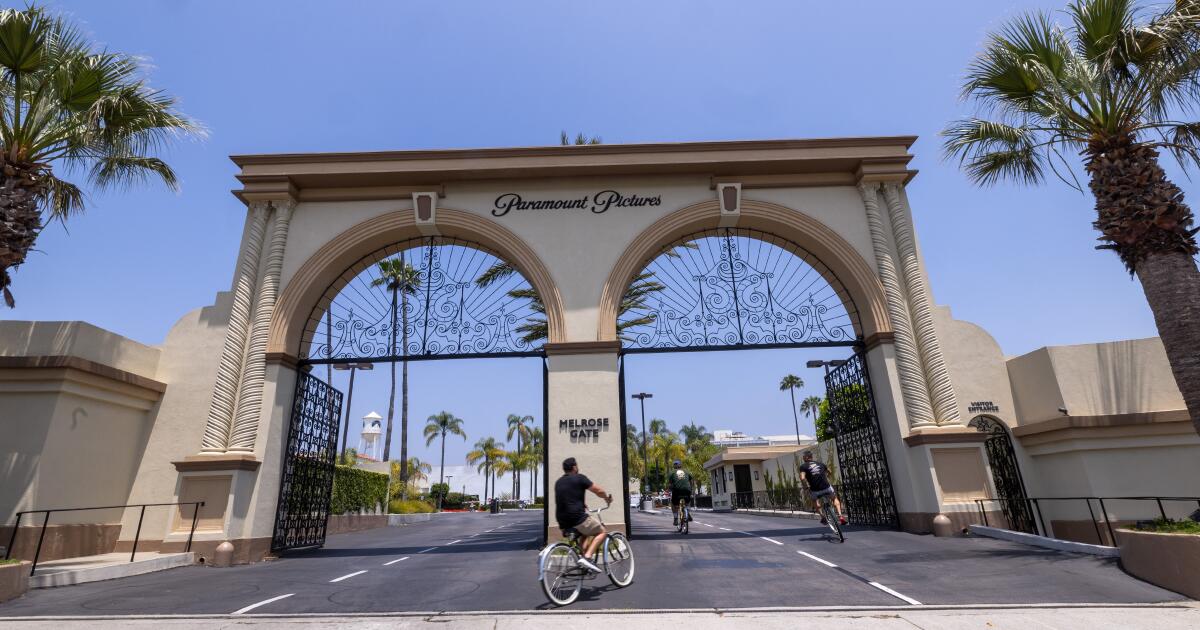
The state of California is leading an effort to prepare a possible lawsuit that could thwart Paramount Skydance Corp.’s planned acquisition of Warner Bros. Discovery, a potential obstacle for the $111 billion deal.
The lawsuit, which could be filed as early as this month, would likely involve multiple states, according to a source familiar with the deliberations who was not authorized to comment publicly.
The litigation would seek to challenge the proposed merger on antitrust grounds, arguing it would thwart competition, lower wages and lead to widespread job losses.
“The Paramount acquisition of Warner Brothers remains an active investigation, and we do not have any updates to share at this time,” said California Atty. General Rob Bonta’s office in a statement.
In a statement, Paramount said it “will continue to fight against any attempt to derail a deal that plainly benefits consumers, creators and the industry as whole.”
“Opposing this deal means opposing expanded consumer choice, new opportunities for creators and workers, and greater competition throughout the creative ecosystem — the opposite of what antitrust law is meant to achieve,” the company added.
Under Paramount Chairman David Ellison’s proposal, Warner investors would receive $31 a share, nearly four times the price of the company’s stock in April 2025. He also said he will keep both studios’ release schedules of 15 movies a year for a total of 30 films a year.
Nonetheless, Ellison and his team have vowed to make $6 billion in cuts following the merger, which requires regulatory approval. The combined company would have to contend with $79 billion in deal debt.
The prospect of substantial job cuts during a period of downsizing in Hollywood has ignited widespread opposition to the sale.
Thousands of people who work in the TV and film industry, including actor Joaquin Phoenix and director-writer-producer JJ Abrams signed an open letter opposing Paramount’s planned acquisition of WBD, saying it would lead to fewer production jobs and fewer choices for consumers. Others have also raised concerns about the impact it could have on content.
“The consequences would be felt nationwide, from destroying CNN the way that Ellisons have devastated CBS to entertainment industry job losses and consumers losing access to independent voices and a competitive market,” said Norm Eisen, executive chair of Democracy Defenders Fund, one of the groups that organized the open letter. “State attorneys general have both the authority and the responsibility to act when a transaction of this scale directly threatens the public’s interest, and I hope states across the country will join any effort to challenge this deal,” Eisen said in a statement.
The potential lawsuit, first reported by Bloomberg and Reuters, is being considered by other states, including New York and Colorado.
“Paramount and Warner Bros. haven’t cleared regulatory scrutiny,” Bonta told The Times in March. “My office has an open investigation into [the deal] and we intend to be vigorous in our review.”
Despite the potential obstacle, Raymond James equity analysts said in a note on Thursday that they “still believe the deal is likely to close.”
Last month, Paramount hired antitrust attorney Jeffrey Kessler to defend its planned acquisition of Warner Bros. Discovery. Kessler recently led a case for state attorney generals against concert promoter and ticketing firm Live Nation, resulting in a win for states, including California.
“We also think there are win/win solutions to be had particularly in California given exodus of production from CA in recent years and efforts to bring production back to Hollywood,” the analyst said in their note.
HAVANA — Spanish hotel chain Meliá has joined a growing list of companies with a long-standing presence in Cuba that are withdrawing or limiting their operations on the island after the U.S. announced new sanctions while upholding an oil embargo.
Meliá will cease operations at 15 of the 34 hotels it manages on the island, according to state website Cubadebate, dealing a blow to Cuba’s vital tourism sector, which has plummeted since its 2018 peak.
The report on Wednesday stated that Meliá’s decision was based on “a sense of corporate responsibility and external factors that have significantly affected the operation, legality and security of these establishments.”
The decision was announced May 26, just weeks after President Trump signed an executive order expanding sanctions against the island. Most of the sanctions targeted Grupo de Administración Empresarial S.A., a business conglomerate operated by the Cuban Revolutionary Armed Forces, with the U.S. asserting it was a threat to its national security.
The executive order freezes the assets of foreign companies, seizes their accounts in the United States and prohibits travel by their shareholders, investors and employees— virtually eliminating their activity in the U.S. financial system.
GAESA, a Cuban conglomerate created in the 1990s, owns a wide range of businesses, from car rentals and retail stores to transportation companies. It is Meliá’s partner in hotel management through one of its subsidiaries, Gaviota.
Meliá deals new blow to Cuba’s crumbling tourism sector
Meliá is one of Cuba’s most important partners in its vital tourism sector. Until its partial withdrawal, it operated some 14,000 rooms.
Spanish and Canadian firms are the biggest investors in Cuba’s hotel sector, noted Lee Schlenker, a research associate at the Quincy Institute’s Global South program, a Washington think tank.
“With the lack of international tourism, the fuel shortages, and just the broader decline since COVID…I’m sure that these companies will be rethinking their operations in Cuba with major implications for the people of Cuba, not just GAESA,” he said. “There are thousands of Cubans who work in these hotels.”
Several of the hotels that Meliá abandoned in idyllic destinations like the resorts of Varadero, Cayo Santa María and Jardines del Rey “were already closed and inactive due to energy problems and the drop in demand in Cuba,” according to Cubadebate.
Cuba’s government has blamed the U.S. energy blockade for prolonged blackouts, water shortages, supply problems, deficiencies in the healthcare system and disruptions in all aspects of daily life.
Those who work in Cuba’s crumbling tourism sector lamented Meliá’s announcement.
“It’s going to affect us, our families, and everyone involved in tourism. Our pay and income depend on this,” said Erich López, a driver of a green 1950s Dodge who has been driving for two decades to support his family.
For Carlos Luis Carbonel, a 62-year-old parking attendant who works in front of the giant Meliá Cohiba hotel in Havana, the situation “is going to be a blow.”
“This is terrible for everyone: for tour guides, for parking attendants, for hotel workers, for everyone,” he said.
Other major hotel chains including Canadian-owned Royalton and Spain’s Iberostar have limited or suspended operations in Cuba in the past week.
Tourism in Cuba, which reached a peak of 4.3 million visitors in 2019, saw a significant drop in the number of tourists arriving in the first quarter of this year, 48% lower than in the same period in 2025.
Only 298,000 tourists arrived in Cuba in January, February and March, compared to 573,300 international visitors during the same period last year, according to government data.
Cuba struggles to breathe
On Wednesday, the enormous and iconic sign of the Royalton Paseo del Prado hotel at the entrance of Old Havana was removed, as confirmed by The Associated Press during a visit. Meanwhile, the 500-room Iberostar Selection — also known as Tower K — the most modern and luxurious of the hotels slated to open in 2025, standing over 490 feet tall, has remained closed for days.
Airlines including World2Fly, Air France and Iberia have canceled flights to and from Cuba.
Also on Wednesday, Cuba’s Central Bank announced that Visa and MasterCard operations on the island would be suspended following the termination of relationships between foreign entities and FINCIMEX S.A., a Cuba-based agency affiliated with GAESA.
Last month, Canadian miner Sherritt International Corp. signed a non-binding agreement with Gillon Capital LLC, a family office linked to a former Trump adviser, to sell its stake in a mining business in Cuba.
In late January, Trump threatened tariffs on any country that sells or supplies oil to Cuba, as his administration pressures for a change in its political system and government. The move has deepened a crisis caused by seven decades of U.S. sanctions.
While U.S. and Cuban officials held talks earlier this year, tensions have risen. In late May, former President Raúl Castro was charged in a U.S. indictment for his alleged role in the downing of two civilian aircraft operated by Miami-based exiles in 1996 in Cuban waters.
Three years ago, Mattel Inc. struck box-office gold — or rather, pink — with the billion-dollar success of “Barbie.”
In its first return to theaters since the female-forward phenomenon, the El Segundo toymaker is turning to the brawny He-Man for another box-office lift.
Its latest film, “Masters of the Universe,” opens this weekend, as Mattel looks to build on that previous success and continue extending its signature toy brands into the entertainment arena.
“The movie is very much in tune with culture,” said Mattel Chief Executive Ynon Kreiz. “Everything is much more contemporary relative to what was created more than 40 years ago, but it’s still very true to the origin story and to the DNA of the brand.”
The new film arrives at a pivotal time for Mattel, which is facing pressure from investors to grow its business. The maker of Hot Wheels, American Girl and Uno has recently confronted a challenging market for toys, beset by tariffs on goods produced overseas and weaker-than-expected demand for Barbie dolls and Fisher-Price preschool products.
Amid uncertainty in the toy market and the fallout from tariffs, Mattel’s net income dropped 25% to $398 million in 2025. And since the company announced disappointing holiday sales totals in February, its stock has dropped more than 30%, closing at $14.34 on Wednesday.
“Masters of the Universe” toys at Mattel headquarters in El Segundo.
(Myung J. Chun / Los Angeles Times)
The share price slide prompted investor Southeastern Asset Management to send a letter last month to Mattel leadership suggesting the toy maker should sell itself and go private. Southeastern manages about 4% of the company’s stock on behalf of its clients.
“The frustration among investors has been the fact that if you look at the business from 2021 through 2025 and even this year … the business really hasn’t grown,” said Eric Handler, a Roth Capital senior media and entertainment analyst, referring to Mattel. “This is a company that needed something fresh in the portfolio, and there’s a wide range of investments being made, of which ‘Masters of the Universe’ is one part.”
Kreiz pushed back on the idea that the company is not growing. In the fourth quarter of 2025, net sales were up 7% to $1.8 billion, though the result was not as strong as the company expected.
Mattel has spent $1.2 billion in the last three years to buy back shares, with an additional $1.5-billion share repurchase planned for the next three years.
“We’re investing in our own stock because we believe it is undervalued,” he told The Times in an interview at his office, which has floor-to-ceiling windows that give an expansive view of El Segundo. “We absolutely agree that the share price doesn’t reflect the progress that we’ve achieved over the last few years financially, operationally, our place in culture, the strength of our brands, and the continued expansion of the business. And more importantly, the potential that we have down the road.”
“Masters of the Universe” is a key variable in that equation.
Ynon Kreiz, chief executive of Mattel.
(Myung J. Chun / Los Angeles Times)
The movie, which had a budget of roughly $170 million, is expected to bring in $25 million to $35 million in the U.S. and Canada during its debut weekend. That’s a far cry from the $162-million opening haul of “Barbie,” but box-office analysts say that film captured the cultural zeitgeist in a way that’s hard to replicate.
The ‘80s-era “Masters of the Universe” is “a property that was famous with a certain group of fans, but it hasn’t had much of a pop culture presence,” said Shawn Robbins, who directs movie analytics at Fandango and founded the forecasting site Box Office Theory. The movie has notched a respectable 74% approval rating from critics on aggregator Rotten Tomatoes.
“There’s been so many callbacks to nostalgic franchises,” he said. “Some people are always on board for them, and maybe the positive reviews bring people in who were on the fence. But people are also ready for something fresh and new and exciting.”
Kreiz said he’s often asked how the company will match the success of “Barbie.”
“The answer is, we don’t need to match ‘Barbie’s’ success for movies to have a meaningful economic impact on the company,” he said. “Not every movie will be ‘Barbie.’ If we create quality content that people want to watch and create quality experiences that people are engaged with, good things happen, and these brands will resonate and will be here for years to come.”
While theatrical revenue is important, the measure of success for “Masters of the Universe” could also include its eventual reception on streaming platforms and, of course, toy sales, analysts said.
There are hundreds of products tied to the movie, from collectible action figures of Nicholas Galitzine’s He-Man and Camila Mendes’ Teela, to branded Uno decks, Legos, clothing and skateboards.
Skeletor from “Masters of the Universe.”
(Myung J. Chun / Los Angeles Times)
“For us, it’s a huge win already,” said Robbie Brenner, president of Mattel Studios and chief content officer, who also served as a producer on the film. “We have reinvigorated and relaunched this brand that has been around for decades … and done it in a way with just the best-in-class toys. Obviously that’s our bread and butter. And then to have made an epic, incredible movie … is a huge win.”
While Mattel does not yet have sales totals for its “Masters of the Universe” toys, executives said during an earnings call in late April that product sales were “growing double digits” amid strong customer demand, particularly from adults.
When Kreiz was named CEO in 2018, he saw the potential for Mattel to expand beyond toys. In an entertainment landscape dominated by known franchises and intellectual property, the former TV and media executive wanted to leverage the company’s IP in new ways to attract consumers.
Hence, Mattel has expanded into real-world experiences such as a Barbie pop-up at Coachella or a traveling Hot Wheels monster truck show. In February, the company fully acquired Mattel163 mobile game studio after buying out a stake held by Chinese tech firm NetEase. The studio has released games based on Uno, Skip-Bo and other Mattel intellectual property.
And on the film and television front, the Mattel Studios division now has 51 people — most of whom are based in El Segundo — focused on projects across platforms.
After “Masters of the Universe,” Mattel Studios plans to release a “Matchbox” streaming movie in October. The division has more than a dozen films in development that have been announced, including an American Girl movie with Paramount, Polly Pocket with Amazon MGM Studios, as well as a live-action Magic 8 Ball series from M. Night Shyamalan.
“The journey for the company was to evolve from being a toy manufacturer that was making items to become an IP company that is managing franchises,” Kreiz said. “It’s not that we’re not creating toys — it’s obviously a big part of our business — but the opportunity is to expand so much more than the physical product.”
“Masters of the Universe” was in development for years at several different studios before it was picked up by Amazon MGM.
That partnership stemmed from Mattel’s work on the “Barbie” movie with Courtenay Valenti, then president of production and development at Warner Bros. Pictures who is now head of film at Amazon MGM.
“Masters of the Universe” felt like a good property for Mattel to bet on because of its nostalgia factor and deep bench of colorful characters, from the green tiger Battle Cat to the heavily armored Ram Man and ever meme-able Skeletor, which the company hopes will attract new audiences, Brenner said.
The movie is directed by Travis Knight — chief executive of stop-motion studio Laika who also led the 2018 “Transformers” spin-off “Bumblebee” — who Brenner said “nailed” the narrative’s tone. (It didn’t hurt that Knight was already a fan of the franchise and had sported the He-Man haircut as a child.)
“It’s a property that’s kind of out there,” said Brenner, who grew up watching He-Man and his twin sister She-Ra. “It’s got all these crazy characters. But just riding that line between what is funny and kind of irreverent and then kind of heartfelt, that is a very hard thing to put in a blender and to get right.”
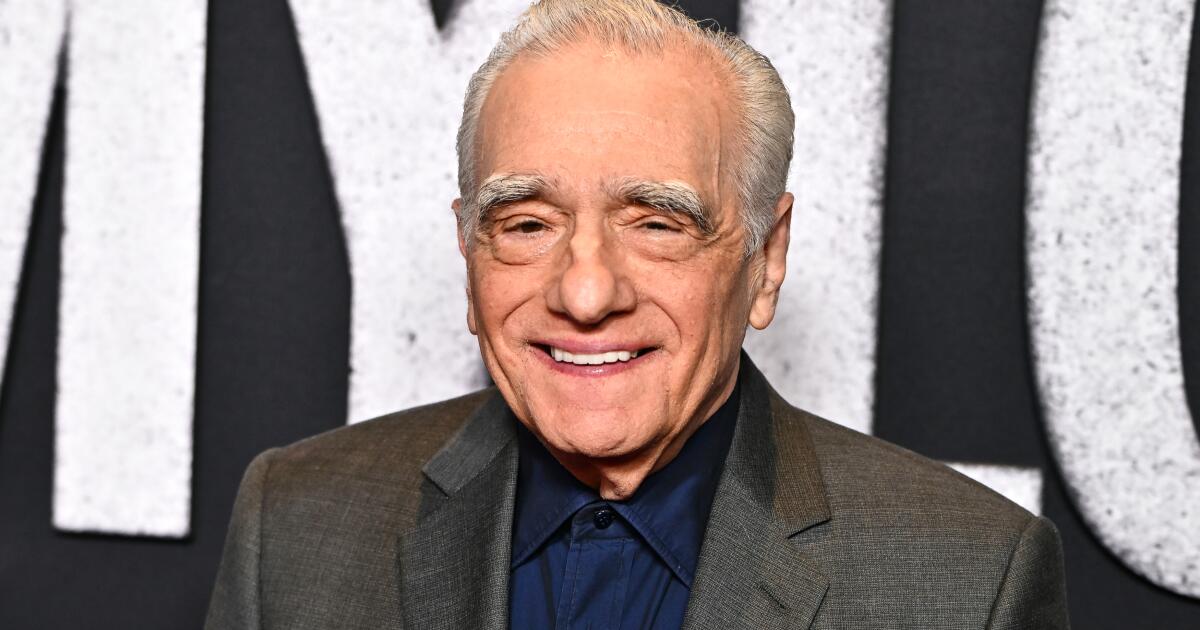
Oscar-winning director Martin Scorsese is joining the ranks of entertainment industry power players embracing generative AI.
Black Forest Labs, the German AI startup behind the text-to-image model Flux, announced Tuesday that Scorsese is joining the company as an advisor.
The company unveiled the collaboration on its website with a video of the auteur using Flux to storyboard scenes, which involves mocking up shots before filming.
“This conveys a cinematic intelligence,” he said in the video, discussing the program’s uses with Black Forest Labs co-founder and Chief Executive Robin Rombach and Creative Artists Agency co-founder Michael Ovitz. According to the New York Times, Ovitz, an investor in Black Forest Labs, helped bring Scorsese aboard, along with Rick Yorn, Scorsese’s talent manager, whose investment firm BroadLight Capital is also an investor.
In a statement, Scorsese emphasized the potential for AI to transform the storyboarding process.
“For 70 years, I’ve been creating my own storyboards. There’s always been this problem of how do you communicate what you see in your head to your cast and crew. There are some things you have to see and feel,” he said. “I’m interested in the intersection of technology and storytelling, and seeing how that can push the bounds of creativity to create deeper and richer experiences for audiences.”
Traditionally, storyboarding is done by hand or digital illustration through a collaboration between directors and storyboard artists.
Scorsese’s public espousal of this technology marks the latest shift in attitude about AI from powerful Hollywood creatives. Since generative AI became widely accessible in 2022, Hollywood has struggled to navigate its power to rapidly upend industry norms.
Scorsese is not the first decorated filmmaker to embrace AI. James Cameron, the Oscar-winning “Avatar” director, is on the board of directors for Stability AI, where Rombach worked before launching Black Forest Labs. In his keynote address at the AI on the Lot conference last week, director and screenwriter Paul Schrader expressed a mixture of admiration and caution toward the technology.
“AI does not create — it combines,” Shrader said. “If AI wants an idea, it has to go to where that idea already exists. Of course, you can make the argument that that’s all artists do anyway, and to a degree that’s a valid argument. But you still have to come up with something.”
Not everybody is on board with generative AI’s potential transformations. Guillermo del Toro and Seth Rogen spoke out against the technology at Cannes last month, and below-the-line wokers, screenwriters and actors have continued to express apprehension and even horror at the prospect of being replaced by generative AI.
Scorsese’s entry into the AI field might especially shock fans given his traditionalist approach to filmmaking. In 2019, he famously criticized Marvel movies, calling them “theme parks” and “not cinema.”
“It isn’t the cinema of human beings trying to convey emotional, psychological experiences to another human being,” he said in a 2019 interview with Empire Magazine.
Even if his filmmaking centers humanity, Scorsese’s partnership with Black Forest Labs demonstrates his willingness to incorporate non-human assistance.
“Remember, cinema is a young medium, only around 125 years old, so we have to be open to how it can evolve,” he said in the statement on Black Forest Labs’ website.
The four-time NBA champion has spent his entire playing career with the Golden State Warriors and is under contract through the end of next season.
He has been playing without a shoe deal, however, since parting ways with Under Armour in November.
That won’t be the case when Curry starts his 18th NBA season in the fall. The man who holds the NBA record for most career three-pointers announced on Monday that his Curry Brand is teaming with Chinese sportswear and athletic equipment company Li-Ning for a partnership that is “bigger than a shoe deal” and “bigger than a signature series.”
”This is the partnership of a lifetime. The future of Curry Brand is with Li-Ning,” Curry wrote in a post announcing the deal on his Thirty Ink site. “I couldn’t be more proud to build a long-term vision with Li-Ning that will fuel Curry Brand for years to come and unlock the full potential of this company on a global scale.”
ESPN reports that the deal is for 10 years. Terms were not released.
Curry signed with Nike for the first four seasons of his career before switching to Under Armour in 2013. After announcing his sneaker free agency early in the 2025-26 season, Curry wore shoes from a variety of companies during warmups and games. In April, Curry auctioned off more than 70 pairs of those shoes through Sotheby’s, raising more than $1.7 million for his charitable foundation.
While many of his shoe choices had special significance — like when he honored Kobe and Gianna Bryant by warming up in Nike Kobe 6 Protro “Mambacita” sneakers — Curry also was doing his due diligence as a businessman.
“Throughout my sneaker free agency, I was impressed by the quality, comfort and performance of Li-Ning’s shoes,” Curry said. “It was during that time playing in Dwyane Wade and Jimmy Butler’s sneakers, that I knew that Li-Ning could be the right partner that can deliver on the innovation and design that I want Curry Brand to stand for.”
Li-Ning (the company) was founded by Li Ning — the Chinese gymnast who won six medals, including three gold, during the 1984 Los Angeles Olympics — in 1990. A handful of NBA players have signed with the company , starting with then-Cleveland Cavaliers guard Damon Jones in 2006 and also including former Clippers guard Baron Davis and future Hall of Famers Wade and Shaquille O’Neal.
In addition to Curry’s Golden State teammate Butler, other current NBA stars signed with Li-Ning include Atlanta’s C.J. McCollum and Washington’s D’Angelo Russell.
According to Curry, Li-Ning will open Curry Brand stores in the United States and China.
“We’ll be proudly building Curry Brand into a future leading company that will leave its mark in Basketball, in Golf and across the lifestyle space,” Curry wrote.
“We’ll aim to create game-changing products, launch elevated platforms and bring storytelling that will inspire young boys and girls around the globe. My hope is for young athletes to find the same purpose, joy and drive through sports that I’ve long enjoyed throughout this journey.”
At the AI on the Lot media conference last week in Culver City, speakers laid out a view of artificial intelligence that was very much complementary to human workers.
Artificial intelligence is a tool that must be wielded by humans, several said. The idea was to help skilled artists and production specialists do their jobs and experiment, others said.
Of course, to many in Hollywood, AI is not that simple.
Guardrails on its usage emerged as a central issue in the 2023 writers’ and actors’ strikes, and additional rules were added in the recent Screen Actors Guild-American Federation of Television and Radio Artists and Writers Guild of America contracts. There are still big questions about AI’s effect on jobs in the entertainment business, as well as copyright and ethical concerns.
Whether it’s good or bad or some combination of both, AI, in some form, is probably here to stay.
So, eight months ago Amazon MGM Studios opened an AI Studios division to start work on Project Nara, an AI production toolkit built on Amazon’s AWS cloud computing platform that could be used by teams of filmmakers. Project Nara is still in beta mode, and the company set up a GenAI Creators’ Fund to give filmmakers interested in using the toolkit financial support, while also giving the studio feedback.
The beta testers got eight weeks to produce an animated short and, out of those, the company greenlighted three animated series.
Shortly after the conference, filmmaker Jorge Gutierrez, whose stop-motion-style “Punky Duck” was chosen as one of the greenlighted series, pulled out after an online backlash over his use of AI.
You’re reading the Wide Shot
Samantha Masunaga delivers the latest news, analysis and insights on everything from streaming wars to production — and what it all means for the future.
By continuing, you agree to our Terms of Service, which include arbitration and a class action waiver. You agree that we and our third-party vendors may collect and use your information, including through cookies, pixels and similar technologies, for the purposes set forth in our Privacy Policy such as personalizing your experience and ads.
“We respect Jorge’s decision, as well as his incredible talent, his voice and the world he created with ‘Punky Duck,’” an Amazon MGM Studios spokesperson said in a statement. “We continue to be excited about the innovative work moving forward at our studio and the GenAI Creators’ Fund.”
Before the flap over “Punky Duck,” I spoke with Albert Cheng, head of Amazon MGM Studios’ AI Studios, about the goal of the division, what’s next for AI and his belief that humans are at the center of creativity. The conversation has been edited for length and clarity.
Why was AI Studios formed?
AI Studios was started last fall because we wanted to learn how to leverage AI technology to build tools that would help enhance or redefine the workflows for film and TV production.
When you look at the horizon of what it takes to drive continued engagement of a global streaming service like Prime Video, we need more original programs. So if you can figure out how we take the same amount of money that we spend and be able to make more shows, that’s ultimately what we want, and we think AI is going to be a help to drive that.
With AI, now we’re looking at how does technology change the way we actually create our cinematic storytelling? It could mean that with AI, we will hear from a lot more voices. If we can actually get the biggest costs down, we will be able to have more voices, be able to take more risks and creative risks most of all.
There’s always concern about what does AI mean for jobs. We believe that it actually creates more jobs and different types of jobs. In fact, people with experience, plus the tools, become even more valuable in terms of their ability to produce excellent quality work. So it’s always about the human behind it.
You mentioned that some of these production crews had more than 100 people, but crews in the past would have been much larger. How do you respond to concerns about that?
You may have smaller crews, but we’ll do more of them [productions], and more in a short period of time. When you actually have smaller productions and you do more of them, you’re increasing your throughput. Your turnover rate of the available jobs is much faster, so your job totals are actually going to be bigger.
You spoke about the idea of AI filmmaking bringing jobs back to L.A. and expanding California’s production incentive eligibility to include AI-assisted filmmaking. Can you elaborate on that?
When you look at AI production, it can be done on a soundstage. We don’t need to go to London, we don’t need to go to other places.
We do have technology companies in California that are driving this, we have people here in the city that have experience, if given the AI tools, can produce great work. So, how can we not incentivize more companies to use our soundstages and finally make productions and make more of them?
Have you or anyone else at Amazon spoken with government officials about this idea of expanding the incentive criteria?
We’ve been talking to a number of bodies about whether it’s possible. The question is, who’s going to take the ball?
How much can you decrease a show’s production budget by using AI?
I think we can get a show to half the cost, [or] to almost a fifth of the cost.
What was the thinking behind the GenAI Creators’ Fund?
We wanted to provide a support and invest in creators who wanted to try it, and then also give us feedback.
We also wanted to show that storytelling is the thing that drives the content. It’s not the technology; the technology just enabled them to make it.
What is the biggest misconception of AI use in production?
There’s a narrative that AI can do so many things by itself, that you don’t need people. That’s absolutely not true. It’s just a technology, it can’t make decisions.
In order for something actually quality to be made, a person actually needs to be behind that, and that’s been proven over and over again. People are still responsible for the output.
The $10-million horror flick, which stars Chiwetel Ejiofor as a furniture store owner who finds a mysterious portal in his basement, was directed by 20-year-old YouTuber Kane Parsons and is based on his online series of the same name. Worldwide, the film made nearly $118 million in its debut weekend.
Focus Features’ “Obsession” also had a big weekend with a 10% jump in domestic box-office revenue in its third outing. The horror movie, which had a production budget of less than $1 million, was directed by Curry Barker, who also built his reputation on YouTube.
Together, the two films highlight the growing power of YouTube — and online culture as a whole — on the big screen. They beat out franchise film “Star Wars: The Mandalorian and Grogu,” which dropped 69% from its debut last weekend to rank third at the box office.
What I’m watching
I’m just one episode away from finishing this season of “Bridgerton” on Netflix. While I liked that the show dived into the social class dynamics behind Benedict and Sophie’s romance, I have to say that I loved the secondary focus on Violet Bridgerton and Lord Anderson finding a second chance at love.
NEW YORK — American businesses big and small have started receiving tariff refunds after the U.S. Supreme Court ruled that President Trump lacked the constitutional authority to impose higher import taxes on goods from nearly every other country.
The process could grind to a halt, however, after the Trump administration said Friday that it intended to appeal a federal judge’s order to allow all companies that paid the illegal import taxes to seek refunds, not just the ones that filed lawsuits.
Until the Department of Justice informed the judge of its planned appeal, the refund system overseen by U.S. Customs and Border Protection had been working fairly smoothly. Refunds reached the bank accounts of the first successful applicants on May 12, about three weeks after American importers and their customs brokers could start submitting claims through an online system, according to CBP.
Applications for refunds totaling $85 billion — more than half of the $166 billion the agency estimated the government owes to companies that paid the illegal tariffs on imported goods — were accepted for processing as of May 22, CBP reported in a legal filing earlier in the week. It said it had so far directed the Treasury Department to issue $20.6 billion in refunds.
The administration revealed its appeal preparations while objecting to a demand by Judge Richard K. Eaton for CBP Commissioner Rodney Scott to appear in the U.S. Court of International Trade to answer questions about how long it would take to repay all 330,000 importers that might be eligible for refunds. The judge has scheduled a June 9 hearing on why he shouldn’t require the government do whatever it takes to speed up the process.
Justice Department lawyers asked Eaton to allow one or two of Scott’s deputies to appear in his place, arguing that as a high-ranking presidential appointee, the CBP chief could not be compelled to testify in court. They also argued that Eaton exceeded his own authority when he determined in March that the Supreme Court’s ruling entitled “all importers of record’’ to refunds.
“For that reason, defendants intend to appeal the court’s universal injunction,” the lawyers wrote, adding that CBP would continue to move “as quickly as it can to process refunds in a phased approach” for businesses that filed some 485 pending trade court complaints to assert their rights to refunds.
In a terse reply Friday, Eaton said he needed to hear directly from Scott whether the government would return all of the money it collected between when Trump imposed what he called “reciprocal” tariffs on goods from most countries in April 2025 and when the Supreme Court struck them down in late February.
“This case involves $166 billion,” the judge wrote. “It is undisputed that the remedy for this unlawful collection is for the United States government to refund the unlawfully collected duties.”
Some national retail chains said they planned to use their tariff refunds to lower customer prices on some items. Walmart Chief Financial Officer John David Rainey told analysts last week that the company would implement price cuts even though the maximum refund it might be eligible for represented less than half of 1% of Walmart’s $483 billion in annual U.S. sales.
Some smaller companies told the Associated Press that the partial refunds they’ve received so far would go toward paying remaining or future tariffs, reducing debt or just keeping the lights on after more than a year of uncertainty and additional import costs.
Jay Foreman, chief executive of toy company Basic Fun, said he received about $450,000, or 7% of his total claim, over two consecutive days this month. He took the initial repayment as a positive sign but said that after having less than $10,000 refunded since then, the process seemed like a “total slow roll.”
“It’s time to release the funds back into the economy, especially given how much we and others need these funds to support our businesses and fund our operations,” Foreman said.
A Delaware Court of Chancery judge delivered a blow to wrestling impresario Vince McMahon and other World Wrestling Entertainment officials earlier this week.
Judge J. Travis Laster, vice chancellor of the Delaware Court of Chancery, issued sanctions for “spoliation of evidence” in the shareholder lawsuit over the 2023 merger between Ultimate Fighting Championship and WWE.
Laster ruled on Tuesday that WWE executives destroyed evidence by using the auto-delete setting on the messaging app Signal, enabling potentially relevant communications to be deleted.
The ruling means the court will operate under the assumption that five potentially damaging statements are true while allowing the defendants to rebut them.
The statements, according to the ruling, include that McMahon’s decision on the merger was “influenced” by Endeavor Executive Chairman Ari Emanuel’s “promise” to provide him with a continued role at the company and to indemnify him and provide legal support as federal investigators were looking into claims of alleged sexual misconduct.
McMahon pursued a deal with Endeavor in 2022 before WWE initiated its strategic review process, and both McMahon and then-WWE President Nick Khan worked with The Raine Group, a strategic financial advisor, “to steer the process to Endeavor and away from other potential bidders,” the ruling states.
In September 2023, entertainment giant Endeavor, the parent company of UFC, acquired WWE and merged the two sports entities to form a new, publicly traded company, TKO Group Holdings, in a deal worth $21.4 billion.
A month later, a group of shareholders filed suit against McMahon and other company officials in Delaware Chancery Court, claiming McMahon orchestrated a “sham sale process.”
Representatives for McMahon, WWE and TKO were not immediately available for comment.
According to the suit, McMahon, WWE’s controlling shareholder, turned down higher offers and excluded other bidders who would have ousted him and instead chose a deal that favored Endeavor’s Emanuel, a “close friend and longtime ally,” enabling McMahon to continue running WWE and shielding him from federal investigations related to a raft of sexual misconduct claims.
The complaint also alleges that the $21.4-billion deal undervalued the company and was “far below the offers” WWE’s board could have received from other interested parties had they “made any effort to negotiate in good faith.”
The litigation is related to the 2022 investigation by WWE’s board that found that McMahon made at least $14.6 million in payments between 2006 and 2022 for “alleged misconduct.” McMahon has denied claims of misconduct.
The settlements were made to women, including WWE employees, who alleged that McMahon initiated unwanted sexual contact and coerced women into performing sexual acts on him. In one case, first reported by the Wall Street Journal, a woman claimed that McMahon sent her unsolicited nude photos of himself.
McMahon’s alleged misconduct became the subject of ongoing investigations by the Securities and Exchange Commission and the U.S. Department of Justice.
“I am confident that the government’s investigation will be resolved without any findings of wrongdoing,” McMahon said in a statement to The Times in 2023.
Last January, the SEC announced it had settled charges against McMahon alleging he had violated federal securities laws by failing to disclose a pair of settlement agreements to WWE worth $10.5 million.
McMahon agreed to pay more than $1.7 million in a civil penalty and in reimbursement to WWE, without admitting or denying the agency’s findings. Federal prosecutors also have dropped their criminal investigation.
In January 2024, McMahon resigned as executive chairman of the board of TKO Group, one day after a former WWE employee, Janel Grant, sued the company, McMahon and former head of talent relations John Laurinaitis, alleging sexual assault, trafficking and emotional abuse.
Grant claimed that McMahon agreed to pay her $3 million in exchange for her silence.
The shareholder trial is set to begin on June 8. McMahon, Emanuel, Khan, TKO President Mark Shapiro, and WWE Chief Content Officer Paul “Triple H” Levesque are expected to testify.
Nicaragua’s government said it will return mining company BHMB Mining to its original owners after the operation was confiscated in September 2025. File Photo by Christobal Herrera-Ulashkevich
May 28 (UPI) — Nicaragua’s government said it will return mining company BHMB Mining to its original owners after the operation was confiscated in September 2025 and later transferred to Chinese firms.
The announcement came from Nicaragua’s Attorney General’s Office and follows what local media and analysts described as efforts by President Daniel Ortega and Vice President Rosario Murillo’s government to avoid additional sanctions from the Trump administration.
According to the government, officials reached an agreement with BHMB Inc., a U.S.-British company incorporated in Florida, allowing operations to resume at the BHMB Palacaguina processing plant in northern Nicaragua.
“As a result of a process of dialogue and coordination carried out in an atmosphere of cooperation and mutual respect, an understanding has been reached aimed at the orderly and secure normalization and operational reactivation of the BHMB Palacaguina plant,” the government said in a statement.
The government added that the specific terms and conditions of the agreement remain confidential.
Nicaraguan newspaper La Prensa previously reported that authorities seized the facilities in September 2025. The company operated a gold processing plant in northern Nicaragua valued at more than $80 million under a 10-year operating permit.
The owners said that after the expropriation, Nicaraguan authorities transferred the plant to Chinese companies Zhong Fu Development and Santa Rita Mining.
Environmental and Indigenous rights advocate Amaru Ruiz wrote on X that “the Ortega-Murillo regime announces an agreement with BHMB Mining Nicaragua to free itself from the complaint filed before ICSID over the expropriation suffered by the company.”
Ruiz later told Nicaraguan outlet 100% Noticias that the decision represented an unusual reversal by the government. He said the administration “feared losing the case before ICSID” because of growing international pressure and the possibility of economic sanctions.
The International Centre for Settlement of Investment Disputes, or ICSID, is a World Bank institution that resolves legal disputes between sovereign states and foreign investors.
On April 16, the U.S. Treasury Department’s Office of Foreign Assets Control announced sanctions targeting individuals and entities tied to Nicaragua’s gold sector.
According to the Treasury Department, the sanctions responded to what it described as the Ortega-Murillo government’s use of the gold industry as a major source of financing for repression and corrupt enrichment of the ruling family.
Nicaraguan journalist Miguel Mendoza said the government’s decision to return the plant to BHMB appeared aimed at avoiding political and economic pressure from the U.S. Congress.
U.S. lawmakers are scheduled to hold a hearing June 4 titled “Confronting the Ortega-Murillo Totalitarian Regime,” focused on democratic backsliding in Nicaragua and rising tensions with Washington.
Mendoza added that BHMB shareholder Baruch Rapoport maintains relationships with figures in the Trump administration, including diplomat Richard Grenell, who served as Trump’s special envoy for Venezuela.
According to Mendoza, those ties may have contributed to recent U.S. sanctions against seven Nicaraguan mining companies, targeting one of the government’s most profitable sectors.