capital

Underrated city used to be major capital but now barely any tourists visit – not Colchester

A ranking of Europe’s most underrated cities has named a historic spot that many Brits may not have even heard of, and visitors can explore Roman ruins, gothic monasteries, and a doll museum

Portugal has long been a major city break destination for Brits, and while most head to either Porto to explore its colourful, hilly streets, or Lisbon for a lively, cultural atmosphere, there’s one spot that gets overlooked.

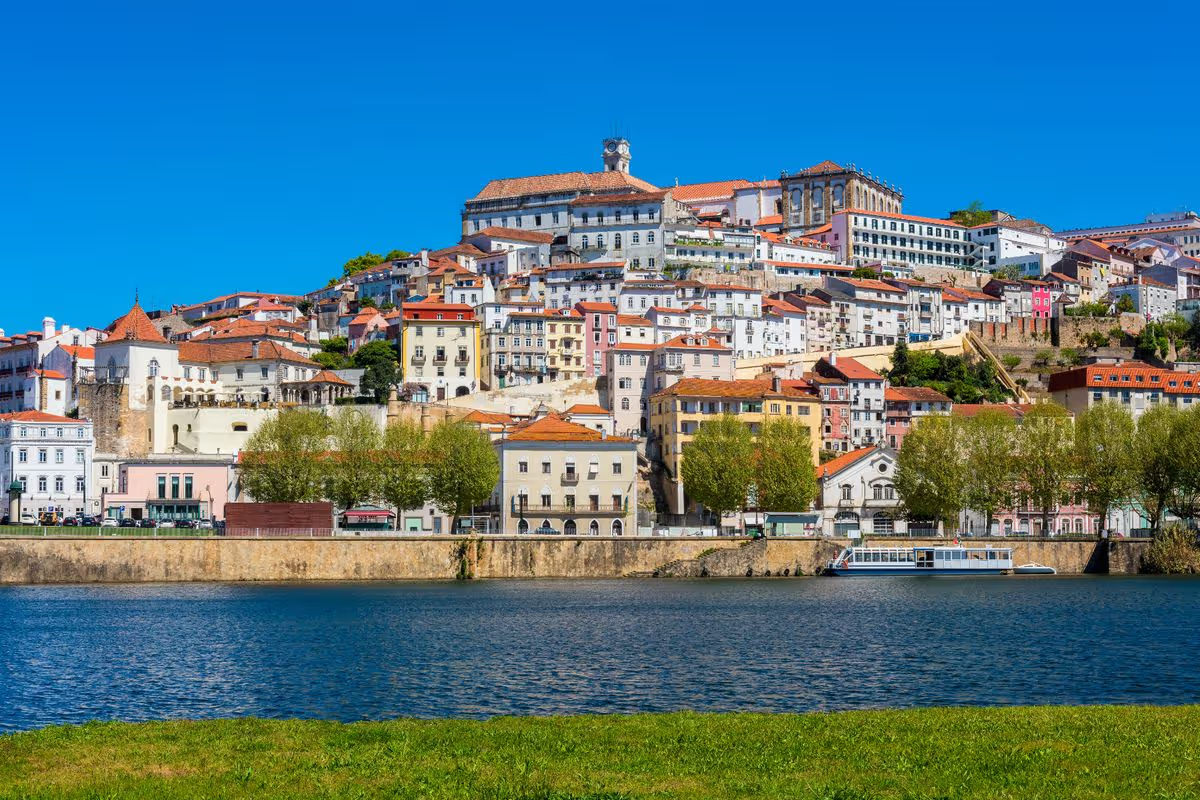
For over a hundred years, Coimbra was Portugal’s capital, a thriving walled city that had monasteries, grand cathedrals, and a university that’s still operational today making it one of the world’s oldest. When the King moved the capital to Lisbon, it became a centre of Renaissance art, bringing French and Italian influences to the area and becoming a town where intellectuals flocked, inspired by the peaceful riverfront scenery.

Recently, Which? identified Coimbra as one of Europe’s underrated cities, noting: “It’s a historic, cultural and academic hub, with a Unesco-listed university complete with a gilded baroque library that’s open to the public for visits and tours.

There’s also a winding old town that, unlike Lisbon and Porto, isn’t bottlenecked with tourists in peak season — and you’ll also find plenty of atmospheric tascas for truly Portuguese lunches and dinners.”

Despite its close proximity to Lisbon and Porto, trains take 90 minutes and an hour, respectively.

It’s not a destination visited by many Brits. It’s perfect for a day trip from the Portuguese coast, although you may want to stay longer and soak up the authentic atmosphere among its sun-soaked streets.

Visit the ruins of Mosteiro de Santa Clara-a-Velha, a Gothic monastery that dates back to the 1300s, which has become a major archaeological site, and explore a museum full of treasures from ancient tombs.

Santa Cruz Church is another must-see in the town. The whitewashed church has incredible blue-tiled mosaic murals that cover entire walls, and a peaceful, if eerie, mausoleum that is the final resting place of Portugal’s first king.

National Museum Machado de Castro has artworks and sculptures from the Renaissance artists who once lived in this town and honed their skills.

Built on a set of Roman tunnels, the museum is housed in a serene 11th-century cloister where you can enjoy the peaceful atmosphere of its cool marble walls.

A short drive outside the city are a number of tiny Schist Villages, traditional mountain settlements that are being restored to capture the country’s heritage. There are 12 villages in the Lousã Mountain, and from Coimbra you can take a guided tour through the winding mountain roads to explore these areas where time stands still.

Popular stops include Cerdeira, once abandoned but now the home of an arts and crafts school, and Talasnal – famous for its rustic stone cottages and incredible views across the pine-covered. mountains. On the way back, visit Arouce Castle, a medieval fortress that overlooks a river beach. There are areas for swimming in the pure mountain waters, and waterfalls that add to the untamed scenery.

Have a story you want to share? Email us at webtravel@reachplc.com

Source link

Record listing shifts focus from fundraising to deeper capital markets

Uzbekistan’s largest-ever public market transaction has highlighted growing investor interest in the country and its economic reforms, while shifting attention to the next stage of developing its financial markets.


ADVERTISEMENT


ADVERTISEMENT

The listing of the National Investment Fund of Uzbekistan, managed by Franklin Templeton, raised more money than all previous IPOs in the country combined over the past 30 years, according to Marius Dan, Central Asia CEO at Templeton Global Investments.

For investors and market operators, the transaction has drawn attention to a wider issue: how Uzbekistan develops the rules, institutions and market depth needed to support capital markets, debt financing, venture capital and private investment.

“What investors really want to know is that they’ll put their money in and that they will get their money back,” Julia Hoggett, chief executive of the London Stock Exchange, told Euronews.

Hoggett said investors usually begin by looking at a country’s fundamentals, including currency stability, inflation, economic growth, population trends and assets, before turning to the regulatory environment.

Building the infrastructure behind investment

Uzbekistan is preparing new financial legislation as it seeks to expand the range of financing available to companies and investors.

Laziz Kudratov, the country’s minister of Investment, Industry and Trade, told Euronews that legislation establishing the Tashkent International Financial Centre is expected to be signed soon.

The project would create a separate jurisdiction based on common law principles. Kudratov said the aim is to give foreign financial companies a legal environment based on international standards rather than requiring them to operate solely through local legislation.

He also said the planned jurisdiction would include 50 years of tax incentives, including exemptions from corporate income tax, value-added tax (VAT), property tax and customs duties.

The government is also preparing legislation covering alternative investment structures, including venture capital, private equity and limited partner-general partner investment models.

“We are also coming up with a new law on alternative investments,” Kudratov said. “It will create a framework to protect venture capital, LP and GP investment, and private equity investment in Uzbekistan.”

Dan said the National Investment Fund listing showed that international investors were willing to participate when transactions were structured in the right way.

The initial public offering of the National Investment Fund shows that, in the right structure, investors are very keen to participate in the capital markets of the country,” he said.

Creating a deeper market

Dan said Uzbekistan’s capital market would need more companies, greater liquidity and more foreign institutional investors in the coming years.

He said continued listings of state-owned enterprises, both within and outside the National Investment Fund’s portfolio, would be important in broadening the investment universe.

Local debt markets are also beginning to attract more attention, he said, with retail investors looking more closely at investment opportunities inside Uzbekistan.

Kudratov said reforms introduced since 2017 had changed the investment environment through tax reforms, currency liberalisation and the removal of restrictions on profit repatriation.

“Any investor can come, invest and get their revenues out of the country within one day,” he said.

For Hoggett, investor confidence also depends on a proven track record.

“You can’t change things overnight and say people need to believe it. They need the evidence to see it,” she said.

Broadening participation

The growth of local debt markets and the entry of more retail investors are early signs that Uzbekistan’s financial market is beginning to widen beyond foreign institutional capital, according to Dan.

Hoggett said public markets can play a wider role by opening investment opportunities to more participants.

“The public markets are democratising,” she said.

Hoggett added that private companies are often owned by a relatively small group of investors, while public markets allow a broader range of investors to access company growth. That wider access comes with stronger disclosure requirements for issuers.

For Uzbekistan, broader participation would mean more than attracting foreign capital. It would also involve creating opportunities for domestic investors to participate in the growth of listed companies, debt markets and other financial products.

Governance and market discipline

Governance remains central to the development of Uzbekistan’s capital markets.

Dan said several companies within the National Investment Fund’s portfolio had already introduced board-level changes, including the appointment of independent directors.

“Corporate governance is key,” he said.

He described stronger oversight of state-owned companies as part of improving their operations.

Hoggett said public markets also impose discipline on companies seeking capital.

“The first rule of doing an IPO is meet your estimates, hit what you say you’re going to do,” she said.

That requires companies to build systems, controls, accounting capacity, finance teams and planning processes, she said. Hoggett added that such structures can help companies operate at scale and grow faster.

Source link

Strong back-to-back earthquakes hit Venezuela capital region

Back-to-back major earthquakes of magnitudes 7.2 and 7.5 rocked Venezuela on Wednesday evening. The quakes are likely to cause widespread damage and mass casualties, the U.S. Geological Survey said. Image courtesy of UPI

June 24 (UPI) — Two major earthquakes — magnitudes 7.2 and 7.5 — hit near the Venezuela capital of Caracas on Wednesday evening, collapsing buildings and bringing people flooding into the streets.

The first quake hit at 6:04 p.m. local time, BBC News reported, with the second less than a minute later. June 24 is a holiday in Venezuela, and more people than usual were at home instead of on an evening commute.

The earthquakes’ center was about 17 miles northwest of Montalbán, home to some of the country’s largest refineries, CNN said.

The U.S. Geological Survey has reported that high casualties and widespread damage are likely, saying that there is a 44% chance that fatalities will exceed 10,000 and a 30% chance that they will exceed 100,000. The USGS said aftershocks may still occur.

Venezuela’s interior minister has asked people to leave their homes, citing damaged buildings and concerns about gas leaks. Companies cut gas lines to some areas as a precaution, Minister Diosdado Cabello said, BBC News reported.

The Ministry of Communication and Information in Venezuela said security forces have been deployed around the country because of the risk of building collapses.

Source link

Nvidia raises over €21.5bn in first bond sale since 2021 as AI growth race continues

Published on

The world’s most valuable company, the chipmaker Nvidia, priced a $25 billion (€21.5bn) bond offering on Monday, marking its first issuance since 2021 and one of the largest by a technology company this year.


ADVERTISEMENT


ADVERTISEMENT

The deal was originally pencilled in at around $20 billion (€17.2bn) but was enlarged after demand ran more than three times the size of the bond, according to a person familiar with the matter cited by Bloomberg.

Investor appetite was the headline of the sale.

Orders reached as high as $85 billion (€73.2bn), allowing Nvidia to upsize the transaction and tighten its borrowing costs in the process.

The timing was also favourable.

The announcement of a US-Iran framework deal to end the conflict in the Middle East steadied credit markets, pushing investment-grade spreads to their narrowest levels since early February, before the Iran war began.

That backdrop helped Nvidia lock in relatively cheap long-term financing.

According to Bloomberg Intelligence analyst Robert Schiffman, inexpensive long-dated debt lowers Nvidia’s weighted average cost of capital and helps bankroll its AI investments without threatening its AA credit rating.

A company spokesperson stated that the proceeds would be used for general corporate purposes, including repaying and refinancing existing notes.

Nvidia last tapped the investment-grade market in June 2021, when it sold $5 billion (€4.3bn) of notes across four maturities, according to a regulatory filing.

The contrast in scale underscores how quickly its financing needs have grown alongside the data centre build-out and increased demand from hyperscalers.

A wider borrowing frenzy

Nvidia joins a queue of technology giants raising vast sums to fund AI infrastructure.

Meta and Oracle have each issued $25 billion (€21.5bn) in bonds this year, while Amazon completed a single $37 billion (€31.8bn) deal, the largest US investment-grade offering of this year before Nvidia’s issuance on Monday.

For Nvidia, the raise also keeps share dilution off the table, giving it greater flexibility as capital commitments mount. The firm has invested $5 billion (€4.3bn) in Intel, pledged up to $10 billion (€8.6bn) to Anthropic and contributed $30 billion (€25.8bn) to OpenAI’s latest funding round.

Nvidia shares closed up 3.5% at $212.45 after the deal, valuing the company at about $5.14 trillion (€4.42tn).

On the other hand, Alphabet, Google’s parent company, opted for equity instead, pricing an upsized $84.75 billion (€73bn) capital raise earlier this month, after originally seeking around $80 billion (€68.9bn), according to a company filing.

The transaction, which includes a $10 billion (€8.6bn) private placement from Berkshire Hathaway, ranks as the largest equity capital raise on record and is intended to fund the group’s AI compute expansion.

Management has guided 2026 capital expenditure to between $180 billion (€155.1bn) and $190 billion (€163.7bn).

However, the equity move came on top of an already heavy borrowing run. According to its own filing, Alphabet raised more than $85 billion (€73.2bn) of debt across six major currencies and markets in the first quarter of 2026, taking its total debt balance above $100 billion (€86.1bn).

That included a US dollar bond round early in the year, leaving Google relying on both debt and equity financing to bankroll its AI ambitions.

Source link

Floods Hit Cameroon’s Capital After Heavy Rains

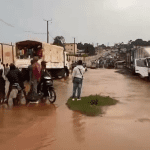
Several communities in Cameroon’s national capital, Yaounde, have been submerged after days of torrential rain, making life difficult for residents. The Central Post Office Roundabout was particularly affected, causing traffic disruptions on Monday morning, June 8. Locals reported that this area often floods during the rainy season. 

“When the heart of the city is blocked, it goes without saying that many other parts of the city cease to function normally,” a local dweller told HumAngle. “That is exactly what has been happening in Yaounde since late last week.”

Following the downpour on Thursday, June 4, the door to the Central Post Office was inundated, completely blocking access to the facility. The flooding has also interfered with commercial activities in the area.

Eyewitnesses told HumAngle that 20th May Boulevard,  a ceremonial avenue in the heart of Yaounde, was also submerged, with vehicles stuck in floodwaters and some trapped in mud washed into the city. “Towing facilities would have to be brought in to drag some of the cars and trucks stuck in the mud,” one eyewitness revealed.

“I feel fortunate that my vehicle is still here, but I’ve hardly slept since it got stuck, for fear of theft. It’s disheartening to see this situation repeat every year while the City Council allows conditions to worsen without taking action,” another witness said.

Flooding, especially around the Central Post Office, has become an annual crisis in Yaoundé. Atangana Davis, a civil society activist, said some Chinese contractors had dug drainage facilities around the post office, promising improvements. “Yet, the floods persist, worsening each year, demonstrating the failure of the council’s supposed infrastructure upgrades,” Atangana said.

The current floods highlight the urgent need to rehabilitate the city’s sanitation infrastructure, locals said. The rainwater evacuation network is often criticised for its insufficient capacity during heavy rain, compounded by frequent debris blockages in residential gutters that impede rainwater flow.

Town planner Isidore Djeunkeu said that the causes of this ongoing issue are known to everyone, including the City Council authorities. “It begs the question: why is it so challenging to find a solution to this recurring problem?” Isidore asked.

Several communities in Yaoundé, Cameroon, including the Central Post Office Roundabout, have experienced severe flooding due to continuous torrential rains, leading to significant disruptions in daily life and traffic.

The flooding not only blocked critical city infrastructure like the Central Post Office but also affected commercial activities and trapped vehicles in mud.

Despite previous efforts by Chinese contractors to improve drainage, the problem has persisted, indicating a failure in the city’s infrastructure upgrades. Locals and experts, including town planner Isidore Djeunkeu, have called for urgent rehabilitation of the city’s sanitation infrastructure, highlighting known inadequacies like insufficient rainwater evacuation systems and debris-blocked gutters, which exacerbate the flooding issues.

Source link

Israel strikes southern suburbs of Lebanon’s capital Beirut | Israel attacks Lebanon

NewsFeed

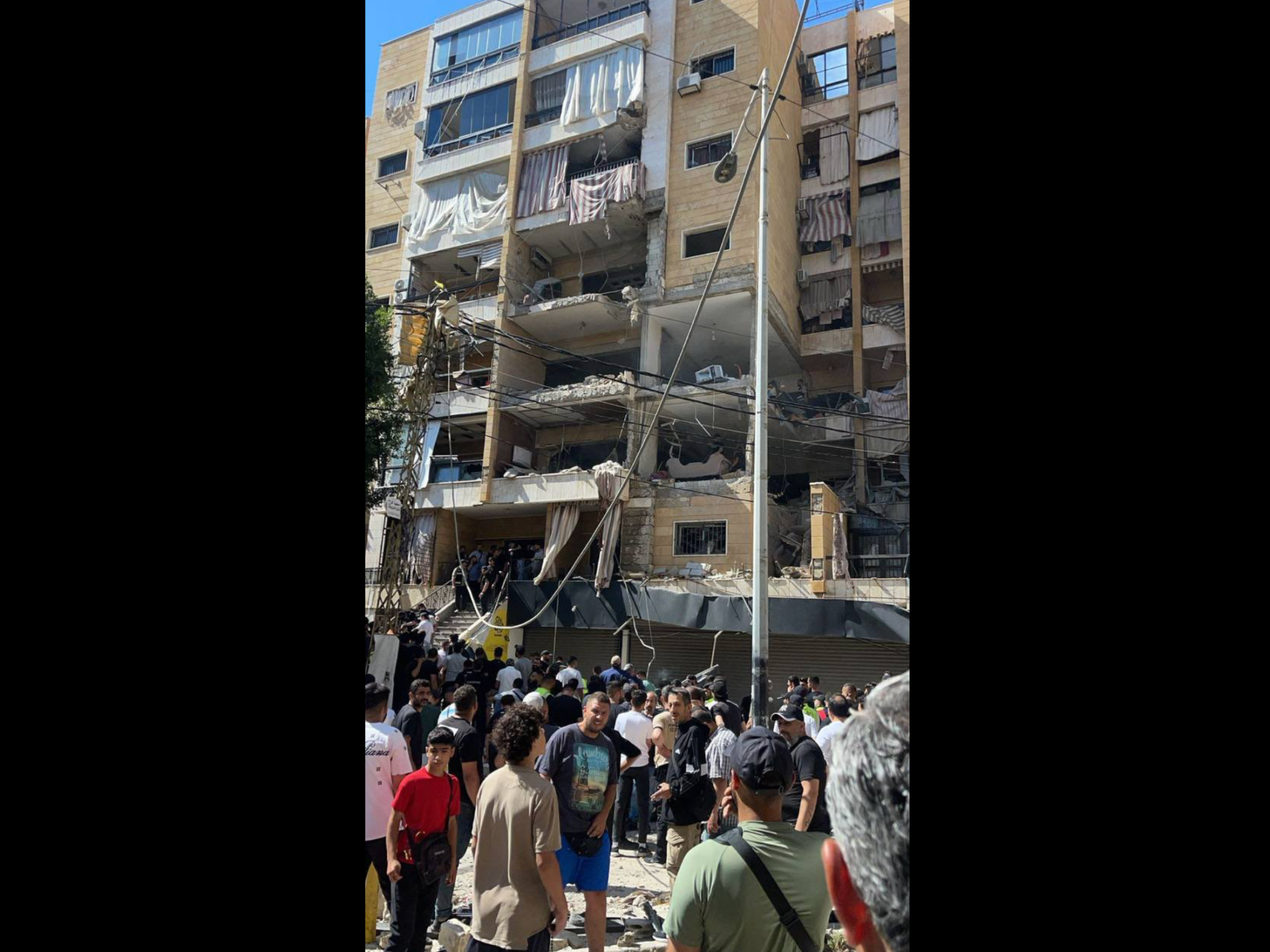
Videos show the aftermath of an Israeli attack on Beirut’s southern suburbs, with multiple explosions reported. Israel says it targeted Hezbollah headquarters, while Lebanese media says residential apartments were hit. The attack comes just days after US President Donald Trump told Benjamin Netanyahu that Beirut was off limits as Washington pursues a deal with Iran.

Source link

Longest tunnel in Europe runs under popular capital city and is used by 88,000 cars a day

Three tunnels form part of the complex under the city

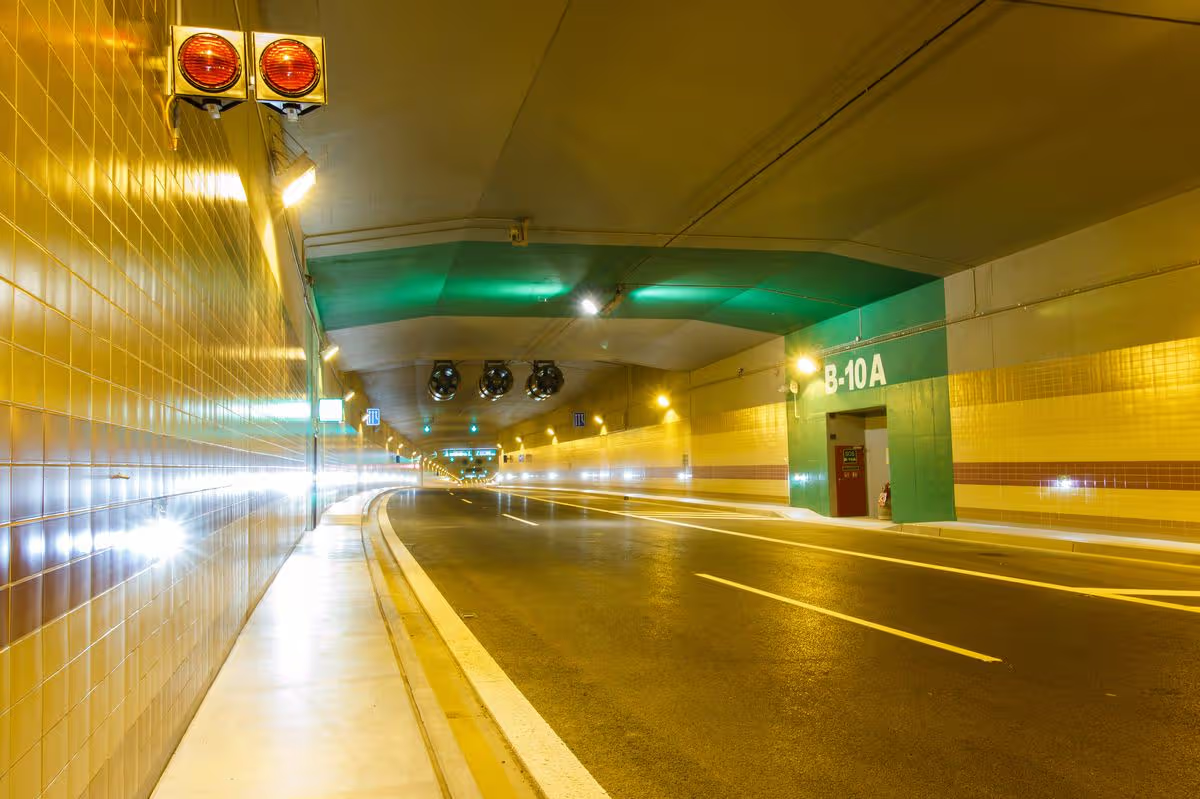
A European city has an extensive network of tunnels beneath it. The Blanka Tunnel Complex is the longest city tunnel in Europe and runs for a total length of 5,502 meters.

The tunnel sits under Prague and is the longest road tunnel in the Czech Republic. It connects the area west of Prague Castle with the Trója district in the North-east of the city.

Three tunnels, consisting of the Bubenečský, Dejvický, and Brusnický, make up the complex, which was designed to relieve heavy traffic from the history city centre. In its first 49 months since opening, it was used by 139 million cars.

Today, it is estimated that 88,000 vehicles use the tunnel every day. The Blanka Tunnel Complex opened on September 19, 2015, but it was a long time coming.

Construction launched in 2006, but it was planned since 1993. The tunnel was due to open in 2011, but the biggest and most expensive project in Prague was delayed by four years.

It cost 43 billion crowns, which is £1.5 billion today and doesn’t include all construction costs. During the construction of the tunnel complex, there were three landfalls.

The incident occurred twice in the Stromovka park, creating a hole measuring 15 to 25 meters. Another landfall happened in the garden area of the Ministry of Culture in Hradčany.

Since opening, the Blanka Tunnel Complex has undergone continuous maintenance. There is 24/7 monitoring by a dedicated control centre that works night shifts to service lights, ventilation systems, cabling and drainage.

Last year, the tunnel marked its 10th anniversary. Prague Daily News said: “It relieved congestion in the city centre, reduced journey times, and took vehicle traffic underground.

“Since its opening, around 780 million vehicles have passed through the tunnel.

“The Dejvický Tunnel has borne the greatest load with more than 271 million vehicles, followed by the Brusnický Tunnel with almost 266 million and the Bubenečský Tunnel with 236 million vehicles.

“Although Blanka has been in regular operation for years, the approval process for part of the project is still not fully concluded.

“A formal decision by the Administrative Court has meant that the relevant section continues to operate only under provisional use.

“Observers, however, expect a final acceptance soon.”

Source link

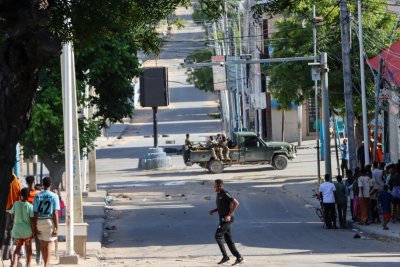
Violence erupts in Somalia’s capital over president’s extended term

People gather during a protest in a street in Mogadishu, Somalia, on Thursday after fighting erupted between opposition-led protesters and Somali state security forces during a planned protest against the federal government’s mandate extension for President Hassan Sheikh Mohamud. Photo by Said Yusuf Warsame/EPA

June 4 (UPI) — The Somalian military and opposition militias opposed to an extension of President Hassan Sheikh Mohamud’s term by the country’s parliament skirmished Thursday in its capital.

After the opposing sides set up positions within Mogadishu late Wednesday, gunfire and fighting broke out in the city ahead of planned demonstrations today, The Guardian and The New York Times reported.

Mohamud was due to leave office May 15, but the country’s parliament voted to extend his term by one year, prompting opposition leaders — including former President Sharif Sheikh Ahmed and former Prime Minister Hassan Khayre — to announce demonstrations against what they said is a constitutional crisis.

Ahmed said that government forces had targeted his home intending to kill him because he has spoken out against the extended term and is leading resistance to it.

Ahmed and Khayre each have their own security, as do other clans throughout the country, and the alleged targeting of the leaders by government military forces led to ongoing skirmishes that have left Mogadishu residents fleeing for their safety.

Ahmed, in a video statement, said that government forces had “encircled and attacked my house.”

“I am never scared of their aggressive attack — I will fight back,” he said.

Khayre said in a statement that the government had deployed anti-tank weapons and drones in the attack, endangering civilians in the area.

At a press conference Thursday, Col. Mahdi Omar Mumin said that government forces staged “an operation in which security agencies neutralized armed militia members who yesterday attacked police forces in the Hodan District,” Somalia’s Ministry of Defense said in a statement on X.

“The militia had caused harm to Somali civilians and disrupted security in the capital,” the ministry said.

Mohamud and members of the parliament who support him said the effort is to move from indirect elections to individuals voting specifically for their chosen candidates.

Opposition members have said they fear the change could prevent many people in the country from having a voice in the government and potentially enable greater power for Mohamud.

Source link

World’s 100 best beaches revealed and TWO in the UK make the list including ‘hidden bays’ and Britain’s surfing capital

THE best 100 beaches in the world have been named – and two can be found in the UK.

Announced by Corona, the 2026 Corona Beach 100 has revealed the best spots around the world from well-known spots to hidden coves.

Two UK beaches have been named as some of the best in the world Credit: Alamy
Fistral Beach Newquay made the list Credit: Alamy

Three criteria were analysed – Beachside Culture, Connection to Nature and Scenic Aesthetics.

A new entry on the list this year is Barafundle Bay in Pembrokeshire.

The first Welsh beach to make the list, it was praised for its “remote and dramatic landscape, as it is “accessible only by clifftop walk through a medieval archway.

It wrote: “Barafundle Bay feels hidden even when people talk about it.

ISLAND GEM

I live on beautiful but ‘forgotten’ British Isle with completely empty beaches


WINE NOT

Algarve-alternative seaside town the ‘locals want to keep secret’ with €3 wine

“Reached only by a clifftop walk along the Pembrokeshire coast, this crescent of pale sand sits tucked between limestone cliffs with nothing built around it.

“No road, no cafés, no signal, just seabirds overhead, cold clear water below, and the kind of quiet that makes you slow down without realising it.”

And returning to the list this year was Fistral Beach in Cornwall, praised for being a “social and cultural hotspot” by being the UK’s surfing capital after hosting the first British Surfing Championships in 1966.

It added: “Facing the full force of the Atlantic, it’s where you go to chase sets, drink tea with cold hands, and feel like you’re part of something.

In Europe, Agia Anna on Naxos island in Greece was praised Credit: Getty
One Croatia beach was listed, which was Zlatni Rat Beach on the island of Bol Credit: Getty

“The beach delivers all year, with consistent swell, golden sands, and a surf scene that’s as seasoned as it is welcoming.

“From world-class comps to waist-high rollers, Fistral doesn’t need sunshine to shine — just wind, water, and the right kind of restlessness.”

Europe featured heavily on the list as well.

When it came to Greece, Agia Anna Beach in Naxos and the famous pink Elafonissi Beach in Crete made the cut, as well as Sarakiniko Beach on Milos.

For Spain, there was Aiguablava Beach, as well as Ibiza’s Casa Salada and Majorca’s Cala Mondragó.

Beaches across Italy, France and Croatia were also included, as well as other holiday spots such as Turkey, Morocco and Thailand.

The 2026 Corona Beach 100 list is part of it’s This Is Living campaign.

Full list of the 2026 Corona Beach 100

  • Agia Anna Beach, Naxos
  • Aiguablava Beach, Spain
  • Alegria Beach, Philippines
  • Anakena Beach, Chile
  • Bahía Bustamante, Argentina
  • Bahia do Sancho, Brazil
  • Bahia de las Aguilas, Dominican Republic
  • Baia Verde, Italy
  • Banzai Pipeline, Hawaii
  • Barafundle Bay, UK
  • Boheme Beach, Turkey
  • Boulders Beach, South Africa
  • Cala Domestica, Sardinia
  • Cala Mondragó, Majorca
  • Cala Salada, Ibiza
  • Calanque d’En-Vau, France
  • Caleta Cóndor, Chile
  • Camps Bay, South Africa
  • Chepes Beach, Honduras
  • Cloud 9 Beach, Philippines
  • Copacabana, Brazil
  • Corona Island, Columbia
  • Cox Bay, Canada
  • Crash Boat Beach, Puerto Rico
  • Dune du Pilat, France
  • Elafonissi Beach, Crete
  • Fistral Beach, Cornwall
  • Flamenco Beach, Puerto Rico
  • Grandes Playas de Corralejo, Fuertuventura
  • Gulangyu Beach, China
  • Hiriketiya Beach, Sri Lanka
  • Huanchaco Beach, Peru
  • Ilha do Amor, Brazil
  • Isla Perro, Panama
  • Jōdogahama Beach, Japan
  • Koh Mak Island, Thailand
  • Kraalbaai Beach, South Africa
  • La Mina Pisco, Peru
  • La Pelosa, Sardinia
  • Legzira Beach, Morocco
  • Little Corn Island, Nicaragua 
  • Little Cove Beach, Canada
  • Lucky Bay, Australia
  • Madeiro Beach, Brazil
  • Mancora, Peru
  • Manu Bay, New Zealand
  • McBean Lagoon, Colombia
  • Nacpan Beach, Philippines 
  • Nosy Iranja, Madagascar
  • One Foot Island, Cook Islands
  • Padar, Indonesia
  • Palomino Beach, Colombia
  • Pilar Beach, Cuba
  • Pink Beach, Indonesia 
  • Pipe Creek Sandbar, Bahamas
  • Placencia Beach, Belize
  • Plage de la Dune du Sud, Canada
  • Playa Balandra, Mexico
  • Playa Carrizalillo, Mexico
  • Playa Cocles, Costa Rica
  • Playa Conchal, Costa Rica
  • Playa del Cabo, Colombia 
  • Playa El Tunco, El Salvador
  • Playa Ermitano, Dominican Republic
  • Playa Escondida, Mexico
  • Playa Los Barriles, Mexico
  • Playa Mangos, Nicaragua 
  • Playa Mansa, Uruguay
  • Playa Ses Illetes, Majorca
  • Playa Sur (Cabo Polonio), Uruguay
  • Playa Uvita, Costa Rica
  • Playa Venao, Panama
  • Pori Beach, Greece
  • Praia da Comporta, Portugal
  • Praia da Engenhoca, Brazil
  • Praia de Atins, Brazil
  • Praia do Bonete, Brazil
  • Praia do Rosa, Brazil
  • Punta de Lobos, Chile
  • Railway Beach, Thailand
  • Riyue Beach, China
  • Saco do Mamanguá, Brazil
  • San Vito Lo Capo, Sicily
  • São Miguel dos Milagres, Brazil
  • Sarakiniko Beach, Milos
  • Sea Me Beach, Turkey
  • Seven Mile Beach, Cayman Islands
  • Shroud Cay, Bahamas
  • Soi Sim Beach, Vietnam
  • Taipu de Fora, Brazil
  • Tavarua Island, Fiji
  • Tofo, Mozambique 
  • Tortuga Bay, Ecuador
  • Tulum Beach, Mexico
  • Villa Tacul Beach, Argentina
  • Warwick Long Bay, Bermuda
  • Whitehaven Beach, Australia
  • Wilderness Beach, South Africa
  • Zlatni Rat, Croatia


Source link