As Latin America turns to the dollar, development capital tests its reach.
This article appears in the October issue of Global Finance Magazine.
Whether dollarization works has been debated for decades, and in late summer it landed in Venezuela. Steve Hanke, known as the “Money Doctor” for advising governments on dollarization in Eastern Europe, Asia, and Latin America, told multiple media outlets that he had been hired as a special adviser to a Venezuelan official to explore dollarizing the bolivar.
If it converted to the dollar, Venezuela would join several Latin American countries that have done so. Panama has used the dollar as legal tender since 1904. Ecuador has used the dollar since 2000; El Salvador converted in 2001. Although Argentina has not dollarized, there is evidence that President Javier Milei has accelerated its de facto shift to the dollar. Less examined is which organizations are investing in dollarization—and whether that capital is doing something dollarization alone can’t.
For CFOs with projects, suppliers, or growth aspirations in dollarized countries—or those moving that way—the balance sheet is the best way to assess the role of development capital. A currency conversion can affect hedging costs, discount rates for capital projects, and the timeline for moving cash. But the money now supporting these transitions or future moves to dollarization, including billions in US development-finance capital, political risk insurance, sovereign debt refinancing, and project loans, carries its own track record worth mulling over before using “dollarized” as shorthand for “de-risked.”
Where Development Capital Lands
The International Development Finance Corp.’s (DFC) Latin American strategy is more than writing large checks. Its CEO Ben Black calls the strategy “economic statecraft”—capital deployed to counter Beijing. “You don’t want to compete against state capitalism with more money from the government,” Black said at a March forum. “You want to create capital structures that bring in private capital.” In Ecuador, where the U.S. dollar is legal tender, the agency’s 2021 framework was linked to a proposed, broader $3.5 billion financing structure. It combined up to $2.8 billion of potential DFC-backed project financing with roughly $700 million from commercial banks, intended to help Ecuador refinance China-related liabilities.
The agency’s completed transactions are more varied. DFC made a $150 million direct loan to expand Ecuador’s Puerto Bolívar port. It also provided political-risk insurance of more than $656 million for the 2023 Galápagos debt conversion and $1 billion for the country’s 2024 Amazon Biocorridor conversion. The latter helped refinance about $1.53 billion of Ecuadorian international bonds. For CFOs looking through a balance sheet lens, Puerto Bolívar is a DFC loan asset. The two larger headline amounts are insurance commitments that could help attract third-party capital.
In Argentina, where dollars are widely used but not the official currency, DFC’s financing is smaller and tied to resource development. The agency approved $4.07 million for early-stage work at Argentina Potash Corp.’s El Ceibo potash project earlier this year. The company expects more dollars to follow. “The US$4.07 million DFC funding is expected to be matched dollar-for-dollar by strategic investors, resulting in total Phase 1 funding of US$8.15 million,” according to a company statement.
Leading Risk vs. Following Money
The Argentina Potash deal points up a divide over where development finance has the most impact: taking risks that private capital won’t or reinforcing markets where private capital is already willing to go. DFC and its defenders argue that the capital leads: the agency takes on risk private investors won’t touch and proves out a sector or structure until commercial capital is comfortable following. Another group argues DFC capital mostly follows. Its development dollars tend to land in the safest, most liquid corners of an economy, such as banks, infrastructure and assets that would likely have attracted private capital anyway.
The harder, riskier investments that dollarization was supposed to encourage still go unfunded. If development capital leads, it’s doing something dollarization alone can’t. It is building the risk tolerance and track record that pulls in private money on its own. If it mostly follows private capital, DFC funding may simply be competing for the safest returns, while the risks that keep money out of harder-to-finance sectors remain.
That’s the view of Byron Villacis Cruz, a University of Oregon sociologist and former head of Ecuador’s national statistics institute, who has studied Ecuador’s dollarization. He said DFC-linked capital has gone toward “traditional banks that … have a lot of liquidity and coverage and stability by itself” rather than higher-risk, higher-need sectors.
“I don’t see investments that are truly analyzing the real opportunities of profit and development in the country,” he said. “That’s kind of like going where the money is versus leading the money.” He also cautions that dollarization solved currency volatility in Ecuador without touching the risks investors cite—regulatory whiplash, contract enforcement and political interference. Foreign investment after 2000 flowed overwhelmingly into oil, he noted, driven by commodity prices, not the new monetary regime.
Casey Halloran has a different view: his tourism and real estate development company, Namu Travel Group in Costa Rica, borrows from the Inter-American Development Bank specifically to relend to small suppliers—boutique hotels and tour operators across the region—that banks often consider too risky to touch. Over the years, Halloran estimates his business has lent about $15 million since first obtaining IDB financing. He’s convinced development capital leads, saying, “Somebody has to go first.”
Weld Royal is a contributing writer based in the U.S.
Earnings Call Insights: Texas Capital Bancshares (TCBI) Q3 2026
Management View
CEO Robert Holmes framed Q3 as a milestone quarter, saying, “This was the most complete quarter in the firm’s history,” and highlighted record profitability and diversification, including “record net interest income and record fees” that
Seeking Alpha’s Disclaimer:This article was automatically generated by an AI tool based on content available on the Seeking Alpha website, and has not been curated or reviewed by humans. Due to inherent limitations in using AI-based tools, the accuracy, completeness, or timeliness of such articles cannot be guaranteed. This article is intended for informational purposes only. Seeking Alpha does not take account of your objectives or your financial situation and does not offer any personalized investment advice. Seeking Alpha is not a licensed securities dealer, broker or US investment adviser or investment bank.
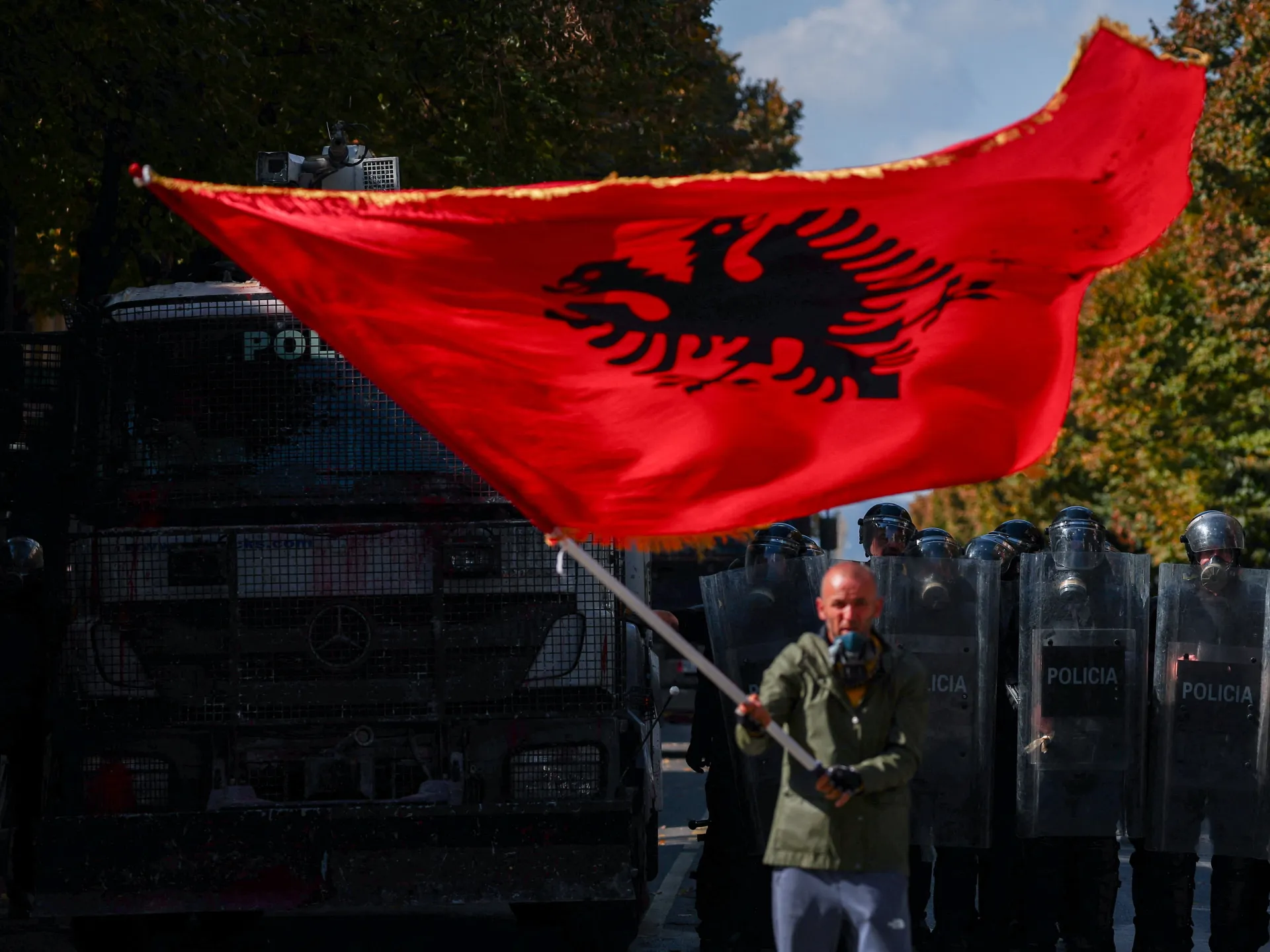
Protesters have clashed with riot police in Albania’s capital, as antigovernment demonstrations escalated into violent unrest.
Demonstrations have shaken Tirana since Tuesday, with thousands of protesters calling for Prime Minister Edi Rama to step down as they rally against poor university conditions, high tuition fees and corruption.
This week’s unrest follows months of antigovernment protests in the Balkan nation, initially prompted by a controversial resort development linked to United States President Donald Trump’s family.
New Delhi, India – A 19-year-old woman was detained by police during the youth-led antigovernment protests in the Indian capital over the weekend.
The young woman, who asked to remain anonymous for fear of further reprisals from the authorities, said she was detained on Sunday as thousands of people congregated in central New Delhi. They were demanding the resignation of India’s Chief Election Commissioner, Gyanesh Kumar, over alleged irregularities in electoral rolls, which saw the removal of 133 million people from the voter lists.
Recommended Stories
list of 4 itemsend of list
After the woman’s detention, she and several other demonstrators were taken on a police bus to a location about 50km from the protest site. With no cash and her phone battery drained, the woman spent nearly an hour wandering along a dark road, trying to figure out what to do next.
A car pulled up and the driver asked if she needed any help.
“I was frightened and completely lost. When those volunteers finally helped me get back safely, it felt like a miracle. I had never imagined that someone I had never met would come forward to help me like that,” she told Al Jazeera.
For a young woman in New Delhi, notoriously referred to as the “rape capital of India”, being alone in the middle of the night and getting into a car with strangers is not an easy decision. The city records an average of three rapes a day.
But the young protester said she immediately recognised one of the volunteers in the car. She had seen his videos online, in which he had asked the detained protesters whether they needed help. Recognising a familiar face reassured her that the people offering the ride could be trusted.
The woman was rescued using an AI-assisted tool developed by 25-year-old Rajiv Choudhary, who is helping protesters get home safely after being detained and dropped off by the police far away.
Called the Detainee Gharwapsi Yojana, the initiative combines a digital dashboard with a network of volunteers who track information about police buses carrying detainees and arrange transport for those left stranded.
“Gharwapsi” in Hindi means “to return home”. It is also a play on a campaign by India’s right-wing Hindu groups which want to bring the country’s Muslims and Christians back into the Hindu fold, claiming that their ancestors converted to “foreign” religions from Hinduism. “Yojana” means a plan.
Since the beginning of this month, India has seen near daily protests over alleged electoral fraud by Kumar and his commission. Led by the satirical Cockroach Janta Party (CJP), a number of left-leaning student groups as well as the main opposition Congress party, the protests have seen tens of thousands of people hitting the streets in New Delhi and other cities.
In response, authorities in the Indian capital have imposed a sweeping crackdown, blocking roads, closing metro stations and detaining thousands as Prime Minister Narendra Modi’s government faces the biggest challenge to its power after 12 years of rule.
Choudhary said his network’s primary focus was to help minors, elderly people and women, mainly first-time protesters.
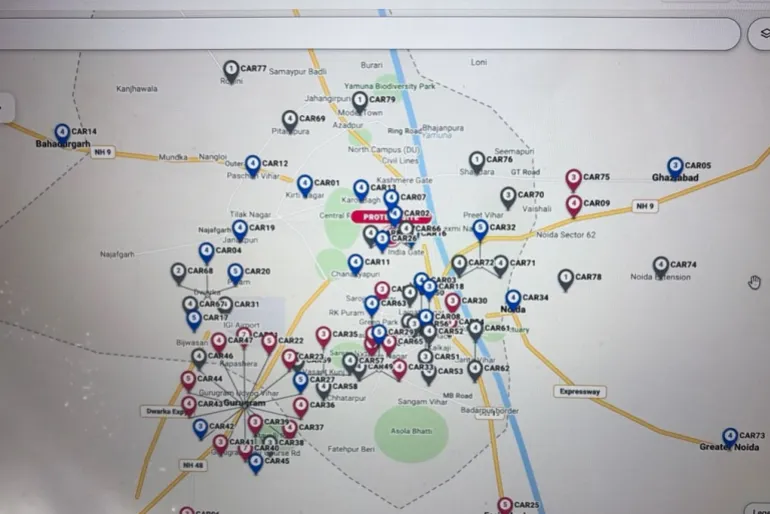
The initiative operates through a private digital dashboard that uses AI-assisted data processing, live mapping and information shared by volunteers on the ground. Volunteers send details, including police bus numbers and locations, through WhatsApp, helping the team coordinate assistance and rides home.
A map showing the locations of rescue cars deployed by Rajiv Choudhary’s team in New Delhi [File; Mehran Firdous/Al Jazeera]
Choudhary said he and his associate, journalist Meghnad, who goes by a single name, initially worked with a small group of volunteers to connect detainees with transport, legal assistance and medical support. The network has since expanded to more than 130 volunteers, who have offered their time and resources to assist detained demonstrators.
“For people caught up in these demonstrations, the ordeal doesn’t end with detention. They can be taken far from the protest site and left trying to find their way home from unfamiliar locations, often struggling to contact friends or arrange transport,” he said.
The idea grew out of Choudhary’s experience during an earlier protest called by the CJP at Jantar Mantar, the designated protest site in New Delhi that has now been denotified by the authorities. Initially, he helped organise supplies and volunteers.
As demonstrations continued, he recognised that protesters needed more systemic support, particularly those who were detained by the police and left fending for themselves far from the city limits.
A young protester is detained by police during a demonstration in New Delhi, October 4, 2026 [Mehran Firdous/Al Jazeera]
As renewed protests began on October 2 , Choudhary built a digital system around the same volunteer network using AI tools. It began with a simple spreadsheet.
“The whole aim behind the application was that I had to systemise things that are not systemised,” he said. “We just wanted to become a support system that could help our people in their fight for their demands.”
Choudhary recalled receiving a distress call from a woman who had been detained in central New Delhi and released on the outskirts of the city. Stranded alone near a railway station, with metro services shut and no clear way to get home, she was frightened and unsure which way to turn.
She reached out to Choudhary’s network for help and he arranged for a nearby female driver to take her home safely. “It is heartbreaking to see people left helpless in an unfamiliar city, frightened and unsure of how they will get home,” he said.
For now, the Detainee Gharwapsi Yojana operates only in New Delhi, but Choudhary plans to expand it to other cities.
“I am overwhelmed by the response from volunteers and drivers who have come forward to help without charging anything. They are offering their services for free because they want to support the protesters,” he said.
The 19-year-old woman who was helped by Choudhary’s team described the initiative as “a lifeline for protesters”. She said the team not only arranged her return, but also offered reassurance and emotional support.
“I cannot thank them enough. As long as we have people like them in our society, no authority can stop us from demanding our rights and protesting peacefully,” she said.
THE sound of bugles, trumpets and tubas fills the street as a parade of horses trot towards The Royal Palace.
I always thought Buckingham Palace’s changing of the guard was impressive, but shiny silver helmets off to the Swedish Army who, decked out in pristine blue uniforms, have us completely captivated for a full 45 minutes.
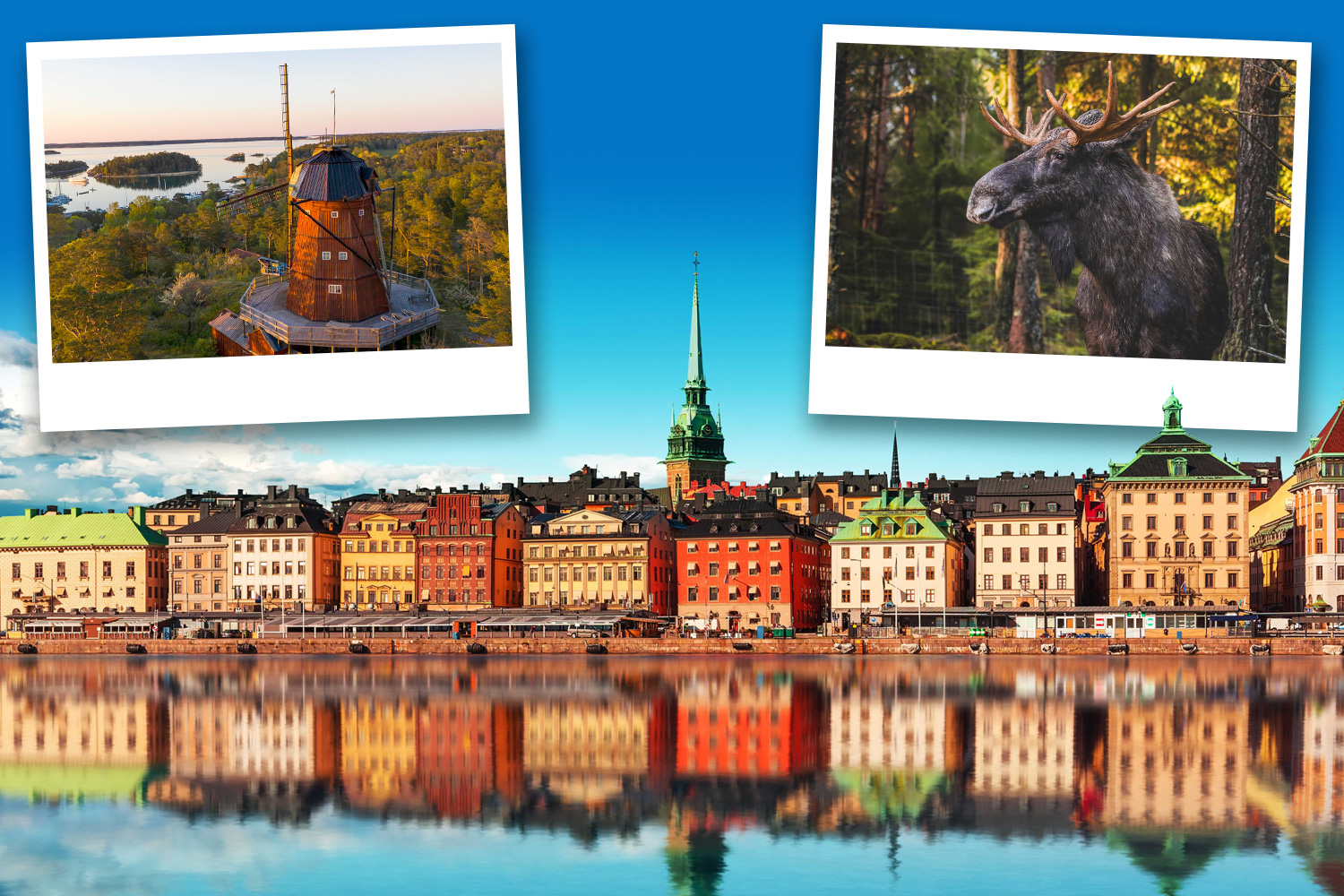
Stockholm’s historic old town is an incredible spectacleCredit: scanrailFab Mag’s Catherine got two unforgettable trips at onceCredit: Supplied by Catherine Bennion-Pedley
“It’s like being in a movie!” my five-year-old son Raffy shouts above the beat of kettle drums halfway through.
And he’s right. In the picturesque setting of Gamla Stan, Stockholm’s historic old town, it is an incredible spectacle. And even better – it doesn’t cost a penny. Or krona, rather.
Sign up for the Travel newsletter
Thank you!
I like big buns
Your wallets will, however, take a hit in Gamla Stan’s winding, cobbled streets, which are brimming with gift shops, such as Liten Amanda with its Nordic home decor (Litenamanda.se), plus bistros like Petit Pastis (Pastis.se) and confectioner Konfektyr & Glass offering an eye-boggling array of treats.
We search for the tiny Iron Boy statue hidden in a courtyard, before ordering a sizeable cinnamon bun, coffees and hot chocolates with lashings of cream for £28, at Kaffekoppen in Stortorget Square (Cafekaffekoppen.se), then chancing upon vintage H&M and antique glassware at charity shop Stockholms Stadsmissions nearby (Stadsmissionen.se).
Stockholm city consists of 14 islands connected by bridges. On Djurgården, we all stand in awe as we first set eyes on Vasa, a 17th-century warship that sank on its maiden voyage, its intricate carvings painstakingly restored.
A bonus for my teen self (in the temporary exhibition) is seeing Rose’s dress and Heart of the Ocean necklace from the film Titanic, while learning about director James Cameron’s 2012 deep-sea expedition 10,000 feet down to the ocean floor, and squeezing into a replica capsule. Adult entry costs £18.50, under-18s are free (Vasamuseet.se).
Mamma Mia!
The kids’ favourite outing is the neighbouring ABBA Museum. Poppy, seven, adores the greatest hits album (thanks to her Yoto music player), and despite being a tad overpriced, it’s undoubtedly a super-fun interactive space with lots of opportunities to dress up and perform like – and even alongside – the band (in hologram form), pose for an album cover, rock out in a silent disco and ogle the showstopping stage costumes.
Adult entry costs from £20.50, kids over seven from £8.50 (Abbathemuseum.com).
Escape to Utö on the archipelagoCredit: supplied by Tourist Board.Spot the wild moose on the looseCredit: Photosbypatrik
On one of our days on Djurgården, we tuck into shrimps piled atop egg mayo and syrup bread, £18, while the kids scoff pancakes with cream and jam, £7.50, bathed in sunshine on cafe Skroten’s terrace.
There’s free bread, butter and lingonberry juice on offer, too (Skrotens.se). Later, we hit Skansen, home to a farm, zoo, funfair and a historic town with glassblowers, pottery studio and bakery.
The children are wide-eyed at both the playful bears and the molten glass being transformed into chic confetti lampshades. Adult entry costs £23.50, under-12s are free (Skansen.se).
Viking vibes
At dinner that night, a roar fills the dining hall as our host announces the arrival of more guests – this time from the US – with a horn and a bellow.
I pause devouring my crawfish and prawn soup, £13.50, to join in the hollering.
We’re at Viking restaurant Aifur, and while it may be touristy, Raffy again gets all the film-set feels when he’s declared a “baby Viking” and presented with a giant sword to look after.
Thinking his night couldn’t get any better, and just as a musician begins playing the hurdy-gurdy (Google it!), the waitress presses souvenir coins into both his and Poppy’s palms (Aifur.se).
Continuing the theme, the next morning we learn how to fight and write like a warrior at the Viking Museum, which is worth a stop, even if it’s just to lunch at its restaurant Eld.
Highlights include Ukrainian gnocchi with smoked feta, £22, deer medallions with black garlic and potato gratin, £22.50, and the pretty harbour views (Thevikingmuseum.com).
Isle be back
The sweet spot for visiting Sweden with kids is balmy mid-August, just after the Swedes return to school. Keen to get a taste of the Stockholm Archipelago, home to more than 30,000 islands, we take the 43X train from Stockholm City station to Västerhaninge, catch the 846 bus to Årsta Brygga and then hop on the 21 boat to Utö.
Although it sounds complicated, it’s super-simple, and for our transport-mad kids, the hour-and-a-half journey in itself is thrilling.
But Utö, all rugged landscapes, pine forests and sparkling sea, is the real thrill. Photos really don’t capture its beauty.
Bistros like Petit Pastis offer an eye-boggling array of treatsCredit: Cafe Kaffekoppen/InstagramThe Swedish Army, decked out in pristine blue uniforms, have us completely captivated for a full 45 minutesCredit: Alamy Stock Photo
We kip in one of hotel Utö Värdshus’ sweet self-catering cottages, which cost from £101 per night, and at the restaurant that evening, we dine on buttered kingfish with potato, leek and cheese pie and crayfish broth, £29, while the kids wolf down steak with Béarnaise sauce and fries, £10.50 (Utovardshus.se).
Holidaying on the island is all about hiking, biking and the wonderfully wild beaches.
One afternoon is spent picnicking at Barnens Bad beach, not far from our cottage – its crystal-clear shallow water is perfect for kids, and we’re joined by only one other family, who stylishly arrive and depart by kayak.
The next day, we set off on a 11km bike ride (daily hire costs £15 per adult, £11 per child).
We pass colourful wooden houses and breathtaking vistas to Stora Sand, a wide expanse of white beach, which again we only have to share with one other couple.
Sandcastle building and chasing waves makes for a blissful few hours, topped off only by a wild moose deciding to clumsily gallop across our path on our ride home.
I fear that the kids’ tales of this trip may sound a little far-fetched when they get back home and share them with friends. But Sweden really has proved super (trouper).
Or try Hotel Kung Carl, set in historical buildings, for a more quaint feel, pastel decor and plants to borrow each night. Family rooms cost from £285 B&B (Kungcarl.se).
The Saudi Arabia-led coalition fighting in Yemen has said its forces intercepted another ballistic missile launched by the Houthis towards the Saudi capital, Riyadh, as the city reels from attacks that have killed at least 14 people in recent days.
In a statement on X, Turki Al-Maliki, the spokesperson for the coalition, said the Houthis fired one ballistic missile at Riyadh and two towards Khamis Mushait, a city in the southwest.
Recommended Stories
list of 4 itemsend of list
All three were “intercepted and destroyed”, he said.
Residents of Riyadh reported several powerful explosions on Monday night, moments after a text message to their phones warned of an aerial threat.
The Houthis, who control Yemen’s most populous areas, including the capital, Sanaa, said their target in Riyadh had been King Khalid International airport.
Yahya Saree, a Houthi military spokesman, said the group had also sent a drone towards a military airbase at Khamis Mushait, near the Yemeni border. He again warned international airlines and travellers “against operating flights to airports” in Saudi Arabia, except in the holy cities of Mecca and Medina, saying the facilities were “unsafe”.
The renewed attacks came as King Khalid International airport in Riyadh remains closed after a Houthi attack on Saturday that killed at least 13 people and wounded more than 300 others. Another strike on Sunday killed one person and wounded 11.
Saudi authorities said the airport would remain closed until this Saturday, and airlines have canceled flights. The Houthis have also struck Saudi oil facilities.
The attacks come as the Houthis fight forces aligned with Yemen’s internationally recognised government for control of the country. The Saudi-led coalition has carried out an air campaign against the Houthis and backed the government’s ground forces. The fighting erupted amid regional tensions set off by the United States and Israel’s war on Iran.
Speaking at an energy conference in Riyadh, Saudi Arabia’s Energy Minister Prince Abdulaziz bin Salman Al Saud said the attacks on airports over the last week have tested the kingdom’s resilience.
“The events of recent weeks are serious,” the minister said. “Our response must be equally serious.” He added that Vision 2030, Crown Prince Mohammed bin Salman’s plan to diversify the Saudi economy, “must continue. Investment must continue”.
Saudi authorities have meanwhile opened an investigation into why the country’s air defences failed to stop the barrage, according to two regional officials who spoke to The Associated Press on condition of anonymity. An initial inquiry found that the Houthis first launched several drones to clear a path for a mix of cruise and ballistic missiles, which then reached the airport, the officials said.
The Houthis possess ballistic missiles with warheads that can change direction in flight, posing a challenge to the Patriot interceptors and other systems the Saudis rely on.
One official told AP that investigators also wanted to know why the defences had not given earlier warning of an attack in which missiles and drones flew more than 1,000km, or 620 miles, to reach Riyadh.
US President Donald Trump separately criticised the Houthis but gave no indication that Washington would intervene. “Well, the Houthis are misbehaving very badly. No good,” he told reporters when asked what he planned to do about the group.
A Houthi official warned that US involvement would bring retaliation.
“If the US becomes involved in the aggression against Yemen, we will not deliberate over the decision to respond; rather, there will be a swift and painful response targeting the US and all its interests in the region,” Mohammed al-Bukhaiti, a member of the Houthis’ political bureau, told the AFP news agency.
Al-Bukhaiti also warned “all employees and workers at Saudi oil facilities and airports to stay away from these sites, as they have become legitimate targets”.
The attacks have put events scheduled in Riyadh this month under pressure, including the kingdom’s flagship investment conference and the WPC Energy Congress, where several top oil executives were dropped from the programme.
The United Arab Emirates’s national carrier Etihad Airways announced on Monday that it was cancelling all flights to and from Riyadh until next week. It also suspended flights to Dammam and Jeddah.
Bahrain’s national carrier Gulf Air said it, too, was cancelling all Riyadh flights until Saturday.
US operator Delta announced it would delay the launch of direct flights from Atlanta to Riyadh, scheduled for October 23.
Thousands of protesters have marched in New Delhi, demanding the resignation of India’s top election official over alleged misconduct during a voter roll revision.
The demonstrations on Monday marked the latest confrontation with authorities in the heavily fortified capital.
Opposition parties and supporters of the youth-led Cockroach Janta Party protest movement have taken to the streets in recent days, defying a strict security clampdown to demand the government stop deleting voters from the rolls and calling for the resignation of Chief Election Commissioner Gyanesh Kumar.
More than 133 million names have been removed from voter lists since last year, according to media reports. About 969 million people were eligible to vote in India’s 2024 polls.
Critics say the large-scale revision of electoral rolls could benefit Prime Minister Narendra Modi’s ruling Hindu nationalist Bharatiya Janata Party (BJP).
The Election Commission of India, which oversees the voting process in the world’s most populous nation, has denied any wrongdoing.
Authorities deployed thousands of security personnel across central Delhi for a third straight day, erecting heavy metal barricades and closing key metro stations.
Public attention has also focused on the police response, after a weekend in which thousands of protesters, including organisers, were detained, according to local media reports.
Most of those detained, including three top leaders of the Cockroach movement, have since been released.
Several journalists covering the protests said they were detained despite clearly displaying their press cards.
The demonstrations have become a major political challenge for Modi, drawing together opposition parties, student groups and activists angered by the voter roll revision.
Critics say the measure has disproportionately affected minorities, particularly Muslims.
Election authorities say the move was intended to eliminate duplicate, deceased and fraudulent names.
Lions Bay Capital Inc. (LBI:CA) received a failure-to-file cease trade order from the British Columbia Securities Commission on October 5, 2026.
The order follows the company’s failure to file its audited annual financial statements, management’s discussion and analysis, and CEO/CFO certifications for
Blue Owl (OWL) is planning to increase the amount of insurance capital under its management, the Financial Times reported, citing comments from co-chief executive Doug Ostrover at a summit.
“We’re realising that if we had a bigger pool of capital, meaning
German chancellor visits Kyiv amid air raid sirens, pledging strong support as Russian strikes disrupt the capital.
Published On 4 Oct 20264 Oct 2026
Russia has struck a key bridge in Kyiv just as German Chancellor Friedrich Merz arrived in the Ukrainian capital to meet President Volodymyr Zelenskyy.
The unannounced visit, marked by the sound of air sirens and explosions, came on Sunday to underscore Germany’s support for the nation at a time when Russian attacks on Ukrainian cities are increasing.
Recommended Stories
list of 3 itemsend of list
In a written statement, Merz said he “travelled to Kyiv today because Ukraine needs all our support in the coming weeks”.
“If Russia is not stopped, its war machine will sooner or later turn against us,” he said.
Ukraine’s President Volodymyr Zelenskyy meets German Chancellor Friedrich Merz at the memorial of fallen Ukrainian soldiers at Independence Square in Kyiv, October 4, 2026 [Dan Bashakov/AP Photo]
Merz and Zelenskyy met at the National Academy of Sciences, which was struck by a Russian drone on September 28.
Zelenskyy told Merz that Kyiv’s citizens are going through “terrible nights and days” due to the ongoing Russian attacks.
Merz was accompanied by his economy minister, as well as executives from several large German companies, such as Siemens Energy and Diehl Defence.
Ukraine and Germany are also expected to finalise a deal to produce drones and other weapons together that can travel more than 600 miles (965.6km) in an effort to strike deeper into Russia.
Germany has been one of Ukraine’s staunchest supporters. In April, the two countries signed a military pact worth more than $4bn. On Sunday, a $1.1bn military aid package is set to be announced, alongside $394m to repair damage to Ukraine’s energy sector.
Merz’s visit comes a day after Russia warned foreign diplomats and nationals to leave the capital to avoid getting hurt.
Russia’s Ministry of Defence promised to intensify strikes on Ukraine after Zelenskyy said in an interview with the Reuters news agency that it is doubling down on targeting Russian oil refineries after several civilians were killed and wounded over the weekend.
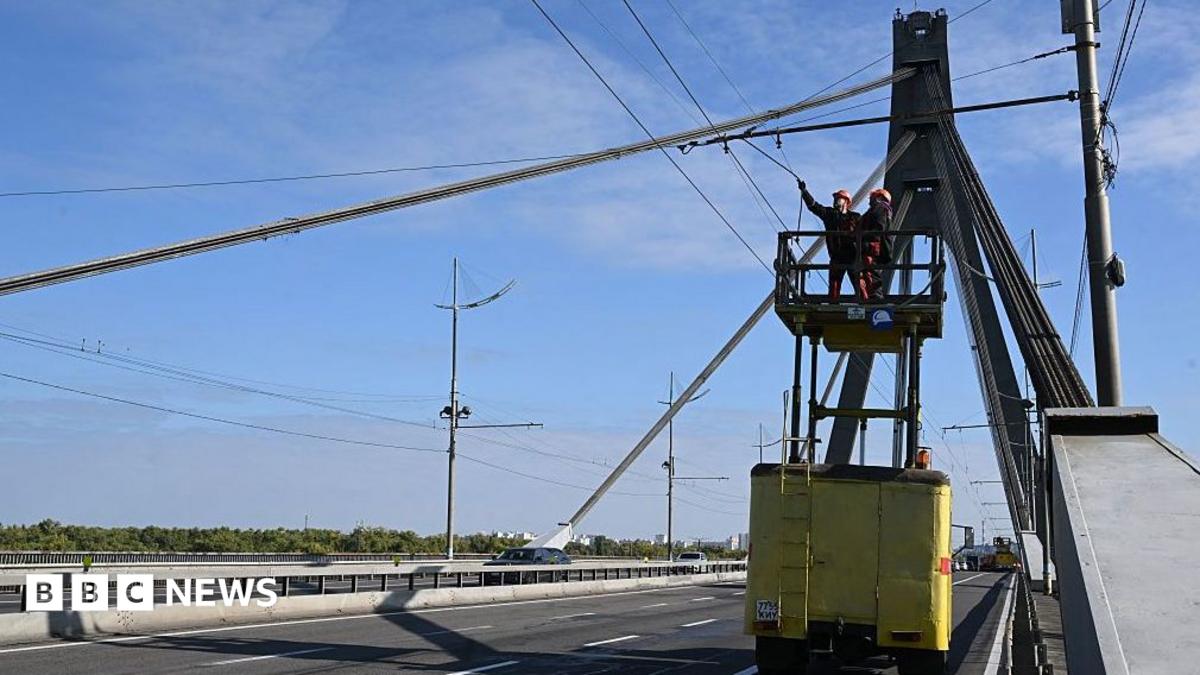
The strike that hit the Northern Bridge over the Dnipro River on Sunday also damaged a road and the supply of hot water in the area, according to a social media statement from Kyiv Mayor Vitali Klitschko. It is the second bridge in the capital to be hit this weekend.
Russia’s all-out war on Ukraine is in its fifth year. Both sides have increased the number of drone and missile attacks on infrastructure, logistics and military sites in recent months.
Ethiopia’s government forces say they’ve seized Mekelle from Tigray fighters after a week of intense battles. The fighting has reignited fears of a full-scale war that could draw in neighbouring countries.
PADDLING kayaks through the serene 8,000-year-old bog, we’re about to enter the “second maze”, according to our guide Elina.
Locals call it this because the small islands of shrubs, moss and reeds we’re navigating are constantly shifting above the mineral-rich water, making the route through ever-changing.
The cobbled streets and colourful art nouveau buildings of Latvia’s capital, RigaCredit: Shutterstock / Altug GalipYou’ll find lush landscapes at Kemeri National ParkCredit: Alamy Stock Photo
If you want a moment to really pause, Latvia’s the place.
Over half of the country, which is a quarter of the UK’s size, is covered in forest, and with a population of fewer than 2 million, it’s not hard to find a stunning spot all to yourself – even in the height of summer.
Sign up for the Travel newsletter
Thank you!
We return to the shore to find Elina’s mother-in-law cooking up a feast on a portable stove.
Slices of ham and bread are served alongside a huge flask of coffee, helpings of traditional grey pea and bacon broth, and piles of fresh pancakes, both savoury potato and apple, which are demolished by my kids Poppy, seven, and Raffy, five.
It’s a brunch made from simple ingredients, but it is utterly delicious, especially when devoured in the vivid green landscape of Kemeri National Park.
Kayaking tours cost from £21.50 per person (Boardsyou.lv).
Ravishing Riga
Suite digs at Hotel Grand Poet By SemarahCredit: Supplied
The starting point for our trip is the cobbled streets and colourful art nouveau buildings of Latvia’s capital.
Riga sits little more than half an hour from the white sandy beaches of the Baltic coast (with a sea warmer than Cornwall’s come summer, FYI) and an abundance of nature, like those ancient bogs.
We arrive during celebrations for the city’s 825th anniversary and to streets alive with brass bands and artistic performances.
Even at its busiest, though, Riga still feels gloriously uncrowded, despite striking architecture and sculptures at every turn – the black felines perched on the turrets of Cat House and the Bremmen Town Musicians Statue of four animals balancing upon each other (said to bring luck if you rub their noses) our favourites.
Hotel Grand Poet By Semarah, with its flamboyant interiors, lies opposite pretty Bastejkalna Park, just a short stroll from the beautifully kept Old Town.
Its spa – where kids are welcome throughout the day – is home to a swimming pool, whirlpool, steam room and two saunas, and we even spot TV chef Prue Leith at the breakfast buffet one morning.
The black felines perched on the turrets of Cat House are said to bring luck if you rub their noseCredit: Alamy Stock Photo
One of Riga’s most popular weekend spots, Mežaparks, is set on alluring Lake Kišezers, where pedalos, rowing boats and SUPs are for hire, and swimming from its sandy shore is a breeze.
Cabo, with its hammocks and swinging seats, is an idyllic spot for sipping a rhubarb spritz, £7.70, while the kids splash about, and we hire a four-seater pedal kart to whizz around the forest trails, £17 per hour (Cabo.lv).
It would be easy to while away a whole day shoreside, but with Riga Zoo also here, we soon find ourselves giggling at the swaggering chief gelada (similar to a baboon), then wide-eyed at the glow-in-the-dark scorpions in the tropical house.
Another morning well spent is at Marupe Wake Park – its inflatable water obstacle course is one of Europe’s largest, with slides, swings, zip wires and climbing challenges.
As we hop across a giant panda and unicorn, the kids’ confidence grows with each leap, before we all revive ourselves in the sauna overlooking the lake, chuckling about our most spectacular splash landings.
Later, among vibrant Mediterranean-inspired wall murals, we find a meal worthy of any great city.
We’re at Italissimo, where the little ones tuck into proper lasagne, £4, and pasta in butter broth with parmesan, £3, glugging down home-made berry lemonades, £3.70, while I dig into sublime truffled burrata with parma ham and wine-poached pear, £13.50, and tiger prawn ravioli with asparagus and a creamy bisque sauce, £14.50.
Cocktails, such as the Malfy Sour – a limoncello and citrus gin blend, £9 – are also excellent.
We soon clock children disappearing downstairs and discover a pastel playroom with a giant ball pit and interactive games screen, much to the kids’ glee (Facebook.com/restaurant.italissimo).
Going medieval
Turaida Castle towers over Gauja National ParkCredit: Alamy Stock Photo
Restaurant Rozengrals, meanwhile, is a celebration of Riga’s medieval roots.
One lunchtime, we descend the steep steps and follow torch-lit tunnels to an underground dining hall for a huge platter of oven-baked duck with cherry-onion jam on a bed of pulses, £25, and pastry parcels stuffed with spinach and cheese, £7.20.
Sea buckthorn with honey, £4, is quickly declared a hit by all and we finish off by sharing Countess Amelia’s Caprice – tiny iced cakes encased in filo pastry, made from another 15th-century recipe, £6 (Rozengrals.lv).
Nearby, we discover GunsnLasers, an entertainment arcade tucked away in Galerija Centrs shopping centre, where e-karting proves to be a blast for kids and we all tear around the interactive Pixels Room, trying to avoid stepping on the ever-moving red squares of a giant light-up grid.
Donning VR headsets for family challenges is also a lot of fun for everyone.
Expect al dente deliciousness at ItalissimoCredit: Italissimo Restaurant/Instagram
Still, we’re here to explore Latvia’s stunning landscapes, and an hour’s drive from Riga is Gauja National Park, the home of Turaida Castle – a reconstructed medieval fortress in lush grounds dotted with sculptures.
The kids love spotting ancient weapons and climbing the main tower with its views of the Gauja river.
Later, after venison stew with figs, £17.50, at quaint Kungu Riga (Kungurija.lv), we check out adventure park Tarzans.
Here, alongside the thrills of high-rope obstacle courses, tubing and bungee trampolining, there are activities such as a downhill hamster wheel, giant catapult and a toboggan track that hurtles us through the trees.
Packages cost £26 per child, £30 per adult (Tarzans.lv).
It all makes for a cracking afternoon – just as Latvia makes for a cracking summer adventure.
After the Pivdennyi Bridge was attacked, passengers described how dust from a blast wave entered their carriage through the ventilation system.
Ukrainian President Volodymyr Zelensky said Putin had decided that there were “no rules now” when attacking Ukraine.
In an interview with the Financial Times, he said: “The Russians have failed to occupy us. So now they are carrying out massive attacks and mass killings.”
He added: “They want to destroy our bridges… our data centres, the internet, mobile networks, hospitals, kindergartens, schools, universities – everything. They want people to flee their cities.”
Putin on Thursday insisted that Russia’s attacks on Ukrainian economic targets were a direct response to Ukraine’s strikes on Russia’s oil refineries and its ships in the Black Sea.
“Now from every direction we’re receiving calls ‘let’s stop’. But they started it,” Putin said after a wide-ranging speech at the Valdai foreign policy forum.
The Kremlin leader admitted Kyiv had “got some results” from its refinery attacks and Russia had lost about 1% of its GDP. Ukraine maintains it began attacking Russian oil infrastructure because it helps the Kremlin finance the war.
Russia has targeted Ukrainian energy infrastructure, ramping up attacks every winter since Putin launched a full-scale invasion in February 2022.
Crowds cheered and waved national flags as two Shahed drones were paraded through Tehran. Iranian-made, low-cost Shahed drones have become a major feature of modern warfare, used in attacks across the Gulf and extensively by Russia in its war in Ukraine.