Canada

Millions of Americans may now also be considered Canadian under new law

Millions more Americans might qualify for dual Canadian citizenship under a recent change to Canada’s requirements that has led to a surge in applications from its southern neighbor.

For people like Zack Loud of Farmington, Minn., it was a surprise to learn that under a new law, Canada already considered him and his siblings citizens because their grandmother is Canadian.

“My wife and I were already talking about potentially looking at jobs outside the country, but citizenship pushed Canada way up on our list,” he said.

Since the new law took effect Dec. 15, immigration lawyers in the United States and Canada say they have been overwhelmed by clients seeking help submitting proof of citizenship applications. Driven by politics, family heritage, job opportunities and other factors, thousands of Americans are exploring whether the easier process makes now the right time to gain dual citizenship.

Nicholas Berning, an immigration attorney at Boundary Bay Law in Bellingham, Wash., said his practice is “pretty much flooded with this.”

“We’ve kind of shifted a lot of other work away in order to push these cases through,” he said.

Immigration attorney Amandeep Hayer said his Vancouver, British Columbia-area practice went from about 200 citizenship cases a year to more than 20 consultations per day.

How the new law works

Canada has been changing its citizenship laws for decades, whether to update historic interpretations of law or to address discrimination issues.

Previously, Canadian citizenship by descent could only be passed down to one generation, from a parent to a child. But the new law opened up citizenship to anyone born before that date who could prove they have a direct Canadian ancestor — a grandparent, great-grandparent or even more distant ancestor.

Those born on or after Dec. 15 need to show that their Canadian parent lived in Canada for 1,095 days.

Under the new law, descendants of Canadians are already considered citizens but must provide proof to obtain a certificate of citizenship. Hayer estimated that there are millions of Americans who are Canadian descendants.

“You are Canadian, and you’re considered to be one your whole life,” said Hayer, who advocated for the new law in parliament. “That’s really what you’re applying for, the recognition of a right you already have vested.”

“The best way I can put it is like, if a baby’s born tomorrow in Canada, the baby’s Canadian even though they don’t have the birth certificate,” he said.

Americans interested in dual citizenship

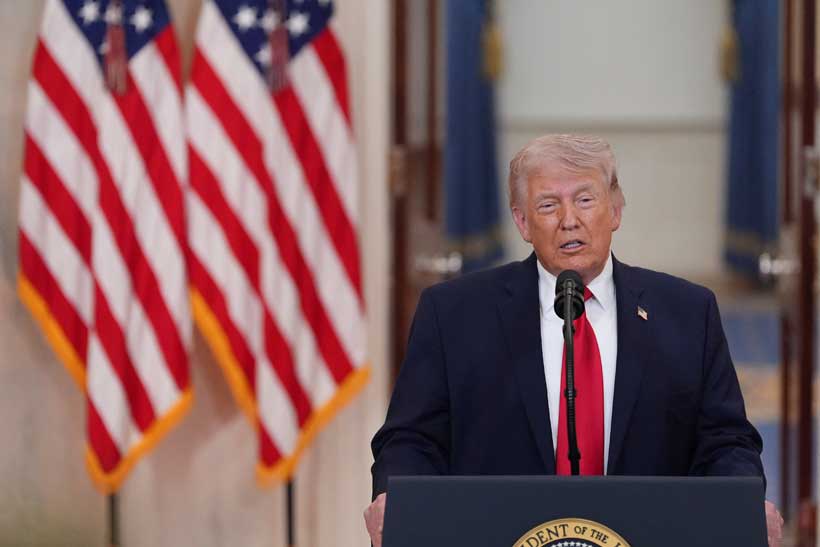
American applicants have different motivations, but many say President Donald Trump’s immigration crackdown and other topics have led them to seek dual citizenship.

Michelle Cunha, of Bedford, Mass., said she decided to move to Canada after reflecting on decades of political activism and deciding she had “nothing left to give.”

“I put in my best effort for 30 years. I have done everything that I possibly can to make the United States what it promises the world to be, a place of freedom, a place of equality,” Cunha said. “But clearly we’re not there and we’re not going to get there anytime soon.”

Troy Hicks, who had a great-grandfather born in Canada, said he was spurred by an international trip.

“I recently went to Australia and you know, first words out of the first person I talked to in Australia was basically an expletive about Trump and the U.S.,” said Hicks, of Pahrump, Nev. “It was just like, whoa, I walked off a 20-hour flight and literally the first words of somebody’s mouth to me were that. … So the idea of doing that with a Canadian passport just seemed easier, better, more palatable.”

Maureen Sullivan, of Naples, Fla., said she was motivated by the immigration crackdown in Minnesota, which hit home when her teenage nephew encountered federal officers near his high school in St. Paul. Sullivan, whose grandmother was Canadian, said she sees citizenship in Canada as an option in case things in the U.S. “really go south.”

“When I first heard about the bill, I couldn’t believe it. It was like this little gift that fell in my lap,” Sullivan said. “There was kind of this collective excitement amongst the (family) who just felt like, we wanted to feel like we were doing something to take care of our security in the future if needed.”

How much will Canadian citizenship cost?

For those with documentation ready at hand, the proof of citizenship application fee is a relatively inexpensive 75 Canadian dollars ($55).

But costs will climb for those seeking help from an attorney or genealogist to locate records like birth, death and marriage certificates that can establish the lineage to a Canadian ancestor.

Cunha said she used an attorney and estimates the cost will be about $6,500.

However, Mary Mangan, of Somerville, Mass., filed her application in January using advice from online forums.

“There are some situations where a lawyer might be the right thing, but for many people, I would guess 90% of people can probably do this on their own,” Mangan said.

The website for the Immigration, Refugees and Citizenship Canada office, which processes applications, says processing times for a certificate is around 10 months, with more 56,000 people awaiting a decision.

The agency said that from Dec. 15 to Jan. 31, it confirmed citizenship by descent for 1,480 people, though not all were Americans. Last year, 24,500 Americans gained dual U.S.-Canada citizenship.

What’s the reaction in Canada?

Fen Hampson, professor of international affairs at Carleton University in Ottawa, said Canadians are generally a “welcoming people.”

Hampson said some also worry a surge of interest from Americans could delay efforts by refugees and asylum-seekers fleeing vulnerable situations.

“I think where people start looking askance is someone who’s never been to Canada, who has very thin ties. They can get a passport, becoming Canadians of convenience. People don’t like that,” he said.

Raza writes for the Associated Press.

Source link

Canada contributes $5M to eliminate chemical weapons stockpiles in Syria – Middle East Monitor

Canada on Wednesday announced $5 million in funding for international efforts aimed at identifying and eliminating chemical weapons remaining in Syria, Anadolu reports.

“Today, the Honourable Anita Anand, Minister of Foreign Affairs, announced Canada’s contribution of $5 million to the Organisation for the Prohibition of Chemical Weapons (OPCW) through Canada’s Weapons Threat Reduction Program,” the Global Affairs Canada said in a statement.

Noting that the OPCW will use the contribution to verify the scope of Syria’s former chemical weapons program, the readout added that the funding will also be used to investigate past uses of such weapons, and prepare for the safe destruction of remaining stockpiles, in line with the Chemical Weapons Convention.

The statement said the work is considered critical to “Syria’s long-term stability,” advancing accountability and reducing the risk to civilians of any future chemical weapons use.

“This contribution is part of Canada’s long-standing support to the OPCW to uphold the global ban on chemical weapons and strengthen international accountability,” it added.

Source link

Five major issues affecting the FIFA World Cup with 50 days to go | World Cup 2026 News

With 50 days to go until the World Cup kicks off, FIFA and the tournament’s host nations face criticism over wide-ranging social, political and logistical issues surrounding the global event.

Canada and Mexico will cohost the tournament with the United States, which, alongside Israel, launched a war on World Cup participant nation Iran on February 28. While the war is currently under a fragile temporary ceasefire, Iran’s participation in the tournament remains uncertain.

Recommended Stories

list of 3 itemsend of list

Fans across the three host countries are in uproar over exorbitant ticket prices, which have affected sales and interest in the world’s most popular quadrennial sporting event.

Local politicians and the public have also raised concerns over the hike in transport fares on routes connecting match venues in the US.

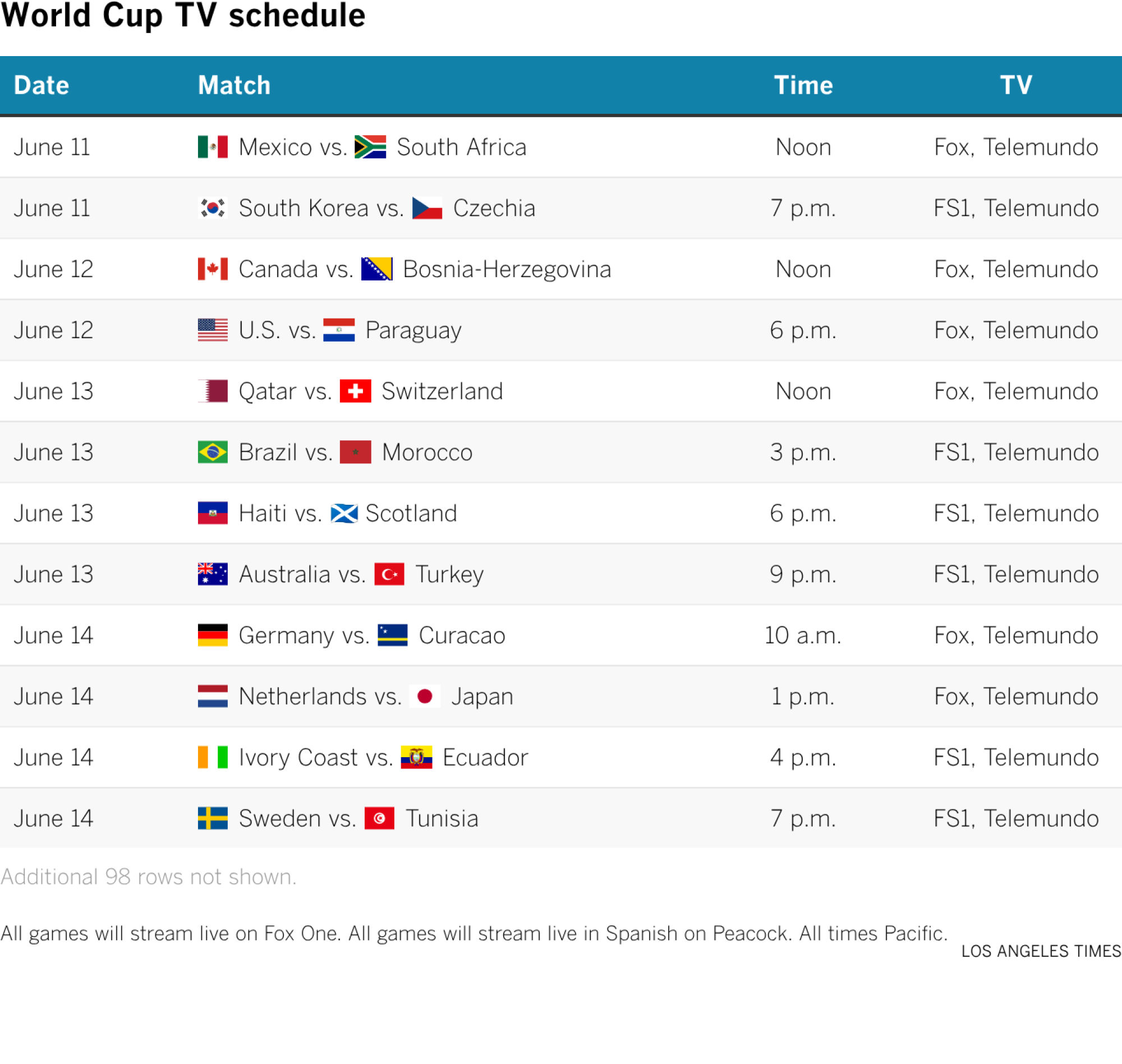
Al Jazeera Sport takes a look at the growing concerns in the run-up to the tournament, which begins on June 11 with the opening fixture between Mexico and South Africa:

What’s the latest on Iran’s participation in the World Cup?

Iran’s football team is preparing for the championship. However, officials say a final decision on the team’s participation will be taken by the government and the National Security Council after they review the players’ safety in the US.

Iran had said last month that it would not participate in the tournament amid the war, especially if the host nation could not guarantee players’ security. It followed a social media post from President Donald Trump, where he suggested that the Iranian team’s safety and security could not be guaranteed in the US, where Iranians are scheduled to play all their games.

The Iranian football federation then asked FIFA to relocate its games from the US to Mexico. FIFA rejected the request.

FIFA chief Gianni Infantino said last week that Iran “has to come” to the tournament.

Iran will play all their group stage matches on the US West Coast. Should they advance to the knockouts, the remaining games would also be held in the US.

Outrageous commuter fare prices in US host cities

Fans can expect to pay nearly 12 times the regular $12.90 fare for a round-trip train ride from Manhattan’s Penn Station to the MetLife Stadium in East Rutherford, New Jersey, venue of the World Cup final and seven other major fixtures.

New Jersey Governor Mikie Sherrill and FIFA have chided each other on the $150 price tag for a roughly 15-minute, 14km (9-mile) ride; Sherrill said FIFA should bear the costs, while the global body hit back, saying it is not obligated to do so.

Train commutes to Gillette Stadium in Boston’s suburbs cost roughly four times the regular price ($20), while round-trip bus fares to Foxborough cost $95.

Host cities Los Angeles and Philadelphia have pledged to keep their transit fares unchanged, while Kansas City is offering a $15 round-trip fare to Arrowhead Stadium. Houston said it has added buses and train cars to serve fans but intends to keep fares at current levels: $1.25 for buses and light rail trains, and park-and-ride options ranging from $2 to $4.50.

High prices, low demand for match tickets

Sky-high ticket prices have left fans outraged at what they say is pricing that excludes supporters from the tournament. A lag in ticket sales for blockbuster matches, including hosts USA vs Paraguay, seems to be a testament to the high price tag.

FIFA put tickets on sale in December at prices ranging from $140 for Category 3 in the first round to $8,680 for the final. Later, it raised prices to as high as $10,990 when sales reopened on April 1.

The North American bid had initially promised tickets would be available for as little as $21; however, the cheapest ticket has been priced at $60. Most tickets cost at least $200 for matches involving higher-ranked teams.

FIFA announced another round of ticket sales on Wednesday to coincide with the 50-day countdown. Tickets will be available across categories 1 to 3 for all 104 matches on a first-come, first-served basis.

Pushback against immigration raids during World Cup matches

The Trump administration’s push for mass deportation and its efforts to tighten legal immigration pathways have spurred concerns about whether the World Cup’s international audience might be targeted by US immigration authorities.

Infantino was approached last week to pressure Trump to avoid immigration raids at this year’s tournament. Reporters suggested that agents from Immigration and Customs Enforcement (ICE) and Customs and Border Protection (CBP) were present at last year’s FIFA Club World Cup matches, though the Trump administration denied conducting enforcement efforts.

A report by The Athletic explained that FIFA executives have framed the possibility of an immigration moratorium as a potential public relations boon for the Trump administration. It also indicated that the executives hoped Infantino would leverage his friendly relationship with Trump to assuage any immigration-related fears.

Violence in Mexico raises fears over tournament security

World Cup cohost Mexico is also under the spotlight due to concerns for fan safety after a lone attacker opened fire on tourists near the country’s capital on Monday.

The accused opened fire on top of one of the Teotihuacan pyramids — a UNESCO World Heritage Site and one of Mexico’s most frequented tourist attractions — and killed one Canadian tourist and injured 13 others.

It raised questions about security protocols taken by Mexican President Claudia Sheinbaum’s government in the run-up to the global football tournament.

Sheinbaum said Mexico will beef up security ahead of the World Cup.

“Our obligation as a government is to take the appropriate measures to ensure that a situation like this does not happen again. But clearly, we all know — Mexicans know — that this is something that had not previously taken place,” she said on Tuesday.

Source link

Carney says Canada’s economic ties with U.S. are a weakness that must be corrected

Canadian Prime Minister Mark Carney said in a video address released Sunday that Canada’s strong economic ties to the United States were once a strength but are now a weakness that must be corrected.

In the 10-minute address, Carney spoke about his government’s efforts to strengthen the Canadian economy by attracting new investments and signing trade deals with other countries.

“The world is more dangerous and divided,” Carney said. “The U.S. has fundamentally changed its approach to trade, raising its tariffs to levels last seen during the Great Depression.

“Many of our former strengths, based on our close ties to America, have become weaknesses. Weaknesses that we must correct.”

Carney said tariffs imposed by President Trump have affected workers in the auto and steel industries. He added that businesses are holding back investments “restrained by the pall of uncertainty that’s hanging over all of us.”

Many Canadians have also been angered by Trump’s comments suggesting Canada become the 51st state.

Carney said he plans to give Canadians regular updates on his government’s efforts to diversify away from the U.S.

“Security can’t be achieved by ignoring the obvious or downplaying the very real threats that we Canadians face,” he said. “I promise you I will never sugarcoat our challenges.”

It’s not the first time Carney, who served as a central bank governor, first at the Bank of Canada and later with the Bank of England, has spoken about a shift in world power.

During a speech in January at the World Economic Forum in Davos, Switzerland, he received widespread praise for condemning economic coercion by great powers against small countries.

His remarks brought a rebuke from Trump.

“Canada lives because of the United States,” Trump said after the speech. “Remember that, Mark, the next time you make your statements.”

There was no immediate White House reaction Sunday to the address.

Carney’s comments came days after securing a majority government following special election wins and as the opposition Conservatives push him to deliver a U.S. trade deal, which was among his promises in last year’s election.

A review of the current version of the North American Free Trade Agreement among Canada, the U.S. and Mexico is scheduled for July.

In his address, Carney said he wants to attract new investments into Canada, double the size of clean energy capacity and reduce trade barriers within the country. He also emphasized Canada’s increased defense spending, reduction in taxes and efforts to make housing more affordable.

“We have to take care of ourselves because we can’t rely on one foreign partner,” he said. “We can’t control the disruption coming from our neighbors. We can’t control our future on the hope it will suddenly stop.

“We can control what happens here. We can build a stronger country that can withstand disruptions from aboard.”

Carney said simply hoping the “United States will return to normal” is not a feasible strategy.

“Hope isn’t a plan and nostalgia is not a strategy,” he said.

Carney said Canada has “been a great neighbor,” standing with the U.S. in conflicts including Afghanistan, plus two World Wars.

“The U.S. has changed and we must respond,” he said. “It’s about taking back control of our security, our borders and our future.”

Morris writes for the Associated Press.

Source link

First ‘daylight’ offside goal scored in Canada

The first goal allowed under the experimental “daylight” ​offside rule was scored in Canada on Saturday, with Pacific FC forward Alejandro Diaz on ⁠target in a 2-2 draw with Halifax Wanderers., external

The strike would have been ruled out elsewhere under the standard International Football Association ⁠Board (Ifab) Laws of the ​Game, but ⁠stood under the Canadian Premier League’s ongoing trial conducted in cooperation with Fifa.

The daylight interpretation of offside means there should be a complete gap between the attacker and the second-to-last opposition player – effectively the last defender, given the goalkeeper’s usual positioning.

The CPL ⁠is testing the rule this season as part ​of ⁠efforts to reduce ‌marginal offside decisions and encourage attacking play.

The concept, long advocated by former Arsenal manager ⁠Arsene Wenger in his role as Fifa’s head of global football development, is being assessed in Canada as a potential change to the offside law.

But critics have suggested that daylight offside will give too much advantage to the attacking team.

The CPL – which does not have video assistant referees (VAR) – is the first top-flight league to try out this new offside rule, with low-level trials held in Italy’s Under-18 Championship in 2023 and in youth competitions in the Netherlands.

Results of the trials will be presented to Ifab at the end of year. If successful, there is the potential for the law to change across the world for the 2027-28 European season.

Source link