The victory helped the Kazakh take a big step towards securing the year-end number one ranking.
Published On 25 Oct 202625 Oct 2026
Elena Rybakina blazed past unseeded Canadian Leylah Fernandez 6-2 6-2 in the Ningbo Open final to retain her title and lift her first trophy as the world number one ahead of the WTA Finals next month.
The victory on Sunday also helped the Kazakh take a big step towards securing the year-end number one ranking, further burnishing a spectacular season in which she won the Australian Open title before adding the US Open crown to reach the summit.
Top seed Rybakina made the breakthrough with her trademark power in the fifth game and then unleashed a searing crosscourt backhand winner to go 4-2 up, before the 27-year-old wrapped up the opening set in only 38 minutes.
World number 30 Fernandez made a bright start to the next set but Rybakina absorbed the pressure and raised her level to force an error and break for 2-1, with the three-time Grand Slam champion breezing to victory from there.
Rybakina’s latest triumph is a timely lift after setbacks in Beijing and Wuhan, as she turns her attention to the Pan Pacific Open in Tokyo this week before launching her title defence at the season finale in Indian Wells from November 8.
It’s true, this is far from panic stations. In 2016, England were the defending world champions when they lost to France and beaten finalists Canada. Since then, they’ve been imperious, winning a second World Cup, reaching the final in 2017 and 2022, and lifting nine of the past 10 Six Nations titles.
This is only their third defeat in 74 matches, so perspective is required.
But England’s performances throughout the WXV Global Series highlighted areas for improvement.
They have lacked their usual clinical edge in attack. In Ottawa, Sarah Bern was held up over the line and England conceded a turnover less than five metres out as they failed to make their dominance pay before the break.
Tellingly, they opted to kick a penalty early in the second half to close the deficit – perhaps a lesson learned from last month’s 26-26 draw in Exeter, where they turned down a shot at goal to snatch the win in the dying moments.
In defence, they have conceded 18 tries across their past five matches in the WXV, compared to eight in six at the World Cup. They have trailed at the break three times, something they hadn’t experienced since 2020.
Last week, ill-discipline repeatedly gifted Canada field position before a late handling error, which put a clearing kick under pressure, opened the door for the hosts’ winning try.
On Friday night, Gabrielle Senft picked off a bouncing ball from a missed pass to set up Canada’s second try. Minutes later, England were lucky not to concede a similar try when a pass bisected Jess Breach and Jones, who pounced on the ball just before Lizzie Gibson got to it.
“We were riding the waves, building phases, scrum, set piece, we were very strong. Sometimes it’s the bounce of the ball or it doesn’t swing your way. We couldn’t execute when we got in their 22, that’s a big one to reflect on for sure,” said Jones.
Tries: Omokhuale, De Goede 3, Bauder Cons: De Goede 3
England (7) 22
Tries: Feaunati, Cokayne, Sing Cons: Harrison, Sing Pens: Harrison
England suffered back-to-back defeats for the first time in a decade as Canada won 31-22 in the WXV Series in Ottawa.
The hosts ran in five tries to England’s three, including a hat-trick for captain Sophie de Goede, as they backed up last weekend’s 24-21 win in Toronto, which ended the Red Roses’ 41-match unbeaten streak, with another statement victory.
It completes a 2-0 series win for Canada after the two sides also shared a 26-26 draw in Exeter in September.
After losing multiple matches in a calendar year for the first time since 2016, world champions England head into their meeting with the USA in New Jersey next Friday (21:15 GMT) hoping to avoid three consecutive losses for the first time since 2013.
England made a promising start, Maddie Feaunati crashing over from close range inside 10 minutes, but Canada led 12-7 at the break.
Gabrielle Senft pounced on a bouncing ball and broke down the left wing with De Goede on her shoulder to score, only four minutes after Julia Omokhuale had brought the Maple Leafs level.
Zoe Harrison kicked a penalty early in the second half before England turned to their driving maul to overturn the deficit, Amy Cokayne walking in their second score.
However, De Goede restored her side’s lead three minutes later and completed her hat-trick just after the hour-mark, before Savannah Bauder danced down the left wing to put Canada out of sight.
Emma Sing added a consolation try for England in the 80th minute.
Watch highlights as England were beaten by Canada for the second time in as many weeks, losing 31-22 in their WXV Global Series match in Ottawa, Canada.
High winds propelled the blaze across the army base in Wainwright, killing four soldiers and injuring dozens more.
Published On 23 Oct 202623 Oct 2026
A fire that killed four soldiers at a western Canadian military base was sparked by an exercise using live grenades, a military official said.
The deadly fire broke out on a grenade launcher range during military exercises on Saturday, with high winds propelling it across the base, Brigadier-General Vanessa Hanrahan, commander of the Canadian Forces Military Police Group, told reporters on Thursday.
“A subsequent change in wind direction and velocity significantly increased the fire’s intensity,” she added, with the flames spreading to a training area at the Wainwright military base in Alberta.
Due to the blaze being in the “permanent danger area” of the range, firefighters were unable to directly combat it, Hanrahan added.
The fire spread on Saturday afternoon during high-intensity combat training involving Charlie Company of the 3rd Battalion, Princess Patricia’s Canadian Light Infantry.
The military base lies in the prairies, a landscape of wide, open grasslands, rolling plains and scattered groves of trees.
About 84 soldiers were split between a grenade range and an area where they practised attacks on simulated enemy positions. The fire swept into the second training area.
Four soldiers died and 39 were injured, with 27 requiring hospitalisation. The incident was one of the worst peacetime tragedies for Canada’s military.
The soldiers and reserve members were participating in exercises ahead of a planned deployment to Latvia, where Canadian forces have their largest international military operation.
The Wainwright base is one of the largest bases operated by the Canadian Armed Forces. It regularly hosts training exercises involving military personnel from NATO countries.
During the final months of World War II and for several months in 1946, the base was used as an internment centre for German prisoners of war.
On trade, investment and innovation, leaders will work toward conclusion of a Canada-Turkiye Free Trade Agreement.
Published On 22 Oct 202622 Oct 2026
Canadian Prime Minister Mark Carney and Turkish President Recep Tayyip Erdogan have announced the launch of a Canada-Turkiye Strategic Partnership, backed by a three-year action plan.
“In an increasingly complex global security environment, rising geopolitical uncertainties, and evolving humanitarian challenges, a strong and resilient Canada-Turkiye partnership is essential, providing a foundation to mitigate shared threats and capitalise on new opportunities,” said a statement by the two leaders on Thursday.
This comes as Carney is on a two-day visit to Turkiye, seeking to forge a new partnership as Canada looks to reduce its dependence on the United States.
The partnership’s three-year action plan rests on four pillars: trade and investment; defence and security; energy; and ties between people, the statement said.
On trade, investment and innovation, the two leaders agreed to “work toward successful conclusion of a Canada-Turkiye Free Trade Agreement”, it said. They will also expand bilateral trade and investments in priority sectors including energy supply, defence production, aerospace, and Artificial Intelligence (AI).
On defence and security, the leaders “underlined their intent to deepen bilateral and multilateral cooperation”. They also agreed to “strengthen cooperation in support of peace and security in the Euro-Atlantic region and beyond including Ukraine, South Caucasus, and the Middle East, in particular Gaza”.
Meanwhile, energy ministers from both countries will work on areas such as LNG, nuclear energy and critical minerals.
‘Launching a new era’
Speaking to reporters in Ankara alongside Carney on Thursday, Erdogan said the two countries “hope to increase our trade volume, which currently stands at around $3 billion, to $5 billion initially and then to $10 billion through the steps we will take”.
He said the two sides had agreed to begin free trade agreement negotiations before the end of the year to boost trade and investment, adding that elevating Turkiye-Canada relations to the level of a strategic partnership would not be merely a symbolic step on paper.
“We have today overcome the disconnect that had persisted between Turkiye and Canada for many years. Now we are launching a new era between Turkiye and Canada,” he said.
Canadian and Turkish leaders will convene next month in Ankara for the first round of trade talks, the joint statement said.
Carney is on the first bilateral visit by a Canadian prime minister to Turkiye, although he travelled to Ankara in July to attend the NATO summit.
He was scheduled to meet with Erdogan and other officials before travelling to Istanbul for talks with Turkish business groups as the two countries seek to deepen trade ties.
The Canadian prime minister has sought to diversify partnerships and reduce reliance on the US amid an escalating trade war with President Donald Trump, marked by US tariffs on Canadian goods, retaliatory measures by Canada and statements questioning Canadian sovereignty.
The United States has accused Canadian politicians of trying to influence its midterm elections, pointing to Canada’s efforts to push back against President Donald Trump’s tariff campaign.
In a fact sheet released on Wednesday, the US embassy accused Canada of being dismissive of its allegations of election interference.
Recommended Stories
list of 3 itemsend of list
“The Canadian government brushes off concerns about potential interference in U.S. elections, even as its ministers and premiers openly describe plans to influence American politics in official documents and public appearances,” the fact sheet reads.
The two countries have been locked in a trade war since the start of Trump’s second term in 2025, with Canada responding to US tariffs with import taxes of its own.
But the US embassy identified public statements about the tariffs as being attempts to sway the November 3 midterm election.
Among the politicians singled out in the fact sheet was Canadian Industry Minister Melanie Joly. The fact sheet pointed to comments Joly made in August about responding to Trump’s tariffs.
“We’re also targeting products that will target states in the US. And so we’re being wise and strategic to put political pressure,” Joly said at the time.
The embassy also took issue with Joly’s meetings with Democratic officials in Boston and Chicago in September. When asked by a reporter what she thought might happen with regard to tariffs if Democrats won the midterms, she said, “That’s exactly why I’m meeting so many governors and potential presidential candidates.”
Joly has rejected the suggestion that her actions could amount to interference, saying Canada would never meddle in US elections. She said her meetings with US politicians, both Democratic and Republican, were about building Canada’s economy.
“Fundamentally, what I’ve done in the US is to attract investments,” she told reporters on October 14.
The embassy also pointed to Ontario Premier Doug Ford’s calls for retaliatory measures on US products, as well as his government’s advertising campaign against Trump’s tariffs, launched last year.
The campaign, which featured clips of former US President Ronald Reagan criticising tariffs in a 1987 radio address, prompted Trump to call off trade talks with Canada in October 2025.
While the embassy laid out several examples of Canadian officials trying to influence US trade policy, it didn’t explain how those efforts amounted to interference.
Other instances of alleged election interference included Liberal MP Anthony Housefather saying he had campaigned in Florida on behalf of Democratic Representative Debbie Wasserman Schultz, ahead of her primary election in August.
The fact sheet also accused individual Canadians of illegally participating in US elections, naming 11 people who had been charged or sentenced for voting between 2012 and 2024.
The sheet did not, however, present any evidence linking those citizens to a Canadian government effort to involve itself in US elections.
“All Canadians should refrain from attempting to participate in or influence U.S. elections in any way,” the US embassy’s statement said. “Americans decide America’s elections.”
The fact sheet comes a week after US Ambassador to Canada Pete Hoekstra said Washington was closely watching Canada for signs of interference ahead of the midterms.
“We’re monitoring it, we’re evaluating it and if some of it becomes election interference then America will respond to it,” Hoekstra said in a podcast interview on The Really Big Show, according to The Canadian Press.
The US and Canada have long been allies, but relations have frayed since Trump returned to office.
Not only has the Republican leader triggered a trade war with Canada, but he has also repeatedly threatened to make Canada a 51st state.
There have also been reports that separatist leaders from Alberta had sought support from Trump administration officials ahead of a failed referendum on the province’s independence this week.
Ahead of Monday’s provincial vote, Canadian Prime Minister Mark Carney addressed concerns about potential US interference in the referendum, saying Canada expected foreign governments to stay out of its elections.
“Our expectation is, to be absolutely clear, on foreign governments, United States included, is we don’t get ourselves involved in their elections, they don’t get themselves involved in our elections,” he told Global News.
Al Jazeera has reached out to the Prime Minister’s Office and Global Affairs Canada for comment, as well as the office of Ontario Premier Doug Ford and Industry Minister Joly.
Publisher Boreal says investigations confirmed the Hatian-Canadian Thelyson Orelien used AI in his breakthrough novel.
Published On 21 Oct 202621 Oct 2026
The publisher of best-selling Haitian-Canadian writer Thelyson Orelien says it has severed its professional relationship with the author after confirming he used artificial intelligence to help write his novel, “It Was Either That or Die”.
Boreal said on Wednesday that it conducted a further investigation after allegations surfaced in September to determine whether AI was used to write the novel.
Recommended Stories
list of 3 itemsend of list
“New information, confirmed over the past few days, indicates that artificial intelligence was used in the writing process” of the novel, a Boreal statement said.
Orelien had previously denied allegations surrounding his breakthrough novel, and last week, the Canadian publisher said it was standing by the 38-year-old writer.
Boreal said it did not know the extent of AI’s use in the writing process “and we will likely never have a definitive answer”.
It said it gathered all the working versions of the novel and hired an outside party to analyse the various drafts.
“The results obtained this week revealed traces of AI tags in the metadata of certain documents,” Boreal said.
The publisher said it had tried to work with Orelien to gather the evidence necessary to prove his innocence.
That effort was inconclusive, and Orelien “subsequently announced that he would not provide any further information,” the publisher said.
A copy of the book “C’etait ca ou mourir”, by author Thelyson Orelien, is displayed on a table inside a bookstore in Paris, France, on September 22, 2026 [File: Sarah Meyssonnier/Reuters]
‘Slander and heresy’
Orelien’s novel about migration, known by its original French title “C’etait ca ou mourir”, had been scheduled for translation in more than 20 countries.
France’s top book prize, the Goncourt, removed “C’etait ca ou mourir” from its shortlist after tests with the AI detector Pangram indicated a 100 percent probability that it contained computer-generated text.
But Orelien called the allegations “slander and heresy” in a statement sent to AFP earlier this month.
“Here and there I did use tools for research, particularly for foreign idioms,” he said.
“But not a single sentence in this book was created by a machine, nor the meaning or the structure of a story that comes from my gut,” Orelien said.
On Wednesday, he stood firm, telling the French newspaper Liberation that he had used AI “in the creative process” for “historical research”.
The author said he began writing the book in late 2017, before AI services such as ChatGPT were widely available.
When the allegations first surfaced in September, Orelien said he suspected racism was behind the attacks on him.
Emma Sing comes in at full-back in Kildunne’s place for Saturday’s rematch (00:00 BST) against Canada in Ottawa, while Tatyana Heard and Claudia Moloney-MacDonald – backline starters in the defeat – drop out of the matchday squad entirely.
Helena Rowland and Mia Venner replace Heard and Moloney-MacDonald at inside centre and wing respectively.
In the fourth change to the starting line-up, Sadia Kabeya, who appeared off the bench last week on her comeback from a leg injury, starts with Alex Matthews, two-time Rugby World Cup winner, dropping to the bench.
Exeter’s Flo Robinson and Sale’s Hollie Aitchison are included on the bench as a new-look set of half-back replacements.
Sing, a rangy runner who can also kick goals, started two matches at full-back during England’s Six Nations campaign, with Kildunne switching to a different position on the wing on each occasion.
Sing’s Gloucester-Hartpury team-mate Venner made her England debut in 2020 aged just 17.
Venner has won only another four caps since but was putting pressure on England’s more established back three at the start of this year, appearing in wins over Scotland and Italy.
The 24-year-old finished as the PWR’s joint top try-scorer last season, crossing 12 times.
Moloney-MacDonald cost her side an early try in the defeat by Canada when, after doing superbly to pick Jess Breach’s pass off her toes, she spilled the ball over the line in the sixth minute.
“We’ve earned a strong period but nothing about it is owed to us going forward,” said Mitchell.
“Friday [Saturday 00:00 BST] is an opportunity to apply sustained pressure, learn from what we missed and come out the other side better than we went in.”
The lawsuit argues Trump bypassed Congress and misused a century-old law to impose sweeping tariffs on Canadian imports.
A US food importer is suing US President Donald Trump over his 50 percent tariffs on Canadian goods, arguing he lacks the legal authority to impose sweeping tariffs without congressional approval.
Gellert Global Group, a New Jersey-based company that imports Canadian cheese, filed the lawsuit on Tuesday in the US Court of International Trade in New York.
Recommended Stories
list of 4 itemsend of list
The company says the tariffs are driving up its costs and disrupting its relationships with suppliers on both sides of the border. Between September 16 and October 11, Gellert had paid more than $520,000 in duties, according to the complaint.
“Gellert Global Group has spent generations building trusted relationships with suppliers, customers and partners across the food industry,” said Thomas Gellert, the company’s co-chief executive officer, in a press release. “These tariffs disrupt those relationships overnight and create costs and uncertainty that ripple through the entire supply chain.”
The lawsuit challenges Trump’s decision to use a Depression-era law to impose tariffs on a wide range of Canadian products, including dairy products, furniture, clothing and wine.
The lawsuit argues that the law doesn’t apply to the Canadian policies the Trump administration says are discriminatory, since two of them “arose in response to the president’s own tariffs, while the third involves Canadian dairy policy governed by the US-Mexico-Canada Agreement (USMCA)”.
It also questions why Canadian cheese is being taxed over disputes involving alcohol and cars.
“No president should have the power to pull a dormant statute off the shelf and use it to impose sweeping tariffs or import bans without the limits Congress required,” said Sara Albrecht, chairman and CEO of the Liberty Justice Center, a nonprofit legal organisation that filed the suit on Gellert’s behalf.
The White House did not immediately respond to a request for comment, according to the Reuters news agency.
At the centre of the case is Section 338 of the Smoot-Hawley Tariff Act of 1930, which allows the president to impose tariffs of up to 50 percent on imports from countries found to discriminate against American businesses.
The provision had never been used until Trump invoked it this year.
The lawsuit argues that newer laws passed by Congress since then, such as Section 301 of the Trade Act of 1974, require investigations, public comment and other safeguards that Gellert says the Trump administration has bypassed, and that these override Section 338.
“The administration cannot skip those protections by reaching for a 1930 statute that no president had ever used to impose a tariff,” said Jeffrey Schwab, the Liberty Justice Center’s senior counsel and director of litigation.
In addition, the lawsuit says that even if Trump is allowed to use the older law, he hasn’t met its requirements, including waiting 30 days before tariffs can be collected on new products added to the list.
The administration only waited seven days to start collecting tariffs on cheese in September, according to the lawsuit.
Gellert is asking the court to declare the tariffs illegal, stop them from being collected, and order refunds with interest for importers who have been impacted.
The lawsuit marks the fourth major legal challenge to Trump’s tariffs.
In February, the US Supreme Court struck down most of the tariffs he imposed in 2025, and a trade court later ruled against a temporary 10 percent global tariff. A separate challenge to tariffs imposed over alleged forced labour in international trade is still pending.
Voters in Alberta have chosen to remain part of Canada in a first-ever independence referendum.
Canadian state broadcaster CBC News called the results of Monday’s vote late on the same day after 48 percent of the ballots counted showed overwhelming support for the “remain” side, with 76 percent opting to stay with Canada.
The result marks a major win for Prime Minister Mark Carney, who is facing a trade and political war with the United States amid US President Donald Trump’s higher tariffs and repeated suggestions of annexing the country.
On his way into a cabinet meeting on Tuesday morning, Carney called it a “great day.”
“I’m thrilled that Albertans have chosen unity. They’ve chosen to build together. They’ve chosen to continue to take care of each other, to move forward together with purpose,” he said.
But the result also comes as a disappointment for those Albertans seeking independence for the resource-rich region following years of grievances laid at Ottawa’s door. Here’s what we know:
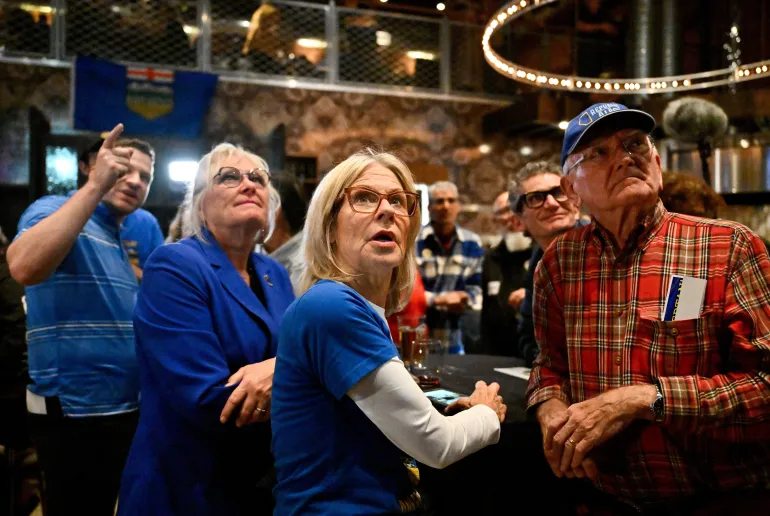
Supporters of the Alberta Prosperity Project, a group that promotes independence from Canada, gather at a watch party on the day of a nonbinding referendum on Alberta sovereignty, in Edmonton, Alberta, Canada, October 19, 2026 [Jennifer Gauthier/Reuters]
What was the referendum about?
The nonbinding referendum was first announced in May following a campaign and petition by a group of Albertans who want to be an independent country.
While only about one-third of Albertans were found to be pro-independence in polls, Alberta Premier Danielle Smith argued in her announcement that a referendum was necessary to respect the 300,000 Albertans who had petitioned officials for it.
In the referendum, voters answered 10 questions, including whether the government should begin a binding process to seek independence from Canada. They also answered questions on immigration, access to provincial services like education, social care and healthcare, and voter identification requirements.
Prime Minister Carney had campaigned for Albertans to vote “remain”, saying last week at a rally in Calgary that separation would be “ a dangerous bluff that will lead to years of deep division”.
“There are some outside our borders who are working to break us so they can own us,” he said.
Researchers have pointed to possible online influence campaigns by both Russian and US entities that helped amplify the call for separation and allegedly shared misleading information. Alberta PM Smith told media in August that the online activity was under observation.
What have the reactions been?
Prime Minister Carney, who grew up in the region, said “Albertans made a clear choice” in a statement he made early on Tuesday.
“They chose unity, to build together, and to take care of each other,” he said, adding that “Canadians will move forward together with renewed purpose and high ambition.”
Alberta’s Premier Smith said she was pleased to see the results and that “Albertans have voted for a stronger Alberta in a united Canada.”
Separatist leaders from the groups Let Alberta Decide, the Alberta Prosperity Project and the Pathway to Independence said they will wait for all votes to be counted before conceding.
First Nations groups turned out in strong numbers to vote to remain with Canada, with one southern Alberta polling station in an area home to the Siksika Nation temporarily running out of ballots, local media reported.
Why is Alberta important, and why are there calls for independence?
Many Albertans have long complained that their critical natural resources are funding the government in Ottawa and the commercial hubs of Toronto and Montreal, but that the province does not receive proportionate benefits.
The province, with a population of 5.1 million, holds massive oil deposits. It also holds reserves of critical and rare-earth metals including lithium, titanium and zircon, which are essential for manufacturing many tech items, from smartphones to fighter jets.
Separatist movements, some of which even support Alberta joining the US, go back to the 1940s, following the discovery of oil reserves. Some of Alberta’s premiers have had spats with Ottawa over wealth distribution.
US President Trump has made remarks about Canada becoming a US state in recent months.
Last week, he told a political rally in the US state of Arizona that Canada will “end up being the 51st state, because it’s the only way it works”.
The two countries have been embroiled in a trade war since talks fell apart in August this year and they slapped each other with tit-for-tat tariffs.
Earlier this month, tech billionaire Elon Musk called for Alberta, Saskatchewan and Quebec to separate from Canada, saying “they’d be better off”.
But the matter of Alberta’s independence gained intense scrutiny last year after pro-separatists launched a petition to pressure the government.
Alberta, alongside other western provinces of British Columbia, Saskatchewan and Manitoba, have all complained about “western alienation” by the government in the centre.
Is it over for Alberta’s independence bid?
With separatism agitations running so far back, experts say the referendum will likely not end the movement altogether.
Ahead of the vote, some separatist leaders said they would pursue another referendum if necessary, arguing that the referendum shows that independence is legally possible.
“Regardless of what happens on Monday, we’ve already won,” Keith Wilson, co-leader of Let Alberta Decide, said at a rally last week.
Around 76 percent of voters in the Canadian province of Alberta have rejected a proposal to hold a referendum on independence, according to unofficial results. It’s a victory for Prime Minister Mark Carney but more than 300,000 backed the proposal, and separatists say their grievances remain.
With more than one million votes counted, about 76 percent supported remaining in Canada.
Published On 20 Oct 202620 Oct 2026
Alberta residents have voted to remain part of Canada in the province’s first-ever referendum on separation, in a much-needed win for Prime Minister Mark Carney as he attempts to unify the country amid an ongoing trade war with the United States.
With more than one million votes counted, about 77 percent supported remaining in Canada, compared with 23 percent who backed beginning a process that could lead to separation, early results showed on Tuesday.
Recommended Stories
list of 3 itemsend of list
The vote was not a direct referendum on independence but would have set oil-rich Alberta on a path towards a future vote on separation from Canada.
Carney welcomed the result and said Albertans had made a “clear choice” in favour of unity.
“They chose unity, to build together, and to take care of each other,” he said in a statement on X.
Jeffrey Rath, a top leader of the secessionist Alberta Prosperity Project, told reporters his push for an independent Alberta will “absolutely” continue, despite the result from Monday’s vote.
“We’ve learned a lot of lessons from this fight,” he said.
Alberta Premier Danielle Smith, a conservative, said she voted against independence but called the referendum to settle an issue that has divided the province.
She has said a win for the federalists would close the secession question.
Alberta has the world’s fourth-largest proven oil reserves, and much of the secessionist momentum has been driven by anger over oil industry management.
Smith has blamed Carney’s predecessor Justin Trudeau for igniting the secessionist fire, accusing him of trying to crush oil production to advance his pro-climate agenda.
Alberta’s independence push has also drawn sustained interest from the allies of US President Donald Trump, including Treasury Secretary Scott Bessent, who called Alberta Washington’s “natural partner”. Elon Musk, the world’s richest person and eminent Trump supporter, also posted on X that Alberta “should separate”.
Carney, who grew up in Alberta, has worked to improve relations between the province and Ottawa since taking office last year. He has partnered with Smith on advancing a new pipeline to export more Alberta bitumen overseas, a project considered a nonstarter during Trudeau’s tenure.
A grass fire, fanned by strong winds, is being blamed for the Canadian military base tragedy in Alberta. Four armed service members were killed during what was a training exercise with 19 reported in critical condition in hospital.
Cory Morgan has spent more than 25 years fighting for Canada’s oil-rich province of Alberta to become an independent country. On Monday, Albertans will head to the polls to vote on the issue for the very first time. But even if the answer is no, Morgan said he’s in it for the long haul.
“I would respect the will of the voters,” he told Al Jazeera. “If they’ve decided it’s not time to go that route yet, then so be it. But that doesn’t mean I’ll stop.”
Recommended Stories
list of 4 itemsend of list
Morgan, the founder of the advocacy organisation Pathway to Independence, is among a group of longtime separatists who have managed to push what was once a fringe idea onto the ballot.
Monday’s provincial referendum asks Alberta residents to weigh whether they would like to pursue a binding resolution in the future on the question of independence.
Polls indicate the pro-independence side has little chance of succeeding, with four of five people in the province saying they want Alberta to remain a part of Canada. But Morgan’s focus is on the one in five who don’t.
“That’s not a movement that’s leaving,” he said.
What the referendum will mean for the separatist movement and for Canada as a whole, however, is a more complicated question.
What exactly are Albertans voting on?
Monday’s ballot gives Albertans two options: to remain part of Canada or begin the legal process for holding a future referendum on separation.
A vote in favour of the second option doesn’t mean Alberta immediately becomes an independent country.
Any province that tries to secede would first have to go through complex negotiations with the federal government in Ottawa, other provinces and Indigenous peoples who live in and around Alberta.
Some separatist organisers have been using that distinction to encourage people to vote for the referendum — even if they don’t necessarily want independence.
“Strategic separatists and their leaders have been using that ambiguity, that lower-bar threshold, to entice folks to vote not to leave, but rather to send Ottawa a message that Albertans need to be heard,” said Jared Wesley, a political science professor at the University of Alberta.
He told Al Jazeera that the message may be resonating with some voters.
Data collected by Viewpoint Alberta, a University of Alberta-based research initiative, suggests that two-thirds of voters who support the referendum say they’re doing so for strategic reasons, to send a message to Ottawa.
These are people Morgan calls “reluctant separatists”, people who are “at the end of their rope” and simply want Ottawa to pay attention.
But Prime Minister Mark Carney has warned Albertans against this strategy.
“Don’t be fooled by the idea you can ‘send a message’ with your vote,” he told a pro-Canada rally in Calgary on Thursday. “This is not poker. A vote against Canada is a dangerous bluff that will lead to years of deep division and great uncertainty.”
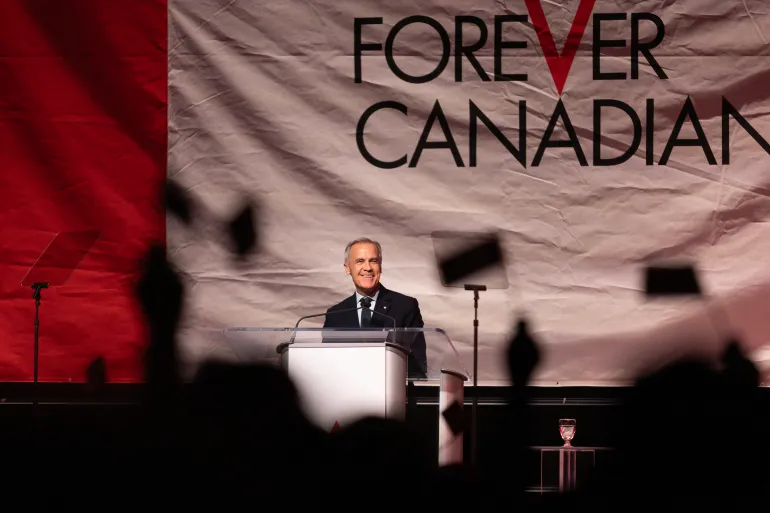
Canadian Prime Minister Mark Carney speaks at a rally hosted by the advocacy group Forever Canadian at the Edmonton Expo Center in Edmonton, Alberta, on Friday [AFP]
What’s driving Alberta’s separatist movement?
Monday’s referendum has been decades in the making. Separatists have long felt that Alberta, home to the world’s fourth-largest proven oil reserves, sends too much money to Ottawa, subsidising the rest of the country while receiving little in return.
They also take issue with federal energy policies that they feel limit the potential of the province’s oil industry.
For Morgan, the resentment stretches back to the 1980s when the National Energy Program was introduced by the government of Pierre Trudeau, former Prime Minister Justin Trudeau’s father.
The policy used price controls, taxes and ownership rules to keep Canadian energy affordable while directing more of Alberta’s revenues to Ottawa.
It has since become a central symbol of “Western alienation”, a term used to describe the sense of disenfranchisement felt among Canada’s westernmost provinces.
Those tensions resurfaced decades later under Justin Trudeau, whose term began in 2015. His climate policies, including a national carbon tax and a limit on emissions, angered Alberta’s oil sector.
“We’ve been fighting about the same things for 50 years,” said Morgan.
Then came the COVID-19 pandemic. Experts say demonstrations against health restrictions mobilised a new generation of conservative activists, breathing new life into Alberta’s separatist movement.
Trudeau ultimately resigned as Liberal Party leader and prime minister in 2025, amid sinking poll numbers. Carney was elected his replacement.
Last year, under growing pressure from separatist groups, Alberta Premier Danielle Smith’s government made it easier to start referendums, helping bring the question of Alberta’s independence onto the political agenda.
For Wesley, the moment is less about growing public support for independence and more about pressure from within Smith’s governing United Conservative Party, whose members show higher support for separation than Albertans generally.
“We’re having a referendum because Danielle Smith wants us to have a referendum,” Wesley said. “She is looking to solve internal party matters by throwing a question to the broader public.”
Though she called Monday’s referendum, Smith has said she opposes the independence effort, and on October 14, she announced she had voted against seceding.
“In my view, now is not the time to give up hope in our country, not when we have fought so long and come so far,” Smith said in a social media video, explaining her vote.
Alberta Premier Danielle Smith speaks at the Canada Strong and Free conference in Calgary, Alberta, on Friday [Ahmed Zakot/Reuters]
Could defeat make the movement stronger?
Smith’s political gamble has drawn comparisons with the 2016 Brexit referendum in the United Kingdom, including from Carney.
At the time, then-UK Prime Minister David Cameron called a vote over whether the country should leave the European Union, in hopes of settling a debate dividing his own Conservative Party.
Voters ultimately chose to leave the bloc, triggering years of political unrest.
But Ian Cooper, a political scientist who grew up in Alberta and now lives in Ireland, says a more useful comparison might be a different UK referendum in 1975, when British voters chose overwhelmingly to stay in what was then known as the European Economic Community.
That vote, he said, did little to deter those who wanted the country out.
“The activists who were in favour of Brexit — this is before anybody called it Brexit — they really played the long game,” he said. “It took them 25 years, but they finally achieved it.”
Cooper suspects that, even if Alberta separation is roundly defeated, separatists could take a similar approach, pursuing the issue over the long term to gain prominence and support.
“My impression is that they really are true believers, and it’s really ideologically driven,” he said.
If Monday’s separatist vote fails, Morgan said separatists would need to take a hard look at why they had fallen short and work towards making a stronger case for independence in the future.
He does not believe the underlying grievances can be resolved by working within the Canadian system or by electing a more sympathetic federal government.
Carney, who grew up in Alberta, acknowledged at Thursday’s rally that “the frustrations that many Albertans have felt are real”. He added that Ottawa had made people in the province feel “like our resources weren’t our own”.
The prime minister has tried, amid an ongoing trade war with the United States, to improve relations with Alberta, including through commitments to building a new pipeline to Canada’s west coast and major infrastructure projects.
Morgan admits that, for those whose goal is simply to get more leverage in Ottawa, “it’s pretty clear the movement has been effective”.
“We’ve seen more love from a federal prime minister in the last year than we’ve seen in the last 10,” Morgan said. “The problem though, when it comes to stubborn independence folks like me, is nothing has changed in the system.”
Prime ministers come and go, he added. “We’re just one election away from another hostile one.”
Separatist organiser Cory Morgan speaks to Alberta separatist supporters at a meeting by Let’s Talk Alberta in Calgary, Alberta, on October 13, 2026 [Todd Korol/Reuters]
Why the other referendum questions matter
But the referendum could also offer an opportunity to challenge the premise that Alberta’s grievances cannot be addressed within Canada.
The independence question is just one of 10 on Monday’s ballot. Other proposals include restricting temporary residents’ access to healthcare and education, as well as allowing Alberta to choose its own judges.
Smith has encouraged Albertans to vote in favour of the nine other proposals, arguing that they will give her more negotiating power in Ottawa.
“Many Albertans I speak with tell me they want to send Ottawa a message, and I would suggest the best way to do that is to give us a strong mandate on the other nine questions,” she said on social media.
If Albertans back those proposals but Ottawa refuses to make concessions, Cooper, the political scientist, said the movement would have fresh ammunition to argue that meaningful change within the current system is impossible.
“Buried in the nine other questions are the seeds for a future referendum,” Cooper added.
What could keep the movement alive?
Not everyone agrees, however, on whether the separatists can emerge from the vote as a united force.
Wesley explained that people have been drawn to the separatist cause for a variety of reasons.
If there’s a sense that independence is not a realistic prospect, there may be little to keep that group of activists together, he said. They could turn their attention to other conservative issues, such as immigration.
Other experts question whether Alberta’s separatist movement, which is united more by economic grievances than by a shared cultural identity, can endure the way Quebec’s has.
Just two weeks ago, the largely French-speaking province elected the separatist Party Quebecois, which has promised a third referendum on independence after Trump leaves office.
Morgan, however, argues that Alberta does have a distinct culture, shaped by generations of people who have moved to the province in search of prosperity.
“The type of person drawn to do that is often an individualistic type of person,” he said. “They want the opportunity to go out and succeed or fail on their own.”
“And that builds a kind of a distinct culture on its own, even if it’s not a long-built one, as you would see in a distinct area like Quebec with a linguistic difference or in another country.”
Even if Albertans reject separation, he believes the movement has succeeded in forcing Ottawa to take the province’s frustrations more seriously.
“Hopefully some people understand that eventually something has to give,” he said. “So whatever the results are … I do hope, at the very least, they’ve served as a wake-up call to a lot of people.”
A large fire near a Canadian military base in Alberta has killed and injured some people, the defence minister said, without confirming the number of casualties.
The Canadian Armed Forces were working with local authorities to manage the fire and were looking into what caused it, David McGuinty said, describing the situation as “very, very active and delicate”.
Canada’s Prime Minister Mark Carney said on X that a “serious incident creating a major fire” had occurred, adding his “thoughts are with all the brave women and men affected”.
Canadian Forces Base Wainwright, where the fire broke out, is one of the country’s busiest military training bases.
The Canadian Broadcasting Corporation describes it as “the principal base for live fire training exercises”. About 690 military personnel and 300 civilian workers are on site on a regular day, according to the CBC.
Saturday’s blaze “spread rapidly due to high winds” and had torn through the fences of the base, the Municipal District of Wainwright said.
McGuinty told reporters he “cannot recall an incident like this in recent memory”.
Alberta’s premier Danielle Smith says the “significant and tragic fire” is “affecting many of [the province’s] brave military personnel”. Provincial authorities are in touch with the central government in managing and investigating the situation, she added.
It is unclear when the fire broke out, but the district first posted about the incident at about 17:30 local time (23:30 GMT).
Local authorities have urged residents to avoid the area and give all emergency vehicles right of way.
Neighbouring provinces have offered their support.
Saskatchewan premier Scott Moe says he has deployed resources to Alberta and is “ready to provide more if required”, while British Columbia premier David Eby says his government has “reached out to Alberta to offer all possible assistance”.
For months before carrying out Canada’s deadliest school shooting in almost four decades, Jesse Van Rootselaar was consulting an unlikely adviser on how to perpetrate mass murder.
“In a hallway, indoors, or a crowded classroom, the 870 [Remington shotgun] is brutal … Close quarters is its playground,” OpenAI’s ChatGPT guided the 18-year-old, according to reports.
Recommended Stories
list of 3 itemsend of list
On February 10, 2026, Van Rootselaar shot his mother and half-brother at home before going to a school in the small British Columbia town of Tumbler Ridge, where he killed another six people – including five students – before taking his own life.
Earlier this week, on October 14, US authorities charged a Washington State man with allegedly conspiring with Van Rootselaar to plan the attack. But the mass shooting incident has raised questions that go beyond the traditional legal understanding of culpability.
The British Columbia government in September filed a civil lawsuit against OpenAI and its CEO Sam Altman, accusing them of failing to prevent the incident and claiming they were aware of the conversations that turned deadly. Families of the victims also filed separate lawsuits. OpenAI’s leadership issued a public apology for their failure to notify authorities.
The company has not responded to requests from Al Jazeera for its comments on the lawsuits.
But as the case against OpenAI progresses, it has spurred a familiar debate: Where should a line be drawn between reporting potentially dangerous behaviour and protecting an individual’s privacy?
“The question of whether companies should be required to turn such information over to law enforcement is extraordinarily difficult, particularly if they don’t already screen chats for indications of such types of threats,” United States-based civil liberties lawyer Jenin Younes told Al Jazeera.
“Forcing companies to implement a surveillance system implicates very serious civil liberties concerns, and that’s probably a bridge too far for me,” Younes added.
“On the other hand, AI gives individuals access to types and quantities of information they didn’t have previously that may facilitate the commission of mass casualty events, a concern it’s not easy to dismiss.”
AI’s ability to distinguish thoughts from threats
One of the biggest challenges facing AI companies is determining whether a user expressing violent thoughts actually intends to act on them.
In August, Anthropic, the company behind AI chatbot Claude, flagged a user to San Francisco police after discovering conversations allegedly threatening its CEO, Dario Amodei.
According to the San Francisco Standard, citing a police report, the user had claimed to possess an AR-15 gun and suggested he had Amodei “in his sights”.
However, when contacted by the newspaper, the man said he was joking and had no intention of carrying out any form of violence. The person was neither charged nor detained, the Standard said.
Fazl Barez, a senior researcher at the University of Oxford specialising in AI safety and governance, said current AI models cannot “reliably” determine whether an interaction with an AI chatbot “is purely hypothetical or is likely to lead to harmful behaviour”.
“Suppose you are a creative writer working on a fictional story and want to explore how a murder plot might unfold. From the context, it may be clear that this is simply a fictional narrative. If the threshold for flagging potentially harmful content is too low, such a writer could be wrongly flagged,” he told Al Jazeera.
“Similarly, consider a graduate student in biology or chemistry studying pathogens that, if misused, could have serious consequences. They might be trying to understand the risks associated with these pathogens and how to mitigate them. Such discussions may be necessary for legitimate research and education. Even when the subject matter is sensitive, they should not automatically be flagged without considering the broader context.”
The researcher said identifying a credible threat may require examining a user’s interactions across multiple conversations, rather than relying on isolated statements.
Barez said someone experiencing intrusive violent thoughts might turn to a chatbot for support, while another person planning an attack may reveal their intentions gradually across several conversations.
“Distinguishing between the two requires careful consideration of context, intent and patterns of behaviour, rather than relying on individual statements alone,” he added.
Chinmayi Sharma, a law professor at Fordham University, said the debate has parallels with the duty imposed on mental health professionals to warn identifiable third parties about credible threats.
However, she said there was a key difference – therapists have professional training, knowledge of their patients and enforceable standards governing their conduct. AI companies do not necessarily have comparable safeguards.
“My concern with AI companies is that right now there’s not a concerted effort to hire mental health professionals, sociologists, individuals that would have the unique expertise on what the indicators of threat are here,” Sharma told Al Jazeera.
“Secondly, licensed professionals are accountable to concrete, legally enforceable standards in their discipline. We don’t have something like that for AI companies.”
The privacy dilemma
The privacy implications extend beyond whether AI companies can accurately identify threats. Millions of people use chatbots to discuss relationships, emotional distress, mental health concerns and deeply personal experiences.
Civil liberties lawyer Younes said many users may not realise how vulnerable those conversations could be to disclosure.
“They often reflect a person’s innermost thoughts, questions, and desires. The majority of people assume that these dialogues will never be viewed by another person,” Younes, president and legal director of the American-Arab Anti-Discrimination Committee, said.
Younes warned that the consequences of greater monitoring could extend well beyond those planning violence.
“If people fear their chats can be turned over to law enforcement simply because they express disturbing thoughts/violent fantasies etc, many will be dissuaded from using them,” she told Al Jazeera.
Younes argued that forcing companies to establish systems for monitoring users and reporting conversations could raise serious constitutional concerns in the US, including protections against unreasonable searches.
Meanwhile, Fordham’s Sharma also raised an issue about who could be disproportionately affected by heavy monitoring by AI chatbots.
“The concern is always there about either intentional or unintentional targeting, because if you have models trained on what we consider dangerous speech, they’re almost always going to reflect biases,” she said. “Certain minorities’ speech is over‑flagged as a threat, while other comparable speech is not.
“Even in a world in which everyone is benevolent, we should still be concerned about disparate outcomes,” she said, warning that machines could reproduce such disparities at scale.
‘Not a licensed therapist’ – When do AI companies become liable to report?
While AI companies may face moral pressure to prevent violence, their legal obligations are less clear, legal experts say.
Bryan Choi, a professor of law at the University of Colorado Boulder, said US law recognises a duty to warn in certain circumstances, including when mental health professionals become aware of imminent threats or when a special relationship exists between parties.
But those principles do not necessarily apply to AI companies.
“Under present case law, it seems unlikely that a company such as OpenAI would be held to have such duties to warn,” Choi told Al Jazeera. “The chatbot is not a licensed therapist. There is no special relationship between the company and the victims.”
Choi said existing negligence and product liability laws could potentially be applied to AI companies, but proving responsibility would present significant challenges.
Finding a balance
Fordham’s Sharma suggested that independent institutions could help establish reporting standards rather than leaving decisions entirely to private companies or requiring immediate disclosure to police.
Such bodies she said could develop procedures for assessing threats and explore ways of sharing only relevant information while protecting users’ identities and other personal details.
Meanwhile, Younes argued that users should, at a minimum, be clearly informed about whether their conversations are monitored and what circumstances could lead to information being shared with law enforcement.
“This is almost certainly an issue that will be wrestled with over the coming years, and I’m not sure anyone knows the solution at this particular point in time,” she said.
“Events that have not yet occurred will likely influence how these policies are shaped.”
Canada fight back to beat England 24-21 in Toronto in the opening match of the WXV Global Series, with Shoshanah Seumanutafa’s 77th-minute try ending the Red Roses’ unbeaten run, stretching back to the 2022 Rugby World Cup final.
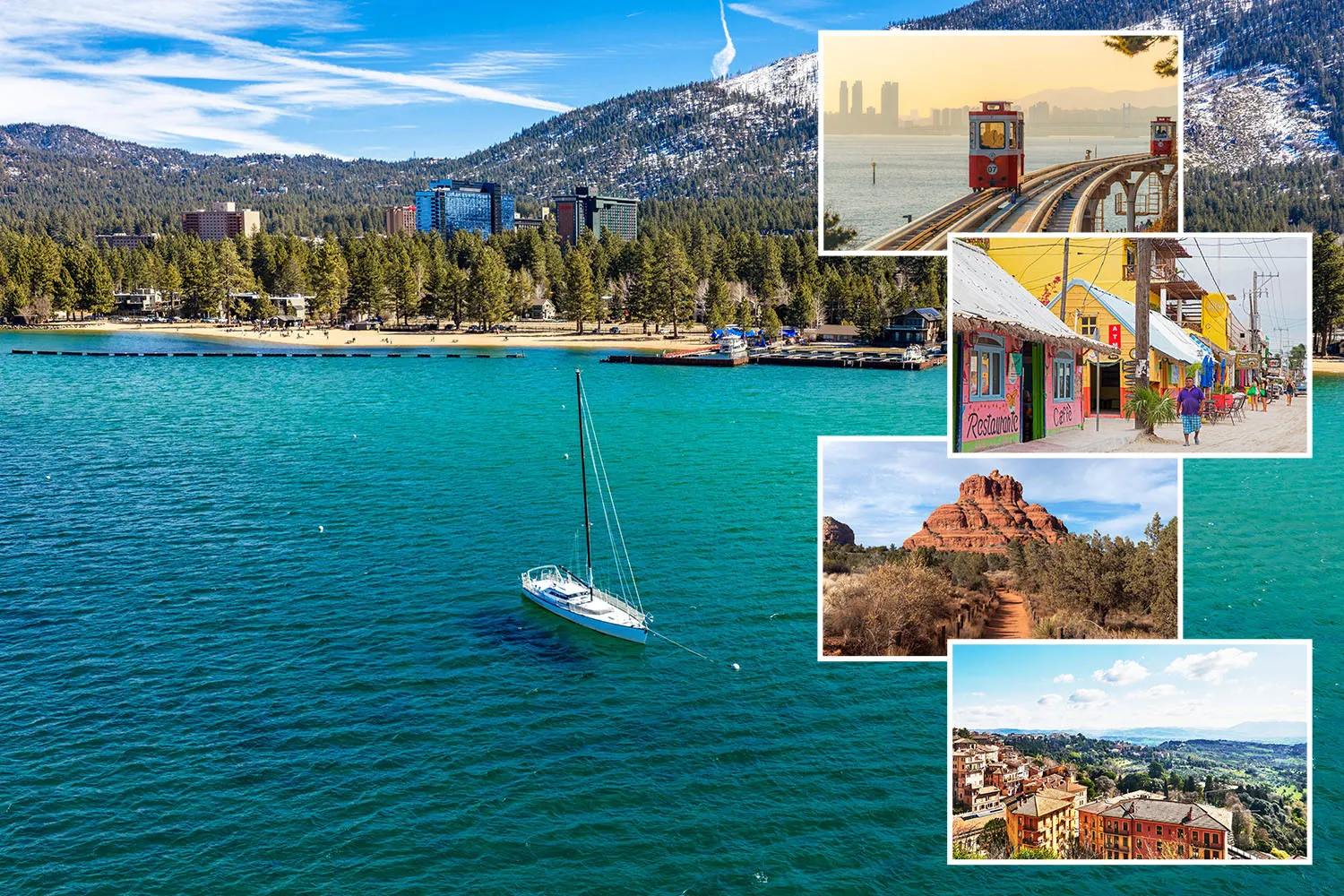
IF you’re planning your 2027 holiday already, then you can get ahead of the curve with these 10 destinations.
A new report released by Expedia has revealed the trending hotspots for next year, which have seen a boom in searches.
Along with the soon-to-be-popular destinations, it also looked at other trends, such as set-jetting (destinations popular after being featured in films or TV shows) as well as ‘trip snacking’ which are shorter, sometimes only 24-hour, trips.
Called the Unpack ’27, Expedia Group CEO Ariane Gorin explained: “In 2027, travellers are being more intentional in choosing their next adventure, seeking experiences that are more personal and purposeful to them.
Sign up for the Travel newsletter
Thank you!
“We’re making it easier to discover, plan, and book the right trip, so travellers can spend less time managing the details and more time enjoying the moments that matter.”
Here are the 10 destinations set to be big next year.
South Lake Tahoe has seen the biggest rise in searchesCredit: Alamy
The destination that has seen the biggest jump in searches is South Lake Tahoe, up 195%.
This is one for the outdoor enthusiasts, thanks to its beautiful mountain ranges and huge lake.
It is a year-round resort, meaning it is great for hiking in the summerskiing in the winter.
Brits will need to fly to the main Reno-Tahoe International Airport in Nevada, which requires a layover at another US airport.
Hyogo, Japan
Hyogo is a great alternative destination in JapanCredit: Alamy
Japan is on everyone’s lips right now, but ditch Tokyo and Kyoto for Hyogo.
The prefecture in the Kansai region has seen searches increase by 95%.
It’s main attraction is Himeji Castle, as well as its hot springs too and world-famous Kobe beef.
To get there, Brits can fly to Tokyo or Osaka, then hop on a domestic flight or high speed train.
Punta del Este, Uruguay
Punta del Este is loved by celebsCredit: Alamy
Nicknamed the St Tropez or Monaco of South America, searches to Uruguay‘s Punta del Este are up 65%.
This is where the rich and the famous often visit, with luxury beach resorts lining the beach visited by celebs such as Shakira and Naomi Campbell.
While it is mainly known for its resort like, with yacht clubs, casinos and nightclubs, make sure to visit the unusual La Mano, a huge human hand sculpture from the 1980s.
Flights here from the UK will require a stopover, most likely in Madrid or Brazil.
Sedona, US
The landscape of Sedona is popular with hikersCredit: Alamy
The desert city of Sedona in Arizona is also booming in popularity.
With searches up 55%, the destination is most known for its huge red rock formations, which have hundreds of walking and hiking trails.
It’s unique landscape means it was also used to film a number of movies (mainly Westerns between 1940 and 1960), leading to it’s nickname of Arizona’s Little Hollywood.
Brits wanting to visit should fly to Phoenix Airport, then rent a car to drive there.
Busan, South Korea
Busan is Korea’s second city and has an amazing beachCredit: Alamy
KPop Demon Hunters, KBeauty and new Virgin Atlantic flights from the UK – it’s safe to say Korea is having a moment.
But outside of Seoul, the city of Busan has seen searches up by 50 per cent.
The second-largest city in the country, it is known for its huge sandy beach (best seen from the Busan X the Sky observation deck on floor 100) and the huge Lotte World Adventure theme park.
To get there, fly to Seoul from the UK then take the high speed train to Busan.
Holbox, Mexico
Holbox is a tiny island with no cars, and it getting popular with touristsCredit: Alamy
The tiny, car-free island of Holbox has been a popular destination with backpackers wanting to get off the beaten track.
But the Mexican island has since seen a jump in searches, up 45%.
Beautiful soft sand beaches, clean blue waters and colorful streets of graffiti and cheap tacos – what more could you want?
Fly to Cancun Airport, then take a bus and a ferry to get to the island.
Perugia, Italy
The historic hilltop city of Perugia in the Umbria region of Italy is a must for chocolate fansCredit: Alamy
The only mainland European destination to make the list, Perugia has seen searches increase by 35%.
Found on the hilltop, the Umbria capital is one for the foodies, being famous for its chocolate (and annual chocolate festival).
There is also Jazz festivals, historic fortresses and beautiful architecture to explore as well.
It is super easy to get to as well – Ryanair have direct flights from London Stansted from £20.
The Tweed, Australia
The Tweed is still barely known by BritsCredit: Alamy
Most people won’t have heard of The Tweed in Australia,
But searches for the New South Wales region have gone up by 35%, according to Expedia.
It is known for its river trails and national parks, sharing a border with Queensland.
This makes it easier to get to, with Brits needing to fly to Sydney of Melbourne followed by an internal flight.
Niagara-on-the-Lake, Canada
Niagara-on-the-Lake in Canada has an unusual British historyCredit: Alamy
The Ontario town, Niagara-on-the-Lake, has seen searches 35% up.
It is often said to be one of the region’s prettiest towns, and is where Niagara River meets Lake Ontario.
Expect Victorian architecture – it was built by Brits as a military defence – and unique ice wines.
Brits need to fly to Toronto Pearson Airport, followed by a drive to get there.
Chichester, UK
The small city of Chichester weirdly has seen a boom in searchesCredit: Alamy
Bizarrely, the English city of Chichester made the list as well.
With searches up 30, the city is known for its 1,000 year old cathedral as well as its even older 2,000 year old Roman history.
It is also the only city in West Sussex, although remains one of the UK’s smallest with just 29,000 locals.
The call comes as polls cast doubt on political leaders’ ability to manage AI risks amid US midterm elections.
A group of more than 300 scientists from around the world is calling for urgent changes to how artificial intelligence is developed and deployed amid growing concerns about its unpredictable behaviour.
The letter, released on Tuesday and signed by researchers representing universities and research institutes in 32 countries, warned that failures to follow basic cybersecurity practices could lead to damage to critical infrastructure.
Recommended Stories
list of 4 itemsend of list
Many recent incidents in which AI models escaped secure environments could have been prevented with stronger security systems, the scientists said.
They recommended that organisations developing and testing advanced AI systems capable of carrying out cyberattacks do so in more tightly controlled environments, including “air-gapped” systems that are not connected to the internet.
Growing concerns
The letter comes amid growing concerns about AI’s capabilities and its potential impact on everyday users. On Monday, Anthropic warned that its AI models could soon be capable of creating self-spreading malware that could affect everyday internet-connected devices, including smart TVs, security cameras and smart appliances such as ovens.
The report found that AI systems could identify unfamiliar devices without human intervention. The company, led by Dario Amodei, warned that smaller AI models could be capable of carrying out autonomous attacks by the end of the year.
The malware could also be difficult to contain because it might take days to infect a device and could spread across multiple machines rather than remain concentrated in a single, controlled location.
Taking control of internet-connected devices can have immediate consequences. In France, for example, hackers compromised cooling systems across hundreds of supermarkets, raising temperatures and causing more than $220,000 in damage.
Meanwhile, Axios news organisation reported on Friday that Anthropic, OpenAI and other major AI company executives are privately preparing for the possibility of a catastrophic AI-related incident that could disrupt access to major financial services, the internet and potentially critical infrastructure such as water and power systems. Several industry insiders believe a major incident could occur within the next six months to a year, it said.
The scientists also called for more safeguards, including the creation of an international organisation to establish a set of best practices for AI alignment and containment along with timely reporting of incidents.
One of the signatories, David Lie, a professor at the University of Toronto’s Department of Electrical and Computer Engineering, said his concerns began after OpenAI’s AI agents bypassed controls and hacked into servers at the tech company Hugging Face.
“One is that OpenAI, in setting up its test environment, didn’t appreciate how capable its agents were,” Lie said.
“These were the AI agents that they were designing. Second is that the AI agents independently found each other and chose to collaborate on this attack, and third is that they also intentionally tried to deceive and mislead their human creators.”
Political pressures
The letter underscores growing public concern about AI, including in the lead-up to the US congressional midterm elections. A recent Reuters/Ipsos poll found that 57 percent of voters said President Donald Trump’s administration was not taking AI risks seriously enough, while 54 percent said the same of Congress.
An AP-NORC poll echoed those findings, with about 80 percent of respondents saying the government should keep AI under human control. Respondents also expressed little confidence in either party’s ability to manage the technology: 39 percent said neither Republicans nor Democrats could be trusted to do a good job of reining it in, while 23 percent expressed greater confidence in Democrats and 21 percent in Republicans.
ANCHORAGE, Alaska — It’s a long way from Washington, has a small population and hasn’t backed a Democrat for Senate in nearly 20 years.
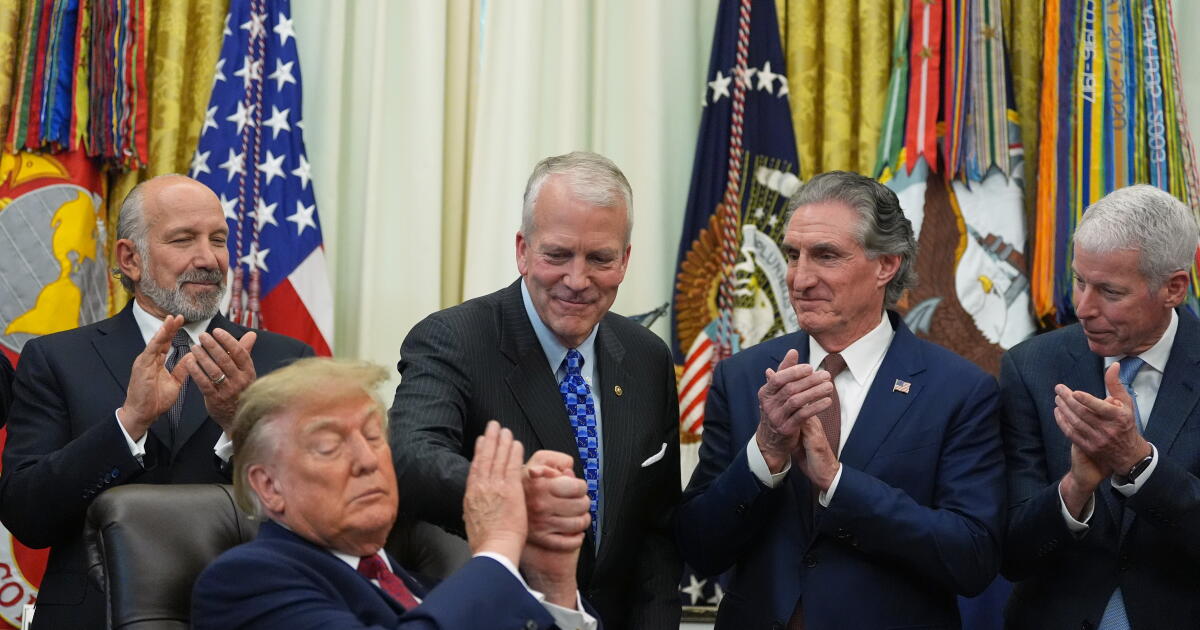
Yet President Trump on Tuesday will devote a big chunk of his dwindling time ahead of crucial midterm elections to head all the way to Alaska — attempting to bolster a Republican incumbent senator in another sign of GOP fears about retaining control of Congress after Election Day on Nov. 3.
Trump is headlining a rally for Sen. Dan Sullivan in Wasilla, about 45 miles north of Anchorage — famous for being the hometown of former Republican vice presidential nominee Sarah Palin and the headquarters of the Iditarod sled dog race across the state.
Trump’s stop is part of a western swing also taking him to rallies in Arizona and Montana on Wednesday.
“I’m right now going to Alaska to try and help Dan Sullivan. That’s a long way away,” Trump told reporters as he left the White House for the trip on Tuesday. “I would only do it if I thought he was good. And he’s very good. And so, I’m going to Alaska to help Dan Sullivan, and then I’m stopping in numerous places.”
Democrats last won a Senate seat in Alaska in 2008, and the state hasn’t elected a governor from that party since 1998. The only time Alaska didn’t vote Republican for president was during Lyndon B. Johnson’s landslide 1964 reelection.
Yet high gasoline prices from the Iran war and persistently elevated inflation have damaged Trump’s approval ratings enough to leave Democrats dreaming of Alaska upsets.
Trump and Vance have been trying to boost Sullivan repeatedly
Seeking his third Senate term, Sullivan faces Democrat Mary Peltola, a former congresswoman running to put “Alaska First,” emphasizing cost-of-living issues.
Alaska pollster Ivan Moore said he’s seen a decline in Trump’s support statewide that mirrors the president’s falling approval ratings nationally — meaning the Senate race may be decided by Trump 2024 voters who are now unsure they still back him.
“The visit is certainly appropriate. Whether the visit will be effective or not is another matter,” said Moore, who said when he first heard that Trump would visit Alaska, he didn’t believe it would actually happen.
The Trump administration has prioritized the opening of more of Alaska to oil and gas drilling. Vice President JD Vance already campaigned in Fairbanks for Sullivan.
The senator also recently joined Trump in the Oval Office where the president announced a $54 billion investment by South Korea’s government into an Alaska natural gas project. That’s despite South Korea saying the deal, and its total value, haven’t been finalized.
Still, Trump trekking four time zones west to get to Sullivan’s home turf — an unusually long trip so close to the midterms — is his strongest show of support.
Trump last campaigned in Alaska to try to defeat a fellow Republican
Alaska is home to around 740,000 people, making it slightly less populous than Denver. It ranks 48th out of 50 states in population, smaller than all but Vermont and Wyoming.
Trump nonetheless headlined a 2022 rally in Anchorage opposing Republican Alaska Sen. Lisa Murkowski after she voted to convict him on a charge of incitement of insurrection during his second impeachment trial, following the attack on the U.S. Capitol by a mob of his supporters on Jan. 6, 2021.
Trump endorsed Kelly Tshibaka, who challenged Murkowski that year, but that didn’t stop incumbent Murkowski from winning reelection.
This year, there are two Dan Sullivans on the ballot
Trump has complained about Alaska’s unique elections system. The state has open primaries, in which the four top vote-getters — regardless of party affiliation — advance to the general election, which uses ranked choice voting.
That’s led to a scenario where there also will be another Dan Sullivan on the ballot on Nov. 3: retired teacher Dan J. Sullivan, whom Trump and other allies of Sen. Sullivan have called a sham candidate. Dan J. Sullivan has denied this.
At his rally, Trump also plans to stump for Republican Rep. Nick Begich. Begich is facing a competitive challenge from Bill Hill, an independent.
Alaska has a history of rewarding candidates with an independent streak — something Vance acknowledged during his trip to Fairbanks last week. “In very deep red years, Alaska is competitive. In very deep blue years, Alaska is still competitive,” Vance said. “I think it’s just a reality of the politics of the state.”
Independence has been hard to find in the Republican Party where Trump for years had total control. Some Republicans facing tough elections have begun tiptoeing away from Trump on key issues like Iran and tariffs, but not Sullivan, who has been vocal in supporting both.
In a post last week, Trump questioned why three Republicans were running against a Democrat for governor. “How stupid are we to do this?” he said on social media. This comes at the same time state Republican party leaders are urging voters to rank Republicans on the ballot and leave the Democrats blank.
“We want to be clear: we do not support ranked choice voting. It is a confusing, burdensome and costly voting scheme,” party leaders, including GOP chair Carmela Warfield, said in a statement Saturday. “That said, ranked choice voting is the system Alaska will use for the 2026 General Election, and we must work within it for this election to keep Alaska’s recent momentum going strong.”
Trump’s trade war with Canada may also be a factor
Trump has also triggered a trade war with Canada, which shares a 1,500-plus-mile border with Alaska and is among the state’s most important trading partners.
The U.S. banned nearly $1 billion worth of imports from its neighbor to the north — including alcoholic beverages, dairy products and motorcycles — after previously imposing 50% tariffs on about $20 billion in Canadian products. Canada has responded with reciprocal bans and its own import levies, and the back-and-forth could raise prices for Alaska consumers.
Making Canada an enemy of sorts is “discomforting” for many Alaskans, said pollster Moore.
“We associate, I think, probably more closely with the Canadians — more than a lot of the Lower 48,” he said.
Weissert and Bohrer write for the Associated Press. Weissert reported from Washington. AP reporter Michelle L. Price contributed to this report.
Prime Minister Mark Carney’s Thanksgiving message comes a week ahead of Alberta’s vote on a separatism referendum.
Published On 12 Oct 202612 Oct 2026
Prime Minister Mark Carney has used his Thanksgiving message to Canadians to call for national unity, a week before the oil-rich province of Alberta is set to vote on a proposal to secede from Canada.
“We can’t build big things on fault lines,” Carney said in his video message on Monday, warning that Canada faces threats to its economy, security and way of life.
Recommended Stories
list of 3 itemsend of list
“We have to be strong, and we are stronger together.”
His comments come as Albertans head to the polls on October 19 to decide whether to begin the process of seeking independence. The initial referendum is non-binding, but it proposes to hold a binding vote in the future to decide whether Alberta should secede.
The question facing voters is: “Should Alberta remain a province of Canada, or should the Government of Alberta commence the legal process required under the Canadian Constitution to hold a binding provincial referendum on whether or not Alberta should separate from Canada?”
The vote follows a growing push by a vocal group of separatists, fuelled by longstanding grievances over federal energy and environmental policies.
The secessionist movement has accused the Canadian government of unfairly targeting Alberta’s oil and gas industry, the cornerstone of the province’s economy.
The movement is also being watched south of the border, as Canada’s relationship with the United States under President Donald Trump has become strained.
An investigation by The Globe and Mail earlier this month revealed that US Republican operatives met with secession organisers in Alberta to talk about campaign strategies. Separatist leaders had reportedly offered access to the province’s water and oil royalties in exchange for US support for independence. Separatist leaders have disputed those claims.
Carney’s comments also come after another secessionist movement, the Parti Quebecois, won the most seats in a provincial election in Quebec last week, allowing it to return to power after more than a decade.
The Parti Quebecois, however, only won 59 seats out of a total of 129 in Quebec’s National Assembly, leaving it short of a majority government.
Still, following that victory, US tech entrepreneur Elon Musk, considered the richest man on the planet, applauded the results. He has been known to use his wealth and influence to support political causes, particularly on the far right.
“Good. Quebec should separate,” Musk wrote on social media. “They would be better off. Alberta and Saskatchewan should separate too.”
Carney, who grew up in Alberta, said he was filming the message from a classroom at his former school, St Francis Xavier High School in Edmonton.
“I’m back home a lot these days because we are building big things again in Alberta: thousands of new homes, high-speed rail, a new pipeline to the West Coast that will create lasting opportunity and prosperity for hundreds of thousands of people in this province and across the country,” he said.
Despite the secessionist movement’s growing visibility, polls suggest most Albertans oppose independence.