The top seeds defend their Asian Games squash titles, becoming the first players to qualify for the Los Angeles Games.
Published On 27 Sep 202627 Sep 2026
Malaysia’s Eain Yow Ng and Sivasangari Subramaniam have made history by becoming the first squash players to qualify for the Summer Olympics after winning gold medals at the Asian Games in Aichi-Nagoya, Japan.
The defending champions won the men’s and women’s finals on Sunday and earned a ticket to the 2028 Los Angeles Games, where squash will make its Olympic debut.
Recommended Stories
list of 4 itemsend of list
Squash is among a handful of sports at Aichi-Nagoya where a gold medal serves as automatic qualification for the next Olympics.
Both Eain and Sivasangari successfully defended their titles without dropping a single game in their campaigns. Their victories gave Malaysia its fifth and sixth gold medals.
World number 18 Eain thrashed India’s Abhay Singh 11-9, 11-5, 11-5 in 33 minutes at the Nagoya Kinjo Futo Arena and became the first Malaysian to qualify for the Olympics.
Subramaniam in action during the women’s singles gold medal match [Chalinee Thirasupa/Reuters]
World number five Sivasangari joined her compatriot soon after when she made quick work of the women’s final against India’s Anahat Singh.
She demolished Singh, ranked 17th in the world, 11-4, 11-4, 11-7 in just 23 minutes to clinch gold.
Earlier, Singh, the world junior champion, produced a stellar comeback in the semifinals from two sets down to overpower Japan’s Satomi Watanabe (9-11, 11-13, 12-10, 11-6, 11-3) on Saturday.
“I think it is the best win of my career,” Singh, 18, said after the match. “She’s number six in the world, and that’s the highest win I’ve ever had in my squash career.”
She made history even before Sunday’s match began when her semifinal victory made her the first Indian woman to reach the singles final at the Asian Games.
Earlier in the day, Pakistan picked up two more bronze medals at the games as third seed Noor Zaman toppled compatriot Ashab Irfan 3-0 in the bronze medal match. Watanabe took a 3-1 win over Hong Kong’s Sin Yuk Chan.
Pakistan’s Noor Zaman celebrates after winning his bronze medal match against compatriot Ashab Irfan [Chalinee Thirasupa/Reuters]
AZERBAIJAN is nicknamed the Land of Fire and is a fascinating mix of Eastern and Western culture.
Antoinette Cumberbatch shares her account of discovering the country’s delicacies, hot weather, rich history, plus a party scene reminiscent of Miami.
Azerbaijan’s capital city Baku is also famous for hosting a Formula 1 raceCredit: Getty ImagesThe Sea Breeze Resort on Azerbaijan’s golden coast is perfectly located for sports activities and beach clubsCredit: Supplied by PR
Watching US rapper Busta Rhymes work the screaming crowd in the balmy 32ºC heat, I feel like I’m in Miami.
In fact, I’m actually dancing the night away beside the Caspian Sea at Azerbaijan’s lively Dream Fest, held each July.
Sign up for the Travel newsletter
Thank you!
It takes place 35 minutes’ drive from the enthralling capital, Baku, at Sea Breeze Resort on the golden coast, also home to a huge array of sports activities and buzzing beach clubs.
Fish Box serves up excellent sushi, from £13.50 a platter, and with my spacious one-bed pad at White Villas, I get a private garden. Villas sleeping two start from £110 a night (Seabreeze.az).
Hours earlier, I’d explored another side of Azerbaijan, which straddles Europe and Asia, discovering why it’s nicknamed the Land of Fire.
On the outskirts of Baku, the Ateshgah Fire Temple vividly brings this to life.
Here, history isn’t tucked behind glass – instead, fire flashes red-hot between ancient stones from an altar in the middle, and I duck through low doorways to learn how merchants stopped here while travelling along the Silk Road. Entry costs £6.50 (Ateshgahtemple.az).
Another eternal flame is Yanar Dagh, a hillside of natural gas where fire burns continuously at a scorching 1,000ºC.
Succulent grilled beef saj is a delicacy at the traditional Novbahar restaurantCredit: Novbahar/InstagramOn the outskirts of Baku, the Ateshgah Fire Temple vividly brings the country’s nickname to lifeCredit: Getty Images
I finish my fiery sightseeing with a visit to Baku’s Bar19 at Flame Towers, an imposing structure by day and a dazzling sight at night, serving up city views alongside Flame cocktails – a sweet mix of Bacardi, Passoã, amaretto and lime juice, £13 (Fairmont.com).
Come morning, I stroll along the city’s waterfront, Baku Boulevard, to take in more futuristic landmarks, such as Deniz Mall and indoor arena Crystal Hall, plus the world’s largest flying flag in State Flag Square.
Then I explore Icherisherer, the official name for the Old City and a UNESCO World Heritage site since 2000.
I wander the labyrinth of passageways, where cats sleep in doorways and locals sell goods including carpets and pillbox sheepskin hats, haggling to nab one of the latter for £12. In other corners, I find locals offering home-made Turkish delight and playing draughts.
Partying at Azerbaijan’s lively Dream Fest made Antoinette feel like she was in MiamiCredit: Supplied by PRA stroll around Highland Park provided an ideal location to see the panoramic view of BakuCredit: Supplied by Antoinette Cumberbatch
A few minutes’ walk from Icherisherer and an array of designer shops, is Art Gallery Hotel, set in a grand Art Deco building with walls adorned with striking pieces.
Luxurious rooms feature quirky headboards, gold lamps and large showers, and stays start from £85 per night (Arthotelbaku.com).
Dumpling Day
Sitting among retro ornaments and mismatched furniture at restaurant Ryumochnaya By Beerbasha, I feast on delicious pasztet – a chicken pâté with jam – £2.20, and moreish chicken Kyiv, £5.65.
The most surprising but incredible dish is a sweet tomato salad with cherry sauce, £5.25 (@Ryumochnaya_beerbasha).
At the more traditional Novbahar, I fill up on dushbara – tiny dumplings in a savoury broth, £2.60 – gutab flatbread filled with pumpkin, £1.30, and succulent grilled beef saj, £17.50. The local pinot grigio pairs nicely, too (Novbahar.az).
As my trip draws to a close, I climb the 12th-century Maiden Tower – 28m high and one of Baku’s most recognisable landmarks – for the sea views.
Entry costs £6.50. But for vistas of the entire city, I find Highland Park unbeatable.
The funicular up to its beautiful gardens costs less than 50p and, as I soak up the panoramic view of Baku, it leaves me awestruck. Just like Azerbaijan itself.
BTW
Direct flights to Azerbaijan start from £466 return.
Find out more about Dream Fest at Dream musicfest.com.
George Russell wins Azerbaijan Grand Prix for eighth career F1 victory and first since the Austrian Grand Prix in June.
Published On 26 Sep 202626 Sep 2026
George Russell held off Red Bull’s four-time world champion Max Verstappen to complete a lights-to-flag win in the Azerbaijan Grand Prix for Mercedes, with teammate Kimi Antonelli limiting the damage to his championship lead by finishing fifth.
Russell took the flag 0.196 seconds ahead of the flying Dutchman, who started eighth but crossed the line nearly side-by-side with his Mercedes rival after two safety car phases turned a cruise into a fight for survival for the Briton.
Recommended Stories
list of 4 itemsend of list
Frenchman Isack Hadjar, who was handed a contract extension by Red Bull earlier this week and had missed the last three races with a wrist injury, completed the podium on his racing return.
The win around the Baku street track was the eighth of Russell’s career, the third of the season and his first since the Austrian Grand Prix at the end of June.
It allowed him to close the gap in the overall standings to Italian championship leader Antonelli by 15 points to 66 after 15 rounds.
“It’s amazing to be back on the top step of the podium,” said Russell.
“Every race since the (summer) break I’ve gone from strength to strength and I feel more like myself again.”
Antonelli had started 16th after a rare error saw him crash out of Friday’s qualifying.
His drive on Saturday was less like his Monza charge — where he went from 19th to first — and more of a slow-burn recovery.
Charles Leclerc took fourth for Ferrari ahead of the 20-year-old Italian. His seven-time world champion teammate Lewis Hamilton was sixth.
Racing Bulls rookie Arvid Lindblad finished seventh. Esteban Ocon took eighth ahead of teammate Oliver Bearman in a double points finish for Haas.
New Delhi, India – Indian democracy has been shaken by new revelations showing divisions within the body that is in charge of conducting its elections over controversial policies that critics say have disenfranchised tens of millions of people.
India’s Election Commission, a supposedly autonomous constitutional body, is tasked with administering elections in the world’s largest democracy, and in recent decades, had won admirers across the globe for its success in conducting a voting process unmatched in scale and complexity.
But an investigation by The Indian Express newspaper reported that the current chief of the commission frequently overruled concerns raised by his two other equally ranked commissioners about the integrity of ongoing changes in the voter database.
These revelations come after a months-long struggle by India’s opposition parties to bring what they have described as the “sabotaging” conduct of the election commission to the fore, which they say is dictated by Prime Minister Narendra Modi’s party for its electoral benefit.
For decades, India has grappled with deep inequality; divisions along caste, religious and ethnic lines; and the growing role of money in its elections. Yet through it all, the actual conduct of its elections was largely viewed as “free” domestically and by global monitors.
But leading opposition leaders have, in recent months and years, for the first time, questioned whether elections can be trusted and whether votes are counted accurately, as well as whether rights decide who gets to be a voter or if those in authority take the decision arbitrarily. Those concerns, say analysts, are likely to only be amplified by the latest revelations.
“Today, that faith [in the election process] has shaken. It is very shocking for the nation,” SY Quraishi, who headed India’s election commission between 2010 and 2012, told Al Jazeera. “The Election Commission used to be a very reputed institution. Now, it is totally dysfunctional – and that’s an understatement.”
So, what does this mean for India and its democracy?
Indian opposition leader Rahul Gandhi speaks during a news conference to demand resignation of India’s Chief Election Commissioner Gyanesh Kumar, in New Delhi, India, September 24, 2026 [Bhawika Chhabra/Reuters]
What are the latest revelations about India’s Election Commission?
Earlier this week, the Indian Express newspaper published a series of stories, based on internal documents and interviews, laying bare divisions within the poll panel – consisting of three commissioners, Gyanesh Kumar, Sukhbir Singh Sandhu, and Vivek Joshi. Kumar is the commission’s chief.
Indian law requires the commission to decide by a majority. Reports revealed that Sandhu and Joshi resisted and questioned the legality of measures Kumar took unilaterally.
Since June last year, the commission has been revising and updating the voters list state-wise. It has struck off more than 13 million names during the exercise since then, which the critics say targeted economically weaker sections, minorities, and other vulnerable groups of Indian society disproportionately.
Opposition parties took the matter to the country’s top court, which largely signed off on the process to decide on who gets to vote in India. For India’s more than 1.4 billion population, a voting right does not end merely on ballots – rather, several government welfare schemes are tied to voting rights.
Now, reports reveal that some of the strongest resistance to the three-member commission’s decisions was coming from within. In fact, Sandhu and Joshi formally objected on record at least 14 times over the last 10 months to measures issued by circumventing them. Sandhu called it “unauthorised and illegal”.
Those objections related to the new voter registration mandate; deletion and restoration of voters in the rolls; appeals by people against deletions; and the security of the list. In short, everything the commission undertook.
The opposition has alleged that the additions and deletions of the voters are undertaken as an exercise to disenfranchise a section of voters to benefit Modi’s Bharatiya Janata Party (BJP).
The commission maintained that access to the voters’ list is highly secured and decentralised, meaning that even in the remotest parts of the country, a local officer made the judgement and decision.
But the latest revelations show that the commission relied on ECINet, a digital platform that logs nearly a billion voters, which was increasingly centralised, giving more control to New Delhi over editing calls.
In one instance, the newspaper reported that officials in the coastal state of Goa flagged nearly a hundred voters who were mistakenly taken out. Editing access was limited to New Delhi.
So, Goa’s chief electoral officer wrote eight emails to officials in New Delhi in a week before the deadline passed, but got no response and voters were knocked off the list.
An Indian Youth Congress activist, wearing a mask depicting Chief Election Commissioner Gyanesh Kumar and handcuffed, takes part in a protest in New Delhi, India, September 25, 2026 [Rajat Gupta/EPA]
Why is revision of voters’ list controversial?
The Special Intensive Revision (SIR), as the process of revising the list is called, has become controversial mainly because it places an unusually heavy burden on existing voters to prove their eligibility.
Such a drive requires people to produce old records, like birth, land, and education certificates – and puts poorer, migrant, and marginalised Indians at a disadvantage, essentially drawing lines on who gets to vote in India. A minor mismatch, such as a spelling, in decades-old records could result in being struck from the voters list in India.
Opposition parties and civil society groups have argued that mass deletions could significantly alter the electorate before elections.
In some places, the exercise has been reported to disenfranchise minorities, including Muslims. In the eastern state of West Bengal, Al Jazeera earlier reported that the exercise removed 9 million residents from the electoral rolls just days before the state elections that were held in April and May.
Nearly 34 percent of the deleted voters were Muslims in the state, where they only make up 27 percent of the population. Then, Prime Minister Modi’s Hindu majoritarian BJP came to power for the first time in the politically critical state.
The BJP and supporters of the SIR process have argued that it is fundamentally aimed at removing illegal migrants, the deceased or fraudulent voters from the rolls – and have tried to portray many Muslims eliminated from the lists in border states as “illegal Bangladeshi migrants,” despite hard evidence that Indian nationals have been victims of the process.
But as the exercise has been expanded to other parts of the country, those claims have increasingly returned to embarrass even proponents of the exercise: In New Delhi, notices were served to India’s Foreign Minister S Jaishankar and his wife, alongside other high-profile politicians, judges and senior bureaucrats. Several former Indian ambassadors to countries across the world have received notices to prove that they are Indian – even though they have served as India’s sovereign representatives abroad for years.
All of this has turned what was political opposition to the SIR process into much more broad-based, nationwide scepticism about the lack of transparency in the Election Commission’s software, the process of matching voters against decades-old electoral rolls, and the criteria being used to flag voters as having “logical discrepancies”.
“The [revision of voters’ list] fundamentally inverts India’s model of electoral democracy,” said Milan Vaishnav, a senior fellow and director of the South Asia programme at the Washington, DC-based nonpartisan think tank The Carnegie Endowment for International Peace.
“Since the adoption of the Constitution, India has assumed the burden of ensuring that the last man or woman is registered to vote,” he said. Vaishnav added that unlike other democracies, notably the United States, which has repeatedly thrown up barriers to the franchise, “India historically adopted an unusually activist approach to voter registration.”
“Specifically, the way in which [the revision] has been carried out threatens to turn that principle on its head,” he told Al Jazeera. “It is now the voter who must prove his or her entitlement to remain on the electoral rolls.”
Quraishi, the former election commissioner of India, told Al Jazeera that he has been against the policies taken up under the revision.
“I hope [these revelations] are a wake-up call and serious action will be undertaken, including at the Supreme Court, the central government, and the Parliament,” Quraishi told Al Jazeera.
“Because the reputation of the Election Commission has gone into the dumps. And it is very difficult to restore it now,” he said. “We need efforts to rebuild faith in the system.”
Abhijeet Dipke, head of the Cockroach Janta Party (CJP) speaks as the party’s conveners Ashutosh Ranka and Saurav Das look on during a news conference to demand the resignation of India’s Chief Election Commissioner Gyanesh Kumar, in New Delhi, India, September 24, 2026 [Bhawika Chhabra/Reuters]
What is the opposition demanding?
Leader of the opposition Rahul Gandhi has accused the Election Commission of “treason” against the nation, and promised that its leaders will be tried for it, if his Congress Party returns to power.
India’s popular Gen-Z pressure group, the Cockroach Janta Party, whose protest movement led to the ouster of India’s education minister in July, has threatened to hit the streets again if Kumar, the commission’s sitting chief, does not resign by Saturday.
The Cockroach group has also called for an overhaul in the selection process of the next election commissioner.
For its part, the election commission has said in a statement that the investigation report drew on “differing views and deliberations” between the three commissioners rather than official statements of protest. Sambit Patra, a spokesman for Modi’s party, told reporters that any deliberation or divisions in the commission were rather “a sign of a healthy democracy”.
But none of that appears to be cutting ice in a nation where far too many people have now faced the threat of losing their vote through an opaque process.
“Our elections are fundamentally broken,” said Gandhi at a news conference in New Delhi on Thursday. “The sacred belief in elections,” he added, was evaporating.
Aiming at Modi, Gandhi argued that the popularity of a leader could be understood, but not “how anti-incumbency disappears”.
“It doesn’t exist in North Korea. There is no democracy where anti-incumbency doesn’t work. We are looking for answers to where it went here,” Gandhi said, in effect questioning Modi’s re-election first in 2019 and then again in 2024, with a much-reduced mandate – even though there is no firm evidence of widespread voter manipulation helping Modi win those elections. “And we have found answers.”
Women voters stand in queues to cast their ballots at a polling station during the first phase of voting for assembly elections on November 6, 2025, at the Raghopur constituency in the Vaishali district of the Indian state of Bihar [Sachin Kumar/AFP]
What does it mean for Indian polity?
Asim Ali, a political analyst in New Delhi, said that the Indian republic is standing at a “dangerous moment, where we could see a breakdown of the republic.”
“We have reached a situation where every opposition party feels that the democratic guardrails have been destroyed,” Ali told Al Jazeera, adding that the allegations are about the worry that “independent institutions like the Election Commission and Supreme Court have become co-opted.”
The political cleavage has created an extreme polarisation of politics in India. “Politics has assumed a kind of existential stakes, where we have unrestrained politics of friend vs enemy,” he added.
Rasheed Kidwai, a political analyst and senior journalist who has covered the Indian government for several decades, told Al Jazeera that “impartiality is paramount” for the Election Commission.
“The fact is that Caesar’s wife should be above suspicion,” he said. “In India, we have seen difficult times, including a state emergency, but never was the role of the Election Commission compromised at this level.”
Kidwai noted that Modi’s party has ridiculed opposition parties’ concerns about free-and-fair elections, calling them sore losers. “The outcomes of a match are inconsequential, but at least the umpire should play fair,” he told Al Jazeera.
The major criticisms of Indian democracy in recent years have principally related to what happens in between elections, said Vaishnav of the Carnegie Endowment think tank.
While critics “pointed to the erosion of basic freedoms, an uneven rule of law, and the concentration of power in the hands of the executive,” Vaishnav said, “most observers have argued that when the electoral spotlight is on, India’s democracy remains remarkably robust and competitive.”
The conduct of the Election Commission is “now calling this distinction into question”, he added.
Organisers of the pro-Imran Khan protests have postponed their rallies to test the Pakistani government’s resolve in keeping the capital blockaded. Shipping containers have been placed in Islamabad’s streets to stop protests calling for the former PM’s release from prison.
Shehbaz Sharif speaks as Islamabad, Riyadh and Ankara army chiefs meet to discuss Mecca pact, closer military ties.
Pakistan’s prime minister has condemned Houthi attacks on Saudi Arabia, warning that any “threat to the sanctity” of the Muslim holy cities of Mecca and Medina is a “red line that must never be crossed”.
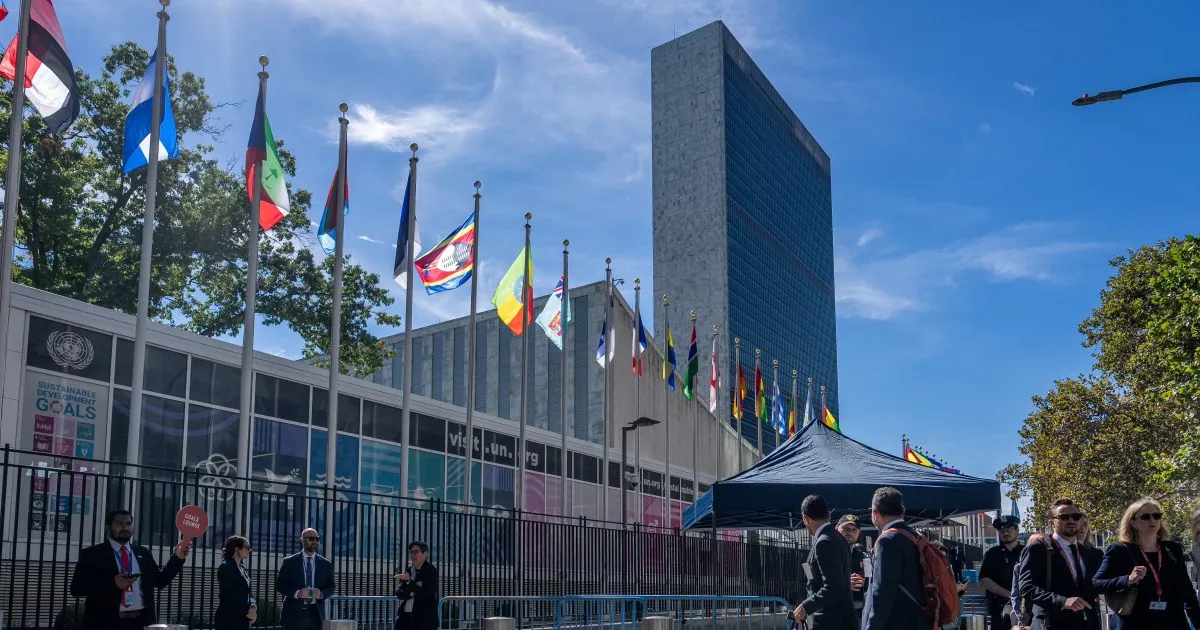
Addressing the United Nations General Assembly in New York on Friday, Shehbaz Sharif denounced recent Houthi attacks as “deplorable”.
Recommended Stories
list of 3 itemsend of list
He added that an attack by the Iran-aligned Yemeni group, which Riyadh says targeted Mecca, “outraged Muslims across the globe”. The Houthis have dismissed the accusations as a “heinous lie”.
Last month, Pakistan, Saudi Arabia and Turkiye signed a trilateral defence pact, formally known as the Mecca Joint Defence Agreement. The pact states that an attack on any member will be treated as an attack on all. However, Islamabad and Ankara have refrained from getting involved in Riyadh’s ongoing fight with the Houthis.
The military chiefs of all three countries met in Riyadh on Friday and discussed enhancing intelligence sharing and military coordination, the Pakistani military said. The chiefs reviewed the security situation and threats facing Saudi Arabia, affirmed a commitment to collective defence and pledged to turn Mecca Agreement commitments into effective cooperation, the army added.
It is not clear what, if any, support Ankara and Islamabad may provide to Riyadh. In a written interview published by the US media outlet Newsweek on Friday, Turkish President Recep Tayyip Erdogan said support could include “intelligence, logistics or ammunition, with more extensive military assistance possible depending on the scale of the threat”.
Iran and Palestine
In Sharif’s UN address, he also referenced the US-Israeli war that was launched against Iran in late February, as well as Islamabad’s role as a co-mediator.
Pakistan’s efforts culminated in the Islamabad Memorandum of Understanding, signed by Washington and Tehran, which was intended to help end the conflict.
The accord has since unravelled while regional countries push for a conclusive end to the war, which has caused a global energy crisis and exacerbated tensions across the Middle East.
“Yet amid the roar of missiles, drones and guns, the voice for diplomacy must echo even louder and stronger,” Sharif said.
He added that the Strait of Hormuz, which Iran has effectively blockaded, and the Bab al-Mandeb waterway, which is now largely under Houthi control, are “arteries of the global economy” that should remain free and safe.
The Pakistani prime minister also denounced what he described as Israel’s “genocidal agenda” in Palestine, while condemning “Israeli aggression against Lebanon and Syria”. These were sentiments echoed earlier in the day by Lebanese Prime Minister Nawaf Salam in his UN General Assembly address.
India, Kashmir, Afghanistan
Closer to home, Sharif’s speech touched on tensions with Pakistan’s neighbours.
Criticising India, he accused New Delhi of weaponising the Indus waters, which both countries have jointly managed for more than six decades. The two neighbours heavily rely on the Himalayan river network.
Sharif warned that “any attempt to stop, impede or divert Pakistan’s share of the waters will be treated as an act of war”.
He also called for what he described as a “just and fair solution” to the Kashmir dispute, which both Pakistan and India claim in its entirety. Sharif alleged that there have been attempts to “alter the legal status” of Kashmir through demographic engineering.
Another pressing issue for Islamabad is the threat posed by the Tehrik-e-Taliban (TTP), or Pakistani Taliban. Sharif said groups operate from “sanctuaries inside Afghanistan, with the aim of destabilising Pakistan”, insisting that attacks launched from Afghanistan “must come to a grinding halt”.
This comes as the latest cross-border fighting left several Afghan Taliban fighters dead on Friday.
India’s youth-led Cockroach Janta Party has joined opposition calls for election chief Gyanesh Kumar to resign, giving him 48 hours before it launches nationwide protests. The pressure follows reports of internal objections over changes to voter lists.
Youth group threatens return to mass protests, sets deadline for Gyanesh Kumar to quit due to reports of meddling with voter lists.
By Al Jazeera Staff and Reuters
Published On 25 Sep 202625 Sep 2026
India’s ‘cockroach’ party youth movement has threatened to launch nationwide protests unless the country’s chief election officer does not resign by Saturday.
Founder of the Cockroach Janta Party (CJP), Abhijeet Dipke, announced on Friday that protests would begin in Mumbai on October 2 – if Gyanesh Kumar does not step down.
Recommended Stories
list of 4 itemsend of list
The CJP, a satirical outfit born on Instagram in May after India’s chief justice compared unemployed young Indians to “cockroaches” and “parasites”, has shaken the staunchly conservative government of Prime Minister Narendra Modi.
On Thursday, the group demanded that Kumar quit within 48 hours, following a newspaper report linking him to altered voter lists. Opposition parties say the lists have been manipulated to benefit Modi’s Bharatiya Janata Party (BJP).
“If Gyanesh Kumar does not resign by tomorrow, CJP will begin its nationwide protest from Mumbai on 2 October, and take it to cities across India,” Dipke posted on X.
“This Gandhi Jayanti let’s pledge to save democracy,” he added, referring to the October 2 holiday marking independence leader Mahatma Gandhi’s birthday.
CJP founder Abhijeet Dipke celebrates with supporters in New Delhi after the resignation of India’s Education Minister Dharmendra Pradhan, July 25, 2026 [Ritesh Shukla/Getty]
Report provokes political storm
On Wednesday, the Indian Express newspaper reported that two election commissioners had raised questions or voiced concern with Kumar at least 14 times in 10 months, mostly over the process of updating voter lists that began last year.
The main opposition Congress party announced protest marches on state election offices across India on Friday, demanding Kumar’s arrest, his removal and an independent review of decisions and voter-list changes made under him.
Opposition parties have long accused the commission of deleting the names of millions of voters without warning and adding new voters without verification to favour the BJP.
BJP leaders and supporters at a ‘Drug-Free Punjab’ march in Amritsar [File: Narinder Nanu/AFP]
Election panel rejects claims
The Election Commission of India said that “differing views and observations are a normal part of deliberation in any institution” and that all its actions were lawful.
The BJP has defended the commission, accusing the opposition of a smear campaign because it keeps losing elections.
“Neither the Election Commission of India nor any constitutional body in India is under dictatorial rule,” BJP spokesperson Sambit Patra said on Wednesday.
CJP-led protests in July forced the resignation of Modi’s education minister over exam-paper leaks, one of the prime minister’s biggest political setbacks since coming to power in 2014.
‘Hit by the climate we didn’t warm, hit by the wars we didn’t start.’
Nepal’s Prime Minister Balendra Shah was applauded at the UN General Assembly, as he highlighted how the world is failing countries on the frontline of the climate crisis.
Prime Minister Balendra Shah told the UN that world leaders must act on climate change.
Published On 25 Sep 202625 Sep 2026
Nepal’s Prime Minister Balendra Shah has appealed for action to combat the rising threat of climate change, calling the flood that devastated his country last month “a warning to the world”.
Shah made the comments during his address to the 81st Session of the United Nations General Assembly in New York on Thursday night. He told the gathering that the August disaster “was not just a local tragedy”, asking them the question, “Have you really heard that warning?”
Recommended Stories
list of 3 itemsend of list
Political leaders “have been negligent to translate those warnings in action at the speed and scale that the vulnerable people require,” he said.
An excavator clears mud from damaged houses following deadly flash floods and a mudslide, in Nuwakot district, Nepal, on September 21, 2026 [Navesh Chitrakar/Reuters]
At least 1,453 people died when a torrent of mud, rock and water struck northern Nepal and the China-Tibet border on August 26, triggered by a glacial collapse.
According to Nepal’s National Disaster Risk Reduction and Management Authority, 5,500 people were still missing and 13,795 had been rescued.
Researchers from the World Weather Attribution (WWA) group said in a report released last week that the disaster was not caused by a single extreme weather event, but rather a “compound crisis” shaped by long-term warming, glacier retreat, permafrost thaw and geological instability.
Shah said climate change was hurting people not responsible for the crisis but who “are paying a colossal price for it”.
He said Nepal contributed less than one-tenth of 1 percent of the heat-trapping gases behind climate change. About 99 percent of the country’s electricity comes from hydropower, and many workers were trapped in tunnels by the flooding.
“Our glaciers are retreating, our mountain slopes are becoming unstable, our rivers are becoming less predictable, and every major disaster threatens to erase years of development,” Shah said.
Nepal Prime Minister Balendra Shah addresses the 81st United Nations General Assembly at UN headquarters in New York City, US, on September 24, 2026 [Eduardo Munoz/Reuters]
Shah urged the international community to help bear the cost of helping Nepal adapt to climate change.
He proposed to create a ‘Himalaya Climate Resilience Mechanism’ which would include Nepal and neighbours India and China, and would allow them to share satellite data and expertise, monitor glacial lakes and strengthen joint early warning systems.
Nepal has asked the UN’s loss and damage fund for $20m in aid, the maximum allowed, but a tiny fraction of what it needs. A preliminary assessment by the government has placed the cost of the disaster at $5bn.
The fund, established in 2022 in the aftermath of catastrophic floods in Pakistan, has yet to make even its first disbursement, and observers see Nepal as a key test of its credibility.
Earlier this week, the United States pledged an additional $31m in new flood recovery support.
Pakistani security forces report ongoing cross-border fire in latest escalation in fighting between the neighbours.
Published On 25 Sep 202625 Sep 2026
Pakistan has foiled an “attempted Afghan aggression” on the Pakistan-Afghan border.
Pakistani security sources said several Afghan members of the Taliban were killed in an intermittent exchange of fire in the Gulistan area of the border on Friday and that fighting was ongoing.
Recommended Stories
list of 3 itemsend of list
There has been no official confirmation from either country involved.
The Afghan government said on Thursday that it would deliver an “appropriate response” to Pakistani air attacks on 10 locations in Afghanistan earlier in the day.
The strikes were in response to a “deliberate and unlawful incursion into Pakistan by drones” on Wednesday, Pakistani Information Minister Attaullah Tarar said on Thursday.
Tarar said in a post on his X account that Pakistan’s aerial and drone attacks hit “terrorist hideouts and support infrastructure including drone launching and storage sites”.
He also posted a video said to show the military strikes on the Afghan sites.
Afghanistan’s government spokesperson Zabihullah Mujahid said the air strikes targeted Kandahar, Paktia and Khost provinces.
Taliban officials denied that their government launched drones against Pakistan on Wednesday.
The air raids on Thursday were carried out amid growing tensions between the former allies over attacks by armed groups in Pakistan, which triggered their worst fighting in years in February.
Islamabad accuses Kabul of harbouring fighters who stage cross-border attacks, but Afghanistan’s government denies harbouring anti-Pakistani armed groups and says the attacks are Pakistan’s internal problem.
The escalation threatens mediation efforts by China, Turkiye, Qatar and Saudi Arabia to broker a lasting peace between the two neighbours.
Flights operated by Iranian airlines to and from the UAE suspended as part of broader efforts to enforce US aviation sanctions on Iran.
Published On 25 Sep 202625 Sep 2026
The United Arab Emirates has halted flights operated by Iranian airlines, joining several other countries in adopting United States sanctions aimed at pressuring Tehran’s aviation sector.
On Thursday, a statement carried by the Emirati WAM news agency said, “The General Civil Aviation Authority announced the suspension of all flights operated by Iranian airlines to and from the UAE.”
Recommended Stories
list of 3 itemsend of list
It said the decision was “based on the US sanctions imposed on Iranian airlines preventing them from using airports around the world”.
The UAE has joined Oman, Iraq, Azerbaijan, Georgia and Turkmenistan in restricting or suspending access for Iranian airlines amid the new US sanctions threat.
Dubai, the UAE’s commercial hub, is a major destination for Iranian carriers, with multiple daily flights, a large Iranian community and close business links.
An Iran Airtour flight from Tehran to Dubai was cancelled shortly before its scheduled departure on Thursday morning, after tickets had already been issued, according to the AFP news agency.
The UAE, which was repeatedly hit by Iranian missiles and drones throughout the US-Israel war on Iran, suspended trade and financial exchanges with Iran last month.
On Wednesday, the UAE’s central bank blocked transactions involving Iran’s Bank Melli, claiming the financial institution had violated rules on money laundering, terrorism and arms proliferation.
The US Treasury announced sweeping sanctions on Iran’s aviation sector earlier this month, targeting 27 airlines and dozens of companies that support them. The measures aim to cut off Iran’s air links entirely, warning that any airport or company still servicing Iranian carriers risks being cut off from the US dollar system.
Iran’s Civil Aviation Organization spokesman Majid Akhavan said: “Diplomatic and aviation talks are under way to remove the restrictions and restore flights” to the UAE.
Akhavan added that Turkmenistan also turned back a flight from Tehran to Dushanbe on Thursday.
“Turkmenistan’s refusal to allow the Iranian aircraft to pass through its airspace meant the flight could not continue on its route and had to return,” Akhavan told the Iranian IRNA news agency.
Several smaller Iranian airlines continue flying to China and Armenia, both of which have resisted US pressure, while routes to Turkiye remain open for some carriers.
In a small coastal town just south of the Sri Lankan capital, Colombo, a young Rumesh Pathirage daydreamed about running away from school to a field where he could practise fast bowling, running, or anything other than being buried in books.
Academic excellence was not the promised path to glory for him. No, his path was on a synthetic rubber track, from which he would launch his javelin until it landed in the history books and made him world number one. Pathirage was destined to carry Sri Lanka to the upper echelons of sporting glory.
Losing is not in Pathirage’s vocabulary for 2026. Since February, he has won all but one of the competitions he has contested. He is the only thrower this year and the fourth in history to breach the 92-metre mark twice in a season — rare in the javelin books — and the only Sri Lankan to win the prestigious Diamond League final, the island nation’s first Commonwealth gold medallist in 20 years and the only South Asian to win a medal at the inaugural Ultimate Championships this month.
Come Saturday, the 23-year-old from Kalutara will attempt to win his final title of the season — the Asian Games gold — and attempt to break the 92.97m Asian record en route to continental triumph.
“The biggest prize is winning Olympic gold for Sri Lanka,” a nonchalant Pathirage told Al Jazeera in an online interview after the Zurich Diamond League victory, which saw him cross the 92m mark for a record second time. Given his track record, the 6-foot-1-inch (185.4cm) phenom could very well make that happen too.
An Olympic gold would be a first for Sri Lanka, as many of Pathirage’s accolades have been. But an Olympic podium finish was first achieved by Susanthika Jayasinghe, Sri Lanka’s track star who won bronze in the women’s 200m sprint at Sydney 2000, before it was upgraded to silver due to a doping disqualification.
Like Pathirage, Jayasinghe found international success in the junior circuit before bagging major wins in the big league. Her legacy, however, was bittersweet, marred by political interference, alleged tampered drug tests and sexual violence by federal sports officials, and next to no support from Sri Lanka’s athletics federation. But it paved the way for young athletes like Pathirage to dream of a future as track and field’s biggest stars.
Pathirage is already paying his success forward. When well-wishers offered financial assistance to replace his javelins broken days before the Asian Games, he requested that the money be redirected to struggling athletes instead. After all, he was in their shoes not too long ago.
His main source of support has been the Sri Lankan air force, which Pathirage represents as an athlete, and a generous diaspora have helped fund his training, equipment and extensive international travel for competitions.
That no major international sportswear brand has signed Pathirage, despite him being world number one, speaks volumes about the European chokehold that overshadows success from South Asian athletes like Pathirage and Pakistani javelin thrower Arshad Nadeem.
“If you take athletes of my level, I’m the only one who doesn’t have international brand sponsorship,” Pathirage rued of the “sorry situation”, although he understands that Sri Lanka is a small market for sportswear giants. In comparison, European athletes who are nowhere near the top even in their region have sponsorship deals with brands like Adidas, Puma and Nike.
That the Sri Lankan diaspora has repeatedly stepped up to support Pathirage en route to sporting greatness reflects just how much his triumphs at this level mean to them.
They have followed him across the Diamond League circuit, cheering and waving the Sri Lankan flag, stepped in spontaneously to translate English to Sinhalese for media interviews, and waited patiently for an autograph after he’s bagged yet another gold medal.
Many were Pathirage’s age when they fled Sri Lanka during the devastating 1983-2009 civil war. For them, he is the future of a nation they never experienced, his translator Ranil Jayaneththi told Al Jazeera from Zurich, Switzerland, where the Sri Lankan businessman is now based.
“He’s the most exciting thing to happen to us since Susanthika,” said Jayaneththi, whose smile seemed permanent from the night before when he saw the javelin star in all his glory.
“To go through the history that Sri Lanka went through,” he paused before continuing, “it was sports that gave people hope.”
Jayasinghe celebrates finishing in third place in the Women’s 200m at the 2007 World Athletics Championships [File: Michael Steele/Getty Images]
Meanwhile, his family has always been his pillar of strength, safety net and loudest cheerleaders.
“I wouldn’t be where I am without them,” Pathirage said of his parents and two siblings. “Right from when they let me pursue athletics full-time instead of academics till my early career, I owe them everything.”
Athletics is somewhat of a family thing; Pathirage occasionally mentors his younger brother in javelin, which he switched to after excelling in discus throw, the event their father contested decades ago.
Sri Lanka is not a sporting powerhouse, nor does it boast exceptional facilities, but it gave the likes of Pathirage and Jayasinghe a grassroots platform to springboard to global stardom.
Across the country, school- and regional-level competitions prepare younger athletes for the national stage under the guidance of local coaches, some of whom receive international training. Coaching and sports management are also offered at several Sri Lankan universities now.
Under the tutelage of Tony Prasanna, Pathirage’s throws have steadily progressed from the 60m range in 2019 to mid-80m figures more recently that have secured gold at the Asian Throwing Championships. He also competes regularly in Australia, home to a sizeable Sri Lankan population who fled the civil war.
It was there that Pathirage met Ella Wardlaw, an athlete representative who manages his competition schedule, media commitments and sponsorships.
“Rumesh is unstoppable; he’s been hungry for wins all season,” Wardlaw told Al Jazeera from Zurich. The Australian lawyer-turned-manager has seen Pathirage’s rise from an underdog nervously navigating the international stage to dominating it.
“He thrives on pressure, but he’s really in competition with himself a lot of the time.”
When asked whether the goal is consistency with his wins or 90m-plus throws, Pathirage said, “The goal is to improve on what I have achieved … My mindset is to stay a winner. I concentrate on achieving what I can.”
He is indifferent to the media hype that many of his competitors crave. “I’m only doing this interview because my manager said I have to,” he joked. Neither does he care for celebrity status. His humility is apparent in the low-key social media presence he maintains, the demure victory celebrations born of a performance that does all the talking for him.
What he really wants is to be a role model for future athletes in the cricket-crazy nation.
“I want to inspire the younger generation to see my success and know that other pathways await them,” said Pathirage.
A crew member was killed in an attack on an Indian cargo vessel off the coast of Oman. MV Cape Dao was heading to India when it was struck twice by a projectile, setting the vessel on fire.
Kovalam and Mumbai, India – When Sugar Shanti Banarse and Kamali Moorthy entered their first surfing event in 2022, the girls could scarcely have imagined they would end up representing India at the Asian Games within a few years.
Though the competition at the Covelong Classic in Kovalam, about an hour’s drive from Chennai in Tamil Nadu, southern India, featured just seven women among about 50 competitors, the possibility of winning was an afterthought. Their intention was to simply get a taste of competition.
At 12, Moorthy was the youngest of the lot, thrilled to surf alongside some of the senior girls. She failed to catch a single wave, but the experience stayed with her. She vowed to train harder and return stronger.
Finishing second was a decisive moment for Banarse, then aged 16. A recreational surfer until then, she loved the competitive aspect of the sport. In that moment, she knew she wanted to be a professional.
The duo has come a long way since then. Alongside their male counterparts Kishore Kumar and Sivaraj Babu, they will take on the best continental talent at September’s Asian Games in Japan, where surfing makes its debut and runs from Friday until Tuesday.
“We’ve been putting in the work over the last couple of years and made good progress. It’s our time to shine now,” Banarse told Al Jazeera.
Sugar Shanti Banarse catches a wave [Photo courtesy of the Surfing Federation of India]
Even though India has thousands of miles of coastline and breaks of different kinds, it’s taken a while for surfing to catch on.
India’s team coach Samai Reboul comes from the first generation of Indian surfers, who had few resources at their disposal. He would watch holidaymakers surf near his home in Auroville, Tamil Nadu in the late 1990s and had a go when they lent him a board. He was soon hooked.
“I grew up at a time when there were no coaches, no access to training material and no surfboards. [It was] really frustrating,” he told Al Jazeera.
Surf schools started cropping up along the coast over the next few years. This is how Banarse, now 20, got her first opportunity back home in Mandrem in Goa, when she decided to accompany a friend. Moorthy, now 16, was luckier – her uncle is a surf instructor who gave her the first lesson off the coast of Mahabalipuram in Tamil Nadu.
Kumar, 18, and Babu, 22, hail from families who fish for a living in Kovalam and Mahabalipuram, respectively. They started out by jumping into the sea on hot summer days, then body surfing, before finally hopping onto a board.
“A local school in Mahabalipuram would let us use surfboards in exchange for chores. There were a few boards and many boys, so a lot of fights once the patience ran thin,” Babu told Al Jazeera.
Though their lives revolved around the sea, it was difficult to get their families to understand what they were chasing.
A beating awaited Kumar when his family discovered he was sneaking away to surf – they considered it a waste of his time.
Babu was expected to help his father with his fishing, as his elder brother had done.
Moorthy’s mother, who runs a beach shack, knew what the harsh sun could do to her daughter’s complexion and asked her to stay out of the water.
“She was worried I would get [too dark], but at the back of her mind, she knew I was enjoying surfing and that it would reach a point of no return. And here I am today,” Moorthy says, laughing.
More importantly, the sport lacked structure. Though the Surfing Federation of India (SFI) was launched in 2011, there were no regular competitions, and participants had to fend for themselves when it came to travel and accommodation. Babu doubled up as an instructor and banked on community support to make money to compete. He once had to camp in a forest during an event in Mangaluru.
“My family didn’t quite understand the scope of what I was doing. But I had some imagination of what I wanted to achieve and persisted against their wishes,” Babu says.
Sivaraj Babu in action [Photo courtesy of the Surfing Federation of India]
Turning point
Circumstances improved after Arun Vasu took over as the president of the SFI in 2020. As chairman and managing director of the prominent Indian conglomerate TT Group, he secured money from the company’s Corporate Social Responsibility funds to support a handful of athletes. The older surfers were encouraged to pursue their coaching and judging licences to improve the level of domestic competitions.
Meanwhile, Vasu worked towards getting the SFI recognised by the Ministry of Youth Affairs and Sports. That moment arrived in March 2025, and changed the trajectory of the sport. Besides the injection of funds through the government-run Sports Authority of India, it brought stability for the SFI. Its members could now focus all their energy on growing the sport.
“The first generation of Indian surfers worked really hard without much support. They’ve brought us to this point where we are enjoying the benefits,” Moorthy says.
The goal was to prepare the athletes for the Asian Games. Reboul started monitoring the team and refining their technique during camps. A sports psychologist worked on the mental aspect of competition, while other staff focused on improving physical conditioning.
“Besides quality equipment, what really changed was access to cameras and software for video analysis. Even outside of camp, they could send across videos through which I could offer feedback,” Reboul said.
Over the last few years, the SFI has hosted prestigious competitions such as the World Surf League series and the Asian Surfing Championships, which have allowed Indians to rub shoulders with top international surfers. Trips across Asia have given them a feel for different conditions as well as elite competitions.
“It’s very different from a few years ago when we had limited opportunities to train systematically,” Banarse says.
The Olympic dream
Their performances have shown promise. Ramesh Budihal took bronze at the Asian Surfing Championships in August 2025, and a few months later, Kumar won silver at the Asian ProAm Surf Series.
“At the Asian Championships last year, [Kumar] beat Ikko Watanabe of Japan, a country that is up there [with the best]. So we know it’s possible [to compete],” Reboul says.
The focus is also on developing the next generation of surfers. SFI has joined the Asian Surf Ecosystem’s Grom Patrol – youth surf training camps and competitions – and runs three age group contests (under-12s, under-14s and under-16s), with the winners qualifying for the final in Bali.
Besides the talent that usually comes from fishing communities along the coast, it has attracted young surfers from cities such as Chennai, Bengaluru and Mumbai. And more importantly, girls who are ready to test the waters.
“We’ve struggled to find women surfers, so it was really encouraging to see 15-odd girls in every competition,” Vasu says. “Parents see a future, and these kids are hungry to learn. It makes us realise we are doing something right.”
Indian surfers still face a number of challenges. The monsoon season means surfers need to constantly shuttle between the two coasts or travel abroad to train year-round, which requires resources. There is also a need to create a deeper pool of skilled coaches to work with young athletes.
“More of the older surfers are getting into training. This year, we brought down an experienced coach, Ivan Villalba, to conduct a programme for them,” Reboul said.
“Good training and a competitive surf culture is what is required to put India on the map, rather than get a particular athlete to win.”
In the world of Asian surfing, India is still a young nation compared to the likes of Indonesia and Japan. Competing at the Asian Games will be valuable exposure for the current crop, especially ahead of the Los Angeles Olympics in 2028.
“A lot has happened for Indian surfing in the recent past. Some of the guys I’ll be competing against are my idols and I know I can put up a good fight for the podium,” Kumar says.
“The dream is to represent India at the Olympics.”
Islamabad, Pakistan — The motorway linking Pakistan’s capital with Peshawar, about 180km (110 miles) to the northwest, has been closed to all traffic until further notice, according to a police notification.
So have the highway towards Dera Ismail Khan, the Hazara motorway and the Grand Trunk Road at Attock.
Recommended Stories
list of 4 itemsend of list
Each carries traffic between Islamabad and Khyber Pakhtunkhwa, the province governed by the party of jailed former Prime Minister Imran Khan, whose supporters plan to march on the capital on Sunday, September 27, demanding his release.
The motorway from Lahore, about 375km (235 miles) to the southeast, remains open.
Inside Islamabad, workers have welded shipping containers together and filled them with gravel and sand so they cannot be pushed aside. Several schools and colleges have been told to shut so police brought in from Punjab and Sindh can be housed there.
Police expect the march to draw between 20,000 and 25,000 people, according to local media reports.
While two of the country’s main opposition parties announced marches on the capital this month, only Khan’s Pakistan Tehreek-e-Insaf (PTI) has faced measures on this scale.
Jamaat-e-Islami (JI), a religious party, also set out for Islamabad last week to protest against rising fuel prices. On Monday, Prime Minister Shehbaz Sharif telephoned its leader, Hafiz Naeemur Rehman, and by Tuesday afternoon JI had postponed its march, pending a meeting between the two men.
PTI leaders have received no such call.
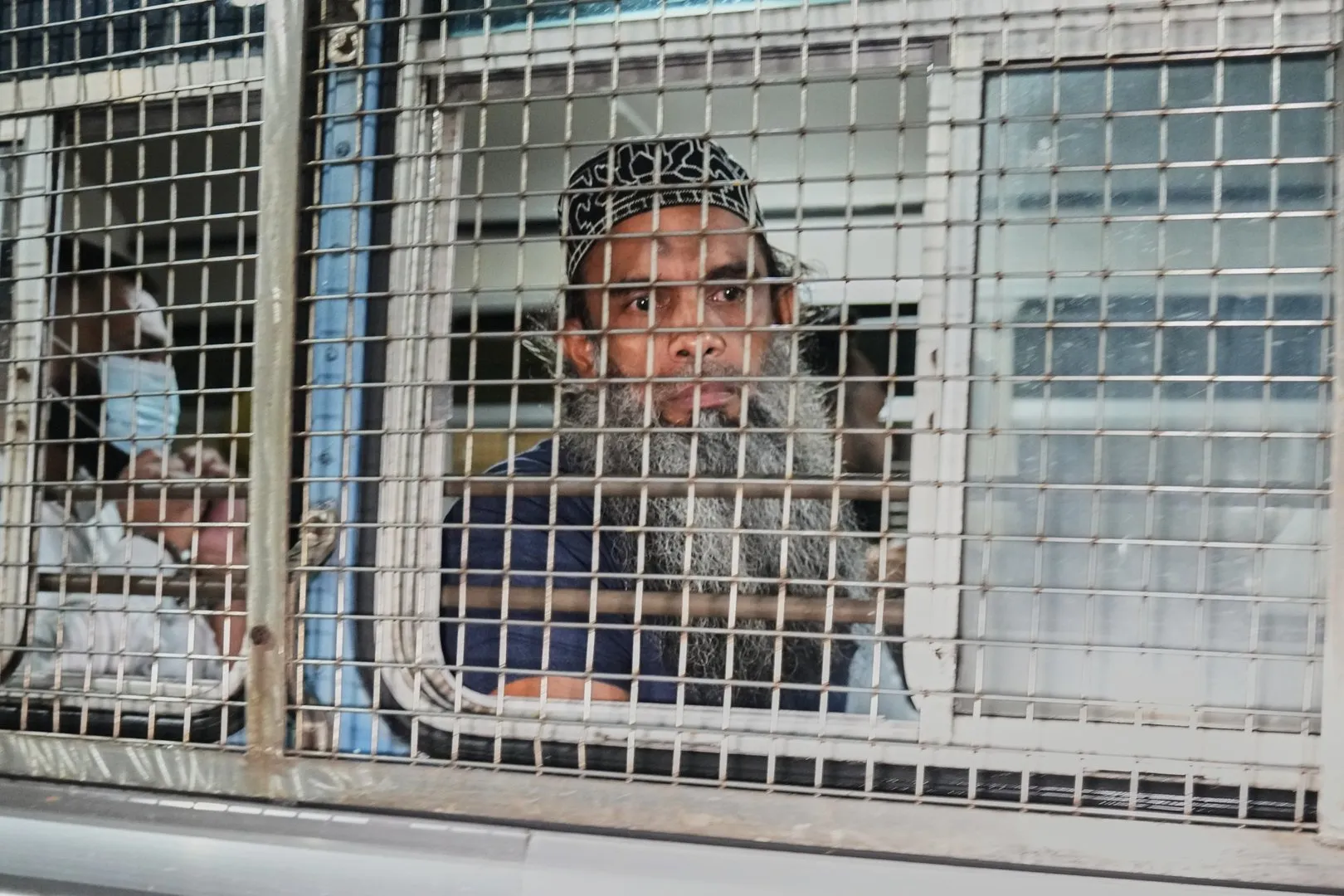
Instead, Khan’s three sisters, all over the age of 65, have been detained in Lahore and at least six of the party’s legislators in Islamabad, all under a 1960 public order law that allows preventive detention without charge.
PTI says the true figure of those arrested is higher, and that one lawmaker taken from the parliament lodges has not been traced since.
Khan has been in prison since August 2023 and remains Pakistan’s most prominent opposition figure. But his party enters the final stretch before the protest weakened, with no major demonstration outside Khyber Pakhtunkhwa since November 2024, by its own account.
Yet, say analysts, the Pakistani government appears to be treating the protest march as a far bigger threat than a regular political event would warrant.
“While this is undoubtedly a difficult moment for PTI, it is equally exposing the government’s own frustration,” Habib Akram, a Lahore-based political analyst, told Al Jazeera.
“In fact, the government’s conduct suggests something more. It isn’t just afraid of this protest; it has turned this protest into a matter of its own survival.”
A capital behind containers
More than 2,000 containers have been placed across Islamabad and at Attock Bridge, the main crossing between Khyber Pakhtunkhwa and Punjab, according to media reports, with 19,000 police officers on their way from Punjab and Sindh, and thousands more deployed at Attock.
A man rides a motorcycle past shipping containers used to block the road in Islamabad before a planned march by former Pakistani Prime Minister Imran Khan’s party, demanding his release, on September 23, 2026. [Akhtar Soomro/Reuters]
Dawn, the country’s leading English-language newspaper, said in an editorial that the government appeared to be preparing “not for a political event but an invasion”.
Talal Chaudhry, the junior interior minister, rejected the suggestion that the government was shutting down the capital itself.
“Normal life in Islamabad is continuing. Hospitals, offices and essential services are functioning. The containers and security arrangements are precautionary measures, not a shutdown,” he told Al Jazeera.
Rana Ihsaan Afzal, a coordinator to the prime minister and a government spokesperson, was more candid.
“In trying to counter the rhetoric PTI has adopted, we do have to take certain measures, and yes, those measures carry their own consequences too, but we have to look at the bigger picture,” he told Al Jazeera.
It is all being mounted during one of the deadliest weeks for Pakistan’s security forces this year.
An attack on a police compound in Kohat, in Khyber Pakhtunkhwa, killed more than 20 people on September 18, and six soldiers were killed in a gunfight in nearby Hangu two days later.
Interior Minister Mohsin Naqvi set those losses against the march in Lahore on Monday.
“The situation in KP [Khyber Pakhtunkhwa] over the past 10 days is before everyone. There was a suicide attack on a mosque, and two or three other attacks. Our captain was killed, our soldiers were killed, our policemen were killed, and these people are preparing to storm a city,” he said.
The government’s case
Government ministers have seized on a remark by Junaid Akbar, PTI’s chief in Khyber Pakhtunkhwa, who said protesters would turn Islamabad into Somnath, a Hindu temple in India sacked by Mehmood of Ghazni, an 11th-century invader, to try to paint the upcoming protest as a major law and order threat.
“Peaceful people do not leave their homes carrying nail-studded sticks,” Information Minister Attaullah Tarar said in Kohat on Monday.
But the PTI’s Sohail Afridi, the chief minister of Khyber Pakhtunkhwa, who will lead the September 27 march, answered Tarar in Peshawar on Monday.
“We will go there on nothing but two hands and two feet. There will be nothing else in our hands,” he said.
In a September 18 judgement, the Islamabad High Court ruled that no party could block roads into the capital, and barred provincial governments from using state resources for the march.
Days later came the arrests of Imran Khan’s sisters. Aleema Khan was detained in Lahore on Sunday, and her sisters, Uzma Khan and Noreen Niazi, were taken in a predawn raid on their homes the next day, according to a family statement on September 22.
The Lahore High Court has reserved its decision on whether a petition challenging Aleema’s detention is admissible, after the family’s lawyer argued that the order was issued after the arrest.
Chaudhry said the sisters faced several cases, had led confrontational protests in the past, and were being held as a preventive measure.
PTI says the arrests reach far wider, listing five members of the National Assembly, a senator, provincial legislators and more than 1,500 workers.
“We were peaceful, we are peaceful, and we will remain peaceful. We are being punished for being peaceful,” Gohar Ali Khan, the PTI chairman, said in Peshawar on Monday, noting that four women from Khan’s family, including his wife Bushra Bibi, are now in jail.
Supporters welcome Khyber Pakhtunkhwa Chief Minister Sohail Afridi (centre) in Hyderabad, Pakistan on September 6, 2026, during a rally. [Nadeem Khawar/EPA]
‘Long march’ vs ‘permanent plan of action’
But Interior Minister Naqvi suggested that the government is bracing for a confrontation.
“I think this time we will draw up a permanent plan of action. We will not go halfway,” Naqvi said in Lahore on Monday, adding that the matter would be settled “once and for all”.
What he ruled out was a long sit-in of the kind PTI has staged before.
“This time, it will not happen that they come, and the country is shut down for 10 or 20 days. That possibility does not exist,” he said.
Afridi has signalled that he has exactly that in mind.
“The long march is not a T20, it will be a Test match,” he said on Monday, a reference to cricket’s five-day format.
If Naqvi’s comments sound ominous, they also carry a history with them.
On May 9, 2023, after Imran Khan was briefly arrested, his supporters attacked military installations across the country, including burning down a senior commander’s official residence in Lahore. That led to a major crackdown on the PTI’s supporters and leaders, with hundreds placed under arrest for days, and party leaders pressured to leave the group.
Then, on November 26, 2024, a PTI march on Islamabad ended in an overnight crackdown by security forces, in which the party says at least 12 of its supporters were killed. The government denies that, and says four security personnel died — even though Al Jazeera met families of some of the PTI supporters killed.
A contested mandate
PTI was stripped of its electoral symbol before the February 2024 general election, forcing its candidates to run as independents.
They still won 93 seats, more than any other party, but could not form a coalition, and the Pakistan Muslim League – Nawaz took power with other major parties.
A Commonwealth observer group, in its report on the polls released a year later, found that decisions by key institutions had “consistently limited the ability of one particular party” to contest the vote, in a reference to the PTI.
While the Election Commission of Pakistan rejected allegations of rigging, two and a half years on, the popularity scale remains tilted in favour of PTI.
Bilal Gilani, executive director of the pollster Gallup Pakistan, said its unpublished Public Opinion Pulse surveys showed a landscape broadly similar to 2024.
“PTI continues to lead nationally, but faces strong competition from PML-N in Punjab and PPP in Sindh,” he told Al Jazeera, adding that Khan remained the country’s most popular leader.
For Akram, that unresolved argument — over the lack of legitimacy of the 2024 election in the eyes of Pakistanis — is what keeps the pressure on.
“You can hold as much power as you want, but that question never fully goes away. It continues to haunt you, and it continues to be a source of anxiety for the government,” Akram said.
The ‘hard state’
In March 2025, army chief Field Marshal Asim Munir, who now also serves as Pakistan’s chief of defence forces, told a parliamentary security committee that the country must stop acting as a “soft state”.
“How long will we continue to sacrifice countless lives in a manner of a soft state?” he asked, according to state broadcaster PTV.
For Ahmed Ijaz, an Islamabad-based political analyst, the response to the September 27 march is a response to that thinking, rather than the PTI’s strength.
“Behind that confidence lies the thinking of a hard state, one that has decided no one will be granted an unconditional right to protest going forward,” he said.
Supporters of the Islamic political party Jamaat-e-Islami (JI) hold placards and party flags during a protest in Karachi, Pakistan, September 20, 2026 [Shahzaib Akber/EPA]
Akram, however, said that a different factor might also be worrying the government and the military behind it.
The war in the Middle East has pushed petrol to 393.75 rupees ($1.42) a litre ($5.37 per gallon), up about 51 rupees ($0.18) since the start of September. That is what Jamaat-e-Islami was marching against, and it has warned that it will resume its march in October if the prime minister offers no relief.
Akram said the government’s real worry is multiple issues of antigovernment anger — price rises and Imran Khan’s continued incarceration — coming together.
“That merging could then pull other groups out onto the streets too, and that is precisely what worries the government,” he said.
Strikes carried out in southeastern province of Khost cause no casualties, governor’s office says.
Published On 24 Sep 202624 Sep 2026
Pakistan says it has carried out air strikes on 10 locations in Afghanistan used to store and launch drones, some of which were used in cross-border attacks.
The air strikes on Thursday were carried out as tensions grow between the former allies over attacks by armed groups in Pakistan, which triggered their worst fighting in years in February.
Recommended Stories
list of 3 itemsend of list
Islamabad accuses Kabul of harbouring fighters who stage cross-border attacks, but Afghanistan’s Taliban government denies harbouring anti-Pakistani armed groups and says the attacks are Pakistan’s internal problem.
The air strikes were “deliberate, precise, calibrated, and proportionate, and strictly limited to identified military objectives directly linked to the attempted attacks against Pakistan”, Pakistani Information Minister Attaullah Tarar wrote on X.
He condemned a “deliberate and unlawful incursion into Pakistan by drones” on Wednesday.
“This constitutes a blatant violation of Pakistan’s sovereignty and territorial integrity and is a grave and unacceptable act of aggression,” he said.
The Pakistani air strikes were conducted in several areas of Khost province in southeastern Afghanistan, Mustaghfir Gurbaz, spokesperson for the Khost governor, said.
There were no casualties, he said.
An attack on a police facility in northwestern Pakistan last week that killed at least 21 people has reignited fighting between the countries after nearly three months of relative calm. A Pakistan Taliban faction claimed responsibility for the blast and subsequent gun battle.
On Monday, air strikes targeting three locations in northeastern Afghanistan killed three civilians in the Nurgal district of Kunar province, Afghan officials said. Islamabad said it killed 28 “terrorists”.
The escalation threatens mediation efforts by China, Turkiye, Qatar and Saudi Arabia to broker a lasting peace between the two neighbours.
Relations between the former allies have been strained since the fighting in February, the worst for years.
The move comes after the EU lifts sanctions on oligarchs following what diplomats described as pressure from Baku.
Published On 23 Sep 202623 Sep 2026
Azerbaijan’s President Ilham Aliyev has pardoned Martin Ryan, a French national who was serving a 10-year prison sentence on spying charges.
The move on Wednesday came a day after the European Union lifted sanctions on Russian billionaire Alisher Usmanov following what diplomats described as pressure exerted by Baku.
Recommended Stories
list of 3 itemsend of list
Ryan, who was arrested in 2023 and sentenced in March, was among 20 people pardoned by Aliyev’s office, alongside Azerbaijani, Turkish, Russian-Israeli and Pakistani nationals, Reuters news agency reported.
Aliyev’s website said the president took into account their “personalities, state of health, family circumstances” and other reasons in deciding to grant pardons.
France welcomed “with relief the decision to grant clemency” to Ryan, calling it “a humanitarian gesture”, according to a French Ministry of Foreign Affairs statement. “This decision is the result of patient and exacting dialogue with the Azerbaijani authorities.”
It remained unclear whether Ryan had been released.
Spying charges
Prosecutors alleged Ryan gathered information on Azerbaijan’s military ties with Turkiye, Iran and Pakistan, as well as on companies linked to Russia and China.
Ryan, who also holds British citizenship, denied the charges. France said the allegations against him were false and had called for his immediate release, arguing he had been caught in the crossfire of diplomatic tensions.
The delisting of Usmanov and fellow Russian billionaire Mikhail Fridman was the first time the EU removed sanctions on the wealthiest members of Russia’s billionaire elite who had not publicly condemned the war on Ukraine.
Usmanov, who once held a minority stake in Arsenal football club, graduated from the same prestigious diplomatic school in Moscow as the presidents of Azerbaijan and Kazakhstan and knows them personally.
Diplomatic response
European diplomats told Reuters and AFP news agencies that France had privately indicated Baku was using Usmanov’s sanctions status to pressure Paris over its detained citizens.
A second Frenchman, Anass Derraz, an employee of the French water company Saur who was sentenced to 12 years on corruption charges, was not included in the pardons.
An Azerbaijani diplomat rejected suggestions of a pressure campaign as “categorically unfounded”.
French national Martin Ryan (centre) during a January 6, 2025 court hearing in Baku, where he received a 10-year sentence for spying before being pardoned [AFP]
Ukrainian President Volodymyr Zelenskyy said the move reflected Russian efforts “to break the West’s unity”, while his Foreign Minister, Andrii Sybiha, said Moscow was “celebrating, because it got what it wanted: a sense of impunity, the humiliation of the EU, and division among Europeans”.
Latvia abstained from the vote and said it would impose its own sanctions on the two men, with Foreign Minister Baiba Braze calling the EU decision “dangerous”.
Slovakia initially called for Usmanov’s removal, with France later backing the move.
Relations between Baku and Paris have long been strained by France’s support for Armenia, even as ties between Moscow and Baku have also deteriorated since the accidental downing of an Azerbaijani passenger jet by Russian forces in December 2024.
Islamabad, Pakistan – On September 16, a delegation from Powerus, a year-old United States drone company backed by two sons of President Donald Trump, was received by Pakistan’s military chief, Field Marshal Asim Munir, at military headquarters in Rawalpindi.
A day later, the company announced it had received a “limited procurement order” from Pakistan’s Ministry of Defence for unmanned aerial systems. It also said it had signed a separate memorandum of understanding (MoU) with senior Pakistani defence officials.
Recommended Stories
list of 4 itemsend of list
Neither the value of the order nor the systems involved have been disclosed. But for analysts studying Pakistan’s venture in drone technology, even bigger concerns have arisen from information that has since emerged.
Less than three months earlier, the same company had given an Indian defence manufacturer the exclusive right to make and sell its drone interceptor technology in India. And one of the cofounders of Powerus is an Israeli military veteran. Pakistan does not recognise Israel and accuses it of carrying out a genocide in Gaza.
Analysts are questioning why a country that already builds its own drones and buys others from China and Turkiye would turn to a company that was founded only last year – and has links to Israel and sells drones to India too.
“Pakistan technically already makes or is capable of making each of the drones shown by Powerus,” Bilal Khan, founder of the Quwa Group, a Toronto-based defence news and market intelligence platform, told Al Jazeera. “It’s unclear where Powerus fits in the long term [from Pakistan’s perspective].”
What did Pakistan sign?
In its statement on the meeting, Inter-Services Public Relations (ISPR), the Pakistani military’s media wing, said the two sides discussed cooperation in defence procurement, production and capacity building.
The statement did not mention the MoU.
But Powerus told Al Jazeera which institutions were involved. “The MoU was signed with the Pakistan army. The related procurement order was placed by Pakistan’s Ministry of Defence,” a company spokesperson said.
In its own statement, Powerus said the memorandum was not a definitive agreement, created no purchase obligation and would be subject to US laws and government approvals.
“We are proud to support Pakistan’s Ministry of Defence, and the memorandum gives both sides a strategic framework to build upon,” Brett Velicovich, the company’s cofounder, said in the statement.
According to media reports, Velicovich has also said the company is exploring ways to build technology in Pakistan.
The ISPR, the Ministry of Foreign Affairs and the Ministry of Information and Broadcasting did not respond to Al Jazeera’s requests for comment.
Founded in 2025 and based in Florida, Powerus is set to merge with Aureus Greenway Holdings, a Nasdaq-listed company that owns golf courses in the US state, in a deal expected to close in the final quarter of this year.
Powerus’s Guardian Interceptor is a drone interceptor [Handout/Powerus]
Donald Trump Jr and Eric Trump, President Trump’s oldest sons, are investors in Powerus through a vehicle called American Ventures, which is expected to hold a 9.9 percent beneficial stake in the combined company, according to US regulatory filings.
A spokesperson for Donald Trump Jr has told media outlets that he is a passive investor with no role in the company’s operations or contracts and had no prior knowledge of the Pakistan deals.
The White House has said there are no conflicts of interest.
The company makes about 3,000 interceptor drones a month, according to media reports, and last month won a US Air Force contract with a ceiling of up to $90m.
Asked how it addresses conflict of interest questions while pursuing government defence work in the US and abroad, Powerus said the Trump brothers played no part in its operations.
“Trump’s sons are not advisers to Powerus and have no involvement in how the company runs its business or structures its defence relationships, domestically or internationally. They hold no corporate-governance role. Our government relationships are pursued on their own merits,” the company told Al Jazeera.
The India question
Powerus’s first deal in South Asia, however, was not in Pakistan.
It was in India, Pakistan’s archrival, with which Pakistan fought a brief but intense conflict in May last year, one in which drones were used by both sides.
In a June 30 filing to India’s stock exchanges, Paras Defence and Space Technologies said Powerus had granted it an exclusive licence to manufacture and sell its Guardian-1 interceptor technology in India.
Mansoor Ahmed, an honorary lecturer at the Australian National University’s Strategic and Defence Studies Centre, said Washington has long armed rival states.
“The US has previously sold F-16s to Greece and Turkiye and Egypt and Israel and is now selling F-35s to Saudi Arabia, which Israel already operates,” he told Al Jazeera.
A former Pakistani government defence analyst who spoke on condition of anonymity said Pakistani planners had probably known about the Indian deal.
“Pakistan’s defence planners were likely aware of Powerus’s engagement with India,” he told Al Jazeera.
This isn’t the first time that Pakistan and India have ended up buying military equipment from the same company, the defence analyst pointed out. He cited the build-up to the conflict over the Siachen Glacier, where India launched Operation Meghdoot in April 1984 to take control of the heights.
“In 1983, Pakistan ordered high-altitude warfare gear from a London supplier, unaware that the same firm also provided gear to the Indian army, and subsequently, India learnt of it and planned Operation Meghdoot in 1984,” he said.
The analyst said the burden now lies with the company.
“In the present case, the challenge is more for Powerus than Pakistan or India as Powerus’s management must ensure it can manage and meet the requirements of two adversaries without jeopardising either side’s operational security.”
A retired Pakistan air force air marshal who spoke on condition of anonymity because he was not authorised to speak publicly said the arrangement carries risks for Pakistan.
“Two adversary countries procuring from the same source has its pitfalls, especially when one of the adversaries has taken the lead as well as has a larger financial capacity,” he told Al Jazeera.
An Israeli link
The company’s leadership also has links to Israel, a country Pakistan does not recognise.
Powerus’s website described one of its cofounders, Ziv Marom, as a veteran of the Israeli military and said he founded Kaizen Aerospace, now a Powerus subsidiary.
Another senior executive, Justin Gans, the company’s vice president for mergers and acquisitions and a former member of the US Navy SEAL special forces, served as a vice president at Elbit Systems of America, the US arm of the Israeli defence company Elbit Systems, from 2018 to 2019.
A retired three-star army Pakistani general who served in senior roles before retiring in 2019 and requested anonymity because of the sensitivity of the subject said such a background would normally draw attention during vetting.
“So under normal circumstances, a cofounder’s service in the Israeli military would be flagged as a sensitivity marker, even if the company itself is American,” he told Al Jazeera.
“In other words, for a serious acquisition, this background would be scrutinised carefully. For a political MoU, it may not have been a decisive factor.”
Quwa’s Khan, however, said Pakistan has long accepted Israeli components inside US or European systems.
“We can see that, generally, as long as there’s a country in the middle, Pakistan does not have qualms being in close proximity to Israel,” he said. “However, the two sides very, very rarely talk to each other.”
What drone technology does Pakistan already have?
Beyond questions over who else Powerus works with, analysts said the more fundamental issue is what Pakistan actually needs from the company.
Pakistan’s air force has publicly displayed Turkish-made Bayraktar TB2 and Akinci drones, Chinese-made Wing Loong II drones and the domestically developed Shahpar-II.
Shahpar drones, made by the Pakistani state-owned defence company Global Industrial & Defence Solutions, are displayed at the 2024 International Defence Exhibition and Seminar in Karachi, Pakistan [File Akhtar Soomro/Reuters]
China supplied 80 percent of Pakistan’s arms imports from 2021 to 2025, according to the Stockholm International Peace Research Institute.
This month, the Pakistan air force revealed in a video that it had incorporated into its forces China’s HQ-17AE air defence missile system and Turkiye’s Korkut anti-aircraft gun and Sahin counterdrone system, all built to take on drones and other low-flying threats.
Khan said the state-owned Heavy Industries Taxila was also working with private firms to develop interceptor drones.
“So as it stands, Pakistan is following all the right best practices to build its C-UAS posture,” he said, referring to counterdrone systems.
“For Pakistan, the challenge isn’t whether it can get the designs but whether it can produce or induct these in large enough numbers fast enough.”
An official at a private drone manufacturer in Rawalpindi who requested anonymity because he is not authorised to speak to the media said Pakistan’s drone market has grown well beyond state-run firms.
Dozens of private companies and more than half a dozen state-owned enterprises now make drones besides the army’s own production facilities, he said. According to him, Powerus would have to compete with all of them on the quality of its products.
The retired general offered a different reading of why Pakistan might be interested in a tie-up with a US firm.
“The gap is not drone manufacturing. It is electronics, integration and systems-level capability, which is where American firms traditionally dominate,” he said. “How far this particular company can help in this regard is a million-dollar question.”
Powerus’s Guardian interceptors are small, low-cost drones designed to knock down incoming drones. They are a weapon widely used by both sides in the war in Ukraine.
Hammad Waleed, a research associate at the Islamabad-based Strategic Vision Institute, said such systems fill a cost gap that conventional air defences cannot.
“Traditional air defences use costly missiles against incoming cheaper drones,” he told Al Jazeera. “Interceptor drones are way cheaper and easier to operate than traditional air defences.”
Capability or signalling?
The retired Pakistani general, who has experience with defence production, said a supplier of this kind would normally face financial, technical and security checks as well as a review of its track record.
“A company less than a year old, not yet listed and without a delivery record would not usually clear these checks for a strategic defence partnership,” he said.
“Such firms are typically considered too immature unless the MoU is political signalling rather than a procurement decision.”
Khan agreed that the process has been unusual.
“Yes, the way this deal came about is not generally in line with how the procurement heads of the tri-services typically operate,” he said, referring to the three branches of Pakistan’s military.
The Powerus agreements were made as Munir has built close ties with President Trump, who has called him “my favourite field marshal” and praised him on several occasions during the past 15 months.
In September last year, weeks after Pakistan signed a $500m critical minerals agreement with a US company, Munir and Prime Minister Shehbaz Sharif met President Trump at the White House, where the Pakistani leaders presented him with samples of Pakistani minerals.
In January, Pakistan also signed an MoU with an affiliate of World Liberty Financial, the Trump family’s main cryptocurrency business.
From left, US President Donald Trump examines a box of rare earth minerals and gemstones presented by Pakistani Prime Minister Shehbaz Sharif and Field Marshal Asim Munir in September last year at the White House [File: Handout/White House]
Khan said Pakistan’s security establishment needs to ask what it is getting in return for that closeness.
“There was a time when such gains were measured in F-16s and the billions in US financial assistance, yet today, we are seeing more photo ops and supposed pacts that obligate the armed forces, but are they helping the armed forces as a fighting force?”
He also offered what he called a “less cynical take”.
Pakistan has a growing number of drone start-ups that lack the capital to build production facilities, he said, and ties with Powerus could draw US investment into them.
“So there is an argument that building rapport with Powerus and its backers can lead to that capital,” Khan said.
Ahmed said Pakistan is looking beyond a single purchase.
“Pakistan’s primary interest appears to be the acquisition of state-of-the-art drone technologies that also allow for local production and indigenisation,” he said.
What about China and Turkiye?
The retired Pakistani general said bringing in a foreign private company could overlap with Pakistan’s existing Chinese and Turkish partnerships.
“It has the potential of being seen by Turkiye and China as Pakistan hedging politically,” he said.
Khan, however, disagreed.
“There’d be no issue with the Turks as they work with US companies all the time and the drones on offer by Powerus don’t overlap with the ones NASTP is designing with Turkiye,” he said, referring to Pakistan’s National Aerospace Science and Technology Park.
He added that any Powerus designs built cheaply in Pakistan would still rely on Chinese parts.
“With the Chinese, it’d be less of an issue because, ultimately, the only way to make these Powerus designs at a low enough cost for the Pakistani armed forces to induct is to literally import the upstream subassemblies from China.”
Drones are displayed during the International Defence Exhibition and Seminar in Karachi on November 21, 2024 [Akhtar Soomro/Reuters]
Waleed said the deal would not dent Pakistan’s defence ties with Beijing and Ankara.
“Pakistan is prioritising China and Turkiye for the sophisticated and modern combat systems in the drone and counterdrone domain. That relationship is not only unaffected and is going upwards in trajectory,” he said.
For now, Khan said, the real test of the Powerus deal would be what follows it.
“I would not pass judgement on the Powerus deal yet, but we can track whether it’s serious by seeing if the MoD [Ministry of Defence] signs similar deals with other foreign and local vendors in the coming months,” he said.
“Basically, will we see a consistent pattern moving forward, or will this be a one-off?”
Fifteen people have been convicted over Sri Lanka’s 2019 Easter Sunday bombings, which killed 279 people at churches and luxury hotels. The verdict comes amid continued scrutiny over intelligence warnings received before the attacks and whether officials failed to act.
Countries including Germany, South Africa and Canada suggest international institution to set and enforce standards.
Twenty countries and the European Union have issued a call for international cooperation to ensure AI remains under human control, including the potential creation of a global oversight body to set and enforce standards.
The countries, including Germany, South Africa, Canada, Australia, the United Arab Emirates and Singapore, issued the joint statement on Monday as global leaders prepare to discuss the risks posed by rapidly advancing AI at the annual gathering of the United Nations General Assembly.
Recommended Stories
list of 4 itemsend of list
The declaration, released by the office of Finnish President Alexander Stubb, calls on governments and industry to act immediately to ensure that AI is developed in line with international law and remains under “human direction, oversight and control”.
“To realise AI’s potential, industry, governments and society must act now,” the statement says.
“We must address these risks and strengthen oversight – without widening the gap between countries in access to the benefits of AI.”
The declaration urges countries to develop and coordinate “common standards”, share reports of serious safety incidents, and explore the establishment of an international institution to “set standards, enable verification, and convene states when capability thresholds are crossed”.
Signatories include German Chancellor Friedrich Merz, Norwegian Prime Minister Jonas Gahr Store, European Commission President Ursula von der Leyen, Kenyan President William Ruto, Kazakh President Kassym-Jomart Tokayev and Turkish Foreign Minister Hakan Fidan.
The United States and China, the world’s two leading AI powers, did not join the statement, which remains “open for endorsement” by other countries.
US President Donald Trump and Chinese President Xi Jinping are expected to discuss AI when they meet at the White House on Thursday for their third face-to-face summit in less than a year.
Washington and Beijing, which are in a race to dominate cutting-edge technologies, have both rebuffed calls to slow down AI development to ensure greater safety.
Other AI players not among the signatories include India, South Korea, Japan, the UK and France.
The declaration comes as the AI sector is engaged in a heated debate about safety following calls for a slowdown in development by top industry leaders.
In an essay earlier this month, Anthropic CEO Dario Amodei called on firms to “slow the pace” of development to mitigate risks, a proposal that was swiftly endorsed by rivals including OpenAI CEO Sam Altman and SpaceX and Tesla CEO Elon Musk.
Amodei’s call followed a series of cases of AI models engaging in unsanctioned malign activity, including an incident in July in which AI agents being tested by OpenAI hacked the AI start-up Hugging Face.
In the latest intervention by industry on Monday, OpenAI said the US should lead an international effort to develop technical standards for advanced AI.
“The United States is well positioned to lead because its AI industry is at the technical frontier, and it still stands in a privileged global network position in critical areas such as finance, trade, defense, technology, and information systems,” the San Francisco-based AI giant said in a blog post.
“Leading now will determine whether the United States shapes the global AI framework or watches a fragmented, uneven, and conflict-ridden system take hold around it.”
The UN-backed Independent International Scientific Panel on AI, which examined the Hugging Face incident, on Monday also added its voice to calls for new guardrails, saying the cyberattack had exposed the “unravelling” of existing safeguards.
Storm is moving northeast of Japan’s eastern coast across the Pacific, leaving a path of destruction behind.
Published On 22 Sep 202622 Sep 2026
A powerful storm has triggered evacuation advisories for more than 1.6 million people, causing widespread travel chaos, flooding and landslides near Tokyo.
On Monday, Typhoon Dujuan packed wind speeds of about 144 kilometres (89 miles) per hour as it moved 130km (80 miles) south of Katsuura, near the Japanese capital, cutting power to thousands of households.
Recommended Stories
list of 3 itemsend of list
Two people have been confirmed dead, Kyodo News reported, citing local authorities.
By early Tuesday, the storm had shifted away from the coast and was heading northeast out to sea towards the Aleutian Islands, with slightly diminished winds, the Japan Meteorological Agency (JMA) said.
In areas where warnings have been issued, “there’s a risk the rain will continue as the typhoon moves north”, the JMA’s Takuya Hosomi said.
Passengers rest at Haneda Airport in Tokyo, Japan, as many flights are delayed and cancelled because of Typhoon Dujuan on September 21, 2026 [Kim Kyung-Hoon/Reuters]
Passengers were stranded at airports after Japan Airlines cancelled 135 flights and All Nippon Airways scrapped 140 on Monday.
Some rail services were suspended, including bullet train services connecting Tokyo and Osaka, Japan Railways said.
The JMA warned on Sunday that rain and winds were expected to intensify even before the typhoon’s arrival.
“The total rainfall through Tuesday could exceed the average monthly rainfall for September, resulting in record-breaking heavy rain,” the agency said.
Social media posts showed images of flooded roads in front of Kamakura station, a popular sightseeing spot.
“There is flooding in various parts of the city, so travelling by car is dangerous,” Kamakura Mayor Takashi Matsuo said on X.
Floodwaters also inundated parts of Ichikawa, east of Tokyo.
Dujuan forced the early closure of the Tokyo Game Show, one of the world’s biggest video game trade fairs, on Monday, its final day.
The area around a ramen restaurant is flooded by heavy rain as Typhoon Dujuan approaches Oamishirasato, Chiba Prefecture, Japan, on September 21, 2026 [Kyodo/Reuters]
A major outdoor music festival and a baseball match, both scheduled to be held in Chiba, were also cancelled.
Dujuan is Japan’s 25th typhoon this year. The country often sees strong typhoons in the late summer and early autumn.





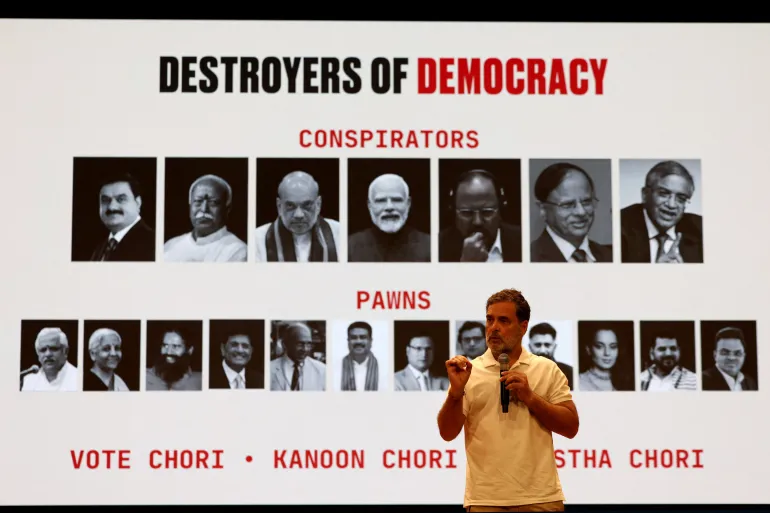


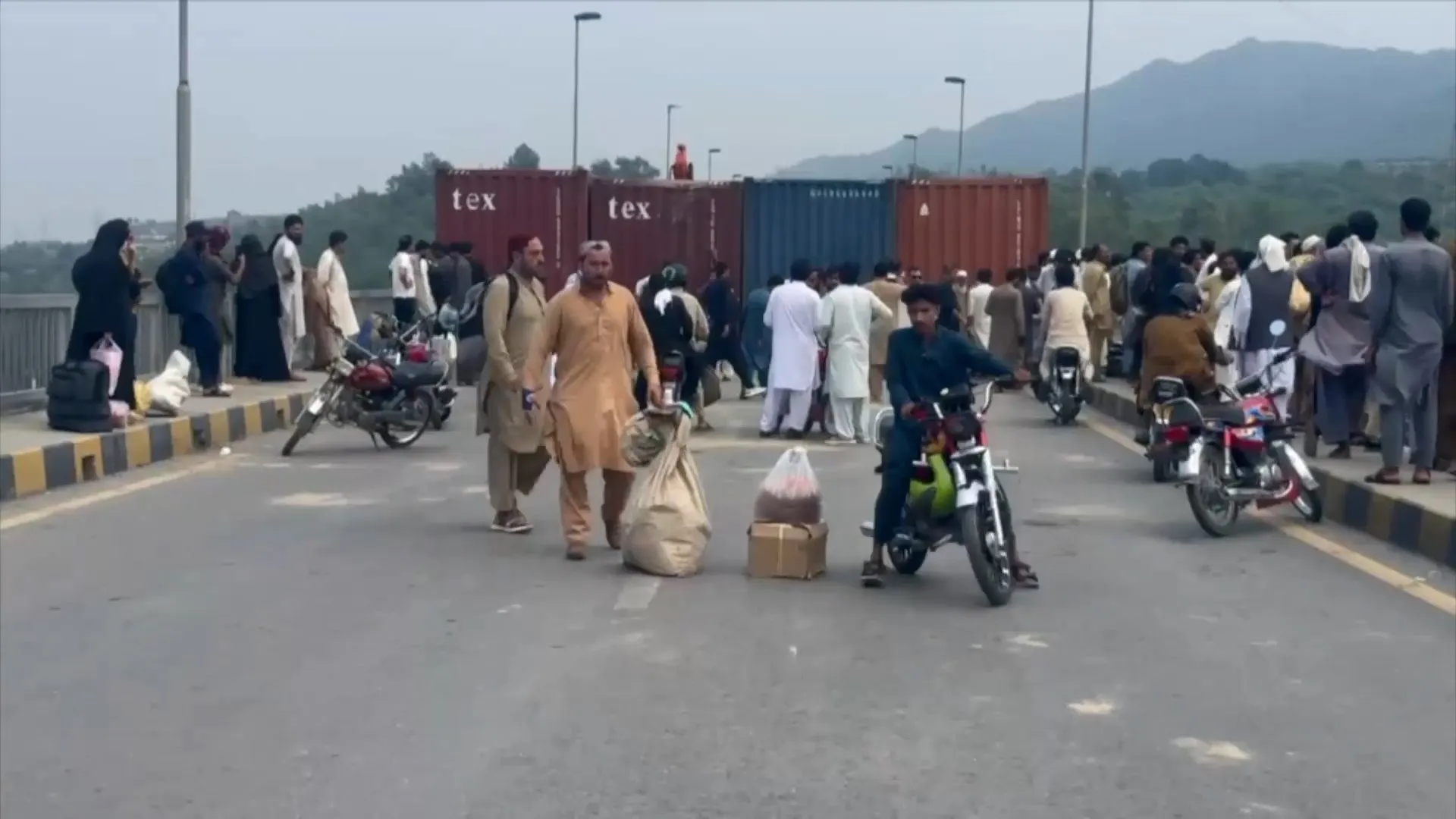
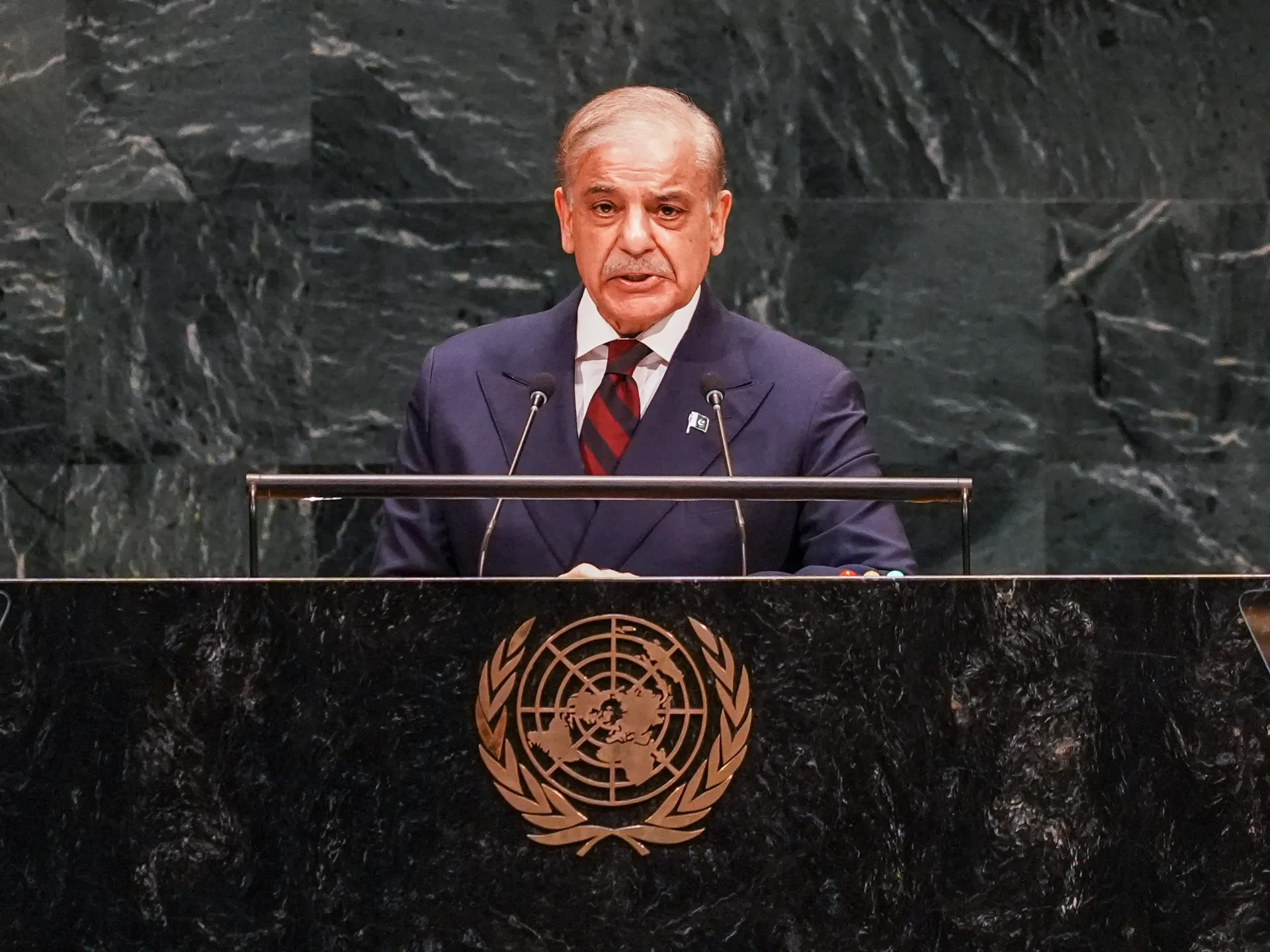
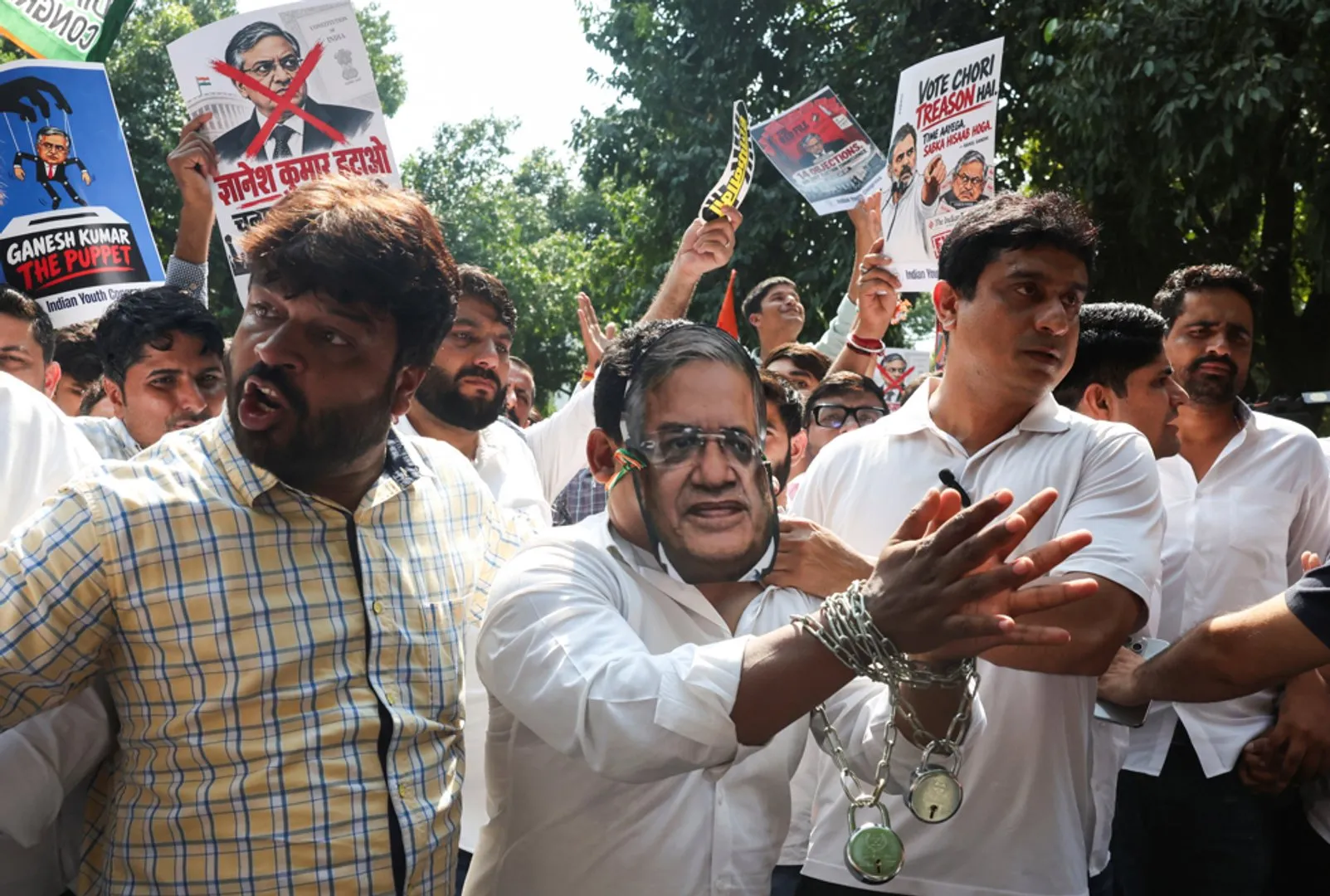
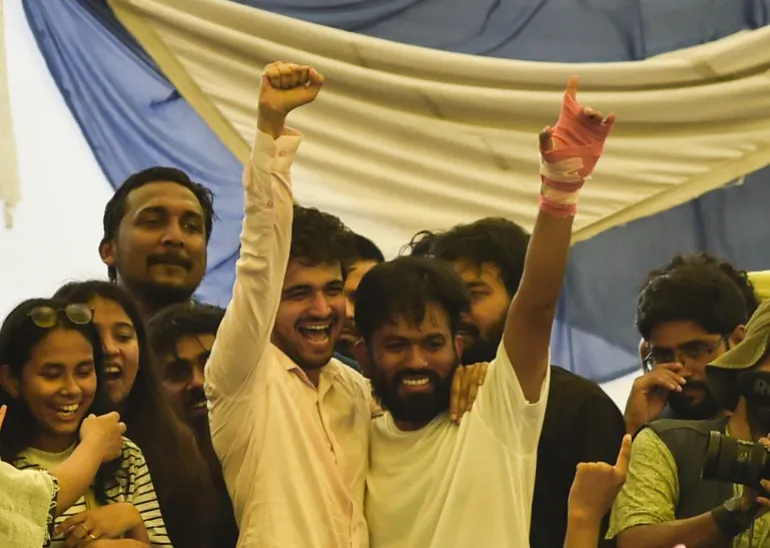


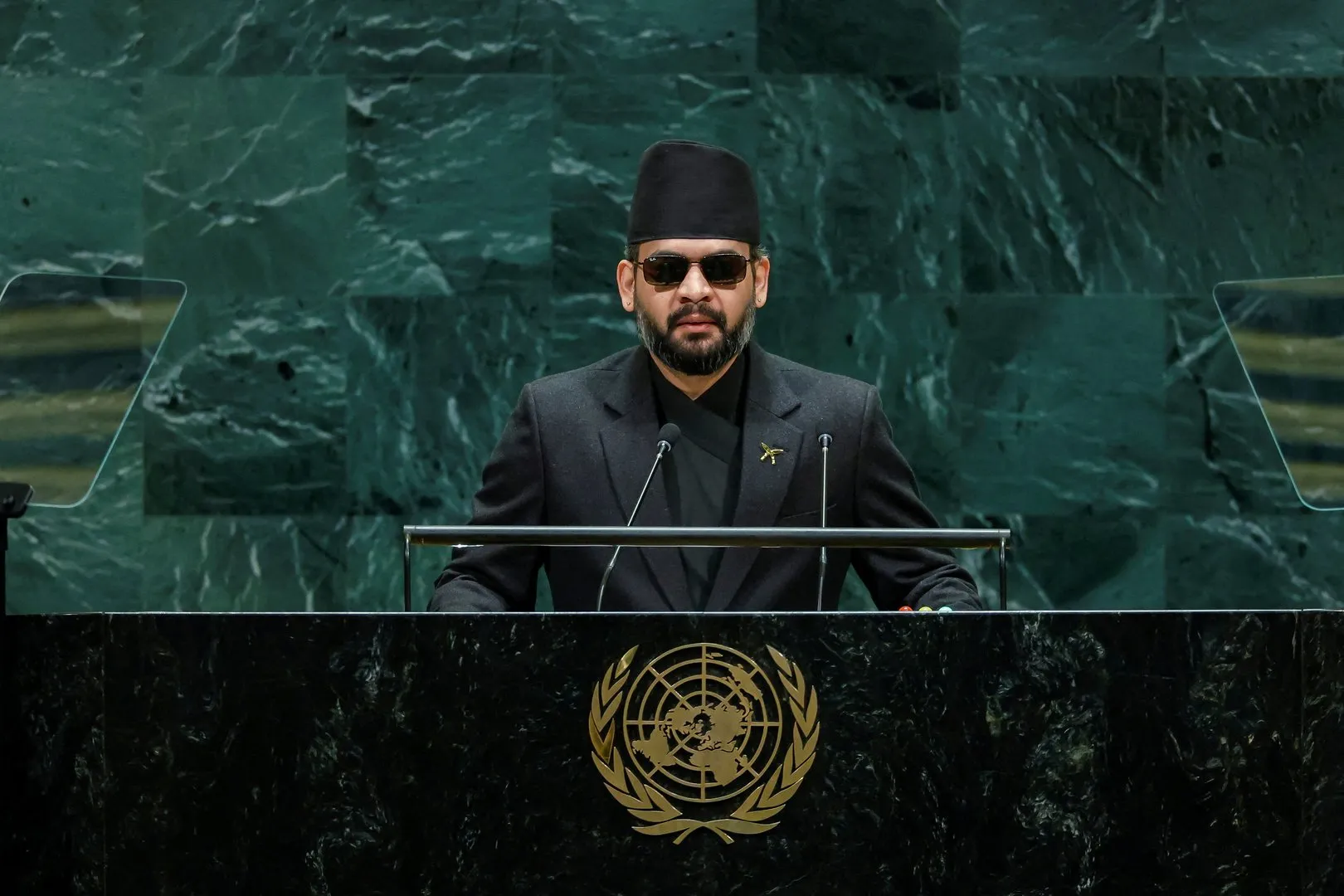
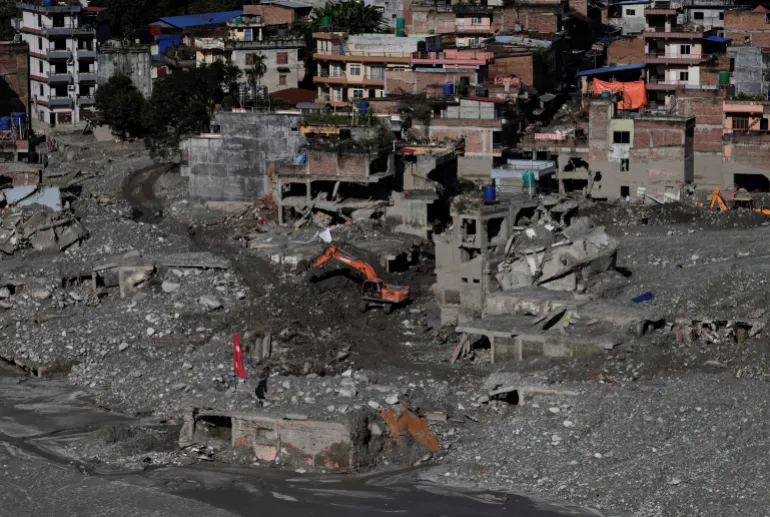
![An excavator clears mud from damaged houses following deadly flash floods and a mudslide, in Nuwakot district, Nepal, September 21, 2026 [Navesh Chitrakar/Reuters]](https://i0.wp.com/occasionaldigest.com/wp-content/uploads/2026/09/2026-09-25T021410Z_709369844_RC2ENNAUM1TN_RTRMADP_3_NEPAL-FLOODS-BALEN-UN-1790312192.jpg?w=640&ssl=1)
![Nepal Prime Minister Balendra Shah addresses the 81st United Nations General Assembly at UN headquarters in New York City, US, September 24, 2026 [Eduardo Munoz/Reuters]](https://i0.wp.com/occasionaldigest.com/wp-content/uploads/2026/09/2026-09-25T002524Z_1559668133_RC20QNACRCWK_RTRMADP_3_UN-ASSEMBLY-1790312740.jpg?w=640&ssl=1)






![Sugar Shanti Banarse catches a wave [Photo courtesy of the Surfing Federation of India]](https://i0.wp.com/occasionaldigest.com/wp-content/uploads/2026/09/Sugar-Shanti-1790080522.jpg?w=640&ssl=1)
![Sivaraj Babu in action [Photo courtesy of the Surfing Federation of India]](https://i0.wp.com/occasionaldigest.com/wp-content/uploads/2026/09/Sivaraj-1790081318.jpg?w=640&ssl=1)
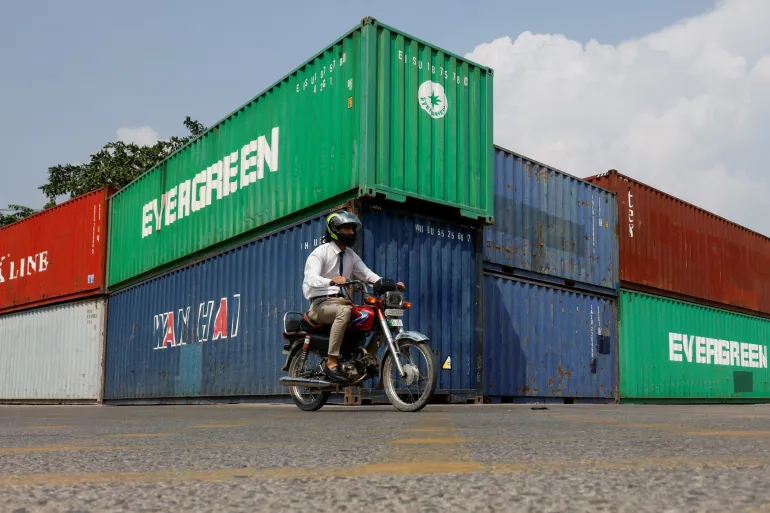


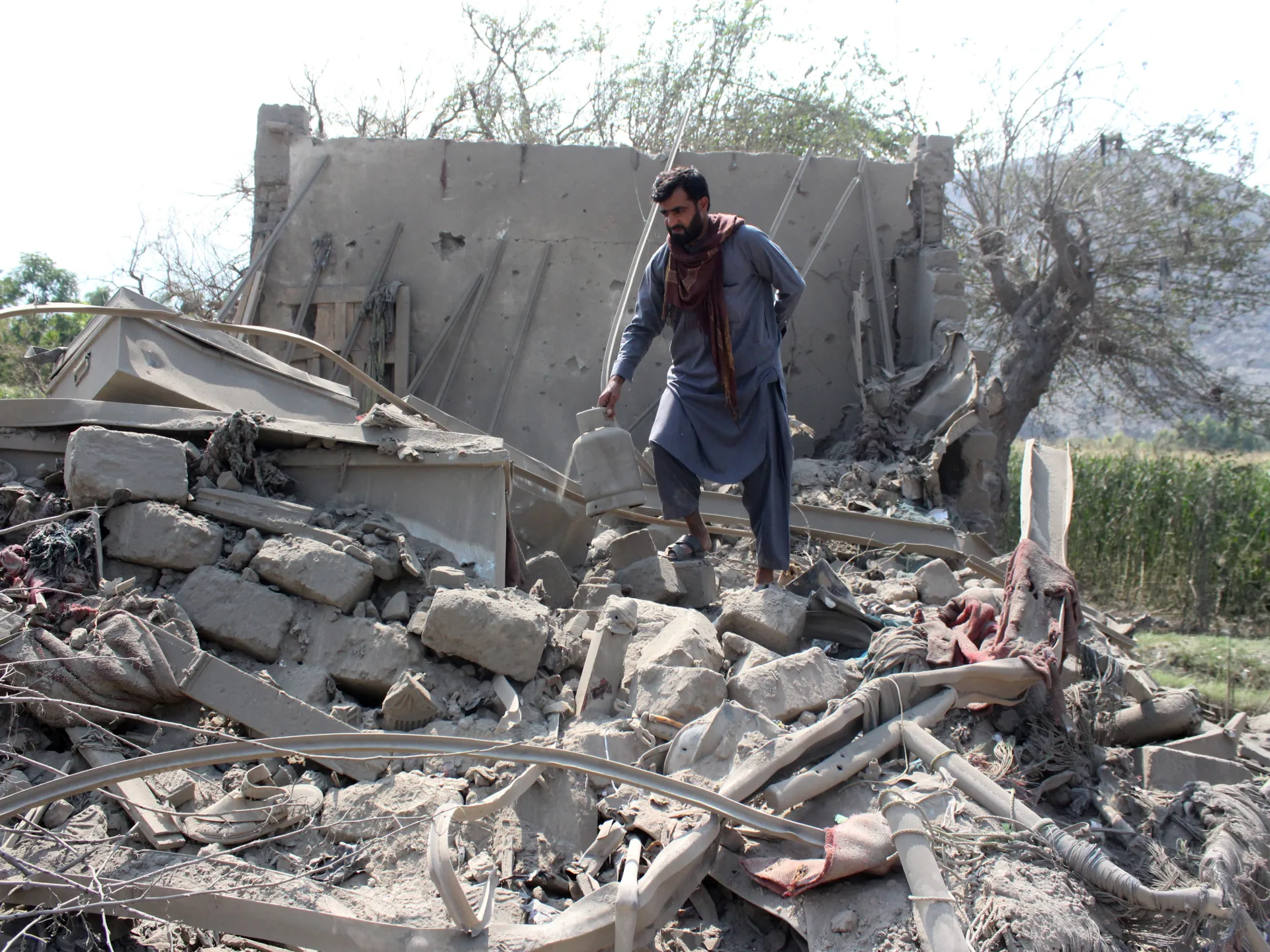

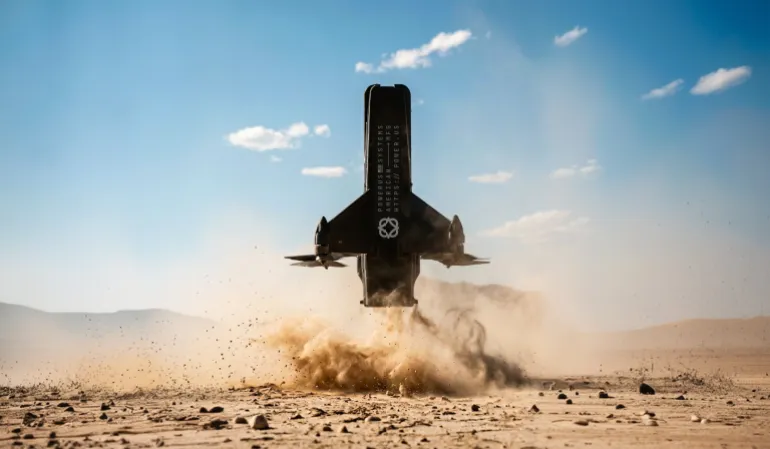
![Powerus' Guardian Interceptor is a counter-drone interceptor. [Courtesy Powerus]](https://i0.wp.com/occasionaldigest.com/wp-content/uploads/2026/09/guardian-fieldhero-1790078758.jpg?w=640&ssl=1)

![US President Donald Trump examines a box of rare-earth mineral and gemstone samples presented by Pakistan's Chief of Army Staff Field Marshal Asim Munir (center), alongside Pakistani Prime Minister Shehbaz Sharif (left) last year in September at the White House. [Courtesy White House]](https://i0.wp.com/occasionaldigest.com/wp-content/uploads/2026/09/Pakisatn-Minerals-WH-1790079007.jpg?w=640&ssl=1)