artist

How to navigate LACMA’s new David Geffen Galleries? Get lost

It’s not only easy to get lost in the Los Angeles County Museum of Art’s new David Geffen Galleries, it’s inevitable, intentional — and one of the best things about the place.

The museum has deconstructed the traditional, boxy narrative of art history and rendered the story itself a matter of curves and continuities. Art in the collection is freed from its departmental silos and put into conversation across genre lines, place and time.

The museum has physically invalidated the binaries of center and periphery, major and minor arts. In a startling and largely gratifying way, LACMA has done what the poet Audre Lorde, alluding to a different but not unrelated aspect of patriarchal dominance, deemed impossible: used the master’s tools to dismantle the master’s house.

The change goes far beyond a remodel. It’s a reinvention, a recalibration, a revisionist fever dream.

The vision conceived by museum director and Chief Executive Michael Govan and architect Peter Zumthor is not perfect, and brings with it a modest set of frustrations, but as a whole, the installation registers as ravishing and bracingly fresh. It thrusts us midstream into the ageless, ceaseless flow of makers worldwide reckoning with life, earth and being.

It prompts us, as we bob about, to reflect on our own proclivities and preconceptions, our patterns of reception and perception.

It compels us to recognize that what matters is not just what we see in the museum but how we see, what pulls us close and why, what private histories we bring to the occasion, what expectations, what tools.

Over two visits to the new building, getting my physical bearings mattered less and less as I surrendered to the generative sensations of not knowing. The museum has produced a dense guidebook to the new galleries, whose title, “Wander,” doubles as invitation and imperative. Even at 430 pages, the book is only minimally useful as an orientation device. For help with that internal navigation, Rebecca Solnit’s moving 2005 book, “A Field Guide to Getting Lost,” proved a better compass.

A row of small guidebooks.

LACMA’s guidebook to the David Geffen Galleries, called “Wander,” doubles as invitation and imperative.

(Museum Associates / LACMA)

Solnit, citing the cultural critic Walter Benjamin, writes, “to be lost is to be fully present, and to be fully present is to be capable of being in uncertainty and mystery.” She goes on to recall how roaming freely as a child was key to developing self-reliance, which feels apt to the LACMA strategy. We are put in charge of making our own way, through tapestries and tea sets, past ancient jug and contemporary sphinx, without heavy-handed authoritative direction.

The history of art reads here as one long, free verse poem-in-progress, gorgeous and absorbing. Even so, many of the most memorable moments come in the form of cogent micro-essays, smartly curated ensembles of work bearing a legible, lucid premise. Some of these are contained within four (rectilinear) walls; some occupy less demarcated spaces. “Tonal Variations: Photography and Music,” for instance, gathers images by Paul Caponigro, William Eggleston, Lisette Model and others. These artists were also serious pianists, attuned, no matter which instrument they were using, to the qualities of rhythm, pattern and progression.

Lisette Model, "Window at 5th Avenue," 1940, Los Angeles County Museum of Art

Lisette Model, “Window at 5th Avenue,” 1940, Los Angeles County Museum of Art

(Museum Associates / LACMA)

In a section headed “The Global Appeal of Blue-and-White Ceramics,” a long display case houses a timeline articulated sculpturally. The sequence advances from a 9th century bowl made in Iraq to a 13th century vessel from China, a 14th century example from Thailand, another from 15th century Syria, up to work by a 20th century German artist who transformed a functional vessel into personal adornment by cutting a string of beads out of the planar surface of the bowl.

Dish, Turkey, Iznik, c. 1530-35, Los Angeles County Museum of Art,

Dish, Turkey, Iznik, c. 1530-35, Los Angeles County Museum of Art

(Museum Associates / LACMA)

On the wall facing this display is a huge vitrine containing an 18th century Talavera jar from Mexico, paired with a 2025/26 color photograph by Brooklyn-based Stephanie H. Shih. In the still-life composition, a cheeky visual lesson on the collision and convergence of cultures, the jar holds flowers, cactus and edible Mexican treats influenced by Chinese and Filipino flavors.

Top, Stephanie H. Shih, 梅國 "(Still life with chamoy and Dirty T Tamarindo)," (2025- 26); bottom, Jar (c. 1700-50)

Top, Stephanie H. Shih, 梅國 “(Still life with chamoy and Dirty T Tamarindo),” (2025- 26); bottom, Jar (c. 1700-50)

(Museum Associates / LACMA)

Shih is one of a handful of artists commissioned to create new work using the museum’s collection as muse. L.A.-based Lauren Halsey is another. Her formidable, untitled 2026 sphinx regally commands its space among ancient Egyptian and Roman sculpture, a marvel of the cross-temporal and cross-spatial, spiked with specific references to Black self-determination.

Setting recent works among older ones is an effective element of LACMA’s overall plan to shed outworn hierarchies. It recasts every piece of art by every artist throughout the single-story space as equally relevant. The seamless integration of old and new feels stealthy, and a touch subversive, a doubling-down on the museum’s approach to time as nonlinear, sinuous and delightfully slippery.

A sphinx in a museum.

Lauren Halsey’s untitled 2026 sphinx.

(Museum Associates / LACMA)

That said, a few words readily available would help connect the dots without undermining the provocation. Text — where and how it appears, or doesn’t — is my only major complaint about the installation of the new galleries.

Text panels announce, in one or two paragraphs, the themes of each given section: “Images of the Divine in South Asia”; “The Evolution of Abstract Painting in Modern Korea”; “Textile Conversations: Africa and Black America.” Individual object labels are kept minimal, containing only basic identification about each work, no commentary. When asked about this decision during my first walkthrough, Govan replied that more time reading means less time looking — “and we have the internet.” Every thematic text panel has a QR code that links to the Bloomberg Connects app, an aggregate guide to museums and other cultural sites that offers selected, augmented entries.

Determining how much didactic information is insightful and sufficient, and how much constitutes excessive artsplaining, is a delicate, ongoing challenge for museums. Where LACMA landed on this contested plain strikes me as unfortunate and counterproductive.

A few lines of explanation or context on a wall label can add perspective for even the most informed visitor, and provides crucial support to those with less foundational exposure and access to art.

You can take or leave text on a wall without breaking your stride, but text accessed via QR code is another matter. (Never mind that connectivity is spotty inside a sprawling concrete shell, and several times when I tried to get information from the app, I couldn’t.) Encouraging us to shift our gaze from the wall to our devices — to assume that accursed downward tilt of the neck when splendors abound before our eyes — is simply detrimental. It breaks the spell of being fruitfully lost in the present, and retethers us to the digital distractions that dominate our days.

Text on a museum wall.

Wall text beside Francis Bacon’s “Three Studies of Lucian Freud” (1969), at Los Angeles County Museum of Art.

(Museum Associates / LACMA)

Shouldn’t the imaginative minds that created this space, this opportunity to revel in direct sensual experience, want us to keep our attention where our bodies are? Why this fallback to current convention, when the rest of the experience is about radical reinvention? This feels like a missed opportunity. I’m hoping a more experimental, exploratory approach to providing information, context and interpretation, in keeping with the rest of the enterprise, might yet come.

Does the new structure serve the art? Mostly, very well.

The lighting is varied, treated as another texture in the space, palpable and rich. There’s a generous amount of natural sunlight, but some spots are noticeably dim. Some gallery walls are glazed in deep hues (reddish and eggplant), and the intensity of the color is jarring at first. But neutral, white-box viewing spaces (with even, predictable lighting) can be found elsewhere on LACMA’s campus and pretty much anywhere art is shown. Here, the very irregularity of the interior environment, including the concrete surfaces — richer and more textured than I expected — heightened my alertness. And keener senses tend to make for more consequential experiences.

In deciding how to organize roughly 2,000 works of art across 110,000 square feet of exhibition space, LACMA devised a conceptual schema that isn’t apparent in the galleries themselves. The “Wander” guide maps out the division of the space into four regions correlating to bodies of water: the Indian, Atlantic and Pacific oceans, and the Mediterranean Sea. While the zones and their boundaries aren’t indicated by obvious signage, and I caught one laughable categorization (Ansel Adams’ photographs of the Pacific shoreline landing in the Atlantic section), this schema at least doesn’t get in the way.

And what does work about the propositional structure is its comprehensive realignment. It moves to retire art historical frameworks of the past, dependent on borders between places and times.

Throughout this installation, we are repeatedly reminded of the impact of trade and migration, the fluid movement of resources and belief systems. We’re reminded of porousness and simultaneity, and that all art histories are, in the end, propositional structures.

Here’s a new one, the Geffen Galleries say. Try it out. You might get lost. Indeed, you will get lost. And what wonders await you in the uncertainty and mystery.

Source link

Karol G announces stadium world tour, with a stop at SoFi

Karol G is taking her 2025 album, “Tropicoqueta,” worldwide.

After wrapping two bombastic headlining sets at Coachella this year, the Colombian superstar announced a stadium world tour on Instagram Tuesday morning.

The “Viajando Por El Mundo Tropitour” will kick off July 24 at Chicago’s Soldier Field. The “Provenza” artist will then head out to Las Vegas on Aug. 7 before making a stop at SoFi Stadium in Inglewood on Aug. 14. She’ll grace California with one more performance on Aug. 21 at Levi’s Stadium in Santa Clara.

The 35-year-old singer will wrap up the U.S. leg of her tour with a performance in Dallas on Oct. 15 before commencing the international section of the tour in Monterrey, Mexico, on Nov. 6. This string of shows is scheduled to finish exactly a year after commencing, with a July 24, 2027, set in Milan, Italy.

Karol G was the first Latina to headline Coachella in the desert fest’s 27-year history. She was only the second Latin music artist to get top billing at the event, with Bad Bunny being the first to ever do it with his 2023 headlining performances.

“This is for my Latinos that have been struggling in this country lately,” she told her fans during her history-making performance. “We stand for them. I stand for my Latina community. I am very proud because this brings out the best in us: unity, resilience and a strong spirit. We do this because we want everyone to feel welcome to our culture, so I want everyone to feel proud of where you come from.”

During her Coachella shows, which took place across two weekends in April, she brought out a cavalcade of guest performers — including L.A.’s own Becky G, the Colombian reggaeton revivalist J Balvin and Greg Gonzalez from Cigarettes After Sex.

The “Si Antes Te Hubiera Conocido” artist first teased that she’d be embarking on a tour at the end of her set during the second weekend of Coachella. Text reading “Nos Vamos de Tour” (We’re going on tour) was displayed as she played her final song.


Source link

Karol G at Coachella was a global hit. Yet other foreign acts fear touring the U.S.

On the first Sunday night of Coachella, headliner Karol G told her American fans, and her global audience, to keep fighting.

“This is for my Latinos that have been struggling in this country lately,” the Colombian superstar told the tens of thousands watching her in person, and many more on the fest’s livestream. She’d recently criticized ICE in a Playboy interview, but this set was about her fans’ resolve. “We want everyone to feel welcome to our culture, so I want everyone to feel proud of where you come from. Don’t feel fear — feel pride!” she said.

Any artist would be proud to play that caliber of headline slot. But right now, many foreign acts also feel fear — or at least wariness — about booking substantial tours in the United States. A year of brutal ICE raids, tensions at border crossings and policed political speech, coupled with sky-high prices for expedited visas, fuel and other touring logistics, could push international acts away from the U.S.

“The fears that ICE would raid shows didn’t really materialize, but there is a chilling effect,” said Andy Gensler, editor of the touring-biz trade bible Pollstar. “Trump’s only been back in office a year, so we haven’t fully seen the effects, but it does send a message that if you’re a political artist you won’t get a visa. With the economic shock of gas prices and tourism way down, the signifiers are out there.”

The music economy is still thriving in SoCal. Coachella sold out with record spending from fans, and fears that ICE might show up for a prominent Latin headliner proved unfounded. (The agency did not respond to a request for comment on Coachella, and Lt. Deirdre Vickers of the Riverside County Sheriff’s office said that their office “does not participate in immigration enforcement operations.”)

But in smaller venues featuring emerging and mid-tier global acts, some see trouble ahead.

Pollstar’s Gensler estimates that the total number of concerts in the U.S. they tracked for the first quarter of 2026 was down about 17% from last year. That could be due to many economic factors — but slower international touring could be contributing.

“The U.S. is still incredibly lucrative market, the arena and stadium level buildings are vast and you can make more money here than any market in the world,” Gensler said. “But I’ve heard anecdotally that fewer people are going to South by Southwest, and tourism from Canada is way down, and that includes music tourism to California. As barriers go up, and the economic shock of gas prices impacts touring, it’s hard to know how that will all shake out.”

Talent firms who specialize in bringing young acts to the U.S. began noticing pullback before this year’s festival season. Adam Lewis is the head of Planetary Group, a marketing agency that produces and promoting musician showcases in the U.S., with a significant roster of artists from abroad. He said that performers who ordinarily would leap at the chance to play U.S. festivals are taking hard looks at the payoffs and risks.

“Artists are thinking twice, based on what the government is doing right now,” Lewis said. “You can look at the economics — the fees are cost prohibitive to get a visa. People are scared, at the bottom line. Artists and industry people are afraid to come to the U.S. for any music event. The money is going elsewhere.”

South by Southwest, the March Texas confab for music, film and tech, was among the first festivals to feel a pinch this year. Several sources said they saw fewer foreign showcases and acts amid a broader culling of music. In 2025, Canada canceled its popular annual showcase, after deciding that hostile policies made the risks not worth the rewards. Many still pulled off successful events, but acknowledged the mood has shifted.

“The perception of how hard it’s gotten has taken root, and that has meant that not as many acts will take the chance on the threat of being turned away or risking future entry,” said Angela Dorgan, the director of Music From Ireland, the Irish Music Export office (which is funded by Culture Ireland). That organization has helped break acts like CMAT (a hit at Coachella this year) and Fontaines DC in the U.S.

“Artists want to continue to come here in spite of the trouble and not stay away because of it. There’s a unique pull to America for all Irish people, so we don’t want to see you hurting,” Dorgan said. ”Irish artists feel that their U.S. fans need music more than ever now and want to continue to connect with and support their fans.”

Takafumi Sugahara, the organizer of “Tokyo Calling X Inspired By Tokyo,” a Japanese showcase at South by Southwest, agreed: “Bringing artists to the United States has always been challenging when it comes to obtaining visas, but it feels like the process has become even more difficult than before — perhaps due to the current political climate under the current administration.”

Fans hold up phones during a set at Coachella.

Fans watch Karol G perform at the Coachella stage last weekend. “We want everyone to feel welcome to our culture, so I want everyone to feel proud of where you come from. Don’t feel fear — feel pride!” the Colombian superstar said.

(Christina House / Los Angeles Times)

After high-profile incidents of tourist detainments and fear of reprisals for political speech, those worries and long-dreaded expenses may shift their priorities. “From my point of view, the impact of global conflicts or wars does not seem to be affecting artists’ decisions very strongly for now,” they said. “However, if the current situation were to worsen, it’s possible that we could begin to see that change.”

Coachella usually hits a few visa snafus every year (this year, the English electronic artist Tourist had to cancel. Last year, it was FKA Twigs). Yet the Grammy-winning Malian Algerian group Tinariwen had to cancel a major tour this year, after the Trump administration placed severe new travel restrictions on 19 countries, including Mali. Folk legend Cat Stevens scotched a book tour after visa problems. Outspoken acts like the U.K.’s Bob Vylan have been denied U.S. visas for criticizing Israel, and the Irish rap group Kneecap faced hurdles after their visa sponsor, Independent Artist Group, dropped them for similar reasons last year.

The Times spoke to one European band (who asked not to be named, for fear of reprisals from the U.S. government) who had a substantial tour of U.S. theaters booked last year, before their visas were denied just days before the tour was due to begin. They were forced to cancel those dates and reschedule for spring 2026, losing tens of thousands of dollars in up-front costs and non-refundable fees. (A performance visa routinely costs $6,000 with now-necessary expedited processing.)

“Our manager said, ‘This has never happened before, but even though you paid lot of money and the check cleared, you won’t have visas,’” the band said. They wondered if their pro-Palestinian advocacy might have played a role, but now believe it was due to changes in their application forms.

That small discrepancy “meant we lost tens of thousands of [dollars], which for a mid-tier band with a loyal cult following, was quite ruinous,” they said. “We had to put on fundraising shows to get to zero, then re-apply for visas, and paid four grand extra to expedite them. We took out a loan to pay it. We felt relentlessly fleeced,” they said. “We love the U.S., but now there is a reality in which we have to cut our losses and stop coming. A lot of bands are giving up on the U.S., for sure.”

“It’s a different feeling now where the U.S. government can do anything to us, and we just have to take it,” they added. “They’re moving the goalposts the whole time. It’s scary.”

That fate can befall even major acts, particularly those from Latin America.

Last year, superstar Mexican singer Julión Álvarez canceled his concert for a planned 50,000 fans in Arlington, Texas, when his touring visa was revoked. Grupo Firme faced a similar fate at the La Onda festival in Napa Valley. Los Alegres del Barranco saw their visas canceled after they projected an image of drug kingpin “El Mencho” during a concert.

“That was a moment where people realize how serious or scary it can get for promoters with this administration when comes to the visa situation, how quickly things can change and you can lose millions,” said Oscar Aréliz, a Latin music expert at Pollstar.

An act the caliber of Karol G might not face quite the same risks, though she told Playboy that “If you say the thing, maybe the next day you’ll get a call: ‘Hey, we are taking your visa away.’ You become bait, because some people want to show their power.”

If it can happen to a stadium-filler like Álvarez, it can happen to anyone. That might make some Latin acts prioritize other regions.

Bad Bunny demurred on touring the continental U.S. for fear of ICE raids at his shows, opting for a lengthy residence in his home territory of Puerto Rico instead.

Local Latin music hubs like Santa Fe Springs and Pico Rivera have suffered greatly under recent ICE raids and have seen fans retreat in fear. Las Vegas is a major touring destination for acts during Mexican independence celebrations in September, but now “it feels different,” Aréliz said. He expects the city — typically boisterous with Latin acts then — to lose a big chunk of music tourism from the north and south.

“Vegas’ top tourist countries are Canada and Mexico, so we’re going to see other countries benefit from this. If acts struggle to tour here because of the visa situation, they’re going to tour Mexico and Latin America instead,” he added.

Tours typically book a year in advance, so the full effects of the visa issues and ICE fears may not be felt until later in 2026 or 2027. The results of the midterm elections may change global perception of America’s safety. The country is still an incredibly valuable touring market for acts that can make it work.

But the world’s music community now looks at the U.S. like an old friend going through a rough patch: They’ll be happy to see us once we pull it together.

“Certainly over the last number of years in the U.S., we have been thinking of where we could find these new audiences for Irish music,” Dorgan said. “The unofficial theme of our at home showcase Ireland Music Week was, ‘America. We are not breaking up with you, but we are seeing other people.’”

Source link

Gagosian’s ‘Frank Gehry’ exhibit showcases his rarely seen art

Most Angelenos know Frank Gehry as the rebel architect whose deconstructivist buildings reinvigorated L.A. amid its late-century identity crisis.

Fewer know him as the sentimental sculptor celebrated in Gagosian Beverly Hills’ upcoming “Frank Gehry” exhibition, the first to showcase Gehry’s work since his death in December. Curated by those who worked with and loved the famous architect, the show, scheduled to open May 14 and run through June 27, is equal parts tribute and art presentation. It will feature several of Gehry’s animal-themed sculptures, including a rarely seen stainless steel bear figure, on loan from the artist’s family.

The exhibition will also include the first public screening of Gehry’s entry in Gagosian Premieres, a series of videos by the gallery showcasing new art exhibitions through a mix of intimate artist interviews, studio visits and specialized musical performances.

By spotlighting Gehry’s artistic practice rather than his design ouevre — which includes Walt Disney Concert Hall, Guggenheim Museum Bilbao and Fondation Louis Vuitton — the exhibition reveals a different side of the late visionary, said Deborah McLeod, senior director at Gagosian Beverly Hills.

“I wouldn’t say it’s a retrospective, but it is a chance to stand in the room and be with him,” McLeod said, adding that she “wouldn’t have the hubris to say this is going to offer anybody closure,” but that she hopes it will help people — especially those who worked closest with Gehry — to process his loss.

“Everybody is kind of raw and missing Frank, and it’s just a chance to come together and do this again as his team,” she said.

McLeod curated the exhibition alongside Meaghan Lloyd, chief of staff and partner at Gehry Partners, whom the director said “really speaks for Frank.” Gehry‘s studio will design the show, which was realized in collaboration with the artist’s family.

Frank Gehry, Bear with Us, 2014, 316L stainless steel

“We didn’t get a chance to put one in the gallery proper. Every time we’d make one, it would get sold,” Deborah McLeod said about Frank Gehry’s bear sculptures.

(© Frank O. Gehry. Photo: Benjamin Lee Ritchie Handler / Courtesy Gogosian)

The highlight of the Gagosian exhibition is an artist proof of “Bear with Us” (2014), which the gallery lifted out of Gehry’s wife Berta Aguilera’s garden with a crane. Another edition of the bear sculpture is on view at the New Orleans Museum of Art, but at Gagosian, the work for the first time will be on view as part of an exhibition.

The stainless steel figure has a crumpled appearance that many believe is the result of Gehry balling up a piece of paper and seeing the bear in the crumple, although McLeod said Gehry told her himself that wasn’t true. The director added that the bear’s form gives the illusion of something “coming into being or dissolving.” The sculpture will likely have the Gagosian’s north gallery completely to itself.

“We’re really going to give him his due,” McLeod said. It was only right for a piece that, to her, reads as Gehry’s “self-portrait.”

A handful of other animal-themed sculptures will populate the south gallery, including a glowing black crocodile, gouache-painted papier-mâché snake lamps, and “Fish on Fire” (2023), the last of Gehry’s fish sculptures to be rendered in copper. Illuminated within the darkened gallery, the pieces will have a “magical” flair, McLeod said.

The first fish sculptures Gehry made in the ’80s were contained, even still. But when he returned to the fish form 30 years later, Mcleod said, “they started to become actually Baroque, so that’s kind of neat to see that evolution.”

Rounding out the exhibition are a series of ink, watercolor and acrylic works on paper that “express the energetic motion of fish in networks of black line and clouds of color,” a news release said.

A portion of the pieces in the exhibition will be available for purchase, with a detailed checklist to come.

Frank Gehry, Untitled (London I), 2013, Metal wire, ColorCore Formica, and silicone on wooden pedestal.

The first Frank Gehry Fish Lamps were exhibited in 1984 at Gagosian in Los Angeles.

(© Frank O. Gehry. Photo: Robert McKeever / Courtesy Gagosian)

Gehry’s designs breathed life into the city’s core, but he didn’t get to finish a number of his most exciting plans, including one to transform the 51-mile-long L.A. River.

And while his architecture was his great gift to his adoptive hometown — his art was his gift to himself.

“As one of the busiest architects in the world, imagine the math and the minutiae that you have to go through,” McLeod said, noting the enormous pressure from clients that Gehry must have felt in his daily practice.

“For him, just to make something the shape he wants to make it, plug it in … I know it was a huge relief for him,” she said. “I know how much he loved doing it, and I loved being a part of that part of his life.”

Source link

Live Nation is supporting two California bills to lower prices. Can fans trust it?

Bruno Mars tickets running for $2,000 and ones for SZA costing $600 caught California lawmakers’ attention. They’re advancing two bills targeting the resale market.

Earlier this year, tickets to see SZA perform at the Crypto Arena in Los Angeles were selling for $600 the day before they officially went on sale at $35 a piece.

In San Francisco, tickets to see Sam Smith at the newly renovated Castro Theater went on sale for $120, only to be quickly snatched up by scalpers and resold for upwards of $600.

Those are some of the stories that California lawmakers are citing as they advance two plans to change the ticketing landscape. One caps the extent to which resellers can mark up the original ticket price while the other prohibits resellers from selling tickets they don’t yet own.

Democratic Assemblymembers Issac Bryan of Culver City and Matt Haney of San Francisco are each carrying bills that they say would protect consumers from fraudulent and deceptive ticket sales.

Both measures are backed by the ticket market’s dominant seller, Beverly Hills-based Live Nation, which owns Ticketmaster. Its support has some worried that the bills will help the company crush its competitors and jack up prices.

A federal jury in New York this week found that the company illegally acted as a monopoly in a victory for, among others, California Attorney General Rob Bonta, who with colleagues in other states sued the company two years ago and kept going after federal prosecutors settled. Live Nation is now awaiting penalties.

Despite these headwinds, the ticket bills are sailing through the Legislature.

Supporters say the legislation has nothing to do with the antitrust case against Live Nation and helps consumers. Opponents disagree.

“The state Legislature should really be standing up for consumers instead of advancing bills that are there to help a monopoly that has been caught on record calling its fans stupid and has bragged about robbing them blind,” said Jose Barrera, national vice president for the far west region at the League of United Latin American Citizens, a civil rights advocacy group.

Ticketmaster’s competitors in the online resale market are lobbying against the measures, a sign that they view the proposals as a threat to their business.

Jack Sterne, StubHub’s head of policy communications, wrote to CalMatters, stating, “Passing laws that hand the Ticketmaster monopoly more power and don’t actually make tickets more affordable is the last thing California’s leaders should do.”

But Stephen Parker, executive director of the National Independent Venue Association, which is co-sponsoring the bills, argues that they will regulate the marketplace to better protect fans by limiting price gouging and encouraging the face value — or below face value — exchange of tickets.

“Ultimately, that is what these bills will do, in addition to making sure that the tickets are actually real,” he said. “That is a good thing for California consumers. It’s a good thing for artists and it’s a good thing for these small businesses and nonprofits that make up the independent stages across the state.”

A Live Nation spokesperson said in a statement to CalMatters, “The resale lobby constantly tries to change the subject by pointing fingers at Ticketmaster, even though it has less than 25% of the resale market. This has nothing to do with anyone’s monopoly, but rather is about protecting fans from scalpers and the resale sites that cater to them.”

The company has spent roughly $165,000 on lobbying efforts this legislative session, including to support Bryan’s bill.

‘Unlikely allies’

Bryan’s Assembly Bill 1349 would ban the sale of speculative tickets — or tickets that are not in the possession or ownership of the people who list them online. In an April hearing, Bryan said the bill protects consumers from predatory mark ups.

“This bill is so important that, after our introduction, it brought unlikely allies together,” Bryan said, according to the CalMatters Digital Democracy database. “In fact, this bill brought the Giants and the Dodgers together, brought the National Independent Venue Association and Live Nation together. It brought Kendrick Lamar and Kid Rock together. It brought Isaac Bryan and Donald Trump together.”

Several secondary ticket sellers are fighting the measure, including StubHub, SeatGeek and Vivid Seats. The three companies have spent roughly $1.1 million dollars on lobbying efforts this legislative session, which included opposition to Bryan’s bill.

People watch fireworks during Bad Bunny’s halftime show from a parking garage outside Super Bowl LX at Levi’s Stadium in Santa Clara on Feb. 8, 2026. Photo by Jungho Kim for CalMatters

People watch fireworks during Bad Bunny’s halftime show from a parking garage outside Super Bowl LX at Levi’s Stadium in Santa Clara on Feb. 8, 2026. Photo by Jungho Kim for CalMatters

Opponents including Robert Herrell, executive director for the Consumer Federation of California, argue that the bill strengthens Live Nation Ticketmaster’s grip on the ticketing and live entertainment industry. According to them, the measure would give Live Nation complete control over the ticket even after it has been purchased — meaning, for example, that consumers could lose the ability to sell it or give it away.

“There’s no consumer choice in the matter,” said Herrell. “They can keep people out of shows if they want to. There have been situations where, if you bought a ticket on the secondary market, you’ve been denied entry into a show.”
Proponents say Herrell and other opponents are mistaken. They say they are not trying to prevent transferability but rather, they want to protect fans from speculative costs.

“We want those rooms full,” said Ron Gubitz, executive director of Music Artists Coalition, which is co-sponsoring both bills. “So you have to be able to transfer a ticket. We just want it to be in a way that’s safe, trustworthy and not creating this run on the market that exists now.”

Gubitz pointed to a recent Bruno Mars concert, where tickets were on StubHub for $400 to $2,000 before they were on sale through Ticketmaster.

“That’s crazy,” he said. “That’s a speculative ticket that Bryan’s bill is trying to stop. That shouldn’t happen. It’s not fair to anybody, except for the secondary (market). It seems great for them.”

Price caps in a free market

Haney’s Assembly Bill 1720, also known as the California Fans First Act, would put a 10% cap on resale event ticket markups, inclusive of the ticket fees. In other words, a reseller could not charge more than 10% higher than the original ticket price.

In an interview with CalMatters, Haney said artists, independent venues and downtowns are currently being “screwed over and exploited” by scalpers and brokers.

“We can’t allow the status quo to continue if we want to ensure Californians have access to affordable tickets to see their favorite artists or if we want independent venues or the broader landscape of musicians and artists to thrive in our state,” he said.

Haney rejected the idea that his bill would strengthen the Live Nation Ticketmaster monopoly, saying that the company is one of the biggest operators and profiteers of the secondary ticket market and would therefore be subject to the same restrictions as any other platform or broker.

“I don’t think it’s a free market to allow folks to come in and buy up all these tickets and then create scarcity and then you’re now required to buy your ticket at a much higher price from someone who had nothing to do with the event,” he said. “This is not something we would ever allow for airplane tickets or even dinner reservations.”

The bill has been criticized by opponents like Diana Moss, vice president and director of competition policy at Progressive Policy Institute, who said price caps notoriously distort the market, describing them as “anti-consumer, anti-competitive and anti-artist.”

“If you shut down the resale market with price caps then guess what? Ticket buyers have no place to go but right back to Ticketmaster,” said Moss. “If (Live Nation) succeed(s) in decimating the resale market, then they steer millions and millions of fans back to their own ticketing platform where they charge monopoly ticket fees and where fans are hostage to their glitchy online platform and all of their data, privacy and security concerns that we always hear about in the news.”

Those concerns didn’t stop the bill from passing out of the Assembly Committee on Arts, Entertainment, Sports and Tourism last week with a 6-1 vote. The bill also passed out of the Assembly Committee on Privacy & Consumer Protection on Thursday with a 9-4 vote.

Mihalovich is a California Local News fellow for CalMatters.

Source link

Kailyn Hype: What it’s like to DJ at Coachella

Since I started DJing nearly a decade ago, it’s been a dream of mine to DJ at a music festival, a place where music lovers of all walks of life converge. So when I got the opportunity to spin at Coachella, the country’s festival of all festivals, I was over the moon.

This was my second time playing at Coachella with Party in My Living Room, a house party concert series founded by Inglewood native Yannick “Thurz” Koffi in 2015. The activation, designed to look like an actual living room with couches and artwork, was a collaboration with GV Black, a group promoting “Black, Indigenous, and People of Color (BIPOC) to be seen at the festival.” For the last four years, Koffi has been inviting DJs and musicians (Ty Dolla Sign, P-Lo, Kamaiyah and Isaiah Rashad, to name a few) to perform at the pop-up, which has quickly become a popular side quest for festivalgoers. So when Koffi asked me to be a part of the stacked lineup during Weekend 1, I was honored.

  • Share via

After preparing my set for weeks, the moment had finally come for me to spin on Sunday afternoon. I soaked up the entire weekend experience — from the celebrity-packed artist compound to the exclusive pop-ups (Redbull Mirage and the Soho House hideout) and the free dining. Here’s a peak behind the curtain from an artist’s perspective and what I learned about DJing at the festival.

Festivalgoers dance while Kailyn Brown performs during her DJ set at at Coachella

Kailyn Hype played house, hip-hop, jersey club, baile funk and other genres during her high-energy DJ set at Coachella.

(Kayla Bartkowski / Los Angeles Times)

1. Spinning at a daytime desert festival is much different than at a bar

I was in charge of kicking off the activation on the final day of Coachella Weekend 1, which is an underrated job because it means that you get to set the tone for the day.

If I were spinning at a bar, club or flea market, I’d likely ease into my set with more chill songs before getting into bangers. But this was a festival and the crowd was ready to party, so I didn’t waste any of my 45-minute set. (My set was initially scheduled for one hour, but it was cut due to a sound check delay.) However, I left the big hip-hop tracks for the other DJs to play, which is a common DJ courtesy.

With songs like “Tonight” by Pink Pantheress, “Am I Wrong” by Anderson.Paak, “Brighter Days” by Cajmere, “Nissan Altima” by Doechii and several high-energy remixes that I found on Bandcamp, my set was everything I’d hoped for: fun, joyful and liberating. The crowd and I jumped up and down, threw up our hands, sang and danced together. And even if they didn’t know the words to a particular track, they were still open to all of it, which is one of the best feelings you can get as a DJ.

2. The artist wristband was my golden ticket — to a glorious buffet

With so many delicious food vendors like Villa’s Tacos, Prince Street Pizza, Happy Ice and El Moro, I knew that I was going to be eating good at Coachella. What I didn’t expect is for there to be free catering for folks with artist wristbands, like myself. After making my way through the artist compound, past the golf carts that transported performers and celebrities (I spotted Teyana Taylor and Damson Idris) and along a plant-filled pathway, I made it to the elaborate dining area. Inside the room, which was draped with colorful curtains with guitars attached to them, I felt like a kid at a buffet. There were poke bowls, a sandwich station, pizza, steak, ice cream sundae and even a “wrap station,” so you could take your food to go.

Kailyn Brown poses for a portrait before her DJ set at the Party in my Living Room at Coachella

“Since I started DJing nearly a decade ago, it’s been a dream of mine to DJ at a music festival,” says Kailyn Brown.

(Kayla Bartkowski / Los Angeles Times)

3. But even if you have an artist wristband, long lines are inescapable

At any major event, be it a music festival or sports game, lines are to be expected. But I’d be lying if I didn’t admit that I expected the bathroom lines in the artist compound — an exclusive backstage area for artists and their crews — to be shorter. I quickly realized that the lines were unavoidable and if I really needed to go, it was usually faster to go to the porta-potties in the general admission or VIP areas.

4. I found respite at exclusive lounges

After running around the festival for hours, it was nice to be able to take a break from the heat in stylish, exclusive areas like the Red Bull Mirage and Soho House’s hideout.

Red Bull invited me to check out their three-story social hub and hospitality destination at Coachella, which included a Nobu omakase dinner on the top floor. Overlooking the Quasar stage, it offered the perfect spot to sip on the energy drink company’s signature cocktails (the Paloma was my favorite) and watch energetic DJ sets from artists like David Guetta, Fatboy Slim and Pawsa. It’s also where “Love Island USA” Season 7 favorite Olandria was serving Red bull mocktails — and looks — from behind the bar.

While Red Bull Mirage provided day club vibes, the energy at the Soho House hideout was a bit more laid-back. Located inside a luxurious air-conditioned tent near the main Coachella stage, invited guests and Soho House members with VIP passes could order from the bespoke bar, grab a bite (e.g., burgers, fries and maki rolls) and enjoy music from a live DJ.

A sign outside the Party in My Living Room activation displays Kailyn Brown

Founded by Inglewood native Yannick “Thurz” Koffi in 2015, Party in My Living Room is a house party concert series.

(Kayla Bartkowski / Los Angeles Times)

Kailyn Brown performs during her DJ set at the Party in My Living Room

With an artist pass in tow, Kailyn Brown explored the artist lounge, dining hall and other exclusive areas at the music festival.

(Kayla Bartkowski / Los Angeles Times)

5. Music festivals can be a lot, but there’s a reason we keep coming back

After I was finished with my set, several people came up to thank me including one man, a Mexico-based artist named Memo Wright, who drew a live sketch of me spinning, which made my day. Even some of my Times colleagues took a break from reporting to stop by and say hello.

As I drove back home from the desert the following morning, I reflected on why I love music festivals so much and have been attending them since I was 16. Though events like Coachella get a bad rap for being expensive, crowded and uncomfortable (yes, it’s hot and dusty), this experience reminded me why people keep coming back — for the love of music and being able to commune with others who are just as obsessed with it as you are.


Source link

Coachella’s anarchic hippos are back, now as bumbling media barons

“All Hippos, the drone is in the control room, give us your all.”

Vanessa Bonet of the installation art group Dedo Vabo watched over a mission-control monitor deck, as the buzzing craft climbed into room full of braying hippos in rumpled suits. The beasts were, ostensibly, running a menacing communications conglomerate in a satellite tower looking over the main field of Coachella, but now they were spooked. They scampered around the office looming above the Outdoor stage, while delighted fans on the ground watched them flail behind glass.

“When you put a hippopotamus in a 10 foot enclosed space for 12 hours, they tend to go a little crazy,” Bonet said, picking up her CB radio to tell one hippo their mask had slipped off. “It takes a lot of work to keep this running.”

Coachella veterans were chuffed to hit the grounds and see “Network Operations,” the long-awaited return of Dedo Vabo’s hippos. It’s a years-long installation gag on the polo fields where actors (and Coachella performing artists) in hippo masks pantomime working at evil-ish corporations before the operation blows up in their faces by Sunday evening.

Festival goers observe 'hippos' at exhibit

Festival goers observe ‘hippos’ at exhibit, ‘Network Operations’ at the Coachella Valley Music and Arts Festival at the Empire Polo Club in Indio on Saturday, April 11, 2026.

(Christina House/Los Angeles Times)

While the project began in a room at the infamous Cecil Hotel in downtown L.A.’s Art Walk in 2008, they’re now synonymous with Coachella and back on the field for the first time since 2019. Artists from the young punk band Die Spitz and Janelle Monáe’s crew have taken spins in the costumes (they’re hoping famed animal rights activist Moby might be up for a turn this year.) Past installments have seen the hippos found a power company, join the space race and tank the stock market.

“Network Operations” is a little slice of the arty anarchy that defined Coachella’s early, pre-influencer era. In a season of Hollywood marked by mega-mergers from well-funded nepo children, there is something timely about these oblivious creatures smashing up a printing press and a broadcast studio.

“The hippos are mimetic. It’s little bit of a reflection of society with dark, absurdist humor,” said Dedo Vabo’s Derek Doublin. “This is your friendly global neighborhood multi-conglomerate telecommunications and broadcast company. They hold enormous power but they’re also clueless about where they’re going with it.”

If any of the Skydance/Paramount brass are on the field, they might find the situation a bit resonant.

Source link

Justin Bieber’s Coachella setlist: Every song the artist performed

Justin Bieber’s highly anticipated Coachella headlining set is finally here.

Across a nearly 90-minute performance, the pop star sang 17 of his more recent tracks while talking to what appeared to be the Coachella YouTube livestream comments before sitting down in front of a laptop on stage.

At this point, he began to lipsync over YouTube videos of early mega hits like “Baby,” “That Should Be Me” and “Never Say Never.” He even sang a few covers of songs he uploaded to the platform when he was a child.

He closed out the headlining set with special guests Dijon, Tems, Wizkid and Mk.gee. Find all the songs the pop superstar performed at his debut Coachella show below.

  • “All I Can Take”
  • “Speed Demon”
  • “First Place”
  • “Go Baby”
  • “Butterflies”
  • “Walking Away”
  • “All The Way”
  • “405”
  • “Too Long”
  • “Petting Zoo”
  • “I Do”
  • “Stay” with special guest the Kid Laroi
  • “Things You Do”
  • “Glory Voice Memo”
  • “Zuma House”
  • “Dotted Line”
  • “Everything Hallelujah”
  • “Baby”
  • “Favorite Girl”
  • “That Should Be Me”
  • “Beauty and a Beat”
  • “Never Say Never”
  • “Confident”
  • “All That Matters”
  • “With You” (Chris Brown cover)
  • “So Sick” (Ne-Yo cover)
  • “Sorry”
  • “Where Are U Now”
  • “I’m The One”
  • “Yukon”
  • “Devotion” with special guest Dijon
  • “I Think You’re Special” with special guest Tems
  • “Essence” with special guests Tems and Wizkid
  • “Daisies” with special guest Mk.gee

Source link

Bad Bunny’s Japan concert begins streaming on Spotify April 8

In March, Bad Bunny performed his first-ever concert in Asia when he played in from of 2,300 fans in Tokyo as part of Spotify’s Billions Club Live series.

Starting April 8, a filmed version of that performance will be available on Spotify for the “Nuevayol” artist’s millions and millions of fans not in attendance.

The show, officially titled “Billions Club Live With Bad Bunny: A Concert Film,” was billed as a special stop in the Grammy-winning performer’s “Debí Tirar Más Fotos World Tour” — which kicked off with a November concert in the Dominican Republic and has since sold out stadiums across Latin America and Australia. He notably didn’t include dates in the United States as part of the tour.

Footage of the Japan concert swept social media, as it showed Bad Bunny doing a never-before-seen salsa rendition of his 2018 collaboration with Drake. He also notably sang his 2021 single “Yonaguni,” which features lyrics in Japanese.

The concert film will premiere two months after the “Callaíta” singer nabbed a historic album of the year win at the Grammy Awards and became the first fully Spanish-language act to headline the Super Bowl halftime show — which was lauded for its potent star power and political messaging.

Bad Bunny’s generational run looks to have no immediate end in sight, as he will kick off the European leg of his world tour with a May performance in Portugal before making stops in Spain, England, Sweden, France, Poland and Italy.

But the “Dakiti” artist’s newsworthy year hasn’t been limited to the music world.

In February, it was announced that Bad Bunny will star — alongside Academy Award-winning actor Javier Bardem and multiple-time nominees Edward Norton and Viggo Mortensen — in Puerto Rican rapper Residente’s directorial debut, “Porto Rico.” The film, which has yet to announce a release date, will explore the complicated colonial history of Puerto Rico through Western/historical drama storytelling devices.

Source link

Coachella photos through the years: Iconic performances and art

Before the Coachella Valley Music and Arts Festival became a world-famous event, it started as a much more modest music festival in Southern California’s desert in 1999.

During the festival, the Empire Polo Club in Indio has been the site of some of the biggest music and pop culture moments of the century, from Daft Punk’s iconic pyramid spectacle in the Sahara Tent in 2006 to Beyoncé bringing a legendary “Homecoming” to Coachella’s largest stage in 2018.

As the festival kicks off its 25th year, we combed through The Times’ extensive archives to take a trip down Coachella’s memory lane. Scroll through and you’ll see those epic moments from Daft Punk, Beyoncé, Prince and Madonna, but also the iconic large art installations at the festival and just how much the event has grown and changed over the years.

1999

The inaugural Coachella happened in October 1999 and was a two-day affair headlined by Beck, Rage Against the Machine and Tool, which The Times’ then-pop music critic Robert Hilburn dubbed the “Anti-Woodstock 99.” However, the inaugural event was marred by a triple-digit heat wave and was a financial disaster.

Two men walk on a sunny field with a stage and palm trees ahead of them. One is wearing a sombrero.

Dennis Carrillo wears a sombrero as a shield against the blistering sun as he and friend Dario Soto, both of Los Angeles, walk toward the stage at the inaugural Coachella Valley Music and Arts Festival in Indio in October 1999, where the temperature hit triple digits.

(Luis Sinco / Los Angeles Times)

Beck on stage wearing a long-sleeved shirt covered with ribbons of fringe

Beck was one of the headliners of the original Coachella in October 1999.

(Luis Sinco / Los Angeles Times)

Thousands of fans against the barricade at the first Coachella

Thousands of music fans wait at the main stage area at the inaugural Coachella in 1999.

(Gina Ferazzi / Los Angeles Times)

Tom Morello and Zack de la Rocha of Rage Against the Machine perform in front of a drumset

Rage Against the Machine was one of the headliners of the inaugural Coachella Valley Music and Arts Festival in 1999.

(Gina Ferazzi / Los Angeles Times)

2001

Due to the financial losses, Coachella skipped a year and returned in April 2001 as a one-day event with a headlining set by Jane’s Addiction and a bill featuring artists such as Weezer and Paul Oakenfold. It drew more than 32,000 people to the desert.

Perry Farrell holds a microphone while wearing a white flowy outfit with fringe and a large hat

When Coachella returned as a one-day event in 2001, Jane’s Addiction headlined the show.

(Lori Shepler / Los Angeles Times)

A person in a costume on stilts walks through a crowd of people as straw hats are tossed in the air

Even in its early years, Coachella made art part of the vibe. In 2001, people on stilts roamed the field in front of the main stage.

(Lori Shepler / Los Angeles Times)

Thousands of fans on the field at Coachella

Thousands of fans hang out on the main field at Coachella in 2001.

(Lori Shepler / Los Angeles Times)

DJ Paul Oakenfold wears headphones around his chin and has his palms raised and facing down

Paul Oakenfold’s first time playing Coachella was in 2001.

(Lori Shepler / Los Angeles Times)

2002

Coachella went back to being a two-day event in 2002, headlined by Bjork and Oasis. One of the emerging acts on the bill that year was a rock combo out of New York called The Strokes.

Noel Gallagher plays a red guitar

Oasis, with guitarist Noel Gallagher, headlined the second day of Coachella 2002.

(Kevin P. Casey / Los Angeles Times)

Julian Casablancas sings into a microphone

When The Strokes first played Coachella in 2002, the New York band was just emerging in the rock scene. Singer Julian Casablancas and the group will perform again in 2026.

(Kevin P. Casey / Los Angeles Times)

Bjork, wearing a white dress, sings with her arms outstretched

The first time Bjork headlined Coachella was the 2002 edition of the festival.

(Kevin P. Casey / Los Angeles Times)

Two fans watch a band on a stage labeled Coachella

Fans watch arm in arm as Oasis closes out Coachella 2002.

(Kevin P. Casey / Los Angeles Times)

2003

The Beastie Boys and Red Hot Chili Peppers headlined Coachella 2003, but the lineup also included The White Stripes, Iggy and The Stooges, Underworld and the Blue Man Group.

Looking at the field of Coachella with thousands of fans on it from above

Coachella attracted about 35,000 fans per day in 2003.

(Myung J. Chun / Los Angeles Times)

Meg White plays drums and Jack White plays guitar on a stage

The White Stripes were one of the standout acts at Coachella 2003.

(Myung J. Chun / Los Angeles Times)

People dance in a tent in the bright sunlight on a field.

The Sahara Tent has always been the heartbeat of Coachella’s dance scene, but in 2003 it was much smaller than the airplane hangar-sized stage it is today.

(Myung J. Chun / Los Angeles Times)

Blue Man Group member holds two percussive spoon paddles

The Blue Man Group performed at the 2003 Coachella Valley Music and Arts Festival.

(Myung J. Chun / Los Angeles Times)

2004

In 2004, the Flaming Lips created an iconic Coachella moment when singer Wayne Coyne traveled over the crowd in a giant inflatable ball. Headlined by Radiohead and The Cure, the festival also included a reunion of the Pixies. It also marked Coachella’s first sellout, with 60,000 attendees per day.

The Flaming Lips' Wayne Coyne rides an inflated plastic bubble above the fans at Coachella

The Flaming Lips’ Wayne Coyne travels over the Coachella 2004 crowd in an inflated plastic bubble.

(Robert Gauthier / Los Angeles Times)

Flashes of lightning generated by a tesla coil while people stand around and watch

Syd Klinge’s “Cauac” Tesla coil was one of Coachella’s firstart pieces. It made its debut in 2004.

(Robert Gauthier / Los Angeles Times)

Frank Black wears a white shirt while he plays guitar and sings into a microphone.

Coachella 2004 featured a highly-regarded reunion of the Pixies.

(Robert Gauthier / Los Angeles Times)

Thousands of sweaty fans at a concert

Fans brave sweltering heat as they wait for the Pixies to perform at Coachella 2004.

(Robert Gauthier / Los Angeles Times)

2005

Coldplay and Nine Inch Nails headlined Coachella in 2005. Weezer, The Chemical Brothers and Wilco were some of the other notable acts on the bill. Among the memorable moments was the reunion of Bauhaus and singer Peter Murphy performing “Bela Lugosi’s Dead” while hanging upside down like a bat.

Shot of Wilco from backstage at sunset with thousands of fans watching them at Coachella

Wilco performs before a crowd of tens of thousands at dusk at the 2005 Coachella Valley Music and Arts Festival.

(Myung J. Chun / Los Angeles Times)

Trent Reznor of Nine Inch Nails leans with a microphone

Trent Reznor and Nine Inch Nails headlined Coachella in 2005. Reznor will return to the festival in 2026 with German music producer Boys Noize to perform as Nine Inch Noize.

(Myung J. Chun / Los Angeles Times)

Thousands of people dance, including some with glow sticks, under a large tent at night

Music fans break a sweat dancing in the Sahara Tent during the 2005 Coachella Valley Music and Arts Festival.

(Myung J. Chun / Los Angeles Times)

A man rides a tall bicycle in a field at Coachella

Allen Writhen, of Santa Maria, takes a spin on a bicycle at the Cyclecide arena at Coachella 2005. Cyclecide, a San Francisco–based bicycle rodeo group, brought bike-centric art installations to Coachella for multiple years.

(Myung J. Chun / Los Angeles Times)

2006

Technically Depeche Mode and Tool headlined Coachella in 2006, but neither of those is the act everyone remembers from that year. Daft Punk brought out its elaborate pyramid stage and changed the festival and dance music. It was also the year that Madonna surprised Coachella fans by performing in the Sahara Tent. Kanye West was added to the lineup two days before the festival.

Daft Punk performs in helmets in a pyramid

One of the most iconic moments in Coachella’s history was the performance by French electronic duo Daft Punk at the 2006 festival.

(Spencer Weiner / Los Angeles Times)

Madonna holds a microphone and points toward the audience onstage

Madonna surprised Coachella fans by making her festival debut in the Sahara Tent in 2006.

(Spencer Weiner / Los Angeles Times)

A woman in a metal structure of circles above the crowd on the field at Coachella

Alisa Davis, of Las Vegas, enjoys the music and the view at Coachella 200 from Michael Christian’s climbable sculpture “Hypha.”

(Spencer Weiner / Los Angeles Times)

A man wears a black vest and holds his hand above his eyes in front of a ball that says Angel Love Droop

Dave Gahan and Depeche Mode headlined the opening night of Coachella 2006.

(Spencer Weiner / Los Angeles Times)

2007

Coachella expanded to three days in 2007 with headliners Bjork, Red Hot Chili Peppers and Rage Against the Machine. Amy Winehouse performed to an overflowing Gobi Tent. However, it was the reunited Rage that made headlines, particularly when Zack de la Rocha called for the George W. Bush administration to be “hung and tried and shot” for war crimes during “Wake Up.”

Zack de la Rocha of Rage Against The Machine sings into a microphone. Tom Morello plays guitar behind him

Zack de la Rocha called for the Bush administration to be tried for war crimes during Rage Against the Machine’s reunion set at Coachella 2007.

(Spencer Weiner / Los Angeles Times)

A Field of Sunflower robots with solar panels on a field at Coachella

Stefano Corazza’s “A Field of Sunflower Robots” was one of the interactive art installations at Coachella 2007.

(Spencer Weiner / Los Angeles Times )

British flag and a Canadian flag planted at a tent in the Coachella campground

Raising the flag, music fans from all over the world set up camp at Coachella 2007.

(Spencer Weiner / Los Angeles Times)

Woman wearing a bikini top dances in the dark with the motion blur of lights around her

Abigail Plumhof traveled from New York to Indio for Coachella 2007.

(Spencer Weiner / Los Angeles Times)

2008

Prince was added as a headliner two weeks before the festival began and performed a cover of Radiohead’s “Creep” that is still talked about. It was also the one year that there was a dedicated Coachella Express Amtrak train from Los Angeles to Indio. Jack Johnson headlined the first night and Roger Waters closed the main stage, performing Pink Floyd’s “Dark Side of the Moon” and letting a giant inflatable pig loose in the sky.

Prince stands behind a microphone with his arms outstretched and in the air

Prince headlined Saturday night of Coachella 2008, performing a memorable cover of Radiohead’s “Creep.”

(Spencer Weiner / Los Angeles Times)

People dance on a train with a live DJ

Kestrin Pantera dances while Marc Goldstein DJs aboard a special Amtrak charter, the Coachella Express, which traveled from Los Angeles to Indio in 2008. The free train service provided transportation to Coachella Valley Music and Arts Festival attendees.

(Spencer Weiner / Los Angeles Times)

Roger Waters plays the guitar

Roger Waters performed Pink Floyd’s “Dark Side of the Moon” during the final day of Coachella 2008. His set also included a giant inflatable pig that was let loose into the Indio night.

(Spencer Weiner / Los Angeles Times)

People dance around a person wearing stilts

A dance circle develops inside the Do Lab at the 2008 Coachella Valley Music and Arts Festival.

(Jay L. Clendenin / Los Angeles Times)

2009

Coachella 2009 marked the final year the general public could buy single-day tickets to the festival. Paul McCartney headlined opening night and played 50-plus minutes after curfew. When The Cure tried the same thing to close down Sunday, the sound was cut earlier. Sandwiched in between was a headlining set from The Killers. Other notable performers included M.I.A., who stepped in after Amy Winehouse dropped off the lineup, Morrissey, who complained about the smell of burning flesh, and Leonard Cohen.

Paul McCartney on stage with his bass and a fist in the air

Paul McCartney headlined the main stage at Coachella 2009 in a career-spanning set that went nearly an hour past the 1 a.m. curfew.

(Spencer Weiner / Los Angeles Times)

People sit around a tower of wooden pallets and catch shade

Festivalgoers find shade in the Do Lab at Coachella 2009.

(Jay L. Clendenin / Los Angeles Times)

M.I.A. wears a captain's hat as she performs on stage

M.I.A. stepped in to perform at Coachella 2009 after Amy Winehouse dropped off the lineup.

(Jay L. Clendenin / Los Angeles Times)

a large bamboo tower lit up at night

“Bamboo Starscraper” was a 90-foot-tall bamboo tower by Gerard Minakawa that was part of the art at the festival in 2009.

(Jay L. Clendenin / Los Angeles Times)

2010

This year was the first time the festival only offered three-day passes and Coachella drew a record 75,000 people per day, up nearly 15,000 from the previous year. It was also the year Coachella had its first rap headliner with Jay-Z, who brought out wife Beyoncé to perform “Young Forever.” The other headliners in 2010 were Muse and Gorillaz. The eruption of an Icelandic volcano kept some artists from getting to the festival, including The Cribs and Frightened Rabbit. Then there was Sly Stone’s oft-delayed set that ended with him ranting about his former manager and led to a slander lawsuit. The full festival was also livestreamed for the first time.

 Jay Z wears sunglasses and holds a microphone in his arms stretched out above his head

In 2010, Jay-Z became the first rapper to headline Coachella. He brought out wife Beyoncé as a surprise guest.

(Luis Sinco / Los Angeles Times)

Members of the Old Crow Medicine Show jam in a grassy area

Members of the Old Crow Medicine Show jam in the VIP area of the Coachella Valley Music and Arts Festival at the Empire Polo Club in Indio in 2010.

(Luis Sinco / Los Angeles Times)

DJ Lance Rock leaps above the Yo Gabba Gabba colorful creatures

DJ Lance Rock and the creatures of “Yo Gabba Gabba!” performed at Coachella in 2010.

(Luis Sinco / Los Angeles Times)

People dance and cheer inside the Sahara Tent at Coachella at night

The crowd reacts during Benny Benassi’s DJ set in the Sahara Tent at Coachella 2010.

(Jay L. Clendenin/Los Angeles Times)

2011

Kanye West closed out Coachella 2011, the year before the fest expanded to double weekends, with a theatrical main stage set that featured dozens of dancers. He co-headlined with The Strokes on a lineup that also included Kings of Leon and Arcade Fire, the latter of which dropped giant light-up LED balls on the crowd as part of the performance.

Kanye West raps into a microphone with dancers behind him

Kanye West had an elaborate headlining set with dancers to close Coachella 2011.

(Brian van der Brug / Los Angeles Times)

a fan crowd-surfs at Coachella

A concertgoer crowd-surfs as Death From Above 1979 performed at Coachella 2011.

(Brian van der Brug / Los Angeles Times)

Giant LED balls bounce around the Coachella crowd while Arcade Fire plays

Arcade Fire dropped giant balloons that had LED lights in them during its 2011 Coachella headlining set.

(Brian van der Brug / Los Angeles Times)

A woman gets sprayed with water while other people cool off in the shade at Coachella

Concertgoers cool off at Coachella 2011.

(Luis Sinco / Los Angeles Times)

2012

In 2012, Coachella added a second weekend. It also marked the first time in Coachella history when the famously sunny desert festival received rain. The big moment of the festival was the Tupac Shakur hologram that appeared on stage with Dr. Dre and Snoop Dogg during their headlining performance. The other artists topping the bill included The Black Keys — who brought out John Fogerty for a Levon Helm tribute Weekend 2 — Radiohead, Pulp and Swedish House Mafia. Attendance was estimated at 85,000 people per weekend.

Snoop Dogg and a hologram of 2pac

Snoop Dogg performs with a hologram of Tupac Shakur near the end of the Snoop Dogg and Dr. Dre’s headlining set at Coachella 2012.

(Jay L. Clendenin / Los Angeles Times)

Three women wear rain gear and two have sunglasses at coachella

Laura Newton, left, Lucy Holme and Louise Watkins from Britain attended their first Coachella in 2012 and protected themselves from the rain that swept in on opening day with garbage bags.

(Luis Sinco / Los Angeles Times)

David Guetta behind his DJ setup with lasers and pointing his finger in the air

David Guetta brought lots of lasers to his performance in the Sahara Tent at Coachella 2012.

(Jay L. Clendenin/Los Angeles Times)

Aerial shot of the Coachella Festival with thousands of people in front of a stage with the mountains in the background

An aerial view of the 2012 Coachella Valley Music and Arts Festival.

(Arkasha Stevenson / Los Angeles Times)

2013

Blur and The Stone Roses shared headlining duties on opening night in a celebration of Britpop while Phoenix and the Red Hot Chili Peppers also had headlining turns during the weekends, the latter battling a nasty dust storm Weekend 1. The house-centric (and air-conditioned) nightclub-like Yuma Tent also made its debut in 2013. Art collective Poetic Kinetics brought “Helix Poeticus,” colloquially known as the Coachella Snail, to Indio.

a couple of dozen festival goers walk in front of a giant snail sculpture

“Helix Poeticus,” created by Poetic Kinetics makes its way, slowly, across the polo field at Coachella 2013.

(Jay L. Clendenin / Los Angeles Times)

Flea of the Red Hot Chili Peppers plays the bass and pouts on stage

Flea of the Red Hot Chili Peppers headlined Sunday night at the 2013 Coachella Valley Music and Arts Festival.

(Brian van der Brug / Los Angeles Times)

dozens of people dance inside a tent with disco balls

The Yuma Tent made its debut at Coachella 2013 with air conditioning, a hardwood floor and comfy chairs.

(Luis Sinco / Los Angeles Times)

 Twin Tesla Coils, go off with colorful palm trees in the background

Tesla coils by artist Syd Klinge go off along with the “Coachella Power Station,” left, by artists Vanessa Bonet, Derek Doublin and Chris Waggoner at Coachella 2013.

(Jay L. Clendenin / Los Angeles Times)

2014

A reunited Outkast, Muse and Arcade Fire headlined Coachella 2014, but one of the most memorable performances was Pharrell Williams’ star-studded set on the Outdoor Theatre. We also saw the debut of Poetic Kinetics’ “Escape Velocity,” a.k.a. the Coachella astronaut, and the mirrored “Reflection Fields” by Phillip K. Smith among the festival’s major art installations.

A nearly 40-foot tall astronaut is reflected in a mirrored building surrounded by festival goers

A nearly 40-foot tall astronaut, “Escape Velocity” by L.A. art collective Poetic Kinetics, is reflected in “Reflection Fields” by Phillip K. Smith at the 2014 Coachella Valley Music and Arts Festival.

(Brian van der Brug / Los Angeles Times)

Andre 3000 of Outkast performs inside a screen box

Andre 3000 of Outkast performs inside a screen box opening day of the 2014 festival. Andre 3000 and Big Boi reunited for the festival.

(Bethany Mollenkof / Los Angeles Times)

thousands of people inside the Sahara Tent

Fans pack the Sahara Tent for the performance of Showtek at Coachella 2014.

(Jay L. Clendenin / Los Angeles Times)

 Pharell Williams performs on a stage wearing a hat

Pharell Williams performs at the second weekend of the 2014 Coachella Valley Music and Arts Festival.

(Jay L. Clendenin/Los Angeles Times)

2015

AC/DC, Jack White and Drake headlined, the latter bringing out Madonna for a smooch, but Florence + The Machine was one of the breakout performances from the year, literally. Florence Welch broke her foot Weeken d 1. This year also featured some of the most memorable art in the festival’s history, with the hippos running “Corporate Headquarters” and the transformation of Poetic Kinetics’ Coachella caterpillar into a butterfly.

Angus Young duck walks on stage with his guitar

Angus Young duck walked in his traditional schoolboy uniform during AC/DC’s Coachella 2015 headlining performance.

(Luis Sinco / Los Angeles Times)

colorful butterfly sculpture surrounded by music fans at Coachella

Music fans flock to “Desiderium Eruca,” Poetic Kinetics’ large butterfly sculpture that replaced the “Papilio Merraculous” caterpillar sculpture at Coachella 2015.

(Marcus Yam / Los Angeles Times)

Florence Welch's hair swirls around her as she hits a tambourine

Florence + The Machine was one of the memorable performances at Coachella 2015. Singer Florence Welch broke her foot when she leaped from the stage during Weekend 1.

(Marcus Yam / Los Angeles Times)

Aerial performers on a hoop above thousands of fans under a colorful tent

Aerial performers spin above the crowd at the Do Lab at Coachella 2015.

(Marcus Yam / Los Angeles Times)

2016

Guns N’ Roses reunited for the festival, where singer Axl Rose performed from a throne after breaking his foot at a warm-up show at the Troubadour a week before. The festival also included performances from Ice Cube (with a reunion of N.W.A) and Mavis Staples as well as headlining sets from the reunited LCD Soundsystem and Calvin Harris, who brought out Rihanna.

Axl Rose performs from a lit up throne while elevating his leg

After breaking his foot the week before Coachella 2016 during Guns N’ Roses’ Troubadour warm-up show, Axl Rose performed on stage at Coachella atop the motorized throne Dave Grohl previously used on tour after breaking his leg.

(Brian van der Brug / Los Angeles Times)

people pose for a selfie in front of a sign that says "Besame Mucho" made of flowers

Alejandro Murcia and Wanda Quintero take a photo in front of R&R Studios’ “Besame Mucho” installation at Coachella 2016. The typographic sign was covered in silk flowers and is among the more memorable art pieces from the year. Today, the installation lives on at Miami International Airport.

(Jay L. Clendenin / Los Angeles Times)

Ice Cube raps into a microphone on stage

Ice Cube’s performance at Coachella in 2016 led to an on-stage reunion with the surviving members of N.W.A, featuring MC Ren and DJ Yella Weekend 1 with Dr. Dre joining them on Weekend 2.

(Jay L. Clendenin / Los Angeles Times)

two people hold hands and jump in front of a large yellow sculpture

Brian Sneed and Claudia Jerez jump as a friend takes their photo in front of the “Katrina Chairs” art installation at Coachella 2016.

(Katie Falkenberg / Los Angeles Times)

2017

Beyoncé was originally supposed to headline Coachella in 2017 but was pregnant, so Lady Gaga stepped in. Kendrick Lamar and Radiohead also headlined, with the former releasing “Damn.” on the first day of the festival. Hans Zimmer brought an orchestra and performed his biggest music from the movies too. The festival grounds expanded 20 acres and Coachella boosted capacity from 99,000 to 125,000 people. This year was also the debut of the Sonora Tent, which offers air-conditioning and rock club vibes.

Lady Gaga on a human pyramid of dancers at Coachella

The first time Lady Gaga headlined Coachella was in 2017 and it was because she stepped in after Beyoncé had to postpone due to her pregnancy.

(Brian van der Brug / Los Angeles Times)

People take photos in a mirrored art installation at Coachella during sunset

Crowds of people take photos of Gustavo Prado’s art piece “Lamp Beside the Golden Door”at Coachella 2017. The sculpture featured more than 2,100 mirrors.

(Luis Sinco / Los Angeles Times)

Kendrick Lamar holds a microphone and has his other palm out

Kendrick Lamar released “Damn.” the Friday of Coachella 2017 Weekend 1, two days before his headlining performance that included ninjas.

(Brian van der Brug / Los Angeles Times)

A woman poses for a photo in front of a large sculpture with people walking across a field behind her

Olalekan Jeyifous’ 50-foot-tall “Crown Ether” treehouse art installation provided a backdrop for photos at Coachella 2017.

(Brian van der Brug / Los Angeles Times)

2018

Coachella was already regarded globally as a music festival. Then Beyoncé turned Coachella into the pop culture moment of the year. Coachella became Beychella and her Homecoming performance was nothing short of epic, even becoming its own Netflix special. Beyond Beyoncé, Eminem and The Weeknd headlined, but one of the other standouts was Cardi B’s TLC-inspired performance on the main stage. On the grounds, 2018 was the year “Spectra,” the cylindrical rainbow tower, became part of the festival’s landscape.

Beyonce performs on stage in front of confetti

Beyoncé’s stunning headlining performance at Coachella 2018 celebrated America’s historically Black colleges and universities. Her set also featured cameos from husband Jay-Z, sister Solange and a Destiny’s Child reunion.

(Luis Sinco / Los Angeles Times)

Ferris wheel and a cylinder rainbow tower with people walking by at sunset

The rainbow-colored cylindrical tower “Spectra” made its debut at Coachella in 2018.

(Christina House / Los Angeles Times)

Cardi B sings into a microphone, flanked by a dozen dancers all in white

Cardi B performed a set inspired by TLC at Coachella in 2018.

(Kent Nishimura / Los Angeles Times)

People walk by metal sculptures at dusk with palm trees in the background

Festival goers walk in front of Edoardo Tresoldi’s “Etherea” wire mesh cathedral structures and Randy Polumbo’s “Lodestar,” which was made with the fuselage of a military jet, at Coachella 2018.

(Maria Alejandra Cardona / Los Angeles Times)

2019

Ariana Grande, Childish Gambino and Tame Impala headlined Coachella in 2019, but the big memories from that year were the rise of artists like Bad Bunny and Billie Eilish as they were becoming bona fide superstars. Arguably the most memorable performance of the year wasn’t even during normal festival hours — it was when Kanye West held a Sunday Service in the campgrounds on Easter Sunday during Weekend 2. Meanwhile, to mark Coachella’s 20th year, Poetic Kinetics brought back the famous roving Coachella astronaut in a new form as “Overview Effect.”

Bad Bunny wears colorful visor sunglasses and a colorful shirt while performing

Bad Bunny’s set at Coachella 2019 included a guest spot from J Balvin.

(Mariah Tauger / Los Angeles Times)

Kanye West surrounded by people wearing similar faded maroon and mauve sweatsuits while thousands of people watch from a hill

Kanye West’s Easter Sunday Service happened outside of the main festival grounds during Weekend 2 of the Coachella 2019.

(Kent Nishimura / Los Angeles Times)

A giant astronaut sculpture points at the sun with a Ferris wheel in the background and concertgoers in the foreground

“Overview Effect,” a roaming astronaut sculpture made by Poetic Kinetics, roams around the 2019 Coachella Valley Music and Arts Festival at the Empire Polo Club grounds in Indio.

(Brian van der Brug / Los Angeles Times)

Fans cheer as confetti rains down on them

Fans go wild as confetti drops during Tame Impala’s headlining performance at Coachella 2019.

(Mariah Tauger / Los Angeles Times)

2022

After the coronavirus pandemic canceled Coachella in 2020 and 2021, fans were excited to be back at the polo grounds in 2022. L.A. native Billie Eilish rose to headliner status, along with Harry Styles. Kanye West was supposed to headline Sunday night but canceled two weeks before the fest and was replaced by The Weeknd and Swedish House Mafia.

Silhouette of Billie Eilish holding a microphone

Billie Eilish’s 2022 Coachella headlining turn included a guest spot from Damon Albarn to join her for “Getting Older” and “Feel Good Inc.”

(Dania Maxwell / Los Angeles Times)

Fans in the front row wear turquoise wigs and take photos

Wearing the signature blue wigs of Karol G, music fans cheered the star as she arrived on the main stage at Coachella 2022.

(Gina Ferazzi / Los Angeles Times)

The Weeknd wears gloves and leans back as he sings into a microphone

Swedish House Mafia x The Weeknd became a last-minute headliner replacement for Kanye West at Coachella 2022.

(Christina House / Los Angeles Times)

A woman with a fedora stands in front of a colorful half circle art installation at dusk

One of the largest art installations at Coachella 2022 was Cristopher Cichocki’s “Circular Dimensions x Microscape,” which was made with more than 25,000 feet of PVC tubes and was five stories tall. At night, images were projected on the piece.

(Christina House / Los Angeles Times)

2023

Bad Bunny and Blackpink headlined both weekends of the 2023 festival. Frank Ocean gave a divisive performance Weekend 1 before dropping off the Weekend 2 lineup. A reunited Blink-182 was initially a surprise addition to the festival’s bill and played in the Sahara Tent Weekend 1 before moving to the main stage to help fill the gap left by Ocean Weekend 2. The festival also added a combo of Skrillex, Fred Again.. and Four Tet to replace the absent headliner.

Bad Bunny holds a microphone in the air

Bad Bunny performs at Coachella Weekend 1 in 2023.

(Christina House / Los Angeles Times)

People walk by an X-shaped art piece at dusk

People walk by Güvenç Özel’s sculpture “Holoflux” at Coachella 2023.

(Christina House / Los Angeles Times)

Wearing pink and holding a pink microphone, Doechii sings on stage as she leans back

Doechii performs at Coachella 2023.

(Dania Maxwell / Los Angeles Times)

Blink-182 plays on a stage. Mark Hoppus is mid air

A reunited Blink-182 joined the Coachella 2023 lineup days before the festival. The band played in the Sahara Tent during Weekend 1 before moving to the main stage Weekend 2 to help fill the gap left by headliner Frank Ocean dropping off the bill.

(Dania Maxwell / Los Angeles Times)

2024

Lana del Rey, Tyler, the Creator and Doja Cat headlined the festival in 2024, but one of the big draws was the reunion of No Doubt, who brought out Olivia Rodrigo. Sabrina Carpenter, who is headlining the 2026 festival, also performed on the main stage during the day. The big changes in 2024 were that the main festival grounds expanded with a larger Sahara Tent on the southern end of the site and the addition of the Quasar Stage.

Tyler, the Creator, dressed as a park ranger, holds his hands out on the catwalk of a stage

Tyler, the Creator’s headlining set at Coachella 2024 featured the rapper dressed as a park ranger and an elaborate national park-like stage set.

(Dania Maxwell / Los Angeles Times)

Gwen Stefani raises her hands in the air

Gwen Stefani of No Doubt performs at Coachella 2024. The band reunited for the festival and brought out Olivia Rodrigo as a guest.

(Christina House / Los Angeles Times)

 Doja Cat sings into a microphone while surrounded by yetis

Doja Cat was the Sunday night headliner at Coachella 2024 and her performance included dancers dressed like yetis.

(Dania Maxwell / Los Angeles Times)

Chappell Roan kicks as she dances across a stage with a microphone

Chappell Roan was one of the breakout stars at Coachella 2024.

(Dania Maxwell / Los Angeles Times)

2025

Lady Gaga, Green Day and Post Malone headlined the festival, but other memorable moments included Benson Boone and his acrobatics, Gustavo Dudamel conducting the L.A. Phil and a surprise appearance by Sen. Bernie Sanders.

Profile shot of Billie Joe Armstrong of Green Day playing the guitar on stage

Billie Joe Armstrong of Green Day performs on the main stage at Coachella 2025.

(Allen J. Schaben / Los Angeles Times)

 Benson Boone leaps over Queen guitarist Brian May

Benson Boone leaps over Queen guitarist Brian May at Coachella 2025.

(Allen J. Schaben / Los Angeles Times)

A woman poses for a picture at sunset

Emma Liu poses for pictures at sunset at Coachella 2025.

(Allen J. Schaben / Los Angeles Times)

Gustavo Dudamel conducts the L.A. Phil at Coachella

Gustavo Dudamel conducts the L.A. Phil at Coachella 2025.

(Allen J. Schaben / Los Angeles Times)

Source link

Suki Lahav, Israeli artist and Bruce Springsteen’s former violinist, dead at 74

Tzruya “Suki” Lahav, a violinist and poet who played with Bruce Springsteen and the E Street Band in the mid 1970’s on some of the band’s most beloved LPs, has died. She was 74.

Yonatan Albalak, her son, posted on Facebook April 2 that his mother had been “gathered into infinity after a short and hard battle with the cursed disease” of cancer.

“She wrote songs that touched people’s hearts,” he wrote, describing her as “a special woman, smart, pure in heart and loving life. She was the best mom I could ever ask for.”

Lahav’s tenure with the group lasted only between 1974 and 1975, yet she contributed several standout moments to Springsteen’s catalog. She performed on “The Wild, the Innocent and the E Street Shuffle” and its follow-up, the smash “Born to Run.” She played the famed violin intro to the classic single “Jungleland,” and performed the multi-tracked choir on “4th Of July, Asbury Park (Sandy)” after a church vocal group failed to turn up for the session. She also played on a fan-favorite, widely-bootlegged cover of Bob Dylan’s “I Want You.”

She entered Springsteen’s camp after her husband, Louis Lahav, engineered on Springsteen’s 1972 debut album, “Greetings From Asbury Park.” Lahav told the Jerusalem Post in 2007 that she joined the group as “a young girl in a flowing white dress from Kibbutz Ayelet Hashahar in the Upper Galilee, barely out of the army, barely married … I went from kibbutz harvest music to rocking with Bruce.”

She remained a major artist in Israel for decades after her tenure with Springsteen. She recorded with the Israeli rock band Tamuz, and wrote songs for prominent Israeli artists like Rita, including “Yemei Hatom” and “Shara Barkhovot.” She won the ACUM Lifetime Achievement Award and the Arik Einstein Prize there. In 1990, “Shara Barkhovot” was Israel’s submission to the Eurovision Song Contest.

Source link

Shepard Fairey tells Mark Mothersbaugh he’s not afraid of AI art

Legendary street artist and activist Shepard Fairey was omnipresent at the High Desert Art Fair, which unfolded in and around Pioneertown over two unseasonably hot days last weekend. Founded more than seven years ago by art dealer Nicholas Fahey and artist manager Candice Lawler, the event has morphed from a few dozen people in Lawler’s living room to a few thousand roaming the dusty, sunny environs of the kitschy Old West town, with ancillary events in Twentynine Palms and Joshua Tree.

Fairey, who bought a home in the area during the COVID-19 pandemic, DJ’d a spirited opening night party at the Red Dog Saloon — spinning punk, post-punk and new wave hits by Joy Division, Fugazi and Black Flag to a packed house of art fans wearing paint-splattered DIY couture — and he spoke during the weekend’s most anticipated panel alongside Devo frontman and gallery owner Mark Mothersbaugh in a conversation moderated by singer-songwriter Harper Simon, son of folk icon Paul Simon.

Shepard Fairey in a DJ booth.

Artist Shepard Fairey DJ’d the opening night party of High Desert Art Fair at the Red Dog Saloon in Pioneertown. The set was heavy of punk, post-punk and new wave.

(Jessica Gelt / Los Angeles Times)

Fairey was forthcoming about his opinions on art, politics and technology, drawing applause at one point for saying that using AI in art is not something to be afraid of. His assessment came after he lamented the fact that social media algorithms punish “decency” and reward “flamboyant narcissism and controversy.” He then joked that the “algorithm’s gonna love this. S— is gonna go nuts,” before talking about his recent collaboration with the digital artist known as Beeple who’s notorious in the art world for selling an NFT of his art in 2021 for $69.3 million.

People pack a bar.

The Red Dog Saloon was packed with art and music fans during the Friday night opening party of the High Desert Art Fair, which drew thousands of people to Pioneertown during the last weekend in March.

(Jessica Gelt / Los Angeles Times)

“He’s either the vanguard of a new way of working, and a maverick, a trailblazer, or he’s the worst thing that’s happened to art ever, or in between, or both, or neither,” Fairey said as the crowd laughed. “That’s totally my opinion.”

During a late-March event held in Fairey’s hometown of Charleston, S.C., Beeple Studios presented “Shepard Fairey: Obey and Resist,” which leveraged AI to help guests create their own Fairey-inspired paintings. During the panel, Fairey called the results “almost idiot-proof.”

He then elaborated on his feelings about AI’s encroachment on the art world, saying that if he were part of the “traditional art world thinking” he wouldn’t dare “go over to the dark side of digital art and AI, because that’s cheating.”

“All those same people a few hundred years ago when Da Vinci was using the camera obscura were like, ‘Get your proportions right, just by eye. Don’t use a cheating tool,’” Fairey said before taking the analogy to cave paintings and noting that those same types of naysayers would’ve been unhappy when it was discovered that horse hairs at the end of a stick were useful for distributing pigment and might have said, “That’s not keeping it real, bro. Use bloody elbow like everyone else.”

Fairey called that type of thinking “idiotic.”

“A tool in service of someone with a genuine vision that bends the tool to their will, rather than having themselves bent to the tool — that’s what creativity is about,” Fairey said.

The conversation about AI art started when Mothersbaugh, who was headlining a music set at Pappy & Harriet’s later that night, admitted that he was “fooling around with AI” and “just making myself laugh, like mutating old Devo photos and videos. It cracks me up. … I don’t know what is ever going to happen with it. Maybe they’ll just always live on my phone and eventually get thrown away or lost or something.”

An experimental music set-up on stage.

The stage is set for an experimental music show by the General, featuring the stylings of Devo frontman Mark Mothersbaugh.

(Jessica Gelt / Los Angeles Times)

It’s a rock ‘n’ roll art fair

The idea that AI won’t cannibalize artists and their work on a massive scale is refreshingly utopian, but in many ways so was the fair itself. It takes magical thinking to grow anything in the harsh desert environment, which is why artists have been making the trek for decades. There was a youthful, rock ‘n’ roll vibe to the proceedings that was punk in quality but earnest in its quest to be seen.

Mothersbaugh’s gallery, MutMuz, occupied one of 20 rooms reconfigured as show spaces at the Pioneertown Motel, as did Gross!, a Chinatown gallery founded by former Liars drummer Julian Gross and populated with the work of musicians such as Karen O, O’s costume designer Christian Joy and TV on the Radio’s Tunde Adebimpe.

A painting on fabric.

A work of painted fabric by Karen O‘s costume designer Christian Joy hangs in Gross! Gallery at the Pioneertown Motel during High Desert Art Fair. The gallery is owned by former Liars drummer Julian Gross who features plenty of work by fellow artists.

(Jessica Gelt / Los Angeles Times)

Desert pioneers are key to the spirit of the place

The fair featured tours of a number of the most interesting attractions in the area, including the Noah Purifoy Desert Art Museum of Assemblage Art in Joshua Tree and artist Andrea Zittel’s arts outpost and residency program, High Desert Test Sites.

Old computers stacked up.

Old computers are stacked at the center of an installation titled “Carousel” (1996) by Noah Purifoy at the Noah Purifoy Desert Art Museum of Assemblage Art in Joshua Tree.

(Jessica Gelt / Los Angeles Times)

Purifoy’s fantastical assemblages made of found objects and unloved detritus provided the most fitting example of the creative desert mindset. Outsider art in every sense of the word, and laden with scathing political and social commentary, Purifoy’s installations morph and change in the elements. A nonprofit exists to preserve them, but tour guide Teri Rommelmann said preservation efforts aren’t meant to alter the course of nature and time, but rather to save the work from sinking into the sand.

An outdoor sculpture.

Noah Purifoy’s 2001 installation “White/Colored” is the most frequently vandalized piece in the outdoor Joshua Tree museum dedicated to his work.

(Jessica Gelt / Los Angeles Times)

Another aspect of the preservation work is erasing vandalism, which happened most during the pandemic, and was quite telling in its main target: An installation featuring a water fountain marked “White” next to a toilet affixed with a water fountain mouthpiece and labeled “Colored.”

An art installation in the desert.

Noah Purifoy’s sculpture “Ode to Frank Gehry” (2000) stands in the sand as part of the Noah Purifoy Desert Art Museum of Assemblage Art. The piece was once featured in a show at the Los Angeles County Museum of Art, and transporting it can be quite tricky.

(Jessica Gelt / Los Angeles Times)

At High Desert Test Sites, Zittel’s famous A-Z West escape pods are no longer used for camping after the city said the nonprofit would have to attain a commercial camping permit to continue. Nonetheless, the organization’s 80 acres are home to a variety of artist residencies, which use the windswept isolation of the desert to activate dormant ideas. It was just announced that environmental artist Lita Albuquerque will have a residency at the site.

An outdoor sleeping pod.

Andrea Zittel’s famous A-Z West escape pods at High Desert Test Sites can no longer be used for camping, but they still dot the nonprofit’s 80 acres of land as an example of the creativity that the desert environment unleashes.

(Jessica Gelt / Los Angeles Times)

A kitchen with colorful tiles.

The tiled kitchen that artist Andrea Zittel designed for the main residence at High Desert Test Sites, which she lived in for nearly 20 years and can now be rented by artists in residence.

(Jessica Gelt / Los Angeles Times)

Art is everywhere in the desert — and growing

The success of this year’s High Desert Art Fair bodes well for the future of the area as a cultural destination.

Next year will see the return of Desert X, which for the first time will keep its large-scale, site-specific installations up for six months, timed to coincide with other SoCal cultural happenings including the Coachella Valley Music & Arts Festival and Frieze. There are also semi-permanent art installations everywhere in the area, including along driveways and the roadside. This includes a hair salon and museum in Joshua Tree, and the recently opened Reset Hotel in Twentynine Palms features dozens of rooms in retrofitted shipping containers, some with outdoor bathtubs and firepits. The hotel has also carved desert trails in its backyard, with plans to build an art park filled with installations.

An outdoor couch at sunset.

The shipping container rooms at the new Reset Hotel in Twentynine Palms feature outdoor living spaces with firepits and bathtubs. Some overlook trails that will lead to a planned art park on the property.

(Jessica Gelt / Los Angeles Times)

An influx of artists, collectors and art fans will surely have an impact on an area that is already wary of gentrification and the rising cost of living that accompanies it. But there will be no stopping progress, only a utopian, Fairey-like hope that those who come will be inspired to keep and nurture the magical qualities of the place.

Source link

Taix French restaurant demolition: Why L.A.’s creative scene is mourning a landmark

On March 29, Taix as we know it closes forever. The iconic French restaurant originally opened downtown in 1927 and relocated to its current chalet on Sunset Boulevard in 1962. It’s a grim reminder of L.A.’s insatiable appetite to destroy its own heritage and especially devastating to a certain milieu of writers and artists, myself very much included. Since it announced its closure, I’ve been visiting as often as I can to say farewell, not only to the charmingly shabby faux-1920s interiors, but to the many lives I’ve lived at its tables. First as a young guitarist when a bandmate worked the bar’s soundboard, next with the Chinatown artist scene, then with Semiotext(e)’s avant-garde lit circle, later through firecracker romances and heartbreaks during the art party Social Club, recently floating through the louche carnival of Gay Guy Night and now with the circus of beatniks from my reading series Casual Encountersz.

  • Share via

It’s difficult to explain why this cavernous and windowless restaurant means so much, so I’ve tried to list everything I love about Taix.

I love that they don’t play music. I love the 1960s bathrooms. I love the bottomless tureens of soup. I love the complimentary crudité from the pre-pandemic era. I love the cold pats of butter. I love that you can always get a table, no matter how many people roll in. I love the free refills on Diet Cokes. I love the 80-year-old couples on dates. I love how the dim lighting makes everyone seem chic. I love the frayed carpeting. I love the fake votive candles. I love the icy martinis. I love the corner booth beside the fireplace. I love the smoked mirrors and tin-plate ceilings in the elegant back dining rooms. I love the small fortune I’ve spent there picking up the check for many strippers, poets and bohemians. I love its rundown glamour, which miraculously evokes Old Hollywood, Belle Époque and trashy Americana all at once. I unironically love the food, which isn’t spectacular, but is very comforting. I love how a waitress once ran off with a friend of mine and slept on my couch for a week. I love how my wife generally hates eating at restaurants but loves eating at Taix. I love how every L.A. artist I know has their own singular version of this list.

The only thing I don’t love about Taix is that its owners are tearing it down to erect soulless condos. I know the city needs housing, but not like this. I hope we’ll all find a new place to call home again soon.

Taix shaped me as a writer and artist, along with so many others, which is why before the new owners demolish this cultural institution, I asked other creatives what the Echo Park landmark means to them.

Chris Kraus.

Chris Kraus.

(Ariana Drehsler / For The Times)

Chris Kraus, writer, artist and co-editor of the independent press Semiotext(e): When I moved to L.A. in 1995, Taix was the go-to place, with its deep banquettes, cuisine bonne-femme and its nightly prix-fixe specials. Mostly it was police officers and their wives who went there. Sylvère Lotringer and I went often, for him it was a little reprieve from the non-Frenchness of L.A. He could order in French and exchange pleasantries with an elderly French waiter who seemed to live there. Years later, when Sylvère moved to Ensenada and was less active with Semiotext(e), Taix was the site of our “Annual General Meetings” — Hedi El Kholti, Sylvère and I would have dinner together and Hedi would catch Sylvère up on all the forthcoming publications and projects. Taix was a place to run into people unexpectedly. About a decade ago, when the bar was refreshed, it changed again and I kind of lost track of it.

Rachel Kushner, novelist: I dined at Taix probably once per week for 23 years. It hurts so much that it is closing. I simply stopped going, so that I could begin to grieve, and also to avoid every last random tourist standing by the host station, on their phone, and the glum possibility of being seated in the second dining room, a.k.a “the Morgue” as my friend Benjamin Weissman put it. I want to protect my memories of the special occasions I enjoyed in this perennial special occasion establishment … I want to remember Bernard, a cheerful Basque from Biarritz who worked there 60 years, got progressively trashed over the course of his shift, went to Bakersfield on Sundays to party with his sheep-herding countrymen, came back Wednesdays sunburned and happy. The old valets who were let go during the pandemic. I used to give them a Christmas bonus every year, as a thanks for letting me park my classic out front. Look, I was born in Taix. I mean, in a way. I nursed my newborn in Taix. He grew up there. People who criticize the food are losers, and will never understand. The steak frites are great. The panna cotta, discontinued after the pandemic, was my favorite. The Louis Martini Cabernet was reliable. (Bernard told me the wine cellar downstairs took up the entire footprint of the main restaurant. Don’t know if that’s true.) Meanwhile, I can’t put my arm around a memory. All the smart girls know why. It doesn’t mean I didn’t try.

Cord Jefferson, writer and director: When I started going to Taix, in 2004, you could still gamble at the bar. They sold keno slips and lottery tickets, and whenever Powerball got over $100 million, I’d buy a ticket with my pint. Where else can you do all that while simultaneously watching a game and eating a tourte de volaille? Taix was where I watched the heroic Zinedine Zidane headbutt the gutless Marco Materazzi in the saddest World Cup final ever. When France lost that afternoon, my favorite server, Phillipe, cried. Phillipe’s teeth were often as wine-stained as his customers’. He’d bum me cigarettes in the parking lot and speak abusively about the ways the neighborhood was changing. I’m happy Phillipe is not around to see the digital renderings of what they plan to erect once they demolish the Taix chateau: another condo building with all the charm of a college dorm. It’s a damn shame what’s happening to Taix. I wish I had more money so I could buy it and keep it around, but I never won the Powerball.

John Tottenham, novelist and poet: It’s a shame that Taix is closing, not only because other plans will now have to be made for my funeral reception, but because it was the last civilized watering hole in the neighborhood. There isn’t anywhere else that one can walk into and immediately satisfy the social instinct among a convivial and refreshingly diverse clientele in what is becoming an increasingly homogenized locality. It has been the nexus of my social life for over 20 years, and is simply irreplaceable.

Jade Chang.

Jade Chang.

(Ariana Drehsler / For The Times)

Jade Chang, novelist: I’d only known Taix as a raucous bardo of a French restaurant, then there was a memorial service for Alex Maslansky, my beloved friend Max’s brother, owner of Echo Park’s best bookstore, Stories. Alex was a beautiful and beleaguered soul, born worried, born romantic, difficult and hopeful and apparently a shockingly good poker player. The room was packed with music people and book people, sober friends and poker friends, packed with the gorgeous girls who’d always loved him, our collective sorrow potent and sweet enough to pull the walls in around us tight as we said goodbye and goodbye.

Alexis Okeowo, New Yorker staff writer: I was a late discoverer of Taix, stumbling upon it when I moved to a bungalow just above Sunset during the pandemic from New York. I seemed to only see writer friends there. I met up with a journalist for drinks and then ran into a new writer friend at the bar. I later had a big, spontaneous dinner with TV writer friends and then a birthday celebration in the dining rooms that ended in two friends escorting me home, sick and happy off a mostly-martini meal and the selfies I took in the bathroom with the iconic pink and gold wallpaper. Every time, there was talk about ideas and gossip and so, so much laughter.

Alberto Cuadros, writer/curator and co-founder of the Social Club: About 10 years ago, Max Martin and I started Social Club as a weekly social salon at Taix. We thought of it as a kind of Beuysian social sculpture, it was a weekly ritual, and over time it became something of an institution in the L.A. art world. Everyone knew where to go in L.A. on a Wednesday if they wanted to meet interesting people or find friends. I even met my wife there who was visiting from Montreal.

Siena Foster-Soltis, playwright: Taix felt like one of the few remnants of the L.A. I grew up in and love so dearly.

Ruby Zuckerman.

Ruby Zuckerman.

(Ariana Drehsler/For The Times)

Ruby Zuckerman, writer and co-founder of the reading series This Friday: Taix is the only restaurant in L.A. that doesn’t lose its mind if new friends drop in halfway through dinner or if you stay at your table for hours after you stopped ordering. That kind of flexibility leads to spontaneous nights where what started off as an intimate hang expands into an all-out party. As a writer, that flexibility has allowed me to meet editors, collaborators and readers, drawn together by pure fun rather than networking. One of my favorite nights involved getting in a physical altercation with novelist John Tottenham after he stole my phone to send prank texts to my boyfriend. I’ll miss taking selfies in the bathroom.

Blaine O’Neill, DJ and events organizer: I always say Taix is the “People’s Country Club.” It is exceptional because of the staff who understand the importance of hospitality, and the scale of the space is humane. You’re able to evade feeling pinched by the noose of transactional cosmopolitanism.

Tif Sigfrids, gallerist and publisher Umm…: Taix was a cultural nexus. A space with broad range. It went from being the dark bar I read books and day-drank at in my 20s to the place where I rented a private room to host my son’s first birthday party. It’s where I watched Barack Obama get elected twice, the Lakers win back-to-back championships, and where I indulged in countless night caps and an unreasonable amount of all-you-can-eat split pea soup. You never knew what kind of hot jock, wasted poet or other type of intrigue you might run into there. You can’t make a place like Taix up. It’s a place that just miraculously happens.

Kate Wolf, writer and editor: Though I have been going to Taix for nearly 20 years, embarrassingly, it was only in the last year that I realized the building wasn’t from the 1920s. Those smoke-stained mirrors, that tin ceiling, the drapery and light fixtures are in fact set-dressed — ersatz! Which of course only makes me love the place more. Taix’s history, and its spot in the city’s cultural firmament, cannot be denied. But what really makes it so special are the people who work there and the clientele, not its past. This point is perhaps my only hope in losing what is my favorite restaurant in Los Angeles. That by some divine grace, we will all find each other again in another spot, designed to a different decade than the horror-filled present, and fill it with the same warmth, the same bottomless soup bowl, the same cheer.

Hedi El Kholti, artist and co-editor Semiotext(e): Taix is where we would end up after every reading since 2004 when I started working at Semiotext(e). I have memories of being there with Kevin Killian, Dodie Bellamy, Gary Indiana, Michael Silverblatt, Colm Tóibín, Rachel Kushner and Constance Debré among others … Taix has that particular anachronistic vibe that made L.A. so charming when I moved here in 1992, one of these places that time forgot. It was odd when it became really hip in the last 10 years. It made me think of what Warhol wrote about Schrafft’s restaurant when it had been redesigned to keep up with the fashion of the moment and had consequently lost its appeal. “If they could have kept their same look and style, and held on through the lean years when they weren’t in style, today they’d be the best thing around.”

Loren is the founding editor of the art and literary conceptual “tabloid” On the Rag and curator of the reading series Casual Encountersz.


Source link

Ca7riel & Paco Amoroso release new album, ‘Free Spirits’

Argentina’s spunkiest duo Ca7riel & Paco Amoroso have checked themselves into a wellness center for their latest album, “Free Spirits.”

Out Thursday, the LP pushes the limits of the duo’s experimentation, combining unpredictable blends of trap, rock and pop while still maintaining their raunchy sense of humor and musicianship. The 12-track project features collaborations with British musicians Sting and Fred Again, as well as California’s very own Anderson .Paak and Jack Black.

It’s been a busy year for the avant-garde pair, who won their first Grammy in February for their nine-track EP, “Papota.”

At the ceremony, they hinted at a rebrand for the upcoming album; both appearing on the red carpet wearing matching tan robes — a look far less flashy than the custom Versace outfits they wore at the Latin Grammys in November.

“We are trying to heal that velocity that we had in the past year. If you go so fast, you’re going to crash,” Paco Amoroso told Billboard in February. “We are healing ourselves now.”

Following their Tiny Desk performance in Oct. 2024 — which has reached over 27 million views to date — the Buenos Aires singers have etched an unpredictable, kooky path in the crazed music industry, often by criticizing it.

First, their 2025 EP “Papota” humorized their rapid ascent to stardom and poked fun at how artists must dilute their image to fit the mainstream.

Now through their LP “Free Spirits,” they continue to comment on the trope of the burned-out, exhausted artist who through a soul-stripping retreat can find renewal once again.

That purported healing is taking place at “Free Spirits Wellness Center,” a mock-up clinic led by Sting dedicated to advance physiological and cognitive expansion for people working under intense pressure.

In a music video released Wednesday, Ca7riel & Paco Amoroso checked themselves in after taking home five gramophone trophies at the 26th Latin Grammys.

Among the 12-step treatments are skin-changing artotherapy, where patients endure a painful micro-needling session combined with a non-goal-oriented painting session; cryo cerebral rebirth, where the brain regresses to its early developmental stages; and temperature contrast celibation, where they receive an ice bath combined with sexual arousal restrain.

None of these treatments make clear sense — mainly because they aren’t real — but that’s exactly Ca7riel & Paco Amoroso’s point: Fame is all make-believe pandemonium and there is no real recovery from it.

Source link

Spotify doubles down on $11 billion music industry payout

Back in the early 2010s, the music industry was at a low point.

Piracy was rampant. Compact disc sales were on a steady decline. And the then-new audio streaming services, like Spotify, were taking hits from creators for paying low royalty rates.
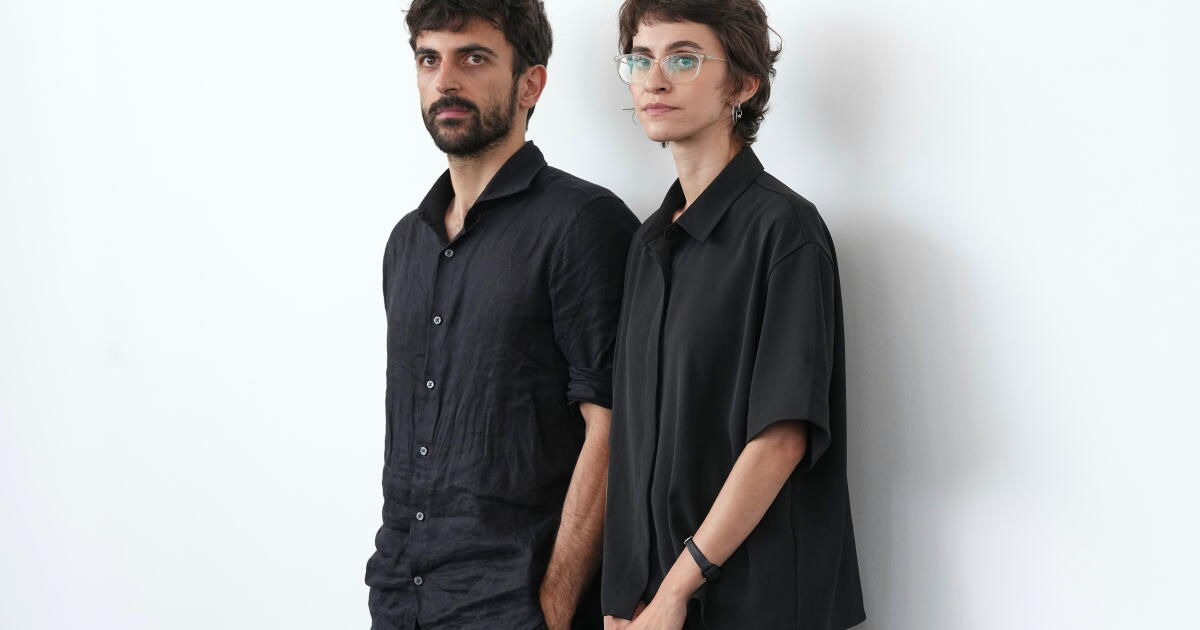
Today, Spotify has grown into the world’s most popular audio streaming subscription service and the highest-paying retailer globally — paying the music industry over $11 billion last year. The Swedish company said in a recent post that the payouts aren’t strictly going to ultra-popular artists, but that “roughly half of royalties were generated by independent artists and labels.”

“A decade ago, a lot of the questions were really fair. Spotify had to be able to prove out if it could scale as an economic engine. People didn’t know if streaming would scale as a model,” said Sam Duboff, Spotify’s global head of marketing and policy of music business.

Duboff said Spotify’s payouts aren’t “plateauing — we’re still growing that royalty pool on Spotify more than 10% per year.” He credits the streaming platform’s growth to “incentivizing people to be willing to pay for music again” by providing personalized experiences and global accessibility.

The company, founded in 2006, serves more than 751 million users, including 290 million subscribers, in 184 markets.

“The average Spotify premium subscriber listens to 200 artists every month, and nearly half of those artists are discovered for the first time,” Duboff said. “When you build an experience where people can explore and fall in love with music, it inspires them to upgrade to premium and keep paying.”

The platform offers a wide variety of playlists, curated by editors like the up-and-comer-driven Fresh Finds or rap’s latest, RapCaviar. There are also personal playlists generated for users, such as the weekly round-up Discover Weekly and the daily mix of tunes called the “daylist.”

The streamer considers itself the first step toward “an enduring career” for today’s indie artists. Last year, more than a third of artists making $10,000 on the platform in royalties started by self-releasing their music through independent distributors.

“Streaming, fundamentally, is about opportunity and access. It’s artists from all over the world releasing music the way they want to and reaching a global audience from Day One,” Duboff said. He adds that when fans have a choice, they will discover new genres and music cultures that may have otherwise languished in obscurity.

In 2025, nearly 14,000 artists earned $100,000 from Spotify alone. The streamer’s data also show that last year the 100,000th highest-earning artist made $7,300 in Spotify royalties, whereas in 2015, an artist in that same spot earned around $350.

The company, with a large presence in L.A.’s Arts District, emphasizes that the roster of artists on its platform who earn significantly more money — well into the millions — is no longer limited to the few. A decade ago, Spotify’s top artist made around $10 million in royalties. Today, the platform’s top 80 artists generate over $10 million annually. Some of 2025’s top artists globally were Bad Bunny, Taylor Swift and the Weeknd.

Spotify claims those who aren’t household names can earn six figures, with more than 1,500 artists earning $1 million last year.

For some musicians, the outlook is not as clear

Damon Krukowski, a musician and the legislative director for United Musicians & Allied Workers, argues that Spotify’s money isn’t necessarily going to artists — it’s going to their labels.

Those without labels usually upload music through distributors such as DistroKid and CD Baby. These platforms charge a small fee or commission. For example, DistroKid’s lowest-level subscription is $24.99 a year, and the site states users “keep 100% of all your earnings.”

”There are zero payments going directly to recording artists from Spotify,” Krukowski asserts. “Recording artists deserve direct payment from the streaming platforms for use of our work.”

The advocacy group, which has mobilized more than 70,000 musicians and music workers, recently helped draft the Living Wage for Musicians Act to address the streaming industry. The bill, introduced to the U.S. House of Representatives last fall, calls for a new streaming royalty that would directly pay artists a minimum of one penny per stream.

In the Q&A section of Spotify’s Loud and Clear website, the streamer confirms that it “doesn’t pay artists or songwriters directly. We pay rights holders selected by the artist or songwriter, whether that’s a record label, publisher, independent distributor, performance rights organization, or collecting society.”

Instead of following a penny-per-stream model, Spotify pays based on the artist’s share of total streams, called a “streamshare.”

“Streaming doesn’t work like buying songs. Fans pay for unlimited access, not per track they listen to,” wrote the company online. “So a ‘per stream’ rate isn’t actually how anyone gets paid — not on Spotify, or on any major streaming service.”

Source link