Abiy Ahmed

Ethiopian troops enter Adigrat in Tigray, near the Eritrean border | Conflict

Ethiopian government forces entered Adigrat in northern Tigray after rebel fighters withdrew, heightening tensions with neighbouring Eritrea. The two neighbours cut off diplomatic ties last week. Al Jazeera’s Hamza Mohamed reports.

Source link

Witnesses spot Eritrean troops inside northern Ethiopia as tensions flare | Abiy Ahmed News

Eritrea dismisses allegation as Ethiopia’s pretext for more war.

Eritrean soldiers have been seen driving through a northern town inside Ethiopia, witnesses tell the Reuters news agency, days after the neighbouring countries severed ties.

At least two witnesses told Reuters they saw “dozens” of Eritrean soldiers drive through Adigrat in two trucks on Wednesday. The town is located 25km (15 miles) south of the border with Eritrea.

The witnesses said they could identify the soldiers as Eritrean by their off-white camouflage uniforms.

Another Adigrat resident who was not in town at the time said family members had told him they had also seen Eritrean troops, according to Reuters, which could not independently verify their accounts.

“The Eritrean army has entered Tigray in uniform, equipped with heavy weaponry,” said Gebreigziabher Beyene, commander of the Tigray Peace Force, a pro-government militia that has fought alongside the federal army.

“This force is being struck by drones,” he said, adding Eritrea was “deliberately deploying its forces so that the fighting takes place inside Tigray rather than spilling into Eritrea”.

Last week, the chief administrator in Ethiopia’s northeastern Afar region said Eritrean troops were fighting in the area, but Reuters was unable to confirm the claim.

In a statement on X, Eritrea’s Information Minister Yemane Meskel did not deny that troops had crossed the border, but said Ethiopia’s government was creating “a fallacious narrative of ‘self-defense’ to rationalise and camouflage its war of aggression”.

If confirmed, it would mark the first time Eritrean forces have been seen inside Ethiopia since the renewal of fighting between Ethiopian forces and a seven-group armed alliance, including the Tigray People’s Liberation Front (TPLF), on September 23.

Ethiopia has accused Eritrea, as well as Egypt and Sudan of backing the armed alliance which is fighting to remove the government. All three countries have denied involvement.

Eritrea announced it was severing ties with Ethiopia on Thursday after Addis Ababa announced it would close its embassy in Asmara and expel 10 Eritrean diplomats.

In a statement, Eritrea’s Ministry of Foreign Affairs said Ethiopia’s actions had left it with “no option but to reciprocate in kind and sever all diplomatic ties with Ethiopia”.


Members of the Ethiopian pro-government Tigray Peace Force (TPF) gesture as residents welcome them while they ride in a pickup truck during a street patrol after Ethiopian federal and allied forces entered the Tigray capital of Mekelle, on October 4, 2026.
Members of the Ethiopian pro-government Tigray Peace Force (TPF) give a thumbs up to residents after Ethiopian federal and allied forces entered the Tigray capital of Mekelle on October 4, 2026 [AFP]

On Monday, Ethiopian forces captured Tigray’s regional capital Mekelle, days after the TPLF confirmed that it had withdrawn from the city and moved its regional administration “temporarily” to another location.

It happened as Ethiopia’s Prime Minister Abiy Ahmed was sworn in for another five-year term, during which he insisted that his landlocked country must have access to the Red Sea.

On the same day, Eritrea joined Somalia, Sudan and Egypt in issuing a joint declaration calling for a political and peaceful solution to the war in Ethiopia.

The declaration appeared to push back against several policies pursued by Ethiopia in recent years, highlighting widening rifts between Addis Ababa and its neighbours.

Source link

Ethiopia’s PM insists on access to Red Sea despite regional conflict threat | Abiy Ahmed News

Neighbouring countries say coastal states must govern Red Sea as fighting escalates in northern Ethiopia.

Ethiopia’s Prime Minister Abiy Ahmed has insisted that his landlocked country must have access to the Red Sea, despite a conflict in the north of the country that risks escalating into a regional conflict.

Abiy made the demand as he was sworn in for another five-year term in power on Monday. His call came as Ethiopian forces were pushing back opposition forces in the northern Tigray region, which are backed by Eritrea, whose independence in 1993 blocked Addis Ababa’s access to the coast.

Recommended Stories

list of 4 itemsend of list

Repeating previous assertions, Abiy said in a speech in Parliament that the country would work to secure a port on the Red Sea, saying that access was critical to Ethiopia’s “civilisation”.

“Based on the principle of give and take, we will work diligently to ensure that Ethiopia has an outlet to the sea,” he said.

Members of the Ethiopian pro-government Tigray Peace Force (TPF) ride in a pickup truck while Ethiopian federal and allied forces enter the Tigray capital of Mekelle, October 4, 2026 [AFP]
Ethiopian pro-government Tigray Peace Force fighters ride in a truck as federal forces entered Tigray’s capital of Mekelle, October 4, 2026 [AFP]

Abiy’s new term and call for Red Sea access come amid worsening relations between Ethiopia and its neighbours.

Ethiopia has accused Eritrea, Egypt and Sudan of supporting opposition forces in the northern Tigray region, following a resurgence of fighting against Abiy’s government.

Lower-level clashes between the federal military and Tigray People’s Liberation Front (TPLF) began in August, violating a three-year-old peace deal that ended a devastating two-year war between the parties.

Fighting intensified following the formation of the Ethiopian Peoples’ Forces Alliance for Survival – a coalition of seven armed movements, including the TPLF, which has committed itself to removing Abiy’s government.

In an exclusive interview with Al Jazeera, Somali President Hassan Sheikh Mohamud said Somalia did not object to Ethiopia gaining access to the Red Sea through Somali territory but added that the two countries would need to officially negotiate.

Four of the five countries bordering the Red Sea – Egypt, Eritrea, Sudan and Somalia – met on Sunday in Egypt’s New Alamein, claiming that oversight of the coastline was reserved for bordering states.

The following day, Ethiopia’s Foreign Ministry said discussions over the Red Sea must account for the country’s “legitimate interests and enduring connection” to the body of water.

Source link

Ethiopia, Eritrea break ties: Does the conflict risk becoming regional war? | Conflict News

Eritrea has cut off diplomatic relations with neighbouring Ethiopia, escalating a long-simmering conflict between the two states rooted in territorial disputes and mutual accusations of interference.

The move comes as fighting flares in northern Ethiopia between Ethiopian federal troops and an opposition alliance that Addis Ababa accuses Eritrea of backing.

Recommended Stories

list of 3 itemsend of list

The clashes are the most severe in Ethiopia since its 2020-2022 civil war that killed hundreds of thousands of people.

But this time, the ripple effects could go further, potentially fuelling broader unrest in a region already plagued by numerous interrelated conflicts, analysts warn.

Here’s what we know about the Ethiopia-Eritrea conflict, the latest fighting in northern Ethiopia and what it could mean for the region at large:

Why did Eritrea break off ties with Ethiopia?

Eritrea announced it was severing ties with Ethiopia on Thursday, after Addis Ababa announced it would close its embassy in Asmara and expel 10 Eritrean diplomats.

In a statement, Eritrea’s Ministry of Foreign Affairs said Ethiopia’s actions had left it with “no option but to reciprocate in kind and sever all diplomatic ties with Ethiopia”.

The Eritrean ministry accused Ethiopia of pursuing a years-long “agenda of incessant hostility”, including by infringing on its coastal areas and arming fighters opposed to Ethiopia’s government.

Ethiopia has likewise accused Eritrea of backing armed groups opposed to its government. Both sides have rejected the other’s accusations.

The diplomatic breakdown follows months of worsening relations, driven largely by disputes over landlocked Ethiopia’s push for access to the Red Sea and allegations that Eritrea is backing the rebel Tigray People’s Liberation Front (TPLF), which leads the Ethiopian Peoples’ Forces Alliance for Survival, a rebel alliance fighting for control of parts of northern Ethiopia.

Have Ethiopia’s ties with Egypt and Sudan been hit, too?

Yes. Ethiopia accuses Egypt and Sudan of joining Eritrea in backing Tigrayan rebel forces, worsening already strained ties with both countries.

Ethiopia has long been at odds with Egypt over the status of Ethiopia’s Grand Ethiopian Renaissance Dam (GERD) project, which Cairo views as a risk to its water security and share of the Nile.

Ethiopia and Egypt have also expelled diplomats. Cairo ordered an Ethiopian diplomat to leave the country on Thursday, after Addis Ababa earlier kicked out an Egyptian diplomat, Egyptian state-linked media reported.

Egyptian state-linked broadcaster Al-Qahera News quoted an Egyptian official as calling Ethiopia’s move to expel the Egyptian diplomat as “regrettable and unjustified” and saying that Cairo responded in line with “the principle of reciprocity”.

The latest conflict also has implications for Sudan, whose military-backed government accuses Ethiopia of backing rebel forces it is fighting in its own civil conflict. Ethiopia rejects those allegations.

“The conflicts in Ethiopia and Sudan have become more interconnected, with the Ethiopian government and Sudanese Armed Forces accusing each other of harbouring and equipping respective opposition forces from inside their own borders,” Ahmed Soliman, senior research fellow at the Chatham House think tank’s Africa programme, told Al Jazeera.  “Egypt has also been drawn into the escalation with its long-running enmity with Ethiopia over the Nile.”

What is happening in northern Ethiopia?

Tigrayan-led rebel forces have engaged in clashes with Ethiopian government-backed forces in the country’s north since last week. Fighting is concentrated in three regions: Tigray, Amhara and Afar.

Al Jazeera’s bureau chief in Ethiopia, Mohammed Taha Tawakel, reported that forces loyal to the federal government have made significant gains in the Tigray region, taking control of several towns and closing in on the regional capital, Mekelle.

Further east in Afar, a pro-government armed group claimed on Thursday to have recaptured the town of Erebti, which rebel forces had taken control of earlier in the week. The pro-government group thanked the Ethiopian military for its “magnificent air support” and said it would pursue further advances.

Despite the pro-government advances, Tawakel reported that rebel forces still maintain what he described as a “strong rear link with Eritrea” along the countries’ border.

He also reported growing fears that fighting could move into major urban centres of Tigray, such as Adwa, Axum, Shire and Mekelle. Some people have already begun fleeing to Amhara and Afar, he added.

Outside northern Ethiopia, the conflict appeared to spill into the capital, Addis Ababa, for the first time early on Thursday, as an explosion was reported at the Ministry of Defence.

AFP quoted a diplomatic source as saying small drones were the most probable cause of the blast.

While Ethiopia’s army has a much larger arsenal of drones, rebel forces have previously used them to target airbases and airports in various parts of the country, reported conflict monitor ACLED.

What are the roots of the Ethiopia-Eritrea dispute?

Ties between the neighbours have been historically fragile. In 1962, Ethiopia annexed Eritrea. An armed independence struggle, led by Eritrea’s current President Isaias Afwerki, secured independence in 1993. The countries fought another border war from 1998 to 2000.

When Ethiopian Prime Minister Abiy Ahmed came to power in 2018, he moved to end the tensions and normalise diplomatic relations with Eritrea. During Ethiopia’s last civil war in 2020-2022, Eritrea even backed Ethiopia’s government against the TPLF.

But Abiy’s ambitions to seek direct sea access for landlocked Ethiopia have contributed to recent tensions, say analysts. Abiy has repeated that Ethiopia has a right to sea access, words that officials in Asmara take as a declaration of territorial conflict with Eritrea.

Could the current conflict spread in the region?

Many analysts fear it could.

Laura Hammond, professor in development studies at SOAS University of London, told Al Jazeera this scenario is already under way.

“The risks that conflict will spread to other countries, or that neighbours in the region will be brought into the present conflict are already playing out in terms of Eritrea’s support for the TPLF and the Alliance for Survival,” said Hammond.

“There is a strong possibility that Eritrea will become more involved in the conflict on the ground inside Tigray if it continues much longer,” she continued. “There is also a risk that the conflict could inflame relations with and inside Sudan.”

Martin Plaut, an analyst specialising in the Horn of Africa, also said there was a “real danger” of the conflict spreading.

“The situation is extremely tense and it would only require a spark to ignite a conflagration that could engulf [Ethiopia and Eritrea], as well as neighbouring Sudan,” he told Al Jazeera.


Source link

Ethiopia blames regional rivals as risk of conflict spillover rises | Conflict News

As renewed fighting spreads across northern Ethiopia, the government has accused Eritrea, Sudan and Egypt of backing armed opposition groups, raising fears that the conflict could draw in regional powers.

Over the weekend, Ethiopian army chief Birhanu Jula attributed his country’s unrest to those he called Ethiopia’s “historical and contemporary adversaries”.

Recommended Stories

list of 3 itemsend of list

Birhanu accused Eritrea of being the go-between linking these external powers – including Sudan and Egypt, which he explicitly named – with armed groups inside Ethiopia.

Eritrea, Sudan and Egypt have all rejected the accusations. Speaking to Al Jazeera, Egyptian Foreign Ministry spokesperson Nader Zaki said that Egypt’s foreign policy was founded on “full respect for the sovereignty, unity and territorial integrity of states, and noninterference in the internal affairs of other countries”.

Zaki added that Egypt “is fully committed to the rules of international law and the Charter of the United Nations, and rejects any practices that would undermine regional security and stability”.

Major-General Samir Farag, the former head of the Egyptian Armed Forces’ Morale Affairs Department, also told Al Jazeera that the accusations against Egypt were false. “It has not been Egypt’s policy to interfere in the internal affairs of any state in the region,” he said.

Sudan’s military also dismissed the accusations as “baseless” and levelled its own charge of destabilising behaviour at Ethiopia, accusing it of supporting the paramilitary Rapid Support Forces (RSF), which has been fighting the Sudanese Armed Forces since 2023. Ethiopia has denied those allegations.

Troubled relations

Ethiopia’s relations with the countries it has accused have already been strained by other disputes that predate the latest fighting.

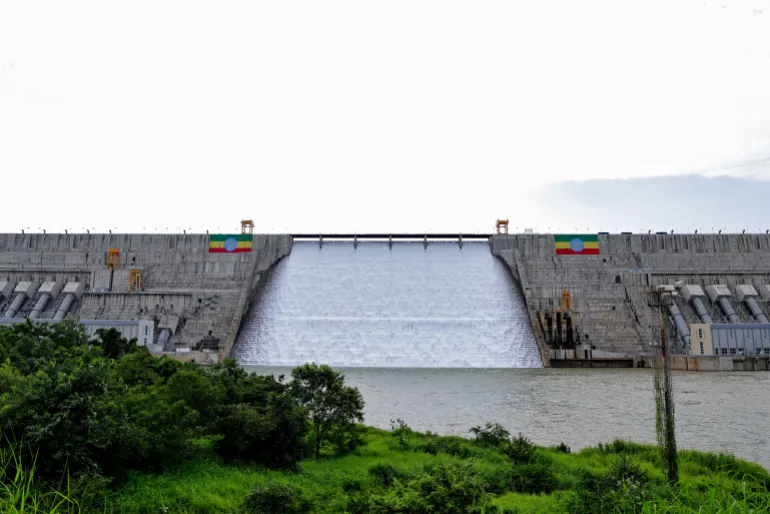
Relations between Cairo and Addis Ababa have remained tense as a longstanding dispute over the Grand Ethiopian Renaissance Dam (GERD) remains unresolved. Competition between the two has increasingly extended to regional security, the Red Sea and the Horn of Africa.

Large Ethiopian flags are displayed on the Grand Ethiopian Renaissance Dam (GERD), built along the Blue Nile, during its inauguration, in Guba, Benishangul-Gumuz region, Ethiopia, September 9, 2025. REUTERS/ Tiksa Negeri
The Grand Ethiopian Renaissance Dam, the construction of which stoked fears in Cairo that Ethiopia could choke off the Nile River, September 9, 2025 [File:Tiksa Negeri/Reuters]

Sudan’s relations with Ethiopia are similarly troubled. Since the outbreak of the Sudanese civil war, Khartoum has accused Addis Ababa of providing training, supplies and the use of Ethiopian territory to the RSF.

Eritrea had fought alongside Ethiopia against rebel groups in the latter’s Tigray region during a war between 2020 and 2022, but relations between the two neighbours have since soured, with Eritrea alarmed by Ethiopia’s attempts to gain access to the Red Sea.

Against that background, some analysts and Ethiopian opposition figures say that Addis Ababa is pointing the finger at foreign conspiracies in a bid to rally support behind its national army.

Mohamed Selim, deputy chair of the Egyptian parliament’s African Affairs Committee, told Al Jazeera that he believes the accusations were an attempt to shift attention from Ethiopia’s domestic problems by creating an external enemy and seeking to unify the internal front.

Amani al-Tawil, director of the Africa Programme at the Al-Ahram Centre for Political and Strategic Studies, similarly described the accusations as “an understandable attempt to escape from internal crises”.

She questioned why Egypt would choose this moment to intervene militarily in Ethiopia, given the two have been in dispute over GERD since 2011.

Al-Tawil said the breadth of the new opposition alliance in Ethiopia – seven groups representing disparate ethnic groups and regions announced the coalition last week – presented a challenge to Addis Ababa.

INTERACTIVE - Ethiopias ethnic groups and regions-1779798522
(Al Jazeera)

Spillover concerns

The renewed fighting in Ethiopia has spread across Tigray and into neighbouring Amhara and Afar.

Mohammed Hussein, the chairman of the Prosperity Party Afar Region Branch Office – the ruling party in Ethiopia’s Afar region – told Al Jazeera that the three regions together have a population of more than 38 million, according to his estimate, and include areas near the borders with Djibouti and Eritrea, raising fears of a regional war.

Ammar Arki, a writer focusing on Horn of Africa affairs, told Al Jazeera that Ethiopia had, at various stages, blamed Sudan, Egypt and Eritrea for contributing to instability inside Ethiopia.

He said the latest accusations could be interpreted as an attempt to redirect some domestic attention towards an external threat and build support around the federal government.

But Arki warned that the longer Addis Ababa continued to explain its internal crisis in terms of an “external conspiracy”, particularly if neighbouring states responded in the same way, the greater the risk that Ethiopia’s conflict could move beyond Ethiopia’s borders and become regional.

Source link

Ethiopia’s Fano fighters claim capture of army vehicles and weapons | Abiy Ahmed News

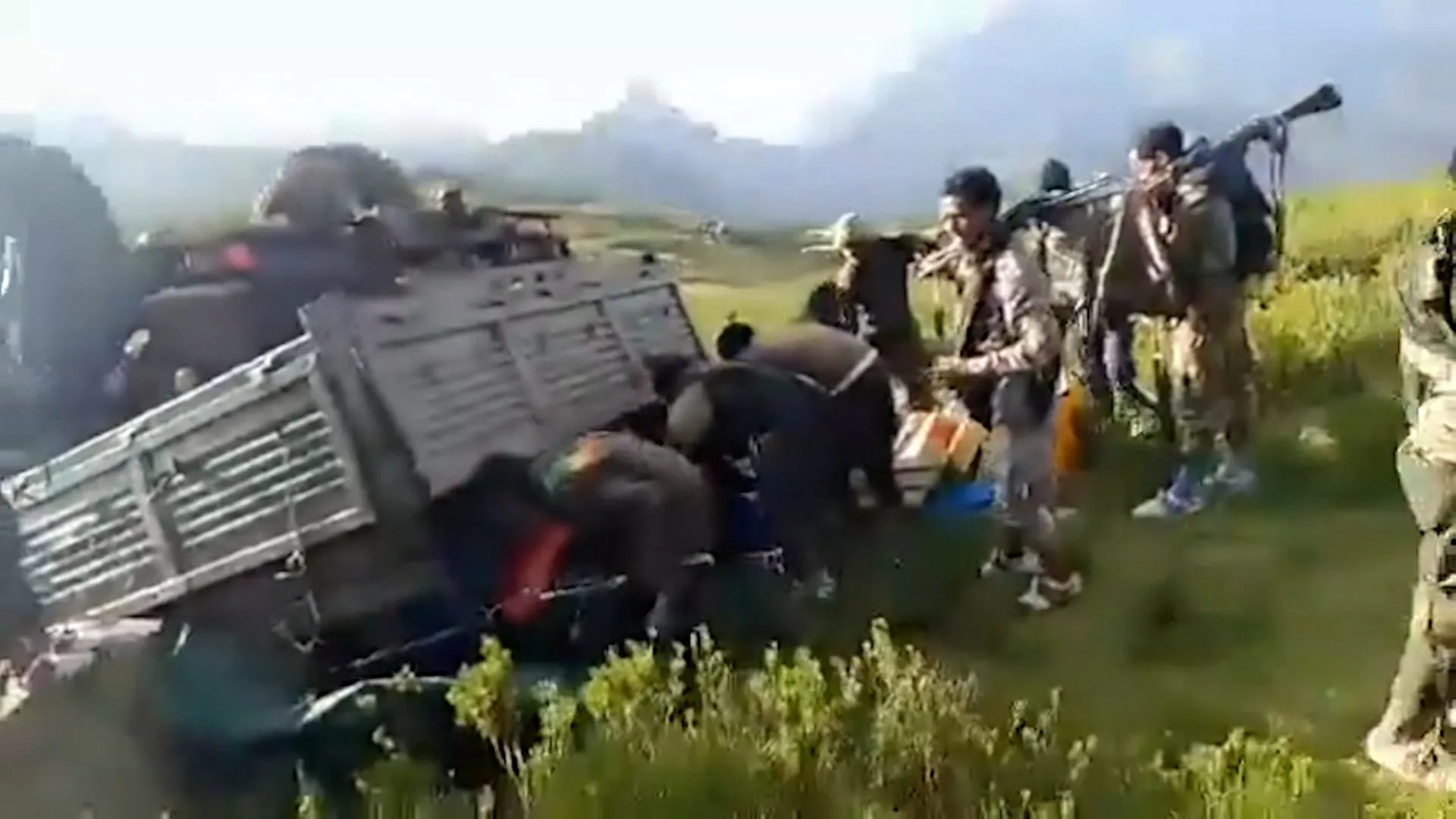
Armed fighters from Ethiopia’s Fano movement claim to have seized more than 10 military trucks carrying ammunition, machine guns and mortar shells in the Amhara region. Fighting in the country has intensified following the formation of a new alliance of seven armed groups seeking to overthrow Prime Minister Abiy Ahmed’s government.

Source link

Fighting erupts between Tigray’s rebel alliance and Ethiopia’s military | Conflict

Fighting has intensified between Ethiopia’s military and a new rebel alliance in Tigray, after the Tigray People’s Liberation Front announced a ‘full-blown war’ against the government.

Source link

Ethiopian army says 272 Tigrayan fighters killed in Amhara | Conflict News

Tigray People’s Liberation Front says in a ‘situation of full-blown war’ with Ethiopia’s government.

Ethiopia’s army says it has killed at least 272 fighters from the Tigray People’s Liberation Front (TPLF) in a counter-offensive in the country’s northwest Amhara region.

The Ethiopian National Defence Force said on Thursday that another 260 Tigrayan fighters were wounded and several were captured.

Recommended Stories

list of 3 itemsend of list

“Government forces launched a counter-offensive that inflicted heavy personnel and equipment losses on the TPLF” after the group and its allies attacked several areas of North Wollo, a region of Amhara that borders Tigray, the army said in a statement on Facebook.

The intensification came days after TPLF and six other armed groups from across Ethiopia announced the formation of the Ethiopian Peoples’ Forces Alliance for Survival, which committed itself to removing Prime Minister Abiy Ahmed’s government.

The coalition brought together the newly-formed Amhara Fano National Movement, the Oromo Liberation Army and other movements from the Somali, Afar and Benishangul-Gumuz regional states.

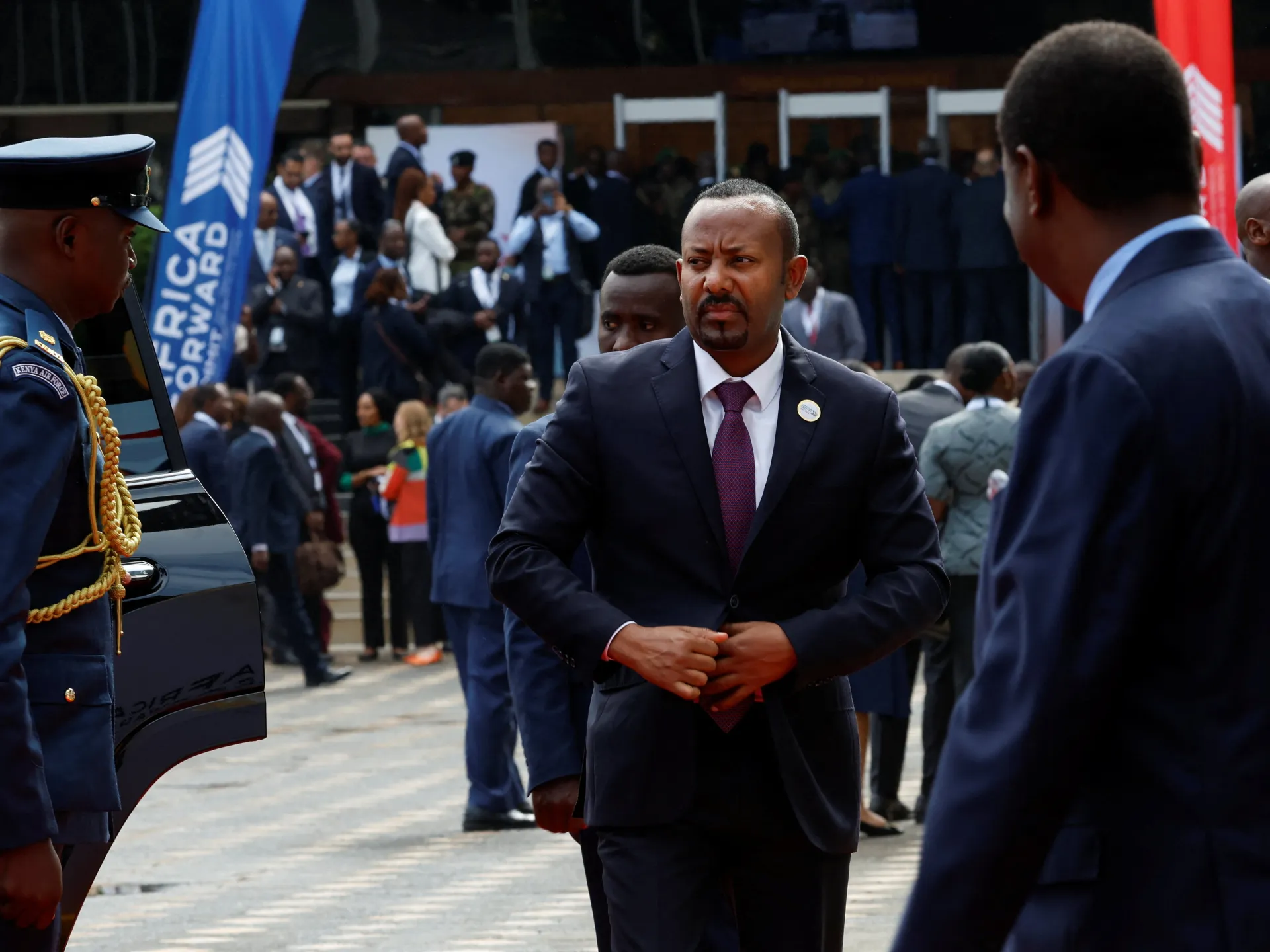
FILE - Ethiopian Prime Minister Abiy Ahmed Ali attends a session at the World Atomic Week forum at the Exhibition of Achievements of National Economy (VDNKh) in Moscow, Russia, Thursday, Sept. 25, 2025. (Sergei Bulkin, Sputnik, Kremlin Pool Photo via AP, File)
Ethiopian Prime Minister Abiy Ahmed [File: Sergei Bulkin/Sputnik via AP Photo]

‘Full-blown war’

“We are in the situation of full-blown war now,” TPLF Vice President Amanuel Assefa told AFP news agency on Thursday.

He confirmed that Tigrayan forces were fighting alongside local armed groups in Afar and Amhara.

The alliance marks a striking realignment that had been almost a year in the making, bringing together armed groups with very different histories and grievances against the central government, including forces with histories of conflict among themselves.

In a statement issued as the fighting widened on Wednesday, the alliance said the federal government was attacking its forces on several fronts and presented their response as part of the broader struggle that had brought the coalition together.

Meanwhile, the escalation has disrupted air travel, as Tigrayan forces seized three local airports in the region.

Flights to Lalibela, a UNESCO-listed site in Amhara known for its medieval rock-hewn churches, were suspended on Thursday, according to Reuters news agency.

AFP also received reports of fighting around Lalibela, causing its airport to close. The area has often been targeted by the Fano, a local armed group that is now operating alongside the TPLF.

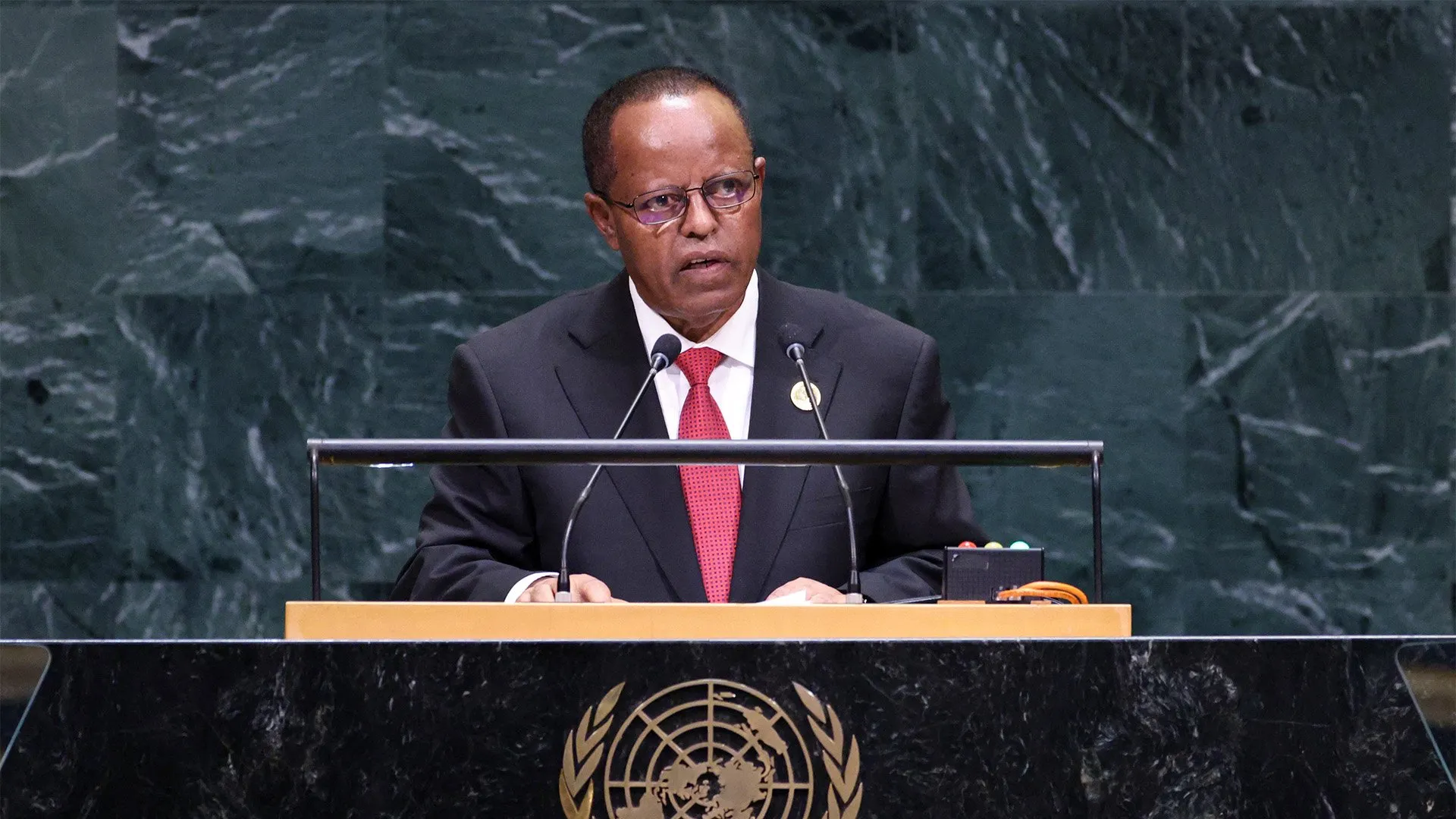
Ethiopia's President Taye Atske Selassie Amde speaks during the 81st session of the United Nations General Assembly at United Nations headquarters, Wednesday, Sept. 23, 2026. (AP Photo/Seth Wenig)
Ethiopia’s President Taye Atske Selassie Amde speaks during the United Nations General Assembly, September 23, 2026 [Seth Wenig/AP Photo]

Wider regional rivalries

TPLF last went ⁠to war with the Ethiopian federal government in 2020, leading to a devastating two-year conflict that ended with a peace deal in 2022.

In his address at the UN General Assembly on Wednesday, Ethiopia’s President Taye Atske-Selassie Amde blamed the escalation on “the forces of destruction and mayhem” and “interference in our internal affairs by adversarial elements”.

He said Ethiopia had exercised “immense restraint” and made progress with its neighbours.

Analysts say the Tigray rebels have support from Eritrea, which fears landlocked Ethiopia is planning to invade its territory to gain access to the Red Sea.

The TPLF’s Assefa told AFP “we have no information about Eritrea’s plan”. Asked if they would request Eritrean intervention, he said: “Not yet.”

Ethiopia’s domestic conflicts are becoming harder to separate from wider rivalries in the Horn of Africa, particularly Addis Ababa’s deteriorating relationship with Eritrea and Sudan’s civil war.

Sudan’s army chief Abdel Fattah al-Burhan has visited Asmara twice since July for talks with Eritrean President Isaias Afwerki, while Sudan’s paramilitary Rapid Support Forces (RSF) commander Mohamed Hamdan Dagalo, known as Hemedti, reportedly visited Addis Ababa in late August.

Source link

Ethiopia warns of ‘destruction’ as Tigray rebels launch offensive | Abiy Ahmed

Ethiopian President Taye Atske Selassie warned the UN General Assembly of “forces of destruction and mayhem” as Tigray rebels joined other rebel groups to seize airports and target government positions in northern Ethiopia, triggering fears of a renewed civil war.

Source link

Is Ethiopia heading towards renewed civil war? | Abiy Ahmed News

Seven armed groups announce alliance to topple government.

Despite decades of peace deals and ceasefires, armed groups in Ethiopia have continued to battle each other, as well as the military. Now, some of these former rivals have formed an alliance to push out the government in Addis Ababa.

They warn Ethiopia is on the brink of disintegration, and blame Prime Minister Abiy Ahmed. Abiy says the country can defend itself, but Ethiopians fear they could be on the verge of another civil war.

So, could these former rivals, with deep political and ideological divides, achieve their common objective?

Presenter:

Rob Matheson

Guests:

Samuel Getachew – Political commentator who specialises in Ethiopian affairs

Ngala Chome – Horn of Africa analyst

Kjetil Tronvoll – Professor of peace and conflict studies at Oslo New University College

Source link